Tag: Litigation

  • Sanjay Hegde, Senior Advocate, on building a legal practice, arguing on landmark cases and on legal journalism

    Sanjay Hegde, Senior Advocate, on building a legal practice, arguing on landmark cases and on legal journalism

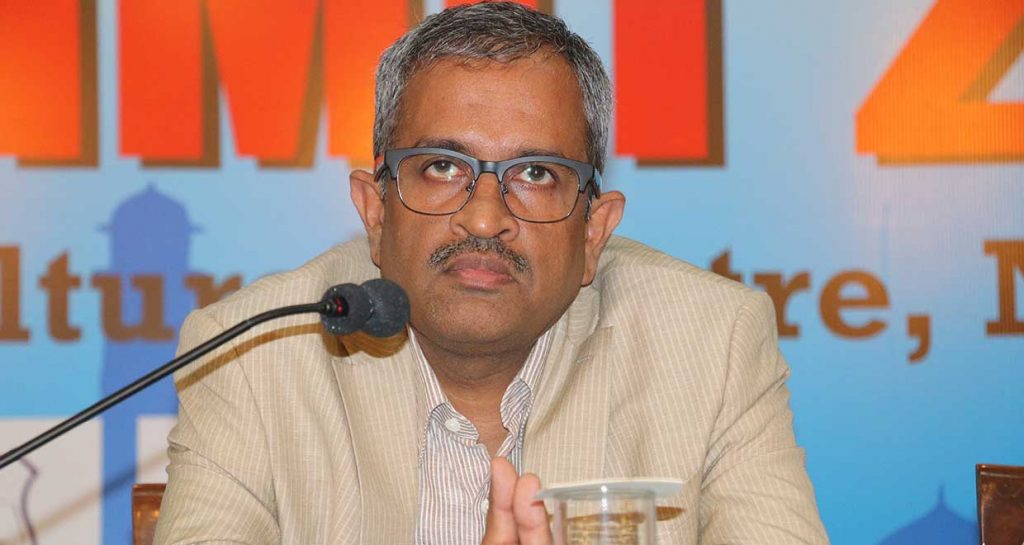
    Mr. Sanjay R Hegde, is a Senior Advocate at the Supreme Court of India. He began his illustrious career back in 1989 while working as a lawyer with M/s Mulla & Mulla & Craigie Blunt & Caroe Solicitors. He gained his LL.M while at work and thereafter moved to Delhi to practice in the Supreme Court in the Chambers of Senior Advocate Mr. G. Ramaswamy. During this period he worked on several high profile cases, appeared for the Government of Indian before an international arbitral tribunal and from 1996 to 2004 was on the Union of India’s arguing panel before the Supreme Court. He also worked for a decade as the Advocate on Record for the State of Karnataka and thereafter focused on private practice. He has frequently engaged in legal journalism including appearing on television panels and writing as a columnist for newspapers.

    In this interview, he talks to us about:

    • His career choices and the reasoning behind them.
    • His experiences in the various roles and offices he has assumed over the years.
    • His opinions on miscellaneous topics – the importance of mooting and writing for students, ADR in International Law and legal journalism.
    • His advice to law students while studying, practicing and moulding their careers.


    Please elaborate on the motivating factors which helped you in choosing legal studies.

    I assume you mean, why did I decide to study law? Well, in our days, choosing a career in law, was not a matter of choice but circumstance. Often one did not set out to become a lawyer, but did drift into the profession after exhausting most other avenues. My father was a lawyer as was his uncle and grand-uncle. So as the first of five children, of a not very successful lawyer, a legal career, while available was not necessarily a first choice. I did law, while working in a computer company and studying for the civil services examination. I also did an LL.M simultaneously while working with Mulla & Mulla.


    Please tell us about how you decided to pursue litigation. Were you considering any other opportunities?

    I got selected by the UPSC for a non-IAS service, which I kept on hold for a couple of years, while I started out in the Supreme Court with the then attorney general Mr.G.Ramaswamy who was my guru in court-craft. I had been a debater and a quizzer in my times, so a quiet life behind my desk in a solicitor’s firm (that’s what we called corporate law then), did not appeal to me. It had to be courtrooms or nothing in my case.


    How were your years in college? Did your study prepare you in any way for real-life practice in Courts?

    When I see kids in law schools these days (my son included), prepare so hard with presentations and papers, I am reminded of how little I did in college. I did spend good time in my law college in Bombay (K.C.Law) making friends and eating sandwiches from Ramesh Sandwichwala. My life as a law student, was evening classes after work in my computer company’s administrative job. I attended classes which had good teachers and neglected other subjects. I passed the examinations with undistinguished marks and often found that I scored badly in subjects which I knew well by studying original texts. In those days, examiners had got used to answers mugged up from guides (three test papers) and original stuff may have fazed some of them. Suffice to say, the course did not prepare me for life in court, but I did learn a bit by tagging along with my father and his friends.


    What should a law student do, in your opinion, to shape up his profile for litigation?

    Practice simple things like public speaking and elocution. You would be surprised to see how badly some people express themselves in court, and how judges are grateful to any lawyer who can clearly state the problem, before attempting to persuade them to his side. Some experience of dramatics and the stage are also useful. Both Kapil Sibal and Rajeev Dhavan, had experience in theatre which went a long way towards making a courtroom presence.


    How important do you think Mooting and Academic Writing are for a Law Student aspiring to become an Advocate?

    Both are very important. Mooting helps you deconstruct issues, prepare memorials and briefs and present them to trained minds. Writing is even more important. An ability to clearly express oneself in writing, in simple sentences, is the hallmark of a good mind. While taking people on board, I am more likely to choose, someone who can give me a quick written note, than someone who can turn a wonderful phrase in conversation.


    After your enrolment at the Bar in 1989, you worked in Mumbai for a period of three years. How did these formative years mould you as a lawyer?

    They taught me about handling corporate client problems, and how to turn around work reasonably quickly. More importantly they taught me the value of friends in the profession and the constant peer-review that always accompanies life at the bar.


    You have a rich experience of working under Mr. G Ramaswamy, Senior Advocate and former Attorney General. You have also assisted several distinguished Senior Advocates at the Supreme Court. Please tell us about your work under them.

    Each senior advocate addressing the court, is essentially a performing artiste. At the end of the day, he is not so much concerned with the judgment which is the judge’s job. He is concerned that his performance was the best that could be summoned from within him and that it best expressed all the points in his client’s favour. Mr Ramaswamy had an amazing depth of knowledge and experience, which enabled him with a bare instruction on facts, to argue for hours and place a case in its entire legal perspective. He had the ability to hear a whispered phrase as an instruction from the advocate by his side, and to know exactly what was meant and what needed to be said. In other words, an amazing pickup on the fly. I find the same ability in Sibal and Rohatgi, as well as Salve and Fali Nariman. The latter two also share the breadth of learning that GR had, and Mr Nariman particularly is almost oracular in his wisdom. Among the others I have instructed Mr Sorabjee, stands out for his ability to hit all the right notes without making it seem too heavy, Mr Ashok Desai’s ability to paint a picture and scrap through to a conclusion without angering anyone is a gift to be envied. The late Goolam Vahanvati must be mentioned for his understated, efficient manner of delivery and his incredible ability to turn around written submissions and pleadings in a very short time.


    Many students aspire to practice at the Supreme Court and High Courts. Should a student first practise at the Trial Court to learn the nuances, or is it fine to start at a High Court itself?

    I’d say go wherever there is enough work to keep you occupied. Do not get hung up because you hang around the superior courts, do not feel low in the lower courts. A good grounding in the trial courts, stands you in good stead thereafter. Mr Ramaswamy spent 11 years in the trial courts before moving to the Madras High Court and his base in civil and criminal law, gave him an advantage over his peers who had been appellate court lawyers throughout.


    What are the differences that you see between a practice in a High Court and a practice in the Supreme Court?

    The Supreme Court has greater turnover and greater mortality. In the Supreme Court, you prepare a lot, only to see it destroyed in a two minute performance. High courts are more relaxed but more time consuming.


    What is your opinion on the recent judgement of the Supreme Court which upheld the ‘Collegium’ system?

    (Mr Hegde had appeared for Union of India In Re: Special Reference 1 of 1998 i.e. The Third Judges’ Appointment Case).

    I did assist Mr Sorabjee the attorney general in the Third Judges case. That judgment and the current one, all revolve around independence of the judiciary. Can we have independent judges, if their appointments are made by politicians? The court is part of the political system in a manner of speaking, how far can you keep routine politics away. Has insulating judges, resulted in the creation of a self-perpetuating jurocracy? My personal opinion is that the striking down of the NJAC, is a good blow for judicial independence, especially in an era of majoritarian politics.


    How effective, in your opinion, are Alternative Dispute Resolution mechanisms in International Law?

    (Mr Hegde has appeared before an International Arbitral Tribunal for the Union of India.)

    Well my case was the Government versus Suzuki Motor Corporation which was essentially a private contractual dispute. But in public international law, in the absence of pre-decided judicial forums, alternate dispute resolutions are often the only options available.
     

    sanjay-hegde-2

    Could you elaborate on your experiences as an AOR for Government of Karnataka?

    (Mr Hegde has been an Advocate-on-Record for the Government of Karnataka at the Supreme Court for a period of ten years, during which he handled many sensational and landmark cases, like the Kaveri and Krishna Water Disputes, Rajkumar Kidnapping case, Swami Shraddhananda case etc.)

    It was personally exhausting, tough and immensely educative all at once. As long as one was not bothered about being adequately paid for the effort, working for the state made me the all-round lawyer that I am. I learnt Criminal law and indirect taxation on the job. A wealth of memories include a chief minister being hauled up for contempt, a chief secretary’s perjury prosecution being stayed, a godman or two being kept in jail for a long period of time. I remember early on Rajkumar being kidnapped and the state preparing to release his associates, till Justice Bharucha yelled, “If you can’t govern constitutionally, then quit”. A few years after the incident, some of the same associates, got death sentences in appeal, where the TADA court had given life imprisonment. So many memories require a book and not a question.


    Other than the Supreme Court, you have appeared before various fora, how is a practice before these Tribunals different? What is your opinion on “Tribunalisation”?

    (Mr. Hegde has appeared before many such tribunals as CESTAT, TDSAT and NGT.)

    Tribunals are more specialised areas and often the monetary impact is much heavier than normal courts. I do think that tribunalisation is the way to go, though courts have increasingly frequent misgivings. After all judges can’t know everything about complicated technical decisions, but experts in these fields can make decisions if judicial members control the fairness of the process.


    You are a designated Senior Advocate of the Supreme Court of India. How is the life of a Senior Advocate different from a normal Advocate? How do you manage the responsibility?

    A senior advocate is a bit like a taxi for hire, for day and date only. If the ride is not smooth he is unlikely to be hired again. But flippancy apart, the biggest responsibility is to give the client and the briefing lawyer, a pre-view of how the case is likely to be appear to the eyes of a judge. A good senior will in all probability leave you with a forecast of how the game will play out in the court and should advise you on your best options, including the negotiating of a settlement if one is possible. Unfortunately people come to seniors at the last minute to try for a win but not for the available reasonable option, of a realistic assessment of their chances in court.


    You are a well-known newspaper columnist and Television Panelist on pressing legal issues. What, in your opinion, is the future of legal journalism as a career, for aspiring people?

    There is a great demand for people who can decode legal processes and put it in simple terms that an ordinary viewer or reader can understand. We still have to develop a culture of great legal reporters in the mould of an Adam Liptak, a Joshua Rozenburg or a Dahlia Lithwick. Indian reporters, out of fear of contempt laws, often tend to get into bare bones reporting of fact, without too much accompanying analysis.


    Students tend to take up plush Corporate Firm jobs, as they find the prospect of an initial struggle at the Bar scary. What would be your message to them?

    They are right to choose whatever makes them comfortable. After all many of them are first generation lawyers, who have spent fortunes on their education and need to start earning as soon as possible. However a law school must provide you with the ability to make decisions and see them through to fruition. If litigation is your thing stick by it, keep working away, offer your services free if needed, to lawyers who are too busy or too tired to attend hearings. If you keep pegging away, cracks will appear in seemingly closed doors and you will make it. Keep going without getting disappointed or turning to drinks and the like, and you will find your niche from which to grow.


    What advice would like to share with our readers who are mostly young lawyers and law students?

    Be curious, read a lot, keep writing from time to time, but argue everything, every time, even if it is within yourself. For a lawyer, the unargued life is not worth living. Have fun and stay within the boundaries of truth. The world will accept you and find a use for you.


    This interview was taken by: Shreesha Kailankaje, IV year, GNLU, Gandhinagar

  • Divyakant Lahoti, Advocate on Record, on quitting law firm and setting up independent practice

    Divyakant Lahoti, Advocate on Record, on quitting law firm and setting up independent practice

    Divyakant Lahoti graduated from University School of Law and Legal Studies (GGS Indraprastha University, Delhi) in the year 2008. At present he is a third generation lawyer, an Advocate on Record, a dedicated and driven lawyer with an LL.M. qualification in International Commercial Law earned at King’s College London and experience within a wide range of settings.

    In this interview he talks to us about:

    • His experience working with Justice R.C. Lahoti, Former Chief justice of India.
    • The procedure to apply in King’s College, London.
    • Why he specialized in International Commercial Law and IPR.
    • The biggest hurdles in his early days of independent practice.


    How would you like to introduce yourself to our readers?

    I am a third generation lawyer and an Advocate on Record. Since my childhood I was sure that there is no other enterprising and satisfying career option than law. From the early days of my childhood, my career aspiration was to become a true lawyer having a sound knowledge of socio-legal disciplines and related proficiencies so as to make a positive impact on society by taking up a responsible position in the legal practise. My father Justice K. K. Lahoti’s hard work yet smooth-sailing lifestyle as an advocate and then as a High Court Judge appealed to my childhood dreams. My perspective on life changed when I closely observed my father work as an advocate in his office attached to our house. I could closely observe an advocate’s profession and his life. What drew me to this profession was the respect one earns and the satisfaction one derives from advising his clients and securing them justice. Both as an advocate and later as a judge, in my father I saw live-in-action honesty, integrity and devotion to duty, giving me an opportunity to imbibe these rare qualities.

    My entrance into this profession began after pursuing 5-year LL.B. (Honors) from my alma mater University School of Law and Legal Studies (GGS Indraprastha University, Delhi) in the year 2008. My quench for specialised legal knowledge persuaded me to attain an LL.M. from King’s College London, one of the top universities in the World.


    How did you go about your application to King’s College London (KCL)? How different was the study environment in that university?

    In a fiercely competitive environment, the only thing which looks simple is the procedure to apply. You need only three things at that time – an IELTS (International English Language Testing System) Score of 7.5 and above out of 9, a Statement of Purpose (SOP) and Curriculum Vitae (CV) along with the Application Form. However, each of them requires days, if not months, of preparation and persistence –to revise, review and refresh.  IELTS is easy to crack for those who are fluent in English and had English as a medium of instruction in their school and/or college. A few days of preparation is good enough to score the benchmark. The problem lies in drafting, structuring, tailoring and reviewing the SOP and CV. The entire labour lies in presenting a SOP and CV that can stand out and catch the eye of the University who is screening thousands of such equally good and well written SOPs and CVs. However, the procedure keeps on evolving and students are advised to read the updated procedure and policy before applying to the law school.

    One can choose a particular area of expertise which is taught by leading practitioner(s) in that field. The advantage of being taught by such Professors/Practitioners, who are considered authorities in their fields of law, is to provide the student with root information along with innovative and problem solving methods with a focus on a comparative and international outlook.

    At King’s College, the LL.M program offers a wide range of modules that enables the student to grasp a thorough knowledge of the increasingly important areas of law and their concepts and application. King’s College London is a place which is inspired and instructions are imparted by leading experts and the student receives outstanding cultural, research and career opportunities in the very heart of London.


    Which one would you say is better – LL.M from abroad or from India?

    Well, that’s a matter of personal choice coupled with the budget of the student. One of the key reasons for me to pursue LL.M. abroad was its duration of one year. Now, many leading Colleges in India are offering LL.M. programmes of one year. Since this duration gap is bridged, the second question that comes to mind is the quality of education and the expenses for pursuing such a course from India or abroad. Undoubtedly, going abroad is more expensive because of the high College Fee, rent for accommodation and living expenses. The student needs to choose the university wisely depending on multiple factors like the area of specialisation, the professors imparting the specialised knowledge, the university ranking and job prospects after completing the course.

    I personally believe that any College, which has an intellectually rich faculty, a formative environment and rigorous campus discipline on one hand and is collaborative on the other, together with the student’s passion and commitment, is an ideal recipe for success and accomplishment. A graduate from a mediocre college may shine and reach the pinnacle of his profession while a student from a leading college may find it tough to earn even a comfortable living. It all depends on how the student capitalises on the given opportunities during the course and develops himself as a professional. Of course, learning in a good educational institution and from good faculty do have their impact.


    Please share your experience working with Justice R.C. Lahoti, Former Chief Justice of India.

    Learning from, and working with, a living legend is a dream come true. I had the golden opportunity to work with him, on various arbitration and opinion matters, after his retirement as the Chief Justice of India. I have not only learnt the art of advocacy but also lessons of life from him. Success in your profession gives name and power but the qualities of character give a good name and reputation. A gentleman professional is respected and remembered. Such success can be reached by different paths but not by changing paths along the way. According to him, reading spiritual, motivational, inspirational books and biographies/autobiographies is an essential source to augment the knowledge and improvise one’s own personality.

    As a student and then in the early years of my professional career, I had the opportunity of living with Justice Lahoti as a family member. I have closely watched his routine and working style. Working and reading are his passion. He reads a lot, both literature and law. He is an early riser. From the morning till late in the evening, he is busy studying, preparing for arbitration matters which are coming up, dictating orders and awards, and checking and reviewing the dictation well before circulating the same to fellow arbitrators and parties. He has earned recognition for his oration. His speeches and social lectures, cultural and educational event are also prepared by him in advance. The lessons which I have learnt from him are: (1) work is worship; (2) it is never too late to learn; and (3) if you have accepted an assignment, put your heart into it; never compromise on anything less than the best.


    What are the basics of a legal notice and how can one learn to draft one?

    A Legal Notice is the first step to set the civil justice system into motion. Drafting a legal notice is an art and needs the same skill as drafting a suit. It demands legal knowledge, expertise and experience. You need to understand the entire factual background, evidence in hand, the need of the client and the law(s) involved. Once this preparation is done, then the lawyer must proceed to draft the legal notice. A notice is a way which lays down the foundation for future attacks or defence. The tenor and tone of the notice should be proper – not too aggressive. A properly drafted Legal Notice or its reply can avoid litigation or the same could help the parties settle the matter through mediation at a pre-litigation stage or can assist the court in adjudicating the matter. On this subject, one of the must-have books for every lawyer is Mogha’s Law of Pleadings in India.


    How did you decide to specialize in International Commercial Law and IPR?

    In this growing economy, it is indispensable to keep abreast with latest developments in  financial and commercial law to deal with the changing market conditions. Needless to say, to practice law in the corporate and commercial markets today demands niche and specialist knowledge, robust common sense, analytical and problem solving skills with the ability to deliver pragmatic solutions to the clients. Moreover, LL.M. in International Commercial Law provides an impetus for developing the ability to understand, analyse, and solve complex and unprecedented problems. In a corporate and commercial environment, a close proximity with leading legal systems is sine qua non which can be gained by pursuing specialisation course(s). Specialization in IPR was out of sheer interest. I was awarded the Microsoft IPR Scholarship during my graduation for authoring an article on copyrights. Thereafter, I studied an Advance Course on Copyrights and Trademarks from the World Intellectual Property Rights Organisation (WIPO). Pursuant thereto, WIPO had offered me a full scholarship to pursue a 2-year course in Specialisation in IPR from the University of South Africa (UNISA) and WIPO which I completed in the year 2011.

    The knowledge gathered from these specialised courses is immensely helpful in advising clients, and drafting commercial contracts.


    Describe your experience at Luthra&Luthra Law Offices. What led you to shift from the corporate sector to Independent law practice?

    Luthra and Luthra had provided me with an action packed litigation experience, be it 2G or Defence Scam, from heavy stake commercial arbitrations to high profile telecom litigation. Under the able guidance of Mr.Rajeev Luthra, Mr.H.S. ‘Bobby’ Chandhoke, Mr. Siddhartha Datta and Mr. Manu Yadav, I sailed smoothly through the pressures of strenuous and complex litigation. Irrespective of such work pressure, the environment in the firm was always conducive, cordial and friendly. I have made many friends for life at this place and learnt many lessons of professionalism and client interaction. Indeed, it is a Tier 1 Law Firm which values the work and sincerity of its members and also feels concerned for their life and career.

    The Firm gives you the necessary skills and experience to commence an independent legal practise. However, what you would require is to hone your entrepreneurship capabilities. It was a well thought of decision to switch from a leading Law Firm to open up your own firm, though it is a life changing event as it comes with much heavier responsibilities which are all on your shoulders. One of the major advantages of going independent is that there are more opportunities to appear and argue the matters yourself before the Court/Tribunal and make yourself a brand. Such an opportunity is rare in leading law firms where there is a tendency to engage senior advocates even for simple issue(s).  Moreover, in an independent practise, you tend to handle more clients simultaneously unlike in a firm where you would be assigned limited matters/clients. Undoubtedly, there is more flexibility in an independent practise as compared to working in a firm. You are the master of your own time and have the choice of choosing the matters to involve yourself. However, in the initial years of practice, you tend to do whatever comes your way to sustain a living. Once you are established, then you have an option to do or refuse to do certain matters or develop a specialised area of practice.


    divyakant-lahoti-1

    What do you think are the biggest hurdles and challenges in the early days of independent practice?

    One of the biggest hurdles, in setting up your own independent practice, is to have an office, with the amenities and library, preferably near the Court Complex. The purpose of having an office close to the court would be to ensure that you reach the court on time and travel time is minimised so that you can use that time in more productive and meaningful work. The next step is to pitch yourself by informing your friends, acquaintances and your professional colleagues that you have started your own independent practice and your services are now available for private clients. Then, hiring a suitable clerk who has reasonable knowledge of court procedures and filings.

    Establishing your own brand, among the clients and court-rooms, is the foremost real task. An independent practice encompasses not only getting new clients but also retaining them and recover your outstanding fees from them. It is a challenge in itself. A lot of productive time is wasted in recovering the professional fee which is also important or else, your labour is wasted. Another hurdle is running around different courts and forums for the matters listed on the same day. To overcome this hurdle, the only possible solution is to engage competent junior lawyer(s) who are willing to prepare and argue the matter, if the need arises, before the court.


    What would be your message to our readers?

    There are ample opportunities for every lawyer and youngster who should strive for such opportunities and excel. The profession offers humongous prospects for those who are willing to sacrifice their comfort and leave their complacency to make their mark in this field. Due to the changing economy, the chances of young lawyers are enhanced as new chambers are being opened up or existing chambers are merging resulting in larger clientele, bigger premises and pooling of resources such as libraries. These chambers are looking for enterprising younger lawyers who can whole-heartedly devote their expertise and time for productive, qualitative and quantitative work.

    However, youngsters are advised to do their research on such chambers/firms, make enquiry into the status of the lawyers/partners of the chamber/firm and the kind and amount of work they are handling. Some of these chambers may not offer good prospects. For those who are looking forward to litigation practise, it is indispensable for them to join such chambers which have matters regularly before the courts/tribunals so that they can gain experience in court crafts and the art of advocacy from their seniors apart from learning necessary drafting knowledge, the art of cross-examination and the art of addressing judges.

    After choosing the right chamber/firm, the next step is to enhance the ability to communicate.  The objective is to make the Judge understand the case. Youngsters should practice speaking up clearly with modulation. Simultaneously, they should also be able to present the case to the Court/Forum lucidly and with brevity in a humble way, eschewing irrelevant facts and irrelevant arguments.  Undoubtedly, courtesy towards the Judge and court manners, including wearing clean and presentable robes, are of paramount significance.

  • Mayank Aggarwal, litigation lawyer, NLSIU, Bangalore on litigation after law school

    Mayank Aggarwal, litigation lawyer, NLSIU, Bangalore on litigation after law school

    Mayank is a graduate of the ’14 batch of the NLSIU. Following his multiple achievements on and off the field, he received the Alyosha Kumar Gold medal for excellence in sports and extra-curricular activities at his convocation ceremony. He went on to work with Adv. Yudhishtir Kahol as an associate/junior advocate and subsequently with RHA Legal as an associate.

    Mayank’s interest in criminal litigation within the country, aided by his experience with pro bono work, gives him an added insight into the career path of any aspiring litigant. His multi layered exposure to evidentiary burdens, witness examinations, and all the other aspects of a complete trial from the grass root level.

    In this interview Mayank talks to us about;

    • His experience at NLSIU, both inside and outside the classroom
    • Taking up litigation right after law school
    • The importance of internships
    • Work experience at RHA Legal


    How would you introduce yourself to our readers? Tell us about life after NLSIU.

    I am a legal practitioner and consultant based out of Delhi, working across forums with special interest in criminal litigation, both legal and non-legal aspects of criminology and pro bono work for people who can’t afford legal representation. I graduated from National Law School of India University, Bangalore and have been litigating ever since. Presently, I am working as an associate in the Litigation & Dispute Resolution vertical of RHA Legal, an emerging law firm at Delhi.


    What motivated your decision to study law. Were there alternate career options you had considered?

    The decision to study law was more a result of a process of elimination than a matter of choice. After studying science for two years in 10+2, I was fairly certain that I did not want to write the IIT-JEE exam, unlike everyone else in my class at School. My father is a practicing lawyer and I had a fair idea about what a lawyer does on a day-to-day basis. Unlike a major chink of the population (fed on a copious diet of dramatic and caricaturised versions of lawyers on-screen), who have seen lawyers as those sneaky people, who, with their underhand tactics, save the guilty and should not be messed with. I was lucky to have greater perspective in this regard.  I believe, more than anything else, this privileged knowledge and insight into a lawyer’s life might be one of the key reasons behind so many second and third generation lawyers entering this amazingly empowering and engaging profession.


    Tell us about your time at NLSIU. Any fond memories or anecdotes you would like to share with us?

    At the risk of belabouring the obvious, I would say I had the time of my life at college. Not only because NLSIU is a very good academic institution but for the people and the work culture the place had and helped all of us imbibe. I was a very shy person before college; the place played an important role in shaping my personality, ideals, and value systems. I particularly relish the wonderful camaraderie, especially at display in hostels; all of us bound together through the chaos of project submissions and last minute exam readings, trying to beat some impossible deadlines and collaborative efforts on research projects for class.

    mayank-aggarwal-2

    While at university, you took a keen interest in sports. How did you manage to balance the academic rigours of the trimester system at NLSIU?

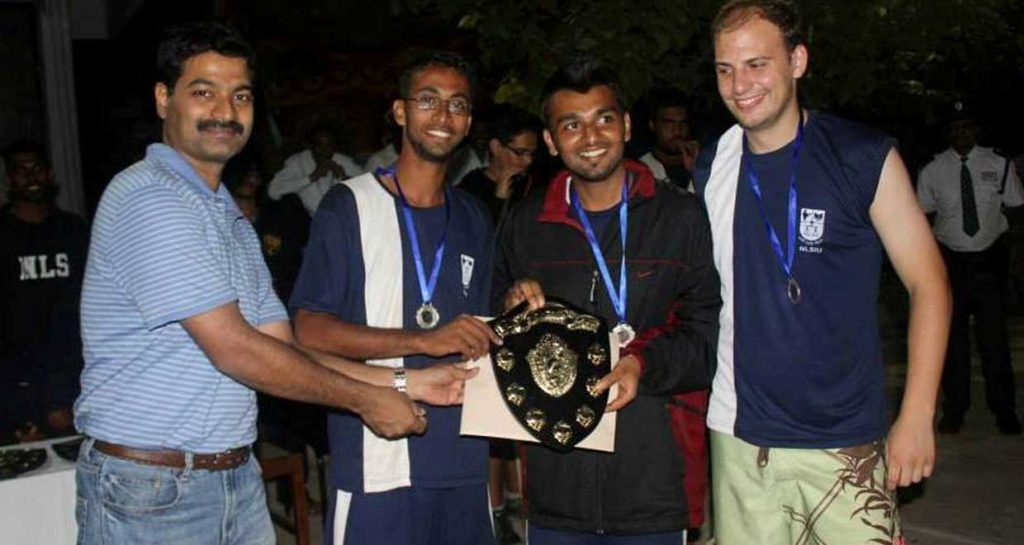
    (Mayank captained the university cricket team, tennis team, squash team, badminton team and helped organize “Spiritus” which is the largest law school sports fest in India)

    Due to my pre-college involvement and background in sports, my interest in organisation as well as participation in various sports came naturally. Moreover, NLS has a thriving sporting culture, and being surrounded by people who are juggling both ECAs (not limited to sports) and academics  is inspiring in itself. Further, the insane effort put in all around the year by the Sports Committee, including the painstaking process of scheduling events around academic commitments of multiple batches, is no simple feat and actually helps ensure enthusiastic participation all year around without really jeopardising academics. I believe they are doing an incredible job in keeping the sporting tradition at NLSIU alive and I feel proud to have been part of it during my brief stay.


    What would you advise a student who wishes to excel at sports too in law school, considering time management or risk of injuries are valid issues most students face at law school?

    I believe that playing any kind of sport helps in acquiring the mental toughness to deal with the unpleasant situations you often face in your professional life, apart from keeping you physically fit, which I would say is critical especially in such a sedentary profession. More than anything else, I think sports reveal character and that’s why some friendships forged on the field during those crunch situations and the respect earned on the ground stay with you for times to come.  As regards the second part, injuries are part of any sportsman’s life and with a variety of sports to choose from, an individual may choose the ones s/he feels comfortable to engage in.

    Tell us about the internships you pursued while at university. How did you choose where to intern? What led you to start practising soon after graduation, considering a lot of your peers would have joined firms?

    I was quite clear from the beginning that I was going to pursue litigation as a career. My internship choices were driven by this. I interned with various lawyers across courts and forums, including a lot of trial court experience. I tried to keep a wide base in the beginning which I later narrowed down to fields of specialisation. I just prefer litigation over corporate firm practice as I feel more comfortable in this role, which might be due to the different skill sets involved in the two.


    mayank-aggarwal-1

    How does one decide which Court to start practising in after graduating if one wishes to litigate. How necessary is it to have a mentor/guide at the start of your practise?

    Frankly, I don’t think there is any right way of going about it. From the interaction I have had with my peers and seniors and my personal experience, I think a lawyer should just make the most of whatever he has to work with. I personally chose to start practising from the district courts right after graduation, which I continue to do till date, as I wanted to develop an understanding of legal procedures from the ground up. Moreover, given that I wanted to specialise in criminal law I didn’t really have a choice as the exposure to evidence and the various stages and facets of criminal trial can’t be obtained at appellate stage directly. I don’t know how important a mentor is but having someone who believes in you can be very helpful, especially when you come straight out of college. This assumes greater importance in a country like ours where practice and procedure can sometimes be so diverse that you tend to question if you were studying the right courses. I think feeling inadequate and lost in the initial phase is a very common phenomenon, so either find someone who helps you go through it or grow thicker skin!


    You have worked extensively on criminal matters while interning and after graduation. What are the various opportunities here and what made you gravitate towards criminal practise?

    After working on a variety of matters during my internships I personally found myself more inclined to work on criminal matters due to some personality traits, including, possibly, a flexible moral fibre. Other contributing factors in this decision were the enabling power of a criminal lawyer, the gravitas and immediate impact a good criminal lawyer has on lives. The cases you deal with are sometimes actually a matter of life and death- how many professions can you say that about?  I also think my internships with Mr. Vikas Pahwa, Sr. Advocate and watching him in action in court had a lasting impact. Furthermore, my work at the chamber of Adv. Yudhishtar Kahol was particularly enriching and fulfilling; observing Kahol sir cross-examine witnesses and interpret evidence was a sublime experience and  cemented my love for criminal litigation. The fact that both these counsels had dealt primarily anti-corruption matters, which generally involve generous volume of paperwork and an equally large number of witnesses to be examined, gave me amazing exposure to the evidentiary aspect of trial in a very short time for which I am indebted to both these offices.


    Soon after graduating, you worked as a junior advocate for a year and then decided to join RHA Legal, who are relatively new. Tell us about RHA Legal, the kind of work they generally deal with and what made you join them.

    RHA Legal is a start-up law firm which focusses on Intellectual Property Rights, Corporate advisory, and Litigation & Dispute Resolution practice. I am primarily attached to the Dispute Resolution vertical branch of the firm headed by partner Ajit Sharma, who does a lot of criminal litigation including white collar crimes apart from a diverse civil practice across various forums viz. Supreme Court, High Courts, NGT and Central Administrative Tribunal.  Rajiv Kr. Choudhry heads the IPR team, which inter alai does some highly technical advisory work on patent law and copyright.

    RHA Legal being a small firm, I have had the opportunity to work with both these teams and my experience here has been extremely fulfilling and enriching. The focus is on the creation of an extremely supportive and enabling work culture that has been built by the partners for everyone who works with them including the associates and the interns.  As compared to a larger setup, I believe a smaller firm gives you ample opportunity to be involved in the problem solving process from the very beginning, and that too at multiple levels including client handling, issue spotting and strategizing. Thus, giving you better perspective, far greater responsibilities and a more hands-on experience, which can prove to be vital for any litigating lawyer.


    What have you been tasked with in your tenure here? What is an average work day like in your life?

    From the very first day of my joining the Firm, I have enjoyed a very broad base role which included sitting through client meetings, researching on legal issues, flagging legal propositions in the case at hand, lot of drafting opportunities and some face time in the Court as well. The level of faith reposed in me, especially with regard to quality of work entrusted to me, is tremendous and I consider myself fortunate to work in such an enabling setting with some very talented and supportive seniors and colleagues. The work hours are manageable and vary according to the volume of work.


    Tell us about the Trial Courts at Delhi and your experience in working there. Why do you think it is an interesting avenue for graduates to pursue? Tell us about your experience with pro bono work.

    Although Trial Court work is very exciting and in fact crucial for a criminal litigator, the biggest obstacle I faced is the massive chasm between the practice and what is taught at Law School.  The one unique opportunity which a litigating lawyer has over all others, is the ability to make a difference at a very early stage. I have had the good fortune of working on some pro bono cases with Vertical Legal, a dispute resolution firm working out of Delhi. The firm has a steady real estate advisory practice, but has a dedicated team taking up pro-bono matters including a Sunday-only Legal Clinic imparting free of cost legal advice to all and sundry. I trust that apart from being a learning opportunity, it is a humbling and a supremely fulfilling experience. I have been involved in this work since my fourth year of law school and I must say I am very proud of what we have been able to accomplish since then. Some of the work we did was also reported recently in the media, including a piece in the reputed Caravan Magazine on a case relating to ill-treatment of migrant labourers in Punjab. This case also made me realise the extremely effective role that the media, and good journalism in general, can play by taking up socially relevant stories and contributing to the solution, which does not always lie in the legal sphere.


    What are your goals for the immediate future?

    I don’t have any elaborate goals for the near future. I would love to continue in my current setup and learn as much as I can in the process. Litigation, they say, requires patience and perseverance; I currently feel that I am stocking up on both.


    mayank-aggarwal-5

    What would be your parting message to our readers, especially those who wish to litigate?

    They say, “Litigation is not a profession, it is a way of life” and with each passing day I am appreciating the aptness of this statement. Although I feel I am not old or wise enough to give advice, I will pass on something which a very wise man once told me- “Litigation involves industry, and lots of it. Don’t do it for the money, there are exponentially easier ways of making money 🙂”.

  • Gopal Sankaranarayanan, Advocate, Supreme Court of India, on building a career in litigation and on legal writing

    Gopal Sankaranarayanan, Advocate, Supreme Court of India, on building a career in litigation and on legal writing

    Gopal Sankaranarayanan is an advocate at the Supreme Court of India. He graduated from NLSIU, Bangalore in the 2001 batch, immediately after that he went for a Masters in Criminology from the London School of Economics. A prolific writer in various journals and leading dailies, a co-founder of Care For Air, an independent, volunteer organization and a successful practitioner of law, Gopal speaks to about:

    • His college and university experiences.
    • Mooting – the culture and its importance.
    • Helping Bhutan draft its Constitution
    • Legal writing, research and his new project Care For Air.
    • His views on Section 498-A and his advice for being successful in both personal and professional spheres.


    Could you please introduce yourself to our readers?

    I am a son, husband, father and friend. I am also an Advocate of the Supreme Court.


    You graduated from NLS Bangalore in 2001. How was preparation for the entrance exam like then?

    The entrance exam in the mid-90s was very different from what it is now. There were fewer candidates taking it then – a few thousand or so – and the questions were fairly straightforward Math, English, GK, Logic and Legal Reasoning. With time, they have become more complex, and with the advent of the CLAT, fairly random, inconsistent and thoughtless, which is why I am helping my friend Prof. Shamnad Basheer in his challenge to its arbitrary nature which is pending in the Supreme Court.

    Preparation for me when I took the exam was interesting. I took it twice, in fact. The first time in 1995 with less interest, a week after a teenage romantic heartbreak and which led me on to the NLS waiting list and then St.Joseph’s College in Bangalore for a year. That was probably my best year of College – I travelled the country for literary fests, I bunked classes to have beer at Brigade Road and investigated kabab roll joints across the city.

    The second time the following year I spent a week reading that godforsaken Competition Success Review and flipped through the equally mammoth Manorama Yearbook to figure out who had won the Padma Vibhushans and to understand what GATT was. It didn’t help. But what did was the fact that a friend was in NLS and she gave me a few ideas, most important being to finish all the questions. I weaselled my way in, though if the faculty had any idea, they would have nipped it in the bud!


    How was your time at NLS – could you share your experience with us?

    My time at NLS was a lot like life. It was a microcosm of India – girls and boys from across the country from a variety of backgrounds all thrown into this melting pot– there was competition, pettiness, talent, imagination and insecurity. I tried my best not to change who I was (which wasn’t a great idea because I have a prickly personality!). As a result, I tried everything, giving academics the least priority. I played a lot of sports, and was most partial to Cricket and Hockey. I mooted nationally and internationally, helped co-found and convene our annual fest LeGala led by the wonderful Meghana Abraham, participated in literary and cultural events across the country from all the IITs to BITS Pilani’s unparalleled Oasis, sat in dive bars in Nagarbhavi, did all-nighters with cigarettes and dumb charades, danced and sang, choreographed fashion shows, and loved my internships with K.K.Venugopal, Zia Mody and Karanjawala. Subject wise, I fell in love with Constitutional and criminal law and fortunately, that affair continues.

    I made some very dear friends at NLS – many for life, and I am happy that their interactions have made me richer, while not necessarily enriching them! One of those collegemates now shares her life with me, though she claims she barely noticed me then.

    On the flip side, I had my share of controversy and run-ins with the faculty, a few of whom completely lacked the emotional maturity to deal with young people. There were others, like Prof.N.L.Mitra who probably saw some potential in my rebellious streak, and when I objected to the undemocratic manner of NLS student elections, he allowed me to form a Committee to revise our Constitution. That effort thankfully bore fruit largely due to the efforts of P.M.Thimmaiah and Nandan Kamath.

    In my entire tenure at NLS, there were very few members of the faculty who really had what it took both academically and emotionally – A.K.Rai and V.S.Mallar were the exceptions, and the blame for this lies at the doors of a series of Vice Chancellors who were insecure and lacked the imagination to encourage young academics to truly flourish.


    You did your Masters in Criminology in the London School of Economics. Tell us a little about your time there.

    I guess the fact that I didn’t seem like a nerd appealed to LSE when I applied seeking to enlarge my passion for theoretical criminology. At the time, LSE was still a part of the University of London and we had multiple faculty across King’s, UCL and SOAS taking a single subject. I knew Nicky Lacey was at LSE, and that’s why I applied, but to have the erudite Robert Reiner and the accomplished Ben Bowling (now Deputy Dean at King’s) teaching us about feminist theory, stop-and-search and media manipulation was fantastic. The rigour they expected and the inputs we got from international students made the subjects so much more attractive. As we could opt for a non-specialized subject as well, I chose International Law of Armed Conflict & Use of Force, which was helmed by Prof.Christopher Greenwood (now a judge at the ICJ). Greenwood to me sums up everything a Professor ought to be – charming, informed, witty, humble and extremely disciplined. While he taught us, he was also a Queen’s Counsel, advising the British Government on the invasion of Iraq (this was shortly after the September 11 attacks), editing the ILRs (with Lauterpacht Jr.), churning out a series of articles in the top International journals, appearing before the ICJ and also taking 4 other courses on law. Teaching one course at the Masters level can be exhausting – to do all this is superhuman. Along with Greenwood, giants like Christine Chinkin and Rein Mullerson (Gorbachev’s former Advisor) brought into sharp perspective the practical real-life experience that is so necessary for a good academic. I could probably bore you to death about how the approach of teachers in the UK ought to be emulated here – so that they give you some respect and treat you as equals, or at least sentient beings.

    Apart from the classes, which after a long while, I truly enjoyed, I also played Hockey for LSE’s First XI team, and won medals for the Universities League and Championship that year. We trained under the shadow of the iconic Battersea power station and I will never forget freezing my butt off while running around on this Pink Floyd pitch.


    What is the value addition of a Masters in your career?

    I think if you are curious and you like to learn, you should always step beyond our shores to try and experience that world. For me, my Masters was always just going to be knowledge for the sake of it, as I had no plans of working in London and was coming back to practice. I have almost never used the actual lessons or the subject matter of what I was taught in my practise, but the tools of research, of pithy presentation, of verification of sources, of comparison, of context I apply on a daily basis.


    What has been the role of sport in your college days and thereafter? What role do you think sport plays in getting a postgraduate seat?

    I was and continue to be passionate about sports. I still play tennis, badminton, basketball and golf as time permits, and whenever Amit Sharma remembers, I will turn out for a day-night cricket match! As the great American broadcaster Heywood Broun said – “Sport doesn’t build character. It reveals it.” If you allow it, it can be the most defining aspect of who you are. Sport has taught me passion, camaraderie, leadership, sharing and loyalty. It has given me perspective about everything else I do because it is so inclusive and rewarding. You don’t have to play it, you don’t have to be good at it, you don’t even need to understand it to actually be moved to tears when something great happens. I haven’t seen anybody crying enraptured by a great argument in court or a wonderful contract clause. If I were unwell, I would probably skip Court, but I have stepped onto a cricket field with one hand in a cast, and shared a 45 run partnership for the last wicket with Siddharth Agarwal, who now knocks it out of the park in Delhi’s criminal courts.

    During my years as a lawyer, I have been happy to see the seniors at the bar readily reach for their cheque books when I approached them to donate for Shiva Keshavan’s luge at the last Winter Olympics, and my own recent experience as Secretary of the Lodha Committee has been very rewarding in helping formulate policy at the highest levels of one of the world’s most watched sports.

    As far as your applications question is concerned, I can imagine sport playing a big role if you apply to Universities that have strong sports agendas (Duke, Michigan, etc.) or if the evaluator is partial to sport. But if you are unfortunate to have your exquisite essay read by a serial academic topper who frowned at such frivolities, you are up the creek without a paddle.


    What are some of the important observations you have found regarding the moot culture in India in recent years, when you have acted in the capacity of judge?

    I have had varying experiences. I know it’s very tough to know what to prioritize before which judge – some prefer citations, some (like me) love to go into the facts and work the angles, others just want to show how much they know. There are, however, 3 basic things I tell mooters –

    (1) Dont interrupt the judge, but please don’t be obsequious;

    (2) Stick the moot problem on your bedroom door and read it a hundred times – it always throws up something new;

    (3) Use real life examples to illustrate your point and make it simpler to understand (this is actually the Mukul Rohatgi staple!)


    What role do you think mooting should play in a law student’s life?

    I think it has its place. It shouldn’t be an overarching priority because there is so much else on offer in your 3 or 5 years at college. For most young people, this is your last free stretch before responsibilities overtake you. If you can, enjoy it by doing other stuff and meeting new people. This might be the time to walk over and talk to that girl or guy who sits quietly in the second last row without interacting with anybody. Go over, have a coffee together and figure out what makes them tick. Not as a social experiment, but just because it is what humans ought to do.


    Will you give us a brief recount of the time you helped the Kingdom of Bhutan draft their Constitution?

    This really happened by chance. I was in the Chambers of K.K.Venugopal, Sr.Advocate [KKV] and he was approached by the erstwhile King of Bhutan, Jigme Singye Wangchuk to advice on a Constitution. He is quite a forward thinking man, and as a monarch, realized that a Constitutional set-up would be a progressive one. There were many interactions with the Law Minister and the Chief Justice of Bhutan, accompanied by their advisors. Their initial draft was a mish-mash of the UDHR, the ICCPR, the US and Indian Constitutions. KKV spent hours reworking it while I researched the areas that required special attention and suggested alterations where necessary. This was not an easy task for two reasons: One, it required me to fully understand the development of South Asian constitutional law, and Two, KKV almost always asked me questions to which I had no answer! Eventually, the Constitution came into force, with KKV playing the role of Bhutan’s Ambedkar and B.N.Rau rolled into one, while I visited Thimphu in 2008 and sat in their Parliament watching their most polite legislative proceedings.


    You have several publications to your credit. Tell us a little about writing legal articles and research in a lawyer’s career.

    Research is compulsory. Articles are voluntary. Just as with moots, I spend several hours reading caselaw, online articles and books to come to terms with a legal point. If it is a considerable one which I believe the public would like to know about, or an anomaly, or something which is just patently unfair, then I feel compelled to publish. I write from the heart, and I know that often candour is unappreciated, but it also corrects an incorrect impression that people may have. I believe legal writing should be so exhaustively researched that there can be no doubt that it is original and that also there is something novel to say. Also, anyone interested in writing should attempt to have their work spread across multiple publications so that there is no suspicion of nepotism or partiality.


    Is there any habit or skill you picked up over the years that you believe is critical to a lawyer’s success?

    Integrity. If you try to mislead the court or try pulling a fast one on a colleague, the ephemeral pleasure will ruin your reputation for life. Before you know it, judges and lawyers put you down as someone whose word cannot be trusted, and their displeasure starts dampening your performance. While hard work and application are important, they are meaningless without the respect of others.


    gopal-sankaranarayanan-2

    Tell us a bit about your love for Constitutional law and work experience.

    As I mentioned earlier, this was something born out of some invigorating classroom discussions we had in Law School with Profs. Mallar and Vijayakumar.

    When I came into practise, I started assisting KKV in some Constitution Bench cases and I realized how much reading it involved. A turning point came when Mr.Fali Nariman, after seeing me assist KKV in a matter recommended me as his junior counsel for the 9-Judge Constitution Bench hearing the scope of the Ninth Schedule [I.R.Coelho]. I was overwhelmed by his generousity, and later by the fact that preparing for it meant I had to read Golak Nath and Kesavananda cover to cover! It was a brief 5 day hearing under the strict gaze of Chief Justice Sabharwal, and we subsequently succeeded, but even if we hadn’t, it was a personal achievement – to spend hours brainstorming critical aspects of our Constitution’s fundamentals and then to assist one of our finest minds in putting it across.

    Subsequently, I spent 4 continuous months on the reservation challenge in Ashoka Kumar Thakur and learnt that nothing about Constitutional law is easy or brief. It requires rigour and reading, and while it takes time for an opportunity to come your way, it invariably will. I was thus fortunate to address the Constitution Bench concerning the postponement of reportage [Sahara v. SEBI] and to successfully challenge Section 6-A of the Act setting up the CBI [Subramaniam Swamy]. Recently, my arguments on vagueness and liberty were accepted by the Bench that heard the challenges to Section 66-A of the IT Act [Shreya Singhal] and also struck down Section 118-d of the Kerala Police Act.

    At NLS, we were taught one trimester by the late Justice A.M.Bhattacharjee, whose unique grasp of the subject is best reflected in his book “Equality, Liberty & Property” [now out of print]. I remembered his Chapter on Privacy when we were doing the AADHAR case earlier last year, and it was this little bit of stray reading which allowed us to have the case referred to the Constitution Bench, doubting the correctness of how Kharak Singh had been followed. So, you never know when a little extra can come to aid!

    Outside of its use in the Courts, I was always fascinated that while the Constitution was our most important textual document, we had little general knowledge about it. How many Indian homes have a Constitution? But many have the Gita, Bible or Koran. The more I realized how Indian courts have made the Constitution such a dynamic instrument of social change, I felt something needs to be done to increase its reach. An early suggestion to Sumeet Malik from the Eastern Book Company to have a coat pocket edition of the Constitution bore fruit, and the slim leatherbound volume of which I am the proud editor is now in its ninth edition. It is an endeavour to have it in every home soon – our entire Indian cricket team have personal copies and this was what was presented by the President to Arvind Kejriwal when he visited him on the occasion of his election last year.

    I also conceived of an Oral History project which was implemented by Rainmaker, where we conduct and upload free on YouTube hour-long video interviews with the doyens of the legal profession so that those who might otherwise not have a chance to interact might have access to their lives. Soli Sorabjee, Iqbal Chagla, Harish Salve, Gopal Subramaniam, Ashok Desai, Raju Ramachandran, Goolam Vahanvati, and several dozen more have shared their life stories.

    Things like this, apart from actually arguing in court, are way more fulfilling, as they allow your countrymen to slowly become aware of their Constitution and their rights.


    What are your views on Section 498-A and the realities of its application?

    I think, much as the Supreme Court itself has, that this provision is being abused often. In some States there are police advisories not to automatically arrest the accused in such cases and to be cautious. Marital discord is usually irreparable once you reach this stage, and the deepset rancour coupled with the lethargy of our judicial process eventually leaves the victim (husband or wife) with no way out of an unhappy situation. Based on my Note, the Supreme Court recently laid down guidelines in Arnesh Kumar, but I don’t know how it is being implemented in the respective States.


    How do you manage your professional life and personal life? Do you keep both separate?

    Actually, I don’t. I am thankful that my wife Haripriya Padmanabhan (also a Supreme Court advocate) is such an excellent multi-tasker – she does her Court work (much better and more thoroughly than me), she manages our three kids, she cooks wonderfully and she discharges her role as the Secretary of the school PTA, so that all I really have to manage is my own practise!

    One of the things Haripriya and I agree on is that family is more important than anything. Thus, we have our office a mile away from home so we can be close to the kids, but we don’t work on anything together. We have our distinct practise areas (she is more into commercial litigation, education and civil law) and we never discuss law at home. Our work grants us the flexibility to be home with the children during the day and when there is pressing work, we work into the night after they sleep.

    It’s not easy, especially when you come into Delhi from outside and you don’t have grandparents around, but with patience, luck and friendship, you will always find a way.


    What do you do in your free time? Have you continued activities related to literary and debating (as you were given awards for the same in college)?

    I love films, books and music. The arts have always been my weakness and I collect what I love. Travelling Wilburys, Billie Holliday, Sam Cooke, Guru Dutt, Stanley Kubrick, Wong Kar Wai, Watchmen, Sandman – I love them all.

    Recently, a more grim issue has taken up my time – air pollution. It is something that is slowly enveloping our cities and making India unliveable, particularly affecting the very young, the pregnant and elders. A few of us have founded Care For Air, [www.careforair.org] an organisation aimed at raising awareness about the problems and solutions regarding the toxic air. We make presentations to school and residential communities and continue to spread the message.

    L&D-wise, one of the things I do on an annual basis is to host MyLaw’s A Question of Law, a quiz on law for lawyers, law students and the general public on Law Day (November 26th). Its light hearted and fun, which is evident from it being conducted at Monkey Bar! We just finished 5 years of that, and it is a lot of fun with several hundred participants and regular rounds of tequila shots.


    Do you have any parting advice for all our readers out there?

    Just one: tomorrow, you could be hit by a truck, so don’t keep worrying about your majestic long-term goal. Keep small workable milestones which have nothing to do with your peers and where they have reached in their lives. Make time for sport or music or painting or language or whatever you enjoy. Try and travel, even to small places nearby. Don’t let work come in the way of your important relationship moments (weddings, birthdays, anniversaries, even funerals). If you have a partner or a child, try and be there for his or her doctor’s appointments or school performances or shows. When you’re 55 with an empty nest, you won’t remember which case you were arguing when your daughter was winning the relay.

    As the windows of Chartres Cathedral will tell you, as long as we are on the shoulders of the giants who came before, we will always be okay.

  • Gulika Reddy, Advocate, Madras High Court, and IBJ fellow, on work in the social sector

    Gulika Reddy, Advocate, Madras High Court, and IBJ fellow, on work in the social sector

    Gulika Reddy is a lawyer in the High Court of Madras, a consultant at the Centre for Child and Law at National Law School of India University, an International Bridges to Justice Fellow and the founder of Schools of Equality. She graduated from ILS Law College in 2011 and since then has worked extensively in the field of human rights, crusading for the rights of women, children, climate refugees and various other victims of discrimination and injustice.

    In this interview, she tells us about:

    • Human rights law – the areas she works in and why.
    • The International Bridges to Justice Fellowship
    • Schools of Equality
    • Advice for law students wishing to pursue Human Rights Law.


    Which areas of human rights interest you most and which human rights abuses are you most interested in working to address in your career, and why?

    Social groups have been divided on the basis of various facets of identity including race, gender, sexuality, class, caste and religion, resulting in violations of individual or group rights merely due to one or more aspect of one’s identity. Growing up in India, I felt anger at the normalization of this form of social injustice. Since my life experience is closely tied to my gender, related issues were those that resonated most strongly with me. Compounding this was the social acceptance and general sense of apathy towards gender-based violence in India. My untested belief that knowledge of law was empowering and a powerful instrument for social change motivated me to go to law school.

    After I graduated, I began practicing in the High Court of Madras and soon realized that in India legal responses have neither reduced its occurrence nor have they improved access to justice for victims. In spite of protective legislations, millions are unaware of their rights, conviction rates are abysmal and attitudes within the judiciary prevent rather than promote justice. Examples of judges telling victims of abuse to “adjust” to their circumstances and suggesting rape victims mediate with or marry their rapist as a form of compromise expose inadequacies in the current system and make evident the need for a change. I have been working towards facilitating this change through interventions in the legal and education system.


    gulika-reddy-1

    You are the recipient of two fellowships the International Bridges to Justice fellowship. Describe the kind of work you’ve done as a part of the fellowship.

    While practicing in the High Court of Madras, it became apparent that several other challenges exist which lie outside the ambit of litigation.These relate to lack of rights awareness, inadequate access to affordable and sensitized counsel and ineffective implementation of the law. To address these issues, I began to advise non-profits that work in the field of human rights alongside my litigation practice. In recognition of my work, I was awarded a Fellowship by International Bridges to Justice, which allowed me to scale up my efforts.

    Using the fellowship, I set up a collaborative program that brought together non-governmental organizations (NGOs) andacademic institutions and to organize periodic rights awareness programs and dispense free legal aid forindigent and marginalized women. I also set up a pro bono network of lawyers to provide free legal aid for these women in prison, most of whom were sex workers who had been coerced into the sex trade and then abandoned by their families due to the “shame” associated with the trade.


    gulika-reddy-2

    What motivated you to start Schools of Equality? How would you describe the work that it does?

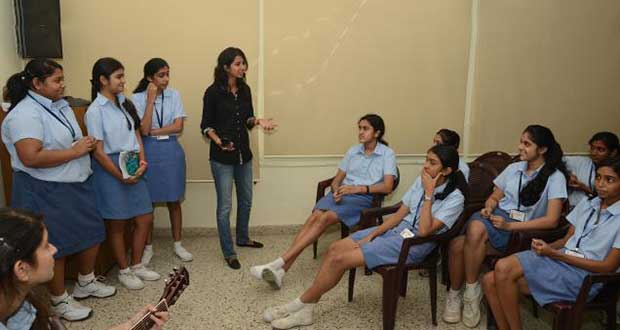
    Despite receiving free legal assistance, women at the awareness workshops expressed reluctance to approach the legal system, as they felt further victimized by the judicial process and functionaries under the law. To encourage functionaries to act with sensitivity and a sense of urgency, I conducted training and sensitization programs with human rights lawyer, Ms. Geeta Ramaseshan.In spite of our efforts I observed that attendees were unable to shift deeply entrenched attitudes towards women. It became apparent that the insensitivity present within the Court system was symptomatic of widely held beliefs about women and gender roles in society.

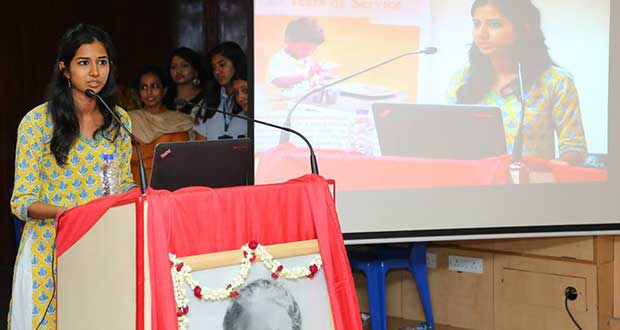
    Recognizing that gender socialization begins early and is reinforced by societal institutions, culture and media, I started Schools of Equality, an organization that runs activity-based programs which aim to shift social attitudes that perpetuate gender-based violence. The program encourages students to question notions of power related to gender and its intersectionalities like caste, class, religion and sexuality; to understand the right of choice; and to respect each other’s rights.As a part of the curriculum, they learn about their rights; interact with social justice movements, lawyers, artists, writers, photographers, musicians, performance artists, and therapists; frame their own opinions; learn creative modes of self-expression; and take action to build communities of respect.


    What is the format of the program?

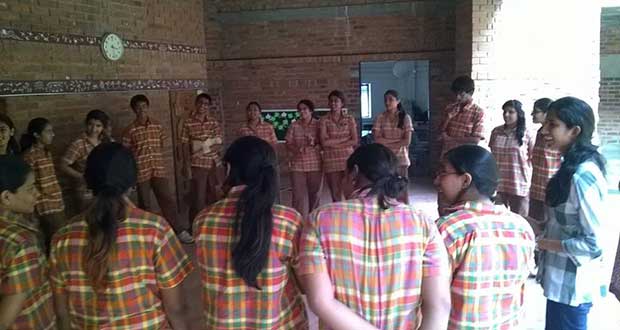
    Our year-long programme has been incorporated within the mainstream school curriculum. We organize one session a week conducted by a trained facilitator, who exposes the students to a variety of approaches to equality, allowing them to frame their own opinions. Our team of facilitators come from a variety of backgrounds including law, film, journalism, art, education, psychology and theatre. This year, the sessions in the first term focussed on examining issues of identity and stereotypes. Sessions in the second term will focus on creating rights awareness and discussing the impact of media and popular culture on equality and social justice and the final term will see students draft their school constitution, plan campaigns and organise events within their local community.


    gulika-reddy-3

    How have schools responded to the programme? Can you include quotes or testimonials from schools?

    Although it was challenging to introduce this curriculum within the existing conservative school system, transformation amongst the students and action taken by them within their communities captured the attention of other schools, the national media and the local government. The local government in Chennai and Kadapa district in Andhra Pradesh appreciated this approach to addressing social justice issues and have now introduced the program in government schools at the city and village level.

    We have received extremely positive feedback from teachers, parents and students we work with. Here are some of the responses:

    Teachers: “Schools of Equality provides a safe and empathetic platform for students to talk about the most essential yet sensitive, so-called forbidden topics in society…helping students become resilient and global citizens, aware of their rights”

    “It’s so nice to see the space you have created for them (the students) where they feel comfortable to speak. They’ve opened up and seemed more confident in their own skin. For some of them, the transformation has been so positive that it’s difficult to even recognize them anymore.”

    Parent: “I have been hearing about Schools of Equality from my son. I feel you have made him feel empowered and I see him empathize as well.”

    Students:

    “I liked all of us interacting and talking about each other’s problems and also realising what empathy is and how much it matters.”

    “The questions asked in this class were thought-provoking and intriguing. This class was very useful to us.”

    “Schools of Equality has changed the way I view everything.”


    gulika-reddy-4

    What is your vision for the role human rights law and lawyers should play in promoting social justice?

    My vision is a human rights framework that provides a robust mechanism to bring national government responses closer to their international commitments. While it is important to carefully assess and arrive at a human rights framework that sufficiently represents all stakeholders, what is even more critical is ensuring states’ compliance with the same.

    We have multiple actors and agencies, working on the global issue of social injustice in different locations, at different paces, and none free from partisan politics. Rights on paper are insufficient in the absence of genuine participation in what needs to be a collective effort to deal with issues of social justice internationally. Therefore, while framing law, equal emphasis must be laid on creating fundamental enabling conditions that will aid effective implementation. This will involve building collaborative networks, facilitating coordination between state and non-state actors and conducting training and capacity building to prevent and respond to social justice violations.

    Also, lawyers must look beyond formal legal structures and be innovative and creative in developing interventions along with experts in other disciplines. These interventions must appreciate the embededdness of social injustice issues within the larger socio-cultural context, and must involve community engagement to address it at the interface of law and society. Only a multi-pronged approach that is designed with a clear understanding of this systemic problem, the factors that have contributed to it and the societal and institutional roadblocks that contribute to its perpetuation will help address issues of social injustice.


    What advice would you give law students wishing to pursue a career in Human Rights Law?

    A lot of the advice I have for a law student interested in a career in Human Rights Law is captured in the “Letter to a law student interested in social justice” by William P. Quigley: https://law.duke.edu/curriculum/pdf/interested_social_justice.pdf


  • Huzefa Ahmadi, Senior Advocate, Supreme Court, on an illustrious career in litigation and work experience at Magic Circle

    Huzefa Ahmadi, Senior Advocate, Supreme Court, on an illustrious career in litigation and work experience at Magic Circle

    Huzefa A. Ahmadi graduated from Law Center-II, University of Delhi. He joined the Bar Council of Delhi on 6th September ’91 and started litigating before High Courts and Tribunals. He briefly went abroad and worked with Clifford Chance on a work experience placement.

    Huzefa came back to join litigation in India. He practices before the Supreme Court of India in matters concerning Constitutional Law, Administrative Law, Tax, Civil and Criminal Law. A third generation lawyer, law came naturally to him and he never considered any alternate career choices at all. Huzefa has been designated as a Senior Advocate in November, 2012.

    In this interview, he talks to SuperLawyer about:

    • Being influenced by his father, who retired as the Chief Justice of India
    • Experience as a law student at Delhi University in the early 1990s
    • Importance and minimum requirement for the designation of Senior Counsel
    • Entry of foreign law firms in India and its impact upon Indian lawyers


    When did you get inclined towards law?Tell us a bit about your family.

    I had decided to do law while I was doing my graduation. I am a third generation lawyer. My grandfather was a judge in the subordinate judiciary under the erstwhile State of Bombay. My father retired as Chief Justice of India.


    Did your father motivate you to pursue law? How did you come to study law?

    My father did not try to influence my decision as to the vocation I would like to pursue. In hindsight, I feel that my lineage did subconsciously goad me to take up law.


    huzefa-ahmadi-1

    Which stream did you pursue your basic graduation in? Was the five-year course available to you?

    The five-year course was not introduced when I studied law. I did my B.A. with Psychology. I had no other plans but worked for a short time with HCL and sold computers for some extra pocket money.


    How was the environment in Delhi University in the early ’90s? What student activities were you a part of? How about internships?

    I did my law at the Evening Centre at Mandir Marg (CLC-II). Some professors were good but overall the course was neglected. You required an upper second in graduation to get into the law course. There weren’t too many student activities happening at the Evening Centre but classes were frequently disrupted by union activities. Most students were in Government service or over 40 years of age and did not seem interested in active practice of law.

    Internships weren’t introduced at that point of time. Internships now help in getting a broader insight of the profession. A lot depends on how keen the intern is towards the profession.


    Could you tell our readers about the first time that you appeared in court?

    (Huzefa began practicing at various High Courts and Tribunals soon after graduation)

    You always get a mixed bag of judges. Some were very helpful to young lawyers. I was fortunate to be in a chamber where I got a lot of opportunities to argue cases. My first appearance was before the C.A.T. where I argued the case of an Excise Superintendent against whom there was a disciplinary proceeding.


    Who were your mentors?

    Mr. M. Chandrasekharan, Senior Advocate and Mr. Maheshwer Dayal, Senior Advocate were my mentors in my initial days of practice. I was also inspired by my mother and father whose advice and guidance served as a beacon of light in the profession.


    Did you ever have any other plans other than litigation? What are your views on LL.M.? Do you think Indian Legal Education needs to improve?

    I never had any alternative plans.

    I think LL.M. helps in building a jurisprudential base. Legal education needs to improve at the middling level. There is a huge gap between the five-year courses and others.


    How did you get to work at a Magic Circle firm? When did you decide to come back to India?

    (Huzefa worked at Clifford Chance on a work experience placement)

    There was some work that I had done in India which led to my joining them on a work experience placement. The exposure was good as I saw the scale and expanse of an international law firm. I returned because I wanted to practice litigation in India and did not want to work with a corporate law firm.


    How does one become a Senior Advocate? Is there a lot of work owing to the designation?

    (Huzefa was designated as a Senior Advocate by the Supreme Court of India in 2012)

    It is necessary that you practice purely as a counsel at least for about 5-7 years before you apply to be a Senior Counsel. Designation can sometimes be a boon and sometimes a curse. If you are not up to it and aren’t briefed for the strangest of reasons you will be without work. As a Senior Advocate you get very less time to prepare as you are invariably briefed on the previous day.


    What are your views on the possibility of foreign law firms entering the Indian market?

    I think they should be allowed to enter but on a reciprocal basis. Their entry will ensure better terms for young lawyers.


    What would be your message and advice for our readers?

    Work hard and stay focussed on the profession. Have a hobby and other interests because there may be long periods of time when you may not have work despite doing your best.


  • Ashish and Vagish Kumar Singh, Founding Partners, Capstone Legal, on starting up with independent litigation right after graduation

    Ashish and Vagish Kumar Singh, Founding Partners, Capstone Legal, on starting up with independent litigation right after graduation

    Ashish and Vagish Kumar Singh graduated from NLSIU Bangalore in 2012 and 2013 respectively. Right after their graduation they decided to take the plunge and start-up.

    Founded in 2012, Capstone Legal is a leading law firm based out of Jaipur practicing law at Supreme Court of India, Rajasthan High Court, Gujarat High Court and Bombay High Court. The firm has handled over 400 cases in the past two years ranging from Tax disputes amounting to several hundred millions of rupees to pro bono work for India’s leading NGO’s.

    In this interview, the partners of Capstone Legal discuss about:

    • Building a successful law firm without any legal background;
    • Attracting clientele and performance in Court; and
    • Advice to prospective litigators and mooters.


    How would you like to introduce yourself to the readers? Please tell us something about your childhood and background?

    Ashish: I am the managing partner of a law firm called ‘Capstone Legal’ and graduated from NLSIU Bangalore in the year 2012. I am a litigating advocate who usually appears before Supreme Court, Rajasthan High Court, Gujarat High Court and Bombay High Court. My father is a retired civil servant and my mother is a retired school lecturer. I spent my childhood in several cities of Rajasthan due to transferable nature of my father’s job. My father has been always been an inspiration for me and both me and Vagish Ji have tried to borrow his Honesty and hard work in life and profession.

    Vagish: Ashish Ji is my elder brother and I Joined Litigation owing to his guidance and support. I graduated from NLSIU Bangalore in the year 2013 and joined as a Partner of Capstone Legal. We are one firm which has not one but two managing partners.  I started litigation at the Rajasthan High Court and I appear before the Supreme Court, Rajasthan High Court and various Tribunals in Jaipur and New Delhi. As Ashish Ji said our parents were in Government Service and hence from a very early age we were exposed to Governance and Law. I remember accompanying my father to NREGA works and “Governance at your doorstep” camps. These practical insights into law, government and the State guided me throughout Law School and even now as a Litigator. Even though both of us did our Senior Secondary as students of Science, our interest was always towards contemporary Social and Political issues.


    Why did you opt for the field of law? Do you have any legal background?

    Ashish: As my father was working with the government, I got an opportunity to observe the functioning of the executive & the judiciary which made me realize the importance of the profession of law. However, the main reason was that I was averse to the concept of working under a boss and it was my sincere belief that a career in law can give me the freedom to work on my own terms.

    We do not have any legal background. No one in my family, except my brother Vagish has a law degree.

    Vagish: My inspiration to join Law was undoubtedly motivated by the constant insights which I had by interacting with Ashish Ji, when he was in his first year of law school. He painted such an exciting and challenging picture of the Course, that when I gave my senior secondary examinations albeit as a science student, I had decided that I would opt for the field of law. Our upbringing also had a major role to play in this decision and I couldn’t agree more with Ashish Ji, our parents guidance had always encouraged us to observe and critique governance both from the perspective of a layman as well as a Judge or an Administrator. Law is not a subject either taught or practiced in isolation, it has great social, political and economic ramifications. The socio-political relevance of the subject had always fascinated me as a student and I was lucky to be guided and supported by my family in joining law.


    What were your objectives and plans in the preliminary years of the law school?

    Ashish: During the preliminary years at NLS, my objective was to become an entrepreneur. Thanks to our extraordinary faculty members, subjects like Economics always took my fancy. Needless to state, an understanding of law and procedure is vital for a business to survive and thrive.  However over the years I was lucky to have experienced some Great Internships under Mr. R.P. Singh (Senior Advocate) and Hon’ble Justice S.S. Kothari as he then was. I became inclined towards joining litigation in my third year at law school.

    Vagish: When I had joined law School, my only objective and goal as far back as I can remember was to join the Civil Services. I had been inspired by my Father and the manner in which people appreciated his hard work and contributions. However by the time I completed my fourth year of Law School, litigation appeared to be an exciting and challenging profession. That coupled with the fact, that through litigation I could possibly contribute to the bar and the society without any intervention by political or social elements.


    Have the NLUs been able to produce socially relevant lawyers? What is your take on this, given that many chose to take up firm jobs?

    Ashish: Taking up a job at a law firm cannot be the touchstone to decide whether a lawyer is socially relevant or not. There are several law firms & lawyers who take up pro-bono work and are engaged in social activities. It depends on one’s ability to find time to do something which helps the society. Moreover, some people choose to support social initiatives by providing indispensable financial help which according to me is an important contribution to the society.

    Vagish: All the National Law Universities have contributed immensely in producing socially relevant lawyers. In my opinion, Social relevance is often erroneously equated with only pro bono, policy making or individual litigation. The efficient functioning of the Industry, market and other financial entities is equally if not more vital and relevant for the society as any other job. I am glad and confident that the fate of Corporate India is in the hands of my Learned Seniors and Colleagues. Their contribution cannot be ignored in any manner whatsoever.


    Did you focus only on the Academics in the college life? How did you excel in the Academics? How’s the Academic Pressure in NLSIU Bangalore?

    Ashish: My focus was on academics while studying in Law School but I was a part of several hostel committees due to which I had a chance to work closely with the university administration. I was good at academics but I always scored more marks in my research papers than written examinations.

    Academic pressure at NLS Bangalore is high but one gets to learn a lot from the faculty and seniors. We had the country’s best faculty and I am lucky to have been taught by such legends in law.

    Vagish: The academic pressure in NLSIU is immense, you are constantly haunted by the fact that you are surrounded by the country’s best and brightest legal minds. But that in my opinion is also the greatest incentive and strength of Law School. Due to that competition and intellectual stimuli my primary focus was always on academics. However as Ashish Ji said we were involved in the Hostel Committees and worked closely with the College Administration on various issues. I always enjoyed participating in and helping in organising ‘Spiritus’ which is NLSIUs sports festival and played some Hockey and Volleyball for the University. It was always my endeavour to stick to all timelines stringently and attend classes irrespective of bad health or otherwise.


    What were your area of interest while you were in Law School? And how did you go about developing expertise and knowledge in these areas?

    Ashish: I had done my senior secondary as a Science student and therefore when I joined law school, introduction to subjects like Economics and Sociology fascinated me. I enjoyed reading international authors on Contract Law and Transfer of Property. However as soon as we were introduced to Commercial Laws and Taxation Laws the expanse of these laws and the beautiful legal principles governing them, took my fancy.  During my fifth year in law school i spent long hours in the library studying and discussing Laws related to Arbitration, Taxation and International Trade Laws. One of my favourite subjects has to be Litigation Advocacy, which was taught in the final year.

    Vagish: In my first two years in Law School I enjoyed subjects such as Sociology, History and Political Science. I was amazed by the manner in which all these factors affect the formation and enforcement of laws in our country. My primary areas of interest were Criminal Law, Constitutional Law and Indirect taxation. I always made it a point to attend all our lectures and atleast browse through relevant reading material before attending them. We had an amazing faculty who always had an open door policy to all students, and hence project consultations and interactions after class really helped in my understanding of various legal principles. In law, there is no alternative to extensive reading, hence if a student of law intends to sharpen his skills and knowledge, he/she should read law not for grades or CGPA but for its real life application and utility. It is very essential to make a connection between ones internships and the subject matter being taught. All sections or provisions of law are not equally practically important and as a law student although it is prudent to have a overview of all important enactments but it is very important to not ignore the basics.


    You judged several moot court competitions in the past. What do you see in a good mooter? Please provide guidance to the Prospective Mooters?

    Vagish: I remember interacting once with Justice Rajendra Babu in one of our farewell dinners at law school. I told him about my intention of joining litigation after passing out and sought his guidance. He told me that the biggest mistake a young lawyer or a mooter ever makes is that he/she focuses so much on the intricacies of law that facts are ignored. It has been my belief and experience that litigation as well as mooting involves attention to detail to every single fact in a brief. It is important to know what to say and when to say it. Presentation of facts sometimes makes the most crucial difference between a good and bad mooter. My advice to all mooters would be to never memorize what to say or how to say it, just be thorough with your facts and law; and go with your natural style and flow.

    Ashish: I completely agree with Vagish. Adding to what he has said, my suggestion to all mooters would be to read at least the introduction to Nani Palkhiwala: The Court Room Genius. It is important to be sound on Procedural laws and give importance to a particular argument on the basis of the stage at which a particular brief is being argued. Also, a mooter or a young lawyer should be his own best critic and counter every argument he/she plans to make. I have noticed that mooters and young advocates sometimes rely on overruled judgments due to blindly relying upon Books and Commentaries. It is vital that before a particular case law is cited before a Tribunal or a court, the entire jurisprudence on that particular issue should be clear in the mind of the Mooter/Advocate.


    There is a notion that one should work at least a few years under a Senior Advocate to understand the intricacies and practical aspects of Law. You started your practice independently right after graduating. How did you overcome your initial jitters in a courtroom full of experienced lawyers and judges?

    Ashish: Working with an experienced advocate certainly is helpful in training a young lawyer in legal and procedural skills, most importantly court craft and presentation. I have had the privilege of briefing Mr. K.V. Viswanathan, Mr. S. Ganesh,, Mr. Hiren Rawal, Mr Amrendra Sharan (Senior Advocates) in some our cases and it has taught us important insights in law and procedure. However I disagree with the statement that it is a prerequisite for every young counsel to compulsorily work with a Senior. A good senior is one who provides ample opportunities to his associates and juniors to prepare and present cases in courts. I was extremely fortunate to spend my only few months as a Junior Associate in the office of Major R.P.Singh Senior Advocate. He always encouraged me to draft Petitions, replies and entire briefs as well as appear before the Hon’ble Courts, at a young age. I am also thankful for the Guidance of Mr. N.M. Ranka Senior Advocate, under whom I did not have the privilege of working, but have always received his guidance, encouragement and support.

    Vagish: I find it extremely difficult to understand this fallacy that a young lawyer should spend 5 to 10 years with a senior or a firm before he/she starts to appear himself before courts of law. Personally I feel no matter how experienced one becomes, a crucial hearing or a high profile case will give jitters to even a senior counsel. As a law student who has been trained by the best teachers in this part of the world, we can make no such excuse and should be ready to take on the responsibility. Most of all young lawyers should learn to embrace the challenge of this profession and be confident in their knowledge and skills.


    Both of you being partners of Capstone Legal. What all challenges did you face while starting up given that you do not have any legal background? What were your challenges and how did you face them?

    Ashish: I remember Hon’ble Justice V.S. Dave had told me once that Litigation and Advocacy is a rather strange profession, for the simple reason that one has to behave like an aristocrat yet be as one with the masses. I understand now the true meaning of what his Lordship wanted to convey, since not every brief involves multinational corporations or persons with a capacity to pay. Early on it is extremely difficult to attract clientele and maintain a regular flow of cases. The task becomes herculean if one starts accepting or rejecting a brief for the fees that the client is capable of paying. We overcame this trust deficit by accepting briefs irrespective of the fees, and by sincerely and thoroughly representing whatever limited clients we initially had. This performance at the bar acts like an investment whose dividends a Counsel reaps in the future. Due to this practice, we currently work with over a dozen ET500 companies.

    Vagish: The biggest challenge that a young lawyer or lawfirm faces is attracting clientele. However, if a lawyer is patient and remains honest to his profession, this hurdle can be overcome by consistent performance at the bar. A young lawyer should not worry about the fees or quantum involved in a particular case. it might be extremely difficult to get your first brief but as I have learnt by observing Ashish Ji, performance at the Bar is noticed both by the Bar, the Bench and by other clients. We have also been extremely fortunate to receive guidance from seniors such as Mr. N.M. Ranka, Senior Advocate; Mr. R.P. Singh, Senior Advocate who always motivated us and trusted us even with complicated matters.


    Please tell our readers about Capstone Legal, which in a brief period of two years has earned the name in the Legal Industry. What is a day at work like? What is the most challenging or stressful part of being a founding partner of a law firm?

    Ashish: We started Capstone Legal as a litigation firm with the objective of providing individual and corporate clients a one stop solution for disputes pending before tribunals and courts of law. I am fortunate to work with Vagish as partner since we have always worked together and understand the firm’s objectives and requirements equally. A typical day at work always begins at 8.30 and spending all day at Court or Tribunals till 5 and coming back to sit in office to about 11.

    We both enjoy what we do and would not consider stress as being a part of this job. However, the most challenging part of being a founding partner of a law firm is a sense of responsibility and obligation towards a client. Many a times clients from extremely economically and socially backgrounds approach us with cases which we undertake pro bono. To my mind, obtaining any amount of relief in accordance with law to such a person, though stressful and challenging can be extremely gratifying.

    Vagish: The success of our firm is undoubtedly due to the outstanding cooperation between me and Ashish Ji. He has always guided me not to prolong any matter and deal with any issue sincerely and promptly. Clients appreciate our zeal to get positive outcomes. Ashish Ji has already talked about the day at work and typically both of us share the same time table. We make it a point to prepare all briefs together so that the interest of the client is not jeopardised in case one of us is travelling to attend matters in other forums or cities.

    I have come to realize that the most challenging part of being a founding partner of a law firm is that though we are always free, we are always busy. I always tell my interns that I do not have anyone who forces me to wake up every morning to sit in office and attend court. As an advocate and partner one has to motivate himself/herself everyday and treat the client’s interest as paramount above all else.


    Today law students intern at different places like Corporate Firms, Litigation Firms, NGO’s, Research Organizations, and Policy Think-Tanks etc. Where were your internships at law school? How is an internship helpful for a law student?

    Vagish: I think it is a welcome trend in law students to experience all areas and fields of practice of law. While in law school, both of us undertook internships at NGO’s, advocates at the Trial Court and Senior Advocates at the High Court. My internships solidified my intention to join litigation and skills learnt throughout those internships helped me in my initial years of practice. I think the importance of an internship for a law student is best reflected when he/she joins the profession. Key skills learnt during such internships enable a young lawyer to familiarize himself easily to the workplace and the profession.


    You have worked in over 400 matters till now across Supreme Court, High  Courts, CESTAT and Trial Courts at a young age. How’s your experience so far in arguing cases? What is the most interesting case of your litigation practice till now?

    Ashish Kumar Singh
    Ashish Kumar Singh

    Ashish: Arguing a case is an extremely challenging and exciting part of this profession. One needs to be well versed in all facets of the particular law and issue in a particular brief. in addition to a clarity in law, I make it a point to be absolutely sure about each and every relevant fact, so that it can be referred and brought to the attention of the Hon’ble court. Most of all the process becomes even more exciting since the issues involved are always extremely relevant to a person or a company, having real consequences to life, liberty or economic conditions of the client. Arguing a case, requires certain tact and court craft coupled with humility. I have had the good fortune of arguing a number of exciting cases, however one particular murder trial stands out. I was engaged by a local counsel at a certain district court to argue the final arguments in a sensational murder trial. It had been published in the local newspapers for years and involved alleged murder of a daughter by her own father. Without going into any details I can state that I was engaged to represent the accused father, and the arguments continued for over 5 hours before the Learned District and Sessions Judge.

    Vagish Kumar Singh
    Vagish Kumar Singh

    Vagish: I had always seen my brother arguing in court when I first joined the profession and he had outstanding confidence and presence at the Bar even back then. I borrowed some of his flair and enjoy arguing before various courts and tribunals. It has been my experience that the most insignificant sounding cases teach a young lawyer the most about law and its practice. Perhaps one of the most exciting cases I have argued was the Constitutionality of Section  234E of the Income Tax Act before the Hon’ble Division Bench of the Rajasthan High Court. I referred to some beautiful passages from Seervai’s Constitutional Law and Case Law distinguishing between Fees and Penalty. Arguing pure and simpliciter constitutional law is always a delight.


    Does Capstone Legal take interns? If yes, then what is the procedure for taking interns? What are your expectations from a prospective Intern in your firm?

    Ashish: Yes we always encourage internships for students in their third, fourth and fifth years. One may apply for internship at Capstone Legal through our website www.capstonelegal.in.

    We expect our interns to participate in the realtime functioning of the firm which includes client meetings, drafting and briefing of counsel. We are a young and energetic law firm and expect the same kind of zeal and energy from our associates and interns.


    What would be you message to the law students who want to pursue their career in the Litigation?

    Ashish: Litigation requires a leap of faith and most of all it requires patience. There may be times in the starting few months of your professional life, when you have no brief, or maybe one brief in one entire month. Even in those times it is important to be honest to one’s profession and attend Court diligently, learn from your colleagues and seniors and always remain vigilant of developments in law whether judge made or otherwise.

    Young law students must undertake litigation internships in good offices, to learn beforehand of the nuances of law and its practice in courts.

    Vagish: Litigation is undoubtedly a challenging profession. However for any young law student who wants to work on his own terms, litigation should always be a choice. It is important to believe and be confident in one’s own knowledge and skills. Most of all a good advocate is always humble and polite to his colleagues & to the bench and yet ferocious while at the bar.


    This interview was taken by: Shubham Gupta, III year, NLU Delhi

  • V. Mohana, Senior Advocate, Supreme Court of India, on the AOR exam, life in litigation and role of a Senior Counsel

    V. Mohana, Senior Advocate, Supreme Court of India, on the AOR exam, life in litigation and role of a Senior Counsel

    V. Mohana graduated from Coimbatore Law College (now GLC, Coimbatore) in 1988, India’s first batch of the five year law course. She joined the chambers of Mr. M. Panchapakesan as a junior after graduation, where she had also interned in her final year. Thereafter, she moved to New Delhi and worked with Ms. Indu Malhotra and Mr. C.S. Vaidyanathan, enriching her expertise in litigation. After successfully passing the Advocate on Record examination in 1996, she has been practising independently in the Supreme Court, Delhi High Court, National Consumer Commission, etc.

    She has worked on matters with eminent seniors like Mr. Kapil Sibal, Mr. K.K. Venugopal, Mr. P. Chidambaram, Mr. Arun Jaitley, Mr. T. Andhyarujina, et al. She was also a Panel Lawyer for the Government of India. She was designated as a Senior Advocate by the Full Court of the Supreme Court of India on 23rd April, 2015.

    In this interview, she talks about:

    • Being a first generation lawyer: college life, internships and interest in litigation
    • Moving to New Delhi and establishing her practice
    • Cracking the Supreme Court Advocate on Record examination
    • Her wide range of practice encompassing various courts, tribunals and as a Panel Lawyer
    • Being one of the few women Senior Advocates of the Supreme Court


    Please introduce yourself to our readers. Were you always interested in pursuing law? Are there any lawyers in your family who motivated you to join law school?

    I am a first generation lawyer, and I have been practicing for the past 27 years. From my school days, I was interested in debating, public speaking, theatre etc. I took an interest in law during my higher secondary education. The sole credit behind my motivation to do law goes to my Mother. There were no lawyers in our family until I finished law. Now there are more than three, and a few more in the making.

    You are a student of the very first batch of the five year integrated law course, introduced for the very first time in India. We would love to know about your college. Was there any confusion/mismanagement, considering it was a new concept?

    Yes, I belong to the very first batch (1983-88) of the 5-Year integrated law course after higher secondary, introduced for the very first time in India in the year 1983. Our college those days (Coimbatore Law College, Bharatiar University, Tamil Nadu) was run in a rented premises. There were very few classrooms during the first year since we were the only batch and the rest of them were three year law students. We had a small library and a very small room for sports activities.

    Our syllabus was structured similar to the present syllabus, but it was not very detailed. We also studied subjects like Sociology, Economics, Legal History, History and Legal Language & Legal Writing etc. during the first two years. The rest of the three years we had subjects like Family Law, Transfer of Property, Constitutional Law, Income Tax, Insolvency, IPC, Evidence Act, CPC and Cr.PC along with Drafting, Pleading and Conveyancing.

    There was no confusion or mismanagement and, of course, the infrastructure was limited. There were few teachers and we had hardly two to three classes a day and only one session either morning or afternoon. There was no hostel for girls and there were very few girls in the class.

    Were there any student activities and opportunities such as debates, moot courts et cetera? What was your typical day like? Did you also pursue any hobbies?

    There were activities and opportunities such as debates, dance competitions, quizzes, etc. which were conducted by other Arts & Science colleges in which we all participated. There were a few moot courts competitions as well that were conducted by colleges outside the city and state, so participation was difficult. Our typical day was very relaxed and had only two classes/lectures. We had a lot of free time to pursue any extra-curricular activities, but we did not have many opportunities. I was in a working women’s hostel and our timings were very restricted. I used to give tuitions for school children in my free time.

    Did you do any internships? What was the work allotted to you like?

    The concept of internships was not in vogue back then. However, we were regularly going to court in the morning since we had classes only in the afternoon. During my final year, I myself went and joined a Senior Civil Trial Lawyer Mr M. Panchapakesan who is one of the doyens in the Civil Bar in Coimbatore. After a short interview and after checking my aptitude, he agreed to take me as an intern and I started going to his office and court in the morning and after college hours. The work I was initially asked to do as an intern was to note the case diary maintained by the office clerk which reflected the entire list of cases on a day-to-day basis for the whole year. Every day we had to note down the date of the particular case in the diary and maintain it regularly so that we get ready in advance for a trial. This habit is something I follow to this day. Apart from that, my senior would dictate legal notices, plaints and written statements which would be taken down by the juniors. I was asked to re-write the same in big font with triple spacing on white sheets of paper and give it to the senior for his correction and editing. By this method, I learnt a lot about drafting and pleading. There was no concept of stenographers in our office those days. Every pleading, application and written submission used to be dictated to juniors. I got the benefit of directly taking the dictation from my senior very soon after I joined as an intern, due to the fact that I could write fast and my handwriting was legible.  I have acquired maximum advantage in profession due to this practice of taking dictation.

    How did you manage the internship with studies? How did the practical exposure compliment the theoretical knowledge imparted to you in college?

    My internship never disturbed my studies. It rather helped me in learning what was taught theoretically in college. For example, we had papers such as CPC, Cr.PC, Drafting, Pleading & Conveyancing in the final year. I feel that these papers should be taught only in the final year. Since I was going to the trial court in my final year and taking dictation in my office, I could practically learn the application of CPC, Transfer of Property, Partnership, Filing Suits, etc. due to the personal practical experience. Even today, it is that training which is helping me. The art of drafting sale deeds, lease deeds etc also helped me in my conveyancing exam.

    Did you consider pursuing higher studies after graduation? How important is it for a lawyer to go for higher studies? Were you inclined at any time, towards the civil services?

    Honestly, we could not think of pursuing higher studies after doing law. Those days, even a five year law course was a luxury and we could not afford to think of any further education, coming from a big family. It is good to go for higher studies if one can get a good scholarship or afford it. However, it is not compulsory if one is planning to do litigation in India. Of course, higher studies abroad gives you wide exposure and analytical approach so it is very helpful. I never thought of civil services at any point of time since I always wanted to practice in a court of law.

    You joined the office of Mr. M. Panchapakesan upon completion of your law degree, with whom you had interned as well. What was the scope of work?

    On completion of my law degree, I continued to work in the office of Mr M. Panchapakesan. Initially, the scope of work was the same as it used to be during my internship. Eventually, he would ask me to prepare notes for trial and involve me in discussions with clients and in taking down depositions of witnesses while it was recorded in the court room, in order to review it in the evening. We also drafted plaints in simple suits and some applications. The working hours used to be 8.00 a.m. to 8.00 p.m. He would allow us to go home on Friday evenings. On weekends we would work full days on Saturdays and half-days on Sundays. It was a pleasure working there and he would always take good care of us. All other juniors were elder to me and they would take very good care of me, being the only girl in the office. They were all like my elder brothers and till date we are in touch like a family.

    How was it to appear in the court for the first time? Can you recall any specific incident?

    It was quite comfortable for me. I was not nervous at any point of time since I have always been confident and had no stage fear even while in school. Of course, whenever my senior was likely to be present in court, I would get nervous. The courts were also very congenial even in those days. I have great respect and regards for courts and judges but I never got scared. Once, I was moving a temporary injunction with a very senior lawyer opposing me. When he was not getting his way, he started saying things like women should not be seen raising their voices in court and that their place is in the house, to which I replied by saying that if he has any point in the case he can argue and that such statements are quite immaterial to the merits of the case. The trial judge also took exception to what he said, but I never got annoyed or lost my temper. I succeeded in the case. He was a fatherly figure and a great lawyer. After a few days, he became very affectionate to me and we both developed a very cordial relationship at the Bar. I only feel that one should never lose their temper in a court of law and one should always respect one’s opponent. After all we are not fighting our personal cases!

    How did you decide to move to New Delhi? What difficulties did you face initially? Would you say Delhi provides more opportunities than any other cities?

    I was in the trial court till the summer of 1992. I had just then started getting a few cases of my own, but it was difficult for women in those days to get cases of their own, especially in small cities. At that time few of my married sisters and two elder brothers were living in Delhi and my senior advised me that if I wanted , I could try my hand in Delhi and was welcome to join him back at any time if I felt uncomfortable. At that point of time my parents also thought that since my sisters and brothers were in Delhi, it would be easier for me. I had no difficulties in Delhi, though I came very reluctantly. Through my very best friend and his contacts I joined the office of Ms. Indu Malhotra, Senior Advocate (then an Advocate-on-Record).

    Delhi provides lots of opportunities, definitely better than any other city. Because you have trial courts, high court, administrative tribunal, MRTP commission (now Competition Commission, Competition Appellate Tribunal), CESTAT, Army Tribunal, etc. and of course the Hon’ble Supreme Court of India. So there is a varied practice and scope for every field.

    How was the experience of working with Ms. Indu Malhotra? How did it feel to interact with and brief some of the best seniors of those days?

    It was a great experience working with Ms. Indu Malhotra. She was one of the busiest Advocates-on-Record doing a lot of private work from Tamil Nadu, Kerala, Maharashtra, Punjab & Haryana, Himachal Pradesh etc. She was also the then Standing Counsel for the State of Haryana in the Supreme Court. That gave me a lot of exposure and I learnt how to draft Writ Petitions and Special Leave Petitions, do research work and brief Senior Counsels. We used to get a lot of appearance in court and that gave me ample opportunity. It was great to interact with and brief some of the best seniors of those days: Mr Kapil Sibal, Mr. Arun Jaitely, Mr P Chidambaram, etc. All these seniors would normally allow us to give our view points in every briefing and also discuss the strategy to be adopted while arguing the case. It gave me lot of confidence and exposure.

    In fact, once in the beginning, I had briefed a senior counsel where we were to oppose a stay in a Special Leave Petition as caveators, and the petitioners were represented by a batch of seniors. Those days, a caveator would never get a Passover when matters are called if the advocates for the petitioner are present. Even today many courts follow this practice. When this matter was called, the battalion of seniors were present for the Petitioner and I was seeking a Passover for our counsel since he was in some other court. Ms. Indu Malhotra was also busy in another court. But, the Passover was refused and the petitioner argued the matter for the interim relief. Due to the conference and guidance of the earlier day, I was successfully able to oppose the petitioners’ counsel and averted an interim order. This instance gave me a lot of exposure and it was only due to the experience of working with Ms. Malhotra.

    You then joined the chambers of Senior Advocate Mr. C.S. Vaidyanathan. What prompted this shift? Was there a change in the kind of work that was allotted to you?

    In August 1993, I joined the office of Mr. C. S. Vaidyanathan, Senior Advocate. Though I was learning a lot and getting to appear in court, I thought I had learnt Drafting to some extent and I needed to sharpen my skills in complete legal research and counsel work. I wanted to work under a Counsel so I could learn how to prepare arguments and improve my research skills.. So, I shifted from Ms. Malhotra’s office to that of Mr. CSV. The nature of work was different in the sense that there was no work involving the drafting of SLPs, going to the registry and briefing other counsels etc. Instead, we had to read files, which would come for the Senior Counsel engagement from different AORs, and prepare notes for the case and do research. We would participate in the conferences and prepare a list of dates and events and case law notes. Sometimes the briefs would arrive at the last minute also, so it was a learning of a different kind.

    Could you share with us any interesting case that you were a part of? How did you strike a balance between family and work?

    Mr. CSV is a fantastic and an amazing Senior Advocate. He is quick in his uptake, has wide knowledge and is a brilliant lawyer. There were several reported cases between 1992 to 1996 that he had appeared in, when I was working under him. There were several interesting cases. Amratlal Prajivandas case (SAFEMA case: 9 judges matter), Mc Dowell case etc., Jain commission after the death of Rajiv Gandhi were all good  and interesting matters where I got opportunities to learn.  I got married in the meantime, so I had to balance both family and office work. But, our working hours were not so bad and we had the flexibility to adjust our office working hours. My husband helped me a lot in all domestic work and so I was able to manage in office and at home.

    Did you require any preparation to appear for the Supreme Court Advocate-on-Record examination? How was the experience? What would be your advice to lawyers appearing for it?

    Yes. One has to plan and prepare for the AOR exam. I had put in a few hours of study every night for a period of about three months. I was not able to study on all days or do it at a stretch. In fact my son was born in 1994 and he was very small when I started preparing for the exam, therefore, it was difficult to concentrate and study. So I feel that a long time planning for few hours everyday will help one to pass easily. I was appearing for exams after a gap, so I was nervous while sitting in the first exam. Thereafter, I became comfortable. My advice to all the lawyers who want to write that exam is to read regularly and attend the classes conducted by the Supreme Court for this purpose prior to the exam. Answer all questions carefully and you can easily pass.

    What was your experience like, to practice in the newly established disputes redressal system under the Consumer Protection Act, 1986? How was it different, in terms of procedure et cetera from practicing in the Supreme Court and the High Courts? Which other tribunals do you appear before?

    I started getting cases in the National Consumer Disputes Redressal Commission. This is the apex commission which has now the jurisdiction for complaints more than Rs. 1 crore and also for appeals from State Commissions and Revisions. This has a summary procedure and evidence in original complaints are by affidavits only. It gives a quick remedy in respect of consumer disputes. It was a very good experience for me. In exceptional cases, they do send interrogatories. It is very easy to practice there if you are thorough with the Consumer Protection laws and related subjects. I used to appear in MRTP (Now Competition Commission, and Appellate Tribunal), CAT, and CEGAT (Now CESTAT).

     You seem to have been a part of cases involving sensitive issues like custody of children of warring parents. Could you share with us any experience?

    I have done a few custody cases. But, as a Mediator in the Supreme Court I have handled these more. They are very difficult to resolve and are usually fought bitterly. In matters of custody between husband and wife, the welfare of the child is always the paramount consideration.

     What responsibilities did you have as a panel lawyer for the Government of India? What exactly does a panel lawyer do? What kind of cases did you handle as a panel lawyer?

    I have been in the panel for the Central Government for many years. The nature of work differs from one panel to the other. There are drafting panels and appearance panels, and I am in the Senior appearance panel. We get the matters and we have to always be ready to appear. In case the law officers are not able to attend we will have to argue. I have handled various subjects like civil, service, criminal, narcotics, prevention of corruption cases, and constitutional law matters etc. It gives a great exposure and wide range of work experience.

    Could you tell our readers about the pro bono and socio-legal work that you have done? Do you also have any academic interests?

    I have been a panel lawyer for the Supreme Court legal services committee and did a lot of matters during 1996-2013. Now, I appear pro-bono for accused in the criminal matters concerning murder appeals, etc. I have been appointed as an amicus curiae by the Hon’ble Court in several matters-both civil and criminal. Other than that, I am a mediator in the Supreme Court. I attend cases in mediation for resolving disputes when they have been referred by court. These are all pro-bono.

    I like to read a lot. I used to be an honorary editor for the Supreme Court Reports (SCR) earlier. Now they have their own editors.

    You were recently designated Senior Advocate by the Supreme Court. Please tell us a bit about the appointment mechanism for our curious readers.

    I was designated as a Senior Advocate by the Full Court of the Supreme Court of India on the 23rd of April, 2015. As far as I know about the mechanism, we have to apply stating our experience and range of practice in sufficient copies to be circulated to the Hon’ble Judges. Then there is a mechanism by which applications, which have some minimum number of recommendations from the Hon’ble Judges, are taken to the Full Court meeting. Then there is a voting procedure by which it is determined.

    What all do you think led to your appointment as a Senior Advocate? Are there any specific benefits of being a senior? Is there a radical shift in the workload?

    I think hard work, sincerity, dedication, and consistency are some of the essential requirements. You also need a lot of blessings from the Almighty, your parents and elders. J There are no specific benefits of being a senior. In fact the responsibility is even more now. Of course, the nature of work is very different. Now, I neither need to do any drafting, nor write letters to clients! My nature of work is to prepare and argue cases, give opinions, settle pleadings etc. Sometimes briefs come in the last minute, so work pressure varies.

    There are very few women Senior Advocates in the Supreme Court. What are your views?

    Yes, there are very few women seniors in the Supreme Court. I feel that the general tendency has changed now. People have started recognising women lawyers and their good work. But there should be more designations and elevations from the women’s section. Women should also work harder and continue to work with sincerity and dedication. I am sure there is scope for everyone with hope, hard work, consistency and dedication.

    How can students wishing to intern under your valuable guidance get in touch with you? What qualities will you look for in an intern?

    I encourage interns and they can always write to me on my email if they need an internship. I look for interns with positivity, willingness to learn and work hard and with some basic knowledge of the subjects which have been taught in college so far. Honesty and sincerity are some of the essential attributes I look for in any intern/lawyer.

    The quintessential question: the NJAC or Collegium for appointment of judges?

    I will not be able to answer since I have been a part of the team on behalf of the Central Government in that matter and the judgment is awaited.

    What is your message for our readers, especially those who aspire to do counsel practice? What hurdles should they expect and what are your tips to tackle the same?

    My message to the readers is: Learn your lessons in college well. Read regularly. Read law related books and articles whenever you get time. Work hard and be sincere. Develop your communication skills and improve your vocabulary.

    Being argumentative does not mean that you will be a good lawyer. You have to be clear in your thoughts, talk only when needed in court, read latest case laws and developments in the law. Be good to all colleagues and be respectful. Dressing well does not mean dressing expensive. Make a good appearance, be healthy, and maintain discipline. There is no short cut to success. The legal profession is highly competitive. In case one is very serious and hard working there is a lot of scope.

    More than winning the cases one has to be honest and sincere to the client, and the court, work hard and suggest the best possible solution for the clients. People don’t come to us overnight. It takes many years, so be patient. Even if there is only one case, one has to take it seriously and do their best. There is a lot of work out there and if one wants to excel there is ample scope.


  • Augustine Chatterjee on setting up independent litigation practice and being a junior litigator

    Augustine Chatterjee on setting up independent litigation practice and being a junior litigator

    Augustine Chatterjee graduated from University School of Law and Legal Studies, Guru Gobind Singh Indraprastha University in the year 2011. An avid debater, he participated in a number of events throughout college. He wanted to enter litigation right from the offset and set up his independent practice within 8 months of his enrolment. His area of practice is civil law, specifically property disputes and commercial transactions and his work is primarily before the trial courts.

    In this interview, he talks about

    • How to gain the most from college
    • The phase of setting up an independent practice
    • Attitude of judges towards new entrants into litigation
    • Important skills for the field of litigation


    What would you say was the main force behind the decision of taking up law as a career? As a student, what were your expectations from the profession?

    For me taking the decision of pursuing law was only because I miserably failed in almost all my subjects during my plus 2. Science was never my thing I guess. Back in those days, my opinion about law and courts was primarily based on what is shown on TV and in movies. Since I was an avid debater throughout my school life, I chose law as I felt that the ability to convince or win over one with your argument and speaking abilities is what probably could help the most.

    I expected nothing short of a lot of excitement from the profession. The ability to be able to help the common man and that too while speaking in a room full of people when everyone’s attention is on you is nothing short of brilliant. Of course now I’ve gotten used to the feeling. But even then had always expected good things, and so far I’ve been happy with the way it’s going.


    According to you, what was the most relevant thing you were able to take away from your 5 years at law school?

    I’m not a very ardent admirer of the term law school. I feel it’s a very foreign concept which is not necessary to be used here as well. Here in India school is something different and college is something different. Even though my college itself is called University School for Law and Legal Studies, but even then I much rather prefer using the term college instead of school.

    I never bothered to study even a single aspect or concept while in college. Most of my preparation for exams was from Dukkis and Kunjis and with the sole purpose of passing the exam and not retaining any knowledge. So I really cannot aver that I imbibed something academically.

    However, one thing which might sound a bit unconventional is that I carried with myself a lot of memories and bonds. Most of the other courses, especially non-professional courses are not that long and hence people don’t really get that much time to know each other.

    Here in law, those 5 years make you a totally different person and hence what I came in as is absolutely opposite to what I walked out as. Similar is the case with my friends. So I guess, the friendships and ties which I established during those 5 wonderful years is what strikes me as the most relevant thing I got from law college.


    When and how did you finally decide upon litigation as the area you wanted to enter professionally?

    To be very honest I think it would be when I saw Govinda throw a rubber snake at a judge in some movie, to prove the theory of self-defense.

    However on a serious note, since the first day that I had decided to do law, I knew I wanted to be a part of the courts and the surrounding environment. So the time of the said decision would be somewhere around the later stages of my class XII. The said decision, as I mentioned earlier was purely because of an extremely layman’s point of view towards the entire ordeal as I thought law was all about speaking eloquently in court and winning admirations from people listening to you.

    The mandatory prerequisite of having to study and actually know the law before speaking in court never struck me until I entered the profession. But once I became a part of it, the studying did not seem so bad.

    In the world of courts, the more you know the higher chances you have of gaining money and respect. So that way reading has more incentive as compared to college where the only incentive was clearing the exam. My decision to do litigation was based primarily on my attraction towards public speaking since a young age and I guess litigation gave me that.


    Please tell us about your debating experience in law school. What all were you able to take away from such experiences into your professional life?

    Debating was a passion since school. I chose to continue the same during college as well. Debating was extremely fun for me. Not just because I got to do what I liked, but also because many of the major debating competitions were hosted by colleges who were based out station away from Delhi and hence the participation in such contests actually involved planning trips to the said places with friends. I travelled to at least 6-7 places in the course of debating including Kolkata, Pilani, Bangalore and Chandigarh and had a blast on all of these trips.

    Debating definitely keeps the speaker inside you alive. That in turn boosts your conversational skills, ability to build an argument structurally and also the ability to present it in a way that it convinces the listener. This in turn helps a lot in litigation. For those who are looking to debate, don’t think twice. It’s a great experience with lovely excursions and brilliant moments.


    For someone looking to enter litigation, what would be the most important thing to look for in internships? Please tell our readers about some of the internships you did in law school.

    Most of my internships during Law College were spent either loitering around the courts with friends or sleeping in Air conditioned CBI Court rooms. I was never serious about those internships back then. I didn’t even know what I was doing there. I used to go there only because my friends were doing the same. Had I been a tad bit serious about my internships back then, it would have helped me a lot more now in my career.

    If you seriously seek to pursue a career in litigation, make sure that from your first to your fifth year you take advantage of the duration of the course and get an experience of every sphere of litigation. Invest one month with a trial court advocate. Learn the basic working and functioning. Then the next time join an advocate working primarily before the HC.

    Most lawyers practice all over the city and not just trial courts or at the High Court exclusively. So you could join a lawyer who practices before both and see how that works for you. By the time you’re in your fourth year try following up someone to join them at an internship at the Supreme Court. Then once you’ve seen how things are at all levels, choose where you want to work professionally. Remember that your decision to be at a particular place might differ while you’re interning for a fixed or not stipend as opposed to when you’re working full-fledged to build a career.

    One thing I specifically suggest is not to feel that interning at the trial courts is below your level. Unless you know how things are at the grass root level you won’t be able to learn anything substantial. Many High Court lawyers often complain that the reason while appeals do not stand before the High Court is because the case wasn’t handled properly at the trial. So focus on learning and joining a senior or firm where you are entrusted with work and get to learn stuff rather than walking behind seniors while carrying files. Don’t run after brand names and big shots just to get that tag as it won’t help you in the long run.


    augustine-chatterjee-1

    Please tell us about the area of law in which you do most of your work. How does one decide upon the specific area one intends to take up ultimately?

    I deal with mostly matrimonial and civil disputes. Amongst civil disputes I like to believe that I specialize in property disputes as well as commercial recoveries. As such I chose to specialize in this line because I personally find civil law very interesting. In my opinion, it is extremely vast and involves the most complex appreciation of law, especially codified laws. I am an ardent admirer of the way the Indian Courts interpret civil statutes and hence look forward to handling as many civil cases as possible. I do a bit of criminal as well.

    Deciding on what kind of work you wish to take up while specializing depends on totally on what you enjoy practicing the most. Matrimonial law is relatively easy and routine. But it’s financially rewarding. Criminal matters offer hefty earning opportunities during bails. And of course in civil cases, people literally shell out pots of money if the property they’re fighting for is actually worth it. So it can be said that monetary gains exist in all spheres. Even arbitration and other forms of relatively lesser practiced arenas pay well. So where you specialize depends totally on which part of law interests you the most. It actually depends from person to person.


    What would you consider as being the toughest challenge you had to overcome while setting up your own practice?

    The toughest challenge out rightly would be to get work. As much as I like to regard what I do as a profession, it is also in some way a business. Every month I have to spend a fixed amount on expenses such as rent, bills, personal expenditure, staff salary etc. So the outgoing debit is constant. Now during some months, when the incoming is not so high, the profit ratio becomes low and so do the opportunities to save money.

    Hence during the initial days, if you are a first generation lawyer, you might just have to go through a tough time. In fact that’s an understatement. Right at the beginning, there may be months where you sit alone in your office or chamber waiting for work, but to no avail. People generally tend to harbor this myth that the older the lawyer, the better are his skills, which is the biggest fallacy possible. Lawyers perform on knowledge and not age. No doubt that experience plays a huge role. But that is not the only criteria.

    A young gun who knows what’s where can equally do well. But unfortunately clients don’t know that. So those times I mentioned where you sit alone without work, don’t get disheartened. Study, study and study. Invest that time in learning, both theory and practice. If you don’t have the guts to go through that initial phase, then seriously don’t opt for first generation litigation.


    Most students looking to take up litigation today are concerned about the duration of time it would take them to make their own place in the field. What are your thoughts on this?

    This is probably where I reiterate what I mentioned above. The duration of time cannot be determined as a thumb rule. Struggle is a relative term. For some people earning around 70K a month is a struggle while for some it’s a Pandora’s Box.

    But yes there is a huge buffer period for a first generation lawyer in litigation. Not just that for those looking to make it absolutely on their own, managing to get real estate and a set up for an office is also a task.  But even then, all things said and done, if your heart and mind is absolutely set for litigation, then you probably wouldn’t mind the initial few years where you might have to substantially reduce on those weekly club visits and that expensive apparel.

    If you want to struggle, it will take a lot of time. Neither is there any assurance that it will eventually work out. I still don’t know whether it will work out for me or not. But if you’re really up for it, then it’s worth the wait and the suspense. Build as many contacts as possible, try and maintain a decent friend circle (non-lawyers preferably), and focus on building yourself as a lawyer by polishing your skills over time.


    augustine-chatterjee-2

    How balanced would you say is the attitude of the judges, especially towards the new entrants in the field. Are there any memorable moments that you would like to share?

    Judges are also people. Many of them were advocates at some point of time and all of them were law students at one point of time. So there’s no reason to be intimated of judges at any point of time. They are sitting there to impart justice just like you. So if you do your job on time, don’t pray for unnecessary adjournments and be diligent and respectful towards your approach, judges shall treat you very nicely.

    In fact young lawyers are often let off easier as compared to middle aged advocates. But don’t expect judges to forego and condone it if you simply appear for seeking dates unnecessarily as proxy towards your senior.  Know what’s written in the file, be prepared to argue the matter in case the judge isn’t keen on adjourning and always be up to date with what the law concerning the case is. That way you are no different than your senior and hence can manage to replace his place in case he or she isn’t there. Hence no need for the adjournment and no reason for the judge to tell you off. This is just an example.

    There are many other ways in which you can make sure that the judge is satisfied with your work. Those you shall learn once you’re a part of the profession. But always remember. Don’t try to outsmart judges. They too are smart enough to be able to see through stuff when you’re trying to pull one off with them. Be fair and most importantly be honest. Judges are generally nice. Be respectful while addressing them. Do your homework on time. Don’t demand things from them. They’re not obliged to grant you anything. Yet they are obliged to afford opportunities to you in case you wish to delay the proceedings for some genuine matter. Judges and lawyers are part of one system i.e. the judiciary. No reason to consider each other separate from each other.

    I’ve been on both sides of the coin. Once when I tried to appear in a court without being enrolled, I was told off very badly. Yet once a judge declared in an open court that my argument was probably the best one she had heard the entire year. So no memorable moment in particular. But so far so good.


    What are the most important factors one should keep in mind while attempting to build a respectable clientele?

    This again is a very tricky aspect. Clients treat lawyers like desserts. If I put a cake in front of you, and it just appears to be bread and cream, you wouldn’t want to have it that much irrespective of how much I assure you about it being delicious. But if I put ten different coloured frostings on it, add some colours, different flavours and fruits and all that jazz, your mouth will water and you’ll want that. The appearance will make you want it so much that you shall give it the benefit of doubt by assuming that it must taste good.

    Similarly, if a lawyer has an ironed coat, parker in his pocket, an iPhone in his hand and a Rolex on his wrist, clients will automatically assume that he is wonderful in court. It seems cruel and materialistic, but trust me it’s true. No client knows of your skills prior to engaging you. Most of them come by word of mouth or through contacts. So during the time when they’re trying to figure out whether they want to engage you or now, they judge you based on your appearance and your office environment. It’s cruel and demeaning but that’s how they judge you. You don’t have to buy all that expensive jazz just to impress clients. But then make sure you are prim and proper most of the time. Also make sure that you come across to be confident and dominating.

    As far as building clientele goes, make sure you try and meet as many new people as possible. Make sure they all get to know that you are a lawyer. If necessary, fight a few cases pro bono so that you gain their trust. Maintain a good network amongst nice educated people. Also join a club or a gym where you might meet new people.  Basically it’s all about advertising and how you can manage to do it subtly and not overdo it to make it appear as if you’re trying to sell yourself.


    How important would you say are higher studies, for someone looking to enter litigation? Consequently, how beneficial do you consider higher studies for other fields that a student might consider taking up?

    I personally think it doesn’t help if you’re looking to go independent. The money and time you invest in higher studies can be utilized by you during the initial struggle, if you’re first generation that is. Firms too judge you mostly on your experience and not your qualifications. As such litigation is more about practical aspects and not just theoretical knowledge. So personally I doubt it helps that much.


    On a lighter note, what would be the one piece of advice you wish someone had given to you while you were in law school?

    Invest thirty percent of your energy in studying because that is very important and will definitely help you eventually. Invest the remaining seventy percent in enjoying life. Party with friends, go on trips, fall in love and paint the town red. Because that time of your life will never come back, no matter how much you try.

    But most importantly invest hundred percent of yourself in becoming a better human being. Unless you’re a good person, you can never be a good lawyer.


    This interview was taken by: Arjun Rekhi, II Year, GGSIPU

  • Sajan Poovayya, Senior Advocate, Supreme Court and Karnataka HC, on Poovayya&Co., managing a firm, higher studies, and litigation

    Sajan Poovayya, Senior Advocate, Supreme Court and Karnataka HC, on Poovayya&Co., managing a firm, higher studies, and litigation

    Sajan Poovayya is a graduate of the 1996 batch of NLSIU, Bangalore. Thereafter, he went on to finish his LL.M. from LSE by 2000. Sajan took the plunge and started up with a law firm Poovayya & Co. right after graduation from NLSIU. After 18 years of looking after the growth and developing the firm Sajan quit his role of Managing Partner in 2012 after being appointed as a Senior Advocate. A former Additional Advocate General for Karnataka he has also served as the Chairman of Karnataka State Council, and the Federation of Indian Chambers of Commerce and Industry (FICCI).

    In this interview, he talks to us about:

    • Experience as a student at NLSIU
    • Foreign masters, internships and meetings
    • Setting up a firm after college and taking charge of its expansion and development
    • Experience as the Additional Advocate General for Karnataka and Senior Advocate in the Supreme Court
    • Advice to those wanting to set up their own litigation practice


    What influenced you to choose law as your profession?

    Although my father is a lawyer and his court room advocacy inspired me early in life, I aspired to become a neurosurgeon, as medicine fascinated and continues to fascinate me. During my 12th standard (second year Pre-University Course as it was then known in Karnataka), I had devoted considerable time for preparation to sit the medical entrance exam. It was in the latter half of my 12th standard that I was brain washed by my father, not so much to consider law as a profession, but to consider the National Law School at Bangalore as an institution to study at.

    My father was inspired by the wonderful work done by Dr. N.R. Madhava Menon, the founder director of National Law School and he used every bit of that to convince me to sit the National Law School of India University (NLSIU) entrance exam. My elder brother was already a student at NLSIU, having entered the institution inthe school’s first batch of students. At that time, NLSIU had no campus or infrastructure facilities whatsoever and operated literally out of a few sheds in the City’s Central College campus. Despite these odds, Dr.Menon had pulled a rabbit out of the hat by building an institution which, by the end of the 1980s, had gained considerable popularity.

    During my occasional visits to the Law School to meet my brother, I had seen Dr. Menon in action. His approach was to deal with every situation hands on and decisively. I was tremendously influenced simply by watching Dr. Menon in action. Clearly, my father’s brain washing skills and Dr. Menon’s personal aura influenced me to choose NLSIU over any medical school. I sat the exam and secured admission. Once in, confusion in my mind remained for some time, but it took me little less than sixty days during the first trimester to realize that law is the profession for me. Love for the law, although not instant, was strongand I must say has remained stable.


    Please tell us a bit about your father’s practice and your initial exposure to law.

    My father has had and continues to have an extremely positive influence on me. He continues to be a very active trial lawyer at Coorg despite completing 55 years at the Bar. He is a very soft spoken person but is voracious and vigorous in court. I would, as a high school student in Coorg, accompany my father to the District Court during school vacations. Many a time, I accompanied him in what he did; as his driver, clerk, stenographer, and at times, simply as his chaperon. His court room advocacy certainly inspired me and many others.

    Although a high school student, I would be tasked with transcribing plaints, completing paraphernalia in dockets to make them ready for filing, etc., which exposed me to the practice of law in the mofussil courts. Law was not abstract to me anymore. I realized that I liked what I saw. My early interest in the law was certainly instilled and inspired by my father’s practice, though I continued to aspire to be a doctor until I saw Dr. Menon in action, building NLSIU.


    How was life as a law student at NLSIU? What was the University’s role in shaping you into the individual you are today?

    For me, life as a student at NLSIU was fantastic in every sense of the term. I owe every bit of what I am today to the Law School. When I entered NLSIU it may not have had infrastructure but it certainly had attitude. It had built a culture of academic excellence, healthy but not intense competition, and above all, a holistic approach to the study of law. It is the inter-disciplinary approach to legal education that enamoured me the most. NLSIU did not just induct me into legal studies but also shaped my character and changed my personality completely. I had the benefit of having a wonderful group of teachers at NLSIU and each one greatly influenced and motivated me. I continue to thank them at the end of each day for what they have done to me.

    My peers at NLSIU influenced me even more. They completely changed my personality from being an introvert to becoming not only an extrovert but a fighter too. I found everything that I needed at NLSIU; academic excellence, personality development, strong sense of right and wrong, and above all, true love. I have spent the last 24 years with Sanjanthi, my best friend and wife, who I would possibly have never met but for NLSIU.


    Many believe graduates from an NLU have it easier in kick-starting a legal career. How truthful is this belief? Does it make any difference to one’s litigation practice?

    It is a myth that a graduate from a National Law University will find it easier to kick start a legal career. Another astounding myth is that graduates from NLUs are always better than graduates from other law colleges. Extraordinary jewels of the legal profession have emanated and continue to emanate from local law colleges. At the same time, not all graduates from NLUs make a mark in the profession.

    I firmly believe that while institutions can equip you for your journey and provide you with good shoes, what you achieve is not dependent upon the shoes you wear but the steps you take. Being a graduate from an NLU certainly helps inasmuch as NLUs do instil an analytical approach to the study of law and a greater degree of capacity to undertake legal research. To that extent, I believe, it will make some difference in one’s litigation practice, but only that far and no further. If one has to excel as a litigator, one should continue to be determined, to provide his or her best to each brief that comes his or her way. Each brief is akin to a step for you to achieve a higher threshold in the legal profession. It is for you to take those steps, firmly and evenly, lest you trip.


    How important do you feel are moot court competitionsfor a law student who wishes to pursue litigation?

    Whilst academic and research oriented activities are very helpful in instilling in a student the capacity to work hard and dig deep to find the essence of every legal matter,moot court competitions sharpen the analytical ability and skill sets of a student. Students should participate in moot court competitionsasmuch as possible. As a student, I have enjoyed every moot court competition that I have participated in and I have emerged a better law analyser therefrom.

    Whilst moot courts necessarily do not expose you to the practicality of real life court room situations, they do provide you with some flavour as to how litigations are contested or defended. To be a successful lawyer, consistency and hard work are necessary ingredients. Hard work does not commence post enrolment at the Bar, but from the very moment you seek admission in a law school.


    What kind of internships did you undertake as a law student? Which was the most enriching internship experience for you?

    I was clearly inclined towards a career as a litigator. I therefore chose to do every internship of mine with litigators. From my second year at NLSIU, I regularly attended the chambers of my senior and guru in the profession, Mr. S. Vijay Shankar, Senior Advocate and Former Advocate General for Karnataka. I clerked in his chambers on a daily basis, post school hours, through my years at NLSIU. It enormously exposed me to the practice of law in the High Court of Karnataka. The four years of clerking for Mr. Vijay Shankar had sufficiently equipped me to deal with many nuances of drafting, filing and registry processes in the High Court. Mr. Vijay Shankar is one of the most methodical and disciplined lawyers I have known. His methodical approach indeed equipped me with sufficient skill sets. It was clearly one of the most enriching experiences for me.

    That apart, I interned with litigators in the Supreme Court during my summers through law school. One of the most enriching internships in Delhi was with Mr. V.R. Reddy, Senior Advocate and at that time the Additional Solicitor General of India. His capacity to portray some of the most complex legal propositions in the most simplest of terms amazed and inspired me.


    What challenges did you have to overcome in setting up a firm soon after graduating from law school?

    (Soon after graduating from NLSIU, Sajan established the firm Poovayya & Co. in Bangalore)

    I graduated as a gold medallist from NLSIU and late Dr. A.P.J. Abdul Kalam handed over the degree tome in the convocation. I was on cloud nine. I had to go through a year’s compulsory post qualification internship before enrolling at the Bar as per the prevailing rules(which fortunately have been changed today). No sooner did I complete my post qualification internship, Poovayya & Co. was established with enormous support from my senior Mr. Vijay Shankar and my father Mr. M. K. Poovayya. It was unusual for lawyers to set up independent chambers or law firms immediately after enrolment at the Bar. When I expressed my desire to do so, my Senior and my father did not once discourage me, they in fact supported me in this venture. I plunged into the profession for I knew in the back of my mind that my father would continue to be a safety net, not so much in terms of finances but in terms of guidance.

    The initial years for Poovayya & Co. were extremely hard but never depressing. It was hard to gain the confidence of clients and the Bench. Hard work continues even today and enormous travel across courts in the country makes it harder. But therecontinue to be happy days and never have I gone home sad at the end of the day.

    I am glad Poovayya & Co. began its journey from Bengaluru and not any other city. Bengaluru, as a city in the mid-1990s, was going through a metamorphosis with corporatization being the buzz word that helped the firm garner quite a lot of work quickly.

    The Karnataka High Court is possibly the best High Court in the nation for a young lawyer to commence a career in litigation. Through my initial years, judges were extremely encouraging. It is for a young lawyer to make the best of such encouragement and aim forhigher thresholds of excellence in the profession. It is a myth that it is hellish for a litigator during the initial years.Hard work is a requirement, no doubt, with lesser amounts of monies compared to corporate non contentious lawyers, but the sense of achievement is extremely gratifying.


    Do you still get reminded of your first case and first hearing?

    I do recall my first argument in Court. I enrolled at the State Bar Council at 11.30 am and was out for lunch with Mr. Basavaraj, my immediate senior at the chambers of Mr. Vijay Shankar. Duringlunch, he encouraged me to argue a matter in the Chief Justice’s Court post lunch at 2.30 pm. I knew the matter well on account of my continuous clerkship at the chambers of my Senior.

    Mr. Basavaraj sat beside me in Court as a fulcrum of encouragement. The matter involved a question of incorporation by reference in a legislation. I argued for about forty five minutes, my first ever as a lawyer. I lost the case but received compliments fromthe Bench headed by Mr. R.P. Sethi. A few members of the Bar enquired with Mr. Basavaraj, if I was a Counsel from another High Court, specifically briefed to argue the matter. Failure in the first case was not only sugar coated for me but also became a stepping stone to get here and go on further.


    Is it important to have prior connections within the legal field to successfully manage this?

    Prior connections in the legal field are unnecessary and many a time, can be detrimental as well. Prior exposure to the legal field is very necessary and this can be achieved with the help ofinternships and/or clerkships. Prior exposure certainly better equips you to deal with the vagaries of the profession whilst prior connections may not necessarily do so.


    What made you choose London School of Economics and Political Science (LSE) for your masters in Information Technology Law? How has your Masters from the prestigious LSE affected your career in the long run?

    I would always recommend a stint at reputed universities abroad, not so much for the quantum of law that you will learn but for the enormous exposure such stint affords you. I have been a fan of LSE since the time I read the works of Bernard Shaw and also for the fact that Dr.Ambedkar, at one point of time, was associated with the institution. I obtained a Master’s degree and thoroughly enjoyed my time at LSE. The fact that I received a fat scholarship which took care of not just academic fees but also expenses for a comfortable living in London was an added incentive. I pursued the solicitor’s programme in parallel and was admitted to Law Society of LES as a solicitor of the Supreme Court of England and Wales.


    I realized that the thresholds of academic excellence at NLSIU were as high, if not higher than LSE. Therefore, more than the academic exposure, what I gained most during my stint at London was exposure to how barristers work in the city. I was associated with a few barristers and I would regularly attend hearings (as a visitor) at the Royal Courts of London. Those experiences further reinforced my decision to remain and continue as a litigator.


    After having completed your masters in a foreign university, what made you come back to India, instead of setting up a career in the UK?

    India offers one of the most vibrant platforms in the world for a litigator. The quantum and diversity of litigation in India far exceeds anything that UK can offer. I had no doubts ever in my mind that I wanted to litigate and that too in my home country. While I did receive job offers from a few London law firms, they made no sense to me in light of what I always wanted to be, i.e., a litigator. Coming back to India to litigate was therefore a natural choice for me and I am very glad I did.


    How was your experience working as the State Government’s lawyer?Would you consider taking up such work in the future?

    (Sajan was the Additional Advocate General for Karnataka from November 2012 to May 2013)

    I officiated as an Additional Advocate General for Karnataka for about a year and was the sole Additional Advocate General for the State of Karnataka for good part of the tenure. I thoroughly enjoyed my tenure. What made it even more special for me was that my chamber senior Mr. Vijay Shankar was the Advocate General, officiating for the second term. Sixteen years prior thereto, in 1996, he had commenced his first term as the Advocate General for Karnataka during which time I was his chamber junior and had closely worked under him in many matters of importance. The opportunity to work with him again and that too as his Additional Advocate General was indeed a wonderful experience.

    I firmly believe that all litigators should, at some point of time in their careers, work for the State or the Union. The dimensions of work that you experience as a senior law officer for the State or Union far transcends the exposure that private practice can offer. Representing the State or Union as a senior law officer in the midst of multiple bureaucratic constraints makes you not just a better lawyer but a more mature human being. For a successful private practitioner, occupying such position also affords the opportunity to contribute to the profession and give a little back to the society. An efficient lawyer as a law officer can make an enormous difference to the State and consequently to the society. I will certainly consider taking up such positions as and when, and if at all, they are offered to me.


    What would be your advice to recent law graduates when they are faced with the choice between joining law chambers of a Senior Advocate, or working with an up-and-coming new lawyer?

    It does not matter whether you join the chambers of aSenior Advocate or work with an up-and-coming new lawyer. As a young lawyer, fresh off mint, one should join a chamber which has a wide variety of work. It is extremely important for a litigator to experience a wide area of contentious practice, rather than restrict oneself to a particular specialized vertical. The greater the exposure to a variety of legal work, better will you emerge as a lateral thinker. The key aspects that a lawyer should look for in a chamber are therefore: (i) variety of work; and (ii) opportunity to handle litigations completely, however minor they may be.


    sajan-poovayya-1

    Should one start out at the Trial Courts before proceeding to the High Court if one has no connections in the legal arena? Or would you recommend joining a litigation firm instead?

    Practice as a trial lawyer is crucial and sets the foundations for a successful practice. One cannot aspire to become a successful appellate counsel sans any trial experience, although there may be exceptions. I find many lawyers starting out directly at High Courts which do not have original jurisdiction or even in the Supreme Court. Whilst that may work for a few, it is not the most desirable path to tread. It is not necessary for a few years to be exclusively devoted to trial work. It has been my experience that a good blend of trial and appellate practice simultaneously helps in the overall development of a litigator.

    For youngsters who are determined to climb the vertical of litigation practice, I would highly recommend joining a reputed litigation firm which has considerable trial and appellate work.


    How would you encourage students to keep their determination to enter litigation alive instead of joining corporate firms, owing to the lack of financial stability in the former?

    Gone are the days when it was tough surviving the first few years in the litigation arena. Young litigators no more receive merely subsistence allowances. Almost all law chambers offer a fairly adequate remuneration for a young junior counsel. When I entered the profession, a thousand rupees per month for a junior was considered a princely sum, as most chambers typically offered less than half of that.

    Juxtapose to the present day, where junior litigators are paid sufficiently to maintain a decent lifestyle if not a luxurious one. Certainly, litigation initially offers far less, in terms of financial rewards, as compared to corporate law firms. However, the sense of achievement and satisfaction is unparalleled. What you need therefore is the determination to survive as a litigator. The growth curve in litigation is so steep that in a few years, a diligent litigator will not just surpass his peers in corporate law firms but also achieve far greater thresholds of professional success (and financial success too).


    How do you prepare for a good case? What would be your tips and advice to young lawyers?

    There are no good or bad cases. There are only good or bad lawyers. When one begins preparations for a brief, one should never pre-judge the matter. The case is what it is and it is for you to extract the best out of it and weave sound legal arguments around it. My candid advice for young lawyers is to prepare every brief as if there is no tomorrow. ‘Complete Preparation’ is the mantra. It is certainly not sufficient for you to prepare your arguments on what you believe are the merits of your case. The mantra for success is in being prepared with as many arguments against your proposition and in finding counters to each of those, such that you will ultimately emerge victorious. Young lawyers should also bear in mind that many a time, litigations are lost on procedural issues despite substantial merits in the matter. Never ignore procedure. I have found thirty minutes’ preparation for every minute of submission in Court to be a fairly helpful yardstick. In complex matters, however, the yardstick can extend to an hour’s preparation for every minute’s submission.


    Do you have plans for the future expansion of Poovayya & Co.? Are business development skills necessary when it comes to running a firm nation-wide?

    Pursuant to my designation as Senior Advocate, I quit the law firm Poovayya & Co. Whilst there exists debate around the question as to whether a Senior Advocate can or should continue as partner in a law firm, I have always maintained that once designated, Senior Advocates should not hold direct interests in or control law firms. It is extremely difficult for a Senior Advocate to disconnect himself from clients and client aspirations, if he continues to hold equity or proprietary interests in a law firm.

    When I quit Poovayya & Co. and demitted offices as the firm’s managing partner, I was reasonably certain that the firm has matured to a level that it would continue to grow without me. The firm’s existing partners have done a splendid job in continuing its growth in each of its four offices. Poovayya & Co. as a firm has continued to prosper with significant year-on-year growth, independent of me. Whether to expand the firm further with newer offices in other cities is for the firm’s existing partners to decide.

    On the question of business development skills, I have a slightly non-traditional view. Having run a law firm for almost 18 years, I believe that it is your work which should be your brand ambassador and the best marketing partner you can ever have. Almost the entirework being undertaken by Poovayya & Co. has come from the previous and existing clients’ references. I therefore believe that capacity to market is irrelevant for building a successful law practice.


    What do you look for when you hire lawyers under you? Can academic experience replace work experience and the ability to deliver?

    What I would see in a young lawyer during the recruitment process is the following: (i) capacity and inclination to work hard; and (ii) rational & analytical thought process.

    Academic excellence, at times, demonstrates the candidate’s capacity to work hard. It is impossible to compare or choose between academic excellence and work experience. One does not substitute the other. What you need is a combination of both.


    Do you find it easy to maintain a work-life balance? How do you unwind after a hard day’s work?

    The concept of work-life balance has been hyped in India and sometimes discussions around it are unnecessary. The debate on ‘work-life balance’ pre-supposes that you do not enjoy your work and therefore do not see ‘life’ in it. For a lawyer who enjoys his work, a lot of his life is woven around his work. If you enjoy what you do as a lawyer, you may be tired at the end of the day but are never stressed. My work keeps me packed for a good part of the day and the night. Travels between the Supreme Court and various High Courts makes it a little worse in terms of time management. That said, I do find sufficient time to spend with my family and I cherish every moment of what I get with them. The best form of relaxation is to spend time with your family and loved ones.

    I also collect and restore old automobiles and that passion helps me unwind. Strumming Carnatic classical tunes on the mandolin is another way for me to unwind.  Music is a great way to de-stress. Lawyers should plan their work in such a manner that they have sufficient time to do things other than law and spend time with their loved ones.


    What is the one advice you would like to give our readers?

    Never underestimate the power of ‘here’ and ‘now’. When at work, give all of what you have to it, in terms of sincerity, labour, time and attention. Always have an eye for detail. When you are at work, switch on ‘work’ and switch off the ‘world’.  When you are not working switch off ‘law’ and switch on the ‘world’. Doing things other than law will invariably make you a better lawyer!

    To be a superlative litigator, you should be a maverick with a strong moral fibre.