Tag: Litigation

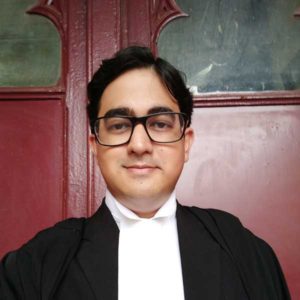
  • Nem Singh, Secretary of UGESI, on a career in taxation law

    Nem Singh, Secretary of UGESI, on a career in taxation law

    Nem Singh graduated from Dharam Samaj College of Agra University in 1996. At present, he is the secretary of Unison Gyan Education Society of Integrity (UGESI). He is a first generation lawyer and has developed a great interest in the area of taxation.

     In this interview he talks to us about:

    • Importance of taxation as a subject for law students.
    • How can one gain expertise in Direct Tax.
    • His strategy to deal with errors and mistakes.
    • Primary essentials of a Direct Tax lawyer.


    Most of our readers are young lawyers and law students. How will you introduce yourself to them?

    I belong to a middle class family from Aligarh. We have an agriculturist background. I completed my masters’ degree in Political Science in the year 1993 and thereafter successfully pursued three year degree in law in 1996 from Dharam Samaj College of Agra University, Agra. I got enrolled with the “BAR COUNCIL OF UTTAR PRADESH” in 1997 as a “Trainee” (as per Bar Council of India Rules) in Taxation. I started my professional carrier from Aligarh with Mr. Rahul Pandit and Mr. Sanjay Pandit, Advocates of CB Prasad and Associates, Advocates, a well known name in legal profession in the state of Uttar Pradesh. My family had a permanent panel of Lawyers to look after its Civil, Criminal and Land Revenue matters in district Courts as well as High Court due to many litigations of the family. I, in the course of time had developed during my college studies, some basic knowledge in the field of civil, criminal and revenue laws and its court proceedings.

    Since I developed great interest in the area of Taxation as a student of law, I wanted to practice in this area. I shifted to Delhi in July 2003 and joined a firm of Chartered Accountants under the title Mr. Dushyant Tyagi and Associates. Mr. Dushyant Tyagi was Ex-Chairman of NIRC of ICAI and independently handled the matters of high profile corporate clients. I also got associated with Mr. Ajay Wadhawa, Chartered Accountant, then president of ITAT Bar Association, and got opportunity to appear before Income Tax Tribunals which was a great learning. For last four years I have worked with O. P. Bagla & Co., a Chartered Accountants firm, as an Attorney, legal researcher and assisted them in appeals before Income Tax Appellate Tribunal etc.

    Dear friends, I was the first generation lawyer with no back ground /support in legal profession. My experience is that, it is very difficult to succeed despite hard work. However, your confidence, knowledge and zeal to work hard will lead you to achieve success if you have patience and determination. You must strive to get justice to your clients for which you must leave no stone unturned.


    What brought you into studying law? Was it a fate or plan?

    It was my quest for having knowledge in the field of law so that I could help people in my native place and my family to enforce their rights in the legal forums and facilitate their access to justice. So I can say that I had a sort of a plan to pursue law as a professor.


    How important is taxation as a subject for law students?

    Today, taxation has become an integral part of life due to free trade in global economy and as a major source to augment revenue of the state. It facilitates government to create infrastructure for the society and finance welfare schemes particularly for the needy and poorer sections of the society. This subject must be taught as a compulsory course in the law schools as it is still being taught as an optional subject. Tax laws are very complicated and highly technical and need to be taught by practitioners of tax law. Its interpretation and different judicial precedent create a very difficult situation and unprecedented expansion of law. In coming times each and every global transaction will affect the economic decisions of the state, corporate business houses, Institutions and individual too. It will require rational and simplified legal framework. Its knowledge will explore the exciting and broad field of practice of tax law, nationally as well as internationally.


    Which field of law will you advise law students to pursue?

    I want to suggest to you to pursue career in civil law fields because it has broader scope and has relevance in the Commerce, Trade and International transactions. By being a civil lawyer, you can practice in a civil court, consumer court, land revenue court, arbitration court and constitutional court and also to join corporations as legal advisor. Tax laws are very highly technical and a specialized field.


    How can one gain expertise in Direct Tax? What does it take to be a good direct tax lawyer?

    You should understand the basic fundamental of computing taxable income by applying provisions of tax law, circulars, and notification. You should have update knowledge of judicial interpretation, their applicability and must be well versed with the facts of the case you deal with. In taxation, your claim should be based on documentary evidence and generally not on oral evidence. If your case is weak on facts and evidence then law can’t help you. The system of direct taxation as it is known today has been in force in one form and another even from ancient times. Manu, the ancient sage and law giver stated that the king could levy taxes.  According to “Shastras”, taxes had to be related with the income and expenditure of the subject. The emphasis has been always on principle of accounting of income and expenditure.

    Besides being a good lawyer, you should have the quality of being a person of integrity & honesty. You must be a hard worker, devoted to duty and honest in your practice before the tax administration. Never ignore the fact that you are not a business man, your job is to advise the businessmen to pay taxes as per the law applicable and avail all the permissible deductions and guide them proper tax planning. To succeed as a lawyer, we should try to study the cases property, prepare them to the best of your almighty and argue the cases with confidence. While arguing before a court, your approach should be to carry the court with you and show great respect to it.  Whenever possible watch the proceedings in the court to read the mind of the court, learn court craft and etiquettes which are necessary to be a successful lawyer. We should study the action and reaction of the parties and courts to acquire the skills of pursuing the case professionally. You should never be afraid of failure because failure teaches you more in life than success does.

    I want to quote here the words of senior stalwart Mr. Fali S Nariman that he learnt a lesson in his life that for a lawyer “it is better to spend more time thinking about a case than merely reading the brief”. He also said that “skill of a practicing lawyer is not flamboyance or verbosity but hard work”. Avoid histrionics and stick to the record, you will find the judge receptive to your pleas”. In the words of senior stalwart Mr. Harish Salve if one wants to be a good lawyer, “You must have the ability and the desire to work long hours with great concentration and enthusiasm. You must keep thinking about the matter and always keep your mind open for fresh ideas. And you must never give up”.


    What has been your strategy to deal with errors and mistakes?

    There is a quote that a person who never made a mistake never tried anything new i.e. he who never made a mistake, never made a discovery, said Samuel Smiles. If you have recognized any mistake or error in a case you deal with, take it on priority basis and follow the procedure to rectify or correct it. It will prove that you are honest, dedicated, accountable and credible. Dedication and sincerity are the most important attributes that a good professional should have. It is also beneficial for both i.e. you and your clients too especially when you are practicing in the area of taxation law.


    What are the preferred legal issues you like to work on? Do you have any hobbies that help you unwind after a long day at work?

    There will be no problem for me to tackle or deal with any legal issue that arises before me if I am able to understand the concerned law and the issue involved. In my short of span at the bar, I had to deal with different type of issues through my hard work and conducted research with the help of global digital media. In taxation law, there is vast scope of legal issues because it is directly connected with corporate law, general laws, business, property transfer, contract, registration and criminal laws etc. So to lead a successful professional life, it is necessary to study the case in depth and find from all legal angles relevant latest judicial pronouncements on the issues at hand.

    It is my hobby to surf on social and political media, read blogs, make comment or suggestions read judicial decisions of the courts and literature on cultural and religion, examine critical social issues despite long day hard work. This refreshes me and gives me further motivation to excel. I also like to work as a social activist as well.


    What would you suggest a fresh law graduate should do to hold spirit and utilize the opportunities available in his first year of graduation?

    He must develop the habit of becoming a prolific reader to build his capacities and to begin with, get attached to a good lawyer to know the procedure and practice required to be a successful lawyer in the years to come.


    What are the primary essentials of a direct tax lawyer? What is the current scenario of studying direct tax law as a career option in India?

    You should be registered with the BAR COUNCIL OF A STATE and have the knowledge of Tax Law and accountancy. Studying direct tax law offers you great opportunity of work with big legal corporate houses because there is wide scope of practice before assessing authorities in proceedings of assessment, penalty, prosecution and appeal before CIT(A), ITAT, High Court and the Supreme Court in corporate tax, international tax, transfer pricing etc.


    What would be your parting message for readers?

    This profession is to protect the right of the people and to give them correct legal opinion/advise. You must give your professional service to the best of your ability and get you professional charges commensurate with your hard work. I want to remind here the Shlok of Bhagavad Geeta Chapter-II, Verse-47:

    “Karmanye Vaadhikaraste, Maa Phaleshu Kadachana;

    Maa karmaphalaheturbhooh, MaTe sangostwakarmani.”

    Further God is the creator of everyone and we should do our best to serve the people. It gives a strong base to connect with larger section of people of the world and this should be our aim. I am also reminded of a great saint Tulasi’s Ramcharit Manas Chopai:

    “Karm pradhan vishva kari rakha, Jo jas karye so tas phal chakha,

    Hoi hai soi jo Ram rachi rakha, ko kari tarak badhave shakha.”

    One must always have positive attitude towards things and be optimistic. We should not stop thinking of how a new approach or a new angle can make the difference. We should read the book of English Jurist Mr. Edward Abbott Parry’s “Seven Lamps of Advocacy” which are: (1) The lamp of Honesty, (2) The lamp of Courage, (3) The lamp of Industry, (4) The lamp of Wit, (5) The lamp of Eloquence, (6) The Lamp of Judgment and (7) The lamp of Fellowship.


  • Arush Khanna, Independent Practitioner, on litigation and being the Youngest Indian Scholar at IBPA

    Arush Khanna, Independent Practitioner, on litigation and being the Youngest Indian Scholar at IBPA

    Arush Khanna graduated from Symbiosis International University in 2012. He is an Advocate & Legal Consultant enrolled with the Bar Council of Delhi and is a fifth generation lawyer in a family of highly respected lawyers.

    After having worked in M/s Karanjawala & Co. and in the chambers Mr. Sanjeev Anand, Advocate at the Delhi High Court, Arush started his independent practice in New Delhi.

    His principal areas of practice are Commercial & Corporate Litigation, Arbitration and Property Litigation. Arush has been providing dispute resolution and consultancy services to number of private and public sector undertakings in India.

    Arush was also selected as a Scholar to represent India at the Inter Pacific Bar Association (IPBA) Conference in Kuala Lampur in April 2016. He was a speaker at the event and was bestowed with a three year honorary membership of the IPBA. He is the Youngest Indian to be given such an honour.

    In this interview he talks to us about:

    • Why he chose independent practice over secured employment.
    • His experience as a youngest Indian to be selected as a Scholar at the Inter-Pacific Bar Association (IPBA).
    • His journey from Shanghai, 2015 to New Delhi, 2016 (Being a part of The BRICS Legal Forum).
    • Importance of writing for a law student.


    How would you like to introduce yourself to our readers? Please tell us about your family background.

    I come from a very typical food and cricket loving Punjabi family. My forefathers (both maternal and paternal) migrated to Delhi from Lahore post independence. My paternal grandfather was a wholesale cloth merchant who worked out of a shop in Chandini Chowk along with his brothers. After having been in the line for over 45 years, he recently took retirement and now spends most of his time with my most doting grandmother.

    From the maternal side, well, you can shake our family tree and a lawyer may fall from it. The four generations preceding mine have mostly been lawyers. My great grandfather was a senior advocate who appeared for a host of freedom fighters during his distinguished tenure at the Bar. My grandfather has been actively practicing law for over 54 years and I would need a separate interview to speak of his accomplishments.

    As regards my parents, my father is an importer of furniture and home decoration products. My mother is a lawyer by profession and was practicing corporate law for over 15 years before switching over to the field of image consultancy and soft skills training.

    I have little twin sisters who are not so little anymore. They are currently working with a talent aggregating Startup Company.


    What prompted you to think of law as a career?

    I was a very enthusiastic cricketer during my days in Modern School and like every third boy in India, had dreams of making it big in cricket. However, reality struck me after my 12th board exams and I suddenly did not know what to do in my life. I was never inclined to join my father’s business or sit in Chandini Chowk selling cloth yarns for the rest of my life. It was then that the thought of doing law came to my mind. So, in all honesty, law came in my life more as a last refuge than a first love.


    Describe your experience at Symbiosis, Pune as an undergraduate law student.

    As is the case with most students moving out of their hometowns to pursue under graduation, the initial days were difficult, as I had to adjust to life in a new city. Little did I know that they would end up being the most memorable five years of my life. Living in Pune and studying in Symbiosis taught me so much more than just getting a law degree. The thrill of making new friends, living within a budget, taking care of your own apartment, commuting in buses and autos and the exposure to small things was quintessential in helping me gain the confidence and awareness which I would have never got in the comfort of my home or within the four walls of a classroom. I would urge every student or anyone who wishes to pursue further education to get out of their comfort zones/homes for it may very well be end up being the most enriching experience of your life.


    Please share your experience at Karanjawala & Co.?

    After graduating (with good grades) from law school, I was clear in mind that I wanted to pursue litigation, atleast for the first few years of my practice. I was fortunate enough to get an opportunity to start my career with one of the best litigation firms of the country. During my tenure, I had the opportunity to work on some noteworthy cases like the N.D Tiwari paternity suit and the Lodhi Hotels case and brief eminent seniors like Mr. Mukul Rohatgi and Dr. Abhishek Manu Singhvi.

    I will always be grateful to Mr. Raian Karanjawala and all my colleagues at Karanjawala & Co. for taking such an active part in nurturing me during my infancy days in the profession.


    How did you decide to work under a Counsel even after getting an offer from Tier I firm?

    This was the toughest decision I’ve had to make in my entire life. As much as I was thrilled to learn that I was offered a job with a very lucrative pay-package, there was a part of me that wanted something more than just money. That urge inside me to go out there and make a mark for myself kept dissuading me from accepting the offer. I always had dreams of setting up my own independent practice and I thought working with a counsel who can encourage that sentiment would be the best platform for me to pursue my dreams. Since I was only 23 years at the time, I thought myself to have the privilege of time to make decisions out of choice and not compulsion so that in the event they don’t work, I could fall back on the secured environment of working with a law firm.


    Please share your experience with Mr. Sanjeev Anand, Advocate at Delhi Court.

    They were most enriching three years of my life. Mr. Anand was a true mentor for he made me love my work. When your boss becomes a mentor then your profession becomes your passion and when that happens, success is sure to follow (fingers crossed and touchwood, I’ve barely started).

    He consistently emphasized the importance of sound lawyering. He always told me that a good lawyer must be a surgeon in office and an artist in court. I would often go up to him with my problems and despite his busy daily schedule, he would always make it a point to sit with me and help me out. It’s like holding your child’s bicycle from behind to make sure that he learns before he can out there on his own. So much was our bond that on my last day in his chambers, both of us had tears in our eyes. I want to make him proud one day.


    Why did you choose independent practice over secured employment?

    Everyone has a perception of the kind of environment they wish to see themselves work in, one which not only gives them job satisfaction but can also bring out the best in them. I always felt that working independently would give me that kind of satisfaction and feeling of fulfillment. There is no better feeling than having to see someone invest their faith and money in your individual ability to fight their case, however big or small that person may be. I must confess that it is difficult line to choose, but then nothing worth having comes easy. Having said that, I am still very young in this profession and stand to change my views depending on what life has in store for me in the near future.


    What are your areas of interest? How did you go about developing expertise and knowledge in these areas?

    I was fortunate to work on a host of Commercial and Arbitration matters during my time with Mr. Anand. His phenomenal command over the original side Civil laws (CPC, Limitation and Evidence etc.), Contract law and Arbitration led to me developing a keen interest in the said areas. I am currently working on some noteworthy arbitration matters and also providing advisory services to companies in contractual matters/disputes pertaining to employment, shareholding and joint ventures. I have done trials (predominantly civil) for over 4 years and it is one of the joys of our profession, I hope to get some trial work coming my way in the future.

    Well, the concept of ‘practice makes you perfect’ does not apply strict sense to lawyers because apart from handling his cases a lawyer must also keep himself abreast with the latest developments in his strata of practice. Even small things like reading the newspaper help a lot. As for myself, I use my limited financial resources to invest in the some journals/reporters/magazines, which I read on a weekly/monthly basis. I also make it a point to attend the various conferences and seminars, which cover topics of my areas of practice. This gives me a chance not only to educate myself and but also get a practical insight from the experts in the industry.


    You are the youngest Indian to be selected as a Scholar at the Inter-Pacific Bar Association (IPBA). Tell us about the experience.

    I attended the IPBA Conference in New Delhi in 2012 and since then I always had a desire to take part in it. More than a 1000 lawyers from the Asia-Pacific region meet annually to discuss the major legal issues concerning their respective jurisdictions. There is tremendous scope to broaden ones horizons both in terms of knowledge and network. It was there that I learnt about the IPBA Scholarship for lawyers less than 35 years of age and since the registration fee was exorbitant, the only way I could attend the conference was through a scholarship.

    I applied twice and my application was vehemently rejected stating that my qualifications fell short of scholarly standards. It was only in early 2016 that I got third time lucky and finally got the opportunity not only to attend the conference. While being conferred my certificate at the Gala evening, my name and picture was flashed on the big screen in the backdrop of the Indian flag. That was a red-letter moment for me, one which I will never forget.


    Being a part of The BRICS Legal Forum, please share with us your journey from Shanghai, 2015 to New Delhi, 2016.

    This opportunity initially came with a stroke of good fortune. I was a last minute addition to the delegation, since two PHD students from the Indian Law Institute had to cancel their plans last minute. It was a great honor to represent your country especially when delegation is led by a stalwart like Mr. K.K Venugopal.  I also successfully completed a three-week academic program on Chinese Arbitration Law whilst I was in Shanghai.

    As a result of my contribution at the Shanghai conference, The Bar Association of India (BAI) asked me to be a part of the Organizing Committee for the Third BRICS Legal Forum, which was held in New Delhi under the stewardship of Mr. Venugopal and Mr. Rohatgi. I was a part of the team that drafted the New Delhi Declaration for the establishment of an Arbitration and Dispute Resolution Centre for BRICS Countries at New Delhi, which was signed in the august presence of the Chief Justice of India.

    I was recently made a member of the newly formed Youth Wing of the BRICS Legal Forum and I must thank Mr. Prashant Kumar, President-Elect, BAI, for having faith in me and supporting me throughout my association with the BRICS.


    Tell us about your publications. What is the importance of writing for a law student?

    I have been authoring articles since 2012. Being predominantly a litigating lawyer, it’s hard articulate yourself in a non-adversarial manner, so I resorted to writing articles on the topics that interest me. Apart from sharpening your ability to research and draft, they also give you some recognition and visibility which is very important in the competitive world we live in today.

    Seeing the mushrooming of publishers/journals(both physical and online), I would strongly encourage all law students and young(er) lawyers to pen their ideas and research in the form of reader friendly articles for it will help them immensely in the long run. Having said that, I hope they help me in the long run.


    What are your short-term and long-term goals? Where do you see yourself five years from now?

    I’m at a very nascent stage of my professional life, so every day brings a new adventure and every conversation opens a new box of opportunities. The erratic flow of work and the uncertainty of remuneration keep me on the edge and motivated to do more.

    My short-term goal is to increase the volume of work that I am doing and I am confident that in times to come, more and better work will come my way. Moving forward, I wish to establish a solid niche practice in field of commercial litigation, arbitration and corporate advisory. I am open to exploring the option of collaborating with like-minded people/offices (both domestic and overseas) preferably specializing in different branches of law so that the office can provide more comprehensive services to the clients. Since India is on the cusp of liberalization of the legal services sector, I believe this is time for consolidation, not fragmentation and we stand to gain more by working in teams than in isolation.


    What would be your parting message to our readers?

    It does not befit my position to preach anything at this stage of my life. However, from my limited experience at the bar, all I can say is that it very important for a lawyer to constantly grease his wheels of knowledge. It is also very important to be enterprising, whether you are working on your own or with a firm. Try to find a space for yourself in this vast profession where you can enjoy what you are doing without thinking about competing with 1.3 million lawyers in India. Burn the midnight oil when needed but also spend time with family and friends. Don’t get too busy making a living that you forget to make a life.


  • Kapil Sankhla, Founder, Sankhla & Associates, on litigation and managing a firm

    Kapil Sankhla, Founder, Sankhla & Associates, on litigation and managing a firm

    Kapil Sankhla qualified in law from Campus Law Centre, Delhi University in 1999 after gaining a B.Com degree from Shri Ram College of Commerce and another degree in Hotel Management from IHM, Pusa. For the better part of his law school, he engaged in a long term internship which prepared him to take on litigation with ease even as a fresh graduate. He is the Founder and Managing Partner of Sankhla & Associates, based out of New Delhi.

    In this interview he talks to us about:

    • His pre-law school days and passion for debating
    • Decision to pursue law and the inspiration behind it
    • The importance of reading as a habit and a passion
    • His life at law school
    • Starting up with Sankhla & Associates


    How would you like to introduce yourself to our legal amateurs and professionals?

    The learning never stops and I believe that I too am a student of law, albeit a few years your senior! I practice and perform not in a moot court but in real life courts and like any other student of law, I compete and collaborate every day. As a first generation lawyer, I have gone through my share of self doubts, trials and tribulations and have realised that the journey is its own reward. It has been a beautiful journey so far mixed with struggles, success, challenges, more struggle and more success and the graph continues to waver. I have realised, the harder I work on the basics of law, the simpler things get. I am enjoying every bit of this amazing profession where I get to understand various levels of issues and strategise and grapple with various aspects of law every day.

    As a lawyer, my mantra, my life philosophy, and the philosophy of the firm which has worked in Court battles against the biggest and the strongest opponents, and which I would like to share with our young readers is -tenacious resolve, which means stick on-hold tight, despite all odds, and your time will come.


    Tell us about your childhood and pre-college life. Was it your all time dream to be in the legal profession?

    I was an average student which, according to teachers would mean not very bright, but I loved (and still do) to read and was a very imaginative child. I believe that it is your education and not your studies that make a success out of you. If I had to advice, it would be-keep reading, it doesn’t matter what you read, just keep reading, and trust me all that information, however random is churning and stirring up ideas and dialogues which will hold you in good stead in the profession, irrespective of whether you become a litigator or do chamber practice.

    As a child, I think I wanted to become a writer, which I realise I can very well do even now, and best part is, there cannot be a better profession than this!


    What incidents, influences or interests prompted you to think of law as a career?

    I remember the first time I saw legal luminaries like Mr. Ashok Aggarwal and his famous interview where he chose morals over a client, got me interested in law as a profession and got me hooked on to it; Mr. Ram Jethmalani being in the news with Harshad Mehta made me want to stay in the profession; reading about Mr. Nani Palkivala made me want to reach for the stars and briefing and interacting with (now) Justice U.U. Lalit ensured that my faith in honesty, fairness and humbleness is firmly anchored. Most lawyers don’t join law to become lawyers, for most, it is a stepping stone for something else. Fortunately, I am a part of the minority, as law chose me.


    Tell us about your experience at Delhi University. What all curricular and extra-curricular activities did you participate in?

    I have a very chequered past vis-a-vis the time post school. I got through SRCC but realised early on that it wasn’t for me, so I got into Hotel Management, a field where I did quite well. Throughout my college life, I was very active in theatre and debates and it was my passion to always speak against the motion and see how I am able to convince the audience. This caught my interest towards law as a field and I took the entrance, thinking ‘what’s the harm in trying?’ I didn’t think of law as a profession, when I took the exam, but when I did get through Campus Law Centre, DU, I took it up seriously and also interned with a lawyer for more than two and a half years while I was in college. This proved to my advantage as by the time I was in my third year I was confident about court visits and in-fact upon graduating as a lawyer, I handled a final argument matter within 19 days of registration.


    What would you advise our readers is the ideal things to look to get out of university, other than a degree?

    A university one looks for to study should definitely have a good name and reputation. It should encourage real life examples in terms of case research and also encourage participation in moots, etc. Any university which promotes practical learning as well as theoretical learning is an ideal University to be in. Alumni of the university and their performance in the real world also has a bearing on whether the University would be able to provide what one is looking for.

    I would advise you to enjoy yourself to the fullest. Be foolish, make mistakes, learn and enjoy. Participate in whatever activity takes place, you’ll never have the opportunity to probably get away with mistakes once you become a lawyer. Enjoyment is integral to being a college student, it is indeed a time wherein one needs to relax as once we are thrown in the profession one must not forget what the stars of the legal profession have said again and again “Law IS a jealous mistress!” and there shall be hardly any time for leisure as such!


    You founded a law firm that is doing very well today. What challenges do you think someone who wishes to start a firm or independent practice is likely to face? What would you advise them to do to mitigate such circumstances?

    It is not easy to build a practice in law, yet not impossible either. The challenges one faces are manifold. Convincing clients to assign and engage a new firm/independent lawyer is the most important one. It is imperative that the clients approaching a new firm/lawyer should be able to get a level of comfort to be able to engage the firm as their lawyers. Necessary infrastructure to work from is also required. A decent library and efficient work staff goes a long way to enable a lawyer to concentrate on his job, leaving aside worries of billing, file management, correspondence and follow up with clients. A good support team to handle such issues coupled with dedication and hard-work should help any lawyer achieve pinnacles of success.


    Presently you are the Managing Partner of Sankhla & Associates. What falls within the scope of your responsibility?

    As the Managing Partner of the firm, I have the responsibility to bring in new clients, hire new Associates, make alliances with international and national firms to enable a global presence of the firm. Motivating my team and encouraging them including pointing out spheres of improvement also constitutes a large part of my role. I have to ensure that not only does the team work to their optimum potential and a bit more, but also that they get their fair share of fun, recreation and feel connected to each other as a team and a family. This ensures all round development of the firm and relations therein. The growth and success of the firm is a team work with the Managing Partner at the helm of all affairs.


    While hiring new lawyers what kind of skills do you look for in them?

    A promising CV entails besides a good grade, involvement in moot courts, research and an active college record. As a student, it does speak volumes if your CV boasts of a reputed college, a healthy participation in moot courts and debates, internships involving firms and lawyers handling various aspects of law and published papers and articles, if any.

    However, apart from the aforesaid, the interview matters in itself which would be the ultimate judge of what is written in the CV and the impression that one carries to the interviewer. Be honest about what you put in the CV. Knowledge of different subjects and specially the one which is a preferred choice does really go a long way to secure a job in the place of choice.  But above it all, the one thing that we really look for when we hire someone is the hunger to win and the desire to make a difference. If someone has that, then really, nothing else matters!


    What kind of effort should a young Associate put into work to get it appreciated? What distinguishes an Associate from a Partner when it comes to work?

    Besides hard work and dedication, self-motivated effort and initiative definitely invite appreciation. A young lawyer who takes initiative to draft out matters, research and provides innovative suggestions and a different solution to a matter, would always get appreciated.

    An associate is expected to do all the base work from research to initial drafting, coordination with interns, junior associates and clients, if necessary. He will make sure that the strategy as has been suggested by the Partner and all points discussed in the Partner-Associate meeting are followed and put it on paper. Thereafter the Partner takes over to give a final check to the draft, strategy check and additions wherever required. Partners bring in work and are instrumental in firm management, its promotion and alliances: both national and international. They are expected to bring in work, infrastructure and the support needed by the team for execution of work.


    What would be your advice to our readers?

    Choose what you want to do. There are many lawyers who want to be researchers, conveyance and pleading solicitors, arguing counsels all rolled into one. The rest are dreamy eyed and want to become Corporate Lawyers because it pays well. Work on your strength and choose the facet of law. Polish it every day, enjoy it to the fullest and work hard- very hard and the world is your platform and sky is the limit.


  • Ajay Verma, Founder, Juris Chambers, on litigation, human rights and International Bridges to Justice

    Ajay Verma, Founder, Juris Chambers, on litigation, human rights and International Bridges to Justice

    Ajay Verma graduated in law in the year 2000 from Agra College affiliated to Dr. B.R. Ambedkar University (Formerly. Agra University) after pursuing a bachelor’s degree in science. In his final year, he interned under Mr. Jayant Bhushan, the then Standing Counsel to the Central Government and joined his Chambers after graduation. After a few years of core litigation practice, he started his law firm Juris Chambers in 2003.

    In this interview he talks to us about:

    • His pre-law school days and experience with the National Cadet Corps (NCC)
    • Decision to pursue college against pressure to join the family business
    • His interests, activities and internships in law school
    • His learning experience under Mr. L. Nageshwara Rao, former Senior Advocate, presently a sitting judge of the Supreme Court
    • Starting up with Juris Chambers
    • His passion about human rights and involvement in the International Bridges to Justice as a Senior Fellow
    • Completing the International Investigator Course from the Institute of International Criminal Investigations and being accredited as a War Crime Investigator


    Please introduce yourself to our readers. Where were you born, brought up and completed your basic education? What was your initial career plan?

    I was born and brought up in Agra. I did my Bachelor of Science and LL.B. from a very old institution called the Agra College, which was established in 1823 by the endowments bequeathed by Pandit Gangadhar Shastri Ji, a renowned Sanskrit scholar in the service of Madhav Rao Peshwa of Gwalior. It is the oldest and biggest educational institute of northern India. During my college days I was actively involved in the National Cadet Corps (NCC) which motivated me to join the armed forces. I was an Aeromodeller during that time.


    You completed a B.Sc. (PCM) and also completed NCC Certificate (Air Wing) with Grade A. When you had a strong background in science and defence, why did you decide to take up law?

    Being a son of a jeweller, I had a lot of pressure from the family to join business. When I joined college, children of my relatives joined their respective family businesses. I was criticized by my relatives for not following this tradition. When I was applying for Air Force and Army through NCC direct entry, I realized that I must continue with my studies. Till the time I joined law school, I was not aware of its importance. However, once I started learning about law and the role of a lawyer in the society, I became passionate about legal practice. During my college days I participated in Indo-Nepal Cycle Expedition from Agra-Kathmandu-Agra for approx. 2500 KM organized for International Peace and Unity by the NCC. This expedition inspired me to continue towards pursuing my goals in life.


    ajay-verma-2

    How was your law school experience? Looking back, is there anything you wish you had done differently? What activities were you involved in when in law school?

    (Ajay pursued law from Dr. B.R. Ambedkar University [Formerly Agra University] and qualified in the year 2000)

    The biggest challenge we faced during law school was with the curriculum, where only theory was taught. It was really challenging for a student of science to start learning about law. The best opportunity we got during our college days was our study circle which was created by our Principal Dr. Mukhtiyar Singh and Dr. N.K. Gosh, a very competent professor of English Department. Additionally, I used to participate in various debate competitions. We also wanted to conduct moot courts but we were not equipped enough in terms of the infrastructure.


    Did you complete any internships as a law student? Please describe each of them and your reasons for taking them up.

    In the year 1999, during my final year I joined the Chambers of Mr. Jayant Bhushan, Senior Advocate as an intern, who was the Standing Counsel to the Central Government at that time. During my internship, I learnt many skills from Mr. Bhushan, who was not only a good orator but also one of the finest Senior Advocates in the Supreme Court of India.


    How have additional  diplomas been useful to you later in your career? Do you think such additional certificate courses and diplomas are essential for a law student?

    (Ajay completed a Post Graduate Diploma in Cyber Laws and a Post Graduate Diploma in International Trade Laws from the Indian Law Institute, New Delhi.)

    Yes, I feel additional certificate courses and diplomas help students to expand their knowledge from traditional law curriculum to a specialized field of law. Interestingly, while I was interning under Mr. Jayant Bhushan, I joined these courses. Initially it was tough for me to handle internship in Delhi and college in Agra at the same time.  So I decided to travel from Agra to Delhi thrice a week to attend the chamber of Mr. Jayant Bhushan besides my evening classes at Indian Law Institute.


    How was your initial experience in litigation? Did you plan to continue with litigation at that time?

    (After graduating, Ajay worked at the Chambers of Advocate Jayant Bhushan followed by Sikri & Company and thereafter at the Chambers of Senior Advocate L. Nageshwara Rao, Supreme Court.)

    While in the office of Mr. Bhushan I decided to shift to Delhi to practice law. After Mr. Bhushan’s office my experience with Sikri & Company was also very good where I learnt about service law and industrial law. This office had a very good learning environment. I planned to continue with litigation and with the urge to learn more I joined the office of Mr. L. Nageshwara Rao, Senior Advocate, Supreme Court.  Those were my golden days of learning when I was with Mr. L. Nageshwara Rao Sir who is now a sitting Judge of the Hon’ble Supreme Court of India.


    ajay-verma-3

    In 2003, you established Juris Chambers, a full-service law firm in Delhi. Please describe your experience of starting a law firm. What were the main challenges you faced? What important steps must one follow for setting up a law firm?

    Juris Chambers was started by me to work in litigation and it is not easy for a first generation lawyer to start up a firm independently. In spite of all the challenges I started this firm which not only focused on litigation but also advised many corporate clients on complex issues.


    What does Juris Chambers look for in potential candidates before recruiting them? What are the main management and HR practices that Juris Chambers follows?

    Before recruiting we look for the competency of the candidate after evaluating his/her cv. The applicant’s interests in various subjects of law and commitment play a major role in the evaluation. We normally hire a person on probation for six months thereafter subject to mutual understanding hire them full time.


    You have been a Senior Fellow at the International Bridges to Justice. What do your responsibilities include?

    Let me first explain what is International Bridges to Justice (IBJ). It began its journey in 2000 and was founded by Karen Tse who is now the CEO of the organization. IBJ was created to promote systematic change in the administration of criminal justice at the global level. Karen Tse has been a public defender and graduated from UCLA Law School and Harvard Divinity School. IBJ is presently headquartered at Geneva, Switzerland.  IBJ is a non-governmental, apolitical and independent organization. It is registered as non-profit organization in the USA and in Switzerland. IBJ has spread its wings through various countries such as Burundi, Cambodia, Vietnam, Rwanda, Zimbabwe, Myanmar, China, India, North America and various other countries from Europe. IBJ visualizes in helping make a world where the rights of every man, woman and child is respected in case of an arrest, where torture is eliminated as the cheapest mode of confession, where competent legal representation is provided, where everyone is aware about his/her rights and where international human rights are respected as local laws. IBJ’s approach is very simple and functions on three very basic principles: Defender Capacity Building, Criminal Justice Reform and Rights Awareness.

    As a Senior Fellow I am currently on the board of IBJ India and working towards the promotion of constitutional rights and other rights of people. I am also working towards improving the capacity of the Lawyers Representing poor persons/person in prison before various criminal courts.


    You have also completed the International Investigator Course from the Institute for International Criminal Investigations. What is the course about? What exactly does the course teach and how has it helped in your work at Juris Chambers?

    Well I have always been passionate about working for human rights so I attended this course. It teaches about War Crime Investigations. After completion I became a qualified International War Crime Investigator and by virtue of the same I have been taken on the roster of Justice Rapid Response (JRR) an organization based in Geneva. Justice Rapid Response (JRR) manages the rapid deployment of criminal justice and related professionals from a stand-by roster. These deployments can be requested by the international community to investigate, analyze and report on situations where serious human rights and international criminal violations have been reported. I love to work as volunteer for these causes whenever I get time from my actual court practice.


    You were a part of the Harvard – Kennedy School Executive Education and received a Certificate in Leadership. Please describe your experience at the academy.

    Attending this course helped me in understanding the importance of leadership and in clearing  many misconceptions about leaders. Prof. Marshall Ganz, a famous professor was our mentor who taught us about Leadership, Organizing and Action: Leading Change. In this course, participants practice leadership by organizing a leadership team to work with him or her to mobilize members of a “constituency” to work together to achieve specific outcomes in the pursuit of a shared purpose by the end of the course. Participants learn five core leadership practices: building committed relationships; using narratives to translate values into the capacity for agency; turning resources into power by strategizing; turning intentions into effective action; and structuring organization so as to develop leadership, engage constituents, and achieve goals.


    Lastly, what is your plan for the future? Would you like to give any advice for the current lot of law students?

    Besides expansion of practice of the firm I plan to be a lawyer who can work towards the improvement of the society, because whatever I am gaining is from the society and I have responsibility to contribute to its improvement. There are many areas where law students can become change makers by involving themselves in social activities. I also plan to promote the pro-bono culture in legal profession.  Law students during their college time may focus on their goals and work towards in achieving the same. They must utilize their time towards skill improvement by attending as many internships and courses as they can. In my view a true lawyer learns about law and skills throughout his/her life.

  • Enatoli Sema, on being the first from Nagaland to crack the AOR exam and work experience with Mr. Neeraj Kishan Kaul

    Enatoli Sema, on being the first from Nagaland to crack the AOR exam and work experience with Mr. Neeraj Kishan Kaul

    Enatoli Sema graduated from Campus Law Centre, Delhi University in 2005 after completing a Bachelor of Arts degree from St. Stephen’s College. In the pursuit of her determination to do litigation, she joined the chambers of Mr. Neeraj Kishan Kaul, Senior Advocate before starting her independent practice in the Supreme Court. Being the first from Nagaland to have passed the AOR examination of the Supreme Court, she talks in this interview about:

    • Her decision to pursue law
    • Experience at Campus Law Centre
    • Professional and personal challenges after graduation
    • Working at the chambers of a Senior Advocate
    • Cracking the Advocates-on-Record examination
    • Following her passion for litigation


    Please introduce yourself to our readers. Where did you grow up and attend school? What was your initial career plan?

    My name is K. Enatoli Sema, I come from the State of Nagaland. I grew up in Kohima and that is where I did part of my schooling and then shifted to the Convent of Jesus & Mary, a boarding school in Shimla.


    You completed your Bachelor’s degree from St. Stephen’s College in Delhi University, which is a very prestigious and difficult college to get admission into. How was your college experience? Did you decide from the beginning to study law after graduation?

    I feel privileged and blessed to have attended this prestigious college during the most crucial years of one’s life. It is during this period that I was constantly faced with situations and circumstances that questioned my roots, faith, identity, foundation and my core values. At first, I did not know how to respond to them but as a result I was forced to grow up and decide who I am and who I want to be rather than being defined by others.

    Studying law was also an option for me because of my family background but I was not too sure if I really wanted to do it immediately after graducation. In fact, after graduating from St. Stephen’s and after a year in CLC, I took a gap year just to be sure that I really wanted to study law.


    How was your law school experience? Looking back, do you wish you had done anything differently?

    (Enatoli graduated from Campus Law Centre, Delhi University in 2005)

    CLC was a very different experience altogether, something I wasn’t prepared for. I realised how sheltered and protected I was in St. Stephen’s. At first it was overwhelming, the sheer number of students in the class was enough to make you feel small and insignificant. There were some classes I enjoyed more as compared to others. We had execellent faculty members because of whom my love, interest and curiousity for law started. The one thing I wish I could have changed about law school was probably being more active in campus. I would usually try and find a quiet place in a corner and read and did not interact much.


    How was your first year after graduation? What were your thoughts and in hindsight how did they work out?

    The first few months after graduation was difficult for me. Nothing prepares you for what you are going to face especially if you choose to do litigation. There is no similarity between the theory and practice and it takes time to get used to it. As time passed, I grew more intrigued with the drama and process of how law evolved in court room proceedings. My first year went just fine, there is nothing I would like to change about it. But yes, I wish someone would have told me that it is OK to feel lost and clueless in the first few months of practise and that everyone goes through it.


    enatoli-sema-2

    You worked as an associate in the chambers of Senior Advocate Neeraj Kishan Kaul from 2007 to 2009. What did your work consist of? Were you free to take up your own cases, independent of the ones your senior allotted you?

    Joining the chambers of Mr. Neeraj Kishan Kaul, Senior Advocate, was the one of the wisest steps I took as a young lawyer who was interested in doing purely litigation. Being in the chamber of a Senior Advocate, the work of the junior associates mostly revolved around legal research, analysis and assisting him with our notes and preparations. Working in his chambers trained and exposed me to the basics of law in a variety of subjects within a short span of time. In his chambers, I was not only taught law but I also learned professional ethics and discipline which is crucial for any Advocate who views this profession seriously.

    Mr. Kaul’s chamber was very demanding as working in any top notch Senior Advocate’s chamber would be so there was really no time to take up any independent cases and since I was just freshly out of law school, I don’t think I had the experience to take up cases on my own.


    You became the first from Nagaland to pass the AOR exam of the Supreme Court. How did you prepare for it? What do you think are the reasons that no person from your state has ever passed it?

    As I started my independent practise in Supreme Court, I realised that it was very important for me to take the AOR exam. I was encouraged and guided by AOR’s who had taken and passed the exam. I was blessed to get sound advice and guidance by fellow colleagues who were already AOR’s.

    There are very few lawyers from Nagaland practising in Supreme Court and partly that is the reason why there were no AOR’s from Nagaland. I hope that in the coming years there will be many more AOR’s from Nagaland.


    Please tell us more about the AOR exam. When do you think one should start preparing for it and attempt it?

    It is important to familiarize yourself with the syllabus and the study material that is available for taking the exam. I started preparing for it around the month of February-March since our exam was in June. It is always better to start preparing earlier because you have to juggle your work and studies at the same time. Sitting for an examination after years of gap did not help but the idea is to remain focused and hydrated in the Delhi heat! For me attending the lectures given by the examiners helped a lot while studying because they give you an insight of what to expect.


    Currently, you are Standing Counsel for the state of Nagaland in the Supreme Court of India. What do the duties and responsibilities include?

    Being a Standing Counsel for any State is a matter of great honour and a privilege. Since I have been away from Nagaland for so many years, personally I see it as a chance to stay connected to my people. I also see it as an opportunity to contribute towards my society as a legal professional. The duty and responsibility is to ensure that your State is effectively represented and that the Government is given sound legal advice and guidance at all times.


    What are your plans for the future?

    As of now, the only plan is to be a lawyer whose work is respected.


    Lastly, what advice would you give to law students wishing to make a career in litigation?

    Litigation has its share of fun and adventure but it is also taxing. Choosing to do litigation while your other friends from law school may be joining fancy law firms is certainly tough. But if your heart is in litigation and that is what you want to do, then don’t let go of your dream and be prepared to slog and work hard towards it.

    When I expressed my desire to do only litigation after a year into practise, I was advised and warned by a wise man to be prepared to put in a lot of hard work for at least 10 years. As a naive young lawyer, I thought that that his ‘old school’ philosophy talking. I now understand what he meant. This profession, specially litigation will also remain ‘old school’ and I hope that it continues to do so. There is no short cut if you want to be someone who truly works for justice.  So, take your time to decide if litigation is really what you want.

  • Jaimin Dave, Graduate from Institute of Law, Nirma University, on beginning his practice at Gujarat High Court

    Jaimin Dave, Graduate from Institute of Law, Nirma University, on beginning his practice at Gujarat High Court

    Jaimin Dave, a 2012 graduate of Institute of Law, Nirma University, Ahmedabad is currently working as an Independent Counsel, at the High Court of Gujarat. He litigates in all types of civil cases, his areas of interest being Corporate and Commercial Laws. In this interview he tells us about:

    • The importance of knowledge, as compared to CGP;
    • The passion of indulging in mooting and Legal Aid;
    • The way to prepare for the All India Bar Examination;
    • The experience of representing institutions like Reliance, Asian Paints, Ford, Huntsman, and various others;
    • The work as a Retainer Advocate;
    • The choice of Corporate Law as a career.

    How would you like to introduce yourself to our readers?

    A simple easy going man who happens to be lawyer by vocation.  I am based at the High Court of Gujarat and mostly deal in all kind of Civil Cases. Amongst Civil Cases, I would say, I have special liking for Corporate/Commercial and Taxation matters.

    What has your experience been like, studying in Institute of Law, Nirma University? What other co-curricular and extra-curricular activities were you involved in?

    Journey at ILNU shall always remain special. According to me it is one of the top ranked Private Law Schools in India and I consider myself to be fortunate enough to have graduated from ILNU. 

    If I look back at my journey at ILNU, I was part of a pioneer batch and most of them in my batch were extremely competitive. There were 10 to 15 batch mates who were outstanding and it is from there, that I derived motivation to do well at ILNU. Of course, all of them are supremely able and I think I am still catching up with them. But, yes, in their company I learnt that there is no substitute of excellence. Academic brilliance was encouraged at ILNU but at the same time it was ensured that we got practical exposure to different arenas through adequate internships, workshops and co-curricular activities. At ILNU we were always pushed harder to walk an extra mile in whatever we did; be it academics, co-curricular activities or internships. And that habit of pushing hard and walking an extra mile, which was inculcated at ILNU, is helping big time in professional life.

    I was involved in host of co-curricular activities. But, mooting and Legal Aid were two of the activities in which I was keenly interested out of all the other co-curricular activities. I believe mooting has multi-dimensional advantages attached to it and to me it was highly beneficial. It helped me develop much required confidence for litigation. The legal aptitude and knack of identifying clinching points in a given scenario developed due to mooting. Besides this it enhanced my research and analytical skill. Legal aid was done out of sheer interest and even today I am part of High Court Legal Aid Services Committee since I am firm believer in repaying back to the society.

    You had honors in Corporate Law. Tell us about the Honors Program at ILNU?

    Again interest for Corporate Law developed on account of few Moot Courts that I did on this subject. This is the reason behind choosing Corporate Law as honors course.

    ILNU offers a well strategized Corporate Honors program. As a part of my honors program, I got an opportunity to carry out extensive research and read texts on topics like Mergers & Amalgamation, Securities Law, Contract and Tenders, Corporate Insolvency, Corporate restructuring etc. I believe things done at the time of corporate honors program helps me today when I sit down to vet SPA’s/SHA’s, draft a winding up petition or let’s say draft a scheme for De-mergers/Amalgamation. To sum up, corporate honors at ILNU was very insightful.

    You’ve been awarded with the Best Student of Law for Batch 2007-2012, and have also bagged two gold medals for the highest CGP, and the highest CGP in Corporate Honors. How relevant would you say, have these grades been, since you started litigation?

    As a student of law school, I believe, my focus was more on acquiring skills, intellect and knowledge. The awards and medals just happened while I was honing my skills at law school. Yes, they give you a sense of satisfaction and it shall stay as a pleasant memory with you. But, at the same time I acknowledged and realized that these medals only indicate that I did a fair job as a student during law school. It does not carry my case any further.

    Yes, it motivated me to do well as a professional. The day I graduated and received them, I sat down and told myself that this is not the end and it is just beginning. I made it clear in my head that awards and medals have to be left behind and I need to put in the same amount of hard work and dedication, as I did for the past five years, so as to establish myself as a good professional. Grades, awards and medals became completely insignificant the day I stepped into practical field since there are a lot of others factors and skills that makes you a good litigating lawyer like time management, Court craft, awareness about mindset of a Judge, skills of opponents etc.

    In fact, to be very blunt, if you opt for litigation as career, grades, awards and medals are either a piece of paper in your drawer or a show piece at your office. Speaking for myself, nobody ever approached me and handed over a brief to argue because of my grades or medals. Only skills, intellect and knowledge, that have been acquired during law school life have helped me so far. Therefore, in my opinion, focus should be more on quality of knowledge and skills that you acquire rather than grades or medals you obtain at law school. Of course medals give you some morale boost but one needs to back that up with other intellect to survive in litigation.

    How did you prepare for the All India Bar Examination?

    AIBE is one of the easiest exams that I have ever appeared for as a Law Student.

    Of course, before taking the examination, I was a little nervous, considering the longish curriculum that AIBE has. As a fresh pass out, it is perplexing to know that all those laws, for which you took five long years to study, are now required to be read over for a single exam. Having said this, I approached AIBE with incisive planning and gave myself sufficient time to prepare for the exam. The idea was to run through Bare Acts related to all the laws mentioned in AIBE curriculum. Thereafter, I read commentaries on CPC, Contract Act, Specific Relief, Law of Torts, CrPC, IPC and Evidence Act since these subjects carried maximum weightage and refreshing memory on these subjects would have helped me in litigation as well. Once I did this, I was fairly confident of appearing in AIBE.   

    Everyone who has appeared for AIBE will endorse that if your fundamentals as Law Student are clear, it should be a cake walk to clear it. It simply tests your basic knowledge on several statutes that form fulcrum of Indian Legal System.

    However, I personally believe that AIBE can be made more challenging and stiffer, if BCI really wants to achieve the purpose behind introducing it.

    What made you gravitate towards litigation, immediately after graduation? What other options were you considering?

    As a kid, robes and neck bands fascinated me and that’s how I have ended up in this black and white world.

    On a serious note, I think I thrive on challenges and I was gravitated to litigation because of challenges attached to it. I am a first generation lawyer and decided to choose litigation as a career despite strong NO from near and dear ones only because I am passionate about practicing law. I was clear about choosing litigation as a career from day one of my law school because of the following reasons:

    • In litigation you get firsthand experience of interpreting law and testing your legal acumen. As a lawyer you can evolve a new law point and test it before the Court. As a law-firm associate or in house counsel you can never become master of a brief. Obviously they can bring up a point and most of them come up with excellent points. But ultimately it is left upon wisdom and good judgment of litigating lawyers to decide as to whether it should be argued or not depending upon opponent, Bench and other factors. I prefer being master of brief and hence this career over other options. Yes it brings lot of responsibility and risk along with it but then I have always enjoyed this till now. 
    • Secondly, it is a career which throws up new challenge almost every day. As a lawyer I deal with matter involving different subject matters such as Winding-up, Tax and Stamp Laws, Mergers & Amalgamation, Land Acquisition Law, Electricity Laws, Land Laws, Civil Procedure Code etc. When you deal with such wide range of subject, your job is never monotonous. Each case, each opponent, each Bench and each law throws up a different challenge and you have to don different hats to do justice to brief. 
    • Lastly, I would say is the job satisfaction associated with litigation, tilted my interest towards it. For me it is always satisfying to argue a law point well and convince a judge. If you have prepared and argued the brief well the clients will also acknowledge your efforts and their satisfaction with your work is always a morale booster. Yes the picture is not always rosy and there are days when matters get adjourned or you cannot convince a judge even after toiling through earlier night to prepare a brief. But, as far as I put in my best efforts I am a satisfied man.

    As I said, I never considered other options as a Career. Even today I do not have plan B, if I fail I am gone. But at least for now, I believe I have made a right choice. This I say so because I am also involved in non-lit work like drafting and vetting of SHA’s, SPA’s and other contracts. That work to me is not as interesting as litigation because practicing law is much like playing sport to me.

    Was there anyone, in particular, who influenced you while deciding on litigation?

    Not really, but I think it is my internships that sealed my decision to join litigation. I did a running internship with Senior Advocate S. N. Soparkar during last two semesters of law school and then at Supreme Court with Hon’ble Justice A. R. Dave. These internships were enriching. After getting an exposure to different matters and work culture at High Court and Supreme Court, I thought it was the right decision to join litigation. There was nothing in particular that influenced my decision significantly; I went with my heart and followed something I was passionate about.

    What are your core areas of practice? How did you find your domain?

    During the initial phase of your career there is nothing like a core area of practice. It is like you have to accept every cuisine that is served into your platter when you are famished.

    Likewise, I am a litigating lawyer who takes up every kind of civil litigation that comes up to me and also criminal matters if they are related to white collar crimes, commercial transactions or land disputes. I admit that I have that special liking for Commercial and Taxation matter and criminal doesn’t interest me much. But that liking towards corporate and taxation matters is because of the fact that I am conversant with those two subjects and also because I have experience of appearing in Court for such matters. Ordinarily I would grasp matters related to taxation and corporate/commercial laws much faster as compared to other matters. But that does not mean that I cannot prepare myself on other subject. If I get few hours to prepare myself with any civil brief I am ready and willing to argue it. It is others who have labeled me as a lawyer for corporate or taxation subjects. According to me I am lawyer who accept all civil briefs and whose comfort zone might be Corporate and Tax Laws.

    What is the present scenario of Corporate Law as a career option in India?

    An opportunistic career.

    They have established National Company Law Tribunal an Commercial Courts are coming up. We already have DRT, ITAT, CESTAT and few other tribunals. Insolvency legislation is coming up and there is this Real Estate Regulation and Development Act. All these laws and institutions collectively indicate that there is lot of litigation in store. So if you are planning to become a litigating corporate lawyer the future seems to be bright. Even on non-lit side, SPA and SHA are on rise in India and with enhancement of FDI cap in several sectors it will only rise further.

    What are the challenges of being an advocate in the Gujarat High Court?

    High Court of Gujarat is one of the better Courts to start practice. The Bar members are receptive to junior lawyers. Most of the seniors are approachable and ready to help when you seek their advice. The Hon’ble Judges are willing to hear you patiently provided you argue appropriate points with the brief in hand. There are a lot of people in similar age group as that of me so obviously you make lot of friends at the bar. Also you can have intellectual discussions with them and their perspective adds value to your preparation for a brief and understanding of law at large. All in all, I would say environment is good at Court and despite being first generation lawyer I never found any problem at the Court.

    Have the law schools in India been able to produce socially relevant lawyers, given that many choose to take up firm jobs?

    Taking jobs in law firm does not mean that you are socially insensitive. Lot of my friends who have joined law firms do social work in their free time. I agree that as lawyers you can become directly relevant to society through Pro Bono litigation and Public Interest Litigations. But that does not mean that law schools have failed in producing socially relevant lawyers because more people take up firm jobs.

    I feel every law school emphasizes upon its student to inculcate ethics, values and good conscience. It is the individual’s choice thereafter to decide the impact that he wants to have on society.

    Has there been any case that changed your perspective about the Indian judicial system?

    Every case that I have argued till now has changed my perspective about the Indian Judicial System. I have a habit of analyzing my performance before the Court irrespective of the outcome of the matter. When you analyze your performances it is bound to leave an impact on you and change your perspective about the system.

    Ultimately I have realized that the system remains the same, it is more about changing your perspective as a lawyer and molding yourself to fit in the system. You get effective results out of the existing system, the faster and better you mold yourself to fit and then excel in the system.

    Please tell us about your experience of representing some of the most reputed institutions, and being a Retainer Advocate at various other institutions.

    Obviously it is good to represent institutions like Reliance, Asian Paints, Ford, Huntsman etc. before different forums very early in one’s career. But my preparation for each brief has remained the same depending on the merits involved in the matter.  I have never gone by the name of the client over the docket while putting in efforts into a brief. However, when you sit down to prepare for briefs of these reputed institutions all the relevant information is on the table and it becomes easier and less time consuming as compared to other clients. Their approach to litigation is much more methodical and strategic as compared to other clients.

    Coming to retainer- ship, honestly, it is a tedious job. They approach you for legal assistance in each and every small notice and petty issues. And sometimes with lack of time you lose the plot. But then advantages outrun the disadvantages. It helps me in learning about the problems that such institutions face in day to day functioning. I get an opportunity to solve those problems and keep myself abreast with development in various laws such as Arbitration, Negotiable Instruments, Labor Laws, Registration of documents, Stamping etc. Hence, as far as I am learning out of it, I will continue accepting retainer-ships.

    The Bar Council of India is contemplating on the formation of a new rule which will require lawyers to practice in lower courts, before arguing before the High Courts and the Supreme Court. If this rule is made concrete, do you think it will help?

    I think it should be left to the conscious decision of an individual lawyer rather than imposing something like that by way of rules.

    Before starting to practice at High Court of Gujarat, even I was confused and contemplated whether to join sub-ordinate courts for initial one to two years. But then I consulted two very good seniors at High Court of Gujarat and both were of unanimous opinion that lower courts practice does not have significant impact on practice at High Court if you are aware about the procedural aspects of sub-ordinate courts and basic statutes. Considering this I started my practice straight away from High Court and obtained good understanding on procedural aspects of sub-ordinate courts and re-read basic statutes such as CPC, Evidence, Specific Relief, Contract, Court Fees Act and Limitation. Once you do this I don’t think there can be any problem.

    Today, I also take up selected matters before sub-ordinate courts and not practicing there before joining High Court hasn’t impacted my performance anywhere so far. However, this is my personal belief. BCI is a wise body and there must be some thought behind proposed rules. As and when it is rolled out one can have better understanding about the intention behind such rules.

    Finally, what parting message would you like to give to our readers?

    I would say learn as much as you can while in law school. Learning does not mean only bookish knowledge because grades and awards are secondary; your intellect and knowledge comes above all. By learning, I mean educate yourselves with every possible trick related to the profession you wish to join after graduation. It can be done through running internships, workshops, seminars, moots, debates etc. This will make you a complete product by the end of five years.   When you join a profession, not all days are going to be the same. Trust me it will be a roller coaster ride from day one. Sometimes you unexpectedly win a matter and sometimes you lose a good matter. However, you are bound to make progress, as long as you keep working hard, stay honest to your work ethics, believe in yourself and grab opportunities that come your way. I acknowledge that the track is difficult and you need to have your foot on the pedal all the time, but then smooth tracks don’t create skilled operators. 

    In the entire process make sure you make a lot of friends, take vacations and do adventures, travel and explore the globe, drive a machine you love. Stay gracious to everyone who has helped to be what you are. Most importantly make sure you take out enough time for friends and family, although I have been accused of not following this part of my advice. But, I am trying to make amends by taking out time for people who matter.

    With this, I wish every reader best of luck with their future endeavors!

  • Zaryab Rizvi, Partner, LCZF, on starting up with independent litigation and building clientele

    Zaryab Rizvi, Partner, LCZF, on starting up with independent litigation and building clientele

    Zaryab Rizvi graduated from Symbiosis Law School, Pune in 2005. He started practicing law in Delhi right after graduation and has been independent from the very beginning, Zaryab is one of those who started out with their first few matters of legal career without a mentor or guide.

    He is the Founding Partner of LCZF (Law Chambers of Zaryab and Firdouse) where they provide varied legal solutions to their clientele across the country and provide solutions in litigation, corporate jobs, compliances, IPR, ADR etc. Their clientele is diverse and includes MNCs, banks, shipping companies, government entities, private individuals etc.

    In this interview he talks to us about:

    • His experience at SLS, Pune.
    • Importance of internships in shaping his career.
    • His experience of first time court appearance.
    • How he overcame the initial hurdles.

    How would you like to introduce yourself to our readers?

    I will prefer to call myself a learner who is in search of excellence and for which purpose I have put in my best efforts. I have done my schooling from the great city Lucknow, after which I joined Symbiosis Law School, Pune. After successful completion of law degree, I decided to work independently and ever since have pursued my passion. Being a first generation lawyer, the decision to work independently in an unfamiliar city of Delhi had its share of challenges, but my strong determination and focus never made any kind of pressure to halt and change my decision. My position or you can say mindset can be described aptly in the following words: “I just hate losing and that gives you an extra determination to work harder”- Wayne Rooney. I am the founding partner of LCZF (Law Chambers of Zaryab and Firdouse), which is a full service law firm. Our Head Office is located in Delhi, but we are operational all across the country through our wide number of associate offices. The firm is a one-point destination for all legal requirements of a client, where we ensure that tailor made solutions are provided to client’s each requirement in the legal domain.

    What prompted you to think of law as a career? If not law, what other options would you have considered for your career?

    Choosing a career is one of the most important decisions of an individual’s life, as it determines ones entire future life. Although there are several occasions, when a person may have to take up a call on the future profession, but the first of such a significant instance is at the time of selection of subjects/stream after the high school results. Fortunately, the power to take such decision, like all other important decisions of my life was given to me by my parents, after providing the insights and guidance about various options. I acknowledge the importance of all other professions, but I would say that many people make such an important decision of life just on the basis that, many others are deciding in favor of a particular stream of education and they should follow the same. The profession of law has been a noble profession, but the problem with the profession has been the deteriorating standard of lawyers between the periods of 1980’s and 1990’s. The said concern has been raised and discussed by multiple Courts, Judges, Bar Council of India and in this regard various measures have been taken for improving the standards. I believe that a person should consciously choose a profession and the same shall not be by default, but the irony with the legal profession for years has been that many people end up in profession by default and not by choice.

    There are several reasons responsible for my inclination towards the legal profession, some of the prominent reasons are:

    A) Desire to be able to provide assistance to many persons who are caught on the wrong side of the law and who do not have sufficient resources to defend themselves.

    B) Recognition of the fact that a good lawyer is a person who possesses attributes like sharp mind, eloquent speech, command over the law, credibility in society, honesty and a rich taste in life, placing such lawyers in the elitist and distinguished class of the society. C) Apart from the above positive aspects, I also had certain bad experiences, with some unprofessional lawyers, while assisting my family in some of the civil disputes. Such instances also made my resolve stronger to be a part of the legal profession and make endeavor to raise the standards of profession by lifting my own personal standards.To answer to your second part of the question regarding options, which I had or considered apart from law, I will only say that although there were all the fields available to me, but I do not believe in options.

    Describe your experience at Symbiosis, Pune as an undergraduate law student. Any highlights and incidents you would like to share.

    I believe that all the educational institutions are respectable and knowledge imparted to students there is also good. However, having said that, I want to further add that, an educational institution is not only about imparting knowledge from the books, but such institutions are also responsible for giving a vision to the students. A student during the process of learning evolves his choices about his future course of action in the professional life. I believe that an educational institution should have conducive environment for the learners and shall provide all resources to the students, which eventually develops their skills and vision. For me, Symbiosis Law College is not just a college, I share a nostalgic relationship with the institute and all its members, be it the academic staff, administrative staff, support staff, fellow students as also senior and junior students. Moto or the central ideology of our alma mater is “Vasudhaiva Kutumbakam” which means the ‘whole world being one family’. I was 18 years old, when I joined the Law College in Pune, about 1500 kilometers from my home.

    There never arose a situation where my parents had to worry about me in the then alien city. The college truly lived up to its Moto and I never felt that, I was in a city where I have no roots. I clearly remember that several times some of the political outfits created ruckus in the city, about the people (students) from outside the State. But on every such instance the college management and Local Teachers/Students stood in firm support of all the students from other states, which action was not just in conformity with the Constitution of India but also was inline with the core ideas of the institution “Vasudhaiva Kutumbakam”.

    Our college was headed by Prof. Mrinal S. Raste, who was the principal of the College during the period of my academic journey in the College. Prof Raste went on to become the Vice Chancellor of the Symbiosis University (Deemed University) and along with the Management of the College, was responsible for enhancement of the Brand of the College. We were privileged to have academic faculty, which not just possessed immense knowledge of the Law subjects, but were very friendly and easily accessible to all the students. Although, all teachers were great but amongst them, my favorite guide and mentor was our torts professor, Prof C. J. Rawandale. He holds a respectable position in eyes of every student, as he is a knowledgeable and friendly person with a pleasing personality and is a “go to” person in every crisis situation, be it academic or otherwise. My connect and association with Prof Rawandale, did not end with the conclusion of my academic period in Symbiosis, Pune, but even thereafter it became stronger year after year. At present Prof CJ Rawandale, heads the Noida campus of Symbiosis, as its Director and because of him the doors of the Noida campus are always open for the Alumni of the college, which is quite helpful for all of us. Prof. Rawandale is putting immense efforts in bringing alumni closer to each other as also to the current students of the college, by organizing several events, paving way for colossal work opportunities to each and every one who has been and is part of my alma mater. Such a thoughtful faculty makes my alma mater, one of its kind. Symbiosis is a part of my life, which I cherish the most and I am thankful to the Almighty for granting me such an opportunity, which completely impacted and changed my life for good.

    Where did you do your internships while at law school? How important were these internships in shaping your career?

    During the breaks in the academic session, I used to join Law Offices situated in Delhi for internships. I interned at several places. All Internships I took up, were very helpful as I not just got opportunity of learning and understanding about the practical aspects of the functioning of Justice delivery System, but such internships also helped me to make informed decision about my future. It became relatively easy to choose between various avenues like job in a company/ law firm/ corporate work/ litigation etc. Amongst other internships, I also interned twice with Mr. Atul Sharma, (Founder, ASA Law Firm). I will say that my decision to choose litigation as my career was influenced to a great extent from my first hand experience with high profile litigation in his office. My first internship was in my second year of law and on the very first day, I attended proceedings in Hon’ble Delhi High Court, where we were seeking anticipatory bail for one celebrated singer accused of illegal immigration scandal. After being granted the relief, the moment we moved out of court, media surrounded our team and standing in a corner, even my face was telecasted across the globe. My parents were relieved that their son has actually joined work. Such small moments always remain special, although I have made numerous television appearances since I joined profession, but that appearance of few minutes will remain my best and most cherished one. I will say that the present generation is even better and are taking profession in a much more serious manner. I believe that such approach by young students is not only helping skill enhancement of the students, but at the same time is also having a positive impact on the larger scenario, as the quality of lawyers is improving with each day.

    How did you overcome the initial jitters in a courtroom full of experienced lawyers and judges, as you started out independently?
    zaryab-rizvi-1It is indeed a very pertinent question, why and how I started working as an independent practitioner in an unconventional way at the initial stage of my professional life. In the lighter vein I will say, that I still wonder and look for answers even today for the above question. But probably had I not taken such decision I may not have got to answer such an eccentric and rare question. On a serious note, it is true that I decided to work independently from the day one in an unconventional manner against the usual trend. I was fully aware that I will have my own share of challenges in pursuing the said decision and it would not be an easy sailing for at least a few years.

    Trust me I was not wrong and there were ample challenges throughout the journey. I was not born in the profession with the silver spoon in my mouth, as I am a first generation lawyer, who decided to work in an alien city where I had no roots as such.Every aspect of the professional life and work, be it the simplest of jobs was a challenge and gargantuan, as there was no one whom I could have asked solution for my queries. I will say that my feeling on finding solution to a simple thing used to be same as of “Early man” who discovered fire accidently by striking stones together. It is true that the challenges were huge but my desire to pursue my aspiration, gave me inspiration to face all these challenges and I believe once you decide that “YOU CAN” surely “YOU CAN”. As I said earlier that, I don’t believe in options, for that reason I had no other option but to perform.I never had any fear of any senior advocate, judge, or advocate having more experience than me. As I always believe that if I had done justice to my work I will get justice in return. The only pressure I felt has been of miscarriage of justice for my client because of my adventurism (as some people used to term it in my early days). But in the past 10 to 11 years I have a success rate of over 99% in the cases, which I have handled. I always ensured that my decision to start independently should never be an obstacle in putting my best foot forward, when my client’s interest is involved.

    Describe your experience when you appeared in the court for the first time?

    My first appearance in the professional life was before the Hon’ble Supreme Court of India. I could not have expected a better first appearance. Although my role in the said case was very limited as there were many other parties in the said case, but for a first generation lawyer who decided to practice independently and who practically had no experience, this opportunity to commence professional life before the highest court of the country was in itself a privilege. I think it is not very difficult to imagine my situation at such time. However, after appearing before Hon’ble Supreme Court in the very first instance, appearances before all other courts appeared to be relatively easy. Many years have passed since then but the memories of that first appearance are still fresh in my mind.

    Did you ever have any other plans other than litigation? What are your views on LL.M.? Do you think Indian Legal Education needs to improve?

    Litigation has always been the first love but apart from litigation I have been involved in a lot of Corporate work, which includes drafting/vetting Commercial Agreements, Contracts, MOUs, advisory compliances, incorporations/mergers/acquisitions etc. I have also imparted training on Sexual Harassment of Women at Workplace (Prevention, Prohibition and Redressal) Act, 2013 to various representatives of the corporate world in Delhi, Bangalore, Hyderabad, Noida, Gurgaon and Lucknow. Apart from the above, my several articles on different subjects have been published in some leading Magazines. The evaluation of the education system can only be done by examining the developed products of that system and in the present case the product is a lawyer. If I say that the education system is bad, the same would be absolutely wrong as the products of the same system have made not just the fraternity proud by their knowledge but have also got recognition to the country’s legal acumen at the international stage. However, I agree that there is scope for improvement. In the present system, brilliant students of the top law schools are somehow more inclined towards non-litigation assignments. I believe that the exposure to litigation should be encouraged during the academic course, so that these students are better equipped to take up litigation assignments and jobs.

    Tell us something about LCZF (Law Firm).

    LCZF came to be formed by me along with Ms. Firdouse Qutb Wani (“AOR” SCI), with a thought that a client looks at it as a trusted resource. The name LCZF stands for Law Chambers of Zaryab and Firdouse. We wanted to be a one-point destination for all the legal requirements of a client and ensure that a tailor made solution is provided to the best of their interests. Today with the support and efforts of our able team of lawyers and Para-Legals, we have achieved this goal successfully. LCZF provides legal support to various private Corporates, Government Establishments as also to individuals. We provide legal solutions even in the remotest parts of the country and it has become possible through our wide network of capable associates across the Country. Further details can be checked by the readers on our website, www.lczf.in. We also take up Pro bono assignments, because I always feel that one should never live with regret that due to lack of financial resources, he/she could not seek justice. Furthermore LCZF, believes in giving opportunity to young law students, to taste the life of lawyers and learn the tactics of the legal practice, while they are still in cocoon, hence we have created an independent department in our Firm, which completely deals with the Law interns and round the year several students get benefited by the same.

    Please tell us about your current occupation. What do your main tasks and assignment include?

    During the course of my professional life I have handled assignments of diverse nature, as I have never restricted my professional abilities in small compartments. Presently, I will say that I am undertaking multiple litigation assignments which includes corporate crimes, service matters including writs, commercial arbitrations, matters emanating from Arbitration and Conciliation Act, matters under Companies Act including winding up, civil and criminal writs, petitions under Section 482 Cr.P.C, Bails, matters under SARFAESI Act, cyber-crimes, matters under labour laws, matters under Negotiable Instruments Act, matters pertaining to marriage, sexual harassment cases to name a few. I am also involved in advisory functions to start ups, factories, MNCs and Banks. My corporate assignments include drafting/ vetting Commercial Agreements, Policy Formulation, Contracts, MOUs, compliances, incorporations/ mergers/ acquisitions etc. I also give sessions/training on Sexual Harassment of Women at Workplace (Prevention, Prohibition and Redressal) Act, 2013 to various representatives of the corporate world in Delhi, Bangalore, Hyderabad, Noida, Gurgaon and Lucknow. Apart from the above, my several articles on different subjects have been published in some leading Magazines.For catering to the above assignments, I have responsibilities at LCZF. I aim for perfection in every assignment that LCZF takes up and for that purpose every document that is prepared by our team which of consists hardworking and capable professionals, has to come to my desk for settling before it goes to the Client for approval or is filed in the concerned court or Tribunal, as I want to ensure that no error is on part of LCZF. We believe that we as Lawyers have great responsibility on our shoulders to safeguard the interests of our clients and our small error or oversight can change the course of future of our client. My main work includes arguing matters in court, advising clients as per the requirement, supervising all the heads of the concerned departments, meeting clients and forging alliances with other Law firms.

    Many law students aspire to secure a job. What do you think most are doing wrong, from your observation?

    Most of the times life gives us multiple options and the choices that may determine our future. Similarly a law student has multiple options at the time of graduating, broadly we can categorize the same as: –

    1. Option in the corporate side as legal manager.
    2. Options with law firms handling corporate assignments.
    3. Options with law firms handling litigation.
    4. Options with small law firms/ Lawyers.
    5. Other non-traditional avenues.

    In my view all options are good and a person who joins any of the above has a good future. I’ll say a person shall make the choice after considering the benefits and the challenges that one may face in the stream of his choice. I believe that the focus of an individual should always be towards satisfaction in the work that the person is undertaking as if a person is satisfied with the work he is undertaking his/her quality of work will always be good and for that reason he/she need not worry to secure a job as his/her work may have taken care of securing a job. I think many of the professionals take up assignments which they don’t want to take but they land up in such domain due to choices driven by glamour, monetary benefits, family pressure, peer pressure, false evaluation, under estimating the challenges. In my view if we make a choice for reasons other than passion to do such things we are bound to be dissatisfied after a short span of time, as when we are passionate about a decision, we take every difficulty, which we face as a challenge and not as a dead-end. To conclude I’ll say that aspiration to secure a job is not wrong, but the legal profession requires patience, determination, dedication, hard work, sincerity and perseverance which maybe difficult if we have made our choice for any other reason or consideration other than our passion.

    What helped you shape your current profile within the field?

    As they say, “Rome was not built in day” similarly I cannot single out one factor which is responsible for shaping my current profile. There have been several factors over the years, which have played important role at relevant time.As a first generation lawyer, I started to work in an alien city since the very beginning. I had no one to guide me, I learnt a lot from observing the masters of the profession in courts and at every opportunity. I’ll not say that a Dronacharya had closed his doors upon me as I never knocked such doors, but yes, its true I learnt a lot while adopting Eklavya’s way of learning.  Over the years I have had many people from whom I’ve learnt a lot, one such name is of Mr. C. Mukund (Advocate). I have had numerous opportunities to interact with him and every interaction has been of immense learning. I’ve not only benefitted from his knowledge of law but I am also influenced with his humility, humbleness, down to earth attitude and generosity.

    Where do you see yourself by the end of coming five years? What are your long-term objectives?

    Every individual must have goals in his life, as without destination we do not have a path, which we have to follow. I since the very beginning have set goals for myself, both short term goals and long term goals. The short-term goals are usually milestones in our journey to achieve long-term goals. I have set timeline to achieve such goals, as without timeline goals are rendered meaningless. In the coming 5 years I wish to work on assignments which test my abilities to enhance my legal acumen. As I said, I am learner, I would like that in the coming 5 years, I use such time to gather as much knowledge as I can, while putting such knowledge to good use and obtain good results for my clients. Although I have many goals in the long term, but if I look at the ultimate goal of my professional life, I would say that I want to be some one, fondly remembered in the legal fraternity.

    What would be your parting message to our readers?

    To the law students, I would say that, make a choice of your profession wisely and put your best efforts to continue chasing your goals. Do not quit the pursuit, due to any reason as the momentary troubles and roadblocks will vanish if you confront them, but if you quit, you will always regret taking such a decision and there will be no respite available to you, throughout your life. To all other readers, belonging to the legal fraternity, I would say, we all should make our best efforts to serve the Justice Delivery System, in a manner in which we ensure that speedy Justice is delivered and for which purpose we all should continue our best efforts, to further raise the standards. To conclude, I’ll say that every professional associated with the domain of Law, be it an academician, Judicial officer, Legal Manager in a Company, a practicing Lawyer, Journalist involved in Legal assignments, organisations dealing with legal search tools, all are important and without any of them, the Justice Delivery System may come to a standstill. We all owe a responsibility towards the profession and we all should do our best to keep the Noble Profession, Noble”.

    Md. Zaryab Jamal Rizvi

    Founding Partner – LCZF (Advocates and Solicitors)

    Correspondence Address: LGF, E-102, Kalkaji, New Delhi – 110019

    Website: www.lczf.in  E-mail: zaryab@lczf.in  , advocatezaryab@gmail.com

    Landline Numbers:  +91-11-46078301 – 02  FAX:  +91-11- 46078303

  • Bhagavath Krishnan, Associate, HSB Partners, on work experience in litigation at HSB Partners

    Bhagavath Krishnan, Associate, HSB Partners, on work experience in litigation at HSB Partners

    Bhagavath Krishnan is a 2013 graduate of KIIT Law School. During the course of his education, he interned with several reputed firms including Wadia Ghandy & Co., AZB Partners, Kocchar and Co., Vichar Partners, Iyer and Thomas, Blue Cross and APSHRC. Immediately after graduation he joined the litigation team at HSB Partners as an associate.

    In this Interview Mr. Bhagavath talks to us about:

    • His time at law school
    • How he chose his various internships
    • How to climb the ranks in a litigation firm
    • Working as an associate of a litigation team


    How would you like to introduce yourself to the legal fraternity?

    A small time, happy-go-lucky Vakil with big dreams.


    Why did you decide to choose law as a career? Is there anyone in your family who motivated you to opt law?

    My father was a lawyer. He doesn’t practice now, though.

    So, when I was a kid, I would hang out at his office after school and would act as if I am the senior there. My morning chore was to check the cause list for him and underline wherever his name appeared. I would take his books and mark as if I am correcting an exam paper and sometimes I would just sleep on his lap when he is in the middle of a meeting.

    Naturally, when I had the option to choose a career, I wanted to do what my dad did for a living. He didn’t like my choice of profession though. But I want to be better than my father in his own game. That is why I chose law.


    How was your life at KIIT School of Law? Did you find that your law school education prepared you for your current life?

    Oh yes! Life at KIIT was the best I could ask for. I was part of a very lucky batch which was privy to some fantastic professors. I still remember how Prof. Ajjappa taught us how to write a citation! Constitution classes by Mr. Mustafa with his Urdu couplets (with translations from my friends) are unforgettable. I believe when you are in classes where such stalwarts are teaching, your tool-kit is in place.

    But I think more than the classes, the people I met changed the way I think. There were students from all over the country. From the interactions [academic – 10% or otherwise – 120% (brilliant math!)] with them, I understood that a lawyer’s best tool is to gauge what the other person wants.


    How did you choose your internships? Are there any such specific things that one should keep in mind while applying?

    bhagavath-krishnan-2My boss has always told me that one should always have an end-game. My idea was very simple. I always knew I would be practicing in Chennai. I had to muscle all the contacts I could. So I made sure I did most of my internships in Chennai.

    I was very lucky to meet so many lawyers (including my current boss) who guided me. I am grateful to all those who gave me work when I stood near their cabin/cubicle asking “Sir/ Madam, is there anything I may work on?”.


    How would you advice a law student if one has to start on to preparing for a career while in college?

    To be frank, I am not the best person to advice someone. I think everyone has their own way of working their career out. There is no straight jacket formula. The fun part in this profession is that you can chart your own path. So, one heads-up (not advice!) I would like to give to law students is to be sincere at work. I still churn out wrong drafts, but I am sincere at correcting it and getting it right the second time.


    Could you tell us a bit about your internship experiences?

    I think I enjoyed my Internships more than the actual classes. All my internships were very interesting. I think I was very lucky that I interned with lawyers who were very patient with me. They taught me how to research, how to draft. Most importantly, I learnt how Madras High Court works.

    Like I said earlier, internships are very important and I made the most of all of them.


    You had interned in HSB Partners, Chennai in second year of law school. From an intern to associate at HSB Partners, how did it happen? What are the important attributes for a fresher to work on?

    I manage to do most of the litigation work because I love doing it. I just happen to work alongside a great team of lawyers who are good colleagues.

    My HSB experience cannot be explained in words. My boss, Mr. Srinath Sridevan is someone I admire and look up to. Although there have been many instances where I have wandered off, he has helped me focus. The opportunities that he gave me changed my life.

    HSB is a place where you can learn a lot. So as a fresher, you can make the most of it. My colleague advised me in my first year not to restrict myself to one field. He told me that as a fresher, one can work on anything one wants to. Luckily, HSB provided me with all the opportunities I asked for.


    Being head of the litigation team, how do you manage the Court schedules and office work? What all methods do you adopt to deal with the clients?

    I don’t think it is difficult to manage court schedules and office work. I agree that at first, you will be overwhelmed by the situation and the days’ work. But one will get used to it after sometime.

    With respect to clients, I understand that most of them are anxious and nervous when they come with the brief. So, I found that they appreciate it if you tell them the plan of action and how it is going to be carried out. There is no point fighting with them – after all they came to you because they have a problem. I try not to add myself as a problem.


    With these hectic schedule at work, coming to office at the earliest and leaving the office last, how do you balance your work and life?

    I appreciate that you have gone through the office register.

    Also, the work I am doing now is just half as much as my seniors (at HSB and others) did in their initial years. I just hope I get to do more work. Everything else will fall in place. So, I just give my best.


    Are you planning to pursue your higher studies sooner or later?

    No. I don’t think I can take a break from going to Court. I am used to the Ten-Thirty Tension. So, that’s not my cup of tea for now.


    What would be your parting advice to our readers?

    Heads up. Life as a lawyer is fun. It is best experienced when you are not scared of failure. So go ahead and give it your best.

  • Dinesh Bhasin, on Bhasad- The quirky day planner that aims to make working professional’s 9-to-5 less busy and more productive

    Dinesh Bhasin, on Bhasad- The quirky day planner that aims to make working professional’s 9-to-5 less busy and more productive

    Dinesh Bhasin, a seasoned advertising professional, started as a confused Indian graduate. An early stage entrepreneur tasted a failed start-up at the age of 21. His career spanned from working at Unilever in India to TBWA Worldwide in Africa’s and advertising took him further to Netherlands and Hong Kong. Since knew nothing but advertising and the entrepreneurial bug was in his veins, “Bread n Butter”, an ad agency came into inception with an old table and chair in 2011. It now handles the creative mandate for industry biggies, and the other vertical “Butterly Yours” specializes in product design & development, they also carry outCSR activities under the name “Iccha- The Desire” that works for slum kids’ education.

    In this interview Dinesh Bhasin talks about his start up Bhasad that aims to make lives of professionals just a little bit simpler. He specifically talks about:

    1. His inspiration and ideas behind the product.
    2. The needs felt by professionals for this product.
    3. His plans for expansion in the future.


    How did you come up with such an idea?

    bhasad-planner-1The planner was inspired by the frustration and the duality of corporate and working professionals’ lives. On one side we are sophisticated white collar professionals surrounded by people who follow and abide by the decorum of the work place- but deep down we are still the Indian “desi” men and women  who would not miss a chance to hurl slangs when we are hanging out with our best buddies. We wanted to bring that desi and original version of a professional on to his work-desk in the form of a high utility product.

    The idea behind the quirkiness is obvious to many but we wanted to make a product that solves a real pain point. And while we were looking for a real problem waiting to be solved, we realised that the biggest problem with working professionals (especially management) is the constant tussle between deadlines that cannot shift and the procrastinating workforce that is not organised.


    How did we go from an Idea to a product?

    bhasad-planner-2Initially we just created a few samples of the version 1.0 of the product and gave it away to specific people in my circle who would find it useful.

    The feedback we got was very positive which inspired me to turn it into a full-fledged product. Based on the feedback, we created version 2.0 of the product.


    Who would you say is it most useful for?

    It’s the go to product for any working professional who has a to-do list with deadlines that cannot be shifted. This comes with the option of customization with the receiver’s name, and makes for a unique and useful gift!  One of our customers, Mr. Manik Kapoor a corporate professional  ordered 2 pieces to gift both of his kids (both post teens).

    What are you doing to market it? Where can I find it if I want to buy one?

    We are on crowdfunding platform desiredwings.com. And we are offering it at exclusive early bird prices to our initial backers for a limited period of time. It can also be ordered from our website butterlyyours.com.


    How is it going and what is next?

    Every single professional who has seen this product is positive about it and that’s a real motivation. To date, we have sold a total of 468 units in orders and it’s only a matter of time before we can effectively reach and communicate our message to the right target market for such a product.

    Once the planner is available to the public, we plan to launch similar products that solve real pain points but in a funny way, that too once every quarter. We have a few other products are in the pipeline.


    siddharth-jain-1

    SuperLawyer then spoke to Siddharth who is a regular user of the Bhasad Day Planner. Siddharth is a busy legal professional and in this interview he talks about:

    1. His hectic work schedule and;
    2. The usefulness of the product in his life


    Please tell us a bit about yourself.

    I started my career with the Lucknow Bench of the Hon’ble Allahabad High Court whence I worked with the chambers of the noted and famous advocates, namely, Mr. Sanjay Bhasin and Mr. Prashant Chandra, where I was fortunate enough to have the firsthand experience of the practice both representing the State and private individuals in litigation.

    Subsequent to that, I had the opportunity to work with Singhania and Partners and Fox Mandal Little for a substantial period.

    With years of rich experience through varied nature of cases and the snippets of wisdom of luminaries I had the good fortune to work with, combined with the knowledge and experience of my Partners, I, and others at PAMASIS Law Chambers, are determined to carry the legacy and ethics of the profession ahead by providing quality services to our clients.

    We specialise in litigation pertaining to civil, corporate, taxation and competition law apart from advisories and drafting legal documents for the clients.


    How did you come to know about the ‘Bhasad Day Planner’?

    On a mundane Friday morning, I got a gift from Dinesh a packet which contained a rather casual looking ‘diary’. I was impressed but when I flipped it open, I was pleasantly surprised! It was the now famous Bhasad Planner.


    What was your reaction to the name? Do you think professional lawyers like yourself would use it?

    The name sounds quite quirky and unlikely to be seen on a thorough professional’s desk, given its name and the content therein. But a ‘professional’, surely, does not imply a person who is devoid of his or her funny side and the Planner caters to that while sitting on my office desk.


    Quirkiness is fine, but do you see a practical utility in the product?

    siddharth-jain-2On a practical note, the way in which the Planner is designed, it gives a new dimension to managing my appointments and to-do’s. Given the four creatively designed categories, I can divide my schedule according to their urgency and importance and prioritize my time effectively.


    Would you go for it again?

    I have been using the Planner on a daily basis with quiet smile and would be glad to go for it again. I have gone as far as to get 80 pieces customised for my lawyers alumni meet.

  • Shayak Chakraborty, Advocate on Record, Calcutta High Court on starting up with an independent litigation practice right after graduation

    Shayak Chakraborty, Advocate on Record, Calcutta High Court on starting up with an independent litigation practice right after graduation

    Shayak Chakraborty is an alumnus of Gujarat National Law University who graduated in 2013. During his school and college days he was very active in debating and started the Debating League at GNLU. He worked at the Calcutta Sessions Court under the aegis of the Chief Public Prosecutor before assuming a practice at the Calcutta High Court as an Advocate-on-Record. He is a certified mediator and focuses his litigation practice on civil, commercial and corporate, criminal and constitutional law. At present he has an independent practice. In this interview he talks to us about:

    • The required skills and the importance of mentors in litigation
    • The scope of ADR in the Indian judicial system
    • His experience working in the Calcutta Sessions and Calcutta High Court.


    What would be a brief introduction of yourself?

    I graduated from Gujarat National Law University in the year 2013, and I am currently practicing law in the High Court of Judicature at Calcutta. I used to practice criminal law in the lower courts here in Kolkata before making the shift to the High Court last year.


    Were there any activities you participated in that honed your skills as a litigator? How are they relevant now?

    I’d say the activity that helped me the most in litigation was debating. I used to be an active debater during my school days in La Martiniere for Boys, and continued that during my college days, where I founded the GNLU Debating Society in my 2nd year. Debating was a passion for me, although I wasn’t the best debater in my school (which had a fiercely competitive intra-school debating league), I was always an ace in extempore debates, where the skill of thinking on your feet and out of the box is all-important. Looking back, this is what honed my skills the most, because while every lawyer should be able research the law and frame the argument well, how one responds to arguments in Court with little preparation and dodges tough questions from the judge is what separates a good lawyer from the rest. So definitely debating was the most important activity which helped me in becoming a litigator, as it not only improved my speaking skills immensely (I was a very shy kid, and would find it difficult to talk to people before I started debating) but also prepared me to frame convincing arguments quickly.


    Was there anyone who particularly influenced you while deciding on litigation?

    Growing up, two of my father’s close friends encouraged me to take up law –  the late Justice Barin Ghosh, who retired as Chief Justice of Uttarakhand High Court before passing away last year, and senior solicitor Debasis Law. Right from a young age, they told me I had what it takes to be a good lawyer, and thus, right from my school days I always wanted to be a litigating lawyer, having never even heard of transactional practice before I started preparing for law entrance exams. I was very sure that Court practice is what I wanted to do, and so I never wavered in my decision to enter litigation despite being a first generation lawyer.


    Being a certified mediator and an active litigator, what do you feel is the scope of ADR in the judicial system?

    shayak-chakraborty-1As I have been trained in mediation, I am hopeful about its prospects in India. With the tremendous backlog of cases in our courts and the lack of adequate number of judges for a population like ours, more and more people are unwilling to resort to litigation to resolve their disputes. The ever-growing number of arbitrations in our country bear witness to this effect, as today a standard commercial contract will inevitably contain an arbitration clause. However, the real problem comes from land disputes, succession disputes and family matters since those aren’t usually covered by an arbitration agreement. In such cases, mediation can be a very effective way to bring about a resolution without resorting to the court process, and it is increasingly being recognized as such.


    How did you prepare for the bar in a span of a few months?

    The Bar Exam is easy enough to pass, provided you have actually done a reasonable job of studying for your LL.B. degree. It is kind of a refresher exam for your law syllabus, and if you have indeed studied decently for your law exams in college, the Bar Exam won’t give you much trouble.


    What was it like assisting the Chief Public Prosecutor in the Sessions Court?

    Mr. Tamal Kanti Mukherjee, Chief Public Prosecutor of City Sessions Court Kolkata, is a tremendously successful lawyer and a gem of a human being. When I started working in his office, I had no idea about Court practice and had no clue as to how to go about things. While I had done internships during college days, the month or so that one spends on an internship barely gives you even a glimpse as to what Court practice is all about.

    Tamal sir encouraged me a great deal, and helped me gain confidence in my abilities as a lawyer. He would encourage me to read every brief and prep every case for him, and had blind faith in my abilities even when I had no faith in them! With his encouragement and guidance, I learned a great deal about how trial works, and how criminal cases progress. Working for the Chief PP also meant that I interacted with police officers a great deal, and I learned a lot from my interactions with them too. However, I am tremendously grateful to Tamal sir for the constant encouragement he gave me when I was a nervous rookie lawyer. Such was the confidence he gave me that I was appearing on my own merely four months after enrollment!

    shayak-chakraborty-2I was briefed to argue for a de-facto complainant in a massive fraud case, where the value of the fraud was more than Rs 20 crore, and I was to argue against bail of two persons arrested on the very day I was briefed! I was tremendously nervous and excited at the same time, and when I walked into the Magistrate’s courtroom, I saw six lawyers appearing for the two accused! The lawyers argued strongly for bail, the Police Prosecutor opposed the bail in the normal fashion, when I asked for permission to make submissions for the de-facto complainant,  the defence lawyers started shouting that I had no right to make submissions when the Prosecutor was there. Now, Tamal sir never liked to raise his voice, but would never be afraid of shouting down an opponent who was being too aggressive. I shouted back at the defence that I was seeking permission of the Court and I didn’t need their permission. Possibly impressed by my confidence, the Magistrate gave me two minutes to make my argument. I summed up our position on the matter, to which the Magistrate nodded, and sent the accused to police custody for 14 days (the maximum possible time), something completely unexpected for me, as some other juniors had told me not to expect more than 7-8 days of police custody! It was at that moment I knew I could make it as a litigating lawyer if I continued to work hard and persisted with Court practice.


    What was the transition like, moving from work in a Session Court to the High Court? Did you prepare yourself for this change in any way?

    I always wanted to practice at Calcutta High Court, but I could not manage to find a senior’s chamber to join when I returned from GNLU. Now,  my father knew Tamal sir quite well, and when he mentioned to him that I was very confused as to where to start my career and thus had been doing nothing since returning from Gujarat, Tamal sir suggested that I join him for a few days to start with, to get an idea of the lower courts before joining a senior in the High Court.

    After working in the Chief Public Prosecutor’s office for a while, I wasn’t any closer to figuring out a chamber to join in the High Court, so I decided to carry on working in the City Sessions Court, where I was already used to the surroundings and already knew most of the people.

    However, my dream of going to the High Court never changed, and on several occasions I found myself wishing I could do more than just practice criminal law in the lower courts. I was granted a sudden opportunity when a corporate client of mine had a case dismissed in the trial court. They called me in to advise them about their options, and I recommended that they file a revision petition in the High Court. They asked me whether I would take care of the matter in the High Court for them, and I readily agreed! Mind you, I had absolutely zero experience in the High Court at the time, but I was confident enough that I’d be able to figure it out. I managed to find a clerk in the High Court who files matters in the Appellate Side, and took his help in filing that matter. When the case finally appeared in the cause list, I got a major thrill seeing my name alongside it as Advocate for the petitioner. I argued the matter, and it was admitted, and since then I’ve been going to the High Court!


    What are the challenges of being an advocate in the Calcutta High Court? Why did you choose an independent practice as a litigator and not work in a law firm?

    It wasn’t much of a choice, it simply worked out that way! If my client hadn’t entrusted me with the matter, I would probably still be in the Sessions Court looking out for another opportunity to make the shift. I didn’t consider working in a law firm because that entails having absolutely no freedom when it comes to the kind of matters you take up and the manner in which you go about a case, both of which are very important to me. However, it is tremendously tough to work on your own, especially when it comes to getting your own cases. I’ve been blessed by the fact that there are lawyers who have supported me and encouraged me a great deal…I definitely wouldn’t have made it so far without them.


    What are the main types of cases you focus on? How did you choose an area of specialty?

    I actually do all kinds of cases nowadays. While I started out as a criminal lawyer, I was never satisfied doing only criminal cases, although they are very interesting. I started working on civil and commercial matters, including suits, arbitrations and company matters as I went on in the High Court. Soon enough, there were some writ matters that came my way and I loved handling those cases as Constitutional Law has always been my favourite subject. So, I don’t really have a speciality as I have been doing extremely varied matters. I have even done transactional work such as drafting contracts. While there are many lawyers who specialize in their areas of practice, there are several others who do all sorts of matters.


    What is the most challenging case you have ever faced? Is there any case that changed your perspective on the judicial system?

    The most challenging case I have ever worked on is a suit matter currently pending in the High Court, in which I’m the juniormost counsel and I’m assisting reputed Senior Advocates of Calcutta High Court. It’s a Testamentary Suit involving immovable property worth several crores, and even though my role has been negligible in this matter, the sheer complexity of the facts and the stakes involved make me thank my stars that I’ve had the opportunity of working on it. It is also challenging because of the way system works. To even ensure the numerous old and dusty Court records of this suit (filed in 1994!) are available for reference during the trial is a massive task in itself!

    As for a case that changed my perspective on the judicial system, it is an arbitration matter (challenging the award of an arbitrator and a related petition seeking interim measures) long-pending in the Court. Here,  again, I am assisting heavyweight Senior Advocates, and this matter has been kept long pending purely because the State Government, which was the losing side in the arbitration, had adopted delaying tactics in order to avoid paying the massive award passed in the arbitration. I learned through this case how slow the wheels of justice can turn in our system, and how frustrating it can be for a litigant. Even though the arbitration had been resorted to in order to avoid the extremely slow progress of Court, the way our justice system works has ensured that the matter continues to drag on without any sight of coming to an end!


    You are an Advocate-on-Record for matters on the original side at the Calcutta High Court. How did that come about?

    As per the Original Side Rules of the Calcutta High Court, you have to register yourself as an Advocate-on-record with the Registrar of the Original Side in order to file matters and accept vakalatnama from clients in matters on the Original Side. There are certain conditions you have to fulfill in order to register yourself, including having an office within the boundaries set out in Chapter One of the Rules. I never knew about this till I started working at the High Court. A couple of years ago, I had met a senior solicitor, Mr Sarajit Mitra, who had encouraged me a great deal and had taken my advice on criminal matters on a few occasions. I drop in to his office whenever I’m free, as he is filled with excellent stories about the practice of law, and I have learned a great deal about the profession from him. Sarajit sir has also placed great confidence in me and the biggest cases I’ve worked on in the High Court have been the ones in which he has briefed me as junior counsel. When I found out about the fact that not every lawyer can file matters on the Original Side, I asked Mr Mitra about it. Sarajit sir took out an old leather bound volume of the Original Side Rules, and told me to read them. I found that I fulfilled the criteria for registering, and asked what should I do to register myself. Sarajit sir again pointed me to the Rules, and told me to apply in the manner given in the Rules. I did so, and since then, I’ve learned a great deal about the functions and responsibilities of an Advocate-on-record from Mr. Sarajit Mitra, which has helped me to work as an effective Advocate-on-record.


    Are there any suggestions you would like to give our readers especially aspiring litigators?

    Always observe your seniors carefully and learn whatever you can from them. Conduct yourself well, and people will help you out wherever they can. It can be very depressing and frustrating to be a junior lawyer, but you have to faith in yourself and your abilities, and you must have the patience to persist with the profession. Focus on the work, and always seek to learn as much as you can.