Tag: Litigation

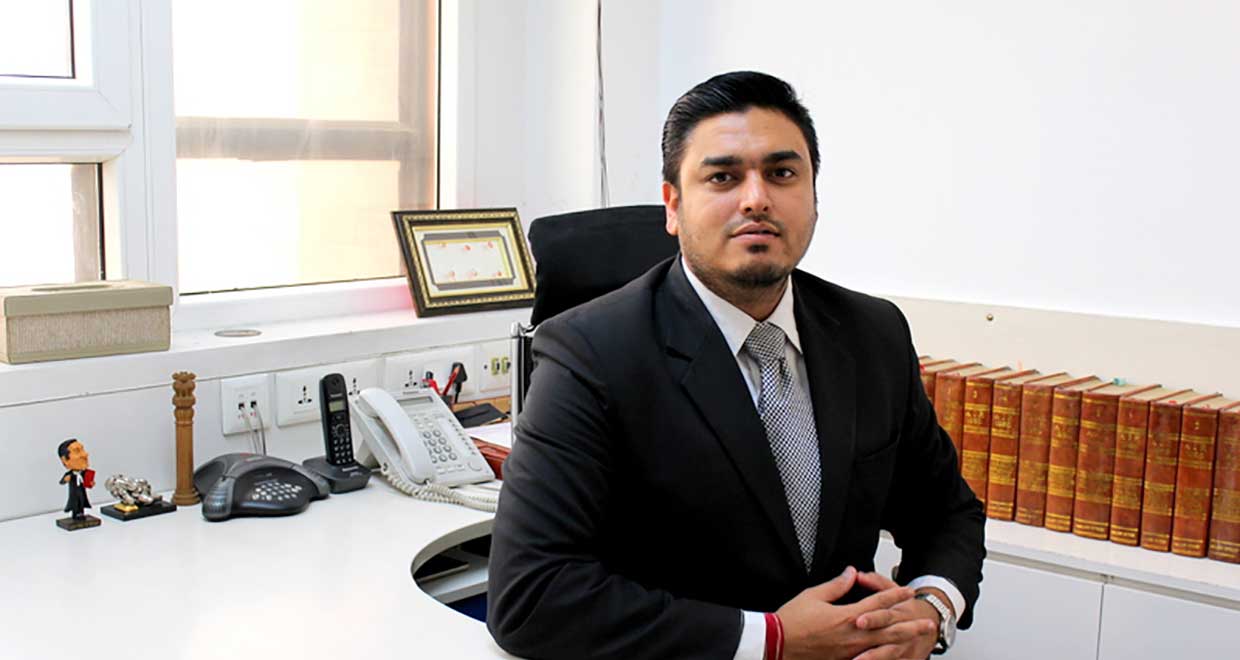
  • Rajiv Kumar Jain, Legal Advisor, on corporate law, independent practice, and his experience

    Rajiv Kumar Jain, Legal Advisor, on corporate law, independent practice, and his experience

    Rajiv Kumar Jain graduated from Pune University, in 2009. Since then he has worked with Dhir & Dhir Associates in the capacity of Associate, with Sarthak Advocates & Solicitors in the capacity of Senior Associate, and with Poenix Legal as Corporate Lawyer. He is currently engaged in independent practice.

    In this interview we speak to him about:

    • Starting out on his own
    • His diverse experience
    • The corporate law scenario in Jharkhand

    How would you like to introduce yourself to our readers?

    I am a corporate lawyer currently based in Jharkhand. I have worked with and for/against various top notch law firms in India and abroad. At present, I shuffle between Delhi and Jharkhand and mainly focus in the state of Jharkhand to build a robust practice of corporate law and assist a young state with its strategic development.


    What motivated you to pursue law?

    Well, I am a first generation lawyer. I am the first person in the entire family to enter this profession. I belong to a hard core business family where people are born businessmen/businesswomen. Honestly, taking up law happened to me by chance. As a matter of fact it was my elder brother, Rahul Jain, who lured me to take this professional course by offering me a five year prepaid holiday against the condition that my results should not be compromised.


    Tell us a bit about your time studying law at Pune University.

    Pune is a relaxed place to live in where you have the feel of a metropolitan city and comfort of a smart city. Life in Pune University was filled with lots of fun, friends, bike rides and frequent trips to nearby places. Pune University offers rich culture, history and a variety of courses where you end up having friends from all streams. I had the privilege to be among a group of future lawyers, doctors, engineers, actors, and sportsmen. During my stay at a hostel in Pune with students from various backgrounds and courses, I had lot of opportunities in public speaking where addressing a gathering of 500 students was very frequent. This helped me a lot in developing my oration skills which I think is an important pillar of being a lawyer.


    Could you tell us about the internships you took up, and what you learnt from those experiences?

    I was blessed with a couple of grilling internships. During those days I used to think that interns are given menial odd jobs. But now, after being in the profession, I know how important they are. During my first internship in Kolkata, the first thing I was assigned was to stitch a file (the High Court of Calcutta still has the practice of stitching the file before submitting it to court) and at that time I wondered whether this even was required for a lawyer. Today, I know how important it was for me learning that also. Therefore I strongly advise all law students to go for internships seriously and take up each and every task assigned by the lawyers with an open mind. A law student should try and get as much internship as possible and should undertake them very seriously.


    What advice would you give students in avoiding a decision paralysis?

    Personally, I think a lot depends upon the student’s background. If a law graduate is from a law background, his/her parents are aware of hardships of the profession and therefore the burden of expectation or being able to take care of one self is reduced drastically. While litigation is a slow start, the corporate side of practice is much more lucrative in terms of pay. An average law student should always analyse (a) his/her family background (in terms of financial stability) and (b) his/her interest towards the side of practice he/she is inclined after undertaking four to five internships and then decide what he/she wants to do.

    As far as studying further is concerned, I would always recommend law students to be in the profession first for a couple of years and then decide whether studying further is required or not.


    Tell us about your early professional experiences at Dhir & Dhir.

    Well, I belong to the batch when there was almost negligible recruitment and more news of “pink slips”. This was the global economic slowdown period. While I was among the lucky ones to get campus placement, the formal offer letter never reached. While, the wait was long, I never stopped trying during the waiting period. It was not long before I had a couple of offers and after discussing with people in the profession, I decided to take up Dhir & Dhir under the then corporate litigation partner. I was happy with the role as it included both litigation as well as corporate exposure. This was the only reason I chose Dhir & Dhir among others, apart from Dhir & Dhir being a well-known law firm.


    How did you come to work with Sarthak Advocates & Solicitors?

    While I was working at Dhir & Dhir, I got to know that an ex-Luthra employee is setting up his own practice and looking for fresh talents. I thought there was no harm in meeting him and after meeting Abhishek Nath Tripathi, a thorough gentleman and an institution unto himself, it clicked and I started working with him. When I had joined Abhishek, we were working under the banner of Abhishek Nath Tripathi & Associates and Sarthak was formed in front of us. I have participated in every aspect of Sarthak, right from choosing logo of the firm, to the color of the wall, to the desktops, business card tone and texture, etc. Sarthak is and will always remain close to my heart. Every minute spent there is memorable and I have learnt a lot by working in Sarthak with the people who have worked and still working in Sarthak.

    On what parameters do you choose the projects you work on?

    I like working on challenging assignments, but I take work as it comes. I give importance to all work and give my best to each and every work.


    What prompted you move to Phoenix Legal?

    Sarthak is a small size law firm and Phoenix Legal is much more established as compared to Sarthak. Before joining Phoenix Legal, I was very clear that working with Phoenix Legal would give me exposure to complex and big ticket transactions and would require much more hard work. I was lucky to work with Mr. Saket Shukla whose expertise lies in working around complex and big ticket transactions.


    What are the challenges and learning opportunities that you encounter as an independent advocate?

    Being a corporate lawyer (which is still a new concept in most of Jharkhand and most of the developing states of the country) is very challenging to convince corporate houses and enthusiast individuals in Jharkhand about its usefulness. Most of the work of a corporate lawyer is catered by established Chartered Accountants in this part of the country. Established corporates find it difficult to understand the use of a corporate lawyer when they have their Chartered Accountants handy. However, things are changing and after a lot of convincing and explaining the advantages of a corporate lawyer, and how it is different from Chartered Accountancy.


    What are the areas of law that you are looking at as part of your independent practice?

    As part of independent practice, I am taking up everything that is coming my way (as long as the quality is not compromised). I am keen on setting up robust corporate law practice in the state of Jharkhand.


    What are the key attributes that one must develop in order to excel in this industry?

    Read, read and read and discuss. This is a profession where reading and updating yourself never stops and should not be supplemented. One should also take part in constructive discussions and be patient while hearing. As a lawyer one should learn to listen more and speak less.

    How do you manage your time between your professional and personal interests?

    Having a balanced life is very important. As a lawyer some days may require round the clock dedicated to clients and then there are days which are relaxing. A lawyer should be happy with both the situations and take life as it comes.

    Outside law, I like spending time with my family, watching movies, going out with friends, indulge in adventure sports, going out for vacations or long drives.


    How do you keep yourself updated about the latest developments in the law?

    I keep on reading legal journals, business newspapers, blogs, official websites and legal updates to keep myself abreast with the legal as well as political developments. All thanks to the technology, a smart phone is enough to be updated.


    What advice would you like to give our readers, who are mostly law students and young lawyers?

    Enjoy the profession and be prepared for few bad days and few good ones. Always remember this is a benevolent profession and please be careful with what you speak and write.


  • Sayan Samaddar, In-House Counsel, Aksh Optifiber, on studying in Symbiosis, and his diverse experience

    Sayan Samaddar, In-House Counsel, Aksh Optifiber, on studying in Symbiosis, and his diverse experience

    Sayan Samaddar graduated from Symbiosis Law School, Pune, batch of 2012. Since then he has worked at Rohit Das & Associates, Gagrat & Co., and Chhibber & Associates. He is currently In-House Counsel at Aksh Optifiber Limited, where his role entails IPR related issues and handling complex litigation matters relating to Writs, Military Laws, Service Laws, Banking Laws, Property Laws, Consumer Protection Act, Arbitration Act, Companies Act, Suit for recovery of money, etc. as a practicing Advocate as well as a corporate legal manger.

    In this interview we speak to him about:

    • His time at Symbiosis
    • His litigation experience
    • His internship experience


    How would you like to introduce yourself to our readers?

    As a first generation lawyer who started off as a practicing advocate but currently has settled as an in-house counsel.


    What was your time at Symbiosis like?

    My life at Symbiosis was blissful. I worked very hard for the first two weeks of my first semester but soon the clarion call of college life proved too hard to resist. While I did secure decent grades, I spent much of time chillin’. I did ensure that I have the bare minimum attendance so as to avoid TNG (the term will ring a bill with Symbi folks – it basically meant one cannot sit for the semester exams on account dismal attendance). In short, it was a paid vacation for five years.

    Symbiosis not only stands out from other private institution but also from every other college. I could not take advantage of the academic facility of my college so I will not comment on how Symbiosis stands out as compared to other colleges in this regard. However, it did teach a lot of other valuable virtues which are still coming in handy.  I believe Symbiosis makes its students street smart; which according to me is a very valuable virtue to have in the long run especially in the field of law. It was very hard to find accommodation in our college hostel. Therefore, majority of the students stayed independently either in PGs or flats. I stayed with three batch mates of mine in a flat. Staying in a flat means you must look out for yourselves as far as your daily needs go. We got a fixed amount of money from parents for every month. This amount took care of our rent and our other needs. We suffered dearly whenever we prematurely spent this amount. Thus, we learned the very important lesson of money management. Paying bills on time was another valuable lesson learnt. Once we forgot to pay our electricity bill and as a result we were sitting in dark during our exams! These are small but very important lessons which no book will teach.


    How much of a role do GPAs play in shaping one’s career path?

    I did not attach much importance to GPAs. I only ensured that my GPA did not fall below three (our total GPA was four). Securing a high GPA is not very difficult. In fact, securing high marks in any university or school exam is not very difficult. It only requires a systematic way of mugging up the chapters and regurgitating the same on the answer sheets. One should not only focus on getting high marks. The focus should be on what one learns from all the chapters and units which are taught throughout the course. For instance, I had scored a perfect GPA, i.e., A+ in my contracts paper in my first semester; but after I had graduated I remember myself struggling to understand the meaning of a quasi-contract! The A+ was scored by the sheer power of replicating pages mugged up the night before. After my graduation, I had to re-open the Contract Act, and this time I studied with the aim of understanding the concepts rather than securing an A+. By God’s grace, now I can safely say that I do know my contract laws. Focusing only on a high GPA will not take anyone far unless one understands the concept.     


    What kind of internships did you engage in during your student years?

    All my internships were under practising lawyers except for one which was under Justice Khanna at Delhi High Court. My final internship was under Adv. Protik Prokash Bannerjee a.k.a Protik Da (whose chambers are a real life enactment of the verve and versatility found in his super lawyer columns). I received basic grooming from him. He instilled in me one of the most valuable lessons for any lawyer; that one must know where to look for an answer to a query and that one of the prerequisites for any lawyer is to be a good draftsman (he may disagree with I just said since he tried to teach me a lot of other things). Thus armed I prepared to embark upon another trail.


    What are your areas of specialisation, and when/how did you go about choosing these?

    I love civil laws especially commercial litigation and contracts. Somehow I have always loved civil matters and criminal laws never really charmed me. It remains so till date. I do not think anyone can be advised as to which field of law one should pursue. It is strictly a matter of personal choice. Do what you love to do; that is mantra!


    How were the first few years after your graduation? 

    My first few years after graduation were tough or to put it precisely, I was paying dearly for having enjoyed five years of paid vacation in Pune. I do not think my time in college had prepared me for the real world practice of law and there is no way I can blame my college for that.

    I had joined Protik Da’s chambers immediately after college. During my time with Protik Da, every day I was sent to the Calcutta High Court with the instruction to observe the day to day court proceedings. I observed the proceedings very intently without having the slightest idea what exactly was going on. I used to jot down in my notepad whatever I observed in the courts. Later in the day I used to sit with Protik Da and clarify my doubts. The clarifications sometimes came in form of brief lectures from Protik Da and sometimes reading various commentaries under his guidance. Thus, slowly but surely I stared having some amount of grasp of what actually goes on in a proceeding before court.


    What are the challenges that one needs to prepare himself/herself for when they step out of the comfort of a law school and into the real working world?

    Once college life is over there is no comfort zone. The moment professional career starts, every day presents a new challenge. In order to overcome these challenges one must have the self-belief and a never say die attitude. One must be prepared to fail, learn from such failures and move on. As Rocky Balboa said “Life’s not about how hard of a hit you can give… it’s about how many you can take, and still keep moving forward.”    


    During your developmental years as a lawyer, did you have any mentor(s)?

    I am still developing as a lawyer. After all, I am hardly five years old in the profession! During this short span I was lucky to have some very good seniors who gave me valuable guidance. Protik Da is one. Another very good senior I worked under is Adv Imran Tarafdar who taught me how to draft. My inspiration comes from a very materialistic source. I hail from Calcutta but reside in Delhi which means I have to pay rent along with my bills. Unless I am good at my work, I will not get a handsome remuneration for my services and unless I get a handsome remuneration I will not be able to meet my expenses. It is very simple that way.


    What does a judicial clerkship entail? 

    The positives which one may take away from a judicial clerkship solely depends upon two things; namely, the judge under whom one is clerking and one’s willingness to do something extra apart from what one has been assigned to do. During my time as a law clerk at Delhi High Court I noticed that a lot of my fellow law clerks were mainly into making summaries of the cases which were to be listed before the court the next day or doing some research in the Judges’ Library. In my opinion merely making those summaries and logging into manupatra or SCC online for research will not give a positive thrust to one’s career. I was lucky to clerk under Justice V. Kameshwar Rao. Unlike some of the judges, he actively involved me while drafting judgments. He very systematically used to assign to me three to four matters every week and ask me prepare comprehensive briefs for him which would offer some meaningful assistance to him when he would draft judgments in those matters. The briefs would contain the facts, issues involved, arguments advanced by both the parties on such issues and the correct position of law on the issues. He used to take special note of the way and manner in which I had drafted the briefs. Fortunately, I assisted him well. There used to be days when I had finished my work well in advance and thus had free time on my hand. During this time instead of endlessly roaming in court or socialising in the High Court canteen, I used to pour over whatever books I could lay my hands on in the Judges’ Library. This way I believe I have managed to get the most out of my stint as a law clerk.

    Now, as far as the second question goes, I believe that for a young lawyer aiming to become a practicing advocate, the best way to start off is to join the chambers of a middle aged advocate who has a variety of briefs. I am emphasising on joining a middle aged advocate because a middle aged advocate will not have a lot of assistance at his disposal. He will have one or maximum three juniors assisting him. Thus, each of his juniors will have ample of work to do. The learning and growth is directly proportional to the amount of work one does. Alternatively, one may also join a start-up firm right after college. I will not advice joining an Advocate on Record right after graduation. One may join an Advocate on Record after a few years of practice. I will also not advice anyone to join a top – tier law firm immediately after graduation. While on one hand a top – tier law firm will pay handsomely but on the other hand there are certain cons as well. A top – tier law firm will generally have a large team which will be handling a specialised branch of law. This will not be beneficial for a fresher since, at the very outset of the career, the junior will be exposed to one particular field of law only. Further, the fresher will also be handling limited amount of work on account of the strength of the team and therefore the growth will be slow. While a fresher in top tier law firm may have the opportunity to work on some high profile cases right at the beginning of career but that may not be of any help since majority of the issues involved in such high profile cases are bound to be complex therefore they will go tangent to the junior’s brain. After all, not everyone is a Salve or a Palkhivala. As far as judicial clerkship goes, a fresher may pursue the same immediately after college but for a short span, say for six to nine months and not more than that. I have already explained how to effectively utilize one’s stint as a judicial clerk. The ideal way to pace one’s practice is to start off in a small chamber where there is variety of work thereby having exposure to multiple fields of law, getting the basics right while having an understanding of how things work and then gradually move to bigger places and ultimately go independent. The timeline for these events to happen will of course vary from person to person.      


    Why did you move from a law firm to chamber practice?

    I spent a good nine to ten months at Justice Rao Sir’s Chambers as a law clerk before moving on to a Law firm (M/s Gagrat & Co.). It is headed by Mr. U.A. Rana who is the hardest task master I have come across till date. Under his exacting tutelage, my drafting skills were further honed besides which I was also exposed to a wide avenue of cases. I dealt with cases relating to CPC, Indirect Taxation, Consumer Cases, Competition Laws and Special Leave Petitions. By this time, I had learnt how to draft quite well and was also proficient at researching and I was itching to have a crack at arguing cases before a court. Fortunately, I was presented with an opportunity to argue an application under Order 7 rule 11 of CPC before Tees Hazari Courts. The application was preferred by my firm’s client i.e. the defendant. It involved an interesting line of argument which aimed to prove that the plaintiff had no cause of action. I had successfully argued the case and the plaint was rejected on the aforesaid ground. However, after this particular case the opportunity to argue was far and few since most of the cases in the firm were before Supreme Court. Hence, I made a conscious decision to move out of Gagrat to the Chambers of Mr. Ankur Chibber with an aim to appear and argue more cases. This was particularly tough since I took a considerable pay cut. Mr. Chibber was empanelled with a number of Government Offices and also with Army, Air Force and Navy. He predominantly dealt with service law matters. He was a wonderful senior who gave his juniors ample opportunity to learn by letting them arguing matters on their own before the Courts. I worked under him for a year and during this time I appeared in a number of matters before High Court, CAT and Armed Forces Tribunal. He had allotted all his matters before Armed Forces Tribunal to me. Since I was representing the government, I lost more matters than I won (Government messes up most of the times but loves to exhaust the legal remedy to the fullest extent possible); but having said that I never went down without a good fight even though it was a dead case. I learnt valuable lessons such as how to think on your feet while you are standing before a judge with the other side lawyer breathing down your neck and tricky court crafts. These are skills which no book or fancy LLM degree will teach. As for the times when I won cases, the very act of preparing for and arguing a case independently and then seeing your name on a judgment is a high like few others.


    Tell us about the transition from being a litigating lawyer to an in-house counsel.

    I moved from practice took up employment as an in-house counsel because I felt it poses unique challenge. Many practicing advocates may disagree with such a choice but I think one must have the experience of everything. The initial transition from a being practicing lawyer to an in-house counsel is often a prickly one and I had to look to my boss often to imbibe the ways of the corporate world. During my initial days as an in-house Counsel, I had to spend considerable time understanding the business of my Company. Further, with time I also realized that as an advocate I was offering my services to client whereas I as an in-house counsel I am working as an employee. There is a difference in those two relations. Bottom line remains the same i.e. I am working in the capacity of a legal expert but the approach changes. For example, as an advocate I can sometimes take the liberty to reprimand my client if the client is not providing me with the requisite facts or documents or instructions but I cannot do the same in a company. As an inhouse counsel I need to be suave while seeking such inputs from my colleagues. Further, as an advocate I was an officer of the court hence my main duty was to assist the court and the client came second but as an inhouse counsel I am an officer of the Company. Period. Hence, the nature of duty changes. It took some time for me to realize these things. Fortunately, I have a very good boss who till date guides me brilliantly.


    Give us a brief capsule of what a regular working day looks like for you now.

    Each day at office is enjoyably hectic. My company has a diverse business portfolio and also undergoing tremendous expansion. Moreover, my company seldom approaches a firm or a lawyer for outsourcing legal work. Almost everything is done in-house. Initially I was the only one, apart from my boss so it was becoming increasingly difficult to manage everything on my own but now, I am being assisted brilliantly by a junior.

    Apart from executing the general responsibilities of an in-house counsel like drafting and vetting contracts and handling litigation matters; I have undertaken various other functions such as liaisoning with various Government Departments and most importantly looking out for the risks which the Company may unknowingly end up taking while conducting its day to day business. In other words, I try to help the Company save a little money by identifying various Government Schemes offering tax subsidies and other benefits while also trying to create a sense of security in the mind of the Management and the Marketing and Sales team to fearlessly conduct business knowing that there is a person who will caution them beforehand in the event they wander out of the four corners of law. This requires being proactive every day and not wait for a legal issue to arise and rather take care of it before it becomes an issue. In all this I have found that my previous experience in litigation has helped me immensely for executing my duties as an inhouse Counsel.

    Apart from the aforesaid, another very important responsibility I execute is negotiating contracts. It is an art and I am still learning it. One must be careful while doing this so as to protect the interests of one’s company as well as ensure that the business deal do not go south because one is unrelenting on some of the clauses of the contract. Sometimes it involves taking calculated risks. How one negotiates a contract depends upon facts and circumstances of each transaction which ultimately boils down to the extent of bargaining power and leverage one enjoys in each such business transaction.


    What are the differences between litigation practice in Delhi and Kolkata?

    I do not think courts in Delhi and Calcutta can be compared with respect to their receptiveness towards a fresh lawyer. Our profession always welcomes and encourages new and fresh advocates. In fact, our senior colleagues are always happy to see a junior doing well in court. This is true across all the Bars in our country. It was a personal choice on my part to move to Delhi and start practising here. However, I must add the reason which prompted me to move to Delhi. Every year Delhi attracts a lot of young lawyers from across the country. The volume of work over here is astounding. This is mainly because of the number courts which are here in Delhi. Delhi is divided into six Judicial Districts and each district has a District Court. Apart from the District Courts, there are a large number of Tribunals along with their Appellate Forums and of course there is the High Court and the Apex Court. Further, a lawyer based in Delhi can also travel a little bit (airfare is low plus highways are fast and beautiful) and take up a few outstation cases before Jaipur Bench of Rajasthan High Court and High Court of Punjab and Haryana. Moreover, half my batch from Symbiosis which includes my best friends are practicing in Delhi. Hence, I was attracted to come and settle in Delhi.        


    If you could turn the clock back, is there something you would do differently?

    Absolutely not. It is because of these significant turns I am what I am today. I do not think I could have done better.


    Is there any other advice that you would like to give to our budding lawyers?

    a) Forget what you did in college. It is a fresh journey after college! (This piece of advice is aimed at students like me who chilled too much in college)

    b) Read a lot but do not just read; understand the law as well.

    c) Keep it simple. One must know where to look for an answer.

    d) Have strong command over English language. There must be clarity in your thought process and the same must be reflected in your drafts and correspondence.

    e) Be precise and crisp while talking; be it in form of an argument before a court or with your client or with anyone else.

    f) Talk less but talk sense.

    g) Be confident and professional in your approach!

    h) Do not be shy or hesitant in seeking help when in need.

    i) Be ready to fail, learn from failures and keep moving forward.

    j) Lastly, but most importantly, there is no substitute to hard and honest work!


  • Merlyn Abraham, Attorney, SAMVĀD: Partners, on transactional law, litigation, and her diverse experience

    Merlyn Abraham, Attorney, SAMVĀD: Partners, on transactional law, litigation, and her diverse experience

    Merlyn Abraham graduated in law from Kerala Law Academy Law College, batch of 2008. Since then she has worked as Associate with K.R. Chawal & Co., Legal Executive at Citi Bank, Associate at Artis Legal, and Senior Associate at Associated Law Advisers. She is currently Attorney at SAMVĀD: Partners.

    In this interview we speak to her about:

    • Studying at Kerala Law Academy
    • Her past experiences
    • Her role at SAMVĀD: Partners

    How would you like to introduce yourself to our readers?

    A lawyer with expertise in general corporate law practice along with solid understanding and background in disputes. Some can say that I am suit who has adorned the robe in the past as well.


    What motivated you to pursue law?

    My alma mater, St. Francis De Sales School, New Delhi, encouraged students to find their interests and choose a career suiting their own aptitude. Career counselling from ninth grade twelfth was a significant part of the same. Career counselling at school, hero worship for a Supreme Court judge (who was member of our church), my inclination to analysis and logic coupled with my father’s support and encouragement led me to chose this career.


    Share with us your experience as a student of law at Kerala Law Academy. 

    Five years in law school was my introduction to “the real world”, be it in professional or personal level. While the focus in Kerala Law Academy was on academics (internal exams, presentations and attendance being supremely important), politics (being and participating as members of student led political parties and association), dissent and discussion on various education related and social issues was rampant and never curbed by the college administration. Furthermore, being part of the moot court society gave me numerous opportunities to interact (in person) with stalwarts in the profession, develop research skills, learn early on how to frame and present arguments in legal matters. Admidst all this we participated and won several intra and inter university cultural competitions.


    Having won moot court competitions, how important would you say it is for students to moot? 

    By participating in moot court competitions students learn how to frame and articulate legal arguments early on, develop research skills, learn to apply academic knowledge and develop a thought process which help in analysing real time legal issues and matters, much prior to joining the profession. Personally participating in national level moot court competitions helped me meet and be friends with laws students from other law schools. The  friends I made during such moot competitions are fellow members of the Bar today and we interact, support and guide each other as professionals  So, moot courts have done me abundant good, but my batch mates who didn’t participate in them are doing well (professionally) for themselves as well.


    How did you go about choosing your internships?

    Internships were a medium to figure out which area of law interests me and whether corporate practice or litigation was the way ahead for me, therefore I started interning with litigation law firms followed by tax experts, intellectual property (focused) firm and corporate law firm. The internships I undertook absolutely served their purpose and by the time I got my degree in law I had sketched by career path for next couple of years.

    What motivated you to choose litigation after graduation?

    Having interacted with lawyers in niche practice (IP, tax), corporate lawyers and litigation lawyers during my internships, the advise I constantly received was to do litigation for a couple of years to understand procedure and consequence of ‘commercial terms’ in court (when they go in dispute). I chose to pay heed to their advise and jumped into litigation.

    How did you secure your first job at K.R. Chawal & Co.? 

    I got a call for an interview at K.R. Chawla & Co, through a job portal followed by an interview with the Partner. K.R Chawla & Co. at the time was an ideal place to work for a fresher; interaction with the different partners helped me gain so much more knowledge than the civil and writ jurisdiction work I was involved in at the time. The firm was traditional lawyer’s office where everyone was treated almost like family and Mr. K.R. Chawla even more so.


    What is the nature of work you took up at Citi Bank? 

    I joined Citi group as a legal executive where my work profile included 80% of litigation management and 20% drafting and review of agreements. My time at Citi helped me gain perspective on how legal solutions have to make business sense and how our role as legal counsels needs to be communicated to the management and other departments of the Company.


    Could you share with us some of the interesting cases and learning experiences from your time working at Artis Legal and Associated Law Advisers? 

    At Artis legal I was initially trained and soon was given  to  handle on my own, corporate real estate deals, corporate advisory and disputes, with minimal supervision. I thoroughly enjoyed learning the craft of negotiation and getting to do it all, on my own was thorough pleasure. The direct interaction with the stake holders (of giant corporate clients) definitely instilled responsibility, immense pride in my work and confidence. Working with seasoned lawyers who care to mentor you well, does go a long way in chiseling  your skills.

    What does a typical work day look like for you as an Attorney at Samvad?

    Having gained experience as a litigation counsel, in-house counsel and a corporate counsel, I was looking to learn something new and increase my skill set. I was interested in doing private equity related work and I got to know of an opening at Samvad Partners  and applied to the firm’s HR. The hiring process started with an interview with firm’s partners and followed by a small work assignment . At Samvad, our day is charted very different when we are in the middle of a due diligence (which is always time pressed), acquisition or investment deal and when we are handling smaller agreements or corporate advisory. In the former situation, the day begins before the sun rises with doing your share of the work, getting to office by 9.30 am then the day just replete with calls, discussions (internal and external), drafting, review, finalising documents, the works. We (associates and partners alike) tend to pull late nights then.

    In the latter scenario, the day is more relaxed, we are encouraged to finish our piece of the work as early and head back and the day in the office  is laced with fruitful discussions (with partners as well) around law and otherwise.


    What are your interests outside law? 

    Apart from law I enjoy travelling (every chance I get), photography, reading and spending time with my friends and family. The intent is to strike a balance between work and life (otherwise) but then it seldom materialises, I steal whatever time I can for my interests outside work.

    What are the challenges you have faced in building up your career as it stands today? Where would you like your career to take you five years down the line?

    The challenges I faced to build my career are pretty much same as any first generation lawyer would but the fact that am brought up in Delhi and stayed with my family did ease out things. Managing to get a placement in a good firm without any “contacts” that too when you passed out into a recession hot market, was a trek, but then every step I learnt a lot including to value the good (people / circumstances) and weed out the negatives and every achievement is your ‘own’.  My career as it is today and the rather unusual path I have taken till date, I am unable to foretell the path ahead, but yes in five years I do see myself practicing out of my own office.


    Given the dynamic nature of the field you practice in, how do you keep yourself updated about the latest developments in the law?

    Newsletter, articles and journal are what I utilise to navigate through the latest events and changes in law which I follow up by going back to the actual source (master directions, notifications, statutes, circulars), along with discussion with friends( who practice in different branches of law).


    What would be your parting message to our readers?

    Rise up the career ladder but don’t forget to have a life. Every law students must watch the movie “And justice for all” once before you set foot in the profession.


  • Mehboob Rahman, Advocate, Calcutta High Court, on litigation, and his diverse experience

    Mehboob Rahman, Advocate, Calcutta High Court, on litigation, and his diverse experience

    Mehboob Rahman graduated in law from Symbiosis Law School, Pune, batch of 2008. He is an independent legal practitioner at the Calcutta High Court. With over seven years of litigation experience, he has handled matters pertaining to the Companies Act and Sections 9, 11 and 34 of the Arbitration and Conciliation Act, 1996 to Civil Revisions, Appeal Hearings(Civil), Criminal Revisions, Criminal Appeals – all falling under the Original and the Appellate Side jurisdiction of the Hon’ble Calcutta High Court.

    In this interview we speak to him about:

    • His litigation experience
    • Practising at the Calcutta High Court
    • His internship experience


    What would you like to say to our readers in the manner of an introduction of yourself?

    I have been a practicing lawyer for the past seven years at High Court, Calcutta. I have dealt with varied matters such as writs under various groups, criminal and original side suits. It is pertinent here to mention that my father is a senior advocate here at High Court, Calcutta and my mother was a police officer at Kolkata Police. Therefore terms like “law” and “court” were something which I was used to since childhood.  


    What inspired you to take up law? 

    You see, as a child sometimes I used to accompany my father at work and used to play around in his office. I was used to seeing law books, briefs, client conference, and everything else that I see today. All our good family friends were either lawyers or police officers. When I took up law, it was “quite expected” and a predictable move. The best part about Symbiosis Law School at that time was, It had offered the course B.B.A.,LL.B for the first time and mine was the inaugural batch. I had a commerce background in school so it was again a very predictable choice. I always knew that it is either going to be business or law after school. That’s how i ended up in Symbiosis.


    Tell us a bit about your time studying law as an undergraduate student at Symbiosis Law School, Pune.

    Studying Law at Symbiosis Law School was in my opinion the best five years in my life. By this I don’t mean only academics. I don’t think I need to rate Symbiosis on its academic parameters. We already know about it. Its more than that. It was the life there I am talking about. We made some lifelong friends there, friends who are still in touch and going strong. Moreover I did not feel that there is a rat race going on out there. Everyone of us was unique in our own way and being in Symbiosis only brought out the best in everyone. I believe I was a very mediocre student yet I never had any regrets about it because at the end of it I felt loved and co operated by my professors, friends and some exceptional seniors. Symbiosis used to be and still is more than just an institution or a degree, its about the time, about my friends from all over the country and also the city, Pune. My friends used to think that I must be having lot of support back home academically since I have a lawyer in the family. On the contrary when I used to tell my father that I am really panicked about Constitution paper the day after, I used to get replies such as “there is absolutely nothing there, absolutely nothing, simply study Article 226 that is very important and useful,”. I had to switch over to other topics such as finance and sustenance immediately because I knew the discussion is going no where.  During my time we had the opportunity to experience excellent faculties and during our principal’s lectures there used to be 100% attendance not due to fear or respect, it was because she was the best at it.


    Did you take part in co-curricular activities while in college? 

    Co-curricular activities are very important in law students life or for that matter any student’s life because it takes you out of the mundane clockwork routine and classes to something different. I took part in few moot courts though I was not into serious mooting. We had these regular symposiums and guest lectures where we interacted with eminent personalities and it dealt with many topics which was prevalent then. I was an active participant in the committees and the sub committees during an event of our college with the support of my seniors wherein you need to manage events or simply make things work! I was good at interaction and negotiating with people who could be anyone from a vendor to a guest whoever is necessary to make an event successful. Even in litigation the most important resource next to knowledge is people and therefore interaction and counselling plays an important part. Therefore its completely clear how the extracurricular activities plays an important part in ones life in what way.

    What were you areas of interest during your legal education?

    As a student I found the subjects on criminal law quite intriguing. I found it to be very closely related with different human behaviour. As a lawyer I never chose anything specific to specialise in. I have simply gone with the flow. I stick to what my father used to say that its never a lawyer who decides what he/she specialises in, its always the clients.


    Could you tell us about the internships you took up, and what you learnt from those experiences?

    The practical aspect of legal profession is indeed very different when we compare it with what we do during our college days. In real world, there is no syllabus and its not about making your teacher happy by sticking to doing exactly what is expected out of you. It is about making people happy, giving them relief of their misery. You might fail in that attempt but the effort should always be genuine. My internships were all based around litigation working under eminent lawyers. I spent a lot of time at the court listening to arguments and trying to follow court procedures. I realised then that what we learn post graduation in our professional scenario is far different than academics. Internships give you an insight in how to take things and from where, develop research skills, understand the profession better.


    At a time when most students are inclined to taking up corporate jobs, what influenced your decision to take up litigation?

    I believe its completely a personal choice. Both corporate and litigation are perfect in its own sphere and there is enough to learn in both of them. However I will tell you exactly what went in my mind while choosing litigation. Firstly like I mentioned earlier, I like work which are people oriented. In litigation you are constantly interacting with real people. Not just your clients and colleagues but you need to know lot of people within the various departments of the court in order to have a smooth flow of work. I realise now how heavily we depend on someone or the other somehow in litigation at every step. Secondly, I wanted to work for myself. Thirdly, I wanted to be the master of my time. Whenever I get an opportunity I travel, or at least travel to meet a friend probably. Life always happens outside work. One must never forget that.


    What advice would you give students in avoiding a decision paralysis? 

    I wouldn’t term it as a decision paralysis exactly. It’s a matter of objectivity. For example doing an LLM would really be helpful if you are into academics professionally. However it does not really give you an edge as a practicing lawyer. I should not be misinterpreted here, it is completely my personal opinion. Opinions do differ. I always support higher education and it is always enriching, opens up your mind and scope. Therefore it completely depends on what one wants exactly. I have completed a PGDHRM when I got time, taking a short break from work.


    From a law student to a lawyer, how will you describe the transition?

    It’s a metamorphosis actually. Being a law student and a lawyer is completely different. As a student our object was to pass in exams with good grades. At work you need to live up to your client’s expectations while adhering to all procedures. Time is not always in our favour as courts in India are clogged with pending matters and less number of judges to dispose the same, which we all know. As a law student a section, or a chapter of a law book was a tiny part of the curriculum. In court days might be consumed arguing on one application made on a single section. Drafting is again an integral part of litigation which is given very little importance at  a law school. One takes time to get a good hold on that too. As a student your mistakes will lead to a bad grade, as a lawyer your mistake will lead to a cost or consequence for your client. Therefore one can understand the diligence that is required.


    What is the nature of matters that you take up?

    I take up matters both civil and criminal in nature. At the High Court, I am mostly occupied with writs under various group heads such as land, municipality, service etc. I have taken up matters on dismissal/removal of employees of the Paramilitary Forces of India and other services under the state and central government including employees of public sector undertakings. Suits and criminal matters have been an important part of my practice as well, filing and dealing of which mostly takes place at the High Court and various District Courts in West Bengal. I also have a strong affinity for matrimonial matters and counselling. Non litigation work consist of Searching Land Title, Valuation, Conveyance and Registration before Registrar of Assurance and Additional District Sub-registrar. Drafting of various instruments/documents pertaining to Sale, Lease, Mortgages, Power of Attorney and Will.


    How do you manage your time between your professional and personal interests? 

    Personal interests are the ones which define you as a person, as a human being. You might be remembered how good you were professionally but you will surely be remembered how you were as a human. Life is always outside work. I am more of an outdoor person. Travelling is one of my primary interest. It makes you a better human being every time. One must explore places away from home in order to appreciate what we already have in hand. Trekking up a hostile terrain teaches you how comfortable we are back home and we shall never take things for granted. I am passionate about motorcycles and I often go on rides. Riding is extremely rejuvenating. I wouldn’t lie, I actually look for excuses to ride even if it is for a short while.


    How do you keep yourself updated about the latest developments in the law?

    Law is indeed an ever changing field. One must keep himself/herself updated with the new developments in their field through precedence, books, journal, circular, news and of course Google! It is not difficult now as it was before. We have online resources such as manupatra, scc online and airweb to name a few. Socialising with colleagues is surprisingly the fastest way to learn about new developments.


    What advice would you like to give our readers, who are mostly law students and young lawyers?

    To students, enjoy your college life as it is going to happen only once unless you are talented and may extend it. Make friends and make memories there as those are going to last a lifetime. I am not discouraging ambitious students but its okay to take it a little easy with studies as it is more than academics which is going to take you places in professional life. For young lawyers, patience and perseverance are the keys. Look for opportunity to learn at every step. Losing is also learning. Makes you stronger. Lastly love what you do, do what you love.


  • Aditi Ranjan Ojha, Legal Manager, NDTV, on IPR enforcement, litigation, and her diverse experience

    Aditi Ranjan Ojha, Legal Manager, NDTV, on IPR enforcement, litigation, and her diverse experience

    Aditi Ranjan Ojha graduated from Symbiosis Law University, in 2009. She went on to work for Luthra and Luthra as Associate for four years before venturing into independent practice at the Delhi High Court. She is currently Legal Manager at NDTV, where her role entails IPR enforcement.

    In this interview we speak to her about:

    • Her experience in litigation
    • Her role at NDTV
    • Striking work-life balance


    What would you like to say to our readers in the manner of an introduction of yourself?

    I am the first born to a bureaucratic father and a home maker mother. I did my schooling from Delhi (DPS Mathura Road) in the humanities since I was never interested in science and commerce. Thereafter, I did one year of history honours from Daulat Ram College, North campus. In the interim I gave my law entrance exams and joined Symbiosis Law School, Pune. I graduated in 2009 and joined Luthra and Luthra law offices, New Delhi in 2010. Was working there till December 2014. In 2015 I joined NDTV and I am presently here as Manager-Legal.


    What motivated you to take up law as your choice of career? 

    Law was by choice. I was the first one from my family, however there were no challenges as such. Though there were times when what to do and in what manner was a task, however people around me were very supportive especially my parents.


    Did you take part in co-curricular activities while in college? 

    I have done good amount work for some local charitable institutions in Pune outside college, specially working with underprivileged children, Kashmiri immigrants, and sex workers. Even during my short college stint at North Campus I was part of an NGO called Hriday. I have also participated for legal aid services through college.

    In my understanding co-curricular activities can teach you the practicality of the situation which otherwise a college lecture or the lecturer may not be in a position to teach.


    What kind of activities did you undertake in law school that helped you nurture this interest in litigation?

    My interest in litigation was there even before I started studying. I have been a decent orator throughout my student life which also played a pivotal role. Law school nurtured my strengths.


    Could you tell us about the internships you took up, and what you learnt from those experiences?

    Largely I had interned with Luthra & Luthra Law offices only. One of the few thing colleges don’t teach is the manner of drafting. I learned all minor drafting work in Luthras. Also since Luthra offer services in all spheres of law, as interns we were given lot of research work from all legal sectors. These further strengthen overall knowledge.

    From a law student to a lawyer, how will you describe the transition?

    The transition has not been smooth but has been very interesting. I had to put in double the effort as a lawyer in the beginning. Handling clients  and meeting deadlines were not taught in college. Pun intended ;-).  However this also helped me to understand my weaknesses and gave me time to work on it. As a student our prime concern was to clear the papers. Understanding the nature of work, how to interpret law and use it accordingly was taught only once I started working.


    Tell us about your early professional experiences at the Luthra and Luthra. 

    Luthra’s was a wonderful experience both professionally and personally. Since I joined freshly after college, I had no practical experience of the manner in which court functions, how to present an argument or even for that matter how to take an adjournment etc. Luthras gave me the confidence to appear in court. Unlike other law firms Luthra and Luthra believed in crediting junior for their achievements and that was a bonus factor. We were at liberty to do work at our own pace (till my stint their) and this gave us time to analyse things at depth.


    In deciding between Corporate and Litigation practice, what are the parameters that you considered? 

    I have always been interested in wearing the black gown, to voice my opinion, to fight against injustice and since childhood court rooms fascinated me. Corporate was never my choice. Being born in the family of bureaucrats I was always fascinated with litigation. To watch my father discuss provisions of criminal law made me inclined towards litigation all the more.


    On what parameters do you choose the projects you work on? 

    There are no specific parameters. I usually try to do justice with whatever comes my way. I have done matters within different spheres in  litigation as well. From matrimonial matters to copyrights to negotiable instruments I have tried my hand at everything. I believe that one or two matter or ‘interesting cases’ as you have put cannot build your career. I am the kind of person who measures career graph not only through professional growth but also personal growth. One needs to have not only the professional aptitude but also an attitude. Attitude for a litigation lawyer works very well. And by attitude I don’t mean anything negative.


    Given the dynamic nature of the field you practice in, how do you keep yourself updated about the latest developments in the law?

    I read legal journals regularly. Working in a media agency has also played a pivotal role. I now have four lawyers in my immediate family and so they keep me updated at times by choice at times forcefully.


    What books, judgements that you have read would you say have played an integral role in shaping your legal philosophy?

    Philosophy is in itself very vast and talking of legal philosophy being shaped up by way of book and judgments is not just and proper. I am still reading, understanding and still shaping it.


    What are the causes you feel strongly about? 

    No matter how progressive we become Indian mind-set is still patriarchal. Harassment at workplace is one such cause which I feel strongly about. By harassment I not only mean physical, but mental and emotional as well. I am yet trying my best to work towards it.


    As the Legal Manager at NDTV, what does a typical working day look like for you?

    Working in NDTV is exciting and challenging as well. From attending court matters to analysing proposals and moulding them into agreements, I undertake whatever is assigned to me. NDTV is not only into news broadcasting but also indulges in lifestyle channels to creating web platforms for various services. So the nature of work is diverse.


    What does the scope of work you undertake include at NDTV Legal? 

    I am dealing with court matters which are inclusive of defamation, copyright, telecom disputes etc. I also handle agreements such as service, media collaboration agreement, etc. The working atmosphere is very nice. People in NDTV are really helpful and supportive, specially my team. Had it not been for my team I wouldn’t have survived here.


    How do you manage your time between your professional and personal interests? 

    I write poems and also sing, though I am not a trained singer. I do as I am passionate. I also like reading.

    Where would you like your career to take you five years down the line?

    I live each day as it comes. So have never really thought about where will life take me five years from now. I would rather give 100% at present to whatever I am indulging in professionally. This I think would pave a smooth way for the times to come.


  • Vikram Wadehra, Advocate, Vidhii Partners, on heading their Kolkata wing, commercial litigation, and his diverse experience

    Vikram Wadehra, Advocate, Vidhii Partners, on heading their Kolkata wing, commercial litigation, and his diverse experience

    Vikram Wadehra graduated from Symbiosis Law School, Pune, in 2010. Since then he has worked at Roy & Co., Advocates & Solicitors, and R.L. Gaggar & Co., Solicitors & Advocates. He is currently an Advocate with Vidhii Partners, where he specializes in litigation. His role entails matters pertaining to general civil, banking, dispute resolution and real estate. Over the course of his experience, he has advised and represented various companies, asset reconstruction companies, banks and government institutions in various legal forums.

    In this interview, we speak to him about:

    • Working at Vidhii Partners and heading their Kolkata wing
    • His time at Symbiosis
    • His work experience

    How would you like to introduce yourself to our readers?

    I am a lawyer presently heading the Kolkata wing of Vidhii Partners, Advocates. I started my professional life working with some distinguished and eminent lawyers in the fraternity. I am extremely passionate and look forward to creating a positive dent in the eco-system I operate within.


    What motivated you to pursue law?

    I am a first generation lawyer, and law has always been my first choice. Debating and mock parliaments were my favourite extracurricular activities and I bagged a few laurels representing my school. As a student, I was fascinated reading John Grisham’s legal thrillers. As a budding lawyer, I admired Harvey (of Suits fame) and Alan (from Boston Legal) and fantasised about donning the black robe in the hallowed courtroom corridors.

    However, it was not long before these fascinations were replaced by the grueling reality of the legal system. With an intention to make a positive impact on the legal system, I was convinced of my choice to become a lawyer.


    How would you describe your time at Symbiosis Law School?

    Fun-filled to say the least; the weekend parties, the informal debates at the canteen, the late night group study sessions, grappling with a difficult paper and the ecstasy of doing well, all these memories beautifully woven together. One of the biggest advantages of studying at Symbiosis Law School, Pune, was the access to the multi-cultural student body which I was exposed to. While staying at the college hostel, I made friends from all across the globe studying different courses at the college, some of whom have become associates and we continue to help each other professionally. While legal education was demanding, the campus was a live wire with cultural fests, moot courts, debates and sports. I was fortunate to have a great set of friends which helped me through the thick and thin of my academic term at college.

    While I tried my best to balance academics with extra-curricular activities, I was particularly inclined towards moot courts because it gave me the adrenaline rush and the thrill of the court room discourses. I also wrote for magazines on pressing legal issues of that time.

    How must one decide the future course of action after graduation?

    The wide array of career options that are available to law graduates could often prove daunting while making the right career choices. While many prefer to join corporates to help them navigate legal intricacies, other might prefer litigation while a Masters/Doctorate degree could entice those academically inclined.

    There is no dearth of literature available on the internet, weighing the pros and cons of each approach recent graduates might want to take. While I was at a crossroads, the KSF (Key-Success-Factors) matrix helped me decipher my next career move. In the table I created, I listed down my priorities of what I wanted to achieve in my career and assigned weights to them (with the most important priority having the highest weight/importance). While a number of parameters might assume importance while making the next career move, I certainly feel quality of work and being able to associate with a mentor who could guide you and channel your efforts in the right direction assume prime importance. However, I would suggest that the intuitive inner calling has to be balanced aptly with reasoning and logic. Irrespective of the career choice, one has to push oneself to grow in the profession.

    Could you share with us the most important learnings you have had from your internships?

    I certainly think that internships are among the most important aspects of the education which any student receives at a law school. The fact that one can tie up the innumerable case laws and endless class discussions and case facts into practical and real life situations is what makes internships such a vital component of the education. Moreover, it would provide the student to test his inclination towards a particular subject or an area of interest and explore just how it might be to take that up full time. This is also critical because as an intern you can really look to forge relationships which would help you in the course of your career when you graduate.


    What areas of law interested you during your legal education?

    As a student, it was the allure of litigating in court that drew me. This quickly changed during my time at law school, where I found the intersection between business and law, particularly negotiation and creative problem solving attractive. This was particularly evident during my internships, since most of them were with law firms into Corporate Litigation & Advisory. This perhaps could stem from the fact that I was good with Accountancy in school and was always curious to understand the interplay of various elements within a legal setting. All of this, I believe, were important precursors which prompted me to choose this as my area of expertise.


    Did you have a mentor or guide during the formative years of your career?

    It is extremely important for one to have a mentor during the formative years of his/her career. I would go on to state that it is just next to acquiring your degree in law or clearing the Bar. This is because a good mentor would not just help you make strategic career choices or help you while you are at crossroads, he would also help you with insights which only an experienced mind can provide and would be extremely beneficial to a young lawyer.

    While I got to know the technical nitty-gritties of how a lawyer might approach a particular case and the thought process that goes into delivering a compelling argument, I was fortunate enough to find mentors during my internship stints who helped me as an aspiring lawyer. Whether it was seeking a second opinion on the case I had been stuck with or just bouncing off my ideas on a matter of importance, I always had experienced minds to tap into which have been instrumental in shaping up my career as it stands today.


    On what parameters do you choose the projects you work on?

    I try and consciously build a specific body of work. I am very careful while choosing the kind of projects that I work on.

    One of the most important parameters is the fact whether I would be able to do justice to what the client expects out of me. I try and do justice to every project I take up; not just in terms of the deliverable expected out of me and the team but also in terms of the time I am able to dedicate towards a particular project. I treat every project I associate with as an opportunity for me to learn something different and hence I consciously look for diversity on the work I do. This also helps me evaluate whether a particular project which I am going to associate myself fits in the long-term scheme of things i.e., how a particular project would help me achieve my career objectives.


    Could you take us through what a typical work day looks like at Vidhii Partners, Kolkata?

    A typical day at Vidhii Partners, Kolkata begins early with clients reaching out for updates to their matters. This is followed by arguing matters at the court-room, attending conferences with senior counsels, helping my team with issues that might have had them stuck, meeting prospective clients and ensuring that the expectations of all our existing clientele is met. We have internal meetings and huddles based on the team’s availability to discuss status on the matters in progress and chart the strategy for the future course of action. Further, it includes a mix of reviewing and drafting petitions and contracts along with negotiations with respect to the contracts.

    Having said that, the satisfaction at the end of a hard day’s work is unparalleled. Over the years, I have started to equate a successful day with the satisfaction of doing something meaningful. A couple of “Aha! moments” in a day, just makes the day so much more special and keeps you wanting to tide over the night and get back to work.


    Please share with us some of your experiences from the various commercial litigations that you have worked on.

    The first time I appeared in court as a new lawyer, I remember thinking to myself, “They sure don’t teach you this in law school.” Sure, I went through a course in trial advocacy and also was on moot court competitive teams. Yet, nothing would prepare me for the realization that I, a recent graduate surrounded by much more experienced attorneys (some of whom were admitted to the Bar the year I was born), was responsible for representing my client on my own. That realization was empowering and thrilling, but, if I am being completely honest, it was mostly terrifying.

    It is important to know your case. In my few years of practice, I have already learned that I will never be the smartest, the most experienced, or the most eloquent person in the room. But I believe that knowing your case better than your adversary is the first step to being a successful lawyer. It is equally important to know your judge. Every judge has his/her own idiosyncrasies that must be accommodated. A young lawyer’s ability to be flexible and adapt to judges will go a long way toward improving that lawyer’s reputation in the legal community. If possible, ask other lawyers about a judge’s pet peeves and unique practices. Taking this step will mean fewer surprises and less anxiety.

    Transitioning from learning the law to eventually imparting legal advice can seem daunting. Even now, I struggle with convincing myself that I can properly advise my clients, especially because I am often half their age (and look even younger). You might be inexperienced, but you do not have to act that way. I find that it is possible to appear confident, even when you are not. For me, I am most confident when I am thoroughly prepared. I make outlines and notes that will help guide me through an argument or presentation before the court. I practice even the simplest of arguments by talking it through to myself, to my colleagues, and sometimes to non-lawyers, which ensures that I really have a handle on the issues.

    Litigation is filled with conflict, emotion, and stress, so it is inevitable that someone will say something to you that is offensive. Ignore it and do not lose sight of your goal of effective representation. Responding in kind only results in collateral damage to your client.


    What are the challenges you have faced in building up your career as it stands today?

    As ambitious lawyers eager to make a difference, students and aspiring lawyers often set unrealistic expectations out of themselves. One should keep in mind that it takes years, if not decades, to establish credibility and even attempt to create a change. Most lawyers, very early on in their careers, often get frustrated with the lack of results their efforts often yield and end up contemplating pursuing an easier path which might yield quicker and short terms results. I have lost count of the number of talented and capable lawyers I have met who are disillusioned with the system. Peer pressure and expectations from family doesn’t help either and most lawyers lose the steam halfway through the marathon.

    Another major challenge which I would like to highlight is effective time-management. With so many pressing issues demanding immediate attention, it is of paramount importance that you learn the skill to prioritize issues and effectively delegate work which you think could be adeptly handled by someone in your team. It is an art which often takes years to master and the earlier a lawyer gets it, the better he is poised to take on the demanding work-load a legal career requires.


    What are the key attributes that one must develop in order to excel in this industry?

    Hard-work is the most critical attribute one must develop in order to excel in this industry. There is absolutely no substitute for pouring over endless case literature, the late night discussions, working over weekends and extending hours to prepare for an appearance next day. There are days, I must confess, where the work-load is simply unmanageable and one cannot avoid but going through the day which most outside would term as boring, routine and monotonous. This is precisely the reason why it is important to be passionate about what you are doing.

    It would also help to have clarity of thought in your approach to a particular situation. While the enthusiasm and drive would propel you to strive to achieve perfectionism with almost everything you set out to achieve, having a clear thought process of what the stakeholders want might help you achieve the desired results quickly. Building relationships with clients, mentors, internal teams and various other stakeholders is just as important. Trust is an important aspect which drives business the industry and it’s important to invest in developing quality relationships.

    I started developing these skills while I was still a student. A lot of it was the unstinting support I received from my mentors and colleagues during the formative years’ of my career; which I am so grateful to.


    How do you keep yourself abreast with the latest legal developments and industry news?

    I read, mostly over the internet, and books to keep myself updated with the industry news and the latest legal developments. I also make time to browse through a few blogs which people have expressed their opinions over developments in the industry. This helps me gain perspective on issues which helps me gain clarity on my own thought process.

    I also make time to pursue online courses to keep myself abreast on all what’s happening globally. This gives me insight into some of the cutting edge research which is being done in my field and allows me to learn continually.

    Any parting message to our readers?

    Love what you do and you will never have to work another day in your life!


  • Shashank Garg, Partner, Advani & Co., on being a first generation lawyer, and his experience in litigation, arbitration, and commercial law

    Shashank Garg, Partner, Advani & Co., on being a first generation lawyer, and his experience in litigation, arbitration, and commercial law

    Shashank Garg is a graduate from Guru Gobind Singh Indraprastha University, batch of 2008. Since then, he has worked at Parag Tripathi Law Chambers, Accendo Law Partners, Advani & Co., among others. He has represented the state of UP as well as the central government before the Supreme Court of India. He then went on to pursue his Master’s degree from the University of Nottingham in 2008, with a focus on International Commercial Law.

    In this interview, we speak to him about:

    • Being a first generation lawyer
    • His experience in arbitration, litigation, and commercial law
    • His successful publications, and studying in the UK

    Please introduce yourself to our readers.

    I am an avid traveler by choice, and a commercial lawyer for nine years by profession.


    Were you always inclined towards law?

    I zeroed in on law after eliminating all other possible alternatives. My parents had given up on me after they noticed my general apathy towards anything that involved reading or writing. Funnily enough I ended up choosing law where both the things I hated as a kid became an indispensable part of the job. I am a first generation lawyer and frankly that is a blessing in many ways as you can carve out your own path without the pressure of any standards/expectations set out by your elders in the profession. I studied at USLLS (GGSIP University, Delhi) which gave us enormous exposure. The energy on campus was infectious, to say the least. Diverse internships, conferences, moots and other events that I was involved in helped me crystallize my interest towards litigation.


    How did you start your legal career?

    I was amongst the lucky few who got the opportunity to wear the robe for the first time at the Chambers of Mr. Harish Salve, where I was already an intern before graduating. I proceeded to do my masters in a few months thereafter but that short experience reinforced my liking for litigation. My masters was in International Commercial Laws from the University of Nottingham, U.K, which was my real introduction to the world of commercial law. However, on my return I joined the chambers of Mr. Parag Tripathi, Sr. Advocate, (then Additional Solicitor General of India) which meant dipping into to the deep ocean of litigation, since he was a government law officer. The chamber used to deal with more than twenty matters on admission days in the Supreme Court. Mr. Tripathi is a tough taskmaster but it was an overwhelming experience. I soon decided to set up an office with two friends (Apar & Animesh) and we founded Accendo Law Partners. We were inexperienced but had a lot patience and energy to make it work. I can’t say if it really worked the way we wanted it to but it was certainly a rewarding journey. We merged with Advani & Co. where our practice became more about hardcore commercial disputes. This meant less of court and more of arbitration but this was in no way any less exciting than litigation. I would say arbitration is a sophisticated version of litigation in terms of action; I now do a balanced mix of both.


    Tell us about your time in Nottingham.

    Going for masters was an impulsive decision that I thoroughly enjoyed. I made friends with new subjects; ones that I didn’t think were my cup of tea. I was taught Commercial Conflict of Laws by Prof. James Fawcett (author of Cheshire on Private International Law). He is a true legend of the subject. I did my dissertation under him and received distinction. This was my first exposure to world class learning. The faculty teaches so passionately that it motivates every student to perform better. We cannot deny the fact that most law schools in India lack such levels of commitment by faculty members; this is the first big difference you get when you choose to study abroad. Exposure to a foreign university is a great addition to your skill set, however it really depends on an individual how much he can make out of this one year. LL.M. from an Indian university is a great option too since it has been reduced to a year now and most National Law Schools offer very interesting and niche areas for masters programs. One needs to understand what a masters degree is to be able to make this informed choice. Students often take it as an extension of student life by a year but in reality it is deeper understanding of few subjects that you may want to take up as a career choice. I would strongly urge students to go for masters after three to four years into the profession, when they have found their area of interest. It’s always easier to do your masters in a subject that you are practising in then to come back and find a job in the subject area you did your masters in.


    Could you talk to us about the certificate courses you pursued?

    (Shashank went to Hague Academy for the summer course on private international law in 2009 on scholarship and then took up some more certificate courses internationally.)

    I applied to Hague academy while I was doing my masters in U.K and my letter of recommendation was written by Prof. James Fawcett. I feel that his LoR made the difference, Professors of his repute do not write LoRs often. I was informed by the academy that I have been awarded complete scholarship for the course which meant my course fee, my air travel and my stay in Netherlands was paid for by the academy. After coming back to India, I decided to take up new avenues to learn and hone my legal acumen. I attended Certificate Mediation training organized by ADR Group UK which made me a certified civil and commercial mediator, I also attended the 12th Arbitration Academy at University of Cologne, Germany. Even today I try and make a couple of academic trips in a year whether it is to judge an international moot or to speak at a law school. This keeps me connected to the academic world in many ways.

    What are your thoughts on arbitration in India?

    (Shashank is currently associated with various ADR bodies like IAF, PACT, KCIA and Arbitration Sub-committee of IBA.)

    Arbitration in India is the talk of the decade. Fortunately this decade has seen a lot of positive change. We have seen the amended law in arbitration which was brought to imbibe more confidence in the end users. However, with that noble thought our legislature proceeded in an over-zealous manner, thus creating a rather impractical scenario of arbitration instead. The Arbitration is here to stay and thus the courts and charming lawyers are finding innovative solutions to the problems being posed by amended law. Courts in India, especially New Delhi, have to be given their due credit in making arbitration stand tall and firm. We are also witnessing rapid growth of institutionalized arbitration in India, with most PSUs using ICC, SIAC or LCIA clauses in their commercial contracts with foreign parties. MCIA at Mumbai is certainly a fresh breath of air in this environment with world class facilities and some of the top people worldwide endorsing it to be the next big thing in the Asian region.

    Practise of arbitration is distinct from litigation. Unless you do arbitration the way it’s to be done, you wouldn’t notice the difference. Sadly, many civil lawyers doing arbitration have made CPC their Bible for all practical purposes, causing confusion of concepts amongst law students and young lawyers. The most important thing to keep in mind for practising Arbitration is the fact that it is a private justice delivery system with the backing of law.


    In your opinion, what skills have contributed the most to your success?

    I would not call my experience a lot but yes I had the good fortune of exposing myself to diverse fields, I authored a book titled Tourism Laws in India in 2013 for travelers to have a ready compendium of laws that they may need during their journey in India as a tourist. The second edition is likely to come this year by May. My other book on ADR is being published by Oxford University Press and should be out by July 2017. Moreover, I am working on another book which is being published by EBC on Criminal Investigation and prosecution. Recently I contributed to the LexisNexis publication on arbitration that was published for Niti Ayog. In my practice, other than commercial arbitration, I am doing criminal law, media and entertainment law and aviation law as well. Diversity comes from curiosity; I have been curious about my limits, interests, and capabilities, and in this process I have gained tremendous amount of confidence in dealing with my limitations.

    Being a first generation lawyer one should prepare for an adventure. If you go the traditional way, you are likely to give up soon as the charms and gifts of the legal profession take time to come by your side. Be self aware and work towards your shortcomings by accepting them and not by covering them up. Perseverance and commitment are the two key skills that should be learnt at an early stage in your career. As a lawyer, your communication is your identity, whether written or oral; be clear and crisp in that to create a strong impression. Simple steps such as reading the newspaper can help you develop awareness of issues around you giving you confidence to communicate in any setup. Use your time carefully when you intern as those are the places you can afford to make mistakes and create opportunities for yourself.


    Did you also engage in any extra-curricular activities as a student?

    As a student I focused on anything that was new and challenging, I would not call these activities extracurricular as such. Our law school was quite new and we were the third batch to come in, I decided to make a mark for the law school by organizing various events such as international moots, (Jessup, North India) and the Law Lecture series (lectures were delivered by: Justice R.C Lahoti then Chief Justice of India, Mr. KK Venugopal, Mr. Soli Sorabjee, Dr. L.M Singhvi, Mr. R.K Jain, Mr. Ram Jethmalani and Mr. Harish Salve). I really doubt if any law school in the country has had all these legends coming to speak at their campus. We did many such things with the help of great batch mates and highly reliable juniors. In fact, my student life at the law school was more outside the classroom than inside.  My current hobbies would include travelling and sleeping as much as I can – I hope I don’t have to change any of these in future also.


    Talk to us about your resume as it stands today.

    I have been a chamber junior at litigation chambers; I have been a partner at my own start-up followed by being a partner at a 30 year old arbitration specialist law firm and then being a partner at another more than 30 year old traditional commercial litigation law firm. The journey was exhilarating; each place had its own character and persona. Today I am wearing multiple hats and happily so–Partner-In Charge for Advani & Co. Delhi, Spl. Counsel for Delhi Development Authority, and Standing Counsel for State of Goa are some of my active roles.

    A resume/CV should not exceed two pages and in rare cases, three. For a fresher applying for a job or for a student applying for an internship their resume/CV is their face for the prospective employer and most decisions are taken by way of elimination. In other words given the heavy application load, HR of firms often look for mistakes in the resume to trash it so that only most serious and sincere students make it.

    As a tip, keep it clean and honest (removing achievements of school life and things that are unlikely to matter to your employer).You should be able to answer everything on your CV as the puffery used in CVs is often detected by the interviewer. No particular aspect can be considered more important than other as all of it would depend on where you are applying and what is your choice of practice area. As a matter of practise: academics, internships, publications, extracurricular would together form a complete CV.


    What do you think is the best way for students to prepare themselves for the professional world?

    The first step is realization; the sooner a student realizes that he has to step into the professional world after law school is over, the better it is. Many students realize this in the last semester and by then it gets too late to build a formidable CV. Also, during internships you should identify areas you don’t like instead of areas you like, this way you keep many options open by eliminating areas that are not your cup of tea. First two years will be intense and harsh and the same should be treated as training on a stipend to feel better about it. Your internships will give you a preview of what you are likely to see when you join an office. No work in office should be considered below your dignity–standing in queues, picking up files, photocopying, etc. are some of the usual tasks in the early years of the profession.

    I was prepared for it all but yes, it is never enough. You feel the pressure of deadlines like never before as these are real clients and real cases. Weekends and friends can suddenly become a myth and sleep is your only craving. But it all gets better with time and you start enjoying the pressure.


    Tell us a little about your internships.

    Being a first generation lawyer, internships were the first thing I focused on. I had no network or contacts to get into prestigious firms and chambers. So I decided to create opportunities instead of waiting for them. I interned with Sr. Advocates like Shanti Bhushan, Collin Gonsalves, Harish Salve, Iqbal Chagla, M.N Krishnamani and K.K Venugopal, and firms like AZB & Partners, Vaish & Associates, and Archilex Law Corporation in Singapore. I also interned at NHRC and Securities Appellate Tribunal, Mumbai. Each internship opened new avenues of opportunities. Since most of my internships were with senior counsels in Supreme Court I was sufficiently prepared for my role as a junior counsel or at least I thought so.

    There was so much to learn at each of these places, I learnt core professional values while getting exposed to the various nuances of legal world. It is difficult to spell out what I had learnt but I learnt an important lesson that winning the court is different and far more important than winning the client.


    Any last piece of advice for our young readers?

    There is no dearth of work in this profession but there still is cut throat competition. Getting insecure is the last thing you should do when you begin you career. Let your long term career goals chart out your short term career choices and not the other way round. If you get a chance to work at a good office which offers you comfort and mentoring both, do not be in a hurry to leave it for a fatter pay cheque.


  • Abhijit Mittal, Co-founder, ADAZ Law Chambers, on starting independent practice, being a first generation lawyer and his experience in litigation

    Abhijit Mittal, Co-founder, ADAZ Law Chambers, on starting independent practice, being a first generation lawyer and his experience in litigation

    Abhijit Mittal is a graduate from Symbiosis Law School, Pune, batch of 2011. Post Law School, he worked with Mr. Sanjay Jain, Senior Advocate, who is now the Additional Solicitor General of India at the Delhi High Court. Thereafter, he worked at  MNK Law Offices under the guidance of Ms. Anuradha Mukherjee and Mr. Gyanendra Kumar.  After his stint with Mr. Jain and MNK, he decided to take the plunge and start an independent practice, which is when he co-founded ADAZ Law Chambers with his long-time friend and now partner, Mr. Dhruv Rohatgi.

    In this interview we speak to him about:


    • Striking a balance between academics and extracurricular interests
    • His diverse and prolific internship experience
    • Starting his independent practice


    Kindly tell us something about your college days.

    I pursued the five year BBA LL.B programme where in addition to law subjects (Corporate laws, Civil Laws, Criminal Laws, Procedural Laws, etc.), we were also taught subjects like Business environment & Ethical Practices, Strategic Management and Human Resource Management. While the above management subjects were taught for the first two to three years, the law subjects took the forefront in the fourth and fifth year of the programme. Symbiosis Law School is a fine institution that emphasizes not just on the theoretical aspect of law, but also on the practical aspects of it. It offers various co-curricular and extracurricular activities and I was fortunate enough to be a part of many such activities, which I thoroughly enjoyed. The legal aid, clinical legal and research cells are examples of such cells from where I learnt how to extend help to those who could not afford proper legal aid.  The various initiatives taken by my college not only provided me with the opportunity to showcase my talent, but have also, to a great extent, helped shape my future in the profession. In addition to studies and co-curricular, extra-curricular activities are also given their due. During my college days, I managed my time in a way that I could participate in various sporting events. In fact, I was a part of the college cricket and football team and I represented my college in various inter college tournaments and competitions.   Apart from the life in and around law school, Pune has a lot to offer. Since there are a lot of colleges in and around the city, Pune never seemed dull and was vibrant all day. In my opinion it is one of the best cities in India to enjoy your college life as it strikes the right balance between life inside and outside of a college. After all, there is a reason why Pune is also referred to as Oxford of the east.


    How important do you think CGPA is in shaping a lawyer’s career, especially as a litigator?

    While I was in college, we did not have the CGPA system. We only had a set of external exams every semester and there was no concept of compulsory internships or assignments to be undertaken. Our batch was the last batch that passed out from Symbiosis Law School without the CGPA system. However, over the years, I have discussed the CGPA system with a couple of my juniors and interns and upon my interaction with them, I have gathered that CGPA is a good concept. This is because CGPA keeps the learner engrossed throughout five years and emphasizes on practical knowledge that is going beyond the textbooks and instils the habit preparing presentations, research papers and undertake compulsory internships amongst others. Thus, in my opinion, the CGPA approach enables the learner to get a better approach towards the profession, empowers one to think out of the box, prepare the students to step out of their comfort zone in the initial years and gain more practical knowledge alongside theoretical knowledge, which would definitely be a boon in shaping ones career not only as a litigator but otherwise as well.


    What do you think matters more; in-depth study or studying to perform well at exams?

    I believe it’s a mix of both.  Aiming to excel at exams would ensure that the learner passes with favorable grades and qualifies for placements and/or further studies. However, anybody who wants to sustain and excel in his/her professional career, will require an in-depth knowledge of the subject. This is where I believe the CGPA system comes into the picture and plays an important role in shaping one’s career.
     

    How important do you think co-curricular or extracurricular activities are in shaping an individual’s career?

    (Abhijit has represented his college in various cricket tournaments.)

    I have been a sports enthusiast all my life. I was a member of the football and cricket teams in school.  Even in college, I was a member of the cricket team which won various laurels for the college at different levels. I believe that being a part of any extra-curricular activity or co-curricular activity plays a very important role in imbibing certain lessons of life in an individual which a textbook simply can’t teach. It teaches an individual how to work in a team cohesively, to handle tough situations which builds in temperament and the ability to manage different things at one time, thereby improving the ability of an individual to multitask and manage time.  Being involved in sports ensures that these facets seamlessly blend into ones character and these are some characteristics which are necessary irrespective of the fact whether you are an independent litigator or working with a firm or in-house.


    When did the litigation bug bit you?

    I took up law as a career only because I wanted to be a litigator. I’ve known that I have been cut out for litigation since the time I decided to pursue law as a career. I have always been a very outgoing person and have never shied away from public speaking or conversing with people on any topic.  Which is why my father always told me that law as a profession would probably be ideal for me. Therefore, for me litigation was never just an option but the only choice.

    I believe that a litigator must possess what I call the ‘three Ps’, i.e. poise, perseverance and patience. These three qualities, along with dedication and diligence would make one a well-equipped and successful litigator.


    Please tell us about your internship experience?

    (Abhijit has undertaken as many as ten internships during his time at law school, a feat very few students have managed to accomplish.)

    As a student, I always looked forward to semester breaks as I was always very enthusiastic about interning and getting to know what practicing law is really like. This is why I always tried to make optimum utilization of each and every break.  Working as an intern not only helped me get an insight into the practical aspects of law, but also helped me get in touch with and socialize with many of my seniors in the profession, which I always believed would be of great help and assistance and it indeed was.

    I had the privilege of working under Mr. Sanjay Jain, Senior Advocate, very early in my career.  Thanks to his guidance, I was able to steer myself well in the profession.  My first three internships were under him and he took a keen interest in teaching me how to conduct myself in meetings and how to proceed with a case once you open the file. Thereafter, I interned in trial courts which was a totally different ball game altogether. My trial court experience taught me the importance of a trial in a proceeding. The entire stage of conducting evidence and cross examination strengthened my will to become a litigator.

    In the last two years of my college, when we were introduced to IPR as a subject, I developed interest in the subject and since I had already had my share of interning at the High Court and trial courts, I wanted to experience what it was like to do an internship at a firm. Since I had never worked at a firm before, I wanted to intern for the sake of understanding how a firm works and what it takes to be law firm lawyer. Also, during my interactions with briefing counsels in Mr. Jain’s office, I gauged that law firms usually prefer interns from senior batches and that is when they are given good work, taken seriously and evaluated properly.  Hence, it is in my final year that I decided to do two internships with Anand and Anand and K&S.  My internships at these firms taught me to be disciplined in my approach and also taught me why it is important to have a regimented approach.

    My varied internship experience was of great help.  In fact, since I was so used to the environment at the high court and trial courts in Delhi, that by the end of five years when I finally joined as a lawyer, I found it very easy to blend into the space which I created over my five years of internship and I did not feel like just another fish in a new pond.


    How will you describe your experience of working as junior lawyer under Senior Advocate Sanjay Jain and as an associate at MNK Law Offices, New Delhi?

    (Mr. Sanjay Jain is currently the Additional Solicitor General, Delhi High Court.)

    My experience at both the places has been wonderful and enriching, to the say the least.  I started my career working under Mr. Sanjay Jain, Sr. Advocate.  His office is very different. He as a boss ensured that all his juniors were up to date with the files. As a matter of principle, the files were called from the briefing advocates a day in advance and the juniors were asked to prepare case notes and do their own research on the issues involved. Another benefit that I derived by working under a senior advocate was that it did not restrict me to a specific field of law but exposed me to several areas of law, very early in my career. The only drawback was that of not having the opportunity to argue in courts, which is why, after extremely enriching initial years with Mr Jain, I moved to MNK law Offices.   After Mr. Jain as a mentor and guide, I consider myself lucky to be nurtured by Ms. Anuradha Mukherjee and Mr. Gyanendra Kumar.  At MNK, I was entrusted with a lot of varied drafting work and was also given the opportunity to argue matters in courts and tribunals. It is at MNK that I learnt the very vital tact of dealing with clients personally, which in my opinion, is of prime importance. It helped oil my engines well in court and provided me with all that I was looking for.  MNK provided me with a lot of intellectual freedom and my seniors had a lot of belief in me, which was a great confidence booster. Working under Mr. Jain and then MNK built the right platform to launch myself independently and if given another chance I would not have it any other way.


    You have also been part of many government panels as legal counsel. Kindly tell us about your work profile and experience there.

    After starting my own firm, I was fortunate enough to be a part of a few government panels in the Delhi High Court such as NDMC, AIIMS, Union of India, to name a few. Being part of government panel is not an easy task.  As a matter of practice, the matters reach you around evening and in most cases the matters are listed the very next day.  One has to study the file through the evening and prepare for hearing the next day. What is interesting and challenging at the same time is that you would be in court the whole day and not know what is going to hit you, when you finally get a call from the respective panel litigation section in the evening. Having panel work keeps one on their toes constantly but it also provides an opportunity to learn about a new subject, new statute and a new branch of law on a daily basis. Furthermore, on numerous occasions, there is an MNC or a business conglomerate on the opposite side challenging one or the other actions/notifications of the government and it is not uncommon for them to engage the best senior counsels in the country. Being pitted right opposite these counsels is in itself a thrilling and challenging proposition. Therefore, I believe that being on a Government Panel brings out the best in a lawyer.


    How much importance did you give to the suggestions offered by peers and seniors?

    I am of the opinion that in this profession it is very important to be guided by the expertise and experience of your seniors and as stated above, I have been fortunate enough to have that kind of guidance and support from my seniors.  Since this profession is very vast, entailing many intricate procedures to be followed and these procedures changing with the drop of a hat, the suggestions and guidance of not only your seniors but your peers are of great significance. Having said that, I also feel that one should always evaluate the suggestions and/or opinions before blindly following them and also rely on one’s gut every now and then.

    What prompted you to start a law firm of your own?

    (Abhijit’s law firm ADAZ Law firm was nominated at the IDEX Legal Awards in the category of best startup law firm of the year 2015-2016)

    I got into this profession with the vision of being an independent practitioner one day. After having gathered experience of both, a senior counsel office and a law firm, I realized that given the vastness of this profession and the numerous forums to be covered, in today’s time, it is extremely tough to have an independent practice, especially if you are a first generation lawyer. I also gathered from my initial practice years that the client (whether an MNC or medium to small business setups) is looking for a one stop shop, for all  sorts of legal queries.  Accordingly, I decided to establish a firm setup, which would serve both the purposes, i.e. being independent and at the same time would be worthwhile of teaming up with like-minded professionals enabling us to scale our practice areas.  Accordingly, I teamed with Mr. Dhruv Rohatgi, who brings varied set of skills on the table, enabling the both of us to work in tandem.

    Thereafter, in just eight months since its inception, we were nominated for the best startup law firm in India by IDEX legal awards, 2015-16. Even though we did not win the award, it made us believe that we are on the right track and if keep moving ahead, we would definitely be able to carve a niche for ourselves in this profession.


    How will you describe your experience working for the firm you have co-founded?

    The experience of having your own setup is a mixed bag of emotions. It is sometimes exciting, challenging, rewarding and can sometimes get demoralizing too. Each day brings with it a new opportunity and a new challenge. However, slowly and steadily, we have been successful in providing quality output to our clients and with almost a year and a half into the game, we have become wiser in our decision making and seem to be heading in the right direction.  As of now, we have a simple plan to stay focused, consolidate and strengthen our existing core practice areas which is dispute resolution (litigation & arbitration). We do, however, intend to widen our scope and venture into the corporate space in the coming months.


    How will you describe your journey from being a law student/legal intern to an associate to the owner of the firm?

    Well, after having spent more than five years in this profession I have realized that even though it is not an easy task to make your mark in this profession, especially as a first generation lawyer, however, it is not impossible to do so. I believe that even if one is a first generation lawyer, it is very important to be determined and focused from the beginning of law school and have able guidance and support from your seniors and your family. I was fortunate enough to have able support and guidance from not only my family but also my seniors Mr. Jain, Ms. Mukherjee and Mr. Kumar, who believed in me, at all times. I also strongly feel that if one keeps a professional approach and is determined to make it somewhere, this profession has enough space for everyone, provided one is extremely focused and has the hunger to grab on every opportunity one gets.

    My journey from a law student to an associate to a co-owner of the firm has nothing been less than a roller coaster ride, it has been interesting and challenging at the same time and continues to be.

    What does it take to start a law firm?

    I am of the opinion that for starting any kind of business, whether it is a law firm or anything else, having the drive and passion to do what you want and to believe in yourself is of prime importance.  Furthermore, it is very important to have the ability to understand and be prepared for the fact that there are going be failures at some stage or the other (lots of them probably).  The key is to not get bogged down by such failures, but to get up and fight it out.

    It is an established fact that a professional’s life is mostly busy and also that’s the way it should be. However, at the same time it is imperative to strike the right balance between one’s personal and professional life.  Come what may, I make sure that I hit the gym whenever possible and on weekends, I ensure that I play cricket as well as soccer, but never at the cost of work.


    What final piece of advice do you want to pass on to our readers?

    Well, just to keep it straight and simple, I would like to quote Bob Dylan and this is something, I always tell our juniors and interns, “What’s money? A man is a success if he gets up in the morning and goes to bed at night and in between does what he wants to do.”
    I feel that this encapsulates everything.  Of course, money is important and the fuel of life. But if an individual does what he or she wants to, he or she will do it to the best of their ability and eventually get the due recognition and reward for it, in whichever form it may be.


     

  • Nitika Mehra, Associate Manager, Jindal Stainless Steel, on litigation, corporate law and work-life balance

    Nitika Mehra, Associate Manager, Jindal Stainless Steel, on litigation, corporate law and work-life balance

    Nitika Mehra graduated from Symbiosis Law School, batch of 2010. Since then she has worked at D.K. Sharma and Co. and HCL Infosystems Ltd. She is currently Associate Manager at Jindal Stainless Steel. Her role involves reviewing , drafting and negotiating varied contracts such as Service Agreements, Authorized Service Provider Agreements, Procurement Agreements, Reseller and Distribution Agreements, Software License Agreements, End User License Agreement, Transport and logistic Agreements, Annual Maintenance Contract and Warranty Agreements, Teaming Agreements, Agreement CUM Orders, among others.

    In this interview we speak to her about:

    • Transitioning from litigation to corporate law
    • Striking a balance between work and home
    • Her plans for the future


    How would you like to introduce yourself to our readers?

    In search of knowledge it all began and found refuge in finding always something new, till the time came for me to realize that the true wisdom is only known to a few.”

    I am a very ordinary human being trying to appreciate the extraordinary in all of us, reaching out each day to live life like a dreamer, a lawyer, a girl, a woman and most importantly, a good human being.


    Tell us a little about your time in Symbiosis Law School.

    My time at Symbiosis was enthralling. It helped me shape my personality and gave me a broader perspective on life. At Symbiosis I met some great people who very quickly became my friends and are very much like family today.


    Are there any lawyers in your family?

    I come from a business family, I am a first generation lawyer.

    What sort of activities did you participate in while in law school? Were they mainly academic in nature?

    Symbiosis Law School is not a college where one would learn from the text books alone, but also through the co-curricular activities. I took part in debates, story writing competition, Model United Nations Assembly, essay writing competitions, throw ball competition etc. My batch mates and I started a legal aid cell called “Kilkari” to help underprivileged children and took part in a workshop in OSHE (Occupational Safety, health, environment science).


    What field of law are you most interested in?

    I am interested in Corporate Law. After approximately two years of litigation, I wanted to try corporate. To me corporate was a better match for my personality and what I wanted out of my career. Transactional work appealed to me as I was attracted to its complexity, and I felt that the skills and knowledge I would acquire were more tangible. I realised that corporate law is a vast field with its own niche, providing an individual flexibility to choose from the sub fields one wants to excel in.


    Talk to us about the transition from student to working professional.

    The transition from a student to working professional was very different and initially difficult as well. From being a graduate to being entrusted with responsibilities of cases such as civil as well as criminal was a challenge. However, it was not an impossible task. With the right amount of effort, hard work and a positive attitude one can achieve a lot. It did not take me much time to realise that the practical is very different from the theoretical taught to us and with the amount of reading one needs to do as a lawyer, they are always on their toes.

    As a student one starts off with limited knowledge and understanding however as you grow and years pass one develops the understanding of their field of practice. Since I have litigated in the formative years of my profession, I have a better understanding of the contracts as well. While negotiating or drafting, I am well aware of the actual practice and the repercussions of the clauses in case of litigation. Thus it makes it easier to foresee the consequences of a clause in a future dispute.

    What does a typical day in the office look like for you?

    A typical day would be a mix of reviewing and drafting contracts along with negotiations with respect to the contracts. Support to the cross functional teams in understanding the transaction from legal point of view as well as everyday advice/responses on the queries of the business. Apart from this my profile also involves apprising the external advocate on the cases, reviewing the plaints/submissions/ written statements and other legal documents drafted by the external counsels, actively involved in briefing the senior counsels, as well as court visits.


    If you weren’t in the legal field, what other profession do you think you would have taken up?

    If I were not a lawyer, I would be a life coach or a business woman. Coming from a business family, I was intrigued by the fact that law played the basis or an important part of almost all professions. Before starting any new venture or expanding the already existing one, one needs to check the legal modality of that venture. Upon my interaction with the existing lawyers at that time, I realised that in the coming years an effective legal department will prove to be the backbone of a company, as well as help in risk mitigation.


    Why did you switch from litigation to matters pertaining more to contracts and companies?

    I am a person who believes in hard work but I also believe in work-life balance. During my time in litigation I realised that it was difficult for me to balance my hobbies while litigating. Even though my professional life was booming, my personal life had taken a backseat and I was not able to devote much time to it. Hence I decided to choose an in-house counsel over litigating counsel. As an in-house counsel along with the reviewing, drafting and negotiating contracts I get to engage the services of an external counsel who litigates in the matters with respect to the company I am associated with. An in-house counsel is an interface between the company and an external counsel, which pretty much keeps you in touch with the litigation (only with respect to the company though).  One is also required to review the legal documents drafted by the external counsels, however, in some firms the legal documents are drafted by their in-house counsel itself.


    In your opinion, what are the skills and qualities that have helped you reach where you are?

    A combination of certain skill sets are required to excel as an in-house counsel such as the ability to see things from the business perspective, strategise and anticipate risks for the company, strong communication skills as one needs to connect to a variety of audiences, from external stakeholders to the heads of different departments or colleagues from other functions. Also, there is a need to communicate complex legal terms in layman terms, as well as explain legal concepts and limitations relevant to the tasks at hand.


    What are some goals that you’ve set for yourself in the professional sense?

    The professional goals that I have set in for myself are to expand my domain further by enhancing my knowledge on laws of other countries and take part in international negotiations.

    On the personal front I do a little charitable work such as educating people of their rights, donating blankets etc., however, I would like to provide a platform to the destitute to learn and display skill based knowledge and help them in attaining employment.

    Where do you see yourself in five years?

    In five years I see myself starting something of my own wherein I would be able to give back to the society and provide employment to people.


    Is there any message you would like to leave for our readers?

    Your career will be over before you know it. What do you want it to look like in twenty years? 30 years?  Do you want to be known as a person of integrity, a person who keeps his/her word? A person who follows through? Please ask these questions before making any decision, figure out your ultimate goal.


  • Dilip Annasaheb Taur, Advocate on Record, Supreme Court of India, on humble beginnings and work experience in Criminal and Civil Litigation

    Dilip Annasaheb Taur, Advocate on Record, Supreme Court of India, on humble beginnings and work experience in Criminal and Civil Litigation

    Dilip Taur is a graduate in law from MP Law College, Aurangabad, batch of 2003. He subsequently went on to pursue a master’s degree in law from Mumbai University. Born into a family of agriculturalists, Dilip braved all odds to become a first generation lawyer. Astute in both civil and criminal law, Dilip has fought and won several crucial high profile cases in the past. He is perhaps known best representing former Maharashtra Home Minister Madhav Kinhalkar in the controversial case of paid media charges pressed against former Maharashtra CM Ashok Chavan.

    With an illustrious career spanning over a decade and a half, Dilip has had experience in all levels of judiciary in India. Currently, Dilip owns and heads Dilip Taur & Associates, a legal firm that deals in filing cases at the Supreme Court of India, High Court of Delhi, National Green Tribunal, Delhi (NGT) and the National Consumer Redressal Commission (NCDRC).

    In this interview, we speak to him about:

    • The importance of getting a hands-on experience in legal procedure versus classroom curricula
    • His experience practising before numerous fora, across all levels of the judicial hierarchy
    • Battling pressure in high profile lawsuits
    • His inspiring journey from a small village in Maharashtra to the Supreme Court of India


    You graduated from MP Law College, Aurangabad. Can you tell us something about the experience?

    I hail from the rural pocket of Marathwada. MP Law College was one of the only options available to me, owing to lack of resources and its proximity to where I lived. The college was not at par with other law colleges in the state such as GLC Pune or Mumbai. I was also fairly irregular in class as I was trying to focus more on practice-based learning by attending court sessions frequently.


    How did attending court proceedings regularly, as opposed to attending class, impact your learning?

    During my college days I would regularly attend JMFC and sessions court. I used to maintain a court diary and would follow senior advocates’ case dates without even knowing them. I used to attend every hearing of important cases. In fact, this experience helped me a lot with my education. The impact of court attendance was such that I was very confident while taking my college exams. I never felt like I was missing out on much by not attending classes in college.


    What is the importance of regularly reading judgments?

    Reading judgements has helped me understand the law, technical difficulties and procedural lapses while dealing with cases. It helped me grasp the various nitty-gritties of law and established legal principles which have been upheld by the Supreme Court. It boosted my confidence when I was drafting cases on my own. Law is constantly evolving and reading judgements helps you stay updated on ongoing developments in the field. I would advise all students of law and amateur lawyers to read judgements regularly in order to understand legal procedure better.


    You thereafter practised in the chamber of Mr. Raja Thakre in the Mumbai High Court. Tell us about the most memorable case you dealt with there.

    One of the most memorable cases I dealt with under the tutelage of Mr. Thakre was an application seeking custody of my client’s stolen property. Mr. Thakre guided me through the procedure and was very encouraging. He also gave me the chance to make an appeal to the High Court, which was my first appearance in the High Court.


    How did working in the chamber of Mr. Raj Thakre make you aware of the difference between being an intern and being a practising lawyer?

    During my time working in his chamber I realised that I should concentrate on drafting cases and work on my arguing skills. I would listen to him with rapt attention whenever he was arguing in court. I also learned a lot from my other senior colleagues whose expertise in the field of criminal law was edifying.


    Tell us about the skills you picked up during your time with Mr. Thakre, and how that paved the way for your litigation career.

    When I joined Mr. Thakre’s chamber I was an amateur with raw skills. Mr. Thakre’s working style influenced me to a great degree. I was always eager to hear his arguments. Initially I used to attend magistrate court sessions with him. Then I started attending sessions court in Mumbai. While working there, I was thoroughly impressed with the drafting skills of his colleague, Mr. Chimalkar, who continues to remain an authority in criminal drafting. I was fortunate enough to learn the craft from the best. In Mr. Thakre’s chamber I attended full-fledged trials, right from framing of the accused till the pronouncement of judgement.


    You had a sudden change of heart and decided to try your hand in the civil and corporate field. What made you make the switch?

    After working for almost two years in criminal law, I realised that criminal law has its limitations and it is restricted to the IPC, CrPC and Evidence Act. So I decided to move to the civil and corporate field.


    Being someone who has practised both civil and criminal law, what are the factors aspiring lawyers should take into consideration before making a choice between the two?

    Someone who has had experience dealing with both sides of the coin will find himself at an advantage during a court proceeding. It helps you identify the criminal element in civil litigations and civil matters in criminal cases. I would personally advise young lawyers to familiarise themselves with both kinds of law in their initial days, before making a definitive choice.


    You have practised before numerous fora including the Supreme Court. Describe one memorable case you have dealt with.

    One of the most memorable cases I handled in the Supreme Court was the infamous case of paid news in the matter of Ashok Chavan, former Chief Minister of Maharashtra and my client Dr. Kinhalkar, former Home Minister of Maharashtra. This case was very challenging and I worked very hard on it. I had briefed the erstwhile Sr. Counsel Uday Lalit (now a Supreme Court Judge) that the opponent was led by stalwarts like Kapil Sibal, Abhishek Singhvi and Mohan Parashar. I handled this case for three years before the Election Commission of India, then handled it for two years before the Delhi High Court and further two years before the Supreme Court of India. We won the case before all the fora. This case gave me the opportunity to closely work with Sr. Counsel Uday Lalit. During these five years of litigation I have worked under immense pressure but never succumbed to it. This case is very close to my heart and I will always cherish it.


    Another forum you deal with is the NGT. What is your view on tribunalisation of justice in India?

    Tribunalisation of justice has been a successful endeavour in India. Tribunals reduce the burden on the High Court and Supreme Court. Also most of the crucial issues related to obtaining environmental clearance for mining projects or disputes pertaining to the same are now being promptly resolved because of the NGT. Earlier, these files would just pile up in the offices of the High Court and Supreme Court, with no action being taken for years.


    For a prospective lawyer looking to go into litigation, how important is it for them to have prior contacts to help guide them?

    For a prospective lawyer I don’t think prior contacts are the only way. Yes it does matter, but all of it is secondary to your competence in the field. The briefing lawyers will identify you and can send the counsel briefs. In this way you can make contacts. Also by joining the chambers of senior members of council you can build contacts. I am the son of a farmer, I had to start from scratch, with no resources at my disposal. That should be testimony to the fact that it is your ability that takes precedence over everything else.


    Did you have such contacts? How did it positively affect your career?

    I started off with no contacts. My only priority was so work hard and in the process I made the acquaintance of some very influential people. Knowing them has helped my career in litigation.


    Do you believe in arguing cases you have don’t agree with morally? Have you ever done it?

    That differs from case to case. As an advocate, I believe I am obligated to fight every case that comes my way. I was morally conflicted during a rape case that I was handling, but that case got dismissed altogether eventually.


    How do you cope with pressure in case of high profile lawsuits?

    During my sixteen years of experience in litigation (three year as an intern and thirteen years of practice) I have handled various high profile cases. There was enormous pressure but I always found myself handling it with relative ease. I love the adrenaline rush of a high profile case. It pushes you to outdo yourself, it keeps you motivated. I actually look forward to sleepless nights; I find that it helps me stay at the top of my game.


    From being an intern to having your own firm, you have done it all. What, in your opinion, are the defining characteristics of a successful litigant?

    I have appeared before all fora from quasi-judicial authorities such as the tahasildar, collector, commissioner, minister and from magistrate courts to JMFC, sessions court, civil courts, High Court, consumer forum, tribunals and finally the Supreme Court. Nowadays lawyers start practice directly at the Supreme Court. I firmly believe that all lawyers should practise before lower courts for at least ten years before moving on to the Supreme Court, as it is in the lower courts that you learn the most.


    If you had to give one piece of advice to our readers, what would it be?

    My only advice to readers is that if you want to become a successful lawyer, work hard. Have experience before quasi-judicial authorities, lower courts. Follow at least 5 full-fledged trials before joining higher courts. Furthermore, work with honesty. Nowadays, even litigants are in pursuit of lawyers who are honest, rather than successful. If you are honest, success will follow.