Tag: Litigation

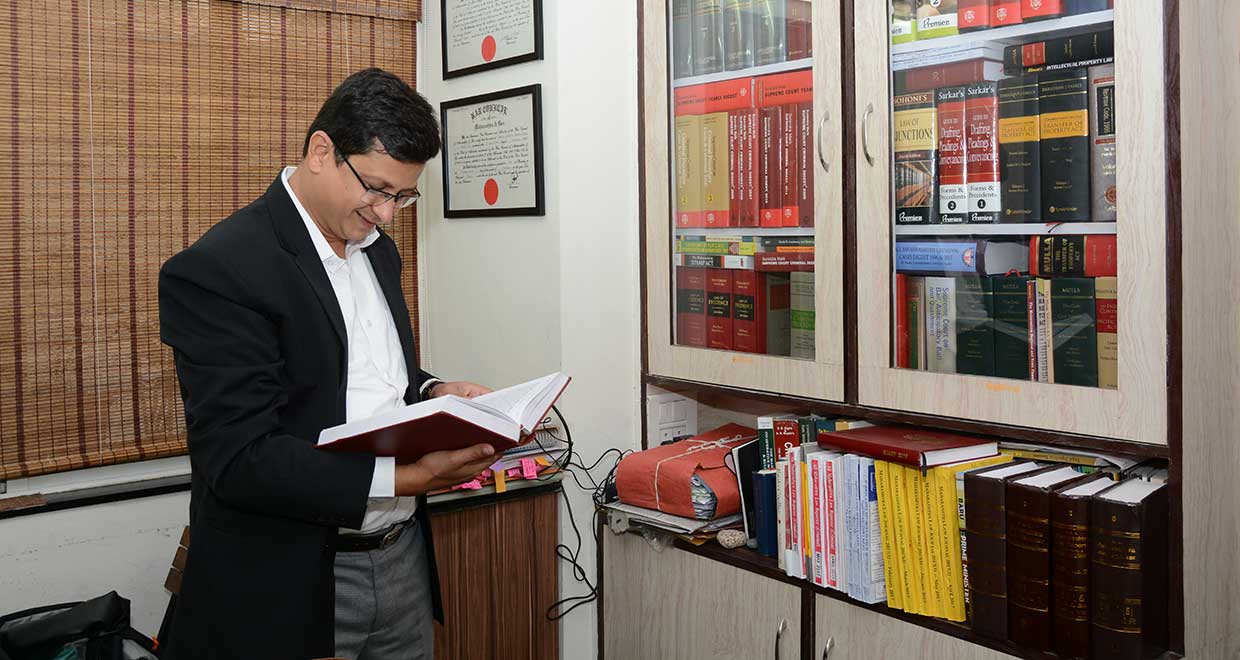
  • Harsh Sharma, Ex-Member, Special Committee, Bar Council of Delhi, Founder, Prosoll Law Inc on his glorious thirty years in the legal fraternity

    Harsh Sharma, Ex-Member, Special Committee, Bar Council of Delhi, Founder, Prosoll Law Inc on his glorious thirty years in the legal fraternity

    Harsh Sharma, a celebrated name in the legal fraternity graduated in Law from Delhi University in 1987. Hailing from a business community, he developed a fascination for litigation. He is the current Standing Counsel for Bar Council of India since 2014. He represents matters in the Supreme Court of India, Delhi High Court and District Courts of Delhi.

    With aim and vision of great vertical extent, he decided to set up his own practice under the name “Prosoll Law Inc.” a leading law firm with an objective to render the best legal service to society with the highest standard of professional and moral ethical standards.Possessing immense knowledge and experience in various streams of law but Mr. Sharma regards each day as class of new learning being a student of Law.

        “Patience, Perseverance and Constant Study is Basic three Essentials to be a Good Lawyer!” -Harsh K. Sharma

    In this interview, he talks to us about:

    • The relaxed environment of Delhi University back in the ‘80s.
    • How importance does he assign to mentorship in litigation?
    • Some of his high profile cases.
    • His glorified experience of being in the legal fraternity for over thirty years.

    What motivated you take up legal studies? Is there any specific moment that you can recall?

    (Mr. Sharma completing his B.Sc. (Hons.) in Botany from Hansraj College, Delhi University in the 1983.)

    After completing my B.Sc. (Hons.) Botany from Hansraj College, Delhi University, I joined my father’s business of automobile spare parts for full one year. At that time, my father’s firm was the sole distributor for the entire country of a particular branch of automobile spare parts, used by most of the motorcycles, mopeds prevalent at that time as original equipment.

    Yet, now it seems that my destiny was different and was all together away from my dream of thoughts. One of my distant maternal uncle, who unfortunately is no more with us, was a lawyer and was a member of D.A.V. College Managing Trust. He impressed upon my parents to disassociate me from my family business and let me join and pursue LL.B. course from Delhi University. One of my friends from Hansraj College was also planning to join Law course, he only brought the application form for me to apply to Campus Law Centre for LL.B. course and as the luck would have had it, I became a law student but still I did not leave my family business. I used to go to Campus Law Centre in the morning and after completing my classes I used to get engaged in my business activities as usual.

    So far as I remember that in business community, particularly the automobile spare parts industry, legal profession was not considered as distinguished as any other profession. The general impression was that lawyers charge exorbitant fees for the cases pertaining to sales tax & income tax assessment, particularly on the pretext of bribing the corresponding assessing authority.

    Coming from such business community, I was reluctant to become a tax lawyer. After completion of my Law course, I opted for litigation.

    So here I am, litigating from the past 30 years or more, practicing mostly on the cases relating to Prevention of Corruption Act, Prevention of Money Laundering Act and other Economic Offences.


    How was the environment in Delhi University in the early ‘80s?

    Environment in the Delhi University in the early ’80s was extremely relaxed. To be honest, I purchased almost one book on each of the subject, from a vendor selling books at the Campus Law Centre Complex itself on the very first day of my studies in Campus Law Centre. After I had paid him the money for the books he asked me to purchase few more books and he handed over me one of those books. That book was merely containing questions and answers. I asked him about the said book. He responded that it is called “Dukki”. Each book is a key of a particular subject and if I study only the contents of the said book, I can not only clear the exams but may get distinction too. Though I was sceptical, but I bought them. Please remember these all event happened on the first day of my LL.B. 1st Year, 1st Class. In class I found that none of the fellow students were carrying anything. In my first lecture, probably it was given by Dr. K. Madhav Menon, he informed us that we will be getting cyclostyle assignment/case law free of cost from a place near the canteen and we have to study only such case laws and the course of the corresponding subject would be complete.

    No co-curricular activities or Annual Festival were conducted back then and majority of the law students were I.A.S. aspirants, having law as an alternative subject for their exam. People used to be extremely relaxed and no culture of compulsory attendance.


    How do you recall your first hearing at court? What was the attitude of judges towards litigants and advocates and would you say it has changed over the years?

    I remember it was the month of June, 1987. I joined the chamber of one of my friends’ father in the Hon’ble Supreme Court. He was Advocate on Record. By that time, I had also completed a course in Forensic Science, so casually I asked him as to how the same can be utilized by me, in my profession. He jokingly asked me to join the trial courts as the field of Forensic Science has some utility in the trial court only. That motivated me to explore the trial courts. Apart from appearing before the Hon’ble Supreme Court for a short period of four months, I used to hear the arguments addressed at bar. Slowly I realized that it would be better if I switched over to trial courts for the initial stage.

    My first day at the trial court was in the court of Mr. Jaspal Singh (the then Special Judge, Tis Hazari Courts, Delhi). I appeared as junior to one of the lawyer, representing a Magistrate (under suspension), who was facing charges of accepting bribe, at his house, from the complainant. As per normal routine, the court staff called out the name of the said Magistrate who was facing trial to make him appear before the court. Mr. Jaspal Singh (who later retired as a Judge of the Delhi High Court), reprimanded the said court staff in open court by asking as to whether he does not recognize the said Judicial Officer. He further asked him as to why he did not simply go to the said Judicial Officer and requested him to come forward. He then categorically told all his court staff that the said person is still a Judicial Officer and deserves full respect as Judicial Officer till the time the case has been concluded.

    This experience is still a lasting experience for me, as I am representing a large number of senior politicians, bureaucrats, senior government officials and a number of business tycoons. I still advise every lawyer who works with me, in those cases, that it is the misfortune of the litigants that they are facing trial but we should not anyhow show disrespect to them on any account. They are innocent till they are held guilty. I believe that this attitude of judges towards litigants, which I learnt on the first hearing in the court, is slowly weeding away.


    What importance would you assign to mentorship in litigation and who was your mentor?

    After completing my LL.B. from Campus Law Centre, when I joined courts, the concept of mentor was not in existence. One had to merely join an advocate and he was expected to work for him, as his junior normally without any reciprocal emoluments. I originally joined an Advocate on Record in Hon’ble Supreme Court. Being Advocate on Record, his work was primarily confined to drafting and filing SLPs and other misc. petitions in Hon’ble Supreme Court. Thus, I got chance to learn drafting of SLPs.

    I distinctly remember that while drafting an SLP, challenging an order of conviction by Allahabad High Court, I suggested one of the grounds to the A.O.R., with whom I was working, which was in relation to challenging the Ballistic Experts’ Opinion and his deposition. The reason for suggesting the said ground was that apart from completing my Law course, I had also undertaken a course in Forensic Science from Anthropology Department of Delhi University. I was rebuked and I was told that in case I intend to use my Forensic Science Knowledge, I should switch to Trial Courts. Tis Hazari Courts was the largest court in Delhi and the second court was Patiala House Courts. After this particular instance, I joined a lawyer who was having a few cases of Prevention of Corruption Act at the Tis Hazari Courts.

    As the luck would have had it, in January, 1988, Ms. Kiran Bedi, IPS (as she was then DCP/North Zone) ordered the arrest of Sh. Rajesh Agnihotri, (a lawyer practicing in Tis Hazari Courts), paraded in handcuffs, in Tis Hazari Courts at the office of DCP/North Zone. This led to a large protest by the Lawyers, asserting that Sh. Rajesh Agnihotri had been framed. Ms. Kiran Bedi, directed the lathi charge on protesting lawyers and this led to injuries to multiple lawyers. This strike of the lawyers continued for two months and it ended only when the Hon’ble Delhi High Court appointed a two judges commission, to probe the said incident. Justice D.P. Wadhwa Committee found that arrest of Sh. Rajesh Agnihotri, was justified but his handcuffing was illegal and the lathi charge on lawyers was also indiscriminate and unjustified. The report of the committee also observed that Ms. Bedi had connived with a Municipal Counsellor in organizing transporting a mob to Tis Hazari which indulged in violence against the lawyers.

    However, these two months were a blessing in disguise for me on two accounts. The first is I got my Tis Hazari Courts’ Chamber constructed and second is that I started my independent practice. Therefore, from my experience having a mentor or not having a mentor do not count, for any personal or professional development. One has to work hard, keep his knowledge of Law up-to-date and more one learns more successful he becomes.


    You established your own practice “Prosoll Law Inc.” in 1987; what are its core areas of practice?

    The idea behind establishing “Prosoll Law Inc.” was to provide ‘Pro Legal solutions’ to my clients. I believe in effective legal representation, in a cost effective manner which begins with understanding our clients’ quandary.

    Prosoll Law has grown as a team possessing high standards with deep expertise in the field of law. Team Prosoll focuses primarily on quality, ethics and promptness in handling legal disputes and to provide effective professional services.

    In January 1988, I got my first case under Prevention of Corruption Act and it was followed by particular other briefs which included petitions under Delhi Rent Control Act, Summary Suits under Order XXXVII CPC, Probate Petitions, Company Winding-up Petition, Trade Mark Registration and Litigations etc. However, in the year 1995, I was having more than 50 Trap Cases, both registered by CBI and the Anti-Corruption Department of Delhi Government. Somehow, thereafter I started focusing only on the cases originating from Prevention of Corruption Act, both under Old i.e. 1947 Act & New 1988 Act and since then, my area of interest are economic offences rooting from Prevention of Corruption Act and allied matters. However, I take deep interest in the matters pertaining to Constitutional Law.

    Prosoll Law Inc. comprising of enthusiastic advocates having expertise in different fields of Law, handles a gamut of cases pertaining to several substantive laws like conventional crimes, Information Technology Act, the Society Registration Act, Civil Procedure Code, Special Relief Act, Patent and Trade Mark Infringement Cases, Matrimonial Cases etc.


    How many years of practice are required to build a firm clientele?

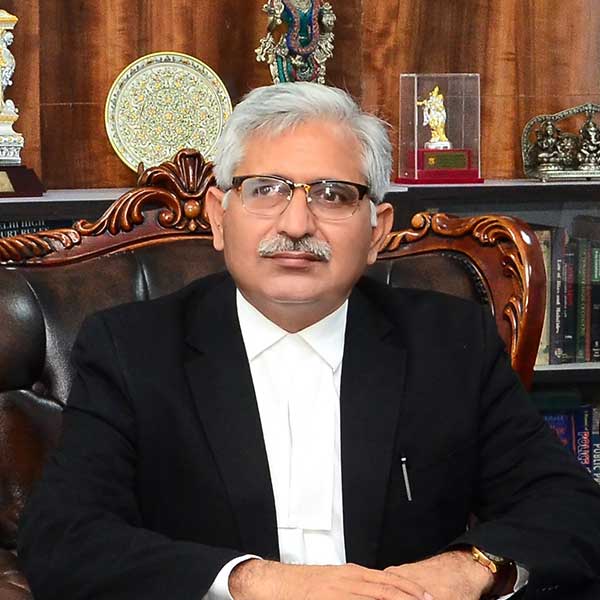
    (Mr. Sharma has been handling a gamut of clients ranging from bureaucrats / high ranking officials of various government/non-government departments/former judges to politicians and private persons.)

    There is no hard and fast rule, whereby one can assume or assign a definitive period of practice which could be said is required to build a firm’s clientele. As a matter of fact, which is my experience also that one has to constantly endeavour new means to deliver the relief to the client. Of course, these means must originate from respective statutory provisions.

    To illustrate, I wish to reproduce a very scantly used provisions of Criminal Procedure Code, 1973, which by its plain reading makes it clear that when in a Criminal Trial a judgement of conviction is passed to which fine is part of the sentence, the fine is not to be paid till the time appeal is filed or the prescribed period of filing the appeal had expired. This provision also specifies that once an appeal is filed, where fine is a part of the sentence, no such fine is to be paid till the appeal is finally disposed off.

    The corresponding provision of Cr.P.C. 1973 is as follows:-

    1. Order to pay compensation.

    (1)  When a Court imposes a sentence of fine or a sentence (including a sentence of death) of which fine forms a part, the Court may, when passing judgment, order the whole or any part of the fine recovered to be applied-

    (a) in defraying the expenses properly incurred in the prosecution;

    (b) in the payment to any person of compensation for any loss or injury caused by the offence, when compensation is, in the opinion of the Court, recoverable by such person in a Civil Court;

    (c) when any person is convicted of any offence for having caused the death of another person or of having abetted the commission of such an offence, in paying compensation to the persons who are, under the Fatal Accidents Act, 1855 (13 of 1855), entitled to recover damages from the person sentenced for the loss resulting to them from such death;

    (d) when any person is convicted of any offence which includes theft, criminal misappropriation, criminal breach of trust, or cheating, or of having dishonestly received or retained, or of having voluntarily assisted in disposing of, stolen property knowing or having reason to believe the same to be stolen, in compensating any bona fide purchaser of such property for the loss of the same if such property is restored to the possession of the person entitled thereto.

    (2)  If the fine is imposed in a case which is subject to appeal, no such payment shall be made before the period allowed for presenting the appeal has elapsed, or, if an appeal be presented, before the decision of the appeal.

    (3)  When a Court imposes a sentence, of which fine does not form a part, the Court may, when passing judgment, order the accused person to pay, by way of compensation, such amount as may be specified in the order to the person who has suffered any loss or injury by reason of the act for which the accused person has been so sentenced.

    (4)  An order under this section may also be made by an Appellate Court or by the High Court or Court of Session when exercising its powers of revision.

    (5)  At the time of awarding compensation in any subsequent civil suit relating to the same matter, the Court shall take into account any sum paid or recovered as compensation under this section.

    Though I am repeating myself, but in order to bring clarity on the subject answer, I wish to add that a large number of statutory provisions are never agitated upon by us in order to seek relief for the benefit of our clients.

    Thus, I conclude that such measures and constant research to find the exact provision of law or the corresponding case Law, enabling us to seek relief is the only means which a firm needs to build its clientele.


    Please share some of your experiences.

    (Mr. Sharma has been a part of some high profile cases like- The Railway Bribery Scam, the Coal Gate Scam, the Micromax Bribery Case and a lot more.)

    Everyone, whosoever is dealing with such cases or any case for that matter, must read each word of the charge sheet filed by CBI/Prosecution. It is the charge sheet from where the defence would originate. For the purpose of developing strategic defence in any Civil or Criminal Case, the contents of the pleadings of the opposite party, will provide the exact defence required to break the case.

    Illustratively, if a case is based upon Surveillance having been mounted by the CBI/Prosecution as is the case of Railway Bribery Scam or Micromax Bribery Scam one must know delicacies of Electronic /Digital Evidence. One must understand, the Information Technology Act, Section 65-A & B of Indian Evidence Act. The method by way of which, Primary or Secondary Evidence, pertaining to Electronic /Digital Evidence is firstly admissible and secondly it is impeachable.

    Similarly, analysing the Coal Gate Scam, since it involves multitude of institutions like PM Office, Ministry of Coal, Ministry of Steel, Ministry of Power & other Allied Ministries, State Government, Institution of State Government like Department of Industries, Mines of States and apart from them certain corporate houses or individuals to whom it is alleged that allocation of Coal Blocks have taken place, after hatching a conspiracy to do so. It is my belief that in one of the charge sheet filed by the CBI/Prosecuting Agency, no tangible evidence had been brought on record by them, reflecting either meeting of mind amongst the persons working in multiple institutions referred before or a common thread, detailing that work of the corresponding persons working in the different institutions, had a common object. Though there are multiple order of conviction in Coal Gate Cases but on the other hand is the 2G Spectrum Case and the judgment therein had categorically reflected that the element reflecting common object amongst multiple persons, institutions was not in existence.

    Therefore, I intend to highlight that for any given case, the defence lies within the pleadings of the other party, and the attempt which is required to be made is as to how that weak spot in the case of the opposite party is to be found and then exploited.


    What are the skills that you look for when you hire juniors under you?

    Sharpness in responses, eagerness to explore the unexplored field of Law, good command over English (both spoken and drafting). Always an honest attempt to communicate one’s thoughts to the other person coupled with patience and perseverance are the only qualities which I wish to find in any lawyer who comes to me, to become my colleague. I personally do not want to call anybody as “Junior”. My reasoning is that they might be “Junior” to me by age but everyone has equal capacity to imagine, to explore the unexplored and most importantly fresh lawyers always bring fresh ideas.

    The skills which I have highlighted above are to be developed by a person on their own. These are no mathematical equations, which one can provide to another. It is the function of the brain, which will only start functioning when a person puts his brain to work. So, development of skill in legal profession cannot be guided, it is self-development process and that is exactly how I did it.


    As a Member of the Special Committee of the Bar Council of Delhi, what were your roles and responsibilities?

    I remained a Member of Special Committee of Bar Council of Delhi for a short period. We as Member of Special Committee were expected to discharge all the functions of Bar Council of Delhi which included Enrolment of fresh lawyers, looking after Disciplinary Proceedings and to discharge all the functions which Bar Council of India had assigned to the Special Committee.


    How would you describe your experience of over thirty years in the legal fraternity?

    “Satisfying” is the only word, which can describe my experience in the legal profession. If I look back and analyse these thirty years, as a lawyer, I find it really surprising that a person, having no prior experience of the field of litigation, has not only survived in this competitive field but is presently discharging all the duties of a Defence Counsel for a large number of politicians, bureaucrats/high ranking officials, former judges, large corporate entities etc.

    Please provide us insights to your daily schedule. What is a typical work day like?

    Being an advocate, dealing with a handful of cases before different forums, my daily schedule is segregated in a manner whereby I intend to utilize the time in most efficient way.

    Any typical day for me starts at 9.00 AM, when I start for the courts. The work schedule at the court normally ends at 4.30 PM, thereafter I start for my office, wherein I prepare for my upcoming cases and attend conferences between 5.00 PM to 8.30 or 9.00 PM.

    In case, the case is fixed for Miscellaneous Proceedings before the trial court, I normally request any of my colleague advocates to appear, appraise and assist the court appropriately. However, if a case is fixed for evidence, either for examination in chief or for cross examination, then I personally attend it as a priority matter. However, the Stage of Arguments, be it Miscellaneous or Final, are normally taken by the Court at the end of the Board. Thus, I plan my schedule accordingly, so that all miscellaneous work, evidence are diligently catered to in advance and I am available for rendering appropriate assistance to the Court for and on behalf of my client.

    However, for proceedings in Superior Courts, I normally organize my time as per the cause list of the respective court in such a manner that my Trial Court work do not suffer and neither my case pending before the Superior Courts.

    Fortunately, in the present scenario of Artificial Intelligence and other electronic facilities, the time spent by me commuting in my car, i.e. heading to court complex, or commuting amongst different court Premises or while reaching back home, is utilized by me for research purposes, which I do on my I-Pad, with the help of internet facilities.

    As a concluding message, what would be your advice to budding lawyers?

    Please be prepared to work hard, which include research on various Statutory Provisions and the interpretation thereof, as is pronounced by various Superior Courts. Be courteous not only to your client or to the judges, but also to the court staff and all your colleagues so that a feeling of an extended family is established amongst you and all the persons with whom you interact while discharging your responsibilities as a lawyer. Please do not run for money at the very start of your career, as it is bound to come to you automatically once you establish your own identity and character in legal fraternity.

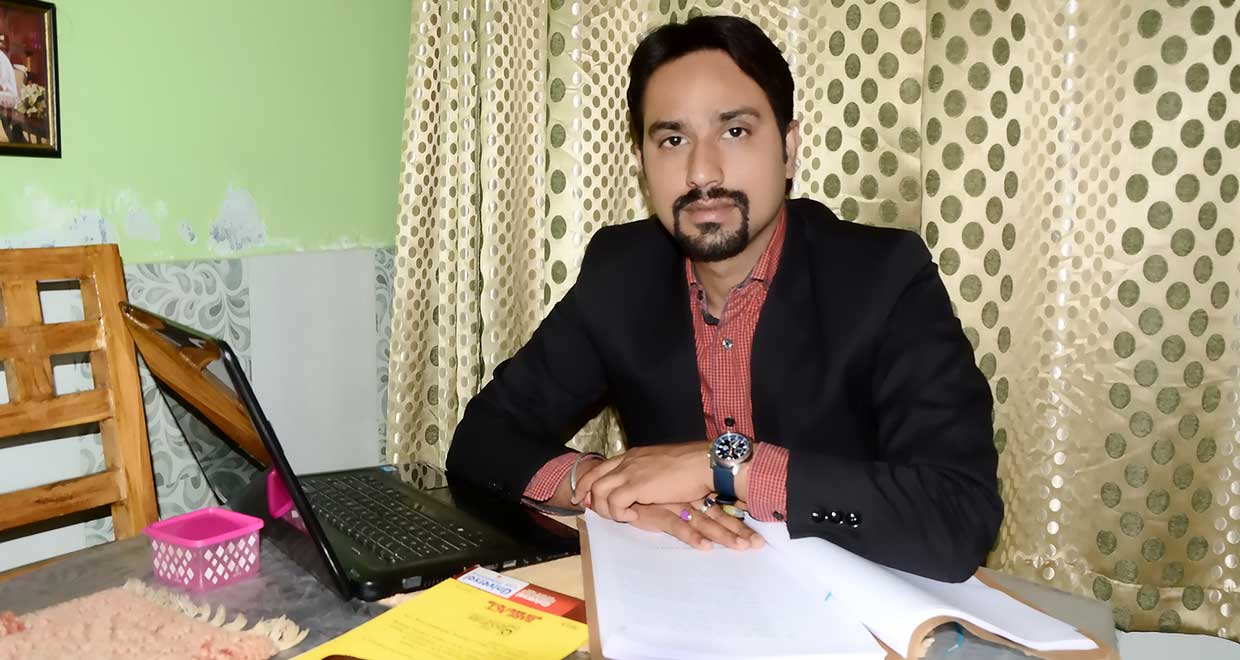
  • Nishant Sharma, Lead Counsel, Dolby Laboratories on work experience in Patent Litigation and being a Patent agent

    Nishant Sharma, Lead Counsel, Dolby Laboratories on work experience in Patent Litigation and being a Patent agent

    Nishant Sharma graduated in Law from Delhi University in 2012. His professional experience encompasses all sorts of patent related activities- contentious matters, prosecution or preparation of patent applications. He has frequently participated in patent litigation matters, drafting patent applications, carrying out patent-ability searches, filing of patent applications, prosecuting patent applications at Indian Patent Offices and handling opposition cases.

    Currently, he is responsible for handling litigation as well as Patent Licensing in India for Dolby Laboratories.

    In this interview he talks to us about:

    • His decision to pursue Law as a career.
    • His role as a Lead Counsel.
    • Specialization in Patent Law.
    • Skills required in making a successful career in Patents and Designs.


    How would you introduce yourself to our readers? Do you come from a family of lawyers?

    I consider myself an evolving IP professional who is trying to learn new things – be it in IP or legal field in general or even about facets of life – every day, every moment. I have a firm belief in destiny – you won’t get more than what you deserve and before it is due – and at the same time am a strong follower of principle of karma – do good work and you will get appropriate returns in the long run.

    I am a hands-on person and so like to be involved to the very core in every project I undertake or am assigned, and this has always been my advice to my juniors whom I have mentored over my past fifteen years of professional life. I have a strong belief that one needs to be self-sufficient so as to be able to complete assigned tasks even if requisite resources are not available, and throughout my career I have tried not to let unavailability of a resource, such as a paralegal or even a hardware resource, become a hurdle in completing a deliverable in time.

    Coming to you other question, no I did not belong to a family of lawyers. My family includes Engineers, Scientists and Bankers and never in my life had I thought I would be in the legal profession. But I have had good mentors who guided me, and still do, in my pursuits in the legal field.


    What motivated you to pursue law as a career?

    (Nishant completed B.E. (Electronics) in 2001 and a PG Diploma in Advanced Software Design and Development from C-DAC, Noida, 2001.)

    Ah! As I said I believe in destiny and may be my entry to legal profession was destined to happen. After completing my Engineering degree, I was in a secure job, so as to say, with Hindustan Aeronautics Limited (HAL) – a Public Sector Undertaking. I was working on latest Russian technology but the itch to learn something new was always there as things were moving at a steady pace at HAL. Most of the time we had to follow standard procedures with limited options to innovate to improve efficiency of operations. But I was happy doing the same. It happened somehow that my wife got a job opportunity in Delhi and we thought of shifting base. It was during that time, Remfry & Sagar had advertised for openings for Engineers. It was around December 2005 and the Patents Act had just been amended. Sensing a good opportunity to shift base to Delhi to accompany my wife, I applied for the opportunity and after two rounds of interview, I was selected. However, even after getting the offer, which was way beyond my expectations, I was sceptical of leaving a well-settled Government job. Thankfully, I had an acquaintance that used to work for a law firm in the IP field and she motivated me to join this field. So it was like all blocks were falling in the right place slowly paving the way for me to join the IP field. After a discussion with my wife and father, I finally decided to plunge into it and within few days of receiving the offer, I was at my work desk in Remfry browsing through heaps of files.

    On the very first day, as part of induction, I was given few files to study and develop my understanding of how the Patents filed operates. I would spend hours studying each file, making notes and writing down my doubts, which I would later on clarify with my seniors. I was lucky to have seniors who were eager to help me understand the nuances of Indian Patent law as well as Patent Cooperation Treaty. Within few months of joining Remfry, I was actively doing patent prosecution including official hearings at the Patent Office.

    I was happy doing prosecution work until one day my Supervisor suggested that I should pursue Law. Being from the Engineering field, I thought I had a technical bent of mind and I should better be pursing further studies in technical field only and thus, I didn’t give Law studies a second thought then. Yet again destiny was to play its part in shaping my decision. I moved to some other firm eventually, where I was actively involved in Patent Litigation. I liked the entire concept of Patent Litigation and how it is the ultimate test of both the legal and technical acumen of a person. And within few months, I was attending evening classes at Delhi University’s Law school.


    Being a science graduate, did you face any difficulties in law school?

    Frankly speaking, I did not face much of a problem in terms of understanding of Law as I felt statutes are generally very logically drawn with an intended objective in mind and defining steps towards achieving that objective. This is how science operates too! The major problem I faced was adjusting to life of an academic after a gap of seven-eight years. Moreover, I was actively attending to my official duties as well while I was continuing my studies and this made the entire academics part hectic. However, with my family’s support I managed to sail through.

    My advice to students pursing Law would be to understand the basis of each legal provision, question it and support your understanding with explanations provided in judicial precedence of the Courts. The best part of legal education is that Courts, with their elaborative speaking orders, help one clearly understand legal positions and I would encourage students to read a lot of Court decisions, even if different decisions speak the same language you never know when you might chance upon an additional drop of wisdom in the same.

    The other thing to keep in mind is to ask a lot of questions – to your teachers, your peers and even to your juniors. The beauty of Law interpretation is that everyone can bring in his own perspective and it is always good to know all dimensions to a legal provision. Recently, I had trouble interpreting Section 65B of the Evidence Act and to solve the conundrum all I did was to prepare a note of my understanding of the provision and circulate the same to my professional connections, even those whom I remotely knew. Many people pitched in with their perspective and finally I could gather enough understanding of the provision.

    In addition, students should be bold enough to challenge and question settled propositions. So far my experience has been that most Law practitioners hold strong biases towards settled legal propositions and they would rather dissuade their juniors from thinking beyond the same. I am not preaching to students to suspiciously look at each and every settled proposition but as the saying goes – There’s always a scope for improvement.


    How was your first year after graduation? What do you think were the biggest hurdles and challenges in the early days of your career?

    My first year after graduation from Engineering Course was the toughest one as all job opportunities in India had literally dried up in the wake of September 11 attacks in the US. I did initially try my hands as sales professional, selling rugged computers and other military grade products to various R&D organizations in Delhi, for some five-six months, but eventually realized it was not my cup of tea. That was the time I decided to quit that job and study for Government sector jobs that were supposed to be the most stable ones as compared to the ever volatile IT/software jobs. My hard work paid and I landed up in HAL.

    The biggest hurdles I faced during the initial years were to shift gears from slow pace of student life to that of a professional managing a team. I had to manage a team of workmen/work-women and get the deliverables within scheduled time as any delays would ultimately result in delaying delivery of an aircraft for which the deliverable was required. This would primarily involve managing a lot of human capital and this is what you are taught the least in your academic life. Slowly I realized that treating people with empathy can do wonders and I eventually learnt the art of people management.

    My first year after graduating from Law school was easier as I was already seven years in the profession and had learnt how to conduct myself.


    When you accept interns under you, what kind of qualities do you look for?

    Interns should be eager to learn, have some innovative thinking and be willing to experiment with new ideas. Another important aspect is, as I mentioned earlier, interns should be bold enough to challenge the settled propositions.

    In addition, honesty is a quality that every person must imbibe. Honesty towards their work, their co-workers and towards self is very important. If you have faulted, be honest and accept it before your seniors/co-workers.

    Lastly, interns or even starters in any profession must remember that there is no shortcut to success. Toil hard and reap benefits!


    Please tell us about your experience representing Remfry & Sagar at the LES 2013 and AIPPI 2015.

    (Nishant represented the firm Remfry & Sagar as a Partner Designate at the AIPPI (Association Internationale pour la Protection de la Propriété Intellectuelle) 2015 held in Rio de Janeiro and LES (Licensing Executives Society) 2013 held in Hangzhou, China.)

    The good part about such conferences is that while business development is the primary focus, you tend to end up discussing lot many things, besides IP, with people whom you are meeting. In my experience, this helps a lot in knowing about different culture and practices abroad. While you may not have earned a client for your firm, you go back enriched with knowledge about a new country/culture that may be helpful to you or your profession in the future. Besides, you get to learn of IP developments and practices throughout the world, which helps in overall development of one’s IP intellect.

    Moreover, such interactions help a lot in settling doubts in the minds of foreigners about India. For instance, many people whom I interacted with during these conferences were not aware that India actually had four patent office branches or specialized commercial benches in High Courts. During these conferences, I was able to clear many such doubts which foreigners have about India.

    And finally, all such conferences are generally in beautiful locales, and one gets the opportunity to indulge in some local sight-seeing. I love travelling and passionate about visiting new places. I consider myself lucky to have visited two of the wonders of the world – The Great Wall and Christ the Redeemer – during these conferences.


    Currently you are the Lead Counsel (India) – IP & Litigation at Dolby Laboratories. We would love to hear about your work profile.

    At Dolby, I have been entrusted with the responsibility of advancing Dolby’s patent licensing program in India. In addition, I oversee the Indian litigation suits instituted by Dolby – providing strategic inputs, whenever required, in line with the intended objective.


    What are the skills required for a fresher who is aspiring to build a successful career in Patents and Designs?

    Be inquisitive, ready to learn and honest to your profession. Also, there is no substitute to knowledge, so read a lot!


    You have a total experience including technical experience of fifteen years, how do you keep yourself updated of the recent developments?

    I read a lot about IP developments in India and abroad thanks to Google Alerts and subscribed newsletters. I also read and research a lot about other areas of law, whenever someone from my friends or family requires any legal help. In addition, I regularly read latest Indian judgments related to Patent cases on some of the free databases, a habit introduced to me by my colleague at Remfry.

    Moreover, I attend IP conferences, which are another source of abundant information on IP and other facets of law.


    You have worked as In-charge of Radio Division of Avionics Lab at HAL, Nasik Division. Please give us an insight into this marvelous achievement.

    I cannot say if it was an achievement or not, but yes it was definitely my contribution towards nation building. My team was assigned the work of developing testing equipment that were to be used for testing various electrical, hydraulic and pneumatic systems of Sukhoi aircrafts being manufactured for the first time in India under a license agreement with Russia. The part not to be missed here was the strict adherence to deadline for completing the project as any delays could have delayed the delivery of first few aircrafts to the Indian Air Force. Often, it was a race against time but by the time I had left HAL, my department was on track with regard to delivery of the testing equipment to the end customers thereof. As I mentioned earlier as well, my stint at HAL helped me learn people management and also that you can only win respect of your co-workers/juniors by showing empathy and contributing, if not more, equally as them.


     Can you elaborate any two cases for which you are extremely proud of?

    (He has given several advisories to clients on patentability and infringement issues, interacting with the inventors and apprise of the important details of their invention.)

    Without going into the specifics, in view of maintaining confidentiality of clients for whom I worked, I along with my team drafted a patent application for a Japanese client. The project was more like a test project as the client was testing waters for considering outsourcing their patent preparation part. It was an invention related to memory chips used in electronic devices. After toiling hard and intense in-house discussions, we drafted a patent specification which was filed in India as well as the United States simultaneously. The US application was recently examined and granted a patent without any objections. This gave me immense pleasure because there is nothing more than having a satisfied client. This success also helped the law firm in bagging subsequent drafting projects from the same client.

    Another case that I remember quite vividly is a pre-grant opposition case I handled in the initial years of my career. It was again a Japanese client, whose technology was surreptitiously claimed in a patent application by one of their old customers. I, under the guidance of my Supervisor, prepared a pre-grant opposition that was fiercely fought at Kolkata Patent Office. There were certain new legal propositions that we introduced in our submissions, which were finally accepted by the Patent Office leading to the impugned patent application being refused a patent. We were thus able to restore the honour of our client and this was a soul satisfying moment for me as a professional.


    Last but not the least, what is your parting message to our readers?

    First and foremost, be a good human being.

    Secondly, try and build a congenial environment at your workplace. Don’t expect something from your juniors or co-workers, if you would not have done it in the first place. If you are human, so are they!

    Moreover, be ready to share your experiences with others, especially juniors, as there’s no better lesson than learning from real-life experiences.

    Finally, don’t be afraid of making mistakes but do learn from them as well and do not repeat the same mistake again.


  • Sumit Wadhwa, Partner, IP Litigation, Lall Lahiri & Salhotra on extensive work experience in IPR related issues

    Sumit Wadhwa, Partner, IP Litigation, Lall Lahiri & Salhotra on extensive work experience in IPR related issues

    Sumit Wadhwa graduated from ILS, Pune in 2007. Initially, a B.A Maths (Hons.) from Shaheed Bhagat Singh College, he firmly believes that solving problems, either legal or mathematical is all about using logic and a reliance on logic to solve problems and address issues is crucial in any field. Sumit started his career with Lall Lahiri & Salhotra (LLS) as an Associate in the Prosecution Department and after a year moved to the IPR Litigation and Enforcement team of the firm. He was promoted to Head IPR of the Litigation Department in the year 2015 and later to Partner – IP Litigation

    In this interview he talks to us about:

    • His experience for more than ten years’ in the IP law
    • How with your hard work you can achieve your dream
    • Work ethics which are indispensable for all lawyers in their practice
    • The importance of internships for a law student
    • The discipline of maintaining a work-life balance


    How would you introduce yourself to our readers?

    I am an IP Lawyer, based out of New Delhi, working with Lall Lahiri & Salhotra (LLS) with more than 10 years of experience. I believe that if you work hard, you can achieve your dreams.


    Tell us about your experience at law school?

    The time I spent at ILS was a memorable one and also exceedingly instructive and enlightening. It gave me the tools to become a lawyer, able to look at an issue from differing perspectives and has instilled in me a work ethic that I think is essential for all lawyers in their practice.  During my three years there, I also got the opportunity to meet and interact with people from different cultures and backgrounds, which played a significant role in broadening my outlook and perspective.


    Having done Honours in Mathematics, how would you like to describe your transition from mathematics to law?

    I had decided to pursue Honours in Mathematics but was not sure what will I do after finishing the course. After my last year results, I was not quite clear if I wanted to do Masters in Mathematics and thereafter PhD in Mathematics. The uncertainty also stemmed from my underlying interest in legal studies. Since my family was in the business of law books and my brother was also pursuing law at that time, it did seem like a natural trajectory for me to take. The decision was made easier because my exposure to legal and judicial studies had existed since childhood. I decided to pursue Law and got admission at ILS Law College. While both the courses i.e. Mathematics and Law are totally unrelated, over the course of my time in ILS and later at LLS, I have come to believe that solving problems, either legal or mathematical is all about using logic. I believe that the take away here is that every person does not pursue a fully charted course in their lives and one must be open to making changes and adapting to circumstances. I am quite glad that I made this change since my earlier studies gave me a logical bent of mind and clarity of thought that has helped me in my legal work and also allowed me to pursue the field where my aptitude is more suited. I would advise all students to consider their own interests and if a change is called for, then they should not hesitate in making those changes.


    How do you think your degree in mathematics have helped in your law career?

    As I mentioned earlier, a reliance on logic to solve problems and address issues is crucial in any field. I am of the view that the study of mathematics in which you have to solve problems using deductive logic is excellent training for a lawyer. There exist methodological devices which are used in mathematics that are excellent mental training for addressing issues which correspond to those used in the application of the Law. The ability to look at the big picture while also being able to methodically address smaller components of a problem has been useful to me in the practice of law.


    What all law subjects did you find interest in law school?

    I found the following subjects interesting during my Law course-

    • Intellectual Property Rights
    • Code of Civil Procedure
    • Indian Penal Code
    • Family Law

    I was the Topper in Family Law and was awarded – Shri. D.B Bhopatkar, Certificate; Shri J.R. Gharpure Certificate and Principal Pandit Prizes for scoring highest marks in Family Law-II in LL.B at ILS Law College for Pune University in the year 2005-06. I was also honoured with a gold medal for scoring the highest marks in the subject Civil Procedure Code by the University.


    How did you take a decision to pursue a career in IPR? What in your opinion should a law student keep in mind while choosing a particular domain of law to pursue a career in the same?

    I was fascinated with trademark law. Particularly when you are studying IPR, case studies about different brands and their protection strategies can be very interesting. I found that IPR, which encompasses so many aspects of business and legal areas, allows for a wide range of issues to be addressed and while allowing for specialization, also provides new avenues for challenging one’s mind. This became quite clear during my internships with some of the best IPR law firms. Consequently, I decided to practice IP law and also did a Post Graduate Diploma in Intellectual Property Rights, from National Law School of India University, Bangalore.

    I believe that the student should try to do as much internship as possible while pursuing Law. The internships should be done with Lawyers/Law Firms practicing different fields of Law to obtain maximum exposure to practice in various fields. This will enable a student to make his/her mind about the specialization that attracts that individual. Additionally, one must always keep factors like personal aptitude and interests in mind.


    What is your opinion on grades at law school? Many law firms and organizations look for innovative people and the yardstick they use for short listing people for the job in their organization is the marks. Do you think the system is flawed?

    The grades/marks that a student obtains at law school can be immensely helpful to organisations to ascertain how well the student has studied /knows about the subject. Therefore, such marks and grades are important and cannot be discounted. Having said that, I also believe that these marks are not the only indicators of a student’s merit and there are various factors that need to be considered when selecting a candidate.  If anything, marks or grades should be lower in an organization’s order of priorities when looking at a law student.  Internships are crucial to a student’s resume and the extent of practical knowledge that a student obtains from those internships as well as nature of those internships is vital in selecting a student. Similarly, extra-curricular activities undertaken by the student are very important indicators of certain qualities like initiative, hard work and problem solving, all of which are very relevant criteria for a lawyer. The other important factors that a law firm particularly must prioritize over marks and grades are the ability of the student for rational thinking and problem solving as well as ability to cooperate and work as part of a team. Thinking on your feet is also equally important for a good lawyer and one must be able to address hypothetical problems of law in a cogent manner during an interview.


    What all activities did you take part in your law school?

    I participated in Legal Aid programmes where we had gone to villages and held legal awareness programmes to educate people about their rights.


    Please share with our readers about your experience of transitioning within LLS from an Associate to a Partner of the firm.

    It has been a great working experience at LLS. I have worked under the leadership of Mr. Rahul Chaudhry, Managing Partner; Ms. Anuradha Salhotra, Founding Partner and Ms. Veena Poolakal, Partner.  I have learned a lot at this firm and believe that I truly became a lawyer by working at LLS. Law school can of course give you the tools and education that you need but it is only when you start working that you realize the difference between an academic study of the law and its practical application. LLS is such an organisation for me where I have been allowed to grow and learn. LLS provided me with a team of seniors who are leaders in the field of IP Law and as a new lawyer, I was able to gain insights into the workings of this field of law through their work.

    Over the years, I have had the chance to work at all levels in the team, starting as an associate. As a result, I have been able to understand the scope of responsibilities at each level and the firm has equipped me to handle work with a degree of understanding that I think I would not have otherwise obtained. Having begun my career here, I am able to work in a manner that is in line with the firm’s philosophy and work culture. The importance that the firm places on client satisfaction and flawless work are now also ingrained in my work ethic which echoes the firm’s.


    What all internships do you think a law student must undertake during their time at law school as a student?

    As I mentioned earlier, internships are a vital part of legal education and are also important when considering a candidate for a job. A Law student should undertake as many internships possible while pursuing law and in as many different fields of Law as possible. Even if you are sure of the field of law you want to pursue, I believe obtaining experience of and exposure to other practice areas allows for a student to become better-rounded. The nature of internships is also important and if you want to pursue a career in a particular field then you must try and obtain experience in various aspects of that field. For example, if you want to pursue a career in IP Law, obtain a variety of IP Law experience in internships, such as working on copyright issues, trademark prosecution or litigation. It is also important to intern under Trial Court lawyer to understand the court procedure, functioning, arguments, etc.


    What is your average workday experience like? How do you maintain a work-life balance?

    Work-life balance is important to maintain in order to ensure long term efficiency in your work and also for self-satisfaction with one’s professional life. Since I work in the litigation team and a large part of the day is often spent in court, I have always chosen to live closer to office to reduce time spent in commuting to and from office. This has allowed me to be able to work efficiently while at work but also be available to my family when required.

    For any successful lawyer, certain amount of discipline is also essential. So, time management and prioritising work is vital. Being a litigating lawyer, a typical work day for me starts around 9 at the office after which a few hours are also spent at court. I have found that the scope of my work is quite varied and I work on multiple types of legal actions, such as trademark counterfeiting, IP infringement actions, advertising related matter, customs – registration and enforcement, domain name registration and enforcements. As a result, every day can bring a different challenge and the work is always interesting. As a partner, I also spend time working with members of my team and am fortunate to have seniors who are available to advise my team and me whenever we need any assistance.


    What is your opinion about the concept of mentor and mentee in the legal fraternity?

    In my opinion, this is one of the most important aspects of an individual’s grooming and subsequent growth. Just the way even top professional players (including world’s top most ranked players in Tennis, Badminton, or the teams in football, cricket, hockey etc.) keep experienced coaches, the mentor is an all-time friend, philosopher and guide to be revered as well as a fall back option to seek clarity in complicated matters or conflicting interests and to prevent burn out etc.


    Tell us a bit about the works that you have done so far in the firm.

    I started in the Trade Marks – Protection department of the firm wherein I have drafted replies to the examination reports, attended hearings etc. Thereafter, I was shifted to the Litigation department of the firm – wherein I have undertaken handling of litigation matters, involving the drafting of the pleadings/petitions/applications, attending hearings, conducting civil and criminal raids, briefing seniors, filing domain name actions before the WIPO and .IN registry, Customs applications. I have also done few non IP cases relating to recovery of money, Debt Recovery Tribunal matters.


    How do you stay up to date about the recent developments in all the fields where you work and have an interest?

    I regularly read PTC (Patent Trade Marks Cases) journal, cases on the subject on Manupatra, Linkedln Updates, Spicy IP and other internet websites which provide latest updates on various aspects of the subject. In particular, I try to keep track of some of the most important cases while they are taking place, especially those that contain issues of practical importance or important issues of law.


    What advice or suggestion would you like to give to our readers, who are predominantly law students?

    Pursue your dreams and work hard with full dedication, you will be able to accomplish your dreams. I believe there are no short cuts whether it is in your legal studies or in practice. The legal field involves a continuous study of law and keeping up to date on developments so one must develop a habit of reading new cases and legal precedents, no matter how busy you might be. As an aside, I would like to mention that there can be no substitute for a thorough reading and analysis of all aspects of whatever issue you are tackling, whether at college or in your profession.

  • Satyajeet Desai, Advocate and Editor of Mulla on Hindu Law, on building an illustrious practice in litigation

    Satyajeet Desai, Advocate and Editor of Mulla on Hindu Law, on building an illustrious practice in litigation

    Satyajeet A. Desai qualified in law from L. A. Shah College, Gujarat University, in 1988. Soon after graduation he started practice under the tutelage of Suresh Shelat and thereafter Kirtikant Nanavati. In the years to come he worked extensively in various laws including Company and Securities Law and garnered a lot of recognition and accolades.

    He is currently practicing at the Gujarat High Court and is known widely as an authority on Hindu Law. He is the current editor of “Mulla on Hindu law” and of “S.T Desai on Partnership”, both published by the LexisNexis Butterworths.

    In this dialogue with him, we speak to him about:

    • His life as a lawyer and a lecturer.
    • His role in contributing to the literature on Hindu Law.
    • His experience with Companies, International Airlines and Individuals.
    • His ideas about evolution of “Advocacy” as a profession.


    Please tell us a bit about your pre-college years, your life as a student and your ambitions as a young man. Did you have lawyers in your family or among close relatives who inspired you?

    Every youngster has dreams of following some profession or doing some business. Academically, I was better than an average student, my strong points being languages and history rather that mathematics and science. I always scored really well in languages and history and realising this, I decided on the profession of Law as my career choice. I believe that what shapes one’s career decision is not only one’s choices but also the atmosphere one surrounds himself with. In my case, my grandfather, late Justice S. T. Desai has been my hero and idol. Observing him working as a leading Senior Advocate at the Supreme Court, inspired me to become a lawyer. Again, I come from a long line of lawyers, with my great grandfather T. R. Desai and his father R. K. Desai before him both being lawyers of repute.


    How valuable would you say your legal education was and when did you actually experience the learning curve? Also, looking at the booms and busts in the legal industry, what do you think about the future of legal education in India?

    In our time during the Mid-Eighties, the law programme was for three years. There were no five year courses offered as they are today. We had some fine professors and visiting faculties, so overall, my law college experience was quite good. The future augurs well for the profession.

    The Legal education in our country is good, but the number of law colleges should not mushroom much. I would want successful lawyers to come forward and teach the students, because their experiences would benefit them more, as compared to only learning the basics at law schools. I would love to quote an incident during my student days here.

    Once the Professor for Drafting and Pleadings, who was a leading civil court practitioner himself, gave us a home assignment, asking us to draft a Plaint on behalf of an illiterate lady whose property had been taken over by fraud. We all turned in the assignment, duly completed. After a couple of days, the professor told us that though the Plaints were good, only one would pass muster that was mine. The reason was that apart from the issue at hand, I also concentrated on the Plaintiff being illiterate and I placed a thumb mark where the Plaint was supposed to be affirmed. He pointed that out to all of us.

    Later, he asked me how I hit upon the correct thing to do. I told him that “I probably looked up for the same book from which you gave us the assignment.” He said, “You have managed to do two things today, draft well, and look up for older precedents”. This was a valuable lesson indeed!


    Did you participate in any extracurricular activities while at law school?

    I participated in moot court competitions when I was in law school. There were not many moot court competitions then, but that was a good learning experience for me. It also helped me to work with what was to come later. So far as the internships are concerned, during our early years, we did not have any formal internships as in the five year law programme today, but as I said, I wanted to be nothing else but a lawyer, so, I interned with Mr. Suresh Shelat, a Senior Advocate at Gujarat High Court, from the end of the first year at law school till my last year. With this Internship, I got hands on experience of Courts and Litigation and this helped me get an early exposure to the world of Indian courts.


    What are your areas of interest in the legal field?

    I have always been interested to work on commercial laws, and I have been working on the same as well. I also had the opportunity of working on an interesting matter on Aviation Law, the matter relating to an air crash. The case involved an International Convention to be interpreted. For me, the point of interest was the reciprocity arrangement between the two airlines, The carrier that crashed and the International Airline, I represented. I succeeded to show the lack of reciprocity arrangement between the airlines.

    Another field I am very passionate about is Hindu Law. It is fascinating and challenging as the basis lies in old and classical Hindu Law, despite legislations like the Hindu Succession Act and Hindu Marriage Act.


    How were your early years as a lawyer?

    My professional journey as a lawyer was full of challenges. After working with Mr. Suresh Shelat, I worked with Kirtikant Nanavati, Senior Advocate, at his law firm. I would like to share here an incident- once, when I was working with Mr. Shelat.

    Mr. Shelat was arguing a matter before the High Court, which spilled to the afternoon session. The issue was interesting, so I went to the High Court Library in the afternoon and I looked up on a particular issue that I felt was important. I found a judgment on that issue and showed it to my senior. In the course of his arguments later, he referred to that issue and the judgment. The court allowed the matter based on that issue. When the court asked him about the issue, my senior pointed out last and pointing towards me he told the court that, ” my associate Mr. Desai must take the credit for that.” I was floored with the magnanimity shown by Mr. Shelat to a raw junior at the Bar.

    When you are a junior, you not only try to do your best so that it helps you develop as a lawyer, but you also try to get a foothold in a very challenging profession. I believe that hard work and dedication, both, are required to excel, no matter what the field be.


    You have a long and illustrious career as one of the most reputed advocates in India and as a top notch Jurist. What are the primary soft skills necessary in order to have a successful career in the legal profession?

    A lot of times lawyers come across as assertive and opinionated because of the nature of their profession. But that is a part of the overall build-up of a lawyer. I would like to mention a few soft skills, as you call them, which are necessary to have a successful career in the legal profession.

    The first and foremost being that a lawyer must have the patience to listen to his client and gather the necessary information that will help him or her understand what the client wants. Another skill that I think is important is guiding the client properly. Clients sometimes come to us wanting to take immediate legal recourse by the way of litigation. The real success of a lawyer in such a situation is, to try and ascertain whether the issue can be settled by correspondence, and or negotiation. For me, Litigation is always the last resort.


    How was the court atmosphere before as distinguished from now? Did judges talk kindly to new orators? Also, please share with us your experiences during the first few sessions of the court? Do you think it has become more difficult for a fresher to be successful?

    When I initially started my practice, we had some Judges who were really good to the juniors. Their encouragement to perform always encouraged us to better ourselves. I would again like to quote an incident here.

    As a newly minted lawyer, I filed a Petition on behalf of an employee of the Central Government. The petition was against his new transfer soon after he had been transferred to Ahmedabad. The rule then was that normally an employee should not be transferred for 3 years. The judge during the initial hearing, probably wanting to know whether I had researched on the issue, asked me whether there was any judgment on the issue?

    On my affirmative reply, he asked me to come back in the afternoon session with that Judgment. I said that I had the judgment right there and I sought the permission to site it, but before I could open the book, the judge issued notice and granted a stay. He told me that he wanted to find out whether I was ready with the precedent or not.

    I would also like to quote one more incident which is close to my heart. A lawyer had filed a revision application challenging an order of the Civil Court. I was on the opposing side. I succeeded at the end of the hearing. A few months thereafter, I filed a similar matter with the same lawyer opposing me. He pointed out the earlier order to the Judge. The Judge looked at me, smiled and said, “Mr. Desai, you can’t win them all. Petition Dismissed.” I replied with an answer that a similar thing happened to Abraham Lincoln when he was practicing law. The judge asked me about the incident. I replied that when Lincoln was defending a matter in the morning session, the Plaintiff failed and Lincoln succeeded for the Defendant. He was appearing in a similar matter for the Plaintiff in the afternoon session. The judge told him that he must fail now because he succeeded in a similar matter in the morning session. To this. Lincoln’s reply was a classic. He said “I was wrong in the morning session, so I must succeed now.” Well, I lost the matter, but the Judge asked to borrow the book I read the quote from.

    According to me, to become successful, and by that, I don’t mean monetarily, one must put in hard work and inculcate the habit of general and vast reading, even apart from law. For a fresher to be successful, he or she must put in the labour. Success never comes overnight.


    In the past you participated in the Law Commission Workshop on making changes to the Hindu Succession Act. How was the experience?

    Yes, I was invited to a workshop by the Law commission in 1998, when changes to the Hindu Succession Act were being debated upon.

    For one, the experience was very satisfying, as you feel that you are helping towards the progressive development of law. The recommendations presented in that workshop ultimately culminated into amendments to the Hindu Succession Act in 2005. We were debating over a particular issue and one of the delegates posed a question to which Justice Jeevan Reddy, the then Chairman of the Law Commission replied. Justice Leela Seth, the then Vice Chairman, looked at me and asked about my thoughts on the issue. In a lighter vein, I replied that whatever I wanted to say, I already wrote in Mulla’s Hindu Law. Of course, I answered the question thereafter.


    You are a visiting lecturer at several colleges. How is it important for a lawyer to pass on the learning and the experience?

    Currently, I am a visiting faculty at LJ College in Ahmedabad. I have previously lectured at Ahmedabad University, United World Law College and Knowledge Academy. I am often called for guest lectures at various colleges. As I mentioned earlier, I believe that it is very essential for a practicing lawyer to teach at least a few times a year .It would help the students get hold of what they will be facing when they enter the profession. Knowledge only increases when you pass it on.


    You are greatly interested in writing and reading outside of law, can you throw some more light on your hobbies?

    So far as my hobbies are concerned, I would say that reading is a must. I get drawn into whatever book I read, whether it be fiction or non-fiction. Writing on law is passion and a prayer for me. People go to places of worship to pray but for me, writing is my prayer; it’s my holy grail. I would also add here that if you want to write on law, firstly you should be passionate about the subject you want to write about and secondly, you must research it well. Your analysis of law must be palatable in order to be accepted. Also, the language must be lucid and proper so that the reader immediately grasps the point .


    What were the landmarks of your career? Please share with us the challenges and achievements you came across on your journey from being a fresh graduate to one of the most renowned lawyers/jurists in Family Law practice?

    Success is a relative concept, looked at from different angles and eyes. I have appeared for Companies, International Airlines, and a lot of Individuals. You may feel that I am underplaying the situation, but I got great satisfaction in appearing for the companies that challenged an order by the Government, and we were successful in that challenge. But I got the greater satisfaction when I appeared for the three poor brothers whose lands were resumed by the Government, and I successfully helped them out, pro bono. I also do a lot of opinion work on Hindu law and some factual situations I came across, fascinate me even today, because the facts for the most part, are always unique. Being invited for the workshop on the Hindu Succession Act was a landmark for my career.


    You have several best-selling legal books like ‘Mulla on Hindu Law and S T Desai on Partnership’ to your credit. How important is writing for you?

    Legal writing is very important for me. It is my passion. After all, words are a lawyer’s tools and what better way to contribute to this great profession than to give something back by writing on subjects that you are passionate about.


    Can you describe a regular day in your life?

    My typical day starts around 5 AM. I Get up, have a rejuvenating cup of coffee, start reading for whatever court work I have that day, go to court and attend hearings I have. Back home after court, I attend the meetings with clients (in my case non litigation clients on Hindu law as well). I teach once a week, which keeps me firmly earthed and I also stay in touch with academia.


    What advice would you have for our readers who are primarily college students?

    My advice to law students is that study well but also indulge yourself with general reading as that will help you in building your overall personality as a lawyer. Amongst all the professions, law is probably the only profession where you are required to interact a lot verbally. Keep reading and stay updated with the current news and events. You never know when it might come to your aid, After all, a lawyer is required to think on his feet. General reading helps a lot. Your arguments may sound even better if they are interspersed with quotes or similar situations or even humour at times.


  • Prasanth V.G., Partner, J. Sagar Associates, on his time in NUJS, and his litigation experience

    Prasanth V.G., Partner, J. Sagar Associates, on his time in NUJS, and his litigation experience

    Prasanth V.G. graduated from WBNUJS, Kolkata in 2005 and thereafter joined Delhi office of Paras Kuhad and Associates. He is currently a Partner at J. Sagar Associates, Bangalore. He primarily specialises in dispute resolution and has an experience for twelve years. He has been handling matters relating to Company Contracts, Specific Relief, Intellectual Property, Banking, Infrastructure, Energy, Consumer Protection, Infrastructure and Arbitration. He has a vast experience in the drafting of pleadings, applications and evidence briefing for several counsels in numerous matters, and has also done many arguments including both final and interim arguments at various fora.  

    . In this interview he talks to us about:

    • His law school life at WBNJUS, Kolkata 
    • His experience of a litigation lawyer at a firm
    • The essentials of a good commercial litigation lawyer

    Given that most of our readers are law students and young lawyers, how will you introduce yourself to them? 

    I will not shamelessly claim that I am a “Super Lawyer”, but I am certainly one who constantly dreams of being a “Super Lawyer” whom society looks up to. I am a Partner at the Bangalore office of J. Sagar Associates and my area of work is dispute resolution.  I graduated from the first batch of NUJS, Kolkata in 2005 and started my career at the Delhi office of Paras Kuhad and Associates in 2005. In 2010 I shifted to Bangalore and worked for a short period of ten months at KLaw. In April 2011 I joined JSA Bangalore and I have been here since then. My father’s father and my mother’s great grandfather were lawyers, but both of them had passed away much before I was born and therefore I cannot say that I am from a family of lawyers.


    How was your experience at NUJS?

    To be frank, I had never before come across in my life an ambiance as fiercely competitive as was present at NUJS. The first batch of NUJS was a unique pack of some of the most gifted brains and talents. The levels of competition we had were naturally very intense. The fact that we were guided by a personality as towering as Dr. Madhava Menon, who had the unique ability to inspire his students to always dream high and strive, was the most remarkable feature of our NUJS life. He would constantly motivate all of us to very deeply believe that anything less than excellence is self-derogatory. I feel truly blessed to have studied law as a part of the first batch of NUJS, which had tremendous levels of ambition and zeal and was constantly very high on energy and drive.

    However, one tough question that my senior partner recently asked me was whether in the last twelve years anyone from our batch has really become a legend for his or her age. I found it very difficult to answer. Everyone is working at decent designations to keep their pride happy and earning decently to keep their families happy, but whether that is all the NUJS dream was, is a soul-searching question. Hopefully, I will have a clearer and happier answer after the next twelve to fifteen years. One may take until the age of 35 to settle down, but if he does not have the big break between 35 years and 50 years, one may rather reconcile that it was all for the making of just another office-goer. The hair has already started the tendency of greying here and there.


    What were your areas of interest in law school?

    Amongst the various academic subjects, I had maximum interest in Constitutional and administrative laws. I also deeply enjoyed the laws of contract, specific relief, property, statutory interpretation, etc. Preparations for and participation in both internal and external moot courts was considered to be a very important exercise by our whole batch. I also had my share of regular mooting experiences in those five years, including representing India at the Stetson moot court at Florida. Exploring and re-exploring the city of Calcutta on every Wednesday, which used to be the weekly holiday, was one of the most joyous part of our life. NUJS life was the first phase in my life which introduced me to a truly national ambiance. It was a remarkable experience getting to know and making friends with the peer coming from various different cultures and sensibilities across the country. All these were matters of great excitement at the impressionable age.


    Can you recall a few interesting instances in your litigation career?

    I will first answer the question on preparation. More important than how I routinely prepare, is how I think one ought to prepare. I am therefore making a general analysis and not any self-proclamation. One message I learnt from the great masters I had the occasion to meet or work with, is that every court appearance, however small or big, must be treated as a break by a litigation lawyer. It always helps to prepare for a matter beyond your brief for any given day’s appearance. Trying to put a lot more effort into every matter than what may be immediately required to attend to it, will over a period of time, make you very resourceful.

    While in my initial days at PKA Delhi, I was given a lot of exposure in DRT and DRAT matters. One set of matters that Mr. Kuhad made me in charge of was a series of cases filed by various banks and financial institutions against a pharmaceutical company, which was our client. I still remember the strenuous manner in which I went about labouring to put together the written statements and various interim applications on behalf of the company, trying to bring out some defence or the other in each matter, which otherwise appeared to be very open and shut against our client. It was a lot of learning on the job which gave the conviction that no matter can be given up as defenseless, if you are willing to go into the depths of documents and do some creative work at linking or de-linking ideas and points.

    Another Delhi matter which stands out in memory is an international arbitration which went on for about five years, in which we were representing an American company. What makes it memorable is the long days and nights spent reading through, deciphering and connecting thousands of pages of disorderly papers which used to come in heavy cartons from Dallas. There were several note books full of hand-written notes which I made while trying to organize the defences in the matter, trying to frame questions for cross examination, etc. We eventually lost the matter, but it was a rewarding experience for one’s faculties to go through the grill it demanded at a very early stage of career.

    Another interesting memory is that of a partition suit before the Delhi High Court. We were representing the Plaintiffs. We briefed Mr. Arun Jaitley for the first hearing and he got us an ex-parte order of appointment of a local commissioner to inspect and make an inventory of extremely valuable family heirloom items including gold, silver, diamonds, ruby, paintings, carpets etc., which according to our side, had been hidden by the Defendants inside the family house in Kolkata. I flew along with the local commissioner to Kolkata with the order and we went to the concerned premises the next morning along with the local police. The events which took place at the premises were nothing less than dramatic. After a lot of initial resistance and thereafter reluctant cooperation, the Defendants insisted that there was no express order to forcefully open the locked safes and almirahs. So I flew back to Delhi that evening while the local commissioner stayed over in Kolkata. The next morning we again mentioned and brought up the matter before the Delhi High Court and got a specific order to open all the safes and almirahs. With that order, I again flew back to Kolkata that night and we again went to the premises the next morning to get it enforced. While I do not want to go into the details, since both parties thereafter amicably settled the matter, it was a unique on-the-floor experience which stands out in memory even now.

    A more recent interesting episode was arguing on behalf of a sugar manufacturing company against local sugarcane farmers of a village before the Deputy Commissioner, Bellary. The farmers were refusing to provide sugarcane to the factory due to the alleged arrears in the payments of the previous sugar seasons. I had to argue that under the law all the farmers falling within the reserved area necessarily had to supply the cane to my client, irrespective of any past dues, for which they had already invoked the recovery mechanism. The farmers were led by the local MLA and were also represented by their lawyer. Our side had already made a statement against the intentions of the local MLA before the Karnataka High Court in a related matter and that had got reported in the newspapers before my visit to the village to argue the matter. When I reached there with the company representatives, I was amazed to see that a huge community hall was reserved for the hearing and about 300 farmers had gathered and the atmosphere was volatile. The local MLA met us as we were entering the building and started shouting at the company representatives. There were only a few policemen and they could not have handled the situation if the mass had taken the law into hands. The arguments were like making public speeches since that had to be made from the stage before the full crowd using the microphones. I was reminded of my school and college debating and mooting days. When I started arguing in English, the crowd started shouting that I should argue only in Kannada. The Deputy Commissioner who was a very dynamic young IAS officer suddenly took complete charge of the situation and demanded that the crowd shall not protest since I was not very fluent in Kannada. There were detailed arguments and counter-arguments between me and the farmers’ lawyer and the crowd patiently heard everything. The MLA also respected the fact that legal arguments under the Sugarcane Control Order and Essential Commodities Act were going on and remained silent watching the whole proceedings from the front row. Once the hearing was over, the crowd started getting agitated again, demanding that the order should be pronounced immediately. Many people came forward and started to stage a gherao, when the policemen came forward to make way for the Deputy Commissioner. In the process, we also made our way out and left for the hotel.

    There are many other interesting episodes I can narrate, but I am stopping here as this answer has already become very lengthy.


    How did you face the work pressure?

    In a way, everything in the profession of law, and not merely being in law firms, can be demanding. But I will always say with the fullest pride and conviction that JSA is a bliss.

    There are two very helpful ways to handle pressures in this profession:

    Firstly, you should try to know in detail each matter you handle. Unwilling or unenthusiastic participation without trying to be on the top of everything in a matter can make the situation very painful. Please also understand that you cannot mentally dislike or fight anything and then conquer it. You can conquer something only by most genuinely loving it. Comfort and ease are directly proportionate to your familiarity with the matter at hand. Your familiarity with the matter is directly proportionate to the time, attention and nurturing you give to it. Therefore much of it has got to do with the mind-set. If your mind genuinely aspires for heavier responsibilities, it will work wonders. If you decided to join law and you have progressed to a stage where there is no going back to engineering or medicine or anything else, then you might as well love your work on the subject than keep focusing on the exhaustion it causes.

    Secondly, avoid as much as possible, the intake of people-related negativity. It only takes away time and energy unnecessarily. Stop judging others. Stop telling yourself how imperfect or unjust others are. Stop also fearing that someone else will take away what you think is due to you. Do not let your mind dwarf you. Do not be a constant complaint-box indulging in shadow-boxing. The world has been, is and will remain unfair in varying degrees. There is no perfect world that has ever existed. While we all should work towards an ideal world, we should also remain realistic. After all, when you decided to join law, did you not know that you will interact with all sorts of people in life? Do you think a Jethmalani or a Nariman or a Venugopal or a Salve was made because they dealt all along with only the nicest of human beings? I am certain they would have dealt immensely with rogues, scoundrels and crooks in their fabulous journey as lawyers. So remain a good human being to everyone, without losing energy over the fact that an ideal world does not necessarily exist around us. A change in the mind-set can instantly take away your pains and bring a smile.


    A litigation lawyer in a corporate law firm is in the minority. What are your experiences holding this unique position?

    That is a very interesting question. I have to tell you three things in response:

    Firstly, in the litigation circles in general, you will find a lot of people who are cynical about non-litigation work and are unable to appreciate or respect the practice of corporate or transactional laws as real lawyering. I feel sad for those who sustain the said mentality. Let me tell you in no uncertain terms that law is not all about disputes. Law as a profession was derived from the requirements and needs of the society. If today’s society or economy mandates that a lawyer has a distinct space in a bank or an insurance company, who are we to deny it and claim that a lawyer is only for the court rooms? Therefore do not live in a self-created illusory world of bald denials.

    Secondly, we also need to burst this false and unfounded myth that most of our premier law schools are not serving the society since they are primarily catering to the needs of the corporate world. How many law graduates are created every year in this country and what percentage of them can all the corporate law firms and companies together recruit? Will Amarchand, JSA, AZB, Trilegal and all the other top law firms together be able to recruit even 1000 fresh lawyers in a year? If I am not mistaken we are creating not less than 50,000 new lawyers every year. If you wish to write off the largest majority of new lawyers who add to the already over-crowded court rooms and wish to find fault with the micro-minority who get corporate placements, the problem is really your inability to see the plain and simple reality. Further, I am also willing to concede that my friends on the corporate side helping the business of a company to be set up or helping a company with its project finance is doing as much, if not more, service to the society as is done by me or others in the court rooms.

    Thirdly, to specifically answer your question, I believe there is a very unique space for a litigation lawyer in a firm which primarily handles non-litigation works. A litigation lawyer is essentially a story-teller. He always has a narration to make. His clients come with narratives. His files are full of narrations. He reads his case laws to extract a dictum emerging out of divergent contentions placed in the background of a factual narration.  He reads his statutes looking for “the scheme of the law” and in the said process goes back into the social context or philosophy of law also goes forward into the social consequence of the written words of law. He is constantly preparing to articulate a narration in writing in his court pleadings. He is constantly selling stories to the judges. There is therefore an inner voice that starts communicating with you as a litigation lawyer, which I think can be synergised well even with non-litigation work. I truly believe that this mental process can tremendously help you creatively contribute to the work your colleagues are doing even in the non-litigation spheres. You can, not only deal with a contract when it runs into a dispute but can also assist your colleagues with appreciating a contract in a certain narrative form, concept and structure from its formative stages itself. You can assist your friends with providing legal opinions from various interpretative possibilities. According to me, a new work culture has to emerge which appreciates that a litigation and a non-litigation lawyer have a lot to work to do in tandem at every stage of a deal. Instead of seeing practise areas in isolation, synergies should be developed and maintained at stages when a contract is being drawn up, when a certain structure is being designed and when clauses are added in developing the said structure.


    What are the most important characteristic one needs to develop to succeed in the field of law? 

    Everything which works for one person, need not necessarily work for another. One needs to find his or her own answers and approaches through a constant process of enquiries, observations and self-analysis. There can however be a few very general guidelines, which possibly work commonly for the vast majority. In that general sense, I can always say a few things like one must constantly work on his language skills, on his physical and mental energy levels to sit for long hours of work, on his ability to carry the people around you together, on his approachability and availability to those who you service etc.

    But what according to me should form the most important characteristic or hallmark is the ability to proportionately mix the right amount of humility with the right amount of confidence, without either of it coming at the expense of the other.

    Humility is a must, or else you will never be a constant learner. You may be a first rank holder in 10th or 12th, but do not come to law with the same approach with which you thought of academics earlier. There would have been a certain amount of comprehensiveness or finality to anything you dealt with in your school before joining law. That is just not the case with law. Do not think that law is all about the syllabus you have in each subject in your class. For example, you may have just one semester to complete the Evidence Act, but let us bow down to the fact that it takes a life time to know the Evidence Act well. You may have just two semesters to deal with the whole of Company law, but it is again a lifetime affair to know it well. So, the legal education in law schools is only an introduction to the larger world. All along the law school as well as while in the profession, there is a constant requirement to bow down before the enormity of the subject and also the eminence of the great masters around.

    However, this humility shall not come at the expense of your confidence. The study and practise of law is also about the ability to take one’s own positions. I can tell you about my batch from NUJS. Throughout NUJS our batch debated human rights, child rights, farmers’ rights, tribal rights, women’s rights, prisoner’s rights and the like. However, our batch turned out to be one of largest contributors to corporate law practise. How does something like this happen? This happens because essentially you are developing a talent. You are developing the confidence of a person to go into details of any subject and take one’s own stand. Many times, Dr. Menon would engage the class in discussions based on some newspaper article instead of statutory provisions, and would yet create a confident lawyer out of you at the end of the session. Therefore please remember that while you respectfully carry the much-needed facet of humility, you must also confidently be able to believe that even if the best counsel in the country appears against you in a matter, you will do a good job and will not run away. If he can do it, so can you. Can’t you? Think about it.

  • Rohit Dangare, Partner, Dangare Sane Associates, on litigation, pro-bono work, and his teaching experience

    Rohit Dangare, Partner, Dangare Sane Associates, on litigation, pro-bono work, and his teaching experience

    Rohit Dangare graduated in law from Symbiosis Law School in 2000. He completed his Masters in Law (LL.M.) from the University of Pune in the year 2004 with specialization in Law of Contract and Criminal law. He has assisted and is associated with legal stalwart Mr. Shrikant Shivade, and has assisted him in high profile cases like ULC Scam, MCOCA, Pen Urban Co-op Bank Scam, among others. He has experience in matters pertaining to Negotiable Instruments Act, Arbitration and criminal cases. He has also assisted such institutions in drafting of various agreements including Non-Disclosure agreements, Barter Agreements and other miscellaneous ones. He has as well worked upon many revisions and appeals in the Hon’ble High Court. He is also a counsel to many accused in the Pen Urban Co-op Bank Scam in Raigad District.

    In this interview we speak to him about:

    • His association with Mr. Shrikant Shivade
    • His independent venture
    • His pro-bono work and teaching experience

    Given that most of our readers are law students, how would you introduce yourself to them? 

    I am a litigation lawyer and we are a rare breed!


    What motivated you to pursue a career in the legal field? 

    I come from a family of doctors. I wanted to pursue Pharmacy but I decided to do law because it would be a better option. To a certain extent my parents also pursued me to take law, but it was honestly an out-of-the-box decision to pursue law.


    Can you share some memorable experiences from you time at law school?

    I completed my law from Symbiosis Law College. At that time, though attendance was not compulsory, I used to attend lectures. We had lecturers by the likes of Nitesh Nawsagary and Prof. Raste, which made my curiosity for the subject grow. Also, the Indian Evidence Act was one subject to which I was attracted due to an eminent practising lawyer Adv. K.M. Irani. During my college days I was into wildlife conservation and was a founding member of an NGO namely Aaranyawak. I also was active in rescue operations and rescued many animals. I used to attend the chamber of Adv. K.V. Damle. Attending courts gave me a basic idea that advocacy is something which is going to take a lot of hard work and persistence and this prompted me to opt for internships in Mumbai. I interned with L. D. Shah & co., Advocates and Solicitors, where I learned the fundamental ground rule of advocacy, “There is no shortcut to success and you should know your brief like the back of your hand.” During my third year of law I joined Hariani and Company, Advocates and Solicitors having their office in Mumbai and Pune and for the same I am still thankful to Mr. Amit Hariani (Sir), for I did not have any recommendation but I suppose that he has seen some spark in me. I continued this internship till my final year. In Hariani and Co, I was taught that when it comes to law and interpretation of law, there is no senior and no junior, all are equal because age does not make a lawyer successful but his abilitity to interpret law defines his success. I can surely say so because a senior and I differed on some provision of law and in a weekly meeting I was praised by Amit Sir for my better interpretation and many more things. The working hours at Hariani and Company were very hectic for I remember leaving office at odd hours in the night. I also certainly cannot afford to forget Adv. Prasanna Darade who used to make me work very hard and was responsible for building my patience.

    The procedure to secure Traineeship was different in 1999/2000 and it is very different now. I think your scores matter and your extra curricular activities are also taken into consideration as a lawyer because a lawyer has to have a multifaceted personality. I would certainly say that your marks really do not matter if you want to be a litigation lawyer.


    What was your first job after college? 

    My first job undoubtedly was going to be with Hariani as I was interning at both their offices in Pune and Mumbai and they had conveyed to me that I should be joining their team, but my parents opposed the concept of me joining Hariani and Company. My parents wanted me to pursue LL.M and hence I was not left with any option but to complete my LL.M. I completed LL.M with specialization in Contract and Crime and I finally decided to work on the Criminal side as I was very much influenced by the theories of Lombroso and especially Bentham. LL.M is necessary for students because it gives you a better and in depth knowledge of law. It is useful to a student if he wishes to pursue his career as a lecturer or professor. Further LL.M would certainly help students who wish to pursue their career in Judiciary.


    You have worked with Mr.Shrikant Shivade. Can you tell us about your experience and the nature of your work?  

    My first job/ juniorship was with Adv. Shrikant Shivade and as far as joining Shrikant Shivade Sir, I had to be very patient but after many rounds to his office he was finally convinced to let me in. I don’t remember him even asking for a CV. My first juniorship taught me many things, few of them were that you have to work hard, be dedicated and focused, and the right time will come for you. One more thing I learned is working for Legal Aid i.e., pro-bono (free work) for under trial prisoners gives you a hands on experience and slowly but surely polishes the qualities as a lawyer in you.

    Lawyers learn at the cost of their clients and hence knowledge and seniority matter the most in this profession. While working with Shivade Sir, I got in depth knowledge of the procedure which is very necessary for the practicing lawyer. We generally end up saying that the super lawyers charge super prices, but they have toiled day in and day out to reach that position and to make a mark and they have those special developed skills which are rare to come by. I learnt that a lawyer should be imaginative, should put his early days of practice in observing the cross examinations and if given an opportunity, polish and or develop the skills of cross examination. In subsequent years of practice what matters are the cross examination and the art of cross examination cannot be imparted upon you but has to be acquired after a long and hard fought battle. The lawyers should especially never indulge in malpractices because if you get into this habit, it becomes difficult for you to conduct matters on merit subsequently when it matters the most.


    You have handled a variety of criminal matters and have an excellent success record. How have you achieved this? 

    As far as the matters that I have handled the list is long one but out of the fifteen session trials I have had a success rate of thirteen acquittals. One of the classic cases which requires mention is the case of Dr. Paranjpe wherein various difficulties and complex questions of law made me rise and shine everyday with a new vigour. This case was given up by few of the erstwhile juniors of Shrikant Shivade. This case raised my standards of delivery for my own self.

    In another case for culpable homicide amounting to murder, the recovery of weapon from accused was successfully challenged by me and I secured acquittal. The point that turned the case was the difference between tree and shrub.

    I have also had a mind blowing experience when one of my accused was convicted for murder and the accused after judgment the accused touched my feet and told me that whatever efforts I put for him was the best and he was obliged that I worked with absolute dedication and sincerity.

    Do you have ethical reservations regarding some kind of criminal cases?

    I have no reservations about criminal cases. I would refer you to the quotes of Ram Jethmalani that it’s not you who feed our families; whatever we do we do it in within the four corners of law. One more thing, that if we have reservations, then would we not be deciding the guilt of the accused before putting him to trial! So reservations are nonsense.


    You are currently a named partner at Dangare Sane associates. How did this happen?

    I had to move on in life at some point of time and hence after working for two years with Mr. Shivade, I decided to practice individually. I still assist my Senior in matters wherever he feels me fit and I work for him, with all dedication. Working as a Partner in Dangare Sane, the role has been a little different. I have to now look into bringing business and I have expanded the scope and horizon as law cannot be static lawyers have to be dynamic.


    What motivated you to take up teaching?In your opinion, do you school prepare students for real world challenges? 

    I have been teaching for the past twelve years. I started with Jedhe College and I still owe it to Prof. Shinde, the Principal of Jedhe College, who gave me the first opportunity. I taught at Bharti Law College, then at DES, then finally at ILS. I hope colleges value good practising lawyers who really try to impart their experience and knowledge to students. Law can be taught best with practical aspect rather than bookish knowledge. I really feel that there is a dearth of good lecturers. I would also like to mention the faith of Mr. Deshmukh in me who first forced me to teach the Indian Evidence Act. Law schools should expose the students to courts and should make teaching interactive, rather that concentrating only on theory. The students should also change their approach and have a more sincere approach when they approach for their internships rather than only having the objective of securing a certificate. Our present education system and examination system needs to be revamped because it is memory based and not understanding based. The examination system and marking system needs radical change. The educational institutions should make the subject interesting so that the students are attracted to come and attend the college and should not be forced to attend. As far as I have understood our system and the students of the college, force does not have that

  • Shivani Chopra, Employment and Litigation Lawyer, Hicks Morley, on Labour Laws, and being a lawyer in Canada

    Shivani Chopra, Employment and Litigation Lawyer, Hicks Morley, on Labour Laws, and being a lawyer in Canada

    Shivani graduated from the first batch of NALSAR, University of Law, Hyderabad in 2003. While at NALSAR, she did different internships including working one summer with Justice K.G. Balakrishnan of the Supreme Court of India. After I graduated, she got recruited by Dr. Reddy’s Labs through On-Campus Interviews. At the same time, she got a full scholarship to do her LL.M. from Dalhousie University in Canada. Once she completed her LL.M., she wrote her Canadian legal equivalency exam to get her Canadian Law degree. She then found an articling position with one of the top twenty law firms in Canada, and after articling, became an associate lawyer with them in January 2008. In January 2016, she became a partner at the law firm and was one of the very few visible minority immigrant women partners at a major law firm in Atlantic Canada. This year, she moved to Toronto and is now practising with Hicks Morley which is considered the top law firm in Canada for management-side Labour and Employment work.
    She has also received the Lexpert Award this year in Canada for achievements in the legal profession. The award was given to 50 women across Canada and she was one of them.

    In this interview we speak to her about:

    • Being a part of NALSAR’s maiden batch
    • Her passion for Labour Laws
    • The Canadian legal regime

    Given that most of our readers are law students, how would you introduce yourself to them?

    I am a litigator at heart who loves the practice of law, and would not trade what I do for anything.


    What motivated you to pursue a career in the legal field?

    My Uncle, Dr. Sudhir Chopra, now retired, is a law professor in Europe. He encouraged me to join the legal profession and actually encouraged me to apply to NALSAR. My father, Mr. Pradeep Chopra, is also a lawyer and Engineer. He was the President of a Railway Trade Union Association for most of his career, and was frequently involved in labour disputes. Both of them were instrumental in me joining the legal profession.


    Can you tell us about the experience of being a part of NALSAR’s inaugural batch?

    The time I spent at NALSAR were some of the best of my life. The first batch got a lot of tough, but necessary, love from our director at the time, Dr. Ranbir Singh. We worked hard and played hard. To me, the most important part of NALSAR were the internships we did over the course of our five year program. Those internships introduced us to a lot of good legal professionals, gave us our first glimpse into the legal profession, and helped us figure out which direction we wanted our career to head in.


    Can you tell us about the kind of internships you engaged in?

    I did a total of eight internships in law school! My most significant internship was with Justice K.G. Balakrishnan, who retired as the Chief Justice of India. Justice Balakrishnan taught me a lot about the legal profession and gave me significant insight into the workings of law. I must mention that he was also one of the kindest and most humble people I have ever encountered in the legal profession. Training under Justice Balakrishnan just further solidified my interest in the legal profession.


    What were your areas of interest in law school and how did you cultivate such interests?

    My interest in law school was primarily advocacy. I love a good fight and arguing a case in courtroom is the most fun part of the practice of law – to me. I cultivated that interest by participating in internal moots. I was also part of the University team for the Red Cross Henry Dunant Memorial Moot Court Competition.

    My other interest, and one which I abandoned shortly after law school, was Intellectual Property Law. My LL.M. thesis at Dalhousie University was on an Intellectual Property topic. However, upon completion, I realized that IP and Advocacy would not necessarily go hand in hand. A fight ensued, and my love for Advocacy won!


    What was your first job after law school? How did you secure it and what did it teach you?

    My first job after law school (NALSAR) was a position as an IP lawyer with Dr. Reddy’s Lab. I secured it through on-campus recruitment but ended up not working there because I got accepted into the Masters program in Canada.

    In Canada, while taking my legal equivalency exams, I worked as a paralegal in a law firm. I learned the inner workings of a Canadian law firm in that position.


    What motivated you to pursue an LLM?

    (Shivani was accepted at Dalhousie University in Canada with a full scholarship to pursue her LLM.)

    I would give a romanticized and idealistic answer to your question, but there isn’t one. I did not want to pursue LL.M. My Uncle and my father insisted that I study more and asked that I apply to Dalhousie University. Had I not done that, I would have had a hard time landing at a top-tier firm. My LL.M. is what separated me from many candidates because candidates who want to join private practice do not often pursue LL.M. It did not necessarily make it easy for me to find a position, but it certainly helped law firms here assess my abilities in the Canadian legal system.

    My advice to readers who are undecided about pursuing higher education would be – do it ! Especially if you plan to move to another country. Higher education will set you apart and may help you find that position you always wanted. Plus, you will have your entire life to work but a little more education never hurt anyone.


    How did you secure a scholarship? What can students do to increase their chances of receiving financial aid?

    I had applied for a scholarship at Dalhousie University and had ensured that my thesis proposal was interesting to the University which could increase my chances of securing a scholarship. My tuition fees was fully covered by the University and, in addition to that, I received a small amount for my living expenses. Money was always tight but I was focussed on graduating from the program so lack of money, although challenging, did not impact me much.

    To increase your chance of receiving financial aid, apply to as many universities as you can. Contact professors at the University, discuss financial aid with them, and ask for advise on what may help you secure scholarships. Most Canadian LL.M. programs, at least back when I was studying, consider the strength of your writing proposal and your resume before determining what scholarships you will get. So focus on your resume, get as many internships as you can, and keep your grades up in law school.

    How did you secure an appointment with McInnes Cooper?

    (Shivani initially had an articling position there and then went on to become a Partner.)

    Law students in Canada are required to article/clerk with law firms for a year, with some exceptions, before being called to the Bar. So I applied for an articling position and was hired-back after I finished articling. I became a Partner at the firm in December 2015.

    I was lucky enough to find a great mentor early on in my career. She taught me all I know about the practice of law, and helped shape my legal career. Plus, practice of law is hard work. It is not a 9 to 5 job. I always describe it as being in a medical profession – doctors work endless hours to save lives. Lawyers work endless hours to solve their clients’ problems. I worked very hard, and continue to, to serve clients. I would also say that your home environment plays a tremendous role in how well you do professionally. I have a super-supportive spouse who is just as driven as I am. He has never complained about long hours (he works them too!), or cancelled dinners. That has, over the years, allowed me to focus on the practice of law.

    In terms of the type of work I have handled, I am primarily a litigator and first started my career doing all sorts of litigation work. I eventually focused my practice on employment matters as that is the area that interests me the most.


    What prompted the shift to Hicks Morley? What is your job profile there?

    Hicks Morley is well regarded as the top labour/employment firm in Canada. My husband and I had been considering a move to Toronto, and I knew that Hicks Morley would be the place for me – if I was fortunate enough to land there. They made me an offer, and I took it.

    I am an employment and litigation lawyer at Hicks Morley, and work out of their Toronto office. We counsel and represent employers on all sorts of labour and employment matters. Our client-base is spread across Canada and our team works tirelessly to provide top-tier advise to our clients.

    This is what I had always wanted my practice to look like – and I am loving every minute of it!


    Can you give our readers some insight into the field of Labour and Employment law?

    Labour and Employment law is fascinating. Never a dull moment – which also means you work hard for your clients. You are dealing with people’s employment matters – which are critical to them. So you need to be responsive, sensitive, and have lots of people skills to thrive in this area of practice – that’s my opinion.


    Did you initially find it difficult to familiarise yourself with the Canadian legal system due to having studied law in India?

    Although both India and Canada are common law systems, laws are significantly different. So my articling year was spent on a lot of self-education. I would do a lot of self-teaching and reading when I was given an assignment to even understand what the legal system here was like.
    You pick-up things very quickly though. Six months in and, with self-teaching and good mentoring, I was figuring out things very quickly and settled-in pretty well.


    You are one of the few visible minority immigrant women who has done so well in the legal field. What hurdles have you faced in building your career as it stands today? 

    That is very kind, although I think luckily, a lot of immigrant women are doing well in the legal profession. That said, the sad fact is that it can be challenging for immigrants to break into the legal profession due to several reasons: cost of getting your equivalency to the Canadian law degree; finding people who will give you your first break (takes a lot of faith when you don’t understand their educational background); and family circumstances.

    I was trying to break into the profession in 2006. I sent out a large number of applications, networked constantly with potential employers, and interviewed with big and medium-size firms in Canada – before I finally found a position that was of interest to me.

    My advice to younger candidates who are trying to venture out of the country is to be realistic and strategic. Keep your grades up in school; practice at a good firm in India before making the move if you can; get that Masters degree, if possible. And network! You never know who will take you under their wings and help you achieve your goals in the legal profession.


    Why did you choose to not return to India?

    I love India. I was born and raised there, and it shaped who I am as a person. Not returning to India was a personal decision. I met my husband, who is also from India, in Canada and he wanted to settle here. So we decided to make Canada our home.

    I have now been living in Canada for about fourteen years and have made it my home. I have been practicing law in Canada for about ten years – so this is home now both personally and professionally. This is the legal system I best know, love, and understand.

    With respect to job opportunities, I can only speak about the Canadian legal market. The legal market in Canada is very competitive. There are lots of great candidates coming out of law schools and so finding a good opportunity takes a lot of time, effort, work, and frankly good luck. And to be honest, it is even more competitive for international students and immigrants– because you are the “unknown commodity”. Law firms and corporations may have a hard time figuring out how your experience compares to that of the Canadian candidates. That said, if you work hard and stay focussed, you will achieve that position you are looking for.

    What advice do you have for our readers who are primarily college students?

    Figure out what you want to do in your career and, if possible, plan your every move around it. Use your breaks to do those internships. They are more important than you realize – they help strengthen your resume so use your summer and winter breaks to get quality internships.
    Work hard but play hard too. I had a lot of fun in law school. Made tremendous life-long friendships and it helped shape me into the person I am today.

    One final advice – choose your career wisely. If you love what you do, you will do it well and effectively. There is nothing worse than joining a profession because you are being told to do that – if you don’t enjoy it, chances are you will not last in it.

    Thanks so much for reaching out.

  • Kuber Dewan, Senior Associate, DMD Advocates, on Dispute Resolution, commercial litigation, and his experience

    Kuber Dewan, Senior Associate, DMD Advocates, on Dispute Resolution, commercial litigation, and his experience

    Kuber Dewan graduated from Symbiosis Law School, Pune, in 2008. After a brief stint with Khaitan Sud & Partners [erstwhile Khaitan Jayakar Sud & Vohra (KJSV)], he moved to DMD Advocates (erstwhile Dutt & Menon), New Delhi, where he works in the capacity of Senior Associate. His primary practice area is dispute resolution-litigation. He has represented the firm’s clients across fora, which involved appearing in and arguing matters before Courts and Tribunals, research, drafting and drawing up pleadings, submissions, notices, briefing & assisting Senior Counsel and research.

    In this interview we speak to him about:

    • His time at Symbiosis
    • His involvement in landmark cases
    • His experience thus far

    What would you like to say to our readers in the manner of an introduction of yourself?

    I have been practising in New Delhi since July 2008 and have been engaged with DMD Advocates (formerly known as Dutt & Menon) since November 2008, where I am currently retained in the Dispute Resolution team. My role involves representing the firm’s clients in arbitrations and commercial litigations across fora.


    Are you a first generation lawyer?

    While I would not say that I come from a family of lawyers (my parents are not lawyers), I do have a fair number of lawyers in my family, each of whom has played a contributory role in my choosing law as a profession.

    Tell us a bit about your college days at Symbiosis Law School, Pune. 

    Well, college days at Symbiosis and college days at Pune, while interrelated, are completely different and separate topics of discussion. Symbiosis had a course structure and execution thereof, which was unlike any other institution at the time, and the faculty was extremely supportive. No testimonial to Symbi is complete without special and specific mention to a couple of Professors who etched themselves in the memory of probably each and every one of my batchmates – one who took upon himself to introduce all of us to the creature known as The Law of Torts – calling upon each student by name, never making a mistake, never losing his temper – even at my tardiness in keeping to the time table as I was always late for his lecture, every single day (Torts was the first lecture of the day); the other, a practising lawyer, who took the time (and the pain) to explain, not teach (figure the difference) the concepts of the law of contracts. It was by reason of such institutions within an institution which made Symbi a great platform for legal education.

    Pune on the other hand, was a forum where I was introduced to the myriad cultures of the country, in that I had the opportunity of meeting and befriending individuals who hailed from different parts, each carrying with them cultural nuances, which I had never been exposed to in my school years in Delhi. It was also the first step towards actually growing up. The lessons learnt aren’t available in paperback or otherwise – they flow from the experiences lived. The friends and acquaintances gathered, have to a large extent shaped me to be the person I am today.


    Did you take part in co-curricular activities while in college? 

    Co-curricular activities are important in everyone’s life – not limited to a law student, I feel. That said, I have to confess that I was not very active with respect to co-curriculars in my college days. Barring participating in a singular moot court and two conferences organised by the college, I was not very active within the college – outside was a different story.


    How did you make the decision between Litigation and Corporate practice?

    To be honest, I did not know what people meant when they referred to “Corporate Lawyers” or “Corporate Practice” till I completed my first year. To my mind, the practice of law meant only that which involved studying in a chamber and appearing in court. Having learnt the distinction, the decision for me was a no-brainer, I had to get into the actual practice of law (no disrespect to corporate lawyers). While many may disagree and counter, my personal (and by no means popular and/or exhaustive opinion) is that the litigation practice is more dynamic and impactful, involving an incomprehensible number of variables and lastly is just down right exciting.


    Could you tell us about the internships you took up, and what you learnt from those experiences?

    I personally feel that internships are an extremely important part of a lawyers’ education. You can’t learn how to ride a bike by only reading about it can you? My initial internships were not participatory– I would merely shadow the lawyers whom I was training under; picking up tips & tricks along the way. Slightly smarter and better read, my internships during my third to fifth year, were where I had the opportunity of actually feeling like a lawyer – being knee deep in research and drafting (let’s not get too excited, they were just notes). Internships are a window into the profession. They may help a law student decide which field – litigation or corporate – they fancy and/or are better suited to.


    What advice would you give students in avoiding a decision paralysis?

    While further studies are never a bad option, it is a very individualistic choice – depending always on what direction a law student is looking to head in. It is therefore, in my view, important to first gather a year or two of experience in the profession before taking a call on whether or not to pursue further studies – be it an LLM, MBA or any other course. If a law student has the opportunity of pursuing further studies, that too overseas, the least s/he will take away from such a course would be experiences and insights of individuals from different parts of the world (or different ‘jurisdictions’ as lawyers would enjoy calling it) and develop a great network, which is invaluable for a lawyer, litigator or corporate.


    What influenced your decision in taking up a position with Khaitan & Khaitan [formerly Khaitan Sud & Partners]? 

    The decision was a guided one. 


    What was the transition like, from a law student to a lawyer?

    It’s not a transition – it’s a rude shock! From a happy-go-lucky attitude to suddenly waking up and smelling the coffee, quite literally. Initially it is a little tough to get your bearings, but you manage to settle in after a while. A whole lot of responsibility is thrust upon you all of a sudden, but you have to learn to cope with it – involves a little bit of growing up. The thrill of the first paycheck versus the monthly pocket money from home, lets you know that you have arrived.


    Do you think it is important to have someone to look up to and guide you during the initial phase of your career?

    Yes, but it is being betrayed by the roaring success that first-generation lawyers are achieving.


    What was the nature of work you took up during your time at Khaitan & Khaitan?

    Primarily research, miscellaneous/minor drafting, appearing before the Trial Courts, appearing before the High Court (seeking pass-overs and adjournments), assisting my seniors, senior counsel and the like.

    Though I was there for a short time, I picked up a lot – the mentoring style was to throw you into the deep end – the surest and quickest way to learn; which is something I appreciate to date.


    Tell us about your experience working at DMD Advocates?

    Diverse. Rigorous. Founded by two very passionate and dedicated lawyers, Ms. Dutt and Ms. Menon, both of whom I credit for shaping me into the lawyer and the person I am today, have taken the firm from its humble beginnings to the high powered juggernaut that is DMD today. The dedication and passion towards each and every matter inspires the best out of everyone. The smallest of court cases or transactions receives the same kind of attention and importance as the highest stake ones. You learn to appreciate that no work is too small or unimportant. Client satisfaction is paramount. At DMD it’s not just about winning the prize, but also about learning and respecting the game.

    The culture here is very unlike any other firm, where you are allocated into a particular team, ‘specializing’ in a particular area – at DMD, you are always in the ‘pool’ not settling into a particular stream or kind of work – the idea being that you should be a well-rounded lawyer – able to answer any query put up by a client. As a result of which I have had the opportunity to experience pretty much the A (Arbitration) to Z (Writs) of law, being involved in everything from Aviation cases, Arbitration & Commercial disputes, Consumer disputes, Tax matters, Mining matters to maritime & shipping related cases. Obviously, as you gain more experience and develop a skill-set associated with a particular field, you tend to lean more towards that particular field, which is appreciated and encouraged at DMD. The partners are always there to guide you, irrespective of seniority and the mentoring process is ongoing, at every level.


    What are the challenges and learning opportunities that you were faced with in your career as an advocate?

    No lawyer can ever claim to know everything. The practice of law is an ongoing education. Every brief, every case, every transaction, there is something new to learn. Each new case is a challenge. There is always a new question, a new issue, a new problem – if not new, it’s always different. You have to keep yourself abreast with the latest developments in law, constantly read up case law, familiarize yourself with commentaries, articles and publications. Attend seminars (or webinars, which are gaining popularity).


    What does your role entail at DMD Advocates?

    As a member of the Dispute Resolution practice at DMD, I am engaged with representing the diverse international & domestic clients of the firm in corporate commercial litigation and arbitration matters, across fora. The job entails drafting, research, engaging & assisting Senior Counsel, appearing before various judicial and arbitral forums including the Supreme Court of India.

    As for my involvement in the arbitration practice at DMD, it has always been an area I have been keenly interested in. I enjoy reading case law dealing with the various aspects of arbitration. Commentaries are a great source for guidance. However, at the end of the day, there is no better teacher than experience. You learn something new and fortify earlier learnings, with every step forward that you take. I am also actively involved in the aviation practice of the firm – another area of interest – I mean, who isn’t fascinated with aeroplanes!


    What does a typical working day look like for you? 

    My method of preparation for a hearing, whether I am to appear myself or assisting counsel, is pretty simple and straightforward – read the brief cover to cover, prepare notes, read and ready the case law, make notes. Making my own notes obviates the need to re-read the entire brief before every hearing – you cannot afford to waste time revising the entire matter before a hearing; quite often you have multiple matters listed before different courts, yet your time for preparation is limited. It is however extremely important to update your set of case law before every hearing. You do not want to end up citing a judgment that has been overruled. The research and case law are very important to your case. I was told very early in my career that, a lawyer who does not have/bother to carry judgments for the hearing, should not bother appearing.


    Having appeared before the High Courts and the Supreme Court, could you share with us some interesting cases that you have worked on?

    During my tenure at DMD I have had the great fortune of appearing in cases which have made their way into the law report (and at times, the headlines). The front runner being the Vodafone case against the Income Tax department [(2012) 6 SCC 613]. The preparation for the matter was, to say the least, very taxing. Other interesting cases, which have been reported are Arun Dev Upadhyay v. Integrated Sales Service Ltd. & Anr. (NP) [(2016) 9 SCC 524], Petromarine Products Ltd. v. Ocean Marine Services Co. Ltd. [(2015) 7 SCC 229], GE India Technology Centre Pvt. Ltd. v. Commissioner of Income Tax [(2010) 10 SCC 29], Safmarine Container Lines N.V. v. Amita Enterprises & Anr. [197 (2013) DLT 181], Naval Gent Maritime Limited v. Shivnath Rai Harnarain (I) Ltd. [174 (2009) DLT 391], A.K.G. Exim Pvt. Ltd. v. Efesan Demir Sanayi Ve Ticaret A.S. & Anr. [164 (2009) DLT 341] – covering diverse questions, ranging from maintainability of appeals, enforcement of arbitral awards, applicability and effect of the provisions of the Income Tax Act, 1961.

    Other cases that I am currently involved with at DMD, involve questions of, inter alia, the setting aside of arbitral awards, the challenge to the enforceability of foreign awards in India, the interpretation of the provisions of the Multi-State Co-operative Societies Act, 2002, the interpretation of the provisions of the Electricity Act, 2003.


    How do you manage your time between your professional and personal interests?

    I enjoy watching movies in my free time – science fiction, thrillers, action and adventure are the broad genres. I find watching movies to be a great way to unwind after a days’ work. Unwinding is very important for a lawyer. You are constantly wired while you are at work, with a dozen and more thoughts running through your mind. When you leave the office, you need to leave it all behind – else you will lose your sanity!

    Reading fiction used to be a habit that which I have now lost touch with. Reading is a very important habit that every young lawyer must develop. You could read fiction, non-fiction, pretty much anything that suits your fancy – after all, the profession requires copious amounts of reading.

    Another interest I harbour is that in automobiles – be it ogling at and drooling over super cars, or just driving around; I find it to be a great way to relax (difficult to believe with Delhi traffic – but the right kind of tunes can take your mind off that).  


    Given the dynamic nature of the field you practice in, how do you keep yourself updated about the latest developments in the law?

    Reading – case law, commentaries, newsletters, articles, blogs, pretty much anything one can get their hands on. I subscribe to weekly newsletters which provide the latest developments, legal reporting websites, which provide daily updates on the happenings in the profession and quite often also carry very informative articles published by respectable names.


    What advice would you like to give our readers, who are mostly law students and young lawyers?

    I will preach what I try to practice – read – case law, commentaries, newsletters, articles, blogs, pretty much anything you can get your hands on. Subscribe to weekly newsletters – todays’ technology has made information very easily accessible – there is no excuse for not being informed. While the trend today is to come up with on-the-spot research and answers, one should never forget that the learning and understanding to be gained from books, cannot be substituted by your favourite search engines.

    If you are in law school, take your internships seriously – they are the windows to the world that you are planning to step into. Once you have entered the profession, you have to be prepared to make sacrifices. Your time will not be your own. Your life will not be your own. You have to develop & possess the dedication to put your profession before yourself.

    That being said, remember the age old saying, work hard and party hard, Counsellor.


  • R. Thirunavukarasu, Advocate, Independent Practice, on litigation, and his diverse experience

    R. Thirunavukarasu, Advocate, Independent Practice, on litigation, and his diverse experience

    R. Thirunavukarasu graduated from Government Law College, Chennai, formerly known as Madras Law College, in 1996. With over nineteen years of experience in litigation, he has specialised in company law, arbitration, labour law and consumer law, incorporation of company, debt recovery cases, cases under negotiable instruments act, economic offences, etc. He has  been independently handling cases in High Court, Company law Board, Arbitration, Debts Recovery Tribunal and Appellate tribunal, Magistrate courts, and Consumer Forum. He is presently Standing Counsel for Karnataka State Pollution Control Board(KSPCB) before National Green Tribunal,Chennai. 

    He is currently engaged in independent practice with his wife, Advocate M. Swarnalatha, where they focus on Environmental Law, Competition Law, Company law, Arbitration Law, and appearing for Aviation industry for their customer related issues before Consumer Court.

    In this interview we speak to him about:

    • His illustrious experience spanning nearly two decades
    • His experience in various courts
    • Private practice with his wife

    How would like to introduce yourself to our readers?

    I’m a practical lawyer, I take life as it comes.


    Give us a brief overview of your life in law school. 

    Before joining Law college I attended Loyola college briefly for three months; did B.Sc. Visual Communication. My class was the first batch to have co-educational system. Classes were regular and attendance was  strict. If we miss any class, we had  to give reasons to our HOD. We had five hours of college from 8:30 AM to 2:30 PM with a one hour lunch break. Having experienced this system of college I had lot of expectations while  entering law college. However, it was a different experience altogether in law college. The college building had a majestic look and  a magnificent campus which is more than 100 years old. Boys and girls were divided into different sections. We had only two hours of class per day. We never had full strength in our classroom. We were never certain whether we will have classes on a particular day or boycott. The college will not function most of the time. Attendance can be compensated by paying a condonation fee. The college lacked basic infrastructure and there was no facilitator or coordinator for students to guide or regulate their affairs. But despite all the odds, our college produced bright students and often won the Philip C. Jessup Moot court competition. The students participated in all academic events including oratorical, cultural events and sports. Our college was able to win in all major events.

    Being a first generation lawyer I had no idea about practising law. In fact it was my last option. I was more focused into competitive examinations particularly civil service. I was able to crack the UPSC Ministry of Home Affairs- Assistant Commandant Examination and selected for the post. I got necessary help from a friend in preparing for the physical fitness also. But I was not able to join the force due to personal reasons. My father suggested that I practise law and be stationed at Chennai. On my friend’s suggestion, I joined a public speaking, leadership and assertiveness course to improve my skill in public speaking to overcome initial inhibitions. After completing the course I participated in debates. The course changed my mindset and boosted my confidence. Simultaneously I did B.A.-Public Administration from IGNOU hoping to clear the main paper in civil service.


    What subjects did you take particular interest in during your law school days?

    During college days, I found History of Courts and legislature, Constitutional law, Law of Torts, particularly Jurisprudence very interesting. I was not able to determine my choice in career. I focused on Constitutional law as it was interesting.


    What are your areas of specialization and how did you zero in on this?

    During college days I had no idea which branch of law I should pursue. I liked my senior office and his office was looking into company law, arbitration and civil law. After joining my senior in 1998 there was no question of looking back. Now I have started on environmental law and competition law.

    As far as advice on choices to make, I do not have any. It  depends on the person’s  likes  and attitude towards practice.


    Would you say law school prepared you for the real world of legal practice?

    The answer would be a loud, resounding, “no”.


    Give us some insight into your experience at M/s.Surana and Surana International Attorneys, your first job.

    Mr. Surana’s son was my classmate in Law college. During my fourth and final year I worked  in their firm as paralegal and I did my internship as per BCI Notifications. We were the  first and last batch to do internship before we enrolled  as Advocates. Law firm practice is different from  independent legal practice. In a law firm there are a  lot of restrictions and strict  working hours. I  felt there is  more  freedom of thinking, responsibility and trust in independent practice. Again it all depends on the  individual comfort and attitude. I felt  that  I will not fit into a law firm practice.


    Why did you leave the firm to join the office of a Senior Advocate? 

    I did my internship in the law firm and after enrollment I joined my Senior’s office who is an expert in Company Law and Arbitration. My senior office had limited juniors and  so I  had a prime role to play in the office. My Senior was a thorough professional and I closely observed him and watched  how an Advocate’s office works. I got more opportunities to represent in court and attended Arbitration hearing. I worked with my senior closely in setting aside the award in Pamban Road bridge case connecting Rameswaram island and the Indian mainland. Each day was a great learning experience to watch my senior in conceiving his thoughts and arguments. My senior also specialized in cases relating to mismanagement and oppression under company law. He had remarkable memory and command over language. I worked with him for nearly nine years.


    What in your opinion is the charm of the court which drew you to this profession?

    Initially I was assisting my senior and appearing in the original side of the Madras High Court- Company court, I.P. Arbitration and civil suits. Later on, I also handled white collar crimes cases before Chief Metropolitan Magistrate Courts. I appeared before Company Law Board, and Arbitration Proceedings, with my senior. The Consumer Forum  is another court which actually moulded me in advocacy.

    The power and stature of courts give me immense mental satisfaction, and makes me want to look forward to the next day.


    During your development years as a lawyer, did you have mentors?

    My senior was my mentor who guided and shaped me. I just observed the way he conducted himself in court and his sincerity towards his profession. The fascination for the court and facing the Hon’ble Judges and getting relief to  the clients motivated me to stay in practice.


    What are the challenges that one needs to prepare himself/herself for once they step out of the comfort of law school and into the real working world?

    Frankly, I should confess that my college did not provide either comfort or guidance. In a professional course I believe the students should have good interaction and team spirit should be developed in their college days itself to face the future. Hope the present generation lawyers are effectively groomed by the law university and guiding them in all aspects. Now present colleges have latest infrastructure and periodically conference and workshops are conducted in Law College. My advise to law graduates would be:

    • Enjoy you college days. Too much  thinking about your future  will only spoil the present happiness.
    • Strive to work harder on academics. Keep yourself updated on current affairs.
    • Focus on your strengths and visit to  courts  to get practical lessons
    • Attempt all competitive examinations conducted by UPSC or state service commission and judicial service or any other group–I service.


    When did you take the leap of faith to break away and start your own practice with your wife? 

    I was with my senior for nearly a decade. I was given opportunities to handle a variety of cases. During that period, I got married to my colleague. My senior advised me to start my own practice after a particular point. So with the support from my wife, I started my own practice.


    Give us a peek into what regular life looks like for your wife and you.

    I  attend to  court related work and my wife handles drafting and research. We don’t have fixed working hours and keep it flexible depending upon the volume of work.


    What would be your message to our readers?

    Each and every day gives me a new learning experience. Having a lawyer wife according to me is a blessing as she is not only my partner but also my intimate friend with whom I can share ups and downs in my career  as well as my personal life. I do not know how successful I am in my career but I am very content with my profession and family.

  • Rahul Bhandari, Advocate-on-Record, Supreme Court, on litigation, starting independent practice, and being a first generation lawyer

    Rahul Bhandari, Advocate-on-Record, Supreme Court, on litigation, starting independent practice, and being a first generation lawyer

    Rahul Bhandari graduated from Symbiosis Law School, batch of 2009. He has been engaged in litigation since then. He has assisted Senior Advocate and former president of Supreme Court Bar Association, Dr M.N. Krishnamani in Supreme Court of India, briefed him in various landmark Constitutional matters, Service matters, and Criminal matters in Supreme Court of India and in various High Courts of the Country before starting his full fledged independent practice.  He has been handling various matters on an independent level in Supreme Court and High Courts.

    In this interview we speak to him about:

    • His passion for litigation
    • Being an first generation lawyer
    • Starting independent practice


    How would you like to introduce yourself to our readers?

    I am an Advocate-On-Record at the Supreme Court of India and practising counsel for close to eight years now. I am a first generation lawyer and I come from a humble background. My father is a senior journalist with a leading Hindi newspaper and most of my family members including my brother are into print journalism. Therefore, establishing myself in the field of law was quite challenging as I had no legal background. However, Symbiosis helped me gain exposure and contributed greatly to the grooming process. I have been engaged with litigation since the beginning of my career. I started working with Mr. S.D. Salwan, a leading lawyer in Delhi, and was exposed to quality matters and independent handling of matters in courts. We closely worked with the Commonwealth Team and looked after their legal issue, worked for the India Today group and for the Government of Delhi. In the start, it was not easy and at times very frustrating since the stipend offered is not impressive. But the real test is to stay on and keep inspiring yourself. After almost two years of working experience, I switched to Mr. Rajiv Bansal, a leading lawyer in Delhi High Court. That was the office which gave me number of opportunities in terms of self exposure. Mr. Bansal being a Standing Counsel for DDA and Delhi High Court, had a plethora of matters and he trusted me and my confidence. Therefore, I had all the opportunities to appear and contest matters in Delhi High Court and Trial Court. This boosted my confidence greatly. Remember one thing; working with a lawyer who has government panels is the best thing in the initial years of your career. Since there are a number of matters in their office and some amount of calculative risk can be taken in the government matters before the court, unlike the private matter where a senior would not want you to appear and contest so often. It helped me a lot in gaining momentum and establishing my independent practice. I got pretty good exposure working for Delhi Development Authority, Delhi High Court, GAIL and so many other well known companies. Thereafter, I planned to switch to Supreme Court and that’s the reason I Joined Late Dr. M.N. Krishnamani, Senior Advocate (Padma Shree) and former President of Supreme Court Bar Association. Working with him was a phenomenal exposure and I consider him my Guru. I always wanted to go step by step and that’s the reason I ensured not to directly reach the Supreme Court, which in my opinion is very important for anyone who wants to pursue his independent practice. With him, I got an exposure to Constitutional Matters, Service matters and other matters of great importance in the Supreme Court. I got to learn how to advance arguments, the art of briefing, and researching, which eventually helped me in clearing the Advocate on Record exam in the very first attempt.


    Give us a brief overview of your law school days.

    Pursuing law in an institution like Symbiosis Law School is a matter of immense pride. Law school days were as challenging as they were joyful. Symbiosis played a big role in my career. When you actually start working then you realise the importance of a good law school. In today’s competitive world where even law has become glamorised and more people are being attracted to this profession, it is essential that your base be very good. I mean if you are from a good law school, you are respected and you have some initial confidence which makes you different in that big crowd of lawyers.  There are so many lawyers in the country,  but having a degree, and education from a good law school is all what you need to start well. During law school days, I was more into sports. But I was fortunate for it did not affect my academic performance in any way. I did my Diploma in International Business laws and in Intellectual Property Law apart from obtaining the degree. However, the fact is that scoring in law school and practising in courts is not the same thing.  A person scoring excellent marks during law school days may not necessarily do well and shine bright in litigation just because he or she was an excellent student during school days.


    What were the activities, academic or otherwise, that you undertook in your law school days which in your opinion have shaped you and your career?

    Our college has given us a lot of exposure. Good teachers, competitive environment and a cosmopolitan crowd make a difference. You learn from each other in such an environment. We had very good visiting faculty teachers which included the likes of Mr. Ram Jethmalani, among others.  Frankly speaking, I was more into sports during law school. Academically the only credit which I take is that I cleared my all papers without any backlog with first division and did some diplomas in order to have an extra edge over others. I did participate in some mock trials, and some moot court competitions but I believe that interning at the right places is more important. During our law school days, it’s important to focus on doing internships at a place of your interest as it gives an exposure which you may not get sitting in the classroom. Not to undermine the credibility of law school but I feel apart from just performing academically you need to do all kind of extra curricular activities which can shape your personality. Personality building is very important for this profession which can be very well done during your college days.  On a funny side, I must tell you last minute study was a common thing in our college.


    What kind of internships did you engage in during your student years which you feel were invaluable to you?

    Internships are very important during your law school days. During that phase, I interned with various law firms. I did internships in both corporate and litigation. Initially, I wanted to get the experience of both corporate and litigation in order to decide what would suit me for a long term future and that’s the reason I chose to intern in both streams. Initially I interned with a Lit Law Firm and got exposure to Courts. Thereafter, I interned with some of the big corporate law firms which included Udwadia and Udeshi in Mumbai,  Lall and Sethi an IPR law firm in Delhi, Associated Law Advisors and Rajinder Narain and Co. in New Delhi, a leading name in the Aviation Sector in New Delhi. After few internships, I realised that I want to pursue my career in litigation and came to Delhi. In fact, I had an offer from one of the law firms where I interned, but I chose to work in Delhi since I wanted to practise at the Supreme Court.


    Who was your mentor, or main source of inspiration who motivated you all along the way?

    Every office and senior would play an important role in your career and life. From your first office to last office, you would learn so many things, both good and bad, which are so valuable in shaping your career. Its very important to choose a good office which can give you good exposure, opportunities and confidence. If you want to see yourself as an individual legal practitioner, it’s important to utilise as many opportunities which come you way. For that you must choose an office which allows your individual growth, an office or senior who can give you opportunities to appear and argue in courts. And that’s very important, especially when you are a first generation lawyer as you will not get fixed clients and you will have to learn and inculcate those values, ethics and standards of the profession.

    As a first generation lawyer, its very important to have belief in yourself and patience in abundance. The initial years will throw a lot of challenges and I have seen so many of my colleagues leaving litigation practice and moving to companies and the corporate sector. Especially, the number of hours you would be required to work and the kind of stipend you are paid for that work would be minuscule. However, the key is to keep going. But it’s very important to learn the ethics and discipline of the profession which you can gain only from a good senior or good office. My first motivation was my father only though he was not a person from the legal profession. You need a lot of family support particularly who can believe in you and can allow you to take your own time for growing in this Profession. However my biggest inspiration and ideal from the legal sector was my mentor and senior late Dr M.N. Krishnamani , Senior Advocate of Supreme Court. He was a president of SCBA and four time recipient of the Padma Shree Award by the Government for his valuable contribution to this field. He was also a first generation lawyer and due to his sheer hard work and ability, he rose to such a position in life. I worked with him for more than two years and he guided me a lot in life. His ethics and discipline in the profession was unmatched. I remember, he always used to say if you believe and know  you are standing for the right values then don’t hesitate  to raise your point even before the highest court of law. He always used to say as a young lawyer you should not be afraid of speaking for the right reasons and there is burden on you to take the profession in the right direction and set up examples.  He never returned any client for the sake of money and always used to help struggling lawyers and clients who could not afford hiring such a big name for the Supreme Court. I remember reading a book on great Mr. Nani Palkhivala titled The Courtroom Genius where it was emphasized that a good senior is all what you need in the initial years of your career to shape up your future and that’s absolutely right. That came true in my life and am proud of the fact that I am from the Chambers of Dr. M.N. Krishnamani. With him, I had an opportunity to attend Constitutional Matters, Service matters, and various other matters. I was a part of some of the landmark judgments including the challenge to law of Defamation i.e. Section 500 of IPC in Supreme Court and a case of highest ever compensation granted in the field of medical negligence. There is always a continuous pressure to perform and deliver while maintaining the ethics of the profession if you are from such a chamber.


    At what stage in one’s law school life must one pick a field to specialize in?

    It all depends on your interest which you are picking up during law school days. I think, the last one years of your college, one should be in a position to make up his mind whether he wants to pursue corporate or litigation. Though I again feel there is no straightjacket formula and there are eminent lawyers in our Country who after working for companies and corporate  in initial years came to practice and earned a big name today. Internships are very important to decide the specialization that time.

    I would say, it’s your sheer hard work, determination and faith in yourself which works in this profession and there is no substitute for that. You need a single point determination to succeed.  You have to have a lot of patience and faith in yourself since the initial days would be very very challenging. The initial four to five years are very important for shaping your career and ambitions therefore one should be particular in choosing a good office and senior. And in my opinion, one who wants to work in litigation he or she must start from Trial/High Court and then come to Supreme Court because when you start on your own, you will have difficulties in conducting the case for clients and there will always be a gap in your understanding.  Have faith and confidence that you can do well and keep doing continuous self improvement.


    What would you say to aspiring lawyers who think that litigation and corporate drafting must necessarily be mutually exclusive?

    (Rahul has experience working in both areas of the law.)

    First of all, I must say I have yet not mastered both areas of the law. I am yet to learn and grow in this profession. But yes, I have worked in both environments. The point is very simple; both corporate and litigation requires you to apply your mind and work diligently. Both corporate and litigating lawyers have a different style and requirement of working. Drafting is very important for both. What I feel is that a person who has done drafting in the Lit side may have an edge over the people working in Corporate, since litigating lawyers are more exposed to courts. I have both corporate and lit clients. However, very rarely a person into corporate would be required to draft cases and appear in Courts.


    Tell us about one particular matter that you’ve previously worked on, which left a lasting impact.

    There are a number of matters in different different offices. I remember working on one defamation case on behalf of India Today in the initial days of my career. In my first office, I was assigned to attend an outstation matter in  Trial Court in Bareily and there was a very interesting issue wherein India Today published an article relating to assassination of Gandhiji and RSS filed a defamation case against them. I used to read a lot during that case.  I also had an opportunity  to look after the issue of Commonwealth games.  I worked on various land acquisition cases in Delhi High Court. During my last case I got a lot of exposure working with my senior in Supreme Court on the constitutional validity of law of defamation section 500 IPC in Supreme Court. A number of matters were filed challenging the validity of criminal action prescribed under the said section. We were defending the said law. A number of eminent seniors were involved and I got see each and everyone arguing. A number of points were raised and we also presented our case. We worked on that matter for more than a month  and my senior Mr. Krishnamani used to ask us to research on different propositions every day. Ultimately, the challenge to the said law was dismissed by the Supreme Court recently in a reported judgment.  So it was an overall a great experience working on that case. Every case is a teacher.


    What is the charm of litigation, in your opinion?

    In one word, very addictive. The charm of representing your clients in Court and getting justice for them is unmatched. Litigation throws continuous challenges and with every case, there is something new to learn. The feeling of standing in Court and persuading the sharpest mind in your field gives you immense satisfaction and pride. For me it is like  once you have experienced it you would not want to leave it just because it takes longer to establish yourself. I don’t think in today’s world any field can be more enterprising and challenging than this. It’s very inspiring to work for others. I still remember my first case where I argued in Delhi High Court for a BSF guy who was not given an appointment letter, owing to a frivolous reason, despite him clearing the exam. I fought hard for him and got him the favourable order and he was taken back into service. The feeling of getting justice/relief for someone is unmatched. There are several events like this and with every case, you would individually grow and learn. It’s not static and you have to keep enhancing your skills. And if you are in Supreme Court, the standards are very high and challenging.  Which is the profession where even at the age of 70 or 80 you would be respected and valued this much? That simply works for me.  


    How important are grades, in your opinion?

    Grades are important but I don’t think they make a lasting impact. See, if you have done well in your law school days, obviously that gives you confidence and opportunities to grow. However, what we learn in college and in Courts are entirely  different things. I don’t believe that one’s GPA affects one’s ability to achieve great heights in the legal arena. You may be a topper in college but the actual execution of your knowledge starts when you are in this profession, especially when you are in litigation. Litigation requires a different attitude, confidence and belief in you. I know people who have done very well in college but are reluctant to come and argue in courts.  A practical experience makes the difference and that is a real test in litigation. What you learn in college has to be executed here and that’s interesting and challenging.  


    What are your views on pursuing a Master’s degree?

    An L.L.M is any day a plus point and if you want to study more and gain expertise in one particular subject, it may be relevant. It depends on the person entirely. I feel in litigation, it may not be of paramount importance whether you have done an LL.M. or not. For me personally, the stepping stone was becoming an Advocate On Record and that’s helped me more than anything else.


    If given an opportunity, what would you do differently in your career journey up to this point?

    I would want to not repeat the mistakes which I did at the time of assisting my seniors, at the time of conducting cases, conducting myself, and or any common mistakes which every amateur lawyer would do. One thing I would definitely want to do is to improve my focus towards that direction. It’s essential to have a plan but at the same time you need to work towards achieving that. You know you are going in a right direction when things happen at the right time with you. For me clearing the AOR exams in the first attempt and also becoming Amicus Curiae in the Supreme court gave me a belief that I am going in the right direction after all these years.

    Common blunders which a student should avoid in my opinion are to think of achieving everything in a limited span of time. I have seen  fresh law graduates  losing patience and wanting to establish himself/herself in just two or three years. In litigation, you have to have a lot of patience and dedication. You need to deliver a lot and focus on first learning things. It’s important to train yourself . Unlike Corporate, we don’t get good stipend or handsome salary in the initial years and growth is little slow. But if you have the will and determination then this will be worth waiting for.


    How has being an AoR changed your life?

    (Rahul is also on the panel of Amicus Curiae in Supreme Court.)

    Becoming an Advocate On Record was a matter of pride  and gave me a satisfaction that I am making the right moves in my career. I became an AOR in the year 2016. Fortunately, I was able to  clear it in the first attempt itself. The learning and exposure which I got in the office of my mentor Dr. Krishnamani gave me confidence in clearing the exams of AOR in Supreme Court. Frankly, I did not have much time to prepare since I used to work from Monday to Sunday in his office and I was given only the last month  to prepare for the exams. But I believe all your work experience apart from studying for the exams helps in clearing the papers. Being on the Panel of Amicus Curiae in Supreme Court is again a matter of pride and a huge responsibility comes with that status. Both are very important and as an AOR and Amicus you owe a big responsibility towards Supreme Court. Unlike legal aid matters, here you get a chance to assist the Honourable Judges on questions of law and you need to give it your best.

    As an AOR, you have to be very careful that you should not end up becoming just a filing counsel. You have to be very particular about your filings in Supreme Court, ensure that no reckless filings are done and should be present at the time of matters in Court. When you are conducting matters in Supreme Court, you have to be very dignified and disciplined. Here you don’t have the scope of committing mistakes. Supreme Court is very strict about reckless filings by the AORs, language used in the drafting and about their presence when the matters are called up.


    How challenging is it for a first generation lawyer to set up independent practice?

    As a first generation lawyer, it’s  quite challenging and tough to get clients during  initial practice . Therefore, you need to deliver your best. You need to focus and work in the right direction. I have been handling matters in the Supreme Court, High Courts and Tribunals. I do travel a lot for conducting outstation matters. In your independent practice , you  get to work for both individual and corporate clients. Getting variety of matters is a plus point as you tend to work on different subjects. For me , it has been a wonderful journey till now and I get opportunities to work for for some leading law firms in Delhi too. In your independent practice you are the master of your own acts and sometimes you have to take important calls relating to matters which are challenging and interesting. When you are working with a senior, you are dependent on his understanding and ideas but in your independent practice, you have to more responsible and committed. What I feel is the best client for a first generation lawyer who wants to establish his own practice is a lawyer and/or a senior colleague. As an independent professional, you have to ensure you maintain the professional ethics and standards which is very important. At times in order to grow soon, people do commit some common mistakes which we should avoid.  We don’t have to just do what the client says, you should be in a position to decide between right and wrong.  You have to really burn the midnight oil and keep yourself aware about the changes in law. But it’s not that tough and a common myth that it takes so many years to establish is also not correct. You have to just go in the right direction and then nothing is impossible. Time management is another task which we have to get used to in litigation.  

    What is your message to our readers?

    I would simply say believe in yourself and work hard.  Keep improving yourself. There is no substitute for hard work and dedication. This field requires continuous improvement. Decide your priority carefully and work in that direction.