Tag: Litigation

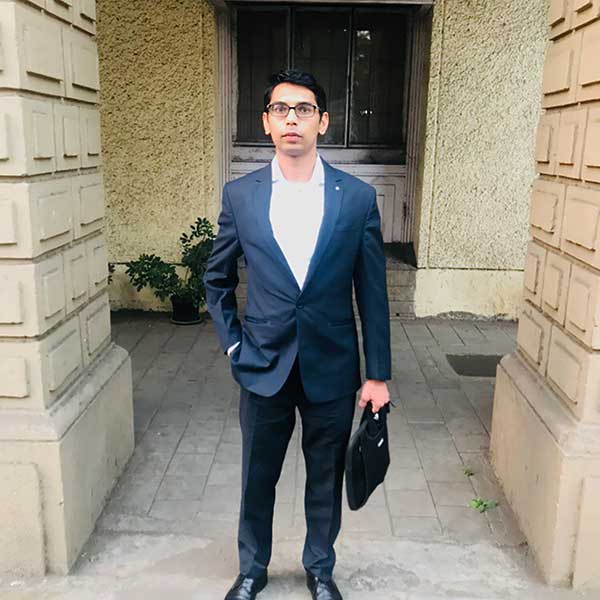
  • Arnavi Panda, Legal Advisor, Global Marketing Systems, on LLM from NUS, preparing for moots and working in shipping industry

    Arnavi Panda, Legal Advisor, Global Marketing Systems, on LLM from NUS, preparing for moots and working in shipping industry

    Arnavi Panda is a graduate from ILS Law College, batch of 2015. She then went on to pursue her Master’s degree in Maritime Law from the National University of Singapore. She has participated extensively in various national and international moots including  Philip C. Jessup International Law Moot and William C. Vis International Arbitration Moot. She is presently a Legal Advisor in Global Marketing Systems, DMCC, Dubai.

    In this interview she talks about:

    • LL.M from NUS
    • Scope of maritime law in India
    • Difference between universities in India and abroad


    HOW WOULD YOU LIKE TO INTRODUCE YOURSELF TO OUR READERS? PLEASE TELL US SOMETHING ABOUT YOUR PRE-COLLEGE LIFE?

    I’d introduce myself as a young lawyer, passionate about the shipping industry and the associated legal practice with a keen interest in arbitration and alternate dispute resolution on weekdays and an amateur Latin American dancer always keen to network over the weekends!

    Prior to college in Pune, I was fortunate to complete my high school life partly in Bombay and partly in Calcutta. The difference in lifestyle in both the cities was my first step to learning to embrace and appreciate diversity. I was always an energetic child, very keen to learn, very curious, a sports aficionado and always came home with scrapped knees or soiled clothes.


    PLEASE TELL YOU SOMETHING ABOUT YOUR COLLEGE LIFE? HOW INSTRUMENTAL HAS YOUR COLLEGE BEEN SHAPING YOUR CAREER?

    I spent five very crucial formative years in ILS Law College, a college I had always heard about being one of the oldest and prestigious colleges in the country for legal studies. It was an honor to have been accepted in face of the stiff competition and competitive cut-off marks.

    ILS as an institution gives its students great autonomy and flexibility to make their own decisions on the course of their career. With five hours of classes a day, I made the most of my leisure time by writing research papers, working on moot court competitions, assisting professors, organising intra-college events and interning at law firms to acquire practical experience. Not only did this serve as great career building exercise but also a character building exercise which taught me to take responsibility for projects I undertook, honed my advocacy and leadership skills and made me realise the importance of being a team player.


    YOU HAVE REPRESENTED YOUR COLLEGE AT PRESTIGIOUS MOOT COURT COMPETITIONS INCLUDING PHILIP C. JESSUP INTERNATIONAL LAW MOOT AND WILLIEM C. VIS INTERNATIONAL ARBITRATION MOOT. HOW DO YOU RECOMMEND ONE SHOULD PREPARE FOR THEM? DO YOU THINK MOOTING IS SIGNIFICANT FOR LAW STUDENTS?

    I have always believed the legal profession to primarily be an interactive profession with regular contact with various parties. Mooting not only hones one’s advocacy skills but also facilitates overcoming stage fear, builds self-confidence and develops public speaking and interpersonal skills.

    Preparing for Philip C Jessup and Willem C. Vis played a major role in my development as a professional for a variety of reasons. My team and I dedicated about six to eight months preparing for these events which required long hours, late nights, developing legal research skills and most importantly knowing how to communicate and work as a team which is an indispensable quality at the work place. I would advise aspirants of these events to firstly pick the right team members who are of a similar professional temperament and are willing to dedicate the same amount of time and effort to these events as they quite literally become your closest friends during this time. It is important to work smart along with working hard which would include seeking guidance from previous participants on what to expect and how to research, the materials to be referred to and how to structure the arguments and lastly prepare with several mock trials. We were fortunate to have very helpful seniors, colleagues and faculty staff who gave us time to review our submissions and prepare for the oral hearing. Preparing and participating for these events is very stressful and I commend my teammates who did not give up despite the odds and went on to qualify as quarter-finalists at Vienna in 2015. Like any other participant of the event, I will have to say that it is absolutely worth every late night, every sacrificed internship and every missed movie/dinner/party!

    While mooting does play a very important role in a law student’s life, I fully recognise that it may not be everyone’s cup of tea. However, I would encourage everyone to have some mooting experience during law school as a career building exercise.


    ARE THERE ANY MEMORABLE MOMENTS DURING YOUR COLLEGE THAT YOU WOULD LIKE TO SHARE?

    Five years of law school created a lot of pleasant memories but if I were to highlight the most memorable one of them all, it would have to be the day my team and I were adjudged as the winner of the intra-college international law moot court qualifying competition. This gave us the opportunity to represent ILS at the Philip C Jessup Moot where we were only two points short of qualifying to the World Rounds. The moto of the team was to only give our very best effort without expectation and consistently challenge ourselves to do better.

    This was a defining moment for us as a team and was testament to the fact that with sincere hardwork, effort and humility, sky is indeed the limit!


    WHAT MOTIVATED YOU TO GO FOR A MASTERS PROGRAMME? WHAT LED YOU TO CHOOSE MARITIME LAW AS YOUR SPECIALISATION?

    I come from a family of teachers who have always believed that education never goes to waste. In the present competitive market, selecting a niche and mastering it is important to establish oneself and it was with thought in mind that I was focused on completing my masters coursework before stepping into the professional job market.

    The shipping industry was an industry which I was familiar with since I was a child by virtue of my father’s affiliation with the Ministry of Shipping for the Government of India where he was the lead advisor and the IMO Representative for the Country on several occasions. The beauty of the maritime industry is that it is extremely multi-dimensional, involves a lot of cross-jurisdictional transactions and disputes and is extremely global in nature. I always knew that I would appreciate a contentious job a lot more than an advisory one and Maritime Law gave me the perfect avenue to combine my passion for international law, commercial laws and dispute resolution.


    WHAT WOULD BE YOUR ADVICE FOR YOUNG LAWYERS AND LAW STUDENTS LOOKING TO SPECIALISE IN MARITIME LAW?

    I would strongly recommend young lawyers to pick maritime law as an area of expertise for a variety of reasons.

    It is an excellent niche area to capitalise on. Given that India is a country with a vast coastline and there is significant Admiralty work which is always done in addition to the new Admiralty Act which was enacted last year; maritime law is a very promising career option.

    However, I would also recommend aspirants to seek internship experience with a firm practising admiralty law to get an insight into the industry to make an informed decision. It is complex; it is contentious; it is challenging at every stage but is also very exciting, very glamorous and very international.

    PLEASE TELL US ABOUT THE APPLICATION PROCESS FOR LL.M. AT NUS?

    The application for LL.M. at NUS is fairly standard as you would find in most universities worldwide. It is important to start preparing early by researching about the program you wish to apply for and the deadlines.

    After submitting an online application, the candidate then has to send a physical copy of the application along with supporting documents (official transcript, degree scroll, recommendation letters) along with the application fee receipt to the university at the indicated address on the website. The results of your application are usually declared only three months after the application. (I remember receiving an acceptance from NUS as one of the last universities as opposed to my acceptances from USA, UK and Australia).

    The information is easily available on the NUS website and the administration and admissions staff is very helpful, friendly and prompt with their assistance.


    WHAT ARE THE NECESSARY TRAITS ARE REQUIRED TO BAG A SCHOLARSHIP FOR LL.M.? WHAT IS THE APPLICATION PROCESS FOR A SCHOLARSHIP AT NUS?

    Like any university, it is highly advisable to have a consistent set of good grades in all years of academic study to secure a scholarship. Universities are usually keen to award scholarships to students who can display merit in academics and outstanding contribution even on extra-curricular activities. NUS has an additional requirement like a few other universities where it requests an Essay from a candidate on a current topic of their interest to assess scholarships awards. It is advisable to select an emerging topic of interest in the field of study that a candidate wishes to specialise in to increase their chances of success.


    WHAT SHOULD BE KEPT IN MIND WHILE WRITING SOPS FOR LLM ABROAD? WOULD YOU BE WILLING TO SHARE YOUR SOP FOR THE BENEFIT OF YOUNG LAW STUDENTS LOOKING TO APPLY ABROAD?

    I cannot stress enough on the importance of being well researched on the coursework, the faculty, the program and most importantly the industry. An ideal statement of purpose in my experience would be one which highlights the candidate’s genuine interest in a field of study even though one may not have taken the ideal modules or courses during undergraduate study for the same. Personally, I have always conceived a SOP to be a personalised document which gives the institution a chnace to understand the candidate’s expectations, aspirations and background better in addition to the professional information that they already have handy from the resume.


    PLEASE TELL US THE RECRUITMENT PROCESS AT GLOBAL MARKETING SYSTEMS, DMCC, DUBAI? HOW DID YOUR APPOINTMENT TAKE PLACE?

    I was introduced to a representative of Global Marketing Systems, DMCC, Dubai while in Mumbai who advised I apply for the position. As is standard procedure, I was interviewed once my Resume was perused and shortlisted prior to an offer being made. Initially I was placed in the Singapore office for a period of 5 months before permanently moving to the head office in Dubai and taking over the complete compliance and legal portfolios at GMS.


    AS LEGAL ADVISOR IN GLOBAL MARKETING SYSTEMS, DMCC, DUBAI, WHAT ARE YOUR ROLES AND RESPONSIBILITIES?

    My current role with Global Marketing Systems in Singapore and Dubai involves extensive risk assessment and legal advisory in relation to contract negotiation, drafting and execution not only for the sale, purchase and demolition of Vessels but also various standard form BIMCO operational contracts, time and voyage charter party contracts, contracts of afreightment, and marine insurance contracts. Currently, I assist and handle three portfolios in the Company namely, compliance and regulatory, legal dispute resolution, insurance claims. I am entrusted with advising the management and the procurement team of the risks in trading and purchasing vessels with prior claims, sanctioned vessels, commercial and legal intricacies of amended contracts and engaging external counsels to represent the Company in various litigation matters in India, Bangladesh and the EU as well as Arbitration proceedings commenced at the London Maritime Arbitrators Association (LMAA) and Singapore Chamber of Maritime Arbitration (SCMA).

    My current profile also involves general corporate advisory in relation to business development and expansion in offshore jurisdictions, employment matters in EU and non-EU jurisdictions and international taxation. This experience gives me a holistic understanding of the Shipping industry.


    YOU HAVE ALSO WORKED AS LITIGATION ASSOCIATE AT CRAWFORD BAYLEY & CO., MUMBAI. WHAT IS THE RECRUITMENT PROCESS THERE?

    I worked as an intern at Crawford Bayley & Co. on three different occasions from May 2012 to July 2014 during the semester break with the Admiralty Partner’s office during which period I was able to get valuable insight into the industry and the associated legal practise. Upon completing my master’s degree coursework, I successfully applied to the firm for a position of an associate and the firm was kind to accommodate me in their team and provide me valuable guidance and mentorship as a young lawyer.

    I would recommend law students to carefully consider their internship experiences and if possible, show loyalty to a firm where they have enjoyed the work and the work environment and would like to see a future. An intern is as much an investment to a firm as a firm is an investment to an intern’s resume.


    PLEASE TELL US ABOUT YOUR TIME AT NUS. WHAT SHOULD ONE EXPECT WHILE STUDYING ABROAD? HOW IS THE ENVIRONMENT DIFFERENT FROM COLLEGES IN INDIA?

    My academic year at NUS was an eye opener for a variety of reasons. Studying abroad gave me the perfect exposure to different cultures, interaction with people of different nationalities and understanding their lifestyle.

    The environment in universities abroad is one of friendly competition which is healthy for growth and encourages one to perform to the best of his/her ability. In my experience, universities abroad usually focus on the overall development of students and are less course intensive as opposed to Indian universities. The coursework and assessment structure is application oriented as opposed to theoretical knowledge which requires a thorough understanding of basic concepts and their applicability. It is this understanding which is ultimately most valuable to a prospective employer.

    While the coursework was tasking, our faculty ensured that there were lots of activities organised to keep the student morale high even during exams which were particularly stressful. Most importantly, my time at NUS was a great platform to network, create lasting memories and have a friendly face to bump into in different parts of the world!


    WHAT WOULD BE YOUR WORD OF ADVICE TO OUR READERS?

    Stay focused, stay motivated and never compromise on your mental and physical health. Make your hobby your job and you will always have a motivator in yourself even when the seas are rough!




  • Prachi Bhardwaj, Assistant Editor, Supreme Court Cases, on work and challenges of a Legal Editor

    Prachi Bhardwaj, Assistant Editor, Supreme Court Cases, on work and challenges of a Legal Editor

    Prachi graduated from Mody Institute of Technology and Sciences in 2012. She had an impeccable academic record and was a gold medallist. Prachi holds the position of an Assistant Editor at Supreme Court Cases, the most widely published and relied upon Law Journal in India.

    In this interview we speak to her about:

    • The work of a legal editor
    • Authoring legal articles
    • Academics, mooting, and extra-curricular activities
    • A career in legal editing


    HOW WOULD YOU LIKE TO INTRODUCE YOURSELF TO OUR READERS? COULD YOU PLEASE SHARE WHAT MOTIVATED YOU TO PURSUE LAW AS A CAREER?

    I am a Legal Editor working in the Legal Publishing Industry for the past six years. Right after my graduation, I joined Eastern Book Company as an Editorial Assistant & was promoted to the post of Assistant Editor in the year 2014.

    Fortunately, or unfortunately, I am a first-generation lawyer. My father holds a degree in law but never pursued law as a career. I was a commerce student & was preparing for CA when I first heard of integrated law courses & realised that a law degree will do more justice to my analytical & outspoken personality.


    YOU HAD AN EXCELLENT ACADEMIC RECORD DURING YOUR COLLEGE. HOW DID YOU APPROACH ACADEMICS WHILE IN COLLEGE?

    My approach was pretty straightforward. Call me old-fashioned but I believe that attending lectures is very important. If the teacher is even half good at his/her work, you’ll be able to understand the subject better if you’ve attended that lecture. But that is not enough. Instead of relying solely on what was being taught in the classroom, I used to prepare my own notes for understanding the subject better. Plus, I also believe that in law, reading and analysing case laws is very important.


    HOW IMPORTANT IS IT TO TAKE UP MOOTS AND OTHER EXTRA-CURRICULAR ACTIVITIES DURING COLLEGE?

    Very! It not just adds to your resume but also gives you immense confidence to step into the real world with the law degree in hand. But what is more important is the kind of extra-curricular activity you engage the most in during college. Whether it is Mooting or Paper presentation or Parliamentary debates or MUNs, each activity plays different role in shaping your career choices. For e.g., I dedicated more time & energy in paper writing & presentations because I wanted to join the legal writing & editing industry.


    HOW FAR DID YOUR INTERNSHIPS DURING LAW SCHOOL HELP YOU IN YOUR CAREER AFTER YOUR GRADUATION? HOW WOULD YOU RECOMMEND THE PRESENT LAW STUDENTS PLAN THEIR INTERNSHIPS?

    I cannot emphasise enough the importance of internships for any student. It’s sad that many students do not think of internships as learning opportunities but simply a way to enjoy their summer/winter vacations. Law students should intern in all sorts of legal fields in order to zero in on one field that they would actually like to work in after graduation. It’s always better to experiment while in college. Start with NGOs then work your way up to Litigation, Law Firms, etc. Wherever you intern, just make sure that you do genuine work & not just collect certificates.


    AFTER DOING YOUR INTERNSHIPS IN LITIGATION AND LAW FIRM, WHAT LED YOU TOWARDS THE CAREER OF A LEGAL EDITOR?

    When I first joined law school, like most, even I wanted to join a law firm once I graduated. But interning with law firms & Advocates made me realise that those fields were not my cup of tea as the work I was doing there during my internships, was not giving me any joy. So, by the time I reached my final year, I was sure that I wanted to stick with what I enjoyed the most i.e. legal writing & editing.


    PLEASE TELL US SOMETHING ABOUT THE JOB OF A LEGAL EDITOR? HOW DIFFERENT IS IT FROM THE TRADITIONAL FIELDS OF LAW?

    A legal editor, contrary to the popular notion, is not your regular proof reader. Headnoting, case law digesting, Law Book Reviewing, Legal reporting, are all part of a legal editor’s job. The scope of work may differ depending upon the organization one works for. The fact that there are only a handful of people who understand the job of a legal editor, answers the second part of this question.


    WHAT ARE YOUR ROLES AND RESPONSIBILITIES AS LEGAL EDITOR AT SCC?

    As an Assistant Editor working with the Digest Team of Supreme Court Cases (SCC), my responsibilities are divided broadly into 2 categories:

    Digesting the Supreme Court case law on various topics starting from 1950 till date for the easy reference of Legal Practitioners: We all know that SCC is a law Journal in which the Supreme Court judgments are published chronologically in endless number of volumes. Now if a person is looking for all the cases on, let’s say ‘Family and Personal Laws’, finding the case law in those volumes will be an almost impossible task and that’s when a Digest comes into picture. In crux, I prepare topic-wise compendium of the entire case law on various subjects for the Supreme Court Complete Digest (SCCD) and sometimes for Supreme Court On (SC on) series. These case laws are short summaries of various law points in a Judgment.

    SCC Online Blog: I am in-charge of the Supreme Court updates that are published on the Blog. I do the in-depth analysis and reporting of the latest judgments & orders of the Supreme Court of India, sometimes of the High Courts, International Courts and Foreign Courts too.


    WHAT ARE THE ESSENTIAL SKILLS REQUIRED FOR A STUDENT FOR A CAREER AS A LEGAL EDITOR?

    A law degree, good analytical and research skill and a grasp on language. A legal editor is expected to present his or her ideas in a clear and logical way and should have a fair understanding of the needs of the legal professionals and the law students.


    WHAT ARE THE CHALLENGES THAT YOU FACE IN YOUR JOB?

    The biggest challenge in Case Law Digesting is the preparation of the synopsis of the Digest. While doing so, I have to keep in mind how a lawyer would search for a case law in that digest & as is the case in every profession, some are know-it-alls & some need extra guidance to reach the right place in the book. It’s obviously very difficult to be both in your head while synopsizing the case laws.


    WHAT WOULD BE YOUR ADVICE TO STUDENTS WHO ARE PLANNING TO MAKE CAREER AS LEGAL EDITORS?

    Intern in a legal publishing house, develop good research skills & write legal articles, essays, papers, etc whenever you get a chance.

    HOW CAN A STUDENT APPLY FOR INTERNSHIP AT SCCONLINE? WHAT IS THE CRITERIA FOR SELECTING INTERNS?

    The procedure is simple. Send your Application, along with your CV, to ‘hr.exec1@ebc-india.com’. If shortlisted, you’ll get a call from the HR who’ll then guide you further.


    WOULD YOU SAY THE SCOPE FOR A CAREER, AS LEGAL EDITOR IS NOT VERY BROAD IN INDIA?

    Compared to the other fields, it’s obviously not very broad but a lot has changed over the years with the advent of technology & internet. If we talk about EBC, we are no longer confined to print media and are now providing legal information though every possible medium. SCC Online Web & CD-Rom Editions that cover colossal number of case laws, SCC Online Blog where we publish legal news on as-it-happens basis, e-books, etc, are all signs of better days for Legal Editing & Writing field. I’d say there’s only one way from here & that’s up.


    YOU HAVE ALSO AUTHORED NUMEROUS LEGAL ARTICLES. WHAT POINTS ARE TO BE KEPT IN MIND WHILE AUTHORING A LEGAL ARTICLE?

    Choose a topic that you feel strongly about. This will motivate you to write better.

    Timing of writing & publishing the article is very important. Write on the topics that are relevant & not something that has been talked about a lot or something that people have lost interest in.

    Thoroughly research the topic that you want to write the article on.

    Read ‘n’ number of cases & laws on the point

    Keep your target readers in mind while writing any article.

    Never send your first draft for publication. Write the article, edit, read it aloud, seek feedback, edit again & once you are satisfied with what you’ve written, press that send button.


    WHAT ADVICE WOULD YOU GIVE TO LAW STUDENTS TO IMPROVE THEIR LEGAL WRITING SKILLS?

    Read legal articles.

    Keep abreast of the latest legal news.

    Create a blog and start with writing short articles.

    Write something for your law school’s journal.

    Ask your friends, seniors or teachers to give you feedback.

    Write, write & write even if you feel that you are not good at it.


    LASTLY, WHAT WOULD BE YOUR PARTING MESSAGE TO OUR READERS?

    Do not shy away from trying new things during law school. Do what your heart says & not what everyone else is doing. All the experiences that you will have, will help you in taking an informed decision. Do not rob yourself of the joy of experimenting and exploring the options!


  • Tariq Khan, Senior Associate, Advani & Co., on authoring a best seller book and challenges faced by Non NLU students

    Tariq Khan, Senior Associate, Advani & Co., on authoring a best seller book and challenges faced by Non NLU students

    Tariq Khan completed his graduation from Faculty of Law, Jamia Millia Islamia in 2014. He specialises in International and Domestic Arbitrations, MSME disputes, Commercial Laws, Writ Remedies, etc. He is currently working as a Senior Associate, Advani & Co., Barristers-At-Law, (New Delhi) and has also been appointed secretary to the tribunal for SIAC arbitration.

    He is also a guest faculty in various law colleges across Delhi and NCR including Indian Law Institute and is currently working on his next book. Recently, Tariq featured in Fortune 500 (India) magazine (Special Issue, 2017-2018) for authoring the best seller book ‘On the Rise’ published by Universal Law Publishing (an imprint of Lexis Nexis). In 2017, All India Reporters Association conferred on him the title of Shaan –E- Awadh. He is a columnist and made it to the conference round of Judge Advocate General. He is associated with various NGO’s, commissions and is frequently invited by law colleges across the country for interactive sessions.

    With his demonstrated experience of working as a lawyer, author, academician, columnist, he talks to us about:

    • Problems in the Indian Legal Education
    • Biggest Challenges faced by Non-NLU students and First Generation Lawyers
    • Challenges faced in authoring first book
    • Making litigation more attractive to young lawyers


    HOW WOULD YOU LIKE TO INTRODUCE YOURSELF? PLEASE TELL US SOMETHING ABOUT YOUR PRE-COLLEGE LIFE?

    This is perhaps the first time I am writing about myself and it reminds me of a line from the brilliant film The Devil’s Advocate: “Vanity is definitely my favorite sin.” I am extremely fond of music and an ardent traveler. I can be described as a lone ranger who lives life by his own template and a frugal eater who mostly gorge on snacks. Incidentally, it is also literature that fills me with inspiration. I sometimes write on arcane but interesting topics and I feel that reading has shaped me personally and professionally. To sum up, I am brusque, direct and unbending.

    I belonged to a middle class family and spent my early childhood in Shahjahanpur, a small city in Uttar Pradesh. I was an average student in a very average school and never possessed erudition or eloquence. English was a language I was not very familiar with. When I was in my seventh standard, I was relocated to New Delhi where I jumped eighth standard and took admission directly in ninth standard. I had a tumultuous school life in view of fact that my parents put me in science stream as a consequence of which I had a terrible sort of anger and grudge against them. The minutiae of mathematics and science did not interest me at all. Contrary to my apocryphal perception, my father would always tell me not to run after money but prodigious prospects. Throughout my school life I had a feeling that I was never adequately praised or appreciated for my achievements but frowned upon transgressions. All in all, suffering has been the best teacher as it has bent and broken me but in a better shape.


    WHAT FACTORS INFLUENCED YOU TO CHOOSE LAW AS A CAREER? WHY DID YOU CHOOSE JAMIA MILIA ISLAMIA UNIVERSITY FOR PURSUING LAW?

    Well the truth is that I never wanted to be a lawyer for three reasons firstly, I did not have command over English language; secondly, I had stage fright and thirdly, I hated studying/reading. I clearly remember my father telling me to give law entrance however; I told him that I would do anything but law. I surreptitiously began exploring other options as I did not feel the influence of law, lawyers and judges in my life early on even though much of my character was built early in life as I grew up in a household where free expression was practiced and encouraged. Since I was a science student, I wanted to be an engineer and hence, I appeared for various engineering exams however, I failed miserably. I must add that it is hardships in life which we have to meet with and overcome them to build our true character. Nevertheless, I realized the unvarnished truth that it’s not what we take, it’s what we leave that enables us to sieve and confidently winnow down the choices to career path and therefore, I can vouch for the fact that I didn’t choose law , law chose me.

    Amidst challenging economic circumstances, not all can afford the exorbitant fees charged by private law colleges and thus, Jamia was a perfect choice as our annual fees was around five thousand rupees.


    WHAT ALL ACTIVITIES DID YOU TAKE PART IN DURING YOUR TIME AT LAW SCHOOL? HOW IMPORTANT DO YOU THINK IS MOOTING FOR A LAW STUDENT?

     My law school journey was fraught with controversies and obstacles. Compared with my contemporaries in other law colleges, I was a struggling law student in the first two years. What was even more disconcerting was that there was no mooting or debating culture in our college and there was hardly any support from seniors barring one or two. There was dearth of internship opportunities and there was no campus placement. But there’s a silver lining; in stark contrast to this depressing picture, Jamia gave me a larger slice and a canvas to draw on. We learn best when we learn by doing and that’s exactly how we learnt. At the end of the day, it’s all about your perspective whether you see the positive or the negative. Some people complain because God put thorns on roses, while others praise God for putting roses among thorns. You always have that choice.

    During college I applied for internships in almost every senior’s chamber and almost all tier one and tier two law firms however, most of them never responded despite repeated follow ups though, some of the firms were gracious enough to revert with a standard email saying “Currently we do not have any slot available. We will get back to you in case of a suitable opportunity”. Interestingly, this was the response even when I applied one year in advance. However, instead of giving up, I would remind myself of William Ernest Henley’s golden words in the poem, Invictus: “It matters not how strait the gate, how charged with punishments the scroll, I am the master of my fate: I am the captain of my soul.” Consequently, I had the rare honour of interning under the tutelage of veteran lawyers and in tier one law firms. Insofar mooting is concerned, my team won various national and state level moots. To my surprise, my team qualified for the Oxford Price Media Moot Court Competition and we were the twelfth Best Team of South East Asia. This was the first time Jamia participated in Oxford Price Media International Moot. I was an avid debater in college and won in various national debate competitions. As the president of the debating society of my college, I organised the first Jamia National Parliamentary Debate and also worked as the Coordinator for Internship and Placement Committee.

    Mooting broadens the horizon of law students and provides them with a platform wherein they can learn, grow, work in new environments and of course travel and meet new people. It is the most enriching activity that gives law students a firsthand knowledge of being a lawyer. It’s a platform for the law students to polish their rhetoric and research skills. However, appearing before a judge in a court of law who has to adjudicate many matters in a day is completely a different experience. Hence, in my view mooting doesn’t really help much after the student graduates.


    WHAT ACCORDING TO YOU ARE THE PROBLEMS IN THE PRESENT INDIAN LEGAL EDUCATION?

     To borrow the golden words of Justice Krishna Iyer: “Education is now priced in India, not given.” Money power has captured legal education in our country which is nothing but malignancy. Law colleges have become money sucking engines. Surprisingly, law students are being taught by teachers who have never even appeared in any court. There are certain anomalies e.g. we are taught penal statutes and tax statutes in second year or third year however, we are taught Interpretation of these penal and tax statutes in the fourth or fifth year. Serendipitously, we were fortunate to have a professor like Mr. Atyab Siddiqui who is a brilliant lawyer and equally a good professor who taught us the practical applicability of law using analytical method rather than the rote method.


    WHAT ARE THE BIGGEST CHALLENGES FACED BY NON NLU’S AND THE FIRST GENERATION LAWYERS IN THE LEGAL PROFESSION?

     There are more than 1300 Non NLU’s in India and the law firms recruit only from the top most law schools. Even the internships are given on the basis of the tag of your college and not on the basis of your achievements. Unfortunately, some law firms discriminate between trainees/associates at the same position or level by offering lower salaries to the Non NLU’s. These practices deprive meritorious students of opportunities. Also, Non NLU’s don’t get internship opportunities with a lot of tier one law firm. In litigation even today, it is extremely difficult for a first generation or a Non-NLU student to get into a good chamber.

    Nonetheless, it doesn’t matter which college you are from and it doesn’t matter ‘who you know’, the only thing that gets you ahead in the profession is ‘what you know’. It doesn’t matter whether you are a first generation lawyer or a second generation lawyer. There are ample opportunities for all of you who are ready to face the challenges and strive for such opportunities. There are humongous prospects for those who are willing to make their mark in this field. This reminds me of few lines by George R.R. Martin “Never forget what you are, for surely the world will not. Make it your strength. Then it can never be your weakness. Armour yourself in it and it will never be used to hurt you.” Initially the profession may not be very rewarding however, if you stay in the profession and not give up, then you will be rewarded beyond your imagination. My mentor Dr. Singhvi has very rightly said that being a second or third generation lawyer definitely gives you a push and backup however, if you do not do well in first few cases, the system rejects you.


    HOW DID YOU GET A JOB AT A TOP TIER ARBITRATION LAW FIRM? TELL US ABOUT YOUR LIFE AT ADVANI AND CO.?

    When I was in my final year of law school I was very restless and perplexed and I would ask myself, what’s next? It seemed like a dead end to me with no place to go. Mr. P Chidambaram has pithily put it that “In law, there is no dead end. What seems to be the end could very well turn out to be a new beginning.” During my final exams, I applied for a job at Advani and Co. even though I had never studied Arbitration as a subject in college. I was interviewed by the then partner Mr. Apar Gupta who did not judge me on the basis of my law school and gave me a job. I was fortunate to work with him in the very first year of my career and learnt various facets of drafting and research under his tutelage. Thereafter, Mr. Gupta set up his independent practice as a counsel and left the firm. Since then, I have been working with Mr. Shashank Garg who is the partner in charge of our Delhi office. Mr. Garg in true sense is my ‘Arbitration Guru’ as he introduced me to the arbitration fraternity and gave me innumerable opportunities to argue matters in district courts, high courts and handle domestic as well as International Arbitrations all by myself. Advani and Co. has helped me grow as a person and as a professional. Since day one I have been working closely with Mr. Hiroo Advani who is an authority on the subject and I am privileged to have learnt the art of cross examination from him.

    As a senior associate at the firm, I am primarily representing various Multi National Corporations, Public Sector Undertakings and individuals in high profile arbitrations and civil litigation. I have also published various articles on the subject and I am a guest faculty at Indian Law Institute where I teach ADR in PG Diploma Course.


    YOU HAVE WRITTEN THE BOOK ‘ON THE RISE’ . PLEASE TELL US WHAT MOTIVATED YOU TO WRITE THE BOOK AND HOW CHALLENGING IS THE TASK OF AUTHORING A BOOK?

    (Tariq authored the book ‘On The Rise’ that covers inspiring stories of young legal professionals which featured in Fortune 500 magazine.)

     I realised that there is no dearth of opportunities, but it is the dearth of information that restricts the trickling down of variety of options available to budding lawyers and hence, I felt that there was a dire need for a publication to give budding lawyers an insight of the legal profession and the challenges that follow. I must thank my mentor Mr. Shashank Garg who helped me extensively and also motivated me to come up with a book like this. Incidentally, the 20 contributors who believed in my idea deserve full credit of this book. When I came up with this idea, many people in fact discouraged me thereby making it one of the most challenging works of my life. It was difficult to execute the idea as it was my first book and being a first generation lawyer I did not have any connections however, I felt that here was no harm in taking aim, even if the target was a dream.

    There has been a divine intervention in my life that cemented my faith in this noble profession as there are some veteran legal eagles namely Justice A.K. Sikri, Dr. Abhishek Manu Singhvi, Mr. Sidharth Luthra, Mr. Fali S Nariman, Mr. J.P Sengh, Mr. Arvind Datar and Dr. Faizan Mustafa that have constantly motivated and guided a ‘nobody’ like me. This book would not have been possible without their support. To my surprise the book featured in Fortune 500 Magazine. All in all the journey of this book has taught me that ideas become clear as we work on them. We just have to get started.


    ACCORDING TO YOU, HOW WOULD LITIGATION BECOME MORE ATTRACTIVE TO YOUNG LAWYERS?

     Most of the law students come from middle class and lower middle class families. After graduating, they have to assure their parents that they are going to be self sufficient if they are not making fortunes and will not be requiring the support of their family financially. This is possible only when seniors in the profession become more professional about this. Young lawyers on joining should be assured of reasonable remuneration. Of course an individual litigating lawyer would not offer as much as law firms would offer and those juniors who enter into litigation are generally prepared for that however, those who have responsibilities or family expectations, they avoid entering litigation but it often happens that when they join chambers, they are not told how much they are going to get. Those who take juniors owe a duty to their juniors clearly as to how much they are going to pay them. Additionally, what puts off many young entrants is the spectacle of lawyers hanging out in the courts during the day often without substantial work and then having work in the evening later hours. I feel time management in courts and in office can make litigation more attractive.


    WHAT ADVICE OR SUGGESTION WOULD YOU LIKE TO GIVE TO OUR READERS, WHO ARE PREDOMINANTLY LAW STUDENTS AND YOUNG LAWYERS?

    I may not be the right person to give any advice or suggestion to young lawyers as I am myself in my legal cradle striving to grow up and increase knowledge and stature however, we must always remember that no matter how big the problem is, time will solve it. First and foremost, get rid of all the negativity around you, some people in our lives act like anchors that are constantly trying to slow us down, cut them lose. Live in your present and plan the future because if you carry the burden of past negativities/unpleasant memories and recall them, then your downfall is inevitable. Always remember that the greatest successes come from having the freedom to fail and by keeping your mind on the objective, not on the obstacle. Keep in mind, success is the best revenge. My senior friend Mr. Bharat Chugh time to time keeps reminding me that readers are leaders and he keeps giving me books to read. Reading definitely helps! In my free time I see speeches/videos of the legends of law and learn from them and I read judgments of my role model centenarian Justice Krishna Iyer who possessed hoarded wealth of a vast vocabulary which helps me in writing articles and has also improved my legal lexicon over the period of time. Keep yourself updated with recent developments in law that can easily be done by following legal news portals like Live law, which is an excellent initiative, by MA Rashid. Scrolling through Live law for two minutes in a day gives me insights of what’s happening in the legal fraternity.

    Lastly, I would like to borrow words of Chief Justice John Roberts who is one of the most brilliant judges in the world: “From time to time in the years to come, I hope you will be treated unfairly, so that you will come to know the value of justice. I hope that you will suffer betrayal because that will teach you the importance of loyalty. Sorry to say, but I hope you will be lonely from time to time so that you don’t take friends for granted..And when you lose, as you will from time to time, I hope every now and then, your opponent will gloat over your failure. It is a way for you to understand the importance of sportsmanship. I hope you’ll be ignored so you know the importance of listening to others, and I hope you will have just enough pain to learn compassion. Whether I wish these things or not, they’re going to happen. And whether you benefit from them or not will depend upon your ability to see the message in your misfortunes.


  • Pooja Reddy Chirra, Proprietor, C.Subba Reddy Co. Advocates and Consultants, shares her experience on managing her own firm

    Pooja Reddy Chirra, Proprietor, C.Subba Reddy Co. Advocates and Consultants, shares her experience on managing her own firm

    Pooja Reddy Chirra completed her graduation from Fergusson College, Pune University in 2014. She is currently managing her own firm  and her area of expertise is indirect taxation. She is actively involved in litigation of IDT matters.

    In this interview we speak to her about:

    • Challenges of managing her own firm
    • Importance of academics and grades
    • How to convert internships to PPO


    HOW WOULD YOU LIKE TO INTRODUCE YOURSELF TO OUR READERS? PLEASE TELL US SOMETHING ABOUT YOUR PRE-COLLEGE LIFE?

    I am 26 year-old Hyderabadi who is Mumbaikar by heart, an advocate by day and dramatic all the time! I specialise in Indirect Taxation and currently run my own firm, but I am more than my job description. I work with the Rotary Club of Bombay Powai, who were kind enough to let me organise the ‘Unsung Hero Show’ which has played a huge role in helping me do things which I would otherwise be too scared to take up. I also started organising etiquette workshops in 2015, focusing mainly on schools and colleges with students majorly from low income families.

    My pre-college life was simple, protected and uncomplicated, like most other kids at the time. My brother and I were raised by a set of no-nonsense parents who moved to Mumbai nearly 35 years ago and built the life they have today, with no help from anyone else whatsoever. We were both sent to Kendriya Vidhyalaya, IIT, Powai. Mainly because I had started to demand luxuries, like a chauffeur and a full time maid to cater my every need (I was six!). My parents always were very conscious about us being humble and modest, and so, Government School it was.


    HOW WOULD YOU DESCRIBE YOUR JOURNEY AS A LAWYER?

    Back in 2014, right after I graduated from college, I joined my father’s firm. Two weeks after I started, my dad had cardiac arrest and was hospitalised. Things got tense. My mother told me that if I wanted to help, the only thing I could do is to take care of work so that he won’t have to worry about it. I was beyond overwhelmed because I had no idea who half of our clients were and I had zero experience in the subject. During that time, when my father was still in the ICU, one family member lectured me in the ICU waiting area, saying that if I wanted my father to get better I should get married, preferably to a lawyer, so that he can take care of dad’s firm. It hit me then that in his eyes I had failed even before I attempted. Those words stuck me ever since and has been one of the reasons I so desperately want to make something of myself in the field of law. Fortunately, my parents were far more sensible and supportive. My father trained me in the strictest way possible, in the years that followed, we set a rhythm to our work, he did advisory and I did litigation, he would deal with the clients and I did the running around, we took turns taking vacation and we always had each other’s back.

    I realised later that during those few months when dad was ill, the kind of work I was doing was intense. I was appearing before various authorities without ever having accompanied a senior to observe how the proceedings are conducted. Of-course, it helped a great deal that my father prepped me well. But in those few months, my interest in the subject peaked and all inhibitions disappeared and I started to understand the subject instead of being afraid of it. After that there was no looking back.


    WHAT IS YOUR TAKE ON ACADEMICS? HOW IMPORTANT ARE GRADES IN LAW SCHOOL FOR AN ILLUSTRIOUS CAREER?

    Academics and grades are important, but it is not sufficient. Simply because you score well in school or college, will not ensure a lifetime of illustrious career. Definitely not in the field of law.

    Your clients will come to you for your work ethic, your knowledge, sometimes even your honesty and compassion. Similarly, in a corporate office, your boss will not continue to keep you employed because you scored well in college, if you can’t get the work done.


    HOW FAR DID YOUR INTERNSHIPS DURING LAW SCHOOL HELP YOU IN YOUR CAREER AFTER YOUR GRADUATION? HOW WOULD YOU RECOMMEND THE PRESENT LAW STUDENTS PLAN THEIR INTERNSHIPS?

    I interned during every college vacation, either with a counsel or with a firm. But the biggest mistake I made was to plan on what I intended to learn during the internship, and like most other law students, I tried to cram as many internships. The end result was that, I was once actually caught sleeping on the sofa by a Senior Counsel. Fortunately, he was nice enough to simply say, “go nap at the corner cubicle where no one can see you, so that others don’t get sleepy.”

    Regardless, internships can do no harm, if you pay even the slightest bit of attention to your surroundings, you are bound to learn something or the other, whether you want to or not. However, one bit of advice to every student, would be to do long term internships. Instead of doing one month internships, opt for one, three-month internship. You’ll end up learning way more and also increase chances of a PPO.

    And, at the end, pick a boss, not a job.


    HOW DID YOU CHOOSE YOUR SPECIALIZATION? HOW DID YOU GO ABOUT ATTAINING EXPERTISE IN THEM?

    I didn’t chose my specialisation, my specialisation chose me.

    *dramatic pause*

    In all seriousness, I actually never wanted to take up Indirect Taxation. In fact, during the first year or so of law college, I wanted to graduate and immediately become a famous, dramatic criminal lawyer or become a savvy corporate lawyer with a huge pay package. (Yes, I blame the movies and shows too.)

    It was only after I started working on Indirect Tax cases, that I realised how interesting they were. There is constant change in the law, which keeps you on the toes. Each case is so beautifully different from the next. And in most cases you’re dealing with hyper technicalities, which can be extremely fun to research on.

    HOW CHALLENGING IS THE TASK OF RUNNING YOUR OWN FIRM? WHAT ARE YOUR ROLES AND RESPONSIBILITIES?

    I wouldn’t say it was easy.

    I lost my father on 10th August, 2017. He died so suddenly that even till today it is hard for us to believe that he isn’t around. The day after we cremated him, I started getting calls from my office and a few clients even I also got news of people trying to poach clients. I went back to work on 12th August and we immediately went into survival mode. Apart from my support staff, I have two colleagues with me, Arjun Nair and Vinit Dubey. They have proved to be the best team one could ask for. My dad’s death was a huge loss for them too, but they never took a day off. For several months, we worked seven days a week and twelve to fourteen hours a day.

    During the first few weeks I spent most of my time speaking to clients who were worried about the fate of their case. Several clients showed a lot of faith in us and stayed back, no questions asked. Some needed a little more persuasion.

    What was more interesting, was to see how most people were more curious about whether I would continue to work, since I was recently married and what would happen if I had babies? There were a few others who told me that since everyone at the office was below the age of 30, we were too young to do this kind of work. And all this made us work even harder. Today it has been a little more than eight months and we are doing good. The initial fear of losing clients and not being able to pay the bills and salaries has gone down the drain, we have got new clients as well.

    Through all of this, on several occasions I felt like closing the firm. It was emotionally and physically gruelling. While, my mother, brother, aunt, uncle and husband proved to be the best cheerleading squad one could ask for, I was more than fortunate to have Balani Sir, Krishnakumar Sir, Anish Desai and a few others encouraging me to continue. If it weren’t for them, maybe I wouldn’t have continued with this office.

    I would still say that this is my father’s firm, that he built on his own with the help of my mother. It is his legacy that he has passed on to me and right now I am only a guardian. Only after I build it further and scale it, I can truly call it my own firm.


    WHAT WOULD BE YOUR ADVISE TO STUDENTS WHO ARE LOOKING TO MAKE A CAREER IN INDIRECT TAX?

    Don’t be afraid of the subject. Once you start getting a grip of it, it becomes an addiction.


    WHAT ARE THE SKILLS ONE NEEDS TO DEVELOP TO SUCCEED IN THE LEGAL PROFESSION?

    Be a good orator, learn to listen carefully, be ethical in your work and read like your life depends on it.


    WHAT IS THE PROCEDURE FOR A LAW STUDENT TO APPLY FOR INTERNSHIP AT YOUR FIRM? HOW DO YOU SUGGEST THE STUDENTS CONVERT THEIR INTERNSHIPS TO PPO??

    Anyone who wishes to apply either for internship or a job can simply send us an email at subbareddyandco@gmail.com.

    If you want to convert your internship into a PPO, do the following:

    • Work on your research skills.
    • Be proactive. Don’t constantly wait for instructions.
    • Don’t be tardy.


    HOW DO YOU KEEP YOURSELF UPDATED WITH LATEST LEGAL DEVELOPMENTS IN THE FIELD OF TAXATION CONSIDERING THE CONSTANT CHANGES?

    For indirect taxation, there are weekly journals that are published, which my dad would read regularly. I picked up the habit from him.

    Also, we live in a world today, where for every activity and for every group of people, there is a WhatsApp group. The CESTAT Bar Association also keeps up with this trend. On a regular basis, there are advocates who keep posting the latest amendments and judgements on the group, which is followed by an insightful discussion on the same where everyone weighs in their opinions.

    The ‘Chai Pe Charcha’ sessions outside the courtroom while we each wait for our matters to come up, also helps us stay updated.


    YOU ARE CURRENTLY PURSUING YOUR MASTERS, HOW IMPORTANT IS IT TO GET A MASTER’S DEGREE IF YOU’RE PURSUING A CAREER IN LITIGATION?

    If you want to practice in courts and focus on litigation, what matters the most is that you start appearing in courts as soon as possible and as often as possible. All your learning will happen in a court room and court room training is irreplaceable. Spending two more years in a classroom after finishing law, may not be of much use.

    However, if you want to broaden your sphere of knowledge, then it would help to do an online course while you’re working. You could be a lawyer by day and a student by night. Just make sure you pick a university / course where examination is application based and not purely theoretical.


    LASTLY, WHAT WOULD BE YOUR PARTING MESSAGE TO OUR READERS?

    Truly learn to enjoy your life in college and don’t be stuck in the library, since most of the real learning happens outside of it anyway.

    Spend more time to develop life skills and long lasting relationships instead of trying to memorise the contents of the books enlisted in your syllabus.

    Experiment, learn, make mistakes and grow.


  • Ankit Rajgarhia, Senior Associate, Karanjawala & Co., shares his experience in dispute resolution

    Ankit Rajgarhia, Senior Associate, Karanjawala & Co., shares his experience in dispute resolution

    Ankit Rajgarhia graduated from Symbiosis Law School, Pune, in 2012. He joined Induslaw after his graduation and worked there for three years, he then moved to Karanjawala & Co.,New Delhi, where he works in the capacity of Senior Associate. His primary practice area is dispute resolution-litigation and arbitration.

    In this interview he talks about:

    • His experience at Symbiosis Law College
    • His experience in dispute resolution
    • Difference between working in a firm and with an independent counsel
    • His experience at Karanjawala & Co


    HOW WOULD YOU LIKE INTRODUCE YOURSELF TO OUR READERS WHO ARE MOSTLY LAW ASPIRANTS, LAW STUDENTS AND YOUNG LAWYERS.

    I’m currently associated with Karanjawala & Co., a leading litigation & dispute resolution law firm as a Senior Associate in the Civil and Commercial litigation, Arbitration and Disputes Resolution team, headed by Ms. Meghna Mishra- Partner.

    Prior to joining Karanjawala & Co., I worked under Mr. Amit Kumar, Managing Partner of Indus Law Associates & under Mr. Ranjit Kumar, Senior Advocate (former Solicitor General of India) assisting them in Hon’ble Supreme Court of India and Hon’ble High Court of Delhi. I have also authored articles on ‘Anti Dilution Protection’ and ‘LML-PIAGGIO dispute’ which got published on various online legal portals like JurisOnline.in, Legal Articles Directory, Lawyers Club India. My latest article on ‘Financial Creditor and Operational Creditor’ was published on the Viewpoint section of Bar and Bench.

    I got my B.A. LL.B degree from Symbiosis Law School, Pune in the year 2012 and have since then represented domestic and international clients in many complex commercial litigations and arbitrations.

    Apart from an active litigation practice I have been a cricket enthusiast representing Karanjawala & Co., Supreme Court Bar Association etc. in major cricket tournaments.


    TELL OUR READERS A BIT ABOUT YOUR CHILDHOOD AND PRE-COLLEGE LIFE AS WELL AS EDUCATIONAL BACKGROUND. DO YOU HAVE LAWYERS IN YOUR FAMILY WHO MOTIVATED YOU TO PURSUE A CAREER IN LEGAL FIELD?

    I was born and brought up in Patna. To be honest, I was predisposed to pursue Law since childhood. I hail from a family of lawyers including my grandfather, father and brother. My father was a Tax Lawyer and one of the youngest lawyer in Patna to become a Senior Advocate in his times. I have grown up spending most of my post-school hours in his office full of law books.

    Honestly, I was a very average student throughout my school and college life. However, I took deep interest in sports, debates and social events. Even though I wish I had put in more hours of hard work in studies, I am glad to have honed my skills of communication and networking, which have equal importance in the field of law.


    WHAT WERE YOUR AREAS OF INTEREST DURING YOUR GRADUATION? HOW DID YOU GO ABOUT DEVELOPING EXPERTISE AND KNOWLEDGE IN THESE AREAS?

    During my college days apart from academics I had the opportunity to intern at various organisations, to name a few such as Hon’ble Justice Pradeep Nandrajog, High Court of Delhi; Senior Advocate Jayant Bhushan, Supreme Court of India; Former Additional Solicitor General of India, Mr. Amarjit Singh Chandhiok, High Court of Delhi; Former Additional Solicitor General of India, Mr. P.P. Malhotra, Supreme Court of India; Jyoti Sagar Associates; NGO Pragya etc. While interning at these places the primary responsibilities were working on cases relating to Civil Law, Arbitration, Dispute Resolution, Criminal Law, Administrative Law, Constitution Law and Disputes relating to property apart from visits to Hon’ble Supreme Court of India, High Courts of various Jurisdiction and District Court of Delhi.

    These internship experiences not only groomed my practical legal knowledge but also motivated me towards litigation in India. While interning at above mentioned places I had the privilege to work along with Senior Advocates, Managing Partners and other legal personalities which not only taught me the art of drafting but also groomed my drafting and research skills. In my present employment I have realised that to excel in litigation you need to have a good foundation in drafting and court craft and not only be limited to good command in English language.

    An aspect of Law that has always been of interest to me is that, Law influences almost every facet of our life, and is constantly evolving to keep up with the dynamic changes to which we constantly try to adapt. In particular, I am always drawn towards Dispute Resolution mainly because it consists of constructive legal argument and an analogy of legal reasoning more often than in many other careers. I strongly believe in following one’s passion and a career in Law has always been my calling.


    YOU GRADUATED FROM SYMBIOSIS, LAW SCHOOL IN THE YEAR 2012. HOW WOULD YOU DESCRIBE YOUR EXPERIENCE AS A STUDENT ASPIRING TO BE A PROFESSIONAL THERE? HOW INSTRUMENTAL WAS SYMBIOSIS IN SHAPING UP YOUR LEGAL CAREER? TELL US ABOUT ORGANIZING AND CONCEPTUALISING AND PLANNING THE FIRST EVER SYMBIOSIS PUNE FEST (SYMBHAV IN THE YEAR 2008).

    My life at Symbiosis Law School, Pune was blissful not only in terms of academics but also extra-curricular activities. While I was a mediocre student at college, I also made it a point to focus on mooting, articles and extra-curricular activities such as sports or organising university level events.

    I would give my college full credit for expanding my mental horizon and for encouraging lateral thinking in me through free discussions and healthy debates in classrooms. Apart from having a great faculty structure in college, we have also had the honour of closely interacting with guest faculties such as Mr. Ram Jethmalani, Senior Advocate & HMJ Pradeep Nandrajog. I learnt that more than securing good marks in legal education, it is important to learn and stay updated about latest developments through interactions and discussions with peers and stalwarts in the field of law.

    I was fortunate to be part of organising committee of first ever Symbhav [Symbiosis First ever legal fest, 2008]. In the very first year of college, taking cue from the pattern of other major legal fest in the country, we conceptiualised the idea of Symbhav. My role was to spread awareness about Symbhav. Now in its 10th year, Symbhav is one of the major legal events across Indian Law Colleges. Now in its 10th year Symbhav continues to be a major legal event across Indian Law Colleges not limited to Law Students but other branches of stream in India.


    AS A MEMBER OF THE CIVIL AND COMMERCIAL LITIGATION, ARBITRATION AND DISPUTES RESOLUTION TEAM, TELL US ABOUT YOUR ROLE AND RESPONSIBILITY. WHAT IS A TYPICAL DAY LIKE?

    I had the privilege to join Civil and Commercial litigation, Arbitration and Disputes Resolution at Karanjawala and Company in the year 2015. Over the two years, I have carved out a niche practice for myself at Karanjawala and Company by providing clients with prompt legal assistance and delivering results. I credit my growth over the last two years to my boss and mentor, Ms. Meghna Mishra- Partner, who is a leading name in Dispute Resolution.

    I am an early starter. I have long travel hours between Gurugram (my home) and Delhi. I use this time to plan and coordinate court visits and client meetings. I strongly stand by my principle of doing thorough preparation before entering the the court. Latter part of the day is spent in briefing senior counsels, attending conferences with Senior Advocates, Advocates and General Counsels followed by preparation for upcoming matters including drafting and research. It is very important to stay up to date with the amended laws as well as recent Judgments passed by the Hon’ble Judges of different tribunals. This helps in carving out strategies for the upcoming matters and communicating the same to the clients. According to my father, majority cases are won by thoughtful and out of the box strategies.

    YOU JOINED KARANJAWALA & CO. IN 2015 AND WERE PROMOTED TO SENIOR ASSOCIATE IN 2017. WHAT LEAD TO THIS ALLEVIATION? HOW CAN ONE/ WHAT SHOULD ONE DO TO ACQUIRE THIS POSITION IN A SHORT SPAN OF TIME?

    I was elevated to the position of Senior Associate within two years of working in Karanajawala & Co. and overall of five years in legal practice. I have worked very hard at every step towards this position. Legal practice demands dedication, sincerity and perseverance. Moreover, building a strong foundation of the simplest of legal concepts has kept me on the right track. I have always made sure that the firm and the client are always on the same page and that the client gets full satisfaction from our services. At the same time, time management is quite crucial and I would credit my mother for imbibing this in me at a very early age.


    TELL US THE DIFFERENCE BETWEEN SMALL SCALE BRIEFS AND HIGH STAKE BRIEFS IN INDIA? WHAT IS THE INITIAL ART OF BRIEFING SENIOR COUNSELS?

    According to me no brief is small stake or high stake ; only the quantum mentioned in the brief is high or small. We enter the profession to learn each and every day and learning is a never ending process for lawyers. In the initial years of profession it is very important to work on all kinds of matters and briefs, to be able to learn from all aspects of Law. Having said that it is also very important to work in different Tribunal/District Courts/ High Courts to be familiar with different working culture of different forums.

    The initial art of briefing Senior Counsels is to be thoroughly prepared with the matter as if you have to argue in the court. It is also important to know the latest Judgments or case laws along with respective paragraph numbers, pertaining to the issues involved in your briefs. In order to optimise on the briefing time, it is important to have case note ready to enable you to give quick answers to the queries put forth by Senior Counsels. It is important to be aware of particular styles of working of different Senior Counsels (for example some would start with prayer of the brief and the others would start with brief facts of the case).

    While it is important to assist Senior Counsels through the matter, it is equally necessary to be able to put forth your suggestion with reasoned logic before the Senior Counsel. I personally feel that no reasonable suggestion given is a wrong suggestion.


    YOU HAVE PENNED DOWN QUITE A FEW ARTICLES PUBLISHED BY REPUTABLE WEBSITES IN THE LEGAL WORLD. HOW DO YOU FIND TIME TO WRITE? WERE YOU ALWAYS PASSIONATE ABOUT WRITING?

    Since my college days, more than class room studying I have been more driven towards the practical aspect of law, be it reading the Judgments thoroughly or penning down my opinions either for or against the Judgment. Soon after my third year of my college I started penning down my views in the form of Articles, some of which got published in leading legal websites and journals. Expressing my reasoned views helped me in having a clarity on my research studies.


    PRIOR TO JOINING THE KARANJAWALA, DESCRIBE YOUR TIME AT INDUSLAW. WHAT WAS YOUR WORK PROFILE?

    I was with IndusLaw for a valuable period of three years wherein Mr. Amit Kumar- Managing Partner was like a mentor to me. In Indus Mr. Kumar not only gave me an opportunity to draft for various clients but also gave me an opportunity to brief Senior Counsels as well as appear before different forums. The different things which I learnt at Indus are:

    • Learning professionalism
    • Experiencing Criticism
    • Determining your future
    • Building relationships

    At Indus under the guidance of Mr. Amit Kumar I worked for a number of prominent clients such as- CCIC, Medical Council of India, Pawan Hans, Handlooms And Handicrafts, Ranbaxy, Rail Land Development Authority. Mr. Kumar, not only helped me in drafting but also gave me opportunities to appear before various forums. I have appeared in matters before the Hon’ble Supreme Court of India, Hon’ble Delhi High Court, Hon’ble District Courts, Hon’ble Green Tribunal, Hon’ble Consumer Forum, Hon’ble DRT/DRAT, Hon’ble NCLT, Hon’ble BIFR/AAFIR And Labour Commission and Tribunals such as the National Company Law Tribunal, the National Company Law Appellate Tribunal, National Green Tribunal and Telecom Disputes Settlement and Appellate Tribunal.


    HOW WOULD YOU TELL OUR READERS ABOUT THE DIFFERENCE BETWEEN WORKING IN A FIRM AND WITH AN INDEPENDENT COUNSEL?

    Being an independent litigator or founder of a firm, in the bubble of the bar, is a pretty big deal. Most who start in litigation, often only on nominal remuneration (if any) doled out by well-paid senior lawyers, dream of the day they can finally set up their own shop.

    While it might seem to outsiders like all it may take to become a successful advocate is talent and passion, the skills required lie in the business realm more often than in legal.

    “There’s no way to study this rationally as a business. A business consultant would lose his mind trying to study what the independent (law) practice looks like. It makes no sense financially. It is a completely messy, uncertain area; no two people have anything going on which is alike,”. “(A business consultant) will ask, ‘Where’s the cash flow?’, and you’ll say, ‘Cash flow was there yesterday but then my clerk used it all up on photocopying.”

    Indeed, going independent is often less about business rationale than something more intangible.

    “It’s only about passion “If you love wearing black and white and if you love appearing in courts, you can start up from anything to go up to any level for appearing in courts. I can’t sit one day at home, I want to go to court every day.”

    Yet, despite the passion, not every independent litigator stays the course.


    LASTLY, WHAT BE YOUR MESSAGE TO OUR READERS WHO WANT TO CREATE A NICHE FOR THEMSELVES?

    • Plan before you act.
    • Read a lot but do not just read; understand the law as well and implement it accordingly.
    • There must be clarity in your thought process and the same must be reflected in your drafts and correspondence.
    • Be confident and professional in your approach!
    • Do not be shy or hesitant in seeking help from seniors when in need.
    • Be ready to fail, learn from failures and keep moving forward. If you lose a case, take it as an opportunity to learn and move on.
    • Hard work! [I am a firm believer that hard work pays one day and there is no substitute for hard work]
    • Lastly, Lawyers are made by the society, whatever a person is today is because of society therefore, one must give it back to the society [Always help others, in whatever way you can].
    • Take no short cuts in litigation. Progress to higher level could be slow, but remember to never jump steps.
    • Litigation demands confidence to be able to argue in front of the judge. So work on building confidence by interacting and networking.


  • Subham Chatterjee, Senior Associate, Sterling Associates, shares his insight on Litigation, Corporate Law and work experience

    Subham Chatterjee, Senior Associate, Sterling Associates, shares his insight on Litigation, Corporate Law and work experience

    Subham Chatterjee graduated from ILS Law College, Pune in the year 2013. After this, he joined Dave & Girish & Co., Mumbai. He then went on to pursue his Master’s degree from University of Mumbai in 2014, with a focus on Environmental Law.  He is currently working as Senior Associate at Sterling Associate.  His areas of practice include General Corporate, Capital Markets and Start-up Practice.

    In this interview he talks to us about-

    • His legal education at ILS Law College, Pune
    • Transitioning from litigation to corporate law
    • His experience at ‘Sterling Associate’


    HOW WOULD YOU LIKE TO INTRODUCE YOURSELF TO OUR READERS?

    I would like to introduce myself as a ‘corporate lawyer’ to the readers. My name is Subham Chatterjee and I am currently working in a Mumbai based law firm – ‘STERLING ASSOCIATES’. I have been with the firm for three years now. My core practice areas include private equity, capital markets, general corporate and advisory. Apart from my core practice areas, I also do a bit of litigation work but it is only limited to drafting of pleading papers, briefing counsels and providing legal advice to my clients.

    I graduated from ILS Law College, Pune (the five year course) in June, 2013. Thereafter, I also completed by LLM (masters in law) from the Department of Law, Mumbai University, in the year 2016.

    Just to tell you my background, my native place is Burnpur, a small town in Burdwan district of West Bengal. I attended St. Patrick’s H.S. School, Asansol, which is a very old and reputed school, and which is run by the Christian brothers, who are known for their discipline and punishments.

    Thereafter, I completed my twelveth from Brihan Maharashtra College of Commerce, Pune which is also an extremely well known and reputed college, attracting talent from all over India.

    My hobbies are travelling to new places, reading books and newspapers, listening to music, exercising, and trying new and different cuisines (I am a real food-lover).


    HOW DID YOU DECIDE TO PURSUE LAW AS A CAREER OPTION?

    It’s actually a matter of coincidence that I became a lawyer because as school boy in Burnpur, I had never imagined that I would become one. During my school days, just like many of my classmates, I wanted to become an engineer too. However, by the time I was in ninth and tenth standard and was preparing for my board exams, I realised that I am extremely weak in science. So I stopped thinking about having any career in engineering and started considering other career options. My father, who at that time was posted in Thane district of Maharashtra, suggested that I should pursue my further studies in Pune, which offers plenty of career opportunities in different streams. Therefore, after my tenth standard exams, I shifted to Pune in order to pursue a career in commerce. I was fortunate enough to secure admission in Brihan Maharashtra College of Commerce (BMCC) for my twelfth.

    While in BMCC, in the initial months, the profession of chartered accountancy sounded quite appealing. Many of my friends were planning to pursue chartered accountancy and had started preparing for it (i.e. the CPT – Common Proficiency Test) by the end of eleventh standard. However, I was not kind of liking the subject ‘book-keeping and accountancy’. In fact to be honest, tallying the profit and loss account and the asset and liability side of the balance sheet was a nightmare for me.

    I remember that during my days in BMCC, teachers used to encourage us to read the newspapers especially the business section, as we were commerce students. I followed their advice and somehow I developed an interest in the news relating to mergers and acquisition, joint ventures, business deals etc. which are generally the things which corporate lawyers deal with. Also, one of my roommates in my eleventh standard was a law student and he often used to speak to me about his law subjects like contracts, law of torts etc. Lastly, in BMCC, I participated in a few debate competitions and some essay writing competitions. I also got few of my articles published in ‘Think Track’ – the annual student magazine of BMCC. My teachers and some my seniors in BMCC had appreciated my articles and had told me that I have good communication skills, which are necessary for lawyers. So these were few of the important factors which led to my decision of pursuing law as a career option.


    PLEASE TELL US SOMETHING ABOUT YOUR COLLEGE LIFE? HOW IMPORTANT WAS YOUR COLLEGE IN SHAPING YOUR CAREER?

    I feel privileged to have had the opportunity of studying in ILS Law College, Pune. It is one of best law colleges in the country and provides a lot of opportunities and exposure to its students. The best thing about ILS was that the day I started my college, I had a very strange feeling. It was a feeling which I had never experienced before. This feeling was actually a realisation, that law is the field where I belong.

    The five years of college life in ILS were the best years of my life. I am also extremely fortunate to have had very good teachers in ILS. They not only taught us the subjects but also used to share with us their practical experiences and the challenges in practice. Their counsel and guidance continue to help me even today. They also used to encourage us to take part in co-curricular and extra-curricular activities.

    And of course, I made great friends in ILS and I am still in touch with most of them. We’ve had lots of fun and great moments of joy when we were in college. I do miss those times a lot today. Most of my friends are doing really well in their career and it does give me a sense of pride.

    In my college days, I took part in various activities like debates, essay writing competitions, model united nation (MUN), quiz competitions, moot court competitions, writing articles and research papers etc. Though I was not very good at them, nevertheless I thoroughly enjoyed these activities and also they were good learning experiences for me. These activities taught me life skills which are – to work hard, avoid short-cuts, not to give up easy, believing in myself, figuring out my strengths and weaknesses, and learning from mistakes and failure.

    I was also a part of the ‘Corporate Law Cell’ and the ‘HARIYALI – Environment Awareness Cell’ of ILS. I used to attend the seminars and conferences which used to be organized by them, which also were a great learning experience for me. These seminars which I attended, coupled with my internships and diplomas, helped in developing my interest towards corporate and financial laws.

    Also, a couple of my research papers which got published in law journals helped me get some internships. In my final year in ILS, I got placed on campus with Dave & Girish & Co., a law firm in Mumbai.

    In these ways, ILS was instrumental in shaping my career.


    YOU HAVE DONE ADDITIONAL COURSES AND DIPLOMAS DURING YOUR TIME AT LAW SCHOOL? HOW FAR HAS THE COURSE HELPED YOU IN YOUR CAREER? WOULD YOU RECOMMEND THE CURRENT LAW STUDENTS TO TAKE UP SOME ADDITIONAL COURSES DURING THEIR TIME AT COLLEGE?

    I have done a diploma in cyber law, diploma in corporate and financial laws, and a diploma in mergers and acquisitions. I also completed a certificate course in ‘Competition Law and IPR’ from FICCI in my final year in ILS. As our college lectures used to be for only around three hours in the morning, I used to be free for the rest of day. These diplomas were a way to utilise my time in a better and more effective manner, and was also a way to understand where my interest lies amongst the various specialisations of law.

    The diploma in corporate and financial laws from Symbiosis Law College was quite difficult but was quite helpful. The syllabus was quite extensive but my teachers were really good and they helped me understand even the complicated subjects in a very simple way. I must mention the names of Mr. Nikhil Fulambarkar, who taught us securities laws and competition law, and Mr. Ganesh Hingmire, who taught us international economic laws. They were very helpful and had guided me really well throughout the diploma. In fact I used to get in touch with them even after I cleared this diploma for counsel and help in relation to various queries which I encountered during my law course.

    These diplomas/certificate courses helped me realize/develop my interest towards corporate and financial laws.

    As I have gained from the diplomas/certificate courses, I would suggest that in case any of the law students are keen on figuring out which area of specialization he/she wishes to pursue or wishes to gain additional knowledge apart from the subjects being taught in college, then they may consider pursuing some of the diplomas/certificate courses which are offered by various institutions.


    HOW DID YOU GO ABOUT PLANNING YOUR INTERNSHIPS AT LAW SCHOOL?

    In the initial years, I did not plan my internships at all. I just saw that all my friends and my seniors preparing their CVs and shortlisting the names of law firms where they were planning to apply for internships. Therefore, I just followed their footsteps and happened to apply in a few law firms in Pune, and fortunately landed a four week long internship in a law firm which was completely into litigation in the district and sessions court, consumer forum, debt recovery tribunal etc. I subsequently went on to intern with the same firm’s Bombay and Delhi office in the forthcoming years in ILS. These initial internships were also helpful in developing my interest in corporate law.

    In my third, fourth and final year in ILS, before applying for my internships, I used to shortlist those firms where I, as an intern, could get opportunity to learn new and practical aspects of law, and how a lawyer deals with challenges which he/she encounters in practice. While applying, I also used to check if the law firm has a good corporate law practice so that I would get to learn more about the area of law where my interest lied. Also, while applying for internships, I paid a lot of attention on drafting and presentation of the internship application/ cover letter and my CV and before sending them out, I used to proof read them multiple times, in order to avoid any mistakes, as I felt that any silly mistake in the draft of the application/cover letter and the CV, may jeopardize my chances of securing my internship in that law firm.


    YOU DID LITIGATION IN YOUR INITIAL YEARS AND LATER SWITCHED TO CORPORATE FIRM? WHAT LED YOU TO CHANGE FROM LITIGATION TO CORPORATE?

    Litigation happened to me by chance. I did litigation in my first job i.e. at Dave & Girish & Co., Mumbai. In fact when I was interviewed by the managing partner of Dave & Girish & Co., Ms. Mona Bhide, she had asked me that given an opportunity which department would I prefer to join – litigation or corporate. And without thinking twice I had responded ‘corporate’. However, when I joined there, I was given litigation matters to handle. Nevertheless I thoroughly enjoyed doing litigation assignments during the first couple of years of my career. Litigation was a great learning experience for me especially preparing for hearings, briefing senior counsels and counsels, and occasionally having the fortune to appear and argue the matter myself. It helped improve my drafting and communication skills. Having the opportunity to work on different areas and on matters filed before different forums such as High Court, City Civil Court, DRT, ITAT, Sales Tax Tribunal, Company Law Board etc. was a good exposure, and that experience and knowledge which I have gained working in litigation is invaluable, and that continues to help me even today while drafting contracts or advising clients.

    Now along with litigation, I was also getting some corporate assignments viz. drafting of agreements, legal opinions etc. I gradually realized that though litigation was turning out to be a great learning experience, still my core area of interest continued to be corporate and financial laws, and I still wanted to pursue my career as a corporate lawyer. This is because I still believed that I would be more comfortable and would be in a better position to contribute to my firm and my career by working as a corporate lawyer. I also spoke to some of my friends and seniors in the profession and discussed with them about what I was considering, and took their opinion on the same. Therefore, leaving litigation and pursuing my goal as a corporate lawyer was not a very comfortable decision but it surely was well thought out.

    But I can say from my experience that having a litigation experience of a couple of years, and the skills which I developed while working in litigation, has continued to be helpful to me in my current assignments as a corporate lawyer as well.


    WHAT ARE YOUR ROLES AND RESPONSIBILITIES AS SENIOR ASSOCIATE AT STERLING ASSOCIATES?

    Sterling Associates is out and out a corporate law firm. In Sterling, my practice ranges from capital markets, private equity and joint venture transactions, M&A, fund formation, general corporate advisory, drafting, reviewing and negotiating commercial agreements etc. I am also responsible for rendering legal advice and support to ‘start-ups’. Start-ups form a significant part of Sterling’s clientele. Advising start-ups is interesting but at the same time it is challenging and sensitive. A lawyer advising start-ups for some commercial agreements with third parties or tie-ups or for fund raising etc. must understand the nature of the business, the vision of the entrepreneur, its strengths which should be secured and not compromised in these transactions, the opportunities which the start-up may have in future and challenges/risks which may arise, and therefore a lawyer has to address all these concerns while advising a start-up. Accordingly, the documents/ agreements to be drafted in transactions involving start-ups have to be customized to secure its interests.

    I work with a team of extremely talented and hardworking professionals in Sterling, led by Mr. Ramakant Kini, Managing Partner, Sterling Associates. I am fortunate to have reputed and extremely promising companies, funds and entrepreneurs as my clients, whose assignments I handle on behalf of Sterling. In Sterling, I have learnt to have a solution oriented approach to the assignments for which I am responsible. As a senior associate, my endeavour is to deliver quality results for my clients in a punctual manner by giving due priority to my professional assignments, and at the same time help my colleagues develop and improvise upon their skills and realize their potential. 


    WHAT WOULD BE YOUR WORD OF ADVICE TO YOUNG LAWYERS AND LAW STUDENTS?

    My word of advice to young lawyers and law students would be to work hard, believe in yourself, do not find short-cuts, be humble, never stop learning, surround yourself with good and positive people, AND, no matter what the odds are, never stop trying; because I had read somewhere – ‘TOUGH TIMES NEVER LAST, BUT TOUGH PEOPLE DO’.


  • Aditya Mehta, Senior Associate, IC Universal Legal, shares his insight on independent practice and litigation experience

    Aditya Mehta, Senior Associate, IC Universal Legal, shares his insight on independent practice and litigation experience

    Aditya Mehta graduated from Government Law College, Mumbai, in 2007.  Post graduation, he worked in the Chamber of Advocate Amar N Bhatt. He has more than ten years of work experience and is currently working as Senior Associate at IC Universal Legal, Ahmedabad.

    In this interview we talk to him about:

    • His experience in IC Universal Legal
    • Setting independent practice
    • His experience of a litigation lawyer at a firm


    HOW WAS YOUR EXPERIENCE AT GLC MUMBAI? WHAT ACTIVITIES WERE YOU INVOLVED IN APART FROM THE REGULAR ACADEMIC CURRICULUM?

    After my schooling, I decided to apply for a five year integrated law course from GLC Mumbai. GLC was my first choice as it has the distinction of being the oldest law college in Asia (est. in 1855) and has a rich heritage and pedigree.

    During my academic years at GLC, Mumbai, I was an active member of a Social Service League Committee, which undertook various projects, benefiting students, NGOs and the community at large, which was achieved by tie-ups with Government as well as Non-Profit Organisations. For first three years of my law school I was a part of this Committee, which in collaboration with a NGO helped under-trial prisoners, who were unable to retain services of a Lawyer, to help file their bail applications.

    Overall my experience at GLC helped me build a solid foundation for my future endeavours in the legal profession and I feel proud to be part of an institute that has a very strong and eminent alumnus.


    WHAT IS YOUR TAKE ON ACADEMICS? HOW IMPORTANT ARE GRADES IN LAW SCHOOL FOR AN ILLUSTRIOUS CAREER?

    Academics are really important to understand the principles on the basis on which laws are drafted and implemented. Good academic career may help to understand and implement various provisions of law in better way. However, to be very honest I personally feel that grades are not really as important as having a sound understanding of various subjects. I feel that grades are just a reference for your own evaluation.

    But the aforesaid also depends on what type of practice you choose to take up after your law school, as good grades may help you land a good job. However, for litigation, I personally feel that grades do not matter much, but a better understanding of law and its implementation helps in a longer run.

    Therefore if one intends to practice litigation, I recommend to have more of hands on experience along with academic knowledge, which can be only achieved by undertaking variety of work during internship and also by not neglecting what is being taught at the law school. I also think that actively participating in as many extra-curricular activities as one can will be like adding another feather on the hat.


    HOW FAR DID YOUR INTERNSHIPS DURING LAW SCHOOL HELP YOU IN YOUR CAREER AFTER YOUR GRADUATION? HOW WOULD YOU RECOMMEND THE PRESENT LAW STUDENTS PLAN THEIR INTERNSHIPS?

    Internships during law school are equally important as academics. It helped me immensely in selecting my area of interest. It gave me an insight on different aspects of law like Litigation/Non-litigation in Civil/Criminal/Corporate work. It provided an opportunity to understand the real-life scenario and hands on work experience.

    Speaking for myself, during my internship period, from second year in college till the fourth year, I interned at a couple of law firms in Mumbai, trying my hands on different subjects of law and by the end of internship, I realised that I was not the type of person who can manage to sit on his desk and exclusively do non-litigation work and that my real interest lies in appearing before a Judge or an Authority to defend/protect the interest of litigants. Therefore, for my final year in law school, I chose to intern under a Senior Advocate at the High Court of Gujarat.

    My decision to do an internship in the final year before the courts at Gujarat and not Mumbai, played a very important role in my career.  I would suggest all law students to get most out of their internship and work on as many diverse fields of law as possible and also do an internship in their home state/town, at least for a period of six months, in their choice of field to come to an informed decision in selecting their area of specialisation and place of practicing law after their law school.


    HOW WAS YOUR FIRST YEAR AFTER GRADUATION? WHAT DO YOU THINK WERE THE BIGGEST HURDLES AND CHALLENGES IN THE EARLY DAYS OF YOUR CAREER? HOW DID YOU DEAL WITH THEM?

    After graduating from Government Law College, Mumbai, I decided to return to Ahmedabad, to start practicing on the litigation side. I joined the Chambers of Advocate Amar N Bhatt, wherein I was allowed to take up my own personal cases for my clients since day one. During my tenure at his office, I represented his clients mainly in the Trial Courts and the Tribunal. I also assisted him in various cases in the High Court. During my initial days, I was always advised by my senior that every lawyer should start his practice from the Trail Court and also that he/she has to have experience of conducting a Trial including examination and cross examination of witnesses.

    I truly acknowledge the assistance received from my senior, which helped to build a strong/solid foundation for my career development/growth.

    Right after getting my license to practice, I was fortunate enough to get a chance to represent my very own first client before the Trail Court. I still remember drafting a written statement to be filed on behalf of my client before the Trial Court, I went through the final draft over and over before showing it to my senior for his assistance and inputs and it was at that time I was introduced to Order 8 Rule 2 to Rule 5 of the Code of Civil Procedure, 1908 (which I might have not given much importance during my academic years). Before that I had never paid much attention to such type of provisions. From that day, I understood the importance and requirement of reading.

    Later, as and when the volume of work/responsibilities grows, the challenge mainly rolls around managing the high volume of work across different courts and in order to manage in such situations, we need to thoroughly understand facts and details of each component of the case. We are also required to understand the technical details of different elements involved in each case and efficiently implement the correct measures in order to secure justice. It is at moment you realise the true meaning of ‘PRACTICING Law’.


    YOU HAD INDEPENDENT PRACTICE FOR OVER TEN YEARS. WHAT DIFFICULTIES DID YOU FACE TO SET UP YOUR OWN PRACTICE AND WHAT LED YOU TO JOIN A FIRM AFTER ESTABLISHING YOUR INDEPENDENT PRACTICE?

    From the day, I graduated from law school in 2007, till August 2013, I worked in the Chamber of Advocate Amar Bhatt, assisting and handling cases of his clients before different Forums. During that time, I had few of my own clients that I used to represent in various Judicial/Quasi-Judicial Proceedings. Over a period of time, somewhere about in the starting of year 2012, it so happened that my independent practice started picking up and it became difficult to effectively manage the workload of both my senior’s cases and my own independent practice. I remember, that for a year or so, I used to work on the cases of my senior from morning to evening and manage work of my own clients thereafter, till late in the night and during that period of time I made a decision to start my own office, which was started in around August 2013.

    When I started my own office, my senior gifted me a book on ‘Administrative Law’ signed by him and he quoted the following “When you mention a famous race horse, they always ask you ‘From which stable?’ The stable is important. When you name a lawyer who has done well, people will ask you ‘From which Chamber?’. The Chamber is important.”

    From that period, till I joined the Firm, I was the boss of my own office. It was at that time I realised the importance of having a senior/mentor by your side and that every small mistake you made, were filtered and corrected by him. It is only when you become captain of your own ship you tend to put in your best foot forward and try to muster all the knowledge and experience you gained over the past years and try to achieve the best possible result for your client, without the safety net which always was there when you use to work from a Chamber of a senior lawyer.

    My close friend and childhood buddy Aayush J Modi, who is a partner of the firm, started the Ahmedabad office in June 2015. We have known each other from 1st day of the school. Both of us attended the same law school as well. His area of practice mainly consisted of non-litigation work, IPR and immigration law. Sometime in October/November 2015, he asked me if I was interested in joining as a Senior Associate and heading the litigation department of the Ahmedabad office. I had no second thought and decided to join the office of IC Universal Legal (previously known as ‘Universal Legal’) and brought in to the firm my independent clientele and joined the firm from January 2016.

    My decision to leave my independent practice and to join a law firm was a no brainer. Firstly, in today’s world, with the growth of trade and businesses and with the increase in interstate/cross border trades, it was necessary to be present in more than one city or a state. IC Universal Legal has its presence pan India with having eight offices in seven states in India and also having an exclusive Affiliation with The Chugh LLP, which has five offices in the United States. Secondly, the clients being corporates or even individuals look for firms who can cater to all their legal requirements and can be their one stop solution. By joining the firm I got a chance to setup and head the entire litigation department for the Ahmedabad office, was somewhat like having my own independent practice under the umbrella of expertise and experience of the entire firm.


    AS A SENIOR ASSOCIATE IN IC UNIVERSAL LEGAL, WHAT IS THE WORK EXPERIENCE YOU HAVE GATHERED TILL NOW?

    With the name of the firm attached to my name, I felt more confident in taking up more variety of work and was able to further broaden my field of practice as after joining the firm, I got opportunities to work in collaboration with not only our offices in India but also got opportunities to work with The Chugh LLP, USA, that has an exclusive affiliation with our firm. The opportunity not only helped me provide efficient services to my clientele pan India but also in other countries.

    The years 2017-18 have also proved to be very fortunate for me as in the year 2017, I was accepted as a Member of Young MCIA (Mumbai Centre for International Arbitration) and in the year 2018, I was awarded as the “Arbitration Lawyer of the Year in India, 2018” by the International Advisory Experts and was also awarded as the “Leading Commercial Litigator of the Year, India 2018” by Acquisition International.


    PLEASE TELL US THE RECRUITMENT PROCESS AT YOUR FIRM? HOW DID YOUR APPOINTMENT TAKE PLACE?

    Any candidate, who desires to apply, may send in their resume by post or e-mail to the concerned Office, which they intend to join. Upon receipt of the resume and subject to vacancies in that particular office, a list of questionnaire is shared with the candidate. After reviewing the answers the candidate is then interviewed either in person or through video call. Once the candidate clears the interview, the resume and answers are reviewed by the Partner/s. And once that process is completed, the candidates are informed about their appointment.

    So far as my appointment is concerned, I also went through the same process as mentioned herein above.


    YOU HAVE A VERY DIVERSE AREA OF PRACTICE. HOW DO YOU KEEP YOURSELF UPDATED WITH ALL THE LEGAL DEVELOPMENTS IN THESE FIELDS?

    Since the day I started practicing, I had the privilege to represent my clients in various Judicial/Quasi-Judicial Authorities throughout India on various subject matters. In this profession and from whatever experience I have, I can surely say that no two cases are the same and that the facts and circumstances in every case are different.

    The challenge in having such a diverse area of practice is that you should be aware of all the legal developments happening every day. It is simple and can be done by allotting at least an hour everyday to go through all the legal portals, news websites and forums. The other most important and efficient way to stay updated is to discuss your doubts/queries with your colleagues or friends and sometimes indulge in discussions with them.

    In fact, after joining the firm, which has a wide variety of expertise, it sometimes became difficult when someone asks you queries altogether on a different subject of law that you have never dealt with in your career. To be very honest, I feel that litigants/clients/friends or family thinks that we being a lawyer must be aware of every law or every rules and regulations that exist, even if you practice IPR Laws, they think that you will know rules pertaining to traffic violation also.

    In order to meet a certain level of expectations, we have designed a concept called ‘Classroom Studies’ in our office, where every Friday evening one person has to educate the others on any subject in which he or she has an expertise and such session is followed by a Q&A session. By this way everyone, will be able to have at least basic knowledge on variety of subjects over a period of time.


    LASTLY, WHAT WOULD BE YOUR PARTING MESSAGE TO OUR READERS?

    I would like to share with you this quote:

    “If money is your hope for independence you will never have it. The only real security that a man will have in this world is a reserve of knowledge, experience, and ability” – Henry Ford.


  • Mohammad Manauar, Senior Manager-Legal, SMS Group, shares his roles and responsibilities as In-house Counsel

    Mohammad Manauar, Senior Manager-Legal, SMS Group, shares his roles and responsibilities as In-house Counsel

    Mohammad Manauar graduated from Aligarh Muslim University, Aligarh, in 2008. He currently works with SMS Group and handles corporate legal team of India. He has eight years of work experience and has worked as a practising lawyer as well as an in-house counsel with organisations like Thomas Reuters, Infosys BPO Ltd and Sirion Labs Private Limited.

    In this interview, he talks to us about:

    • His role and responsibilities as Senior Manager – Legal in SMS Group
    • The reason behind giving up litigation practice and accepting an in-house legal counsel role.
    • His college life at Aligarh Muslim University


    HOW WOULD YOU LIKE TO INTRODUCE YOURSELF TO OUR READERS? PLEASE TELL US SOMETHING ABOUT YOUR PRE-COLLEGE LIFE?

    My name is Mohammad Manauar, a small town boy with big dreams from Darbhanga, Bihar. The linguistic heritage and nuances of indigenous art and craft nurtured in me curiosity from the very inception and the zeal to pursue knowledge led me to my unending journey of deciphering new avenues of legal development.


    HOW WAS YOUR EXPERIENCE AT LAW SCHOOL? ARE THERE ANY MEMORABLE MOMENTS THAT YOU WOULD LIKE TO SHARE?

    Like I said I belong to a small town in Bihar, and hailing from a small town has its own advantages and disadvantages. The biggest advantage is zero expectations from your family and faculty, while the greatest disadvantage is about this great expectation of proving your caliber beyond reasonable doubt. My initial year at law school was all about making a mark among the big shots and stealing spotlight by my hard labor, wit and humor.

    Days in Aligarh University were golden days. It’s a central university with around 30,000 enrolled students and more than 16,000 used to reside in hostels, wherein students from different streams and courses lived together, so that gave me a very diverse perspective of things. The more you interact with people from different fields and areas, the more your mind opens to diverse views.

    I was very much active in student politics after my third year and was Senior Proctorial Monitor (SPM) at AMU in 2008-09. This is the highest administrative student post, which means the head of 30,000 students. Apart from this I was also Senior Hall of Dr. B. R. Ambedkar Hall, which is exclusive boy’s hostel for the law students.


    WHAT MOTIVATED YOU TO GO FOR A MASTER’S PROGRAMME? WHAT FACTORS INFLUENCED YOUR DECISION TO SPECIALISE IN CRIMINAL LAW?

    The inner zeal to pursue and acquire knowledge motivated rather compelled me to pursue master’s programme. There were multiple factors that influenced my decision to specialise in criminal law, but to name a few were continuous reading of crime fictions during college days and young man’s desire to change the state of country’s not so good criminal justice system.


    YOU COMPLETED YOUR LLM FROM ALIGARH MUSLIM UNIVERSITY. WHAT WAS THE CURRICULUM LIKE AT ALIGARH MUSLIM UNIVERSITY? WHAT FACTORS LED YOU TO CHOOSE LLM FROM INDIA RATHER THAN LLM ABROAD?

    The Faculty of Law, Aligarh Muslim University holds the honour of being the flag bearer of five years integrated graduation course in law. Further, it is also one of the top five premier research institutes in legal education. In 1960, the Department of Law became a full-fledged faculty.

    The Department of Law of Aligarh Muslim University is one of the oldest departments in India. The teaching of law in AMU was introduced in the year 1883. Sir Syed Ahmad Khan, the founder was greatly impressed by the programme of legal education in British Universities. So he was very keen to have legal education on that pattern in AMU also.

    There are several legal luminaries passed from AMU like, Prof. N.R. Madhava Menon considered by many as the father of modern legal education in India passed the master’s degree in law (LLM) from AMU and had the distinction of being first PhD holder of Faculty of Law, Aligarh Muslim University. He is the founder Director of the National Law School of India University (NLSIU) and the National Judicial Academy, Bhopal and the founder Vice Chancellor of the West Bengal National University of Juridical Sciences (NUJS).

    Even Prof. Tahir Mahmood an Indian legal scholar and author of a large number of books frequently cited in the judgments of the Supreme Court of India and High Courts. He also did is LLM from Aligarh Muslim University.

    The curriculum in LLM is detailed; research oriented and depends upon specialisation. Master’s degree provides you the depth of understanding of the subject. The specialisations are in Business laws, Constitutional Law, Environmental Law, Criminal Law, IPR, Muslim Law etc.

    I got chance to learn Constitutional law from Prof. (Dr) Faizan Mustafa, who is the presently Vice-Chancellor of NALSAR University, Hyderabad and criminal law from Dr. Shakeel Ahmad who was almost like my guardian angel. In fact the entire faculty was very supportive and appreciative.

    As I have already shared, being a student leader I was juggling between books and problem of the students. This helped me a lot in understanding and making very good rapport with people to interact or have a business. And till today it is helping me in my corporate job where I meet so many people every day.

    The course fee and indigenous restrictions as to practice and academic pursuits led me to pursue LLM from India rather than abroad.


    YOU DID LITIGATION FOR INITIAL YEARS AND LATER SWITCHED TO IN-HOUSE COUNSEL ROLES? WHAT LED YOU TO CHANGE FROM LITIGATION TO IN-HOUSE COUNSEL? WHAT IS THE ROLE OF AN IN-HOUSE COUNSEL GENERALLY?

    The struggle of making a mark being a first generation lawyer and acute family pressure to earn money and share responsibilities made me switch from litigation to in-house counsel roles.

    With the laws and regulatory compliances becoming more complex, companies face various risks and challenges. The in-house legal is required to understand the risks and issues involved in a decision from a legal stand point and further communicate it to the management. This will enable the management to make informed choices and decisions within the acceptable risk profile.

    There are inherent cost savings, since one is not paying external counsel at an hourly rate. In-house counsel works exclusively for the business employing them, rather than for a third party with a number of different clients. In-house counsel have the added advantage of being familiar with the business employing them, they already know the company’s working environment, its principles and its general ethos. As employees of the business, they will also have the best interests of that company at heart, which may not be the case for external counsel.


    DO YOU TAKE INTERNS IN LEGAL DEPARTMENT AT SMS GROUP? WHAT IS THE PROCEDURE OF APPLICATION FOR INTERNSHIP?

    As of now, the in house legal team sits in Germany. We are on the verge of expansion in India. I am the first one hired for India corporate legal team. As the team will expand in couple of months, we will start hiring law interns.


    AS SENIOR MANAGER-LEGAL WITH SMS GROUP, GURGAON, WHAT ARE YOUR ROLES AND RESPONSIBILITIES?

     As Senior Manager – Legal with SMS Group, Gurgaon, I am handling overall legal affairs of the SMS India Pvt. Ltd.

    • Contract Management- Independently handling the complete closure of the contract post receipt of the requirement by the concerned dept. through vetting, drafting and negotiation (both international & domestic contracts).
    • Negotiation in direct covering both commercial and legal aspects of EPC Contracts, tenders, bidding, sub-contractor agreements, commercial and procurement contract, government projects, POs.
    • Tender preparation and negotiation reviews and comments on commercial and technical tender terms and requirements, and the overall execution strategy taking into account risk, scope, and schedule as per internal company standards. Highlighting changes and deviations.
    • Assist project team in resolving contractor disputes, claims, and performance issues.
    • Ensure adherence to the contracting plan, document and obtain prior approval of exceptions.
    • Handling lawsuits of the company
    • Advising to group HR head on legal issues concerning employees (Present and Past) and any other HR/labour law issues as per requirement.
    • Other legal issues as and when required


    WHAT WOULD BE YOUR MESSAGE FOR YOUNG LAWYERS AND LAW STUDENTS?

    Never underestimate the power of diligent effort and hard labor. Never bow down to challenges as facing it will bring the best out of you. Never settle with time and keep on climbing the ladders of knowledge and expertise because we lawyers are like old foxes as we reap gold with grey hairs.


  • Prasenjit Keswani, Advocate, on establishing independent practice and his diverse experience

    Prasenjit Keswani, Advocate, on establishing independent practice and his diverse experience

    Prasenjit Keswani graduated from Campus Law Centre, University of Delhi, in 1999. With over eighteen years of experience in litigation, he has handled a variety of matters in different forums including the Supreme Court, Delhi High Court, National Green Tribunal and National Consumer Disputes Redressal Commission.

    In this interview we speak to him about:

    • His early years as lawyer in litigation practice
    • His experience in various courts
    • Building independent practice


    HOW WOULD YOU LIKE TO INTRODUCE YOURSELF TO OUR READERS?

    I am a lawyer with eighteen years of experience practicing before the Supreme Court of India, Delhi High Court, NGT and NCDRC. I have my own practice which includes work from direct clients as well as briefing from law firms and individual lawyers.


    WHAT MOTIVATED YOU TO PURSUE A CAREER IN LAW AFTER DOING BACHELORS IN BUSINESS STUDIES FROM DELHI UNIVERSITY?

    BBS was a unique course by the Delhi University offering Bachelors degree in Business Administration. We had various subjects relating to Business Laws, which included subjects like Contract Act, Companies Act and regulatory compliances. This got me interested in law.


    HOW WAS YOUR EXPERIENCE AT CAMPUS LAW CENTRE , DELHI UNIVERSITY?

    Campus Law Centre had a good course structure and some of the professors were prominent personalities in their field and hence attending their classes was a great learning experience. Also, it was a lot of fun being in North Campus.


    WHAT ARE YOUR AREAS OF INTEREST?

    My areas of interest are constitutional law, commercial laws and alternative dispute resolution.


    HOW DID YOU DECIDE TO CHOOSE LITIGATION OVER TAKING UP A CORPORATE JOB? HOW WERE YOUR EARLY YEARS AS A LAWYER?

    In 1998, I joined a law firm AP& J Chambers as an intern. In fact my intent was to work as a corporate lawyer. The firm also had Supreme Court litigation and I started attending Court, which got me interested in litigation and immediately after graduating in 1999 I joined APJ and started working on the litigation side. I worked in AP & J Chambers till 2003. There was lot of independence and it was a happy work place. Handling matters independently was tremendous learning experience and I got opportunities to appear on my own in firm matters. I was quite fortunate to have good mentors at the initial stage of my career Mr. Joseph Pookkatt and Mr. Prashant Kumar, Partners of APJ and thereafter my senior Justice Uday Lalit.


    YOU WORKED UNDER THE GUIDANCE OF JUSTICE U.U. LALIT IN THE EARLY YEARS OF YOUR CAREER. HOW WAS THE EXPERIENCE OF WORKING WITH HIM?

    It was a tremendous learning experience. He was very interactive and he would discuss with his juniors at length, the different facets of law. While in his chamber one got to understand how to approach a brief and understand the finer aspects of law. It was an intellectually enlightening experience. In his chamber we would get diverse and important matters, which gave us excellent exposure. I worked with him for seven years before starting my own practice.


    HOW IMPORTANT IS IT TO HAVE A MENTOR FOR A YOUNG LAWYER IN THE EARLY YEARS OF THE PROFESSION?

    It is very important to get a good mentor more so when one does not have a background in the legal profession, like I didn’t have. I got very good mentoring from my seniors. In the early stage of ones profession it is important for young lawyer to get the self-confidence and self-assurance, which a good mentor can give his juniors. It is also important to develop the skill set in the legal profession as also the right value system.


    WHAT WERE THE STRUGGLES THAT YOU FACED IN BUILDING YOUR INDEPENDENT PRACTICE?

    Any lawyer would tell you that there are no shortcuts to success or developing a practice. Coming into the profession without a background was a struggle to get cases. I was lucky that my sister Advocate Avantika Keswani was two years senior to me in the profession working with Karanjawala & Co., so I was able to get acquainted with the profession because of her and I got my first internship because of the ground work she had laid down in the profession.

    It took me two years to get my first independent Supreme Court case but by then I had international commercial arbitration that helped me tide over the struggles of the initial years.

    If you stay sincere, people start coming to you with cases and lawyers from the High Court start giving you cases, which is very important for Supreme Court practice. At no stage in the profession there is any scope for laxity.


    WHEN YOU HIRE A JUNIOR, WHAT QUALITIES DO YOU LOOK FOR?

    As I said sincerity is the most important factor in the profession and any lawyer who is sincere and dedicated and takes pride in his work as a professional is bound to do well. So, these are the qualities that I look for in a junior.


    HOW IMPORTANT ARE INTERNSHIPS FOR A LAW STUDENT ?

    I think an internship is very important as it exposes a law student to the manner in which the profession works and it also helps him or her to identify their area of interest. Further, in an internship I assign work to the interns so that they can also develop practical skill set like drafting, researching which is usually not covered in the legal curriculum.


    THERE IS A LOT OF DISCUSSION ABOUT NATIONAL LAW SCHOOLS AND TRADITIONAL LAW SCHOOLS. WHAT’S YOUR TAKE ON IT?

    National Law Schools have definitely brought about a lot of professionalism in the manner law education is imparted. However, even the traditional law schools like ILS Pune, GLC Mumbai etc., have always had a good environment and we see their students doing very well. Ultimately, I think it depends on the student on how to take benefit from his curriculum and teachers to learn and develop as a lawyer.


    PLEASE TELL US ABOUT ONE MATTER THAT YOU HAVE WORKED ON THAT HAS LEFT A LASTING IMPACT.

    An important case in my career was the Indian Hotel & Restaurant Association Vs. State of Maharashtra case also known as the Bombay Dance Bar case. This case allowed me to apply the principles of constitutional law to a fact situation, like right to livelihood and privacy embodied in Article 14, 21 and 19(1)(g) of the Constitution. Apart from being a prominent case, it was also a good learning experience.

    Another case, which was an important milestone in my career, is V. Subramaniam Vs. State of Maharashtra where I argued before the Supreme Court and got Section 69 (2A) of the Partnership Act as applicable in Maharashtra declared as unconstitutional.


    WHAT WOULD BE YOUR WORD OF ADVICE TO LAW STUDENTS WHO ARE ASPIRING TO LITIGATE AFTER GRADUATION?

    My advice would be to work with sincerity and to have an attitude to learn and develop your skill set as a lawyer. Money is important but initially the approach should be to learn and give your best to every task or case that you are working on.


  • Saaheil Sharrma, Assistant Manager-Legal, HDFC ERGO, Mumbai on internships and his work experience

    Saaheil Sharrma, Assistant Manager-Legal, HDFC ERGO, Mumbai on internships and his work experience

    Saaheil Sharrma graduated in Law from in from Garhwal University in 2012. Back in his college, he was an ardent fan of mooting and went on to become the Vice President of his Mooting Society. Having quite a few publications to his name, Saaheil is also associated with LexisNexis where he has worked on big projects like that of Mulla series, Halsburys, Tannan and many more. He has also interned with the stalwarts of the Indian legal fraternity which helped him in acquiring a sound understanding of the legal world- the art of pleadings, oratory skills and application of Law.

    Currently he is the Assistant Manager-Legal with HDFC ERGO at Mumbai. He takes care of Civil and Consumer Litigation along with matters pending before Ombudsman at Mumbai and Pune. Alongside work, Saaheil is undergoing his LL.M. course with specialization in Corporate and Criminal Laws.


    In this interview, he talks to us about:

    • The importance of choosing the right kind of internship for you.
    • His association with LexisNexis
    • Some of his internship experiences.
    • Maintaining the work-life balance.


    How would you introduce yourself to our readers?

    I am a first generation lawyer who entered this profession by way of deduction. Given the fact that I hated medical and non-Medical, and clearing CA was next to impossible for me therefore, opted for the 5 year Law course. During that time, I also got fascinated with the Judicial system and how things work vis-à-vis Legislature and Judiciary. I finally ended up having a deep interest in the Constitution.


    What activities were you involved in your college?

    Well, college life back in Dehradun is still very close to my heart. Our beloved Principal Mr. Rajesh Bahuguna is very pro-active in co-curricullar activities. We have different societies in our college such as Debating Society, Moot Court Society, etc. I was initially selected as a mooter in the Moot Court Society in my 3rd year. I went on to become Vice-President of our Moot Court Society. As part of our beloved Principal Sir’s initiative, our College launched its College Journal with the name Dehradun Law Review on 26 November 2009 which was also given ISSN no. and I was one of its student editor from 2010 onwards till 2012. Paper Presentation competition is also one of the most sought co-currilcular activity in our college. In the event conducted by Dainik Jagran Newspaper across India, I went on to win 1st Prize in Paper Presentation for the State of Uttarakhand.

    Well, in the hindsight, things always look different and easy. I wish that I should have started mooting from my 1st year onwards. I believe the more you take interest in such activities apart from academics the better you become by the time you complete your graduation.


    Tell us about interning with Mr Raju Ramachandran, Former Addl. Solicitor General of India in the Supreme Court of India.

    Internship with a stalwart like that of Sr. Adv. Raju Ramachandran remains one of my biggest achievements without lowering the importance of other internships. It was my first internship in the Hon’ble Supreme Court in the year of 2011. As a matter of fact, since I had the rare opportunity of being attached to the then Hon’ble Chief Justice Mr. Justice Mukul Mudgal of Hon’ble Punjab & Haryana High Court, he was kind to me and referred my name to Sr. Adv. Raju Ramachandran.

    Working with Sr. Adv. Raju Ramachandran in the Hon’ble Supreme Court gave me the first hand knowledge about the working procedure & style of our Supreme Court. The skills which were honed while interning with him were drafting style in Supreme Court. The oratory battles were at display from close quarters and the preparation for conference with clients were the learning points at that point of time.


    How did you go about planning your internships?

    (Saaheil has interned with some great personalities of the legal fraternity.)

    Well, it is a matter of fact that I am blessed to be associated with starting from the then Senior Standing Counsel for UT, Chandigarh and current Addl. Advocate General of Haryana Mr. Amar Vivek to Mr Justice K Kannan (retd.), Judge, Punjab and Haryana Court, Mr. Justice Mukul Mudgal (retd.), Chief Justice, Punjab and Haryana Court and Mr. H. S. Hooda, ex-Advocate General of Haryana and Sr. Adv. Mr. Raju Ramachandran.

    If you see all these internships were pure litigation experience internships. I was very much clear about myself that I would start my internship from the practicing lawyer and once I am thorough with the working style of different courts only then I would apply for internship in any company/firm. I have seen many students who would start their internships in a haphazard manner with no co-relation to their knowledge of law i.e. year of law in law school and place of internship.

    I would say that choosing a right kind of internship is very much important. I started my internship from 2nd semester onwards with my Guru i.e. Mr. Amar Vivek. He taught me the rare art of pleadings, oratory skills and application of Law. While interning with the above mentioned Hon’ble Judges, I had the opportunity to learn the practice of law from the view point of the Bench. The research carried out by a sitting High Court Judge is entirely different from a practicing lawyer. The art of writing a judgment is quite unique and equally difficult.

    I can summarise by saying that having being blessed to learn from one of the stalwarts in our field it has made me more confident about knowledge and application of law at an very early age of my life. Although,there is still alot to be learmt, but, working with such personalities allowed me to develop right kind of approach that is required in understanding any legal issue in dispute


    How were the first few years after your graduation?

    Well, after graduating from my law school, it was tough for me to get accoustomed with the corporate world. Since I had largely interned with either lawyers or judges, so, frankly speaking I had no idea how a corporate legal department function. Initially, it was difficult for me to change from courtroom battles to boardroom discussions as in corporate world the decisions are largely guided by coporate policies and business relations.


    Give us an insight to your association with LexisNexis.

    Well, I started as an intern in 2010 with Lexis Nexis at their old office located in Okhla under Ms. Astha Dua Khanna. Initially I was trained to do legislation checks. Gradually, I was given work related to full editorial reading. It’s been a long association with them since 2010 and I feel indebted to Lexis Nexis for giving me big projects to work upon like that of Mulla series, Halsburys, Tannan and many more.


    As Assistant Manager-Legal with HDFC ERGO at Mumbai, what are your roles and responsibilities?

    I started working with HDFC ERGO last year. Being at the Head Office, your work profile is quite different from any other Regional Office. I take care of Civil and Consumer Litigation along with matters pending before Ombudsman at Mumbai and Pune. In addition to it, I take care of pan India MD legal notices, Execution and Appeal recommendation matters.


    What is your take on work-life balance?

    Well I would say “A busy man is a happy man”. Working in a litigation team comes with a hectic day schedule. My usual day at office starts with briefing my Reporting Manager with list of pending matters up for discussion which would include fresh complaints, legal notices, execution matters, etc. After, brief discussion is done by giving a snapshot of pending matters pan India with my reporting manager, thereafter, I would take up matters which require drafting of written statements, reply to notices, etc. In the evening, generally, I talk to my Advocates regarding our cases pending before various courts. Before, I call it a day, I always see which matters are listed for tommorrow. In addition to the above, list of matters pending for appeal recommendation and execution matters pan India is shared with my Reporting Manager and Regional Managers respectively.


    You handle Civil & Consumer Litigation with Ombudsman matters for Mumbai & Pune Region and pan India MD Legal notices. Tell us about it.

    Well, we have more Ombudsman matters than Civil and Consumer matters in Mumbai. In Mumbai, the matters do not linger for so long in Consumer Courts and therefore, it sometime becomes a little hectic when cases have back to back dates. The courts give short dates and adjournments are rare. Preparing a lawyer to cut out a first draft requires time. The case papers require in depth understanding and at the same time relevant user department is also asked to cull out relevant information. Once, it is done, then our panel lawyer is briefed and draft from him can be expected. Further, the draft sent by our lawyer is vetted as there may be some information which was not available earlier and/or specialized knowledge per se Policy wording cannot be expected from every litigation lawyer. Also, due care is required while replying to MD legal notice matters.


    What are the skills that you look for when you hire juniors/interns under you?

    Since, we can see now that field of Law is getting specialised in every aspect of law. Take for example, a lawyer practising taxation matters cannot be expected to take up banking matters or Insurance or Criminal Matters. Also, corporate legal teams which work on contract management will not have litigation experience. Therefore, one needs to be good in basic drafting skills. This helps a law student to further excel in future by undergoing internship in varied fields of Law. I feel in order learn the drafting skills one needs to start interning with a lower court advocate wherein all the basic drafting skills can be learnt and gradually one may assist a lawyer in the High Court and/or Legal Department of a corporate.


    What were the reasons for going for higher studies after having some work experience?

    (Saaheil enrolled with Panjab University under LLM course (2015-17) with specialization under Corporate and Criminal Laws.)

    It was a conscious decision after working in the corporate world for roughly 3 years. I was very clear at the time of graduation that first I will first work in some corporate and then only I will decide to go for Post-Graduation. I think it makes sense in a way that you can always come back and specialise in a subject of your liking after working in that field. Going straight for a Post-Graduation after completing graduation actually deprives one from practical knowledge and you are unable to clear interviews in absence of any pratical knowledge even after being Post Graduation in a specific subject.


    What would be your parting message to our budding lawyers?

    I would say that be privileged to be studying Law but at the same time give due attention to your knowledge of Law while being in College. The basics learnt in college would make your career. And lastly I would emphasize on that do not get bothered by your marks. In our profession, knowledge and understanding of Law is more important than high marks both in the interview and Court.