Could you please share with us about your inclination towards law, what inspired you to work in the corporate sector?
As a young student I was inclined to become a corporate lawyer as I had seen my father who worked in a shipping company in Dubai speak about the role of lawyers in Maritime law and trade .
The company he worked for was having a number container ships which were often having advice and legal intervention from Lawyers .
I believed lawyers as heads of nation did more than just a politician everywhere in the world .
The lawyers who turned to politicians have been remembered by majority of the people in the world for their productive good deeds and have changed the world a lot .
Your experiences are diverse in many aspects, but what creates curiosity in our minds right now is “Maritime Law”, kindly explain this niche for our audience
Maritime law is a very important law with regards to the trade of the world . The majority of cargo movement happens through the sea . Nations have changed their faces and development happened to a great extent with Maritime law and logistics.
There are more ships at sea than all the ships in ports carrying various products for all the countries .
Maritime law has played a major part in avoidance of conflicts and delays of good transit around the world .
We assume that such expanded work requires smart people in the room. So are you a team player or is it a “one-man show”?
I have a good team to back me up with my juniors and associates from different countries .
They are people of high learning capacity and quick in finding solutions .
Confrere Global Legale was made with integration of most of them so that an international association would make things happen quicker.
The core team of CGL are people of good research and learning in their fields of legal practice .
Most often dealing with different countries comes with its own challenges and unavoidable hurdles. How do you manage that and what has been your game plan so far?
We have the best influential and informative lawyers to support and joint venture with us where ever we practice law beyond the boundaries of our nation.
Their capacities, knowledge and influence with various departments and organisations have helped us get into solutions without delays.
Your profile takes us to the next interesting angle, being an investor in startups, how do you see these startups scaling employment opportunities for law students ahead?
The startups create innovations and employment opportunities. Lawyers who are innovative and fast in adaptive technologies have an advantage over others in advising these startups ans taking them ahead .
Young lawyer are more adaptive to technologies and becoming legal advisers to such innovative startups.
What thin lines you observed between Indian laws and European law dealing with different transactions?
European law is more modernized and technologically adaptive to users as for trade and diplomacy . Indian laws have a lot to be changed and we are on the changing phase with many of them .
The present laws brought out are a fine example of our changing phase in legislative enactments to suit our needs on par with the rest of the world .
Young law professionals still often choose hard work over smart work, what do you think about this aspect? How can this be changed?
Today the legal world needs smart work more than the hard work . So young lawyer who are doing the smart work gain a lot in comparison with those who do the hard work .
Smart work can also be called effective work . This is needed to take trade ahead into greater heights for an example .
The recent CEPA signed between UAE and India is a fine example for it .
The hard work of making it is over but to get its benefits to people of trade, smart work of knowledge spreading and practical usage needs to be done which is yet to be done .
So hard work alone will not suffice today smart work plays a major role for young lawyers especially in trade law .
What motivated you to make a career in law? How would you describe your professional journey up until now?
I would say that studying law was a natural choice for me, and I find nothing that is more interesting, captivating and easier for me than law. Having studied law for the last 8-9 years of my life, I can confidently say that choosing law as my career has been the best decision of my life to date and I have never found laws to be complicated as such but just pure common sense.
If you believe in what you are doing, then you will find your work to be interesting; as it has been rightly said by Steve Jobs that ‘…Your work is going to fill a large part of your life, and the only way to be truly satisfied is to do what you believe is great work. And the only way to do great work is to love what you do. If you haven’t found it yet, keep looking….’
As far as my professional journey is concerned, I would say that I had to work very hard to understand the nitty-gritty of the laws, court procedures, principles of legal drafting, the art of advocacy, the jurisdiction of courts/tribunals etc. One has to work hard initially to understand the laws but it gets easier with time once you know the basics.
You have excelled in your academics throughout your career and also were a rank holder in your LLB and Graduation. What would you say were the factors that helped you excel in academics, especially while pursuing law?
I had more than 90% attendance in each semester of my college and rarely used to miss classes. I used to pay attention to whatever the professor was teaching and make notes. I never left anything to the last moment, a practice that I follow even today, and I used to study for all the exams well before the exam date. On the day before the exams, I only used to revise and think about how I could somehow improve my answers.
I focused more on writing as many cases as I could and on correctly writing the provisions of the laws; all this was only possible because I revised multiple times before the exams. I was confident that I had learnt it and focused on keywords while reading anything new. I used to read many different books and xerox the relevant parts to prepare my answers.
As this required a lot of effort and time, therefore I used to begin my preparation around one month before the first-semester exam and increased my hours of studying as the exams approached. Also, starting early gave me the advantage of clarifying my doubts to the concerned professor and I never left anything to luck; I always gave the exams by reading almost the entire syllabus, so that even if the question paper was difficult, I could answer them.
I always focused on writing the answers supported by case laws, sections and notes of that teacher and never missed answering any of the questions in my exams during my college days; I used to allocate a specific time frame for answering each question and then used to move on to the next question on completion of the allotted time frame.
Out of the wide spectrum of internships you did in college (Shardul Amarchand Mangaldas, NCRB, Ministry of law and Justice, Kochhar and Co etc), which one of them was the most enriching experience? What should be the three things one should keep in mind while choosing an Internship?
My internships at the Chamber of Adv. Murari Tiwari Sir and Chamber of Adv. Rajesh Yadav Sir was the most enriching for me.
Murari Tiwari Sir and Tripurari Tiwari Sir are both very polite, helpful and friendly, and they used to make sure that all the interns in their office learned something new each day; I was given case files which I had to read, and after that, Sir used to ask me as to what I understood from the case and after that guide me as to the facts of the case and laws applicable thereof. Despite Murari Tiwari Sir and Tripurari Tiwari Sir being very busy with their work, they always kept some time aside each day for their interns.
My internship at the Chamber of Adv. Rajesh Yadav Sir was also very enriching. I learned a lot under his able guidance, and Sir used to teach me about the intricacies of court procedures. I was given some case files to read, which I later used to discuss with him. Sir had an excellent command over the facts of the case, and he used to tell me about the arguments of both sides in that case. During this internship, I visited the Hon’ble Delhi High Court for the very first time. Sir had extensive knowledge of the facts and the laws pleased in the case so much so that even without opening the file, he could remember all the details of the case and even the page number where it was mentioned!
On the aspect of what one should keep in mind while choosing an internship is concerned, I would say that it would depend on the career objective of that person. If one has not decided which area they want to join, one may intern at different places to get an idea. Also, I feel that if one has figured out what one wants to join after completing their LL. B then a long-term internship at a single place is more beneficial than multiple short internships at different locations, provided one enjoys their time and is learning at that internship.
You hold expertise in various areas of practice like Civil Law, Criminal Law, Arbitration, Insolvency Law, Recovery matters etc. How would you describe your journey in the field of litigation so far? Please tell us – the good, bad and the ugly.
Litigation requires one to read a lot and spend a lot of the time thinking as to what could be the possible arguments in the case and anticipate the arguments that the opposite party might advance and how to tackle them.
The good part in litigation is the encouragement and appreciation you get from the judges, seeing your name as a counsel in judgements/order sheets, and the fact that what one might argue may become the law of the land if agreed by the judge.
The bad part would be the long hours one has to spend each day reading; there are so many documents that one has to read. Then after figuring out what the question of law is involved in the case, one has to read multiple judgments on that specific provision of law to find which cases laws support your case and which decisions are against your case and then think as to how to distinguish these decisions.
I would say the ugly part is that travelling from one court to another to the office daily can be extremely tiring.
You have 17 publications in various reputed journals. You also presented a paper on defamation at the Freedom of Speech and Expression Regional Conference organized by the Law Commission of India in 2016. Do ‘ideas pick you’ or do you have an extensive process of picking topics which you want to write about. Please take us through the whole process from finding an idea to publishing it in a reputed journal. How challenging is it?
Legal writing is my hobby, and I find it a way to express myself on legal issues that have evoked my curiosity. Generally, I write on contemporary legal issues and those issues which would not lose their relevance over time, such as prison reforms and electoral reforms. I had written legal articles on these two topics some 4-5 years ago, and even today, they remain a contemporary topic for discussion.
Before writing an article, it is first necessary to convince yourself as to why you want to write an article on that legal issue. For that, I used to read a little background about the same to ensure that it is indeed a good topic to write on. If I am sure that it is a good topic then I will read about it in detail. Usually, I choose those topics that are being discussed in the media/news so that the chances of their publication would also increase. I always substantiate whatever I would write through primary and secondary sources such as law commission reports, parliamentary committee reports, judges’ interviews, judgements on those points, legislations etc as it has been rightly said by Edwards Deming that ‘Without data, you’re just another person with an opinion’.
If one wants the article to be published in a reputed journal. In that case, the article must be well researched and something that is not only a bit different from the existing literature but also, more importantly, it should make the reader ponder and think if what the author intends to say is unique, has credence and is indeed thought-provoking!
At this young age, you have achieved so much, what do you think is in store for you in the future? How are you planning to use your skills and knowledge accumulated till now?
I still have a long way to go and plenty of things that I want to achieve in my life. I always believe that life would be meaningless if we don’t achieve difficult things. To achieve anything worthwhile, hard work and planning are necessary. Achievements often come at the cost of sacrifices which do pinch a lot; therefore, one should allocate his/her time accordingly and focus on things that are more important to them and in line with their professional aims. I will focus my future on achieving my ambitions and plan accordingly.
You were posted as a Young Professional (Legal) in the Ministry of Consumer Affairs, Food and Public Distribution, Government of India. Please share your experience in the job. How can one scale such an achievement?
I had a brief stint at the Central Consumer Protection Authority (CCPA), which is currently a part of the Ministry of Consumer Affairs, GOI. I enjoyed my time over there and cherish those moments. I am extremely grateful to Ms Nidhi Khare Ma’am (Chief Commissioner, CCPA), Mr Anupam Mishra Sir (Commissioner, CCPA), Rout Sir and Jayashree Narayanan Ma’am for giving me this opportunity to work at the CCPA.
CCPA is a newly established regulatory body under section 10 of the Consumer Protection Act, 2019 (CPA) and has been established to protect the rights of consumers. Regulatory bodies are different from courts/tribunals and are equally important institutions in the administration of justice. I wanted to work there so as to learn about regulatory bodies and to get exposure to how the work culture of the government is different from that of the private sector.
Finally, a word of advice for the lawyers and law graduates who are passionate about litigation & arbitration?
I don’t think that right now I am at that stage in my life where I can advise lawyers or law graduates. I still have a long way to go. However, those who intend to join the field of litigation & arbitration must be ready to work hard and focus their time on learning the intricacies of the laws. In any given facts of a case, there can be various laws that could be applicable, so you must have a fair idea of the applicable substantive and procedural laws so that you can research if there has been any violation of some legal principles or judicial precedents that would help you to advance your case before the courts.
For example, if there is a contractual dispute between two parties over goods purchased through an e-commerce site, then depending upon the facts, various laws could be applicable, such as the Contract Act, 1872, Sale of Goods Act, E-commerce rules, IT Act, 2000, CPC, IPC, CRPC, Evidence Act, Commercial Court Act, 2015 etc. Therefore, a holistic understanding of all the major laws is necessary while developing expertise in a few laws that one is most comfortable with.
I am grateful to the ‘SuperLawyer’ for giving me this opportunity to share my experience and conclude by quoting an extract of a speech by Justice K. M. Joseph, Judge Supreme Court of India, at the convocation of the National University of Advanced Legal Studies, Kochi, which I consider to be very useful and practical advice in life, he said that ‘…Study the Court. When I joined the Bar, a senior counsel gave me advice which I thought was useful. He told me that the Court is like a zoo. There is the elephant, the horse, the deer and also the tiger and the lion. You cannot feed grass to the tiger as much as you would feed them to a deer..’
To start at the beginning, how did you decide upon pursuing law? How would you describe your career up to this point with an adjective?
I belong to a small town, Agra in Uttar Pradesh, where we had limited options post matriculation. I wasn’t too sure of how to go about choosing a field for myself. I would often speak with a lot of people to understand the prospects that I have which can be explored. Coming from a city, where in the name of law chambers, lawyers sat on a single desk under an umbrella, Law seemed like an extremely challenging and far-fetched option for me. However, I was fortunate enough to have somebody in my family pursuing Law at that moment.
My elder brother who is also a lawyer practising in Delhi made me realise the potential of the profession and encouraged me to enlarge my ambit and understand that this profession is far greater than what we saw growing up in our city. This marked the beginning of my journey with law. I spoke with some Senior Advocates who apprised me about national law universities and how I can prepare myself for the Common Law Entrance Test. I, fortunately, got through one of the National Law Colleges and as one says “Rest is History”!
If I choose one word to describe my career till now it will be ‘ENRICHING’.
You pursued your LLM and Master’s degree from French Universities. How has your career as a litigant benefitted from the degrees? What would your advice be for law graduates aiming at pursuing an LLM abroad?
Pursuing a master’s from a foreign university has several benefits attached to it. It makes you a very fine writer (thanks to the innumerable assignments!). However, on a serious note, the education system in foreign universities in most nations is such that they teach you the law not just theoretically but also practically. I feel you catch the real essence of law when you start living it. My Professors there were also practitioners of law( like of-counsel of a firm or an international organisation) and that made a lot of difference for there was a constant exchange of ideas.
There are other benefits too like, one gets to learn different languages (I learnt French and German), you make friends with people of various nationalities and the most important it makes you self aware when you start managing yourself and there is nobody to help you with any household chores. Foreign universities have a very different process of teaching which is nurturing for the students. This helped me secure jobs right after college in foreign firms in Germany and China. Even though my area of practice is very different from the subject I pursued in my master’s, the main aim of a foreign LLM and masters is to open yourself to the world.
I would highly recommend law graduates to pursue LLM from abroad. Some advice I would like to give the aspirants. Aspirants should fill up applications way before February for September intake. Other advice will be to choose a university which is the top most in the subject you are choosing. Do not limit yourself to making 4 -5 applications, I personally made 12 applications, got selected in 9 of them and took the best available option.
Choose a university that should not burn a hole in your parent’s pocket or burden yourself with excessive student loans. The most important advice is that do not forget to be kind and cordial to other people, bear in mind that you are representative of India and our country’s reputation lies on your shoulder, and assume that responsibility when you speak with other foreign nationals. Lastly, do not forget to interact with your professors and take their help in securing internships and recommendations.
As a litigant, how was your journey in establishing your practice? What advice can you give to budding lawyers in terms of choosing specialisation and internships for them to help their litigation career ahead?
Establishing a litigation practice for a first-generation lawyer is extremely tough and a lot of resilience is required. When I look back on my journey from working as an Associate for a salary of Rs. 10,000/- per month only and to now have a team of more than 10 people with a minimum pay scale of Rs. 25,000/-. I always think and look back at that young fresher who had only aspired but never imagined that a day would come like this so soon.
As it said, Rome was not built in a day. This journey of 8 years has been no less than a roller coaster with many ups & downs, there have been several instances when I was left feeling demotivated but I never stopped putting in my 100%. The trick is to never look back and learn from your mistakes, do not let them hold you back. There is no shortcut to success and I still have a long way to go but today I am filled with gratitude for all that I have received.
For young students wanting to litigate in future, I urge them to read the Bare Acts of the subjects thoroughly, also they should intern with a litigating firm or a trial lawyer to get hold of the procedures. It is that simple, you have to fall in love with law and profession, and breathe it with every single breath of yours. For young professionals my advice will be to not leave the firm they are working for a minimum of 5 years even if the salary is marginal, the idea is to learn and gain experience. The sole of this profession is experience and I do not think I can stress that anymore. Lastly, be obedient to the Court and maintain professional ethics.
As a first-generation lawyer, you have not just extensively practised law, but have also successfully established your firm, ANG Partners- Advocates and Solicitors. What factors and skills do you believe helped you establish your own practice?
I feel that a person should possess certain qualities of being a leader. There are various factors that have contributed to my journey of becoming who I am today. First, my parents encouraged me to start my own firm. I had unhinged support from my family. I still remember when I first started my office, I was the only one who was there. I was the office boy, I was the Clerk, I was the Associate, I was the Lawyer, and I was my Firm.
That undying spirit to achieve something made me go. I didn’t have money to pay my first office boy. I worked hard just to pay his salary. So I had to put other people’s needs in front of mine. This was the driving factor, my fire to fulfil the needs of the people working for me who are dependent upon me.
Today there are more than 10 people whose homes are totally dependent upon me. The most notable attribute a person should have is that of a team player. I believe in taking the whole team forward rather than acclaiming all the success individually. I feel that I have been very lucky to have a team of such hard-working lawyers, who are at par with my pace and they keep motivating and supporting me to achieve better in my profession.
You hold the expertise of practice in Real Estate Laws and have particularly worked for the Homebuyers in helping them overcome the harassment faced by the builders and the banks. Please tell us more about this.
We are one of the top law firms in India in the Real Estate Sector, handling homebuyers’ disputes. We have been regularly appearing in Supreme Court, High Courts, Appellate Tribunals, Real Estate Authorities, and Consumer Forums to safeguard the rights of the beleaguered home buyers. We are constantly being appreciated in news and print media for the work we do for estranged homebuyers. We have managed to secure several judgments and orders of the Court in our favour and have always come forward to help and protect the interest of the homebuyers.
We are well appreciated by the community for the work we have done for the welfare of distressed homebuyers. We have helped Senior Citizens, and Army Personnel, who have put in their life savings to own a home. We have saved the homebuyers who have fallen into the loan trap laid by the Banks in collusion with the Builders. We have helped many homebuyers from criminal and debt recovery proceedings initiated by the Banks by giving false assurances and making illegal loan agreements. We have also delivered several lectures and webinars on these issues in order to help and make aware of the common man.
In practising at various Tribunals, Forums and Courts, including the Supreme Court of India, how did you develop court mannerisms and practice etiquettes? Do you believe Mock Trials and Moot Courts help in this regard?
Definitely yes! Moot Courts/ Trials are the first steps in your litigation career. However, the court mannerism and etiquettes are also learnt by observing Senior Counsels in court. You can read books but having keen observation skills and being inside the courtroom will work the best for you. So much so that there is a separate examination on Ethics in AOR Examination and if one wishes to read and learn about ethics there is a special note prepared by Ld. ASG Mr R. Venkataramani on the Supreme Court’s Website.
How did working as a trainee associate in Germany and later in Shanghai, China, help you in your career forward? Should aspiring lawyers gain experience in practising in foreign jurisdictions?
Working as a trainee in Lupp and Partners, Germany in their Mergers and Acquisitions team was an enriching experience for me. I was amazed to see their work culture. I saw how people work with so much compassion and the method of work is stupendous, even the minutest details like commas and full stops were checked about 7 times before finalising a draft. The work culture is stress-free, once I was scolded by my top boss for being in the office till 5:00 PM on a Friday! The learning I took from there is to take care of the colleagues who are working for you and they will take care of you.
When I was working in China I was working with the top arbitrator of China, Mr Tony Zhang. The knowledge I gained from there was very useful for my Alternate Dispute Resolution cases in India as our country is majorly a litigating nation. I always advise my client to go for alternate dispute resolution methods for fast redressal for I realised the importance of it.
You have also won the BW Legal World 30 under 30 Lawyers of India. Achieving such heights so early in your career, what is next in store for you?
I believe this is just the beginning and the good thing about this profession is that there is no finishing line/end. I will keep trying to grow bigger and achieve more in this profession. Although, I do have my eyes on the Forbes top 100 Litigators of India for now!
To start at the beginning, was studying law a pre-decided career path for you? What was your motivation behind growing within the legal field?
I wanted to be many things, but a lawyer was never one of them. I stumbled upon the idea of studying law in a casual “if not this then what?” conversation with a classmate, did a crash course on law immediately after my high school graduation (not that it was of much help), and the rest is history. During law school and in my professional career I have realised that being a lawyer is not just about the law. You have to be a meticulous writer, a conversationalist and most importantly you should know how to read between the lines. 90% of being a lawyer probably is understanding what people need from you and with time you can learn and grow into the remaining 10%. I reckon this is what interested me the most, the 90% and motivation came naturally with it.
You started your journey with litigation and had an experience of practice at the Supreme Court of India, where you litigated on matters related to film and media. How would you describe this experience of yours?
It was exhilarating, to say the least. It had the excitement and eagerness of the first job and the anxiety of everything else that was my first as well. Litigation like any other thing comes with its own pros and cons. I was given the chance to learn from the best and since we had a lot of film and media matters, there were a lot of movie screenings in our chambers where we had the petitions opened in front of us and we formed our arguments. Most of the film and media petitions are usually filed a week before the movie’s premiere, so all we have is one week. There are sleepless nights and hours and hours of research which go into creating a brief. These matters are stressful for both, the client, and the advocate since the hearing takes place a day or two before the premiere and what we have at stake is years of hard work of hundreds of crew members and the money that went into making the film. In this job every day I thought through the perspective of the other party and my time management skills enhanced drastically while working here.
Working for Sapphire and Sage on MSME, Arbitration and Energy Laws matters while heading the firm’s MSME and Energy Laws Teams, what motivated you to change your path this way, and how did this change treat you?
Though I had been in various arbitration proceedings before, when I started working for S&S, I was given my first independent matter of MSME Arbitration. I knew the bare minimum about MSMEs so honestly, it was not I who specifically went for this change, but an opportunity presented itself and I took it and with that matter, my journey started in the field of MSME. As for the Energy Laws; I graduated with Energy Law Hons. from UPES, Dehradun. During the first wave of COVID, our partner at the firm suggested that we start exploring the solar energy industry. So, we started working with industry professionals and subject matter experts; hosted webinars and wrote handbooks on both MSME and Energy Laws. During my time with S&S, I not only worked on the above matters but explored Aviation, Real Estate, and Criminal and Corporate Laws. I remember the Partner in our firm used to check our drafts with a pencil in his hand and everybody would gather around and compare to see who had got the least slashes on their drafts. It was here where I honed my drafting skills and with each document, the number of slashes decreased.
You are currently working for JustMyRoots in the capacity of Manager-Legal. Tell us a bit about the organisation and your role in it?
JustMyRoots is an intercity food delivery company. As the description suggests, it is a platform through which one can send perishable food products from one city to another. JustMyRoots has developed a special food packaging which keeps the food fresh for 24-36 hours by maintaining the temperature between 5-8 degrees Celsius and keeping the moisture intact. The work here is exciting and challenging at the same time. Every day we try to be better than yesterday and with that, we work on things we have never explored before. I currently head the legal department here and majorly work alongside the other departments in contract drafting and vetting, negotiations, advisory, compliances, investments, new projects, and strategy. Since we are a small company; apart from the law, I delved and worked in every single department of the Company and with that, I grew here more in the past year than I did in my entirety of law school and career. I have been fortunate to be a part of every new project. Each day is a new opportunity, and the learning curve has always gone up.
Your organisation JustMyRoots is a unique build in itself. What aspirations of growth do you hold for it in the future?
It is, isn’t it? I was elated to see that something like this actually exists. We are present and operational in 30 cities in India; I hope this number increases exponentially and with that, every single person in the world can taste their nostalgia.
What are some of the highlights about each sector you’ve worked in, which you believe could be a guiding factor for upcoming Law graduates?
Let me give you a quick black and white rundown. Film and Media are fast-paced and come with very high risks. In my opinion, MSME matters take comparatively less time to get resolved but the number of appeals is very high. Documentation in Energy Laws is very exhaustive, and you’d be surprised to see the requirements of water in the Solar PV Plants. If you are an in-house counsel, you must know everything about everything (at least the matters which concern your company). But I want the upcoming graduates to know that everything comes with its flaws and maybe some of the flaws are acceptable to you while some are not and that is okay. It is okay to not have a plan or to know everything about the profession you are in. It is okay if the cons of a sector are too much for you to take or if you are stuck at a place without the means to choose something else. I want them to know that not everyone’s career starts at the same age, at the same time, and in the same manner so if you see someone succeeding at 20 or 25, don’t think any less of yourself. It is also okay if you are having doubts about your choices, I have seen people who chose an entirely different career path for themselves after law and are content with their lives. There is no time limit to be whoever you want to be and do whatever you want to do. But I hope that you have the courage to change, make mistakes, and work towards the things that excite you.
How has the shift from litigation to Law firms to your current role of Manager – Legal been for you? Do you plan to explore litigation again in the future?
From an organisational perspective; I have been rather lucky to have the support from my colleagues to make the transition seamless. On the other hand, the shift changed my way of looking at legal issues. I do not think that I will be exploring litigation again in the future. I thoroughly enjoyed my work while being there but over time I have realised that it wasn’t really my calling. That being said, it is my perspective today and it might change a few years down the road.
Finally, being a woman in Law, what advice do you have for upcoming aspirants, especially the females in the field?
As I mentioned earlier, there are no rules to this thing. The only advice I can give to the upcoming aspirants is to be the change they want to see in the world and to never give up on their dreams. The rest will follow. We have miles to go before we sleep!
How did choosing law as a career come into the picture for you? What were your law school days like at Symbiosis Law School and NLSIU?
Truth be told, Law came in as a default option after I cleared my 12th standard. During my school days, I had aspirations of pursuing a career in cricket. I missed an opportunity of getting into the Delhi Under-17 team in the 11th grade and injured myself soon after which made the cricket option too risky for me to pursue. Since I hadn’t nurtured any other ambition by then and coming from a family of lawyers (persuasive ones at that), I was positively influenced into taking up law as a career.
I will always cherish the 5 years I spent at the Symbiosis Law School, Pune. Being away from home and living by myself contributed immensely to my growth as a person. I made some amazing friends who I consider as family. Once in a while, we all get together and regale ourselves by reminiscing our time in Pune.
The Master’s program offered by NLSIU was predominantly a distance learning program which I pursued after having spent 3 years at the Bar. I would only have to visit Bangalore once a year for my examinations. Aligned with NLSIU’s unmatched standards, it was a challenging course especially since I was working professionally and had limited time to devote to academia. I look back with great satisfaction for having taken up this challenge. Getting my degree from the Chief Justice of India, who by convention is also the Chancellor of the College was a special feeling.
Being a fifth-generation lawyer, you have been fortunate to have your grandfather, Dr Lalit Bhasin, the President of the Society of Indian Law Firms and also the Managing Partner of Bhasin & Co; along with Senior Advocate Mr Sanjeev Anand, as your mentors. How essential do you believe a role model plays in one’s legal journey?
Darius Khambatta, one of the finest lawyers at the Bombay Bar once told me that in law, you learn most through Osmosis, which means by observation. He couldn’t have put it better!
As a young lawyer, one longs for a sense of direction, purpose and the wisdom to know when to speak your mind and also, when to mind your speech. Ours is a heavy profession and every now and then, we need a dose of inspiration. That is why it is quintessential to have a mentor(s) in our line of work. I am indeed fortunate to have mentors like Dr Bhasin, Mr Karanjawala and Mr Anand. They have guided me at every important junction in my professional career and (*touching wood*) continue to do so. I hope I can make them proud one day.
You have had great wins in your litigation journey, including TGIF judgement at Hyderabad, title dispute at the Bombay High Court, and your regular appearances before the Supreme Court, amongst others. What motivates you to scale bigger heights in dispute resolution?
The TGIF case was an inflection point in my career for it gave me the self-confidence to handle big-ticket litigation independently. I was 26 years old at the time and I still remember that I sought a passover, however, the Ld. Bench of the High Court of Judicature at Hyderabad refused to grant me one and directed me to present my submissions. There was a lot of public glare to this matter as the restaurant was alleged to have served liquor to underage persons which resulted in a fatal accident. It was heartening to get a favourable order whereby the HC quashed the liquor licence suspension order inter-alia on the ground that it was passed in violation of the principles of natural justice.
Similarly, the title dispute before the Bombay HC was a memorable experience. Interestingly, we preferred a writ petition in this case and not a civil suit as the PSU had rejected our client’s bid for setting up an Ethanol Plant by stating that the land did not belong to the company but to the Director. I remember working tirelessly on this matter alongside my Partner, Chaitanyaa Bhandarkar and we were pleased to be rewarded by a favourable finding given by a bench of Justice Gautam Patel and Justice Madhav Jamdar after hearing us for two consecutive days.
Dispute Resolution (Litigation and Arbitration) has always been my primary area of practice. It is a demanding line of work and one has to learn how to burn the midnight oil. I make sure I consistently keep motivating (and hopefully, inspiring) my team to keep pursuing excellence in what they do. Notwithstanding the result, which is not in our hands, it is about enjoying the journey, finding the strategic nuances, researching for that clincher point and giving it our best before the Court or Tribunal.
Let’s talk about your firm, Numen Law Offices, which you have co-founded and are a partner at. We’d love to know about the conception of this idea of establishing your own office and how have you been taking it forward?
Back in 2018, I would visit Mumbai almost on a fortnightly basis for work. As cliche as it may sound, I remember telling my cousin while we were driving down from Walkeshwar overlooking the Marine Drive that I wish to have an office here one day. I am glad that I connected with like-minded professionals during my adventures at the Bombay High Court. Everyone understood the need to collaborate as then we would be able to provide more services under one roof. Law is a vast profession and clients prefer specialists. We started Numen Law Offices with 4 Partners, all of whom bring different skill sets to the firm’s repertoire. We currently have two offices, one in New Delhi and the other in Mumbai. We have tried our best to incorporate the best practices, be it in our core legal work or in the managerial side of the firm. We have a dedicated HR, Accounting and IT team all of whom contribute immensely to the running of the firm. It has been a challenging yet rewarding journey thus far but as Robert Frost once famously wrote, “the woods are lovely, dark and deep but I have promises to keep and miles to go before I sleep”
You also hold a strong association with the International Bar Association, where you were appointed as India’s National Representative in 2019 and currently hold two officer positions in the Young Lawyers Committee. Tell us about your experience at the largest bar association in the world, and how it has helped pave your journey forward?
My appointment as a National Representative could have been a case of being at the right place at the right time. In 2017, I was selected as a scholar to speak at the IBA Annual Conference in Sydney. A day before the main conference, I attended the Young Lawyers Training Program where I was introduced to the then chair of the YLC by my friend Pranav Srivastava, who, after speaking to me for 10 minutes, suggested that I should apply for the NR position. I did apply and as luck would have it, my candidature was approved by the YLC Board. That’s where my journey with the IBA began. I was soon appointed as an Officer at the YLC and now hold the position of the Asia Pacific Regional Forum Liaison Officer as well as the Scholarship Officer of the Committee. It’s really been a great journey with the IBA.
Our profession has transcended national boundaries and as young lawyers, we must look at opportunities to synergise with our global brethren. In addition to one’s core practice areas (litigation/corporate law etc.), it is important to devote time to increase your bandwidth as a professional. This not only forges life-long relationships but embellishes one’s own profile as well.
Amongst your various areas of specialisation including, Commercial Disputes in the field of Arbitration, Insolvency, Real Estate, Projects & Infrastructure, which area of practice excites you the most personally?
I ventured into independent practice at a fairly young age as a result there were many days when I would not have much work to do. So any new matter coming my way got me excited. I am fortunate to be slightly busier now but that sentiment of excitement about getting a new brief or opinion is still the same as it was 6 years back.
All types of commercial disputes excite me. I am involved in some construction arbitrations and also doing noteworthy work in the Insolvency sector. Recently, I have also been instructed to give legal opinions on contractual issues arising out of complex infrastructure projects. They require a very nuanced yet pragmatic approach which aligns with the objectives of the company. I have some white-collar cases on my docket which makes for a great interplay between commercial and criminal jurisprudence. I am happy to be doing good work but it is still very much a work in progress.
Not only law practice, but legal academia is your strong suit, with over 25 publications in both national and international journals. How essential do you believe research and writing are in a lawyer’s career?
I have always believed that legal academia and writing embellish your profile as a professional. Especially for us litigators as it allows us to express our thoughts in a non-confrontational and non-adversarial manner. It improves one’s research, analytical and drafting skills, that too on a far wider canvas as opposed to our briefs, which have several strategic restrictions.
At Numen Law Offices, we have started a monthly newsletter wherein our members are mandated to write one short article on a topical issue covering their area of practice. I also encourage my juniors to give lectures/talks at law schools and I do so when the opportunity arises. We try to imbibe a culture that encourages us to look and think beyond our respective briefs.
Finally, with so many experiences that you have gathered so early on in your career, what would your advice be for the up and coming legal professionals?
The first advice would be that one should always feel that they are ‘up and coming’. A sense of satisfaction with one’s position at the bar leads to complacency for which there is no room in our profession. Every day there is something new to learn. We are all tenants of success and need to give our dues regularly to stay in the game.
However, what is most important in life, and more so in this profession is to love what you do. Some say the law is a jealous mistress, others call it a lifelong marriage. Whatever it may be, it is quintessential that one is passionate about their work. With the advent of the metaverse and the boom in IT, several new regulations and laws are likely to surface giving opportunities to young lawyers to develop new areas of expertise. The legal services sector has transcended national boundaries so young lawyers today have several opportunities to practice anywhere across the world. It is a great time to be a part of this profession so treat every day as an adventure and every conversation as an opportunity. There is a proverbial saying that if the best time to plant a tree was 20 years ago, the second-best time is now!
Let’s start at the beginning, how did you decide upon making a career in Law?
When I was in school, I didn’t have even the slightest interest in being a lawyer, although my father, Mr Arabinda Chatterjee (Senior Advocate) was a practising lawyer (quite successful!) in the High Court at Calcutta. I was interested in pursuing my career in Economics or, being a Chartered Accountant. However, as rhetorical and ironic as it was, when one day (I was in the 12th grade as far as recall), I had to go somewhere in the afternoon and my dad had asked me to come to his office near High Court, as the car was parked there. When I went there, I saw my dad’s office packed with junior lawyers and clients who were busy discussing their cases. Then it struck me, that, this profession is the one for me, as it will allow me to study the social strata more and help people to advance their causes in every sense.
At that juncture, I decided to pursue my career in law. Further, as I was a commerce student, I wanted to pursue law with B.B.A. School of Law, KIIT University, Bhubaneswar was offering the course and I qualified the entrance and graduated in 2013. I qualified for the Bar (AIBE) in July/Aug 2013. This was my journey from school till I qualified to be a lawyer.
You hold expertise in various areas of practice like Civil Law, Constitutional Law, Insolvency Laws, Taxation Laws, Labour Law, Criminal Law, and Arbitration. You are also qualified as an Advocate-on-Record in the Supreme Court of India. How would you describe your journey in the field of litigation so far?
I started my career in this profession, in the chambers of Late Shri PP Rao (Senior Advocate) and after his demise, I had a short yet effective stint as a junior to Mr P.S. Narasimha (now- Hon’ble Justice PS Narasimha, Judge, Supreme Court of India).
Both my seniors do not need any introduction, as they have been doyens of the legal profession and have nurtured so many successful lawyers. It was an honour to work with both of them.
During my initial days, I learnt the following things in the chambers of Late Mr Rao,
Patience
ability to work hard
“To desire something, I should deserve it first.”
At the very outset, Sir (Late Mr Rao) had told me that, “decision to become a lawyer is a very tough one, it is not a 9 to 5 job, it is a 24-hour profession and that, it is a jealous mistress…the more you give, the more it will demand, but with time, you will be rewarded with the fruits. Initially earning will be less and there will hardly be any time for social life. If you are prepared, then carry on….else be an ornamental junior and then one day you will be nowhere.”
During those days, Insolvency laws, particularly IBC (which came in Dec. 2016) were not there, so a majority of cases where I was involved with Sir were related to civil laws (education, land, reservation, service law et all.), arbitration disputes, some criminal matters and the matters relating to important questions of law in the realm of constitutional law. That is how I developed an interest and honed my skills in the aforesaid branches of law.
Once I was somewhat independent, the first matter, which I had dealt with was before the Hon’ble National Company Law Appellate Tribunal (NCLAT) and the question involved in that matter was related to the payment of gratuity to employees and workmen in a company undergoing liquidation under IBC. I somewhat had achieved success in that and thereafter I did quite a few matters before NCLTs (Delhi, Allahabad and Chandigarh) wherein I had the opportunity to study the law and the precedents minutely.
Thereafter, an opportunity came my way, I successfully argued the case of workmen of Moserbaer India Limited (In liquidation) before NCLT Delhi, NCLAT and Hon’ble Supreme Court.
For the last four years or so, I have been doing cases related to IBC extensively and have appeared in matters before NCLTs (Delhi, Hyderabad, Mumbai, Chandigarh), NCLAT and Supreme Court.
I do not however agree with the term, “expert”, as I believe that “we are students of law from the beginning till the end.” The day, the learning ends, lawyers are bound to board the flight from God’s airport (quoting Late Mr Jethmalani and Mr Nariman together)
My journey so far (almost a decade) has been a mixed match with lots of twists and turns. However, with the good wishes of my peers, friends and blessings of my father and seniors in the profession, I can say that I have had a satisfying beginning to a race, where I intend to run to the fullest extent.
The credit for me being an Advocate-On-Record in the Supreme Court goes to my father and my late senior, Late Shri PP Rao. They were my guiding light and a strong force, which inspired me and instilled confidence. Sir is no more (he passed away on 13.09.2017) but in every difficult situation, I try to remember his guidance and take a cue from the experience I had in his office (2013 to 2017).
Litigation is a profession and not a job. One should remember, that the clock is the last thing that you should look at, during your work. This profession has no end time. It depends on you and how you prioritize your work. The mantra is to work hard during working days/hours and enjoy to the fullest during vacations. It is true for every gender. Nothing comes easy, at every step, there will be people to challenge you, dissuade you, demoralize you and there will be people and friends to inspire you and tell you/give you confidence that “yes you can”. Therefore, one must choose their friends/peer groups well. Hence, according to me, irrespective of the gender and issues involved in litigation, one should look at the brighter side of the profession and always strive to work hard and achieve the best.
In your college days, you have interned at various organisations ranging from Judicial Clerkship at the Hon’ble High Court Judicature of Kolkata, to interning at reputed firms like Amarchand Mangaldas, Trilegal, to name a few. How important according to you is picking the right internship for one’s career ahead in Law School?
Choosing the correct path is very important. Many people will try to guide you in different ways, but one should always weigh the advice with respect to their career choices. Most importantly, there is no branch of law, which will fetch a lawyer easy money and humungous earnings from the word “go”.
In those places, they train you to be responsible and how you should work in a super competitive atmosphere. Further, you are taught how to move out of your “comfort zone” and strive toward excellence.
Internship, especially in the formative years (4th and 5th year of law school/penultimate year in 3-year courses), plays an important role, for students to understand their niche areas and work towards it professionally. Students should remember that filling up their resumes/CV(s) with twenty to thirty internships, in my opinion, will not be useful, unless they have done something fruitful and worthy in those internships. Students should be aware and trained to draft their CV(s) properly, as in, the work/tasks done in those internships, should be properly mentioned and not as “attended court proceedings.” These sorts of sentences are vague and carry no meaning.
Therefore, choosing of internships in the formative years, as I said, is important and plays a definitive role.
Please guide our readers about the nuances of becoming an AoR, the responsibilities that follow, and the nature of work one can expect to take up as an AoR.
Advocate-On-Record (AoR) is a designation which has to be earned upon qualification of one of the toughest examinations in India. It is conducted by the Hon’ble Supreme Court, on yearly basis.
An advocate is eligible to appear, once, the advocate has completed 4 years of practice and a further one year of training with an AoR with an experience of ten years or, more as an AoR in the Supreme Court. Therefore, a total of 5 years of experience is required to be eligible to appear for the exam.
It is both a test of elimination and qualification and the pass percentage hovers around 10% to 15%. The pass marks in individual papers (4 papers total) is 50 and the overall candidate needs to score 240 out of 400 (therefore overall it is 60%). The papers are subjective and one needs to write answers by hand.
The papers are (i) Practice and Procedure before Supreme Court (ii) Drafting in Supreme Court (iii) Professional Ethics and Advocacy and (iv) Leading Cases (list of cases is on the website of the Supreme Court).
The majority have an idea that being an AoR is simple and they are only to be used as signatories to a petition to be preferred/filed before the Hon’ble Supreme Court. AoRs are NOT notaries. They hold a position of responsibility and it is a designation to be proud of. AoRs can be described as the “spinal cord” of the bar in the Supreme Court and of course, they come after the Ld. Senior Counsels who hold the fort with an AoR. Therefore, we need to be very careful about our drafts, the conduct and mannerism used and followed in Court. Being an AoR is not easy. It is like a “crown with a lot of thorns.” You are entrusted with drafting/ensuring the draft is according to the standard followed by the Supreme Court, filing and follow-ups with the registry, briefing a senior counsel (if required and instructed by the client) and on some occasions arguing the matter. It is a difficult but enjoyable journey as an AoR and a position to be proud of.
You have dealt with various service matters and labour disputes across various jurisdictions. How was your experience in this category of litigation and, what would your advice be for lawyers and graduates who are interested in this area to take their skills a notch higher?
It is a normal idea and thinking, that service matters/jurisprudence is easy. As I said, nothing is easy and it goes similarly for service matters unlike any other field of law. Service / Job for a human being is equally precious as his life. Livelihood depends on it. Therefore, it needs proper research, care and caution to present the case with precision and endeavour to get the relief, as much as possible.
Sometimes, the cases and the pain involved in some disputes get onto you. Remember that one has to be partisan as a lawyer and cannot get into the client’s shoes. It is very important to let the client know the possible outcome (in the fair opinion of the lawyer) of the case; even if it is negative. Some clients may go away and some may not follow the path. However, the reputation you carry will soar high and you will be regarded as an honest person. Being a lawyer is not only about the money and billing you do (it is important to an extent) but it is also important to advise correctly and try to sort out things, if possible, in the quickest and most effective manner.
The important skills according to me are:
Being patient (earning will come but be patient in the beginning).
Read the facts/papers well (do not leave any paper/fact).
Research on the precedents based on the factual situation.
Lastly, have your basic English and grammar in place.
Sacrifice holidays/Sundays in the beginning and also work hard and if possible, for long hours without affecting the health.
Observe your senior and learn how he approaches the matter and his/her presentation skills.
If an Advocate, in my opinion, follows the aforesaid (basic and not exhaustive) things, mostly will be successful and the rest is the luck factor. If you work hard, success is bound to come (sooner or later).
You are also a lifetime member of the Indian Institute of Arbitration and Mediation (IIAM). How essential do you believe Arbitration and Mediation is in today’s time and age and how should young professionals approach this area of practice?
I am actually thankful to my friend, Iram Majid (the guiding force behind IIAM), who inspired me and inspires me constantly in this branch. A visionary and an excellent human being have been working very hard in this field for more than a decade now. I am happy to be a part of the prestigious IIAM.
With the increasing burden in Courts, arbitration had already carved out its importance. However, mediation is also an important tool and we lawyers have to focus more on mediation and try and solve disputes as much as we can and to the extent possible by sitting across the table.
Advocates should advise clients, where ever possible and to the extent possible to discuss, mediate with the other side and solve the disputes. However, cases which need arbitration and adjudication can surely be continued in Courts and await the verdict. This approach shall forward the cause of the client and also lessen the burden on the Courts.
Young professionals should have an open mind and perceive ways and train themselves to solve and mitigate disputes along with their training to argue cases as well. An open-minded approach is necessary for successful mediation and we as lawyers should accept the approach of mediation with an open heart and mind.
Earlier, you worked as a Principal Associate for Saraf and Partners, and now you are engaged in your own practice at Law Chambers of Swarnendu Chatterjee. How did you decide upon establishing your own practice and what are the challenges one can expect when making this move in their legal career?
I had an amazing experience working as a Managing Associate in L&L Partners and thereafter as a Principal Associate in Saraf and Partners, Law Offices. I was in the dispute resolution team in both firms.
In L&L, I was working with Mr Wasim Beg (Partner). It was an awesome experience for me. He is an excellent human being and has an open mind. He always listens to the ideas and promotes his team members. His forte being criminal law, I had the opportunity to hone my skills in that area by assisting him in some of the most complex and difficult matters in criminal law before the Hon’ble Delhi High Court, Bombay High Court, Esplanade Court (Mumbai), Rouse Avenue Court Complex, Tis Hazari Court Complex and Patiala House Court Complex.
In Saraf and Partners, I had the opportunity to represent clients in Insolvency matters, like top nationalized banks, private banks and top resolution professionals, et all. I worked mainly in matters relating to Insolvency Disputes, SARFEASI, Companies Act and some matters related to civil disputes and arbitration.
As I had the idea of counsel practice in my mind and I always wanted to argue cases, I thought, it is the best time now to branch out and do what I always intended to do. Hence, this decision to move out and establish my own chambers.
It is not easy to move out from the comfort of the heavy pay packages which the firms offer you, especially when you have experienced something like the pandemic (Covid-19). However, sometimes, you must decide, what you want to do and make a move accordingly.
As I have mentioned, I wanted to be an arguing counsel and practice accordingly, therefore, I planned a move at a juncture, when we can dare and say we have braved the waves of Covid-19 and even if it comes back, we are presumably well prepared with the e-courts system working well in Delhi at least.
I intend to grow my practice as a counsel and as an Advocate-On-Record. My chambers are open for people/clients from every stratum.
Young lawyers, who intend to learn and work hard and most importantly are enthusiastic about litigation (not form ideas based on paycheque and the clock) are welcome to join. However, I do not intend to have a big team of juniors/colleagues. A small and efficient team works well for me.
Finally, a word of advice for the lawyers and law graduates who are passionate about litigation?
The only advice which I can share is litigation is not a T20 or One-Day match. It takes time to flourish. Hence, as I said, one needs patience, and the ability to work hard and research well. One should read about law, literature and the works of great advocates (like MC Setalvad, PP Rao, Shanti Bhushan, FS Nariman and so on).
Further, write research papers, and hone your skills, so that the ability to write and bring out argumentative skills emanate from within.
Further, do not get dissuaded by the common understanding that a particular branch of law pays well and others do not. With time, this profession rewards you with all laurels and honours provided you treat the same with all your best efforts and honesty.
Lastly, do not go by the clock, learn to work hard and long, when required and try to advise clients properly and thereafter leave it to them for their decision; meaning do not try to make money when according to you the case has no merit at all. Even if it has 1% merit, you can go for it.
Rest is all about how it spans out. There is a common understanding, that you need godfathers to flourish in litigation. It is not always true. If you don’t have godfathers, don’t feel out of place, then take it like Kapil’s Devils in the 1983 world cup. No one gives you a chance or has any expectations upfront, therefore, once you have the chance, make the most of it and make a mark in your career.
All the best to team SuperLawyer for this interview. Cheers and thanks!!
How would you like to introduce yourself to our readers?
I am Anirudh Suresh, Founder of Aristo Legal, a full-service pan Indian corporate law firm. My success story as a first-generation lawyer was recently published by Brut as I was recognised among the Top 50 Disputes Lawyers in Asia (Litigation and Arbitration) by Thomson Reuters on the basis of my work, market feedback and client recommendations. My interest in law and legal enforcement goes back to my 10th grade. While I don’t exactly recall the genesis of this interest, I sure till date remember and feel its intensity.
We get that being a first-generation lawyer, it is difficult to find one’s footing. You started off as a Litigating Lawyer and then you moved up to become a Corporate Lawyer. Can you share what all struggles did you face while being a Litigating Lawyer and then as a Corporate Lawyer? What all skills did you learn as a Litigating Lawyer which are now assisting you in your current role?
As a Litigating Lawyer for the first 5 years, I was working 8 AM to 8 PM, 365 days a year but I never complained about it as I was involved in my work deeply and enjoyed the learning experience step by step. It’s a matter of interest, at the end of the day. I used to appear before all courts in Bangalore for all sorts of matters and this helped me in developing a diverse and strong foundation, eventually allowing me to head the Delhi office of Bathiya Legal successfully as we had a range of matters under the Companies Act, Insolvency and Bankruptcy Code, and Competition Act. I never felt any of these experiences to be a struggle as I enjoyed the work and liked what I was doing. In fact, it never felt like work either. So, the knowledge and court craft I had developed as a litigation lawyer enabled me to successfully implement it for the corporate litigations matters that I took. This journey has given me the confidence to handle any matter before any court.
You’ve accomplished so much in your career in such a short time; what skills do you think a law student should develop in order to pursue a career in Corporate Law?
Firstly, I feel like I still have a lot to achieve. I would recommend that law students read the entire commentary on a subject rather than reading only the textbook. This will mean that they would have read thousands of pages, and this reading habit will help improve their drafting skills and legal communication skills. And the hard work put by them in reading so many commentaries will bear fruits when they start practising. Further, they should meet lawyers in different practice areas and understand the practical aspects of those areas. For this, I would recommend students complete at least six months of internship under a corporate law firm or a corporate lawyer.
You have graduated with B.A.LL.B. from B.M.S. Law College, and then went on to pursue your PG Diploma and Masters from National Law School of India University and O.P. Jindal Global University. How important do you think it is for a law student to pursue Masters? Does it help one in his career trajectory?
I often see law students rushing to get a master’s degree immediately after graduating from law. I would recommend that the students should start their practice in a particular area of law and get accustomed to a particular practice area as a working professional and then pursue Masters in that relevant practice area. This would make the master’s degree have value as your work experience and your interest would align with it.
You have also led the Delhi Office of Bathiya Legal for about 3.5 years. What exactly were your responsibilities while you were there? How would you describe your experience of working at such a reputed law firm?
My responsibility as the head of the Delhi Office was to handle all the corporate litigation matters in Delhi, Jaipur and Chandigarh and work closely on M&A and Private Equity transactions when the buy-side or the sell-side was based in Delhi. I regularly appeared before various forums such as Supreme Court, High Court, NCLAT, NCLT, DRT, Consumer forums, etc. And this journey helped me develop myself as an advocate and realise my potential. I will forever be grateful for the platform that Bathiya Legal gave me. The amount of confidence, trust, and faith that the Partners put in me, and I hope I have reciprocated the same by ensuring positive results with the best of my efforts. I was very much impressed with the values, ethical standards and calmness to approach of the Partners which I too hope to implement. I can go on writing volumes about the positive influence this firm has had on me.
Your work as a corporate lawyer has earned you a well-deserved appreciation in the legal industry. What have been your key learnings to date? And what does it feel like to be recognized among the Top 50 Disputes Lawyers in Asia (Litigation and Arbitration) by Thomson Reuters?
I would like to reiterate that I still have a long way to go as known is a drop and unknown is an ocean. My key learnings to date would be that Client satisfaction is key and this can be achieved with extensive research and ensuring timely deliverables. And I feel that my work in the past which involved getting successful reliefs for clients in high profile precedent-setting matters has been acknowledged by this recognition bestowed upon me by Thomson Reuters, Asian Legal Business.
It is now close to a decade that you’ve been in the legal profession. What do you think is the difference between the law profession right now and the profession a decade back? And, what all changes would you like to see in our Indian Law Profession?
The legal profession has completely changed in the past decade. Both substantively and procedurally, one could probably call it one of the most dynamic and important decades. Many new age laws such as the Insolvency and Bankruptcy Code, Companies Act being overhauled, Data protection Law etc. have come up and they are constantly subject to change based on different interpretations given by the courts every other day or based on amendments passed by the government to keep pace with the rapidly growing economy. In terms of practice, the profession and the professionals have been highly digitalised, and it becomes vital for lawyers to be tech-savvy.
I would like to see more courts make way for hybrid hearings such as NCLT and NCLAT. The normalization of hybrid hearings would be a much welcome development towards implementation of the online dispute resolution. I would also like to see long term internships that range at least 6 months being made mandatory for law students during their final as it helps them to get a true picture of a particular practice area.
What would be your parting advice to the budding lawyers? How would you like to inspire those who are unsure about their future in the profession?
Read, read, read. One should find what motivates them to keep them going. A healthy relationship with colleagues, respect towards seniors and ensuring timely deliverables to clients should be a habit rather than a mode of precaution. Never look back and compare yourself with peers, just keep yourself occupied all the time and the work you do will automatically lead you to the path suitable to you.
Let us start from the beginning, what prompted you to pursue law? Is it true that you are a first-generation lawyer, or did someone from your family inspire you?
I knew I wanted to be a lawyer since Class 8…don’t ask me why! It was just a gut feeling! Actually, I think it is in my genes. My grandfather was a judge in the Bombay High Court. I remember going to court with him once, when I was five, just to visit. But apart from that, I grew up in Hyderabad. Both my parents are from different professional fields, and I didn’t have any direct contact with the law. So, in a sense, you could say that I am a first-generation lawyer although I come from a family of law.
From practising commercial and real estate litigation for three years in the Hyderabad High Court to interning at the Supreme Court of India with Hon’ble Justice Chandrachud. Is there any particular incident that pushed you in the direction that you are in today?
I had always admired Justice Chandrachud but I never imagined that I would get an opportunity to work under him. It had felt like a distant dream until it really happened. I was feeling saturated with the litigation practice and didn’t see myself deriving joy from my work. Therefore, I decided to try a new path and do something I have never tried earlier. I was passionate about women empowerment and gender equality even in law school. I knew that Justice Chandrachud was on the bench for the Section 377 and Sabarimala temple cases and it seemed like the perfect opportunity to explore my passion, under his tutelage. That’s how I took off for Delhi and found myself in the holy grail of law.
Manasi Chaudhari
You are committed to improving women’s access to legal services and that is reflected in your initiative, Pink Legal. Can you tell us how things turned out when you decided to begin your own initiative?
I launched my initiative Pink Legal (an award-winning and India’s only platform to empower women legally) in March 2020. Nyay’ri is an extension of Pink Legal. When I started Pink Legal, I had no idea that it would grow the way it has. I just wanted to create a platform where women can understand their legal rights in an easy manner, and I hoped that at least some women would know that this platform exists! But I guess destiny had other plans and Pink Legal catapulted from a basic platform to an entire organisation for creating legal awareness and providing access to legal services for women. I was suddenly being called a ‘legal entrepreneur’ and had to learn the basics of running an organisation, while on the job, with no pre-requisite MBA! This journey has helped me grow, build a team of fabulous young people (called the Student Squad), and take one step closer to my dream of seeing a gender-equal world.
From litigation to establishing your law firm to launching Pink Legal and collaborating with Project Naveli, this has been your journey thus far Was the goal of forming a team to empower women always in mind, or did it come as a surprise?
The goal has always been to create a gender-equal world. The path to this dream, through Pink Legal and Nyay’ri, is something that I discovered along the way! I certainly believe that if we all join hands we can accelerate our goals much faster, through collaborations with like-minded people and organisations. Pink Legal already has a growing team of thirty spread all across the country. I would love to expand this further, even across the globe, and make it a movement!
Would you like to tell us more about your law firm’s practiceand what your firm’s main focus is now?
I started my law firm (Manasi Chaudhari & Associates) in 2020, the same year as Pink Legal. My firm focuses on business and transactional law work cutting across various sectors such as media and entertainment, intellectual property, information technology, and anything to do with transactions. We have had the good fortune of attracting clients like top movie-production houses in South India, leading national FMCG companies, upcoming start-ups, and business groups. I enjoy my professional practice of advising my clients, negotiating deals, and ensuring that their rights are secured.
Is it difficult to balance the demands of running your own law firm and the duties and responsibilities of the CEO of Pink Legal?
It sure is challenging, but I wouldn’t have it any other way! One is my profession and the other is my passion, but both are equally demanding! There are days when I ace the balance and have a lot of free time on my hands. There are other days when work stretches into the night and my mind refuses to shut off. Sometimes, I feel like I am getting pulled in too many directions. However, I learned a very important lesson on time management from Justice Chandrachud. Despite being one of the most important people in the country, he would always make time for everything, including checking up on us if we weren’t feeling well. So anytime I start losing track, I always think “If Justice Chandrachud can make the time, then I most certainly can!”
You are going down in history! From being named as the ‘Legal Entrepreneur of the Year 2020’ by Business World to receiving the ‘Digital Women 2020 Award’ by SheThePeople and Google. Where do you see yourself in the next 10 years, given your affiliation with global players like Puma, Instagram, and Tinder? Are you planning on something big or staying low at the moment?
Thank you for your generous words! I am not much of a planner. I believe in the saying that ‘life happens to you when you are busy planning.’ Therefore, if you ask me even about the upcoming 1 year, I will not be able to tell you anything! I have goals and ambitions, but I don’t plan for them. I can probably visualise where I want to be, but how I’m going to get there is a puzzle that even I am looking forward to solving! Sometimes, we get carried away with our dreams and professional goals and mistake them for life. Life is much more than that, and I want to truly live each and every day of it!
Do you have any advice for our readers who dream of bringing a change?
Yes, I have a lot of preaching to do! (Just kidding) I would give two pieces of advice: First, identify your passion and work towards it. It doesn’t have to be big. Every step counts and every drop makes the ocean. Most people ‘feel’ they are passionate, but when it comes to actually doing something, they don’t want to put in any effort. They’d rather just reshare an Instagram post. It’s up to you to decide if you want to be a real warrior or a mere keyboard warrior!
Second, never underestimate financial independence. It is easy to get swayed by clickbait articles claiming ‘XYZ left his corporate job to pursue his passion.’ Great for XYZ, but how will you focus on your passion if you have to worry about paying your bills or you don’t have the independence to decide how to spend your money? Follow your passion by all means but secure yourself first!
You’ve graduated with a Bachelor in Engineering and then went on to pursue Law from the University of Delhi. What motivated you to switch your stream and pursue law?
It was demotivation that actually motivated me to do law. I was tired of the monotonous routine offered by my previous job and to break that I enrolled in an evening college offered by Delhi University at that time and thereby I entered into law and for some time I was pursuing Job as well as law side by side. But then I quit my job and entered into law and restarted my career as an Intern. Believe me, it is the most difficult task to abandon a good career and restart as an intern in a totally unrelated field and that was the actual motivation to take the law very seriously. Motivation is overrated as I was not that motivated but I had no choice other than to pursue law seriously and improve. It is a consistent effort to become better which actually worked.
You have been actively taking up Pro-Bono cases and have done a lot of free service in your career trajectory? How important is it for Law Students and professionals to take up Pro-Bono cases and help the needy?
At the initial stage, maybe for 2-3 years, you should not think about the fee as the experience you will gain will work wonders in years to come. That will compensate for free or pro bono work. I recommend enrolling with legal service authority in the initial years and helping the society and when you become established in your field then also devote some time to Pro Bono activities.
Not all students manage to get into good law colleges let alone NLUs. How did you, as an engineering student, become fortunate?
It is not about college or fortune. It is about how desperate are you? How needy are you? How much hunger do you have? When something is not working, we blame our college, the circumstances and our background. Instead of improving ourselves, putting hours in grooming our skills, we blame them. Your college or background has nothing to do with it. It is your hunger to achieve more.
Can you walk us through your day in life? What is the life of a Founder of a reputed law firm and a renowned lawyer?
I have to reach 10 AM to court if it is an argument, then have to spend a few hours preparing that too in the morning, so you can say, I have to start at 6 AM or 7 AM in the morning.
Between 10 AM to 4 PM I have to be in court and come to the office at 4 PM or 5 PM then have to start preparing for conferences scheduled for that day. Drafting work and preparation work for the upcoming day is delegated to associates who briefs me by EOD.
At 7 PM when I finish with conferences, I get briefs from associates and plan for the next day.
At 8 PM-9 PM, you-tubing and blogging are scheduled.
On weekends, I focus mainly on Judgement reading and conferences.
How has social media impacted your career?
As a first-generation lawyer, I started blogging in 2014, started youtube 2018 and LinkedIn in 2021 so the impact is huge as 90% of clients come through these platforms.
It is now close to a decade that you have been a Practising Advocate at the Hon’ble Supreme Court of India and also are the Founder of LexSpeak Legal. What kept you motivated all the way long?
Again, I would say motivation is overrated. Someday you will feel motivated and someday you may not. It is consistent efforts and working on different cases, handling challenges that have worked.
Can you share with us what it is like to build a clientele from scratch? What tips would you like to share with the aspiring lawyers?
I was blogging for almost 7 years so it was my source but there are many sources for beginners like offering free legal advice on various online/offline platforms, joining legal aid, acting as proxy counsel for various seniors which in future may refer your matters. Socializing/Networking. Taking lead in legally solving social issues.
What key tips do you suggest to the lawyers representing in the Courts?
Well, I am still learning things so I am not at that level to give advice or tips. But I would like to emphasize that apart from legal skills lawyers should develop allied skills like marketing, accounting, finance, blogging, business management.
“Man with a silver spoon in his mouth” is what they say to a law student having a family with a law background. How hard was it for you to climb the ladder of success you achieved to your name?
Not just the legal profession, in various professions, next-generation taking up the profession similar to their parents does get the benefit of the best education and are the beneficiaries of the family contacts and networks. Your parents’ experience and knowledge are great resources to learn from in your career. Having a family with a law background does provide you with a foundation. However, you alone have to build a robust structure upon the same with your knowledge, skills, and accomplishments.
The common perception about the term “silver spoon kids” usually is, that they lead an easy and cushy life, are well provided, which ensures that they lead a life of entitlement and privileges. This perception is not correct. There is a huge pressure instilled, where you are constantly compared to the members of the family.
There is a beautiful quote I read somewhere which says – “Focus on doing, creating, and participating in your career in ways that tell the world you have credentials that are yours and not just an extension of your parents.” I truly believe in this. In my view, second or third-generation lawyers have immense pressure, and constant gaze, which leads them to be more deserving of respect, as there are fighting battles that the others may not be even aware of.
I also faced challenges as a young lawyer. I have worked very hard to maintain and expand my client base, set up a law firm, to retain an effective workforce. There are issues to be dealt with on an everyday basis. However, this is a part and parcel of the satisfaction you yield from this profession. These challenges, in fact, now interest me, motivate me and I enjoy dealing with them. Therefore, even if you have a law background, your hard work, life skills, and virtues are what decide your growth.
Let’s start from the beginning – What prompted you to choose law? Was choosing law came naturally or it felt easy to adapt?
Family undeniably influences the level and kind of education or training that their children achieve; the knowledge they have about work; the beliefs and attitudes they have to work, and the motivation they have to succeed. Most of this is learned unconsciously. Dinner table conversations did shape my belief about the meaning that my parents derive from the work they do. Fairly speaking, the decision to pursue law came naturally to me because of my family background but it never felt easy to adapt simply because of my background. I remember the first case I ever argued, my notes for the matter started from ‘my lord’ and ended at ‘obliged your lordship’. I wrote it down like a script, the pressure was real. You learn new skills, concepts, and ideas every single day. Remember your career is a marathon, not a sprint. In an attempt to achieve too much too early, you should not lose your flexibility to adapt to situations and ability to embrace the lessons learned.
It has almost been two decades since you have started your independent practice. What do you think is the difference between the law profession right now and the profession a decade back? And, what all changes would you like to see in our Indian Law Profession?
There is a lot of change in the legal profession over time. The use of technological advances has brought a paradigm shift. We have witnessed a movement towards unlimited use of legal research platforms. Technology has offered many practical solutions to automate work. A keyword search can sort documents in 1/10th of the time it took us physically a decade back. The immense use of technology has also brought new or wider areas of practice such as cyber laws, intellectual property laws, etc. A well-working system of virtual courts that we all experienced during the COVID-19 crisis is another revolution in our profession. This also brings to us immense time saving and creates a potential to execute more work much efficiently. All this has brought an advantage to the young lawyers who are a step ahead in using the technology. Sadly, this is not realized by any of us. As against an age-old perception where the confidence of the client only rested with a senior and experienced lawyer, I see various clients who are satisfied and are more drawn to these young meritorious lawyers.
Technology and globalization have also brought a radical change in the expectations of the client who expects not only legal delivery but a combination of legal, technological, and process expertise. Nowadays, most of our work is done online. It has its benefits. It allows us to work across borders, travel, and have an office on wheels, etc. Legal delivery is not just about lawyers anymore, it is about delivering legal services with strategies, innovation, collaboration, transparency, responsiveness, and accessibility. This is the reason that the law firms have gained popularity over the solo practitioners with the passage of time. Law firms these days provide a one-stop solution where you may find not only lawyers but also MBA’s and Technical Experts who offer a wholesome legal delivery to the clients.
There are still many unexplored areas of technology that can upgrade our judicial system further. Change is inevitable. In our profession, the pace of change has been accelerated by the economic downturn and a surge in new technologies. These changes are significant and permanent. The need of the hour is that we maintain a growth mindset and exhibit a willingness to experiment. Lawyers, who adapt and are proactive, using a growth mindset, can turn changing market drivers into opportunities.
Have you encountered any young rebellious mind yet who positively challenges your litigation tricks?
Yes, a lot of times, I have come across young professionals who are way vocal and expressive about what seems wrong, unacceptable, or unreasonable to them. It is good to be expressive and opinionated. However, young lawyers need to understand the balance between expression and disrespect. In our profession, there are no written rules which tell you how to conduct yourself in the courts. However, there are plenty of unwritten rules which can be understood well only by observing experienced professionals. A lawyer’s patience, presence of mind, and ability to maintain his/her cool is what makes the transition for the lawyer.
I remember an associate who told me that there should be fixed hours of working in a day which should not be more than 8 hours a day and 5 days a week. He termed anything more than this as ‘inhumane’. I expressed my agreement to his proposal but I told him that such agreement will be subject to you leaving aside expectations you had from working with me. This profession requires a person to be switched “on” all the time. One mistake of yours may result in a client’s loss. Young lawyers need to manage their day properly but the one thing that young lawyers have to keep in their mind is that they have to work very, very hard. The initial years for young lawyers are the hardest but over time they get used to it and get better with time. Law is not an abstract practice. Irrelevant of how well someone does academically, at the end of the day lawyers work with people, on behalf of people, and the decisions that are made affect people’s lives. Life skills and people virtues are, therefore, indispensable for becoming a good lawyer. No law schools teach you that. It is the experienced professionals and real-time practice that can make a young lawyer learn all this. Young lawyers have the potential to generate new ideas, but they need to be directed properly by someone who has a lot of experience in the legal world.
You have a team that often burns the candles at both ends, how do you find the perfect balance in being their boss and friend at the same time?
“No matter how brilliant your mind or strategy, if you are playing a solo game, you will always lose out to a team.” This is a very powerful saying. A good team is built by individuals that passionately embrace the vision, believe their contribution is meaningful, and are motivated to give their best effort. I value and admire my team and we trust, respect, and support each other. Making out a time to regularly recognize, reward, and celebrate the team is as much a priority as work for me. I ensure that we sit together weekly for review meetings, be there for as many birthday celebrations as possible, and to give individual time to everyone. It is up to you to find the balance between being friendly with your employees and being a leader to them. For me, it works to spend some good time with them without any ‘work discussion’, to listen and understand their problems, to help them, and to joke around with them.
You have two decades of strong and comprehensive legal experience in almost all sectors, which area, according to you, interests you the most and why?
All the fields of Law have their charm. There are a growing number of legal specialities and subspecialties that cater to almost every legal interest. My predominant area of practice is Infrastructure commercial disputes including resolution of such disputes through Arbitration. I won’t be able to say if I chose it deliberately or I got into it by default. Nevertheless, I thoroughly enjoy practicing it. The foremost reason for the same is that you learn not just law but also various business processes dealing with such disputes. For instance, while handling disputes about the building of national highways, you learn various engineering concepts and terminology and understand how large-scale highways are built and what impact it brings to the development of our economy. This is what I call a fulfilling experience of working which makes you wiser in a manner that no school or coaching class can do.
You are alumni of the Dickinson Law School, Pennsylvania State University, U.S.A. What core life-long values were inculcated in you during that period? And, what difference did you find in the Pedagogy in Indian Schools and abroad?
I am grateful for my experience at Dickinson Law School, Pennsylvania State University, the U.S.A not because it made me a better lawyer but because it exposed me to different types of people that helped me develop people skills. It was the ultimate test in self-reliance, made me more organized, independent, and appreciative of every small thing I have. In so far as education abroad is concerned, you get a chance to become immersed in a different environment which enables you to see and do things you wouldn’t expect, and meet people who have grown up in a different culture. American law school experience is all about analysis and less about memorizing rules and statutes. The system focuses that the lawyers become problem-solvers through analysis of cases and defending with the correct reasoning. It cares less about the section numbers, the statute, or even the case name. However, it is not to say that the American approach works better than the Indian. Both pedagogy systems have produced excellent lawyers.
It would not be wrong to say that you are well-established in the legal profession. Do you want to share your success mantra with our readers?
My foremost advice, which also concerns me a lot, is that young lawyers should make it a habit at a very early age to care for their health. To be a good lawyer, one has to be a healthy lawyer. Sadly, our profession is falling short when it comes to well-being. Exercise every day by cutting down the time you spent watching movies or web series, treat food as fuel, and meditate. This will not only improve physical health but also will make you strong to deal with the pressures and stress that our profession brings along.
Lawyers must be personable, persuasive, and able to read others. Learn people skills, be attentive, and be a good observer. Read a lot. It is an exercise for our mind and a healthy mind has a major role in leading you towards success. Also, a very important virtue of a successful lawyer is to inculcate Perseverance. Perseverance is not a long race; it is many short races one after the other. Be consistent in your efforts. Failure will come and make you stronger if you remain consistent in overcoming them.


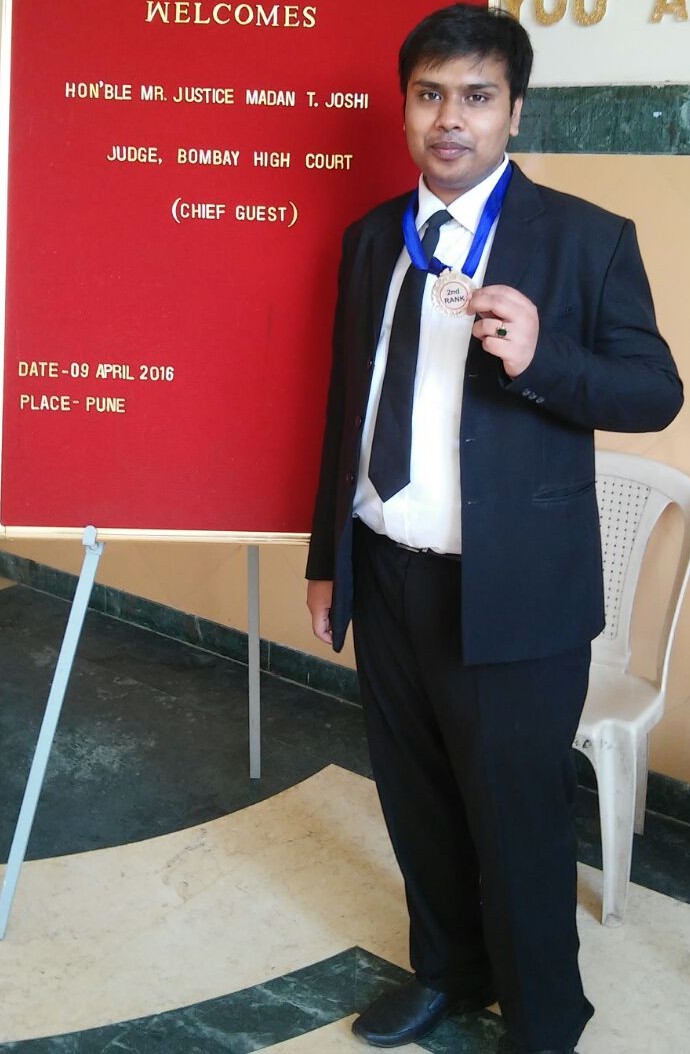


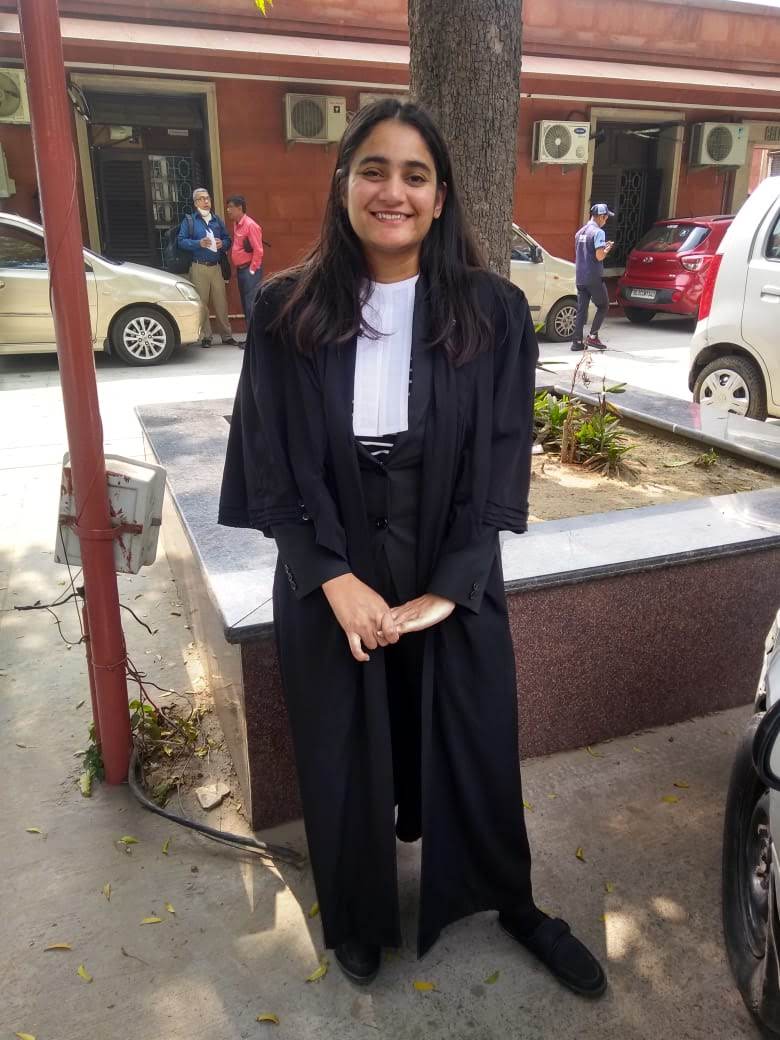
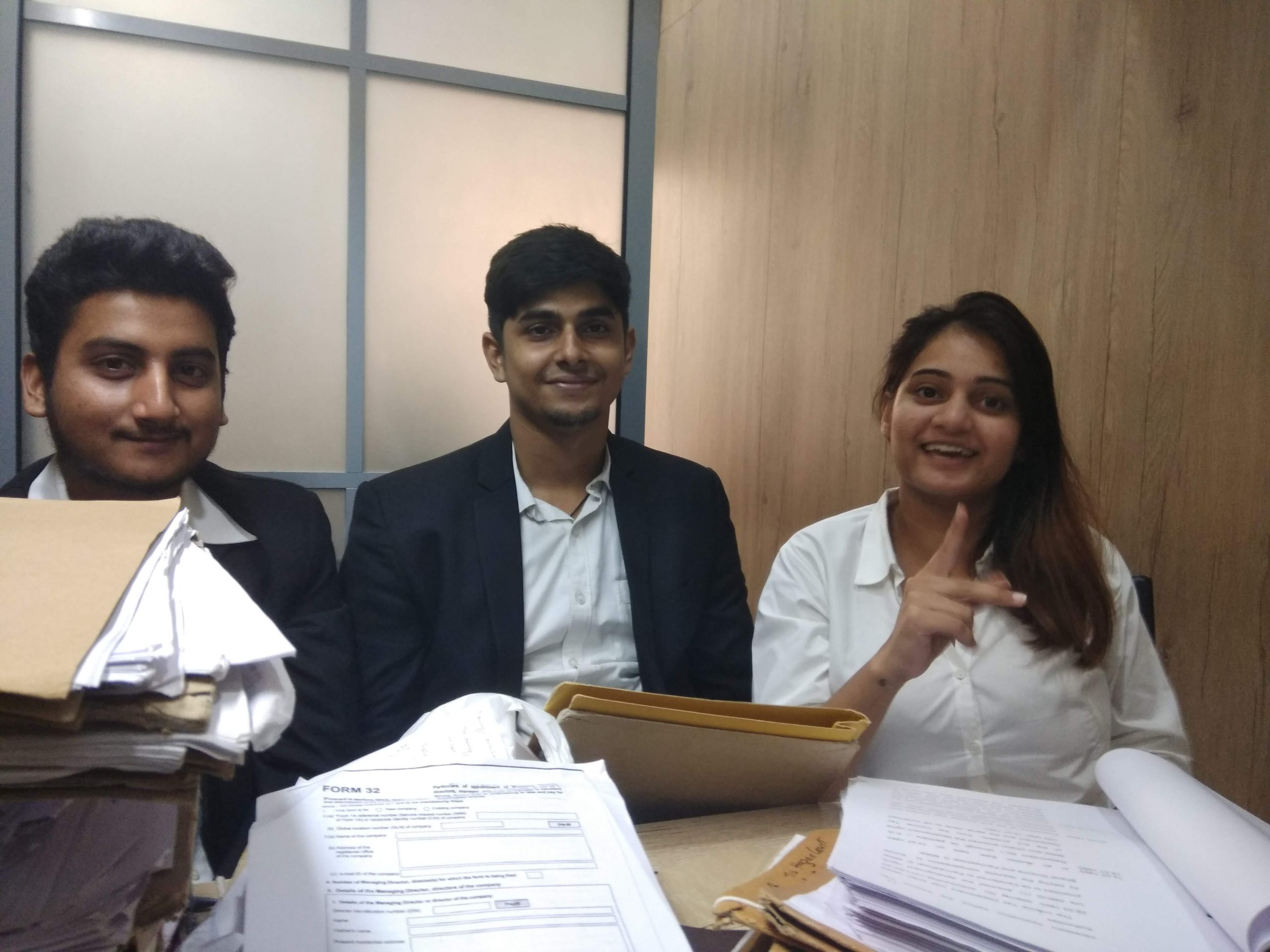
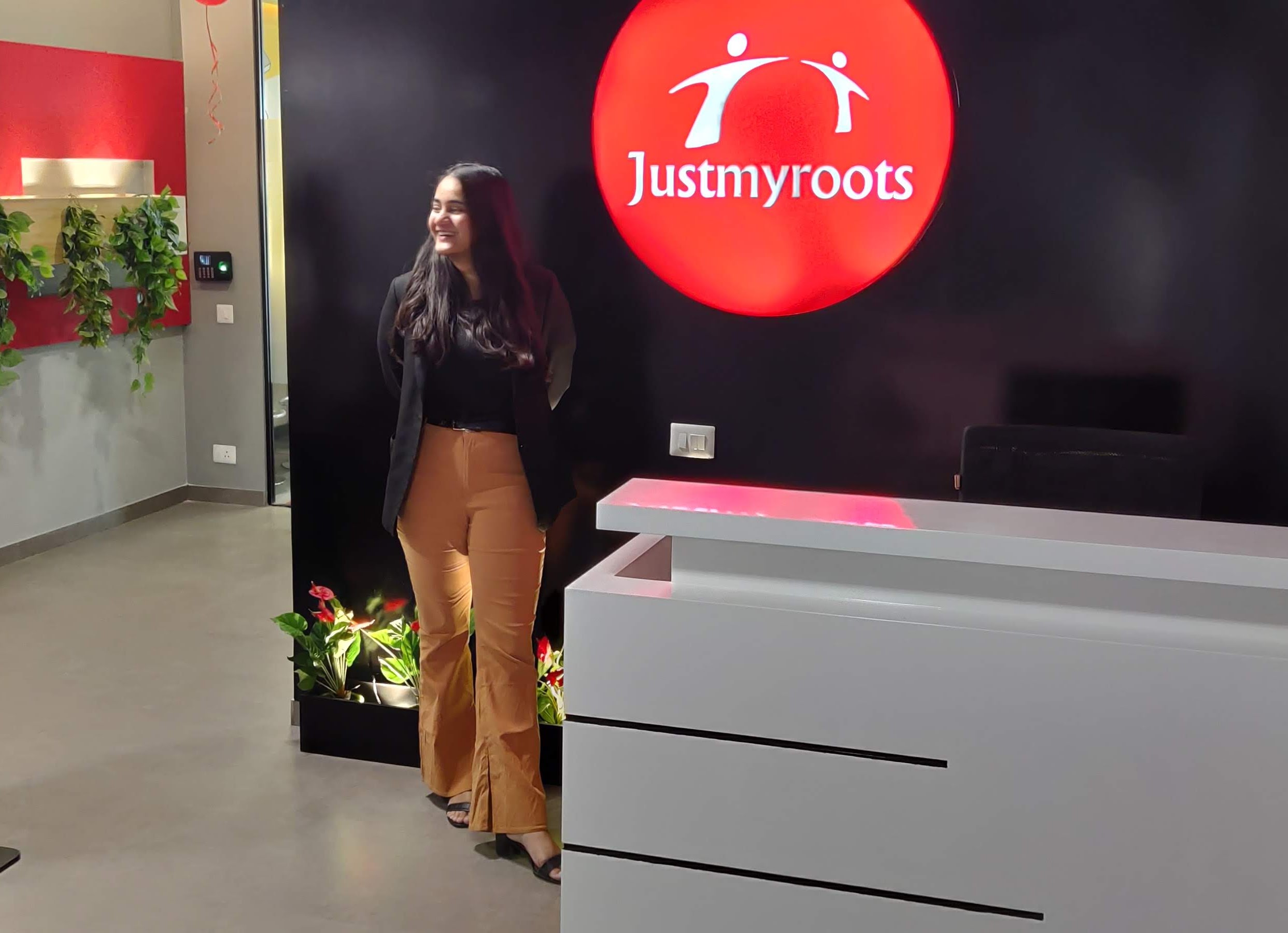
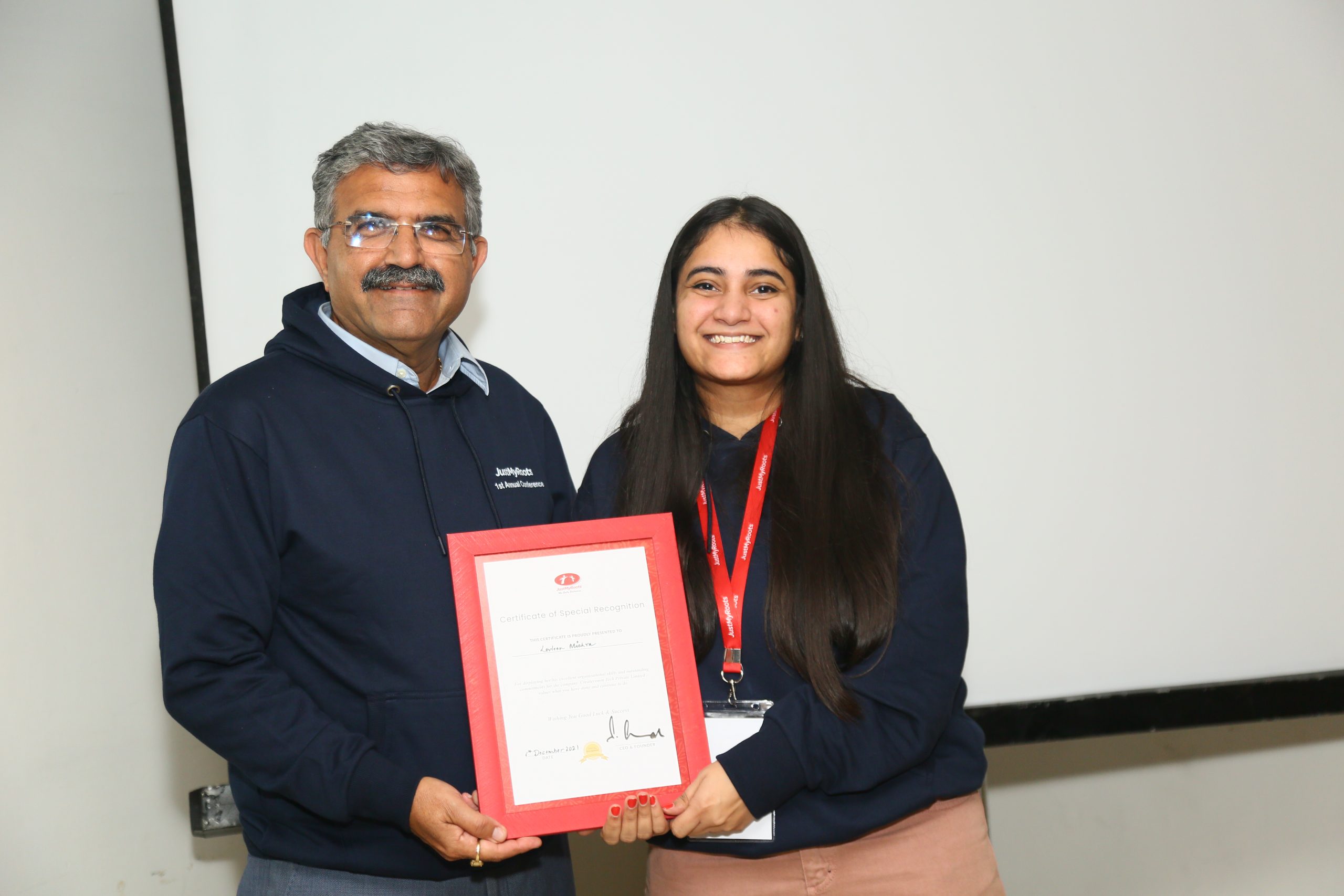

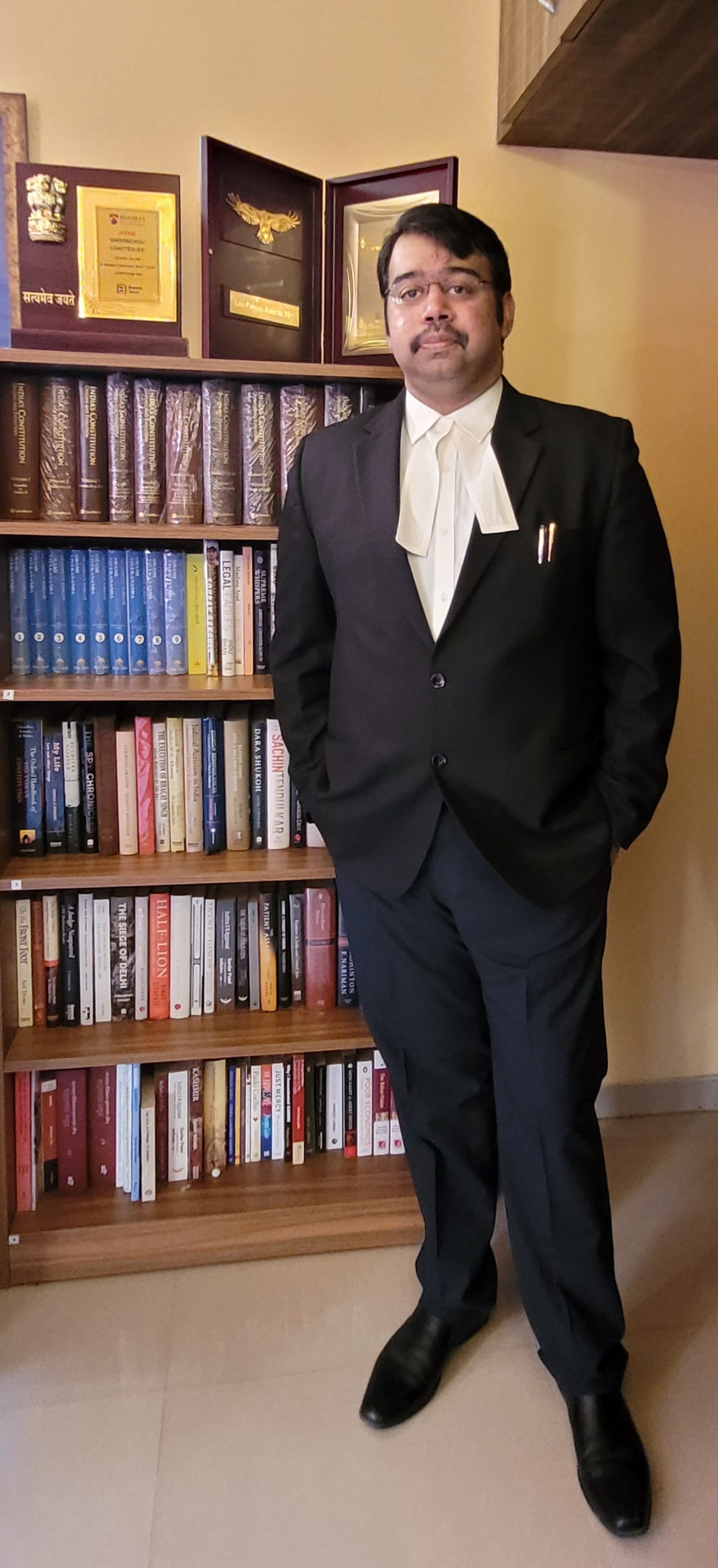






 Allow notifications