Tag: Litigation

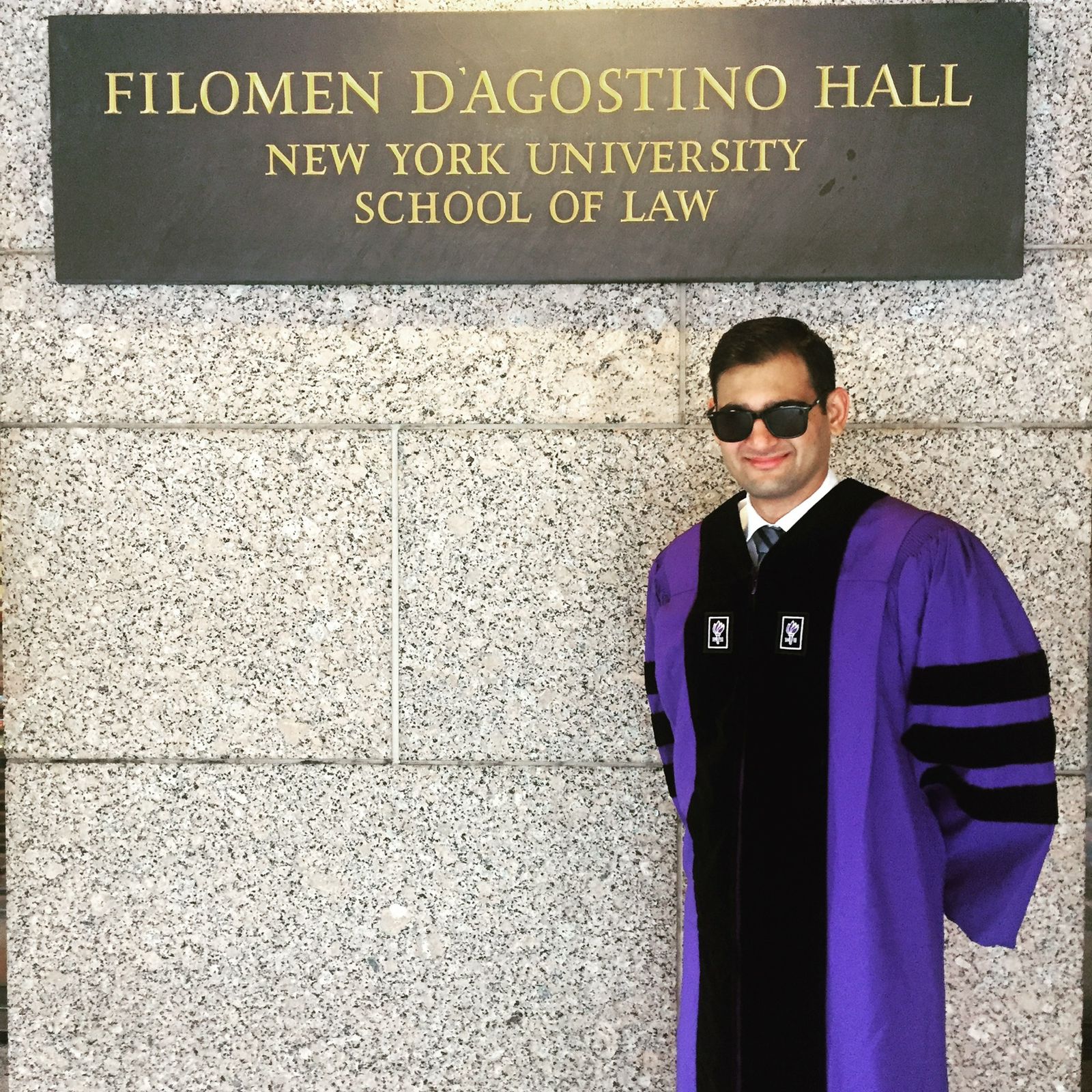
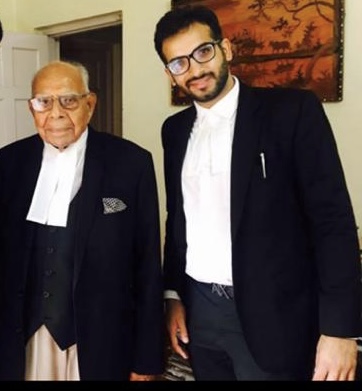
  • In Conversation with: Arpit Guru, Partner at Legal Intel and Law Clerk to the Former CJI Hon’ble Justice Deepak Misra

    In Conversation with: Arpit Guru, Partner at Legal Intel and Law Clerk to the Former CJI Hon’ble Justice Deepak Misra

    This interview has been published by Prabhjot Singh, Priyanka Karwa and The SuperLawyer Team

    Tell us about yourself-what motivated you to choose law as a career path ?

    Studying law and making a career in it was not a matter of luck but a consciously thought and willfully made decision, which actualized the moment I entered law school. While the textbooks exposed me to a fascinating world of legal studies, the extracurricular activities and internships exposed me to the practical side of the law.

    Being from a law enforcement background I understood the law as powerful means to make a difference, that is the reason I went into the field of law.

    How tough was pursuing C.S. with additional professional degree like LL.B.?

    I pursued a full-time Post Graduate Diploma in Corporate Law and Management from Indian Law Institute, New Delhi. By doing that Diploma a person can get a certification to practice as a Company Secretary in India for companies having paid-up share capital of up to INR 5 cr. So, I did not do the traditional CS and finished my PG Diploma only after graduating from Law School.

    “Man with a silver spoon in his mouth” is what they say to a law student having a family with a law background. But in your case, it was somehow different as well, how far did it help you having some sort of legal background?

    It is difficult to establish yourself as a first-generation lawyer however with time your talent and caliber are tested. I would suggest having patience and keeping enhancing your network. You might not be paid well initially, however with time sky is the limit.

    Please tell us about one special case that helped you gain a great understanding of legal practice.

    Each case or situation in law teaches you something new. Law school might prepare you theoretically however it is different when you enter the real world. If I have to choose one situation or an experience I would say working as a Law Clerk Hon’ble Chief Justice of India (Hon’ble Justice Deepak Misra) has been the turning point in my career.

    Along with that, working in the field of litigation teaches you a lot which no textbook can do. My advice would be to just jump into the practice and will in no time be able to swim.

    As someone who is well versed in the areas of Real Estate and Arbitration, what sort of improvements are needed at the forefront in both the areas?

    Real Estate is quite rewarding however it is extremely complicated as the land record system of India still poses certain challenges. I would suggest any lawyer who wants to work in the field of real estate to practice before the office of the Tehsildar or Revenue Inspector and understand the nuance of this field.

    With regard to Arbitration, I feel laws have changed in favor of ADR and now it’s beneficial for lawyers to go for ADR rather than litigation as a mode for dispute resolution.

    What will be your parting words for our readers?

    If someone is pursuing litigation I would suggest giving your heart and soul to it. And trust me you will definitely be rewarded.


    Get in touch with Arpit Guru-

  • In Conversation with: Deeksha Malik, Senior Associate (Employment Labour and Benefits) at Khaitan & Co and Founder (Editor) at IRCCL

    In Conversation with: Deeksha Malik, Senior Associate (Employment Labour and Benefits) at Khaitan & Co and Founder (Editor) at IRCCL

    This interview has been published by Prabhjot Singh, Priyanka Karwa and The SuperLawyer Team

    Let’s start from the beginning, what inspired you to pursue a career in law? And how would you describe your journey thus far?

    Frankly, I had no plan of becoming a lawyer. I was always more inclined to pursue civil services and had thought that the 5-year B.A.LL.B (Hons.) course would help me in my preparation for one of the toughest exams in the world. However, from my third year in law school, I was exposed to several important subjects in law including constitutional law, and it was then that I realised how interesting the legal practice can be. I always had an analytical mind and immense love for writing, and it dawned on me that my new-found interest in law generally coupled with my capabilities could help me make a good career in this field.

    About my journey thus far, well, it has been a roller-coaster ride. I always say this in interviews because when I joined Khaitan & Co, I was assigned to the capital markets practice where, over a period of time, I realised how mis-aligned my interests are vis-à-vis the said area of law, and while I was already struggling in terms of finding an interest in the subject, I did meet people who were not always kind to me; and yet, the same place introduced me to the subject which I now love the most, which is employment law.

    Khaitan & Co gave me a platform to thrive, not just within the firm but outside as well, as I explored my love for pro bono work, teaching (through guest lectures in law school), and writing (through my blog). I am very grateful for all I have been able to achieve through a fantastic support system at the workplace and beyond. My parents have been absolute gems in this journey.

    Receiving an offer from the University of Cambridge and turning it down to pursue practise has to be one of the most crucial choices you have made at the beginning of your career and making such a decision requires a great deal of confidence in oneself. What advice would you want to give out to the readers to help them make better decision early in their careers?

    I am not exaggerating when I say that choosing between my law firm life and a masters at the University of Cambridge has been nothing but a Sophie’s choice. I spent days and nights discussing my options with my parents and preparing a pros-and-cons list. However, what I have realised is that you can mark in your field only if you are true to yourself and understand yourself completely.

    I knew very well that I was considering masters in corporate specialism at the University of Cambridge only because everyone around me told me that I would be a fool to lose something this prestigious and exclusive, and I knew deep down that I wanted to explore employment law and make my niche in a subject that is still underrated as an area of practice. My parents told me to follow the latter and forget the world for a while, and I did exactly that.

    My advice to law students and those starting out as young professionals is to stick to what you really desire. Hear everything that others have to offer but listen to yourself.

    You happen to specialize in Employment Labour and Benefits practice group at Khaitan & Co. Can you tell us a bit as to what prompted you towards this field of law? When did you realize you wanted to work in the field of employment?

    I wish I had a more interesting story about this than what I am going to say just now. I never liked employment law as a law student, perhaps because we had a trimester system of examination back then and we were expected to explore the vastness of the subject in a span of three months. Then again, our seniors were securing placements at the corporate practice groups in Tier-1 law firms, and we were made to believe that this really is the be-all-and-end-all.

    When I was allotted capital markets as the area of practice at Khaitan & Co, I gave it a sincere try. However, while not intending to sound critical here, I do note that working in this subject area cannot be everyone’s cup of tea. The subject entails heavy transactional work, much of which could get repetitive over a period of time especially for a young professional.

    I did have an amazing time there learning about different deal processes, but I knew it was time for me to move on to a practice area where I could better use the kind of analytical capabilities that I always had. The human resources team at the firm then allotted the Employment Labour and Benefits practice to me quite randomly, and I have never looked back since. It was – like I mentioned earlier – the most random and unpredictable move and yet the best one I had till date.

    People-centered issues are often overlooked and undervalued. What, in your opinion, is lacking in addressing the issue of equal representation, given your specialization in employment-related issues?

    I can think of two reasons. Labour laws have not kept pace with changing times. The laws provide bare minimum standards of compliance for employers. If I may, the law on persons with disabilities directs a private-sector employer to frame an equal opportunity policy for employees with disabilities, but it does not lay down a more direct set of guidelines to ensure that such employees are reasonably accommodated at the workplace.

    Also, while there is an increasing realization of the importance of diversity and inclusion at the workplace, it is definitely an expensive affair. For example, the law on maternity benefits requires employers to set up their own creche facility for allowing women-employees to take care of their children in close proximity, but no flexibility is afforded in the form of arrangements with third-party day care centers, nor any financial support offered by the government for such critical compliance.

    Even if one convinces oneself about the business case for a diverse and inclusive workplace, these compliance requirements, in their rigid form, could get too technical and impractical to fulfill.

    Would you like to talk about the new opportunities in law for aspiring and budding lawyers? Especially in the aftermath of pandemic?

    I am not sure if there is any correlation with the COVID-19 pandemic, but a positive sight I have noticed lately is the growing realisation among young professionals is that there are many ways to become successful in the legal profession. More young professionals are willing to try in-house practice or niche practice areas within law firms (such as employment law, data privacy law, etc.).

    Some young professionals are also setting up career counselling / consultancy organisations (such as LLM Wizards) or doing business strategy / knowledge management / learning and development work within law firms. We are living in a world where there is a greater realization of following the heart and maintaining work-life balance to the extent we can in this otherwise demanding profession.  

    Is it possible to pave one’s own path and succeed in life without proper guidance? How would you like to motivate our readers to be more determined and enthusiastic?

    Yes, this is possible. As much as I am grateful to my alma mater for what I have achieved, I have also faced slightly unfair treatment from certain seniors who preferred mentoring my batchmates who appeared to be promising because of their affluence and background (there was actually a “metro” group in my batch that was guided by seniors even during intra moot court competitions!). I learnt to carve my niche in those situations.

    For instance, when I realised that some of the seemingly popular individuals in my batch were not inclined to collaborate with me for a moot court competition because I was not part of THE “metro” group, I started looking for competitions that did not require group participation.

    I won a couple of writing competitions in the process, honed my writing skills along the way, and then aimed at and got published by some of the leading international publications. I continued to focus on academics because this again was something that only required my hard work and dedication without any specific guidance from anyone. A good academic performance helped me secure good internships and even an acceptance from the University of Cambridge.   

    Point is, if you seek guidance but do not always get one, become your own counselor and develop a fighting spirit that does not get overwhelmed by unpleasant circumstances.

    What do you like to do in your spare time when you’re not at work? Do you have any interests or hobbies that you’d like to pursue?

    Oh yes. I love biking and I am also a trained classical dancer. I along with my team also run a blog called The Indian Review of Corporate and Commercial Laws, which has received an insane amount of love and following over the years.

    Finally, do you have any parting words of wisdom for our readers who are still trying to figure out their path?

    As I mentioned before, one should stay true to oneself. There is no single path to success, hence we must all stop drawing parallels with the journeys of people who have traveled through the career path before us. But before we decide to follow what our gut feeling suggests, we must ensure that we have all the resources available with us to make an informed choice.

    This is possible only when we reach out to experienced professionals through professional / alumni networks and strike a candid conversation.


    Get in touch with Deeksha Malik-

  • In Conversation with: Ameyavikrama Thanvi, Advocate-on-Record, Supreme Court of India

    In Conversation with: Ameyavikrama Thanvi, Advocate-on-Record, Supreme Court of India

    This interview has been published by Prabhjot Singh, Priyanka Karwa and The SuperLawyer Team

    Tell us about yourself, what motivated you to choose law as a career path?

    I am an Advocate-on-Record at the Supreme Court of India. My practice is primarily focusses on civil, commercial and constitutional disputes. 

    How I came to choose law as a career was partly by elimination and partly by choice. As a high school student I was interested in history, political science, debates, I was a regular at MUNs and was also quite certain that I didn’t want to pursue a career in science stream.

    So, I chose to study commerce to keep my options open – between pursuing CA and Law. Eventually, given my co-curricular interests and the width of learning that studying law provided, Law came on top.

    Even with my commerce background, law seemed like a good professional course to undertake and so with the idea of pursuing a integrated course in BBA-LLB (it would eventually not be so as I switched to BA-LLB), I embarked on the journey of clearing CLAT and studying law.

    How did you envision you career while you were in law school and how did it turn out?

    Honestly, I did not envision a career in law. My primary goal was to clear the civil services exam and become a diplomat or a bureaucrat. Law, for me, was a backup option. But while in law school I was certain to not treat the course as Option-B and explored different options by undertaking internships across board.

    By my penultimate year I was certain that I enjoyed dispute resolution more than anything else and so if law were to become my career it would be in dispute resolution. So, in those terms I am doing exactly what I wanted to do.

    Where my plans differed from my reality was in terms of execution. I had always imagined being at a law firm and rising through the ranks; or alternatively I would be in the non-profit sector but instead I ended up at the jungle jump of counsel practice. Now I do a good mix of pro-bono and commercial disputes in equal measure.

    One thing I must say is that I imagined it to be straightforward career path but it has been quite a journey thus far with lots of twists, turns and even stoppages – all of which have contributed to the end result. And I am very hopefully looking forward to whatever’s to come next.

    We all know you have dealt with a plethora of cases in your career, is there any special case that has affected you deeply as a person or which has changed your mindset towards the litigation world?

    In a way every case one deals with is a learning curve of some shape – some are very steep, others not so much; and each of these cases, in my limited experience tend to give you a new perspective.

    The ambit of the question you put to me is quite large in the sense that “litigation world” entails within its ambit multiple small universe. However, there are some instances I would definitely want to highlight.

    First is regarding the reach or impact that a case you do has – however big or small. I recently did a probono case where an inter-faith couple that had eloped to get married was slapped with false and fabricated criminal charges as a measure of punishment by their family. If in terms of revenue or even legal questions one were to see, it was a rather straightforward open and shut case but the impact it had on someone’s life was quite large. After fighting and winning in court only can they today imagine returning home.

    Second, in terms of reach, I have been involved in the case where recently the Supreme Court interpreted that Medical Termination of Pregnancy Act and in another case where provisions of the Surrogacy Act and the Assisted Reproductive Technology Act have been challenged for being in violation of rights guaranteed by the Constitution – the number of people who have reached out to be me from parts of the country I didn’t even know exist to thank me and my colleagues for undertaking these projects is tremendous!

    Third, on a different note, litigation has an image problem that there are certain families which dominate the professions – while strong family presence is undeniable but one thing I’ve learnt from experience is that even if you do not have family in the profession but you’re sincere about your work, there are many at the bar who will stand by you and support your growth. The condition, however, is full and complete sincerity towards work.

    Lastly, practitioners are least expected to say this but my academics, especially the courses I undertook during graduate studies, greatly impacted my understanding of litigation. It gave me perspective which I lacked until then of looking at issues holistically and of exploring any given case from different perspectives before deciding on the best alternative.

    Appearing before various tribunals and forums needs extra effort, how do you plan your work to be super-efficient?

    Most important requirement to be efficient is to be organised. In litigation, if one wants to be efficient it is essential that one learns the art of time management. Unlike structured organisations here you have no HR to monitor your performance in terms of time given to do a task.

    This can be a boon or a bane depending on how one handles time. Work, by its nature, tends to expand with time. So I set for myself deadlines and try and stick to them.

    Apart from that I necessarily do a review of work twice a week– to ensure I complete all that was planned for the week and to ensure that there is sufficient time at hand to do things that I enjoy apart from work.

    Secondly, on most days one attempts to not spread oneself too thing across fora and since my primary practice is in the Supreme Court I try and avoid any other forum on Monday and Friday. In the older system of non-miscellaneous days (Tuesday, Wednesday and Thursday) I used to first attend the matters in SC and then attend other forum but now with the system of regular matters being taken up first, that issue has been taken care of.

    Lastly, as lawyers we often face flake that we have too many holidays but litigation is a stressful job –a lawyer takes upon themselves troubles of their client and then constantly engages in mental gymnastics of getting relief. Apart from that litigation itself is also a physically draining profession.

    It requires your presence in court at 10:30 every morning extending well into the afternoon and the “desk-job” aspect of practice mostly starts only around 5 pm which is when most other jobs close shop. So, to maintain efficiency it is necessary that regular breaks are taken.

    Could arbitration be seen as just another trend or does it hold a future?

    I think arbitration is too entrenched in our system of dispute resolution to be compared to a trend. It is sure to stay here in the near future. However, it may be said that in the Indian markets arbitration hasn’t yet reached its optimum beneficial levels. Arbitration is certainly a buzz word in dispute resolution circles in tier-1 cities but many a businesses operate in tier-2 and tier-3 cities where arbitration is still surely but rather slowly developing.

    This mode of dispute resolution is also facing some teething troubles in the sense of limited number of experts, high costs and judicial interference (which is steeply declining with every passing day). But these are common initial troubles across jurisdictions, which will be resolved as arbitration takes stronger roots in the Indian dispute resolution universe.

    At macro-level if one were to see most practitioners – and even academicians – today are only engaging with commercial arbitration between organisations whereas arbitration holds potential to resolve disputes also between individuals, between commercial organisations and countries, and  between countries even.

    These are practices that exist globally and are widely studied too. However, in India we are still in nascent stage and these constitute an untapped market and an under-studied academic field for us.

    Looking, however, at how there is a concerted effort now from the government as well as the legal industry and business community, arbitration is certainly going to flourish in India in the near and long term.

    Based on the list of cases that you handled, is there any particular case that boosted your legal career?

    For a young lawyer every case done which leads to a further referral and/or the client is satisfied with outcome of the case, is a career-boosting case. I am happy to report that I have been fortunate to have a good amount of those cases for me.

    That said, I think I have done the most landmark case of my life thus far only recently when I got the opportunity to assist the Court in interpretation of the Medical Termination of Pregnancy Act.

    I am now working with my friend and colleague Ms Mohini Priya on a case where constitutional validity of provisions of the Surrogacy Act and ART Act have been challenged before the Supreme Court. Reproductive jurisprudence is not very well developed in India yet and some clarity and certainty is required by the court.

    Apart from litigation I think what also gave a big boost to my career was the opportunity to work with the International Law Institute where I got the opportunity to pen a report in International Investment Arbitration, which was tabled before the UNCITRAL Working Group-III for wider consultation and consideration on reforming investment arbitration.

    What are the preparation tips you would like to give for our readers wrt AoR Exam?

    AoR Exam is a great learning experience, let’s start with that. So, first off I’d say it would be best not take it as merely an exam but also an opportunity to undertake an in-depth study of how the Supreme Court of India really works.

    Now regarding the syllabus, it seems a little overwhelming at first but it’s not much if you have practical experience of practice before the Supreme Court so ideally practice for at least two years at the Supreme Court before embarking on the journey of taking the exam (of course a pre-requisite for the exam is one year training with Aor, additional years, in my experience, only prove more beneficial).

    This is especially useful for the paper on Practice and Procedure, the syllabus for which is essentially in part Constitution and in part Supreme Court Rules – both of which can be mastered best by practice.

    Secondly, stay updated on latest legal developments, particularly landmark judgments delivered by the SC because the aim of the exam is not to test your legal knowledge per se but to test how much you understand about the working of the Supreme Court. This exercise will also help aspirants while tackling the paper on “Leading Judgments”.

    Thirdly, and I don’t know for how long this advice is going to be useful but at least so long as the exam is not computer based, I’d say aspirants must stay in practice of writing on paper. This is particularly important today when we’re moving completely away from physical filed and pen-paper world in law schools as well as at courts.

    Would you like to give any career/life tips to the readers?

    I am not sure if I’m qualified enough to give tips yet on life or career but I’d say be sincere and honest to yourself on whatever path you choose for yourself.

    In the field of law today a plethora of career paths exist – choose the one which really interests you because each of these paths has a long gestational period. Unlike other professional careers, law demands an intentional consistency of dedication towards your career.

    I would also suggest that students and young professional reach out to their role models and seniors who have been working in the field of their choice.

    Not everyone will respond but you’d be surprised the number of people happy and willing to help you if you show promise. All the best!


    Get in touch with Ameyavikrama Thanvi-

  • In Conversation with: Dhruti Kapadia, Arguing Counsel , AOR SC of India , International Arbitrator , Lecturer , Trained Mediator , Policy Analyst, Writer & Corporate Trainer

    In Conversation with: Dhruti Kapadia, Arguing Counsel , AOR SC of India , International Arbitrator , Lecturer , Trained Mediator , Policy Analyst, Writer & Corporate Trainer

    This interview has been published by Prabhjot Singh, Priyanka Karwa and The SuperLawyer Team

    What was your “slam-book career aim”? How well did it go?

    My Slam Book Career Aim was to be a lawyer since the time I was around 8 years old. I studied in ICSE SCHOOL  QUEEN MARY , I  enjoyed literature and that fascinated me to get into law . I liked the English Lawyer style. I was from my early teen days involved in social work and have worked on multiple causes in slums and also have uplifted few transgender by providing skill center to them. I always liked questioning if I saw something wrong I could not stop objecting. I planned my career from my school days as I opted to choose commerce as an option in school and economics instead of maths and science .

    My career plans from my secondary school had already started towards law. I did my BLS LLB from government law collage, church gate , I must reveal I had done my first year law from Pravin Gandhi Law Collage at Juhu and topped that college WITH HIGHEST SCORES BOTH THE SEMESTERS to get transferred in GLC  which was the best collage in my times in Mumbai. SO JOURNEY HAS BEEN ADVENTUROUS – from academics to  article ship and to be a solicitor which is like the toughest exam to crack , I think was very fortunate and I owe a big thank you to my family and best friend(my buddy who was with me in my toughest phase of life –he was there for  me  in my struggle phase and helped me  to be what I wanted to be).

    I also took up courses from my first yea example r of law for diploma in cyber law while studying first year of law in 2005 and I studied MASTERS IN INTELLECTUAL PROPERTY RIGHTS AND INFORMATION TECHNOLOGY. I took my second master’s degree in MASTERS IN PUBLIC POLICY.

    I was always a court person so I chose to be a Counsel and I got to see reality of  arguing before fantastic judges in my junior days gave me glimpse of court craft.I got my first appearance before Justice S J.Kathawalla it boosted my confidence , Justice Rajesh Ketkar who appreciated my hard work in his order made me feel I can do better and Justice Shantanu Kemkar who corrected me on a point when I was arguing made me feel there is lots to learn with every matter in hand.

    Three to four experiences from the bench I personally experienced -made me  feel more hard work more better results.  It was learning experience and it still is. I also got best opportunity to be junior Justice B.N. SRIKRISHNA  and I must say with pride he has been a fantastic mentor.I joined him to get exposure in arbitration and I absolutely got to gain lot of knowledge working with him.

     I also decided to take up matters which meant to make difference in the society like national level matters METOO MOVEMENT where I appeared pro bono for Vinta Nanda. I also took up social issues in covid-19 times pertaining to door to door vaccination for bed ridden people and  senior citizen and succeeded as couple of policies were framed by state and centre by the directions in my PIL. From High Court Litigation to matrimonial DISPUTES in Family Courts made me get my focus on mediation and I established myself into trained mediation. I am empanelled International Arbitrator as well which makes me feel it is good journey so far.

    I have taught law from 2012 in various colleges in Mumbai and even now I teach law and train students on various academic subject . It is like what you have that is knowledge must be shared is what I believe in . Many times I am appointed as amicus curie in matters where courts feel I can be of good assistance. I also appear for civic bodies and government bodies apart from my private practice. I am also doing transactional work and that keeps me happy. Being an ADVOCATE-ON-RECORD, SUPREME COURT OF INDIA –I ENJOY APPEARING IN APEX COURT OF OUR COUNTRY. I have experienced appearing   for all kind of individuals including politicians to celebrities to pro bono matters and that has been my complete hard work that’s been put in for than 13 years now as a lawyer and 12 years as a solicitor.

    What can be the real challenges while establishing a career in the field of law?

    To get a nice chamber to join , or  a branded law firm to join is not easy for first generation lawyer and then to prove your talent and ability is hard core competitive market is a major challenge.

    Sometimes as juniors you may get less opportunities so one must be patient. Invest 5 to 10 years in profession to make your name by doing honest work. Fees are compromised unless you have a brand created.

    How was your experience while judging during the moot competitions?

    I feel the young talent pool of brilliant to be lawyers are there -while I judge them , I feel all of them work too hard as to do their best . Sometimes it gets difficult to actually give marks and gives you a feel of a sitting judge to decide either one way or the other. I enjoy momentary pleasure of being a judge and I feel I too have learnt a lot from students who have participated. It is enriching experience.

    How challenging has it been maintaining a work-life balance and how young legal professionals can learn to strike that balance in their professional lives?

    I have my own chamber where I usually meet attorneys/clients after court hours. I owe my time for my family during dinner I make it a point I am with family on dinner table so 9pm-10pm no one can disturb me on calls or messages.

    Weekends I get into my relaxing mode I partially work and I catch up with friends. I keep some ME TIME .. I LIKE FREE TIME TO CHILL OUT, travel , music therapy and sports. Balancing your physical health vis a viz mental health with luxury of what you like is a must and that will help bring out quality work.

    Follow this- work time work-play time play . Vacations are for experiencing new things-learn , evaluate your work performance, try out good food if you like it will give you happy refreshing feeling to join back and perform better.

    According to you, how crucial is Psychology in matrimonial matters and how sufficiently it can be used there?

    It plays a vital role I would say counselling –psychology works there. Take an example A wants Y amount as alimony, B desires to give nothing yet A wants it -how do you make A get Y AMOUNT OF X Amount? . You got see what will TEMPT A’s mind and how will he/she come up to negotiation for something rather than nothing and how that something would make A feel I have got something close to Y . That juggling in minds and art of negotiation is inter-related with human psychology and as lawyer to know clients mind and psychology is essential.

    YOU LEARN IT WITH EXPERIENCE.

    As digital platforms are consistently increasing, such as Metaverse, Do you think there would be a large scope for lawyers because of this?

    Yes indeed. Global world will be here right before us . Experience we had in covid-19 times and e-concepts talks volumes. We have seen the success rates of performance which is booming up. BUSINESS WORLD GETS CLOSER AND EASILY CONNECTED AND THAT BRINGS GLOBAL CLIENTS IN THE MARKET WHICH DEFINITELY WILL BOOM COMMERCIAL MARKETS IN LEGAL INDUSTRY.

    What were the activities, curricular and extra-curricular, that you undertook during your law school days which helped to shape your career? / What kind of internships did you undertake during your law school?

    I took up courses and moots I participated in .  article ship  3 years I did it as that’s mandatory for me to get trained to appear for solicitors exams that kept me too busy and internship molded me practically. I worked on the grass root level to understand public policy and socialism. I started writing articles which are published in newspapers as well.

    Do you think it is crucial to have a career plan beforehand or one should move with the flow?

    Certainly you must have some plan MAY BE 5 YEARS PLAN IN HAND TO EXECUTE. AFTER 5 YEARS JUST GO WITH THE FLOW.

    What would be your parting message to our readers and the young budding lawyers?

    Believe in yourself, If I can do it you too can do it! Have confidence and please never ever get bullied by anyone. You are best in your own way. Don’t mix with negative people if you get positive vibes with people you associate with be there or leave. Them There are many opportunities waiting for you. Be honest and go ahead and do your best and leave the rest. Take compliments but don’t get elated.

    You still have miles to go before you sleep so keep working hard as that’s the only key to success. Live a dignified life as that ultimately  holds you high.


    Get in touch with Dhruti Kapadia-

  • In Conversation with- Sandeep Bhalothia, Head, Legal Affairs Section (Legal, Regulatory, Risk, Compliance & Contracts) at Augmented Era and Partner at Node.Law

    In Conversation with- Sandeep Bhalothia, Head, Legal Affairs Section (Legal, Regulatory, Risk, Compliance & Contracts) at Augmented Era and Partner at Node.Law

    This interview has been published by Prabhjot Singh, Priyanka Karwa and The SuperLawyer Team

    What is your current role? How exciting is it for you? How do you describe your legal career?

    Let me begin by appreciating the work that SuperLawyer has been doing for the past few years. I used to read the interviews on SuperLawyer when I was in law school, and it gave me immense inspiration, hope and guidance.

    I started as a Legal Manager and sole legal counsel of Augmented Era when it was a start-up. Now, I am Head of Legal Affairs, and the group does more than 100 million USD (B2B) with several business verticals like apparel manufacturing, software development, financial education platform, events and marketing.

    I have seen my role and the company grow significantly over the past three years, with now presence in more than ten jurisdictions.

    This role will always have a significant impact on my career, irrespective of where I work in future, as it has exposed me to high stake deals, cross-border negotiations, emerging technology transactions etc.

    I also had the opportunity to lead the regulatory hearing in 4 jurisdictions which ultimately resulted in administrative closure – a rare opportunity for young lawyers.

    Having said that, the role came with its unique challenges. I was new in UAE and graduated just one year ago from law school.

    When I was offered this role in 2019 after cracking the last interview round, I started having a second thought. I thought that I might be biting off more than I could chew! We all occasionally have self-doubts. But as William Shakespeare once said, “Our doubts are traitors, And make us lose the good we oft might win, By fearing to attempt.” So, I went ahead with the opportunity, and it turned out to be the best decision of my career.

    Now I primarily work on technology, data protection and regulatory compliance issues, which I thoroughly enjoy.

    What struggles one has to be prepared for when practicing as a legal professional in the UAE? How can networking help in both corporate and litigation areas?

    It is not easy to provide a comprehensive answer to this question. The struggles an individual would face in UAE will vary depending on their past work experience, from which jurisdiction they graduated, what was their practice area, and whether they have a bar registration in India and other jurisdictions like the UK, USA, Canada etc., or not.

    The ability to draft and speak in Arabic, a law degree from the UK, USA, Australia, Canada, or some other prominent common law jurisdictions and a bar registration in those jurisdictions can ease your life when looking for a legal role in UAE. However, these requirements are not mandatory for all roles. I do not have any of these and am doing fine.

    Finding a corporate lawyer role in the UAE is easier than finding a litigation lawyer. UAE’s legal system is unique, and the court hearing before local courts are in Arabic with some exceptions like ADGM and DIFC, and that would be one of the biggest hurdles for someone who wants to be a litigation lawyer in UAE.

    Nevertheless, I don’t see any challenge in UAE that cannot be tackled for someone who wants to practice commercial and corporate law, whether in local law firms or in an in-house role. Every year I see dozens of lawyers in my network moving from India to UAE.

    Those who can break into this jurisdiction from India highly rely on transferable skills like contract drafting, regulatory compliance, outstanding legal research capabilities and networking.

    Networking, to some extent, is like preparing for war. You might not see the immediate benefit of it, but all the hard work and time invested in networking will ultimately be helpful when you plan to make that shift to a foreign jurisdiction. Networking takes time, so I would recommend that the readers start early.

    You were great in academics and was awarded with the Distinguished Alumni Award on graduation What impelled you towards your goal?

    I would disagree!

    I was never great at academics, or at least l do not believe so. I used to be above average and would score high in some subjects that sparked my curiosity. However, I never prioritised academics over other meaningful exposures.

    The Distinguished Alumni award was given to me not because I was great at academics. The selection committee’s decision was based on overall exposure to various activities.

    I participated in debates, negotiation and mediation competitions, client counselling competitions, publications, a variety of internships, semester exchange (Tsinghua University), was briefly active in sports, etc. I was doing everything that I can get my hands on while ensuring that I don’t blow a hole in my academics.

    I enjoyed all these different experiences that Jindal Global Law School provided rather than just “going through” law school. And I guess that is the reason why I received that award.

    How do you see the role of Virtual General Counsel emerging in coming years and what roles and responsibilities do they play?

    During the recent pandemic, we have seen that legal departments around the world have become more cost-conscious.

    Even big companies have started giving serious attention to outside counsel expenditures, and recent economic headwinds have further pressured the in-house legal department to cut costs.

    It is still manageable for MNCs, but it gets further difficult for start-ups or smaller organisations to get the best legal advice for their fast-growing operations. And that is where Virtual General Counsel come in. It is a relatively new concept, but we can see many tech companies and start-ups accepting this model.

    Virtual General Counsel is a lawyer who usually works full-time for a law firm or is an independent practitioner and is hired by a company to act as their General Counsel, but the twist is that such a person will not be a full-time employee of the company that has hired its services as “Virtual General Counsel”.

    Such lawyers would act as “Virtual General Counsel” for more than one company, depending on their time commitment. Companies prefer this because they can hire an expert from private practice to advise them on day-to-day legal issues and rely on their growing expertise; companies don’t have to bother about hiring an internal General Counsel and can avoid the cost associated with immigration, visa, insurance etc.

    Sometimes, in such an arrangement, the company gets the entire law firm team as their Virtual General Counsel giving the company on-demand specialist expertise at a low cost, where there will be a single point of contact from the firm, more like a Relationship Manager.

    I believe such arrangements will become more prominent in tech start-ups where in-depth legal advice is required at a competitive cost over the coming years.

    We are excited to hear the reason you opted for MSC in blockchain and digital currency, also what privacy issues does blockchain invite along with itself in coming times?

    I have always been fascinated by technology, especially how the law has to always catch up with it. I started reading about blockchain in my second year of law school (2014), and after coming to UAE, I got lucky to work on some blockchain and digital currency projects. This further increased my interest in exploring this domain in-depth academically.

    It was in 2020 when I first thought of doing this MSc from the University of Nicosia but pursuing it along with my current job seemed daunting, so I shelved the idea. However, at the beginning of 2022, we had some additional projects in the company where I was supposed to advise extensively on emerging technologies like blockchain and NFTs; therefore, it seemed a logical next step, and that is how I ended up being an MSc student (distance learning) along with the current full-time job.

    The University of Nicosia is arguably the first to provide a full-time degree course on Blockchain and Digital Currency. Their modules mix law, policy and technical aspects of blockchain and digital currency. I would recommend this MSc to someone who wants to dive deeply into blockchain and digital currency. It provides a comprehensive understanding of what is happening worldwide in this space from both legal and technical aspects and what we can anticipate.

    Regarding the privacy issues that blockchain brings with it, one can argue that it makes it difficult to regulate it. It is not a privacy issue but a regulation issue because of privacy. Like in the case of cryptocurrencies that are based on “Trustless”, “Decentralised”, and “Immutable” blockchain, it becomes challenging and unfeasible to fully regulate such cryptocurrencies.

    Firstly, there is a lack of one target as no single entity controls cryptocurrency like BTC.

    Secondly, the proliferation of pseudonyms makes it nearly impossible to identify the accused.

    And thirdly, it is difficult to establish the jurisdiction and governing law because the cryptocurrency network is not restricted to one specific jurisdiction; some jurisdictions treat cryptocurrency as property and others as currency.

    Even void or voidable crypto transactions can be entered on the blockchain, but a transaction entered on the blockchain is not legal by default, but it does, in most cases, make it irreversible.

    GDPR requires the identification of a “data controller”, and public keys used by natural persons for cryptocurrency transactions on blockchain may constitute “personal data” under GDPR rendering GDPR is applicable to “processing”, “collection”, “use” or “disclosure”.

    Recital 26 of GDPR states that data which has been “pseudonymised”, and could be attributed to a natural person by using additional information, is information on an identifiable person.

    And French data protection authority has observed that public keys constitute personal data if it is connected to a natural person.

    In the absence of an identifiable data controller, the GDPR cannot be enforced as data subjects enforce their rights against the data controller under GDPR.

    In cryptocurrency transactions, miners, developers, and users of the network determine the purpose of processing personal data.

    All these players might be hiding their real identities and located in separate jurisdictions, complicating the enforcement of GDPR.

    Such situations make it challenging to access who is the data controller, where they are located, how data subjects can enforce their rights and whether it is feasible to do the same.

    This is one challenge, but I am sure there is a way around it.

    You worked in multiple jurisdictions, how was that experience and being  a lawyer how tough it was for you to adjust according to different laws and regulations?

    Switching jurisdiction as a young and first-generation lawyer is challenging. I had to understand the new legal system, find opportunities, make new friends, get active in networking, read, understand new laws, adjust to a new culture etc. But eventually, one can manage all these challenges, and after a few years, when you look back to the time when you started, you develop a lot of respect for lawyers who have come before you.

    I will not say it was easy, but also it is not impossible. Many lawyers migrate from their home jurisdiction to a foreign one, and they were my inspiration. I silently looked up to them and focused on improving.

    I have been pursuing online courses since 2013. I am a big fan of virtual learning. Whenever I felt that I lacked academic and technical knowledge on a specific topic, I would look for an online course and devote myself to it until I was confident that I had some grasp over it.

    I continued this habit even after moving to UAE, and that has been of immense help.

    What made you start your own legal consulting company and how well is it going for you thus far?

    The Node.Law focuses on delivering legal consultancy services to start-ups working on Web3, NFT, Digital Currency, Metaverse, Blockchain, and FinTech space. It is a new venture, and I co-founded it with my friend from law school, Aman Garg, who is also working in Dubai.

    In the last few years, we have seen increasing demand for legal support in emerging technology, and since both of us are interested and have been working in this domain, we thought of extending our support.

    It has been an exciting journey so far. In such a short time, we have advised on several projects and our firm is retained as Virtual General Counsel on a 1-year contract by two fast-growing start-ups.

    How would you describe your career up till now? Where can we expect you in upcoming years?

    I am blessed with a supportive family, friends, mentors and professors from law school. They all have played a significant role in shaping my career. I am doing what I love to do, and this will continue in future.

    I plan to finish my MSc by next year and then focus on growing Node.Law.

    Would you like to give some advice to the law students?

    There are only two ways to be good at something. First, by in-depth reading and second, by working on it. If something excites you, then make sure you immerse yourself in extensive reading to have the required confidence when you get an opportunity to work on it.

    Reading and continuous learning are inalienable parts of a lawyer’s life.


    Get in touch with Sandeep Bhalothia-

  • In Conversation with:- Mohini Priya, Advocate on Record, Trained Mediator, Policy analyst, Member of International Legal Alliance and Member of India Child Protection Forum

    In Conversation with:- Mohini Priya, Advocate on Record, Trained Mediator, Policy analyst, Member of International Legal Alliance and Member of India Child Protection Forum

    This interview has been published by Prabhjot Singh, Priyanka Karwa and The SuperLawyer Team

    What motivated you to pursue law? How was your under-graduate experience in law school? If not law, which subject would you have opted for?

    I completed my five years law course from Government Law College, Mumbai in the year 2009. Honestly speaking, being from the science stream, pursuing law was not the obvious career option for me.

    I wanted to pursue medicine in the first place but like any other confused student wanted to explore other options as well. Interestingly, around the same time, with the emergence of national law schools and many corporate law firms, law as a career option was becoming lucrative, as it offered a stable career which was financially rewarding.

    Many new offshoots of law had come up, like the IPR, Cyber Laws, Environmental laws, so there was no dearth of opportunities. All these factors were creating an inclination towards law. However, I was not very vocal and outspoken in my school days which made my family sceptical about my suitability for the legal profession, as it is the popular perception that lawyers are supposed to be loud and aggressive.

    In the midst of all the confusion raking up  in my head, I intuitively decided to take up law. In those times there was no CLAT and admission in GLC, Mumbai  was solely on the basis of 10+2 score and interview. The cut off was high but I luckily managed to make it through the final list.

    And that is how this journey began. So in my case it was more a matter of destiny than choice. Hailing from a small town, there were initial hiccups in adjusting to the fast pace life of Mumbai but I believe it is far more easier to adapt to change at a younger age, and so I soon became a part of it.

    Being in the heart of the town, GLC had locational advantage, apart from having some very good professors and an extremely distinguished alumni.

    A few months into college I realized that extra curriculars were as important as academics. I was a part of the Moot Court Association, The Legal Aid Committee and the Student’s Council, which gave me abundant exposure to lawyers and law offices, allowed to acquire some important life skills like organization and team work and also helped me get visibility.

    I did some national and state level moot courts, which gave me a good practical experience of law. I focused on getting a few good internships in Bombay High court and the Supreme Court of India and also did a couple of corporate internships.

    I think it was the last corporate internship which made me realize that litigation was my true calling. So yes, I did take five years at law college to understand what I really wanted to do, but once that happened I held on to my decision and persevered.  

    Do you believe that law students must be taught the ground reality of Court procedures along with the theoretical part?

    Most law schools these days have moot court competitions, negotiation competitions, which give a law student some opportunity of legal research and arguments as well as a preliminary understanding of court manners. However, in actuality, the working of a court is very different and there is no set pattern.

    For a litigating lawyer, every day is a new day. “Legal acumen” is not something that can be taught but is only acquired after years of experience  and learning from one’s mistakes. Sometimes things may not go as planned.

    A lawyer may be fully prepared to argue a case in a particular manner but the Bench may throw a completely different issue at them. Thus real court craft involves creative thinking,  quick decision making  and learning to read the mind of the judge, which can only come after some years of real court experience.

    A good approach to be adopted by law colleges would be compulsory court visits for law students, so that they get adequate exposure to actual functioning of courts. Now with the live streaming of Constitutional Bench of Supreme Court, as well as some other High Courts law students will have online access to courtrooms and can well prepare themselves for the times to come.

    How do different approaches of adjudicators help in critical thinking? Do you believe that it helps in understanding cross-cultural overlaps in legal systems?

    India is known for its cultural and religious diversity. Sometimes reading a book or doing a course may not help a law student understand the socio-cultural implications of the problem at hand. Real life references are needed to relate to a particular issue and understand it at a grassroot level. Socio-cultural and religious ethos run deep into an individual’s psyche and that reflects in many of the judgments delivered by Courts. A judgment is not merely an interpretation of a law, but is a reflection of  judge’s cultural background and mindset. A study of court judgments does encourage critical thinking. Take for  example, the recent split verdict of the Supreme Court in the Hijab case. The moot question there was whether there is a right to wear hijab in educational institutions in Karnataka – with one judge affirming that the state government is authorised to enforce uniform in schools as wearing of hijab is not mandatory in Islam, and the other calling hijab a matter of choice that cannot be stifled by the state.

    While both the reasoning are correct, the question we need to ask ourselves is how do we want to grow as a society. Whether we should follow the strict letter of the law or give way to a progressive interpretation in light of the changing times and in the interest of social justice.

    Some of the judgments delivered by Courts may not be in tune with the societal changes and that is where a role of a lawyer comes in- to sensitize and be sensitive.

    Even as a mediator, I come across individuals from different backgrounds and cultures, which helps me better understand human psyche better, which in turn gives me an additional advantage in deriving a solution when faced with a similar situation in courts.

    The Courts in recent times have been moving towards a progressive regime, like decriminalizing homosexuality, declaring abortion as a reproductive choice of women, and including ‘marital rape’ within the ambit of rape for the purpose of MTP Act, to mention a few. In some ways we are ahead of western countries when it comes to fundamental rights.

    However, a change in laws cannot change mindsets overnight, as social and cultural norms play an important role in resisting change. Analysis of court judgments helps in understanding cross cultural diversities and  narrowing this gap.

    You filed a PIL before the Hon’ble Supreme Court, on behalf of a leading IVF Specialist based out of Chennai, challenging the constitutionality of several provisions of the Surrogacy (Regulation) Act, 2021 and the Assisted Reproductive Technology Act, 2021. Please tell us about the matter in detail.

    Surrogacy is a rather complex issue as it has several socio-cultural and economic implications. Bringing about a legislation in this field would require extensive study and research as well as opinions of experts in the field. However, the present legislations on Surrogacy and Assisted Reproductive Technique seem to be fundamentally flawed in many aspects.

    Firstly, the Surrogacy(Regulation) Act, 2021 recognizes only heteronormative married couples and fails to take into account other alternative family arrangements like same-sex couples and live-in couples which have been given legal recognition.

    The Surrogacy Act creates artificial distinction amongst women inter se by excluding single women (except widows and divorcees within a certain age bracket) to avail of surrogacy. Single men have been altogether excluded. Moreover, surrogacy is now allowed only in altruistic form from a close relative which is an infringement on a couple’s fundamental right to privacy.

    Unfortunately, infertility is still a taboo in our country and most couples wouldn’t want to disclose such a fact even to their family in order to find  a close relative who is willing to be  a  surrogate mother.

    Thus imposing a blanket ban on commercial surrogacy may prove to be counterproductive and lead to illegal and unregulated markets. Apart from that many provisions under the Assisted Reproductive Techniques Act, 2021(ART Act) are medically not viable and impossible to implement.

    The ART Act apart from restricting the number of times an egg donor can donate in her lifetime, creates no provision for compensation to an egg donor. Moreover, several procedures which were completely legal earlier have been suddenly rendered illegal or in an impasse by the passing of the Acts.

    All these factors have brought donor cycles in our country to a standstill. During the hearing of the petition. the Hon’ble Supreme Court observed that these issues need consideration and has asked the Central Government to file a response. I sincerely hope and pray that the Apex Court gives a progressive interpretation to both the statutes and if that happens, this case could prove to be a breakthrough in the field of reproductive rights.

    How important do you consider legal professionals to work with NGOs and support social initiatives? Do you think it adds value in the long run?

    Law is called a “Noble Profession” and rightly so. We, as legal professionals have a positive obligation to contribute to the society. Lawyers are agents of social change. However, in order to bring about a substantial change, it is important to understand the  problems and complexities associated with an issue at grass root levels and NGO’s provide a very good platform for that. NGO’s work in close association with vulnerable and marginalized sections of the society.

    Working with an NGO may not provide one with an immense amount of money, but it gives great networking opportunities, as well as help a lawyer to contribute towards creating a social impact. Apart from that, NGO’s have extensive research material and experience in the field they cater to, which could be effectively used by a lawyer to become the voice of the voiceless. 

    Lawyers have an additional advantage of knowledge of court procedures and direct access to courts, and can help direct future litigation on important social issues in accordance with an NGO’s aims and objectives.

    I have had the opportunity to work with some leading NGOs like Prayas, which extensively works for rehabilitation of street children and juvenile justice,  and I can certainly say that it has opened a whole new dimension for me which has immensely helped me in my professional and personal growth.

    Apart from that, the satisfaction one gets from rendering service to the community is unmatched. So, I would highly recommend every litigating lawyer to have some exposure of working with an NGO.

    What are the roles and responsibilities for a policy advisor? And will it create more opportunities for legal professionals in coming times?

    Policy analysis includes identifying current or impending problems with a government policy, determining its causes and proposing solutions. A lawyer broadly does the same for his clients and therefore lawyers make for great policy analysts, although not all policy analysts are lawyers.

    There are special courses offered by universities on policy analysis. However, lawyers and law students have a unique advantage when it comes to deciphering legal jargon and forecasting how a legislation would develop. Another advantage is their ability to recognize how a small change in a rule or regulation could have a huge public impact.

    Legal professionals can work in policy space as research fellows in government agencies, think tanks, research organizations and corporations examining complex issues that affect the government and the daily lives of citizens.

    I have personally worked at analyzing some provisions introduced by the Child Marriage Amendment Bill, 2021 and the Juvenile Justice Amendment Act, 2021 as a representative of the NGO Prayas and India Child Protection Forum headed by noble laureate Kailash Satyarthi and I have to admit that it was one of the most enriching experiences of my legal career.   

    What, in your opinion, could be a social security safety net for lawyers after experiencing various pandemic waves?

    It is indisputable that two years of the pandemic has hit lawyers very hard. There has been loss of work, loss of income, many lawyers had to downsize their team and even close down their offices as there was not enough revenue generation even to pay for rents. Virtual hearings have resulted in concentration of work leading to disguised unemployment.  

    Although some of the Bar Councils have done their part in providing financial assistance to lawyers during the pandemic, it needs to be accessible to a larger community of lawyers and specially young lawyers.

    A welcome step in this direction has been the recent observation by the Hon’ble Supreme Court that young lawyers should be adequately compensated by their seniors.

    The pandemic has not just hit lawyers financially but the uncertainty and trimmed income apart from social isolation has had a severe impact on their mental health. There should be some initiative by the Bar Council to conduct counselling sessions for lawyers and seminars on mental health awareness.

    Young lawyers should be encouraged to argue in order to help fast track their career trajectory.  

    The post pandemic era has seen increasing use of technology and a gradual transition towards paperless courts. Although green courts are a welcome step, however some lawyers who are already facing financial difficulties may find it rather difficult to invest expensive gadgets in order to switch to paperless mode, and hence some financial assistance should also be offered to such lawyers.

    What career advice do you have for our readers? 

    There is no “One size fits all” approach when it comes to the litigation. Things may not always go as planned, so be patient but relentless in your efforts. Identify opportunities and take the first step.

    Sometimes what may on the face of it seem to be insignificant might turn out to be a determining factor in your career, so don’t be afraid to take chances. Create short term goals and focus on them. Failure is inevitable but also necessary in order to stay motivated and grounded.

    As a young litigator, there may be many brief-less days. Instead of getting hopeless and frustrated, use that free time to learn new skills, take up some courses and create litigation opportunities.

    Time management is very crucial. Hard work has no substitute but smart work gives you a cut above the rest. Intelligence is a blessing but knowing how to channelize it in the right direction is what differentiates an average legal professional from a successful one. Today, digitally-savvy lawyers are in high demand as technology continues to evolve and progress.

    And as the Indian Judiciary System gradually acquaints itself with cutting-edge technologies, emerging lawyers must do the same.

    Lastly, going by my personal experience, I would like to tell my readers that career confusion is completely natural and pushes individuals to explore different opportunities in order to reach a well thought out decision, so keep your minds open and always remember that growth is more important than success.


    Get in touch with Mohini Priya-

  • In Conversation with: Ayesha Karim, Senior Legal Consultant at Mezzle Law, Enrolled with the Delhi Bar Council

    In Conversation with: Ayesha Karim, Senior Legal Consultant at Mezzle Law, Enrolled with the Delhi Bar Council

    This interview has been published by Prabhjot Singh, Priyanka Karwa and The SuperLawyer Team

    What prompted you to choose Law? Did you always want to take Law as a career? 

    Yes, since I was about 12 or 13 years old I wanted to study law; it is difficult to say exactly why I chose law, as it was before the age of the internet and we did not have access to the sources we had today, but reading was a passion and I never changed my mind about the profession I wanted to follow.

    Congratulations on being awarded as the DIFC Courts Law Specialist by the DIFC Academy, DIFC Dubai UAE, can you please enlighten our audience about this academy?

    For over a decade, the Dubai International Financial Centre has catered to the learning needs of the financial services industry by providing a platform for top-ranked educational institutes to deliver professional development and higher education courses. 

    The DIFC Academy continues this legacy by partnering with some of the world’s most reputable institutions to offer a variety of options ranging from short certificate workshops to multi-year executive MBA degree programmes.

    The Dubai International Financial  Centre is a free zone with  common law courts, though the UAE is a civil law jurisdiction. 


    Lexis Nexis published a series of books called the Laws of the DIFC. I co authored the section on the DIFC Law No 10 of 2004, the Court Law with Late Barrister Stephen Field of 1 Pump Court Chambers,  UK.  As a result I was recognised as a  DIFC Court Law specialist .

    What prompted you to choose banking and finance law as an LLM course, and how do you see this area bringing new opportunities for the young law professionals?

    Banks are  very important institutions in any economy as well as in corporate and individual lives. Certainly there are many professional opportunities with such degrees. 

    How crucial is it for the young legal professionals or even the experienced ones for taking Pro Bono work and is there any criteria for choosing the type of such work?

    Pro bono is a way of giving back to society. Everyone cannot afford lawyers. Access to justice is considered a fundamental right in our country and every civilized society and as lawyers we should be part of the larger picture if possible.

    Pro bono work gives lawyers exposure to different areas of law. For example, when working with a legal aid clinic, a firm receives a list of cases that need lawyers.


    A corporate lawyer may get an opportunity to work on a matrimonial matter or an employment case.

    Pro bono cases also give lawyers the chance to work with other lawyers in and build relationships and networks. Exchange of knowledge and ideas is extremely important and interaction with professional colleagues is an invaluable learning process.

    You have so many publications on various topics, what tips do you give to our audience for choosing journals and topics as per that specific journal?

    That would depend on the interest of the audience; there are specific journals for almost every aspect of law. However, it is important to do independent research, published articles can give an introduction to the topic but certainly do not replace self study.

    Insider trading has been there since ages in corporate, such as writing a newsletter on the same, what can be the root cause for the same and steps that can be taken to avoid it completely?

    That is a hard question; Strong regulatory and enforcement systems have to be put in place. Ethics and honesty are character traits imbibed from our families and society. Therefore strong laws can help reduce unlawful acts but cannot eradicate them totally.

    Being associated with a UAE law firm, how can one prepare himself to settle there as a law professional in different areas? What is the road map for the same?

    Look for a vacancy in a busy firm, learn about the new systems and law. At some levels different jurisdictions have challenges, but basically a lawyers work remains the same, wherever they may be.

    What would be your parting message to our young readers?

    Gain as much experience as you can, avoid any toxic offices that do not provide opportunities to learn and grow. Do not accept bullying and sexual harassment, good knowledge and hard work is the key to success.


    Get in touch with Ayesha Karim-

  • In Conversation with: Chirag Madan, Managing Partner at MS Law Chambers, Standing Counsel for High Court of Delhi and Panel Counsel for Supreme Court of India

    In Conversation with: Chirag Madan, Managing Partner at MS Law Chambers, Standing Counsel for High Court of Delhi and Panel Counsel for Supreme Court of India

    This interview has been published by Prabhjot Singh, Priyanka Karwa and The SuperLawyer Team

    Tell us about yourself-what motivated you to choose law as a career path.

    Well I was born and bought up in Delhi and did my schooling from Springdales School, Dhaula Kuan. I belong to a business family and there was no connection with law or even courts. But  since my childhood I was somehow intrigued towards the profession of law, it always fascinated me. I always wanted to be a lawyer, however, after my class 10th Board exams I opted for the Science stream under peer pressure, since I was  more interested in the field of law after my 12th Board exams I decided to pursue law.

    Since at the last moment I decided to pursue law most of the law school applications were closed and I only filled up one application and fortunately got through the same. The journey towards becoming a first generation lawyer is scary but I just followed my instinct and fortunately my family supported me .

    How hard was it for you as a non-national law school graduate to begin your career after graduating, and what would you tell future law graduates who feel discouraged not having graduated from a major law college?

    At the time when I graduated in the year 2013, unfortunately it was difficult for a non- national law school graduate to find a job amongst the top chambers or law firms. Though this question makes me feel a little old, today I don’t feel there is much of a difference.  There are many new private universities with good faculties, tremendous opportunities to the students for placement, exposure and guidance.

    Students should not  be discouraged if they don’t make it to any Major Law School .“It is not the end of the world”. However, nothing can replace one’s hard work and persistence. If one wants to be successful they will find a way and law school should not be an excuse. Most of the top litigation lawyers are from non- national law schools.

    How did you get the opportunity to work with big names in the legal industry such as Mr Ram Jethmalani, Mr. Mahesh Jethmalani and Mr Sidharth Luthra?

    Fortune favours the brave. I never thought that I would ever even remotely be associated with such doyens of the Bar. Having grown up listening to the anecdotes of  and having read about the exceptionally prominent lawyers of our country like Ram Sir, Mr. Jamshed B Kanga, Mr. Nani Palkhivala, Mr. Fali S Nariman et all, it was genuinely a dream come true  moment for me when Ram Sir found me apt for his chamber and decided to mentor me.

    It gives a first generation lawyer tremendous degree of confidence, faith, ambition and determination when someone of like Ram Sir shows his unrestrained faith.

    The sense of responsibility to constantly strive against all odds is empowered when senior members of the Bar place their trust  in a first generation lawyer like me.

    During the early  stages of my  professional grooming, I have been extremely fortunate to have had the opportunity to work under the aegis and expertise of someone like Mahesh Sir. It was under his constant vigil that my professional and legal acumen was polished to be at par with the industry standards.

    Later on It was Sidharth Sir who benevolent enough to grant me an opportunity to further polish and refine my skill sets as legal professional under his wings. I could not be  any further  grateful towards my fate for having been subjected to an absolutely strict and disciplined threshold of professional parameters under Sidharth Sir.

    Even now whenever I am faced with any professional or personal dilemma his availability and guidance is one priceless asset  which is strong support system for me.

    You had great mentors throughout. How do you carry the legacy to support the young lawyers?

    This is actually a very tough question . As a first generation lawyer or even otherwise every young lawyer needs constant mentoring and I have been fortunate enough to have worked under the supervision of few of the legends  in  the legal profession.

    All of them are a great source of  inspiration for me . I ensure that I try to carry forward  their teachings  and ways of working not only in my office but also share the same fervor with my colleagues and friends. You never know what might  make the difference in the others’ life.

    What has your experience been like being a Panel Lawyer with Delhi Police, Delhi Government, MCD and Delhi Sikh Gurudwara Committee?

    I feel fortunate to have  gotten the opportunity to work on such panels. It has been a wonderful  learning experience. It gives you both recognition and exposure in the courts. The government is in fact the biggest litigant in the country and hence  one gets a lot of presence  in court in terms of volume.

    Panels also helps one  to understand the working of the government/ prosecution; Which can be of great use when you are a counsel  in matters against the government . It helps you to  build better strategies and also apply your mind differently and become a better lawyer.

    You are a Partner at MS Law Chambers and a panel Lawyer on various commissions and committees. How do you manage the work-life pressure?

    Every line of work demands some sacrifice but in a lawyer’s life most of the time is spent doing work and one’s relationship with family and friends often suffers. The workload coupled with extensive hours makes forming and maintaining relationships quite cumbersome.

    Be it a trial strategy, a bail or a cross-examination, one has to put long hours  preparing for the same. If one doesn’t totally dedicate herself/himself in this tangent of the profession then this not the right career path.

    You’ve accomplished so much in your profession in such a short amount of time; However, given the nature of the legal profession, are you able to carve out time for your other interests or hobbies?

    I think you are being too modest, I am still in the early stages of my career and there is so – much more to achieve.

    Well to be honest, in order to gain something you need to lose something. There are times when you need to give up things in order to achieve your goal but once you start settling down and learn how to manage your time, you do get time for your hobbies or interests.

    I would urge everyone to engage in some daily activates or sports.  Being mentally, physically and emotionally stable is of paramount importance to ensure functioning at optimum  levels in this profession.

    What suggestions would you like to offer to our young lawyers, law students and law graduates?

    With whatever  little experience I have, firstly I would point out that litigation is interesting but very challenging during  the  initial stages. The first few initial years are more of  learning and less of  earning. For a litigation lawyer it is very important to be patient, hardworking and dedicated towards work.  Please remember that success can be delayed but not denied to the one who is deserving . Students should start interning across  different branches of law and make it a habit to study the latest judgments and books including non-legal ones.

    They should always start their career on the original side/ trial courts as it equips you with the essential and requisite fundamentals of the profession and quoting former Justice Vazifdar, “Only a trial court lawyer is a complete lawyer. A trial court lawyer is an artist, while an appeal court lawyer is an art critic.”


    Get in touch with Chirag Madan-

  • In Conversation with: Paul J. Campson, Managing Partner at Campson & Campson, Personal Injury Attorney and Seasoned Litigator

    In Conversation with: Paul J. Campson, Managing Partner at Campson & Campson, Personal Injury Attorney and Seasoned Litigator

    This interview has been published by Prabhjot Singh, Priyanka Karwa and The SuperLawyer Team

    How would you describe your job and yourself to a 10 year old?

    I am a lawyer who helps people who were hurt in an accident get money for their pain.

    Paul, as we read about you, being a member of the carpenters’ union (United Brotherhood of Carpenters) , how did it help you in your law career?

    Being a member of the Carpenter’s Union taught me the value of hard work and the importance of an education. Being a carpenter is a physically challenging occupation and often very dangerous, so the importance of following rules, particularly safety rules, is very important.

    Appearing before various law tribunals and forums needs extra effort, how do you plan your work to be super-efficient? 

    Planning is the secret ingredient to success and efficiency. Even if I handle a case many times, I always write an outline and emphasize the points I need to make.

    This keeps me focused because it is very easy to become distracted and be thrown off track by a smart adversary, so thinking how I might lose a case is the best preparation for victory.

    You have been actively taking up Pro-Bono cases and have done a lot of free service in your career trajectory? How important is it for Law Students and professionals to take up Pro-Bono cases and help the needy? 

    Pro-Bono cases are very rewarding. Volunteering time and expertise to those who cannot afford top legal representation is the hallmark of our justice system.

    Pro bono cases provide attorneys with the chance to work with other lawyers in their firms who they would not otherwise know, as well as practice in areas outside of their day-to-day work. This fosters collaboration and increases future cross-firm prospects. It also assists attorneys in forming networks with other lawyers who work for legal assistance foundations. Networking leads to business development, which helps the firm as well.

    As we all are aware of the 9/11 incident, how was your experience wrt getting justice for the victims? Please elaborate it

    9/11 was a very difficult time for the entire nation. Being able to represent victims pro-bono was very special. At the time, no one understood the long term health ramifications connected to 9/11.

    To delve into the medical records of these victims and come up with creative ideas to get them the maximum compensation, was a stand out moment in my legal career.

    How hard is the bar exam to be passed in New York and how can one prepare with a well curated road map?

    The NY State Bar Exam is one of the hardest in the country. To pass it, you have to prepare for it as a full time job. Get on a schedule, study 9-5 and take lunch everyday at the same time, just like a job.

    Again, preparation is the key to passing the bar. Do the hard work in the morning and the rest of the day will fall into place.

    Lastly Paul, what tips are you likely to give to students willing to practice as a Personal Injury lawyer in the US?

    Personal injury is a very competitive field. tell everyone you meet and family and friends that you are a personal injury lawyer. To be successful you need cases. A great trial lawyer is useless without cases to try. 


    Get in touch with Paul J. Campson-

  • In Conversation with: Paras Jain, Partner at KZJ Partners and Founder at Whistle for Public Interest-WHIP

    In Conversation with: Paras Jain, Partner at KZJ Partners and Founder at Whistle for Public Interest-WHIP

    This interview has been published by Prabhjot Singh, Priyanka Karwa and The SuperLawyer Team

    Paras, please tell us how it feels to achieve so much at such a young age marking your presence globally?

    It gave a sense of great pride, as I won my first legal battle against a giant company misleading and selling fairness creams in India. It boosted my confidence to handle high stake and complex legal disputes single handedly. But now, it acts as a motivational force to work for public causes.

    Generally, complex matters are so critical that advocates fear not even taking them, but you have ferociously fought and won too. What keeps you going with these matters?

    I do not think that advocates have any fear of not taking complex matters. It is a personal choice of one whether to take such matters or not. For example, I have personally fought cases dealing with Right to Information (RTI) Act involving critical questions of law. This has both positively & negatively impacted public at large in getting information from authorities.

    Being a responsible citizen and an advocate, I understand the importance of protecting right to information. This is what keeps me going with these matters.

    Our audience is keen to hear your landmark legal battle against ICAI, ICSI, ICWAI, CBSE and DU

    As ICSI student, I requested ICSI to provide me copies of answer-sheets at cost of Rs. 2 per page as per RTI Act. But ICSI was adamant in charging        Rs. 500/- per subject from all examinees. This was causing wrongful loss to examinees and wrongful gain to ICSI. Case was litigated at all levels and was ruled in my favor by the Supreme Court of India in                             ICSI Vs. Paras Jain, Civil Appeal No. 5665/2014

    Subsequently, the ruling has been followed in letter and spirit by professional and educational institutions ICAI, ICWAI, CBSE and DU which all were charging exorbitant fee from examinees.     

    In nutshell, this landmark judgment has been beneficial for student community in India

    What obstacles have you faced in acing your career in litigation and shining with true colors, tell our audience the accurate road-map?

    Though there have been many obstacles but certainly the crucial obstacles were to get the family support and to find the right seniors to mentor in the process of litigation. I wish to thank my parents and my wife who stood by my choice of pursuing career in litigation. I also wish to thank my seniors Mr. Rajiv Mohan, Mr. Jayant K. Mehta, Mr. Abhimanyu Kampani, Advocates, who have been the guiding force in my career.

    For accurate road-map, I would say that law students must participate in moot court, debates, writing competitions and undergo different internships. This enables law students to analyze & to know their area of interests, and helps them in pursuing their career in a particular field.

    We have read that you are the founder of Whistle for Public Interest-WHIP, our audience is excited to hear from your end, what’s it all about?

    Whistle for Public Interest-WHIP is a group of law students and young lawyers founded in 2015 when I was in law school. Group has been working consistently for transparency, legal reforms and environmental protection. Group has been successful in bringing use of A4 Size Paper in legal proceedings, use of Mic-System & setting up of Online RTI Portal in Supreme Court of India.

    The group has also intervened and assisted the Supreme Court of India and High Courts on questions of law relating to right to information.

    Group has also been providing internships to law students through “Intern from Home” Program.  Under this program, law students interact with subject experts on issues of public interest and understand ground realities & its impact. Group efforts have also been recognized and appreciated by former Chief Justice Akil Kureshi, High Court of Rajasthan. 

    Truly speaking, there’s been a lot of misconceptions regarding litigation in India right now, what piece of advice would you like to give to our young law students?  

    Law colleges and law students have a major misconception that only Corporate & Arbitration laws can assure law students lucrative career in law. But today every law has its own significance and its impact on clients and the society. In my opinion, law students should explore other areas of law as well and practice litigation according to their interest and passion.

    Law students can easily do these things by attending conferences, seminars & court hearings. Ultimately, the purpose of life is to secure joy and the Comparison is the thief of joy.                     


    Get in touch with Paras Jain-