Tag: LLM

  • “Figure out your “why” of continuing with litigation. The practice of law brings me peace and satisfaction”- Anu Shrivastava, Advocate on Record, Supreme Court of India

    “Figure out your “why” of continuing with litigation. The practice of law brings me peace and satisfaction”- Anu Shrivastava, Advocate on Record, Supreme Court of India

    This interview has been published by Priyanka Karwa and The SuperLawyer Team
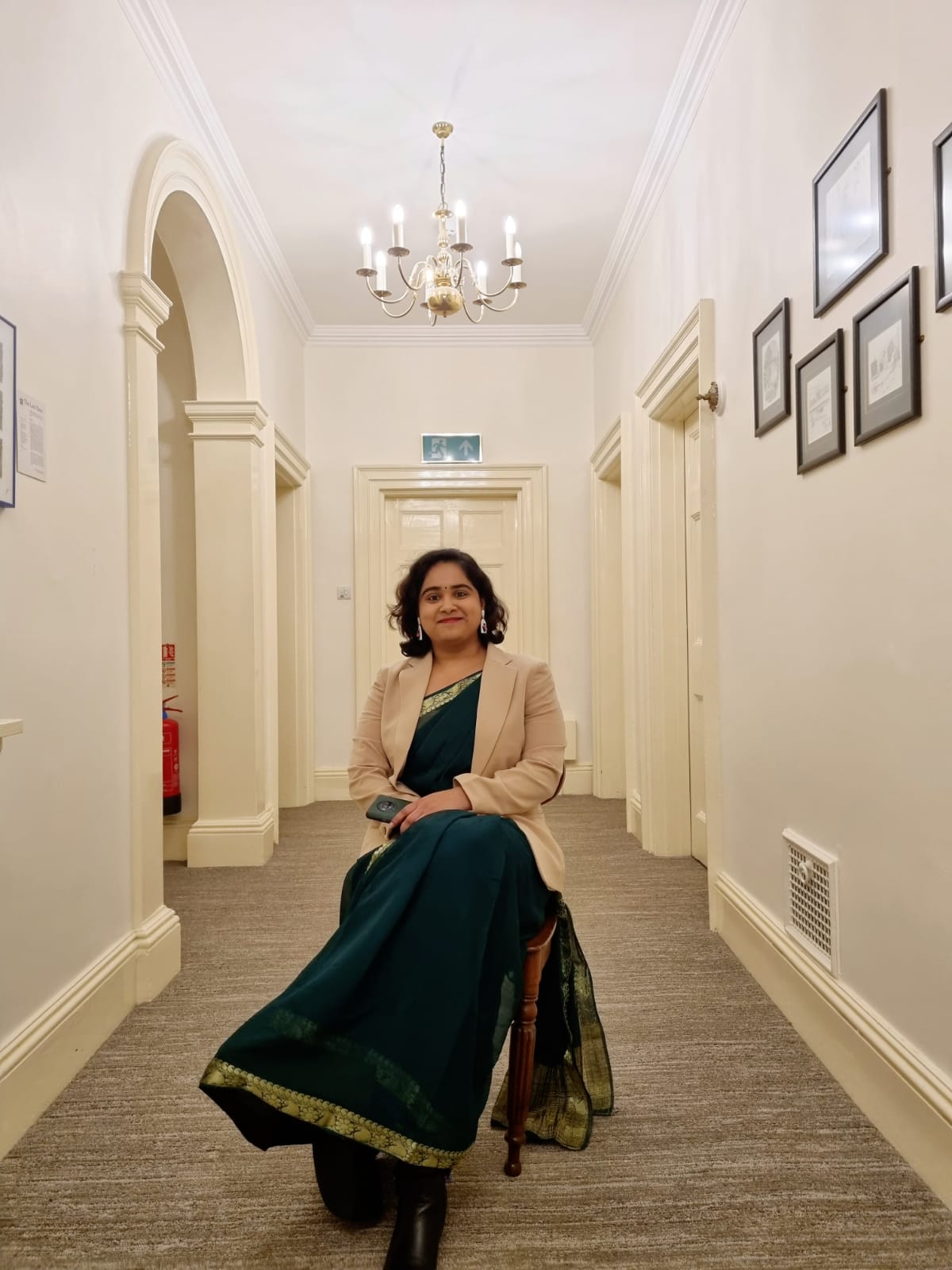
    Please tell us a bit about your upbringing and what motivated you to study law?

    I was born to a doctor couple in Ranchi. I have an elder brother who is also a doctor. I finished pre-school from St. Mary’s Nursery School and enrolled at DPS Ranchi where I studied until I finished 12th grade. Ranchi used to be a small quiet town. We didn’t have much exposure and the career options were limited to medical or engineering.

    I had seen my parents at their workplaces but was somehow not attracted to their profession. I wanted to understand how the society and our legal system functions. There was a natural inclination to move from the study of sciences to social sciences (This is not to say that I didn’t enjoy science, I did quite well in my 12th board as a Biology student and I miss organic chemistry a lot!). I remember chancing upon the question paper for the first CLAT and finding the questions very interesting. I thought that this was something that would be fun to study. My parents were not keen with the decision at first. But I owe it to my school teachers who played a very important role in convincing them. They eventually came around. 

    How was your law school journey? We see that you’ve done a fair bit of extra-curricular activities as a member and head of the Music Club at GNLU. You’ve also been part of the organising committee for the GNLU International Moot Court Competition (“GIMC”) and the GNLU Moot on Securities and Investment Law (“GMSIL”). Tell us a bit about these. Are co-curricular and extra-curricular roles important for a law student?

    I think 5 year is a really long time if you have to just study law, so it is very important that you keep your interest going with other things. I have always loved playing music. I have even trained in Hindustani Classical. GNLU had a bunch of extremely talented musicians who formed the music club (a tradition that I’m glad to know has continued). Something very special and beautiful happens when a bunch of strangers with very varied backgrounds and interests in music come together to create music. I forged some excellent friendships through the music club, and I did it mostly for myself. It helped survive the grey walls.

    The Organising Committee roles started because I wanted to be among the “cool kids” on campus during GIMC. But over a period of time, it taught me responsibility and very strong organisational skills. The Organising Committee itself is divided into sub-teams for logistics, sponsorship, PR and hospitality, which have their respective team heads or coordinators. Organising a moot which witnesses such wide participation from teams and judges is a crash course in event management. By our 5th year, some of us who were part of the GIMC-OC founded GMSIL because to bridge the need for a moot exclusively for securities and investment law. Our moot court coordinator, Dr. Girish R. liked the proposal and took the idea forward. The University administration was extremely cooperative and helpful, and we had another moot to organise!

    Co-curriculars are definitely important for an all-round development, and somewhat even necessary given today’s competitive environment. I am not sure if extracurriculars help directly. Being involved with the organising committee of a moot court competition may not help you with job applications. But they do form good conversation starters. As an OC member, whether you like it or not, you will know something or the other about the moot problem, and learn a lot simply by hearing the oral arguments. Some of the younger judges who come might also help in mentoring and guiding.   

    Winning the Best Speaker at the 3rd All India Corporate Law Moot Court Competition and receiving an Honourable Mention at the 23rd Willem C. Vis International Commercial Arbitration Moot in Vienna are impressive achievements. Could you share some insights into these experiences and their impact on your career?

    It is incorrect to equate good speaking skills in a moot with a good career in litigation or even law, generally. Moot problems help you think. They come closest to making a student apply the law, think on your feet, and experiment with legal arguments. I picked up a lot on coherent, crisp, and succinct drafting when I was doing Vis (all credits to my team – Muskan, Shweta and Catherine, and to our team coach – Zehaan). Drafting is a very underrated skill. It is extremely important to be able to convey legal arguments in simple words and in a structured manner to have maximum impact on the reader. 

    As far as oral argumentation goes, the preparation for Vis was very different compared to AICLM. With AICLM our focus was very much on the law and clarity of thought and expression. Since it was a national moot we expected the judges to ask questions and preparation was done accordingly. Vis was trickier. We had prepare for arguments before judges from different jurisdictions who were used to hearing very different accents and dialects. I remember hitting rock bottom at one point in my preparation for the oral rounds, because I felt that I wasn’t getting better. Things got better once I identified that I cannot go by a scripted speech. In that sense, moot court competitions helped me discover an individual style of argumentation. 

    Most moot court competitions are based on a new and upcoming legal issue. They’re a great way to keep on your toes about legal developments and interesting areas of law. My main reason for participating moots was because they were a great learning experience. 

    You secured a pre-placement offer with Cyril Amarchand Mangaldas in your 3rd year at GNLU. What would be your placement advice to students?

    Honestly, I had not given much thought to placements back then. Our University had an excellent placement and internship committee which worked towards ensuring that students had internships and placements. I can’t speak of the standard procedures today but back then, a PPO was the culmination of repeat internships at any office. I had performed fairly well at my internships with the erstwhile AMSS. I was amongst the top rankers in my batch and had a well-rounded CV. Those factors did play a very large role in securing the PPO. 

    A strong resume is imperative for higher chances at a placement with any top-tier firm. But that does not necessarily mean an “academically good” resume. I can’t generalise but I think when firms come for placements, they are looking not just for talent, but also for a candidate that fits well with the larger work culture and ethos of the firm. Not everyone is a good fit for every firm.

    How was your experience of working at CAM, Delhi. Did it seem daunting at first? What tips would you give to fresh joinees at a law firm? 

    It was quite daunting in the beginning. It was the first time that I was living in Delhi by myself. But I shared a home with some of my college seniors who took out the time and energy to guide me. There was a fair bit of inhibition and self-doubt. What helped was to have seniors around who could guide, and I was quite fortunate that way. It is important for everyone to understand that there is a bit of a jump from being an intern to being an Associate at a law firm. Nobody is inherently good at law. Good lawyers are a by-product of good training. 

    I don’t have many tips for fresh joinees. Each team and each firm has a different style of working and requires a different skill set. Diligence, honesty, sincerity, humility, patience and a willingness to learn are just the starting points. It’s essential to look after one’s health – we often ignore that when we’re starting out. 

    What were your reasons for leaving a Tier-1 law firm and joining litigation? What advice would you give to students who want to join litigation?

    I wanted to be in and out of court more regularly and practice a wider range of law. I had great exposure at CAM, but the learning curve had started to plateau. I didn’t want to get too comfortable with the money and decided to move out young after finishing 2 years at CAM. That decision worked out really well for me because I had learnt my basics and was able to get up to speed on matters very easily. 

    The usual advice on patience and perseverance in litigation is quite common so I won’t repeat that. I have two pieces of advice for students. First, the horse is as good as the stable (as said by Fali Nariman in his autobiography). Find an office or a chamber which will really help you blossom into the best version of you.

    Second, figure out your “why” of continuing with litigation. Law in general is a demanding and challenging profession, if you want to go about it the right way. It looks very different from the outside than it is on the inside. So, you really need to have a pretty strong reason to be a litigating lawyer – it can be anything, whatever keeps you going. For me, it was not the money, or the adrenaline rush of being in court, or the glamour of being a senior advocate. At the risk of sounding nerdy and naïve, I have continued with this purely because I like reading briefs, I love reading law, I like applying my mind to the case and to the law, and I like drafting. The practice of law brings me peace and satisfaction. 

    Please tell us more about working at a Chamber in Delhi. How is it different from working in the litigation team at a law firm? 

    I joined the chambers of senior advocates after my stint at CAM. With a senior’s office you don’t draft so much but you are handling a larger number of matters on a given day. The drafting is already done by the firms and advocates who come to brief the senior. The input expected from a junior is to be thorough with the briefs they’re marked on, prepare notes for arguments and be quick on the uptake and legal research. All this happens post 3-4 PM when you are back in office from court. In court, a big part of your job is to keep tabs on what matters are reaching, avoid a clash to the extent possible and ensure that your senior appears in them. This last part is very important because all preparation goes to waste if your senior does not appear and the matter gets adjourned.

    Why did you decide to qualify as an Advocate on Record? Can you share some insights into the process of qualifying as an Advocate on Record and its impact on your career?

    The decision to qualify as an AOR was influenced due to the chambers that I had worked or interned at. I had interned with HMJ (Retd.) Indu Malhotra (before her elevation), who had been an AOR before being designated as a senior advocate, another internship with ADP Chambers where Mr. Debesh Panda is an AOR. I was already enamoured by the prospect of being an AOR because I witnessed first-hand the kind of responsibility it came with and the skills that it required. Post CAM, I joined the chambers of Mr. Dhruv Mehta, Senior Advocate who used to be an AOR too. I then joined Mr. Jayant Mehta who was an AOR when I joined him but got designated as a senior during my tenure at his chamber. Both my seniors are not only great lawyers but have been excellent draftspersons. I wanted to emulate that and hence, taking the AOR exam was another step in that direction. I also enjoy Supreme Court practice a lot and hope to build my practice as an AOR office.

    The impact of becoming an AOR is yet to be seen as I have only recently started my independent office. The process of qualifying is pretty straightforward and the details are available on the Supreme Court website itself. The exam comprises 4 papers – Practice and Procedure, Drafting, Advocacy and Professional Ethics, and Leading Cases.

    Your publication record is quite extensive, covering topics from arbitration to competition law. How has academic research and writing contributed to your growth as a legal professional, and do you see a synergy between your academic pursuits and your practical work? Please tell us a bit about your research papers such as, the one on the overlap of insolvency and arbitration laws in India and its implications? How do you decide to write on a particular topic?

    Despite several earnest attempts, I have not been able to keep up with a regular habit of writing. It is not mandatory to be engaged with academics and scholarly writing once you are a professional. Whatever little that I have published was purely because I have academic leanings and I enjoy writing on legal topics. I want to be a lawyer who is very actively involved in academia, and I have unrealistic ambitions of being able to author a commentary (someday, who knows?). 

    The more you read and keep updated, the easier it is to zero in on a topic. Being legally aware and updated automatically leads to a churning and overflow of ideas which often seek release in the form of an article. I also took my research projects in University seriously and chose topics which either piqued my interest or left room for creative scholarly work.

    Why did you decide to read for a masters at the University of Cambridge after working for a couple of years. Is post-qualification experience important to secure an admission? What advice would you give to students who want to pursue an LL.M. abroad?

    A masters’ degree wasn’t on my agenda when I finished my undergraduate. It was only during practice that I got the opportunity to dabble with very different areas of law. I’m truly grateful to my seniors’ chambers for that opportunity and for planting in me a genuine and deep interest in certain areas of law. I wanted to study these civil and commercial laws in depth and spend time in not just understanding how these laws work, but how they should work, and why.

    The importance of work experience depends on the University and the programme that you choose. There is really no one-size-fits-all approach. As far as Cambridge goes, they have a very inclusive selection process and work experience is not a pre-requisite to secure an admission. 

    Like litigation, figure out your reasons for doing your masters, and tailor your CV accordingly. A masters from a reputed University does increase your chances of getting hired with an international law firm but it is not a ticket to that job. There are people who have moved to international law firms without a masters too! It is best to do a masters right after law school if you know that you want to get into academia. But it is certainly not a necessity if you want to continue practicing law.

    How has the LL.M. helped in your career? How did you decide on your LL.M. subjects (International Commercial Litigation, Intellectual Property, Information Law and Advanced Private Law)? 

    As mentioned earlier, I chose these subjects because I was already familiar and interested in them through my work experience. I didn’t pursue my masters for any immediate or direct advantages to my career as far as employability is concerned. It did tremendously expand my knowledge, understanding and overall ability to think about the legal issues relating to my masters subjects. Since I continue to deal with these practice areas, they do contribute towards my outlook to briefs and my engagement with these laws on a regular basis. 

    Tell us a bit about your time at Cambridge – curricular and extra-curricular activities, both. What would a typical day look like for you? How challenging was it to deal with the reading lists and the academic work?

    Cambridge is a very peaceful and engaging place, almost a respite from the busy hustle bustle of my life in litigation. The whole city is full of students and the culture is such that it fosters academic growth. Every attempt is made by the colleges to help focus by taking care of all other pastoral needs. This is done, perhaps, to ensure that students are able to cope up with the humongous amounts of readings. In the LL.M. course it is not enough to know the law. The professors’ expect that you have thought deeply about your subjects and have reasoned with it well. They are more interested in hearing your original ideas.

    During term time, apart from attending class, I used to spend most of my time at my college library or at the reading room trying to cover up just the basic readings for my classes. It was impossible to finish the reading lists during term, so a majority of the break between terms was also spent in finishing the pending readings. For someone who has a genuine interest in their subjects and wants to be thorough, the entirety of the course duration can get used up in just finishing the readings. But the readings were divided into essential and optional to make things easier for students.

    It wasn’t all work though. I helped organise the Cambridge Arbitration Days – 2022 at the Faculty of Law. This was one of the first arbitration events that was being held in person post COVID. We had some of the best barrister chambers and solicitor firms come down for the sessions. I met some of the best legal minds here.

    I was a member of Darwin College at Cambridge which is right by the Cam River. Matter of fact, the backyard of my house opened into the college gardens which were adjacent to the river. Darwin has a special place in my heart – I made friends from all over the world and across disciplines. You could just be sitting and having a cup of coffee in the café and strike a very thoughtful and enriching conversation with a complete stranger who will most certainly have a thing or two to teach you. 

    I founded the Law Society at Darwin. I was very active with the swimming club. I would almost never miss our Saturday swims followed by brunch at the college. I did a fair bit of punting and kayaking. I signed up to become a punt captain at my college and by the end of my course I had become an expert at giving people punt rides along the river. I even did a night punting trip! Darwin has the best (and the most affordable) bar in Cambridge and is run entirely by students. I used to bartend once a week and earn some side money. I played a lot of cricket and football. I think I made the most of my time there, but that is how the environment is like at Cambridge. It ensures that you maximize your involvement with everything. This can also lead one astray. So it is important to not lose track of your priorities.

    In addition to your litigation work, you have advised on various aspects of data protection laws and have drafted privacy policies. How do you stay updated on evolving legal landscapes, especially in areas like data protection, and what advice would you give to legal professionals on staying current in today’s dynamic legal environment?

    I think it is easier to stay updated in today’s legal environment because important cases and developments get reported immediately. I think LiveLaw and Bar&Bench do a pretty good coverage of domestic legal developments. I have also been in the habit of reading international developments by customising my Feedly since I was in law school. There must be newer ways of staying updated now, would appreciate receiving tips on that myself. 

    A question that is often repeated- How difficult is it to be a first generation lawyer in the litigation circle? 

    It is difficult for sure, especially if you are not from Delhi, like me. But then again, it is not impossible either. The starting point differs if you are from a family of lawyers and you certainly have an edge over others. Even if you discount legacy, lineage makes things easier purely in terms of rent, expenses, office space, library and resources. But, I’m hopeful that in the longer run everyone does end up finding their ground. I can’t say for other cities but the Bar in Delhi is relatively more welcoming to outsiders. One of my law professors used to say in GNLU – Everyone will end up reaching the same place. If someone has an airplane, let them use that. You take the bus if that’s what you can afford.

    I must also count my blessings and check my privilege. I managed to work with some of the best chambers even though I didn’t have any connections to secure an entry for me. Hard work does get recognition across the board. My seniors, and the people I have worked and interned with have always been exceptionally kind to me. I have been able to keep litigation because my parents are not dependent on me and I have no liabilities. I have a spouse and in-laws who have been exceptionally supportive. It wouldn’t have been possible for me to transition to independent practice without their backing. I can imagine the trajectory being far more difficult for someone else.

    It is also important to understand that setting up an independent practice is not the only way that one can be a litigating lawyer. People are doing exceptional work at chambers and in law firms, be it small, mid-tier or big law firms. Being part of a team is less stressful than running your own establishment. It also gives more flexibility, allows room for experimenting with varied work, and ability to handle heavy briefs.

    As a woman at the Bar, do you face any particular challenges and how do you deal with them? What changes would you suggest for a more inclusive and diverse Bar? What future opportunities and challenges do you foresee?

    Women face more challenges in every field (personal or professional) and litigation is no different. A comparison of the number of men and women senior advocates and judges is self-explanatory. But I must point out that a career in litigation has a lot of longevity. There is always scope for coming back after a break, albeit, with initial struggles and difficulties. Since there is no linear career progression, it leaves room to carve a distinct path which may be very different from one’s contemporaries. 

    There are definitely a larger number of women at the bar today. With passage of time, courts have become more inclusive and accommodative spaces. There are also a large number of women who are re-joining the field once their children have grown up and they don’t need to be caregivers. I’m grateful for the Bar here which has an amazing set of women who have always been very encouraging and supportive. We have a long way to go but I’m hopeful about the future. We are the products of the hard work of all women who came before us and made our lives easier, and I hope that we’ll continue making things better for the future.

    Lastly, if you were to provide advice to recent law graduates entering the field today, what key pieces of wisdom or lessons learned would you share with them as they embark on their own legal journeys?

    “Own legal journeys” is the operative part here. The legal profession is very wide, diverse and rich. Each person has their fair share of struggles, blessings and rewards. There really isn’t a template to follow. Feel free to experiment, but do a good job with whatever you choose to experiment with. Another piece of advice is to have hobbies outside of law.  The profession (and life in general) is far too long to live without poetry, music, sports, food, art and culture.

    Get in touch with Anu Shrivastava-

  • “All legal systems cannot deviate from the basic principle of ‘Justice’. The way it is delivered may be different”- Jurist Dr. Srikant Parthasarathy, Senior Managing Partner, Chakra Legal

    “All legal systems cannot deviate from the basic principle of ‘Justice’. The way it is delivered may be different”- Jurist Dr. Srikant Parthasarathy, Senior Managing Partner, Chakra Legal

    This interview has been published by Priyanka Karwa and The SuperLawyer Team

    Can you share with our listeners your journey and what led you to pursue a career in law and arbitration, especially with your background in finance and management?

    I have always been a fan of law. This may seem like a stereotypical answer, but imagine, law is one of the very few areas of study which mixes imagination with practicality. Reading a law or an act or a Bill is no different than reading a Grisham Novel. There is logic. There is context. There is ‘masala’ (if I may say so) and then a reader morphs into the lawmaker and thinks from the point of view of what was running in their mind when they wrote this. It is exciting. The same applies to Arbitration. Arbitration has a history which predates the formation of the Republic of India. Then, we have the UNCITRAL and the Model Law in 1996 coupled with the fervour in amending the law multiple times over the years. Finance is a numbers game along with strategy. To me, Law and Finance go hand in hand because, while the former sets the boundary for innovation, the latter sets the boundary for intricate analysis and strategy. Having been in 100+ Arbitrations and being commended by various courts, I can confidently say that the flavour of the two is currently being sought by the legal world.

    You’ve been involved in a wide range of arbitration and mediation cases, from finance to art and maritime law. Could you tell us about one particularly challenging case that stands out in your career and the lessons you learned from it?

    Contrary to what one may think, all arbitrations look rather similar in nature. I am not being a reductionist, however, when one has seen multiple arbitrations and strategies, it is rather easy to spot where it is heading. The case I am about to share is a case that made me the Lawyer that I am right now. A very senior lawyer was hired in a high-profile arbitration. They called me to represent a counterparty. We concluded the arguments in which I was accused of bias, which the arbitrator quickly dismissed. I was called a ‘Chote bacche’ during the session. I did not respond. The Senior Lawyer invited me for a drink in the evening (I am a teetotaller). I shared the camaraderie and joined them. In that meeting, she asked me how old I was. I quickly quipped “Not young enough to call me Beta, not old enough to call me ‘Uncle’ “. She is someone I still look up to. We became the thickest of friends and I am the Godfather to her grandson. This shows that arbitration hinges not entirely on the law, but in your ability to put up a strong face in spite of the oddities. 

    Being a certified mediator and arbitrator, what key skills and qualities do you believe are essential for success in your field, especially when dealing with complex international disputes?

    Patience and Listening is non negotiable. Everything is a learning in its own might. I believe that everyone is a student of law, no matter how senior they are. Law is so vast that our understanding is miniscule compared to what it has to offer. Once someone is an arbitrator, the job gets harder as every move of yours is questioned. 

    You’ve worked in various jurisdictions, including India, Singapore, UAE, UK, and more. How do you navigate the different legal systems and cultural nuances when handling international cases?

    All legal systems cannot deviate from the basic principle of ‘Justice’ . The way it is delivered may be different. Civil law countries have a system which ensures finality in the process and a certain level of deterrence from bringing vexatious claims. I have seen the UK Pre and post brexit. The nuances may be far more pronounced from, perhaps, wearing a wig (which I do, much to the amusement of my son). In the UK, it is difficult to take a matter to the UKSC unless the point of law in question is framed by the lower courts. They are very picky about what reaches the UKSC. UAE is a superb jurisdiction to practice finance and law, as you have the DIFC as well as the local courts. I sit in various arbitral panels of GCC and have advised them in framing the rules. They are very accepting of changes. I speak 13 languages and it certainly helps. 

    As a Certified Independent Director and with your extensive background in finance, what unique perspectives do you bring to corporate governance, and how do you see the role of independent directors evolving in today’s business landscape?

    Corporate governance in India is going through a difficult phase right now. Primarily, the need for transparency has grown exponentially and is available only through the SEBI. However, integrity in governance is non negotiable in a private entity too. This prompts investors to actively look out for individuals who can be the ‘true independent’ in protecting their investment and also looking out for the shareholders. This has brought in a whole host of ‘stapled agreements’ in the term-sheets which include the clause that ‘such independent director’ shall be appointed and it is not open to negotiation. Being the Ministry of Corporate Affairs certified Independent Director, it is vital that we live up to the expectations of protecting the entity and to give a fair and an independent assessment. Whistleblower protection in private entities is certainly an area that can be strengthened.

    Your involvement with the Government  in various capacities is intriguing. Could you explain your role and share some insights into the intersection of policy, investment, and arbitration?

    I have always felt that I should give back to society. Hence I teach in various schools for the visually challenged. I happened to meet a person who was a teacher in the school. We opened up and I realised that the person was a Secretary in the Government of India. He was very keen about my expertise. That is how the journey started with advising the Government on various bills and amendments. My work on the Arbitration Act of Maldives was appreciated and I was called in regularly as a person who can give a ‘Second Opinion’ on various laws. I consider it pure coincidence that my suggestions are the ones that finally made it to the law. Arbitration is strange. 

    With your teaching engagements at prestigious institutions and numerous publications, how do you balance your academic commitments with your professional practice? What motivates you to continue teaching and writing in addition to your legal work?

    Teaching keeps the student alive in you. I teach at the top 5 NLUs and 2 QS ranked International universities. Ask my students how I balance the commitments and they will rant about how the classes are frequently rescheduled. However, I have always maintained the top ranked visiting professor status. Writing keeps the child in me alive. Since I don’t talk much, perhaps the best way to communicate is to write. Boring as it may sound, I write about law & medicine, and read the most random Wiki pages when exhausted. 

    Finally, what advice would you offer to law graduates and aspiring professionals who want to follow a similar path in arbitration, mediation, and law in general, especially in an international context?

    Find the anchor in the career that you can latch on to. This is the person who you can ask anything and everything. I am what I am because of my juniors and my students. They call me by my first name (you are free to independently verify this). Arbitration is a practice that is more than what it seems and lesser than what you hear about it. Yes, it can be lucrative, but, be careful when you choose this path. Unlike litigation, where there is a fair amount of material available publicly, arbitration does not enjoy that benefit.

    It can be exhausting. It can be nerve wrecking. It can feel like everyone out there is trying to put you down. However, if you know your law, nobody can surpass you. 

    Get in touch with Dr. Srikant Parthasarathy-

  • It is always an advantage to have a 360-degree perspective on briefs, as it helps avoid situations where you win the battle in one forum yet lose the war in another- Lakshmi Menon, Independent Legal Practitioner at Law Chambers of Lakshmi Menon

    It is always an advantage to have a 360-degree perspective on briefs, as it helps avoid situations where you win the battle in one forum yet lose the war in another- Lakshmi Menon, Independent Legal Practitioner at Law Chambers of Lakshmi Menon

    This interview has been published by  Priyanka Karwa and The SuperLawyer Team

    Can you share with us your journey and what inspired you to pursue a career in law, especially with your impressive academic achievements?

    Like many others, I was once keen on cracking the UPSC exams and making my mark as an IAS officer. I was told by my family and friends that attempting the UPSC with law as a subject paper would make things easier. This made perfect sense. Law is after all a key pillar of governance, and I believed that having a degree in law would naturally give me an edge over my competitors when attempting the UPSC exams. So to my mind, the law was simply a means to an end at first. This is by no means to say that I did not take my CLAT preparations very seriously. I moved to ISC from the State Board after Class X as I felt this would allow me to pursue subjects that were more relevant for CLAT with more rigor. I also signed up for CLAT coaching classes, and gave it my best to make it to a good law school. 

    My larger goal of clearing the UPSC did not waiver, that is until I actually started law school and fell thoroughly in love with the law. I was awed by this complex network of norms that held the social contract together while leaving enough room for clever interpretations and mental gymnastics that it never became tedious. I lost myself in my textbooks and lectures, spending hours at the university library to soak in as much as I could of what the law had to teach me. I soon realized that the law was no longer something I had to do, but something I wanted to do. Once this realization hit, I never looked back.

    As for my “academic achievements” as you call it, I believe they are the by-products of  two things. First, a genuine fondness for what I do, and second, discipline / hard work. I also believe that consistent performance, be it at academics or any area for that matter, is just as important as excellence. Consistency takes determination, and a willingness to commit continuous effort to whatever one does. This belief has helped me stay focused not just in my academics, but also in my work.

    You’ve had a diverse range of experiences, from working at a prestigious tax law firm to handling various civil and commercial matters. What prompted you to establish your independent law practice in 2019?

    It was in my first year of law school, when I participated in the Nani Palkhivala Direct Tax Moot in Mumbai, that I was drawn towards tax law. This led me to pursue an internship with Lakshmikumaran & Sridharan in my third and fourth years, when I was fortunate enough to be offered a PPO. The time I spent at LKS in the formative years of my career was crucial, as it concretised my affinity towards tax law and ensured that it would remain one of my core practice areas. My subsequent stint reading for the BCL at Oxford University considerably broadened my professional horizons and opened my eyes to the fact that I need not pigeonhole myself into any one branch of law. The course structure allowed me to craft a cocktail curriculum for myself comprising among other things finance, trade, and comparative corporate law, which prompted me to look beyond my interest in tax when charting my career trajectory. My internship with Mr. Philip Baker, QC, served as a reminder of the adrenaline rush that came with running a well-researched and well-presented matter, and rekindled my interest in litigation. Upon my return to India, I spent some time learning the ropes of litigation at the chambers of Adv. C.K. Nandakumar (now a designated senior counsel), where I also learned invaluable lessons on running an independent law practice. From there, establishing my own chambers seemed a natural progression and I was able to fulfil that dream in 2019 – thanks in no small part to the blessings and support of my wonderful group of family, friends, seniors, and colleagues. 

    Your practice covers corporate insolvency, property, tax, and other commercial and civil matters. Could you give our listeners some insight into the unique challenges and rewards of handling such a wide array of legal areas?

    There are moments when I identify all too well with the adage “jack of all trades and master of none” as a general practitioner, given the sheer scope of work. Apart from needing strong foundations in all areas in which you practice, you also need to constantly stay on top of domain developments – be it a landmark judgment settling (or-unsettling) a substantive question of law, or an obscure circular from a local authority that manages to make existing workflows obsolete in one swift stroke. Many colleagues also argue, perhaps rightly so, that the world is heading towards super-specialization. Increasingly complex problems call for increasingly complex solutions, and some say that it is simply too difficult if not impossible to gain the required level of insight into multiple domains at once.

    However, for every moment of uncertainty, there are two others to remind me that there is still immense value in what we do. It is always an advantage to have a 360-degree perspective on briefs, as it helps avoid situations where you win the battle in one forum yet lose the war in another. Such a perspective only comes with experience gained by handling matters across domains and forums. We also do not work in silos and make it a point to enlist the help of domain experts as and when required.

    In addition, and most importantly, the subjects we handle are all interconnected at various levels. It is not possible to practice say corporate or commercial law without having a good grip on property and tax law. Ultimately, what makes a good lawyer is their innate understanding of how people work and think. The broader your sense of how and what makes the world tick, the more effective you are as a lawyer. 

    You’ve represented both government and non-governmental organizations, as well as tier 1 and 2 law firms. How do you adapt your approach when working with different types of clients and organizations?

    Every client, whether a government organization or a business, has a set of attributes that is unique to them. This could be their nature of work, familiarity with the legal system, reporting requirements, personal convictions – the list goes on. There are some clients who need to be sat down and patiently walk through their legal strategy many times over, while there are others you may not meet in person at all and with whom you interact only when strictly necessary. Needless to say, a one-size-fits-all approach will not work here and you are expected as a lawyer to tailor your approach based on the unique attributes of the client as well as the matter at hand.

    While the specifics may vary, there are some aspects of client relationships that stay the same irrespective of the client. For instance, I make it a point to handle every client with a high degree of professionalism, always respecting the human element behind each litigation. I do not differentiate my clients on an interpersonal level based on where they come from or what their background is. Lessons learnt from working with some clients can also be transposed to others, making the overall processes stronger. 

    As a guest lecturer at several universities and a guest editor for peer-reviewed journals, you’re deeply involved in legal academia. How do these roles complement your legal practice, and what do you enjoy most about them?

    While I have carried forward an interest in legal academia from my law school days, I am not sure it would be accurate to call me “deeply involved” at this point, as time and bandwidth constraints have certainly impacted my involvement. In the past, I used to be a frequent contributor to my university law journal and newsletters, as well as some external publications. We had an in-house knowledge building team at LKS, whose high-quality content kept us young lawyers on our feet and up to date. At Oxford, I was part of the South Asian Political Thought Discussion Group and occasionally coached younger students for moots and peer-reviewed their papers. I still receive invites to deliver guest lectures on tax and insolvency law from time to time and speak at various events / platforms. 

    I believe it is important to keep in touch with legal academia in whatever limited way our work schedule permits. Making time to read the right literature and also interact with students and other academicians will go a long way in strengthening one’s knowledge pool, particularly on aspects one may not routinely encounter in the course of work. As the rush from one matter to the next rarely leaves room for creative thought or knowledge-building, it becomes necessary to find other ways to organically stay in touch with academia. This could even be something as simple as setting aside time to discuss learnings with peers and colleagues.

    You’ve been recognized with awards such as the “Emerging Women’s Leader” award. What do you believe contributed most to your success, both academically and professionally?

    Success in any field in my opinion is largely the product of three things – determination, hard work, and consistency. If you give enough time and commitment to anything you do, success will find you sooner or later. Cliched as that might sound, I can say from personal experience that the formula does work. I had my priorities well-set from a very early age and was highly driven to be good at whatever I did. I knew my strengths and weaknesses well, and I put in as many hours as it took to get the results I wanted. I was also fortunate to have a good support system of family that helped me however they could, especially my parents, my husband and one particular maternal uncle, be it through words of encouragement to inspire me or objective reality-checks to keep me grounded. 

    In your impressive list of publications, you’ve covered topics ranging from tax law to arbitration. Could you highlight one area of law that you’re particularly passionate about and why it matters in today’s legal landscape?

    Although I have written on a variety of matters in the past, they have all largely been the outcome and logical extension of some litigation or advisory opinion that I have rendered. This is an unfortunate reflection of the reality that litigation leaves very little time to focus on other areas of interest.

    That said, if I were to highlight one area of law as my favourite, it would have to be insolvency and bankruptcy law. As an office, we handle matters under the IBC across all forums, from the NCLT up to the Hon’ble Supreme Court of India. This has given us a well-rounded and elaborate perspective in handling complex IBC matters. Our interactions with a variety of stakeholders including shareholders, directors, creditors, resolution professionals / liquidators and others in the system have not only helped us better understand the commercial motivations behind many decisions made in the IBC space, but they have also given us the ability predict with some accuracy the roadblocks in a resolution / liquidation process and plan around them. India’s experience with insolvency and bankruptcy may still be maturing, but I very much look forward to continuing my work in this evolving domain.

    Given your extensive experience in the legal field, what advice would you offer to recent law graduates who are just starting their careers and navigating the legal profession?

    As a first-generation woman lawyer, I was told at various points throughout my journey that the road ahead would be more than a little challenging. When I left my plush corporate job and set out to read for the BCL and thereafter, came back to India to be a full time litigator, there were several well-wishers who gave me similar caveats about the transition to litigation. I can now say with the benefit of hindsight that they were not wrong. There is a lot of struggle and even more uncertainty, especially as an independent practitioner. In my initial years of independent practice, the lack of definite answers like where / when / how will the next brief come if they come and will they pay, were all very unsettling. And very honestly, they still are.

    What I was not told enough however, was how rewarding an experience it is to brave the storm and watch yourself grow into the lawyer you always wanted to be. It is in fact the years of struggle that taught me to trust myself better. I took many leaps of faith, some small and some big, I made mistakes, learned from my mistakes, sought help and gave help where I could, and made it my life’s mission to pursue my dream of becoming a good lawyer. I will take the very fact that I am speaking to you now as proof that all the time and effort put in over the years did pay off. 

    This would be my advice to my future colleagues who are just stepping into the legal profession as well. You have chosen a career full of promise and intrigue. The road to success may be more treacherous for some of you than others, but it will not be easy for anyone. The law truly is a jealous mistress, and will demand all the attention you can give. However, if you give it the attention it deserves, the sky’s the limit. Take the time to introspect and know the direction you wish your career to go, keeping in mind that there always is room to reorient down the line. Once you have this clarity, work with an office that teaches you not just the subject but also the smaller life lessons that will help you in your career. Build a robust network of friends, colleagues, and acquaintances, as the importance of reputation through word-of-mouth cannot be overstated. Last but not the least, never stop learning. There is an ocean of knowledge available at your fingertips – make good use of it.

  • A legal recruitment consultant needs to be flexible and adaptable to understand the unique dynamics in each of the markets for operating effectively- Jennica Bellani, Senior Consultant – Corporate Practice Group at Vahura

    A legal recruitment consultant needs to be flexible and adaptable to understand the unique dynamics in each of the markets for operating effectively- Jennica Bellani, Senior Consultant – Corporate Practice Group at Vahura

    This interview has been published by  Priyanka Karwa and The SuperLawyer Team

    Can you tell us about your journey into the field of legal recruitment? What inspired or led you to pursue this career path, especially with a background in international commercial law?

    “Choose a path less taken in the professional world, for it is here that you will find the opportunities and adventures that lead to true success ’’ 

    This quote truly resonates with my professional trajectory so far. As a first generation lawyer from a family largely involved in business, I was always interested in exploring the nexus between law and the corporate field. Choosing to pursue a degree in International Commercial Law at the University of Bristol came naturally to me since it gave me the opportunity to delve deeper into  modules such as IPR, Trade Law and Corporate Finance, and their applicability in a commercial context.

    As they say, destiny had other plans and I stumbled upon legal recruitment by chance post graduation. I was intrigued by the business side of law and being at the forefront of engaging with organisations as well as networking with legal professionals from different backgrounds. I am glad I ultimately took that leap of faith and ventured into the path less taken. My journey at Vahura has been nothing short of fantastic. It has given me the opportunity to be at the forefront of interesting projects such as the Covid-19 helpline, advising Fortune 500 companies on hiring requirements and setting up diverse teams from ground up. 

    Overall, I have evolved as a person and professional year after year. I have become more confident and less shy of my abilities. Vahura has encouraged me to push boundaries and develop a high level of ownership. As a legal consultant, I have built bonds and enduring relationships based on integrity, trust and genuine care. 

    You’ve had an impressive career with Vahura and achieved various accolades. Could you share some specific experiences or challenges that stand out during your time as a Senior Consultant, especially in the context of setting up legal teams for diverse organisations?

    As a legal search/recruitment consultant, the task of assembling a diverse and dynamic team for various organisations is in itself both a challenging and an exhilarating experience. Traditionally, the legal team demands a thorough understanding of the industry nuances and a keen eye for untapped potential. Legal hiring not only requires one to identify and attract talent from various backgrounds and experiences but also meet the job requirements and contribute to the broader perspective/goals of the organisation. The challenge that I have most commonly faced as a senior consultant has been in addressing unconscious biases, promoting inclusivity and advocating hiring strategies or principles in organisations that may not have been fully embraced in the past. For me, it’s been more than just matching qualifications, rather it has principally been about catalysing the advancement of the legal profession – which is our collective mission at Vahura.

    In your role as a Senior Consultant, you’ve handled diverse clients from MNCs to startups. How do you tailor your recruitment strategies to meet the unique needs of such a wide range of organisations?

    Tailoring recruitment strategies for organisations as diverse as a MNC or a startup is a nuanced endeavour that necessitates a keen understanding of their distinct needs and cultures. 

    For instance, when working with Multinational Corporations (MNCs), the emphasis often lies on talent acquisition who are well versed with international regulations, compliance and global stakeholder engagement. The focus is also on aligning professionals with a corporate culture that may be well-established. Essentially, MNCs also focus on comprehensive background checks, language proficiency and adaptability to diverse work environments. The experience can usually be daunting and time consuming which requires patience and thorough screening as a recruiter.

    Conversely, with startups, the recruitment approach shifts towards identifying talent who thrives in dynamic and high-growth settings. Here, it’s imperative to recognize and emphasise on qualities such as adaptability, innovation and the ability to wear multiple hats. Startups often require candidates who are not only skilled in their specific roles but are also passionate about the company’s vision and mission. The ideal candidate is someone who will take on responsibilities beyond their job description and handle uncertainty or ambiguity with resilience. 

    In both cases open communication with the hiring organisation has been a key strategy. Understanding their goals and values has more than often facilitated a precise match of candidates to specific corporate needs and cultures, whether that’s within a well-established MNC or a startup. 

    Could you elaborate on your involvement in the COVID-19 helpline initiative at Vahura? How did you create a database of legal professionals affected by the pandemic layoffs and assist them in finding new opportunities?

    The COVID-19 helpline was a collective initiative within Vahura to help the legal fraternity during the most uncertain and challenging times the world has faced in the recent past. As consultants, we witnessed rampant layoffs, redundancy of roles, restructuring of teams and hiring freeze within various organisations. Given our relationship-focused approach with candidates, the team felt that it was imperative we develop a resource to assist professionals whose careers were directly impacted as a result of Covid-19 pandemic.  Through the help of social media, we were able to market COVID-19 helpline and received a registration of over 130 professionals on our hotline. These included people who were laid off, retrenched and were available to join immediately. We were successful in placing most of the professionals either through secondments or as a permanent employee once the market began to slowly pick up. 

    As a part of the marketing team, I was extensively involved in posting market insights, publishing relevant blogs and creating videos to encourage professionals to sign up on our hotline. Additionally, I was also involved in the ‘Once a Lawyer’ series which focused on interviewing law graduates and lawyers who disavowed the world of law to pursue an unconventional career path. Since several professionals were facing a lack of inspiration due to layoff and retrenchments at the time, we showcased how they could try out new things, follow their passions and overcome certain boundaries. The idea was to help them broaden the horizon of opportunities they could pursue,  rather than worry about their current state. 

    All in all, I am grateful for being involved in such a noble project and being able to give back to the legal community. As they say, “True fulfilment in life is found by focussing on virtuous acts which not only create a deeper and meaningful connection but also contribute to a better world.’’

    You’ve been an integral part of Vahura’s social media team and contributed to a significant increase in followers. Can you share some tips on leveraging social media for candidate engagement and outreach within the legal recruitment sector?

    In the realm of legal talent acquisition, harnessing the power of social media is a dynamic and essential tool for candidate engagement and outreach. Platforms such as LinkedIn, Instagram, Youtube or even Twitter (now X) offer an expansive stage to not only identify potential candidates but also build and maintain meaningful connections within the legal community. As a part of the social media team, I was involved in strategic content sharing such as publishing informative articles, industry insights on our LinkedIn page through knowledgeable and credible resources which gradually attracted an audience interested in advancing their legal careers. 

    By staying active on the above platforms, we were also able to address candidate inquiries and concerns promptly. Over the years, as we continued to stay visible within these platforms we were not only able to locate the right talent but were also able to build lasting relationships which were mutually beneficial for candidates and employers and ultimately enhanced the effectiveness of the recruitment process.

    Your education includes a postgraduate degree in International Commercial Law. How has this academic background influenced your approach to legal recruitment, and how do you see it benefiting your career in this field?

    Although I didn’t take the traditional path and practised law, I still owe my education for having a profound impact on my role as a legal recruiter. It has provided me with a deep understanding of complex legal frameworks that govern international business transactions. Additionally, I can assess candidates better, hold a conversation with them and match their goals with the specific demands of multinational corporations looking to build global legal teams based in India.. Further, I have been able to provide valuable insights to organisations and helped them find legal talent best suited to navigate the intricacies of global commerce. I truly believe that a postgraduate degree not only enhances one’s professional credibility and fosters attention to detail but also amplifies their effectiveness in placing top-tier talent in the legal sector. 

    With your experience in both India and international markets, what differences have you observed in the legal recruitment landscape, and how have you adapted your strategies accordingly?

    Navigating the legal recruitment landscape in national and international markets presents unique challenges and opportunities. In the national market, the focus often revolves around familiarity with local laws, regulations, language and an understanding of regional markets and cultures. Strategy in this context may involve building extensive candidate networks and leveraging local connections for candidate and client engagement. 

    Conversely, the international market demands a broader perspective. The emphasis is on the complexities of cross border law and talent acquisition having a strong pedigree and exposure in global markets. Herein, one needs to be well versed in cultural sensitivities and diverse legal systems. Strategies in this context have ideally involved building a diverse pool of candidates who are open to cross cultural training and have a strong grasp of international legal trends. 

    In both markets, the approaches are different and building trust as well as credibility is crucial. Ultimately, a legal recruitment consultant needs to be flexible and adaptable to understand the unique dynamics in each of the markets for operating effectively. 

    Finally, as someone with extensive experience in the legal recruitment sector, what advice would you give to fresh graduates or aspiring legal professionals who are looking to embark on a career in law or legal recruitment?

    For fresh graduates and aspiring legal professionals who are seeking a career in law or otherwise, I would like to offer a few key pieces of advice. First, embrace continuous learning and stay curious. The legal field is constantly evolving and a commitment to stay informed or upskill is vital in the legal industry. Second, build a strong professional network as relationships are valuable in both law and consultancy. Attend legal events and connect with mentors who can offer guidance and support. Third, never underestimate the power of practical experience, Internship, clerkship and entry level positions provide valuable insights. Have realistic expectations of the corporate world and refine your career goals accordingly. 

    Lastly, always maintain integrity, transparency and ethical standards in your work. In any profession trust and credibility are your most valuable assets, more so in the legal field. Embrace these above principles and you will be unstoppable in achieving a rewarding and fulfilling career. 

    Get in touch with Jennica Bellani-

  • It is very important that we give back to the society we live in. It is even more important for a lawyer to do so because we form part of this privileged and noble profession, where we understand not only the rights and duties but also the general state of affairs in the country- Aditya Sharma, Advocate on Record at Supreme Court of India

    It is very important that we give back to the society we live in. It is even more important for a lawyer to do so because we form part of this privileged and noble profession, where we understand not only the rights and duties but also the general state of affairs in the country- Aditya Sharma, Advocate on Record at Supreme Court of India

    This interview has been published by  Priyanka Karwa and The SuperLawyer Team

    Can you please share your journey from obtaining a B.A., LL.B (Hons.) degree at National Law University, Delhi, to becoming an Advocate-on-record at the Supreme Court of India? What motivated you to pursue a career in law?

    There were no lawyers in my immediate family, in fact I grew up in the beautiful city of Bhopal which despite being the capital doesn’t even have a High Court. I took mathematics and science and it was only in my senior secondary year that law as a profession attracted me. It was my English teacher who saw my potential in law and suggested that I take it up as a profession. At that time little did I know that it would change my perspective towards society completely and give my life a deeper meaning and purpose. 

    I loved every bit of my time at National Law University, Delhi, it ignited a sincere passion towards law and people here were smart in so many different ways and fields. At NLU, Delhi, I was busy doing assignments, research work, internships, Moot Courts, Mediation & publishing articles. I had no clue that 5 years went by so quickly. I enjoyed mooting, I guess it came naturally to me, it gave my exposure at international level at Jakarta (Indonesia), Malaysia and Cape Town (South Africa). I was part of the Moot Court Organizing Committee and also Convener of the Student Welfare Committee at NLU, Delhi. When I graduated with a degree in law I was selected in western universities with partial scholarship & fee waiver and also at Indian Law Institute, Delhi for LLM (1 year program) but I chose to start practicing law and learn in the chamber and before the Courts. 

    Becoming an Advocate-on-Record was a necessity for me being a first generation advocate practicing at the Supreme Court. It was with God’s grace and years of chamber practice that I was able to attain this milestone in my very first attempt despite the challenges that came along with the way. When I cleared the AOR exam, Coronavirus (COVID-19) Pandemic was already here and that gave me an opportunity to pursue a master’s degree in law. I did my LLM in constitutional law and administrative law during that period. It motivates me that as advocates not only we contribute in the justice delivery system but also keep the faith of the masses in our wonderful system & constitution, despite the challenges, flaws and adversities. 

    You’ve had a diverse range of experiences in different legal chambers and roles. How did these experiences shape your understanding of the legal profession, and what valuable lessons did you learn during this time?

    In my final year of law school while interning at the office of Sr. Adv. Sidharth Luthra I realized that litigation at the Supreme Court of India is my calling. After enrolling as an advocate I joined the chamber of Sr. Adv. Rebecca M. John where I got an opportunity to work on leading criminal cases including cases involving heinous crimes, CBI trials, trap & disproportionate asset cases and many more. This gave me hands-on experience of addressing the court & arguing, drafting and filing, observing examination in chief & conducting cross-examinations and also further enhanced my court craft. After a year, I joined the Chambers of Sr. Adv. Gopal Subramanium, where I assisted him in variety of matters before the Hon’ble Supreme Court of India & other High Courts. Sir, dealt with various issues such as constitutional matters, writs, challenging varies of Acts, election petitions, criminal appeals, opinion on Delhi as State or Union territory, tender and mining cases, intellectual property matters & so on. 

    During this time as a chamber junior I learnt a lot about the legal profession, most importantly how to approach any case, how to extract facts and not only to simplify the most difficult situations/ facts/ documents but also to present it in a manner which is easy and effective to understand. Understanding of law is only one part of practice of law, its application on given facts as they come from the lower court, after various testimonies of witnesses and their cross examinations is not the same thing. It is only when you apply yourself to the given factual matrix and understanding of law, that you can unravel the truth and get justice for your client(s). Above all, never compromise with your professional ethics and morals. Give yourself a little grace, don’t have unrealistic expectations or look for magic to happen overnight, give it time. It takes years and its own time so just be honest, humble and diligent with your work and don’t lose patience or hope. 

    Could you tell us more about your interest in these specialized areas of criminal law, original suits before the Supreme Court of India (Suits between states) & river water disputes and how they have influenced your legal practice?

    Criminal jurisprudence and penal law always fascinated me, perhaps it was the small town factor along with the media reporting where news reports covered major financial & heinous crimes regularly. They also covered interesting arguments of the lawyers appearing in those cases and opinions on its impact in general. Every student of law knows that bail is the rule and jail is an exception. There are so many cases where courts have emphasized bail should be granted, even recently by order dated 30.07.2023 in MD. Asfak Alam v. the state of Jharkhand & Anr. The Hon’ble Supreme Court reiterated the directions issued earlier and as well as other directions to emphasize unnecessary arrest should not be made & bail should be granted especially in cases where punishment is less than seven years. Thus given the grim situation we have there is so much one can contribute in the field of criminal law & more importantly I feel fortunate that I can actually help people get justice and live a life outside prison. 

    It is very important to resolve disputes that arise between states/ union & states for the integrity of our country. It is not only the government which is at stake here but also lives, peace and prosperity. When the suit is between two states which are equally independent and part of the same constitutional framework, the suit is instituted at the Supreme Court of India which has to find a solution and pass a decree. Similarly a life & prosperity depends on the river water availability and this gives rise to disputes where the upper riparian doesn’t provide the water to the lower riparian state. Such disputes are heard before the River Water Disputes Tribunal and where the claims of the states are heard and their shares are determined. They also lead to Original Suits for enforcement of agreements, power distribution, for seeking mandatory injunctions and for control & administration between the States &/ or Union. Both these areas have significantly influenced my practice as on one hand there are criminal cases and suffering of the individuals waiting for justice and to come out of prison and on the other hand issues that will affect millions of people in different states. 

    As a practicing lawyer, you’ve represented clients in various matters before the Supreme Court of India and other high courts. Could you share a memorable or challenging experience that had a significant impact on you and your career?

    Early in profession I was approached to file a bail application, where client was arrested for the offence of rape. This one stands out in particular because I was able to get the client out on bail in one day from the lower court itself. We were able to establish that this woman was not only married to someone else and seeking settlement from her present husband but in the last 2 years she had filed over 5 complaints in different police station against different individuals alleging rape on the ground of false promise of marriage. Eventually case was quashed by the Hon’ble High Court. While I was legal advisor at National Commission for Scheduled Tribes, I came across this case where a tribal women was raped and police was not even ready to take her complaint, much less the registration of an FIR. This case touched me because it made me realize that despite 75 years of independence our forces are still in colonial hangover, where the station head officer feels he is the king & his word in the law. There is no audience for the downtrodden in his police station. With commission intervention police became active, FIR was registered and investigation was done, commission also recommended stern action against the erring police officials. In another case, I have a decree in my clients favor passed by the Hon’ble Supreme Court almost two decades ago but looking into the sensitivity of the matter and the geo-political implications, the Hon’ble Court was pleased to direct the central Government to play an active role to mediate the matter. This matter highlights the importance of mediation as all levels and parties should consider it not to complete the formality but put in real effort to resolve the dispute. 

    In your experience, what are the key skills and qualities that a successful lawyer should possess, especially for those who aspire to practice at the highest levels, like the Supreme Court?

    Lawyer should be hard working and honest to begin with, he should be ready to put in the analytical abilities and also the hours required to complete the draft or prepare the arguments. He must be consistent and diligent, each and every case must be prepared very carefully, and detailed legal research should be carried out on the subject, not only he should go through the latest judgments but also how law has developed over the years on the concerned issue. Lawyer must have good analytical ability, he should be able to extract facts, information from the factual details & complex documents provided by the client, testimonies of the witnesses. Attention to detail is very important for any lawyer for instance any inconsistencies during the cross examination must be caught on the spot. Whether it’s the witness testimony or the inconsistency in the documents, attention to detail can save your day and present surprises in the middle of a hearing. Other important skills include, time management, keeping your documents organized (even on the electronic devices as a lawyer one must keep documents and files up to date & organized), legal writing skills as not only oral arguments but also petitions/ applications/ written submissions have to be simple to understand and yet very persuasive and lastly interpersonal skills as lawyers have to interact with clients and other professionals on regular basis. 

    You mentioned providing free legal advice to the underprivileged through a Legal Helpline. Can you share the importance of pro bono work in the legal profession, and how can young lawyers get involved in such initiatives?

    It is very important that we give back to the society we live in. It is even more important for a lawyer to do so because we form part of this privileged and noble profession, where we understand not only the rights and duties but also the general state of affairs in the country. We can see when the law is wrong, when it will not stand in court of law and when it is being misused thus it is our responsibility to take action and help those who cannot afford to fight their own legal battles. Many times people are not even aware that legal aid is available in the courts and if someone tells them able the procedure of getting legal aid or where the office for legal services are situated, that in itself a huge help for them. A young lawyer may have difficulty taking up the case pro bono due to the financial incapacity and lack of experience but he can provide his opinion and also guide the person / fill the application for getting legal aid, which will enable the needy to get assistance and representation from the concerned legal services authority. 

    Finally, what advice would you give to recent law graduates who are just starting their legal careers? What lessons have you learned along the way that you believe would be valuable for them as they embark on their own journeys in law?

    Be patient and take your time to decide how you want to serve, look for your calling. Whether you want to litigate or be a judge, teach law and become a professor, join the civil services or a law firm or a corporate house. In litigation, first look for a mentor, a chamber where you will unlearn the bookish knowledge and learn the practice of law. It is under the able guidance of your senior that one honed their skills, collects the tools necessary for future cases. Be prepared to be a student of law for all your life, develop a habit of reading daily, not just law but also other subjects. Be through with the research and apply your mind, be analytical and work on your legal writing skills. In any chamber first way to prove your ability and to bind trust and credibility with your senior is through in depth research (not just reading of headnotes, but developing habit of reading the cases & commentaries cover to cover) and by legal writing skills reflected through the drafts. Don’t be scared of working long hours and working hard but at the same time manage your time wisely to ensure no clients suffer because of you. Lastly, enjoy the journey in law, you have a long way to go. 

  • Embarking on a career in law and Alternative Dispute Resolution (ADR) is an exciting yet challenging endeavour that requires a multifaceted approach-Param Bhamra,Founding Partner at MediateGuru

    Embarking on a career in law and Alternative Dispute Resolution (ADR) is an exciting yet challenging endeavour that requires a multifaceted approach-Param Bhamra,Founding Partner at MediateGuru

    This interview has been published by  Priyanka Karwa and The SuperLawyer Team

    Can you tell us about your journey into the field of law and how you eventually became involved in alternative dispute resolution (ADR)?

    My interest in Alternative Dispute Resolution (ADR) was piqued during my formative years as a law student. I was deeply engrossed in the philosophies of capitalism and free-market economics, and I saw a parallel between these concepts and ADR. To me, ADR represented a form of judicial privatization, offering a more efficient and effective means of resolving disputes compared to traditional litigation. Recognizing the untapped potential of ADR, I initiated MediateGuru along with my esteemed colleagues, Mr. Aditya Mathur and Ms. Garima Rana. Our mission has been to normalize the practice of mediation and ADR in the legal landscape. I am pleased to say that our efforts have yielded some measure of success, and we continue to work diligently towards making ADR a standard practice in dispute resolution. 

    You’re the founding partner at MediateGuru, co-founder of LicitElite, and founder of DiploTics. Could you share the inspiration behind starting these initiatives and the impact you aim to make in the legal and ADR sectors?

    As the founding partner at MediateGuru, co-founder of LicitElite, and founder of DiploTics, my overarching vision has been to innovate and elevate the standards within the legal and ADR sectors. Each initiative serves a unique purpose but collectively aims to bring about meaningful change.

    MediateGuru was born out of a desire to mainstream Alternative Dispute Resolution methods, particularly mediation, as a viable and efficient means of settling disputes. We aim to educate, train, and create awareness about the benefits of ADR, thereby transforming it into a norm rather than an exception in the legal landscape.

    The future of dispute resolution is not in the courtroom, but in the meeting room—where mediation and arbitration reign supreme.

    LicitElite, on the other hand, focuses on legal research and advocacy. We strive to provide a platform for young legal minds to engage in meaningful research and contribute to the legal discourse. Our goal is to foster a culture of continuous learning and intellectual curiosity within the legal community.

    DiploTics is my latest venture, which aims to bridge the gap between diplomacy and technology. In an increasingly interconnected world, it’s crucial to understand the legal implications of technological advancements. DiploTics serves as a think tank that brings together experts from various fields to discuss, analyze, and offer solutions to complex issues at the intersection of law, technology, and diplomacy.

    The impact I aim to make through these initiatives is multi-faceted: from making ADR a standard practice to enriching legal research and understanding the confluence of technology and law. I am committed to driving change and setting new benchmarks in each of these areas.”

     MediateGuru connects experienced mediators and arbitrators with young lawyers and ADR practitioners in over 150 countries. What led you to create this international platform, and what role do you see it playing in the future of ADR?

    In recognizing the transformative potential of Alternative Dispute Resolution (ADR), I felt a compelling need to create MediateGuru as an international platform that could serve as a vital conduit between experienced mediators and arbitrators and the next generation of ADR practitioners. The idea was not just a fleeting thought but a culmination of years of observation, research, and firsthand experience in the field. I noticed a significant gap in the market where young lawyers and ADR practitioners, especially those from developing countries, often lacked the resources, mentorship, and opportunities to excel in this specialized area of law. This observation was juxtaposed with another reality: that seasoned professionals in the field were looking for ways to give back, to mentor, and to pass on their wealth of knowledge to the next generation. MediateGuru was conceptualized to bridge this gap, to create a symbiotic relationship where knowledge could be exchanged, skills could be honed, and the overall quality of ADR practice could be elevated on a global scale. 

    The international aspect was crucial; ADR is not confined by geographical boundaries. Disputes are increasingly becoming cross-border, and the laws and practices governing them are becoming more harmonized. Therefore, it was imperative that MediateGuru had a global reach, connecting professionals and young practitioners across more than 150 countries. This international dimension adds layers of complexity but also unparalleled opportunities for learning and growth. It allows for the sharing of diverse perspectives, methodologies, and cultural nuances that are incredibly enriching and eye-opening for anyone serious about a career in ADR. 

    Looking ahead, I see MediateGuru playing a multifaceted role in the future of ADR. First, as a catalyst for change, challenging the status quo and pushing for reforms in how ADR is perceived and practiced globally. Second, as an enabler, providing the tools, resources, and opportunities for anyone interested in ADR to pursue their passion and excel in their career. Third, as a thought leader, contributing to the global discourse on ADR, influencing policy decisions, and setting new benchmarks in practice and ethics. And finally, as a community builder, fostering a sense of belonging, collaboration, and mutual respect among ADR practitioners worldwide. In essence, MediateGuru aims to be more than just a platform; it aspires to be a movement that democratizes access to ADR education and opportunities, thereby playing a pivotal role in shaping the future of this ever-evolving field.”

    LicitElite focuses on enhancing legal skills and knowledge for young law students. How do you believe this platform can help shape the careers of aspiring lawyers, and what unique features set it apart from other legal education platforms?

    LicitElite is designed with the specific intent of nurturing the foundational skills and knowledge that young law students require to excel in their future careers. Unlike traditional legal education platforms that often focus solely on theoretical knowledge, LicitElite takes a holistic approach by integrating practical skill-building exercises, mentorship programs, and real-world case studies into its curriculum. We believe that the law is not just about understanding statutes and precedents but also about knowing how to apply this knowledge effectively in various professional settings. To that end, LicitElite offers a range of unique features such as interactive webinars with industry experts, hands-on legal research projects, and a peer-to-peer networking platform that allows students to collaborate and learn from each other. These features not only provide students with a comprehensive understanding of the law but also equip them with the soft skills needed to navigate the complexities of the legal profession. In essence, LicitElite aims to be a one-stop solution for aspiring lawyers, offering them the resources, guidance, and community support they need to shape a successful and fulfilling career.

    DiploTics focuses on grooming diplomatic and political skills for young people. Could you share some insights into the importance of diplomatic skills in today’s global landscape and how DiploTics contributes to this?

    In today’s interconnected and rapidly changing global landscape, diplomatic skills are more crucial than ever. They serve as the linchpin for effective communication, conflict resolution, and international cooperation. Understanding this, DiploTics was established to groom the diplomatic and political acumen of young individuals who are the future leaders and decision-makers. Our platform offers a unique blend of theoretical knowledge and practical exercises, including simulated diplomatic negotiations, crisis management scenarios, and policy analysis workshops. These activities are designed to instill a nuanced understanding of international relations, geopolitics, and diplomacy. Moreover, DiploTics provides access to a network of professionals and experts in the field, offering mentorship and real-world insights that are invaluable for anyone aspiring to make a mark in the realms of diplomacy or politics. In summary, DiploTics aims to be a catalyst in shaping competent, ethical, and globally-minded individuals who can navigate the complexities of the international stage with finesse and integrity.

    You’ve published extensively on topics related to human rights, international ADR, and geopolitics. What motivated you to delve into research, and how does your academic work complement your practical experience in ADR?

    My motivation to engage in extensive research on topics such as human rights, international ADR, and geopolitics stems from a deep-rooted commitment to contribute substantially to these critical areas. Holding an LLM in ADR has provided me with a robust academic foundation that complements my practical experience. Research allows me to explore the nuances and complexities of these subjects, offering a theoretical lens through which I can better understand and navigate real-world challenges. It also serves as a platform for me to share my insights and findings with the broader academic and professional communities, thereby fostering a dialogue that can lead to more effective and equitable solutions. My academic work and practical experience in ADR are mutually enriching; the research informs my practice, providing me with a well-rounded understanding of the issues at hand, while my practical experience offers a tangible context that adds depth and relevance to my academic pursuits. In essence, the synergy between my research and practical work in ADR enhances not only my own professional development but also contributes to the broader discourse on these vital topics.

    Your research on “Property Rights in Space and Analysis of India’s Future Space Law” was published in a SCOPUS-indexed journal. Could you provide a brief overview of this research and its significance?

    My research on, ‘Property Rights in Space and Analysis of India’s Future Space Law,’ published in a SCOPUS-indexed journal, addresses the complex issues surrounding property rights in outer space. The paper critically examines existing international treaties and conventions, such as the Outer Space Treaty of 1968, to understand their implications for both state and non-state actors in space activities. It also delves into India’s proposed ‘Space Activities Bill,’ evaluating its potential to encourage private sector involvement in space exploration. This research is particularly significant in today’s context, where commercial activities in space are on the rise. It raises essential questions about ownership, ethical considerations, and the role of national legislation in shaping the future of space exploration. The academic work serves to complement my practical experience by offering a nuanced understanding of property rights, a foundational issue that could become increasingly relevant in dispute resolution scenarios in space activities

    Finally, what advice would you like to give to fresh graduates who are just starting their careers in law and alternative dispute resolution, based on your extensive experience and accomplishments in the field?

    Embarking on a career in law and Alternative Dispute Resolution (ADR) is an exciting yet challenging endeavour that requires a multifaceted approach. Based on my extensive experience and accomplishments in the field, I have several pieces of advice for fresh graduates who are just starting their careers.

    Firstly, invest in continuous learning. The legal landscape is ever-evolving, with new laws, precedents, and technologies constantly emerging. Stay updated by reading legal journals, attending seminars, and participating in workshops. Don’t limit yourself to just the law; understand the socio-economic and political factors that influence legal decisions. This broader perspective will not only enrich your understanding but also make you a more effective advocate or mediator.

    Secondly, specialize but don’t silo yourself. While it’s beneficial to have a specialized skill set, especially in niche areas like ADR, it’s equally important to have a broad understanding of various legal disciplines. This multidisciplinary approach will make you more versatile and better equipped to handle complex cases that often involve multiple areas of law.

    Thirdly, networking is crucial. The legal profession is built on relationships. Attend industry events, join professional organizations, and don’t hesitate to reach out to senior professionals for advice or mentorship. Your network can provide you with invaluable opportunities and insights that you won’t find in any textbook.

    Fourthly, focus on skill development. ADR, in particular, requires a unique set of skills that go beyond legal knowledge. You need to be an excellent communicator, a keen listener, and a skilled negotiator. Practice these skills in real-world settings; offer to mediate small disputes, participate in moot court competitions, or volunteer at legal aid clinics. 

    Fifthly, embrace technology. We live in a digital age where technology plays a significant role in the legal profession. Familiarize yourself with legal research databases, case management software, and virtual communication tools. Being tech-savvy will give you a competitive edge.

    Sixthly, ethics and integrity are non-negotiable. The legal profession is built on trust, and your reputation is your most valuable asset. Always adhere to the highest ethical standards, whether you’re interacting with clients, opposing counsel, or the judiciary.

    Seventhly, be patient and persistent. Success in the legal field doesn’t come overnight. You’ll face setbacks, make mistakes, and encounter challenges that test your resolve. It’s essential to remain committed, learn from your experiences, and continually strive for excellence.

    Eighthly, contribute to the community. Whether it’s through pro bono work, academic research, or advocacy, find ways to use your skills to make a positive impact. Not only is this personally fulfilling, but it also enhances your professional standing.

    Ninthly, take care of yourself. The legal profession can be demanding, both mentally and physically. Make time for self-care, maintain a healthy work-life balance, and don’t hesitate to seek support when needed.

    Lastly, never stop dreaming big. Set ambitious goals for yourself and work diligently to achieve them. Whether it’s becoming a partner at a prestigious law firm, establishing your own practice, or contributing to landmark legal reforms, the sky is the limit.

    In summary, a career in law and ADR is a marathon, not a sprint. It requires a combination of education, skills, ethics, and perseverance. Equip yourself with these tools, and you’ll be well on your way to a fulfilling and successful career.

    Get in touch with Param Bhamra-

  • The multi-dimensional folds of this profession have a lot in store for everyone and if you have conviction in your actions then pursue it without any fear or doubt- Malak Bhatt, Advocate-on-Record, Supreme Court of India

    The multi-dimensional folds of this profession have a lot in store for everyone and if you have conviction in your actions then pursue it without any fear or doubt- Malak Bhatt, Advocate-on-Record, Supreme Court of India

    This interview has been published by  Priyanka Karwa and The SuperLawyer Team

    Can you share your journey of how you ended up pursuing a career in law, and what led you to specialize in commercial litigation and white-collar crime?

    Being a third generation lawyer, choosing a career in the field of law became a natural progression at the crossroads of life. While I was pursuing a science based professional during my high school, I always remained fascinated with my parents talking about cases at home, how things unfolded in court etc. and as it would turn out, my passion and aptitude for law took over.

    While working at Shardul Amarchand Mangaldas since 2012, my Partner Anuj Berry and I were representing certain clients in large scale litigation and anti-corruption compliances in India for foreign companies. Under his able guidance and together with him, we started working to build the white-collar crime practice as a niche area at SAM. As luck would have it, our in-depth work on the advisory side soon translated into many courts facing white-collar crime matters around 2017-18 when there was a surge of criminal investigations by specialized agencies like CBI, ED and SFIO. Once I branched out to pursue my independent practice, I developed this expertise further and continue to ride the learning curve in this field. What is the most interesting part of white collar crime practice is the inter-sectional dynamics it holds between criminal law on one hand and commercial laws, taxation laws on the other. 

    You completed your B.A., LLB (Hons.) from NALSAR University of Law and later pursued a Bachelor of Civil Laws from the University of Oxford. How did these academic experiences shape your perspective and approach to practicing law?

    I believe the holistic course structure at NALSAR and the increasing importance given to procedural laws really helped in shaping my understanding of the court processes. One always found these subjects boring in class – however, once I got into active practice, the realization dawned soon that the foundational stone for easing out court related process and practices was set through these subjects taught phenomenally well at NALSAR. As a word of advice, I always harp on the fact that one must always pay utmost attention to the finer details of our procedural laws – the CPC, CrPC, Evidence Act etc., which are the heart and mind for a career in litigation.

    Coupled with this, the Socratic method of teaching at Oxford really instilled the practice of self-reading, analysis of finer details and most importantly, joining the dots across subjects – a key aspect which one should practice when it comes to a court case.

    You’ve been recognized as a “Rising Star” by Legal 500 in the Asia Pacific Region for White Collar Crime Practice. Could you tell us about one of your most challenging or high-profile white-collar crime cases, and how you navigated the complexities of such cases?

    Undoubtedly, the most challenging case was the investigations being conducted by multiple agencies into the affairs of Frost International Limited and its group companies. What later turned out to be one of the biggest cases – started with 3 different agencies probing the companies on the same set of facts. We were faced with several complex legal issues – such as whether different agencies could look into the same transactions for alleging different offences under special statutes, what would be the evidentiary value of a one sided forensic audit, whether a counter audit would be a plausible defence at the investigation stage itself. Faced with these complex questions, our team was able to ably navigate through these issues with a 3 step simple approach – (i) break down the issue and assess the answer from a first principles perspective (ii) a textbook approach may not always work in niche situations which the law would otherwise not have contemplated – think out of the box when the situation requires (iii) always keep the fundamental rights of the persons facing investigation at the forefront. Since liberty remains at stake in such cases – prompt action and immediate responses are key.

    Your career includes a role as a Panel Counsel for the High Court of Gujarat to represent at the Supreme Court. How has this experience informed your understanding of the judicial process, and what unique challenges does representing a high court at the apex court pose?

    Representing a High Court is the most valuable and honourable experience one can get. Time and again the Supreme Court has reiterated that the High Courts are no subordinate courts – they are equal constitutional courts as the Supreme Court. To appear on behalf of the High Court requires a lot of preparation and is a position of very high responsibility. At times, the High Court is required to take an adversarial stand, in some cases it may not. It is my role and responsibility to assess the High Court’s position for an effective representation before the Supreme Court. 

    You’ve advised and represented multinational companies in litigation proceedings before the Supreme Court and High Courts. Could you share a memorable case where your legal expertise made a significant impact on the final outcome?

    One of the most significant and interesting cases I worked on was the case of Neeharika Infrastructure Pvt. Limited v. State of Maharashtra, which is now a landmark reported judgment. The Supreme Court was faced with a very interesting, yet peculiar question of law – can the High Court give protection to accused while hearing petitions under S. 482 CrPC and in what cases can the trials/investigations be stayed. Knowing that Mr. K.V. Vishwanathan (as he then was before Lordship’s elevation as a Judge of Supreme Court) will be arguing for the Petitioner, I knew my preparation had to be top notch and very detailed. Appearing for the private Respondent in the case, I presented a detailed comparative approach on how this issue had been addressed not only by High Courts, but also by other foreign jurisdictions having similar provisions. The bench was very accommodative and patient during arguments – which really helped me in arguing full length before the Supreme Court. Albeit having lost the matter, it was a great experience which really helped me at the preparation stage of the matter, a practice which I now adopt in all matters.

    Your involvement with organizations like the ICC Young Arbitrators’ Group and the Oxford Cambridge Society of India showcases your commitment to professional growth. How have these affiliations enriched your legal career and influenced your approach to the law?

    Man is a social animal. A lawyer is “social-er”. Our interactions with other members of the society, our intersections with people across other forums, professional and walks of life shapes our outlook and understanding of law. Being a member of these bodies and actively participating in the events has really developed my understanding of one very basic fact – there may be different approaches to the same set of facts and a lawyer’s appreciation of this helps immensely in setting out preparing for a court case.

    As someone who has successfully represented both companies and individuals, what advice do you have for aspiring lawyers seeking a balance between providing effective representation and upholding ethical standards?

    A career in litigation is a steep slope. Gestation periods are high, rewards are initially low and recognition is seldom easy at an early stage. However, my only advice to young lawyers on this difficult path would be not to lose hope or your passion for law. Easy money is easy for a reason – but reputation and recognition is for those who persevere. Never let down your guard when it comes to maintaining the ethics of this noble profession. I echo the words of the one I look upto, Mr. Mukul Rohatgi– don’t count the hours you put in as a young lawyer.

    Lastly, what advice would you give to fresh law graduates who are about to embark on their legal careers, especially considering the evolving landscape of the legal industry?

    The field of law is ever expansive , inclusive and experimental. At the crossroads of choosing what to do, you will always get the conventional options and yet some new avenues which may not only interest you, but may be the path of your passion. Do not ever hesitate to try something new in the field of law. The multi-dimensional folds of this profession have a lot in store for everyone and if you have conviction in your actions then pursue it without any fear or doubt.

  • At the outset, it is easier said than done because once you don the hat of an Arbitrator, you have to ensure impartiality and neutrality on one hand while ensuring procedural efficiency and effective communication on the other hand- Dr. Shashwat Bajpai, Founder of DRSB Law Chambers

    At the outset, it is easier said than done because once you don the hat of an Arbitrator, you have to ensure impartiality and neutrality on one hand while ensuring procedural efficiency and effective communication on the other hand- Dr. Shashwat Bajpai, Founder of DRSB Law Chambers

    This interview has been published by  Priyanka Karwa and The SuperLawyer Team

    Can you share your journey from being a B.A.LL.B (Hons.) graduate to completing your Master’s degree at the University of Oxford, specializing in Corporate Business Taxation and Arbitration? What inspired you to pursue such specific fields of law?

    My initial inspiration towards litigation emanated from being a 3rd generation lawyer and seeing both my father and grandfather argue in courts. My journey thereafter was fuelled by my deep interest in litigation and commercial law, and during my undergraduate studies I became captivated by the complexities of business transactions and the legal aspects of taxation and dispute resolution. This fascination motivated me to further my education and seek a deeper understanding of these subjects.

    My dream University was of course Oxford for pursuing their coveted Master’s degree  immediately after my graduation, due to its renowned academic reputation and rich legal heritage. Specializing in Corporate Business Taxation and Arbitration seemed natural, given the increasing relevance of these fields in our globalized business landscape.

    In essence, my academic journey reflects my passion for these two very specific and mutually exclusive fields of law.

    Your academic achievements include a Ph.D. from the National Law University, Delhi, and being a Fellow with the Chartered Institute of Arbitrators, United Kingdom. How did these experiences shape your career in law, particularly in arbitration?

    A short tete-a-tete with the legal luminary Dr. Abhishek Manu Singhvi propelled me towards embarking on pursuing a Doctorate degree. Completing my Ph.D. in a very niche area of Transfer Pricing provided me with a deep and comprehensive understanding of the intricacies of international tax law and practice. It allowed me to delve into complex legal issues, conduct in-depth research, and contribute to the evolving body of knowledge in this field. This academic journey not only honed my research and analytical skills but assisted me in my dealing of litigation challenges before the Courts while arguing complex issues.

    Becoming a Fellow with the Chartered Institute of Arbitrators is a pivotal step in my Arbitration career. This globally recognized qualification not only enhanced my credibility as an arbitrator / practitioner but also exposed me to diverse Arbitration and Award Writing perspectives as well as international best practices in the field. It was a transformative experience that broadened my horizons and equipped me with the skills necessary to handle intricate International arbitrations and disputes.

    In essence, these academic achievements have been instrumental in shaping my career by providing me with the knowledge, skills, and global perspective needed to excel in these specialized and rapidly evolving fields. 

    As the Founder Partner of DRSB Law Chambers, you’ve had an impressive career. Could you tell us about some of the significant milestones or cases that have defined your journey in the legal profession?

    Founding and leading DRSB Law Chambers has indeed been a remarkable journey , and I’m proud of the milestones and cases that have defined the Chambers. It’s been more than a decade, so there have been many jewels and it’s a uniquely difficult task to pick out a select few but I’ll highlight two.

    One notable case involved representing a Construction corporation in a complex 1000 Crore construction arbitration dispute. This case tested our expertise in not just the legal but the technical aspects around the much talked about Ashram Metro Station. The nuances argued before a 3-SC judges’ panel (retd.) was a challenging but ultimately successful endeavor that showcased the Chambers’ dedication to achieving the best outcomes for our clients as well as meticulous application of the law to the complicated facts.

    Another milestone was successfully arguing a transfer pricing case before the Delhi HC on the issue of comparables wherein the uphill task was to distinguish our case with the then settled law pertaining to the ‘question of law’ surrounding the issue of comparables. The facts were not only legally intricate but also strategically significant for our client, an international MNC, given its implications for previous and next several years.

    You’re known for your expertise in Domestic & International Arbitration and EPC Construction Claims. What drew you to these particular practice areas, and what challenges have you faced in handling such complex disputes?

    My focus on Domestic & International Arbitration and EPC Construction Claims was driven by a combination of factors, as these practice areas have indeed presented both unique opportunities and encounters in my legal career.

    The attraction to Domestic & International Arbitration emerged from my early experiences with a few established senior advocates practicing in this area. I was captivated by the idea of resolving disputes outside the traditional courtroom setting, especially in the context of infrastructure disputes. EPC (Engineering, Procurement, and Construction) Construction Claims, became an area of specialization due to the intricate and multi-faceted nature of construction projects. These claims involve complex contractual relationships, technical specifications, and often span multiple jurisdictions. My interest in this area grew as I realized the critical role it played in large-scale infrastructure and development projects worldwide.

    While these practice areas have been rewarding, they do come with their fair share of challenges.

    In EPC Construction Claims, the complexity lies in dissecting intricate technical details and translating them into legal arguments. Ensuring that both legal and technical aspects align in a claim can be a delicate balance. Additionally, construction claims often involve substantial sums of money, which adds pressure to deliver successful outcomes for clients, especially when involving ongoing projects.

    Moreover, the evolving landscape of domestic & international arbitration laws and rules requires practitioners like myself to stay constantly updated and adapt to new norms and regulations. Keeping abreast of these changes while maintaining the highest standards of legal representation is a continuous challenge and opportunity for growth.

    In summary, my attraction to Domestic & International Arbitration and EPC Construction Claims stemmed from a fascination with efficient dispute resolution and the complexity of construction projects and though the process can be demanding but eventually, also immensely gratifying.

    With your involvement in various legal associations and committees, such as the Chartered Institute of Arbitrators (CIArb), Society for Construction Law (SCL) and the International Fiscal Association (IFA), how have these affiliations contributed to your professional growth and knowledge in the field of arbitration?

    My involvement in various legal associations and committees, including the Chartered Institute of Arbitrators (CIArb), Society for Construction Law (SCL), and the International Fiscal Association (IFA), has been instrumental in my professional growth and has significantly enriched my knowledge in my fields.

    First and foremost, these affiliations have provided me with invaluable opportunities to network and collaborate with leading experts and practitioners in their respective fields. Being part of CIArb, especially as the Core Committee Member of the YMG (Young Member Group), for instance, has allowed me to engage with a global community of arbitration professionals and mentor young(er) minds. These connections have not only broadened my perspective but have also facilitated the exchange of best practices and innovative ideas in the realm of arbitration. CIArb has the unique distinction of offering excellent mentorship led by Dr. Bhasin, Tejas Karia, Nusrat Hasan and Vyapak Desai, amongst others.

    Furthermore, my involvement in the Society for Construction Law under the tutelage of Mr. Ratan Singh has been profoundly interesting, being in a category of a distinct few organizations of entirely focusing on the niche area of construction arbitration both domestic & international. Additionally, participation in these associations has granted me access to a wealth of resources and continuing qualification opportunities. Whether it’s attending seminars, conferences, or accessing specialized publications, these platforms have enabled me to stay updated with the latest developments and emerging trends in arbitration and related areas.

    On the other end of the spectrum, two tax spearheads, Mr. Ajay Vohra & Mr. Mukesh Bhutani propelled me towards the IFA membership, where I am currently the Vice-Chairman [IFA India-NRC]. It has provided me with unique insights into the intersection of domestic & International taxation perspectives. This multidisciplinary exposure has been invaluable in understanding the complex legal landscape surrounding working and finance mechanisms of multinational companies, especially when it comes to addressing taxation issues.

    These affiliations have also allowed me to contribute actively to the legal community by sharing my knowledge and experiences. Whether it’s through speaking engagements, publications, networking opportunities or committee work, I’ve had the privilege of giving back to the profession and promoting excellence in the field. In summary, my involvement in legal associations and committees, such as CIArb, SCL, and IFA, has been a catalyst for my professional growth.

    You’ve presided as the Sole Arbitrator under the administration of DIAC and Delhi High Court appointments. Can you walk us through your experience in this role and some key takeaways from your time as an arbitrator?

    Serving as a Sole Arbitrator appointed by the Delhi High Court and under the administration of DIAC (Delhi International Arbitration Centre) has been a fulfilling and enlightening experience. It has allowed me to witness first-hand the dynamics of dispute resolution from a neutral perspective. At the outset, it is easier said than done because once you don the hat of an Arbitrator, you have to ensure impartiality and neutrality on one hand while ensuring procedural efficiency and effective communication on the other hand. 

    It is essential to approach each case with an open mind, without any preconceived notions or biases. The realization that donned over me while sitting as an Arbitrator in a construction dispute, is combing through the complex factual aspects disputes assessing evidence, and documentary proof, which is crucial for rendering just awards. Fact-Finding Skills is indispensable to the process, especially while drafting the Award. Crafting a clear, comprehensive, and well-reasoned award is the final and critical step in the arbitration process, even in cases where the parties are settling and the Arbitrator is called upon to provide a settlement Award like in my case. The award should reflect the arbitrator’s understanding of the case and the legal principles applied.

    In summary, my experience as a Sole Arbitrator has reinforced the importance of impartiality, procedural efficiency, effective communication, legal expertise, fact-finding skills, and adaptability. It has been a continuous journey of learning and growth, and I remain committed to upholding the highest standards of arbitration practice in all my future appointments as well.

    In addition to being an advocate in the Supreme Court of India and High Courts, you’re also a voracious writer & author. Could you share some insights into this aspect compared to traditional legal advocacy?

    Being both an advocate in the Courts and a writer/ author has been a rewarding dual journey that has allowed me to explore the legal profession from two distinct but complementary angles, where both the legal advocacy and writing complement each other. I have written several articles and even a Book, and this passion for writing and authorship allows me to engage with legal topics on a broader scale, and not just from the limited perspectives of an argument before the court. 

    Through articles, books, and legal commentary, I can explore complex legal issues in greater depth and detail. Writing provides a platform to share knowledge, insights, and analysis with a wider audience, including fellow legal professionals, scholars, and the public. It allows for a more contemplative and in-depth exploration of legal concepts and developments.

    In fact, I feel writing and legal advocacy are not mutually exclusive but rather complementary. Writing enhances my advocacy skills by deepening my understanding of legal principles, enabling me to stay updated with legal developments, and improving my ability to communicate complex ideas clearly. It also helps in building a reputation as a thought leader in specific areas of law, which can enhance credibility as an advocate.

    Both legal advocacy and writing offer personal fulfillment, but in different ways. Advocacy provides the satisfaction of directly representing clients and securing favorable outcomes for them. Writing, on the other hand, offers the joy of intellectual exploration and the opportunity to contribute to the legal body of knowledge.

    In summary, the roles of an advocate and a writer/author are complementary facets of my legal career and I implore all young professionals starting their careers to embark upon their own writing expeditions.

    Finally, as someone with a wealth of experience in commercial law and arbitration, what advice would you give to fresh law graduates who are just starting their legal careers, especially those who may be interested in pursuing a path similar to yours in arbitration and dispute resolution?

    To fresh law graduates embarking on their legal careers, especially those considering a path in arbitration and dispute resolution, I offer the following advice:

    1. Build a Strong Foundation – Begin by building a solid foundation in the fundamentals of law. Understand the core legal principles, procedures, and jurisprudence. This strong base will serve as the bedrock for your future endeavors.

    2. Embrace Continuous Learning – The legal field is ever-evolving. Stay committed to lifelong learning. Attend seminars, workshops, and courses to keep abreast of legal developments, especially in the area of arbitration.

    3. Seek Mentorship – Find mentors who can guide you in your legal journey. Experienced mentors can provide invaluable insights, advice, and opportunities for growth.

    4. Develop Advocacy Skills – Whether you are interested in arbitration or litigation, honing your advocacy skills is essential. Practice public speaking, persuasive writing, and argumentation. These skills will serve you well in any legal field.

    5. Pursue Alternative Dispute Resolution (ADR) Training – If you are interested in arbitration and dispute resolution, consider pursuing specialized training in ADR methods. This can include courses on arbitration, mediation, and negotiation.

    In the end be patient and persistent and don’t be discouraged by setbacks or challenges. Also, consider engaging in pro bono work or community service ,as it is not only a way to contribute to society but also an opportunity to gain valuable experience and make a positive impact. Remember that your legal career is a journey, and each step, whether big or small, contributes to your growth and expertise.

    Get in touch with Dr. Shashwat Bajpai-

  • As technology continues to evolve, it’s crucial for legal professionals to stay  updated on the latest legal advancements and their implications on the law-Akshay Bhambri,Founder at AK Bhambri and Associates

    As technology continues to evolve, it’s crucial for legal professionals to stay updated on the latest legal advancements and their implications on the law-Akshay Bhambri,Founder at AK Bhambri and Associates

    This interview has been published by  Priyanka Karwa and The SuperLawyer Team

    Can you share with us what initially inspired you to pursue a career in  law? What led you to specialize in areas like Cyber Crimes, IT & Cyber  Security, Arbitration, Customs, and Criminal & Matrimonial Litigation? 

    As a practicing cybersecurity advocate, a career in law was never planned nor I  ever dreamed of it. “I prominently believe everything happens to be  destiny. Whatever happens, happens for a reason!” My journey sounds too  cinematic. Growing up, I was fascinated by technology and electronics, which  led me to pursue a degree in Computer Science. However, my father had different  plans for me, and he enrolled me in a Political Science program against my  wishes. At first, I was resistant to the change, but I eventually found myself  becoming increasingly interested in the subject matter. The coursework provided  me with a deep understanding of society, politics, and the justice system, which  sparked my curiosity and drive to learn more. Then came a pivotal moment in my  journey. My friends encouraged me to take the LLB entrance exam during my  penultimate year, and against all odds, I secured a seat while they did not. Little  did I know that this decision would shape my destiny as a legal professional. Today, I stand here with qualifications in LLB, LLM, Cyber Law, Intellectual  Property Rights, Arbitration, and International Law and Diplomacy. My deep rooted passion for technology and computer knowledge led me to specialize in  Cyber Security and Gaming Laws. With only a handful of professionals in the  field, I saw an opportunity to fill a gap and make a real difference. Additionally,  my extensive experience in customs litigation has become another area of  expertise for me. 

    Looking back, I realize that life doesn’t always turn out as we plan it. Sometimes,  unexpected opportunities arise, and it’s up to us to seize them. My journey may  have started unconventionally, but it’s taught me to embrace the unknown and  trust in fate. Today, I proudly serve as a cybersecurity advocate, helping  individuals and organizations navigate the complex digital landscape and protect  themselves from threats lurking in the shadows of the internet. 

    My story serves as a reminder to every first-generation lawyer, that sometimes  the most unlikely paths lead to the most fulfilling destinations. So, my message  to you is this: Embrace the unexpected twists and turns in your journey. Trust in  destiny’s plan and allow it to lead you to greatness. Who knows, you might just  discover your true calling in the most unexpected places.”

    With your diverse academic background and numerous certifications,  including being a Gold Medallist in Cyber Law, could you tell us how your  education has shaped your legal career and expertise in these fields? 

    As I mentioned earlier, my journey into law was not a premeditated plan but  rather a series of destiny’s intriguing twists and turns. I began my academic  voyage with a foundation in Computer Science, guided by my innate curiosity  and fascination with technology. While this might have seemed like an  unconventional start for a future lawyer, it laid a solid groundwork for what was  to come. This diverse subject knowledge has enabled me to better comprehend  the legal implications of cybercrime and the importance of robust cybersecurity  measures. 

    My passion for technology, combined with my computer knowledge, naturally  led me to specialize in Cyber Security and Gaming Laws. I recognized the  scarcity of Cyber Advocates in our country and thus realized how to make a profound impact on India’s digital Legal Cyberspace. My journey has been filled with  unexpected opportunities and challenges, each contributing to my growth as a  practicing Cyber Security Advocate. The Gold Medal in Cyber Law is a symbol  of dedication, hard work, and a commitment to excellence in a rapidly evolving  field. It is a testament to my dedication and commitment to excellence. It has  given me a unique edge in understanding the nuances of cyberlaw and its  applications in various jurisdictions. My certifications in Cybersecurity, Data  Protection, Artificial Intelligence, Crypto and Bitcoin industry have further  strengthened my ability to provide comprehensive legal solutions to clients. 

    As technology continues to evolve, it’s crucial for legal professionals to stay  updated on the latest legal advancements and their implications on the law. As a  practicing cybersecurity advocate, I remain dedicated to continuously updating  my knowledge and skills to provide the best possible service to my clients. 

    To those who aspire to follow a similar path, I would advise you to be open to  exploring diverse academic disciplines and certification programs. Embrace  lifelong learning and stay committed to developing your skills and knowledge.  With persistence, dedication, and the right guidance, you too can build a  successful career in cybersecurity law and make a positive impact on upcoming AI,  Metaverse and Cyber nauseas. 

    Your experience spans working with prominent law firms, senior  advocates, and even in-house internships. How have these experiences  influenced your perspective on the legal profession, and what valuable  lessons have you learned along the way?  

    Throughout my legal journey, I had the opportunity to collaborate with  prestigious law firms, senior advocates, and in-house legal teams. To be candid,  my interactions with senior advocates and law firms were not always positive. As  a legal associate, I came to understand the stark difference between employment  and exploitation. In many instances, I felt more exploited than employed. I  witnessed that some lawyers, often with privileged backgrounds, ventured into  legal practice without truly grasping the challenges faced by first-generation  lawyers like myself – the struggles, the emotional toll, and the pressures from our  families. Unfortunately, much of my early litigation work did not offer significant  financial support; instead, it exploited me both financially and mentally. 

    It became evident that many senior advocates did not provide fair compensation,  and I encountered lawyers who failed to even reimburse basic office expenses or  travel costs. Some would demotivate or discourage newcomers, insisting that  litigation is a brutal profession and advising us to switch careers. The toxic work  culture, demanding hours, late-night commitments, and instances of sexual  harassment involving female students and lawyers revealed some harsh realities  within the profession. 

    However, not all experiences were negative. I learned that, as junior lawyers, we  don’t expect much from our mentors – all we seek is respect, adherence to  professional ethics, and a valuable learning experience. Ironically, professional  ethics often seemed like a theoretical subject during law school but held  significant importance in litigation practice. Fortunately, there are professionals  who uphold these values and serve as exceptional mentors. Some treat you like  family, some as employees, and some younger advocates mentor you as a friend,  guiding you through the basics of the legal profession. No matter what they will  be at your back and will teach you nitties gritties of this profession. 

    All you need is a great mentor, unfortunately I haven’t found any during my  learning span but these experiences have underlined the critical role of  mentorship and the importance of learning from seasoned professionals. They’ve  taught me that the legal field is far more nuanced than it may appear at first  glance. As a practicing cybersecurity advocate, I will continue to uphold these  principles and inspire others to do the same.

    As the founder of AK Bhambri & Associates, what motivated you to  establish your own law firm? Could you tell us about the key focus areas and  goals of your firm? 

    The Motivation was driven by a desire for independence, creativity, and  autonomy. I always wanted to break free from the constraints of traditional law  firms and create a space where I could practice law & learn on my own terms.  This sense of freedom and litigation spirit is something that resonates deeply with  me in order to establish my own path in the litigation practise. The challenges I  faced in my early career served as a catalyst for this decision. 

    My firm’s primary focus areas reflect the lessons I’ve learned and the traditional  principles I hold on to. Our firm aims to provide legal services that prioritize  fairness, transparency, and ethical conduct. Our goals include advocating for  justice, particularly in areas where I’ve witnessed exploitation and challenges  faced by new entrants to the legal field like litigation interns and fresh law graduates. We strive to create a work environment that fosters mentorship,  learning, and professional growth, addressing the lack of support I experienced  during my journey. We aim to be a beacon of hope for young advocates, offering  them not just legal guidance but also a sense of belonging and support. 

    Our firm places a strong emphasis on adaptability, recognizing that the legal  landscape is ever-evolving, especially in areas like Cyber security and IT, A.I and  Metaverse. We aim to stay at the forefront of legal developments and provide  cutting-edge solutions to our clients. 

    Overall, AK Bhambri & Associates serves as a model for what can be achieved  through hard work, determination, and a willingness to take risks. It inspires me  to pursue my dreams and create my own success story in the legal profession stems from a deep-rooted commitment to justice, mentorship, and making a  positive impact in the legal profession, particularly for those who, like me, have  faced adversity along the way. 

    You’ve been actively involved in seminars, webinars, and authored  publications in the field of Cyber Law. Could you share some insights from  your experiences as a speaker and author in this domain? 

    I have had the privilege of sharing my insights and expertise with diverse  audiences through various platforms, including webinars, seminars, and guest  lectures at law schools. Drawing from my experiences as an established Cyber  advocate, having successfully hosted over 50 webinars, seminars, and guest 

    lectures in esteemed law schools, I’d like to share some valuable insights from  my journey as a speaker and author in the domain of Cyber Law, AI, Metaverse,  and Cybersecurity. 

    Through my extensive involvement as a speaker and author in the domain of  Cyber Law, I have had the privilege of sharing knowledge and engaging with  diverse audiences. It’s been immensely gratifying to witness the enthusiasm of  young minds eager to explore the intricate world of Cyber Law and related fields. 

    Engaging with students, legal professionals, and enthusiasts has emphasized the  need for ongoing education in areas like cyber security and AI, which are crucial  for addressing contemporary legal challenges. As a speaker and author, I’ve had  the opportunity to bridge the gap between Cyber law theory and Cyber security  insights, helping aspiring legal professionals comprehend the real-world  implications of the IT laws. Moreover, these experiences have reaffirmed my  belief in the power of education and knowledge sharing. Each seminar, webinar,  or lecture is an opportunity to inspire the next generation of legal experts and to  encourage critical thinking and innovative problem-solving. 

    In sum, my journey as a speaker and author in the realms of Cyber Law, AI,  Metaverse, and Cybersecurity has been a remarkable one, marked by the mutual  exchange of insights and a shared commitment to advancing the field of law in  an increasingly digital world. 

    You’re an Editorial Board Member of prestigious legal publications and  a member of various legal associations. How do you balance your legal  practice with your contributions to the legal community, and why is this  important to you? 

    I actively participate as an Editorial Board Member in prestigious legal  publications and hold memberships in various legal associations. Balancing my  legal practice with these commitments is a testament to my dedication to the legal  community and its continued growth. While my legal practice is vital to my career  and livelihood, I recognize that giving back to the community and sharing my  expertise with others is not only fulfilling but also beneficial to the advancement  of the legal profession. This equilibrium is crucial to me because it allows me to  bridge the gap between practical legal work and the broader legal discourse. My  contributions to legal publications and associations are an extension of my  commitment to staying at the forefront of legal developments, particularly in  Cyber Law and related fields. It enables me to share insights, best practices, and  expertise gained from my legal practice with a wider audience.

    By participating in discussions, publishing articles, and presenting at conferences,  I help raise awareness about critical issues and promote the evolution of legal  frameworks that address the rapidly changing landscape of cyberspace. Moreover, being part of legal associations and editorial boards fosters a sense of  community and collaboration. It connects me with like-minded professionals and  provides a platform for networking and the exchange of ideas. These interactions,  in turn, enrich my legal practice and keep me updated on emerging trends and  challenges in the legal landscape. 

    In essence, balancing my legal practice with contributions to the legal community  is a symbiotic relationship. It allows me to give back to the profession that has  provided me with a fulfilling career while also enhancing my own legal expertise  and professional network. Ultimately, striking a balance between my legal  practice and contributions to the community is not only important for my personal  satisfaction but also essential for the growth and success of the legal profession.  By dedicating myself to both aspects, I aim to create a positive impact that  extends beyond my immediate sphere of influence and contributes to the  betterment of society as a whole. 

    Your firm also runs a unique program called “Cyber Noses Project.”  Could you elaborate on the goals and impact of this initiative? 

    In my capacity as an established Cyber advocate, my firm spearheads a distinctive  initiative known as the “Cyber Noses Project.” This endeavour is driven by our  commitment to raising awareness about cybersecurity, I.T, AI and fostering a  proactive approach to digital safety. 

    The name “Cyber Noses” draws inspiration from a fusion of Greek mythology  and the cyber world. In Greek mythology, the story of Narcissus, a character  known for his obsession with his own reflection, serves as a cautionary tale about  self-absorption and vanity. The term “narcissism” is derived from Narcissus’  name. In the same context “Cyber Noses” the name takes on a unique and  symbolic meaning. It signifies the need for individuals to be vigilant and self 

    aware in the cyber world, much like Narcissus should have been aware of his own  reflection. It emphasizes the importance of looking beneath the surface of the  virtual world to protect oneself and others from cyber threats and dangers. 

    Our program focuses on creating a comprehensive curriculum that covers a wide  range of topics related to cybersecurity, data privacy, and digital citizenship. We  tailor our training sessions to meet the specific needs of each group, ensuring that 

    participants receive relevant and age-appropriate information. The primary  objective of this initiative is to impart practical knowledge and skills related to  cybersecurity to a diverse audience, including students in schools, participants in  NGOs, and aspiring legal professionals in law schools. Through hands-on  training sessions and workshops, we aim to equip individuals with the tools and  understanding necessary to navigate the digital landscape safely and responsibly. It seeks to simplify complex cybersecurity concepts and make them accessible to  all, regardless of their prior background or expertise. By providing practical  training, we empower individuals to protect themselves and their communities  from cyber threats, data breaches, and online vulnerabilities. 

    The impact of this initiative is far-reaching. It not only enhances digital literacy  but also contributes to building a safer and more secure digital environment.  Participants gain the confidence to navigate the online world effectively and  become advocates for cybersecurity within their respective spheres of influence. 

    Ultimately, the “Cyber Noses Project” embodies our dedication to giving back to  society by sharing knowledge and skills that have the potential to safeguard  individuals and organizations in an increasingly interconnected digital age. 

    Given your extensive experience in both litigation and arbitration, could  you explain the key differences and challenges between these two aspects of  legal practice? 

    Litigation and arbitration are two distinct forms of dispute resolution, each with  its unique set of rules, procedures, and strategies. Litigation refers to the process  of taking a dispute to court, where a judge will hear arguments and evidence from  both parties and render a binding decision. Arbitration, on the other hand,  involves submitting a dispute to a neutral third party, known as an arbitrator, who  will review the evidence and arguments presented by both sides and issue a non-binding award. 

    One of the main differences is the level of formality and structure involved in  each process. Litigation tends to be more formal and structured, with strict rules  of procedure and evidence that must be followed whereas arbitration is generally  considered to be a more flexible and informal process, with fewer rules and  procedures to follow. 

    Another significant difference is the role of the decision-maker. In litigation, the  judge plays a central role in deciding the outcome of the case, while in arbitration, 

    The arbitrator acts as a facilitator and mediator, helping the parties to reach a  mutually acceptable agreement. 

    From a practitioner’s perspective, one of the biggest challenges of litigation is  managing client expectations. Clients often have high hopes for a favourable outcome, and it can be difficult to manage their expectations when the judicial  system moves slowly or unpredictably. Additionally, litigation can be expensive  and time-consuming, which can put pressure on attorney fees and billing. 

    Arbitration, on the other hand, offers several advantages over litigation. It can be  faster and less expensive than going to court, and it allows parties to choose an  arbitrator with expertise in the subject matter of the dispute. However, one of the  most significant challenges of arbitration is the limited scope for appeal. Unlike  court decisions, arbitral awards are generally final and binding, leaving little room  for error or challenge. Both litigation and arbitration demand distinct skill sets.  Litigators must excel in courtroom advocacy, legal research, and the ability to  present a compelling case before a Magistrate. Arbitrators require expertise in  negotiation, procedural rules, and specialization of the subject matter. Overall,  both litigation and arbitration have their strengths and weaknesses, and choosing  the right approach depends on the specific circumstances of each case.  

    Finally, as a successful legal professional, what are the key principles or  strategies you would recommend to young lawyers embarking on their  professional journey in the legal field? 

    First and foremost, I would strongly advise aspiring lawyers to follow their  passion and interests when pursuing internships or career opportunities. One of  the biggest challenges is trying to stand out in a crowded field and secure a job in  a reputable law firm. Unfortunately, many law students seem to be focusing on  the wrong things, such as collecting certificates from internships rather than  developing practical skills and gaining real-world experience. Don’t just chase  internships for the sake of certificates. Certificates alone won’t set you apart; it’s  your skills and expertise that truly matter. 

    Secondly, avoid blindly following the crowd or pursuing internships simply for  the sake of numbers on your resume. The quantity of internships does not  necessarily correlate with the quality of your learning experience. Instead,  prioritize internships and experiences that genuinely contribute to your growth as  a legal professional.

    Third, young lawyers need to focus on building their practical skills, including  research, writing, and advocacy abilities. These are the skills that will ultimately  make them valuable assets to law firms and clients alike. 

    Lastly, networking is critical in the legal profession. Young lawyers should strive  to connect with experienced attorneys, judges, and other legal professionals, as  these connections can lead to valuable insights, mentorship, and even job  opportunities. Attending conferences, joining professional organizations, and  participating in online communities are all great ways to expand one’s network. 

    In conclusion, my advice to young lawyers is to be discerning in your choices,  focus on building your knowledge and skills, and don’t lose sight of your passion  and interests. Your dedication to genuine learning and growth will be the most  significant factor in your success in the legal field. 

    Get in touch with Akshay Bhambri-

  • As a first-generation young litigator, it is always hard to have a clientele flowing in clinically and to be substantial enough to learn and grow-Ilam Paridi, Advocate-on-Record, Supreme Court of India, and Founding Partner, Vox Populi Legal

    As a first-generation young litigator, it is always hard to have a clientele flowing in clinically and to be substantial enough to learn and grow-Ilam Paridi, Advocate-on-Record, Supreme Court of India, and Founding Partner, Vox Populi Legal

    This interview has been published by  Priyanka Karwa and The SuperLawyer Team

    Can you share with us your journey from your undergraduate studies in law at Christ University to pursuing an LL.M. at Tilburg University in the Netherlands and O.P. Jindal University, Sonepat? What inspired you to take this path?

    Growing up in a household where both my parents are Ph.D. holders, my fondness for academics was always subconsciously ingrained. Having chosen law professionally, I was exposed to various philosophies and jurisprudences, which shaped my interest towards academia. Having said that, it was also important for me to not jump into LL.M. right after my undergrad and approach it like just another degree or as an exercise of CV building. It was really important for me to enjoy this process. So I decided to work for a minimum of three years and see for myself where my interest organically built. Even in my undergrad, I had the opportunity of being the Convener of Model United Nations Society and had consciously chosen to only do international moots like Oxford Price Moot- South Asia rounds and Jessup India Qualifiers, upon realising that I might not be able to learn much international law once I graduate and start litigating. Once I started practising, just like any other fresher, I had engrossed myself in learning law and court craft. With the unfortunate onset of COVID-19 pandemic in India, where courts and offices were operating in virtual mode, I was able to give space to my academic interests. It was then that I enrolled and completed various certificate courses on contract law, anti-discrimination and citizenship laws from Harvard Law School, Stanford Law School and the University of London respectively. In the meantime, I had also applied to O.P. Jindal University to pursue an LL.M. and was fortunate enough to get ERASMUS+ Scholarship and was sent as an exchange student for a semester to Tilburg University, Netherlands. The semester exchange at Tilburg University is certainly one of my fondest experiences, both personally and academically.

    Your academic achievements, including the Gold Medals and Rank 1 recognition, are impressive. Could you tell us about some of the key experiences or strategies that contributed to your success during your LL.M. studies?

    Personally, I think that one cannot and should not plan to top the course or win Gold Medals, at least while doing LL.M. At the cost of sounding preachy, it should be a natural outcome of one’s inclination, understanding and efforts put into that course. Having said that, what I personally think helped me to achieve Nani Palkhivala Memorial Trust Gold Medal, Savitri Jindal Merit Scholarship, Gold Medal for Academic Excellence and Rank 1 in Outstanding All-Round Performance in LL.M. was certainly the maturity that I garnered with my 4 years of practice, as against jumping into LL.M. right after undergrad. I was able to see the visible difference in my approach to law subjects in my undergrad and those in my Masters. Since I had chosen my area of interest to be human security and dispute resolution, it fell right in the midst of my prior work experience and academic interests. I was able to connect the dots much better than I could in my undergrad, which gave me an edge over the majority of the students who enrolled in Masters right after their UG.

    You’ve worked on a wide range of cases in the Supreme Court of India, including some landmark ones. Can you share a memorable case or experience that had a significant impact on your legal career?

    For this, I certainly have to thank Hon’ble Justice Ms. Neela Gokhale, with whom I was working, prior to her elevation as a Justice of the Hon’ble High Court of Bombay. Justice Gokhale had a wide range of matters from the lowest court to the highest court with an experience of over 30 years. Under her guidance, I worked on a variety of matters ranging from civil, criminal, and arbitration to matters of constitutional importance. One such case was Sakshi Bhattacharya v. Union of India where we had challenged various provisions of the Hindu Minority and Guardianship Act, 1956 since the Act did not deem the mother as a ‘natural guardian’ as against the father, amongst various anomalies. The research for this matter was astounding since a huge amount of literature had to be read and understood to get a perspective of the legislative intent, though archaic and colonial. This matter did have a significant impact on my understanding and approach to law as a young litigating lawyer. This did teach me that I did not have to be bound by the constraints of law if it is principally in breach of one’s fundamental rights. This also taught my younger self that I could and should question everything, including the laws in force to secure ends of justice. This certainly enhanced and nuanced my approach to every dispute, more so the ones before the Hon’ble Supreme Court since the aspect of substantial questions of law was involved in every appellate filing.  

    Your experience also includes internships and chamber experience with notable legal figures. How did these experiences shape your perspective on the legal profession, and what valuable lessons did you learn from them?

    As a first-generation aspiring lawyer, I did intern in different offices with a variety of work. I interned with Mr. Amit Anand Tiwari, Advocate-on-Record, followed by World Wildlife Fund and Nishith Desai and Associates, Delhi to get a first-hand idea of how chamber practice differs from a corporate practice. It was only thereafter did I started interning with Justice Gokhale in my third year and continued to work with her until I started my own Firm and independent practice. Working with Justice Gokhale has been the biggest influence on my perspective on litigation and the justice delivery system. As an intern, I used to take dictation and would often be given a blank document to draft an affidavit/petition, without the benefit of a format to merely fill in. The biggest takeaway from the said exercise was that the template formats should be used for convenience and not in substitution for actual learning. It should not be the case that if a template format is not available, one is not able to draft. This is a practice I till date put my junior colleagues through. Despite having done a certain type of matter a few times, we were still made to re-read the same provision every time I did a new matter. As redundant as it might sound, but it always does wonders as one would interpret a certain word/ingredient of a section differently in light of the peculiar facts of the case. It was the aforementioned that made it easier for me to crack the Advocate-on-Record examinations on my first attempt.

    As a founder partner of Vox Populi Legal, what motivated you to start your own law firm? Could you tell us about the focus areas and goals of your firm?

    The idea of starting Vox Populi Legal [meaning Voice of the People] was long pending. It really grew in shape while I was doing my Masters in the Netherlands. As a first-generation young litigator, it is always hard to have a clientele flowing in clinically and to be substantial enough to learn and grow. To overcome this, I along with my friends from my UG started Vox Populi Legal, so that we could pool our resources to run our office and at the same time work together on a variety of matters to grow. Once we started working with each other, the influx of matters automatically increased and we were able to manage offices in three different cities- now grown to five. Vox Populi Legal is primarily a litigation firm which specialises in civil and criminal dispute resolution, arbitration, insolvency proceedings, intellectual property rights etc. from the lowest to the highest courts. Apart from the objective of rendering services to people throughout the country, we are also attempting to change how a law firm ought to work. We attempt to prioritise better work-life balance and mental health, while not compromising with the quality of service. We also strive to fairly compensate our junior associates and also our interns so that they remain motivated to perform optimally.

    In addition to your litigation work, you have experience in arbitration. Can you explain the differences and challenges between litigating in court and handling arbitration cases?

    Personally, I see arbitration and litigation in courts as two strong pillars of dispute resolution in India, though with its own limitations. While arbitration is predominantly founded on the principle of consent, litigation in courts may not necessarily revolve around consent- arbitration clause, appointment of arbitrator, seat of arbitration etc. That being said, arbitration is more flexible in terms of schedule and also spends more time on each claim made by the Claimants than what courts generally do. So essentially, arbitration demands a lot more attention from determining the timeline of proceedings, and schedule of fees to the smallest of the arithmetic detail to justify one’s claim. Though the general principle is to ensure least interference by courts in arbitration, one would often find themselves being in court against every order passed by the Arbitrator. The said ping-pong between the arbitrator and the courts would often lead to delay, which is antithetical to the idea of arbitration as an alternate dispute resolution itself. Thus as a practitioner, it is of utmost importance to constantly evaluate the needs of one’s client and choose forums and strategies accordingly.

    You’ve published several research papers on various legal topics. Could you highlight one of your research findings or publications that you’re particularly proud of and explain its significance in the legal field?

    Though I have had the privilege of having my work considered worthy of publication in esteemed journals, but the one I thoroughly enjoyed working on was ‘Report on Legal Assistance at the stage of Pre-Arrest’ for National Legal Services Authority [NALSA]. Having worked in cases involving criminal law from the stage of pre-arrest, the need for effective legal assistance became more glaring and obvious. For effective functioning of a vibrant democracy, equal access to justice is a sine qua non, not just after proceedings have been initiated, but also at the stage of pre-arrest. So essentially, legal aid serves as the contact point between law and people who are living in poverty and is a catalyst for social change. By way of the said report, various structural, qualitative, policy-based reforms were suggested to ensure prompt access to legal advice and assistance to guarantee a fair trial and the rule of law, keeping up with the latest technological advancements.

    Finally, what advice would you give to fresh law graduates who are just starting their legal careers? What key principles or strategies should they keep in mind as they embark on their professional journey?

    As a fresh law graduate in litigation, it is reasonable for one to feel ‘not sure’ about the field of law or type of practice one intends to partake in. But what is important is that one should not close themselves to learning new things constantly. In my opinion, a common mistake fresh law graduates often make is that they pre-define their area of specialisation, even before they try new fields. Though people might differ on this, I strongly feel that one’s specialisation should be determined organically wherein one ends up doing/enjoying a certain kind of matter a lot more than other. As a fresh law graduate, the best thing that one can do for themselves is that one has to be the ‘Master of their Brief’, without any exception. It is a non-negotiable that one ought to know every fact, every page, every document, and every law involved in the said matter, better than anyone else on the given day in the said courtroom. This will not only help a fresh graduate to be more confident but will also help one grow consistently. There is no shortcut to hard work in litigation. When the same is coupled with consistency and integrity, one would find results visibly quicker than the rest of the legal professionals. Having said that, one also needs to strive to maintain a healthy work-life balance and mental health to enjoy the journey of life-long learning.

    Get in touch with Ilam Paridi-