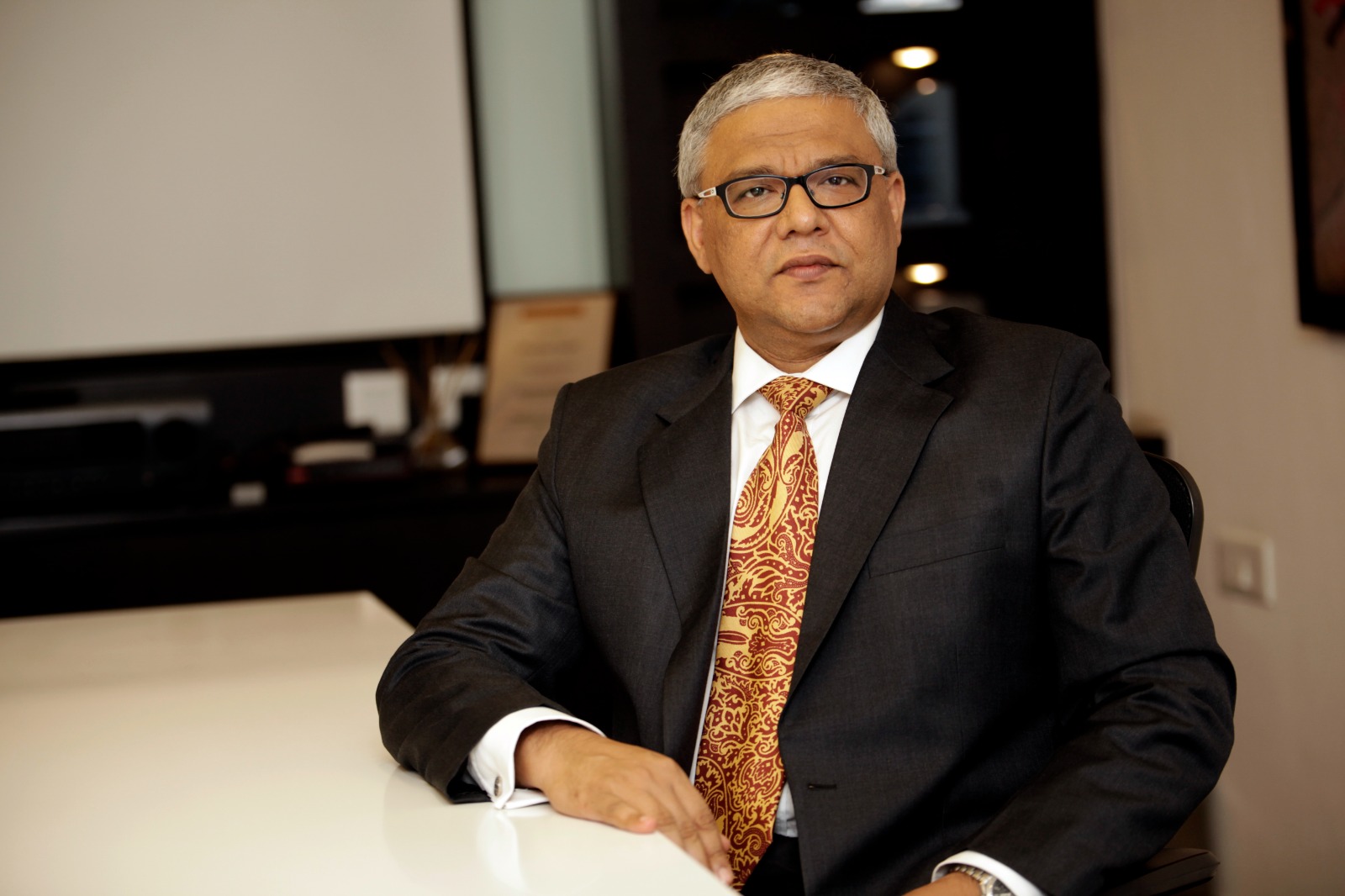
Tag: NLSIU

  • “Misalignment often arises when lawyers within law firms fail to grasp the significance of commercial imperatives or when in-house counsel overlook the critical importance of legal compliance.” – Shiju PV, Senior Partner at IndiaLaw LLP

    “Misalignment often arises when lawyers within law firms fail to grasp the significance of commercial imperatives or when in-house counsel overlook the critical importance of legal compliance.” – Shiju PV, Senior Partner at IndiaLaw LLP

    This interview has been published by Namrata Singh and The SuperLawyer Team

    Can you walk us through your journey from when you decided to pursue a career in law? What inspired that decision, and how did you navigate through the process? 

    In the realm of academia, my interests gravitated towards disciplines such as social science and political science. Consequently, the prospect of pursuing law as a career naturally appealed to me. Although I harbored a passion for journalism, I made the deliberate decision to pursue law instead.

    During the inception of my professional journey, our economy underwent a significant transformation with the liberalization of global capital. This ushered in a wave of foreign investment, acquisitions, and various forms of financial activity. Following a brief stint in litigation, I transitioned to Nishit Desai Associates, where I specialized in matters pertaining to funds and foreign investments, thereby gaining valuable exposure in areas such as FDI, private equity transactions, fund structuring etc.

    Subsequently, I further honed my expertise through engagements with several other prestigious law firms, focusing particularly on the corporate, infrastructure and real estate sectors. These experiences culminated in my tenure at IndiaLaw LLP, where I have found my niche and established myself within the legal landscape.

    Considering IndiaLaw LLP celebrated 25 years last year, how do you envision the future growth and development of the firm?

    The practice of law is characterized by perpetual evolution, demanding a continuous process of learning, unlearning, and self-reinvention. The landscape is replete with examples of centenarian law firms rendered obsolete due to their inability to adapt to changing times. As a first-generation law firm, we have navigated through the nepotistic tendencies prevalent in India’s legal sphere by fostering a culture of innovation.

    Central to our ethos is a steadfast commitment to client service, underscored by the establishment of a dedicated client service team—an uncommon practice within our industry. Anticipating the pivotal role of technology in the legal profession, we took proactive measures by developing a proprietary, in-house software tool in the early 2000s, seamlessly integrating our operations under a unified interface. Presently, we are diligently working on harnessing technology to prepare ourselves for the future trajectory of the legal landscape.

    With a strategic presence in key Indian metropolises, our firm has now set its sights on international expansion, laying the groundwork for overseas ventures that align with our vision and values.

    You’ve been instrumental in building up a non-litigation practice at IndiaLaw LLP. What challenges did you face during this process, and how did you overcome them?

    Led by our Founder and Managing Partner, Mr. K.P. Sreejith, an esteemed dispute resolution lawyer, our firm was initially established with a primary focus on litigation and arbitration. Presently, we boast a comprehensive portfolio encompassing a wide spectrum of litigation matters, ranging from civil, corporate, and commercial disputes to property, banking, and insolvency litigations. Additionally, our expertise extends to both domestic and international arbitration proceedings.

    The expansion into non-litigation areas transpired following my joining, representing a strategic pivot for our firm. Despite encountering formidable competition from well-established counterparts, we surmounted these challenges through our dedication, innovative strategies, and commitment to client satisfaction. Presently, our non-litigation practice is helmed by distinct partners, each overseeing specialized verticals within the domain.

    In a testament to our growth trajectory, we recently inaugurated our second office in Mumbai dedicated exclusively to our non-litigation practice, underscoring our commitment to providing comprehensive legal services to our clientele.

    You have been in legal practice, especially in the corporate and transactional laws, for almost two and half decades? You are involved in various committees related to legal services and corporate laws, how do you see the evolution of the Indian legal and regulatory regime over the years and how do you perceive the future landscape of corporate law practice evolving in India?

    The legal landscape is currently experiencing significant transformation driven by rapid technological advancements, notably in the field of artificial intelligence (AI). AI stands poised to revolutionize corporate law practices by enhancing efficiency and productivity. Leveraging AI-powered tools enables expedited analysis of extensive legal datasets, thereby simplifying research processes and affording lawyers the opportunity to delve deeper into analysis and strategic deliberation.

    Moreover, AI facilitates the streamlining of contract analysis and due diligence procedures, enabling swift identification of pertinent issues and empowering legal practitioners to allocate their time towards critical thinking and decision-making endeavors. The integration of AI is poised to fundamentally reshape the legal profession, particularly within corporate law practices.

    Those who proactively embrace AI technologies stand to gain a competitive edge in their professional endeavors, positioning themselves favorably within the legal landscape.

    With your expertise in M&A transactions, what do you believe is the key to a successful negotiation in this field?

    Achieving successful negotiation outcomes hinges upon a clear understanding of your objectives, whether advocating for the acquirer or the seller. It is imperative to delineate non-negotiable terms and areas open to flexibility. Given that M&A transactions are collaborative endeavors, thorough deliberation with clients and fellow advisers prior to entering negotiation proceedings is essential.

    Conducting comprehensive due diligence, whether from the perspective of the seller or the acquirer, is paramount to gauging the strengths and weaknesses of the target entity. This informed assessment facilitates a nuanced understanding of one’s negotiating position. Moreover, adopting a collaborative stance, as opposed to an adversarial approach, is pivotal for transactional lawyers, fostering constructive dialogue and conducive negotiation environments.

    As a corporate lawyer, you often work closely with in-house lawyers. Could you share insights into  how the role of a lawyer differs from law firm and inhouse?

    The responsibilities of a lawyer remain largely consistent, whether operating as an in-house counsel or within a law firm setting. The hallmark of success for a corporate lawyer lies in their ability to perceive their role as a facilitator of business objectives rather than a mere impediment. Misalignment often arises when lawyers within law firms fail to grasp the significance of commercial imperatives or when in-house counsel overlook the critical importance of legal compliance.

    Irrespective of the organizational context, a corporate lawyer’s duty is to strike a delicate equilibrium between business imperatives and legal mandates. By doing so, they empower the business to operate within the confines of the law while concurrently pursuing strategic objectives.

    Considering your extensive experience in Insolvency and Bankruptcy Code (IBC) since its inception, what is your evaluation of the progress of this law?

    The Insolvency and Bankruptcy Code (IBC) commenced with significant momentum as the Reserve Bank of India directed chronic defaulters, responsible for a substantial portion of non-performing assets (NPAs) in the nation, to the IBC framework. Our involvement in numerous such cases, representing diverse stakeholders, underscored the pivotal role we played during this period of transition.

    Preceding the implementation of the IBC, India’s insolvency laws were characterized by fragmentation; the IBC consolidated these disparate statutes under a singular framework. However, the abrupt initiation of the IBC exposed several inadequacies within the legal framework, compounded by the unpreparedness of National Company Law Tribunals (NCLTs) to manage the influx of cases. Although the legal landscape has evolved considerably since then, infrastructural deficiencies persist, impeding optimal efficiency.

    Nevertheless, the impact of the IBC is palpable, evident in the fostering of a more prudent credit culture across the country. Promoters now exercise greater caution when seeking financing, cognizant of the potential ramifications of losing control over their enterprises.

    With your extensive experience advising clients across various sectors, what suggestions would you give to the current generation of aspiring lawyers in deciding between working for law firms or in-house legal departments at companies? What criteria or considerations should they prioritize in making this decision?

    As previously mentioned, the fundamental responsibilities of lawyers remain consistent regardless of whether they operate within a law firm or serve as in-house counsel. However, the role of an in-house lawyer presents unique challenges, necessitating a comprehensive understanding of the company’s business operations—a facet often more demanding than that required of a law firm lawyer. Moreover, an in-house lawyer must function as a generalist, whereas their counterparts in law firms often benefit from specialized expertise.

    Nonetheless, law firms afford invaluable opportunities for first-hand experience in executing legal transactions, thereby providing a solid foundation for burgeoning legal practitioners. Therefore, I advocate for aspiring lawyers to commence their careers within a law firm to acquire essential skills and exposure before contemplating a transition to an in-house role, should they desire to do so.

    Beyond the professional realm, what’s a hobby or interest you have that might surprise people?

    That’s rather unsurprising. I have a penchant for literature, cinema, and indulging in travel experiences.

    Could you walk us through what a typical day looks like for you as a Senior Partner at IndiaLaw LLP? And on that note, what aspect of the daily job of being a lawyer interests you the most?

    With a robust presence spanning eight offices across major metropolitan areas, encompassing a diverse range of practice areas and a substantial team of legal professionals, our firm caters to a clientele comprising major corporations and High Net Worth Individuals (HNIs) known for their exacting standards. As a result, a considerable portion of my time is dedicated to firm management—a responsibility that brings forth distinct challenges on a daily basis.

    One aspect of legal practice that particularly captivates me is its tendency to present continual surprises and challenges. Despite believing that matters are well in hand, unforeseen circumstances often arise, capable of derailing even the most meticulously laid plans. In such instances, the primary approach is to innovate by leveraging all available resources and meticulously referencing legal precedents to realign our strategy. This perpetual cycle of adaptation underscores the reality that law is an ongoing educational journey, necessitating a perpetual commitment to learning in order to remain relevant in the legal profession.

    Get in touch with Shiju PV-
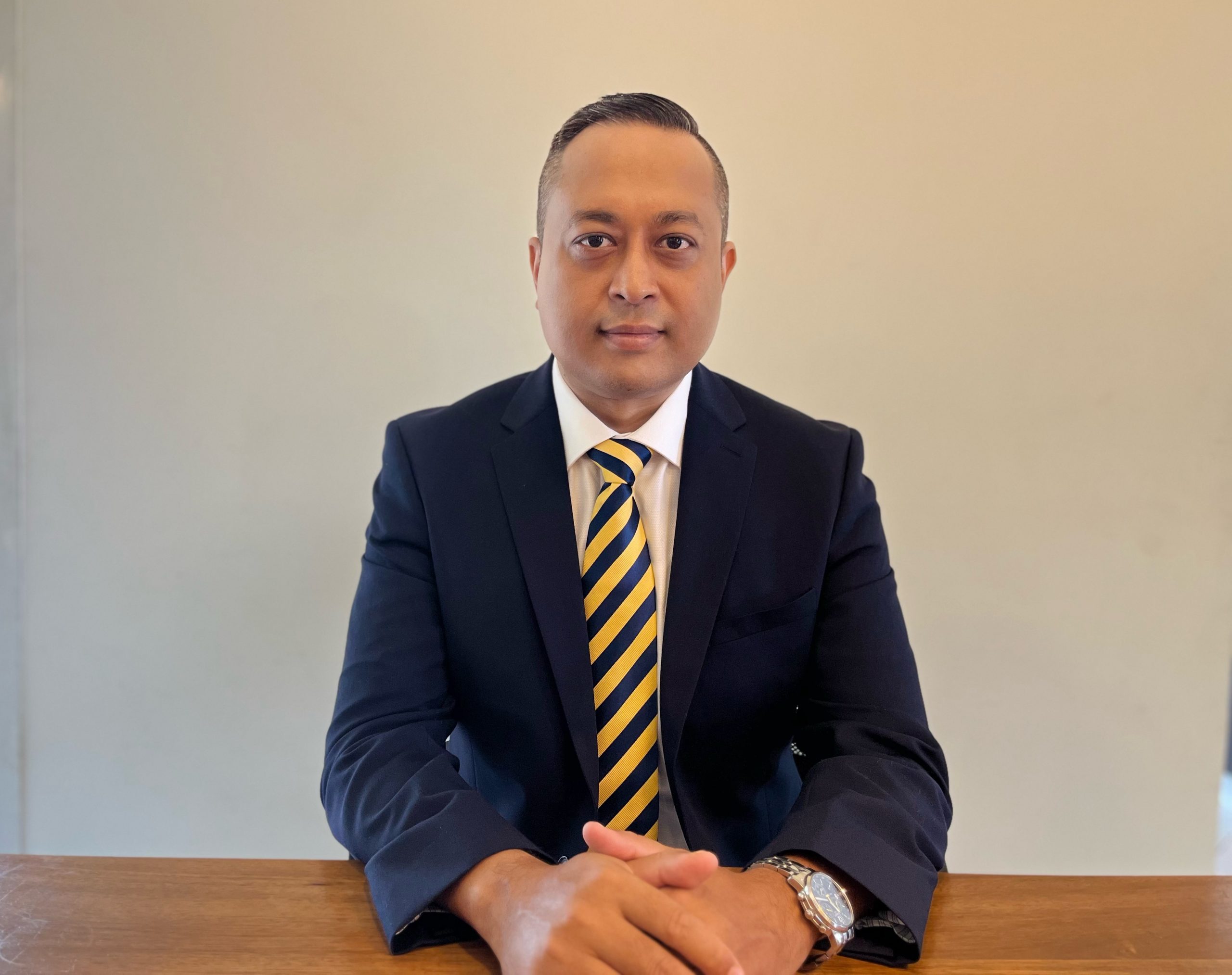
  • “Our role as in house counsels is to push the limits of permissible law and guide our business to take difficult decisions by explaining possible risk scenarios”- Ankur Deka Rabha, Founder & Managing Partner ~ Λrgħyä Legal

    “Our role as in house counsels is to push the limits of permissible law and guide our business to take difficult decisions by explaining possible risk scenarios”- Ankur Deka Rabha, Founder & Managing Partner ~ Λrgħyä Legal

    This Interview has been published by Pragya Chandni and The SuperLawyer Team

    Can you share with us your journey of becoming a lawyer, starting from your graduation at NLSIU, Bangalore, to your current role as Managing Partner at Λrgħyä Legal?

    My journey as a lawyer began when I joined the prestigious National Law School of India University (NLS), Bangalore in the year 1997. Law school gave me a whole new perspective on life, purpose and law in general. The initial years until graduation was a period of great learning and appreciating the law, legal research and developing an analytical mindset. After graduation, I worked under a few senior counsels as a litigating lawyer in New Delhi being fortunate enough to be practising in various courts like DRT, Tis Hazari, Patiala House, High Court and Supreme Court. This is the phase in my life where I learnt the importance of PERSEVERANCE & RESILIENCE. When your salary is meagre  (compared to what your peers earn in a company or law firm) and you need to survive on that, it requires a lot of PERSEVERANCE & RESILIENCE to not give up on your dream. 

    I transitioned from a litigation lawyer to an associate in a law firm in the year 2006 when I shifted from New Delhi to Bangalore to work with a law firm dealing mostly with foreign clientele wanting to set up business in India. I was fortunate to be a part of the team managing contracts drafting and negotiations, M&A for some well known corporate clients.  This experience along with my previous experience as a litigation lawyer helped me to get into Bosch as an inhouse counsel and thus transition myself from a lawyer to a business lawyer. During this phase, I was fortunate to have both local and international exposure on various aspects of business and law in general. This phase was also about understanding and appreciating the importance of forging collaborations, understanding business, numbers, managing stakeholder expectations, managing teams, having the foresight for incoming risks and proactively taking steps to minimise risks.

    Finally the culmination of all that I had learned and experienced over the years helped me in pursuing this new phase in my professional career i.e. the setting up of Λrgħyä Legal  The firm was set up with the aim of providing affordable and high quality services to select clients. Having been an in-house counsel most of my professional life I am able to understand the pain points/areas of concerns of corporations better and provide solutions which are practical and easy to implement from a business standpoint. Currently the firm’s focus is mostly on assisting in house counsels with the day to day issues, mergers and acquisitions, secretarial assistance and compliance training. 

    With your extensive experience in various industries like healthcare, e-commerce, and IT, what motivated you to pursue a career in law, particularly in corporate and regulatory aspects?

    Few factors that contributed to my decision to join NLS and pursue a career in law. The desire to move out of Guwahati to broaden my horizon in life in general and to join a professional course which was equally relevant as that of medical and engineering courses.  I was very fortunate to be a part of this prestigious  institution.  NLS helped bring in a lot of maturity and clarity in my thoughts so once I graduated I had a clear roadmap in mind. Although someday I wanted to be an inhouse counsel, I first wanted to understand law and its nuances and see how it’s actually dealt with by courts, then law firms and finally settling down as an inhouse counsel. These experiences help me immensely while dealing with complex and critical situations which require strategic thinking. 

    Coming to the question of why I focus particularly in the area of corporate and regulatory aspect. Well I would say although these two aspects are very important, it would not be the only ones that I would need to look at if I am an in house counsel in a leadership position. One has to remember that the role of an inhouse legal counsel is about being a generalist in law, being foresighted, proactive, collaborative, approachable and generally having an idea about every aspect of law which applies to the organisation. You are the first line of defence and your internal stakeholders will look to you for answers and solutions. So I would say I am a generalist whose job is to maintain a fine balance between compliance of law while facilitating smooth business transactions. I have been really fortunate to be a part of multinational organisations which exposed me to a whole gamut of issues on various aspects of law which were really complex and some of them even path breaking, both nationally and internationally. Such experience has enabled me handle complex issues with poise and maturity. 

    You’ve held significant positions in both multinational corporations like Bosch and Essilor, as well as in consulting roles. How have these diverse experiences shaped your approach to legal counsel and leadership?

    Experience does matter and as a lawyer, I have been really fortunate to have worked with great senior counsels, being part of great teams at various law firms and finally exposed to a whole gamut of critical issues in a corporate world mostly in the IT and manufacturing side ranging from labour issues, product issues, litigation, M&A, compliance etc. After more than two decades of being in the profession, each stage of my career has taught me something new which I would not have been privy to or learnt had I continued in just one field and not delved into others. I can safely  say I have seen it all but of course with the humility to state that the learning never stops and I still think of myself as a student who has the courage and conviction to unlearn and learn if required.

    These past experiences of what it takes to drive business has an effect on how I counsel my clients today.  I look at the business and then apply law to see to what extent I can stretch my risks. Years of experience helps in a way to already visualise consequences. Hence, every suggestion or an opinion given to clients is based on their business need and practicality within the ambit of the permissible laws.  One size may not fit everyone so one has to be agile, quick and flexible to innovate. For example, I will never advise anyone to go in for litigation as a first step in a dispute situation. It should be the last resort and one needs to understand that the cost of litigation could dent a company’s bottom line.  During my stint as a General Counsel I have facilitated many negotiations and saved huge litigation costs to the companies I was associated with. 

    As someone who’s been recognized for achievements such as “General Counsel of the Year – Healthcare,” what are some of the key challenges you’ve faced as a first-generation lawyer, and how did you overcome them?

    Challenge is a perception and quite subjective. I always saw opportunities in everything that came my way and grabbed them to make a mark. There is also no alternative to hard work. Challenges are always present in life and we have to figure out a way to navigate through these challenges. Everyday something new happens which we may not comprehend nor anticipate and that is what keeps us going. Life without it will be very boring.


    I was never really dependent only on people teaching and guiding me to learn new things. Of course its importance can never be negated. However, I realised early in life to learn from experiences around me by myself as well. Time is always of the essence and sometimes you miss the bus. During one farewell, the managing director of the company asked me what I would have done differently or changed if I had the opportunity to go back in time. I replied saying none. They were valuable experiences and if I had not encountered them then I would have never learnt. Learning is not only about law, at a leadership level it is about how much you understand the business of your organisation, it is about managing people, managing expectations of your stakeholders, maintaining a fine balance between compliance and business, learning leadership skills etc. This attitude helped me rise the corporate ladder faster and become the general counsel of a listed company at a very early age where I also had to lead cross functional peers who were double my age and experience. 

    In your roles at Flipkart and Walmart, you managed legal aspects of B2B wholesale business. Could you elaborate on the complexities and nuances you encountered in navigating regulatory landscapes in the e-commerce sector?

    I will answer this question in a more generic manner rather than answering specifically with regard to my stint at Flipkart as it applies in general with every organisation in the B2B e-commerce sector. Although regulated, it is not as stringent as the B2C ecommerce sector. Nonetheless, one cannot deny the fact that compliance of the applicable regulations is very important and in order to ensure compliance we need to understand the current gaps and that is only possible through regular interactions with internal stakeholders to understand how the business is being driven. Only once you understand what is currently in place can you strategize on whether any alignment or realignment has to be undertaken. Further, there are also changes in certain areas of law or process which are constant in the B2B sector. Most of the time you will see clarifications and circulars issued by the government under FSSAI, ISI or Legal Metrology or CDSCO on a regular basis.  Sometimes interpretation of such changes becomes an issue as they could be interpreted in more than one way and this is where we need to step in to reach out to the right authorities and conclude on the correct interpretation. Likewise we also need to reach out to relevant authorities and advocate for change whenever we find new changes in law detrimental to our business interest. In general I would say in today’s fast paced business and cut-throat competition, agility and quick decision making is critical to the success of a business. Our role as in house counsels is to push the limits of permissible law and guide our business to take difficult decisions by explaining possible risk scenarios. 

    You’ve been involved in various legal domains such as M&A, compliance, and litigation management. How do you stay updated on legal developments, and how do you integrate these insights into your strategic advice for businesses?

    Overall there are a few things which we need to keep in mind as in inhouse counsel. Firstly understanding the law enables me to visualise consequences and such awareness enables me to guide internal clients in the right direction. Hence, having a proactive mindset to look out for new changes in law and how it is going to affect your organisation’s business and ensure mitigation measures well in advance by working with business colleagues to ensure smooth transition is key. I strive to continuously read and research  on relevant and complex legislations/ provisions of law to ensure that I get the required clarity of its nuances from the perspective of courts/case law to not only properly guide and advice clients but also to be able to successfully provide alternatives during negotiations. Sometimes a simple oversight could cost a lot for your clients. Therefore, it is important to have an eye for detail and the patience to read every line and use one’s analytical skills to question whether what one is looking at really applies to the current situation or not. 

    What is the story behind starting Λrgħyä Legal and embarking on a new chapter in your life. Many would see this as a huge risk stepping out of the comfort of a stable job and a successful career.

    I always had a desire of exploring and stepping out of my comfort zone to try something of my own. After a lot of thought and deliberation with my family, my peers in the industry from whom I found acceptance in the concept of our firm, I finally decided that it is about time I pursued this passion. Having spent more than two decades as a lawyer and most of part of that career as an inhouse counsel with various multinational companies gave me great insights into the various nuances/complexities of managing an inhouse team, budget constraints, work pressure and impossible timelines.  It is very difficult most of the time for in-house counsels to manage/outsource work due to the high cost of legal services. I understand that very well being in that situation myself and feeling helpless. Hence, Λrgħyä Legal was born in the month of August, 2023 with the aim of addressing such issue and coming up with affordable services without compromising on quality. Λrgħyä Legal strives to foster partnership and lasting relationship with our clients rather than just mere commercial transaction.

    Λrgħyä in Sanskrit means “Sacred Offering”. Λrgħyä Legal was set up keeping in mind the four principles: (a) Availability; (b) Affordability; (c) Quality; (d) Integrity. We collaborate with in house counsels and work on various models which helps in (i) outsourcing at affordable rates (ii) continuity of work during headcount reduction or headcount freeze (iii) managing critical manpower and reducing headcount costs and (iv) enabling ample time  to the in house counsels to focus on critical issues and (v) assisting organisation to implement compliance trainings on various legal topics. Currently the firm’s focus is mostly on assisting in house counsels with the day to day issues, mergers and acquisitions, secretarial assistance and compliance training. 

    Lastly, given your wealth of experience, what advice would you offer to fresh law graduates aspiring to pursue a career similar to yours, particularly in corporate law and regulatory compliance?

    In general, all I can say is no matter what one does, they should do it with complete dedication. Patience, Perseverance and Resilience is key to any successful career. There are no shortcuts to success. Do not be in a hurry to move on to new things without mastering what you are currently doing. 

    Get in touch with Ankur Deka Rabha-

  • “The most rewarding aspect of having my own practice is that I get to pick my clients without having any pressures of meeting revenue targets, and I am able to create flexibility around work timings because I answer to only my clients”- Harini Subramani, Founder at HS Law & Associates

    “The most rewarding aspect of having my own practice is that I get to pick my clients without having any pressures of meeting revenue targets, and I am able to create flexibility around work timings because I answer to only my clients”- Harini Subramani, Founder at HS Law & Associates

    This Interview has been published by Pragya Chandni and The SuperLawyer Team

    Can you share with us your journey from being a financial journalist to becoming a corporate lawyer, and what inspired this transition?

    During my time as a reporter for Mint and the Wall Street Journal, I had to specifically track investment banks and write on mergers and acquisitions. As a primer, one of my sources suggested I read ‘Barbarians at the Gate’; that along with my conversations with bankers and private equity professionals got me hooked into the world of M&As. I was eager to explore the other side. 

    I had initially tried my hand at investment banking but the mundane work of creating spreadsheets and data analysis as an everyday role didn’t much enthuse me. Within a week though, I joined a boutique law firm and pursuing a business law programme at NLSIU parallely seemed natural. The law firm had a highly motivated team and enabled a varied exposure in corporate law – I learnt trademark application processes, commercial contracts drafting including transaction documents and base arbitration. I continued to write for Your Story occasionally. I had the best of both worlds and was learning something new everyday. I decided to stick on and take each day as it came.

    Given your diverse background in journalism, economics, and law, how do you believe it has shaped your approach to practicing law, particularly in M&A and commercial law?

    So my late entry in the legal world has worked to my advantage given my journalism background. While my initial degree was in economics, a lot of my learning of the law, especially around the securities market and SEBI, was from my days as a financial journalist. Aside from reviewing the regulatory sites (like MCA, SEBI and RBI) for latest circulars / amendments on a daily basis, I would routinely follow corporate announcements on the BSE and NSE. Any seasoned reporter would tell you that it’s a goldmine for story leads. When I needed guidance to understand concepts, (luckily) as a journalist I could ask industry seniors to share their knowledge. I was fortunate to be ably guided by some bankers in the equity and debt markets; I’d go armed with a lot of questions for breakfast meetings. All of this helped lay the foundation to understand not just the law but also complexities / challenges of the M&A world. Now, as I sift through the laws, my ground work in economics helps review it from a policy perspective. 

    Could you tell us about a particularly challenging case or project you’ve worked on in your legal career, and how you navigated through it?

    Every project has its own set of challenges. While I wouldn’t want to name a particular case, I’d like to share that since I handle corporate and a few litigation matters, I find a dichotomy with respect to timelines and outcomes. Because litigation has its own procedures, and owing to its sometimes time-consuming nature there’s more thrill in setting expectations for faster closures in M&A or commercial negotiations. I have to consciously set my mind to a different frame for litigation. 

    You’ve been involved in drafting various agreements and advising on regulatory matters. What are some key considerations you always keep in mind when advising clients, especially in the realm of mergers and acquisitions?

    Create an internal priority checklist of terms and flag them off – i.e., understand from the client the aspects that they are absolutely unwilling to let go off vs less important points. Discuss the business angle in the transaction as it goes in tandem. If representing an acquirer, then go the extra mile for a thorough diligence on the target to ensure that at least the key industry specific permissions are in place, and forensics on the promoter are clean.

    Your experience spans from working with Vichar Partners to establishing your own practice. What motivated you to start your own firm, and what have been some of the most rewarding aspects of being an entrepreneur in the legal field?

    After my stint at JSA – given my unconventional background, it was initially challenging for 2 law firms to accurately gauge my skill set because I could be a rainmaker and yet not as seasoned as a partner. It was easier to get clients. And some industry seniors, entrepreneurs themselves, motivated me to begin on my own. My work with one of the senior partners at Vichar (Partners) had already exposed me to the ‘business management’ side and the transparent culture in my team at JSA also helped place many things in perspective. Being a first generation entrepreneur, I had nothing to lose by charting my journey on my own. The objective has always been one of learning. The most rewarding aspect of having my own practice is that I get to pick my clients without having any pressures of meeting revenue targets, and I am able to create flexibility around work timings because I answer to only my clients.  

    As someone who has contributed to agrarian policy and worked on projects funded by organizations like the UN World Food Programme, how do you see the intersection of law and policy-making, particularly in areas like food security?

    For countries that have faced depredations of famine and hunger under colonial rule, food-security is a very sensitive and key matter of policy. Emerging nations have to safeguard and sustain their agrarian ecosystems against OECD nations’ policies at an international level. At the same time they also have to increase yield, shield themselves against crop losses as well as shift populations away from agriculture and into industry. Policy-making is a vital exercise to attain this goal while the law attempts to provide safeguards for all stakeholders during this process.

    With your interests in tennis, dance, and cultures, how do you find these aspects complementing your legal career, if at all?

    Sports and the fine arts play a vital role in expanding one’s horizons and for agility. In my view, having a wide exposure to different aspects of the society exposes me to varied thought processes and perspectives thereby enabling me to become a better lawyer. They are also an easy way to switch off and relax.

    Considering your journey and expertise, what advice would you give to law graduates aspiring to specialize in corporate law, especially in the areas of M&A and commercial law?

    Go full throttle, always try to understand the issue at hand, do your own research (the law changes and nobody knows everything), never work on an empty stomach, and continue pursuing your hobbies. 

    Get in touch with Harini Subramani-

  • A good real estate practitioner needs to be familiar with multiple laws which impact real estate- Probal Bhaduri, Managing Partner at EVA Law

    A good real estate practitioner needs to be familiar with multiple laws which impact real estate- Probal Bhaduri, Managing Partner at EVA Law

    This interview has been published by  Priyanka Karwa and The SuperLawyer Team

    Sir, could you please share with us your journey and how you ended up pursuing a career in law, especially with such a diverse background that includes corporate, commercial, and employment law?

    Prior to joining Law School (National Law School of India University) I was lucky enough to have interacted with Prof. Dr. N. R. Madhava Menon.  It was these interactions that led me to sit for the entrance exam.

    At the time I graduated, law firms did not put lawyers into specific practice areas as is the case today.  I, therefore, got exposed to various areas of laws during my initial years.  At that point of time, the liberalisation of the Indian economy was slowly gathering steam and owing to the same, I ended up doing a lot of corporate and commercial work and found that I enjoyed it.  

    You have extensive experience in mergers, acquisitions, private equity investments, and joint ventures. Could you tell us about a particularly challenging or memorable deal you’ve worked on and what made it stand out?

    Every transaction is memorable since by its very nature a transaction consists of balancing competing interests and arriving at a result which is a win-win.  Personally speaking, the learnings from each transaction have been different since nearly all of them required me to ‘re-learn’. 

    In addition to your work in M&A and private equity, you’ve also advised on real estate transactions. What are some key considerations for clients when navigating the complexities of real estate deals, especially in India?

    Real estate practice in India is fairly varied in terms of local practices and on-ground situations.  A good real estate practitioner needs to be familiar with multiple laws which impact real estate such as stamp duty laws, succession laws under various communities, environmental laws, land acquisition, etc.

    For a good real estate practitioner, balancing commercial needs with on-ground realities and legal protection is key and this is something which requires time and experience.  A diligent real estate lawyer is one who is aware of the legal precedents on a continuous basis.

    You’ve had the opportunity to work both in India and internationally, including with European clients on investment opportunities in India. What are some key differences you’ve noticed in the legal landscape and business practices between these regions?

    One of the key differences I noticed while working abroad was the focus and attention given by law firms to the mental well-being of their lawyers.  The other big difference was the way big law firms were structured to ensure focus on quality of deliverables, knowledge management, standardisation of work products, etc.  Indian law firms have taken time to walk down this path.

    Shareholder and commercial disputes can be intricate and sensitive matters. Can you discuss some strategies or approaches you’ve used to successfully resolve these types of conflicts for your clients?

    In India, given the stress our judicial system has, it becomes imperative to resolve disputes efficiently in a time bound manner.  This makes alternative modes of dispute resolution including negotiation and mediation particularly important.  Drafting commercial agreements which will stand the test of a legal challenge is a first step towards ensuring prevention of such disputes.  Furthermore, a key aspect in intricate shareholder and commercial disputes is the careful balancing of interests of both parties that a lawyer must strive for to ensure a speedy redressal of grievances of the parties involved.  In my experience, commercial disputes usually arise when the thought process of the people at the time of entering into the transaction has shifted which leads to one of the parties trying to ‘re-interpret’ the intention behind a particular provision of a transaction document.  By drafting documents using language which is not capable of multiple interpretations, some of these disputes can be resolved without having to go down a lengthy process of dispute resolution.  

    In my view, mediation seems to be the way forward, especially for shareholder and commercial disputes considering the many benefits it offers.  Lawyers and law firms would be well advised in educating themselves in this area and then advising their clients to use mediation as a process to resolve issues.  

    Your career has spanned various roles, including Managing Partner at Lumiere Law Partners and Director (Legal) at the Avenue Capital Group. How have these diverse experiences shaped your approach to legal practice and client service?

    During my formative years as a legal professional, I was very fortunate to have worked directly under lawyers who I would consider as doyens of the legal profession. Their kindness in taking the time out to mentor me is perhaps the biggest reason why I enjoy what I do even today.  While reading and constantly updating oneself is a prerequisite for a lawyer to do well in the profession, client servicing (learning how to deal with clients) is something which is equally important.  I built upon my client servicing skills gradually over the course of my career while working at law firms in India and abroad.  When I was working at Avenue Capital, I was essentially a client for law firms and that stint was invaluable in giving me the perspective from the other side – how a client ‘measures’ law firms/ lawyers and what he expects from his legal counsel(s).  

    You’ve been recognized by prestigious legal publications like the Legal 500 and Chambers and Partners. What do you attribute to your success in the legal field, and how do you stay current and relevant in such a dynamic industry?

    One of my professors in law school had once made a comment, “Lawyers are not brilliant by birth, they become brilliant only by working hard”.  The legal profession is one of those where knowledge trumps everything else.  When I started off my career, there was no internet, no google, which have now become an integral part of our lives.  Reading and researching, the two essential elements that form a key part of a lawyer’s arsenal, were to be approached differently as compared to today’s times.  This, however, is only half the story. Truly brilliant lawyers, in my experience, have a third element which is ‘analysis’.  In order to stay relevant in an ever-evolving legal landscape, especially in India, the first order of business is to read as much as possible and then analyse what one has read to see how to best use that learning.  Further, having a problem-solving attitude is critical in order to be able to serve your clients effectively and efficiently.

    You’re currently the Managing Partner of EVA Law. Can you tell us about your vision for the firm and the areas of law where you see the most growth and potential in the coming years?

    The word ‘EVA’ stands for life itself. My vision for EVA Law is not so much for the firm but for the lawyers who work with us.  My learning over nearly three decades is that for any vision to be successful, it has to first become a value system for the people in the organization.  

    My vision for EVA would be threefold:  

    (a) Building a culture of extraordinary mentorship.  Lawyers in EVA Law must instil a culture of thirst for knowledge and achieving excellence.  The culture must embrace openness and inclusiveness.  The mentorship must encourage everyone to aspire to become leaders and decision makers.  

    (b) Recognising teamwork is critical.  Every team member in EVA Law will be respected and appreciated for their contribution and learn from each other in that process.  Younger members of the team must feel committed to the process.

    (c) Dealing with mistakes and failures – The work culture must empower people to be secure enough to admit wrong decisions.  Failures and mistakes are not about putting blame on someone but learning individually and collectively.

    In terms of the areas of law that have a lot of potential, data privacy is right up there. I also feel that with the growing trend towards digitisation, cyber security laws will be in vogue.  Also as I mentioned above, mediation will be an important area.  

    As someone who has achieved remarkable success in the legal profession, what advice would you give to law school graduates and young professionals aspiring to excel in their legal careers?

    All the recognitions and accolades that I have received in my career are not by any stretch of imagination attributable to anything extraordinary done by me.  They are a reflection of all my team members who have worked extremely hard to ensure that our work got noticed. Success means different things to different people. For me, success is the fact that people who have worked with me have gone on to become remarkable lawyers; success is the fact that lawyers in my team who are less than half my age call me by name; success is the fact that my clients allow me to tell them what they ought to hear rather than what they want to hear. To all the law graduates out there aspiring to make a mark in the legal profession, all I would like to say is that be the lawyer who other lawyers call when they need good advice and (quite importantly) don’t take yourself too seriously.

    Get in touch with Probal Bhaduri-

  • With technological advancement, the access to justice and quality education is more probable now then ever- Dr. Charu Mathur, Independent Counsel, Supreme Court of India

    With technological advancement, the access to justice and quality education is more probable now then ever- Dr. Charu Mathur, Independent Counsel, Supreme Court of India

    This interview has been published by  Priyanka Karwa and The SuperLawyer Team

    Ma’am,  please introduce yourself to our listeners and provide an overview of your current role as an Advocate-on-Record at the Supreme Court of India?

    Hi! I’m a mom, wife, daughter, sister and also a lawyer and a lifelong learner. I’m deeply privileged to practice as an Advocate-on-Record before the Supreme Court. AORs as original envisioned have a deep role in efficient functioning of the apex court. An AOR is personally responsible to the court; there’s reason why close proximity to Supreme Court complex is provided in SC Rules. The idea is an AOR must be available to assist the court. Since the inception we have around 3000 lawyers who became AOR. The year I cleared my AOR Exams, some 20-25 people made the cut. Earlier only 3 or 4 people could clear AOR Examination. I’m particularly not happy that since past few years over 250 people are made AORs. It is good that so many people are able to clear the examinations but then it also speaks volume about the quality of assessment and nature of question paper set. It is actually disheartening to see that some of the speakers who conduct the lecture series on behalf of SCBA/SCAORA actually give out complete paper. This to me lowers the sanctity of examinations.

    Coming back to my own journey, I come from a family of lawyers and some of them were elevated as judges as well. I did my LLB from LA Shah Law College, Ahmedabad. Right from my student days I worked under my senior Sh SN Shelat, Sr Adv and former AG of Gujarat. In my entire professional life, I have just one enduring motive that whatever I do or not do should bring glory to my senior- Sh SN Shelat and my father Justice NN Mathur; I pray that even accidently I should not do something that blemishes their fair name.

    Post marriage I moved to Delhi. My husband is a fellow AOR and represent few States before the Hon’ble High Court. He has also penned a book on GST, one of the earliest. I’m particularly proud of that. His book explains conceptual GST soundly. He is a man of few words but probably the sharpest person I have come across.

    You have an impressive academic journey with degrees in law, business laws, and even a Ph.D. in Legal Aspects of Pharmaceutical Patents. How did you find your way into the field of law and what motivated you to pursue such a diverse range of qualifications?

    I think the answer to this lies in my gender and role attributed by the society. As long as I can remember, I always wanted to be a lawyer. Constitution of India is my only sacred book. My mother retired as a Professor from Jai Narain Vyas University, Jodhpur. So, I believe I have received some academically genes from her. As for my PhD and even AOR examinations I cleared while being a young mother. I absolutely believe in spending quality as well as quantity time with family. For me spending time with my son, reading to him was very important. I have read him many books multiple times. So, yes, at one point of time in my life reading to him and searching for books for him was my number one priority. I’m glad that our initial efforts turned him into a lifelong reader. He was judging MUNs at St Stephen’s and Hindu while he himself was a school kid. He did us proud by securing place to read Undergraduate law at Trinity College, University of Cambridge and topping the University in the 1st year. As for my own academic journey, I could devote time because I was master of my own time. I was privileged that as I was working with my husband I could decide on my own working hours and even choosing what I will work on what I will not. Saying all that, I do miss the fact that I could have advanced my litigation professional profile at better speed but it was the choice I made, so that it is.

    With over 20 years of experience as a practicing lawyer before the Hon’ble Supreme Court, you’ve handled a wide range of legal matters. Could you share some highlights or cases that have been particularly memorable or impactful in your career?

    Some of the memorable cases I can rattle is- my 1st appearance before the Supreme Court. It was a bail matter. My SLP was dismissed but not before the judge (Justice Rajender Babu) narrated the story of Bruce, the spider- try try again until you succeed.

    I remember arguing murder reference of Purshottam Dashrath Borate before the three judges bench headed by the Chief Justice. One case which I particularly remember was fighting for an old father against her daughter. I could secure win for the father. It was emotionally charged matter. We have been doing medical entrance examination matters fairly regularly. We have seen pre and post NEET era. We have got relief in many of these matters. However, seeing these matters closely, I really question our medical education. Just like AOR exams the bar is getting lower and lower. I do educational matters also. I’m counsel for some of universities as well. I’m happy that relying upon an earlier judgement (where I was part) in a subsequent Writ under Article 32 could change the way seats are allocated in PG AIIMS.

    You’ve also been involved in advisory work for various corporates and organizations. Could you elaborate on your role in providing legal counsel to corporate clients and startups?

    I’m fortunate to get the diverse work. I believe, startups need hand holding. Legal issues are complex and to navigate this maze they need some guidance. Sometimes only discussing the point help them see the point with greater clarity. I do help them on transaction side as well as in drafting and vetting agreements, and even in arraying partners for them.

    Your list of appearances before different high courts and your engagements as a speaker on various legal topics are extensive. Could you tell us about your motivations behind sharing your expertise through speaking engagements and publications?

    I have started taking out station matters. I derive great satisfaction by arguing before various High Court. Recently, we could persuade a High Court to quash demand notice worth Rs 12 Crores, in another High Court could persuade the court that the fault was not of the tax official but the assessee and could get notice issued against his discharged. Likewise in Delhi High Court could persuade the court for relief in arbitration matter.

    As for speaking engagement, I enjoy interacting with young law students and absorb their worldview.

    You’ve also been involved in e-learning content development and have written books on legal topics. Could you elaborate on your experience in creating educational content and how it helps in disseminating legal knowledge?

    Legal education is something close to my heart. With technological advancement, the access to justice and quality education is more probable now then ever. As a continuous lifelong learner, this is my way of giving back to society. 

    Lastly, what advice would you give to fresh law graduates who are just entering the legal profession? Are there any key lessons you’ve learned that you believe would be beneficial for them to know?

    Like each successive generation, this generation is far smarter than the previous one. It has more resources at its disposal. However, there is no substitute for in-depth understanding, reading and introspection. You must have sometime to reflect, assimilate knowledge. We are not machines who keep on downloading information, idea is to read and reflect. In my opinion, running around for internships is meaningless. First, have conceptual clarity, read case laws, read provisions. Now, with live streaming you can witness finest oral advocacy. 

    Get in touch with Dr. Charu Mathur-

  • The most important principle is to be open to all the work that comes one’s way, nothing is too small or too big, to work with sincerity and dedication and not to engage in wasteful comparative analysis-Rajat Moudgil, Dual Qualified Lawyer – Associate Partner P&A Law Offices

    The most important principle is to be open to all the work that comes one’s way, nothing is too small or too big, to work with sincerity and dedication and not to engage in wasteful comparative analysis-Rajat Moudgil, Dual Qualified Lawyer – Associate Partner P&A Law Offices

    This interview has been published by  Priyanka Karwa and The SuperLawyer Team

    Sir, please share with us how you initially became interested in the field of law and what led you to pursue it as a career?

    I became interested in the field of law because of my father. He is a litigation lawyer on the civil side. In his prime, he was one of the leading lawyers in the city (Jalandhar, Punjab). When I was young, I was always in awe of his legal practice. I grew up in an environment where his office and our residence would be bustling with clients, lawyers, clerks and stenographers. I liked the busy life of a litigation lawyer where clients from all backgrounds with diverse problems came to explore solutions to their problems. 

    I realized that the core of the legal profession is problem solving and I started getting interested in the field of law, with the higher objective of contributing to the justice delivery system. Now after being a part of this system for more than 10 years, I can easily say that law is an empowering profession that has the ability to bring actual change in people’s lives. 

    Could you tell us about your educational background and the significance of your LL.M. in Competition Law and Market Regulation from the National Law University, Delhi?

    I did B.A.LL.B (Hons.) from Panjab University, Chandigarh. Thereafter I proceeded to join my father in his litigation practice and learnt how to apply and practice law from the ground level. This phase in my life was the building block of my journey as a lawyer. I represented clients in all kinds of civil disputes that included possession disputes, matrimonial disputes, eviction matters, injunction suits, testamentary and succession disputes etc. For a period of three years I was also empanelled by the District Legal Services Authority which allowed me to represent the unrepresented in criminal trials. I was fortunate to get an opportunity to appear in criminal matters ranging from petty theft offences to murder trials. 

    However, after practising for 5 years, I wanted to move from private party litigation before District Courts to litigation that would be significant at the national level. In 2015, National Law University, Delhi came up with a new LL.M. specialization in Competition Law and Market Regulation, in addition to its usual LL.M. in Public Law. I thought specialization in a new and upcoming stream of law, even though the Competition Act was enforced in 2009, would allow me to garner new skills and help me in my endeavour to contribute to the legal system at the national level.  

    My LL.M in Competition Law and Market Regulation was interesting and fulfilling academically. Throughout my studies I realised the prime importance of my tenure as a litigating lawyer, for it was that experience which enabled me to understand competition law in application and not just theoretically. I also realized the difference in the attitude of institutions and students between State Universities like Panjab University and NLUs (at least the one I attended). In Panjab University the institution and students were primarily focussed on making a career in the judiciary or other government services. I must add that I too appeared for judicial exams in Delhi but could never go beyond the mains stage. Moreover, in Panjab University the focus was only on traditional subjects and new laws like Competition law, Insolvency and Bankruptcy etc were hardly included in the curriculum. At NLU Delhi, I witnessed students exploring different subjects and careers after graduation or LL.M. The teaching methodology and student assignments were also different at NLU Delhi in comparison to Panjab University. Another difference between traditional universities and law universities is the opportunity to interact with students from different faculties and departments. Traditional universities like PU allow students pursuing different subjects like law, arts, science etc to interact and associate. Moreover student unions are stronger and student body elections are significantly more important here.  

    Significance of the time spent in both the universities has been immense not just in the profession but in life. I made some lovely friends and even met my wife while studying at NLU, Delhi. 

    As someone who is qualified by both the Bar Council of India and the Law Society of Ontario, Canada, could you discuss the similarities and differences between practicing law in India and Canada?

    I have qualified for the bar in Ontario, Canada but have not practiced there. However, I can comment based on the qualifying examination I cleared and the requirements I need to fulfil to continue my license. I think the profession in Canada is regulated in a much better way than in India. To start with, the qualifying exams (barrister and solicitor) which everyone is required to clear to qualify as a lawyer is more challenging than the All India Bar Examination conducted in India. The exams are framed in a manner that tests the candidates on ethical and professional responsibilities, as well as legal knowledge. 

    Even after qualifying as a lawyer, all lawyers are required to complete several requirements like submitting annual reports, continuous legal training (Continuous Professional Development) etc, failing which lawyers are suspended from practice. These details are also published on the website for the general public to know. Overall the system aims to protect clients from unethical practices and rules and regulations are implemented better in comparison to India. 

    What are some of the challenges you faced while representing clients in antitrust-related matters before the Competition Commission of India and the courts? How did you overcome those challenges?

    Proceedings against these clients are pending either before the Competition Commission of India (CCI) or in appeal stage, so I’ll not be able to state much. However, I can say that antitrust proceedings in India are often based on perceptions and projections. Most of the times the prima facie view formed by the CCI before directing investigation is followed by the office of the Director General (DG) and again upheld by the CCI at the time of passing final orders. CCI often follows the market defined by foreign regulators in similar industries and is often not willing to adapt the market definition to Indian realities. I must add that lawyers also depend and rely on international jurisprudence to support or defend their cases. Despite the wide powers granted to the CCI to impose high penalties and dictate business decisions, the responsibility to establish contravention through evidence is quite low. The lack of transparency in CCI proceedings can also be a cause of annoyance at times. 

    Since the facts and proceedings are often complex, the Appellate Authorities also refrain from interfering in the primary questions of ‘definition of relevant markets’ and ‘market power enjoyed by parties.’ Although appeals have been allowed against CCI Orders but most of them have been allowed on procedural grounds.  Appeals on many important issues are pending before the Supreme Court. Though we are part of the system and are equally responsible for the delays in final adjudication of appeals, we try our best to be ready to meaningfully assist the Courts in deciding these important issues.  

    Apart from your work with P&A Law Offices, you have also served as a Senior Associate at the Competition Commission of India. Can you share your experience there and the role you played in analyzing merger notifications and investigating alleged anticompetitive practices?

    My tenure at CCI has played a vital role in my career. After finishing LL.M. I wanted to work at the CCI to understand its functioning. Unlike Courts, CCI has a very good setup where the Members are assisted by experts from legal, economics, accountancy and other fields. In fact, the decisions passed by the CCI are guided by the analysis and assessment done by these experts. Further, there are different divisions for merger control, antitrust enforcement, legal proceedings that include initiating and defending by CCI, economics, investigation etc. I was fortunate to have worked in different divisions. During my tenure I worked in the investigation divisions where we assessed and analysed cartels, anti-competitive vertical agreements and abuse of dominance related complaints. In fact the resale price maintenance case against Maruti originated from an anonymous complaint analysed by the investigation division. 

    The combination division dealing with merger control required me to collaborate more with counsels appearing on behalf of merging parties. CCI has a pro-business approach in merger control, however the division ensures that all combinations are notified as per the regulation and then vigorously pursues combinations where it is able to identify a harm arising out of the combination.  

    In addition to these divisions, I was attached to the office of one of the Members of CCI, where I was required to brief on matters from all divisions. 

    Lastly,  what advice would you like to give to fresh law graduates who are just starting their careers? What key lessons or principles should they keep in mind as they embark on their professional journey?

    The most important principle is to be open to all the work that comes one’s way, nothing is too small or too big, to work with sincerity and dedication and not to engage in wasteful comparative analysis. Young professionals should be willing to explore and learn different practices. I think law firms are exerting unwarranted pressure on young professionals to persist with only one field and the industry is needlessly focussing on specialisation. In fact even in a particular field, firms are demanding lawyers to be super specialized. For instance in Competition Law, lawyers are being categorized as enforcement specialists or merger control specialists. Specialisation or super specialisation is fine and may even be essential in the long run, especially in law firms, but fresh law graduates should be encouraged to develop skills and gain knowledge of different fields of law. 

    The core principles in law are the same across all fields and most of law is based on common sense. This is the reason why most senior counsels are able to represent clients across all fields of law. However, the industry and recruiters are not always willing to embrace young professionals who don’t specialize in one subject at the beginning of their careers. I can easily say from my own experience that all my different experiences, be it original side litigation, legal officer at an insurance company, association with CCI, competition law counsel at a law firm, have played an important role in understanding the legal system better and in practical application of different laws.  

    Get in touch with Rajat Moudgil-

  • By fostering open and transparent communication, I strive to establish a collaborative environment that promotes constructive dialogue and a mutual understanding of the parties’ needs- Ashutosh Shekhar Paarcha, Government Counsel, State of Rajasthan

    By fostering open and transparent communication, I strive to establish a collaborative environment that promotes constructive dialogue and a mutual understanding of the parties’ needs- Ashutosh Shekhar Paarcha, Government Counsel, State of Rajasthan

    This interview has been published by Priyanka Karwa and The SuperLawyer Team

    Sir, please tell us about your journey and how you ended up pursuing a career in law after graduating from the National Law School of India University?

    After graduating from the National Law School of India University, my journey in the field of law has been both fulfilling and exciting. I always had a deep interest in understanding legal systems and advocating for justice, which led me to pursue a career in law.

    During my time at the National Law School, I had the opportunity to study under renowned professors and engage in stimulating academic discussions. The rigorous curriculum and practical exposure provided me with a strong foundation in various aspects of law, including constitutional law, criminal law, corporate law, and international law, as well as developing skills like negotiating contracts, legal research, etc.

    During my internships at the Trial Courts and High Court of Delhi, I realized that the law taught to us in college, is different in terms of practice in Courts like procedure, evidence, etc. Therefore, following my graduation, I began my professional journey by joining a boutique litigation law firm, where I started as an associate. This experience allowed me to work on a wide range of legal matters, including litigation, contract drafting, due diligence, and legal research. I had the opportunity to collaborate with seasoned lawyers and gain valuable insights into the intricacies of the legal profession.

    While practicing at the law firm, I developed a particular interest in litigation and advocacy. This passion drove me to transition into a litigation-focused role, where I had the opportunity to represent clients in court, present arguments, and analyze complex legal issues. This phase of my career allowed me to refine my legal skills and develop a deep understanding of courtroom dynamics.

    Over the years, I have had the privilege of working in both litigation and corporate legal, being in-house counsel to various MNCs. I have also had the privilege to work in domestic as well as international markets and with the diversity of not only strictly legal, but also public policy, advocacy, etc.

    In addition to my professional work, I have also been actively involved in pro bono initiatives, providing legal aid to underprivileged individuals and contributing to social justice causes. This aspect of my career has been immensely rewarding, allowing me to use my legal skills to make a positive impact on society.

    Overall, my journey in law has been a result of my passion for justice, a drive to make a positive impact, and a constant commitment to enhancing my legal knowledge and skills. I am grateful for the opportunities I have had and look forward to continuing my journey as a legal professional.

    You have had a diverse range of experiences in both litigation and in-house legal roles. Could you share some key highlights or significant cases that have shaped your career so far?

    Throughout my career, I have had the privilege of working on various significant cases and handling crucial legal matters, which have personally challenged me and were exciting projects. It is difficult to pin-point a couple here. 

    But generally speaking there have been cases in litigation both criminal and civil where you may arrive at a point when you think you have no case or no argument and then one needs to take a step back and think a little outside of the box and develop an argument. I think that is the least we owe to our client, to give more than our 100%. And when the Judge appreciates your argument and the fact you were able to find the point, that feeling is pure ecstatic. And frankly, I think it’s that feeling that pushes us to keep doing better in litigation.

    Similarly, as an in-house counsel, I have been working with commercial transactional agreements, international or domestic, sometimes not only closing the agreement, which itself becomes a task, but also providing other solutions to get the maximum output from the deal. For example, bypassing domestic and international tax laws, corporate structuring of the deal, exposure to the least risk possible, etc. 

    These are just a few highlights from my career so far. Each experience has contributed to my professional growth, deepened my understanding of various legal domains, and reinforced the importance of being up-to-date with the laws, effective advocacy, strategic thinking, and meticulous attention to detail. 

    As the Director of Legal & Business Development at Indian Reprographic Rights Organisation (IRRO), you gained experience with international laws and commercial transactions. How did this role contribute to your professional growth, and what were some of the challenges you faced?

    As Director, at the Indian Reprographic Rights Organisation (IRRO), my role was basically spear-heading the Organization. It involved working on domestic and international laws and commercial transactions, which significantly contributed to my professional growth. It was basically a Non-profit think-tank which worked towards helping shape the IPR policy and provide the government with inputs.

    As it was the first time I was working in this kind of Organisation, the challenges were infinite. It was basically like working in a start-up. The team, initially, was small. I had to be responsible for all the decisions that were taken. Challenges like micro-managing everything, realizing that no one has heard of the Organisation, working with limited funds, government red-tape and diktat, FERA & FEMA regulations, etc. However, once you grasp your way around things, it becomes easy and the experience I gathered was amazing.

    It helped me grow as it provided me with international Exposure. Working on international laws and transactions exposed me to different legal systems, regulations, and business practices. It broadened my understanding of how laws operate in various jurisdictions, enabling me to navigate cross-border legal issues more effectively. It improved my contract negotiation and drafting skills. It provided me with insights regarding compliance with regulations.

    Overall, my role at IRRO provided me with invaluable experience in international laws, commercial transactions, copyright education, and stakeholder management. It enhanced my legal expertise, honed my negotiation skills, and deepened my understanding of the complexities of intellectual property rights. The challenges I faced, such as compliance complexities and managing diverse stakeholders, reinforced the importance of adaptability, strategic thinking, and effective communication in addressing multifaceted legal and business issues.

    In your role as General Manager – Legal for Franchise India Group of Companies, you headed the legal team and dealt with policy and advocacy matters. Can you elaborate on the challenges you encountered and the strategies you implemented to ensure legal compliance while supporting the growth of the conglomerate?

    As the General Manager – Legal for Franchise India Group of Companies, I was basically their Global Legal Head as Franchise India is an MNC with offices in 6 Countries and business almost everywhere in the world. My experience was different as the setup here was quite elaborate vis-a vis my previous Organisation. It had its own perks but its own challenges too. 

    A major challenge that I came across was that I have always been an individual contributor. While I did lead a decent team in my previous Organisation, being completely able to delegate work to someone who you have never worked with before, was tough for me. However, it took me a bit of time but that was the easiest of the challenges. 

    The more difficult challenges were dealing with multi-faceted legal compliance. The conglomerate operated in various industries, each with its own set of regulations and compliance requirements. Ensuring legal compliance across all sectors was a significant challenge. To tackle this, I developed a robust compliance management system that involved conducting regular audits, creating compliance manuals, and implementing training programs to educate employees about legal obligations. I also established strong relationships with regulatory agencies to stay updated on regulatory changes and engage in proactive compliance measures.

    Policy and Advocacy: Dealing with policy and advocacy matters required a comprehensive understanding of the legal and regulatory landscape. I closely monitored legislative developments, engaged with industry associations, and actively participated in policy discussions. I collaborated with internal stakeholders to develop and advocate for favorable policies that supported the conglomerate’s growth objectives while ensuring compliance with applicable laws and regulations.

    Contract Management: Since international agreements were a major part of the organization, it brought along the need to have knowledge of international laws and their domestic laws as well. The conglomerate engaged in a wide range of contracts, including lease and license agreements, strategic partnerships, service agreements, and distribution agreements. Managing and negotiating these contracts while safeguarding the conglomerate’s interests was a critical responsibility. I implemented standardized contract templates, streamlined contract review processes, and provided training to internal teams on contract negotiation and risk assessment. This ensured consistency, minimized legal risks, and expedited contract closures. Many times, there were language barriers too but I feel as long as both parties want to enter into an agreement, in good faith, challenges can be worked upon.

    In summary, my strategies focused on proactive compliance management, policy advocacy, efficient contract management, stakeholder engagement, risk mitigation, and effective dispute resolution. By addressing these challenges, I contributed to the conglomerate’s growth while ensuring legal compliance and minimizing legal risks.

    As the Legal Head for Medicover Group of Hospitals in India, you were involved in various acquisition and merger agreements, as well as corporate structuring. How did you navigate the complexities of these transactions, and what role did you play in ensuring smooth operations for the organization?

    When I joined Medicover, the biggest challenge was COVID-19. I joined the organization at the brink of COVID and the times were tough. The challenges began right away being employee issues as people didn’t want to come to hospitals to work. Although the Organisation was great and swiftly provided all the protective gear and things to employees, it was still difficult for people as no one knew about the virus and the magnitude of it.

    For smooth operations, I relied on the experience I have gathered till date. Before engaging in any acquisition or merger, conducting comprehensive due diligence was crucial. I oversaw the due diligence process, which involved analyzing legal, financial, and operational aspects of the target entities. By identifying potential risks, liabilities, and regulatory compliance issues, I provided valuable insights to the management, enabling them to make informed decisions.

    Secondly, Structuring Transactions. Each acquisition and merger presented unique considerations, such as regulatory compliance, taxation implications, and integration of operations. I worked closely with internal stakeholders, external advisors, and management to develop the most suitable transaction structures. This involved assessing legal and regulatory requirements, drafting and negotiating agreements, and ensuring compliance with applicable laws.

    Thirdly, Contract Negotiation and Drafting. This was comparatively easy as I have been doing this throughout my career and hence played a key role in negotiating and drafting acquisition and merger agreements. I ensured that the terms and conditions were favorable to Medicover Group while protecting its interests. This involved collaborating with the business and finance teams to identify key deal points, conducting negotiations with the counterparty, and drafting agreements that clearly defined rights, obligations, and protections. Throughout the acquisition and merger process, I identified and managed legal and operational risks. This included conducting risk assessments, implementing risk mitigation strategies, and advising the management on potential risks associated with the transactions. By proactively addressing risks, I helped safeguard Medicover Group’s interests and ensured the smooth functioning of the organization.

    Fourthly, Regulatory Compliance. Healthcare is a highly regulated sector, and compliance with various laws and regulations was critical for smooth operations. I worked closely with regulatory authorities, such as state and national governments and healthcare regulatory agencies, to ensure compliance with licensing, permits, and other regulatory requirements. I also advised internal teams on healthcare-specific regulations, including those related to patient privacy, medical ethics, and quality standards.

    Lastly, Integration and Post-Merger Activities. After completing an acquisition or merger, integrating the acquired entities into the Medicover Group was crucial for seamless operations. I collaborated with cross-functional teams to harmonize processes, systems, and policies. This involved managing legal aspects of employee transfers, aligning corporate governance structures, and ensuring compliance with Medicover Group’s policies and procedures.

    Overall, although my stint was short with Medicover, it provided me with immense experience and the Management was amazing. The healthcare industry is quite fast paced and there are multiple issues everyday being compliance issues, litigations, licenses, adherence to govt. notifications (due to COVID), etc. My CEO trusted me with almost everything and relied on my expertise and advice and didn’t micro-manage. Medicover provided me with great exposure into a new industry with both domestic and international issues to be dealt with.

    Throughout your career, you have gained extensive experience in contract drafting, negotiation, and management. What are some key strategies or approaches you employ when dealing with complex contracts or negotiations?

    When dealing with complex contracts or negotiations, I employ several key strategies and approaches to ensure effective outcomes. Here are some of the techniques I use:

    Thorough Understanding of the Subject Matter: Before entering into any contract or negotiation, I make sure to develop a deep understanding of the subject matter. This involves conducting comprehensive research, studying relevant laws and regulations, and familiarizing myself with the industry practices and standards. This enables me to identify key issues, anticipate potential challenges, and negotiate from a position of knowledge and strength.

    Clear Communication and Active Listening: Effective communication is essential during contract negotiations. I focus on clearly articulating my client’s objectives and requirements, while also actively listening to the counterparty’s concerns and interests. By fostering open and transparent communication, I strive to establish a collaborative environment that promotes constructive dialogue and a mutual understanding of the parties’ needs.

    Preparation and Planning: Adequate preparation is crucial for successful contract negotiations. I thoroughly review all relevant documentation, including the contract terms, supporting materials, and any applicable laws or regulations. This enables me to anticipate potential issues, identify potential areas of compromise, and develop a well-rounded negotiation strategy. I also establish clear objectives and priorities, ensuring that my client’s interests are protected while seeking mutually beneficial solutions.

    Building Relationships and Trust: Building trust and rapport with the counterparty is instrumental in reaching favorable outcomes. I strive to establish a professional and respectful relationship based on trust, integrity, and transparency. This can involve engaging in small talk, finding common ground, and demonstrating a genuine interest in understanding the counterparty’s perspective. By fostering a positive rapport, I create a conducive environment for finding common ground and resolving disagreements.

    Flexibility and Creativity: Complex contracts or negotiations often require flexibility and creative problem-solving. I approach negotiations with an open mind, exploring alternative solutions and considering various options. This allows me to think outside the box and propose innovative approaches that meet both parties’ interests. I am willing to consider different perspectives, explore compromise, and find win-win solutions whenever possible.

    Documenting Agreements and Managing Risks: Once an agreement is reached, I ensure that it is clearly documented in a comprehensive and enforceable contract. This involves carefully drafting the contract terms, considering potential future scenarios, and addressing any legal or business risks. I pay close attention to detail, ensuring that all relevant provisions are included and accurately reflect the parties’ intentions. By addressing potential risks in the contract, I help safeguard my client’s interests and mitigate future disputes.

    Continuous Learning and Adaptation: The legal landscape and business environments are constantly evolving. I prioritize continuous learning, staying updated on industry trends, legal developments, and best practices in contract negotiation and management. This enables me to adapt my strategies and approaches to the specific context and leverage new insights and techniques.

    By employing these strategies, I aim to facilitate effective contract negotiations, foster positive relationships, and achieve optimal outcomes for my clients.

    As someone with a successful legal career, what advice would you give to fresh graduates who are starting their journey in the field of law? Are there any particular skills or qualities they should focus on developing?

    Frankly, I don’t think that I am successful enough yet to give advice to other people. However, the few kids I mentor or if someone reaches out to me on LinkedIn for advice and how to proceed in their legal career after college, I just tell them a few things. Firstly, if its clear to you that you want to choose any specific field, that’s great. But if you are not clear, that works fine too. 

    For eg; some students are clear that they want to do only litigation. However, many first-generation lawyers like myself are not sure what to choose and how to go about it and of course there is lack of guidance. My suggestion is to try everything. Being a litigator has its own perks, but being in-house counsel is also great. It is only after trying things one can be sure if they like it or not. 

    The one thing non-negotiable is hard work. You must be willing to put in the hours with dedication. Smart work will only take to a certain level but hard work will always pay off in the long run.

    You have written articles and provided opinions on various legal issues, such as copyright, education policy, and IT rules. How do you balance your professional commitments with your passion for writing and contributing to legal discourse?

    To be fair, it is extremely challenging and hence I haven’t been able to publish more articles. However, I believe that engaging in legal writing and sharing my perspectives on important legal issues allows me to contribute to the broader legal community and promote meaningful discussions.

    I must attribute some credit to NLS for this. The curriculum is so intense, it makes you respect deadlines and provide your best work in the shortest time. To manage this balance, I allocate dedicated time for writing and research outside of my professional commitments. I stay updated on legal developments, both through my work and personal research, which helps me identify relevant topics to write about. By effectively managing my time and prioritizing my commitments, I ensure that I can devote sufficient attention to both my professional work and my passion for writing. It requires discipline and careful planning, but the opportunity to contribute to legal discourse and make a positive impact on the field makes it all worthwhile.

    Lastly, what are your future aspirations and goals within the legal field? Is there a particular area or cause that you are passionate about and would like to focus on in the coming years?

    In the future, I aspire to continue growing and excelling in the legal field while making a positive impact. I am passionate about various areas within the legal field, including intellectual property rights, technology law, E-commerce and corporate governance.

    One of my key goals is to contribute to the development and implementation of legal frameworks that promote innovation, protect intellectual property, and foster a fair and sustainable business environment. I am particularly interested in the intersection of law and technology, and I aim to stay at the forefront of emerging legal issues in areas such as data privacy, artificial intelligence, and digital rights. To keep myself updated with these, I try to take up courses available.

    Additionally, I am committed to advocating for access to justice and promoting legal awareness among marginalized communities. I believe in the power of legal education and empowerment to bring about positive social change. In furtherance of this cause, I volunteer with a couple of NGOs which work towards prevention of Human Rights. I am generally open to other causes as well and people reach out to me on LinkedIn for advice.

    In the coming years, I intend to deepen my expertise and provide my services to the clients. Apart from litigation, I am deeply interested in IPR Licensing, Financial Services & Insurance, Fin-tech, E-Commerce industries. I would love to work in these sectors and collaborate with organizations and stakeholders to drive legal reforms.

  • ‘History will judge us not by the number of cases we won, but by the no. of young lawyers we trained and empowered and how they contributed to the jurisprudence’- Jai Lodha, Advocate and Legal Consultant at Rajasthan High Court, Jaipur Bench , Jaipur

    ‘History will judge us not by the number of cases we won, but by the no. of young lawyers we trained and empowered and how they contributed to the jurisprudence’- Jai Lodha, Advocate and Legal Consultant at Rajasthan High Court, Jaipur Bench , Jaipur

    This interview has been published by Priyanka Karwa and The SuperLawyer Team

    How would you like to introduce yourself to the readers? Please tell us something about your childhood and background?  

    Hello ! I was born in Jodhpur(Rajasthan) and raised in Jaipur (Rajasthan). I did my schooling from Maharaja Sawai Man Singh Vidyalaya (M.S.M.S.V), Jaipur. I studied law from Government Law College , Mumbai ! I did my Masters In Business Laws from NLSIU (Banglore) . I also hold a certification in Public International Law from The Hague Academy Of International Law ,Hague (Netherlands) and a diploma in Cyber Laws from The Asian School Of Cyber Laws , Pune. I am the managing partner of a law firm called “VSL Law Chambers“. The Firm bears the initials of my Father , Mr. Virendra Singh Lodha , who is a designated senior advocate and practicing primarily before Hon’ble Rajasthan High court with frequent appearances before other Constitutional Courts such as Delhi , Allahabad etc and before Hon’ble Supreme Court Of India. I have an elder brother. His name is Yash Lodha. Yash Bhaiya is a faculty member in the department of Mathematics at University of Hawaiʻin Honolulu , Hawaii. Our parents have always been extremely supportive. They have never imposed any conditions upon us. Both ‘Law’ and ‘Litigation’ happened in my case by design, by choice.

    You have pursued a course in public international law from The Hague Academy Of International Law, Hague, (Netherlands) and also done Masters In Business laws from NLSIU, Bangalore. Please talk about these courses !

    I hold a public international law certification from the Hague Academy Of International Law, Hague. It was an experience of a lifetime. Some of the most reputed and distinguished professors in the world taught us various courses at the academy. Imagine studying and researching in the same building complex that houses the International Court Of Justice. Infact, on two occasions we were allowed/given access to visit the Internal Court Of Justice. It definitely qualifies to be the most memorable experience of my legal journey. I did my masters in Business Laws From NLSIU, Bangalore. It is regarded as one of the toughest Post Graduate Degrees (Law). Basically it is NLSIU’s flagship Masters Programme. It is a two year course and the applicant is required to clear 10 subjects in all. In short it was like an Everest Expedition.

    You have interned at different law firms and chambers, can you share with us some of the most important lessons you have learned from those experiences?

    Internship lessons learnt : 1) At AZB & Partners : The importance of merit + hard work ! You have to be both meritorious and hardworking else you will not survive because competition is cutthroat ! 2) Trilegal : Camaraderie and teamwork ! 3) Dsk Legal : Compassion towards colleagues ! 4) Fox Mandal : You can only grow if you work in a team and work for larger interest of the organization. 5) Trust Legal : The importance of having a mentor and guidance. 6) Hon’ble Justice P.B Majmudar (Former Judge , Bombay High Court), Sr. Advocate Mr. Parag P Tripathi (Former Additional Solicitor General Of India, Supreme Court Of India), Sr. Advocate Mr. M.S Singhvi (Current Advocate General of The State Of Rajasthan), Sr. Advocate Mr. Ashok Mehta (Former Chairman Of Bar Council Of Rajasthan) and Sr. Advocate Mr. Virendra Singh Lodha : Devotion towards practice and passion for the law and their ability to maintain brilliant work life balance !

    What kind of matters have you dealt with and what is your area of specialization ?

    Initially, I worked at Agarwal Law Associates in Delhi where I had dealt with Telecom matters , Electricity Law Matters and miscellaneous matters before Hon’ble Supreme Court Of India , Hon’ble Delhi High Court and other Tribunals. In Rajasthan, I was initially associated with the chambers of Mr. Ashok Mehta , Sr. Advocate and former Chairman Of Bar Council Of Rajasthan, for a period of 2 years where I worked and practiced extensively on the original side before Trial Courts, Consumer Courts and Tribunals ! I subsequently joined the esteemed chambers of my father , Mr. Virendra Singh Lodha (Sr. Advocate) where I worked for 6 years. It was in my fathers chamber that I an opportunity to work and specialize in writs , appeals and complaints in matters and cases pertaining to Mining Laws, Intellectual Property Law ,Taxation Law, Service Law , Insolvency and Bankruptcy Code, Arbitration Law ,Constitutional Law, Criminal Law , Cheque Dishonour (NI Act) , Labour Laws, Electricity Laws, Educational Matters , Motor Accident claims, , Medical Negligence etc Jaipur Bench as well as at Principal Seat (Jodhpur) as well as at National Company Law Tribunal , Service Tribunals , Consumer Courts, Commercial Courts and various other forums. I am currently serving as a Standing Counsel for The Commercial Taxes Department, Government Of Rajasthan , Jaipur and also a panel lawyer for 14 Government companies and organizations. I also represent and contest matters on behalf of a large number of private companies and Business Houses.

    Can you tell us more about your YouTube channel, The Virtual Amicus, and how you came up with the idea for it?How has The Virtual Amicus helped law students and lawyers during the pandemic? 

    In June 2021 , I started a YOUTUBE Channel : The Virtual Amicus. The idea and objective was not only to create legal awareness but also to solve legal issues(both basic and complex) that baffle us. The goal was primarily to help out as many law students and lawyers as possible who were hit and adversely affected by covid-19. On this Virtual Platform, I invite and interview seasoned and distinguished lawyers, respected and noted professors and retired hon’ble judges. I have recorded around 126 sessions/episodes so far since June , 2021. This virtual initiative of mine was my way of giving back to the institution , profession. The idea to anchor my own youtube channel was always in the pipeline but it was covid that gave me ample time to launch/execute it ! I saw some 200 odd webinars in 2020 before I launched this virtual initiative in June 2021.

    How do I approach speakers : Well this one question that I am often bombarded with !
    Here is the answer. On the basis of demand for a particular session on any particular legal
    issue , or legal topic , or a masters programme from any particular university or any other law course , I look for subject experts, field specialists on Linkedin and other platforms and then once I have shortlisted the names , an official invitation is sent via email.
    Since its a one person venture , so I do everything myself , from
    a) invitation !
    b) persuasion(persuading speakers) for doing a session !
    c) Preparing a Social Media Banner !
    d) Preparing Q and A in case of a Q and A format !
    e) Recording !
    f) Editing !
    g) Uploading !
    For the world it’s a herculean task. But for me it’s an effortless exercise since I am extremely
    passionate about it ! My virtual initiative is all set to turn 2 years old on 25th May , 2023 ! 🙂
    Yes it has definitely helped scores and scores of young lawyers and law students. I keep
    receiving emails about these extraordinary breakthroughs achieved by them. At this juncture
    , let me clarify 3 things :
    1) We are not here to ensure placements or get lawyers/law students placed. We are here
    only to help them and provide them with best possible guidance.
    2) Every speaker on our platform is a distinguished and a successful practitioner of
    his/her field .
    3) Our philosophy on the channel is that : “ Philanthropy should never be monetized” !
    We have till date not monetized our channel !

    What advice would you give to young professionals in the legal field?
    Let me make 1 thing very clear.
    First I am an officer of the court , than a lawyer to my client and lastly a managing partner of my firm.
    My advice to law students :
    1) Experiment as much as you can in those 3 years or 5 years of law school but never at
    the cost of academics. Participate in moot courts but not at the cost of
    academics/studies. Participate in College committees and essay writing competitions but not not at the cost of academics/studies. Play sports but not at the cost of academics/studies.
    2) It’s legitimate to be confused after graduation. Don’t worry, If you keep the student in you alive, remain academically inclined and read and read and read , your confusion will vaporize some day.
    3) Short term internships only add cosmetic value to your CV. You don’t end up doing
    anything substantial or meaningful. I would recommend long term internships but not
    at the cost of academics/studies. Also the quality of internships is more important than
    the number/quantity of internships.
    4) Remain attentive in the classroom and focus on academics/studies . Since you are a
    law student , you should give first priority to class room lectures and academics/studies.
    5) Try doing internships in different geographical locations and cities and states. You only learn out of your comfort zone.
    6) Make as many friends as possible from different cultures , cities. Don’t confine
    yourself with friends from the same hometowns.
    7) Try finding a mentor in your professor. Nobody guides the way a professor does.
    8) Try Understanding your parents’ anxiety especially when you are pursuing law from
    a different state . Some students completely cut themselves off from their parents to
    enjoy the freedom their law school offers. This type of practice is not only unfortunate but also ridiculous. One or two calls a day will not damage or hurt your freedom.
    9) Last but not the least ! Fitness is very important. A fit body houses a healthy mind !
    You feel a lot more confident as a person when you are fit. Do play a sport or hit the
    gym on a regular basis every single day for at least 45 mins on campus.

    My advice to young lawyers :
    1) We are in a profession of persuasion. Our job is to be assertive , persuasive and
    humble and not be rude on the dais.
    2) Litigation is not a 100 meter sprint but a marathon. It takes years and years of hard
    work and dedication to build a rock solid reputation as a legal practitioner. One has to
    burn the midnight oil as nothing happens overnight.
    3) History will judge us not by the number of cases we won, but by the no. of young
    lawyers we trained and empowered and how they contributed to the jurisprudence.
    4) Never take shortcuts no matter how tempting or lucrative they are. Those who run
    after quick money through illegitimate means ultimately perish but those who remain
    disciplined , determined ,seeking and keep their integrity strong ultimately flourish.

    5) In Golden Words of Senior Advocate Mr. Janak Dwarkadas (Bomaby) , “ you will
    learn the art of advocacy only if you Observe! Observe! Observe AND
    ANTICIPATE, ANCTICIPATE AND ANTICIPATE . Observe the court proceedings
    vigilantly and anticipate what queries can possibly be posed by the judge.
    6) Brevity must be observed while making legal submissions in court of law.
    Unfortunately, moot courts in law schools do not teach that. The practice of simplifying a complex legal issue and then presenting it to the court would always be appreciated by the court.

    Get in touch with Jai Lodha-

  • “Having been able to positively make a difference in people’s lives, I felt very good”- Shlok Chandra, Managing Partner at Chandra Law Chambers

    “Having been able to positively make a difference in people’s lives, I felt very good”- Shlok Chandra, Managing Partner at Chandra Law Chambers

    This interview has been published by  Priyanka Karwa and The SuperLawyer Team

    Sir, please tell us your motivation behind pursuing law. 

    Till about class X, there was no real thought about life post school. But yes, somewhere in class XI I started thinking of appearing for the entrance exams for different National Law Schools. During class XI and XII, the focus was only on the board exams so I did not prepare during those two years. But for about 2 months after the board exams, I prepared and appeared for different exams. I got through most National Law Schools and joined the National Law School of India, University at Bangalore in 2003.

    I come from a family of bureaucrats so the only introduction to the world of law was through an Uncle who was a Senior Advocate in those days. He had a flourishing practice so I was inspired by what I saw. The world of law looked glamorous and seemed the best out of the available options for me. The thought process also had the approval of my parents so it became a straight forward decision.

    Please elucidate about your student life and how was it like to pursue law from the best law college in the country.

    I studied at the Doon School, Dehradun. It was a great phase of my life where I made some of my closest friends. The school starts in class VII and is an all-boys boarding school. There was a lot of focus on sports, extra-curricular activities, fitness, and personality development. The life lessons learnt in my years at Doon have been invaluable.

    I joined NLSIU, Bangalore in 2003. This is again a phase of life I look back at with great fondness. Having been at the top of my class in school I found myself in the middle of my class in terms of academic performance. This took some time to sink in. I made some great life-long friends at NLS, Bangalore. I had a regular college phase: studies, sports, extra-curricular activities. A very regular and happy existence for 5 years.

    I participated in two moots. I took the advice of a senior friend who had advised in jest that make sure the locations of the moots are good and you go as a speaker and not as a researcher. I represented the college in one moot in Goa and one in Pune. I also attended a Model United Nations in Canada. In hindsight, I did this just for the CV. I wrote 6 articles while in college and got them published in different legal journals, in hindsight all this was done with an ulterior motive of cv building rather than for the sheer academic joy of publishing an article-this was not right.

    I did different internships: AMSS, Justice Manmohan (then an Advocate), Justice Jayant Nath (then an Advocate), Late Justice Valmiki Mehta (then an Advocate) etc. I got a pre-placement offer from AMSS in their policy team at the end of my 4th year. However, I also got an offer from Boston Consulting Group, one of the top strategy consulting firms towards the middle of my 5th year and I ended up accepting that.

    You worked at AZB & Partners for 5.5 years in their M&A team and started litigation post that, how was that transition?

    After 18 months of working with Boston Consulting Group as a strategy consultant, I consciously moved back to law. My stint at AZB & Partners was terrific. I learned all my basics of law there in terms of drafting, attention to detail, negotiation skills, appreciating the nuances of legal provisions etc. I worked in the team of Mr. Anil Kasturi who did mergers and acquisitions and incidentally was an alumnus of NLSIU, Bangalore (1996 batch). Working in a top tier firm taught me a lot in terms of professionalism, turn around times, thoroughness, etc. During my time at AZB & Partners the size of firm was not what it is today. Thanks to Mr. Kasturi I got to work for marquee clients like Warburg Pincus and Bain Capital. The experience I gained I am sure is continuing to help me today. The working environment was very congenial and it was common to have friends across teams.

    Apart from the work, I also played many cricket matches for AZB & Partners, I used to open the batting and bowling. In one of the years we even won the SILF Tournament which is an inter-firm cricket tournament.

    At the beginning of 2015, I was beginning to have a realization that I wanted to transition to litigation. I was quite vocal with my friends at AZB that this step was on my mind. The next big conundrum was which senior to start my litigation journey with. Mr. Percy Bilimoria, a senior partner at AZB in those days, introduced me to Mr. Darpan Wadhwa. I worked at the Chamber of Mr. Darpan Wadhwa for 18 months. It was an uphill learning curve because I was not well versed with litigation procedures. We were a small team of 3 Associates and I learnt a lot in those 18 months. Mr. Wadhwa was nice enough to let us do our own cases while we worked in his chamber. After this 18 month stint, I started my own litigation chamber. In hindsight, this was perhaps the one phase of my life where I was not a good junior. I was somewhat in a hurry to start on my own. It was a little unfair to my senior Mr. Wadhwa who was too kind and generous to tolerate it.

    After going independent, I got empanelled with DDA and South Delhi Municipal Corporation. I started handling cases on a regular basis for these entities. Subsequently, I also started handling cases for NHAI, GAIL, ESIC, EPFO etc. Through word of mouth I started getting private clients as well. The growth was not rapid but the upward curve was sufficient to feel that my career move was justified.

    Our audience would like to know about that one case which you can never forget.

    In my early years of litigation, I had a young man walk into my office who was apprehensive that his father in law would kill his wife since they had just eloped against the wishes of her parents and a few hours back her father had taken her away. We filed a petition for Habeas Corpus [Vikrant v. GNCTD & Ors] before the Division Bench of Justice Sistani and Justice Vinod Goel seeking urgent relief. The court listed the petition the very same day and directions were passed to the SHO of the concerned area to bring the newlywed wife to court along with her father. Despite some counselling from the judges the father was not willing to relent. The court finally directed that there should be no interference in the marital life of the couple from the girl’s family. A few days later the boy invited me to his small marriage reception. There, many of their relatives came and thanked me and some even touched my feet. I had never seen this sort of reactions from a client before. Having been able to positively make a difference in people’s lives, I felt very good. There have been other cases with great financial consequences but in my eyes, they pale in comparison.

    How has your experience been of working with the Income Tax Department?

    I became a Standing Counsel with the Income Tax Department in November, 2019. I had never really done too much direct tax before. Being a first generation lawyer I wanted to gain expertise in a niche area of law. I handle cases at the Delhi High Court, NCLT and NCLAT. Last 3.5 years have truly been an eye opening experience. Justice Shakdher currently heads the tax Division Bench. He is someone I look upto as a mentor so appearing before him on a daily basis really gives me great happiness. Learning and mastering the nuances of direct tax has really been a pleasurable experience. I really recommend all young lawyers to keep an open mind about taxation law. It’s an acquired taste but something that can be enjoyable once you get comfortable with it. Further, after handling income tax briefs when one picks up a civil-commercial law brief it seems like a breeze.

    I have recently applied to become the Senior Standing Counsel of Income Tax Department. If that comes through, there will be more responsibility given to me.

    You were involved in the process of amending the Constitution of the Indian Olympic Association, how was that experience?

    In September, 2022 the Supreme Court had appointed Justice L. Nageswara Rao with the task of amending the Constitution of the Indian Olympic Association, finalizing the electoral college, and conducting the elections for the Indian Olympic Association. It was an honour to be a part of a very small 2 member team set up by Justice Rao to assist him in this task. I got to work with a man of his caliber very closely on almost a daily basis. The learning I got from this experience will stay with me all my life. Most importantly, I gained a mentor.

    The elections have been successfully conducted and the new team of Executive Council Members have taken over. For the first time an athlete Ms. PT Usha is the President of the Indian Olympic Association. My association with IOA is continuing even after completion of the task assigned, I am now a member of IOA’s POSH Committee upto 2026. We are dealing with a few cases and I hope I will continue to discharge my duties to the best of my abilities without fear or favor.

    Which are the forums that you work in regularly?

    I work most regularly in the Delhi High Court, Supreme Court, NCLT, and APTEL. I handle cases for the Union of India at the Supreme Court where my task is to brief the AG, SG, and ASGs on the cases assigned to me. In the High Court, I am the Standing Counsel for ESIC and Income Tax Department. In APTEL I appear for a few State Electricity Regulatory Commissions. Along with appearing for government clients I also appear for private clients across forums. It is important to have a healthy mix of private and government work and over dependence on one stream of work especially government work is not ideal in the long run.

    In order to end this conversation, would you like to give any piece of advice to our audience?

    The one issue I am sure youngsters face is the financial struggle in the initial years. There is no sugar coating the fact that second generation lawyers starting out in Delhi and even first generation lawyers with families staying in Delhi have a head start. Having to pay rent and fend for yourself in terms of food etc in the initial years is a challenge no doubt. This is why there is to some extent an entry barrier to litigation and people from good law colleges used to prefer joining corporate law firms but I see this changing. Even the top ranked students are willing to give litigation a shot.

    Overall the qualities of hard work and sincerity are the most important ones. As a junior lawyer you must always be well prepared, you never know when the judge will call upon you to assist the bench. Opportunities come your way in this profession when you are not expecting them. Someone who keeps his head down and prepares for each case diligently will eventually start to stand out from the crowd.

    Lastly, it is best not to compare yourself with anyone else. There will be people who seem to be ahead of you but their starting points were different. It is best to focus on one’s own journey and take pride in one’s own journey and preserve one’s reputation. It always helps to have a few mentors in your mind whom you have worked with or been associated with. In difficult times, it’s best to ask yourself how they would have dealt with the particular issue/conundrum. This, in my experience helps navigating difficult /tricky phases and issues. Lastly, honesty and integrity will never go out of fashion.

    Get in touch with Shlok Chandra-

  • Woman in the Real Estate sector: a Discussion with Veena Krishnan, Partner at SAMVAD: Partners

    Woman in the Real Estate sector: a Discussion with Veena Krishnan, Partner at SAMVAD: Partners

    This interview has been published by Priyanka Karwa and The SuperLawyer Team

    What inspired you to choose law as a career and how has been the decision so far?

    I chose law as a career only because I cleared the entrance test conducted by NLSIU and felt that it would be beneficial if I studied at a University par excellence. I did not even consider law as a career and wanted to become an engineer. Out of the myriad of entrance exams I wrote, my parents had gotten the form for the NLSIU entrance exam and I simply wrote it on a whim. I have not regretted the decision since.

    What were the challenges faced by you at the beginning of your career?

    I wanted to become a practicing lawyer and be based out of Bangalore. At that time, finding good law firms was a challenge and it was initially difficult for me to find a good law firm to work with in Bangalore.

    Since you have also been a part of PoSH and the statutory Prevention of Sexual Harassment, do you think it is implied in local committees where women are neglected in informal sectors? 

    The Local Complaints Committee is a saving grace for women in the informal sector. As far as other establishments are concerned, there is a mandate for a POSH Committee but the LCC helps domestic workers and informal workers who may not be working in an organizational setup.

    Talking about work-life balance, there has been an ample amount of discussion on health issues as a lawyer, what do you believe are the best practices to maintain the equilibrium?

    I have by and large managed to strike a healthy work-life balance in my sphere of work. Some of the practices I would recommend are – daily exercise and physical activity which would lead to a healthy body and mind; any form of spiritual practice such as yoga or meditation which would enable the mind to stay calm; also while it is important to work hard and strive for professional success, it is important to keep a mental distance from success and failures and not get too attached to the outcome of one’s efforts; time management and conscious utilization of each minute of the day is very important.

    Among all the aspects, i.e,  lease and purchase of office spaces, stand-alone buildings, IT complexes, land, and properties conveyed by government entities such as the KIADB, etc, which one do you find the most interesting and challenging? 

    I find the lease of office spaces and acquisition of land parcels most challenging in terms of the title and documentation issues that arise in these transactions.

    Any road-maps that were followed by you, that you would like to share? 

    Spending time with family and friends; keeping a mental distance from my successes and failures; not comparing myself to others who are more or less successful than me (this consumes a lot of brain power and is a drain on one’s energy); emphasizing on teamwork and delivering quality work to the client and investing time and energy in helping juniors learn the ropes.

    What advice would you give to someone considering a real estate purchase? 

    It is important to make a commercial decision first on whether this property is suitable or not and then look at the legal aspects. The title and other aspects may work fine, but there are several instances where legal things are fine, but it does not work commercially for the client.

    What advice would you give to young law professionals? 

    Take your time and be patient to settle down in an organization, do not be in a hurry to jump jobs; be proactive in asking seniors for work and actively working on seeing a transaction to closure rather than simply doing the work allotted to you; when you are assigned work, do not simply sit down and start on it, but figure out the transaction structure, ask to be included on client calls and meetings. Do not compare yourself to your peers, as each lawyer’s journey is different; work hard and you will surely find success.

    Get in touch with Veena Krishnan-