Tag: NLSIU

  • Sapna Sainath on being the Principal of Bangalore Institute of Legal Studies and experience as a teacher

    Sapna Sainath on being the Principal of Bangalore Institute of Legal Studies and experience as a teacher

    sapna-s-1Dr. Sapna Sainath is an Associate Professor & the Principal of Bangalore Institute of Legal Studies. In this interview we ask her about her story from being a law student to the Principal. She shares her experience as a researcher, a public speaker and a teacher. She also tells us about what is expected out of a student to make the most out of his/her law school life.


    Please tell us a bit about your pre-college years, you as a student, your ambitions as a child. Did you have lawyers in your family or among close relatives?

    I was born in Bangalore and have always lived in the old, traditional and conservative part of the city-Basavanagudi. After completing my schooling at Sri Kumarans Children’s Home (SKCH), one of the most well known schools in the south of Bangalore, with a merit scholarship, I did my Pre-University with Science in Vijaya College, again a landmark in South Bangalore. Coincidentally, I am now the Principal of BILS, which is under the management of Vijaya College.

    After II PUC, came the cross roads of professional courses where I had to choose between BE and Dental, as I had secured seats in both. But, I made my choice easily and very fast with Law. The reason being that, my father, Shri. Sainath, is an Advocate who specializes in Tax and Company Law Matters and, on and off, has been to the US to brief cases. It was easy sailing through seven years of LLB and LLM and I secured a First Class First Rank in both, all credits to the utterly law school environment at home. Because, by then, my brother had also joined Law, my mother was no less than an experienced lawyer’s office assistant and there always used to be a big crowd of people, the clients and juniors, with the top floor of our house being converted into another branch of the office.


    What were your objectives when you thought about law while still in the preliminary years of Law College? What were your goals after graduating? What were the options available to you? Did you want to practice as an Advocate just like your father?

    My foray into the academic line was simple obedience of my father’s instructions. I joined Bangalore Institute of Legal Studies (BILS) in 1999, an LLM in hand and fresh out of college. I was lucky to have had the initial mentorship of Prof. S.S. Alur, then Principal of BILS and teaching experience with an enthusiastic student community, which has only grown better over the years.


    You have pursued PhD from NLSIU. What was your motivation behind pursuing PhD? When did you finally decide that you need to do it? What was your topic of research for PhD? Why did you choose that subject for research?

    The year 2010 proved to be a milestone in my teaching career because that year, I registered for my PhD at NLSIU under the guide-ship of Dr. Sarasu Esther Thomas. Dr.Sarasu, has not just been my guide for my doctorate but a Guru in the real sense who changed my thought process and gave a new direction to my academic career. I worked under her for research papers in Human Rights under the Ford Foundation Project.

    My PhD dissertation topic is titled, “Employment and Related Laws in the Information Technology Enabled Services Sector (ITES) in Bangalore- A Gender Perspective”. My research has adopted a Feminist Methodology and the investigation is on women-centric issues like sexual harassment at work place, gender discrimination etc., I was conferred with a PhD in August 2014. Since then, gender issues have become my core research area and I have also published many articles in this area in Indian Bar Review, International Journal of Law and Policy Review, to name a few, in the course of these three years.

    I have realized one thing; constant, serious research is oxygen if you need to be in the academic field. It’s my passion for research which got me the enrolment in LLD at the NLSIU, even before I was conferred with the PhD degree. My research area will alternate between Institutional Child Abuse or Cyber Crime and Security Issues- only time will tell.


    You have taught a number of both traditional legal subjects and the trending ones from Criminal Law to Human Rights to International Law. Which of these you enjoy teaching the most? Also, which other subject would you like to teach?

    Though as a law student, I studied the subjects more from the examination point of view, my real studying and understanding the concepts came only after I started teaching. I have thoroughly enjoined interacting with students on law of Torts (it still remains my favourite subject) and Jurisprudence.


    Tell us about your teaching methodology. Do you encourage students to take notes or do you engage your students in active class participation? What advice do you share with your students on scoring higher grades?

    I have adopted a teaching methodology of my own without being overtly formal about the so-called ‘pedagogy’.  I just enjoy communicating and sharing with the students. The different perspectives that pour in from the students have been a great learning experience. Case law discussion figures prominently in my classes.


    Please share your journey as an Associate Professor at BILS.

    When I look back at my journey from being little more than a college girl when I joined BILS to being promoted as Senior Lecturer, then Assistant Professor of Law, then Associate Professor of Law and finally the Principal, I only want to thank God for putting me in a place which helped me grow as a person and gave me professional freedom to pursue my career.

    In October 2013, when I took over as the Principal of BILS, the institution where I grew as a person as well as a professional in the last fifteen years, it was my second milestone. BILS had become a second home to me and therefore, on one hand, as its Principal, it was an advantage being on home turf and on the other, it was a huge responsibility to be put at the helm because the aim to do the best and to perfection so, nothing should go wrong for BILS, was a bit of pressure.


    You have been a Chairperson of Board of Examination for MG University, Kerala. What was your scope of responsibility?

    I have held various University positions from which, I have had varied experiences in the course of these fifteen years. As an examiner, I have been in a position to tell students the importance of presentation in answering a University Examination. Having evaluated hundreds of answer scripts, I know what makes a scoring paper and what does not. Being on the University Board of Studies many times, has improved my editing skills.


    You have been invited to address several seminars and public lectures. Having been a delegate at the Seminar on “IP Management  And IP As A Profession” conducted by United Nations Industrial Development Organization in collaboration with Brain League. How has the experience been?

    Seminars and Presentations in the initial stages used to be on voluntary basis, but now it is on invitational basis as a resource person. Public speaking which addresses a target audience has always given me immense satisfaction and I have always come back richer with experience and contentment. Most of my Seminars are gender thematic which has helped me develop and recognize my own inner voice and strength.


    How do you say a student can manage to stay ahead of the ‘rat race’? What are your long term goals as the Principal of BILS?

    The most important milestone has been the establishment of research centre at BILS called- B-CARL BILS CENTRE FOR APPLIED RESEARCH IN LAW. As a first project, the Centre will undertake the research into an important area – sexual harassment of women at work place. The objective will be to review the working of the 2013 anti-sexual harassment law. It has already garnered much interest from the Women and Child Development Ministry (WCD), India and we are confident that it will go a long way. As a Director of B-CARL, I will be directly reporting to the Dean of BILS, who will be Chairman of the Centre. His rare mix of an IPS Officer, hard core Advocate and efficient administrator as Vice-President of our Management will add a new dimension because I will, for the first time, be foraying into research on the applied side as against the doctrinaire research which is a dangerous streak for academicians.

    From whatever  little experience I was fortunate to gain over the years, one thing about whichI am now certain- anything done with dedication, diligence and determination will bear fruit. I have been fortunate to find two gurus in my professional life, though a little later in the day- one in the form of my PhD guide and the other in the form of the Dean, BILS from whom I have learnt certain very important lessons and they are-

    • Total Focus & Dedication in whatever you do.
    • Perseverance- never give up anything that you undertake.
    • Most importantly, keep your word once you have given it.

    These are lessons not just for one’s profession but one’s life. They were not difficult for me to follow as I have been brought up with the same values. What it definitely did, was to reaffirm my faith in them that no modern work place or technology can be a substitute for values.

    At BILS we have always stood by these values as the first teaching with academics following next. Today’s students have no doubt more exposure than we did fifteen years back and that again means the competition will be equally high. Let each student remember first to enjoy the college life- it will never come back. Take joy in winning a moot, participating in a debate, presenting a seminar or gaining experience as an internee. Just as a busy man has time for everything, a good law student will have to do everything from internship, to debate, to seminar, to moot court, paper publication et al.


    Lastly, what would be your message to our readers?

    My message to students is- it’s all about time management. If you want what you want, you have to do what you have to do.

  • Amit Singh Chauhan on LL.M from Harvard, diploma course from NLSIU and LSE

    Amit Singh Chauhan on LL.M from Harvard, diploma course from NLSIU and LSE

    Amit Singh Chauhan graduated from Delhi University in Economics and Law in 2009. Thereafter he worked at the chambers of Gopal Subramaniam for 2 years and then went on to pursue an LL.M from Harvard.

    He has cracked the New York Bar Exam and is currently working as an associate at the chambers of N. Hariharan.

    In this interview we asked him about:

    • Experience of diploma courses from NLSIU and LSE
    • LL.M from Harvard and cracking the NY Bar


    Tell us a bit about your childhood and pre-college life as well as educational background. Did you have lawyers in your family?

    I did my schooling from St. Columba’s School, New Delhi.  After the class X boards, I was offered a scholarship by CBSE for securing an almost perfect score (99/100) in science and also received the Vedanta Mehra Memorial award for the same. I chose to pursue science with economics and later on, went on to do B.A. (Hons) Economics from the University of Delhi. Apart from this, I was actively involved in various extracurricular activities. I represented my class in swimming, cricket, quizzing and have also played chess at the state level.

    I do have lawyers in my family. My father, Mr. Ram Singh Chauhan, is a practising advocate in the Delhi High Court and Supreme Court of India and I am also married to a lawyer.


    Tell us a bit about your work life, your dreams and aspirations?

    I am presently working with Mr. N. Hariharan, Sr. Advocate and practicing mainly criminal law with him before various judicial forums in Delhi. He ensures that his juniors burn the midnight oil. An average working day for me is 14-15 hours. Whatever little time I get when the courts are on vacation, my father ensures that I help him with Civil Litigation and Arbitrations. Overall, I am a pretty ambitious person. My aim is to be a leading arguing counsel in this country and I ensure that I put in the effort required to be one.


    How was your experience of studying in a college that has churned out many eminent lawyers, judges and academicians?

    In one word it was ‘great’. The professors are highly accomplished and recognized nationally as the best in their respective fields. They are easily accessible and always willing to help. Apart from academics, there are a lot of extracurricular activities on offer like mooting, legal aid clinics etc. Further, you are encouraged to participate in social, political and cultural activities which the Delhi University has to offer. I believe all of this helps in the overall development as an individual and in becoming a better lawyer.


    After completing your LL.B, you pursued Diplomas from NLSIU and LSE. According to you, what value addition do diplomas do to a law student/lawyer?

    I pursued these Diplomas while I was pursuing my LL.B.  At NLSIU, I pursued a post-graduate diploma in Intellectual Property Rights and at LSE, I attended the summer school for Introduction to Corporate Law & Governance and Intellectual Property Rights.  These Diplomas, apart from providing you an edge in terms of employment, are greatly helpful if you intend to specialise in a specific field.

    My aim in pursuing these Diplomas was a bit different. I always knew that I wanted to be a litigator. I believed that I should be adequately equipped to argue or assist in any and all  kind of matters. It is for this reason I pursued these Diplomas.


    You also worked in the chambers of Mr. Gopal Subramanium for more than 2 years. How was the experience of working under such an eminent advocate?

    Working closely with  Mr. Gopal Subramanium, former Solicitor General of India  in advising and representing the Government of India, State Governments in India and major public sector undertakings involved in the Power Sector, Oil and Natural gas, Mining and Extraction, Telecommunication, Insurance and Finance etc., has helped me acquire sound knowledge of different laws and regulatory frameworks in India and abroad. Mr. Subramanium is a great mentor and ensures that his juniors are constructively employed while they are a part of his chamber. He is easily accessible to his juniors and goes out of his way to help them. I consider myself very lucky for having been granted an opportunity to work with him so early in my career.


    It is often said that classroom education and college mooting is totally different than actual court practice. What are your views in this regard?

    Classroom education and college mooting are essential in acquiring the basic understanding of law and practice. However, it is also true that Classroom education and college mooting gives you only a bird’s eye view of what actual practice is like. The pressures, stakes, strategies and technicalities of real practice are far more complicated than Classroom education and college mooting.


    amit-singh-chauhan-1After that, you went on to pursue LL.M. from Harvard Law School? How did you choose the universities that you applied to? What were the other universities of choice?

    After working with Mr. Gopal Subramanium for over two years I went on to pursue my LL.M. at Harvard Law. I wanted to pursue a General LL.M. so  I chose the universities in the following order: by their rankings, the subjects which I intended to study, and the faculty. In the UK I had applied to Oxford and Cambridge, and in the United States, I had applied to Harvard, Stanford, Cornell, Columbia, UPenn, and NYU. My advice to people who intend on applying for a LL.M. is that not only the subject you intend on studying matters but also, the overall reputation of the university.


    How was your experience and what courses did you study at Harvard?

    From day 1, Harvard was overwhelming in terms of academics and the sheer amount of activities which were on offer. You would wake up in the morning with emails from different societies and departments informing you about the events/guest lecturers for the day. Even if I wanted, I still could not attend to all which I wanted to. My only regret is that I did not have more time at Harvard.

    I studied courses on Constitutional Law, International Arbitration, Mergers & Acquisition and  White Collar Crimes amongst others. The teaching methodology involving mock transactions, trials and investigations greatly enhanced my abilities in understanding the finer points of a legal transaction. I went on to receive Honors in my International Commercial Arbitration class and my Paper on White Collar Crimes.


    Did you consider taking up a job in the USA itself? What were the opportunities available to you?

    I was always keen on coming back to India and practice. However, the only time I did consider taking a job in USA was after the Bar exam, which by all standards was late.  I did manage to get interviews with a couple of leading law firms in New York and Washington, D.C..

    LL.M. students have the New York job fair in January. However, most are looking to hire from countries whose legal market is open unlike India. For an Indian, it is double the effort if he/she is looking for a job and even after that there is no surety.


    You have also done B.A. in Economics (Hons.) from Delhi University? Has this specialization in Economics helped you in any way in your legal studies?

    Yes, I have. It was particularly helpful to me while developing or considering policies/laws and their impact on individual and society while working with the Solicitor General.  It also comes in handy from time to time, when I am involved with Banking, Finance or other commercial matters.


    You have recently cleared New York Bar Exam, it is said to be the world’s toughest bar exam. How strenuous would you say it was preparing for the exam? What are the rules and strategies you followed in order to crack the exam?

    It was quite strenuous especially as I started late and I knew it was my first and final shot at it. Further, it becomes more strenuous by the fact that you have about 50 days after you graduate to prepare 56 subjects/topics. I would actually give credit to my wife, Shikha, who was there to support me and ensured that I kept my cool.

    To prepare for the Bar I took classes offered by Barbri. There are others like Kaplan etc. who offer preparatory classes for the Bar. I followed their schedule as much I could and also, ensured that I had enough time for left for self study.  Since, I started my preparation later than others I had to put in 14-16 hours a day to prepare for the Bar. People who are serious about the Bar should start preparing immediately after the exams to ease the pressure.


    What are the minimum educational qualifications for an Indian to be eligible for the New York Bar exam? What are the job opportunities available after clearing it?

    I believe a year of education from ABA accredited institute is the minimum qualification for an Indian. Also, you are required to study specific subjects and have a minimum number of credits before you can sit for the Bar. I think people interested in taking the NY bar should check the New York Bar website for the pre-requisites.

    (The requirements could have changed. Kindly check with the NY Bar/website for the exact requirements)

    Your chances of securing a job improve greatly. However, this does change the fact Law firms prefer J.D. students and international students from countries whose market is open. Thus, for Indians it will still be difficult.


    What would be your advice to law students from traditional universities who want to do well in their career?

    I am going to keep it short as I am too young to advice anyone. My advice would be to work hard, work smart and be creative in your approach. Test your limit every time you think you have done your best.


  • Sumeet Malik, Director, EBC, on studying at Franklin Pierce, the publishing business, and his experience

    Sumeet Malik, Director, EBC, on studying at Franklin Pierce, the publishing business, and his experience

    sumeet-malik-2Sumeet Malik graduated from NLSIU in 1999. Thereafter he worked briefly for nine months in Mr. K K Venugopal’s chamber and then decided to pursue an LL.M in Intellectual Property from Franklin Pierce. With his legal training and specialisation in Intellectual Property Law, he joined his family-run Eastern Book Company. Currently he is the Director at EBC and manages overall Content and Editing for EBC. We asked him about:

    • Graduating from NLSIU and from Franklin Pierce
    • Work and typical day at EBC
    • Integration of a ‘lawfirmite’ in a publishing house


    Tell us a bit about your childhood and pre-college life as well as educational background.

    I did my schooling from La Martiniere College, Lucknow, an over 150 year old institution. Law was very much in my blood – I was born in a law publishing family. My grandfather, Shri P.L. Malik who was educated only till class X, had by the dint of hard work and perseverance, compiled a book called ‘Industrial Law’ in 1950. It is today the most authoritative book relied on by Industries and Industrial houses in India. My father completed his law from the law faculty, Delhi as a gold medalist and went to do his LL.M. from Columbia University, New York. So yes, there was quite a lot of law in my background.


    The image of a lawyer back in ’94 was neither inspiring nor attractive for most students. What motivated you to choose law for a career?

    Coming from a law publishing background one would imagine studying law to be the choice, but it was an informed decision.


    How was your experience in NLSIU?

    It was a great learning experience. I met many wonderful people but everyone whom I interacted with taught me something. It would not be out of place to mention Prof. Menon and Prof. NS Gopalakrishnan to have had the most influence on me. My biggest academic takeaways from law school were my ability to research the law and how to think like a lawyer and this is what I try and tell all law students today. The law that you study while in law school will change but if you have the skills I mention then you are prepared for the rest of your life.


    Right after graduating from NLSIU you went for an LL.M. in Intellectual Property from Franklin Pierce. How was your experience with faculty and academics there?

    Actually, I worked in Mr KK Venugopal’s chamber for nine months before I went for my LL.M. Those nine months too were a great learning experience. Franklin Pierce has a great faculty. The teaching style is a little different from NLS. There is a greater emphasis on writing papers and class room discussion. The level of academics is quite high in Franklin Pierce. I would say most definitely so. My class had so many people from all over the world and I think I learned from all of them, some a little, others more.


    Would you recommend an LL.M. from Franklin Pierce to people who want to work in the Legal Publishing Industry?

    I think doing an LL.M. or a Masters programme helps in the overall development of a person. You gain a lot of exposure. An LL.M. at Franklin Pierce or any other US law school should be an added bonus for working in the Legal Publishing Industry.


    What does a Director at a publishing house like EBC do?

    EBC is a family run and managed business so each of us have our own responsibilities. My most important responsibility is content development, so whether it is enhancing content for SCC Online or co-ordinating with Authors for new titles. I edit/compile/write fifteen books in a year. Human resources for one division of the group is also looked after by me. It’s a little difficult to tell you about a typical day since each day brings different challenges. In the last year I have also travelled extensively, so there is something new that happens daily.


    What are the top three challenges you faced as a Director of EBC?

    I think that the greatest challenge is in the implementation of systems. Other challenges include the hiring and retaining of the right talent. There is a lot of expectation from the EBC group for making available high quality legal resources and quickly too. So it is important to meet those expectations.


    What would you say are the primary similarities between a conventional law firm and a publishing house?

    I would think that there is little similarity between a conventional law firm and a publishing house. The pace, expectations and deliverables are completely different. A lawfirmite can integrate into the EBC work environment but they will have to readjust all three – the pace, the expectations and the deliverables. Each project on which legal editors work has something new to offer. Learning and personal satisfaction and fulfilment are placed at a premium when working at EBC.


    When you hire law graduates, what kind of skills and profile do you look for?

    When hiring law graduates it is important to gauge their compatibility to the work i.e. of being a legal editor. Good analytical and research skills are needed to work as legal editors and since English is the medium through which this knowledge is communicated good English skills are a must. Some of the requirements are part of a person’s nature and others can be developed through practice and effort.


    What kind of effort should a young associate put in to work to get it appreciated?

    It’s hard to point out the kind of effort required to be appreciated, but honest hard work cannot remain unnoticed for long, so the emphasis should be to complete the task to the best of one’s ability and for the personal satisfaction of one’s self. No one can ever take that away from you. A young associate will usually perform tasks that have been allotted to them and a director will usually be involved in policy formulation and implementation of that policy.


    What is your impression of the current crop of young lawyers?

    There is a lot of casual attitude towards the learning process. A lot of students believe that having got into a prestigious law school is enough to land them a job or success in their lives. That’s not how it works. Develop your legal research skills. The law is ever changing. Also, get the basics right. Always think in first principles.


    Do you offer internships opportunities at EBC?

    We welcome internships at EBC. Those interested can send in their CVs to hr.manager@ebc-india.com. For us if you are willing to learn and utilize the internship for learning you are welcome to EBC.


    What would be your message to a student aspiring to join a publishing house?

    My advice to all such law students shall be: Take your learning seriously.

  • Manoj Menon, Partner, Dua Associates, on skills which transform an associate to a partner

    Manoj Menon, Partner, Dua Associates, on skills which transform an associate to a partner

    Manoj Menon is a graduate from NLSIU, batch of 1996. He was recruited into a Chicago based firm called Arthur Andersen LLP considered as one of the ‘Big Five’ in Accounting after his graduation. Thereafter in 2004 he became a partner at Dua Associates. After working there for sometime he founded Tatva Legal along with some of his colleagues. In 2013, he moved back to Dua Associates.

    In this interview we speak to him about:

    • Working at an US based accounting firm
    • Becoming a partner of Dua Associates in a short time
    • What it takes to become a Partner from an Associate

    Tell us something about your life before law school.

    I grew up in Cochin and went to high school there. My father and my brother are doctors though I did have a couple of uncles who were practicing lawyers.


    The image of a lawyer back in ’91 was neither inspiring nor attractive for most students. What motivated you to choose law as a career?

    While I was growing up, we were made to believe that the only career options available were medicine or engineering. Law was something of a back-up option that you pursued if you did not make it to medical or engineering school! I was nudged into considering law as an option by my uncle who told me about National Law School. NLS was about three years old then and yet to have a graduating batch. It seemed like a good idea at that time and so I went with the flow.


    How important do you think mooting is for law students?

    While I wasn’t a mooter in NLS, in retrospect I think mooting can be very useful in helping you hone your research skills as well as to help you analyse issues in a manner you would be required to once you start practicing law. It also forces you to think on your feet and gives you a feel of what litigation could be all about.


    If you see that a person you are considering to hire is good at mooting, debating and has a few publications, does it influence your decision to some extent?

    It definitely does not hurt to have additional skill sets and these could be differentiators while evaluating two otherwise well matched candidates. However, I feel that work experience is the most important aspect of your resume and could be the difference between whether you are hired or not. Personally, it is very important that the person I am hiring fits in with the culture of the firm and sometime you have to go with your gut on that one!


    Now that you are on the other side of the table, what do you think a fresher should do in order to get hired?

    Andersen was one of the firms that recruited from campus. They had recruited from campus the previous year and so I had friends who had already spent time there and loved the place. Recruiters for Andersen looked beyond just grades and tried to gauge potential of the candidates through various rounds of interview and luckily for me, they saw something in me that they liked. I’m grateful for the opportunity to have worked in Andersen because of the amazing work culture and for the solid foundation that I believe it gave me.


    What would you say helped you join the ranks of a partner?

    A partner of a firm is someone who can add value to the firm and help grow the practice. Normally, it involves ability to execute work efficiently as well as to bring in new work. The firm gives you an opportunity to grow your own practice within the umbrella for the firm w ith minimal interference and this helped me grow as a lawyer and make the natural progression towards partnership.


    What kind of effort should a young associate put in to work to get it appreciated?

    What I look for in an associate is the willingness to learn and the desire to get better at what they are doing. If you have that, everything else falls into place. Taking responsibility is a huge part of the learning process and when you see that in an associate, you naturally end up pushing good work towards that person and relying on that person.


    What does a partner at a Law Firm like Dua Associates do?

    A partner typically starts and ends his day worrying about billing and recoveries! While there is no typical work day, the responsibility extends to sourcing work and ensuring that the work is executed effectively. Keeping your team happy or in the very least content, is the key to sleeping well at night!


    When you hire lawyers under you, what kind of skills and profile do you look for?

    Like I said, I look for someone who I feel can learn fast and who fits in with the ethos of the firm. More often than not, you get a feel of the person when you meet him/her and from there on you hope for the best! With working lawyers, work experience is a key factor. With fresh graduates, while internship experience matters, I basically look for a bright person who I feel can learn fast on the job.


    How important is it for a law firm partner to be good at business development, or are great lawyering skills enough to become a partner?

    Traditionally, a partner is expected to generate billings for the firm. However, firms adopt different models where certain partners could be rainmakers while others would concentrate more on servicing the work so generated. Partners could also concentrate on specific aspects such as business development or administration of the firm depending on the way a firm is structured. It is important to identify ones specific strengths and work in an organisation where such skill sets are considered relevant while evaluating eligibility for partnership.


    Dua Associates have offered internship opportunities to a lot of law students. What would you look for in a cover letter and a CV?

    We typically look for students doing their third year of law or more. While prior internship experience helps, an interest in a particular branch of law or some exposure to the same like attending seminars or publishing articles on the subject would be helpful.


    How do you think interns can get noticed in a positive way in the limited time they have?

    Unfortunately, interns are often plied with drudge work. However, if they take initiative and show an interest in taking on work, it surely helps.


    Do you think higher studies can be a necessity for a successful legal professional?

    While I don’t think that higher studies are an absolute necessity for a successful career, it makes for some great exposure which can add value to a professional. I believe it is a matter of personal choice but having said that, if you have the opportunity, I would definitely recommend that you grab it.


    How does one strike a work-life ba

    I believe how you manage your life is a matter of choice and once you figure out your priorities in life, you will find a way to maintain your work-life balance. An important aspect of the same would also be to work for an organisation which shares your values and which respects the fact that you are entitled to a personal life outside work.


    Lastly, what would be your message to law students and young lawyers who aspire to become a partner at a top-notch law firm?

    Be careful, what you wish for!


  • Murali Neelakantan, Global General Counsel, Cipla,  on work as a Senior Partner at Khaitan, being the first India educated Partner at a London Law Firm and charting out a successful legal career

    Murali Neelakantan, Global General Counsel, Cipla, on work as a Senior Partner at Khaitan, being the first India educated Partner at a London Law Firm and charting out a successful legal career

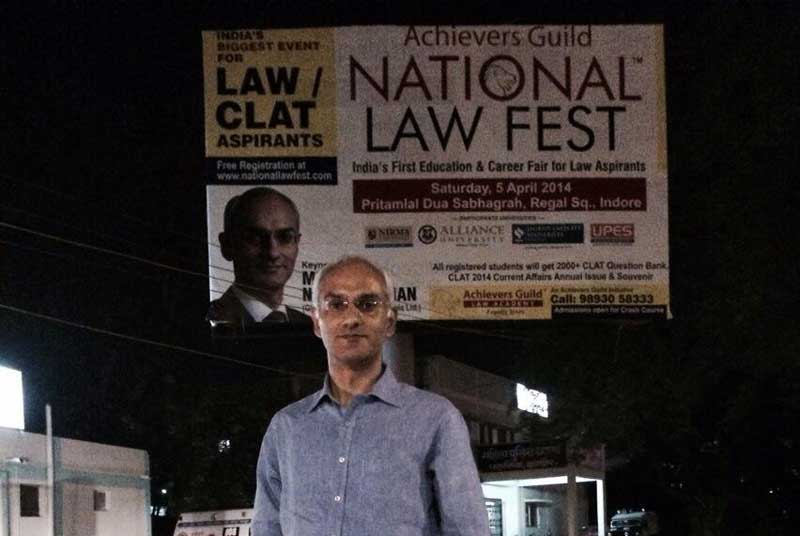
    Murali Neelakantan shared with us his insights and advice on mooting, skills of a lawyer and on being the current Global General Counsel of Cipla earlier in another interview on Murali Neelakantan on being Global General Counsel at Cipla, necessary skills of a lawyer, judging at Manfred Lachs & Jessup and importance of mooting.

    In this interview we speak to him about:

    • Being a Senior Partner at Khaitan
    • Being one of the first few India educated lawyers to have become a partner at a London law firm
    • Higher studies and the exposure one can get from them


    What does being a partner at a big law firm like KCo entail? What would a typical workday look like?

    A client sees a law firm partner as an experienced lawyer who can help it take key decisions, especially when there is no clear legal position and one needs to completely trust the judgment of an expert to predict the future. For example, when a client was considering investing in an Indian telecom company that had been granted 2G licenses, the key issue for me was the validity of the license – the only asset of the telecom company at the time of the investment.

    My view in 2008, based on my own research and due diligence, was that there was a major risk that the licenses could be cancelled and the client needed protection against this with a clear indemnity so that the full investment was refunded if the licenses were cancelled. As everyone knows today, the 2G licenses were subsequently cancelled by the Supreme Court, leaving the investors with no remedy.

    An English court recently held in the case of one of these investors that, the full amount of the investment ought to be refunded with interest. Many other investors in Indian companies whose licenses were cancelled have not been successful in claims against their Indian joint venture partners. Perhaps their lawyers did not see this risk or could not persuade the client to address the risk in this manner.

    A partner is also an owner of the law firm and is expected to take full responsibility for the firm’s success. Every firm is organised differently but, by and large, it is expected that every partner will look out for all the others and work towards making the firm successful and profitable. Often, partners have specific roles which suit their skills and interest. For example, one may be interested in HR matters like campus recruitment, another may take it upon himself to ensure training for all the lawyers, others may be focused on managing the firm’s relationships with professional networks like the IBA, IPBA, INTA, etc, and some others may focus on writing opinions so that there is one view across the firm on key contemporary issues.

    My work day begins quite early and by the time I get to the office, I have usually read all my email messages and planned my day. I try not to carry forward work to the next day. It would be difficult to generalise but a typical work day would include responding to client questions, reviewing and discussing drafts of various documents prepared by the team, reviewing articles or presentations that the team is preparing, every now and then, working on pitches to existing clients for new work or to prospective clients and lunch with fellow partners or clients. There is also work for the firm like the HR team meeting, preparation for internal and client training, creating of “know how” and mentoring junior lawyers. In addition to this since I was keen to judge a few moot courts every year, I would ensure that I had enough time in the day and on weekends to prepare thoroughly.

    During the Jessup season, from late November to March, preparation and marking memorials takes up most of my free time. That is also the cricket season and I try to play as many weekend games as I can. I try to leave the office at a reasonable hour so that I get some time at home before the family is asleep. However, I do ensure that I read all my emails before I go to bed, take stock of the day and think about what tomorrow’s plan will be. Unlike most people, I switch off my cell phone just before going to bed!

    How important is it for a law firm partner to be good at business development?

    Business development is a much maligned word. Those who “specialise in business development” will very quickly realise that clients don’t trust them. Clients want to meet lawyers who are able to help them with the law, not just glib talkers. So unless one has real knowledge of the law and the issues confronting the client’s industry sector, no amount of smooth talking or entertaining will be sustainable in attracting and keeping clients.

    Seeking out new clients is interesting but even those lawyers will need to spend most of their time working on legal issues with real clients, to have credibility during the pitch. Nothing impresses a client more than a lawyer who understands the clients’ industry sector and has a good knowledge of the solution for its issues. Obviously there will be some lawyers who prefer not to be involved in pitches but will be very effective in building relationships with existing clients and keeping them satisfied with excellent work. Rainmakers can make rain but that is just wasted water if no one is there to plant the seeds, tend to crops and harvest it in time. A good firm should have a diversity of partners with complementary skills and interests.

    It is almost impossible to have a clear list of qualities or criteria that separates partners from other lawyers who are not, but I have always felt that promotion to partnership, at least in the leading international law firms, is a signal that you have been accepted as a leader by your peers, ready to represent them all in public. I saw it as an achievement and an endorsement of my skills.

    What are the typical challenges you faced on your way to become a partner at Ashurst or at Arnold & Porter?

    It has been quite some time since I went to London and much has changed there since. So I am not really sure if my experiences are really relevant any more. There were many challenges but almost all of them can be traced to the fact that I didn’t either study or train there. Since I went there as a third year associate, I had no friends at the firm and the law school network didn’t exist in the days before Facebook. These days, law students get training contracts and have their seniors from the law school there to guide them through the system.

    When I landed in London, I hardly knew anyone there. Almost every little thing was a challenge. For example, since I didn’t have a credit history in the UK, it was difficult to rent an apartment or get a bank account or credit card. Unlike most of my peers who had a network of family and friends within and outside the firm, I had to find my way around.If there was a situation where one needed help on a tax issue, my peers would have a friend who they know from university or as fellow trainees in the tax team, who they could call. I wouldn’t even know where the tax lawyers in the firm were!

    Being a vegetarian teetotaller didn’t help with socialising in a country where the heart of the social scene was the pub. It was cricket that saved me. Simmons had a long tradition of supporting cricket, rugby, softball, netball and hockey and players of all abilities were warmly welcomed. There was always a very enjoyable dinner in the Long Room with an eminent cricketer as the speaker to kick off the cricket season. It was my opportunity to know people from all over the firm besides playing cricket which I loved, even though I was not very skilled. I also played for a team composed of lawyers in Barnes called the Nashers, after Malcolm Nash, whose claim to fame was that he was the bowler who was hit for 6 sixes in an over by Gary Sobers. I love the way the English are understated and don’t take themselves too seriously. Cricket was the highlight of the English summer for me and I miss it very much. Watching India play in England, battling the conditions at Nottingham and winning the Natwest trophy against all odds will always be a cherished memory.

    Building a practice, a euphemism for having a list of profitable clients who are loyal to you was, and still is, a key qualification for partnership. While I was working on English and international deals like many of my peers, one needed to find a niche. It was ironic, being a teetotaller, that many of the significant deals I did initially were for Interbrew, a family owned Belgian brewer which, over the years has become AmBev, the largest brewer in the world. Being one of the few Indian lawyers in an international law firm in London at a time when Indian companies were looking to expand in the UK and Europe and several international corporations were looking to establish themselves in India, was fortuitous. Simmons was always recognised as a great place to work, taking very good care of its people. Senior associates were trained for partnership over a few years so that they always knew what was expected of partners and were equipped for the role when elected. Jeremy Sivyer, a partner at Simmons and my mentor, encouraged me to use this opportunity to build a practice focused on India and Indian clients.

    During 2004 – 2005, I started receiving calls from headhunters for opportunities in other law firms who wanted to build an India focused practice. It was also a time that the US law firms were establishing themselves in London and there were some clients who preferred to have one firm for both English and US law matters. Simmons had a joint venture with Fried Frank for some time but when that ended, there was a risk that corporate and capital markets work that had a US element would be out of reach for me at Simmons.

    At that time, I met Ian Kirby, a partner at Arnold & Porter who charmed me into accepting equity partnership at Arnold & Porter. Arnold & Porter is one of the great American institutions – a firm that was well known for its diversity, strong views on civil liberties, emphasis on pro bono and like Simmons, a reputation for being one of the great places to work. It was an opportunity to test if I had indeed built a practice! I resigned from Simmons on the day of the London bomb blasts and started work at Arnold & Porter the following Monday.

    No one I know who worked at Arnold & Porter has anything but nice things to say about it. It may never be the most profitable law firm but it is, as someone described it, a collection of the brightest stars in the night sky. It has always had some of the most eminent lawyers as partners, those who are universally acknowledged by clients and peers as the best in their field of specialisation but who worked in the most collegiate manner. It was an honour to work with many of them and I, like many of their other alumni, always look out for opportunities to work with lawyers at both these firms.

    What prompted the shift to Simmons & Simmons from Nishith Desai Associates?

    I joined Nishith Desai soon after I graduated. I had interned there in my final year and Nishith was extremely kind to me. In fact, after my internship in February 1996, I spent many weekends in Bombay during my final trimester working with him. He has said very often that my first day at work with him was on his annual trip to the US visiting clients and law firms. Nishith was keen, with almost a childlike enthusiasm, to always learn something new. At the time, his was a very niche practice in a small office in Nariman Point. The global reputation that he enjoyed for his international tax expertise was exceptional. Almost all the tax law that I know, I learnt from him but he encouraged me to find my own niche.

    It was a time when technology companies were just breaking out and I had the opportunity to work on the Indian aspects of a NASDAQ listing of an IT company called IMR Global. With that experience, I pitched to Infosys to list on NASDAQ. I guess they were surprised that an Indian law firm had thought of it and knew how to do it. It was the last deal I did in India before I left for the UK. There was quite a buzz about all aspects of the technology wave including broadcasting with significant uncertainty on legal issues. Investing in research meant that I was able to work with Zee TV, Usaha Tegas and Panamsat as clients.

    The other sector that was beginning to look promising was infrastructure. With the personal goodwill that Nishith enjoyed, I managed to work on deals in this sector. While all the other law firms were already advising on several power and road projects, we managed to get on to the Birla AT&T financing, a small role advising SBI. No one in the firm knew exactly how to do it because a non recourse financing for a telco had never been done but between two young associates, we got it done.

    Another example was the opportunity to work on the first common carrier oil pipeline project for Petronet, which had just been established. There was no concept in India of a pipeline being a common carrier and it was the extensive research of the commercial and regulatory models for pipelines around the world, with the CFO of Petronet, Sidharath Kapur, currently the CFO of GMR, that helped us put together a bankable set of documents for Petronet.

    Similarly, someone I knew in Bangalore told me about an elevated light rail project that was being conceived by the state government. There seemed to be constitutional issues since railways was a Union subject in the Constitution. My research found a way out of it and we decided to pitch the idea of a new enabling legislation for the government of Karnataka. Since we didn’t really know all the aspects of the system, we looked for expertise overseas. Simmons & Simmons had been advising Railtrack in the UK for many years and also on railway projects in other countries and they were keen to work with us on this opportunity. Two of the Simmons partners who worked with us were Jeremy Sivyer and Colin Leaver who were keen on building the Simmons brand in India. It was Jeremy who, after working with me for a few months, asked if I had considered working at an international law firm in London. One thing led to another and I eventually joined Simmons in 1999.

    murali-n5

    What strategies should an Indian law student adopt if they want to work at a London law firm?

    Since international law firms are recruiting directly from campus and also offering internship and training contracts, I would think getting an LLM from the country one wishes to practice in is the best opportunity for lawyers who are interested in practicing law overseas. This opportunity did not exist when I graduated from law school. It has now become very difficult to move to an international law firm, as I did, after a few years of working in India. Similarly, very few of those who have gone overseas recently to study for an LL.M have been able to find jobs in international law firms. It therefore seems to me that a foreign LL.M is unlikely to be valuable to either an international law firm or an Indian law firm.

    Does Cipla offer internship opportunity to law students?

    Cipla has not had interns from law schools but it is something that we are considering. The qualities that I expect to see in an intern are exactly what I would like to see in a law graduate. Obviously the interns will have had fewer opportunities but it is possible to demonstrate those qualities in the first three years of law school.

    How do you think interns can get noticed in a positive way in the limited time they have?

    All interns have to do is exhibit the qualities that we expect them to showcase. A keen intern who does all the work given enthusiastically, looks out for opportunities to exhibit personality and skills will definitely get noticed. There is always work for those who do a good job and every employer is looking at interns as potential hires and internships as the opportunity to observe and evaluate them. We have nothing to gain from disappointing or ignoring interns.

    Do you think higher studies are a necessity for a successful legal professional?

    There are certain career paths that require specialised knowledge and it would definitely be helpful to pursue further education. Many alumni have careers in the UN and other international organisations. Those at the UNHCR would have benefited from a thorough knowledge of refugee law, for example. However, I am not sure if there is great value in an LL.M if one is likely to be back in India to be a litigator. This is really a question to ask from the many lawyers who have studied overseas. What studying and living overseas does, is make one aware that there is definitely more than one way of doing almost everything and one should not take anything for granted. That perspective is of some value but is perhaps not valued much by Indian employers currently.

    How do you maintain work-life balance?

    All organisations have their own culture and it is really for the interns to research, experience and understand this for themselves. There will be trade-offs to be made since no place of employment is perfect in all respects. No one who has worked with me has complained about lacking a work life balance. Since I have never found it to be an issue for me, I can only hypothesise that there is a mismatch in the expectations of the students and reality. I am surprised to hear this since all of them have the opportunity to see it for themselves during internships. The initial years of work will not be hard for those who, through law school, have been working in a disciplined manner on multiple tasks to tight deadlines.

    My own view is that young lawyers don’t invest in themselves by working on building expertise and personality. There comes a point very quickly in a lawyer’s career when one should know the law in their area of specialisation but those who delegate research to interns and due diligence to their juniors will find that their foundation is unstable.

    One will be successful only if one can work with colleagues and clients and that is based less on expertise in law, which many lawyers will be expected to have, but more on one’s personality. A passion, even unrelated to the law, is essential to stand out. I know clients who are fanatical about movies and a lawyer who shares that passion would find it easier to relate to such a client. Legal service is not a product where one can easily demonstrate relative superiority over competition. To be appreciated for the work that one does, being liked by the client and having a personal relationship is critical.

    Lastly, what would be your message to an Indian student pursuing a law degree?

    Law can be an avenue to pursue any passion that one has. If one is interested in cricket, I would think that if one cannot play the IPL, the next best thing would be to be a lawyer who represents the players, teams, sponsors, organisers, etc. Similarly, if one was passionate about music but will not make it as a professional musician, there is a great opportunity to work with the music industry. The list of opportunities for a law student is almost endless. I hope each of them finds their passion and is able to pursue it through a career in the law.


  • Diwakar Kishore, Advocate, Patna High Court, on his engagement with IDIA, litigation, and working at Luthra

    Diwakar Kishore, Advocate, Patna High Court, on his engagement with IDIA, litigation, and working at Luthra

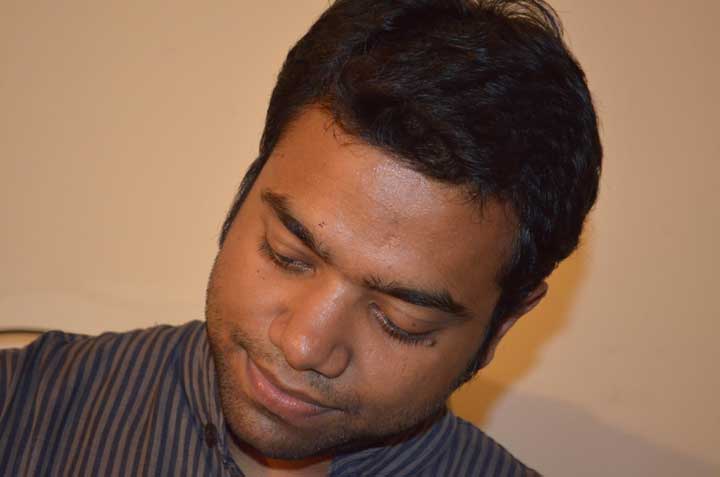
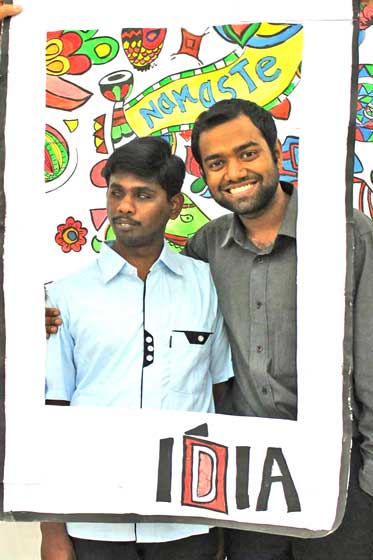
    diwakar-k4Diwakar Kishore is a graduate from NLSIU, batch of 2012. After working at Luthra for about a year, he quit it to become an independent practitioner at the Patna High Court. Presently he practices litigation at Patna High Court and also takes out time as a director of IDIA

    In this interview we talk to him about:


    Tell us a bit about life before college.

    I finished my schooling in Patna, Nainital and Kota. I went to a boarding school at an early age and it helped me a lot as an individual and gave me many wonderful friends.

    My father is a lawyer, and I grew up in a house full of AIR-SCC volumes. My sister also took up law after high school and had married a lawyer. So yes, law was a familiar field.


    What motivated you to pursue law?

    As I said, my father is a lawyer, so it was not a field that was unfamiliar to me. After spending a few months preparing for IIT and truly realizing how much I hated chemistry, I did a bit of soul searching and drifted towards law (not NLS). I was (just) fortunate to make it to NLS.


    What do you have to say about mooting at law school and legal writing for journals?

    Mooting is generally an activity that one lets go of on graduating from law school, but this does not mean its utility doesn’t carry over into the real world. In addition to providing a rigorous training that examinations or mere academia cannot offer, mooting and activities like writing for academic journals provide you with experience and skills that are invaluable in legal practice, such as clarity of thought, time management, clear argumentation and the ability to work under immense pressure. These are skills that would never be redundant to lawyers, in law school and out. While the actual law may be ever changing, these are skills that will always be useful.


    What do you feel about the perception that students of certain ‘elite’ NLU’s have a much easier time in kickstarting their career as compared to law students from other colleges?

    Certainly it would seem that some firms have a slight bias towards students from top NLUs. However, the beautiful thing about a field as diverse as law is that there are umpteen opportunities and options available to young graduates, from litigation to corporate law to social work to advocacy, teaching and academia and much more. Law as a field is growing every day, and its effect is seen in so many spheres that there are always meaningful ways and opportunities to work and engage with the law.


    Tell us about the trimester system at NLS.

    NLS has the unique trimester system followed by very few colleges in India. Rather than having two semesters every year, we have three trimesters a year. I think it is a very effective model. We did four courses in a span of three-four months. Now, even though the time-span seems short, the well structured organised course at NLS helped us cope with the trimester system threw at us.

    I am yet to meet a student (from any discipline) who tells me that that the academic system and faculty at his/her college is impeccable. As far as the question of the freedom that the trimester system offers to law students goes, I think the recent success of NLS students at national and international competitions is testimonial to the fact that you can do enough and more to develop yourself in any system, if you really put your mind to it.


    Which internships did you pursue during your graduation?

    I pursued a variety of internships at law school. I interned as a teaching assistant in several colleges, worked under practicing lawyers and did a few corporate internships. I looked at internships as an opportunity to test and sample various fields of law, to see if we were suitable for each other. College is one of the last places where one has the opportunity to just try various things; I looked at internships as one such opportunity, which is why I tried to take up as many different internships as possible.


    Were these internships all planned or just happened on the go?

    Some were planned, others came along the way. My training at law school proved to be useful, but I tried to regard internships as opportunities to learn more, as opposed to exhibiting what I do know. There are certain tasks unique to working life that college cannot hope to prepare one for, and good internships bridge this gap perfectly.


    Tell us about working at Luthra & Luthra.

    I was offered a job at Luthra through campus placements while I was in my fourth year of college. It was surprising for me and for a few others as I had never interned at a top law firm neither did I have the grades to be called the crème de la crème  of my batch. I think my teaching experience along with the practical knowledge that I had acquired during my internships came to my rescue.

    Corporate lawyers are required to do a variety of things during the course of the day. Documentation, research, negotiations, coordinating with clients, counsel of the opposite side and government agency; one might be required to do any or all of these things in a single day (and night) at a law firm. It is slightly difficult to describe a typical day at work at a law firm.


    diwakar-k2How did you get involved in IDIA?

    While the work at Luthra was challenging for sure, I was not happy with the extremely limited engagement with real law that such job provided. I left Luthra to be more involved with public law and hence, my obvious destination was litigation. I started practicing in Patna High Court after Luthra. While it’s true that early days in litigation is anything but ‘lucrative’, but I found the work to be more fulfilling. However, after practicing law for a few months, I realised that ‘justice’ in a court room does not necessarily translate into substantive changes at the grassroots level. Coming from one of the poorest states in India and after studying in one of the best colleges of this country, I felt the need to be more closely associated with my community and that is why I joined IDIA. Along with litigation, I am excited to work with the law in a different and useful way that brings more people into rather tightly-knit legal fraternity, and IDIA does just that.


    What is it like being an independent legal practitioner at the Patna High Court?

    Compared to a corporate job, in the initial day’s litigation posses very different set of challenges: (i) pay is bad, (ii) clients are rare, (iii) there is a lot of running around and dealing with a variety of people from different strata’s of society, and (iv) there is a lot of uncertainty – you might lose a great case because the judge feels differently. However, few and far between, when you do win a case all by yourself, that moment of joy is priceless.

    I believe that having a personal mentor is invaluable in any profession, not just litigation. It provides unparalleled professional guidance, and there are certain skills, tips and tricks that come only with professional experience. Having a mentor not only familiarizes you with the profession, but is also a way to make your skills, merit and services more well known amongst the others in Court. Having a good mentor often works as an additional affirmation of your skill and ability, both to other lawyers and clients.


    diwakar-k1How is the environment at Patna High Court? Do the judges take kindly to the young lawyers? Any experience at the HC you would want to share?

    I found the Patna High Court to be an interesting place. Several judges have been extremely supportive, and actively recognize and encourage young lawyers such as myself. It’s really quite encouraging when a judge notices you or your arguments, and I’ve seen several judges make it a point to drop a word of praise or encouragement to young lawyers such as myself.

    Justice Tripathi, of the Patna High Court, once stopped me during my arguments to ask me which college I studied law from. I was taken aback at his question but when I finally told him that I had studied law from NLS, Bangalore, he smiled and said: “It seemed like it”. It was a very unusual thing to happen in a court room but something that I will cherish for a long time.

    A perception that deters many students from pursuing a career in litigation instead of at law firms is deemed to be the initial grind that has to be undergone for the first few years. From your experience is it really such a rough journey for a new lawyer in the legal profession?

    New litigators certainly do not have it easy, but then again, no new job is a cakewalk! Every good profession requires a foundation of at least a few years of solid hard work, and litigation is no exception. It’s difficult to weigh a profession in terms of pros and cons and decide which the “best” option is: there really is no such general answer, one must merely find the career option that suits your skills and interests best. I find litigation to be exciting, challenging and fulfilling, which, for me, more than adequately compensates for the “grind”.


    Where do you see yourself five years from now?

    Five year plans does not work in most systems. For me, it’s more realistic to function on an annual basis: priorities might alter five years down the line and there is no reason to stick to a plan that I made as a different person altogether.

    While today I feel, I should go back to teaching sometime in the future, this coming year, I would like to continue my practise of the law along with the work I do for IDIA. I enjoy working for disenfranchised and it gives a sense of purpose and meaning to my life right now.


    Lastly, what would be your message for all the law students reading this?

    If at all, be in the rat race after tiring out many things and enjoying the company of the rats, the most. It’s rather stupid to want to work somewhere because others around you say that they would like to work there. Do not waste law school by worrying about the life after. Be kind to yourself and have some fun with the law and the friends that your college has to offer. You will miss them once they are gone.


  • Murali Neelakantan, Global General Counsel, Cipla, on being a first generation lawyer, mooting, and his diverse experience

    Murali Neelakantan, Global General Counsel, Cipla, on being a first generation lawyer, mooting, and his diverse experience

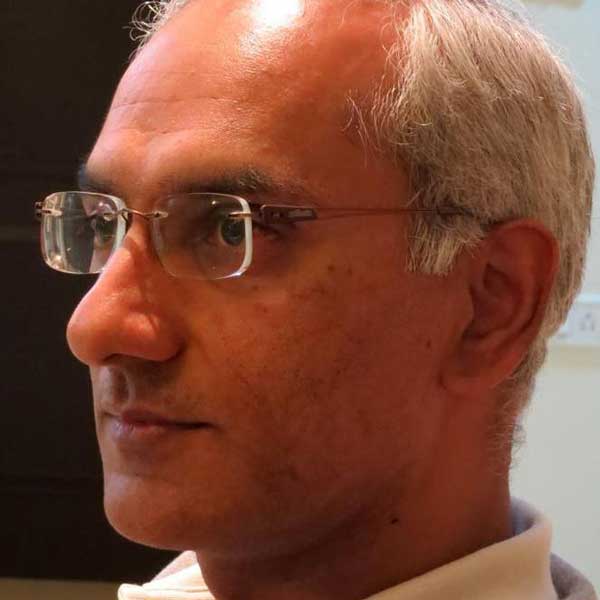
    murali-n3Murali Neelakantan is a graduate of NLSIU, batch of 1996. He was one of the first India educated Lawyers to have become a partner in an English law firm. Murali had worked as a Senior Partner at Khaitan before joining Cipla as a Global General Counsel. At Cipla he imparts leadership training and his work entails solving critical problems in times of conflicts. Murali has also been mentioned in the Who’s Who of the World 2004 – 2009.

    Murali had a lot of interest in moots while he was a student at NLSIU and presently he takes time out to judge prestigious moots like Manfred Lachs and Phillip C Jessup.

    In this interview you will get to read what he has to say about:

    • Being the first Jessup team from India and winning the BCI moot
    • Judging Manfred Lachs and the critical elements of a mooter.
    • Being a Global General Counsel of Cipla


    We have more advanced career insights to share from him in the next interview.


    Tell us a bit about your life before college.

    There were no lawyers in the immediate family and the whole family had very mixed feelings about a career in the law. They obviously knew of the legends like Nani Palkhiwala, Ram Jethmalani, Soli Sorabjee, and K. K. Venugopal but also of the many lawyers loitering around the city civil courts. My father was an engineer and others in the family were civil servants or officers in the armed forces. My parents would very much have liked me to have become an engineer or joined the armed services.


    The image of a lawyer back in the ’90s was neither inspiring nor attractive for most students. What motivated you to choose law as a career?

    I had given up on a career in medicine after Class X and studied Physics, Chemistry, Math & Electronics during Class XI and XII. Those were the days when reservations of seats in academic institutions were at their very peak and very few places were available in the leading medical and engineering colleges in the merit category even though I scored reasonably well in the Common Entrance Test. I took keen interest in the Armoured Squadron of the NCC for three years where I was quickly promoted and also won medals. It was really the first opportunity for me to demonstrate leadership and a career in the armed forces was definitely on the radar.

    The National Law School had been in the news since 1988 and I had been impressed by a few of its students at the inter college festivals where I was a regular. There were also a couple of kids from my neighbourhood in Bangalore who had joined NLS before me. There was quite some buzz created by the vision that the government had for the National Law School to be like the IIMs and IITs. A few lawyers that my family knew felt that if one was keen to study law, NLS was a good idea. I was a good public speaker, a logical thinker who liked reading and writing and that, at the time, seemed good enough for a career in the law. So despite opposition from the family, I wrote the entrance exam and got through. It was also very much cheaper to study law than either engineering or medicine.


    murali-n2How did you get into mooting?

    (Mr. Murali represented India at Jessup and had also won the BCI Moot Court Competition.)

    The extra-curricular activities that interested me in the first two years were volleyball, cricket and athletics. I discovered very quickly that merely being a sportsman really didn’t get the attention of the girls. My experience of moot courts began in my second year where I helped my classmates win the inter class moot court competition. It was not until the third year at the insistence of one of my closest friends and senior at NLSIU, Dayan Krishnan, now Senior Advocate who was a very keen mooter that I really began participating in the university selection rounds. There were really only about seven moot courts and it was an honour to represent the university at a moot court competition. I came fourth in the first of three selection rounds and that was really the encouragement I need to take this on. At the end of the selection rounds, I got the opportunity to represent India with Sandeep Farias and Sanjoy Ghose at Jessup. That was really my first competitive moot court! The next moot court for me was the Bar Council moot court which was the toughest moot court at the time and was therefore the most prestigious national moot court.

    When we got back from Jessup we realised how far behind the world we were in terms of support for moot courts. Sandeep Farias and I started the first novices moot where those who didn’t want to moot competitively got the opportunity to try it out in camera. This student initiative continues to be popular even though there are many moot court competitions and everyone who wants to participate gets the opportunity very easily.

    I would encourage every law student to moot as often as they can. The most important lesson it teaches is that there are two equally true sides to every story and clients don’t come to lawyers with facts that will guarantee a win. Research is critical to success in a moot court and while it is easier to search these days, one is unlikely to find a decision of the Supreme Court that fits the facts before you perfectly. Formulating the key legal propositions and finding support for them is a skill that is indispensable to every lawyer. Finally, mooting is about persuasion. The days when one wins by confusing the judge are few and far between. One needs to be articulate to be persuasive. This is a skill that is used both inside and outside the court room. In a court room, one has the benefit of a neutral judge. In a negotiation, one is up against another lawyer who is naturally inclined to disagree with you. It is here that the powers of persuasion are tested most. Articulate and persuasive lawyers also put these skills to use while advising a client on a course of action when a client may have an incentive to take an alternative course.


    If you see that a person you are considering hiring is good at mooting, does this influence your decision?

    While I look at grades closely and usually have a CGPA cut-off, I also consider all the extra-curricular activities that interested a potential hire. I would definitely interview a student who won moot courts, played team sport, published a paper or had been committed to IDIA (Increasing Diversity by Increasing Access), even if the CGPA was below the cut off for interviews.


    As a judge what are the specific skills you look for among the mooters?

    1. Clear legal propositions fully backed up with authority and the ability to anticipate the propositions and authorities of the opponent. Most of this is easily done with thorough research and attention to detail. I expect the participants to know more than the judges.
    2. Clear articulation that persuades me that no one could have argued this case better is perhaps the best description of the winning team. Preparation is the key here so that there are no surprises. If one does find a judge taking an unexpected view, it is an opportunity to demonstrate the breadth of one’s knowledge of the law and facts and quick thinking.
    3. A good sense of humour makes it easier for an advocate to make a connection with the judges; bad timing or poor taste could ruin it though. Quickly evaluating the bench is therefore a key skill. That will tell you what the winning strategy is, how to articulate a proposition so that it rings true to the judges, which authorities are likely to have an impact or when not to press on an issue even if you think you have a good argument.
    4. I have seen students treating moot courts like an elocution contest, reciting to me their memorial. That perhaps works if the judges do not interrupt the speech and I know many judges who will not allow the monologue to last for more than a few minutes. If moot courts are opportunities to prepare for a life in the law, the ability to recite 20 pages of the memorial is not the most valuable skill.


    If someone does not go to a top law school, would you say he still has a shot at a great career in law, at the top of the practice?

    Like any other profession, a good education, by which one assumes graduating from a leading academic institution, is merely a good starting point to launch one’s career. It is not necessary for success as a lawyer to have graduated from the leading law schools in the same way as those who did not graduate from one of the top IITs can, and have, succeeded as engineers.

    It is a myth that the top law schools have the monopoly over excellent faculty or infrastructure. With technology that is widely available these days, I believe that the playing field has been levelled and students from every law school have a fair chance at being the best. No judge in a moot court knows which university a student represents. Quality of the memorial and the arguments are the only two qualities that are evaluated. I would find it difficult to ignore a student who did well at Jessup, Manfred Lachs, Stetson or Willem C. Vis. Similarly publication of research papers is another opportunity to demonstrate ones abilities. When I went to London in 1999, almost no one there had heard of the National Law School and it gave me no advantage at all over my Oxbridge educated peers.


    What does a general counsel at an MNC like Cipla do?

    The role of a Global General Counsel does not exist in all companies and even in those companies who have it, the roles are not defined uniformly. It all depends on how the company sees the legal function and the organisation structure. Cipla’s legal team is really led by the Chief Legal Officer who manages all the lawyers around the world. I am merely the coach of the legal team and a resource that they can use where there is a critical judgment to be made on conflicting courses of action.

    My main function is to be counsel to the CEO and the management team so that they have someone who can identify, allocate and mitigate enterprise risk in the decisions that are being taken.

    For example, strategic decisions like whether we invest in vertical integration or have long term supplier arrangements.


    When you hire lawyers, what kind of skills and profile do you look for?

    Unless one is a sole practitioner, the practice of law is about teamwork. One can learn the law but it is very difficult to change people’s character and personality. The critical quality for me is happiness. I will just not hire a person who I feel is not happy. Energy and enthusiasm are essential for a team to work well. Good grades tell me that the person has been hard working and diligent through law school. Many of the subjects may not be fun but knowing that it has to be done well is a good lesson to be learnt in law school. Most of the work we do will not be interesting every day and I would like to be sure that every person in the team will do it well even if it is not fun. We are presented opportunities to learn everyday and that’s a habit best learnt in law school. Participation in moot courts and team sports, for example, tells me that the person knows what one needs to do to succeed, has seized the opportunities presented to them, works well in a team, is well organised, takes risks but also knows how to prioritise and make good choices.


    We have published the rest of the interview here.

  • Prem Ayyathurai and Sahana Mahesh, co-founders, Kranti, on Government inaction, the culture of dissent and bridging inequalities

    Prem Ayyathurai and Sahana Mahesh, co-founders, Kranti, on Government inaction, the culture of dissent and bridging inequalities

    Prem Ayyathurai and Sahana Mahesh are peers and graduates in law from NLSIU, Bangalore. They co-founded Kranti, an initiative that attempts to mobilise politically conscious students from across the country. Sahana is currently working in the chambers of Jawahar Raja and Rajat Kumar and Prem is in the final trimester of 5th year in law school. They trace their path from law school to kick starting this initiative and highlight their experiences along the journey.

    In this interview we speak to them about:

    • The need for an organised, mobilized student movement
    • Government inaction, disillusionment with the system and trying to bridge inequalities
    • Offering political resistance through art, and celebrating the culture of dissent


    How would you introduce yourself to our readers?

    Prem: I have always sucked at introductions, so I’m going to avoid getting into one here.

    Sahana: I am Sahana Manjesh. I’ve recently graduated from the National Law School of India University, Bangalore. Originally from Mysore, I will soon be moving to Delhi to start my litigation practice in the chambers of Jawahar Raja and Rajat Kumar.


    Tell us about your childhood and schooling. Is there any particular childhood incident that has proved to be an inspiration for you?

    Prem: Most of my schooling was done at the erstwhile Dr. Kalmadi Shamarao School in Pune. I then attended BMCC and came to NLSIU. There were far too many inspiring people and moments in my childhood that have shaped me and compelled me to push harder; but if I were to place my finger on one, it would be the humbling realization that one generation before mine, my family lived in a small hamlet – the realization of this growth has never left me and pushes me to challenge myself, continuously.

    Sahana: I studied in St.Joseph’s Central School till 10th grade, after which I studied in the Demonstration Multipurpose School for two years, both in Mysore. Again, many moments of inspiration to name.


    How is life at NLSIU, Bangalore? Have you always wanted to study law?

    Prem: I didn’t really fit into the law school environment for a long time but I’m sure most people find it lovely. The great thing about NLSIU is that it enables a student to do a great many things – if you have the potential and more importantly, the desire to see things through, this place won’t let you down. The administration and, more importantly, the alumni are always there to support something good.

    I didn’t always want to study law. I decided to aim for legal education after noticing how far too many successful organizers of people’s struggles had some background in law. I want to work on social questions later on in life and so it seemed to be a natural choice, in that context.

    Sahana: I have wanted to study law since I was very young. It seemed to combine my love for words and arguments and oration with my interest in rights and politics. My time in NLSIU has been very rewarding. It is a space that exposes you to a world of opportunities if you allow it.


    krantiTell us something about your brainchild ‘Kranti’. 

    Kranti has taken shape, slowly, over the last six months. But it is the culmination of years of wondering about political processes and involvement with student groups. In Pune, I was involved in founding Yugpath about seven years ago. Over the last two years, especially, I have seen with great interest the mobilization of students in different urban spaces across the country (India Against Corruption, and after the rape of Nirbhaya). These were legitimate outbursts of long running disappointments of our generation with the government of this nation. Unfortunately, however, while the mobilization was on an inspiring scale, it was not rooted strongly in ideology. That, amongst many other factors led to the dissipation of these movements once the mass media looked away. Clearly, then, there is frustration in our generation. Enough frustration to step out on the streets (which takes courage) and face police batons. But this expression of frustration needs direction. This was my inspiration for Kranti.

    The aim behind the campaign is to bring together the experiences of veteran organizers of peoples’ struggles along with academics who have been speaking about the failure of the Indian political processes. Having done this, we want the youth across India to engage with these veterans and, together, ponder over what the solutions to India’s future may be.

    Kranti is a festival. It is a festival to discover, celebrate and reclaim the rich culture of dissent in our country. Although Kranti originated in the National Law School of India University in Bangalore early this year, it has since gone on to spread to a few other cities with students from elsewhere joining in. The purpose of Kranti is to introduce college students to the many struggles that are part of India’s story of ‘development’ through the culture of dissent. This, we believe, will go a long way in raising solidarity for these movements and their causes. We do this through street plays, movie screenings, songs of protest and conversations with students.

    Our online content on the culture of dissent is growing. Between July and August we had and continue to have documentary screenings in colleges in Bangalore, Mysore, Pune, Bombay, Hyderabad and Delhi. We have photo exhibitions in Bangalore during August. Through this time, Delhi, Mysore and Kolkata will witness street plays in solidarity with Kranti. Our main events will be in Bangalore during September. On the 7th, activist musicians will perform in our event, “Songs of Protest”. On the 8th, celebrated film makers will present their work. And finally on the 15th, academics and activists will participate in the “Dissent Conference”.

    Kranti is a result of a string of experiences I have had during my time as a law student.  My internships in Rajasthan, Chhattisgarh, Delhi and Bombay exposed me to peoples’ struggles and legal activism both inside and outside the courts. I was associated with the Legal Services Clinic while in college and my activities there sensitized me to various issues of rights. Attempts at legal critique and reform have also led me to discover politics and activism. Kranti to me personally is an effort to share these realisations about India’s inequity with people of my age, for we have the ability to engage in redistributive politics.


    It is indeed a commendable initiative, but what do you think about the sustainability of such a revolutionary idea? What makes Kranti different from other similar campaigns?

    What makes Kranti different is straightforward – we are under no illusion that our attempt to strike conversations across the country will culminate in a campaign which will bring change. Note how Kejriwal was involved in a fast earlier demanding democratic revolution but his latest fast was to facilitate gas and electricity connections. That climb down happens when campaigns are not thinking at least 5 years ahead.

    For us, Kranti is special because we are asking deeply uncomfortable questions – by organizing the screening of Kak’s Red Ant Dream, Patwardhan’s Jai Bhim Comrade, or a performance by Kabir Kala Manch, our statement is clear. There may be other platforms which set up ‘conversations’ between the youth and parliamentarians. Our conversation is amongst the youth itself, to ask ourselves what we understand to be the role of the Indian government in ensuring social security, and whether it is legitimate, for example, for India to call left-wing violence ‘terrorism’ but right-wing violence as ‘an expression of frustration’, and so on.

    Personally, I am constantly amazed at the many incredible people who are doing some amazing work – through their art, through their politics, through their words, through their appreciation of contemporary concerns. Kranti is a small idea, in a large world of possibilities. In the time that we have conceptualized and started executing Kranti, we have made many friends and sought guidance from several mentors. These are relationships and networks which help build solidarity for various causes; these relationships will outlive Kranti. At the core of Kranti is the desire to introduce youngsters to the world of dissent, to enable a moment of revelation which could change the way they look at their choices, their politics. If we achieve this with a handful of friends in different corners, I think our job is well begun.


    How do you think a common man can contribute towards the movement? And, how can anyone join the movement or volunteer?

    The effort at Kranti is to discover and share information about the many brave dissidents in India and we therefore spend considerable energies in curating this information. You can come take a look at our work, follow us on Twitter @KrantiFest and also spread the word about us!

    Also, in order to ensure our independence in the causes we wish to discuss and engage with, we are funding Kranti through crowd-sourcing. We still have quite a bit of money we need to raise. If you think this idea is worth your money, or know anyone who may be able to afford it, please write in to us at kranticonference@gmail.com to find out about the donation process.

    We need students from across the country to reach out and participate – they can do so by organizing film screenings and talks, or by setting up street plays and reclaiming the public spaces like roads and parks for expression of dissent, or by helping us design posters, pamphlets, films, online campaigns and so on.

    As Sahana pointed out, we are also raising funds ourselves – we are cash-strapped and running a tight show. If people are interested in helping us raise funds, or know of institutions/organizations which can contribute, we’d love to hear about these opportunities.


    How supportive have your parents been about this? Were there oppositions from friends and family that you’ve had to face, regarding Kranti?

    My family has always been supportive right from the times of Yugpath, for all the activities I have taken up. There have been times that I called up family and said, “I am filing RTI applications against IAS officers, nobody will employ me after graduation if this thing comes through,” and they’re like, “Haan, thikhai!

    My parents, sister and friends have indulged me in my obsession with this campaign, through moods both blue and orange.