Tag: NLSIU

  • Gopal Sankaranarayanan, Advocate, Supreme Court of India, on building a career in litigation and on legal writing

    Gopal Sankaranarayanan, Advocate, Supreme Court of India, on building a career in litigation and on legal writing

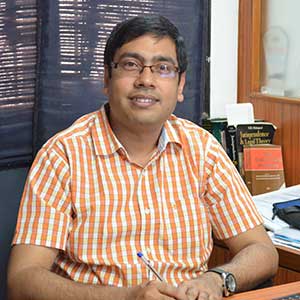
    Gopal Sankaranarayanan is an advocate at the Supreme Court of India. He graduated from NLSIU, Bangalore in the 2001 batch, immediately after that he went for a Masters in Criminology from the London School of Economics. A prolific writer in various journals and leading dailies, a co-founder of Care For Air, an independent, volunteer organization and a successful practitioner of law, Gopal speaks to about:

    • His college and university experiences.
    • Mooting – the culture and its importance.
    • Helping Bhutan draft its Constitution
    • Legal writing, research and his new project Care For Air.
    • His views on Section 498-A and his advice for being successful in both personal and professional spheres.


    Could you please introduce yourself to our readers?

    I am a son, husband, father and friend. I am also an Advocate of the Supreme Court.


    You graduated from NLS Bangalore in 2001. How was preparation for the entrance exam like then?

    The entrance exam in the mid-90s was very different from what it is now. There were fewer candidates taking it then – a few thousand or so – and the questions were fairly straightforward Math, English, GK, Logic and Legal Reasoning. With time, they have become more complex, and with the advent of the CLAT, fairly random, inconsistent and thoughtless, which is why I am helping my friend Prof. Shamnad Basheer in his challenge to its arbitrary nature which is pending in the Supreme Court.

    Preparation for me when I took the exam was interesting. I took it twice, in fact. The first time in 1995 with less interest, a week after a teenage romantic heartbreak and which led me on to the NLS waiting list and then St.Joseph’s College in Bangalore for a year. That was probably my best year of College – I travelled the country for literary fests, I bunked classes to have beer at Brigade Road and investigated kabab roll joints across the city.

    The second time the following year I spent a week reading that godforsaken Competition Success Review and flipped through the equally mammoth Manorama Yearbook to figure out who had won the Padma Vibhushans and to understand what GATT was. It didn’t help. But what did was the fact that a friend was in NLS and she gave me a few ideas, most important being to finish all the questions. I weaselled my way in, though if the faculty had any idea, they would have nipped it in the bud!


    How was your time at NLS – could you share your experience with us?

    My time at NLS was a lot like life. It was a microcosm of India – girls and boys from across the country from a variety of backgrounds all thrown into this melting pot– there was competition, pettiness, talent, imagination and insecurity. I tried my best not to change who I was (which wasn’t a great idea because I have a prickly personality!). As a result, I tried everything, giving academics the least priority. I played a lot of sports, and was most partial to Cricket and Hockey. I mooted nationally and internationally, helped co-found and convene our annual fest LeGala led by the wonderful Meghana Abraham, participated in literary and cultural events across the country from all the IITs to BITS Pilani’s unparalleled Oasis, sat in dive bars in Nagarbhavi, did all-nighters with cigarettes and dumb charades, danced and sang, choreographed fashion shows, and loved my internships with K.K.Venugopal, Zia Mody and Karanjawala. Subject wise, I fell in love with Constitutional and criminal law and fortunately, that affair continues.

    I made some very dear friends at NLS – many for life, and I am happy that their interactions have made me richer, while not necessarily enriching them! One of those collegemates now shares her life with me, though she claims she barely noticed me then.

    On the flip side, I had my share of controversy and run-ins with the faculty, a few of whom completely lacked the emotional maturity to deal with young people. There were others, like Prof.N.L.Mitra who probably saw some potential in my rebellious streak, and when I objected to the undemocratic manner of NLS student elections, he allowed me to form a Committee to revise our Constitution. That effort thankfully bore fruit largely due to the efforts of P.M.Thimmaiah and Nandan Kamath.

    In my entire tenure at NLS, there were very few members of the faculty who really had what it took both academically and emotionally – A.K.Rai and V.S.Mallar were the exceptions, and the blame for this lies at the doors of a series of Vice Chancellors who were insecure and lacked the imagination to encourage young academics to truly flourish.


    You did your Masters in Criminology in the London School of Economics. Tell us a little about your time there.

    I guess the fact that I didn’t seem like a nerd appealed to LSE when I applied seeking to enlarge my passion for theoretical criminology. At the time, LSE was still a part of the University of London and we had multiple faculty across King’s, UCL and SOAS taking a single subject. I knew Nicky Lacey was at LSE, and that’s why I applied, but to have the erudite Robert Reiner and the accomplished Ben Bowling (now Deputy Dean at King’s) teaching us about feminist theory, stop-and-search and media manipulation was fantastic. The rigour they expected and the inputs we got from international students made the subjects so much more attractive. As we could opt for a non-specialized subject as well, I chose International Law of Armed Conflict & Use of Force, which was helmed by Prof.Christopher Greenwood (now a judge at the ICJ). Greenwood to me sums up everything a Professor ought to be – charming, informed, witty, humble and extremely disciplined. While he taught us, he was also a Queen’s Counsel, advising the British Government on the invasion of Iraq (this was shortly after the September 11 attacks), editing the ILRs (with Lauterpacht Jr.), churning out a series of articles in the top International journals, appearing before the ICJ and also taking 4 other courses on law. Teaching one course at the Masters level can be exhausting – to do all this is superhuman. Along with Greenwood, giants like Christine Chinkin and Rein Mullerson (Gorbachev’s former Advisor) brought into sharp perspective the practical real-life experience that is so necessary for a good academic. I could probably bore you to death about how the approach of teachers in the UK ought to be emulated here – so that they give you some respect and treat you as equals, or at least sentient beings.

    Apart from the classes, which after a long while, I truly enjoyed, I also played Hockey for LSE’s First XI team, and won medals for the Universities League and Championship that year. We trained under the shadow of the iconic Battersea power station and I will never forget freezing my butt off while running around on this Pink Floyd pitch.


    What is the value addition of a Masters in your career?

    I think if you are curious and you like to learn, you should always step beyond our shores to try and experience that world. For me, my Masters was always just going to be knowledge for the sake of it, as I had no plans of working in London and was coming back to practice. I have almost never used the actual lessons or the subject matter of what I was taught in my practise, but the tools of research, of pithy presentation, of verification of sources, of comparison, of context I apply on a daily basis.


    What has been the role of sport in your college days and thereafter? What role do you think sport plays in getting a postgraduate seat?

    I was and continue to be passionate about sports. I still play tennis, badminton, basketball and golf as time permits, and whenever Amit Sharma remembers, I will turn out for a day-night cricket match! As the great American broadcaster Heywood Broun said – “Sport doesn’t build character. It reveals it.” If you allow it, it can be the most defining aspect of who you are. Sport has taught me passion, camaraderie, leadership, sharing and loyalty. It has given me perspective about everything else I do because it is so inclusive and rewarding. You don’t have to play it, you don’t have to be good at it, you don’t even need to understand it to actually be moved to tears when something great happens. I haven’t seen anybody crying enraptured by a great argument in court or a wonderful contract clause. If I were unwell, I would probably skip Court, but I have stepped onto a cricket field with one hand in a cast, and shared a 45 run partnership for the last wicket with Siddharth Agarwal, who now knocks it out of the park in Delhi’s criminal courts.

    During my years as a lawyer, I have been happy to see the seniors at the bar readily reach for their cheque books when I approached them to donate for Shiva Keshavan’s luge at the last Winter Olympics, and my own recent experience as Secretary of the Lodha Committee has been very rewarding in helping formulate policy at the highest levels of one of the world’s most watched sports.

    As far as your applications question is concerned, I can imagine sport playing a big role if you apply to Universities that have strong sports agendas (Duke, Michigan, etc.) or if the evaluator is partial to sport. But if you are unfortunate to have your exquisite essay read by a serial academic topper who frowned at such frivolities, you are up the creek without a paddle.


    What are some of the important observations you have found regarding the moot culture in India in recent years, when you have acted in the capacity of judge?

    I have had varying experiences. I know it’s very tough to know what to prioritize before which judge – some prefer citations, some (like me) love to go into the facts and work the angles, others just want to show how much they know. There are, however, 3 basic things I tell mooters –

    (1) Dont interrupt the judge, but please don’t be obsequious;

    (2) Stick the moot problem on your bedroom door and read it a hundred times – it always throws up something new;

    (3) Use real life examples to illustrate your point and make it simpler to understand (this is actually the Mukul Rohatgi staple!)


    What role do you think mooting should play in a law student’s life?

    I think it has its place. It shouldn’t be an overarching priority because there is so much else on offer in your 3 or 5 years at college. For most young people, this is your last free stretch before responsibilities overtake you. If you can, enjoy it by doing other stuff and meeting new people. This might be the time to walk over and talk to that girl or guy who sits quietly in the second last row without interacting with anybody. Go over, have a coffee together and figure out what makes them tick. Not as a social experiment, but just because it is what humans ought to do.


    Will you give us a brief recount of the time you helped the Kingdom of Bhutan draft their Constitution?

    This really happened by chance. I was in the Chambers of K.K.Venugopal, Sr.Advocate [KKV] and he was approached by the erstwhile King of Bhutan, Jigme Singye Wangchuk to advice on a Constitution. He is quite a forward thinking man, and as a monarch, realized that a Constitutional set-up would be a progressive one. There were many interactions with the Law Minister and the Chief Justice of Bhutan, accompanied by their advisors. Their initial draft was a mish-mash of the UDHR, the ICCPR, the US and Indian Constitutions. KKV spent hours reworking it while I researched the areas that required special attention and suggested alterations where necessary. This was not an easy task for two reasons: One, it required me to fully understand the development of South Asian constitutional law, and Two, KKV almost always asked me questions to which I had no answer! Eventually, the Constitution came into force, with KKV playing the role of Bhutan’s Ambedkar and B.N.Rau rolled into one, while I visited Thimphu in 2008 and sat in their Parliament watching their most polite legislative proceedings.


    You have several publications to your credit. Tell us a little about writing legal articles and research in a lawyer’s career.

    Research is compulsory. Articles are voluntary. Just as with moots, I spend several hours reading caselaw, online articles and books to come to terms with a legal point. If it is a considerable one which I believe the public would like to know about, or an anomaly, or something which is just patently unfair, then I feel compelled to publish. I write from the heart, and I know that often candour is unappreciated, but it also corrects an incorrect impression that people may have. I believe legal writing should be so exhaustively researched that there can be no doubt that it is original and that also there is something novel to say. Also, anyone interested in writing should attempt to have their work spread across multiple publications so that there is no suspicion of nepotism or partiality.


    Is there any habit or skill you picked up over the years that you believe is critical to a lawyer’s success?

    Integrity. If you try to mislead the court or try pulling a fast one on a colleague, the ephemeral pleasure will ruin your reputation for life. Before you know it, judges and lawyers put you down as someone whose word cannot be trusted, and their displeasure starts dampening your performance. While hard work and application are important, they are meaningless without the respect of others.

     

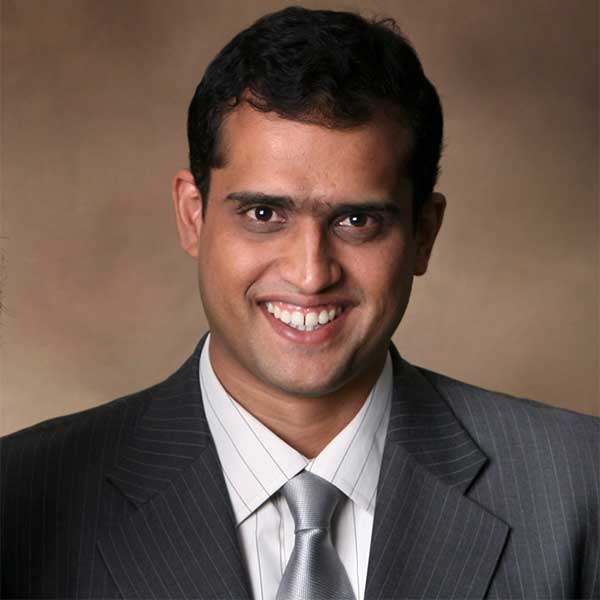
    gopal-sankaranarayanan-2

    Tell us a bit about your love for Constitutional law and work experience.

    As I mentioned earlier, this was something born out of some invigorating classroom discussions we had in Law School with Profs. Mallar and Vijayakumar.

    When I came into practise, I started assisting KKV in some Constitution Bench cases and I realized how much reading it involved. A turning point came when Mr.Fali Nariman, after seeing me assist KKV in a matter recommended me as his junior counsel for the 9-Judge Constitution Bench hearing the scope of the Ninth Schedule [I.R.Coelho]. I was overwhelmed by his generousity, and later by the fact that preparing for it meant I had to read Golak Nath and Kesavananda cover to cover! It was a brief 5 day hearing under the strict gaze of Chief Justice Sabharwal, and we subsequently succeeded, but even if we hadn’t, it was a personal achievement – to spend hours brainstorming critical aspects of our Constitution’s fundamentals and then to assist one of our finest minds in putting it across.

    Subsequently, I spent 4 continuous months on the reservation challenge in Ashoka Kumar Thakur and learnt that nothing about Constitutional law is easy or brief. It requires rigour and reading, and while it takes time for an opportunity to come your way, it invariably will. I was thus fortunate to address the Constitution Bench concerning the postponement of reportage [Sahara v. SEBI] and to successfully challenge Section 6-A of the Act setting up the CBI [Subramaniam Swamy]. Recently, my arguments on vagueness and liberty were accepted by the Bench that heard the challenges to Section 66-A of the IT Act [Shreya Singhal] and also struck down Section 118-d of the Kerala Police Act.

    At NLS, we were taught one trimester by the late Justice A.M.Bhattacharjee, whose unique grasp of the subject is best reflected in his book “Equality, Liberty & Property” [now out of print]. I remembered his Chapter on Privacy when we were doing the AADHAR case earlier last year, and it was this little bit of stray reading which allowed us to have the case referred to the Constitution Bench, doubting the correctness of how Kharak Singh had been followed. So, you never know when a little extra can come to aid!

    Outside of its use in the Courts, I was always fascinated that while the Constitution was our most important textual document, we had little general knowledge about it. How many Indian homes have a Constitution? But many have the Gita, Bible or Koran. The more I realized how Indian courts have made the Constitution such a dynamic instrument of social change, I felt something needs to be done to increase its reach. An early suggestion to Sumeet Malik from the Eastern Book Company to have a coat pocket edition of the Constitution bore fruit, and the slim leatherbound volume of which I am the proud editor is now in its ninth edition. It is an endeavour to have it in every home soon – our entire Indian cricket team have personal copies and this was what was presented by the President to Arvind Kejriwal when he visited him on the occasion of his election last year.

    I also conceived of an Oral History project which was implemented by Rainmaker, where we conduct and upload free on YouTube hour-long video interviews with the doyens of the legal profession so that those who might otherwise not have a chance to interact might have access to their lives. Soli Sorabjee, Iqbal Chagla, Harish Salve, Gopal Subramaniam, Ashok Desai, Raju Ramachandran, Goolam Vahanvati, and several dozen more have shared their life stories.

    Things like this, apart from actually arguing in court, are way more fulfilling, as they allow your countrymen to slowly become aware of their Constitution and their rights.


    What are your views on Section 498-A and the realities of its application?

    I think, much as the Supreme Court itself has, that this provision is being abused often. In some States there are police advisories not to automatically arrest the accused in such cases and to be cautious. Marital discord is usually irreparable once you reach this stage, and the deepset rancour coupled with the lethargy of our judicial process eventually leaves the victim (husband or wife) with no way out of an unhappy situation. Based on my Note, the Supreme Court recently laid down guidelines in Arnesh Kumar, but I don’t know how it is being implemented in the respective States.


    How do you manage your professional life and personal life? Do you keep both separate?

    Actually, I don’t. I am thankful that my wife Haripriya Padmanabhan (also a Supreme Court advocate) is such an excellent multi-tasker – she does her Court work (much better and more thoroughly than me), she manages our three kids, she cooks wonderfully and she discharges her role as the Secretary of the school PTA, so that all I really have to manage is my own practise!

    One of the things Haripriya and I agree on is that family is more important than anything. Thus, we have our office a mile away from home so we can be close to the kids, but we don’t work on anything together. We have our distinct practise areas (she is more into commercial litigation, education and civil law) and we never discuss law at home. Our work grants us the flexibility to be home with the children during the day and when there is pressing work, we work into the night after they sleep.

    It’s not easy, especially when you come into Delhi from outside and you don’t have grandparents around, but with patience, luck and friendship, you will always find a way.


    What do you do in your free time? Have you continued activities related to literary and debating (as you were given awards for the same in college)?

    I love films, books and music. The arts have always been my weakness and I collect what I love. Travelling Wilburys, Billie Holliday, Sam Cooke, Guru Dutt, Stanley Kubrick, Wong Kar Wai, Watchmen, Sandman – I love them all.

    Recently, a more grim issue has taken up my time – air pollution. It is something that is slowly enveloping our cities and making India unliveable, particularly affecting the very young, the pregnant and elders. A few of us have founded Care For Air, [www.careforair.org] an organisation aimed at raising awareness about the problems and solutions regarding the toxic air. We make presentations to school and residential communities and continue to spread the message.

    L&D-wise, one of the things I do on an annual basis is to host MyLaw’s A Question of Law, a quiz on law for lawyers, law students and the general public on Law Day (November 26th). Its light hearted and fun, which is evident from it being conducted at Monkey Bar! We just finished 5 years of that, and it is a lot of fun with several hundred participants and regular rounds of tequila shots.


    Do you have any parting advice for all our readers out there?

    Just one: tomorrow, you could be hit by a truck, so don’t keep worrying about your majestic long-term goal. Keep small workable milestones which have nothing to do with your peers and where they have reached in their lives. Make time for sport or music or painting or language or whatever you enjoy. Try and travel, even to small places nearby. Don’t let work come in the way of your important relationship moments (weddings, birthdays, anniversaries, even funerals). If you have a partner or a child, try and be there for his or her doctor’s appointments or school performances or shows. When you’re 55 with an empty nest, you won’t remember which case you were arguing when your daughter was winning the relay.

    As the windows of Chartres Cathedral will tell you, as long as we are on the shoulders of the giants who came before, we will always be okay.

  • Shaun Star, Founder, Australia India Advisory and Australia-India Youth Dialogue on differential experiences of working in Indian and Australian law firms

    Shaun Star, Founder, Australia India Advisory and Australia-India Youth Dialogue on differential experiences of working in Indian and Australian law firms

    Shaun Star graduated in B.Com and qualified in Law from Macquarie University in 2011, he further went on to pursue BCL from Oxford the same year. His dalliance with the Indian legal system started off with his exchange programme from the NLSIU, Bangalore as a part of his curriculum at Macquarie. Shaun is the Co-founder and Chairperson of the Australia-India Youth Dialogue, Co-founder of Crosshack and the founder of an advisory practice – the Australia India Advisory. In this interview, he expounds on:

    • His experience as an exchange student at NLSIU, Bangalore and as a BCL student in Oxford
    • His time at Clayton Utz in Australia and Amarchand Mangaldas and the Law Offices of Nandan Kamath in India.
    • The importance of LL.M degrees, differential experiences of working in Indian and Australian law firms as well as the importance of cross border ties
    • His advice for undergraduate students interested in corporate law and lawyers hoping to pursue transnational careers.


    shaun-star-1

    Your book titled, “Australia and India: Comparative Law and Legal Practice” was recently released in New Delhi? Tell us more about it.

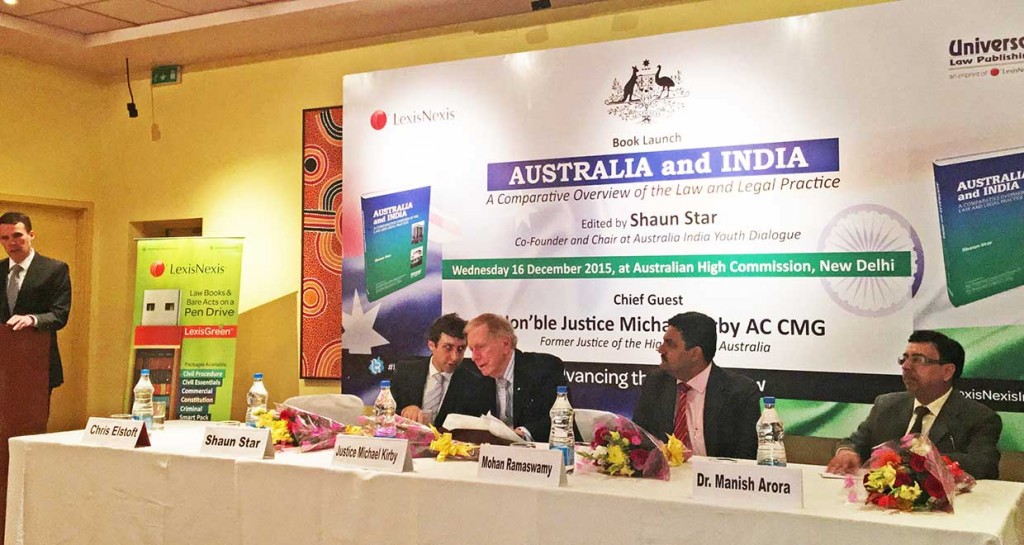
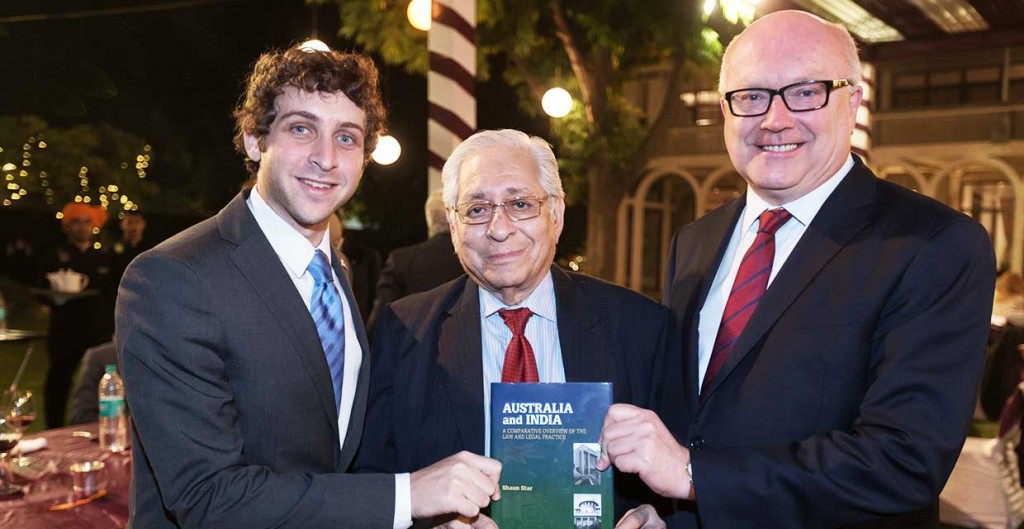
    I edited a book, entitled “Australia and India: A Comparative Overview of the Law and Legal Practice”, which compares the Indian and Australian legal systems. With forewords from the chief justices of India and Australia, the book comprises contributions written by eminent judges, barristers, lawyers and academics from both nations. The book was launched by the Attorney-Generals of Australia and India at the Australian High Commissioner’s residence in New Delhi and subsequently by The Honourable Michael Kirby AC CMG, former Justice of the High Court of Australia. It has been published by Universal Law Publishers, an imprint of Lexis Nexis.

    Each chapter of this volume has been co-authored by some of Australia’s and India’s top legal luminaries including the likes of Gopal Subramanium, Anand Grover, Haigreve Khaitan, Cyril Shroff, Pallavi Shroff, Shardul Shroff, Sumanto Basu, Madhurima Mukherjee, Nisha Kaur Uberoi and V Umakanth.

    This book is important not only because it provides a resource for those interested to learn about how these different regulatory regimes work but also because it promotes collaboration. Through this publication, I have been able to introduce many of the authors to each other for the first time – many of whom have started working on other projects together.

    More information about the book is available here.


    What do you think are the things India can learn from the Australian Legal system?

    Given the common heritage of our legal systems and the many similarities in the form and structure of our federal systems of Government, there are many more opportunities for people in both countries to learn from each other, establishing partnerships of mutual benefit and shared understanding. For example, Australia has undergone a cultural shift with respect to litigation procedures in recent decades, with a focus on efficient and cost-effective litigation. While the Indian judicial system has its own unique challenges – with the sheer size of India’s population – some of these procedures of case management which have been successfully implemented in Australia may be useful in the Indian context. Conversely, Australia can learn from India’s use of public interest litigation which has been a driving force of reform in certain areas of the law, such as in human rights, public health and the environment.


     Tell us about your experience at NLSIU.

    (Shaun’s first introduction to Indian law was as an exchange student at the National Law School of India University, Bangalore (NLSIU).)

    I was selected by the Australian Government to receive an Endeavour Award Scholarship (which is essentially Australia’s equivalent of the Fullbright Scholarship),which entitled me to study and work in India. I thoroughly enjoyed my time studying at NLSIU, where I had the opportunity to learn different aspects of Indian law.I also had the chance to meet some fantastic new friends, many of whom I have remained in contact with eversince.

    While studying at NLSIU, I chose a number of subjects which allowed me to gain an understanding of different elements of the Indian legal system. Two of those subjects were taught by NLSIU alumni who  had extensive experience as legal practitioners – I found these subjects (mergers &acquisitions and commercial arbitration) in particular worthwhile because of the nexus between academia and legal practice.


    shaun-star-3

    As an undergraduate student you worked at Clayton Utz, one of Australia’s top corporate law firms based in Sydney. How did you come across this opportunity? How was your experience at the firm?

    In Australia, many students work alongside their studies – this allows students to gain experience in law firms or other businesses (as a paralegal for instance) while still at university. Working whilst studying is often common for two reasons:

    • our degrees are more flexible, allowing students to shape their timetables around work schedules (or vice versa); and
    • living expenses as a student can be expensive and many students work alongside their studies in order to pay their way through university.

    I worked as a research assistant and paralegal in the international commercial arbitration group at Clayton Utz. In addition, I participated in the summer clerkship program at Clayton Utz which gave me experience in other practice groups (litigation, pro bono and on secondment to one of Australia’s major banks). Throughout my last two years of university, I worked two-three days per week at the firm.


    Tell us about your stint at the Law Offices of Nandan Kamath.

    During my time at the Law Offices of Nandan Kamath, I worked as a foreign qualified lawyer in the areas of sports, entertainment and intellectual property law. I had a fantastic time working with Nandan and his team. I was fortunate enough to be working there during the ICC Cricket World Cup 2011 – this was impeccable timing, given that the firm was engaged by the ICC to provide legal advisory services in connection with the event.

    During my time at the firm, I also worked with Copyright Integrity International, a firm which was engaged to establish and implement a rights protection programme for the World Cup. Through this combined experience, I therefore had great exposure to sports law during such a big international event.


    shaun-star-4

    You previously worked as a Consultant at Amarchand Mangaldas in New Delhi. How did you come across this opportunity? What were the key areas that you worked on at Amarchand?

    As a foreign qualified legal consultant for Amarchand Mangaldas, I worked on a number of domestic and international matters from across a variety of industries in the firm’s corporate advisory, mergers and acquisitions and private equity practice.

    I came across this opportunity quite fortuitously – I remember attending a lecture on Corporate Law in India by Shardul Shroff at Oxford University. After the lecture (during Q & A), I recall asking Mr Shroff about his perspective on whether he thought there was a place for foreign law firms in India. Following our short exchange at Oxford, I remained in contact with the firm and was offered a position as a consultant in the M&A practice. I thoroughly enjoyed the experience as it gave me great exposure to the corporate culture in India, working on a number of significant transactions over the 2.5 years that I worked there.


    How is it different from work at an Australian Law firm?

    The skill-sets acquired in working as a transactional lawyer are transferrable across different common law jurisdictions. Of course there are different nuances in the legal systems, which I had to learn when moving to India. Interestingly, I started working at Amarchand at a time when the new Companies Act was coming into force – so I was not the only one who had to learn how the new machinery of India’s corporate law regime functioned.

    It was also interesting adjusting to daily life in the context of an Indian law firm. In Australia, lawyers arrive at work by 8:30am and aim to leave the office at a reasonable time (although that is often not possible in the context of some transactions). In India, I was not expected to arrive at work until much later – although I would often find myself having dinner at the office with my colleagues.

    This was also due to the fact that the deal-flow in India is consistent and I have had the opportunity to work on numerous large and interesting transactions – there seems to never be a dull moment practicing corporate law in India in recent times. That being said, I always found time to catch-up with my colleagues at the local chai-wallah, a practice that I was not accustomed to in Australia.


    You pursued a BCL from Oxford. Is it true that an LL.M would help you only if you want to pursue a career in teaching rather than a career in the Industry? What is your take on the same?

    I disagree with the argument that an LL.M will only be beneficial for those pursuing a career in academia. Many successful lawyers and businesspeople in India and across the world have graduated with an LL.M. The opportunity cost of studying abroad for a year is that a young lawyer can spend that time working an extra year in a corporate law firm or as a litigator – but in my opinion, lawyers and advocates will be able to gain that practical experience in a firm throughout the rest of their lives. The experiences, networks and different perspectives that one can gain from pursuing an LL.M abroad is invaluable and serve you in good stead in your career as a professional.


    shaun-star-2

    Tell us about your involvement with the Australia-India Youth Dialogue of which you are Co-founder, and what it hopes to achieve in terms of Indo-Australian relations? Is law as a subject on the radar when it comes to AIYD?

    As Co-founder and Chair of the Australia India Youth Dialogue (AIYD), I lead a  team which organises an annual dialogue for a group of Australia’s and India’s most accomplished young leaders. The AIYD is the pre-eminent track-two young leaders’ dialogue between Australia and India. It aims to provide a sustainable platform for the youth of Australia and India to come together and foster an enduring partnership between our two great countries.

    Each year the AIYD brings together young Australian and Indian leaders, CEOs, Members of Parliament, journalists, policy-makers and athletes to discuss opportunities and challenges significant to the Australia-India relationship.

    Of the 150 young leaders who have participated in the AIYD to date, a number of delegates have been qualified lawyers. Many of these delegates have worked in corporate law practices and have had experience working with Australian and Indian clients in cross-border transactions. In addition, a number of these lawyers have policy interests in the Australia-India bilateral relationship.


    You have recently co-founded an organisation which aims to promote collaboration between young entrepreneurs in Australia and India. Can you please tell us a bit more about this?

    In collaboration with two former AIYD delegates, I am building a platform that will encourage young Australian and Indian entrepreneurs to collaborate on projects. The organisation, “Crosshack”, is still in its planning phase and we hope to roll it out in 2016.

    Essentially, Crosshack will bring together groups of entrepreneurs, designers and other young professionals from Australia and India who will meet in Australia or India and collaborate on innovative ideas to build next generation products and services. These ideas will be pitched at an annual conference and it is our hope that Crosshack will lead to collaboration between young entrepreneurs from both countries.


    Since leaving Amarchand, you have founded an advisory practice called Australia India Advisory, can you please tell us more about this.

    Running an advisory practice, I assist Australians to better understand business opportunities in Asia, particularly in India. I currently advise numerous Australian organisations (from start-ups to listed companies), assisting them with their entry and expansion into India. I have represented Australian companies across a variety of sectors, including education, energy and resources, professional services and technology.


    What advice would you give a law student or a fresh law graduate in order to succeed as a corporate lawyer?

    I think the key to success as a corporate lawyer are similar to that of any young professional in the professional services industry. While technical legal skills are important, nowadays the ability to clearly grasp difficult legal concepts and explain them in a concise way is only the first step. As a young lawyer, one has to be hungry to learn (both in terms of legal knowledge and other “soft-skills”). While it is important to work hard, it is equally important to “work smart” and learn the tricks of the trade from those more senior to you. The fantastic thing about starting out your career as a corporate lawyer is that you can see how many businesses operate across various industries – how they succeed and how (and why) they fail. I think it is important for a young lawyer to always try and see the bigger picture and constantly ask questions – by doing so, a seemingly mundane task like reviewing hundreds of documents in a due diligence process may be more rewarding in the long run.


    What advice would you give to Indian Law Grads who want to make a career as a Lawyer practicing across borders?

    My overarching advice would be to go for it! There is an increasing amount of opportunities for lawyers to gain international experience, even from within India. International transactions often involve either international clients or foreign counsel (or both) and you can learn a lot from the manner, professionalism and processes followed by these international lawyers.

    If you have an opportunity to practice abroad during your career, you should take advantage of the experience. The Indian corporate law industry is really competitive and international experience can set you apart from your peers. Applying for positions abroad can be difficult and the standards of applications and interviews are very high – invest enough time in your applications and résumés and seek advice from others who have worked abroad. If successful, work hard and learn as much as you can while working across borders.

  • Stephen Mathias, Partner, Kochhar & Co., on being a pioneer in Technology Law and work experience

    Stephen Mathias, Partner, Kochhar & Co., on being a pioneer in Technology Law and work experience

    Stephen Mathias graduated from NLSIU, Bangalore in 1995. He pursued a diploma from the College of Law, York as a Chevening Scholar. Thereafter he joined Arthur Andersen, and worked there for three years. Later he moved on to the Bangalore office of Kochhar and Co., a leading law firm with which he has been associated since 1999 and is currently the Partner-in-charge. He is also a co-chair for the firm’s Technology Law Practice, which is a first of its kind in India.

    In this interview he talks to us about:

    • His initial interest in Law and the subsequent formulation of his career goals
    • His experience at Arthur Andersen
    • His experience as a Partner at Kochhar & Co. in Bangalore
    • The development of Technology Law Practice


    You started your legal education in 1990, can you tell us “why law”?

    I did not have any close relatives who were lawyers. I was generally interested in Economics, Political Science, etc. and law seemed to be closely allied. Moreover, National Law School had opened in Bangalore and I thought it was worthwhile to give it a shot. I wrote the entrance exam and got in. After that, I did not hesitate to join.


    Tell us a bit about your time at NLSIU.

    Looking back, it was truly a revolutionary approach to legal education. There were some special moments. For example, while learning criminal law, Prof. Joga Rao would choose a case that brought out the intricacies of the ingredients of a section, get two students to argue for one side and two students to argue for the other side. It was great fun, far more so than watching even an engrossing Law TV series. The focus was on thinking, arguing, logic, rather than on mere rote learning. Our batch was also the first in NLSIU to experience open book exams. For the first one, we all went in, rather cocky, thinking it was going to be a breeze only to come out shocked having encountered long and confusing fact situations that required us to think, navigate through the facts and figure out the relevant from the irrelevant portion. I also enjoyed Prof. Devidas’s explanations on concepts of Constitutional Law, especially his focus on equality. I would say that though the institution was not at its best on commercial law subjects like Contracts, Company Law and Taxation at that time, I think Dr. Menon was truly a pioneer in his different approach to legal education. And I’m grateful to many of the faculty members who sacrificed a lot to teach us.


    What career goals did you have in mind while studying at NLSIU?

    In my third year, I encountered Corporate Law and took to it immediately. I felt I had found my field. Later on, when we had our pick of electives, I always chose topics that were allied to Corporate Law. There was a ‘Computer and Law Society’ in law school but I did not take to the subject until after I had practiced for a couple of years. I started writing articles in my 3rd year and by the 5th year, was writing on various law related topics for the Deccan Herald and also became the editor of the students’ law journal. I remain greatly interested in writing and have written for the Economic Times in the past on law and technology.


    How was your experience working with Arthur Andersen upon your graduation from NLSIU?

    In those days, there was no campus recruitment. Andersen sent word that they were interested in hiring. I applied and got in. I was recruited at Mumbai, which I didn’t mind as I had planned to start my career in Mumbai anyway. I had a job offer from RA Shah at Crawford Bailey as well. However, Andersen was paying me 3 to 4 times more and I found it to be a more exciting opportunity. Standards were extremely high. There was a huge emphasis on client servicing. I learnt how to communicate in simple business language, coupled with a logical flow. I realized that in Corporate and Commercial law, to be a successful lawyer, one has to possess strong commercial acumen. Almost everything you do, every transaction, has a tax implication. I learnt a bit about tax while I was there. I enjoyed Bangalore more than Mumbai though, because there was no separate legal team in Bangalore due to which I got to work a lot with the accountants.


    You did a diploma in European Law from The College of Law, York. How was that experience?

    I applied for the course and received a Chevening Scholarship. It involved 6 weeks in York pursuing a diploma on European Law and 6 weeks in London working with a law firm. It provided me a chance to get some international exposure. In York, there were classes every day, but there were no exams. Most of us didn’t take it too seriously. In London, there was not much work given to me at the law firm I worked at, Wilde Sapte. I discovered an amazing city with every kind of attraction imaginable – the history, gardens, plays, musicals, museums, walks. I made it a point to experience London in some new way every single day. I had a total blast and I have to admit, it was more like a paid holiday. If the aim was to expose Indian lawyers to British culture, my participation in the scholarship was a resounding success!


    What prompted your move to Kochhar & Co. in 1999?

    Andersen closed down its legal practice in 1998. I took a small break and a bit of time to find my feet again. Kochhar & Co. were looking for a new partner for their Bangalore office/chapter. I met Rohit Kochhar and was instantly impressed. He emphasized on client servicing and I felt that he was closely aligned to my way of working and the Andersen philosophy. When I was selected, I decided to join instantly. I spent a month in Delhi initially and I found working with Rohit Kochhar and his attitude to achieving success to be quite inspirational.


    stephen-mathias-3

    Being a pioneer of technology practice you represented reputed international clients and engaged in high stakes work right from 1999. What has your experience been like as a partner heading the office in Bangalore?

    The initial years involved a lot of hard work. Rohit Kochhar gave me a great platform and freedom to build the practice. Through our tech practice, we built a clientele of international tech companies. Managing an office involves dealing with substantial non-legal work like strategy, accounting, HR, etc.

    In more recent years, our partner Suhas Srinivasiah has played a substantial role in growing the practice and has been the backbone of so much of the work that we have done.


    You set up the Technology Law Practice. How did that come about?

    When I was in Andersen, paradoxically, for Bangalore, I did a substantial amount of securities work. It has continued to be a small part of my practice. But I did a lot of work in IT Contracting. I found that there were many international tech companies who needed specialized tech lawyers. I jettisoned Securities Law, concluding that I had no future with it in Bangalore. We set up the Technology Law Practice the moment I joined Kochhar & Co. and did a lot of research on Technology Law. Those were the incredible days of the ‘dot com boom’. Internet law was changing in the US literally every week.


    What does the technology law practice really comprise of?

    There are two parts to it really.  There is general commercial work we do for tech companies.  This could be corporate compliance, employment, real estate, regulatory.  Employment and real estate are particularly large practices because a large software development, BPO or call centre unit will have a large office and a huge workforce.  Then there is the tech work – licensing, outsourcing, e-commerce, privacy, telecom, IP.  There are some more specialized areas like virtualization and voice over IP implementation which is the biggest part of the Technology Law Practice.


    Voice over IP seems to be a somewhat unique practice. Tell us a bit more about it.

    India has many restrictions on the use of voice over IP (VoIP), in terms of it being used only by persons within the same group, prohibition on inter connectivity with PSTN, etc. Then there are issues around the use of the same PBX for IP and PSTN, call managers in the cloud and overseas maintenance of voice mail and recording of calls. Every large company would have implemented a VoIP based voice communication network. They want a seamless system whereby you can use your soft phone no matter where you are, whether in office or at home or whether in India or overseas. Indian law prevents this and there is a fair amount of structuring in terms of what is permitted and what is not. Then there are separate provisions for call centres which can have IP and PSTN inter connectivity. But these undertakings are subject to numerous restrictions as well. I think I enjoy this work because it satisfies my need to be more than just a lawyer. At the same time, it is very challenging and it’s essentially a lawyer practicing within an environment of technology professionals.


    What are the key areas of technology law today?

    Internationally, technology law has never been more exciting than it is today. You have cloud computing and the ability to provide services remotely. Different applications like email, social media, e-commerce, mapping, etc. are increasing connectivity leading to huge privacy concerns. The sharing economy and the likes of Uber and Airbnb are challenging traditional ways of doing business and concepts of law. In India, there is a fair amount of unrest within traditional hardware distribution channels over the discounting of pricing by e-commerce platforms. These throw up issues relating to foreign investment regulations and competition law. At the moment, the start-up scene in India is truly exciting.


    What are your areas of work outside technology law?

    I do some amount of corporate work. I have been more active in employment law of late. A key focus for me is risk management. I help clients and other partners navigate through difficult situations, helping them understand what the different options are, the risks under each and that an optimal solution is one that balances risks and the needs of the client best. I have recently been doing work in the field of renewable energy which I find most interesting. I also spend time helping to grow different practices.


    stephen-mathias-2

    You have an interest in public policy. Tell us a little about that.

    I am terribly dismayed by the direction the regulatory environment in India has taken in the last few years. The era of liberalisation of the 1990’s has passed. India is a highly over regulated market. Many of my international clients are taken aback by the extent of restrictions and conditions to doing so many things in India. India badly needs a strong dose of right-libertarianism. There needs to be a focus on finding an optimal level of regulation so that the needs of public policy and freedom to do business are better balanced. Every restriction, every condition must be questioned and there must be a justification for the curtailment. I also feel that the expertise of corporate lawyers, as opposed to senior Supreme Court lawyers to contribute to government policy making has largely been unexplored. Corporate lawyers are closer to the clients and have a better sense of how regulations affect businesses. I’d like to see the government appoint corporate lawyers to help with reforms.


    Can you give us a few examples?

    Take the Companies Act, 2013 for example. It is a terribly retrograde legislation. There are restrictions on so many things such as your financial year, how to issue shares, transfer of shares, related party transactions and so on. Apart from that, there are still limits on voting rights for preference shares, buybacks are still difficult. To add to that, the MCA has come out with a plethora of regulations with the result being that the total volume of company law regulation in the country has increased, not decreased. I was doing an ESOP plan for a private company recently – there are regulations on private companies as to minimum vesting period, limits on promoters receiving ESOP’s, acceleration of all options in the case of death or disability, etc. This is completely unnecessary and an interference with management. The current company law has largely taken us backwards, making doing business in India much harder while creating too much uncertainty in the system.


    What do you think of the new government’s focus on ease of doing business? Would you say the bureaucrats are ‘trigger-happy’?

    The one positive thing I would say about the current government is that their sentiment is in the right place. But we were hoping for change that is transformational and we have not got it yet. There have been some changes in Company Law that have reduced some of the restrictions imposed by the new statute.

    We were looking at the new industrial relations code recently. It is largely a combination of several laws without much change in the laws. In fact, some changes make life more difficult for employers. Do we still need a law that requires a business to take permission from the government to retrench an employee? Some changes to the proposed Land Acquisition Amendment do not make complete sense and have not been properly explained, even though the key changes are absolutely essential. I get the feeling the bureaucracy is not on board with the idea of liberalising India further.


    What is life like outside of law?

    The days are full with little time to myself. I like working out at the gym. I enjoy listening to a mix of jazz, blues and country music. When I travel I map where the concerts are and try to attend some that fit my schedule. I follow the world of the internet and changes in technology and Technology Law closely. Looking after my kids takes up a large part of my weekend and spending time with family is a truly enjoyable part of life.

  • Ashish and Vagish Kumar Singh, Founding Partners, Capstone Legal, on starting up with independent litigation right after graduation

    Ashish and Vagish Kumar Singh, Founding Partners, Capstone Legal, on starting up with independent litigation right after graduation

    Ashish and Vagish Kumar Singh graduated from NLSIU Bangalore in 2012 and 2013 respectively. Right after their graduation they decided to take the plunge and start-up.

    Founded in 2012, Capstone Legal is a leading law firm based out of Jaipur practicing law at Supreme Court of India, Rajasthan High Court, Gujarat High Court and Bombay High Court. The firm has handled over 400 cases in the past two years ranging from Tax disputes amounting to several hundred millions of rupees to pro bono work for India’s leading NGO’s.

    In this interview, the partners of Capstone Legal discuss about:

    • Building a successful law firm without any legal background;
    • Attracting clientele and performance in Court; and
    • Advice to prospective litigators and mooters.


    How would you like to introduce yourself to the readers? Please tell us something about your childhood and background?

    Ashish: I am the managing partner of a law firm called ‘Capstone Legal’ and graduated from NLSIU Bangalore in the year 2012. I am a litigating advocate who usually appears before Supreme Court, Rajasthan High Court, Gujarat High Court and Bombay High Court. My father is a retired civil servant and my mother is a retired school lecturer. I spent my childhood in several cities of Rajasthan due to transferable nature of my father’s job. My father has been always been an inspiration for me and both me and Vagish Ji have tried to borrow his Honesty and hard work in life and profession.

    Vagish: Ashish Ji is my elder brother and I Joined Litigation owing to his guidance and support. I graduated from NLSIU Bangalore in the year 2013 and joined as a Partner of Capstone Legal. We are one firm which has not one but two managing partners.  I started litigation at the Rajasthan High Court and I appear before the Supreme Court, Rajasthan High Court and various Tribunals in Jaipur and New Delhi. As Ashish Ji said our parents were in Government Service and hence from a very early age we were exposed to Governance and Law. I remember accompanying my father to NREGA works and “Governance at your doorstep” camps. These practical insights into law, government and the State guided me throughout Law School and even now as a Litigator. Even though both of us did our Senior Secondary as students of Science, our interest was always towards contemporary Social and Political issues.


    Why did you opt for the field of law? Do you have any legal background?

    Ashish: As my father was working with the government, I got an opportunity to observe the functioning of the executive & the judiciary which made me realize the importance of the profession of law. However, the main reason was that I was averse to the concept of working under a boss and it was my sincere belief that a career in law can give me the freedom to work on my own terms.

    We do not have any legal background. No one in my family, except my brother Vagish has a law degree.

    Vagish: My inspiration to join Law was undoubtedly motivated by the constant insights which I had by interacting with Ashish Ji, when he was in his first year of law school. He painted such an exciting and challenging picture of the Course, that when I gave my senior secondary examinations albeit as a science student, I had decided that I would opt for the field of law. Our upbringing also had a major role to play in this decision and I couldn’t agree more with Ashish Ji, our parents guidance had always encouraged us to observe and critique governance both from the perspective of a layman as well as a Judge or an Administrator. Law is not a subject either taught or practiced in isolation, it has great social, political and economic ramifications. The socio-political relevance of the subject had always fascinated me as a student and I was lucky to be guided and supported by my family in joining law.


    What were your objectives and plans in the preliminary years of the law school?

    Ashish: During the preliminary years at NLS, my objective was to become an entrepreneur. Thanks to our extraordinary faculty members, subjects like Economics always took my fancy. Needless to state, an understanding of law and procedure is vital for a business to survive and thrive.  However over the years I was lucky to have experienced some Great Internships under Mr. R.P. Singh (Senior Advocate) and Hon’ble Justice S.S. Kothari as he then was. I became inclined towards joining litigation in my third year at law school.

    Vagish: When I had joined law School, my only objective and goal as far back as I can remember was to join the Civil Services. I had been inspired by my Father and the manner in which people appreciated his hard work and contributions. However by the time I completed my fourth year of Law School, litigation appeared to be an exciting and challenging profession. That coupled with the fact, that through litigation I could possibly contribute to the bar and the society without any intervention by political or social elements.


    Have the NLUs been able to produce socially relevant lawyers? What is your take on this, given that many chose to take up firm jobs?

    Ashish: Taking up a job at a law firm cannot be the touchstone to decide whether a lawyer is socially relevant or not. There are several law firms & lawyers who take up pro-bono work and are engaged in social activities. It depends on one’s ability to find time to do something which helps the society. Moreover, some people choose to support social initiatives by providing indispensable financial help which according to me is an important contribution to the society.

    Vagish: All the National Law Universities have contributed immensely in producing socially relevant lawyers. In my opinion, Social relevance is often erroneously equated with only pro bono, policy making or individual litigation. The efficient functioning of the Industry, market and other financial entities is equally if not more vital and relevant for the society as any other job. I am glad and confident that the fate of Corporate India is in the hands of my Learned Seniors and Colleagues. Their contribution cannot be ignored in any manner whatsoever.


    Did you focus only on the Academics in the college life? How did you excel in the Academics? How’s the Academic Pressure in NLSIU Bangalore?

    Ashish: My focus was on academics while studying in Law School but I was a part of several hostel committees due to which I had a chance to work closely with the university administration. I was good at academics but I always scored more marks in my research papers than written examinations.

    Academic pressure at NLS Bangalore is high but one gets to learn a lot from the faculty and seniors. We had the country’s best faculty and I am lucky to have been taught by such legends in law.

    Vagish: The academic pressure in NLSIU is immense, you are constantly haunted by the fact that you are surrounded by the country’s best and brightest legal minds. But that in my opinion is also the greatest incentive and strength of Law School. Due to that competition and intellectual stimuli my primary focus was always on academics. However as Ashish Ji said we were involved in the Hostel Committees and worked closely with the College Administration on various issues. I always enjoyed participating in and helping in organising ‘Spiritus’ which is NLSIUs sports festival and played some Hockey and Volleyball for the University. It was always my endeavour to stick to all timelines stringently and attend classes irrespective of bad health or otherwise.


    What were your area of interest while you were in Law School? And how did you go about developing expertise and knowledge in these areas?

    Ashish: I had done my senior secondary as a Science student and therefore when I joined law school, introduction to subjects like Economics and Sociology fascinated me. I enjoyed reading international authors on Contract Law and Transfer of Property. However as soon as we were introduced to Commercial Laws and Taxation Laws the expanse of these laws and the beautiful legal principles governing them, took my fancy.  During my fifth year in law school i spent long hours in the library studying and discussing Laws related to Arbitration, Taxation and International Trade Laws. One of my favourite subjects has to be Litigation Advocacy, which was taught in the final year.

    Vagish: In my first two years in Law School I enjoyed subjects such as Sociology, History and Political Science. I was amazed by the manner in which all these factors affect the formation and enforcement of laws in our country. My primary areas of interest were Criminal Law, Constitutional Law and Indirect taxation. I always made it a point to attend all our lectures and atleast browse through relevant reading material before attending them. We had an amazing faculty who always had an open door policy to all students, and hence project consultations and interactions after class really helped in my understanding of various legal principles. In law, there is no alternative to extensive reading, hence if a student of law intends to sharpen his skills and knowledge, he/she should read law not for grades or CGPA but for its real life application and utility. It is very essential to make a connection between ones internships and the subject matter being taught. All sections or provisions of law are not equally practically important and as a law student although it is prudent to have a overview of all important enactments but it is very important to not ignore the basics.


    You judged several moot court competitions in the past. What do you see in a good mooter? Please provide guidance to the Prospective Mooters?

    Vagish: I remember interacting once with Justice Rajendra Babu in one of our farewell dinners at law school. I told him about my intention of joining litigation after passing out and sought his guidance. He told me that the biggest mistake a young lawyer or a mooter ever makes is that he/she focuses so much on the intricacies of law that facts are ignored. It has been my belief and experience that litigation as well as mooting involves attention to detail to every single fact in a brief. It is important to know what to say and when to say it. Presentation of facts sometimes makes the most crucial difference between a good and bad mooter. My advice to all mooters would be to never memorize what to say or how to say it, just be thorough with your facts and law; and go with your natural style and flow.

    Ashish: I completely agree with Vagish. Adding to what he has said, my suggestion to all mooters would be to read at least the introduction to Nani Palkhiwala: The Court Room Genius. It is important to be sound on Procedural laws and give importance to a particular argument on the basis of the stage at which a particular brief is being argued. Also, a mooter or a young lawyer should be his own best critic and counter every argument he/she plans to make. I have noticed that mooters and young advocates sometimes rely on overruled judgments due to blindly relying upon Books and Commentaries. It is vital that before a particular case law is cited before a Tribunal or a court, the entire jurisprudence on that particular issue should be clear in the mind of the Mooter/Advocate.


    There is a notion that one should work at least a few years under a Senior Advocate to understand the intricacies and practical aspects of Law. You started your practice independently right after graduating. How did you overcome your initial jitters in a courtroom full of experienced lawyers and judges?

    Ashish: Working with an experienced advocate certainly is helpful in training a young lawyer in legal and procedural skills, most importantly court craft and presentation. I have had the privilege of briefing Mr. K.V. Viswanathan, Mr. S. Ganesh,, Mr. Hiren Rawal, Mr Amrendra Sharan (Senior Advocates) in some our cases and it has taught us important insights in law and procedure. However I disagree with the statement that it is a prerequisite for every young counsel to compulsorily work with a Senior. A good senior is one who provides ample opportunities to his associates and juniors to prepare and present cases in courts. I was extremely fortunate to spend my only few months as a Junior Associate in the office of Major R.P.Singh Senior Advocate. He always encouraged me to draft Petitions, replies and entire briefs as well as appear before the Hon’ble Courts, at a young age. I am also thankful for the Guidance of Mr. N.M. Ranka Senior Advocate, under whom I did not have the privilege of working, but have always received his guidance, encouragement and support.

    Vagish: I find it extremely difficult to understand this fallacy that a young lawyer should spend 5 to 10 years with a senior or a firm before he/she starts to appear himself before courts of law. Personally I feel no matter how experienced one becomes, a crucial hearing or a high profile case will give jitters to even a senior counsel. As a law student who has been trained by the best teachers in this part of the world, we can make no such excuse and should be ready to take on the responsibility. Most of all young lawyers should learn to embrace the challenge of this profession and be confident in their knowledge and skills.


    Both of you being partners of Capstone Legal. What all challenges did you face while starting up given that you do not have any legal background? What were your challenges and how did you face them?

    Ashish: I remember Hon’ble Justice V.S. Dave had told me once that Litigation and Advocacy is a rather strange profession, for the simple reason that one has to behave like an aristocrat yet be as one with the masses. I understand now the true meaning of what his Lordship wanted to convey, since not every brief involves multinational corporations or persons with a capacity to pay. Early on it is extremely difficult to attract clientele and maintain a regular flow of cases. The task becomes herculean if one starts accepting or rejecting a brief for the fees that the client is capable of paying. We overcame this trust deficit by accepting briefs irrespective of the fees, and by sincerely and thoroughly representing whatever limited clients we initially had. This performance at the bar acts like an investment whose dividends a Counsel reaps in the future. Due to this practice, we currently work with over a dozen ET500 companies.

    Vagish: The biggest challenge that a young lawyer or lawfirm faces is attracting clientele. However, if a lawyer is patient and remains honest to his profession, this hurdle can be overcome by consistent performance at the bar. A young lawyer should not worry about the fees or quantum involved in a particular case. it might be extremely difficult to get your first brief but as I have learnt by observing Ashish Ji, performance at the Bar is noticed both by the Bar, the Bench and by other clients. We have also been extremely fortunate to receive guidance from seniors such as Mr. N.M. Ranka, Senior Advocate; Mr. R.P. Singh, Senior Advocate who always motivated us and trusted us even with complicated matters.


    Please tell our readers about Capstone Legal, which in a brief period of two years has earned the name in the Legal Industry. What is a day at work like? What is the most challenging or stressful part of being a founding partner of a law firm?

    Ashish: We started Capstone Legal as a litigation firm with the objective of providing individual and corporate clients a one stop solution for disputes pending before tribunals and courts of law. I am fortunate to work with Vagish as partner since we have always worked together and understand the firm’s objectives and requirements equally. A typical day at work always begins at 8.30 and spending all day at Court or Tribunals till 5 and coming back to sit in office to about 11.

    We both enjoy what we do and would not consider stress as being a part of this job. However, the most challenging part of being a founding partner of a law firm is a sense of responsibility and obligation towards a client. Many a times clients from extremely economically and socially backgrounds approach us with cases which we undertake pro bono. To my mind, obtaining any amount of relief in accordance with law to such a person, though stressful and challenging can be extremely gratifying.

    Vagish: The success of our firm is undoubtedly due to the outstanding cooperation between me and Ashish Ji. He has always guided me not to prolong any matter and deal with any issue sincerely and promptly. Clients appreciate our zeal to get positive outcomes. Ashish Ji has already talked about the day at work and typically both of us share the same time table. We make it a point to prepare all briefs together so that the interest of the client is not jeopardised in case one of us is travelling to attend matters in other forums or cities.

    I have come to realize that the most challenging part of being a founding partner of a law firm is that though we are always free, we are always busy. I always tell my interns that I do not have anyone who forces me to wake up every morning to sit in office and attend court. As an advocate and partner one has to motivate himself/herself everyday and treat the client’s interest as paramount above all else.


    Today law students intern at different places like Corporate Firms, Litigation Firms, NGO’s, Research Organizations, and Policy Think-Tanks etc. Where were your internships at law school? How is an internship helpful for a law student?

    Vagish: I think it is a welcome trend in law students to experience all areas and fields of practice of law. While in law school, both of us undertook internships at NGO’s, advocates at the Trial Court and Senior Advocates at the High Court. My internships solidified my intention to join litigation and skills learnt throughout those internships helped me in my initial years of practice. I think the importance of an internship for a law student is best reflected when he/she joins the profession. Key skills learnt during such internships enable a young lawyer to familiarize himself easily to the workplace and the profession.


    You have worked in over 400 matters till now across Supreme Court, High  Courts, CESTAT and Trial Courts at a young age. How’s your experience so far in arguing cases? What is the most interesting case of your litigation practice till now?

    Ashish Kumar Singh
    Ashish Kumar Singh

    Ashish: Arguing a case is an extremely challenging and exciting part of this profession. One needs to be well versed in all facets of the particular law and issue in a particular brief. in addition to a clarity in law, I make it a point to be absolutely sure about each and every relevant fact, so that it can be referred and brought to the attention of the Hon’ble court. Most of all the process becomes even more exciting since the issues involved are always extremely relevant to a person or a company, having real consequences to life, liberty or economic conditions of the client. Arguing a case, requires certain tact and court craft coupled with humility. I have had the good fortune of arguing a number of exciting cases, however one particular murder trial stands out. I was engaged by a local counsel at a certain district court to argue the final arguments in a sensational murder trial. It had been published in the local newspapers for years and involved alleged murder of a daughter by her own father. Without going into any details I can state that I was engaged to represent the accused father, and the arguments continued for over 5 hours before the Learned District and Sessions Judge.

    Vagish Kumar Singh
    Vagish Kumar Singh

    Vagish: I had always seen my brother arguing in court when I first joined the profession and he had outstanding confidence and presence at the Bar even back then. I borrowed some of his flair and enjoy arguing before various courts and tribunals. It has been my experience that the most insignificant sounding cases teach a young lawyer the most about law and its practice. Perhaps one of the most exciting cases I have argued was the Constitutionality of Section  234E of the Income Tax Act before the Hon’ble Division Bench of the Rajasthan High Court. I referred to some beautiful passages from Seervai’s Constitutional Law and Case Law distinguishing between Fees and Penalty. Arguing pure and simpliciter constitutional law is always a delight.


    Does Capstone Legal take interns? If yes, then what is the procedure for taking interns? What are your expectations from a prospective Intern in your firm?

    Ashish: Yes we always encourage internships for students in their third, fourth and fifth years. One may apply for internship at Capstone Legal through our website www.capstonelegal.in.

    We expect our interns to participate in the realtime functioning of the firm which includes client meetings, drafting and briefing of counsel. We are a young and energetic law firm and expect the same kind of zeal and energy from our associates and interns.


    What would be you message to the law students who want to pursue their career in the Litigation?

    Ashish: Litigation requires a leap of faith and most of all it requires patience. There may be times in the starting few months of your professional life, when you have no brief, or maybe one brief in one entire month. Even in those times it is important to be honest to one’s profession and attend Court diligently, learn from your colleagues and seniors and always remain vigilant of developments in law whether judge made or otherwise.

    Young law students must undertake litigation internships in good offices, to learn beforehand of the nuances of law and its practice in courts.

    Vagish: Litigation is undoubtedly a challenging profession. However for any young law student who wants to work on his own terms, litigation should always be a choice. It is important to believe and be confident in one’s own knowledge and skills. Most of all a good advocate is always humble and polite to his colleagues & to the bench and yet ferocious while at the bar.


    This interview was taken by: Shubham Gupta, III year, NLU Delhi

  • Sajan Poovayya, Senior Advocate, Supreme Court and Karnataka HC, on Poovayya&Co., managing a firm, higher studies, and litigation

    Sajan Poovayya, Senior Advocate, Supreme Court and Karnataka HC, on Poovayya&Co., managing a firm, higher studies, and litigation

    Sajan Poovayya is a graduate of the 1996 batch of NLSIU, Bangalore. Thereafter, he went on to finish his LL.M. from LSE by 2000. Sajan took the plunge and started up with a law firm Poovayya & Co. right after graduation from NLSIU. After 18 years of looking after the growth and developing the firm Sajan quit his role of Managing Partner in 2012 after being appointed as a Senior Advocate. A former Additional Advocate General for Karnataka he has also served as the Chairman of Karnataka State Council, and the Federation of Indian Chambers of Commerce and Industry (FICCI).

    In this interview, he talks to us about:

    • Experience as a student at NLSIU
    • Foreign masters, internships and meetings
    • Setting up a firm after college and taking charge of its expansion and development
    • Experience as the Additional Advocate General for Karnataka and Senior Advocate in the Supreme Court
    • Advice to those wanting to set up their own litigation practice


    What influenced you to choose law as your profession?

    Although my father is a lawyer and his court room advocacy inspired me early in life, I aspired to become a neurosurgeon, as medicine fascinated and continues to fascinate me. During my 12th standard (second year Pre-University Course as it was then known in Karnataka), I had devoted considerable time for preparation to sit the medical entrance exam. It was in the latter half of my 12th standard that I was brain washed by my father, not so much to consider law as a profession, but to consider the National Law School at Bangalore as an institution to study at.

    My father was inspired by the wonderful work done by Dr. N.R. Madhava Menon, the founder director of National Law School and he used every bit of that to convince me to sit the National Law School of India University (NLSIU) entrance exam. My elder brother was already a student at NLSIU, having entered the institution inthe school’s first batch of students. At that time, NLSIU had no campus or infrastructure facilities whatsoever and operated literally out of a few sheds in the City’s Central College campus. Despite these odds, Dr.Menon had pulled a rabbit out of the hat by building an institution which, by the end of the 1980s, had gained considerable popularity.

    During my occasional visits to the Law School to meet my brother, I had seen Dr. Menon in action. His approach was to deal with every situation hands on and decisively. I was tremendously influenced simply by watching Dr. Menon in action. Clearly, my father’s brain washing skills and Dr. Menon’s personal aura influenced me to choose NLSIU over any medical school. I sat the exam and secured admission. Once in, confusion in my mind remained for some time, but it took me little less than sixty days during the first trimester to realize that law is the profession for me. Love for the law, although not instant, was strongand I must say has remained stable.


    Please tell us a bit about your father’s practice and your initial exposure to law.

    My father has had and continues to have an extremely positive influence on me. He continues to be a very active trial lawyer at Coorg despite completing 55 years at the Bar. He is a very soft spoken person but is voracious and vigorous in court. I would, as a high school student in Coorg, accompany my father to the District Court during school vacations. Many a time, I accompanied him in what he did; as his driver, clerk, stenographer, and at times, simply as his chaperon. His court room advocacy certainly inspired me and many others.

    Although a high school student, I would be tasked with transcribing plaints, completing paraphernalia in dockets to make them ready for filing, etc., which exposed me to the practice of law in the mofussil courts. Law was not abstract to me anymore. I realized that I liked what I saw. My early interest in the law was certainly instilled and inspired by my father’s practice, though I continued to aspire to be a doctor until I saw Dr. Menon in action, building NLSIU.


    How was life as a law student at NLSIU? What was the University’s role in shaping you into the individual you are today?

    For me, life as a student at NLSIU was fantastic in every sense of the term. I owe every bit of what I am today to the Law School. When I entered NLSIU it may not have had infrastructure but it certainly had attitude. It had built a culture of academic excellence, healthy but not intense competition, and above all, a holistic approach to the study of law. It is the inter-disciplinary approach to legal education that enamoured me the most. NLSIU did not just induct me into legal studies but also shaped my character and changed my personality completely. I had the benefit of having a wonderful group of teachers at NLSIU and each one greatly influenced and motivated me. I continue to thank them at the end of each day for what they have done to me.

    My peers at NLSIU influenced me even more. They completely changed my personality from being an introvert to becoming not only an extrovert but a fighter too. I found everything that I needed at NLSIU; academic excellence, personality development, strong sense of right and wrong, and above all, true love. I have spent the last 24 years with Sanjanthi, my best friend and wife, who I would possibly have never met but for NLSIU.


    Many believe graduates from an NLU have it easier in kick-starting a legal career. How truthful is this belief? Does it make any difference to one’s litigation practice?

    It is a myth that a graduate from a National Law University will find it easier to kick start a legal career. Another astounding myth is that graduates from NLUs are always better than graduates from other law colleges. Extraordinary jewels of the legal profession have emanated and continue to emanate from local law colleges. At the same time, not all graduates from NLUs make a mark in the profession.

    I firmly believe that while institutions can equip you for your journey and provide you with good shoes, what you achieve is not dependent upon the shoes you wear but the steps you take. Being a graduate from an NLU certainly helps inasmuch as NLUs do instil an analytical approach to the study of law and a greater degree of capacity to undertake legal research. To that extent, I believe, it will make some difference in one’s litigation practice, but only that far and no further. If one has to excel as a litigator, one should continue to be determined, to provide his or her best to each brief that comes his or her way. Each brief is akin to a step for you to achieve a higher threshold in the legal profession. It is for you to take those steps, firmly and evenly, lest you trip.


    How important do you feel are moot court competitionsfor a law student who wishes to pursue litigation?

    Whilst academic and research oriented activities are very helpful in instilling in a student the capacity to work hard and dig deep to find the essence of every legal matter,moot court competitions sharpen the analytical ability and skill sets of a student. Students should participate in moot court competitionsasmuch as possible. As a student, I have enjoyed every moot court competition that I have participated in and I have emerged a better law analyser therefrom.

    Whilst moot courts necessarily do not expose you to the practicality of real life court room situations, they do provide you with some flavour as to how litigations are contested or defended. To be a successful lawyer, consistency and hard work are necessary ingredients. Hard work does not commence post enrolment at the Bar, but from the very moment you seek admission in a law school.


    What kind of internships did you undertake as a law student? Which was the most enriching internship experience for you?

    I was clearly inclined towards a career as a litigator. I therefore chose to do every internship of mine with litigators. From my second year at NLSIU, I regularly attended the chambers of my senior and guru in the profession, Mr. S. Vijay Shankar, Senior Advocate and Former Advocate General for Karnataka. I clerked in his chambers on a daily basis, post school hours, through my years at NLSIU. It enormously exposed me to the practice of law in the High Court of Karnataka. The four years of clerking for Mr. Vijay Shankar had sufficiently equipped me to deal with many nuances of drafting, filing and registry processes in the High Court. Mr. Vijay Shankar is one of the most methodical and disciplined lawyers I have known. His methodical approach indeed equipped me with sufficient skill sets. It was clearly one of the most enriching experiences for me.

    That apart, I interned with litigators in the Supreme Court during my summers through law school. One of the most enriching internships in Delhi was with Mr. V.R. Reddy, Senior Advocate and at that time the Additional Solicitor General of India. His capacity to portray some of the most complex legal propositions in the most simplest of terms amazed and inspired me.


    What challenges did you have to overcome in setting up a firm soon after graduating from law school?

    (Soon after graduating from NLSIU, Sajan established the firm Poovayya & Co. in Bangalore)

    I graduated as a gold medallist from NLSIU and late Dr. A.P.J. Abdul Kalam handed over the degree tome in the convocation. I was on cloud nine. I had to go through a year’s compulsory post qualification internship before enrolling at the Bar as per the prevailing rules(which fortunately have been changed today). No sooner did I complete my post qualification internship, Poovayya & Co. was established with enormous support from my senior Mr. Vijay Shankar and my father Mr. M. K. Poovayya. It was unusual for lawyers to set up independent chambers or law firms immediately after enrolment at the Bar. When I expressed my desire to do so, my Senior and my father did not once discourage me, they in fact supported me in this venture. I plunged into the profession for I knew in the back of my mind that my father would continue to be a safety net, not so much in terms of finances but in terms of guidance.

    The initial years for Poovayya & Co. were extremely hard but never depressing. It was hard to gain the confidence of clients and the Bench. Hard work continues even today and enormous travel across courts in the country makes it harder. But therecontinue to be happy days and never have I gone home sad at the end of the day.

    I am glad Poovayya & Co. began its journey from Bengaluru and not any other city. Bengaluru, as a city in the mid-1990s, was going through a metamorphosis with corporatization being the buzz word that helped the firm garner quite a lot of work quickly.

    The Karnataka High Court is possibly the best High Court in the nation for a young lawyer to commence a career in litigation. Through my initial years, judges were extremely encouraging. It is for a young lawyer to make the best of such encouragement and aim forhigher thresholds of excellence in the profession. It is a myth that it is hellish for a litigator during the initial years.Hard work is a requirement, no doubt, with lesser amounts of monies compared to corporate non contentious lawyers, but the sense of achievement is extremely gratifying.


    Do you still get reminded of your first case and first hearing?

    I do recall my first argument in Court. I enrolled at the State Bar Council at 11.30 am and was out for lunch with Mr. Basavaraj, my immediate senior at the chambers of Mr. Vijay Shankar. Duringlunch, he encouraged me to argue a matter in the Chief Justice’s Court post lunch at 2.30 pm. I knew the matter well on account of my continuous clerkship at the chambers of my Senior.

    Mr. Basavaraj sat beside me in Court as a fulcrum of encouragement. The matter involved a question of incorporation by reference in a legislation. I argued for about forty five minutes, my first ever as a lawyer. I lost the case but received compliments fromthe Bench headed by Mr. R.P. Sethi. A few members of the Bar enquired with Mr. Basavaraj, if I was a Counsel from another High Court, specifically briefed to argue the matter. Failure in the first case was not only sugar coated for me but also became a stepping stone to get here and go on further.


    Is it important to have prior connections within the legal field to successfully manage this?

    Prior connections in the legal field are unnecessary and many a time, can be detrimental as well. Prior exposure to the legal field is very necessary and this can be achieved with the help ofinternships and/or clerkships. Prior exposure certainly better equips you to deal with the vagaries of the profession whilst prior connections may not necessarily do so.


    What made you choose London School of Economics and Political Science (LSE) for your masters in Information Technology Law? How has your Masters from the prestigious LSE affected your career in the long run?

    I would always recommend a stint at reputed universities abroad, not so much for the quantum of law that you will learn but for the enormous exposure such stint affords you. I have been a fan of LSE since the time I read the works of Bernard Shaw and also for the fact that Dr.Ambedkar, at one point of time, was associated with the institution. I obtained a Master’s degree and thoroughly enjoyed my time at LSE. The fact that I received a fat scholarship which took care of not just academic fees but also expenses for a comfortable living in London was an added incentive. I pursued the solicitor’s programme in parallel and was admitted to Law Society of LES as a solicitor of the Supreme Court of England and Wales.


    I realized that the thresholds of academic excellence at NLSIU were as high, if not higher than LSE. Therefore, more than the academic exposure, what I gained most during my stint at London was exposure to how barristers work in the city. I was associated with a few barristers and I would regularly attend hearings (as a visitor) at the Royal Courts of London. Those experiences further reinforced my decision to remain and continue as a litigator.


    After having completed your masters in a foreign university, what made you come back to India, instead of setting up a career in the UK?

    India offers one of the most vibrant platforms in the world for a litigator. The quantum and diversity of litigation in India far exceeds anything that UK can offer. I had no doubts ever in my mind that I wanted to litigate and that too in my home country. While I did receive job offers from a few London law firms, they made no sense to me in light of what I always wanted to be, i.e., a litigator. Coming back to India to litigate was therefore a natural choice for me and I am very glad I did.


    How was your experience working as the State Government’s lawyer?Would you consider taking up such work in the future?

    (Sajan was the Additional Advocate General for Karnataka from November 2012 to May 2013)

    I officiated as an Additional Advocate General for Karnataka for about a year and was the sole Additional Advocate General for the State of Karnataka for good part of the tenure. I thoroughly enjoyed my tenure. What made it even more special for me was that my chamber senior Mr. Vijay Shankar was the Advocate General, officiating for the second term. Sixteen years prior thereto, in 1996, he had commenced his first term as the Advocate General for Karnataka during which time I was his chamber junior and had closely worked under him in many matters of importance. The opportunity to work with him again and that too as his Additional Advocate General was indeed a wonderful experience.

    I firmly believe that all litigators should, at some point of time in their careers, work for the State or the Union. The dimensions of work that you experience as a senior law officer for the State or Union far transcends the exposure that private practice can offer. Representing the State or Union as a senior law officer in the midst of multiple bureaucratic constraints makes you not just a better lawyer but a more mature human being. For a successful private practitioner, occupying such position also affords the opportunity to contribute to the profession and give a little back to the society. An efficient lawyer as a law officer can make an enormous difference to the State and consequently to the society. I will certainly consider taking up such positions as and when, and if at all, they are offered to me.


    What would be your advice to recent law graduates when they are faced with the choice between joining law chambers of a Senior Advocate, or working with an up-and-coming new lawyer?

    It does not matter whether you join the chambers of aSenior Advocate or work with an up-and-coming new lawyer. As a young lawyer, fresh off mint, one should join a chamber which has a wide variety of work. It is extremely important for a litigator to experience a wide area of contentious practice, rather than restrict oneself to a particular specialized vertical. The greater the exposure to a variety of legal work, better will you emerge as a lateral thinker. The key aspects that a lawyer should look for in a chamber are therefore: (i) variety of work; and (ii) opportunity to handle litigations completely, however minor they may be.


    sajan-poovayya-1

    Should one start out at the Trial Courts before proceeding to the High Court if one has no connections in the legal arena? Or would you recommend joining a litigation firm instead?

    Practice as a trial lawyer is crucial and sets the foundations for a successful practice. One cannot aspire to become a successful appellate counsel sans any trial experience, although there may be exceptions. I find many lawyers starting out directly at High Courts which do not have original jurisdiction or even in the Supreme Court. Whilst that may work for a few, it is not the most desirable path to tread. It is not necessary for a few years to be exclusively devoted to trial work. It has been my experience that a good blend of trial and appellate practice simultaneously helps in the overall development of a litigator.

    For youngsters who are determined to climb the vertical of litigation practice, I would highly recommend joining a reputed litigation firm which has considerable trial and appellate work.


    How would you encourage students to keep their determination to enter litigation alive instead of joining corporate firms, owing to the lack of financial stability in the former?

    Gone are the days when it was tough surviving the first few years in the litigation arena. Young litigators no more receive merely subsistence allowances. Almost all law chambers offer a fairly adequate remuneration for a young junior counsel. When I entered the profession, a thousand rupees per month for a junior was considered a princely sum, as most chambers typically offered less than half of that.

    Juxtapose to the present day, where junior litigators are paid sufficiently to maintain a decent lifestyle if not a luxurious one. Certainly, litigation initially offers far less, in terms of financial rewards, as compared to corporate law firms. However, the sense of achievement and satisfaction is unparalleled. What you need therefore is the determination to survive as a litigator. The growth curve in litigation is so steep that in a few years, a diligent litigator will not just surpass his peers in corporate law firms but also achieve far greater thresholds of professional success (and financial success too).


    How do you prepare for a good case? What would be your tips and advice to young lawyers?

    There are no good or bad cases. There are only good or bad lawyers. When one begins preparations for a brief, one should never pre-judge the matter. The case is what it is and it is for you to extract the best out of it and weave sound legal arguments around it. My candid advice for young lawyers is to prepare every brief as if there is no tomorrow. ‘Complete Preparation’ is the mantra. It is certainly not sufficient for you to prepare your arguments on what you believe are the merits of your case. The mantra for success is in being prepared with as many arguments against your proposition and in finding counters to each of those, such that you will ultimately emerge victorious. Young lawyers should also bear in mind that many a time, litigations are lost on procedural issues despite substantial merits in the matter. Never ignore procedure. I have found thirty minutes’ preparation for every minute of submission in Court to be a fairly helpful yardstick. In complex matters, however, the yardstick can extend to an hour’s preparation for every minute’s submission.


    Do you have plans for the future expansion of Poovayya & Co.? Are business development skills necessary when it comes to running a firm nation-wide?

    Pursuant to my designation as Senior Advocate, I quit the law firm Poovayya & Co. Whilst there exists debate around the question as to whether a Senior Advocate can or should continue as partner in a law firm, I have always maintained that once designated, Senior Advocates should not hold direct interests in or control law firms. It is extremely difficult for a Senior Advocate to disconnect himself from clients and client aspirations, if he continues to hold equity or proprietary interests in a law firm.

    When I quit Poovayya & Co. and demitted offices as the firm’s managing partner, I was reasonably certain that the firm has matured to a level that it would continue to grow without me. The firm’s existing partners have done a splendid job in continuing its growth in each of its four offices. Poovayya & Co. as a firm has continued to prosper with significant year-on-year growth, independent of me. Whether to expand the firm further with newer offices in other cities is for the firm’s existing partners to decide.

    On the question of business development skills, I have a slightly non-traditional view. Having run a law firm for almost 18 years, I believe that it is your work which should be your brand ambassador and the best marketing partner you can ever have. Almost the entirework being undertaken by Poovayya & Co. has come from the previous and existing clients’ references. I therefore believe that capacity to market is irrelevant for building a successful law practice.


    What do you look for when you hire lawyers under you? Can academic experience replace work experience and the ability to deliver?

    What I would see in a young lawyer during the recruitment process is the following: (i) capacity and inclination to work hard; and (ii) rational & analytical thought process.

    Academic excellence, at times, demonstrates the candidate’s capacity to work hard. It is impossible to compare or choose between academic excellence and work experience. One does not substitute the other. What you need is a combination of both.


    Do you find it easy to maintain a work-life balance? How do you unwind after a hard day’s work?

    The concept of work-life balance has been hyped in India and sometimes discussions around it are unnecessary. The debate on ‘work-life balance’ pre-supposes that you do not enjoy your work and therefore do not see ‘life’ in it. For a lawyer who enjoys his work, a lot of his life is woven around his work. If you enjoy what you do as a lawyer, you may be tired at the end of the day but are never stressed. My work keeps me packed for a good part of the day and the night. Travels between the Supreme Court and various High Courts makes it a little worse in terms of time management. That said, I do find sufficient time to spend with my family and I cherish every moment of what I get with them. The best form of relaxation is to spend time with your family and loved ones.

    I also collect and restore old automobiles and that passion helps me unwind. Strumming Carnatic classical tunes on the mandolin is another way for me to unwind.  Music is a great way to de-stress. Lawyers should plan their work in such a manner that they have sufficient time to do things other than law and spend time with their loved ones.


    What is the one advice you would like to give our readers?

    Never underestimate the power of ‘here’ and ‘now’. When at work, give all of what you have to it, in terms of sincerity, labour, time and attention. Always have an eye for detail. When you are at work, switch on ‘work’ and switch off the ‘world’.  When you are not working switch off ‘law’ and switch on the ‘world’. Doing things other than law will invariably make you a better lawyer!

    To be a superlative litigator, you should be a maverick with a strong moral fibre.

  • Nandan Kamath, Founder, LawNK, on building an illustrious career in Sports Law and IPR and being a Rhodes Scholar

    Nandan Kamath, Founder, LawNK, on building an illustrious career in Sports Law and IPR and being a Rhodes Scholar

    Nandan Kamath traded his dream of being a professional cricketer for a life in law, and since then, there has been no looking back for him. A graduate of National Law School of India University (NLSIU) in the year 2000, Nandan has been a recipient of the Rhodes Scholarship. After completing his BCL in Law and M.Sc. in Economic & Social History from Balliol College, University of Oxford in 2002, he went on to pursue his Masters in Harvard Law School.Soon after graduating in 2003, he joined as an Associate with Davis Polk & Wardwell, where he worked for three years. On returning to India, he founded his own law firm, The Law Offices of Nandan Kamath (Law NK), which is one of the leading law firms in the country in the field of Sports, Media, Technology and IPR Laws.

    With this interview, he opens up to students about:

    • The importance of hard work, dedication and discipline in the field of law;
    • His dual Masters in law from Oxford University and Harvard University;
    • His experience of working at an international law firm;
    • Working in close connection to a field close to his heart – Sports


    You are a law graduate from NLSIU, what motivated you to pursue Law, especially from NLSIU?

    I was a law student by chance, rather than by design.  In my teenage years, I was a sportsman first, and a student next.  I had my eyes set on a professional career in cricket, and chose my pre-university college purely on the strength of its cricket team.  The first time I heard of NLSIU was when they sent a volleyball team to participate in our college sports festival, and I remember seeing the players’ jerseys and only thinking, at the time,that N-L-S-I-U was quite an odd jumble of letters put together. The next introduction to the law school was when the college cricket team I was on, ended up playing against (and beating) the NLSIU team. As thoughts of needing a proper college degree began to loom, I heard from a classmate about the NLSIU entrance test. Being interested in word games, puzzles and logic, I thought it would be an interesting experience for its own sake. I looked over a couple of past test papers the night before the exam, took it, and surprised myself by making it through. Although things were certainly not as competitive then as they are now, getting through the entrance exam convinced me that I might have some aptitude for the law. At least the examiners thought so!


    Tell us about your time at NLSIU, what were your career plans after graduation?

    Life at NLSIU didn’t get off to a particularly auspicious start. Dr. Menon made it very clear at my entrance interview that I had to choose to either pursue cricket or law studies (but not both), as the institution only had space for full-time students with strict attendance requirements.  In the pre-IPL days, the odds were stacked against making a career out of cricket, so it wasn’t really much of a choice. Having made that trade-off, I put my head down and took my academics quite seriously for the first time in my life. It seemed like the right thing to do – to make full use of the opportunity if, in order to pursue it, I had given up something I was good at and enjoyed.  I found that the institution was an excellent place to become aware of various national and international issues.The regularity of project work and exams enforced a level of discipline which I was quite happy to adopt. At the same time, it was quite challenging, in various ways, to be at an institution with students from all over the country, each asserting and debating different identities, perspectives and ways of thinking. It gave me a broad and useful platform in the study of law and people in general.  I also met some of the smartest people I know during my five years there. In terms of career plans, I was fortunate to be selected for the Rhodes Scholarship at the beginning of my final year, so my immediate plans were made for me.


    nandan-kamath-5

    After Graduation you went on to pursue BCL from Oxford as a Rhodes Scholar. Please tell us about the course and your time at Oxford.

    The BCL was a very rigorous, jurisprudence oriented course, and the academic standards were very high. I did courses on intellectual property and transnational commercial laws.  The perspective was very different, with the focus being on why laws are the way they are and how they have come to be, rather than the descriptive study of the law I had been used to. It needed a fair bit of adjustment to think more analytically and to have an opinion and a view on the law, rather than being required to know what it was. In my second year at Oxford, I did my Masters in economic and social history with a focus on the history of networks and technologies, and found it very interesting. Overall, my time at Oxford was idyllic with a great mix of sports, social and academic activities.  I met an internationally diverse group of people during my time there, each person with multiple interests and skills.  My time at Oxford broadened my perspective and my horizons, both socially and academically.


    You did not end your academic streak at Oxford, but went further and pursued LL.M from Harvard. What was it like to get into, and study at Harvard Law School?

    I applied to Harvard Law School after having completed my BCL, so that probably strengthened my application. Being at Harvard Law School after two years at Oxford involved moving from a multi-disciplinary social setting, to the company of hundreds of highly-charged law graduates,most of whom had never stood second at anything they had done. It was a very competitive environment and not particularly easy going. Nonetheless, I found the LL.M. was very helpful as preparation for law practice.The weekly reading load was huge, and overall, the courses were intense and challenging (befitting the atmosphere). I found the analytical frameworks used by the teachers quite fascinating and very practically relevant, whether it was the economic analysis of law, legal realism, or anything else. It gave me a new lens to look at the law with, and added nuance and process to my thought process.


    How do your dual Masters in Law help you in your current work profile? Do you plan to go for any further studies?

    I believe that one’s law studies and degrees are only as valuable as the lawyer they produce. My studies have certainly given me a lot in terms of perspective, ways of thinking and analysis, and that is very valuable.Other than that, I don’t think the tags of being from a particular university help me that much in the work I do, other than perhaps leading to a (rebuttable!) presumption that I am not completely inept.  As for further studies, I think the phase of my life involving formal academic study is probably behind me –I can’t really see myself going back to the classroom, exams and dissertations. But I’ll never say never – I may just surprise myself if something really excites me.


    nandan-kamath-4

    Given your academic record, were you ever interested in pursuing an academic career?

    I do enjoy teaching a few classes here and there, alongside my law practice. However, pursuing an academic career was never on my agenda.  I didn’t feel I had either the intellectual firepower, or the patience required to master an area of law sufficiently to teach it repeatedly, consistently and engagingly.


    After your LL.M from Harvard you joined Davis Polk, a global law firm.How did you get recruited there?

    I had met one of the senior partners of the firm during an internship in Mumbai at ICICI Bank,while still in law school, and had managed to stay in touch. A few years later, when I finished at Harvard Law School, I got back in touch, was called for an interview and made it through the process. It wasn’t a very hot job market at the time and I consider myself very lucky to have got the opportunity.


    What is it like to work in a big and global law firm?Please tell us something about the kind of work you did there.

    I worked for three years at the California office of Davis Polk in the intellectual property and global technology group.  The work involved intellectual property and corporate advisory, especially in relation to mergers and acquisitions, and capital markets transactions.  It was the perfect first job for me.  It was challenging both substantively and in terms of work hours and it forced me to up my game, and push my limits. I found a number of mentors among the partners there.  The importance of attention to detail, personal responsibility for (and pride in) work product and client orientation were my main takeaways. I also saw that it is possible to create an open, friendly and informal work environment without compromise on work product and quality standards.


    You left Davis Polk after three years, what were your reasons to do so?

    When I started my studies abroad, I had set myself a target of being back in India in 5-6 years.  The end of this period also coincided with some plateauing in my learning and it was becoming clear that the big law firm trajectory was not the best one for me. I left Davis Polk after a brief stint in Hong Kong and Mumbai,and moved back to my hometown Bangalore, where I wanted to live and work.  I didn’t have a specific work plan but was happy to put down roots and figure things out.


    nandan-kamath-2

    You set up LawNK – The Law Offices of Nandan Kamath after you left Davis Polk, what was the motivation behind going independent?

    My father is a Chartered Accountant who started his own practice from scratch, worked hard, and succeeded off his own steam.  Watching him from close quarters helped me recognise the many advantages of independence.  It also inspired me to chart my own course, without too much fear or doubt coming into the picture.  Having the opportunity to choose what I was going to work on was a big luxury, and I was determined to work in an area I loved – sport.  With a view of working on sports law, I went about meeting a number of athletes, coaches and others working in the nascent sports industry.

    Every one of them made it quite clear that there was little value a lawyer could add at that point, given the lack of structure and professionalism in the field.  That feedback temporarily set back my plans to establish a sports law practice. I involved myself in other ventures in sport and athlete representation, which gave me a ground level view of issues Indian athletes were facing and the state of play overall.  Over time, I started getting requests for legal assistance from others who were making their way in sport business and I began advising them as a sole practitioner.  The game changer came in 2008 with the IPL. The professionalization of sports through the league brought sports contracts into the mainstream in India.  This is when things took flight, and the firm has grown organically since then.


    LawNK – The Law Offices of Nandan Kamath specialises in Sports, Media, Technology and IPR Laws.How did you build your client base, especially since you spent your formative years outside the country?

    Over the years, our clients have found us rather than the other way around. A well-defined focus in terms of practice areas, and a team that is knowledgeable and passionate about the work, are our greatest strengths.The client base has built through word of mouth, and it is not something I have ever actively worried about. We focus on our work, and know that interesting work will find us when the time is ripe and the opportunity is right.


    You are also a Trustee at GoSports Foundation.Tell us a bit about it and your role therein?

    GoSports Foundation (www.gosports.in) is a non-profit that I co-founded in 2008. The organisation’s vision is to empower young athletes and enable them to achieve their Olympic and Paralympic dreams. Being quite aware of the state of Indian sports, we started GoSports Foundation to contribute our bit to the growth of an athlete-centric sports ecosystem in non-cricket sports. Our quest is to bring professionalism and positivity into athletes’ journeys and to ride with them through ups and downs, providing financial support, mentorship, access to expertise and career advice. As Managing Trustee, I play an active role in the administration of the organisation, and support the executive team wherever needed in the programmes. It also provides me the opportunity to work with our Board of Advisors, which comprises of Abhinav Bindra, Rahul Dravid and P. Gopichand, in thinking about Indian sport and making meaningful interventions.  It is work that I love and an organisation I am proud being a part of.  I have met fascinating people along the way, and my work with GoSports Foundation has opened doors to a wide variety of experiences – from hosting a TV sports show, to designing national talent support schemes, working with childhood heroes, being on selection panels and drafting state sports policies. While it is often challenging work and requires lots of self-belief, I have received far more from it than I have given.


    Rahul Dravid on extreme left and Nandan Kamath on extreme right.
    Rahul Dravid on extreme left and Nandan Kamath on extreme right.

    Who form your clientele? Could you please share with us any representation you are particularly proud of having worked on?

    Our sports practice advises a wide range of governing bodies, franchises, players and sports brands.  Cricket and football have been the primary disciplines but we are now seeing more in tennis, badminton and golf, and the new professional leagues are also mushrooming. Other areas of our special focus have been advertising and marketing laws, e-commerce, privacy, food and beverages law, and medical law. I am particularly proud of our team for being empanelled by the ICC as the official law firm for the Cricket World Cup hosted in India, Sri Lanka and Bangladesh in 2011. It was a great honour and privilege, and watching India win the finals was the icing on the cake!


    Do you think playing sports has helped you as a lawyer?

    I have always believed that playing serious sport is excellent preparation for professional life. With the benefit of many years of experience now, I think this is even more so for the law.  Competitive sport provides early exposure to the adversarial process.  It also requires one to make real-time decisions based on dynamic, unstructured data –which is only possible to do competently if you have prepared thoroughly, and practised hard.  All this is not too different from law practice! Also, sport teaches you that although it is primarily your own individual pursuit, you are almost always playing in a context – representing someone or something else (a team, institution or even a country). Similarly, it is a client and/or a cause that makes one an advocate, and that is always good perspective to carry. Finally, you learn from sport that you are only as good as your last innings, but I’m going to ignore that for now because my last one was a duck.


    Many of our readers would be interested in having a career in sports law and representing celebrity sport stars. What would be your advice to them?

    If it is truly a substantive area that you are interested in, it is a field worth investing time and energy into.  The glory and glamour fade away quite quickly, so it is important to have the right motivations – that will help you stick it out through the early days and mature and stay passionate about and interested in the work.  Other than that, the best advice I got as a young lawyer was to become a good lawyer first before attempting to add any prefixes (such as ‘sports’ lawyer), and to focus first on learning the tools of the profession – in transactional law, that includes things like client communication, drafting, time management, multi-tasking,organisation, attention to detail, and finding one’s own methods and practices.  If you have built a strong practice toolkit, adding new substantive areas to the repertoire is actually not that difficult.  Sports law is not rocket science and it is an interest that can be pursued at any point by a skilled lawyer.


    What do you look for when you hire lawyers to work with you?

    We look for self-motivated young lawyers who have also demonstrated their interest in our practice areas.  Our firm has graduates from NLSIU, NALSAR, Symbiosis, ILS, GNLU and NUJS, so it is quite a diverse set.  A few have come through our internship process, which is a good outcome for all concerned.  I am very proud of the lawyers in our firm, and have enjoyed seeing them grow steadily as professionals.  From what I see, today’s young law graduates are better trained and prepared than I was when I finished law school.


    Do you provide for internship opportunities? Where should a law student apply if he/she wants exposure in sports law?

    Yes, we do have an internship programme.  We accept only one or two interns at a time to make the experience meaningful, so spots are limited.  It is a chance to give law students exposure to the types of work we do, and our work environment. There is an online form (http://www.lawnk.com/home/) that interested applicants can complete for more information on the process.


    It is a dream to work in the subject we love for most of us. What do you have to say to those who didn’t end up doing what they love the most?

    As one steadily moves up Maslow’s hierarchy of needs (I told you that NLSIU left a lasting impact!), beyond security and the need for external recognition and validation, I feel that the journey ends up becoming about two things – the pursuit of mastery and the pursuit of engagement.  Mastery brings the joy of excellence; engagement brings the joy of working on things one cares about.  It is only the lucky few whose pursuit of both mastery and engagement unify in their daily work, or even converge on a regular basis for that matter. I feel the rest of us must remain open to tapping different and diverse outlets and sources if we are to simultaneously experience both of these pursuits.  For whatever reason, not everyone might get engagement with things one loves at the workplace. But it is still possible to find an outlet for this, maybe through hobbies, volunteer work or even by innovating within the limitations of the workplace.  Life is too short and you are already very fortunate if you know what you truly love!


    What would be your parting message for our readers?

    Have a clear career plan in mind, but leave enough room for chance to play its part. Also, stay open to being inspired.

  • Nagarjun Matangi, Legal Counsel, Hewlett-Packard India, on the HP OGC programme and work experience

    Nagarjun Matangi, Legal Counsel, Hewlett-Packard India, on the HP OGC programme and work experience

    Nagarjun Matangi graduated in law from NLSIU, Bangalore in 2011. As a student he was the Recipient of Vice Chancellor’s Gold Medal for “Outstanding Personal Achievement” and he was also the Vice President of Student Bar Association in the year 2009-10.

    During his final year Hewlett-Packard (HP) had launched the Graduate Attorney Program in India and reached out to colleges – Nagarjun was among the two students who got selected from NLSIU (4 in total) as part their campus recruitment drive.

    Since then Nagarjun has been working at Hewlett-Packard as a legal counsellor. His role includes a combination of Commercial Transaction support plus providing support for General Legal matters.

    In this interview with Nagarjun we talk about:

    • His college years as a part of NLSIU
    • Planning his internships in his college years
    • Starting work as a legal counsellor of Hewlett-Packard
    • The HP India OGC Internship Program and the qualities they lookout for
    • The legal department at HP


    What made you gravitate towards the study of law at NLS? Was it planned or just a matter of chance?

    It was completely unplanned and was an interesting turn of events. I hail from Andhra Pradesh where the choice is usually limited between Engineering and Medicine and I had never been able to fully decide upon my choice of stream. I spent seven years in Sainik School Korukonda which was a feeder institution to the National Defence Academy, but was for some reason inclined to remain a civilian. I could never get over the confusion as I had managed to secure a seat in institutions meant for completely different streams – IIT, Architecture and Law.

    I chose Law primarily to overcome the stereotype of options that I observed around me and that turned out to be a truly rewarding choice of a lifetime.


    What were your areas of interest during your graduation? How did you go about developing expertise and knowledge in these areas?

    When you end up in law school by accident, you get excited and interested at everything that is introduced to you. I was very fascinated with Tax, Constitution and Family laws. However, what truly interested me were the Commercial Contracts and the difference that a crafty draftsman can make to the Contract. I used to try and pick up associated matters in my internship to understand how the Courts dealt with the interpretation of complex commercial clauses in a contract and I also used to select Seminar Courses that offer practical knowledge on these aspects. One would be surprised as to how much more this area of practice can offer beyond what is taught in classroom.


    What do you have to say about mooting at law school and legal writing for journals? Are these helpful even after the student graduates?

    I admit not having given much attention to either of these activities during law school; but it wasn’t something I had to regret. However, now that I am better informed, if I had an option to revisit my time as a law student, I would definitely make use of these options for they aid in developing essential skillsets at a very nascent stage. It would remain useful even after graduation.


    Did you plan out your internships throughout law school or did it all just happen by chance? What role did the placement committee play in securing internships?

    One of the pitfalls of accidentally ending up at law school, is that one would lack the requisite awareness about legal internships and how to plan them. Thanks to my seniors and friends at NLS, I could fill up this gap before it was far too late. This is also a reason why most of my internships were at trial and High Courts. While I did learn a great deal from my internships at these Courts, someone interested in a corporate profile would have prioritized and planned their internships a little differently.

    It is essential for the fresh students to be educated at the option generally available through formal sessions that can be organized by the student body itself. Else, it could be too late before the batch can have its Placement Committee set-up.

    Our Placement Committee played a great role in providing wider options and facilitating the selection process for these internships. Most students get introduced to formal In-house or law firm internships thru the Placement Committee.


    nagarjun-matangi-2

    You have been working at Hewlett-Packard as legal counsel since your graduation. How did your appointment take place? Please tell us about the recruitment process at Hewlett-Packard.

    HP was implementing the Graduate Attorney Program in India for the first time in 2011 and had reached out to NLS and a couple of other colleges for this selection. This program was part of the Talent Factory initiative of HP’s Office of the General Counsel (OGC) which focuses on Making Talent internally rather than Taking Talent from outside the organization. The selection process involved two rounds of interviews, one each with the then Country Counsel of HP India and also with the regional Deputy General Counsel who had come down from Singapore for this purpose. This program is a regular feature in HP US and was being introduced in India only on a pilot basis. However, there is certainly a lot of enthusiasm and positive vibe around it here and it should not be long before we reach out to the colleges in India for implementing round 2 of this program again here.

    That said, general recruitments at In-house legal teams, unlike law firms is strictly based on openings that may come up. It involves a combination of factors like the timing of the opening, the role and experience requirements sought for such opening, etc.


    Tell us what your typical work day is like. What is the role of an in-house counsel at Hewlett-Packard? What are your primary responsibilities?

    For most of us on HP’s Legal Team (OGC) in India, our role is a combination of Commercial Transaction Support plus providing support for General Legal matters. As part of transactional support, we are involved in drafting, reviewing and negotiating contracts concerning provision of various aspects of the Information Technology portfolio (services/software/hardware/cloud). This involves a lot of collaboration with the respective teams to understand the nature of IT solution being offered by HP, the risk associated, advising on mitigation strategies etc.

    A good amount of my day is spent in meetings of this nature with various stakeholders of the contracting/tendering process as well as those involved in offering the solution. These are essentially my internal clients. Contract negotiations are the part I keenly look forward to and one gets to learn a great deal from these negotiations.

    General legal matters include Data Privacy, Taxation (limited), Litigation Support, Commercial Disputes, Internal business advisory, Competition law etc. (new and interesting issues keep coming up for reference and the same may not fall into any particular bucket of practice). These cannot be further detailed.

    Being a large MNC with diverse operations, guidance is sought from the legal team on numerous legal matters associated with the day to day functioning. Litigations and Consumer matters also form part of the portfolio of the legal team at HP. In addition to the same the team also needs to proactively align the business with the changing regulatory requirements and provide trainings as well as prepare suitable policies to guide all employees.


    How is the legal department organized at HP?

    HP India OGC is primarily segregated into teams that support a particular Business Unit of the Company. Various portfolios of the IT sector as handled by the respective Business Units. At the same time, the teams are not segregated into water tight compartmentalized structures. For example, today I may be primarily supporting the Printing and Personal Systems division of the company, but I can always extend support to the transactions involving Software licensing. This helps us diversify our experience in all portfolios that the IT industry has to offer, especially since HP’s operations extend into all these portfolios.

    Other countries in our region (Asia-Pacific-Japan) have similar team structures and the entire region reports into the Deputy General Counsel for APJ. The DGCs of all regions across the world finally report into the General Counsel based at our HQ in Palo Alto.


    What is the basic difference that you see between a lawyer and an in-house counsel? What do you think is the biggest challenge for an in-house counsel?

    The basic differentiating factor lies in our association with our clientele and the purpose of such association. While a lawyer will put forth the existing position of law before the client, the role of an in-house counsel goes a mile beyond and is required to show the path of compliance with the ever changing dynamic laws and ensure it is in line with the ultimate business objectives.

    As in-house counsels, we need to be conscious of the fact that our business teams are our primary clients and instead of throwing fancy jargons or weighty case names, our responses should be simpler and more comprehensible to our clients who do not necessarily have a legal background. And when the response is a NO, we must be capable of showing the path of compliance to make it a YES. This is both a primary function as well as the biggest challenge to do well as an in-house counsel.

    Particularly, at HP, we are encouraged to focus on innovating upon the existing processes to make them Simpler and Better. It is a constant endeavour and a great linking factor of all attorneys that are part of the worldwide OGC team – to make it matter!


    nagarjun-matangi-3

    Tell us more about the HP India OGC Internship Program. How can one apply for an internship at HP? What qualities do they look for in an intern?

    Our internship program is yet another extended arm of our Talent Factory initiative. Very few would disagree when I say that most internships that we have experienced only use our existing skillset and one cannot always claim to have learnt a new skillset with which you can walk away upon completion of the internship.

    While designing our 4 week internship program we made a conscious effort to ensure that the intern is able to walk out with a completely new skillset acquired during the internship. We have created a detailed training-cum-working program where a lot of emphasis is laid on first training the intern around the work we do through a dedicated mentor assigned to each of the interns. Virtual classroom sessions are taken up by our attorneys from different locations on designated fields of our operation (IT Contracts, compliance programs, Privacy, IPR, Corporate, Consumer laws, etc.). Primary emphasis is laid in educating the interns of our contracting process, stakeholders involved, our preferred contractual positions and their rationale, etc.

    If it were left to me, I would term it nothing short of a seminar course on Applied IT Contracting!

    We currently have two slots each year – Jan/Feb and June/July; and we accommodate a maximum of two interns per slot. We reach out to select colleges thru their respective placement committees in order to carry out the application process.

    Applicants are evaluated on the basis of their – Covering Letters + CV followed by a Telephonic Interview (for shortlisted applicants) and their response to a sample query. At all stages, the applicants are assessed on their clarity of thought and simplicity of expression.


    Lastly, what would be your message to our readers who are mainly young lawyers and law students?

    Student life, especially to law students, offers certain learning opportunities which are available only when we are still a student. There is no way we can go back and catch that bus. So do ensure that you work out your priorities and avail them so as to have minimal regrets later on.

    To the young lawyers – it is always an added advantage if you are able to think beyond the black and white letters and are able to apply your own judgement. This will require an understanding of the commercial and business implications of your advice which can be acquired only with your conscious effort. A plain legalese advice is no advice if it cannot reap tangible benefits or cannot be understood by the client.

  • Umakanth Varottil, Assistant Professor, National University of Singapore, Ex-Amarchand Partner, on choosing academics over corporate practice

    Umakanth Varottil, Assistant Professor, National University of Singapore, Ex-Amarchand Partner, on choosing academics over corporate practice

    Prof. Dr. Umakanth Varottil is an Assistant Professor, Faculty of Law at the National University Singapore (NUS). He is an alumnus of the National Law School of India University, Bangalore, graduating in the year 1995. Soon after graduation, he joined Amarchand & Mangaldas & Suresh A. Shroff & Co. (AMSS), where he soon saw promotion to the post of a Partner. While at AMSS, he was ranked as a leading corporate/mergers & acquisitions lawyer in India by the Chambers global guide. He then went on to complete his Masters from the New York University School of Law (NYU) in 2007, and then his Ph.D. from NUS in 2010. He has since taught on a visiting basis at the Fordham Law School, New York, University of Trento, Italy, and at various law schools in India. He is the recipient of several academic medals and honours. At present, he is an Assistant Professor of Law at National University of Singapore (NUS).

    In this interview, he talks about :

    • His experience and journey from an Associate to a Partner at AMSS;
    • What made him leave AMSS for a life in legal academia;
    • His experience at NUS and NYU;
    • His PhD on the role of the independent directors in corporate governance;
    • Life as a Professor at NUS.


    How did you decide to study law? Were any of your close relatives lawyers?

    Since my late father was a lawyer, I was exposed to the legal profession from an early age. However, it was only after high school that I decided to follow his footsteps and take up law as a career choice for myself.


    How did the opportunity to study at NLSIU, Bangalore feel like? Do you recall your first day at the Halls of Residence? Would you like to share any observation/memory from those days?

    Securing admission into NLSIU Bangalore at that time was an entirely different ballgame from what it is today. At the time that I joined the law school, it was only two years old, with a great amount of uncertainty as to what lay in store for its students and graduates. Nevertheless, we were fortunate to have an eminent legal personality in the form of Dr. Madhava Menon at the helm of affairs, who led an able and dedicated team of law professors, which left no doubt in my mind that our professional future was not only secure, but also promising.

    Some of my early memories relates to my initiation into the study of law, which revolved around analysing various social issues from a legal perspective, and debating them in hope of arriving at a solution to real world problems. As any student would experience in the first year of law school, there are no definitive answers to questions or problems, and each issue is capable of being viewed from multiple points of view. Added to this was the Socratic method of teaching adopted in the law school, which tends to confound problems in the minds of students than to clarify or resolve them. It is much later that I realised that this phenomenon was by design, and not an accident. As I was a resident of Bangalore, I did not stay in the Halls of Residence. Since NLSIU was still in its initial stage of establishment and hostels were yet being constructed, residence on campus was not compulsory. As it turned out, most of us “day scholars” spent long hours on campus, which helped us partake in the community aspects of law school.


    umakanth-varottil-3

    How did you always keep ahead of your batch as a student at NLSIU? What would be your message to those people who never score much but do well at internships and moots?

    In describing academic life in an Indian law school such as NLSIU, I have previously used a metaphor, which is that it is like playing Test cricket. Student life involves sustaining oneself over a five-year period with equal energy and drive, and the ability to handle countless exams, assignments, presentations and other commitments that law school demands, not to mention co-curricular activities such as moot courts, debates, and the like. Hence, it involves a great deal of patience and perseverance. I must add that I have been enlightened about these characteristics more as a matter of hindsight, and it is not as if I designed and implemented any specific plan or strategy while in law school.

    For the lack of any alternative methodology for assessing the competence and capabilities of law students, grades do continue to matter a lot. But it is also important to develop an all-round personality, which can be attained through co-curricular activities. While performance in law school (academic or co-curricular) matters to some extent, it often tends to have a limited bearing on one’s professional progress and success, which might depend on other factors that a graduate may imbibe after law school.


    Have you been in touch with your batchmates? Is it true that all graduates from NLSIU do extremely well in their careers? Do you find differences between graduates of NLSIU, other NLUs and other premier law institutes?

    Apart from imparting legal skills, NLSIU helped me forge very strong relationships with a wonderful group of batchmates (as well as seniors and juniors), which I continue to cherish to date. It is true that the NLSIU alumni network is a tight-knit one. In fact, my batch is celebrating its 20th year reunion at the end of this year, where we will be spending a weekend together along with our families.

    While there could be some differences between the graduates of NLSIU and other premier law institutions in India, I do not believe that they are significant. Ultimately, the top students from all of these institutions form part of the same crop, and have been successful in similar ways. It might be the case that more number of students from some law schools may have demonstrated a higher performance compared to the others. Over the years, I have developed professional relationships with graduates from several law schools around India. In my view, while the institutional quality and background are important, it is the capabilities and determination of individuals that matter more.


    You joined AMSS early on as an Associate. How was your journey from an Associate to Partner? Was it mostly about legal knowledge, or did it include business development as well?

    My early years as an associate at AMSS involved gaining experience in corporate transactions. I was fortunate not only to be working with a leading law firm in India and its managing partner, Mr. Cyril Shroff, but I was also the beneficiary of an unending flow of transactions following India’s economic liberalisation that witnessed several novel legal issues being considered in-depth. Of course, being made a Partner carries along with it, different demands, which include client management as well as human resource management (that takes a great deal of people skills).


    You must have been very young as a partner. As a law student, it’s very difficult to imagine joining the ranks of a partner in just 5-6 years of work. What all does it take to become a partner?

    At the outset, technical skills do matter, i.e. the knowledge of the law within one’s practice domain, which includes both substantive and procedural matters. In addition, skills such as conflict resolution, problem solving and acting as a “trusted” advisor to clients, are a hallmark of a competent partner. Then come other skills such as business development, human resources, and even financial management.


    Is it possible for a person who is not exceedingly well versed with Business Development and is not good at drawing clients to get promoted to the ranks of a partner? Would it take more time?

    It is ironical that while law schools teach the knowledge and skills pertaining to matters of law, the other skills, such as business development, are required to be developed by lawyers on the job. Some lawyers are excellent in technical legal skills, but they either do not have the capabilities, or are uninterested in the managerialaspects. In those scenarios, of course, there could be some constraints when it comes to promotion. Ultimately, this could depend on the policies of individual law firms. But, I do believe that there is always space for lawyers with good technical skills, and law firms and legal practices may ignore them at their own peril.


    umakanth-varottil-2

    When did you actually find yourself getting drawn towards academics?

    This is a question I get asked all the time. When I was at AMSS, Bangalore, during weekends,I used to co-teach a seminar course on Mergers & Acquisitions at NLSIU along with Professor M.P.P. Pillai. The discussions in class,surrounding the theoretical and policy-level issues on areas that I was closely connected with in practice, attracted me towards taking up a full-time career in academia. Although I embarked on an academic career with a view to teaching, I discovered along the way that substantial emphasis is also placed on research and publications. I enjoy this combination of teaching and research in the areas of corporate law, corporate governance, mergers and acquisitions, and related subjects.


    How hard was the decision of leaving a well-established career as a partner of the largest law firm in the country, to take a plunge into academics?

    I was quite determined about embarking on a career in academia. However, given that I was leaving the profession after spending over a decade in it, many of my colleagues and friends felt that I was more likely to flirt with academia for a couple of years, and then promptly re-enter practice. But, that did not occur: I remain committed to the legal academy, and have not felt the urge to return to practice. At the same time, I continue to remain in touch with the profession through various means that helps me stay up to date with developments in practice.


    How did you select New York University School of Law among others? Was it any specific combination of modules that attracted you there?

    I chose the New York University School of Law (NYU) due to its focus on some of the key areas I was interested in, namely corporate, securities, and financial services law. Moreover, located in the heart of New York City, it also has access to professionals from leading law firms, accounting firms, and other financial intermediaries, who would often visit the institution to teach, and also to participate in seminars and conference.


    What was your topic of research for LL.M? Why did you choose that subject for research?

    Although I did an LL.M by coursework, I was required to write research papers on a couple of courses, which I found to be a valuable experience. In a seminar course titled “Topics in Corporate and Securities Law”, I wrote a paper on the role of independent directors in corporate governance. This has been a significant topic of interest world-over, not least in India. This paper also acted as a stepping stone for my PhD thesis on the topic subsequently at the National University of Singapore (NUS). At NYU, in another seminar course titled “Financing Development”, I wrote a paper on the use of the pari passu clause by lenders in sovereign debt documents, to block the debtor countries from making payments as part of a sovereign debt restructuring. This issue, as well, continues to hold sway till date, with litigation pertaining to Argentina under this clause making headlines, especially as they have been considered extensively by the US courts.


    How do you recall the faculty and facilities? Which other universities would you recommend for someone who cannot make it to NYU?

    I learnt considerably from my courses at NYU. Having practised Corporate Law in India for several years, it was a wonderful opportunity for me to compare the Indian law and practice, with those of other jurisdictions studied at NYU, including Delaware. Some of the professors and their teaching methodologies have had a significant impact on me, in that they have helped shape my own teaching philosophy and style.Apart from NYU, there are several other leading law schools in the US, UK, Singapore and Hong Kong, that have strong corporate and financial services law offerings.


    How did you choose NUS for your doctoral research? Tell us about your Ph.D thesis. Why did you choose that subject in particular?

    When I was at NYU, I came to learn a lot about NUS, as there was a collaboration between the two Universities for a joint LL.M programme. This was also consistent with my desire to stay in the Asian region, and closer to India. Hence, after consulting my classmate Arun Thiruvengadam, who was then teaching at NUS, I decided to apply for the doctoral programme there. As mentioned earlier, my PhD thesis dealt with the role of the independent directors in corporate governance, wherein I examined board independence in the context of emerging economies such as India and China, as it had previously been studied in the context of developed markets such as the US and the UK, where the agency problems relating to corporate governance were largely different. I chose that area in particular, as the concept of independent directors has confounded academics for some time now, with incomplete understanding of the utility of that institution in enhancing corporate governance. The concept continues to hold importance in India even now, with extensive codification in the Companies Act, 2013.


    Having taught at many universities in India, how would you compare it with the facilities and environment that NUS provides you? Do you find stark differences in administration between Singapore and India?

    NUS provides an excellent environment for both teaching and research. It has a diverse faculty and student body. While the LL.B students are mostly from Singapore, the LL.M students are from several countries around the world (including from far-flung areas such as Latin America), which makes teaching here truly global. There are indeed perceptible differences in the administration between Singapore and India. For example, the law school at NUS is situated within a larger University, which is over 100 years old and therefore endowed with significant experience and resources. On the other hand, the leading law schools in India are standalone establishments that are relatively younger, with greater flexibility in determining their own destinies.


    Is it possible that you may come back to India to teach? Do you look forward to that in near future? What all could probably could be the impediments, if at all you wished to come back?

    Of course, it is hard to make predictions for the future, but for the present, I offer short courses and guest lectures at various Indian law schools each year, which I thoroughly enjoy. Even though I am currently based in Singapore, I continue to remain closely connected with Indian legal education.


    What subjects are you currently teaching? What are your current research interests? Have you involved your students in your research?

    At NUS, I teach three courses. One is Company Law, a compulsory course for LL.B students, that involves teaching Singapore law, which is similar to Indian company law at a broad level (with both Singapore and Indian having originally inherited English company law), but with significant differences when one drills down into the details. The other two courses I teach are upper-level electives, namely Mergers and Acquisitions (M&A) and Indian Business Law. Elective courses are attended by third and fourth year LL.B students as well as LL.M students.

    My research interests are also on similar lines as my teaching. While my work is comparative in nature, I focus considerably on the laws of India and Singapore. I do involve research students in my work. While most of the research assistants tend to be NUS students (both LL.B and LL.M), I also often avail the services of students across various Indian law schools, particularly when the research material for a project is mostly available in India.


    Having won quite a few awards and honours for academic excellence and teaching, what would be your message to young professors?

    An academic career in law is an exciting one. It provides considerable freedom for young professors to delve into areas of their interest, both in terms of teaching and research. Several professors in India have established themselves as authorities in their respective fields, thereby garnering wide acclaim. They are also sought after by practitioners, policy-makers, and the Government. They have accomplished this through extensive research and publication of their work in leading academic journals, as well as through op-eds in the popular press that ensure a wider reach. My advice to young professors would be to identify their interest areas, and then build up domain expertise in those.


    Students often complain about high-handedness of faculty and administration in India, how do you propose we either find a solution to it, or change our own perspective?

    As I have already mentioned, Indian legal education continues to be moving along a steep learning-curve. The experimentation that began with the establishment of NLSIU, continues in one form or another. Given this trajectory, the path is not likely to be smooth. It would be presumptuous on my part to offer any solution, as the circumstances are rather complex. However, the key would be for the administration, faculty and students to work collectively to address various problems that are currently being faced. To go back to an incident that occurred when I was a law student, a proposal by the administration to raise tuition fees at NLSIU was met with stiff resistance from students, resulting in a deadlock. However, following successive rounds of negotiations between students and the administration, an acceptable solution was found, and the institution marched forward. Constant engagement between various constituencies within the legal education sector would be the key.


    Shifting to moot courts, how does one draft a winning memo? According to you, what is the difference between a great and an average memo?

    A good memo is one that is well-researched and expressed clearly. The grasp of the writer over the subject matter tends to be quite evident from its content and form. A great memo is also one that is very convincing. Ultimately, even in practice, a judge would decide a case based on (among other things) the written submissions of counsel, which must be clear, cogent and persuasive (supported by authorities).


    Do judges actually expect mooters to know everything about the law, or is there something else at play, as well?

    Successful mooting involves a combination of factors. Apart from knowledge of the law relating to the subject matter of the moot, it is necessary to master the facts (which often form the bone of contention). Thereafter, it is necessary to logically structure the arguments, which must be presented clearly. More importantly, mooters must be prepared to wriggle themselves out of a situation when they are caught off-guard by the judges. They must be able to think on their feet. Patience is another virtue that would come in handy in such situations.


    Lastly, what would be your message to people who want to take up a career in teaching?

    According to me, the idiom “Those who can’t do, teach” cannot be farther from the truth. It is no longer true that teaching is the last resort for a graduate in India. The academic world has attracted bright lawyers, and several excellent law students at their very early days, who have indicated their interest in teaching,and followed their single-minded pursuit towards attainment of their goals. Hence, I would encourage law students to consider an academic career. From my own experience, I have found academia to be extremely enriching and fulfilling.

  • Roshan Gopalakrishna, Chief Legal Counsel, Copyright Integrity International, on work in sports and entertainment law and law school experience at NLSIU, Bangalore

    Roshan Gopalakrishna, Chief Legal Counsel, Copyright Integrity International, on work in sports and entertainment law and law school experience at NLSIU, Bangalore

    Roshan Gopalakrishna graduated from NLSIU, Bangalore in 2008 with a keen interest in sports and entertainment law. He is currently the Chief Legal Counsel at Copyright Integrity International and Senior Associate at the Law Offices of Nandan Kamath. He has advised the International Cricket Council on rights protection and is also a member of the Taskforce set up by the Karnataka Knowledge Commission to draft a comprehensive Sports Policy for the State. In this interview he talks about:

    • Pursuing sports and entertainment law.
    • Representing India at the Australia-India Youth Dialogue 2015.
    • Working at CII and the Law Offices of Nandan Kamath.


    Our readers consist of law aspirants, law students and young lawyers. How will you introduce yourself to them?

    Hello everyone. I’m a sports and entertainment lawyer with 7 years of experience in advising various stakeholders in sport. I graduated from the National Law School of India University in 2008. A large part of my life revolves around sport, and I hope it continues to stay that way!


    Tell us a bit about your childhood and pre-college life as well as educational background. Do you have lawyers in your family?

    I was born in the coastal town of Karwar, Karnataka. Apart from being a place of great natural beauty, (the Western Ghats, the Kali river and the Arabian Sea all meet here) Karwar is famous for two things (i) Project Seabird – which will develop into the largest naval base east of the Suez Canal (ii) inspiring Rabindranath Tagore to pen Prakritir Pratishodha (Nature’s Revenge). Tagore’s brother Satyendranath was a district judge in Karwar in the 1880s. In Tagore’s words – “The sea beach of Karwar is certainly a fit place in which to realize that the beauty of Nature is not a mirage of the imagination, but reflects the joy of the Infinite and thus draws us to lose ourselves in it. Where the universe is expressing itself in the magic of its laws it may not be strange if we miss its infinitude; but where the heart gets into immediate touch with immensity in the beauty of the meanest of things, is any room left for argument?”

    I was born into a family of doctors on my mother’s side and civil servants on my father’s side. There were absolutely NO lawyers on either side of the immediate family. As my father was a civil servant, we were able to experience life in many districts across Karnataka. As a devout follower of the state syllabus, I completed the SSLC from Sri Ramakrishna Vidyashala Mysore, one of Karnataka’s best residential schools for boys, and II PUC (Science Stream) from the Government PU College, Chikkamagalur.


    In India there is bit of resistance towards legal education even now. What motivated you to choose law as a career?

    I think I realised early on (around 8th standard – I was an early thinker!) that I did not have the aptitude required for a career in medicine or engineering. The larger issue was that it took an additional 2-3 years for me to figure out what exactly it was that I wanted to do. At boarding school in Mysore, the correspondent Rev. Sw. Muktidanandaji and the warden Rev. Sw. Atmashraddhanandaji suggested that a career in law and specifically at NLSIU would be a good option given my inherent qualities.

    My parents were extremely supportive of my decision and it helped that my father was aware of NLSIU’s reputation from his time as the Registrar of Bangalore University in the 90s. After that it was a matter of focussing on the NLSIU entrance and hoping for some divine intervention.


    How did you get through to NLSIU?

    Ah, after two years of trying!

    I attempted the NLSIU entrance exam in 2001 for the first time, and ended up with a rank in the top 100 or so, but missed the cut-off of 115 by about 4-5 marks. It was particularly devastating as I had no back-up option and I knew that some of the haste that I showed in the last 15 minutes of the test had proved to be my undoing. So while my father was posted in Chikkamagalur district, I basically just spent a whole year reading, playing cricket and badminton, and ‘preparing’.

    Wiser, I attempted the NUJS and NLSIU entrance tests in 2002. The result of the NUJS entrance test was shocking to say the least. I ranked second overall! While I was undoubtedly pleased as punch, unfortunately, it also brought out one of my worst qualities – hubris, and I just assumed that I’d waltz through the NLSIU entrance as well. The NLSIU entrance test of 2002 was probably the toughest in the history of the institution. The topper scored 99/200! Yours truly was ranked 62, basically bottom of the waiting list.

    The academic term at NUJS started a month in advance of the term at NLSIU.  As I had already paid the fees, I joined NUJS in June 2002 (Kolkata during the 2002 FIFA World Cup that Brazil won, beat that!). As fate would have, an opening at NLSIU in mid-July meant that I was able to join NLSIU at last, by the skin of my teeth no less.


    Tell us about the places you have interned at. Did you plan your internships throughout law school?

    At NLSIU, the 2-month break internships are largely structured as follows – first year and second year: usually NGOs or non-legal, third year: trial courts, fourth year: appellate courts and fifth year: usually with a law firm or a company.

    I followed this roadmap for the large part. More so since at NLSIU the trial court + appellate court + fifth year internship count towards a grade. Once I realised that my interests were in the sports ecosystem, I pro-actively sought opportunities to work at sports management companies, leading to internships with Mahesh Bhupathi’s Globosport, the Organising Committee of the Sony Ericsson International Bangalore 2007 (a WTA tier 3 tournament) and with Mr. Vinod Naidu – Sachin Tendulkar’s manager. Further, I was also able to convince members of the faculty at NLSIU to include sports related topics in the list of project topics allotted to students (IPR, ADR, Business Contracts, etc.). I guess this was a fun way of getting the most out of your passion and your profession.


    roshan-gk-2

    Currently, you are working at two boutique firms CII and The Law Offices of Nandan Kamath that are now widely regarded as the best firms for IPR protection and sports law in India. Please walk us through your work profile in both of these organizations.

    I joined CII and LawNK on June 1, 2009. On graduation from NLSIU in 2008, I headed to Melbourne to work with a law firm. Changes to the requirements for Indian lawyers to qualify locally in the state of Victoria (studying 11 Australian law subject to qualify, as opposed to 3-4 in 2007-08) meant that I headed back to familiar shores earlier than I had planned. I also managed to gain 2-3 months of experience consulting for an advisory company engaged in the Australia-India space.

    At LawNK, I was the firm’s first associate. At CII I was given the opportunity to build the company’s trademark monitoring practice. The clinching factors were (i) the opportunity to work in Indian sport (ii) a chance to work with Mr. Nandan Kamath, India’s premier sports law practitioner.

    Both choices have been equally rewarding! I currently occupy the role of Chief Legal Counsel at CII and Senior Associate at LawNK. In addition, I also provide pro bono legal assistance to the GoSports Foundation. CII is now one of the world’s premier rights protection agencies, and LawNK has been ranked amongst the 50 best boutique law firms in Asia, the 50 best IP law firms in India and was officially appointed to provide legal advice to the ICC on commercial matters during the CWC 2011.


    You have advised ICC [International Cricket Council] on anti-piracy and rights protection its flagship events (CWC, Champions Trophy, World T20). What has your experience been?

    CII has been the ICC’s Rights Protection Partner since the ICC World Twenty20 2009. Our mandate is simple. We work with the ICC’s legal team in protecting the legal sanctity of the ICC’s 3 major revenue streams – ticketing, broadcast and sponsorship.

    Typically for an event such as the CWC, our work starts about 4-5 months in advance of the event. We dedicate teams of between 2-8 individuals for specific online, off-line and on-ground monitoring roles – monitoring live broadcast, highlight videos, trademark infringement, etc. and look to resolve infringements without the need for litigation. A large part of our efforts are focussed on educating the public on the permissible and impermissible use of the ICC’s IPR. Towards this end, we issue various public advisory documents and articles in newspapers. Personally, I have been able to lead the on-ground efforts at stadia in Bangalore (CWC 2011) and Chittagong (WT20 2014).


    Tell us about your experience, being a part of the Taskforce set up by the Karnataka Knowledge Commission to draft a comprehensive Sports Policy for the state.

    Well, for one, this has made my parents, in-laws and wife (in no particular order!) extremely proud!

    The Karnataka Knowledge Commission is a high powered commission constituted in September 2008 under the Chairmanship of Dr. Kasturirangan with an overarching aim of transforming Karnataka into a vibrant knowledge society. Each state in India now realises the importance of sport, and the taskforce is certainly the first concerted attempt by the GoK to address the lack of a comprehensive policy on the subject. The focus of the policy is to enable citizens to start, stay and succeed in sport, at various levels and support excellence, while using certain parts of Karnataka’s proven strengths (IT, BT, ITes, higher education) to create a strong system to administer and develop sport in the state. We hope to release the sports policy in a few months.


    What contributed to your selection as an Indian delegate for the Australia India Youth Dialogue 2015?

    The AIYD is the pre-eminent track two dialogue between young leaders from Australia and India. It was set up in 2009, around the time that Indian students were falling victim to attacks in Australia, with a view to get young leaders in both countries to interact and, in the long term, to increase cultural exchange and awareness. Each year AIYD brings together 15 Australian and 15 Indian young leaders who are experts in their fields of business, arts, academia, diplomacy, government, science and sport to discuss opportunities and challenges significant to the Australia-India relationship.

    As sport is one of the focus areas for the AIYD, and we have a lot of blue-chip sports clients based in Australia, I was able to indicate consistent engagement in the Australia-India space, and an ability to contribute to mutual co-operation (Australia has released a Sports Diplomacy Strategy 2015-18 which presents huge opportunities to develop sport at various levels in India). My Australian counterpart (on the sport side) was Lisa Sthalekar, arguably the greatest female cricketer of all time!


    You are a regular contributor to SportzLaw Monthly and lawinsport.com on issues relating to law and sport. How do you keep yourself updated of the recent developments in the field of Sports law and Intellectual Property Rights?

    Just to clarify, these are not research papers or academic articles! The articles that the team at LawNK has published are an attempt to capture the present position on the inter-play between Indian law and sport on various issues, and to explain the position in a manner that is easy to read for students, marketers, etc. We’re happy that our articles go some way in bridging the knowledge gap when it comes to law and sport in the Indian context. For those interested, the articles are available at – https://lawnk.wordpress.com.

    Twitter is my favourite source for information on sport, law and business.


    As a concluding message, what would be your suggestions to law students/younger corporate lawyers?

    Thank you for giving me this opportunity. I hope your readers find it informative. The sports, media and entertainment industries in India need good, motivated, knowledgeable and commercially savvy lawyers. To end, I’d like to quote Wayne Gretzky – “you miss 100% of the shots you don’t take”. So got out there, and take your shot!


  • Subhradipta Sarkar, Assistant Professor, ITM Law School, on research acumen and being an academician

    Subhradipta Sarkar, Assistant Professor, ITM Law School, on research acumen and being an academician

    Subhradipta Sarkar graduated from Calcutta University with a BA LL.B degree in 2003. He then specialised in Human Rights Law while pursuing his Masters at National Law School of India University, Bangalore. His internships include the National Human Rights Commission as well as the United Nations High Commissioner for Refugees. Before becoming an academician, he worked as a Law Research Officer at People’s Watch, a human rights NGO where he worked for around two and a half years. He also had the opportunity to work as a Lecturer at BILS and as Assistant Professor at MATS Law School.He is currently teaching at ITM Law School, while pursuing a Ph.D from NLSIU on Crisis/Emergency/Disaster Management.

    In this interview he talks about:

    • Specializing in Disaster Management and Human Rights
    • Working at People’s Watch
    • Being a teacher and academician


    Tell us a bit about your childhood and pre-college life as well as educational background.

    I hail from Balurghat, a small town in West Bengal. I am the only child of my parents. Incidentally, my father is a lawyer who has a long experience of practice in the District Court. My mother was a strict disciplinarian and was very concerned about my studies and future. And today whatever I have achieved, I owe a great deal to my mother’s sacrifice and tenacity during my school days. I went to a Bengali medium Government High School. During my school days, my reasonably decent academic achievements might have prompted my mother to dream of me becoming a doctor. To be honest, coming from a small town with no concept of career counselling I am not sure whether I was geared up for a career as a doctor. However peer pressure and family pressure compelled me to go ahead. Fortunately and expectedly, I failed to clear the medical entrance exams. Otherwise I could have never gotten the opportunity to study law.


    How did your interest gravitate towards law?

    I never found interest in the core science subjects even though I continued to score marks. I was more interested in debates and reading newspapers/magazines for enhancing general knowledge. I always wanted to utilise my interest in pursuing my studies. Of course, I never got encouragement from home in pursuing law despite coming from a lawyer’s background. I remember when I first expressed my wish to become a lawyer, my mother started crying. My intuition told me that I would enjoy this course and I went ahead on my chosen path. Since then, I have never regretted for that decision.


    Having graduated from Calcutta University and pursuing LL.M from NLSIU what were your areas of interest? How did you go about developing expertise and knowledge in these areas?

    My graduation from Calcutta University is B.A.LL.B. without any specialisation. However, I found interest in IPR and Corporate Law. After clearing NLSIU Entrance Exam for LL.M., I got myself registered as a Corporate Law student. While doing a book review as an assignment in Research Methodology in the first semester, accidently, I picked up Neera Burra’s book Born to Work: Child Labour in India and that changed my interest and vision altogether. This book prompted me to read more books on Human Rights. My interest in Corporate Law diminished and I wrote to the PG Council to change my specialisation to Human Rights Law. Subsequently, I went on to have invaluable experiences interning at National Human Rights Commission and United Nations High Commissioner for Refugees. Particularly, the UNHCR internship provided me with practical exposure to deal with human rights issues including interviewing Afghan refugees through interpreters. This was something I have always treasured. In fact, my LL.M. dissertation is on refugee law.


    Before becoming an academician, you worked as a Law Research Officer at People’s Watch, a Human Right NGO. How was the experience?

    Excellent. Working at People’s Watch gave me an edge which many of my counter parts in academics never got. While doing my LL.M., I wanted to work with UN agencies and for that I wanted to start in the real world with Human Rights NGOs. Professor Vijayakumar recommended me to People’s Watch. Hence, it was kind of campus placement for me. I ended up in Madurai. I was extremely fortunate to work under the guidance of Mr. Henri Tiphagne, who is the Executive Director of the organisation. He is an extremely good strategist, with superlative oratory and writing skills and one who knows the law very well. I am thankful to him for shaping my early career. I had the opportunity to work with some socio-legal issues like the STF (constituted to nab Veerappan) violence, caste atrocities, custodial violence, post tsunami relief and rehabilitation, etc. Had I not gone for that job, I would never have the opportunity to witness the actually working of law in the real world.


    subhradipta-sarkar-2

    How did you decide to go into academics?

    After working for a couple of years with People’s Watch, a few things were bothering me as I was increasingly getting annoyed at the donor driven agendas of NGOs. Secondly, eulogising hardcore criminals and advocating for their protection of human rights were somewhere pricking my conscience me as I believed that it was a partial view of the entire truth. Furthermore, I was also not visualising long term growth in my career by confining myself to Madurai as I neither had roots nor knew the local language. I was getting suffocated by work with predetermined agendas and wanted to express myself more freely and independently. Those things prompted me to leav Madurai and migrating to Bangalore to join academics. Additionally, I always felt that many teachers cared little for our issues/problems from our perspective rather they imposed theirs on us. They did not travel an extra mile in making studying law easier. I wanted to change this attitude and that is only possible if I take up teaching.


    What do you like best about teaching at ITM Law School? Which subject(s) do you teach? Which one interests you the most? Why?

    ITM is a very professional organisation. There is always a pressure to achieve more as they always push you to go further in enhancing your academic capabilities. There is academic freedom with accountability. I teach Law of Torts and Jurisprudence. This semester I am offering a course, namely, Disasters, Development and Human Rights, to LL.M. I like teaching Jurisprudence.

    This is a subject which law students generally hate and I like the challenge to make an all out effort to make them love the subject. I feel that if one can understand the fundamentals of law then understanding any kind of law will never be a problem. I am glad that every year I have been successful in influencing a bunch of students to study the issues analytically utilizing legal theories of various jurists. I even started a Facebook group called ‘Jurisprudence for Fun’ where I post many legal news and opinions. I encourage students to comment on them. I also have a Whatsapp group with students where I discuss about many legal problems outside the class hours. They help me to stay connected with them.


    You have authored various papers in many reputed Law journals. What role do publications play in the life of an academician?

    I strongly believe in the saying for academicians: ‘Publish or Perish’. This is more appropriate for law teachers and researchers. Unlike our counterparts in engineering or medicine, we do not have labs or equipments for demonstrating our research skills; and therefore, publication is arguably the best method to demonstrate our novel ideas. One example I may provide from my own experience. In 2006, I published a critique of the Disaster Management Act, 2005 in Economic and Political Weekly. This was well-taken by many and brought recognition to me because at that time very few scholars had researched in this emerging area from legal point of view. The article was even cited by the 2nd Administrative Reforms Commission in its report on ‘Crisis Management’. It enhanced my interest in the area too. Subsequently, I was asked to do a book review and write monographs in disaster management. I did my M.Phil. in the area and now I am also pursuing my Ph.D.


    What, in your view, are the few most important skills that law students should strive to acquire in order to write research papers effectively?

    Good oratory and writing skills are sine qua non for a good law student. When you write you tend to think logically in an organized manner and endeavour to make others understand and appreciate your contribution. Keep those things in mind when you write a research paper. You can write in any area of law you have interest. Just don’t write for the sake of writing or to add a line in your CV. The reason is that if you have interest in an area, you tend to undertake elaborate literature review to find the missing links to contribute. Then focus on one problem in the area and go ahead with the same. That’s the way you develop expertise. I have come across academicians who write in numerous areas – from space law to land law. They add up to their publication number list but I don’t find them in contributing meaningfully in any area and they are not considered as ‘experts’ in any of them. So limit your areas of research and expertise because that is actually feasible for most of us.


    In the meantime, you managed to pursue Master of Philosophy in Crisis/Emergency/Disaster Management from NLSIU. When did you realise the importance of an M.Phil. in your professional profile?

    M.Phil. happened to me by accident. I was involved in various field researches in post-tsunami context. At the same time, law and policy regime in India regarding disaster management was in its nascent stages. So, Prof. Vijayakumar of NLSIU advised me to put down all the work I was doing in form of academic work. I went on to comply with his advice. M.Phil. helped me in numerous ways. Besides adding an academic degree, while undertaking the research, I read significantly about various aspects which certainly enhanced my knowledge. It also laid the foundation and encouragement for further research including my Ph.D.


    At present, along with teaching at ITM Law School, you are a Doctoral Candidate at NLSIU. What made you pursue a Ph.D.?

    Most importantly, Ph.D. is essential for promotion in academics as per UGC norms. There is also a demand for good law teachers with Ph.D. Besides career advancement, I wish to make a genuine contribution in disaster management – an area in which I have developed keen interest. Moreover, there is no book available in India from the law and policy perspective. I aspire to become one of the earliest and meaningful contributors in this regard.


    What is your topic of research for Ph.D.? What was your motivation behind the selection of that topic?

    Natural disaster management and implication of international law. As already explained, I have worked in coastal areas of Tamil Nadu after the Tsunami of 2004, wrote research articles and monographs on this issue, and pursued my M.Phil. in this area, so it became an obvious choice.


    How do you manage your research for Ph.D. with your work?

    It was a bit difficult and stressful. I try to utilize the time after a day’s work. Working for few hours every day is helpful. I have certain plans to do some empirical research during the holidays of the university.


    Describe an outstanding teacher. What do you think makes this educator outstanding?

    The most important quality of an outstanding teacher is command over the subject. Essential qualities includes excellent oratory skills, ability to explain very difficult concepts in a lucid manner, approachable, good understanding of students’ psychology, and fiercely impartial in judging students’ affairs. He must be an inspiration for the students to follow in their lives. I have come across few teachers, especially Prof. Vijayakumar, Prof. M K Ramesh (both from NLSIU), Prof. Shanthakumar (my mentor), whom I consider as outstanding. May be each of them did not possess all the qualities that I have mentioned but indeed I learnt a lot of things from them and I have endeavoured to put them in practice in my case.


    Do you think students should behave with the professors like friends, or is it necessary to maintain a disciplined environment to create a good classroom environment?

    Both are important. While friendly relationship is required in facilitating the students in asking questions and clarifying their doubts without any inhibitions, maintaining a disciplined environment is also important. Students have to realize that probably a true teacher is the only person other than their parents who selflessly strive for their successful future. The only thing we look forward to in return is respect.


    What do you think is wrong with public education today?

    Where is public education? Everything has become private. Be it school or college, it has become so expensive that public cannot afford it. Despite being state institutions, even the National Law Universities charge through the roof. I would have expected the State to pump in more money in education so that more and more students from the middle class get an opportunity to get the highest quality of education. Otherwise in a wrong run, we will lose many smart brains only because of enormous educational fees.


    Also do you feel any changes need to be introduced in the current legal education system of our country? What do you, as a law professor feel has scope for improvement?

    More emphasis should be given to the component of clinical legal education in all subjects. Teachers must be given credit hours of teaching for their involvement in such activities and students should be assessed for their part in such activities. As of now, Drafting, Pleading and Conveyance, and Professional Ethics are considered as clinical subjects which essentially become taught courses. Besides, the simulation exercises are included which are not concerned with real cases. Rather, I would prefer students being attached with legal services authorities assisting the courts, consumer forums, government departments, public bodies in dealing with legal problems or even paralegal works in various fields and that would have a social impact. Otherwise, whatever we do in the law schools have no impact outside the boundaries. And if we can formally integrate them in the course curriculum, then it would not be left to few enthusiastic students but the whole student community would be involved.


    Any important things which law school didn’t teach you but ‘teaching’ did?

    Law school helped me to comprehend any legal topic for my own consumption alone but as a teacher, I have to put myself in the shoes of almost all the students including the worst student in the class. Now I have a responsibility for the performance of the entire batch.


    What are your long-term goals? What do you plan to accomplish in the coming five years?

    First of all, I aspire to complete my Ph.D. Then I would prefer to leave academics for a while and go and work in the field for any governmental/non-governmental/UN organizations dealing with disaster management. Subsequently, equipped with considerable practical knowledge, I want to come back to the classes. I guess such amalgamation of theory and practice would make my lecture delivery more meaningful and real.


    What would be your advice for law students who want to take up the profession of teaching?

    Take up teaching only if you have a passion for it. You should be prepared to learn throughout your life and study systematically for that. Well-read teachers are revered the most by the students. No part of the subject which you are going teach can be earmarked as more or less important. Students may ask you anything to quench their thirst of knowledge. Be bold to admit that you don’t have an appropriate explanation for a student’s enquiry. Come out of the class and try to find the answer. Relax, you are not God but a human being after all. Don’t try to trick the students through elusive explanations. They will soon find out the truth and paint a negative picture of yours. Remember, teaching is a unique job where you will primarily be apprised all your life by people who are junior to you in all aspects. You need to be an efficient manager to control a diverse group of students who are in the class for varying reasons. If you fail to manage the class, you will always be a failure despite all the knowledge you may possess. And never hesitate to act in just and fair way, even if it makes you unpopular for time-being, you will always gain in a long run.