Tag: NUS

  • “International disputes practice is a highly competitive field in the practice of law. In the long run, this is a game of resilience over brilliance.” – Garv Malhotra, Partner at Skywards Law and Honorary Professor at NLU, Delhi.

    “International disputes practice is a highly competitive field in the practice of law. In the long run, this is a game of resilience over brilliance.” – Garv Malhotra, Partner at Skywards Law and Honorary Professor at NLU, Delhi.

    This interview has been published by Anshi Mudgal and The SuperLawyer Team
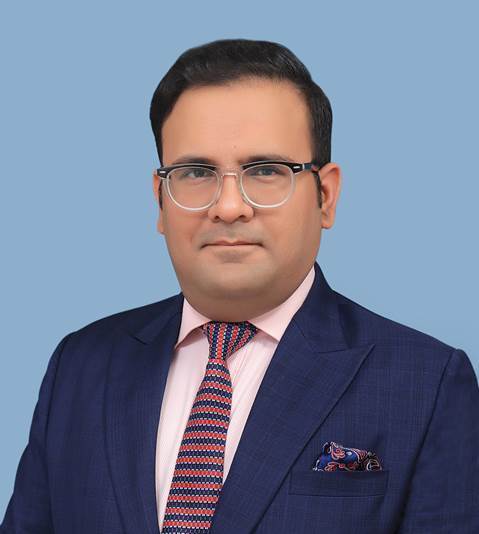
    Could you walk us through your educational path from Gujarat National Law University to your LL.M. at the National University of Singapore and Master’s at the Graduate Institute in Geneva. What inspired you to pursue these advanced degrees, and how were you able to secure full scholarships at these prestigious institutions, if you could share with our young readers?

    My legal journey started with a degree in law and commerce from GNLU, Gandhinagar. 5 years in Gujarat were incredible for me thanks to the people I met. I learned a lot and  also developed a fondness for Gujarati language. My law school journey revolved a lot around mooting and internships. I got my first taste of international arbitration through a moot in Frankfurt in 2011. I graduated from GNLU with an all-rounder scholarship and joined the bar. Alongside law school, I had worked with some leading senior counsel including Mr. Mihir Thakore, Mr. Soli Sorabjee, Mr. Siddharth Luthra and Mr. Ram Jethmalani. However, I was guided by my mentors to join a junior counsel office upon my graduation where I would learn written and trial advocacy.

    So fresh out of law school, I had the privilege of being a junior for two incredible lawyers Mr. Debesh Panda and Ms. Amrita Panda. While they are both married and work together, their styles are very different. In addition to their own stellar training as a junior to some of the greats like Mr. AK Ganguly, Mr. Rajshekhar Rao and Mr. Satish Manishinde, both of them had gained advanced academic exposure overseas and this showed in their finesse. I also worked closely with my colleague Mr. Naman Maheshwari who was senior to me and patiently guided me on practical nuances. Inspired by the journey of my seniors, I applied to the MIDS program in Geneva and was fortunate to get awarded a full scholarship to attend the same. 

    Living and studying arbitration in Geneva was amazing. The experience at MIDS is unmatched and the cohort, faculty and alumni go the extra mile in ensuring it. MIDS truly broadened my horizons and made me feel that I had unlocked new levels in a game that I had barely understood before. The chance to study under giants of arbitration like Gabrielle Kauffman-Kohler (my thesis supervisor), Emmanuel Gaillard, Zachary Douglas, Lawrence Boisson de Charzounes, Albert Yan Van Den Berg, George Bermann and others was a sumptuous treat. The learning from other members of the cohort is also enormous. After my time in Geneva, I got the opportunity to continue my education at The Hague Academy of International Law and the National University of Singapore (NUS) on full scholarships. At NUS, I got the chance to study arbitration under leaders like Lucy Reed and M. Sornarajah, and also study subjects like Oil and Gas law. 

    In my view, the key to cracking scholarships is demonstrating a balance between ability and inability to contribute. Ability to contribute positively to the cohort and the larger ecosystem if such an opportunity is given to you; as well as inability to contribute economically to access such an opportunity without assistance. 

    Your career has evolved from starting as an Advocate before the courts at Delhi to key international roles including at Drew & Napier LLC in Singapore. What motivated this transition, and how have these diverse experiences shaped your approach to dispute resolution and international arbitration?

    My stint at Drew & Napier (DN) happened by chance. While I was at NUS, I was working with Dr. Michael Hwang as an intern. He suggested that I also try to gain some experience at one of the leading disputes teams in Singapore. I reached out to my first choice, DN and fortunately got assigned as an intern to the Chairman Mr. Jimmy Yim, SC. I assisted Mr. Yim and his stellar team on a few matters including an arbitration trial. In the middle of a hearing at Maxwell Chambers, Mr. Yim took me out during the lunch break to a nearby restaurant and graciously invited me to join his team full-time after NUS. I was initially hesitant as I had a practice in India to return to but, the world has seen very few charmers like Jimmy Yim. 

    And thus after NUS I joined DN under Mr. Jimmy Yim, SC who was leading the disputes practice. Mr. Yim is one of the fiercest advocates and a master strategist. He is gifted with an unparalleled understanding of people. I think that the incisiveness with which Mr. Yim cuts through to the relevant facts from a bundle of files should be a spectator sport for amateur lawyers. His presence in a room, be it a court, arbitration or simply a meal is unmatched. 

    I also worked under Mr. Mahesh Rai, the youngest ever equity partner in DN’s 130+  year history, and for good reasons. His journey is truly inspirational and I have never seen someone who can handle such large volumes of complex work with such regal finesses, and yet be a good boss and colleague. 

    Even till today I often prepare arguments thinking how would Mr. Yim argue this or think what would Mahesh say if he reviewed this draft of mine. I have tried to train my own team at Skywards Law based on much of what I learned from colleagues at DN.

    During your time at Drew & Napier LLC in Singapore, you dealt with international arbitration and the laws of various countries. Can you share an interesting case or project from that time and how you think the Arbitration landscape in Singapore differs from that of India?

    DN is one of the citadels of disputes practice in Singapore. While I was an International Lawyer at DN, I had the chance to do a variety of matters across sectors like commodities, construction, shipbuilding, oil and gas, aerospace, aviation, hospitality, entertainment and others. 

    I fondly recall being the associate in a 4-member team for an international arbitration against an Indian PSU. Our team which was led by Mr. Jimmy Yim, SC and Mr. Mahesh Rai, acted for a South Korean Chaebol in the matter and the quantum was upwards of 200 million USD. The opposite side was represented by Indian counsel and the tribunal was a mix of retired Indian supreme court judges and a leading British QC (now KC). The arbitration was seated in Singapore, governed by UNCITRAL Rules and Indian Law. The similarities and differences of Indian and Singaporean legal traditions in the background of an intense trial being held in Maxwell Chambers came to the fore repeatedly during that trial. 

    There is much similarity in the letter of Indian and Singaporean arbitration law (both are common law and model law following countries). However, there is a huge difference in the spirit with which it is practiced by lawyers and arbitrators. In my view, Singaporeans have a beautiful pragmatic way of approaching commercial dispute resolution. Everyone conducts their job with military discipline and is respectful of the fact that they are charging by the hour to provide exceptional quality and dedication to the mandate. Timelines are very short and everyone puts their heart into delivering exceptional work within truncated timeframes. 

    Perhaps some of it is also a result of their post degree legal education system. Singaporean legal training is far more rigorous at the start of one’s career than India, and it is an ongoing process throughout one’s professional journey. Their system of admission to the bar is far longer and rigorous than India. Moreover, their CPD points system ensures that lawyers keep up with advancements in the field every single year. 

    Another memorable experience is when Mr. Yim and I supported a client in the entertainment industry in securing a multi-million dollar naming rights agreement i.e. agreement for the name of a theatre, from a leading real estate company.

    Your internship under Dr. Michael Hwang, the former Chief Justice of the DIFC, is a noteworthy achievement. How did working with such a distinguished figure impact your professional development, especially in international arbitration? Can you give an example of how this mentorship influenced your approach to subsequent arbitration cases?

    I had the chance to work under Dr. Michael Hwang for a short while in 2017. My internship was the event that turned my distant admiration for his work into a personal rapport. My learnings from him, over the years, have had a profound impact on my life. 

    Dr. Hwang, who is today one of the most celebrated thought leaders in arbitration, has also been a fierce advocate, an exceptional judge (in Singapore and Dubai), a prolific writer, a teacher of the law and a philanthropist. He is also one of my absolute favorite legal war-story-tellers. 

    In addition to unparalleled credentials, his love for the development of arbitration law is something I resonate very closely. From writing seminal articles which were the genesis of terms-of-art in arbitration (like Guerilla-Tactics), to establishing the Michael and Laura Hwang Chair in International Arbitration at NUS. His actions have truly inspired generations of lawyers, judges and academics, and his singular impact on the practice of international arbitration is outsized. 

    For me, just spending quality time with MH (as he is fondly known in his alumni circles) is a growing experience that shapes perspectives on all cases that my team and I handle. Even till date, I speak to him on videocalls and try to catch an exceptional meal with him every time I am in Singapore. Further, his lessons in written and oral advocacy are ones that have helped our journey the most. We try to emulate parts of his style in the small and big elements of our drafting and speech. 

    Recently, I have had the chance of extending the privilege of Dr. Hwang’s guidance to members of my own firm and my class at NLU, Delhi. Dr. Hwang took the final class of my 55-hour seminar course on the topic Advocacy: The Arbitrator’s Perspective.

    As a Partner at Skywards Law, you lead Dispute Resolution and represent clients in complex multi-party and cross-jurisdictional arbitration cases. Could you discuss your strategy in handling one such high-stakes case?

    Skywards Law is a boutique law firm. Our strategy in every case and situation is bespoke. However, every strategy has to be grounded in a deep understanding of the facts and circumstances. In many cases that also includes developing an understanding of the underlying technical aspects. A mix of our training, experience, teams and specialized technology help us to pre-empt issues and resolve legal matters efficiently. 

    In a recent arbitration involving a coal-related international transaction where we acted for a Singaporean entity, a dispute arose on various issues. The agreement, which provided for a three member tribunal, was governed by Singapore Law and SIAC rules. Upon digesting the facts and numbers we understood the need to balance costs with quantum. So we first got the proceedings converted to an expedited proceeding before a sole-arbitrator. Thereafter, we conducted the procedural hearings virtually and a final physical hearing in Kuala Lumpur (instead of Singapore). Using a few other strategies, we were able to get a favorable award within less than a year at a lower cost than initially estimated with substantial legal costs awarded to the client in the final award. 

    How do you foresee the future of international arbitration in the Indian legal landscape?

    In my view, the future of international arbitration in India appears to be exceptionally bright. As the country emerges as a business hub with massive import and export of capital, goods and services, the preference of companies for arbitration (for international disputes) is clear due to its flexibility and efficiency when compared to alternatives. It is however, an imperfect system with much scope for tactics and abuse. 

    A key driver of this progress is the pool of exceptional lawyers who are not only acting for Indian clients but for global entities, who are acting as arbitrators, leading institutions and becoming thought leaders. Their expertise and dedication is building confidence in India’s arbitration ecosystem and making it increasingly attractive. 

    Legislative and judicial efforts towards bolstering India’s position have played a key role. For example the Arbitration and Conciliation Act has been amended multiple times with a view to fine-tune it and create a robust framework. The appellate courts have pro-actively supported the development of a judicial ecosystem that respects arbitration. 

    The ecosystem is further supported by the efforts of the bar and prominent Senior Advocates such as Mr. Gourab Banerji, our Attorney General and Solicitor General, Mr. R. Venkatramani and Mr. Tushar Mehta respectively, Mr. Gaurav Pachananda, Mr. Shashank Garg and many more.

    While India is far from achieving its goal of becoming a global hub for international arbitration, I believe that it is much closer to this goal than it was just a few years ago. The proliferation of thought-leadership events like the Delhi Arbitration Weekend, the mushrooming of arbitration institutions and the wealth of jurisprudence and literature being developed on the topic are clear indicators of this growth. 

    In 2024, you were appointed as an Honorary Professor at the National Law University, Delhi. Could you kindly share insights about your academic journey with our readers?

    Academia and the progressive development of the law have a special place in my heart. I have been teaching law for over a decade. I started teaching short courses on Investment Arbitration at my alma mater GNLU. I was also involved with some practitioner-oriented sessions at NUS and NALSAR. However, I started dedicating more time to academia after I moved back to India and set up Skywards Law. 

    Initially I taught a 40-hour seminar course on arbitration at the National Law School, Bangalore. Since the last few years, I have been teaching law on Friday evenings at National Law University, Delhi (NLUD) in alternate semesters. I teach a 55-hour seminar course titled “Practical Aspects of International Arbitration”. It is offered to advanced students who have studied arbitration as a subject previously. 

    The University, under the leadership of Dr. G.S. Bajpai was kind enough to appoint me as an Honorary Professor alongside some leading names from India and around the world. In this role, I try to be a catalyst to the University’s broader vision of developing a favorable academic ecosystem for arbitration, business law and international law. I also get the chance to support their thought-leadership initiatives and assist with innovative teaching experiments aimed at grooming young lawyers for the journey ahead. 

    What advice would you offer to young lawyers aiming to excel in International Arbitration, and could you recommend any resources to help them stay updated on the evolving landscape of the field?

    My foremost advice to law students and young counsels is to have fun and enjoy the process rather than fixate on a future destination. International disputes practice is a highly competitive field in the practice of law. In the long run, this is a game of resilience over brilliance. Life is full of ups and downs, focusing on long term progress instead of short term gratification and optics. Focus on ‘doing’ over ‘being’. Excellence is the eligibility criteria for the higher echelons of the game and being a well-rounded personality will help you sustain your journey.

    However, international disputes is a dynamic field with much scope for value addition and innovation in the short term. Young counsels should embrace this spirit and always seek opportunities, however small and try to do their best in it. Another advice would be to find good mentors and build long-term relations. 

    Young counsels can consider gaining practical insights from summer schools such as the Paris Arbitration Academy, Geneva Summer School, Basel Winter School, the Hague Academy of International Law etc. An LL.M. is not essential but goes a long way in building and boosting one’s career by getting you a seat on exclusive tables. Though these courses come with a significant financial commitment, there are various ways to secure funding. In my view, getting into elite programs is often more challenging than securing the funds for it. 

    Given your demanding career and professional obligations, how do you unwind and maintain a healthy work-life balance?

    Maintaining a healthy work-life balance is integral to sustainability in a demanding profession. Temperament and balance are very important for a lawyer to remain objective and efficient. I believe that taking breaks and pauses help a lot. I also believe that philosophical concepts like joie de vivre and pursuit of happiness are very important and thus I intersperse my work life with experiences beyond the law that bring me joy and happiness.

    As an avid traveller, I try my best to take multiple trips every year. Some of these are vacations, some are weekend getaways and some are just extensions to work trips. So far, I have travelled to over 30 countries and over 200 cities. I look forward to exploring more destinations in the Americas and Africa in the near future. I enjoy travelling alone, with my wife (who is a former travel journalist) and with friends and with family. 

    Music is another constant companion in my life. I have a deep love for exploring new musical creations across genres and artists from around the globe. The creative genius in music continually amazes me, reminding me of the boundless possibilities of human expression. Audiobooks have also become an essential part of my routine, especially as they fit seamlessly into busy schedules. Whether I’m driving, waiting for a meeting or at the airport. Skilled narrators made the process of consuming books easy and incredibly relaxing. 

    I also get to maintain a balanced life due to my stellar associates (gratitude shoutout to Eshan Chaturvedi, Arijit Sanyal and Arundhati Kale), and colleagues from other teams at Skywards Law who accommodate my schedules with patience and optimize my time efficiently. 

    Get in touch with Garv Malhotra –

  • “Politeness is an understated skill to possess; it reflects integrity and professionalism in every interaction.” – From navigating high-stakes commercial disputes to advocating for legal reform in Chhattisgarh, Rishabh Garg, Partner at Pransh Law Offices

    “Politeness is an understated skill to possess; it reflects integrity and professionalism in every interaction.” – From navigating high-stakes commercial disputes to advocating for legal reform in Chhattisgarh, Rishabh Garg, Partner at Pransh Law Offices

    This interview has been published by Namrata Singh and The SuperLawyer Team

    Reflecting on your journey from ILS Law College, Pune, to your current position as a Founding Partner at Pransh Law Offices, what pivotal moments or experiences shaped your career in law and What inspired you to establish a legal practice in Chhattisgarh, and what unique approach does Pransh bring to the legal landscape?

    My first encounter with Law was when I was an hour away from my higher secondary mid-term examinations at Symbiosis Junior College, Pune. I had received a call from my inconsolable mother, “Your father has been arrested”. I remember returning to my hometown Korba, Chhattisgarh after my exam and spending months going through the complex legal proceedings. It was then that I studied the law in detail and had a very many meaningful conversations with the lawyers. It took 4 months of hardships before he was discharged of all offences. I believe that’s when I found my true calling and joined ILS Law College in 2008. 

    At ILS, one had to be self-motivated in order to learn since the College did not mandatorily require anyone to partake in any activity other than attending lectures, which too, ended at 10 in the morning. This meant one had ample time to explore and identify one’s area of interest. I did a couple of internships in Corporate Law during the initial years, but it was my internship with a Senior Advocate in the Supreme Court in my penultimate year that made me realise that litigation was what intrigued me. Therefore, after passing out of ILS, I applied to a few law firms and Senior Advocates in Delhi to begin my career in litigation, however, nothing materialised and I was forced to start my career from my hometown in Chhattisgarh. 

    In Chhattisgarh, I realised that although opportunities abounded, the learning curve was slow and Seniors did not take particular interest in teaching the nuances of the law to a young graduate. As such, at the advice of my peers, I left my practice in a year and joined Tech Mahindra in their litigation team in Hyderabad. Tech Mahindra had just taken over Satyam Computers at that time, which meant, being involved in several high stake litigations to deal with. I enjoyed my time at Tech Mahindra but since the goal was always to gain experience and come back to Chhattisgarh, I left that job within a year; pursued a Master’s Degree from the National University of Singapore; and founded Pransh Law Offices in Raipur in July 2016. 

    At Pransh, we believe in keeping things simple. We ensure that our drafts are prepared on time and there are no unnecessary adjournments in Court. We thoroughly research the legal issue involved before giving opinions. We are polite, we do not overcharge, and we keep our Clients up to date with the developments in their matters. We are a team of 11 lawyers who stand shoulder to shoulder in pursuance of holistic growth. We also often collaborate with other firms/lawyers to ensure the best possible outcome for our Clients. 

    Having pursued your LL.M. in International and Comparative Law from the National University of Singapore, how has your international education influenced your approach to legal practice in India?

    Studying at NUS for a year taught me to meticulously draft a legal document after extensive research. It helped me develop analytical skills, since at NUS, we were given reading material a week prior to lectures – where we were supposed to share our thoughts on the reading material. Other than that, the substantive law that I read there has not really helped me yet in my legal practice in India. In fact, a Masters does not really help in litigation, other than the skills one develops, and it is advisable only if academics is one’s calling.

    As a seasoned legal professional, you have extensive experience in high-value commercial disputes and advising clients in various industries. Can you share some insights into the challenges and rewards of practicing law in the domains of DDUGKY, Mining, Construction, and Infrastructure?

    In commercial disputes, it is important to know the business as much as it is important to know the law. These disputes are mainly governed by a Contract in writing, and therefore, a thorough understanding of the Law of Contracts is extremely important. 

    Early on in my practice, I got the opportunity to work on several low-stake commercial matters. Every matter had its own complexity where I made mistakes and learnt from them. Over time, it gave me the confidence to take on high-value commercial disputes; since there is no scope for making mistakes in high-value transactions. 

    One of the many challenges we often face in these domains is to quantify the damages that arise out of breach of the Contract. Courts, after Kailash Nath v/s DDA, have held that even Liquidated Damages have to be proved. Often, Clients – at least in a jurisdiction such as Chhattisgarh – don’t maintain their books of accounts properly to enable lawyers to quantify damages such as loss of profits and profitability. As such, a favourable Award / Order in such circumstances is always rewarding. 

    Pransh Law Offices covers a range of practice areas. Which area do you find the most fascinating or challenging, and why?

    As a firm, my colleagues practice extensively in criminal and civil law; however, I personally don’t have the temperament to practice criminal law. As such, I stick to commercial disputes only. 

    The fascinating part about commercial disputes is that they can be settled; there’s a quietus to the never ending litigation. I think lawyers have a substantial role to play when it comes to settlement, as they are the ones who initially inform their Clients of the merits involved in the matter. An honest opinion can help litigants make an informed choice whether to pursue the matter in Court or settle. 

    Your time with the Global Litigation and Arbitration Team at Tech Mahindra involved handling diverse cases. Can you share an interesting or unexpected challenge you encountered during that phase of your career?

    We were dealing with a litigation against Tech Mahindra in the Courts at Los Angeles, California, filed by a disgruntled employee who was sent Onsite from India. During discovery, we found documents against the employee; however, the legal costs, publicity, and risks of going through a jury trial forced us to settle the matter. It was then as an in-house counsel that I realised that litigation is not just about the law or proving who is right/wrong. There are many variables and considerations, such as costs, bargaining power of the parties involved, and attitude of the Presiding Officer of the Court, among others, that are to be kept in mind while dealing with a dispute. 

    Beyond your legal work, you’ve volunteered as a teacher with Make A Difference. How has your experience in community engagement shaped your perspective, both personally and professionally?

    During my time at Make A Difference, I was tasked with teaching English to a Class of 4 Juvenile Convicts in a Juvenile Home in Pune. Professionally, it was obviously a very enriching experience since it was hands-on learning on how the Juvenile Justice Act worked. Personally, it was an experience that made me culturally sensitive and socially aware. These Juveniles were some of the smartest 10-year-olds I met who were also grateful for the learning opportunity. It made me trust the reformative form of punishment. 

    You’ve been recognized for your contributions. Could you share a bit about any notable publications you’ve authored or awards you’ve received, and what those moments meant to you?

    I have not had the honour of receiving any of the prestigious legal awards.

    My last publication was a result of a sleepless night during COVID-19 graciously published by Bar & Bench on Access to Justice in the State of Chhattisgarh, which can be accessed here:

    https://www.barandbench.com/columns/access-to-justice-or-lack-thereof-in-the-state-of-chhattisgarh

    Although it has been a while since I have done any legal writing, I believe legal writing offers a unique avenue for the expression of creative arguments; which unfortunately, legal pleadings do not provide. Legal writing fosters a dynamic and evolving dialogue within the legal community. I regularly read articles published on “indianconlawphil” and “indiacorplaw”. I can only wish that my practice affords me time to write such enriching articles.  

    As someone deeply connected to Chhattisgarh, how do you perceive the evolving legal landscape in the state, and what role does Pransh play in contributing to that evolution?

    We have been making representations to the Government urging them to establish more Commercial Courts in the State as well as set up other Tribunals like DRT, NGT, and NCLT but to no avail. More Tribunals would mean more opportunities for Lawyers as well as access to litigants. It would also ensure the development of a Commercial Bar in the State, which is non-existent as of date. There is still a long way to go! 

    Beyond the legal realm, what are your hobbies or interests that bring you joy and relaxation outside of work?

    General interests in movies/music aside, I went for a 7-day trek to Har-ki-doon a couple of years ago, which got me hooked on trekking. I make it a point to go on a trek during Court vacations in summer. It allows me to be completely disconnected, reducing the mental strain associated with information overload. 

    What advice do you have for law students and aspiring lawyers who are navigating their way through legal education and considering a career in law?

    a) Politeness is an understated skill to possess; b) Don’t be arrogant, it reflects in Court, and no one likes to deal with an arrogant person – neither the judge nor the client; c) Try and make the job of the Court easier – submit brief written arguments with case compilations, whenever possible; d) Be patient, the learning process is slow; e) Don’t be hard on yourself. 

    Get in touch with Rishabh Garg-

  • Soumya Shekhar- Founder of Remote Lawyer, a scholarship holder from the National University of Singapore who also worked with tier-1 law firms and MNCs

    Soumya Shekhar- Founder of Remote Lawyer, a scholarship holder from the National University of Singapore who also worked with tier-1 law firms and MNCs

    This interview has been published by Tanmaya Sharma. The Interview was taken by The SuperLawyer Team.


    Tell us about yourself – Why did you choose law? If not law, what other career options would you have considered?

    A Law of Torts book had accidentally fallen in my hands when I was in class 11th. The fact that this field required application and interpretation of existing legal principles appealed to me. Since then, I wanted to pursue my higher studies and profession as a lawyer. If not law, then I would have been a journalist or an author. I love to write and would have enjoyed merging my passion with my profession. 

    You were amongst the first batch of students that took the AILET Examinations and you stood at 16th in the All India Ranking. Could you tell us a bit about how you managed to secure such a good ranking and about your experience studying at the prestigious National Law University of Delhi?

    I think the key to securing a good rank in any competitive examination lies in solving as many mock tests as possible. No matter how well you are prepared, what matters, in the end, is how well you did in the limited time that was given to you on the particular day of the exam. To bridge the gap between well-prepared and best-prepared, one should try simulated test-taking. It not only increases the confidence but also assesses the level of your preparedness. 

    National Law University, Delhi laid the foundation for my professional career. The academic pedagogy and the vibrant culture led to holistic development. Located in Delhi, it played a major role in being able to intern even during college days. It is the bedrock of not only my development as a lawyer but also who I am as a person today.

    You have been Course Content Curator, Legal Editor, and Research Consultants to many firms and Organisations. You were also the Research Lead at WHO Legal Development Program in India. It would not be wrong to denote you as a Scholar. Can you tell us what about Research kept you going?

    I am extremely passionate about both writing and law. There was nothing better than merging both my passions together and hence, I commenced my journey as legal research professional. During the initial years of my legal consultancy career, I exclusively worked on legal content creation and knowledge management assignments. I served as an external Knowledge Management Consultant to AZB and Partners and was also the Research Lead for the WHO Legal Development Programme for Road Safety in India. 

    The way research is conceptualized commonly tends to be more theoretical than practical. However, it was the latter aspect of the same that caught my fancy. For instance, while everyone knows what a force majeure clause is, it is its application that is rarely been written about. It was the application of legal concepts that I wanted to discuss rather than the theoretical underpinnings. A reflection of this fascination with the practical perspective of legal research can still be seen on the blog of my firm, Remote Lawyer.

    You have studied at National Law University, Delhi, and completed your Masters at the National University of Singapore in Corporate and Financial Services Law. What difference did you find in the Pedagogy in Indian Schools and abroad?

    One key difference is that schools abroad focus more on understanding than rote learning. For instance, there were many occasions at the National University of Singapore, wherein we had open-book exams, take-home exams, etc. which tested a person’s ability to understand and apply the legal concept rather than reproduce the theory around the same. Another important difference I found was the focus on in-depth legal research. The research papers were thoroughly vetted and the faculty was always looking for an element of originality. 

    What was that one learning experience in your entire career trajectory that you’d credit to have shaped your career and your role as the Founder of “Remote Lawyer”?

    I left a plum middle management job at a multi-national company to start my career as an independent legal consultant in 2018 and the rest is history. My stint as an independent legal consultant taught me more about the legal profession and the field of law than any organized institution would ever have. Experience is the best teacher. When you do not have anyone to correct your mistakes, you start becoming more careful. When you have to solicit clients on your own, you automatically shed the shell of an introvert and learn how to network. It was my 2.5 years as an independent legal consultant that gave me the confidence that I can set up an organization all on my own. It taught me how one can create value in oneself. 

    Can you walk us through a day in your life? What is the life of a Founder of an Online Legal Consultancy Firm like? 

    Managing a virtual legal consultancy, such as Remote Lawyer, with a diverse clientele from varied sectors and different time zones, requires meticulous planning ahead of each day. Before I end work for the day, I create a To-Do list for the next day. Every morning, I review this To-Do list along with the corresponding deadlines and plan accordingly. A typical workday consists of reviewing and drafting agreements, drafting notices and opinions, attending negotiations and client calls. I also run a YouTube channel by the name Remote Lawyer and make it a point to create content for the same, at least once every two weeks. It is a part of my commitment to give back what I have learned to the legal fraternity. Along with client assignments, I also make it a point to take out time to curate content for the blog of my website, at least once a week. 

    It is now close to a decade that you’ve been a part of the legal fraternity. What do you think is the difference between the law profession right now and the profession a decade back? And, what all changes would you like to see in our Indian Law Profession?

    A decade back, the very concept of a virtual legal consultancy would have been unheard of. The fact that legal services can be delivered right in your inbox, without the need for you to meet your lawyer, would have been an unthinkable idea back then. The legal profession today demands change and transition from the traditional to the modern. The fact that legal tech is booming and growing and there are so many software technologies that assist us lawyers in our day-to-day life shows that we need to adopt new technological advances. The subject matter we deal with every day is also fluid. Fintech and Information Technology laws, cryptocurrencies, NFTs, etc. are novel concepts and lawyers need to keep pace with the changing legal landscape. 

    Lastly, is there any suggestion or advice that you’d like to give to our readers?

    I have always felt that creating value in oneself is extremely important. From a young age itself, try to become that resource that every company and firm wants to hire. Be meticulous in what you do. Question everything and accept nothing without supporting evidence. And most importantly, focus on application rather than rote learning. Knowing what the law is will help you to a certain extent, but understanding and applying that law in a way that helps your client is what will enable you to leave your mark as a successful lawyer. 


    Get in touch with:

  • Arnavi Panda, Legal Advisor, Global Marketing Systems, on LLM from NUS, preparing for moots and working in shipping industry

    Arnavi Panda, Legal Advisor, Global Marketing Systems, on LLM from NUS, preparing for moots and working in shipping industry

    Arnavi Panda is a graduate from ILS Law College, batch of 2015. She then went on to pursue her Master’s degree in Maritime Law from the National University of Singapore. She has participated extensively in various national and international moots including  Philip C. Jessup International Law Moot and William C. Vis International Arbitration Moot. She is presently a Legal Advisor in Global Marketing Systems, DMCC, Dubai.

    In this interview she talks about:

    • LL.M from NUS
    • Scope of maritime law in India
    • Difference between universities in India and abroad


    HOW WOULD YOU LIKE TO INTRODUCE YOURSELF TO OUR READERS? PLEASE TELL US SOMETHING ABOUT YOUR PRE-COLLEGE LIFE?

    I’d introduce myself as a young lawyer, passionate about the shipping industry and the associated legal practice with a keen interest in arbitration and alternate dispute resolution on weekdays and an amateur Latin American dancer always keen to network over the weekends!

    Prior to college in Pune, I was fortunate to complete my high school life partly in Bombay and partly in Calcutta. The difference in lifestyle in both the cities was my first step to learning to embrace and appreciate diversity. I was always an energetic child, very keen to learn, very curious, a sports aficionado and always came home with scrapped knees or soiled clothes.


    PLEASE TELL YOU SOMETHING ABOUT YOUR COLLEGE LIFE? HOW INSTRUMENTAL HAS YOUR COLLEGE BEEN SHAPING YOUR CAREER?

    I spent five very crucial formative years in ILS Law College, a college I had always heard about being one of the oldest and prestigious colleges in the country for legal studies. It was an honor to have been accepted in face of the stiff competition and competitive cut-off marks.

    ILS as an institution gives its students great autonomy and flexibility to make their own decisions on the course of their career. With five hours of classes a day, I made the most of my leisure time by writing research papers, working on moot court competitions, assisting professors, organising intra-college events and interning at law firms to acquire practical experience. Not only did this serve as great career building exercise but also a character building exercise which taught me to take responsibility for projects I undertook, honed my advocacy and leadership skills and made me realise the importance of being a team player.


    YOU HAVE REPRESENTED YOUR COLLEGE AT PRESTIGIOUS MOOT COURT COMPETITIONS INCLUDING PHILIP C. JESSUP INTERNATIONAL LAW MOOT AND WILLIEM C. VIS INTERNATIONAL ARBITRATION MOOT. HOW DO YOU RECOMMEND ONE SHOULD PREPARE FOR THEM? DO YOU THINK MOOTING IS SIGNIFICANT FOR LAW STUDENTS?

    I have always believed the legal profession to primarily be an interactive profession with regular contact with various parties. Mooting not only hones one’s advocacy skills but also facilitates overcoming stage fear, builds self-confidence and develops public speaking and interpersonal skills.

    Preparing for Philip C Jessup and Willem C. Vis played a major role in my development as a professional for a variety of reasons. My team and I dedicated about six to eight months preparing for these events which required long hours, late nights, developing legal research skills and most importantly knowing how to communicate and work as a team which is an indispensable quality at the work place. I would advise aspirants of these events to firstly pick the right team members who are of a similar professional temperament and are willing to dedicate the same amount of time and effort to these events as they quite literally become your closest friends during this time. It is important to work smart along with working hard which would include seeking guidance from previous participants on what to expect and how to research, the materials to be referred to and how to structure the arguments and lastly prepare with several mock trials. We were fortunate to have very helpful seniors, colleagues and faculty staff who gave us time to review our submissions and prepare for the oral hearing. Preparing and participating for these events is very stressful and I commend my teammates who did not give up despite the odds and went on to qualify as quarter-finalists at Vienna in 2015. Like any other participant of the event, I will have to say that it is absolutely worth every late night, every sacrificed internship and every missed movie/dinner/party!

    While mooting does play a very important role in a law student’s life, I fully recognise that it may not be everyone’s cup of tea. However, I would encourage everyone to have some mooting experience during law school as a career building exercise.


    ARE THERE ANY MEMORABLE MOMENTS DURING YOUR COLLEGE THAT YOU WOULD LIKE TO SHARE?

    Five years of law school created a lot of pleasant memories but if I were to highlight the most memorable one of them all, it would have to be the day my team and I were adjudged as the winner of the intra-college international law moot court qualifying competition. This gave us the opportunity to represent ILS at the Philip C Jessup Moot where we were only two points short of qualifying to the World Rounds. The moto of the team was to only give our very best effort without expectation and consistently challenge ourselves to do better.

    This was a defining moment for us as a team and was testament to the fact that with sincere hardwork, effort and humility, sky is indeed the limit!


    WHAT MOTIVATED YOU TO GO FOR A MASTERS PROGRAMME? WHAT LED YOU TO CHOOSE MARITIME LAW AS YOUR SPECIALISATION?

    I come from a family of teachers who have always believed that education never goes to waste. In the present competitive market, selecting a niche and mastering it is important to establish oneself and it was with thought in mind that I was focused on completing my masters coursework before stepping into the professional job market.

    The shipping industry was an industry which I was familiar with since I was a child by virtue of my father’s affiliation with the Ministry of Shipping for the Government of India where he was the lead advisor and the IMO Representative for the Country on several occasions. The beauty of the maritime industry is that it is extremely multi-dimensional, involves a lot of cross-jurisdictional transactions and disputes and is extremely global in nature. I always knew that I would appreciate a contentious job a lot more than an advisory one and Maritime Law gave me the perfect avenue to combine my passion for international law, commercial laws and dispute resolution.


    WHAT WOULD BE YOUR ADVICE FOR YOUNG LAWYERS AND LAW STUDENTS LOOKING TO SPECIALISE IN MARITIME LAW?

    I would strongly recommend young lawyers to pick maritime law as an area of expertise for a variety of reasons.

    It is an excellent niche area to capitalise on. Given that India is a country with a vast coastline and there is significant Admiralty work which is always done in addition to the new Admiralty Act which was enacted last year; maritime law is a very promising career option.

    However, I would also recommend aspirants to seek internship experience with a firm practising admiralty law to get an insight into the industry to make an informed decision. It is complex; it is contentious; it is challenging at every stage but is also very exciting, very glamorous and very international.

    PLEASE TELL US ABOUT THE APPLICATION PROCESS FOR LL.M. AT NUS?

    The application for LL.M. at NUS is fairly standard as you would find in most universities worldwide. It is important to start preparing early by researching about the program you wish to apply for and the deadlines.

    After submitting an online application, the candidate then has to send a physical copy of the application along with supporting documents (official transcript, degree scroll, recommendation letters) along with the application fee receipt to the university at the indicated address on the website. The results of your application are usually declared only three months after the application. (I remember receiving an acceptance from NUS as one of the last universities as opposed to my acceptances from USA, UK and Australia).

    The information is easily available on the NUS website and the administration and admissions staff is very helpful, friendly and prompt with their assistance.


    WHAT ARE THE NECESSARY TRAITS ARE REQUIRED TO BAG A SCHOLARSHIP FOR LL.M.? WHAT IS THE APPLICATION PROCESS FOR A SCHOLARSHIP AT NUS?

    Like any university, it is highly advisable to have a consistent set of good grades in all years of academic study to secure a scholarship. Universities are usually keen to award scholarships to students who can display merit in academics and outstanding contribution even on extra-curricular activities. NUS has an additional requirement like a few other universities where it requests an Essay from a candidate on a current topic of their interest to assess scholarships awards. It is advisable to select an emerging topic of interest in the field of study that a candidate wishes to specialise in to increase their chances of success.


    WHAT SHOULD BE KEPT IN MIND WHILE WRITING SOPS FOR LLM ABROAD? WOULD YOU BE WILLING TO SHARE YOUR SOP FOR THE BENEFIT OF YOUNG LAW STUDENTS LOOKING TO APPLY ABROAD?

    I cannot stress enough on the importance of being well researched on the coursework, the faculty, the program and most importantly the industry. An ideal statement of purpose in my experience would be one which highlights the candidate’s genuine interest in a field of study even though one may not have taken the ideal modules or courses during undergraduate study for the same. Personally, I have always conceived a SOP to be a personalised document which gives the institution a chnace to understand the candidate’s expectations, aspirations and background better in addition to the professional information that they already have handy from the resume.


    PLEASE TELL US THE RECRUITMENT PROCESS AT GLOBAL MARKETING SYSTEMS, DMCC, DUBAI? HOW DID YOUR APPOINTMENT TAKE PLACE?

    I was introduced to a representative of Global Marketing Systems, DMCC, Dubai while in Mumbai who advised I apply for the position. As is standard procedure, I was interviewed once my Resume was perused and shortlisted prior to an offer being made. Initially I was placed in the Singapore office for a period of 5 months before permanently moving to the head office in Dubai and taking over the complete compliance and legal portfolios at GMS.


    AS LEGAL ADVISOR IN GLOBAL MARKETING SYSTEMS, DMCC, DUBAI, WHAT ARE YOUR ROLES AND RESPONSIBILITIES?

    My current role with Global Marketing Systems in Singapore and Dubai involves extensive risk assessment and legal advisory in relation to contract negotiation, drafting and execution not only for the sale, purchase and demolition of Vessels but also various standard form BIMCO operational contracts, time and voyage charter party contracts, contracts of afreightment, and marine insurance contracts. Currently, I assist and handle three portfolios in the Company namely, compliance and regulatory, legal dispute resolution, insurance claims. I am entrusted with advising the management and the procurement team of the risks in trading and purchasing vessels with prior claims, sanctioned vessels, commercial and legal intricacies of amended contracts and engaging external counsels to represent the Company in various litigation matters in India, Bangladesh and the EU as well as Arbitration proceedings commenced at the London Maritime Arbitrators Association (LMAA) and Singapore Chamber of Maritime Arbitration (SCMA).

    My current profile also involves general corporate advisory in relation to business development and expansion in offshore jurisdictions, employment matters in EU and non-EU jurisdictions and international taxation. This experience gives me a holistic understanding of the Shipping industry.


    YOU HAVE ALSO WORKED AS LITIGATION ASSOCIATE AT CRAWFORD BAYLEY & CO., MUMBAI. WHAT IS THE RECRUITMENT PROCESS THERE?

    I worked as an intern at Crawford Bayley & Co. on three different occasions from May 2012 to July 2014 during the semester break with the Admiralty Partner’s office during which period I was able to get valuable insight into the industry and the associated legal practise. Upon completing my master’s degree coursework, I successfully applied to the firm for a position of an associate and the firm was kind to accommodate me in their team and provide me valuable guidance and mentorship as a young lawyer.

    I would recommend law students to carefully consider their internship experiences and if possible, show loyalty to a firm where they have enjoyed the work and the work environment and would like to see a future. An intern is as much an investment to a firm as a firm is an investment to an intern’s resume.


    PLEASE TELL US ABOUT YOUR TIME AT NUS. WHAT SHOULD ONE EXPECT WHILE STUDYING ABROAD? HOW IS THE ENVIRONMENT DIFFERENT FROM COLLEGES IN INDIA?

    My academic year at NUS was an eye opener for a variety of reasons. Studying abroad gave me the perfect exposure to different cultures, interaction with people of different nationalities and understanding their lifestyle.

    The environment in universities abroad is one of friendly competition which is healthy for growth and encourages one to perform to the best of his/her ability. In my experience, universities abroad usually focus on the overall development of students and are less course intensive as opposed to Indian universities. The coursework and assessment structure is application oriented as opposed to theoretical knowledge which requires a thorough understanding of basic concepts and their applicability. It is this understanding which is ultimately most valuable to a prospective employer.

    While the coursework was tasking, our faculty ensured that there were lots of activities organised to keep the student morale high even during exams which were particularly stressful. Most importantly, my time at NUS was a great platform to network, create lasting memories and have a friendly face to bump into in different parts of the world!


    WHAT WOULD BE YOUR WORD OF ADVICE TO OUR READERS?

    Stay focused, stay motivated and never compromise on your mental and physical health. Make your hobby your job and you will always have a motivator in yourself even when the seas are rough!


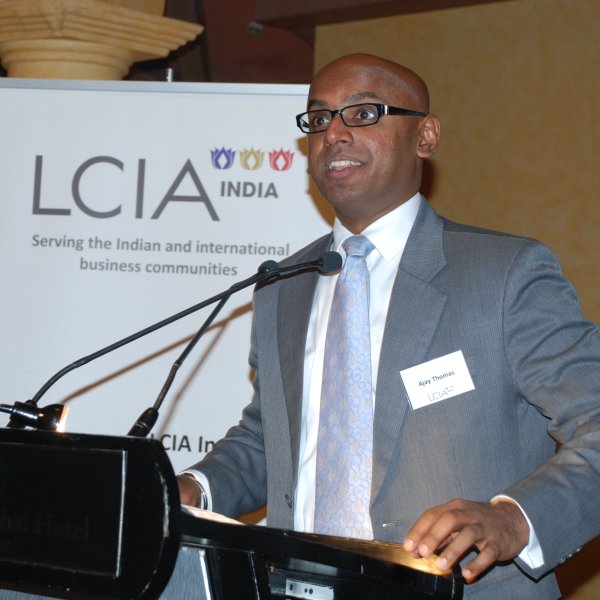
  • Ajay Thomas, Advocate and Arbitrator, on being a good arbitrator and career in International Commercial Arbitration

    Ajay Thomas, Advocate and Arbitrator, on being a good arbitrator and career in International Commercial Arbitration

    Ajay Thomas is an independent arbitrator and advocate based in New Delhi. He is also the Vice-Chair of the ICC’s India Arbitration Group.From 2009-2016, he was Director and Registrar with the Indian subsidiary of the London Court of International Arbitration (LCIA), and also a member of the LCIA India Board of Directors.He graduated from the University of Goa (LLB), and did his LLM from the National University of Singapore (NUS) .

    Prior to joining LCIA India, Ajay was Counsel with the Singapore International Arbitration Centre (SIAC). Ajay was also a member of the expert committee constituted by the Law Commission of India to assist in the preparation of its 246th Report (August 2014) on ‘Amendments to the Arbitration and Conciliation Act, 1996’.

    He is a guest faculty at the Indian Society of International Law (ISIL), New Delhi since 2009, where he teaches international commercial arbitration. Ajay is also Hong Kong 45’s (HK45) Regional Ambassador for India, in addition to serving as the Country Representative for the Asia-Pacific Forum for International Arbitration (AFIA).

    In this interview we speak to him about:

    • Importance of LLM for the career
    • His experience at NUS
    • His roles and responsibilities as the director and registrar of LCIA
    • Skills required for being a successful arbitrator


    HOW WOULD YOU LIKE TO INTRODUCE YOURSELF TO OUR READERS? PLEASE TELL US SOMETHING ABOUT YOUR CHILDHOOD AND PRE-COLLEGE LIFE?

    New Delhi-based independent arbitrator and advocate is what best explains my current professional status.

    Be that as it may, “a serial institutionaliser” is how many in Indian arbitration circles introduce me to their friends and acquaintances. Perhaps, because of the fact that over the past decade or so, I have had the unique distinction of working at four of the world’s leading arbitral institutions: Singapore International Arbitration Centre (SIAC), Singapore Chamber of Maritime Arbitration (SCMA), London Court of International Arbitration (LCIA), and now the International Chamber of Commerce (ICC) – where I have been appointed Vice Chairperson of the ICC’s India Arbitration Group. And, evangelising the cause of arbitration, especially institutional arbitration, has been a very integral part of my professional life.

    I was born in a land situated between the latitudes 14°53′54″ N and 15°40′00″ N and longitudes 73°40′33″ E and 74°20′13″ E, a land blessed with sandy beaches, swaying palms, and magnificent churches. My formative years were spent in the sleepy but charming village of Aldona. Life in those simpler times revolved around school (St Thomas Boys, and later St Britto), the playground which you shared with the neighbourhood water buffalos, and home which was conveniently just a hop, skip and jump away.

    Given my ability to appear at the wrong places at the worst possible times, I had a rather nasty reputation of being a “Jack-in-the box” in primary school, which thankfully evolved to a more respectable “Jack-of-all-trades” in high school. I wasn’t particularly brilliant in studies but was an avid quizzer and excelled in badminton, basketball and the throwing and jumping disciplines on the athletics field.


    WHAT PROMPTED YOU TO BECOME A LAWYER AND WHEN DID YOU THINK OF A CAREER IN INTERNATIONAL COMMERCIAL ARBITRATION?

    Post high school, I enrolled for a Bachelors programme in Commerce, followed it up with an LLB from the Salgaocar College of Law, pursuant to which I spent an eventful few years as a greenhorn litigator at the Bombay High Court.

    I became a lawyer by sheer accident. It was not a conscious well charted journey. Growing up, I was fascinated with being a police officer. Why a police officer? The lure of the khaki, the stars and the Ashoka on your epaulettes, and the bit of idealism left in me that made me think that I could make a difference. When that dream did not materialise, I decided to become a lawyer. But I was clear that I did not want to be a generalist and wanted to find a niche practice area that interested me. I zeroed in on maritime law, and I was extremely fortunate to be accepted as a junior at the Chambers of Senior Advocate S Venkiteswaran (Venki), regarded by many as the guru of maritime and admiralty laws in India.

    Again, it was sheer serendipity that led me to a career in international commercial arbitration. One of the elective courses that I had opted for at the LLM programme at NUS was international commercial arbitration, the teaching for which was led by Adjunct Professor Lawrence Boo, who in those days was the CEO and Deputy Chairman of the SIAC. It so happened that one day during class he mentioned that there was an opening for an India-qualified lawyer at the SIAC and urged the half-dozen Indian lawyers on the course to consider applying for the position. Given the compensation on offer, and the fact that I would be sailing away from maritime law into a totally different arena, I was initially quite hesitant. To cut a long story short, I finally applied and was offered the position subject to me successfully completing my LLM coursework requirements. The SIAC position was effectively my gateway to international commercial arbitration.


    YOU HAVE DONE POSTGRADUATE DIPLOMA COURSES IN ‘INTERNATIONAL LAW AND DIPLOMACY’ AND ‘SHIPPING MANAGEMENT’ HOW FAR HAVE THESE COURSES BEEN HELPFUL?

    My love for ships and the seas, coupled with the desire to specialise in a niche practice area, led me to pursue a “Post Graduate Diploma in Shipping Management”. This held me in very good stead when I started off practicing maritime law at Venki’s Chambers. The course gave me an excellent overview of the dynamics of the shipping industry, which I believe gave me an edge over my peers.

    The course in “International Law and Diplomacy” from the Indian Society of International Law (ISIL) helped me in preparing for the combined civil services exams, where I had opted for law as one of my optional subjects. At the end of the course, fortuitously, I discovered that I had topped the course and was awarded a gold medal, which came in very handy in securing an admission to the LLM programme at NUS.


    CAN YOU PLEASE TELL US ABOUT YOUR EXPERIENCE APPLYING FOR YOUR MASTER’S DEGREE? DO YOU BELIEVE IT IS MORE DIFFICULT FOR NON-NLU STUDENTS TO GET THROUGH INTO FOREIGN UNIVERSITIES?

    Ever since my LLB days, I always wanted to pursue a master’s degree. However, I realised that a couple of years in the profession would make my graduate studies more meaningful and purposeful, and not to mention, more money in the bank to fund my studies. Further, work experience helped me to clarify career objectives and gain invaluable hands-on experience in my area of interest.

    I do think that it takes a bit more effort for non-NLU students to successfully complete the application formalities. I was probably one of the very few students from my college to have applied for an LLM overseas, and consequently I did not have access to the usual advice and war stories from seniors.


    YOU PURSUED AN LLM AFTER HAVING SPENT ALMOST FIVE YEARS IN THE PROFESSION, A LITTLE LATE BY INDIAN STANDARDS. WHAT DO YOU THINK AN LLM DEGREE CAN DO FOR YOUR CAREER?

    An LLM programme in my opinion serves many purposes: for those who have spent some time in the profession, it’s a great way to slow down the pace of life, after the initial rigours and stresses; to look at life from a different perspective; it provides a wonderful opportunity to recharge one’s batteries; and most importantly, it acts as a refresher course to update one’s knowledge and aids in focusing on an area of specialisation.

    A LLM from a foreign university is always appealing to potential employers as it adds a bit of exoticism to your CV which employers love. The fact that you have studied abroad is also quite helpful when it comes to dealing with international clients.

    In my opinion, an LLM is a great option to young lawyers in search for a break from the monotony of a very demanding profession. It gives them some time to stop, ponder and take the right decision as to their future as lawyers. In the bargain, one gets to update one’s knowledge base, acquire new skills and get a hold on one’s life and career.


    WHAT PROMPTED YOU TO CHOOSE THE NATIONAL UNIVERSITY OF SINGAPORE (NUS) FOR YOUR LLM?

    An extremely distinguished faculty; an ambience replete with academic activity; an LLM programme which blended high quality, intensive course work with research; the numerous opportunities to interact with professionals from the legal profession and the commercial world; the hope that the extremely competitive environment at NUS would bring out the best in me, coupled with the fact that Singapore was rapidly emerging as a maritime and arbitration hub were factors that prompted me to choose NUS.

    Further, in those good old days, the fees at NUS and the cost of living in Singapore were relatively reasonable, these were additional but important factors that influenced my decision.


    PLEASE TELL US ABOUT YOUR EXPERIENCE AT NUS?

    The LLM coursework at NUS was extremely demanding, more so in my case, where I was getting back to academia after a very long time. There were hours spent in the library trying to cope with the numerous assignments, and preparation for next day’s classes; the nervous tension to meet deadlines; and copious amounts of Kopi O and Red Bull that were consumed to keep you going. And, now when I look back, I get the feeling that I strangely enjoyed it all.

    The facilities at the Faculty of Law at NUS were brilliant and state-of-the- art. Incidentally, the Faculty of Law along with the School of Public Policy had a bit of exclusivity to it, being located on a lovely secluded hill besides the Singapore Botanic Gardens, and miles away from the crowded main Kent Ridge campus.

    Singapore is also the perfect base to explore the Southeast Asian region. Given the travel bug in me, I took the opportunity of the month-long semester break to explore the region. I spent a few wonderful weeks backpacking through Malaysia, Thailand and Cambodia. It was an amazing journey of discovery!


    NUS IS WELL RENOWNED FOR ITS BRILLIANT FACULTY. HOW WAS YOUR EXPERIENCE WITH THE FACULTY?

    The faculty at NUS were a good mix of regional and international, full-time academics as well as adjuncts-who were usually practitioners from Singapore. I had the good fortune to learn from, and interact with, stalwarts such as Lawrence Boo (international commercial arbitration), Stephen Girvin (maritime law), M Sornarajah (international investment arbitration), and Francis Reynolds QC (admiralty law). I also fondly remember Lee Kiat Seng – who made it a point to treat the entire class to hot coffee, steaming paus (Chinese buns) and curry puffs, perhaps, in the hope that we would be more attentive at our early Saturday morning reinsurance class!


    WHAT WERE YOUR ROLES AND RESPONSIBILITIES AS THE DIRECTOR AND REGISTRAR OF LCIA, INDIA?

    By way of brief background, LCIA India was the established in 2009 as the first independent subsidiary of the London Court of International Arbitration (LCIA) outside of London. The institution aimed at providing a LCIA quality of case-administration services to Indian parties and also international parties doing business in and through India, at localised rates.

    As founding Registrar and Director, I was tasked with establishing the Secretariat in New Delhi, rolling out the India-specific arbitration rules, and popularising the LCIA India arbitration clause amongst end-users – which involved running an extensive and sustained outreach programme, comprising one-on-one meetings, presentations, workshops and conferences. It also fell on me to oversee the administration of cases that came to be referred to LCIA India.

    Being on the LCIA India Board of Directors gave me a great insight into policy making, strategy and planning. And, given that the institution was established as a private limited company, I also donned the hat of defacto General Counsel, ensuring that LCIA India complied with the laws of the land.

    I must say that it was truly a privilege to have been given the responsibility to establish and run an arbitral institution at a relatively young age (thirty two), which would not have been possible but for the unwavering support and guidance from Adrian Winstanley OBE and his hardworking colleagues at 70, Fleet Street.


    WHAT IS THE SKILL-SET REQUIRED FOR A PERSON TO BE A SUCCESSFUL ARBITRATOR?

     Strictly speaking there are no qualifications prescribed to be an arbitrator. In tune with the principle of party autonomy, disputing parties (to quote Professor Gary Born) have the broad freedom to choose dispute resolution mechanisms (and dispute resolvers) “short of authorising trial by battle or more doubtfully by a panel of three monkeys”.

    Be that as it may, I had the recent occasion to meet the Professor Martin Hunter, the author of Redfern and Hunter on International Commercial Arbitration. During the course of our pleasant conversation, over Sula and delicious Delhi kebabs, his advice to young lawyers was that one should never in the early stages of his/her career aspire to be an arbitrator, the emphasis should be to immerse oneself in the theory and practice of arbitration, and aim to be garner as much experience as possible as advocate in arbitration.

    I cannot but agree with Martin that there is nothing like solid work experience to lay the foundations for a future career path as arbitrator. And, whilst one goes about acquiring that broad depth of knowledge and experience, it would be useful to enroll for formal arbitrator accreditation courses such as the Pathways Programme offered by the Chartered Institute of Arbitrators (CIArb). Fellowship of CIArb is one of the minimum qualifications prescribed for formal empanelment as arbitrator with many of the leading international arbitral institutions.


    WHAT WOULD BE YOUR SUGGESTION FOR STUDENTS AIMING FOR A CAREER IN INTERNATIONAL ARBITRATION?

     Work hard, work smart, and tune in to the recent updates to the law and practice of arbitration. It is nice to have a plan, but be open to opportunities, which may not always be what you were hoping for. For all you know it, these opportunities might lead you to a new vista that you never knew existed. Finally, it would be extremely helpful to have an earthly mentor to guide you along the way. Bon voyage!


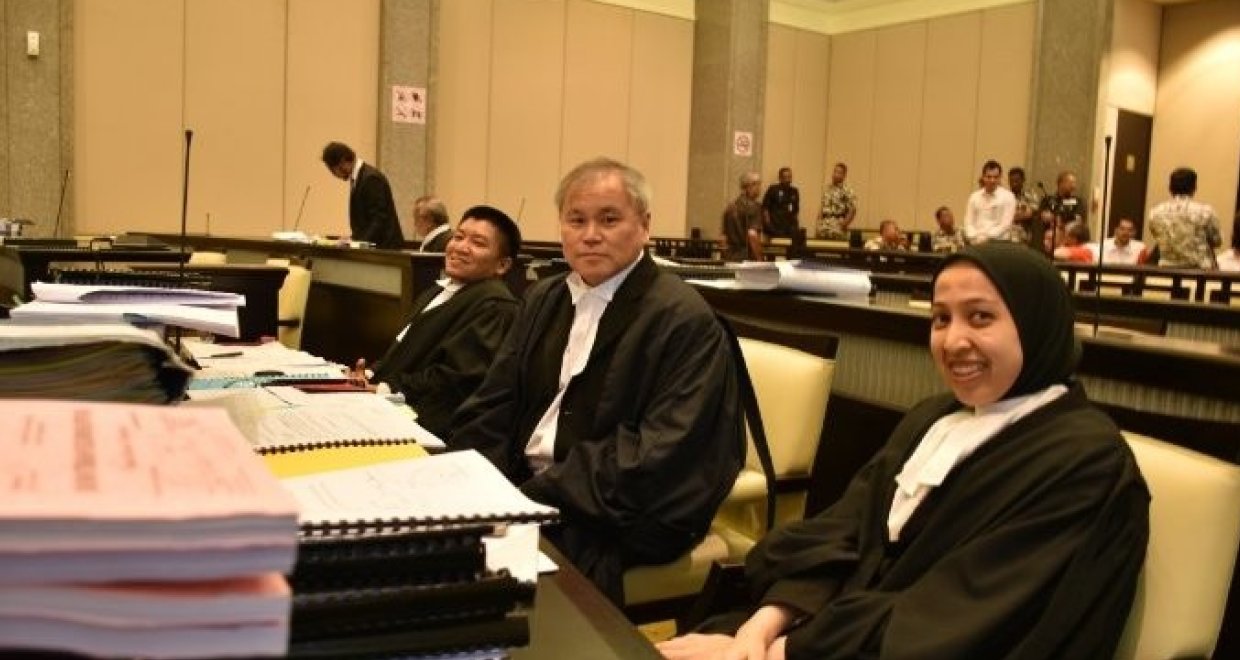
  • Philip Teoh, Partner, Azmi & Associates, shares his insight on International Arbitration and his twenty eight years of experience

    Philip Teoh, Partner, Azmi & Associates, shares his insight on International Arbitration and his twenty eight years of experience

    Philip Teoh graduated in law from National University of Singapore, Singapore in 1989. Currently, he is the Partner at Azmi & Associates. He is also Arbitrator with the Asian International Arbitration Centre [ formerly Kuala Lumpur Regional Center for Arbitration] and has conducted arbitrations in Malaysia, Singapore and internationally as Arbitrator and Counsel.

    In this interview, he talks to us about:

    • How to acquire skills to become a great lawyer.
    • His role in legal academia.
    • His experience on different cases


    HOW WOULD YOU LIKE TO INTRODUCE YOURSELF TO OUR READERS? PLEASE TELL US SOMETHING ABOUT YOUR PRE-COLLEGE LIFE?

    I am a practicing lawyer and arbitrator with 28 years of experience. I am from Penang, Malaysia and come from the same school as Datuk Professor Sundra Rajoo the Director of the Asian International Arbitration Centre [formerly KLRCA] whom you previously interviewed. Both of us studied at the Penang Free School, probably the oldest English school in Southeast Asia founded in 1816. After Penang, I went to study A levels in Singapore under the ASEAN Scholarship in 1983 at Hwa Chong Junior College. Thereafter I studied law at the National University of Singapore and graduated in 1989. I enjoyed my school life, and made lifelong friends whom I am still in touch.


    HOW DID YOU GRAVITATE TOWARDS THE FIELD OF LAW?

    I have always been interested on how law regulates society and business. In many ways law shapes business and vice versa. I was particularly interested in international trade and shipping as the common driver.


    PLEASE GIVE US AN INSIGHT INTO YOUR ROLE IN ACADEMIA.

    My interest in writing and teaching was cultivated by writing assignments in law school and the positive feedback and reinforcement by my lecturers. I had the good fortune of being taught by excellent lecturers and tutors in the law school. The brilliant minds such as Professor Tan Yock Lin who made a subject such as conflict of laws become immediately relevant and useful . Till date, I find this to be my favourite subject and I use in my shipping and international cases often. My interest in this subject culminated in my writing Halsbury’s Laws of Malaysia on conflict of laws. I was also taught by the brilliant Professor Ellinger one of the sharpest legal minds, the great Professor FMB Reynolds, who came over from Oxford, who taught Shipping and Agency. I was impressed that Professor Reynolds and Professor Ellinger were writers of textbooks and they were also very good lecturers.

    We were also fortunate to have Professor Ho Peng Kee as a vice dean who went out of his way to help students. His words of encouragement helped me spur on and to eventually obtain a second class upper in my LLB.

    I have been speaking at industry conferences within and outside Malaysia for sometime. I have lectured at the University of Malaya Law Faculty Continuing Education Programmes and I am an Adjunct Lecturer at BAC, Malaysia’s largest law schools. I spoke in Pune last August in an International Arbitration Conference where I met many Indian Arbitration Practitioners. I look forward to further speaking engagements in India.

    More than fifteen years ago, I started the series of Practitioners Texts in Malaysia in shipping and related titles. These include the Annotated Merchant Shipping which covers the law regulating Merchant Shipping, Collision, Marine Pollution. Malaysian lawyers drafting Agreements use my precedents from the Forms and Precedents on Shipping. I also wrote the Halsbury’s key titles on Equity, Conflict of Laws, Shipping, Carriers [ Land Air and Sea]. Last year I wrote the Chapter on Carriage of Goods by Sea in the Malaysian Bullen & Leake Precedents of Pleadings. These books are used by Judges, Arbitrators and lawyers. I have seen some of the texts I have written cited in Reported Judgments.

    From time to time, I have been invited to contribute to Trade Publications on matters affecting industry.


    WHAT IS IMPORTANT IN INSTILLING CREATIVITY AND INNOVATION IN LAWYERS?

    Lawyers must embrace change and adapt. For instance, when I started practice, lawyers did not use internet and hardly any one used email. And this was in Singapore which then was more advanced than many other Asian countries. Now email, internet, law firm websites, blogs, social media are ubiquitous. Lawyers who don’t keep up, will be lumbering dinosaurs, who eventually will be obsolete. I profile my practice and run a 20,000+ network on LinkedIn. I find this useful as a substantial part of my work is international.

    For court lawyers, practice makes perfect. Every trial, application and appeal is a challenge, we need to be able to understand and be confident on our own abilities. I was fortunate to work under Mr Harry Elias at the beginning of my law practice and I saw how he took on Queens Counsel and opponents in court. I was also fortunate to have a work attachment in a Penang law firm, which firm engaged the late Karpal Singh, easily Malaysia’s foremost Constitutional Lawyer and Politician. These were invaluable mentors and experiences which spurred me on to continue with contentious work and it has been 28 years since. From the very beginning I also consciously maintained a non-contentious aspect of my practice and I have drafted many agreements for various clients. When the Malaysian Shipping Line started its LNG Fleet, I was involved in the beginning. I was the local Counsel for the Syndication of Lenders in the Puteri LNG six new buildings in the Japanese Yards around 2002.

    So you can see law is very wide and the hard working lawyer can find learning opportunities in every case, transaction and agreement. I make the junior lawyers work hard but they learn.

    Innovation and creativity can only be spurred by attitude. If the junior lawyer takes the attitude that he / she knows everything, pretty soon he / she will know nothing.


    HOW DO YOU KEEP YOURSELF UPDATED WITH THE LATEST ARBITRATION ISSUES, NEWS AND CASES?

    Internet, journals and in Malaysia, the Asian International Arbitration Centre have good and relevant talks and conferences, some of which I participated as speaker. I am in touch with many practitioners worldwide and we exchange ideas.


    WHAT QUALITIES DO YOU THINK HAVE HELPED YOU ACHIEVE YOUR CURRENT POSITION AND STATURE?

    It all started when I entered NUS and being grateful and happy to study there. And to accept I have no ‘current position and stature’. That way I know that I have to continue to improve and to learn. Students must realise that university is only four years but a career is a lifetime. And I enjoy my work, I enjoy the challenge of difficult cases.


    AS A PARTNER AT AZMI & ASSOCIATE, WHAT DOES A TYPICAL WORKDAY LOOK LIKE FOR YOU?

    If I have a trial, it will be straight to court and it will be the same for the whole duration of the trial. The whole day will be spent in court conducting the trial. As much as I prepare for the trial, I have long learned that it is important to adapt to what happens during the trial and be vigilant for opportunities. Some examples in the trials which I have conducted, eg. I cross examined the shipping agent who set out in his witness statement six bills of lading and asked him whether he had seen the documents he mentioned and explained in his statement, and was surprised he said no, not before trial. Another case, the chemist had detailed in four pages how carefully dangerous chemicals were packed, I asked him whether he was present during packing and he answered he could not remember. Apart from direct clients I also act for other law firms, so in these trials, I work with my instructing lawyers. I have written on the role of Counsel:

    https://www.linkedin.com/pulse/litigating-malaysian-courts-use-counsel-philip-teoh/

    This Wednesday was particularly rewarding as I argued an Admiralty Appeal in the Court of Appeal. There were decisions of the High Court which set aside ship arrests on wrong principles and one of these was a ship arrest I undertook. I appealed against this decision and the appeal was heard by the Court of Appeal. I was successful in arguing the appeal and this case is important as the Court of Appeal judgment will be binding and will set guidelines for parties undertaking ship arrests in the future. For more details, you can go to my LinkedIn posts:

    https://www.linkedin.com/feed/update/urn:li:activity:6389686362479661056/&

    https://www.linkedin.com/feed/update/urn:li:activity:6390524570524319744/

    The profession in Singapore and Malaysia is a fused one, so I am both Advocate and Solicitor. I also handle corporate and advisory work. If I don’t go to court, I will prepare for submissions in the office or draft agreements. From time to time I am visited by foreign lawyers who come to Malaysia for business visits. Many of these lawyers are my LinkedIn connections. My work day could also be to attend meetings with clients whether in my office or theirs.

    I try to make time to interact with the junior lawyers and interns who work and assist me. I have written on the role of the Senior lawyer as Mentor:

    https://www.linkedin.com/pulse/learning-law-mentors-perspective-philip-teoh/


    WHAT WOULD BE YOUR ADVICE TO YOUNG LAW STUDENTS AND LAWYERS AIMING TO BECOME ARBITRATORS IN FUTURE?

    Don’t waste the university years. What you study in university is crucially relevant even if it is not immediately obvious. Cultivate interest in subjects especially subjects Contract, Tort, Evidence. Be willing to learn everything.

    Interestingly many students approached me after my talk in Pune last August and asked how they can become arbitrators. I was taken aback as they wanted to become arbitrators without thinking of embarking into litigation.

    Arbitration like litigation is contentious / dispute resolution. Lawyers only become arbitrators if they can bring value or experience to the Dispute Resolution Process. This may take years before the lawyer can establish his reputation in court, be recognised and respected as court / Arbitration Counsel and only then can he become an arbitrator and obtain appointments.

    So I will tell the students, aim to be a great lawyer, become great advocates. The court skills are important to arbitration. Only then you can become a respected and popular litigators earning the respect of your opponents and eventually you will acquire a solid track record and reputation. Only then you will be ready to become an arbitrator; this may take decades but the diligent will achieve this.The arbitrator who does not go through this crucible will not be effective and will forever chase appointments.


    Link to some of his works are below:

    • Presenting your case in International Arbitration:

    https://www.linkedin.com/pulse/presenting-your-case-evidence-international-arbitration-philip-teoh/

    • Strategies on Managing Choice of Law along One Belt One Road:

    https://www.brinknews.com/asia/chinas-belt-and-road-initiative-managing-risks-and-disputes/

    • Speaking at AIAC Arbitration Conference

    https://www.linkedin.com/pulse/resolving-disputes-along-one-belt-road-philip-teoh/

    • Speaking in Pune last August

    https://www.linkedin.com/pulse/contemporary-issues-international-arbitration-philip-teoh/

    Philip Teoh’s LinkedIn profile :

    LinkedIn profile: https://www.linkedin.com/in/philipteoh


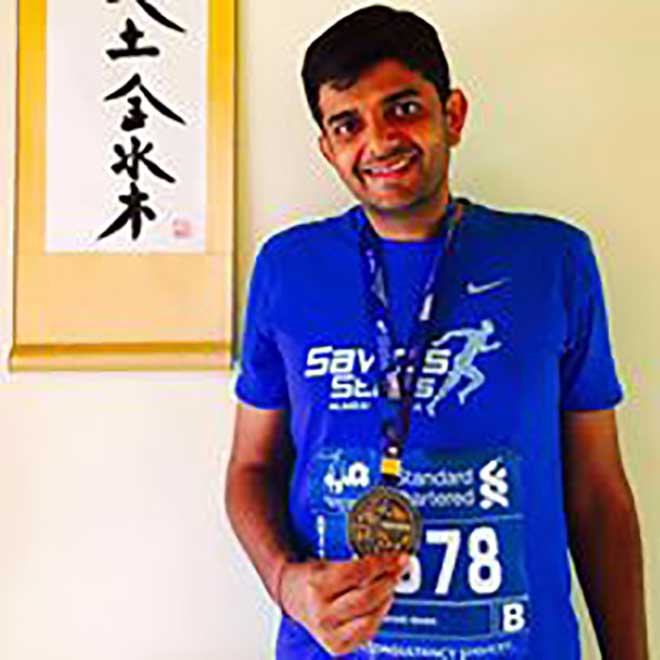
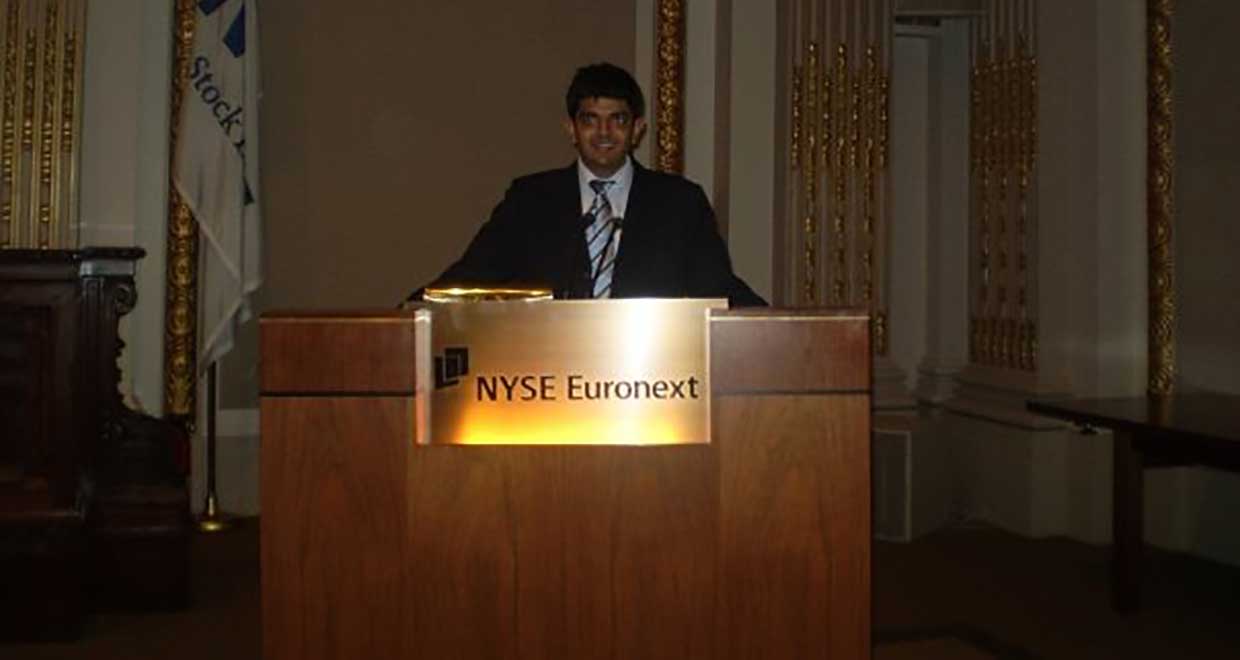
  • Bhushan Shah, Partner, Mansukhlal Hiralal & Company, on clearing the Bombay Solicitor examination, and working at Tier-I firms

    Bhushan Shah, Partner, Mansukhlal Hiralal & Company, on clearing the Bombay Solicitor examination, and working at Tier-I firms

    Bhushan Shah graduated in law from GLC, Mumbai, in 2005. He then went on to pursue his Masters at NYU@NUS. After successful stints at J. Sagar Associates, Drew & Napier LLC, and Khaitan & Co., he is currently Partner at Mansukhlal Hiralal & Company. Bhushan heads the corporate team of the firm. He focuses on corporate and commercial transactions such as strategic investments, mergers & acquisitions, joint ventures and general corporate law advisory. Bhushan has also advised clients on inbound and outbound investments as well as structures requiring India entry strategies. Bhushan also has experience in securities litigation and has represented clients on several contentious cases before Securities Appellate Tribunal and Supreme Court of India.

    In this interview we speak to him about:

    • His time as an undergraduate at Government Law College, Mumbai
    • Studying in NYU@NUS
    • His experience at Tier-I firms

    How would you like to introduce yourself to our readers?

    I would like to introduce myself as a (a) Lawyer; (b)Runner; and (c) Soka Gakkai Buddhist member.

    I have been a practicing lawyer for over ten years now. Earlier, I used to style myself as a corporate lawyer. However, over the last five years, i.e. after joining Mansukhlal Hiralal & Co. (Mansukhlal), besides practicing corporate law, I have also been engaging in substantial litigation and real estate transactions. I am enjoying my diverse practice of corporate law, dispute resolution and real estate law.

    As a runner, I have participated in more than ten half marathons and two full marathons. I started running as a stress-buster from the hectic work schedule of a lawyer and it has now become a passion for me.

    Besides running and practicing law, I also follow SGI Buddhism. It is a philosophy which believes that one’s happiness lies in their own hands. As a lawyer, it is common to blame your boss, colleagues, clients etc for one’s hectic work schedule. In this chaos, practicing SGI Buddhism, gives me a sense of calmness and gives me the strength to step up and take responsibility of my work and to keep going.


    Tell us a little about your days in law school. 

    I am a Bombay boy. I did my basic schooling and college from Mumbai. I graduated as a Bachelor of Commerce in 2002 from Jai Hind College, Mumbai University. Thereafter, I enrolled for the three year law degree with Government Law College (GLC) and graduated as a Bachelor of Law in 2005.

    GLC is India’s oldest and prestigious  institute of law. Many of my family members including my father and sister have graduated from GLC. At that time, it was considered as the second best law college after NLS Bangalore. GLC had lectures in the morning and hence my classes used to end by 9:30 AM. In my first year, I participated in several moot courts and was part of the moot court committee for organising moots.  The second year onwards, I signed my articles and started working at JSA.


    What were the activities, academic or otherwise, that you undertook in your law school days which in your opinion have shaped you and your career?

    As mentioned above, I signed my articles at JSA with Mr. Abeezar Faizullabhoy for the Solicitors exam conducted by Bombay Incorporated Law Society (BILS). My dad also being a Solicitor, suggested that I sign articles and take the exam. As known to everyone, the passing percentage of the Solicitor exam is very low and not being an academically brilliant student, I was not very keen. However, my dad believed that the experience of being trained under one firm for three years and preparing for the exam was a challenge I should undergo irrespective of the results. My articleship at JSA was one of the best times of my legal career. Also, I successfully cleared the Bombay Solicitor exams. My articleship really shaped my career and I knew exactly what I liked or disliked about the profession before starting work after receiving my law degree.


    What in your opinion is the level of importance that needs to be attached by a student to the GPA? 

    I believe good grades can aid a student access to Tier I law firms. However, in my view, it is no way to judge anyone’s success in the future. Theoretical and practical knowledge are two very different concepts. Hard work and intelligence with a solution driven approach is a good combination that can lead one to being a successful Lawyer. However, a student who does not have a good GPA can be as successful as the one with an excellent GPA.


    What kind of internships did you engage in during your student years?

    I joined JSA in 2003. It was the same time when Mr Berjis Desai split from UUB and joined JSA’s Mumbai office. At that time, JSA was relatively smaller as compared to its size today. I got an opportunity to work with Mr. Somasekhar Sundaresan (Som).

    Som is an exceptional lawyer to work with and an extraordinary mentor. I got to work with him on SEBI and SAT matters. Later on, I also worked with him on corporate matters. He inculcated my habit of attention to detail, research, and insight in the applicable law. This habit helped me to study for my Solicitors exam and also helped my clients in a cautious manner.


    What are your areas of specialisation and how did you go about choosing these fields?

    I specialise in securities litigation, corporate law and real estate transactions. My passion for securities litigation started from my JSA days when I regularly appeared before SAT, SEBI and CLB. I did my dual degree LLM from NYU and NUS and specialised in corporate law. At JSA, Drew & Napier and Khaitan, I was part of the corporate team. My current workplace, Mansukhlal, is a mid-sized law firm which, before my joining, specialised in real estate law and dispute resolution. With my work experience in  corporate law, I have been able to build a successful corporate law practice at Mansukhlal. However, given that Mansukhlal in itself was known for real estate and litigation, my first assignment at Mansukhlal was a real estate transaction. I have then onwards done a substantial amount of work in real estate sector and assisted developers in real estate transactions.     


    At what stage in one’s law school life must one pick a specialisation?

    Work experience along with the passion for the subject matter is the best way to pick a specialisation. As a student, everyone finds it glamorous to move towards corporate law. However, a junior associate of a Tier 1 or Tier 2 law firm, ends up spending most of his/her time doing due diligence on the transaction. Upon doing due diligence, all the glamour is washed away and interest is lost. Hence, interest in the subject matter along with experience helps one to pick up one’s own specialisation. One should not choose corporate law just for the glamour quotient.

    Also, my advice would be for students to be thorough with their law. As junior lawyers, between finishing all the deliverables and drafting documents, they often ignore the same which at a future stage results in a great loss to the client or his needs.


    Do you believe that L.L.Ms are instrumental to one’s career in law?

    After completing my Indian Solicitors, in the same year, I secured admission into a new program started by New York University called NYU@NUS.

    NYU@NUS was a unique program based in Singapore and New York which was taught by full-time faculty from NYU and NUS. In addition to earning two LL.M. degrees from the two of the world’s leading institutions, this program provides a strong background in U.S. and Asian business laws. I was awarded the Dean’s scholarship for pursuing my LLM program. This scholarship later helped me to procure a job in Singapore which otherwise may not have been possible. My view is that an international LLM is relevant for international opportunities as a lawyer.

    I believe LLM from a recognised university does play an instrumental role in getting a job in an international law firm. I was one of the fortunate ones to get a job at Drew & Napier LLC (one of the leading law firms in Singapore) even in the year when Lehman Brother had filed its bankruptcy and sub-prime crisis arose in USA. My LLM degree did help me get this job at Singapore and also later at Khaitan & Co., upon my return to India.


    Having studied in New York as well as Singapore, which would you recommend to someone who wishes to follow your footsteps?

    Unfortunately, the NYU@NUS course was discontinued by NYU in 2014. Therefore, I cannot recommend anyone to take this course. However, I would recommend students to pursue LLM from NUS as it is the best law university in Asia and falls in the top ten Law Universities worldwide. Further, getting a job in Singapore is relatively easier as compared to the US or the UK.


    What should one expect out of an L.L.M program, if they opt to pursue one?

    LLM from a renowned international university will give a student exposure in international laws, differently styled curriculums and very unique (practical) teaching methodologies. Further, it may assist them in getting jobs abroad, if they are interested.


    What does the CV of a student seeking admission in a premier university offering an L.L.M program have to look like? 

    One’s CV has to have good grades, extracurricular activities during law college and some work experience with recognised law firms. Further, recommendation letters also play an important role for the admission. In extracurricular activities, participating in moots and being part of legal activities are looked upon favourably by premier universities. For American universities, a meaningfully written statement of purpose (SOP) plays an important role. They are looking at the candidates’ real life experiences and learnings from such experiences in the SOPs.  


    Give us some insights on the qualities that Tier-I firms look for in prospective candidates.

    (Bhushan has previously worked with Khaitan & Co. and JSA, two of the most sought after firms for placements by students.)

    I consider myself to be lucky to have worked with JSA and Khaitan & Co. (KCO). Good grades and extracurricular activities help students get an internship in Tier 1 law firms. The new trend of law firms is to offer a PPO during/ after the internship. Hence, I believe that if a student reflects his/ her sincerity at internships, they would be offered a PPO, which would be the easiest way to make ones way into a Tier-1 law firm.


    Give us a brief overview of your current work profile with Mansukhlal Hiralal & Co. What does a regular working day look like for you?

    I joined Mansukhlal in 2012. It is a family firm where my father is the managing partner. Before my joining, Mansukhlal was a team of three partners and five lawyers. In the last five years, we have now grown to five partners and a team of fifteen lawyers.

    I head the corporate law team. Also, from time to time, I look into securities litigation and real estate transactions as certain clients are comfortable working with me on their matters. I spend around ten hours in office for six days a week. Some part of my time is also spent in business development and doing legal updates which are very important for the growth and development of the firm.


    What message or general advice would you like to pass on to our readers?  

    Don’t simply focus on getting a job in Tier-I law firms. While studying law, try to enjoy the subject. This attitude towards studying and enjoying the subject will help students to become successful lawyers.


  • Simi Rose George, Manager, Energy Markets Policy at Environmental Defense Fund, on environmental law, and her experience

    Simi Rose George, Manager, Energy Markets Policy at Environmental Defense Fund, on environmental law, and her experience

    Simi George graduated from NLSIU, Bangalore, in 2008. She then received her master’s degree in public administration and international development from the Harvard Kennedy School of Government in 2014. Her work is at the intersection of energy and environmental law, regulation and policy. She has transitioned from a career in corporate law (having worked with Linklaters and Clifford Chance) to her current career in policy analysis and advocacy.

    In this interview we speak to her about:

    • Her time at NLSIU
    • Her passion for environmental work
    • Her experience thus far


    How would you like to introduce yourself to our readers?

    I’d like to introduce myself as an energy and environmental policy professional, with an interest in many other public policy issues (too many for my own good!).


    Why did you choose to pursue a degree in law?

    My original plan was to study economics at the undergraduate level. The idea of pursuing a career in law hadn’t occurred to me. In fact, I’d never come across NLS. Around the time that I was preparing for my Class XII exams, my father brought along a shiny NLS prospectus. That year, they’d done a particularly good job of marketing the school. I was smitten, both by the course content (an education in law and the liberal arts (including economics!) immediately appealed to me) and the variety of opportunities that it offered. I wrote the entrance exam, and happened to make it. At the same time, I received an invitation to interview for admission to a very strong undergraduate program in economics. By then, I’d made up my mind about studying at NLS.


    Is the NLU culture truly more conducive to legal education, as compared to other universities that provide legal education?

    NLS was truly national in its character in that it attracted students from across the country. The opportunity to forge lasting friendships with classmates from across the country as a young adult was, in retrospect, an important early experience. That said, diversity in many other aspects was (and I believe still is) lacking, and it is heartening to see some efforts to address these challenges take root. [Editorial note: A new bill proposing 50% reservation for Karnataka students at NLSIU passed by KA state assembly could, however, change this. Read more here.]

    NLS offered many learning opportunities outside the core curriculum, both at the national and international levels, and allowed access to an excellent alumni network and a very bright set of peers. I did as much learning outside the classroom as I did inside it.   

    I’m not familiar with the teaching model or culture at other institutions, and so I can’t comment on whether the NLU model is intrinsically better than others. I do think that because NLS is a residential school, it offers many more opportunities for learning and collaboration with peers than otherwise possible. I remember working with my classmates on moot problems, preparing for exams (including splitting up readings and sharing summaries the night before an exam), and continuing classroom debates late into the night, long after our classes had ended. My law school experience would have been very different had NLS not been a residential university.


    What are the subjects that you took particular interest in, during your law school days?

    I really enjoyed public law classes at NLS – Jurisprudence and Constitutional Law with Prof. U.R. Rai was one of my favorites. I also enjoyed all the foundational liberal arts classes that were taught in the first few years of the program—Economics with Prof. Somashekar, Political Science with Prof. G Ajay, and Historiography with Prof. V.S. Elizabeth. Even though it has been a very long time since I sat in those classes, I still remember them vividly. Yes, they certainly played a role in some of my career decisions, including choice of graduate program and the decision to transition from corporate law to public policy.


    What activities, both academic and non-academic that you engaged in as a law student? 

    I’m glad that I tried out a whole bunch of co-curricular and extra-curricular activities at law school. I enjoyed mooting, and participated in quite a few national/international moots, which kept me busy throughout my time at NLS. I also dabbled in debating. Despite the lack of any talent whatsoever, I participated in several NLS inter-class dance competitions, which were always fun. I learnt something from all of those experiences, and they made for a richer law school experience. I highly recommend trying out all the extra-curricular activities that you feel drawn to, but certainly don’t believe that any of them (mooting included) are necessary experiences. I learnt a lot from mooting—the ability to think on my feet, written and oral communication skills, and research skills—but there are so many other ways in which you can pick up those skills. My sense is that things have changed in the years since I graduated, and that law students engage in a much broader variety of extra-curricular activities than my peers and I did. This is promising.


    Tell us about the student exchange programme that you’d undergone and your experience at NUS.

    The student exchange program at NUS was my first experience living abroad. It was a great opportunity to explore a different education system, immerse myself in a new culture, and meet law students from around the world. There was a difference in the quality of teaching. At NLS, we had a mixed bag of teachers – some were excellent, others were disappointing. At NUS, the quality of teaching was much more consistent. The quality of infrastructure and the overall administrative machinery at NUS far exceeded what NLS then had. On the other hand, it soon became clear to me that I’d taken the quality of debate and discussion within the student community at NLS for granted. Some of my best learning at NLS happened through interesting conversations with my classmates, both within and outside the classroom (everyone had an opinion!). I missed that at NUS, where the student community was somewhat narrowly focused on academic performance. On the whole, I returned to NLS with a new appreciation for everything it offered.


    At what stage in one’s law school life must one pick a field to specialize in?

    Having now become somewhat familiar with education systems outside India, I believe that our school system pushes students to make important career decisions too early, well before they develop an understanding of their interests, weaknesses and strengths. This is true both at the high school level, where performance in a single set of exams often determines which undergraduate institution you end up in, and also at the undergraduate level, where there is limited flexibility to choose subjects. Simply put, the system is already too rigid. I wouldn’t advise students to box themselves in further by specializing in law school. The best advice I can give is to explore as many aspects of the law as possible, whether through internships or co-curricular activities such as moots, writing, research etc.  All of these experiences will give you some clarity about your interests and strengths. In the long run, that will carry you farther than any sort of specialization at the undergraduate level.


    What drives your passion for environmental work?

    This is not an easy question to answer. I started my career in corporate law in London. I was on a lucrative career path, working with extremely talented colleagues in a wonderful city. Yet, I found myself deeply unsatisfied. Part of what I didn’t enjoy about working in a large corporate law firm is the lack of work-life balance. My parents worked in the public sector, and had very predictable schedules throughout their careers. Because of that background, perhaps, my vision for my professional life certainly didn’t mesh well with that of a typical corporate lawyer working in an intense, high pressure environment, in which staying up all night to close a deal wasn’t uncommon. It was the desire for a more balanced and sustainable lifestyle, combined with other factors, that prompted introspection about what I really wanted to do. As I started considering alternative career paths, I found myself drawn to organizations working on public policy challenges. This was not a big revelation, but a gradual realization. It was consistent with my experience at law school, where I enjoyed public law classes much more than the private law ones and chose to do all my internships with litigators who’d specialized in some aspect of public law. My interest in public policy is broad, but I eventually ended up focusing on energy and environmental issues, which I believe are among the biggest global challenges of our time. Every job comes with a set of challenges—mine is no different—but it feels good to work on issues that I consider important.


    When did you decide to pursue your masters degree at Harvard Kennedy School of Government? 

    I decided to apply to the MPA/ID program at the Kennedy School to transition from a career in corporate law to one focused on public policy. At the time, I was working as an associate with Linklaters in the UK. In my experience, an advanced degree can be helpful in making a career transition. The MPA/ID curriculum has a deep emphasis on economics and econometric methods. While I do not use those skills directly in my current role, my Kennedy School training has allowed me to become a critical consumer of quantitative research and analysis, which is helpful as I work closely with economists and researchers with a quantitative background.

    Graduate school is not a small investment. It is absolutely critical to have clarity on why you’re picking a certain program/school, your ideal role after graduation, and the ways in which the program/school of your choice will help you get there. I can’t say that I had clear answers to all of those questions when I joined the Kennedy School. I believe that classmates who had a clearer sense of where they were headed were able to make the most of their graduate school experience. Of course, there will be intervening circumstances beyond your control. You know what they say about the best laid plans of mice and men. But, in my experience, a clear vision for one’s professional trajectory is always helpful. I certainly haven’t figured it all out, but it is work in progress.


    Tell us more about your current work profile with the Climate & Energy team at Environmental Defense Fund.  

    EDF is an international advocacy organization based in the U.S. My work is focused on reducing methane emissions from the gas distribution sector, and advocating for changes to wholesale electric and gas market design in order to improve economic and environmental outcomes. I lead a portfolio of collaborative projects with industry under the broad umbrella of a partnership between EDF and Google Earth Outreach, manage EDF’s engagement in various regulatory proceedings before state regulatory commissions in the U.S. to advance organizational objectives, and work on issues relating to gas and electric market design in California. Undoubtedly, my legal background is a valuable asset in my current role.  


    If given an opportunity, what would you do differently in your career journey up to this point? 

    I’d worry a little less about academics, and focus a lot more on developing attributes that are critical to professional success—the art of persuasion, negotiation skills, and building a network of friends and colleagues to turn to for professional advice and mentorship.  The attributes that are most often emphasized in the Indian education system are not always the ones that are critical to professional success. Too often, we mistake academic success to be a marker of future professional success. Of course, academic discipline can help develop some of the attributes and habits that needed for professional success, but in my experience, it is not a prerequisite and certainly not sufficient to succeed in the real world.


    Is there any other suggestion you would like to give to our budding lawyers?

    Try to make your law school experience as rich as possible, whether by trying out a range of extra-curricular activities or by proactively seeking out opportunities that aren’t necessarily offered to you at law school. In doing so, you’ll get to know your interests and strengths, and gain some clarity about where to head after law school. Good luck!  


  • Sudeshna Chatterjee, Legal Head-Asia, Aggreko, on business law, studying in Singapore, and her experience

    Sudeshna Chatterjee, Legal Head-Asia, Aggreko, on business law, studying in Singapore, and her experience

    Sudeshna Chatterjee graduated from NALSAR, Hyderabad, in 2005. After successful stints with Luthra and Luthra, and Sarthak Advocate and Solicitors, she went on to pursue her Masters at NYU@NUS, with a focus on corporate and financial services law. She’s currently Head of Legal-Asia, at Aggreko’s Power Solutions business, where she handles general corporate advisory, assists in setting up corporate structures, assists in cross border transactions, acts as lead negotiator and assists in M&A activities.

    In this interview we speak to her about:

    • Her time at NALSAR
    • Her experience in business law
    • Studying at NYU@NUS


    How would you like to introduce yourself to our readers?

    I am a business lawyer with a commercial bent of mind. This entails that I wear multiple hats at all times – when I am evaluating and mitigating risks, I put on the lawyer’s hat and when I am taking a call on whether to go ahead with a transaction or not, despite the risks involved, I put on the business/ commercial hat.


    What motivated you to pursue law?

    My father had studied law, but he never practiced it. Being an avid reader I discovered Erle Stanley Gardner’s Perry Mason, Harper Lee’s Atticus Finch and John Grisham quite early on, and as clichéd as it might sound, these piqued my interest in law. When I wanted to sit for the entrance exams (there was no CLAT at that time) there was an initial resistance from my parents. The preferred choice for a majority of students (and more importantly, the parents) in Bengal at the turn of the century was to undertake further studies in engineering or medicines only; anything other than these subjects was an anathema. However, I managed to convince my parents and joined NALSAR.


    Tell us something about your time at NALSAR.

    I was part of the third batch of students at NALSAR, which was a new and upcoming university in the year 2000. Coming from Bengal and Bengali speaking culture, the cosmopolitan culture of NALSAR was quite a bit to take in at the beginning. However my seniors were lovely and adjusting to the new environment was no trouble. I enjoyed my classes (which used to be conducted then within the girls and boys hostels as the academic blocks had not yet come up until late 2001) – especially criminal law, intellectual property law, corporate law, administrative law and transfer of property. The class of 2005 had a healthy dose of scepticism coupled with an unquenchable appetite for questioning, which was an interesting mix to be a part of.

    There were not too many activities apart from moot courts during my undergraduate years. I attended a couple of inter-class moots and quickly realised that I was not interested in moots. I enjoyed debating in school; however there were no formalised debating societies at that time. Sometimes a few of us would debate on topics relevant to the prevailing times. I also wrote a column for ‘Edict’ which was a student’s magazine that one of my classmates had started, for a little while. My free time would be spent reading books, listening to music and generally hanging out with my friends.


    Could you tell us about the internships you took up, and what you learnt from those experiences?

    I undertook a variety of internships while at NALSAR. I appreciated that internships were a way of exploring my interests.

    I took an internship with Mobile Creches, Delhi where I got to work with property developers and builders providing safe creches for the children of construction workers. I also took an internship at the National Innovation Foundation, Ahmedabad under the auspices of Professor Anil Gupta where I worked with grass-root innovators. Both these internships satisfied my desire to give back to the society and were enriching experiences.

    I took a number of internships with Senior Advocate, Mr. Dinesh Mathur, who practiced criminal law at the High Court of Delhi. During those internships I learnt that criminal law was not only about the victim, as was taught in law school. The first duty and obligation of the lawyer is towards the client, who may or may not have been the victim. This shift in paradigm from victim-oriented jurisprudence to perpetrator-oriented jurisprudence made me appreciate criminal law and the criminal justice system.

    Securing internships at law firms was very difficult for me because I neither had the network nor the clout. Further, NALSAR did not then have a robust internship committee that they have now. I managed to get an internship with Khaitan & Co., Kolkata after multiple follow ups. At Khaitan, I worked with the litigation practice and assisted with research, drafting petitions and affidavits. Despite working with the litigation team and spending time in court, this internship gave me a flavour of what it would be like to work in a law firm.


    What advice would you give students in avoiding a decision paralysis?

    It is always good to have more choices rather than few, however if the variety of choices leads to procrastination, then such choices are more detrimental than useful. The best way to go about, in my opinion, is to do proper research, speak to seniors, friends, mentors, and whoever the person can rely on, to gather information. There is no easy answer for this and everyone must find their own equilibrium. The ultimate choice has to be their own. It may or may not be the correct choice – however it is better to have tried and failed, than never to have tried. I would say, don’t be afraid to explore. No amount of knowledge or experience ever goes waste, although the benefits may not be apparent immediately.

    Not everyone has the same circumstances, so the parameters for considering next steps after graduation may vary depending on that. Some prefer to join the profession, through campus recruitment into law firms, with senior advocates or in-house, whereas some prefer to finish their higher education and dive into a masters’ degree immediately. My suggestion to law graduates would be to consider what they want to do in the long run. I appreciate that many may not be very clear about their choices and in such circumstances, it is always more fruitful to practise for some time before going in for higher studies. This allows for more mature understanding of specialised subjects when they go for their masters’ degree.

    Tell us about your early professional experiences at Luthra & Luthra.

    On the first day of campus recruitment I had two offers, one from Luthra & Luthra, Delhi and the other from one of the big four accountancy firms at their office in Bangalore. While considering which offer I accepted, I bore in mind that L&L may be a better fit as it was a full service law firm and I would have the opportunity to explore different practice areas. With the other offer, I would have been ‘pigeonholed’ as a tax practitioner (which I was not convinced that I would enjoy). The availability of choice tipped my decision to accept the offer from L&L.

    In retrospect, joining L&L was the best decision that I made. It is a great place to work in and Mr. Luthra and the team of senior partners bring passion and excitement to work. I had wonderful colleagues and work was exciting and challenging. I started with the trade law practice, followed by working with the intellectual property team and finally settling into the securities and equity capital markets practise at L&L. I was given the choice of moving teams so that I could explore what made me tick. I have always been grateful to Mr. Luthra for that.


    What was the application process like for the NYU/NUS programme? 

    The application process for NYU@NUS program is just like any other masters’ degree program with requirements such as statement of purposes, academic and work references and a specific write up about oneself other than the statement of purpose to show background and whether suitable for scholarship. There were a number of documents (educational qualifications, various certifications etc.) that was required to be submitted along with the applications. The administration at NALSAR was very helpful in getting the documents authenticated and sent across for submission purposes.

    During the final year at NALSAR I had applied and had been offered a seat at the Queen Mary University of London, however I could not take it up at that time. Doing a masters’ degree was always on the cards and I just had to find a suitable time to pursue it. I had relocated to Singapore for personal reasons and thought that the time was ripe to undertake the masters’ degree. However I was not very keen to move out of Singapore to pursue higher education. I was considering NUS but when I found out about the dual degree that was offered by NUS@NUS, the option to undertake the degree from two prestigious universities that are NYU and NUS made more sense. The courses panned from complex securities law to challenging international law, to oversight of business laws, to anti-corruption laws, taught by illustrious professors from both NYU and NUS, hence there was no reason for me to look further than this degree.


    What was the experience at NYU@NUS like?

    NYU@NUS was a great experience – enriching and fulfilling, both from an education and a personal perspective. The class had all of 30 plus students from eighteen countries, so there was a diverse bunch of students with varied legal education and work experiences.  The term started in May, the first three months were NYU subjects and the faculty flew into Singapore for intensive classes. The NUS session started in August followed by NYU session in December and ended with a mixed-bag of NYU and NUS classes between January and March. The NYU@NUS course allowed students to top-load credits so a couple of students finished their entire NYU and NUS credits by December.

    It was an amazing experience to match wits from lawyers around the world, spend nights in the study rooms and at the library, work on multi-party negotiations which were taped and dissect performances thereafter, paper submissions, presentations etc. The list is endless. It really tested my time management and prioritizing skills to the fullest, not to mention the patience it took to concentrate on studies and not get distracted.

    It will be completely unfair to just speak of the education and not mention the personal relationships that I forged in less than a year. I now have friends all over the world – from places like Ecuador, Bogota, Berlin to Zurich, Bologna, Paris and Quebec. I think these friendships have been enriching and have added to the experience that is NYU@NUS.


    How did you come to take up a position with Aggreko?

    Aggreko happened while I was still undergoing my masters’ degree. I was approached by a legal recruiter in Singapore. I had never worked in-house; hence I was circumspect about the role and its requirements. However as I still had about three months left to complete the course, I thought it would be a good experience to give it a try and if it did not fit, I would still have time to explore other opportunities in Singapore.

    Working with Aggreko has been very satisfying. Since I was a securities lawyer and had not worked in projects, it was very important for me to understand the product of the company, the space it functioned in and what was required of me on a day to day basis.  This entailed a detailed learning on the technical aspects which brought me up to speed with generators, load banks, temperature control equipment, how they function, what are the risks in the business and how to mitigate them. Educating myself on the legislative framework in the region was relatively easier.

    There has not been a single dull day at Aggreko. I have advised on tenders, negotiated multi-million dollar contracts and been part of events like the Formula 1, Cricket World Cup and the Olympics, where Aggreko provides primary or standby power. I have also undertaken compliance checks to ensure that the region is always ethically and legally compliant. The thing that I enjoy the most is seeing a transaction from the beginning to the end. I get involved at the start of a deal and handhold the relevant stakeholders until the deal is done – providing legal and commercial advice along the way. It is important to note here that being an in-house lawyer, I am required to provide legal advice without caveats – this requires clarity of thought and a complete appreciation of the risks involved and ways to mitigate it. This is both challenging and invigorating.


    As the Head of Legal – Asia at Aggreko, what does a typical working day look like for you?

    Aggreko is a London-listed FTSE 250 company and the world’s largest temporary power provider. As its Head of Legal for the Asia region, I am responsible for about fifteen countries in the region. I travel quite a bit, depending on the business requirement to support the power project team with negotiations and tenders. Unless I am travelling, my typical day would start with a brief meeting with my team where we would take stock of the deliverables for the day including but not limited to contracts, standard documents, interpretation of internal policies and negotiations. Since the business involves temporary power, some of the power requirements are on an emergency basis, thus requiring agility and quick turnaround of documents to ensure that the business requirements can be satisfied.

    I also get involved with the commercial discussions for various power projects that we set up for public utilities. This includes liaising with the finance and the senior management teams to prepare white papers, project risk summaries and discussions on commercial models to understand the viability of such projects. Unlike popular belief, my work does not have fixed 9AM-5PM timing because emergency power could be required anytime. Hence there are days when conference calls and turnaround of documents may go on until the wee hours in the morning.


    On what parameters do you choose the projects you work on?

    Although there are no fixed parameters to choose the projects that I work on, I usually end up working on tenders and multi-party negotiations. I have a lean but competent team which takes care of daily queries, standard contract reviews, negotiations, due diligences, among others, which enables me to focus on the challenging negotiations and the complex tenders.


    What are the challenges and learning opportunities that you are faced working heading Aggreko Legal? 

    There have been challenges and opportunities both while heading Aggreko’s legal department in Asia.

    Some of the challenges are/have been:

    1. Working in-house is different from working in a law firm. One needs to first reorient oneself that instead of being the revenue centre, they are now the cost centre. This means that budget is important and I do not have the luxury of engaging external counsels on every deal that I undertake;
    2. Culturally each of the countries where I advise in is different. This requires me to be sensitive towards different sets of cultures, protocols and customs;
    3. Time zones and language: travelling across several countries on a frequent basis means that I have to constantly make adjustments to suit time and language differences.

    The opportunities provided by these hurdles are:

    1. Undertake in-depth commercial analysis of the business in order to provide innovative solutions and negotiate contracts successfully;
    2. Working in developing countries where power is scarce and then being able to deliver power in record time gives immense satisfaction, high profile events like the Formula 1, Commonwealth Games, World Cup and the Olympics adds to the excitement.

    The trick of sustaining oneself in this dynamic work environment is to understand what I can control and take charge of it and to let go of things I cannot control. I have a clear understanding of the deliverables from my stakeholders and I never agree on unreasonable timelines as that builds false expectations. This allows me to prioritize the work and ensures that my stakeholders know what they can expect from me and my team. This also ensures that I am not under pressure for things that are not under my control.


    How do you manage your time between your professional and personal interests? 

    I am a meticulous planner where my work is concerned, hence I am more proactive than reactive in the work I do. This allows me time and flexibility to dabble in my new-found passion for photography. I travel quite a bit in and around the region, so I carry my camera along with me and have started photo-blogging the places I visit through Instagram. Further, my kindle is my new best friend and allows me to be on top of my reading lists of thrillers. I am also regularly involved with the Bengali Association of Singapore and its various cultural activities.


    Given the dynamic nature of the field you practice in, how do you keep yourself updated about the latest developments in the law?

    Read, observe, practice and read some more. Speak to law firms, legal contacts, discuss, subscribe to legal tools and then read some more. As I stated earlier – not knowing is not an excuse.


    What advice would you like to give our readers, who are mostly law students and young lawyers?

    I have the same advice for aspiring lawyers and to practicing lawyers – ‘stay hungry, stay foolish’. Our core skills as lawyers never change. Changing ones area of practice is only difficult if you don’t have faith in your abilities to re-invent yourself.


  • Prantika Sengupta, Legal Executive, Coastal Marine, on Maritime Law, studying in Singapore and working pro-bono

    Prantika Sengupta, Legal Executive, Coastal Marine, on Maritime Law, studying in Singapore and working pro-bono

    Prantika Sengupta is a graduate from Symbiosis Law School, batch of 2011. She then went on to pursue her Master’s degree in Maritime Law from the National University of Singapore, with a focus on Admiralty Law, Carriage of Goods by Sea, Conflict of Laws, International Commercial Arbitration, Maritime Law, International Regulation of Shipping,  Maritime Insurance, Charterparties, Contemporary Indian Legal System and Comparative Tort Reform. Since then, she has served as Legal Officer at Global Law Alliance LLC, and is currently Legal Executive at Coastal Marine Pte. Ltd.

    In this interview she speaks to us about:

    • Being a first generation lawyer
    • The difference between universities in India and universities abroad
    • The importance of pro-bono work


    Tell us something about your school and college days.

    I graduated from La Martiniere for Girls, Kolkata which is one of the most prestigious schools in Kolkata. Being from La Martiniere, there was always a huge pressure to excel. However, I wasn’t the most motivated or competitive kid around. I was the happy-go-lucky kind and took life as it came. My grades weren’t the best and neither did I make any effort to participate in school activities. I would be considered as the average kid, who sometimes got into trouble for talking in class. The best part of school was that I made some great friends and most of them inspired me to do well in various ways. By the time I was graduating from school, I did pretty well in my ISC exams and I became more motivated and focused, ready and excited to study law.

    Any Symbiosis Law School student will tell you that college days were pure fun. The first few months were the honeymoon phase with new friends, new environment, new culture, new curriculum and a new approach to life. Only after the initial six months does one realize that it’s not all fun and games, as you suddenly hit the wall called semester exams. Unsurprisingly, I did poorly. It really stressed me out. I thought I was finished and no law firm would offer me a job. However, my dad who is from IIT told me that it was not a big deal and that I could get where I want to in life if I worked hard. After that, I started putting in diligent hours into my studies and maintained consistently decent results. I tried my best to attend lectures diligently at 7:30am and was never part of the TNG list. Surprisingly, I became that person whose notes were distributed amongst batch mates before exams. Rest of the time, it was a joyride through college days.


    What motivated you to pursue law?

    I took up law for an amalgamation of several disjointed and funny reasons. For most of us, when you graduate from school, it’s impossible to know what you really want to do. For me, I knew what I didn’t want to do. I was always very poor in math and science, so there was no way I would pursue a career in anything related to these two subjects. At the same time, I was greatly influenced by one of my school teachers who perceived life in a unique way and somehow I was inspired (maybe even in a naive way) to work towards the greater good and well-being of society. So my option was to study law and pursue a career in human rights. Moreover, given that my father, who has a huge influence in my life preferred that I pursue a professional career, law seemed to be the best-suited option. Also, I am notorious in my family for being the argumentative kind so even my family agreed that law seemed to be the most apt option for me. So I happily pursued it and managed to secure a seat in Symbiosis Law School.


    How do you think law school has shaped your personality?

    Honestly, we are too young during our first three years in law school. It’s only from the fourth or fifth year that one realizes that the party is almost over and we will be out of our protected bubble soon, thrown in the real world. Everybody starts realizing the importance of securing a good job. Some of us decide to pursue a career at a law firm for the big bucks, some decide to join some serious litigation practice with a minimal stipend and then there is a bunch of us who believe in human rights related work. So yes, I do think law school plays a role in shaping one’s career but it’s not the law school or the professor’s advice that makes the difference. It is you who has to pick the right legal line which interests you. It is more of a self-awareness that comes from interning and interacting with peers.


    How important is it to engage in extracurricular activities?

    (Prantika has been very active in extracurricular activities while in college. She won first prize in the Symbiosis International University Intra-university Sports Meet, she represented the swimming team of Symbiosis Law School Pune, was a participant and fund-raiser for Help Age India activities, nominated member of Student Council of Symbiosis Law School, Pune, student coordinator of Placement Cell, Symbiosis Law School, Pune. Apart from this she has participated in a number of debates, stage-plays, elocution and recitation competitions)

    I was too shy to moot which in retrospect was a bad idea. Mooting is crucial. It helps the young lawyers form an idea of how to prepare arguments and submissions for hearings. Isn’t that the most important quality of a lawyer? I strongly advice every young lawyer out there to moot as much as is possible.

    I was involved instead in a lot of extra-curricular activities such as swimming for the Symbiosis Law School team, working for the Placement cell, Student Council, working for the annual fest and also participating in other college fests. Being actively involved in college events and activities helps one develop their personality and makes one more outgoing. In a way, the exposure helps in building ones confidence level and self-esteem, teaches you to accept and work on long term commitments and most importantly makes your CV look good. As they say, “All work and no play makes Jack a dull boy”.

    Tell us about your internship experience.

    (Prantika has interned at firms dealing with financial and commercial law, as well as marine law, both India and abroad. Prantika has interned at Global Law Alliance LLC Singapore, Hill Dickinson LLP Singapore and Bose & Mitra & Co. among various internships she did.

    Initially I did the usual Amarchand – Barucha internship in the corporate sector. I interned at Amarchand, Kolkata, at the end of my first semester. That time, the Amarchand office had just been set up in Kolkata. There was plenty of work and I was lucky as an intern to get quite a few assignments, which were mainly research work. The topics for research seemed like Greek to me and basically I didn’t understand anything then. But over my internship period, I learnt new things and sharpened my research skills because the young associates and senior associates brimming with life, experience and enthusiasm took the time to teach me the fundamentals. I went back to interning at Amarchand in my third year again because my first experience was very good.

    I interned every time during semester breaks because I enjoyed the learning experience. I interned at various other places but another memorable experience was at Bharucha and Partners in Mumbai during my third year. Initially they slotted me in the corporate department. I didn’t enjoy the corporate work at all because I found it dry, researching on boring topics related to banks and company law. So I transferred to the litigation department and that was when I realised that my calling was definitely not corporate law. I was lucky to have done some amazing work there.

    I enjoy reading and writing, so drafting legal submissions and long letters seemed more challenging. I was also intrigued with maritime law which is not a subject offered in the course work in law schools. So I interned at Bose & Mitra, which was a great experience. The maritime laws and admiralty practice is a different ball game altogether. My internship at Bose & Mitra made me realise that I wanted some more experience in the maritime industry. That is why I opted to study Maritime Law as my specialization for my Masters’ degree.

    Once I was in NUS, Singapore I continued to intern during semester breaks instead of going back home. Since I was already pursuing maritime law, it was only appropriate to pursue an internship in maritime law. Interning at an international renowned law firm like Hill Dickinson gave me the much needed exposure in terms of the kind of practical work involved in the shipping industry. Hill Dickinson has a huge client base of the most renowned shipping companies. Thus, dealing with various shipping matters was a great experience.

    The turning point was my internship at Global Law Alliance LLC-Litigation Department in Singapore where I eventually secured full time employment as a Legal Officer. I was given lots of independence to deal with matters on my own and was basically thrown into the deep end to swim through and manage work. Given that it is a litigation firm, I had to learn the Singapore Civil Procedure on my own to understand and manage the work.


    Can you take us through the application procedure to law firms in Singapore?

    I have been one of the lucky few who managed to secure a job right after completing LLM from NUS with no prior work experience. There is no special or different way of applying for jobs in Singapore. My advice for those interested to work here would be to apply if they (a)are settled in Singapore or (b)have pursued an LLM degree from Singapore. From my experience it seems that the recruiters usually prefer to hire only those who are residing in Singapore. Why I suggest pursuing LLM degree from Singapore is because one can intern during their semester breaks and gain some Singapore experience that can be added on to their CV. However, it is not usually easy for a non-Singaporean to secure a job in Singapore because of government policies that encourage employers to hire a Singaporean first.


    Can you describe your experience studying in Singapore?

    My experience as an LLM student at NUS has been tough, challenging and exhilarating. It was nothing like my LLB days at Symbiosis. The course work was hardcore, difficult and mature. The classes were three hours each in the form of seminars and interactive sessions, not like teaching a chapter a day. The best part of the curriculum was that the professors interacted with the students (both LLB and LLM) as adults accepting their points of view. The professors were approachable at any time of the day and the general vibe of the law campus was more educational. The students were competitive which was both a positive and a negative quality. The exams held, during my time, were 24 hours take home exams where the question paper would be released online. The questions were scenario based and it was up to the student to tackle the problem and give their answer in the form of a solution to the question within 24 hours. For me, this sort of question pattern was a new experience all together and surprisingly I did well because I had the liberty to tackle the question problem in my own way.


    How do you think are universities abroad different from those back home?

    Like I mentioned earlier, the vibe in NUS was always studious. The focus was always on studies and extra-curricular activities first and then entertainment. It is not like the students were always studying but they definitely spent more time in the library than the canteen. This is unlike a scenario in Symbiosis at least where students are usually found chilling with their cup of tea at NCC canteen. But at the end of the day, a Symbiosis student and an NUS student will do well and go ahead in life. While the course work is probably similar, the method of teaching is different. But then again, I don’t believe in comparing both the systems because ultimately those graduating from Indian universities are doing just fine.


    What other than Maritime Law is your area of expertise?

    I am thankful to Global Law Alliance LLC for giving me the opportunity to practice different fields of law. Medical negligence cases were one field I dealt with extensively. After dealing with so many types of medical negligence cases, I think this is one upcoming subject and very interesting. Law students may consider exploring the option of pursuing a career in this field. Besides Medical negligence, I dealt with lots of insurance work and workman’s compensation act. Dealing with migrant worker’s work injury cases was a real eye opener.

    Now I am back to corporate law mainly drafting and reviewing the various contracts such as Bareboat Charter Agreements, Sale and Purchase Agreements, Non-Disclosure Agreements, Protocol of Technical Acceptance, Reservation Agreements, Commission Agreements, Shipbuilding Contracts Joint Ventures, Collaboration Agreements (and many more).


    How must one go about choosing their university to pursue their Master’s degree?

    If you wish to pursue not just an LLM degree but also a career in that foreign country, it is important that you choose a country for your LLM wisely. The factors that one needs to take into consideration are the (a) country of choice for LLM (b) the LLM subject (c) ranking of the University in the country of choice (d) option of securing a job in that country of choice. For example, if one wants to be in the U.S. then it is important that you do your research on the NY Bar, the universities that are good in the coursework which you want to pursue, and whether there are placement options. Even if the University doesn’t offer placement options, at least you can pursue internships and get a fair understanding of the places you can apply to.


    How would you describe your volunteering experience at TWC2?

    I cannot begin to stress on the importance of young lawyers taking up some pro-bono work that is close to your heart. Even in my busy schedule, I have taken out some time to volunteer at TWC2 in Singapore. TWC2 works on a number of different fronts, ranging from engaging with policy makers to frontline assistance for migrant workers in need. I volunteer in providing social work assistance and advocacy to the migrant workers in need of some help and advice. I provide answers to workers who are in need of advice and prefer face-to-face meetings as they are mostly not aware of their legal rights. Like me there are other volunteers who can help explain to them what recourse they have given their situation.

    It was during the time I represented insurance companies in claims of migrant workers for work injury cases the I was made aware of their plight. Earlier I considered these migrant workers only as plaintiff or knew their name by file numbers. But since I have been interacting with them, I realised how tough life can be and serving these helpless migrant workers or even making 1% difference in their lives, makes me feel a lot more accomplished.


    How important is pro-bono work?

    Pro-bono work can provide early opportunities for substantial, meaningful and direct interaction with your clients and provides young litigators the opportunity to develop skills through experiences that would not be available to them from paid work and gives independence and allows you to think of the solution independently. And most importantly, it provides you with self-satisfaction that you have done something meaningful and made a difference in some one’s life, isn’t that the main job of a lawyer?


    How do professional body memberships help lawyers?

    (Prantika is a member of West Bengal Bar Council India and Singapore Institute of Arbitrators)

    Being a member of various professional bodies helps in networking and often these places hold seminars and conferences on a burning and live legal issue. Attending those seminars and conferences helps one stay unto date with the latest that is going on in the legal fraternity.


    Can you tell us about your experience at Coastal Marine Pte. Ltd.?

    Since Global Law Alliance was my first job right after internship with them, Global Law will always have a special place in my heart. That is the place where I learnt to be a professional, learnt how to handle clients, draft legal papers and basically learnt to become a lawyer. The firm’s directors treated me as their child who they moulded into an argumentative confident lawyer. Then with their blessings, I moved on to being an In-house lawyer because the working hours of an in-house lawyer are better than a law firm lawyer (so I have been told).

    My experience at Coastal Marine since has been an experience where I am learning new things each day. It is a team of four lawyers and we basically do everything under the sun for the company-be it drafting of crucial legal contracts and agreements or simple letters to parties. The highlight of this job is that I get to travel on work. The travelling schedule is very heavy and I usually have to travel every two months to different countries in South East Asia to negotiate contracts with potential partners/buyers or sellers. I am presently giving this interview from Mexico. There is a lot of independence given to you to work.

    I have also always been extremely lucky to have great colleagues who are helpful with no politics involved. My colleagues are also my dear friends.

    Prantika with the team at Coastal Marine


    How do you manage to strike the work-life balance?

    The key to have a work-life balance is to know how to manage your own time. In my initial career years, I had no control over my time and I was basically always in office trying to get my to do list done and by the time I would be back home late night, I wouldn’t have the energy to get my house chores done and laundry kept piling up. But after a point, once you reach a certain level in your job and have more control on your files, it’s easier to get things in control and have a good work life balance.


    Any final word of advice to our young readers?

    To all the young lawyers, don’t fret! This is your time. Enjoy law school while it lasts because these five years will be the best five years of your life before life hits you. Everything falls in place so chill if you don’t secure that perfect grade or that perfect pre-placement offer, or in fact the perfect job, Things will eventually work out the way you want them to. Don’t be impatient. Time management is the key to success and once you have that in control you will be sorted. If you follow these rules then your life as a lawyer will be sorted. (All this free advice comes from personal experience.)