Tag: NUS

  • Akshata Srinath, Associate (Foreign Lawyer), Dacheng Wong Alliance LLP, Singapore on Dual LL.M and work experience

    Akshata Srinath, Associate (Foreign Lawyer), Dacheng Wong Alliance LLP, Singapore on Dual LL.M and work experience

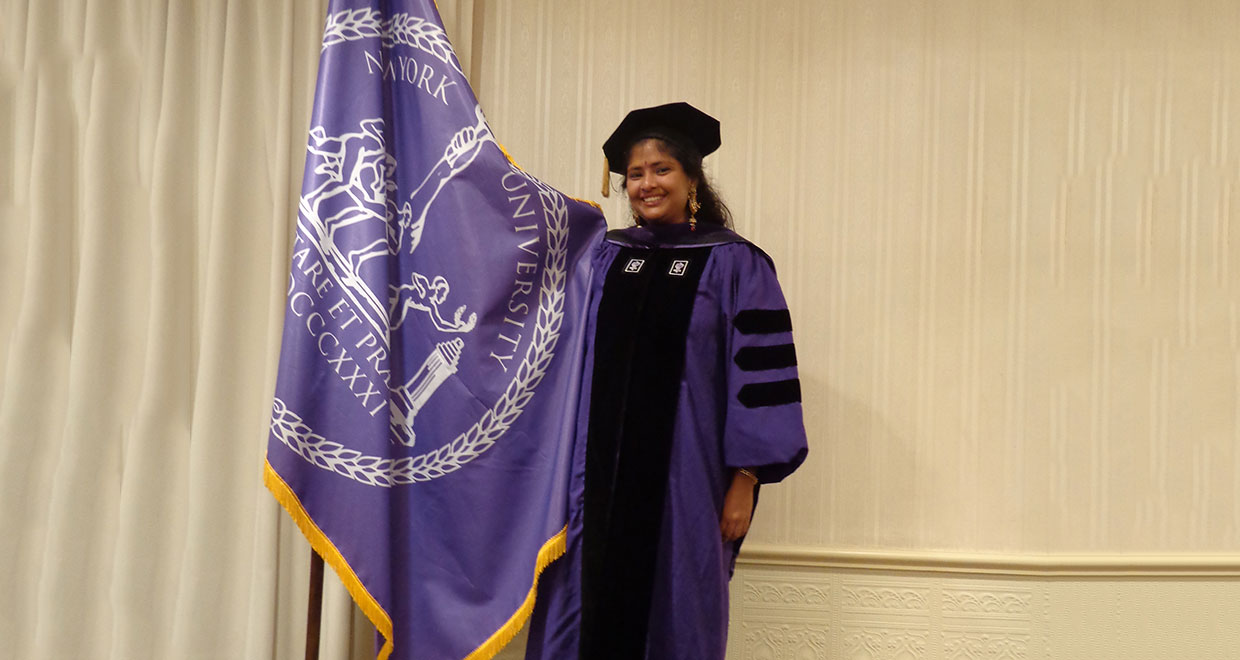
    Akshata Srinath graduated from Christ College, Bangalore University in 2011 and subsequently did a dual LL.M. course from New York University of Law (NYU) and National University of Singapore (NUS) in 2014. After having interned at several top legal firms of India, editing a journal at NUS and winning the Dean’s Award in her Master’s programme, Akshata is today working at the Dacheng Wong Alliance LLP, Singapore as an Associate (Foreign Lawyer).

    In this interview, she tells our readers about:

    • The importance of certificate and diploma courses for a law student
    • Her experience of successfully applying for a foreign master’s degree and getting the Dean’s Award at NYU-NUS
    • Working and writing for journals
    • Difference between the work culture in Singapore and India
    • Her views on entry of foreign law firms in India


    What was your motivation to study law? How did you come to choose Christ Law College for your law degree?

    I went through a lot of career seminars in secondary school to decide on what I really wanted to take up afterwards. Law seemed to be interesting and different. I attended few workshops for career counselling and realized law is not only about litigation (for me back then law meant going to the courts or being a judge), it showed me the corporate culture, NGO/pro bono work, legal editing work. Also at that time, my father was with ITDC Vigyan Bhawan where till date there are numerous events relating to different areas of law taking place. So he used to bring home materials, information and other details for me to read and therefore I was sure that I really wanted to pursue law as my career.

    Christ College Law was under Bangalore University at the time I joined. I did get in to a law school in Delhi, but going to Christ felt like coming out of my comfort zone which I still believe was a right decision. The campus is beautiful and a few friends who were already studying in Christ College, but in different departments, helped me take the decision. During my admission process, I also spoke to a faculty members which added to my motivation to choose Christ.


    You have interned with most of the top law firms in India. How did you go about securing internships at these firms? How was your experience with them?

    I have been lucky to have secured internships with some of the top law firms in India. I applied to the HR of the law firms, dropped reminder mails and few phone call follow ups to get the internships. My experience at every firm was different. I have interned with JSA in Bangalore and Gurgaon and was surprised to see how different the same law firm in different cities is. In Bangalore, the partner would directly come and give me work. I would be surrounded with lawyers so interaction level was surely high. But in Gurgaon office I found it impossible to reach the partner, because the number of lawyers was so much that you become less noticeable.

    I have always been given quality work, which involved drafting of few agreements and research work. I have made presentations for lawyers and attended few client meetings. I was given a good practical experience on how work is done in a law firm.


    Are there any extra-curricular activities you participated in during your 5 years at Christ?

    I did a couple of national and international moots but soon realized mooting wasn’t a good idea for me. I ended up taking part in parliamentary debates, Mock UN, presented papers in conferences and took part in national negotiation rounds. I have few publications in national and international journals. I also did some volunteering and legal aid work.


    Could you please describe to our readers the various Certificate and Diploma courses you studied, and the benefit you got out of them?

    I started doing certificate and diploma courses from my second year. I did diploma courses in corporate law and law of corporate mergers and acquisitions and certificate courses in dispute management and IP rights. I also attended the summer programme in international law by the Indian Society of International Law.

    Bangalore University law course is structured in such a way that we only get to read law subjects from the third year. So by doing these extra courses, you are clearer on a particular area of law. There is always a benefit in doing something extra. In my case, it helped me in bridging gaps in my knowledge. I knew a little more when I was making notes on research given to me in my internship. The extra knowledge also helped me in writing papers for publication, and a competitive edge. And lastly, resume for a fourth year or final year student looks good with extra courses.


    How did you secure a job upon graduation? What was the work profile like?

    (Upon graduation, Akshata joined as an Associate at the offices of KSB Partners)

    I applied to various law firms for job interviews and KSB Partners gave me this chance to work and grow with them. The work profile of KSB Partners was interesting. We did project finance and mergers & acquisition related work involving mostly drafting of agreements and preparation of due diligence reports including doing some research and giving legal opinions on the same. I couldn’t have asked for a better place to start working in the industry. This was because the areas of law were interesting and the Partners surely knew how to guide you through a particular task. I was fortunate to work with all the three Partners and receive knowledge and certain tricks from each of them.


    When and how did you decide to get a Master’s degree?

    I wanted to do Master’s but wasn’t sure when and how to go about it. One of my friends was applying to an architecture course in NUS for the year 2013-14 which made me think about Master’s. Also, I knew few friends who had been to NUS law so after getting information from them, checking few more details online, I discussed it with my parents and applied. I applied only to two law schools, one being NUS and the other being NYU Singapore.


    Can you please tell us about your experience applying for your Master’s degree? Do you believe it is more difficult for non-NLU students to get through into foreign universities?

    (Akshata pursued a dual LL.M. from NYU and NUS)

    Applying to NYU was a last moment idea and a hope that turned into reality. While researching for NUS Law School I did come across this unique course that seemed really fascinating. Submitting a statement of purpose was not required for NUS but in NYU they require SOP plus other documents like an essay for scholarship, a write up of experiences that you want to share with the admission committee, IELTS and TOEFL exams and the like. It was the most tedious fifteen days because I had to come up with a lot of documents. My parents played a huge role in this by reading every single document I was preparing for admissions. I asked few of my friends to read my SOP and I remember submitting the revised SOP no. 15 to the admissions committee.

    I don’t believe it is difficult to get into foreign universities for a non-NLU student. I have classmates, friends and juniors who are from non-NLU colleges but made it to elite institutions, some with scholarships. When it comes down to how to go about applying for universities, I believe it’s all up to how much you can open up to the admissions committee and how well you have spread your ideas in that one paged word document. As a very good friend and mentor for this process told me, “I don’t want to know what it is already there in your resume. I want to know what is beyond it, which is in your mind.”
     

    akshata-srinath-2

    Please describe to our readers the experience of studying at both these elite institutions.

    It was a great experience studying in both NYU and NUS. Our term started in May, so the first three months were purely for NYU subjects. The NYU faculties fly in to Singapore and the subjects we choose are taught for two or three weeks depending on their credit. It is a little intensive since the subjects are studied over these weeks without any break for three hours every day. In NUS, apart from the intensive subjects which follow the same pattern as those of the NYU, each course you choose is taught once a week for three hours. So the NUS way was a bit more relaxed.

    However, irrespective of the Universities, we have spent nights in the study room preparing for classes next day or finalizing papers for submission. I have been part of a week-long group paper submission, a 24 hour typed out exam, paper submissions, presentations, three hour exams, and even practical exams. I really learnt time management, prioritizing work and understanding how much was my capacity. Apart from studying, NYU and NUS celebrate certain festivals and occasions and arrange for guest lectures and alumni gatherings. Having classmates from all over the world helps you to develop personally, increases your patience and gives you lots of memories. In a nutshell, it was a great year of learning in every way.


    You have the experience of editing and writing for law journals. Please share your experience with our readers.

    (Akshata was the Student Editor at the Singapore Law Review)

    The Singapore Law Review (SLR) is managed exclusively by the students from the Law Faculty of the National University of Singapore. They have a two-step selection process which involves filling up of an application form along with submitting any article you have written. After being shortlisted they would call you for an interview. Being part of SLR mainly involved editing articles submitted by peers and also contributing write ups for their monthly newsletter. In India, I had never been part of an editorial board, I was always the one writing and submitting to the board. Therefore I can’t draw comparisons. However, it is more strenuous work than writing an article. Understanding and dividing the content of the paper as descriptive or analytic, grammar issues and citing concerns (most of us know them by the name of ‘bluebooking’), takes time and involves the need to understand what the writer has tried to convey through his paper.


    How valuable do you think the Master’s degree has been for you? How do you think it has added to you professionally and personally?

    Master’s has definitely been valuable for me. The whole experience changes your way to perceive and understand how a particular idea or in our case how a law works. Professionally I wanted to develop my career and my interest in corporate law, especially M&A, and this made me do my master’s.

    Master’s helped me to channelize the area that I wanted to expertise in. For me both my master’s degrees have indeed increased my knowledge, professional skills and even perhaps boosted my confidence. I gained a clearer insight into how the law firm industry works in Singapore, and through meetings with alumni I created invaluable contacts with some key people. You always end up learning something or the other from the university alumni meetings. Personally, I have made a lot of friends and learnt about various different cultures. It has changed my acuity and the way I look at things now is more logical and with a wider perspective.


    How did you go about achieving the feat of being awarded the NYU-NUS Dean’s Award?

    While preparing the documents for application, we had an option to apply for the scholarship as well by writing a scholarship essay. The NYU@NUS Dean’s Award is a merit-based award given to students who have demonstrated significant academic promise and/or achievement in their respective fields. With my offer letter, it was informed to me that I have been given the Dean’s Award. I am not in the position to explain how I was given this award, however, I believe with good scores one really needs to be involved in other co-curricular and extra-curricular activities. Whatever you do in the five years of law school definitely helps at a later stage.


    How did you join a reputed foreign law firm after your Master’s course?

    (Upon completing LL.M, Akshata joined Dacheng Wong Alliance LLP as an Associate [Foreign Lawyer]).

    I interned with Dacheng Wong Alliance LLP in the winter break. I continued doing some research work for the firm during my second semester with NUS. Due to my course structure, I had only three subjects that semester. This gave me enough time to continue with that work. And before the course got over, I was offered an opportunity to join DCWA. I now work for the South Asia practice of the firm.


    What is an average day like at a multi-national law firm like Dacheng Wong? Is work-life balance a problem?

    An average day in DCWA is involves attending to clients from Singapore and China and preparing draft agreements for ongoing transactions. Since Singapore is ahead of India in time, by afternoon after lunch, we need to cater to the Indian Clients. Most of the work is preparing agreements and providing legal opinion under Indian Law. Work-life balance is really not that difficult to maintain. The firm works on priority basis. So we try finishing most of our work during office hours, but if required, work has to be completed over the weekends.


    Do you believe that a Master’s is a must for lawyers seeking international exposure, and joining a foreign law firm?

    It is definitely one of the ways to seek international exposure but not the only way. For joining a foreign law firm, students in their final year can apply to foreign law firms under the training contract. However, to seek an international exposure study wise, doing master’s allows you to meet a variety of people, develop your understanding from a different view and gives you a wholesome development.


    How different is the work culture in Singapore from India? Are law firms in Singapore better managed?

    Work culture in both the countries is similar to each other. The difference is the fact that Singapore is open to international firms so this raises the bar for performance because of which there is a competition for giving out best results. Singapore also gives a wider scope in terms of involving a lawyer in laws related to other countries. I have myself been part of teams that work with the laws of most of the Asian countries apart from the laws of India.

    In Singapore, people are of different ethnicities, we not only dealing with Chinese clients, but also Malays and Indians along with Europeans and Americans. So work ethics differ from person to person. A person is expected to keep himself/herself updated. However, when it comes down to working, the 9 to 6 work hours are really not followed, which is something similar to the working style in India.

    Although international and domestic firms are organized and efficient in their deliveries and performances, the international law firms are better managed than the domestic firms in Singapore and India, since the headquarter is in a different country and managing the law firm worldwide needs specific staff with the right qualification. So the entire process becomes more crucial and highly scrutinized.


    What is your view on the entry of foreign law firms in India?

    Entry of foreign law firms in India is more of a tricky situation. I personally think it might be a loss for an Indian firm if a foreign law firm enters into the Indian market i.e. the foreign law firm is allowed to practice Indian law. There might be issues that established law firms in India could face starting with work culture. There is a basic difference on how transactions are handled in India as compared to other countries. I did find a difference in the training provided to me in India and the training I was given while working in Singapore. However, this is just my point of view. There might be a possibility that the foreign law firms actually help in the growth of the industry if they work together with the local firms.


    Would you have any parting words of encouragement for our readers who would like to follow your footsteps?

    My mom was the biggest inspiration during my testing times. She said one thing that I would like to share, “work hard for these five years, and then enjoy your remaining years.”

    Just do what you feel is correct. Explore your five years in a way that you don’t regret not trying any extra-curricular or co-curricular activities. One can utilize every semester break to intern, to do summer courses. Surprisingly, now I feel five years is less of a time to understand and achieve things. Law school is tough, it’s competitive but it is not impossible to utilize the time spent in law school successfully. It’s been a few years since I graduated from Christ College and now when I look back, I know I have come a long way. And the pain was all worth it.



    This interview was taken by: Amish Aggarwala, Advocate, Delhi High Court

  • Umakanth Varottil, Assistant Professor, National University of Singapore, Ex-Amarchand Partner, on choosing academics over corporate practice

    Umakanth Varottil, Assistant Professor, National University of Singapore, Ex-Amarchand Partner, on choosing academics over corporate practice

    Prof. Dr. Umakanth Varottil is an Assistant Professor, Faculty of Law at the National University Singapore (NUS). He is an alumnus of the National Law School of India University, Bangalore, graduating in the year 1995. Soon after graduation, he joined Amarchand & Mangaldas & Suresh A. Shroff & Co. (AMSS), where he soon saw promotion to the post of a Partner. While at AMSS, he was ranked as a leading corporate/mergers & acquisitions lawyer in India by the Chambers global guide. He then went on to complete his Masters from the New York University School of Law (NYU) in 2007, and then his Ph.D. from NUS in 2010. He has since taught on a visiting basis at the Fordham Law School, New York, University of Trento, Italy, and at various law schools in India. He is the recipient of several academic medals and honours. At present, he is an Assistant Professor of Law at National University of Singapore (NUS).

    In this interview, he talks about :

    • His experience and journey from an Associate to a Partner at AMSS;
    • What made him leave AMSS for a life in legal academia;
    • His experience at NUS and NYU;
    • His PhD on the role of the independent directors in corporate governance;
    • Life as a Professor at NUS.


    How did you decide to study law? Were any of your close relatives lawyers?

    Since my late father was a lawyer, I was exposed to the legal profession from an early age. However, it was only after high school that I decided to follow his footsteps and take up law as a career choice for myself.


    How did the opportunity to study at NLSIU, Bangalore feel like? Do you recall your first day at the Halls of Residence? Would you like to share any observation/memory from those days?

    Securing admission into NLSIU Bangalore at that time was an entirely different ballgame from what it is today. At the time that I joined the law school, it was only two years old, with a great amount of uncertainty as to what lay in store for its students and graduates. Nevertheless, we were fortunate to have an eminent legal personality in the form of Dr. Madhava Menon at the helm of affairs, who led an able and dedicated team of law professors, which left no doubt in my mind that our professional future was not only secure, but also promising.

    Some of my early memories relates to my initiation into the study of law, which revolved around analysing various social issues from a legal perspective, and debating them in hope of arriving at a solution to real world problems. As any student would experience in the first year of law school, there are no definitive answers to questions or problems, and each issue is capable of being viewed from multiple points of view. Added to this was the Socratic method of teaching adopted in the law school, which tends to confound problems in the minds of students than to clarify or resolve them. It is much later that I realised that this phenomenon was by design, and not an accident. As I was a resident of Bangalore, I did not stay in the Halls of Residence. Since NLSIU was still in its initial stage of establishment and hostels were yet being constructed, residence on campus was not compulsory. As it turned out, most of us “day scholars” spent long hours on campus, which helped us partake in the community aspects of law school.


    umakanth-varottil-3

    How did you always keep ahead of your batch as a student at NLSIU? What would be your message to those people who never score much but do well at internships and moots?

    In describing academic life in an Indian law school such as NLSIU, I have previously used a metaphor, which is that it is like playing Test cricket. Student life involves sustaining oneself over a five-year period with equal energy and drive, and the ability to handle countless exams, assignments, presentations and other commitments that law school demands, not to mention co-curricular activities such as moot courts, debates, and the like. Hence, it involves a great deal of patience and perseverance. I must add that I have been enlightened about these characteristics more as a matter of hindsight, and it is not as if I designed and implemented any specific plan or strategy while in law school.

    For the lack of any alternative methodology for assessing the competence and capabilities of law students, grades do continue to matter a lot. But it is also important to develop an all-round personality, which can be attained through co-curricular activities. While performance in law school (academic or co-curricular) matters to some extent, it often tends to have a limited bearing on one’s professional progress and success, which might depend on other factors that a graduate may imbibe after law school.


    Have you been in touch with your batchmates? Is it true that all graduates from NLSIU do extremely well in their careers? Do you find differences between graduates of NLSIU, other NLUs and other premier law institutes?

    Apart from imparting legal skills, NLSIU helped me forge very strong relationships with a wonderful group of batchmates (as well as seniors and juniors), which I continue to cherish to date. It is true that the NLSIU alumni network is a tight-knit one. In fact, my batch is celebrating its 20th year reunion at the end of this year, where we will be spending a weekend together along with our families.

    While there could be some differences between the graduates of NLSIU and other premier law institutions in India, I do not believe that they are significant. Ultimately, the top students from all of these institutions form part of the same crop, and have been successful in similar ways. It might be the case that more number of students from some law schools may have demonstrated a higher performance compared to the others. Over the years, I have developed professional relationships with graduates from several law schools around India. In my view, while the institutional quality and background are important, it is the capabilities and determination of individuals that matter more.


    You joined AMSS early on as an Associate. How was your journey from an Associate to Partner? Was it mostly about legal knowledge, or did it include business development as well?

    My early years as an associate at AMSS involved gaining experience in corporate transactions. I was fortunate not only to be working with a leading law firm in India and its managing partner, Mr. Cyril Shroff, but I was also the beneficiary of an unending flow of transactions following India’s economic liberalisation that witnessed several novel legal issues being considered in-depth. Of course, being made a Partner carries along with it, different demands, which include client management as well as human resource management (that takes a great deal of people skills).


    You must have been very young as a partner. As a law student, it’s very difficult to imagine joining the ranks of a partner in just 5-6 years of work. What all does it take to become a partner?

    At the outset, technical skills do matter, i.e. the knowledge of the law within one’s practice domain, which includes both substantive and procedural matters. In addition, skills such as conflict resolution, problem solving and acting as a “trusted” advisor to clients, are a hallmark of a competent partner. Then come other skills such as business development, human resources, and even financial management.


    Is it possible for a person who is not exceedingly well versed with Business Development and is not good at drawing clients to get promoted to the ranks of a partner? Would it take more time?

    It is ironical that while law schools teach the knowledge and skills pertaining to matters of law, the other skills, such as business development, are required to be developed by lawyers on the job. Some lawyers are excellent in technical legal skills, but they either do not have the capabilities, or are uninterested in the managerialaspects. In those scenarios, of course, there could be some constraints when it comes to promotion. Ultimately, this could depend on the policies of individual law firms. But, I do believe that there is always space for lawyers with good technical skills, and law firms and legal practices may ignore them at their own peril.


    umakanth-varottil-2

    When did you actually find yourself getting drawn towards academics?

    This is a question I get asked all the time. When I was at AMSS, Bangalore, during weekends,I used to co-teach a seminar course on Mergers & Acquisitions at NLSIU along with Professor M.P.P. Pillai. The discussions in class,surrounding the theoretical and policy-level issues on areas that I was closely connected with in practice, attracted me towards taking up a full-time career in academia. Although I embarked on an academic career with a view to teaching, I discovered along the way that substantial emphasis is also placed on research and publications. I enjoy this combination of teaching and research in the areas of corporate law, corporate governance, mergers and acquisitions, and related subjects.


    How hard was the decision of leaving a well-established career as a partner of the largest law firm in the country, to take a plunge into academics?

    I was quite determined about embarking on a career in academia. However, given that I was leaving the profession after spending over a decade in it, many of my colleagues and friends felt that I was more likely to flirt with academia for a couple of years, and then promptly re-enter practice. But, that did not occur: I remain committed to the legal academy, and have not felt the urge to return to practice. At the same time, I continue to remain in touch with the profession through various means that helps me stay up to date with developments in practice.


    How did you select New York University School of Law among others? Was it any specific combination of modules that attracted you there?

    I chose the New York University School of Law (NYU) due to its focus on some of the key areas I was interested in, namely corporate, securities, and financial services law. Moreover, located in the heart of New York City, it also has access to professionals from leading law firms, accounting firms, and other financial intermediaries, who would often visit the institution to teach, and also to participate in seminars and conference.


    What was your topic of research for LL.M? Why did you choose that subject for research?

    Although I did an LL.M by coursework, I was required to write research papers on a couple of courses, which I found to be a valuable experience. In a seminar course titled “Topics in Corporate and Securities Law”, I wrote a paper on the role of independent directors in corporate governance. This has been a significant topic of interest world-over, not least in India. This paper also acted as a stepping stone for my PhD thesis on the topic subsequently at the National University of Singapore (NUS). At NYU, in another seminar course titled “Financing Development”, I wrote a paper on the use of the pari passu clause by lenders in sovereign debt documents, to block the debtor countries from making payments as part of a sovereign debt restructuring. This issue, as well, continues to hold sway till date, with litigation pertaining to Argentina under this clause making headlines, especially as they have been considered extensively by the US courts.


    How do you recall the faculty and facilities? Which other universities would you recommend for someone who cannot make it to NYU?

    I learnt considerably from my courses at NYU. Having practised Corporate Law in India for several years, it was a wonderful opportunity for me to compare the Indian law and practice, with those of other jurisdictions studied at NYU, including Delaware. Some of the professors and their teaching methodologies have had a significant impact on me, in that they have helped shape my own teaching philosophy and style.Apart from NYU, there are several other leading law schools in the US, UK, Singapore and Hong Kong, that have strong corporate and financial services law offerings.


    How did you choose NUS for your doctoral research? Tell us about your Ph.D thesis. Why did you choose that subject in particular?

    When I was at NYU, I came to learn a lot about NUS, as there was a collaboration between the two Universities for a joint LL.M programme. This was also consistent with my desire to stay in the Asian region, and closer to India. Hence, after consulting my classmate Arun Thiruvengadam, who was then teaching at NUS, I decided to apply for the doctoral programme there. As mentioned earlier, my PhD thesis dealt with the role of the independent directors in corporate governance, wherein I examined board independence in the context of emerging economies such as India and China, as it had previously been studied in the context of developed markets such as the US and the UK, where the agency problems relating to corporate governance were largely different. I chose that area in particular, as the concept of independent directors has confounded academics for some time now, with incomplete understanding of the utility of that institution in enhancing corporate governance. The concept continues to hold importance in India even now, with extensive codification in the Companies Act, 2013.


    Having taught at many universities in India, how would you compare it with the facilities and environment that NUS provides you? Do you find stark differences in administration between Singapore and India?

    NUS provides an excellent environment for both teaching and research. It has a diverse faculty and student body. While the LL.B students are mostly from Singapore, the LL.M students are from several countries around the world (including from far-flung areas such as Latin America), which makes teaching here truly global. There are indeed perceptible differences in the administration between Singapore and India. For example, the law school at NUS is situated within a larger University, which is over 100 years old and therefore endowed with significant experience and resources. On the other hand, the leading law schools in India are standalone establishments that are relatively younger, with greater flexibility in determining their own destinies.


    Is it possible that you may come back to India to teach? Do you look forward to that in near future? What all could probably could be the impediments, if at all you wished to come back?

    Of course, it is hard to make predictions for the future, but for the present, I offer short courses and guest lectures at various Indian law schools each year, which I thoroughly enjoy. Even though I am currently based in Singapore, I continue to remain closely connected with Indian legal education.


    What subjects are you currently teaching? What are your current research interests? Have you involved your students in your research?

    At NUS, I teach three courses. One is Company Law, a compulsory course for LL.B students, that involves teaching Singapore law, which is similar to Indian company law at a broad level (with both Singapore and Indian having originally inherited English company law), but with significant differences when one drills down into the details. The other two courses I teach are upper-level electives, namely Mergers and Acquisitions (M&A) and Indian Business Law. Elective courses are attended by third and fourth year LL.B students as well as LL.M students.

    My research interests are also on similar lines as my teaching. While my work is comparative in nature, I focus considerably on the laws of India and Singapore. I do involve research students in my work. While most of the research assistants tend to be NUS students (both LL.B and LL.M), I also often avail the services of students across various Indian law schools, particularly when the research material for a project is mostly available in India.


    Having won quite a few awards and honours for academic excellence and teaching, what would be your message to young professors?

    An academic career in law is an exciting one. It provides considerable freedom for young professors to delve into areas of their interest, both in terms of teaching and research. Several professors in India have established themselves as authorities in their respective fields, thereby garnering wide acclaim. They are also sought after by practitioners, policy-makers, and the Government. They have accomplished this through extensive research and publication of their work in leading academic journals, as well as through op-eds in the popular press that ensure a wider reach. My advice to young professors would be to identify their interest areas, and then build up domain expertise in those.


    Students often complain about high-handedness of faculty and administration in India, how do you propose we either find a solution to it, or change our own perspective?

    As I have already mentioned, Indian legal education continues to be moving along a steep learning-curve. The experimentation that began with the establishment of NLSIU, continues in one form or another. Given this trajectory, the path is not likely to be smooth. It would be presumptuous on my part to offer any solution, as the circumstances are rather complex. However, the key would be for the administration, faculty and students to work collectively to address various problems that are currently being faced. To go back to an incident that occurred when I was a law student, a proposal by the administration to raise tuition fees at NLSIU was met with stiff resistance from students, resulting in a deadlock. However, following successive rounds of negotiations between students and the administration, an acceptable solution was found, and the institution marched forward. Constant engagement between various constituencies within the legal education sector would be the key.


    Shifting to moot courts, how does one draft a winning memo? According to you, what is the difference between a great and an average memo?

    A good memo is one that is well-researched and expressed clearly. The grasp of the writer over the subject matter tends to be quite evident from its content and form. A great memo is also one that is very convincing. Ultimately, even in practice, a judge would decide a case based on (among other things) the written submissions of counsel, which must be clear, cogent and persuasive (supported by authorities).


    Do judges actually expect mooters to know everything about the law, or is there something else at play, as well?

    Successful mooting involves a combination of factors. Apart from knowledge of the law relating to the subject matter of the moot, it is necessary to master the facts (which often form the bone of contention). Thereafter, it is necessary to logically structure the arguments, which must be presented clearly. More importantly, mooters must be prepared to wriggle themselves out of a situation when they are caught off-guard by the judges. They must be able to think on their feet. Patience is another virtue that would come in handy in such situations.


    Lastly, what would be your message to people who want to take up a career in teaching?

    According to me, the idiom “Those who can’t do, teach” cannot be farther from the truth. It is no longer true that teaching is the last resort for a graduate in India. The academic world has attracted bright lawyers, and several excellent law students at their very early days, who have indicated their interest in teaching,and followed their single-minded pursuit towards attainment of their goals. Hence, I would encourage law students to consider an academic career. From my own experience, I have found academia to be extremely enriching and fulfilling.

  • Parineeta Srivatsa, Associate, ALMT Legal, on LL.M from NUS and Corporate Law

    Parineeta Srivatsa, Associate, ALMT Legal, on LL.M from NUS and Corporate Law

    Parineeta Srivatsa graduated from Symbiosis Law School in 2011, and thereafter she had the opportunity to pursue higher studies from the National University of Singapore. While at law school she had huge achievements in mooting. She also has rich experience of interning at top-tier Indian and foreign law firms. After returning to India, she joined MD&T Partners as an Associate. Later, she switched over to ALMT Legal.

    We asked her to share:

    • Her experience while pursuing an LL.M from National University of Singapore
    • Internship experience at foreign law firms including Allen & Overy and Allen & Gledhill
    • Work at ALMT Legal


    When did you decide to take up law as a career? Being a law student, were you only focused on academics? How was the academic pressure?

    I chose a career in law as a matter of elimination. I’m a first generation lawyer in my family and had no background in law apart from a general (albeit misinformed) idea from Perry Mason and John Grisham novels and the Practice marathons. I was always interested in civics, administration and constitutional studies (as part of history) in high school. In the 11th Grade, I chose to opt out of science and engineering and chose to study accounts, economics and political science. Over the course of the two years, law became a career choice and with the support of my family, the right choice. Symbiosis Law School was a game changer. In those five years, I developed a synchronous relationship with everything life in law school had to offer and the learning and un-learning that I did in those five years were the most crucial towards contributing to where I am today.

    I imbibed and absorbed everything I could from what was taught, discussed and happening around me. I will cherish my time there the most. Academics weren’t the only focus but a lot of emphasis was paid to the same. Unlike school, undergraduate school suddenly burdens you with the responsibility to make your own decisions and this takes a while to get used to. The academic pressure, too, depends on how much you opt to do and how self driven you are. I had a great support system to make sure I stayed grounded and focussed despite the million distractions per minute.


    parineeta-s-1

    How was your LL.M experience from National University of Singapore? Did you always have higher studies in your mind? If not, what motivated you to go in for the same?

    The LL.M. at National University of Singapore was fascinating for me in every aspect. Renowned and accomplished professors, state of the art facilities, new country, hard working and dedicated students and challenging colleagues were just some of the many facets to my year in Singapore. I was more motivated than ever before to make the most of my year there and the facilities available at my disposal. The teaching style at NUS was more discussion based and there was abundant reading to be done for each class to encourage students and professors alike to bounce ideas off one and other. Focus was on peer review rather than peer to peer competition. The professors stimulate the discussions as moderators providing direction, valuable inputs, insights and opinions on a range of topics. This was different than what I’d been used to in class in India. Personally, I found writing papers more challenging than writing exams because I had to modify / un-learn my working style in order to cope with the level of detail and analyses required for each module.

    An LL.M. was always on my mind. As an undergraduate student, I was given an introduction to all fields of law and I wanted to hone my interest in corporate and business laws with further in-depth studies on the topics and gain a global perspective on the same. I ended up making some great friends and memories in the process, as well.


    During your days at Symbiosis and NUS, you interned with various foreign law firms like E Line Ventures, Joyce A Tan Partners and Allen & Gledhill. How are these foreign firms different from top-tier Indian law firms?

    My first foreign internship was with a children’s educational games based company in New York called E-Line Ventures. It was a small company and quite an informal environment with many creative and dynamic people. I was their only in-house legal intern at the time and I would help with research on Intellectual Property Laws, the Children’s Online Protection Policy Act and basic trademark searches. While at NUS, I had the opportunity to work with local Singaporean firms as well as foreign firms based in Singapore. From my experience on both sides of the fence, I would say that the integration into a firm and the amount of responsibility in terms of work is more qualitative in Indian firms than in foreign firms. Having said that, foreign firms are more systematic in the training provided to interns.  Associates and partners often conduct training sessions / seminars in the different fields of law and provide a general insight into the field of law that interns would be working in during the tenure of their internships.


    Could you please share with us on applications for internship and interviews, especially with foreign law firms?

    A strong yet crisp C.V., internships, especially in your area of interest, published articles / papers, if any, knowing your C.V. inside out (which is why it is important to have specific points and areas you’ve researched on in your C.V. instead of a general overview on the topic), and most importantly, confidence and a calm demeanour. When it comes to interviews, experience is the best tutor. Re-evaluating each interview after it’s done and picking up on all those points that I thought I’d not answered or could’ve answered better has always worked for me in the past. Also, honesty and sincerity is paramount. An interviewer will know immediately if you’re trying to guess the answer to a question you’re uncertain about.


    parineeta-s-2

    You have also interned at Allen and Overy as an intern. Given that you had already graduated and were pursuing Masters what sort of work did you get? How would you say your legal education helped you in this internship?

    At Allen and Overy my scope of work involved drafting / reviewing closing documents and options agreements and management services agreements, among others. I attended training programs on banking transactions and general corporate and mergers and acquisitions transactions. These helped in future assignments as I wasn’t completely thrown off guard when trying to grasp agreements, jargon and more importantly, the reasoning behind the same. I also researched on enforceability of non-compete and restraint to trade clauses under Singapore laws. My LL.M. was in corporate finance and business laws, so I was equipped with a basic understanding of financial and transactional concepts in law. This helped me in some of the areas of research I was expected to do during the tenure of my internships. I also had a few practical sessions in NUS where corporate lawyers from renowned firms would provide us with problems mimicking day-to-day transactional law situations. These helped a great deal in understanding documents from a transactional perspective for future interviews and work.


    Do you think it makes sense to students to go overseas to study law when they want to practice in India?

    I have been asked this question many times and my answer is, monetarily and as a value add to your C.V. you can get into a top law firm without an LL.M. and more often than not people have. But purely from an academic standpoint, it is definitely a value add in terms of academic depth and learning. Further, due to flexibility, it provides you with an opportunity to explore subjects that you wouldn’t normally learn in an undergraduate degree. This may have opened doors for people who didn’t think they’d be interested in that particular field / subject of law. One of the optional modules I signed up for during my LL.M. was entertainment and celebrity law, with no background or interest in the field. It turned out to be the most interesting and engaging modules that semester. These, from an academic standpoint, may open doors for a prospective student that he/she otherwise wouldn’t have foreseen.


    For those students who are planning to go for higher studies, what do you think would be better- going right after graduation or going after having gained some work experience?

    I would suggest considering an LL.M. after a couple of years of work experience. Having said that, going right after your undergraduate studies has its advantages. You’re still inclined to learn and you’ve gotten used to studying and facing and tackling academic pressure. Many peers who’ve intended to break off for an LL.M after a couple of years of working have not been able to do so due to many reasons, including but not limited to secure jobs and steady incomes.


    Currently, you are working as an Associate as ALMT Legal. What prompted you to make this choice? What kind of work and responsibilities does an Associate at ALMT Legal generally deal with?

    I was a lateral hire in ALMT Legal from MD&T Partners. I had wonderful teachers in MD&T Partners and in my short time there I was able to absorb more than I had expected to, thanks to their guidance. Thereafter, I made the shift to ALMT Legal as I found the same to be more streamlined with my interests. My work at ALMT Legal ranges from everyday general corporate research to private equity and mergers and acquisition transactions. I enjoy working in ALMT Legal and don’t think of the work environment with dread. This is important for anyone who intends to develop a career in corporate law. It is as interesting as you make it. And thus far, in ALMT Legal, with the support of a fantastic team, I have been given responsibilities and have interesting work coming my way so I stay engaged and focussed.


    What is the current scenario of studying corporate law as a career option in India? What are the key qualities one should posses for becoming a corporate lawyer?

    I see courses and seminars and other reading material being offered every other day for practical courses in corporate law. It is definitely a good time to enter the field as a corporate lawyer as India is looking to emerge as a global and market-friendly economy. As regards key qualities, I would say reading and keeping abreast of developments in any field of law, whether by self or through discussions with colleagues and peers and using the resources available at one’s disposal are some of the ways in which one may have an edge over others.


    Do you ever feel that you missed out on the fun part of your college life?

    Symbiosis Law School ensured that fun was never neglected. As for managing with academics and ‘extra-curricular activities’, I was surrounded by brilliant peers who knew exactly how to manage that. We were young and malleable and learnt to inspire, challenge, and push each other’s limits without realising how much of it we were involuntarily absorbing for the better.


    Last but not least, what’s next for you?

    Exploring and pursuing interests and learning inside and outside of work. Knowledge is easily accessible these days so if you don’t know something, you have only yourself to blame. I also enjoy scuba diving, driving and travelling and discovering new places, things and people and I intend to continue to explore that as well.

  • Leoni Mahanta, Trademark Attorney, AMSS on work experience and LL.M from NUS in IPR

    Leoni Mahanta, Trademark Attorney, AMSS on work experience and LL.M from NUS in IPR

    Leoni Mahanta is currently working as a Trademarks Attorney with Amarchand & Mangaldas & Suresh A. Shroff & Co. (AMSS), Gurgaon. She graduated with a B.A.LL.B. (Hons) degree from National Law Institute University, Bhopal in 2009. She then went on to pursue Masters in Intellectual Property Rights and Technology law from National University of Singapore and has thereafter worked with two boutique IP law firms, initially at ZeusIP and then at Lall, Lahiri & Salhotra.

    In this interview she talks about:

    • Law school experience at NLIU and NUS
    • Work experience at ZeusIP and Lall, Lahiri & Salhotra
    • Work as Trademark Attorney with AMSS


    How would you introduce yourself? Please tell us a bit about how you gravitated towards law.

    Hi, I am Leoni Mahanta and I am currently working as a Trade Marks Attorney with Amarchand & Mangaldas & Suresh A.Shroff & Co. (AMSS), Gurgaon.

    My maternal grandfather was a very big name in the legal fraternity of Assam. As a child, I would hear his great courtroom stories, the stature he enjoyed in the society, and that inspired me to become a lawyer so that I could carry forward his legacy.


    Please tell us a little about your law school days at NLIU? How were you at academics?

    The 5 years I have spent in National Law Institute University (NLIU), Bhopal, are indeed very close to my heart and the whole experience has a major impact on who I am today. Studying at a National Law School gave me the opportunity to interact with the cream crowd of the country. Being a part of the competitive environment at NLIU, I became a goal oriented person at a young age. I was an above average student with a decent CGPA and I actively took part in extra-curricular activities as a core member of Gender Justice Cell and Access to Justice Cell and was involved in UNDP funded projects. My reading was not limited to class-room notes and course materials, and I would read from books which helped me to understand the basics. The purpose was not to cram up the course material to score high grades but to understand and enjoy what I was studying.

    Most importantly, one of the key highlights of my law-school years was travelling all over Madhya Pradesh and beyond, getting to know the culture and enjoying the hostel life with my friends. There was always so much to do – exams, projects, presentations, extra-curricular activities – and coping up with the trimester system taught me mechanisms to multi-task, all of which are now helping me being an associate at AMSS and still maintaining work life balance.


    How important do you say is a good CGPA for an illustrious career in law?

    Good CGPA is definitely very important to be noticed by a potential employer and in securing admission for higher studies at top law or business schools. However, for an illustrious legal career, the marks you have scored in law school exams have no role to play. I believe we should choose to work in the field which interests us, be sincere and honest in our attitude towards all the assignments we are involved in, be it big or small. In short, if we love our work we will naturally put all our efforts and would want to be updated with latest legal developments which in turn will reflect in the quality of our work.


    leoni-mahanta-1

    How do you think internships are beneficial to law students?

    Internships give students the opportunity to experience the practical aspects of law and provide exposure to a professional environment that a law school may not otherwise be able to provide. I would advise law students to intern with Non-Governmental Organizations, National Commissions, Litigators, Corporate Law Firms and as Judicial Clerks so that they can have a fair idea of different practice areas and can gain clarity of what they would want to pursue as a career. Internships also provide great platform to refine legal skills, learn your strengths and weaknesses and to network with legal professionals who may prove to be mentors in finding jobs in the future.


    After your graduation, you went to pursue Masters in Intellectual Property Rights and Technology law from National University of Singapore. How would you describe your experience as?

    Yes, pursuing higher studies was always the plan! I was not mentally prepared to start working right after law school. I felt it was too soon. I wanted to go out in the world, experience different cultures, meet new people and become more independent. Though I was offered Scholarship by Kings College London, I chose National University of Singapore (NUS)because of its global approach to education and research, with a focus on Asian perspectives and expertise. Also, the University is considered to be one of the best in Asia offering diverse course modules which are taught by the professors from the top most universities of the world.

    Studying in Singapore was a life changing experience. Living in a different culture, interacting with people from all over the world helped me discover myself, break down my stereotypes about many things and see the world in new ways. The LL.M. gave me the opportunity to make great friend, meet new professionals and build invaluable relationships with peers from around the world. Also, NUS organises regular professional networking gatherings which helped me to develop networking skills. I also had the opportunity to intern at Drew & Napier LLC which is one of Singapore’s leading and largest law firms.  This experience taught mecross cultural skills and provided an international professional exposure.

    Pursuing an LL.M. abroad may not be a good idea if you are expecting it to be a means to getting a job abroad or top law firm in India. But personally, I believe that studying and living abroad contributes to overall development of one’s personality, preparing to adapt to unfamiliar environments and improve interpersonal skills as a result of interacting with people from diverse backgrounds and cultures.


    After completing your LL.M, you came back to India and started your career at a boutique Intellectual Property Firm. How would you describe your experience working at boutique firms?

    I worked in two boutique IP law firms, initially at ZeusIP and then at Lall, Lahiri&Salhotra.Working at these firms proved to be beneficial as from the very start of my career I got the opportunity to work directly under the supervision of the Partners, work on wide variety of matters due to less compartmentalisation of work, take more responsibilities and directly communicate with clients. Working in boutique set-ups helped me to gain more control on the practise, become responsive and develop management skills.


    Currently, you work as an Associate at AMSS. What prompted you to make this choice and how is your experience so far?

    Working at AMSS was a natural choice as I was looking for varied and challenging work and it is the best platform to experience the cream legal work in the country since it has diverse range of clients comprising world’s top business houses.

    Working at AMSS is a very fulfilling experience. The people that I work with are some of the brightest and most insightful people that I have ever met. AMSS has a very women friendly environment and the firm takes various initiatives for the well-being of the employees.


    What kind of work and responsibilities does an associate at AMSS deals with? What should a student do so that he gets placed in a prestigious firm like AMSS?

    Work and responsibilities of Associates at AMSS differ from team to team. Personally speaking, I believe that if one is sincere, good at work and takes initiatives then opportunities aregiven to work in wide range of matters and take more responsibilities.

    The general notion is that one should be amongst the top 10% of the class for campus recruitment in AMSS. I joined AMSS as a lateral joinee and can only comment on the basis of my personal experience. I believe that a good CGPA is important but AMSS also considers if the candidate has a good grip of the work he / she is doing and the general attitude towards work. AMSS appreciates candidates with well rounded personality and good inter-personal skills. My advice to the prospective job seekers is to develop strong base in their practice area, be honest with the interviewer and develop the spirit to be nothing lesser than the best. Recruiters can read your mind 🙂


    Last but not least, what’s next for you?

    Every day I go to office as if it’s my first day at work with the determination to prove myself and be better than yesterday. I believe the doors of great opportunities will open up if I continue to be true to myself and my work.

  • Anant Raje on choosing NUS over LSE, applying for LL.M and writing an SoP

    Anant Raje on choosing NUS over LSE, applying for LL.M and writing an SoP

    Anant Raje is a graduate from National Law Institute University, Bhopal (Batch of 2012). He has an enviable academic record and an excellent series of internships at top law firms. He has multiple publications to his name. Soon after graduation he started working at Samvatsar Advocates and Associates, Indore where he worked for two years. Currently, he is pursuing Masters in Corporate and Financial Services Law from National University of Singapore.

    In this interview, Anant talks about:

    • Quitting job and aspiring for higher studies
    • Choosing NUS, Singapore over LSE, London
    • Writing an SoP and getting recommendation letters


    Please introduce yourself to the readers. Tell us a little about your childhood and your background.

    I am from Indore and have spent all my childhood there. I come from a family of doctors but chose a different career path. I graduated from NLIU Bhopal and am currently pursuing my Master’s degree in Corporate and Financial Services Law at NUS Singapore.


    When did you decide to take up law as a career? Tell us something about your college life. Being a law student, were you only focused on academics? How was the academic pressure?

    I would not say that being a lawyer was a childhood dream. However, since a legal background seemed to be a consistent trend in the modern leadership and because law as a profession requires an individual to develop various aspects his personality, I found this attractively challenging.

    The fact that I would be exposed to various subjects ranging from sociology to corporate law and at the same time get to participate in extra-curricular activities drew me towards the NLUs. This was the reason why I chose to take up mooting in college. I was lucky enough to do well in the internal pool selections and go on to represent the university in Jessup International Moot Court Competition, where our team won a memorial awardin the national rounds and Henry Dunant Moot Court Competition, where we made it to the Semi-finals and won the best memorial award.

    For developing a habit of hard work and critical thinking, I would give credit to such competitions, publishing papers and the rigorous curriculum.


    What were your areas of interest during your graduation? How did you go about developing expertise and knowledge in these areas?

    Frankly, there were so many subjects to discover and know more about, that having interest in only one was tough. I was attracted to all of them and enjoyed watching them in action in the daily news. I did have some predilection towards Financial Law, Banking Law and Constitutional Law because of their large scale as well as grass-root level implications. It was for the same reason that I enjoyed Public International Law. It is deeply connected to international politics and its function in the international dynamics found my interest.

    As I mentioned earlier, trying to find the application of such laws in the daily news went a long way in helping me understand these fields better. Mooting and internships contributed to a great extent.


    As a law student which activities did you participate in? Tell us about your law school journey.

    Apart from the extra-curriculars, I was engaged in several organisational activities in college. These included cultural events and inter-college moots and arbitration competitions. It was always satisfying to work along with my friends towards the success of such events. I also spent my spare time working on publication in law journals, both domestic and international as well as legal magazines.

    I would say that the law school journey was rather enriching and rewarding. Living in a high competition environment teaches a person to work towards their goals even where success is a hard to get.


    What kind of internships did you do while you were a student?

    I tried to keep my internships as varied as possible from consumer forums and litigating firms to bigger law firms. One must remember that law is a field with too many options and one must explore them as widely as possible before making a choice. This kind of exploration provides us with a variety of experiences and a wide knowledge base.


    anant-raje-2

    Recently, you’ve joined National University of Singapore for LL.M. in Corporate & Financial Law. When you decided to quit job and pursue LL.M? What was your motivation behind doing LL.M.?

    I had taken up a job with a firm in Indore as it did not have tightly compartmentalized teams and it gave me the option of exploring a variety of fields at the same place. It also gave me some time to prepare for the civil services exam without losing touch with the legal field. I had placed a predetermined limit on the years I would spend on it and although my attempt at the examination was not successful, it was enriching in itself; especially as a lawyer. On the parallel, my job enabled me to zero-in on the field of law that I would like to specialize in. The next step was to apply for LLM. From what I had understood and experience proved me right, was that LLM would familiarize me with the core concepts and principles of the relevant laws with a multi-jurisdictional approach. It increases one’s ability to understand the rationale behind the law and enables a person to apply it with acumen and dexterity.


    How did you choose NUS over others? How did you go about choosing a university?

    Amongst other options, choosing between LSE and NUS was the toughest. Both the universities had similar curriculums, I was getting the specialization of my choice and the professors were equally accomplished with years of practical experience. Of course LSE also has a bigger brand value. But the fact that many of the NUS modules had an international as well as Asia centric approach attracted me to the curriculum. In the duration of this course, we have been exposed to Asian, European as well as American laws and legal principles. Also, a full scholarship awarded to me by NUS made it the logical choice.


    How did you go about writing your SOP? Are there any key factors which one should keep in mind before writing the SOP? How about recommendation letters? Who all recommended you to pursue LL.M?

    I believe the best way to write an SOPs is by avoiding taking a leaf out of other’s books. It just has to be an original and honest statement about one’s own goals, accomplishments and reasons for pursuing the degree. It should, however, not be a baseless rhetoric. One must spend weeks on each SOP, crafted uniquely for each university. It needs to be based in a thorough research on the goals of that university, the background of the professors, their mission statements and the current developments in the relevant fields. Since, LLM courses do not have entrance exams, one’s CV, the SOPs and the recommendation letters go a long way in one’s selection.

    It is best to approach the faculty that knows you best for the academic recommendation letters. It is best to plan it all well in advance and give the faculty enough time to write good recommendations. It also helps to send one’s CV across along with a request for recommendations to give them a reference of your accomplishments.


    How different is the style of teaching at NUS? Do they focus more on the practical aspects of the law as compared to the NLUs?

    As I said earlier, the curriculum at NUS is just what I had expected and I am thoroughly satisfied with it. The course always attempts to keep the larger picture in mind while dealing with the depths of the laws. The pedagogy is concept based and very practical. Even examinations require the candidates to write legal opinions and tender advice in hypothetical situations. The classroom environment is vibrant in most of the lectures and requires the students to speak up and analyse constantly. It really coaxes a person to think and not just accept what is being taught. Even in the NLUs some of the good teachers had a very similar approach. They did not care about whether a student is quoting the names of the cases right or regurgitating provisions verbatim. They required students to give logical and legally sound arguments and these are the subjects that I had understood best.


    What is your topic of research for LL.M? Why did you choose that subject for research? How is your experience so far?

    The course at NUS offers a variety of modules within a larger area of specialization and within each module there are research papers or assignments that need to be submitted. One has the option of choosing a topic of one’s own liking, subject to the professor’s approval. For example, in one such module I was required to device an enforcement regime for insider trading offences in financial markets and in another I wrote a paper on the legal nature of banker-customer relationship and its larger implications in regulatory laws. I found these modules very educational and thought inducing. They teach us to open up our minds to all the possible perspectives, analyse them and come up with novel arguments and suggestions. It is intellectually challenging and hence stimulating.


    Does NUS provide students with scholarships? Are there any other institutions, which provide scholarships?

    Yes NUS automatically considers every applicant for scholarships and awards them on the basis of merit. It is best to keep track of policy changes and exceptions introduced on their website. Apart from scholarships awarded by NUS, Indian students can rely on – JN Tata, KC Mahindra, Aga Khan Foundation Scholarships, Atur Foundation Scholarship, B.D Bangur Endowment (NIRMAN), Narotam Sekhsaria Scholarship, RD Sethna Scholarship Fund etc.


    What is your view on the latest trend among law students to pursue Masters abroad? How much of a brain drain do you think this is?

    People choose to take up masters for a variety of reasons. The most common trend is to seek opportunities abroad. One must, however, consider that law as a field is rather tightly knit in every country. It is rare, although not impossible that it would open up to an immigrant lawyer. An LL.M in itself would have some value but it is not a sure-fire method of finding jobs. It is best that it be complemented with clearing internationally respected Bar examinations for example the England and Wales Bar or the NY Bar. One could also consider examinations for Solicitorships or the Qualified Lawyers Transfer Scheme and its equivalent in such jurisdictions. To be able to manage this within a year, one must plan it in detail before setting out to do an LLM.


    What are your plans after completing Masters?

    I wish to come back to India to work, preferably, in the field of banking and financial law.


    Lastly, what would be your parting message for our readers?

    It is best to take time in discovering what they truly want to do. Some figure it out sooner than the rest but one must not rush into the rat race. In the formative years as a lawyer, it best to seek experience and knowledge. They are the strongest assets that a legal professional can have.

  • Akshata Namjoshi on association with A38, LL.M from NUS over KCL, writing SoP

    Akshata Namjoshi on association with A38, LL.M from NUS over KCL, writing SoP

    Akshata Namjoshi is one of the most diligent and illustrious scholars of the 2014 batch of NLIU, Bhopal. She has participated in various co-curricular activities and has multiple publications to her name. Her interest in Corporate and Financial Laws led her to choose NUS for Masters right after graduation.

    In this interview, Akshata talks about:

    • Writing for journals and publications
    • Importance of co-curricular activities
    • Choosing NUS over King’s College, London for Masters
    • Key ingredients for SoP


    Most of our readers are law students and young lawyers. How will you introduce yourself to them?

    I finished BA.LLB(Hons) from NLIU, Bhopal in 2014. I am currently pursuing LL.M in Corporate and Financial Services Law from NUS, Singapore.


    What motivated you to choose law as a career? Did your family and friends suggest you to take up alternate career options like Medicine or Engineering?

    Definitely, after cricket, engineering is the second biggest religion in India. Widely “professed” and “preached”. I started off as a science student, but soon I realised that engineering was definitely not the career of my choice. I decided to revert back to my childhood dream of becoming a lawyer.


    How would you describe your five years of law school? Please share some of the memorable experiences of your college life. What made your college life exciting?

    The best part about law school is that you can choose what you want to be, what kind of people you want to interact with, which activities interest you or whether you absolutely want to be a couch potato, which of course brings its own challenges.

    For me little additions to my CV here and there made law school exciting. Debating and Mooting occupied my time in my 2nd and 3rd year and publications and blogging in 4th and 5th year.


    Your internships at law school have all been with top tier. How did these experiences help mould you a lawyer and which was more useful for the LL.M applications?

    It is very important to decide the kind of job or life you are looking for. Also, area specific internships in your 3rd year and 4th year help. For instance you can’t expect somebody to accept your LL.M application for Corp and Finance if all your internships have been in IPR. As far as top tier is concerned, I got a chance to intern with few of the best law firms in the country, but definitely, the kind of work that you do is the most useful.


    You have multiple publications in various renowned journals. How should one go about writing papers and getting the same published?

    I was lucky to have 4 publications and 3 paper presentations by the end of 5 years. While writing a paper it is essential to identify your core arguments and one should come to the point immediately, because honestly nobody has time to read a 2+ pages long introduction. Also, “Footnoting is not researching”. Your contribution to the topic, your arguments and analysis matters the most. That has worked for me at least. I am currently serving as the sub-editor of MightyLaws.in and I have been associated with A38 in the past.

    I think students who wish to apply for LL.M applications should start with smaller journals and those which respond quickly (like Monthly or Quarterly Journals). At a later stage one can try and aim for bigger and renowned journals. If you select extremely narrow and restricted topics, the possibility of your paper getting published increases.


    When and how did you decide to pursue Masters? Which universities did you select for your LL.M?

    I always wanted to pursue masters. And at some point in the future I plan to do a Ph.D also. I decided to apply to the top few colleges in USA, UK and Singapore. Majorly because I wanted to specialise in Corporate Law and these were the best options available.


    What prompted you to choose National University of Singapore from the plethora of options available? What was the application procedure?

    I had an offer from King’s College, London, Queen Mary University, London, UC Berkley California and NUS, Singapore. During my research I realised that NUS curriculum is very rigorous and being a global financial hub it would give me a better insight.

    The application procedure was definitely irritating. Every college requires a different set of documents. Many colleges require sealed envelopes, registrar’s signature, director’s bona-fide letter etc. One must start with all of this early. Otherwise you have to run a lot.

    Also, most of the colleges expect your professors to send a Letter of Recommendation directly to them. In that situation one must not run after the designation of a professor. It is better to choose professors according to the subjects that they have taught and somebody you can bother every now and then. Also, be prepared to write a draft LOR all by yourself because most professors expect you to do that.


    How should one go about choosing a university? Which subject you are studying there? Why did you decide to take this particular subject?

    I am pursuing my LL.M in Corporate and Financial Services Law. I went through the modules and exam pattern before deciding on NUS. I would recommend that anybody who wishes to pursue LL.M should speak to Ex-students from that university, even if they are complete strangers. I spoke to numerous ex students from NUS, King’s College, Queen Mary, NUS and UCB. Talking to them helped me understand what I was looking for. Like in this case I decided to chuck big names and went for the university which had an elaborate and exhaustive curriculum.


    How diversified is your batch at National University of Singapore? Do you have any Indians in your batch?

    Our batch is small, with just 25-30 people. I was happy to see large number of Europeans in NUS though. And yes there are Indians in my batch. Accommodation definitely was a problem. College rarely provides you with a hostel. They recommend few hostels and you have to apply individually or you can also rent a flat.


    How does one go about scholarships? Does the Institute offer any scholarship? Do students have part time opportunities? Highlight some of it.

    NUS considers students for scholarships automatically. But other colleges in UK and USA ask for applications. There are partial and full waivers. There are many scholarships which come up every year. Some even bear the costs of living.

    Students can work part time for maximum 16 hours a week in Singapore. In UK it is 20 hours.

    As far as part time opportunities are concerned there are plethora of options. Petrol Pumps to Law Firms, everything is open. I am currently working as a research assistant to a professor in NUS itself. It is the most favoured part time job for many students since it is not too time consuming. One must however remember that LL.M courses in itself require a full-time dedication.


    Do you think that nowadays, some students do an LL.M because it seems the “right thing to do” and not because they know what they want to study or why they want to?

    The truth is that nobody studies properly for 5 years. Once you start with a job you look for a change or revival in your career. If one is thinking of doing an LL.M just because, one didn’t get a job, then that person is in for a hard time. LL.M courses are quite demanding and if one is not interested in the subject that they have chosen, it would be quite counter-productive. You should pursue LL.M absolutely because you get to study a subject of your choice. It helps in understanding your subject through and through which aids in the long run.

    Here in NUS, I hardly remember being bombarded with cases. The professors have taught concepts and concepts only.


    What is the key ingredient of a well written SOP? Any tip to those making their SOPs?

    It is essential to avoid clichés. Also, an SOP is not a self-appraisal which would be like saying that “I want to be a part of football team because I am good at football”. Everybody knows that. Talk about the specifics and why you think that you can be a part of the team. Simple as that. SOP should be channelled and short.

    At the same time you shouldn’t underestimate yourself and you should include all the relevant details. Try looking for things in your CV which define you.


    How do you expect this experience to influence your career?

    In my case, I had a job offer from Trident before leaving college, but by then I had realised that I was still not prepared for a job. It is possible that you bag a job and then perform badly because of lack of knowledge. I wanted to learn more before I tender my services to the market. I expect this LL.M to prepare me fully for a job, at least in terms of strengthening my concepts. I hope that I would know the subject of my choice before I start working.


    Lastly, what would be your parting message for our readers?

    Keep trying. Try everything. Don’t be in a rush to take up a job, after 10 years everybody is going to be in the same position. Find out what you like and what you want to do and then work on it.

  • Sanyukta Banerjie on LL.M in IPR from NUS and building a career in academics

    Sanyukta Banerjie on LL.M in IPR from NUS and building a career in academics

    sanyukta-banerjie-1Sanyukta Banerjie is a 2014 Batch graduate of Gujarat National Law University, currently pursuing her LL.M from NUS, Singapore. She has been one of the brightest students at GNLU and has actively participated in theatre and music during her college life. In this interview with Superlawyer, she shares her passion for IPR and teaching and the various considerations one should keep in mind while applying for a Masters Degree.


    How would you introduce yourself to our readers who are mostly young students of law and lawyers?

    I would introduce myself as a student of law as I believe what we study in law school, or learn over internships or even on the job is really just a fraction of the expertise that is required. As cliché as it sounds, the study of law really is a life-long journey.


    Please tell us a little bit about your childhood and your background? Why did you decide to pursue law and what affected your decision?

    My childhood was spent more among books than people. In fact I remember my Mum would send me off to play with the neighbourhood kids and I would instead sidle into their rooms and pore over their collection of Pinkie, Chacha Chaudhary, Enid Blyton, etc. Come to think of it, I might have come across as a bit of a prig! Reading led to writing and coupled with the fact that I usually had an opinion on almost everything, law seemed the inevitable choice. I can’t exactly pinpoint when I had that moment of epiphany so to say, but I do think my fascination with law started because at that stage of my life, and being part of the education system that I was in, law was the only medium which permitted me and in fact encouraged me to question all that I saw around me.


    Tell us a bit about your life in law school. What activities were you involved in apart from the regular academic curriculum?

    Oh law school! Well, I think I tried my hand at almost everything once (Except sports. Everlasting anathema). I think that’s the best part of law school, or perhaps the times we live in. Every activity is so democratically organized that even if you have a fledgling of an interest in anything, there would a club for it and people as enthusiastic as you, if not more, to share that interest with you. I was part of the Theatre Club, the Music Club and the Quizzing Club. I enjoyed mooting and writing. (Even if it be just academic papers, as nerdy as that sounds.)


    Any fond memories which you would want to share with our readers related to your days in law school?

    Haha! This question makes me feel so old. I don’t know if it’s just me but law school has you living this strange dichotomous life where your superiority complex is matched only by your self-loathing. Anyway, 2012 for me was the year of a particularly high degree of self-directed hate. But in March we stood runners up at a moot court competition and I was adjudged the best oralist which helped me put things in perspective and calmed me down immensely (only for it to start all over again next year!)


    As a law school student you have done a number of internships. Please tell us a bit about them and how they helped shaping up your future career prospects.

    As depressing as it might sound to certain people depending upon their private beliefs, most fundas about law school internships are actually quite accurate. Yes, interning at a place does spike your chances of securing a job there. No, it does not matter how you secured that internship or what your grades were. And yes, the nature of the beast demands a fair amount of hobnobbing and that includes both corporate and litigation sectors.  Since I was still finding my feet career-wise when I came to law school, I went step by step. So I interned with NGOs, litigation practises and law firms and I am really glad for having sampled each of these avenues. I think they helped me define my ideas about a career vis-à-vis work culture, office environment and quality of work in a manner that reading about them or asking my seniors never would have.

    Even though my ultimate aim is to teach in India, I will always be glad to have picked up such work experience along the way because when I was pursuing undergraduate studies, I remember that those teachers who had prior experiences working in legal institutions had a sounder understanding of their subject.


    When and why did you decide to pursue an LL.M and what were the considerations you had in mind while looking at various universities? What was your motivation behind doing an LL.M. abroad? Why not an LL.M. in India?

    My wish to teach lay at the core of my intention to pursue an LL.M. I was in my last year, had vetted almost every avenue of law through internships and quite exasperatingly, I had enjoyed all of them. As you can imagine this did not particularly ease decision-making with respect to picking a career. My college conducts an ASP (Academic Support Program) program where seniors provide remedial classes on any subject of their choice/expertise. I used to volunteer for that program and would occasionally take classes. Apart from that sometimes our curricular assignments required us to conduct presentations on a particular topic in class. And I remember all along…how do I put this? I remember just being very happy doing it. Standing before a class of forty odd students and attempting to tell them about a topic in a way that would make them engage and learn; to me was a tremendously exciting proposition. I don’t know about all that found-my-calling business but I know that teaching, in any capacity, makes me happy.

    Like any other Indian kid, I wanted my decision to receive the blessings of my parents. They were onboard with it, but my Mum insisted I pursue an LL.M outside India. What I had not completely grasped at that point, but do realize now, is that an LL.M abroad really is an educational sea-change. I have not had the opportunity of pursuing an LL.M in India but I can certify to this that an LL.M abroad (from a reputed institution albeit) really does put the ‘masters’ in the Master of Laws degree.


    Given the Rupee-Dollar exchange rate, it is quite costly to do masters from a foreign country. How did this factor influence your decision?

    For me, pursuing an LL.M abroad (in the absence of a scholarship) was treading a tightrope between pursuing economy and checking college credentials. So that necessarily ruled out an education in America even though some of the IPR courses there are really good. Ultimately it came down to UK or Singapore. But at that point of time UK with its immigration policy post 2010 and the more theoretical tone of its IP course, fell short. Additionally factoring in the comparative cost benefit analysis, I opted for Singapore.


    What were your areas of interest while you were an undergraduate student and how have they helped in choosing your subjects/courses for the LL.M programme?

    Owing perhaps to the dynamic nature of the subject and the excellence of the teacher (Dr. William Nunes), my areas of interest had been Political Science and International Relations. Then the moot happened and I found the love of my academic life – IPR.   It’s worked perfectly for me, because IPR with its WIPO origins is a subject that requires an international perspective for a comprehensive interpretation and an LL.M with a specialization in IPR provides me with that.


    Tell us about your days at NUS? How rigorous is the academic schedule?

    Rigorous! You can say that again and then underscore it. Whoever refers to an LL.M degree abroad as a one-year vacation is either a crazy genius or needs to get his or her head examined! A compact one year course means a year of continuous information overload and there is no way you can cheat the system. There really isn’t. On the other hand if you pick a subject that you like (and that’s usually an option with LL.M) then NUS is the best place to be. The professors really push you but all in a really clever underhand way that makes you feel like crap anytime you slack.


    How is the Indian fraternity over there? Were there many Indian students?

    Well I have met some really friendly, intelligent and fun people. But the way I see, if you go in with an open mind, then you are bound to meet all kinds of interesting people which I am lucky to say I have. The majority students are naturally Singaporean, followed by Chinese and then Indian. Although in terms of diaspora, depending upon the electives, the class composition completely changes.


    How does one go about the scholarships? Does the institute offer any scholarship? What are the key scholarships one should look for?

    Depending upon the specialization that one’s opting for, the university does offer scholarships. For example, in case of IPR there is the Ella Cheong Intellectual Property Scholarship which is merit based and all LL.M applications are automatically vetted for it at the stage of admission. Apart from that the NUS official website has a page entirely dedicated to listing scholarships that a prospective student can look into before applying, as and when something comes up. My humble two cents on procuring a scholarship – plan ahead and have obscenely good academic records because it is quite competitive.


    What about extra-curricular activities and your hobbies at NUS?

    Postgrad for me is a complete volte face; which is code for zero extra-curricular activities. Although, as dorky as it might make me sound I love attending conferences! I really do. Mostly they are on topics that have nothing to do with my electives. It’s such a welcome break from the routine sometimes! For one, I don’t have to do any preparatory reading, so I just pop in, listen to these really amazing experts and come away with a way more nuanced understanding of a topic than the standard Wikipedia entry on it. It’s like trivia surfing but for the non-virtual world – time flies and it gets addictive real quick!


    Tell us a bit about the difference in studying at NUS and at GNLU.

    Well the most observable difference for me was in terms of the student-teacher equation. Partly due to the culture and perhaps owing to a certain amount of independence that pursing a postgraduate degree permits, the structure is a lot less hierarchical. The lack of any obvious duress on part of teachers makes students feel more in control and thereby more liable for their academic result. So naturally they apply themselves more.


    Going forward, how do you expect the LL.M experience to influence your career?

    For someone who plans on teaching law in the future, I can already sense the way this course has changed my perspective on law as well as on teaching. In spite of the wide-ranging content of this course, I constantly feel like I have so much more to learn. I think that’s always a good takeaway for anyone who plans on imparting education in such a dynamic field as law.


    Any suggestions which you would want to give for students wanting to pursue higher studies abroad?

    I would suggest them to start REALLY early. So whether it is gathering material, researching on prospective colleges, preparing their statements of motivation, arranging for scholarships or procuring letters of recommendation, just start already. You won’t even realize but just getting into the process gives you such clarity of vision with respect to what you want out of an LL.M degree or if you want one at all.

  • Hita Kumar on leaving AMSS to pursue LL.M from NUS over Cambridge, writing an SOP and getting recommendations

    Hita Kumar on leaving AMSS to pursue LL.M from NUS over Cambridge, writing an SOP and getting recommendations

    hita-kumar-2Hita Kumar is a graduate from National Law Institute University, Bhopal (Batch of 2012). Her journey through law school has been one of an ideal student. While maintaining a good CGPA, she bagged a job with AMSS in law school. She worked there for two years. Currently, she is pursuing Masters in Corporate and Financial Services Law from National University of Singapore.

    In this interview Hita talks about:

    • Choosing NUS over Cambridge University for Masters
    • Writing an SOP and getting recommendation letters
    • Work experience at AMSS and leaving it to pursue LL.M


    Most of our readers are law students and young lawyers. How will you introduce yourself to them?

    I am not your stereotypical law student who loves hearing her own voice, arguing for the sake of argument and is very opinionated (no offence!), but rather more of an introvert who is not afraid to speak her mind when a situation requires me to. I’ve been told that I come across as very serious, sincere and nerdy, which is probably true when it comes to my work but people who are close to me know how nutty I can be. I’ve done my BA.LLB (Hons.) from NLIU, worked at AMSS, Bangalore and am now pursuing my Masters in Corporate and Financial Services Law at NUS. On paper I probably look like countless others, but I’ve probably gone through this journey with the least number of hiccups, which only goes to show that consistent hard work generally pays off.


    How did you gravitate towards law? Why law and not engineering or medical studies?

    From the unbiased ethics of law to the high dependence on insightful reasoning, I gravitated towards law for a number of reasons and not specifically one reason, such as wanting to be well-spoken, well read and highly regarded, wanting to be person whom you can trust to resolve issues and wanting to have the power to make right an injustice, to even know an injustice when faced with one. While I enjoyed science during 11th and 12thI never saw myself as an engineer or a doctor because it seemed too common a career choice for people who took up science. An alternative to law that I did seriously consider was a degree in Economics.


    How would you describe your time at NLIU-Bhopal?

    My time at NLIU was quite fulfilling and whilst it was demanding and academics were always a priority; NLIU was structured in the way that we were given a lot of freedom to venture into activities that interested us.It was up to us to take the initiative and develop our skills during our tenure as law students. I tried my hand at mooting, client counselling, negotiation, writing and organising events on campus. I particularly enjoyed my stint as part of the founding editorial team of the NLIU Law Review. Being a sports enthusiast, I often spent time playing basketball, throw ball and badminton. Representing the University for events both; co-curricular and in the sports field was something I always looked forward to. NLIU Bhopal is where I grew up. Entering law school at 18 straight out of school and leaving at 23, with lawyer’s degree in hand, my time at NLIU has had the biggest impact in my life to date.


    You have worked at AMSS for two years. How was the experience?

    In two words, a ‘roller coaster’; there were highs and lows, it was exciting and intimidating, and I left AMSS feeling like it was one hell of a good ride. I was part of the first batch for which there was a rotation policy i.e. we were with three different teams for six months each, before being allotted a specific practice area. This was a great opportunity for a fresh graduate like me, to work on different areas and different teams before finally being allocated permanently with one team. It gave me the opportunity to explore a number of areas of corporate law and get a broader perspective of the working of the Indian corporate legal system. While there was a tremendous learning of various corporate laws but also an emphasis on learning of other skills like client handling, time management, drafting and presenting. I was lucky to have a few mentors who made the transition from being a law student to a lawyer easier than it would have ordinarily been.The fact that I made some really good friends along the way made the journey better than expected!


    The glitz of a corporate job may blind a law student and he may fail to look at different career opportunities. Were you in doubtful before joining NUS? Why did you prefer to pursue Masters over your job?

    I think the emphasis in Indian law schools is always on recruitments and the placement season is invariably a very tough time for most students. The pressure of getting a job, if not a lucrative one, is very high. Being at NUS, I now realise there were/are far more career options and job profiles that I could’ve seriously considered had I known about them; which is why I feel it is extremely important to have a strong working relationship with your alumni, have a wide circle of friends and acquaintances including people beyond your law school and to never be hesitant to reach out to any of them for guidance.

    Having said that, I had to do a lot of soul searching before I could finally come to the conclusion that I wanted to quit my job and study for the Masters program at NUS. There was a constant debate about whether an LLM over AMSS is the so called ‘right’ way to go? Would it bear fruit at the end of day? A dear senior of mine once told me time and again that it’s what you make of the opportunities you choose that determines the outcome and not the choice itself.

    As to why I preferred doing an LL.M over the option of continuing with my job, it would have to be the timing. For me, it was the perfect time to take a step back and reinforce my academic foundation in corporate law. After two years of experience in the profession, I now having a better insight into how the business of law is actually conducted and I could explore this further by studying the areas of law I am interested in during my LL.M.


    When you decided to quit job and pursue LL.M? Was it pre-planned or it just happened during your law firm days? What was your motivation behind doing LL.M.?

    Pursuing an LL.M was not part of the original plan, at least not consciously. At some point, whilst working I realised that I was not ready to be an adult just yet! On a more serious note, I decided to give myself an opportunity to explore the academics in depth before I settle down into my forte. My motivation behind doing an LL.M, and a foreign LL.M at that, was to experience a different kind of education system and culture.


    How did you choose NUS over others? How did you go about choosing a university?

    My choice to study at NUS was a practical one. Having said that I was quite convinced that NUS has an excellent LL.M program, especially for corporate laws and has been consistently ranked as the top university in Asia. To be completely honest, the clincher, was the funding offer I received from NUS. I was granted the Faculty Graduate Scholarship which covered my tuition expenses which made the offer of admission too good to refuse. Whilst I did have the option to take up the MCL program at Cambridge, I guess the practicality and the positives that NUS had to offer outweighed the option of taking up a huge loan for a relatively new program. While choosing a University, it is important to research the actual program you would like to join by speaking with alumni, it’s not ideal just to go by the name and reputation of the University; keeping in mind always, your reasons and priorities for pursuing an LL.M.


    How did you go about writing your SOP? Are there any key factors which one should keep in mind before writing the SOP?

    Writing an SOP and the entire application process in general is extremely testing and can get frustrating at times. My guess is that universities intentionally make it so, to weed out half-hearted applications! I spoke to a lot of people who have been through the process themselves, all whom had varying but valuable input. I think it comes down to putting across those aspects of yourself and your credentials that you feel paint a complete picture of yourself and one that leaves an impression with the admissions committee. There’s no formula to writing an SOP but a couple of things according to me would certainly make a difference would be (1) the reasons you think you standout from the rest of your peers; (2) the reasons you want to get back to academics after your first degree; and(3) correct grammar! It’s also very important to get many as many people as possible to vet your SOP, the more eyes you get on your SOP, the more it will evolve.


    How about recommendation letters? Who all recommended you to pursue LL.M?

    Since I had only worked for two years before completing my LL.M applications, I requested my professors at NLIU to give me their recommendation. They were all very supportive of my decision and asked me for my CV to get a better idea of the particular work I did throughout law school. Of course, there is a fair bit of coordination involved if you are not in university anymore, so I would keep enough time before the deadlines to make all the arrangements and request for a few extra copies should the need arise.


    Does NUS provide students with scholarships? Are there any other institutions, which provide scholarships?

    NUS does give out scholarships on the basis of merit. You may opt to automatically be considered for the various scholarships as part of the application itself. There are various other institutions that give scholarships (full, partial and loan scholarships) which are well known such as given by Inlaks Foundation, Tata Foundation, Aga Khan Foundation, Narottam Sekhsaria Foundation and the Mahindra foundation, amongst others. It’s important to start doing your research on scholarships at a very early stage and keep track of the requirements and deadlines.


    How is your experience so far? Tell us about the faculty and facilities. Anything memorable that is stuck in your mind?

    So far, my experience has been absolutely fantastic. My modules are extremely interesting and the Professors supplement them with excellent lectures and reading materials. The NUS Law faculty is very highly qualified and motivated to teach and engage students. The facilities range from an extensive library (with a large number of E-resources), to sports facilities, from well-regarded centres of research like the Centre for International Law, Centre for Asian Legal Studies and Centre for Banking and Finance Law to state-of-the-art use of IT in various internal systems like the Integrated Virtual Learning Environment, where all the materials for modules you have opted for are posted. Having been here only a couple of months now, I am still soaking it all in. What has been striking has been the frequency and quality of the seminars that are conducted on various topical legal issues by guests to the university. Though, the very first thing that hit me was that my lectures were 3 hours long. But as it turns out, if you like what you hear, 3 hours can fly by fast enough!


    How’s the Indian fraternity over there? Are there many Indian students?

    There are enough and more Indians here that I never feel too far away from home! I think that says it all.


    How difficult was studying abroad in terms of finding accommodation, finances and settling in?

    Singapore is an excellent place for people who have never lived abroad. It’s almost impossible to get lost, filled with Indians and generally some of the most friendly and helpful people. While the cost of living is definitely higher than India, I can’t imagine it being too difficult to manage your finances if you can budget your expenses.


    Where do you see yourself five years from now?

    Probably doing something that I don’t even know of right now, but hopefully something that is exciting. However, options that one could probably look at are working at a foreign law firm, a multi-national corporation, teaching, a legislative think tank, an arbitration institution, a legal team of an international organisation like the WTO, and many others. Taking courses that interest you, talking to people in the field and keeping an open mind will help things fall into place.


    If you could re-live your 5 years in Law school, is there something you would do differently?

    While I have no regrets about my time in NLIU, I’m sure there are things I could’ve done better like taken a few more risks with internships, kept in touch with more alumni and stressed out a little less!


    Lastly, what would be your parting message for our readers?

    Make the most of the opportunities that come your way, so that you don’t have regrets in life!

  • Shruti Hiremath, Legal Adviser, Allen & Overy, on dual LL.M. from NYU & NUS, and her experience thus far

    Shruti Hiremath, Legal Adviser, Allen & Overy, on dual LL.M. from NYU & NUS, and her experience thus far

    Shruti Hiremath graduated from NUJS in 2011. Following that she pursued an LL.M, which required her to attend two of the world’s best known universities – New York University and National University of Singapore. She is currently associated with Allen & Overy, in the capacity of Legal Adviser, where her role entails handling structured and asset finance.

    In this interview we speak to her about:

    • Studying in the US
    • Having a dual degree
    • Plans for the future

    What was your motivation behind doing LL.M.? 

    I decided to do my masters when I was in my final year. While many are of the opinion that it is best to do an LL.M after getting some work experience under one’s belt, it is my belief that if you are certain about the area in which you want to specialise in, having just graduated should not deter you from applying for a masters (it might in fact be beneficial to do so as you get to learn from the experiences of your classmates even before you start on your first job). In-depth study of my chosen subjects and international exposure were my primary motivations in applying for an LL.M.


    How did you choose the university/ college? 

    In choosing a university/college, it is very important to focus on whether a given university/college offers the specific courses that you want to do and who the faculty taking those courses are. It is also crucial to think about any other objectives you may have in doing a masters. Personally, I was certain I wanted to focus on business laws. Also, I wanted to attend a program wshruti-h1ith a smaller class size as I think this allows you to interact closely with more people. The NYU@NUS program met these requirements to a T. Being a dual masters program, I was able to study more subjects in my chosen specialty and the class consisted of only 45 students.
    I also applied to the Masters in Law and Finance at Oxford University, but withdrew my application once I received a positive response from NYU@NUS for two reasons: first, I would get greater international exposure, not only in terms of a diverse class but also in terms of giving me the opportunity to experience life in more than one international city (the program allows you to study in three international cities – Singapore, New York and Shanghai); and second, I was offered the Deans’ Award, a merit-based scholarship.


    What did you study? 

    I did my LL.M from NYU in global business laws and the LL.M from NUS in corporate and financial services. This is an area that has been of interest to me for very long and since I hoped to work on the transactional side, I decided to take up this field of specialisation.


    How was your experience? 

    I had a very enriching experience both within and outside the classroom. The facilities were fantastic both at NYU and at NUS be it academic or otherwise. There was no point where I felt that something was missing. As for the faculty, I couldn’t have asked for better. Both NYU and NUS have renowned faculty and the NYU@NUS program really gives one the best of both worlds – be it Prof.Joseph Weiler (World Trade Law and EU Law), Prof. Franco Ferrari (CISG), Prof. Soornarajah (International Investment Law), Prof. Michal Gal (Competition Law), Prof. Gary Born (International Commercial Arbitration) or Prof. Umakant Varottil (Indian Business Law) to name a few. I got an opportunity to learn from the best in these fields which I will always cherish. The one thing that really stands out is that most of these professors were not pure academicians but had either practised law at some point or did so alongside teaching. This I think is very beneficial for the students as these professors are able to adapt the courses to make them more relevant to actual practice.


    How’s the Indian fraternity over there? 

    On the NYU@NUS program itself we were six Indians. During the NUS terms, we attend classes with NUS students. The NUS program has a very strong representation from India at the LL.M level.


    How is the recruitment/ placement situation for overseas students?

    Being a dual masters program, students are able to use the career services of both NYU and NUS. The career services organise fairs and also conduct practice interview sessions with various law firms. Students can also attend the International Student Interview Program in New York where many international firms come to recruit.


    How was the academic schedule? 

    Being a dual masters, the academic schedule was hectic. During the NYU terms we had intensive sessions where we studied only one subject at a time for three weeks at a stretch instead of having one class a week over a semester. I found this system quite effective as it gives one’s study a sense of continuity. Classes with the NYU professors were extremely interactive. The readings would be allocated/uploaded the previous day and we would have to come prepared to have a discussion on the topic. The NUS terms were like the usual semester system. In addition to classes, we also had to write papers and make presentations.


    What about accommodation?

    In Singapore, NUS offers a place called College Green to NYU@NUS students. These are three bedroom houses that are very close to the campus. I chose to live at a private hostel called Evans Lodge which was also very close to the campus and more reasonably priced. In New York, I lived at D’Agostino Hall which is one of the NYU halls of residence. These are two or three bedroom flats that you share with other students. I shared a flat with another NYU@NUS student and a JD student at NYU.


    Tell us about your classmates – was there a predominantly international crowd? 

    Most students were in their late twenties or early thirties. The crowd was undoubtedly international. Even though we were a class of only 45 students, 23 countries were represented. The diversity was amazing. It gave me a chance to learn about so many different cultures and realise how we are all so different and yet so similar.


    Did you get time for any extra-curricular activities?

    There’s always time to do anything you want to, if you manage your time well! Being a dual masters, the program was very hectic. But people did manage to take out time to play sports or get involved in other extra-curricular activities . Personally, I used my time to work as a research assistant for Prof. Umakant Varottil which was a very enriching experience.


    How does one go about scholarships? 

    There are a number of scholarships offered for Indian students going to study abroad such as the ones offered by the Tata Endowment, Inlaks Foundation and so on. Each has its own application procedures. It is important to research their requirements well in advance and keep track of the deadlines. While I did apply for these scholarships and was shortlisted for various interviews, since the program starts earlier than other masters (in May), I was unable to attend any of the scholarship interviews. The program itself does offer various scholarships such as the Deans’ Award, the Singapura scholarship and the David Marshall Scholarship.


    What are your future plans? 

    I am currently working in London at Allen & Overy. The in-depth knowledge of various business laws and the international exposure gained on the NYU@NUS experience has been extremely beneficial for the cross-border nature of work I am involved in here. Also, the program meets eligibility requirements for taking the New York bar exam. This is an added advantage as it increases one’s mobility and enables one to advise on a broader range of transactions. As for future plans, I plan to continue working in this field.


    This interview was taken in 1st quarter of 2013 by A First Taste of Law.

  • Dwijen Joshi on being an exceptional scholar, LL.M. from NUS and a career in International Arbitration

    Dwijen Joshi on being an exceptional scholar, LL.M. from NUS and a career in International Arbitration

    Dwijen Joshi is an exceptionally meritorious student of 2013 batch of GNLU, Gandhinagar. He has been a gold medalist in Arbitration. His interest in arbitration and litigation led him to pursue an LL.M. from National University of Singapore. He talks about the Arbitration proceedings in Singapore and he has a lot to say about the opportunities there.

    We asked Dwijen about:

    • Winning a gold medal in Arbitration and scoring well in exams
    • Studying LL.M. for a career in International Arbitration
    • Faculty, Finances and overall academics at NUS
    • Developing interest in Arbitration and ADR
    • Scope of Indian Lawyers in Singapore


    Most of our readers are law students and young lawyers. How will you introduce yourself to them?

    I completed my under graduation from Gujarat National Law University in 2013. Immediately after completing my undergraduate studies I headed to National University of Singapore to pursue Masters in Corporate and Financial Services Law. Within the broad legal sphere I have carved out my interest for Arbitration Law. Other than Law, I am very passionate about Music. I have been learning/playing Tabla since my childhood. During my time in GNLU I was part of a talented bunch of musicians in the Music Club.


    How did you gravitate towards law? Why law and not engineering or medical studies?

    I chose Law as I think there is no other field that has a convergence with all walks of life. I never saw myself as doing anything else other than being a Legal Professional. This is a profession, which tests your assertiveness and sensitivity to the aspects of society, which requires some attention or examination. I believe law is as much about contemplation and thinking as much as it is about voicing out your stand.

    It is the most dynamic profession that gives you the liberty and tools to question things that would not seem obvious to someone not trained in law. Though there are different branches of law dealing with two main building blocks of society – Government and Corporations, there is one general theme running in the undercurrents and that is of ‘fairness’. I have always been fascinated by this word.

    My family background also influenced my decision to study law. At a very young age, I began to understand the nuances of Law from my father and grandfather. Though, I always had family support in whichever field I joined, learning law was a very natural process and I took the plunge.


    You were one of the most exceptional students at GNLU. It’s not every day that someone bags gold medals! Please give us a few actionable tips on managing higher grades.

    Thanks for a very generous description! I am very grateful to GNLU for awarding me the ‘Late Mr. Milon Kumar Banerji Gold Medal’ for Alternative Dispute Resolution (Arbitration). It is a very heartening recognition.

    As far as studies are concerned it is a very personal thing so what worked for me may not be best for others. Therefore my advice is very holistically directed. I think hard work is sine qua non for good grades. Life in law school is like a marathon you have to keep running till the last semester and closely watch your pace throughout the five years.  I believe that higher grades are the by-products of the grit and passion that you show towards learning and therefore, learning should be the goal and not the grades. This will make studying enjoyable.

    I always preferred to study from my own notes as it narrows down your area of focus and can be helpful for revisions during the exams. It is very important to maintain a good mental outlook throughout the whole process. Also, I would say smart work is more important than hard work. Try to identify more relevant areas and focus on them. Regular studies will help manage your time better throughout the semesters.

    To save myself from falling into nerdy bracket, in my defense, I believe five years is a golden period to enjoy to the fullest. For some it will be the last few years as a student. So it is more important to have fun, engage in extra-curricular activities and have a balanced routine. I have been fortunate to meet amazing people here and forged relationships for lifetime.


    What was your motivation behind pursuing LL.M.? When did you finally decide that you need to do Masters?

    The decision to pursue LL.M. was the most important decision that I made in last two years. It was in my fourth year of undergraduate studies that I felt I still had one more year of student life left and took the decision. Therefore, I did not get myself registered with Committee on Recruitment Affairs (CRA) for placements. My motivation to pursue an LL.M was to have an exposure of studying law in a top ranking International Law School. It was a risky decision as it was an investment of time, energy and money. And I had again exposed myself to academic judging for sixth year in a row. But it was my passion to experience the intellectual rigour of a Law School such as NUS, which kept me driven.

    I had planned to build specialized knowledge base and skill set through an LL.M, which was not possible through an undergraduate degree. An LL.M provided me with a head start into such complex legal concepts which otherwise would be possible only after two or three years of practice.


    How did you choose NUS over others? How did you go about choosing a university?

    I followed bottoms-up approach while making the applications. I sorted out my areas of Interest and my expectations from an LL.M in terms of knowledge and skill-set. Then I went about choosing the universities, which are reputed I was interested in. Finally I had short-listed only five universities where I eventually sent my applications. All were UK based except for NUS.

    I chose not to apply to US, as pursuing LL.M there is little expensive affair. In London-based universities one gets to study four modules throughout the LL.M. whereas NUS requires completion of total 40 credits, which means one has to study 10 modules of four credits each. I chose to go to Singapore also because of my interest in Arbitration Law and increasing popularity of Singapore as a Hub of Arbitration in Asia.


    Does NUS provide students with scholarships? Are there any other institutions, which provide scholarships?

    NUS does provide for scholarships. The criterion for selection is competitive. I am not sure if they have instituted scholarships especially for Indian students. There are some scholarships awarded by British Council for UK universities. Felix and Inlaks scholarships are also very famous amongst law students. The former is only for UK universities. Ministry of HRD also has some scholarship schemes that keep changing so one has to look for it constantly.


    Did you undergo a rigorous academic schedule? How was that different from your under-graduate course?

    Life in NUS was rigorous in comparison to the under-graduate course. Time management is the key to grapple with the demands of the respective modules chosen. The faculty will expect you to go through the reading materials before each class. For some modules the assigned reading for each seminar may be painfully long and may run up to nearly hundred pages or more. The class hours are also very long. One Seminar will be three hours long.

    The class contains a very diverse group of people. Some of them will have had experience of working in law firms in their home jurisdictions on the issues being discussed in the class. So for some modules the faculty recommends to have some foundational understanding. The assessment patterns for the courses are diverse. The assessments are split across the semester and the submissions may fall within close dates. Evaluations include class presentations, research paper submissions, group exercises – I also had a chance to appear in an Arbitration moot for one of my courses.


    NUS is well renowned for its brilliant faculty. How was your experience with the faculty?

    The NUS law faculty consists of professors who have established an international repute for their contribution intheir respective areas of expertise. The best part of NUS is that it invites professors from different universities across the world to come down and conduct intensive courses in NUS itself. Intensive modules last for about three weeks. I had an opportunity to undertake Word Trade Law seminars conducted by Prof. Joseph Weiler. He is currently President of European University Institute, Florence. He is a world-renowned academician in the field of Trade Laws. He is also a distinguished panel member of World Trade Organization. I took a module on International Investment Law taught by Prof. Loukas Mistellis. He is the Director of International Arbitration at Queen Mary University, London.

    Some courses have very high demand and usually oversubscribed including the Mergers & Acquisition course conducted by Prof. Umakanth Varottil. He is an ex AMSS partner who is revered for his expertise in Corporate Law. The way stalwarts like them conduct the seminars sometimes becomes very exhilarating. As, some may follow Socratic method of teaching. In Prof. Weiler’s class it is suicidal to go unprepared. His random questions thrown at you compels you to spontaneously frame complex legal arguments and make you think on your feet. An unanswered question may bring embarrassment. It is this unique learning experience, which helps one develop exceptional skill-set necessary for an international lawyer to be. Some professors prefer lecture method of teaching and the class aura is cool with such professors.


    How difficult was studying abroad in terms of finding accommodation, finances and settling in?

    Finding an accommodation is not an issue at NUS. The university has built state of the art accommodation infrastructure called UTown. It is situated at Kent Ridge campus that is few metro-stations away from the Bukit-Timah campus where the law school is situated. The policy of NUS is to give preference to research students pursuing a doctorate and exchange students while allocating accommodation. Nevertheless, many people are able to successfully get accommodation within the university accommodation itself.

    NUS provide internal bus service to shuttle students between Utown to law campus.  Other than that, there are private hostels, which are just walking distance away from the law campus. Two such places popular amongst LL.M students coming to NUS are Evans Hostel and Singapore International Campus. I was putting up at College Green Villas, which was just a stone’s throw away from the law campus. As for finances my parents supported me.


    You were involved in a Bilateral Investment Treaty (BIT) case last year. What was this all about? How did you get to work on this? What did your job entail?

    International Arbitrations can be broadly classified into International CommercialArbitration and Investment Treaty Arbitration. India is signatory to several Bilateral Investment Treaties (BIT) with various countries. A foreign investor from the country, which is Signatory to a BIT with India, can invoke Investment Arbitration against India under such treaty. This is a developing area of Arbitration and the law is still in formative stage. The issues pertaining to jurisdiction and enforcement are most likely to come-up in such cases. I knew of a law firm in Delhi – Dutt Menon and Dunmorrsett that dealt with the famous Vodafone Tax case. They provided me an opportunity to work with them on a BIT arbitration issue. It was a very exciting opportunity and a constructive engagement before heading back to NUS.


    What are the internship opportunities in Singapore?

    It is possible to get internships in Singapore-based law firms provided the applications are sent at the right time to the right firm. For those coming to NUS for LL.M it will be helpful to them if they prepare a list of the firms where they want to intern before coming to Singapore. During the course of the semester managing internship applications alongside the usual coursework tasks, becomes little edgy.


    How did you develop interest in Arbitration? Where do you see yourself by the end of the coming five years?

    I had an interest in Dispute Resolution especially litigationeven before joining law school. At that time I did not know much about arbitration. My first initiation into the subject was when I chose to write a paper on it in my first year of Law School itself. Gradually with internships, interactions with the experts in the area and of course with formal initiation into the subject in GNLU, I realized that I have a knack for this area. Five years down the line I see myself as a counsel involved in Litigation as well as Arbitration. In the long term I see myself as working in Dispute Resolution practice area of an Indian Law firm. Moreover I see myself as an Indian lawyer qualified to practice in UK and Singapore after having cleared QLTS (Qualified Lawyer Transfer Scheme) and FPE (Foreign Practitioner Examination) for the respective jurisdictions.


    Do you think that Singapore is gradually becoming the hub of Arbitration in Asia, especially for Indian Arbitrations? What are your thoughts on this? What are the opportunities for Indian Lawyers?

    Singapore is becoming a favorite destination for the Arbitration Practitioners across Asia including India. The number of Arbitration agreements involving Indian parties, stipulating Singapore as a seat of Arbitration is increasing. A lot of sophisticated Indian Arbitration disputes are being settled in Singapore International Arbitration Center. It is a preferred destination also for ad-hoc arbitrations as Singapore courts have adopted a very favourable arbitration policy. Many Indian companies have their investments in Singapore so it becomes easy to enforce the award. In Singapore, Foreign-qualified lawyers who pass the Foreign Practitioner Examinations (FPE) can apply for a Foreign Practitioner Certificate (FPC) from the Attorney General to practice in permitted areas of Singapore law.


    Lastly, what would be your message to people who want to take up a career in Arbitration?

    I will say it is an exciting career option.  It is also very challenging at the same time. Arbitration and Litigation are two sides of the same coin. So if one enjoys spending more time arguing cases outside the office comforts, this is where they should see themselves. The skill set required for a counsel arguing before a court and before an Arbitration Tribunal is same. Except in the case of International Arbitration, the style of arguments differs if the Tribunal consists of experts trained in Civil Law in which case the style of arguments is substantially different from what Common Law lawyers like us are trained to use.

    Lastly, I will say for those who do not have a legal background in their family and want to pursue litigation as a career option, just go for it if that is your calling. There will be hardships in the beginning, the incentives are less but in the end it is your passion, which will drive you forward towards success – so that in the end you can proudly say ‘And that has made all the difference’.