Dr. Aparrajitha Ariyadasa, what was the motivating factor in your life that pushed you to pursue law?
I have a family reason because my role model the father was an interdisciplinary person who was a lawyer as well as a lecturer. He inspired me to be an interdisciplinary personalty if I wanted to be socially and financially stable. I saw the luxuries of my father and from the childhood, I wanted to become a law scientist. Therefore after my Advanced Level, I joined the science faculty and simultaneously, I joined law college and became a lawyer and a science graduate at the same time. Now I enjoy all the luxuries what my father wanted me to have because of my profession.
What aspect of your profession makes you beam with pride on a day-to-day basis?
By doing my profession I feel a sense of happiness and boost my ego because when you win a case to make a good argument you are highly appreciated by the judge the client and sometimes by the opposing counsel. Due to that appreciation, you get a lot of motivation about the profession. As a woman specifically in a male dominated society when you become, he spotlight, it will generate you confident and sometimes over confident., appreciation, motivation, and productivity. On top of that, when you walk in a society, a lady lawyer is highly recognised socially and politically. Being a reputed lawyer will lead you to get social invitations of different societies, social events and gain lot of respect from the society as a credible and a n honourable person.
You have touched on various areas of law in your practice, Intellectual Property, Immigration Law, Competition Law, Criminal Justice etc. Which area of practice is the most preferred by you?
I adore Intellectual Property Law and cyber law due to the very reason that both of them are inter disciplinary law subjects which involves together with Science and IT which are my other specialized subjects in my other degrees.
Can you tell us your experience of getting through your obstacles and setting up ATD legal Associates?
I TOOK MY OATHS AS A LAWYER IB 2000 AND THEN I JOINED TWO MULTI NATIONAL COMPANIES AND a government organization. I ended up as a Director legal in 2008, due to the very reason my husband was pressurizing me to resign as my daughter needs to be taken to school. With this conventional attitude, I had to find my way making everyone happy. I WANTED TO BALANCE MY FAMILY and the work. I had a decent amount of capital with me and therefore, I did not want to waste my time as a housewife. No sooner had I resigned, I planned to start a law firm and rented an apartment and collected the equipment needed. I was lucky that I had only one apprentice and I took the first step to my firm. I could manage my work and the family because I was my own boss. I expanded the employees and my legal services as I had exposure to multinational companies. At last, during the covid, I could link my firm to a number of countries. My main obstacle was my conventional husband and his grumbling about a working wife who gets late home which I could manage due to my patience. Second obstacle was that the anti-feminist discourses in the country. Men did not want to retain a lady lawyer for their cases. To prevent that, I partnered a male attorney for marketing and networking, and I was in the operation. Once the first consultation was done, male clients were highly impressed and with the time, the anti-feminist attitude in males were eliminated. By now its been 21 years of my practice by now and I do not face any problem of discrimination.
How important do you think, protecting data privacy and taking appropriate actions pertaining to cyber security are for start-up companies?
Data privacy of startups safeguards information from loss through backup and recovery. Data security needs specifically to measures taken to protect the integrity of the data itself against manipulation and malware. It provides defence from internal and external threats. Data privacy refers to controlling access to the data in startups.
How in your opinion have IPR laws developed and transitioned over the years in Asia?
Yes. But the management should be streamlined. Training should be given to Patent agents. Patent drafting and registrations need more experts.
Being a full-time lawyer and also giving your valuable time as a visiting lecturer, how do you manage to achieve a perfect equilibrium when it comes to work-life balance?
I am my own boss. I manage my flexible times without disturbing kids and the family I play by the ear.
Having extensive work experience across several countries in Asia, how do you think budding law graduates can pursue an international career in Law?
They have massive opportunities if they specialize several areas such as IP, Cyber Law and data privacy.
As the Senior Partner of ATD Legal Associates can you tell our curious readers how an average work day would be at your firm?
8 hours
What are the qualities you would look for in interns and new job applicants if they should apply to work at ATD Legal Associates?
Preciseness, self-motivated, research oriented and punctuality
What would be your words of advice for young lawyers who aim to set a career in corporate law?
Know your law. Learn your law, further learn it until you die.
What was your “slam-book career aim”? How well did it go?
There wasn’t any slam book career aim as such, but if I have to consider the pivotal point at where I figured out what to do in life that would be in my second year of law school, where I had a couple of friends leave for national law schools after the first year and that made me think about the next steps in life. After that there was no looking back, I interned and mooted whenever and wherever I got a chance.
All of the internships I did were with different types of organizations involved in diverse areas of law. The aim became to explore and experience everything in law to find my niche and I continue to follow and give the same advice to my juniors and peers as well.
For a law student, one must keep on getting evolved and updated with all areas of law to be a jack of all trades and to figure out what is one’s own perfect field to master.
As for how well it went, I leave that up to others to tell me.
You did LLM and now PHD from well-known universities, how do you carve out time for different responsibilities?
Honestly, if you ask me about the higher degrees (both LL.M and my PhD) was solely because of my mother, who wanted me to have a “Doctor” in front of my name and nothing more. I don’t see myself reaching here without her nudge.
For the remainder of this question, “It takes a village to raise a child” for which I am extremely grateful to my seniors, mentors and colleagues, who stepped in and allowed me those absences from work and always had my back and encouraged me to do it and fulfil my mother’s dreams both professionally and personally. (It’s also one of the reasons that the Acknowledgement part in my thesis is over five pages long)
On a side note, I encourage all students to keep studying alongside work and learning new areas of law in the early years since time is a commodity, which you have plenty of in your early formidable years and scarcely later in the profession.
You were an avid mooter in law school. Do you believe that mooting helps law students to face real-life scenarios?
Absolutely, I believe that every law student should at least try one external moot during their stint in law school.
Mooting not only helps to figure out one’s likes or dislikes in the area of the specialization but also builds the fundamental traits required for an advocate. It helps you to think on your feet, research areas of law and recent issues which you remember forever and more often than not makes you more focused towards your final goal alongside making bonds of friendships with your batchmates and friends even stronger.
Nowadays, besides Mooting, there are a lot of different opportunities for law students such as Client Negotiations, ADR/ Mediation Negotiations, Model United Nations etc., which I believe all students should work on. I have been judging some of these new formats of competitions and it is pretty interesting and a good way of improving their oratory and communication skills given the international angle and exposure in such competitions.
As a first-generation lawyer, you have moved from a chamber practice to a tier-1 practice, how has your journey been so far? Would you say the opportunity a firm provides for a young lawyer is worth the trade-off in building a reputation?
This is a complicated answer and this question has possibly taken me my entire career of 11+ years to think about and possibly answer correctly.
I think it was Matthew McConaughey who said, “I need each day, something to look up to, another is something to look forward to and another is someone to chase” which is what I would say has been my journey so far. It has been extremely fun filled with various learnings and lessons and has been extremely fulfilling.
I started with a wonderful senior and mentor, who trained me with the ways of the various High Court s and District Courts and provided me with the guidance, support to even take private matters and gave me opportunities to appear and address the Courts including my very first day at his chamber. I could give you stories upon stories as to why a good senior and mentor in the profession are key in one’s formidable years and that’s what makes or breaks you.
Once he got elevated, I moved to another amazing lawyer and his firm, who gave me a lot of opportunities to spread my wings and allowed me to develop and learn the finer things in the legal profession and when I thought I was ready to move on the greener pastures I moved into the tier-1 setup with my current partner and team, who gave me ample opportunities in the most complex and high stake litigations and allowed me a free hand to do what I do best for which I shall be eternally grateful.
While I believe, that my shift from chamber to tier-1 practice has not had any trade-offs as I have been graced with wonderful opportunities which have only accelerated my growth to become the best version of myself professionally. However, after being a partner in a tier-1 firm, I am of the view, that one shouldn’t directly start with a tier-1 firm at the beginning of their career especially if you have Disputes/Litigation as a career in mind since one needs basic leg work and understanding of the Courts which is not possible in the high-stress environment of the law firms and once you are aware of the basics then the shift to the hustle and bustle of the law firm is much more fruitful.
In essence, you need to start from the peewee league and hone and develop your skill and game to reach the Yankee’s majors.
What are your areas of expertise, and how did you come about them?
My areas of expertise include civil, commercial and criminal disputes, domestic and international arbitrations (both institutional and ad hoc), Cyber, Insolvency and Bankruptcy Law, IPR, Telecom, Gaming and Competition Laws.
My mixed bag of expertise is essentially the exposure and opportunities that came my way and it continues to grow each day.
You are one of the few tech-savvy lawyers, how did your tech knowledge help during the Covid-19 pandemic?
I have been arguing through Tablets and Laptops in the Courts and have been pretty much paperless for the past many years so when the virtual setup got expedited and replaced the traditional courts in the beginning, I didn’t face the learning curve which some of my peers did. I was in fact, amongst the first few listed cases when the Courts went completely virtual in various states and was able to argue my cases without too much trouble. Moreover, I had access to all of my files and data for the earlier matters and fresh filings etc. were done by scans so I managed the covid litigations from home fairly easily.
The Supreme Court, Delhi High Court and some of the other tribunals also started their e-filing portals so it was easier to have fresh matters filed, reviewed and argued completely digitally. We had tallied that during the pandemic we had filed and argued over 200 odd matters and it was all very seamless.
Since we have the infrastructure now I hope that the e-filing and virtual system continue for times to come and doesn’t get disbanded.
You are a certified mediator with the Delhi High Court Mediation and Conciliation Centre “Samadhan”, tell us about your role and responsibilities.
I was inducted as a mediator with Samadhan in the year 2017. Samadhan is the result of the joint initiative of the Bench and the Bar of the Delhi High Court who have committed themselves to Mediation as an appropriate method of Alternate Dispute Resolution. As a mediator, the organising committee assigns your cases and you do your best to assist the parties to reach their mutual settlement under the aegis of the Centre. Being the techno-savvy one, I have also assisted Samadhan to set up their website, which is live at https://dhcmediation.nic.in/
What key tips do you suggest to the lawyers in the present scenarios?
The legal fraternity has exploded with brilliant talent in recent years and as it continues to grow I have seen some stark improvements and differences. The newer generation of lawyers are confident and have a clear path to the areas of law that interests them.
If I had to give my two cents for the newer lot and especially for the young budding lawyers who wish to explore litigation, is for them to have more patience, be more compassionate, embrace innovation and most of all stay passionate in this field. This field has a lot to offer but equally requires a lot from you.
Remember that You can’t be an overnight success but with hard work and persistence, you will definitely prevail.
Besides the salient tips in the above questions, I leave my brethren with the thought of the famous comedian Jerry Seinfeld, “To me, a lawyer is basically the person that knows the rules of the country. We’re all throwing the dice, playing the game, moving our pieces around the board, but if there is a problem the lawyer is the only person who has read the inside of the top of the box.”
What prompted you to choose Law? Did you always want to take Law as a career?
Law was not my first career choice. While in school, I maintained a persistent good grade and was expected to prepare for engineering entrance examinations while pursuing my 10+2. I had never really been only into academics from the early start and was therefore also pursuing vocal music, kathak and karate competitively during the time. A major reason why I started looking for options other than engineering has been NCC though. I had been in the Army wing of NCC in my VIII and IX std. when I participated in the Republic Day Parade in Delhi; after which, I participated in the Senior Wing of Air Wing in my XI and XII std. and received a ‘C’ certificate and was also chosen as the Main Flier for the MP&CG contingent in Vayu Sena Camp. All of this led me to consider Flying as an alternate career option. My parents were not particularly keen on this and as a result, this was deferred till my graduation. I had started exploring other options though. Some of my friends who were preparing for CLAT suggested that my aptitude is better suited for law and so I prepared for the CLAT entrance intensively for a month and got through NLIU, Bhopal.
While pursuing LLM, you appeared for the JAG exam for the Navy and cleared all the stages. What special effort does the JAG exam require? How did you manage to make out time for both? Would you like to suggest a few tips for its preparation?
The entrance examination for JAG was during the first month of the LL.M. course and GNLU was accommodating enough to give me academic leave for the 11 days that I stayed at the SSB centre. Since it was the start of the course, I did not have to juggle two things simultaneously.
I was recommended for JAG and cleared the medical tests in my first attempt. I liked the experience of the 5 day SSB exam process because, in my opinion, it is one of the few entrance tests that does not promote rote learning and tests the aptitude of the candidates. Some people prepare for it through coaching centres etc. but I don’t think it is necessary. It is adequate to have a thorough knowledge of the various tests and activities that are conducted in the 5 days. The preparation for written tests can be done through any basic book of preparation for SSB (I read Arihant) and the aspirant must have a minimum level of physical fitness to go through the physical tasks of the examination. Having a basic knowledge of the composition and working of the Defence forces is usually very helpful, and having certificates in NCC and sports competitions is an added advantage. Over-preparedness does not help as the tests are structured in a manner to test the aptitude of the aspirants.
Do you think TA-ship is important in the LLM programme? How was your TA-ship experience? What was that one learning experience in your TA-ship that you’d credit to have shaped your career and your current role?
Yes, I think TA-ship is extremely important in the LL.M. programme, especially for students who want to take up academics as a career. I did my TA-ship under Dr Jagadeesh Chandra, for Law of Evidence classes in GNLU and had a wonderful experience learning about various teaching pedagogies in theory and then seeing him use them in his lectures later. It was his style of interacting with students in an open, relaxed atmosphere and actively engaging in discussions with them, that made me understand the importance of having a mentor and not just a subject-teacher in the life of a student. I have tried adapting a similar role when I am assigned a class to teach or a group of students to interact with, in any other official capacity.
PhD is all about extensively researching in the chosen field and gaining an insight into the subject. What new things and skills did you develop while pursuing your PhD? How strenuous was clearing the PhD entrance exam of NLIU?
I slightly differ on the view that a PhD is all about researching and gaining insight into a particular topic. Of course, extensive research has to be done even before a topic can be finalized and by the time a thesis is submitted, you have considerable insight into the topic of your research. But there are a lot of other skills learnt. During the course work, we learn a lot about quantitative methods of research which is not covered adequately even during masters. We learn about various statistical, citation and referencing and content-correcter tools. Since every draft is revised and corrected several times before it is finalized, it results in not just better research skills but also far better legal writing and articulation skills than we started with. Most importantly, you learn to be patient with yourself and the people around you since everything cannot be controlled directly, and you learn to work with long-term goals. For a lot of us who had already started teaching for some time before starting our PhD, the coursework period especially presents an excellent opportunity to refresh what is it like being a student and knowing their expectations, learning obstacles and preferences, from a first person’s perspective.
The exam is honestly not very difficult if you are in touch with the basics of law. When I gave the entrance exam for NLIU in 2018, there were 3 subjective papers for Research Methodology, Constitutional Law and Jurisprudence. Since I was also preparing for UGC-NET at the time, it was not very difficult to prepare for. This was followed by a small interview session where the panel asks questions to know the proposed area of research and how the applicant plans to go about it.
Srishti Chaturvedi
You have observed students very closely and from different perspectives by the virtue of being in different roles. How would you describe the modern era student’s mindset? What improvements do they need in their day-to-day activities to help them succeed?
I think students today are extremely smart and informed, they know a lot more than we did in our graduation days. However, I also think the competition of getting successful, more and faster, than their peers is making a huge dent in their emotional well being. To study law and build a career in the middle of a pandemic, only adds substantially to this pressure. I have worked with Jagran Lakecity University, NLIU Bhopal, DNLU Jabalpur and now at RNTU in 4 years and I have found one thing which is common in all the students irrespective of all the other differences, that they are under a lot of pressure and most of them are not coping well with it. I cannot emphasize enough how important mental and emotional well being is, to succeed not just in life generally, but also in one’s profession specifically; everyone should make this an utmost priority if they want any kind of success in life.
I don’t think that the students require a lot of tips about succeeding academically, except that they should be open to all kinds of experiences that the course offers. They should take up extra courses, write research papers, moot, participate in MUNs, present papers, become part of various committees and clubs, and intern in different places till their third year at least. This will help them discover what they like and what they want to do after graduation. The efforts of the next 2-2.5 years can be streamlined accordingly.
You also started working as one of the founding members of CAN Foundation’s blog ‘Vedanam’ and later, as an Executive committee member of the Foundation itself. Can you tell us a bit about your role at CAN? What all responsibilities did you have?
My role as an Executive Committee member is primarily to focus on the execution of the 2 flagship scholarship programs of CAN- ‘Eklavya’ and ‘Dhananjay’. I work with the student committee of CAN from the inception of the project. We set the minimum eligibility criteria to apply, invite applications from meritorious students, go through hundreds of applications and sort them meticulously while also verifying their documentation. Thereafter, we have multiple rounds of meetings with the scrutiny committee and selection committee to finalize the names of the scholarship awardees. The whole process takes a lot of time and organization and cannot be done without the hard work and consistent efforts of the student committee members of the Foundation and the able guidance of Mr Siddharth R. Gupta,(CEO, CAN Foundation). Going through various applications of students who are extremely meritorious even while facing all kinds of financial hardships, since the last 2 years, has further encouraged me to realize my privilege and set long-term goals through which I can contribute back to the community in any form.
Can you tell us a bit about your current work and role? What do you plan to achieve next in your career trajectory?
I am currently in the final stages of completing my PhD thesis, and will probably be submitting it this year. However, I kept thinking I wanted an opportunity to do something different and most importantly, I wanted to be back in a classroom. So, I have recently joined as an Assistant Professor of Law in RNTU, Bhopal. My job profile includes teaching UG and PG classes, working on administrative rebuilding and cohesion and working with the local community as the Legal Aid Cell in charge through various projects of the University.
My sole aim for my career this year is the successful submission of my PhD thesis. I have been wanting to be an ‘Author’ of a book for some time, but the plan keeps being postponed due to some reasons. So after my PhD, I plan to write a book sometime soon. Working at DNLU made me realize I like taking up administrative responsibilities as much as I like teaching since I was also the Warden, the Faculty in-charge of the Legal Aid Cell and some other committees as well; so I would like to take up roles where I can work more in administrative capacity along with working on my classroom teaching skills.
What would be your parting message to our young readers?
My message to the readers, especially students, is to not be too hard on yourself. Read as much as you can, and not just about law, watch good movies, participate in competitions, create a lot of good memories with your friends and take utmost advantage of the facilities and opportunities offered by the University. The time, resources and opportunities that are offered during the 5 years of law school will not come again and they should be experienced accordingly. Everyone succeeds at their own pace, and as redundant as it sounds, every person should only compete with themselves. Someone might get a PPO in 4th year while you may still be giving interviews post-graduation, but that is okay. Someone might select the field they want to work in the first go, while you may have switched 2 fields already and are still not sure about what you want to do, and that is okay. Keep learning, keep exploring, keep working and take adequate breaks to breathe between all of this. Things will start falling in place one after the other.
What inspired you to pursue law as a career option? Can you share your experience of studying at NLU Jodhpur?
Hello everyone, I hope everyone is well and safe. To answer this question, we need to look into my academic history. Basically, I am a student who belongs from a Humanities background. After the 12th, I was unsure whether to go for a normal BA or pursue some professional course. At that time, my father told me about the CLAT exam that is conducted by the National Law Universities every year. I took a year drop to prepare for the CLAT examination. Fortunately, I got NLU Jodhpur in the very first list. So there is no one in my family belonging to a legal background. In the year 2014, I started my legal journey when I stepped into NLU Jodhpur. It took me around six months to get accustomed to the Cosmopolitan environment in NLU Jodhpur. But as time passed, my seniors helped me a lot to familiarize myself with the nuances of the law and how to balance life so that I can manage sports and fitness along with Academics. I am very grateful to my seniors who helped me accomplish whatever I wanted and equally grateful to my juniors who motivated me to give my best. My journey at NLU Jodhpur is a very wonderful one, and I cherish my memories a lot. The initial days at the college were very difficult, but I got accustomed to that environment and made a lot of friends as time passed. A good institution teaches you to develop a wholesome personality and maintain a work-life balance. Every day you need to cope up with the pressure; you need to complete the assignment within the given deadline. This is the beauty of a good college which not only imparts knowledge but also imparts essential qualities that are very necessary for your professional career, especially as you grow on the professional ladder. I have always been a person who is heavily oriented towards sports and fitness. During my time at NLU Jodhpur, around 50-60% of my time was consumed by sports and fitness-related activities. Sports has a very unique tendency to develop a strong will and patience, which is very much required in the long course of life. I believe that sports and fitness are part of my lifestyle, and I cannot live without them, so every time I make my schedule, I try to ensure that these activities get enough amount of time. My typical schedule at NLU Jodhpur involved waking up right at 6 in the morning and stretching till 2 in the night. In this duration, I did my fitness-related activities. I then managed to go to classes, studying there and then again coming back to the hostel room and going to the sports complex to prepare for the game (badminton and cricket). After all this, I tried to ensure that I should read whatever was being taught in today’s class. So, in short, I am a person who is Law, Sports and fitness enthusiast.
Has judiciary always been your plan, or did you consider practicing in the court as well after your LLM in Criminal and Security Law?
Before deciding for myself whether I wanted to go into the judiciary, I explored each and every area which Law has to offer. I started interning with an NGO in my first year and then in subsequent years in the District and Sessions Court, and after that, I also worked as a researcher under advocates of Hon’ble Rajasthan High Court. I did some internships at tier I Law Firms as well. After exploring each and every area, I made an informed choice that I wanted to make a career in judicial services as a judge. I started my dedicated preparation at the end of the 4th year. Judicial Services Exam test you on the subjects that you have already covered in your Law School journey. So if you, as a diligent student, have paid enough attention in your classes, it will be very easy for you to crack this exam. After I completed my graduation in May 2019, I took admission in LLM to ensure that in case if I am not able to make it to the judiciary, I may have some good backup options in the academic field. So academics was never my first choice. I always kept it as a backup option, but I always say that it is a very noble profession and if you are interested in this field, you should pursue it. We require a lot of good teachers who can explain the finer nuances of the Law.
I wrote the Rajasthan Judicial Services Exam Prelims in March 2019, and I completed my graduation in May 2019. Immediately after my graduation, I gave the CLAT PG exam, where I secured an All India Rank 15. After this, my main focus was to clear the Mains of Rajasthan Judicial Services. RJS Mains was conducted in September 2019. Immediately after the Rajasthan Judicial Services mains, I shifted my focus towards Delhi Judicial Services Exam. The Prelims of DJS was conducted in the last week of September 2019 and Mains in the second week of October. In November 2019, I gave the Rajasthan Judicial Services Exam interview and simultaneously appeared for the NET exam. In December, I got this news that I have cleared the NET exam, and I am eligible for the post of Assistant Professor. Meanwhile, I was continuing with my LLM. Because of Covid-19, the interview of the Delhi Judicial Services Exam happened in December 2020. Meanwhile, I was also expecting the waiting list result of the Rajasthan Judicial Services Exam, which also got delayed due to Covid-19. In the Delhi Judicial Services Exam, I secured an All India Rank 68. Immediately after this, I got the news that I got selected in the waiting list of the Rajasthan Judicial Services Exam-2019. Right now, I am undergoing my Judicial training under the able supervision of the Honorable Rajasthan High Court and State Judicial Academy, Jodhpur.
Congratulations on clearing the first phase of your induction training and beginning your field training. How has the experience been so far? It feels to have three significant feats, clearing CLAT [UG-PG], NET [Law] and the Judicial Services Examination?
Thank you very much. The wishes mean a lot to me. During this training phase, I am learning a lot every day. It is an opportunity to learn practical concepts of the law. The law that we read in books and the law that we actually apply is very different. In order to give an experience of the practical world, State Judicial Academy time to time in different phases attaches us to different Judgeships throughout Rajasthan. During this field attachment, we get to learn about the Court functioning and how Judges manage the Dias. The experience till now is a very amazing one.
When I started to prepare for competitive exams, I always had this thing in mind: I want to complete the treble, and these treble stands were completed with my selection in Judiciary. So, it feels very amazing when you achieve what you have always wanted. I believe that this is a very rare feat, but I am not proud of it, and I want to keep this hard work going even in the subsequent stages of life because if you stop putting effort, you stop your own growth. This zeal to grow and learn is something that differentiates a human from an animal. I want to continue with this spirit throughout my life.
How did you prepare for the judicial services examination, and what factors did you take into consideration? Ideally, when should students start their preparation for the exam?
I am a person who always prefers self-study over coaching. Although self-study takes a good amount of time to understand the concepts compared to getting spoon-fed in the coaching institutions, I think it helps you in the long run because when you try to solve everything by yourself, your mind develops a habit to work a lot. But it differs from person to person whether he/she wants to prepare by doing self-study or want to join some coaching institution.
I started with reading Bare Acts of major laws and simultaneously reading standard commentaries on the subject. Multiple revisions are the key to understanding and remembering this vast course. Once you have covered all the major subjects, you can shift your attention towards the minor subjects and local laws. For Prelims, you should try to solve as many multiple-choice questions as possible and once you clear prelims, you can make a specific strategy for mains. The strategy involves going through the past year papers, understanding the exam pattern, and trying to develop the answer writing habit. You will realize the value of good content and standard commentaries at this stage because if you have good content in your mind, you will not encounter many problems while taking down that content on paper. After covering the course thoroughly, you can join some mock test series and give as many mocks as possible. This will develop your answer writing habit, and your mentor can focus on your stronger as well as weaker areas where you need to work. Every person has his own rules for success, and I hope during this journey you will also be able to find your own ways, which you can tell people later on.
If you want to succeed in competitive exams, then you need to be very disciplined, regular and patient in your approach. These are the qualities that are required from a judge and which will help you to clear any exam which you target. Also, there is a need to refrain from using any kind of social media during the preparation phase. I deliberately kept with myself a very normal keypad phone so that I could devote most of the productive hours to my studies and simultaneously focus on my fitness and sports-related activities. The major problem is our generation is wasting a lot of time using social media. I advise you as an elder brother that stops yourself from using social media for a year or two; believe me, when you come back, you will have a lot more followers than you expect.
While conducting interviews, interviewers find qualities like patience, sincerity, maturity and a skillful leader who can effectively manage the courtroom while imparting justice. Could you tell our readers about your experiences while appearing for the Rajasthan and the Delhi Judicial Services Interviews?
Interview is the third stage of this prestigious exam. The interview panel consists of Hon’ble High Court Judges. They already know that since we have cleared the mains exam, we are sound enough in law, so they want to test is whether you have those qualities required out of a judge. Patience, impartiality, ability to listen to the other side, acting on the spot, rational thinking, a reasonable mind, a commonsensical approach, and empathy are qualities that they look for. Apart from this, they will be testing you on the other aspects of life. The interview will not be restricted to the Law portion, but it will revolve around what you did in your college days, what are your interests and what you do in your free time. They will also be presenting to you some actual situations that how you will deal with those situations as a judge. My advice to all the aspirants is to be genuine before the panel, don’t try to give false answers or try to manipulate the panel because they already know whether you are speaking truth or lie. At least be true to yourself. If you don’t know about any questions, just say that I apologize; I don’t know. There is no need to get nervous before the interview; the panel ensures that you feel comfortable before them so that you can answer the questions in the best possible manner.
You are conducting and have been a part of several sessions highlighting the nuances of cracking judicial examinations. What would be your advice to people as a speaker on developing speaking and persuasive skills?
The profession of Law requires good oratory skills. Whenever you get a chance to participate in the events like Debates, Moot Courts, Court Room Exercises, do participate in them. As a judge or a lawyer, you will be heavily reliant on your oratory skills. Even if you are not good at speaking, don’t worry but try to work on your weakness each and every day because there is no such thing that cannot be accomplished. If you are dedicated, you can also develop good speaking skills, and good speaking skills come only when you have good content in your mind.
Along with this, the focus should also be on acquiring good content. Try to read the leading legal websites every day so that you can be aware of the recent developments. This habit will help you in other aspects as well like it will be helpful from the Mains Exam and the Interview Point of view. My advice to the students is always to develop a routine and strictly follow it every day.
Congratulations on your first authorship and its immense success. Have you ever considered taking up writing as a full-time career?
In April 2020, I released my first book in association with LawSikho on contemporary legal topics to help law aspirants clear different exams. I am very happy that this book turned out to be a big success. A lot of students regularly message me on Instagram and LinkedIn that, sir, your book really helped us. Such messages motivate me to help my community as much as possible continuously. I always have this thing in mind that once I achieve my goal, I will help the rest of the community to achieve their goals. During my preparation phase, I gathered a lot of material and then on some random day, I thought of compiling them in a Book Form. So, becoming an author was never a plan. It was totally out of my desire to help my fellow students to clear exams. I am happy that this book is still helping a lot of students.
With AIR-15 & AIR- 23 in CLAT PG 2019 and 2020, respectively, how did you manage to score so well, especially in your first attempt? What were the differences observed in the exam level while appearing for CLAT PG 2020 compared to your previous attempt?
More than the knowledge, I think that intrinsic motivation helps you achieve your desired goals. Motivation is something that helped me a lot to clear each and every exam in which I appeared. I started my journey with the CLAT PG exam, where I secured an All India Rank of 15 and in 2020, I gave that exam again to test myself on the new pattern and secured an All India Rank of 23. Since I was already in preparation mode, I did not encounter a major problem while preparing for the Judiciary as well as the CLAT PG, although you need to have a very different kind of approach and need to cover altogether different kinds of subjects. But as I already told you, if you are in rhythm, continuously studying, and in touch with academics, then there is no stopping you, and the same happened with me. As a result, I was able to clear the CLAT PG as well as the judiciary exams.
The major difference that I found in the 2019 and 2020 CLAT PG examinations was the kind of questions asked and their uncertainty. Until 2019 they had a very predictable pattern in which they focused on the major areas of the laws, and the paper had two essay type questions as well. According to me the paper pattern till 2019 was much easier. But in 2020, they made large scale changes in the pattern and started asking questions based on contemporary legal events. As of today, if you want to score a good rank in the CLAT PG examination, you need to be very much aware of the contemporary legal events, and that means not only what is going in the current scenario, but you should also be aware of the past of that particular topic as well as the chain of events that is related to the topic. If possible, try to find out the major case laws related to that particular topic. Now the strategy is to do a holistic study. For that, first, you need to cover the static part (that is, you need to be aware of the basic static concept), and then you need to make a building that consists of the contemporary developments surrounding that particular topic. For example, if we take the right to privacy, we need to start our study right from the 1950s when the first case related to privacy came before the Hon’ble Supreme Court and the subsequent cases till present. By studying in such a way, you will be able to learn everything related to a particular topic, what was the stand of the court earlier, and the current position.
You are currently pursuing PhD in Criminal law from NLU Jodhpur. What factors did you take into account while pursuing your PhD? Was there a convenience factor, or was it based on the competence of the University?
I never thought that I would be pursuing PhD someday. But you never know what the future holds for you. The Covid era gave me time to write research papers and blogs. Writing a research paper on various topics gave me an understanding of many topics and developed my interest in pursuing higher education. I was already doing my LLM, and the results of the Judiciary exam was getting delayed. So looking at the opportune time, I filled the PhD form of NLU Jodhpur and started preparing myself for the PhD interview round. I was exempted from writing a written examination since I had already cleared NET. Before the board, I explained my topic and ensured that I would be giving the maximum possible time to research-related requirements. Research papers and blogs helped me to prove that I am interested in academics. Based on this board selected me, and I started my PhD in January 2021.
You have always been enthusiastic about getting through the judiciary. You have interned under several advocates and also cleared the AIBE. How has your experience been in the field of litigation?
During my UG, I interned under several advocates at the District Court as well as High Court level. After exploring every field that Law has to offer, I decided to go for the judicial services examination. Litigation was never the first choice in my mind. I was always passionate about becoming a judge because I saw various Hon’ble High Court and Supreme Court Judges coming to the college for some seminars and conferences during my time at college. I was amazed by their charismatic personality and the kind of power and respect that society commands. Right from that day, I decided that I also wanted to be a judge, and I also wanted to give back to society in the best possible manner. But I advise each and every law student that before you choose any field, you should explore because until you explore, you cannot make an informed decision. It is very necessary that you take some litigation experience during your internship as well as you should also do judicial clerkship because this will help you decide whether you want to do litigation or whether you want to come on the other side of the dais.
You have been playing District and State Level Badminton Championships, as well as representing your club in cricket. Do extra-curricular activities help in maintaining one’s mental health? How do you make sure your mental health and work-life balance is maintained, considering your busy schedule?
For me, fitness and sports are always the first priority. I always try to develop my lifestyle so that I should be able to give around 50-60% of my time for sports and fitness-related activity, which is something I am doing right from my school days. So balancing academics and sports life was not a big task for me, but it becomes very hectic to manage both these things on some days. To cope with such situations is something I learnt at the college level. The main thing that sports and fitness teach you is having a strong will and patience to navigate difficult times. I think these are some intrinsic qualities that are required to clear any competitive exams. Although sports and fitness don’t directly impact success in competitive exams, they do play an indirect role.
What advice would you have for law students & young lawyers who want to step into the world of academia and judiciary?
Young students and aspirants, I want to say that you enjoy your college because these are the days where you will make memories and learn a lot of new things every day. Everything has a set time. Don’t try to rush things. Before choosing any field you should explore, you should intern under different organizations and different advocates. Then only you will be able to make an informed choice. Refrain yourself from using social media and use this time to develop some new hobby or if you already have some hobby, try to pursue it regularly. Clearing competitive exams takes a lot of time and effort. It is a long cycle, and you need to have a mental balance, and mental balance comes only when you are physically healthy. In the end, I want to say that by making your own path, don’t try to copy others. You’ll also be having your own rules for success. Have faith and confidence in your abilities.
Adab graduated from Symbiosis Law School, Pune in 2009. During his graduation he also completed the Company Secretary Course and diplomas such as Diploma in International Business Laws and Corporate Laws, Advanced Diploma in Taxation laws, Diploma in Cyber Law, Diploma in Intellectual Property Law. Subsequently, he completed his LLM in Energy Laws from UPES in 2015. Immediately after graduating, he started working with Paras Kuhad and Associates at its Delhi office, followed by a brief stint at DSK Legal at its Delhi office. In December 2011, he set up his law firm, Adab Singh Kapoor and Associates.
In this interview we speak to him about:
His time at Symbiosis
Setting up his own firm
Pursuing a Ph.D
When did you decide to take up law as your profession?
I was a science student and was contemplating a career in engineering, as was the sentiment amongst most of my batch mates then in St. Patrick’s School, Asansol, West Bengal. However, after class 12, I did not see myself pursuing further studies in Engineering. It was at that time when I figured that I should pursue a career which resonated with my strengths and interests. I was into public speaking and enjoyed it and felt that I should pursue a career which required public speaking and good communication skills. It was at this point that a career in law started making sense and I decided to pursue it.
Tell us a bit about your time as an undergraduate student at Symbiosis International University.
The five years were the most formative years of my life. Not only were we trained academically but were also given opportunities to take several initiatives. As such it contributed to our all around development and has stood me in good stead. Certain bold and brave decisions taken early in my professional career may have been more difficult to take had it not been for the initiatives which were taken in Symbiosis and which were duly encouraged by the management. Symbhav ‘09 was one of them! Organizing the fest on a magnified scale, that too for the first time, presented its own set of challenges. It was our staunch belief in the cause that made the fest a success and now a legacy! The cardinal lessons that I learnt on entrepreneurship, teamwork as well as marketing played their part when I started my own practice.
I was also fortunate to have stayed at the Symbiosis International Hostel for five years wherein I had the opportunity to interact with several international students and learn about their culture and backgrounds. Also, staying on campus gave me the opportunity to witness several programs held at the Vishwabhavan Auditorium, thereby further enhancing my learning experience.
What are the activities that you took up in law school?
I was fortunate to be involved in several extra curricular and co-curricular activities in Law School. I deeply value the trust reposed in me by Dr. Shashikala Gurpur (Principal), Dr C J Rawandale (Vice Principal) and the faculty of Symbiosis Law School, Pune and for their constant support and guidance. I was the First President of the Student Council in 2009, Convenor of the first edition of Symbhav, 2009, which, was the first cultural-cum-sports fest of Symbiosis Law School, Pune and which is continuing till date. Besides, I was the founding member of the Tech Legal Cell as well as the Sports Committee of the Law School. I also initiated the Make a Difference (MAD) project, under the aegis of the Human Rights Cell, at Law School, which was an initiative to teach under-privileged children.
At Law School, I always focused on maximizing my time by ensuring that I remain productive. With respect to balancing academics and the different co-curricular activities, my approach had always been to direct my energy into doing what I was doing with whole-hearted devotion and dedication. If I was keen to participate in an extra-curricular or a co-curricular activity, then with single-minded focus I worked towards doing it well. A few weeks before the examinations, the focus shifted to studies. Over the years, I have realized the importance of having a schedule and trying to stick to the schedule, whether daily or weekly. That way, one can lead a more balanced and fulfilling life.
What were you areas of interest during your legal education?
At law school, I was always open to explore different areas of legal practice. That is one of the reasons I pursued courses and diplomas in different areas. I believe that one should have a varied skill-set and therefore ought not specialize too early.
I continue to have interest in varied fields of practice and apart from running a full-service law firm, I am also continuing with my academic pursuits.
What are the causes you feel strongly about?
Women empowerment is a cause I am passionate about. I have worked for this cause in association with various NGOs both in India and abroad. Also, I used to offer weekly legal counselling and awareness sessions to the marginalized women on issues of domestic violence. I am also founder of a trust by the name Punyakarta that inter alia addresses the cause of women empowerment.
Could you tell us about the internships you took up, and what you learnt from those experiences?
Internships are an opportunity to observe real-life practitioners in action and gain an insight into competitive and unpredictable world that is not as forgiving as the professors in law-school. My internships were diverse. I would attribute significant elements of my assimilated courtroom craft to the mentorship that I received from Senior Adv. Mr. Arun Jaitley, Senior Adv. Mr. Ashok De and Adv. Mr. Tapan Chatterjee. I also assimilated assorted legal acumen due to my internships at Amarchand Mangaldas, AZB & Partners. My internship with Hon’ble Mr. Justice Pradeep Nandrajog, was a very enriching experience as well.
From a law student to a lawyer, how will you describe the transition?
My transition from a law student to a lawyer is analogous to the metamorphosis of a caterpillar into a butterfly! In hindsight, I realize that participating in varied set of activities at law-school such as mooting, debating apart from actuating societies such as Tech Legal Cell infused the necessary practical skills, which were required to sustain myself at the time when I was stepping into the profession.
Tell us about your early professional experiences at Paras Kuhad & Associates, Advocates.
My stint with Paras Kuhad & Associates will always remain special, as it was my first job. I was selected through the campus recruitment process during my final year at Law School. I would like to reiterate the fact that no matter how prepared you think you are for the legal profession, and as clichéd as it might sound, reality hits you only when you actually start working. Remarkably, at Paras Kuhad, I was afforded the opportunity to argue even in the Supreme Court, which is uncommon for someone who is new to the practice. Apart from instilling tremendous confidence in me, this further fortified my conviction that I was meant for litigation.
What motivated you to quit your job at Paras Kuhad & Associates, Advocates to take up a position with DSK Legal?
I had a short stint with DSK Legal where I was given an opportunity to work upon regulatory matters. Working at DSK Legal made me realize the importance of Energy laws as an upcoming field, after which I decided to pursue an LLM in Energy Laws from UPES, Dehradun.
What tips would you give students and young lawyers who are inclined to research and academic writing?
I think that it is imperative for any researcher to develop his own perspective on concurrent and pervasive legal issues as well as the courage to bring into light his own independent thought process through his articles. Essentially, law students should try to find existing gaps in the academic sphere and try to fill those gaps as opposed to rehashing what is already available.
What are the challenges and learning opportunities that you were faced with while starting your independent practice in 2011?
The real challenge for me, after starting my individual practice lied in multi-tasking. There lies a certain level of formidability in delivering quality work while you are balancing the entrepreneurial aspects of the job. However, if you are determined to be a little different from the established firms out there, you tend to thrive in the challenge. Additionally, finding the right people is also a quandary, which vexed me during my initial phase of my independent practice. Having said that I believe that if one keeps a professional approach and is determined to make it somewhere, these hurdles can easily be crossed.
Can you please share with the readers your work profile so far?
Firm administration, Personnel Management, Business Development, apart from the work itself are some of the regular chores that one has to go through. I also believe that one should be nimble-fingered while following the whole process of assigning and delegating tasks to the right people. Other than developing my own practice, it is also important for me to ensure that there is holistic development of all the firm members. I try to work from the perspective that everyone evolves into a better professional.
What motivates you to continue your formal learning, how do you make time for it given your busy schedule?
(Adab has pursued an LLM in Energy Laws and is presently pursuing a PhD in Legal Studies.)
Lawyers never stop learning! As banal as that it may sound, it holds true. I still consider myself to be a learner of law and in my view the whole process of formal learning ensures that my perspective is broadened.
On what parameters do you choose the cases you work on?
Initially, I accepted whatever work came to me. Subsequently I focused more into dispute resolution. In my opinion, when starting up, one should not be too selective in choosing the work and should see to it that he/she is able to obtain as well as work upon a variety of client deliverables.
Did you have a mentor or guide during the formative years of your career?
The significance of mentorship cannot be undermined in our profession and I believe that every young law student/ lawyer should make sincere efforts to foster a relationship with the right kind of people in the legal industry.
I would always be grateful to the mentorship that I received from Senior Adv. Mr. C.M Lall. It is his ability to maintain a healthy work-life balance is what amazed me the most. In addition to being adroit at courtroom craft, he is also an excellent family person.
What books, judgments that you have read would you say have played an integral role in shaping your legal philosophy?
I was greatly inspired by movies such as A Few Good Men and Chariots of Fire. I still remember the quote from the movie Chariots of Fire; “I believe God made me for a purpose, but he also made me fast. And when I run I feel his pleasure.” This quote is significant because it cleared my head that I should pursue a career in litigation.
What advice would you like to give our readers, who are mostly law students and young lawyers?
Do not join the bandwagon. Do what you believe in. Through the profession also devote time to serve the society and humanity.
Chaitra Beerannavar graduated in law from University Law College, Dharwad, in 2010. She went on to pursue her Masters from Symbiosis Law School, Pune, batch of 2012. She subsequently pursued her Ph.D from the same university. She is currently Dr. D. C. Pavate Fellow, Department of Politics and International Studies, University of Cambridge, U.K. Her area of research is “India and Its Experience with Bilateral Investment Treaties (BITs): Lessons From BRICS”.
In this interview we speak to her about:
Her interest in academia
Being a prolific writer
Studying in Cambridge
What motivated you to take up law?
I knew many lawyers growing up. My father said I should take the judicial exam to make sure that I followed his suit. I didn’t want to do that but I really had no idea of what I did want to do, beyond choosing law because I was sure that law as a career opens up the possibility of embarking upon one of the most dynamic and challenging careers available.
How would you describe your time at ULC Dharwad?
ULC Dharwad in many ways is self-contained.It focused on life outside the classroom along the themes of off-campus activities, leisure and the arts, and athletics. I had found respite from my studies in activities both solitary and social, on campus and off. During my time, it always focused on engaging with constituencies outside the law school. Alumni/ae and the local and state bar and judiciary were its obvious constituencies. We had an active clinic, which provided greater school outreach to the communities. This kind of non-lawyer support typically took the form of vouching for the law school’s value to the community.
What are the parameters that must be considered in deciding what the next step should be after graduation?
Opting for Masters will always broaden one’s horizon. A Masters of Law is internationally recognised, meaning you could study anywhere, and then move anywhere to make use of it. Obviously, there are sometimes limitations (you need to make sure you’ve studied law in the appropriate area). It’s a great opportunity to specialise – whether in taxation law, corporate law or something else entirely. The more obscure an area you’re interested in, the more beneficial you’ll probably find the LLM. If your interest in law lies outside of practising and more in teaching and In order to research and teach about law, you’ll almost certainly need an LLM.
But when it comes choosing the right one, Students have to decide what matters to them: scholarly caliber of the faculty? Numerical credentials of their fellow students? Clerkships? Corporate law jobs? They can narrow down the list of schools to which they’ve been accepted to those they ought to visit and investigate for themselves to see if they’re a good fit for their masters.
Could you share with our readers some insight on how one can excel in academics and co-curricular activities alike?
(Chaitra has been awarded with several gold medals right from her LLB days up to her Master’s including several scholarships.)
Being successful means acknowledging the challenges, so you can deal with them the best that you can before you experience them. Perhaps the key to a successful academic experience is winning the law school mind game. Law school success can be defined in many ways—graduating, getting a job, good grades, creating lifelong relationships. Grades are just part of the equation. If you do not get straight A’s, there are plenty of other ways to make yourself an attractive job applicant. One way to move past bad grades is to acquire practical skills and practical experience. Your GPA is one line on your resume—you need more than that to stand out. If you can create a niche within an area of law—go for it. Independent research and writing classes are a great way to delve into an area that is not covered in class. If you are on law review or a journal, write about a hot-topic in an emerging area of law.
What was your Ph.D thesis on?
My Master and Ph.D. theses were based on the research problem of contemporary concern. My Ph.D thesis was on testing the feasibility of Reverse Mergers in Indian capital market. The study is of intricate nature which makes comparative analysis of Reverse Merger with IPO methods.
When did you decide that teaching was your passion?
My interest in becoming a law professor began while working as a Research Scholar at Symbiosis Law School, Pune. During my Ph.D., my rigourous doctrinal courses covering a number of fields, serving on law oriented student law journals and in depth intellectual and research relationship with my professors attracted me towards law teaching. Most of all, the relationships students form with their professors allow students to observe how to become and thrive as scholars.
What do you enjoy most about teaching?
As a law teacher, I enjoy thinking and talking about the law and working to make the law better and more equitable. Teaching at one’s alma mater can be difficult. Former professors become your colleagues, and you have to overcome the reluctance to challenge or contradict your mentors. You also have to confront suspicions about academic “incest” from outsiders. For me, the experience has been mostly positive.
What tips would you give students and young lawyers who are inclined to research and academic writing?
Throughout your career as a lawyer, you’ll be judged professionally on two main things: your interpersonal skills and your writing. Writing a paper engages so much of the lawyer’s art that no other predictor of likely success on the job comes close. A well-written, well-researched, thoughtful paper can clinch that law firm job or clerkship. It is indispensable if you aim to teach. Your pre-law-school writing experience and your first-year writing class will help prepare you for it, but only partly. It’s not easy to create an original scholarly work that contributes to our understanding of the law. So take advanced legal research. Most law schools offer some sort of advanced or specialized legal research course as an elective. But the truth is that there’s never enough time in a legal research class to cover everything. So have continuity in your publications.
What is the academic environment like at the University of Cambridge?
I was a Pavate Fellow at Department of Politics and International Studies, University of Cambridge and also a Senior Member of Sydney Sussex College, UK in the year 2016.
As far as the fellowship was concerned, it delivered in most aspects. I was adequately trained to read legal and economic articles critically and, write extended pieces coherently and persuasively. Supervisions at the department were also, for the large part, of high quality and I received close guidance from dedicated supervisors and my mentor Prof. James Mayall, Emeritus Sir Patrick Sheehy Professor of International Relations, University of Cambridge, UK.
Cambridge has a rigid structure, which should, perhaps, come as no surprise, given how steeped in tradition Cambridge is. It tends to focus its course material in such a way that the student is more inclined towards academic thinking. If I could summarise my experience at Cambridge in three words, they would be ‘driven, fulfilling, and challenged’. It was during that time when I truly learnt how to discuss current legal issues and challenge opinions in my readings, essays and thesis, just like any other professional jurist.
And as far as social life is concerned, I would say that Cambridge was a humbling eye-opener for me. I had the fortune of being friends with some internationally known jurists and scientists at Cambridge. I met some of the most brilliant (in all senses of the word, not just that which extends to intellectual prowess) people in my life and built strong friendships and networks with them.
Did you have a mentor or guide during the formative years of your career?
The single most important thing you can do when you are at a law school is to find and work with a mentor. Ideally, this will be a Professor who teaches you the practice, both substantively and ethically, and serves as a role model.
When I chose Symbiosis Law School, Pune, it lead me, finally, to Prof.Dr. Shashikala Gurpur, (Fulbright Scholar, Director and Dean of Symbiosis Law School, Pune) who is a legend in Indian Legal academia. This was one of the most impactful mentor relationships that I would ever have. I enjoyed each of her classes immensely, while also learning a lot. That is the greatest gift a professor can give a student, and Professor Gurpur did it repeatedly, not only for me but for so many others over so many years. Professor Gurpur has not only been and remains a great mentor. I’ve had other great mentors throughout my career, but she was really the first and has guided my adult professional life. She is a tough act to follow but leaves a great legacy, which includes a standard for excellence and dedication that all Law students and professors can learn from.
Chaitra with Prof. James Mayall, Emeritus Sir Patrick Sheehy Professor of International Relations, University of Cambridge, UK, one of the senior most professors at POLIS, Cambridge, and her mentor and guide.
What are the challenges you have faced in building up your career as it stands today?
It required modest adjustments in what we teach and why we teach it. one of the best ways to learn a field is to teach it and engage in basic research, and this should apply to everyone getting a doctorate in law.
Down the line, would want peruse my legal research and writing in a more prominent way.
What books, judgements that you have read would you say have played an integral role in shaping your legal philosophy?
My early days at law school were highly influenced by many legal philosophers who left their indelible mark on shaping rule of law. As a student of law it is very important to critically examine existing legal philosophies and decisions of courts and legislations from the point of philosophic principles. Most of such readings included William Blackstone’s Commentaries on the Laws of England, John Austin’s theory of sovereign law, Lon Fuller’s The Morality of Law, and Palkiwala’s We the People and We the Nation and few judgements which made the initial law school days more thrilling were that of National Judicial Appointments Commission judgment, basic structure etc.
Do you feel that law schools have been successful in producing socially relevant lawyers and researchers?
Law schools in India have an obligation to produce socially relevant lawyers and researchers. A long way to go in this direction. The role of law schools and legal education must change with new realities of globalization. Most of the Law schools in India are limited in preparing law students to become lawyers, judges, or some other type of legal professional. But even this more limited perspective should recognize the contemporary environment and the coming changes
What would be your parting message to our readers?
My experience at law school was always educational. I wouldn’t want to trade those experiences or forget those lessons — they’ve shaped the writer, teacher, friend, and woman I am today.
Law school is a process of self-discovery. Develop patience to arrive at what you are passionate about.
Claudia Winkler is a negotiation and mediation trainer, the Director of the IBA-VIAC CDRC Vienna Mediation and Negotiation Competition and the General Counsel of SMART Recruiting Technologies. Claudia received her Master’s and Doctor’s degree in European and international law from the University of Linz and her LL.M. from Harvard Law School. Her professional experience reaches from law to government, non-for profit, start-up, university and international institutions. She has worked as the ADR development coordinator with the New York International Arbitration Center during her time as a Fulbright scholar and is a licensed Mediator in New York. As a trainer Claudia has worked with law firms, businesses, associations and universities in the United States, Europe, Africa, Asia and Australia. You can find out more about her work at www.claudiawinkler.net.
In this interview we speak to her about:
How long term planning helped her to achieve big goals like a PhD, a Fulbright Scholarship and a degree from Harvard Law School
How coffee meetings can be the best tip for your career advancement in ADR and
How negotiation skills will determine your legal career in the 21st century.
How would you describe yourself in one line?
Hopeless optimist, careful strategist, curious explorist? Is that one line? If I could summarize myself in short I would describe myself as a negotiation enthusiast who stubbornly has set out to bring change to the way lawyers across the world resolve conflict, negotiate with their counterparts and work with their clients.
What motivated you to take up law?
I am a first-generation lawyer, coming from a family of wineries (which I hated when I was young but comes in pretty handy now that I enjoy their wine). At the age of fourteen, I started working internships with different law firms every summer and immediately became fascinated with the incredible tool law provides to make a difference in people’s lives. I decided at that age that I would study law and set to my mind that I had to make it into Harvard Law School.
How did you balance your academics with your co-curriculars?
(Claudia has graduated summa cum laude from both her Master and Doctorate at JKU, Linz.)
Haha, to be honest, when I didn’t study I either slept, ate or did sports. I was a nerd. But I never worked on weekends or holidays, and finished all my degrees below minimum time so I guess it was time efficiently spent without sacrificing any of my relationships and friendships.
Tell us what got you into negotiation training in the first place.
(As a negotiation trainer, Claudia has trained lawyers all over Europe, the US, Africa and Australia.)
After my semester with the negotiation program at Harvard Law School, which got me fascinated in negotiation, I moved to New York to spend my Fulbright time working with the New York International Arbitration Centre. Being in New York I quickly made friends with all the law schools there to audit and later guest lecture negotiation courses there. Every step of the way more and more resembled my passion for working with people, teaching and developing new skills. Once back in Europe I was convinced to have found my calling, quit my tenure tack offer and at the age of 27 set sail to navigate the negotiation oceans from thereon forth.
Could you tell us about the internships you took up, and what you learnt from those experiences?
I did a wide variety of internships, from big law firms to small law firms, national to international firms, international organizations like the EU Commission, to teaching English classes in Vietnam. I wanted to make sure to know what the various fields of work are like to be able to decide what I wanted to do by the time I graduate. My biggest learning was to see what environment I thrive in most and where I can apply my skills best. I believe that we can only be our best in fields we truly enjoy, so I used internships to search.
How does one secure prestigious scholarships?
(Claudia has received the prestigious Fulbright Scholarship and the Harvard Boas Scholarship in International Legal Studies.)
There is no magic formula but what certainly helped me was my long-term planning for excellent grades, diverse educations, early connections with great mentors and diverse extra-curriculars and work experiences. In my first year at law school I sought out the professor who also was a Fulbright scholar and Harvard alumna and started working with her wherever I could, including later for my doctorate. My entire studies I focused on gathering the right experiences, credits, credibilities and connections that would later help me achieve my goals. I believe that great visions paired with obsessive planning, great mentors and hard work lead to great success. The earlier you start to plan out our educational steps or career, the better you can work towards gathering the right “assets” that will eventually get you where you want to be.
Please share with us some of the learning experiences you have had during your LLM at Harvard.
There was a lot of personal development I took away from being surrounded by so many inspiring people there, many of which have remained close friends and have influenced me over many years after. It is an interesting paradox that, despite the many world- class legal courses, my personal biggest learning was that in the end better negotiation and communication skills give you leverage over better legal skills any time. The most successful lawyers don’t stand out because of what they know but because of HOW they use it.
What advice would you give students in avoiding a decision paralysis?
The best way to avoid decision paralysis is to do as many internships in as many different fields as you can. Once you see what various field are like it will be easier to find the right one. Even if you only know what you DON’T want to do, that’s already a great start. Keep being true to yourself and not doing what you found wasn’t the right thing for you.
In what ways can more awareness about ADR be brought about in countries with higher litigation numbers?
Building awareness for a new approach to resolving disputes requires time and needs to start from the next generation. While many senior advocates are well versed in applying alternative methods to resolve disputes, it will be up the generation that is graduating in the next years to bring the required mindset and awareness to elevate consensual dispute resolution mechanisms like mediation and negotiation to the level of “default go to” they need to become.
My personal focus in the last few months in India was to, with the help of the network of International Law Students (NILS), train hundreds of law students in Delhi, Mumbai, Chennai and Bangalore, ensuring that they have access to the core skills of negotiation and will approach Dispute Resolution from the right perspective right off the bat. I also spend much of my time providing negotiation trainings to partners and associates in law firms and major conferences like the International Bar Association, helping them to fine tune their negotiation skills and manage the shift to consensual dispute resolution. In this role I have trainer lawyers, judges, public defenders and entrepreneurs across Europe, the US, in Africa, Australia and Asia.
Can anyone learn to become a great negotiator?
YES! It is a common misconception that great negotiators are born. Some might be, but most are indeed made. Like any other skill, negotiation can be learned with the right framework, practice and feedback – for sure by an eager student who is truly interested in learning it.
How do you manage your time between your professional and personal interests?
As a self-employed professional I take my work everywhere so it gets difficult to put it away for too long. Over the years I had to learn to balance my ambition and professional goals with keeping a healthy amount of free time. The way I do this is setting fixed schedules and routines. I put personal matters in my calendar – anything that is not in the calendar it’s not happening. My partner and I go sport climbing and enjoy cooking sessions with friends, and yes, they are in the calendar too.
Why is it so important for lawyers nowadays to learn negotiation skills?
The time where law was about legal battles is over. The new paradigm in law is problem solving. Today’s lawyer has a new job description: cooperative problem solver, client interest focused adviser, business and law savvy partner to corporations.
Lawyers are hired just as much for their capabilities to overcome business hurdles for clients, skillfully grow business opportunities and quickly solve challenges as they are for their legal skills, which are considered a given. Negotiation skills are at the very core to all these requirements. Without fine tuned negotiation skills lawyers can simply not live up to today’s client expectations.
How is teaching negotiation in India different from other countries you have taught?
Negotiation is part of India’s DNA, it happens everywhere. As a result of the fierce competition between law firms and law graduates AND the vast backlog of cases in court negotiation skills are more crucial to any lawyer’s success than ever before. Within this newly emerging reality teaching law firms across India is particularly stimulating and rewarding – because lawyers here are aware of these major shifts and bring great curiosity, experience and excitement to my workshops.
What recommendation do you have for young lawyers that want to make it in the ADR, Mediation or the negotiation field?
It’s hard to start a purely Mediation or Negotiation related career right out of law school since there is no set career path and most of the (rare) jobs need a certain, age-connected, experience and credibility to become accessible. While you often can’t start with a job in this field you can do many things to get you there quickly. Go to trainings, attend conferences, shadow mediations, assist with trainings, publish papers, volunteer in mediation centers, join mediation organizations that have young mediator platforms and most of all continuously meet people that are working in the field. Make it a point to meet at least one interesting new person a week for coffee. Email people that you admire in your field, tell them what you are up to, share what you admire about them, and ask if they would be available to talk to you over coffee to share some of their career insights and learnings with you. You will be surprised how many people will actually write back and be happy to meet you. The learning and network is invaluable. You last sentence in every meeting should then always be “is there anyone that you think would be interesting for me to talk to?”.
Neha Mishra graduated from NLSIU, Bangalore, batch of 2008. After a brief stint at Herbert Smith, she went on to pursue her masters in Public International Law, from the London School of Economics and Political Science. Since then, she’s served as Lecturer at NLSIU, and as Associate at Economic Laws Practice, before pursuing a second master’s degree in Public Policy from National University of Singapore. She is currently a Doctoral Candidate at The University of Melbourne.
In this interview, we speak to her about:
Her teaching experience
Practising internationally
Balancing extracurricular interests with academics
How did you get into the field of law?
Well, it is hard to remember what got me interested in law as a teenager. I think I was driven by instinct, rather than a rational decision. However, I did feel that the legal profession would be to my liking (of course, some of it may have been a result of watching ultra-glamorized legal dramas on TV). I think it was actually during my years at law school that I built up my motivation to learn more about the field – I was really inspired by several of my teachers and guest lecturers, as well as many of my classmates, who had such a natural flair for legal argumentation and writing.
How is your experience being a Doctoral Candidate in Melbourne Law School, University of Melbourne?
The decision to join Melbourne Law School was largely based on my interview with my current supervisors at the university. They were extremely engaged with the process of mentoring their doctoral students, and it seemed that the school would be an excellent place to pursue my research. The experience so far has been positive, and I have perhaps got more than what I had expected. It also helps that Melbourne has a very vibrant, multicultural feel to it.
Tell us about being admitted to the Bar in India and also having qualified as a solicitor in the UK.
The system for bar admission in India was different when I graduated. I didn’t need to take an examination – it was actually pretty straightforward. However, in UK, I needed to take an exam to qualify as a solicitor. The process was made very easy by the firm I was working for at that time. The exam was not particularly hard, but required some level of effort and systematic studying. I think dual qualification is really helpful if you want to pursue an international career.
How do you go about teaching?
(Neha was invited to teach undergraduate courses in National Law School of India University, and was even invited back because of the popularity of one of her courses.)
I think it is hard to suggest one particular method of teaching or instruction as such – a lot depends on the context – the subject matter, the number of students, the evaluation criteria, the key objectives of the course (for instance, theory-oriented versus practice-oriented). However, a couple of things that I valued as a teacher were: (a) I wanted students to engage in the class and in their assignments with an open mind, without fear or prescription, and to reflect on their original thoughts and arguments–to that extent, I always welcomed arguments that challenged my lectures and new ideas for evaluation; and (b) I think a lot of course materials and teaching/evaluation methods need to updated so as to keep it relevant, which means that teachers need to continuously update themselves too. If you have nothing new to offer, I feel students start feeling disengaged from the process. However, it is not always possible to experiment, given the administrative and logistics limitations at institutions.
How did you develop an interest in languages?
I have always loved learning languages – but to be honest, my approach has largely been casual, and mostly driven by personal interest. Sometimes, learning a new language was also circumstantial–for instance, I had to speak a basic level of Japanese, when I spent a few months in Tokyo. I know a lot of people who pursue this hobby much more seriously than I do and have a high level of fluency at least in two or three languages–I hope in the future I can engage more seriously with this pursuit. I feel learning a new language often helps to learn about a new culture, plus it makes travelling a lot more fun. I also wish that in the future, the education system in India (both at school and at university level) increases focus on learning both vernacular and foreign languages more seriously.
What do you think are the most important skills any aspiring lawyer should possess?
I think there are some basic skills lawyers should try to cultivate early on–attention to detail, a clear writing style, and a general awareness of issues in the society. Most of these skills are sharpened in course of studying and then practising law. I would suggest students to take studies in law school seriously, not necessarily from a grade point of view, but from a learning point of view. The other thing is to continuously upgrade one’s drafting and research skills–I think getting feedback from peers and your superiors (teachers, bosses) is a also a great way to improve. Finally, I think legal practice or writing requires a certain level of confidence that largely comes with thoroughness and sincerity. As a lawyer, one needs to remember that the learning process is always ongoing.
What makes a well-rounded résumé?
I think it is hard to prescribe what a good résumé should contain. Of course, to get admission into most top schools, grades matter. But there are several other factors at play–I think it is up to every student to capitalise on their strengths, and present them effectively in their resume and personal statement. It also depends on what one’s end goals are – pursuing higher studies may require a higher academic orientation, while pursuing a corporate career may require a greater focus on internships, practical experience. What is most important is to enjoy one’s time at law school, by learning as much as one can, not only from the books or course materials, but also from one’s teachers and classmates. Co-curricular activities not only taught me essential legal skills (for instance, while mooting or doing legal aid work) but also taught me to work in teams and build long-term friendships. I think students should aim to achieve a balance between academic pursuits and co-curricular activities, in a manner that suits their personality and long-term interests/goals.
What has it been like working in so many different countries?
I would say the biggest adjustment (or rather lesson) is to work with people from different cultures. Of course, practising across different legal systems requires some unlearning and re-learning. But as long as one’s legal basics are grounded, it is not the biggest challenge. I think the biggest challenge is being able to adjust to different working styles in different countries, and reading into different cultural codes. I think if one has an open mind and a high level of awareness of one’s environment, it becomes easier with time to work across different countries or cultures. Perhaps, in today’s world, it is a necessity for most lawyers, even if they work within a single jurisdiction.
What are your hobbies outside of work?
I like to learn languages, as I mentioned previously. I also love travelling and trying out cooking new cuisines.
If you could, what would you tell yourself in your first year of your B.A. LL.B.?
I think I would tell myself to be more proactive in classroom discussions, and be less intimidated by people who spoke a lot more in class. I would also tell myself that if I just focused on learning, the good grades would come automatically.
What message would you like to leave our readers with?
I think the more one enjoys the process of learning, the higher are the chances of becoming an accomplished lawyer. Also, it is important to relax, have fun and make friends at law school–life as a legal professional can be highly demanding and rigorous, and the opportunities available at law school never really come back.
Dr. Anindya Sircar has a unique distinction for holding two Ph.Ds, one in science and the other in law. He got his doctorate in Intellectual Property Law from NALSAR, Hyderabad, in 2007. After pursuing a doctorate in industrial microbiology, Dr. Sircar had a long stint heading the Intellectual Property Department at Biocon Group, which he was also instrumental in setting up. He is currently engaged in consulting, strategizing, teaching and conducting training programs in the field of Intellectual Property management. His last employment was as AVP and Head of IP with Infosys Limited where he was responsible for all IP activities of Infosys Limited and its subsidiaries. Additionally, he is visiting faculty on Intellectual Property to several universities and law schools.
In this interview we talk to him about:
His journey from science to law
The scope and prospects for intellectual property law in India
His teaching experience and what he would like law schools to do differently in their approach to IP law
You were deep rooted in science and got into the field of law for your Ph.D. How did you manage to acquaint yourself with legal terms and processes after being in the field of science for so long?
I had started off my career in scientific research after my Ph.D in Microbiology. In fact, I had joined the API research unit of Biocon Limited. Exposure to Intellectual Property at that stage was limited to only reading and understanding patents. Moreover, IP was not looked upon as a viable career option in India in the late 90s. It was at that time that the company got involved in an IP issue with another leading pharmaceutical company and I was asked by the CMD to handle the case with the help of external counsels. That was the first time I got an insight into the world of IP. The heat of the case died soon but my passion for IP continued to only grow.
I went ahead and started an in-house IP Department for the company. I had spent a lot of time with leading IP practitioners of the west. I stared reading relevant stuff and also took up courses, which finally ended up in my 2nd Ph.D. – in Law, specializing in IP. It was around that time Indian had joined the PCT and so there was some buzz in the air. The transition to IP had been quite smooth and my background in science has always been an added advantage in handling complex technical issues that often arise when dealing with IP. In fact it has been a lovely journey and the journey is still on.
After being involved with Chemistry and Microbiology at the graduate and post- graduate level, at what point did you decide to go for a Ph.D in Intellectual Property?
I had been heading the IP Department of Biocon at that time and was also teaching in leading law schools and management schools. My days used to be completely engrossed with different facets of IP, both business and academic. Additionally, my reading habits continuously kept feeding me with the recent developments in IP. At this stage, I happened to see an admission notice for Ph.D. and decided to go for it. The then Vice-Chancellor and Registrar of NALSAR were both extremely helpful and in fact the former ended up as my research guide.
You received your doctorate in Intellectual Property in the year 2007. We are in 2017 now. Can you see significant developments in this area over the decade?
There has been tremendous development in the field of IP both in India and rest of the globe – more so in India. In India at the policy levels there have been several amendments to existing Acts, compliance with TRIPS, India becoming an ISR, the IP Policy, CRI Guidelines and many more. Needless to say, numerous workshops, conferences and awareness programs focusing around IP have taken place. The most encouraging fact is that today many students are coming forward to study and specialize in IP and there are several courses available too. The biggest achievement in India is that today people consider it a viable professional choice and the field is being sought after.
If Intellectual Property must be properly understood, what are the factors that one must necessarily have knowledge of? For instance, in studying law, politics plays an important role. Is there any such thing that goes hand-in- hand with Intellectual Property and Patents Law?
In today’s world there are several super-specializations in Intellectual Property – prior art analysis, drafting and prosecution, analytics and intelligence, infringement studies, audits and due diligence, opinions, free and open source management, contracts, M&As, litigation and a few more. The requirements are really not the same for each of them. A proper blend of scientific and technical understanding and relevant legal knowledge can always prove beneficial. There is enough scope and space for representatives from both scientific/technical and legal fraternities to coexist.
You are visiting faculty to a number of law schools and you have also had the experience of working in corporate companies at top positions. What is the difference between the academic learning of IP and Patents and its practical application?
Most law schools have now incorporated IP in their curriculum. This is very encouraging but several needs of the industry in terms of skills do not get adequately addressed. Internships, which are mandatory in law schools, are an effective means of bridging some of these gaps. Some law schools run specialized courses in addition to the regular undergraduate and postgraduate degrees focusing on some of these skills. Many of the sessions in such courses are taken by industry representatives and practitioners. I am personally connected to some of them and strongly feel that some of the skills needed by the industry get taken care of. But requirements of the industry are obviously much higher.
There might be disputes between companies that are incorporated in different countries. Where does adjudication of the matter happen in those cases?
This is primarily as per the statute or as governed contractually.
Do disputes arising out of IP & Patents Law violations resolve through negotiation and arbitration predominantly?
Statistically, most of these IP disputes land up in the court. Some may get settled out of court, similar to litigation in other areas. Arbitration however is not very common in IP disputes.
A purely academic question- what are the grey areas in the framework of IP & Patents Law in our country that need immediate attention and rectification?
The framework and the statute for IP in India have been constantly evolving and more so in the last decade. Although, the CRI Guidelines are out, there are several ambiguities in the document. Additional clarity is desired, the faster the better. This will be of immense help for the ICT and related industries.
Students of law typically prefer working in corporate law firms or decide to get into litigation. How does the application of Intellectual Property differ in these career platforms?
There are numerous Corporate Law firms which deal in Intellectual Property. In fact there are several firms which specialize in IP and handle only IP matters. Corporate Law firms mostly deal in all aspects of IP, including litigation. However, the main focus for IP Law firms remains IP prosecution and IP management. Litigation involving IP in India currently is not very high. There are quite a few trademark cases but those involving patents or copyright are low. Additionally, corporates too employ a sizable number for their in-house IP departments.
You were AVP and Head of IP Cell at Infosys, and have earlier been Global Head – IPR at Biocon Limited. What responsibilities do these roles entail?
There could be a detailed JD made available for this. Primarily as a head, one is responsible for the overall and complete IP management of the company and its subsidiaries. In layman terms, this involves – IP Value Management, maximising the IP value for the company, and IP Risk Management, minimising the IP risk for the company. I was lucky that in the organizations that I worked, I always had a brilliant team which not only made my work easy but interesting too.
Assuming that you have to make hiring decisions for in-house or ad-hoc roles, what do you look for in a lawyer’s profile?
This will primarily depend on the role for which the hiring is being considered as the work scope and expectations will differ greatly. More than academic records I am keen on the internship learnings when it comes to a fresher. Another aspect which influences me is the ability, and more so the interest to learn. There is no room for short-cuts.
As part of your work profile you must have had to talk to practising lawyers on IPR. Did the thought of practising law ever cross your mind?
I have been interacting with several practising lawyers for the last two decades and in fact many of the leading lawyers of the country have become good friends. I find the world of IP very absorbing and challenging and never thought of practicing law yet. Now that you have asked this question, I may start thinking.
What would be your message to our readers who are mostly young law students and lawyers?
Decide which branch of law you would like to practice, make an early choice, and stick to your choice. Choice of branch should be only on liking and passion and not any other criteria. You can’t do well in something if don’t love the same, hoping that you will be practising that branch every day for the rest of your life. Growth and success are bound to come. And most importantly, there is no short-cut to reach the top.
Rajrupa Sinha Roy is an alumnus of NALSAR. Having studied law from Haldia Law College in 2009, she pursued LL.M from NALSAR in the year 2011. Currently pursuing his PhD in Environment Law from Rajiv Gandhi School of Intellectual Property Law, IIT Kharagpur and gainfully employed at Adamas University as an Assistant Professor of law, she has taken part in several conferences in India and abroad. An academician throughout, she has worked in various projects that were funded by Government of India.
In this interview she talks about –
Her college days
Her opinion on importance of Mooting
Her experience as a Junior Research Fellow in Ganga River Basin Management Plan
On pursuing a PhD from an IIT
Her experience of working as a professor
How would you like to introduce yourself to our readers?
I would describe myself as a strong and dynamic personality with a broad temperament as well as someone who is a staunch supporter of innovative and constructive ideas.
Tell us something about your school and college days.
I wish I could travel back in time to be with my friends with whom I cherish fond memories. School and college days had been the best days of my life as it has helped me in shaping my present career. I take pride in being a student of Bethune Collegiate School, Kolkata which has inculcated a sense of discipline in my day to day activities. My tenure as a student at Bethune has always since my graduation from there motivated me to accept the tough challenges presented from time to time. I graciously thank Ms.Rekha Sengupta,my ex Principal, for assisting me to deal with complex situations in life. Graduating from Haldia Law College was no different from my school days since my teachers and friends reserved the same support for the endeavours I had taken now to be a lawyer. My stay at Haldia Law College has nothing but offered immense opportunities in the form of inspiration to take up higher studies that I had taken from my teachers and seniors. I owe a lot of credit to these beautiful people for what I am today.
How important do you think mooting or any co-curricular activity is in shaping one’s future career in law?
I being a student of a non NLU understand the importance of mooting in contemporary academics as I never got the opportunity to participate in any National level Moot-court Competition due to lack of proper guidance in regard thereof. Mooting is a vital co-curricular activity for all law students as it brings out the inquisitive personality in a student. It also helps in building inter-personal skills and all-round development which are basic necessities for a successful lawyer. I strongly believe that whether a NLU or non-NLU, the university should prima-facie focus on conducting moot-court competition both at University and National level to help aspiring law students to hone their skill and exhibit the same. As for other co-curricular activities are concerned a law student must make sincere efforts to undertake publication of Research Papers, Articles, Case Notes etc. in reputed journals. Publications in reputed Journals aids in writing a strong resume for students seeking jobs or applying for higher studies in reputed Universities around the world.
How important a role do you think law school plays in shaping one’s career?
The theoretical and the practical aspects of studying law are divided by a fine line of critical thinking and analysis which can be put into effective usage. Take for example an instance where the culmination of a research oriented topic could be used for framing policies in the legal domain. As the saying goes that knowledge without its application is meaningless, theoretical ideas supplemented by practical usage can go a long way in grooming a law student for achieving a successful career at the best law firms and companies in India.
Please share with the readers your LLM experience at NALSAR. What are the challenges you had faced while studying at NALSAR?
I did not face much difficulty in terms of my academics as while studying for my LLB degree I had a course structure similar to that in most other law schools. However, though the syllabus and other activities were quite similar, I had but two very significant disadvantages; one was ‘Internship’ and second was ‘Moot-Court’. Nevertheless, I still treasure each and every moment of my stay at NALSAR and made friends for life.
After completing your LLM, you worked as a junior research fellow in the ganga river basin management plan and policy project under the MoEF, GOI. Do share your experience on the same.
That was a major turning point in my life where I got the opportunity to begin the most desirable research work on environmental law. I wanted to do my LLM in Environmental Law but that dream materialized in a pragmatic sense only when I started working in the Ganga River Basin Management Project. I worked in the project for almost three years where I mainly researched on various legislation and policies relating to the river Ganga. The association with prodigious academicians as well as the Ministry of Environment and Forest ascertained me with a range of opportunities. I received the chance to not only work with great academicians but to also attend several research-oriented programmes, which eventually helped me to determine the area of my Doctoral Dissertation.
Please tell us about the selection procedure of for the fellowship program which you were inducted into.
There is no specific selection procedure for these kinds of research programmes. It depends upon the types of Projects that are presently in the pipelines or are being initiated and the funding which is available for the same.
Having secured a PhD from IIT, how would you describe the journey to attaining the same?
The moment I enrolled myself for the PhD I was determined to achieve all the goals which would have never been possible before I joined. The application procedure is very simple. The admission is open in July and in December every year. One can apply in four different categories for PhD in IIT. The first category is ‘Regular with Institute Assistantship’, which is the category where you will be ensured a Scholarship from the Institute. The second category is ‘Individual Fellowship’ (CSIR/UGC/DBT/ICAR/INSPIRE etc.). The third category is ‘Sponsored’. The fourth category is ‘Through Project’. You shall find all the rest of the details on the relevant web-page for the programme. The topic of my Doctoral dissertation is ‘Law and Policy Framework on Pollution of River Ganga in West Bengal’. I would not call it a challenge because striving hard for something which makes you knowledgeable and strong is worth the hardship and pain. I never thought in my life that I would go to Oxford University to present my thesis. I would always cherish these memories no matter where I go.
You can be best described as an academician. When did you realize that academics is the place where you can excel professionally?
I have always been fond of becoming an academician ever since I graduated as a law student. Being among the students gives me a sense of power and happiness. I believe I could positively contribute to the society by being a teacher. I could be a role model for students who are the future of this country.
You are now working as an Assistant Professor at School of Law, Adamas University Barasat. How is your work experience so far?
The experience till now has been very wonderful. Teachers and staff have been very kind and supportive. My role as Assistant Professor has been well appreciated by the Dean of law department and, most importantly, by my students. As I have already pointed out before, it was my love for teaching as well as academics that truly prompted me to take up this job of Assistant Professor at Adamas University.
In today’s time, every law graduate wants to get into the rat race of landing a job at a corporate law firm. What prompted you to choose the less charted pathway of teaching law?
Though working with a corporate law firm is a lucrative job, one has to be satisfied as well with what he or she is doing in life. My choice of working as an academician would definitely be more about my sense of satisfaction and happiness. As already mentioned, my love for teaching had a profound influence on me on taking up this job. I believe that teaching as a profession is not a less charted pathway as one can always do better in this field as well.
You have studied at a traditional law college, a NLU, a college constituted under the aegis of IIT, and, currently, you are teaching at a newly instituted private law school. How has the collective experience of that been?
It will be wrong to think that you could list out the pros and cons of a University because it is not the same as measuring how you would measure any place of work or vocation. A more appropriate way to discuss what you mentioned would be to address the challenges I faced as a student at the institutes where I studied or taught. To be very frank, in today’s time, every student faces immense stress related to academics, peer competition and the drive to excel in life. One nevertheless has to remember that opportunities lie in adversity. University is a level playing ground and it is the student who has to decide the rules of the games where he can excel.
Where do you want to see yourself five to ten years down the line?
I am very much keen to pursue Post-doctorate from a reputed University where I can excel in my research skills with regard to environmental law.
What final piece of advice do you want to pass on to the readers of the SuperLawyer?
A good piece of advice for this young generation would be that no matter how hard life plays with you it is upon you ultimately whether or not you want to get up and walk to see what life has in store for you. Never give up and try to give your best shot and leave the rest up to the Almighty.
Never Miss Out on Important Updates!
Subscribe to notifications and get instant alerts for everything that matters to you. Stay ahead with real-time updates!
Allow notifications
Enable notifications to get the latest updates, tips, and insights delivered straight to your device.
Click "Allow" on the browser popup to subscribe.
If the modal does not open automatically, then follow these steps.
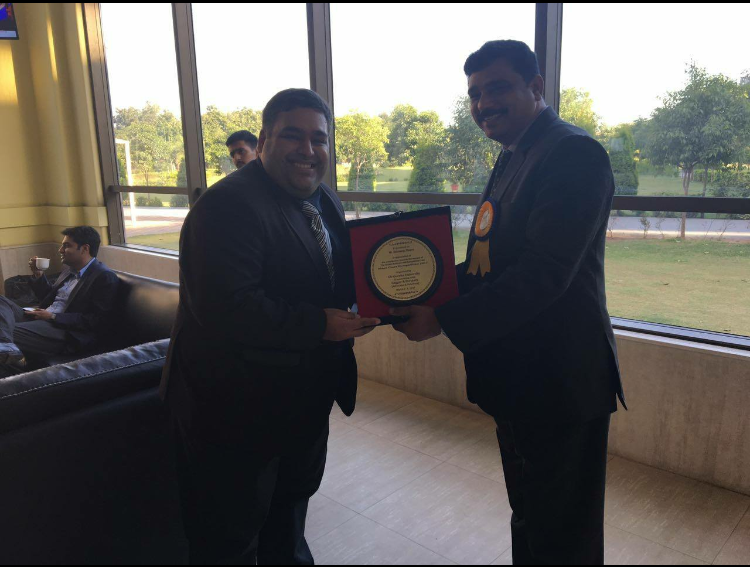
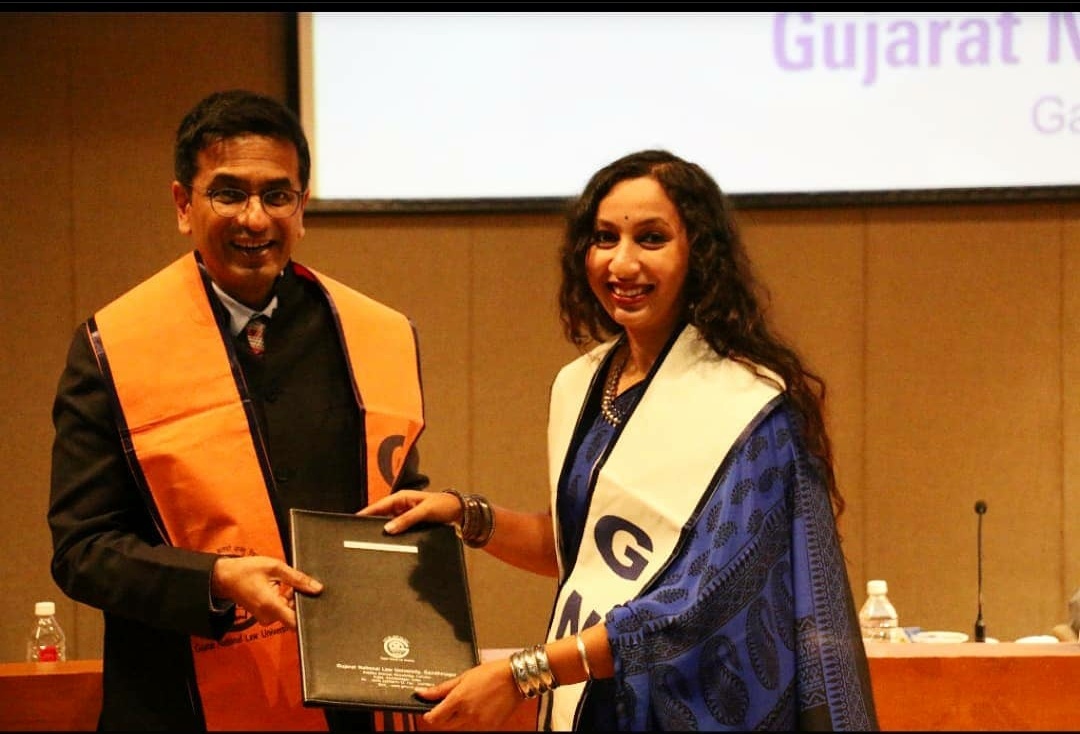

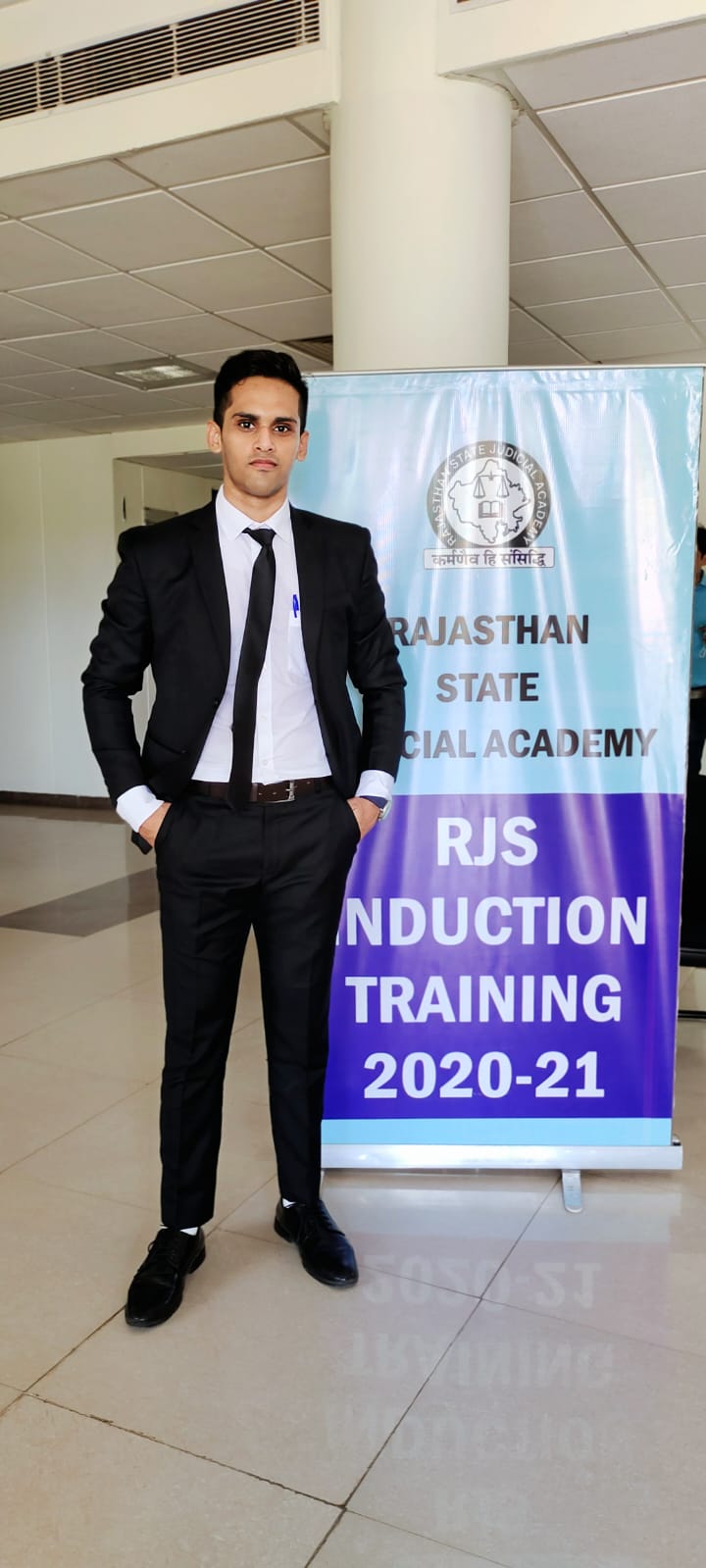

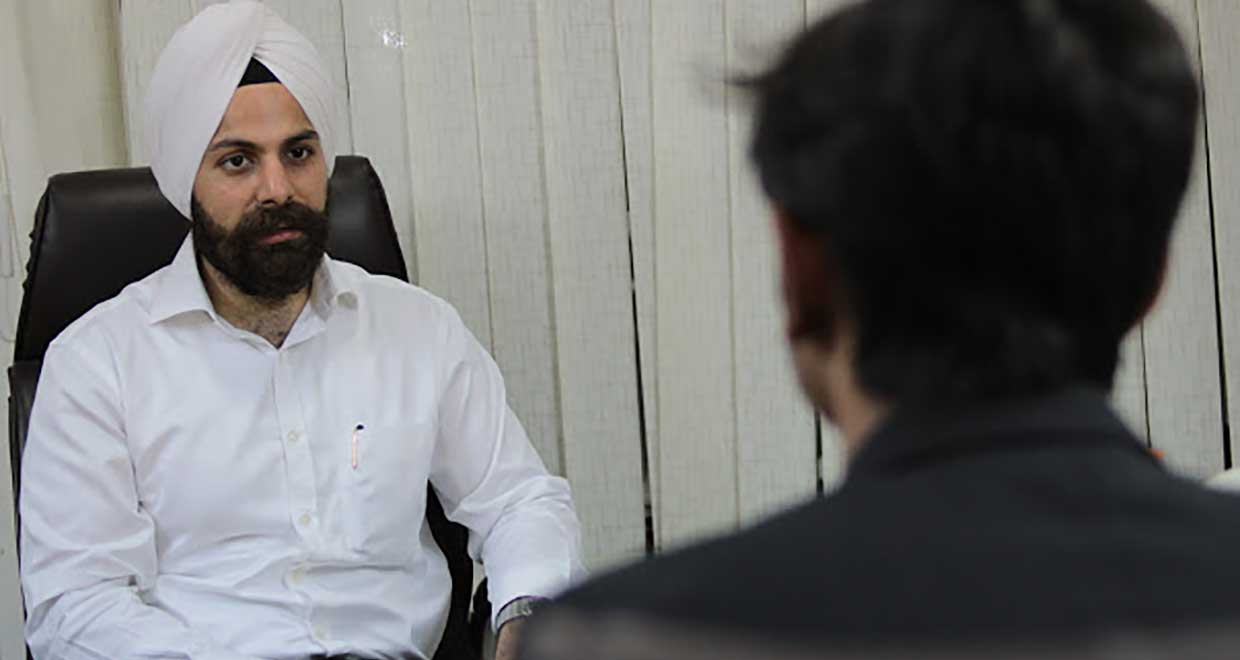
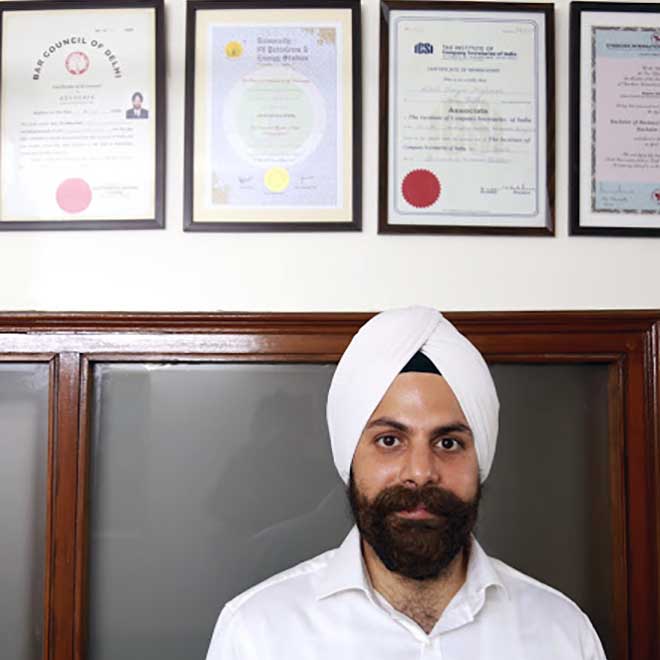
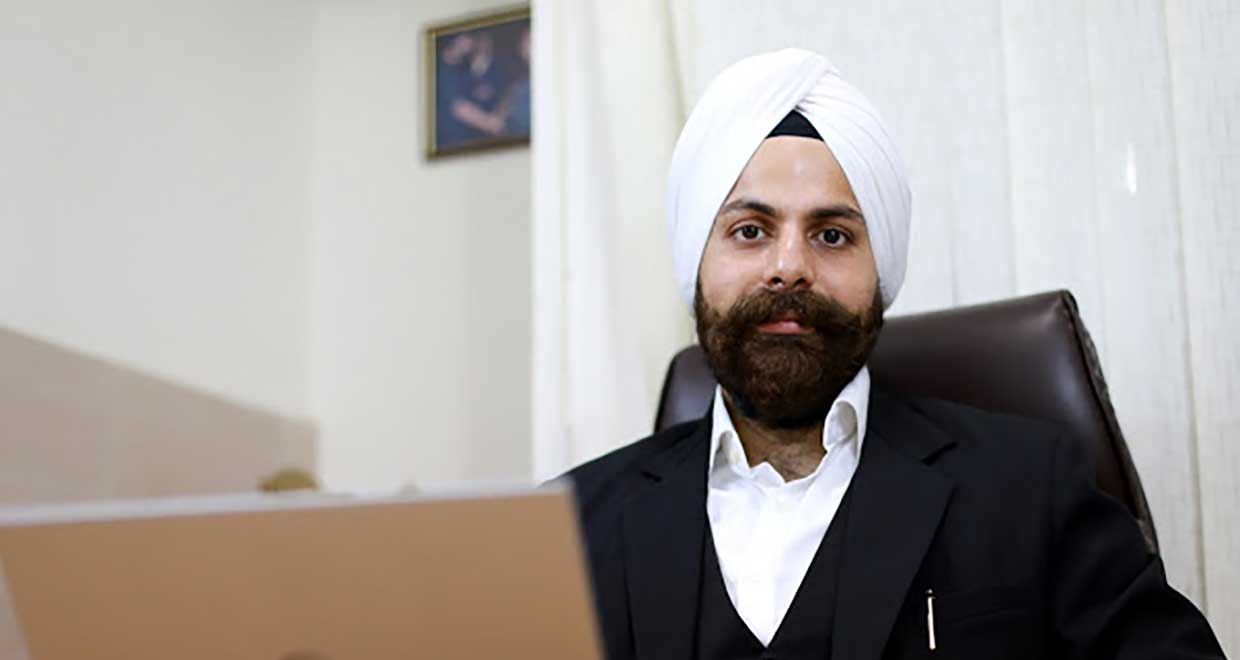
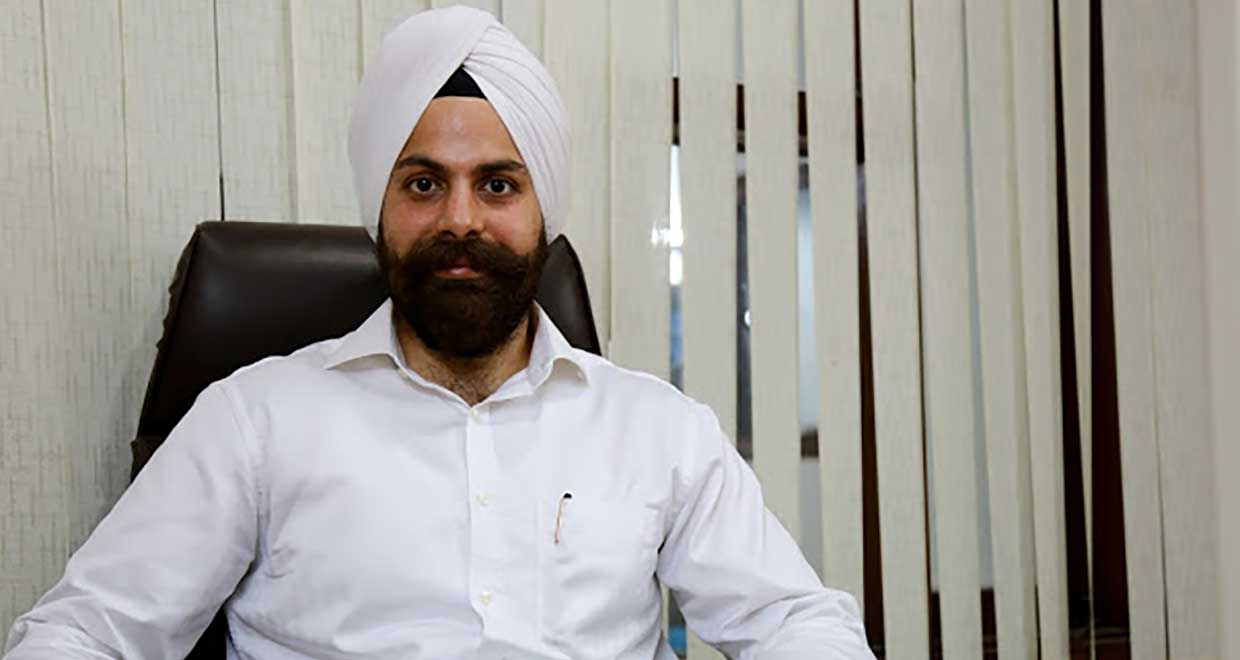
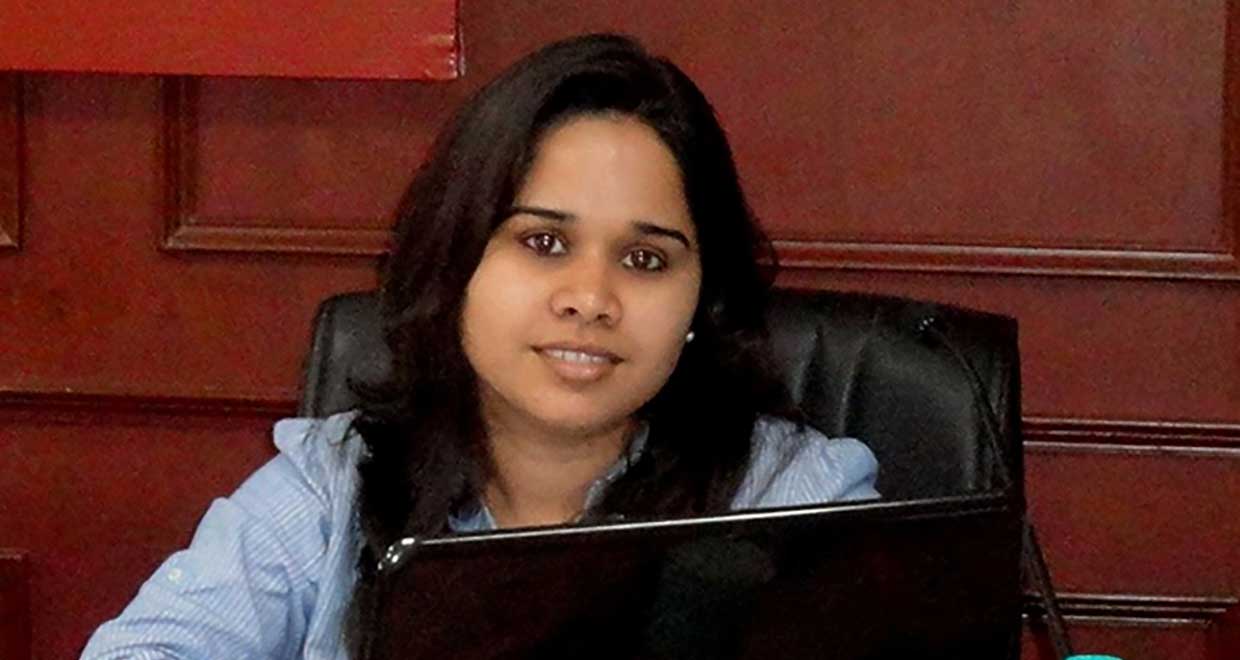

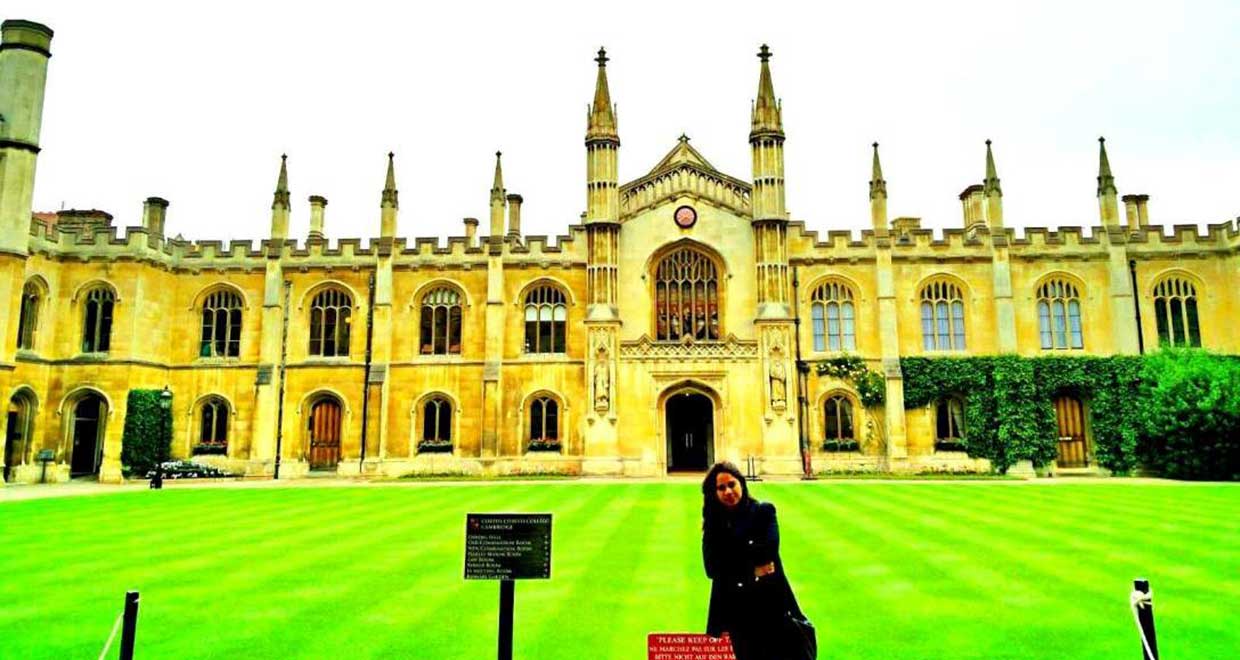
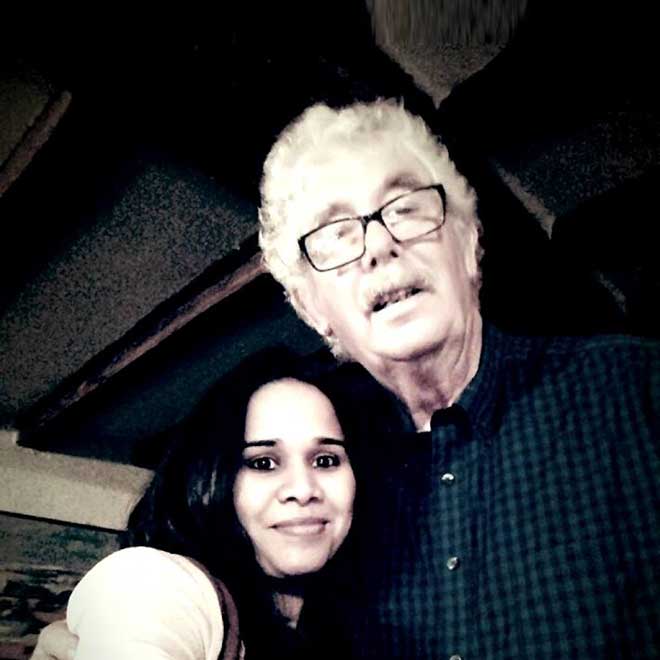

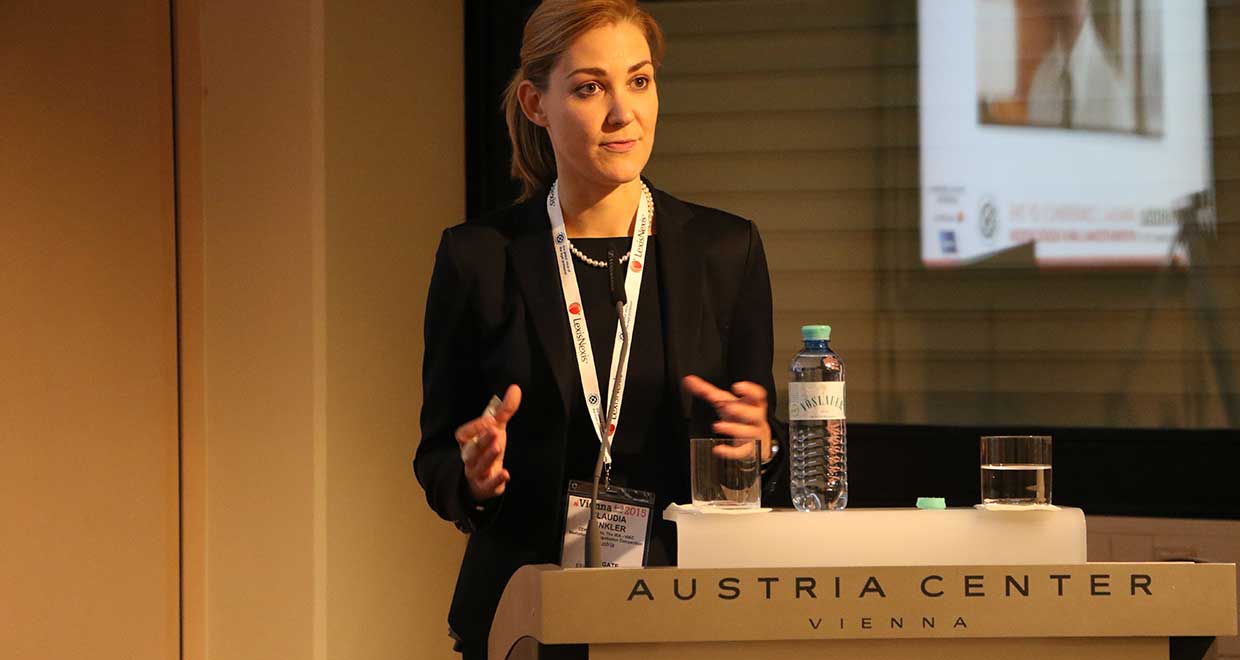
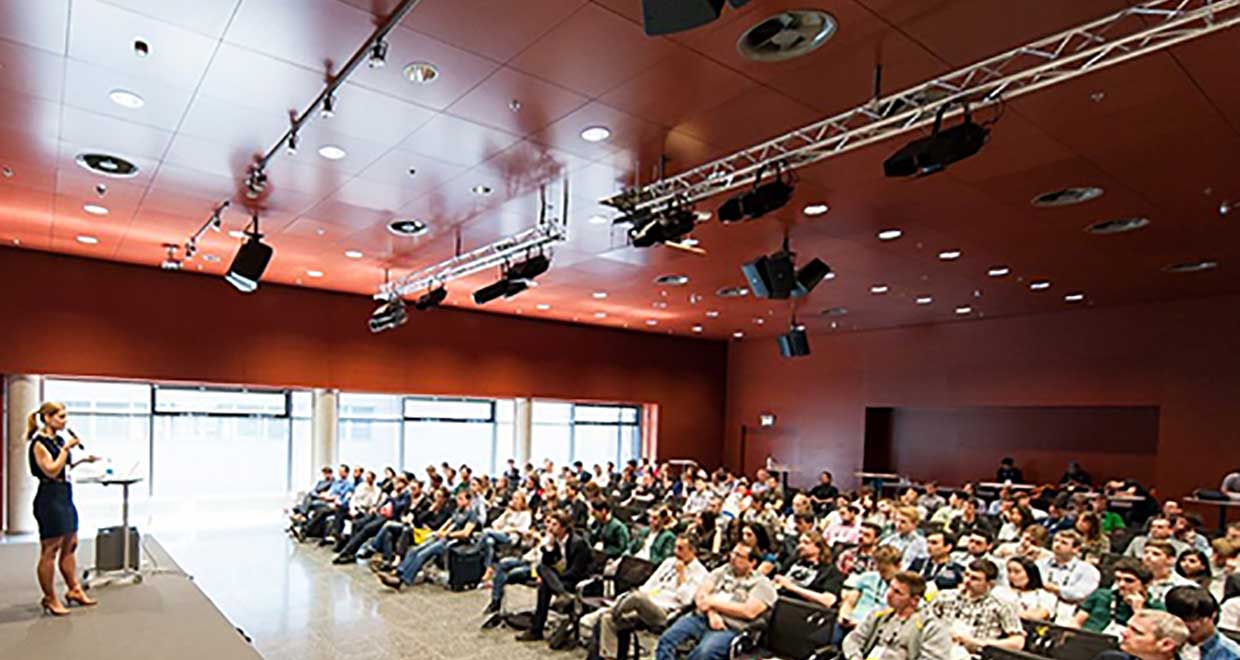
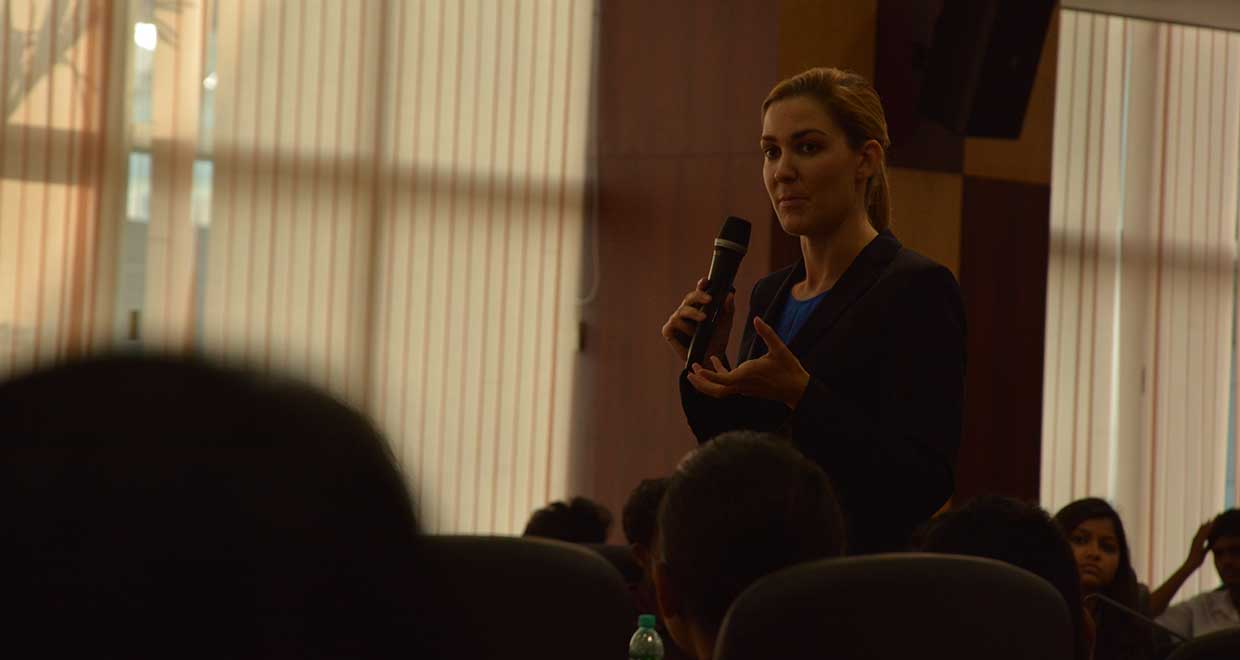
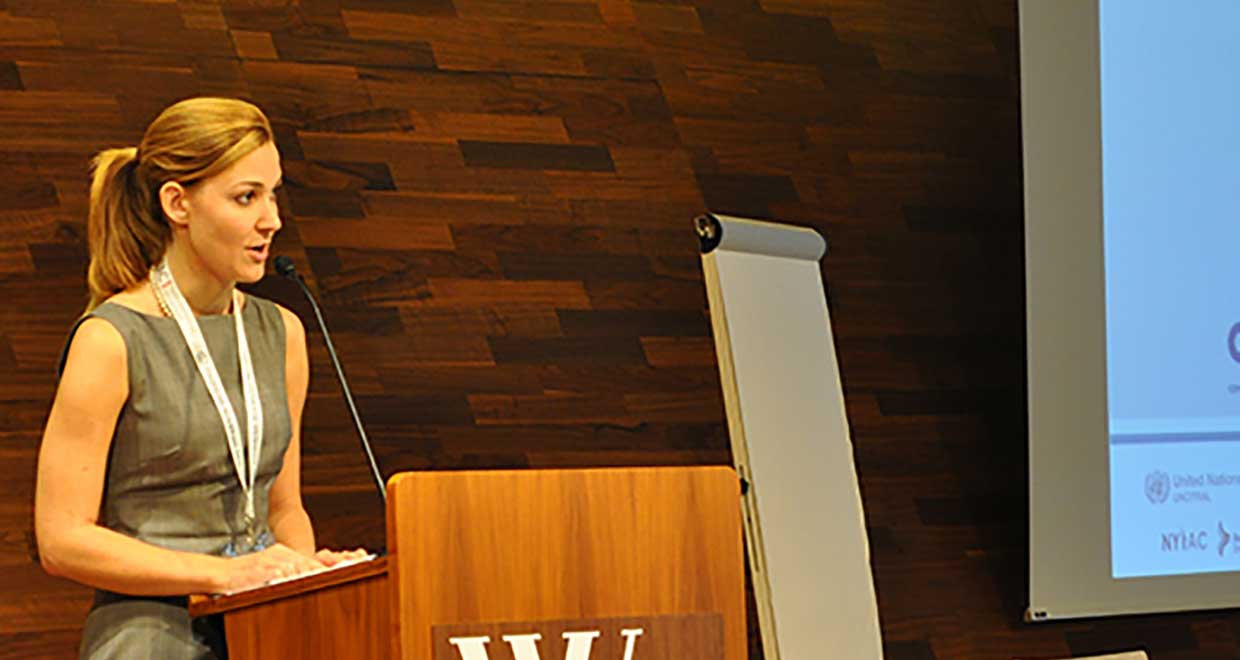
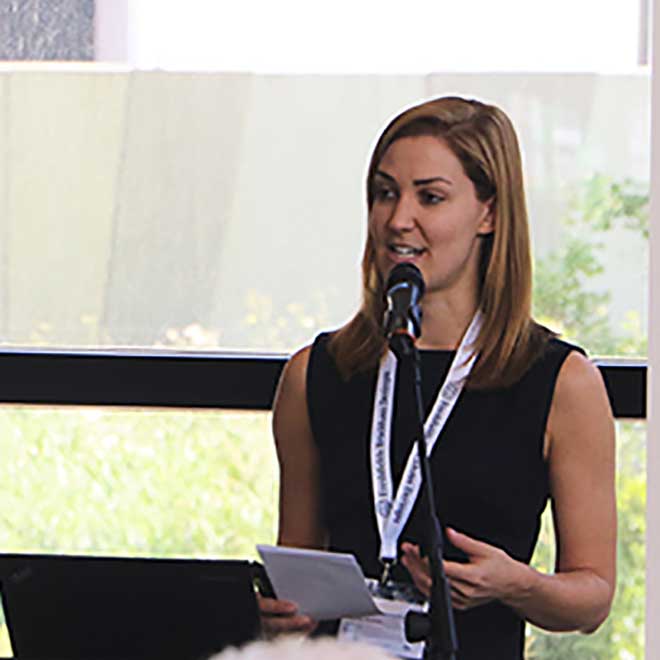


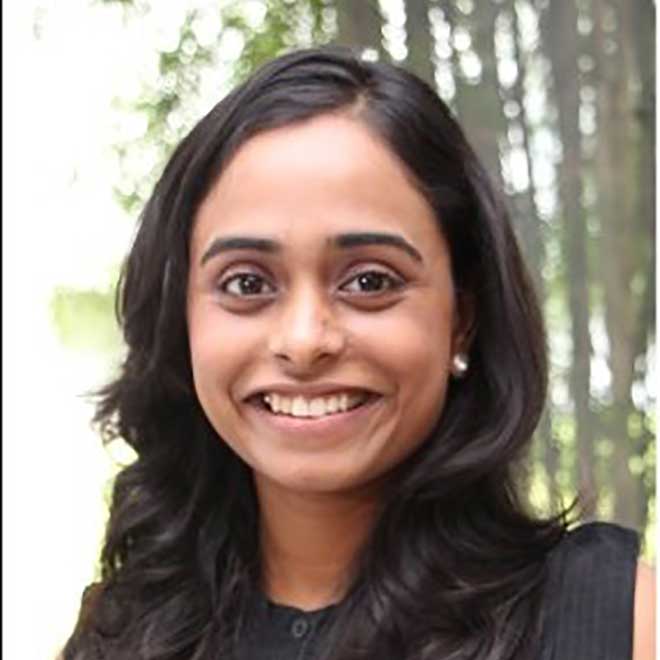



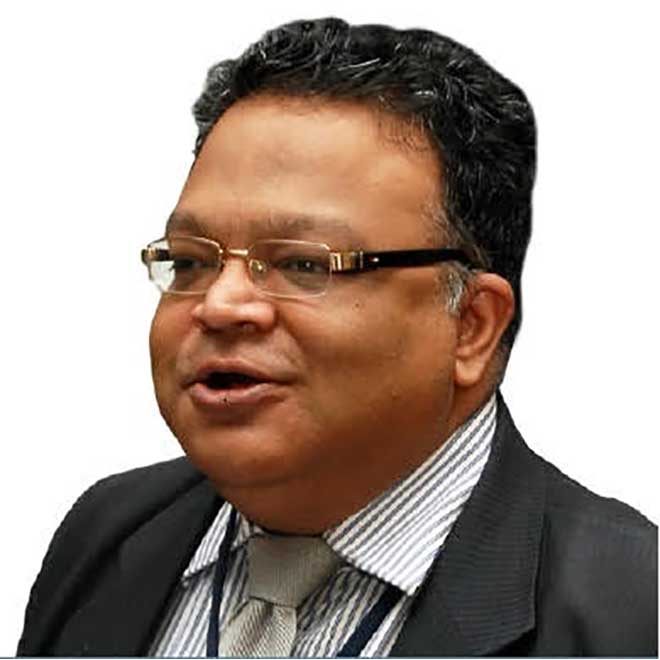




 Allow notifications