Dr. Shashikala Gurpur graduated in law from Mangalore University in 1988, she is currently the Director of Symbiosis Law School, Pune and Dean of Faculty of Law, Symbiosis International University. Dr. Gurpur is a recipient of the Fulbright Fellowship as well as the Legal Education Innovation Award of SILF-MILAT in 2011, in addition to being the recipient of many other such prestigious accords since then.
Dr. Gurpur had been the winner of many distinctions and awards which she received throughout the length of her law studies. Today, she holds the reputation of having held office as member of the Law Commission of India and having taught at the National University of Cork, in addition to having co-authored two academic books and carried the role as constituent of Editing Boards of various foreign/ international journals.
In this interview, Dr. Shashikala Gurpur will be talking about
Choosing law and academics and a professional line
Legal education in India today in a comparative context
Community Legal engagement in SLS Pune and beyond
Contemporary professional prospects and requirements
How do you feel about receiving Lexis Nexis’ 100 Legal Luminaries Of India?
Thank you, I feel that sincerity and hard work always get noticed and honoured. I dedicate this honour to my parents, mentors, my family, the team, students and management of SLS, Pune as well as the institutes and the generation of students I have been engaged with.
How would you like to introduce yourself to our readers?
The choice of law as an educational avenue is I believe a deep calling unto healing the evils of society and to serve the mission of justice. So, praise yourself if you have made that choice. However, getting into a good law school requires planned preparation right from high school itself. I had completed my high school education in vernacular medium at a municipal school; my primary school was strongly national with the undertone of largely Gandhian values. While still in my early childhood and college years, I had already gotten a taste of politics and implications of communal violence, untouchability and feudalism. A particular sensitivity to nature and society were cultivated in me from my household and ancestry. My paternal grandfather was a herbal healer for no fee. My maternal grandfather was a village chief. My maternal grand uncle ran a tribal residential school. My father ran a one person justice mission preventing and resolving disputes and protecting the meek. Nevertheless, taking the route of law and legal education was actually thrust upon me by my family property mired in litigation.
You have taken lectures and seminars at famous institutions abroad. What must be done so that our own legal education system can be at par with global standards?
At the present moment, the gap seems to be narrowing. Legal education systems in the advanced law schools of the world are profound in corporate, qualitative higher education as well as in prioritizing knowledge creation and student transformation, but the top Indian law schools are also nearly there now. In India, constant check should be maintained to see that the gap between ideal and real remains adequately compensated. Changes are on the anvil. Our different strata or tiers must be uniform. The top and the bottom in the ranking band of the west have one to three percent difference. In India, the top ten have a total of 45% difference in scores.
Your vast experience in legal education in India and abroad must have brought in new ideas for SLS Pune. How would you describe the environment that the institution fosters?
SLS Pune inculcates the values of hard work, fraternity, excellence and public service. When we received the prestigious Herbert Smith Freehills Community Engagement Award this year, for an institutional body such as our own with the overarching erroneous perception as an ‘elite’ law school, it felt the same as winning an Olympic medal. At SLS Pune, we always have close monitoring of quality and excellence. We believe in fostering human and national development using legal education as a tool. Our university’s vision and mission and our Founder’s life and philosophy stand as testimony and inspiration to that end.
Which among the following do you think is important for instilling legal knowledge – practical knowledge and/or theoretical knowledge?
A judicious mix of both with competency, courage and collaboration along with profound core ability to stand up and defend would seem to be the perfect requisites for a holistic legal personality.
A strong alumni community being one of the most crucial factors behind an institution’s success, how closely do you think SLS Pune works with the alumni and in what ways?
Every year, we arrange a meeting of our alumni at least twice. They even engage as employers, work buddies, mentors, teachers, clinical trainers, mock judges, advisors, and role models, moot and overall mentors. They consider the institute as their friend in need as well as an extended family.
What is your opinion on start-ups and new business ventures as an alternative to traditional litigation and corporate jobs?
Start-ups throw up great possibilities as well as provide better time allocation for quality work-life balance, in addition to enhancing innovation. At SLS Pune itself, we have had an Entrepreneurship Cell created just recently in the year 2014. We have at least a dozen start-ups created in the last three years and a host of alumni specialising as start-up consultants. This year, with support from the university as well as from the Symbiosis Institute for Business Management (SIBM), we are hoping to further scale up such efforts.
What message or advice do you want to pass on to those who are passionate about vocations in human rights and policy research as opposed to landing corporate jobs?
It depends very much on how you hold on to this work over the years and what skills you acquire. My advice would be that you develop a profound array of skills and abilities and that you maintain your deep passion and drive towards such aspirations.
How did you choose to pursue a career in academics over practice? How would you advise law graduates and lawyers about this comparatively less charted path?
I had made this choice by compulsion, by reason of being a first generation lawyer in a farming family and the first female graduate in generations. Women were not encouraged in education or career in my ancestral past despite being owners of land and the existence of a matrilineal culture. Another reason was that my aspiration of practicing/choosing litigation had already gotten fulfilled by the time I graduated by way of my engagement in our familial property disputes, which were settled out of court due to my informed initiative. We have a dearth of proficient teachers nowadays. Quite apparently, the law school demand has gone up in recent years, hence teaching now pays reasonably well. On the other hand, the value of teaching has always had a manifold yet discreet effect in shaping the generations of legal leaders.
What according to you are the necessary skills the lawyers of tomorrow need to possess in order to make a mark in the practice or to place a job in the current scenario?
To carve out a niche for oneself, especially in the present scene, one must be possessing competencies in several areas, predominantly in thinking out of the box, possessing problem-solving capacity, oral and written communication abilities, research skills and advocacy skills. The right internship is ultimately about aligning opportunity with one’s career/professional goal and not simply accounting for association with top names in one’s CV. True mentorship is what can help you to change or transform yourself.
How do you think a law student can build up his or her profile to attain scholarships or get admissions at the premier universities abroad?
Build your profile in accordance with the criteria of the respective universities/institutions of your choice. Ensure academic excellence with a minimum 3.5 CGPA. Be among the top ten to fifteen percent students. Enrich your CV, indicating profound legal engagement. Show research experience with a minimum of five standard publications. These will win you scholarships which may ultimately help reduce the cost of your LLM programme.
How do you manage your academics and work life balance? What keeps you motivated to keep working for the betterment of your institution and the legal profession?
Well, let me confess here that I was quite often thrown completely off balance! The X-factor you mention would be definitely taking one’s job as a service to humanity and the nation (and in my case to my loving son and my students). In brief, it is about seeing the universal mother’s manifestation in every deed and seeing dharma or balanced order as an unfinished endeavor of justice.
Please share with us an experience from your life that makes you feel that it was definitely of utmost worth in choosing law as a profession and teaching as a career?
In the early days of my career, I spent 50% of my time helping the poor to get access to justice. I introduced students to community based law reform. One especially memorable instance of our reach-out efforts was when we guided an agrarian worker woman to admit her intelligent daughter to a college; she would later scale to a much higher social status as a competent business woman. When the poor and helpless look up to you as credible source of support, when a gleam of truth touches upon you as you journey with your students in class to a higher level of learning, when the alumni of your institution write and recall such inspiring moments, and when you see your junior colleagues or students surpassing and outgrowing your achievement, those are the times when you can fully appreciate the legal profession for what it is and what it is capable of achieving today, and I have experienced all of these moments.
What message do you want to pass on to the readers (aspiring lawyers, legal professionals or anyone related to the law)?
Take your work in the form of a service to your fellow human beings and as contribution to the greater universal design. Align your life’s overall purpose with what you do as a profession and always keep the spirit of dharma or duty burning in your heart.
Matthew Sadler is an academic from the UK-based Staffordshire University’s Law School and a specialist in Business and Commercial Law with a focus on the Law of Obligations, namely Contract Law & Problem Solving and Tort Law & Civil Liabilities. After having garnered experience in commercial roles early in the domain of domestic ceramics manufacturing, import and export; industrial recruitment and head hunting he chose to pursue an LL.B from Staffordshire University itself and qualified in 2013. He is currently pursuing a PhD from the university.
In this interview he talks about:
The course curriculum and other information about Staffordshire University
What led him to study law after experiencing practical business and commercial issues
Academics and pursuing higher studies
Career opportunities in business and commercial laws.
How would you introduce yourself to our readers?
I am Matthew Sadler, Lecturer in Business and Commercial Law at Staffordshire University.
What incidents, influences or interests prompted you to think of law as a career? If not law, what other options would you have considered for a career?
Having worked in a variety of commercial roles in my early career including domestic ceramics manufacturing, import and export; industrial recruitment and head hunting; business start up including a commercial aviation company in the Caribbean as well as general Management Consultancy for the hospitality sector I realised how influential on every day practices the law is and how little regard to its importance is often given by business professionals. I wanted to create knowledge for myself so that I could be a more effective businessman.
To what incident, experience, or influence would you attribute love for Business and Commercial Law?
After 18 years of experience in a variety of fields, I found law to be a unique impactor on business. I decided to return to education to increase my knowledge, understanding and awareness and pursue a career within academia so I could impart my experiential learning to future business innovators.
What helped you shape your current professional profile within the field?
My previous commercial experience shaped my legal knowledge and allowed me to focus on certain commercial law specialisms including Employment (Labour) Law.
What would you like to tell us about your experience in competitive commercial environments after leaving school?
Commercial activity is not dissimilar to the law in that it is dynamic and constantly changing and adapting to societal trends. My legal research focuses on the relationship interactions within commercial activity from a legal perspective. This includes power dynamics and socio-legal theory relating to communication within commercial enterprise. This is a reflection of my previous business experience which has heavily influenced my legal research and study. Therefore with a reflective analysis I can look back and see that intra-communication activity is the key to successful business and it is when this breaks down that legal consequences often arise.
How did the same impact your career path?
My previous business experience has heavily influenced my legal research and study.
What perception of the law and the legal system did you have before going in for an LLB and how did the same change through and after your graduation?
I thought of the law as a twin system in that there were legal professionals that focused on large corporate cases and then smaller firms specialising in individual family or land disputes. This was a huge misconception as I have come to realise that the law infiltrates all aspects of daily life and the legal profession are not merely catalysts to allow conflict to flourish in the courts but are facilitators to allow for dispute resolution for the benefit of all parties.
What drove you to pursue masters after completing an LLB? Why the higher education over joining a law firm or a legal practise?
I wanted to increase my knowledge and awareness of the interaction of the law with sociological factors. Does the law influence and guide societal change or is the reverse the case? I had realised I had a passion for research and decided to alter my career plans and remain in academia.
What made you decide to teach law rather than practise it?
Teaching law allows me to indulge in my passion for research. Whilst learning new themes and concepts for myself I am able to share this knowledge with my students. Research informed teaching is of paramount importance for academics as we seek to shape the minds of the next generation of legal practitioners.
Given the chance to re-do the same, would you still choose to teach rather than practise?
I think if I had the chance to relive my life I might have decided to study law at an earlier age and would most likely have entered professional practice. That being said I also think it is highly likely I would have wanted to share my professional experience with students and would have also entered academia at some stage.
Further, what prompted the PhD in Employment and Equality law?
Doctoral studies allow an individual to pursue a niche and specific area of research that ignites a passion in them. Whilst I was working within the professional employment field as a recruiter and head hunter I realised how defective certain practices were and that in some fields there is persistent discrimination and breaches of equality ethos. I wanted to investigate the power relations between employer and employee with respect to pro-activity in relation to anti-discrimination legislation and practice.
What are your views on the relationship between progressively higher education and their correlating impacts on placements within and beyond the legal sector?
In the United Kingdom there is huge competition for students who are planning to enter the profession. A reflection of this is that Universities need to prepare students for the world of work with practical skills as well as legal knowledge. We encourage our students to find placements early in the academic career to allow them to foster relationships with potential employers and training providers. This is a central ethos of our legal education at Staffordshire University.
What has your teaching experience been like so far and how would you sell the idea of academia over practise to your students?
Academic is not for everyone. You need to possess administrative skills, sales skills, empathy characteristics, patience, determination, flexibility and above all a thirst for knowledge. However it is an extremely rewarding career that allows people to progress their knowledge through research whilst educating bright minds.
How would you advise law students today to approach a career in academia?
Study hard and remember that nothing worth having comes without some hard work. Aim to be the best informed in your area of interest. Do not study a course or subject because you think you should. You need to follow your passion for a subject area as you are more likely to succeed. Also it is a marathon and not a sprint. It takes time and patience but with perseverance you will succeed.
What are the advantages of studying law at the Staffordshire University?
Staffordshire University has a dedicated team of academic professionals that possess excellent teaching skills coupled with real word practitioner experience. We encourage reflective learning techniques coupled with practical and problem based learning in order that students can apply their legal knowledge to real life scenarios. We have a purpose built Law School that is fully integrated into campus life and we boast an impressive Law Library, Moot Court and Legal Advice Clinic. The Legal Advice Clinic, which students can become involved with from their second year of study, allows students to develop work-ready skills which are valued by employers.
What measures are you taking to ensure that Indian students opting to take up a law course at Staffordshire University can utilise their knowledge in India?
At Staffordshire University we integrate practical skills with technical and factual legal education throughout our programs of study. All our law courses provide students with the capabilities to apply their legal knowledge and understanding to real world scenarios with practical problem solving skills required by the legal profession. These skills and attributes are relevant in any jurisdiction and will enhance a graduate’s employability in order to attain their career goals.
Tell us something about School’s new LLM programmes in Human Resource Management and Employment as well as Family Law and Society. Also is there any option of distance learning?
Both our new programs incorporate business and commercial awareness, socio-legal application, critical analysis of current professional practice alongside intra-disciplinary approaches to legal study. At Staffordshire University we are aware of the importance of Global Citizenship and have tailored our study programs to reflect our desire to encourage student diversity. Consequently we have study options that incorporate attended sessions in the UK alongside electronic engagement that can be conducted from anywhere in the world. We offer Distance Learning options in LLM International Sports Law as well as in International Business Law.
How do you compare the academic curriculum of law schools in India with that of the United Kingdom’s? Would you suggest any change which is needed to be brought to reform the legal education in India?
The academic curriculum in India and the United Kingdom is not dissimilar. We have legal systems based upon comparative principles and so the teaching of subject matter is very much aligned. Both countries teach the foundational principles of law such as constitutional law, law of contract, law of torts etc. but will inevitably have niche areas of law that are reflected in their nation’s activities. One such example is a prevalence of opportunity to study Space Law in India which is not a common subject in the UK.
Tell us something about Staffordshire University Legal Advice Clinic (SULAC).
Our Legal Advice Clinic allows students to apply their legal skills and attributes within an actual legal practice. We offer pro bono services within the field of civil litigation to the general public as well as students and University staff. The clinic allows students opportunities to help the public with legal issues, such as contract disputes, housing issues and contested wills and probate. Though the work is supervised by a qualified solicitor, it’s the Law School students who prepare the letters of advice. So, students gain authentic learning experiences whilst at University. Students can also utilise their practical experience as part of the Legal Advice Centre module and earn academic credit.
The career opportunities in Business and Commercial Law
Students who have studied for a Bachelor’s Degree in Law where exposure to the legal regulations of Business and Commercial activity have a unique opportunity for their career development. They will have gained valuable insight into the commercial world and be able to apply their skills and attributes to the real world. In short, students have the option of progressing on to a career within the legal profession or to pursue a career, for example, within the corporate business or finance sector.
Many of our alumni are highly successful individuals within entrepreneurial business enterprises. Others work within a variety of law related jobs including the Courts Service, Human Resource Management, Customs and Excise, Accounting and Insolvency Practice, Company Managers, Law Enforcement and the Civil Service.
What would your parting advice be to our readers?
Never think of the law as a dormant discipline sitting in dusty textbooks on a shelf in an unvisited library. Law is dynamic, exciting and ever changing and exposure to its multifaceted characteristics provides exciting opportunities for study and career development.
Dr. Kalyan C. Kankanala pursued law at Osmania University, graduating in 2001. From there he went on to do an LL.M in Intellectual Property from Franklin Pierce Law Center and a PhD. in Patent Law from the National Law School of India University in 2006. Kalyan is a renowned Intellectual Property attorney in India. He specializes in helping clients maximize business value from their intellectual assets. He is the founder of Brain League IP Services and BananaIP Counsels. He is also the founder of the popular IP Blog, SiNApSE.
Kalyan is a prolific writer, with several fiction and non-fiction books and publications to his credit. He teaches at premier institutes like National Law School, Bangalore and IIM, Bangalore. He worked as a consultant for the United Nations Industrial Development Organization and is at present a trustee for the Cane Foundation, and a member of the editorial board of the Journal of Intellectual Property Rights, NISCAIR.
In this interview, Kalyan speaks to us about:
His days as a student and motivations during his academic journey.
His tryst with Intellectual Property Law and his work as an IP Attorney.
His passion for researching, writing and publishing.
The future of IP practice in India.
The challenges faced while establishing his start up Brain League, and later BananaIP and his views on social welfare.
How he balances his personal and professional life.
His Legal Thriller novels and other IP works.
How would you introduce yourself, given that most of our readers are law students, law aspirants or professionals in the legal arena?
I am an Intellectual Property attorney, who loves to work with creators and inventors. The merger of law, Science/Technology and Business excites me, and I am glad to have chosen this profession. Apart from practicing IP Law and helping clients realize business value from their intellectual assets, I also teach at institutions like National Law School, Bangalore and the Indian Institute of Management, Bangalore.
I enjoy writing and have published several articles and books. In addition to academic publications, I also write legal thrillers on socially relevant themes. Right now, I am finishing my third book in the IP Law Thriller Series, The Dravidian, a traditional knowledge thriller. Earlier, I published Road Humps and Sidewalks, a Patent Law Thriller, and Pirates of Bollywood, a Copyright Law Thriller.
What would you say motivated you to take up law as a career, given that it was not a very popular option in India?
I was never motivated to pursue a career in law. In fact, I never considered it as an option. My entry into law happened by accident. I wanted to be a medical doctor, and therefore, joined a medical school. After six months in school, I had to leave due to the rapid progress of retinal degeneration, which led to a loss of working and reading vision. Then, on a well-wisher’s advice, I joined a law program in Hyderabad.
How well did your experience in Hyderabad prepare you for a life of academic prestige and professional success?
Though I did not study at one of the best law schools in the country, my law college at Hyderabad gave me the foundation and encouragement to pursue higher education and research in Intellectual Property. Some of my Professors at the law college were a great source of knowledge and inspiration, and continue to be so even today. Hyderabad was in fact the starting point of my IP career – both academic and professional.
What were the influences behind your decision to pursue an LLM in Intellectual Property Law from Franklin Pierce?
The convergence of Science and Technology with law played a major role in influencing me to pursue an LLM in IP. In those days, Franklin Pierce was rated as the best IP School in USA, and therefore I decided to study at that law school. I was fortunate to not only get a good scholarship from Franklin Pierce, but also funding from the Tata Foundation for my LLM program.
Were you always as fascinated by the field of IP law or was it an acquired passion that set in through your college years?
As I mentioned earlier, I joined the LL.B. program by accident, and throughout the course, I was looking for an interesting career subject. Intellectual Property Law caught my attention in my fourth year and I was convinced by the end of the academic year that IP would be my area of specialization. Two factors led me to this decision: the role of IP in creativity and the involvement of Science and Technology in IP Law, especially Patent Law. The fascination started only after I started delving deeper into the subject.
While most opt to end their education at an LL.M, you pursued a PhD in Patent Law from National Law School of India University. What drove you to higher education in your field of interest?
Initially, I aspired to have a career in academic research and teaching, and therefore, joined the Ph.D. program at NLSIU, Bangalore. In light of my medical background, I chose Genetic Patent Law as my research theme. However, certain circumstances drove me into IP practice. In fact, I co-founded my first firm, Brain League, now BananaIP, when I was at National Law School, pursuing doctoral research.
Between founding Brain League (now BananaIP Counsels) in 2004, while pursuing a PhD at NLSIU, and subsequently teaching at NLSIU as visiting faculty from 2005 onwards, how did you manage all of these time intensive tasks together, all while publishing research papers in domestic and foreign journals, and writing novels?
Well, I love to write and teach, and have never faced issues with managing my time between practicing IP, teaching, and writing. Teaching and writing in fact help me do well in my profession as they drive me to learn continuously and keep abreast of IP developments. I enjoy creative writing, and have found time to write at least one novel every year during the last three years.
Would you attribute any of your success to the types of internships you were exposed to? How would you advise current students to go about the process of finding and targeting internships?
During my days at law school, interning was not very prevalent. I did not intern anywhere and missed the opportunity to learn the nuances of legal practice during my student days. Internships are a great way of learning the dynamics of legal work and choosing the right field that fits one’s goals. Students must look to intern at firms and companies specializing in different areas of law to get a flavour of the various fields of practice.
Where does your love for writing come from? What motivates you to write?
I do not need motivation to write. I write because I thoroughly enjoy writing. Reading and writing give me great happiness. Sometimes, writing helps me learn and understand a concept/issue better.
What kind of research and work goes into your publishing?
Normally, to write 500 words I spend at least five hours on research. Having said that, some topics require much longer, and some others, much less time based on my familiarity with the subject. For example, I take much longer to write on Medical Law when compared to patent law.
Also, there is a difference between fiction and non-fiction writing. While my fiction is largely driven by experiences and observations, non-fiction is based on law, facts, case laws/studies, etc.
How would you advise students to go about their careers with respect to research and writing, publishing-grade academic papers?
I wrote my first article during the second year of LLB. It was not published but it taught me a lot about the topic. My first publication came along only during my LLM Program. It required one full semester of research to be eligible for publication. Nowadays, it is not very difficult to get published if one writes a well-researched, articulate paper on a contemporary issue.
What sort of an effort did it take to get published by world-renowned publishing houses like the Oxford University Press, Japanese Innovation Foundation, Thomson West, etc.?
It was quite challenging to get my first book published. I started by identifying appropriate publishers and writing to them. All publishers send you a proposal form, which asks for much more than details of your book. It is basically a pitch document through which one must make a case for acceptance of his work for publication. In addition to book details and sample chapters, it includes market data, marketing and promotional information, author profile, etc.I sent proposals to six publishers and got offers from three of them. Then, I weighed their stature and published with the one that I felt had the best visibility and reach. Once my first book was published with a reputed publisher, it was easy to get good publishers for my subsequent works.
What are your upcoming novels? Are they also related to IP?
Two of my books are set for release in 2016. Both of them do not relate to intellectual property. The first novel, The Oath, is a medico-legal drama. The second one, DogMafia, is a short thriller on the dog abduction mafia in Bangalore.
My next IP Law Thriller is ‘The Dravidian’. This book is expected to hit the stands in 2017 if I finish it as per schedule.
In setting up Brain League (now BananaIP), what were the challenges and obstacles you faced as a legal start up in the Indian market?
Unlike start-ups in other areas, legal start-ups cannot market, advertise, and scale up through standard channels. While incubating out of IIMB’s entrepreneurship cell, we ran around the campus brainstorming for different strategies, only to realize that none of them would apply to us. To make matters worse, I was a fresher out of law school, with very little experience. My partner had some technology experience, but no legal experience or background whatsoever. We were probably in the sixth month when the first opportunity came our way. Sasken Technologies, a company based out of Bangalore, was looking for large-scale IP training and we managed to get the contract. Thereafter, for reasons we cannot really pin point, clients got in touch with us at IIMB and wanted to work with us. At that time, most patent lawyers lacked technology backgrounds and we provided that value to clients. By virtue of the said uniqueness, several newspapers and magazines carried stories about us, and things started falling in place.To cut a long story short, I think we were at the right place at the right time. Also, we were fortunate to get the backing of reputed Professors like Prof. Pavan Mamidi (IIMB), Prof. Ramakrishna (NLSIU), Prof. Anil Suraj (IIMB), Prof. Damodaran (IIMB), Prof. Murali (IIMB) and several others.
What are your views on career choices other than mainstream corporate or litigation streams such as teaching, etc.? How, if at all, have your views on the same been affected by your time spent as visiting faculty at NLSIU and teaching at IIM, Bangalore?
Today’s law graduates have more choices than before. The practice of law is getting more specialized, and many new opportunities are opening up on a daily basis.
I once wanted to be in academic research and teaching, but could not take that path owing to certain circumstances. Unlike those days, the salary scale for teachers is now quite decent and it surely is a very good career option. In addition to teaching, students may also consider options like public interest advocacy, policy level lobbying, government positions, judicial services, etc. Starting up is also a very good option for law graduates. When we started Brain League in 2004, joining a corporate was an attractive proposition, and most of my friends preferred to join law firms or companies. Though we initially made several sacrifices by starting up, we were able to build the third largest IP Firm in India by 2012. Today, BananaIP is one of the fastest growing firms in India, and in hindsight, I feel I made the right decision. At present, the ecosystem in India is very conducive for entrepreneurship, and there is a higher probability of success for legal startups.
What are your views on Intellectual Property as a lucrative and growing area of legal practice in the global scenario today?
Intellectual Property is one of the fastest growing fields of law in India. Several areas of IP like licensing, open source, portfolio management, technology transfer, valuation, IP Management and even litigation are still in their early stages, and have a long way to go. These areas will have great growth potential in the coming years.
IP Practice in India has progressed substantially from the filing, prosecution and registration perspectives, both qualitatively and quantitatively, and I foresee some kind of equilibrium in these areas by 2020. Having said that, if the Indian IP filing scenario grows like that of China, there will be tremendous growth in these areas as well.
Moreover, there are several areas of law, where IP forms a very important component. Such areas include Entertainment Law, Sports Law, Technology Law, Ecommerce Law, Art Law, etc. These areas of law are still largely unexplored, and I foresee great growth potential in the said areas of practice.
Having spent nearly three years as a National expert on IP at the United Nations Industrial Development Organization, how did your experiences there affect you as an individual and as a lawyer?
Working with the United Nations Industrial Development Organization (UNIDO) taught us many things. I took up this work in association with my colleague, Soma Shekar, who is a leading Mechanical Patent Expert, and also, a good friend. At some level, we can say that working with UNIDO changed us as individuals. The work with UNIDO cluster companies in machine tools, plastics, and foundry gave us great insights about the said sectors, and how SMEs in those sectors operate. Today, this experience not only helps us understand SMEs better, but also enables us address their needs effectively. During our fieldwork, we met some very special, yet humble individuals, who have been making telling contributions through their innovative activities for more than thirty years. They taught us a lot about their work, and life in general. We feel privileged to have met them and treasure the knowledge they have given us.
As a Trustee at the Cane Foundation, what motivated you to participate in social welfare for the disabled?
Well, I always find it difficult to put this across. I am visually disabled, and had to fight the system for almost everything ranging from getting a scribe to travelling on a flight. We started the Cane Foundation to ensure that other disabled persons do not face the same problems and also, to take disability support to the next level. We were fortunate to get support and funding from people like Prof. Ramakrishna (NLSIU) to get the trust going.
What advice would you give students looking to build a career in Intellectual Property Laws?
Intellectual Property is a great field to be in. If you like to work with creators and inventors, have the ability to understand business, science and technology, and can adapt to change quickly, go for it. But, note that working with creators is not the same as creating. You will mostly be at the back end of creativity, helping your clients protect, manage, enforce and make money out of their intellectual assets, and may not get the visibility creators get.
Amongst so many things do you find enough time for a personal life or does that have to be managed separately?
Time for family and fun has never been a problem. I enjoy doing most things I do, and do not necessarily manage my personal life separately.
What factors, facets, or traits would you attribute your success to? What, if at all, do you believe still needs work?
Intellectual Property as a field is vast, and continuously evolving. To be competitive, you must learn on a daily basis and swiftly adapt to change. Over the years, I have been fortunate to work on some cutting edge projects, and learn from some of the best in the field. So far, I have merely touched the tip of the IP iceberg, and have a long way to go before I can call myself successful.
What would be your parting advice to our readers?
Pick a career path you enjoy and give it your best, the rest will fall in place.
Prof. Bhavani Prasad Panda is the Vice-Chancellor of Maharashtra National Law University, Mumbai. He graduated in LL.B from Lingaraj Law College, Berhampur, Orissa in 1979. Thereafter he went on to pursue higher studies in different disciplines of law.
Prior to his present designation Prof. BP Panda has held 16 other educational seats in various law institutes of India. He found his place as the Principal of NBM Law College, Professor of WBNUJS, Principal of Lingaraj Law College, Dean, Faculty of Legal Studies (BU), Chairman, Board of Studies Law, BU among others. He has numerous publications and has been an active member of different academic, executive and financial councils of various institutions till date.
In this interview we talk about –
Studying Physics in his graduating years at SKCG College, Odisha.
His journey through Behrampur University, Odisha – as a student and later as an academician
Being the Vice-Chancellor of MNLU
Case study of “Super-Cyclone”: a major research conducted in the aftermath of the 1999 disastrous cyclone in Odisha.
Journey from Assistant Professor to Professor at WBNUJS
Advise to the future legal academicians of India
Tell us about your educational background before college as well your graduation years at SKCG College, Odisha.
My early childhood education was conducted at the Government school of Paralakhemundi, Gajapati District, Odisha. Later on up to intermediate studies got educated at Visakha Tutorial College and at the very reputed Mrs. AVN College of Visakhapatnam in Andhra Pradesh.
I studied graduation with physics honours from S K CG College, Paralakhemundi, Gajapati District, Odisha. and remained active in college politics during the emergency period of 1975-76. Failed to get good score at B.Sc (Hons.) consequently, also failed to get a seat in M.Sc Physics at the local University. And due to financial difficulties could not go to other universities to pursue Physics. Under ‘no way out’ situation joined LL.B. at Lingaraj Law College, Berhampur University with a lot of hesitation, reluctance and guilt. Nobody at the house appreciated my joining Law College. My family members expected that I should study science and get into a good job.
How did your interest gravitate towards law?
Adding to my ill mood for joining law, the law college was located in a shabby, dilapidated building in a hospital premises, reflecting a nauseate feeling of the surrounding. The college used to function from 7:00AM to 12 Noon with hardly 2 (two) professors on its roll. The whole environment at Law College was far from academics and my previous experience of educational institutions with best of institutional structure. However, in the damp atmosphere after resigning to my fate started attending classes, soon I got involved with legal education and also once again became active in college politics for obtaining better amenities, facilities, environment and making issue for increasing number of teachers to the college.
You completed your LL.B from Behrampur University, Odisha. Tell us about your law school journey.
Formerly, being a student of Physics there were many advantages like groomed to be analytical, logical, practical and disciplined. These learning habits when invested on legal education there were encouraging returns. The books of law, literature, political theory inspired me very much for getting seriously involved in legal education. Reading books of literature, and political science at the law college library was a rare opportunity for a physics student. Soon I realised that there is enough world beyond physics and science, and learning law and studying political science is more nearer to understand life, society and the state craft. Within few months at the Law College, it appeared that the Law College Library is a luxurious space that propelled the appetite for knowledge. Thrilled by the first lessons of law, jurisprudence, political theory started reading biographic of legal luminaries and political scientists. Pleasure of reading books doubled with reading of conceptual basis of the state, citizen and the law. This was a sort of self relishing, and purely a voluntary involvement. Developed unconsciously a habit that after reading a book, to search for someone and narrate what has been read, before reading another book. Soon created a circle where the political issues, jurisprudence were debated passionately. So also reported judgments were argued as if things happened there and the impacts can be many.
The legal education appeared to be the real subject and precisely for which I was meant. I felt tremendously satisfied that I was studying law. Often entered into debate that legal education and legal profession is meant far more responsible persons with flair in social work, statesmanship; and it is holistic scholarship with heritage of literature, politics, sociology, economics, history and skills of advocacy. But unfortunately in India pupil join to law when they find rejected elsewhere. Sometimes I was successful in convincing people with my arguments and sometimes I used to return to study more to logically establish my point.
To supplement the economic needs, part time tuition to school children up to +2 level were taken up and learned to be independent without bothering parents about finance, as many of the students in Odisha do.
We know you have been a consistent top scorer in all subjects. Tell us a bit about it.
At the end of the first year of Law, it came as surprise for scoring highest mark in four subjects out of six and got nominated as the best student of the law college. Teachers became friends and got opportunity to spend more time among teachers’ company. During the second year of LL.B, I started taking interest in teaching the first year students as and when the concerned teacher of the class remained absent. I always waited for the opportunity to teach in the classroom at junior class, and was accepted by friends for the purpose and started training colleagues for moot-court, other academic competitions as well as assisted friends for competitive examinations.
The inputs of labour to legal studies were hardly anything compared to studying physics at graduation level. From the remote distant of Berhampur, Odisha, the law college made it’s presence feel by bagging prizes in national moot-court competitions. At the end of 3 year LL.B studies, bagged all the gold medals meant for LL.B.
As a student of LL.B, with a mission to change the stigma to the prevalent legal education that is mired with mass-copy, last-option course, and things like that, I participated actively in college politics and got elected as President of the Students Union and achieved reformation in the examination system made it free from much tainted malpractice at Berhampur University. The State Government and the University Authorities were compelled to construct a new building with holistic infrastructure facilities for the Law College. The foundation stone was laid and accordingly a new building of the Law College was built, as a constituent College of Berhampur University, Odisha.
After the successful completion of your LLB degree, you obtained numerous other courses as well. Can you tell our readers about your timeline after Behrampur University?
I joined M.L at Andhra University College of Law in the year 1980, and after completion of the academic period of study, found it difficult to cope up with economic needs. Joined as a Commercial Executive in New Delhi, with M/s. Desein – Indure Group of Companies and got exposed to the industrial and commercial world in the country (1982-87).
During my period in Delhi, I obtained ‘Diploma on Corporate Laws and Secretarial Practices’, conducted by Indian Law Institute, New Delhi; (1982-83) and also studied M.A. in Politics at Andhra University by private appearance (1983-85). However, there prevailed an inner calling to get back to legal education/profession.
In the year 1987, with little struggle, I obtained the LL.M degree from Andhra University and decided to join litigations at Visakhapatnam, giving up the alluring job at Delhi, enrolled as an I advocate to practice at Visakhapatnam. More than the practice at the Court, the local Private Law College teaching assignments provided me satisfaction and I soon joined as the Principal of the NBM Law College.
While you were the Principal of NBM Law College, you had the opportunity of meeting Prof. Madhav Menon. Can you share your experience with our readers?
During those struggling (1988-94) years of making a quality Law College, I got the opportunity to meet Prof. N R Madhava Menon who practically provided a new orientation to the mission of life and the concern for legal education. In the refreshers course at NLSIU Bangalore, Prof. Menon gave all the participants a forum and provided an opportunity to interact with the legal luminaries of the country like Prof. Upendra Bakshi, Prof. N L Mitra, Prof. Ranbir Singh, Prof. B B Pande, Prof M P Singh, Prof. Chandrsekahran Pillai, Justice Krishna Iyer, Justice Hidayatullah, Justice Venkatachaliah, Advocate Ram Jethmalani, Advocate K K Venugopal, Advocate F S Nariman, Advocate Ranjit Mohanty and many others.
Professor Menon was perhaps least knowing that he was creating so many future Vice Chancellors like Balraj Chauhan, Gurjit Singh, B L Sharma, S K D Rao, B Nagraj, N K Chakraborty, V Hemalata, L Jaisree, Faizan Mustafa, including me.
We were all so fortunate to follow Prof. Menon both by letter and spirit. All of us value the learning at NLSIU, Bangalore which was of great help.
Later you enrolled for Ph.D working for “Adolescent Offenders” in 1990. Tell us about your experience.
I accomplished my Ph.D work in the year 1994. It was a total involvement for conducting research about adolescent offenders undergoing sentence at Visakhapatnam Borstal schools. I still feel the Borstal school system of reformation of adolescents up to the age of 23 is more mature and better system of institutionalisation and reformation compared with much acclaimed juvenile justice system. The country has not given free and fair opportunity to Borstal School System and is being neglected to perish under the eclipse of JJ Act.
Amongst your accomplishments in the legal journey, academia has been in the forefront. What were the platforms which contributed to this journey?
My best years of teaching and academic administration were at NBM Law College, Visakahapatnam, it provided a platform for me to experiment everything what I felt best with legal education including classroom teaching/ lectures. I found some of my school time teachers and schoolmates joined in the evening college, and were all committed to attend my classes. It gave me pride and satisfaction. The college made a record progress and best students of the area joined to enhance the credibility of the law college.
In 1994 joined as a Senior Lecture in Law at a premier University – Utkal University of Odisha. The M.S. Law College being the first Law College in Odisha manufactured about 90% of Advocates at the Odisha High Court, 80% of the Judges at the High Court and the subordinate Judiciary and also provided law degrees to 70% Legislators in the State of Odisha. But the College remained far behind to contribute any quality legal education. During the days of service struggled hard to change the environment for Faculty Members coaxing them to enrich with greater exposure and wider participations in Law Seminars and Conferences. Also struggled to initiate the All India Bar Council Moot Court Competition, at Cuttack which somehow could conclude in 1996, this to register the college name in the national list.
In 1996, joined as a Reader in Law at Post-graduate Department of Law, Berhampur University and actively participated in academic activities to modernise the prevalent out-dated courses and syllabus being taught and got occupied with the University System of Administration.
In the year 2000 joined NUJS Calcutta, as a Founding Teacher along with Professor N R Mahdava Menon to establish the National Law University. It was a great experience to work with Prof. Menon in the founding days of NUJS Calcutta. In 2002 after availing the lien period joined back to Berhampur University and this time worked hard to contribute to the development of the Lingaraj Law College. It was an amount of satisfaction to join as the Principal of the Law College, where I was a student, but there the struggle for quality development was much more. There was a little cooperation from any side. As a student leader achieved more success than as a principal of the law college. Dissatisfied returned back to the Post –Graduate Department of Law, Berhampur University.
Quickly finding little leisure time, I got engaged in conducting post-doctorial research studies and completed the work in 2006 obtaining LL.D degree from Berhampur University.
In the year 2008, after a renewed association with Prof. M P Singh, joined NUJS Calcutta, for a second stint after obtaining two years lien from Berhampur University, and actively participated in University activities both academic and administration.
In 2010 returned back to Berhampur University. Found it hard to contribute to the newer challenges to legal education and corresponding deterioration in educational standards vis-à-vis growing challenges participated actively in University general administration until 2014.
I took voluntary retirement to assume charge as Vice-Chancellor of MNLU Mumbai on 10.10.2014.
How did you strategize your work on legal research?
During the time I enrolled for PhD there were very few research guides available to provide the direction and supervise research work to its logical end.
Research in law for an academician is a must; we learned the first lessons about research at Professor Menon’s Workshop. Little learnt and much unlearnt but with a great zeal to contribute to society with legal knowledge enrolled for PhD.
Legal Research by itself a separate discipline and methodology was not fully grown. Every research teacher explained the conduct of research and thesis writing in quite differently, mostly bookish or very confused. The practical implementation of the learning from most of the teachers was very difficult or impossible.
I spent quite some time in contemplating how to start legal research. I read many books of sociological methods of research as I was planning to do research in criminal law, and I was not getting a clue how to go about – choosing topic, defining the research problem, setting goal and designing the research. I started diving straight into prison studies and later focused on adolescent offenders at Borstal School of Visakhapatnam. Read more and more existing literature on young adult offenders from books of criminology and law. It happened on its own motion that I could identify the research problem and formulated hypothesis and realised the roadmap of the research terrain. Essentially, research is an individual personal scholarship and involvement and there can never be any fixed straight jacket method and finite prescription from any supervisor. I realised why the teachers were so different and incoherent. It has to evolve creatively on one’s own involvement and provide strength of logic and reasoning to defend the thesis that is being advanced.
I was happy to contribute a unique work on adolescent offender in legal research. My involvement was little bit more than mere legal research work for PhD and emotional involvement with the staff, administration and inmates of Borstal School at Visakhapatnam. I continued to argue for eulogising the working of custodial system where any youth in conflict with law however heinous the crime may be put to reformation model maximum up to the age of 23years and was then allowed to assimilate in the mainstream of the society. The current controversy of 16-18years age group of juvenile stands fully addressed in the system, but unfortunately in India we never explore all the sentencing options before passing an order. Most of the legal fraternity do not know what the Borstal School System is about. The institution is under eclipse of Juvenile Justice System clout. I still hold that the young adults need be reformed in a specially designed institution like that of Borstal School System under Correctional Administration. The prison system cannot be condemned as ‘jail for penal action for hardcore convicts alone’. We need to change our prison into Correctional Houses.
Please tell our readers about the case study behind the ‘the Super Cyclone’ of 1999 in Odisha. Also tell us about your interest in ‘Disaster management studies’.
I was disturbed, and developed interest in observing the recovery phase and the human rights aspect of relief operation. The tragedy after super cyclone is more horrible. Crime rate increased. Hunger coupled with poverty loomed large. Funds were mismanaged. There were politics of funding and certification of ‘State v. Natural disaster’. There has been politics of centre and state in relief funding etc.
In 2000, soon after the Bhuj Earth Quake, Professor Madhava Menon assigned me with the work to make a case study of ‘Super Cyclone’, provided financial support for the project. Over next two years along with the work at NUJS Kolkata and Berhampur University devoted all extra hours to study on Super Cyclone and its various facets of devastation and legal support mechanism; conducted seminars and workshops and finally submitted a comprehensive report on ‘Case Study of Super Cyclone’ to NUJS Kolkata. In 2005, the Disaster Management Act was enacted, where the students and faculty of NUJS have contributed with the inputs of experience from Odisha Super Cyclone and Bhuj Earth Quake.
In 2005-06, at Berhampur University designed and offered one year Post-Graduate Diploma programme in Disaster Management, and I was surprised to see some of the students got appointed as safety officers in certain establishments.
‘Disaster Management Studies’ became my new found hobby. In October 2013, Odisha was struck with another very severe cyclonic storm called as ‘Phailin’. I was eager to serve the state in terms of offering schemes for ‘impact reduction’. And closely followed the state action for pre-emptive measures, Odisha was more matured after Super Cyclone 1999 left no space for disaster to tell upon human life. The preparations were well addressed and the meteorological department predictions were properly used. The disaster was contained to loss of property and loss of human life was only 34 almost negligible compared the size of the disaster spell.
Later you got associated with Odisha Fire Services Department to write a report on their “Response System”. Tell us about the new route of your life.
Taking time off from the University, with total commitment I conducted the report and the same was published by the OFS Department as a book. Odisha state government accelerated the process of establishing the Fire Station Offices at every block in whole of Odisha covering all the 335 blocks. The Fire Service Department of Odisha got equipped with all types of disaster rescue and management services; and with their experience they rendered a great service to the State of Andhra Pradesh when it was struck by the cyclonic storm called ‘Hudhud’ and got applauds from the State. Odisha Fire Service Department is one of the robust systems today to encounter disaster, it stays ever prepared. A department not being taken seriously by the states for services and/or for their contribution stands tall in Odisha. My recommendations in the report were to a certain extent useful for the government to strengthen OFS to its current status.
What were your personal takeaways from this experience?
I believe disasters provide a very good opportunity for everyone to contribute something to the fellow being. It is a signal to part something. It provides lot many lessons for ‘living and sharing together’. It strikes all the selfish aggrandisement and calls for community participation. It implants a renewed zeal and hope for newer and intelligent tomorrow, with life full of sacrifices. Natural Disasters are good and a challenge to humanity. One need be humane and human with fellow being, that is the way of life. I can speak on disasters for hours together how it can change life for good.
What is your perception on legal academia as a career? How would you guide the future teachers of India?
India needs good, committed, honest, hardworking teachers. Teaching is a passion. Teaching provides unlearning along with the students. Teachers need to be humble and skilful. Teacher is made with lot of sacrifices, the compensation is limited to ‘a good rejoicing class’. For a teacher, the best accomplishment the students should grow beyond the teacher and realise their dreams as a good human and responsible citizen of the country. In life everything deserved comes on its own for the person who works for others. And many more values of being a teacher, I have seen in my teachers, I respected them and loved to live like them. I still struggle in my pursuit to live like my teachers. These values chained me into teaching, and I am happy.
Teaching can be a wonderful career pursuit for it provides the satisfaction of living a life full of giving. Law teaching has to happen in a very refined and bigger way where the legal scholarship will flourish for justice education. Enough is still to happen, where men will learn to have a successful and contented life and pursuit of legal profession. We should be able to logically explain where one is at wrong side and what is due and appropriate. We should learn to respect the adversary. Advocacy has much to offer. Dispute resolution and peace are interconnected, and language of law should have that magic wand. It comes out of the human quality and character of the arbitrator.
For me a good class with full of students intimately and continuously involved in learning process is the fountain of pleasure. No wonder I am struggling to be a teacher like my teachers.
You have authored a number of research articles and books. Is there any inspiration which incites to pursue this?
Writing articles do not happen all the time. Nor writing a book is possible for writing book sake. There has to be a creative streak. One simple idea which allures one can be the matter of writing an article. The appetite should come from within, and the research follows, reading a lot of literature is necessary to understand what is it that one is so fond of and/or that keeps absorbed or disturbs the peace. It takes lot of time to reach to the material of choice, and in the pursuit the idea gets involved with other wonderful writings and scholarship; one need be dispassionate and remain focused from the beauty of other scholarly articles. Once the ideas get concretised and literature seems to be exhaust and one is updated with existing literature, one can venture to enter into substantiating the points of view and when someone is able to provide the logic and reason to establish the postulate, has accomplished a research article. This need be reviewed, and verified with fellow colleagues. Language of presentation should be simple to the core because the author stays miles away from his very important readers.
Ideally speaking, research articles should happen as often as possible. It provides a window to the world to look at the author and his view point while contributing to knowledge system.
I could write only very few articles with zeal and self involvement, while bulk were attended with a compulsion for contribution and participation at seminars and conferences; and / or contributing to the request of a fellow teacher. I always enjoyed writing in group, sharing views.
How important is it to attend seminars, conferences and workshops conducted by various legal luminaries while in law school?
Seminars, Conferences and Workshops at National Law Universities are really good ones and whereas at many of the state universities and law colleges it appeared ritual and a function of get together. The culture of a good seminar linked with scholarly exchange formally and informally during the time of seminar should emerge. Only serious minded people who have done their homework and are prepared to contribute with ideas can meaningfully participate. One should meaningfully gain from such participation and quantify in a scale of learning. Seminars should be a continuous affair with in the education system. There need be daily seminars and exchange of ideas. More informal seminars need to happen from voluntary groups of students on various issues of the nation, judgments delivered by the courts and newspaper reports. And the views can be published periodically appropriately.
At NUJS, once I did not feel attracted to a topic of seminar and chose to remain in library during the time. Professor Menon called me to his office and asked the reason for not being present in the seminar. And said “senior teachers have no choice to opt out of university seminars however disinteresting the topic may be’, there is a need to come out from the ‘disinterest’ in the realm of knowledge”. “Seminars are open forum for learning and more unlearning”, is the lesson that I learnt.
How was your teaching experience at WBNUJS?
Professor Menon exposed me to cooperative teaching. One of the first experiences to teaching and learning debut at NUJS was to co-teach with Professor Menon. We were addressing class on ‘legal method’, the subject provides the first glimpse of law to students. I made my preparations but in the class room the discussion went in a different paradigm to my preparation and I had little to participate in the partnership. I chose to vehemently oppose the postulates of law and found well attended by Professor Menon. The class went on very successfully. It is the kindness of Professor Menon, he praised me before everybody in the class. Later, he told me the techniques of cooperative teaching. I enjoyed cooperative teaching. Two–three teachers together can take up teaching together, and stage a script of substantial delivery of teaching and learning.
Case method of teaching is another exercise, which divides the class into groups for considered debate and yet another groups to sum up, while the teacher provides the conceptual finish as conclusion.
At NUJS we were encouraged all innovative models of teaching and learning process including on-field exercises at court hall, police station and other workstations. We never had any one method, depending on the topic requirement we adapted to different methods, mainly to drive out any monotony among the students. We used visualise and invent surprises for the students in our teaching exercises. We are happy we had great opportunity.
Do you think MNLU is having an edge over the other NLUs of the nation? What are the advantages which an NLU seated in Mumbai receives?
First the location advantage, that we are in TISS campus. The whole of campus, library, wi-fi system, the dining hall, the wisdom of the TISS faculty are at our hands reach. It is a unique privilege which no NLU student in India must have got in the very founding year. Thanks to TISS and the Hon’ble Chancellor Mr. Justice FM Ibrahim Kalifulla who have been instrumental in the understanding.
Secondly, Mumbai provides a unique opportunity with rich resource of very learned lawyers and retired judges who are always ready to assist the law students in their academics. Most of the advocates and other members of legal fraternity are associated with the local law colleges contributing their bit as part-time professors. MNLU Mumbai will be certainly tapping the best of the resources for its students too. There are the best of law firms in Mumbai and the students will be skilful enough to find a good exposure and can participate with them in their vacations. So also the whole field of legal practice and experimentation is open for the students in the corporate climate to look litigation from different perspective including alternative dispute resolution and arbitration experts. The students after five years from MNLU Mumbai will have mine of opportunity in Mumbai alone. For availing the interaction from the lawyers and judges, we are open on Sunday, it shall be our working day, and our weekly holiday will be Wednesday. This arrangement will provide students an opportunity to visit offices on Wednesday to collect material and right their project assignments.
Thirdly, the education at MNLU Mumbai will have to be geared up to make study a pleasant experience and at the same time competitive to take the challenges of life as a matter of fact. We are fortunate, that we have seasoned faculty from social sciences available at the immediate vicinity from TISS. We also have the support of professional counsellors from TISS, to guide and ease any blues. Apart from the teachers with in the campus, the students will have exposure to the best teachers from other institutions in India. MNLU Mumbai will have to make such arrangement until we develop our own cadre of best teachers. MNLU Mumbai will adopt various methods of teaching and imparting education as are essential and appropriate to a particular course, all option and autonomy will be given to teachers to make best of class work.
Fourthly, the first batch of the students will get ample opportunity to vent their skills and ideas and contribute to the student forums with facets of self-governance, student-bar council, moot-court bar association, student discipline committee, anti-ragging committee, welfare bodies, cultural club, athletic club, placement cell, and establish a system of student self-administration. Also associated along with the co-curricular activities they will have to design legal aid cell, arbitration house, disaster management cell, drafting committee and things like that.
MNLU, Mumbai – Jogeshwari Campus
Fifthly, MNLU Mumbai is not in competition with any institution, but it shall create for itself a distinct place in terms of its education skills, student discipline, teaching and learning process. The idea is MNLU Mumbai shall be a forum to provide space and opportunity for every member to enjoy their field of persuasion with a sense of satisfaction and reap rich dividends in legal scholarship. More than competitive achievements, the students will learn to enjoy their contribution to the society and nation, by steadily growing to reach to their set goals. Students will be the maker of the University for tomorrow. The administration shall facilitate the best practices to happen. The students will realise at the end of five years, the time at MNLU has given everything that they cherished in terms of legal scholarship, and they shall have to feel proud to remain connected to lead the institution to greater heights.
What would you like to share with students who are not from an NLU?
I feel sad when I look to the bulk of the law colleges, where students just manage to get degree foolishly without any substance and degrade the law degree. Lot many of them enrol as advocates without knowing what they are going to do. Some even manage to become judges of the lower courts and struggle hard to meet the demands of justice. The society suffers a lot out of their ignorance. A lot of measures need be taken to overhaul the traditional law colleges. Bar Council of India is struggling to change the system.
The above position being disastrous, a fine opportunity also awaits for a serious minded law student to bake his cake. If the studies are taken seriously in those law colleges with scanty of facilities, and goals are fixed to excel in that little sphere, there can still be space for continuing with that spree of perfecting on and on in life. The opportunity is that a sincere student can achieve easily the best among the deprived atmosphere. There is no short cut to success, but one should learn to enjoy harder task. Life should be full of pleasantness, which emanates from knowledge alone. In the world, there is enough for everyone to pick and remain content as long one realises one’s own ability to carry.
Taniya Malik graduated in law from CLC, DU in 2009. She is an avid researcher and academician in the field of law. She graduated from Lady Shree Ram College before she decided to join CLC, DU to pursue law.
After her graduation she worked at Lall Lahiri and Salhotra (“LLS”), one of the most prominent IP firms in India for an year. Thereafter she decided to pursue Masters and therefore joined DU again. With Masters, she managed to clear UGC-NET examination. She also had the opportunity to work as an Assistant Professor at ITM Law School before she joined DU where she is currently pursuing Ph.D. in Water Security in India.
In this interview she talks about:
Law school experience at DU
Work experience at LLS and ITM Law School
Clearing UGC-NET
Pursuing Ph.D. in Water Security in India
Given that most of our readers are law students and young lawyers, how will you introduce yourself to them?
I am an avid researcher and academician in the field of law. Currently I am pursuing Ph.D. on Water Security in India from Faculty of Law, University of Delhi. Besides this I have taught law subjects at the Faculty of Law, University of Delhi and ITM University, Gurgaon.
How did you gravitate towards Law? Tell us about your college life at CLC, DU. What all activities did you partake in?
Honestly, Law was a backup option. In fact after I finished with my graduation at LSR, DU, I was still quite confused as to my future plans. I had zeroed on Law but I was still figuring out things and buying more time to make up final plans. But initial few classes at CLC made me realize that somehow through all this confusion, I had found my true calling. Since those days, I have never had a second thought about my profession.
Studying at CLC in itself was an eye opening experience. I had just graduated from LSR, a girls’ college and till then I had been accustomed to a much protected environment. CLC changed all that and made me see some hard realities face to face. I got a chance to interact with people from very diverse backgrounds but most importantly I think it was the study of law that brought about a lot of change in my personality. I started becoming more upfront and confident. As far as activities at law school were concerned, I used to participate in various subject specific discussion committees. I also regularly used to attend talks and seminars held at CLC and was an active member of the Placement Committee. I was also got opportunities to work as research associate under few of my professors at CLC.
Soon after graduation, you started working at Lall, Lahiri and Salhotra as an Associate. How did your appointment take place? What kind of responsibilities you were entrusted with?
Immediately after completion of my LL.B., I got an excellent opportunity to work as Legal Associate at LLS (Lall, Lahiri & Salhotra), a Gurgaon based IPR law firm. It was a regular appointment wherein I had sent across my CV and sat through few interview rounds. I worked in the Trademarks Prosecution department of LLS wherein I was involved with the filing for registering of trademarks applications and attending hearings at Trademarks Registry, New Delhi. It was definitely a good experience for a beginner in the field of IPR
After having worked at LLS for almost one year, you joined Faculty of Law, Delhi University to pursue LL.M. What made you to prefer Masters over job? Did you consider going abroad?
While spending one year at LLS, I had developed a lot of fascination for higher studies in Law as I constantly used to feel that my studies in law were still incomplete. I discussed it with my parents and they also encouraged me to pursue LL.M. Additionally I wanted to explore judicial services as a career option and for these purposes I decided to undertake full time study of Law. As far as pursuing LL.M from foreign universities is concerned, the thought didn’t inspire me much in those days and infact I didn’t try any university abroad. I was happy with pursuing my LL.M from DU.
Tell us about the course structure and specialization of Master of Laws at CLC, DU? What was your topic of dissertation for LL.M?
LL.M at DU is a full time, two year course and the subjects of specialization can be chosen by the candidate himself. My subjects of specialization centred on Constitutional Law and International Law. My LL.M dissertation topic was on the legal regulation of Money Laundering in India. The controversy respecting Black Money was current in those days and this encouraged me to take up a detailed study on this subject.
You have publications in various renowned journals. How should one go about writing papers and getting the same published?
So far as publications are concerned, I would suggest that the authors must pick up topics that are current. I think that gives a better success rate in publications. Also I would suggest that the authors must attempt empirical study on legal topics as opposed to a doctrinal one. An empirical study of legal issues is more precise and provides more credibility to the research.
How did publishing affect your legal career? Apart from academia, does it help one to secure jobs at all?
Publications are of tremendous importance so far as academics is concerned. Infact one excellent research article has the potential to shape your entire career in academics. Apart from academia, although prima facie it seems that publications are not of much importance, but in fact they do. If legal professional wants to stand out in his field, then he must write on his area of expertise. Writing in itself is a profound activity and many of your own concepts about a particular legal topic will become clear once you start writing about it.
You have also qualified UGC NET Exam. Could you please tell our reader about the exam and how did you prepare for it?
UGC NET exam is a national level eligibility test for college level teachers, which is conducted by UGC twice a year. To secure a regular appointment at University level for the role of Assistant Professor, every candidate must clear the NET exam of the concerned subject. Fortunately I did not have to prepare specifically for NET as the syllabus comprised of all the subjects of law that I had already studied in LL.B and LL.M. I basically revised all these subjects two months before the exam and by God’s grace I was successful.
You also had the opportunity to work as an Assistant Professor at ITM University, Gurgaon and at Faculty of Law, Delhi University. How did your appointment take place? Please describe your experience?
My appointment at ITM University as Assistant Professor was a regular appointment. There was an advertisement by the University and I applied. It was followed by few rounds of interviews before the final selection. I was asked to teach Constitutional Law to the students of third and fourth years. Since it was my first teaching assignment, so I found it a bit challenging but in totality it was a great learning experience for me. Whenever my classes went exceptionally well, I always felt so calm and satisfied and that feeling can have no other parallel in the world. My stay at ITM University was followed by another teaching assignment at Faculty of Law, University of Delhi. I taught the subject of Wealth Tax at Law Centre – I. This in itself was a very overwhelming experience for me initially as I was teaching at the same University where I passed out from. I always used to put myself in the shoes of my students. In retrospect, I think I understood by students at DU better but may be this feeling is just psychological.
Tell us about your teaching methodology? What subjects did you teach there?
So far as teaching methodology is concerned, I try my best to keep the concepts of law simple for my students. I always preferred my classes to be interactive rather than a mere lecture discourse. Also I have always paid a lot of stress in case law analysis because that is what ultimately consolidates students’ understanding. So far I have had the opportunity to teach Constitutional Law and Wealth Tax.
What made you to pursue Ph.D.? What is your topic of research for Ph.D.? What was your motivation behind the selection of that topic?
When I cleared my UGC NET, I was simultaneously awarded a Junior Research Fellowship by UGC to pursue Ph.D. in Law. I realized it was a golden opportunity for me to solely dedicate myself for research in law in my decided field. Ph.D. today is essential if you wish to thrive in academics. Additionally, I was lucky enough to obtain my registration in Ph.D. at Delhi University in my area of interest i.e. Water Law. Water is basic for human survival, yet so far as India’s water resource management is concerned; we still have a lot of legal and policy gaps. Groundwater overexploitation, among other factors and the threat posed by climate change in near future will seriously endanger India’s Water Security. My research is an attempt to identify these legal issues and suggest proper remedies so that India’s water future is secure.
Going forward, how do you expect the Ph.D. experience to influence your career?
I obviously wish to be an accomplished academician and researcher in the field of law. I hope that through my Ph.D. thesis, I am constructively able to contribute so far as the understanding of water law in India is concerned. Further I hope that I come across some good opportunities where I can work with accomplished individuals and organizations in this field. I hope that this Ph.D. thesis will place me amongst the good researchers in the field of Water Law.
What would be your message to law students reading this interview?
To all the students of law, I wish, first of all, to congratulate them for the career path they have chosen. You are the leaders of tomorrow and within yourselves lie the potentials to positively impact this country in a way that no other profession can.
Studying law in itself is a very empowering experience and please make most of it. Now unlike other professions, law has a higher gestation period and it will take you sometime to realize your true interest. So in the process, have patience and don’t get disheartened. Success will surely come with hard work and perseverance. Another important thing is to keep yourself updated and acquire excellent communication skills, as this field is very competitive if you wish to carve a niche for yourselves. Further if the circumstances are favourable, do go for higher studies in law. Although LL.B is sufficient to do well in this field but higher studies in law will open up your mental faculties and give you an very analytical and holistic approach towards law. I wish you all the best.
Subhradipta Sarkar graduated from Calcutta University with a BA LL.B degree in 2003. He then specialised in Human Rights Law while pursuing his Masters at National Law School of India University, Bangalore. His internships include the National Human Rights Commission as well as the United Nations High Commissioner for Refugees. Before becoming an academician, he worked as a Law Research Officer at People’s Watch, a human rights NGO where he worked for around two and a half years. He also had the opportunity to work as a Lecturer at BILS and as Assistant Professor at MATS Law School.He is currently teaching at ITM Law School, while pursuing a Ph.D from NLSIU on Crisis/Emergency/Disaster Management.
In this interview he talks about:
Specializing in Disaster Management and Human Rights
Working at People’s Watch
Being a teacher and academician
Tell us a bit about your childhood and pre-college life as well as educational background.
I hail from Balurghat, a small town in West Bengal. I am the only child of my parents. Incidentally, my father is a lawyer who has a long experience of practice in the District Court. My mother was a strict disciplinarian and was very concerned about my studies and future. And today whatever I have achieved, I owe a great deal to my mother’s sacrifice and tenacity during my school days. I went to a Bengali medium Government High School. During my school days, my reasonably decent academic achievements might have prompted my mother to dream of me becoming a doctor. To be honest, coming from a small town with no concept of career counselling I am not sure whether I was geared up for a career as a doctor. However peer pressure and family pressure compelled me to go ahead. Fortunately and expectedly, I failed to clear the medical entrance exams. Otherwise I could have never gotten the opportunity to study law.
How did your interest gravitate towards law?
I never found interest in the core science subjects even though I continued to score marks. I was more interested in debates and reading newspapers/magazines for enhancing general knowledge. I always wanted to utilise my interest in pursuing my studies. Of course, I never got encouragement from home in pursuing law despite coming from a lawyer’s background. I remember when I first expressed my wish to become a lawyer, my mother started crying. My intuition told me that I would enjoy this course and I went ahead on my chosen path. Since then, I have never regretted for that decision.
Having graduated from Calcutta University and pursuing LL.M from NLSIU what were your areas of interest? How did you go about developing expertise and knowledge in these areas?
My graduation from Calcutta University is B.A.LL.B. without any specialisation. However, I found interest in IPR and Corporate Law. After clearing NLSIU Entrance Exam for LL.M., I got myself registered as a Corporate Law student. While doing a book review as an assignment in Research Methodology in the first semester, accidently, I picked up Neera Burra’s book Born to Work: Child Labour in India and that changed my interest and vision altogether. This book prompted me to read more books on Human Rights. My interest in Corporate Law diminished and I wrote to the PG Council to change my specialisation to Human Rights Law. Subsequently, I went on to have invaluable experiences interning at National Human Rights Commission and United Nations High Commissioner for Refugees. Particularly, the UNHCR internship provided me with practical exposure to deal with human rights issues including interviewing Afghan refugees through interpreters. This was something I have always treasured. In fact, my LL.M. dissertation is on refugee law.
Before becoming an academician, you worked as a Law Research Officer at People’s Watch, a Human Right NGO. How was the experience?
Excellent. Working at People’s Watch gave me an edge which many of my counter parts in academics never got. While doing my LL.M., I wanted to work with UN agencies and for that I wanted to start in the real world with Human Rights NGOs. Professor Vijayakumar recommended me to People’s Watch. Hence, it was kind of campus placement for me. I ended up in Madurai. I was extremely fortunate to work under the guidance of Mr. Henri Tiphagne, who is the Executive Director of the organisation. He is an extremely good strategist, with superlative oratory and writing skills and one who knows the law very well. I am thankful to him for shaping my early career. I had the opportunity to work with some socio-legal issues like the STF (constituted to nab Veerappan) violence, caste atrocities, custodial violence, post tsunami relief and rehabilitation, etc. Had I not gone for that job, I would never have the opportunity to witness the actually working of law in the real world.
How did you decide to go into academics?
After working for a couple of years with People’s Watch, a few things were bothering me as I was increasingly getting annoyed at the donor driven agendas of NGOs. Secondly, eulogising hardcore criminals and advocating for their protection of human rights were somewhere pricking my conscience me as I believed that it was a partial view of the entire truth. Furthermore, I was also not visualising long term growth in my career by confining myself to Madurai as I neither had roots nor knew the local language. I was getting suffocated by work with predetermined agendas and wanted to express myself more freely and independently. Those things prompted me to leav Madurai and migrating to Bangalore to join academics. Additionally, I always felt that many teachers cared little for our issues/problems from our perspective rather they imposed theirs on us. They did not travel an extra mile in making studying law easier. I wanted to change this attitude and that is only possible if I take up teaching.
What do you like best about teaching at ITM Law School? Which subject(s) do you teach? Which one interests you the most? Why?
ITM is a very professional organisation. There is always a pressure to achieve more as they always push you to go further in enhancing your academic capabilities. There is academic freedom with accountability. I teach Law of Torts and Jurisprudence. This semester I am offering a course, namely, Disasters, Development and Human Rights, to LL.M. I like teaching Jurisprudence.
This is a subject which law students generally hate and I like the challenge to make an all out effort to make them love the subject. I feel that if one can understand the fundamentals of law then understanding any kind of law will never be a problem. I am glad that every year I have been successful in influencing a bunch of students to study the issues analytically utilizing legal theories of various jurists. I even started a Facebook group called ‘Jurisprudence for Fun’ where I post many legal news and opinions. I encourage students to comment on them. I also have a Whatsapp group with students where I discuss about many legal problems outside the class hours. They help me to stay connected with them.
You have authored various papers in many reputed Law journals. What role do publications play in the life of an academician?
I strongly believe in the saying for academicians: ‘Publish or Perish’. This is more appropriate for law teachers and researchers. Unlike our counterparts in engineering or medicine, we do not have labs or equipments for demonstrating our research skills; and therefore, publication is arguably the best method to demonstrate our novel ideas. One example I may provide from my own experience. In 2006, I published a critique of the Disaster Management Act, 2005 in Economic and Political Weekly. This was well-taken by many and brought recognition to me because at that time very few scholars had researched in this emerging area from legal point of view. The article was even cited by the 2nd Administrative Reforms Commission in its report on ‘Crisis Management’. It enhanced my interest in the area too. Subsequently, I was asked to do a book review and write monographs in disaster management. I did my M.Phil. in the area and now I am also pursuing my Ph.D.
What, in your view, are the few most important skills that law students should strive to acquire in order to write research papers effectively?
Good oratory and writing skills are sine qua non for a good law student. When you write you tend to think logically in an organized manner and endeavour to make others understand and appreciate your contribution. Keep those things in mind when you write a research paper. You can write in any area of law you have interest. Just don’t write for the sake of writing or to add a line in your CV. The reason is that if you have interest in an area, you tend to undertake elaborate literature review to find the missing links to contribute. Then focus on one problem in the area and go ahead with the same. That’s the way you develop expertise. I have come across academicians who write in numerous areas – from space law to land law. They add up to their publication number list but I don’t find them in contributing meaningfully in any area and they are not considered as ‘experts’ in any of them. So limit your areas of research and expertise because that is actually feasible for most of us.
In the meantime, you managed to pursue Master of Philosophy in Crisis/Emergency/Disaster Management from NLSIU. When did you realise the importance of an M.Phil. in your professional profile?
M.Phil. happened to me by accident. I was involved in various field researches in post-tsunami context. At the same time, law and policy regime in India regarding disaster management was in its nascent stages. So, Prof. Vijayakumar of NLSIU advised me to put down all the work I was doing in form of academic work. I went on to comply with his advice. M.Phil. helped me in numerous ways. Besides adding an academic degree, while undertaking the research, I read significantly about various aspects which certainly enhanced my knowledge. It also laid the foundation and encouragement for further research including my Ph.D.
At present, along with teaching at ITM Law School, you are a Doctoral Candidate at NLSIU. What made you pursue a Ph.D.?
Most importantly, Ph.D. is essential for promotion in academics as per UGC norms. There is also a demand for good law teachers with Ph.D. Besides career advancement, I wish to make a genuine contribution in disaster management – an area in which I have developed keen interest. Moreover, there is no book available in India from the law and policy perspective. I aspire to become one of the earliest and meaningful contributors in this regard.
What is your topic of research for Ph.D.? What was your motivation behind the selection of that topic?
Natural disaster management and implication of international law. As already explained, I have worked in coastal areas of Tamil Nadu after the Tsunami of 2004, wrote research articles and monographs on this issue, and pursued my M.Phil. in this area, so it became an obvious choice.
How do you manage your research for Ph.D. with your work?
It was a bit difficult and stressful. I try to utilize the time after a day’s work. Working for few hours every day is helpful. I have certain plans to do some empirical research during the holidays of the university.
Describe an outstanding teacher. What do you think makes this educator outstanding?
The most important quality of an outstanding teacher is command over the subject. Essential qualities includes excellent oratory skills, ability to explain very difficult concepts in a lucid manner, approachable, good understanding of students’ psychology, and fiercely impartial in judging students’ affairs. He must be an inspiration for the students to follow in their lives. I have come across few teachers, especially Prof. Vijayakumar, Prof. M K Ramesh (both from NLSIU), Prof. Shanthakumar (my mentor), whom I consider as outstanding. May be each of them did not possess all the qualities that I have mentioned but indeed I learnt a lot of things from them and I have endeavoured to put them in practice in my case.
Do you think students should behave with the professors like friends, or is it necessary to maintain a disciplined environment to create a good classroom environment?
Both are important. While friendly relationship is required in facilitating the students in asking questions and clarifying their doubts without any inhibitions, maintaining a disciplined environment is also important. Students have to realize that probably a true teacher is the only person other than their parents who selflessly strive for their successful future. The only thing we look forward to in return is respect.
What do you think is wrong with public education today?
Where is public education? Everything has become private. Be it school or college, it has become so expensive that public cannot afford it. Despite being state institutions, even the National Law Universities charge through the roof. I would have expected the State to pump in more money in education so that more and more students from the middle class get an opportunity to get the highest quality of education. Otherwise in a wrong run, we will lose many smart brains only because of enormous educational fees.
Also do you feel any changes need to be introduced in the current legal education system of our country? What do you, as a law professor feel has scope for improvement?
More emphasis should be given to the component of clinical legal education in all subjects. Teachers must be given credit hours of teaching for their involvement in such activities and students should be assessed for their part in such activities. As of now, Drafting, Pleading and Conveyance, and Professional Ethics are considered as clinical subjects which essentially become taught courses. Besides, the simulation exercises are included which are not concerned with real cases. Rather, I would prefer students being attached with legal services authorities assisting the courts, consumer forums, government departments, public bodies in dealing with legal problems or even paralegal works in various fields and that would have a social impact. Otherwise, whatever we do in the law schools have no impact outside the boundaries. And if we can formally integrate them in the course curriculum, then it would not be left to few enthusiastic students but the whole student community would be involved.
Any important things which law school didn’t teach you but ‘teaching’ did?
Law school helped me to comprehend any legal topic for my own consumption alone but as a teacher, I have to put myself in the shoes of almost all the students including the worst student in the class. Now I have a responsibility for the performance of the entire batch.
What are your long-term goals? What do you plan to accomplish in the coming five years?
First of all, I aspire to complete my Ph.D. Then I would prefer to leave academics for a while and go and work in the field for any governmental/non-governmental/UN organizations dealing with disaster management. Subsequently, equipped with considerable practical knowledge, I want to come back to the classes. I guess such amalgamation of theory and practice would make my lecture delivery more meaningful and real.
What would be your advice for law students who want to take up the profession of teaching?
Take up teaching only if you have a passion for it. You should be prepared to learn throughout your life and study systematically for that. Well-read teachers are revered the most by the students. No part of the subject which you are going teach can be earmarked as more or less important. Students may ask you anything to quench their thirst of knowledge. Be bold to admit that you don’t have an appropriate explanation for a student’s enquiry. Come out of the class and try to find the answer. Relax, you are not God but a human being after all. Don’t try to trick the students through elusive explanations. They will soon find out the truth and paint a negative picture of yours. Remember, teaching is a unique job where you will primarily be apprised all your life by people who are junior to you in all aspects. You need to be an efficient manager to control a diverse group of students who are in the class for varying reasons. If you fail to manage the class, you will always be a failure despite all the knowledge you may possess. And never hesitate to act in just and fair way, even if it makes you unpopular for time-being, you will always gain in a long run.
Khushi Pandya is a currently a Doctoral Researcher at University of Westminster. She is an alumnus of Maharaja Sayajirao University of Baroda. She pursued her LL.M in International Commercial Law from University of Westminster. She was a practising advocate before the Gujarat High Court. She has also served as a Grievance Redressal & Legal Consultant at Woman & Child Development Department, Government of Gujarat.
In this interview she talks about:
LL.M and Ph.D from the University of Westminster
Tips on SOPs, Recommendation Letters and publications
Practising at the High Court of Gujarat
Working as a Legal Consultant in a Government Department
Given that most of our readers are law students and young lawyers, how will you introduce yourself to them?
Hello! I am Khushi Pandya, currently a Doctoral Researcher at University of Westminster, London. I am a proud alumnus of Maharaja Sayajirao University of Baroda, India from where I read my law degree – B.A. LL.B. I have done my LLM in International Commercial Law from University of Westminster, London in 2011-2012. I was a practising advocate before the Gujarat High Court, State Legal Consultant with Government of Gujarat and a proud volunteer engaged with Mahiti Adhikari Gujarat Pahel. I hold an ordinary and average kind of student profile. I belong to Ahmedabad, Gujarat and have completed my schooling in the vernacular.
How did you gravitate towards law? Tell us about your college life at Maharaja Sayajirao University of Baroda. What activities did you partake in?
Well, my inclination to pursue law developed as early as Class 10. My father is a journalist based in Ahmedabad and was extensively engaged from 1996 to 2005 covering various feature stories involving human rights issues or rather, I would say, stories which outline the common man’s struggle for getting what they are entitled to under the laws of our country. Hence, from the age of 8-9, consciously or sub-consciously I too, was associated with the thoughts and stories he used to share with his fellow colleagues and it gradually developed my interest in the subject. My father’s profession indirectly provided me a platform to understand that in reality, the struggle for rights has somehow become a part of an ordinary man’s life. By the time I reached Class 9 or 10, I very well understood that law is the mechanism which helps people to redress their grievances against many odds. I completed my schooling in 2005 and chose MSU to pursue five years integrated law course – B.A. LL.B. I was in the first batch of integrated law course- B.A. LL.B at Baroda School of Legal Studies, Faculty of Law, The M. S. University of Baroda and it had all the factors you come across by being the first batch of any Course and that was mostly related to infrastructure and scarcity thereof. But renowned and experienced faculty members played very a important role during this time to nurture students’ knowledge and perspective as budding lawyers. Having renowned mentors help you a lot in getting insight of practical aspects of law. Faculty of Law, MSU gave many Justices in various High Court and Supreme Court, Advocate General, Government Pleaders, Senior Advocates and it has helped us extensively.
At the same time, one should remember that MSU is the only residential University of Gujarat and it has its positive aspects. Like any college student, I have enjoyed a lot for five years. As one of my favourite writers C.K. Bakshi has rightly said that, “You learn more from outside of class than from within four walls of a classroom.” MSU provided me many opportunities to explore and expand my vision – be it extensive and intense election process, weeklong Youth Festival or cosmopolitan environment.
As far as academic activities are concerned, I was ordinarily involved with studies throughout five years. During the first year of study, I was kind of an obedient student but in the following years I have bunked many classes and have spent time in the canteen discussing various developments in legal and political field. I have always scored well in semester examinations without any ATKT. I was overall a good student. Apart from day to day studies I have participated in various Legal Research and Writing Competitions/Seminars/Workshops – both in English and Gujarati language and have performed well too.
As far as extra-curricular activities are concerned – I have extensively participated in various activities during Youth Festivals like –story and poetry writing competitions, debate or poetry recitation. I topped in Story and Poetry Writing Competition for two consecutive academic years.
By and large those five years at BSLS, MSU were extra-ordinary in every sphere – it gave me a lawyer’s perspective by observing all facets of University life.
What were your areas of interest during your graduation? How did you go about developing expertise and knowledge in these areas?
Ever since I decided to take up law as a career, my entire consideration was towards issues which affect human life. Hence, during my college days my area of interest remained more towards Human Rights or instead should I say my inclination was towards Human Rights based approach. I was associated with a voluntary group which runs a legal aid clinic and focuses on legal awareness. Stories from people who came to attend such programmes are much more interesting and a kind of reality-check. Expertise come with years of practise but the various internships I undertook have definitely helped me to develop my perspective. Talking with seniors/fellow colleagues/clients, attending office helps you to gain knowledge and practical aspects of legal procedures and that’s how you understand things. For practising law you need to understand practical aspects more; of course, books do help you but you need to understand what is termed by practising advocates as “Court Craft”.
After graduation, you started practicing before the Gujarat High Court. What kind of difficulties did you face during that period? How did you overcome them? How would you describe your experience as?
After graduation, I joined the Chambers of Dr. Mukul Sinha at High Court of Gujarat in May 2010 and trained until August 2011. I would say the experience was simply the best in each aspect – the kind of comfort and freedom you get as a fresher, I was made part of all kinds of discussions, I was allowed to participate in all court matters, I had access to all infrastructures and I learnt a lot. The reason behind mentioning all these is that ‘law firm culture’ is not yet developed in Ahmedabad and there are very few juniors – esspecially anyone without a background in the legal profession who get such freedom and liberty and comfort to work with Senior Advocates.
My experience as a junior member at the Bar was fair enough. I was exposed to a variety of matters in this short span like – matters pertaining to service law, contempt law, furlough applications, constitutional matters and few other matters involving civil rights of people against politically motivated actions.
What made you pursue your LL.M from University of Westminster, London? How would you describe your experience as? Tell us about the course structure and specialization of Master of Laws at University of Westminster?
After working at Gujarat High Court I felt that exposure in foreign country to pursue Masters Degree in Law would be worth it. At the root of making the decision to pursue LL.M from abroad was just to get exposure – both professionally and personally. Also, the idea of going back to the classroom is always fascinating one. I made a decision in May 2011 that I want to study further and started searching for Universities and short listed a few Universities in UK. I got offers from Queen Mary, Nottingham, Durham, Birmingham and Westminster. I was awarded the Taught LL.M Scholarships 2011-12 – a fee waiver scholarship at University of Birmingham. But somehow I finalised University of Westminster to pursue my LL.M.
The prime reason behind choosing UoW was faculty members – Dr Reza Banekar, Richard Earle, Adam Samuel, Dr Aurora Voiculescu, Simon Newman, John Flood, Joseph Tanega and many more. All of them are oceans of knowledge and I was lucky to have mentors like them. Classroom discussions and lectures were interactive in nature and it helped me a lot in developing a skill to speak up my mind and raising my views to a larger audience.
LL.M Course at UoW is divided into 7 modules – two compulsory modules and they were : Foundations of International Commercial Law and Dissertation; five optional modules and I took up : International Commercial Litigation, International Commercial Arbitration, Comparative Commercial Arbitration, Corporate Social Responsibility, Business and Law and Research Methodology. The course is of 180 credits – 6 modules comprising of 20 credits each and dissertation module comprising 60 credits.
The assessment method is totally different from the one we have in LL.M courses in India. Assessment of one module is divided in two or three parts – open book class room exam, research essay, assignment to finish from morning to afternoon and problem solving questions. Further, Masters Degree in Law from UoW requires its students to answer their questions within a specific word limit and it nurtures your habit to frame your arguments in a most precise manner. Gradually it developed the skill to reach your audience in few words.
One of the other reasons behind choosing Westminster was that it is situated in the heart of London – just a minute walk from Oxford Circus tube Station!.
Most fascinating and important part about studying at UoW was its library service and kind of resources you get for your research – it was simply the best.
What are the key ingredients of a well written SOP? Can you make it personal? Any tip to those making their SOPs? What might be the one mistake that the majority make?
Well, there is no strict formula to write an SOP. It varies from need to need and as far as SOP for a course in a University abroad is concerned, they provide you a frame within which you have to explain yourself and that is too general and simple. My personal belief is that a well written SOP should be free of any jargon. When any organisation asks you to write a Statement of Purpose, it has to be your statement behind your inclination to take up something and your objective behind the same can be anything – personal reason, fascination, or just like that. A well written SOP, as per my opinion, can include reason to join a specific course – personal reason or any professional mileage you may get after completing that course. My suggestion rather than a tip to those making their SOPs is: write your SOP at your own, don’t copy from others’ SOP and most importantly – your consultant for higher education abroad is not supposed to write your SOP, it’s you who has to write it and penning down your mind might take up a day or two, but at the end it will exactly reflect your mind and would be far better from a stereotypical SOP written by your Consultant. I would certainly say that majority of students who consult Foreign Education Advisors leave it up to them to write one. Please don’t do so.
Writing an SOP for applying for a scholarship/studentship equally requires you to pen down your need to seek financial assistance. When the SOP is for a scholarship, don’t embark solely on your achievements or need. All you can do is, collaborate your achievements, need and the benefit you are going to get after completion of the course.
As far as writing down your thoughts is concerned, to sum up I would quote Friedrich Nietzsche that, “Style ought to prove that one believes in an idea; not only that one thinks it but also feels it.”
I believe writing down your thoughts and perspective will definitely make a good SOP and it has certainly helped me to get the Law Research Studentship Award to pursue Ph.D at UoW.
Do you think that having your recommendation letters written from distant acquaintances with influential position may backfire against you while making your application? What is the proper thing to do instead?
My opinion is that all you need is a Recommendation Letter and it can be from anyone who knows you well – professionally or academically. Majority of institutes ask for recommendation letters from the last academic institute you have attended and in some cases they allow to have a recommendation letter from your employer. Recommendation letters are to support your application to an institute and the institute does not decide on your application solely on the basis of the recommendation letter – they do look at your grades, SOP, whether you meet other criteria or not, etc.
You have publications in various renowned journals. How should one go about writing papers and getting the same published? Please share somehighlights of your best work.
The first legal research paper I wrote was for a seminar organised by Bhavnagar University and that was in Gujarati language, discussing violence against women coming from culturally nomadic tribes. An important point to keep in mind is – writing what appeals to you is necessary – it may be purely legal, socio-legal, a novel, a story or a poem. It is said that practice does make you perfect and being in a legal profession, the habit of writing at regular intervals help you a lot. Nowadays we are in the era of social media – everything is virtual and so is your presence! As a Doctoral Researcher, during my interactions with many renowned Professors across the world, they have repeatedly advised that writing is the most important element for this profession. Publication indeed is an important factor because what you write or analyse must reach others and that’s how it is channelized across the wider community and that’s what academia actually means.
I am in the process of producing my best work. But issues on which I have written include – Right to Potable Water in this era, Muslim Personal Law with special reference to Fatwa, scientific methods used in criminal investigation and its impact, right to information, unification of arbitration law, investor-state dispute mechanism under investment treaty regime, interface between human rights law and Bilateral Investment Treaty regime, to name a few. Currently along with my Ph.D research work, I am engaged with the task of codifying various Government of Gujarat Resolutions along with relevant parts of Land Revenue Code pertaining to agricultural land and associated rights of farmers. I am genuinely looking forward to the outcome of this project and believe that it will be very helpful to farmers in understanding their rights and will bring awareness.
How did publishing affect your legal career? Apart from academia, does it help one to secure jobs at all?
I would say it boosts your confidence when you see your thoughts or work published in any peer-reviewed journal, newspaper or magazine. If you want to pursue career in teaching, having good publishing record will definitely play an important role and that is one of the University Grant Commission’s requirements too. My opinion is that solely a good publication record really does not help one to secure a job but along with that you are required to meet particular job criteria. If you are looking for a core litigation work area where you would attend courts and meet clients on weekends or in the evenings, your senior might not be even bothered whether you have any publishing record or not. But I am told that when you are willing to secure a job in top tier law firms, publications during your academic years might be of important consideration.
How do you identify and decide on a topic or area of law to write on? What is the process like? What are the top three things you consider as sine qua non for great research work?
During the initial years, topic or area which appeals to you in some way or the other, you write about it. There is no strict formula or process. You choose a topic and start writing. A good point about participating in legal research paper writing competitions is you are given a specific area to write about and it makes the task easy. I believe that finding a topic to write is bit difficult and most of the time lapses in thinking about the topic only.
Three things as sine qua non for good research work are:
Interest in the topic – and be clear about three things – what you want to research on, why you want to research and how you want to research?
If you are involved with serious kind of research (M.Phil/Ph.D/Post-Doc kind of research) – please be aware of all developments taking place in your research subject, know all big shots involved in this research area and do in-depth reading.
Time-table and discipline – be clear about the time frame within which you want to finish your research work because as a human being you may procrastinate and it delays the process. So many developments are taking place and it may happen that what you are dealing with has already been dealt with by many other people just because you didn’t follow your time frame. You need to follow a military discipline at times.
I used to serve as a Volunteer for Mahiti Adhikar Gujarat Pahel, Ahmedabad from March 2013 until I came to UK, for free Legal Aid Clinic where a number of people across Gujarat come to seek advice about various legal issues they are facing. Many a time, stories from general people help you to find a topic to write an article on. You can very well co-relate the social issues they are facing and the law/rules pertaining to the same and research further and shape it as an article.
It is not always necessary to get it published in a journal or news paper or magazine. You can put it on your blog and seek a wider audience.
At present, you are a Doctoral Candidate at University of Westminster. What motivated you to pursue a Ph.D.?
Ever since I took up my LL.M dissertation, I have thought of taking it further to Doctorate research. My interest in the subject was the prime motivation to pursue a Ph.D. Along with that, encouragement and support provided by my Director of Studies who was my LL.M dissertation supervisor too, my professors, my parents and friends motivated me to take up this research project. Since my teenage years I had vaguely dreamt of pursuing a Ph.D before I turn 30; so that factor has also played a role in enrolling for a Doctorate Programme.
It is not about studying too much. It is unlike a typical study or course and in fact, it is a kind of work i.e. research and writing which you like and that’s how you go further into it. It is a process of evolving during years of your doctorate studies – both personally and professionally. But there is some inner force which keeps on motivating you to take the process further and further. That’s all.
Prior to pursuing a Ph.D , you’ve also worked as Grievance Redressal & Legal Consultant at Woman & Child Development Department, Government of Gujarat. Please tell us about it.
Yes, I was a Grievance Redressal & Legal Consultant at Women & Child Development, GoG. A walk-in interview was scheduled for the appointment where all candidates had to undergo a written test and if short listed; had to face an interview. As many as 55-58 candidates appeared for the written test and 8 were shortlisted for interview and I was one of them. Five panellists were there – Principal Secretary, WCD; Director, ICDS and three other top officers of WCD and the interview lasted for 7-8 minutes. They asked a few general questions about my alma-mater MSU, laws pertaining to prohibiting sexual violence against women, drafting skills and my course at UoW. It was a kind of formal talk after waiting for 7.5 hours at WCD Office at Gandhinagar.
Being a State Consultant there were many tasks to deal with. My main task was to handle all litigation before High Court and Supreme Court, preparing affidavits in reply, co-ordination with Government Pleaders. Majority of cases were Public Interest Litigation, service law matters and commercial matters arising out of tender process. Apart from that contract vetting was one of my tasks.
Please tell our readers about the environment of a Government department. How do the daily activities take place?
Working with a Government Department is a different experience altogether. Important tasks include preparing affidavits in reply, monitoring all Court matters, instructing District Offices about matters pending before District Courts, briefing higher authorities about any important developments, conferences with GP/AAG/AGP.
In a Government Department, everything goes on file and you will hear people saying “file chalana padega iske liye”. The working environment is typical and in your initial days it annoys you too. The working style is completely different from the one you have in Chambers or Law Firm. You keep on searching for a particular file and still couldn’t find because the person who initiated that file was transferred to some other department and the new one would say he actually doesn’t know about this issue because it’s a new subject for him/her. But gradually you learn to handle such situations and get the work done. But at the same time working with top officers of the State is also a learning opportunity.
I was the only legal consultant in the Department managing all sorts of legal issues and had many responsibilities to deal with. Normal days were packed with work and handling various matters and attending Court. Overall it was a nice experience.
What is your Ph.D research topic.? What was your motivation behind the selection of that topic?
My thesis deals with the interface between the Bilateral Investment Treaty regime and International Human Rights Law. I show the conflict seen between two regimes of law- Investment law and Human Rights Law and it aims to study the need to balance investor protection vis-a-vis human rights obligations of the state and sovereignty of the state under Investment Treaty regime.
What plans do you have once you finish your Doctoral Research? What do you plan to accomplish in the coming five years?
I will be looking forward to teaching. But my long term goal is to get actively involved in spreading right based legal awareness in India.
Lastly, what would be your message to law students interested in going for higher studies from India?
If you have a dream or are willing to pursue higher studies in foreign country, you should absolutely go for it. But at the same time it must be kept in mind that higher studies in foreign country might not guarantee a dream job at the first instance when you return to India simply because you hold foreign LL.M Degree and that’s why your purpose has to be to explore a new world- academically and personally rather than solely aiming at job employability; and a commitment to your own self to excel in whatever work you take up would benefit ultimately. Make the best out of your one year LL.M or any other Programme in all aspects and explore a new country – culturally, academically and personally. And at last, be ready to embrace the uncomfortable!
Garima Tiwari is an exceptionally meritorious student of 2009 batch of NLIU, Bhopal. After working at National Judicial Academy, Bhopal for two year, her interest in International Crime and Justice led her to pursue Masters from United Nations Interregional Crime and Justice Research Institute in collaboration with University of Torino, Italy. She has been awarded the Justice Makers Fellowship by International Bridges to Justice, Geneva for project on awareness of HIV/AIDS amongst the criminal justice system as also legal aid for the under-trials. She has a number of publication and has authored various books. Currently, she is a Doctoral candidate at University of Camerino.
In this interview, she talks about:
Course structure of Masters at UN Research Institute
Key ingredients of Statement of Purpose
Authoring books and publications
The best ways to do Legal Research
Given that most of our readers are law students and young lawyers, how will you introduce yourself to them?
I would first like to congratulate the whole team of SuperLawyer for concretising this innovative and stimulating idea of ‘inspiration dissemination’. I graduated from National Law Institute University, Bhopal in 2009. I worked at the National Judicial Academy, Bhopal as Law Associate (Faculty) for 2 years. I have a Masters in International Crime and Justice from United Nations Interregional Crime and Justice Research Institute in collaboration with University of Torino, Italy. In 2012, I was awarded the JusticeMakers Fellowship by International Bridges to Justice, Geneva for my project on awareness of HIV/AIDS amongst the criminal justice system as also legal aid for the undertrials. Currently I am pursuing my Doctorate at the University of Camerino, Italy alongside my work as a Researcher in comparative law with Lexidale-International Policy Consulting, Cambridge MA. I am also co-founder and author at A Contrario ICL- an international think tank devoted to research and writings on International Criminal Law and senior editor with The Lex Warrier.
How did you gravitate towards Law? Tell us about your college life at Bhopal. What all activities did you partake in?
I remember reading the achievements of few of my seniors in the newspapers. Law always fascinated me, and when my father brought in the brochures of the law schools, I was all ready to get in. In 2004, there was no CLAT and all universities conducted their separate exams; I cleared the entrance and there I was at National Law Institute University, Bhopal. I concentrated more on my academics. When I joined law school, it was all about getting a corporate law job. I wouldn’t deny that I tried to fit in, but somehow I wavered from that path. I loved research and writing and I guess I made good use of the crazy amount of projects we were supposed to write. I could publish a lot of them subsequently. I was a part of the environment law cell and we conducted various activities including mock parliament, slum drives, awareness camps etc. I wasn’t into moot courts, was not my thing. I enjoyed my college life thoroughly, and it makes me nostalgic thinking that it’s been almost 10 years when I first stepped in there.
What were your areas of interest during your graduation? How did you go about developing expertise and knowledge in these areas?
I loved international law, comparative law and human rights. Internships for me were testing the water for what I wanted to do ahead. I interned in NGOs, Human Rights Commission, law firms and with lawyers. During one of internships, I developed interest in international trade law and I decided to work further on it. In my fourth year itself, I started research and drafting work for an advocate practising in international trade law and on graduation, I went ahead and joined his law office, before joining NJA. My advice would be to use internships to understand what you like, and not as something to fret over. As for my interest in Public International Law, I knew I would someday do a specialisation in it and so I kept myself updated with its readings.
You were one of the most exceptional students at NLIU. You bagged a silver medal during your B.A.LL.B. Please give us a few actionable tips on managing higher grades.
Thank you for your kind words. For me nothing has replaced hard-work ever. It definitely helps to attend lectures but always make a point to read beyond them. That way, you develop an understanding for the subject that is not just exam oriented. It is easy to score high, if you are not stressed about it. Be regular in your studies. Don’t leave for later what you can finish today. Time management is a skill which one needs to develop gradually. Frankly, there is so much time that if one is disciplined and focussed, it is easy to manage academics, and extra-curricular.
What made you pursue your LL.M from United Nations Interregional Crime and Justice Research Institute after pursuing LL.M. in IPR from IGNOU?
I did MIPL from IGNOU when I was working at NJA. MIPL is not an LL.M. It is specialised master programme for 2 years. After two years of work at NJA, I wanted to further my academic profile, and I decided to get an LL.M. Gaining insight into Indian judicial system at NJA, I was very much interested in studying international organisations and implications of international dynamics on the domestic legal system. Masters from UNICRI was an apt course for this. Located in beautiful Italy, there was nothing better than combining my interest for studies and travel.
Tell us about the course structure and specialization of Master of Laws at UN Research Institute?
UNITO/UNICRI LL.M was a wonderful experience and it introduced me to international criminal law, international organisations and international humanitarian law The LL.M is set at the United Nations Campus in Torino Italy. It is highly specialised and tightly scheduled programme of 3 months online phase and 6 months on-campus phase. The classes started at 8/9 in morning and continued till 6 in the evening. We were a batch of 42 people from 28 countries. The programme is a perfect combination of theory and practice. We were exposed to various exercises – mock trials, moot court, seminars, prison visits, practical exercises with the Italian Army, defence seminars and witness psychology classes. The moot court itself involved participation is an army camp where we enacted half of the problem of the moot court. It was an amazing learning experience, which worked on group dynamics. The faculty was very experienced and included lawyers and judges from international courts and tribunals. It was one of the best decisions I took, as it exposed me to the international and varied nature of law; of multiple career opportunities and a chance to travel the world.
What is the key ingredient of a well written SOP? Can you make it personal? Any tip to those making their SOPs? What might be the one mistake that the majority make?
Incorporate your strong points. While many other applicants will have similar traits, your SOP should be written in such way that these points make you stand out.
Show that you are different from the lot, but do not go overboard in doing so.
Highlight the reasons for going back to academics after your work. Stress on how your work profile, makes you a better candidate. Be articulate yet precise.
Exaggeration is a common mistake. After working with many professors and selection committees, I can definitely say that use of complex language and bragging, generally puts the committee off. Do not forget it is a formal statement, and as a law student you are supposed to have some drafting skills. Though one needs to make it personal, but it cannot be an informal statement showing your desperation to join the course. You may ask colleagues and professors, to read and see what they make of it. It should not read a negative trait for you.
Do you think that having your recommendation letters written from distant acquaintances with influential position may backfire against you while making your application? What is the proper thing to do instead?
Definitely, one should use recommendation letters only from people who know you academically and professionally. Universities, may make a call to the person recommending and discuss about you. A distant acquaintance, might be left without clear answers on such occasions. This also holds true, when the universities directly contact the referee with online forms. Therefore, it is always advisable to take recommendation from professors or employers you trust and who would be able to speak accurately on your profile.
You have publications in various renowned journals. How should one go about writing papers and getting the same published? How do you identify and decide on a topic or area of law to write on? What is the process like?
Selection of the topic depends on the medium you are going to publish, the audience and definitely, based on your interest. If you are writing for a blog, I would suggest write posts on current issues of your liking. That not only gives readers a chance to understand different views, but would also help you to develop critical understanding. Unlike blog, for journals and authoring a book, deadlines are important. For writing articles in different journals, you have to carefully follow the guidelines provided by the journals regarding the word count, formatting, referencing and language. They may accept your paper in the first go, or may send it back for editing, it is all a part of bringing out quality work and so patience and an open attitude to criticism is the key.
For books, there are in general two situations. If you already have a manuscript which you would like to get published-you have to write to the publishers, have discussions and come to a common ground. The other situation is when the publisher approaches you with a project, in which case, you have to decide whether you are comfortable working on the format and idea. Usually, you submit a sample chapter, before proceeding. Once that is accepted, there is an agreement outlining all the copyright and payment issues, and you are all set to go.
You have published 6 books also. Tell us about the whole process. How did it all start? Please give us the highlights of your best work. When did you start writing your first book? How much time did it take?
I read on Facebook that LexisNexis India was looking for academic writers, and I applied. After discussions with them, I started working on the Quick Reference Guide on Jurisprudence I and subsequently Jurisprudence II. QRGs are quick referencer cum revision books mapped to syllabus of all law universities, focussing on quick conceptual clarity. It contains notes, case materials and important questions. This was very challenging as for my first book itself, I was writing on jurisprudence which students find really difficult. So I concentrated on simplifying the subject yet still not losing the essence and details. Soon after, I was contacted for an innovative project by LexisNexis, to work on Understanding Law Series which is a series of books aimed to make different laws accessible and understandable to people interested in studying law, lawyers and common man. Essentially it aims at legal awareness. I worked on four titles under this series – 1. Understanding Laws –A Legal Quotient Primer 2. Understanding Laws: Contracts 3. Understanding Laws: Consumer Rights 4. Understanding laws: Cyber Laws and cyber crimes.
I wrote all the 6 books in the 2013-2014 and it has been a very enriching journey.
How did publishing affect your legal career? Apart from academia, does it help one to secure jobs at all?
Research is highly respected in many countries and I am glad, that slowly India is also moving towards accepting legal research as a possible career option. Publishing articles, writing blogs and authoring books, all has definitely helped me in obtaining more work. Apart from the academic benefit it offers, publications have helped me to gain independent research projects with various organisations and companies. For jobs in legal research, you need to show you can write on varied subjects with precision .There is immense opportunity to travel and be part of amazing discourses. Good research pays really well, unlike what is normally understood. It was because of my publications during university and internships that I secured the position of senior researcher with Lexidale-International Policy Consulting Cambridge, MA. So, yes, publishing does help secure jobs.
Presently, you are a Senior-editor at The Lex Warrier. What are the top three things you consider as sine qua non for a great research work?
Knowledge on the subject you are researching. You should know where to look for the right and authentic material. Research is not cut-copy-paste.
Good command over language-this requires a lot of reading. A good researcher is not just born overnight. Be ready with your diligence and patience.
Carelessness in research shows in the product. One should be very precise and write only what is essential. Be honest and avoid plagiarism.
At present, you are a Doctoral Candidate at University of Camerino? What is your motivation behind doing so much study? What made you to pursue Ph.D.?
Yes, currently I am in the second year of my doctoral research at the University of Camerino, Italy with full fellowship. With the same objective of understanding the impact of international law on domestic jurisdictions, that I pursued my masters, I am carrying out my doctoral research. My research deals with understanding legal imperialism and cultural relativism, from the perspective of countries like India in the era of international law. Ph.D will help me to specialise further in the area of knowledge. I believe the fact that I made career out of what I love to do, essentially motivates to me to study.
What are your long-term goals? What do you plan to accomplish in the coming five years?
I would probably be writing, teaching, researching and travelling to new places. I am already working on many research projects, so maybe I will start my own research venture and A Contrario is also shaping up well.
Lastly, what would be your message to law students interested in going for higher studies from India?
I say- go for it. LL.M from abroad will open up many new ideas and expose you to different career options which you might not be considering now. You will learn about other cultures which will broaden your thinking process. It does not matter in the long run, where you studied from, what matters is the quality and dedication in your work. Do what you love, dream big, and work hard towards it. Goodluck and have fun!
Dr. Prabhash Ranjan graduated as a lawyer from University of Delhi in 2003. Thereafter, he went for higher studies to SOAS, University College, London. Later, he received his Ph.D from King’s College, London. He worked as a consultant to Oxfam, taught at NUJS, Kolkata and NLU, Jodhpur and presently he is an Assistant Professor at South Asian University.
Being a person of great insight into Academics, we asked him about:
Studying Law from Delhi University
Pursuing LL.M and Ph.D from reputed universities in London on scholarships
Experience as a consultant at Oxfam and as a professor at NUJS and NLUJ
Necessary changes in the Indian Education Regime
How would you like to introduce yourself?
I am an academic lawyer who teaches and publishes in the area of International Investment law and World Trade law. I hold bachelor degrees in Economics and Law from University of Delhi. For my LL.M, I read at School of Oriental and African Studies (SOAS) and University College London as a Chevening scholar. I hold a Ph.D. in Law from King’s College, London. I was born in Chandigarh and grew up in different cities like Bhubaneswar and Delhi. In my school life, I took part and won prizes in many debate competitions and other extra-curricular activities. As a kid, I aspired to become a medical doctor. I was very fascinated with the idea of having Dr. appended to my name. However, I gave up on this ambition once I realised that one has to be good in Biology to become a medical doctor! However, today I am happy that I have been able to fulfil my cherished dream of having Dr. appended to my name by earning a Ph.D.! In my school days, I greatly enjoyed studying Mathematics and also History (especially Modern History) and Political Science (Civics). Unfortunately, I couldn’t study History and Political Science after class 10th as I opted for Science stream. In those days, as a de facto rule, every good student was expected to study Science after class 10th! I am the first academician in my family. However, I come from a family, which has deep interest in academics and writing. My father earned his Ph.D. from University of Leipzig, Germany (then Karl Marx University in East Germany) in Veterinary sciences. My brother, a senior Army Officer is a very avid reader and is currently researching on naxalism as a Fellow at the ‘Centre for Land Warfare Studies’ (CLAWS). My grandfather, a freedom-fighter who went to jail several times during India’s freedom struggle from British colonial rule, was a prolific reader and writer in both English and Hindi and contributed articles to many English and Hindi newspapers.
What motivated the switch from Economics to Law?
(After doing his B.A. (Bachelor of Arts) with Honours in Economics, Prabhash pursued LL.B. from Campus Law Centre, Faculty of Law.)
While pursuing Economics (Hons.), I had made up my mind that I would pursue Master’s in Economics and probably pursue a career as a professional economist. However, my father urged me to write the entrance examination of Faculty of Law, Delhi University. So, in many ways, the credit for me becoming a lawyer goes to my father.
Tell us about your college life.
My undergraduate college life of six years at Delhi University was quite exciting. I used to travel almost twenty kilometres everyday in Delhi University Special buses (old DTC buses popularly known as U Specials) from South Delhi to North Campus of DU in North Delhi. North campus of DU is a great place to study. It has leading colleges of India and various faculties and postgraduate departments providing a unique opportunity to mix and interact with students from different backgrounds. It also provided an opportunity to take part in a wide range of academic and cultural activities. Being part of DU Law Faculty was a terrific feeling for two reasons. First, I was delighted about the fact that I inherited a great legacy of legal scholarship of scholars like Upendra Baxi, P K Tripathi, Lotika Sarkar, M P Singh to name a few. Second, it was a proud feeling to be part of an institution that has produced many eminent academicians, numerous Supreme Court and High Court Judges, many Attorney and Solicitor Generals, leading advocates and attorneys and national leaders. At the Law faculty, I was lucky to be taught by outstanding scholars like Prof. M. P. Singh, Prof. B. B. Pande, Prof. P N Singh and Dr. Kamala Sankaran. Apart from academics, I took part in debate and paper presentation competitions and won a few prizes. My college life was very different from the lives of students I have taught both at NUJS and NLU Jodhpur, primarily because I was a day-scholar and my students were hostellers.
After LL.B., you pursued a joint LL.M. from School of Oriental and African Studies (SOAS) and University College, London (UCL) as a British Chevening scholar. How was this course?
Pursuing LL.M at SOAS and UCL was a terrific experience and perhaps one of the best things that happened to me. And winning the coveted Chevening scholarship for my LL.M was indeed a great thing. I opted for the following courses in my LL.M – World Trade Law; International Investment Law; IPR and Development; EC Competition Law; and wrote a 15,000-word dissertation on Indian Bilateral Investment Treaties (BITs). One of the best parts of the LL.M programme was to be taught by leading academics of international stature, from both SOAS and UCL, like Professor Peter Muchlinksi, Professor Joanne Scott, Professor Valentine Korah and Professor Philippe Cullet. For the first time in my life, I was exposed to a totally different pedagogy and method of teaching. Students were expected to read and come to the class. The lecture itself used to be more like a seminar with students and the professor debating on many issues. Further, there was less focus on classroom teaching as such with just one two-hour lecture for every course per week. Rest of the time, students were expected to read on their own some 100 to 200 odd pages per subject for the next week’s class. Reading lists were very carefully and meticulously prepared. I had access to an excellent library and all the major legal databases – something that was missing during my LLB studies at DU. I greatly enjoyed this system, which encouraged me and gave me ample space and time to do my own research, reading and writing. I worked very hard and earned a Distinction in my LL.M and published my dissertation and other course essays in leading international journals. Today, when I look back, I can easily say that my LL.M-year at London was perhaps the most productive year of my life. I simply couldn’t have gained all this by pursuing an LL.M in India.
Tell us about your experience as research assistant to Prof. Valentine Korah, Emeritus Professor of Competition Law at UCL for her book on EC Competition Law.
Professor Korah of UCL taught me Competition Law. She was very happy with my performance in the class and thus offered me to be her research assistant for her textbook on EC Competition Law published by Hart Publishers, which she was updating. Though I had never worked in the area of competition law, I readily said yes because it was an offer made by someone who is an authority in competition law not just in UK and Europe but globally. My stint as her research assistant was immensely useful as it gave me an opportunity, not just to earn a few extra pounds, but also to learn a great deal abou t competition law. I would encourage students to readily grab such opportunities of research assistantship, which not only helps one learn the subject but also helps a great deal in strengthening research skills. I always offer such opportunities to my students, as far as possible, whenever I am doing a paper or involved in a research project.
How was the experience at Oxfam, Great Britain in India as a Research Officer?
It was a great experience. Oxfam GB is a global brand with established reputation in the development sector. In 2004-05, they had started a new project on trade and development in South Asia. I was selected to work in this project. My job profile included conducting policy research and advocacy on international trade law issues affecting South Asia. One of the most exciting things at Oxfam was to develop and implement new ideas and work with some amazing bunch of individuals who have left a lasting impression on me. In particular, I would like to mention two of my ex colleagues and dear friends – Biplove Choudhary and Robin Koshy – extremely talented individuals from whom I learnt a great deal.
When did you decide to pursue International Investment Law and Trade Law as a career option?
The choice to work in the area of international trade, in many ways, was made in the final year of my LLB in 2003, when I interned at a research and advocacy based-NGO called Gene Campaign. As part of my internship, I worked on the TRIPS agreement and the Agreement on Agriculture of the WTO. I thoroughly enjoyed my work because it gave me an opportunity to put to good use not just my training as a lawyer but also my knowledge and skills in economics. It made me realise that a career as a researcher in international trade law is something that I will definitely enjoy. During my internship, I learnt about an organisation called Consumer Unity and Trust Society (CUTS) – an Indian international NGO headquartered in Jaipur, which has done extensive work on international trade. During the course of my final semester LLB examinations, I applied to CUTS and was selected to work as a Legal Researcher on international trade. This was my first job. CUTS proved to be a great training ground to learn many things about international trade and WTO and also about professional life in general. It further cemented my interest and resolve to work in the area of international trade. There has been no looking back since then. As regards investment, I picked it up much later – during the course of my LL.M. While working on international trade, I realised that one also needs sound knowledge of foreign investment laws and thus the motivation to study international investment law.
In 2009, you were awarded President’s Graduate Fellowship by National University of Singapore. Why did you decide to decline it?
This fellowship was part of the Ph.D programme at National University of Singapore (NUS). It is quite prestigious and I was tempted to take it. However, I also had very good Ph.D scholarship offers from UK Universities and I finally decided to accept the Ph.D. scholarship offer of King’s College London. Always wanted to go back to London – a city that I am very fond of – for my doctoral studies!
Why did you decide to take up teaching as your career option, despite the fact that other opportunities would have been more lucrative?
Yes, sadly that’s true. Being an academic is not as lucrative as pursuing a career in a corporate law firm or even practising law in higher judiciary, though a good academic can earn extra bucks through research consultancies and grants! I was earning much more at Oxfam GB without an LL.M than what I earned at NUJS (my first fulltime academic job) with an LL.M. It is very important to make the teaching profession lucrative to attract the best talent for the job. Temperamentally, I always considered myself more suited to a job that required reading, thinking, writing, and talking about my research. I was somehow never very comfortable with the idea of working in a corporate law firm or practising in courts or becoming a civil servant! (my parents were quite keen that I should write the civil services exam, which I never did, and become a civil servant!). I started my career as a full-time legal researcher and worked as a researcher for more than three years before deciding to pursue LL.M. My career as a full-time researcher was immensely satisfying and rewarding as it gave me an opportunity to read and research on a wide range of topics on international trade law. However, the research agenda was determined by the institution and not by me. Also, I didn’t get much opportunity to talk about my research or subjects in trade law that I enjoyed reading and researching. Thus, I thought that a full-time academic career will give me both the opportunities – to talk about my research (i.e. teach), which I enjoy a lot; and to set my own research agenda and do research. It is for this reason that I decided to pursue fulltime academic career after my LL.M. Today, when I look back, I can say with full confidence that I took a correct decision to pursue an academic career. I am very happy and satisfied with my academic career that gives me opportunities to teach young bright minds (now not just from India but from whole of South Asia), research and write on issues that I am passionate about, and also travel the world! God has been kind! Teaching and researching with the objective to generate new knowledge and contribute to numerous policy and academic debates is indeed very very satisfying and fulfilling.
How was your experience of teaching at NUJS, Kolkata and NLU Jodhpur?
NUJS was my first full-time academic job. It was a fantastic experience with challenges and enormous learning opportunities. At NUJS, I worked under a dynamic leader – Professor M P Singh – who introduced many reforms and bold experiments ranging from changes in the curriculum to changes in examination and evaluation pattern in order to make the system academically more robust. He also went out of his way, to appoint bright young faculty like Shamnad Basheer, Pritam Baruah, Saurabh Bhataacharjee and Daniel Mathew. This made a huge impact on the academic culture of NUJS and also positively affected the lives of students. Clearly, Professor Singh’s tenure at NUJS will go down in history of NLUs as a path-breaking phase. I got an opportunity to teach very bright students at NUJS – I learnt more from them than what they learnt from me! I worked at NLU Jodhpur (NLUJ) for only about 16 months. I shall remain grateful to Justice Mathur for giving me the opportunity to teach at NLUJ. Like NUJS, I greatly enjoyed teaching at NLUJ as well. NLUJ also has very bright students. However, I was not very happy with the service conditions at these law schools. Another major problem was huge teaching and evaluation load particularly at NLUJ. At NUJS, the academic reforms initiated by Professor Singh had brought down the teaching and evaluation load from unreasonably high levels at the time of my joining. This was done with the objective to give more time and space to faculty to read, write and publish. However, at NLUJ, I taught 16 hours a week and corrected scripts of some 120 students six times over in a semester (which makes it evaluating 720 scripts in four months). This was totally insane! With so much of quantity of work, quality of work got affected. At NLUJ, I often tried to argue for reducing the ‘quantity’ of teaching, focus more on ‘quality’ of teaching and give more time and space to faculty and students to think, read and write. However, I wasn’t very successful in persuading my seniors. Also, such enormous teaching and evaluation load meant, very little time was available for research and publishing. This forced me to work long hours on weekdays and also work on Saturdays, Sundays and other holidays to publish my papers, which became quite stressful in the end. Eventually, this forced me to look for opportunities outside the NLU system where there was a better balance between teaching and research, and also better service conditions. Thus, I landed at South Asian University. However, I feel very satisfied that despite such heavy teaching and evaluation load, I was able to publish my papers. I am happy that I never allowed the researcher in me to take a back seat despite no institutional motivation to research and publish. In such situations, one has to be self-motivated and internally driven. Also, recognition by the academic community at large motivated me, and continues to do so, to publish in leading international journals.
Do you think that the Indian law universities need a change to match up to the standards of foreign universities?
Indian law universities and law departments or faculties have to do a lot of catching up if they wish to meet the standards of foreign universities. First and foremost we need to de-bureaucratise our universities. By de-bureaucratisation, I mean two things – first, excessive and undue interference of regulatory bodies like the UGC, MHRD, BCI etc needs to end. Universities should be given complete autonomy within a broader accountability framework. Second, the bureaucratic mind-set that pervades our Universities needs to change. I have seen many older academicians behave in a deeply bureaucratic, feudal and hierarchy-oriented manner, often considering academic institutions as their personal fiefdoms. This bureaucratic and feudal mind-set has to change if we wish to compete with the best in the world. Currently, Indian legal academia is largely an ocean of institutionalised mediocrity where mediocre people, barring some exceptions, are appointed, nurtured, rewarded and promoted. While NLUs and some other prestigious law departments at traditional universities like Delhi and Bombay have been successful in attracting bright students to study law, it cannot be said about the teaching community. To break this institutionalised mediocrity;there is an urgent need to attract bright and competent lawyers to teaching. There are many law graduates from NLUs and other Universities who went abroad for L.L.M. and Ph.D. and are pursuing academic careers abroad. They are doing very well in their careers and have made a name for themselves in their respective areas of law. Imagine the impact on Indian legal education, if all these people were to return and teach at Indian law schools! Our law schools have failed in creating right conditions to attract these talented people. For this, a number of reforms are needed. As mentioned above, teaching profession should be made more lucrative. I don’t buy the argument that if you wish to earn money you should not pursue a career in academics. Why should one be forced to make a choice between earning money and pursuing academics? Why are earning money and becoming an academician considered mutually exclusive? I fully realise that salaries in Universities can never be as high as salaries in the corporate sector because the nature of the two sectors are very different. However, it is certainly possible to make it better than what it is right now especially at the entry level i.e. at the level of Assistant Professor. However, giving monetary incentives is just one part of the solution. Another key aspect is to create an atmosphere where young and bright lawyers feel motivated to join academics and after joining, feel motivated to achieve greater heights. For this, it is important to treat faculty, especially younger faculty with respect and honour – which means they should be involved in the process of institution building and decision making, should be given academic freedom to design their courses, research goals and other work plans, and should feel emboldened to freely speak-out and comment on any University policy at appropriate forums. Unfortunately, I have seen younger faculty often being treated in a very feudal-like manner, where they feel intimidated to even speak-out their mind. I have often seen that subjects allotted to young faculty members are randomly changed without discussions or consultations. They are over-burdened with teaching and mundane administrative responsibilities. All this demotivates a younger faculty member to work hard and leads to a loss of sense of belonging to the institution, which could prove detrimental to the institution in the long run. The need is to mentor younger faculty so that they can blossom into outstanding teachers and researchers. They should be encouraged to publish, for which ample time, space and resources should be made available. There is a crying need to provide good working conditions to faculty members like modern and independent offices to work, with the best possible infrastructure and other amenities for recreation; a dedicated personalised research fund for academic travel, buying books and other academic expenses; world class research infrastructure and library and many other such things. Also, there is a need to create an academic atmosphere where there is free exchange of ideas and knowledge unhindered by superficial boundaries of hierarchy and seniority. More specifically for NLUs, there is a need to give up this mad obsession with round-the-clock teaching and evaluation. To foster learning, students should be encouraged to think and read widely and deeply, which is possible only if there is a reduction in number of classes and tests, which have become counterproductive. A very important function of a University is to generate knowledge, which means researching and publishing. NLUs are oblivious to this part of their social responsibility. It is high time that NLUs give emphasis to academic publishing along with teaching and make it mandatory for faculty members to publish at least one paper in a leading peer-reviewed journal in a year.
What was your doctoral thesis about?
(Prabhash bagged King’s College London School of Law, Doctoral Scholarship and completed your Ph.D from King’s College, London.)
Yes, a scholarship was a must to pursue a Ph.D. and I got an excellent offer from King’s. My Ph.D thesis was on ‘India’s Bilateral Investment Treaties and India’s Regulatory Power as a Host Nation’. Those who wish to pursue an academic career generally prefer Ph.D. However, in the west, I have seen many people pursuing a career as a law practitioner after a Ph.D. This trend is yet to catch up in India. I am not quite sure about the benefits that a practitioner can derive out of doing a Ph.D. – perhaps strengthened research and analytical skills.
Also, can a law student assist researchers/academicians on research projects?
(Prabhash has been awarded a number of research grants/projects and consultancy assignments from various Government Ministries, United Nations (UN) agencies like UNDP and UN-ESCAP and FICCI as well.)
All these research grants and consultancy projects have happened because of my research work and publications. People/Organisations have found my research work interesting and useful and thus have offered me research grants and consultancy projects. All of these grants and consultancies have been in the field of investment law and trade law. Yes, law students can help/assist academicians in such projects. As mentioned above, I have always tried to give opportunities to my students in such research projects.
What role do publications play in the life of an academician, especially someone who holds a keen interest in International Law?
(Prabhash has published in many renowned international Law journals and also in edited collections published by prestigious publishers like OUP, Routledge and Hart.)
As already mentioned, publications are the soul of an academician’s life working in any field of law not just international law. An academic who simply teaches and does not publish is like a body with a heart but without a soul. In India, unfortunately, many people think that publishing is personal work of an academician and not part of his/her institutional responsibility. I have seen such mind-sets in many places especially in NLUs. Nothing can be more appalling than this. People who say or think like this do not understand the purpose of academics. Undoubtedly, a very important purpose of academics is to teach young students (i.e. reproduction and sharing of knowledge). However, this is just one part. An equally important purpose is to publish (i.e. to produce knowledge and contribute to the existing body of knowledge). If no new knowledge is produced what will one share with students? Also, if India has to make a mark on the global academic map, our Universities have to develop and encourage a culture of publishing. We have to strike a balance between teaching and research, which is currently tilted far too much towards teaching. May I just add that the word ‘publications’ alone might be little misleading in the Indian context. We need to distinguish between ‘good’ publications and ‘bad’ publications. We need to discourage the practice of publishing for the sake of publishing in the form of badly written books, badly edited and non peer-reviewed journals etc. The Indian legal academic market is flooded with many such bad books and bad journals, which have not passed any academic quality tests.
A law student tries to focus on the element of ‘quantity’ and not ‘quality’? What are your views on this?
To be honest, I would not expect a student to publish papers. If a student publishes, very well! However, as already mentioned the focus should be on the ‘quality’ of writing and not on ‘quantity’. One or two good quality publications are far better than having ten sub-standard publications.
Do you feel that we have an adequate Investment Treaty Law regime in place in India?
I started working on BITs when it was not fashionable in India – these days it has become fashionable primarily because of so many BIT notices that have been issued to the Indian government. We do not have a robust BIT framework or policy. Our policy has always been reactionary.
Lastly, what would be your message to our readers who are mainly young lawyers and law students?
Study what you enjoy studying without worrying about so-called future prospects. Don’t choose your subjects because someone has told you that a particular subject has lot of scope. I can say from personal experience that every subject has lot of scope provided you study it well. Remember that the bottom is always very crowded, but there’s always room at the top! Also, determination, passion and commitment are keys to success and not intelligence, as many would like you to believe. Have fire in your belly, be clear in your mind about your goal, be determined and passionate about what you wish to do, work hard, and you will soon see yourself achieving your goals. There are no shortcuts to success!
Moiz Tundawala graduated from NUJS, Kolkata in 2005. He is currently pursuing his doctoral studies at London School of Economics.
In this interview we speak to him about:
His routine, and how prepares for examinations
The shortcomings of the system in making education accessible to people with disability
Plans for the future
Why did you decide to study law?
In school my favourite subjects were history and political science. Never the less I wasn’t precisely sure what to do after my twelfth board exams. I had an offer of admission from the WB NUJS, and also Political Science in Xavier’s Calcutta. Eventually I decided to go for law primarily because I would get a wider array of choices. Looking at the courses on offer, I knew that the university would teach me the law of a diverse variety relating to the human engagements. As a result, I could avoid committing to anything particular and narrow down my career options. Now as things stand, I continue to still cater my interest in history and political science by aiming a specialization in legal history and public law. It all ended well for me and in retrospect, I think I made a pragmatic decision to go for law back in 2005 over Political Science that was been offered.
What kind of study schedule did you follow?
I am largely indisciplined when it comes to study schedules. It is just that I always let my interests and curiosity motivates me.
How do you organise the entire activity of learning something, producing academic content and preparing for exams?
I use a computer with a screen reading software called JAWS, and a scanner with another software called Kurzweil. I scan books, download articles and other materials, save them in different folders on the computer. I always make it a point to take notes in class, especially when I think that teachers are sufficiently well versed. To help produce academic content, am told there are softwares which do your in-text citations and build a bibliography. Am yet to try them though, but will hopefully do it very soon.
On the substance side, I also make notes for every article, book and case that I read and deem important. While reading, I first look at mastering the core thesis and arguments, and then get down to focusing on matters of detail. Most important, is to keep writing, to oneself, for oneself, so that ideas are not lost, even if they be roughly developed.
How did you write exams?
When my sight started deteriorating, I started getting someone to write my papers. As in, I would dictate and the person would write. Second year of college onward, I switched to a computer.
As a visually impaired student did you come across additional challenges, while studying in the law school?
Yes, you keep coming across new challenges all the time. Most importantly, is getting access to the reading materials. Moving around in the library is also difficult. Asking for someone’s help to locate all the relevant books and the likewise. But, the folks in the NUJS library were extremely cooperative. Once I passed out due to deteriorating health, and they came up with an online electronic catalogue, which I think is very essential for a visually impaired student. Here in London, libraries are also sensitive to differential needs. I just have to write to them with the names of the books which I require, and the next time I go, someone from the staff fetches them for me. Mobility is another big thing. I have one regret looking back to my stint in NUJS, that I was not sufficiently confident to try moving around on my own. Had I been, law school would have been a much fun experience. Infrastructure will keep throwing difficulties, but I guess one must keep taking the initiatives to work around and also to get things done.
Did you find the legal education system in general and your college in specific to be sensitive to the needs of the visually impaired students?
The legal system as a whole is obviously not sensitive enough. The legal education in particular, is not sensitive at all because most important is to get materials in an accessible format, which is not available easily. Sadly, 90 to 95% of the books do not have an electronic edition yet. And scanning takes up a lot of your time and energy. Therefore, it goes without saying, this requires a lot of patience on your part. Every once in a while, if you are lucky, you do manage to get soft copies from here and there. My college was as co-operative as it could have been. They were the ones who encouraged me to switch to computer for the purpose of the exams. Library staff was also cordial and cooperative enough. Even teachers were sensitive to my requirements in the class. Especially, in my early days, some of them would just come up to me for a quick chat to figure out how I was getting along. This I think is very important. It is not always possible for a blind student who may find navigating the campus difficult to go to a teacher every time he or she is facing any particular issue. I was slightly daunted by the thought of reading so many cases and thick law digests. But, Dr. Sudhakar, a visually impaired professor of international law in NUJS, wisely advised me not to bother so much about all that, and that things would keep falling into place gradually. The knowledge that someone who has faced similar issues and has still ended up doing so well for himself really helped at that time.
Would you encourage visually impaired high school students to pursue law?
Yes, I would definitely encourage all the visually impaired school students to pursue law. As the system needs you more than you need the system. If law interests someone, come along, and do the legal system a favour. Enlighten other persons about the diversity within the society, the different problems which people confront, and the amazing things they are capable of doing in spite of all they go through. And yes, if you are not so sure what you want to do, law is sometimes a safe option.
How can other visually impaired students increase their academic performance? Do you have any suggestions for this?
I have nothing more to add apart from my own experience. Reading with vigour, and more importantly, thinking imaginatively. Furthermore, I think that if the teacher is good, paying attention in class would also be enough.
What are your future career plans?
Well am still not sure about it. At this moment, I am engrossed in my doctoral studies. There is still a lot of time to decide. But yes, a career in academics and research perhaps would be my preference. But I do not wish to rule out law practice altogether.
What message would you like to share with our readers?
Nothing apart from wishing all the visual impairments and other disabilities students, freedom from fear and inhibition and imaginative discernment.
Never Miss Out on Important Updates!
Subscribe to notifications and get instant alerts for everything that matters to you. Stay ahead with real-time updates!
Allow notifications
Enable notifications to get the latest updates, tips, and insights delivered straight to your device.
Click "Allow" on the browser popup to subscribe.
If the modal does not open automatically, then follow these steps.
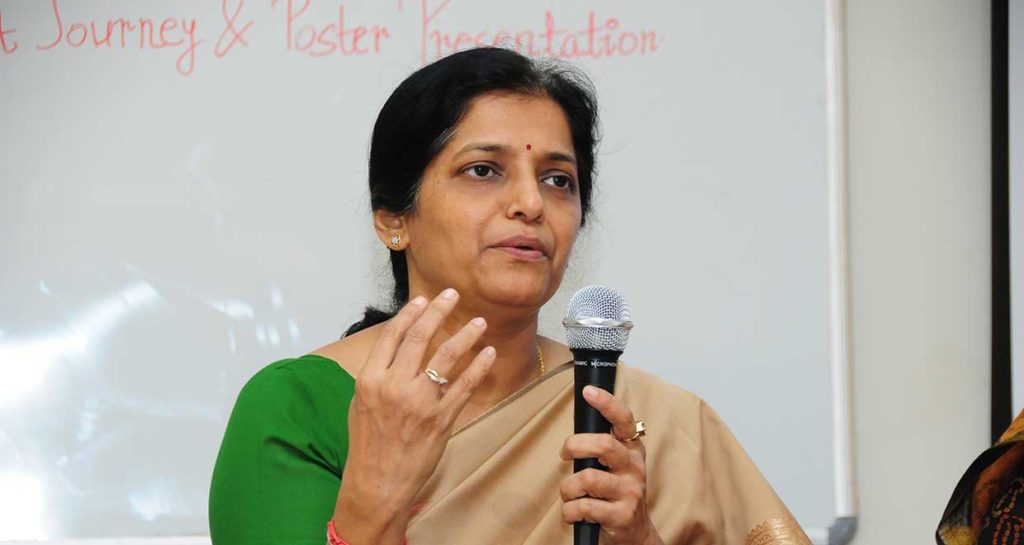
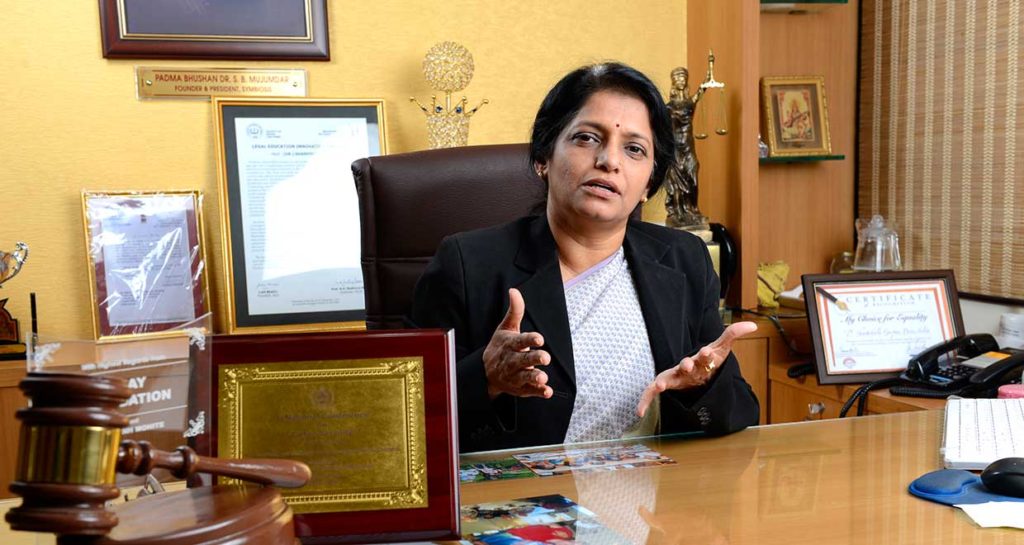
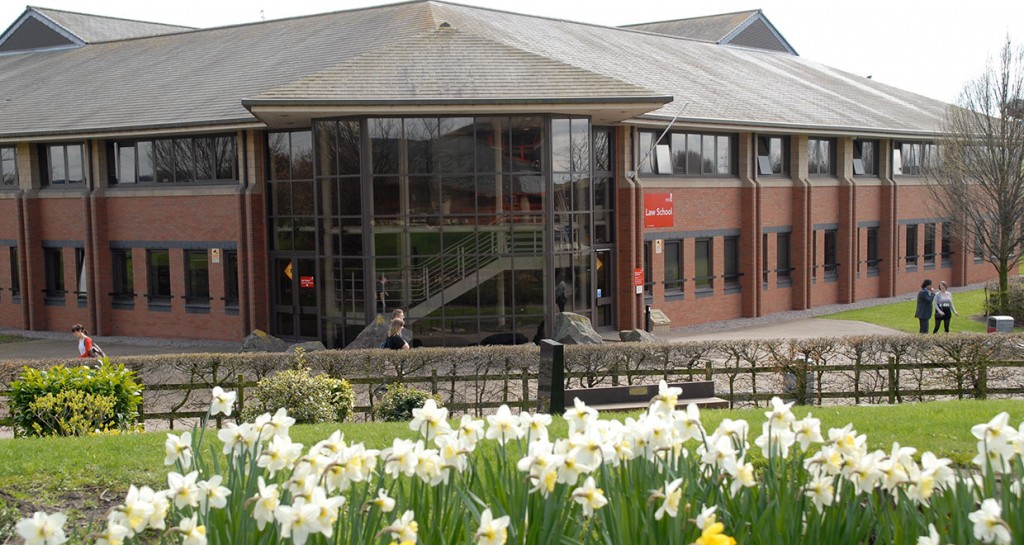
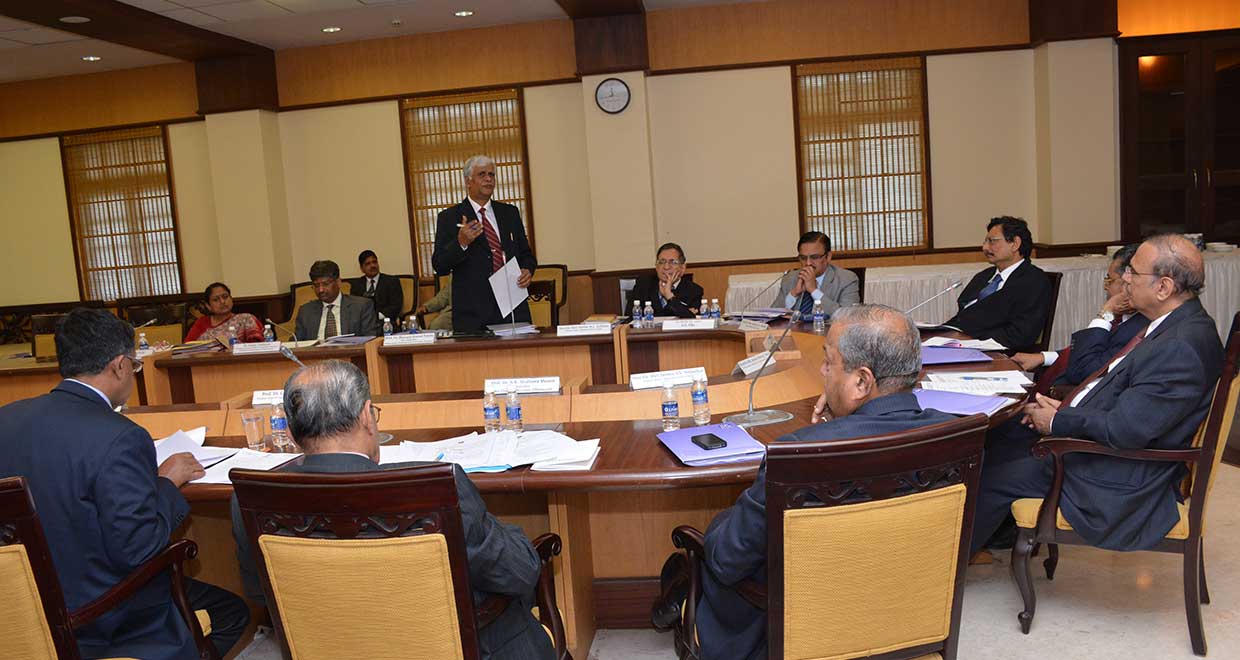
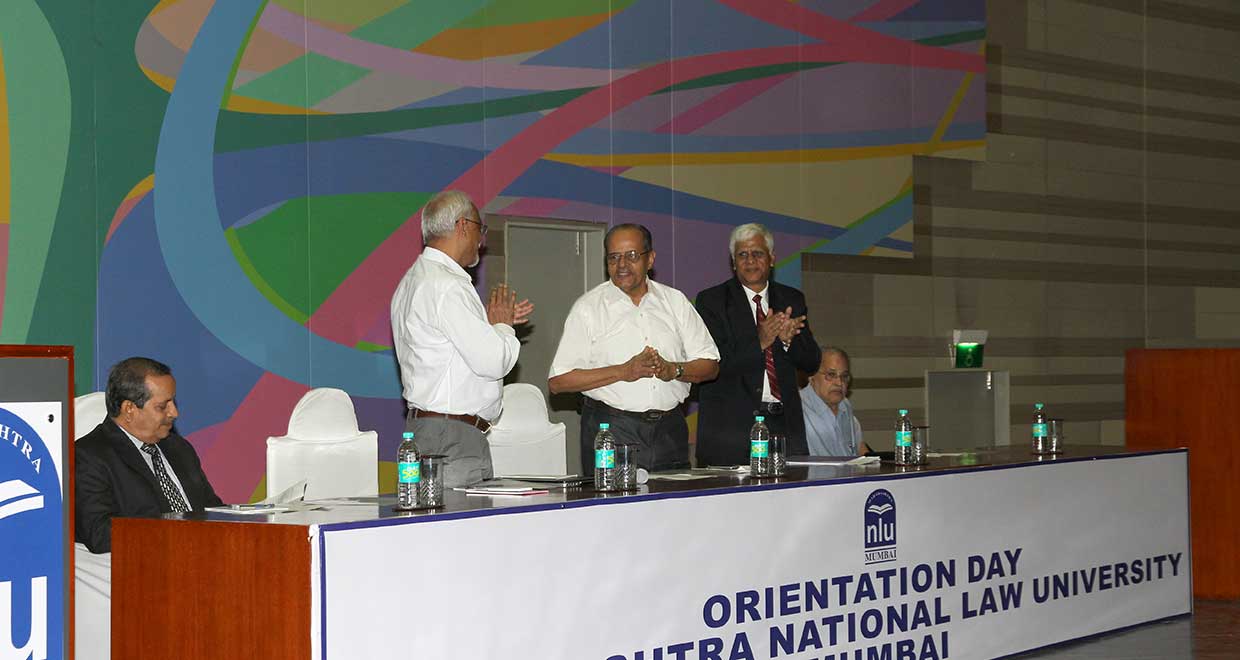
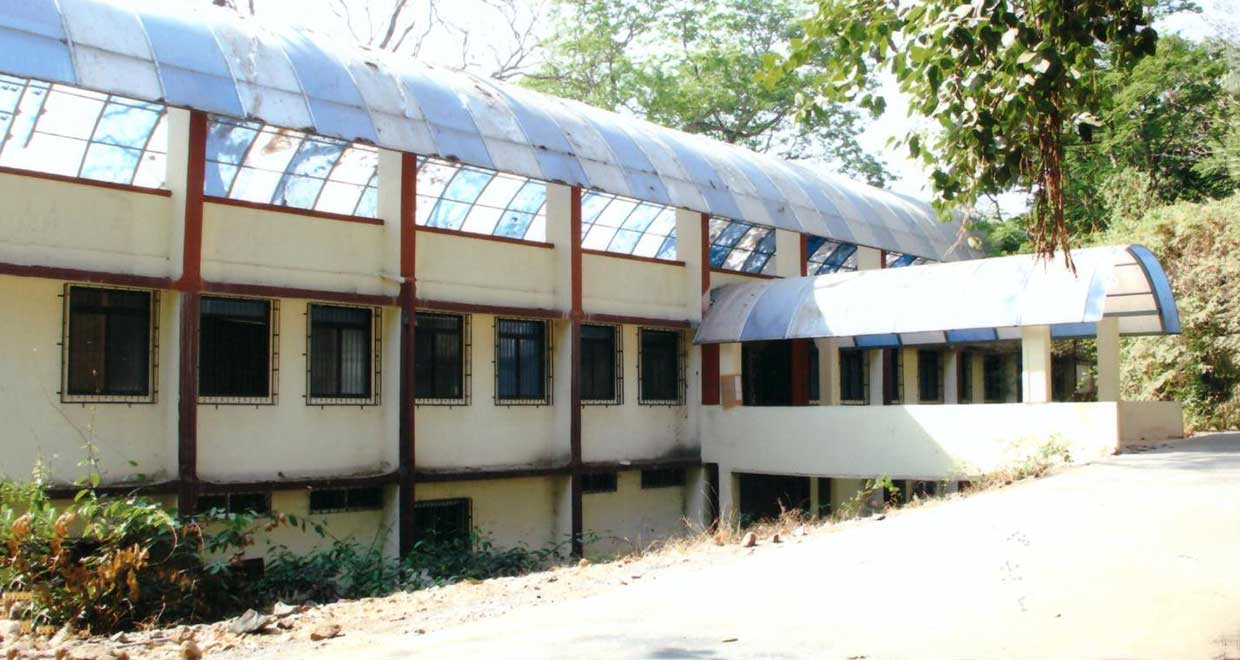

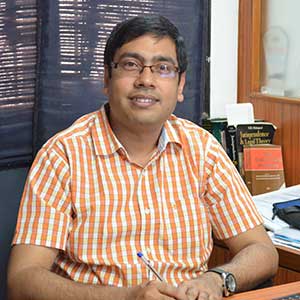
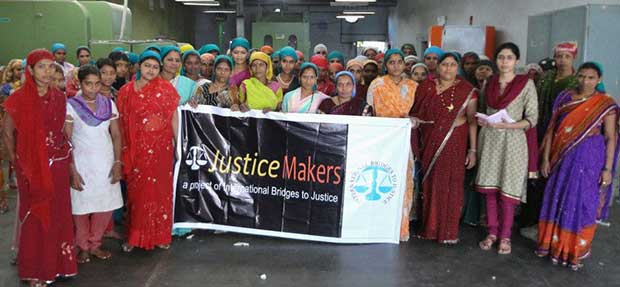
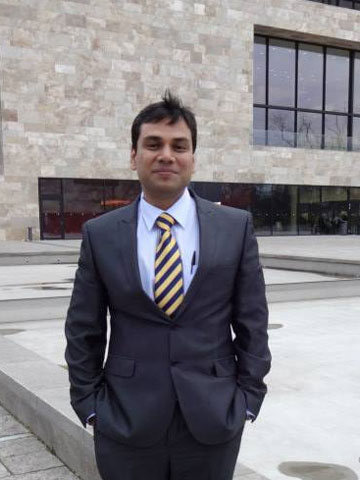



 Allow notifications