Tag: Research

  • “Law is an instrument of socio-economic change for me. Being an Advocate is both a privilege and responsibility.” – Aditya Singh, Founder and Chairman of Alexis Group

    “Law is an instrument of socio-economic change for me. Being an Advocate is both a privilege and responsibility.” – Aditya Singh, Founder and Chairman of Alexis Group

    This interview has been published by Namrata Singh and The SuperLawyer Team
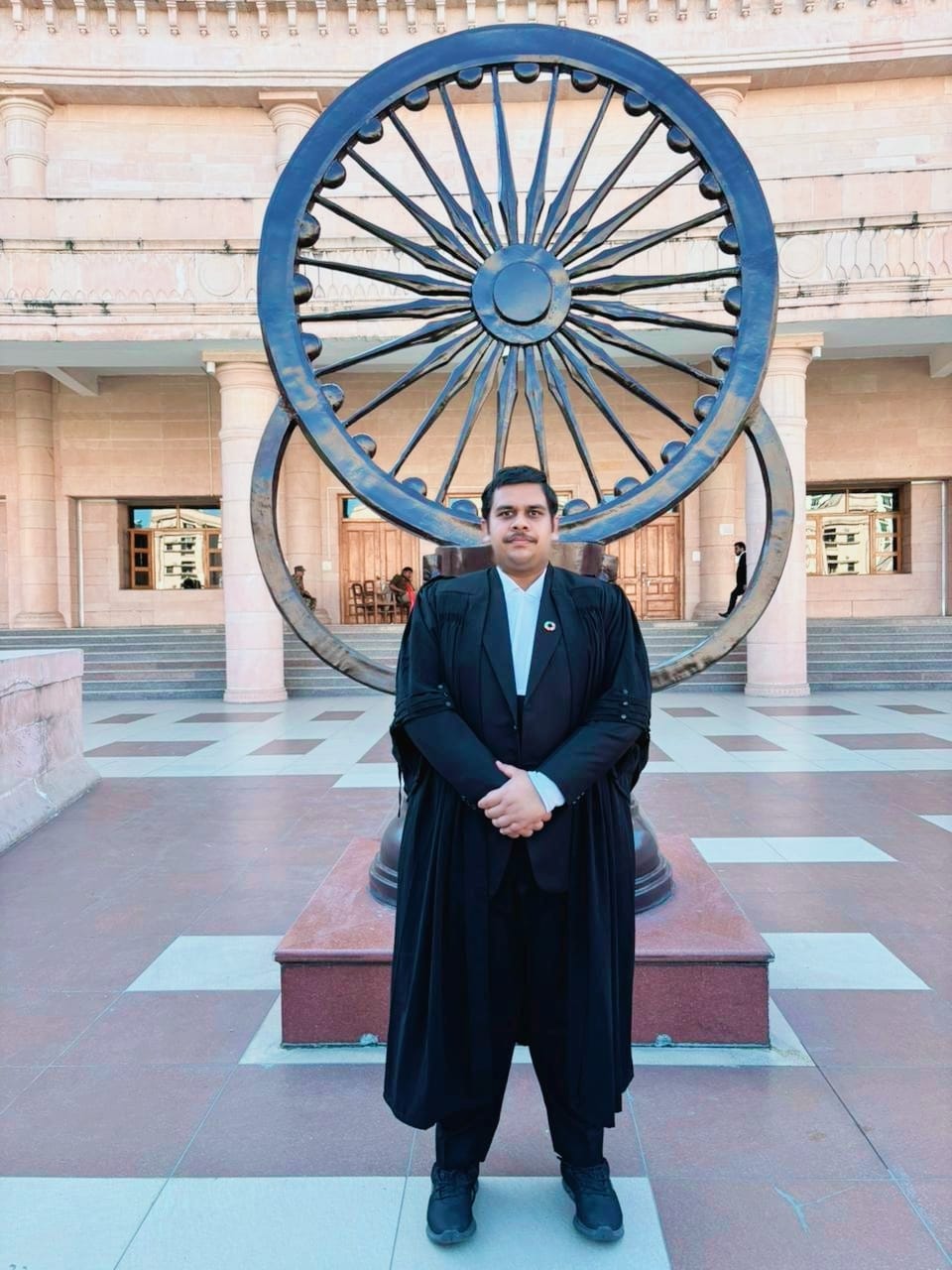
    Aditya, looking back at the start of your career, what were some of the biggest challenges you faced, and how did you overcome them? Could you share a bit about your journey from your early days to where you are now?

    I am a first generation Advocate and lifelong student of law. I transitioned from management consulting to law in my late twenties. At the start of my career, some of the biggest challenges were uncertainty about career direction, lack of social networks within the legal profession, moral and ethical dilemmas, cultural and social barriers, facing rejection from potential clients, getting a fair remuneration, and difficulty in building the personal brand. 

    To overcome these challenges, I started seeking guidance and mentorship from seniors at the Bar, gaining practical experience by assisting them in a variety of matters, exploring different industries, prioritizing time management, viewing rejection as a learning opportunity, engaging in networking activities, pursuing continuous learning, and remaining adaptable to change.

    I believe that by persevering, staying resilient, and embracing opportunities for growth and development, I am navigating through these challenges and progressing in my career. 

    Now, I am working on a wide variety of matters in civil, criminal, commercial, constitutional, corporate, service/employment, and labour & industrial relations domains. My focus is on corporate advisory, dispute resolution, governance and compliances, research and analysis, and legal awareness and education. I also serve as a Legal Advisor or Empanelled Advocate for various companies, firms, and organisations such as the Vodafone Idea Limited, Docland Services Limited, and Uttar Pradesh Kabaddi Association to name a few. 

    You may learn more about me and my journey on www.adityasingh.co

    Could you tell us more about Alexis Law? What kind of work does the law firm undertake, and how do you leverage its resources and network to drive your initiatives in legal practice, public policy, and youth empowerment?

    Alexis Law is a full-service law firm based out of Lucknow. The firm offers wide range of legal services, spanning arbitration and mediation, litigation, corporate advisory, policy advocacy, and more. Leveraging its resources and networks, the firm undertakes pro bono work and community engagement efforts, such as legal clinics, legal awareness camps, and educational seminars. Furthermore, the firm supports youth empowerment initiatives by offering internships, and mentorship programs, thereby promoting diversity in the legal profession. 

    Please tell us about your latest initiative – Alexis Legal? What is your vision for this initiative?

    Alexis Legal is a global alliance of legal and dispute resolution professionals. Our team includes leading advocates, consultants, chartered accountants, company secretaries, cost accountants, and insolvency professionals.

    It is a values driven and membership based organization built on the principles of equity, fairness, and trust. Our core values are Integrity, Excellence, Commitment To Justice, and Continued Innovation.

    This alliance is a one of its kind professional development platform for enhancing the income and impact of legal professionals by improving their discovery and expanding their expertise, practice areas, and jurisdictions.

    As an advocate and consultant, you’ve been involved in various legal matters across different jurisdictions. Can you share a memorable experience or case that has shaped your perspective on the legal profession and advocacy?

    Law is an instrument of socio-economic change for me. Being an Advocate is both a privilege and responsibility. I have joined this noble profession for advancing social justice, protecting human rights, and fostering positive change at both the individual and systemic levels.

    In a recent case argued by me, Hon’ble High Court of Judicature at Allahabad, Lucknow Bench observed that True Love Between Adolescents Can’t Be Controlled Through Rigours of Law or State Action in its reportable judgement.

    It was a case of inter-caste love marriage which turned into an ugly legal battle as the family members of the girl lodged criminal complaints against the boy and his family members. The case was of technical nature due to various stringent sections of IPC and POCSO Acts.

    After dealing the case on technical and maintainability grounds, I presented three crystallised arguments, (a) Love knows no caste boundaries, (b) Romantic relationships between consenting adolescents must not be viewed as criminal acts mechanically, and (c) Happiness and well-being of an innocent couple and their children needs to be protected by the Hon’ble Court using its inherent powers u/s 482 Cr.PC. to uphold rule of law in the society.

    Hon’ble Court graciously allowed the application by accepting our submissions along with relevant judgements and quashed all the criminal proceedings.

    In this case, my team could secure relief for the client and his family in an 11-year-old case. Overall, it was a very fulfilling experience. 

    You’ve been involved in initiatives related to the environment and climate change. How do you see the role of law and advocacy in addressing these pressing global challenges, especially from the perspective of youth engagement?

    Law and advocacy play a vital role in addressing global environmental challenges, with youth engagement serving as a catalyst for positive change. Through policy advocacy, young people can push for the development and implementation of sustainable legislation at various levels of governance. Additionally, they can utilize litigation and legal action to hold governments and corporations accountable for environmental harm, demanding justice for affected communities and action on climate change. By raising public awareness and promoting education, youth-led initiatives can mobilize communities to adopt sustainable practices and advocate for environmental solutions. 

    I firmly believe that innovation and collaboration are fostered through interdisciplinary approaches, technology, and creative solutions, driving systemic change in environmental policy and practices. Furthermore, youth engagement in international forums like the United Nations Climate Change Conferences amplifies their voices on a global scale, fostering solidarity and cooperation in addressing shared environmental challenges. 

    Overall, law and advocacy provide a powerful platform for youth to effect positive change, shaping a more sustainable and resilient future for generations to come. Through strategic engagement in legal and advocacy efforts, young people can play a pivotal role in driving forward the global environmental agenda and promoting a healthier planet for all.

    Your participation in the UN Water Conference in New York and the UN Climate Change Conference in Dubai is quite remarkable. What insights or learnings did you take away from these global platforms, and how do you bring them back to your work in India?

    Last year, I got the opportunity to participate in the UN Water Conference in New York and the UN Climate Change Conference in Dubai as a representative of the Alexis Foundation.

    The 2023 UN Water Conference was held at the UN Headquarters in New York. I led a 7-member delegation and hosted an official side event on the topic – Innovative Solutions for a Sustainable Blue Economy through Water Action, Cooperation and Youth Engagement at the conference. 

    During this conference, I gained a deeper understanding of the global water crisis and the importance of collaborative efforts to address water scarcity, pollution, and access issues. Learning about innovative solutions and best practices from around the world has inspired me to advocate for more sustainable water management practices in India. I have incorporated these insights into my work by promoting water conservation, supporting community-led initiatives, and advocating for policies that prioritize equitable access to clean water for all.

    On the side-lines of this conference, I also met several dignitaries from around the world and Indian leaders and diplomats such as the Hon’ble Minister of Jal Shakti, Government of India, Permanent Representative of India to the United Nations, and Consul General of India, New York.

    The 2023 UN Climate Change Conference was held at the Expo City in Dubai. I led a 5-member delegation to the conference and Alexis Foundation was admitted as an Observer to the United Nations Framework Convention on Climate Change. This conference offered me valuable perspectives on the urgency of addressing climate change and the need for ambitious, collective action at both the global and local levels.

    Witnessing the global dialogue and negotiations first-hand reinforced the importance of interdisciplinary collaboration and stakeholder engagement in tackling climate-related challenges. I have leveraged these insights to advocate for climate resilience measures, renewable energy adoption, and sustainable development policies in India. Additionally, I am working to raise awareness about the impacts of climate change on vulnerable communities and promote climate justice principles in my advocacy efforts.

    Overall, my experiences at these global platforms have deepened my commitment to addressing pressing environmental issues and advancing sustainable development goals in India. By applying the insights and learnings gained from these conferences to my work, I strive to contribute to positive change and empower communities to build a more resilient and equitable future for all.

    Your journey includes several prestigious fellowships and certifications. How have these experiences contributed to your personal and professional growth, and what role do you see continuous learning playing in your career?

    My journey has been instrumental in shaping both my personal and professional growth. These experiences have provided invaluable opportunities for networking, mentorship, and exposure to diverse perspectives, all of which have enriched my understanding of the field of law and expanded my skill set.

    Participating in prestigious fellowships has allowed me to engage with leaders and experts, fostering mentorship relationships that have provided guidance and support in navigating complex professional challenges. These experiences have also exposed me to innovative ideas and approaches, pushing me to think creatively and critically about my work.

    Moreover, earning certifications has demonstrated my commitment to excellence and expertise in specific areas of interest such as Arbitration and Mediation, Constitutional Law, White Collar Crimes, Intellectual Property Law, Technology Law, and Right to Information. These credentials have enhanced my credibility and opened doors to new opportunities for career advancement and impact.

    Continuous learning is essential for staying relevant and effective in any career, but particularly in the ever-evolving field of law. Embracing a mindset of lifelong learning enables me to adapt to changing trends and technologies, deepen my expertise, and remain at the forefront of innovation. Moreover, it allows me to constantly refine my skills, broaden my knowledge base, and drive meaningful progress in my career.

    In essence, my journey through prestigious fellowships and certifications has underscored the importance of continuous learning in my career. By embracing opportunities for growth and development, I have become better equipped to navigate the complexities of the legal field, contribute to meaningful change, and achieve my professional goals.

    Given your background in both law and management, what approach do you employ to drive innovation and strategic thinking within your legal practice and social impact initiatives?

    As someone who has navigated the intersection of law and management, I have integrated Environmental, Social, and Governance (ESG) efforts into the firm’s strategy and operations and recommend the same to my clients and partner organizations.

    In legal practice, innovation means adapting to client needs. Therefore, Alexis Law has embraced technology to streamline processes, and enhance client experiences. Our team members embody the values of empathy, integrity, commitment to justice and continued innovation.

    To sum up, my approach combines legal acumen, management principles, and a commitment to positive change.

    When you’re not immersed in your professional endeavours, how do you like to unwind and recharge? Any hobbies or interests you’d like to share with our readers? 

    I am a firm believer in the philosophy of work-life integration. To unwind and recharge, I take short vacations every quarter and travel around the countryside in India and around the world. As a spiritual and religious person who loves nature, history, art and culture, I prefer to visit ancient temples, forts, palaces, museums and art galleries. My hobbies are photography, numismatics (collecting coins and notes), and philately (collecting stamps).

    What advice would you give to the current generation looking to pursue a career in law or advocacy, considering the evolving landscape of legal practice and social issues?

    For those aspiring to pursue a career in law or advocacy, it’s crucial to stay informed on legal trends, policy changes, and social issues, developing strong communication and critical thinking skills, and embracing technology. I believe that building a professional network, prioritizing ethics, and remaining adaptable and resilient are essential for success in the evolving legal landscape. 

    Furthermore, practical experience through internships and clerkships is invaluable, as is focusing on social impact and contributing positively to the society. Last but not the least, it’s imperative to prioritize self-care and well-being to sustain a fulfilling career amidst the demands of the legal profession. 

    Overall, aspiring legal professionals must strive for a combination of knowledge, skills, ethical integrity, adaptability, resilience and a commitment to making a difference in the society.

    Get in touch of Aditya Singh-

  • “Success of a case or project isn’t the result of individual brilliance but rather the outcome of a meticulously orchestrated collaboration”- Mitsu Parikh, Senior Partner at World of Legal Research

    “Success of a case or project isn’t the result of individual brilliance but rather the outcome of a meticulously orchestrated collaboration”- Mitsu Parikh, Senior Partner at World of Legal Research

    This Interview has been published by Pragya Chandni and and The SuperLawyer Team

    Can you share a bit about your educational journey and how you pursue law as a career? 

    I originate from a quaint town in Gujarat where, a decade ago, career choices such as law, journalism, creative writing, and hotel management were not common for females. When I expressed my aspiration to pursue a career in law to my parents, their reaction was beyond surprise. They recommended that I gain firsthand experience by shadowing a seasoned lawyer before making a definitive decision. Consequently, I immersed myself in the legal field, accompanying and observing an accomplished lawyer in various cases spanning banking, constitutional, employment, and family laws. The diverse and intricate nature of the legal profession left a profound impression on me, ultimately solidifying my determination to pursue law as a career. This experience broadened my understanding of the legal landscape and instilled in me a deep appreciation for the multifaceted challenges and responsibilities inherent in the field.

    You’ve pursued advanced degrees in International Law and Legal research. What drew you to specialize in these areas? 

    During my undergraduate studies, I actively participated in moot court competitions, assuming roles as a speaker and researcher. While I thoroughly enjoyed the entire moot court experience, I found a particular passion for research. Delving into legal research became more than necessary; it became a profound interest. This inclination led me to explore opportunities to publish papers and interact with esteemed academicians at conferences and symposiums. Recognizing the significance of contributing substantively to the legal discourse through research and publishing papers, I pursued a master’s degree. Someone once told me that just raising questions doesn’t make you people worthwhile; finding solutions does. 

    You’ve had diverse roles, from Legal Assistant in law firms to your current position as a Senior Researcher and Coordinator. How did these experiences contribute to your growth and specialization in international law? 

    My stint in the corporate sector and various law firms served as a journey of self-discovery, compelling me to confront the realization that these roles may not be my lifelong passion. However, I wholeheartedly acknowledge that each experience played a crucial role in shaping my personal and professional growth. During my internship, a pivotal lesson resonated deeply – the significance of every task, regardless of its scale. It became evident that the success of a case or project isn’t the result of individual brilliance but rather the outcome of a meticulously orchestrated collaboration. Whether assuming the role of a clerk, lawyer, or researcher, every individual in the chain contributes uniquely, and the collective effort propels success. This realization has ingrained in me a commitment to execute my responsibilities to the best of my abilities, regardless of my role in the process. 

    Could you tell us more about your role as a Senior Researcher and Coordinator at the international consultancy World of Legal Research? What kind of research-based consultancy do you provide to the government, law schools, and academicians? 

    We provide a variety of services. Some of the services involve a project where we have to study impact assessment, create analytical research reports, and assist with reviewing the research papers. Additionally, we are more inclined towards assisting our legal fraternity with our efficient legal research team, specializing in diverse fields of law.

    As a Visiting Faculty to many universities in India and abroad, you teach Public International Law and Legal Research Methodology. What inspired you to take up a teaching role alongside your research work? 

    When I was a student, the thought often crossed my mind – what if certain topics were approached differently? Would they become more intriguing? It wasn’t until I visited conferences in the southern part of India that I stumbled upon a fascinating realization. Among the accomplished individuals, be it a thriving businessman, a seasoned lawyer, or a distinguished doctor, there was a common thread – academic involvement. It brought to my mind Chanakya’s words about teachers never being ordinary; they hold the power of construction and destruction. This insight fueled my aspiration to contribute meaningfully to the academic realm. As I transitioned into the role of a researcher, my desire crystallized into a passion for teaching law students the art and science of research. It’s not just about acquiring knowledge but understanding the intricacies and methodologies that make research a captivating and essential facet of the legal profession. 

    Your experience includes working in law firms in Australia and India. How did these experiences shape your understanding of legal practice on an international scale? 

    Lawfirms became my school of perfection, teaching me the invaluable skills of meticulousness and the art of thriving under deadlines. But beyond the technicalities, it was a vibrant classroom where I learned to navigate the intricate tapestry of human diversity. Working with people from different cultures was a daily lesson in understanding, patience, and respect. There were instances where a case forced me to reconcile my personal beliefs with my client’s position. The legal profession throws a unique challenge at you – dealing with ethical dilemmas that demand a delicate balance. The realization that every client, boss, or judge is a distinct chapter in your professional story. Each encounter is an opportunity to embrace diversity, not just in your home country but in foreign lands. It taught me the importance of respecting diverse cultures and opinions, a lesson that goes beyond the legal arena and shapes how I approach life.

    You’ve presented papers on various topics, from health inequalities during COVID-19 to discrimination in legal education. Can you highlight a paper that you found particularly impactful or that received significant attention? 

    In 2023, I had the privilege of presenting a paper at the Center for Criminal Law, University of Oxford (UK), addressing the alarming issue of ancestral rapes in the state of Haryana during the COVID-19 pandemic. This paper garnered recognition and was honored with an award for being the most passionate presentation. Subsequently, I received emails from faculty members and fellow paper presenters at the conference, affirming that this problem extends beyond India to encompass every country and culture. The correspondence highlighted a shared sentiment that societies tend to suppress or disregard such issues, choosing to deny their existence. The suggestions and solutions proposed in my paper resonated with the international audience, earning appreciation from diverse perspectives. It was a powerful acknowledgment of the universality of the problem and the importance of proactive and compassionate approaches to address it on a global scale.

    Your involvement in founding an NGO called ‘Madad’ during the COVID-19 pandemic is commendable. Could you share more about the initiatives and impact of this organization?

    I wouldn’t like to talk much about my NGO as our ancestors say that if you help someone with your right hand, your left hand shouldn’t even know about it. I would just say that at whatever stage you are in life, try to help others, not for the betterment of society, but for yourself, so that you can face yourself in the mirror at the end of the day. 

    You’ve received several awards and honors for your contributions, including the Youngest Leader Award from Rotary International. Which of these achievements holds a special place in your heart, and why? 

    In the third year of my undergrad studies, I received an award for the best position paper at Harvard University. That paper made me realize that regardless of being from a small town or being from the vernacular medium of studies, you can if you really want to achieve something in life.

    You’ve held various editorial roles and served as chairman in some committees while studying at the University of Sydney. How have these positions enriched your professional journey? 

    These positions equipped me with essential skills such as time management and strategic planning. Additionally, they provided valuable lessons on effective teamwork. Each extracurricular engagement in Law School imparts qualities beyond the teachings of books or academic activities.

    Finally, based on your journey so far, what advice would you give law graduates just starting their careers in the legal field? 

    Well, I’m not experienced enough to give any advice. I’d reframe it as learning that I can share from the mistakes I made in my journey. 

    1. Take your internships seriously. You will gain something from every task you do during your internship, even if it is just carrying your senior’s briefcase and/or documents. For example, you’ll be able to be a part of his conversations with clients and people around in court, how one carries his business in the legal field, etc.; this will teach you much more about the practicalities that even a subject in law school wouldn’t. 

    2. Whether you want to join corporate or litigation, publish papers and take part in conferences. Publish or perish is a thumb rule. If someone googles you on the internet, and you have something published, you will get brownie points. 

    3. There is no shortcut to success. It might sound like the cheesiest line. However, life is not 2 minutes noodles. Instant gratification. Instant Fame. All these are not to be focused upon. Do smart work, but don’t get scared away from hard work. Thus, creating a strong base first is very important, because if you sow well, you’ll reap the fruits throughout your life. Choice is always yours.

    Get in touch with Mitsu Parikh-

  • The single most important trait to have for young legal professionals is self-belief, There is no alternative to self-belief. Starting from his aspirations as a scientist, detouring into management, and eventually finding his true calling in law – “An In-Depth Conversation with Rohan Kusnur, AVP-Legal at Kotak Mahindra Bank”

    The single most important trait to have for young legal professionals is self-belief, There is no alternative to self-belief. Starting from his aspirations as a scientist, detouring into management, and eventually finding his true calling in law – “An In-Depth Conversation with Rohan Kusnur, AVP-Legal at Kotak Mahindra Bank”

    This interview has been published by Priyanka Karwa and The SuperLawyer Team

    Rohan, thank you for joining us. To kick things off, could you please introduce yourself to   our readers, highlighting key aspects of your professional journey and areas of expertise?

    Hi! I am Rohan Kusnur. I am currently working as Associate Vice President – Legal at Kotak Mahindra Bank Ltd. My professional journey has been very colorful with diverse experiences across different fields. In school, I wanted to become a scientist. The things that intrigued me about science were understanding natural phenomena and applying that knowledge for the benefit of mankind. After completing my B.Sc. in Biotechnology, I started working with a coaching institute as a branch manager. I also enrolled for my M.Sc. in Biophysics. By the time I completed my masters while doing my coaching institute job, I realized that I have a much better aptitude for management and administration than scientific research. I had considered two options while deciding my future career trajectory namely, MBA and civil services. I decided to go ahead with preparation for civil services as I always had a keen interest in current affairs and wanted to do something in public service. While preparing for civil services, I fell in love with the Constitution of India. After an unsuccessful attempt at the UPSC civil services exam, my love for the Constitution led me to pursue LLB. During my UPSC preparation, I built a good network of seniors who were preparing for the exam or teaching in coaching institutes. One of my seniors recognized my talent and offered me a teaching job. I started teaching at ‘Sankalp IAS’ institute on weekends along with my LLB. 

    During my final year of LLB, I started interning at Bhave & Co. where I eventually joined as an associate after receiving my degree. I could continue at Bhave & Co. only for a few months as my mother was diagnosed with breast cancer. I had to manage her entire treatment protocol. Managing my mother’s treatment was not possible with a full time law firm job. Hence, I quit that job to start my independent practice. I was clueless about how to proceed at that point in time. Being a first-generation lawyer with a very brief experience at a law firm, it was very difficult to start. I just started sitting in the Bombay High Court Law Library hoping to network with other advocates and find some work. Adv. Rachana Chavan was kind enough to guide me in this anxious phase of my career. Soon, I built a good network and started getting small matters. During this phase, I advised a client with a tricky real estate matter, filed two writ petitions, appeared in a criminal matter, worked on a highly technical arbitration matter among other things. Independent practice gave me the time flexibility that I needed to manage my mother’s cancer treatment. By God’s grace, my mother fought hard and survived cancer. Towards the end of my mother’s treatment, I got to know about an opening in the legal team at Capri Global Capital Limited. Taking up this job would mean giving up practice and I was really enjoying my practice. However, since I started my career in law late, I didn’t have a lot of time to struggle in practice. I was already 30 years old when I completed my LLB and my parents were worried about the marriage prospects for their struggling advocate son. So, I decided to interview for the job and luckily, I was hired as a legal manager at Capri Global Capital Limited. That’s how my corporate career started. After 2 years at Capri, I decided to move to Kotak Bank. My current areas of expertise revolve around banking and real estate laws. 

    Your journey from being an Independent Practitioner to the Associate Vice President at Kotak has been diverse. How did your early experiences in independent practice shape your approach to the banking and financial services industry, and what motivated your transition to an in-house counsel role?

    It has been a wonderful journey. Situations in my personal life have prompted certain decisions in my professional life as I have described in reply to the previous question. When I started my independent practice, I was a complete novice. Although I didn’t have expertise at that time, I had the desire to work hard and succeed. You need a lot of self confidence to succeed as an independent practitioner especially in the early days of the career. You are still learning every day but you need to convince prospective clients to trust you with their matter. So, it was a very steep learning curve. This ability to work hard with self-belief helped me to make the transition to an in-house legal role. The transition to an in-house role was initially necessitated by the need for greater financial security but gradually I started enjoying my new role.

    The personality traits required for success in independent practice are different from those required for an inhouse role. However, the fundamental values don’t change. You need good people skills in both roles. Networking is the cornerstone of success in both roles. You need to anticipate situations and prepare. The difference lies in developing the skill of balancing legal risks with business growth. As an in-house counsel, you are helping your company to grow, while minimizing their legal risks. You can’t err either on the side of caution or be too liberal. Striking the right balance between the two aspects is the key to success in an in-house role.

    Having held significant roles at Kotak Mahindra Bank, including Chief Manager and now Associate Vice President, could you share some challenges you’ve encountered in the banking and financial services legal landscape, and how you navigated through them?

    When I started my career in an in-house role, I had very little knowledge about the financial sector. I was lucky to have Adv. Sujata Angadi as my first boss and mentor at Capri Global Capital Ltd. I knew the law but I didn’t know the nuances of the lending business. I observed and I learnt very fast. I was fortunate to have stalwart leaders like Adv. Muneesh Dhawan and Kaushik Chatterjee sir to inspire me. After I moved to Kotak Bank, I realized that the risk appetite of every company is different. My experience at Capri Global helped me greatly to navigate through Kotak. As I have stated earlier, the real skill to develop is understanding the risk appetite of your company and striking the right balance between business growth and legal risk.

    I began my stint at Kotak as a legal manager where I was assessing the title of the properties being offered for mortgage against different types of retail loans like housing finance, loan against property and working capital. Kotak is great at nurturing and developing talent. I was soon promoted through the ranks and given charge of a team for supporting the primary market sales team in housing finance. The primary market sales team builds relationships with different builders and developers for sourcing housing finance business directly from the developers. This reduces the cost of customer acquisition and improves the margins of the company. I was also designated as a legal deviation approval authority for taking informed calls on some legal deviations in the interest of business growth. I was also granted rights to give final legal approval for disbursement of loans in housing finance and loan against property up to a certain loan amount. In each of these roles, I come across various challenges which I navigate with the help of a great team. 

    Let me illustrate the balance of legal risk and business growth with an example. While assessing the title of builders for approving real estate projects, we sometimes come across pending litigations on project land. We need to approve projects in order to help the primary market sales team to source home loan applications from those projects. A practicing advocate will simply highlight the pending litigation in their title report and we know about the doctrine of lis pendens under the Transfer of Property Act. However, as an in-house lawyer, it is our job to assess the real risk of the pending litigation and advise the business leadership accordingly. We cannot theoretically apply the doctrine of lis pendens and reject everything. The skill lies in differentiating between real risk and theoretical risk. Once we highlight the real risk, the business team is in a better position to make an informed decision.

    In Kotak Bank, there is excellent support from the leadership and a wonderful work culture. This helps me in performing more effectively.

    You have a background in biophysics and biotechnology. How has your scientific education shaped your approach to legal problem-solving, and do you find any parallels between the two fields?

    My scientific education has helped me greatly in legal problem-solving. I would like to share one of the famous quotes of Albert Einstein. The great scientist had once said, “Education is training of the mind to think”. Every discipline of learning imparts a unique style of thinking and problem-solving to the learner. My scientific education helped me to develop very strong logic and reasoning skills. This greatly helped me in shaping my legal career. I had to simply apply the same style of thinking to law which I learnt while studying science. Further, scientific education also teaches you the importance of research. Good research skills are very important in both science and law. 

    Your career involves a mix of corporate legal roles and teaching civil service aspirants. What motivated you to engage in coaching, and how does teaching law influence your own understanding and application of legal principles?

    Of all the different things which I have done in my career, I have enjoyed teaching the most. I have loved teaching since the time I was a student. I have always helped my friends in understanding certain concepts which I understood better. I believe that you develop a better understanding of the subject every time you teach. This happens because you think about how to help the students to understand some concept and in the process, delve deeper into the subject yourself. Also, when the students ask you questions, you are prompted to think in a different way about the same subject and thereby your understanding of the various aspects of the subject is enhanced.

    When I was teaching Indian Polity to civil service aspirants, I had a peculiar challenge. I was teaching the Constitution of India and how it is applied in the functioning of Indian democracy. My students came from diverse educational backgrounds like humanities, commerce, management, engineering, medicine, law etc. I had to ensure that the law students don’t get bored and other students are able to understand the concepts. This greatly improved my communication skills and understanding of legal principles.

    Legal practice often involves intense scrutiny and attention to detail, especially in areas like title flow for mortgage creation. How do you manage stress and maintain accuracy in your work, and do you have any unique methods for unwinding after a challenging day?

    I am a family man. There is no greater joy than spending time with family. I have a wonderful 5- year-old daughter. She takes away all my stress every day when I return from the office. I have a very supportive life partner with whom I share all the highs and lows of my day. This helps me to unwind and relax after a challenging day. I love listening to music and watching web series in my free time. Proper relaxation is very important to recharge your batteries and perform your job accurately. 

    On a lighter note, outside of your professional life, do you have any hobbies or interests that you are particularly passionate about? How do you strike a balance between your career and personal life?

    I love food and frequently visit different restaurants and street food joints to explore newer tastes with my family and friends. I love hanging out with friends. I have a keen interest in personal finance. Apart from law, understanding the art of investment in equities is one of my passions. During my civil services exam training, I developed an interest in macroeconomics. I have built upon that knowledge over the years. I like to explore correlation between macroeconomic events and investment opportunities in the stock markets. I read a lot of finance related content and follow many experts in my free time to enhance my knowledge and skills. Investment is an art of predicting the future based on current data. I get great intellectual satisfaction from this activity. It is up to us to strike a balance between career and personal life. One should never forget that a successful career is just a part of a happy life. Happiness should be the ultimate objective

    Considering your journey, what advice would you offer to young legal professionals entering the banking and financial services industry, and what skills do you believe are crucial for success in this field?

    The single most important trait to have for young legal professionals is self-belief. There is no alternative to self-belief. Out there in the professional world, people will believe in your skills only after you have successfully demonstrated your skills. When you start a new journey, you don’t have any track record. You have to back yourself completely to succeed. Once you develop this self-belief, the next step is to have a vision and commitment towards that vision. To succeed in the banking and financial services industry, you need to understand the needs of the industry. There are a wide variety of legal functions that one can perform in an in-house role. Title related due diligence is just one of the functions. Likewise, if you wish to develop yourself as a practicing advocate catering to BFSI, you can perform a wide variety of functions. 

    The most important advice which I can give to young legal professionals is to not be rigid about specific areas of work or practice. Don’t refuse good opportunities just because it is not exactly what you wanted. Just start and learn along the way. Eventually you will find your niche area. Most young lawyers have preferences about areas of practice but nobody knows whether you will find meaningful work in those specific areas at the beginning of your career. Don’t say no to work. Take up the challenge and learn along the way. This brings us back to the most important trait to succeed which is self-belief. If you believe in yourself, nothing is impossible.

    Get in touch with Rohan Kusnur-

  • In Conversation With: Ananth Kini, Advocate practicing at the Supreme Court of India, with over 17 publications to his credit and stellar Academic records.

    In Conversation With: Ananth Kini, Advocate practicing at the Supreme Court of India, with over 17 publications to his credit and stellar Academic records.

    This interview has been published by Sonali ParasharOjuswi Sahay, and the SuperLawyer Team


    What motivated you to make a career in law? How would you describe your professional journey up until now?

    I would say that studying law was a natural choice for me, and I find nothing that is more interesting, captivating and easier for me than law. Having studied law for the last 8-9 years of my life, I can confidently say that choosing law as my career has been the best decision of my life to date and I have never found laws to be complicated as such but just pure common sense.

    If you believe in what you are doing, then you will find your work to be interesting; as it has been rightly said by Steve Jobs that ‘…Your work is going to fill a large part of your life, and the only way to be truly satisfied is to do what you believe is great work. And the only way to do great work is to love what you do. If you haven’t found it yet, keep looking….’

    As far as my professional journey is concerned, I would say that I had to work very hard to understand the nitty-gritty of the laws, court procedures, principles of legal drafting, the art of advocacy, the jurisdiction of courts/tribunals etc. One has to work hard initially to understand the laws but it gets easier with time once you know the basics. 

    You have excelled in your academics throughout your career and also were a rank holder in your LLB and Graduation. What would you say were the factors that helped you excel in academics, especially while pursuing law?

    I had more than 90% attendance in each semester of my college and rarely used to miss classes. I used to pay attention to whatever the professor was teaching and make notes. I never left anything to the last moment, a practice that I follow even today, and I used to study for all the exams well before the exam date. On the day before the exams, I only used to revise and think about how I could somehow improve my answers.

    I focused more on writing as many cases as I could and on correctly writing the provisions of the laws; all this was only possible because I revised multiple times before the exams. I was confident that I had learnt it and focused on keywords while reading anything new. I used to read many different books and xerox the relevant parts to prepare my answers.

    As this required a lot of effort and time, therefore I used to begin my preparation around one month before the first-semester exam and increased my hours of studying as the exams approached. Also, starting early gave me the advantage of clarifying my doubts to the concerned professor and I never left anything to luck; I always gave the exams by reading almost the entire syllabus, so that even if the question paper was difficult, I could answer them.

    I always focused on writing the answers supported by case laws, sections and notes of that teacher and never missed answering any of the questions in my exams during my college days; I used to allocate a specific time frame for answering each question and then used to move on to the next question on completion of the allotted time frame.

    Out of the wide spectrum of internships you did in college (Shardul Amarchand Mangaldas, NCRB, Ministry of law and Justice, Kochhar and Co etc), which one of them was the most enriching experience? What should be the three things one should keep in mind while choosing an Internship?

    My internships at the Chamber of Adv. Murari Tiwari Sir and Chamber of Adv. Rajesh Yadav Sir was the most enriching for me. 

    Murari Tiwari Sir and Tripurari Tiwari Sir are both very polite, helpful and friendly, and they used to make sure that all the interns in their office learned something new each day; I was given case files which I had to read, and after that, Sir used to ask me as to what I understood from the case and after that guide me as to the facts of the case and laws applicable thereof. Despite Murari Tiwari Sir and Tripurari Tiwari Sir being very busy with their work, they always kept some time aside each day for their interns. 

    My internship at the Chamber of Adv. Rajesh Yadav Sir was also very enriching. I learned a lot under his able guidance, and Sir used to teach me about the intricacies of court procedures. I was given some case files to read, which I later used to discuss with him. Sir had an excellent command over the facts of the case, and he used to tell me about the arguments of both sides in that case. During this internship, I visited the Hon’ble Delhi High Court for the very first time. Sir had extensive knowledge of the facts and the laws pleased in the case so much so that even without opening the file, he could remember all the details of the case and even the page number where it was mentioned! 

    On the aspect of what one should keep in mind while choosing an internship is concerned, I would say that it would depend on the career objective of that person. If one has not decided which area they want to join, one may intern at different places to get an idea. Also, I feel that if one has figured out what one wants to join after completing their LL. B then a long-term internship at a single place is more beneficial than multiple short internships at different locations, provided one enjoys their time and is learning at that internship.

    You hold expertise in various areas of practice like Civil Law, Criminal Law, Arbitration, Insolvency Law, Recovery matters etc. How would you describe your journey in the field of litigation so far? Please tell us – the good, bad and the ugly.

    Litigation requires one to read a lot and spend a lot of the time thinking as to what could be the possible arguments in the case and anticipate the arguments that the opposite party might advance and how to tackle them. 

    The good part in litigation is the encouragement and appreciation you get from the judges, seeing your name as a counsel in judgements/order sheets, and the fact that what one might argue may become the law of the land if agreed by the judge.

    The bad part would be the long hours one has to spend each day reading; there are so many documents that one has to read. Then after figuring out what the question of law is involved in the case, one has to read multiple judgments on that specific provision of law to find which cases laws support your case and which decisions are against your case and then think as to how to distinguish these decisions.

    I would say the ugly part is that travelling from one court to another to the office daily can be extremely tiring.

    You have 17 publications in various reputed journals. You also presented a paper on defamation at the Freedom of Speech and Expression Regional Conference organized by the Law Commission of India in 2016. Do ‘ideas pick you’ or do you have an extensive process of picking topics which you want to write about. Please take us through the whole process from finding an idea to publishing it in a reputed journal. How challenging is it?

    Legal writing is my hobby, and I find it a way to express myself on legal issues that have evoked my curiosity. Generally, I write on contemporary legal issues and those issues which would not lose their relevance over time, such as prison reforms and electoral reforms. I had written legal articles on these two topics some 4-5 years ago, and even today, they remain a contemporary topic for discussion.

    Before writing an article, it is first necessary to convince yourself as to why you want to write an article on that legal issue. For that, I used to read a little background about the same to ensure that it is indeed a good topic to write on. If I am sure that it is a good topic then I will read about it in detail. Usually, I choose those topics that are being discussed in the media/news so that the chances of their publication would also increase. I always substantiate whatever I would write through primary and secondary sources such as law commission reports, parliamentary committee reports, judges’ interviews, judgements on those points, legislations etc as it has been rightly said by Edwards Deming that ‘Without datayou’re just another person with an opinion’.

    If one wants the article to be published in a reputed journal. In that case, the article must be well researched and something that is not only a bit different from the existing literature but also, more importantly, it should make the reader ponder and think if what the author intends to say is unique, has credence and is indeed thought-provoking!

    At this young age, you have achieved so much, what do you think is in store for you in the future? How are you planning to use your skills and knowledge accumulated till now?

    I still have a long way to go and plenty of things that I want to achieve in my life. I always believe that life would be meaningless if we don’t achieve difficult things. To achieve anything worthwhile, hard work and planning are necessary. Achievements often come at the cost of sacrifices which do pinch a lot; therefore, one should allocate his/her time accordingly and focus on things that are more important to them and in line with their professional aims. I will focus my future on achieving my ambitions and plan accordingly.

    You were posted as a Young Professional (Legal) in the Ministry of Consumer Affairs, Food and Public Distribution, Government of India. Please share your experience in the job. How can one scale such an achievement?

    I had a brief stint at the Central Consumer Protection Authority (CCPA), which is currently a part of the Ministry of Consumer Affairs, GOI. I enjoyed my time over there and cherish those moments. I am extremely grateful to Ms Nidhi Khare Ma’am (Chief Commissioner, CCPA), Mr Anupam Mishra Sir (Commissioner, CCPA), Rout Sir and Jayashree Narayanan Ma’am for giving me this opportunity to work at the CCPA. 

    CCPA is a newly established regulatory body under section 10 of the Consumer Protection Act, 2019 (CPA) and has been established to protect the rights of consumers. Regulatory bodies are different from courts/tribunals and are equally important institutions in the administration of justice. I wanted to work there so as to learn about regulatory bodies and to get exposure to how the work culture of the government is different from that of the private sector.

    Finally, a word of advice for the lawyers and law graduates who are passionate about litigation & arbitration?

    I don’t think that right now I am at that stage in my life where I can advise lawyers or law graduates. I still have a long way to go. However, those who intend to join the field of litigation & arbitration must be ready to work hard and focus their time on learning the intricacies of the laws. In any given facts of a case, there can be various laws that could be applicable, so you must have a fair idea of the applicable substantive and procedural laws so that you can research if there has been any violation of some legal principles or judicial precedents that would help you to advance your case before the courts.

    For example, if there is a contractual dispute between two parties over goods purchased through an e-commerce site, then depending upon the facts, various laws could be applicable, such as the Contract Act, 1872, Sale of Goods Act, E-commerce rules, IT Act, 2000, CPC, IPC, CRPC, Evidence Act, Commercial Court Act, 2015 etc. Therefore, a holistic understanding of all the major laws is necessary while developing expertise in a few laws that one is most comfortable with.

    I am grateful to the ‘SuperLawyer’ for giving me this opportunity to share my experience and conclude by quoting an extract of a speech by Justice K. M. Joseph, Judge Supreme Court of India, at the convocation of the National University of Advanced Legal Studies, Kochi, which I consider to be very useful and practical advice in life, he said that ‘…Study the Court. When I joined the Bar, a senior counsel gave me advice which I thought was useful. He told me that the Court is like a zoo. There is the elephant, the horse, the deer and also the tiger and the lion. You cannot feed grass to the tiger as much as you would feed them to a deer..’


  • Sanjit Ganguli, Legal Manager, ICICI Bank, on roles and responsibilities of a legal counsel; and the finance and banking sector

    Sanjit Ganguli, Legal Manager, ICICI Bank, on roles and responsibilities of a legal counsel; and the finance and banking sector

    Sanjit Ganguli graduated from the Symbiosis Law School, Pune in 2018. He currently works with the Corporate Legal Group at ICICI Bank. He regularly advises on, negotiate and structure domestic and cross-border transactions for the Corporate, Project and Structured Finance portfolios of the Bank. He is also actively involved in loan and asset recovery proceedings for the Bank before the National Company Law Tribunal and other forums.

    In this interview, we speak to him about:

    • Roles and responsibilities as Legal Manager at ICICI Bank
    • Experience as an in-house counsel
    • Importance of Certificate Courses for Law Students
    • Bagging internships at top-tier law firms
    • Importance of writing research papers.


    HOW WOULD YOU LIKE TO INTRODUCE YOURSELF FOR THE BENEFIT OF OUR READERS?

    Sanjit Ganguli is currently a legal manager at ICICI bank. He graduated from Symbiosis Law School, Pune. During his time at college, he participated in various moot court competitions, parliamentary debates and Model United Nations both at a national and international level. He has also published and presented papers at conferences and journals of national repute. He has interned with numerous top law firms in India with a strong academic record. In 2014 he was the only resident Indian invited to chair/judge a committee at the Ivy League Model United Nations held in India that year. Sanjit is an enthusiastic young lawyer who is always looking for new opportunities to learn, improve his skills and hone his craft

    Apart from the law, Sanjit is a budding wildlife and street photographer, a die-hard Bengaluru Football Club fan and a huge connoisseur of food with an insatiable appetite to travel and explore new frontiers. Sanjit is an alumnus of Bishop Cotton Boys’ School in Bangalore.

    AS LEGAL MANAGER AT ICICI BANK, WHAT ARE YOUR ROLES AND RESPONSIBILITIES?

    I work with the Corporate Legal Group at ICICI Bank. My role largely entails, drafting documents, structuring, negotiating and advising on domestic and cross border finance transactions that the Bank is a part of. I also work on debt and asset recovery proceedings before the National Company Law Tribunal and various other forums.

    DID YOU ALWAYS INTEND TO WORK AS AN IN-HOUSE COUNSEL OR DID YOU HAVE OTHER PLANS? WHEN DID YOU ZERO IN ON THIS CAREER TRAJECTORY?

    When I was in my fourth year, I was interning with the Finance practice at AZB Partners and I really enjoyed working in the Banking and Finance space. At that juncture, I felt that to succeed in this industry one required a thorough knowledge of the commercial aspect that the law was being employed for as well and ICICI Bank seemed to be the perfect fit for that. Also as in-house counsel, you get to learn every aspect of the Banking and Finance Industry and encounter a wide array of problems that require legal advice. I also have the privilege of working with and learning from not only some of the best legal minds in the country but some of the brightest and leading individuals of the finance sector in India.

    DID YOU METICULOUSLY PLAN YOUR INTERNSHIPS? DO YOU HAVE ANY TIPS TO OFFER TO LAW STUDENTS WHO INTEND TO INTERN AT TOP-LEVEL LAW FIRMS?

    Yes, I did have a basic road map. I explored both litigation and corporate law firms and various practice areas within corporate law such as capital markets, general corporate and Project/Banking and finance before deciding on my area of interest and then pursued internships in my desired field. For students looking to intern at a top level law firm, they must plan their dates and apply well in advance. Many firms have questionnaire/research questions with follow up interviews and one must prepare thoroughly for these and set aside time from their college activities for this. In my personal experience, a good performance at a moot court competition/research conference organized by a firm also goes a long way in securing an internship at the firm.

    WHAT EXTRA-CURRICULAR ACTIVITIES WERE YOU INVOLVED IN AT SLS? HOW IMPORTANT ARE EXTRA-CURRICULAR ACTIVITIES TO A LAW STUDENT?

    Law as a field of study offers the opportunity of multiple extra circulars (Research and Paper Publications/conferences, Moot courts, Parliamentary Debates, Model UN conferences, etc.) to enhance one’s research and oratory skills and me for one embraced all of the aforementioned with gusto. I maintain that a healthy mix of all these activities made my experience at SLS and unforgettable and thoroughly enriching one. Not only did these activities build my ability to build my analytical, research and soft skills it gave me the opportunity to travel across the country and in Asia, meet people from different law schools and legal professionals across the world from both common and civil law jurisdictions. These activities are hence not only academic and informative but also serve as huge networking opportunity which I believe is extremely essential for a young lawyer. I also had an engaging experience in student governance and was an active member of the Students’ Council or Student Advisory Board as it is now called at SLS and finished as Vice President at the Board.

    HOW IMPORTANT DO YOU THINK CONDUCTING RESEARCH AND WRITING RESEARCH PAPERS FOR PUBLICATION ARE?

    In my opinion, writing research papers are one of the important activities at a law school outside one’s curriculum. They help you delve deep and learn about various diverse areas of law the issues pertaining to them both in the present and the possibilities for the future. More than anything, while working on my publications I enjoyed the challenge of engaging multiple portals of research to arrive at the right answer to a research question. From burning the midnight oil in the library to circulating and questionnaires to your target audience, working on a research paper thoroughly improves one’s analytical skills

    ARE THERE ANY WAYS OF LEARNING YOU OPTED FOR APART FROM CONVENTIONAL CLASSROOM LEARNING, LIKE CERTIFICATE COURSES? HOW INSTRUMENTAL DO YOU THINK THEY ARE IN HELPING A LAW STUDENT WIDEN HIS/HER KNOWLEDGE?

    Yes, I took up various certificate courses in IPR, competition law, etc. while I was in college. They are extremely helpful in picking up legal knowledge which does not form part of the college curriculum and I find the knowledge gained through them extremely useful in my professional life. I also started pursuing my company secretary course while at college and that gives me a huge insight into the regulatory aspect of the law along with a detailed overview of the procedural requirements that a corporate lawyer should be aware of.

    WHAT ARE YOUR THOUGHTS ON MOOTING BEING CONSIDERED A NON-NEGOTIABLE ACTIVITY IN MOST LAW SCHOOLS? DO YOU HAVE ANY TIPS FOR LAW STUDENTS WHO MOOT IN UNIVERSITY?

    As someone who has mooted both domestically and internationally, I think participating in a moot court competition is an experience every law student should experience at least once. Mooting gives a law student a first-hand experience into the adversarial aspect of the law along with in-depth research into what is often a relevant and contentious point of law. This is, however, personal opinion and I wouldn’t go as far as to say that it is a non-negotiable activity as an extra-curricular activity. At Symbiosis, Pune however, we had Moot courts and mock trial advocacy regularly as part of our curriculum across our five years in various subjects ranging from Tort Law to Company Law to Criminal and Evidence Law which was something I personally enjoyed as we got to engage with the various subjects we were studying on a practical basis in a court room setting.

    For students looking to Moot at university, I would encourage them to participate in moots in diverse and different areas of law. It really helps to broaden one’s view and to learn not just different areas of law but different legal systems as well. The differences of pleading before different forums across jurisdictions make each moot a challenging but very rewarding experience and this can work as a great launch pad to decide the field of law one would want to set out on.

    DO YOU THINK LAW STUDENTS POSSESS A SOCIAL RESPONSIBILITY? IF SO, HOW DO THEY FIND OUTLETS TO HELP SERVE SOCIETY BETTER?

    I think the youth of today, irrespective of whatever field of study they are pursuing have a social responsibility to improve both the country and society. Law students because of their study of human rights backed by their strong constitutional awareness are strategically poised to help out in numerous NGO’s, think-tanks and even government organizations who working for the electoral, judicial and government reform as well as for the protection and upliftment of human rights/animal rights and the environment as well. Many of these organizations offer internships and later permanent positions which law students can take up.

    At Symbiosis, Pune we had a Legal aid cell which would among various initiatives organize workshops for free legal aid for the underprivileged. I am sure law schools across the country have similar clubs/cells which help develop social responsibility in law students

    WHAT WOULD BE YOUR PARTING MESSAGE FOR OUR READERS WHO ARE COLLEGE STUDENTS?

    Life at college is up there as my fondest memory. Always remember there are so many new avenues to learn. It is important not to get carried away by the pressure and rigours that come with college and enjoy the overall experience so that you can take away the most from it. A word of caution though, five years is a long time, make sure you have a basic plan and an end-game and while you enjoy five fantastic years with some of the best friends that you will make, never lose sight of that end-game.


  • Rajinder Kaur, Researcher and Professor, University Institute of Legal Studies, on making a successful career as a legal researcher

    Rajinder Kaur, Researcher and Professor, University Institute of Legal Studies, on making a successful career as a legal researcher

    Prof.(Dr.) Rajinder Kaur is a veteran in the field of research and currently a Professor of Law at University Institute of Legal Studies. She has achieved the prestigious prefix of the professor at a very young age, courtesy her extensive success in publishing and researching. She has dedicated her life to unceasing research and development in the law, with three of her case studies listed in the Harvard Business review! She has also collaborated and worked on numerous government projects. Her blend of new-age gallant thinking in law and advantage of teaching the same in classrooms makes her the perfect picture of success every young law enthusiast can aspire to achieve.

    In this interview she talks to us about:

    • How to become a successful researcher
    • How to choose the right journal for publishing work
    • How does the life of a researcher look like and opportunities for young researchers
    • Advise to young academicians on blending research with teaching
    • What can the new generation of students learn from her generation on the art of studying law?


    PLEASE TELL US SOMETHING ABOUT YOURSELF AND HOW YOU CAME TO BE IN THE LEGAL FIELD?

    I was pursuing pharmacy. I belong to an agricultural family and there were a lot of legal issues in the family which motivated me to pursue law instead. I did my law from Department of Laws, Panjab University.


    YOU HAVE DONE YOUR MASTERS IN LAW AS WELL AS THE DOCTORATE IN LAW ON THE ISSUE OF CHILD LABOUR. HOW DID YOU DECIDE TO PURSUE THIS SOCIAL ISSUE THROUGH RESEARCH-BASED STUDIES?

    There were certain articles which I came across during my graduation in an ILI journal. I was a student of constitutional law and studied certain books like ‘Neera Bura’s Born to Work’ which impacted me. So I decided to take up the topic of Child Rights.

    HOW HAS LEGAL EDUCATION SYSTEM CHANGED OVER THE YEARS AND WHAT ARE THE ADVANTAGES AS WELL AS DISADVANTAGES OF THIS CHANGE? WHAT CAN STUDENTS OF TODAY LEARN FROM THE OLD SYSTEM OF LEGAL EDUCATION?

    Practical training and clinical legal education have found a central place in the system of legal education today and it was not that stressed upon during our time. We were not exposed to court working and procedure until the final year itself. We came to know about the concept of mooting very late and nowadays it is part of the curriculum. Secondly, clinical education, developing legal clinics to bring awareness to citizens about their rights is also a welcome change. It simultaneously helps students develop insight into what they are actually supposed to do when they graduate from the college. The new legal education system is working towards incorporating changing trends of society, for instance, corporate and business laws are now taught as a regular subject. Research is also stressed upon more now. We didn’t have that many resources. The quality and quantity of resources have definitely brought about a significant change in the system.

    But one drawback of too many resources and activities is that depth of knowledge has decreased in students. They have a shallow knowledge of their subjects. They don’t even take into consideration the critical analysis of the subjects or topics they are studying. When we were studying, we studied a topic holistically and in entirety. Students don’t look beyond words or at the objective of having certain words and not others in the statute. This makes knowledge only superficial. While students are equipped with good oration skills and research, but in-depth knowledge is missing. For instance, Students don’t turn to constitutional debates anymore to fuel their research.

    YOU HAVE BEEN AN ACADEMICIAN FOR A LONG TIME. WHAT IS YOUR ADVICE TO STUDENTS WHO WISH TO PURSUE A CAREER IN ACADEMICS BUT ARE CONFUSED BETWEEN LITIGATION AND ACADEMICS?

    Be it practise of law or academic, one must do that which gives him/her more happiness and satisfaction. I wanted to go for the judiciary but due to Sidhu scam and various other litigations, I got into teaching instead. But when I did it, I started enjoying it. The moment you deliver a lecture and come out satisfied – that is your cue that you have made the right choice. And if you are in the court and the moment you come out and feel satisfied that you have done justice to your client, it is sufficient to conclude that this is your calling. There is no difference between the two fields and it all depends on the individual’s interest.


    YOU HAVE BEEN A RESEARCH SCHOLAR FOR SUCH A LONG TIME AND WRITTEN INNUMERABLE ARTICLES, THAT TOO IN DIVERSE FIELDS. HOW CAN AN ACADEMICIAN FILL THE GAP BETWEEN RESEARCH AND PRACTICAL TRAINING?

    A writer or researcher should avoid becoming self-obsessed after writing a few articles. Research is an on-going learning process. I am a teacher of Constitutional law, but due to several administrative reasons, I ended up teaching Business and Economic Laws. Company law as a subject had no takers. People usually underestimate its importance as a subject of legal education curriculum. But I found it to be very interesting and also found that labour laws, company law and corporate laws are actually interdisciplinary subjects and directly impact management.

    If you look into my research work, writing a case-study was a very challenging task for me. I was told to simply sit and observe, and note down things. There was no place for opinion in this type of researching. I was to narrate the events as it is. These case studies are now listed in the Harvard Review. But they helped me to fill the gap between research and practical training. I learnt structural problem solving and I share my experience and learning with students who gain insights into the practical aspects of working of companies. Research should be a tool to analyse the problem and solve the problem thread by thread, rather than simply looking at it as a cumulative and big problem. Steer clear of opinions and biased approaches, and simply look at the problem, bifurcate it and the gap between pragmatism and research will be filled. Case- studies method is the most sought-after way of teaching nowadays. Research can be more challenging than the practice of law! A good research exercise enhances one’s acumen in critical and analytical ability.


    SHOULD A RESEARCHER SPECIALIZE ON A PARTICULAR TOPIC FOR PURPOSE OF GETTING PUBLISHED OR RESEARCH ON DIVERSE TOPICS?

    One must continue in the research that is undertaken and acquire a thorough knowledge of his subject. I have done my research on child rights and then I continued it with topics of company law now have practically covered all topics under both. Now my research has ventured into Trade Conflict. Initially, I also committed some blunders, for instance, I wrote a paper on Bio-Terrorism which was very good and also got published, but I never followed up the issue through continuous research. Now I have to explain this anomaly in every interview I face.


    SO WHAT IS YOUR ADVICE FOR YOUNG RESEARCHERS? WHAT SUBJECTS SHOULD THEY FOCUS ON? WHAT ARE THE DO’S AND DON’TS THEY SHOULD BE AWARE OF?

    If you look at the demand in the market, it is for corporate law universities are already providing quite a lot of specialization in Constitutional law already. We need teachers to teach new upcoming subjects of national importance like Corporate Governance, CSR, Commercial Arbitration, International Trade Law, Competition Law, Financial regulatory Market etc. We are still lacking in this regard. Students should take up these subjects. Trends are changing very fast, for instance, the shift from arbitration to mediation and negotiation. So one must focus on the trends and work accordingly.


    HOW SHOULD STUDENTS GO ABOUT CHOOSING THE RIGHT JOURNAL FOR PUBLISHING THEIR WORK?

    Choosing the right journal has become a tricky task because there are so many predatory journals these days. A journal might have an impact factor of 3.5 or 4.5 in their local area but it doesn’t mean it is a good journal. For instance, Elsevier has an impact factor of only 1. So, it has become a market. So, one must either go for University Journals. Initially, one can start with student-run journals also. One should aim for good and standard publishers. For example – Elsevier, Springer, Sweet Maxwell, Thompson, INDUS foundation, I J Global, Lexis-Nexis etc. However, be it any journal, one must always aim for doing qualitative work and not sub-standard work. A good journal will teach you about your mistakes and shortcomings in research and that is important for growth in the field.


    WHAT IS A GOOD IMPACT FACTOR?

    Even a 0.1 or 0.3 is a good impact factor if it is given by the right agency. Now, the UGC has laid down that the impact factor given by Thompson Reuters will be taken into account. They mark out a journal and then give an impact factor rating. Thompson Reuters is a massive publishing house and also ranks Universities.


    WHAT OTHER OPPORTUNITIES EXIST FOR STUDENTS AND ACADEMICIANS LOOKING TO EXPAND THEIR CAREER IN RESEARCH (EXCEPT GETTING PUBLISHED AND TEACHING)?

    There are many opportunities for researchers. Editing is a great opportunity but command over language is very important. One can be a researcher for Government projects also. The Government hires researchers for framing public policies from time to time. One should keep a tab on the websites of various Ministries to avail the opportunity. The teachers who are selected to handle these projects also advertise for research assistants. Fellowship programs can also be availed by students.


    WHAT HAS BEEN THE HIGHEST POINT OF YOUR CAREER SO FAR?

    Listing my case-studies with the Harvard Business School! The first case-study took two years to complete. It was first published with Ivy and subsequently got listed with Harvard.


    HOW CAN ONE PUBLISH FREQUENTLY? WHAT ARE THE FUNDAMENTAL QUALITIES OF A GOOD RESEARCH SCHOLAR?

    One must give himself or herself a target and work towards achieving that target. Hap-hazard publishing will only add stress to life and lead to the imbalance between work and life. One must read a lot, and that too good books; Patience; Hard-work; Developing a framework of mind to comprehend things correctly; laying out things in the proper manner are the undisputed hallmarks of a good researcher.


    WHAT IS YOUR MESSAGE TO STUDENTS OF LAW?

    Students are running towards judiciary a lot and I was also a part of this Bandwagon once. But I would advise them that they should leave it out and things will come to them on their own, whatever the fate has laid out for them. One just has to work hard. The basic aim should be to study hard and be honest with yourself. Be sincere towards your studies and rest will follow.


  • Chaitra Beerannavar, Research Fellow, Cambridge University, on getting a Ph.D, choosing academia, and her passion for teaching

    Chaitra Beerannavar, Research Fellow, Cambridge University, on getting a Ph.D, choosing academia, and her passion for teaching

    Chaitra Beerannavar graduated in law from  University Law College, Dharwad, in 2010. She went on to pursue her Masters from Symbiosis Law School, Pune, batch of 2012. She subsequently pursued her Ph.D from the same university. She is currently Dr. D. C. Pavate Fellow, Department of Politics and International Studies, University of Cambridge, U.K. Her area of research is “India and Its Experience with Bilateral Investment Treaties (BITs): Lessons From BRICS”.

    In this interview we speak to her about:

    • Her interest in academia
    • Being a prolific writer
    • Studying in Cambridge

    What motivated you to take up law?

    I knew many lawyers growing up. My father said I should take the judicial exam to make sure that I followed his suit. I didn’t want to do that but I really had no idea of what I did want to do, beyond choosing law because I was sure that  law as a career opens up the possibility of embarking upon one of the most dynamic and challenging careers available.


    How would you describe your time at ULC Dharwad?

    ULC Dharwad in many ways is self-contained. It focused on life outside the classroom along the themes of off-campus activities, leisure and the arts, and athletics. I had found respite from my studies in activities both solitary and social, on campus and off. During my time, it always focused on engaging with constituencies outside the law school. Alumni/ae and the local and state bar and judiciary were its obvious constituencies. We had an active clinic, which provided greater school outreach to the communities. This kind of non-lawyer support typically took the form of vouching for the law school’s value to the community.


    What are the parameters that must be considered in deciding what the next step should be after graduation?

    Opting for Masters will always broaden one’s horizon. A Masters of Law is internationally recognised, meaning you could study anywhere, and then move anywhere to make use of it. Obviously, there are sometimes limitations (you need to make sure you’ve studied law in the appropriate area). It’s a great opportunity to specialise – whether in taxation law, corporate law or something else entirely. The more obscure an area you’re interested in, the more beneficial you’ll probably find the LLM. If your interest in law lies outside of practising and more in teaching and In order to research and teach about law, you’ll almost certainly need an LLM.

    But when it comes choosing the right one, Students have to decide what matters to them:  scholarly caliber of the faculty?  Numerical credentials of their fellow students?  Clerkships?  Corporate law jobs?  They can narrow down the list of schools to which they’ve been accepted to those they ought to visit and investigate for themselves to see if they’re a good fit for their masters.

    Could you share with our readers some insight on how one can excel in academics and co-curricular activities alike?

    (Chaitra has been awarded with several gold medals right from her LLB days up to her Master’s including several scholarships.)

    Being successful means acknowledging the challenges, so you can deal with them the best that you can before you experience them. Perhaps the key to a successful academic experience is winning the law school mind game. Law school success can be defined in many ways—graduating, getting a job, good grades, creating lifelong relationships. Grades are just part of the equation. If you do not get straight A’s, there are plenty of other ways to make yourself an attractive job applicant. One way to move past bad grades is to acquire practical skills and practical experience. Your GPA is one line on your resume—you need more than that to stand out. If you can create a niche within an area of law—go for it. Independent research and writing classes are a great way to delve into an area that is not covered in class. If you are on law review or a journal, write about a hot-topic in an emerging area of law.


    What was your Ph.D thesis on?

    My Master and Ph.D. theses were based on the research problem of contemporary concern. My Ph.D thesis was on testing the feasibility of Reverse Mergers in Indian capital market. The study is of intricate nature which makes comparative analysis of Reverse Merger with IPO methods.


    When did you decide that teaching was your passion?

    My interest in becoming a law professor began while working as a Research Scholar at Symbiosis Law School, Pune. During my Ph.D., my rigourous doctrinal courses covering a number of fields, serving on law oriented student law journals and in depth intellectual and research relationship with my professors attracted me towards law teaching. Most of all, the relationships students form with their professors allow students to observe how to become and thrive as scholars.


    What do you enjoy most about teaching?

    As a law teacher, I enjoy thinking and talking about the law and working to make the law better and more equitable. Teaching at one’s alma mater can be difficult. Former professors become your colleagues, and you have to overcome the reluctance to challenge or contradict your mentors. You also have to confront suspicions about academic “incest” from outsiders. For me, the experience has been mostly positive.


    What tips would you give students and young lawyers who are inclined to research and academic writing?

    Throughout your career as a lawyer, you’ll be judged professionally on two main things: your interpersonal skills and your writing. Writing a paper engages so much of the lawyer’s art that no other predictor of likely success on the job comes close. A well-written, well-researched, thoughtful paper can clinch that law firm job or clerkship. It is indispensable if you aim to teach. Your pre-law-school writing experience and your first-year writing class will help prepare you for it, but only partly. It’s not easy to create an original scholarly work that contributes to our understanding of the law. So take advanced legal research. Most law schools offer some sort of advanced or specialized legal research course as an elective. But the truth is that there’s never enough time in a legal research class to cover everything. So have continuity in your publications.


    What is the academic environment like at the University of Cambridge? 

    I was a Pavate Fellow at Department of Politics and International Studies, University of Cambridge and also a Senior Member of Sydney Sussex College, UK in the year 2016.

    As far as the fellowship was concerned, it delivered in most aspects. I was adequately trained to read legal and economic articles critically and, write extended pieces coherently and persuasively. Supervisions at the department were also, for the large part, of high quality and I received close guidance from dedicated supervisors and my mentor Prof. James Mayall, Emeritus Sir Patrick Sheehy Professor of International Relations, University of Cambridge, UK.

    Cambridge has a rigid structure, which should, perhaps, come as no surprise, given how steeped in tradition Cambridge is. It tends to focus its course material in such a way that the student is more inclined towards academic thinking. If I could summarise my experience at Cambridge in three words, they would be ‘driven, fulfilling, and challenged’. It was during that time when I truly learnt how to discuss current legal issues and challenge opinions in my readings, essays and thesis, just like any other professional jurist.

    And as far as social life is concerned, I would say that Cambridge was a humbling eye-opener for me. I had the fortune of being friends with some internationally known jurists and scientists at Cambridge. I met some of the most brilliant (in all senses of the word, not just that which extends to intellectual prowess) people in my life and built strong friendships and networks with them.


    Did you have a mentor or guide during the formative years of your career? 

    The single most important thing you can do when you are at a law school is to find and work with a mentor. Ideally, this will be a Professor who teaches you the practice, both substantively and ethically, and serves as a role model.

    When I chose Symbiosis Law School, Pune, it lead me, finally, to Prof.Dr. Shashikala Gurpur, (Fulbright Scholar, Director and Dean of Symbiosis Law School, Pune) who is a legend in Indian Legal academia. This was one of the most impactful mentor relationships that I would ever have. I enjoyed each of her classes immensely, while also learning a lot. That is the greatest gift a professor can give a student, and Professor Gurpur did it repeatedly, not only for me but for so many others over so many years. Professor Gurpur has not only been and remains  a great mentor. I’ve had other great mentors throughout my career, but she was really the first and has guided my adult professional life. She is a tough act to follow but leaves a great legacy, which includes a standard for excellence and dedication that all Law students and professors can learn from.

    Chaitra with Prof. James Mayall, Emeritus Sir Patrick Sheehy Professor of International Relations, University of Cambridge, UK, one of the senior most professors at POLIS, Cambridge, and her mentor and guide.


    What are the challenges you have faced in building up your career as it stands today? 

    It required modest adjustments in what we teach and why we teach it. one of the best ways to learn a field is to teach it and engage in basic research, and this should apply to everyone getting a doctorate in law.

    Down the line, would want peruse my legal research and writing in a more prominent way.

    What books, judgements that you have read would you say have played an integral role in shaping your legal philosophy?

    My early days at law school were highly influenced by many legal philosophers who left their indelible mark on shaping rule of law. As a student of law it is very important to critically examine existing legal philosophies and decisions of courts and legislations from the point of philosophic principles. Most of such readings included William Blackstone’s Commentaries on the Laws of England, John Austin’s theory of sovereign law, Lon Fuller’s The Morality of Law, and Palkiwala’s We the People and We the Nation and few judgements which made the initial law school days more thrilling were that of National Judicial Appointments Commission judgment, basic structure etc.


    Do you feel that law schools have been successful in producing socially relevant lawyers and researchers? 

    Law schools in India have an obligation to produce socially relevant lawyers and researchers. A long way to go in this direction. The role of law schools and legal education must change with new realities of globalization. Most of the Law schools in India are limited in preparing law students to become lawyers, judges, or some other type of legal professional. But even this more limited perspective should recognize the contemporary environment and the coming changes


    What would be your parting message to our readers?

    My experience at law school was always educational. I wouldn’t want to trade those experiences or forget those lessons — they’ve shaped the writer, teacher, friend, and woman I am today.

    Law school is a process of self-discovery. Develop patience to arrive at what you are passionate about.


  • Joyjayanti Chatterjee, Research Fellow, Vidhi Center for Legal Policy, on studying in Columbia and her experience in corporate law

    Joyjayanti Chatterjee, Research Fellow, Vidhi Center for Legal Policy, on studying in Columbia and her experience in corporate law

    Joyjayanti Chatterjee graduated from Symbiosis Law School in 2011. She went on to pursue her Masters from Columbia University, with a focus on Antitrust Law, Intellectual Property Law, and Corporate Law. She is currently a Research Fellow at Vidhi Centre for Legal Policy. She is part of a team which advises the Government of India on various aspects of corporate law and financial regulation. Prior to this, Joyjayanti was an associate in the Competition Law team of Shardul Amarchand Mangaldas and Co.

    In this interview we speak to her about:

    • Her time in Columbia, the curriculum and studying abroad
    • Her internship experience
    • Her time at Vidhi, the nature of her job, and the responsibilities it entails

    How would you like to introduce yourself to our readers?

    This already sounds like a job interview! I am a first-generation lawyer and policy enthusiast, a bibliophile, and a feminist. I believe in staying true to one’s beliefs, working towards realizing goals and dreams while never taking life or yourself too seriously.

    What motivated you to take up law?

    Frankly, I feel that at the age of seventeen, very few people really know what they want to do with their lives and I was no different. In that sense, I cannot say that I had always been inclined towards law, or any other career, for that matter.

    Growing up, I was a voracious reader and deeply interested in the humanities and social sciences. At the same time, having studied science in class 11 and 12 equipped me with analytical skills and encouraged me to question things and not accept ideas at their face without due scrutiny. I also had a lot of ideas at that point (some of them a tad too idealistic, in retrospect) of going out there and changing the world. That time period also happened to coincide with the unprecedented mass movements surrounding the Jessica Lal murder trial and the Novartis litigation which finally paved the way for cheaper life-saving drugs in India. These events deeply affected me as an impressionable youngster. A crash course with law school tutorials brought me in touch with some really cool lawyers who mentored us and I realized the importance of good lawyers in our society and I guess I wanted to be one of them.

    All of this, coupled with some healthy encouragement from my parents led me to take up law as a choice of career.


    Share with us your experience as a student at Symbiosis International University.

    My stint at Symbiosis Law School was an enriching and enjoyable experience. Apart from sound academic training, I learnt a host of important life-skills from my time spent there. Moving from the small town of Dehradun to the cosmopolitan city of Pune was in many ways a culture shock but I found my footing and made some good friends fairly quickly. Spending five very formative years of my life surrounded by smart and gifted people from around the country influenced me deeply and has significantly contributed towards moulding me into the person I am today.

    Law schools usually provide opportunities to engage in a host of extra-curricular and co-curricular activities and I think that this is something all students should take full advantage of. Be it sports, mooting, debating, fine arts, or even slam poetry, there is something to suit all personalities.

    While in law school I actively took part in moots court competitions and represented my college in a number of them. I also helped organising multiple editions of our college fest. I was a member of the Human Rights Cell and taught underprivileged children over a period of five years, which was one of the experiences I cherish the most.

    Dividing time between activities and studies is largely a matter of balancing of priorities. Whatever be the reason for taking up an activity—be it to further your CV or to do something you love—you’ll find your way around to it.


    Tell us about your internship experience and how that helped you realise your ambitions?

    Internships are no doubt important for law students. I did not, however, follow a fixed strategy towards internships. I had my share of good and not-so-good internships but they all taught me something or the other. For instance, one particular internship exposed me to (what was then still in the drafting stage) Competition Law and led me to study it and then go on to practise it. Other internships helped me realise and hone my love for intellectual property. Some internships helped me find some wonderful friends and mentors. Most importantly, the internships gave me a real-life experience of law which cannot be taught in classrooms.


    How was your experience working at Shardul Amarchand and Mangaldas & Co.?

    I had been interested in Competition Law right from the time I was first exposed to it during an internship. I was fascinated by the intersection of law, economics and policy that this field of law presented. Competition Law was also among my areas of study during my LL.M. The fact that it was the “new-kid-on-the block” of law in India added to its charm. Upon my return to India after completing my LL.M., Shardul Amarchand Mangaldas and Co. interviewed me and offered me a position in their Competition Law Team. SAM’s competition law team has some of the best and the brightest legal brains in the country and the experience taught me a lot; from the nuances of competition law to managing the pressures of working in Big Law. Working on some of the most significant issues in an emerging and exciting field of law was very satisfying professionally.


    What motivated you to quit your job and pursue a Master’s degree?

    I always had the intention of eventually pursuing a Master’s degree. However, I wanted to gather some work experience before that. My family is also very academically inclined and always encouraged me and almost insisted on me studying further. For me, studying further was never just about getting another degree but more also about living in a foreign country, being exposed to a plurality of cultures and view points, and having a lot of adventures. All these factors led me to pursue a Master’s degree.


    What are the parameters one should look at while choosing a grad school for LL.M.?

    The overall profile of the college/university one is applying to, the range of course offerings, and how well one’s particular area of interest ties in with these factors are important criteria, in my opinion. All schools have their strengths when it comes to specializations and faculty and I would encourage prospective applicants to examine these in detail. Most foreign law schools (I can at least speak of US law schools) have a gamut of information, including details about courses, course and professor ratings, reviews, etc. on their websites which serve as an excellent resource. A lot of schools, by virtue of location and/or university affiliation offer added advantages and these can form an important part of the consideration as well. For instance, Columbia Law School is in the city of New York and allows cross credits in not just other schools under Columbia University but also NYU. It allows students a lot of flexibility while choosing courses and offers a wide variety of activities. These affected my decision making considerably.

    I applied to a few other US law schools like NYU, Berkeley, Chicago, and Georgetown.

    What was the academic environment like at Columbia Law School?

    The academic environment at Columbia was very different from what I was used to in India. American universities are very mature in their treatment of students and also expect a lot of maturity in return. While you’ll be given a lot of freedom and leeway when it comes to course selections and other academic choices, the Socratic method requires preparing extensively for every class (often involving hundreds of pages of readings), being ready to be “called on” in class and making meaningful contributions to the class discourse. The quality of classes, professors and infrastructure was unparalleled. I loved the fact that I had people of so many nationalities and from so many walks of life around and the constant encouragement to voice one’s ideas, no matter how far-fetched or ludicrous.

    Also, we had a seemingly endless supply of free food and free coffee and cookies on the campus.  Trust me, when you are a grad student keeping a tab of every dollar spent, these things matter!

    I was the LL.M. representative for the Antitrust Association and helped organize a number of events. I was also members of the Columbia Law Women’s Association and the Gastronomy Club.


    How did you decide to join Vidhi as a Research Fellow?

    While I never doubted my choice of law as a career option, I never saw myself in a law firm setting for the entirety of my legal career. Legal policy in India is still a niche area and there are not too many people doing this work. I knew about Vidhi and was intrigued by how they had made a mark in the legal policy sphere in a very short period of time. I was also awed by the immense talent Vidhi housed. Just as I was looking for a shift, Vidhi was also looking to hire for its Corporate Law and Financial Regulation team. This aligned perfectly with the direction I wanted my legal career to take and I ended up joining Vidhi as a Research Fellow.


    What is the nature of your work at Vidhi Centre for Legal Policy?

    My work at Vidhi focuses on policy and research. Vidhi’s objectives are to plug the gaps in our legal system and to facilitate better working of our legal system. To these ends, we engage with various ministries and offer legislative and drafting assistance to them. Vidhi fellows are also instrumental in identifying problem areas in the socio-legal framework and carrying out independent research reports on them.

    Working at Vidhi has been a truly wonderful experience and has helped me grow professionally as well as personally. The atmosphere at Vidhi is intellectually stimulating and at the same time, vibrant, and tons of fun. I have seen first-hand the transition of ideas and reports into fully functional laws and much required changes in the legal system. This is a very gratifying, not to mention a great learning experience. Vidhi entrusts its fellows with a lot of responsibility and encourages them to do high level work and take ownership of it. Our work also involves continuous interaction with various members of the Government, members of regulatory bodies and industry experts. These experiences have polished my analytical, research and problem-solving skills. Another important skill I have picked up is the manner of interacting with a variety of stakeholders and effectively balancing their interests while keeping in mind the overall policy issue at hand.


    What advice would you like to give students who are keen on publishing?

    Most of my publications are newspaper articles. There is no set approach towards authoring a paper or a publication, really. Pick a topic that interests you. Be mindful of your audience. Are you targeting a non-lawyer, non-academic audience or are you catering to your fellow lawyers? Tweak your approach accordingly. Keep your writing nuanced rather than trying to address too many issues in one piece. Check and cross check your data and as far as possible, rely on primary sources. Aim on using simple, easy understandable language rather than grandiloquent prose.


    What are your interests outside law? How do you find time to pursue them along with your professional commitments?

    I enjoy reading, listening to music, cooking, and occasionally writing. Delhi, for all its flaws, has a lot of history and culture, and I try to take the time to explore these aspects of the city. From time to time, I try to take up a new project, be it trying to learn the basics of a new language or educating myself in a new (preferably non-law) topic.

    It is not always easy to make time for various pursuits but it boils down to the fact that if you really want to, you can make the time for interests in the face of professional commitments.


    What would be your parting message to our readers?

    When it comes to picking a career path, choose something you believe in and are invested in and as far as possible, enjoy doing. The virtues of hard work, focus and determination have been gone into by far more qualified peers on this platform so I won’t delve deeper into that.  For the new graduates or those on the verge of graduating, don’t fret if you don’t land the dream job or the admission in the first attempt. Do not worry about having/not having a plan.

    A law degree opens many doors and there are a lot of directions a career in law can take. Have an open mind and do not restrict yourself in the decisions you make. Be well rounded and well read, and not just in the field of law. Restricting your pursuit of knowledge to your field alone denies you the advantages of versatility and inter-sectoral thinking.

    Lawyers, especially in the initial years of their careers tend to have busy and often grueling schedules. Do try to make time for pursuits, activities and talents. The importance of friends, family and loved ones cannot be stressed upon harder and you’ll constantly need all their support.


  • Ahmad Shazeb Azhar, Partner, Goswami & Associates, on work experience in litigation at Goswami & Associates

    Ahmad Shazeb Azhar, Partner, Goswami & Associates, on work experience in litigation at Goswami & Associates

    Ahmad Shazeb Azhar graduated from Aligarh Muslim University (2003-2008). He is a lawyer with almost 6+ years of standing at the Bar. He started his career in Delhi in 2010, practising regularly at Supreme Court of India, where he was the panel counsel representing the State of U.P. from 2014 onwards.

    His Core Specialties include litigation, dispute resolution, drafting, rendering advice, contracts and agreements, corporate compliance, arbitration, due diligence and legal research and securities markets.

    In this interview he talks to us about:

    • His experience at internships.
    • Advise for law students who prepare for a career while in college.
    • Value addition of a Masters degree.
    • Difference in practice and litigation at Delhi and Lucknow.


    How would you like to introduce yourself to the legal fraternity?

    I am a lawyer with almost 6+ years of standing at the Bar, at present practicing at the High Court of Judicature at Allahabad, Lucknow Bench. I started my career in Delhi in 2010, practising regularly at Supreme Court of India, where I was the panel counsel representing the State of U.P. from 2014 onwards. I also initially practised on the Original Side of the Delhi High Court, as a junior to Mr. M.R. Shamshad, Adv., dealing with some high profile commercial litigations. At present I am a Partner with a registered law firm called Goswami & Associates, which is an emerging firm, based out of Lucknow, primarily we deal with traditional litigation and dispute resolution, but are delving now into IP and other commercial areas. We have a couple of Government Banks, Insurance Companies, PSU’s and Private Companies as our clients right now.


    How did you decide to choose law as a career? Is there anyone in your family who motivated you to opt law?

    Well I am a first generation lawyer, who had no inkling what the job I was about to get into entailed. Both of my siblings are doctors in US & UK. The reason I chose law as a career was the mystique surrounding it. I had always been fascinated by the working of lawyers, as to what it was that they read on a piece of paper differently than an ordinary man. What gave them that perspective? That is what enticed me into the profession. There weren’t any family members who were already there in the profession, therefore the mystique and the curiosity was compelling enough for me to get in and explore this world of words, letters, sentences and arguments.


    How was your life at Aligarh Muslim University & Dr. RML National Law University? Did you find that your law school education prepared you for your current life?

    Life in Aligarh was completely different than expected. It’s a vast University with around 30,000 students and we used to reside in mixed hostels, wherein students from different streams and courses lived together, so that gave me a very diverse perspective of things. The more you interact with people from different fields and areas, the more your mind opens to diversity of views. The case with Dr. RML National Law University at Lucknow, was different where you get to meet the freshest and the best of the legal minds in the country, here I completed my LL.M thesis on Cartelisation under Competition Law. I was good at writing in college, be it essays, critiques or any such sort. The one thing that I regularly followed in college was to keep reading, whatever I could get my hands on, be it fiction, biographies, Russian socialist literature, History, Mythology and even John Grisham. The best part about reading is that it gives you references, analogies and ideas to construct an argument. Analogies, whether historical or mythological provide simplicity of comprehension to the listener.

    The legal education in India does not remotely prepare you with the realities of the legal profession. Considering the high premium that is placed upon the procedural aspect of law, the court craft and the client dealing aspect, the only thing that can get you prepared is to actually get in there and practice it. A mere understanding of the substantive law is not sufficient to succeed in the profession.


    Could you tell us a bit about your internship experiences?

    The first internship I did was under Dr. Sandeep Pandey, Magsaysay Award Winner and Social Activist. I actually got to stay in a village without electricity in U.P. for a month, preparing a report on the discrepancies in the land allotted under Consolidation regime by the government, which was submitted to the District Magistrate, so that was an experience. Thereafter I interned under Mr. M.R. Shamshad, Adv. whose chamber I later on joined in 2010. I also interned at Desai & Diwanji, Delhi office and under Mr. Niladri Bhattacharjee, Adv. who was gracious enough to actually credit us, the interns, by name on the Due-Diligence Report for a major company we helped prepare.


    How would you advice a law student if one has to start on to preparing for a career while in college?

    By the final year of Law College every student has a slight assumption of his or her own temperament and one’s inclination for the career we would like to choose. If you are prepared for a long meditation, then practice is a good option. But you would have to be mentally and physically prepared to handle the stress that comes with it. A total lack of finances and as a result dwindling motivation everyday is what makes practice really tough. A lot of my colleagues who started practice left it mid way because of these very reasons. Firms are a good option to join, if you have that inclination. Besides now there are so many other options that one can decide and work on right from college, be it getting into judiciary, a private company, a governmental job or even going abroad for higher studies and into academics.


    What is the value addition of a Masters in your career?

    The Masters Degree and the study for it, gives you the opportunity to delve deep into the existential basis of laws. For example for me in BALLB, the most irrelevant part of a statute was the preamble attached to it. Its importance I realised while in Masters. The basis for a statute, why is it there? What prompted its promulgation? And therefore if there is a discrepancy, how could it be filled in are all the jurisprudential questions that I got the answers to while pursuing my LL.M. With that depth of understanding, you yourself feel motivated enough to delve into and apply that knowledge to any filed you wish to pursue post your Masters.


    You have practiced at Delhi & Lucknow. Tell us the difference you feel in terms of practice and litigation between the two places?

    Delhi and Lucknow are completely different places when it comes to litigation. Lucknow being a traditional city, the outlook and perception are still evolving. I still get asked the very same question almost everywhere in Lucknow, as to whose chamber I belong to. Traditionally in Lucknow it isn’t common to see a lawyer below 40 years of age practicing independently or having started independently. Delhi has evolved in that aspect. Also in Delhi the wonderful experience of getting to meet or brief such famous senior counsels, is an experience in itself. Significant amongst them is Mr. Arvind Nigam, Senior Counsel, who had the most impact on my career as well as life. Also of significance is the experience I gained when I shifted to Supreme Court and got a chance to brief such excellent Counsels as Mr. Jethmalani, Mr. Sibal, Mr. Soli Sorabjee, Mr. P.P. Rao, Mr. Harish Salve, Mr. Salman Khursheed, Mr. Mukul Rohatgi, Dr. Dhawan etc. Lucknow bar though puts a very high premium on your knowledge of Law and has some very thorough and learned counsels amongst its members, who are as good as any lawyer in Delhi.


    What would be your parting advice to our readers?

    Be enterprising. Do what you want to do. But the keyword is “Do”. Merely thinking and planning won’t get you far. Mistakes would be made, but the experience gained would be much more beneficial. You will learn much more than what the books can make you aware of.

  • Aayush Chandra, Senior Associate, AMP Solicitors, on work experience in litigation at AMP Solicitors

    Aayush Chandra, Senior Associate, AMP Solicitors, on work experience in litigation at AMP Solicitors

    Aayush Chandra graduated from Symbiosis Law School (2006-2011). At present he is a Senior Associate at AMP Solicitors. His main work includes drafting, briefing, court appearances and research in Civil and Corporate Laws.

    In this interview he talks to us about:

    • His experience at Symbiosis Law School.
    • Role of mooting in a law student’s life.
    • Skills those are critical for a lawyer’s success.
    • How he overcame the initial jitters in a court room full of experienced lawyers and judges.


    Please share with us how you chose to study law. Do you have lawyers in your family?

    Coming from a family of Engineers and Doctors, I had to choose a Profession. Being an Engineer or a Doctor was not an option as I hated Mathematics and I could not stand an operation theatre. I remember my father, being an Engineer himself having advised me not to study Engineering as it had become quite common those days. So, I was without a choice frankly and I didn’t mind that (laughs). Then eventually the dots connected, everything fell into place and I became a lawyer by default. Being five years into the profession and still a long-long way to go both in terms of learning and experience, I can safely say that this field chose me rather than me having made a conscious decision.

    My Sister in law and my Cousin Sister are corporate lawyers and are doing very well. I am a first generation lawyer.

    Also, some of the lawyers who have had a major impact in my life are also like my extended family. A special mention for Ms. Pinky Anand, Mr. Sanjeev Sahay, Mr. Balendu Shekhar, Mr. Ashish Kumar, Mr. L.K. Singh, Mr. Rakesh Kumar Matwa and Mr. Jatin Sehgal- I owe all of them a lot.


    How was your experience at Symbiosis Law School?

    I think those five years taught me to be disciplined, to be self sufficient, to be responsible and to survive. It basically changed me from a lazy person to a street smart person. Symbiosis was good in the manner that I suddenly went from a zoo animal to a jungle animal and I could survive. The faculty was amazing; the friends were amazing and the over-all environment was great. Made some of my best friends in college, the most admired one being Jayant Dahiya.


    What role do you think mooting should play in a law student’s life?

    A very important one!! Since I wanted to step into Court practice, mooting was an important way to be able to learn to talk precise and talk sense before a Judge. Mooting is a very important curriculum that every law student should participate in as it teaches you to research, to be brief and concise in your arguments apart from learning how to address a Court. Actual Court practice is all about having good research skills, good legal interpretation to the facts at hand and then effectively putting this combined skill in a very articulate and humble manner before the Court.


    Is there any habit or skills you picked up over the years that you believe is critical to a lawyer’s success?

    Reading your laws, updating yourself on the latest position of law, not restricting yourself to any particular field and the hunger to learn are all part of the homework.

    As far as the class work or effectively putting it before a Court is concerned, I believe a lawyer should be presentable and concise to the Court hearing. One should be calm, no personal remarks against the opposite counsel, certainly no dramatics in Court and the most important skill would be to listen, listen carefully to what the judge puts to you and then answer it precisely rather than beating around the bush. That is where your Court craft comes to the fore.

    A lot of young lawyers get excited and make statements without instructions or without being sure about the factual or legal position, which as per my opinion should be avoided as then the bench doesn’t take you seriously.

    A lawyer being an officer of the Court has the duty and the responsibility to be fair to the Court and not conceal an important fact or document even if it goes against your client. It is also important to be able to draw a line between how a client sees the brief or a particular situation and how you as a lawyer, an expert in the field see it. The idea is to be a lawyer whose word can be trusted, respected and affirmed rather than being a mouthpiece of the client.


    What perception of the law and the legal system did you have before going in for an LL.B. and how did the same change through and after your graduation?

    Coming from Allahabad which has a beautiful High Court and having been family friends with some renowned lawyers, to my perception the legal world was and has been full of power, aura and respect. The ability to see a situation from both the sides and the necessary duty to carry the burden of justice on your shoulders are very difficult virtues to stand to.

    I have in my small time here tried to do just that and I sincerely hope that I keep doing that till the time I practice. I have been in effective Court practice since 2011 and luckily for me my life has thrown me into all kinds of storms. So I have appeared from the Tehsildar Court right upto the Supreme Court in different matters.

    My legal aid assignment has taught me the most. It cleared my basics in criminal law; it taught me how to deal with a client independently and how to handle a matter independently. It taught me how to apply my brains to a legal situation and how to win the day. It taught me why the seniors have a good reason to shout on their juniors if the matter is not prepared minutely and effectively.

    Since my practice has been mostly of District Courts of Delhi and the Delhi High Court, I would like to appreciate the quality of Judges we have in these Courts. They are always well versed with the files and the legal position. They are patient listeners totally calm and composed and the most motivating factor is that they promote young talent. It is a very enriching experience to appear in these Courts and every single day, a lawyer learns from it.


    What is your workday like? Are there new challenges every day or did work fall into a predictable pattern?

    Once you’re into Court practice, everyday is a new day and an exciting one and more so for me as I am on the Panel of the Legal Aid Scheme (Criminal). I wish my practice and my day never becomes predictable, I would hate it. On a working day, I am working from 9:30 am to 7:30 pm which includes Court appearances, conferences on a daily routine. This timeline is certainly extendable till 9 if a client has some urgency. The vacation days and extended weekends are a much needed part of our profession.


    If someone does not go to a top law school, would you say he still has a shot at a great career in law?

    Off course, in the end what wins the day is how much of hard work are you willing to put in to a brief. This career demands a lot of attention, a lot of perseverance and infinite amount of patience. Then slowly you start meeting your clients. This is not where it ends. What distinguishes a great lawyer from a good lawyer is how he conducts himself with his peers, with his juniors, with his clients and in the Court. The most important thing is not to lose your ethics and the trust, standard and proficiency that are expected out of a lawyer and then to be consistent day in and day out.


    How did you overcome the initial jitters in a court room full of experienced lawyers and judges?

    Mooting played an important role. But trust me nothing prepares you for your first appearance than the appearance itself. The second appearance becomes the most important then. Luckily for me, I had the full support of my senior in my first appearance, so I felt assured and it went well. The Ld. Judge at the first impression knew a young entrant is appearing and looks nervous and therefore he was very patient. As a fond memory I still have my 500 Rupee note framed with me which I received as my first appearance.


    Many students aspire to practice at the Supreme Court and High Courts. Should a student first practice at the trial court to learn the nuances, or is it fine to start at a High Court itself?

    I think the initial two years should be mandatorily in a District Court. It teaches you much more than what you will learn in 5 years in a Senior Advocate’s office. I think you should try to be a cook first before you can call yourself a Chef. You should keep your head down and learn the procedures in the District Court before you can call yourself a decent lawyer who will be able to handle a briefing and effectively brief a senior. This should be the primary aim, to equip your-self with the procedure and to learn to handle or brief a matter both as a whole or hearing wise. High Court practice is also necessary before moving towards the Supreme Court in the later years as it gives you a lot of perspective. It takes your practice to a more refined and polished level.


    Do you have any parting advice for all our readers out there?

    Yes, don’t be disheartened if this profession especially litigation doesn’t pay you at the start. No profession does. You have to gradually keep learning and build yourself up to a level and eventually it will all fall into place. Your struggling days and how you react to them will shape you as an individual both professionally and personally. Respect the struggle because it is teaching you.

    Once you hit the headlines for all the right reasons and have a BMW in front of your door, all this struggle and hard work will be worth it.

    But the BMW glamour and the jet setting lifestyle should only be an occupational privilege, don’t make it the only standard for this profession. For our profession is a very noble one. You all have the power and the education to actually assist in imparting justice and that should be the foremost aim. Rest all follows. And trust me this profession demands very big shoes to be filled in, out of which the foremost and the most important ones are ethics, temperament and knowledge.

    To end it, I personally feel that every lawyer should try to help lawyers younger to them and shape them as good leaders and human beings so that the rich and noble legacy of this profession continues.