Tag: Research

  • Akansha Dubey, LL.M. candidate, Cambridge, on researching, publishing and editing for top-notch journals and being a competitor and judge at the Willem C Vis

    Akansha Dubey, LL.M. candidate, Cambridge, on researching, publishing and editing for top-notch journals and being a competitor and judge at the Willem C Vis

    Akansha Dubey is a graduate of 2013 batch of NLU, Jodhpur. She then went on to pursue her Master’s degree from Cambridge, with a specialisation in International Trade Law, Dispute Resolution, International Environment Law and Human Rights. She had success at the 18th Willem C. Vis and had also recently came across the opportunity to judge the moot as an Arbitrator. She has publications in renowned journals to her credit, and had also taken part in various international conferences and summer courses. She also holds a lot of experience interning in top-notch law firms and as a judicial clerk for Supreme Court judges.

    In this interview we speak to her about:

    • Researching, publishing and being an editor of academic articles in top-notch journals
    • Interning at the largest law firms and clerking under SC judges
    • An LL.M. from Cambridge in International Law


    How did you gravitate towards Law?

    It may sound a bit clichéd, but since my parents were judges inevitably the legal profession and its quirks were an integral part of my childhood. The dinner table conversations exposed me to the world of legal politics and procedure. Though initially my interest was limited, but with the emergence of novel legal avenues apart from the traditional ones I became highly inclined to pursue this field.

    To summarize my life at NLU, Jodhpur I would say it was hectic since I wanted to pursue a variety of interests and multi-tasked during my five years. From the beginning, I was interested in academics, moots and research work. Apart from participating in national and international moot court competitions I was also a part of various paper presentations and even secured national and international publications. As a part of the Centre for Research and Training in Arbitration Law (CARTAL) we introduced the flagship arbitration journal of NLU Jodhpur, Indian Journal of Arbitration Law, and I served as the Senior Editor and the Editor-in-Chief successively. Beyond the sphere of academics and co-curricular, I was a regular participant of the frequent legal aid/awareness camps as well.


    What does it take to be a great mooter?

    (Akansha has won the Friedrich Eismann Award at the 18th Willem C. Vis International Commercial Arbitration Moot, Vienna. She was also awarded Best Student Advocate and her team was chosen the Best team at Dip Chand Memorial Moot.)

    As far as these two successes are concerned the major contributing factors were the team-work, the long hours of research and the specific focus on prior practice of the oral rounds. Though the preparation for international and national moots differ the importance of an intricate factual scrutiny, exhaustive research, precise expression and innovative thinking cannot be undermined.

    Well, frankly, there is no formula to being a ‘great’ mooter. At the outset, it is essential that you pursue mooting as an interest and not merely as a CV-building exercise.

    With a passion for mooting the long hours of work and commitment become easier and enjoyable. To build the conventional research and oratory skills observation is a good tool. It may be through observing the varied mooting styles of your seniors, analyzing international teams through videos or browsing through winning memorials on the websites. Nevertheless, these should assist in finding your own mooting style.

    Personally, I believe it is better to transition from national to international moots and keep in mind that most of these competitions test not only research, knowledge and oration but also the understanding of the contemporary relevance of the concerned area of law. Such a comprehensive outlook to the moot problem makes the arguments more assertive, pertinent and impressive in a competition. Thus, this can help in building an inspiring and notable mooting style.


    How should one go about writing papers and getting the same published?

    According to me the most important steps are to narrow down the area of your interest and find a contemporary perspective to the concerned area or topic. Most of the international publications look out for current relevance, fluid language and originality. In case the student wishes to pursue certain specialised areas of law it is better to structure the publications within the framework of the current developments in these areas. Hence, prior publications will provide more credibility to the student as an author when their works are considered by reputed international journals.

    Another strategy could be to work upon the class room projects to develop them into papers and thus approach national or international journals. One important lesson I learnt was never to hesitate to approach journals, you never know when a topic may click with any of them. Since international publishers always go through the CV of the author it is important not to undermine a national publication, which may prove to be an asset when being considered by an international journal.


    What are the top three things you consider as sine qua non for a great research work?

    (Akansha has held positions like Editor-in-Chief for the Indian Journal of Arbitration Law, Editor, Cambridge Journal of International and Comparative Law in the past and presently she is a Legal Research Fellow at the Centre for International Sustainable Development Law.)

    It is difficult to enumerate the three most important characteristics since research work is dependent on various factors and circumstances. Nevertheless, as per my experience some things contribute more to a notable research work. First, the ability to conduct a focused research without deviating from the aim of the concerned work and the target audience. Secondly, even though the research is required to be focused it should not be restrained. A holistic understanding is required with the help of drawing links with other overlapping subjects and areas.

    Thirdly, I believe the research work should depict a present-day view which illustrates the practical application of the research and thus does not merely put forth a theoretical understanding. Until and unless the research work can be applied in the modern world to tackle the emerging needs and problems, it fails to make a mark in the field of academics.


    Do you think participating in extracurricular activities like MUNs, Debates, Seminars and Conferences proves to be of help to law students?

    (Akansha has attended a number of both national and international conferences like International Congress of Environmental Research in Mauritius, International Law Students Association Summer Conference in Istanbul, and a lot more.)

    There is no doubt that these activities lead to more exposure to new legal spheres, interaction with the global community of law students, academics and scholars and even prove to be an avenue to branch out of the legal arena. This can help students choose, create or strengthen their interest areas and give them a chance to see world issues from varying perspectives.

    As I mentioned before, if these activities are undertaken in areas of interest they can prove to be beneficial with respect to professional aspects as well. On one hand seminars and conferences may result in publication of selected papers and on the other MUNs are a great opportunity for networking. In case one wishes to pursue research, academics or even apply for higher studies these activities are seen as illustrations of the student’s focus area, awareness of world issues and work undertaken so far.


    How did you apply for the Summer Course in International Commercial Arbitration by the International Chamber of Commerce, Paris?

    During my internships and moots, I had worked extensively in the area of dispute resolution especially international commercial arbitration. Since I wished to pursue the subject further when I came across the opportunity to participate in an international summer course I was very much inclined towards it. I learnt about the summer course online while generally researching on the current developments under the subject area. The application procedure was simple which required me to send a ‘Statement of Purpose’ and my CV to be considered for the course. Once I was selected for the course I was intimated by the organisers who offered to waive off my tuition fee.

    The summer course was an enriching experience where the practicing arbitrators and counsels of the ICC discussed the contemporary issues with the students. Also, the diverse group of participants helped me understand their national viewpoints to different legal quandaries in the area of arbitration law.

    During the course we visited various key institutions including the OECD and learnt more about the functioning the ICC and its rules when conducting an arbitration hearing. Apart from the academic sphere this course fostered cultural and social exchange amongst the students involving developed and developing country debates to surface as well.


    Tell us about your internsip experience.

    (Akansha has interned with top tier firms and organisations like Amarchand, Trilegal, Competition Commission of India, and Parliamentary Research Services.)

    All my firm internships were through the Placement Committee in the college and primarily based on the shortlisting of the CV based on the CGPA. Since I was quite inclined towards legal research I endeavoured to look up different research-based internships wherein I applied individually. With the organizations like the CCI or the PRS a standard and uniform procedure is followed, CCI focuses on the contemporary relevance of the research proposal submitted by interns which they plan to pursue in the four week internship. In case of PRS, a rigorous procedure of a questionnaire and an interview is followed.

    I believe the key to securing research-based internships is to keep looking for new opportunities through legal websites, blogs and social media and apply in the areas of your interest. While most of the top tier firms follow a strict policy of receiving applications though the college Placement Committee itself, the research organizations welcome interested applicants based on their willingness and enthusiasm.


    How relevant did you find your law school education with the kind of work you were required to do at law firms?

    This is a difficult question since most of the law school work was theoretical with rarely any understanding of the practical implications. When I worked as an intern in a legal firm I had to change my theoretical notions of law to accommodate the challenges of the practical working of law. Undeniably, the theoretical understanding of the legal framework provided a foundation of my understanding but the internship required to build upon it extensively. Each law firm internship was a new experience which gradually depicted the lack of an application-based teaching methodology in the law schools of the country.

    Though all my internships contributed tremendously to my knowledge and experience, some of them made the most impression with respect to my career choices. First, the internship in the Competition Commission of India exposed me to the policy formulation and implementation in the sphere of national competition laws. As I worked upon a research report for three weeks, I realized my emerging interest and aptitude for research work and policy deliberation. Second, both my judicial clerkships helped me appreciate the role of policy implications while formulating and implementing the law.

    My discussions with the two sitting Supreme Court judges reinforced my beliefs of how law and policy need to simultaneously work together for the growth of a civilized society. Thus, as I felt this relationship was greatly neglected I wished to strengthen this under the Indian legal framework.


    What do you feel about the importance of a good CGPA & contacts when attempting to secure an internship?

    Well, I cannot deny the excessive reliance on both as tools to help secure internships with reputed firms, lawyers or even research organizations. A good CGPA definitely helps in securing internships through the college Placement Committee wherein it is treated as a benchmark of differentiation amongst the students. In the present times students do not hesitate to use contacts to secure internships as well. Nevertheless, the lack of these tools does not close all opportunities.

    Undoubtedly, the top law firms and lawyers rely on these tools to judge students but if one is willing to opt for the modest options the experience gained here proves to be of great value. The research-based internships also give more importance to the interest, enthusiasm and willingness of the students. Thus, the lack of these tools should not dishearten the students but encourage them to look for more avenues to gather valuable experience.


    Why did you choose to do a Judicial Internship?

    (Akansha was engaged as a judicial clerk under Justice Katju and also Justice H.L. Gokhale, in the Supreme Court during her graduation.)

    During my third year in NLU Jodhpur I was convinced that my aptitude and interest lay either in the field of legal research or litigation. A judicial internship embodies a rare opportunity to interact with the learned individuals presiding over the highest court of the country. Apart from the charm of the daily interaction with such stalwarts, this experience is much significant when applying for higher studies.

    Most of the reputed international universities attach high regard to any work done with the judges of the Supreme Court. In case one wishes to pursue litigation this can set the stage for being recommended by a sitting Supreme Court judge to a lawyer of your choice. This gives more credibility and experience to the application whether in context of higher studies or litigation.


    What kind of tasks were you given as a judicial intern?

    In my experience, it is not a difficult task to secure a judicial internship when applying from third year onwards. The standard procedure is to fill the application form available online on the website of the Supreme Court of India and send it along with the CV by post to the Supreme Court Registry. The only requirement is for the application to be made through the education institution and not by the candidate personally. The institution is intimated of the selected candidates and their dates a month before the start of the internship.

    Most of the candidates who apply are selected and thus allocated on a random basis to the judges. I believe, in my case the high academic performance and various moots as well as publications could have contributed to the selection process. As an intern the work given is similar to a judicial clerk. A judicial clerkship is a one year paid programme to assist a sitting Supreme Court judge after graduation.

    The tasks include summarizing the case briefs, participating in case discussions and researching on various points of law. Such an internship may involve assisting in drafting judgments as well. But the highlights of these internships are the interactions and discussions with the judges and understanding the factors considered by them when drafting judgments which serve as the law of the country.


    What was your motivation behind pursuing LL.M?

    Since I was very clear on pursuing either research or litigation in my third year of law I began considering the option of higher studies as well. During my internships I was strongly inclined towards the area of law and policy and thus started looking for related career opportunities. In this competitive field a higher degree provided the much needed edge to the applicant.

    Also, since I was increasingly interested in dispute resolution and undertook a specialization in international trade I decided to link these subjects to the area of interest. With this emerged the need and desire to pursue an LL.M degree in the future. Hence, it proved to be an amalgamation of my interest as well as a requirement for better prospects in my chosen career path.

    I wished to pursue an LL.M in pure international law subjects and thus applied to the universities known for the courses of my choice. Moreover, an LL.M abroad opened up a different level of academic, cultural and diverse experience at the international platform.


    Why did you opt for University of Cambridge?

    I wanted to undertake higher studies in the specialized regimes of international law especially trade and dispute resolution, therefore the aim was to apply for the reputed universities based on the course of my choice. University of Cambridge was ranked the highest in relation to the faculty and courses of international law and hence was a preferred choice.

    Other universities I applied to consist of traditional LL.Ms in the Harvard University, University of California (Berkeley) and specialized courses like International Business Regulation, Litigation and Arbitration in the New York University, International Economic Law and Policy LL.M (Barcelona) and Master of International Disputes Settlement (Geneva).


    What do you think contributed towards your candidature at Cambridge?

    With respect to my selection in the University of Cambridge I strongly believe that I was able to show a link between the focus of my research work and experience to the courses I wished to pursue. My long term goal of pursuing trade/economic policy was complemented by my specialization in International Trade, research publications and internships with respect to the same subject area.

    In order to get accepted as an LL.M candidate at one of the reputed international universities it is important to showcase high academic excellence accompanied with a strong interest in the courses the student wishes to choose. Also, the student’s ‘Statement of Purpose’ and CV should sufficiently depict the need for an LL.M to achieve the ultimate goal he/she desires.

    And lastly, an LLM candidate should depict a focused interest rather than an ambiguous desire to opt for higher studies with no set goal. These are essential characteristics to present an impressive LL.M application in the international sphere.


    How was the academic schedule? Was there a lot of academic work?

    University of Cambridge offers the LL.M students to undertake four courses of their choice and allows for an optional thesis/dissertation in one of them. The schedule consists of weekly lectures, seminars, supervisor meetings with respect to the thesis and guest lectures for the interested students.

    Like most of the LL.M degrees abroad the nine month long academic programme of the University of Cambridge was short and rigorous. Due to the short period of time there was always the pressure to finish the daily readings, work on the thesis/dissertation simultaneously and also attend the weekly lectures/seminars. Even though the examinations were preceded by a long holiday, the detailed analysis of the issues and high standards raised the expectations from the students.


    How has the experience judging moots been?

    (Akansha has been a Memorial Judge at the Willem C. Vis International Commercial Moot, Vienna and also a Judge at the Monroe E. Price International Media Law Moot, Oxford. )

    I found that working in the capacity of a judge in both the moot court competitions was an enriching experience filled with valuable insights. Being a memorial judge I looked for correct identification of the issues, formulation of the arguments, use of factual and legal knowledge and precise expression. As an oral round judge the focus was more on the comprehensive understanding of the subject area, usage of authorities, link between facts and law and the confidence, assertiveness of the speaker.

    The Oxford experience helped me interact with barristers, academicians and counsels from different legal arenas. Also, the moot participants were a diverse group as well.


    What are your long-term goals?

    As a professional I aim to pursue the field of legal research and policy essentially. After completing my LL.M course I will be joining the National Council of Applied Economic Research (NCAER) as a Special Assistant to the Director General in New Delhi. This is my very first step and I hope it proves to be a good experience for learning the practical implications and relationships of economic policy and law.

    In the coming years I aim to publish more regarding the new developments in the area of international trade, environment and dispute resolution. Also, I will be looking to undertake further research in the form of a PhD. Ultimately, I wish to join the United Nations Organization as a part of one of the specialized bodies concerned with the areas of my research work.


    Lastly, what would be your message to law students interested in going for higher studies from India?

    I would only encourage them to find a passion before they commit to a year of higher studies. With a clear idea of your inclinations and aptitudes an LL.M can prove to be an asset in not only the professional but also the personal development of the individual.


  • Prashanth Potluri on being a LAMP fellow, career in policy work and taking time out for football

    Prashanth Potluri on being a LAMP fellow, career in policy work and taking time out for football

    Prashanth Potluri is a graduate of 2011 batch from School of Law, Christ University. He has been a LAMP fellow and till recently he worked as a Senior Specialist in Public Affairs and Advocacy at Genesis Burson-Marsteller. He is famous among his colleagues as a passionate footballer and most amazingly he could take time out from a busy schedule for football as a law student and even after joining work. In this interview he talks about:

    • Taking time out for football from a busy schedule
    • Working as a legislative and research assistant for HRD Ministry and being a LAMP fellow
    • A career in Policy
    • Work experience at Genesis Burston-Marsteller and ThoughtWorks


    Given that most of our readers are law students and young lawyers, how will you introduce yourself to them?

    I am a graduate from the 2006 – 2011 batch of the School of Law, Christ University (SLCU), Bangalore. I went on to pursue the LAMP fellowship after graduating, shortly after which I completed a course in Leadership Development at the Indian School of Business, Hyderabad. I am an avid football fan and the game of football has been my biggest teacher.  I have always been very clear since my initial days at law school, that I would want to make a career in a field that isn’t directly related to the law and the two things that I have always loved were football and politics.


    Amongst the various career options, what motivated you to choose law?

    Frankly speaking, I didn’t have too many options. I was a mediocre student in school and I was in the commerce stream. I only did well for myself in the Social Sciences. This gave me an indication as to where my interests lie. I have been fascinated with politics since a young age and a law degree felt like a useful tool for me to have to pursue a career in politics and its allied fields such as policy studies, public affairs and administration etc. I have never wanted to be a lawyer during my time at law school and after graduating either. I chose law as a means to my political ends and also because I knew it would enhance my ability to think in a different and more holistic manner.


    How was your law school experience? What did you do to keep the monotony off the law school?

    I had a very rough start to my law school experience. I was frustrated that I did not get into any of the top 3 national law schools, which I believed I deserved at that time I made up my mind that I would take the entrance exams the second time. Having failed to get through the top 3 schools again, I realized that I would spend the next 5 years here and that’s when I decided to embrace my fate. In retrospect, it’s the best thing I have done because, I ended up having the best 5 years of my life from 2006-2011 and I had the fortune of meeting some of the best people there and building relationships that I know will last a lifetime. I realized that a law school experience is only as good as the people you are surrounded by and we had some very intelligent and fun-loving people at SLCU. I made sure I took part in quite a few extracurricular activities such as football, quizzes, debates and music and this made sure my mind was active and constantly challenged and there was no room for monotony. I was never much of a mooter and the few times I did moot, it was because I had no other choice or because a friend’s team could have used a researcher. If I sensed any kind of monotony kicking in, I would make sure I start doing something new and fun to keep me entertained and living in a fantastic city like Bangalore definitely helped my cause!


    How did you manage time to pursue your passion for football while pursuing a law course?

    I made it very evident to my family, faculty and peers that football was, is and always will be my first love and passion and I wouldn’t treat it as an ‘extra activity’. This didn’t go down too well with my faculty and college staff, but this was a decision that I was entitled to make. The manner in which I managed football and the pressures of a law school was not done in the best way possible, but I managed nonetheless. The classroom chatter included football talk, match analysis and sometimes even sneaking in the occasional YouTube clips during class hours. Once the exam dates were announced, I’d go back to my books and ensure I put in enough hours to get good score. I never missed a football game even during exam time though. In the words of a very wise boy (Calvin), last minute panic served as the best kind of motivation to make sure I did well for myself academically in law school.


    Do you still play for or manage football clubs? Please share some tips on time management.

    I don’t play football as often as I would like (everyday) due to commitments at work, but I make sure I play once a week. I was recently offered a trial with Histon F.C., an English club that play at the Ryman Premier Level and I have decided not to pursue that as it didn’t seem pragmatic in many ways. I currently don’t manage any teams although I did so for 5 years at law school with the college team and this experience has taught me critical life skills such as leadership, managing people, identifying talent and nurturing it, managing deadlines etc. and I am truly grateful for that experience. I couldn’t have managed a football team so well without the efforts of the team itself. We were a self managing unit of sorts and I was just leading the way, but on a day to day basis, everyone did what they were expected to. I clearly laid out the expectations I had from them and they always delivered. Everybody played a critical role in making sure there was a sense of camaraderie and family in the team. This ensured on-the-field success and off-the-field friendships. My tip on time management would be to have a clear agenda for your day, allocate specific time for each activity and make sure you are well rested so as to be physically capable of doing what you have planned. Sound sleep, nourishment and clarity of thought in managing your time is very important.


    You worked as a Legislative and Research Assistant for the HRD Ministry in your fifth year. How did this happen? What was the application procedure?

    This was a classic case of being at the right place at the right time. I had not formally applied to it and there was no opening per se. I was very interested in education and public policy at that time and thought it would be a good idea to work at the HRD ministry. I later met a family friend who helped me get the opportunity to work in the ministry.


    You became a LAMP fellow just after graduation. What are the criteria to apply? How did you go about your application process?

    The LAMP fellowship requires you to be a graduate and within 25 years of age, – from a relevant academic background and expects you to commit yourself for a period of one year. I received an e-mail regarding this fellowship through the college and I looked it up, it was very compatible and accurate with regards to what I wanted to do in my career, which was politics. The LAMP fellowship was a very tangible step I took to ensure I built myself a career in politics and public policy.


    What was your work profile as a LAMP fellow? How did it help build your career in Policy?

    I worked with Mr. Tiruchi Siva from the DMK who was a Rajya Sabha MP and the Chairman of the Parliamentary Standing Committee on Industry and a Member of the Joint Parliamentary Committee on the 2G Spectrum Allocation.My daily tasks consisted of intensive research that facilitated his day to day parliamentary duties and ensure that he was well equipped for his parliamentary debates, standing committee meetings etc with the best possible research.

    Working closely with an MP gives you the kind of insight into policy making that no other job does. You get to witness a policy from an idea to an actual policy that gets implemented. This is very useful in pursuing a career in public policy in the long run.


    We often hear that more lawyers are getting into ‘policy work’. What does this actually involve? What is it that policy lawyers do?

    Public Policy professionals are a bit different from lawyers with regards to what they do on a daily basis. Policy work relates to the study, understanding, drafting and interpreting of rules pertaining to a very specific subject unlike a statute/legislation which is meant for a broader and more generic set of circumstances. This is why lawyers do well for themselves in this field. Every organization has a set of internal policies, every ministry in the government have a set of internal policies that facilitate the working of the larger statutes that come under their purview and lawyers are equipped with a foresight and thought process that lets them know what a comprehensive policy should entail, better than people from other academic backgrounds. Public policy professionals spend a lot of time researching on policies of other countries and organizations and get a comprehensive understanding on what the most suitable policy would be for their specific need. It does have a lot of overlapping with what lawyers do which is why lawyers are most preferred in this field. We get to research, draft and interpret policies on a gamete of issues minus the task of going to courts and presenting our case. We let the lawyers do that for us 🙂


    You also worked with Genesis Burson-Marsteller. What was your job profile there? What was a normal workday like?

    I worked as a Senior Specialist in Public Affairs and Advocacy at Genesis Burson-Marsteller and I was based at Delhi/Gurgaon. It was the best experience I had as a working professional dealing with a variety of corporate and political clients. Normal work days varied depending on whether I was working on a corporate or political client. With regards to corporate clients, my job entailed me to map out a comprehensive list of stakeholders, profile them and prepare an outreach and advocacy strategy for the clients. We also had meetings and calls with our clients which ensured we constantly had something to do. Political clients were a completely different ball game and this was the part of my job that I cherished the most. I got to work on a few election campaigns including the recently concluded general elections and my tasks included constant research on various talking points, drafting speeches, articles, talking points for the client, undertaking surveys to assess how much we have progressed, prepare a comprehensive strategy on how to best utilize the resources in hand etc.


    You completed a course from Indian School of Business on Leadership Development. Please tell us a little about it. How did you decide to take it up? How effective was the course for your career?

    The leadership development course at ISB was a part of our LAMP fellowship. PRS, the organization that undertakes the LAMP fellowship tied up with ISB that year to undertake a course in Leadership Development so as to supplement and enhance the skill set we had already developed on the job. I had a fantastic time doing this course and it has definitely been a huge value addition with regards to my career options. It taught me to clearly articulate my thoughts and carefully execute a vision and motivate my colleagues during testing times which has proven to be very useful while working with different organizations.


    You had worked with ThoughtWorks for some time. What was your job profile there?

    It was a research centric job which taught me a lot on market research and fine tuned my ability to make and give presentations. It was not a conventional policy job but it was fun working there as it provided me with a lot of insight on various business verticals and business trends. I worked with some amazing people there and it gave me a more global perspective on a lot of issues and taught me how to manage expectations with the people I work with.


    What would be your message to our readers who would want to take up a career in Policy?

    To put it quite simply, do it. It is a very rewarding and viable career option for lawyers and non-lawyers alike. I hope law students stop looking at this as an ‘alternative career path’ and look at it as a conventional career choice in the future. From my experiences in this field I can vouch for the fact that it is a challenging area to work in and it requires a lot of dedication and an ability to think in a holistic manner with proper foresight. The ability to think and articulate yourself is very important in the field of public policy and its allied areas. There are tons of career options and if anyone is interested in taking it up, I would be glad to provide any kind of clarity they may require.

  • Deya Bhattacharya on academic publications, Femin Ijtihad & LL.M. from Central European University

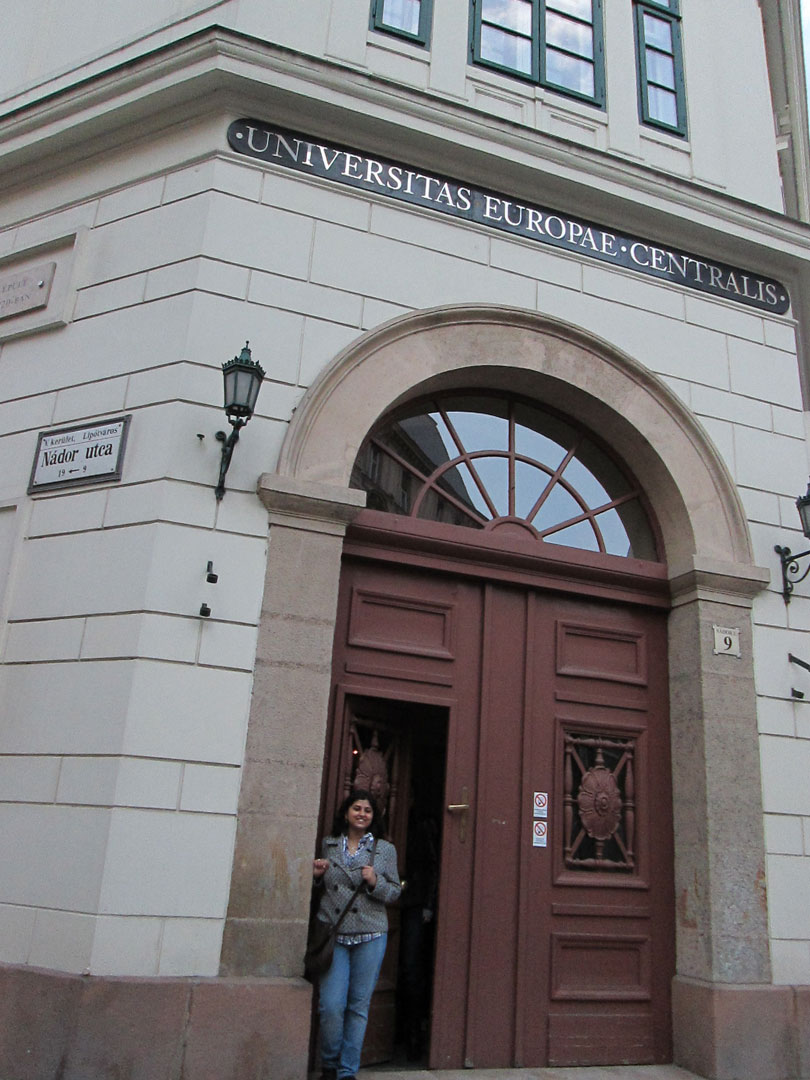
    Deya Bhattacharya on academic publications, Femin Ijtihad & LL.M. from Central European University

    Deya Bhattacharya is a graduate of 2013 batch from KIIT, Bhubaneshwar. She has mainly interned at Human Rights Foundations and is currently pursuing an LL.M.  in Human Rights from the Central European University. She is a Senior Legal Researcher at the global women’s rights intiative Femin Ijtihad

    In this interview she talks about:

    • Publications and top 3 things while writing a research work
    • Internships at Human Rights Organisations
    • Work at Femin Ijtihad as a Senior Legal Researcher
    • Intricate details of an LL.M. in Human Rights from Central European University


    Most of our readers are law students and young lawyers. How will you introduce yourself to them?

    If there’s a percentage of your readers who didn’t want to take up law, but did so for whatever reason, then I will safely introduce myself as a lawyer who became one by chance. Legal studies grew on me slowly – I am, at present, a postgraduate student in Human Rights and International Justice, particularly fond of women’s rights issues and democratic transitions.


    Why did you decide to study law? Tell us about your college life.

    There is a funny story behind this. Towards the end of class eleven, a school friend and I decided to chart out our career options. I never really decided to study law. I was never interested in the pure sciences. I had always wanted to study English, and she wanted to be a lawyer. We both began preparing for law school entrances. However, as fate would have it – she studied English and is now an educational consultant and I ended up in law school.

    I loved International History and English, and my parents gave me the option of doing what I wanted to, and law somehow happened (I saw this with equanimity now; it wasn’t the case always – in the beginning I was not happy that I had chosen law).

    The first couple of years in college, though formative in many ways, were quite forgettable. I drifted from class to class, internship to internship, pretty unsure of whether what I had chosen was, in fact, good enough. Thankfully, there were a few very supportive professors who managed to help me channel my interests in a certain direction. In the latter half of college life, I became more assertive because at that point I was almost confident about what I wanted to do.


    You graduated from KIIT. Tell us what your law school experience was like. Also, what do you have to say about the supposed ‘elite’ tag attached to certain law schools? Do you believe branding is something that’s very relevant/important at any stage in a law student’s career?

    The first two batches of KIIT almost always tell you that law school, in the first couple of years, is splendid. We had brilliant professors. The quality of debates in class was remarkable. In the first three years of law school, the professors made sure that there were discussions and dialogue amongst the students; we could approach them whenever we liked, even after class hours. In fact, one of the professors (he has long left KIIT) sat me down and helped me chart out my resume and taught me how to footnote one afternoon over cups of tea.

    I was not interested in law firms (where, I have heard, the elite-tag is of consequence). So during internships it didn’t matter to me whether I was from a national law school or not. It bothered me in my fifth year during two international scholarship interviews – in one, the panelists had not bothered to read my personal statement before they called me in and asked me loose questions about everything except what I wanted to pursue; and in the second one, I was intimidated about my research work (women’s rights/transitional justice – I was told Indian lawyers aren’t really concerned about it!).

    But no, I do not think branding is the most important thing in a law student’s career. It certainly makes life comfortable – you don’t have to build walls around yourself everytime you go to a conference or a moot court. However, let’s not forget – if you’re from an elite law school, you’re expected to be better than most others.


    You have had a variety of publications mainly in Women’s rights. How did you settle for this issue?

    I am not sure why one would settle for something? I don’t like settling for things I am not interested in. KIIT offered specializations and while I saw most people in my law school taking the oft-travelled path – Corporate law, I took to International Law (something that is hardly viewed as concrete in the Indian law sphere). Anyhow, this was in my third year, and I was aching to do something along with my regular coursework.

    So, I applied to Femin Ijtihad (now, Strategic Advocacy for Human Rights or SAHR) for an unpaid online internship during that time for a Women’s Rights Case Law Project in India, and this deepened my intrigue in Women’s rights issues. The project was a minor one at that time but starting work at FI/SAHR has been both the inception and the center of my career choices. Later, I wandered from Women’s Rights proper to Women’s rights in transitions but that is a different and a much longer story.


    deya-b4What are the top 3 things you keep in mind while compiling a research work?

    I am sure different people have various ways of accumulating research.  The top three things I do while I am compiling research:

    1. I move myself away from everything and everyone else when I am working. I turn on some instrumental music and I do not liking talking when I am researching/writing.
    2. Secondly, I like my documents organized. I can spend hours and hours on this, worrying I might lose my sources. I keep them on Dropbox and segregate folders on the laptop, colour-coordinate, highlight and stick post-it notes on the hard copies that I arrange by topic. Thankfully, there is a software called Zotero that helps you keep track of your bibliography by saving your sources into a personal-library of sorts (I highly recommend this while writing papers, really helps). I also think OneNote/EverNote are excellent pieces of software to keep your article/thesis notes arranged.
    3. Lastly, the writing bit. For me, it can get excruciating to find a perfect starting point when I am beginning an article (sometimes even an assignment). I have seen when I put myself through stress, extreme unimaginable stress (please don’t try this at home!) I write better and more effectively. Another thing that I do (but may not recommend) is that I do my footnotes/endnotes in the end, after my writing is done. It can get difficult to alternate between forming cohesive arguments and doing something so clerical like footnoting, at the same time.


    Your have interned at the PUCL, PILSARC & ORF starting with reputed advocates. Please tell us if these internships were pre-planned? What did you gather from your experiences at these places?

    None of my internships were really pre-planned. I was going to do the usual NGO-court-law firm internship drill, when I realized I couldn’t follow the oft-beaten path. PUCL happened after a string of e-mails and calls. It was my first internship, and possibly, my first tryst with human rights work. They had a tiny office-space and much of our work was field work in the harsh Delhi heat. The internship introduced me to the delight of working with the grassroots, how legal ethos is an interaction of legal theory and practical work. I fell seriously ill after my first ever internship (I think I should have taken the hint and left law school for good!) Laughs…

    PILSARC, under the aegis of Dr. Rajeev Dhavan, happened at a time when I was sure that I wanted to pursue Human Rights. One of the senior researchers at PILSARC actually augmented my intrigue towards transitions and democratization, and I think I will always be grateful to her for her lecture on Pinochet’s trial, Charles Taylor and all the hybrid and international tribunals. Back home, I still have the sheet the paper somewhere, where I had scribbled about them while she spoke.

    ORF was my last internship in law school. I did a lot of conflict-related research there, but I wish it had come at a better time. I was grappling with my university applications then and I don’t think I did it much justice.


    From your experience at internships, do you think the various law schools across India prepare a student for the world outside their campus?

    To tell you the truth, I don’t. Internship breaks are between the semesters and continue for thirty to fifty days? I don’t think that this is enough time for a law student to properly understand the work culture, ethics and the like. Most law students would probably do the routine internships– first year, NGO/think tank; second year, district/high courts; third year, Supreme Court and fourth and fifth year, law firms.

    And these internships go on for a month, maximum six weeks, and by the time, you’re comfortable and have understood the nature of the work (and, decide whether or not you like it), your internship is done, you’re given the certificate and they bid you farewell.

    I think our internship programmes should be like the ones in medical schools. An entire year or two of doing what you are actually interested in, instead of numerous internships just to decorate the resume.

    Besides internships, I think knowing and understanding the vagaries of legal writing also helps. It is a much underrated skill in our community.


    You have interned largely only with human rights institutions. What inspired you to pursue human rights?

    Call it being irrational or simply only just a character flaw, I don’t like doing what everyone else is running after. Maybe I’d be great at a law firm, but I did not want to intern in any law firms because everyone from my class was doing that. This made me build a permanent mental block against law firms, and commercial law. I also avoided studying the mandatory corporate law course back in KIIT, but I had a very resolute professor who made me study it.

    Anyhow, I think this mental block coupled with the fact that I wanted to do something with people (I took up humanities in high school purely because beakers, cutting open cockroaches and atoms don’t do much for me) inspired me to pursue Human Rights. In 2011, during the Arab Spring, while scanning for news from the Middle East and the revolutions, I was almost certain that this was where my passion lay.


    You worked for two years at Femin Ijtihad as a Senior Legal Researcher. Share with us the work environment over there and the work you handled? How did you apply to them for a researcher’s post?

    As I have mentioned before, I began working with FI/SAHR as an intern. What began as an internship slowly moved towards more concrete work. I began drafting arguments for cases in the Afghan legal system, drawing up strategy papers and training manuals for strategic litigation for women’s rights in Afghanistan. In 2011, Natasha Latiff, the founder-director of SAHR offered me a position in the Executive Board of FI/SAHR as a Senior Legal Researcher, and I happily accepted.

    We have been working pro bono for a long time, and FI/SAHR believes in bridging the gap between academic and activism in women’s empowerment issues. I don’t think I’d ever refuse the position! In the last few years, we have received the FRIDA (The Young Feminist Fund) grant and the SOAS Best-Student Volunteering Projects.

    We are a team of several women from four different continents, whom I have never met! But the amount of camaraderie between us is phenomenal. I always write to Natasha whenever I am in trouble and she always makes sure she sends a positive audio-note and almost always with a solution to my problem! I am grateful to Natasha, Anna, Sara and Sarah for always being there to brainstorm on my (sometimes ridiculous) ideas.

    The work I have done here is mostly linking women’s rights to post-conflict/conflict areas. I have also assisted in strategic litigation, drafted arguments, concept notes and training modules for child custody, rape, and domestic violence issues. A project that brought us accolades is a research we (Sarah Jones, Sara Bergamaschi and I) conducted in Libya, interviewing Libyan activists on the right of political participation of women after Gaddafi’s fall. The research was published and presented in plenty of international conferences.


    deya-b3You are now pursuing an LL.M. in Human Rights from the Central European University. Tell us about the entire application process and any available scholarships to study at this university?

    The application process at Central European University, Budapest is three-fold. By the applicable deadline, you send them your application documents (résumé, statement of purpose, research essay, certificate of English proficiency, transcripts, and recommendations). Then, there is an online examination within a stipulated time limit (I think it was problem-based!). The last stage is a Skype/telephonic interview.

    CEU has a plethora of scholarships and fellowships – ranging from only tuition waivers to fellowships that take care of your tuition, lodgings, insurance and provide you with a stipend for your living costs (remember those days when we dreamed of being paid to study? This sounds almost ideal, right?). If you perform exceptionally well in your first term there, they sometimes double your stipend, as an incentive.

    Since most of my classmates here have had prior work experience or exceptional internships/volunteer work, I am almost certain that the admissions committee prefers that the students are in touch with human rights work.


    How did you decide to go for CEU over others? What other universities were you considering?

    Besides the two scholarships (Rhodes and Commonwealth), I had applied to the University of Toronto (the LL.M. program offered specific fellowships in women’s rights, human rights and transitional justice), New York University Law School (the LL.M. program offered what I really wanted to pursue: perspectives of human rights in the Middle East, and had a clinical programme in constitutional transitions), School of Oriental & African Studies (research-based programme with a concentration on women’s rights and Middle East), Cambridge University, the Graduate Institute of International and Development Studies, and CEU.

    After disappointing interviews for Rhodes and Commonwealth, Cambridge and Graduate Institute both sent me overly polite rejections (Graduate Institute sent me one in French!). The scholarships that Toronto and NYU had given me were not really enough. I received the Master’s Scholarship at SOAS, but I would have to have to pay for my own living costs. CEU gave me a full scholarship, which was my primary reason to come here. There are not a lot of financial concerns when almost everything is covered and therefore, it’s easier to concentrate on what I am really here for.

    Another reason why I chose CEU was the program – the International Justice specialization under the Human Rights LL.M. has had all the courses I have wanted to pursue (international criminal law and transitional justice related). I also did a unique internship in an archival institution – dealing with using archival evidence for human rights violations – something that I don’t think I’d do anywhere else!

    deya-b2

    How is the faculty, students and overall experience there? Please share any memorable moment which has struck you.

    The experience at CEU has been very different from my experience in KIIT. The schedule has been rigorous and back-breaking. The course is divided into six modules: each module lasts about six weeks, at the end of which there are term papers, examinations, take-home examinations. The number of credits you have to take for grade is pretty strict; you may also audit courses you are particularly interested in. In between, there is a research/internship break when you can intern or apply for a grant to go to a library/research institute for thesis research. I did everything in an attempt to get a hang of things and the turned schedule more chaotic for myself.

    The students are from diverse backgrounds and countries so during classes (and even outside) it is great to hear different experiences. The faculty is brilliant and immensely supportive! Unlike back in India, the faculty here will treat you like one of them, like an equal, which is something I’ve begun to appreciate. One of the things I like about the course (and the faculty) here is the utilization of the Socratic method in classes. It facilitates a whole range of opinions about a particular subject, instead of a group of students just blindly copying notes while a professor lectures on.

    About memorable experiences? In the beginning during the welcome week, I scared a professor (of Indian ethnicity) when I asked her quite vehemently if she could cook Indian food! After this incident, I have tried to mellow down.

    Very recently, I had long-winding discussions about my thesis with Judge Richard Goldstone, the former Chief Prosecutor of the International Tribunal for Yugoslavia. He told me he was very impressed with my interest and dedication for the subject (he is taking a course based on international criminal law) and most importantly, during our last discussion, told me I am “good stuff” and kept my thesis outline with him. What could be more exciting? I think I am going to take this experience to my grave.


    deya-b5
    Was it the course or the brand name which mattered for you? Do you hope to continue with research work or enter law practice after completing your LL.M?

    Of course. I wanted to specialize in aspects of transitional justice and international criminal law and this course provided for exactly that. (Also, CEU is just two minutes from the Danube, and Budapest is such a beautiful city to live in.)

    I complete my LL.M. in a month, but that is only the coursework. I still have my thesis to write. So, I am going to concentrate on that before deciding what I want to do hereafter. I’m very sure I will be primarily involved in research, though I wouldn’t mind exploring a combination of both research work and litigation.


    How difficult was studying abroad in terms of finding accommodation, finances and settling in? Tell us about a typical day you spent over there? Did it allow you to engage in extracurricular activities as well?

    I was certain that I wanted to do my LL.M. after law school since I was in my third year so, I was prepared to face all sorts of difficulties. I think, in my case, the difficulties occurred during the application phase – I wanted to draft perfect personal statements for each of the universities instead of writing one and using them for all the applications. That was pretty hectic. Then, deciding that I would be giving up brand-names like SOAS, Toronto and NYU for CEU (a lesser known university) because I wouldn’t have been able to afford them.

    At CEU, accommodation was a part of my scholarship along with a small stipend that is just about enough to survive. Settling in is not that complicated – the university staff helps as much as possible to help you find your way around the university as well as the city. Living alone can be slightly unnerving at first but it grows on you, and you begin to love it.

    Owing to the module structure, it is quite difficult to plan your day around it. But we get by. My day starts with waking up, taking the metro to the university, and going to class. There is always a stipulated number of readings for class, which one is expected to mandatorily complete. After classes (some ending as late as 7 pm), I come back, speak to my family and engage in either my thesis work/readings for next day or other research work.

    Sometimes, I decide to cook for the entire week to lessen my burden, and those evenings are a pandemonium. I am a night owl so I get most of my work done after dinner. I cannot sleep unless I read so there are nights when I grapple the idea whether I should go to bed or finish reading a book.

    Because this is a taught programme and the schedule is rigorous, co-curricular activities become a hassle – I have not written an abstract for a call for papers in ages! I am not a big fan of sports; the only extracurricular activity I am bothered about is to finish reading novels and that is possible! For sports enthusiasts, the bar in the dormitory airs important football matches, has a pool table and organizes regular sports events.


    What would be your message for law students wishing to pursue a future in the field of Human Rights?

    Since I am only just starting out, I have some borrowed but clichéd (though, very effective) advice: patience, and passion. Human rights, whether advocacy and research or litigation, is neither fast nor easy. It could take decades to stretch out, amend and modify the Human Rights discourse, and one will often feel intimidated by it, especially because the seniors in the field (there are exceptions, of course) will often disregard taking on younger people or ignore their ideas altogether. You will feel like abandoning everything because things do not work on a finely charted timeline, but don’t!

    As Natasha from FI/SAHR recently told me – “… keep doing your work with passion but be detached from its results.”

  • Teslin Augustine, NUJS grad on interning with MP Naveen Jindal, the LAMP fellowship & life in the public policy sector

    Teslin Augustine, NUJS grad on interning with MP Naveen Jindal, the LAMP fellowship & life in the public policy sector

    Teslin AugustineTeslin an NUJS graduate tells us about her inspiration for joining law and her internship with Naveen Jindal which set her on the course for a career in public policy. She talks about the transition from law school to the real world and how best to have a work life balance.

     

    How will you introduce yourself to our readers?

    My name is Teslin. I graduated from NUJS in 2012, after which I did the Legislative Assistant to Member of Parliament fellowship offered by PRS Legislative Research in association with the Constitution Club of India. I am currently working as a policy consultant in a law firm in Delhi.


    Why did you decide to study law? Tell us about your college life?

    Perry Mason – the oh-so-cool defence attorney who was the star of a series of Erle Stanley Gardener books which I was addicted to as a child, is the single biggest reason why I decided to do law. Of course, I found more logical-sounding reasons when I had to justify my choice of profession to my family but the truth is that I found the long-winding arguments Mason hashed out in Court too hard to resist.

    College made me the person I am today – and for those who don’t know me, I am a pretty awesome person (modesty is probably not one of my traits though). Jokes apart, I made some amazing friends, who gave me the confidence to not be apologetic about myself – my choices, my likes & my dislikes and most of all it gave me the NUJS tag which meant instant “smart-alert” for my future employers.


    What kind of internships did you do while you were a student? Any remarkable experiences during your internships that shaped your career choices later?

    I did the usual run of the mill corporate internships. The only internship that was of any real significance was my 6-week stint at the office of Naveen Jindal, MP. I stumbled upon this internship purely by chance and it was the only internship where I felt like what I did mattered – that I wasn’t just another person helping rich corporations get richer.


    We often hear that more lawyers are getting into “policy work”. What does this actually involve? What is it that policy lawyers do?

    Courts take years, sometimes decades, to correct a legislative mistake. As a lawyer working in the realm of public policy (I wouldn’t call it “policy lawyer”) I do what I can to influence what a piece of law ultimately looks like – be it through making standing committee representations or educating the political class about lesser known concepts. I make sure that our legislators have all the information they should have to make intelligent policy choices which will ultimately decide the trajectory which our country will take. To put it simply, as a policy worker, I try to make sure that the Bill that ultimately becomes a law is in its best possible format.


    What made you interested to get into this area of work?

    Be prepared to roll your eyes, some naive ideology coming your way – I have always believed that at the end of 20 years if I can think of one thing that I did to make things better for this country then I will have deserved my place in this world. To me, policy seemed like the most direct way to make a difference. Even if I don’t make any direct changes, as long as I can keep the dialogues happening I have done my job well.


    When did you start thinking of going into such an offbeat career? What precipitated this decision? How difficult was it for you to make an out of the box career choice?

    I wanted to be happy about the work I did and that’s all that mattered to me. Sure, at the beginning, I was filled with uncertainties and always wondered if I was making a big mistake. But I soon shed all my uncertainties and insecurities about my choice of profession, when I realized I was one of the few people to have a smile on their face at the end of every day.


    How did LAMP Fellowship happen? What are the criteria to apply? How did you go about your application process?

    I first heard about the fellowship during my internship at Naveen Jindal and I had thought to myself at that time that no matter what happens I would definitely give this a shot. The LAMP fellowship is open to everyone who has an undergraduate degree, is below the age of 25 and is an Indian citizen. There is an online application form which asks for a statement of purpose along with your CV and some other details. Once you get shortlisted based on the SOP, there is a telephonic/skype or walk-in interview. The panel who interviews is made of ex-LAMP fellows, PRS analysts and usually a third party policy expert. There is no secret mantra to the interview or the application. The most important thing they try and ascertain during the interview is your reasons for applying and how passionate you are about policy-making. I think, if you truly care, your sincerity shines through.


    How was your typical day over there?  What kind of work were you involved in?

    I spend most of my time preparing questions that my MP could raise in the House, helping him with his Standing Committee responsibilities, doing issue-based research for him, prepping him for debates, preparing special mentions, zero hour submissions and private member bills.


    Is the pay enough to sustain your life in a megacity like Delhi, especially if you are not living with your parents?

    I am a very middle-class person with very middle-class needs. That said, as a LAMP fellow I lived in a constant state of poverty, my current job as a consultant allows me to lead a comfortable life.


    Currently you are involved in policy related work in a law firm. What kind of work do you have to do? How is it different from your previous work profile?

    As a LAMP fellow my work was mostly parliamentary in nature. This means that I helped my MP raise questions in parliament, introduce private member bills, raise special mentions, zero hour submissions and prepared his speeches for parliamentary debates and media appearances. The work I am doing right now uses a lot of the experience and knowledge I have gained over the past year as a fellow. I advise clients on implications of laws and policies passed by the Government, how it is likely to affect them and how to make representations to the Government so as to have a regulatory system in place that is favourable to clients.


    Would you throw some light on your current job profile? Is this an emerging area that law students should keep an eye on?

    I currently work as a Policy consultant in a law firm. We are in the business of providing policy-based advice to corporate clients.


    Any memorable career experience you would like to share?

    The highpoint of my fellowship was when a private member Bill I had drafted was introduced in the Rajya Sabha and was discussed and debated upon for 7-8 hours. There is nothing more rewarding than seeing Parliamentarians discuss, argue for or against a clause that you have yourself drafted.


    Where do you see yourself 5 years down the line?

    I eventually want to work with the Government and do policy making at the most basic level. I want to directly be responsible for what a policy document or a Bill looks like when it is introduced in the Parliament.


    What would be your advice to people interested in policy work? How should they prepare themselves for a career in policy? What are the essential qualities one should cultivate?

    As simple as it sounds, read the newspaper – to begin with. Policy work is a lot about being up-to-date with everything – be it the latest consultation paper that TRAI has released or the Orissa High Court’s judgement about mining. Know what is happening around you and take an interest to keep yourself updated. Do internships with a couple of policy organizations – Rakshak Foundation or Observer Research Foundation for example are excellent organizations to get an idea what policy work is all about. Talk to people who work with policy and leave behind all your fantasies


    How difficult or easy is the transition from being a law student to a lawyer?

    It is difficult. Your first job always feels like an internship. You keep waiting for it to get over and when it finally hits you that there is no getting over and that you have to do this every single day – pay rent, bills, buy groceries, fight with the maid, sit at the same desk everyday – it can get difficult. But once you accept that, life is good. It’s good to not be bound by any rules and finally be an adult, it’s good to be outside the constant scrutiny and judgment that is such an essential part of college life and do what you really want to.


    What’s your take on work- life balance?

    I know plenty of workaholics who are perfectly happy working all day everyday. Fortunately or unfortunately that is not me. I have to have the time to meet my friends, once in a while, come back home before the sun is up and go for a holiday once in a while.  I will probably be “lagging behind” my peers who work day and night but I choose not to measure my success based just on my professional life – it is a success for me if I have the time to explore every nook and corner of Delhi, it is a success for me if I have been able to take a dance class outside work and it is a success for me if I have gorged down 5 kgs of meat in a pigging competition. It is upto every person to decide what they want from life and there are no set rules.


    Last but not the least, what would be your advice to law students?

    I completely understand the glitz and glamour of corporate law and if that is what you really want to do then good for you. But if it is not, then there is no point fooling yourself. There is only so much happiness and satisfaction money and things can give you – true happiness is in finding something that you are truly passionate about and in waking up in the morning and actually being happy about going to work – that’s what matters in the end. Have the confidence to explore and find out what you love doing – don’t settle for anything lesser.