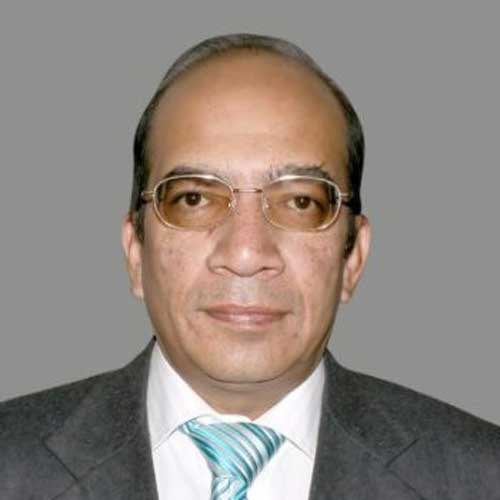
Mr. Sunil Agrawal graduated in law from the University of Ahmedabad. Prior to that, he had also successfully completed his Bachelor’s in Science and MBBS. He has worked with the Indian Revenue Services for over twenty years as Additional Commissioner of Income Tax. He is currently Senior Taxation Partner at AZB & Partners.
In this interview we speak to him about:
- Working with the Government of India
- Work at the Income Tax Simplification Committee
- Retiring as an Additional Commissioner of Income Tax and joining AZB as a partner
When and why did you decide to study law?
It was in 1995–while working as an Investigating Officer in the Indian Revenue Service, my boss all of a sudden directed me to argue the case which I had myself decided as an investigating officer before the Income Tax Appellate Tribunal (ITAT) for and on behalf of the Income Tax Department. I had no prior experience of arguing a case. The hearing of this case continued for about a week. Opposite to me was a senior advocate Mr. Dinesh Vyas, reputed to be the best tax counsel in India at that point of time. I succeeded. After the judgment, he encouraged me to take up the role of an arguing counsel, rather than continuing in the government service. At that point of time, I decided to complete my law degree.
What are the competitive exams you have taken?
I have taken the following competitive exams:
Combined Pre-Medical Test (CPMT) in Uttar Pradesh – scored 5th rank in Uttar Pradesh and 2nd in Agra (my home-town). Although I ranked 4th in my university, after completing my MBBS, I did not pursue medicine as a career, I thought that I could better serve the nation while being in public services.
Bank Probationary Officers Exam – I worked in Punjab National Bank as a Branch Manager (while still a probationer). It was a very satisfying experience of having the good fortune of understanding the working of and managing a branch of a leading public sector bank. It was even more satisfying because this was where I substantially improved loan recovery rates for priority sector loans, in less than one year.
UPSC Exam (civil services) – UPSC civil services exam is known to be the toughest competitive examination in the world (so recognized by the Guinness Book of Records).
The scope of studies is extremely wide – it goes without saying that one has to study in a meaningful and sincere manner for at least thirteen to fourteen hours a day at least for a year, if not more, to stand a chance of success in the exam.
Has your study of medicine and your experience as a banker helped you as a lawyer?
Emphatically yes. Any science-related subject, medicine being no exception, forces a student to be analytical and logical. These qualities, if inculcated can help an individual in any vocation or profession he or she might undertake. In fact, I have used this knowledge in my public service career and in professional career, wherever I found it to be necessary. This knowledge has been very helpful.
In what capacities have you worked with the government?
I have worked in the following areas of Income Tax Department:
- Investigation
- Corporate Assessments
- International Taxation
- Arguing counsel before the Income Tax Appellate Tribunal (ITAT) and
- Authority of Advanced Rulings (AAR).
How has this experience contributed to your present stint in a law firm?
Working with the Income Tax Department has provided me the width and depth on the subject which I cherish. It is very difficult to acquire comparable exposure while working in the private sector alone.
How was your experience working with the Income Tax Simplification Committee?
It was an extremely rewarding experience. I was one of the members of this Select Committee. The mandate to this committee was to simplify the Income Tax Act, 1961, rather than to modify it.
When I was a Joint Commissioner of Income Tax in charge of corporate assessments, I had found some lacunae in the Law which were being exploited by the companies, at the time making assessments of large corporate groups. With the objective of plugging these loopholes, I had proposed amendments to the provisions of the Income Tax Act and given the draft of the proposed amendments with case studies to demonstrate how the loopholes were being exploited. It has been fortunate that such amendment proposals were approved by Ministry of Finance/ Ministry of Law, Govt. of India. I am happy to share that the proposed amendments became a part of Income Tax Act, 1961 which are still in force.
The suggested amendments to certain provisions of the Income Tax Act which were prone to blatant misuse and perhaps my prior experience in writing articles in professional tax journals, such as Income Tax Reports (ITR), Taxmann, experience of having argued against almost all leading tax advocates, etc. probably contributed towards my appointment.
How was the experience of working with an industry body such as CII?
Working with an industry body on tax issues of common interest is a very rewarding experience, since we were trying to arrive at workable solutions to the problems of several relevant stakeholders.
Can you share any memorable or interesting experiences in your stint as a senior government counsel at ITAT?
On a lighter vein, I was probably the first government counsel arguing in the ITAT who used a laptop to access and update a self maintained database of cases and precedents.
At that time it was perceived as a threat by some of the most reputed opposing counsels! I had prepared on my own a section-wise database using major authorities from Supreme Court and High Courts and ITAT which I used to refer while citing support for a proposition I was arguing. This was done out of necessity and innovation. As government counsel, I did not have the necessary infrastructure to provide four copies of every judgment which was cited before the bench.
Which part of your experience with the government has turned out to be most relevant in your present stint as a law firm partner?
Looking down the memory lane, it would not be possible to pinpoint any particular aspect of my experience with the government which can be singled out as most relevant. In fact, it is the overall cumulative experience of having served the government in various capacities, whether as an investigating officer, assessing officer or a departmental representative before the ITAT or AAR which has given me the exposure that one cannot gain otherwise.
Can you explain how life as a civil servant or as a government counsel compares with life at a law firm?
If somebody is sincere, diligent, competent and honest to the job on hand I do not see any difference between my role, whether in government or as a law firm partner today.
Can you tell us about your time at AZB?
I am fortunate that I continue to handle variety of matters which I was used to handling in the government even after switching over to the law firm.
Working as a law firm partner, I have had more opportunities to acquire experience on the other side of the table, which I cherish.
According to you role of a senior counsel and a law firm partner in a complex litigation?
A law firm partner typically has the advantage of knowing the facts of his client’s case extremely well. On top of it, if he or she has additional litigation experience, the quality of the briefing to the senior counsel goes several notches up. This, in a sense, acts as a catalyst for the senior counsel so that the senior counsel is able to prepare himself better. The result is that the senior counsel does better in the court and accordingly the prospects of the client obtaining a better outcome in the litigation significantly improve.
Why did you decide to migrate to a law firm after government service?
Government of India recruits the best brains in the country through the world’s toughest competitive examination, but it is an irony of fate that the government is not able to retain some of the talent it has already recruited. I think the reasons are too well-known to be spelt out in detail here. I was no exception to this irony.
Is joining civil services a promising career option?
I would say here we are dealing with the issue of identity crisis. It is better if the youth is able to identify at quite an early stage of career what are their natural inclinations and propensities. Working through those natural gifts is the best way of realizing or unlocking one’s potential. So long as job or career switchover is in furtherance of this objective, perhaps no question should arise on the motive behind the switchover. I would not like to comment on the situation wherein the job switchover is inconsistent with this philosophy.

 Okay, coming to the very clichéd question- Why Law?

 Allow notifications