Tag: Taxation

  • Pratyush Saha, Assistant Manager, Indirect Taxes, PricewaterhouseCoopers, on work in taxation firms

    Pratyush Saha, Assistant Manager, Indirect Taxes, PricewaterhouseCoopers, on work in taxation firms

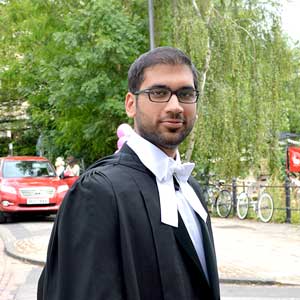
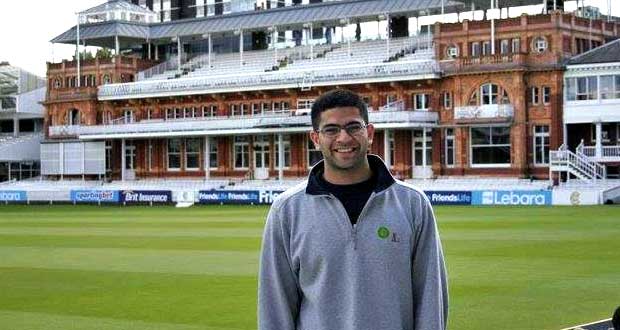
    Pratyush Saha graduated from WBNUJS in 2011. During law school, he participated in various co-curricular activities and has multiple publications to his name. Soon after graduation, he joined BMR Advisors Pvt. Ltd. as an Associte-Indirect tax. Later he switched to PricewaterhouseCoopers and currently works as an Assistant Manager, Indirect Taxes.

    In this interview, he talks about:

    • Law school experience at WBNUJS
    • Work experience at BMR Advisors
    • Induction and work at PwC
    • Work experience in tax law


    Tell us a bit about your childhood and pre-college life as well as educational background.

    As a kid, I was an exceptionally confused individual. I wanted to be a doctor or a pilot and a painter. Once, I even considered the prospects of becoming a fashion photographer. But the thought of becoming a lawyer never really crossed my mind. Law happened to me by chance. I pursued science in my plus two in and like most of my classmates, I diligently prepared for the engineering entrance examinations. Law was hardly considered as an alternative career option by science students back then.

    Once I came across a friend preparing for law entrance tests and became curious. The questions appeared to be fairly simple, so I decided to give it a shot. I cleared both AIEEE and the entrance test for NUJS. The idea of me becoming a lawyer did not go down too well with my parents initially. However, I eventually managed to get them on board with the idea. I strongly believed that doing law would prove to be a fascinating journey ahead. Fortunately, it turned out to be a decision I would never regret.

    Coming from a typical Bengali family, I always had a liking for creative arts, which I thought would define my career in future. I always find creative thinking to be an essence of the legal profession which complements the objectivity of legal proceedings, research and the practice of law.


    Did you face stiff opposition from your friends about becoming a lawyer? What were your objectives when you thought about law while still in the preliminary years of Law College?

    Law has always offered more career opportunities than what is commonly known. By the time I joined NUJS, law was fast picking up as a lucrative career choice. Legal profession was evolving in every way. There was a huge demand for smart, young lawyers. NUJS is regarded as one of the premier law colleges in India and was naturally getting good placements then. Our alumni were making a mark in the industry. Some were doing exceptionally well as litigators. My friends did not really have much of a say about me becoming a lawyer but most of them were happy seeing me try out something different.

    Time at NUJS was fun. I never focused much on extracurricular activities. I mostly spent my time having regular ‘addaa’ (Bengali for gossip) sessions with friends, reading few books and sleeping. Temperamentally, I was more suited to activities that included reading, thinking and writing as opposed to debating, mooting or head banging with guitars and drum sets, for that matter. For a brief period of time, I was a part of the editorial board of NUJS Law Review (a prestigious law journal published by our college). But that’s it! I preferred to spend just the right amount of energy that was required to maintain decent enough grades to land me a good job in the end. In fact, till my fourth year I hadn’t even figured out what I wanted to do after college. I had few of my own subject preferences though. Thanks to a few outstanding professors at NUJS. I can distinctly remember our Sociology, Jurisprudence, Arbitration, Constitutional law and Contracts lectures to speak of few.


    How relevant do you think are internships for a present law student?

    Internships are very important for law students. But internships must be carefully planned and strategized. I feel, former internships add substantive value to one’s CV, which always helps secure better internships latter. Frankly, I don’t think interning in law firms in 1st or 2nd year serves any real purpose. Most of the students get good placements because of few good internships in their 3rd, 4th or 5th year. Well targeted internships help secure a job in a field where the student is genuinely interested in working. It is very important to make the most out of internships done in 4th and 5th years.  I had a liking for taxation laws (indirect tax in particular). With some good luck, I landed an internship at BMR Advisors, Delhi, at the end of 4th year. I was luckier to get a Pre Placement Offer (PPO) after my internship. It is extremely important to make a good impression on your seniors during internships. I have seen many students treating internships casually, especially in their final year which never helps. A student who comes across as an enthusiastic, hard-working, smart, and efficient person who is eager to learn, has a fairly reasonable chance of converting an internship opportunity into a PPO (of course it largely depends on whether the firm is actually looking to hire a fresher at that point of time). This is why I say, internships must be carefully planned and strategized.


    How valuable would you say your legal education was at WBNUJS? When did you actually experience the learning curve?

    I had a stellar time in college! It made me the person who I am today, in a lot of different ways. Even though the college is located at the heart of Kolkata, NUJS has a spirit that I feel is completely different from its city. In fact, one could often forget who he/she is in Kolkata, the moment one enters the campus (Yes! Our college does have a small but warm campus). NUJS provides a setting that presents a unique confluence of cultural diversity that one hardly comes across in any other undergraduate college in Kolkata. I met a bunch of exceptionally smart and talented individuals there. The ambience, activities, students and faculty made my transformative five years in college the most memorable experience of my life. NUJS was not just about studies, it taught me a lot about life. Managing studies along with research, paper presentations, internships and editorial work were my initial lessons on time management that I learnt at NUJS. Our Vice Chancellor, Professor Dr. MP Singh was a dynamic and a successful leader who had a completely different approach towards academics. Open book exams and take home papers were things that I had never experienced before. Students learned their subjects independently. Academic curriculum, exam and evaluation patterns were extremely flexible. We never had to stick to a routine text book for our studies. Our professor used to hand-pick reading materials for our courses and honestly, some of the lectures were actually worth attending. But one could not attend classes without being prepared. Some professors gave attendance but asked students to walk out if they were not interested. The academic and policy debates we had in their classes where extremely satisfying and fulfilling. We had an outstanding library and the research databases were topnotch. A lot of emphasis was put on reading, researching and publishing at a regular basis. There were so many things happening in college every day, starting from moots, debates, seminars, workshops to guest lectures. I really miss them now! I had the good fortune of attending lectures given by few bright young faculty members like, Dr. Prabhash Ranjan, Dr. Rukmini Sen, Pritam Baruah, Daniel Mathew and Shamnad Basheer who made a huge impact to the academic culture of NUJS.

    It is true that National Law Universities (NLUs) give students the right exposure to great learning opportunities and career avenues that law students from other colleges would rarely get. However, the learning curve only begins in college. It actually curves once we start off with our professional services. I remember an interesting conversation I was once having with a young IRS officer who was newly posted at a Customs station. I asked him, ‘The law is so vast and complex, don’t you feel bogged down as a fresh officer holding the post of an Assistant Commissioner?’He seemed very confident with his job. He smiled and replied, ‘I don’t need to worry, the chair will teach me everything’. That pretty much sums up the point I am trying to make here.

    Having said that, I do not undermine the education that I received in college in anyway. I think they are by far the most important thing that shaped me as a legal professional in my formative years. Professional experiences definitely help us learn court room antics, negotiation strategies, management and networking skills etc. Yet, unique academic insights provided by a lawyer give him a distinct edge over his peers across any table. I can vouch for that from my own practical experiences!


    How important do you think that extra-curricular activities are to a law student?

    The curriculum at NUJS always encourages students to participate in extracurricular activities. These activities include moot courts, debate competitions, essay writing, legal writing and lots more. No matter how much we complained, I feel we received adequate freedom and financial support from college. Such activities help build right attitude towards competition, a zeal for research and develop a skill for formulating arguments and expressing them confidently in front of an audience. Extracurricular activities are required for harnessing desired qualities like confidence building, working in a team, brushing your public speaking skills, managing and coordinating with your peers. However, making these activities mandatory eliminates the fun elements completely. I feel a student should be free to make a choice whether to moot/debate or just write articles or publish papers. Thankfully, NUJS never made them mandatory.

     

    pratyush-saha-1

    How was your work as an indirect tax lawyer at BMR Advisors Pvt. Ltd.? Tell us what a typical day at work was like for you?

    The year after graduation is the most defining and challenging time for a fresh law graduate. BMR was my first job and like any ‘first’, BMR experience was special in many ways. I relocated to Delhi after joining office. This was the first time I was actually stepping out of home which was my comfort zone and I was out there, dealing with my problems all on my own. I hardly had any relative in Delhi so my college friends and colleagues quickly became my support system. At the cost of a little embarrassment, for the first time in my life, I would admit having known what feeling ‘home-sick’ could be like.

    Before joining as an associate I had interned with BMR for a month. That helped to an extent. I already knew the system and the people within. People in the Indirect Tax team at BMR were like one small, closely knit family. BMR had a healthy mix of chartered accountants and lawyers and most of the lawyers were from NLUs. Back in 2011, when I joined BMR, the indirect tax team had three associates who were law graduates. Our team specialized in dealing with complex Indirect Tax advisory and litigation assignments. BMR is a hard-core consulting firm. People at BMR have very high work standards. I found them extremely knowledgeable, very smart and competitive. Everyone was a thorough professional, The BMR experience taught me a lot in terms of professionalism.

    First few months at BMR were difficult. I could barely draft a memo let alone handling complex indirect tax transactions and providing advice on tax implications. Reporting to multiple seniors and meeting their stiff deadlines had been a challenge. BMR trained me a lot in terms of working under pressure. As an associate, one is expected to take care of everything. Starting from drafting engagement contracts, ensuring bills are raised on time, draft thoroughly researched memos, prepare legal submissions, reply to notices, draft appeals, prepare presentations for client meetings, field queries from clients, keep tab on key legal developments and updates, keep a tab on all court proceedings for clients, give training sessions for team members and the list just goes on. Just name it, and the associate is expected to do it all. I have been very lucky for my seniors had always been there to help me out wherever I would get stuck. I will forever be indebted to two of the sweetest persons I met in BMR, Anshul Aggarwal and Saurabh Agarwal. They were my mentors, my role models and guides. Without their patience, guidance and support, I could never have been where I am today.

    A typical day at BMR would start with me reaching office by 9:30, having breakfast and a small chat with my colleagues. After that, I would usually sit with seniors to discuss my to-dos and set about completing assigned tasks within agreed timelines (BMR is very particular about timelines!). All of us would break for lunch, usually between 1:00-1:30 P.M. My colleagues and I would go for a short stroll outside office post lunch (That was, by the way, the best part of the day! Especially during the winters in Delhi). Post that, I would mostly be found perched up against my chair and profusely typing out deliverables on my laptop to get them done on time. Leaving office would mostly depend on the amount of work one had to complete in a day.

    However, the best/worst part of a consulting firm is that you are always on your toes. One could never guess how a typical day would pan out for him or her. “Urgent” deliverables, client queries and meetings could pop up like a surprise at any given time and one has to deal with them along with their regular work.


    What would you suggest a fresh law graduate should do to hold spirit and utilise the opportunities available in his first year of graduation?

    First: Get your basics right! You are expected to know the law, where to find it and how to use it without wasting much time.

    Second: Be clear as to what you are expected to do. Ask questions and clarify all your doubts before you start working on any deliverable. This was one lesson I learnt a hard way when I was an associate. One should never start working on a project without being clear about their senior’s expectations. Be it in terms of content or timelines, you must discuss it all with your senior before you start your work. That saves your time and your senior’s time as well.

    Third: Don’t shy away from challenges. Get out of your comfort zone and push yourself to do something you have never done before. That’s the only way one can grow as a professional and I feel, this is a ‘must have’ trait for a lawyer.


    Currently, you work as an Assistant Manger- Indirect Taxes at PwC. What prompted you to make this choice and what made this shift possible? How did your appointment take place?

    I always found Mumbai to be a better city to live in, as compared to Delhi. The opportunity of moving to Mumbai from Delhi was a decisive factor for making the decision to switch. Most of my friends and relatives stay in Mumbai and that made a lot of difference to me. Besides, BMR focused mostly on advisory and litigation assignments. I had very little exposure to compliance. I wanted to have a job with a healthy mix of compliance, advisory and litigation and PwC offered them all. I met Abhishek Rastogi (who was a Senior Manager at PwC Mumbai back in 2012), at an event in Delhi. We started chatting up and I discovered that there was vacancy for my post, with the exact job profile that I was looking for. I suggested that I was interested in joining. This followed up with an interview with the Indirect Tax head of PwC in Delhi and I landed my second job at PwC Mumbai.


    We would love to hear about your work profile. What is a normal workday like? Please tell us a little about the responsibilities you have been entrusted with. What kind of legal work do you get there?

    At PwC, I look after clients from Pharmaceutical and Financial Services sector. A normal work day at PwC is pretty much the same as BMR. However, at PwC the clients repose a lot of responsibility on us. Apart from advising clients on tax issues we are also accountable for their tax compliances. However, my seniors have been very kind to give me a free hand in terms how I choose to deal with my clients and plan my work, as long as the work gets done. I have a team of juniors to assist me on my projects.

    My role as an Assistant Manager involves advising clients on various tax positions, review regular compliances like filing returns, and refund claims, review or draft submissions to be made to revenue authorities, prepare reply to show cause notices, appeals before Commissioner (Appeals) and tax Tribunals, represent clients before tax authorities and various appellate forums.


    What were the biggest hurdles and challenges in the first few months? What have been your failures and successes? How did you deal with them?

    Every organization has their unique set of work culture, drafting style, format for deliverables, approach to clients and work. For the first few months, it is extremely important to learn the new essentials and unlearn old habits that do not comply with scheme of work of the new employer.

    Success and failures are a part of life and its best dealt with an objective bent of mind. I always believe in celebrating my success with my colleagues and friends and keep the bad experiences from failures to myself, try and learn from it and never repeat them again. Also, it helps to pass on experiences of failures to juniors so that they do not commit the same mistakes.

    Working with numbers, accounts and tax issues, one could go wrong quite often, and to top it, one may not even realize it immediately. At times, circumstances are beyond our control.  The consequences may leave you with a bad aftertaste but it is important to realize it’s not the end of the world. Similarly, winning and losing a case is a part of the game and its best that we do not take occasional failures to our hearts.


    What are the primary essentials of an indirect tax lawyer? What is the current scenario of studying indirect tax law as a career option in India?

    A tax lawyer needs to have all the basic skills that any lawyer is expected to have. It is also essential to have a good understanding of accounts. Tax, as a subject, evolves every day. It is very important to stay up-to-date with latest provisions. Fresh graduates aspiring to join the tax profession should not only have a good understanding of existing tax provisions but also understand how laws have evolved over the years. This comes in really handy while handling old tax disputes. I would also encourage them to take lessons on Microsoft Excel and PowerPoint. These are basic skills expected out of any fresher at a multinational accounting firm like PwC and most law graduates (including me) struggle with them in their early days.


    Tell us about your work mantra? What do think are the most essential things required to excel at work?

    Keep a positive outlook towards life. Give your best effort on each assignment and believe in your dreams.


    What are the qualities which PwC look for in interns and associates?

    Unlike BMR, I have not seen PwC Mumbai offering short internships to too many law interns. However, PwC does hire law students as full-time analysts. We have students from various law colleges from Mumbai who work with us as full-time resources. Interested candidates can get in touch with the HR. We look for candidates with a fair exposure to tax laws, good drafting skills and a positive attitude. But of course, requirements may vary depending on specific job profiles for which a candidate is being selected.


    What are your future plans from here on?

    As of now, I feel I have lots to learn. Hence, I would like to stick around for a while. But you never know what future beholds!


  • Raghavan Ramabadran, Partner, Service Tax & VAT matters, Lakshmikumaran & Sridharan, on being a Chartered Accountant and Lawyer

    Raghavan Ramabadran, Partner, Service Tax & VAT matters, Lakshmikumaran & Sridharan, on being a Chartered Accountant and Lawyer

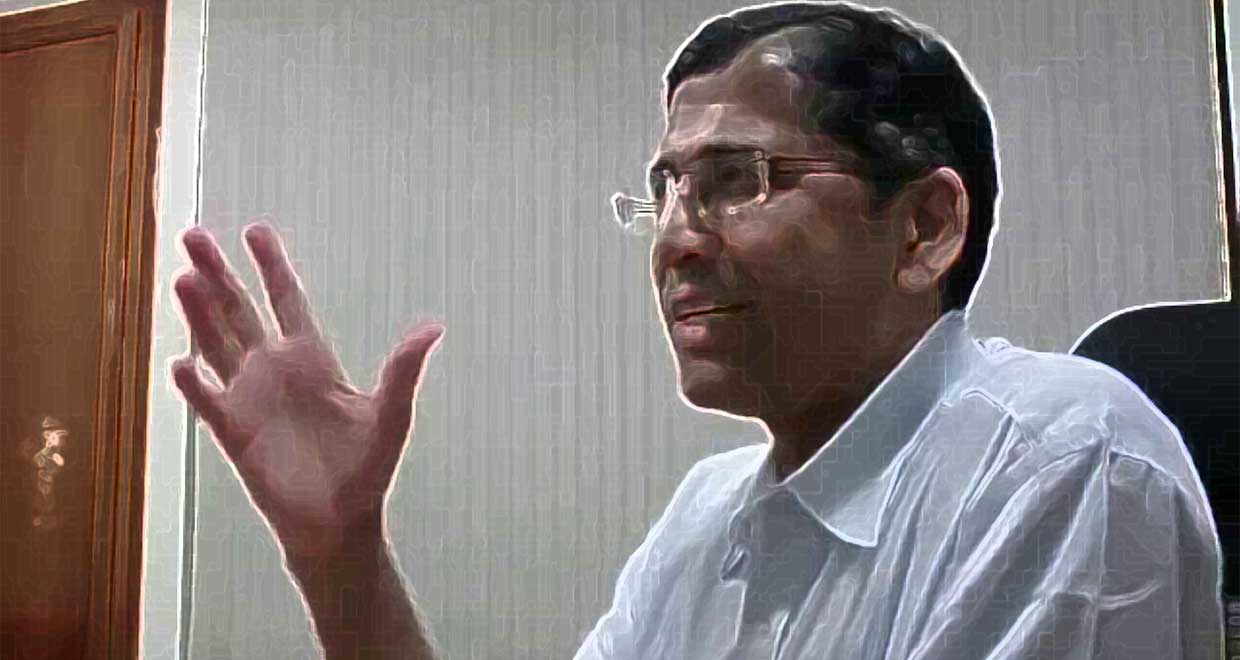
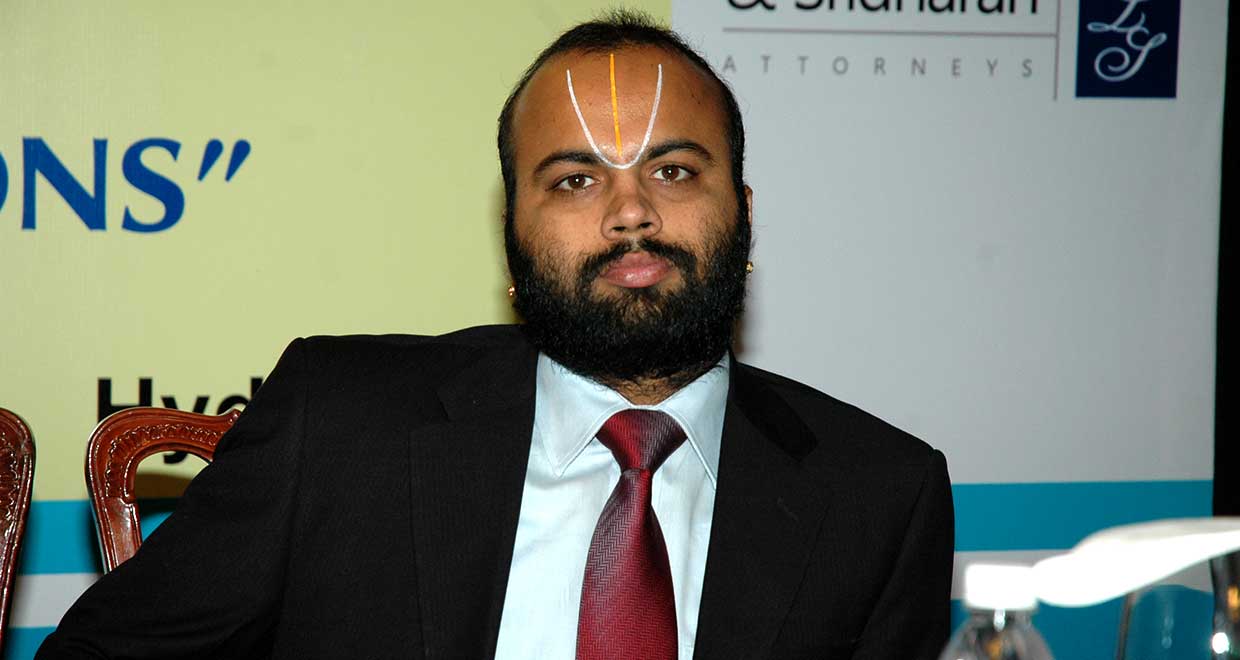
    Mr. Raghavan Ramabadran is a Partner at Lakshmikumaran & Sridharan. He currently heads the Service Tax and VAT practice of the Chennai and Hyderabad branches of LKS. He pursued a C.A. degree while simultaneously pursuing a B.Com course from Vivekananda College. His interest in taxation led him to join LKS after qualifying as a C.A. He further pursued a law degree from Law Centre II of Faculty of Law, Delhi University (“LCII”) while working at LKS itself.

    In this interview he talks about:

    • The LL.B and C.A. combination
    • Pursuing a law degree while working
    • Work of a Partner of Lakshmikumaran & Sridharan


    Where did you grow up and attend school? How did you decide to pursue C.A.? Please tell us a bit about yourself.

    I did my schooling in Chennai. I belong to a family full of Sanskrit scholars. In fact, my grandfather is a President’s awardee for excellence in Sanskrit. As a kid I was taught Sanskrit and Vedas. I had in fact completed my Vedic education by the time I finished my XII standard. Though I was always good in Mathematics, Science was not a subject which interested me and hence I chose to pursue a career in accountancy and enrolled myself in the C.A. course while simultaneously pursuing my B. Com course from Vivekananda College. I was always interested in taxes and once I completed my C.A. course, I applied to L&S. After joining L&S I realised how important it is to learn law to fully understand and work in taxes. Mr. Lakshmikumaran and Mr. Sridharan were very kind to me and took me to the Delhi Office for better exposure which also enabled me to attend the evening law course in Delhi University.


    After qualifying as a C.A., you joined Lakshmikumaran & Sridharan. How did you decide to join a law firm instead of practicing as a C.A.?

    As I said, I was always interested in taxes and one of my friends (who is also a C.A.) had already joined L&S. So I knew it was a great firm doing excellent service in the field of taxes. Hence, the choice was easy. I had applied to the firm. I was interviewed by Mr. Lakshmikumaran. The interview happened over several rounds and I was also asked to present a paper on Transfer pricing and the GATT Valuation Code.

    The firm already had the practice of hiring non-lawyers and therefore I was not an exception. Mr. Lakshmikumaran encouraged me to do law and explained to me how the scope of a C.A. is restricted as he cannot practise in High Courts.

    I realised that though a C.A. can render excellent advice, it is ultimately a lawyer whom he has to engage to sustain his advice before a court of law.


    What did your work profile at LKS consist of, before you were a lawyer?

    I was doing a lot of drafting which includes opinions, replies, appeals, writs, SLPs, etc. I used to do research and brief seniors in matters. Study sessions are a part of L&S culture and I was a regular in attending those. I was initially absorbed in the Customs team of L&S. Later when L&S started its practice in VAT, I was moved to the VAT Team. I was working in the VAT team till I became a lawyer.


    Tell us about your law school experience.

    When I look back at my years at LC-II, they were perhaps some of the best years of my life where I came across many intelligent and dynamic batchmates. The professors were very engaging and the curriculum was rigorous and very demanding. Everyday offered a new perspective on one’s approach to appreciating the law. Whatever I say about LC-II and its quality of education and the faculty, will be very little as its reputation speaks for itself.

    Perhaps, it would be interesting to mention here that the courses taught at law school helped me at the workplace too. At the time when the seminal BSNL case was being argued at the Supreme Court, in which L&S was substantially invested, I could appreciate and contribute to the table some of the finer aspects concerning the constitutionality of the provisions that were being debated upon.


    Is there anything you would like to have done differently?

    There is nothing that I would have liked to do differently. Looking back, I think what matters the most is how you allow the experience to enrich you and not overwhelm you. The sheer diversity of the people you meet and the insights you develop on life allow you to become a more practical individual, in a manner of speaking.


    raghavan-ramabadran-1

    How did you manage to eke out time for a regular three-year LL.B from LC-II while working at LKS? Please share with us.

    If you don’t have time in the day, steal it from night. Needless to say, switching back and forth from office to college was a demanding affair indeed. The tight schedule would otherwise be a strain on a normal individual. But maybe, it was the hunger for experience and knowledge that kept me going those years.

    The daily schedule involved coming in to the office by 7:50 A.M. From 8 A.M.-10 A.M. I would attend sales tax study sessions chaired by Mr. Sridharan himself. This was a ritual I stuck to for one and a half years, and it paid off greatly. Regular work would follow this until evening when I would scamper off to college and again head back to office to take care of pending work. Many a times, in fact most often, I would sleepover at the office lobby. Suffice  to say, this was occasionally tiring but never did I feel flushed or demotivated.


    You have more than a decade of experience in handling litigation relating to Service Tax, VAT and other areas of indirect taxes before various forums. What were the differences in your experience as a CA and as a lawyer?

    Completely different. As a lawyer, you can rely on yourself to sustain your interpretation. For a CA, there would be a two-step process to take a legal point across, one to the arguing counsel and the final one to the judge. Whereas for a lawyer, there is only one level to convince, the judge and not the arguing counsel.

    As a C.A., our exposure to law was oriented to the extent of appreciating the application of the law. However, being a lawyer one can delve into the correctness, spirit of the law and formulate its ethics and justifiability. As a C.A., we could hardly acknowledge the fine line of difference between a rule and provision. While studying law, the questioning spirit came alive.


    Currently, you head the Service Tax & VAT practice of the Chennai and Hyderabad branches of LKS. What are the best and worst parts of being a partner at one of the most successful tax law firms in the country?

    The best part easily is the bench strength at the firm. A multitude of good clients, refined nature of the tasks, variety in the kind of deliverables, priority on ethics are some of the traits that would easily attract anyone to the firm. The knowledge chest that L&S has is in its people, be it in excise law or patent prosecution. Other than this, the resources in the form of a heavily standardized information technology system, books, journals, credible physical infrastructure offers one an experience worth its weight in gold.

    The challenging part, and definitely not the worst part, is that the benchmark is very high. There are a lot of expectations to be met. Arguably though, this is something that is expected with the responsibility of being a partner at a leading law firm.

    Pondering over mystical questions like “work life balance” takes a back seat as these are questions that I do not find myself philosophically qualified to answer. Other than this, there are always the clients who keep calling at unexpected hours, which is why I am always nervous whenever my phone battery runs out, lest I miss out on an important call. The work profile for a partner is expectedly very demanding as one has to always stay sharp and alert. But all of this being said, we relished it and continue to do so.


    raghavan-ramabadran-3

    What is a workday like for you? Has work settled into a predictable pattern or are there new challenges every day?

    For a litigating lawyer, I can say that being officers of the court, we are at the mercy and behest of the court. There is no method to this madness, Ha Ha!

    On a serious note, it is always unpredictable. Appointments given to clients during the evening materialize, but where I commit to a meeting during the daytime thinking I may be able to fend some time for it, such is never the case, Add to this the usual rigours of urgent briefs, shuttling between various courts. They tend to take a toll on the body at times.

    The highlight is that being in L&S, repeat matters don’t come. The scope and dimensions of the work is new and it is a treat to get one’s hands on them. Challenging matters are a staple affair and therefore it would be fair to say that there is a negligible chance of having a predictable pattern in terms of work coming in.


    How important would you say are business development skills at such higher roles in a corporate law firm?

    Very crucial. Clients always have alternatives.


    What do you and other partners at LKS measure success by? What must interns and attorneys at LKS do in order to get noticed and/or promoted?

    Show spark. Season that with clarity of thought. L&S encourages an open-door policy and there is complete freedom to speak and express one’s views. The only touchstone that someone’s worth is judged by is sheer merit and hard work. We don’t expect interns and fresher attorneys to be ready for the work profile that comes with working at L&S. Which is why we lay emphasis on training in our daily class-room lectures. We encourage interns and juniors to bring fresh and novel thinking to the table. With commitment and analytical skills to show for it, success can definitely be achieved.


    What advice would you give to law students who wish to pursue C.A. or, alternatively, C.A. students who wish to pursue law?

    While you focus on your areas of interest, make sure you pass all the subjects. Ha Ha!

    What I meant to say is that if you intend to be a lawyer in the future, pursue those subjects in CA in which you plan to make a living in. C.A. background for becoming a lawyer is very useful. Accounting knowledge and commercial understanding of the transaction are traits that come in very handy in both transactional practice and tax litigation. My view is that such an academic profile is a potent combination, especially when it comes to leaving a mark in the realm of commercial laws.


    Lastly, what would be your advice to law students and young lawyers reading this interview?

    What you learn as a student stays in your mind forever. It is important as a student to try and understand the basics of every subject. With experience, we realize that no law is difficult if our basics are strong. Great lawyers are those whose basics are phenomenal and they never commit mistakes in basics. Rather they win complicated cases with basics.

  • Sneha Nainwal, on BCL from Oxford, work at LKS and moving to the UK

    Sneha Nainwal, on BCL from Oxford, work at LKS and moving to the UK

    Sneha Nainwal graduated from Symbiosis Law School in 2010. Soon after graduation, she went on to pursue BCL at University of Oxford. She has a very rich experience of working in India and United Kingdom. She then worked at LakshmiKumaran and Sridharan for about two years.

    Being a tax specialist she also has a keen interest in opportunities involving commercial litigation and arbitration.

    In this interview, she talks about:

    • Law school experience at Symbiosis and University of Oxford
    • Work experiences at LKS, SGH Martineau LLP,
    • Experience as a Contract Attorney at Bird & Bird, Hausfeld and Pinsent Masons
    • Work culture in India and the UK


    How would you like to introduce yourself? Please tell us about your pre-college experience.

    I am a dreamer by faith and lawyer by profession.

    My brother and I had a fairly modern upbringing that offered a unique blend of traditional values and liberal outlook. My father is a judge and my mother is a home-maker. We were always encouraged to find our own inspiration in life and so we did. While I followed my father’s footsteps and joined the legal field, my brother is now a user interface designer with Facebook in California.

    As part of our family tradition, I was sent to a boarding school in Nainital at a very young age. The 7 years spent at St. Mary’s Convent, one of India’s finest residential public schools, have had the greatest influence on my life. With its focus on an all-round education, character building and the belief that one’s competition is only with oneself, the years spent at Ramnee gave me the courage and integrity to be myself. My stay at Symbiosis Law School, on the other hand, gave me the opportunity to interact with fellow aspiring legal professionals and an inspiration to succeed. I made some great memories, and even better friends!

    I read for the BCL at the University in Oxford in 2010-2011. I then worked at Lakshmikumaran & Sridharan, Attorneys in New Delhi for about 2 years. Pursuant to my appointment at SGH Martineau LLP, an international law firm in London, I moved to the UK in 2014 and am currently qualifying as a Solicitor in England & Wales. I reside in London with my husband, who works in investment banking.


    When and how did you decide to study law? How did you settle for Symbiosis Law School?

    With most of my family being reputed members of the legal fraternity, law has always had an impact on my life. My father has served the Indian Judiciary for over 25 years. The sight of those red and black books with their slightly musty smell in his library, his typewriter and his black gown always held a strange charm for me. I was an inquisitive child, easily dissatisfied with popular reason and superficial explanations.

    At school, this nascent curiosity developed into a lively quest for academic research and love for debates. Being naturally good with numbers, I enjoyed subjects like maths and accountancy and took up the commerce stream for my ISC Levels. I came to realise that my skills were best suited for a career which demanded potential for research, logical aptitude and commercial acumen.

    The choice was between business school and law school. It was then that my father told me about the dual program in business and law (B.B.A.LL.B), being one of a kind at the time, offered at Symbiosis. It was an ideal opportunity to pursue my interest in business and law simultaneously. I took the entrance exam and there has been no turning back.


    When people say “Law school”, they look no further than the National Law Universities. As a graduate of Symbiosis, have you faced any such bias? What would you say to the future graduates of Symbiosis regarding this?

    It depends on who your audience is. The university league tables and rankings have created a very competitive educational environment and it’s hard to avoid its impact on one’s academic experience. An element of prestige is definitely associated with leading institutions, be it the Ivy League, Red Brick Universities or some of our very own NLUs but it isn’t a prophecy of professional success. The two things that truly matter are – what your university has to offer and what you make of that.

    Symbiosis offered me a rich gamut of opportunities, both academic and personal, and I plunged headlong into making the most of it. It was an intellectual adventure that I thoroughly enjoyed (and that’s not something you’ll hear a law graduate say often!). Those five years so moulded me that there was little room for any bias or prejudice and my career trajectory bears testimony to this fact. In addition to securing top internships and winning national moot competitions, I was offered a place at two of the most competitive law programs, BCL and MLF, at the University of Oxford and have since worked at leading national and international law firms. Similarly, my peers went on to do their LL.M at Harvard, Cambridge, NYU et al and are now working with leading law firms. The point I am trying to drive home is that meritocracy should not be underrated by us.

    To the future graduates of Symbiosis – pride and prejudice are volatile social forces and often over-rated. Your biggest competition is yourself and it is only when you don’t realize your true potential that you fail. These five years could define you – make sure you choose the definition wisely.


    Many lawyers say that the first year after graduation is the most difficult year for young lawyers. What was your experience? What were the biggest challenges you faced?

    It was a very different experience for me as I went on to do my LL.M after graduation. For me, that one year was truly inspiring. The biggest challenge was of course the BCL! It was like an intellectual roller coaster, marked with alternating phases of ingenuity and despair, but nevertheless, exhilarating. I was thrilled to interact with some of the finest minds from across the globe, in a setting that presented a confluence of cultural diversity, and was thus, a privilege in its own right. That year taught me a lot about self-discipline, time management and social networking – skills that have greatly helped me on the professional front. The year was also very enriching in terms of my social experience – I was the International Student Representative for my college, I performed at the Oxford Playhouse in a student production by ‘Chutney and Chips’ and I also shared the screen with Akshay Kumar in a scene from the Bollywood movie ‘Desi Boys’ (it was shot at Oxford)! On the personal front, too, it was an exciting year as I met my husband, Simon, in Oxford. He is the Feinstein Scholar from the Department of Economic History and we studied together at St. Catz.


    What prompted you to opt for BCL from University of Oxford soon after graduation? How difficult would you say it was gaining admission? What advice would you like to give about the application process?

    My reasons for pursuing the LL.M were purely intellectual, which is why I started working on my applications in the penultimate year of law school. As my focus was more on common law centric courses, I was keen on pursuing my LL.M in the UK. I only applied to Oxford and Cambridge, as they were my dream institutions, and was offered a place on two graduate law programs at Oxford – BCL and MLF. My keener interest in the subjects of Restitution and Jurisprudence, which the Oxford Law Faculty enjoys an unrivalled reputation for, led me to choose the BCL over MLF.

    The competition for any world class university is naturally fierce. The selection panels are keen to identify well rounded individuals demonstrating a balanced set of academic and extra-curricular accomplishments. While strong academic credentials are vital, a sustained participation in other co-curricular activities significantly enhances the merit your application. Personally, I see my admission into Oxford as a culmination of all past achievements throughout my academic career. Over the years, I had actively participated in internship programs, moots, sports, debates, dramatics, and pro-bono activities and every single stint was a building block in shaping my application. Having said that, I must also stress the importance of a compelling SOP. Yes, SOPs are read and taken very seriously (while being offered a place on the MLF at Oxford, I was personally told that the admissions committee was specifically impressed with my SOP). It had taken me over a month to finalise that SOP, which was proofread by all my friends and edited with painstaking attention to detail by my elder brother (in whose literary skills I have immense faith!). My recommendation letters, two academic and one professional, came from professors and a senior judge who knew me well to give a detailed and personalised account of my skills, accomplishments and personality. I must add here that the faculty at Symbiosis, particularly our then Vice Principal – Dr C.J. Rawandale, was extremely helpful throughout the process. I also submitted a written piece of work. The entire application process is quite time consuming so it is advisable to start well in advance and follow a methodical approach.


    sneha-nainwal

    Did you apply for any scholarships? How was the academic culture at Oxford?

    I was shortlisted for the Rhodes Scholarship but did not win it. The BCL at Oxford is popularly known as the academic Everest and rightly so, for it is by far, one of the most gruelling law programs in the world. The rigour of the course may vary, to some extent, with the combination of subjects. For instance, subjects like Jurisprudence, Restitution, Conflicts, Corporate Insolvency and Evidence, amongst others, are considered to be more voluminous and exacting, but if they float your boat, then Oxford is the best place to study them. I studied restitution and loved it! What is unique about the academic environment at Oxford is that it celebrates independent thought and intellectual freedom – it makes you think! You start to look beyond the letter of the law to conceptualize ideas, challenge legal philosophy and interpret case laws in ways that you would otherwise think were not even possible. The traditional Oxford tutorials, which are not common to other graduate law programs, are an excellent opportunity to have one on one academic interaction with the faculty. Needless to say, the library resources and facilities are world class. Oxford is the city of modest geniuses and a great place to be inspired!


    After finishing your BCL you started work at LakshmiKumaran and Sridharan. What prompted you to join LKS? Please tell us about your days at LKS.

    I completed an internship program with LKS in the final year of law school and was offered a pre-placement offer, which I had to defer to take my place on the BCL. On my return from Oxford, I joined LKS as an Associate at their Delhi office. My reasons for joining LKS were twofold – its unrivalled reputation in tax and the work environment. In my opinion, tax is the most dynamic, multi-faceted and exciting field of law. Personally, it offers a unique opportunity to combine my core strengths in the fields of maths and accountancy with my aptitude for legal analysis in a commercial setting. I was keen on tax specialisation and LKS, with its proven expertise, was the best place to do it. LKS also has an impressive work environment, where it offers every advantage of a big firm, yet retains an originality and personal touch that is often lost in the rigid corporate culture of its other competitors. I found that very refreshing.

    My stay at LKS was personally enriching and professionally gratifying. I started out in the Indirect Tax Litigation team where I mainly dealt with excise duty matters. There was ample opportunity to take true ownership over my work under the guidance of experienced seniors. I drafted replies to show cause notices, filed appeals before higher forums and argued matters before the commissioners and tax tribunals (CESTAT). I also advised clients on tax benefits and exemption issues. I was very fortunate to work directly with the partners on some very high profile matters, particularly the excise duty demand against Cadbury India. In my second year, I was promoted to the position of Senior Associate and was also appointed as the Officer on Special Duty reporting directly to the Senior Partner. The new position offered exposure to a wider range of matters including VAT, Service Tax, Sales Tax and Income Tax. LKS will always be a very significant chapter in my career history, where I met some inspiring lawyers and made great friends.


    What led to your decision to leave LKS and move to the UK to join SGH Martineau LLP? How was the selection process? Please tell us about the conversion course and funding options.

    My decision to move abroad was inspired by my desire to work in an international environment and my growing interest in the field of international taxation. My love for England, however, can be traced to the influential works of Jane Austen, and my husband, Simon Holmes.

    I was looking for an international law firm that could offer early responsibility, good exposure and accelerated career development. SGH Martineau LLP was then in its post-merger phase and looking to recruit two trainees for its London office. It was a good time to join in and participate in the high-paced growth and strategic expansion of the Firm. There is something inherently rewarding about working at a firm that is in such an exciting phase of its growth. As there were only two positions available, the level of competition was very high. I made an online application and was invited to attend an assessment day, followed by a partner interview, in London. After being offered and signing the training contract, I then secured a partial exemption from SRA (Solicitors Regulation Authority) in respect of the GDL/LPC (the conversion course). I was required to submit elaborate documentation in support of my undergraduate studies but once again, the faculty at Symbiosis was extremely supportive. I am currently enrolled at University of Law where I am completing the remaining modules on the conversion course. As for the funding, most training contract offers include sponsorship for GDL and LPC.

    The training providers, too, offer scholarships and bursaries of their own. I won the Law First Scholarship in 2014, which is a merit based funding for postgraduate students at University of Law. I also have a sponsorship from SGH Martineau.


    You have recently worked with Bird & Bird LLP, Hausfeld and Co. and Pinsent Masons LLP as Contract Attorney – how was that experience? How this stint proved to be helpful here? What were the events that led to your induction? Were there any interviews or selection processes?

    As I hold a partial exemption from the conversion course, I have been working as a Contract Attorney alongside my studies. I have completed projects at Bird & Bird LLP, Hausfeld & Co. and Pinsent Masons LLP. The work portfolio has been pretty diverse, ranging from cartel pricing cases to financial fraud investigations. It has been a good opportunity to work alongside foreign lawyers and experience the work culture at different law firms. These projects are lucrative, flexible and a great platform for professional networking. Applications can be made either directly or through placement agencies. The selection process varies with the firm in question and may include an assessment day or interview. All of my placements were finalised by my agents and did not involve any interview. I was selected on the basis of my CV and previous work experience.


    Tell us a bit about work culture at law firms in the United Kingdom. How is it different from the Indian LLPs?

    The work culture would vary depending on where you are working. However, there are some general points of difference. There is a clearer distinction and finer balance between professional and personal lives. Punctuality is taken more seriously and workdays usually start early and end early. Working on weekends, if at all, is a rare exception. The interaction with seniors is less formal. The relationship with colleagues is less personal. There is greater global diversity.


    How difficult was it for you, as a lawyer who had theretofore been used to the Indian legal system, to adjust to the environment of a foreign work place?

    It has been a very refreshing change for me. The conversion course has been an excellent opportunity to solidify my theoretical knowledge of English Laws, which has translated well to practice and made the transition rather smooth. The short term projects have provided a real insight into the work culture and practice areas at different law firms. As for my Indian experience, it offers a natural advantage in terms of domestic expertise while working on cross-jurisdictional matters that involve Indian laws. I am still getting used to the differences in procedural laws, legal jargon and even the general work culture but so far, it has been rather exciting than overwhelming.


    Can you give us advice on applications and interviews, especially with foreign law firm?

    “Give me six hours to chop down a tree, and I will spend the first four sharpening the axe” – Abraham Lincoln

    The key to success is preparation. It is always a good idea to do a fair bit of research on the Firm that you are applying to – its background, operational structure, work ethos, practice areas and recent deals. This will make your application less generic and highlight your interest in the Firm. Know your resume inside out and be prepared to explain/defend it. The recruitment process typically involves preliminary stages such as online psychometric tests, assessment centre and written tasks. A lot of information, useful tips and sample exercises are available online so use that to your advantage. Research your interviewer well, where possible, and ask intelligent questions. Competency based interviews are extremely popular in the UK so identify the core competencies for the role that concerns you and practice answering behavioural questions. I cannot stress enough how important this is! And now for every recruiter’s favourite buzzword – ‘commercial awareness’! Most law firms will test you for this competency at one stage or another – make sure that you are prepared to deal with it.


    Lastly, what would be your parting message for our readers?

    Follow your heart, not the conventions.


  • Megha Suri, Senior Associate, Indirect Tax, Vaish Associates on a career in Taxation Law

    Megha Suri, Senior Associate, Indirect Tax, Vaish Associates on a career in Taxation Law

    Megha Suri graduated from Guru Gobind Singh Indraprastha University, Delhi in 2008. She is a qualified Company Secretary and also holds a Diploma in French Language. She has an enviable academic, debating record and an excellent series of internships at top law firms. Soon after Graduation she started working as an Associate at Mahajan Law Offices. Later, she joined Vaish Associates as an Indirect Tax Associate and after three years of work, she was promoted to Senior Associate.

    In this interview, she talks about:

    • Expertise in Indirect Tax Associate
    • Work at Vaish Associates
    • Growing from an Associate to Senior Associate at Vaish


    How would you like to introduce yourself to our readers who are mainly law students and lawyers?

    I am an indirect tax consultant working with Vaish Associates Advocates for over 6 years now. I practise my work passionately not because Indirect Taxes is my passion, but because Law is. After having associated with the field of law, I realise that it was way easier to complete 5 year law course and absorb the pressure of exams happening each fortnight, than taking dip in the ocean of law with each passing day and getting more drenched, with each deciding case!!


    What brought you into studying law? Was it fate or plan?

    Ever since I was class IX, I was quite focused on becoming a lawyer. Though not getting impressed with any eminent lawyer or the procedures of law, I got inclined towards legal practise by following a popular American TV series ‘The Practise’. Funny as it may so sound, but this is exactly what drove me to pursue law.


    Did you take part in moots when at Guru Gobind Singh Indraprastha University, Delhi or indulge in academic legal writing? What are your thoughts on these activities?

    I was an active Debater at school and the passion for debating continued in college as well. Consequently, I participated in many inter-college debate competitions. However, I didn’t take part in many moot court competitions. In fact, in totality I must have participated in just 3 or 4 moot court competitions in entire 5 year law course.

    However, for becoming a good lawyer, I think it’s extremely important for each student to take off the court fear and present himself as a good orator. In my view, for grooming budding lawyers, participation by each student in minimum of one moot and one debate competition per semester, should be made mandatory.


    Do you think being from a non-NLU has ever proved to be a hindrance for you? Many non-NLU students complain that they feel being discriminated against during career opportunities. What has been your experience?

    Well, I was lucky enough not to have faced such discrimination at the law firms where I had interned. However, I remember few friends of mine sharing bitter experiences, who, fortunately or unfortunately, did happen to intern at other Tier I law firms and were cornered for not belonging to the ‘NLU Lobby’, as it was called. The discrimination was to such an extent that students from National Law Schools were paid stipend as against non-national law school students, who weren’t even paid conveyance charges.


    Right after graduating, you worked for a very short period of three months at Mahajan Law Offices as an Associate and then joined Vaish Associates as an Indirect Tax Associate. How did your appointment take place?

    Prior to joining Mahajan Law Offices, I had interned with Vaish Associates Advocates for a period of 6 months (with the Corporate Law Department), as required under our curriculum at GGSIPU. I was willing to join the Corporate Law Department of Vaish Associates Advocates right after completing my internship. Unfortunately, as there was no vacancy then, my candidature was not considered. Subsequently, I got an opportunity to work with Mahajan Law Offices, where I was handling litigation as well as issues pertaining to corporate laws. However, three months later, I got a call from Vaish Associates regarding an opportunity with their Indirect Tax Department. I had never studied Indirect Taxes ever before, not even in my law college. Nonetheless, I wanted to join Vaish and give it a try.


    After three years of work as an Associate at Vaish Associates, you were promoted to Senior Associate. What qualities do you think helped you to achieve this status?

    Initial phase of your career is the most decisive and crucial for framing your path ahead. First three to five years require lot of hard work, self-motivation and persistence to make good knowledge base and grow. Being driven by these factors and my passion to learn Indirect Taxes, which was absolutely new to me, helped me to achieve the expectation of my seniors, which helped me to get promoted to being a Senior Associate. This certainly proved to be cherry on the cake and motivated me to work even harder!!


    You had also managed to pursue the company secretary course. Tell us why did you chose to do it and how did you manage it with work?

    While I was interning at Vaish with the Corporate Law Department, I got an opportunity to work with many Company Secretaries and many lawyers who had dual degree (one of law and other of company secretary). The amount of knowledge these people possessed about Companies Act and various issues related to Companies Act was absolutely tremendous. It encouraged me to join the course of Company Secretary (‘CS’). After I started working with Indirect Tax Division, the zeal to learn about Companies Act did not really fade away. I was still quite enthusiastic to complete the course. Additionally, my love for studies always encouraged me to pursue and finish the course.

    I was fortunate enough to have completed Law before as few subjects in the course of Company Secretary were covered by my curriculum of Law, making it simpler for me to appear in those papers. However, it was a challenge to study Cost Accounts and Financial Management, for which subjects, I used to taken tuitions before starting work in the morning. I had great support from my seniors and Partner, who gave me leaves during my exams. Moreover, by working for various clients, it gave me a practical edge to the theoretical studies that I did during the CS course. This made it easier for me to complete the course.


    Tell us about the nature of work you’re entrusted with therein and what’s a typical day like? How do you say one can gain expertise in Indirect tax? What does it take to be a good Indirect tax lawyer?

    I am majorly looking after various issues pertaining to Value Added Tax (VAT), Central Sales Tax (CST Act), Works Contract Tax (WCT) on pan India basis, along with issues under Service Tax, Customs and Central Excise. I am involved in rendering advisory services on various issues under Indirect Taxes, along with handling litigation services for various clients. We have matters under various forums like Commissioner, Tribunal, High Court and Supreme Court.

    Gaining expertise in any field of law entails persistent reading and creating a strong knowledge base. Clarity of concepts and its understanding and applicability is another important way of gaining expertise in any subject. Apart from this, being abreast with latest case laws is extremely essential. A lawyer can become a good indirect tax lawyer once he is determined to become so and works towards the same by following aforementioned path.


    Is the work significantly different from other transactional lawyers? How much of your work does involve litigation, if at all?

    A transactional lawyer would be involved in everything right from understanding the intention of the parties, to getting requisite approvals, to drafting and freezing the Agreement. My work involves this all from a specific angle of indirect taxation. Resolves issues like whether the transaction would have any bearing under prevalent indirect laws in India, how can we mitigate the cost from indirect tax perspective etc. is where we get involved into.

    We have lot of litigation matters, especially before Commissioner and Tribunal level. That is the route where all litigation arises for various companies. Visits to courts and presenting our case is a regular feature.


    What changes has being a Senior Associate brought into your life, do you ever feel that there is excess of work load on you? How do you manage to strike a balance between your personal and professional life?

    Becoming a senior associate is certainly an added responsibility. You become more accountable not just to your senior, but also to the client. Work load is there but it is manageable as I have colleagues at Associate level to help me.

    I am in office for almost 9-10 hours. I make it a point to finish all work in office rather than taking it back home and working. However, there are certain times, when I have to either sit back late or take work home and finish. But fortunately that’s nota regular feature. It is important for everyone to strike work life balance.


    You must have guided several interns. How would you say that an intern can generate a positive feedback in the limited time they have?

    It is very important for law students to explore as much as they can during their law course. This not only helps them giving a broader perspective of available career options to choose from, but also provides an insight into various legal issues. It is upon each individual how they want to make best use of available resources. Interns should focus on the work assigned to them and try finishing them after doing in-depth research as required. That will automatically generate positive feedback about them.


    What has been your strategy to deal with errors and mistakes? How would you suggest a young associate to deal with them?

    To err is human. I had literally done blunders when I had just started working. I still do mistakes, but the frequency and gravity has certainly gone down. I guess that’s what experience is.

    The best way to learn from mistakes is to make a note of them at a place which is easily accessible. If the note comes in front of you on daily basis, the chances of occurrence of mistakes would surely come down. It’s not possible to work sans committing errors. It is always good to realise mistakes and better to mend them.


    People often complain about the highly skewed work-life balance at the top law firms. What is your workday like? How do you maintain your work-life balance?

    As I said before, it is extremely important to maintain a healthy personal life along with a wealthy professional life. I start my day around 10 and work till 8. There are days when I have to do late sitting when I have a matter in Court the next day. There are exceptional circumstances when late sitting can’t be avoided. Since I handle VAT related issues on pan India basis, my work does involve travelling to lot of places.

    But in regular days, leaving office in time is quite possible. The only way to maintain work life balance is to finish office work in office hours. Quite a number of law firms have the culture where Associates dilly-dally during major part of the day and start their actual work only around evening time. In such cases, there is no chance that people can strike the chord between their professional and personal life, which is truly quite detrimental to their future.


    What would be your message to our readers who are budding lawyers and law students?

    Law is not as simple as it looks. Law isn’t either as fancy as it looks. Law is such a discipline of study, which requires great amount of commitment and focus to prosper. My senior always says “Law is like a deep ocean. The deeper you take a dip, the more drenched you get with knowledge.” Maintaining strong knowledge base is the essence of roaring success in this discipline of study.

    It entails great amount of hard work and zeal to become a successful lawyer. It is quite important to love whatever study you choose. Whatever be your core practise area, it should be the one which you love to do. Only then will success come to you as easily and naturally as if it was always meant to.

  • Roshni MS, Associate, Indirect Tax Practice, ELP on a career in tax and Law School experience

    Roshni MS, Associate, Indirect Tax Practice, ELP on a career in tax and Law School experience

    Roshni MS graduated from ILS Law College in 2011. As a law student she has been quite active and participated in various co-curricular activities. By the time she graduated, she had received a job offer from PricewaterhouseCoopers where she worked for nearly three years. Later, she switched to Economics Law Practices and is currently working as an Associate there.

    In this interview, she talks about:

    • Law school experience at Indian Law Society’s Law College
    • First year work experience at PricewaterhouseCoopers (PwC)
    • Building a career in Indirect Tax law
    • Appointment and work at Economic Laws Practice (ELP)


    Please tell us what motivated you to pursue law as a career? How did you get through to ILS, Pune?

    I did a major part of my schooling in Nagpur, a city that I still hold very close to my heart. Studying at the prestigious Bhartiya Vidya Mandir, I was given ample opportunities to touch base with a lot of facets which could eventually culminate into a career, be it sports, fashion or academics. However, all my life I remember being leaning towards academics despite having a good run with sports. And to choose a profession which marries this interest had to be law, considering my aversion to the numerous doctors and engineers in the family!

    Numbers were a great deal in my family and board exams were euphoria in themselves. I’m sure it is like that in most of yours. The gruelling hours put into studying eventually paid off when I saw my name in the first merit list put up by ILS, Pune. My decision to take it up was well thought and well discussed and I am more than happy to say, it’s the best decision I could have made.


    Please tell us a bit about your time at ILS, Pune. Please tell us about the manner in which you approached academics while in college.

    My time at college, by no means of exaggeration, was the best time of my life. The best thing about ILS, apart from other things, was the college timings: the first two years were roughly 3 hours of college and the next three were about 4 hours. You have the rest of the day to figure out things for yourselves. There were the kind who would join language classes, typing classes, work somewhere, join a diploma. I do not think any other college would give you that kind of leverage.

    The first year of college was a mess. You actually didn’t know how to approach your academics. Studying did not help and my scores plummeted. But after two semesters, and speaking with seniors, doing meticulous research, I approached the exams in a smarter, better prepared manner. I would be lying if I said I did not study, honestly I put in 4 times the effort and ended up securing a place in the merit list. And proudly, that continued.


    roshni-ms-2

    What is your opinion when people say that all that they have learnt is in their years of practice?

    Legal Education is just that, theory. It definitely gives you a ready reckoner in your head and can guide yourself appropriately to the law. But the problem is when you need to put them to use. Except litigation, where you are given practical experience in the form of moots, corporate practice differs in humongous proportions.

    The learning curve begins at college, but literally curves when you join a corporate. It is indeed funny, but true, when people say all that they have learnt is in their years of practice. The approach the majority takes in college is to clear the exam. Unfortunately, while it helps that time, it does nothing for you at the workplace. There was no one to tell us this when we were in college, but I hope this helps you.


    How do you think academic research and writing can be encouraged in Indian law schools?

    Students by their own volition take part in numerous competitions for academic research and legal writing. The drafting and nomenclature which is otherwise used once in awhile in these competitions become a way of life once you venture into corporate life. Hence, inculcating this habit should become a norm.


    How was your first year after graduation? What do you think were the biggest hurdles and challenges in the early days of your career? How did you deal with them?

    My first year after graduation was more or less like first year of college. You are mighty confused all the time. But the truth of the matter is everyone goes through this phase and it is more than okay to be that way.

    Apart from the learning you need to impart yourselves, another important factor which helped me immensely was the fact that I got to work with wonderful people. The work environment is an important factor which makes you the person you become.


    How did your appointment at PwC take place? How was your experience working there? Tell us what a typical day at work was like for you?

    PricewaterhouseCoopers, Mumbai (PwC) will always be special one for me, not only because I started my career there but because I met a lot of wonderful colleagues there. Be it my contemporaries or also the seniors I worked with and those I had a chance to mingle with. PwC had come to campus during our placement week in college and I was very happy to have made it through. What was challenging though was I did not study tax in college and to join a firm that specialized in Indirect Taxation which was a mighty decision in itself. My time spent at PwC taught me everything I know of Indirect Tax today.

    A typical day started with a quick meeting with my manager and discussing the things to do and the meetings to attend to. Everything was organised and of course, there was that break you had to take for a coffee with your friends at work. Once that was done, we were back on our seats and punching vigorously into our laptops. At the end of the day, I was mighty pleased with the things I worked on and the new facets of law I had learnt. Every day was a learning and I used to look forward to being there. I strongly recommend PwC Mumbai as one of the ideal work places to be in.


    roshni-ms-1

    You left PwC to join ELP in their indirect taxes wing. What prompted you to make this choice and what made this shift possible?

    When I moved from Mumbai to Bangalore, a lot of things changed. They say location plays a major role on your work profile. Bangalore, as everyone knows is an IT dominated city and my profile had a major chunk of Indirect Tax compliance related assistance. This was a challenge initially but as I picked up this facade, I realised how important it is to understand the compliance involved in the subject you are working in. I strongly advise that everyone involved in indirect tax advisory must spend some time doing the compliance.

    But after spending a good 11 months in the compliance sector, I wished to move back to the advisory role in Indirect Taxation. And ELP arrived in Bangalore at the precise moment while this thought had initiated. And hence, the shift to move to ELP to join their indirect tax advisory practice.


    What kind of work and responsibilities generally an associate at ELP deals with? What should a student do so that he gets placed in a prestigious firm like ELP?

    An Associate at ELP is typically occupied with immense drafting and litigation assistance. You have some interesting legal opinions to work on and draft some meticulous replies to show cause notices and appeals etc.

    Typically, ELP hires post a scrutiny vide your internship and hence it is of utmost importance that you have a chance to intern here.


    What are the primary professional ethics you follow while at work? How do you deal with mistakes or errors?

    Professional ethics come naturally once you are in the workplace. Some simple terms like collaborate, share, speak, admit and question etc. will help you in a long way. The environment you are at work is what you create of it. If you do commit an error, admit it. But make sure you don’t repeat the same thing again. That will only mean that you are not learning from your mistakes and may tick off the Boss.


    How do you say one can gain expertise in tax law? What does it take to be a good tax lawyer?

    There is no substitute to experience. There is no prodigy in tax law. To be a good tax lawyer is not different from being a good lawyer. Be sincere towards the work bestowed upon you.


    Is the work significantly different from other transactional lawyers? How much of your work does involve litigation, if at all?

    Indirect taxation strives on litigation as much as other laws do. But what is great is that this subject also demands equal attention for the advisory work which improves your research, drafting and technical skills, ultimately which will help during the litigation.


    Tell us about the difference between being an In-house counsel and a Law Firm Associate.

    When I did have the chance to join an industry, this is something I thought about diligently. Being a client facing associate, I was exposed to a variety of industries and accordingly to a vast number of issues. That was something I did not want to lose.

    Alternatively, the clientele you interact with from the companies, be in the Legal team or the Finance team are one of the most passionate and brilliant minds in the legal fraternity. They are the go-to personnel of the Company before any major decisions are taken. That feeling should be irreplaceable.

    However, being in a firm, addressing varied client issues since the start of my career, I will be biased to a Law Firm Associate!


    Recently, the Supreme Court declared the National Tax Tribunal as unconstitutional. What is your take on this?

    While declaring the NTT could be construed as a progressive step, what is a matter of concern is the pending litigation for which the NTT was initially set up. This ruling could also affect all similar tribunals set up to decide substantial question of law. Nevertheless, there must be an alternate remedy for the speedy disposals of the pending matters and increase the confidence of the tax payers


    You have excelled in your academics, interned at top-notch Indian. How can one excel as a law student and enjoy college life?

    There were some seniors in college who told me that you must intern every vacation you had and there were the others who said that it really did not matter. So I did a bit of both.

    I made sure I did not intern in my first year of college. And that I would do a maximum of only 5 internships in the 5 years I spend in college. But what I did was to intern at different environments. So I interned with an individual lawyer, a company and law firms. This gave me a heads up on what to expect where.

    As for the fun part, I had a lot of time for that. I spent most of my free time with my friends or travelled back home to be with my family. I used to play tennis and would catch up on the game at a sports club nearby or you would find me drinking glasses and glasses of cold coffee in the cafeteria. Yup, definitely the best days!


    What do you cherish most about the experience you have had over the past two years?

    My time spent at PwC Mumbai is something that will linger on for times to come. It may not be completely true when someone tells you that you do not make friends at work. But fortunately for me, I was glad to have had that.


    What’s next for you?

    There are definitely some plans up my sleeve but for now, I am just going with the flow.

  • Nikhil Singal, Principal Associate at LKS, on all about a career in Tax Law and an MCL from Cambridge

    Nikhil Singal, Principal Associate at LKS, on all about a career in Tax Law and an MCL from Cambridge

    Nikhil K. Singal graduated from ILS, Pune in 2010. Soon after Graduation he started working at LakshmiKumaran and Sridharan as an Associate and then went on to pursue Masters in Corporate Law from the University of Cambridge, U.K. He is also a Company Secretary holding a Licentiate membership of the Institute of Company Secretaries of India. After returning back to India, he joined LKS as a Senior Associate and was promoted to Principal Associate in May, 2014.

    In this interview he talks about:

    • Law School experience at University of Cambridge
    • Interest and expertise in taxation law
    • Growing from an Associate to Principal Associate at LKS


    How would you like to introduce yourself to our readers who are mainly law students and lawyers?

    Hi! I’m Nikhil Singal and I’m currently associated with the Delhi office of Lakshmikumaran&Sridharan (LKS) as a Principal Associate. I graduated from ILS Law College in 2010 and joined LKS right after college. It has been a good journey so far, and I hope it remains the same in the future!

    Over the years, I’ve had the opportunity to work in different teams, handle some very exciting assignments, represent some of the biggest clients, as well as feel good about my personal growth and development. Currently, I’m handling work related to corporate advisory and commercial litigation, along with handling some important tax matters. For a brief period from 2012-2013, I went to pursue my Masters in Corporate Law (MCL) from the University of Cambridge, after which I came back and joined LKS again.

    As a lawyer, my approach has always been to expand my horizon and learn new things. I don’t like to restrict myself to one area of law or one domain. Of course, I understand that it is physically impossible to do everything, or to master everything, and I’m not aiming for that. Instead, I aim to diversify as much as possible and only after a few more years of practice, I will start specializing in a particular field. For me, change is necessary. It gives me a challenge to keep going and to keep exploring. Fortunately, LKS has been very supportive in this approach. As I mentioned, over the years, I’ve worked in different laterals of the firm and in different areas of law. So whether it be work relating to service tax, income tax, contract drafting, transactional work or dispute resolution in any forum in this country, I can very happily do it!


    When and how did you decide to study law? Which universities did you consider for your legal studies? How did you settle for ILS, Pune?

    I actually didn’t decide to study law. As a kid, I was always interested in doing something related to science. I spent three years in Tanzania where my father was posted as a diplomat. I studied in an international school there and loved their teaching approach. I loved all the science subjects. When I came back to India, I found it difficult to cram non-application based science subjects from voluminous books. That is not what I wanted. So I pursued commerce and thought I’ll end up doing Economics from a good college in Delhi. When I finished schooling in 2005, I had an option of going to Hansraj or Venkateshwara College in Delhi. At that time, my father also insisted that I fill up the forms for ILS and Symbiosis, Pune. So I did!

    Ultimately, I had all four options in my pocket and had to make a choice. After much counselling at home, I decided to go ahead with ILS. My parents persuaded me that law is a great field, and with my analytical approach, I would be happier being a lawyer. So honestly, the credit goes to my parents! Nevertheless, I haven’t regretted the choices I’ve made. ILS is a great college, has a great legacy, and personally I believe it was the right choice for me. I enjoy being a lawyer, and I owe a lot to ILS for who I am today.


    Do you think being from a non-NLU has ever proved to be a hindrance for you? Many non-NLU students complain that they feel being discriminated against during career opportunities. What has been your experience?

    Not really. I think what matters the most is what and whom you let influence you, no matter which college it is. ILS has the best of reputation, the best of faculty, and a very good mix of academic and non-academic focus. I admit that everything is not positive, but that is the same in every college or university. In ILS, I met some of the brightest individuals, some of the most dynamic, some radical, some conservative. All of them are doing very well right now, and not all of them have chosen to remain a lawyer. Personally, I believe if you can prove your worth, you eliminate, or substantially reduce your chances of discrimination. This is how my experience has been. I’ve met many Partners from firms in India as well as from London and New York, and all of them know and appreciate ILS as an institution.


    After graduating from ILS, you joined LakshmiKumaran and Sridharan as an Associate. How did the appointment take place? What comprised your work at LKS?

    I did two internships at LKS. The first internship was in the international trade division and the next one was in the service tax division where I focussed on GST. Both my internships were very fruitful. They liked my work and by the end of the second internship, I was offered a pre-placement offer. The placements in college had yet not started, so I was one of the first ones in my batch to get a job! I took the offer knowing very well that the work will be mostly tax oriented, of which I had very little knowledge (though it was interesting indeed).

    Initially, I was assigned to the tax litigation team and focussed on Service Tax and VAT matters. I did this for about a year. It was a good learning experience as the service tax law is still nascent and evolving. I dealt with some very challenging cases, and as any lawyer, there was a lot of grinding! But there was a lot of focus on knowledge enhancement and understanding the working of the law, rather than just doing something mechanically.

    In my second year of work, an option was given to the Associates to opt for shifting in other practices of the firm. I was the only one who opted for a change and I opted for Direct Tax where I spent another year. This was a great opportunity and a great learning experience. I was also doing some service tax work alongside. By doing this, I got the opportunity to understand Indian tax scenario holistically and in totality. This also helped me to understand why and how many commercial decisions are made in businesses around the world. On many matters, I worked directly with Mr. V. Lakshmikumaran and other Senior Partners and all of this ultimately paved my way to get to Cambridge to do my Masters!


    nikhil-singal-2

    Thereafter you went on to pursue Masters in Corporate law from University of Cambridge. Was it a professional requirement to grow expertise in your career? How would you describe your experience as?

    As I mentioned, my tax experience helped me to understand the working of businesses and the reasoning behind various commercial decisions being taken. I was very interested in understanding the rationale behind these business decisions as well as understanding the legal factors which affect the functioning of these businesses. I thought the best way to do this is to study further, and apply that knowledge in my working. I discussed this with Mr. Lakshmikumaran and though this was not a professional requirement, he encouraged me to apply and study further. I thought the time was right and with some professional experience, I went ahead to apply in select Universities in UK and US.

    Cambridge offered me the perfect course and the perfect platform for what I wanted. Ever since I was in ILS, I had it in my mind that I wanted to study in Cambridge for at least a year, and this became a reality! My year at Cambridge was one of the best years I’ve had. Every day was a learning experience, and I met some of the most intelligent and fun loving people from around the world. I don’t think I need to say anything about the quality of education and the faculty etc, as the reputation of Cambridge speaks for itself.

    The course was rigorous, VERY rigorous! The good thing about the course was its practicality. Many of the modules were taught by Barristers and Partners of law firms in London. We worked on live deals and cases. Not only was there a lot of personal development from Cambridge, but this course also greatly helped my transition to being a commercial lawyer, along with having a strong tax background.


    Thereafter you joined LKS as a Senior Associate and currently work as a Principal Associate there. What does it take to be appointed as a Senior Associate at LKS at that stage? How did your promotion happen?

    I had actually never given my resignation in LKS before going to Cambridge. My one year at Cambridge was considered as part of my job profile and was counted towards my work experience. LKS was very considerate in doing this. I met Mr. Lakshmikumaran and the HR upon my return and started working in the corporate advisory and commercial litigation division of the firm. Along with this, as I also do now, I also handled some important tax matters. This profile complemented my experience as a tax lawyer, as well as my academic qualification as a corporate lawyer.

    Therefore, to answer your question more specifically, my promotions were based on my past experience, my academic qualifications, as well as of course the fact that my work was appreciated by my Partner in charge as well as the senior management. The same criterion applies to all Associates in LKS. At times the promotions are “fast-tracked” depending on the performance of the individual, but that is ultimately the decision of the management. In all this, what is most required and appreciated is the hard work coupled with a positive outlook to learn!


    How do you say one can gain expertise in tax law? What does it take to be a good tax lawyer? Is the work significantly different from other transactional lawyers?

    Tax laws are vast and the jurisprudence relating to these laws is very extensive. Within the ambit of tax laws, you can specialize in Direct or Indirect Tax. Even within these categories, you can specialize in corporate taxation, international taxation, service tax, VAT so on and so forth. What is more interesting is that even within these specializations, you can super-specialize in one area. All these specializations and super-specializations are rewarding. In tax laws, it is generally understood and accepted that expertise can be gained by specialization in a particular area over a period of time. This is because each area has its own extensive background and jurisprudence. I’ve also seen and experienced that once you are able to deal with one area of tax laws confidently, dealing with other tax laws and areas becomes much easier. And once you are comfortable in dealing with different tax laws, dealing with non-tax laws becomes much easier. This has been my experience.

    Of course the nature of work done by a transactional lawyer and a tax lawyer is different, but that difference comes mainly at the level of the law and the procedure involved. I know many transactional lawyers who super-specialize in one area within a broad area, whether it be one leg of financing, or a specific type of private equity transaction. The same rules apply in both these contexts.


    How much of your work does involve litigation, if at all?

    Around 60 percent of my work is litigation, a lot of which is commercial litigation and as I mentioned, I am still handling certain important high value tax matters. The good thing here is that I get to do all kinds of litigation, in all forums, and at all levels. The other 40 percent is corporate advisory work.


    Tell us a bit about work culture at LKS and the life of a Principal Associate. What is your current work profile like? Please tell us about the responsibilities you are entrusted with.

    LKS has a good work culture, people are friendly and there is a lot of encouragement to junior Associates by seniors. One thing I appreciate the most in LKS is the ease of access and the open-door policy. Anyone can approach any person of the senior management, including Mr. Lakshmikumaran and Mr. Sridharan. Resources are ample, and people are always willing to help out. This is a big plus point of the firm.

    As I also mentioned above, I am currently dealing with corporate advisory and commercial litigation, along with handling some important tax matters. Many of these matters are dealt directly with Mr. Lakshmikumaran, and many a times with the guidance of Mr. Sridharan. Since LKS is now a full service law firm, the work varies a lot. I’ve handled matters ranging from tax to environment to electricity to competition. The clients I deal with are diverse, ranging from the world’s biggest social networking site to the biggest spiritual society, and LKS allows you to be the point of contact and deal with them directly relating to the matter. There is of course a lot of responsibility on the shoulder of a Principal Associate. Along with mentoring the juniors and ensuring the quality of work, you become responsible for any negative consequences also (though this is all a part of the profession!). There are times when tough decisions are required to be made, and even though LKS allows this freedom to a Principal Associate, the decisions may not always be correct. All of this is nevertheless looked at in positive light by the firm, and is part and parcel of growth process in the firm.


    You must have guided several interns. How would you say that an intern can generate a positive feedback in the limited time they have?

    The most important thing is dedication. You are right about the fact that there is very limited time which the interns have, but many-a-times the interns spend this time doing non-productive work. I’ve mentored interns who were not at all interested in working, no matter how simple the task or proposition was. On the other hand, there have been some interns who have gone a step further and taken the responsibility of the work. Ultimately, if the intern is able to demonstrate that he/she is a team player, willing to accept an assignment, and complete the assignment with diligence and good legal research, the fact that the intern has limited time does not matter.


    What has been your strategy to deal with errors and mistakes? How would you suggest a young associate to deal with them?

    One should always accept and own up to errors and mistakes. Making mistakes is part of the professional learning and without making mistakes you cannot grow in this profession. Nobody is born a good lawyer. But one must always learn from their mistakes, try and reduce the consequences (damage control is necessary!), and try and ensure that the same mistake does not happen again. Sometimes, mistakes in this profession can cost you and the client a lot, and therefore, one has to be extremely careful. This is one of the stress factors of the profession. Nevertheless, all this should be taken in a positive light and part of the growth process.


    People often complain about the highly skewed work-life balance at the top law firms. What is your workday like? How do you maintain your work-life balance?

    Regular work days are always varied, from answering to various clients at the same time to running between different Courts. Work is the only constant, and workhas considerably increased as I’ve progressed in the profession. I’ve definitely learnt to deal with it in a quicker and more efficient manner, and this has helped me to take time out for myself and my family. LKS as a firm also has a good culture of promoting a work life balance and spending time with your family. Of course there are many days when I don’t get to know when the sun rises and when it sets, but this is more than normal in a profession which demands precision and quick turnaround. I have to do some form of physical exercise at least once a day, without which my day is not complete. This keeps me more active at work also. I am also very spiritual and like to read books in this area. Apart from this, I love travelling and watching movies. I spend whatever time I get with my family and try and catch up with friends as often as possible, whom I prefer to be non-lawyers (makes conversations more interesting!).

    I’ve heard quite a few bad stories about different law firms in India, but I honestly think that even there a decent work-life balance can be maintained. Some firms look down at their Associates if they leave on time. This is quite discouraging! Work, if done efficiently and with focus, can be completed in half the time which one normally takes (the Germans are expert at this!). I think this can easily be emulated and unnecessary time wasted in office should be spent on personal development and on something more social and productive!


    What would be your message to our young readers who want to pursue a career in tax laws?

    Pursuing a career in tax laws may sometimes seems intimidating and sometimes boring. This is the impression which I have got from a lot of undergrads. This is actually not the case. On the contrary, it is a very interesting area of law and can be very rewarding once you cross the initial hurdle of understanding how the law works.

    There is a lot of procedure involved and the substantive questions of law are inextricably linked to the procedural part of tax laws. One should always consider this as a positive challenge. Also, as I mentioned above, once you become comfortable with practicing in tax laws, understanding the working of other laws becomes easier. Many of the best counsels in India started off their practice in tax laws and many of them still invariably take up important tax matters.

    Once you start off with your practice as a tax lawyer, there is always a scope for expansion. Even transactional lawyers cannot proceed without understanding the tax position from tax lawyers, and I’ve seen many deals being changed on this count. Tax lawyers are also highly sought after internationally.

    All in all, being a tax lawyer is a highly rewarding, and I highly recommend pursuing a career in tax laws!

  • Adithya Reddy, Advocate, Tax Matters on setting up an independent litigation practice

    Adithya Reddy, Advocate, Tax Matters on setting up an independent litigation practice

    Adithya Reddy graduated from WBNUJS in 2008 and started his career in litigation as an Associate at HSB Partners. He then moved on to work at the Department of Commercial Taxes, Government of Tamil Nadu as a Government Advocate, and continued working on a variety of commercial law and taxation matters, before leaving to set up his independent practice.

    Here, he talks to us about

    • Why internships in the first three years of law school are a waste
    • Why one must only pursue the field of law they are truly interested in
    • The pros and cons of working as a Government Advocate
    • How to set up an independent litigation practice


    How did you choose to become a lawyer? What were your objectives when you thought about law while still in the preliminary years of at NUJS?

    Law has always offered more career opportunities than what are commonly known. If anything, the variety of opportunities has only increased in recent years. In fact, I remember that this was the first thing Prof. Madhava Menon told me at my interview while joining NUJS in 2003. He said one should leave all career options open at least till the first 3 years of law schools.   This is what I tried to do in NUJS. While I always believed that litigation is where a lawyer can prove his worth the most, I did consider other options like pursuing academics or policy research.

    My friends had no views about my career choice. I would be exaggerating if I say I myself was keen on becoming a lawyer. I was only sure of wanting to become a professional. In fact it was my mother who was totally impressed by her friend’s son who had just graduated from NLS and was drawing a 6-digit salary. She then wanted me to join a law-entrance coaching course, which I did more out of indifference than interest.


    How relevant do you think are internships for a present law student?

    Most people who get a corporate job do so because of one good internship in their 3rd or 4th year. That is why, I see no reason why they should keep interning in different firms right from their 1st or 2nd year, that too twice or thrice a year. Even for litigation, it might, at best, help in gaining some basic idea about how a court works. It gives you no particular advantage when you start as practice. I am also not sure how the number of internships one does makes any difference, say to an LL.M application.


    When did you actually experience the learning curve? What is your opinion when people say that all that they have learnt is in their years of practice?

    My law school experience was very valuable for two reasons:

    First, as you are competing with students of very high calibre, you have to learn independently of anything that the law school may provide for.

    Secondly, a national law school by virtue of its brand and the people at its helm exposes its students to avenues and opportunities that no law student from an ordinary law school can get. I would say my learning curve increased once I found some optional subjects interesting after my third year.

    Many people say that what is taught in law schools is not relevant for a litigating lawyer. This is absolutely true for a lawyer till he establishes good practice and starts arguing cases regularly. Once a lawyer develops enough practice to argue cases involving questions of law on a daily basis his academic knowledge gives him a distinct edge over his peers. So it is important for a national law school student to stay in touch with everything he learnt in law school and keep updating himself/ herself with current legal developments. It is also important to maintain research skills which many national law school students learn well through moots etc.


    How was your work as a litigating lawyer at HSB Partners? Please tell us a little about your work profile while working there. Tell us what a typical day at work was like for you?

    I was a litigating lawyer. HSB has considerable amount of litigation practice. In fact I started working in the city civil court for the first few months. I worked on many high profile litigations involving top corporates in the high court. I also worked in tribunals like the Company Law Board and Consumer forum. Most of the litigation was relating to commercial disputes. I was very lucky to have worked under the firm’s partner Mr. T.K. Bhaskar who was himself a NLS graduate. He gave me full independence in handling much of his litigation practice. Mr. Bhaskar was also kind enough to entrust me with some very interesting non-litigation/ corporate matters, something I never expected.

    A typical day at HSB started with me entering office by 9.00 am, much before most other associates, and sitting with the clerk to note cases in the daily cause list. The next 30-40 minutes involved hectic searching for case bundles and last minute preparation for the day’s cases. I used to leave for court with few other colleagues and come back in the evening. The work day used to end anytime between 8 to 10 pm depending upon the amount of work required to be done for the next day.  The most hectic day used to be when a client needed an urgent case to be filed or when a case involving voluminous documentation and research was being argued in court.


    adithya-reddy-2

    Thereafter you worked as a Government Advocate for the Department of Commercial Taxes, Govt. of Tamil Nadu. How did your appointment take place? What were the responsibilities you were entrusted with?

    Many people fear taking up litigation as a career option for lack of family background or a connections in the profession. My appointment as government advocate is a great example how one can receive help in the profession independent of these things. I was recommended to become a government advocate by an Additional Advocate General only because he had noticed me as a good junior lawyer. I will forever be indebted to him.

    For the first one year (since my appointment in early 2012) I was lawyer for the TN Government’s commercial tax department. Sales Tax/ Value Added Tax is one of the few areas of taxation which falls within state government’s jurisdiction. I argued many cases on behalf of the revenue involving the subject before the High Court. This stint also gave me my first few reported judgments.

    In early 2013 the TN Government appointed a new Advocate General who is also one of Madras High Court’s most senior and knowledgeable lawyers. He had known me from before and requested me assist him in his work on behalf of the government. I readily agreed. I worked with him for one and a half years. The variety of work I did in the AG’s office was mind boggling and I can say with some lack of humility that very few young lawyers would have had such kind of exposure. This was bound to be, because government is the biggest litigant and is involved in cases touching upon almost every branch of law. A lot of credit for this would also go to the AG who treated me very kindly and gave me full independence to interact with the senior-most bureaucrats and officers in the government.


    How and when did you decide to quit your job and start up with independent practice?

    I decided to resign as a government advocate in October 2014 for two reasons. Firstly my work , especially in the AG’s office, left me with very little time for anything else. I was entering my 7th year in the profession with no time to think of my own practice. Developing one’s independent practice involves a lot of struggle. As a government advocate I was getting used to so much comfort that I used to have sleepless nights thinking of how I was going to manage when I begin independently some day. So I decided there was no point postponing the inevitable.

    The second reason which is less significant is that being a government advocate required one also to be loyal to the political dispensation that was in power in the state. Not only did I have no sympathies for the political party ruling in the state, but I had my own political affiliations which I could not and did not want to hide beyond a point. I always felt guilty about having to lie to people about my political views.

    Normally nobody would pay much attention to the political affiliation of a government advocate. But as government advocate attached to the AG’s office I was the centre of a lot of attention. That was when I realized that people were talking behind my back about whether I belonged to the ruling party or not. This prompted me to quicken my decision.


    What are you main practice areas? How has been your experience so far? Is it more comfortable be your own boss or is the pressure of work almost similar?

    It has only been three months since I started independently. For this short period I have got more work than I expected. That only makes me nervous about maintaining this momentum. A lot private work I am getting also relates to the same area I worked on as a government advocate viz. sales tax/ VAT. But I am trying to get more work in other areas.

    It is much less comfortable to be your own boss in the initial years. You have to think of how much you earn because you have expenses to meet. This is something you can blissfully ignore when you are a junior because the senior’s infrastructure, staffs etc. is already there. Also there are expectations to meet.


    As a practicing lawyer how did you manage to learn the basics of court room practice? Did you have anyone to guide and mentor you during the initial days of your practice?

    Every senior I worked with has been a guide and mentor. It is just not possible for me or any junior lawyer to learn court practice without observing seniors and learning how they deal with clients, judges and other lawyers. What happens in the court room is just half of the work that forms part of litigation. There is drafting which you learn more directly from your senior by reading his drafts and by taking dictations from him if necessary. Also there is filing which you learn from the clerk.


    How did your first hearing as an independent practitioner go? Which are the most memorable cases till now?

    Well, as I said it has been only three months since I began independently. So it is too early to talk of memorable cases. The first case I argued after setting up my own practice was for a client who was faced with an adverse sales tax assessment. The judge set aside the assessment holding that the assessing officer had not applied his mind to the issue. I need to mention here that having good judges to represent your cases before is extremely crucial for a young lawyer to make a mark. A client is often only concerned about the result of his case. Judges who pay lesser attention to a case only because it is being argued by a young lawyer put his/her career prospects in great jeopardy. I have been lucky to have appeared to before some very good judges as an independent lawyer.


    What is your workday like? Are there new challenges every day or did work fall into a predictable pattern?

    My work day currently is a lot more relaxed than what it used to be. I don’t miss my daily golf practice and spend little more time on my political/ social activities. Most importantly I don’t miss my calls or at least I ensure I return them at the earliest! This is because now I have freedom to set my own schedule. I can go to court only for the time that my cases are taken up and leave immediately after that. The major challenge is to get new work and to retain clients I’ve just got. I’ve realized that it not always possible to impress a client. As long I am convinced that I have done my best for the client I remain satisfied. These are issues which are far less relevant when you are a junior.


    How far is theoretical knowledge in law schools consistent with the practical arena?

    It is very important once you start arguing your cases regularly. It gives you a clear edge. It is also important to impress your senior when you are still a junior.


    The Bar Council of India has recently come out with new Certificate of Practice and Renewal Rules, 2014. What is your take on this?

    I think it makes sense. Though, what is technically required to be considered by the Supreme Court is only questions of law, it is very essential for a Supreme Court lawyer to know how his case might have been decided at trial. Otherwise the approach tends to be very academic and detached from facts. Also it might help sensitise lawyers to the plight of clients who have to go through the entire process before coming to the Supreme Court.


    How to make a conscious career choice – corporate vs. litigation?

    My advice has always been for people to go with what interests them most. If somebody genuinely believes earning good money, that too pretty early in life, is important than obviously taking up a corporate job is better. I see some of my seniors from NUJS are already partners in the biggest law firms. This is guarantee of a prosperous and comfortable life. But litigation definitely allows you to grow to your full potential as a lawyer.  The uncertainty is what is exciting. The freedom is very satisfying. Also once you are a successful litigator, there is no limit to how much you can earn.

    Another advice would be for students to be sure of what they want to do before taking the plunge. At least in litigation the competition is tough and every day you spend doing something else is a waste. There are many people with a head-start. Lawyers with a family background have a distinct advantage. They can probably afford to try out other options before joining their father/ relative’s practice. But for a fresh lawyer every day brings new opportunities and new contacts.


    What would be your parting message to law students who want to litigate just after graduation?

    Never shy away from litigation because of the uncertainty. That is the most interesting aspect of the career. You could be under stress not knowing what to do next, only to be pleasantly surprised the very next day. It could be in the form of a big case or a big acquaintance, but rewards will keep coming to you from the most unexpected quarters. All that you need to do is show your talent and sincerity. Also, no matter how important success is, honesty and ethics have their own charm and will hold you in good stead throughout your career.

  • Sandeep Huilgol, Tax Attorney, King & Partridge on an LL.M from King’s College and work in Civil & Tax Matters

    Sandeep Huilgol, Tax Attorney, King & Partridge on an LL.M from King’s College and work in Civil & Tax Matters

    Sandeep Huilgol is a graduate of ILS Law College, 2010 batch, and of King’s College, London, 2011 batch. For the past three and a quarter years, he has been working in Bangalore, practicing as a civil and tax advocate at King & Partridge. We asked him to share his experiences and strategies he used over the years.

    We took this opportunity to ask him about:

    • Pursuing an LL.M. from King’s College, London
    • Writing a proper SoP for an LL.M and having a Letter of Recommendation
    • Working at King & Partridge


    How did you gravitate towards law? Why law and not engineering or medical studies?

    After I got over my initial, albeit strange dream of becoming a lumberjack in Canada, I only ever dreamed of becoming a lawyer. I was fascinated by civics and political science in school, and the book, “Yes, Minister” further strengthened my interest towards the profession. It’s been nearly ten years since I started at ILS, and I can honestly say that I’ve never looked back.


    How would you describe your time at ILS Pune?

    My time at ILS was a wonderful mix of academics, fun, and growing-up. To be honest, I wasn’t always too hard working as a student, but I managed to put in the extra hours either the week or night before an exam. It’s not an approach I would recommend to anyone, and looking back, I sometimes wish I had worked harder throughout the year. It’s a lesson which, hopefully, the readers of this interview can pick up from me.


    What were your areas of interest during your graduation? How did you go about developing knowledge in these areas?

    Certain subjects fascinated me, such as constitutional law, tax, and jurisprudence. Moot courts however, were something I always looked forward to. I was also very lucky to have had the experience of both, researching / speaking at moot courts, as well as judging a moot court. In my opinion, the best way to go about developing proficiency would be to participate in as many moot courts / debates / seminars as possible. While reading is something all of us can and will do, and over time, knowledge will eventually be garnered, the ability to speak / orate is something that can only be developed by trial and error. Don’t let initial setbacks put you off. Keep trying until it becomes second nature.


    What was your motivation behind pursuing an LL.M right after graduation? When did you finally decide that you need to do masters?

    There were a few reasons that motivated me to apply for an LL,M immediately after my graduation.

    One: I wanted to litigate and I was aware that the chances of me taking time off after commencing work were very low.

    Two: I wanted to push myself academically. Like I said, I don’t think I did justice to my academics during my time at ILS and I felt the growing need to study and learn something out of choice, and not merely for the sake of exams. King’s is a world-renowned institution and I was acutely aware of the quality of its facilities and faculty.

    Lastly, the opportunity to live abroad, and that too in a city like London, was something I could not turn down.


    sandeep-huilgol-1

    How did you choose King’s College, University of London over others? How did you go about choosing a university?

    There were a number of boxes I had to check before I opted for King’s. I analysed the Times UK university ratings, sought reviews from my seniors who had actually gone to the UK to do their LL.M.s, attended UK Education fairs, interviewed faculty from King’s and other colleges which had been arranged at these fairs, approached education consulting service providers and lastly, I approached a few senior lawyers in Bangalore and asked them for their views insofar as pursuing an LL.M. was concerned.


    How did you go about writing your SoP? Are there any key factors which one should keep in mind before writing the SoP?

    My SoP was essentially my mission statement. It was my way of putting down on paper the events that led me to opt for law, the reasons for pursuing my masters, the person I would like to see myself become and so on.

    As for the second question, in my opinion, one’s SoP should be a reflection of one’s ideas, thoughts, and aspirations. Honesty in one’s SoP shines through. Be clear in thought and keep it simple. The reader is not going to meet you in person. The SoP is his / her only way of getting to know who you are. In other words, the SoP is your way of making a good first impression. To me, the key points are honesty, simplicity, and clarity of thought.


    How about recommendation letters? Who all recommended you to pursue LL.M?

    Three of my professors at ILS provided me with letters of recommendation (‘LoR’). I asked only those teachers who had taught me more than one subject, and with whom I had interacted with on a more personal level. That way, I hoped that their own impressions of me would be expressed in their LoRs. It’s a tip which I’d give the readers of this interview as well. Again, if a professor asks you to draft a LoR which is to be vetted by him / her, keep it simple, don’t blow your own trumpet unreasonably, and stick to actual accomplishments / feats.

    The readers of LoRs pore over thousands of LoRs annually. They are able to discern the genuine ones from the overly self-eulogising ones.


    How will you compare King’s College, London with that of Indian Law Schools?

    Vastly different. The pedagogy at King’s was much more interactive and engaging. A lot of room was given for individual thought. Subjects were not taught at King’s. On the contrary, subjects were discussed and debated. It was thoroughly enjoyable. My year in London just flew by and I will always look back with very fond memories. A special mention has to be made here for my professor, Ms. Penney Lewis, who is without a doubt, the best professor I have ever had!


    What was your topic of research for LL.M? Why did you choose that subject for research?

    My dissertation was titled, “Are our bodies really ours? A case for legalising the trade in human organs”. It’s a topic which is close to my heart and, while I admit it is a controversial topic, the legalising of trade in human organs is something I’m keen to see it happen in the near future.


    sandeep-huilgol-3

    You are currently working at King & Partridge, Bangalore. How did you go about bagging this job? Please tell us about the recruitment process at K&P?

    My application, via e-mail, was addressed to one of the partners at K&P. Thereafter, I was called in for a personal interview with each of the partners, pursuant to which I was offered a job in the firm, which I gladly accepted.


    So how did the interview go? Do you happen to recall any of the questions?

    To be honest, it’s a bit of a blur as it’s been over three years! While I can’t remember the actual questions that were posed to me, I do remember that they were more aimed at determining the person I was and discovering my general attitude and approach to work and life, as opposed to questions of a legal nature.


    What are your day-to-day responsibilities? How is the experience so far?

    As a practicing advocate, my work-profile consists of the following:

    (1) Drafting,

    (2) Researching,

    (3) Assisting my senior colleagues while they prepare for arguments, and

    (4) Appearances before trial courts, tribunals, and the High Court.

    Work has thus far been fascinating, rewarding, and enriching. Most importantly, it’s been fun! However I must admit that I like almost everyone else suffer from Sunday-evening blues!


    What would be your parting message to our readers who are mainly young lawyers and law students?

    First and foremost, enjoy your time in college! You will never get those five years again so make the most of it. Study, participate actively in moot courts / seminars / extra-curricular activities, but also remember to have fun. When work begins however, one must work hard. As clichéd as it may sound, there really is no substitute for hard work. One must read as voraciously as one can, be it work-related briefs and journals, as well as non-work related literature and newspapers / magazines. Although I have not even worked for four years, I can confidently say that it’s a rewarding career-choice. One must however be patient. Only if the foundation is strong and sturdy, which is only possible through diligence and discipline, will the latter years be fruitful. Commitment to the profession and more importantly to justice along with honesty in all walks of life, mixed with a healthy and necessary dose of sports and fun should make for a long and enriching career.

  • Arvind P. Datar on the job of a Senior Advocate, taxation law and writing authoritative law books

    Arvind P. Datar on the job of a Senior Advocate, taxation law and writing authoritative law books

    Arvind P. Datar is a prominent Senior Advocate at Madras High Court and one of the finest lawyers in South India. He graduated from Dr. Ambedkar Government Law College, Chennai. He is also known for his books ‘Nani Palkhivala: The Courtroom Genius’, ‘Datar Commentary on Constitution of India’ and ‘Guide to Central Excise Law and Practice: With Accounting Practices’.

    We requested him to share his deep insights on:

    • Being a Senior Advocate
    • Establishing one of the finest litigation practices in taxation
    • Being the author of leading book on Central Excise and Constitution
    • Advice to young law students and lawyers


    Please tell us a bit about your pre-college years, you as a student, your ambitions as a kid. Did you have lawyers in your family or among close relatives?

    After my schooling in Pune, I completed my graduation from Bombay University. Initially, I wanted to join the merchant navy but I was medically disqualified due to a surgery. Thereafter, I continued my science degree and completed B.Sc (Hons.) in Physics and Mathematics. I was very active in debates at Bombay and decided to take up law. Accordingly, I returned to Madras and joined the Madras Law College. My grand -father and great grandfather were lawyers in Pune several decades ago. In the recent past, there have been no lawyers amongst my close relatives.


    What were your objectives when you thought about law while still in the preliminary years of Law College?

    After I joined the law college, I really enjoyed the subjects. We had wonderful set of lecturers in the first year. On account of the Emergency, [sociallocker]there were no strikes and classes were conducted regularly.


    What were your plans after graduation? Did you think of joining the Civil Services ever?

    I decided to specialize in taxation from the first year itself and, therefore, enrolled myself for the course in Cost Accountancy. I had law lectures in the morning and cost accountancy classes in the evening. I thought that this would help me in my tax practice and, indeed, it has proved to be immensely useful.

    From the first year, I had decided to practice as a tax lawyer and have not wavered even once I never thought of taking up any job or joining the civil service even once.


    How valuable would you say your legal education was? When did you actually experience the learning curve? What is your opinion when people say that all that they have learnt is in their years of practice?

    My first year in the law college was very useful and, till this date, the lectures on contract law and transfer of property are still fresh in my memory. In the second year, the emergency was lifted and the Janata Party came to power. Once again, we began to have strikes frequently. In the final year, we had hardly 50 days of college. For example, in constitutional law, the lecturer did not even commence Part III which was fundamental rights starting from Article 12. Therefore, the last two years of Law College were totally useless. Therefore, barring the first year subjects, all the students from my college were self-taught.


    How was the court atmosphere before, as distinguished from how it is now? Did judges take kindly to new orators? How was your experience in the first few sessions of the court? Do you think it has become more difficult for a fresher to be successful?

    There is no great difference in the court atmosphere prevailing in the 80s and now. Most judges are kind to juniors and encourage young lawyers who are well prepared and make an earnest effort. I was very nervous in my first few appearances but gradually this disappeared. It is not difficult today for new comers. In fact, there are far more opportunities now because of different and newer branches of law, regulators and tribunals.


    arvind-datar

    You have a long and illustrious career as one of the most reputed advocates in India. What are the primary soft skills necessary in order to have a successful career in the legal profession?

    I think no one is successful by accident in any professional career, whether law or medicine or architecture: The essential skills are: a thorough knowledge of the subject of specialization, the ability to work very hard, the courage not to take short- cuts, the patience to wait for opportunities to come our way and, finally, the ability to seize the opportunities when they appear.

    It is also essential to carefully set individual goals and then devise a plan of action to achieve them. It is necessary to have clearly defined goals and carefully plan the manner in which these goals will be attained. For a lawyer, a mastery of the English language is an invaluable asset. We have to acquire skills that are necessary to achieve our goals. For example, if one wants to specialize in taxation, a knowledge of accountancy is very helpful.

    Lastly, the most important thing is the ability to say no. To say “no” to activities that are not in tune with your long-term goals. It will be far more rewarding if one relentlessly pursues the long term goal by systematically attaining short-term and mid-term goals that are congruent with our long term goal. It is also necessary to have just one or two goals and not plan for too many things. Once, the long-term, mid-term and short-term goals are set, it is necessary to periodically review them to determine whether we are on the right track.


    People have an impression that it is important to know the judge more than the case. How much truth would you say lie in such a statement?

    This is basically wrong and there is too much loose talk and baseless gossip. There may be exceptional instances where this statement may be true but this is really rare.


    The judges are known to have a pre-conceived disposition towards being socialist, rightist, etc. How do you say young lawyers can argue for a matter which is against such disposition?

    If a judge has a strong pre-conceived disposition towards a particular ideology, it would be wrong to bring these notions to the Bench while hearing a case. Unfortunately, this does happen and socialist / leftist / rightist notions do influence the thinking of judges on the bench. Not only young lawyers but even senior lawyers will find it difficult to argue before a judge who has strong pre-conceived notions. It will require great skills of advocacy to persuade the judge not to allow his notion or ideology to influence the outcome.


    What were the landmarks of your career which led to your designation as a Senior Advocate? Please share with us the challenges and achievements you came across on your journey from being a fresh graduate to a Senior Advocate?

    There have been several cases which were stepping stones that eventually led to my designation as a senior advocate. I had specialized in taxation and company law and I argued a number of cases before the High Courts, Tribunals and Company Law Board. Further, my articles, books on Central Excise and my editing of Ramaiya’s Book on Company Law also helped to substantially increase my practice particularly in the Company Law Board. Eventually, I was appearing in a number of important company law, tax and commercial cases and this led to my designation as a senior advocate.

    The initial challenges were financial in nature and it took me 11 years to buy my first second-hand car. To supplement my professional income, I took to writing of articles, books and also being a part-time lecturer. This, indirectly, helped in building up my practice as well. By writing and giving lectures, one get’s known in corporate circles and this also increases your practice.


    How is it being a Senior Advocate? Do you think titles like this can change one’s recognition drastically? Does it enhance the responsibility? How has your work profile changed as a Senior Advocate?

    A senior advocate has great responsibility. The client and the advocate on record place all their trust in you. In most cases, the advocates on record and instructing counsel prepare the case very well and the senior advocate has then to plan the strategy for presenting the case. This has to be done after detailed examination of the facts, the case-law and the statutory provisions.

    My working profile drastically changed as a senior advocate. I was able to argue in a number of cases outside the area of my specialization. This also helped me to learn several new areas including arbitration, environmental law mining and intellectual property.


    You have several best-selling legal books like ‘Nani Palkhivala: The Courtroom Genius’, ‘Datar Commentary on Constitution of India’ and ‘Guide to Central Excise Law and Practice: With Accounting Practices’ to your credit. How important is writing for you?

    Writing is extremely important for me. In the earlier years, writing of articles and then writing of a book on Central Excise was critical in building my practice. The writing of books forced me to carefully study the statutory provisions and case laws. You have to understand the entire Act and the relevant subordinate legislation. You have to always keep in mind the object or purpose of the enactment. This understanding will not come even if we prepare extensively for a case. The writing of a book helps to understand the structure of a particular statute. One has to compare similar provisions in other enactments and development of law over several years.

    I have always told young lawyers that they must write a commentary in the area of their specialization.


    What do you look for in your interns when they apply for a position to work with you? If there is someone who wants your guidance, what should he/she do?

    Since substantial part of my practice relates to taxation, I insist that the interns should have completed a course in taxation. If they do not have a basic knowledge of taxation, their internship will not be fruitful. Whenever younger lawyers wanted my guidance /advice, I have always tried to help the young lawyers to the extent possible.


    There have been quite a few booms and busts in the legal industry. What do you think about the future of legal education in India? How do you say a student can manage to stay ahead of the ‘rat race’?

    I think that the future of legal education is not bright because there are too many law colleges and very few lecturers. It is not possible to have competent lecturers for all these institutions. Earlier, many lawyers were part-time lecturers. We had a number of successful lawyers who taught in the morning or in the evening. This excellent practice has unfortunately been discontinued. There must be a complete halt to any new law college as the supply far exceeds the demand. There must also be a strict entrance exam so that a minimum qualification standard is maintained.

    Students can stay ahead of the rat-race by constantly reading books, keeping abreast of the latest developments. Students must also make full use of their internship so that they can decide their area of specialization.


    What would be your advice to young law students? Whether they should join a firm or practice at bar? How should they approach the legal career?

    Young lawyers should join civil offices where there is extensive trial work. In my view, the best thing is to work for one year in civil office and another year in an office specializing in criminal work. This will give young lawyers an excellent foundation in basic civil and criminal laws. Thereafter, he can specialize in any subject. They can choose to become solicitors or focus on chamber practice. Alternatively, they can go into litigation. The two years spent in civil / criminal practice, will be very useful in dealing with a wide variety of cases and should be treated as a long-term investment.
    [/sociallocker]

  • Sandeep Chilana on a career in taxation law and being Principal Associate at Amarchand

    Sandeep Chilana on a career in taxation law and being Principal Associate at Amarchand

    Sandeep Chilana graduated from Campus Law Centre, Delhi University in 2005. Thereafter, he practiced litigation at his hometown, in Rudrapur, and later joined AMSS in their tax team. He continues to work at AMSS, and with his expertise in tax law, he is presently a Principal Associate.

    We have invited him to share his experience and insights with us in building a career in tax law.


    How would you like to introduce yourself to our readers who are mainly law students and lawyers?

    Hi! to all the readers of SuperLawyer. I am Sandeep Chilana and I am currently working as a Principal Associate at Amarchand & Mangaldas. At Amarchand, I work with the Tax Team and specialize in indirect tax litigation and advisory services. It is pleasure to reach you all through this forum and share my thoughts and experiences.

    I was born and brought up in a small town in Uttaranchal, Rudrapur and I came to Delhi for my graduation in 1999. After graduating in commerce from Kirori Mal College, Delhi University in 2002, I went on to obtain my bachelor’s degree in Law from Campus law Centre, Delhi University in 2005.

    I started my career as a litigator in the chambers of Mr. Rajiv Bansal and worked with him for almost 2 years. Thereafter, I joined my father in Rudrapur who specialises in Income Tax & Sales Tax advisory and compliance services, more than a year. I joined Amarchand in 2008 and have been working in the tax team since then.

    I am passionate about my work and truly enjoy arguing before the courts and handling complex indirect tax issues. Devising an out of box solution or innovating structuring for clients within the realms of law gives me immense satisfaction.


    When and how did you decide to study law? Which universities did you consider for your legal studies? How did you settle for CLC, DU?

    [sociallocker] I would not say that law was a natural choice or I always wanted to be a lawyer. While in KMC, I was really interested in pursuing dramatic arts and theatre professionally. After graduation, I realised it was difficult to make a living out of theatre and wanted to have a Plan B to fall back on. Since my father is a practicing lawyer, law was a natural back up plan.

    At that time all my theatre rehearsals took place in Delhi. Therefore, I decided to settle for CLC Delhi University for pursuing law. It was during my days at law school that I developed a keen interest in the subject of law.


    Do you think being from a non-NLU has ever proved to be a hindrance for you? Many non-NLU students complain that they feel being discriminated against during career opportunities. What has been your experience?

    Not really. I strongly believe that our industry only respects technical expertise and everything else is secondary. It is possible that non-NLU students may feel discriminated at campus placement stage. However, from my experience, I want to tell them that in the long run what matters is their understanding of law, analytical abilities and professional integrity.


    Many lawyers say that the first year after graduation is the most difficult year for young lawyers. How was your first year after graduation? How did you learn the ropes and what were the biggest challenges you faced?

    First year after graduation is indeed most difficult year for us young lawyers. However, it is also the most important year of our profession. It is the year which decides whether we have the endurance to make a successful law professional.

    I started my career as a litigator in the chambers of Mr. Rajiv Bansal and worked with him for almost 2 years. That was undoubtedly the most defining period of my career.

    The first year was indeed difficult. I quickly realized that practicing law was very different from studying law. There was enormous work pressure and compensations were also nominal to keep us motivated. To top that, life in the courts was very unpredictable.

    Mr. Bansal reposed great confidence in me and unlike other 1st year associates I was getting lot of opportunities in the first year itself to independently appear before trial courts and handle miscellaneous hearing before High Court independently.

    My biggest challenge in the first year was time management and dealing with stage fright. Arguing before the courts was very different from moot courts and debate competitions in school and college and I needed to adjust quickly. Also, most of the new matters would come in evening with clients or circumstances insisting that the filings be made the very next day. Such short timelines required us to work through the nights to ensure filing the very next day and taught us the art of time management at a very early stage.


    You had started working at Bansal & Co. right after graduation, and thereafter you joined Chilana & Chilana Associates. How did you decide to shift from civil and commercial laws to tax laws? Please tell us about your work experience in both these places

    The work at Bansal & Co. was varied. In my short span of time spent there, I handled a variety of matters involving labour laws, family laws, intellectual property laws, land acquisition laws and tax laws etc.

    By end of 2006, I had decided to specialize in tax laws. There was no better place to learn the basics of tax laws than my father’s chambers in Rudrapur.

    Work at Chilana & Chilana Associates was highly focused and involved only tax work. My work at Chilana & Chilana Associates primarily involved preparing tax opinions on income tax and sales tax/VAT issues and drafting appeals or replies to notices.

    Working with my father taught me the importance of having an eye for detail in our profession. It was under him that I also understood the necessity of understanding the business of client. Whenever I got too technical, he reminded me that client needs a commercial solution and not a technical paper of legal provisions. I think this is the best advice a lawyer aspiring to specialize in tax laws can get.


    You left C&C to join AMSS in their indirect taxes wing. What motivated this shift? What does it take to get job at AMSS at that stage?

    When I left Mr. Bansal to join Chilana & Chilana Associates, I was hopeful that I would get opportunities to return to Delhi and work with main stream law firms or accounting firms, once I understood the basics of tax laws.

    AMSS happened by sheer chance as if it was destined. I was not aware that AMSS had recently started tax practice.  I was given an offer by one of the big four accounting firms to work in the indirect tax team. On the day I went to collect my offer letter, I bumped into an old college friend who had got a call from AMSS for an interview for a position in the tax team. She was very kind to forward my resume to AMSS HR and get me an interview as well, for the same position.

    Mr. Aseem Chawla, who was the tax partner at AMSS during the relevant time, interviewed me. The interview was primarily focused on work ethics, my litigation experience and the nature of tax assignments I have handled besides the obvious question, why I wanted to leave family practice.

    My father being a tax lawyer appeared to be the biggest challenge for me to crack that interview with AMSS. There was a presumption that sooner or later I would go back to join my father’s practice.

    However, Mr. Chawla identified with my point of view and the career path I had chalked out for myself. To my delight, I got a call from AMSS HR in the same week informing me about my selection. I was to join as a fresher associate in the Tax Team of AMSS.

    I guess my initial litigation experience coupled with my exposure to basics of tax laws worked in my favour. Also, my willingness to discount all my past experience to join as a fresher gave me an edge over the other candidates.


    Would you say your undergraduate B.Com degree has been helpful in your career? When did you actually experience the learning curve in tax law?

    Undoubtedly yes. It is almost impossible to specialise in tax laws without having the ability to decode financial statements and juggle with numbers. The B.Com degree gave me exposure to the accounting principles and made me affable to balance sheets and financials.

    I developed interest in tax laws while pursuing LL.B itself. I chose the optional paper of tax in my second year of law school and our professor Ms. Neeru Nakra ensured that everyone in the class enjoyed studying the seemingly boring tax laws. However, the actual learning curve in tax laws happened only after I joined Chilana & Chilana Associates.


    How do you say one can gain expertise in tax law? What does it take to be a good tax lawyer?

    The only way to gain experience in tax laws is to work with a tax lawyer or an accounting firm. We may not get an opportunity to work with a big firm directly but we must not lose hope. Hone your tax skills with independent practitioners or mid-level firms and wait for the right opportunity.

    Tax is a very dynamic subject. Hundreds of notifications and circulars are issued by the tax department every week. Tax laws get amended almost every year and the courts across India have different points of view on the same question of law. The only way one can be a good tax lawyer is by ensuring that you are constantly evolving and investing atleast 2 hours every week on knowledge management.


    Is the work significantly different from other transactional lawyers?

    Yes, practicing tax laws is very niche and significantly different from any other practice. Every litigation and advisory assignment is significantly different from the other. There are hardly any templates to start with. What differentiates a tax practice from regular transactional advisory work is that it never gets monotonous for a lawyer practicing tax laws.


    How much of your work does involve litigation, if at all?

    My work involves a good mix of litigation and advisory work. I have been appearing before various High Courts, Tribunals and Commissioners across the country on various indirect tax issues.

    Recently, I independently argued a very technical and high stake matter pertaining to taxability of domain name registration before the Customs, Excise & Service Tax Appellate Tribunal, Mumbai, and got a favourable order for client.


    Tell us a bit about work culture at AMSS tax team.

    Work culture at the AMSS Tax Team is highly competitive which induces a positive and productive environment. Most of the work handled by Tax Team at AMSS is very niche and high end, which continues to aspire and drive us towards professional excellence.


    People often complain about the highly skewed work-life balance at the top law firms. What is your workday like? How do you maintain your work-life balance?

    Being a lawyer is undoubtedly a high-stress career that demands far more than fair share of our time. Most of our assignments are urgent and require time bound delivery. Quite often than not, we end up spending more than 12 hours a day in our offices.  However, it is a conscious choice for most of us.

    One of the most important tools to manage work-life balance is time management, the ability to manage and keep a tab on the time and efficiencies, not only of your own but that of your team as well. I do try my best to regulate my time in the most efficient manner possible and spend quality time with my family. However, I must admit that my family understands the kind of pressures I work in and is really supportive of my professional commitments. Without their support, it would have been impossible for me to give my best to my profession.


    What would be your message to our young readers who want to pursue a career in tax laws?

    I would want to tell the young readers and budding lawyers that while their seniors would provide them sufficient exposure and training on the subject matter of their interest, the ultimate responsibility for their professional development rests on them only.

    It is not uncommon to feel disoriented in the first year of being a tax lawyer. Unlike other laws, tax laws are highly complex and require sound understanding of basic principles before you can start understanding and enjoying the complexity of the issues involved. Be patient till the time you are sure that you have mastered the basic principles.

    If time permits, a budding tax lawyer must consider attending training sessions and coaching classes organized by Institute of Chartered Accountants of India (ICAI) on tax laws for aspiring Chartered Accountants. These are really helpful in understanding the basic concepts of tax laws and make a great foundation for any tax professional.

    Once the basic understanding of tax laws is in place, it is important to remain focused and constantly invest time on self-development and knowledge management. It is also important to master the art of understanding the commercial reasons for any transaction to be able to provide a better solution to client.

    Besides legal expertise, it is important to develop the work ethics which are paramount for any professional to be successful, most importantly being, determination, patience and integrity.[/sociallocker]