Tag: Taxation

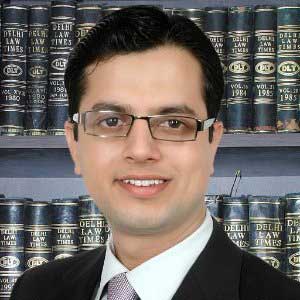
  • Shivam Kumar Bimal, Senior Tax Consultant, Deloitte Tax, on studying in the US and practising internationally

    Shivam Kumar Bimal, Senior Tax Consultant, Deloitte Tax, on studying in the US and practising internationally

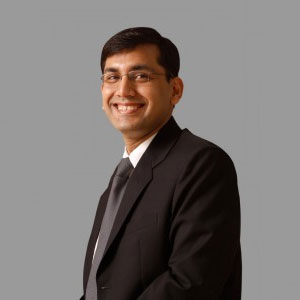
    Shivam Kumar Bimal is a graduate from Symbiosis Law School, Pune, batch of 2010. He currently serves as an employment tax, employee benefits and executive compensation attorney with Deloitte Tax LLP in the Greater New York area.  He is licensed to practise law in India as well as in the jurisdiction of New York State. While at law school, he was involved in several extra-curricular activities.  After finishing his undergraduate studies, Shivam worked as a law clerk for a year under Justice Surinder Singh Nijjar (now retired) at the Supreme Court of India.  In 2011, he moved to the U.S. to pursue his LL.M. from the prestigious George Washington University Law School and was awarded the reputed Thomas Beurgenthal Scholarship.  After the completion of his LL.M., he worked with a litigation tax law firm in Washington D.C. for three years before moving on to assume his present designation at Deloitte.

    In this interview, we talk to him about:

    • Studying at George Washington University and bagging a scholarship
    • Working with the distinguished tax team at Deloitte
    • Prerequisites for a role in international tax practice


    What do your current job responsibilities entail?

    My present job position is both challenging and exciting, as it provides me with many opportunities to learn.  My responsibilities include advising and representing corporate clients before the Internal Revenue Service (IRS) and state taxing authorities for tax audits and/or employment tax-related issues.  I also advise clients on issues related to qualified and non-qualified retirement plans, health and welfare benefits, executive compensation, and deferred compensation plan arrangements.  I have also advised clients on issues related to Foreign Account Tax Compliance Act (FATCA) and Common Reporting Standard (CRS) under OECD.

    What, according to you, is the most important part about law school?

    Grades are by far the most important factor for law students.  When I was in law school, we only had semester end exams and it was easy to achieve high grades compared to the current CPGA system.  The new CGPA curriculum is more competitive and demands greater attention and hard work from students.  In my opinion, good grades will play a vital role initially to get you a first job.  That being said, publications, moot courts and other extracurricular activities are also important.  Drafting articles for publications and participating in moot court competitions provide a platform to improve research, drafting and oratory skills.  I personally feel that publications and being a part of law review helped me be a better lawyer.


    How would you describe your experience of having worked as a law clerk under the tutelage of a reputed Supreme Court judge?

    After my graduation from Symbiosis Law School in 2010, I worked with Justice Nijjar for over a year.  It was one of the most challenging and enriching moments for me.  Assisting a Supreme Court Judge is a daunting task for any fresh law graduate.  In India, generally law clerks and judges share a very formal relationship.  However, Justice Nijjar was an exception.  He was friendly, thoughtful and always shared his experiences with his law clerks.

    I remember working several late nights and weekends to prepare draft judgments, briefs on SLPs and other ongoing matters.  I consider myself fortunate to contribute, in my small capacity, to numerous landmark judgments written by him, particularly, Iridium India Telecom Ltd. v. Motorola.  I still share a very close relationship with Justice Nijjar and am grateful for all his help and mentorship.

     

    How did you decide on pursuing an LLM from the George Washington University Law School?

    I remember my conversation with Justice Nijjar where he described how studying in the UK shaped his career.  I had applied to top universities in the UK and the US and was fortunate to receive acceptance from almost all the universities which I applied to.  I decided to attend GW for its high academic calibre as well as the fact that GW offered me the Thomas Buergenthal scholarship, which covered my full tuition.  Moreover, GW is based in the heart of Washington, DC and would provide me with access to many great networking opportunities.

    At GW, I specialized in Business and Finance and was required to take 24 credits including a thesis or research paper.  The courses I took included US law courses like federal tax, international tax, corporations, securities law, antitrust law etc., as well as skilled based class like international negotiations.


    How can higher education in the US be distinguished from that in India?

    I had a great time at GW and I am grateful to all my professors and peers.  We had students from 62 different countries.  Sharing my ideas and engaging in thoughtful debate with some of the best legal brains from around the world was an unmatched experience. It was also a unique cultural exchange with fellow peers.  The fact that GW professors are all experts in their fields, either as judges, renowned academics, or leading attorneys in reputed law schools, allowed them to pass on applied lessons grounded in real-world experiences.  This was one area which I really benefited from.

    In India, generally, we were taught what happened in a particular case where as in the US, we were taught why and how it happened in a particular case.  Basically, law schools in the US try to develop analytical thinking skills in students.  Attaining LL.Ms from Indian universities is not a popular choice amongst students, unless they want to get into academia whereas in the US, students opt for an LL.M if they want to specialize in a particular field.


    How did you decide on your courses?

    I had taken many core US law courses like US Securities law, corporations, and US federal tax, etc.  I wanted to gain as much exposure as I could on US laws.  I wanted to utilize my experiences and knowledge on US law as well as Indian law after my graduation from GW.  I particularly liked tax law because it was challenging, technical and was required for every corporate transaction.

     

    How did you win the scholarship?

    The Scholarship is awarded in the name of an International Court Justice, Thomas Beurgenthal (now retired).  It is awarded to foreign LL.M students in the form of full or partial tuition waiver on the basis of academic merit and financial need. To apply one has to submit his/her resume along with a 500 word letter to prove yourself worthy of a scholarship.  They also require a statement of purpose and letters of recommendation.


    What extra-curricular/co-curricular activities were you part of while at law school?

    Extracurricular activities are extremely important as it’s an opportunity to develop skills necessary to succeed as an attorney as well as an opportunity to enrich one’s resume, which is an important element when applying to LL.M programs. Some of the extra-curricular activities which I participated in include an essay competition titled “Women’s participation at the grassroots level”, in which our team was awarded the first prize of INR 50,000.  Further, I represented my law school in a client counselling competition, successfully completed numerous projects sponsored by the UN.  I also was an editor of the law review and headed the legal aid cell at law school.  Moreover, some of my articles were published in law firms’ archives and NGO yearbooks.   While pursuing my LL.M at GW, I was elected to be the President of the LL.M Student Association.

    In order to pursue an LL.M from a tier one law school, one needs to conduct proper planning.  Apart from grades, top universities look at your extracurricular activities.  Securing a scholarship from any university is never easy and one needs to have an exceptional resume.  Remember, it is not a matter of selection, but rather a matter of rejection. They reject all until they get their desired selected candidates.


    How big of a difference does an Ivy League institution make?

    Obviously Ivy League law schools are extremely prestigious and can open many doors. However, many people have this notion that getting an LL.M from an Ivy League guarantees you a job abroad, which is false.  Another misconception is that attending an Ivy League school will provide you with the best education available. However, one must take into account the specialization that they want to acquire.  For example, someone who wants to do an LL.M in Intellectual Property (IP) may choose Stanford or GW, which are not Ivy League schools but are better ranked in that specialization.


    Tell us about your experience working in the US.

    Apart from my internships, my work experience in India was limited to my time clerking for Justice Nijjar, which was a very demanding role. Similarly, in the US, I found that attorneys are also given demanding work which calls for long hours.  Generally speaking, I find the nature of work between US and India to be different.  In the US, attorneys have more client based exposure than in India, especially at the early stages of one’s career.  Also, in the US, attorneys are expected to draft all legal documents in a crisp and concise manner.  While this was important in India as well, it was less emphasized than in my positions in the US.


    What do you think about the future of international tax practice?

    Nowadays, it is very common to have corporate transactions involving multiple jurisdictions and corresponding tax implications.  Therefore, it is actually a boon for someone who is a qualified lawyer in multiple jurisdictions.  If you can interpret tax laws of multiple jurisdictions then you are an asset for any organization you work with.  However, it is a niche field where you need a plethora of experience to gain expertise.

    I would advise young lawyers to start with an internship and to ascertain whether you are a good fit or not.  I believe a couple of law firms in India have a good international law practice.  Keeping an eye on international transactions through journals is also a good way to keep yourself updated.  You can also go for higher studies if you want to practise globally.


    Would you like to leave a final message for all our anxious student readers?

    Do not stress out, law school is challenging but fun. Internships will be important to gain practical knowledge and to ascertain what kind of law you would like to practice after graduation.  Apart from aiming for good grades, participate in extracurricular activities and give back to society in any capacity, for eg. pro-bono work.  Remember, a lawyer never stops learning until he/she retires.  Lastly, do not forget to make memories.  Cheers!


  • Mihir Deshmukh, Managing Associate, Advaita Legal, on a career in taxation law

    Mihir Deshmukh, Managing Associate, Advaita Legal, on a career in taxation law

    Mihir Deshmukh graduated from Government Law College, Mumbai in 2005. He has over 11 years of experience in arguing matters relating to indirect taxes before various for a throughout the country. He is admitted as an Advocate with the Maharashtra and Goa Bar Council since 2005 and has an extensive experience in litigation in the areas of Central Excise, Service Tax, Cenvat Credit, Value Added Tax and Central Sales Tax including appearances before various High Courts and Indirect tax Tribunals. His clientele has been diverse and included Maharanta companies such as BPCL, ONGC, SAIL and MNCs such as Dish TV, Tata Group, Reliance India Ltd., Dow Chemicals, Bruker International and HCC Ltd. He also has an indirect tax advisory background and was associated with PWC and ELP during his earlier stints and was also a part of the indirect tax litigation team of EY (PDS Legal) since its inception in 2010. His areas of functional expertise include Customs, Service Tax, Central and State Sales Tax Laws, Excise, VAT, Works Contract Tax, Octroi.

    In this interview he talks to us about:

    • Importance of taxation as a subject for law students.
    • How can one gain expertise in Indirect Tax.
    • His strategy to deal with errors and mistakes.
    • Qualities that helped him to achieve the current status.


    How would you introduce yourself to our readers? Please tell us about your family and childhood.

    I am third generation lawyer, my father is an industrial law consultant ,my mother was a teacher and then a home maker who gave up her career to ensure that she could devote her entire time to us. My wife is a Professor in an engineering college pursuing her Ph.D. simultaneously. The values embedded in me, which I hold close to my heart and which I believe have made me the person I am today are because of the sacrifices made by family. I did my schooling in a small town Roha, and then had to move to Mumbai for my further studies (Junior college and Law school).


    What brought you into studying law? Was it fate or planned?

    In a lighter vein, I would call it planned fate. Like other kids who want to be a policeman or pilot or a 100 other vocations when they are growing up, I was always clear that I wanted to be a lawyer. Maybe it was because of seeing my father in the profession and my love for reading that pushed me towards it.


    How helpful was your law degree in terms of the added legal perspective to your existing knowledge? What career advantages did it bring?

    Getting a law degree brings about a different thought process to you. It helps one become more analytical. Coupled with your knowledge I believe a law degree gives one that cutting edge over others.


    How important is taxation as a subject for law students? What advice would you give our readers to consider taxation as an area of practice?

    Today, the tax subject is optional in many universities. However, to a very great extent I feel that Tax as a law subject should find place in the syllabus of every law student. Tax as a subject cannot be taught in isolation. While studying tax, one also dives into the intricacies of constitutional law, administrative law, Law of jurisprudence and interpretation of statutes, forming a gamut of legal studies. Further, with GST now coming in, there is a great demand for indirect tax layers. I would urge all your readers to consider tax as a serious option.


    What’s a typical day at work like? How can one gain expertise in Indirect Tax? What does it take to be a good Indirect Tax Lawyer?

    Typical day at work starts with flipping through pages of the law journal- electronic or print and then to rush off your feet to the court which ends with a relaxed cup of tea. The evening is spent preparing for the next days’ court. Call me old fashioned, but I believe in starting early and finishing early. I hate late working hours unless absolutely necessary. I make it a point that my team finishes at a decent time by 7.00 pm. It keeps them in balancing their work life balance and I get a team with great productivity and output.


    What are the preferred legal issues you like to work on? Do you have any hobbies that help you unwind after a long day at work?

    As a budding lawyer you really cannot be choosy about work. Though, now I am primarily and indirect tax litigator, I worked on all laws during my internship days. I believe that internships lay the foundation for your future and therefore have my reservations against the 1-2 month internships that are a norm with the law students today. It is too short a time frame to learn anything.  You should commit for a considerable period of time to learn and understand things. I was lucky enough to intern with Mr. Mohan Jayakar (Khaitan and Jayakar), the person who I credit for making me the professional I am today.

    I have always been an avid reader which as a kid inculcated me with the ease of reading the lengthiest briefs. After work, if time permits, I engage myself in gleeful reading of non-fictions. Watching masala movies always helps.


    What has been your strategy to deal with errors and mistakes? How would you advise a young associate to deal with them?

    As an officer of court, I endeavors to assist the court in the most honest and immaculate manner. I try to be sure that the court is not misled and true facts and position of law is brought before them. However, one is bound to err. The best way to correct is to reinstate the correctness at the earliest. I advice my associate to confront flaws and start improvising it without any procrastination. The trick is not to get disheartened by failure. As long as one feels they have given their 100%, then failure should not affect you.


    What steps do you take to prepare for a difficult case?

    Be it a difficult or a simple case, one should be thorough in the preparation. The reason being you can never predict what a judge might question you on. The premise is to know the facts of the case inside out and then the legal provisions pertaining to your case and relevant case laws in your favour. One thing, I would like to add here is that one should also be aware of the case laws against you if any so that you can differentiate them when quoted by the other side.


    What qualities do you think helped you achieve this status?

    I would say that to achieve success in the legal profession, on needs not only work hard but one should also work smart. You need to be ready to work hard (not to be mistaken for long hours). Hard work makes up for every other drawback one might have. That is the only virtue I would ask everyone who wants to be a successful litigator to imbibe. This industry belongs to one who is industrious.


    What would be your parting message for our readers?

    Be a litigator because it’s your passion and not just a career option. Once it is your passion, the ingredients of making it a success need not be taught to you but you will come up with your own unique recipe and success story.


  • Nem Singh, Secretary of UGESI, on a career in taxation law

    Nem Singh, Secretary of UGESI, on a career in taxation law

    Nem Singh graduated from Dharam Samaj College of Agra University in 1996. At present, he is the secretary of Unison Gyan Education Society of Integrity (UGESI). He is a first generation lawyer and has developed a great interest in the area of taxation.

     In this interview he talks to us about:

    • Importance of taxation as a subject for law students.
    • How can one gain expertise in Direct Tax.
    • His strategy to deal with errors and mistakes.
    • Primary essentials of a Direct Tax lawyer.


    Most of our readers are young lawyers and law students. How will you introduce yourself to them?

    I belong to a middle class family from Aligarh. We have an agriculturist background. I completed my masters’ degree in Political Science in the year 1993 and thereafter successfully pursued three year degree in law in 1996 from Dharam Samaj College of Agra University, Agra. I got enrolled with the “BAR COUNCIL OF UTTAR PRADESH” in 1997 as a “Trainee” (as per Bar Council of India Rules) in Taxation. I started my professional carrier from Aligarh with Mr. Rahul Pandit and Mr. Sanjay Pandit, Advocates of CB Prasad and Associates, Advocates, a well known name in legal profession in the state of Uttar Pradesh. My family had a permanent panel of Lawyers to look after its Civil, Criminal and Land Revenue matters in district Courts as well as High Court due to many litigations of the family. I, in the course of time had developed during my college studies, some basic knowledge in the field of civil, criminal and revenue laws and its court proceedings.

    Since I developed great interest in the area of Taxation as a student of law, I wanted to practice in this area. I shifted to Delhi in July 2003 and joined a firm of Chartered Accountants under the title Mr. Dushyant Tyagi and Associates. Mr. Dushyant Tyagi was Ex-Chairman of NIRC of ICAI and independently handled the matters of high profile corporate clients. I also got associated with Mr. Ajay Wadhawa, Chartered Accountant, then president of ITAT Bar Association, and got opportunity to appear before Income Tax Tribunals which was a great learning. For last four years I have worked with O. P. Bagla & Co., a Chartered Accountants firm, as an Attorney, legal researcher and assisted them in appeals before Income Tax Appellate Tribunal etc.

    Dear friends, I was the first generation lawyer with no back ground /support in legal profession. My experience is that, it is very difficult to succeed despite hard work. However, your confidence, knowledge and zeal to work hard will lead you to achieve success if you have patience and determination. You must strive to get justice to your clients for which you must leave no stone unturned.


    What brought you into studying law? Was it a fate or plan?

    It was my quest for having knowledge in the field of law so that I could help people in my native place and my family to enforce their rights in the legal forums and facilitate their access to justice. So I can say that I had a sort of a plan to pursue law as a professor.


    How important is taxation as a subject for law students?

    Today, taxation has become an integral part of life due to free trade in global economy and as a major source to augment revenue of the state. It facilitates government to create infrastructure for the society and finance welfare schemes particularly for the needy and poorer sections of the society. This subject must be taught as a compulsory course in the law schools as it is still being taught as an optional subject. Tax laws are very complicated and highly technical and need to be taught by practitioners of tax law. Its interpretation and different judicial precedent create a very difficult situation and unprecedented expansion of law. In coming times each and every global transaction will affect the economic decisions of the state, corporate business houses, Institutions and individual too. It will require rational and simplified legal framework. Its knowledge will explore the exciting and broad field of practice of tax law, nationally as well as internationally.


    Which field of law will you advise law students to pursue?

    I want to suggest to you to pursue career in civil law fields because it has broader scope and has relevance in the Commerce, Trade and International transactions. By being a civil lawyer, you can practice in a civil court, consumer court, land revenue court, arbitration court and constitutional court and also to join corporations as legal advisor. Tax laws are very highly technical and a specialized field.


    How can one gain expertise in Direct Tax? What does it take to be a good direct tax lawyer?

    You should understand the basic fundamental of computing taxable income by applying provisions of tax law, circulars, and notification. You should have update knowledge of judicial interpretation, their applicability and must be well versed with the facts of the case you deal with. In taxation, your claim should be based on documentary evidence and generally not on oral evidence. If your case is weak on facts and evidence then law can’t help you. The system of direct taxation as it is known today has been in force in one form and another even from ancient times. Manu, the ancient sage and law giver stated that the king could levy taxes.  According to “Shastras”, taxes had to be related with the income and expenditure of the subject. The emphasis has been always on principle of accounting of income and expenditure.

    Besides being a good lawyer, you should have the quality of being a person of integrity & honesty. You must be a hard worker, devoted to duty and honest in your practice before the tax administration. Never ignore the fact that you are not a business man, your job is to advise the businessmen to pay taxes as per the law applicable and avail all the permissible deductions and guide them proper tax planning. To succeed as a lawyer, we should try to study the cases property, prepare them to the best of your almighty and argue the cases with confidence. While arguing before a court, your approach should be to carry the court with you and show great respect to it.  Whenever possible watch the proceedings in the court to read the mind of the court, learn court craft and etiquettes which are necessary to be a successful lawyer. We should study the action and reaction of the parties and courts to acquire the skills of pursuing the case professionally. You should never be afraid of failure because failure teaches you more in life than success does.

    I want to quote here the words of senior stalwart Mr. Fali S Nariman that he learnt a lesson in his life that for a lawyer “it is better to spend more time thinking about a case than merely reading the brief”. He also said that “skill of a practicing lawyer is not flamboyance or verbosity but hard work”. Avoid histrionics and stick to the record, you will find the judge receptive to your pleas”. In the words of senior stalwart Mr. Harish Salve if one wants to be a good lawyer, “You must have the ability and the desire to work long hours with great concentration and enthusiasm. You must keep thinking about the matter and always keep your mind open for fresh ideas. And you must never give up”.


    What has been your strategy to deal with errors and mistakes?

    There is a quote that a person who never made a mistake never tried anything new i.e. he who never made a mistake, never made a discovery, said Samuel Smiles. If you have recognized any mistake or error in a case you deal with, take it on priority basis and follow the procedure to rectify or correct it. It will prove that you are honest, dedicated, accountable and credible. Dedication and sincerity are the most important attributes that a good professional should have. It is also beneficial for both i.e. you and your clients too especially when you are practicing in the area of taxation law.


    What are the preferred legal issues you like to work on? Do you have any hobbies that help you unwind after a long day at work?

    There will be no problem for me to tackle or deal with any legal issue that arises before me if I am able to understand the concerned law and the issue involved. In my short of span at the bar, I had to deal with different type of issues through my hard work and conducted research with the help of global digital media. In taxation law, there is vast scope of legal issues because it is directly connected with corporate law, general laws, business, property transfer, contract, registration and criminal laws etc. So to lead a successful professional life, it is necessary to study the case in depth and find from all legal angles relevant latest judicial pronouncements on the issues at hand.

    It is my hobby to surf on social and political media, read blogs, make comment or suggestions read judicial decisions of the courts and literature on cultural and religion, examine critical social issues despite long day hard work. This refreshes me and gives me further motivation to excel. I also like to work as a social activist as well.


    What would you suggest a fresh law graduate should do to hold spirit and utilize the opportunities available in his first year of graduation?

    He must develop the habit of becoming a prolific reader to build his capacities and to begin with, get attached to a good lawyer to know the procedure and practice required to be a successful lawyer in the years to come.


    What are the primary essentials of a direct tax lawyer? What is the current scenario of studying direct tax law as a career option in India?

    You should be registered with the BAR COUNCIL OF A STATE and have the knowledge of Tax Law and accountancy. Studying direct tax law offers you great opportunity of work with big legal corporate houses because there is wide scope of practice before assessing authorities in proceedings of assessment, penalty, prosecution and appeal before CIT(A), ITAT, High Court and the Supreme Court in corporate tax, international tax, transfer pricing etc.


    What would be your parting message for readers?

    This profession is to protect the right of the people and to give them correct legal opinion/advise. You must give your professional service to the best of your ability and get you professional charges commensurate with your hard work. I want to remind here the Shlok of Bhagavad Geeta Chapter-II, Verse-47:

    “Karmanye Vaadhikaraste, Maa Phaleshu Kadachana;

    Maa karmaphalaheturbhooh, MaTe sangostwakarmani.”

    Further God is the creator of everyone and we should do our best to serve the people. It gives a strong base to connect with larger section of people of the world and this should be our aim. I am also reminded of a great saint Tulasi’s Ramcharit Manas Chopai:

    “Karm pradhan vishva kari rakha, Jo jas karye so tas phal chakha,

    Hoi hai soi jo Ram rachi rakha, ko kari tarak badhave shakha.”

    One must always have positive attitude towards things and be optimistic. We should not stop thinking of how a new approach or a new angle can make the difference. We should read the book of English Jurist Mr. Edward Abbott Parry’s “Seven Lamps of Advocacy” which are: (1) The lamp of Honesty, (2) The lamp of Courage, (3) The lamp of Industry, (4) The lamp of Wit, (5) The lamp of Eloquence, (6) The Lamp of Judgment and (7) The lamp of Fellowship.


  • Hormaz Daruwalla, Equity Partner, Khaitan and Co., on a career in taxation law

    Hormaz Daruwalla, Equity Partner, Khaitan and Co., on a career in taxation law

    Hormaz Daruwalla graduated from University of Bombay in 1987. He started his career as an Advocate with Crawford Bayley& Company, handling cases pertaining to indirect tax under Mr Dadi Engineer.

    In the year 1992, Hormaz started his practice as a Counsel at the Bombay High Court and joined the Chambers of Senior Advocate Mr Atul Setalvad.

    Hormaz is well respected and is a specialist in the fields of customs, central excise, service tax, foreign trade policy, special economic zones, anti-dumping, VAT and other local levies. He is particularly sought for his opinions generally on law and on the subjects he specialises in. His experience in advising clients on issues pertaining to indirect tax litigation, structuring, planning and other related issues makes him a popular lawyer among corporates. What makes him special is his ability in arguing cases before different fora including the High Courts and the Supreme Court of India.

    In this interview, he talks to us about:

    • Importance of Indirect taxation as a subject for law students.
    • Is specialisation a good thing in today’s professional world.
    • What does it take to be a good indirect tax lawyer.
    • Steps to prepare for a difficult case.

    Most of our readers are young lawyers and law students. How will you introduce yourself to them?

    I am just one of them but only have been around a bit longer. The challenges they face today, I face too. The excitement and energy they feel, I experience too. Over the years the choices I’ve made based on my thinking has determined who and where I am in my personal life as well as my professional career today. I don’t regret the choices I made but will always say I could’ve done better though.

    Were you always clear about your career plans considering you pursued commerce and went on to graduate in law from University of Bombay?

    I started with the LLB course at the Government Law College, Mumbai in 1984. At the same time, I also enrolled for the Company Secretaries course of the Institute of Company Secretaries of India. In 1987, I completed the LLB course, enrolled for the LLM course and was in my final group of the Company Secretaries course. During this period there was only one thing that I was certain about, which is that I wanted to become a Counsel. I had no clue of what subject of Law I would, if at all, specialise in. In those days we never had an opportunity to test, check, see and feel the subject you would make a career of. There were no internships as we have them today, but all I had was an open mind and the determination to work hard to become a Counsel. Those were the days when one had to appear in matters in Court and one needed a certain basic understanding of the working of the system. Working in a Law Firm would be the best training ground to get that basic understanding.  My batch mate and good friend Rohan Shah, now Senior Partner at Economic Law Practices, who had articled at Crawford Bayley & Company told me about a vacancy there. Their Senior Partner, Mr Dadi Engineer was a leading expert in Central Excise and Customs Law and needed the services of an Advocate Assistant. So I joined Crawford Bayley & Co and I remember the monthly remuneration used to be Rs 1,680/- (and this was before ‘tax deduction at source’ days).Indirect Tax was something new to me as the LLB course did not teach us even a word about it. I didn’t know if I’d like it or have the affinity for it or be able to cope with it or had the aptitude for it. But, as I said, nothing else mattered other than getting an opportunity to get on my race track to become a Counsel.

    What responsibilities you were entrusted with in Crawford Bayley & Company?

    My three years in that Crawford Bayley & Company was perhaps one of the most important periods in my professional career. It is here that I learnt a lot of what I know today. Those were the basics and the fundamentals. The systems, organisational skills, planning processes and most importantly my thinking process on issues of Law, were all formed at this stage. Under Mr Engineer I learnt to draft replies to notices and appeals. I soon started appearing before Departmental Officers and even the Customs, Excise and Gold (Control) Appellate Tribunal as it then was. Mr Engineer gave me a free hand at appearing and drafting. During this time I also got a great deal of experience in giving legal opinions on issues pertaining to Indirect Tax, as also structuring of businesses. But I must mention one thing that I practiced then which I am very glad I did and from which I have abundantly benefited, i.e. I have never said no to any kind of work given to me. This is something that I would always advise students and lawyers at least in the early years of their career.

    Please share your experience with Senior Advocate Mr Atul Setalvad.

    At the end of three years, I started as a Counsel in the Chamber of Senior Advocate Atul M Setalvad, as Junior to Senior Advocate Darius B Shroff. Atul Setalvad was a father figure to all of us. Atul (he insisted we all call him by his first name) was known for his crisp, concise, lucid and extremely effective drafting. He had the ability of breaking down extremely detailed and confusing issues into short, crisp and simple issues and he would get to the heart of the matter within no time.“Get your facts right first” he would say. Then study what the Law is, then apply the Law to the set of facts and only then look for authorities and precedents. He would be critical of people, who had such an obsession for precedents, that no sooner than you state a problem they rush off to look for a precedent. He also taught us never to argue the unarguable. This and much more is what I learnt in that Chamber. More importantly, it was a great place to learn lessons in honesty, integrity and humility. The skills and abilities that I acquired at Crawford Bayley & Company got honed, polished and further refined in this Chamber. I continued as a Counsel until October 2014 and during this period I appeared with the same enthusiasm and preparation before the junior most officer of the Excise and Customs Department as I would when I appeared before the Hon’ble Supreme Court of India.

    What was it that moved you to join Khaitan & Co after many years of being a Counsel?

    Khaitan & Co has an Indirect Tax Team of over 15 people spread over Mumbai, Delhi, Kolkata and Bengaluru.  The Firm wanted the benefit of my experience of appearing before the Supreme Court and the High Courts in high-value matters.  As I had this expertise, it was a good choice for me. Over the last one and a half years I have enjoyed working with the team and appeared in matters before the Supreme Court, various High Courts and the Customs, Excise and Service Tax Appellate Tribunal.  I am thoroughly enjoying every moment with people more wonderful than I can imagine and having the best of both, Court work as well as Chamber practice.

    At Khaitan & Co we have the best of cultures and I needn’t stress more but only say that it’s a respectable law firm based on values of fairness, integrity, diligence and responsibility and part of its ambition statement is “Earn we should but with dignity and pleasure.” Wow!

    How important is Indirect Taxation as a subject for law students?

    Sixty percent of all Government revenues at the Centre are from Indirect Taxation. That will give you an indication of how important the subject of Indirect Tax is in today’s environment. Every business, profession or calling today experience challenges and problems with taxation and in particular Indirect Taxation. Indirect Tax is becoming the biggest single cost for most businesses and if they can save a couple of percentages on that, that’ll mean a lot of money to add to their profits.  With the negative list regime under Service Tax, there is hardly any activity that does not involve taxation. Corporates are constantly seeking advice and assistance on issues of taxation, which issues are getting more complicated by the day. Every amendment, even if for the purpose of simplification, poses further issues. As I see it, whichever subject of law that a young lawyer may pursue as a career, a basic understanding of Indirect Taxation is an absolute must.

    Which field of law will you advise law students to pursue?

    Over the years I have met many law students and young lawyers who find the subject of taxation per se boring. To them I say, “It’s all in your head”, which is a fact. Students today have such good opportunities to test what they would be best at and internships are fantastic opportunities to get over these mental blocks. Very often a student may have a special liking towards a certain subject and may have the aptitude and affinity for that subject. The student may also be indifferent or have a dislike towards another subject. This indifference or dislike is mostly due to ignorance and lack of exposure in the right manner to that subject of law. I would say to such a student to not waste his internship opportunity on the subject he knows, he has a liking, aptitude and / or affinity for, but instead use the opportunity to actually intern in a subject that he is wary about. This way he can get a more accurate and correct picture of the subject and can then make a learned decision about his career choice. The different subjects in this field of law are vast and varied. It is only the person himself who needs to decide his choice of subject. It would be rather foolish for anyone else to make this choice for him. I would advise the student, in making this choice, to necessarily have an open mind free from blocks and prejudices caused mainly by lack of knowledge about a subject. His decision will ofcourse be guided by his own likes, dislikes and which will be in line with his character and attitude. And I say that he will be successful in anything he does so long as he has the right mental attitude and is prepared to work diligently an thirdly of course he must enjoy what he does.

    Do you think specialisation is a good thing in today’s professional world?

    It does not matter really whether one specialises or has a general all round practice. What is important though is that you can equally excel in any subject of law that you may choose. I would say that ofcourse today is the age of specialisation whether it is in the medical profession or in our legal profession.  At Khaitan & Co too, which is the best full-service law firm, each area of practice is handled and headed by specialists in that particular area of law.

    I feel that very often, like it happened to me, a young lawyer may not specialise out of choice but may find himself guided into a particular subject and before he knows it, he is branded as  a specialist in that subject. It is that branding that ensures that he gets work only relating to that particular subject of law which further confirms his specialisation.

    How can one gain expertise in Indirect Tax? What does it take to be a good Indirect Tax lawyer?

    Indirect Tax is a subject that is very volatile as well as dynamic. This requires the practitioner to constantly be appraised of the changes happening almost every day. A lazy attitude in this regard will only mean instant death, so to speak. Only his constant updating of knowledge and information and ofcourse repetition can ensure expertise in this field. This I would say will also be true for any other practice area, but it’s more so true for Indirect Tax. The student or young lawyer desiring to take up Indirect Tax as his area of practice must necessarily be prepared to read a lot of material whether it is the constant changes or Government policies or Court decisions.  And remember, there are no free lunches!

    What has been your strategy to deal with errors and mistakes?

    The first step I believe one needs to take to deal with errors and mistakes is to admit and acknowledge them. Unless this happens, one can never go any further.  Once acknowledged, the next step is to understand how and why the mistake happened. This will enable the person to eliminate the cause and consequently future mistakes. Mistakes are a very vital part of the learning process, one must understand that the day you stop making mistakes you stop learning and you stagnate.

    What steps do you take to prepare for a difficult case?

    Preparing for a difficult case is something that I have learnt to enjoy and believe me in this profession and in the subject of Indirect Tax one can get ample opportunities for such enjoyment. To start with one needs to meet the client and listen to him carefully and attentively while he tells you all about his case. This is something where many people lack. Make copious notes and perfectly understand the facts. The next stage would be to study the various provisions of law that are applicable to the facts and then understand and set out precisely what issues arise in the matter. The wheat needs to be separated from the chaff, so to speak. It is only then, after breaking up the entire case into bits and getting to the heart of the issue, that one can start figuring out a solution or answer to the issue. The answer could be either a practical one or found in interpreting the law in a particular manner by application of well-founded principles or a mix of both. The last stage would be to support the submissions by authoritative references or Case Law as applicable.

    What are the preferred legal issues you like to work on? Do you have any hobbies that help you unwind after a long day at work?

    As I said I stopped having any preference for any particular kind of legal issues. What interests me though are issues that have an impact on public at large. I have always said to the tax collector “Tax if you must, but only with the authority that you may have and with the dignity that is expected of you”. In the same breath, I also say to the tax payer “Pay your taxes honestly and avoid if you pay your taxes only within limits a decent citizen would”. There is a fine line between tax avoidance and tax evasion and many a tax avoidance schemes can very well fall within the category of tax evasion. My advice to clients has always been to keep litigation to the minimum.

    All said and done, I thoroughly enjoy what I am doing now at Khaitan & Co, but do really miss what I used to do many years ago in often appearing for NGOs in environmental matters. I do try to pursue my passion for the outdoors with an occasional trek or hike and I always look forward to a long walk in the evenings to help me unwind.

    What are your views about the upcoming GST regime?

    The GST regime is something that has attracted a lot of speculation. I wouldn’t want to add to this. Though I will say that it is a brilliant move in the right direction made by the previous Government and we all eagerly await it’s coming into effect, I don’t see it happen in the near future.  When it does come into effect, it will have many advantages to businesses. However, in the initial years all prices will shoot up considerably and will take considerable time to stabilise. Although there might be provisions for rationalisation of the tax, as I said earlier any change in the law substantive or procedural will bring up a new series of litigation which will continue for several years until settled finally. This may be good news for young lawyers.

    What would be your parting message for your readers?

    Start getting lucky and courageous in your career.

    You might wonder what I am talking about but I do not subscribe to the conventional dictionary meaning of “luck” which is “Success or failure apparently brought by chance rather than through one’s own actions.”  I would think this is an apt definition of “gambling” but not of “luck”.  But I do subscribe to what the great Roman Philosopher Seneca had to say.  He said, “Luck is what happens when preparation meets opportunity.” Opportunities come by every person in equal amounts but it’s only the one who is prepared and ready for it, who can actually see them and make good use of them. It is he who is “lucky”.  The truth is, we make our own luck and the difference between lucky and unlucky people is their level of preparedness; not only of everything else but most importantly prepared with the right mental attitude.

    Everything is constantly changing; that’s inevitable.  Change will happen whether you like it or not.  Don’t be afraid to make choices.  The wiser thing to do is to model your choices around the change to your advantage or else the change may not be to your liking.

    As far as getting lucky is concerned, start preparing for it by developing the right mental attitude.

    Get up, Get going and Good luck!


  • Rajesh Sharma, Founder Director of LetsComply.com, on why legal knowledge is necessary for a CFO

    Rajesh Sharma, Founder Director of LetsComply.com, on why legal knowledge is necessary for a CFO

    Rajesh Sharma passed out as a Bachelor of Commerce from Shaheed Bhagat Singh College, the University of Delhi in 1990. After that, he pursued LLB from the University of Delhi and graduated by 1993. Besides LLB, he also pursued Company Secretary from Institute of Company Secretary of India (ICSI) and Cost & Management Accountants from Institute of Cost and Works Accountants of India (ICWAI) and finished these professional courses in 1993.

    With his qualifications in the realm of law, finance and accounting, he started his versatile work life full of enviable achievements. He started his professional career as Manager – Merchant Banking with Category-1 Merchant Banker, collaborated with the manufacturing company and IT companies before joined as the Founder Members of Singhania and Partners LLP. Afterwards, he was the Head of Finance, Accounts & Legal Department of Global Healthline Private Limited – 98.4, one of the best retail pharmacy chains in North India. He played major role at Barista Coffee Company Limited during his long tenure from 2006 to 2012 as a Chief Finance Officer, wherein he was instrumental not only in setting up all systems and processes for nationwide coffee chain, implemented SAP for retail but he was also key member to get Barista acquired by LAVAZZA, Italian Coffee player. Later, he served as a Group CFO at Carnation Auto India Private Limited; wherein he was instrumental for equity and debt fund raising for setting up multi-brand automobile workshops and used car business. He was Partner with Rajani Singhania & Partners, an international Law Firm. Presently he is Director, Fashion TV Hospitality. He founded Juris NextGen LLP and Affari Consulting, Inc. in 2010 and 2011, respectively.

    Finally, being an emerging entrepreneur, he founded LetsComply.com, which is a technology driven platform in India to provide world-class, affordable and convenient professional services relating to legal, finance & taxation at one click under the guidance of an experienced team of professionals, whose knowledge & credentials are proven.

    An independent entrepreneur with a string of achievements at a very young age, Rajesh Sharma talks about his thoughts, ideas, experiences and advice to young entrepreneurs and students of law and CA.

    In this interview, we cover his academic and professional journey, while focusing on:

    • The combination of his qualification in B.Com, LL.B, C.S. and CMA.
    • Varied work experience as a CFO, Founder Members and Director of various companies.
    • Part of Startups, provided Legal, Finance & Taxation support to create systems and processes and helped them to raise funds and now providing mentorship to various startups directly as well as through various incubation centres.

    How would you introduce yourself to our readers? Please tell us about your pre-college days.

    I belong to a very middle class & humble family. In spite of not been able to get the education from Big B-Schools, it is the learning by experience and connectivity with grass-roots for work with qualitative education; I could able to achieve this position.

    What plans did you have for your future? What inspired you to embark on this entrepreneurial journey?

    I feel blessed and fortunate that in spite of limited resources, I find myself at the pinnacle of my career by achieving and delivering good as a Legal & Finance professional. Now, I think this is the time to give back what I have achieved throughout my entire life and career. I got myself associated with a couple of incubation centres, NGOs and other bodies wherein I provide my services as Mentor to the new entrepreneur for their entrepreneurship journey. India is providing an excellent environment for startups, enormous options and opportunities available to the young entrepreneurs, and hence, I am also contributing to my best.

    How important is it for a law firm partner to be good at business development, or are great lawyering skills enough to become a partner? What skills or qualities distinguish the people who become partner from those who don’t?

    Being an entrepreneur, it is not necessary to be a good worker, he/she has to be a good leader at the same point in time. While he/she should be able to understand and manage with expertise, but should be able to manage a good team as well.

    Having done B.Com, what motivated you to choose law along with CS and CMA as a career?

    Though it is obvious, if you want any professional degree beyond graduation. Since I had interest both in Legal & Finance domain, therefore I opted for both courses (also since not having proper guidance, I chose two courses to have backup, if I could not make one)

    What challenges did you face while serving as a CFO at several companies? How did you overcome those challenges?

    Challenges are of multiple kinds, being cost controller and always pushing for implementation of system & process; CFO faces challenges from external as well as internal members of your own organization. No one like to listen no for the money and everybody realizes in the last working hour, therefore, to push your own team members to go to the system and processes, you actually develop negative relationship with your peer group but once you explain and help them to implement these methods, they like and start implementing these processes.

    You’re the Founder Director of LetsComply.com. Please tell us about LetsComply.com.

    LetsComply is the only technology driven platform in India to provide world-class, convenient and affordable professional services relating to legal, finance & taxation at one click.  LetsComply provides services under the guidance of an experienced team of professionals, whose unimpeachable expertise, backed by proven credentials, needs no emphasis.

    In pursuance of our humble resolve to serve, we have always looked for the ways and means to make it easier for the entrepreneurs and corporate establishments to function better, and we realized that since the world is progressing and taking online route to grow and expand, it would go a long way if we could provide Legal, Financial & Taxation services in a structured fashion with the assistance of a team of experts without making it too expensive or inconvenient. That’s how the idea of LetsComply germinated.

    We, at LetsComply, are committed to help entrepreneurs and business owners to start, manage and grow their businesses by taking care of the legal, financial & taxation side of the business so as to allow them to focus on innovation and expansion without having to fret over compliance issues, which certainly matter a great deal and can’t be left unattended.

    We aim to be a partner in the entire business lifecycle at all stages of the entrepreneurship — Startup, Growth, Acceleration & Progression Stage — to make sure that the businesses do not fall back on compliances and grow manifold. In today’s Digital world, we bring you the concept of Virtual Intelligence by way of Virtual CFO (vCFO) and Virtual General Counsel services to enable accelerated growth to your business. We are a team of experienced Chartered Accountants, Company Secretaries, Cost Accountants, Corporate Lawyers, Management Graduates, IP Attorneys and Technologists ready to assist you at all times.

    I believe that today when the world is moving towards a higher technological and economic order, allowing oneself to be bogged down by various mandatory compliances is a waste of precious time and energy. It cannot be ignored that the statutory compliances have a very significant role to play in sustaining the business environment conducive to fair competition and commercial growth. Therefore, it is essential to be cautious about the compliance of various statutes at the initial stage itself to not only avoid later complications and harassment but also to contribute to the sustenance of a healthy business ecosystem. And to keep you comfortable with all the compliances, the professionals at LetsComply are always ready to extend any and every assistance that you might require in this regard.

    How do you plan to expand LetsComply.com regarding operations, infrastructure, as well as attracting more investments? Can we expect a mobile app in forthcoming time?

    We have just started and thrilled with the response we are getting from our users. Therefore, we have preponed our plans for expansion. Operationally, our offerings are quite wide, but we need to create the infrastructure to execute and deliver that. We are working not only to create and set up additional office space but also developing technology team as well. Though for operations, we may not need investments but to expand rapidly and to bring technology and marketing we would need investments. We are not aggressively losing for funding unless we get right partner. Yes, you can certainly expect mobile app.   

    You have a vital role in several companies by providing them a tremendous boost in their business. What are the key areas a Startup needs to focus on?

    The major need for any startup is to focus on execution and have the right partner in place. They should focus on their core activities without losing any attention.

    As you have recently addressed a conference on ESOP in Amity Innovation Incubator, please tell us how does ESOP work as a good tool for startups?

    ESOP is genuinely a very tool to attract & retain the right talent. You can attract talent with entrepreneurship mindset to grow fast.

    How important would you say are business development skills at such higher roles in a corporate law firm?

    Growth is never ending. One should always be hungry for growth so as Business Development skills are. The leader has to lead by examples, and he should always be upfront about facing challenges. Unless the Leader fights from the front, he cannot ask his army to step forward on the battle ground.

    Lastly, what would be your advice to students and young entrepreneurs reading this interview?

    Life moves forward like a “Business Cycle”, wherein phases such as ‘Peak’ and ‘Trough’ are ubiquitous. One needs to establish one’s stand at those stages. If he/she is tangled in the Trough Phase, there is nothing to blame upon. Be focused, there is no shortcut to success. Efforts never go waste. If everything seems to be on his/her side during the Peak Phase, there is nothing to claim upon. Keep your thirst for growth alive and continue to move forward with the same.


  • Puneet Bansal, Managing Partner, Nitya Tax Associates, on being a CA + Lawyer and practice in Indirect Taxes

    Puneet Bansal, Managing Partner, Nitya Tax Associates, on being a CA + Lawyer and practice in Indirect Taxes

    Puneet Bansal graduated in B. Com. from Hansraj College, Delhi University in 1998 and thereafter he acquired an LL.B degree in 2007 by eking out time for the evening classes of Campus Law Centre of Delhi University. Over the course of his highly successful career he has worked as a Partner at Lakshmi Kumaran & Sridharan as well as BMR Associates. He is at present a Managing Partner at Nitya Tax Associates.

    In this interview he tells us about:

    • Chartered Accountancy – his time in college, the contours of the course and tips to ace the entrance exam.
    • The work in an advisory practice, his law degree and experiences as a Partner at two firms.
    • The importance and convergence of law and taxation, advice for Tax Law enthusiasts, his views on the GST and setting up Nitya Tax Associates.


    How would you introduce yourself to our readers? Please tell us about your family and childhood.

    I was born and brought-up in a middle class family. My father is a business man and mother is a house maker. Being in a middle class household, my upbringing was normal. I was a pretty average student till Class X.


    Were you always clear about your career plans considering you pursued commerce in senior secondary and went on to graduate from Hansraj College, Delhi University in B.Com?

    Never. I choose Commerce in Class XI as I was not interested in Science and Arts. It was in Class XI that I developed an interest in studies and started doing well. Since my marks in Class XII were good, I joined Hansraj College. I didn’t have any career plan till then.


    How did you manage college with your CA preparations?

    One of my uncles filled the Chartered Accountancy form and that’s how I started doing CA. Indeed, CA used to be a tough course earlier as well. I used to go to college in the first half and come back to the CA firm in the second half when I was interning. It was a tough 3 years of managing both studies and internships.


    Please tell us about your CA Articleship. What was the application procedure? How competitive was it to secure an Articleship? What was the work assigned to you?

    I did an internship in a medium-size CA firm. My senior in the CA firm was a family friend so I got the internship with ease. I did accounting, company law and Income tax related work during the internship. Importantly, I was not at all exposed to indirect taxes during my internship which is my area of profession now. The period of my internship was a thorough enjoyment and was my first chance to peek into the professional services space.


    You graduated from Hansraj College in 1998 and finished your CA course in 1999 with an All India Rank. Please enlighten our readers with some valuable tips to ace the CA examinations.

    I cleared all CA exams in the first go and was the All India 27th rank holder in the CA final. I have followed one rule for preparation for CA exams, and in fact, now as well when I am practicing on my own I abide by it and that is ‘whatever you do, do with passion and then everything will fall in place. Otherwise do not do it’. I was always interested in understanding concepts rather than clearing exams. The conceptual clarity in all the CA final subjects only helped me in clearing the exams.


    puneet-bansal-2

    Our readers would like to know about your initial days as a CA professional. Could you share with us any interesting anecdotes?

    When I became a CA, I thought that life henceforth would be easy. But I was confronted with reality soon and realized clearing CA is the start of struggles in one’s professional career. Clearing the CA exam only opens the gates to the professional world. At each stage of our professional lives, we need to prove ourselves with hard work and competence.


    Was it difficult for you to shift to a new place of work, which was primarily a law firm? Please tell us about your work experience at L&S.

    (Puneet joined Lakshmikumaran & Sridharan in 2003 as a Chartered Accountant in their indirect tax litigation practice.)

    Indeed. I was working in Maruti Udyog and suddenly decided to shift to L&S. My family was stunned and couldn’t understand my decision. Also, the decision to shift from an Industry to a Law firm was a big change in my career. Working at L&S was a great experience. It was a close knit family environment comprised of competent professionals. Initially I did litigation, and later, set up their advisory practice. It was 9 years well spent in my career.


    In 2004, you joined Delhi University to pursue law. What was the driving force behind this decision?

    As I was working in L&S and wanted to make a career in litigation, I decided to do law. The admission procedure at the Delhi University required clearance of an entrance test. Clearing the entrance test was not tough.


    Please tell us about your law school days. Did you participate in any student activities? How active were you in other college activities?

    I did law from the Campus Law Centre, Delhi University evening batch, so I used to attend the classes and write the exams. As I was working full time in L&S, I didn’t participate in student or college activities during my law school days.


    How helpful was your law degree in terms of the added legal perspective to your existing knowledge? What career advantages did it bring?

    (Puneet qualified in Law in 2007, after that he continued with L&S.)

    The law degree really helped in giving me perspectives on the Indian Constitution and various other Commercial laws. I would recommend it as a “must do” if one needs to practice tax. Further, the law degree opens an opportunity for you to appear in the High Court and Supreme Court.


    What work does advisory practice include? What were the added responsibilities as a partner of one of the leading firm in indirect taxes?

    (After establishing the advisory practice of L&S, Puneet headed this team as a partner from 2010 to 2012.)

    The advisory practice involved advising clients on Indirect Tax issues involving legal interpretation, structuring business models etc. As a Partner of a large law firm, I was responsible for advising leading corporates of India. I also had the responsibility of managing a team of 10 – 12 professionals.


    Please share with us your work experience at BMR.

    (In 2012, Puneet joined BMR & Associates LLP as a partner.)

    My professional journey wouldn’t have been complete without joining BMR. It was a totally different way of practicing when compared to a law firm. The advisory practice was more focused on bringing legal, practical and implementable solution for clients. Furthermore, I really liked the professional practices in BMR. Overall, it was a great experience.


    How important is taxation as a subject for law students? What advice would you give our readers to consider taxation as an area of practice?

    Taxation is a very important subject for law students especially if one is focused on commercial laws. Taxation plays a key role in business transactions and has the effect of making and breaking the business. The current times are most exciting times for tax professionals with so many things coming up or growing up, be it GST, Transfer Pricing, International Taxation etc. This is right time to be in the taxation field.


    What issues did you face while setting up Nitya Tax Associate? Our readers would love to know about the significance of “Nitya” in the firm’s name.

    (Puneet recently founded an independent indirect tax boutique “Nitya Tax Associates” at New Delhi.)

    The decision to start Nitya was an attempt to create something on our known outside a framework of large firm. In professional services firm, only two things are important – clients and people. Some of the leading corporates have reposed faith in us and the going has been good till now. There were initial challenges on getting good people but now, we have a good team.

    The name ‘Nitya’ has its origination in the Sanskrit word and stands for ‘continuity’ / ‘eternity’. The name is a reflection of our belief and commitment to be available to our clients.


    Please introduce us to your team. What plans do you have to take forward Nitya Tax Associates, in terms of workforce as well as setting up branches in other major cities of India?

    We have a good team with some members with experience ranging from five to eight years. Kulraj Ashpnani, Deepak Suneja and Gaurav Narula have worked in large and reputed professional services firms. As of today, we are twelve professionals -a mix of Accountants and Lawyers. As of now, our focus is on NCR though we continue to cater to clients in other parts of India. For the next one, two, years, we plan to operate from Delhi and to strengthen our foothold first.


    What are your views about the upcoming GST regime?

    The GST will significantly simplify the indirect tax regime. During the first few years, it will open a floodgate of opportunities for professionals be it accountants or lawyers.


    What are the preferred legal issues you like to work on? Do you have any hobbies that help you unwind after a long day at work?

    Working on complex Indirect Tax issues for large manufacturing clients is my favorite as of now. I also enjoy doing litigation. Spending time with my kids and watching Hindi movies really helps me unwind.


    What would be your parting message for our readers?

    It does not matter what career you choose, but whatever you choose, do it in the most exemplary way and then everything will fall in place. Success is not a destination; it is a never-ending journey.


  • Aniket Ghosh on bagging a job at Lakshmi Kumaran & Sreedharan and law school experience at NUJS, Kolkata

    Aniket Ghosh on bagging a job at Lakshmi Kumaran & Sreedharan and law school experience at NUJS, Kolkata

    Aniket Ghosh is a recent graduate (2015 batch) from NUJS, Kolkata, In his five years he explored a plethora of opportunities. He pursued a course on “Interpretation of Fiscal Statutes” by Mr. Badrinarayan, Partner at Lakshmi Kumaran & Sreedharan (L&S), he also worked as a Teaching Assistant to Prof. Saurabh Bhattacharjee and interned at various law firms including Ernst & Young, Mumbai.

    He has bagged a job at L&S after getting to work with Mr. Lakshmikumaran directly.

    In this interview we talk about:

    • His journey through WBNUJS and his gainful takeaways from these five years.
    • Pursuing “Interpretation of Fiscal Statutes” by Mr. Badrinaravan, Partner at Lakshmi Kumaran & Sreedharan (L&S).
    • Being a Teaching Assistant to Prof. Saurabh Bhattacharjee.
    • Interning at Ernst & Young, Mumbai.


    Tell us about your life before you joined law school. What inclined your decision to study law?

    I grew up in a very positive atmosphere as my parents have always been very encouraging and supportive of all my endeavours and have never pressured me regarding anything.  My father was a Wing Commander in the Indian Air Force and I have grown up all over the country from Jodhpur, Rajasthan in the West to Jorhat, Assam, in the East, and from Bangalore in the South to Delhi and Chandigarh in the North, not to mention the many road trips and excursions that we took to beautiful, untouched, out of the way places in Arunachal Pradesh, Nagaland and Manipur, and in the isolated desert sands of Rajasthan.

    This, I have always felt, gave me a wealth of exposure and knowledge that many of my peers could scarcely imagine.

    I was inspired to study law thanks to my maternal uncle, Mr Sujit Ghosh, who incidentally is a 1995-batch NLS graduate. Seeing him work and the critical problems faced by clients piqued my interest towards law.


    Studying in WBNUJS must have given you an opening to plethora of opportunities. How has been you experience through the law school timeline so far?

    Indeed, NUJS through its curricular, co-curricular and extra-curricular activities provides innumerable opportunities to its students to develop a wide range of skills like general academic development, critical thinking and honing of drafting and speaking abilities. Most importantly, the many competitive and intellectual forums that it provided us, by way of Moot Courts, Parliamentary Debates etc, taught us to ‘think on our feet’, which I am sure, will stand us in good stead in the future. It has been a very enjoyable experience and I believed that I have learned immensely during my time at NUJS, both about legal matters and about life in general


    How would you advice law students in freshman and sophomore years to proceed?

    I would advise them to take all the opportunities provided by the law schools very seriously, curricular, co-curricular and extra-curricular etc. Not many people get the wide range of opportunities that we get at national law schools and this fact must be borne in mind from the first year to the fifth.


    Do you think in recent times legal academia has been distancing itself from the practical aspect of law?

    In my opinion, the degree to which any academic work is distanced from practical aspects is dependent entirely on the context in which it is written. Most of the materials, by academicians, which we studied at NUJS, were written in a specific context which more often than not, discussed commercial, societal and practical ramifications of different legal issues rather than just dry legal rules alone.

    As regards, day-to-day knowledge of laws, rules, drafting etc. there is only so much that can be taught and learnt at law schools, since hands-on knowledge is best learnt and assimilated once one actually enters the profession.


    aniket-ghosh-2

    You have also pursued “Interpretation of Fiscal Statutes” by Mr. Badrinarayan Partner Lakshmi Kumaran & Sreedharan (L&S). Tell us about your course.

    The Interpretation of Fiscal Statutes course was an intriguing course indeed. We learnt about a variety of issues in a very small period of time. Mr. Badrinarayan was an extremely supportive and engaging teacher. He would often discuss current legal issues from various pending cases etc. and would test our critical thinking abilities by requiring us to provide our own opinions on the same. This added a whole new dimension to the teaching and, frankly, made it thoroughly enjoyable.


    You have also been a Teaching Assistant for Professor Saurabh Bhattacharjee in the Legal Method-I Course (2013 & 2014). Can you tell our readers about your experience?

    Being Teaching Assistant required me to assist Professor Bhattacharjee in providing guidance to the First Year students, give them feedback on their work, grade their papers etc. I tried my level best to extract and highlight the core issues from the various problems given to them as case studies, whilst also explaining to them how to do the same, on their own.

    It was a learning experience for me as much as for the first year students themselves, who would make some novel points which may have not occurred to me initially. Further, it gave me a wonderful insight into the pressures, and responsibilities that a teacher faces which I feel I will keep in mind, should I ever change my line of work and seek to become a teacher, in the future.


    What would be your inclusions to make an exemplary CV?

    I feel an exemplary CV would be one that highlights the all-round character of the individual concerned. It should seek to bring out a balance of all his complementary skill-sets be it in areas of academics, co-circular or extra-curricular activities, etc.

    Playing the role of the protagonist in the University Annual Theatre Production (2012) titled “God” by Woody Allen must have been a moment of pride. Tell us about your experience.

    Taking part in the University Theatre Production was a very memorable experience. I participated in the auditions and the subsequent play with the intent to enjoy myself. Admittedly, there were some scenes of the play, which required a bit of hard work from all of us, acting-wise, but with the encouragement of my friends and co-participants it became a thoroughly enjoyable experience.


    aniket-ghosh-3

    How did you garner interest in Tax? Tax being a dry subject, what would be your tips to law students?

    I garnered an interest in tax mainly because of my internship with Mr. Parasaran. I got a chance to work on numerous tax matters and issues with him. Researching, analysing, and discussing them with sir increased my liking for the subject.

    Every subject has some dry area or the other. Tax is no different. Unfortunately, the areas that we are taught in law schools at best give an overview of tax. The more practical issues and nuanced matters are hardly taught. Further, very few people intern in dedicated tax teams of firms. Moreover, even if they do, they intern for four weeks at most, of which unlike other areas of law it takes three weeks to grasp the basics of the subject. Due to these reasons many people tend to have a mental block regarding tax laws and already start on a negative footing with the subject.

    I myself used to feel this way before interning with Mr. Parasaran. Ultimately it comes down to your ability to avoid these mistakes and give the subject a chance.


    How was your work experience of working at Ernst and Young. Mumbai?

    My time at EY Bombay was a new experience because for the first time, I was working in a multi-disciplinary work environment with both lawyers and chartered accountants.  It gave me a perfect insight into the nascent stages of any tax dispute, something that is not usually seen in a law firm or a under a counsel.  I learnt how claims were negotiated with the Department at the initial stages and saw how they escalate into full blown litigations.


    How was it to intern under Mr. Mohan Parasaran?

    I worked under Mr. Parasaran whilst he was still Additional Solicitor General of India in the Supreme Court in 2012.  This internship, I must admit, was the most exciting one that I have done, as I interned at a time when the ASG’s office had innumerable high profile matters in the Supreme Court. To name a few, Mayawati’s DA case, the Enrica Lexcie Matter, the Presidential Reference on Auctioning of Public Resources etc. I got an opportunity to draft, research and discuss on these matters with sir on the  various legal issues involved, having significant ramifications like the Armed Forces Special Powers Act case.  This was also the internship that got me interested in tax laws as Mr. Parasaran handled many tax matters in the Supreme Court as well. One of the more famous ones was the Vodafone dispute.


    How did you bag your job at L&S? Please walk us through your appointment procedure. What is your work profile like at L&S?

    I interned with L&S for about one and half months during the summer break of 2014. I worked on a variety of matters with a variety of teams on the litigation side. There were a couple of matters where I got the chance to work with Mr. Lakshmikumaran directly. Ultimately at the end of the internship, I was informed by the HR, that they would like to hire me. I did not have to give any interview.

    As regards my job profile, I am just starting and we are going through our training period. Therefore I am not in a position to comment on that, at this moment. All, I can say is that I will be doing litigation work before various forums.


    What do you think should be the reasonable standards of a student approaching top-notch law firms?

    I do not believe that there are any specific standards that can be adhered to by a law student to approach a top-notch law firm.  This is because most law firms have their own methods of assessing students and interns. Further, the availability of vacancies, ability to fit into the firm’s work culture etc. also plays a significant role which we as students do not initially, quite understand or realise. Admittedly, having a decent academic score, publications, moots, organisational & extra-curricular achievements behind you do help to increase the options available, and the chances of the student getting suitably placed.

    Further, there are some fundamental qualities such as confidence, a positive and enthusiastic outlook, willingness to work hard diligently etc, that are appreciated across the board, by law firms and counsels alike.

    Nevertheless, ultimately it all depends on the circumstances and how he/she comes across on the day, or period of assessment.


    How do you think a successful speaker should nurture himself/herself? Do you idealise any specific person who his/her power of speech?

    Like developing any other skill-set, speaking skills also develop the most with practice. Further, apart from practicing, adequate and thorough preparation of one’s case also helps one come across as a good speaker. No, I do not idolise anyone but there are some great public speakers & parliamentarians, both historical figures and present day ones, whose abilities have impressed me.


    What is your message to current law students?

    We all should endeavour to enjoy our times in law school to the fullest and never miss an opportunity to learn and grow as individuals and professionals.


  • Neha Thakur, Senior Associate (Indirect Tax), Luthra & Luthra, on work experience in tax firms

    Neha Thakur, Senior Associate (Indirect Tax), Luthra & Luthra, on work experience in tax firms

    Neha Thakur is a graduate from NLIU,Bhopal (batch of 2007). During college, she was quite active in co-curricular activities and has excelled in them. She has also managed to pursue Diploma Course in Corporate Law offered by ASCL, Pune. Soon after graduation, she worked at Vasan Associates for a short period of time and thereafter switched to Economics Law Practice. She has also worked at Ernst & Young. Currently, she works as a Senior Associate (indirect tax) at Luthra & Luthra Law Offices.

    In this interview she talks about:

    • Specializing in Indirect Taxation
    • Working at Vasan Associates and ELP
    • Being a Senior Associate at Luthra & Luthra Law Offices


    How would you like to introduce yourself to our readers who are mainly law students and lawyers?

    Destined to be a lawyer, is how I see my life in retrospect. I have been fortunate to have worked under some outstanding lawyers who guided me through my career so far. It’s extremely important to define what you want in life in order to draw a path to achieve it. My first stint as a legal trainee was at Yahoo!India’s Bangalore office where my mentor Mr. Amitabh Lal Das gave me some of the most important tips to make the right decisions regarding my career path. My first legal engagement after law school was with Mr. R. V. Prasad (Vasan Associate) whose impression as a professional on me will continue for a life time. It was under him that I’ve learnt the most important lessons of life, to never compromise with principles and be very professional in your approach to work.


    What brought you into studying law? Was it fate or planned?

    As I earlier mentioned it was destiny’s play, supported by some favourable turns in life. I started my career much before I actually got through law school. Being a second generation lawyer, I used to visit my father’s chambers regularly and was engaged in some or the other work by his colleagues. This resulted into an early orientation in the field of law. My mother believes in aiming for the moon as even if you miss you’ll land among the stars. She inspired me to take the entrance exam and was the push behind the decision to make a career in the legal field.


    What were your areas of interest during your graduation? How did you go about developing expertise and knowledge in these areas?

    My exposure to tax laws was due to the fact that my father is a tax advocate. Although he practices Direct Taxes and I practice Indirect Taxes, my inclination was always towards tax laws. However, IPR laws did interest me. During my college days I’d done an internship with Kris & Kolloth, Bangalore which is an IPR firm and it was a great learning experience. Subsequently at Yahoo!India I had some more exposure to IPR laws. However, as luck would have it, I got internship opportunities with LKS Bangalore and Delhi office thrice during my 5 years at Law school and it set the path for the future in tax. I also did a diploma course in Corporate Laws through ASCL, Pune.


    Right after graduating, you worked for a year at Vasan Associates as an Associate and then joined Economic Laws Practice as an Indirect Tax Associate. How would you describe you experience at both these places?

    My mentor at Vasan Associates, Mr. R V Prasad is a practising Advocate at the High Court of Karnataka at Bangalore and deals mainly with tax laws. His systematic litigation strategies make him an outstanding lawyer; my foundation in the profession was laid during my tenure with him. It’s very important to have a good mentor in the beginning of one’s career as that characterizes your entire professional life. His approach towards clients and cases is focussed and his emphasis on efforts to excel in one’s subject was a lesson I’d learnt under him.

    I continued to be a part of the litigation team at ELP which furthered my inclination into litigation. It is thrilling to argue your own case. It was a very exciting phase; ELP is one of the market leaders in the field of tax and has a great team to work with. Their knowledge base helps you to learn the subject better with each passing day.


    After one and half year of work as an Associate at ELP, you joined Luthra & Luthra Law Offices as Senior Associate (Indirect tax). What qualities do you think helped you to achieve this status?

    Each firm has set parameters for each role. For example, for the position of a Senior Associate the person should have certain relevant work experience, then again relevant work experience may or may not include your independent legal practice. It all depends on the firm’s policy. So essentially it was the relevant experience because of which the firm decided that position for me.


    neha-thakur-2

    What’s a typical day at work like? How  can one gain expertise in Indirect Tax? What does it take to be a good Indirect Tax lawyer?

    Well, I’ve done a mix of litigation and advisory from Indirect Tax perspective. Both are a different ball game I must confess, although the common string to sail through is regularly updating your knowledge in the field. Once the clients develop a relationship with you as their lawyer, they do not always restrict themselves to ask questions related to your expertise. To a tax lawyer they might ask something to do with evidence law, you are the go-to person for them and you have to obtain answers. My first read at Vasan Associates was a book on human psychology as recommended by Mr. Prasad, which I realise was the best first step taken. In this field we have to understand the human psychology since you are dealing with them at all levels, be it your clients, colleagues, judges, staff etc. You cannot afford to lose patience with clients in a service industry. I would highly recommend all new lawyers some good reading before you start in the profession, it’ll take you a long way. Always remember “be kind, for everyone you meet is fighting a hard battle”.

    Also as you move up in your career, responsibilities increase, you need to watch your act as you’re grooming your juniors. Setting a good example as a lawyer is something all of us should maintain to have a better professional world. As an indirect tax practitioner a lawyer’s competition is mainly with the Chartered Accountants, who are very thorough with their knowledge in this field as they put in long and hard years to be the professionals they are. The only way we stand on the same footing is by systematically updating yourself on a regular basis. Read the relevant journals; stay aware of the recent judicial precedents and statutory procedures. Make networking your strong point, knowledge acquired should be put to use by practice.


    What has been your strategy to deal with errors and mistakes? How would you advise a young associate to deal with them?

    The best thing about mistakes is that you can correct them. It goes on to show that you made an effort in the first place. So have a positive outlook, perspective matters a lot. Consider every error as a step forward and you’ll be better with each one of them.


    What changes has being a Senior Associate brought into your life? Do you ever feel that there is excess of work load on you? How do you manage to strike a balance between your personal and professional life?

    Growing up professionally ensures that you are at the middle of the pyramid and have a team which helps you with matters. Delegation is possible at this stage and also you start getting a better grip on your domain and take less time to complete a task. We start grooming the young lawyers at this stage while still trying to get better ourselves. This stage is hectic and requires a lot of multitasking since you are in the middle of a lot of change at all levels. To be very honest, the personal life definitely takes a hit being a legal professional. Being in client service industry wouldn’t be any different. My suggestion is to be mentally prepared and make the most of your initial years and make a strong base for yourself while you are free of personal responsibilities. Lawyers across the globe work long hours (Harper Lee and John Grisham would agree). By this I’m definitely not suggesting that you do not socialize. Networking is an important aspect of our profession, we cannot survive in isolation. Manage your time well and make time for people who matter, it keeps you sane.


    Tell us about a case that you are particularly proud of. What steps do you take to prepare for a difficult case?

    The burden of Indirect Tax is ultimately borne by the end users. The seller adds the tax to the goods and every unfavourable order adds to that cost. So every favourable order makes me proud to have saved some cost for the common man i.e. us. In my limited tenure so far while there are several matters worth being mentioned, the one which is in my recent memory is that of Mumbai International Airport Ltd. (MIAL). On behalf of the client we appeared along with Senior Adv. Mr Sridharan before the Customs Excise and Service Tax Appellate Tribunal (CESTAT). The point of contention was whether Service Tax is applicable on the development fees collected by MIAL as per the statutory requirement under the Airport Authority of India Act. Development fees is the amount which the passengers pay for the future development of Airport facilities, it may be used for construction of another terminal after a decade. It is in the nature of statutory fees therefore levy of Service Tax on this fee will essentially mean tax on tax and extra cost to the passenger. The final decision is pending and therefore we cannot discuss it any further at this stage. Everyone who’s spent even one year more than you in the profession has something to learn from. Be a sharp observer and try and learn as much as you can. There is always a better way to staple papers, prepare paper books, drafting, dealing with clients & officers of the department and doing research for the matter. While appearing with seniors just by observing them or reading judgments in cases argued by them, you may learn immensely.


    You must have guided several interns. How would you say that an intern can generate a positive feedback in the limited time they have?

    Put yourself in the shoes of the counsel who’s delegating work to you, while they entrust the research they expect you to be sincere and responsible. If I work with an intern I want to believe every word they tell me about a particular topic, I believe they have exhausted every possible source of information and I will not have to confirm facts. There are no short cuts in life. You are a crucial resource for the counsel as an intern, you save them time with accurate information. Before you start, ask as many questions as you want, understand the point well, make notes and do an exhaustive job. Be responsible with the work which has been delegated to you, don’t abandon the counsel uninformed. There are so many times that interns do not count themselves as a vital part of the system and tend to be careless. This often results into double efforts both of the counsel and that of the intern.


    You have excelled in your academics, interned at top-notch Indian law firms. Do you ever feel that you missed out on the fun part of your college life? Could you tell our readers how you managed to excel as a law student and enjoy your college life?

    I believe that I had all the fun I could in my student days. I participated in all extra curricular activities, internal moots, mock UN, world youth conference, was an active member of ATHENA (the culture cell of NLIU). I do not think I missed upon the fun part of those times. I didn’t lose focus of what I wanted at the end of those five years and still had a gala time. My internships were in cities I hadn’t been before like Bangalore. And I loved exploring it. Take your internships as a learning experience both professionally and personally. You explore a new place and make new friends, so you should consider yourself lucky. It’s the perspective which matters.


    What would be your message to our readers who are budding lawyers and law students?

    It’s a great decision taken to be a part of the noble profession. Reading is an integral part of our field, and by reading I don’t mean legal reading alone. Keep your knowledge updated in the area that you practice primarily. General reading, autobiographies such as “Roses in December”, “Before Memory fades” are great for insights. Groom yourself well socially, it’s a service industry and we all need to keep improvising. I wish luck to all of you.

  • Prerna Singh, Consultant, PwC, on shifting from Law Firm to Accounting Firm and law school experience

    Prerna Singh, Consultant, PwC, on shifting from Law Firm to Accounting Firm and law school experience

    Prerna Singh is a graduate from School of Law, Christ University (Batch of 2011). Her internship experiences were quite diverse. She has interned with various prestigious law firms including Trilegal, Dua Associates & LKS. While in law school, she participated in various co-curricular activities and has multiple publications to her name. She was a proactive mooter and has both participated and won a few moot court competitions in law school. Soon after graduation, she started working at SRGR Law Office and thereafter shifter to Archer and Angel, Advocates and Legal Consultants as an Associate. Currently, she works as a Consultant at PricewaterhouseCoopers in Risk Advisory.

    In this interview we talk about:

    • Her days at Christ College, Bangalore and at various internships
    • Her work experience at SRGR Law Offices.
    • Her professional shift to Archer and Angel, Advocates and Legal Consultants.
    • Working as a Legal Consultant at PricewaterhouseCooper, India.


    How would you introduce yourself to our readers? Tell us what motivated you to pursue law as a career.

    Well I was born in Bihar and brought up in Jaipur. I did my schooling at The Nest Children Secondary School and India International School in Jaipur, after which I moved to Bangalore to pursue law from Christ College. I am currently working with PricewaterhouseCoopers India at their Mumbai Office as a ‘Consultant’ in their Risk Advisory LoS, prior to which I was working with law firms in Delhi and Mumbai.

    That question is particularly of significance in my case because I am the first one and by far the only one to have pursued law as profession in my family. I am not sure if there is this one thing that I could point at as my reason for pursuing law but it wasn’t accidentally for sure. I had taken up science and maths as my core subjects after 10thgrade and was preparing to write engineering entrances and it was in the later part of my 12th grade that I got consciously inclined towards law.

    As philosophical as it may sound, I use the term ‘consciously’ because I believe that it must have been there subconsciously long before it came to realisation. I am an avid reader and back in those days used to be majorly hooked on to novels. I used to love reading John Grisham books. Also, it so happened that I would end up spotting a lot of articles in the newspapers every other day on law as a career option, its prospects, on law schools in India and so on. Around the same time, I also ended up meeting my father’s friend, who had interestingly studied multiple subjects including law and so my obvious question to him as someone who was considering law as a career option but was not absolutely certain about it was – “Having studied subjects from almost every stream, which is your favourite?” and his instant response to that was something to this effect “Law, hands down” and post that answer, I was sure that I wanted to give it a serious shot. Looking back, it feels like all these were ‘omen’ in Paulo Coelho’s terms guiding me towards pursuing law. Today, when I think of it, I cannot place myself in any other profession but law and I cannot thank my parents enough for supporting me in my delayed decision of pursuing law and understanding where I was coming from despite being a science maths student.


    Tell us a bit about your days at Christ College, Bangalore?

    The five years spent in Bangalore during law school days continue to be my favourite. These five years were crucial being the foundation years of my life and it could not have gotten better than Christ College and Bangalore. I owe hugely to my days in Bangalore for who I am today as a person and feel extremely privileged to have studied at Christ.

    Our curriculum in law school was quite hectic and packed back in 2006-2011. We had regular classes from 9 am to 4pm on most days with additional certificate courses and maintaining 85% attendance was mandatory, failing which disciplinary actions, including barring from writing exams were taken. Further, we had multiple assignment submission with stringent deadlines for every subject in each semester, which meant spending time in the library almost every other day post classes, researching and reading up on various subjects. Add to that the weekly presentations for certain subjects and readings for everyday class.

    After having this as your regular routine, if you are someone who is active in co-curricular and extracurricular activities such as mooting, debating, writing papers, sports and cultural activities in law school, which I was, one had to stretch even further. Having said that, most classes were made so interesting and interactive that there were days when you could find us in classrooms continuing the discussion with the batch mates and faculty members even post the classes. I for one had started loving that routine, for it was so enriching in more ways than one. Every day spent in law school was a learning that helped me grow both personally and professionally. I can easily and confidently say that my batch (Batch of 2011) was the most privileged one to have been taught by some of the best faculty members across law schools in India.


    How were you various internship experiences when in law school?

    My internship experiences were quite diverse and inspiring. I used to intern every semester, in fact most of us used to, as a certain number of internships were also mandatory in law school. We used to break after every semester for close to five to six weeks and I preferred utilising every such break by interning. By the end of 5 years, I had 13 internships in total starting from State Human Rights Commission, NGO, company to law firms like Trilegal, Lakshmi Kumaran &Shridharan, Dua Associates, Holla & Holla Advocates and so on.


    prerna-singh-3

    In your opinion, how important are extra-curricular activities are for a law student? Do you feel these are activities that should left to the discretion of students or be partaken mandatorily?

    I personally think co-curricular and extra-curricular activities are quite important and play a huge role in developing a person’s personality and outlook irrespective of whether the person is a law student or not. Having said that, from my personal experience, it is particularly beneficial for a law student to participate in co-curricular activities such as mooting, different styles of debating, writing and presenting papers at various forums for various reasons including improving and enhancing your research, drafting and oratory skills, which are quite important in a lawyer’s life, irrespective of whether you choose to be a corporate lawyer or litigating lawyer. Also, participating and doing well in these activities alongside academics gives you the much needed exposure, increases confidence, adds to your personality and reflects well in your resume. Some of these activities also prepare you for your professional life ahead to a certain extent.

    So far as your question on whether these activities should be taken up mandatorily is concerned, I think everyone is grown up enough in law school to know what is good for them and what is not and hence to each their own. However, I would personally recommend everyone to be active in law school and at least take up one such co-curricular/extra-curricular activity that you really like or have always wanted to take up…it could be anything-sports, music, debating, theatre, mooting, publishing papers. Not only for the reasons that I have cited above, but also because this is the ideal time to pursue anything that you are passionate about. Also, I believe one needs some sort of recreation constantly and pursuing extra-curricular/co-curricular activities does not only take care of that but also channelizes your energy in the right direction. For me that activity was mooting and I think I evolved with every moot that I participated in, both, personally and professionally. Also each time I represented my law school and won moot court competitions, it gave me an unmatchable high.


    Soon after graduation you joined SRGR Law Offices as an Associate. How did your appointment take place? How would you describe your experience?

    By the time I was in my fifth year of law school, I was certain that I wanted to start my career with a law firm- thanks to the multiple internships I had undertaken by then. So I applied to a few law firms in Delhi, SRGR Law Offices being one of them. Subsequently I was called for an interview and soon after that I got an offer to join them.

    My first job was at SRGR Law Offices and it was a wonderful experience working there. The partners of the firm are not just extremely knowledgeable but also grounded and approachable. I worked in their general corporate law team and did a lot of work relating to power and infrastructure laws, FDI, FEMA and so on. I also got to do a lot of drafting and reviewing of various commercial agreements. It was a great learning place for me as a fresher.


    Generally the first year after graduation is the most defining time of a fresh law graduate. What would you suggest a fresh law graduate should do to hold spirit and utilise the opportunities available?

    No matter how well and how many subjects you are taught in law school, your professional life as a lawyer is drastically different from that of law school. As a fresher, it takes time to sink that in. It is important to have an open and positive mind in your first job so as to make your learning optimum. Also, one needs to be patient and treat every job assigned no matter how big or small equally important and give it their best. Being a fresher, one should be particularly dedicated towards work so as to learn extensively and gain the trust of seniors to handle bigger transactions and responsibilities.


    Thereafter you left SRGR to join Archer & Angel, Advocates and Legal Consultants. What led to this shift in your professional portfolio?

    I was planning on doing my masters in law from the US in early 2012 but decided to defer it by a few years. In the interim, I got an interview call from Archer & Angel, Advocates and Legal Consultants for a position in their Mumbai Office. I was not actively looking to move out but decided to take the interview nevertheless and ended up liking the profile offered to me during my interview. Also, I always wanted to work in Mumbai (it being the financial capital of India and the hub for corporate lawyers) so I decided to take up the opportunity and it was absolutely worth it.


    You have published a lot of papers in various prestigious journals. How should one go about writing papers and getting the same published?

    The first step towards publishing papers is to identify the broad topics/subjects of your interest and then look for journals that publish papers on those particular subjects. Once you have identified a reputed journal that covers your area of interest, peruse the guidelines and the instructions including the format, style of citation, eligibility and structure well and ensure that you understand and abide by all of it while writing the paper.

    It is important to research extensively, narrow down your topic and get the structure and flow of the paper right in your mind so as to execute it. Further, ensure that the content including your view comes out clearly and does not contradict or confuse the reader. It goes without saying that the ideas will flow better and there may be several changes in your draft structure once you start penning down your thoughts and incorporating it in your paper/article. Nevertheless, it’s always good to have a basic draft structure in place before you start, no matter how many revisions it may have to go through eventually.

    So far as getting your work published is concerned, different journals/publications have different criteria for selection. Some journals may require you to submit an abstract of your paper first, review the same and then decide whether they would like you to work on the complete paper. The word limit of these abstracts could vary anywhere from 200 to 500 words for different journals. Then, there are journals, which would straight away want to review your paper on the topic and decide whether they would want to publish it or revert with their comments and suggest revising the paper or discard it outright.


    How did paper publishing and other co-curricular activities help you in acquiring skills that are important for a successful legal career?

    Mooting, publishing papers and presenting papers at various national and international conferences have helped me tremendously in my legal career. I would like to reiterate that research, drafting and oratory skills are extremely important in the legal profession and my active participation in these co-curricular activities have most definitely helped me in enhancing these skills and my knowledge base. Also, participating in these activities makes you a more confident person and lets confess it one certainly enjoys the laurels and recognition that comes along with it. Last but not the least, in hindsight I realise that having these credentials in your resume leave an impact on the recruiters as one can gauge a lot about you as a person, your skills, your strength, motivation, personality, interests, efforts and characteristics through the activities that interest you. Separately, for those who are planning on doing their LL.M from abroad, having these credentials in your application certainly makes a difference and gives you an edge over others.


    Currently you work as a Legal Consultant at PricewaterhouseCoopers, India. What made you choose this particular avenue? How did your appointment at PwC take place?

    Having worked for close to three years with law firms, I was keen on exploring the work culture and work profile offered to lawyers at consultancy firms. Last year, I decided to make a shift from law firm and sent my application to a few consultancy firms. I was fortunate enough to receive a call for interview from PwC, Mumbai where I had three rounds of interview within two weeks, out of which the last round was with the partner, post which I was made an offer to join PwC.


    prerna-singh-2

    We would love to hear about your work profile. What is a normal workday like?

    I am a part of the Risk Advisory team at PwC. My work profile includes setting up of compliance framework for clients from different sectors, drafting of governance level policies for different clients, reviewing agreements for clients across sectors, identification of risks (legal and commercial) and advising on risk mitigation and so on. My work profile constitutes a good mix of research and drafting. It also includes meeting and interacting with clients, understanding their business needs, models and operations in order to add value and deliver well.

    Every day at work is unpredictable which is what makes it both challenging and interesting. There is a lot of multitasking required on a daily basis as you may be working on multiple projects/assignments at a time. Therefore, time management is crucial as there are stringent deadlines to be met more often than not and you have to be on your feet constantly.


    Are you allowed to interact with clients?

    Yes, as stated earlier I am allowed to interact with clients. In fact meeting and interacting with clients, understanding their business needs, models and operations is a part of my work profile.


    Tell us about a pinnacle case which you were a part of. What steps do you take to prepare for a difficult case?

    I cannot discuss a specific case for more reasons than one, including confidentiality of course. However, there are multiple challenging instances that you are faced with on a regular basis and it feels good to look back and know that you handled it well and tactfully.

    I personally think that no matter how hard you try, you cannot really prepare in advance for a difficult case (except may be begin your research in advance) unless it is a repeat and if it is a repeat then it is no longer difficult! Different assignments may pose different challenges and not all challenges can be apprehended in advance, so more often than not you are required to think on your feet when faced with an assignment specific challenge.


    How do you keep yourself abreast with latest industry news and trends?

    I try and spend at least half an hour every day browsing through legal blogs and news websites etc. to keep myself abreast with latest industry news and updates. Also, being a part of the industry, you end up having a lot of friends, peers and batch mates working in different sectors, law firms etc. and end up knowing important updates from each other, which is quite helpful. Being a lawyer, the nature of your work also demands a lot of reading for different assignments and you inadvertently end up knowing things.


    What were the biggest hurdles and challenges in the first few months? How did you deal with them?

    Once you have worked for a couple of years, the challenge is not so much in understanding your work and deliverables but in understanding how the organisation that you work for, functions. Therefore, just like in any other organisation, a substantial amount of time was spent in understanding the protocols at PwC in the first few months. This exercise is also important as things at work become easy and smooth after that.


    What is the procedure to apply for recruitment at PwC?

    You could visit the career section on the website, look out for the relevant vacancy and apply online by creating an account and filling in your details. If shortlisted, the Human Capital team of PwC will revert to you after screening your application.


    Is there any other tip you would like to give to our budding professionals?

    Once you have chosen law as your career, be certain of the line of practice that you would want to pursue after graduating (be it litigation, academia, law firm, in-house counsel, LPO or anything else). Internships and frequent interactions with your seniors and professors will help you identify your area of interest. Therefore, it is important to take internships seriously in law school and try and explore as much during the tenure.

    Once you have identified your area of interest (which you may in all probability by the end of fourth year in law school), you should then try and work towards it by streamlining your remaining internships. Also, every fresher entering the profession should avoid having preconceived notions and give it some time to get acclimatised to the work life. It is important to have an open mind to enhance learning and treat every work equally important, no matter how big or small. Reading regularly and keeping yourself abreast with latest amendments and change in law is extremely crucial for a lawyer and so inculcating the habit of reading in early days of your career will be useful. As learning is a continuous journey, it is important to take your profession seriously and work continuously towards increasing your knowledge base.

  • Amit Sachdeva, Associate E&Y, USA, on double-LL.M from LSE and NYU and being a noted tax practitioner

    Amit Sachdeva, Associate E&Y, USA, on double-LL.M from LSE and NYU and being a noted tax practitioner

    Amit Sachdeva completed his BA.LLB from GGSIPU after which he went on to pursue an LL.M in Corporate and Commercial Laws. On the successful completion of his degree he worked with Vaish Associates. Thereafter, he pursued his second LL.M from NYU. At present he works an associate at Ernst & Young, US.

    His two most cherished achievements are: successfully taking the Diploma in Private international Law from the Hague Academy of International Law – one of the youngest to do so since 1950 and one of the four in India to have it; and getting recognised in Legal500.com and in Tax Directors’ Handbook as an “up-and-coming lawyer who specializes in tax litigation”.

    In this interview with Amit, he talks about:

    • Completing his bachelors in law from GGSIPU.
    • Being a part of the LSE curriculum as an LL.M student.
    • His working days at Vaish Associates.
    • His Diploma in Private international Law from the Hague Academy of International Law – one of the youngest to do so since 1950 and one of the four in India to have it.
    • His experience of studying at NYU, from where he did his second LL.M.
    • Working at Ernst & Young Associates, USA at present.


    Say Hi! to our readers!

    Hello! I am Amit Sachdeva. I was born and brought up in Faridabad, a suburb of New Delhi. Currently, I work as an M&A Tax attorney at Ernst & Young US. I am an alumnus of GGSIPU, LSE and NYU.


    What motivated you to gravitate towards law, as a discipline and a career? Why did you decide to study law at GGSIPU?

    Law for me was a natural career choice. My father, Mr. Madan Lal Sachdeva, was an advocate. I idealize him. I was always inspired by the respect he commanded in the society, by his ability to reason everything and by his natural passion—which was professionally crafted—to defy “aisahi hotahai” (this is how it works) attitude. These early childhood impressions took full shape when I began to realize the difference a lawyer can make to the society.

    While in Class XII all my friends were aspiring to be doctors, engineers and chartered accountants, I wanted to something that was intellectually stimulating, financially rewarding and socially empowering; something that was constant and dynamic at the same time, something that needed patience and excitement simultaneously. Law was like a perfect blend!

    GGSIPU, in 2002, was the only law school in New Delhi that offered a law course straight after high school. I didn’t want to move out of New Delhi—that’s the place we have the Parliament, the Supreme Court and the Ministries. I thought there couldn’t be a better place to study law than in New Delhi. And, as I reflect on it; I don’t disagree.


    Please tell us about your time at GGSIPU. What experiences during these five years would you think particularly helped you shape as a law professional?

    GGSIPU School of Law and Legal Studies was a treat. My experience was very fulfilling. The fact that ours was the second batch had its own challenges and fun. The challenge was that we had to steer our own way. And the fun was exactly that. There is no better way of learning than pioneering. Each day was an experience. Classroom discussions, moot court competitions, summer internships, cricket matches, canteen time, all of them had a part to play in how I got shaped. I think GGSIPU was an experience in itself.


    You have been an outstanding student throughout your school and college years. It’s not every day that someone achieves an academic laurel in each year of school! Please give us a few actionable tips on managing good grades.

    Well, I think there is no mantra to good grades. Quite honestly, I think while grades aesthetically matter, it is the passion for your work that matters more. If you ask me for a tip, it will be this: try to understand a rule for a lifetime, not commit it to memory for an exam. There is a reason behind why a rule is what it is. If you try following the reason, law school exams are not hard to score on.


    Soon after graduation, you went on a full tuition scholarship to London School of Economics and Political Science for an LL.M in Corporate and Commercial Laws. What was the decisive factor that prompted you to choose LSE from amongst the options available?

    As I grew up at law school, I realized the relevance of a fuller education and an international experience to our profession. It was in the early part of the fourth year of law school that I decided to apply for an LL.M. degree. Of the various options, the ones that I was seriously considering were Oxford University and LSE. Although Oxford has an impeccable legal tradition, I decided to join LSE primarily for the very reason I got drawn to GGSIPU five years ago: what better place to study law than the capital city. LSE is in London. Besides, LSE also has, I think, a better reputation for corporate, commercial, and international business laws than Oxford does. Of course, there is an element of subjectivity around it. But that is what I thought. The other reason was that Oxford offered me a partial-scholarship; LSE, a full. I didn’t apply to any law school in the US.


    What should one do differently in college if he/she wants to pursue higher studies after graduation? What according to you is a good profile for securing scholarships and funding?

    Following an LL.M straight after school, or spending a little time at work and then pursuing a master’s degree, is really a matter of personal choice. A lot of factors play in, such as availability of finances, family commitments, etc. Having pursued an LL.M directly after school and then another one after some work ex, I would second that work experience does put a lot of things in perspective.

    As far as admissions are concerned, I think finding an admission in a top LL.M program is hard. And, finding a scholarship is harder. I think the trick is to demonstrate two things. First, an all-round personality and, second, a commitment to the field you want to pursue. Participating in moot court competitions, debates, mock parliaments, summer internships, besides good grades and writing articles should go a long way. Publications are often viewed as synonymous with academic excellence and commitment. A handful of international publications and I think you jump the queue of applicants for a place at a top LL.M program. I must however hasten to emphasize that a reviewer spends a few minutes reviewing a case for a scholarship. So, if you get one, thank your stars; if you don’t, there is no reason to be disheartened… the decision may not be a reflection of your potential. There is just no exact science out there.


    amit-sachdeva-3

    Please tell us about your time at LSE. Tell us about the academic pressure, faculty and campus life. What differences did you find between the education systems of India and the U.K.?

    The UK system is as close to the Indian as it can be. An overwhelming majority of our statutes and court decisions are based on or drawn from those of the UK. So, adjustment was not much of an issue. What was however a surprise—a pleasant one of course—was to first-hand experience the level of legal scholarship. I had the opportunity to be a student of some of the most respected scholarsacross the globe. Prof. Paul Davies (author of Gower and Davies, Principles of Company Law), Prof. Trevor Hartley (Private International Law) or Prof. Christopher Greenwood (since appointed as Judge, ICJ), the list is endless; they are scholarship-personified. I think the Indian education system needs two things—sincerity and funding.


    Meanwhile, you were also awarded a Diploma in Private International Law from The Hague Academy of International Law. How did you go about achieving this? Please tell us about the procedure to apply and the course.

    Yes, and I was also one of the youngest persons in the world to achieve this feat since the Diploma was incepted in 1950 and one of the only four Indians to hold this Diploma.

    Every year The Hague Academy of International Law organizes a summer school. The school has two sessions: one in Public International Law and the other in Private International Law. The sessions are taught by some of best professors and practitioners in the world. Each session attracts about 300 students. The applications are announced on their official website. Based on the performance of the students, some of the students sit for the Diploma exam. Although there is no cap, roughly about 10 students take the exam each session. There is a written test and then take an extempore oral test on a topic of international law. This is followed by the panel interviewing the student with questions, some related and some unrelated to the assigned topic. At the end, one or sometimes two students are awarded the Diploma.


    After coming back to India, you started your career at Vaish Associates. How did your appointment take place? Please walk us through your work profile.

    I joined the Direct Taxes team of Vaish Associates in September 2008. I had emailed the HR there. Vaish was one of the most welcoming law firms I came across. They acknowledged my email—something we don’t see too often. I had two rounds of interviews. After the interview with partner I was extended an offer to join their tax litigation team. I grabbed the opportunity.

    As a member of the tax litigation team, I attended client meetings, drafted petitions and appeals, appeared before tax officers and represented matters before the courts. I had the opportunity to handle work for many of the Fortune500 companies. In my first year, my work was more domestic tax focussed, but as I spent more time with the practice, international tax occupied my plate more and more. My partners often engaged me on assignments that involved intensive research into dense regulations, engagements that required knowledge and understanding of laws other than tax law, and matters that challenged constitutional validity of tax statutes. I handled a large number of writ petitions challenging the validity of reassessment proceedings. In addition, I would write tax opinions for our clients and render other advisory services.


    Tell us what did you like the most about your days at Vaish Associates.

    I had some of the best time of my life at Vaish. I worked long hours, made great friends, learnt tax law and partied. Besides, I helped the firm organize conferences, published papers, conducted team trainings, etc. It was a wholesome experience. What I liked the most about the place was the open-door policy. This meant that professionals at all levels, starting from associates and all the way up, had full access to all the partners at all times. Mr. Ajay Vohra, Mr. Rupesh Jain and Mr. Neeraj Jain personally ensured that this work ethic percolated all the way down. Mr. Rupesh Jain continues to be my mentor. I do reach out to him even today for discussions—both at personal and professional levels.


    amit-sachdeva-2

    In 2013, you were noted in Legal500.com and in Tax Directors’ Handbook as an “up-and-coming lawyer who specializes in tax litigation”. How did you feel about it?

    “It must be a misprint!” were the first words that I uttered when a colleague of mine at Vaish Associates came to my desk and broke the news to me. I had no idea about it. There was no application process … no submission … no request from my side. I understand that Legal500 and TDHB undertake an independent survey of the market and clients, and report their findings impartially. Once it sank in that my name was noted, I was overwhelmed. On the lighter side, I continue to believe that it was a misprint! By far, this and The Hague Academy Diploma are two achievements that are closest to my heart.


    You were briefly a Visiting Faculty at NLU, Delhi where you taught a semester-long Certificate Course on Direct Taxation. How did you manage to eke out time?

    I have a passion for teaching. I have always wanted to be an adjunct professor. NLU Delhi offers semester long certificate courses. I think these students were some of the most self-motivated ones I have come across. In order to accommodate my professional commitments, my students sometimes sat in classes starting 9 in the evening and going well past midnight. One weekend they travelled all the way from Dwarka to the Vaish office in central Delhi. I think they managed, I did not. All I did was: talk! If any of my former students is reading this interview, I want to say: thank you!


    You left your job to pursue a second LL.M. degree., this time at NYU. Considering that you had already earned an LL.M degree, what prompted you for this?

    My first LL.M was in Corporate and Commercial Laws. But, as it turned out I began practicing tax law. So, the primary motivation was to understand the theoretical underpinnings of the rules I invoked so often in practice. I always believed that there is much to learn from the US and the UK systems, and knowing their laws would boost my practice. Besides, I also wanted to develop an international network of professionals working in the same field as I was. So, that led me to apply for another LL.M. I already had an LL.M. from the UK, I decided to cross the Atlantic and try my luck at some US universities. With God’s grace, I was offered an admission with a scholarship I couldn’t turn down. My mother and my elder brother supported my decision to go.


    Currently you work as an Associate at Ernst & Young, Houston, USA. Which events led to your induction into EY, USA?

    NYU School of Law makes a significant investment in its careers office. There are a couple of job fairs that NYU organizes. The careers office also invites employers from across the country to the law school to interview NYU students. I applied for a number of job interviews, had call back interviews with a few. EY Houston office had also participated in one such interview program. I had a telephonic interview followed by an on-campus interview, and a round of four interviews during office visit. Shortly after the office visit, I was offered a position. The entire recruitment process spanned over three/four weeks.


    What does your current work profile at EY consists of? Share with us a few of the most challenging problems you have faced thus far?

    I work with the M&A Tax team at EY. My practice entails conducting tax due diligence, writing tax memoranda and tax structuring. Typically, a tax DD is like a health check-up from a tax perspective. Tax memoranda are a narrative of what the legal position on an issue is. Tax structuring, which is my favourite, involves informing clients of the different structuring options in which a transaction may be done.

    The complexity of the US tax law is the most challenging part of my work. But, that is also the part I enjoy the most about my practice.


    Tell us a bit about work culture in USA. How is EY, USA different from an Indian company/firm in terms of their working?

    I think as we brisk walk more into this millennium, our practices, behaviours, languages, cultures, ethics are converging. I don’t see too much of a difference between the work culture in the US and India. My friends and colleagues who work EY India endorse this. My personal experience at Vaish was no different.


    Lastly, what would be your parting message for our readers?

    Law School is perhaps the best time one can have in a lifetime. Enjoy it to the fullest. At the same time, be mindful of your goals, and of what you want. Also remember that lawyers are never out of work. If the economy is doing well, there is more corporate activity like M&A, IPOs, project finance, etc.; if it slows down we get involved in a different type of legal work like distressed debts, reconstructions, hedging, asset management, etc. The problem is that our education system focuses so heavily on traditional legal courses, and so little on these more modern ones. My suggestion would be that students should focus on these areas too.