Tag: Taxation

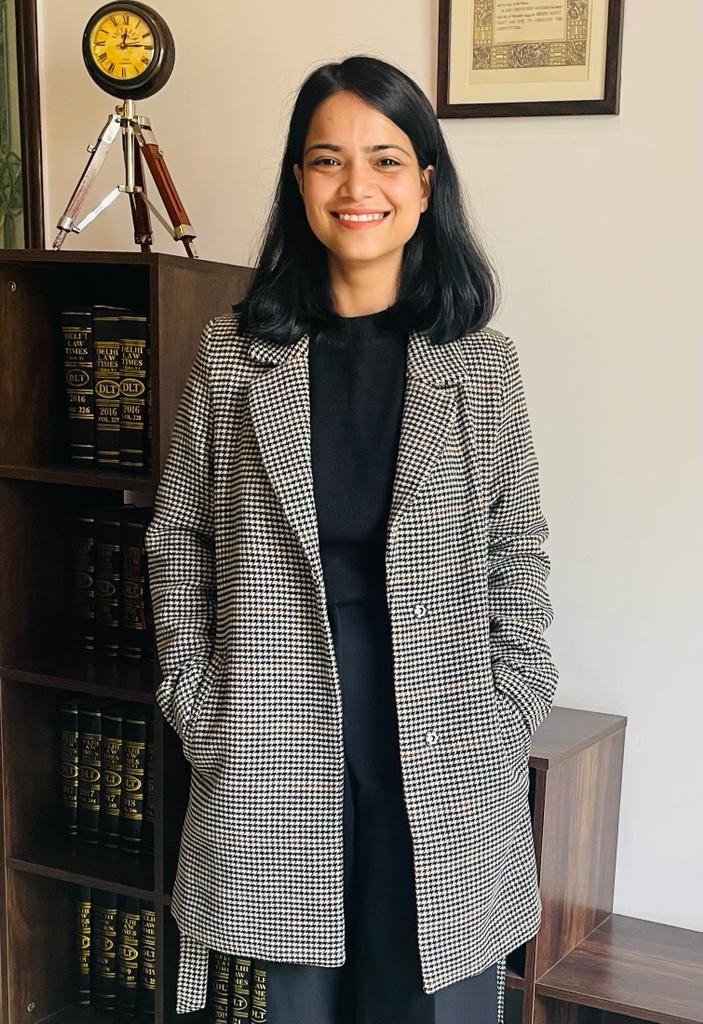
  • Handling intricate matters of Family Law, especially matrimonial disputes, demands a high  degree of sensitivity, discretion, and compassion- Mitali Arora, Founder of MAK Law Firm

    Handling intricate matters of Family Law, especially matrimonial disputes, demands a high degree of sensitivity, discretion, and compassion- Mitali Arora, Founder of MAK Law Firm

    This interview has been published by  Priyanka Karwa and The SuperLawyer Team

    Could you please share your journey and the pivotal moments that led you to pursue a career in Intellectual Property Rights and Corporate Law, especially considering your diverse experience and background?

    I am a first-generation lawyer and belong to a through and through business oriented family.  So it would be fair to say, Business instinct runs in my genes. My journey in law began with a  genuine passion for understanding the intricacies of business and innovation. Throughout my  educational years, I was deeply intrigued by how businesses evolve, and the role intellectual  property plays in safeguarding creativity and fostering innovation. Those formative years  allowed me to delve deep into the nuances of Intellectual Property Rights. It’s not just about  trademarks or patents; it’s about safeguarding the very essence of an individual’s or a  corporation’s innovative spirit.  

    Corporate Law, on the other hand, appealed to my analytical side. It provides a framework for  businesses to operate, grow, and expand. I was particularly interested in how businesses  navigate the complex regulatory landscape, make strategic decisions, and ensure compliance  while still being competitive and innovative. Over the years, with my diverse experience, I’ve  come to appreciate the nuances, the intricacies, and the beauty of both these fields. They might  seem poles apart for some, but to me, they are two sides of the same coin – both essential for a  business’s growth and protection. 

    How has your global academic exposure shaped your perspective and approach in  law? 

    Pursuing my education from the University of Torino and WIPO was a transformative  experience that deeply influenced my approach to the legal landscape. The University of  Torino, with its rich academic traditions and its location in Italy—a hub of art, culture, and  innovation—offered a profound understanding of the historical and contemporary nuances of  IP law. This foundation was complemented by WIPO’s expertise, which is the Mecca of IP.  The synergy of these two esteemed institutions offered a unique blend of academic rigor and  practical insights into the global IP landscape. 

    Interacting with a diverse group of peers, professors, and industry experts, I gained a holistic  view of legal frameworks across various jurisdictions. This experience not only sharpened my  technical acumen but also cultivated a global perspective in me. Today, when I advise clients  or engage in multifaceted legal cases, I frequently draw upon this reservoir of international  knowledge, ensuring that the counsel I provide is both globally informed and locally pertinent. 

    In fact, this was not just an academic endeavor; it was an opportunity to be part of a global  community of legal professionals. This rich network that I cultivated during my L.L.M has  since become an invaluable asset in my practice back in India. With this international network  at my fingertips, I can confidently assist and represent my clients on a global stage. It ensures  that they receive not only locally tailored advice but also benefit from a wealth of international  insights and collaborations. 

    What prompted you to start your own journey and launch your Firm in 2019?  

    After years of working in the bustling legal environment of Delhi, life took an unexpected turn  and led me to relocate to Dehradun in 2019, owing to personal circumstances. Having been  deeply rooted in a corporate framework for most of my career, I felt a distinct void in  Dehradun’s legal landscape. Rather than viewing this shift as a setback, I saw it as an 

    opportunity – a chance to create the very ecosystem I thrived in. It was a confluence of this  need, my passion, and years of experience that drove me to establish MAK LAW. Launching  my own firm wasn’t just about continuing my profession; it was about recreating the dynamic  environment I was so accustomed to and contributing to the legal community in Dehradun. 

    Although launching it single-handedly, especially as a first-generation lawyer, presented its  own set of unique challenges, I was not alone in this journey. The wonderful support and  guidance of my family, friends, colleagues, mentors, and even my professors were instrumental  in helping me take this bold step. Every challenge faced, every hurdle overcome, served to  solidify the foundation of MAK LAW, making it the reputable law firm it is today.  

    Could you shed light on some of the most significant cases you’ve handled, and the  complexities or challenges they presented? 

    Among the cases that deeply resonate with me, the one involving a seasoned Silicon Valley  professional with over three decades of experience, engaged our firm in a multi-faceted case  encompassing violation of contractual obligations, IP infringement, and theft of intellectual  property between his company and two other entities. 

    The case was particularly challenging due to its international scope, requiring adept handling  of both Indian and US laws. However, what sets this case apart was not just the complexity but  also the swiftness with which it was resolved. Within a mere span of two months since  initiation, we managed to settle the case for an impressive amount of 200 million dollars against a prominent US company. Achieving such a settlement in a short time frame was a testament  to our meticulous strategy, transparent communication, and relentless pursuit of our client’s  best interests. It’s cases like these, where the stakes are high and the complexities manifold,  that truly underscore the essence and importance of the legal work we do at MAK LAW. 

    You also practice Family Law along with IPR and how does that intersect in your  practice, and what inspired your involvement in both areas? 

    In my practice at MAK LAW, I’ve had the privilege of delving deeply into both Intellectual  Property Rights (IPR) and Family Law. While they might seem worlds apart to many, I  approach them with equal commitment and passion. My foray into Family Law began  organically, initially assisting on pro bono cases and extending a helping hand to friends and  family. Over time, this transformed into a specialized vertical within our firm. 

    Handling intricate matters of Family Law, especially matrimonial disputes, demands a high  degree of sensitivity, discretion, and compassion. At MAK LAW, we’ve tackled some of the  most challenging familial disputes, always prioritizing the well-being of the aggrieved parties.  Being a woman-led firm, I’ve emphasized an approach that is empathetic, yet ensures fairness,  striving to offer relief without any gender bias. We are known to have settled family disputes  effectively in shorter spans than the usual legal scenarios.  

    What are the challenges you faced while floating your own law firm and how has that  journey been for you? 

    Launching MAK LAW was both a dream realized and a massive challenge, especially as a  first-generation lawyer. Establishing a new law firm in a market already populated with well entrenched firms was not easy. I was resolute that MAK LAW would not just be another firm 

    but would stand for ‘Legal insight. Business instinct’. Our initial struggles ranged from  convincing potential clients to entrust their legal matters to a relatively new firm was a hurdle.  However, our emphasis on strong relationships and transparency gradually solidified our  reputation in the market. The most difficult to handle was personal pressure: Being at the helm  meant my successes were the firm’s successes, but so were my failures. The weight of  responsibility, especially in the initial years, was immense. 

    Despite these challenges, the journey has been immensely rewarding. Each time we win a case,  we win a client’s trust, and we solidify our base automatically. The testimonials from satisfied  clients have been constant reminders of why I embarked on this journey. It has truly been a path paved with lessons, growth, and sheer hard work. 

    Given your background and expertise, what do you believe are the most significant  challenges and opportunities in the field of Intellectual Property Rights and Corporate  Law today, and how do you see it evolving in the future? 

    At MAK LAW, we pride ourselves on navigating the complex arenas of IPR and Corporate  Law with meticulous precision and dedication. That said, practicing these domains hasn’t been  without its challenges. With technology evolving at a lightning pace, keeping up with IPR  changes to safeguard digital creations and inventions has been a continuous effort. Especially  in fields like AI, IoT, and blockchain, where the line between innovation and IP often blurs. 

    Representing clients with global portfolios has meant grappling with diverse IPR laws across  countries. Each jurisdiction has its nuances, making it essential to continuously update our  knowledge. On top of that, the digital age, while presenting opportunities, has also been a  breeding ground for copyright and trademark infringements. Monitoring digital platforms and  swiftly acting against violations remains a consistent challenge. Especially in M&A or joint  ventures, ensuring IP assets are correctly valued, transferred, or protected can be intricate. 

    It’s a delicate balance of safeguarding IP while also looking at the broader corporate picture. I  envision the realms of IPR and Corporate Law becoming even more intertwined in the future.  As businesses increasingly rely on their IP assets for growth, corporate strategies will need to  be framed with IP protection and monetization at their core.  

    In future, I foresee an increased emphasis on digital IP rights, sustainable business practices,  and more collaborative, international legal frameworks to address the challenges posed by a  globalized business environment. We are continually preparing and adapting for this future,  ensuring we remain at the forefront of these evolutions. 

    Finally, what is your Advice for aspiring law graduates stepping into the legal world? 

    For those stepping into the legal world, my advice is multifaceted – 

    – Stay curious, passionate and keep pace with the evolving legal landscape – in short read, read and read the relevant laws and new developments, especially in the world of  Artificial intelligence – create your niche.  

    – Building and cherishing relationships should be paramount; they are as invaluable as  your legal skills.  

    – Engage in continuous internships, stay actively connected with your alumni, and  network diligently. Especially for first-generation lawyers, embrace every opportunity  and task, no matter how daunting.  

    – Additionally, never underestimate the importance of your academics and participation  in moot courts. They provide the foundational bedrock upon which you’ll build a  successful legal career.  

    Remember, in this profession, the combination of a solid academic base and a strong network often determines your net worth. While at it, please also remember to have fun – this profession is already notorious for being taxing!

    Get in touch with Mitali Arora

  • Whilst I do agree that the dynamic nature of tax makes it challenging, that is precisely what also makes it interesting and exciting,Counsel at AZB & Partners

    Whilst I do agree that the dynamic nature of tax makes it challenging, that is precisely what also makes it interesting and exciting,Counsel at AZB & Partners

    This interview has been published by  Priyanka Karwa and The SuperLawyer Team

    Sir, can you please share the story of how you initially became interested in law and what motivated you to pursue it as a career?

    Funnily I come from a family of lawyers, being a fourth generation lawyer from both sides, so the “interest” in law has always been there, however, the journey to pursue the same was not so straightforward. 

    As a kid I always aspired to be a lawyer, however, once I completed my schooling, I decided against it and went abroad to study Business and Public Policy Management. When I came back, I joined a budget hotel as a part of their management team. Long story short, in 2008 the global recession hit and the investors in the business being non-residents wanted to liquidate their investments. That’s when I realised that I needed to have a professional degree handy as a back-up, even if I never wished to practise. I gave the entrance exam for Campus Law Centre, thankfully got through. I chose evening classes since I was working during the days, however, since that did not take up a lot of my time I started assisting in my dad’s office. Just basic stuff like making returns for individuals which led to basic preparation for representation before the appellate authorities. 

    The intrigue came from the dynamic nature of tax law with changes being introduced with every finance bill and the constant tussle between the department and the taxpayer whilst interpreting the same section. By the end of my 3-year course, I knew this was my calling and decided to join the profession.

    With over 10 years of experience in the field of direct tax advisory and litigation, could you highlight a specific case or project that you found particularly challenging and how you successfully navigated it?

    One case which comes to mind is the Honda Trading Corporation case, where I had the privilege to assist in, which was argued over a span of a few days before the Delhi Tribunal and actually led to an amendment being brought into the statute book. As a lawyer, the satisfaction one gets in such matters and the acknowledgement of the same whereby the legislature brings in amendments to overcome the judgement is something which cannot be expressed in words. 

    Tax law is known for its complexity. Could you explain your approach to helping high-net individuals and corporate entities in optimizing tax efficiency and managing compliance issues effectively?

    Firstly, this notion of tax law being more complex than other laws is flawed. If one is honest and diligent in their subject, the complexity is of no consequence. If your basics/fundamentals are strong, nothing can stop you. This is evidenced by the fact that the greatest tax lawyers of the country do not necessarily have a tax background like the great Nani Palkhivala. Whilst I do agree that the dynamic nature of tax makes it challenging, that is precisely what also makes it interesting and exciting. 

    Coming back to your query, the Indian Tax Department is known to be one of the most aggressive departments world-wide, therefore, tax compliance ought to be a key consideration for any businesses. Till what is being done is within the four corners of the law, even if the position being taken is aggressive, should not deter the clients. That being said, one must be mindful of not being unrealistic under the garb of being aggressive. Hence, being primarily from a litigation background, the endeavour is to advice clients whilst keeping in mind the litigation exposures that I foresee and mitigation of the same.  

    You’ve represented clients before various judicial forums, including the Supreme Court of India. Can you share some insights into your strategies for building a successful track record in representing clients in high-stakes tax litigation cases?

    The strategy is very basic and simple. Read – Re-read the files and Repeat!! 

    Be thorough on facts and the relevant legal provisions. Something which I have learnt from my mentor, Mr. Chopra over the years is that till date whenever we discuss any case, his first go is to read the relevant sections even if he has read them a thousand times. Trust me something as basic as reading the relevant provisions can sometimes lead to interpretations which you could not fathom earlier. 

    Secondly, ensure that all the relevant facts/documents are on record. Last but not least, court craft is extremely important in any litigation. Understanding which battle to pick and when to relent is extremely important. Harping on a point which apparently is not working, learn to let go and move on to the next one.   

    Your expertise spans various tax matters, including income tax, corporate tax, international tax, and transfer pricing. How do you keep up-to-date with the constantly evolving tax laws and regulations in these diverse areas?

    First and foremost, read the bible (the Income Tax Act) again and again. I can’t emphasise that enough. Keeping a tab on the ever-changing landscape of tax laws is extremely hard, but I am lucky to be in a team in which our mentor ensures that we earmark time every week to discuss important judgements/circulars etc. which really helps. Plus, over time I have realised that such discussions with every member contributing with their point of view helps expand one’s opinions and understanding.  

    As Counsel, you’ve worked with both domestic and international clients. Can you discuss the unique challenges and opportunities you’ve encountered when advising international clients on Indian tax matters?

    The client comes to you for the value-add you provide. The nationality of the client is of no consequence. The only difference, if any, which I have noticed is that in the cases of international clients, since they are not acquainted with the nature of litigation in India or Indian laws, it is important to be very transparent and clear in all communications and explain the strategy along with its rationale. 

    Finally, considering your successful career and diverse experiences, what advice would you like to offer to fresh law graduates who are just starting their journey in the field of law and tax advisory?

    To be honest and speaking from experience, I would urge all fresh graduates to begin their career with smaller/boutique firms. The kind of learning and experience you will get there is unparalleled. Get the fundamentals clear and understand how things really work at the grass root level. This is something you will never learn in bigger firms. No matter how attractive big tier 1 firms sound, it is not recommended to begin your career there. 

    If your fundamentals are in place, everything will follow and fall into place. It is important to have a good mentor, as it plays an important role in your initial years. Honestly, I feel I have been extremely lucky in that department. I started my career with a boutique tax firm where my senior was known to begin his day at 4 AM. He always told me that by the time the world wakes up, half of his work was complete. So that’s one thing I held on to and till this day, I begin my day very early. Secondly, my mentor Mr. Deepak Chopra has always imbibed in us that you don’t leave your clients in the office. It is important to keep at it till you find the solution or to simply put, the value-add the client came to you for. 

    To sum up, if you are honest to yourself and your work, the world is your oyster. 

    Get in touch with Rohan Khare-

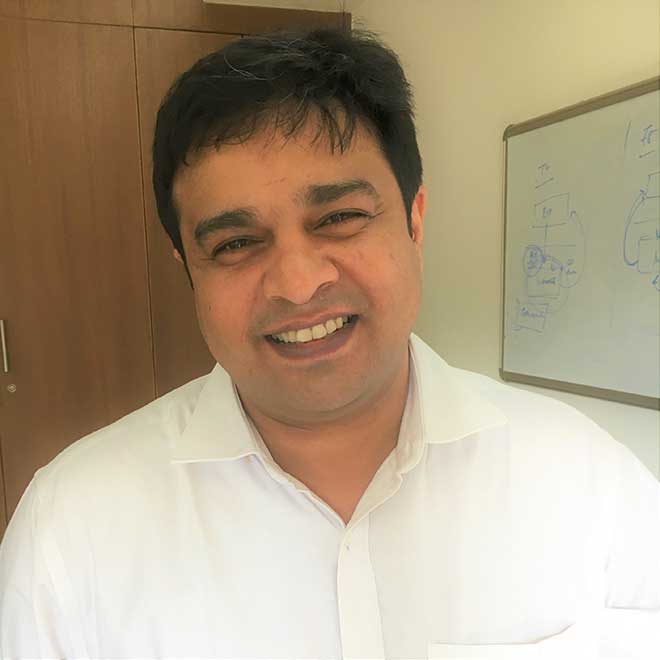
  • I believe that legal compliance and tax efficiency are not mutually exclusive, but rather complementary aspects of deal structuring- Prateek Goyal, Partner (Taxation) at MVKini

    I believe that legal compliance and tax efficiency are not mutually exclusive, but rather complementary aspects of deal structuring- Prateek Goyal, Partner (Taxation) at MVKini

    This interview has been published by  Priyanka Karwa and The SuperLawyer Team

    Can you tell us about your educational background and how you ended up pursuing law after completing your CA and BCom degrees?

    I have always been interested in law and used to look up to my seniors/mentors in the family circle who are in this field. As I was pursuing CA, I simultaneously started my law course post my graduation. I believe that my educational background has given me a unique perspective and a competitive edge in the legal field.

    You have an impressive range of experience in various sectors, from Fintech to Energy and Infrastructure. What drew you to work in such diverse industries in the field of taxation?

    I have always been interested in taxation as a way of understanding how different sectors of the economy operate and interact. I enjoy learning about the specific challenges and opportunities that each industry faces, and how tax policies can affect them. These are dynamic and innovative sectors that have a significant impact on changing the way economy functions and society. I mean we can see the kind of fintech’s getting registered in GIFT City (IFSC) and huge impact that they have in breaking stereotypes, changing the way people understand personal financing or personal investing. It is fast capturing the huge market potential and I think would continue doing that for the time to come.

    You’ve handled M&A transactions and tax due diligence for several clients. Could you share a memorable experience where your tax expertise played a critical role in the success of a deal?

    It was the most challenging and a steep learning curve of my career when we helped a client acquire a company that had significant tax liabilities. Client wanted to buy the company, but they did not want to inherit the tax problems.

    We conducted a thorough tax due diligence on target and identified main areas of exposure and potential solutions. We also assisted in obtaining a clearance certificate that would protect the client from any future claims. We also advised on optimal tax structuring alternatives for the acquisition, taking into account the tax implications thereof.

    As a result of our months of hard work, client was able to close the deal with confidence, and saved millions in taxes and penalties. I was very proud of my contribution to this deal, and I received positive feedback from my partners.

    I also cherish receiving a commendation from our partner for conducting an internal training on new joinees  on several aspects of M&A.

    As a Partner at MVKINI Law Firm, you lead the tax department and manage a team of lawyers and CA’s across multiple offices. How do you ensure effective collaboration and coordination among team members?

    It is challenging when team is spread across multiple offices and has different areas of expertise. I try to set clear goals and role profiles of team members, setting the priorities right and most importantly leveraging technology tools, such as video conferencing and cloud platforms, to facilitate effective communication and real time collaboration among team members. It is also important to continuously develop their skill sets through regular trainings particularly in our dynamic and evolving field of taxation.

    During your time at Ernst & Young, you worked on advising prospective resolution applicants on acquisitions under the IBC regime. What were some of the most challenging aspects of dealing with distressed undertakings in terms of taxation?

    One of the most challenging aspects of dealing with distressed undertakings in terms of taxation was the uncertainty and complexity of the tax implications arising from the resolution process. For instance, we had to assess the tax impact of various structures to implement target acquisition, such as debt restructuring, asset sale, merger or demerger etc. We also had to consider the tax implications of any write-off or waiver of debt, as well as the tax treatment of any losses or unabsorbed depreciation carried forward by the corporate debtor. Furthermore, we had to keep abreast of the evolving regulatory and judicial developments in this area, as there were many unresolved issues and conflicting interpretations regarding the taxation of distressed undertakings under the IBC regime.

    From your experience in handling tax litigation and representation before various authorities, what are some key strategies you employ to achieve favorable outcomes for your clients?

    It is already well emphasized and there are no two views about it. What is of paramount importance is thoroughly digging and understanding facts of the case. It is also an art to get complete set of facts out from a client and once a lawyer is aware of facts, I would say half the battle is won. Certainly researching and preparing legal arguments and presenting effectively is other part of the coin.

    I also prepare clear and persuasive arguments and evidence to support my client’s position and challenge the opposing party’s claims. Also, I believe litigation is not all about fighting only for the sake of it. What I have learnt from my seniors is to not force clients into prolonged litigation and wherever possible seek to resolve the dispute through negotiation or settlement.

    You’ve also been involved in assisting FPI clients with Indian tax compliances. Can you share some insights into the specific challenges and considerations that foreign investors face while navigating the Indian tax landscape?

    One of the main aspects of my work was to help FPIs comply with the Indian tax laws and regulations be it advisory, compliances or litigation. Some of the challenges and considerations that FPIs face while investing in India are:

    – The classification of FPIs into different categories given their unique structures in their home jurisdiction and navigating the same into Indian jurisprudence based on tax treaties

    – The withholding tax obligations on various types of income, such as dividends, interest, capital gains, and royalties, and the availability of tax treaties and lower rates for certain jurisdictions.

    – The reporting and documentation requirements for FPIs, such as filing of tax returns, furnishing of certificates, and maintaining of books of accounts and records. I witnessed how EY was a flagbearer in implementing automated processes for doing these tasks and the amount of effort and investment that went into doing so.

    – The risk of tax audits, assessments, and disputes by the Indian tax authorities, and the options for resolution and appeal.

    With a substantial background in IBC litigation and commercial arbitration, what advice would you give to businesses or individuals who may find themselves in insolvency situations?

    Insolvency situations are complex and challenging for any business or individual, and they require careful planning and professional guidance. My advice would be to seek legal assistance as soon as possible, and to explore all the available options for resolving the insolvency, such as restructuring, settlement, liquidation, or bankruptcy. I would also advise them to cooperate with the creditors and the insolvency resolution professionals, and to comply with the relevant laws and regulations. Additionally, I would suggest them to consider the benefits of alternative dispute resolution methods, such as arbitration or mediation, which can help them avoid lengthy and costly litigation, and achieve a more satisfactory and amicable outcome.

    Having worked in both corporate law and tax advisory roles, how do you strike a balance between legal compliance and tax efficiency when structuring deals for clients?

    As a legal and tax advisor, I always aim to provide solutions that are both compliant with the relevant laws and regulations and efficient in terms of tax implications for the clients. I believe that legal compliance and tax efficiency are not mutually exclusive, but rather complementary aspects of deal structuring. To achieve this balance, I follow a few principles:

    – First, I always start with a thorough analysis of the client’s objectives, needs and preferences, as well as the specific facts and circumstances of the deal. This helps me to understand the scope and complexity of the issues involved and to identify the potential risks and opportunities.

    – Second, I research and evaluate the applicable legal and tax frameworks, both domestic and international, that govern the deal. I also keep abreast of the latest developments and trends in the relevant fields, such as new legislation, case law, guidance and best practices.

    – Third, I design and propose solutions that are tailored to the client’s situation and goals, taking into account the legal and tax implications of each option. I also communicate clearly and effectively with the client, explaining the pros and cons of each solution, as well as the assumptions, limitations and caveats involved.

    – Fourth, I collaborate and coordinate with other professionals, such as lawyers, accountants, bankers and consultants, who may have different perspectives and expertise on the deal.

    – Fifth, I monitor and review the implementation and execution of the deal and provide ongoing support and advice to the client, in case of any changes or issues that may arise after the deal is closed.

    Throughout your career, you’ve worked with clients from various sectors and industries. How do you stay updated with the ever-changing tax laws and regulations to provide the best possible advice to your clients?

    That’s a great question but I am afraid my answer not any different. It is 3R’s – READ, READ and READ

    I think it’s very important to keep up with the latest tax rules and trends, especially in this dynamic and complex environment. You need to subscribe to knowledge databases, newsletters and podcasts from reputable sources that cover tax news and analysis, follow some influential tax experts on social media and blogs, attend regular webinars and workshops that offer updates and insights on various tax topics and issues. What is also understated is consulting with fellow colleagues or mentors if you have any doubts or questions who are always welcoming and provide different perspectives which you might have just not thought about. In fact, I also sometime try to find time to share my knowledge with extended family on LinkedIn by sharing my analysis on latest tax controversies and new legislations.

    As someone who has achieved considerable success in your field, what advice would you like to give to fresh law graduates who are just starting their careers in the legal profession, especially those interested in taxation?

    Don’t stop asking questions and learning new stuff. Tax law is tricky and always changing, so you gotta keep your curiosity and your brain sharp. Look for ways to learn more, like taking courses, going to events, and reading a lot. Get your hands dirty, try to get as much real-world experience as you can, through internships, jobs, or whatever. This will help you improve your skills and meet people who can help you out.

    Money should be secondary as your career just starts and I strongly discourage  this tendency nowadays to switch jobs in name of ‘climbing the ladder’ or taking a ‘steep curve’.

    A good mentor can help you navigate the tough times (which very often comes in this field), so find one and discuss whenever in doubt. Also, I do believe, everyone has their own set of challenges and pace, so relax and avoid self-comparing tendencies. There is this poem which was introduced to me by our CA-IDT class professor, Mr Ajay Jain – DON’T QUIT

    “When things go wrong, as they sometimes will,

    When the road you’re trudging seems all uphill,

    When the funds are low and the debts are high,

    And you want to smile, but you have to sigh,

    When care is pressing you down a bit,

    Rest, if you must, but don’t you quit.”

    (Read on, if you must..)

    Get in touch with Prateek Goyal-

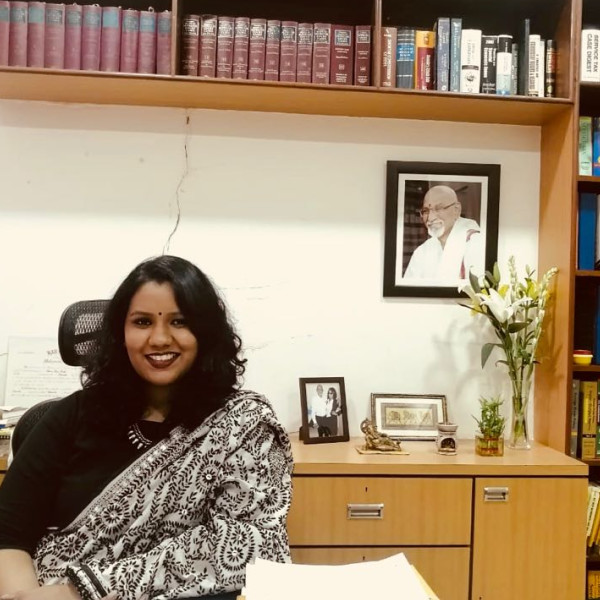
  • Deepika Pokharia, Senior Associate at Saikrishna & Associates In a FireSide Chat with SuperLawyer on IPR, Taxation and Evolution of NFT, AI and Metaverse

    Deepika Pokharia, Senior Associate at Saikrishna & Associates In a FireSide Chat with SuperLawyer on IPR, Taxation and Evolution of NFT, AI and Metaverse

    This interview has been published by Prabhjot Singh, Priyanka Karwa and The SuperLawyer Team

    Was pursuing law planned or did it all happen by chance?

    I would say it was planned for as long as I can remember. When I did not score the desired rank in my CLAT examination, I decided to do law post-graduation. I studied B.Com (Hons) at Shaheed Bhagat Singh College, Delhi University and thereafter, took admission in Campus Law Centre, University of Delhi. I have always been inclined towards litigation and so far I think it is working out well for me.

    Please enlighten our audience about the initial struggles in your career and how you managed to overcome them?

    I have been very fortunate both in terms of having the absolute freedom in my career choices and finding the right opportunities. I started my professional journey with Wadhwa Law Chambers as an IP Associate.

    Despite working in a relatively niche field of law, I was exposed to all kinds of work ranging from general advisory, commercial litigation to transactional work. Additionally, smaller teams ensured significant contribution in every matter.

    I just feel that as a first generation lawyer there is certain lack of insight or clarity one has in figuring out their career goals. That being said, everyone has different journeys and law being the dynamic profession it is, every opportunity irrespective of the organisational structure or area of practice is worthwhile. 

    The only major struggle for me (as well as my peers) has been to achieve a work-life balance, which generally becomes impossible in smaller set ups. This problem is also supplemented by our own deep-rooted conditioning and seeking validation in overworking. I think having a healthy professional relationship with your senior(s) is significant in resolving any such workplace issues.

    What are the most important considerations to keep in mind when dealing with IPR and Tax issues? 

    That’s a very wide question given the range of IP rights and Tax statutes in India.

    To answer it briefly, I would say insofar as IPR is concerned, understanding the overlap between various IP rights is extremely important. Additionally, in any intellectual property issue, whether litigation or transactional, the foremost consideration is determining the scope of the IP right involved.

    Again, taxation has a very wide domain. While having a basic understanding of the tax implications, statutory timelines and compliances is a prerequisite to any tax dispute, one needs to be updated with the ever growing developments, jurisprudence and amendments. Circulars, Press Releases and Notifications also assume a significant role in understanding taxation issues.

    What are the most prominent challenges that you have come across while dealing with Tax and IPR Transactions? 

    Both Tax and IPR happen to be slightly technical fields and as such breaking down the legal issues is always a challenge. Lack of substantial precedents with relatively new enactments such as the GST Act poses another challenge. For that matter, even the concepts of Design law are still not well-settled in India.

    Deepika, how do you ensure that clients’ intellectual property is adequately protected, and what are the basic compliance procedures one has to work upon? 

    I have personally witnessed a growing awareness about the importance of intellectual property (particularly trademarks and copyright) amongst upcoming business and entrepreneurs. Brand protection is finally being considered paramount amongst businesses, who not only seek to protect their brands but also understand the legal consequences of intellectual property violations.

    The basic idea is to start early and secure statutory protections. The importance as well as effectiveness of  IP Prosecution cannot be underestimated.

    What are the most common mistakes you see businesses make in IPR nowadays? 

    Like I said, businesses, irrespective of their size and operations, are increasingly becoming conscious of intellectual property rights. However, not acting early enough both in terms of protection of one’s IP rights and initiating actions for any infringement/violation poses significant problems.

    Besides this, businesses need to be extremely wary of loosely-worded agreements whether it be licensing, settlement or even employment contracts insofar as they pertain to ownership of the IP rights.  

    What resources do you recommend for staying up to date in law? Any blogs that you always keep an eye on?

    Insofar as the general and daily legal updates are concerned, dedicated legal news resources such as Bar and Bench and Live Law already cater to a significant audience which even includes non-lawyers/legal professionals.

    For developments in the field of IP law, I find SpicyIP and IPWatchdog very interesting. For that matter, LinkedIn has now become a great source for legal updates. More often than not, I find myself looking for a case law on LinkedIn because I recall scrolling past something familiar on the platform. What is really great about LinkedIn is that its not just independent practitioners or firms sharing daily updates but law students having an inclination towards IP.

    If your university or office have a PTC subscription, I would always recommend skimming through it.

    Deepika, you’ve been quite active in these IPR dealings, but lately we are witnessing the evolution of Metaverse and NFT, according to you how will it affect the legal industry?

    I feel with every technical development/evolution, comes in the legal disputes. Internet and e-commerce have opened floodgates of litigation with IP disputes constituting a major chunk of it. Similarly, copyright and trademark issues particularly, one concerning the ownership of such IP rights in NFTs seems imminent.

    “As dependency on tech and AI will increase, issues pertaining to security and privacy will also witness an increase”, please throw some light on this statement.

    That goes without saying. Digital footprints and access to personal data invariably leads to security and privacy concerns. While it is impossible not to move along with these technological developments, we will have to educate ourselves of all the possible repercussions.

    Just last week, there has been a lot of discussion on privacy issues concerning the Lensa AI mobile app which is being used by several celebrities/influencers across social media platforms for sharing their AI generated “avatars”.

    Any 5 best pieces of advice that you would love to give to our readers?

    Well, here are the five takeaways from my experience so far:

    Constantly reassess your growth and goals. What gives you work satisfaction today, may not tomorrow.

    Insofar as possible, work on all sorts of matter and do not pigeonhole yourself.

    A law degree does not necessarily translate to litigation so explore your avenues.

    Professional work ethics and accountability goes a long way.

    Lastly and most importantly, break out of your legal circle every now and then. Meet your non-lawyer friends, engage in discussions about anything but law. The idea is to expand your horizons and avoid the burn out.


    Get in touch with Deepika Pokharia-

  • Devashish Poddar- Senior Associate at Price Waterhouse & Co LLP working in the field of ‘Direct Taxation and other allied laws’

    Devashish Poddar- Senior Associate at Price Waterhouse & Co LLP working in the field of ‘Direct Taxation and other allied laws’

    This interview has been published by Tanmaya Sharma. The Interview was taken by The SuperLawyer Team.


    Working globally can prove to be challenging. Have you ever worked on a case that kept you in office long after the “office hours”? How did you handle the situation?

    Indeed, working globally proves to be challenging. But it comes with its pros and cons. As Lord Robertson once quoted, Globalisation will make our societies more creative and prosperous, but also more vulnerable. Working globally opens doors to a larger set of stakeholders which at times can become overwhelming.

    Yes, due to confidentiality requirements, there are times when we have to spend time beyond our office hours. The entire scenario becomes challenging and complex. However, finding a passion and zeal for the work helps me stay motivated and onboard. I realize that the moment I start spending more time with my work, I find creative and innovative ways to handle a particular situation. In turn, I begin to enjoy my work.

    You have crafted a niche for yourself in your area of expertise, i.e. Corporate and International taxation and regulatory services. At what point in your education curve did you realize you want to devote your career to this particular field? Besides your current speciality in law, what other specialities pique your interest? Do you have experience in those areas?

    I belong to a family of diversity. My grand-uncle is an economist and a tax professional. My father completed his LL.B. but was unable to pursue his career in law. My siblings, being chartered accountants/advocates, have been engaged in the field of tax for over a decade now. Being brought up in such an atmosphere always prompted me to take up ‘tax’ as my career. So to answer your question, it was during my preparations for final exams, I ensconced my thoughts to take up tax as a path ahead.

    Since many facets of tax are dependent on civil/criminal laws, others related to corporate laws and the Constitution of India, reading the same, intrigues my thoughts to come up with better, innovative and lawful solutions for my clients. Besides the same, in recent times, I have developed some interest in the field of Environmental, Social, and corporate Governance (ESG). The 2021 United Nations Climate Change Conference – COP26 held in Glasgow attended by the Indian Prime Minister Shri Narendra Modi enticed my interests in this area wherein the stakeholders are re-aligning their business strategy with environmental concerns to achieve sustainable development. Also, tax technology is another area of my interest.

    I was a part of the team which tested a newly-developed tax litigation tool in one of my previous organizations. In addition to the aforesaid, since every provision of law should sync with the intent of the Constitution of India, I have been a part of some assignments wherein I had multiple opportunities to explore the provisions of the Constitution of India related to the taxation statutes.

    You’ve previously worked in one of India’s leading law firms. What do you think is the main difference in work culture between L&L Partners, New Delhi (Luthra & Luthra Law Offices) and PWC?

    I believe most organizations turn out to be similar, only if a professional wants to work, learn, earn and grow. The same analogy applies to an Indian law firm and a global accounting firm. Indian law firms may not function under a global mandate, however, the trend of following ‘global best practices’ and developing a pool of stakeholders from different countries have made the law firms function in a manner that is not much different from a multinational enterprise. The work is similar, the clientele is similar, and again even the stakeholders and management function in a similar manner.

    However, the only difference is that while working with a multinational professional services network of firms, a person gets more opportunities to interact with peers and connections within the firm (both in India as well globally). A person can leverage the worldwide network of a global accounting firm to find more lucrative opportunities. Although the Indian law firms establish relationships with international law firms, the aforesaid difference is also fading away. On the other hand, Indian law firms provide you with ample opportunities to interact and communicate with some of the country’s top practitioners.

    Can you tell us briefly about the various global groups that you’ve assisted to set up their offices in India? What kind of work goes into setting up an office in a different country? 

    I have been a part of a team that assisted a global railway company set up its office in India. In addition, I had opportunities to assist-

    • British multinational telecommunications company
    • American multinational conglomerate company (world’s largest telecommunications company)
    • Canadian telecommunications and data networking equipment manufacturer
    • German automotive Manufacturing Corporation
    • Malaysian Oil and Gas Company
    • Private equity firms
    • International investment management firms
    • Massachusetts-based life insurance Company
    • And a few others.

    To set up an office (especially in India), the group should first decide about the form and structure of the entity. Since the efficiency of the presence in a country and the applicable laws flow from the type of entity being set up. Thereafter, if it is a company, then corporate laws applicable for registration and set-up are required to be adhered to. Similarly, if applicable, the entity in India is required to comply with RBI and SEBI laws. In addition, tax registrations (PAN, TAN, GSTIN, IEC, etc.) may also be required. If the entity decides to onboard employees, then employment laws and registration requirements may also warrant attention.

    You are a corporate tax lawyer, usually dealing with transactions, compliance and advisory, but you have hands-on experience in litigation and have dealt with some high-profile cases as well. Can you please share with our audience which part of your legal journey you enjoyed the most? 

    Being a CA as well as a lawyer, helped me experience the best of both worlds. While advisory and compliances have their own set of perks, litigation is an area wherein my mind becomes more creative. I believe I can enjoy and learn more while being engaged in a litigation project. The time spent on articulating thoughts and drafting a document to present one’s case in a simple, precise and crisp manner is satisfying. Representing a client before the court of law and achieving success is bliss.

    Finance Minister Nirmala Sitharaman introduced The Taxation Laws (Amendment) Bill, 2021 in the Lok Sabha recently, which seeks to withdraw tax demands made on indirect transfer of Indian assets before May 28, 2012, what major changes (if any) will be seen because of this? 

    The Taxation Laws (Amendment) Act, 2021 (TLA) amended the Finance Act, 2012. Earlier, due to the retrospective amendments vide the Finance Act, 2012, tax implications arose on a few of the largest Indian companies. Thereafter, there was decade-long litigation between the companies and the Government of India. Numerous international courts/arbitration forums were explored and approached by the companies aggrieved by the provisions of the Finance Act 2012. Therefore, to avoid such protracted litigation and dispute, the Government of India decided to settle the issue by giving a limited window to such aggrieved companies for settling the disputes forever.

    Such a move by the Government of India and the legislatures is a welcome move. The aforesaid would aid the companies to buy peace and seek the refund of taxes already deposited by them under protest. By introducing TLA, India is on its path to attracting foreign investments for the ‘Make in India’ campaign and in return fulfilling its objective of atma nirbhar Bharat, i.e. self-reliant India. The introduction of TLA has reposed the faith of big corporate houses in the Government of India. Multinational enterprises are now aware that the Indian Government and legislatures are well cognizant of the issues around the country and prompt laws are made to fulfil the objective of India as a welfare state.

    How do you see the Indian tax laws in the future?

    Laws are efficient only if they curb the menace. A complex and ambiguous set of provisions often defeat the legislative intent. India has tried to simplify the indirect tax regime by introducing the GST laws which have replaced numerous other statutes to form a single consolidated law for various indirect taxes in India. Similarly, I believe India may witness a change in its direct tax laws as well, wherein various deductions and exemptions can be done away with and a lower rate of taxation may be introduced to benefit the companies as well as individuals. Various ‘conditional’ deductions and exemptions provided in the direct tax laws may prove to be beneficial for professionals who are aware of the benefits provided by the law, but at the same time makes it difficult for the public in general to interpret the same. Due to the aforesaid, the legislature and the Government of India have already introduced a few provisions which provide for a low rate of tax while disallowing most of the deductions and exemptions. We may witness such similar changes in the future as well.

    What suggestions would you like to offer to our young lawyers, law students and law graduates? 

    I always resonate with the quote, “There is no shortcut to success”. Hard work has no replacement, especially in our country and in the field of law. However, we must all realise that the era demands not just hard work but smart work as well. We do not live long enough to spend a substantial portion of our life in the office or at work. We all need a work-life balance. And, there comes the smart work. A professional who works hard and at the same time smartly saves time, achieves desired results, adds value to the clients and also invests time in personal life and well-being. Even luck favours those who work hard and smartly at the same time.

    To sum up, I would quote the former president of the United States, Thomas Jefferson

    “I am a great believer in luck, and I find the harder I work, the more I have of it.”


    Get in touch with:

  • Sonam Taneja, Programme Manager, Food Safety and Toxins, on career in indirect tax and Food Safety laws and policies in India

    Sonam Taneja, Programme Manager, Food Safety and Toxins, on career in indirect tax and Food Safety laws and policies in India

    Sonam Taneja graduated from ILS Law College, Pune, in 2010. She currently works with Food Safety and Toxins division at Centre for Science and Environment as programme manager. She has close to eight years of work experience. She also has expertise in Indirect Tax and has worked as senior associate at Lakshmikumaran and Sridharan.

    In this interview, she talks to us about:

    • Her role and responsibilities as Programme Manager –Food Safety and Toxins at Centre for Science and Environment
    • On career in Indirect Tax
    • Importance of mooting in college

    HOW WOULD YOU INTRODUCE YOURSELF TO OUR READERS?

    I am a lawyer, working in the field of food safety policy at one of India’s leading environment policy think tanks. I am passionate about laws and policies that impact the way we eat.


    WHAT FACTORS INFLUENCED YOU TO CHOOSE LAW AS A CAREER? WHY DID YOU CHOOSE ILS LAW COLLEGE FOR PURSUING LAW?

    I was a science student in school. While I enjoyed the logical approach in science studies, my interests lay in reading, writing, questioning and public speaking. Apart from engineering, I had applied for English honours and law at ILS Law College. ILS has always had a very good reputation, when I got through ILS, I just went for it!


    PLEASE TELL US ABOUT YOUR TIME AT LAW SCHOOL. HOW WAS YOUR APPROACH TOWARDS ACADEMICS WHILE IN COLLEGE.

    ILS has an ‘intellectually stimulating’ environment. There is a strong culture of senior students helping and mentoring juniors. ILS gave us the freedom to spend our time after classes the way we liked. I chose to be a part of several co-curricular and extra-curricular activities at college.

    Coming from a science background, initially, I found theory subjects challenging, but gradually caught up. I had always been an academics-oriented student and my scores did matter to me.


    HOW IMPORTANT ARE EXTRA CURRICULAR ACTIVITIES TO A LAW STUDENT.

    I think extra-curricular activities are important everywhere, every time in life. It helps shape a well-rounded individual. ILS has a very good culture of dramatics, dance, music and sports. It was an amazing experience for me to be a part of some of these and closely observe the others.


    YOU HAVE REPRESENTED YOUR COLLEGE AT PRESTIGIOUS MOOT COURT COMPETITIONS. HOW SIGNIFICANT IS MOOTING FOR LAW STUDENTS?

    Participation in moot courts can add a lot to one’s confidence in terms of public speaking, thinking on your feet and working under pressure. I have applied those learnings very often in my professional life.

    But then, nothing is a one-size-fits-all solution. I believe one should continue to get out of one’s comfort zone, whatever be the route. Moot courts were challenging for me and participating in them was my way of pushing myself.


    HOW DID YOU SECURE YOUR FIRST JOB? HOW IMPORTANT DO YOU THINK A HIGH CGPA/PERCENTAGE IS FOR RECRUITERS?

    I was interning at the Delhi office of Lakshmikumaran & Sridharan in my final year and that is when I got an offer. I think marks can reflect sincerity in a candidate to recruiters, but if I was recruiting, I would keep my cut-off for marks at just average and look for a candidate with the right attitude and a learning aptitude.


    WHAT WOULD BE YOUR ADVISE TO READERS WHO ARE INTERESTED TO PURSUE INDIRECT TAX IN THEIR CAREER?

    Indirect taxation has recently seen a makeover since the inception of Goods and Services Tax. I am not in the field right now, but for those interested, I think this would be a great time to be in the field and see a new law shaping up.

    Lawyers play a very crucial role in this field but atleast in ILS, taxation was an optional subject, indirect taxation being just a part of it. If one is interested, getting the exposure during law school by way of diplomas and optional subjects is a good starting point. Another crucial step is to plan internships with good law firms practicing the subject.


    HAVE YOU EVER FELT THE NLU AND NON- NLU DIVIDE? DO YOU THINK IT IS A CONSIDERATION FOR EMPLOYERS?

    Thankfully, no. LnS is a great place to work in many ways including this one. Hard work and merit is valued there and I didn’t feel any NLU and non-NLU divide.


    PLEASE TELL US ABOUT YOUR CURRENT POSITION AS PROGRAMME MANAGER, FOOD SAFETY AND TOXINS AT CENTRE FOR SCIENCE AND ENVIRONMENT. WHAT ARE YOUR ROLES AND RESPONSIBILITIES?

    I have been working in this position for over two years now and to say the least, it has been an amazing experience. I love the field of food related laws and policies. At CSE, I work on policy issues relating to organic farming and organic food in India, labelling and advertisement of packaged food, regulation of pesticides in India and pesticides’ residues in food etc. We closely analyse legal and policy developments relating to these subjects and based on our research of international best practices, we comment on new regulations and policies.


    WHAT ADVICE DO YOU HAVE FOR OUR READERS, WHO ARE PRIMARILY COLLEGE STUDENTS?

    Law is a beautiful field and it opens a lot of doors for us lawyers. It is crucial to love what you do and in order to know that, it’s a great idea to explore the professional options that being a lawyer gives you. College is a great time for that. It’s important to get out of your comfort zone and try new things.

    Prioritising and managing time is very crucial.


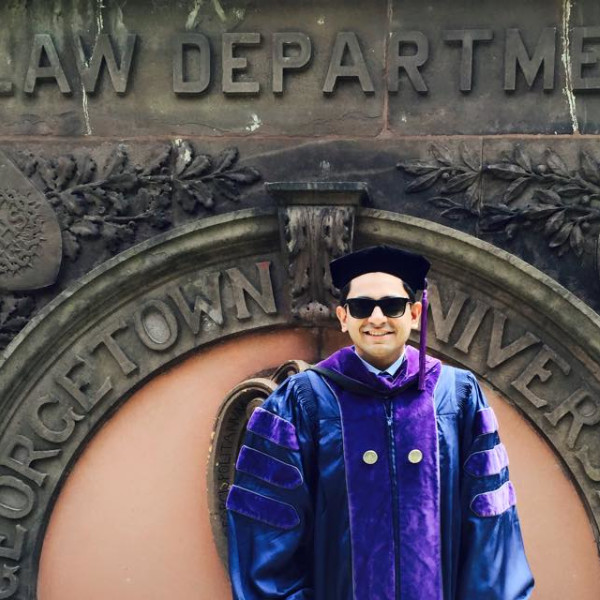
  • Anmol Anand, Associate, AZB & Partners, shares his experience on LLM from Georgetown University and career in taxation law

    Anmol Anand, Associate, AZB & Partners, shares his experience on LLM from Georgetown University and career in taxation law

    Anmol Anand graduated from ILS Law College, Pune, in 2014. He then went to Georgetown University Law for studying LL.M in law of Taxation. After a brief stint as International Tax Analyst at Bloomberg BNA he returned to India and worked with PDS Legal. Currently, he working in AZB & Partners as an Associate.

    In this interview, Anmol talks about:

    • His experience at Georgetown University Law Center
    • Career in taxation law
    • Difference between International Tax and Domestic Tax Practice


    HOW WOULD YOU LIKE TO INTRODUCE YOURSELF TO OUR READERS? PLEASE TELL US SOMETHING ABOUT YOUR PRE-COLLEGE LIFE?

    Not sure how to put this across for readers, but Hi! I am Anmol, just another lawyer with a curious and ambitious mind.

    Well before ILS happened, I had a pretty nerdy journey through the better half of my academic career. I had scored pretty decently in my X and XII, which at that time seemed satisfactory to my ambitious mind.

    Coming from a family full of lawyers, I was on the path to become an engineer. I was a science student with aspirations of making it through the best colleges for B.Tech. I also had law as my backup option since I was a firm believer in not wasting time or creating any gap in my resume. I thought of law as an alternate option in the event I would not get through any of the engineering entrances so as to try a different field while perhaps preparing for taking another shot at the engineering entrances a year later.

    Soon it was all over and I was left with my score in XII standard and an option to take up engineering colleges’ way down my priority list. Bogged down with not making it to any of the preferred institutions for B.Tech I chose to go ahead with law, at least for a year, wherein ILS was the clear cut choice, being one of the better institutions as per reputation. I mean there were couples of reasons for choosing ILS – one that there was no entrance exam and that selection was based on XII score and second it was away from Delhi.

    So from a family of lawyers, and from never having set foot outside Delhi, I chose ILS and flew to Pune.


    PLEASE TELL US SOMETHING ABOUT YOUR COLLEGE LIFE. HOW IMPORTANT WAS YOUR COLLEGE IN SHAPING YOUR CAREER?

    ILS as mentioned earlier, was perhaps a stopgap arrangement for me when I made the decision of studying there. Well, it turned out to be the best decisions of my life.

    I remember my first day in ILS and was immediately hooked on. I was surrounded by highly competitive peers who either had law as a preferred career choice or were far too serious about ILS being a stopgap arrangement for them. However, soon for me, I became adamant of continuing at ILS and taking my career forward from thereon.

    ILS as an institution threw various options at students to pick from. One could enroll oneself in any particular kind of specialised academic cell or pick up a moot-court competition or engage in research paper writing etc. after regular classes. Since regular class hours were not long, I had ample time to pursue a lot of extra-curricular activities.

    I would, therefore, remember ILS as a place that taught me the value of opportunities, self-learning and leadership. From acting in dramas to representing college at national level moots to leading the charge for sports activities, I had bagged various opportunities and converted most of them into success, while also making a lot of friends, who will remain so for life.

    I also took time out to enrol myself in the Company Secretary Course, which was the first time in point when I got interested in tax laws. Although I could not manage completing it, given that I left the country right after ILS for my masters, it’s important to mention that at ILS it is manageable to be able to pursue the CS and that pursuing so opens up a wider perspective that I believe everyone should endeavour to at least discover.

    To conclude, I would say that I had to pick ILS for the lack of better options at that point of time but I am happy to have studied there and gathered most of out.


    WHAT MOTIVATED YOU TO GO FOR A MASTERS PROGRAMME? WHAT LED YOU TO CHOOSE TAXATION AS YOUR SPECIALISATION?

    Well taking up LLM as the next move in my academic career was largely because I had the will to dig deeper in tax laws.

    That does sound boring. But honestly I felt that I had the knack for tax laws once I started pursuing CS, followed by various internships in tax firms. What really had me hooked up to the idea of LLM in tax laws was one of the national moots that my peers and I participated in. It was in international tax and although, unfortunately for us, we ended up as runners up, it opened the idea for me to explore the subject of international tax.

    The other reason why I picked taxation as specialisation, apart from tax being a heavily litigated subject, was perhaps because it was rarely chosen by law students (may be because it sounds boring to a lot of people), which to my mind was an opportunity for the future. I knew I had a knack for a subject, which to a lot of people would always remain a text book that they will dread opening.

    Therefore, before I could to step into the shoes of being a hardcore tax lawyer, I wanted to dig deeper into the subject, which is why I chose to take up LLM in tax laws as my next move, by the end of fourth year in college.


    HOW IMPORTANT IS TAXATION AS A SUBJECT FOR LAW STUDENTS? WHAT COURSE OF ACTION WOULD YOU SUGGEST TO STUDENTS LOOKING TO SPECIALISE IN TAXATION?

    I believe that even if one is not willing to be an expert in tax, one should not neglect it completely. India is the front-runner when it comes to aggressive tax jurisdictions. Newspapers make headlines almost every week with some or the other tax policy or decision which shows the volatile nature of the subject in India.

    It’s not a secret that demonetisation was aimed at booming the revenue by increasing the tax base, GST was brought in for achieving better compliances, GAAR and concepts like equalisation levy were all directed against tax planning and at times to counter what the courts had otherwise held in favour of the taxpayer. It’s important to realise that this country runs majorly on taxes. Most of the times the income tax department tries to extract more than what is allowed to be gathered as taxes as per law. This outreach, apart from being unreasonable, brings with it most interesting issues that are at times dragged to the supreme court only to have the government amending laws to nullify a taxpayer favourable supreme court decision. On the other hand, businesses are always looking to pick up tax advantages in every transaction, which is where the involvement of tax lawyers has become inevitable. Therefore, its time law students should realize the importance of tax laws and work towards putting a couple of pointers regarding the same on their respective resumes.

    Taking up specialised courses in tax, pursuing CS/ CA or like courses, taking up internships or going all the way in spending a year or two in tax LLM would definitely help.


    WHICH UNIVERSITIES DID YOU APPLY FOR LLM? HOW DID YOU CHOOSE GEORGETOWN UNIVERSITY LAW CENTRE?

    The biggest challenge to apply for LLM in tax laws is that not every university around the world has a tax specialised LLM. Therefore, again I chose to have back up options like National University of Singapore for a general LLM program.

    However, I had a preference to go to the United States given its unique and discrete tax policies that are followed world over. I had applied to most of the the specialised tax LLM courses at universities like New York University, Northwestern University, University of Florida, Boston University, Georgetown University Law Centre etc.

    Given that Georgetown University was considered to be one of the best in the world for specialised tax LLM courses, it was the inevitable choice for me. The options for tax courses were extraordinary and were far from being imaginable for a student just out of law school like me. I remember this one course, which was called “international business planning workshop”. It was taught by an adjunct professor who was also the chairman of national tax practice at Baker Mckenzie. The course involved practical international tax planning issues for business looking to restructure globally and was graded on one’s understanding of such issues and capability to present the same. All this is to say that the learning experience at Georgetown that I have had is unparalleled and I would highly recommend law students to explore the option of LLM abroad, if possible.


    WHAT DOES THE CV OF A STUDENT SEEKING ADMISSION TO A PREMIER UNIVERSITY OFFERING AN LLM PROGRAM HAVE TO LOOK LIKE? WHAT SHOULD BE KEPT IN MIND WHILE WRITING SOP FOR LLM ABROAD?

    I believe, that the CV of a student looking to apply for an LLM should be clear and reflective of one’s decision of picking a specialisation, if any. It should be short, preferably one page and should include references to instances that show one’s capability of being an opinion maker.

    SOP on the other hand could be as long as two pages. It should be crisp, should reflect on the personality of the candidate and the flow should come out naturally. The candidate should put in there his/her thought as to how a particular course at a particular university in a particular city will help the candidate in achieving his/her short term and long term goals.


    YOU HAVE WORKED AT BLOOMBERG BNA, WASHINGTON DC POST YOUR LLM. HOW WAS YOUR EXPERIENCE WORKING THERE? HOW IS THE WORK CULTURE ABROAD DIFFERENT FROM INDIA?

    BNA was a fantastic stint. I would rather say that it was an extension of my LLM program since I was working exactly in what I had just been trained for at Georgetown. My job was research oriented and advisory in international tax and I had to play around with tax laws in about 114 countries, which was tedious but interesting.

    Working at BNA under Bruce Reynolds was inspirational. My other colleagues at BNA were very supportive and insightful and it was real fun to be working with them. Work culture was very typical as per American standards. Best part about working in Virgina was that it was about a few minutes away from where I lived in Washington DC, the working hours were decent, people at the organisation were compassionate and respectful and mindful of everyone’s personal life.

    Working here in India, although not complaining, is very aggressive. Everyday here is a new challenge, sometimes with added levels of difficulty. Work hours are long, but none of this makes it worse. It is rather better.


    WHAT FACTORS INFLUENCED YOUR DECISION TO COME BACK TO INDIA AFTER WORKING IN WASHINGTON DC?

    Well the biggest factor that influenced me to come back to India was visa issue. I had the option of opting for a program called CPT, which allows you to study and work alongside, but that seemed to be taking the issue too far for me. Because of the visa issue, it was becoming difficult to find a job at a law firm in the US, since they would not offer one to someone not holding a valid H1B visa already. Clearly that was a vicious circle. With my back against the wall, I decided to move ahead in career and look for jobs in hometown rather than opting for CPT.


    PLEASE TELL US ABOUT THE RECRUITMENT PROCESS AT AZB? HOW IS THE WORK ENVIRONMENT AT AZB?

    AZB Delhi recruitment happens in different manner for different teams I believe. For our team, its need based as is in most cases and we look to identify candidates based on their level of reception to most of the queries and their responses of course. If you are an entry-level candidate, your merits won’t matter as much as your ability to demonstrate interest in the subject.

    I think working at AZB exposes you to the best of all practices. I am part of the tax litigation team here. So primarily, I represent a number of major MNCs pan India. I think it’s much more smoother to do so at AZB, given AZB has presence in major cities like Mumbai and Bangalore and therefore traveling from Delhi to at least either of these jurisdictions assures full ground support.
    I also engage in tax advisory, which flows from various practices that run parallel at AZB. For instance, I also work with corporate partners of AZB located in different cities, on the tax side of a particular transaction/ restructuring.
    What makes working at AZB special is the quality of work and the work culture that I believe is inherent in the nature of every lawyer here. Anyone at AZB can freely walk up to any else for help and help is never denied. Also I should mention that AZB hosts an annual off site for all AZB lawyers across the country, which is an absolute delight to be at.


    WHAT IS A TYPICAL DAY AT WORK LIKE? HOW DO YOU MANAGE TO STRIKE A BALANCE BETWEEN YOUR PERSONAL AND PROFESSIONAL LIFE?

    Typical day at work normally starts with courtroom followed by meetings or calls or just completing pending assignments. The best part about working at AZB is the team that I work with. It is spear headed by Mr. Deepak Chopra who is not only inspirational, but also instrumental in making sure that his associates’ personal lives are not compromised. We as a team work for mostly corporate clients representing them before various forums pan India in relation to issues of international tax and corporate tax.

    I believe that at this stage of my career, its important to invest more time in professional life, while focusing on personal life on the sidelines. In early stages in a lawyer’s career, it’s easier to do so I believe. Most of my time, these days, is spent in traveling and as soon as I get time off, I like to spend that with family, or get some rest or maybe catch up with some friends. I believe that if one is happy professionally, then at least at the earlier stages of career, one is bound to strike balance with one’s personal life.


    HOW IS INTERNATIONAL TAX PRACTICE DIFFERENT FROM DOMESTIC TAX PRACTICE?

    Totally different. International tax issues arise out of cross border transactions. Most of these cross border transactions involve the interplay of tax treaties between India and the other country at the other end of a particular transaction. Rules relating to interpretation of such tax treaties emanate out of documents published by OECD or other international organisation or negotiations between the two countries. They trump the application of domestic law if they are more beneficial to taxpayers.


    WHAT DOES IT TAKE TO BE A GOOD TAX LAWYER?

    To be a good tax lawyer, one needs to have a strong accountancy base. It’s very essential. Secondly, it’s important that tax lawyers, at least in the early stages, focus on lower authorities first rather than jumping to the high court level and Supreme Court level. Thirdly, it’s important for a tax lawyer to keep his/her knowledge up to date, especially given the divergence in view on various tax issues across the country. Fourthly, it is highly recommended for lawyers interested in tax to become acquainted with concepts of international tax and transfer pricing as the world is seeing numerous changes in those fields which are bound to give rise to issues that will be ripe of advisory and litigation in the near future.


    LASTLY, WHAT WOULD BE YOUR PARTING MESSAGE TO OUR READERS?

    My grandfather used to say that a lawyer is a student for life. One should always give importance to self-learning, as the knowledge you gather today will be your biggest weapon in future. Also, learn the importance of networking. Your network will sooner or later decide your fate as to where you land up in future.


  • Anupam Tripathi, Managing Partner, The Practice, on starting independent practice and working as Senior Standing Counsel with IT Department

    Anupam Tripathi, Managing Partner, The Practice, on starting independent practice and working as Senior Standing Counsel with IT Department

    Anupam Tripathi graduated from ILS Law College, Pune, in 2004. After successful stints as Senior Standing Counsel for the Income Tax Department, he founded his own firm, ‘The Practice’.  He is also the managing trustee of an NGO called ‘Fight For Animal Rights’.

    In this interview we speak to him about:

    • Experience working as Senior Standing Counsel for the Income Tax Department, Ministry Of Finance in Delhi High Court
    • Starting his own firm “The Practice”.
    • Current scenario of direct tax law as a career option in india


    HOW WOULD YOU LIKE TO INTRODUCE YOURSELF TO OUR READERS?

    I am a lawyer in the Supreme Court, a social worker and animal rights activist. I am the founder and the managing partner of an east Delhi based law firm called ‘The  Practice’. I am also the founder and managing trustee of an NGO called ‘Fight For Animal Rights’, India.


    WHAT FACTORS INFLUENCED YOU TO CHOOSE LAW AS A CAREER? WHY DID YOU CHOOSE ILS LAW COLLEGE FOR PURSUING LAW?

    I look at law as a means to bring about a social change in the society and in the country. By change I mean progress. My grandfather was a very successful trial lawyer in post-independent India before he was elevated as Judge, Allahabad High Court in the mid 1960s. To a great extent, I was inspired by him and more so by his personality and larger than life character to take up law as a profession. Late Nani Palkhivala has been an inspiration too, along with contemporary greats like Harish Salve and Ram Jethmalani. From very early days, while I was still in school what stood out to me always was that most great men who had achieved some remarkable feats were practicing lawyers (Mahatma Gandhi, Nelson Mandela, my maternal grandfather, Late Kedar Pandey who was two time Chief Minister of Bihar and Railway Minister of India in Indira Gandhi’s cabinet in mid 70s to the early 80s was also a lawyer by profession). All these great men were lawyers. Today, you can add the likes of Barack Obama, former President of USA and our own President of India Shri Ram Nath Kovind are also lawyers by profession.

    I was very clear that I wanted to practice law, i.e., get into litigation and for this reason ILS Law stood out for me as even back in 1999, when I took admission into ILS Law College, it had a reputation and a track record for being a stand out performer in moot court competitions on the National stage and a college where moots were taken very seriously, add to that the August faculty we had at the time- this the choice was obvious. I was privileged and honoured to spend five wonderful years in ILS Law College which trained me to be the lawyer that I have become today. In 2004, when I graduated from ILS, my college was ranked the Number one Law College in the country ahead of National Law School of India University Bangalore that was our arch-rival. In that year (2003-2004), we had won eleven out of the thirteen National Moot Court competitions in the country standing true to the reputation of the ILS Law College. I was privileged to have contributed to these National Moots by winning the Stetson National Environmental Moot Court Competition at the time. I later represented India in the World event of this competition at Stetson Florida, USA, and won a scholarship in the process for an LLM and was later facilitated with a Gold medal by then Chief Minister of Maharashtra Late Sh. Vilas Rao Deshmukh at ILS, Law College and nominated for best student award for outstanding performance in Moot Courts.


    HOW WAS YOUR EXPERIENCE WORKING AS SENIOR STANDING COUNSEL FOR THE INCOME TAX DEPARTMENT, MINISTRY OF FINANCE IN DELHI HIGH COURT? CAN YOU SHARE ANY MEMORABLE OR INTERESTING EXPERIENCES IN YOUR STINT AS A SENIOR STANDING COUNSEL?

    I was privileged to be appointed as a senior standing counsel in the Delhi High Court on behalf of the Income Tax Department, Ministry of Finance, Government of India in the year 2010- 2013. At the time of my appointment which was after the assent and approval by the President of India in August 2010, I was only 29.5 years at the time (and subject to correction) I was supposedly the youngest senior standing counsel for the Central Government at the time in the country (I am told that the previous youngest senior standing counsel stood at 32.5 years). In my initial three months of appointment, I found myself to be struggling to cope up and match the requirements and rigours of the job and the pressures that you face being in that important position. Contesting, arguing with and facing in the court the likes of top tax moguls like Ajay Vohra, S. Ganesh, C.S. Aggarwal, H. Syali, Rakesh Gupta, K. Sampath, Mrs. Kapila Satyan Sethi, Rakesh Aggarwal was not easy to begin with. But I worked very very hard and in less than three months I had found my feet on the job and was now regularly matching these tax moguls argument by argument and submission by submission and having beaten all of them in several matters. I shared an excellent rapport with all my colleagues at Bar some of whom were 30 years my senior and I was also privileged to have developed an excellent standing before the Hon’ble High Court judges in the tax bench I was appealing before. Most these judges today are sitting judges of the Hon’ble Supreme Court today.

    My overall experience as a senior standing counsel was excellent having given me an opportunity to have made more than 1500 appearances in Delhi High Court at the time with more than 100 reported judgments to my name in a short span of three years. It was a great boost to my legal career.


    WHY DID YOU GO INDEPENDENT AFTER WORKING WITH BIG LAW FIRMS?

    I was very clear from early days at law school that after graduating, I wanted to train for not more than two years maximum before branching out my own private practice. I was fortunate to have reached this zone and space where I felt that I could venture into private practice within a year and few months of graduating law. Thus, after briefly working for law firms like AZB & Partners (my first employer) to Associate Law Advisors to later training with Mr. Vikram Kapoor Advocate, I founded ‘The Practice’ on August 5th, 2005 and have been practicing privately since.


    WHAT IS YOUR OPINION ABOUT THE WORK ENVIRONMENT AT BIG LAW FIRMS?

    It would be wrong of me to comment on the work environment in big firms that I have not personally worked with. I can only speak of my experience with the two big law firms I have worked with personally and would hence restrict my comments to my limited experience with them. At AZB & Partners, I was working on the corporate/ transactional side and found the atmosphere for a fresh graduate in law a to be very cold and unwelcoming. I also found that in a big firm like AZB & Partners, there were times when the right hand didn’t know what the left hand was doing. I also found an over emphasis on billing and bottom lines as opposed to winning cases and providing good representation and legal services to clients.

    To sum up, I would describe AZB & Partners at the time (2004) to be a great body, missing a heart & soul with its mind all over the place. But I must admit I have the highest regard for Ajay Bahl and Zia Modi both of whom are genius in their respective fields. Raman Sharma and Nanju Ganpathy are good and kind people too in their  setup. My experience at Associate Law Advisors was lovely. Working on the litigation side here was perhaps helpful as I was in my comfort zone here. Good people, great leadership and friendly colleagues of course helped. Mr OP Bharadwaj and Lira Goswami were wonderful bosses and people to work with and learn from.


    WHAT IS THE CURRENT SCENARIO OF STUDYING DIRECT TAX LAW AS A CAREER OPTION IN INDIA?


    I would advice law students to study direct taxes especially income tax law and think of it as a career option on the corporate/ transactional side where there is huge scope both with the big four accountancy firms as well as with corporate law firms all across India. However on the litigation side (bear in mind my specialty is tax litigation) there is narrower scope and a lot of competition you have to deal with. For example, in the Delhi High Court there is a handful of 8-12 tax lawyers who dominate and have all the cases with them. In the Supreme Court, there is again a handful of 5-8 senior advocates who specialise in tax litigation and dominate. Thus, be mindful of this competition and almost cartel/monopoly that exists which is not easy to breach, no matter how good your standing and ability in tax litigation may be.


    HOW DO YOU SAY ONE CAN GAIN EXPERTISE IN TAX LAW? WHAT DOES IT TAKE TO BE A GOOD TAX LAWYER? IS THE WORK SIGNIFICANTLY DIFFERENT FROM OTHER TRANSACTIONAL LAWYERS?

    Tax law is an extremely technical and specialised field. Simply putting, its tough unlike most of other legal practice areas. The thing about tax law is that either you get it or you won’t. Period!  Once you have got the hang of it, you would begin enjoying and improving at it every day. Being an extremely specialised field, you will also find that the work you do as a tax lawyer would neither be understood by 90% of your colleagues, even judges of High Court and Supreme Court in matters of taxation are few, who understand the field, specialise in it and have command over it. Like every other field, tax litigation too requires hard work and perseverance and a lot of reading and staying up to date with the latest case laws, etc. You can have all the flair as an arguing counsel, but if you are not technically sound with tax, you would struggle.


    YOU FOUNDED A LAW FIRM THAT IS DOING VERY WELL TODAY. WHAT CHALLENGES DO YOU THINK SOMEONE WHO WISHES TO START A FIRM OR INDEPENDENT PRACTICE IS LIKELY TO FACE? WHAT WOULD YOU ADVISE THEM TO DO TO MITIGATE SUCH CIRCUMSTANCES?

    When I started my firm, I had left a salaried job of an associate where I was earning 22,000 per month at that time. My first month turnover in August end of 2005 of my private practice was 3,500 Rupees odd. All my near and dear ones including my own family were doubting and wondering how will I survive and whether I would make it because I had started from scratch. My father was not a lawyer, I had not inherited anyone’s practice or clientele and hence my future seemed gloomy to them. Within a year of private practice, I was touching a turnover of six lakhs per annum i.e. 50,000 per month and from that modest beginning I have come a long way today where when it comes to Income tax litigation, Public Interest litigation, Consumer litigation and Divorce cases litigation – my name and the name of ‘The Practice’ stands out. The money has been good too, but I like to be modest about such things.

    To be brutally honest, I survived and succeeded because I had ability, perseverance and worked very hard. I would advice youngsters to get into private practice only if they are inheriting clientele and private practice of their father or they don’t just think but actually have the kind of ability, grit, determination and perseverance along with a well-worked out marketing and business plan to succeed, or else they will struggle or in fact fail. Youngsters should stick to jobs, unless they have the above, or at least wait for seven to ten years before setting up their private practice.


    WHAT IS YOUR VIEW ON THE ADEQUACY OF ANIMAL PROTECTION LAW IN INDIA?

    The animal protection laws in India are to a very long extent adequate; however their lack of implementation is a serious issue. India, in fact has one of the best animal laws in the World barring the exception of 50 Rupees fine for the first offence of killing a stray dog. Almost all animal laws in India are near perfect. It’s their implementation that’s missing and is key.


    HOW CAN A LAW STUDENT APPLY FOR AN INTERNSHIP AT YOUR FIRM? IF THERE IS SOMEONE WHO WANTS YOUR GUIDANCE, WHAT SHOULD HE/SHE DO?

    Email me at anupamtrip@gmail.com to apply for an internship at my firm or to work as a volunteer for my NGO i.e.Fight For Animal Rights, India after sending your application wait for a revert back from me. If you hear from me in upto two weeks or so, consider yourself selected. If you don’t hear from me, then move on. No amount of email reminders and telephone calls will help your prospect. My firm and NGO has one of the most popular and vibrant internship program not only in New Delhi but in India. I have trained and mentored more than 1000 law students in the last fourteen years and my firm provides internship opportunities to 100-150 interns every year from leading law schools all across the country, there is competition and vacancy issues, so one has to be mindful of this.


    WHEN YOU HIRE JUNIOR IN YOUR FIRM ‘THE PRACTICE’, WHAT QUALITIES DO YOU LOOK FOR?

    I look for six to seven traits in every junior or for that matter in any person who is or shall be ever associated with me in whatever capacity – 1.Ability, 2.Integrity, 3.Energy, 4.Great sense of timing with situational and personnel awareness, 5.Ability to make work fun as purchasable a commodity as sugar & coffee, 6.dependability and 7.Loyalty. Unless, you have these seven traits in you, you may be a genius and may become the future Prime Minister or President of the country but sorry you don’t have a future with me.


    WHAT WOULD BE YOUR WORD OF ADVICE TO LAW STUDENTS WHO ARE ASPIRING TO LITIGATE JUST AFTER GRADUATION?

    My answer is Legal advocacy or “Vakalat” is  about litigation, litigation and only litigation. A real lawyer is one who goes to court, argues his cases, fights for justice for his clients and for larger public good and wins. Everybody else is a law graduate with a Bar license or a corporate suit with a fat salary,  may be a fancy car on EMIs who can’t secure his own bail when in trouble. In other words, graduate and get into litigation, work very hard, and do well. I wish you my kind of struggle, success, satisfaction and happiness!


  • Pooja Reddy Chirra, Proprietor, C.Subba Reddy Co. Advocates and Consultants, shares her experience on managing her own firm

    Pooja Reddy Chirra, Proprietor, C.Subba Reddy Co. Advocates and Consultants, shares her experience on managing her own firm

    Pooja Reddy Chirra completed her graduation from Fergusson College, Pune University in 2014. She is currently managing her own firm  and her area of expertise is indirect taxation. She is actively involved in litigation of IDT matters.

    In this interview we speak to her about:

    • Challenges of managing her own firm
    • Importance of academics and grades
    • How to convert internships to PPO


    HOW WOULD YOU LIKE TO INTRODUCE YOURSELF TO OUR READERS? PLEASE TELL US SOMETHING ABOUT YOUR PRE-COLLEGE LIFE?

    I am 26 year-old Hyderabadi who is Mumbaikar by heart, an advocate by day and dramatic all the time! I specialise in Indirect Taxation and currently run my own firm, but I am more than my job description. I work with the Rotary Club of Bombay Powai, who were kind enough to let me organise the ‘Unsung Hero Show’ which has played a huge role in helping me do things which I would otherwise be too scared to take up. I also started organising etiquette workshops in 2015, focusing mainly on schools and colleges with students majorly from low income families.

    My pre-college life was simple, protected and uncomplicated, like most other kids at the time. My brother and I were raised by a set of no-nonsense parents who moved to Mumbai nearly 35 years ago and built the life they have today, with no help from anyone else whatsoever. We were both sent to Kendriya Vidhyalaya, IIT, Powai. Mainly because I had started to demand luxuries, like a chauffeur and a full time maid to cater my every need (I was six!). My parents always were very conscious about us being humble and modest, and so, Government School it was.


    HOW WOULD YOU DESCRIBE YOUR JOURNEY AS A LAWYER?

    Back in 2014, right after I graduated from college, I joined my father’s firm. Two weeks after I started, my dad had cardiac arrest and was hospitalised. Things got tense. My mother told me that if I wanted to help, the only thing I could do is to take care of work so that he won’t have to worry about it. I was beyond overwhelmed because I had no idea who half of our clients were and I had zero experience in the subject. During that time, when my father was still in the ICU, one family member lectured me in the ICU waiting area, saying that if I wanted my father to get better I should get married, preferably to a lawyer, so that he can take care of dad’s firm. It hit me then that in his eyes I had failed even before I attempted. Those words stuck me ever since and has been one of the reasons I so desperately want to make something of myself in the field of law. Fortunately, my parents were far more sensible and supportive. My father trained me in the strictest way possible, in the years that followed, we set a rhythm to our work, he did advisory and I did litigation, he would deal with the clients and I did the running around, we took turns taking vacation and we always had each other’s back.

    I realised later that during those few months when dad was ill, the kind of work I was doing was intense. I was appearing before various authorities without ever having accompanied a senior to observe how the proceedings are conducted. Of-course, it helped a great deal that my father prepped me well. But in those few months, my interest in the subject peaked and all inhibitions disappeared and I started to understand the subject instead of being afraid of it. After that there was no looking back.


    WHAT IS YOUR TAKE ON ACADEMICS? HOW IMPORTANT ARE GRADES IN LAW SCHOOL FOR AN ILLUSTRIOUS CAREER?

    Academics and grades are important, but it is not sufficient. Simply because you score well in school or college, will not ensure a lifetime of illustrious career. Definitely not in the field of law.

    Your clients will come to you for your work ethic, your knowledge, sometimes even your honesty and compassion. Similarly, in a corporate office, your boss will not continue to keep you employed because you scored well in college, if you can’t get the work done.


    HOW FAR DID YOUR INTERNSHIPS DURING LAW SCHOOL HELP YOU IN YOUR CAREER AFTER YOUR GRADUATION? HOW WOULD YOU RECOMMEND THE PRESENT LAW STUDENTS PLAN THEIR INTERNSHIPS?

    I interned during every college vacation, either with a counsel or with a firm. But the biggest mistake I made was to plan on what I intended to learn during the internship, and like most other law students, I tried to cram as many internships. The end result was that, I was once actually caught sleeping on the sofa by a Senior Counsel. Fortunately, he was nice enough to simply say, “go nap at the corner cubicle where no one can see you, so that others don’t get sleepy.”

    Regardless, internships can do no harm, if you pay even the slightest bit of attention to your surroundings, you are bound to learn something or the other, whether you want to or not. However, one bit of advice to every student, would be to do long term internships. Instead of doing one month internships, opt for one, three-month internship. You’ll end up learning way more and also increase chances of a PPO.

    And, at the end, pick a boss, not a job.


    HOW DID YOU CHOOSE YOUR SPECIALIZATION? HOW DID YOU GO ABOUT ATTAINING EXPERTISE IN THEM?

    I didn’t chose my specialisation, my specialisation chose me.

    *dramatic pause*

    In all seriousness, I actually never wanted to take up Indirect Taxation. In fact, during the first year or so of law college, I wanted to graduate and immediately become a famous, dramatic criminal lawyer or become a savvy corporate lawyer with a huge pay package. (Yes, I blame the movies and shows too.)

    It was only after I started working on Indirect Tax cases, that I realised how interesting they were. There is constant change in the law, which keeps you on the toes. Each case is so beautifully different from the next. And in most cases you’re dealing with hyper technicalities, which can be extremely fun to research on.

    HOW CHALLENGING IS THE TASK OF RUNNING YOUR OWN FIRM? WHAT ARE YOUR ROLES AND RESPONSIBILITIES?

    I wouldn’t say it was easy.

    I lost my father on 10th August, 2017. He died so suddenly that even till today it is hard for us to believe that he isn’t around. The day after we cremated him, I started getting calls from my office and a few clients even I also got news of people trying to poach clients. I went back to work on 12th August and we immediately went into survival mode. Apart from my support staff, I have two colleagues with me, Arjun Nair and Vinit Dubey. They have proved to be the best team one could ask for. My dad’s death was a huge loss for them too, but they never took a day off. For several months, we worked seven days a week and twelve to fourteen hours a day.

    During the first few weeks I spent most of my time speaking to clients who were worried about the fate of their case. Several clients showed a lot of faith in us and stayed back, no questions asked. Some needed a little more persuasion.

    What was more interesting, was to see how most people were more curious about whether I would continue to work, since I was recently married and what would happen if I had babies? There were a few others who told me that since everyone at the office was below the age of 30, we were too young to do this kind of work. And all this made us work even harder. Today it has been a little more than eight months and we are doing good. The initial fear of losing clients and not being able to pay the bills and salaries has gone down the drain, we have got new clients as well.

    Through all of this, on several occasions I felt like closing the firm. It was emotionally and physically gruelling. While, my mother, brother, aunt, uncle and husband proved to be the best cheerleading squad one could ask for, I was more than fortunate to have Balani Sir, Krishnakumar Sir, Anish Desai and a few others encouraging me to continue. If it weren’t for them, maybe I wouldn’t have continued with this office.

    I would still say that this is my father’s firm, that he built on his own with the help of my mother. It is his legacy that he has passed on to me and right now I am only a guardian. Only after I build it further and scale it, I can truly call it my own firm.


    WHAT WOULD BE YOUR ADVISE TO STUDENTS WHO ARE LOOKING TO MAKE A CAREER IN INDIRECT TAX?

    Don’t be afraid of the subject. Once you start getting a grip of it, it becomes an addiction.


    WHAT ARE THE SKILLS ONE NEEDS TO DEVELOP TO SUCCEED IN THE LEGAL PROFESSION?

    Be a good orator, learn to listen carefully, be ethical in your work and read like your life depends on it.


    WHAT IS THE PROCEDURE FOR A LAW STUDENT TO APPLY FOR INTERNSHIP AT YOUR FIRM? HOW DO YOU SUGGEST THE STUDENTS CONVERT THEIR INTERNSHIPS TO PPO??

    Anyone who wishes to apply either for internship or a job can simply send us an email at subbareddyandco@gmail.com.

    If you want to convert your internship into a PPO, do the following:

    • Work on your research skills.
    • Be proactive. Don’t constantly wait for instructions.
    • Don’t be tardy.


    HOW DO YOU KEEP YOURSELF UPDATED WITH LATEST LEGAL DEVELOPMENTS IN THE FIELD OF TAXATION CONSIDERING THE CONSTANT CHANGES?

    For indirect taxation, there are weekly journals that are published, which my dad would read regularly. I picked up the habit from him.

    Also, we live in a world today, where for every activity and for every group of people, there is a WhatsApp group. The CESTAT Bar Association also keeps up with this trend. On a regular basis, there are advocates who keep posting the latest amendments and judgements on the group, which is followed by an insightful discussion on the same where everyone weighs in their opinions.

    The ‘Chai Pe Charcha’ sessions outside the courtroom while we each wait for our matters to come up, also helps us stay updated.


    YOU ARE CURRENTLY PURSUING YOUR MASTERS, HOW IMPORTANT IS IT TO GET A MASTER’S DEGREE IF YOU’RE PURSUING A CAREER IN LITIGATION?

    If you want to practice in courts and focus on litigation, what matters the most is that you start appearing in courts as soon as possible and as often as possible. All your learning will happen in a court room and court room training is irreplaceable. Spending two more years in a classroom after finishing law, may not be of much use.

    However, if you want to broaden your sphere of knowledge, then it would help to do an online course while you’re working. You could be a lawyer by day and a student by night. Just make sure you pick a university / course where examination is application based and not purely theoretical.


    LASTLY, WHAT WOULD BE YOUR PARTING MESSAGE TO OUR READERS?

    Truly learn to enjoy your life in college and don’t be stuck in the library, since most of the real learning happens outside of it anyway.

    Spend more time to develop life skills and long lasting relationships instead of trying to memorise the contents of the books enlisted in your syllabus.

    Experiment, learn, make mistakes and grow.


  • Abhishek Dutta, Founding and Managing Partner, Aureus Law Partner, on arbitration, taxation law, and starting his own practice

    Abhishek Dutta, Founding and Managing Partner, Aureus Law Partner, on arbitration, taxation law, and starting his own practice

    Abhishek graduated from NLSIU, Bengaluru, in 2002. He is the Founder and Managing Partner of Aureus Law Partners. He has been in the consulting industry for most of the last decade and a half. Having worked in Ernst & Young, he decided to move with the founding team of BMR Advisors, and worked with BMR Advisors till 2011. After a long stint in BMR, he founded the tax team of HSA Advocates, which saw HSA Advocates being ranked in International Tax Review rankings for the first time as a tier two practice.

    In this interview we speak to him about:

    • His time at NLSIU
    • The Indian tax regime
    • Working for Ernst and Young, and HSA

    Given that most of our readers are law students and young lawyers, how will you introduce yourself to them? 

    I am the first lawyer in my extended family. And a first generation Delhiite, if there is such a term. My introduction to any young lawyer at this stage of my career would perhaps be that I am just like you, with self-belief, courage of conviction, and aspirations. For me, starting a law firm and working as a Partner in Aureus Law Partners is as new as a career in law would be for you. The quest to perform and succeed would be your constant wingmen. But do remember to savour the small successes, and take failure of any kind in your stride.


    What was it that got you interested in the legal field?

    Three factors really – at the time when I was completing my school, the only two ‘career choices’ were medicine or engineering. I did not want to pursue either.

    The second reason is perhaps more contextual. My father had been embroiled in litigation ever since he was a very young. I wanted to help him out, and studying law was one of the ways in which I could.

    The third reason being – I got through NLSIU. Had it been any other institution (and at the time the only other choices were the three year courses which were not really an option immediately out of school), I would have probably pursued chartered accountancy, and definitely cricket.

    How was your experience in NLSIU? 

    We end up spending five of our formative years in a residential course in NLS. You go in as an eighteen year old greenhorn and come out as a 23 year old qualified lawyer. The world that you had left behind in your small town, has in the meanwhile, completely changed. This is bound to shape your future years as a professional and a person. The experience in law school instils a certain kind of confidence. The five years in law school makes you see the other point of view. This is important in several ways, as the ability to see the other point of view and choosing to agree or disagree with it depends on reasons that you give yourself for doing so. The ability to reason conflicting positions out is at the heart of understanding the role that you play later. I played cricket  for the university team through my five years– internships and moots were limited to coursework only! Playing a part in taking NLS to the second round of the South Zonal Inter Varsity Tournament in my first year, and being the captain of the cricket team in the third year, perhaps contributed the most to my identity in law school. Law School taught me how to research, provided me with an analytical bent of mind and to express myself. This is important in real world practice of law as well.


    What were your areas of interest in law school? How did you recognise and cultivate such interests?

    I used to participate in a lot of sporting activities and some inter class cultural events. Other than that, I did wish to write, and perhaps would do so yet. And as of other areas of ‘interests’ – I met Nimisha in NLSIU, who I am now married to and have twin daughters with! So that turned out well.


    Have you ever considered pursuing further studies? 

    I had certainly thought about further studies, but circumstances back home would not have allowed me to take another year before I got into a career. I think in today’s context higher education is desirable. However, I feel that getting a prestigious scholarship is what one should be aiming for.


    How did you secure an appointment with Ernst and Young?

    I got to know that there was a vacancy through Gaurav Malhotra, a senior from law school who used to work in EY at that point of time. I then applied via the regular channels with my CV and got called for an interview.  After being selected as an executive, bulk of the work assigned to me was to do with Value Added Tax advisory services – fairly niche work.  I left EY upon, and  perhaps because of, the beginning of BMR Advisors which was founded by Bobby Parikh, Mukesh Butani, Rajeev Dimri and a host of other partners and seniors from EY.  


    What motivated you to join BMR Advisors instead? 

    I joined BMR Advisors due to the promise of exposure, the opportunity to work directly with top notch professionals in the indirect tax space like Rajeev Dimri and Sujit Ghosh (who also is an NLSIU alumni), and the certainty of bone crushing work schedule – the latter of which almost always ensures a very steep learning curve, which is something I was aiming for. At BMR I dealt with all indirect taxes and worked on client assignments which only a few others would have at that stage of one’s career. Notably, I worked as the only senior associate in Delhi on jobs to transition some of the biggest companies to Value Added Tax back in 2005. I have the privilege of claiming that I played a (big?) role in transitioning business like GSK, Nokia, Cargill, etc. to VAT. My experience in BMR was tremendous throughout to say the least.  BMR taught me a lot of what I know today. It also gave me the confidence to strike out on my own – and I did that, which I guess some of my seniors in BMR may still not be very happy about! 


    You founded the tax team at HSA Advocates. How did you go about doing this? 

    The decision to join HSA Advocates was based on an idea to render tax and legal services together as a seamless offering. Rashmi Chaudhury, our partner in Aureus, contributed to and developed this idea with me at the time.

    Essentially, in accounting firms, one did not provide legal services along with tax advisory. Drafting assistance, for example, would not be provided by an accounting firm, even though one may know an arrangement inside out having advised the business on the tax implications of such transactional arrangements. This, I felt, was limiting. I got the opportunity to speak to Hemant (through Utsa Shome who was working for HSA at that point of time) and got to present a business plan to the then partners at HSA. It was the indulgence of the Partner team in HSA at the time that allowed us to work with them. I am deeply thankful for that. I’d like to think that we managed to meet the business plan. We also got HSA to rank in the International Tax Review rankings at tier three.

    Taxation law is a bit of everything really. The best part about tax practice is that it allows you to learn about virtually all industries, and interact with business, legal and finance teams alike. Of course there is another aspect of the practice (more particularly seen in Big Four, etc.) that dictates that a tax professional be a niche area advisor. This may have its merits at an organisational level, but could be a limiting factor at a professional / personal level.


    Can you please share your opinion on the GST Bill?

    GST is a bit of two things really; it is continuity in several aspects that relates to service tax, while revamping the entire taxation regime in relation to goods. The most important change – which the common man does not really focus on – is that it has taken excise duty away. Common understanding aside, from a ‘doing business’ stand-point GST changes everything for most businesses. More importantly it changes the manner in which compliances are done, and brings is some amount of certainty in several areas where there was no certainty earlier.  

    The tax regime of any country is typified by the administration. I like to think that I am a keen observer and a student of tax administration in India. I have contributed an essay in an HSA sponsored publication that I had edited entitled “Perspectives: On certain aspects in Indian taxation” where I had commented at length on tax administration, having studied various authorities on the subject.


    What motivated you to leave HSA and found Aureus Law Partners? 

    Again, leaving HSA was more of a strategic decision to expand beyond infrastructure practice. As I already noted, tax work gives you a unique perspective into a transaction, and the industry as a whole. You end up working closely with the commercial and business team, which always helps to structure a deal, while keeping in view the possibility of litigation on account of positions taken. This is the idea which gave birth to Aureus,  which provides end to end solution across industries. I got lucky in that I had a tremendous team with me – we had very good rapport and the attorneys who became the first few Aureuseans, were all willing to share the risk.  Some of these associates are still with the Firm and have gone on to open our branches in various locations. For instance, Chinmay and Suresh handle our Uttarakhand presence having been there since day zero in the Firm.  Some of the others have gone on for further studies, and / or are placed with larger firms. Both these developments are a matter of pride for me and the Firm.

    The other reason for starting a new firm was that I got an opportunity of being able to work with Mr. Kantawala who is senior partner at Aureus. I had interned with him when I was a student, and worked on some of his matters later as a litigator from an associated chamber. That’s another story – I started my career as a litigator under Ajit Warrier, who is now a partner at SAM. Our chambers (NN Agarwal & Associates) used to work quite closely with Mr. Kantawala at the time.  I always felt that a firm should have a very strong litigation practice, which Mr. Kantawala has ensured for Aureus Law Partners.


    What is your current role as the Founding and Managing Partner?

    As the Chief Executive & Partner at Aureus, the responsibilities range from executing engagements, to developing business to office administration and managing the attorneys in the firm. As a professional matures in career, expertise becomes wider. This is where I find myself now. I am called upon to render strategic advisory assistance to clients – which may have to do with corporate criminal matters to M&A advisory to targets and investors alike, and even business and legal advice to promotor groups as and when called for. Taxes, and therefore by extension GST, remains a focus area, having worked in the area for the better part of my professional life. I have had the opportunity to work on some very big ticket matters for large industry majors, including the likes of Indorama, Nike, Lanco, Wipro, etc. to name a few. We have managed large litigations and arbitrations where I have been involved on a hands on basis along with our litigation team. We have provided strategic advisory to offshore entities in setting up presence in India, and continue to manage their operational compliances in India.  We are attempting to establish our presence in various new industries, including defence, insurance and the like. So the hands are quite full.

    In addition to these, one needs to manage the office infrastructure. From day one in the Firm we had time sheet, accounting and invoicing systems. In fact, I also was hands on in developing our website and the client outreach programs. These are tough jobs – and need to be done. The responsibilities are varied. There is no dearth of work.  


    Can you give law students some advice on how to go about researching and drafting their work? 

    Research, content, language, prose, and formatting. I think these are the things that you need to focus on to be able to be published.


    Do you think arbitration is the future of dispute resolution in India? 

    Our litigation and arbitration practice is a well-established practice and this shows in the fact that  we have succeeded in getting some big ticket matters in arbitration.  We have achieved success in international commercial arbitration out of London in the first year of our founding itself when we secured costs from the Arbitrator towards legal expenses to be paid by the offshore claimant. The claimant had to pay damages to our client as well. All this without even leaving Delhi to attend the arbitral proceedings.

    Recently, we achieved closure in an arbitration matter in insurance, by virtue of an opinion that we had given and are representing a client in relation to a D&O insurance policy. Arbitration would be the recommended course of action for these and many other such newer areas of law, for which precedents are few and far between. Of course, traditional areas of law also benefit from an arbitral process. There are very good arbitration centres in India now. These can be used for the purposes of effective, cost efficient and quick resolution of disputes.


    How do you stay up to date about the recent developments in all the fields you work in and have an interest in?

    In today’s day and age literary and professional resources are much more easily available thanks to the net. I would suggest that students and professionals alike maintain a hunger to read. Given a chance, read anything you can lay your hands on. Also, I find that certain internet resources are very good sources of primers on various areas which a student may not be familiar with. These could help in a base level understanding and serve as a launch pad for further reading and understanding of a particular subject. However, net based knowledge should be verified with the actual statutes and verified sources.


    What advice do you have for our readers?

    College is a time when you should focus on all aspects of your personality. Try to ensure that you do what you like and not just what you are told. This is the time when you form views, when you establish an identity, and when you try to give direction to your career. You should keep an open mind and try to learn as much as possible. And yes, don’t forget to have fun.