You began your independent practice right after law school, at a time when structured platforms for women litigators, especially in criminal defense, were limited. What inspired you to take that bold step so early in your career?
While studying law I realised that in Mumbai there were few structured opportunities for young women who wanted to build a career in criminal defence. Starting my own practice straight after graduation was a risk, but I wanted to create the kind of ethical and professional environment I had hoped to find. With strong support from my family, particularly my father, I began with pro bono work and built it one brief at a time. Those early choices continue to define our commitment to transparency and high professional standards.
Having completed a decade in the profession, what initially motivated you to pursue law, and how did your experiences in law school deepen your understanding of the subject and shape your decision to take up litigation as a career?
In high school I was active in debate and attended a Youth Conference at the United Nations in New York. Those experiences sparked an interest in advocacy and public affairs. I once considered becoming a commercial pilot but soon realised I wanted a career that allowed me to think critically and work closely with people. By the time I completed my law degree, litigation felt like a natural fit.
Criminal defense, particularly white-collar crimes and complex litigation, is often regarded as one of the most demanding areas of practice. What drew you to this specialization, and how has your experience in this space evolved over time?
Litigation is demanding but deeply rewarding. In criminal defence, defending rights and ensuring due process is both challenging and meaningful. Some of the most intellectually engaging matters have involved clients who cannot pay, where the work is driven entirely by principle. The hours are long and the stakes are high, yet the practice remains fulfilling. Persistence is key to sustaining a career in this field.
You have handled high-profile and complex matters involving banking fraud, narcotics, and serious criminal charges. Could you share an experience that was especially challenging, and how you prepared yourself to handle it effectively?
Early in my career I learned that knowledge of the law is only one part of effective practice. Litigation is about people, strategy and navigating systemic realities. The unpredictable nature of the justice system taught me to create internal processes that bring order to a naturally chaotic environment. We built systems to manage complex briefs while staying client focused and transparent. These lessons continue to guide how our team approaches every case and every client. Because we are active litigators, we bring a trial-tested perspective to all our non-litigation work. Our courtroom experience sharpens the way we draft contracts and structure transactions, and our work in criminal defence makes us particularly attentive to compliance and risk. This combination of skills allows us to offer advice that is both practical and strategically sound.
As the founder and managing partner of Khemka & Associates, your practice has grown far beyond criminal defense into areas like consumer law, insolvency, family law, and cross-border matters. How do you manage these wide-ranging responsibilities while balancing your personal life?
Balancing a litigation practice with personal life is never simple. I have been fortunate to have the support of family and friends from the very beginning. A turning point came when my younger sister, who trained with us while still in law school, formally joined the practice. Her distinct skill set enabled us to expand confidently into areas such as arbitration, consumer law, insolvency and family matters. With a strong team culture and shared values we have been able to grow while staying true to our commitment to professionalism and client service.
You have also dealt with cases involving immigration law and cross-border issues. How have these experiences influenced your practice, and what unique challenges have you faced in handling such matters?
Cross-border matters require working across jurisdictions and cultures. My early international exposure helped me collaborate effectively with foreign lawyers, but the real challenge lies in understanding different legal systems, managing clients across time zones and coordinating procedures. These experiences have strengthened our ability to handle complex briefs and positioned us as a practice that combines local expertise with a global perspective.
Mentorship has been an important part of your journey, particularly in creating opportunities for young women lawyers. What values guide your approach to mentorship, and how do you envision the next generation of litigators evolving in India?
More young women are entering the legal profession, but those who stay the course in litigation, particularly in Mumbai, are still relatively few. Many leave for personal reasons or because of a lack of sustained professional support. At our firm we make mentorship a priority, passing on the values that define our practice: open communication, an insistence that no task is too small or too big, and a belief that consistent effort and hard work are irreplaceable. As technology transforms courts and practice management, it will be inspiring to see how the next generation of litigators shapes this changing landscape.
Having appeared before diverse forums ranging from trial courts to the Supreme Court and specialized tribunals, what key differences have you observed in the way proceedings are conducted in every forum, and how do you adapt your strategies to navigate these differences effectively?
Each forum has its own rhythm and expectations. Trial courts require agility and a deep command of procedure. Higher courts demand precision and a focus on legal principles. Specialised tribunals often call for technical expertise. Every judge manages their docket differently. Success, apart from the merits of the case, depends on quickly understanding these nuances and adapting advocacy accordingly. Clarity, professionalism and thorough preparation remain the constants across every forum.
Finally, after building an independent practice and establishing a recognized firm, what advice would you give to law students and young advocates who aspire to follow a similar path? What has been your source of motivation over the years, and how do you continue to stay inspired for the future of your practice?
Litigation has some significant barriers to entry and starting independently is not easy. Whether you begin on your own or under the guidance of a senior, the training demands focus, resilience and discipline. We are all human and we will make mistakes; the more you practise, the more you learn and the better you become. Patience is key. Over the years I have found motivation in building a practice that combines the rigour of an international firm with a commitment to accessibility. We take on matters across a wide spectrum, sometimes at reduced fees or even pro bono when circumstances require, while maintaining the highest ethical standards. This blend of professionalism and service continues to guide the future of our practice.
You’ve worked extensively across multiple domains, from white-collar crime and NDPS litigation to cross-border family law, commercial disputes, and arbitration. What core principles have guided you in navigating such varied legal landscapes?
Across every area I’ve worked in—be it white-collar crime, international family disputes, or commercial arbitration—the core principles have remained the same: preparation, clarity of thought, and a deep sense of responsibility toward the client’s case. I believe in knowing the facts better than anyone else in the room and staying practical about how the law will operate in real-world scenarios.
While each domain comes with its own nuances, I’ve found that a strong foundation in legal reasoning and the discipline to prepare thoroughly are what make the difference. Over the years, I’ve had the opportunity to work on complex and sensitive matters, and it has reinforced my belief that there’s no substitute for sincerity and strategic thinking. I may not always take the loudest approach, but I make sure my work speaks for itself—and that has taken me further than I had imagined when I started.
Handling high-profile matters such as securing bail for a well-known actress in an NDPS case, and assisting in matters like the 2G and Satyam scams, must have come with immense pressure. How do you prepare for such sensitive and high-stakes cases?
High-stakes matters bring added pressure, but the key is to focus on the preparation. I had the opportunity to assist in the 2G and Satyam Scam matters early in my career, which helped me understand the scale and complexity of such prosecutions. In sensitive cases, I try to build the legal strategy step-by-step—starting with a solid understanding of the record, anticipating the likely challenges, and keeping the client well-informed throughout. When media or public attention is involved, it’s even more important to stay disciplined and avoid unnecessary noise.
I was also fortunate to have assisted in landmark matters including Vijay Madanlal Choudhary vs Union of India, where the Supreme Court upheld key provisions of the Prevention of Money Laundering Act (PMLA), and Madras Bar Association vs Union of India, which clarified the framework for the functioning and independence of tribunals in India. These cases shaped critical areas of law, and being part of the teams working on them gave me a deeper understanding of constitutional interpretation and statutory design.
Moreover, no matter how big or small the matter is, a good lawyer has to put everything into the case. That’s something I’ve always believed in and something I’ve learned from my father. Every case deserves the same level of sincerity and attention, whether it’s a high-profile matter or an everyday dispute.
As the Founder and Managing Partner of T&P Law Offices, how do you balance your responsibilities as a practitioner, team leader, and mentor particularly in a firm that handles complex, multidimensional disputes?
Balancing these roles requires careful time management and trust in the team. I try to remain hands-on in most matters while giving space to younger lawyers to take responsibility. I’ve realized that mentoring is as much about listening as it is about guiding. I also make sure we have systems in place that support efficient work—clear division of tasks, regular check-ins, and open communication. Ultimately, if the team works well together, things run more smoothly across the board.
Representing NewSpace India Ltd., ISRO’s commercial subsidiary, places you at the unique intersection of law, science, and national interest. What legal challenges or insights have stood out to you while working in the space-tech sector?
It’s a sector that’s still evolving, and every assignment brings new issues to think through. Working with NSIL has required understanding not just the legal aspects but also the technical and policy background. One major insight has been the importance of anticipating regulatory changes and making sure legal advice aligns with broader national objectives.
You’ve successfully mediated complex cross-border child custody disputes involving countries such as the US and UK. How do you navigate these high-stakes international matters, and what steps do you take to prepare for cases involving multiple jurisdictions?
My experience as a panel counsel for the National Commission for Protection of Child Rights (NCPCR) has given me practical exposure to cross-border custody matters, which are often both emotionally intense and legally complex. The first step is to develop a holistic understanding of the jurisdictional interplay—knowing when Indian courts will assume jurisdiction, understand the Hague Convention framework, and coordinating with foreign counsel where needed.
In several matters, I’ve worked closely with the US and UK embassies, and in collaboration with NCPCR, where the legal systems of both countries were able to align in support of the child’s welfare. In such cases, the legal frameworks often coincide in a way that strengthens cooperation between authorities and facilitates effective remedies.
I also prioritize mediation and alternative dispute resolution, especially when the well-being of children is involved. Each case demands cultural sensitivity, awareness of international norms, and the ability to negotiate without losing sight of legal enforceability.
One of the practical tools I’ve used successfully is drafting parental plans that outline shared responsibilities and structured arrangements—covering education, visitation, healthcare, and communication between the child and both parents. These plans, drafted keeping the child’s best interest at the core, have often helped in reaching settlements that are acceptable to both parties and enforceable across borders.
Ultimately, while the legal strategy must be sound, the focus in such matters must always remain on the child’s welfare, not just the legal outcome.
Having worked with prominent lawyers and leading firms, what were the most important lessons or values you carried forward into your own independent practice? Additionally, what was your motivation to establish your own practice?
Working with Senior Advocate Mr. Sidharth Luthra taught me how important precision and clarity are—both in how you present a case and how you think about it. At Saraf and Partners, I learned how to handle complex matters that involved a lot of moving parts, and how to function effectively as part of a structured team. Both experiences shaped the way I approach work even today.
But at some point, I felt the need to build something of my own—something more personal and meaningful. I’ve always wanted to contribute to society in a real way, and that was one of the reasons I joined the Delhi Legal Services Authority early on in my career. That experience reinforced for me that law isn’t just a profession—it can be a tool to help people, to solve problems, and to make space for fairness.
Starting my own practice was a step toward aligning my work with what I care about. I wanted more control over the kind of matters I take up, and the kind of environment I create for the people I work with. Law has its challenges, but for me, it’s something I’ve genuinely grown passionate about—it gives me a sense of purpose, even when the day-to-day is tough.
As a practitioner who actively engages with legal education through guest lectures and mentoring, how do you view the relationship between academic involvement and courtroom practice? In what ways has this engagement shaped your growth as a legal professional?
Academic engagement has always been an integral part of my professional growth. It provides the space to reflect more deeply on legal principles beyond the immediacy of courtroom pressures. Delivering guest lectures or judging moots requires distilling complex legal concepts into accessible ideas, which in turn sharpens my own clarity of thought and argumentation. It’s also intellectually refreshing—interacting with students often brings unexpected questions and fresh perspectives that challenge rigid thinking and encourage a broader view of the law.
Mentoring, both within and outside the office, has been equally meaningful. I’ve benefited from strong mentors myself, and I try to carry that forward by offering honest, practical guidance to younger lawyers. Teaching and mentoring remind me that legal practice isn’t just about individual success—it’s about contributing to the growth of the profession as a whole.
Given your specialization in white-collar crime, how do you approach ethical dilemmas, particularly in cases involving allegations of financial misconduct, corruption, or money laundering? Additionally, what drew you to a career in law and led you to focus on this area of practice?
I was drawn to law because I’ve always appreciated how structured, purpose-driven, and outcome-oriented the profession is. Over time, I naturally gravitated towards white-collar crime because it brings together the two things I find most intellectually engaging—analytical reasoning and investigative problem-solving. The issues are layered, the fact patterns are rarely linear, and the stakes—both reputational and legal—are incredibly high.
What I enjoy most about working in this space is the challenge of navigating complex regulatory frameworks and making sense of large volumes of financial or digital evidence. Each matter demands a deep dive, not just into legal precedent but also into operational realities—whether of companies, public institutions, or individuals in leadership roles.
Ethical dilemmas are inherent in this space, and they require a calibrated approach, one that balances legal strategy with integrity and foresight. My role is not just to respond to allegations, but to anticipate implications across forums—criminal, regulatory, and reputational. I believe clients come to you in such situations not only for legal defence, but for clarity, discretion, and a roadmap forward. That’s what I strive to deliver.
With nearly a decade in the legal profession and diverse exposure to litigation, advisory work, and international law, what advice would you offer young lawyers, especially women, who aspire to build resilient and independent practices like yours?
My first piece of advice would be: be patient, and keep showing up. There really is no substitute for consistency. A practice isn’t built overnight—it’s the outcome of sustained effort, credibility, and doing the work well, matter after matter.
For women in particular, the legal profession can present both visible and invisible challenges. It helps immensely to develop a strong support system—whether through peers, mentors, or collaborators. Equally important is to be assertive in taking up space: seek opportunities, ask the questions, and don’t hesitate to say no when something doesn’t align with your professional values or direction.
Most importantly, don’t let self-doubt become part of your inner vocabulary. The law is demanding, but it’s also deeply rewarding for those who stay committed. With time, clarity, and hard work, your practice will evolve in ways that are both sustainable and fulfilling.
With extensive experience in law, you specialize in financial offences, particularly under the PMLA and the Prevention of Corruption Act. What initially drew you to this area, and how have you seen the landscape of white-collar crime evolve in India over the years?
What drew me to this space and what keeps me here is the fact that financial crime enforcement sits at the crossroads of criminal law, regulatory risk, and constitutional rights. As I see it, financial offences are not just a regulatory issue. They are a fundamental rights issue. When assets are attached, when accounts are frozen, or when public notices are issued, it’s not just compliance at stake, it’s the right to property, the right to reputation, and sometimes the very ability of a client to run their business. Even the presumption of innocence can become collateral in financial crime enforcement. These are fundamental protections under the Constitution, but they get tested in the financial crime context more often than we like to admit.
Over the years, I’ve seen the enforcement landscape shift from reactive prosecution to preemptive intervention. There’s more focus on pattern recognition, on tracing funds, re-examining legacy transactions, and questioning ownership structures. Regulatory triggers have become anticipatory. Regulators are now looking at patterns of conduct, structures of ownership, and financial relationships that may give rise to perceived risk, even before a clear offence has been proven. This means that perfectly legitimate business activity can still lead to enforcement action, especially when cross-border elements or financial opacity are involved. For businesses and individuals, it creates exposure not just to penalties, but to loss of control, reputational damage, and prolonged regulatory entanglement. For lawyers, it demands a different toolkit: you need to defend the transaction, secure the property, and protect the client’s constitutional rights all at once. It requires precision, discretion, and the ability to respond both to immediate crises and long-term structural risks.
Your early career included serving as a law clerk to two Chief Justices of India. How did that exposure shape your understanding of judicial reasoning, and in what ways does it continue to influence your litigation strategy today?
Anyone who clerks with a judge of a constitutional court will have fundamentally altered how they approach litigation because they realize that judicial reasoning is not simply how judges think about the law, but also policy implications, social impact, and the architecture of fairness. At the Supreme Court level, the court is not just applying precedent; it’s balancing competing rights, institutional considerations, and long-term consequences. My clerkship experience trained me to think in layers that while there’s the technical legal argument, there is also the judicial perspective on control, liberty, propriety, and fairness, all of which come into play when dealing with any legal issue, but especially when dealing with financial offence litigation. Enforcement cases aren’t just about statutes like the PMLA or the Prevention of Corruption Act, they often raise underlying constitutional questions, particularly when asset security or personal liberty is at stake. So I always prioritize anticipating what the judicial priority is with any issue. Is it asset preservation, regulatory deterrence, or protecting fundamental rights? My strategy is calibrated accordingly whether that means structuring a case for early intervention, limiting collateral damage, or helping courts find a middle path that resolves the issue without setting unintended precedents.
Having assisted Mr. K. K. Venugopal during your tenure in the office of the Attorney General, what were some of the key takeaways from working closely as a counsel?
Working with Mr. Venugopal has been an exercise in legal craftsmanship. He is someone who can reduce the most complex matters into their simplest legal propositions, without losing nuance. The biggest takeaway was learning how to balance legal acumen with diplomacy. As the Attorney General, you are not just an advocate but also a constitutional advisor. That role requires restraint, judgment, and an ability to see the larger picture.
I also observed the value of preparation. No argument was ever made lightly. Everything was tested, refined, and stress-tested again before being presented in court. That level of rigor has stayed with me.
What are some common blind spots or legal risks that founders and corporations often overlook?
One of the most common blind spots is transactional tunnel vision that founders and boards are often focused on growth and deal-making, but not on the legal structures underpinning that growth. This leads to risks in areas like regulatory exposure, anti-money laundering compliance, or cross-border taxation.
Another overlooked area is relationship risk. Founders may underestimate how interpersonal disputes with co-founders, partners, or family members can evolve into full-blown legal conflicts affecting control, governance, and even asset security.
There’s also the misconception that having a legal team on payroll automatically means risk is covered. Often, the most sensitive risks i.e. reputational damage, regulatory inquiries, or intra-group conflicts require a different layer of strategic legal counsel.
What advice would you offer to young lawyers aiming to build a similar niche in litigation and compliance?
Financial crime, compliance, and regulatory defense are multidisciplinary. What would help is to understand not just statutes but also market behaviour, regulatory intent, and enforcement trends. So one would have to look beyond the black-letter law.
Secondly, building both litigation and advisory skills. The best compliance lawyers understand how enforcement happens, and the best litigators understand where risk begins. That dual perspective is valuable.
Finally, cultivating relationships of trust. In sensitive practice areas, clients don’t just need legal expertise; they need discretion, judgment, and someone who can help them think several steps ahead.
What influenced your decision to pursue law in the first place? Was it a long-standing goal, or did your interest develop over time through specific experiences?
For me, law was a natural choice because it sits at the intersection of language, strategy, and problem-solving. I was always drawn to fields that involve analyzing systems and human conduct. That said, my interest in financial crime and regulatory law evolved over time. The more I saw how deeply legal structures shape real-world outcomes especially for businesses and individuals operating in grey zones, the more I realized this was the area where I wanted to focus.
After working across diverse legal roles, what inspired you to set up your own independent practice? What initial challenges did you face, and how did you navigate them?
It was more a gradual recognition that the kind of legal work I wanted to do was strategically complex, often preventive rather than reactive and didn’t quite fit within the traditional firm or counsel structure. I realized that clients didn’t just need courtroom representation or compliance checklists; they needed someone to map their risk, help them anticipate legal exposure, and work across silos: private, regulatory, reputational. The decision to go independent was more about alignment. I wanted to design a practice that allowed for deep thinking, selective work, and long-term relationships. That came with its own challenges and one of the core challenges has been that the Indian legal and business ecosystem isn’t entirely ready for this kind of role. Many still see legal advisors in binary terms either courtroom litigators or compliance officers. My practice doesn’t fit neatly into either box and it will only be over time that businesses in India will begin to see the difference strategic legal foresight makes. That means only a select group of clients who value discretion, long-term thinking, and trust truly understand its value. But that’s also what makes the work meaningful. I get to work closely with people at critical junctures helping them retain control, preserve reputation, and structure around risk.
How do you balance the intensity of your practice with personal life?
Balance is always a work in progress, especially in a high-stakes advisory role. For me, the key is boundaried availability i.e. being there for clients when it matters, but also carving out space for rest, reflection, and personal growth.
I also find that writing provides a different kind of professional engagement that’s both fulfilling and restorative.
Why is legal writing and scholarship important to you?
I find that legal writing sharpens practice. It forces you to distill complex legal issues into clear arguments, and in doing so, you refine your own thinking. For me, writing is not just about sharing insights with peers, it’s about contributing to a culture of clarity of thought in the legal profession. Besides, practitioners have a duty to engage with emerging issues, test ideas publicly, and contribute to the evolving landscape of legal interpretation. That’s how the profession grows, and how we serve clients better.
You’ve worked across diverse areas of law. Which ones have you found most intellectually stimulating, and how do you stay updated with developments?
I’ve had the opportunity to work across a wide spectrum of legal matters, and each area has contributed uniquely to my growth as a litigator. However, I find economic offences and corporate litigation particularly stimulating. These fields are intellectually rigorous—they demand deep strategic planning, constant engagement with evolving jurisprudence, and the ability to navigate complex factual and legal matrices. They keep you on your toes because no two cases are ever truly alike. At the same time, handling matrimonial disputes and IPR matters has been deeply fulfilling, as these areas bring me face-to-face with the human, emotional, and creative dimensions of law.
To stay current, I treat learning as a non-negotiable part of my routine. I regularly follow recent judgments, legislative updates, and expert commentaries. I attend bar association seminars, workshops, and informal discussions with peers and seniors. In this profession, the law is a living organism—it evolves constantly, and staying attuned to its rhythm is essential.
In the early stages of your career, what were some of the key skills or insights you gained while assisting senior counsel on these high-stakes cases?
Starting my legal journey with matters involving serious criminal offences—ranging from economic frauds to murder trials—was a transformative experience. These cases taught me the irreplaceable value of clarity, precision, and presence of mind. Every word matters, every fact must be double-checked, and your ability to stay composed under pressure can be the difference between success and failure in court.
Assisting senior advocates during those formative years gave me a masterclass in legal strategy. I learned how to dissect a case, anticipate counterarguments, and build a narrative that is both factually robust and legally sound. Most importantly, I absorbed the discipline of courtroom conduct—how to be persuasive without being aggressive, how to command attention while respecting the court. These early lessons still guide me every time I step into a courtroom.
You’ve handled a broad spectrum of civil and criminal matters, particularly matrimonial disputes which have a high emotional quotient. How do you craft a legal strategy that balances the emotional complexity with the legal rigor these cases demand?
Matrimonial litigation is unlike any other—it’s not just about statutes and precedents but about people, emotions, relationships, and often, pain. As a lawyer, I believe our role here extends beyond legal representation—we’re also emotional anchors during what can be one of the most vulnerable periods of a client’s life.
I begin by listening deeply and without judgment. It’s important to understand not just the legal facts, but the emotional currents underlying the conflict. From there, I work to create a strategy that is empathetic yet firm—one that protects my client’s rights while also guiding them toward resolution, not escalation. Wherever possible, I advocate for amicable settlements, particularly where children or long-term emotional repercussions are involved. At the same time, I stand resolute when legal intervention is necessary. It’s a delicate balance—but one that can lead to outcomes that are both just and healing.
You’ve credited your experience with Mr. Viraj R. Datar as foundational. Could you tell us more about that influence?
Working under the mentorship of Mr. Viraj R. Datar at the Delhi High Court was one of the most formative chapters of my career. It was in his chamber that I first witnessed what it truly means to practice law with purpose. He wasn’t just a brilliant legal mind—he was deeply ethical, humane, and committed to justice in its truest sense.
From him, I learned that legal practice is not merely a profession—it’s a service. He taught me the importance of integrity, thorough preparation, and above all, empathy. His approach was never transactional; he cared about the impact of every case on the people involved. Those values left a lasting imprint on me. To this day, I try to uphold those same principles in my independent practice—doing my best not just to win cases, but to ensure fairness, compassion, and dignity are never compromised.
Starting your independent practice in 2020 must have come with its own set of challenges and opportunities. What inspired you to take that step, and how did you navigate the early phase of building your clientele and case portfolio?
Starting my independent practice in 2020 was a leap of faith—but one rooted in conviction. After years of chamber work and rich mentorship, I felt ready to take ownership of my legal path and build a practice that reflected my values. I wanted to be more hands-on with clients, more accountable for outcomes, and freer to choose matters that aligned with my sense of purpose.
The timing, however, was far from ideal—courts were functioning in a limited capacity due to the pandemic, and the entire legal system was undergoing a digital transformation. But adversity became my teacher. I focused on being highly accessible, responsive, and consistent in my work. I relied heavily on referrals, built a network through online legal forums, and made it a point to stay visible within the legal community. Slowly but steadily, the practice grew. Each case taught me something new—not just about the law, but about resilience, adaptability, and faith in one’s own journey.
You’ve represented several corporate entities, including private limited companies and firms. What are some recurring legal challenges you’ve noticed in business litigation and how do you think they can be avoided at an initial stage?
One of the most recurring issues I see in business litigation is the prevalence of poorly drafted agreements. Many of the disputes that land in court could have been prevented with a little more legal foresight. Vague clauses, inconsistent terms, and the absence of dispute resolution mechanisms often create avoidable friction between parties.
Another major challenge is the lack of organized documentation and communication records. In today’s fast-paced commercial environment, businesses sometimes neglect formalities—which leads to evidentiary gaps when disputes arise. My advice to businesses is simple: invest early in sound legal structuring, contracts, and compliance. Preventive legal care is much more cost-effective than reactive litigation.
Managing a diverse litigation portfolio is demanding. How do you maintain consistency and balance?
Indeed, litigation can be all-consuming. But over time, I’ve realized that consistency stems from mindful planning and being fully present in each task. I rely heavily on structured routines—prioritizing my week based on urgency, court appearances, and client needs. I carve out time for drafting, case review, and quiet research without distractions.
Outside of work, I make a conscious effort to reconnect with my roots—be it through time with family, spiritual reading, or simply being in silence. These little rituals ground me and allow me to show up with focus and clarity. I also try to maintain strong professional boundaries, where possible, to avoid burnout. It’s still a work in progress, but I’ve learned that sustainable success comes not from doing everything at once, but from doing each thing with presence and purpose.
Having worked in reputed chambers and now leading your own firm, what advice would you offer to young lawyers who aspire to develop a well-rounded litigation career spanning multiple areas of law?
My advice would be: begin with curiosity and carry it with commitment. Don’t pigeonhole yourself too early—explore various domains of law, because each one strengthens a different muscle. Seek out mentors who challenge you to think deeper and work harder. Watch court proceedings, learn how judges think, and observe how experienced lawyers argue—that exposure is invaluable.
Focus on building your core skills—research, drafting, procedural clarity, and client interaction. But more than anything else, build your reputation—for reliability, professionalism, and ethics. The legal world is smaller than it seems, and your name carries weight even when you’re not in the room. A well-rounded career doesn’t happen overnight—it’s built over years, with patience, self-discipline, and a genuine love for the law.
What initially drew you to law, and how did your education shape your decision to pursue litigation?
What drew me to law was its power to resolve real-world conflicts through reasoning, dialogue, and structured thinking. I was always fascinated by how law could bring order to chaos, how a well-argued case could lead to justice, and how legal tools could be used to empower the voiceless.
My education laid the foundation for this journey. Moot courts, legal research assignments, and internships gave me a taste of courtroom dynamics early on. I found myself naturally drawn to litigation—it challenged my intellect, honed my articulation, and gave me a platform to engage with real people and their stories. From there, building my own practice felt like the most organic next step—a space where I could not only argue cases but shape my path on my own terms, in a way that resonated with my values and aspirations.
Sir we’ll start with a very prominent question of why and when you decided to do law after UPSC examinations, and what were the decisive moments that may have led you to choose law instead of what you were doing already. What ways do you think that all that experience that you garnered over the years influenced your approach towards the legal profession?
The reason for me, for doing law after I was not able to qualify for UPSC, the main motive for even preparation for the UPSC was to serve the nation or serve the people of the country, and law is another field where in other ways we are able to serve the society, serve the people, either appearing on behalf of the defense side or on behalf of the prosecution side.
Basically, we’re there to help the society. If any person is involved in any legal trouble, they approach the lawyer. In that way, we are helping the people. The purpose and the objective for doing law was only for to help the people at the grassroot level.
“Sir, how did you cope mentally when your UPSC plans didn’t work out, and what motivated you to continue serving society? Could you also share some key challenges and successes that made a real impact on both the people and your own life?”
I completed my law in the year 2011 and then thereafter from 2011 to 2021, I was mainly a defense counsel on the criminal side of the bar. I was defending the accused persons in cases of Delhi Police, CBI and ED. So, in that way while I was representing the people I also came to know the challenges that the prosecution faces, what type of legal requirements are there to even build up for fool proof cases is the first one.
So, in that context, the first thing that I came to understand that the nuances of the criminal practice are very demanding and it requires one to go into the nitty-gritties and to get into the details on each and every aspect of the case. The second thing that I have experienced so far is that people are going through so much pain, so what I was trying to do so far was to actually help those people in a proper manner to the best of my capability, and that’s how the journey started first.
Since 2011 to 2015, I was an associate with my Senior Rajesh Anand and I have learned lot from him about the nuances of the criminal law.
2015 onwards, I started as an independent practitioner and I will say my first big case as an independent lawyer was the Coal Scam case wherein, I represented one of the Sitting Director, Mines, Jharkhand Government. I was also one of the youngest lawyers amongst those who were representing the other co-accused in the same case and that case was the first in all of the coal scam cases that came to be registered so forth. So that’s how my journey as an independent lawyer started.
Prior to that as well when I was working with my Senior Rajesh Anand, I got the opportunity to work in some very good cases, one of those cases was the TWG scam, Commonwealth game scam. So that was my first case, I will say, where I got an opportunity to represent the accused in which the CBI was the prosecuting agency and I would say the bulkiest cases in terms of the volumes of the documents, in terms of the volumes of the accused and in terms of the magnitude of the case.
So that’s how my journey started, and even before that, with my Senior Rajesh Rana, I also got an opportunity to learn from him the nuances of the cross-examination, which I will say is the root thing or the most important thing for any criminal lawyer to understand. The problem is that sometimes there are people who don’t want to get the trial experience.
However, in my individual opinion, cross examination is the most important aspect for any criminal lawyer, and that is the evidence on which the superior courts whether it be magistrate trial, session court trial, the Honourable High court or the Honourable Supreme court finally decides at the stage of the appeal, either filed by the accused person by the state. Therefore, the most important thing for the purpose of any criminal trial is the recording of the evidence, either by the prosecution or the cross-examination. So, for a defense counsel to learn the art of the cross-examination is the most important thing, and for that, I give my all thanks my Senior Mr. Rajesh Anand.
There was a time when I was doing most of the MCOCA case for the defence side that being from 2015 to 2021.
Thereafter, I got an opportunity to represent the Delhi police in one of the case, State Vs. Sukesh Chadrashekhar, where the accused persons were booked under MCOCA and I was approached by the Delhi Police to represent them as a Special Public Prosecutor.
So that’s how my journey started, being a special public prosecutor to represent the Delhi Police. Thereafter, I represented Delhi Police in a number of cases as a special public prosecutor, the Parliament security breach case being another one. I am also representing the Delhi Police in Norco terrorism cases. Primarily I’m representing Delhi police in cases where MCOCA has been involved against a number of the organized crimes syndicate.
I’m also representing the Delhi Police in another peculiar case with the Khalistan front angle, where local terrorist and local gangster along with some of the gangsters sitting abroad who have formed a nexus and were indulged in terrorist activities within the territory of India.
So effectively I’m representing Delhi Police in multiple cases as a Special Public Prosecutor and I’m trying to give my level best.
Sir, given the intense nature of the cases you’ve handled, how have they impacted your understanding of human psychology, and how do you protect your own mental and moral well-being while staying professionally involved?
The problem with being an advocate is the work-life balance, and I totally agree with that. There is no hesitation in accepting that. I totally agree with the fact that we as lawyers are able to devote very less time to our family from what is required. Every profession has its own demands. Every profession has its own pros and cons, but once I chose this field, my priority has always been the work along with the life aspects.
And yes, at times one thing takes a toll on the another, but it shouldn’t be so on the cost of another thing. Secondly thing regarding maintaining, yes, we hardly get time to sleep. I will totally agree with that, but yes, we need to be physically and mentally fit. And the most important thing is the presence of mind, particularly in the court room, because sometimes a query comes from the honourable court on a specific aspect and if we are not able to keep ourself physically and mentally fit, there can be a situation where we will not be able to respond properly, and the ability to respond to such queries comes from the aspect that how much you are prepared with your file.
My understanding about the criminal law is that every time when you go through the file, you learn a new thing. Because see, there is always everything in the file. I will say that is, in my opinion, either you appear on behalf of the state or either you appear for the defense, file is everything, and reading the file is the most important thing.
The number of the times you read the file, your orientation or your perspective or you’re understanding about the file changes at instances because maybe there can be an occasion at times you miss certain very important things on the facts of the case. I was doing a drug-trap case, anti-corruption ban, Delhi police case and I was representing one of the accused who was caught red handed, there was also the recording of the entire trap, so for the first time when I read the file, I was unable to gather as to how or in what manner I’m going to represent the accused because being a criminal lawyer we also need to strategize our cases.
But yes, after going through the file again and again and again and again, finally I got some legal aspect on the ground of which finally I got the video of the trap inadmissible before the honourable court in terms of the evidence.
I will say my understanding about the reading of the file, my understanding about how to approach the case, and in my opinion, that’s how I tackle the file can be one, but I am also open to my associates because, I need to be receptive with their opinion as well because I am not the person who can say that knows everything.
Maybe my associate who is less experienced than me in terms of the years in practice, can also have a brilliant idea. He can have a different understanding about the same subject matter in a, which is more helpful to me. So, in that way, we basically go through the file, all the associates, to whom the specific files are marked are open to share their own opinions, ideas, or their understanding about the file. I am ready to share my opinion, ideas with them as well.
Thereafter, finally we come to the conclusion or strategize how to approach any of the cases. So that’s how I approach any of the case. The same approach is applicable even when I am appearing as a special public prosecutor in any of the cases.
Any case is dependent upon two things. The first thing is that the fact, facts cannot be changed. But the law is not dependent upon the fact, however the fact is dependent upon the law. Therefore, we have to approach or search for an appropriate law on that subject matter and as and when the situation arises.
In 2015, you represented an accused in a high-profile coal scam case as the youngest lawyer on record. How did you strategize to stand out among senior advocates, and what key lessons or experiences did you take away from securing your client’s acquittal?
In 2015, I was representing a client in the name of Vipin Bihari, who happened to be at that point of time, the sitting Director of mines and mineral department, government of Jharkhand, so in that case, I was one of the youngest lawyers of all the counsels who were representing the different accused, and that case was basically registered by the CBI.
So, for me, the best way to understand the case was from the perspective of the client and I would say that I was quite blessed that my client was also very, very keen to share the nuances of his case.
Since he was also a learned person. He has also worked in various departments on behalf of the government of Jharkhand and for the entire 2 years – 2015-2017, I worked almost on every Sunday also. I can say that, because my client used to come from Ranchi to Delhi, so he used to come on Saturday. Then on the entire Sunday, we used to basically discuss about the case and prepare about the strategies and I will also say that the co-operation from the honourable court was also immense. I’m very thankful to the honourable court and also to the presiding officer at that point of time for giving me the confidence to represent such type of case. And I’m quite thankful to you and my way to approach the case was, again, read the file repeatedly because everything is in the file, either for the prosecution side or from the defence side.
We need to have a command on our file. There is no other way to approaching any file, and if you have a command over your file, you are always one step ahead with your opposition. That is my way to approach the case.
Sir, it’s eye-opening to hear how deeply you engage with case files something many overlook today. You’ve handled landmark cases like the Unnao rape, Commonwealth scam, and the parliamentary breach. How did you manage such high-profile and sensitive matters simultaneously? Specifically, for the Unnao case, what key factors guided your approach? Could you share an example of a major challenge you faced while maintaining confidentiality and ensuring justice?
When I started appearing on the Unnao Case, the biggest challenge facing was the time management, first thing. The reason for that is that the Honourable Supreme Court had basically passed an order to complete the trial within a timebound manner. So what we were basically doing, when we were there in the court, cross-examining the witness at some time, even at 7 to 8:00 AM till the night also. That case started from September, 2019, and finally the judgment came in the month of March, 2020.
The Unno rape incident follows 5 cases. Just for your knowledge. One case is the rape case. One case is the death of the father of the prosecutrix. One case is where the police personnel were charge sheeted for falsely implicating the father of the prosecutrix. Another case is the gang rape case, which was the fourth case. And the fifth case was regarding one accident case, which basically triggered the transfer of all of the cases, bunch of the cases from the state of UP to the city of Delhi. So, I was representing in the murder of the father of the prosecutrix case.
And in that case, I was representing the Investigating Officer of that case who was basically charge sheeted by the CBI for falsely implicating the father of the prosecutor. I will say it was one of the most challenging cases of my career being a defence counsel, where on a daily basis. In the evening, at around 7 or 8:00 PM we would come to know that these are the two or three witnesses who were summoned for the next day. So again, from the Tis hazari court, we have to rush to our office. At that point of time, my office was in a defence colony, so we had to rush to my office and thereafter, again, entire midnight burning of the oil.
Because only in the late evening we would come to know that these are the three witnesses, who have been called for the next date for the purpose of the deposition of the witnesses. And within that period of time, we had to prepare. We had to go through the statements recorded under 161 CRPC or 164 CRPC, and further prepare for the purpose of the cross-examination.
But yes, that gave me a very good sense of the satisfaction, though there was a conviction against my client, I will also say that, but it was one of the most challenging and it also helped me to learn how to tackle the situation where there is extreme urgency, where there is extreme level of involvement required.
I can say I got a lot of help at that point of time, from all of my associates, from my family members also to that extent I’m thankful to all.
Sir, you mentioned how deeply these cases impact an attorney’s psyche. Your shift from defense to becoming a Special Public Prosecutor for Delhi Police was a major turning point. What inspired this transition, and how did you adapt to the change in role? How different was your approach when handling cases from the prosecution side? What was going through your mind during this shift, especially after years of defending clients?
I’ll say that was the biggest challenge for me when I moved from the defence side to the prosecution side, because all of a sudden, I was defending a client on a legal aspect. Thereafter I had to oppose the same purpose, but standing on a different side on the same legal aspect, so that was a very good challenge for me.
But what attracted me or what I will say pushed me that there is a, in my opinion, a very good sense of satisfaction. When you represent the state and the state is imposing a faith on you, and the duty and the responsibility on your shoulder is increased by many more, because you are there to basically represent a state in those cases where the government has imposed faith on you, despite being the availability of the regular prosecutor, so my job was to work much more harder and to go represent the state to the best of my capability.
Being a special public prosecutor, there is only a single person who represents the state, but in the same case, there are 10 accused, 11 accused, 5 accused, and for every accused, there are different counsels. So, I had to basically, legally counter all the multiple counsels for those accused persons just for example, there is a case, my first case of Sukesh Chandrashekhar, presently, in which there are 22 accused, so 22 accused are represented by the different counsels.
So, at the same time I have to, counter those 22 legal opinions or legal arguments, which are advanced by those people in the court. So that requires more preparation, more going into the depth of the issue.
Sir, you transitioned from conventional criminal cases to complex ones under UAPA and NDPS Acts. What drove this shift, and how did your thought process evolve with such uniquely challenging laws? These cases are quite different in structure and sensitivity how did you approach them? Could you share some of the specific challenges you faced? And how did you manage handling such high-stakes matters?
By representing the state as a special public prosecutor, it is my duty to help the state in the best of my capability, that’s the first thing. Whenever I get appointed, in any case, the first thing that I do is have a meeting with the investigating officer. Understand the case firstly from their perspective, thereafter understand the case from my perspective.
Thereafter we strategize as to how to represent that evidence before the honourable court
Due to this, at some point during the trial the defense council can take benefit of instances where the evidence was not placed properly before the court. So, the first step is to help the investigating officer prepare the case, to the best of their capability.
Every special act has a different procedures and requirement, for example, requirement under the MCOCA is different, requirement under the UAPA different and the requirement under the NDPS Act is also different.
So, the understanding of the subject matter of special cases in which I am doing, it’s my first duty to understand the subject matter.
Thereafter, I will only be in the position to help the state or to represent the state in the best of my capability. That is my way to approach any case to date.
So, sir throughout your career you have demonstrated a different kind of commitment towards justice. An impressive understanding of complexities is also involved in the kind of high-profile cases that you have gone through. After these many years of handling such intricate and emotionally challenging cases.How have you kept your motivation and passion for criminal law, not only alive, but moving forward as well?
First of all, I will say that the first day when I entered into this field, I’ll say that I was blessed that I joined that office where most of the cases were pertaining to the criminal law.
And since that day, I developed a keen interest in the criminal law. And till date, I have never felt as to why I am practicing the criminal law. In my opinion, criminal law is the most challenging, and there is always something more because understanding of the criminal law attracts me. To understand the nuances of the criminal law further motivates me. The best thing with criminal law is that there is no two cases are ever similar to each other. Every case has an independent, different fact, which not at all has any bearing on another case.
That is why in the beginning, I stated to first have command over the fact and thereafter upon the law. Legal aspects, judgements are going to help you, but if you don’t have control over the facts of the case, then the judgements are not going help you. So, understanding the facts of the case, understanding the subject matter is the most important thing for me.
There is an inquisitiveness which motivates me to read the file, to go through the judgment passed on a day-to-day basis by the Honourable Supreme Court and the Honourable High Courts and the same attracts me. It cannot be expressed in words, but yes, something’s there.
Sir, having seen both defense and prosecution sides, I’ve noticed how deeply criminal cases affect one’s psyche. With cases involving serious mens rea and disturbing circumstances, how do you mentally stay strong and not let fear or negativity from such cases affect your daily life? You play a key role in protecting society where does that inner grit come from? Also, with your experience in high-profile cases like Unnao and white-collar crimes, have you ever thought about writing a book exploring the psychology behind such crimes?
Book will come when it has to. But yes, something is definitely in the pipeline. The second thing, I only get attached to the file. I am least bothered about names of the people which are mentioned in the file, and that is the foremost thing I need to do because if I start getting affected by the names of the accused, either on the defence side, and specifically on the prosecution side, then I would not be representing the state or defending any accused. Because I am there to represent the state according to how case has been filed, I need to be totally disassociated and detached.
I am not even expected to know why they have committed crime. I believe that if the crime has been committed then, justice should be delivered to people. The thing is that my duty is to represent the state as per requirement of present legal system. For me, any accused is only X, Y, Z, nothing beyond that. So, this is how I get myself psychologically disassociated with any of the accused persons.
I’ll start with the very, very important, and first and pertinent question, how and when did you decide to become a Barrister and an Advocate? And how was your journey? When did it start and how is it going? What kind of challenges have you faced still now?
Thank you for the question. Coming from Delhi, obviously it being the litigation hub, my school was right near the Delhi High Court and the Supreme Court.
So it was always on the way to school. I would see the courts, the lawyers. It was very intriguing to me. And then, a funny anecdote, when I was in 11th or 12th, I remember I had taken commerce with maths and I was so traumatized with maths. Then the next question came, where can I make money where math won’t be required and I don’t have to use trigonometry.
So there were few options which came out of which, again, law came, so I thought, might as well. Maybe that’s destiny. So that was the main reason why I started with law. It was a very stupid excuse, I must say, but everything’s written. I went to the UK. I was in University of Warwick where I did my undergrad, LLB. Unlike India, there what you do is you learn the substantive law in your undergrad. That is your LLB. That’s for three years. And then you either become a barrister or a solicitor, wherever you learn the procedural aspects. So solicitors are the ones who work in law firms. They are the ones who interact with the clients who make your witness statements or draft your petition. Barristers are a bit of a different side of the disputes.
Barristers are the ones who have the right of audience. That means they’re the ones who argue in court. So the training to be a barrister is quite different. It’s more about reading skills. It’s more of technicality and more into law. I mean, I’m sure both require their own sets of skills. Being a solicitor on the original side and being able to deduce that evidence from the client is a separate art, which barristers don’t have to do because then the paperwork already comes to them and you have to apply your brain just towards the right affording suspect.
So I was trained to be a barrister there, which opened my insights a lot. The way of education that we got there was quite different. Coming from a CBSE background where in our board exams, we were required to write probably a 300 word essay and suddenly entering into this university where within the first week I’m given an assignment to write a 3000 word essay.
It was challenging for all of us. I still remember, okay, so I wrote that essay and then they were like, but this is already there in the book. Like, what do you want? Law is already there and I’m giving you the law. And that’s where they taught me what analytical thinking was. And I think it was very important. Honestly, coming from the CBSE background, I did find it a bit disadvantageous, initially.
Took me a year to grasp and understand how this functions, how the essay writing functions, how do you write 5,000 words when you can do the same for 500 words. That’s also an art. Yeah, it was a very different form of education system. Some things I would say they should learn from India and some things I would really suggest India should learn from them.
Like when I was trying to be a barrister, we used to have recorded sessions of cross-examination or examination in chief or client handling. The biggest thing is client handling. What questions do you need to ask your clients while also protecting yourself under the ethical rules?
Like a simple thing if you’re doing mainly criminal trials. You won’t ask him a question, did you do it? Because the moment you say that and he answers that question to you, you can’t now take a not guilty plea. So ethical standards also come around, I’m sure. So these are things I’m not saying people have mal intention or anything, but these are things that need to be taught.
Problem is, I don’t see in Indian law schools that are being taught, I was fortunate enough to have been taught that. And whenever I have interns, I always tell them that when you’re talking to a client, be very careful because it is a double edged sword. Anything and everything that they reveal to you, though it is bound by attorney client privilege, but you also have the advocates Act and you need to be careful in navigating your way through both of them, by using it harmoniously.
So these are a few things that I learned there, how it was different. Then obviously after doing law, I was really motivated to come back to India because I love my country. I love the way things function. It may be chaotic, but I love the chaos. So I decided to take that leap of faith and coming back to India. I remember I was with Mr.Ciccu sir, in Delhi for a couple of years, one and a half years or so, where, I mean, I was exposed to the world of arbitrations, which was a very new ballgame. And, considering I was a barrister, so I had the license to practice in arbitration, so until I get my formal license in India to practice, so that way it was better for me to do that.
A very good experience in international arbitrations. And then I moved to Bombay, took another leap of faith, left my hometown Delhi, and then moved to a completely different city, the financial capital of India. It was an eyeopener. It taught me a lot. AZB was amazing that way. The work was high pressure, I won’t lie, but what you learn in a short span of time is invaluable because you have such volumes of cases and the type of cases.
There are humongous disputes for hundreds and thousands of crores. How a big firm functions, how 20 lawyers put their brain in one case. And, yeah, I mean, it was a very good learning process and that way Bombay has been kind and cruel at the same time. It always uses the carrot and stick story.
If you screw around, you’ll get beaten. If you’re nice, you get that carrot. So yeah, it’s been a good journey so far.
Keeping that in mind, in the early stages of your career, you gained invaluable experiences with Senior Advocate, Ciccu Mukhopadhaya, the kind of challenges you may have faced because you were transitioning from UK to India and the way it works over here, how did these kind of experiences contribute to your understanding of the kind of arbitrations that we do on national, or rather domestic level and international arbitration; so how do you see your transition along with the transition of arbitration itself?
I mean, true, like you said, arbitration has scaled great heights in India.
When I moved from the UK, I remember doing some internships in mini pupilages in the UK especially. The most notable one was Blackstone Chambers that I was there, I was fortunate enough to assist the seniors that time. The Queen’s Council now King’s councils in the Gina Miller case, though, not an arbitration, but it was Gina Miller is the famous Brexit case.
So there I saw barristers sitting one entire month on one case. So as a new law student, that is something very new, how well prepared you all are, and even the competition is as well prepared. India has a very different work game. I’m not comparing the two of anything about competency or quality.
Both require a different set of skills. They are shocked when they see Indian senior counselors appearing in five cases in a day. They’re like how is this possible? Here one barrister is sitting for an entire month for one case. How is this person doing five appearances in one day. It’s shocking to know. It requires a different set of skills to do. When I started litigation, the moment I came back to India, that switch was quite different.
It was shocking. It was amazing how in chaos they are still functioning properly. That was an eye opener how this is happening. Now, specific context of arbitrations. During that time, international arbitrations were growing. Now I foresee a dip in the arbitrations because of a lot of things.
A, how the government is also taking a not so pro arbitration stand now, with more than INR 10 crores of government contracts removing the arbitration clause. Stamp duties being imposed on awards. Very high stamp duties, especially like now, the recent Maharashtra Stamp Act, so it will hinder arbitration going forward. Considering also the list of non arbitrability of disputes being expanded.
It has come to a point. It feels like sometimes nothing is applicable. But yeah, talking about that golden period when I was here with Ciccu sir, very amazing. It was like dust. So anywhere you hit a case law is gonna get settled about different parts of things, be it seat versus venue obligations, be it pre-enforcement deposits.
And then set aside the definition of patent illegality being expanded and then again being narrowed down, the stamping of arbitration issue. These all are really enthralling issues which have been taken the course of arbitration in India. Specifically with Ciccu sir, I was fortunate to assist him in international arbitrations.
The most fond memory I have was when I went to Paris with him for a CIAC arbitration. So the biggest question everyone asked was, oh, why Paris if it’s CIAC? So the seat and venue argument again comes out there that Paris was the venue, that Singapore is the seat, substantive law is theIndian contract Act.
So three 3 types of law, procedural, substantive, and the seat (jurisdictional). So it was enthralling to witness how SIAC functions at an international level. We had all the top arbitrators in the world in that, the biggest names that you can understand, how professionally it was being conducted, how every line was being transcribed, was very important to see.
And the best part was in the night, our job was to inspect if everything’s written is right or not, because by chance there’s an issue. Then how witnesses were cross examined, how the Chinese walls were always maintained regardless of how they are based, that there is no intimidation or anything going on.
It was a very good experience and you learn different facets of law. When you go for enforcement or set aside how Singapore views it and how India views it. India, I would still say has a bit more broader scope than Singapore, but maybe it’s needed because it’s different geographical, geopolitical, demographic issues that we have here.
Considering now that argument, which is going on in the Supreme Court regarding, section 34, that is a set aside application should they be allowed to modify the award. Now that is something which is, I don’t know what the Supreme Court’s going to say because I have views on both sides.
If you allow them to modify it, then very well, because otherwise what happens, the moment you set aside, you go back to clock zero and you stop. But the moment you get the power, the modify, then what’s the point, there is a normal court proceeding where you’re giving appellate powers. So it’s a very difficult thing. The scope in India, and at least in the last 10 years since the amendment has come, the act after 96 close to 18 years, that amendment came 18, 19 years. Since then, a lot of things have changed. Arbitration was booming. Maybe with these recent amendments or the government stand and the highest stamp duty, it may take a hit. But if you want to have India as a very high on the charts on the ease of doing business, we have to be pro arbitration.
So that is my takeaway from the last 7 to 8 years of practice in arbitration.
How did you decide to start your own law firm, your own chambers, and what was the motivation behind it? And the kind of challenges? I’m pretty sure you must have faced. We request you to share some of those with the kind of solutions that you came up with because you started this at such an early age. It’ll be very beneficial for our learners to understand how they can also brush themselves to go through this particular path.
Sure. I mean, I was fortunate enough to become a barrister at the age of 21, 22. So I was quite young when I already had all the accolades. I had an undergrad and I had a barrister degree. I was just 22. So I moved to India at that time. I was one of the youngest in the course also there, everyone else is 26, 27 or 29.
I was the only kid there. So it helped me mature up faster because the people around me are all 5, 7 years elder to me. I was in AZB. Like I said, the matters were so big that 20 lawyers are working on it. But then somehow I just felt that I’m not getting to do the work that I wanted. Because of such magnanimity, you’re not able to do the entire work.
Though everyone is given a specific job, otherwise it’s not going to get done. Only the partner knows the entire case holistically. Otherwise, you all are doing your separate job as needed. So I realized that, let me just understand this. And, I really have the hunger to learn and do cases from start to finish.
I’ll make the index and make the list of dates and draft the petition. I want to argue also. Everything I wanted to do. I want to do it. So I had that little kid in me who never thought things through that time, I was young, so maybe, one day I just decided that no, I don’t want to be a small part of a big project.
I’d rather do the entire project by myself regardless of how small it is. The kid in me never sought advice from anyone also, it was just a pure instinct move and I left. And life taught me a lot of things that way. One case led to another. One thing I learned, you need to be fearless. Fearlessness and stupidity have a very thin line, so you got to be careful there as well.
You got to take your steps slowly, but calculative, but also not be scared. Because the moment you venture out in independent practice, there are a lot of things that you need to be careful of. It’s not just your ego that you want to do it alone. It’s the client’s case at risk. Sometimes it is their freedom if you’re doing bails, sometimes it is their hard earned money if you’re doing a civil case, sometimes it is their house if you’re doing a redevelopment agreement and the issues that come around there, it is their house. If you do it wrong now he’s going to be homeless. So there’s a lot of pressure also, high stake pressure there. You should never be afraid of asking help from anyone. Never think that if you’re asking from help, maybe you’re getting demeaned.
Your job is to ask for help. I remember catching anyone in the Bombay Bar and going and meeting and started talking to them. I still remember 4 years ago, my first office was the High Court library. Because, I couldn’t afford to buy so many books. All these books are very expensive.
Bombay real estate is very expensive. Anywhere you go to rent an office, it’s really expensive. And I was that time around 25, 26, and I didn’t feel right to take money from my father. I’m an independent guy and I had my savings a little bit from a AZB, I thought, let me venture this out. So I’ve seen it from the ground up.
From my days of having my first office in the High Court library with the rotating chairs, whoever sat in your chair, has sat now. So no fixed office that way. So I would think positively, I’d say I have many offices and I have a huge collection of books, which is for free. So that’s where it started.
One thing led to another. You got to be courageous. You got to learn throughout your life. Like you said, I’m very young and I would consider myself to be a student of law forever because law is something where you learn something new every day. Today I may know the law and the other person might come up with a new argument, which is intriguing.
Then I’ll learn something. And the same thing even I have done. Sometimes I might think this is a very foolish argument, but I have won the case on that. I don’t know how judge saw sense in it. Maybe I wasn’t seeing it. So it was a very enthralling experience. Because I didn’t have foresight of which type of case is going to come to me, any client who would repose faith in me and took over that case.
So maybe that way I became fortunate enough to have a very expansive field of practice. I remember doing IBC, oppression mismanagement. I remember having a client who came to me for Armed Forces Tribunal. I have nothing to do with Armed Forces Tribunal, like I’ve been only a commercial litigation lawyer.
It was a very enthralling experience. Then I remember a friend came to me for his share subscription agreement, and lucky for him, he got selected by the Y Combinator and now he has raised a hundred million. So through his journey, like when he was in the nascent stage I did that share subscription, but every round he came back to me because then I understood the startup game, how it is going, what are the common pitfalls businesses face?
What are the challenges founders face? What are the challenges investors face? What are the regulatory requirements that they always overlook? What are the employment law requirements that they generally overlook? And I’m a very big fan of tech, so I keep a note of all of it. So it’s a very good database for me also to sit and analyze across industries so that way the other startups also started.
So they started with the STEM toys and gaming, gambling, then drone tech, health tech. And as lawyers, one thing I’ve always suggested is not just about the law. It is you need to understand the industry better than your client, because then only he’s going to respect you. Only when you know his industry better than him is when he’ll understand, okay, you understand my problem genuinely.
It’s not just the law that you’re telling me. This even online I can see. So it’s very important for you to understand the industry that they’re in. What is the issue in that industry? Because how you say, what is a startup? It’s a innovative or an inventive way of finding solution to a problem. Now, first you should see why haven’t other people done it?
Is it so difficult? Are you Einstein? How did you come up with this? There should be some issue why they’re not doing it. Is there a legal issue? Does the law not allow It? Are the taxes too high? Are the cess too high in that industry? Maybe there’s a high GST. Maybe that’s why it’s not working. Maybe something like Bitcoin where the government is only not clear whether it’s legal or illegal, but yet put 28% tax on it.
So the model is only not viable. So all these things you need to advise clients, even though you’re not expected to know this, but you will only be able to serve your client to the best of interest when you know all these things. So that’s what I’ve learned in my humble experience till now.
It has been a good journey. I hope it gets better.
We would request you to share your experience about how you get called to the Bar by The Honourable Society of Gray’s Inn, the kind of things that one has to do in his or her legal career for that particular qualification of getting as a barrister, it’ll also help the learners, and I would request you also, in case you have some insight about the SQE qualifications, which usually Indian lawyers can qualify and register themselves over there and practice in UK because you already have seen that particular world, there is a possibility that we’ll get to know more about it, obviously from the firsthand experience?
Sure. I mean, I can’t comment much on SQE, but SQE is always, that’s a solicitor route. I think they have changed the name also now. They keep on changing names. Can’t help it. Even for a barrister, during my time it was BPTC.
Now it is BVC, BFC. I don’t know. They keep on changing God knows for what reason, but yeah solicitor is obviously the easiest way for Indians. If you’re going to migrate to the UK. You won’t get right of audience. solicitors don’t have right of audience. You can practice in the lowest court that is a magistrate court or the crown court.
But not above that, above that you need to take another exam or something through which you may get a right of audience. But having said that, for Indians, generally people who are going there, if you think a law firm is the safest bet for you, of course, you would rather do the SQE than do the barrister because obviously you have jobs in law firms which are better paying and more secure.
You might have to work a lot. But obviously it’s way more secure and you have a fixed pay. Coming to the barrister side. First, I’ll just give you a highlight of the process, at least during my time how it was. For us, if we had to do an undergrad in the UK, LLB and then do this, or there’s one more thing called GDL, that is a one year, super law course, as I call it. So we do all the subjects in one year, all the major subjects are trust, law, contract law, Tort law, and criminal. These are the major ones, which everyone has to do. There may be some electives you’ll have to take, but all within one year, so very daunting. For Indian lawyers maybe you can write to the Bar Standards Board, that is the BSB, there to seek an exemption, saying that you have studied, that India is also a common law jurisdiction. How contract law is an act given by them. Mostly the principles. The principles are the same everywhere, in any common law jurisdiction. So if we can make an argument and show that you have some years of practice and seek an exemption from doing the GDL or anything, then comes the course or the BPTC course, maybe whatever the new acronym that they have put in now, I don’t know. So in that, what happens is that, A is that you get into that course. Second is you become a member of one of the four inns of court. So that’s Gray’s Inn, Middle Temple, Inner Temple and Lincoln’s Inn. So from Lincoln’s Inn, you have our Jawaharlal Nehru, from Middle Temple you have Sardar Patelji, from Gray’s Inn we have Mr.Ambedkar. That’s why personally, I had chose Gray’s Inn because of that, since it was the smallest and the youngest. Lincoln’s Inn is the oldest and the biggest. There comes your Inner temple where you had Gandhiji. So, I mean, you become a member of these four inns of court. Some people have their interview process also.
It’s a process that you need to apply, get recommendations. Interviews are being conducted and then you are admitted as a member of the inns of court. So now to get the big call to a bar, you need to do 12 qualifying sessions in the inns of court, which can range from dinners to moots to lectures to trial to mock trials, anything. These all happen in their ancient old halls, which are like all 500 years old or 600 years old. Halls like if you have seen Harry Potter, how they dine. So that dining shoot has happened in Lincoln’s Inn. So that’s how we all barristers used to dine. We all used to go on our big gowns.
And then there’s your master’s table where there’s the king’s councilors and the queen’s councilors and the guests for that time dinner or lecturers come and then we all would sit in sets of two students and two practicing barristers. So that way we could also communicate. We would get to know people in the fraternity.
We get to know their experience. They might also impart some wisdom to us. It was nice. Then comes the hardest part, which are the exams. So your course starts sometime in September and till May, so roughly 6 months, 6 to 8 months. During this period from Jan onwards, your exams will start.
So every month expect to have 3 exams. The exams would be like arbitration. And here all the procedural law comes. Like, remember when I told you the substantive as an undergrad, procedure is there, so your CRPC, CPC, arbitration. Then comes your opinion writing, drafting, cross-examination, examination in chief, presenting an application.
Then comes ethics. So these all courses are there, and you have to get a minimum 60% in each to pass. No one gets above 80, so you need to fall in that middle bracket of 60 to 80. They fail you by one mark also. And the first thing that you hear when you enter the barrister courses, look to your left, look to your right 30% will run away by next month. That is a normal thing. But yeah, it’s fruitful. The experience is fruitful and when you come out you also see the change in you, how your skills have been sharpened, how pinpointed questions you ask and how you present yourself in court. Before the course and after the course are a very different experience.
And I can say this because I know lawyers who were lawyers in Brazil, Argentina, Mexico, and they have come here and done this course, they’ve been practicing for 10 years. They themselves shared that their skills are now sharpened.
You’ve had exposure to global jurisdictions through your legal journey — what major changes did you notice in yourself through this process, and what motivated your return to India? How did you navigate the transition back, and did your familiarity with Delhi help? Additionally, how did you develop the skill of reading clients and understanding the psychology behind cases and businesses?
So, like I said, these are courses that have to be taught in India. So we were taught this day in and day out, so every week we used to have a recorded lecture, like I’m sitting with a professional actor and doing cross-examination or interview of the client, conducting an interview of when he or she has come and told me like I have to prep them for the cross-examination tomorrow.
So I’m like, okay, come, let’s sit. I’ll ask you a few questions you have to answer. You need to understand what question not to ask. And you’re trained in? These things are very important. People in India always say we will learn through practice. Even if I was in India, I would also like to learn through practice, I can read about it.
But I didn’t know there were books like these. There are very nice books written out there regarding opinion writing or client management or conducting cross-examination, even for pleadings. I remember the first book I bought was How to Plead Without Tears. I’m forgetting the author, but that was the title of the book, the first book I borrowed from the library.
So these are things, like I said, when I was in India, I didn’t know of this. Once I went there and when a professional actor, and usually the teachers are the ones who are practicing barristers, so these are part-time teachers, technically they’re only coming for that one course. And then going back to their practicing scene.
So they would give their personal anecdotes, give you more wisdom, and that is very important in shaping my ideology also. Second thing is how in India people take a lot of their friends, family cases. Though it is not illegal, the Advocates Act only doesn’t allow you to appear for blood relatives.
But generally what they taught me and why I clearly agree was especially in litigation, if not corporate, is you should be fully independent. The moment you have a client in litigation with whom you have a personal relation or anything, it’s not that it is illegal or anything, I would say that your judgment is clogged because then you start taking it personally.
And also you are not being true to the ethical values because if you see your duty towards the court is paramount, it’s above your duty towards the client. That’s what the advocates act also says. When you have somewhat vested interest. I’m not saying monetary only because he’s your friend, maybe you’re a bit more emotional about that case.
Maybe it’s your relative, you’re a bit more emotional. It clouds your judgment. You’re not able to understand the counter-arguments, and that’s when the other lawyer who is totally independent will get the better of you. Because more often than not in court, you can write 10,000 pages of pleadings.
The judge is only gonna listen to you, to the council. So 90% is a council, 10% obviously, you can’t plead facts, which you haven’t submitted in your pleadings, but as to law especially. Unless you are independent, your judgment will be clogged. And that’s my personal experience . And that’s the main thing that I was taught there.
And I completely agree with that.
Over the course of your career, you have appeared in various cases at the Supreme Court of India as well, which are of significant matter. If you don’t mind sharing some of the highlights of a few intriguing cases, also, the kind of complexities and how you navigate through that whole process.
Because as you were trained to do that particular research at length, how have you made sure that you do it in a limited period of time that is given to you, and how have you navigated the whole process?
Actually more than that, I would add one more. Not just a limited period of time, but also the limited period of speaking time that you get in the court.
The Supreme court is a very different practice than any other court, unless you are a very known face of how like the big stalwarts are, the court wants to listen to them. Everyone in the audience also wants to listen to them. When Mr. Sibal talks, Mr. Singhvi talks, all these all these are like songs when they’re talking, we are like please keep going, even if it is for hours because we get to learn so much from them.
When someone like me steps in, who still has only one or two gray hair, they don’t listen to you. They’ll give you probably 2 minutes, 5 minutes if they are generous, or maybe it’s very contentious. The longest I’ve gone is half an hour, and as we know, 9 out of 10 cases are thrown on the pre notice change. In the Supreme Court there’s a very old saying, if you have notice issued then 80% of the case is won. Then you get to know if your true counsel, if you’re able to get the case dismissed after the notice is issued, because getting the notice issue is a very high threshold. Something like the Supreme Court, I mean cases which are very close to my heart is one I remember I argued, Lieutenant’s matter.
I was fortunate enough to appear before the Additional Solicitor General of India. We had a lot of heated arguments. It was a matter of Article 21 right to life. My client was paralyzed and he was being invalidated from service and also asked to leave the hospital. Where will a paralyzed man go?
That was the biggest thing. Where do we let the paralyzed man go? We can’t just leave him on the streets. So that was a very interesting argument. He brought in Article 21. We used a little bit of our own brain process, like they were throwing him out of the hospital. And I started asking for a release, which relates to US surgery.
I took them to the US and the judge, I remember Deepanker Dutta was there and he’s like, you want surgery in the US? Where do you think you are? This is in India, like this, do you think we send everyone to the US? So then I was like, okay sir, please give it to me in AIMS only then. He’s like he is already in a government hospital now, I was like but they’re removing him, and he’s like no, no, he can be there. That’s what I ultimately wanted.
So it was good. So that was one case that I’m really proud of. That was my first pro bono case. I thought at least I did whatever I could for the client, unfortunately he is no more. Then another, I remember my first case was against Mr. M.R.Shah, it was small, I mean, I won’t consider it small that way. It was a very small point of law where the workers were supposed to be given compensation.
Poor workers were being tortured and tormented. Somewhere in 2002 during construction, they fell. One person severed their hand, 20 people fell like that, and the contractor and the agency weren’t giving them their insurance amount. I remember I appeared before Mr.M.R.Shah And no one appeared for the respondents.
He asked me pinpointed questions. And before me, mine was serial number 11, I remember, the first 10 were dismissed. First 10 were dismissed, or no one got notice issued. I was there and the respondents didn’t appear. He grilled me for 10 minutes and I was like, why is this guy doing this to me?
These are poor people. And I was still young. I was just 26, 27 years old. These are poor people, they deserve their thing, unnecessarily this appeal has been filed too after a delay, and the High Court for reasons best known to them allowed the appeal. So after I filed this, he grilled, grilled, grilled.
Then suddenly I saw an order where he has given me, he has issued notice, and he has written some good things about me like counsel vehemently argued. So these small pleasures of life that you enjoy. You like why you are doing this job. Law is something which is…, I mean, sure monetary aspect is there, but you can’t join this profession, especially litigation if you are just looking at the monetary aspect because more often than not, you will have many clients who cannot afford, but you really wanna help them because ultimately they have no other way to get justice.
So council practice is very different, and if you’re only looking at the monetary aspect, I would suggest don’t get to council practice that easily unless you have a lot of monetary support.
I’m pretty sure you must have gone through a lot of these kinds of exciting cases where you not only learn, but others also have learned from you. Can you share your experience about advising the investors and acting as an external legal counsel, especially for drone tech manufacturers, and you are also involved in the agricultural sector, the drone use in the agricultural sector.
How have you approached that? What kind of due diligence is conducted? The kind of agreements that are made, or how do you actually address the issues or challenges in these legal fees, which are actually emerging industries. How have you gotten into this and how do you see that technology is going to be a change factor for legal practice itself?
See, tech is coming and everywhere, everything nowadays tech is being added. Legal tech is there. Drone tech is there. The other day I met someone who was into spiritual tech. I don’t know what that means. I dunno what that means but I’m intrigued to know, like you specifically asked about drone tech.
And actually recently I met another client, which is into anti drone tech. He is like everyone’s making a drone, I’ll make an anti drone. So it’s very interesting what’s going on. Specifically if you talk about agritech in combination with drone tech, a lot of things come in, A, obviously licensing. You can’t just fly a drone.
You need your DGCA license. You need licensed pilots, you need trained pilots. You need a proper training school. You need to make sure that the data that you are collecting, you have taken consent. Consent is most important. And, the DPDP act, though it has come, the rules haven’t come, so you’re not able to enforce it.
Some people have already found loopholes. Some people are like, okay, tech as if it is online, I’m gonna write a ticket for it, and then process the data. So unless case laws come, we can’t navigate through all this. A lot of SPDI rules, information tech. Now drones are also flying. Now a lot of times happened like, had an instance scenario where the drone fell and it burned the entire crop.
Who is liable? Insurance company saying we are not liable to pay because we covered the drone catching on fire and falling while we are not responsible for this crop. And fortunately, unfortunately, everything was dry grass. What do you do? The villagers have tied the pilot who had come to fly the drone.
They’re not leaving him, giving the money back. So these are complex issues which come around. You have to navigate, you have to get proper insurance and such things. You need to make sure that the testing for the drone is right. The pilot who’s been given the drone is safe, secure, properly licensed.
The data that you’re using, you have full consent to, not only to collect, but also to monetize it. Otherwise, tomorrow you might have a claim from the landowner who will say, I’m also part owner of this data. Such complications are always going to come. You need to make sure that there’s a proper title towards those drones as well.
A lot of people imagine that the drone falls where it is, the drone is 10 kilometers away from you. A lot of people take the parts and run away. That also happens. Someone say, this is mine. So security also has to be taken care of. It’s a very niche industry that you need to take care of. I need to also, every time, sit with the founders and see what their vision is.
Is your job just to spray pesticides through a drone? Covering 20 kilometers? Fair. Is your job also to put an infrared camera and see what is the output of this? Where all is the pesticide spraying, where it is spraying, where the output coming is less or more. All these are important issues which need to ask the founders as to how they are gonna navigate.
Do they plan on having this and monetizing this, or they just want to set up a company? So all these questions need to ask in accordingly, different, different acts coming. So it has to do a lot with what the founder’s vision is. If you have very low business capacity and very low investment, maybe just a simple drone with the pesticide you will need to just spray it.
You wanna go through a high tech process, output data, input data, get every small thing about the crop. Is this crop good, viable? What vegetable should grow there? This all requires a lot of SPDI rules. DPDP rules, information tech rules. A lot of things happen.
Given your diverse national and international experience, what advice would you offer to legal aspirants entering tech-related fields, especially in terms of necessary qualities, strategic preparation, and managing mental health alongside the demands of a legal career?
See, obviously, law, especially litigation as a profession, I would suggest only do it if you have the passion for it. And especially when you are independent, like how I am. Work-life balance has no meaning only. If you don’t have work, you’ll be sitting in anxiety.
If you have work, you’ll be very grateful to God and you’ll work till 4 am also. So for me, I just can’t relate to it. Maybe when I was working in a law firm, yeah. I would say, oh, why am I getting called at 2:00 AM in the night? I don’t wanna work, I wanna sleep. Now I get a call at 2:00 AM the night. Yes, of course I’ll be there.
So it’s very different perspectives. The day I left and I saw I’m loving what I’m doing, I work any hour because I get that excitement. Until you’re getting that excitement, everything seems like a chore then I mean, you won’t wanna do it as and when you like. So only enter this profession if you have that passion. Second, you have to keep your diet very well, because the problem with this is we are in a desk job.
This is all a desk job, so use bound to gain weight, especially the way things are out here now. Eating outside, unhealthy, unfiltered, questionable oil food. It’s going to take a toll on your mental health because the only way your physical health is fine is when this is going to be fine. And considering with so much involvement of technology and everything, mental health does take a huge shift.
So always suggest everyone to keep everything disciplined. Learn to work out for at least half an hour a day. Eat healthy, eat home food. Best part, nothing will happen. If you eat home, you eat puri at home, it’s fine as long as it’s home food. The outside oil you don’t know what’s in there, They’re cooking in the same oil for 10 days.
Second, obviously the passion has to be there and everything ultimately flows from the Constitution. I have it right here. This is the father of everything, every time you have a doubt. What is this law? I’m not understand. Read from where it has come. It has to come from the Constitution, only the Constitution gives that authority, the power to make that law. So the day you understand Constitutions. All your issues regarding complexity of laws will go and any new law which also comes, you will know how to understand it if you understand the Constitution. So every law student, I always suggest that constitutional law is not just for someone who practices in the red jurisdictions or only the Supreme Court.
It is for everyone because you could be doing corporate anything, but to interpret that statute, you need to understand the Constitution, and this is the golden rule for everything.
Having achieved consistent success in your career as an Advocate-on-Record, what initially inspired you to pursue a career in law? Was there a particular factor or event that led you to choose this field?
I am eternally grateful to the team of Superlawyer for having me over. I truly appreciate their endeavor in providing a gridline which is constantly transmitting and distributing incredible experiences of the legal professionals generated during their journey from struggle to success.
Now coming to this question, landing myself in the field of law was more of a compulsion than choice as I never took interest in science or mathematics. I, though, pursued commerce in 10+2 but then at that juncture I didn’t see myself enjoying a career in the field of commerce down the line. Being born and brought up in a small town of Chhattisgarh i.e., Baloda Bazar, we were exposed to limited career options as available now so the sector that remained within my periphery was humanities.
Ultimately, the option boiled down to law for two reasons. One is my father is practicing law in the District and Session Court at Baloda Bazar so I have grown up around the musty smell of files, and with gossip regarding bar and bench at the dinner table which I feel that subconsciously pushed me into this field of law. Another reason is that I was into debating during my school days, and in the year 2012, a movement led by Mr. Anna Hazare for Lokpal Bill had caught the limelight all around. While researching on those topics, I was enjoying watching the parliamentary debate by the titans of the bar i.e., Late Mr. Arun Jaitley, Dr. AM Singhvi to name a few. Their art of persuasion was mesmerizing to that extent that my conscience at that fag end of teenage swept me in this field without much introspection or analysis.
During the early stages of your career, you interned with several lawyers and worked on research papers covering topics like IPR and Arbitration. How did these internships and research experiences shape your understanding of the law, and in what ways did they contribute to your professional growth?
In this regard, I convey my sincere thanks to my alma mater ILS Law College, Pune. The rich legacy and alumni network that our college holds, facilitated me to attract the bundle of skillful internships. Further, its faculty and the vast library played a vital role in developing our legal acumen. At that juncture, we were suggested by the seniors to intern with the Non-Governmental Organizations in the 1st year then at the District and Sessions Court in the 2nd and 3rd Year followed by the internship at the Constitutional Court or a law firm in the 4th and 5th year. Following that path, it gave me an idea as to where my passion lies, and provided me a short glimpse of practical exposure as to how law learned in the classroom unfolds in the courts.
In so far as research experience is concerned, we were fortunate enough to be guided by few of the country’s best legal minds who were also serving or served as a member of Law Commission of India or International Law Commission or were authors of the classical commentaries on law of contract, administrative law etc. Their lessons helped me in understanding the fundamental jurisprudence and interpretation of law.
After gaining experience working with renowned law firms in an Associate capacity, handling arbitration, litigation, and court appearances, you transitioned to independent practice as an Advocate/Counsel before the High Court of Chhattisgarh. What motivated this shift, and what cultural differences did you observe between working at firms and practicing independently?
The shift was motivated by the following quote which I read somewhere while commuting from my accommodation to office in Mumbai Local ie. “If you don’t design your own life plan, chances are you’ll fall into someone else’s plan. And guess what they have planned for you? Not much.”
Another motivation was the grandeur of counsel practice that I observed in the original side of Bombay High Court during my stint with the law firm Naik Naik and Co., Mumbai. The uniqueness, integrity and ethics that I discovered in the Bombay Bar was par excellence.
With specific reference to the cultural difference, I would say that working at a law firm is essential for a young law professional because the law firms create a base for litigation and imbibes discipline. By being in direct touch with the client, an associate or fresh law graduate gets first-hand experience of litigation as to how correspondences are built between the parties to strengthen their cases in the dispute. Once the dispute is ripened for resolution in the Court or Tribunal then the independent advocates are engaged to put forth the submission especially in Tier 1 city.
Another major cultural difference is the receipt of a fixed amount at the end of every month while working with the law firm. People who support this route justifies that law students who are paying a hefty sum for their legal education these days are entitled to work with firms while learning the foundation of this profession, however those who oppose say that fixed pay check at the end of month kills the desire to learn law. I favor the former over the latter in the current scenario as there are a majority of lawyers who go brief less for very long duration while going independent and at the same time, they are discharging their obligation towards educational loans. Such circumstances develop severe frustration as it makes survival very hard for young lawyers.
Your tenure at VSA Legal, particularly in drafting and arguing Special Leave Petitions and Writ Petitions before the Supreme Court of India, has been impactful. How has this experience shaped your approach to dispute resolution and regulatory practice, especially in landmark cases like the Chhattisgarh reservation case and the invalidation of the tricycle tender process?
Credit for that impact goes to those three partners cum mentors of VSA Legal. While observing the dogged and clever advocacy of Mr. Sumeer Sodhi, ingrained with in-depth scholarly knowledge and incessant painstaking effort of Mr. Aman Nandrajog while preparing for arguments and industrial ingenuity of Mr. Varun Tankha gave me courage to handle high stakes litigation independently without any fear and prejudice.
Starting your own practice is a significant leap. What were your thoughts and motivations behind taking this step, and what challenges did you face in the initial stages of setting up your independent practice?
The onset of Covid 19 from 2020-2022 was a major blow to my plan of going independent. It brought a lot of confusion with regards to place and area of practice to commence. I introspected a lot and researched on the market where I found the dearth of advocate-on-record in the Supreme Court of India to represent the accused facing financial crunch or litigant in the tier-3 or tier 4 cities. Without any trial, the accused are languishing in jail for years by giving up after the refusal of their application for release on bail before the High Court. The helplessness of a plethora of government employees facing termination or litigants losing their land without any cause are hesitating to approach the Supreme Court of India owing to high costs and travelling expenses. In view thereof, I decided to put my efforts to qualify for the Advocate on Record Examination, and serve the needful in these areas to the best of my ability.
Waiting for work was the biggest challenge I faced post establishing my office in Bilaspur, Chhattisgarh. The local briefing counsel wasn’t able to muster the courage to engage me as I was barely 5 years into the practice, however, time, humanity and hard work became the best healer to overcome that challenge.
Clearing the Advocate-on-Record (AOR) examination is a major milestone. What aspects of the AOR exam did you find most challenging, and what strategies did you use to prepare effectively for this prestigious qualification? Additionally, how has the AOR designation influenced your professional practice?
Indeed, it is a major milestone. During preparation, the reading of entire 64 landmark cases (now 86) was although worthwhile but cumbersome, and during appearance, the preparation of 4-5 drafts in the limited time of 4 hours was a tedious task.
I made my notes by analyzing the previous year’s question papers and referring to the latest law on it. I also divided my schedule for 2 months’ preparation as per the subjects. I diligently attended the lectures conducted by the exam cell as well as the Supreme Court Advocate on Record Association. Focusing on the drafting during my training, and assisting the clerk in filing documents or curing defects provided clarity in the procedure which is generally tested in the practice and procedure paper.
Being the only AoR qualified from Chhattisgarh this year brought me closer to some leading practitioners in the State as well as from my previous place of work i.e., Mumbai who are bestowing their valuable trust upon me to represent their clients before the Supreme Court of India.
Throughout your distinguished career, maintaining a healthy work-life balance must have been essential. What strategies have you employed to achieve this, and what advice would you offer to others looking to balance their professional ambitions with personal commitments?
Realization of the importance of work-life balance came to me when I got admitted in the hospital for a treatment of mosquito bitten disease which severely affected my body due to low immunity. Though achieving perfect work-life balance is far cry in our profession, doing pranayam, kriyas and yogas with a balanced diet helped me tremendously in getting my house in order. Another concern which I am trying to resolve these days is excessive screen time which sometimes causes brain fog or affects memory power. I would just advice that the first wealth is health followed by the immediate family. It is therefore, spare 2-3 hours for the health and family along with a minimum 6 hours’ sleep to rejuvenate yourself.
With your extensive experience across various areas of law, your advice would be invaluable to aspiring legal professionals. What guidance would you offer to students aspiring to build a successful legal career? Are there particular resources or strategies you would recommend for them?
Mentorship: Law is very similar to life as it throws a lot of surprises which may not be in good taste many times. To tackle or navigate in a journey, one must always find a mentor who can unselfishly hold your hands. I am always indebted to my encouraging mentors in the profession i.e., Ms. Manisha Karia, Senior Advocate, Supreme Court of India, Managing Partners and former colleagues at Naik Naik and Co. including but not limited to Mr. Ameet Naik, Mr. Abhishek Kale, Mr. Avdhoot Prabhu and Ms. Swati Singh for showing me light at the end of the tunnel.
Drafting and reading skill: Whether its corporate or litigation, one must shed its toil, tears and sweat at the initial days of career in improving their drafting skills. I am grateful to my mentors who suggested me to spend some time in Bombay for learning this invaluable skill as some of the country’s best draftsman are sitting there. Another important aspect is cultivating the reading skills from first year in the law schools especially the concepts such as property, crime and punishment, democracy etc. which has been borrowed into our system from the foreign land.
Discipline and Ethics: are the values that is vanishing into thin air in the profession. Touts, corruption in the judiciary, nepotism etc are putting negative impact. Without taking much care about such professional evils, one must always be truthful to himself/herself by following seven lamps of advocacy crystallized by Edward Abbott Parry. Whenever feeling low, take out and read some autobiography of the giants in the profession which will make you realized that you are not alone to struggle in this road to success.
Law is a jealous mistress – Lastly, success in the profession demands a lot of sacrifice. To keep yourself going on in the journey, one must remember the quote by John Scott i.e., To succeed as a lawyer, a man must work like a horse and live like a hermit.
Last but not least my advice to our law aspirant is embodied in the locus classicus of poem “If” by Rudyard Kipling i.e.
What initially got you into law, and how did law school shape that path?
I actually started out studying History at Hansraj College and that played a bigger role in my legal journey than I realised at the time. History trains you to look at events from multiple perspectives, analyse cause and effect, and question accepted narratives, which is surprisingly similar to how lawyers think. When I got into law school, that background helped me connect the dots faster especially when it came to reading judgments or understanding how legal principles evolved.
But what really drew me in was litigation seeing how the law, theory and strategy all come together in a live forum. Law school gave me the foundation, sure, but it was the exposure — moots, internships, the energy of the courtroom that really cemented my interest in dispute resolution.
You started your career at Luthra & Luthra, what were those early years like?
Luthra was intense, but in the best possible way. From day one, you’re thrown into the deep end with big-ticket arbitrations and high-stakes matters. One of my earliest matters was a large infrastructure arbitration, and I still remember burning the midnight oil, poring over volumes of documents and prepping witness statements. It taught me that every detail matters, and that being thorough is non-negotiable. But more than that, it shaped how I think — not just about legal issues, but about strategy, how to read the room, how to anticipate what the other side might do.
Now as Partner Designate at C&S Partners, how have those experiences shaped your current approach?
I think the biggest shift has been in perspective. When you’re younger, you’re focused on mastering the law, getting the argument perfect. Now, it’s more about seeing the full picture — what the client really needs, what the commercial implications are, how to get to a solution without over-complicating it. The rigour from firms like Luthra definitely shaped my work ethic, but I’ve learned to balance that with flexibility and pragmatism. Clients want clarity — and a path forward. That’s what I try to bring to the table now.
You were involved in the Raffles Design International arbitration. What are your thoughts on how India handles foreign-seated arbitrations now?
That case was really interesting — it dealt with whether Indian courts can grant interim relief in support of foreign-seated arbitrations. The Delhi High Court’s ruling was quite progressive and set the tone for similar cases later. It’s encouraging to see Indian arbitration law evolving, especially in how courts are supporting the process rather than hindering it. That said, there’s still some inconsistency, and the system isn’t perfect — but the direction we’re heading in is the right one. Institutional arbitration still needs more buy-in, but we’re getting there.
You’ve advised fintech clients under FEMA and PMLA. What trends are you seeing there?
It’s definitely become a tighter regulatory environment, especially for payment gateways and e-commerce platforms. There’s a lot of focus now on cross-border flows, data trails, KYC processes — things that weren’t top of mind for startups a few years ago. What I often see is businesses scaling fast, but the compliance infrastructure doesn’t keep up. And that’s where trouble starts. A lot of our work now involves helping clients plug those gaps before they snowball into investigations.
You’ve handled international arbitrations under SIAC rules. How do Indian clients experience that compared to domestic forums?
There’s definitely a learning curve. International arbitration is much more structured and documentation-heavy. Indian clients sometimes find it overwhelming — the timelines, the formal tone, the costs. But they also appreciate the discipline and neutrality that come with it. What we do is act as a bridge — help them navigate the process, simplify the legalese, and make sure they’re not caught off guard. Documentation is a big challenge — we often have to reconstruct a paper trail that’s been loosely kept. So, we start early on that front.
What advice would you give to younger lawyers entering dispute resolution?
Be consistent and be curious. You don’t have to be brilliant right away — just be the person who shows up, delivers on time, and asks good questions. Watching court arguments taught me more than any textbook — how seniors frame things, how judges respond. Also, build your fundamentals — research, drafting, reading judgments — that’s your toolbox. And don’t chase glamour early on. Focus on being reliable — that’s what builds trust and gets you bigger opportunities.
Litigation can take over your life. How do you manage that balance now?
It’s something I’ve had to work on consciously. In the early years, especially at Luthra, there was a lot of pride in pulling all-nighters and being available 24/7. But over time, you realise it’s not sustainable. Now, I try to be more intentional with time plans, delegate when needed, and switch off when I can. Having a good team is a huge help. You stop feeling like you’re carrying it all alone. And when you do take time off, actually disconnecting helps you come back sharper.
Law is often regarded as both intellectually stimulating and socially impactful. What inspired you to pursue a legal career, and was there a pivotal moment or personal experience that influenced this decision?
The term, ‘Advocate’, unlike a lawyer or law graduate, always used to amuse me since it’s all about championing causes. While growing up, I was almost always appreciated for my ‘gift of gab’, innovative thinking, problem-solving abilities, and my flair for writing.
Additionally, my role models and famous personalities about whom I liked to read, namely Dr. BR Ambedkar, Chittaranjan Das, Robin Sharma, Abraham Lincoln, Fali Nariman, etc. were all lawyers.
On a lighter note, my love for Hindi movies with exaggerated and over-dramatized courtroom-scenes might have subconsciously sown the seeds of embarking on the path of rendering legal services and making a difference to the infamous “taareekh-pe-taarekh” system.
After completing your master’s degree, you embarked on an academic career. What motivated you to take this path, and what valuable learning experiences did you gain during that time?
My intellectual curiosity got me bitten by the ‘research-bug’, which motivated me to share with aspiring lawyers my learning-takeaways and enthusiasm for new knowledge in this dynamic domain of law.
It is pure delight to witness my students get empowered and blossom into successful legal professionals, Magistrates, etc. and receive heartfelt messages from them on Teachers’ Day and invites to their weddings. No fee can match that feeling of joy.
My brief teaching-stints at CLC (DU), HILSR (Jamia Hamdard), MAIMS (GGSIPU), and NorthCap University gifted me with diverse exposure, pan-India network, and the golden chance to positively impact young and bright minds.
Your background as an Assistant Professor and NET-qualified academic in law is impressive. How did you blend your teaching methods with real-world legal practice, and how did your students benefit from your diverse experience in litigation, consulting, and working with corporate and government organizations?
Creative interpretations of law, interactive case study-discussions, narration of courtroom-anecdotes and real-life client-handling experiences made my sessions interesting, I was told.
Guest interactions and internship opportunities with those in my circle, event-sponsoring through my firm, etc. were additional benefits for the students.
I have been blessed to have had responsive seekers as my mentees, most of whom resonated with my passion for breaking barriers as a first-generation lawyer, being unapologetically self-made, and experimenting with research on law in multidisciplinary shades.
Could you give an overview of the role and contributions of a Resource Person working with various MNCs, organizations, and NGOs?
Mainly, the common thread comprises assisting them with navigation through legal complexities in their daily workings, observance of relevant compliances, urgent legal support, policy-making and risk-management strategies.
With a client base that includes MNCs, MSMEs, and educational institutions, how do you approach legal consulting for large corporations versus smaller businesses? What unique challenges do you face when working with startups compared to established companies, and how do you tackle those?
The focus changes, and approach to legal problems also gets affected thereby.
It is my observation and experience that startups and smaller businesses focus more on short-term productivity and long-term rapid growth, while larger establishments aim at steady and consistent momentum. The former may be achieved through innovative and tailormade solutions that are cost-effective and sector-specific, while the latter require transaction advisory, stable plans for dispute-resolution, calculated policy-modifications to suit changing times or industry trends or amendments in regulations/laws.
Could you share your perspective on the role of mediation in dispute-resolution in India, and how its dynamics have evolved over the years? Additionally, how has technology contributed to simplifying the proceedings?
From our age-old panchayat system to the popular ‘Lok Adaalats’, and from the mandatory pre-litigation mediation under the Commercial Courts Act of 2015 to the recently passed Mediation Act of 2023, this simple-yet-effective out-of-court settlement technique of dispute-resolution has witnessed an evolving landscape in India and is here to stay with a promising future.
I personally feel that it offers an expeditious means to reach amicable and self-binding solutions to legal problems.
With technological progress nowadays, ODR (online dispute-resolution) through SAMA, AGAMI, and other such portals is the pleasant reality to experience the magic of mediation sitting anywhere in India.
As a partner at MKA Legal and the head of LAWGYSTIX Foundation, what is your approach and vision for your legal practice? What has been one of the most challenging cases you have dealt with so far, and how did you manage it?
Bridging gaps between the industry and academia, and awakening students of law to their ‘social engineer’ Advocate self has been my vision for enjoying a ‘rule of law’ based society around us.
A holistic, multi-disciplinary, ethical and humanistic approach has always worked wonders for me and kept me grounded.
Though all matters present unique challenges, I personally cherish the one through which I learnt nuances about powers of the Trial Court hearing Criminal Revision. It wasn’t a cake-walk to get a 1100+ day-limitation condoned in the interest of justice, and to get the charge successfully modified in a murky cross-case involving factual elements of modesty-outrage and attempt to murder. Working on cases related to men’s rights in false complaints under the PoSH law, or intriguing IPR advisory have also been full of learning.
Client probing, issue analysis, brief preparation, witness examination (if the matter is at trial level), applying knowledge of human psychology, engaging in avid research etc. enable us to effectively assist Courts in delivering justice while helping oneself evolve as a practising counsel.
I am deeply indebted towards my mentors in chamber litigation, namely Late Sh. LK Upadhyay, Senior Advocates Gopal Subramaniam, Priya Hingorani, and Anil Sapra who have all nurtured and guided me in their special ways.
You’re not only a successful legal professional but also an image consultant, soft skills educator, and energy healer, among other roles. What strategies have you used to maintain a healthy work-life balance? What advice would you give to others trying to balance career aspirations with personal responsibilities?
Donning multiple hats keeps me on my toes, and the various things I do help me get my ‘battery-recharge’ when needed.
Though the Indian law prescribes certain boundaries for licensed Advocates, I have experienced that all domains of knowledge have the ability to fuse into one another, provided we know how to use the integrated version.
Following the Hindu way of life and being a practitioner of Nichiren Buddhism, I surrender to cosmic plans for my own inherent wisdom and infinite potential to unleash when necessary. So, no specific strategies.
On the personal front, my parents are my biggest strength, with my mentors being my compass, friends being my biggest cheerleaders, and marriage being a great teacher.
Live in constant gratitude, and learn from everyone and everything. There might be crooked turns and deep pits on your way, but see dreams, set your goals, have a vision, wake up to your unique mission every morning, maintain a loving heart, work for others’ growth alongside your own, and keep moving ahead.
Once your work becomes your real fuel, your spiritual engine will keep you motivated and wisely guided towards healthy habits and holistic approach towards life.
With your extensive experience across various areas of practice and academia, what advice would you offer to students aspiring to build a career like yours? Additionally, could you recommend some resources to help them stay informed about the latest legal trends?
From the standpoint of honing your skill-sets as a lawyer, be a voracious reader, aim at polishing your legal language, keep pace with latest developments, take the study of jurisprudence and statutory interpretation seriously.
Rest, from a macro perspective, I would only suggest- focus on the soul’s progress, and the rest will smoothly follow. And trust the divine to unravel your life purpose, since whatever happens, happens for the best.
As regards resources, the Universe has no dearth of those. However, as they say that, “Beauty lies in the eyes of the beholder”, be a life-long learner and coachable mentee whose appetite is not restricted to judgments, news, interviews, amendments, debates, conferences, publications, social media content, MOOCs, etc.
Use your superpowers wisely, and the world will be your playground. Always remember that life is precious, and good karma is the eternal, indestructible currency.
As a first-generation lawyer, what motivated you to pursue alegal career, and what challenges did you face early on in yourjourney?
Honestly, not having to study maths anymore was my biggest motivation at first. But as I went through law school and started practicing, I realized what really keeps me going is the ability to make a real difference in people’s lives. There aren’t many professions that give you that kind of impact, and that’s what makes litigation so rewarding for me. Being part of such an esteemed fraternity pushes me to do my job with sincerity and diligence.
The challenges in building a legal practice are immense and ever-evolving, irrespective of background. However, as a first-generation lawyer, the journey comes with additional hurdles. Without an established network or a ready-made path to follow, the learning curve is steeper, and access to fair guidance early in one’s career can be limited. Despite these challenges, I firmly believe that resilience, continuous learning, and an unwavering commitment to the profession are what define success in litigation.
How did your experience at the National Law InstituteUniversity, Bhopal, shape your path and influence your legalcareer?
NLIU has played a huge role in shaping me as a legal professional. During my time there, I had the privilege of meeting and building friendships with some incredible people who constantly guided, supported, and motivated me to pursue litigation as an independent advocate. In fact, every major opportunity in my legal career—whether internships, jobs, or other professional breaks—came through the support of my friends and alumni from NLIU. Needless to say, the institution has had a lasting influence on my journey. More than just academics, it helped me build a strong network that has been invaluable in sustaining my legal career, both inside and outside the courtroom.
Your career began at the Gwalior High Court, and later joined Advocate-on-Record (Supreme Court) office at New Delhi. What valuable lessons did you learn from these experiences, and how did they contribute to your development as a litigator?
As a first-generation lawyer, I believe that gaining experience in a chamber is essential before starting an independent practice. For me, these experiences have been invaluable, shaping my approach to the profession and teaching me important lessons about sincerity and dedication in law. Whether in Gwalior or Delhi, I was fortunate to work closely with some incredibly hardworking professionals who mentored me along the way. Their constant support and guidance, even today, help me navigate the complexities of the profession.
During your time at RS Prabhu & Co., you had the opportunityto work with major corporations and industry players. Whatchallenges did you face while handling corporate clients, andhow did this experience enhance your expertise in corporatelaw?
My time at RS Prabhu & Co. was instrumental in shaping my professional growth. Working with major corporations like Reliance Industries, ONGC, L&T etc. provided me with invaluable exposure to high-stakes corporate legal matters. This experience not only allowed me to engage with some of the biggest industry players but also gave me the opportunity to work alongside and learn from some of the most respected legal pioneers in our fraternity.
Handling corporate clients comes with its own set of challenges. Large organizations operate in complex legal and regulatory environments, requiring a deep and constantly evolving understanding of corporate law. Each case or transaction presented unique challenges, pushing me to refine my legal knowledge and skills continuously. The dynamic nature of corporate legal work—ranging from regulatory compliance to high-value contractual negotiations—demanded adaptability, meticulous attention to detail, and a proactive approach to problem-solving. I will always remain grateful to Mr. K.R. Sasiprabhu, whose mentorship and leadership at RS Prabhu & Co. created an environment that nurtured my growth. His guidance not only enhanced my expertise but also gave me the confidence to establish my own practice. The challenges I faced while working with such major corporate clients ultimately strengthened my ability to navigate complex legal issues, making me a more well-rounded legal professional.
What motivated you to transition from working in establishedlaw firms to starting your own independent practice in 2020?What were some of the significant challenges you encounteredin building your practice from scratch, and how did youovercome them?
Starting my own independent practice was always the plan since my college days. However, the timing depended on several factors. It was during the COVID-19 pandemic, when many offices were shutting down, that I saw an opportunity and decided to take a leap of faith.
One of the biggest challenges early on was establishing a steady flow of work, especially since I wasn’t originally from Delhi. Ensuring that my office could sustain itself financially while also keeping myself engaged was a priority. To do that, I took on a wide range of legal work—not just court matters but anything that required legal assistance. Some of these areas were new to me, as I hadn’t dealt with them much during my time with law firms, but they kept me occupied and helped me build a foundation. The early days of independent practice can be exhausting and uncertain, but the constant support and motivation from my family, friends, and mentors made all the difference. Their guidance helped me push through the difficult phases, and over time, I was able to establish a practice that I could sustain and grow.
When preparing for and presenting arguments in criminalcases, especially those involving serious offences, what are thekey considerations you take into account?
When preparing for any case and not just cases involving serious offenses, the first and most important step is to go through the case file thoroughly. Every document needs to be examined in detail to ensure there are no gaps in understanding the facts. A solid argument starts with knowing the case inside out. It’s equally important to carefully study the legal provisions under which the offense is charged. The exact wording of the law matters, and staying updated on recent judgments and legislative changes is crucial. Criminal law keeps evolving, and being aware of these developments helps in building strong and effective arguments.
I also make it a point to write down my arguments, no matter how well I remember them. Practicing beforehand allows me to structure my submissions clearly and present them with confidence in court. This ensures that every important detail is covered and arguments are delivered in the most effective way possible.
What advice would you offer to young lawyers, especially thosewho are first-generation lawyers, just starting their legalcareers? What qualities or skills do you believe are essential forsuccess in today’s competitive legal environment?
My advice to young lawyers, especially first-generation lawyers, is to not overthink the difficulties of starting an independent practice. Challenges are inevitable, no matter what field you’re in. Instead of stressing over them, focus on finding something that keeps you going during tough times—whether it’s a strong support system, a particular area of law you enjoy, or just the drive to keep improving. A strong command over the language in which you argue is crucial, and it’s something you need to constantly work on. Never underestimate the importance of hard work—it’s one of the biggest factors in building a successful practice. Also, be disciplined. Always be on time, whether it’s for court hearings or client meetings. Being reliable goes a long way in earning trust and credibility.
Most importantly, learn to balance your time between applying your skills and improving them. Keep learning, stay open to feedback, and never stop refining your craft. And no matter how far you go, always be humble and grateful to the people who support you along the way. Success in law isn’t just about what you know—it’s also about how you grow.





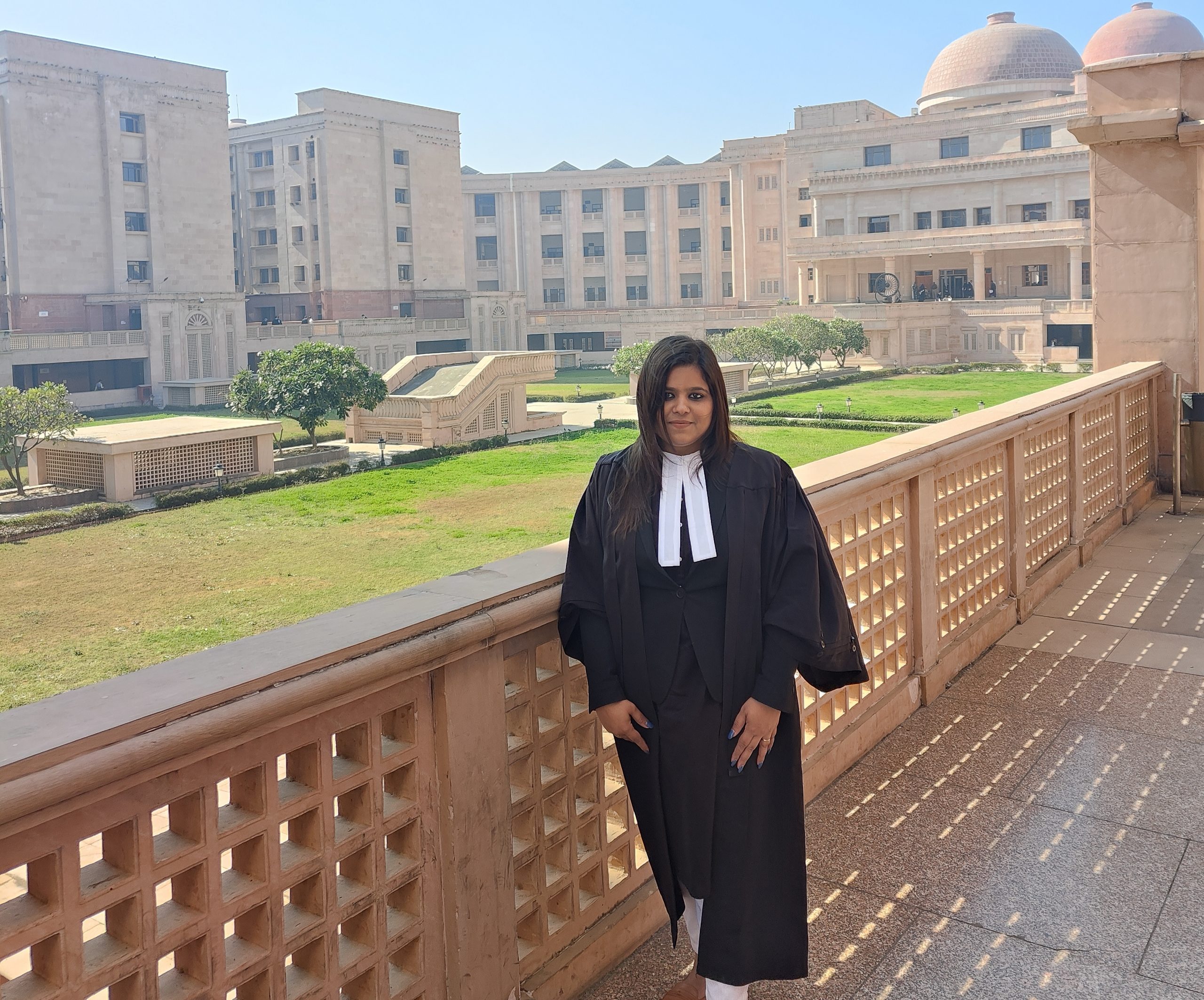







 Allow notifications