Tag: white-collar crime

  • “Every friend you make lifts you just one notch higher. And being likable makes you lighter to lift.” – From village roots to Supreme Court heights, Naveen Kumar, Advocate-on-Record at Supreme court of India.

    “Every friend you make lifts you just one notch higher. And being likable makes you lighter to lift.” – From village roots to Supreme Court heights, Naveen Kumar, Advocate-on-Record at Supreme court of India.

    This interview has been published by Namrata Singh and The SuperLawyer Team
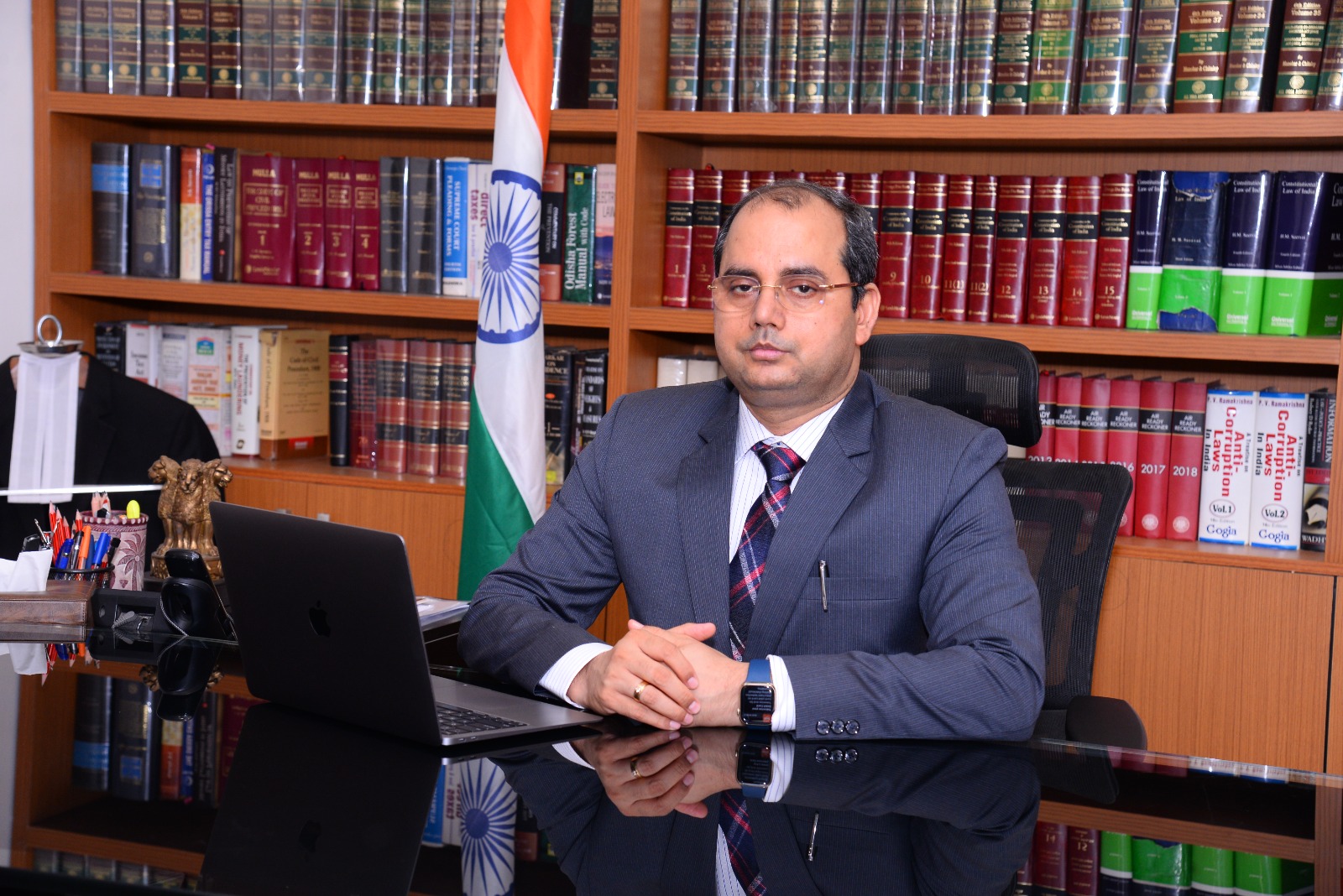
    Mr. Naveen, your journey from the University of Delhi to becoming an Advocate-On-Record with over two decades of experience is impressive. Can you take us through the pivotal moments or decisions that shaped your path and brought you to where you are today?

    While the journey from Delhi University onwards may be as good as it could be, the expedition from a village school to CLC (Campus Law Centre of Delhi University) is nothing short of a miracle. As it is said, if you believe in miracles they do happen. Today while I can boast myself as a modern english educated person having scientific temperament, I owe a lot to the scriptures, especially “The Ram Charitramanas” (by Goswami Tulsidas) without which I could not have grown even as an educated person.

    As in the first page of the epic Tusidas ji has worshiped goddess of faith and belief by saying “भवानीशङ्करौ वन्दे श्रद्धाविश्वासरूपिणौ” (alute lord Shiva and mother goddess Parvati who are personification of faith and belief). In hindsight, I can trace my existence to the very faith and belief (in God and oneself) which shaped my early life. Thus, I have no hesitation in confessing that I could not have received even an elementary education but for my interest in spiritualism and mythological stories such as Ramayana, Mahabharata, Puranas etc which used to be daily ritual in my family, while growing up in a village of district Siwan (Bihar).

    Of course, the spiritual light was sparked by the parents, especially my father, a deeply religious person, who used to narrate bed time stories of Ramayana, Mahabharata and Puranas etc.

    In this backdrop even before starting formal schooling, I was able to recite Chaupai and Dohas. My father had a fixed routine throughout his life, he used to do puja (worship) every morning which included Path (recital) Ram Charitmans. The child’s natural curiosity led them to look through the pages of the epic, perhaps starting with the photos, and thereafter reading the stories. Soon I grew up as a favorite child to be called for reciting Dohas and chaupais in front of guests and visitors by my father.

    I don’t remember anything more about my studies or schooling up to class 8th. A significant milestone (again in hindsight) was surpassed when I was shifted from the village primary school to high school in class 9th in the year 1984-85. Because of my interest in Hindi poetries etc., and the ability to orate them loudly in front of anyone, a few of my teachers somehow started admiring and encouraging me.

    In the year 1985, during the 9th class, I won the first prize in antakshari on Tulsi Jayanti. Though it may not have seemed much worth at the time, today, it appears to be one of the significant events of my life. This achievement drew the attention of more and more teachers in school towards me, leading to special attention in my studies.  

    Due to the encouragement of the teachers, I began to take my studies more seriously, ultimately becoming the highest scorer in the 10th board exams in the whole village. Even today, I can vividly recollect my first day as I started learning my alphabets in the sunshine on the auspicious day of Basant Panchami in 1985 when one my teachers, Shri Hiral Lal Singh, started teaching me ‘angrezi’ (English).  

    Because of the encouragement (rather blessings) of my teachers I grew up to become the first person in the joint family (of about 30 people), consisting of all of my cousins, to study beyond Class 12th.

    The first seed of big dreams were planted again by sheer coincidence (almost like a miracle). In 1987, my identity as a sincere student received a boost due to my good result in 10th Board. Simultaneously, an unrelated event occurred where a native of Siwan district topped the UPSC Civil Services Exam in the same year. Instantly, it became a matter of huge celebration and talk of every nook and corner of the district including my village. A number of inspiring tales of hard work and success left a lasting charm of civil services which stuck with me and played a role in drawing me to Delhi.

    As I landed up in Delhi with big dreams and empty pockets the hard realities in the form of huge financial constraints and cultural shock put insurmountable challenges; in that backdrop few well-wishers suggested getting admission in a Law course in DU which would give access to library and other facilities. Accordingly, preparation for DU entrance started, and luckily, I secured a few tuition assignments to sustain survival in the life of the metro. After having secured good rank in the entrance test, doors of CLC opened and so the new horizon of hope, aspiration and struggle. 

    During CLC days I was again dear to my teacher who inspired me to engage in the extracurricular activities as visits to Tihar Jail, Criminal Courts, Slums-areas, I used to perform in Nukkad-Natak etc,. as a part of our Legal awareness activities which opened the doors of real-life learnings and helped me to develop a keen interest in interplay of law justice (or injustice) at the crude level.

    Thus, my journey is an intricate interconnection of how spirituality, education, and the quest for knowledge all played a role. Starting from the small village temple to studying law, each part of my journey has added to my life story, making me who I am today.

    Your career spans over 24 years in litigation, with a focus on diverse areas like Energy/Natural/Mining Laws, Intellectual Property, and more. Can you share a case that significantly shaped your approach to law and advocacy?

    After having completed my LL.B. degree in 1998, I got my bar registration and plunged into practice; the obvious choice for me was to start from Tis Hazari court as some of my friends as well as seniors were practicing there. I drifted for about 2 years in various chambers of Tis Hazari court. In 3rd year through a senior’s reference, I joined the chambers of Mr. Gopal Jain, (now a senior advocate). This opportunity proved to be a very huge milestone as I got access up to the highest echelons of litigation practice. Because of my initial training in district courts and hardworking nature my senior started giving independent briefs for subordinate courts and showed full faith in me.  I got various chances to handle the cases independently which ultimately turned out to be a good grooming process. While working with Mr. Jain, I had numerous opportunities to brief various senior advocates, including the most renowned ones and these opportunities enhanced confidence and enriched my understanding of diverse legal areas.

    Like any other young aspirant, I too was fascinated by the grandeur of the Apex Court. I was a regular visitor to the premises of the highest court of the land. However, I didn’t get any case in the Supreme Court despite my sincere wish for that. As it is said, that every thought is a prayer, my purposeless visits manifested into a reality when I got my first Supreme Court case in the year 2005 with reference to one of my distant relatives. Later on, another milestone in my career as an advocate of the Supreme Court was achieved when I got one case involving eleven policemen accused of murder in an encounter in Jharkhand, which later on became a landmark judgment on Section 482 of the Cr.P.C. 

    During the grooming days striving to become a practitioner in the Hon’ble Supreme Court and High Court(s) of India, my mentors/seniors instilled the ethos of “working like a horse and living like a hermit”. A junior is expected to be very thorough with the list of dates, comparative analysis of rival pleadings, argument points, compilation of case laws and also possible arguments of the other side (devil’s advocate) etc. As I always aspired to be a litigation lawyer in higher forums, I was constantly asking my seniors to provide me more and more work or opportunity to read files, also, I used to ask for those matters, which were not assigned to me. In that process and during my association with Mr. Jain I gained invaluable experience and professional maturity.

    A significant turn happened in 2011 when I handled a case related to illegal mining before the Supreme Court of India, arguing against a renowned Senior Advocate and securing a favorable outcome for the mining lease holder. The controversial and politically sensitive nature of the case gained widespread attention in the State of Odisha consequently I started getting a lot of mining cases which eventually created my reputation as a mining lawyer and till date I have handled almost 500 mining cases before Mines Tribunal, NGT, different High Courts and Supreme Court. In fact, in 2018, in one of the most controversial mining cases, a bench of the Apex court asked a super senior to give way to me to address the court, and after five days of full day arguments a reported judgment was delivered. This provided firmness in Supreme Court litigation practice, marked by strong desire, hard-work, consistency and consequent abilities to overcome the hindrances/ barriers created by language, lack of family background, or financial or other support from parents.

    Your extensive list of publications showcases a keen interest in legal commentary. How do you decide which topics to delve into, and what impact do you hope your writings have on the legal community or society at large?

    In determining the topics for my legal commentaries, I am guided by a dual purpose – a passion for the subject matter and a commitment to addressing issues that hold relevance for the legal community and society at large. Each publication represents a careful selection based on contemporary legal challenges and emerging issues.

    For instance, my book titledSand Mining Laws in Indiadelves into a crucial yet often overlooked aspect of environmental law. Through this work, I aim to shed light on the intricacies of sand mining regulations, contributing to a better understanding of the legal framework surrounding this environmental concern.

    The articleJudicial Restraint in Tender matters – A perspective,” published in SCC Online, reflects my interest in exploring the nuanced application of judicial restraint in the context of tender matters. By sharing this perspective, I hope to initiate thoughtful discussions within the legal community and contribute to the development of jurisprudence in this area.

    Similarly, my writings on topics like “Principles of Bail in Financial Crimes,” “Goal of Net Zero,” “Ban on Single-use-Plastic,” “Gender Pay Gap,” and “Compensatory Afforestation” aim to bridge the gap between legal theory and practical implications. These pieces in Bar and Bench and Live Law are designed to prompt reflection, foster informed dialogue, and potentially influence legal discourse and policy-making.

    Ultimately, my goal is not only to contribute to the legal scholarship but also to bring about positive changes and make contribution in the legal discourse. I aspire for my writings to serve as catalysts for discussions, policy reforms, and a deeper understanding of the legal complexities surrounding these critical topics.

    You’ve authored “Sand Mining Laws in India.” What inspired you to write on this specific subject, and what challenges did you face in distilling such complex legal issues for a broader audience?

    So far as the sand mining is concerned, from my experience in appearing before NGT and Supreme court, I realized that there is a serious discord between the authorities who are granting quarry leases for sand and those who are regulating and implementing the environmental regulations concerning the sand mining. Through interactions with numerous lease holders, it became evident that they were uninformed about the intricate statutory rules, regulations, circulars and office memorandums etc., governing their business of sand mining. Due to the lack of awareness, many miners incur the ire of NGT, resulting in the imposition of significant penalties. Many times, penalties are computed by the committees constituted by the NGT, which are based on an eye estimation, surmises, conjectures and which is far beyond the paying capacity of the respective quarry holders. This mainly inspired me to write a book on this specific topic with a purpose to spread awareness amongst the stakeholders about the required compliance as sand the most extracted materials from the earth’s crust and a lot of environmental, social, sustainability concerns do arise from it. Thus, it underlined the necessity of basic awareness within the mining community and other stakeholders. Another aim is to provide a view point to the policy makers, researchers and to facilitate informed decision-making in this crucial sector.

    Your practice extends to various tribunals like NGT, NCDRC, NCLT, NCLAT, and more. How do these forums differ from appearing in courts like the Supreme Court or High Courts, and how do you adapt your advocacy style accordingly?

    Practicing in different forums like NGT, NCDRC, NCLT and NCLAT is little different from that in higher courts like the Supreme Court or High Courts. These tribunals specialize in handling specific cases, such as those related to environment, corporate and financial matters. The rules and procedures in these tribunals are designed specifically for the types of cases they adjudicate, showcasing a nuanced and specialized approach in contrast to the broader scope of the Supreme Court or High Courts.

    On the other hand, the Supreme Court and High Courts have a broader jurisdiction, dealing with a wide range of legal issues beyond specific specialties. Appearing in these courts involves navigating more general legal procedures and practices.

    The main difference is that tribunals are specialized, allowing for a more focused and streamlined approach to cases within their specific areas. This sets them apart from the broader and more diverse settings of the higher courts, with their own dynamics and nuances.

    Usually when we prepare for cases, we do extensive research of all the relevant case laws and topics which are germane to that particular matter. To adapt my advocacy style accordingly, I focus on the specific rules and procedures of each forum. The key is to be flexible and adjust my approach based on the unique requirements of each forum.

    You’ve presided over workshops on legal awareness. Why is legal education and awareness crucial in today’s society, and what challenges do you see in bridging the gap between legal intricacies and public understanding?

    Legal awareness programs hold immense significance for several reasons, and if we impart basic legal awareness to the masses, it will be the most effective tool for empowering them. Equipping people with fundamental information about their legal rights and responsibilities is a necessity, as it enables them to deal with injustice which they face on a daily basis by the police and other administrative machinery. In fact, when we used to do street plays, we ensured that through that play we educate the public about their rights and duties and create legal awareness. These events provided a unique opportunity to establish direct connections with the masses, offering valuable insights into the practical application of laws.

    The challenge in bridging the gap between legal intricacies and public understanding lies in making the law simple and accessible to everyone. Legal terms and processes can be complex, and people might find them difficult to grasp. As an advocate, my role is to break down these complexities, use simple language, and provide real-life examples that the public can relate to. Therefore, conducting legal awareness programs, using plain language in legal communications, and engaging with communities directly are some ways to overcome this challenge. Making the law less intimidating and more understandable for everyone is crucial for ensuring justice reaches every corner of society.

    As someone with experience in arbitration, what advice would you give to businesses entering into arbitration agreements to safeguard their interests?

    Having observed the evolution of Arbitration as the most effective mechanism for alternative dispute resolution in India, I have gathered insights into the crucial aspects that need consideration by all stakeholders. The challenges which arise from court interference, delays in arbitral award execution, and concerns about the quality of arbitrator asks for careful attention. To my clients, I have always been advising that they should be objective and fair while negotiating and drafting clauses in arbitration agreements. Where the arbitration clause and the terms of the arbitration agreement are one-sided, then the scope of interference from the courts would be much wider at different stages. I have always advised my clients that the arbitration clauses should provide for selection of an impartial and experienced person as an arbitrator and both the parties must have fair chances and stake in the appointment of the arbitral tribunal and conduct of the arbitration proceedings and the clauses of the agreement should be drafted accordingly.

    Away from the legal arena, what are your hobbies or interests that provide a respite from the complexities of your profession? Any particular activity that helps you recharge?

    I engage in hobbies that offer an escape from the intricacies of my profession. Reading historical and spiritual books, immersing myself in the calming melodies of classical music, and enjoying moments of solitude are my chosen activities. Additionally, I find fulfillment in social initiatives, interacting with people on my own accord. These pursuits not only provide a break but also contribute to my overall well-being. They bring to life the childhood dictum, “विद्यां ददाति विनयं, विनयाद् याति पात्रताम्,” reinforcing the importance of both knowledge and humbleness. Engaging in these diverse activities provides me with energizing distractions from my high demanding profession and allows me to return to my legal responsibilities with a refreshed perspective and renewed energy.

    Simultaneously, participating in social initiatives deepens my connection with the community, instilling a sense of responsibility and empathy. This active engagement not only broadens my understanding of societal issues but also provides an avenue to contribute positively. The synergy between these diverse activities creates a harmonious rhythm in my life, enabling me to navigate the complexities of my demanding profession with resilience, a balanced perspective and a genuine appreciation for the multifaceted tapestry of my life.  

    With your extensive experience, what advice would you give to young lawyers aspiring to build a successful career in litigation and advocacy?

    My rocky journey in this profession may have some advice for younger stars such as-

    Ø Consistent Hard Work- While I was traveling in the DTC bus a co- passenger while interacting made a statement that “it is very easy to get a law degree but it is extremely difficult to become a good lawyer”. This statement of a stranger echoed in my mind throughout my struggle period and it holds good even today which is evident from the fact that we have a huge pool of young law graduates but there is a dearth of good lawyers in each court of India. What shaped my life in initial days is that I had inculcated a few small but good habits such as I used to read bare acts, legal magazines and cases even though I do not have any brief relating to the respective subject. These seemingly small habits paid off, as clients recognized me as a well-read individual, enhancing my “likeability factor”. My advice to budding lawyers is to keep learning, even in the absence of immediate briefs, as continuous learning prepares one for future opportunities.

    Ø Work is worship- One small event which I could recollect is that one of my clients advised me saying that “one’s commitment to work should supersede all other priorities”. The advice came roughly because I had got delayed in reaching the court and because of my being late the matter was passed over. Being late for a court appearance taught me a direct lesson. The client’s advice was straightforward – giving preference to any family event or anything else instead of work would not bring either the success or happiness or even the admiration of family members. This lesson stuck with me every for the whole of my formative age in the professions. I can say with conviction that a legal profession is a very high demanding profession which requires the highest degree of focus and dedication and that too without much reward in initial days of practice.

    Ø Patience and Big Goals- Overcoming initial challenges requires patience and a larger vision. Although the situation has improved significantly due to the emergence of numerous law firms, opportunities in the corporate sector, and academia, young law graduates now have a variety of choices. Despite these growing opportunities, struggles persist. In the early days, I had few techniques to keep myself inspired. While practicing in district courts, I regularly visited the Supreme Court and High Court to observe the legends of the legal profession and used to idolize them. Seeking inspiration from legendary lawyers in the Supreme Court and Delhi High Court kept my ambitions high.

    Ø Learn broadly and with focus- Another ritual of observing the court proceedings of all the courts helped me in staying motivated. Thoroughly reading legal documents, bare acts, law magazines etc. proved very beneficial. Later on, one of my seniors advised that you must flip through (using tai-lopez method of speed reading) the bare acts and rules whenever you get a case relating to that subject.

    I would like to quote an excerpt from David J. Schwartz- “The Magic of Thinking Big” which is a must for this profession “likeability factor”-

    Mark this point well. A person is not pulled up to a higher-level job. Rather, he is lifted up. In this day and age nobody has time or patience to pull another up the job ladder, degree by painful degree. The individual is chosen whose record makes him stand higher than the rest. We are lifted to higher levels by those who know us as likable, personable individuals. Every friend you make lifts you just one notch higher. And being likable makes you lighter to lift.

    To sum up, my advice to the young lawyers is simple – Dear young lawyers, here’s a piece of advice: alongside your legal studies, make sure to gain practical experience. Real-world situations teach you valuable lessons that books alone can’t provide. So, dive into the practical side of law to become a more skilled and effective legal professional. embrace hard work, treat work as worship, practice patience, think big, and focus on continuous learning as well as ensure to have a likable personality. These principles, from personal experiences, pave the way for a successful legal career. 

    Get in touch with Naveen Kumar-

  • “No matter how much law school prepares us, real life challenges take you by surprise”- Goutham RV, Counsel at Trilegal

    “No matter how much law school prepares us, real life challenges take you by surprise”- Goutham RV, Counsel at Trilegal

    This Interview has been published by Pragya Chandni and and The SuperLawyer Team

    Can you share the pivotal moments or experiences that led you to pursue a career in law, especially in dispute resolution?

    My journey to law was somewhat pre-destined, but I had not accepted all the signs. Growing up, I frequently visited courts with my father, a trial lawyer. Ironically, those visits initially deterred me from considering a legal career. But my disinterest in traditional science subjects made the writing on the wall clearer. During my higher secondary education, I was introduced to the unique world of law schools. This new perspective piqued my curiosity, and eventually, I found myself at NALSAR.

    It was during my time in law school that my path – as a disputes lawyer – became clearer. Reading Justice HR Khanna’s “Neither Roses Nor Thorns” profoundly influenced me. His principled stand in the Habeas Corpus case, especially his dissent, was both inspiring and instructive – this continues to be my favourite judgment and anchor of sorts.

    During law school, all my internships, predominantly centred around dispute resolution and this further cemented my interest. I saw first-hand, how enjoyable advocacy was and I resonated with it and took an active interest in moot courts. Come placement time, I heard NSE was visiting college for recruitment. Given that there are only a couple of exchanges in the country, and the role on offer involved litigation management, it made sense to work at NSE.  My selection for this position marked a significant turning point.

    Working at the Exchange, I was involved in several high-stakes litigation cases. While I prepared for the cases in detail and worked on strategies with external counsel, it was in the courtroom, as an observer, that I felt my calling to litigation. These moments in court crystallized my decision to transition from an in-house role to becoming a litigating lawyer. My mentor at NSE encouraged this shift, and Trilegal, where I now work, gave me the opportunity to realize this aspiration. The rest, as they say, is history.

    Your experience at NSE involved handling multi-faceted regulatory disputes. Can you shed light on the challenges you faced and the strategies you employed to navigate such complex regulatory issues?

    No matter how much law school prepares us, real life challenges take you by surprise. Although we studied a few of the legislations pertaining to the securities market, it is such a niche area with heavy regulatory oversight that the first few months felt like a return to the academic rigor of college.

    The first crucial lesson at NSE was understanding its dual nature. Firstly, it acts as a regulator of first instance, governed not only by a myriad of laws such as SCRA, SECC, and the SEBI Act but also by its own set of Byelaws, Rules, and Regulations. These are essential in overseeing every facet of the Exchange’s operations. Secondly, the Exchange operates like any other business, facing similar risks and requiring innovative strategies to remain competitive. My role was to bridge these two aspects seamlessly. This meant ensuring that new product ideas proposed by the business teams aligned with the regulatory framework established by SEBI. One strategy I personally employed revolved around prioritizing the Exchange’s regulatory responsibilities, ensuring all other initiatives conformed to this framework. A testament to this balancing act was our success in obtaining an exemption from the CFTC, a major U.S. regulator. This achievement, though time-consuming and challenging, was a significant milestone for us.

    As a key member of NSE’s proposed IPO team, could you share some takeaways from working on such high-stakes projects?

    Working on the NSE’s proposed IPO was a lesson in managing a multifaceted operation involving numerous stakeholders. You have the Company, the selling shareholders, the BRLMs, the Bankers, the Auditors, separate legal counsels for each of these stakeholders etc., and the Exchange’s proposed IPO was a landmark project for all involved. This complex process demanded extensive efforts from every department within the Exchange, with the legal team being no exception. In addition to providing information on the outstanding material litigations, we were also liaising with our internal teams and the Exchange’s external legal counsels (both domestic and foreign), who held the pen on the DRHP. Further, we were negotiating and finalizing all other agreements with the multiple intermediaries, all of which had its own challenges. 

    For me, the process was immensely challenging yet fulfilling. Successfully filing the DRHP within the established timeframe was a testament to our collective hard work and coordination. The experience underscored a vital management lesson for me: with well-defined goals, clear role delineation, and assigned responsibilities, even the most daunting tasks and deadlines are achievable. This endeavour reinforced the wisdom of the adage, “If you want to walk fast, walk alone. But if you want to walk far, walk together.” It was a powerful reminder of the strength in collaboration and shared purpose.

    Apart from the above, another intriguing aspect I gleaned from the IPO process is the concept of “self-listing.” Ordinarily, a company selects a stock exchange for its public listing. However, when stock exchanges themselves decide to go public, they have the option to list on their own platforms, a choice motivated by various factors. This practice is permitted in some jurisdictions, but my understanding is that SEBI ultimately did not endorse this approach. As a result, the country’s exchanges have to list on the competitor bourse. 

    Transitioning from being a Deputy Manager at the National Stock Exchange to becoming a Counsel at Trilegal seems like a significant shift. What motivated this transition, and how did your role at NSE influence your current focus on dispute resolution?

    At its heart, advocacy is about effective communication. This involves understanding the law, applying it to the facts of your case and ultimately seeking a relief for your client. This aspect of the legal profession has always been deeply fulfilling to me. While at NSE, I found myself on the periphery of advocacy, close yet not fully immersed. Thus, my transition from in-house role was motivated by my need to be in the driver’s seat. My confidence in my communication skills drew me towards dispute resolution.

    Coming from an in-house background, I had a clear understanding of the motivations behind corporate litigation, whether for strategic positioning, financial gains, reputation management, preserving shareholder value, or avoiding setting precedents. This insight has been invaluable at Trilegal, where I can effectively align with and contribute to our clients’ litigation objectives. My tenure at NSE taught me the importance of understanding the fundamentals first – we had to learn how a service / product worked, the legal and regulatory regime / challenges around it, the external risk-factors etc. and break all of this down to a Judge, who did not necessarily specialize in the securities market. This is an approach I continue to adopt with my current Clients and their cases. By understanding a client’s business and the rationale behind their litigation, I can create a clear and effective legal strategy. Therefore, lessons learnt during my time at NSE continue to be guiding lessons / principles in my current work.

    Moving to your current role at Trilegal, you deal with a wide range of matters, from civil / commercial disputes to white-collar crimes. How do you approach these matters across diverse areas of law, and what challenges do you typically encounter?

    The firm receives a wide-range of commercial disputes mandates – arising from large shareholder disputes, complex lending transactions, cross-border IP disputes, the list goes on. Similarly, the firm also receives a wide ranging white-collar crime mandates – say internal investigations into corporate espionage, IP theft, misappropriation of funds etc., and these may result into various kind of proceedings before the Criminal Courts. In addition, we routinely appear in mandates challenging local municipal laws, arbitrary government action and the like. The challenges we face in these mandates vary – it could be us dealing with foreign clients who are new to Indian legal ecosystem (and thus managing expectations), not having the luxury of time, logistical challenges in execution of a strategy, to name a few.  

    The approach I adopt in all these matters, irrespective of the diverse areas of law, is rudimentary. First, we meticulously review all the documents Clients share and prepare a comprehensive chronology of events – noting even seemingly minor details relevant to the case. Second, deep dive into the relevant laws, revisiting first principles, statutes and commentaries rather than relying solely on online resources or case law databases. This critical process helps identify both the strengths and potential obstacles in the client’s case. Third, once we have the legal and factual framework, we strategize the most effective path to achieve the client’s goals. This process will include all stakeholders internally, including the Partner. Once we internally deliberate this, we go back to the Client and give them all the options on how we can drive the matter and go on about executing it, based on their instructions. In my experience, these initial steps are crucial for successful outcomes and managing multiple cases simultaneously.

    During your time as a secondee at Allstate India, what was your role? How did this experience impact your perspective on the intersection of legal and business functions?

    At Allstate, my role was essentially that of an in-house counsel, a position I was already familiar with. My primary responsibilities included managing contracts and providing internal legal advice.  My background in dispute resolution enabled me to identify red flags in the standard contracts and negotiate more effectively with vendors and their legal counsels. Over time, I gained insights into the company’s common legal challenges, leading us to review and streamline their standard contract templates.

    In my opinion, most companies see their legal team as cost centres,. he business teams which are keen on getting the revenue, see the legal team as roadblocks or business barriers. This perspective can lead to business teams overlooking crucial contractual provisions such as indemnities, representations, warranties, and dispute resolution clauses, either due to a lack of understanding or the misconception that these are mere boilerplates not warranting attention. While it’s true that these clauses may never be invoked during the life of the agreement if all things go smoothly and as planned, the real value of a well-negotiated indemnity clause, for instance, becomes evident in challenging times, potentially shifting liability away from the company. So this stint reaffirmed my belief that a strong in-house legal team is not merely a cost-centre, but a vital asset that can prevent unnecessary expenditures. Such teams can actually be very effective in ring-fencing the Company from foreseeable and unforeseen risks, thereby preventing value erosion. A competent legal department is instrumental in balancing business aspirations with realistic legal perspectives, ensuring a holistic approach to risk management and decision-making – a message that I reiterate to business teams I work with usually. 

    With your extensive experience in handling high-value disputes, could you share a specific case that posed unique challenges and the strategies you employed to achieve a favorable outcome?

    While there are several cases I could reference, confidentiality constraints prevent me from sharing specific names or details. It is key to note that each case throws unique challenges of its own and as such, our strategies need to be flexible and adaptable. A rigid litigation strategy often leads to less desirable outcomes.

    For instance, in a case involving a shareholder dispute with a foreign institutional investor client, the primary conflict was between domestic institutional investors and the company’s promoters, who had made broad allegations that also implicated our client. Initially, we planned to respond to these allegations directly. However, we soon realized that such a strategy would unnecessarily draw attention to our client in a dispute that was primarily between other parties. Consequently, we revised our approach, choosing to specifically address only the most serious allegations and then shifted our focus to the legal intricacies of the case. This allowed us to take a more reserved role. As the conflict escalated, involving cross-appeals and arbitrations, our client began to be perceived as a neutral entity and was gradually removed from the core of the dispute (we were either formal parties or not arrayed as a respondent altogether). This strategic shift not only limited our client’s legal expenses but also enabled them to divest from the company without loss.

    Contrastingly, in another shareholder dispute, our approach was entirely different. We aggressively addressed each allegation and actively litigated before various foras, to preserve shareholder value and safeguard company assets, amidst a battle between majority and minority stakeholders. This experience underlined the importance of maintaining a dynamic and responsive strategy in litigation.

    As an alumnus of the National Academy for Legal Studies and Research (NALSAR), Hyderabad, what aspects of your legal education do you believe have been most valuable in shaping your career? Additionally, what advice would you give to fresh graduates aspiring to pursue a career in law based on your journey so far?

    Reflecting on my academic journey at NALSAR, Hyderabad, I realize it’s a narrative too rich and complex for a brief summary. Suffice to say, the true value of NALSAR lay in its exceptional faculty, who fostered an environment of independent and critical thinking – a mode of learning that was entirely novel to me. Equally significant was the company of my peers, a group of incredibly driven individuals with clear objectives and ambitions. Their presence was a constant source of motivation, pushing me to surpass my perceived limitations and achieve things I never thought possible.

    Looking back, the most crucial lesson from my college experience is the belief in the boundless potential within ourselves. To the graduates embarking on their legal careers, I want to impart this wisdom: the path may seem daunting, and it’s natural to feel overshadowed by others who appear more accomplished. However, remember that your journey is unique and will unfold in its own time. Treat yourself with kindness, acknowledge your achievements, and maintain patience, a vital trait for any legal professional. Trust in your journey, and know that perseverance will guide you to your destination.

    Lastly, for those looking to have a career in disputes resolution at law firms, do you have any tips / suggestions?

    I believe litigation – whether in a law firm or independently – requires the same set of skills. Law firm cases may often be high-stake or involve significant amounts, but the fundamental approach remains the same. A few things to consider: 

    • Integrity is key to this profession and your reputation. Do not rely on shortcuts and keep all your dealings above board. 
    • Patience is crucial. You might find yourself waiting for extended periods in court, only to speak for a brief minute. Achieving the results your client desires often requires persistent effort and time. Stay patient.
    • Time management is essential, especially early in your career when tasks may seem overwhelming. Gradually, it becomes more manageable. Be prepared to deal with urgent cases and client demands, sometimes with little notice. It’s better to devote extra time to fully understand a case than to be unprepared in court.
    • Develop a reliable process. Being thoroughly acquainted with both the facts of your case and the relevant law is vital. Establish a method that works for you and apply it consistently to each new client or case. 
    • Emphasize teamwork, particularly in a law firm setting. You’ll likely be handling multiple cases simultaneously, so coordinating effectively with your team is key. Remember, you can’t be in two places (read as court halls) at once, so dependability and ownership are important.
    • A quick and sharp presence of mind is essential for dispute resolution lawyers. While you can take time to respond to client queries, the same isn’t true in court. Being unprepared could lead to immediate decisions from the judge, potentially unfavourable to your case.
    • Understanding the concepts is far more important than knowing sections / citations. The concepts should be so clear, that even a common man can understand your iteration of it.  

    Get in touch with Goutham RV-

  • “Remember the three “I” s which are essential for a fruitful career in litigation, namely Intelligence, Industry and most importantly, Integrity” – Witnessing Legal Transformation with Parvez Memon, Senior Partner at MZM Legal LLP

    “Remember the three “I” s which are essential for a fruitful career in litigation, namely Intelligence, Industry and most importantly, Integrity” – Witnessing Legal Transformation with Parvez Memon, Senior Partner at MZM Legal LLP

    This interview has been published by Namrata Singh and The SuperLawyer Team

    Can you share with us your journey from college to becoming a Senior Partner at MZM Legal? What motivated you to pursue a career in law and specialize in white-collar crime solutions?

    At the very onset, I firmly believe that my odyssey from a naïve lad residing at Nasik, Maharashtra to donning the hat of a Senior Partner at a high-end full-service law firm cannot be left at the mercy of a sole question but I shall endeavor to provide a rather satisfactory answer to the best of my capabilities.  

    I took to law because I had the privilege of being in close quarters with Mr. Majeed Memon, a noted criminal lawyer, who requires no introduction. It is pertinent to mention that his court craft coupled with his zeal to be an instrument of change in the lives of his clients prompted my conscience to emulate his persona. I still harbor memories of his colloquies which inspired confidence in me to join the Bar and fight for the cause of justice. 

    I graduated from Pune University in the year 1999 and immediately joined the esteemed chambers of Mr. Memon with the intent to learn the ropes and acquire expertise of sorts in criminal litigation. Criminal Law has been a constant source of my excitement and the idea of taking on the mighty State, which is equipped with resources to the brim, has motivated me to put on my robes and march to the Court with the Constitution on my sleeves. I was fortunate enough to assist Mr. Memon in some of the most high-profile, “talk of the town” matters which helped me shape my personality, both personally and professionally. 

    As they say, change is the only constant, and the world of crimes has transformed with the introduction of white-collar offenses that demand a unique modus operandi along with a position of power. Our legislature responded by introducing de novo laws in anticipation of curbing the growing tendencies amongst government officials to indulge in bribery. A couple of years down the lane, criminal litigators had to embrace anti-money laundering laws as well. A peculiar facet of a white color offense is that it is not victim specific and the repercussions of such an offense can transcend geographical boundaries. The overall economy of the country takes a toll, and the Hon’ble Supreme Court of India has time and again equated financial crimes with terrorism. 

    MZM Legal is widely recognized for its expertise in white-collar crime solutions. How do you see the landscape of white-collar crime evolving, and what challenges and opportunities do you anticipate in the coming years?

    White Collor Crimes have evolved as an independent practice area that requires niche expertise and we take pride in being the very first flag bearer as far as the said practice area is concerned since 2005. As a White-Collar Crimes practitioner, one is expected to survey a host of documents, after having conducted detailed interviews with the client. For instance, in a mandate pertaining to corporate embezzlement, we conduct an array of interviews with the top management and the employees of the subject company, undertake forensic investigation, if required, with the object to establish the modus of the erring employee. After having done our homework, we prepare a complaint to be placed before the appropriate authority in anticipation of a thorough investigation. Further, we are also expected to subject matter experts, not only in criminal law, but also in corporate laws, securities law, etc. to advance a well-rounded strategy for our clients. A White Collor Crimes practitioner should have a commercial bent of mind and should also understand the nuances of running a business to decipher irregularities in the books of his clients. 

    With the advent of technology, we are on the cusp of venturing into the unknown, as White-Collar offences become more sophisticated and challenging to say the least. However, the Investigating Agencies are also expected to keep up with this change and adopt continual training methods to ensure that their officers are abreast of relevant developments. 

    MZM Legal has received numerous accolades and awards. What, in your opinion, sets MZM apart in the legal industry, and how has the firm maintained its reputation as a market leader?

    For starters, we are a young law firm (18 Years old) which is well endowed with the capability to adapt to the changing demands from the industry. We are always on the lookout for fresh talent that would bring in a new perspective on the table. We expect all our lawyers to contribute to the success of a mandate and your seniority at the firm is hardly of any relevance and is curtailed to our visiting cards. It should also be noted that under the dynamic leadership of our Founding and Managing Partner, Mr. Zulfiquar Memon, we have strong relationships with leading lawyers, Senior Counsels domestically and Solicitors and KCs internationally. 

    We believe in nurturing and promoting home-grown talent with the intent to bolster their growth and to ensure that they transform into market leaders of tomorrow. We encourage the philosophy of hitting first, hitting hard, hitting quick and hitting often to secure the interests of our clients. 

    In the realm of international exposure, what challenges do you find most intriguing when dealing with cross-border disputes, and how do you navigate the complexities involved?

    A cross-bounder dispute comes with its own set of unique challenges. We are expected to read up on the law of a foreign land, that might not even be a common law country to begin with. We are also expected to liaison with foreign attorneys, working on a different time zone, to expedite judicial processes. It should also be noted that what might work in India might not work in the subject country and that is where we engage local talent to assist in traversing uncharted territory.  We are also expected to be through with the law on extradition, FCPA, UK Bribery Act, MLAT, International Conventions and treaties between the countries. There is always a cross-referencing understanding between us and our international legal counterparts. Having said so, we are on their speed dial when they face any issues in India where we have exceeded their expectations in terms of delivery. 

    In your 24+ years of advocacy experience, what are some key changes or trends you’ve observed in the Indian legal system, particularly in the realms of white-collar crime and dispute resolution?

    Ans: As a hardcore defense attorney, I must mention that I have observed a stark departure from general tenants of criminal law when it comes to analyzing and scrutinizing the newer breed of legislation. For instance, the rigors of twin conditions under special legislations to secure bail have reduced the grant of bail to an exception. Investigating Agencies have garnered unbridled, unfettered, and unabated powers through legislative and judicial intervention wherein personal liberty of the accused goes for a toss. 

    We need to account for novel, innovative and shrewd methods being deployed at the behest of the accused to commit financial crimes. As Lawyers, we are expected to be best friends with technology, not only to understand such nefarious methods but also to explain the same to a Judge.  

    As far as dispute resolution is concerned, the growing demand and acceptance of Alternative Dispute Resolution is a welcome change which prevents docket explosion and is also a much faster and cost-effective means to settle disputes outside the Court. 

    As a senior partner, you’ve been involved in some of India’s most complex investigations. Could you highlight a particularly challenging case and share how you and your team navigated through it successfully?

    This question takes me back to my first day in Court. I had the privilege of wearing my band and my gown for the first time, on my first day at the Bar and under Mr. Memon’s instructions, I had to appear before the Court of Justice Rajana Desai at Hon’ble High Court of Bombay to pray for an adjournment on account of personal difficulty of my senior. 

    We had filed for bail for our client, who was accused of attempt to murder. Fortunately, I had read the file and the Hon’ble Judge insisted that I argue the matter. I would like to bring to the knowledge of all my young readers that those were the days where the goddess of technology was yet to bless us with smartphones, equipped with multiple messaging platforms which would have facilitated instant communication with my seniors. 

    I cliched my toes and initiated my arguments. After some time, Mr. Memon walked in but to my surprise, the Hon’ble Judge instructed Mr. Memon to permit me to finish my arguments. Here I was, who was not only arguing a matter when the instructions were to seek an adjournment but had the “audacity” to continue even when my senior was in attendance. To me, this was “double jeopardy”. 

    By God’s grace, the Hon’ble Judge was pleased to grant me bail and also commented that she would not have granted bail to my senior, had he argued the matter. To this day, the said memory functions as an instant confidence booster for me. 

    Outside of your professional life, what are your personal interests or hobbies that you find rejuvenating, especially considering the demanding nature of your work?

    Well, as a litigator, I am always on duty. The nature of assignments on my work table warrants a round the clock availability. However, I enjoy working out and tend to spend more time with my family. I also enjoy travelling international as and when my schedule permits. I have a knack for exploring new cultures and meeting new people.  

    Is there a particular aspect of your journey or a recent achievement that you’re especially proud of and would like to share with our readers?

    I started this journey with a meager salary of INR 5,000/- in a city like Bombay. By the grace of God, blessings of my parents and well-wishes of my seniors, today I cater to national and international clients and appear before various High Courts and the Supreme Court of India on a regular basis. 

    I had the privilege of appearing along with Mr. Memon for Mr. Anna Hazare’s PIL concerning Telgi Scam before the Hon’ble High Court of Bombay wherein the Hon’ble Court was pleased to order the arrest of the then Commissioner of Police, Bombay. We also appeared in the Namdeem Saifi’s extradition case where the Government of India was directed to pay One Million Pounds to our client towards Costs while refusing the request of his extradition. Do recall my answer to Q.1 where I talked of taking on the State for context. 

    As an expert in litigation and alternative dispute resolution, what advice would you give to aspiring legal professionals who aim to excel in these areas, considering the evolving landscape of the legal industry?

    Rome was not built in a day. Behind every overnight success there is twenty years of hard work. Also remember the three “I” s which are essential for a fruitful career in litigation, namely Intelligence, Industry and most importantly, Integrity.  

    Get in touch with Parvez Memon-