Can you please introduce yourself to our readers? As a third-generation lawyer, how has your family legacy influenced your approach to the legal profession and your career choices? How did those early conversations about legal matters shape your understanding of the profession and its nuances?
I am a third-generation lawyer, born in 1979 in New Delhi, and I recently completed twenty years of law practice. I completed my schooling at Hansraj Model School, New Delhi, in 1997, and thereafter had the privilege of attending Ramjas College, Delhi University, where I earned my Bachelor’s Degree in Commerce, B.Com (Hons), in 2000.
While graduating, I considered various career options, including MBA and Chartered Accountancy. During this process, I discovered my acumen and passion for law and decided to pursue my LL. B degree from the Campus Law Centre, Faculty of Law, University of Delhi, which I completed in 2003.
Additionally, I hold a postgraduate diploma in IPR Laws from the Indian Law Institute. I joined the bar in 2003 and began practicing at the High Court of Delhi in New Delhi, joining the family practice, which has now spanned more than 60 years. The practice was started by my grandfather, Mr. O.P. Dutta, and later joined by my father, Mr. Vinod Datta. My late mother, Dr. Savita Datta, was initially a lecturer who taught astrophysics, among other subjects, and went on to become the Principal of two colleges: Deshbandhu College and later Maitreyi College. She was my biggest source of inspiration and was appointed Director of the School of Open Learning, University of Delhi.
My specialization lies in litigation and arbitration, with a particular focus on cases on the Original Side of the High Court of Delhi as well as in the newly introduced genre of commercial suits.
I currently run two firms, each focusing on different practice areas within the wide genre of commercial laws, primarily before the Supreme Court of India, the High Court of Delhi, the National Company Law Tribunal, the National Consumer Disputes Redressal Commission, and other tribunals and commissions.
After completing my law degree, although joining my family’s law practice was a readily available option, I chose to join an outside office to broaden my horizons. During this time, I had the opportunity to intern with a leading law practitioner of the High Court of Delhi. After spending two years in this office and learning the ropes, I joined my family’s law practice, working alongside my father and later my wife, Ruchita. Speaking of the family practice, it began with my grandfather, the late Mr. O.P. Dutta, who moved to India from what is now Pakistan. At the time of Partition, he had a family (wife and children) and was working in a job. While working, he began studying law, completed his degree, and commenced his legal career in the 1960s. My grandfather was primarily a criminal law practitioner, and a successful one at that. My father, the late Mr. Vinod Datta, enjoyed a blend of High Court cases (civil and public law) in addition to trial court-level practice of both civil and criminal cases.
One of the biggest benefits of growing up in a family of lawyers is that you get to hear your elders talk shop in your younger days. Client handling, in terms of managing expectations and making full disclosures about cases, goes a long way in retaining long-term clients and maintaining fruitful and healthy professional relationships with them. However, the most important aspect of practicing law is to communicate well with clients. Client satisfaction, especially in the legal profession, is directly linked to managing client expectations and maintaining attorney-client communication. Making lofty and unfounded claims that are unlikely to be delivered will lead to a breach in the professional relationship with the client. Thus far, I have been able to fulfill my clients’ expectations and deliver the desired outcomes in almost all of my cases. Therefore, working in accordance with and within these parameters is what makes me stand out from the crowd.
What inspired you to specialize in litigation and arbitration, particularly focusing on commercial law?
To understand one’s inclination towards litigation in general, and commercial litigation and arbitration in particular, it is essential to appreciate what lies at its core: strategy. One must grasp the complexity of layers in intricate commercial disputes and formulate appropriate strategies and courses of action aligned with the desired outcomes, which may range from protecting intellectual property rights and preserving properties to handling purely ego-driven battles among rivals. It’s the thrill of the hunt. The early exposure to such discussions at home with my father, and the excitement he experienced in technical and complicated matters (which also came with bragging rights), made the lure of commercial law practice irresistible, and my professional journey has never been monotonous. There is another underlying reason that draws a person towards commercial law practice: with higher stakes and risks come better compensation for the counsel. This specialty, in addition to being the most exciting for me, also pays rather well.
You’ve emphasized the importance of adopting technology in legal practice. How do you see technology shaping the future of law, and what role does it play in your firm’s operations?
I believe in constantly innovating and adapting to the changing needs of the legal landscape. One of the key ways I have adopted an innovative approach is by embracing technology in my practice.
From the early days of my practice, I have digitized my office, making us more efficient and effective in our work by adopting use of applications such as Manupatra, SCC online, Live Law, Bar & Bench and Provakil. I have taken my offices’ legal research capabilities and automation to the next level, we also subscribed to various websites which assist in AI based document drafting. This means we can quickly and easily access documents and information, reducing the time and effort required to complete tasks. I have always been ahead of my peers in adopting the latest technology and software for legal research and dictation in my office. This has helped us stay ahead of the curve and deliver superior service to our clients.
Another way we have been innovative is by leveraging technology to stay connected with our clients during the COVID-19 pandemic. Despite the challenges posed by the pandemic, we were able to continue serving our clients without interruption by transitioning to virtual consultations and meetings, executing all our work from home using just our laptops.
This ensured the safety of our clients and staff alike while providing even greater flexibility and accessibility to our clients.
Given your commitment to providing pro bono and legal aid services, can you share a rewarding experience where your legal expertise made a significant difference in someone’s life?
We understand the importance of giving back to the community, and we handle pro bono cases for clients who cannot afford to pay for legal services. We take pride in helping those who need legal assistance the most.
Our commitment to providing fast, efficient, and effective legal solutions, mentoring young lawyers, and giving back to the community has made a positive impact on the industry. We will continue to strive for excellence and provide the best possible service to our clients.
For young students aspiring to excel in litigation, what actionable steps or practices would you recommend they adopt to distinguish themselves and thrive in the competitive legal landscape?
The first and most important aspect that young students must understand is that excelling in litigation takes time and tremendous effort. The usual speech that law students get to hear about the three Ps (Patience, Perseverance and Persistence) is spot on. There has to be constant endeavour not only to outdo yourself more than your peers. One thing I picked up on early in my career was that stagnation is the enemy of growth and this encouraged me to handle and pursue litigation in various industries and sectors instead of limiting myself early on in my career to one forum or speciality. Today’s litigation landscape is constantly evolving at a rapid pace, I cannot emphasize enough the importance of being well-acquainted with technological advancements in the legal sphere and the need to adapt and stay ahead of the curve. Consequently, young lawyers must divert their time and energy to pursuing online and certification courses on diverse topics especially in the first ten years of their career.
Beyond your legal career, you’ve mentioned your mother’s influence and her achievements in academia. How has her legacy impacted your personal values and approach to life?
My mother was perhaps the hardest-working person I have ever known. Two important values that I learned from her are the importance of hard work and maintaining one’s integrity. Both are crucial in assessing one’s self-worth. In simple terms, being able to look at yourself in the mirror and feel confident and proud only comes from these virtues.
Could you please introduce yourself to our readers and share your journey from your early days in law to becoming an advocate-on-record at the Supreme Court of India? We’d love to hear about the pivotal moments, challenges, and inspirations that have shaped your remarkable career trajectory.
After graduating from Symbiosis Law School, Pune in 2009 I joined the Legal (Tax and Regulatory) Department of PriceWaterhouseCoopers (PwC) where I had a short stint of about a year. My work at PwC mainly included doing due-diligences for various organizations and businesses, opening on labour law and employment law queries from pan-india PwC locations. While my time at PwC gave me a lot of exposure to the regulatory side of work, from the point of view of Indian as well as international clients, I felt that I wasn’t being challenged as much – mentally as well as academically. I started speaking to my law school batchmates who were pursuing litigation and that’s when it became clear that I was missing out on the real deal. Even though the economy was in a recession in the year 2009, I did the unthinkable and put in my papers at PwC and joined Parekh & Company, which is a full-service litigation firm. To be honest, it was very difficult to take a 50% pay-cut and say goodbye to the 9 to 5 job where I had the weekends all to myself. Looking back, it was the best decision ever. Upon joining litigation, I realized that there is no concept of weekends and no fixed timings. Juniors were expected to carry work home and make sure the filings were done in time, seniors were briefed well in advance and the clients got the reliefs they wanted. There were moments where I felt I’d bitten off more than I can chew but I just kept at it and before I knew it, I fell in love with the entire process. At Parekh & Co, I was under the guidance of my “first boss” as I call him to this very day – Mr. Sameer Parekh. At Parekh & Co., I had the privilege of working on matters being argued by some of the most distinguished legal luminaries like Mr. Harish Salve, (Late ) Mr. Ashok Desai, (Late) Mr. Ram Jethmalani, Dr. Abhishek Manu Singhvi, (Late) Mr. Goolam Vahanvati, (Late) Mr. T R Andhyarjuna, Mr. Rohinton Nariman, K K Venugopal, Justice P S Narsimha, (Retd.) Justice U. U Lalit to name a few. After working in Parekh & Co. for about three years, I had a short stint at TMT Law Practice which is a technology, media and telecommunications law firm where I had the opportunity to represent clients across the entire spectrum of the media and entertainment industry, including television, films, radio, music, print and publications. Thereafter, I got married to my batchmate from law college – Diggaj Pathak, who was also pursuing litigation full time. Since we had put in about five years into the profession and got a fairly decent amount of work to pull us through, we decided that it was time now to take the plunge and go independent. That was truly the best decision of our lives. Now we were two like-minded individuals ready to take our love affair with litigation to the next level. People say it is difficult to work with one’s spouse and that one mustn’t mix business with pleasure but that has been far from the truth for us and we have had such a successful partnership where both of us have immensely contributed to each other’s growth in this profession. After spending 7 years in litigation, we became eligible to take the Advocate – on – Record examination and cleared it in the first attempt. There was really no looking back after that.
You have an impressive portfolio of legal representation spanning various tribunals and courts. Could you share a memorable experience from your early days in the legal profession that shaped your career trajectory?
Due to the work ethic I was exposed to at Parekh & Co., I learnt that one must never say no to any kind of work and that litigation encompasses more than just the Supreme Court or the High Court. There are so many tribunals and quasi-judicial bodies in Delhi like National Green Tribunal, Ministry of Mines, Central Information Commissions, National Consumer Fourm, Employees Provident Fund Appellate Tribunal, Debt Recovery Tribunal, Central Electricity Regulatory Commission, Armed Forces Tribunal, Appellate Authority for Revenue cases etc. So there is really no dearth of work. There were times when I wasn’t sure if I could do justice to a matter but I was fortunate enough to be surrounded by such encouraging seniors and mentors who provided me with the necessary push so that I could give my 100% to the cases in question. I had the opportunity to appear very frequently before the Telecommunications Disputes Settlement Appellate Tribunal (TDSAT) when Justice Aftab Alam (Retd.) was the Chairman. Justice Alam was extremely encouraging of women practitioners and would often appoint me as Advocate Commissioner in matters which really helped me build my confidence. Similarly, Justice Shiva Kirti Singh (Retd.) also appointed me as Local Commissioner in several cases for which I had to travel outstation and that again really helped me understand the telecommunications and broadcasting sector from close quarters. Apart from TDSAT, I had the privilege of working with Mr. Krishnendu Datta, Senior Advocate on various company matters before the NCLT. I was greatly inspired by Mr. Datta’s work ethic and the way he completely immerses himself into cases really had an impact on me. I also love to brief Mr. Gopal Sankaranarayanan, Senior Advocate for my Supreme Court matters from whom I get to learn so much. He is truly an exceptional individual. Then I had the good fortune of working with Mr. Meet Malhotra, Senior Advocate on several telecommunications and broadcasting matters. Words cannot describe how much Meet Sir helped me in building my practice in the energy sector. His trust and faith in my work has helped me immensely. I am deeply indebted to these individuals.
With your extensive involvement in telecommunications and energy sectors, what sparked your interest in these particular areas of law?
To be honest I never imagined that I would be practicing so extensively in these sectors but that’s the beauty of being a first-generation litigating lawyer – you never know what you’re going to get and sure enough you never say no to any kind of work! Having said that, I had the opportunity to work in the telecommunications sector early on because my partner was already handling the work in that area for a few clients. So, when we started working together, I had to naturally shoulder the responsibilities with him. Some of the cases before TDSAT were extremely high-stakes and in those matters we would brief Mr. Meet Malhotra, Senior Advocate from whom we got to learn so much. As far as work in the energy sector is concerned, I owe most of what I know in this field to Mr. Buddy Ranganadhan. Buddy Sir is an outstanding lawyer and briefing him is such an enriching experience, every single time.
Balancing a career in law with personal interests is crucial for holistic well-being. Could you share some of your hobbies or interests outside of the legal realm that help you maintain a sense of balance?
To be very frank, it is super hard to maintain a work – life balance being a litigating lawyer and even more so if you’re a female litigating lawyer. And if you are a mother, then you need multi-tasking skills of a different level. Even if you ace this time management, be prepared to pay the ‘motherhood penalty’. Yes, the legal profession is not immune to it. Every day of the week, we are in court and the evenings are spent lamenting on the cases listed for the next day. Sometimes, you’re in multiple courts on a single day and your meal-timings go for a toss. Then Saturdays are for the district court cases and Sundays are for drafting assignments, conferences with senior advocates and client meetings. One has to also take out time for social and professional commitments. In all this chaos, it is very easy to actually lose sight of your own health and the health of your loved ones. So, keeping fit – mentally as well as physically – is of utmost importance. I try to be active and take out time to take my toddler out to the park and ensure that I take at least 4 vacations a year. I carry work with me on those vacations too, much to my partner’s dislike, but that’s another story. I also enjoy judging moots and have had the privilege of judging some moot court competitions like the FDI International Arbitration Moot, the KTS Tulsi Mock Trial Competition etc. I also love to interact with young law students, especially first-generation lawyers who are sometimes overwhelmed by litigation practice and have had the privilege of speaking at the Delhi Faculty of Law on the topic of Career as an Advocate-on-Record. I also try to give my services to those who cannot afford it and have done a few pro-bono matters. The appreciation I receive from my pro-bono clients is really immeasurable.
Starting a legal career can be daunting for many young aspirants. What advice would you offer to the current generation of law students and aspiring lawyers looking to make their mark in the legal profession?
There are a couple of things that one must mentally prepare before joining the legal field. Firstly, always and I mean always remain an “eager beaver”. Everyone will see it – Judges, clients, seniors as well as colleagues – it will help you generate new work. Secondly, never say no to any case even if it is small research – you will learn so much from it and that knowledge is to be treasured. Thirdly, be prepared to sometimes miss out on important personal events like weddings, funerals, birthdays etc. as you may have a deadline or the limitation would be expiring in a particular case. If you have taken up some assignment or matter, you cannot leave it halfway no matter what. Having said that, it is also incumbent upon you to then make it up to that family or friend who’s function you missed. Fourthly, there will be times when you may be reprimanded at – by the Judge or your senior. Do not take it to heart, listen to what they are saying as they have experience which you don’t and experience must be respected at all costs. Fifthly, be kind to your support staff – court clerks, driver, office boy, nanny, cook etc. You will be most effective if you have a strong team backing you up. Sixthly, be grounded and grateful. It is easy to lose sight of where you started from when you’re making a lot of money but one must never take any matter – big or small, for granted. Lastly, be fair to your opposite counsel. There is life outside court also. We are a small fraternity and people talk. Not all cases you get would be very high stakes, but be determined to prove yourself. Slowly but surely, the work will start pouring in from all quarters.
Being a female practitioner in a male dominated profession do you have any specific advice for women who are keen to join litigation?
Let’s face it, the ratio of women-to-men in the legal profession is abysmally low. But the demographics are changing over the past few decades. While it is true that the legal profession demands long hours and constant availability, I want to tell these women who want to join litigation that the fruits of the hard work you will put in will be immense. If you are a working mother, and this holds true for any field, you will be perceived as less committed to your career because it is assumed that you choose to work only because you have financial needs to fulfil. Employers are wary of hiring mothers as it is thought that since they have familial responsibilities, they will be less dedicated to their roles. But this notion is completely wrong, and, if at all, only applies to a very small percentage of working women. We can be as passionate, as driven and as ambitious as our male counterparts. We are currently blessed to have Justice D Y Chandrachud as our CJI who is a staunch supporter of increased participation of women in the legal profession. He values inclusivity of women lawyers and makes a mention of it not just in open court but also at every public platform he speaks at. He was very pleased to see a dramatic increase in the number of women appearing virtually before the courts during and post-covid as it provided them the comfort of appearing from the safety of their homes. In 2024, a committee headed by our CJI designated the highest number of female senior advocates that have ever been designated by the Supreme Court in its entire history since 1966. Just imagine, 12 in 75 years and 11 in just one year! Justice Chandrachud has also encouraged more and more women to come forward, contest elections and hold positions of responsibility in the bar associations and the bar councils. He has further advocated for institutional support (like creches in courts) to ensure more and more female lawyers are inducted and retained in the profession. This augurs really well for us women practitioners. We should take full advantage of this changed scenario. In the coming times, I’m sure there will be more designations and more elevations. Personally speaking, I feel so inspired looking at the women senior advocates practicing today. Few senior advocates whom I have briefed and who had a great impact on me include Mrs. V Mohana, Mrs. Madhavi Divan and Mrs. Haripriya Padmanabhan. I hope to one day have the opportunity of working with (Retd) Justice Indu Malhotra, Mrs. Indira Jaisingh and Mrs. Aishwarya Bhati as well, all of whom are outstanding lawyers. So, my advice to young women aspiring to join litigation would be to perform decently at law school, write legal articles, if possible, take your internships very seriously and once you start a career in litigation, just stick with the grind. The results are inevitable.
As an advocate-on-record and panel counsel for esteemed organizations like TRAI, WBSETCL, Eastern Coalfields Limited and Central Coalfields Limited, what strategies do you employ to effectively represent your clients’ interests while upholding your own ethical standards?
Preparation is key obviously. Secondly, I inform the client of all the eventualities because anything can happen in court so one has to be prepared in advance. If the client has been slightly in the wrong, and is informed in advance of the probable reaction from the court, then it can give suitable instructions to his lawyer about the extent of the concession the lawyer can make on its behalf. Thirdly, if there is a senior counsel being briefed in the matter then he/she has to see how invested you are in the case. It makes it all the more interesting for them. Since some of the matters for these clients are very high stakes, I always get instructions in writing to avoid any miscommunication later on.
Your educational journey includes international exposure during your schooling in the United States. How do you think such cross-cultural experiences contribute to a lawyer’s ability to navigate diverse legal scenarios?
I studied in California for about three years and it was such an enriching experience. Since my father was in a transferable job, I changed almost eleven schools and had the opportunity to stay in many different parts of India too. This gave me so much exposure as I had to get used to adapting to a new place every few years. That helped me tremendously. The legal professional is so multi-faceted. You may be able to impress your client with your legal knowledge but if you’re not able to smooth talk your way in a Bihari or a UP accent with the Court Master or the Alhmad to get a certified copy or a shorter date then what is the point of all the fancy education that you have had?
Becoming an Advocate-on-Record involves rigorous training and examination. What motivated you to pursue this prestigious designation, and how has achieving it impacted your legal career and approach to advocacy?
So, it is very important to understand that one doesn’t magically start getting Supreme Court briefs simply because one has cleared the Advocate-on-Record examination. In order for a steady stream of Supreme Court cases to come your way, you have to have what we refer to as a “parent high court” where the advocates from that particular high court keep sending you matters regularly to be filed in the Supreme Court. But the fact of the matter is that many first-generation advocates like myself do not have any such contacts with any high court so the cases initially will be far and few. One has only to ensure that they give their 100 percent to those cases. Soon enough, your client, your colleagues, your seniors will spread the word which will certainly translate into more matters. Having said that, choosing to practice exclusively in the Supreme Court is a completely personal choice and if that is the path you have chosen as a first-generation lawyer then you must keep reaching out to the lawyers practicing at various High Courts to generate Supreme Court work. But I speak for myself, I consciously did not want to restrict myself to practicing only in one court. I took the exam because I wanted to have this added qualification so that in the event a situation arises where I’m required to approach the highest court of the land, I should be able to do so myself without asking anyone else to be my AoR. I was also able to generate supreme court work by practicing in various forums like the National Company Law Appellate Tribunal, TDSAT, National Green Tribunal, Appellate Tribunal for Electricity etc.
You’ve been associated with the law office of DPSS, which holds a prominent position in the legal landscape. Could you share some insights into the working of your firm?
The Law Offices of DPSS was founded by my husband (Diggaj Pathak) and I about ten years ago. Diggaj was my batchmate at law school and we started out with just a handful of matters. We are soon going to complete 1000 files together. Though we have grown since our founding, we are the same agency at heart. We approach each of our clients with fresh eyes to offer them customized and unique strategies. We are result oriented, in as much as we try and get speedy relief for our clients instead of keeping them embroiled in litigation which can sometimes last for several years in our judicial system. If the circumstances permit, then we actively try to mediate and settle the cases for our clients which can sometimes get better and faster results than adversarial litigation. We feel we owe this to our clients and to our judicial system. Ultimately, as lawyers we must not burden our courts unnecessarily and if there is a way to sit across the table and negotiate terms of a settlement then we always explore that option.
Can you tell us what inspired you to pursue a career in law and how your educational background in commerce influenced your legal career?
My inspiration and interest in pursuing a career in law came from my elder sister, who is also a lawyer and works with a reputed MNC as Head of Legal. During my SY B.COM summer holidays, I had the opportunity to read a few of her books, and I found them incredibly interesting. The subjects were practical in nature, and the knowledge could be implemented in day-to-day life.
Having a commerce background gives an edge in understanding the commercial transactions of the company and to dissect financial statements which has proved to be beneficial in cases involving corporate litigations, mergers and acquisitions, etc.
How did your initial experiences as an intern at Idnani & Idnani Advocates shape your understanding of the legal field?
My initial experiences as an intern at Idnani & Idnani Advocates played a crucial role in shaping my understanding of the legal field. I started my internship at this esteemed law firm right from the day I enrolled for my LL.B. program and worked there for 18 months. This early exposure was invaluable, as it allowed me to witness firsthand how the theoretical provisions we study in books are implemented in the real world.
Working at Idnani & Idnani Advocates provided me with hands-on experience in various legal tasks, such as drafting documents, conducting research, and observing court proceedings. This practical experience was invaluable in bridging the gap between academic studies and real-world application.
Overall, my internship helped me understand the practical aspects of law, enhanced my legal knowledge, and confirmed my passion for pursuing a career in this field.
You have worked extensively in both litigation and non-litigation areas. How did your role at Auroma Law help you develop a diverse skill set?
A major part of my litigation experience is derived from my tenure at Auroma Law. As an intern, I was initially responsible for filing matters, issuing summons and warrants from the department, appearing before the Prothonotary and Associates of the High Court, and preparing the first drafts of complaints, petitions, notices, and replies.
I completed my law graduation while working at Auroma Law and was then absorbed into the firm as an Associate. They handled a large volume of criminal cases, and during my tenure, I independently appeared before all the magistrate courts within the Mumbai District. This provided me with quality exposure to criminal matters and helped me immensely to understand the entire procedure of criminal trials, from filing to final order.
The experience at Auroma Law helped me develop into an in-house counsel who can manage and mitigate legal risks, strategize litigations and disputes, and protect the interests of the companies I work for.
At Sharekhan Ltd, you handled a variety of legal matters. Can you share a significant case or project from this time and its impact on your career?
During my tenure at Sharekhan Ltd, I transitioned my law career from practice to in-house corporate counsel in 2014.
I vividly recall a high-stakes matter where a customer obtained a favorable order against the company in arbitration, directing us to make a substantial payment. The management urgently instructed us to obtain a stay order on the arbitrator’s decision due to its potential significant impact on the company’s balance sheet. We quickly briefed our counsel, prepared the challenge, filed it, and successfully secured interim relief within just three days of the impugned order.
Navigating the complexities of share transactions and explaining them to our counsel, resulting in obtaining a stay order in such a short timeframe, was a notable achievement. This action effectively safeguarded the company from a substantial financial impact.
Working at Mahindra & Mahindra Financial Services Ltd, you dealt with high-stakes litigation and non-litigation matters. What were some of the key challenges and achievements during your tenure there?
At Mahindra & Mahindra Financial Services Ltd, the substantial volume of cases posed significant challenges in overseeing filings, ensuring order compliance, and timely submissions such as replies and rejoinders.
One of the key challenges was to establish a streamlined process to manage the entire lifecycle of legal matters. Recognizing the need for efficiency and accountability, I developed and implemented a robust process that facilitated the management of cases from initiation through to conclusion. This involved creating frameworks for tracking deadlines, coordinating with internal teams and external counsel, and ensuring adherence to legal and regulatory requirements.
At Thomas Cook (India) Ltd, you played a crucial role in the acquisition of trademarks and IP domains. Can you elaborate on this experience and what it entailed?
At Thomas Cook (India) Ltd, I played a pivotal role in managing high-stakes non-litigation matters, particularly in handling intellectual property rights (IPR) portfolios, mergers and acquisitions (M&A), foreign collaborations, and multi-jurisdictional contracts.
One of the significant aspects of my role involved overseeing the acquisition of trademarks and IP domains. This included conducting thorough due diligence to assess the value and risks associated with potential acquisitions. I collaborated closely with internal stakeholders and external advisors to negotiate and finalize agreements that safeguarded the company’s intellectual assets across various jurisdictions.
Navigating the complexities of IP law and international business transactions required meticulous attention to detail and a strategic approach to protect Company’s interests. This experience not only deepened my understanding of intellectual property management but also enhanced my skills in negotiating and executing complex contractual agreements on a global scale.
Your current role at Sula Vineyards involves leading M&A and IPO projects. What are some critical aspects of managing such high-profile legal initiatives?
My current role in Sula is a combination of various portfolios I have managed till date in different companies.
Handling multiple acquisition projects at Sula has provided me with invaluable experience, but it’s the involvement in the IPO process as part of the legal team that has been particularly exciting and promising.
In such projects, multiple activities happen simultaneously at the same time and tracking your tasks and delivering correctly within the timelines becomes extremely important. There is no room for delay or error. Your strategy has to be full proof as there are multiple stakeholders involved.
As someone with extensive experience and numerous accolades, what advice would you give to fresh law graduates entering the legal profession today?
The legal sector has evolved significantly since the beginning of my career to the present day. There is a growing trend for companies to establish in-house legal teams to manage their legal compliance and requirements internally, rather than outsourcing every task. This shift has created numerous opportunities at every career level.
For fresh law graduates aspiring to build a career in corporate law, I recommend gaining practical experience in a law firm or under a practicing advocate for at least a year or two. This experience helps build a strong foundational understanding of the law and provides invaluable confidence and skills necessary for success in corporate settings, whether in litigation or non-litigation roles.
You initially pursued a Bachelor’s in Business Management before shifting to law. What motivated you to transition from BBA to LLB, Can you share how your journey began, including any mentors or specific experiences during your education at College that significantly influenced your career path?
The transition was not voluntary and Hon’ble Supreme Court had a major role to play in it.
In 2003, between the choice of joining National University of Advanced Legal Studies, in Kerala, and ICFAI LAW School, although I hailed from Kerala, I choose to join ICFAI LAW School for B.B.M LL.B. (Hons) at it Hyderabad Campus. The primary reason for choosing to join ICFAI LAW School was being allured by the course content and teaching methodology, advertised in the brochure then, was very promising. The principle ‘Caveat Emptor’ was taught by life example by ICFAI then. Before completion of the 2nd year, in 2005, it was informed that the B.B.M and LL. B degree of the College which was affiliated under Chhattisgarh Private Sector University Act, 2002, was struck down as unconstitutional by Hon’ble Supreme Court and that the batch of ours could not be continued. It had come to almost an existential crisis that not only two years of college life is lost, probably a career in law was never going to be there.
It was after a lot of talks with the College Authorities, solutions emerged and it was offered that we complete the last year of Graduation at the Dehradun Campus of ICFAI University and will be conferred with B.B.A degree and thereafter whoever was interested to pursue M.B.A, would be given lateral admission to M.B.A degree to the ICFAI Colleges and whosoever was interested to pursue law could pursue law from Colleges of their Choice. Although distraught, accepting the offered solution, we went to Dehradun. Undeterred to the dream of being a lawyer, pursuant to final exam, I applied to ILS Law College, Pune and Campus Law Centre, Delhi. Until I secured admission, I moved to Delhi and started working with IBM and later at Convergys (BPO Sector). Working in the BPO sector, improved my communication skills and during the training period, befriended and met a lot of interesting individuals. Spending time with people and understanding their nature, especially from different parts of India, the discussions on various topics improved my perspective on how to narrate the facts and impress upon it. These discussions, had later, came to be of use while drafting Plaints and Petitions and while arguing cases.
I was able to secure my admission in ILS Law College, Pune (2006-09) for three-year course. I was staying in an apartment next to ILS Law College where the other roommates were from Symbiosis Law College including my dear friend Advocate Rony John. Most of my dear friends among the legal fraternity were formed here. The apartment used to house at time more than 30 college students. We had a library with the discarded books of the roommates who left for jobs after the final year college. The apartment was first choice among many students for preparing moot court memorials and research. More law was learnt during the discussions in the apartment with friends who were preparing for moot courts.
During my three-year law course, much to various other factors shaping my decision, I was lured to attempt the Civil Service Examination. After my final examinations in 2009, I shifted back to Delhi for preparing Civil Service Examination. Thrice I cleared preliminary examination, but could not clear Mains Examination. After 2012 Mains attempt which I wrote in Kerala, while waiting for the results, I applied with M/s Menon and Pai Advocates in Ernakulam for the post of Associate Lawyer. The aspirant in me knew there was no further aspiration to attempt once more if I don’t clear the Mains. It was time to adorn the black gown.
I had applied with M/s Menon and Pai Advocates around September, 2012 and my confirmation came in December, 2012. For around two months I was attached with Chambers of Advocate K.S Babu at Ernakulam. Adv K.S Babu Sir’s son, Advocate Babu Shankar, was a dear friend and being absolutely new to Court practices, I was introduced to trial court practice. Representing during roll call is an art in itself and I learnt how to submit during roll calls and obtain adjournments and even ensure adjournment requests by opposite side lawyers are not acceded by the presiding Judge stating the urgency in the case. In fact, the office Clerk Mr. Murali encouraged me to take representation chits from other offices too and make as much representations as possible so as to gain experience, acquaint with other fellow lawyers and be a known face in the Court.
Upon joining M/s Menon and Pai Advocates, I started initially with the High Court practice, primarily Writ Courts, then moving on to Labour Law practice. I had the opportunity to appear before Assistant and Regional Provident Fund Commissioners, Authorities under the ESI Act, EPF Appellate Tribunal Camp Sitting in Kozhikode, Labour Courts at Kollam, Ernakulam, Kozhikode and Kannur, Industrial Tribunals at Trivandrum, Kollam, Idukki, Alappuzha, Palakkad, Kozhikode, Statutory Authorities under the Payment of Wages Act, Bonus Act, Minimum Wages Act and also under Industrial Disputes Act. Cross examination of Claimant and Claimant witness and cross examining the statutory officials, was enriching experience to prep myself for the in depth trial court practice on the Civil side in the years to come. Around 2015, at my instance, I shifted internally within the firm into Civil practice. It is during this tenure, I jumped into the deep waters of Civil law practice starting my tryst with Civil Procedure Code, 1908. I was also fortunate to associate myself on drafting Plaints and Written statements in Original suits; Writ Petitions and counter affidavits in Writ matter; First Appeals from Orders against Interlocutory orders in Original suits, Appeals from Final decrees, Second Appeals from First Appeal Orders; Claim petitions and Defence statements in Arbitration matters; Versions on behalf of Opposite party in Consumer matters. The Pleadings and nature and style of drafting each, are not only different and has to be structured differently according to each Court and sometimes according to the presiding judges. I was fortunate to have my drafts corrected by Senior Partners of Menon and Pai – Justice Jaishankar Nambiar Sir (High Court of Kerala), Justice Gopinath Menon Sir (High Court of Kerala), Senior Advocate E K Nandakumar, Advocate Gopikrishnan Nambiar Sir, Senior Advocate Benny P Thomas Sir (now Senior Partner with Thomas and Thomas Associates), Advocate John Mathai Sir, Advocate Joson Manavalan Sir. What has to be said, how it has to be said and where it should be said are the hallmarks in pleading. I learnt the same and even understood the nuances of how different the pleadings are in Original Suit vis- a-vis Writ Petition, between Claim Petition in an Arbitration and Original Suit for Specific Performance, between Appeal suits and Writ Appeals etc. during my practice at M/s Menon and Pai Advocates.
The journey took me from Kerala to Hyderabad to Dehradun to Delhi to Pune and then back to Delhi and later back to Kerala. The journey although was strewn with hardships, existential crisis at times including closing down of the College I had enrolled with; the people I met at the cross roads of the journey, the problems and how the solutions came across in life, looking aback, prepped me for the life ahead. The hardships were definitely rewarding and as its goes, “What doesn’t kill you, makes you stronger”, made me stronger to face the hardships the life of a Lawyer would bring upon.
Having represented clients in more than 400 litigations since 2017, can you discuss one particularly challenging case and the insights you gained from it?
Being a first generation lawyer, I could never conjure the courage to start my independent chamber practice. Dear friend of mine, Advocate Krishnamohan Menon, inspired me to take the first step. Even if abject poverty could become the outcome, the hunger to practice law with one’s own clientele, was alluring to start independent chamber practice. Another dear friend of mine, Advocate Unni Kappen, offered to share space in his Chamber and thus was born M/s Navodaya Law Solutions in March, 2017. My first work was to draft a Memorandum of Understanding for a purchase of a property. This drafting was done by me carefully wording the clauses. I was fortunate to have drafted and vetted several agreements on behalf of M/s BPCL and M/s Symega Food Ingredients Ltd among many other clients, that Contract drafting and its nuances was taught during my discussion with the senior officials of the respective companies. Mr. Venugopal (Retired Senior Legal Manager) of BPCL and Mr. Mathews Jacob (Retired -CFO- Symega Food Ingredients Ltd) have been instrumental in helping me understanding the nuances of the Contract drafting. These skills came to help in drafting the MOU, which when later had ended up as a land grabbing case by impersonating my client and executing the Sale Deed, I was fortunate to have the confidence of my Client who in spite of being advised to engage a Senior Counsel, entrusted the brief with me and I was able to get the land grabbing undone, the registered documents declared as forged and the revenue records rectified. An act of registration of sale deed by impersonation amounts to an act of fraud. I was able to advise my client, not to resort to the remedial course of Civil Court declaration and injunction simpliciter, but approach the Inspector General of Registration (IGR) for setting aside the document. The land grabbers had grabbed not only my Clients property but also adjoining properties of the relatives of my Clients. While they were suggested by their respective counsels to move the Civil Court and had instituted Original Suits after remitting hefty Court fees, I moved the IGR for cancellation of the deeds and also moved the High Court to direct the sub registrar to not permit any further conveyancing of the disputed property until IGR decided my application. High Court was pleased to issue the directions and also directed IGR to consider my application at the earliest. Finally, IGR was able to ascertain that the Sale deed was registered by an act of impersonation and the sale deeds were cancelled. The clauses of the Agreement were also tested by both Civil Court (in Suit for Specific Performance filed by Land grabbers) and High Court for whether the land grabbers had a charge on account of advance payment and were entitled for prayer of specific performance. I was able to convince the Court that charge was not possible as the clause was clearly worded that Advance payment was not refundable if the sale was not completed at the instance of the purchasers. As the purchasers, admittedly committed the act of land grabbing, there is not possibility of the proceeding with the sale, and therefore, the Advance amounts being not refundable, the charge on the property was not possible and the specific performance was not possible.
The challenge in the entire proceedings was that the land grabbers were politically connected and the police authorities were completely hesitant to act. The complaints before police authorities were on the garb of investigation moving at a snail’s pace, I had to think out of box and invoke the High Court’s writ jurisdiction to ensure that the further conveyancing of the property was not undertaken, albeit the same even if registered may have no validity in the eyes of the law, a further transaction would bring in more respondents to the proceedings and therefore further time spend on that. The lessons learnt from my Seniors and practice at M/s Menon and Pai Advocates, helped to me use statutory remedy for cancellation of sale deed than approaching a civil court for declaration and invoking High Court for interim remedy. This act and course of action, adopted, proved to be successful and the entire course of proceedings culminated in less than a year.
I was also fortunate to be the lead Petitioner Counsel in the issue of Director Disqualification wherein I had filed 100 plus writ petitions on behalf of 100 plus directors of various companies challenging the acti of disqualifying the Directors from acting as Directors of their Companies for five years and was also the lead Petitioner Counsel for candidates who failed in the Review Medical Examination in Combined Examination for Assam rifles and CAPFs. At both occasions, without engaging Senior Counsel, clients had entrusted the matters to me to argue before the High Court, in spite of the stakes involved. I have been also glad that I have always been approached by Lawyers to be handed briefs as I had varied experience in handling matters arising from Arbitration, Intellectual property Law, Labour, Electricity, Consumer, White Collar crime, Company and Insolvency, Securitisation etc. and roughly 40 percent of my cases are Lawyers briefs in my practice at Kerala. I will always recommend that if one can burn the midnight oil, and conduct your cases diligently, you will also be engaged by fellow lawyers to conduct their briefs and this will cement your belief, yes one is moving in the right direction. I would also say, do have the courage to refer mattes to fellow Advocates who have better experience in the subject area so that you do justice to your Client and learn in the process too.
Over the years, you’ve handled numerous arbitration cases, including high-stakes ones like the Tamil Nadu PWD appeal, which had a significant impact. Can you elaborate on how your approach to arbitration has evolved throughout your career? What specific strategies or methodologies have you developed, and how do you ensure you remain at the forefront of arbitration practices?
My tryst with Arbitration Laws started while assisting Advocate Joson Manavalan Sir in Arbitrations. Arbitration resolves disputes, primarily, based on what documented right or obligation has been vitiated and therefore the game is won based on documents. The art of pleading has to more to do with art of pleading the documents. If by documentary evidence, one can substantiate the award can be granted, then the Arbitration is won before it has been awarded. However, if the documents are not a clear winner, then it will all rest on the cross examination and arguments. The art of preparing the Defence Statement in Arbitration is another skill altogether. The difference between Defence statement in Arbitration and written statement in an original suit are two different pleading styles. While at first blush, one would think aint it all a game of denial, however, the art of denial is different in both. While Civil Procedure Code, 1908, clarifies the nature of denial in written statement, denial in defence statement are governed by terms of contract, procedure of the Arbitral Tribunal e.t.c. In arbitration, the Claimant and the Respondent being parties to most of the documents, the defence lawyer has relatively a tougher role to play pleading that the Claimants prayers are to be rejected inspite of admission of documents.
Time and ease of procedure is what attracts the litigants to Arbitration. My approach has been to advise the Client from the time of drafting the Arbitration Clause into the Agreement, including the number of arbitrators, timelines, interest payable, capping of Arbitrator fees etc, the issuance of section 21 notice and the disputes clearly stated in them, filing of Section 9 Application and Section 11 Application. Preferably, prepare the Claim Statement and Section 17 Applications, if any, and file it on the first sitting, thereby cutting timelines for a speedy culmination of proceedings, if appearing on behalf of the Respondent, file section 16 Application, study the documents threadbare, preparing for the cross examinations and be ready for the hearing without taking adjournments. I have not developed any methodologies separately for Arbitration, except the study of documents. Its interesting to see what a documents offers as aid when the documents are examined and re-examined multiple times.
The only way to ensure to remain at the forefront of Arbitration is to update on daily basis the interesting developments in the field of Arbitration law. High Courts are competitively coming out with judgements and interpretations in the field of Arbitration Law and there is never a dull day in the evolving of Arbitration law. Although judicial review has steadfastly attempted to apply the pigeon hole theory and thereby let the sanctity of the Award and the Arbitrators application of facts remain paramount, arbitration is evolving and has unfortunately evolved to absorb all lacunae’s of civil litigation. Throw in the whims and fancies of the Arbitrator, at times, Arbitration stands on the threshold of losing its importance to Mediation. The recent choice of Central Government not to have Arbitration for disputes above 10 crores and above is a clear sign of the weariness of the system of Arbitration has evolved into. If Central Government directs officials to resort to Mediation for disputes above 10 crores, then is time the stakeholders in Arbitration learns how to skim and streamline the present Arbitration process.
Right from appointment of Arbitration under Section 11, the Arbitral Tribunal, if consisting of three Arbitrators, convening and completing the proceedings therein, moving to Section 34 Challenge of Award and Section 37 Appeal results in years of time spend in Arbitration and Court proceedings. A contractor who has not been paid, invoked Arbitration and even after obtaining the Arbitration Award does not see the awarded amounts, will have no use when the money is ultimately paid after 7 to 8 years.
Arbitration Act ought to have a major overhaul to ensure Arbitration achieves what it promised to achieve i.e., speedy and less expensive dispute resolution process compared to Civil Courts, generally tedious and expensive dispute resolution process. However, with Commercial Courts functioning with strict timelines, summary judgement in commercial suits being pronounced much faster compared to the timeline an Arbitral tribunal culminates its proceedings by issuing the Award, it is time for stakeholders and Advocates ‘of’ Arbitration and ‘in’ Arbitration to introspect.
White-collar crime cases often involve intricate financial transactions, regulatory compliance issues, and complex legal frameworks. Could you elaborate on the unique challenges these cases present, and how your approach navigates these complexities to ensure effective representation for your clients?
White Collar crimes stands elusive as a niche area of practice as it involves intricate financial transactions, regulatory compliance issues, and complex legal frameworks. However, as its nothing complex compares to Rocket science, one will need ardent interest to learn the subject, patience to review the document multiple times, threadbare understanding of the technicalities with the help of the subject expert and ability to understand the loopholes. Every Criminal proceedings needs the Advocate to obtain first if possible anticipatory bail, otherwise, custodial bail, interim reliefs during the time at the jail, quash of the complaint or proceedings or FIR or chargesheet, conduct of trial and final hearing. A thorough understanding of the criminal procedure code and the statutory provisions relating to the offence, is key to undertaking the brief. There are certain provisions that without being aware if one undertakes a brief, and not taking recourse to the non compliance of the provision which necessitates grant of bail, are unpardonable mistakes being committed at the cost of the liberty and life of the Accused.
As I said, this field of Law only needs us to be thorough on facts and law in relation to the brief. It wouldn’t take aeons to achieve this optimality to undertake the brief, but anything less would ensure the Accused would spend donkey years in prison.
I have been fortunate to have been guided in defending my Clients under the tutelage of Senior Advocate Raman Pillai, from whom I learnt how to traverse the complex technicalities. I was initially not well versed with the complexity in white collar crime. It took dedicated reading and was able to defend and also presently defending my clients alleged scams over several hundred crores. The proceedings being sub-judice, it will be best I leave the facts arising out of it from my answer herein.
What I have learnt is again threadbare reading of the documents filed by the Police. The eye has to be trained to see the chinks in the FIR, Charge sheet, mahazaar, arrest memo etc. There are mistakes committed by Magistrate Courts too while issuing directions to register FIR. Once these are identified, then ‘go for the kill’ is the best expression I could say. But knowing what it is, is the key. Its need several years of practice and attending Court proceedings on a regular basis.
How do you manage to balance your extensive litigation work across various courts and tribunals in both Kerala and Tamil Nadu?
Over the period of years, I was concentrating my practice around commercial law. Due to various factors including geo-political handicaps, the nature, complexity and variety of Commercial litigations that I could undertake were limited in Kerala. I felt, the my knowledge and depth in practice was getting stagnated and not feeling challenged about the litigations I was being handedover. The neighbouring state, Tamil Nadu, in my observation was having the Appellate Tribunals NCLAT and DRAT; National Green Tribunal for South India. The Principal Bench of High Court at Madras had Original side jurisdiction and that attracted me further to watch the proceedings online during Covid lockdown.
While I did not want to go back to Delhi to further enhance my practice areas, I thought it is best to take a risk to move to Chennai and see if I can make it work. Strong personal reasons too conspired the decision, and I was fortunate to connect with Advocate Thomas T Jacob of M/s Thomas And Associates, Anna Nagar, Chennai through my dear friend Advocate Krishmohan Menon, and was offered to be the Partner, Practice Head-Litigation. It was interesting to learn Letters Patent Act, 1970 and Original Side Rules, 1994 among others to learn about Madras High Court. Although the risk was high in losing out practice in Kerala by moving to Chennai, I was sure of myself that I will be able to make it. I was given several examples of people who attempted this and had to go back. It gave me all the more reasons to go all guns ablaze. In the very first year, I was able to appear before NCLT Chennai, NCLAT, DRT Chennai and DRAT, NGT, High Court, Subordinate Courts initially through matters of M/s Thomas And Associates and slowly briefs were entrusted to me from the brother lawyers. I had quit M/s Thomas And Associates in the month December, 2023 and was Independently practicing.
I was fortunate to meet Advocate Jacob Kurian, Senior Partner, KRIA Law, through a business platform, and an expression of interest to join KRIA LAW was offered to me. After discussions with Advocate M.S. Bharath, Founder and Senior Partner, KRIA Law, and Advocate Jacob Kurian, in the month of April, 2024, I joined M/s KRIA LAW as its Partner (Litigation) and merged my practice with KRIA Law.
I manage both the works at Kerala and Tamil Nadu through KRIA Law. KRIA Law has a very structured litigation handling process put in by Advocate M.S. Bharath and the young lot at the firm are very enthusiastic and its through them I now handle the litigations and Clients of Kerala. The video conferencing and option to reach Kerala by air travel within hours makes it easy to handle the work and Clientele.
As a lawyer, my experiences till date, since moving to Chennai in 2022 has been enriching, daunting and was naturally filled with struggles. I believe, struggles are a constant part of life. Either you create struggles in your life or life will create struggles for you. When you choose your struggles, you have an option to traverse it at your wish and will. Growth follows struggle. Hence, Iam of the opinion, choose your struggles, before life chooses one for you.
Outside of your legal practice, do you have any hobbies or interests that help you maintain a work-life balance?
I have a very rewarding sedentary life which gives me ample time to do more work. I am made to understand that will not fly for long. Hence, apart from my only interest of reading books, I have started on certain other interests. But it’s too early to say, where that road leads.
It’s necessary to have work-life balance. The latest trend being work life integration. I am working towards it. I try to engage myself and spend more time at home on Saturdays and Sundays, and I would not want to be preaching when I have not practiced it, but can definitely say, if the balance/integration is not stable, the repercussions arising out of it makes the heavy work life not worth it. Hence, I would offer as my suggestion, work optimally but live fuller.
What advice would you give to young lawyers who aspire to have a diverse and impactful career like yours?
Diverse Yes, but ‘Impactful career like mine’ is far-fetched, I have just scratched the surface. Dedication and loyalty to the brief, if not to your office; determination and mind set to Grit to traverse through office politics, complaining seniors and irritated judges and sly opposite side lawyers. One of the best quote to know is “your client is your first enemy”. A wrong order will make the Client to go bonkers on you. Hence loyalty to the Client, I would advise is not the right option, loyalty to the brief is what I suggest. Even if the Client irritates you, ignore it, concentrate on the brief. The brief has found its way into your hands, therefore treat it and take care of it with all your wits and determination. Think out of the box and don’t rely on judgements. Have original thoughts and read statutes on the issue of law than trying to find answers to issues of law through judgements. Calm your nerves when Judges are not ready to hear you, understand that they might be having a reason to react. Find that out and resolve it rather than simmering over why you were treated that way.
Invest in Books, invest in yourself. Travel destinations, expensive wines and watches will always be there. Work hard and it will find its way to you than you finding your ways to it.
You’ve represented high-profile clients like SONY and Makemytrip in consumer forums. What strategies did you employ to ensure the best outcome for your client, and what lessons did you learn from the experience that have influenced your approach in subsequent consumer protection cases?
SONY was not a direct client and I was handed the work by Advocate Rajat from Delhi. Consumer cases are mostly skewed in favour of Complainant. Opposite party should be ready to take the beating. Its by raising technical issues, you win consumer litigations in favour of opposite party. Makemytrip matter was also engaged by a counsel Advocate Afif. In that matter, I had cross examined the Complaint on the issue of maintainability as the Complaint was filed in Ernakulam CDRF and the territorial jurisdiction, according to me ought to be in Thrissur CRDF. It was admitted by the Complaint that the booking was made by the Complainant while he was in Thrissur and therefore no cause of action arose in Ernkualam to institute the Complaint. I had to cross examine and bring out the fact that by making the witness affirm the time he took for driving from Ernakulam to Wayanad and the booking time shown in the map would place him further from Ernakulam and more in or around Thrissur, calculating the time he reached the hotel where the deficiency of service was alleged. The questions on time forced the answer.
While at M/s Menon and Pai Advocates, I was representing Corporate Entities mostly Builders, FMCG companies etc. The cases are defended mostly on technical grounds and if the deficiencies are quite evident, reliance on the documents was paramount. It was after starting Independent practice, I was filing complaints for consumers. The learning curve was good as after having defended Corporate entities, I was mostly aware of the grounds that will be taken and while drafting the Complaint I didnt leave any chance for that to be taken as a ground to reject the Complaint.
In Consumer matters and even in any other matter, the search for details among the documents and the relief prayed are important to assess the course of the litigation. If the documents do not clear the path to favourable judgement, then cross examination of the witness is the key. Understanding the witness and knowing when to crack the witness are key traits one picks by diligently assisting Seniors and watching cross examination of good lawyers.
Strategies always depends from case to case. I try not to leave the outcome of the litigation to luck. If I lose a matter, I should be able to say I did my best and no other lawyer could have done any better. Otherwise, the Client would have been wrong in choosing you. That fear drives me to work diligently on the file. There are certain approaches I do employ on being presented with a brief. But its mostly case to case. One should know whether being offensive or defensive and when to be evasive. These nuances, form as though process by working on briefs under guidance of seniors and later on ones on briefs not for the financial benefits but for the value the profession wishes to render to the society. As lawyer, especially trial lawyers, we forge history in the courtrooms and the black gown gives us that power. When you have a stake in creating history, better be prepared to adorn that black gown with dignity.
What skills does your firm look for when selecting interns, and how did your own internship experience shape your professional development?
I had done a two month’s internship in the year 2005, with the Chambers of Advocate Challa Kodanda Ram (who was later designated as Senior Advocate and then elevated as High Court Justice). I was sole intern to nearly twelve plus lawyers, where I was assigned research works, drafting work, make notes of cases in which Challa Kodanda Ram Sir had appeared and was reported in the Law journals. The notes of the cases were completely handwritten and went in two volumes. The arduous task multi-tasking between the research and drafting for all the lawyers single handedly, not having a laptop then, and not being in a position to carry office files to hostel, leading to me taking permission and staying late in the office, resulting me in sleeping in the office and waking early to go to hostel and reach office to brief Advocates of the research done and the drafts corrected. I ended up also drafting a Writ Petition in its entirety under the guidance of Challa Kodanda Ram Sir. Presently Senior Advocate, Mr Vikram Posserla, who was then attached to the office then, was the main Advocate I was reporting to. I learnt a lot of Vikram Sir, who had openly told me that he will make the internship hard enough for me and told me to be ready to go through it. True to his words, Vikram Sir used to ensure that Iam given work load of two days to be completed in a day and ensured that before leaving, ask me the status. It was then when after struggling and coping with the pressure, Vikram Sir had ensured that I was ready to be a Litigating Lawyer. The Chambers of Challa Kodanda Ram Sir was practicing in almost every area of law possible and therefore I was introduced to almost every area of law including the Subordinate Courts functioning and High Court. I stand heavily indebted to Challa Kodanda Ram Sir, Vikram Sir and the lawyers present there then in introducing me to the world of Litigation and giving first-hand experience.
The only skill I look for an intern is the mindset to take the tasks head on and work on it. Figure things out and reach out when they hit the wall. Interns should realise that whatever work given will always be beyond them, but as per the lawyer what they should be ready to explore. Attempt it with full heart and the intern will see how enriching and rewarding will be their efforts. There are time Interns stumble upon certain judgements for a hearing and it becomes useful for the Lawyer. Sometime a third perspective comes from the intern in the issue of law being researched upon. Enjoy and value your Internship time is what I would advise Interns. Keep your statues closely, read them and acquaint yourself with law. You will see its benefits later.
Coming from a family with a strong legal background , did you ever consider pursuing a career outside of law? How did you eventually decide to follow in our family’s footsteps, and what challenges did you face in your initial days as a lawyer?
I believe each person must carve out a profession for themselves based on their capabilities and interests. However, it is a reality of life that, when making a career decision, individuals are consciously or unconsciously influenced by the career choices their parents have pursued. I was no exception. My father was a leading and well-known lawyer during his time. I saw him put in long hours of hard work and be sought after by many. But what influenced me significantly in my career decision-making was the great respect and influence he commanded across a cross-section of society. I believed this was because of his position as a lawyer. In later years of my practice, I realized this was true. My father conveyed through his career that the legal profession was unique in various ways. It was intellectually elevating and honorable in its practice; lawyers were highly respected and commanded a following. I closely watched my father’s analytical skills, which he applied to matters of public importance, domestic issues, philosophical and religious thoughts, and more. I admired his approach to men and matters, which I attributed to his being a lawyer. My father did not actively promote the idea that I should pursue the legal profession; it was my decision, which he supported. Considering my father’s quality of life, I must frankly admit that I did not even consider a profession outside of law. The profession of law was love at first sight, and the bond between me and the legal profession has only grown stronger over time. There has been no looking back, not even a moment of doubt. I have thoroughly enjoyed it.
Being a lawyer’s (later a High Court Judge’s) son had both benefits and challenges. The benefit I derived at the operational level was not very significant because there was a large gap between the time my father stopped practicing and when I started. Nonetheless, the benefits were obvious—infrastructure and the reputation of being so-and-so’s son. However, the challenges were quite intimidating. First, every action of mine and every expectation from me would be compared to my father’s. Any slight deviation would be met with skepticism. Second, I faced the overwhelming challenge of proving myself worthy of being my father’s son. I realized fairly early in my career that no one can ride on the reputation of another, no matter who the other may be; you have to prove your worth. Clients will not stay unless they develop confidence in you. A father’s reputation can take one up to a point and no further. In this profession, everyone has to carve out a niche for themselves.
How did your father’s career as a judge influence your approach to law and justice?
As a judge, I have noticed my father being equally concerned with the problems of a small person and a matter involving high stakes. He would tell me how, in reality, that small person had more at stake in the litigation than the so-called big one. For the former, it was a case of livelihood, while for the latter, it was generally not. Sympathy for the less fortunate was his guiding factor. This has had a significant impact on my approach to my career. This perspective has always remained in the background, even while being deeply involved in commercial law practice.
For example, as a legal advisor for a large public sector corporation, I would receive numerous files for opinions regarding the title for granting house loans to Class IV employees. If I had strictly applied all the rules of title due diligence, none would have qualified for the loan. That would have shattered the dreams of these families to buy or construct a small home. My heart did not permit that approach. I relaxed the rules and cleared the titles on a “by and large basis.” This approach was largely influenced by my father, balancing law and humaneness. I am thankful for that.
During your tenure as partner at Dua Associates, you managed a large team and handled litigation practice nationwide. What were the key lessons you learned from that period which you still apply today, and what led to your decision to leave the firm and become Senior Advocate? What were the main factors that influenced this career move?
During my tenure as a partner at Dua Associates, I interacted with numerous lawyers across the country and beyond. I also dealt with several in-house counsels of multinational corporations. This experience broadened my horizons. I realized that everyone has their unique way of approaching and solving problems, and no one was 100% right or wrong. Incorporating thoughts from all quarters, from senior to junior, enabled us to find the best possible solution to a problem. This was especially true because the lawyers came from different backgrounds and jurisdictions. Some adopted a legalistic approach, others a commercial approach, and a few a practical approach. Each one had their domain expertise. This opened my eyes to the fact that team effort is always more beneficial than when a problem is handled by a single lawyer. No one can have knowledge in all branches of law, and invariably, legal issues have different angles. This exposure humbled me to realize that no one can claim to be superior to another, and each has their role to play, which is as important as the others. This experience has stood me in good stead even today as a Senior Advocate, as I have continued to respect the approach and views of lawyers and in-house legal counsels.
Counsel practice is an art in itself. I realized that my strength lies in that field. I wanted to spend more time sharpening my skills rather than spending time in the actual preparation of briefs through direct client interaction. This is what influenced me to change the course of my practice, even though I have always enjoyed client interaction and strategizing. My stint at Dua Associates has been the most enjoyable phase of my career. Designation as a Senior Advocate during my time was by invitation and not by application as it is today. Generally, when one is invited to take the silk, it is considered an honor and recognition and therefore not refused. Once conferred with the designation, in my view, continuing as a partner of a law firm was not an option.
Since being designated as a Senior Advocate in 2008, how has your approach to handling cases evolved? What are the unique challenges and responsibilities that come with this title?
The first challenge of being a Senior Advocate is to sift the grain from the chaff. That is what I have consistently applied in my role as a Senior Advocate. The briefing counsel will, of course, tell me all the facts and issues involved in the case as they should. It is up to me to pick the best points and highlight them to the court. The second challenge is the manner of presenting a point. It is essential to present it in the most persuasive manner. This requires quiet and deep deliberation even before entering the courtroom. I have rehearsed the opening sentence of a case in my mind several times before uttering it in court. If you engage the judge in your case within the first few minutes, a large part of the case is won.
Duty towards the court and the client is common for all advocates, whether designated or not. The unique challenge and responsibility of a Senior Advocate is towards the briefing counsel. It may be that the briefing counsel is not yet experienced or is lacking in preparation. I would not highlight this in a conference where the client is present, as it would damage the interests of the instructing counsel and/or demotivate them. The art is to gently suggest a corrective course without injuring anyone’s interests. In many instances where I found a fundamental error in the approach or advice of the counsel on record, I have separately called the lawyer and pointed out the error, suggesting corrective action. I believe this to be the duty of a Senior Advocate towards the briefing counsel, in addition to the duty and responsibility towards the court.
As the Chairman of the Bhavan’s BBMP school, you are deeply involved in educational initiatives for underprivileged children. Can you tell us more about this role and its impact on the community?
Our school has over 850 children, most of whom come from the neighboring slum areas. Facilities like electricity, water, and internet connection, which we tend to take for granted, are a luxury for them. The parents come from economically and socially disadvantaged sections of the community. A school-age child is considered another working hand and a potential earning member. In this atmosphere, it was initially a challenge when the school was started to promote the concept of education among that community. After 15 years, we have come a long way. Today, the parents and children are very enthusiastic about the school. Promptly at 8 am, the children arrive at the school, neatly dressed in their uniforms and well-groomed. Seeing these enthusiastic children at school, who might otherwise have been directionless, is a divine experience. The school is an English-medium institution with a CBSE curriculum. The school and the children always remind me that if given the opportunity, children will grow up to be responsible and civil citizens. The biggest mistake and crime is in not providing opportunity, and this thought has always haunted me. In fact, before our school was established, the area was noted for its high crime rate. Now, the police authorities tell us that the crime rate has significantly decreased because the children are the best change-makers.
You regularly contribute to Deccan Herald and other publications on legal and philosophical topics. How do you find time for writing, and what motivates you to share your insights through these platforms?
If one has the interest in doing something, finding time is the least of the impediments. What motivates someone to do something is a genuine interest in that activity. That is the simple answer to the question: how do you find time to write? The sheer desire to write and engage with a reader of average intelligence is what truly motivates me. My target is not the learned or the wise but those who have the interest but don’t know how or where to begin. My desire is to kindle their interest in both the subject and the art of communication. In other words, to provide food for thought.
Looking ahead, what are the areas of law that you believe will be most critical in the coming years, and how should the legal profession prepare for these changes? What advice would you give to the young law students and budding lawyers who aspire to make a successful career in law? What skills and qualities should they focus on developing?
Roscoe Pound famously said, “Law is social engineering.” This has always been true, and it is even more relevant today and in the future as times change. The aspirations of people and social norms are evolving rapidly. Gender equality, same-sex marriages, live-in relationships, LGBTQ rights, privacy obligations, and other issues now occupy center stage in public debate. Notions of morality that were once accepted and taken for granted are changing, and the law must keep pace with these changes.
In my view, these issues will be critical in the coming years, and lawyers and law students must think outside the box to find legal solutions to complex social problems. Additionally, the changing demands of growing technology and transborder relationships—whether personal, business, or professional—must be addressed. The world is becoming increasingly interconnected, and relationships are becoming more seamless. Lawyers and legal researchers can facilitate this change and make the world a better and more peaceful place.
Focusing on these and other emerging branches of law will enable a budding lawyer to succeed in their career. To achieve this, one must develop a thirst for knowledge from all over the world. A successful lawyer should excel not only in the legal field but also cultivate an interest in subjects unrelated to law. It is essential to remember that one is a human being first and a lawyer second. Developing the quality of being a good human being is fundamental.
Furthermore, a lawyer should develop effective communication skills. Learning languages without any mental blocks is crucial, with English being a must. Knowledge and communication skills should go hand in hand with analytical skills. Analytical skill is an art that one can develop only through conscious practice. This can happen if you commit to understanding an issue fully before proceeding further. Finding a solution is the next step.
With the rapid advancement of technology, how do you see the role of technology influencing the practice of law? Are there any particular tools or technologies that you find indispensable in your work?
Technology today has permeated all aspects of our lives and activities, and the practice of law is no exception. In fact, the practice of law should embrace technology more and more so that we lawyers become more efficient in providing services to our clients and assist the court in dispensing quicker justice. I have personally benefited from technology. I am able to present arguments in court without physical papers as I have fully adapted to technological tools like Liquid Text. I find myself faster and more efficient in locating a particular document or fact in a large brief using this technology. The adage “Change or Perish” is truer today than ever before. However, a warning: Technology should supplement our intelligence, not supplant it. Innate intelligence, not artificial intelligence, is the core strength of a lawyer.
Over 45 years of practice, you have represented numerous high profile clients. Can you share a particularly memorable case that had a significant impact on you personally or professionally?
“It is difficult to pinpoint a particular case among the many I have handled in my career. I am who I am today, both as a human being and as a lawyer, because of the amalgamation of lessons learned from various cases. It has been a profound study of human traits and behavior. No case is too big or too small; each has its own lessons and morals to impart, aiding in personal evolution. This defines my approach and personality.”
With such a demanding career, how do you unwind and relax after a long day in court? Do you have any hobbies or routines that help you maintain a work life balance?
The legal profession is a demanding endeavor. Therefore, one must be vigilant not to become so absorbed as to lose the joys of life. I am fortunate to have largely mastered the skill of drawing boundaries, although my family might disagree. Early in one’s career, one should enjoy what they do; as one progresses, they should do what they love. This is a nuanced art, and I am fortunate to have made significant strides in that direction. Whether one likes or loves their work, nothing becomes a source of stress. This is the key to unlocking relaxation and alleviating stress. Writing, reading, religious, and social activities are my ways of unwinding. I particularly enjoy traveling and sightseeing. As I mentioned before, when you are passionate, time never feels like a constraint.
Could you share with us what initially drew you to pursue a career in law, especially after completing your M.Sc. in IT and B.Sc. in science-related fields?
Law has been my favourite subject since childhood and I want to serve justice to the needy people who can’t afford the cost of litigation.
What motivated you to shift from an IT background to a legal career, and how did your science and IT education influence your approach to law?
I had started my career as a programmer in a MNC but I didn’t get internal satisfaction so I have shifted to the legal field. My IT background gave me an additional advantage to learn various laws including cyber laws.
What were some of the key challenges you faced when you first started practicing law, and how did you overcome them?
Legal field is very wide so whenever I get challenges, I discuss with my seniors and also do detailed R&D on the same.
With a diverse background in various industries such as retail, manufacturing, FMCG, education, and real estate, how did you develop your core competencies in areas like contract management, litigation, and intellectual property management?
Most of the legal assignments are the same irrespective of different industries as they are governed by the law, however some assignments are industry specific which need to be learned. Different industries gave me an opportunity to learn new things and enhance my core competencies.
Can you walk us through your career progression, from your early roles to your current position as Head – Legal & Compliances at Hippo Homes? What were some pivotal moments or decisions along this journey?
I have initially practised before the court and later shifted to corporate and worked with various good conglomerates like Dalmia Bharat Group, Blackberrys, GNC. The pivotal moment was shifting to corporate and joining Guardian Pharmacy as Head of Legal and Compliances.
You’ve managed complex corporate transactions and legal strategies for major organizations. Can you share a particularly challenging legal case or transaction you handled and the strategies you employed to achieve a successful outcome?
Starting a new retail business of Dalmia Bharat Group in the name of Hippo Homes and later the said business transferred from Dalmia Cement (Bharat) Limited to Hippostores Technology Private Limited, it was a challenging task and successfully completed.
As a leader guiding legal and compliance teams, what strategies do you find most effective in fostering team collaboration, driving performance, and ensuring adherence to compliance standards?
To understand the competency of team members, their strengths & weaknesses, and assign the task based on their interest and also support their weakness.
What advice would you give to fresh graduates who are entering the legal field today, especially those who are looking to develop a diverse skill set and work across various industries?
Firstly they should decide their career objective based on their interest and try to achieve the same. They shall not divert their career path due to any challenge or leverage.
Can you tell us about your journey into law? What inspired you to pursue an LL.B and later an LL.M in Corporate/Banking & Insurance law?
My journey into law is not an easy Journey. It was my Childhood dream to become a lawyer, but initially destiny had planned something else for me and due to the compelling economic conditions of my family and my zeal to serve the country, I had joined the Indian Air Force at the age of 17 Years as an Airman in the year 1996.
While serving the Indian Air Force I have pursued my higher education. When I was posted at Air Force Station, Nashik, I attended evening law college after my working hours in the Indian Air Force for a law degree. I did my LLM from Kurukshetra University.
I am a first-generation lawyer with no lawyer in the immediate or distant family. Being from a humble background, I was always inspired by this profession and believed that lawyers have the unique opportunity to help others and make a difference in their lives.
You have extensive experience in the Supreme Court of India, High Courts, and Tribunals. What were some of the most challenging cases you handled early in your career?
Most of the cases I handled initially were challenging. I would like to talk about two of those cases: –
There is a reported case of CBI, wherein, we all have encountered a unique legal issue, that whether the statement of an accused can be recorded under Section 313 CrPC, Since the accused is not able to write and speak. The Ld. The Trial Court Judge has cancelled the bail granted to my client (accused) stating that the accused is deliberately not answering the question put to him under Section 313 of Cr PC. We had only two days’ time to get relief from the higher court. I had done all the mentioning and could get the case listed on the same day. The Hon’ble High Court ruled that “As per the medical report, the accused is unable to write and speak and therefore the Statement under Section 313 of CrPC cannot be completed.
In another case, through SLP (Criminal) I ensured cancellation of bail of a murder accused from the hon’ble Supreme Court of India, in which indirectly I received threat from the accused side.
Your role as in-charge of the Air Force Legal Cell at the HQ Western Air Command is quite intriguing. Can you share some key experiences and challenges you faced during your tenure there?
As in-charge of the Indian Air Force Legal Cell, one needs to have a much more holistic understanding of law. Right from the management of litigation in Courts and Tribunals for Union of India and Indian Air Force to management and conduct of Court Martial and Court of Inquiry, management of all the applications and 1st and 2nd Appeals related to Indian Air Force under the Right to Information Act, 2005. Defended 2nd Appeals on behalf of the Indian Air Force under the Right to Information Act at Central Information Commission, Management and conduct of Charge Trials for the minor offence committed by Indian Air Force personnel, to provide general legal administrative and Secretarial support to Command Judge Advocate.
Further, you are not only in charge of the Legal Cell, but you are a trusted advisor, making sure that the legal department of Command Headquarter and Units under its area of operations functions properly and smoothly.
Managing litigation on behalf of the Union of India/Indian Air Force must have been a significant responsibility. What strategies did you employ to effectively manage and resolve these legal issues?
Strategy is one of the most critical aspects in effectively managing and resolving legal issues of an important organization like the Indian Air Force. A good strategy acts as the bedrock on which the entire legal department functions efficiently.
I started understanding the work and worked closely with Command Judge Advocate Generals to set clear legal goals that fit with the Organization’s overall plans. Good and effective Communication within the team members and with other departments were the key for everyone to work together smoothly and in tandem. I used to talk regularly with the Unit Legal Cells of the Command to understand their Legal needs and extend all the possible help round the clock.
You have a strong background in drafting various legal documents. What do you think are the most critical aspects of drafting effective legal documents?
Legal Drafting is the most important instrument of legal Communication. The Skill to draft well, is the skill to think and Communicate Well.
In my legal draft I judiciously select words, phrases and clauses adhering to the intricacies of the subject matter. Whether it’s contracts, Agreements, or Petitions, each document necessitates bespoke attention to details.
A proficient drafter must bridge the gap between precision and comprehensibility leaving no room for ambiguity. Documents must not only be legally sound but also strategically crafted to achieve the desired outcomes for the clients.
One needs to follow the principles of drafting legal documents i.e., clarity and precision, simplicity and conciseness, specificity and completeness and compliance with legal requirements.
Maintaining excellent relations with clients and legal counsels is vital in your profession. Can you share your approach to building and sustaining these relationships?
In the dynamic landscape of legal practice, a client-centric approach stands as the cornerstone of success for lawyers, striving to excel and that means developing a process for building and sustaining relationships.
I make a compelling argument for why clients should choose us. My approach is to build lasting relationships with the clients and ensure they don’t feel like mere rupee signs. It is important to understand the client’s needs, the communication should be transparent, I should be able to manage the expectation of my client and I should be ready to walk an extra mile by providing exceptional services.
Building and sustaining strong client relationships is paramount in the legal profession, where trust serves as the CornerStone for Success. For an Advocate -on-Record, most of the Clients are legal Counsels of High Courts and trial Courts through whom briefs come.
You’ve obtained favorable judgments for clients in several high-profile cases, including the Delhi Metro Rail Corporation project and Armed Forces personnel cases. Could you elaborate on these achievements and their impact?
The legal field is known for being highly competitive with lawyers, Paralegals and legal professionals all striving to outperform one another. This intense environment often resembles a constant legal battle where success is the ultimate prize. In such a challenging arena these achievements become imperative.
This was the long pending issue of Delhi Metro Rail Corporation project due to which DMRC has suffered revenue loss of Crores of Rupees. I had perused the legal issues of land acquisition and rehabilitation of people from one place to another place. The said DMRC project was affecting the residents of Trilokpuri.
There were multiple litigations pending in various Courts including the Supreme Court of India on the issue. The 58.6 Kms long Mukundpur Shiv Vihar Corridor was to be the longest Corridor on Delhi Metro Network. The Delhi Metro had missed the deadlines for its Phase III project. A Communal twist has prevented Delhi Metro from relocating nearly 400 families at Trilokpuri. The DMRC was struggling to resolve this issue. The Delhi Metro was given an alternative land in Pocket 16,17, and 18 for rehabilitation of People living in pocket 15 in 2014 itself, but DMRC was not able to carry out the rehabilitation work even after the completion of the construction of flats due the non verification of documents and multiple litigation pending in various Courts.
I have successfully undertaken the project of rehabilitation of the affected person to the alternate location by verifying their documents and clearing the way for the long pending DMRC project, which further settled all the litigations pending in various courts.
In one of the landmark Case of Armed Force, I successfully argued before the Principal Bench of the Armed Forces Tribunal, wherein, the Hon’ble Bench has directed the Ministry of Defence and Indian Air Force to issue a No Objection Certificate (NOC) to Serving personnel of Indian Air Force, Sgt Samant Singh Sengar, clearing his way to join as an Assistant Professor of History in Madhya
Pradesh Public Service/Commission. In 2017, he applied for the post of Assistant Professor with the Madhya Pradesh Government and cleared the exams. However, he could not secure permission from the IAF since his current Skill grade did not qualify him for the post. In the revised Policy of the Air Force, possession of professional skill grade ‘A’ was added as a mandatory requirement to apply for Gp A/B Civil exams.
This landmark Judgement has paved the way for many similarly situated aspiring airmen.
Finally, what advice would you give to fresh law graduates who are just starting their careers? What key skills and mindset should they develop to succeed in this field?
My advice to fresh law graduates who are just starting their career is to focus on basic concepts and constantly stay informed about changes. It’s important to stay updated on new developments and technologies.
They should work on and develop analytical abilities to assess the complex legal issues, analyze statutes and case laws. Effective written and oral communication skills are paramount in law. The young lawyers should also develop proficiency in legal research to gather relevant information, examine precedents to support their legal arguments.
Nevertheless, fresh law graduates should always strive to maintain a high standard of professionalism, ethics and integrity in all their work. Law is a noble profession, and it’s important to uphold its values and principles.
Mr. Singh, can you please share with us how you began your career in corporate and commercial law and the journey that led you to become a partner at UKCA & Partners LLP? Please allow us to walk you through your journey from choosing law as a career to being a partner.
I have had a delightful journey to read law and an arduous hike in my career until I made Partner at UKCA and Partners LLP. My dream to become a lawyer started in school when my teacher advised me to study political science to become a good lawyer.
In 1999, I embarked on a five-year integrated BA LLB (Hons) course. My professor, who taught me contract and company laws, highlighted the importance of and encouraged me to take up commercial and corporate law practice in Delhi. This set the course for my choices in law.
Post-graduation, I had the opportunity to practice under the mentorship of Dr. U.K. Chaudhary, Senior Advocate and founder of UKCA. Initially, I had to work hard to understand the jargon of commercial and corporate laws. With sincerity and hard work to cope with the pressure and deadlines, I learned the ropes.
As a mentor and guide to young lawyers, what specific qualities do you believe are essential for a successful career in law, and how do you nurture these qualities in your mentees?
One of the most rewarding aspects of my journey is the opportunity to guide and mentor many junior lawyers, helping them navigate the complexities of the legal field and develop their organizational skills. I am particularly drawn to the potential and dynamism of young lawyers. The key qualities for a successful legal career, as I have learned, includes a profound understanding of case facts, the ability to draft and interpret legal provisions, and the skill to construct a robust case or defence. As a mentor and guide, I engage young lawyers in reading the case files multiple times until the facts become second nature to them. When they come to brief me on the facts, I often find that they need to read the case file more thoroughly. This is when I read along with them, ensuring they understand the facts. I then guide them in applying the facts to the legal issues, navigating the various aspects of legal intricacy involved in the case. I also lead them in extensive legal research using all modes of study related to the case. Once they have a clear understanding of the law involved in the case, they are confident enough to draft the pleadings and present them to the court. I also strongly encourage them to present the case before the Hon’ble Judges of various courts in India, fostering their confidence and skills and supporting their growth as legal professionals. My mentees remember me and continue to call me for any legal issues. Several of them started their own law firms, and while a few are working in-house, most are working with law firms pan-India. This is a testament to the growth potential in the legal profession and the bright future that awaits them.
You have represented clients in some high-profile arbitration cases, including one of the biggest challenges in India. Could you tell us about the complexities and learnings from handling such significant cases?
During my tenure at UKCA, I successfully managed a wide array of high-profile arbitrations. These cases spanned diverse sectors such as construction, investment, subscription, defence, hotels, malls, papers, and more. This breadth of experience showcases my ability to adapt and handle complex cases across various industries.
The MS Shoes East Limited case, a pivotal arbitration matter, was a significant milestone in my career. It involved complex laws relating to an undersubscribed Initial Public Offering (IPO). I represented over 100 underwriters who played a crucial role in MS Shoes’ IPO subscription.
While handling MS Shoes Arbitration, I honed my skills further in SEBI law and regulations, circulars, and notifications, mainly relating to IPOs. I also learnt the art of negotiating and dispute resolution strategies with the opposite party to bring them to the negotiation table. I have also learnt to handle pressure and the volume of documents involved in arbitration proceedings.
Arbitration is a key part of your practice. How do you see the role of arbitration evolving in the Indian legal landscape, and what advice would you give to young lawyers interested in this field?
Arbitration, an efficient alternative to the routine court judicial process, is immensely significant in swiftly resolving disputes between parties relating to civil, commercial, construction, investment, etc.
Amendments made in 2015 and 2019 to the Arbitration and Conciliation Act of 1996 paved the way for the evolution of arbitration in the Indian legal landscape, making it more efficient, transparent, and time-bound to complete. Additionally, India has aligned its legal framework with global best practices, so foreign investors have shown increasing trust in the Indian arbitration system.
The evolution of arbitration in India is not just about legal changes. It’s also about embracing technology. The COVID-19 pandemic, while disruptive, has been a blessing in disguise, accelerating the use of technology in arbitration and enabling arbitrators and parties to conduct proceedings from anywhere in the world. Further, the establishment of two institutional arbitration centres, the Mumbai Centre for International Arbitration (MCIA) and the Delhi International Arbitration Centre (DIAC), has led to a shift from traditional ad-hoc arbitration to these centres.
I would like to advise young lawyers who want to practice arbitration to look for a trainee or associate position with a law firm that practices arbitration. They should inculcate the habit of extensive research and documentation, practice legal writing skills, and be well-versed in communication skills.
You’ve advised clients on antitrust investigations concerning price-fixing and bid-rigging. Can you share an example of a particularly challenging case and the strategies you employed to address it?
The challenges that I encountered while advising the clients on antitrust investigations concerning price-fixing and bid-rigging are the mere allegations based upon circumstantial evidence such as proxy bidders, identical bids, communication patterns, and also frequent communications between bidders can be misinterpreted as collusion. Further, even the IP addresses and call detail records can be technical and challenging to dispute, and sharing price information, even if it’s publicly available, can be misconstrued if it appears to affect market competition. Furthermore, legitimate parallel pricing behaviours can be mistaken for collusion, requiring detailed justification.
I advise industries to keep comprehensive and transparent documentation of bidding and pricing activities and establish and enforce internal policies to prevent anti-competitive behaviour. Providing robust evidence of independent business justifications for bids and prices and constantly monitoring and archiving communications to ensure they comply with competition laws are all important.
However, it’s equally crucial to understand the compliance requirements. This knowledge gives you control over your actions and ensures you are always on the right side of the law. Engaging legal and digital forensic experts to counter circumstantial evidence, cooperating with the investigating authority, and proactively addressing potential concerns are all part of a comprehensive strategy.
As an Alternate Chairperson and Local Commissioner appointed by the court, what responsibilities do these roles entail, and how do they complement your work at UKCA & Partners LLP?
In 2010, the Hon’ble Delhi High Court appointed me as an alternate Chairperson in a Court-convened meeting in a merger case. My role was to oversee the court-convened meeting, including following the agenda, ensuring adherence to procedural requirements as per the Companies Act, 1956, and maintaining minutes of the proceedings. I also ensured that votes and resolutions relating to the merger were thoroughly documented, conducted voting on resolutions, and ensured that resolutions were passed with due legal compliance. After the meeting, I meticulously prepared a comprehensive report detailing the proceedings and the resolutions passed and submitted it before the Hon’ble Court.
Again, in 2009, the Hon’ble DRT-II, Delhi, appointed me as a local commissioner to recover a hydraulic excavator from Barabanki, Uttar Pradesh. My role was to strategize a plan with the banker to locate where the excavator was stationed. After it was located, I visited the place and engaged local police with some personal security guards to maintain law and order, remembering that I had to recover the excavator from the road builder from the highway construction site. I managed to recover the excavator and parked it in the stockyard after preparing a list of inventories with the banker, preparing a detailed report, and submitting it before the Hon’ble DRT.
Acting as an Alternate Chairperson and local commissioner, I gained invaluable knowledge and skills, such as strategic decision-making, leadership, and procedural expertise, which I now apply in my regular practice. I also share my experience with my colleagues and associates, complementing the firm’s work. The experience and skills I acquire enhance my professional growth and our firm’s reputation and improve client satisfaction through better advisory and representation.
Given your experience in domestic and international arbitration, how do you navigate the differences in legal systems and practices across borders, and what challenges have you encountered?
Understanding the legal systems and practices in different jurisdictions is critical to effective arbitration. It ensures you are well-informed and prepared for any new legal developments impacting your arbitration proceedings. Thorough research on how similar disputes have been handled in different jurisdictions is essential. Mastering these differences necessitates clear communication, which is a fundamental aspect and the cornerstone of fair arbitration.
I have faced these challenges while enforcing arbitral awards in China, which presents challenges through various legal, procedural, and practical considerations. Chinese courts have the power to review foreign arbitral awards. Local protectionism can play a role, especially if the award is against a regional party with significant influence or importance in the region. Local courts may be reluctant to enforce awards against local companies. While China is a signatory to the New York Convention, recognising and enforcing awards from certain foreign arbitral institutions may encounter resistance. Further, locating and seizing assets in China is another significant challenge due to the lack of transparency and the ability of debtors to hide or rapidly transfer assets.
Continuous learning and adaptability are beneficial and essential in international arbitration. By embracing these strategies and anticipating challenges, arbitration professionals can effectively navigate the complexities of cross-border disputes.
In your journey to becoming a partner and leading your practice areas, what personal growth strategies have you found most effective, and how do you apply them in your daily life?
Continuous legal updates and the empowering ability to make firm decisions were the most effective strategies that contributed to my personal growth in becoming a partner and leading my practice areas.
I apply the strategies daily by getting up early in the morning, playing sports , meditating, and reading legal news and updates. I also engage in deep reflection on myself and areas for improvement. After that, I set my goal to accomplish the task.
When applied daily, these strategies serve as stepping stones in my journey towards becoming a partner and leading in my practice areas.
How have recent global events, such as economic shifts or geopolitical changes, influenced the legal landscape in which you operate, and how do you adapt your strategies accordingly?
Global recent events, such as the penetration of information technologies, especially after the COVID 19 pandemic, have changed the way of litigation, including courtroom appearances, hearing, and filing of cases.
Filing in Courts/ Tribunals is mandatorily being done through e-filing and digital signatures. Submissions of hard copies and paper-book are dispensed with. Court and Tribunals are connected online for hearing on both ends fitted with cameras, microphones and LCD display units. Inspection of court files are available online in the High Court of Delhi and other Tribunals. All these facilities have enabled advocates to take up cases from different jurisdiction and to appear online for hearings simultaneously for different High Courts and Tribunals.
Economic shifts have also resulted in changing the nature of cases apart from traditional civil and criminal matters. We represent parties in arbitration matters where government bodies are one of the parties. Disinvestment policies of the government and the public-private model of industries have changed the nature of disputes altogether. Now we have cases of shareholder disputes in joint-venture entities where one of the parties is a government body, e.g. Govt. of NCT of Delhi or SAIL or the Ministry of Defence. So, we are changing our strategies for litigation or arbitration accordingly.
Outside of your professional life, what hobbies or personal interests do you pursue, and how do they help you maintain a balance in your demanding career?
I enjoy swimming and playing sports. Additionally, I am dedicated to supporting my community by helping residents with their difficulties and spending quality time with friends. These activities contribute to my positive outlook and help me maintain a healthy balance alongside my demanding career.
Can you share with us what initially drew you to the field of law, and how your journey began?
I decided to become a lawyer and declared my intent as early as in my 7th grade and am happy to share that the passion for law burns bright. Whilst I come from a family of lawyers up to my grandfather’s generation, my father’s generation skipped it. My interest in law could have stemmed from the stories I heard of the cases my grandfather handled but I faced the struggles of a first-generation lawyer whilst commencing practice.
You’ve handled cases in Constitutional, Criminal, Commercial, IPR, and Cyber laws. You are also a trained mediator. How did you develop such a broad spectrum of expertise, and what challenges did you face along the way?
My initial focus was on Criminal and Constitutional laws. Interestingly, I studied law to practise criminal law – my interest in this field was strongly rooted on principles of human rights and liberties. I simultaneously also focussed on IPR as it was an evolving field at that time (1991). I value my association with an eminent and revered senior Shri. N. T. Vanamamalai, Senior Advocate for 3 years as a student intern and thereafter continued to practise from his chambers. My other senior during practice was Shri. V. Gopinath, Senior Advocate. The person who recognised my potential and added wind to my wings by making me part of the firm Amarchand Mangaldas Suresh A. Shroff & Co., (as it then was), albeit briefly, was Shri. Cyril Shroff, who I attribute my learning on client handling and composure apart from the skills I acquired in structuring of private equity and debt transactions. Apart from this, each senior counsel I have briefed for cases contributed to developing my skills and approach to law.
Whilst I honed my skills in Constitutional and criminal laws in my seniors’ chambers, my expertise in IPR was rooted in extensive reading (which in those days of no computers or devices meant opening books and visiting libraries) and applying the same to cases, I was briefed in from early days. I also learnt to apply my learnings from litigation to draft commercial and IPR transaction documentation. My involvement in Cyber evolved from around 1995-96 due to the IPR cases I handled in software licensing. From there I gained expertise in cyber laws reading the evolving legal landscape across foreign jurisdictions and model UN laws and honing my knowledge and skills and simultaneously keeping abreast of technological advances. With cyber being an exponentially evolving field, it was imperative for me to keep reading and honing my knowledge and skills in this field since then.
I was truly blessed to have grown in this profession without even an iota of concern over gender bias or obstacles due to the same. I did not face the usual obstacles that I have heard from other practitioners be it those of 1st generation or lady lawyers. This was certainly a boon considering the male-dominated fields of expertise I chose.
There were of course the other obstacles of developing clientele from scratch as a first -generation lawyer. I have in effect set up my practice from scratch thrice – first in Chennai, then Mumbai and thereafter before the Supreme Court in Delhi. Each time I believe, at the cost of sounding cliche, that it was sheer hard work that helped. Apart from hard work my sincere advice to the young practitioners is to maintain composure and a pleasant demeanour in Court and with peers, particularly with opponents. We, as practitioners, have to learn to distance ourselves from the briefs we handle and learn to be fair. I can safely confirm that it was my advice to clients to be fair that helped garner the respect and trust of my clients. For, in the long run, the clients benefit more from a balanced approach.
Mediation is again a passion, which I manifested in multiple forms from handling court referred mediations to assisting in formulation of and setting up of mediation centres. The training helped me to become a better Advocate, particularly whilst handling clients and negotiations such that I was able to successfully conclude litigations that were festering for several decades. Mediation training is another skill set I believe is critical for all law students.
Could you tell us more about your experience as Amicus Curiae before the Supreme Court and representing a State Government in the data protection case during the pandemic lockdown? What were the key issues at stake?
The Amicus Curiae experience in “Re: Prajwala Letter dt.18.2.2015. Violent Videos & Recommendations” was profound. Of the many cases handled, this was a satisfying journey, which gave me the opportunity to contribute to online safety of women and children. I proposed the use of Artificial Intelligence (AI) for this purpose, and argued for use of tech to protect users, which was a first. The consensus proposals mooted through the Government Committee I was part of and the Supreme Court making the same an order of court were seminal steps towards bettering online safety.
The case before the Kerala High Court was during the covid pandemic and another satisfying engagement wherein I advised use of anonymisation to protect sensitive personal health information, which the State Government accepted and submitted and was made an order of Court. Significantly, under Section 43A of the Information Technology Act, 2000 (as amended) (“IT Act”) Government is not covered and hence volunteering as above was a proactive measure.
What inspired you to start Cyber Saathi®, and what are the primary goals and achievements of the foundation?
I founded the non-profit – Cyber Saathi Foundation (www.cybersaathi.org), which is focussed primarily on contributing to law and policy making in the field of cyber and emerging technologies and for online safety of women, children and other soft targets (such as LGBTQ+) through awareness and peer first responder support through “Be A Cyber Saathi” (Cyber Saathi translates to “Cyber Friend”).
I first conceptualised Cyber Saathi in 2016 after a meeting in the UK during my Chevening fellowship, when I realised the gravity and spread of offences against children. The reason for the name is also based on the young adult / child psyche i.e., that they will reach out to a friend first. Hence the name “Cyber Saathi”. I must add here that each of my fellowships have contributed to my evolution and helped me to contribute more to society. My first was the International Visitor Leadership Program – IPR (2005), and then the Cybersecurity Chevening Fellowship in 2016 and thereafter my Stanford CDDRL Fellowship on Democracy, Development and Rule of Law (2019).
You train judges, police, armed forces, and intelligence agencies on cyber laws and safety. How do you approach such a critical and diverse audience, and what are some key messages you emphasize?
My involvement in such training or capacity building initiatives commenced from about 2003 and continues. It has been most gratifying to have been able to contribute to nation building through these initiatives. I have conceptualised and conducted cyber law training programs spanning all subjects on cyber. Anyone who wishes to undertake such initiatives just needs to have the urge to contribute, be willing to set aside time for the same including personal time and be generous and conscientious in the preparation and sharing of knowledge. The field of cyberlaws is constantly evolving. Keeping abreast not only of law but also of technology innovations and developments is critical and ensuring the bridging of tech and law is essential to lend value to such initiatives.
You have been involved in various national and international committees, including presenting before the UN’s UNODC Ad Hoc Committee on Cross Border ICT Crimes and the Parliamentary Standing Committee on IT. How do these engagements influence policy and legal frameworks?
It is more about how much we can contribute to the narrative. I bring my expertise as a practitioner, which I believe is the most critical, as I can speak about the practical impediments to implementing a law at grassroots level. I also contribute, as a civil society member and speak for a balanced approach ensuring protection of human rights whilst enabling law enforcement. My engagement in training and capacity building for judges and police has contributed immensely to enriching discussions and negotiations at policy level.
As a prolific writer and author of several seminal books on technology laws, how do you see the role of legal writing in shaping public understanding and policy?
Books still form the foundation of practise of law and my intent was to contribute to “democratising practise of cyber”. I wanted more practitioners to enter this field of specialisation, particularly youngsters. The move from the structure I adapted in the first book to my second book probably also reflects the evolutionary process in legal writing. Whilst my first book Technology Laws Decoded (2017) published by LexisNexis was in effect a compendium on cyber laws, my second book CSassy Tales – Cybercrime Stories & The Law (2022) published by Oakbridge Publishing takes a unique approach of teaching through storytelling. I am glad to share that both books have been received extremely well both by practitioners and industry and the latter book by users also who were also the target audience.
What advice would you give to fresh law graduates who aspire to make a significant impact in the field of law, particularly in emerging areas like cyber law and digital rights?
The field of cyber is ripe for youngsters to enter and the scope is immense. With each new law that is enacted in the field of cyber, the opportunities open up further. For instance, data protection is a niche field of practice and once the rules are notified in India the floodgates would open up for advisory and adversarial practice. Similarly, cybercrime, IPR and cyber are fields which are already reasonably robust and will get further impetus from emerging laws such as the Digital India Act proposed.
Learning basics of the technology that drives a specific field of law, understanding the intersection between law and tech and also of existing and evolving laws and always applying fundamentals irrespective of whichever field of law that a practitioner chooses are my advice to any practitioner who decides to focus on cyber laws.
Could you share what motivated you to pursue a career in law and how your journey began, especially your initial experiences in the legal field?
I am a second-generation lawyer, many people think that it is only because my father is an Advocate, that I have come into this field. It is partly true, watching him as a kid has always been the real source of inspiration. But I always wanted to be into Sports, to be honest. I have played at National Level Cricket, but being in the shoes of an Advocate is something I have always been passionate about. And if I rightly remember, I have been visiting the Court since I was 6 years old.
Reflecting on your early career, what were some of the significant challenges you faced when you first started practicing, and how did you overcome them?
After completing my LLB degree, I simultaneously pursued my education in Diploma in Corporate Law and a Diploma in Housing Law. I also worked with a Real Estate group that was engaged in buying and selling of properties that initially had my liking. However, I completed my LLM from University of Glasgow, Scotland and I intended to work in the United Kingdom itself. But maybe it wasn’t destined. I came back to India and immediately went to Mumbai and joined Jaykar and Partners. It was a good experience. One fine day, I got a call from my close friend who was facing multiple cases, and since the “fee” part wasn’t the initial criteria for me, I took up his cases and that’s how the real journey began. Contrary to what others think, my father did not entertain me in his firm, which I believe was a good decision. As of the challenges you may ask, yes, it was difficult, I used to take guidance from many friends and seniors who sometimes did guide well. The truth is, you never find perfection in practice, there is nothing called stability, l or fixed income, there are always going to be downfalls, it depends on every individual how sportingly he takes it and faces the situation. For me, I have always taken it positively, as the legend says, every Storm is followed by the calm.
How did your time at the University of Glasgow, particularly studying LLM in International Commercial Law, influence your approach to legal practice and contribute to your expertise in handling complex cases?
There is a vast difference between studying LLB and LLM, on top of it there is a huge difference between the LLM in India as well as the LLM in Scotland. The LLM courses in the United Kingdom also differ from university to university. Just as any other ordinary kid, I was guided by the Consultancy firms to opt for a good university. In 2013, University of Glasgow, School of Law ranked No. 1. It was but natural I opted for taking admission there. The course was indeed difficult, but you learn through the course. Not just in studies, I had the opportunity to meet new people and explore new opinions, new cultures, new traditions, and new concepts and I also found small-time jobs where I made new friends. All this affects our thinking plus the Dissertation studies also helped me a lot to work on research techniques. In real life, these things help a lot. In simple words, you find out that to reach the top of the mountain, there are multiple ways, you just have to find the right ones. In situations of studying and appearing complex and complicated cases, sometimes hiring an expert along with you always gives a new direction and a new perspective with experience of course.
You were awarded the Cyber – Techno Legal Pioneer award in 2021. Could you elaborate on the contributions that led to this recognition?
When I begin my practice, initially I only wanted to work in the Corporate field and that was the exact reason I completed my LLM in Commercial Law and I joined a corporate firm. But down the line, handling my friend’s case and the cases referred by friends and relatives, had a variety in them. From Civil disputes, Matrimonial Disputes, criminal cases, etc., to mediation, all of this variety pushed me into the different types of matters which were neither of the same nature nor similar facts. Since I did not completely understand the law regarding electronic evidence or I would say there was not much awareness about the same in the beginning of year 2015, I started researching on the authenticity of electronic evidence. In this phase, cyber frauds had also started to begin, and this was something worth exploring. I started to handle matters that had the part of electronic evidence, electronic records and areas that covered the Information Technology Act. It is here I received appreciation from the legal fraternity, including Police officers who would also call me up and ask for guidance. I have in fact delivered over 75 lectures to various colleges and institutions which covers the topic of Cyber Crimes. The word quickly spread and it’s here. I came into contact with Dr. Rohan Nyayadhish who recommended my name for the Cyber-Techno Legal Pioneer Award in 2021. It felt really good.
With over 1000 cases handled, can you discuss a particularly challenging case and what unique legal strategies you employed to achieve a successful outcome?
Well amongst thousands of cases that me and my firm have handled, we dealt with a case of rape and bigamy. There has been a long debate as to whether Matrimonial Rape is punishable or not, but this unique case we dealt with was regarding Bigamy and cheating as well. So whether this can amount to Rape (having sexual intercourse with a second wife), was a real question. Although the Indian Penal Code defines Consent, in this case, we had to research the very concept of “Consent” obtained by deceit and fraud. The case was almost 13 years old and because of the strict guidelines of the hon’ble High Court, this case was expedited to be concluded within 3 months. The prosecution testified several witnesses to prove every section in isolation and I had the opportunity to cross-examine them at length. This case also had the angle of Information Technology where we challenged the “65B certificate” as it was not in proper format. We succeeded in getting our client acquitted because of various lacunae of the prosecution and the failure by prosecution to prove the “fraudulent intention” of our client.
How do you see the role of technology evolving in the practice of law, particularly in the areas of criminal and cyber law, and what steps have you taken to integrate technological advancements into your legal practice?
Technology has become a basic need for our human society. Hate it or love it, you cannot ignore it. With the Rapid growth in digitalisation and the courts also moving towards adopting the good uses of Artificial Intelligence, there are going to be several challenges to not just the Courts, but also to the investigation agencies and this also means a good area of practice to all the lawyers to explore. Since the implementation of mandatory e-filing and the requirement to upload every application online first, we have no choice but to work in hybrid mode. So we have to adopt what is existing and although there is no smoothness in the work as yet, it will eventually become normal, we have to go with the flow and adopt the changes. For the basics, getting a good-sized semi Commercial Printer Scanner Xerox machine is what every lawyer needs along with a good speed Internet and a good Mobile Tablet with a good camera. This has been a modern-day basic in practice.
You’ve been a guest lecturer on various legal issues at numerous prestigious institutions. How has this experience contributed to your professional growth and understanding of the law?
I have delivered lectures to various institutions on various topics. Every time I have to deliver a lecture, I make sure to give at least 2 full days for its preparation. I also prepare a PPT which gives the listeners an ease in understanding the concept. Once again, before any lecture, what I do is research. This is something I have learned during my LLM course and this has helped me alot to sharpen my own knowledge. To simplify it, the more and more books you read, the more and more you understand a concept and then you can explain it to the others which again sharpens your knowledge. Delivering lectures is stressful, but the sense of satisfaction that I see on the faces of the listeners at the end of it is everything that matters. In all my lectures, the only thing I try to do is, Keep it simple.
Working with a team of 17 advocates and 6 interns at Patil and Mantri Associates, how do you ensure effective collaboration and maintain high standards of legal practice? And what advice would you give to young lawyers and law students who aspire to specialize in criminal and cyber law?
To all the students, aspirants and upcoming lawyers and freshers reading this, I would suggest you, welcome and be open to collaboration on a sharing basis. You cannot become a master of all the concepts overnight. Law is vast, but you can always be smart enough to accompany another advocate who has an expertise in that matter and work alongside them for the benefit of your client and a fair amount of professional fee. With the debate going on in various parts of the country over the stipend, I would suggest you to aim for higher. “Stipend” will cut off your wings and settle you down for less, but working together along with an advocate or your friend on a sharing basis will yield better fruits. Once you are into a good experience, take up pro-bono matters, work for legal aid and use your experience, expertise and knowledge to give back to society. To the lawyers, I advise you to read a lot of articles, case laws, judgments etc and observe the cross-examinations in Trial Court, do not jump to higher courts. And to the law students, I would suggest in addition to all of these, participating in the Moot Courts, it helps.
You’ve mentioned interests in activities like gym and American football. How do you balance these personal hobbies with the demands of your legal career? Please share how important it is to unwind yourself from work?
Well, I do have a lot of interest in staying fit. I have been into sports since childhood; I have played National Level Cricket and have also for a brief period, been into kickboxing. I have also held the Vice-president post for Wako Kickboxing Trust, Pune and I suggest that every lawyer must give at least an hour of his busy schedule daily to work on his body. A good appearance and a wonderful personality is a positive energy. A positive energy keeps the mind calm and open to learning new things. No man on earth is so busy that he cannot give time to work on his health, so please make sure you stay fit. Be it any sport you love. Do not settle for less.

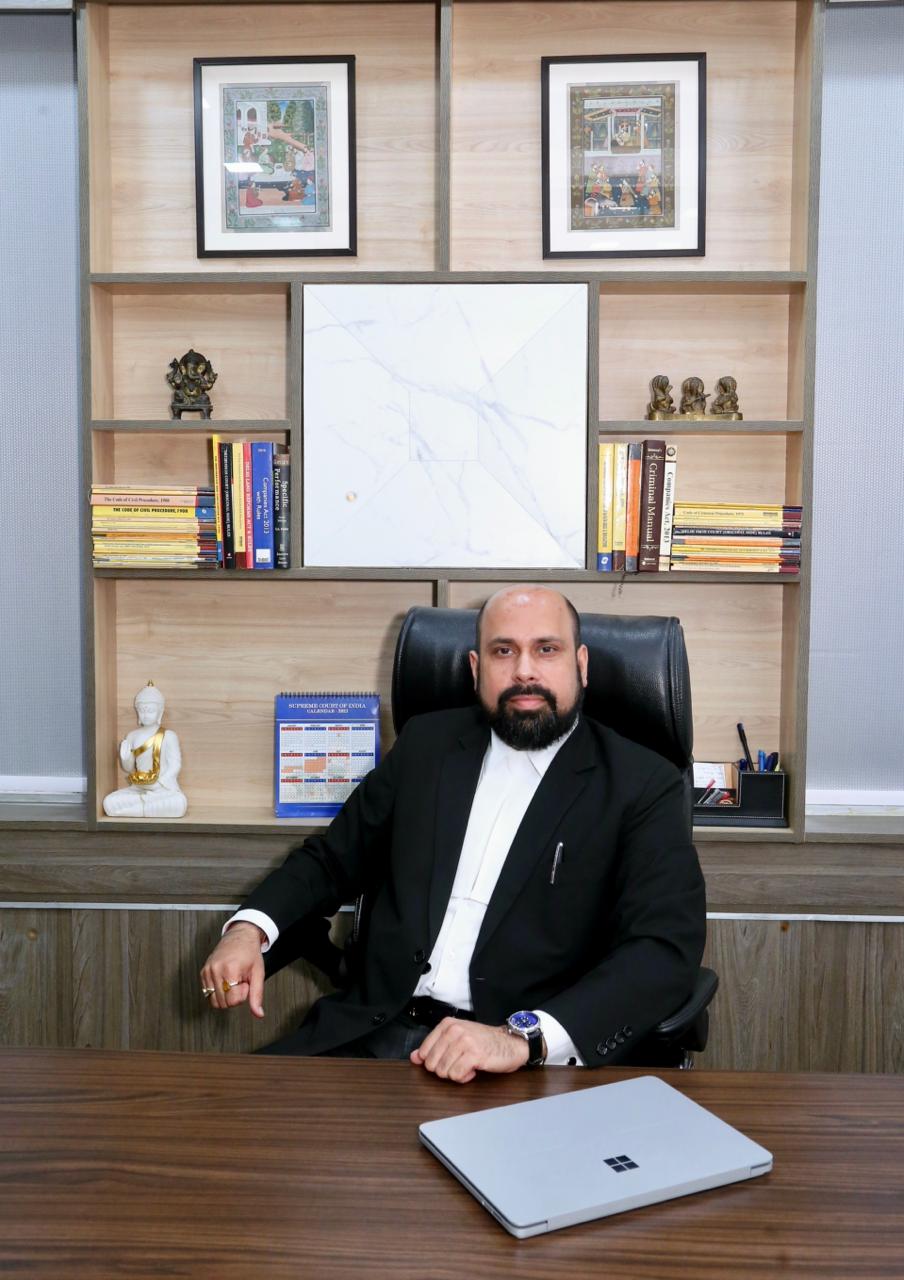












 Allow notifications