Author: SuperLawyerTeam

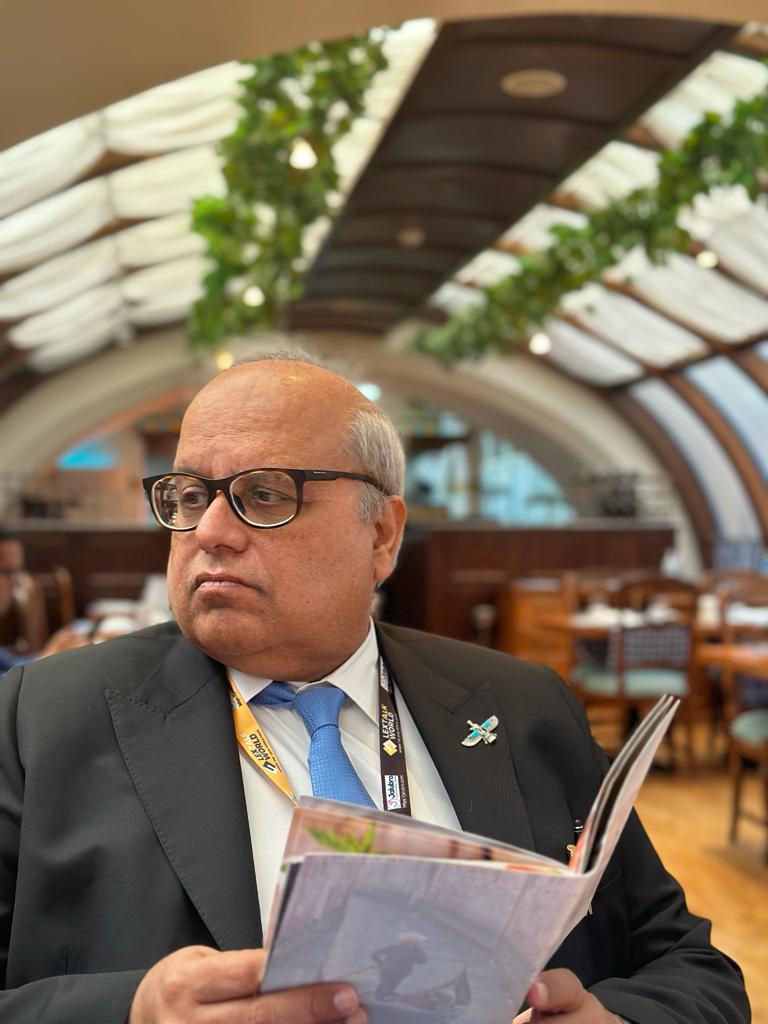
  • “A good cross-examination has the potential to turn litigation in your favor. Every day in a lawyer’s life is an experience and a learning.” – Rajesh Ramanathan, Partner, Factum Law

    “A good cross-examination has the potential to turn litigation in your favor. Every day in a lawyer’s life is an experience and a learning.” – Rajesh Ramanathan, Partner, Factum Law

    This interview has been published by Namrata Singh and The SuperLawyer Team
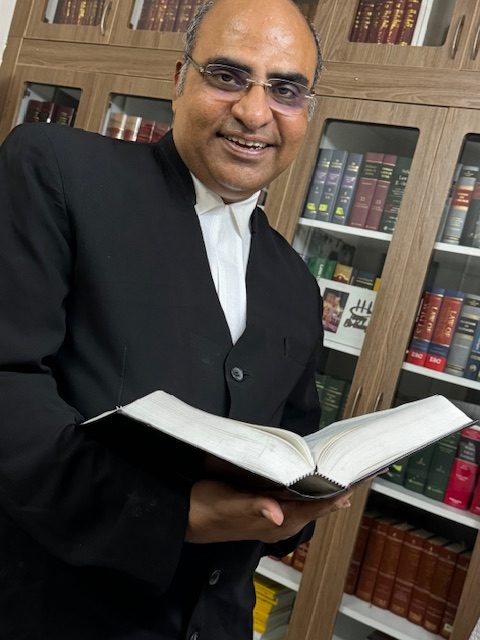
    What motivated you to pursue a career in law, and could you walk us through your journey from your early days in law school to becoming a partner at Factum Law? Additionally, could you share some of the challenges you encountered during the initial stages of your career and how you overcame them?

    The Question should be ‘Who?’ and not ‘What?”. I owe my professional life to my grandfather Mr. V.V. Ramanatha Iyer who was a prominent Lawyer in the Vellore District. As a school going kid, I used to accompany my grandfather to the Munisiff Court at Ranipet where he predominantly practised. It was his wish that I take after him. I joined Law School much against the wishes of my mother who like many others at that time thought that I would end up a Lier to be a successful lawyer. It took a while to convince her and she reluctantly agreed after I promised her that I will not Lie. It was my grandfather who sowed the seed in me to be a Lawyer and it was he who taught me that a Lawyer can be honest, truthful and successful. Legal education in those days were more theoretical unlike today and we hardly ever stepped into a Court during our Law School days. Of course there were quite a few exceptions to this and a few of my friends started interning quite early. 

    But I was a Reluctant Lawyer, when for the first time I set foot in Court almost 29 years ago.  Growing up, I was very quiet, reserved and had all qualities uncharacteristic of a Litigating  Lawyer. When I started my practise as a junior to my grandfather at Ranipet, I was just happily  going around the corridors of the Subordinate Courts as a privileged grandson but without actually knowing the fundamentals of being a Lawyer. I  felt I was in the middle of a jungle with  my eyes tied shut. I did not know what was happening.  I became a lawyer because of my  Grandfather and also because I did not know what else to do with my life.

    What inspired you to specialize in contentious and non-contentious litigation in areas such as IP, corporate, and commercial laws?

    When we started our careers as lawyers, we had only two options. Either to litigate or go inhouse. Since I followed my grandfather’s footsteps, contentious and non-contentious litigation was the obvious choice. But to sustain and keep up with that choice is a completely different challenge. I would say, Intellectual Property Rights and Commercial Laws chose me rather than me choosing them. A year into practice, my illustrious grandfather advised me to relocate and start afresh with a good Senior Practitioner at the Madras High Court. He felt that the Subordinate Courts were being bifurcated and it would be difficult for me to run around from one Court to the other in the Vellore District of Tamil Nadu. I am glad I took his advice and moved to the High Court where I was given the opportunity to join the chambers of Mr. V. Veeraraghavan, one of the most prominent Lawyers in the field of Intellectual Property Law in Chennai then.  It was more like an institution where we got to learn the practice of IPR and commercial Litigation. Mr. Veeraraghavan was instrumental in tutoring many other stalwarts like Mr. Prabhakara Reddy and Mr. Perumbulavil Radhakrishnan who were also my mentors and still continue to guide me in my journey.  All these mentors inspired me and continue to inspire me to do well. And IPR as a subject is so unique and different from all the other areas of laws, it is but natural to be drawn to this area of specialization.  

    We noticed you’re a senior panel lawyer for ‘The Institute of Chartered Accountants in India.’ How did this collaboration come about, and what does your role entail?

    I have been a Senior Panel lawyer for ICAI  the past few years. The collaboration started after a process of application and selection through an in person interaction. As a Senior panellist, I am entrusted with representing ICAI before the Madras High Court in select matters of complex legal issues. It has been both a learning and a rewarding experience representing one of the premier Statutory Bodies of the Country. 

    Given your extensive experience, what advice would you give to aspiring lawyers looking to specialize in intellectual property law?

    The Legal profession generally is a very noble profession which is also very satisfying and rewarding to all the genuine practitioners. I would most certainly tell all the youngsters who are looking at Law as a career, that honest, sincere hard work would make you very efficient and successful. It is imperative to believe that a lawyer is allowed to interpret a law but not facts. 

    Our profession has spread its wings far and wide now in terms of the avenues for a lawyer to get into. Earlier a lawyer had no other alternative but to either choose litigation or become an inhouse Counsel. But the options that are now available are much more. However,  It is my firm view that every lawyer on their enrolment should litigate in any Court of their Choice and convenience for a minimum of three years before choosing any other option. Because Litigation teaches us everything that one needs in life including Man Management. Right from just seeking an adjournment, to substantial arguments it is just an art. I always believe that the lessons a young lawyer learns from litigation in the first three years, would keep him/her in good stead for the rest of his/her life in whatever they choose to do.  So my first advice, if I may call it, is to gain experience as a litigator for a minimum period of three years before they decide to opt for any other avenues of the profession. 

    As for Intellectual Property Rights, this is the only area of law whose value stems from the public perception of such IPR (except Patents of course) and therefore every case would be different from the other. This is also a subject that just keeps evolving with every new invention and/or creative work. This to me is the unique aspect that makes it even more interesting than any other areas of law. The entry of AI now is taking to  different heights and it would be interesting to see where else it goes. 

    Can you share any insights into the legal landscape in India, particularly in terms of intellectual property rights and brand protection strategies?

    The Legal landscape is pretty promising as I believe that India of all the Major economies of the World has the best IPR protection in terms of Statutory Laws. Having said that, I also believe that we have to improve a lot in its implementation. Our Judiciary has been doing a lot to improve/ fasten the time for delivering Justice which by itself is no mean feat considering the population and the number of Judges we have. 

    As for strategies, I keep thinking that the brand owners take a long time to realise the potential value of their IPR’s and more often than not, the time delay in seeking Statutory protection by way of registering one’s brands or Patenting their new invention results in them losing value. Statutory protection of IPR’s should be the first on the agenda for a brand to be valuable. Registering a brand alone is not enough but maintaining it and protecting it from infringement at the right time is also equally important. In my little experience, I have come across quite a few brands losing their brand value just because they did not take action at the right time. It is also imperative for brand owners to understand that the cost and expenses for protecting and maintaining their brand is more of an investment than just an expense. 

    Looking back at your career journey so far, what are some key milestones or turning points that have shaped your professional growth and approach to law?

    Looking back, It just amazes me that I am able to sustain in this competitive field and quite well. I would like to think that the entire Universe comes to your aid if you just keep working without thinking about the result or the consequences. I take this opportunity to thank all my Seniors who nurtured/ mentored me and who still guide me in my journey. There are quite a few turning points since the day I started my career as a lawyer. I very vividly remember my Grandfather’s loving advice to relocate to the High Court and the day I joined the Chambers of my Senior Mr. V. Veeraraghavan who helped me transition into a High Court Practitioner. 

    The year I spent at the Franklin Pierce Law School in the USA would be the turning point or a milestone in my career. It is not only the Legal Skills I acquired there that made it a milestone, but the people I met there and the multi-cultural life that I was introduced to, changed me as a person. I went in as an Indian and returned as a true International. I still am in touch with most of my friends and teachers and I will always cherish my year at my alma mater. This camaraderie with all these people in a foreign Country for one full year taught me to be affable and friendly to all and guides me in my approach to the Legal Profession even today. Starting our own firm ‘Factum Law’ in the year 2017 was another key turning point in my professional life and with the right people to work with, this has been a very interesting and rewarding journey so far. 

    The International Trademark Association of which I have been a member since 2008, has also shaped my knowledge throughout. The Annual Meeting every year and the opportunity to meet thousands of IP practitioners from around the world in one place is always satisfying. This also helps me and my colleagues in keeping ourselves updated with all the developments of Law around the world. 

    None of this would have been possible if we did not have the right team to depend on. I am eternally grateful to all my team members for being with me through thick and thin. Thanks to them I am certain of many more milestones in my Professional life. 

    Reflecting on your time at UNH Franklin Pierce School of Law, could you share your experience and highlight any notable differences you observed between the educational approach there and the legal education system in India? How do you think these differences have influenced your practice of law?

    The life I spent at Pierce Law is the most memorable and life changing. I would be failing in my duty if I don’t credit Pierce Law for all of my achievements so far in my life and whatever I am destined to do more in this professional life. The Education system is more pragmatic whereas we in India still focus on theory. I am however told that it is changing here as well. There are no lectures in the US education system but only discussion. Which means you have to be prepared to be part of the discussion in every class. And you will be tested in the exams only on the discussion you had in the class. So it is imperative that you are well prepared even before attending the class and you get to participate in the discussion. This I believe is the most pragmatic way of teaching subjects and I hope Law Schools in India follow suit on this kind of pragmatic education. This has greatly influenced my thinking and my preparation for a case. 

    As a faculty member at EBC Learning and an alumnus of the Franklin Pierce Law Centre, do you incorporate your international experience and the teaching methodologies you encountered during your LLM into your approach to teaching? If so, how do you adapt these methods to suit the needs of your students and the legal education landscape in India?

    Whenever I get the opportunity to address  the students on some topic of interest, I make sure I follow the lessons learnt at Pierce Law. That of being pragmatic in my approach. So I try to make it an interactive session rather than just a lecture. This certainly aids in the students improving their thought process and their knowledge. This approach is imperative for Lawyers. I am also of the view that no Law school or college in India produces  Lawyers. They can only produce a good Law Student. It is the legal practice that moulds a student into a lawyer and that takes a minimum of three years. So a pragmatic approach would equip the students better in their transition to a professional lawyer. 

    Could you walk us through what a typical workday looks like for you, and how do you ensure you stay updated on the latest developments in the legal field amidst your busy schedule?

    Life of a lawyer is very demanding and unless we are prepared to sacrifice that ‘me time’, it will be very difficult to succeed. There are times when one feels overburdened but that comes with the territory. A typical day for me starts at 9.30 AM if not earlier. That depends on my Court work. Evenings are spent in preparing for the next day’s work and so on and so forth. Law journals and commentaries accompany me many times even in my travels. There can never be a day where a lawyer can say or feel he knows everything and the day one feels as such, would either be his last day of practice or after his retirement. Since Law is something that keeps evolving and changing with times, we as lawyers have to keep updating all the time. So I would only say ‘keep working’ to keep updated. 

    Do you remember the first time when you fought a case? Please tell us some anecdotes that happened in the courtroom.

    Very Vividly. That was my second day at the Madras High Court. I was asked to appear for a contemnor in a Trademark Infringement case against a formidable and successful lawyer who later became a Senior Counsel. I remember struggling to even mouth ‘May I please your Lordship” and the Judge had to lean forward to hear me. I was so nervous that I didn’t even know how I reacted in a room full of stalwarts. Within a few months, I became better at it and started enjoying my appearances in the High Court. Full credit to my senior who constantly encouraged me. It is those opportunities that I got from my seniors that exposed me to successful litigation early in my life. 

    Could you share with us one of the most interesting and challenging cases from your career that still resonates with you, and walk us through the complexities you encountered and how you navigated them? 

    There are quite a few. Particularly at the beginning of my career where I was assisting a Senior Counsel in a Trademark case. It was an appeal and the Senior Counsel appearing for the Appellant swayed the Bench completely in his favour. It looked as though we wouldn’t even have a chance to argue. 

    When it was our chance, all we did was to pick some errors in the Appellants documents and in no time the Division Bench turned in our favour. It showed me what presence of mind and a thorough knowledge of every single piece of paper filed in Court could do. That was a lesson I carried all through my life and I still make it a point to thoroughly study the files. You never know where the spark would come from. 

    I have also enjoyed my experiences in appearing in trial Courts and conducting cross examinations. One can never be fully prepared to cross examine a witness and a presence of mind is most essential to be a successful trial Lawyer. Conducting trials is an art by itself and every Law Student should expose himself/herself to the art of cross examination. A good cross examination has the potential to turn litigation in your favour. I will end by saying that every day in a Lawyers Life is an experience and a learning. I most certainly love the challenges that this profession throws at me every single minute.

    Thank you 

    Get in touch with Rajesh Ramanathan-
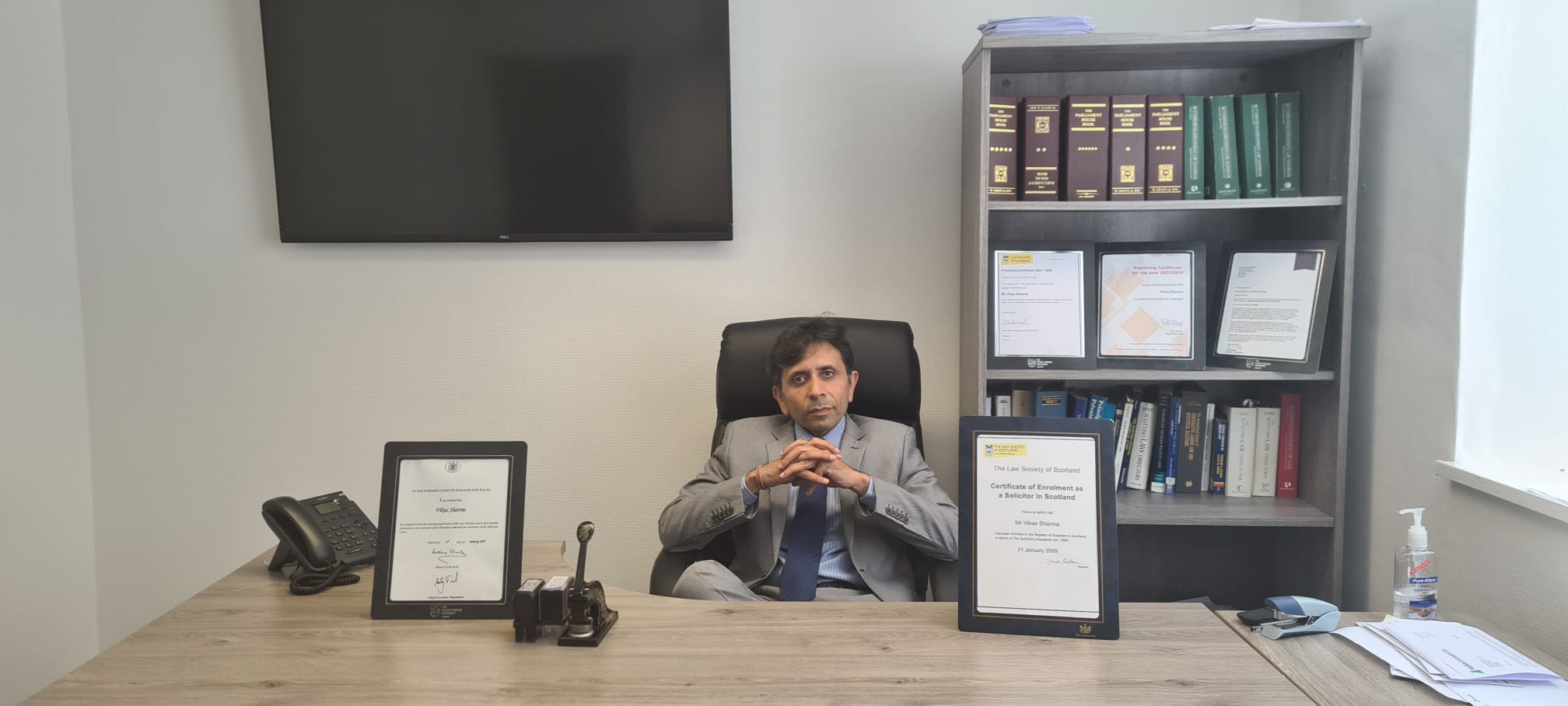
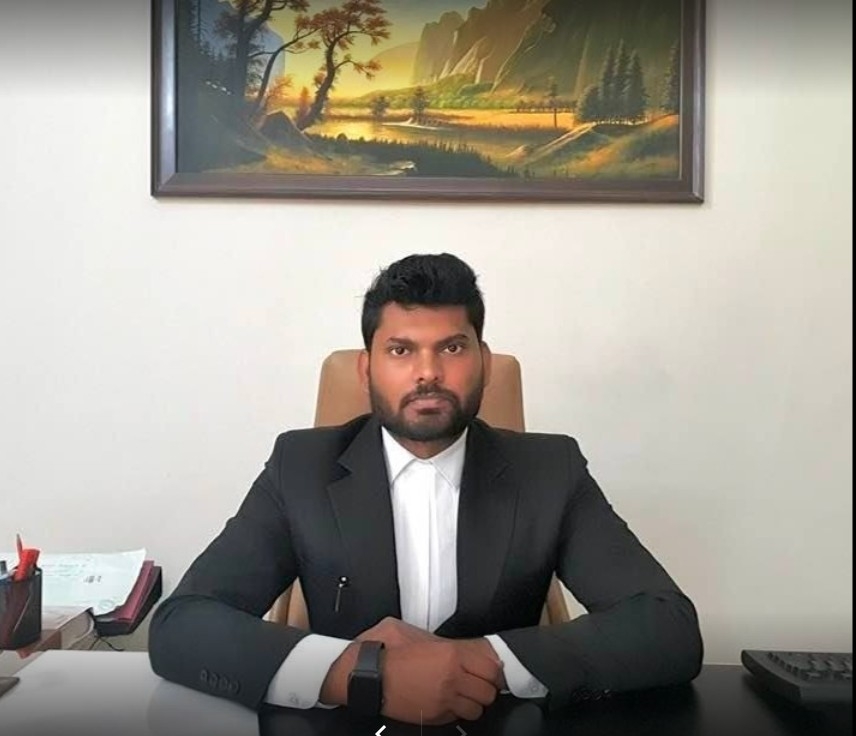
  • “Successfully arguing appeals and securing victories for my clients taught me that persistence and a deep understanding of law are key to success.” – Vikas Sharma, Director and Principal Solicitor at Vikas Sharma & Co Ltd., Solicitors & Solicitor at LAWSMITH SOLICITORS’

    “Successfully arguing appeals and securing victories for my clients taught me that persistence and a deep understanding of law are key to success.” – Vikas Sharma, Director and Principal Solicitor at Vikas Sharma & Co Ltd., Solicitors & Solicitor at LAWSMITH SOLICITORS’

    This interview has been published by Namrata Singh and The SuperLawyer Team

    Reflecting on your journey from studying law to becoming a director at Vikas Sharma & Co Ltd, what specific moments or individuals inspired you to pursue a career in law? What were some of the challenges you faced and how did you overcome them?

    I come from a lineage of lawyers, with my maternal great grandfather practicing in Hissar, Haryana, and both my grandfather and father in Ratangarh, Rajasthan. Growing up in Ratangarh, I was deeply influenced by the respect lawyers commanded in a small town. Visits to court with my father and uncles were frequent, and the court premises felt like a second home. Initially, my interest wasn’t in the law itself but in the sweets and pampering I received from my father’s clients and lawyer friends. However, over time as I grew older, observing my family’s dedication and the impact they had on people’s lives inspired me to pursue law seriously.

    My father, the late Shri Shyam Sunder Sharma, played a crucial role in encouraging me to aim higher and move to the Supreme Court. I learned not only how to prepare a case from him, but also how being a lawyer is more than just a business but a way to help people and enjoy the process. One of the pivotal moments was my working with Group Captain Karan Singh Bhati at the Supreme Court of India, where I gained invaluable experience representing the State of Rajasthan. Group Captain Bhati was then standing counsel for Rajasthan. 

    The passing of my father and two uncles was a significant emotional challenge, prompting me to move to Scotland for a master’s degree in law. This move was both a personal and professional turning point, allowing me to start afresh in a new environment. The journey was filled with obstacles, but the support of mentors like Mr. Vincent Buffoni and Mr Matthew Cohen, and my persistence in adapting to new legal systems, helped me overcome these challenges.

    Can you share the journey of how you transitioned from practicing various areas of law to specializing exclusively in immigration law? What motivated this shift?

    The transition to specializing in immigration law was largely serendipitous. Once I qualified as a solicitor in England and Wales, I joined Vincent Buffoni & Co, a central London law firm. While working with Mr Vincent Buffoni, an Oxford graduate who was very humble and thorough, I gained experience in UK immigration law. Initially, barristers handled appeal hearings, but Mr. Buffoni trusted my abilities enough for me to represent clients. After gaining hands-on experience in immigration cases, I became interested in the field more deeply earlier 

    Having worked in London for a few years, I returned to Scotland where I had earlier completed my LLM degree. Since English and Scottish legal jurisdictions are separate, I had to pass conversion exams to become a Scottish solicitor. My litigation background allowed me to handle all kinds of court matters when I moved to Aberdeen and joined Mathew Cohen and Associates Ltd. There was, however, an increase in demand for immigration law services. Aberdeen, being the oil capital of Europe, had a clientele that required legal assistance for complex immigration issues. A growing number of cases and the complexity involved led me to focus almost exclusively on immigration law, which I found intellectually stimulating and professionally rewarding.

    With over 20 years of experience, what key insights have you gained about the intricacies and challenges within immigration law that may not be apparent to those outside the field?

    One key insight is the profound impact of immigration law on individuals’ lives. It’s not just about legal procedures but about people’s futures, their ability to stay with their families, and their livelihood. The emotional and personal stakes are incredibly high, which adds a layer of complexity and responsibility to each case.

    Another challenge is the ever-evolving nature of immigration law. Policies and regulations change frequently, requiring constant learning and adaptation. Navigating these changes while advocating effectively for clients demands meticulous attention to detail and a comprehensive understanding of both the legal and human aspects of each case.

    Could you please provide examples of some of the most complex immigration cases you’ve handled and how you approached resolving them? What lessons did you learn from these experiences?

    Compared to London and other major cities in the UK, Aberdeen’s clientele is different. As Aberdeen is an oil capital in Europe, most of the clients are well educated professionals working in the oil industry. Therefore, they engage you only when a case is too complex for them to handle. As a result, almost all of my cases are quite complex. It was last week that I argued an appeal in which the UK government refused the appellant’s permanent residence/indefinite leave to remain application because the appellant has served a non-custodial sentence in a criminal case. The Home Office lawyer accepted before the judge that the application should not have been refused given that the appellant’s application to work in the UK had been approved despite a criminal conviction. In my argument, I relied on the principle of legitimate expectation, which was well received by the Home Office lawyer. We had another appeal where the husband of one of our clients was being removed from the UK due to criminal convictions. As a result of hugging his coworkers, he was convicted. It was my contention that the immigration rules that governed his removal contained an element of discretion. In this case, neither the UK government recognized or explained why discretion inherent in the immigration rule was exercised against the appellant. The judge allowed the appeal. Another case involved a Thai lady who was married to a British national and they had two British children. After the marriage ended, the British husband relocated to another part of the UK with the children. Due to the expiration of her visa and lack of funds, our client was able to move to the new city where her ex-husband and children had moved. Since her children lived away from her, the UK government refused her application on the ground that she was not actively involved in the upbringing of the children. Despite living away from her children due to circumstances beyond her control, I argued that she still had a genuine and enduring relationship with them. The appeal was dismissed, as were the applications to the Upper Tribunal. As a result of the Court of Session’s intervention, the matter was referred to the Upper Tribunal, where the appeal was ultimately allowed. 

    The lessons I learned from cases in which I didn’t receive a successful outcome initially are that ultimately success will be attained if the legal point is in our favor regardless of how many judges dislike it. 

    What inspired you to establish your own law firm, Vikas Sharma & Co Ltd, in Aberdeen? How does it differentiate itself in terms of approach and client experience compared to other firms in the area? Also, what challenges did you come across during the initial days of your firm?

    I joined Matthew Cohen Associates as the head of the immigration law department in 2010. It was in 2018 that I joined The Chamber Practice as a partner. Since I was running both firms’ immigration law departments, I was responsible for providing the best service to my clients. As a result, setting up Vikas Sharma and Co Ltd did not make a significant difference in the way the firm assisted clients. Having my name on my firm helped my previous clients find me and gave me more freedom to run my business. Besides the procedural requirements for setting up a law firm in Scotland, which are quite onerous, I had no problems because I have been serving people here for more than 15 years and my previous clients found me through Google reviews.

    Considering your background as an advocate in the Supreme Court of India, how do you perceive the differences in legal systems between India and the UK? Are there any insights from your experience in India that you apply to your practice in the UK?

    The process of preparing a case for court and presenting it to the court does not seem to differ much between India and Scotland. However, there are many other distinct differences, such as the requirement that a law firm be insured before starting to practise, and the Law Society of Scotland is much more strict in its regulation of this profession than Indian bar councils. At the outset, lawyers here are required to provide engagement letters outlining the costs involved and how unhappy clients can make complaints. The Law Society of Scotland regularly inspects law firms to ensure compliance with rules of practice. Keeping the office and clients’ bank accounts up-to-date is a mandatory requirement. Generally, lawyers specialize in one area of law, such as family law, immigration law, or criminal law. Lawyers must advise clients efficiently because the cost of cases can be enormous, otherwise, they will be liable for claims and complaints. Once the pleadings are complete and the case is ready to proceed to the evidence stage, the lawyers of the parties determine if their client’s case deserves to proceed to the next stage since the client could end up paying the other party’s legal costs. As far as I’m concerned, the Scottish legal profession is much more strictly regulated than that in India.

    Transitioning from practicing law in India to establishing yourself in the UK legal system must have been a significant change. Could you share your experiences and insights regarding this transition? What were some of the biggest challenges you faced, and how did you adapt your legal expertise to the new environment?

    Interestingly enough, I struggled little to establish myself as a lawyer here. Vincent Buffoni, the partner of the central law firm and an Oxford graduate, had earlier shown me trust, and later Matthew Cohen, a principal of a Scottish law firm, gave me an opportunity to appear in Scottish courts. In this region, I am the only Indian lawyer and have even appeared in smaller towns such as Peterhead and Stonehaven where English is spoken in a very different accent. In terms of my work, speaking English with an Indian accent or my origin has not had any adverse effects. My experience as a lawyer in India extends even to smaller towns such as Ratangarh and Shri Dungargarh, as well as the High Courts of Rajasthan and Delhi and the Supreme Court of India. Having moved from a small town to a higher court already prepared me to handle the changes and adapt to them. I believe that when it comes to practising as a lawyer, there are certain requirements regardless of the country or court: knowledge of facts, knowledge of applicable law, understanding the stakes for the client, empathy towards the client, and the ability to represent the client before a judge.

    Any new court requires adaptation, whether it is the District Court of India or the Supreme Court of India. In the same way, adapting to the courts of the UK involves a series of steps. As part of my adaptation process, I sought guidance from experienced colleagues and continued learning about the nuances of the UK legal system. A crucial step toward becoming an English and Scottish solicitor was passing the conversion exams. Additionally, I qualified as a solicitor in Ireland and worked with a firm there in 2017. I was able to successfully navigate this transition by embracing the differences and leveraging my foundational legal expertise.

    With your wealth of experience in the legal profession, what advice would you offer to the new generation of aspiring solicitors and advocates who are just beginning their careers, particularly those interested in specializing in immigration law?

    For aspiring solicitors and advocates, my advice is to develop a deep understanding of the law and stay updated with the latest developments. Immigration law is a dynamic field, and continuous learning is essential. Practical experience through internships and mentorship from seasoned professionals is invaluable.

    Specializing in immigration law requires empathy, patience, and a genuine desire to help people. Building strong client relationships and maintaining integrity in your practice are crucial. Always approach each case with meticulous preparation and a commitment to achieving the best outcome for your clients.

    We may enter this noble profession motivated by the motivation to help people, but it is the discipline that earns us credibility and reputation with clients, colleagues, and the judicial system. 

    Due to the ever-changing nature of immigration law in the UK, no one can claim to be an expert. It is therefore important that we stay on top of any amendments to the rules, regulations, policies, and statutes as students of law. 

    With the demands of your legal career, maintaining a healthy work-life balance is crucial. Could you share some of your favorite ways to relax and unwind outside of the office? How do these activities contribute to your overall well-being and productivity in your professional life?

    When I am in control of my work, I feel relaxed. Consequently, I try to answer all my emails and phone calls by the end of the day. If I am unable to complete the work, I email the client when I will complete it. In the end, it comes down to managing the expectations of others.

    After a difficult day at work, watching a good movie or web series helps me unwind. Since I have a sweet tooth, I run approximately 5 kilometers a day and do push-ups and squats on alternate days. Scotland is close to nature and picturesque, so I have chosen to settle there. It is relaxing to take a drive in the Scottish countryside and to have an Indian cup of tea to clear my mind. In spite of living in Scotland for almost 20 years, I remain a teetotaler and a vegetarian, so I still drown my stress in tea rather than Scotch.  

    Get in touch with Vikas Sharma-

  • “My thrust in the use of Artificial Intelligence is to see one day an autonomous body of knowledge, uninfluenced of facts and free from political and personal malaises, to provide a support system to the legal community on the merits and demerits of a lis to enable not only the legal practitioner but also all the stakeholders to understand where a judgement can possibly go”- Dr Sarosh Sam Bastawala,  Senior Lawyer & Arbitrator, Argueing Counsel in Superior Court & Tribunals

    “My thrust in the use of Artificial Intelligence is to see one day an autonomous body of knowledge, uninfluenced of facts and free from political and personal malaises, to provide a support system to the legal community on the merits and demerits of a lis to enable not only the legal practitioner but also all the stakeholders to understand where a judgement can possibly go”- Dr Sarosh Sam Bastawala, Senior Lawyer & Arbitrator, Argueing Counsel in Superior Court & Tribunals

    This Interview has been published by Pragya Chandni and The SuperLawyer Team

    Could you share with us what initially inspired you to pursue a career in law, and how your early experiences shaped your path?

    I cannot say that law was the first choice for a profession, but it was the unanimous opinion of my elders that as conditions for landowners were becoming difficult in the country, an In-house lawyer was required for a land-owning family, and so I was dumped in the quadrant of law. I have a principle in my life that if I must do something I should do it well, so I immersed myself in the study of law with great diligence and unlike most of the lawyers my favourite subject always was Jurisprudence i.e. to understand the philosophy and logic that goes behind all laws. They said that the first laws of the world were the ten commandments, handed over to the Prophet Moses by God himself. Scholars in antiquities like Plato and Manu interpreted these and with the liberal assistance of the British who saw it fit to impose the Anglo-Saxon system upon us.

    During the early part of my career, (if I remember correctly), I was a Junior with a senior lawyer who was then the Standing Counsel for the Department of Home Affairs in the State of Andhra Pradesh. However, within six months my Senior was elevated as a District Judge and for a better part of a decade took over his job of standing council for the department of Home Affairs. Later in the early 1990’s, I took up independent practice.

    Your educational background is quite extensive, with degrees in commerce and law, as well as research in artificial intelligence. How did your academic journey influence your approach to the legal profession?

    On the academic side immediately after LL.B., I joined LL.M. with “Jurisprudence”, as the main subject. However, after LL.M. there was nearly a decade when I undertook the then seemingly impossible subject of Artificial Intelligence with a research topic of “The Human Quest for Assurance in the Dispute settlement mechanism. A study of the Doctrine of Certainty in the Judicial Process”. At a time the subject of Artificial  Intelligence was then in its very nascent stage and even though the term Artificial Intelligence, was coined between 1956-1960, and were called “expert system” in the late 80’s. In the early 1990’s the concept of the Heuristic based model of creating a tree of knowledge was proposed and this was the best suited for legal research.  Then in Chicago a company called Mead Data Central had managed to convert thousands of American reports into computer readable form and were offering the same to lawyers over various rudimentary tools over FTP and other protocols available then.   Mead Data central went down to become the Lexis Nexis of today.

    My degree in commerce may have only sharpened my business acumen, not that I can speak about it much. My law degree, being a lover of history, I made it a point to know and understand the rationale and the logic behind every rule of law and its development from the simple societies of antiquity to the complex ecosystems today. My quest in the field of Artificial Intelligence was mostly focused on seeking  a sense of certainty in the dispute resolution process for any prospective litigant and practitioner, for in fact this is now enveloped in uncertainty, mainly due to the length of the litigation, the abilities and perception of various parties and lastly the most uncertain area is the exercise of discretion by the court. Sadly, my profession does not use Artificial Intelligence, for its true purpose and purport, and is mostly used to drive home a point, even if the same is wrong or misconceived.

    With over four decades of experience in litigation and dispute resolution, what have been some of the most challenging cases you’ve worked on, and what did you learn from them?

    As mostly a lawyer in commercial and contractual disputes in private practice my career has been confined to mundane interpretation of civil and contractual laws. In one matter which was for the forbearance for the invocation of Bank Guarantee, a very early case in this country were Courts at that time held that the duty of the bankers to fulfil his obligations was sacrosanct, the doctrine of Egregious frauds was invoked, to put on hold a so-called performance of the bank in favour of the fraudulent beneficiaries. Another Grey area of contractual law is the interpretation and enforcement of written form contracts, that is printed contracts normally thrust upon unsuspecting customers mostly by bankers, insurance companies, and large organisations. The classical theory of contract is an agreement between two persons who have similar bargaining power to arrive at a Consensus Ad idem, or meeting of minds, to form a contract, but this is absent in the matter of Written Form Contract, where the conditionality in the clauses are predetermined by one party.  Where one powerful party imposes and dictates terms to a significantly weaker party with no bargaining power this needs to be regulated by Law.

    You have significant expertise in international arbitration and mediation. How do you navigate the complexities of framing contracts with enforceable arbitration clauses, especially across different jurisdictions?

    In International Commercial Arbitrations, particularly where invocation or denial of insurance claims are concerned, the practitioner must put in a certain degree of his mediation skills into practice also. Enforceability of cross border contracts, particularly were jurisdictional courts are perceived to be biased, careful steps have to be taken first to bring the contracting party to a common forum of arbitration, conduct the arbitration obtained the award in whatever it may be and lastly the sheer vulgarities of domestic Courts and tribunals for the enforcement of the award and the loose seemed framework of the ICC is grossly inadequate to deal with belligerent parties.

    Your profile mentions various specialisations, including maritime law, aviation law, and commercial law. What drew you to these particular fields, and how do you manage to stay updated with the ever-evolving legal landscape?

    Many of the International commercial disputes, particularly when they deal with goods in transit require knowledge of laws of that particular mode of transportation like by sea and air sometimes in adjudication of contributory negligence and other related defences known to the law of torts.  Intricate knowledge of systems of applicable law to the subject as well as territorial application are in play, ascertain aspects of maritime law are also relating to conditionalities.

    As the chairman and founding trustee of The Heuristic Foundation and trustee of the Zal Maneck Foundation, how do you balance your legal career with your responsibilities in these educational and real estate management roles?

    It was during the formative years of the 1990’s that the Heuristic Foundation was created for the advancement of knowledge in various disciplines and a few institutions are aided by this foundation. In the matter of the Zal Maneck Foundation this is purely a family land holding trust, controlling and managing various vast bits of a Real estate owned by my family personally. After the passing of all my elders, I now head this organisation.

    You’ve conducted research on artificial intelligence in law and authored several works. Can you tell us more about your research interests and how you see the role of AI evolving in the legal field?

    My thrust in the use of Artificial Intelligence is to see one day an autonomous body of knowledge, uninfluenced of facts and free from political and personal malaises, to provide a support system to the legal community on the merits and demerits of a lis to enable not only the legal practitioner but also all the stakeholders to understand where a judgement can possibly go.

    Finally, with your extensive experience and knowledge, what advice would you give to fresh law graduates who are just starting their careers in the legal profession?

    As my journey also, has been one of very hard dedicated work, any new entrant in this field, particularly first generation lawyers should know and understand that hard work and thorough knowledge of the particular subject, along with the historical background, and all  surrounding circumstances should be well ingrained in the mind of the lawyer, as he stands up to face the bench or when he drafts a contract.     

    Get in touch with Dr Sarosh Sam Bastawala-

  • “Self-trust is the primary requirement. Understanding the fundamentals of law, good communication, time management, teamwork, dedication, critical thinking, and adaptability are equally important” – Savithri Sravanthi, Founder & Managing Partner at IUSTUS LEGAL

    “Self-trust is the primary requirement. Understanding the fundamentals of law, good communication, time management, teamwork, dedication, critical thinking, and adaptability are equally important” – Savithri Sravanthi, Founder & Managing Partner at IUSTUS LEGAL

    This interview has been published by Namrata Singh and The SuperLawyer Team

    Could you share with us the story behind your decision to pursue a career in law? Does anything change for a women post-marriage? Looking back, would you revisit your career path? 

    Becoming a lawyer was my childhood dream. Unlike an add-on degree, I wanted the legal profession to be my primary career. My father was an accountant while my mom initially was a homemaker and later turned into an entrepreneur. Fortunately, as a child there was no pressure from my parents to choose the career path of their preference or excelling in academics. My choice of electing a legal profession as a career option was welcomed and completely supported by my parents. Relentless support from parents meant a lot to me, which motivated me to achieve a Gold Medal in my bachelor’s degree. 

    Family support for any lady post marriage undoubtedly helps her to retain her identity whereby she can balance her career aspirations with familial responsibilities. I have been fortunate to receive encouragement from my husband and kids, that I was able to achieve a Gold Medal in my Master’s degree 17 years after I completed my bachelors. 

    Time files, it has been more than 2 decades. If I look back, I feel it is deeply fulfilling and gratifying. I wholeheartedly thank my mentors, seniors, peers and family who contributed to my professional growth and being part of my life’s journey. 

    As a legal advisor across various sectors, including IT & ITES, Manufacturing, Real Estate, Pharma and Techlaw, what common challenges do you encounter, and how do you address them while ensuring compliance and legal efficacy?

    Every client reposes trust on their advisors, either legal or financial. As a legal counsel I pre-empt and aid our clients navigate through complex situations and challenges and comply with the laws to avoid potential risks and liabilities and seamlessly concentrate on their business goals. 

    Every organisation requires to comply with a plethora of laws which makes it important for companies to place reliance on subject matter experts. As a legal counsel, we advise on various laws based on the needs of our client, which include data protection, labour & employment laws, consumer protection laws, intellectual property rights, corporate and commercial laws.

    Creating awareness and conducting training sessions to the appropriate functions helps us to interact with the teams to explain to them the need for compliance and adverse effects of non-compliance. These sessions instill a value system and is a collaborative work as we share real time experiences  and challenges. We advise on legal compliance after assessing each client’s pain points and prepare policy or guidelines to suit their requirement within the legal framework. Periodic supervision, audits and team reviews with clients aid to keep a watch on adherence with ever changing laws. Compliance is not a one-time event but an on-going task. By doing so, organizations ensure they meet legal requirements, uphold ethical standards, and manage risks effectively. This proactive approach not only reduces the likelihood of non-compliance but also enhances overall organizational resilience and reputation.

    As a practitioner in Anti-Sexual Harassment Law, how do you approach training and awareness sessions for employees and internal committee members to foster a culture of respect and inclusivity within organizations?

    Sexual harassment is a social issue. It has been nearly a decade, that our Government enacted the Prevention of Sexual Harassment of Women at Workplace (Prevention, Prohibition and Redressal) Act, 2013 (POSH Act) yet many establishments remain oblivious to its existence or compliance. Like Consumer awareness this also needs to reach the people. Like the impact created by the ‘Jago Grahak Jago’ awareness program run by the Government, we need a similar movement to sensitize and create awareness of this beneficial legislation.

    Regular meetings with IC members is highly recommended, awareness sessions for employees are important likewise orientation to IC members is also equally critical, as they redress the complaints. IC members  have to be trained to ensure judicious redressal, as most of IC members are seniors and experts in their field but may not be from legal background hence may need assistance to understand the nuances of law and manner of conducting redressal process in a time bound manner. 

    Usually, participants /audience are silent for the first 15-20 minutes, some voice their concerns during the session while some wait until we conclude. But there are many queries which can be resolved only by training and interactive sessions. These sessions are to be attended by all, it should not be a women’s day event. Government has enacted the law but its implementation is a collective responsibility. 

    Could you elaborate on your involvement in Estate & Succession Planning and share insights into the importance of such planning for individuals and families, especially in the context of evolving legal frameworks?

    Estate and succession planning are complex processes that require careful consideration of legal, financial, and personal factors. It is a collaborative effort of legal, tax and financial professionals to meet their goals and safeguard their properties. Will is the most sought out option for many as it is easy. Whereas for High Networth Individuals and Ultra High Networth Individuals s structuring, distribution and transfer of assets /wealth to beneficiaries or legal heirs upon death is a complex task. Identifying assets, including real estate, investments, savings, retirals, insurance policies, prized possessions, and personal belongings itself is the first step, which is followed by structuring and so on.  Trusts can be useful for minimizing taxes, legal attachments, and providing for minor children or individuals with special needs. Pre-empting pros and cons and advising clients is challenging yet fulfilling once we reach the desired outcome. We partner with reputed financial advisors and family office experts to give our clients holistic solutions.Although we have laws, healthcare/ advance medical directives, such as living wills, outline an individual’s preferences for medical treatment and appoint someone to make healthcare decisions on their behalf if they are unable to do so. This is a very sensitive topic similar to that of a Will. No child can ask his parent to execute a Will to safeguard our assets or have advance medical directive in place to avoid issues in case of incapacity of parent to make a decision.  

    Justice M S Sonak, who serves on the Goa Bench of the Bombay High Court, became the first person in Goa to register a “living will”, an advance medical directive for his family for when he cannot make his own decisions. Such trailblazers pave the way and pass on a message that nothing is permanent. It is rational to pass on responsibility of taking decisions in case of health in case of an emergency or wealth in case of eventuality. 

    What inspired you to embark on the journey of founding your own firm, IUSTUS LEGAL, and what specific vision or goals did you aim to achieve through this endeavour? Could you share some of the significant challenges you encountered when establishing IUSTUS LEGAL?

    Starting a law firm or independent practice is a logical and common path for any legal professional in practice. I believe a silver lining during pandemic for me was clients both domestic and international realised that corporate legal services can be rendered effectively and efficiently using technology. E-meetings became the go-to venue and virtual data room a repository of documents. Personally, I noticed there were avenues and opportunities which were opened and I wanted to explore the waters as the market dynamics were changing and legal compliance was gaining a foothold due to enormous foreign investments and funding which prompted legal due diligence and paved the way for diversified agreements and mandated compliance under corporate and labour laws.

    I truly believed that it was the right time for me to make my deep rooted vision of providing just and fair legal services to clients into a reality. Initially, I was apprehensive, as it could be risky moving out of my comfort zone and setting up a firm from scratch. It meant less to no work and less to no steady income. I took a leap of faith and established IUSTUS Legal. IUSTUS is a name derived from IUSTITIA, the Lady of Justice (Nyaya Devta) and also means righteousness, ‘dharma’, being just and fair which is based on the vision to create value to every client in every entrusted matter. It is fulfilling when a client entrusts a matter to you and feels content when the desired outcome and refers to new clients or more matters.

    It has been nearly 3 years since I ventured on this journey and we are expanding. I feel elated when I say it was an all women team (and young mothers) who continue to balance both professional and personal responsibilities effectively. We are expanding with young professional minds joining us.  I am grateful to the Almighty for being the guiding light, to our amazing clients, competent team and my wonderful family.  

    Entrepreneurship comes with its risks and challenges, but if you have conviction in yourself and faith in God, the journey is beautiful. 

    What challenges did you encounter as a woman along the way that shaped your journey to becoming a seasoned legal professional and Managing Partner at IUSTUS LEGAL?

    Conventionally, the representation of women in the legal profession is low. Despite significant advancements, women face challenges and many let go of this profession due to gender discrimination, demanding timelines, constant comparisons, unrealistic expectations, work-life balance, motherhood etc. Support from seniors and family is important for any woman to pursue their career aspirations. I was fortunate that there have been only a few such instances more gender based, but have heard so many experiences from my friends and colleagues to quit the profession and change their career paths. 

    In fact many women colleagues leave the profession due to familial responsibilities or unsupportive family, post marriage or childbirth. Out of 30 women students in my class of 2000 batch, hardly a handful women are continuing in this profession, which is disheartening.

    I truly believe and advise young mothers, who have no support but have legal acumen and skill sets, could take up tasks where they could work from home or work as freelancers. 

    Earlier, litigation or corporate law were the only options, now the legal profession has further branched out. One can be a legal correspondent, legal analyst, part time lecturer, corporate lawyer, labour law consultant, POSH advisor. Quitting is easy, navigating through odds is a challenge worth trying.  

    How do you balance your work-life as a legal professional? How do you manage your work day?

    Time is the most precious commodity which is non-renewable, but we need to value both time and money. Legal profession is highly demanding. Striking a balance is not an easy task as profession and personal life are equally important. Based on situations, I have prioritized both professional growth and personal life. 

    In response to your question, I prioritize work every day before I start my work, I read a matter and make hand noting this helps me recollect the matter easily, avoid procrastination, except in case of emergencies and keep a watch on the deadlines, in case work spills beyond expected timeline I ensure apprising clients helps in maintaining a healthy and long standing professional relationship. I believe enriching client relationships and being updated with domain areas is also spending time productively as a lawyer. delegation of work with a team helps in productivity, time management and ability to focus on priority and high risks matters.

    Most of all, I believe in spending time with family and taking short breaks/getaways as it rejuvenates me. This helps growth of professional and personal lives

    What advice or suggestions would you offer to the next generation of aspiring legal professionals who are entering the field, especially in light of the evolving legal landscape and emerging challenges?

    Self-trust is the primary requirement for any aspiring student as comparisons are bound to happen and that should not adversely impact on your growth. Embarking as a lawyer is an exciting yet challenging journey. Understanding the fundamentals of law and research are key skill sets but good communication, time management, team work, dedication, critical thinking and adaptability are also equally important. 

    Formal education gives aspiring lawyers an overview of law but practical learning under a senior /mentor and gaining insights from experienced professionals enhances the knowledge, legal reasoning and application of the education judiciously. Attending workshops, conferences, networking aids in an impactful way to foster continuous learning. A legal professional must be willing to be a lifelong student to sustain and grow. My motto ‘if you are not updated, you are outdated’. Stay updated to continue and shine in this noble profession and collaborate with colleagues. One may not know everything but everyone will know something.

    I am happy to have been part of this pious profession and strongly urge students to consider this as their career option, if it aligns with their skill sets, interests, and career aspirations. Lawyers can positively influence the Country’s law & policy, make key contributions in people’s lives and decisions through their expert legal guidance. 

    Get in touch with Savithri Sravanthi –

  • “After 15 years of practice, I have come to see how few women stay on in the profession and put themselves out there – especially at negotiation tables in PE & M&A transactions”- Goda Raghavan, Advocate & Partner, AK Law Chambers

    “After 15 years of practice, I have come to see how few women stay on in the profession and put themselves out there – especially at negotiation tables in PE & M&A transactions”- Goda Raghavan, Advocate & Partner, AK Law Chambers

    This Interview has been published by Pragya Chandni and The SuperLawyer Team

    Ms. Raghavan, you have a remarkable career in corporate law, leading the Corporate Transactions practice at AK Law Chambers. Can you share with us the journey that led you to pursue a career in law and what sparked your interest in this field?

    I come from a family of litigating lawyers (my grandfather KR Gopivallabha Iyengar was a judge of the Karnataka High Court and my father, Mr. KG Raghavan, is a senior advocate in Bangalore) and I am now the third generation lawyer. While I was always keen on becoming a lawyer from very early on, I wanted to establish a practice to create an identity of my own and on my own merit and consequently, I wasn’t sure if I wanted to pursue litigation as my area of specialisation. In addition to being a lawyer, I am also a qualified company secretary. As part of the CS course, I worked with the GMR Group. During my stint for a little over a year there, I was exposed to working with the legal and secretarial team alongside the business vertical with a focus on getting business done within the framework of the law rather than academic interpretation of the law. I even had the opportunity to be a part of the board meetings. When I met my husband, Anirudh Krishnan, in London during my LLM at the London School of Economics, our idea was that if we were to setup our private practice together, our skill sets should complement each other and not duplicate. All of this instilled a keen sense of desire to work in an area that is a bridge between the business world and the law and consequently pursuing a career in corporate transactions was the perfect fit.

    Your educational background is impressive, with a Bachelors in Law from University Law College, Bangalore, and an LLM from the London School of Economics. How did your educational experiences shape your legal career and influence your specialization in corporate and commercial law?

    An undergrad degree equips you to be a lawyer sans specialisation in most 5 year programs However, the LLM degree in LSE, UK changed my perspective on how to approach a given factual matrix and debating the ‘why’ of the law given that I shared a classroom with some of the best students from top schools across the world and was taught by some of the world’s best subject matter specialists. While at LSE there were two specific courses that added to my already keen interest in corporate and commercial law – International Business Transactions and Project Finance & Public Private Partnerships. However, according to me, much of my specialisation came to me as a learning on my first job with Mr. TK Bhaskar. But I would like to add that, over the years, since I have setup my own vertical in the area of corporate commercial transactions at AK Law Chambers, the LLM has visibly given me an edge when a client has to decide between two or more prospective lawyers.

    Being a qualified company secretary and securing a gold medal is quite an achievement. How has this additional qualification complemented your legal practice, particularly in corporate transactions?

    Thank you. I believe that having an additional qualification such as the company secretaryship has definitely added an intangible benefit to my practice. I am now in a position to provide my clients with the wholistic advice on how to structure and negotiate a particular transaction not only from the legal point of view but also from the financial and secretarial point of view and any Private Equity or M&A transactions would necessarily involve all three aspects –  legal , finance and secretarial.

    You have been recognized by prestigious platforms such as Chambers & Partners, Thomson Reuters, and Legal 500. What do these accolades mean to you, and how have they impacted your professional journey and reputation in the legal community?

    The accolades are a recognition of the good work that one has done and a motivation to keep getting better each year. However, today the market is flooded with plenty of awards and several that come with a ‘nomination fee’ or a ‘registration fee’. We as a firm have a no payment for recognition policy and therefore I feel that those that I have earned are truly on the basis of the work we do. That being said, I am very grateful for the recognition and accolades that I have received and several of these carry a very good reputation and value internationally.

    Your work in private equity, mergers and acquisitions, and general corporate advisory has been highly acclaimed. Could you tell us more about one of the marquee deals you were involved in, specifically the Mahindra Logistics acquisition of Whizzard, and what made it stand out as the deal of the year?

    After 15 years of practice, I have come to see how few women stay on in the profession and put themselves out there – especially at negotiation tables in PE & M&A transactions. I’d like to use the word ‘marquee’ in two contexts – one where the deal itself is complicated and requires manoeuvring through the nuances of the law – like the Mahindra deal which was a deal involving an acquisition by a listed company and also had to be completed in a time bound manner of less than 5 days (where typically deals take around 45-90 days). There was another deal that I advised on wherein the investors from Mayalsia were exiting an Indian hospital and selling shares to a non-resident Indian and therefore the deal involved compliances and structuring under multiple jurisdiction. There is yet another deal I advised on which was a Rs. 1200 crores fund raise by a Section 8 company involved in a highly sensitive project in India. Some of these deals are in the public domain, while others are not. The other context of marquee, in my view is a transaction where the entire team of lawyers for all parties were all women – in this deal even the CFO of the investor was also a woman and when we closed the deal it left me with a sense of pride!

    In addition to your legal practice, you actively mentor the start-up community and engage with organizations like TiE Bangalore and NASSCOM. How do you balance these roles, and what drives your passion for supporting startups and innovation?

    I work with companies at all stages – companies that are still at an idea stage to multi-national companies that have several business verticals across countries. I would like to bring my expertise to help startups since they are the future of business in India and when they grow we grow with them. Organisations such a TiE, NASSCOM, etc provide a great platform for me to give back to the society in the way I can.

    Beyond your professional achievements, you are also a trained veena artist and serve on the executive committee of the Madras Music Academy. How do you integrate your passion for music with your demanding legal career, and what role does music play in your life?

    I have learnt the veena for over 30 years now and it was something that my mother was very particular about. Her objective in me being trained in music was two-fold, I would learn the music itself  and also would inculcate the art of being able to focus. I believe that this has truly helped me at several points. My profession can get a bit monotonous at times and music brings in the refreshing change to my day. I believe it is important to keep your passions alive outside of your profession so that when you take that break and come back to work, you are recharged to give your best.

    As someone who has achieved so much in both your professional and personal life, what advice would you give to fresh law graduates who are just starting their careers in the legal field?

    Use your time at your internships well to assess which is the area of law that interests you and not go behind the mere “image” of a practice that looks externally appealing. In my opinion the first boss is probably more important than the area of work since the mentorship that you receive in your initial years will shape your professional life for several years thereafter. Also, if you choose to take up a particular area of practice, give it atleast 2-3 years so that you are able to see the full cycle of a deal or a case and understand to some extent what the area of practice entails.

    Get in touch with Goda Raghavan-

  • “Lawyers are tools of social change in society. Observing my surroundings, where there are prevalent economic and social inequalities, I always wished to be a tool for social change.” – MANOHAR PRATAP, Advocate-on-Record at the Supreme Court of India.

    “Lawyers are tools of social change in society. Observing my surroundings, where there are prevalent economic and social inequalities, I always wished to be a tool for social change.” – MANOHAR PRATAP, Advocate-on-Record at the Supreme Court of India.

    This interview has been published by Namrata Singh and The SuperLawyer Team

    Can you share what initially inspired you to pursue a career in law, especially coming from a remote rural area in Bihar? Who showed you this career path of Law? Please allow us to walk through your journey.

    Right from the very beginning, i.e. primary school days, I used to read that most of the freedom fighters, politicians and ministers were lawyers. This fact developed thinking inside my mind that lawyers are tools of social change in society. Observing my surroundings, where there are prevalent economic and social inequalities, I always wished to be a tool for social change. Though initially, I tried social upliftment in the village through arranging plays, cleanliness drives and free tuition after passing intermediate examinations, I decided to choose law as a profession so that my passion could also be fulfilled.

    Transitioning from a Hindi medium school to studying law in English must have been challenging. How did you overcome these hurdles, and what advice would you give to students in similar situations?  

    Transitioning from Hindi Medium to English was the biggest challenge. Initially in school, I learnt translations from books, but later I chose more convenient ways to learn English by listening to Hindi and English news broadcasts respectively. Hindi and English broadcasts of BBC, DW (Deutsche Welle) and All India Radio on short waves helped me to a greater extent. Later in college, I used both Hindi and English medium books to study, however I used to write examinations in English. Watching English movies with subtitles also helped me in gaining vocabulary. After joining the courts, reading judgments regularly improved my English.

    Young students who are in similar situations are advised to read lots and lots of bilingual study materials and switch to English gradually. In the current times, knowledge of the English Language is a must for success at least in Supreme Court and High Courts. However, no one should feel shy in trying even if he/she feels that his English is not perfect. Even today, after almost a decade of law practice, sometimes I fail to find or remember exact English words for feelings that I wish to express to Court or somewhere else. So the most important part is to keep trying and to remember that none of the Indians speak English as their mother tongue and they all have learnt English sooner or later as a second language only.

    You have an extensive background working with legal stalwarts like Mr. K. K. Venugopal and Mr. Kapil Sibal. What are some key learnings you gained from these experiences?  

    Briefing legal stalwarts like Mr. K. K. Venugopal and Mr. Kapil Sibal are insightful. I have briefed them on many occasions in my independent matters. The biggest learning from briefing them is, to hear briefs patiently and carefully. Even though they are themselves an authority on some legal subject matters, but then also they take briefings very patiently and accommodate the viewpoints of juniors. In one of the matters wherein interpretation of the MMDR Act was involved, Mr. K. K. Venugopal, who was the Attorney General of India, had many detailed discussions with me as assisting counsel before giving the final Written Opinion to the State of Chhattisgarh.

    Since shifting your focus to the Supreme Court in 2016, how has your approach to handling cases evolved, and what unique challenges have you encountered?  

    After shifting practice in the Supreme Court, my approach has remained simple and steady. I never draft unnecessary bulky briefs and have never tried to mislead the Hon’ble Court or the opposite party. In the beginning years, my focal point of briefs was scattered but with experience, gradually, I have learnt to pinpoint the main legal issues involved in a case, so that the Hon’ble Court may not waste valuable judicial time in finding legal issues in a brief.

    The most unique challenge I have faced in the Supreme Court is the unbalanced approach of Hon’ble Benches in hearing cases that are led by Senior Advocates and Advocates. There is a general tendency among Judges that if a matter is represented by relatively young counsel, it must not be an important matter. Some benches even get angry and try to dissuade them from appearing in the Supreme Court threatening with costs.  

    You have been involved in various public interest litigations aimed at improving the judicial system. Can you discuss a specific PIL you worked on and its impact on society?  

    I remained part of many PILs. However, the most important PIL was ‘Youth Bar Association of India V Union of India’ reported in (2016) 9 SCC 473 wherein the Hon’ble Supreme Court was pleased to direct all states and Union Territories to upload a copy of FIR on respective websites within 24 hours of its registration. This judgment had a huge impact on the administration of justice. Earlier, common citizens were not able to get copies of FIR even after many attempts, now it can be obtained through some clicks online. In one of PIL ‘Manohar Pratap V Union of India’ W.P. (C) No. 780 of 2019, I raised issues of the deaths of hundreds of children in Bihar due to Encephalitis. The Hon’ble Supreme Court took a serious view in the matter and in reply filed by the State of Bihar, it was found that there is a complete lack of medical services in Bihar. Later the matter was disposed of with liberty to approach the High Court of Patna.

    During your tenure as Deputy Advocate General for the State of Chhattisgarh, what were some significant cases you handled, and what did this role teach you about state-level legal issues?  

    During my tenure as Deputy Advocate General, most of the matters handled by me were related to the MMDR Act and NGT Act. There are no such remarkable judgments to point out, however representing the state I learned about the stage-wise implementation of policies, and lacunas in State machinery leading to non-implementation of judgments.

    As a staunch supporter of mediation in matrimonial cases, how do you see mediation contributing to a more efficient and humane judicial process?  

    Mediation is an important tool for resolving disputes. From my personal experience, I found that there is a 50% success rate for resolving disputes through mediation, which is much better than dragging cases for years.

    As a staunch supporter of mediation in matrimonial cases, how do you see mediation contributing to a more efficient and humane judicial process? Can you elaborate on its effectiveness in resolving disputes compared to traditional litigation?  

    Most mediations are in matrimonial disputes arising from transfer petitions. I don’t do adversarial litigation in matrimonial disputes and always try to find an amicable solution through the help of mediators from the Supreme Court Legal Services Committee. Meditations in matrimonial disputes are completely averse to traditional litigation. When parties in matrimonial disputes go to Courts in traditional hearings, they develop animosity against each other which further deteriorates their relationship, and litigation keeps going on for years and years. However, in Mediation, when parties sit face to face in the presence of a mediator, with the comfort that their words cannot be used against each other in a Court of law, they open up and issues are generally resolved in 1 to 3 hearings. Which saves a lot of judicial time.

    Outside of your legal practice, what personal hobbies or interests do you pursue, and how do they help you maintain a work-life balance? 

    Outside my legal practice, I am a pet lover and I like to travel to serene places. I am a good swimmer. In my free time, I watch a lot of documentaries based on various social and other issues around the world.

    Looking ahead, what are your goals for your independent practice, and how do you plan to continue contributing to the legal field and society at large?   

    My goal in independent practice is to keep gradually rising and make space among already established names in the Supreme Court. For my contribution to society, I do many pro bono cases, mostly for persons in custody. All the matters that I argue in the Supreme Court are aimed towards strengthening the civil liberties and rights of common citizens. I believe that every advocate owes a duty to challenge arbitrary actions of Govts. which are aimed towards curtailing liberty in any manner. 

    Get in touch with Manohar Pratap-

  • “The legal profession is not just about earning big money but making citizens aware of their legal rights and protecting them from being exploited,” – Shipra Ghose, Advocate-On-Record at the Supreme Court of India

    “The legal profession is not just about earning big money but making citizens aware of their legal rights and protecting them from being exploited,” – Shipra Ghose, Advocate-On-Record at the Supreme Court of India

    This interview has been published by Namrata Singh and The SuperLawyer Team

    You have a distinguished career as an Advocate-on-Record at the Supreme Court of India. Could you share with us how you began your journey in law?  And your father, Late Sankar Ghose, was a Senior Advocate at the Supreme Court of India. How did his career influence your decision to enter the legal field, and what lessons did you learn from him?    

    I was always  interested in studying law coming  from a family of lawyers. I graduated in Political. Science (Hons ) from Delhi University  wherein I studied  the Indian Constitution, international relations and other allied subjects and in my third year I had participated in model Parliament organized by the Delhi University and all  these  factors  reinforced my desire to pursue a 3 year LLB course from the  Faculty of law,  Delhi   University  (1988 -1991  batch). Thereafter  I  had wanted to pursue LLM in international law, as my first love was to pursue a  career   in  academia   and  research   however   the   same   didn’t  materialize  and   my   father  motivated  me  to  join  the  legal    profession  as  a  practicing  lawyer. He  felt  that  I  had  good communication  skills. He  also  emphasized  there  was  ample  scope  for  research while  studying   a question  of  law in  a case, the  lawyers needs  to  have clear  understanding  of  law, conduct   legal   research   to  support   the  client’s  case  and stay  updated  with  recent  judgements, laws  and  give  his  client  the  most  appropriate  advice  in  a particular  situation.  

    After  I graduated  in  Law   for  a year  I  worked  with  M/s  Khaitan  &  Company,  Delhi  appearing  in their Delhi High   Court  matters  ( mostly  of  Civil  nature)  and also also  drafting  related documents  and  also conducted a  few admission/denials. My father always  insisted  before  one finally  steps   into  the  Apex  Court  work  one must  learn  the   original   side  work  and  conduct  trials and  master  the  Code  of Civil  Procedure .   

    I  joined  the  legal  profession  in September 1991  and I  passed  the  Advocate  on  Record   Examination  in 1997 in  the  first attempt. My father  was  suffering  from  Prostate  cancer from the year 1996  and I lost him in  February 1998.      

    I  had  an  opportunity  many  a times to  work   with  my  father  while  attending   his  chamber ,  I  researched  on  various   questions  of  law  and  I also drafted   notes  of  Arguments and I learnt from him how to improve upon  them and make them more precise. This  itself was a great learning experience.         

    You have been on the panel of the Supreme Court Legal Services Committee, often dealing with criminal and matrimonial matters, and have served as Amicus Curiae. How do these roles contribute to the legal system, and what impact do you believe your work has on the lives of individuals seeking justice? Additionally, what drives your commitment to pro bono work, and how do you choose the cases you take on?

    I  being  a Panel Counsel  of  the  Supreme  Court   Legal  Services Committee  ( SCLSC)  and Amicus  Curiae   get  an  opportunity  to provide  legal   services  to  the  less  fortunate people in the society  this stems   from   my  belief   nobody   should   be  deprived  to  represent  himself  or  herself  through  a  lawyer  irrespective  of   his  or  her social  status  and  justice  is accessible  to  all. I also  feel  by  doing  pro bono  work  I  am   able  to  give  back  to  society. The  legal  profession  is  not  just  about  earning  big money  but  I  think  we  lawyers  have  a duty  to   make  citizens,  the less  fortunate ones  aware  of  their  legal  rights  and  also  protect  them  from   being  exploited .

    I  have  dealt  with  many criminal  matters being  in  the  above two  panels, in  one  of  my  cases the appellant had already undergone more than 21 years incarceration and I  had  prayed he should be released on sympathetical considerations. The  Apex  Court  observed  since  the appellant has undergone such a long period in custody, he may apply for remission as per the policy of the Government  in vogue and  further directed that even in case, the appellant was not  able to make any application for remission, the State was obliged to consider this aspect in accordance with the policy of the State.  The  Apex   Court  dismissed  the  Appeal  with  the  above  observations(Criminal Appeal No(s). 1681/2013 PANKA VIZ PANKU(s) VERSUS THE STATE OF CHHATTISGARH   decided  on   08. 05.2024). I  feel  the  above  observations  would be  a great  help  to  the  accused. In certain  criminal matters  

    I  also had   an opportunity  to work  on   matrimonial  matters  and  civil  matters  bring  on  the  panel  of  SCLSC  panel ,I  had  an  opportunity  to draft  many  transfer  petitions  for  wifes  and  got  their   matrimonial matters  transferred from one state to another ,these days in some cases the wives are working and well paced , it was not easy to get their matter transferred but one has to convince the Court that the wife is facing genuine difficulties only then one succeeds in getting a transfer.

    I  have  represented  a few  clients   before  the  Supreme  Court  Mediation Cell   where  some  cases  involving   matrimonial   disputes, and  other civil   disputes  were  referred  to  Mediation  Cell  by  the Judges  of Apex  Court wherein  we  the  lawyers  from  both  sides  had an opportunity  to  make  the   parties sit   under  one  platform  under  the  guidance  of  mediators  and  impressed  upon  them that   where  a child  was  involved  in   the  well  being  of  their  child  they  should  live together, were we  failed  to convince  the  parties  to  live together, the  mediator‘s  impressed  upon them that   instead of  filing  contentious  cases  against  each  other  they  should   resolves  all  their  disputes  and  part  amicably. In  some  cases the  meditators  was  able   to  prevent custody  battles  amongst  parents  and  worked   out   a  shared custody  of  the  child  and sharing  of  expenses  for  the  child,  in  some  cases  where the  wife was   not working,  the meditators worked out  a  lump sum  alimony  for  the  wife  and child  and  visitation  rights for  the   father of  the  child. I  feel we  lawyers  should  always give  the  correct  and  appropriate   advice to  our  clients  and  if  there  is  a possibility of  out  of  court  settlement  we  should  encourage  the  same  as  that  it  would  be  beneficial  for  the  client, our  legal  system, save  costs and   not  unnecessarily  prolong  litigation.

    What do you consider the most important qualities and skills that a successful lawyer should possess today? What advice would you give to the new generation of lawyers to help them excel in the field of law? Are there any specific skills or strategies you believe are essential for success in today’s legal landscape?

    To be  a  successful lawyer one  must possess excellent communication skills, analytical  skills, argue with persuasiveness before the Court of Law,  which  can be learned and developed by appearing  in  various  cases  and  watching   and  observing   seniors  argue cases. A lawyer  should  not always take the paths of the precedents  but  should be creative and possess the ability to think out of the box  to   reach  the   best  possible solution.

    I  feel a newcomer  after law school  if   he opts for  litigation, he  should  either join a lawyer with 10-15 years of experience who has a lot of work, or with a government lawyer, or litigation law  firm. I  also  advice   law   students during  their  five  year  law  course  to  do varied internships  like  work  with  a NGO, work  with   a  litigation  law  firm or  corporate  law  field  (whichever  field  they  wish  to choose)  and  make  informed  career  choices. 

    In today’s time  Lawyers have to stay updated with all  legal developments, changes in law and  be techno savvy.

    Given your broad experience across different legal areas, how do you incorporate interdisciplinary approaches in your cases, especially in complex matters that intersect with economics, sociology, or technology? And how do you manage to stay updated and proficient in such diverse fields of law?

    My broad expertise developed through years of studying and practicing law across different domains. I  was   also   an empanelled  ‘B’ counsel of Union of India, Supreme Court from 30.9.2009 to 29.9.2014  wherein  I  had  the  opportunity  to   draft, appear  and  brief   law  officers  and  Senior Counsel  in  matters relating to direct and indirect taxation, Land Acquisition matters, Defence matters/ Military matters, Service matters, Matters relating to Railway, Trade Mark n  Matters, Arbitration matters.

    I  am  also  in the panel of PSU’s, wherein  I had an  opportunity   to  work on cases involving disputes arising out of     Construction Contracts  and therein we  took  assistance  of  engineers  to  understand  the  technicalities of  the   Construction   Contracts . These disputes were often  referred  to  Arbitral   Tribunal.The composition of an arbitral tribunal may involve each of the claimant(s) and the respondent(s) appointing one member each while the two so appointed, nominate the presiding arbitrator. In such a situation, government agencies could consider nominating a technical member on the arbitral tribunal so that the tribunal is not required to seek external expert assistance on matters of technicalities     

    I find the diversity of legal issues fascinating. The intersection of law with other disciplines such as economics, sociology, business, finance, technology etc., are   becoming increasingly  dominant. We   lawyers have  to possess interdisciplinary skills  and  must   sometimes   work   as   a team  of  varied  professionals depending  on  the  nature  of  legal  work   to  provide the best  possible  solution  to  complex legal issues.

    Balancing a demanding career and personal life can be challenging. How do you manage to maintain this balance, and what hobbies or interests do you pursue to unwind?  

    I think  it  is  very  important  to  balance  professional and  personal  life, after  becoming  an  advocate  on  Record  I  embarked  upon  my Independent  Practice, it was initially very challenging to ensure inflow of  regular work  to my office, to continuously follow up  payments and ensure all establishment costs are made.

    However having a home office had its own advantages as  I  had  a growing   daughter, it  was  easier  to  manage  home, work  and  spend  quality  time  with  her. Since  the year 2019 I  have a chamber in the  Supreme  Court, now   my  daughter is  now a working  professional, I can afford  to  spend  more  time  in  my  Supreme  Court  Chambers.

    I  don’t  get  much  time  to  pursue  my  hobbies  but  I am fond  of traveling, photography,  and listening  to  good  music .

    With the increasing integration of technology in the legal field, such as virtual courtrooms and AI-driven legal research, how do you see technology reshaping the practice of law?

    Technology  is  a boon, every  lawyer  needs  to  embrace technology  in today’s era  and  as  the  same helps  in enhancing efficiency  of  lawyers.  Legal Tech provides lawyers with instant access to vast databases of legal information and facilitates faster and  enables lawyers to find relevant precedents, analyze legal issues, and develop stronger arguments. 

    When this COVID pandemic arrived, the Indian courts adopted this new system of  digitalization. Virtual  hearings were  introduced which  have multifarious  advantages  The  above  system  has  introduced  e filing. Physical hearings continue side  by side. Lawyers and parties spread across  different states, and even countries, can file cases and argue their case from the comfort of their home.  Many  Courts  in  India launched a digital platform to ensure that all its orders are available online with digital signatures free of cost for the lawyers and litigants. This provides the dual benefits of cost and time saving. We hope  the  digitalization  of  Courts  in India  will  help to clear  the  backlog of cases.

    As someone who has worked under distinguished legal minds like Late Dipankar Gupta and in firms like Orr, Dignam and Co., how important do you think mentorship is in the legal profession? Also could you please share how these work experiences helped you in nurturing your legal knowledge and expertise?

    My mentors and  seniors  have not merely made  an impact on my approach to practicing law, they have all  shaped  me  into the lawyer and the person I am today. My father  Late   Sankar  Ghose  Senior  Advocate was my first  mentor  who imbibed in me the love for litigation and court craft. I  worked  in the office of  Mr. Late  Dipankar Gupta Senior Advocate  when he  was  the  Solicitor General  of  India  for  a year. I learnt  to work on  Government  Briefs. I learnt how a person of his stature prepares for matters, deals with the pressure, the adulation and the criticism, and keeps the dignity of the Court and the need of the matter at the forefront.

    I had an opportunity to work with the law  firm, ”Orr  Dignam  &  Company  (Solicitors and Advocates  law  firm“ from the year 1995 to 1997 when Rahul Dave, Advocate on Record had taken over the Delhi office  it was a growing  law firm  with  three partners and six associates. I got better opportunities to learn and work on matters independently as  it  was an upcoming law  firm.  I was  looking  after  their  Supreme Court  matters,  drafting  SLPs, TP.s and Writ  petitions  and  also  argued matters  before  the  Apex  Court and briefed Senior Counsels. I got an opportunity to extensively work on Civil, Taxation, indirect taxation  Arbitration matters contractual and criminal matters. I  also got an opportunity  to appear  in various  other  forums like Consumer courts, Company law Tribunal, Delhi High and also have  drafted matters  to  be filed  in  these  forums. 

    The  partners  in the  firm were  encouraging   towards  each  of  their associates. Since I was  regularly doing their Supreme Court work involving  myself  in the process, right from researching to preparation to  drafting to filing, listing and arguing the matter, all  this  severed  as  a ground  work for preparation  for  my Advocate on  Record  exam. Thereafter, I cleared my Advocate on Record exam in the year 1997 in the first attempt  and  embarked  upon  my independent  practice

    You have been in the legal profession for over three decades. Can you share the ups and downs you experienced while establishing yourself, especially considering the challenges of your times? Additionally, please provide some unique insights on the learning and evolution of the legal landscape from when you started to the present day.  

    My  initial years of practice  was  all  about   learning, seizing  each  and every opportunity that came my way wholeheartedly. I  never  said   no  to  any case  be  it a corporate client  or  a  less fortunate  client  (pro bono  cases ) as  I  felt  no case  is big  or  small,  as  every case  provided  an unique  learning  opportunity and   makes  one grow  immensely. Similarly  I  was  open to  learning  all  branches  of  law  be  it  civil, contractual, taxation,  arbitration,  rent  cases, service, criminal  etc.,  on  whatever  I  got  an  opportunity  to  lay  my  hands  on and consequently I emerged  a  an  general  practitioner which   greatly helped  me in  my  practice  as an Advocate on Record  of  the  Supreme  Court  of  India.         

    One  of  the  biggest  challenges  was   passing my  Advocate  on  Record  Examination in  the  first  attempt  in the  year  1997 while I was working in a law firm and my daughter was only 3 years old. After  becoming  an  Advocate  on  record  I  had  an  inflow of some basic works  like  Transfer Petitions,   Service Matters, Land Acquisition matters, Indirect Taxation , Rent matters, Arbitration matters and Criminal matters.

    I also   managed   to  get  some  work   from   the  lawyers  in  Calcutta  High  Court, even  if  a  drafted  SLP had  come  to my  office  I always  went   through  the  drafting   and   ensured  the  every  matter  which  is  filed  through   my   office  is  drafted  in  a language   appropriate   with  the Court  norms.  I  have also   drafted  many  special  leave   petitions, transfer   petitions  and  writ   Petitions,  argued  many matters  independently  and  briefed  Senior  Counsels  as  and  when  required. Sometimes  I  appeared  and  argued as  an AOR  on  cases  involving  a pure question  of law which  involved  extensive  research . One  such case  of  the Apex Court  being   State  of   West   Bengal  vs   Sarkar   &   Sarkar  being   CIVIL APPEAL NO.5939 OF 2007 decided  on 19th  April  2017 where  I  argued and   got  a verdict  in  favor  of  my  client.

    In  another  public   interest  litigation  which I filed  ‘SAYAN MUKHERJEE vs. THE PRINCIPAL SECRETARY TO HIS EXCELLENCY THE GOVERNOR OF WEST BENGAL Diary No.- 12854 – 2024‘  challenging the inaction on the part of the West Bengal Governor Dr C.V. Ananda Bose in giving assent to the West Bengal Universities (Amendment) Bill 2022, which was passed by the State legislature in June 2022, the  Apex Court on 22nd April  2024  issued notice and  has sought a response from the Principal Secretary to the Governor of West Bengal, the Union as well as the Principal Secretary of the Department of Higher Education in this regard.    

    Along with my AOR practice in the Apex Court I continued my practice in other forums like Delhi High Court, consumer courts, district Courts, Debt recovery Tribunal etc. I never  got  any  clients from  my  father  as  he being  Senior  Advocate, never entertained litigants directly. I also had to  build my law practice from scratch and my journey is  full of high and lows and when I was able to get justice for my client, I was happy but at the same time I learnt from every mistake I made.

    Get in touch with Shipra Ghose–

  • “Growing up in a household where legal discussions were a part of everyday life, I developed a natural inclination towards the field,” – Dr. Sachin Sharma, Managing Partner at KSV TAX CONSULTANTS.

    “Growing up in a household where legal discussions were a part of everyday life, I developed a natural inclination towards the field,” – Dr. Sachin Sharma, Managing Partner at KSV TAX CONSULTANTS.

    This interview has been published by Namrata Singh and The SuperLawyer Team

    Could you please share with us the journey of how you found inspiration to pursue law, followed by your decision to delve into Company Secretaryship, and then continuing your education for Doctor of Laws with a focus on taxation? What motivated these transitions and how do you believe they have contributed to your expertise in the field today?

    My journey into law was inspired by my family’s long-standing legacy in the legal profession. Growing up in a household where legal discussions were a part of everyday life, I developed a natural inclination towards the field. After completing my BA LLB (Hons.) from the University of Rajasthan, I realized the importance of understanding corporate governance, which led me to pursue Company Secretaryship from the Institute of Company Secretaries of India. This qualification provided me with a deep insight into corporate laws and practices, complementing my legal knowledge.

    My interest in taxation, particularly GST, emerged from the evolving economic landscape in India and the significant impact of tax laws on businesses. Pursuing an LL.M in Commercial Law from the University of Bristol and later a Doctor of Laws with a focus on GST from JECRC University, allowed me to specialize in this area. These educational transitions were driven by a desire to build a comprehensive understanding of the legal and corporate world, which I believe has been instrumental in my role as a Managing Partner at KSV TAX CONSULTANTS, enabling me to provide holistic and informed advice to our clients.

    As the Managing Partner at KSV TAX CONSULTANTS, you oversee various aspects of the firm’s operations. Could you share with us some key strategies or initiatives you’ve implemented to foster growth and maintain the firm’s competitive edge in the field of taxation?

    When I took over as Managing Partner, my primary focus was on consolidating and expanding our services. One key strategy was to integrate all our legal services under the KSV banner, which provided a unified identity and streamlined our operations. We also expanded our reach beyond our traditional geographic limits, establishing a presence among international clientele such as Japanese, UK, US, and UAE.

    Collaborating with firms that specialize in areas beyond our core competencies allowed us to offer a comprehensive suite of services to our clients. Additionally, we emphasize continuous learning and pro bono training, especially on GST, to ensure that our team and clients are well-informed and compliant with the latest regulations. Our high success ratio and strong market reputation are testaments to these initiatives.

    As a lead speaker on GST, you’ve had the opportunity to educate and inform many. What do you believe are the most common misconceptions people have about GST, and how do you address them?

    One of the most common misconceptions about GST is that it is overly complex and burdensome for businesses. Many people believe that complying with GST regulations requires excessive paperwork and frequent changes to their accounting systems. To address these concerns, we focus on educating our clients and the public about the long-term benefits of GST, such as one nation one tax, improved tax compliance, elimination of cascading taxes and most importantly eradication of non-compliant players in the market.

    We also conduct training sessions to simplify the GST framework, providing practical examples and hands-on guidance to help businesses transition smoothly. By breaking down the complexities and demonstrating the operational advantages of GST, we aim to dispel myths and build confidence in the system.

    Having appeared multiple times on CNN News 18 for live talks on GST, what do you believe are the most pressing issues or developments in the realm of taxation that the general public should be more aware of?

    One pressing issue in the realm of taxation is the need for greater awareness and understanding of the dynamic nature of tax laws, particularly GST. The general public should be aware of the frequent updates and amendments to tax regulations, which can significantly impact their businesses and personal finances.

    Another critical development is the increasing focus on digital taxation and compliance. As the economy becomes more digitized, understanding the implications of digital transactions and e-commerce on taxation is crucial. I also emphasize the importance of proactive tax planning and compliance to avoid legal complications and penalties. By staying informed and adapting to these changes, individuals and businesses can navigate the tax landscape more effectively.

    Your dissertation on the success of mergers and acquisitions offers a unique perspective. How do you see the legal landscape evolving in facilitating such transactions, particularly in light of global economic shifts?

    The legal landscape for mergers and acquisitions is becoming increasingly complex and dynamic, influenced by global economic shifts and regulatory changes. One significant trend is the emphasis on due diligence and compliance, ensuring that transactions are transparent and meet all legal requirements.

    With globalization, cross-border mergers and acquisitions are becoming more common, necessitating a thorough understanding of international laws and regulations. The rise of technology and digital platforms is also transforming the way these transactions are conducted, making the process more efficient but also more susceptible to cybersecurity risks.

    To facilitate successful mergers and acquisitions, it is crucial for legal professionals to stay updated with global economic trends, regulatory changes, and technological advancements. This proactive approach helps in anticipating challenges and navigating the complexities of such transactions effectively.

    What do you believe are the key factors contributing to the success and recognition of KSV Tax Consultants on a global scale?

    Several key factors have contributed to the success and global recognition of KSV Tax Consultants. Firstly, our long-standing legacy of over seven decades has established a strong foundation of trust and reliability in the market. This legacy has been a cornerstone, providing us with a solid reputation built by my grandfather and father.

    Secondly, my strategic vision in expanding the firm’s services both nationally and internationally has significantly broadened our client base. By extending our reach beyond traditional geographic boundaries and establishing a presence in key international markets, we’ve been able to serve a diverse range of clients. Additionally, our focus on comprehensive service delivery, through strategic partnerships and a 360-degree service model, has set us apart from our competitors. This approach allows us to provide a full spectrum of legal and financial services, tailored to meet the unique needs of each client.

    Furthermore, my emphasis on continuous learning and professional development has ensured that our team stays at the forefront of the latest legal and tax developments. We regularly engage in training sessions and consultancy services, often provided pro bono, to keep ourselves and our clients well-informed. This proactive approach has reinforced our reputation as a knowledgeable and client-centric firm.

    Reflecting on your academic journey, you completed your LL.M at the University of Bristol, known for its excellence in legal education, and subsequently pursued a Doctor of Law at JECRC University. Could you share with us your experiences in both these academic environments, highlighting the insights gained from studying at an international institution like Bristol and how it compared to your experience at an Indian university like JECRC?

    Studying at the University of Bristol was a transformative experience. The international exposure and diverse academic environment broadened my perspective on legal issues, particularly in commercial laws. The emphasis on critical thinking, research, and practical applications of law at Bristol equipped me with advanced skills and knowledge that have been invaluable in my professional career.

    In contrast, my experience at JECRC University provided me with a deep understanding of the Indian legal framework of GST and its comparative study with Canada, Singapore, New Zealand and Malaysia . The focus on taxation law, especially GST, was particularly relevant given the significant tax reforms in India. The combination of these two academic experiences allowed me to integrate global best practices with local insights, enhancing my ability to address complex legal issues in both domestic and international contexts.

    How do you approach mentoring and developing the next generation of tax professionals within your firm?

    Mentoring and developing the next generation of tax professionals is a priority at KSV TAX CONSULTANTS. We adopt a structured approach that includes formal training programs, hands-on experience, and continuous learning opportunities.

    New recruits undergo comprehensive onboarding training to familiarize them with our firm’s practices and the latest developments in taxation laws. We encourage them to participate in ongoing professional development courses and certifications to enhance their expertise.

    Mentorship plays a crucial role in their development. Experienced partners and senior staff provide guidance and support, helping younger professionals navigate complex cases and client interactions. We foster a collaborative environment where knowledge sharing is encouraged, and every team member feels valued and supported.

    Additionally, we also organize conferences, seminars, and workshops. These platforms not only expand our team member’s knowledge but also allow them to network with peers and industry leaders, furthering their professional growth.

    With the demanding nature of your profession, how do you unwind and recharge outside of work? Could you share some of your favorite ways to relax and rejuvenate?

    1. Exploring different Countries and Cultures;
    2. Love to explore upcoming technology and models in automobiles being an automobile freak.
    3. Love to explore luxury hotels for relaxation

    Given your wealth of experience and expertise, what advice or suggestions would you offer to the current generation of aspiring tax professionals and legal scholars navigating the complexities of today’s business and legal landscapes?

    Five mantras, “Dedication, Discipline, Honesty, Hard work and Self-confidence”. If you do your task with full confidence and efforts, you will succeed at first stage or next.

    Get in touch with Dr. Sachin Sharma-

  • “The legal profession requires tireless dedication in the first five years, but it rewards you with identity and success that cannot be easily taken away,” – Nattasha Garg,  Independent Practitioner & Special Counsel for Enforcement Directorate

    “The legal profession requires tireless dedication in the first five years, but it rewards you with identity and success that cannot be easily taken away,” – Nattasha Garg,  Independent Practitioner & Special Counsel for Enforcement Directorate

    This interview has been published by Namrata Singh and The SuperLawyer Team

    How did your journey into law begin? Please walk us through your journey from college to where you are. What were the challenges you faced along the way?  And what inspired you to specialize in disputes and commercial litigation? 

    I hail from a small town, Siliguri in West Bengal and from a business family. While exploring career options after 12th Board exams, I wanted to pursue a career in journalism, given my love for reading and writing. My father however wanted me to study law. He believed in my capability to become a lawyer and nudged me to join ILS Law College, Pune. As luck would have it, I got through the merit list at ILS Pune. 

    In my initial months in Pune, I was quite intimidated while interacting with students from big cities of India and abroad. In fact, almost 60% of my colleagues were from a background of lawyer/ judge families and civil servants. Albeit, right after the first semester results, I started finding my feet, confidence and good friends. 

    Throughout college, I aspired to join the fancy corporate law firms and practice corporate laws. In fact, I participated in most mooting events as a researcher and a compiler to hone my corporate drafting skills. I even joined Khaitan & Partners, Delhi in their Banking and Project Finance Team. I had not thought about becoming a litigator.

    Initial years of practice is all about being open to learning and working on different aspects and subjects of law. I was also open to learning. In fact, when joined as an associate in LakshmiKumaran & Sridharan, I was a common associate for three teams- Corporate and Regulatory Advisory as well as the Litigation Team. I took up every kind of assignment that three partners in the firm were working on. I dawdled between subjects like FEMA, Legal Metrology, Companies Act, SEBI and at the same time assisted the litigation team. Interestingly, my first two litigation assignments were what sparked my interest and love towards litigation. The first matter was an outstation matter before Gujarat Electricity Commission in Ahmedabad where we secured a landmark favourable order and the second one was a heavily contested banking finance litigation before the Delhi High Court. It was while working on the litigation side that I realised that this was where I belonged. 

    As an expert in commercial law, white-collar crimes, and insolvency laws, what trends do you foresee shaping the legal landscape in the coming years?

    In 2016, there was a major overhaul with the introduction of insolvency code, RERA and the commercial courts act and changes in the arbitration act. It was around this time that the ED- money laundering also started becoming active. It is very interesting how these amendments and legislations have completely changed the face and speed of deciding commercial disputes. These changes being relatively new, they have been developing and updating at an astronomical pace. 

    I believe earlier, there were mainly three choices of practice- Criminal, Civil and Corporate Law. Over time, commercial law practice has become a homogenous mix of all of the above, since these legislations include criminal prosecution of directors. Commercial laws, especially insolvency laws have blurred the gap between civil/ criminal since they also entail criminal prosecution and even trial for procedural defaults. For instance, corporates and their management are facing civil and criminal prosecution, money laundering and SFIO proceedings in respect of loan default cases, construction default cases and so on. The same companies are also undergoing insolvency.  The gap therefore has been bridged. 

    Courts are also more accessible to business houses as well as individuals since IBC allows individuals to approach the NCLT for every grievance over their claims, without any pecuniary threshold. Homebuyers for instance are more aware of their rights under law, they have become very powerful in exercising their remedies across forums and manipulating insolvency of big corporates. The High Courts and the Supreme Court have also aggressively promoted these changes, as a result, the Tribunals have become powerful. A lot of jurisprudence is being developed at the Tribunal level. 

    Your educational journey includes both LLB and Company Secretary qualifications. What inspired you to pursue Company Secretaryship alongside your legal career, and how do you believe it has enriched your practice as a lawyer?

    While in college, I aspired to become a corporate lawyer and engage with a fancy law firm. I therefore utilised my time after college to pursue Company Secretaries and certain diplomas in business and cyber laws. Any additional degree, especially something as in-depth as Company Secretaries, always adds up to the otherwise textbook knowledge that is gained in college education. In my case, the fundamentals regarding companies compliances, checklist compliances, basics like examining forms under legal provisions to understand the scope of the provision, really helped me gain better understanding of commercial laws. Eventually, it all added up since it helped me do a lot of FEMA, SEBI and Companies advisory work in the early years of my practice. Even now, while examining the role of companies in money laundering matters, I find it helpful to examine the statutory filings from the MCA and check the relevant forms with the registrar of companies. 

    Beyond your professional achievements, what are some personal interests or hobbies that you’re passionate about? What advice would you give to the current generation looking to pursue a career in law, especially in your specialized areas?

    I love reading books on history, fiction, fantasy and recently added genres- mythological fiction. Lately, I have developed a keen interest in reading the Bhagwad Gita by Devdutt Pattnaik.  I also take time to travel. 

    I believe that the habit of casual reading really helps in loving the profession as well. I always advise my younger colleagues to read newspapers. This one habit- not only helps a lawyer keep updated, but subconsciously keeps the curiosity and hunger that is needed in the profession, going. 

    As opposed to my earlier days, the new generation has it easier on account of law files and entire offices having become digitised, one does not have to carry huge files and journals around, they can read from the comfort of homes, be better prepared because of access to material online. Zoom meetings have made conferences more efficient and less time consuming. With things becoming easier and accessible, the current generation that I have come across, is taking more for granted. 

    I believe that our legal profession requires tireless first five years and intense hard work, long nights and discipline. I would advise freshers to join the profession with this in mind and thereafter, the legal profession rewards with identity and success that cannot be easily taken away. 

    Can you share a memorable moment from your career that reinforced your passion for advocating justice? 

    Recently, the Delhi High Court passed a landmark order, allowing my clients, a group of 250 retired members of the BSF Army, to get possession of their units in a Tower, on as-is-where-is basis from a Company undergoing winding up, instead of them waiting for the liquidator to take steps and then go through the entire payment mechanism under the Companies Act. In doing justice to these set of allottees, the Court exercised its extraordinary jurisdiction in a winding up matter, giving homes to 250 retired persons who had spent most of their life savings for their retirement houses. It has been one of the most fulfilling matters I have done, where not only professionally but personally I have been able to secure justice to ones who deserve.

    I started finding my profession immensely fulfilling when people around me- my domestic staff, their neighbours and my neighbours started reaching out to me for legal aid out of hearsay. I became aware of the power and social responsibility attached and it was deeply satisfying to be able to help them. I strongly believe in the wise words of Justice Ruth Bader Ginsburg- “If you want to be a true professional, do something outside yourself.”

    Your work often involves representing various entities before different courts and tribunals. What key differences do you find while representing different courts and tribunals, and could you share some nuances or insights you’ve gained from navigating these diverse legal arenas?

    Besides the Supreme Court and the High Court, Delhi also is the headquarters for various Tribunals and quasi-judicial bodies. Each of these Tribunals have their own systems in place, filing procedures, and hearings which are peculiar to such Courts.  

    As I have said earlier, a great deal of jurisprudence is being developed in Tribunals because the High Courts and Supreme Courts are rigorously promoting the development of law at this stage and have reduced their interference with orders passed by them. The Tribunals also are focussed on a special kind of law. The preparation for matters before Tribunals is vastly different and much more detailed from the higher courts owing to the uniqueness of process and procedure before each Tribunal.

    Watching the court proceedings, studying the precedents and views taken by the said Tribunal on a subject before approaching them and enquiring from counsels regularly appearing there does go a long way in addressing them better. Over time, it is good to specialise in a few Courts to sharpen the skills and presence in certain courts and Tribunals.  

    Transitioning to independent practice can be a significant milestone in a lawyer’s career. Could you share your experience of practicing independently and shed some light on the challenges one might encounter in this path, along with any key insights you’ve gained along the way?

    As a young lawyer not having any base or family in Delhi, I had never imagined I would get the chance of starting my independent practice and it looked too far-fetched and incredible. The day I took this decision, it was a mixture of uncertainty, turmoil, self- doubt yet some inner voice giving me strength. 

    The first year is often easier, because one has no great expectations with oneself, the struggle begins once you have surpassed your own low expectations- to maintain and to grow.

    Practising independently is a whole new challenge than working in Chambers and law firms. It is a totally uncharted territory whether it is basic day-to-day administration in running the office, or dealing with clients coupled with the uncertainty of a regular monthly income. The same work that one has been doing while working under someone, when done as an independent practitioner, seems like a lot more challenging as the accountability is much more. I have spent days initially, just wondering what fees to quote for a matter. 

    As an independent lawyer, the biggest handicap I face is engaging good juniors to join and retaining them. This is because graduates are always aspiring to join big firms with higher remuneration or some other reason. There is high attrition for that reason. I also believe that clients are much more demanding with independent lawyers in terms of deadlines and bargain hard on payments. 

    Having said this, two things I also credit to the legal fraternity- one that it always gives opportunities to ones who are willing to take on the task and second- I did not face any gender discrimination at least in getting opportunities. By and large, most of the people I have worked with have been extremely encouraging and never fail to put in a good word.

    Among the multitude of cases you’ve handled, could you share with us which one stands out as your personal favourite? One that presented significant challenges yet provided a rewarding experience in your career journey?

    The most memorable dispute which I hold close to my heart was a family dispute arbitration between Ajanta family. I was relatively young and had no experience of arbitration laws and procedure, much less briefing very strict and seasoned senior advocates like Mr. Dushyant Dave, Mr. Gopal Subramaniam and the likes. This matter was a heavily contested litigation, which led me to frequently travel, helped me learn drafting, filing, carrying out a cross examination, handling contempt matters and conducting overall arbitration. The seniors were very patient and kind to me and even the Ld. Arbitrator, Late Justice RC Lahoti appreciated my work and efforts in the Award. 

    Given your extensive experience, what qualities do you look for when hiring interns to join your practice, and how do you nurture their growth and development during their time with you?

    I look for two main things in new joinees- one is their curiosity and passion to learn and explore the legal subject. The second is the effort they are willing to take to quench their curiosity. 

    I have learnt that the legal profession is not just for nerds, it is also for the street-smart. Although I belonged to the former category, I greatly admire smart workers as long as they can get the job done. 

    I always advise my younger colleagues to work with passion, but also have a hobby outside of the office. I also encourage them to have a social network of lawyers, it allows exchange of legal anecdotes, assistance and exchange of information which overall helps in development as a good well informed lawyer. 

    Get in touch with Nattasha Garg-

  • “Customs law comprises multiple notifications, regulations, and exceptions which are very dynamic in nature. Reading and only reading has helped me to forego the challenges.” – Pankaj Kumar, Sr. Legal Counsel and Department Head at Maruti Suzuki India Limited

    “Customs law comprises multiple notifications, regulations, and exceptions which are very dynamic in nature. Reading and only reading has helped me to forego the challenges.” – Pankaj Kumar, Sr. Legal Counsel and Department Head at Maruti Suzuki India Limited

    This interview has been published by Namrata Singh and The SuperLawyer Team

    Could you please tell us about your journey from your early days at DAV Jawahar Vidya Mandir to becoming the Sr. Legal Counsel and Department Head at Maruti Suzuki India Limited? What motivated you to pursue a career in law?  Please share your journey from your choosing law as a career to where you have reached today.

    During my school days the priority for almost all the parents was to get their children to pursue engineering. The same mindset used to flow down to the children. I was not an exception to it. After my matriculation, opting for science stream was an obvious choice for me. I took up mathematics but thankfully I could not get much clarity on concepts of physics, chemistry and math which allowed me to look for a career beyond engineering. I used to read newspapers and take interest in societal and government affairs, and hence my inclination was towards journalism. However, one fine day my father informed me that one of his colleagues is getting his ward admitted to law. That clicked with me and after a few days I asked my father to explore the possibility of my admission as well. That suddenly changed my track, and I ended up taking law.

    Once I started college, I was cognizant that it was the second and the last opportunity for me to build my career and there wouldn’t be any third chance. This resulted in a sense of fear as well. I started exploring options available in the legal profession and resultantly started doing internships. I ended up doing 14 internships during my 5 years stint which gave me exposure to a variety of laws ranging from Competition law, FEMA, IP, SEBI regulations, IT laws etc. However, during 2009 recession hit the globe including India and hardly there were available jobs in the market. Fortunately, Bajaj Allianz agreed for campus recruitment from our college, and I too got an opportunity to face the interview. I got selected which relieved me from the stress of getting a job. But the catch was that I was not aware about the job profile and the place of work, but I was excited to join irrespective of what I will be doing. Just a week before the scheduled date of joining, I was informed that I have to join the Raipur office which was a shock but at the same time I was grateful that at least I didn’t have to wait for a job. At Bajaj Allianz I gained excellent exposure to handle litigations, to appear before courts, to draft petitions etc. I learned CPC, Cr.PC, Evidence to which I never had paid attention during my college days. After 2+ years, in order to move to a bigger city, I looked for a change and I switched to ICICI Lombard at New Delhi. However, though insurance was a new subject for me, I exhausted all opportunities to learn insurance laws and at the same time continued reading the laws of my interest which I had developed during my internships. I got an opportunity to work with a law firm as a litigation counsel but due to internal business rearrangement at the firm, I could not continue for long and I ended up going back to insurance and joined HDFC ERGO General insurance as zonal head. Gradually I developed my team over there and handled various matters at all levels of courts spread across north India. Finally, after spending half a decade, I got an opportunity at Maruti Suzuki where initially I handled litigations which were of similar nature. After a while, I was elevated as Department Head at Maruti Suzuki and my then superior and General Counsel gave me the charge of handling matters and advisories relating to Competition law, Metrology, IBC, Customs and other corporate legal issues. My internship exposure and core interest in corporate laws had driven me to accept the challenge and in fact acted as impetus for me to deliver as well.

    As the head of the Dispute Prevention & Advisory team at Maruti Suzuki, what are some of the most complex legal issues you’ve had to address, and how do you prioritize and manage these challenges? 

    There are many complex legal issues that I am currently dealing with. One area which I consider as a challenge is Customs litigation. Customs law comprises multiple notifications, regulations and exceptions which are very dynamic in nature. So no process or approach, which though being followed in an organization for a long time, can be called the right approach since with one small change in law, the entire process/approach may become redundant. The area was new to me but reading and only reading has helped me to forego the challenges. Priority management is a common challenge for everyone. In such situations, it is important to identify what all things will have a greater impact on the management. Accordingly, priorities are to be set. 

    How has your experience in a law firm influenced your approach to legal counsel in the corporate environment?

    I have gained almost 12 months of law firm experience as an intern and almost similar length of experience in working in a law firm. Though the time period is very short as compared to my overall working experience, it has helped me to understand the psychology of the other side. The law firm experience helps me a lot while partnering with law firms in any matter. I believe such experience gives comfort to both clients as well as law firms and the end result that comes out is in the best interest of the organization.

    Having transitioned from the insurance sector, where you worked with companies like Bajaj Allianz, ICICI Lombard, and HDFC ERGO, to now being with Maruti Suzuki in the automobile industry for the past five years, what were the major differences or challenges you faced? How did you adapt your legal strategies to meet the distinct needs of the automobile sector?

    In fact there was a three tier transition. From corporate internships in law firms to the insurance sector and then to automobiles. All the transitions were challenging. However, my learnings at the insurance sector gave me the dimension to understand the litigation and procedural laws which is very important for becoming a general counsel. Though there was a sudden shift in industry, it did not trouble me much. Firstly, because I already had exposure to laws I am dealing with at Maruti and I got to know that if the fundamentals in law are clear, it hardly matters as to which industry you are catering to. A bit of more reading will be sufficient to adjust in a new environment. The major difference I faced while moving from the insurance industry to auto is in terms of length and breadth of applicable laws. In the insurance sector, knowing four to five legislations will be sufficient, however in the auto sector more than 1000 legislation is applicable and if you are in a function of dispute prevention then you have to be ready to deal with any issue which will come to your table. The only strategy that works is to have motivation and a go to team which loves reading law. I am fortunate to have team members with a like minded approach.

    During your internships with prestigious law firms such as Trilegal, J Sagar Associates, and Nishith Desai Associates, how did these experiences shape your career trajectory? Could you share insights into how you secured these internships and what qualities you believe these firms value most in candidates seeking to intern or work with them?

    The internship experiences have contributed a lot to my career. It gave me a horizon to think beyond what is taught in colleges. It gave me the push to keep myself updated on corporate legal affairs which resulted in my developing interest in reading Economic Times since I was in my third year. On securing internships at prestigious law firms, I think my then existing internship and the assignments I had taken up there played a vital role. At law firms like Nishith Desai and Lexygen, I had to face interviews. Since my areas of interests, publication works and assignments undertaken during past internships, as mentioned in my CV, were aligned with the practice area of the law firm, it resulted in my selection. I believe these firms assess your focus area and some evidence in your CV to corroborate with your focus area while selecting the candidate for internship. Error free cover letter/email application and crisp but impactful CV do play a vital role in selection.

    Over the years, how have you seen the legal landscape evolve in areas like Competition law, Insolvency & Bankruptcy, and Legal Metrology? What future trends do you foresee? 

    I believe Competition and Insolvency laws are still in a nascent stage but are evolving fast with time. The recent amendment in Competition law has brought Indian Competition law regime almost at par with global practices. Whereas introduction of Digital Competition Bill shows how India has become futuristic and can lead the world. The stringent provisions as well as recent actions taken by CCI have made the corporates extremely cautious with respect to Competition law compliances. Insolvency law is assisting in revival of struggling corporates however there are various challenges being faced by RPs as well as creditors due to the complex nature of transactions happening in today’s business landscape. There have been frequent amendments and landmark judgments setting right the current law, however I believe that there is a long way to go for a stable legislation on insolvency. Metrology law is somewhat stable with changes being brought in to suit today’s business needs. However, there is a strong need to decriminalize the law completely to prevent the misuse of inspector raj in today’s world.

    Outside of your professional life, what personal interests or hobbies do you pursue, and how do they contribute to your overall well-being and effectiveness in your legal career?

    After office hours there is hardly any time left to think about hobbies. With a small kid at home, it becomes very difficult to pursue my hobbies. Right now, I have made it my hobby to spend maximum time with my kid which also contributes as a stress buster and keeps me rejuvenated which in turn increases my productivity and focus at work.

    What advice would you give to young legal professionals aspiring to reach a senior position in a large organization? What skills and experiences do you believe are crucial for success? 

    It is very important for young legal professionals to first realize that during the initial phase of professional life there is ample time to learn and enhance skills. Learnings can be enhanced by writing articles/blogs/judgment analysis etc. After identification of any particular area of law, one should write on any trendy issue related to that area of law. Such writing requires deep analysis and research which in turn makes the learning forever. One should then focus on perfectionism i.e. flawless writing skills, whether it is email writing, opinion or any drafting. These initial learnings make a big impact at a later stage of the career. One must understand that at a senior position, you will hardly get time to learn and only the knowledge and skills developed during the initial stage of your career will help in the long run.

    Given your extensive experience, are there any innovative approaches or methodologies you’ve adopted in legal practice or dispute resolution that have yielded unexpected successes or efficiencies?

    As an in-house counsel, it is very critical to have legal as well as business acumen. While I am a lawyer, I have to be cognizant that I am also part of an organization and hence have adopted an approach which is a blend of legal as well as business skills. As an in-house counsel, one does not deal with clients but stakeholders. With this approach, you will give comfort to your stakeholders and ultimately fulfill the organization’s objective. My approach is to partner with business for fulfillment of the organization’s broad goal. This approach has yielded a good and healthy work atmosphere and gained the trust of stakeholders. Once your stakeholders look up to you for any solution, it gives immense satisfaction.

    Get in touch with Pankaj Kumar-