Author: SuperLawyerTeam

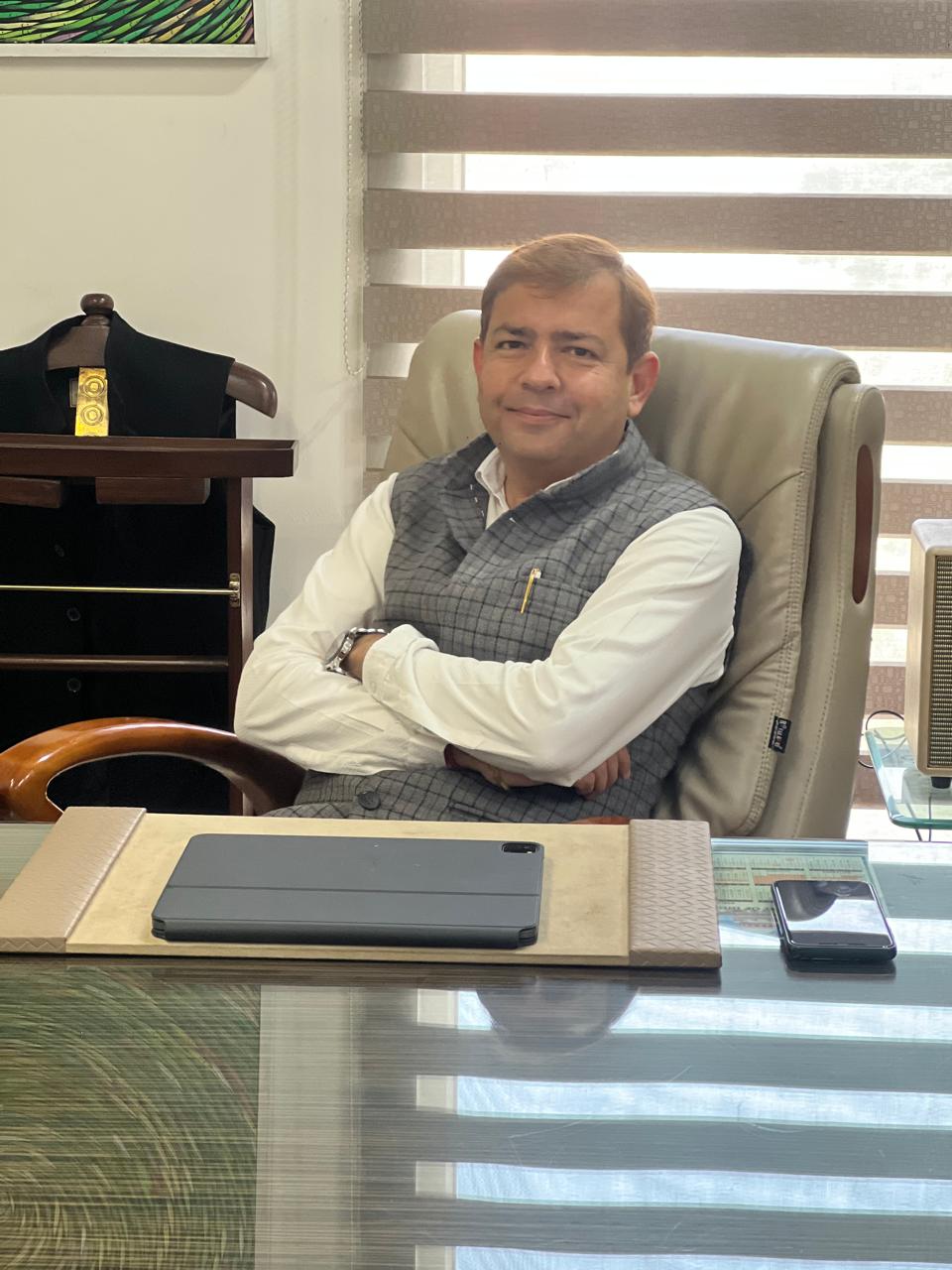
  • “You should be passionate about what you do, spend time learning the craft and use your knowledge to solve problems for your client”- Sourav Bhagat, Partner at Fox & Mandal

    “You should be passionate about what you do, spend time learning the craft and use your knowledge to solve problems for your client”- Sourav Bhagat, Partner at Fox & Mandal

    This Interview has been published by Pragya Chandni and The SuperLawyer Team

    This Interview has been published by Pragya Chandni and The SuperLawyer Team

    Can you tell us what initially sparked your interest in pursuing a career in law, and how that interest developed during your time at The West Bengal National University of Juridical Sciences?

    I belong to a family of lawyers. I was fascinated by this profession from childhood. I was hugely inspired by watching my father practice as a lawyer. He is still a huge inspiration for me. So, from my very childhood, the legal profession was the only thing in my mind as a profession. When I was in class 12, I saw in the newspaper that Professor Menon would set up WBNUJS at Kolkata. I was fortunate enough to sit for the entrance examination and got through. Five years at WBNUJS were the best five years of my life. These are the formative years for any individual. WBNUJS has given me exposure to diverse fields of law and much beyond. My love for law in general grew further in WBNUJS. I got to interact with professors and other students, who played a huge role in my growth and development as a lawyer. WBNUJS taught us the importance of learning basic skills not only in law but also in life.  

    With 19 years of experience in the legal field, you’ve specialized in areas such as dispute resolution, real estate, and corporate advisory. What aspects of these practice areas do you find most fulfilling, and why?

    Each practice area has its own charm. Since litigation was always my first choice, I am a  little bit biased towards dispute resolution. I have gained experience in diverse areas of law due to my interest in studying different laws and use them to solve problems faced by the client. While in real estate and corporate advisory, you are generally restricted to certain aspects / branches of law, in case of dispute resolution, depending on the nature of disputes, one has to deal with diverse laws. Sometimes, we have to study legal provisions which were unknown to us and do research on such laws to prepare an argument for the client. I think the opportunity to learn laws, interpret them and use them to give relief to the client makes dispute resolution the most fulfilling for me. When our hard work in dispute resolution helps our client get the desired relief from the Court, it gives you a sense of satisfaction.      

    Your practice spans multiple industry sectors, including FMCG, construction, healthcare, and education. How has working across these diverse sectors shaped your approach to legal challenges?

    I love and enjoy learning diverse laws. While dealing with these sectors, I not only learn the laws applicable to these industry sectors but also I have to understand their businesses. Diverse experience in multiple industries and multiple practice areas have helped me acquire diverse skills which, in the era of specialization, give me an advantage in dealing with a client, who may face different legal issues.  Working across these diverse sectors have brought me a wider range of perspectives and approaches to problem-solving, which have enabled me to advise my client on diverse issues in a holistic manner. 

    One of your key strengths is effective knowledge management within your team. Can you elaborate on the strategies you use to keep your team updated with changing legal frameworks and ensure they are well-prepared for complex cases?

    I believe that we lawyers remain students of law throughout our life. We keep on learning. We learn from seniors, colleagues, juniors and clients. Once we stop learning, that will be the end of our profession. Thus, constant learning and sharing of knowledge within the team are very important aspects. We, as a law firm, encourage everyone to be updated with changing legal frameworks and share such updates within the team. In addition to usage of e-mails or WhatsApp, we encourage everyone to discuss with each other new updates – new laws, rules, notifications, judgments, amendments etc. during office hours. Such discussions help everyone gain diverse perspectives of law rather than having his own interpretation only. This helps them to apply the law in diverse cases they handle. 

    You have represented schools in West Bengal in matters related to fees charged during COVID-19 and appeared before both the High Court at Calcutta and the Supreme Court of India. How do you approach such sensitive and high-profile cases to ensure the best outcomes for your clients?

    The education sector is very important in nation building, and was severely impacted by Covid. Physical classes had to be stopped and some of the parents suffered financially. On one hand, the schools have a right to carry out their activities – which are dependent on the fees to be collected from the parents and utilizing the same for educating the students and taking care of its teachers, officers, non-teaching staff and other stakeholders. On the other hand, we have to exercise the rights of the student to get an education. There has to be balance between these two interests, which in fact are not conflicting. The schools we represented adapted very quickly and shifted to online classes for the benefit of the students. Considering the hardships faced by some of the parents, the schools had taken the decision to provide various concessions to the students who needed such concessions. We did not approach the litigation in a generic adversarial mode. We understood that given the situation, the judges would have been sympathetic to the interest of the students, because the future of the students was to be considered. Thus, our approach was to ensure that the Courts also understood the rights of the school authorities – the importance of continuation of fees so that interest of teachers, administrative staff, other staff, contractors and all other stakeholders were also protected and it was important for the students themselves that the schools should survive and be able to continue to provide education to its students. Of course, there was some financial losses to the schools initially, but the schools survived Covid and continue to provide education to its students while protecting the interest of the students, teachers and all other stakeholders.  

    You have also been involved in significant corporate transactions, such as private equity investments and business transfers. What are the most critical factors to consider during such transactions to safeguard your clients’ interests?

    Each private equity investment and business transfer is unique in its character. It is very important to understand the business part of the transaction, you can only use your legal expertise in a particular transaction if you understand the business part of it. Due diligence plays an important role in private equity investment and business transfer. If you are on a buyer side / investor side, then identifying the legal risk in the proposed transaction is very critical to safeguard your clients’ interest. You need to explain the risk to your client and advise your client regarding various ways to mitigate the risk – through changing the structure of the deal, through execution of additional documents or through incorporating appropriate clauses in the documents. It is important for the client to make an informed decision. Our job is to identify the risk and advise the client on mitigating the risk; However, sometimes, the client has to take a business call. Legal expertise should be used as a business enabler and not as a deal breaker.  

    Lastly, what advice would you give to fresh law graduates who are just starting their careers and hoping to make a significant impact in the legal profession?

    Every individual is different and each of them must find their own way to make a significant impact in the legal profession. What may have worked for somebody need not work for all. A fresher must find a right path himself which suits him. Of course he may learn from other professionals / seniors, but such learning has to be suitable for him. However, the basic template to have reasonable success in the legal profession is the same as in any other profession. It is hard work, discipline, dedication and finding the right balance. You should keep on learning and have faith in your ability. You should be passionate about what you do, spend time learning the craft and use your knowledge to solve problems for your client. You will definitely get an opportunity in this profession, you have to be ready for such opportunity and if you are prepared to take advantage of such opportunity with your hard work, you will be able to make an impact in the profession. 

    Get in touch with Sourav Bhagat-
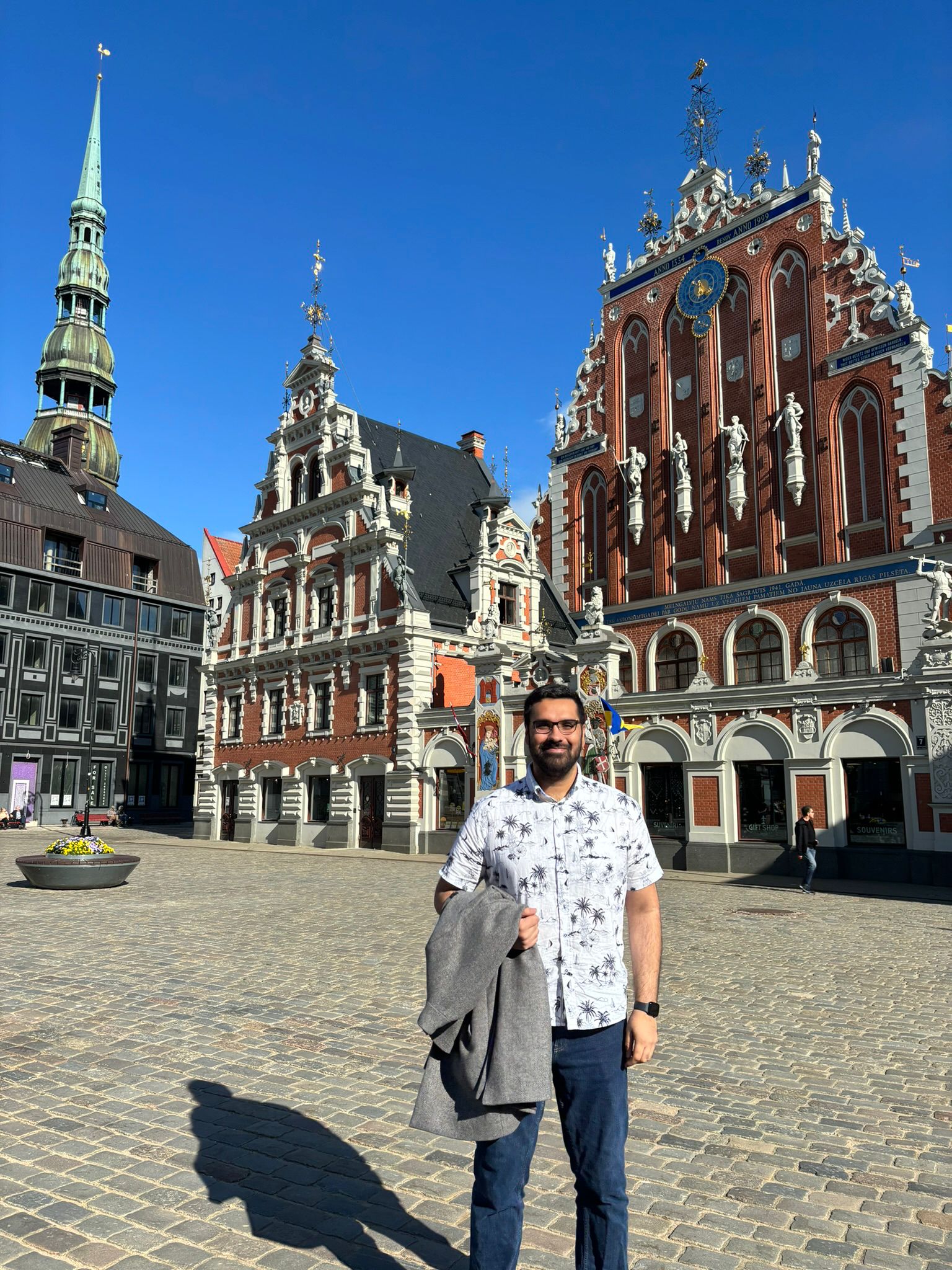
  • “Interdisciplinary approach is the key. Integrating knowledge from various fields enables you to provide innovative and practical solutions.” – Sahib Chadha, Competition Law officer at Competition Bureau Canada.

    “Interdisciplinary approach is the key. Integrating knowledge from various fields enables you to provide innovative and practical solutions.” – Sahib Chadha, Competition Law officer at Competition Bureau Canada.

    This interview has been published by Namrata Singh and The SuperLawyer Team

    Your educational journey has taken you from doing LLB in India to pursuing a Masters in law and economics from the EU. Could you share the motivation behind taking this diverse educational path and how each experience contributed to your growth as a legal professional?

    Through both chance and persistence I have developed interest in economics, particularly the role it plays in shaping law and policy. The practice of law concerns various legal issues which can only be understood by using economic tools and techniques. With the change in the Indian corporate environment, there is a definite demand for a new breed of lawyers who argue in court on the basis of a multi-disciplinary expertise in law, economics, politics, engineering, management and the social sciences. Post my Law degree and after working as a litigating lawyer under the esteemed tutelage of Mr. A.S. Chandhiok (who was then the Adl. Solicitor General of India,) I knew my next step was to choose an interdisciplinary programme. This made me opt for the European Masters in Law and economics where I took up courses like Competition Economics, Regulatory Impact Analysis and Cost Benefit Analysis. 

    The course turned out to be valuable in my journey as a legal professional as it nudged me in the direction of competition law and policy. The intersection of law and Economics helps in rigorous analysis and a better understanding of  competition issues in the market. Conducting efficiency analysis, assessing market power, impact on consumer welfare and even predictive power are a few areas where applying economic principles are very effective. As a result of my educational experience, I had the opportunity to work with some Law firms in the field of Antitrust in areas such as High technology, Standard essential patents (intersection of IP and competition), Fintech, agriculture ,healthcare amongst others. The academic experience also helped develop my writing skills(contributed to a Book on Comparative Competition Law and developed courses for some online education platforms) and oratory skills (enabled me to speak at public forums and conferences including giving guest lectures).

    Your educational journey didn’t stop here. You ended up doing another course in Policy from National University of Singapore. What was your goal behind this? What sort of opportunities can one think of in the field of policy after a course like yours? 

    While working for law firms, I realised that enforcement of law is just one facet. The way laws are made/developed have a drastic impact on how they are implemented in a society. I realised that there was a definite need for a more concrete understanding on how policies are framed, how stakeholders are dealt with and how to make decisions in the varied political setups. This made me attend the policy programme at National University of Singapore. Studying in Singapore, learning how some great policy decisions contributed to Singapore’s journey to becoming this current economic behemoth was an incredible experience. 

    While most of my cohort ended up joining government consultancies or organisations engaging in social policies, I chose a route that helps me fortify my interest and expertise in the field of digital economy. So, I ended up working as a legal and policy consultant to Asia Internet coalition which is an industry association representing policy interests of several technology companies in Asia. Here my role was to advice on technology regulation and policy related issues, promote stakeholder dialogue and sharing comparative best practices. The areas worked on included regulations around Data Privacy/protection, Cloud computing, intermediary liability, Artificial intelligence, e-commerce amongst others. I was fortunate to have gotten this opportunity to solidify my expertise in technology policy. 

    After your stint at AIC, you moved to Canada and started your current role as a law officer at Competition Bureau Canada. could you shed some light on your day-to-day responsibilities and the most rewarding aspects of your work? How do you see your role contributing to the broader landscape of competition law enforcement, especially in the context of evolving technologies and industries?

    I am extremely honoured to have been given this opportunity to work at the Canadian Competition bureau. Having worked on the private side for the better part of my legal career, the moment I was offered a chance to work on the public side, I pounced on it. I currently work for the Mergers and Monopolistic Practices Branch as a legal officer. Here my role includes conducting investigating steps i.e collect evidence to prove theory of harm. For this we conduct market calls, Document review, analyse all material so collected and make submissions to the competition tribunal. For ease of reference, my work is similar to what the Director General of Competition Commission of India does. This work has been extremely rewarding as it puts me in the centre of some of very interesting, contentious competition issues across diverse industries. Furthermore, Canadian competition law has recently gone through extreme changes via 3 rounds of amendments in the last few years. So this was an opportune time for me to witness and contribute to drastic policy changes in action.

    Across the world big tech has seen an upheaval of enforcement actions by several regulators. The Canadian competition bureau too continues to lay a great amount of emphasis on the conduct in the digital space and hence I have had the privilege of being in the centre of some very exciting proactive law and policy  work in this space. 

    How would you describe the differences between studying and working in the legal field in India and abroad? Are there specific aspects of your work that you found particularly enriching or challenging compared to your experiences in India 

    Based on my personal experience, workplaces in India often reflect a blend of traditional hierarchies, respect for authority, and strong emphasis on personal relationships. This can sometimes lead to a slower decision-making process and conflicts amongst colleagues. Which is not the case in places I’ve witnessed abroad, especially in Canada. Foreign workplaces seem to be more egalitarian with flatter organisational structure, hence is more efficiency enhancing and is result oriented. Here at the competition bureau for example, we officers are bestowed with complete responsibility for tasks assigned with minimal intervention from senior management. This helps me garner my leadership skills and gives a sense of accountability to the task assigned. 

    There is an obvious difference I observed in terms of work hours. In Most Indian workplaces I’ve been to long hours and extended workdays are common. Foreign workplaces however lay a lot of emphasis on clear boundaries between work and personal life. But that could also be attributed to differences in organisational setups.

    Your interests extend to areas like behavioural economics and mental health. How do these interests intersect with your legal work, and do you believe they bring a unique perspective to your role as a Law officer?

    During the early days of my masters programme I was exposed to a new discipline which fascinated me. Understanding behavioural economics helps comprehend how individuals and organisations make decisions. In the recent past regulators across the world have seen this as invaluable in legal context to analyse organisational behaviour, compliance with regulations and even strategize negotiations. Even at the Canadian Competition bureau we have a dedicated unit dealing with behavioural insights and how they aid in enforcement and policy work. So my curiosity back in the day has been helpful in my current career activities. 

    With regard to Mental health, it goes without saying that any job or any role requires an individual to be both physically and mentally fit. This is essential at workplace because it underpins well being, supports effective decision making, teamwork and positive work culture. Looking at the importance in the current era, I try to take every step possible to enhance my knowledge in the area hoping to be a good leader and an even better friend/colleague. It is my endeavour to help foster a culture of compassion and support. 

    On a lighter note, outside of your professional life, your interests include travel, playing table tennis, and playing the tabla. How do these activities contribute to your work-life balance, and do you have a favorite destination you’ve traveled to recently

    Engaging in travel and other co curricular activities all contribute uniquely to my work life balance. Growing up my parents always pushed me to do stuff outside of academics. Playing a music instrument, like tabla, is an amazing creative outlet that helps me relax and unwind mentally. Most of my colleagues, especially in India, complain about routine and mundane life. So channeling focus and discipline in an alternate creative activity seems very helpful. Further, Playing table tennis is a great physical activity that helps me stay active and relieve stress. It’s a great social sport where playing with friends or colleagues fosters camaraderie. 

    I am an extremely passionate traveller, having visited more than 40 countries across the world. Traveling allows me to wind down and gain fresh perspectives. Experiencing different cultures, cuisines, and landscapes broadens my horizons and stimulates creativity. It’s a way for me to recharge and return to work with renewed energy and enthusiasm. As for my favorite destination, I have always enjoyed going to Vienna. Weirdly, Vienna was the first city I visited outside of India for a moot court back in 2011. I ended up doing a semester during my masters later and visited Vienna a couple of times as an arbitrator for the vis moot. Recently I visited again for a good friend’s wedding which was beyond magical. The blend of amazing Austro-Hungarian architecture, scenic alps, delicious coffee and cake make it the perfect place for any traveler.   

    Considering your work across several jurisdictions, what advice do you have for aspiring legal professionals looking to make a mark in the field of law and policy?

    For aspiring legal professionals aiming to make a mark in the field interdisciplinary approach is the key. integrating knowledge from various fields such as economics, sociology, or technology with legal principles enables you to provide innovative and practical solutions. I have observed across all levels especially in regulatory fields economists and lawyers tend to think in Silos. It is essential that they work harmoniously in order to address complex issues in the new age. 

    Another aspect I would pay emphasis on is to find the right mentors. Seeking mentorship from experienced professionals can act as a major anchor when it comes to navigating one’s career. have noticed resistance from young individuals in seeking opinion/guidance. I was fortunate to have some really amazing mentors like Mr. A.S.Chandhiok, Justice Pratibha singh, Jeff paine and Max liu who at different points of life have provided my some sound advice not only professionally but personally too. The guidance so provided has helped me make a meaningful impact on my career but also make me a more wholesome human being. 

    Get in touch with Sahib Chadha-

  • “There are quite a few challenges. IP, especially prosecution of applications, has become highly commoditized and almost become a packaged service, with costs being a race to the bottom. A lot of the advice that we see is very vanilla advice without real time being spent to determine what is best for the client’s business needs and goals”- Bharadwaj Jaishankar, Partner, at IndusLaw

    “There are quite a few challenges. IP, especially prosecution of applications, has become highly commoditized and almost become a packaged service, with costs being a race to the bottom. A lot of the advice that we see is very vanilla advice without real time being spent to determine what is best for the client’s business needs and goals”- Bharadwaj Jaishankar, Partner, at IndusLaw

    This Interview has been published by Pragya Chandni and The SuperLawyer Team

    Could you share with us what initially sparked your interest in intellectual property law, and how did you decide to pursue it as a career?

    I was lucky enough to get an internship, in my 4th year of law school, with K&S Partners (a leading IP firm in India). I had dabbled in some IP work in my previous internships, and my interest around brands and how they are protected and commercialized was piqued. However, it was at K&S Partners where this interest really became a passion. Based on my internships at K&S Partners, and the type of IP matters and issues I was exposed to, I was clear that I wanted to build my career within IP. I was fortunate enough to get an opportunity to join K&S Partners upon graduation. In my career so far, I have made it a point to get different perspectives on IP, right from working with boutique IP works to working in house, in an IP role, to now working with a full service firm. This all-round approach and experience, particularly working as an in-house counsel, helps me tremendously in my role at IndusLaw. 

    With your extensive experience across various law firms and organizations, could you highlight a particularly memorable case or project that significantly shaped your understanding of intellectual property law?

    There have been several memorable matters I was lucky enough to be a part of and it will be difficult to pinpoint one specific project. That said, working on geographical indication (GI) matters, for the Government of India and for foreign GI owners, was incredibly important and special. GIs, unlike other IPs, are collective communal rights and require a slightly different mindset. I would also say that my stint as an in-house counsel afforded me some incredible opportunities and moments to learn different facets of IP law, including from a commercial lens. The learnings, as an in-house counsel, and seeing IP from the other side of the fence, was an immense learning experience; something which I cherish a lot. I would also say that working, in the past, and, even now, on matters that intersect with technology and IP has been extremely rewarding with a lot of learning opportunities. 

    Given your role as a visiting faculty at a leading law university and your participation in national and international conferences, how do you approach staying updated with the latest developments and trends in intellectual property?

    The simple answer is that time must be made to read and be in touch with new developments and precedents. It is easy to say that calendars are full and there is no time to read. However, if one really wants to keep up-to-date on new case laws and developments, time needs to be carved out. Especially in IP, where issues can be grey, and oftentimes  case laws can be seemingly conflicting with each other; that effort to read and stay updated is a must. I do ensure that, at least during work days, I try and get about 45 mins to read news and key case law updates. On weekends and holidays, I do take out more time. Additionally, within our team, we have a system of daily news updates, that are relevant to our practice, which are shared every evening, which I ensure I read before logging for the day. Another important aspect is also to speak regularly with your peers, clients and, even foreign counsels, to understand trends and developments. It, therefore, does take a combination of sources, coupled with a dedication and discipline to keep learning and staying updated. I also find that, in interacting with universities and students, one can also learn and stay updated as students are also equally updated with new trends and cases and it, therefore, does become a fantastic two way street.     

    Transitioning from working with leading law firms to being the IP and Innovation Counsel for a global FMCG organization must have been quite a shift. What insights did you gain during this transition, and how did it influence your perspective on intellectual property issues?

    The shift from private practice to an in house counsel was certainly very interesting with a lot of learnings and mindset shifts. A couple of the biggest shifts included learning how to become a commercial enabler and adjusting risk profiles. Being an in-house counsel required me to be a business partner, who was incidentally a lawyer. You get into a position where you can’t present options to other teams and say “choose which works for you”. You have to take a call, and that means collaborating and understanding commercial needs. This stint as an in-house counsel is immensely helpful to me now when I work with clients- the idea being an extended arm of their team or an extended arm to their in-house legal team. More and more, especially in IP, clients require external counsels to help them make a decision, rather than just presenting options. This has been one of the biggest shifts in approach for me- how can I, as an external counsel, help my clients meet their business goals.

    As someone deeply involved in protecting and enforcing IP assets, what are some common challenges you encounter in this field, and how do you typically address them?

    There are quite a few challenges. IP, especially prosecution of applications, has become highly commoditized and almost become a packaged service, with costs being a race to the bottom. A lot of the advice that we see is very vanilla advice without real time being spent to determine what is best for the client’s business needs and goals. We also see clients viewing IP as an expense, rather than as an asset which will mature over time. It isn’t uncommon to see IP being compromised or undervalued at the altar of costs. If India really wants to take advantage of the tremendous innovation and talent currently being seen, IP needs to be viewed maturely and beyond just as an expense outlay. This also calls for clients to be smart about who they engage with for their IP advice and strategy. IP forms the backbone of almost all businesses and it isn’t just about filing an application. A strategic mature approach needs to be brought by external counsels when counselling clients on their IP strategies.    

    With your passion for brand building and extensive experience in advising on brand-related matters, could you share some strategies you find particularly effective in nurturing and safeguarding brands in today’s competitive landscape?

    As mentioned before, taking the time to understand clients, their business and their objectives should form the basis of any IP strategy. There are so many intricacies and nuances, even to something as simple as filing a trade mark application. Fitting the legal strategy into the four walls of business objectives is really important. Another bit is not assuming that external counsels know more than clients or in-house legal teams. It pays to listen more. Part of our job is also to get clients to do some homework as well and get them to look at IP as an asset. For me personally, the focus is on building trust and reliance with the client and getting clients comfortable in our interactions and dealings. Today’s landscape does require a great amount of flexibility and transparency in our approaches. 

    Lastly, drawing from your wealth of experience, what advice would you offer to fresh graduates aspiring to build a career in intellectual property law and commercial law?

    I have a few pieces of advice: 

    1. Be ready to put in the graft in the first few years and avoid having an entitlement approach. The first few years in the profession are particularly taxing and there is no substitute other than hard work and graft. 
    1. Invest time in an organisation and avoid making quick shifts from workplace to workplace. The longer one stays at an organisation, especially the right place and with the right approach and attitude, can offer tremendous growth opportunities down the line. 
    1. Take the time to learn about the practice, the landscape of firms and how IP is viewed by law firms and in-house counsels, and then make an informed choice on how to build a career in IP law. In today’s world, the more you are informed (and the more the prep work), the easier it is to figure out the best path to take. 

    Get in touch with Bharadwaj Jaishankar-

  • “If at all there is something to chase, chase the might of the white-collar bands which signifies being subservient only to God and be fearless and truthful learned counsel. There is much more than money in-store when you are a dignified and respectable officer of the court.” – Shiv Mangal Sharma, Additional Advocate General, Government of Rajasthan

    “If at all there is something to chase, chase the might of the white-collar bands which signifies being subservient only to God and be fearless and truthful learned counsel. There is much more than money in-store when you are a dignified and respectable officer of the court.” – Shiv Mangal Sharma, Additional Advocate General, Government of Rajasthan

    This interview has been published by Namrata Singh and The SuperLawyer Team

    Your journey in the legal profession has been remarkable, from your early days to founding Aura & Co. Could you please allow us to walk through your journey and share how you came to this profession and what challenges you faced during your initial days?

    Walking into the initial days of my legal career drives me a little nostalgic. However, in response to your question, I initially earned my Bachelor of Science (Honors) degree from B.S.A. Degree College and K R Degree College affiliated with the University of Agra in 1996, followed by a Bachelor of Laws (LL.B.) from the Agra University in 1999. Hence, technically my career as a legal professional commenced/ began in the early 2000s. I was admitted as an Advocate to the Bar Council of Delhi in 2000, and by 2003, I was enrolled as an Advocate with the Supreme Court of India. Since the early days of my practice, I started gaining immense recognition for my expertise in handling complex legal issues. As challenges are concerned, like every practicing advocate, I also faced some minute challenges but my dedication and devotion towards the legal profession, and the immense support of my family members gave me a drive to work hard every day and led me towards the path of becoming a successful advocate.

    As the Managing Partner of Aura & Co., you’ve managed to build a comprehensive legal service covering various aspects of law. What inspired you to establish such a diverse legal platform?  

    From the very inception of my career, I had an aim to provide my expertise in the legal field in various dimensions to society. The only vision that I have been carrying is to provide unprejudiced, unbiased, and unsurpassed legal services to my clients in the relevant legal domain. In response to your question the vision behind establishing the firm is that the firm must be chosen for the clients and take that relationship forward by making ourselves deserving enough to be their business advisers and not just legal service providers. Moreover, it is my ideology that the management of the firm should make sure the echelon and efficient functioning of the firm while providing opportunities and avenues for its members to grow and learn. The main aim to establish the firm was to encourage leadership development and transparency between management and its associates.

    Further, the establishment of the firm aims at the Firm to work with clients engaging with legal teams and the wider business to help them in achieving the right commercial outcome. As a result, the Firm aims to support the client’s technology, outsourcing, corporate and commercial needs. The structuring of the firm is intentionally coupled with effective, timely, and practical solutions the factors that are predominant in choosing the firm by the clients. The vision of the Managing Partner follows the vision the firm that is vision is to provide continued excellent and practical timely solutions to the clients.

    Your tenure as Additional Advocate General for the Government of Rajasthan must have provided unique insights. Could you please share some details of this role and the commitments that come with this? How did this experience influence your approach to legal advocacy?

    It is an opportunity for me to be appointed as Additional Advocate General for the Government of Rajasthan and represent the State of Rajasthan before the Supreme Court of India. It is a matter of immense pride that I have got such an opportunity. Being on this post for the past 3 months, I have experienced a veracity of legal arenas and the enlarged scope of working of the State of Rajasthan.

    Given your extensive background in both civil and criminal law and your involvement in law-making and policy advising at high levels, how do you navigate the complexities of cases that involve overlapping legal areas, and how do you envision the role of legal professionals in shaping public policy? 

    Like every legal practitioner, it is my role to navigate the complexities of the cases. As a matter of fact, there is a plethora of cases where there arises overlapping of legal areas, in such a situation me, and my team are inclined towards the providing best services to our clients in an efficient and ethical manner. We as a team make all possible attempts to get our clients the best legal, practical, and workable solutions for our clients.

    How do you foresee the role of international law evolving in India, and what steps is Aura & Co. taking to prepare for this shift while also promoting legal awareness and education among the general public? 

    In my opinion, India has been a significant and influential player in the global arena. It plays a pivotal role in the intricate relationship between international law and diplomacy. With its vast population, rapidly growing economy, and geopolitical influence, India is uniquely positioned to influence and shape the course of international affairs. India’s approach to international law is characterized by a delicate balance between its commitment to principles of sovereignty and non-interference and its recognition of the importance of international legal frameworks in addressing complex global challenges. India’s multifaceted role in global diplomacy and international law is the complexity of the relationship between these two critical components of international relations. As a rising global power, India’s approach to international law and diplomacy continues to evolve, and its engagements will continue to influence the ever-changing ideology of global governance. In doing so, India reinforces the interdependence of diplomacy and international law, illustrating its vital role in shaping the future of international relations and global governance. As the promotion of legal awareness and education among the general public is concerned, we as a law firm with the help of writing articles, research papers, and attending seminars have attempted to convey our thought process in the society concerning the development in international law. Also, Aura & Company with its associated Lawyers, is a law firm that has a strong international presence. The firm currently has an office in the United Kingdom under the name Aura & Company International Ltd. The firm is also in the process of opening offices in Dubai and Canada. In addition to its services, Aura & Company Lawyers’ sister concern, Auraleagueglobal, provides advice and services to clients involved in international litigation. With its expanding global reach, Aura & Company Lawyers is well-positioned to provide support and guidance to clients operating in various parts of the world.

    As one of the premier law firms in India, what qualities do you look for in potential legal interns, and what advice would you offer to students seeking internship opportunities at Aura & Co.? 

    In my opinion internships play a crucial role in our careers. Working at a competent law firm can give a law student a major competitive edge over others. As the qualities are concerned for the potential legal interns, the firm expects the interns to have a desire to learn, be punctual, be hardworking. Being a premier law firm, we provide opportunities to law students from the different areas of the country.

    Reflecting on your extensive experience, are there any cases or achievements that stand out as particularly rewarding or challenging? What made them memorable?  Also, how do you balance the demands of your various roles, from being a Senior Panel Counsel for multiple state governments to managing a premier eLaw Firm?

    As Professional Achievements are concerned I have over 3000 appearances in the Supreme Court of India.  I have been involved in numerous landmark cases reported in various law reports. I have got an opportunity to Work alongside eminent legal professionals including Harish Salve, Mukul Rohatagi, and K.K. Venugopal. I have actively engaged in seminars and conferences related to legal process outsourcing and innovative legal services. Being a legal counsel, the commitment to the cause of providing clients with professional, responsive, and diligent legal support with the degree of excellence and integrity that one expects from legal advisors. The assistance may be in connection with litigation(s) or advisory work pertaining to disputes before all Courts, Tribunals, Commissions, and other various authorities and boards with our extensive team of lawyers and officers having expertise in respective fields. These are certain reasons that helps me to balance the demands of my various roles, from being a Senior Panel Counsel for multiple state governments to managing a premier eLaw Firm.

    Apart from your professional endeavors, what personal hobbies or interests do you pursue to maintain a work-life balance? 

    I am inclined towards learning new languages.

    What advice would you give to young lawyers who aspire to take on roles as significant and varied as yours in their careers?  If at all, there is something to chase, chase the might of the white-collar bands which signifies being subservient only to God (as the ministers of the church in earlier days felt, from whom the robes and the bands are borrowed for the dress code) and be fearless and truthful learned counsel. There is much more than money in-store when you are a dignified and respectable officer of the court. As an advice to the young lawyer, firstly, a legal professional needs to be proactive. The best juniors take the initiative on seeking out problems, solutions and opportunities. They don’t just wait for these to be handed to them by their supervisor / law firms. Secondly, lawyers should take care of the easy stuff. The real value that juniors provide is all the other stuff within our control and skill level (so that the supervisors don’t have to think about it), such as proofreading and formatting; properly naming and saving documents in the right place; and carefully reading through all email attachments / relevant documents sent to us. Thirdly, communication, a lawyer who is good at communication gives an ad-on advantage to progress in this field.

    Get in touch with Shiv Mangal Sharma-

  • “Intellectual property law and data protection law are both ‘future facing’ laws driven by technological advancement and global regulatory challenges”- Sanjukta Venkatesh, AVP – Legal at Godrej Group

    “Intellectual property law and data protection law are both ‘future facing’ laws driven by technological advancement and global regulatory challenges”- Sanjukta Venkatesh, AVP – Legal at Godrej Group

    This Interview has been published by Pragya Chandni and The SuperLawyer Team

    Can you share what initially drew you to pursue a career in law? Was there a particular moment or influence that sparked your interest?

    My decision to pursue a career in law stemmed from my love for books, writing and languages. Mystery, crime and thrillers have always been my favourite genres and continue to be so till date.  Whether it was devouring legal thrillers or reading about real-life cases, I couldn’t help but marvel at how the law shapes our world by helping us unravel clues and arguments to uncover the truth that can make all the difference. Moreover, from a young age I have found myself drawn to the concept of justice and fairness.  The law provides a platform to champion causes, protect the vulnerable, and advocate for change. It offers the opportunity to use analytical skills to solve complex problems, negotiate effectively, and provide counsel that can profoundly impact individuals and communities. It was a combination of all these factors that influenced my decision to pursue law as a career.

    How did your time at West Bengal National University of Juridical Sciences and King’s College London shape your perspective on law and your career path?

    The methodology adopted to teach law at WBNUJS was what made the institution stand out from the other law colleges and the way law was taught in those colleges. We were constantly encouraged to think critically and be intellectually curious. The rigorous coursework challenged us to delve into the complexities of legal theory and practice, and every class was a stepping stone towards a deeper appreciation for the nuances of law. Beyond the classroom, we were provided exciting opportunities for practical learning through internships at prestigious law firms and with eminent legal practitioners, which allowed us to apply theoretical knowledge to real world scenarios. These opportunities enabled us to decide on our areas of interest and work towards forging a career path accordingly upon graduation. 

    The diverse and inclusive community at King’s College London enriched my perspective on law. Interacting with students from various backgrounds and cultures exposed me to different legal traditions and societal norms, broadening my worldview and giving me useful insights into the importance of cultural competence in legal practice. The course that I was specialising in (Intellectual Property Law) was administered through engaging lectures, case studies, and discussions led by esteemed faculty members and industry experts, I gained a deep understanding of the legal frameworks and complexities surrounding IP law.  Beyond the classroom, King’s College offered unique networking opportunities with professionals in the field. Seminars, and alumni events connected me with practitioners who shared their insights and experiences, and provided me with a holistic perspective of the subject as well as the potential career opportunities therein. 

    What were some key takeaways from your early roles at Paras Kuhad & Associates and Khaitan & Co. that helped shape your legal career?

    My early roles at these law firms provided me with key insights and foundational lessons essential to my development as a legal professional. It taught me the importance of time management, prioritisation of work and multi-tasking, attention to detail and meticulousness. I also learnt important lessons in humility, team work, collaboration and acceptance of my strengths and weaknesses.  These skills not only enhanced my ability to analyze complex legal issues but also instilled a disciplined approach to problem-solving.  Furthermore, interacting with clients during my early career taught me the importance of client service and relationship-building, as well as understanding their needs and tailoring legal solutions that align with their objectives. 

    How did your transition from law firms to corporate roles, starting with ITC Limited, impact your approach to legal practice and compliance?

    While working in law firms provided me with a solid foundation in legal knowledge, rigorous training in analytical thinking, and exposure to diverse areas of law, moving in-house brought about a refreshing change in focus, where I was now on the other side of the fence and was immersing myself in the strategic and operational aspects of a specific company or organization. Rather than advising multiple clients on various matters, I now had the opportunity to align closely with the business’s objectives, understand its industry dynamics, and contribute directly to its success.  One of the most rewarding aspects of in-house practice is the opportunity to work closely with internal stakeholders, including executives, managers, and employees across different departments. This has taught me to think multi-dimensionally and has sharpened my ability to balance legal considerations with practical business realities. I am continuously challenged to find innovative solutions that not only comply with legal requirements but also align with the company’s strategic goals and values. This holistic approach to problem-solving has expanded my skill set and broadened my perspective in numerous exciting ways. 

    Can you describe some of the challenges and successes you experienced as the Regional Legal Counsel at Unilever, particularly in the fast-paced FMCG sector?

    One of the primary challenges I faced in my role as Regional Legal Counsel was navigating complexities across various operations in the FMCG sector. Each of these sectors have their own legal requirements, and understanding and complying with regulations while ensuring consistency in legal advice across the region required a meticulous approach and proactive communication with local teams. Another significant challenge has been managing legal risks in a rapidly evolving industry. From product compliance to advertising standards, litigation management and supply chain issues, staying ahead of regulatory changes and industry trends is essential. Implementing robust risk management strategies and providing timely guidance to stakeholders have been challenging in order to ensure operational continuity and safeguarding the Company’s reputation. 

    The successes in my role have also been significant. Some noteworthy ones would be successfully defending crucial litigation, significantly reducing overall litigation numbers in the region. actively working on anti-counterfeiting strategies, negotiating favorable commercial agreements, and resolving disputes through alternative dispute resolution mechanisms.  Furthermore, implementing compliance programs and training initiatives across the region to promote a culture of ethics and legal compliance has been rewarding.

    Given your specialty in Intellectual Property Law and recent certification in Data Protection, how do you see these areas evolving, and what excites you about these fields?

    Intellectual property law and data protection law are both ‘future facing’ laws driven by technological advancement and global regulatory challenges. Intellectual property law is an ever evolving landscape. Advances in technology, particularly in areas like artificial intelligence (AI), machine learning, and biotechnology, are challenging traditional IP frameworks. Issues such as patentability of AI-generated inventions and ownership of AI-generated works are becoming increasingly complex.  With businesses operating on a global scale, harmonization of IP laws across jurisdictions is a growing trend. The rise of digital platforms and online streaming services has led to new challenges in copyright protection. These developments reflect evolving consumer behaviors and industry demands and is an exciting area to be involved in, keeping in mind the role of an in-house counsel in protecting business interests. 

    Data protection law has also seen some key changes and developments, particularly in the Indian legislative context.  The new regulations impose strict obligations on organizations handling personal data, including enhanced consent requirements and data subject rights. Mandatory data breach notification requirements have been introduced in many jurisdictions to enhance transparency and accountability in data processing practices. Organizations are now required to promptly notify authorities and affected individuals in the event of a data breach, underscoring the need for robust cybersecurity measures.  Data protection authorities are increasingly proactive in enforcing compliance with data protection laws, imposing significant fines and penalties for non-compliance.

    In summary, both intellectual property law and data protection law are constantly evolving to address the complexities of a digital age. Staying abreast of these evolving landscapes is crucial for businesses, legal practitioners, and policymakers alike to navigate compliance challenges and deal with a rapidly changing legal environment.  

    What are your primary responsibilities as the AVP – Legal at Godrej Group, and how are you applying your previous experiences to this new role?

    My present role at Godrej Group involves handling areas such as legal compliance and risk management, risk assessment, contract management, policy development, environment and sustainability compliance, legal training and awareness, supporting strategic initiatives and enhancing corporate governance. My previous experiences in the FMCG sector have proved to be invaluable from the perspective of having equipped me with a unique blend of industry-specific knowledge, practical skills, and strategic insights that are crucial for effectively managing the legal aspects of an FMCG business. This has also proved to be useful in advising and managing the other businesses which are also part of my role as AVP Legal. 

    Finally, what advice would you give to fresh law graduates who are just starting their careers in the legal field?

    The focus should be on the following areas: a) Focus on basic concepts and constantly staying informed about changes b) Develop proficiency in research and writing c) Always look for opportunities to network and gain practical insights on the industry as a whole d) explore different areas of law and identify your interests before choosing to specialise e) plan your career path and set long and short term goals for yourself. 

    Get in touch with Sanjukta Venkatesh-

  • “Environmental law is a growing field with a broad scope of work encompassing issues related to Pollution Control, Protection of Natural Resources, Waste Management, and Wildlife Protection, etc.”- S S Rai, Senior Manager -Legal, Goods and Services Tax Network

    “Environmental law is a growing field with a broad scope of work encompassing issues related to Pollution Control, Protection of Natural Resources, Waste Management, and Wildlife Protection, etc.”- S S Rai, Senior Manager -Legal, Goods and Services Tax Network

    This Interview has been published by Pragya Chandni and The SuperLawyer Team

    Your journey into law is quite remarkable. Can you share with us what initially inspired you to pursue a career in law?

    Honestly speaking I entered the legal profession not by design, but destiny took me to this profession. Initially, I was quite skeptical and had a lot of hesitation but with time I recognized its worth and started enjoying my profession and the rest is history. I believe that Law colleges play a pivotal role in shaping your career interest and I owe a lot to my alma mater i.e. Faculty of Law, University of Delhi where from day one I got exposure to real case law study with the flair of litigation. Moreover, I feel lucky to have had a great mentor during my juniorship in Delhi High Court for the initial period of struggle who not only mentored me but supported me at every tough phase in my professional journey.

    With your extensive experience in litigation management, can you tell us about some of the most challenging cases you’ve handled and what you learned from them?

    I have dealt with several high-stake writ petitions including PILs filed against the Union of India wherein particular provisions of a Government /State’s Guidelines/ Office Memorandum/ Subordinate legislations etc. are challenged being ultra-vires to the Constitution of India, in addition to seeking interim stay in the matter. Such kinds of cases are very sensitive and require prompt action and timely briefing from the respective department to protect the interest and avoid any adverse order from the Hon’ble Court. Managing the aforesaid crisis is a bit of a challenging task keeping in view the limited time frame, however, having access to the department’s key personnel getting inputs and a good understanding of the court’s craft has helped me deal with such situations.

    You’ve worked on a wide range of legal matters, from Constitutional law to Intellectual Property Rights. Which area of law do you find the most intriguing and why?

    I found Constitutional law most intriguing because it encompasses everything, and all rights and respective duties of Citizens as well as States originate from it. Moreover, I have a very strong affinity for other areas of law including Administrative Law, Service Matters, Corporate Law, GST Law, Intellectual Property Rights, and Data Privacy law.

    Drafting and reviewing complex legal documents like MOUs, NDAs, and contracts require great attention to detail. What strategies do you employ to ensure accuracy and compliance in your work?

    In the corporate legal world drafting and reviewing legal documents including MOUs, NDAs, and Contract hold a very specific importance that not only requires an understanding of the genesis of the transactions based on such documents but also an in-depth knowledge of various branches of laws operating behind such transactions, viz; Contract law, Arbitration, IPR, Data Privacy law in addition to the general provisions of laws dealing with jurisdiction, etc. So far as my approach to dealing with the task above, I believe in the popular proverb ‘two heads are better than one’ which insists on adopting a ‘Four Eyes Principle’ for accuracy in addition to thoroughly checking every clause in line with organizational goals as well.

    Your profile mentions your interest in the Environment, Health Issues, and Data Privacy Law. How do you see these areas evolving in the coming years, and what role do you hope to play in their development?

    Environmental law is a growing field with a broad scope of work encompassing issues related to Pollution Control, Protection of Natural Resources, Waste Management, and Wildlife Protection, etc. Global Warming and Climate change have already taken Centre stage on the world canvas requiring multilateral cooperation amongst the various stakeholders.  Moreover, Health Law in India is yet to be fully explored keeping in view the current state of the health sector in India. Article 47 of the Constitution of India’s Directive Principles imposes the duty on the state to raise the levels of nutrition and the standard of living and to improve public health as among its primary duties. Nevertheless, people are facing numerous health challenges in India which requires well-crafted policy implementation and trained legal professionals to realize the goal enshrined under the Constitution of India. So far as the Data Privacy law is concerned, it is still in its nascent stage in India, nevertheless, in the age of digital and technological advancement striking a balance between organizational goals and ensuring privacy parameters poses a great challenge and fresh opportunity as well. I’m eager to see the full-fledged exploration of potential outcomes impacting the common man’s life in the coming years and have already contributed through my research article etc. spreading awareness in my professional arena.

    Managing litigation for various entities, including government departments, can be quite demanding. How do you balance the high-pressure environment while maintaining your strong work ethics and integrity?

    Managing litigation for Government departments demands specific skill sets and an understanding of the Government’s points of view. A single order or direction against the departments can impact the functioning of the Govt. and sometimes open a Pandora’s box, if not properly defended proactively, considering the high stakes involved. Strong work ethics and integrity are the hallmarks of the legal profession, and the same applies to a person defending the Government’s interest, therefore, every legal professional must strive to act with a high level of professionalism and integrity. Being in the Legal profession for more than a decade I always acted keeping in view the aforesaid principles in all challenging situations.

    You’ve authored several legal research papers and presented at international conferences. How do you think your research has influenced your professional practice and the broader legal community?

    Well, research is a part and parcel of the legal profession wherein one is used to search for case precedence on particular facts and issues. However, researching beyond the court’s case precedence and striving to explore something that is neither being explored nor any precedence is available makes a difference in the long run. Many a time such kind of research may prove a deciding factor in deciding a case or formulating new policy guidelines to be implemented. Some of my research articles have been cited by other researchers to supplement their case/hypothesis thereby broadening the knowledge base. However, such kind of research requires new-age tools and techniques to justify your hypothesis with good analysis of data to come up with plausible solutions to the research problem. Moreover, for me, presenting and publishing a research article/paper at an international conference/ Journal helps me in aiding new insight to many subjects and new thoughts for legal exploration. It offers good networking with peers’ researchers and academia that is an added advantage.

    Outside of your legal practice, what personal hobbies or interests do you pursue, and how do they help you maintain a work-life balance? 

    Outside my legal practice, I love reading good literature, which serves as food for my thoughts. Moreover, I’m very much involved in writing and my latest book “Witnessing the Sacred: Powerful Affirmations for Eternal Happiness and Success, occupies a place of prominence as Amazon Bestseller (https://amzn.in/d/hNPzUgg). I routinely appear as a key Speaker in panel discussions on contemporary socio-legal issues. Additionally, I served as an expert assessor, judging national-level Moot Court and Negotiation Competitions organized by leading Law Schools in India.

    What is your stake in the National Litigation Policy (NLP) that has now been finalized by the Law Ministry?

    The National Litigation Policy (NLP) has been pitched as a major reform aimed at streamlining government litigation. As per the data available on the National Judicial Data Grid, more than 4.48 crore cases are pending in various courts, with the government and its agencies being the main litigants in various courts and tribunals across the country. This reform was much needed, and the judiciary has also emphasized the need for such a policy dealing with the high pendency of litigation. The Hon’ble Supreme Court in Chief Conservator of Forests Govt. of A.P. Vs. Collectors and Ors. 2003 (3) SCC 472 held that the States/Union of India must evolve a mechanism to set at rest all inter-departmental controversies at the level of the Government and such matters should not be carried to a court of law for resolution of the controversy. The Law Commission in its 126th Report, has also stressed the importance of a litigation policy to avoid litigation or reduce it thereby alleviating the burden on the court system. The finalization of NLP at the Ministry level is a welcome step, and I hope its implementation (post approval from the cabinet) will transform the Government into an efficient litigant whose primary responsibility is to protect the rights of citizens.

    Finally, what advice would you give to fresh law graduates who are just starting their careers and aspire to have a successful career like yours?

    The legal profession is a noble profession among all, and it offers numerous opportunities compared to any other profession in the world since it is not just limited to Advocacy or Judgeship. A law graduate has options to make his/her career in the Legal and Compliance Department of PSUs/Government Department /Private Companies/Bank/, NGOs/ International Organizations, and Academics. However, for all the fresh law graduates who are just starting their careers in litigation practice, I would advise being mentally prepared for tough terrain in the beginning. It requires a lot of hard work under intense pressure to perform. Nevertheless, with time, their hard work will pay off not only in terms of money but also in knowledge. However, for all the students aspiring to have a career in the legal field, I must emphasize the importance of choosing your Law College wisely since it plays a very crucial role and can have a lasting impact on your legal career.

    Above all, I would like to say that legal knowledge not only empowers individuals by making them aware of their rights and duties, but it also provides for seeing society differently. A public-spirited lawyer can make a phenomenal impact on society by advocating for the social and economic rights of the people, as the fundamental ethos of the legal profession is the service to society.

    Get in touch wit S S Rai-

  • “Change starts with individuals who challenge the status quo and advocate for justice. Building alliances and understanding cultural nuances are key to addressing global human rights issues,” – Dr. Anthony Raju, Advocate at Supreme Court of India & Chairman of Indian National Human Rights Protection Council

    “Change starts with individuals who challenge the status quo and advocate for justice. Building alliances and understanding cultural nuances are key to addressing global human rights issues,” – Dr. Anthony Raju, Advocate at Supreme Court of India & Chairman of Indian National Human Rights Protection Council

    This interview has been published by Namrata Singh and The SuperLawyer Team

    Dr. Anthony, with such an impressive and diverse list of roles – Advocate, Human Rights Activist, TEDx Speaker, and more – could you share with our readers a bit about the journey that led you to wear so many hats?

    My journey began in a very humble setting in Meerut, Uttar Pradesh. Growing up in a poor family, I had to work from a young age, selling newspapers and working in small shops to support my family while pursuing my education. This early exposure to hardship instilled in me a deep sense of empathy and a desire to fight for justice. My legal education and subsequent practice as an advocate opened up avenues for me to address issues I deeply care about, such as human rights and social justice. Over time, my roles expanded naturally as I found myself addressing these issues in various capacities – be it as a lawyer, activist, or speaker. Each role complements the other, enabling me to make a broader impact.

    Juggling between being a lawyer, human rights activist, and so much more must be quite a feat. How do you maintain a balance between your legal profession and your various social and humanitarian roles?

    It indeed requires a delicate balance, but the key lies in passion and prioritization. My legal profession and humanitarian roles are interconnected, as both strive towards the common goal of justice and human dignity. I allocate specific times for my legal practice, social work, and speaking engagements, ensuring that each receives the attention it deserves. Effective time management and a dedicated team also play crucial roles in helping me manage these diverse responsibilities without compromising on any.

    Your dedication to human rights is evident not only in your professional life but also through your social work in tribal and underprivileged areas. What motivates you to spend a significant amount of your time in these communities, both nationally and internationally?

    The motivation stems from my early life experiences and the realization of the stark inequalities that exist in our society. Spending time in tribal and underprivileged areas allows me to directly engage with and understand the challenges faced by these communities. It’s one thing to advocate for human rights from a distance, but it’s entirely different to be on the ground, witnessing the struggles and triumphs of the people. This direct engagement fuels my passion and commitment to making a tangible difference in their lives.

    As a dynamic criminal advocate and human rights ambassador, you’ve spoken at TEDx. Can you share a moment in your career that you consider a turning point or a particularly proud achievement?

    One significant turning point was when I founded the All India Council of Human Rights, Liberties & Social Justice (AICHLS). This platform has allowed me to channel my efforts more systematically and mobilize support for various human rights causes. Another proud moment was speaking at TEDx, where I could share my journey and inspire others to join the fight for justice and equality. Receiving the “International Human Rights Awards” and honorary doctorates were also affirmations of the impact of my work and further motivated me to continue my advocacy.

    You’ve been recognized with several awards, including honorary doctorates and the “International Human Rights Awards.” How do such accolades fuel your commitment to the causes you champion?

    These accolades serve as important validations of the work being done and the causes being championed. They bring attention to critical human rights issues and inspire others to join the movement. For me, these recognitions are not just honors but also reminders of the responsibilities that come with them. They reinforce my commitment to continue advocating for those who cannot speak for themselves and to push for systemic changes that uphold human dignity and justice.

    In addition to your legal practice, you founded the International Human Rights Advisory Council. Can you tell us more about the council’s mission and some of the key initiatives it has undertaken?

    The International Human Rights Advisory Council aims to promote and protect human rights globally through education, advocacy, and direct intervention. One of our key initiatives is providing free legal aid to marginalized communities, ensuring they have access to justice. We also run awareness campaigns on issues such as child rights, women’s rights, and the right to education. Additionally, we collaborate with other organizations to address human trafficking and violence against women. Our mission is to create a world where every individual can live with dignity and freedom.

    How has your venture, Legal and Legal Associates, made a significant difference in people’s lives by providing free legal aid, intersected with your role as a criminal lawyer, and can you share a challenging or interesting case where your dedication and skills played a crucial role in securing justice?

    Legal and Legal Associates has been instrumental in providing free legal aid to those who cannot afford it, ensuring that justice is accessible to all. One particularly challenging case involved a group of tribal women who were falsely accused of theft. My team and I worked tirelessly to gather evidence, advocate for their rights, and eventually secure their acquittal. This case highlighted the intersection of my roles as a criminal lawyer and human rights activist, demonstrating the impact of dedicated legal advocacy in protecting the vulnerable.

    How does your commitment to fostering understanding through the World Inter-Faith Council for Peace & Human Rights align with your initiatives like “Giving with Compassion,” and how do you envision the intersection of human rights and interfaith dialogue inspiring individuals to contribute to social causes on an individual level for a more peaceful world?

    The World Inter-Faith Council for Peace & Human Rights and “Giving with Compassion” both stem from the belief that understanding and empathy are crucial for social harmony. Interfaith dialogue promotes respect for diverse beliefs and fosters a sense of shared humanity. By encouraging individuals to look beyond their differences and unite for common causes, we can inspire them to contribute to social justice initiatives. The intersection of human rights and interfaith dialogue is powerful because it not only addresses legal and social issues but also nurtures the moral and ethical dimensions of peace and justice.

    How has your journey as a change maker shaped your approach to navigating the complexities of international relations as a diplomat and advocate, all while realizing the profound impact that an individual can have on society?

    My journey has taught me that change starts with individuals who are willing to challenge the status quo and advocate for justice. As a diplomat and advocate, I approach international relations with a focus on collaboration and mutual respect. Understanding cultural nuances and building alliances are key to addressing global human rights issues. Realizing the impact one individual can have inspired me to continue pushing for systemic changes and mobilizing others to join the cause. It’s about creating ripples that lead to broader societal transformations.

    On a more personal note, can you share a hobby or interest that you turn to for relaxation and rejuvenation amidst your busy schedule? How does it complement your work-life balance?

    I find solace in reading and meditation. Reading allows me to explore new perspectives and ideas, which is essential for my work as an advocate and speaker. Meditation helps me maintain mental clarity and emotional balance, enabling me to handle the various demands of my roles effectively. These hobbies provide me with the necessary downtime to recharge and stay focused on my mission.

    Aside from your professional endeavors, we’ve heard that you are involved in teaching and training. What advice do you have for aspiring advocates and human rights activists entering the field today?

    My advice to aspiring advocates and human rights activists is to stay committed to the cause, no matter how challenging it may seem. Dedication, hard work, and perseverance are crucial. Always remain empathetic and understand the struggles of those you are advocating for. Continuous learning and staying informed about legal and social issues will equip you to be effective in your efforts. Lastly, never underestimate the power of collaboration and building networks, as collective action can amplify your impact.

    Ge in touch with Dr. Anthony Raju–

  • “The law is not static; it evolves over time through amendments and the introduction of new legislation to reflect changing moral and societal values”- Ashima Mandla, Partner at Mandla & Singh Law Chambers

    “The law is not static; it evolves over time through amendments and the introduction of new legislation to reflect changing moral and societal values”- Ashima Mandla, Partner at Mandla & Singh Law Chambers

    This Interview has been published by Pragya Chandni and The SuperLawyer Team

    Can you share a bit about your journey into the field of law? What inspired you to pursue this career path?

    When I was in school, I was rather drawn to the criminal justice system, whether it was from what was covered in the news in then ongoing cases, criminal novels and shows which piqued my interest. Thereafter, I did my graduation in Psychology Honors from LSR, where my primary field of study was abnormal psychology, being intertwined with criminal laws. Even though during the first year of LL.B, like most of us, I was also equally attracted to the Corporate side and ended up interning for 6 months at Trilegal, the first day I set foot inside the Apex Court while interning with Mr. K.T.S. Tulsi sir, all my aspirations in this field shifted and I knew I wanted to practice criminal laws. 

    As a Partner at Mandla & Singh Law Chambers, what are some of the most rewarding aspects of your work?

    In litigation, mostly everyone aspires to go independent someday and establish their own practice. For me, that juncture came a little earlier than expected and Mandakini Singh, (my senior associate from the Chambers of Tulsi sir) and I started this litigation chamber in 2018. Undoubtedly, it takes significant time and effort to get your independent practice off the ground, especially being first-generation lawyers, but then there were many seniors who were exceptionally kind to us to offer support and even refer work. The most rewarding aspect in running your own practice is the opportunity to not only build cases by formation of a narrative but also to oversee the outcome. It gives you a platform and opportunity to understand your shortcomings and actively work towards growth. 

    Your involvement in drafting legislation such as the Criminal Law Amendment Bill, 2019, reflects a deep commitment to legal reform. What drives your passion for advocating for change within the legal system?

    The law is not static; it evolves over time through amendments and the introduction of new legislation to reflect changing moral and societal values. As our worldview and perceptions shift, so do the nuances of the legal system. Every judgment that explains or expands the scope of any section or act is an active step toward changing the limits and understanding of the legal system. Law and society are intertwined, each contributing to shifting the perspective of the other.

    Could you tell us about a particularly challenging case you’ve worked on and how you navigated through it?

    The most challenging case has been the Tablighi Jamaat case. There were 955 foreigner nationals from 48 countries which were detained for 2 months and when the Habaes Corpus case was preferred before the High Court of Delhi for their release, overnight chargesheets were filed against the foreigners. Even though there was not a single medical report which was placed on record in the chargesheet showing anyone as Covid-19 positive, yet the narrative in the media was running contrary to the evidence on record, which also colored the public perception. The impact and perception of media trials, particularly in sensitive and high-profile cases was highlighted. Media trials can lead to premature judgments and public opinion that may not align with the legal proceedings and the principle of “innocent until proven guilty.”  Furthermore, 2 months into the litigation, it surfaced that there were second FIRs against the foreign nationals and those who were repatriated on humanitarian grounds of plea bargaining after depositing costs to an extent of Rs. 52L to the Government, they were once again estopped from returning to their homes. It led to an arduous and protracted litigation” of 150 hearings, 955 bail applications, 5 writs, 44 discharge applications, 26 quashing petitions, 80 revision petitions, 15 hearings before the Supreme Court and then a trial in a Delhi court over 9 months. Even though there was not a single conviction in Delhi as even all the foreigners who chose to contest the charges in the trial were acquitted, this case was unprecedented under the unforeseen circumstances across the globe.

    The other case, which was recently viewed as a landmark judgment in Pavana Dibbur v. Directorate of Enforcement.,2023 SCC OnLine SC 1586 wherein the Hon’ble Apex Court was pleased to quash the complaint u/s 44/45 of the PML Act, 2002 (akin to chargesheet) on the ground that s. 120-B IPC can be invoked only in reference to a predicate scheduled offence, was rather challenging as a case, as there were no authorities on this issue and all judgments of the Apex Court as well as various High Courts were ambiguous. The coming of this judgment reinforced the confidence that one can build arguments from bare reading of provisions and interpretation of statutes even if there are no judicial precedents precisely on the issue. Needless to say, it would not have been possible without the fierce and structured arguments led by Senior Advocate Meenakshi Arora ma’am.

    Your achievements in both academia and extracurricular activities are impressive. How do you balance your professional responsibilities with your personal interests and commitments?

    I believe that lawyers led stressful lives as is, which makes it imperative to have interests outside of work, to balance out. More often than not, the demands of every day work and deadlines puts personal lives at the backseat. I personally make it a point to travel, even if it is a short trip, whenever the opportunity presents itself. It gives you something to look forward to as well. Apart from that, there are many tournaments organized by various Bar Associations, which are an amazing way to break the ice, forge better bonds with your peers and seniors. 

    Being an Advocate-on-Record before the Supreme Court is a significant achievement. How did you prepare for and approach the examination, especially achieving such a high rank on your first attempt?

    I had started my career at the Apex Court as a junior, so I was always enchanted and inspired to become an Advocate-on-Record before the Apex Court. Truly, with running my own practice, I was able to only devote 20-25 days of study towards the examination and managed to secure a Rank #4. However, the fact that a lot of the concepts tested in this examination especially in the papers of Practice and Procedure as well as Drafting have nexus with everyday practice before the Apex Court, having practiced for 5 years, in terms of drafting, filing and arguments, before appearing in this examination made those papers fairly easy to prepare for. 

    As for the other two papers namely Leading Case and Advocacy and Professional Ethics, most of those cases were a part of the curriculum in college and hence were formative concepts which are widely referred to and relied upon across a spate of judgments and thus, if the basic concepts in law are clear, the examination is not all that tough. Therefore, the syllabus ought to not be viewed as something one can mug up for the examination, but if you truly read the judgments in its entirety, you will benefit in your practice as it will enhance your concepts and knowledge base, with concepts or sub-concepts which were perhaps not completely understood during college.

    With your experience in criminal defense litigation, what do you find to be the most common misconceptions people have about this area of law?

    It is no surprise that the salary for freshers in litigation is not comparable to the corporate sector, which has been a driving factor for an increased number of graduates preferring the latter. However, criminal defence litigation is far more rewarding in all aspects as compared to the corporate sector. Furthermore, another misconception is that criminal defence litigation is not for women, and for most of us, even our families are not comfortable with the thought of women visiting jails, police stations and lower courts. We have legal stalwarts such as Senior Advocates Ms. Meenakshi Arora ma’am, Ms. Indira Jaisingh ma’am, Ms. Rebecca John ma’am, Ms. Shobha Gupta ma’am, who are not just counted as the best female advocates, but in the list of the best advocates.  Therefore, the field is not an old boys club. 

    As someone who has accomplished a lot in their legal career, what advice would you give to recent law graduates who are just starting out in the field?

    Be patient, zealous and persevere. Law demands layers of intricate knowledge which is gathered across a spectrum of fields over a period of time. There are essentially no shortcuts to success and the only way to conjointly sustain and grow is through day-to-day perseverance. The skill-set which needs to be developed in this profession to stand out, are built over years of backbreaking work. Join offices which teach you work, develop your skills and offer you opportunity to grow. 

    Get in touch with Ashima Mandla-

  • “Life is what happens to you when you are busy making other plans” – From Medicine to Mastery in Law: Rajvendra Sarswat, Independent practitioner & Senior Standing Counsel for Union of India

    “Life is what happens to you when you are busy making other plans” – From Medicine to Mastery in Law: Rajvendra Sarswat, Independent practitioner & Senior Standing Counsel for Union of India

    This interview has been published by Namrata Singh and The SuperLawyer Team

    Could you please help our readers get to know you better by sharing how you came into the field of law? We’d love to hear about your journey, who inspired you to join the legal profession, and the challenges you faced initially.  

    Many of us will agree that growing up in the nineties, there used to be primarily two career choices every student had to make at a certain stage, either medicals or engineering, and similarly I was also in the same mainstream preparing to be a doctor someday. Law was surprisingly introduced to me by my brother which intrigued me when I explored more about it as a profession. As I always believe in the quote that ‘life is what happens to you when you are busy making other plans’. I joined National Law University, Jodhpur as its first batch student and graduated in the year 2006 with Corporate Law Honors in B.B.A. LL.B. and thereafter joined Kanga & Company, Mumbai and also worked with Majmudar & Partners, Mumbai till close to 2011 end. While working with these firms it was purely general corporate, M&A and PE transactional work with almost negligible work related to litigation and the learning I received from both these places left a significant impression in my approach towards work. My initial years into litigation were very challenging and every new case I got was accepted as a blessing. I was appointed as amicus curiae or Court commissioner in many Public Interest Litigations during my initial years which gave me the opportunity to appear regularly before the court and to make myself relevant. I was always open to any area of law and focused myself to take each case as the most important and crucial for me for building myself as a litigation lawyer.   

    As Senior Standing Counsel for Union of India, GST, Central Excise / Customs, what are the key challenges you face in representing such a broad spectrum of governmental interests?

    The most fascinating part of representing tax department in the High Court is that mostly the controversies involved are interpretational issues where constitutional validity is under question and having serious implications wherein invariably I get the chance to argue against the best and top tax lawyers of the country, which I believe is a valuable learning experience for me. As we know that the Goods and Service Tax law is new and evolving so many issues are nascent and completely innovative in its challenge which is a constant learning experience. One has to keep in mind the complexity of Laws, diverse stakes, managing the litigation coupled with the factor in change in the policy. However, balancing the government’s interests with the broader public interest can be a delicate task. Ensuring that legal actions align with public expectations and serve the overall welfare of the society is important. Navigating these challenges requires a deep understanding of legal intricacies, effective communication skills, strategic thinking, and the ability to adapt to dynamic legal landscapes.

    We want to understand how different the study of law is compared to the practice of law. What was the most challenging aspect of transitioning from academic learning to actual legal practice?  

    What we study in law school is a very fundamental yet primitive part of law. The actual application and understating of the practical aspects of law comes only when we enter in the profession. As a first generation lawyer, the journey is altogether different and difficult because you inherit nothing and have to build everything from scratch but the good part is that you have an empty canvas and you are the artist. A fresh law school graduate who wishes to enter into litigation should always start with fundamental and practical aspects including the process of filing or curing of defects therefore I also advise to start from trial courts for at least two years before practicing in higher forums. Nowadays it’s good to see that law schools are also focusing on practical learning aspects other than just theoretical teaching. Applying legal principles to real cases, clients, and situations requires a different skill set than memorizing legal theories. In academia, the emphasis is often on analysing case law and statutes. However, in practice, building strong client relationships, effective communication, and understanding client needs become crucial. Developing these interpersonal skills can be challenging for some. In a practical legal environment, time management becomes critical. Meeting deadlines, handling multiple cases simultaneously, and managing client expectations require efficient time management skills that may not be as emphasized in academic settings. And, most importantly grappling with ethical dilemmas, maintaining client confidentiality, and upholding professional conduct standards are integral parts of legal practice that go beyond academic discussions of legal ethics. I also happen to be a guest faculty at a few law universities. I also give lectures at many intuitions and this helps me keep my own learning in the game.     

    How do you approach the complexities of constitutional writs compared to other types of legal matters you handle, and what strategies have proven most effective for you?  

    The unique feature of writ jurisdiction is that it’s an extraordinary remedy and how you can convince the court to get a favourable order depends upon how innovative and ingenious you can be. In my experience of being into litigation, I believe there is only one strategy and that is there is no strategy. You have to be quick on your feet, well prepared and thoroughly researched. One of the key focuses should be on the drafting because there may not be occasion for you to change your pleadings in the later stage if you have missed out a crucial fact or legal ground. You must know what to speak and more importantly what not to speak. Court crafting is an art and it takes patience and keen openness for observing to learn on a daily basis which cannot be taught but has to be learnt. By combining thorough legal research, precise drafting, effective oral advocacy, and a deep understanding of constitutional principles, handling constitutional writs can be approached with the rigor and strategic insight they demand. This ensures that the complexities of these cases are navigated effectively, maximizing the chances of a favourable outcome. When I joined litigation, I ensured to be in the court and get the chance to hear senior advocates arguing their matters because one can learn a lot from mere observation as to how a particular case was presented and how the questions of the court were replied back. 

    What innovations or changes would you like to see in the Indian judicial system to improve efficiency and fairness in legal proceedings? Additionally, what steps are you personally taking or planning to take to help achieve these improvements?   

    We are presently in a rapidly growing and evolving legal system. Before the covid pandemic, none ever imagined the idea of having courts running online where lawyers and even litigants were attending courts from home. Now we have a seamless virtual platform where any lawyer can not only do the filing but also attend the court. We just need more adaptability and openness to it. However, that is mostly at the High Court and Supreme Court or other higher forums, which needs to be adopted at all the levels. This requires proper infrastructure and training. Once this is achieved, service of process, examination of witness, inspection etc. many such procedural aspects which delays the justice dispension system can be curtailed. We are currently transitioning our entire office from physical file to digital file and do not carry physical file to the dias. This way we have access to the entire office record, documents and relevant judgments with ease even if we are travelling. 

    You transitioned from being an associate to a legal head and then switched back to a senior associate role. What differences did you observe in both practice areas during these transitions, and what motivated your move back to the litigation?  

    You cannot compare being an associate in a corporate non-litigation firm with being an in-house counsel with any corporate organisation with having your independent practice as they all work within their uniquely peculiar sphere. The kind of work you do, the atmosphere you work in, the people you deal with on a daily basis, the issues you have to handle independently, they all are different and distinct. The initial journey is always difficult, nonetheless, they all have their own challenges and benefits. After graduating from law school; my primary interest was to work with a good corporate law firm, either in Delhi or Mumbai. I got a chance to work with two very reputed firms in Mumbai and a brief period to be legal head of a public limited company. However, after working for a few years I realised the quench of working on my own started bubbling up. I remember I had visited the High Court once for a matter related to one of my relatives and after observing the lawyers and court room, from there the idea of starting my own practice triggered inside. It was a very difficult and risky decision to take after investing years into Mumbai and then coming back to Jodhpur coupled with the fact being a first generation lawyer, but somehow I took the plunge. My initial few years as a litigation lawyer were difficult with self-doubts and fear as to who will give me work and how will I sustain; but I also believe that such fear keeps you motivated too.

    Mr. Sarswat, transitioning from prestigious firms to independent practice is often a significant milestone. Could you share how your independent practice is evolving, and which specific areas of law are you currently focusing on? Additionally, what qualities do you look for in interns who seek to work under your guidance? Any suggestions you would like to give them?

    I practice primarily constitutional writs, civil, arbitration and a few criminal matters too. Public Interest Litigation has inspired me to a significant manner which lead me to file and appear in many such PILs involving public issues around me, where we have been successful to get very favourable orders from Court either as the counsel or as the amicus curiae. We also do a lot of arbitration practice. The qualities which I aspire and look for in anyone who is willing to join litigation is patience, persistence and hard work. There is no shortcut in this profession and if one can maintain that, the sky’s the limit. I firmly believe that every person has a unique journey and the only comparison you should have is with yourself as to what you were one year back in the past. I find young lawyers getting impatient, which is inevitable though, but this is a lifelong building profession and takes time. One has to be well prepared with facts and position of law, latest judgment on the issue involved. If you are sincere and hardworking, you will automatically stand out and become noticeable. If one can manage to do that, one will be picked up at the right time from the right people and the path will appear. Lastly, never be too focused that you miss out little opportunities at the corner of your eyes and if you wish to take litigation as a serious and primary choice of profession, then only join it otherwise don’t start it with as plan B.

    Outside of law, what hobbies or personal interests do you pursue that help you maintain a balanced perspective?  

    I love to read and travel. I believe the more you read and travel, the broader perspective you achieve about various aspects of life. One should have a habit of reading at least 15-20 pages daily, other than office work. I also write and paint at times. Every new place you visit, teaches you a lot about yourself as a person too. I also love running and keeping myself physically fit because a healthy body can only give you a healthy mind. I love to listen to old school music and my favourite bands or artists are U2, Bob Dylan and all time legends Kishore Kumar and Jagjit Singh.  

    Get in touch with Rajvendra Sarswat-

  • The most challenging aspect of the international arbitration field is to break into the system which is often referred to as the “insular arbitration bubble”- Moin Ghani, Founding Partner, Alliance Laws

    The most challenging aspect of the international arbitration field is to break into the system which is often referred to as the “insular arbitration bubble”- Moin Ghani, Founding Partner, Alliance Laws

    This Interview has been published by Pragya Chandni and The SuperLawyer Team

    Can you share with us how and why you decided to pursue a career in law? Was there a specific moment or influence that guided your decision?

    My pursuit of a career in law was more accidental than pre-meditated. I am the first lawyer in my family and did not have any idea about the legal profession before I decided to study law. 

    Even my study of the law was more out of curiosity about the subject than out of any career aspirations. By the time I was applying to go to university, I had studied science subjects like Physics, Chemistry, Biology, Mathematics, and Pure Mathematics in addition to the social sciences and humanities like Economics, Commerce, Language, Literature, and Art. I did quite well in all the subjects but did not feel I wanted to pursue higher studies in any of those subjects. Thus, I decided to study law. 

    I eventually fell in love with international law and decided to pursue a career in that arena even though it was not something most graduates pursued at that time. International law was definitely the path less taken.  

    What was your experience like studying law at the London School of Economics and Political Science (LSE), and how did it shape your career trajectory?

    Studying law at the LSE was truly a transformative experience for me. It was indeed a privilege to be taught law by the best experts. For instance, I studied Public International Law and was supervised by Sir Christopher Greenwood, who later went on to become a Judge at the International Court of Justice in the Hague. It was also an invaluable experience to be able to attend classes with a diverse group of international students while living in one of the most cosmopolitan cities in the world, London. The years at LSE clearly helped to broaden my horizon and exposed me to the career opportunities in the field of international law.     

    You’ve worked with top international law firms in the US and the UK. How did these experiences contribute to your expertise and influence your practice back in Bangladesh?

    I worked in the UK for Eversheds LLP in their shipping department. That work experience was my first foray into the world of arbitration arising out of shipping law. During those early years of practice, I realized that a good lawyer not only needs to understand law but needs a well-rounded knowledge base which helps to think outside the box. Many of the issues that arise during a complex case may often involve highly technical matters where one’s understanding of subjects like physics and chemistry come in handy. 

    In the United States, I got the fortuitous opportunity to work for one of the world’s leading international arbitration firms, Foley Hoag LLP. I had gone to the United States as a Fulbright Scholar on the Hubert H Humphrey Fellowship to study at the Washington College of Law at American University (“WCL”). By chance, one of the Adjunct Professors who was teaching me at WCL was also a Managing Partner at Foley Hoag LLP, which had just been engaged by the Government of Bangladesh for the arbitration of the maritime boundary disputes in the Bay of Bengal between Bangladesh, Myanmar, and India. I was fortunately in the right place at the right time and got offered a position at Foley Hoag. I was particularly keen on assisting my own country Bangladesh in an international arena. While at Foley Hoag I also got to work for countries like Ecuador and Venezuela in arbitration cases arising from investment disputes. I was part of the team that advised the Philippines in their maritime boundary dispute with China in the South China Sea.          

    My international experiences in the law firms in the UK and USA greatly helped me in my international arbitration practice. Not only did I acquire legal skills by working with the best international lawyers in the world but I also built personal lasting friendships that provide indispensable support to me even today.  

    What motivated you to establish Alliance Laws in Bangladesh, and what have been some of the significant milestones for the firm since its inception?

    The key motivation for establishing Alliance Laws was to have the freedom of choice about the kind of work I want to do. Now I only do cases that I find enjoyable or challenging. The law firm has grown exponentially since it was founded in 2019. We started with only two lawyers and in five years we have sixteen people working in the firm. Since our inception, we have assisted Bangladesh state owned entities in several international arbitration cases. In addition, we have also been involved in a number of complex cross-border transactions for international clients. The firm has been ranked by Chambers and Partners for its “Corporate and Finance” and “Dispute Resolution” works.     

    Given your extensive experience in international arbitration, what do you see as the most challenging aspects of this field, and how do you navigate them?

    The most challenging aspect of the international arbitration field is to break into the system which is often referred to as the “insular arbitration bubble”. While some progress has been made with respect to gender, ethnicity, and cultural diversity, the system is still somewhat closed and controlled by a small group of people. I feel there is a need to encourage greater diversity in the pool of professionals which work in international arbitration, both as counsel and arbitrators. 

    For my part, whenever the opportunity arises, I try to encourage appointment of arbitrators and counsel from different regions and cultural backgrounds. I also try to ensure that tribunals and my legal teams have a good gender and multicultural balance.   

    Could you highlight one or two international arbitration cases you’ve worked on that you found particularly challenging or rewarding?

    One of the most challenging international arbitration cases that I have worked on involved a dispute between my country, Bangladesh, and a Canadian energy company. The Canadian company had caused a massive explosion while negligently drilling a gas filled in northern Bangladesh and was about to get away without paying any compensation. When I was appointed to the case, half way through, I managed to get a team of lawyers together and succeeded in turning the outcome of the case in Bangladesh’s favour. It was difficult to take on a case which had been partially completed. However, in the end, it was rewarding to be able to change the outcome of the case through a combined team effort and a “never give up” mindset.     

    Lastly, what advice would you give to fresh law graduates who aspire to build a successful career in international law and arbitration?

    My advice to all fresh law graduates would be to read as much, and as widely, as possible. Reading cultivates the mind and makes one more empathetic. To be a good lawyer one only needs to understand the law. But to be a great lawyer, especially in international law and arbitration, one has to solve complex legal issues from a culturally sensitive manner. There is also no short cut to success. In legal practice, if one is to succeed one must be prepared to go per aspera ad astra (through hardship to the stars). 

    Get in touch with Moin Ghani-