Can you share with us the pivotal moments or experiences that led you to pursue a career in law, particularly in the FMCG and Pharma industries?
I grew up in a small town in Ratnagiri district in the Konkan area known as ‘Chiplun’. Despite my father being a practicing advocate I never wanted to be a lawyer in the first place; in fact I had taken a vow that I will be anything but a lawyer. One of the reasons for my aversion to pursue law was his unavailability for us due to his active law practice and socio political activities. He is revered and respected for the kind of work he has done for the poor litigants and for uplifting the life of people at our ancestral village. However during my childhood days I did not have full understanding and always ran away from the thought of following his footsteps.
During school days I always used to be part of the class which used to be known as ‘good’ or having kids which are generally above ordinary. However there was nothing spectacularly great about myself. This continued till class 12 wherein I followed the herd mentality and did what was considered as ‘good’ and ‘intelligent’ but not necessarily ‘my calling’.
The pivotal moment came after my 12th Standard exams (which I pursued from science stream with both biology and mathematics as preferred subjects to do what was popularly known as keeping doors open for both medical and engineering courses). After my 12th exams I happened to read an extremely good article which emphasized building on your core strengths rather than weaknesses. The article mentioned about Sachin Tendalukar; how not everyone can be like him but at the same time how we can be ‘Sachin Tendulkar’ of our own field. Suddenly things became clear to me and forced myself to do honest introspection. I accepted the reality that I was not cut out for science stream and in fact had leanings towards language based subjects which I either did not realize or accept as a reality since it was not a very popular choice in the circle I used to feel I was part of.
I decided to pursue law and applied for a five year LLB course at the only law school I had visited till that time during one of my previous summer vacations in Mumbai…the legendary Govt Law College, Mumbai in the year 2002.
Life changed 360 degrees after getting into law school. I loved my subjects and they loved me back..this had never happened during my science stream subjects. This further opened up my thought process and I naturally ended up putting more effort not only in my studies but also in extra curricular activities such as Moot courts. I was part of the Moot Court committee as well and participated actively in organizing National & International Moot Court Competitions.
Transition from Chiplun to Mumbai was not easy in the initial days but I was fortunate to have formed some really good friendships which helped me settle down in Mumbai comfortably. After more than 2 decades those friendships have only grown over a period of time like an old wine.
Another pivotal event happened in the year 2007 during the campus interview rounds in our college. That year luckily we had companies like HUL and Marico participate in the placement rounds. To try my luck I participated in the placement rounds and was shortlisted for interviews by both these companies. I was selected by Marico and I happened to be the only one from that year’s batch to have been picked up by Marico. That was a very surreal moment in my life and I still remember the reactions from my family and friends who were really happy for me. That’s how my career in the FMCG industry started.
Just like the way I was fortunate to get into pursuing law; I believe I was blessed to have started my in-house legal career with Marico. I learnt some of the best lessons needed to be learnt by a fresher regarding the profession and business both. After spending almost 4 years with Marico; I moved on to join L’Oreal as I was keen to have work exposure in a global MNC at that time.
With almost 10 years in the FMCG industry having dealt with Food and Cosmetics in detail, I was keen to explore and broaden my horizons. At the same time I did not want to explore a completely different sector from the perspective of building my long term credentials in the Industry and hence when Sanofi approached I took up the opportunity as Pharma always appealed to me due to the complexities that a legal professional gets to handle.
With over 16 years of experience, you’ve navigated through various legal landscapes within the Indian Sub-continent. How do you approach the unique challenges presented by each industry you’ve worked in?
The legal landscape in each of the industries I have been associated with has been varied and full of its own unique challenges but doing the right thing at the right time with the right amount of effort has worked for me throughout my career so far. Not just the legal landscape but the working cultures have been different in each of the companies I had the opportunity of working… Indian, European and now US.
All of us have a unique way of doing things but when we are working in a culturally and ethnically diverse organization, quick adaptability is important along with emphasis on putting organization interest at the forefront always.
Throughout your career, you’ve held significant roles in notable companies such as Colgate-Palmolive, Sanofi, L’Oreal, and Marico. How have these diverse experiences shaped your perspective on legal counsel within the corporate environment?
I consider myself fortunate to have started my career with Marico and not just that but with a legal team that was led by Mr Amit Rai (Director Legal- Bennett Coleman & Co- Times of India Group). Amit set the tone for my journey as an in-house legal counsel who works closely with business to understand its pulse and in fact works like a business lawyer.
As you evolve as an in-house legal counsel and chart your way towards the GC roles, it is important to pick up the best from your previous experience and apply it at your current workplace to amplify the learnings.
Luckily in all my stints so far I always got the opportunity to work on the most difficult transactions and situations which have helped me sharpen the saw with each set of experience I have had.
Given your extensive involvement in contract drafting, negotiations, and litigation management, could you share some strategies or best practices you’ve developed to ensure effective legal support for business operations?
Attention to detail is non negotiable for a lawyer. As an in-house counsel and especially in the FMCG space there are always too many things happening one at the same time. This is a very potent ground for missing the key details and hence mastering the artwork of prioritization and stakeholder expectation management is essential.
Building your own network of reliable lawyers and firms is extremely critical in high stake matters and situations.
There are a lot of things that we do not learn in law schools, drafting and negotiation skills are one of them which are extremely critical for good in-house legal counsel. There is a reason why our profession is termed as ‘practice’ for independent professionals and personally I do not consider myself any different when it comes to possessing these skill sets. We have to keep practicing and learning to ‘sharpen our saw’.
As someone who believes in working with an entrepreneurial mindset, how do you balance legal compliance with fostering innovation and growth within your respective organizations?
Focus on ‘doing the right thing’ for the organization and ‘zero tolerance for non-compliance’ helps you set the boundaries. Once you know your boundaries, understanding the opportunities to stretch your boundaries becomes much easier.
You’ve been instrumental in various initiatives such as setting up joint venturentities, launching new products, and resolving long-standing legal disputes. Can you walk us through a particularly challenging project or situation you’ve faced and how you approached it?
As an in-house legal counsel in the FMCG and Pharma industry you are always dealing with some or the other crisis. However I would like to share one of the experiences which really helped me shape my thought process very early during my career.
During my Marico days I was responsible for Food Adulteration Act (Now known as Food Safety Act) Cases in the West And South region of India. There were multiple litigations and we needed concentrated efforts to close them. As a young lawyer I traveled to remote corners of Andhra Pradesh and Orissa (at times traveling through Naxal infested areas without even knowing about it). I learnt that at some of these places local lawyers were actually struggling or avoiding final hearings due to the sensitive nature of the PFA matters. We helped these lawyers with updated case laws and argument notes. As a result we were able to close at least 5 litigations in a year’s time.
This experience taught me very early in my career about the value add we can bring as an in-house legal counsel in the litigation matters and since then I have always adopted this approach to work with my local lawyers across the country.
Throughout your career, you’ve received several recognitions and awards for your contributions, including the Chairman’s You Can Make a Difference Award and being recognized as a Game Changer. How do you stay motivated and continue to excel in your role despite the inevitable obstacles and setbacks?
I love what I do and hence the quantity of work load does not really bog me down. This is very interesting because at one point of time I seriously hated the thought of being a lawyer. My take away from this is that whatever happens in life happens for good and this attitude helps me keep a positive framework of mind and work better especially during challenging situations. I work with the principle of ‘deliver to delight’ which I learnt in Marico. My focus is to give my best in any given situation and my organizations have been kind enough to recognize my efforts. Last year I received 40 Under 40 by Legal Era and the award was picked up by my wife as I was traveling for work. My family is my biggest cheerleader and the one which keeps me grounded as well. My father is most difficult to please and has set very high standards for professional excellence.
Lastly, with your wealth of experience, what advice would you offer to law graduates aspiring to follow in your footsteps, particularly those interested in pursuing careers in corporate law within the FMCG and Pharma industries?
First and foremost; enjoy the 5 or 3 years of your law course..they are never going to come back again in your life.
Spend time on understanding your subjects; if the foundation is good the building can get taller and taller.
It’s better to spend time in the library than doing an internship for the sake of it.
People know where you stand on the subject matter expertise in the first 2-3 mins of your conversation. Spend time on building your expertise and your communication skills. That’s your bread and butter for life as a lawyer.
Lastly, I would like to share that we are all unique in our own ways. We should strive to find that unique quality and build on our strength rather than weakness.
Can you take us back to the beginning of your career? What motivated you to pursue law, and how did you start your journey in this field?
My journey into the realms of law began serendipitously as I turned the pages of an old magazine that featured an obituary of the legendary constitutional lawyer, Nani Palkhivala. The year was 2004, and I, a science student at the time, was at a crossroads about my future. Palkhivala’s profound influence on the legal landscape struck a chord with me, prompting my decision to pivot from science to law. This epiphany led me to enroll in a 3-year LL.B course with a deep-set desire to build a career in litigation and emulate Palkhivala’s mastery in constitutional law and interpretation of statutes. My affinity for literature blossomed simultaneously, nourishing my analytical skills and enriching my legal acumen. Eventually I would read a lot of literature on Palkhivala and read many judgments where he had argued.
Before pursuing your LL.B., you completed a B.Sc. in Physics. What was your career plan during your time studying physics, and what inspired you to transition to law?
While my initial academic pursuit in Physics was driven by a fascination with science and an aspiration to become an air force pilot, my career trajectory took a decisive turn following a series of introspections and a pivotal setback in the air force selection process. The rigorous analytical training from my science background seamlessly transitioned into legal studies, where I discovered a profound passion for law. This newfound path was not just a career choice but a calling to delve into the intricate domains of statutes and societal norms.
As an Advocate-on-Record at the Supreme Court, what unique challenges do you face compared to other courts and tribunals?
Supreme Court practice is a unique ball game in itself. The challenges aren’t many but with constant and consistent preparation, it’s a delight to practice here in the long run. It eventually becomes more rewarding with passing years. As a Supreme Court lawyer, we require to inculcate all the requisite qualities of a good lawyer across all courts and tribunals. The emphasis however is on acquiring more and more knowledge on law, precedents and statutory interpretation.
Practicing at the Supreme Court is akin to playing in the major leagues of law where each case can set a precedent or influence national jurisprudence. The key challenges here are the rigorous scrutiny of Special Leave Petitions under Article 136 and the statistically low acceptance rates of such petitions. This requires a deep understanding of both law and material facts to present substantial questions that warrant the apex Court’s intervention.
Despite these hurdles, the satisfaction of advocating at India’s highest Court, where the stakes are monumental and the outcomes deeply impactful, is profoundly rewarding. The great thing about the practice in the Court is that it is the last resort of a litigant to get Justice and the Court, in many cases, allows substantial questions of law and also questions of fact to be opened up for rendering Justice to see that Justice is done in the case of deserving litigants.
You were associated with Dr. Justice Akshaya Kumar Rath and Mr. Ashok Panigrahi. How did these associations shape your professional path and legal philosophy?
Both my seniors imbibed in me a sense of industriousness and punctuality during my early years of practice. Dr. Rath was eventually elevated as a Judge of the Hon’ble Orissa High Court. He is a man of unwavering integrity and imbibed in me those principles. He has voracious reading habits and that’s from where I picked up a taste of reading a lot on all subjects- from law to biographies, literature, spirituality, philosophy and science. He keeps himself updated on judgments and precedents and was a very good taskmaster. Subsequent to his retirement, we keep in touch and exchange a lot on our current reading. We talk about foreign judgments and articles in journals like Harvard Law Review etc. Dr. Rath instilled in me the virtues of diligence and broad intellectual curiosity.
Mr. Panigrahi was very influential during my early years at the Supreme Court. He helped me connect with a lot of people. He reposed a lot of trust in me while pursuing drafting assignments during my early years. He helped me a lot on the minute nuances in Supreme Court practice and the best methods to prepare a case and brief a Senior Advocate.
I shall always remain grateful to my seniors for where I am now and to have helped me set higher standards. These formative associations have not only crafted my legal perspective but have also deeply ingrained a commitment to excellence and ethical practice.
Given your top position in the Advocates-on-Record Examination, can you elaborate on the importance of this exam for legal professionals and share some tips for aspiring candidates?
Passing the Advocates-on-Record examination is a sort of rite of passage into long-term, successful and progressive practice in the Supreme Court. It offers pan-India recognition as a Supreme Court Advocate and builds a great reputation while appearing in various Courts and jurisdictions. The preparation for the examination involves acquiring minutes of Supreme Court practice and procedure, developing deft drafting skills, building up good ethics in the practice of law, sound knowledge on legal principles, interpretation and precedents. The more a person spends time in the Courtrooms, administrative offices and sections of the Court, one builds up a sound practical idea about how things work in the Court. The academic environment in the Supreme Court with illustrious Senior Advocates and colleagues is also very conducive to efficient learning of legal concepts and effective performance of aspiring lawyers.
The Advocates-on-Record exam is also a quality control system adopted by the Supreme Court, akin to the Solicitor’s exam, to maintain high quality amongst Supreme Court practitioners. The exam stands as a gateway to distinguished practice in the Supreme Court, signifying a benchmark of competence and credibility. For aspiring candidates, my appeal is to immerse oneself in the daily proceedings of the Court, engage with seasoned practitioners, and maintain an unwavering commitment to the profession’s highest standards. This not only prepares one for the exam but also for a fulfilling career at the bar.
What are some of your hobbies and personal interests, and how do they help you manage the demands of your legal career?
My personal interests—ranging from aviation to literature and community service through the Rotary Club—enrich my life beyond the courtroom and provide a balanced reservoir of calm and resilience. These pursuits offer fresh perspectives and a creative outlet that enhances my professional stamina and mental acuity, crucial for navigating the demanding landscape of legal practice. I relish reading a lot on diverse subjects, travelling, spending quality time with my family and small circle of friends. I find it interesting to keep myself updated on the latest trends in the aviation industry. I’ve been associated with the Rotary club and I am the incumbent secretary of my club where I engage in various social activities. I like going on long drives. I enjoy cooking on holidays. These help me maintain an inner calmness. Reading legal literature, biographies, legal anecdotes, science, fiction and technology related topics helps me build a balanced perspective on life. These activities not only provide relaxation but also keep me grounded and focused, enhancing my productivity and approach to legal practice.
You recently completed a Diploma in Bhagavad Gita from ISKCON Bhagavata Mahavidyalaya. What inspired you to pursue this diploma, and how has it influenced your personal and professional life?
I was amazed as well as intrigued by being introduced to the life led by the Brahmachaaris at ISKCON who have renounced the worldly affairs and have dedicated their lives towards studying and learning of the Vedas and Vedic scriptures, and acquiring knowledge on their underlying philosophies. From them I came to know about the significance of Srimad Bhagavad Gita. Each verse of the Gita is a treasure trove of deep and elegant philosophies of life. The meditation and chanting techniques discussed therein are of a superlative order in the impact that they exert on our thoughts, way of life, and understanding of things, circumstances and people. The way of life enunciated in the Srimad Bhagavad Gita is par excellence. It has helped me gain perspectives in my personal, social and professional life. Recently, I faced something immensely life-threatening. My reference to verses of Gita and my association with instructors from ISKCON helped me face things with courage and positivity.
Life’s ephemeral nature coupled with its fledgling possibilities are sufficient reasons for one to study and understand the philosophies from Gita. It certainly helps me maintain equanimity of thoughts in both gains and losses. Pursuing the Diploma in Bhagavad Gita was an exploration into the philosophical bedrock of existence and ethics. The profound wisdom of the Gita provides a powerful framework for personal and professional resilience, guiding me through life’s tumultuous phases. This spiritual grounding enriches my legal practice, allowing me to approach each case with a balanced perspective and deep humanity
Which area of law are you most passionate about, and what drives your interest in this field? Please share some memorable cases in this area.
I am passionate about Constitutional Law, Administrative law and Criminal law. The vast amount of literature on the philosophy of law hovering around constitutional law, interpretation, evidence etc. have always drawn my interests. Such fondness helps me take up cases on diverse subjects of law. It helps me take up challenging work for my Law Firm. I have worked in a number of challenging cases both in the private practice arena as well as in the capacity of a government Advocate for the Orissa State.
My passion for Constitutional, Administrative, and Criminal Law is driven by the dynamic interplay between law and societal values. These fields offer a platform to address fundamental rights and freedoms, challenging me to forge paths of justice in complex legal terrains. From cases involving civil liberties to intricate administrative disputes, my role as an advocate and a managing partner at Vaibhav & Dash Law Associates provides a continuous engagement with law’s transformative power. I have come across some of my most memorable cases while representing the state in a number of criminal cases involving the offence of murder, cases involving land allotments made by the government, land acquisition cases and service matters involving intricate issues of pay scales and promotions.
While dealing with private cases, we were recently able to get an order of quashment of FIR from the Supreme Court in a case involving a purely commercial dispute which was given the cloak of a criminal prosecution. We have also been able to amicably settle a number of disputes before the Supreme Court through effective mediation.
Can you share some of the pro bono cases you’ve worked on? What drives you to take on these cases, and how do you think they impact the community?
My commitment to pro bono work is motivated by a fundamental belief in justice accessible to all. I have worked on a number of pro bono cases in various courts including the Supreme Court. These are mainly criminal cases, consumer disputes, service matters for young recruits and matters for students in cases of admission to educational institutions. By some quirk of fate, I met an auto rickshaw driver in Delhi who was an accused in a death by negligence case. We prepared the case well and he was acquitted by the Trial Court.
I have appeared in the NCDRC for an insurance claim of a person whose property was stolen during the super cyclone in Odisha. I have represented a person with disability suffering from mental disability while seeking recruitment in the All India Services before the Central Administrative Tribunal and the Delhi High Court. I have appeared for young medical students in matters relating to their fees and admission to post graduate degree courses. These cases reinforce the societal impact of law and underscore the profound responsibility lawyers have towards equity and advocacy.
You are presently empanelled as Advocate-on-Record for the State of Odisha, Cuttack Development Authority (CDA), Odisha Hydroelectric Power Corporation Ltd (OHPC), and Canara Bank. Could you share some work details and responsibilities involved in these positions?
Being an advocate for the government, various public entities and corporations offer immensely enriching experience on diverse subjects. I have garnered a significant amount of professional work experience through working in matters concerning these institutions. While appearing in such matters the advocate is expected to maintain high standards of integrity and assist the Court on facts when needed. The work involves multifarious areas of law and requires a meticulous approach to legal and procedural details, ensuring that the entities I represent adhere to the highest standards of legal conduct and fairness. The responsibilities of a lawyer in these positions are heightened, and so do the standards expected of them from the Courts. It also involves dealing with government officials and advising them properly on the standards expected of their actions in Courts in respect of procedural propriety, fact based approach, correctness in the pleadings and avoidance of tardiness in approaching the Court while taking legal recourse and complying with Court’s orders and directives.
The sense of responsibility expected by Courts from state entities, as public trustees and model employers, is far too greater in comparison to ordinary litigants. A lawyer representing the state entities has to, therefore, (as expected and imperatively required) be very vigilant, maintain high standards of responsibility and integrity and act as a facilitating bridge between the Court and the state entities in the quest for justice.
Hello and welcome to SuperLawyer. Today, I’m here with Dr. Ranjana Kaul, who is a partner at Dua Associates with a specialization in the UN International Space Law Treaty regimes and International Air Law treaty regimes as well. Dr. Kaul advises on civil and commercial activities in outer space and on the military usage of outer space.
The advisory includes national space policy and statutes mandated under the International Space Treaty for the national activities, including military, civil, and commercial in outer space. Dr. Kaul has over 40 international and national publications. She has an LLM from the Institute of Air and Space Law from the prestigious McGill University, Canada, and an LLB from Delhi University.
Given your diverse academic journey from studying history to obtaining PhD in constitutional history, could you share what led you from this kind of background in history to specializing in UN international space law treaty regimes, as well as your academic pursuits with space law and air laws?
So, this trajectory isn’t the typical one you might expect. It spans from my completion of a B.A. and an M.A. My M.A. was in history, but my specialization was in constitutional history, and that’s what I focused my dissertation on. Regarding law studies, my parents, particularly my mother, weren’t keen on me pursuing law, despite more than 50 percent of my father’s family being lawyers. She even enlisted the help of an uncle and a cousin, both practicing in Bombay, to dissuade me from pursuing law. However, I wasn’t inclined to rebel at that time. Matters progressed, and after getting married, I pursued law. I completed my LLB much later, as deep down, I always aspired to be a lawyer.
There was an advertisement in the newspaper while my husband and I were walking in Lodhi Garden. He pointed it out and asked if I had seen it. I admitted that I had, but I was hesitant about the entrance exam, as I had never taken one before. He reassured me, saying that the worst-case scenario was failing the exam. Encouraged by his words, I took the entrance exam and passed. Thus, I pursued law alongside other responsibilities, primarily because I had young children at the time, and I wanted to be present for them.
I juggled writing, as I used to be a journalist, and evening law classes while managing my household. Eventually, I started practicing law. I initially joined a firm called Vaish Associates in Delhi, where Mr. O.P. Vaish was my first mentor. It was a fantastic experience, and I’m still in touch with the family. Later, I started my own practice. Unexpectedly, my husband informed me one afternoon, out of the blue, that he was being posted to Montreal for three years. This revelation came as a surprise, considering the short notice and the lengthy duration of his posting.
I said, “But you were not under posting order this morning when we were having breakfast.”
“What happened between then and now?” he said.
“Well, I had a call, and I had to give a reply in half an hour. I knew you would react like this, so I’ve come to tell you,” he explained.
“Yes, but what about all this? You know, all my law books, my files, and this and that,” I questioned.
“I was practicing on my own. Not easy to set up on your own,” he responded.
“Well, that’s up to you,” he remarked, then did an about-turn and went back to the office.
I just froze in my chair. I didn’t know what had happened to my life all of a sudden. Anyway, I thought about it. Five minutes later, there’s a phone call. There were no mobiles then, so it was my daughter calling on the landline.
“Have you heard of a university called Concordia?” she asked. Of course, I hadn’t, so I kept quiet.
“So you haven’t,” she deduced. “Has Papa heard about it?”
“You should ask him,” I replied.
“That means no. And you mean to say that my parents are asking me to join a university in Montreal, neither have heard of and give up the best college in India, which is St. Stephen’s,” she exclaimed.
“Now look here, Mahima, it is what it is, and you just have to pack your bags and go,” I advised.
“I will not go,” she declared.
“No, you don’t have an option here. When am I supposed to go?” I informed her.
“Actually, this weekend,” I told her.
“I’m coming home,” she decided. She was in college. She drove home and asked, “What does this mean?”
“Listen, don’t ask me. I have been informed two hours ago, so you have to go,” I explained.
All this went on, and that poor girl, screaming and kicking, went off to Montreal.
“But I don’t want to study in Concordia; I want to study at McGill,” she protested.
“Now look here, Mahima, since you’re a bright girl, I am sure that you can go to Montreal, sign up in Concordia, walk across to the admin office of McGill, tell them how bright and brilliant you are and what they’re missing, and ask them to take you,” I encouraged her.
She did that, and they said, “All right, we’ll take you, but you have to get a certificate of equivalence.”
She called me from Montreal, saying, “I need this.”
“All right,” I replied. So I went to Stephen, spoke to the principal, got a letter together, and lo and behold, she was at McGill doing international relations, exactly what she wanted to do.
Then I stayed on in Delhi. My husband went in July, my son was reading economics at St. Stephen’s, and he was now headed to Cambridge. So we stayed in Delhi. I mean, I had to sort out things. I left in October, and Ishan sort of peeled off in London, and went off to university. I carried on to Montreal. All of that was fine. But a week after I had sort of recovered from the jet lag, I found myself with nothing to do. I’m a working person. I just couldn’t imagine what it is that could happen to my life for three years more.
I had decided to entrust my practice to a colleague and continue onward. In any case, my husband noticed that I wasn’t entirely content with my current state. So, he arranged for someone to invite me to lunch at the Montreal Club, where I was indeed invited.
During lunch, I met Justice Joseph Nuss, who had previously presided over the Court of Appeals in Quebec. Upon hearing my story, he inquired about my knowledge of air law. Given that air law was unfamiliar territory in India, my expression likely revealed my lack of familiarity. Justice Nuss then broached the topic of space law, to which I also had no background.
He suggested I visit the Institute of Air and Space Law the following morning and meet with Paul, the director. Initially hesitant, given my existing PhD, I eventually relented and enrolled in a certificate course spanning three months.
Upon learning that an LLB was not a prerequisite for the course, I consulted my husband for approval. Following his encouragement, I embarked on the journey, aided by his morning lifts due to inclement weather.
At the conclusion of the 12-week program, I was informed that I had excelled, prompting the director to propose further studies leading to an LLM. Despite my reluctance to undertake another dissertation, I ultimately pursued the LLM in Air and Space Law.
Under the guidance of Professor Ram Jakhu, a leading figure in International Space Law, I specialized in regulating satellite telecommunications in India for my dissertation. Professor Jakhu envisioned my formal training in these laws as being of great benefit to our country in the future.
My stint in India commenced in 2005 after a three-year tenure abroad. At that juncture, my husband’s return to India prompted a call from Mr. Dua, the managing partner, who was acquainted with him. Mr. Dua, upon learning of my return, extended an invitation to join the firm. Agreeing to this proposal, I scheduled my arrival for July after the summer recess and court resumption.
However, a twist of fate altered my plans. In March, I received a call urging me to expedite my return for an international conference on national space laws organized by the International Institute of Space Law in collaboration with the UN and ISRO. Tasked with presenting on India’s national space law, I initially balked, citing my lack of knowledge about Indian laws. Nonetheless, spurred by Professor Jakhu’s encouragement, I dove into research, crafted a presentation, and embarked on the journey back to India.
My presentation at the conference left the space establishment astounded, as it broached topics hitherto unexplored. Back then, private sector involvement in outer space activities was unheard of, rendering my insights groundbreaking. Despite the initial shock, the leadership displayed unwavering support, fostering an environment conducive to exploration and innovation.
Subsequently, my involvement with the International Institute of Space Law in Paris deepened, culminating in my current role as a board director. Over time, India’s space landscape witnessed significant transformations, catalyzed by Prime Minister Modi’s 2020 announcement, which expanded civil space activities to encompass commercial endeavors.
Concurrently, developments post-Kargil underscored the imperative for military space assets to bolster national security. This narrative, which commenced in 2000, culminated in the establishment of a defence space agency. The 2020 reforms further propelled the convergence of defence and commercial space endeavors, heralding a new era of technological synergy.
However, despite these advancements, a glaring gap persists in academia regarding space law education. Unlike traditional legal subjects, space law remains conspicuously absent from law school curricula in India. Yet, with India’s astronomical achievements garnering widespread acclaim, burgeoning interest among students is palpable.
Indeed, the allure of space exploration has sparked enthusiasm among young aspirants, fostering a keen interest in aerospace engineering and related fields. Notably, this burgeoning interest extends to participation in international competitions, such as moot court competitions organized by esteemed institutions like the International Institute of Space Law.
In conclusion, my journey traverses the evolving landscape of space law, underscored by groundbreaking developments and burgeoning interest among students and legal practitioners alike.
So, it’s called the Manfred Lachs Space Moot, World Space Moot. The finals of the Manfred Lachs Space Moot competition are presided over by three sitting judges of the International Court of Justice every year. You can understand the caliber and the importance that the Western world and the rest of the world that are plugged into this domain attribute to space and space activity.
Many of our law school students want to participate because it’s global participation. Many times, our universities have brought back the prize, the trophy, but it doesn’t give them a job here. There is interest. So now, I have seen the trend in universities. At the master’s level, you may have an optional course in Air and space law. Meaning, it is read in one line, Air and Space law, although these are two separate. And there is now the possibility of an LLM in international law.
In our country, LLM is a two-year degree course. So in those two years, there is one semester in which you will study UNCLOS, that is International Convention on the Law of the Sea. You will read the Chicago Convention, which is for International Civil Aviation. And you will read the Outer Space Treaty, which is for Outer Space. And you will read the Moon Agreement. All in one semester. Now, it is not enough, you get some sensitization, for sure. But if you’re dealing with it, to advise somebody, whether it’s the government, it’s the military, it’s a civilian, whoever it is, or it is a commercial, on the nuances of it and how it translates into our domestic national law, of which there presently isn’t for space activities, but all are normative laws.
When you’re doing activities on the ground, of course it is the laws that exist. To be able to explain that needs expertise in understanding the nuances of the treaty. They just sound so wonderful and benign, but they’re anything but that. So that is where it happened and I never planned it.
I think my circumstances took me along this path. And frankly, I don’t think what I could have done without the circumstances and without the series of mentors that I’ve had.
I don’t know what to say. I’m quite surprised at myself sometimes, but there it is.
Ma’am, you’ve achieved so much in your career, and I’d like to delve into your role as a founding member of Spaceport, Sarabhai—India’s first independent think tank dedicated to outer space. Could you share the story behind its founding, the goals and vision you had when you initiated it, and the kind of space-related discourse in India you hope to foster through this think tank?
So really, the idea of Spaceport Sarabhai started with five of us as founders, but the true originators were my colleagues, Susmita Mohanty and Narayan Prasad, whom we call NP. They are both engineers and experienced entrepreneurs who have established their own companies. We felt the need for an independent think tank, free from the constraints of government boundaries or the limitations of individual knowledge, to discuss space-related matters openly.
We also wanted a forum where India’s voice could be heard internationally and where international voices could be brought to India. For example, in one of our early sessions, we invited Professor Stephen Freeland, who is now heading the UN COPUOS working group on the legal aspects of space resources, including lunar resources, along with another expert from Australia, to discuss the various nuances of the Artemis Accords. These accords are a multilateral United States effort involving over 30 countries, aimed at furthering civil activities like mining and long-term human habitation on the moon, Mars, and commercial asteroid mining.
India is a signatory to the Artemis Accords. We explored how this fits into space law, the possibilities it presents, and the concerns it raises. These topics have not been discussed in any university to my knowledge, nor have I been invited to such discussions in any academic setting.
We realized the need to understand these issues, as many people have questions but don’t know whom to ask. For instance, when we had the geospatial policy session, we created a platform for these discussions. Currently, we are planning a forum to invite young space lawyers in India. Many young Indians, like yourself, have pursued advanced studies in space law, earning LLMs from prestigious institutions outside India, such as McGill, universities in the United States, Europe, Leiden University in the Netherlands, and Cologne University in Germany.
There’s a space university in Strasbourg, and many similar institutions exist. We can invite international experts due to our network. We also produce reports independently, without government affiliation, which allows us to present alternate narratives. For example, regarding the early space companies established around 2010, few have reached the stage of operating commercially within India. Many have relocated their operations outside India, though they maintain offices here.
One significant issue is the availability of venture capital and funding rounds, yet no startup has begun commercial operations within India. It will happen in due course, but currently, there are challenges, including the complexity of third-party insurance for space activities. According to the Outer Space Treaty, the state is liable for space assets and those of non-government entities if they cause damage in outer space, in airspace, or on Earth.
Practical aspects need to be addressed for the state and entities to comply with these regulations. This includes determining the extent of third-party liability, identifying vendors, and understanding insurance provisions.
Regarding lunar exploration, some colleagues and I, including NP, were invited to discuss the architecture of a potential moon village. NGOs are already considering the environmental aspects of lunar mining. Given the pollution issues we’ve created on Earth, it’s crucial to establish practical standards for the moon. Additionally, we must consider the prospect of contestation over valuable lunar resources, especially with countries like China and Russia planning to set up an international lunar research station, and other countries, including India and Japan, having their lunar programs.
We need to simulate future scenarios, understand treaty laws, and identify safeguards. These are the questions we wanted the freedom to explore, which motivated Susmita, NP, and others to establish Spaceport Sarabhai. Named after Vikram Sarabhai, the father of the Indian space program and the first chairman of the Department of Space and ISRO, Spaceport Sarabhai (S2) aims to foster open discussion and development in space exploration.
Ma’am, I cannot stop myself but asking you about space travel, which we are planning, then the kind of space debris which we will be facing, space pollution, which we are talking about, the space vacations which we people are now planning that if space colonies will be established, how will we travel the kind of obviously jurisdiction issues. I’m interested in understanding how your think tank aims to support and enhance planning for space travel and space vacations. Additionally, how approachable is your think tank, and how can people get involved? Please share details on how interested individuals can connect with you, and what kind of knowledge or preparation they should have before reaching out.
So, first and foremost, we have a website. Please Google and visit our site to find all the information you need on how to connect with us and what we can do. We are at a very nascent stage, with just the core group working. It’s early days, but we would certainly love to hear your ideas.
We want to see how we can involve more people. For example, we had one young student who approached us, expressing his interest in contributing to our work. He produced a wonderful report on space insurance. So, please involve yourself. What can we do for space lawyers?
As I mentioned, we are now planning a podcast series and a panel of young space lawyers to discuss the issues they are facing, what they think should happen, and how the field can be developed. These are still very early days in figuring out how to establish appropriate national laws for activities in outer space, especially concerning commercial space activities. This task falls to the government, and it’s a complex one to draft a national space activities law.
As I mentioned earlier, when you read the Outer Space Treaty, it seems simple and straightforward, almost like being in a meeting of Girl Guides or Boy Scouts. However, it is anything but that. There isn’t a definitions clause, so the terms are not clearly defined. This requires intensive academic research and work. It’s a very demanding task, and I know this because I do it.
It is consuming, but at the end of it, you know precisely what is required and what it means. Therefore, if I’m going to draft a national space law, I know what I should do and what I must not and cannot do. This is crucial because, in space, you have military space activity.
They have different nuances. The Outer Space Treaties are linked to the UN Charter and to international security. Space, after all, is a physical domain that does not recognize state sovereignty. You cannot extend state sovereignty above 100 kilometers from the surface of the earth, and it’s the laws of physics.
We all remember our basic Kepler’s laws and such. The technology is overcoming the challenges of physics in space, for instance, going against gravity at a very basic, simple level. It is all related to military technology. These military technologies can be used for military activities or for non-military activities like India does, which we call civil space activities. It’s the same technology.
The difference between the government space program and the commercial sector is that the emergence of commercial companies has nothing to do with the government and receives no support from it. Secondly, they are developing their proprietary IPR with the intention that the technology platform they create will offer customized solutions to their customers to earn money, of course. The mental framework in which our young space companies approach the subject is like any other business.
Any other commercial company in India is doing something to achieve a rate of return, which is exactly different from the state, which provides certain services to its citizens as an obligation of the state. The approach to the subject is different, but all are governed under the Outer Space Treaty and the corresponding treaties.
When, for example, damage is caused by your space object or by a state’s space object in outer space, in airspace, and on the earth, you know, debris keeps falling now and then, here and there. We read in the newspaper that a piece of debris fell in northern Maharashtra or wherever it is and did not cause any damage to life and property. Normally, the states do not like to attribute or identify that this piece of debris came from the space object of such and such. They don’t like to because space is geopolitics. Space is high stakes. So you have to tread extremely carefully in what you say and what you don’t say, especially on an official platform.
Basically, you’re walking on eggshells. That is what it is.
Ma’am, how do you see your role as a Partner at Dua Associates contributing to the evolving landscape of the UN International Space Law Treaty? How does your position empower you to drive positive change in such a highly specialized and niche legal domain? Additionally, how do you manage and navigate the complexities involved in this unique area of law?
Look, the starting point is my managing partner. When I joined here, I was practicing in the Delhi High Court and continued to do the bread-and-butter sort of work. On my first day, he came to have a chat with me about what I wanted to do. I said, “Well, apart from the normal work, I’ll go to court and this and that, but also space.” He looked at me with the same sort of expression I must have had when Justice Nuss asked me. I said, “You know, Antariksh…” He said, “Do what you want.” Since then, this firm has been incredibly supportive.
Not in an overt way, but by just being there and letting me pursue it. I was often breezing off to Bangalore for various reasons or taking off suddenly to attend the International Astronautical Congress and IISL International, among other things. They just let me be, and now it has all come together. That’s Dua Associates for me. Without Dua Associates, balancing both these things would not have been possible. My colleagues are equally indulgent; they have a smile on their faces when I’m talking about this.
Now, it’s all coming together, especially as we, including the government, are openly talking about space initiatives. In these contexts, I’m able to provide some assistance. As my professor said, your knowledge will be of assistance someday. To the extent that I can, I certainly try to help. It is not for me to drive these initiatives; I can only assist. The final decision is always the government’s prerogative.
The unraveling and understanding from my perspective are crucial. For example, civil space users already know all the operational details. For military space users, how do you navigate through this amazing treaty? It’s important to understand what military users should or should not do and why they cannot do certain things. There are countless complexities. It’s very difficult to explain it all, but to the extent that I am involved, I am doing my best.
Ma’am, you have also served as counsel for the Union of India at the High Court of Delhi. We would request you, if you are comfortable, to share any professional highlights or significant cases that had an impact on your career or legal perspective. Specifically, we are interested in cases where you thought a particular change would bring a change in society at large or anything that you felt has brought significant change to your life and career.
So, as far as legal practice is concerned, what I valued very much at a personal level is observing the societal changes. Change in society is significant. When I was a member of the Delhi State Women’s Commission, I had to deal with one particular case involving a highly educated lady. She had completed her MPhil in chemistry, and her husband was a doctor. Anyway, the short point is that it was a matrimonial situation where she and her children had been thrown out of the house. It went to court, and she was refused to provide any maintenance. However, she also did not have a house to live in.
The gentleman was still in service but had a DDA flat. She needed a place to stay with her school-going children. In the course of that argument, more than me, it was the presiding judge who made a significant impact. Whenever I think of him, I always wish him well. He said that she has the right to live in that house, to begin with. He expanded the scope of the relief he granted. Plus, he ordered Rs. 4,000 per child. This case went on for years. In the middle of all this, I went off to Montreal and told my colleague about my pro bono work. She volunteered to handle it for me. By the time I came back in 2005, this lady returned.
She used to give tuition in chemistry and mathematics. She used to drive her car to Gurgaon. She was staying in one of the DDA flats in Vasant Kunj so that she could pay for her children. Understandably, those children were impacted by their familial circumstances. But she stuck to her ground, and I have to say, I admire her immensely for her fortitude. Perhaps mothers are like that. She did all this, and her son finally finished his engineering and went to Germany for further study.
Her daughter was deeply impacted by her father’s conduct and used to stammer with anxiety. If you’re a mother, you know what I’m saying. Ultimately, that girl has emerged from her struggles like a chrysalis and a butterfly. She has a wonderful job in a very well-known school, which is a residency. Now and then, they come to meet me, and the children keep in touch with me, exchanging messages. The son is now settled in Berlin. She looks so pretty now.
She’s so confident, and so happy, and the mother is also elated. During COVID, there was naturally no question of tuitions, as one couldn’t go anywhere. However, she started a catering business and arrived here with all sorts of food. I asked, “Why have you brought this for me?
” She replied, “Because I made it myself. This is what I’m doing.” She sustained herself through that. In due course, we were able to find some details about her husband that could have incriminated him in a criminal matter. As a doctor in a government hospital, you know what happens if you lose your job. So, it came to a point of negotiation because the court suggested mediation to settle. He signed off that DDA flat in her favour. I said, “I would not like to, but I just want to tell you that I know about this. I know about these facts. I’ll leave it to you because you’re a brilliant doctor. How would you want to deal with this?” So he signed off the flat, and then we completed the registration process.
Because unless the title is transferred. He can still challenge after he retires. So we went through that whole and connected the dots and created a virtuous cycle to protect her and her children. For me, that was very, very material.
And the other was, the case of this little girl who was around 16 years old and she lived in one of the areas in Delhi. And they had come to the commission. This girl had been sort of waylaid by a constructor who was building around in that locality. And she had been raped. And the father, the old father came, you know, in tears to the chairperson who called me and she said, Ranjana ji yeh. So I said, okay, let me see what can happen.
So now, naturally, this falls under criminal law. I said I would go to Patiala House and informed the judge that I’m representing the Women’s Commission. Have you ever witnessed cross-examination in a rape case? This gentleman arrived with a battery of eight lawyers, bombarding this little 16-year-old girl with questions. It was bewildering. She didn’t grasp what had happened to her.
By the time the case came up, she had recovered, but she was overwhelmed. “Where was his hand?” “How were you feeling then?” I intervened, addressing the judge, “Your Honor, firstly, let there be nobody else in the court. This girl cannot handle these questions. Please, exercise restraint in your questioning.”
In the end, despite the verdict, the father approached me to express his gratitude. He mentioned he intended to arrange his daughter’s marriage. I advised him, “Sadat Sir, it’s unfortunate what happened, but it shouldn’t mar her future. Inform the prospective groom and his family beforehand.”
Six months later, the chairperson contacted me. The Gurdwara Parbandhak Committee had sent a letter expressing gratitude to the commission, specifically mentioning my assistance. They visited with a box of sweets, sharing that the daughter was happily married. They acknowledged her past and reassured her, “It’s not your daughter’s fault.”
Some judgments may shake the earth, but this experience profoundly impacted the lives of these two women. As a father, such meaningful milestones resonate deeply with me, as much as I cherish space exploration.
That’s what is called bringing change to society. How can you say that you have not brought in? You have brought in significant changes. Even if it has touched two lives, it has changed those lives. I really cannot imagine what they have been feeling during that kind of litigation and after following your suggestions and mediation techniques. It’s amazing, ma’am. I am just speechless.
But I’ll tell you one more thing at the time: this girl, the little girl, had been for cross-examination. My daughter, who’s studying in Welham in Dehradun, was home on holiday, and we used to live in Tilak Marg. I don’t know if you’re familiar with Delhi, but Tilak Marg and across the road is Patiala House.
So I told her, I said, “Look, you come with me. This girl is about your age, and it takes time. You have to wait till your case gets called up. I want you to come and sit and chat with her because there’ll be nobody; she’ll be sitting alone.” And these two girls are getting along famously.
And my daughter couldn’t believe it. You know, just to look at Patiala House and all those people and all these things and so forth. I said, “Mahima, this is the world across the road from our house. You live in a very privileged cocoon. Never forget that.”
The Dr. Sarojini Naidu International Award for Working Women, which you received in the year 2023, is absolutely a remarkable achievement, at least from where I come from. Ma’am, I would like to understand from you what this recognition means to you in both personal and professional spheres, and how you see that all these kinds of recognitions help us. Not only do they ground us, but they also help us understand how we can give more to society because, yes, we are a little privileged, and that is the only way of giving back to society, to the roots. How do you see it has changed you?
Look, firstly, that intimation, that email I got, came as a complete surprise to begin with. So I had to find out a little bit more about what this was. Anyway, of course, I was very pleased. Anybody would be. But what is wonderful that Mr. Marwah is doing, the people at Marwah Studios, is that I mean, I’m not talking about myself and Space Law because it’s just such a niche area that there is nothing much that I can say.
But I noticed that all the ladies who were being honored there were not because they were at the very top and they had achieved some extraordinary thing being chairman, CEO, this, that, and the other, but that they were contributing by their participation in the various activities within their radius of life, within the circle of their life. As I quoted you two examples, it’s two individuals whose lives I had the honor to touch.
These ladies, like I said, are not the ones that you see in the newspapers or on TV channels, but it’s a recognition of the contribution those ladies are making within the scope. So as much as, of course, I was very pleased about it, but I was thrilled at this initiative that Mr. Marwah has, Sandeep Marwah, I think is his name. I think that institution and that thought requires a great deal of credit that ladies everywhere, small town, big town, midtown, elitist housing and non-elitist housing, wherever you may be, but within that scope of your activity, whatever it is that your activity, you’re contributing.
That is the real thing about that Sarojini Naidu Award.
But I must tell you that the International Institute of Air Law awarded me a Distinguished Services Award in 2017 for promoting the awareness of outer space and outer space law within the national context. And for my contribution to creating this awareness within my country. And that for me was a true validation that whatever that I may be doing here in India is well worth the while.
Ma’am, I would love to ask you one, not the last, but almost the last question. How do you balance your personal and professional life? And I would ask you from the very start. From where you started your legal journey, and when you established yourself as an individual practitioner, then as a partner, then in Space Law, and in Air Law, how did you balance your personal and professional life?
So, like I told you right in the beginning, I did my law much later. After I got married, I completed my PhD. I was actually involved in running an advertising agency. I used to do a lot of writing for Hindustan Times, Indian Express, and magazines, and do travel writing.
I was with a friend of mine; we were running an advertising agency. All of that allowed me to be at home when my children came back from junior modern school. As they started growing older, then I could stay out of the house because that’s the way I’m temperamentally wired. As it happens, that advertisement my husband was telling me about came at a time when my children had already left for The Doon School and Welham.
So I was able to do that evening. There was nobody at home because my husband was by then posted in the Andamans. So I used to drive down to the University of Delhi and do evening classes. It just, you know, those dots connected. I was able to start practising in Delhi; my children were in school.
By the time I was done practising, they had finished school. Ishan was in Stephens, Mahima turned up, she was in Stephens, then he moved on to Cambridge, and I suddenly found myself with Space Law, but my children were grown up by then. Home-life balance is easy, and it is easier when your husband supports you to understand that you have aspirations.
Ma’am, the thing you just said about partners brings me to a very important question. Nowadays, new entrants to the legal field, whether male or female, often face the challenge of balancing their professional and personal lives. Mental health issues are prevalent. What suggestions or golden nuggets would you offer them?
When I started practising in Delhi High Court, and I used to go to the ladies’ bar room, I would see young women agonizing because their child was not well, and they had to come to court. I was thinking to myself, “I’m so glad I had the luxury of saying that I’m just going to do a lot of writing and potter around with this ad agency. I’m going to be working from home whenever I feel like being at home.”
I had the base for that. These young girls, especially in a profession where you’re working long hours, are drafting and meeting clients every other day after the close of court.
So when I started practising on my own, my children were in college, but they needed a mother when they had something important to tell. Whenever they came to my study and sat on the particular sofa there, I would stop working until we had a discussion, until they had said whatever it was that they wanted to say, however long it took.
But then I used to work late at night and finish what I had to do because I had deadlines to meet. Circumstances are different for different people. It’s very difficult, especially for women, and those who do it and stay with it, I truly admire them because I know that many young ladies are doing it against tremendous odds and adversity.
I know a lot of people personally who have done so well. Some have been elevated to the bar. It’s amazing, and it’s not easy, even with support.
Could you please introduce yourself to our readers and walk us through your journey? Also before pursuing your LL.B., you completed a diploma in Ayurveda Ratna. What motivated you to switch to law after seven years in Ayurveda? What inspired you to pursue law?
Yes, I’ll feel grateful to introduce myself and about my journey to you. From 1985 to 2000, I served as a consultant in the renowned Ayurveda Pharmaceutical company, meanwhile, in 1997 my brother B.P. Chhangani was selected for judicial service. He motivated me to do an LLB course, and as you know I cleared LLB in the year 2000 and started practising as an Advocate from 2000 onwards to continue.
Could you please elaborate on the main practice areas you specialize in and the types of cases you most frequently handle in your legal practice?
My main practising areas are Criminal, and Writs in the High Court.
What responsibilities does your position as a Public Notary for the Government of India entail, and how does it integrate with your other legal work?
In the tribunals and high courts, documents need to be notarized, so, it is a part of day-to-day professional practice.
You have been a panel advocate for numerous institutions. How does this role differ from private practice, and what skills have you developed from these experiences? Please share some insights from your work as a panel advocate.
Panel Advocating work is different from private practice. As a Panel Advocate, I’m working in corporate culture. During my work as a Panel Advocate, I developed ethical practising skills and increased my corporate legal field knowledge.
Could you please discuss the significance of the reportable judgments you were involved in, such as Priyanka Shrimali Vs. State of Rajasthan and Hindustan Zinc Ltd. Vs. State of Rajasthan and Ors.? Also you could share some insights from the case.
In the case of Priyanka Shrimali Vs. State of Rajasthan the significance of this matter was “Married daughter is entitled to the compassionate appointments in the Government service”. Before this judgment, the Married daughter was not entitled to the compassionate appointment. In the case of Hindustan Zinc Ltd. Vs. State of Rajasthan and Ors., the significance of this matter is “the challenge to the vires of provisions of sec 38(C) & 39 of the Act and Rule 24(1) of the Rules fails. The writ petitions are dismissed. However, the petitioners, if aggrieved by the entry made in the provisional assessment list, shall be at liberty to file the appropriate objections before the Assessing authority and in the matters wherein final assessment orders have already been made. The demands have been created, they shall be at liberty to file an appeal before the Appellate Authority, if not already filed, within thirty days from the date of this order. The amount, if any, deposited by the petitioners against the demand created in terms of interim orders passed by this court or otherwise, shall be adjusted against the amount payable to satisfy the condition of pre-deposit for maintainability of the appeal”.
Beyond your areas of expertise, which other fields of law do you find particularly fascinating or are passionate about exploring further, and why?
In Legal Service Authority Act, Insolvency and Bankruptcy Act and Companies Act, but especially in Article 39 A of the constitution of India enacted Legal Service Authority Act because the Legal Service Authority Act, sec 12 is about free and competent legal services for the needy person and other persons that need the justice.
As an experienced lawyer, what do you think the current generation can do to prepare themselves for successful careers in law and beyond?
The current generation has ample opportunities to prepare and develop for successful careers in legal fields, like International Arbitration, Companies Law, Banking Law, Legal Drafting and several other fields.
Outside of the legal realm, what are your hobbies or interests that help you unwind from the demands of your profession?
Outside the legal realm, I’m working for several legal awareness campaigns at various places like schools, colleges, and public places on subjects like POSH, POCSO, IT, CYBER CRIME, SENIOR CITIZEN’S RIGHTS, LABOUR ACT, PCMA ACT etc.
Could you tell us more about Purohit and Associates, the types of legal practices they specialize in, and what opportunities they offer for interns looking to gain experience in the legal field?
The Purohit & Associate practices in the subordinate court, tribunals, High Court, DRT, State Commission and various other fields, and It develops the skill of Associates in practice as well as in the competition of judicial exams and gives enough opportunities to the Associates working under the Purohit & Associates, and also provide opportunities to intern about “earn while learn”.
Can you share with us the journey that led you to specialize in Corporate and Commercial law, particularly in the non-contentious aspect?
I am a second-generation lawyer, so attending law school, especially coming from a South Asian background, was almost a ‘fait accompli’. However, during law school, I discovered a keen interest in contract and commercial law modules. I found myself drawn to these modules much more than those dealing with subjects such as criminal or constitutional law, and I also realized that I had a natural aptitude for them. This interest led me to pursue internships that would allow me to delve deeper into related fields. My first internship was with the legal department of Unilever Sri Lanka, followed by another at a corporate law firm in Sri Lanka (where I got to directly work on M&A transactions and corporate restructurings). From then on, I never looked back.
What inspired you to pursue your master’s degree in International Trade Law after your undergraduate studies?
Pursuing a master’s degree was largely circumstantial. I had just returned to Sri Lanka after completing my LLB and was getting ready to sit for my attorney’s exams. I had also started working with a law firm as a legal assistant, which was a full-time commitment. The master’s degree in question was being administered by the Advanced Legal Studies Unit of the Sri Lanka Law College and was a part-time course specifically targeting working lawyers. Incidentally, it was a first of its kind at the time, although external LLM degrees from UK universities are now offered by various institutions in Sri Lanka. So, when I saw the advertisement, given the specialisation, the timing of classes (Saturdays and one evening a week) and the lecture panel (which consisted of some of the most eminent subject matter experts in the country, including two current Supreme Court judges – Justice Janak de Silva and Justice Arjuna Obeysekera), I was very keen to apply.
I would generally advise any young lawyer or aspiring lawyer to get some real-world experience before pursuing a master’s degree or doctorate, unless you’re inclined towards an academic career or very passionate about the topic of study. It shouldn’t simply become an exercise in enhancing your resume.
With your experience spanning across different regions and legal systems, particularly Singapore and Sri Lanka, what are some of the key differences you’ve observed in handling cross-border M&A transactions?
I’ve only practiced in Singapore and Sri Lanka, but both have involved a lot of cross-border work. In the last 6 months alone, I’ve handled acquisitions, corporate restructurings and VC transactions in the US, Kenya, India and Singapore. In my current role I’m predominantly a domestic lawyer in Sri Lanka, focusing on transactional and legal advisory work within the country, but I have some clients from my stint in Singapore keeping me occupied on offshore transactions. My firm also specialises in helping Sri Lankan companies expand internationally. Each jurisdiction is different; sometimes their legal systems are easier to reconcile and understand because of a common history. For example, Sri Lanka and India share a lot of similar laws and administrative practices due to both having been British colonies, and sometimes they can be very different (such as in civil law countries, as I experienced on a power sector investment in Germany a few years back). M&A or projects/project financing work in Singapore, as compared to Sri Lanka for instance, generally involves more sophisticated and voluminous documentation but comparatively less administrative or practical hurdles; this can perhaps be attributed to the maturity and size of the Singaporean economy.
A lawyer must be open-minded and adaptable enough to quickly adjust to different circumstances, for a successful legal practice. I think this is true regardless of practice specialisation, and it is a perspective and approach that my firm endeavours to instill in all our new trainees.
As a former Executive Committee member of the Sri Lanka Singapore Business Council and Vice-President of the Inter-Pacific Bar Association, how have your involvement in these organizations influenced your approach to legal practice?
It has reaffirmed my belief in the value and power of networking. The IPBA in particular (as well as the International Bar Association – IBA) is a fantastic place for any lawyer to make connections, learn of developments globally as well as in other jurisdictions and engage in knowledge-sharing.
Could you walk us through a particularly complex transaction or project you worked on, highlighting the challenges faced and how you navigated through them?
That’s a fairly difficult question to answer, as almost all large transactions and projects I’ve handled have come with some form of complexity.
One transaction does however stand out, just because of the timing and the circumstances. In mid-December 2021, I was engaged by an international law firm to assist in the sale of the majority shareholding in two Sri Lankan listed companies for a foreign headquartered MNC client. Whilst that would ordinarily be a challenging transaction in itself, this one had to be negotiated and completed during the Christmas break, when most offices in Sri Lanka were closed and I was on a wildlife safari with my family in Chitwan, Nepal! I remember navigating four different time-zones, negotiating documents from the back seat of a safari jeep and roaming around the camp at 4am for some internet connectivity to send out emails. Thankfully I almost never travel without my laptop and a roaming data connection. I also had fantastic support from the transaction intermediaries, including the Colombo Stock Exchange, the brokers, bankers and another Sri Lankan law firm which was acting as a share trustee. They went above and beyond, working through Christmas eve and Christmas day to ensure that we completed the transaction on time.
I think it’s important for lawyers to build and maintain close business relationships, particularly with regulators and other professional service providers in the market – you may never know when you need to ask for a favour. I think it’s also important, if you’re an M&A lawyer, to be prepared for a transaction to kick off at any time. Admittedly, this might mean less of a ‘work-life balance’ and more of a ‘work-life blend’.
In your opinion, what are some emerging trends or developments in corporate law, especially in the context of evolving regulatory frameworks and global economic shifts?
From a Sri Lankan viewpoint, I can say that we are seeing a lot more economic activity with India. Between 2013 and 2018, China was arguably the largest source of FDI into the country, particularly towards various infrastructure projects under the Belt-Road Initiative. From 2019 onwards, and particularly post Covid-19, India appears to have taken the overall lead in trade & investment relations with Sri Lanka. This is perhaps a result of PM Modi’s ‘Neighbourhood First’ policy, and consistent with a growing international perception that there is an emergent India – one that is utilising its clout and reach, and leveraging on its potential, as the world’s fifth largest economy. India also appears to be an economic beneficiary of worsening US-China relations, with US and European companies seeking to de-risk and diversify their supply chains.
Given the cultural and geographical links, as well as the substantial similarities in legal and administrative frameworks, I’ve long been an advocate for greater economic integration between India and Sri Lanka; it is, now more than ever, ‘low hanging fruit’ towards reaching our own development objectives in a mutually beneficial manner.
Finally, considering your wealth of experience, what advice would you offer to law graduates aspiring to specialize in corporate and commercial law, especially in today’s dynamic legal landscape?
I would say go for it. There are so many emerging practice areas to explore now, within the broader framework of non-contentious corporate and commercial law work, from data privacy to the developments in blockchain technology, cryptocurrency and the use and application of AI. The best way is to get insights and hands-on experience through internships and work placements etc.
Can you share what initially inspired you to pursue a career in law and how your journey began?
By a stroke of fate, I found myself on the path to becoming a lawyer just a day before my 12th-grade results. It was a decision made by my father and sister to guide me towards law instead of medicine. Little did I know that this unexpected turn would lead me to a remarkable legal journey. Was fortunate to meet some great people and books in the legal field.
I pursued a Bachelor of Laws degree from Shivaji University in Sangli, Maharashtra. Subsequently, I pursued a Master of Laws in Business Law at Symbiosis Law School, where I had enriching experiences such as internships with the Competition Commission of India, contributing to international publications, and engaging in advanced legal research.
My time at Symbiosis Law School marked the beginning of a remarkable professional journey. I ventured into the corporate sphere, contributing to esteemed organizations such as Kirloskar Brothers Limited, John Deere India, Thermax Limited, and now, Bayer CropScience. Also got the opportunity to work with some great managers.
Your career spans various notable companies and roles. Can you walk us through the major milestones and transitions in your professional journey?
Well, there are many, but few are very special, like high stake arbitrations against dealers, NGO’s or PSU’s where you work hard and obtain favourable orders for your company. Arbitration requires continuance focus, as these matters are not time bound and will finish quickly.
Also implementing a compliances tool from scratch for manufacturing sites, establishments and EPC sites was a great learning experience. Further, implementation of new legislations like HSRP, EPR, Legal Metrology Packaging Rules too enriching experience. Last year I received an award by Legasis for ‘40 Under 40’.
I started my corporate journey with a capital goods manufacturing and EPC company, where I delved into the intricacies of commercial contracts, navigated complex real estate issues, and delved into the realm of Patents and Trademarks. This experience laid the groundwork for my subsequent endeavors, as I transitioned to an automobile company, where I gained invaluable insights into legal operations, statutory compliances, MACT and labour cases, advising on employment laws, and the complex web of EHS regulations.
In my subsequent roles within the power/renewable sector, I found myself immersed in a range of commercial disputes spanning India and various regions across the globe. This journey also brought me face to face with the complexities of MSME and IBC issues, enriching my understanding of the multifaceted legal landscape.
Currently, I stand as a Legal Business Partner for Legal Operations, overseeing sites and their litigations, navigating the contracts, and ensuring adherence to employment laws and EHS regulations.
As the Legal Business Partner at Bayer CropScience, what are some of the key responsibilities and challenges you face in leading legal operations in India?
The role of a Legal Business Partner is to serve as a strategic advisor and collaborator within a business, working closely with various stakeholders. Being a part manufacturing site’s leadership team- understand business needs, collaborate and advise on varieties of issues like License to operate, show cause notices from Govt. authorities, leading arbitration/litigation, dealing with complex real estate issues, negotiating commercial contracts & compliances advice.
India Legal operations have unique challenges- first, Regulatory Complexity- Navigating the intricate web of laws and regulations at the national, state, and local levels, as well as the dynamic nature of regulatory changes, can pose significant challenges for legal operations. Second, Compliance Management-Ensuring real time compliance with a wide array of statutory and regulatory requirements, including labor laws, environmental regulations, tax laws, and industry-specific regulations, requires robust compliance management systems and processes.
You have many notable achievements in resolving high-stake litigation. Can you tell us more about these experiences and what they entailed?
It was a profound experience. It demands a strong legal strategy. Further, it involves analyzing complex legal issues, anticipating opposing arguments and being ready with counter strategy. Being an in-house counsel you have to explain the complex business issue to the lawyer in a simple way and explain complex legal issues to business in a simple way, that is the advantage of being an inhouse counsel. It will also teach you resilience in intense pressure, tight deadlines, and the need to maintain composure. Being a meditation teacher is an advantage.
You will soon find that the reward for good work is more work.
However, I personally believe that litigation and arbitration are expensive, and the recent Mediation Act will play an important role in future legal disputes.
Given your extensive experience in various sectors like agriculture, renewable energy, and manufacturing, what are some unique legal challenges you’ve encountered in these industries?
In any manufacturing industry, more or less, 3 tasks are always there, 1. Employment Laws: Adhering to labor laws, industrial relations, and employment regulations, including issues related to labor disputes, contract labor, and workplace safety, presents legal challenges for manufacturing industries. 2. Product Liability and Consumer Protection: Managing product liability risks, compliance with consumer protection laws, and addressing consumer grievances and product safety standards are critical legal considerations for manufacturers. 3. Environmental Compliance and Pollution Control: Ensuring compliance with environmental laws, pollution control norms, hazardous waste management, and addressing industrial pollution concerns are significant legal challenges for manufacturing entities.
This is not about legal operations, but I believe we should have an institute or organization for in-house legal counsel, similar to those for other professions. This would help in the growth and development of in-house legal counsel.
Compliance with regulatory requirements is a critical part of your role. How do you ensure that your company stays ahead of regulatory changes and maintains compliance across various legal domains?
Technology plays an important role here. We have good numbers of compliance management tools in India, which monitor thousands of compliances and hundreds of legislations in real time. Further, the tool needs to be updated with the latest legislation. In my personal opinion no tool will work on its own, it is people who make the tool work. The success of a tool will depend on how simple and convenient the tool is. Also, we need to acknowledge employees’ efforts on compliances and compliance needs to be celebrated.
Shifting gears, GenAI has the potential to significantly impact legal compliances, it can predict and monitor compliance trends, anticipate regulatory changes, automated compliance reporting and provide Compliance Training. Inhouse counsel needs to take the advantage of the GenAI, my current organization offers a ‘Prompt engineering’ course to employees.
Finally, what advice would you give to fresh law graduates who are about to embark on their legal careers, especially those interested in working in-house within corporate legal departments?
In corporate you need to have Business Acumen, understanding the broader business context, including financial implications, risk management and strategic decision-making. You also need meaningful collaboration. Start your journey being a generalist and then move to specialist. And keep enrolling to new courses/programs.
Hello and welcome, today, we are honoured to have with us Mr. Aditya Parolia, who is one of the leading counsels in India for Corporate, Commercial, Real Estate and consumer disputes.
Sir, could you kindly share your professional journey with us? We would be particularly interested in learning about what motivated you to pursue a career in law. Furthermore, what inspired you to specialize in corporate, commercial, real estate, and consumer disputes?
Frankly, when I started pursuing law, it was not a common career choice. I don’t recall anyone in my immediate or extended family being a lawyer.
Coming from a small town, the focus was predominantly on engineering. Schools and colleges emphasized preparing students for IIT and AIEEE exams. In 11th and 12th grades, I chose PCM with computers, expecting to follow the engineering path. However, it never felt right to me. I strongly believe in not pursuing something that doesn’t feel correct.
In those days, if you told someone in a small town you were studying law, they often thought you were either not very bright or one of the unruly students who couldn’t handle math or science. My school, an ICSE board school, had a particularly bright batch. One of my batchmates topped the country in the 12th exams and got into IIT. The first seven students in my batch secured good ranks in AIEEE.
When I informed my principal and class teacher about my decision to pursue law, my class teacher was supportive. However, my principal and relatives tried to counsel me, arguing that I was a bright student and should consider other career options. At that time, many schools in small towns didn’t even offer humanities, let alone law. They only had science and commerce sections, so law wasn’t a natural choice for me initially.
Fortunately, my father was working in Delhi and interacted with many bureaucrats whose children were studying law. He suggested it to me, and it resonated. I found it interesting when I started reading about it. In my hometown, the district court wasn’t even called a district court—it was known as the “divani kachahari.” The infrastructure was poor, and the earning potential for lawyers was low, making the profession unattractive. Few people knew about national law colleges, and entrance exams often clashed, forcing students to choose between them.
I’m grateful to my parents for supporting my decision to pursue law. Career counselors in schools rarely mentioned law as an option; it was often seen as a last resort. Most would suggest commerce, DU, or competitive exams like UPSC, but not law. Few in my town could name more than a couple of famous lawyers like Mr. Jethmalani, Mr. Salve, or Mr. Sibal. Today, social media and online court proceedings have increased awareness about the legal profession, but back then, it was quite limited.
Given these circumstances, I chose to study at Indraprastha University in Delhi, which had only five seats for students from outside Delhi. I believed being in the capital, where all courts are located, would be beneficial. At that time, the concept of corporate practice in law was not well-known to us.
I’m very happy with my decision to pursue law. My younger brother also followed this path and became an Advocate on Record (AOR). Today, in my hometown, there are several law coaching institutes, but during my time, I had to travel to Jaipur or Delhi for preparation. I finished my board exams in March, and the first law entrance exam was in early May, giving me only a month to prepare. Now, there are more resources and opportunities for aspiring law students in small towns.
Sir, you have made history and continue to do so, and we hope that you keep making history so that we can proudly say we had the chance to interact with you. You have handled cases for around 73,000 aggrieved home buyers. On that note, Sir, we request you to share your experience managing such a significant number of cases, which is no easy feat. Could you please discuss the challenges you faced and the types of cases that arose from this scenario?
Furthermore, we would love to understand how you became involved in such a substantial case and how you have helped these home buyers. This is a crucial matter, as for many, purchasing a home is a lifetime investment and a matter of survival. Although people may have more options today, I am certain that you are highly respected by those 73,000 home buyers for your efforts.
Yes, today we can confidently say that we are leading practitioners in this domain. We likely have the highest number of clients in the country, spanning every sector and segment of society. Our clientele includes politicians, actors, retired judges, bureaucrats, corporates, high-net-worth individuals (HNWIs), ultra-high-net-worth individuals (UHNWIs), and private induvials as well. We do not like to say no to anyone who approaches us for help.
When we began this practice, we did not specifically aim to specialize in this domain. In litigation, we initially took on every kind of case that came our way. Litigation is not easy; it demands immense effort and versatility. As a renowned lawyer once told me, litigation is like digging a well every day to fetch water, only to start anew the next day.
A good friend, who was my batchmate, once shared a piece of wisdom that remains close to my heart. He said, “Aditya, everyone wants to specialize in something, but in law, you don’t choose your practice area. It’s like a democracy where people choose for you.” This insight resonated with our experience, as our practice evolved naturally based on the cases that came to us.
We initially handled a wide array of cases, including civil cases, criminal bail applications, and matrimonial matters. We travelled frequently to places like Allahabad and Chandigarh. However, due to our court engagements in Delhi, I hardly travel now. During this time, the real estate market was booming, and we began to receive more cases related to this sector.
The real estate market was characterized by rapid buying and selling, often driven by speculative investments. However, there was no regulatory regime in place, leading to overselling and eventual stagnation. This lack of regulation, coupled with the greed of builders, caused numerous projects to halt. As a result, many homebuyers were left without the properties they had paid for.
During this period, a prominent family from Bollywood approached us with a case against a builder, JP. This was in 2014-15, and the builder had failed to deliver the property by the promised date in 2011. Initially, we suggested using the Consumer Protection Act, but the client wanted to involve other affected buyers. We were surprised to find that there were 242 such buyers. This marked the beginning of a new jurisprudence in India, where class actions became more prevalent.
As we took on more cases, our practice grew rapidly. We handled high-profile cases, such as those against Amrapali, and our numbers swelled to the point where we had to expand our team significantly. At one point, we had to manage an influx of 3,000 clients in just seven days, which was a logistical challenge.
Our firm has since become a leading name in handling real estate and commercial disputes. We have played a significant role in shaping the legal landscape in these areas, with our cases often resulting in landmark judgments. Today, our team has grown to around 40-45 members, and we continue to manage a high volume of cases daily.
Despite the challenges, we are grateful for the trust our clients have placed in us. We always strive to give our best, though it’s impossible to satisfy everyone. The sheer volume of documents we handle is immense, and we have undoubtedly made our ragman very wealthy.
In conclusion, while we never anticipated specializing in this domain, it has become our primary focus over the past eight or nine years. We are proud of our contributions to the field and grateful for the opportunities that have come our way. Our practice continues to thrive, driven by the love and support of our clients and the dedication of our team.
Sir, it appears that your specialization chose you, and now you are recognized as the leading authority in this particular legal domain. The remarkable success you have achieved is not only a result of divine favor but also due to the hard work and dedication of your team towards home buyers.
During this journey, you have been highly active in national media, frequently being invited as a special guest on various channels to discuss legal matters.
In light of your experiences and insights, what do you believe are the most pressing issues of national importance in the current legal landscape? Considering the disruptions we are witnessing in the legal field, what future developments do you foresee, especially given your role as a prominent disruptor in this domain?
Nobody can foresee the future; I can assure you of this. Nobody can predict deception. I’ll take your questions one by one, in bits and pieces, but I’ll start from the end with the disruption part. Very frankly, as I said, I did not choose it, nor did we; the people chose it for us. We were just there at the right place at the right time. I always tell everyone that you just have to keep working hard. The Almighty has written your destiny, my destiny, everyone’s destiny. So, if you’re working hard, you’re moving towards your goal.
When destiny knocks on your door, and you’re there to open it and seize the opportunity, that’s all that is required. If you’re sleeping and waiting for the day to come before you act, it never happens. I’ve worked with some of the best lawyers as a student, and I didn’t work much as a junior or younger colleague. I barely did my traineeship for six months before we decided to open this law office. I’ve always taught my younger colleagues that while you have to put in constant effort and energy, consistency is key. You never know when that door will open or when someone will knock.
You mentioned the future. Everyone predicts that AI is the future, so you can pursue laws in AI. When I was a student, everyone thought arbitration and intellectual property rights were the right fields to pursue. There are hundreds and thousands of domains nobody has explored. For instance, we specialize in the Consumer Protection Act and the Insolvency and Bankruptcy Code (IBC). Nobody in law school considered a career in these areas because they weren’t even established back then. The Delhi Commercial Courts Act wasn’t there either. So, what went right for us? We were consistent. When opportunity knocked, we seized it and delivered results with a pragmatic approach, informing clients about what could and couldn’t be done. We never assured anyone of a specific outcome because, in law, it’s unethical to do so.
I’ve also tried my hand in matrimonial law, although I no longer practice it. I respect my sister, who does, because dealing with such cases is not easy. It involves handling emotional trauma, and it takes a significant mental toll. I’ve seen the best lawyers struggle with this.
Speaking of the future again, AI is a rat race. Students come to me for internships or interviews saying they want to do IBC or intellectual property rights. But I tell them what my dean at law school, Simon Chesterman, told me: read something new and try something different. For example, sports law is a burgeoning field with the rise of leagues like the IPL and Kabaddi. Few lawyers practice it, and it has huge potential. Similarly, gambling laws and laws related to cryptocurrencies are emerging fields.
I’ll give you an example. Two of my law school classmates are now policy lawyers at Twitter and Facebook. When we were in law school, we never considered such careers. These social media companies have to adhere to national policies and constantly engage with regulators. Policies vary from country to country, and what’s banned in one place might not be in another. This was a domain we never imagined practicing in.
So, I tell every student to keep their mind open. Don’t decide in your first year of law school that you’re going to be a litigating lawyer or a corporate lawyer. Explore different areas and see what resonates with you. Recently, a younger colleague at our firm realized litigation wasn’t for him and decided to pursue academia. There’s no harm in that. A good lawyer can excel in various fields, not just in corporate or litigation.
During a tour in Istanbul, I met a lawyer from Chile who was pursuing his master’s in Germany, specializing in Antarctic law, dealing with exploration and sovereignty rights. These are areas most law students wouldn’t even consider. When I did my master’s, I studied aviation law and space law, which are hardly taught in Indian law schools. Today, with the rise of electronic vehicles and companies like SpaceX, these areas are very relevant.
Younger students should consider these emerging domains. If they work hard and stay consistent, they will do exceptionally well. It’s important to understand the practice area you’re entering.
Regarding media and news channels, the glamour initially attracts everyone. It’s an opportunity for exposure. When the real estate market crashed and big companies like JP and Amrapali failed, we were called upon to address these issues on news channels. The insolvency laws were new, and there were few experts. But over time, I’ve stopped going on news channels unless it’s something very special. It’s important to balance professional and personal life and give adequate time to family, not just focus on career.
I hope I’ve answered your question about media involvement.
Sir, considering your emphasis on maintaining a balance between personal and professional life, my next question pertains to that topic.
Firstly, how do you achieve this balance? Secondly, once you find that balance, what activities do you enjoy outside of learning about law? For example, you mentioned gaining insights into Antarctic law and sovereignty rights through your travels. Sir, we would love to hear more about this, as it will help our learners understand the various pursuits they can engage in besides studying law.
It’s 5:40 PM, Madam. By this time, I start packing my bag. The maximum usual time for me to leave the office is 6:30 PM, and I believe my team should also leave around this time. I think my team leaves by 7:30 or 8:00 PM. It is very important that we manage our time. Unfortunately, in our profession, we often talk about stipends and salaries, but we rarely discuss mental health and well-being.
I believe that once you balance your time with your family, your mental well-being will improve. This is hardly discussed, and I am a strong advocate for maintaining a perfect balance between professional and personal life. Although I am relatively young in this profession, I have seen a lot with my batchmates, peers, and the opportunities we have had. We have the chance to argue cases against the best senior advocates in the country. Every day, we appear in almost every appellate court, which allows us to interact with top equity partners and law firms. However, I feel that younger lawyers, and we as lawyers, often get lost in the race to make more money or excel in a particular field, leading to burnout. Many of my law school batchmates have experienced this.
Despite not being in practice for long, some of the youngest lawyers I know have burned out and left traditional domains of law. Some have moved to in-house positions, opened their own smaller practices, or left law entirely for academics. I don’t understand people working until 11:00 PM or getting up at 4:00 AM every day. If you wake up at 4:00 AM to do yoga or go for a walk, that’s fine. If you play sports, that’s even better. But I don’t appreciate people calling me after 6:30 PM. Some clients criticize this because they get free from work late, but I tell them that their lack of time management shouldn’t affect my personal life. I am in the office from 9:30 AM to 6:30 PM. You can email me, but I will only work during these hours. If I need to prepare for the next day, I might spend an extra half hour or an hour at night reading files, but I will not jeopardize my personal life for others’ lack of time management.
A friend of mine, a very gifted lawyer, joined a good law firm and recently got married. He used to come home at 12:00 am, 1:00 am and at times 3:00 AM, by the time he was up the next day, his wife, who is not a lawyer, was leaving for work. Their entire married life was in turmoil. This story is not unique; many people have told me the same thing. I asked another senior friend about this, and we concluded that the work can often be done earlier. However, delegating tasks to younger colleagues at 8:00 PM or 9:00 PM with deadlines of 2:00 AM or 3:00 AM is unrealistic and has become a norm. Trying to satisfy clients by delivering work quickly in this competitive spirit often brings out the worst in us.
Some of the best lawyers suffer from poor mental health, although it is rarely discussed. I’ve seen younger lawyers develop health issues like high blood pressure and diabetes. I don’t understand why. In law firm culture, I see this problem as well. I run a law firm, and I tell new hires that while we have designations like associate, senior associate, and principal, I am against this hierarchical structure. It is there to keep people happy because they want it, for me a lawyer is a lawyer, designations create unnecessary competition.
Think about it: if you make lawyers partners at 33 or 34, they have to work until 60. After becoming a partner, their next goal is to become an equity partner. This constant pursuit can diminish their determination, which symbolic goals are achieved so early. You fight to become a partner, and once you achieve that, you might lose the drive. It’s essential to manage your career and life, rather than getting caught up in the rat race of titles and designations.
Advocates getting designated as senior advocates is different from the law firm hierarchy of associate levels. I believe law firms need to appreciate and possibly do away with this quick succession of designations, adopting a more uniform approach to maintain mental health and well-being.
There’s an unnatural competition that develops, not just with other law firms but internally, where people vie to become senior associates or managing partners. This should be addressed and highlighted. We need to educate the younger generation that these titles mean nothing if you are not mentally healthy. If you are a good lawyer, success will come no matter what. Don’t get caught in the race for titles. Judges & clients don’t care about your title, it is not that you are getting knighted; they care about your ability to argue a case well and get results.
The best lawyers always maintain a balance between their professional and personal lives. This profession is a marathon, not a sprint. Your family has supported you, and you have duties towards them. They need your time, and you should fulfill their expectations as well. Dedicating equal time to family is important for your mental peace.
I’m not saying I am perfect or never get angry, but my partner and I strive to go home early. When we are in the office, we are dedicated to work, but we also play sports, travel with our families, and socialize with our teams. Striking this perfect balance is crucial.
Sir, considering that some individuals may not enjoy the same privileges as others have had, how do we address this disparity to ensure that new entrants experience similar support and care, particularly those from humble backgrounds who rely on community support? Additionally, do you foresee an increasing focus on mental health discussions within the legal fraternity in the near future?
“It is imperative that senior members of the bar and the judiciary engage in discussions on crucial topics with the younger generation. It is necessary to elucidate to them that not everyone needs to possess luxury items such as a Mercedes or a Patek Philippe watch. Even individuals from humble backgrounds can thrive without such extravagances. This mindset shift is essential.
During informal discussions outside the courtroom, I always emphasize to judges the importance of not berating younger lawyers but instead offering them opportunities.
Now, turning to the pressing issue of mental health, it is vital for everyone to understand that not all legal paths lead to high-profile cases or lucrative positions. Each individual’s journey in the legal profession is unique, filled with its own challenges and struggles.
For instance, third or fourth generation lawyers from legacy families face immense pressure to live up to their predecessors’ reputations. Similarly, first-generation lawyers bear the weight of carving out their own paths in an unforgiving profession. It’s crucial for the younger generation to realize that success in law comes in various forms and that comparing oneself to others’ glamorous achievements only tells part of the story.
My own journey began without a personal vehicle, and relying on buses and metros to commute. However, through perseverance and interactions with seasoned professionals, I learned that success in law is not solely determined by material possessions or prestigious cases.
For instance, one of my professors from law school Professor Umakanth Varottil, a renowned expert in mergers and acquisitions, transitioned from a successful legal career to academia, demonstrating the importance of evolving and adapting in one’s professional journey.
The pressure to excel in high-profile areas of law, such as mergers and acquisitions or banking and finance, can be overwhelming for young lawyers. However, it’s essential to remember that success is not defined by early career choices or external validations.
The legal profession requires mentorship that emphasizes dedication and consistency over the pursuit of superficial markers of success. Additionally, maintaining good mental health is paramount, as undue stress and burnout can have severe consequences.
In conclusion, aspiring lawyers should focus on honing their skills, serving their clients diligently, and maintaining their humanity above all else. Success in law is not measured by material possessions or prestigious titles but by one’s integrity, dedication, and contribution to society.”
Reflecting on your journey, what initially drew you to pursue a career in law, and what inspired you to choose this path? Could you share some of the challenges you faced during your early days in the legal profession and how you overcame them?
My first inspiration towards the legal profession came from my father who himself was a lawyer and practiced income-tax for a few years in Jammu and Kashmir. While my father’s initial footsteps were in law, he eventually transitioned to the family business of manufacturing high tension aluminum wires. However, he would always lovingly recount memoirs and anecdotes from his practice days and would consistently motivate me to take up law as a profession. From a very young age, I was exposed to the intricacies of the legal world through his work, experiences and stories. His influence remained a constant in my life, serving as a beacon of inspiration as I forged my own path in the legal profession. His commitment to integrity, diligence, and service instilled in me a deep respect for the law and a desire to become a lawyer.
Entering the legal profession, I encountered a range of challenges typical of any newcomer to the field. One of the most significant hurdles was navigating the transition from academic halls of college to practical application of law in Courtrooms. The theoretical knowledge gained in law school provided a solid foundation, but applying that knowledge in real-world scenarios required a different skill set altogether. Be that as it may, I guess I always had the vision and belief in myself to navigate these challenges. Even though I come from a small town, Jammu, I decided to practice in the capital of the country, which offers the best exposure to fresh law graduates. I was never attracted to practice in the comfort of my hometown.
Another challenge was building credibility and establishing myself within the legal community. As a young lawyer, earning the trust of seniors, clients and colleagues was quintessential for success. I faced skepticism and uncertainty from some quarters, but I approached each interaction with unwavering professionalism, competence, and a commitment to excellence. Over time, through hard work and dedication, I earned a reputation for integrity and competence, gradually gaining the confidence of those around me.
Despite these challenges, the inspiration that I drew from my father’s example kept me focused and motivated. His unwavering support and blessings and belief in my abilities gave me the strength to persevere during the tough times and celebrate the victories along the way. Reflecting on my journey, I am grateful for the foundation he provided and the lessons he imparted, which continue to guide me in my career as a lawyer.
Your journey from Associate to founding your own full service law firm, i.e., Expert Legal Services is inspiring. What personal qualities or characteristics do you believe played a significant role in your career progression, and how do you nurture these traits in your team members?
Reflecting on my journey, I believe that humility, focus, hard work, attention to detail, approachability and giving precedence to the interest of the client have been the core tenets of my practice. I cannot single out any one quality that helped in my career progression and it is always the right mix of attitude, aptitude, luck and hard work that helps you grow.
While mentoring my team members, I focus on their all-round development. I give them exposure to deal with clients independently under my supervision and to argue matters before various forums. This provides them with the much-needed exposure and also helps them in learning from their own mistakes and enables them to think on their feet. I always tell them to learn from their lows and to perform better. I am otherwise, in my peers’ view, an easy going and jovial person. This in my view helps them to perform without any stress and anxiety and to give their best in everything that they do. I also encourage open communication and constructive criticism. By fostering an environment, based on core values, we promote collaboration, respect, and continuous growth within our team.
Given your expertise in litigation, could you share a memorable anecdote that exemplifies the dynamic nature of legal advocacy and the importance of quick thinking under pressure?
I believe every day in court brings new lessons and stories. Through divine grace, I have been blessed with the opportunity to represent clients in diverse jurisdictions, providing me with first hand insight into the dynamics of these various courts across India. I believe that preparation and patience are the key virtues for any litigation lawyer. You may not get favorable orders everyday and therefore, you should carefully weigh all factors and avoid pushing your luck.
While there are many instances in my 17 years of practice, a recent incident that vividly comes to my mind, where a case demanded urgent interim protection for our client in securing a disputed amount. The opposing party was in the process of winding up their operations in the country and therefore, swift action was imperative. We immediately approached the court and recognizing our urgency, the court directed the party to obtain prior permission before parting with their assets in India. At the end, we had a very happy and contented client.
Instances like these are the heartbeat of daily courtroom engagements, offering invaluable learning opportunities for legal practitioners at every level. In the realm of law, growth is perpetual, and each day brings forth new lessons to enrich our understanding.
Your clientele includes renowned fortune 500 companies spanning different industries. What are some common legal issues or trends you have observed across these sectors and how do you tailor your approach to address their specific needs?
In my experience, serving a diverse clientele across various industries has exposed me to several legal issues and trends. Every industry has its own set of issues and there is an overlapping legal trend as such. Consequently, there is no one-size-fits-all solution when it comes to addressing these diverse challenges. As a lawyer, it is our responsibility to tailor our approach to each unique situation, providing customized solutions that best align with the specific needs and circumstances of our clients.
One requires a comprehensive understanding of both the legal framework and the practical realities of the business world, to successfully cater the needs of any client. At Expert Legal Services, we try to achieve the best possible outcome for the client while ensuring compliance with legal requirements and ethical standards. Cultivating an approach that prioritizes innovation, collaboration and problem-solving, has helped our clients succeed in an ever-evolving business environment.
Collaborating with esteemed legal professionals such as Senior Advocate Mr. Amarjit Singh Chandhiok, Senior Advocate Mr. Siddharth Luthra and Mr. Raian Karanjawala must have provided invaluable insights. Can you share a lesson or mentorship experience that significantly influenced your legal career?
Certainly, being associated with esteemed legal luminaries like Senior Advocate Mr. Amarjit Singh Chandhiok, Senior Advocate Mr. Siddharth Luthra and Mr. Raian Karanjawala has provided me with invaluable experiences that have profoundly shaped my legal career. These experiences have instilled in me values of perseverance, decision making, hardwork and efficiency. From understanding the minutiae to grasping the broader legal implications, I have learned that attention to detail is of paramount importance. Moreover, the significance of punctuality has also been deeply ingrained in me.
One important lesson that I learnt from Mr. Chandhiok was that a good lawyer is one who is not impacted by the outcome of the case. One should always give their best and leave the rest to the judge.
As someone deeply entrenched in the legal domain, how do you maintain a work-life balance amidst the demanding nature of the profession? Are there any mindfulness practice or routines that you find particularly beneficial in managing stress and staying focused?
Balancing work and life in the legal profession, especially in litigation, is indeed a constant juggle. While striving for equilibrium between professional demands and personal well-being, I’ve found that maintaining a structured approach to my workday helps manage this delicate balance. Each task is allocated a specific time slot, allowing for a more disciplined workflow.
However, the unpredictable nature of legal practice means that flexibility is key. Clients may require urgent assistance at any hour, whether it’s seeking bail or filing a habeas corpus writ. In such instances, attending to these immediate needs takes precedence, often disrupting planned schedules. Nonetheless, amidst the demanding nature of the profession, I make a conscious effort to carve out time for personal pursuits and family. Engaging in hobbies or spending quality time with loved ones serves as a crucial counterbalance to the intensity of legal work.
Your expertise in navigating anti-bribery and anti-corruption investigations is commendable. What proactive measures do you recommend to prevent such occurrences in businesses?
To overcome illegal practices, I always advice clients to follow best practices and confirm to ethical standards. It is also important to introduce a system of checks and balances for early detection of any such occurrences. Swift Action can help the companies to minimize the impact and nip such instances in the bud. Though, one cannot guarantee against any possible leaks but in my view, this shall considerably safeguard the exposure to a significant extent.
Beyond legal practice, you’re known for your philanthropic efforts. How do you integrate social responsibility into your professional life, and do you believe there’s a symbiotic relationship between community engagement and legal advocacy?
Compassion, generosity and large heartedness are again virtues that I have inherited from my parents. Their dedication and persistent desire to help others has left a profound impact on me. I was always taught to help the poor and the needy. This is an extremely relevant trait that I also wish to pass on to my daughters. I also believe that being an advocate comes with a profound responsibility to serve the less fortunate, especially within the context of the legal system.
At our firm, we prioritize social responsibility and actively integrate it into our daily practice. We are committed to serving not only our well to do clients but also individuals and causes that may not have the means to afford legal representation. We are engaged in various pro bono matters, dedicating our time and expertise to assist marginalized communities, champion social justice causes, and address systemic inequalities. To give an example, we recently assisted a young boy who had been charged under POCSO and was languishing in jail and helped him in securing bail from the High Court. I see a clear symbiotic relationship between community engagement and legal advocacy. Our involvement in the community fosters trust, builds meaningful relationships, and amplifies the voices of those who may otherwise go unheard.
You’ve been instrumental in mentoring young lawyers throughout your career. What advice do you impart to aspiring lawyers entering the field today, and what qualities do you believe are essential for success in the legal profession?
Certainly, mentoring young lawyers has been a rewarding aspect of my career, and I’m always eager to share insights with aspiring lawyers entering the field today. My advice to young lawyers is that success is not an overnight journey and requires considerable hard work, toil and burning the midnight oil. The key to success lies in developing expertise and being consistent and punctual in your work. Invest in your work and you’re bound to reap success. Also, it is important to realize that one should not get disheartened by adversities and remember that the castle of success is not built on victories but on failure.
Your journey from GNLU to Oxford seems fascinating. Can you share what inspired you to pursue law, and What challenges you faced along the way, and how you overcame them to achieve your current success?
First of all, thank you for this question! It takes me down memory lane instantly. At first blush, I would say yes, it has been an incredible journey really, especially after having sailed through a decade in the profession. My path to becoming an Advocate – on – Record (AOR) practicing at the Hon’ble Supreme Court of India has been indeed fascinating and exhilarating, starting from the initial seeds sown by my father {that his daughter would lead his counsel practice} to this day when I’m actually living my dream, quite literally!
With a family background deeply rooted in the legal profession, law was an organic choice. My late grandfather served in the Shah Commission as a Magistrate and my father followed his footsteps, but on the other side of the Bench. As a single child to my workaholic parents, I would come back from school only to see my father conduct client meetings in the outhouse make – shift chamber he had set up in his early years. Legal news (both print and media) would dominate daily dinner table conversations over the latest movie release. I was often asked to question, critique and debate every proposition or change that my parents had made in the house, right from the choice of vegetable to be cooked for dinner to a property to be acquired by the family. I came to fall in love with the law as such, almost even before I knew anything about the profession. Without me realizing, the law had become an integral part of my upbringing and I was nurtured in an environment almost normatively to have embraced the legal career subsequently. Therefore, despite my mother’s initial insistence (her being a Doctor) on pursuing sciences in school, I eventually turned towards being a lawyer. Though I studied science subjects at my Plus 2 levels, little did I know – destiny had other plans for me…..
I was the first CLAT batch, and successfully cracking the exam did open doors to several prestigious institutions in India. Gujarat National law University (GNLU) marked the beginning of an enriching five-year law school journey, with hostel life being nothing short of “transformative”, both personally and professionally for me. I made some wonderful friends, interacted with a bunch of brilliant teachers (William Sir and Jagdeesh Sir) and realized that I had to study with utmost focus and dedication to top my batch. This was the only way I could get placements and scholarships early on. I believe I truly became independent (having grown up as a single child who was now left to fend for herself) and adjusting (hostel does teach you a lot – share and care). Managing my own finances and daily expenditures, eating whatever was served in the mess (Mind you, Mohini Caterers did a wonderful job!), I navigated through the challenges of a typical law school life, striking a delicate balance between study, leisure, and extracurricular pursuits like mooting, conferences etc.
To sum up, my time at GNLU laid the foundation for my legal career, igniting a passion for the law, particularly in areas like practice and procedure. The prospect of courtroom advocacy became increasingly appealing, prompting me to veer towards litigation. The dilemma struck when I did top my batch, only to secure a pre – placement offer at a prestigious law firm in Delhi (the then Amarchand Mangaldas & Shroff & Co.)!
Having spent a few months at the firm, I realized I was made for the Courts perhaps! I felt under-utilized, having sat on a Rejoinder for almost 3 months. I began to miss my dad’s daily anecdotes, describing legal banter, having turned the wheels to head to Court. The allure of the courtroom drama where I got to witness the direct impact of my legal arguments on people’s lives fueled my desire to pursue advocacy and I began assisting my father’s Chambers (Rajive Maini Advocate). Before I knew it, I had transitioned from commercial / corporate law to litigation, and I could see my legal education translate into practical outcomes resonating with the masses instantly.
What was beautiful about my journey in hindsight was that I never planned a thing. While going up and down to Courts in New Delhi, suddenly my scholarship and Masters in law applications came through. Life took an unexpected turn and I landed at the United Kingdom, Exeter College on a full scholarship (my tuition fees and living expenses covered) to study at the University of Oxford. I was the only Indian student in 2014 who was independently sponsored by Dr. Harish Salve, Senior Advocate to pursue her Masters in Law at Oxford. Next blink of an eye and I reached The Hague (Den Haag), The Netherlands working at the United Nations Tribunal, all thanks to Professor Dapo and Judge Meron, my mentors from Oxford!
So, I would say, reflecting on this roller – coaster of a journey, while I may not have meticulously planned every step, I embraced each opportunity that came my way wholeheartedly. I believe the opportunities that I seized and grabbed with not only my hands, but also my heart and soul have led me to where I am today. Every twist and turn in my journey was instrumental in shaping my path towards being a practising lawyer, reinforcing my commitment to the profession and its impact on the society.
What inspired you to pursue becoming an Advocate on Record (AOR) and how did you manage to attract larger cases? Reflecting on your journey, what were some of the initial hurdles you encountered, despite your established legacy? How did you navigate through these challenges?
My father would often say to me “Aim for the Stars Shriya!” That’s precisely what I imbibed since childhood. When I was studying at GNLU, I had no clue about the existence of the Supreme Court Rules of Practice and Procedure, 2013 which govern the Apex Court corridors! Today, I run an AOR chamber practice independently and realize the growing importance of the specialized examination. I must proudly admit that it is one of the best decisions I have taken in my legal career to have cleared the AOR examination. AORship instantly transitioned my practice from trial court to the appellate jurisdiction – The Hon’ble Delhi High Court and The Hon’ble Supreme Court. The bigger briefs just seep in, as long as you are dedicated, talented and hard working. I was lucky to have transitioned into building an AOR practice during the pandemic (Covid – 19) since e-filing, online drafting, and virtual conferences wasn’t a facility every chamber was offering! With my father’s Chambers now handling high stake Supreme Court briefs with ease, I am an integral part of the drafting, arguing and soliciting process.
But first Credits please! – The main men who inspired me, apart from my father, to reach the Hon’ble Supreme Court corridors were Director Sir (Prof. Dr. Mohd. Salim, Director, Lloyd Law College, Noida); William Sir (Dr. Nunes, Gujarat National Law University) and Hon’ble Mr. Justice Sibo Shankar Mishra Sir, Orissa High Court who was then Advocate on Record at the Hon’ble Supreme Court of India. I shadowed under Sibo Sir as a mandatory examination requirement and I owe whatever little I have managed to achieve till date to these stalwarts.
Now, the biggest challenge really was passing the examination in one go! As one of the youngest AORs in the country, what impressed me most was the detailed approach the examination process followed. Spanning across four days with three-hour exams each day, it was indeed a rigorous test of theoretical knowledge and practical expertise. Despite my confidence, I found myself overwhelmed on the fourth day, a testament to the exam’s demanding nature. The subjects as such are not tough but pretty bulky, emphasizing on practical skills and theoretical knowledge – mentioning, urgent hearings, circulation, drafting etc. Supreme Court Practice and Procedure is one subject which requires a deeper understanding of courtroom dynamics and legal intricacies to sail through. So whether you have a legal legacy or not, the AOR examination I can safely say is NOT one plagued by the Uncle Judge syndrome, which is why maybe we just have about 5000 odd AORs in the country as on date! It is indeed an exclusive Chamber practice looked at with much prestige, both inside and outside the corridors. Procuring briefs and being paid handsomely was another challenge outright. Conventionally, clients preferred experienced seniors in the Apex Court corridor. Today, the trend has changed. Fresh Young blood is taking over and the Benches too are very encouraging to the younger lot of AORs.
I was lucky to have an inflow of some basic works when I became an AOR in 2019. Be it a simple matrimonial Transfer Petition or a Bail matter which had organically walked its way to the highest court on account of concurrent rejections, I did not let go of any work, even if it meant filing my Vakalatnama Pro – bono back then. I was hungry to learn work and I knew that each and every filing was bound to teach me something new, which would augment my knowledge and skills. So I kept patience and consistently worked up civil, criminal, debt recovery and insolvency briefs without batting an eyelid or being money hungry for big bucks in the Supreme Court corridor. As a younger chamber which had aggressively shifted towards e – filings and VC hearings during Covid, we were dabbling several courtroom links in a day. I had consciously decided not to take up a panel practice and I deliberately chose quality over quantity when it came to drafting and arguing my own Supreme Court briefs. I never hired a Senior Advocate and I filed, mentioned and argued my own matters. The Hon’ble Judges too were very encouraging to me as a young AOR and till date, they are. I have just had a Review Petition which was allowed in open Court, the Special Leave Petition having been restored. This was a first in my career since Review Petitions are a rarity in the Apex Court to even be listed for an open Court hearing. It was such a moment of pride for me as a young AOR. Today, I make more than enough money but the tip that I’d give young AORs is – RUN AFTER WORK, NOT MONEY!
Complex cases often referred to as “larger high stake matters” walked in organically after some months and those required meticulous examination of Ld. Trial Court records, and Hon’ble High Court decisions. Progressing through various tiers of the judiciary sharpened my legal acumen and transformed my gaze from that of an Advocate to an AOR (from factual analysis to intricate legal criticism). As one ascends to the Apex Court, the focus shifts towards critiquing the law, identifying gaps, and advocating legal reform – for instance drafting of Questions of Law! Constitutional Law, Administrative Law and Procedural Law become the subjects to swear by. My dad decided the Chamber would do Trial Court matters which as much zest as the AOR briefs for that would keep us firmly rooted at the grass root level. Justice was all I wanted to make popularly and easily accessible to one and all and before I knew it, I had successfully established an AOR practice at my Chambers, adding a brick more to the wall that stood tall, built by my father.
Could you share your transition from being an Advocate on Record (AOR), known for your strong passion for litigation, to delving into dispute resolution, particularly in the realm of arbitration? How did you navigate this shift, and did you find the transition as fulfilling as your experiences in the courtroom?
I’ve been fortunate to enjoy a diverse academic journey, majoring in International Crimes to International Commercial Arbitration – all at the same time! At University, more particularly Oxford in the United Kingdom while doing my BCL (Bachelor of Civil Laws – a master’s level taught degree course that retains the canon law name) I explored a range of subjects namely International Humanitarian Law, Crime and Commercial Remedies / Arbitration. Even during my brief stint at Amarchand Mangaldas Law firm prior to my Masters (erstwhile SAM and CAM) I was working with the Arbitration and Litigation Team. We were actively involved in a Mozambican – Indian govt. railway contractual breach issue and at concomitantly, I was also drafting a Rejoinder and an environmental law Writ Petition. It was this diversity which kept me engaged and motivated perhaps!
During your time at Oxford, you received recognition through various awards and scholarships, such as the Oxford Global Justice Award for Public International Law. Could you provide insights into some notable experiences from that period? Furthermore, how has your exposure to PIL at Oxford influenced your professional journey in India, and what aspects of PIL have you integrated into your practice?
While at Oxford, I was blessed to be taught by an amazing professor namely Dr. Dapo Akande who is a British-Nigerian academic and lawyer. Dr. Akande is the Chichele Professor of Public International Law at the University of Oxford, a Fellow of All Souls College, Oxford and co-director of the Oxford Institute for Ethics, Law and Armed Conflict (ELAC). He was the one who propelled me to apply for the said Award and during my tutorial sessions he ranked me the highest in class for I had boldly critiqued one of his articles published on the European Journal of International Law (EJIL) blog, a free and open platform curated by him on the subject. He taught me how to engage in scholarly discourse and this is how I ended up drafting my first ever Memorandum on Diplomatic Assurances while interning under Judge Theodor Meron at the Mechanism for International Criminal Tribunals (MICT) at The Hague, The Netherlands. For the benefit of Indian students, I even published the said Memo as a free read – https://blog.ipleaders.in/international-law-permit-deportation-assurances/
As the Global Justice Awardee for Excellence in Public International Law for the year 2015 – 16, I was most delighted when the Oxford Global Justice Committee 2015 offered to fund my clerkship at the Mechanism for International Criminal Tribunals (MICT), The Hague, beginning January 2016. I landed an opportunity to work under the most able and wonderful guidance of Judge Theodor Meron, President of The MICT, a new court of law that had been established by the United Nations to carry out a number of essential functions of the International Criminal Tribunal for Rwanda (“ICTR”) and the International Criminal Tribunal for the former Yugoslavia (“ICTY”) after the completion of their respective mandates, including, inter-alia others, handling appeals and re-trials, tracking the remaining fugitives and maintaining the legacy of both institutions, namely the ICTR and the ICTY.
As the first and only MICT intern then on board, I assisted the President and his staff on a variety of projects, which typically included drafting and reviewing assignment and sentencing orders; undertaking research on a plethora of legal propositions; due-diligence exercises; drafting minutes, notes and research memoranda; and fulfilling any other specific judicial functions of the Tribunal. Most often, my tasks, in terms of subject content spanned across issues pertaining to International Criminal Law, International Humanitarian Law and Public International Law. This not only made my work as a lawyer very fascinating but also, helped me understand how the aforementioned subjects really play out together in practice. Be it drafting memoranda on procedures for filing refugee claims or assessing the legality of deportations, I dabble in a comparative analysis of different jurisdictions (including the U.K., U.S.A. and European Court of Human Rights etc.) on a daily basis. This clerkship gave me an unparalleled opportunity to interact with legal luminaries and experts in Public International Law across the globe and learn the nuances and intricacies of international crime from the stalwart himself, Judge Theodor Meron. I truly believe that it is solely because of the support I received from the Oxford Global Justice Award and Dr. Dapo Akande, my Professor at Oxford University, that I was able to experience the incredible work culture at the MICT.
Upon returning to India, I integrated my newfound PIL knowledge into teaching as well as legal practice. Today, I do Bails for economic frauds of cheating, forgery and criminal breach of trust, besides the special laws (CBI / ED) with utmost interest! I am an Adjunct Faculty / Visiting Faculty for Supreme Court Practice and Procedure, International Criminal Law, Modern Laws of War, Human Rights and Women and Child Law at several law schools like Lloyd Law College, RGNUL Punjab, Renaissance Law Institute and NLU, Delhi. A pinch of academia really keeps me going I guess and most of my writ law drafts are sprinkled with arguments vociferously shouting PIL all over. It’s fascinating to witness how seamlessly applying foreign legal principles within the Indian context offers innovative solutions to complex legal dilemmas, paving the way for progressive legal reform.
Could you share insights into how you manage to balance these roles with such passion and energy? We’re keen to understand your strategies for maintaining high levels of energy and enthusiasm, especially considering the demanding nature of legal practice. Your ability to prioritize both your professional responsibilities and your dedication to helping others is inspiring, and we’d love to learn more about this.
Well, let’s start with this! It is a highly stressful job being an Advocate on Record at the Supreme Court of India, specializing in disputes ranging from Bails, Suspension of Sentences, SLP hearings, and Interim reliefs sought a propos Property and bank Recoveries. All the said work reeks of EMERGENCY at first blush! I would concede that I am a workaholic, putting in at least 12 – 14 hours a day at my desk in the office! I don’t take the Sundays off – I teach the law and interact / engage with students to keep abreast with legal drama unfolding across the country and globe! I verily believe I was made to serve people and get them justice. So my passion and energy stems from right there. Also, I love to sit on a table and crack a cross – examination in a rape case for instance with my father, till date. I enjoy every gush of the adrenaline rush a court hearing pumps in me so I make time to study the law, as much as I can.
However, I do recognize the importance of balance and self-care. I spend the evenings chatting with my parents and partner. My dad and I ensure that we do not discuss the law on the dinner table and we just choose to consciously laugh a lot, talk to as many people as we can, absorbing from the environment akin a sponge, keeping things in perspective. Till date, I draw my sense of self from my parents and not my work, and hence, I believe that I am bettering at my craft by the second! I try to ensure I have a priority list of works ready, with the office pushing out one legal draft a day. We file and argue cases daily, with a lot of homework being put in for days before the actual court hearing. As a chamber therefore, we enjoy a 99 % success rate I can proudly say! I’ve been taught to vigorously prepare for a courtroom battle and till date, I rehearse my arguments while bathing, sleeping and eating, literally living the law each second!
What advice do you have for younger or new lawyers looking to enter this field? What should they focus on and how should they approach it? Additionally, considering the importance of guidance and mentorship, what areas should they prioritize to ensure their success in this profession?
Firstly, be disciplinedI I make it a point to be in bed by 10:00 PM on a daily basis, aiming for lights out around 9:30 to 9:45 PM. I try to get a solid eight hours of uninterrupted sleep, waking up refreshed at 6:00 AM, ready to tackle the day ahead with my father, my mentor cum boss. As a younger lawyer, and more so a woman in her thirties (which I proudly embrace) getting enough sleep is most critical for staying sharp and focused all day long in Court. I read my case files in the morning and that works for me. So for all the new entrants, please party less and sleep more.
Another tip would be – Think out of the Box! I took up academia because it was easy money, came naturally to me (being an identified core strength) and I particularly enjoyed it in college, teaching my classmates. See what works for you! A lawyer struggling to build their practice with free time at hand can copy edit books, pen down legal books and commentaries, teach or even publish blogs and articles at first instance. These work strengths have today helped me draft well, to the extent that I am able to get Notice issued on the first hearing by the Hon’ble Court on the strength of my writing skills purely, without arguments having been heard!
Also focus on timelines / deliverables and do not sit overdrafts for days. With so many lawyers offering services in the market, it is essential that your drafting as a lawyer stands out in perfect English language and hits all the legal pointers. Therefore, legal research is another precarious cornerstone of my law practice. I’m committed to conducting a thorough research, drawing on my fondness for this aspect since law school days. If a junior struggles with research, I dive in myself, investing the time needed to ensure comprehensive preparation for I do not go to Court without a legal precedent on the point. Prioritizing this area I believe has ensured my success in the profession.
Lastly, I’d say do not get disheartened! Every day in Court is a new learning. Do not get affected by the scolding of a Bench or the dismissal of a Petition. Instead, hustle and find the next brief! Be a bit selfish and think about your work single handedly. It’s an entrepreneur’s life in a nutshell where we build our practice and sustain it. Right from being the Xerox guy to the chaiwala in the office, a young budding lawyer adorns many hats – draftsman (/woman), briefing counsel, arguing lawyer, recovery agent! So enjoy and love your daily work. TO sum up, dedication, consistency, patience, passion and diligence, besides a good support system are key during these periods of growth and these will make or mar your legal career, quite literally!
Could you please share your interests and hobbies? How do they contribute to your professional practice? Additionally, what advice do you offer to your mentees, particularly regarding decision-making in their legal careers, considering the diverse challenges they may face, especially in the post-COVID era?
Before I answer this question, I must fairly admit – I love spending time with my parents, partner, aunt (masi) and grandmother (Nani)! So all my free time, whatever little I get is consumed by my family essentially.
Now, let’s get to the question really. So, I have always been drawn to various forms of expression, whether it’s painting, learning French, public speaking / debating or engaging in sports during my school years. However, the demand of our legal profession often overshadows our hobbies and interests and hence, I try to find some time for myself (which honestly does get tough – Covid was a bliss and I did some rather interesting sketches which I’ve put out for you all to relish!) Till date, I enjoy sketching and painting (be it an oil or water base). I believe art helps relax. Besides, it pushes me to develop a sense of focus, adherence to deadlines while giving me a sense of fulfillment. Another exercise till date which I engage in since I became a lawyer was to seek daily feedback from my father – Advocate Rajive Maini. As my boss, mentor, guru and father, we engage in a delightful ritual post work, at the dinner table fondly playing our “barrister versus solicitor” game, whereas as a whimsical yet insightful exercise we assess daily chamber performance, teaching us how to improve with constructive feedback. We have other interns and associates in our Chamber as well, all working together as a team!
Additionally, as a woman in the legal field, I strongly feel that societal norms have altered and for the best. Women are no longer expected to leave their parents conventionally post marriage and set up another’s home! They can very much work with their own parents, take the family practice ahead, support their mother and father while building their own careers just like their male counterparts establishing their own family legacy! My partner who is extremely supportive of my erratic work schedule and travel commitments adjusts happily. Beyond my professional pursuits, I am very passionate about travel and learning French as a speaking and writing third language. Exploring different cultures and their legal systems has broadened my horizons and led me to explore newer jurisdictions such as Canadian law, off late.
To sum up, I’d leave the interview with this sole tip for young professionals to excel in their legal careers – Recognize and nurture your strengths. Do not force yourself into roles that do not align with your inherent abilities. It is crucial to identify and cultivate these talents (be it that of a solicitor or a barrister) rather than trying to fit into a mold that doesn’t suit you – like a square peg and round hole. Law school graduates usually have a clear understanding of their abilities, guiding their roles and assignments. For example, my early passion for moot courts shaped my entire career path as an arguing counsel. As strange as it may sound, today, I feel my best in a courtroom or a classroom! In law, there’s no one-size-fits-all approach. It’s about finding what suits you best. Whether you prefer intensive research at a prestigious firm, working as an in-house advocate, or even balancing teaching with legal practice, the options are endless
Your career spans over 15 years, with diverse experiences in corporate law and litigation. Could you share with us how your journey began and evolved to your current role as a Legal Consultant at Paoletti Law Group? Please walk us through your Journey from choosing Law as a career to working in Dubai?
Law has always been my calling. Since the age of 14, I have had a deep desire to pursue a career in law. Despite coming from a business-oriented family, I knew that my path lay in the legal profession. I am the first lawyer in my family in 3 generations.
My journey in law began with my internship under the guidance of a senior advocate in Gauhati High Court in the year 2009. My senior, Mr. S.S. Sharma was a very patient and attentive teacher, and I learned a lot from him. I practiced under my senior’s guidance for 4 years and then started my own independent practice.
My thirst for knowledge is what led me to Dubai, UAE. I wanted to learn and experience law on an international level and Dubai offered me the perfect opportunity to do so. I landed in Dubai, UAE just before the lockdown in 2020, but I was blessed to still have found work here.
Throughout my career I have encountered an endless supply of legal issues, most of them demanding a unique solution. Navigating and resolving these issues have constantly kept me going. I love facing new challenges and finding out different ways of solving them.
As a legal consultant, you’ve navigated various legal landscapes, from India to Dubai. How do you perceive the differences in legal practice and client expectations between these regions, and how has this impacted your approach to advising clients?
Having experience in both India and UAE jurisdiction, I have had the opportunity to deal with diverse legal landscapes and understand the nuances of the expectation a client may have in each region. In both India and UAE, clients may have different legal requirements, but their needs, overall, are similar. All a client wants is someone to guide them through the legal maze and provide support and solutions for their issues.
Adjusting and adapting to the needs and requirements of clients and tailoring the services to the specific needs of each client is the best way to go. By utilizing my knowledge and expertise, I offer strategic and pragmatic advice that tackles each unique challenge and difficulties encountered by each client.
Moving from India to Dubai for your legal career marks a significant transition. What factors influenced your decision to relocate, and how has this move impacted your professional growth and experiences?
Like I have explained already, my thirst for knowledge and zeal to learn about law on an international level is what brought me to Dubai, UAE. Since moving here, I have had the good fortune to grow both personally and professionally. Working in Dubai has exposed me to diverse cultures, legal systems and business practices broadening my skill set as a legal consultant. This experience has been vital in shaping my understanding of cross-border legal practices.
Overall, the decision to move to Dubai, UAE has been instrumental in the development of my professional career.
Your role involves advising on Environmental, Social, and Governance (ESG) matters. Could you elaborate on how you integrate ESG principles into your legal strategies, and why they are increasingly important in today’s business landscape?
Integrating Environmental, Social, and Governance (ESG) principles into legal strategies involves a multi-faceted approach that encompasses compliance with environment regulations, promoting social responsibilities and best practices. This includes advising on risk mitigation strategies, conducting due diligence on ESG issues, and implementing policies and procedures to ensure compliance with applicable laws and standards. By aligning legal advice with ESG objectives, organizations can enhance their reputation, mitigate risks, and drive sustainable growth.
Considering your experience in international legal consulting, particularly in the UAE, what unique insights have you gained about cross-border legal practices and the challenges involved?
My experience in international legal consulting, particularly in the UAE, has provided me with unique insights into cross-border legal practices and the challenges involved. One of the key challenges in cross-border legal practice is navigating the complexities of different legal systems, cultural norms, and business practices, which can vary significantly from one jurisdiction to another. I strive to provide clients with advice that addresses their legal needs and helps them achieve their business objectives in an increasingly interconnected world.
Your expertise in drafting legal documents ranging from complex joint venture agreements to trademark registrations is commendable. What strategies do you employ to ensure clarity and efficacy in your drafting process? Any tips for students?
Drafting any kind of a legal document requires extensive research and accurate analysis of the issues and requirements involved in drafting that particular document. This includes reviewing relevant statutes and industry norms to ensure that the document is legally sound and meets the objectives of the parties involved.
For students aiming to excel in legal drafting, I recommend prioritizing clarity, precision, and meticulous attention to detail. Proper research and analytical skills, along with honing the ability to convey intricate legal concepts in straightforward language, will be instrumental in shaping their success in future legal endeavours.
With the demands of your profession, maintaining work-life balance is crucial. How do you unwind and rejuvenate after challenging days or intense legal engagements, and how do these activities contribute to your overall effectiveness as a legal consultant?
With the demands of my profession, maintaining a healthy work-life balance is crucial to my overall well-being and effectiveness. After challenging days or intense legal engagements, I prioritize activities that help me unwind. One of my favourite ways of unwinding is spending time with my family and friends. Additionally, I find solace in travelling and exploring new places. Engaging in these activities rejuvenates me, enabling me to return to work with renewed energy.
With your extensive experience in diverse legal matters, what advice would you offer to aspiring lawyers looking to build a successful career in corporate law and litigation, especially in today’s rapidly evolving legal landscape?
Aspiring lawyers aiming to build a successful career in the legal field should focus on several key points:
First and foremost, continuous learning is essential. Stay updated on the latest developments through ongoing education, attending seminars, webinars, and conferences, and engaging in professional development opportunities. Networking is another key aspect of building a successful legal career. Build a strong professional network by connecting with colleagues, mentors, and industry professionals. Embrace new technologies and methodologies that can improve efficiency and effectiveness in your practice. Develop strong communication skills, both written and verbal, as effective communication is essential for a successful legal career. Uphold the highest standards of ethics and professionalism in your practice to build trust with clients and colleagues.

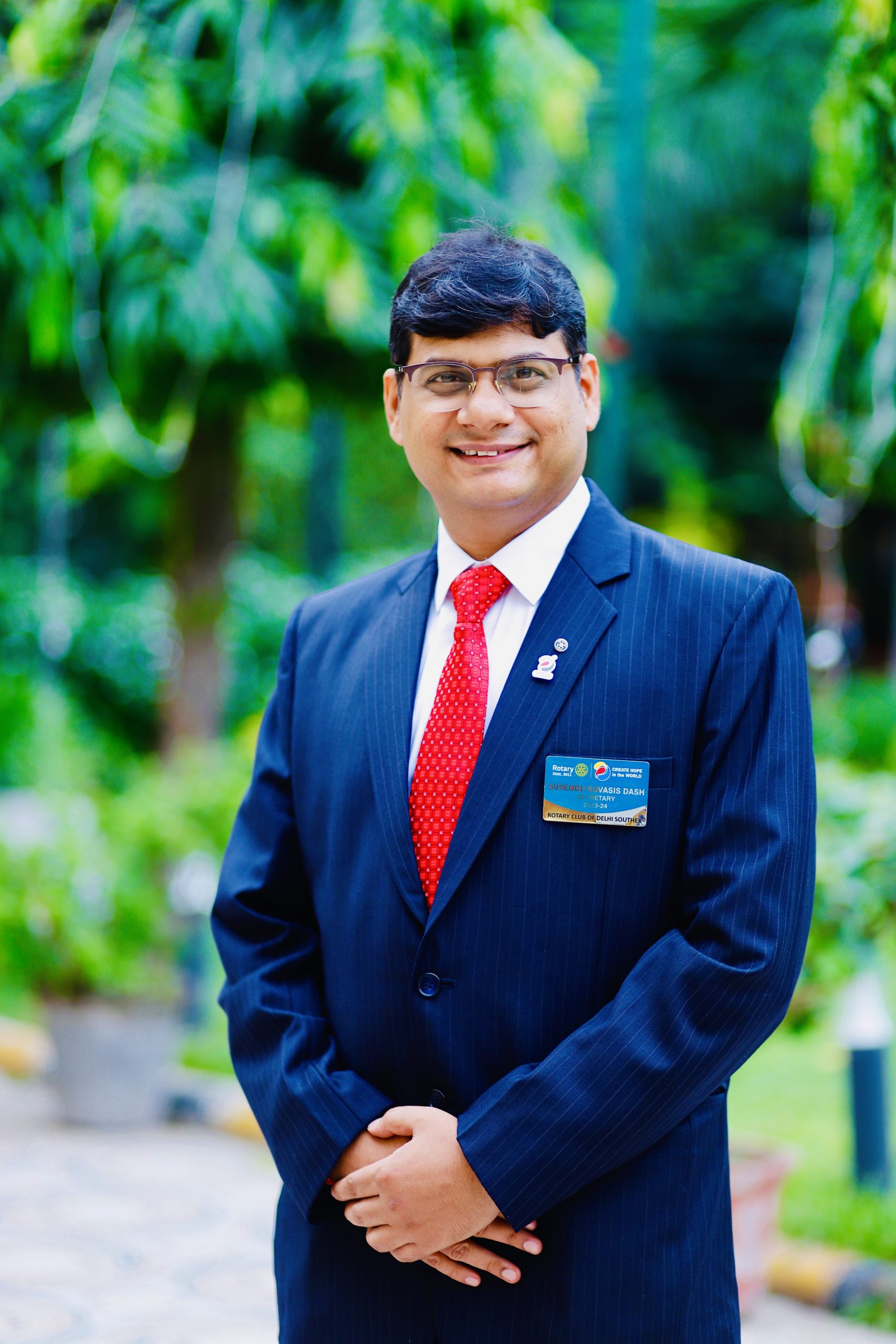



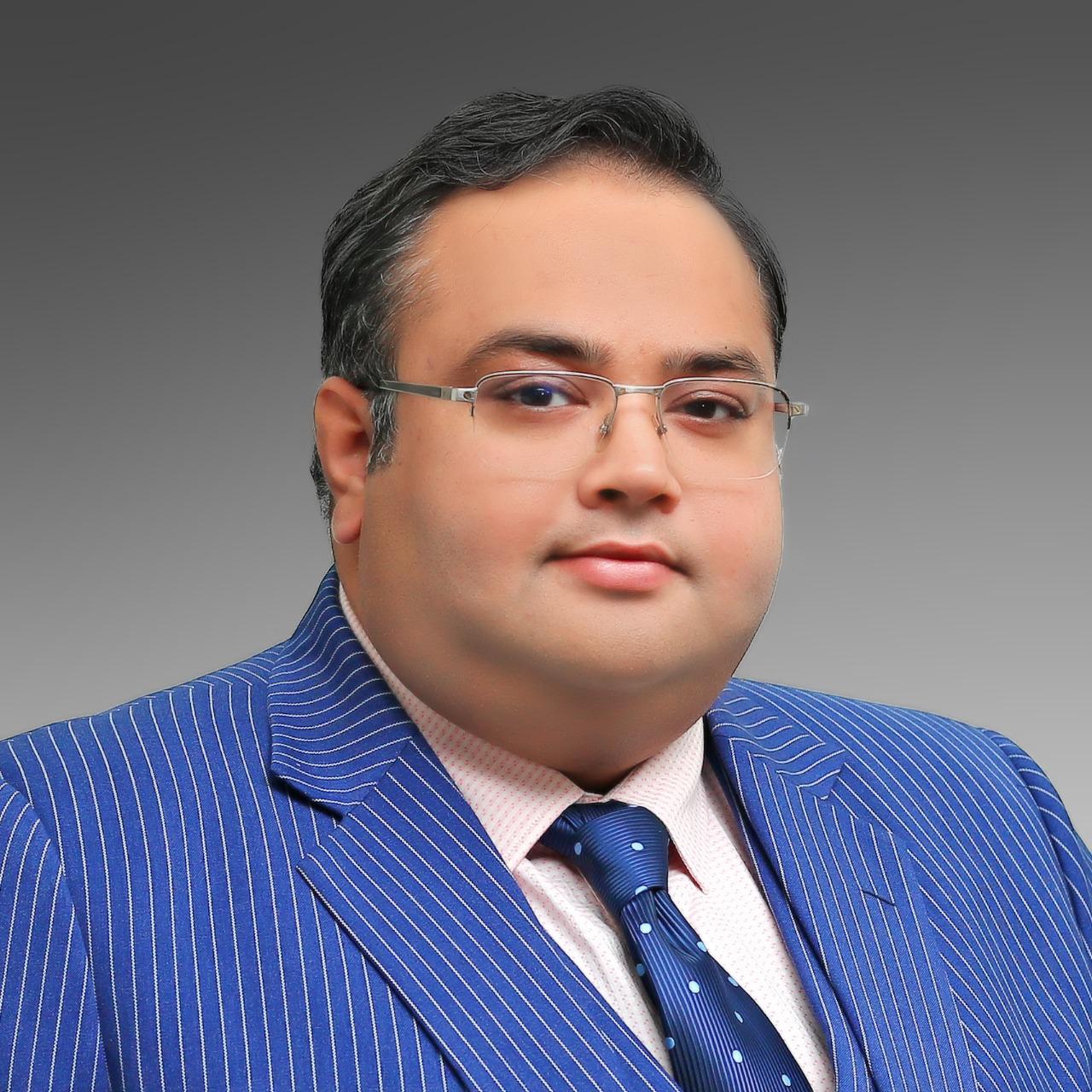

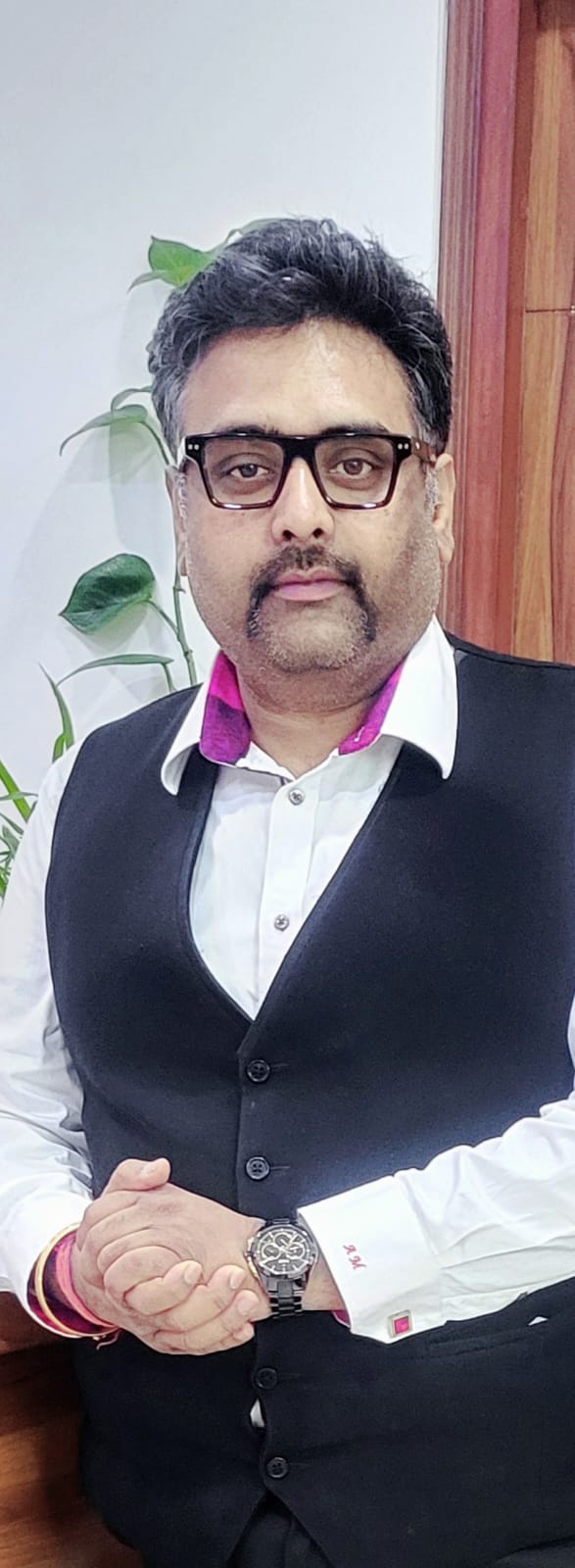








 Allow notifications