Author: Donnie Ashok

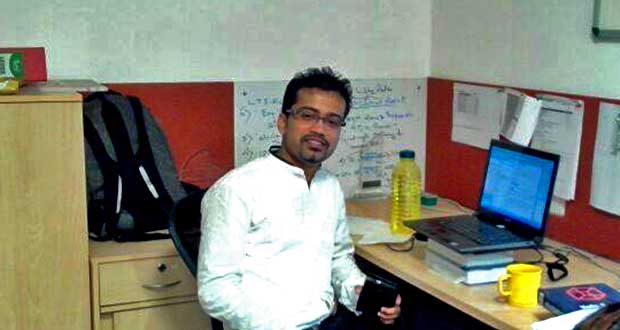
  • Adithya Banavar, Senior Associate, McKinsey, NY, on the job of a management consultant

    Adithya Banavar, Senior Associate, McKinsey, NY, on the job of a management consultant

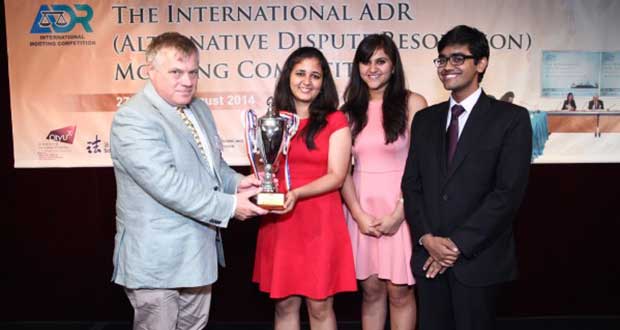
    Adithya Banavar is currently a Senior Associate at McKinsey, New York. He graduated from NLSIU, Bangalore in 2011 and then joined McKinsey’s office in Chennai for two years. He was subsequently transferred to McKinsey’s New York office in 2013 as a Business Analyst. He was promoted to Senior Associate in July, 2014. His achievements during law school include being in the top 16 of the prestigious Willem C. Vis International Commercial Arbitration Moot Court Competition, Vienna.

    In this interview he talks about:

    • Experiencing law school at NLSIU, Bangalore
    • Mooting and in particular, Willem C. Vis, Vienna
    • Working at McKinsey, New York


    How would you introduce yourself? Could you please share a little bit of what motivated you to pursue law as a career?

    I am currently a Senior Associate at McKinsey in New York. I graduated from NLSIU, Bangalore in 2011 and then joined McKinsey’s office in Chennai for two years. In August 2013, I got transferred to McKinsey’s New York office where I continued as a Business Analyst. In July 2014 I was promoted to Senior Associate.

    Both my parents are lawyers and that was basically where the idea of law school came from. By the time I was done with my 12th, I had decided that I wanted nothing to do with engineering. At that time it seemed like a good idea for me to actually start doing something different, and hence, law.

    I came to know of NLS through my father who used to be a visiting professor there and has had a long standing association with the University. I wrote the entrance exams for NLS, NALSAR and NUJS. I got through NLS with a rank of 48 but as far as NUJS was concerned, my name was at the very bottom of the list!  I chose NLS mostly on account of it being closer to home.


    Given that a significant number of our readers are law school students, would you please tell us a little about your law school days at NLSIU, Bangalore?

    My experience at NLS was a little different from the typical NLS experience because I was a localite. I was more of a day scholar and didn’t stay at the hostels often. Accordingly, I had a lot less excitement in my life compared to my batch mates who lived on campus.

    Overall, the real value lies in the ecosystem that NLS creates, apart from the conventional classroom curriculum. It gives you an opportunity to do whatever you want, whether it is a moot or starting up your own eatery like Bhukkad for instance. The peer crowd around you is what makes the experience special. NLS is structured to support this. Classes start at 8:50 am in the morning and end at 1.30pm so the rest of the day is open for you to explore your wide array of interests. It makes a student understand that academics is only a part of a holistic education.

    Personally, I am a huge fan of the trimester system. I think it works really well. You have four subjects so you can clearly focus your attention. There are a few days where things could get a little intense (night before the exams!) but most of the time, you actually have time to yourself. It also gives you a very good balance of subjects. When you are studying Sociology and Economics, you are also studying Legal Methods. You see how the latter plays a role in both Sociology and Economics. Law is not something you can study in a vacuum without a broader social context and I feel the trimester system allows you to get deep into a couple of areas and truly understand the interdependencies.

    NLS also offers numerous avenues to put the law into action. I was part of two of them during my time in law school. The Legal Services Clinic (which I was a joint convenor of) has a dual mission of (i) providing legal aid to those who cannot afford it and (ii) spreading legal awareness and literacy. As a part of LSC, we set up the Bangalore chapter of IDIA (Increasing Diversity by Increasing Access) – an NGO that looks to help underprivileged students gain admission into law schools through CLAT by providing financial and training assistance; and then looks to support and mentor them through the 5 years of law school.


    adithya-banavar-2

    Have you ever felt that you have a slight advantage over your peers in other law schools owing to the fact that you are an NLSIU-graduate?

    It really depends on what you want to do in life. If you want to start your own company for example, it will make little to no difference which law school you go to. If you want to go to a top tier law firm, again it doesn’t matter that much because as far as I understand, the top 15 from any of the top National Law Schools find their feet fairly easily. Where the difference starts is in the more off-the-beaten-path career options. The reason this difference has begun is because NLS has a very strong alumni network. Many are into business, some even into modelling! One good example is McKinsey, which has numerous NLS alumni. In terms of campus recruitment, McKinsey used to only go to NLS among the top law schools (not sure if this has changed now).

    However, these are not structural barriers. I feel that if you are enterprising enough it doesn’t matter which law school you are from. For instance, when we were at the Willem C. Vis International Commercial Arbitration Moot Court Competition in Vienna, we met Martin Hunter (one of the foremost arbitration authorities in the world). He was hanging around a team of law students from KIIT, Bhubaneswar. We later learned that he comes to India and teaches a course every summer on Arbitration law at KIIT.


    How important do you think CGPA is in retrospect?

    I did not have a very high CGPA and hence my answers are potentially biased towards feeling it does not matter. I never really cared about CGPA even during law school and focused my attention on co-curricular activities like mooting. NLS recognizes this and there is a gold medal that is based on performance at moots – Best Student Advocate, which I was awarded.

    I think CGPA makes a difference if one wants to join a law firm. It makes a huge difference if one wants to pursue higher education. Once you move away from law firms and higher education, it makes far less of a difference. For litigation, it does not matter in the least!

    In the long run, I think it is important to separate out learning from having a good CGPA. I feel I learnt a lot more from mooting than I did in the classroom. Having a good grounding in law is immensely valuable in whatever you choose to pursue after law school (even if it is not directly law-related). Unfortunately, the CGPA system is far from perfect and I feel does not truly reflect how well one has understood the subject.

    You have taken part in the prestigious Willem C. Vis International Commercial Arbitration Moot Court Competition, Vienna and also finished in the Top 16. Please tell us about your experience.

    Vis is truly an amazing moot. The city is beautiful and there’s a party almost every other day. If you plan on taking last minute moot work when there, it is likely to be a very bad idea! There is just so much to do and enjoy other than the moot itself. There are almost 300 teams participating and it’s a great opportunity to meet people and know about their views, etc. and understand the law better. It is truly a once-in-a-lifetime experience.

    In relation to our performance at the moot – after securing any moot, the first thing to do is to hound past teams who have cracked the moot. The challenge we faced was that teams in the years immediately preceding us had not done very well at Vis. With hard work, an “out of the box” approach to mooting and a ton of luck, we reached the Top 16. Once you reach that position, the other 15 teams are more or less close to your own team in terms of competition. In the round of 16, we lost to a team from the College of Law, England and Wales. The head of Arbitration for Allen & Overy, Europe was their coach!

    You are currently working as a Senior Associate at McKinsey & Company in New York. How is it different from working in India?

    Although not very different in terms of work, it is quite different from a cultural perspective. Here, in the United States, the industries are well established and there is a much more defined role for consultants. In India, it is still a lot more personal and exploratory in terms of the way you work with your clients. Of course, that is a broad generalization and there are many exceptions.


    What is an average day as a Senior Associate at McKinsey & Company like for you? We would love to hear about your work profile. Please tell us about the responsibilities you are entrusted with.

    As an Analyst and a Senior Associate, you are a member of a larger team. We are given a very challenging problem from the client, which could range from ‘where should we focus for the next five years’ to ‘How do we reduce our procurement cost by 20 percent?’ Whatever the problem is, we break it up into distinct pieces and allot each of these pieces to a member of the team. Teams are small – with 2-4 people looking into at the problem on a full time basis and 2-3 more senior consultants who spread their time across multiple projects. Each person in the team owns a significant part of the answer. As a senior associate, you take a much more holistic view and are responsible for understanding how your part of the problem links with the overall problem and the broader context of the company. As an analyst, you focus on the part of the problem that you have been given. As you get more senior, the mindset changes from ‘This is what I have been allotted and I shall go solve it’ to ‘what is really going to make a significant and lasting difference to the client.’


    How can one working at a law firm at present get into McKinsey?

    During my time in India, I did not see many laterals hired from undergraduate programs. I suppose this is because the Analyst programme is a two year commitment after which you are generally expected to go to business school and come back as an Associate. Most analysts spend two years at McKinsey and then go to an NGO or go into investing before going to Business School. Some come back to McKinsey as Associates. There are also people who come back to the law with a more holistic business experience.


    Will an MBA post a five year integrated B.A/B.B.A, LL.B. course be a better combination for a job like this at McKinsey (Management consultant)?

    Yes, definitely. Business and law are two sides of the same coin. It is quite useful for one to understand the nuances of the law to make sound business decisions. Beyond that, the way you approach problems in business is exactly the same way you approach problems in litigation. Instead of searching for case law, you’re looking for facts and analyses to support your answer to the problem that the client has posed to you. In the legal context, you are getting the facts of the case, the evidence and putting them all together to support your arguments, so it is very similar in that sense (just a different context). An MBA therefore fits perfectly with a law degree and an excellent entry point into business (including consulting).


    Do you plan on doing an MBA sometime?

    I am quite not sure at this point of time. I intend to continue at McKinsey for the near future (I got promoted to associate without an MBA). Frankly, I haven’t decided anything as of now, but I should come to a decision by mid-year.


    Do you know about the management consulting industry in India? Would you like to come back and operate from here?

    Yes, I have a fair idea since I worked in India as a management consultant for 2 years. It is definitely an option and not a bad one. It’s really a question of opportunities in the areas you’d want to be in. What excites me the most is doing strategy work for TMT (Telecom, Media & High Tech) companies. From a longer term perspective (5-10 years), I think India will be one of the best markets to be in.


    As a concluding message, what would be your suggestions to law students?

    For people in their second or third year, my message to them would be to make the most of law school. Enjoy the social life along with the extracurricular and co-curricular activities. Do not get too stressed or worried about any one thing (especially CGPA!). For the ones who are about to graduate, I don’t have much to say except that they ought to do what they want, not what everyone else in their batch is doing. Their job should excite them to go to work in the morning. If not, they should already better start planning their exit (even if they have not yet started!). It’s not that every day of the year will be filled with excitement, but in balance, your irritation and frustration should not outweigh your excitement.

  • Sagnik Ghose, Counsel, FactSet, on work of an in-house counsel at MNCs

    Sagnik Ghose, Counsel, FactSet, on work of an in-house counsel at MNCs

    Sagnik Ghose is currently an in-house counsel for FactSet India. He graduated from NUJS in 2006. While in college, he has worked with Paras Kuhad Associates, Kolkata and interned at Reliance. After law school, Sagnik was an Assistant Manager at Dr. Reddy’s. Subsequently he has worked at the Chugh Firm, an international tax accounting firm, and IBM.

    In this interview he talks about:

    • Law school experience at NUJS
    • The first year after graduation
    • Working at various Law Firms and Companies


    How was your life before college? Kindly tell us about you pre-university educational background. Plus, do you have lawyers in your family?

    I haven’t had any lawyers in my family. My dad is a doctor and all my uncles are engineers. Plus, I have grown up in Calcutta, a city rich in art, music and cultural heritage. My mother is a trained classical musician. I, however, never had any exposure to law and the legal profession during my years growing up, and even after joining college, other than whatever exposure I got in college itself. Hence, there was almost no exposure to law during my precollege life.


    Did you not aspire to become an engineer, doctor or artist, given your family background? How did you get to know about law as a profession and what motivated you to take up the same as a career?

    Well, I was never really pressurised by my parents to do something that I didn’t have an inclination towards. However, I had very little exposure to and knowledge about the scope and array of things which a lawyer can do, except litigation. As and when I was exploring my career options during the final years of school, NUJS had come up as a new college, not even a year old. The motivation to get through to NUJS and join the legal profession was the fact that the university had been set up by Dr. Madhava Menon, who at that point of time (and even now), was a figure to reckon with. I had a discussion with my father about law as a career option, and he supported me completely. After having made up my mind, I gave the entrance exam a serious shot and became the first person in my family to enter the legal profession.


    According to you, what should a person, who hasn’t had the fortune of studying in a top law school, do so as to develop skills required in the legal profession? Do you think that they are at the same standing with NLU students?

    Well, my personal opinion is that a person graduating from a top NLU has that extra edge when it comes to campus placements only. On a close look at the industry, we can see that most of the top rated general counsels, partners or senior partners in law firms or senior law officials are from non-blue-blooded law schools, and have made their way to the top through the more difficult old school way, that is, working hard. It is after litigating for years or advising clients in Companies that they have figured out what the clients need. I think that which law school you graduate from makes little difference. Just like my other passion, cooking, it doesn’t matter which culinary school you pass out from. If after passing out, you put in your best, nothing can stop you from becoming a great chef. Even if you fail to get into an NLU, there is no reason to give up hope on the legal profession. If, after entering the professional field, you work hard and apply yourself correctly, you are guaranteed to be a successful counsel. The flip side is that, if you do graduate from an NLU and get placed in a law firm or a Company, you get to learn a lot more during the initial stint of your career. So, yes, there are both pros and cons, but I would say that studying in a top NLU is just a part of it, but certainly not the entire picture.


    sagnik-ghose-2

    How was law school? How did you go about your academics as well as extra-curricular activities? Were you into mooting?

    For me, the law school experience has been very positive. Having studied at NUJS, I got involved in many activities apart from the mandatory academics. I was a part of the student juridical association for a very long time. I did a bit of intra college moots, but I was not too much into mooting. I had realised that a career in litigation was not for me, and therefore, did not place too much of an emphasis on mooting.

    During my final year of law school, all throughout, I used to study in the first half of the day, and during afternoon I used to work in Paras Kuhad and Associates.I used to help them with small issues and research work and worked on various legal questions with a senior, Kushagra. Apart from other internships, this actually helped me mould my understanding of what actually a client is looking for, why a business lawyer is so much in demand, and what is expected from a business lawyer when he joins a Company in house.

    Apart from this, I also worked with Arjya Bir Majumdar, one of my closest friends from school, to help the WWF in whatever way we could. We actually took time off on a Sunday morning, went down to a market in Chingrihata, found turtles being sold (sale of turtle meat is banned), bought one of the live ones with our pocket money (what with us being students and money being short!), and then went to the Alipore Zoo to release it into the water!All of the above, in addition to the obligatory line of heartbreaks and new girlfriends, soulful music and endless food, hanging out at the movie halls and getting hammered at the local bars. It was an eventful five years!

    Despite them thinking otherwise, students actually have a lot of time, and they should take some time off to go get some valuable guidance under a senior lawyer to figure out what excites him or her the most.


    Kindly tell us about you internship at Reliance. Was it then that you decided to become an in-house counsel?

    Well, the Reliance internship was definitely the turning point for me. Before that, I had only worked with law firms and NGOs, but the Reliance internship actually changed everything for me. One, I had never spent so much time, almost three months, outside my city, working, that too in a city like Mumbai, which has such a brilliant work environment and where you get to work with the best of legal and business professionals. So the Reliance internship was an eye-opener on a lot of fronts, since I got to work with many good, solid lawyers, some of whom continue to be my friends even after so long. I got a learn a lot about laws around privacy, intellectual properties, copyrights, business laws, both procurement and sales, trademarks, media, technology, basically every law a lawyer can think of under the TMT business. There were a lot of intricacies that were involved in the Reliance internship. Getting a taste of the work, I decided to extend my internship. An internship is normally for 6-8 weeks, but I did it for almost 12 weeks, because of which I missed college a bit, but it was worth it. I also got a very good stipend at the end of my internship. Plus, I got due recognition for the work I did and also built a good rapport with my seniors. I also gave a couple of compliance presentations. Hence, summing up, I got really healthy work, and it helped me realise that working in a Company is something I can actually do, and contribute positively to the growth of a Company.


    Would you say that NUJS prepared you for the real professional world? Were the things that were taught at NUJS relevant to your internships and first year at work?

    Well, the answer to that is yes and no. I feel that some of the courses at that time should have been better tuned in the final year when students are looking to enter the work field. I am saying this because when I started working, I realised that almost three quarters of my time is being spent in working on contracts, which is a subject which was taught in the very first year of law school.

    So I really think that our college should have offered an advanced course on contracts, apart from the courses which were taught to us is our final years, to give students an exposure to various aspects of contract law that they would be dealing with while working. There are complex concepts like change control, confidentiality, data privacy and control, termination, warranties, indemnities, limitation of liabilities and there are various aspects to each of these concepts which one has to deal with while strategizing, understanding and negotiating contracts. I really think that every law school should offer, atleast as optional courses, tools which can equip you to deal with situations where you have to negotiate with more experienced professionals.

    For example, the person on the other side of the table would either be an in-house counsel or an external counsel. So, for an in-house counsel, it becomes very important to be more reasonable and break the ice during negotiations, whereas, for external counsels, you have to test waters and understand his level of aggression (because he has to justify his bills, I have more often faced very aggressive external counsels) and knowledge of his client before you start negotiations. Areas like these, which you learn during your professional experience, should atleast be offered as an optional course.


    After graduating from NUJS in 2006, you got to join Dr. Reddy’s Laboratories as an Assistant Manager. How did this happen, and what were your responsibilities?

    After passing out in 2006, Iwas appointed as a management trainee, and I spent about a year in probation before getting appointed as an Assistant Manager. In the first year, I was doing general corporate legal work, and then I moved on to more focused branded formulations work. My primary responsibility was to look at all the branded formulation contracts for all the thirty six countries. That is what I used to do for about a year, before I decided to move on.


    Many law students suspect that they would need to know a bit about pharmacy and chemistry if they want to join as an in-house counsel at a place like Dr. Reddy’s Laboratories. Is it true?

    Well, again yes and no. If you are looking to join as a fresher then they’ll not expect you to know much about the pharmaceutical industry, which you’ll have to learn on the job. But, if you are looking to join as an experienced professional, then ofcourse they expect you to know things like what licensing terms and conditions typically are, how much time does it take for a molecule to develop and so on. So yes, if you are joining as a fresher, you are not expected to know these nuances but if you join as a professional, you have to have a strong grip on the basics.


    How was your experience working there?

    It was excellent! I had a very good mentor in Mr. Narasimha Das, who was their General Counsel. He taught me the basics, like creating a checklist to be looked at while creating, or marking up agreements, managing time, speaking to clients and managing expectations. He exposed me to the maximum number of agreements, co-development, licensing, confidentiality, distribution, marketing, services, IT services, basically, the works. He literally held me by the hand and taught me how to strategize mark-ups and negotiations, learning body language and identifying signs of closure. I owe a great deal to him!


    After your work at Dr. Reddy’s Laboratories, you moved on to join an international tax accounting firm, the Chugh Firm. How did the shift take place, and how different was it from working at a pharmaceutical firm?

    The Chugh Firm is an international tax accounting firm. However, I joined their Indian partners, Universal Legal. I was a part of the core corporate legal team where I was helping in incorporation of Companies, post incorporation compliances, assisting in agreement processes and so on. It was very different, since I moved from an in-house counsel to a service oriented role. It was very different in terms of work culture.

    Specifically, in a mid-sized ambitious set up like Universal Legal, if you don’t provide answers to clients as of yesterday, your clients just move on the some other firm, which we could not have allowed to happen! Most of our clients used to be start-ups, who are typically hungry and desperate to succeed. They expected super high turnaround time and high quality of work. The thing with start-ups is, if you start off on a good note with them, and if it clicks, then they will be your clients for life. So I did that for about 3 years, where I learned to advise clients on a variety of legal aspects.


    After that, you joined IBM. What does an attorney do at an MNC like IBM? What were your responsibilities?

    In big Companies like IBM, the superstructure is usually broken down into wings dedicated for specific purposes. I was appointed at IBM as a deal lawyer for Global Business Services, which is their consultancy business. Basically, I used to negotiate on behalf of IBM from the legal perspective and help close deals for IBM. I used to work closely with sales, taxation, business, solutions and software teams for helping to take calls on questions of liability, protection, tax implications and so on. My time in IBM was very enjoyable, and this is the place which taught me how big Companies manage work efficiently in spite of their bulk and reach. A shout out here to Ajay Dua, who heads the legal function in IBM India for helping me out on multiple occasions with easy, workable solutions to complex problems. He has been an excellent mentor!


    At all the three places you worked, was the work similar or did you have to learn new skills every time you joined a new place?

    Well, some basic things like principles of contracts, litigation processes, HR policies etc., have to be the same, because the underlying laws are the same. The important change is whom you are working for. For example, working with Dr. Reddy’s Laboratories, you have to think from a global MNC perspective, and the effect on the position of an MNC dealing with pharmaceuticals. When you are dealing with something like pharmaceuticals, the liability is much greater, since human life is involved. One has to exercise extreme amounts of caution when you take on certain liabilities. But when you work with an IT giant like IBM, the life threatening aspect goes off the table.

    However, that doesn’t mean that there is any less liability. In a Company like IBM, you are dealing with large nationalised banks, which perform transactions worth millions of dollars in a single cycle. Accuracy and speed are tantamount to such transactions, and therefore, the liability is no less here.The heads of risk might differ but the risk of doing business is always present. One needs to figure out which risk is acceptable and which risk is absolutely non-acceptable in that particular industry. So there is this learning curve which you go through when you enter any work culture or a firm or a Company, and that is the learning curve you need to adapt to, and once that is done, things easily fall into place. So all the places where I have worked have been extremely different but equally rewarding and enriching as far as my understanding of different workplaces go.


    What are the highlights of your career till joining FactSet? How did you decide to leave IBM and join FactSet?

    FactSet has been around for a good 36 years now, and is a global leader in the field of financial information analytics, intelligence and solutions. I decided to leave IBM primarily because at IBM I was doing very high level of work, but I was doing only one kind of work, that is contracts and negotiations. I had no reason to complain, this is how any big Company functions, since efficiency is of paramount importance. After having worked with IBM for three years, the next logical step I could take was to expand my field of work in order to move up. I was looking for an opportunity where I could deal with not just contracts but also corporate matters, administrative matters, general government regulatory mechanisms, compliance matters and the entire gamut of general in house counsel queries, including sales. As a counsel for FactSet, that is just what I do, and it is brilliant working here!

    At FactSet, I have a dual role. One, I provide advice to my internal clients with regard to a number of matters, like contracts, real estate, labour, compliance, government regulations, negotiations and so on. This is at a local level. At the global level,I work a lot with the global team with regard to contract negotiations and deal making. If anybody is looking to move in an MNC which gives dual responsibility, they can expect a kind of work in which they’ll have to work at both local and global levels.


    Does your current role at FactSet involve any amount of data crunching?

    No, that is done by the operations team, just like at Dr. Reddy’s, a lawyer is not expected to develop molecules! I am the legal counsel for FactSet. As a legal counsel, you need to understand how the different wings of the Company work in tandem, what risks your Company can or cannot take, how flexible you can be for contract negotiations, which factors should influence your judgment of risks and so on.


    Do you have any vacancies for legal interns at FactSet?

    We do not have a permanent internship facility at FactSet. Normally, legal interns are taken for two reasons.

    One, they learn about FactSet and what sort of issues/ concerns come up in a global Company. That is the short term internship, which is for a month or so, which most Companies are open to.

    Secondly, there are long term internships to hunt for a good prospective employee. Currently, we aren’t really pursuing the second kind of aspect since all the positions are full but if somebody wants a shot term internship, then probably we can give it a thought.


    What do you think of higher studies as a career strategy? Do you plan to go for higher studies?

    I don’t, but then a couple of years ago I was thinking of an MBA, purely because I was interested in management, setting up a legal team and helping a Company to grow. So I would say that it’s a good idea to work for some years at different places, maybe a combination of Companies and law firms, and figure out what you are actually interested in. At that point of time, one can figure out what kind of higher studies you want to go in for, be it LL.M, MBA or anything. So it entirely depends upon a person. I have a very neutral stance with regard to higher studies, since I have seen many students studying advanced courses but still not making a mark in the market and some who havea simple law degree doing a wonderful job. So it completely depends on the person.


    The question that whether one should specialise in a particular area of law or be more of a general lawyer often comes up before law students. What is your opinion on the same?

    My opinion is to never specialise early on in your career, especially when you are in law school. That is because when you specialise, you start leaving out on some other spheres of law. Always explore the field. One should know about all the options that are available. There are so many avenues which a lawyer can go into these days, and the scope of work which a law student can do now is phenomenal. Never specialise in your last year of law school or your first year in a job. Just keep on generalising and growing on general strengths. Once you have done that, in around 8-10 years, you can know in what area you really want to go forward, if at all, and then you can specialise.


    What is your advice to law students who want to build a great legal work profile?

    A couple of them. One, you need to be a generalist at the start of your career. This comes with a disclaimer, that if you have a lawyer in your family and you at an early stage know what you want to do, it is a different ballgame. But when you don’t have that advantage, you should be a generalist at the start, and you should then build your profile with regard to being a general lawyer who is good at researching and understands the law of the land. It’s not just the work profile as far as going to office and advising your clients is concerned. You should be the scholar who a person on the road can have the confidence of approaching with a legal query and expect a well-structured, solid answer.

    Second, understand what your client wants. Always listen carefully to what your clients are saying, understand their needs and then respond. You don’t need to respond right away, but don’t give them a wrong response.

    Be very careful, since people automatically assume that being a law graduate, you are an expert in all laws. Hence, you need to be extremely careful with the advice you are dispensing. If you have read Kafka, you would be able to draw parallels between law and a big black house in a dream. You turn a corner, and all the roads look the same. It is scary for an outsider. Lawyers are supposed to be the friends, figure out the dream and help their clients. Law is as dangerous a field as medicine. So the amount of trust you place in your doctor, if the same amount of trust your client can place in you, then you are going to make it big, and there is no stopping you.

  • Sirsanya Bandopadhyay, Advocate, Calcutta High Court, on building a career in litigation and experience in Politics

    Sirsanya Bandopadhyay, Advocate, Calcutta High Court, on building a career in litigation and experience in Politics

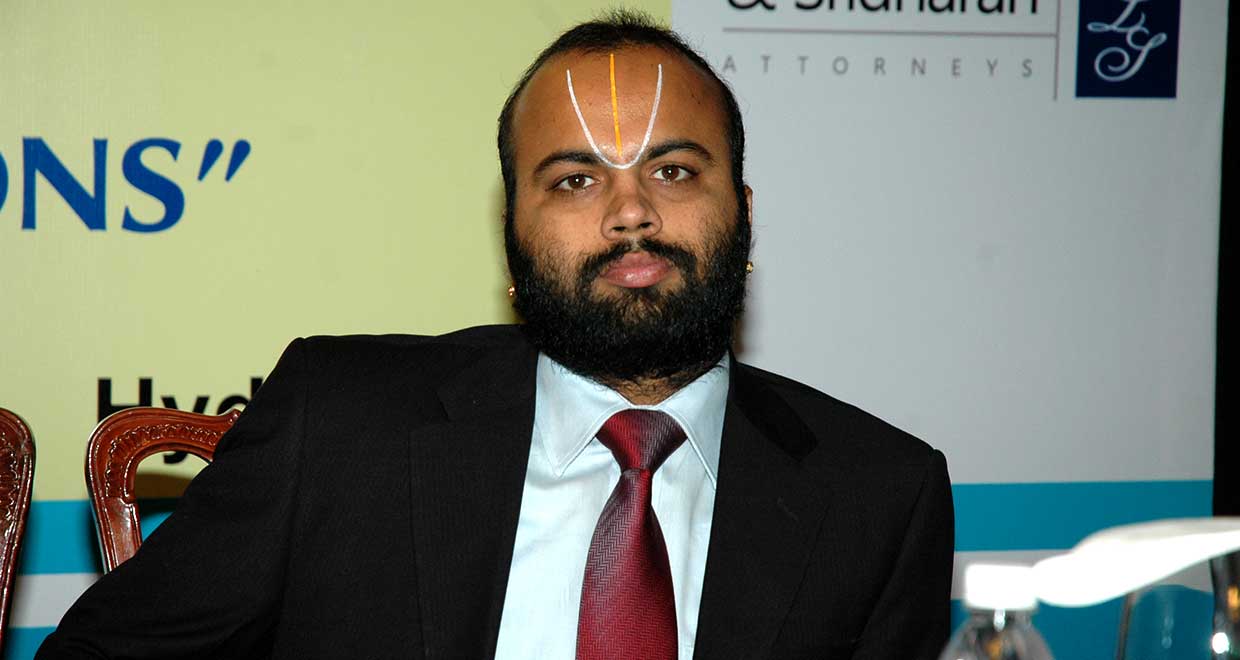
    Sirsanya Bandopadhyay is a practising Advocate at the Calcutta High Court. He graduated from Jogesh Chandra Choudhuri College of Law (Calcutta University) in 2010.While in college, he was an active participant in the student political body of the University and gradually grew along with it. He became the General Secretary and subsequently President of the Students’ Union. He is also the youngest member to have been inducted into the Trinamul Congress’ Party Core Committee. Currently he practices at the Calcutta High Court.

    In this interview he talks about:

    • Studying law at JCCCL, Kolkata
    • Students’ union and joining politics
    • Building a career in litigation


    How would you say your parents or close family members inspired you in taking up law?

    Though my father is an Advocate by profession and several others, from his maternal side, are in the same profession, the decision to pursue law was entirely my own. The same was taken while I was in the 3rd Standard. When I was in my third standard, one fine morning, the first thing that caught my attention was a huge picture of my father in his robes on the front page of the Bengal daily, Ananda Bazar Patrika. And I suppose that impression lived with me throughout my life and each day thereafter I imagined myself in those robes and in that corridor of the High Court at Calcutta. In fact, there have also been times when I wore his robes at home, when he wasn’t around as that gave me profound happiness.


    Please tell us a bit about your father, Mr. Kalyan Bandopadhyay’s practice. As a mentor, how did he influence your career? Did you get to hear a lot of legal discussions right from your childhood?

    My father was into business before various events led him to his senior, Late Mahitosh Mazumdar, J., under whom he practised till his senior’s elevation on 17th February 1986. As I have heard from my father, his life as a young advocate was not very easy but he worked really hard to climb up the ladder, gathering and embracing every bit of work that came his way. In his initial days he stayed in a mess with others and after his marriage he and my mother started a family in a one-room rented shelter on the terrace of a house in Dhakuria. From there his hard work has taken him to where he is today. His dedication, diligence and love towards his work has fetched him respect and repute in legal and political fields as well.

    Such stories of hard work are an inspiration in itself and surely they have inspired me to work hard and remain dedicated and grounded always. But my father never dictated what I should do in life, apart from regular reminders that I need to study hard. I must also mention that while nurturing the thought of becoming an Advocate, the stories and works of Late Siddhartha Shankar Ray had influenced me all the more.

    Legal discussions were mostly restricted to his chamber. My sister and I did eavesdrop on his telephonic conversations at home, talking about some matter or some interesting point of law, but they cannot be termed as hearing proper legal discussions.


    sirsanya-bandopadhyay-2

    Your father is also a  Lok Sabha MP and  a member of  All India Trinamul Congress Party. Did you ever think of joining politics after him?

    I joined politics even before I could realise that I had done the same. When I was fourteen years old, my father contested his first Assembly Elections from Asansol in 2001. I took a month off from school and stayed back in Asansol with him to manage his office work. Whenever I used to feel bored I used to go out with him and be a part of the campaigning. After he won in 2001, I made regular visits to Asansol from time to time and in the process got acquainted with many party workers from that area. While joining JCCLC in 2005 the only advice that came from my father was not to join the Students’ Union. But situations in college had led to factions and I happened to become a voice in the anti-incumbent faction. The students’ election in 2005 was shady and that gave fuel to the anti-incumbent motives. But I tried to abide by my father’s advice by not contesting the elections and not going to political meetings till the year 2006. But gradually the state of affairs worsened in college and it somehow demanded my active participation. I was too scared to tell my father that I was not being able to act upon his advice and contested the 2006 college elections without his consent. However, the same was brought to his knowledge by a so-called leader of the other faction during one of his morning walks. But surprisingly he didn’t tell me anything, probably because he also heard that I too had voluntarily associated myself with Trinamul Congress’s Students’ Wing.

    Stories of our anti-incumbent movement started spreading like forest fire and other colleges started inviting us for public meetings and rallies against SFI, which back then had a strong hold in most of the colleges in Bengal so much so that at one point of time, I had covered almost all the colleges in South Bengal in order to speak against SFI. The factions in rightist wings in college led to the growth of SFI/AISB in my college as well and hence the fight became a full-time job both inside and outside college. After handling matters in college till 12 noon or 1 pm, sometimes I along with my friends or at times I alone used to travel to remote locations and distant colleges in order to carry on our fight against the communist parties. In 2007, during the Singur agitation I was asked by Ms. Mamata Banerjee to speak in a public meeting at Singur to be held on 28th August 2007. The previous night I was at the southern tip of South 24 Parganas but the offer was too lucrative to be turned down and hence there I was, at my first public gathering at Singur in front of lakhs and lakhs of workers and general people who had gathered on the National Highway during Ms. Banerjee’s historic fast. After a string of such meetings I was inducted as a member of the Party’s Core Committee and I was the youngest among all the members. In the meantime, my friends and juniors in my college elected me as the General Secretary and thereafter President of the Students’ Union. The period between the year 2008 and May 2011 was spent in a state of madness. Family, friends and social life took a back seat while I and my friends/associates strived together towards the sole goal of toppling the Communist Government.


    Tell us about your years in Jogesh Chandra Choudhuri Law College (Calcutta University). What made your journey at JCCLC worth it?

    My studentship in JCCLC had started off like any other student freshly out of school. The 1st year of college was mostly consumed by fun & frolic. But the shady elections of 2005 planted the seeds of anti-incumbency in me and my friends. From then onwards, a lot of time used to be spent behind political activities. Such political activities continued till my final year in college in the year 2010. When my father came to learn about my active participation in Students’ Union, he didn’t tell me anything probably because a latent rider of good results at the end of each session played in my favour. Thus, studying hard became a ticket to an unlimited time in Students’ politics. But I was never a believer of year-round studies in law courses. Instead I spent some 20-30 days studying before exams and luckily that saw me through with palatable marks. While many of my batch-mates relied upon private tuitions during the five year course, never did I think of any such tuition for myself. What our teachers taught in class and my sister’s notes from Hazra Law College was enough for me. In fact, our Companies Law & Tax teacher Dr. N. Bhattacharya lent his free time and cleared out our doubts in Taxation Laws after college hours in the college library. In the same breath, I would like to say that our Constitution Teacher Mrs. A. Kundu is probably the best in Kolkata. Whatever I have learnt in her Constitution classes still remains a reference point from time to time. The others whom I didn’t specifically name have an equal contribution to the little knowledge I have.

    There is something in the air of JCCLC which is unmatched as compared to any other college. The closed doors between 7-11am breed a feeling of family and camaraderie. The fact that we had nowhere to go once inside the college premises made us dependant on and habituated with each other. I not only give credit to JCCLC, it’s teachers, staffs and students for my legal acumen but also for my much important social knowledge and administrative vis-a-vis leadership skills.


    sirsanya-bandopadhyay-3

    What were your plans after graduation? Did you consider joining the Civil Services ever? Which career options were available to you as a fresh graduate?

    As I said, my plan since childhood was to practise law. I never wavered on that until I actually joined practice in December 2010. In the meantime I did consider every other job/profession/business but honestly the legal profession stood out every single time. In fact, in my Higher Secondary I had opted for Science so that my options post school remain open for every other field, in case I decide not to study law. As far as Civil Service is concerned I never thought I will be able to crack those UPSC or WBCS examinations.

    As a fresh graduate several career options were available like MBA and LL.M as far as higher education is concerned. Management with law is still considered to be a lethal combination. Other job oriented options included Law Firm, LPO, BPO or private practice. While I chose the latter one, several other friends and juniors opted for the other three and are doing well.


    As a fresher just out of college, how did you manage to get a mentor for yourself? How important do you think a mentor still is in the arena of litigation?

    Coming from a legal background, I knew several other Advocates whom I could join. Since I used to go to Court sometimes, during my college days, I had my own favourites as well. But choosing a mentor wasn’t quite planned. In the latter part of Part V, I used to attend my father’s chamber but sometime in July 2010, I was badly reprimanded by my father for some reason and my rage made me decide that I wouldn’t go to his chamber anymore. But since I wanted to practise, attending someone’s chamber was important and necessary. While I was fuming with anger, my current senior’s name came to my mind and I rushed to Mr. Kishore Datta’s chamber at Dhakuria. He used to be my father’s junior since 1991/92 till around 2000. His long standing association with our family makes him a part of my family too. Thus, on 16th July 2010 I landed up in his chamber and said “ কাল থেকে আমি এখানেই আসব ” (I shall join here tomorrow).  In his usual unperturbed way he said, “Why from tomorrow? Take the D. D. Basu (on Constitution) and start today.”

    In our generation, many choose to work without a mentor or without joining someone’s chamber because they must be comfortable that way. But as far as I am concerned I will not be able to manage. Though at times when the matter or situation so demands, I appear before the Courts alone, I am extremely dependant on my senior and will like to continue under him as long as I can. In the past four and a half years of my practice under him I have never been able to satisfy my senior with my work, but I believe my perseverance & endeavour to satisfy him with my work is my path to knowledge and success.


    What were your areas of interest during your graduation? How did you go about developing expertise and knowledge in these areas?

    During graduation there were several favourites. Some because of the teachers who taught the subject while some because of the slim books. Arbitration, Constitution, C.P.C. and Environmental Laws are some favourites I remember from my graduation days. But interest brings with it disinterest. And one subject which totally repelled me was Intellectual Properties. As a matter of fact in one Academic Session I did not attend a single IP class. When my attendance in other six subjects was 80%, I had 0% in IP Classes. But such absenteeism was calculated so that I was not debarred to sit for the final examinations.


    After your graduation in 2010, you started practising at Calcutta High Court. What influenced your decision to work in litigation?

    Since the inception I wanted to be in litigation and not in some legal/government job. I always found a desk-job too monotonous and clerical. This is strictly my personal opinion and not meant to hurt or demean anyone. In an advocate’s career no two cases can be similar, just like finger-prints or human ears. The possibility of waking up to a new challenge or going to sleep with a new thought, a new understanding of law, drives me to work day in and day out. Such possibilities are remote in desk jobs. Law firms may provide such an opportunity if one lands up in a litigation oriented law firm, but being dictated by someone is not my cup of tea. And I have always been a bad employee, since the days of part-time-jobs at an event management company. The day I had quit, was probably the happiest day in the life of my boss, Mr. S. Kamal.


    A lot of law students prefer corporate jobs over a career in litigation. What is your take on this?

    The corporate sector has no relation to litigation as such. Experience in the corporate sector will not lead anyone anywhere in litigation. Litigation is a different ball game altogether. Corporate skills don’t help when the Judges ask you a question of law out of nowhere. Learning to deal with the Seniors and Judges in court needs a different expertise which takes years. Like all roads lead to Rome, all legal matters lead to Courts. I prefer to be at the juncture of certainty than at the point of probability.


    How is the work atmosphere at the Calcutta High Court presently? What have you faced as a fresh graduate?

    Calcutta High Court is like my second home; advocates there my family. No matter how bad the work atmosphere is, I shall always find it rosy. Rather, I believe if 7000-8000 Advocates can come and make a living there, the work atmosphere cannot be that bad. But then again, there is no standard to measure the same. It is as good as your perception and as bad as your negativity. True, that there is room for improvement. Advocates here areunder paid as compared to Mumbai, Delhi, Chennai or Bangalore. There is also a chord of gender-bias. The ratio of male to female advocates is still appalling and the ratio of male to female Judges is not encouraging as well.

    Life as a fresher is still as tough as it was two or four decades back. But back then, a fresh graduate had no option whatsoever to advertise and/or market himself which is readily available these days; courtesy: the social media. The concept of Public Relations was less important back then as compared to this day. Though I myself am quite fresh in litigation, the only advice to the even fresher graduates venturing into the field of litigation will be to be honest and dedicated. It is not about pedigree or clientele. It’s about discipline, dedication and delivery. If one chooses to work in the field of Litigation, one must come to court regularly, whether he/she has work or not. Coming to Court regularly fetches work by itself. Secondly, one must observe. In the field of litigation no one has the time to teach anyone else hands on. One has to learn by himself and for that one has to observe; not only big or high profile matters or Counsels, but everything under the sun. One has to observe the presentation of facts, the law, the other Court-crafts, how one deals with the clients, how one delivers. The domain is so huge that even after five years, I sometimes feel that my learning is worth only of a day. I sometimes feel it was only yesterday that I joined and that leads me to the third most important thing, patience. One has to be patient; patient at every juncture. One has to be patient when there is no work, one has to be patient when there is ample amount of work. One has to be patient in victory as well as in defeat. Lack of patience has driven several fresh graduates out of Court and I do not want the readers of this blog to face the same. Thus, the conclusion I would like to draw is that litigation is not difficult but very time consuming.


    What should be the way forward for legal education in India? Doesn’t legal education need a restructuring?

    I do not agree with such a notion. As per my understanding, two industries shall never face the bear, one is religion and the other is legal. To quote my senior Mr. Datta, “This is one place (to be read as legal industry) which has maximum revenue but zero production”.

    The process of legal education is two-folds. One, which is being imparted to law students and the other, which should be imparted to other citizens, lay men, as we may call them. The first, needs to be fortified by current affairs and up-to-date case laws. Not only the Advocates but also the teachers must be well versed with the recent judgements of the Hon’ble Supreme Court and concerned Hon’ble High Courts. A habit must be inculcated amongst the students to be philosophical about law and not just mechanically memorise the statutes. New understanding, new thoughts, out-of-the-box ideas must be given a channel towards public and/or expert gaze. The second, process must be simplified and made accessible. Spreading legal awareness is of utmost importance and the same must be done, with honesty and sincerity and not for the sake of doing it. It is sad that even today, across the world, people have family physicians but not family-lawyers. Law must be made affordable and accessible to everyone.

    The above is irrespective of my dissent in calling legal profession an industry. The lack of processing raw materials and manufacture of goods disallows the legal profession to be termed as an industry.


    Do you think having a legal background is a great advantage to flourish in this profession?

    It is a myth according to me. Having a legal background is more of a disadvantage than an advantage.

    First of all, when one joins the profession one doesn’t only inherit friends but also foes. For no reason a fresher is thrown into work politics by some seniors who are double the fresher’s age. In our social structure, an Abhishekh is expected to give the same performance like a Amitabh Bachchan in his very first movie and an Arjun is expected to make the Indian Team and score a century in his very first match like a Sachin Tendulkar. The constant comparison, the loads of expectation and the unending attempts to be pulled down is very unnerving. But as I said, patience & hard work is the only cure all these not so pleasant situations.

    At the same time, having access to my father’s library at wee hours of the night or early hours in the morning as per requirement is definitely an advantage. In a place where everyone is for himself, having someone your own whom you can trust and/or rely upon blindly is definitely a psychological advantage if not anything else. It gives one an internal strength to push through the odds.

    Since I have not flourished in the profession yet, I do not know what it takes to flourish, but what I have learned is that being honest and dedicated fetches you work. It is a continual cycle where you have to be honest and dedicated to receive work and to do the work to the best of your ability for the next and thus the cycle goes on.


    What is your workday like? Are there new challenges every day or did work fall into a predictable pattern?

    My workday generally starts at 7.30 in the morning and ends according to the work pressure but definitely not before 12 at night. The hours in between are dotted with little naps, rest and ‘adda’. But in my five years of practice in Court I have not considered my work as “work”. It is more of a hobby than a profession. Even during holidays or days off when I have nothing else to do I go to my chamber and sit down with a journal. My legal profession is my favourite pastime. Everything else seems like work to me. To me, nothing can be more interesting than talking to my clients, drafting new matters, preparing for matters on the day prior to every working day or just reading journals in the vacuum. I reiterate that every matter is different from the other. Every matter requires some other research. Even if two matters are same, the experience gathered from the first makes me research and go to the depth in the second.


    What are the difficulties one may face starting out? How difficult would you say it is to build a reputed practice?

    Since I love every bit of my profession I do not think there have been many difficulties apart from those stated above. I have enjoyed work, as well as the phases without work. I am a learner. When I have work, I learn through the work, when I do not have much work, I learn randomly. When I started, I neither had any expectations of income nor did I have any expectation of work. Everything fell into place with time. But to build a reputation, it takes a lot of hard work. One needs to decide how he wants to be known. Since I could not fathom how much knowledge I would be able to gather, I decided to be known as being honest. And I have built on it each day. I have tried to remain dedicated and deliver work as and when asked for. I do not know for sure how many exact years it takes to build a clientele. It may take 10 years to have one returning client or it may take 1 second to lose 100 clients. All these variables of income, expenditure, clients, etc are actually immaterial at the end of the day. Working with honesty and integrity is of primary importance. I repeat, building a profession, a reputation is not difficult, it’s just time consuming.


    Lastly, what would be your parting message for our readers?

    I do not think I am someone important enough to be interested in. But I have taken this process of interview to remember who I am. Amid a lot of work pressure and various events in life, we often forget who we are. This interview turned out to be a good deal of introspection and was a good way to remember what I knew about myself and learn what I didn’t.

  • Shriya Maini on choosing Oxford over Cambridge, Scholarships and the role of higher studies in Litigation

    Shriya Maini on choosing Oxford over Cambridge, Scholarships and the role of higher studies in Litigation

    Shriya Maini graduated first in class from Gujarat National Law University, Gandhinagar in 2013 with four gold medals, including that of Best Student. Thereafter, she joined the Litigation department of Amarchand Mangaldas & Suresh A. Shroff, New Delhi as an Associate in their Dispute Resolution Team. After working there for a few months, she paid heed to her calling and is pursuing the Bachelor of Civil Law Programme from Oxford on a full scholarship. In this interview, she talks about the difference in pedagogy between Indian and Foreign institutes and the relevancy of a traditional BCL degree for litigation practice.

    We took this opportunity to ask her about:

    • Experience working in the litigation department of Amarchand & Mangaldas
    • Importance of Internships
    • Choosing BCL from Oxford over LL.M from Cambridge
    • Writing a proper SOP for an LL.M
    • Applying for different types of Scholarships for high studies


    Tell us a bit about yourself. What motivated you to choose law for a career?

    If I were to answer this question absolutely honestly, I never really wanted to study law. Though, in retrospect, my family lineage reveals a close legal association (my grandfather retired from the Indian Home Ministry and my father is a practising lawyer), I don’t think I was ever motivated to make a career out of law as such. I was busy exploring the scientific world and was rather intrigued by it. I faired well in my A Levels and decided to follow my mother’s footsteps and pursue a career in medicine. Little did I know that future had something else in store for me! Over one of the many dinner table conversations, my grandfather casually mentioned how a centralized national level entrance examination called CLAT was being organized for the very first time for direct admissions to law school. I did not even know of the existence of National Law Universities until then and was reading their names for the first time on the examination brochure. To me this seemed very alluring, as a back up option, in the event that I failed my pre-medical tests. Besides, the examination (fortunately) had no negative marking. A week later, I was walked out of the hall, immensely proud of the fact that I had attempted every question on board, correct or not. Once the results came out, GNLU fell into my lap. I suppose I got lucky with my guesswork! Being a devoted daddy’s girl, I decided not to walk out on him, packed my bags and took the plunge. Hence, law happened purely by chance and not choice.


    How did you plan your internships? Were they all meticulously planned or did they just happen to you as you went through law school? Any tips you would like to share with people who want to intern at top-notch firms?

    As my vita indicates, I didn’t have a strict ‘to-be followed’ normative pattern of internships. However, I consistently endeavoured to intern at each and every place that I possibly could, be it chambers or law firms. I was sure that wherever I interned, I would substantially gain technical proficiency for my knowledge and experience, both were limited. In effect, I knew I had nothing to lose. Hence, on one hand, I thoroughly explored the corridors of the Supreme Court and Delhi High Court and on the other, I vacationed every year with commercial law firms, such as Amarchand Mangaldas & Suresh A. Shroff, Dua Associates and Jyoti Sagar Associates. Such a wide-range of internship opportunities helped me understand the everyday working and nuances of laws, be it civil, criminal or commercial.

    In the penultimate year of law school, I realized that my calling was only in Court. I was drawn towards litigation and the internships most definitely, opened me to a whole new world. I interned twice in the litigation team of Amarchand Mangaldas & Suresh A. Shroff, New Delhi under the guidance and supervision of Mr. V.P.Singh, one of the most dynamic partners of the firm. I had a fantastic experience interning with him. He had a galaxy of juniors assisting him who made the experience even more worthwhile.

    Likewise, by the end of third year, I advise all law students to have a fair idea of what they want to do. I believe the last two years are very crucial when it comes to painting career silhouettes, the so called deal makers or breakers. Hence, I strongly advise that if you haven’t already had some form of internship exposure, now is the time to get that on your CV. It would be a good idea to split the law school tenure of five years into a 3+2 structure and avidly apply for varied internship openings until the third year. Explore what you enjoy, much like the hit and trial method. I would also advise all law students to acquaint themselves with the backgrounds of firms, judges, lawyers and wherever they are making Internship applications, so that they can make an informed choice about joining them. The importance of a tailored CV cannot and must not be underestimated at any cost. I would also caution that the fourth and fifth year, being most important could be channelized towards improving one’s CGPA as much as possible. I can now affirm that though top-notch firms do not solely and specifically look for a high GPA, but it makes for a fine impression if your CGPA is more than respectable. It gives you that ‘added-edge’.


    Right after graduation you got to join the Litigation team of AMSS. How did the appointment take place?

    I secured a job with AMSS all thanks to GNLU’s Committee on Recruitment Affairs (CRA). As a core college body, CRA annually facilitates students and recruiters, on a rolling basis for on as well as off campus recruitments. I was one of the few lucky ones to grab an internship with the Litigation Team of AMSS, in my penultimate year of graduation. The selection was purely based on class rank. I vacationed once again during the winters and six months later, on the College’s zero day, I was offered a job in their Dispute Resolution Team (Litigation and Arbitration).


    What all came under your responsibility at AMSS? How was your first visit to court?

    I was rather lucky to work with some of the most hardworking people in the litigation practice at AMSS. My area of work encompassed commercial litigation and arbitration. Within the team, our supervising partner had allotted a couple of matters to each one of us. I was given an opportunity to work on an international commercial arbitration at a very early stage in my career. I worked under the leadership of some of the best people in the fraternity and handled these matters from scuff. I also drafted the first cuts of Rejoinders for a matter. On a lighter note, if I could pick one responsibility that truly came my way at AMSS, it was drafting e-mails. I learnt the significant skill of ‘written communication’, its necessity and nuances. Though challenging and interesting, these months made me actively re-think my options and pursuits. While I spent hours drafting legal documents and e-mails before a bare computer screen, some part of me began to miss the ambience and actual working of a Courtroom.


    Is it true that it is not possible to get a job in a top tier law firm without top grades and being in the top of the class?

    I am often asked this question. Being brutally honest, top tier law firms often filter students on the basis of class ranks and/or scores. Good grades most definitely matter, at least while securing internships. Unless you are offered a PPO based on your performance during an internship, even during recruitment, most top law firms are bound to take grades most seriously. This is purely due to the fact that a high CGPA depicts an academically consistent upward moving graph. However, I believe that moots and publications could also be an equally essential pointer when it comes to specialized interests. By this I mean that for a law student specifically interested in International Taxation, a paper publication or mooting experience at Nani Palkhiwala could silently speak volumes during a recruitment interview.


    What prompted you to decide to leave the largest law firm and venture out at as a sole practitioner?

    It was the same year, infact within a span of five months that I decided to leave AMSS and venture into entrepreneurial practice. Amidst sleepless nights and long office hours, I was at crossroads with my passion for ‘learning and living the law’. I would often feel academically stagnated while making document summaries, indexing compilations or drafting e-mails. One of those mundane Monday mornings when I had to report to the office at 8, I turned the wheel to reach Court instead. Yes, I admit that it was rather drastic and bold a call to take at such an early point of my age and career. Friends and family tried convincing me otherwise cautioning how hard-hitting litigation practice could be.

    Had it not been for the latter half of the year when I practised at the Supreme Court and Delhi High Court, I would not have been able to secure a scholarship for the BCL at Oxford. Hence, I firmly believe if you are true to your work, you shall most definitely reap its results, if not today then tomorrow.


    Would you say being from a family of lawyers helped you in forming your practice? How did you find your mentor? How important is a mentor in the field of litigation?

    After a brief stint at AMSS, I devoted the next 7 months to independent legal practice. It would be wrong for me to shy away from admitting that my father was the sole reason I could pivot my practice from the position at which I had left AMSS. I was fortunate to land a few cases, which were handed over to me by my father. They were a mixed bag of both, civil and criminal. He gave me a tiny working chair in the chamber apart from full freedom to not only strategize, draft and file matters but also argue them. Before I knew it, I was running a mini-office with 4-5 odd matters.

    So, I didn’t have to find a mentor! He was right there, my father. I think it is very important to have a mentor who would guide you through the myriad experiences of life, especially when we make the strategic shift from law school to the real world of practice, which can be very demanding. The two stages are immensely different and challenging in more ways than one. Law school demands academic mentoring where a guide’s role may be limited to ensuring his student performs well and steers on the right path of intelligible growth. However, at the professional level, especially in the field of litigation which is plagued with cut throat competition, it is rather difficult to perform without a mentor. My father would discuss each and every line of a case with me and always shadow me in Court, even if I was the one arguing. To him, the sole rules of survival in litigation practice were to consistently work hard, be true to your profession and never turn a client back. I hope the same would benefit some of you law students as well.


    Which universities did you apply for LL.M? How did you go about choosing which college to go to for your LL.M.? Did you ever consider Indian colleges for LL.M. now that they are also offering one-year course?

    When I began to practice, I realized that to deal with the complexity of legal and social issues, a mere Bachelors degree would not suffice. For law to evolve, it had to be understood and reasoned, not imitated and blindly followed. I decided to pursue my intellectual drive and made applications to three U.K. law Universities, including Oxford and Cambridge. I specifically did not apply to any of the U.S. law colleges for I was determined to stick to a common law background. It is ironical that now I read a lot of American case-laws, in particular contrasting the civil law approaches as opposed to the common law ones. Within the U.K., my most obvious choice was the Ox-bridge duo.

    Though I didn’t personally consider an Indian LL.M, I am sure it has much to offer. However, from my limited experience of studying my undergraduate degree at an Indian law school, I firmly believe that in terms of teaching methodology and content, we still have a long way to go. I understand that cost could be a pinching factor, but an international exposure with the most intelligent minds of the world is totally worth it.


    How did you plan your SoP? Please share your SoP with us. Please share some tips for a successful application.

    I’d like to first answer the second limb of the question. There is no set recipe of making a successful LL.M Application. A good idea could be to first zero down on a country and then pick colleges accordingly, depending upon your subject interest and of course, University reputation. You could easily find U.K. University ratings on weblinks such as http://www.topuniversities.com/university-rankings/university-subject-rankings/2014/law-legal-studies.

    These could be indeed helpful to begin with. Another piece of advice would be to filter about 5 Universities and make Applications to only those. On a personal note, I spoke to a lot of people, discussing and debating at length how the BCL was different from a conventional LL.M. Hence, I believe interacting with seniors could most definitely be an enlightening experience to help you choose a college.

    Coming to first part of the question now, an SoP should exactly be structured on the lines of the questions you have put forth in this interview. To elucidate, an SoP must explain why you’re applying to a particular University and not any other on the list. Akin matrimonial ads, SoPs in effect are intended to sell oneself in more ways than one, preferably subtle. A good head start could be to divide the SoP into three paragraphs, the first being a general introduction about who you are, where you’re coming from and what you do. The second could be about what you want to do in the future, perhaps stating a subject focus. I also suggest you add a personal touch to an SoP and include a life story or specific incident reasoning how the same prompted you to take up higher studies. For instance, there are a couple of people I know who wanted to specialize in Medical Law and Ethics and they applied to Oxford, describing at length in their SoP a heart wrenching medical story of losing a loved one.

    Another important thing to keep in mind is tailoring the SoP to suit each college. For instance, Oxford SoP must not run beyond two pages. So, an SoP for LSE or Cambridge could be fairly descriptive and detailed, but an Oxford SoP must be very crisp and coherent. You could end your SoP with a paragraph about how you could contribute as an Asian lawyer in the room.

    And yes, I would be more than willing to share my SoP with you all.

    Click here to download the Statement of Purpose


    You had decided to pursue BCL from Oxford University over Cambridge. Any specific reasons for that? How relevant would be a traditional BCL degree for your litigation practice?

    Yes, I was fortunate to have been admitted to both, the BCL (Bachelor of Civil Law) at Oxford and LL.M (Masters in Law) at Cambridge. After thorough deliberation and critical evaluation, I decided to pick the BCL over the Cambridge LL.M. Knowing that it is one of the most rigorous taught Masters in the world, I decided to challenge myself yet again. While the Cambridge LL.M is often picked by those interested in International Law or specifically Corporate Law, the Oxford BCL is definitely more litigation oriented. Hence, I naturally picked the BCL. There is another slightly less known course called the MLF (Masters in Law and Finance) which is jointly taught by the School of Business and Law at Oxford and those of you who are keen in a commerce background could definitely have a look at that.

    Another reason why I chose the BCL was the unique teaching method of Tutorials. Every term (we have trimesters at Oxford), our tutor discusses the erstwhile seminars and lectures with each and every student, in person, in effect clarifying and revising the course content. Students are given a list of questions prior to every tutorial, of which they must attempt one in writing and submit to their tutor a day before the personal session. Such an exercise is immensely helpful for students are well prepared to answer questions well in advance of the examinations. The tutorial system of teaching is unique to Oxford and hence, I would advertise the BCL even more strongly.

    I would be better equipped to answer the second question a year later. However, from hearsay sources and personal interaction with ex-BCL graduates, I can assure you all that the degree most definitely gives you a cutting edge, in terms of legal knowledge and presentation. It pushes you to think out of the box and to some extent challenge the existing laws, aimed at the formulation of ground-breaking legal arguments. Hence, the precedent based litigation practice in India could benefit multi-folds from a holistic and global degree, such as the BCL.


    shriya-maini-2

    What should one do differently in college if he wants to pursue higher studies after graduation? Would you suggest having a brief work experience before applying for LL.M?

    There is nothing particularly different that one must do as a prospective Masters student. However, in order to get a Scholarship/funding, it is essential that students keep the following in mind. Apart from consistently studying hard and smart for five years, maintaining high CGPAs and participating in a few moots or ensuring a couple of publications, one should apply well in advance if he or she intends to pursue higher studies. Applications open a year prior to admissions and in the U.K. Universities List, Cambridge is the first deadline to be met. Next is Oxford and then the others.

    Each Application has a scholarship column which all Applicants must tick in the affirmative. These ensure that wherever possible, University/college funding would automatically consider the Applicant’s request for scholarship or fees waiver. I was fortunate to have received the Dr Mrs Ambriti Salve Scholarship 2014-15 and the Bodh Raj Sawhny Memorial Trust Scholarship 2014-15 from the University of Oxford, Exeter College and hence, my studies are fully funded. In a nutshell, I would advice all law students to try and procure scholarships, researching well in advance the criteria for each, be it Inlaks, Aga Khan or the Commonwealth and accordingly, tailor your CV during law school.

    I personally believe a year’s work experience was the sole reason for me having made the cut for the Salve Scholarship. I definitely feel more confident, relaxed and sure of myself than I was when I stepped fresh out of law school. The whole Oxford experience could rather be very overwhelming and emotionally take a toll on someone who, fresh out of law school has not ventured into the real world so to say.


    Please tell us about how you applied to these abovementioned scholarships and ultimately got selected for them. What according to you is a good profile for scholarships like these?

    I was fortunate to have received the Dr. Mrs. Ambriti Salve Scholarship and Bodh Raj Sawhny Memorial Trust scholarship for the academic year 2014-15. Following a generous gift made by Mr Harish Salve, a Friend of Exeter College, University of Oxford, the scholarship is awarded each year on the basis of academic excellence to an Indian student reading for the BCL. The Salve Scholarship fully funds my tuition fees, besides granting me a cover for my living expenses.

    No, I did not make any separate Applications for the abovementioned scholarships. In fact, both of them are College linked, i.e. awarded by the Exeter College, University of Oxford. For such scholarships, you just have to tick the relevant box (affirming you want any and all type of funding available at Oxford) within the main Application that you make for the BCL. However, it would be a good idea to browse through the College websites and have a look at specific scholarships, course wise. These could require a separate application or additional documents. For instance, a useful link where you all could start from would be the official webpage of Oxford enumerating the funding options available –

    http://www.law.ox.ac.uk/postgraduate/scholarships.php.

    There is also a similar provision on the Cambridge GRADSAF for Commonwealth and Gates Scholarships, which you must apply for. No separate Application (only another SoP) is required for the same.

    The other kinds of scholarships are the ones offered by Indian organizations and donor trusts, such as Aga Khan, Narotam Sekhsaria etc. These are also worth applying for but require separate Applications to be made once you have received your offer of admission. Hence, call for such scholarships are usually doled out after March end.

    I guess I was lucky and blessed to have received such a mammoth funding award. I cannot pin point and say how the selection process exactly works but I could share with you some indicators, which could be of help.

    Firstly, it is necessary to have good grades and by this I mean, try and maintain a class rank within the first three of your batch. Secondly, it would be a good idea to pursue extra-circulars such as moots and publications in college. These look very attractive on a scholarship profile. I would also suggest that if the scholarship Application requires a write-up, play up your ‘need’ for funds factor.

    Lastly, you must be able to demonstrate why you wish to undertake studies in a particular subject specific to a College/University. I think preparing answers to these questions would be more than sufficient to organically create a decent scholarship profile.


    Given a chance to turn back the clock would you have done anything differently from what you’ve done?

    No doubt, I have taken some rather risky decisions to pursue what I truly believed in and felt was right for me then. However, I am very satisfied with each of those and stand by them even today. Having tasted the flavours of the commercial world, I am now actively involved in academia, living the law much closer than I could ever imagine. I am thoroughly enjoying and doing what I best like to – ‘studying’. Hence, even if I was given a hundred chances to turn the clock back and do things differently, I’d never do so.


    Lastly, what would be your message to a law student who is yet to decide his/her career?

    My only message to a law student who is at the brink of deciding his/her career would be to have the courage to follow your heart and grit to pull off your plan once you decide to do something different. Just because one of the paths at the crossroad appears financially alluring, it could prove to be rather professionally unpleasant. With age on your side, give yourself a complete gamut of experiences that a lawyer could have without regretting a single decision whatsoever.


    Photo Credits: Pratibimb

  • Nilanjan Banerjee, Senior Consultant, Ernst & Young on being a research assistant at SC, work at CPA Global and Lexplosion

    Nilanjan Banerjee, Senior Consultant, Ernst & Young on being a research assistant at SC, work at CPA Global and Lexplosion

    Nilanjan Banerjee pursued his LL.B degree from Hazra Law College (Department of Law at Calcutta University). Thereafter, he pursued his LL.M from WBNUJS, Kolkata. After graduation, he worked at the Supreme Court as a Research Assistant. He then worked at CPA Global followed by Lexplosion. Currently, he is a Senior Consultant at Ernst & Young.

    In this interview, he talks about:

    • Studying at Hazra Law College, Kolkata
    • LL.M from WBNUJS, Kolkata
    • Being a Research Assistant at the Supreme Court
    • Working at CPA Global, Lexplosion and Ernst & Young


    Tell us a bit about your childhood and pre-college life. Did you have lawyers in your family?

    Well, my childhood was like that of any other kid of my generation. Being born in the early part of the 80’s had its own share of advantages and to some extent some minor glitches too. We were not from the internet generation which guys born in the 90’s had access to. Our access to knowledge and the outside world were initially limited to the classroom teachings imparted in our school and through news series like “The World This Week” aired on Doordarshan during those days.

    Having said that, I did my schooling from one of the best schools in my hometown in Durgapur, St. Michael’s School and was among the rankers in my school. Passing the ICSE in 1999, I was still not sure about my future and did my Higher Secondary in Science in 2001. It was then that I was at crossroads, with very few people at that time sticking to higher studies in Bengal and opting for Engineering and Microbiology courses (which was a craze at that time) from states like Karnataka and Maharashtra, my dad asked me to pursue law. I am the first lawyer in my family and initially I was sceptical about the idea of pursuing law


    nilanjan-banerjee-3

    What brought you into legal studies? Did you face stiff opposition from your friends about becoming a lawyer? What were your objectives while still in the preliminary years of Law College?

    Well as highlighted in the previous para, my foray into legal education was not planned at all. My parents felt that it would be the ideal educational background for me since I was always good in elocution and analytical skills from my childhood days. They thought that potentially I could be a good lawyer and hence I went by what they suggested like any other typical kid during my days in early 2000.

    While most of my friends went outside to places like Bangalore and Aurangabad to do their further studies in the field of science and engineering, I joined a traditional college to do my law which was one of the least coveted professions during my time. It was more so since there were no good law schools (recall NUJS had only started in 2000 and no one could predict the prospects of doing law from the same since it was early days for the institution), and law as a profession was meant for people who had no other option during those days. My friends and relatives were apprehensive about my decision and so was I.

    To be honest, I could not figure out what I wanted to do after completing my five years of legal studies during the first three years of the LL.B. course. I was not sure about the entire course structure, about the way it was taught and about the career prospects since most of the people doing law during those days were not aware of the law firms and law was supposed to be meant only for practicing advocates who were in the field of litigation. But I was sure of one thing, that I would not be a part of the struggling litigation community in Kolkata.


    In Kolkata, universities are always charged up with a political atmosphere. How was your experience as a student of Calcutta University?

    My initial few days in the college where I studied law was more of a cultural shock coming from the background where I belonged to. I studied in a convent co-ed school in Durgapur where things were well planned and structured which was quite opposite to the scenario I faced in Hazra Law College which is the Department of Law of Calcutta University. The college had an active Union affiliation and all the newcomers in the First year were forced to be a part of the same. I dreaded going to college for the first few days since I always avoided political affiliations during those days. To be honest, my experience as a student of the college was not so good during the first couple of years. But I stood my ground and I was firm about the fact that studies were a priority for me since I had come away from my hometown to do the same. Things fell in place from the third year of my college life and seniors could understand that I could never be a part of their group and join in the political discourses that they wanted me to join.


    nilanjan-banerjee-2

    What were your plans after graduation? Did you think of joining the Civil Services or litigation ever? How did you decide to pursue LL.M?

    As I previously mentioned, I had no plans or intention of joining the domain of litigation. My father though wanted me to give the Judicial Services examination but I did not want to join the same. Hence, I decided to do my LL.M since by that time I had developed an active interest in the field of law and wanted to pursue my higher studies from a reputed institution to sharpen my understanding and skills in the same. Somewhere at the back of my mind, I knew that I might want to pursue Ph.D and settle in the education sector at a later stage of my life. Hence, the decision to do my LL.M course.


    How valuable would you say your legal education was?When did you actually experience the learning curve? Would you agree with people who say that all that they have learnt is in their years of practice?

    Well, not all was bad in Calcutta University. We had subjects which were quite elaborative in nature and there were some good professors who would take the pain and effort to teach us law in the way it should be taught. Further, owing to the fact that the college where I studied had its own tradition and history behind it, I got to know some legal luminaries and gained valuable insights from them.

    I do believe that what you learn in your college days is just a small part of it. The actual learning is on-the-job learning that you gain while either during your years of practice or in the sector that you work in when you start your career. It is true that the college helps you to build your base and foundation and helps you to decide where you want to head after your education is over. But true learning and potential is realised once you start working.


    nilanjan-banerjee-1

    How difficult would you say it was cracking the CLAT for Masters at WBNUJS, Kolkata? Which universities did you consider for your post-graduation?

    Well for me, it was not difficult at all to be honest. I knew I had to do masters and I also knew I was not in a position to move out of the state at that time. So the only good option for me was NUJS and I did give the CLAT during that time. Luckily for me, I fared well in the entrance and during the interview and group discussion that we had and the rest followed.


    How do you recall the academic setting of NUJS? How was your experience with the faculty and facilities of NUJS?

    For us, being a part of the LL.M fraternity in NUJS, things were easier for us vis-a-vis our interactions with the faculty members and easy access to them. What I could realise during my early days in NUJS was that the university wanted us to be a part of them after we passed out and we were treated accordingly. The set up was completely different from what I had experienced during my LL.B at CU. The library, the infrastructure, the course structure, classroom lectures were of the top notch and far different from my previous college. It was only during that time that I really enjoyed going to the college and attending the lectures of the faculty members of NUJS.


    Right after your post-graduation you started work at the Supreme Court as a Research Assistant. How did this happen? What was the application procedure and profile requirement?

    Well, I would say that I had been lucky throughout all these years. I got the right break at the right time and maybe that helped me get the little bit of success I have achieved so far. I remember that we were the first LL.M batch of NUJS to have framed our own Placement Committee and I was the co-ordinator of the same. Initially, the University was a bit apprehensive of the idea since LL.M students were supposed to join the University as faculty members and we were asked to do the same. But thankfully all my batch-mates were of the similar opinion that they did not see their future in litigation. It was during that time that we got to know of this opportunity that the University had received from the Supreme Court Registry for LL.M. candidates who were willing to join the Registry as a Research Assistant. We were asked to apply for the same after which our profiles were shortlisted. I was the lucky one to have got a chance and I happily accepted the opportunity that came through


    After serving the Supreme Court how did you get appointed at CPA Global? How did you adjust to a different work profile? What were your typical workdays at CPA like?

    My LL.M dissertation was on Intellectual Property Rights. To be precise, my dissertation paper was on the non-obviousness or inventive step requirement which is one of the patentatibilty requirements for a successful patent application. It was during my days at Supreme Court in Delhi that I got this opportunity from CPA Global which is the largest Intellectual Property Service Provider in the world. Knowing very well that I did not see my future in the domain of litigation and that I always had interest in IP, I happily took up the offer that I got from CPA.

    CPA was an out an out professional organisation. It was my first major corporate experience. The work culture, colleagues, set up and everything was so different from that of Supreme Court and I thoroughly enjoyed my experience. Adjusting to the set up was not difficult majorly owing to the team and colleagues I was working with. Having a good background and knowledge in Intellectual Property helped me as well. Working with CPA was fun and enriching. The work life balance was amazing with holidays on weekends. Typical workdays were from 9 am to 6 pm and we had all the facilities that we wanted.


    You have also worked at Lexplosion for about two and a half years right after quitting CPA. How did this transition take place? What did your work profile consist of at Lexplosion?

    The major turning point of my career came when I was forced to shift back to Kolkata due to family obligations. It was then that Lexplosion happened. Lexplosion, by that time, had developed into a major player in the Legal Compliance sector and was one of the few good companies in Kolkata. Lexplosion helped me to use my analytical and legal skills to their complete potential and the clients that I was catering to further helped me to grow myself as a lawyer in the legal domain.

    My major responsibilities included among others:

    1.  to maintain and manage the regulatory legal compliance of major Indian Clients through extensive research on existing laws and preparation of an extensive and comprehensive compliance inventory;
    2. To work closely with the in-house legal teams of client and their legal counsel on matters relating to labour disputes, appeals to the appropriate forum and guide them on the future course of action;
    3.  Leading the process of end to end compliance management for top Indian companies and MNCs through the dedicated compliance management software of Lexplosion- “Komrisk”.


    Currently you are a Senior Consultant at Ernst & Young. Would you say your experience at CPA and Lexplosion helps you at your current job?

    EY is a different ball game altogether. At EY you always have to be on the money and perform at your highest competence level. Obviously working with a brand like EY has its own major advantages. The exposure that one gets, the learning opportunities and the challenges that you face all put you in good stead as an individual and a professional. The professionalism and international exposure that I gained working with CPA has immensely helped me deal with the MNC clients at EY. Further, my knowledge of Indian laws and regulatory compliance matters which I have carried forward from Lexplosion is a niche skill set required of my job responsibilities at EY.


    How did your appointment at E&Y take place? Were there traditional interviews and short-listing procedures?

    I had got a call from a recruitment consultant who had mentioned about the opportunity with EY. I accepted the opportunity, interviews were scheduled and it was a smooth process thereafter. Since my resume was forwarded by the recruitment consultant to EY from the job portal, I would not be able to comment on the shortlisting part of it, because I am not aware of the same. But the entire process was smooth and did not take much time.


    Many young lawyers at corporate firms complain about the work being too exhausting, and that maintaining a work-life balance is just not possible. Could you share any tips on this?

    I personally believe that it all depends upon you, how you approach your career and where you want to head. I believe that if you are confident of your abilities, and have the experience required, the organisation would recognise your abilities and you can have your say when required. Work-life balance is a matter of perspective and there can be no straitjacket formula or answer on how to tackle issues pertaining to the same. But you have to be focussed and realise that organisations which provide you with the right opportunities and have the right learning curve for your career would expect you to deliver. When there is more work, there are more opportunities, and when there are more opportunities there are more ways to progress in your career. It’s a matter of choice for an individual.


    Do in-house counsels have it easier than lawfirm employees?

    I personally don’t feel that it makes any difference now in the competitive market that we are in. Law is no more a profession limited to the area of litigation and there are so many opportunities and versatility this domain has now. Thus, it provides equal opportunity to all. If you are good in what you do, the companies would hire you since there is a requirement at every level for good, competitive lawyers. While in-house counsels typically bring their experience working on issues pertaining to a specific industry they cater to, lawyers from law firms have their own versatility since they are not limited to a specific industry or domain. Further, I believe law firms owing to their structure teach you to absorb pressure and challenges. Again, as I mentioned, I would want to reiterate that it all boils down to one’s own abilities and skill sets.


    Do you offer internship opportunities at E&Y? What are the elements you would look for in a cover letter and C.V.?

    We have internship opportunities at EY, but to be honest it is not explored to that extent owing to the confidentialities and ambit of operations that we have.

    A resume should highlight your strengths, the areas that you have worked on and your professional experience. I have noticed that many a time a typical resume focuses too much on your academic laurels and publications. While I believe those are necessary, but in a professional set up like EY we focus more on the work experience and versatility of work profile of a candidate.


    Lastly, what would be your message to an Indian law student who wishes to have an illustrious legal career after the five years of law school?

    I would suggest that once a person decides to invest his five years for studying law, it is of paramount importance to indentify the institution from where he wants to study. There is no short cut to success as everyone says and that is more so correct for this profession. Law is a coveted profession now and there are multiple opportunities in the legal domain. Owing to the complexity of an organisation and the transactions/business opportunities that it caters too, there is an ever increasing need of legal professionals to deal with intricate and complex issues that these organisations face. Hence, any budding law student must focus on the area of law that interests him/her and accordingly must prepare for achieving the success that he/she dreams of.

  • Mansi Sood, Rhodes Scholar, on application, SoP and LL.M from Oxford

    Mansi Sood, Rhodes Scholar, on application, SoP and LL.M from Oxford

    Extremely capable and skilful, Mansi Sood from NLSIU Bangalore is a student from the batch of 2015. She has been recently awarded the Rhodes scholarship for pursuing higher studies at Oxford University. Interestingly, it has been offered only to a few students in India, Mansi being one of them. This is an interview about her success, outstanding academic records and highly polished CV. She has also provided insights on the application process for Rhodes for the benefit of readers. Needless to say, her accomplishment in the field is incredible, and she goes on to tell us  about her drive and future plans. There is evidently so much to learn from her.

    In this interview she talks about:

    • Rhodes Scholarship
    • Law school experience at NLSIU, Bangalore
    • Mooting and Internships


    How would you like to introduce yourself to our readers? Tell us a bit about your background and school life.

    Well, I was born and brought up in Delhi and did my entire schooling at D.P.S. R.K. Puram. I was always involved in a wide range of co-curricular and extra-curricular activities but my passion has been dance. I started learning Kathak from my guru, Smt. Vaswati Misra at the age of 5 and learnt for 13 years till I went to college in Bangalore.


    mansi-sood-3

    What was the driving force behind taking up a career in law?

    My parents have always encouraged me to follow my heart and do what gives me joy. One of my cousins went to law school and I used to hear a lot about it from her. So somewhere along the way, her stories inspired me and it seemed like I would enjoy the law. The law is very logical and structured and it’s also a great equalising force. Both of these things appealed to me and I decided to take the chance. I’m just glad it worked out!


    How has been your law school experience at NLSIU, Bangalore? What are the best memories of your student life there?

    It’s very difficult to compress almost 5 years into one answer! But frankly, NLS, Bangalore has been a wonderful, wonderful experience. There’s so much to learn, so many opportunities and so many people to inspire you, it’s quite amazing. It is hard work but it’s definitely worth it. The memories I’m taking from here will last me a lifetime, I think.


    How do you give credits to your institution for being awarded the scholarship?

    I think the institution, its people and most importantly, its environment, have had a huge role to play in shaping me as a person. Whether it’s professors, friends or peers, they are always so encouraging. And the diversity of interaction makes you broaden your perspectives a great deal. So yes, I would definitely like to thank my institution and all the people associated with it for their support.


    mansi-sood-1

    You were adjudged the third best advocate at the South India Rounds of 55th Jessup and there are winning titles for your team in many other moots. You also have many publications to your name. How did you manage and what kind of skills did you acquire?

    I have been involved in a variety of co-curricular activities but as you mentioned, mooting has been the one most dear to me. When I think what all of these activities have taught me, especially mooting, is that there are always two sides to every coin, multiple ways to look at anything. And I think that’s a very important skill for a lawyer. Other than that, they also obviously sharpened my research, legal writing and advocacy skills.


    What was your first reaction on learning that you are being awarded the Rhodes scholarship? How was the application process?

    My first reaction was a mixture of joy and relief. I couldn’t believe it for a while, in fact there are still moments of doubt! But to be honest, it’s a great honour and I’m very grateful to have been given the scholarship.

    The application process involves two stages – the written application and the interviews. Once you submit your written application, there is a preliminary interview and then a final one. At each stage, the pool keeps getting smaller.

    I wasn’t always sure that I wanted to study further but once that decision got made, Oxford was the dream.


    mansi-sood-2

    How did you go about writing your CV and most importantly, your personal statement/essay/ SOP?

    Writing the CV isn’t tough, you just have to write two pages about the things you have already done. It’s the SoP that takes effort because you have to express your dreams in words and make it sound convincing at the same time. It involves a lot of thinking and introspection, more than anything else. Once you’re clear about your goals, it’s just a matter of putting it down on paper.


    Do you need to have recommendations as well? What kind of profile is needed while applying for the scholarship?

    Yes, the Rhodes scholarship requires 6 recommendations – 3 academic and 3 personal. There isn’t a fixed profile that you need or a checklist that you need to have completed but broadly, they look for a well-rounded personality who has been able to demonstrate more than just an interest in the field he/she wants to pursue.


    Was there any interview round? If yes, how were you prepared to face the panellists? What kind of questions did they ask?

    Yes, there are two interview rounds. The first one is more ‘technical’, in the sense that it’s usually taken by people from your field who are interested in having a discussion. The final interview is more about you – who you are, what you want to do etc. I was a little nervous both times, more so the second time not just because there were a lot of luminaries on the panel but also because it was my final shot at the scholarship; but both the interviews were a lot of fun and I thoroughly enjoyed myself. They asked a variety of questions, ranging from India’s labour laws to my dance to Kashmir.


    What kind of internships have you done? Did you ever plan out your internships?

    I have mostly done litigation internships, aside from the Summer Vacation Scheme at Herbert Smith Freehills. I did plan my internships to a certain extent, but that was mostly in line with what the college prescribes. We have institutional support in the form of an Internship Cell that helps out with contact details etc. But more importantly, seniors and alumni have always been a huge support.


    You are keenly interested in research as well. Tell us about it.

    I think research and policy work is an important aspect of legal work in general because often, the changes that we seek to bring about in our laws, come about through that route. I have been involved in research on a variety of subjects, from arbitration to constitutional issues.


    What are your plans after your post-graduation? What kind of career do you envisage after graduating from Oxford?

    My interest lies in commercial law, with a primary focus on arbitration and intellectual property laws and that’s what I want to pursue. I haven’t thought about exactly what I want to do but it would be a mix of practice and academia/policy work.


    What would be your advice to our young readers who would like to apply for Rhodes scholarship in future? What does it take to have a brilliant CV?

    I am not sure I’m qualified enough to give advice but I’ll say this – Just be honest. Of course, there is work involved in the whole process but the most important thing is to be yourself and talk about the things that matter to you the most. The rest will fall into place.

  • Tanmay Patnaik, Associate, Private Client Practice, AMSS, on an LL.M from Fordham and experience in Modelling

    Tanmay Patnaik, Associate, Private Client Practice, AMSS, on an LL.M from Fordham and experience in Modelling

    Tanmay Patnaik graduated from Government Law College, Mumbai. He received the USC Gould School of Law LL.M Scholarship in 2010 and pursued an LL.M in Banking, Corporate and Finance Law from Fordham Law School, New York. He is currently an associate of the General Corporate Practice Team at Amarchand & Mangaldas & Suresh A. Shroff & Co.

    Most amazingly he also partook in modelling assignments for many big brands such as Cadburys, Samsung, Vodafone, etc. and most prominently as the poster boy of Limca. He also had the opportunity to act in the movie ‘Wake Up Sid!’.

    In this interview he talks about:

    • Taking time out for modelling
    • LL.M from Fordham Law School, New York
    • Scholarship from USC Gould School of Law
    • Private Client Practice at AMSS


    Given that most of our readers belong to the legal fraternity, how would you introduce yourself to them?

    I would introduce myself as a ‘trust’ed legal advisor. I am presently a member of the Private Client Practice Team at Amarchand & Mangaldas. The team consists of estate and trust law specialists who have years of experience in advising high net-worth families on a host of matters including succession, estate planning and family governance related matters. I am also a member of the Amarchand Japan desk which is assigned to work on general corporate transactional and advisory matters catering specifically to our Japanese clients.

    I am also an expert in the field of Art and antiquities law. An extrovert by nature, I’ve never believed in defining the boundaries of what a lawyer can or cannot do.


    How did you gravitate towards law? Why law and not engineering or medical studies?

    The formative years of my life were spent in the company of the sons and daughters of bureaucrats and judges. The topic of law was ingrained into every dinner table conversation. I was fascinated and truly taken in by the subject. Since math and sciences were never my cup of tea, narrowing down my career choices was that much easier. I’m honestly glad there’s a pen in my hand rather than a scalpel!


    Do you think being from a non-NLU has ever proved to be a hindrance for you? What has been your experience?

    Personally, it has never been a hindrance to me as I joined Amarchand immediately after completing my LL.M. from Fordham.


    How was your law school experience?  Were you engaged in any co-curricular activities?

    My law school journey has been an interesting one. In the first year of law school, I was honestly a bit lost. I soon found my feet and became very active in the Students Council and the Moot Court Association. I was to become a post holder in both committees for the next 4 years. I was also an active participant in moot court competitions throughout my law school tenure, securing two golds and a silver at the national level.

    However, all this while, I had already decided to break out of the mould of the typical law student and do something different. I had chosen to dabble in the world of acting. Every lawyer has theatrical tendencies brewing in them and I just decided to stir mine. By the end of the fourth year of law school I had managed a fairly decent acting portfolio of print ads, television commercials, music videos and even a role in a Bollywood movie. I soon reached a point where I had to choose to follow through with law or dive into acting full time. It wasn’t easy to drop something that I had invested a fair amount of time in, but I understood that an acting career was fraught with uncertainty. The night I decided to give it up, I decided to work on my LL.M. applications. There was no looking back then.


    tanmay-patnaik-3

    You have been featured as the poster boy of Limca! Please tell us more about your career in modelling, how did it start out, and your present involvement.

    I got my first modelling assignment by chance. A close friend of Mr. Piyush Pandey, who is the Executive Chairman of Ogilvy & Mather India had met me over a family dinner and recommended my name for a print ad which required a fresh teenage face. The people at O&M got in touch with me, I auditioned and 4 weeks later my face was plastered on billboards across the city! I was only 17 at the time and and the feeling was overwhelming. I was soon getting alot of casting calls for print ads and television commercials. By the fourth year of law school I had shot for over 30 top end brands including Limca, Colgate, Cadbury, Samsung, Vodafone, 7Up, Bajaj and Nike.

    tanmay-patnaik-6


    I also got the opportunity to travel to Dubai, Mauritius and Kuala Lumpur for music videos and commercial shoots. It was a good breakaway from the humdrum of regular student life. However, it wasn’t always bright lights and easy money. My biggest take away from the world of acting and modelling was learning how to deal with rejection. For every acting assignment I bagged, I was probably rejected for 5 others. This really helped me grow as a person. My last project was a character role in Wake Up Sid which was exciting because I got to be a part of fairly successful Bollywood movie.

    tanmay-patnaikI haven’t disconnected myself from the world of media altogether though. Last year I was featured and interviewed for the fashion magazine ‘GQ’ . The feature was on style conscious professionals in India donning the sharpest suits. I was later informed that I was the first Indian lawyer to get featured in GQ!

    It was interesting because in my own little way I had stayed in touch with the field of media and fashion. Just driving home the point that no matter how hectic life in a top law firm can get, you can still dive into other things.


    You went to pursue LL.M from Fordham Law School, New York. How did the whole experience turn out to be?

    New York was a game changer. It is truly the city where dreams are made and broken. It is a city which tests your mettle. I had visited New York before and was familiar with what the city had to offer. My time at Fordham taught me to be disciplined, patient and sincere in my efforts. The law school campus is located in the heart of the city and is always bustling with that unique New York City vibe. People often say that an LL.M. has no value for Indian students looking for a job in India. I beg to differ because in my opinion the learning does not start and stop in the classroom. It goes well beyond. Leaving networking aside, it is the softer aspects of the entire LL.M. journey which really equips you for what lies ahead. With your family thousands of miles away from you, you tend to push your boundaries of what you are capable of and this is where your levels of maturity (personally and professionally) start to peak.

    tanmay-patnaik-4The city of New York is like no other. It pushes you to the extreme in every sense. New Yorkers truly value their time and they also respect yours. Located in the heart of the city, being at Fordham afforded you the opportunity to socialize with your peers and other professionals on a regular basis.


    As an LL.M student, it was important that I made the most of the networking opportunities that the city had to offer. This wasn’t restricted solely to lawyers but individuals in the field of media, advertising, corporate finance, investment banking and private equity. There was always something to do, something to explore and people to meet. Being in the city that never sleeps, there was plenty to do once our classes were done and over with.


    Please tell our readers about the application procedure and other requirements like CGPA, internships and recommendation letters.

    First and foremost, it is vital that you identify why you want to apply to a particular school (faculty, program, location, etc.). This will help you think through a host of other questions which follow. Your statement of purpose must be an honest representation of yourself. Marketing yourself is well and truly acceptable, but misrepresentation most certainly isn’t. Maintaining a good grade is a must but restricting your achievements to the classroom isn’t the best way forward. Whilst long term internships and strong recommendation letters are an added bonus to your application, it is important that you try to stand out from the crowd.


    You have received the USC Gould School of Law LL.M Scholarship in 2010. Did your scholarship provide full funding for your LL.M course?

    The USC Gould Scholarship for LL.Ms is a merit based scholarship which does not require a separate formal application. Awards are typically offered in the amount of 10% to 50% of the cost of tuition and the student is notified upon receiving admission. Accordingly, when my admission letter arrived, I was pleasantly surprised to learn that I had also received a 50% scholarship award.


    How did you decide on a specialization in Banking, Corporate and Finance Law? What motivated you?

    I was drawn towards the practice of corporate law ever since I interned with AMSS. The internship was for a period of six months. During this time I was fortunate enough to work under some of the finest corporate lawyers in the country. I had also interned with senior counsels and public prosecutors in the past but I felt that the corporate law environment suited me best.

    I chose Fordham Law over Cornell, Georgetown, George Washington and USC because it not only had an excellent corporate law faculty but it also offered me a chance to study corporate law in one of the financial capitals of the world. Having Professor Richard Squire (who previously taught at Harvard) and Professor Sean Griffith (a former editor of the Harvard Law Review), both celebrated educationists in the field of corporate law, was the icing on the cake. So it was never a spontaneous decision. I had done my homework. The one year I spent at Fordham was invaluable. When I finally graduated, it wasn’t just a degree I was taking home, it was an experience.


    How did your recruitment at Amarchand & Mangaldas take place? How far would you say your LL.M experience was instrumental in this opportunity?

    I applied directly to Amarchand & Mangaldas when I returned to India and I was fortunate enough to hear back from them. An interview was set up with Mrs. Vandana Shroff and it went off quite well. I had graduated from Fordham with Latin Honors and this may helped me build my case. The LL.M most certainly gave me the confidence to hold my own.


    You are presently working in the Private Client Practice (PCP) team and have been associated with Amarchand for the past 3 years. Please tell us about your areas of practice.

    Our Private Client Practice is based on decades of experience in advising promoter families, high-net-worth individuals and entrepreneurs in relation to structuring and holding their wealth and family businesses, especially in a taxation and succession friendly manner. The team has been handpicked by Mr. Shroff himself and confidentiality lies at the core of everything that we do.

    The services we offer are bespoke to each client’s needs and include amongst other things:

    • Estate and succession planning, including preparation of Wills and Codicils; providing probate and executorship services;
    • Establishment of private family trusts (which may include private trustee companies, professional trustees and/or protectors, as desired); on-going advisory services for established domestic and offshore trusts;
    • Restructuring of existing promoter / family holdings in a tax efficient and succession-friendly manner;
    • Creation, implementation and monitoring of family governance structures, including drafting of family constitutions and vision statements;
    • advice on corporate governance and business structuring from the perspective of family governance, and incidental advice on all corporate matters;
    • Advice on family settlements and partitions;
    • Family dispute resolution either through arbitration, mediation, and/or litigation; and
    • Risk management and regulatory advice, including compliance with securities laws, takeover regulations, exchange control laws, liaising and dealing with regulators (especially R.B.I. and S.E.B.I.), as required.


    tanmay-patnaik-7

    People often complain about the highly skewed work-life balance at the top law firms. How do you maintain your work-life balance?

    In any top corporate law firm there are going to be patches of heavy workload. It’s a natural phenomenon and that’s how markets work. The earlier you come to terms with that, the more at ease you will be. However, if you’re perpetually stuck to your desk, you’re doing something wrong. I think at the end of the day it’s upto the individual to make the most of his/her day and the environment he/she is in. I try to start my day early and hit the gym as often as I can. Weightlifting has been a stressbuster since I was in law school. At the end of the day, I try to disconnect with work and connect with my loved ones, being my parents, my beautiful wife and my pet cocker spaniel.


    tanmay-patnaik-8

    What would be your message to our young readers who want to join a corporate law firm in the future?

    Joining a corporate law firm is an excellent choice but I would recommend keeping your expectations in check. Harvey Specter and Mike Ross are works of fiction! That’s not how law firms function. As a first year associate in any top law firm, you can expect long working hours and a heavy workload. Therein lies the challenge you must overcome. There will also be moments when you will feel disillusioned but the key is to remain patient and see it through.

  • Sonal More, Global Legal Counsel at an MNC talks about Corporate Law, Higher Studies and LPOs

    Sonal More, Global Legal Counsel at an MNC talks about Corporate Law, Higher Studies and LPOs

    Sonal More graduated from GLC, Mumbai and thereafter had worked as an in-house counsel at places like Spykar Jeans, Pangea3 and currently at Firmenich (a global leader in perfumes).

    Even as a Global Legal Counsel at Firmenich currently, she has taken time out to pursue the MBL programme from NLSIU, Bangalore. In this interview we ask her about:

    • Importance of learning a foreign language
    • Work at an MNC like Firmenich
    • Pursuing the Masters in Business Laws from NLSIU


    Please tell us about yourself. What were your reasons for taking up law?

    I belong to a closely-knit Maharashtrian family in Mumbai. Born, brought up and educated in our financial capital, Mumbai. I have always been passionate about art; the freedom to use colours with no boundaries mesmerized me, contradictory to a lawyer’s profession where rules are the key to our survival. Raised by two teachers, reading was inculcated in us right from childhood. My interest in law began when my father gifted me my first novel, Sidney Sheldon’s Rage of Angels, which was based on an American Criminal Defense Attorney. That was my first step towards law. With time, I started reading articles on prominent Indian lawyers and our legal system. I met one of the criminal defense attorneys for guidance and decided I had to find my way in the legal fraternity somehow; so I commenced my law course with Government Law College, Mumbai. Coming from a non legal background, it was difficult to understand which avenue to take, and after 2 years of initial trial and error in my internships I finally found my passion in contracts.


    You have an LL.M and a Postgraduate Diploma as well in Intellectual Property Law. Please tell us how you decided to pursue the diploma also.

    I was introduced to Intellectual Property Law, when I was struggling to decide which area of law I should be focusing on. Being new to the topic, I enrolled myself with National Law School, Bangalore for my Postgraduate Diploma to get more insight into Intellectual Property which helped me simultaneously to prepare for my final year law exams where IPR was my specialization. I pursued LL.M after completing the Post Graduate Diploma; I felt LL.M would give me in depth understanding in comparison to a diploma.


    You also completed a Diploma in Cyber Laws from the Asian School of Cyber Law in Pune. Please comment on the quality and structure of the course. How much practical knowledge did you gain from it?

    The course is designed for beginners and to get basic knowledge as to what comprises of Cyber Laws. It is automatically presumed that Cyber Law essentially means Information Technology Act and nothing more than that. This course helps to understand that Cyber Law is much more. The structure of the course is very concise and appropriate for basic level understanding. The course helped me immensely while drafting, negotiating and understanding IT concepts in software license agreements. For someone who is working on software license agreements, this course is highly recommended.


    You are currently pursuing Masters in Business Laws (MBL) from NLSIU, Bangalore. It is said to be one of the toughest postgraduate law courses in India with a very low pass percentage. What would you say about the quality of the course material?

    I couldn’t agree more that it is indeed the toughest postgraduate law course, at least amongst the ones I have appeared for. My preparation is mainly based on the NLS course material, for any recent updates to the regulations NLS provides additional notes. I would still recommend research on internet for additional information on updates. The material provided by NLS is very elaborate and easy to understand.


    sonal-more-2

    After completing your studies, you started working at Emmay HR Services Pvt. Ltd. as a Legal Assistant. What is the state of HR Departments in big and small companies?

    Emmay HR which is now Randstad India, is a recruitment company so impetus on HR policies was a given. The role required me to understand the different categories of employments, namely permanent, temporary, staffing and contractual. After being a part of various setups and sectors, I realized that there are pros and cons in big and small setups. In my view the HR departments in smaller companies are more connected to the employees and have better visibility on the employee concerns. Bigger companies have robust systems in place which makes daily activities / functions smoother for sure, but at some occasions lack the personal touch till an issue is brought at the forefront. That being said, the most compliant, organized and connected HR teams in my experience are found in a factory setup. Given the number of regulations and statutory requirements, a factory needs to follow, in terms of labourers/ workers; the HR team manages the HR function and to a certain extent statutory function for the organization.


    You then went on to work at Pangea3. How did you secure your appointment? What is an average day of a Senior Specialist like?

    Honestly, like any other law graduate I was not really sure of joining or even interviewing with an LPO at the time. LPO had just stepped in the legal industry at that time and we had no idea how and what the company looks into. A recruiter had reached me several times to consider Pangea3 (which was then not associated with Thomson Reuters) and after having multiple conversations, I finally decided to give it a try and that proved to be a right decision.

    In my role as a Senior Specialist, I functioned more as an extended team member of in house counsel teams for different companies. I was a part of the Corporate Team and more specifically the Contract Drafting Team. Amongst several projects I worked on as a Contract Drafting Attorney, I also worked on some Contract Abstraction projects. Simply put, Contract Abstraction is creating a summary or a snap shot of the executed contract, for the company to refer to. These summaries help the company to keep track of expired contracts and the provisions that were agreed on before; thus giving an insight into the contract without having to read the whole document. An average day as a Senior Specialist would comprise of contract drafting, reviewing and negotiating agreements, depending on the clients we cater to and if on a contract abstraction project, we would have specific targets of reviewing particular number of contracts; pretty much similar to the day of a non litigation lawyer.


    After a year and a half, you switched to Hindustan Unilever Pvt. Ltd. How can one make his presence felt in a large company like HUL? What was your work profile like?

    Unilever is a brand that everyone would like to be a part of, and when I got the opportunity I could not resist it. My profile was more of Indian litigation and contracts, where I had to co-ordinate with Advocates and counsels for the court cases and prepare documents. I wanted to try something different than my previous roles, so I had decided to move from a completely non litigation profile to a litigation profile, however after a few months in the system and attending court proceedings I realized it was not my interest so I had decided to return to non litigation. In any company for that matter, be it large or small, it is difficult to make your presence felt. In larger companies, the opportunities to shine are less frequent as you may have to wait a long time to be recognized if you missed one chance but then again if you show your skill you will succeed. I always keep in mind a message one of my seniors had told me “If you are not at the table, you are on the menu”.


    Currently, you work at Firmenich Aromatics India Pvt. Ltd. as a Legal Counsel (Global). Please describe your job profile for us.

    My role is primarily focused on drafting, reviewing and negotiating global agreements for all divisions in the organization, ranging from software license agreements, sale agreements, purchase agreements, et al across the globe. As an In House Counsel, I also look into company policies, their compliance, preparing training programs for the teams across all functions and partnering with the business teams to ensure adherence to policies and legal requirements. On an average day, I could be negotiating contracts with companies based anywhere in the world or discussing legal provisions with the commercial teams.


    You also hold an Advanced Diploma in Spanish from Instituto Hispania, Mumbai. Does the knowledge of an extra language give you an edge over your peers?

    Being born and brought up in Mumbai, it becomes a part of your characteristic to know at least three languages, which served as a foundation to learn languages quickly. I had chosen Spanish as I felt everyone at the time was focusing on French and I wanted to do something different.

    Knowing an extra language definitely gives you an edge; it opens up different avenues for you as an individual, and exposes you to a different culture. For instance, if one completes all levels of a foreign language, he/she could be an Indian lawyer who can work on a Spanish Contract without the assistance of a translator.

    Although I had to limit myself to three levels due to time constraints, basic proficiency in Spanish helped me immensely when I worked with Latin American clients and peers; and proved to be a training ground for me to deal with foreign accents. I do not think there is any specific foreign language that I would recommend for a law student, however if a student wants to work with European companies, French would be an ideal choice. Learning an additional language will always help you as a lawyer or even otherwise.


    You have only worked in the in-house legal department of companies. Why did you never try for a law firm job or a career in litigation?

    In my earlier days of law school, I had tried working for a litigation lawyer and after a month I realized that my interest did not lie there. So I tried interning with a law firm, which functioned as an extended arm of the in house counsel team as it focused on few clients at the time. That structure intrigued me. As a lawyer in a law firm, I was more focused on the letter of the law with no or limited access to the business or the commercial side of the company and I wanted to understand the business more closely, so I chose to work as an in house counsel.


    It is believed that the work of an in-house counsel is restricted compared to that of a law firm lawyer but the latter has less (or no) work-life balance. Do you think this is true?

    It’s a common misconception; in no way is the work of an In House Counsel restricted. I feel quite the contrary, as an In House Counsel you are forced to think out of the box and consider real business scenarios. You can no longer sit on the sideline and merely state the law, now you are a part of the decision making process and have a say in commercial provisions. As an In House Counsel, we have to wear two hats, one of a lawyer and the other of a commercial person. It is our responsibility to understand the business and ensure that the company complies with the legal requirements and also meets its commercial targets. An In House Counsel in the true sense is a business partner; attuning oneself to understand the business needs to meet targets is a task which requires business acumen and applying your legal knowledge as a lawyer, which does require us at times to burn the midnight oil and sacrifice holidays. That said, I think work-life balance is a personal choice, whether you are a part of a law firm, a company or working with a litigation lawyer, if we really want to do something we either do it or make excuses. My personal guide to maintain work life balance is Mr Narayan Murthy’s (co-founder of Infosys) letter to his employees on the subject.


    What must a law student keep in mind when wishing to pursue a career in corporate law? Is a degree like CS or MBL important for this field?

    While pursuing corporate law, a law student needs to keep an open mind. It is not essential that one can pursue a career in corporate law only in companies, one could gain in depth knowledge also by being a part of a LPO. So I would not restrict one’s aspirations to any specific sector of companies. An additional degree is always helpful, depending on the individual’s interests and future goals. If working as a corporate lawyer or understanding corporate law is the goal then MBL is the course for you, however if the intent is to ensure compliance, statutory related work, one should consider CS.


    Lastly, what message would you leave for our budding lawyers?

    From what I have learnt in the last eight plus years in the fraternity, I would suggest interning in different setups, litigation, law firms, companies, LPOs, et al. Today lawyers are more than just litigation lawyers, and subject matter experts. We are moving towards the new age, where lawyers are entrepreneurs and business oriented. Choose the area you like without any presumptions and prejudice. If you are passionate about what you do, you will create a niche for yourself.

  • Jayakar Bathula, Practicing Advocate and Researcher at NALSAR, an inspiring story of facing odds

    Jayakar Bathula, Practicing Advocate and Researcher at NALSAR, an inspiring story of facing odds

    Jayakar Bathula graduated with an LL.B degree from Mahatma Gandhi Law College, Osmania University. After that he pursued an LL.M degree while specializing in International Trade and Business Law from NALSAR, Hyderabad. He currently works as a Legal Assistant with a group of advocates called Chamber of Lawyers’ Collective, High Court of AP and TS at Hyderabad.

    Jayakar is an inspiring story that needs to be told and retold. The education that he has attained is mostly about the struggles that he had to endure while pursuing them. He is an example and personification of the word ‘tenacity’. Being from a very humble family, he is currently a practising lawyer and also contributes to NALSAR’s repository of study materials through his in-depth aptitude in research and learning.

    In this interview, he talks about:

    • Studying law at Mahatma Gandhi Law College, Osmania University.
    • LL.M from NALSAR, Hyderabad.
    • Preparing study materials for the One Year LL.M Course at NALSAR, Hyderabad.
    • Working at Chamber of Lawyers’ Collective, High Court of A.P and T.S at Hyderabad.


    Our readers consist of law aspirants, law students and young lawyers. How will you introduce yourself to them?

    This is a good opportunity to introduce myself to all law aspirants, students young lawyers and the readers. Briefly, I am working as Legal Assistant with a group of advocates called Chamber of Lawyers Collective, High Court of A.P and T.S at Hyderabad.


    jayakar-bathula-2

    Please tell us a little bit about your childhood and background. Why did you decide to pursue law and what influenced your decision?

    The first and foremost thing which influenced me to pursue law is my social background. I am from a rural village in a hilly area called Morriguda. In my childhood I faced many problems in this village. There was no power, no water and no connectivity, only street lamps which were used by the village heads to show that there is some habitat during night times. We used to drink pond water, carried by my mother from a watering hole outside the village. The street in my village were not even ‘street’, just dirty and muddy pathways.

    The only primary school where the teacher never came, was destroyed by the high flow of the river valley. So I faced lot of problems to get primary education. We went to other villages’ primary schools which were far away from ours. We struggled for primary education. But we smiled even in the crucial times and we enjoyed well.

    These things affected me to pursue higher education in life. Some times every one of us can face money problems. I faced lot of money problems in paying school fees, college Fees, and University fees also. So I worked as a hotel boy at Suprabath Hotel, Hyderabad. Now it has become Royal Derby Hotel, which is good as it has developed. Sometimes, I also worked in MGNREGS to pay University fees.


    From which college did you pursue graduation? Did you have any guidance on how to go about your academics, co-curricular activities and internships?

    I completed my LL.B from Mahatma Gandhi Law College, Osmania University. It was really a great thing in my life; it has given me a good opportunity to work with a group of Advocates called Chamber of Lawyer’s Collective. My college and the Ranga Reddy District Court Complex both are opposite to each other and the Lawyer’s office is also just 5 minutes away from my college. I stayed behind my college. So I would ordinarily attend courts with Senior Advocates and work as a Legal Assistant under them. It has given me good knowledge.

    If we talk about guidance in life… society has been the first guide in my life. I made so many mistakes but I when society has given me punishment, I realised that, this is a mistake I would never do again, I was bound by it.


    What were your areas of interests in college? How did you go about gaining knowledge in these areas?

    The area of my interest was Administrative law and policy. I used to read all the G.O’s which were framed by Governments, Contract and Company Law regulations. I followed journals regularly, and discussed with seniors to clarify my doubts. I pro-Actively participated in all kinds of legal discussions along with senior advocates. Later on we conducted free Coaching classes for A.P JCJ.


    When and how did you decide to pursue an LL.M from NALSAR? Have you thought of applying for foreign universities?

    Once there was advertisement which said that the best law University in India is NALSAR, Hyderabad. So I decided to go NALSAR for higher education. Applying and appearing for the CLAT was ‘O.K’ for me, but I was worried about the University fees and expenses. I let the financial apprehensions go and decided to try the CLAT first, and then see what happens.

    After the CLAT results were declared, I applied to NALSAR, NUJS, NLUJAA, NLIU Bhopal, NLU Delhi, and was selected by NALSAR.

    I started arranging money with the support of friends. I started with 25,000/- and sold my sister’s gold chain (she completed her M.B.A from Hyderabad Central University).

    I went to NALSAR and requested the V.C, Prof. Faizan Mustafa but he had to reject my admission due to no scholarships available and payment of total fees was necessary. I had some friends in NALSAR in their 4th year and I requested them to convince the V.C. Danda Madam cooperated and later V.C Sir called the CLAT Convener and confirmed my seat with a little bit of amount. My LL.M seat was confirmed in NALSAR. My uncle suggested and supported me for an Education Loan with which I settled the NALSAR fees.

    For the rest of the things, my friends have given their shoulders. “The lamp of education needs the oil of finance”.

    Now, how do you say I go abroad to pursue my LL.M? It is only a day dream in my life.

    Here, the most important thing is that after every formality of admission was done with, my every moment was being spent in NALSAR, I was in the Library for almost 18hrs per day with books, journals and laptop. It provided me with a lot of knowledge on international trade and business laws and various emerging fields in law.


    You’ve completed your post – graduation from NALSAR in 2014. How would you describe your experience?

    My experience was good. I did drafting work for the SAARCLAW Bi-Annual Journal under Prof. P.V Rao Sir and prepared short notes for Air and Space Law Students. I was SAARC conference Member; a Legal Adviser for India GEO SPATIAL Conference, as well as a Legal Adviser for the India International Aviation Conference. And this credit goes to my Guide Prof. Balakista Reddy, who is now the Registrar at NALSAR. Congratulations to Prof. Balakista Reddy Sir.


    What motivated you to choose ‘International Trade and Business Law’ as your specialization for LL.M?

    Basically, during my graduation I used to read Administrative Regulations. I was more focussed on contract and Company Laws. Because of this impact I was motivated to opt for International Trade and Business LawsIt is vast area; it deals with Cross Border Business Transactions, the idea that we are living in the Global Village seems true with this.


    jayakar-bathula-1

    What was your topic of dissertation for LL.M? Why did you choose that subject for research?

    This is most important thing I did in my LL.M course. My Dissertation was on the Aviation Sector. It was titled “Air Lines Regulations In India And China: A Critical Analysis”.

    The reason is that the Administrative body, the policy makers, the Administrative mechanisms make some regulations and impose them on the Aviation Sector. I wanted to do research on how the rules and regulations are affecting the Indian Aviation Sector, and what its impact on India’s Economy Growth is. I also discussed so what kind of regulations are there in China, what is not there in India, (like policy regulations, no Uniform Code on Aviation Fuel Tax) Fuel Tax Regulations in India, Region wise Monitoring in China, Monopoly Monitoring system in India, need of Subsidiaries in India and Liberalisation of Air Craft Purchasing in India.

    We have even seen the Kingfisher bankruptcy and M&A in Aviation Sector. There is a need of Regulation in Indian Aviation Sector to access Low Cost Carriers, and to access World Wide Air Crafts, like India allowing the Big Bird from Singapore to land in the Delhi International Air Port. Many things are there in the Dissertation.


    You have prepared LL.M study materials on various subjects for NALSAR. How did you go about preparing such study materials?

    Sometimes we think a hundred times before starting a project, even if it is 30 pages, because we have to take care of Research Methodology, Hypothesis, etc till the Conclusion. My LL.M was a Two Year Course, now it is One year Course (which is great, because now, “Less money + less time = LL.M”).

    International Laws mean you are talking about another Sovereign’s Laws, Regulations, and Administrative System which is unknown, since you are standing in your own Country. The clubbing and framing of two years of material for the One year Course has to look after each and every word consciously and I did this important thing. For this purpose I followed Empirical Research Methodology.

    I referred to books, Journals, On-Line Journals, Westlaw, Lexis Nexis, International Arbitration Council Regulations, ICJ-Regulations, weekly Journals. I collected the material, clubbed and framed it.

    The subjects were “International Telecommunication Laws”, “IPR Law: Relating to Space”, “Mergers and Acquisitions in International Trade”, “Aviation Regulations and M&A in the Aviation Sector” and “Corporative, Comparative and Competition Laws in USA, U.K, E.U, Canada and India”. I also separately prepared material on “Business Aviation Opportunities in India: A Golden Threshold”, “FDIs in Air Ports and Air Traffic Management in Indian Aviation Sector-Under ICAO and IATA-Regulations” and am currently preparing “International Migration and Emigration Laws”.


    How do you think students will benefit from your study materials?

    Exactly, this material is prepared depending on contemporary issues and how to regulate them. At the end of the day all students came to me and collected this material for their future reference. It may be useful for all “International Trade And Business Law” students. We also have to look after the latest regulations and be updated.


    What is the relevance of studying from those materials when there are so many books available in the market?

    Yes, there are so many books on “International Trade And Business Laws” written by prominent authors in the Market. All of these are useful. But my material is prepared depending on latest regulations and updates. Like, U.S.A Federal Laws and States Laws are different. They have a Uniform Commercial Code. It is a command for all the states, but not California which has its own laws. Similarly, E.U Laws are common for all states, and every state has its own sovereign laws. But in India it is different. India is a Union of States; Law is equal into all states. In this, we have to describe, choose, club and frame it for the benefit of our students. 


    Do you think keeping study materials handy helps students in last minute revision before an exam?

    Of course, the handy material may be helpful to students for the sake of examination, but not in practical life.


    What are your future plans?

    I am presently working with the same group of Advocates, Chamber of Lawyer’s Collective. I may get a Law Faculty Position as an Assistant Professor. If I do, I will go for Ph.D, otherwise stay with the Group of Advocates. But I am interested in teaching.


    Going forward, how do you expect the LL.M experience to influence your career?

    Obviously, the LL.M experience will influence my life because my specialisation is “International Trade And Business Laws”. We are in a Global village where Global Consumers are there to consume our Global Products in the Global Market.


    What message would you like to give to our readers?

    Actually, I am not in a position to give such a message. However a few words: Dear readers, I suggest only one thing. Just do the hard work tenaciously, the result will be there.


  • Soumya Saxena, Activist at NCAS, on Joint European Masters in Int’l Humanitarian Action from Ruhr, Groningen and Monash

    Soumya Saxena, Activist at NCAS, on Joint European Masters in Int’l Humanitarian Action from Ruhr, Groningen and Monash

    Soumya Saxena is currently working at NCAS (National Centre For Advocacy Studies). She graduated from NLIU Bhopal in 2009 and had worked at different places before joining NCAS. She holds a Joint European Master in International Humanitarian Action Ruhr University.

    In this interview she talks about:

    • Work at different NGOs in India involving Civil Rights
    • Joint European Masters from three different European Universities
    • Work at United Nations and Transparency International
    • Current role at NCAS (National Centre For Advocacy Studies)


    Given that most of our readers are law students and young lawyers, how will you introduce yourself to them?

    First of all, thank you SuperLawyer for this opportunity to let me speak about my education, career and experience. My name is Soumya and I am currently working with National Centre for Advocacy Studies in Pune as a Programme Officer. My work is oriented towards promoting people centred advocacy. It revolves around enabling the marginalized sections to raise their voice for their causes.

    I basically come from a family of bureaucrats, army men or you can say anyone who works in the public services! I was not much oriented towards pursuing competitive exams so I had two options: either do Bachelors in History or English. Yet I was somehow pushed into study law.


    How did you gravitate towards law? Tell us about your college life at NLIU, Bhopal. What all activities did you partake in?

    I was not really interested in taking the law entrance tests. Rather I was oblivious of the law universities around the country. Although I was keen on doing a B.A. in History from Delhi University, my parents insisted that I must take the entrance tests, so I applied for a few and got through Bhopal. It appeared at that moment the best option so I dropped the idea of studying History.

    NLIU was fun. It is like a small community of students in a sort of a stranded village and therefore interaction and a feeling of fraternity is quite strong. I was a part of Law and Economic Cell and the Environmental Law Cell and took part in the events they organized. I would like to mention our library is quite good and I did spent a lot of time there.


    You have interned with a national newspaper The Hindu as a staff correspondent. What was your job as a staff correspondent?

    It was one of my best internships. I loved every single day of it. At first I was totally unaware about what I was going to do, but then later with the support of other journalists around I improved quite a lot. I use to cover various events that were happening in the city and then write about them for getting reported in the paper next day. I was lucky to have met Mr. N. Ram and have a discourse about journalism and media for a while. The newspaper always made sure that they give the interns good and responsible work. I remember assisting the senior journalists in doing important stories that were to go on the front page. I also did stories on current issues and asking opinions about it from public. This was a good experience because you got an opportunity to randomly interact with different people.


    After graduation, you got the opportunity to work with the World Wide Fund for Nature (WWF) at their New Delhi office as a trainee where you worked for 6 months. Please tell us about it.

    I had previously worked with WWF in 2005 as an intern. I knew certain people there so I wrote to them if there could be a possibility of an internship. I was lucky to have received the opportunity again as they were urgently looking for people to work on a grant proposal. I was working in Centre for Environmental Law cell. I was involved in writing the grant proposals and the diploma course which they ran on Environmental Law. It is a very nice organization to work at they have a lot of projects and programme, and being the headquarter in South Asia, offices from Nepal, Bangladesh also Pakistan also report to them. So their work is not just limited to India but is varied. After working there, I realised I must work in the non profit sector as a career option.


    When did you decide to pursue higher studies? What was your motivation behind doing an higher studies?

    I did my Masters in International Humanitarian Action. During the course of my internship, I wanted to pursue my Masters either in Human Rights or International Relations. I came across this fantastic course in Humanitarian Action which was run by Network on Humanitarian Action (NOHA), an organization based in Brussels, Belgium in collaboration with seven universities all over Europe. When I went through its course structure and other opportunities that it provided I knew I wanted to do this course.


    Tell us more about this Joint European Masters in International Humanitarian Action from Ruhr University Bochum, Germany, University of Groningen, Netherlands and Monash University, Melbourne (Australia). 

    Humanitarian Action is a diverse course. It does not teach you a single aspect for working in the non-profit sector but it gives you a quite a holistic background of working there. I looked at it as a complete package of learning and practicing everything I wanted. The course had modules on Project Management, Anthropology, Geopolitics, Human Rights, etc. so I was learning everything which I did not. It was enlightening! I learned about so many issues, about different countries and cultures which I had no idea about. It was like coming out of the well.

    They made the students travel a lot! We attended the Red Cross Humanitarian Congress in Berlin, also had a simulation exercise organized by Red Cross Germany, where we were put in a situation that we are kidnapped by a militant organization while working in a conflict country. They gave us an insight that what should we do when we are in such a situation. It was spooky!

    From Groningen University we went on a field trip to Georgia. It was very interesting. I had never been to Eastern Europe and the situation there was similar to what I feel is in Kashmir; the ongoing separatist movement and the conflict of separatists and the central government. We visited the refugee camps there and spoke to people about how they feel. It was very enlightening; I can write an entire paper about it. But on a lighter note, Georgians love Bollywood! Since many Indians do not visit there, people were very happy to see me. They used to greet me and ask about films and songs. It was wonderful.


    Please take us through the application process for Joint European Masters in International Humanitarian Action? How did you go about writing your SOP?

    Application process was tough. You have to keep in mind that people from all over the world will be applying here. So you would have to be very precise in what you write. I do not have my SOP with me but it was in the lines of my career interest, my previous education and what I wished to do in future.

    I believe you do not have to write what they want to here but what you want to tell them. Many regular SOPs are repetitive, so when I wrote mine I explained that how in India there are Humanitarian issues but there are no studies to educate people in this field. This is sadly, true. There are hardly any courses in India that would prepare people for humanitarian work specifically. I am sure many people must have written that too. It partly depends on your luck as well.

    I approached my university professors for the recommendation letters and they were very supportive of giving me as many as I required. I applied at over 10 universities in Germany and Sweden, so you can imagine I would have needed so many recommendation letters.


    What was your topic of dissertation for Masters? Why did you choose that subject for research?

    My dissertation was titled, ‘Reviewing U.S. Policy on use of Torture and Detention in Guantanamo Bay Prison during Afghanistan Conflict, 2001-2003’. I wanted to work on a topic related to human rights and humanitarian law, and this topic came up as something that caught my interest. There have been a lot of research on this but still what existed was a grey area. The humanitarian laws cover the rights and interests of armed forces but do not apply to ‘unlawful soldiers’ like the Taliban, so they were open to inhuman torture. Most of them were not even terrorists and in this situation they were without any sort of remedy. So I took up this topic where I gave the suggestion that since many conflicts in today’s world are between the State and ‘unlawful soldiers’ or militants, we need to re-frame the international laws on it. Recently, after the Senate report on CIA torture came out just a day before Human Rights Day 2014, it just becomes more relevant. I understand people in general do not have sympathy of any sort for terrorist of anti-state militia but what happened in these prisons was beyond inhuman. It is not about treating the terrorists, it is more about the lowest level of sadism where humans can fall.  And all the perpetrators went scot free. No one was tried for torturing and killing innocent people.

    Writing my thesis was really hard on an emotional level, for the readings I did left me quite numb. I am still working and writing on this issue. I keep attending seminars and webinars and participate in forums where this issue is discussed.


    Does Ruhr University Bochum and Monash University provide students with scholarships? Are there any other institutions, which provide scholarships?

    My course was under this European education certification called Erasmus Mundus. I did have living stipend of Euro 300 in Germany and Holland but it was not extended in Australia because it was a non-European country. There are many institutions that provide scholarships in Germany. You can check their programmes and opportunities as suited to you at www.daad.de


    How was your time in both of these universities? How is the academic workload there?

    Work load in Germany was different from that in Holland. The course in Germany was very intensive but they plan it very well and divide the work load equally. We just had one written exam and the rest were vivas, so it was more of reading and learning so that you can answer what the teacher questions. The one written exam that we had was also an open book exam, so it all depended what how you studied all through the semester. It was more focused on capacity building, reading and learning things rather than making notes or taking exams. In Holland there were no exams at all! All we had to do was work on two papers on a particular topic each for the entire semester. This was quite interesting because it improved my research and writing skills. I worked on a paper based on the political situation in Myanmar.

    At Monash in Australia, we had no classes. I only worked on my dissertation and was free to attend any lecture which I was interested in. They had given a list of lectures to us beforehand.


    During your Masters, you worked as a Project Trainee of United Nations Development Programme Iraq, Amman. How did you go about achieving this United Nation Development Programme at Iraq? Would you like to share any remarkable experience of this programme?

    It was a cultural shock of its own kind! To start with, I landed in a country I had no idea about, I didn’t know anyone. I didn’t know the language and all that in the middle of the Arab Revolution. It was hard but fun altogether. I worked with UNDP Iraq on two projects: ‘Rule of Law’ and ‘Family Social Justice’. The experience was very different, because as a lawyer we are taught how to acquaint ourselves to the adversarial judicial system. But it was inquisitorial in Iraq, and I spent weeks understanding how that works. The project focused on improving the rule of law situation in Iraq post conflict. The family justice program was developing a law against domestic violence, which I worked on really hard but the authorities rejected many of its provisions which were essential. It was dismaying but we have to understand as foreigners it is hard to bring in radical changes in other countries. It cannot happen overnight it takes time and the participation of the local people is important. My learning from here was that there are different countries and culture which are not similar. We may not agree with many things that they do or are doing (it definitely goes against international standards) but that does not mean that to prosper they should become like the Westerners. Nor do the westerners have the duty to change their situation by imposing our value system. Change will come in due time but from their own people. I am waiting for that day. J

    U.N. does a lot for its staff and its security. We were always connected with their central system through cell phones. They sent us alerts and warning about where to go and which areas to avoid. Also they spent a lot in our capacity building. I did courses in Arabic there for free; they had trainings on CPR, first aid and other relevant things. It was overall a great experience.


    After Masters, you worked with Transparency International (TI) Secretariat at Berlin (Germany) as a Team Assistant in their Asia Pacific Department (APD) for one year. How did you secure your appointment? How would you describe your experience working there?

    After coming back from Jordan, I lived in Bonn, Germany and learned German while looking for jobs. I applied to every place in the world possible but it is hard to get a good job as a fresher. I saw this position, applied and forgot because I applied at so many places that it was hard to keep a track. I heard back from TI one pleasant morning. I had to undergo two rounds of interviews with them and a written test and got through. The experience was of course great and I was constantly learning. German standards of working are really high because they are organized and keeping up with them is a task in itself. They attach high importance to deadlines and you always have to work keeping that in mind. It was a little tough initially but you get used to it. Our team was multinational. My colleagues were from all over Asia, including China, Thailand, Sri Lanka and Pakistan. I worked on various projects and research work. To name important ones I would mention our advocacy efforts in Afghanistan, Bhutan and Myanmar to set up an office of TI in these three countries apart from organizing the Anti Corruption Conference in Brazil and Cambodia. It gave me an opportunity to travel with work and meet people from all over 100 chapters which TI had.

    Living in Berlin has its own charm. I find it similar to Delhi where you have both history and modern world living together.


    Thereafter, you came back to India and worked with Shrivastav Law Associates as a Research Associate for a year. What were the responsibilities as such?

    I was outside India for more than three years. I wanted to live and enjoy at home for a few months, so I did not look for a job. I worked in a local firm where I had worked previously. The work here was similar to any law firm. Honestly, I did not enjoy much because I was not willing to work in a law firm but it was an effort to regain my legal know-how a bit which I became a bit ignorant to.


    You left SLA and joined National Centre for Advocacy Studies at Pune as a Project Officer of Transparency and Accountability. How did the switch from SLA take place?

    I was looking for an NGO based job after a few months and got this opportunity. I saw their advertisement and it suited me as I have worked on anti-corruption before I applied and got a call for interview for which I travelled to Pune. I cleared the interview and joined recently in August.


    What does your current work profile at NCAS consists of? How is a typical workday like?

    National Centre for Advocacy Studies (NCAS) is a social change resource centre working with social action groups, public interest professionals, and people from all over India and the Global South. NCAS engages a participatory, people-centred policy that enables people from all levels of the society to advocate for human rights and social justice. My profile currently deals with two projects; one is Mainstreaming Advocacy, where we act as resource people and educate people/organization/students about advocacy and its modules. Secondly, I am also working in the issues of Urban Poor, where we focus on the concept of the 100 smart cities which the Modi government has promised and see how it includes the BPL population in these schemes. When we build a good city it must be with the inclusion of the poor and marginalized and not by excluding them.

    NCAS recently celebrated its 20 years and has been dedicated to work for the marginalized. I request the reader to read about us on our website http://www.ncasindia.org/

    My work here is quite enriching. It is my first time working in a people-based NGO in India. I learn everyday about issues which often do not get main stream highlight. We actively work on land rights and forest rights for the tribal.


    Many lawyers would say that the actual learning takes place in the years of practice. How far would you say it is true? What was the case in your situation?

    I agree to it. It is like you read a recipe on the internet but how you make it in the kitchen is an altogether different issue. Even as a humanitarian worker I know all the laws and good practices but while working, people make horrendous mistakes and only learn through experience. To give the perfect example is of UNDP Ira. I knew all the international laws relating to women and anti-domestic violence laws. I could draft a perfect legislation for the Iraq women, but what I forgot was their cultural context. Our draft was only accepted in parts, so I learnt that having all the knowledge but not knowing how and where to use it could lead to disastrous results. When we are working with people and for people, our knowledge plays an instrumental and administrative role. What matters more is what people want and how we can provide it to them harnessing on their own efforts. The NGO field as often people think is not very easy to work with. If we do not work efficiently, we can create a lot of problems for everyone. Therefore apart from having knowledge, having a sound perspective of the people you are working for is what is required.


    What would be your parting message for our readers?

    I was delighted to see this website. It is something that has always been missing for the legal fraternity. As far as a message is concerned I would say that the legal field is huge and has many facets which the students are free to explore. When I was studying, everyone simply aimed at getting a placement in a law firm, which is fine as everyone has their own priority but I was not convinced to work the similar way. I just want to tell the students who do not aspire to work in law firms or courts that as a lawyer you have various other options you can explore. It may not necessarily be an NGO or the non-profit sector. Legal studies gives you a holistic knowledge of everything under the sun, therefore you have the advantage to take up any career option later on.