Category: Academics, Researchers and International Organisations

  • Umakanth Varottil, Assistant Professor, National University of Singapore, Ex-Amarchand Partner, on choosing academics over corporate practice

    Umakanth Varottil, Assistant Professor, National University of Singapore, Ex-Amarchand Partner, on choosing academics over corporate practice

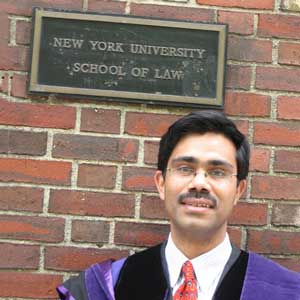
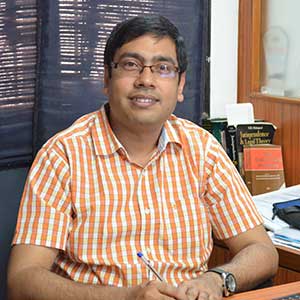
    Prof. Dr. Umakanth Varottil is an Assistant Professor, Faculty of Law at the National University Singapore (NUS). He is an alumnus of the National Law School of India University, Bangalore, graduating in the year 1995. Soon after graduation, he joined Amarchand & Mangaldas & Suresh A. Shroff & Co. (AMSS), where he soon saw promotion to the post of a Partner. While at AMSS, he was ranked as a leading corporate/mergers & acquisitions lawyer in India by the Chambers global guide. He then went on to complete his Masters from the New York University School of Law (NYU) in 2007, and then his Ph.D. from NUS in 2010. He has since taught on a visiting basis at the Fordham Law School, New York, University of Trento, Italy, and at various law schools in India. He is the recipient of several academic medals and honours. At present, he is an Assistant Professor of Law at National University of Singapore (NUS).

    In this interview, he talks about :

    • His experience and journey from an Associate to a Partner at AMSS;
    • What made him leave AMSS for a life in legal academia;
    • His experience at NUS and NYU;
    • His PhD on the role of the independent directors in corporate governance;
    • Life as a Professor at NUS.


    How did you decide to study law? Were any of your close relatives lawyers?

    Since my late father was a lawyer, I was exposed to the legal profession from an early age. However, it was only after high school that I decided to follow his footsteps and take up law as a career choice for myself.


    How did the opportunity to study at NLSIU, Bangalore feel like? Do you recall your first day at the Halls of Residence? Would you like to share any observation/memory from those days?

    Securing admission into NLSIU Bangalore at that time was an entirely different ballgame from what it is today. At the time that I joined the law school, it was only two years old, with a great amount of uncertainty as to what lay in store for its students and graduates. Nevertheless, we were fortunate to have an eminent legal personality in the form of Dr. Madhava Menon at the helm of affairs, who led an able and dedicated team of law professors, which left no doubt in my mind that our professional future was not only secure, but also promising.

    Some of my early memories relates to my initiation into the study of law, which revolved around analysing various social issues from a legal perspective, and debating them in hope of arriving at a solution to real world problems. As any student would experience in the first year of law school, there are no definitive answers to questions or problems, and each issue is capable of being viewed from multiple points of view. Added to this was the Socratic method of teaching adopted in the law school, which tends to confound problems in the minds of students than to clarify or resolve them. It is much later that I realised that this phenomenon was by design, and not an accident. As I was a resident of Bangalore, I did not stay in the Halls of Residence. Since NLSIU was still in its initial stage of establishment and hostels were yet being constructed, residence on campus was not compulsory. As it turned out, most of us “day scholars” spent long hours on campus, which helped us partake in the community aspects of law school.


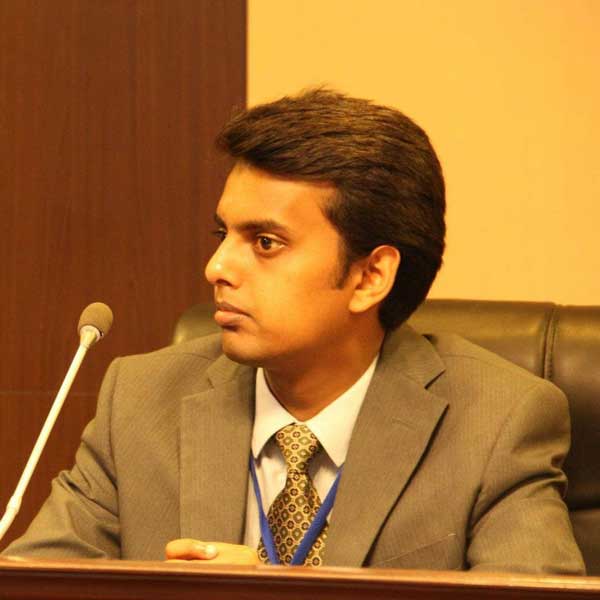
    umakanth-varottil-3

    How did you always keep ahead of your batch as a student at NLSIU? What would be your message to those people who never score much but do well at internships and moots?

    In describing academic life in an Indian law school such as NLSIU, I have previously used a metaphor, which is that it is like playing Test cricket. Student life involves sustaining oneself over a five-year period with equal energy and drive, and the ability to handle countless exams, assignments, presentations and other commitments that law school demands, not to mention co-curricular activities such as moot courts, debates, and the like. Hence, it involves a great deal of patience and perseverance. I must add that I have been enlightened about these characteristics more as a matter of hindsight, and it is not as if I designed and implemented any specific plan or strategy while in law school.

    For the lack of any alternative methodology for assessing the competence and capabilities of law students, grades do continue to matter a lot. But it is also important to develop an all-round personality, which can be attained through co-curricular activities. While performance in law school (academic or co-curricular) matters to some extent, it often tends to have a limited bearing on one’s professional progress and success, which might depend on other factors that a graduate may imbibe after law school.


    Have you been in touch with your batchmates? Is it true that all graduates from NLSIU do extremely well in their careers? Do you find differences between graduates of NLSIU, other NLUs and other premier law institutes?

    Apart from imparting legal skills, NLSIU helped me forge very strong relationships with a wonderful group of batchmates (as well as seniors and juniors), which I continue to cherish to date. It is true that the NLSIU alumni network is a tight-knit one. In fact, my batch is celebrating its 20th year reunion at the end of this year, where we will be spending a weekend together along with our families.

    While there could be some differences between the graduates of NLSIU and other premier law institutions in India, I do not believe that they are significant. Ultimately, the top students from all of these institutions form part of the same crop, and have been successful in similar ways. It might be the case that more number of students from some law schools may have demonstrated a higher performance compared to the others. Over the years, I have developed professional relationships with graduates from several law schools around India. In my view, while the institutional quality and background are important, it is the capabilities and determination of individuals that matter more.


    You joined AMSS early on as an Associate. How was your journey from an Associate to Partner? Was it mostly about legal knowledge, or did it include business development as well?

    My early years as an associate at AMSS involved gaining experience in corporate transactions. I was fortunate not only to be working with a leading law firm in India and its managing partner, Mr. Cyril Shroff, but I was also the beneficiary of an unending flow of transactions following India’s economic liberalisation that witnessed several novel legal issues being considered in-depth. Of course, being made a Partner carries along with it, different demands, which include client management as well as human resource management (that takes a great deal of people skills).


    You must have been very young as a partner. As a law student, it’s very difficult to imagine joining the ranks of a partner in just 5-6 years of work. What all does it take to become a partner?

    At the outset, technical skills do matter, i.e. the knowledge of the law within one’s practice domain, which includes both substantive and procedural matters. In addition, skills such as conflict resolution, problem solving and acting as a “trusted” advisor to clients, are a hallmark of a competent partner. Then come other skills such as business development, human resources, and even financial management.


    Is it possible for a person who is not exceedingly well versed with Business Development and is not good at drawing clients to get promoted to the ranks of a partner? Would it take more time?

    It is ironical that while law schools teach the knowledge and skills pertaining to matters of law, the other skills, such as business development, are required to be developed by lawyers on the job. Some lawyers are excellent in technical legal skills, but they either do not have the capabilities, or are uninterested in the managerialaspects. In those scenarios, of course, there could be some constraints when it comes to promotion. Ultimately, this could depend on the policies of individual law firms. But, I do believe that there is always space for lawyers with good technical skills, and law firms and legal practices may ignore them at their own peril.


    umakanth-varottil-2

    When did you actually find yourself getting drawn towards academics?

    This is a question I get asked all the time. When I was at AMSS, Bangalore, during weekends,I used to co-teach a seminar course on Mergers & Acquisitions at NLSIU along with Professor M.P.P. Pillai. The discussions in class,surrounding the theoretical and policy-level issues on areas that I was closely connected with in practice, attracted me towards taking up a full-time career in academia. Although I embarked on an academic career with a view to teaching, I discovered along the way that substantial emphasis is also placed on research and publications. I enjoy this combination of teaching and research in the areas of corporate law, corporate governance, mergers and acquisitions, and related subjects.


    How hard was the decision of leaving a well-established career as a partner of the largest law firm in the country, to take a plunge into academics?

    I was quite determined about embarking on a career in academia. However, given that I was leaving the profession after spending over a decade in it, many of my colleagues and friends felt that I was more likely to flirt with academia for a couple of years, and then promptly re-enter practice. But, that did not occur: I remain committed to the legal academy, and have not felt the urge to return to practice. At the same time, I continue to remain in touch with the profession through various means that helps me stay up to date with developments in practice.


    How did you select New York University School of Law among others? Was it any specific combination of modules that attracted you there?

    I chose the New York University School of Law (NYU) due to its focus on some of the key areas I was interested in, namely corporate, securities, and financial services law. Moreover, located in the heart of New York City, it also has access to professionals from leading law firms, accounting firms, and other financial intermediaries, who would often visit the institution to teach, and also to participate in seminars and conference.


    What was your topic of research for LL.M? Why did you choose that subject for research?

    Although I did an LL.M by coursework, I was required to write research papers on a couple of courses, which I found to be a valuable experience. In a seminar course titled “Topics in Corporate and Securities Law”, I wrote a paper on the role of independent directors in corporate governance. This has been a significant topic of interest world-over, not least in India. This paper also acted as a stepping stone for my PhD thesis on the topic subsequently at the National University of Singapore (NUS). At NYU, in another seminar course titled “Financing Development”, I wrote a paper on the use of the pari passu clause by lenders in sovereign debt documents, to block the debtor countries from making payments as part of a sovereign debt restructuring. This issue, as well, continues to hold sway till date, with litigation pertaining to Argentina under this clause making headlines, especially as they have been considered extensively by the US courts.


    How do you recall the faculty and facilities? Which other universities would you recommend for someone who cannot make it to NYU?

    I learnt considerably from my courses at NYU. Having practised Corporate Law in India for several years, it was a wonderful opportunity for me to compare the Indian law and practice, with those of other jurisdictions studied at NYU, including Delaware. Some of the professors and their teaching methodologies have had a significant impact on me, in that they have helped shape my own teaching philosophy and style.Apart from NYU, there are several other leading law schools in the US, UK, Singapore and Hong Kong, that have strong corporate and financial services law offerings.


    How did you choose NUS for your doctoral research? Tell us about your Ph.D thesis. Why did you choose that subject in particular?

    When I was at NYU, I came to learn a lot about NUS, as there was a collaboration between the two Universities for a joint LL.M programme. This was also consistent with my desire to stay in the Asian region, and closer to India. Hence, after consulting my classmate Arun Thiruvengadam, who was then teaching at NUS, I decided to apply for the doctoral programme there. As mentioned earlier, my PhD thesis dealt with the role of the independent directors in corporate governance, wherein I examined board independence in the context of emerging economies such as India and China, as it had previously been studied in the context of developed markets such as the US and the UK, where the agency problems relating to corporate governance were largely different. I chose that area in particular, as the concept of independent directors has confounded academics for some time now, with incomplete understanding of the utility of that institution in enhancing corporate governance. The concept continues to hold importance in India even now, with extensive codification in the Companies Act, 2013.


    Having taught at many universities in India, how would you compare it with the facilities and environment that NUS provides you? Do you find stark differences in administration between Singapore and India?

    NUS provides an excellent environment for both teaching and research. It has a diverse faculty and student body. While the LL.B students are mostly from Singapore, the LL.M students are from several countries around the world (including from far-flung areas such as Latin America), which makes teaching here truly global. There are indeed perceptible differences in the administration between Singapore and India. For example, the law school at NUS is situated within a larger University, which is over 100 years old and therefore endowed with significant experience and resources. On the other hand, the leading law schools in India are standalone establishments that are relatively younger, with greater flexibility in determining their own destinies.


    Is it possible that you may come back to India to teach? Do you look forward to that in near future? What all could probably could be the impediments, if at all you wished to come back?

    Of course, it is hard to make predictions for the future, but for the present, I offer short courses and guest lectures at various Indian law schools each year, which I thoroughly enjoy. Even though I am currently based in Singapore, I continue to remain closely connected with Indian legal education.


    What subjects are you currently teaching? What are your current research interests? Have you involved your students in your research?

    At NUS, I teach three courses. One is Company Law, a compulsory course for LL.B students, that involves teaching Singapore law, which is similar to Indian company law at a broad level (with both Singapore and Indian having originally inherited English company law), but with significant differences when one drills down into the details. The other two courses I teach are upper-level electives, namely Mergers and Acquisitions (M&A) and Indian Business Law. Elective courses are attended by third and fourth year LL.B students as well as LL.M students.

    My research interests are also on similar lines as my teaching. While my work is comparative in nature, I focus considerably on the laws of India and Singapore. I do involve research students in my work. While most of the research assistants tend to be NUS students (both LL.B and LL.M), I also often avail the services of students across various Indian law schools, particularly when the research material for a project is mostly available in India.


    Having won quite a few awards and honours for academic excellence and teaching, what would be your message to young professors?

    An academic career in law is an exciting one. It provides considerable freedom for young professors to delve into areas of their interest, both in terms of teaching and research. Several professors in India have established themselves as authorities in their respective fields, thereby garnering wide acclaim. They are also sought after by practitioners, policy-makers, and the Government. They have accomplished this through extensive research and publication of their work in leading academic journals, as well as through op-eds in the popular press that ensure a wider reach. My advice to young professors would be to identify their interest areas, and then build up domain expertise in those.


    Students often complain about high-handedness of faculty and administration in India, how do you propose we either find a solution to it, or change our own perspective?

    As I have already mentioned, Indian legal education continues to be moving along a steep learning-curve. The experimentation that began with the establishment of NLSIU, continues in one form or another. Given this trajectory, the path is not likely to be smooth. It would be presumptuous on my part to offer any solution, as the circumstances are rather complex. However, the key would be for the administration, faculty and students to work collectively to address various problems that are currently being faced. To go back to an incident that occurred when I was a law student, a proposal by the administration to raise tuition fees at NLSIU was met with stiff resistance from students, resulting in a deadlock. However, following successive rounds of negotiations between students and the administration, an acceptable solution was found, and the institution marched forward. Constant engagement between various constituencies within the legal education sector would be the key.


    Shifting to moot courts, how does one draft a winning memo? According to you, what is the difference between a great and an average memo?

    A good memo is one that is well-researched and expressed clearly. The grasp of the writer over the subject matter tends to be quite evident from its content and form. A great memo is also one that is very convincing. Ultimately, even in practice, a judge would decide a case based on (among other things) the written submissions of counsel, which must be clear, cogent and persuasive (supported by authorities).


    Do judges actually expect mooters to know everything about the law, or is there something else at play, as well?

    Successful mooting involves a combination of factors. Apart from knowledge of the law relating to the subject matter of the moot, it is necessary to master the facts (which often form the bone of contention). Thereafter, it is necessary to logically structure the arguments, which must be presented clearly. More importantly, mooters must be prepared to wriggle themselves out of a situation when they are caught off-guard by the judges. They must be able to think on their feet. Patience is another virtue that would come in handy in such situations.


    Lastly, what would be your message to people who want to take up a career in teaching?

    According to me, the idiom “Those who can’t do, teach” cannot be farther from the truth. It is no longer true that teaching is the last resort for a graduate in India. The academic world has attracted bright lawyers, and several excellent law students at their very early days, who have indicated their interest in teaching,and followed their single-minded pursuit towards attainment of their goals. Hence, I would encourage law students to consider an academic career. From my own experience, I have found academia to be extremely enriching and fulfilling.

  • George Pothan, Legal Consultant, Ministry of External Affairs, on work experience, LL.M from King’s College and studying law at JSS, Mysore

    George Pothan, Legal Consultant, Ministry of External Affairs, on work experience, LL.M from King’s College and studying law at JSS, Mysore

    George Pothan Poothicote graduated from Christ College, Bangalore with a B.Com degree before going on to complete his LL.B from JSS Law College, Mysore by 2010. While in law school he interned at several places including Ernst & Young and High Court of Kerala. He pursued an LL.M from King’s College, London and finished his masters by 2012. Immediately after completing his LL.M he came back to India and was appointed as Legal Consultant to Legal and Treaties Division, Ministry of External Affairs, Govt. of India, New Delhi and he is currently working there.

    In this interview he talks about:

    • Law school experience at Mysore University.
    • LL.M from King’s College, London.
    • Internships, recruitment and work at Ministry of External Affairs


    How would you introduce yourself? Tell us a bit about your pre law-college years. What motivated you to study law?

    Born in Mysore, I spent my early childhood dividing time between Mysore and Wayanad, and thereafter left to board at Montfort School, situated in Yercaud, a hill station in Tamil Nadu. I went on to do my B.Com at Christ College, Bangalore, LL.B at JSS Law College, Mysore and LL.M at King’s College, London.

    Hailing from a family of lawyers, I grew up imbibing into my very system the lawyers’ lingo and vernacular, and naturally felt drawn to the profession. Therefore, it was a firm and solid choice to become a lawyer myself.


    How would you describe your time at Mysore University? Tell us about the academic environment and faculty at the law department of the University.

    The experience was intense and extremely enriching. The student body was intellectually dynamic, with representatives from around the country and even abroad. The faculty included both full time academics and professional practitioners. They were very approachable, and inspired hope, ignited imagination and instilled a love of learning in their students.


    george-p-p-2

    Did you take part in activities apart from your regular curriculum? What all did you do as a law student?

    I participated in practical applications of what I learned, and textbooks gradually came to be of secondary importance to me. In conference settings, at moot courts and in practical classes, I had the opportunity to observe stellar lawyers and law students and noted how effective they were as participants, not only because they possessed superior knowledge, but also because they seemed to instinctively know how to handle a variety of difficult scenarios. Every evening of my final year, I visited the chambers of a senior advocate in Mysore. Also, every Saturday that year, I travelled to a village 35 kilometers from the city to provide free legal aid services and out-of-court settlements, as well as to spread legal awareness.

    My participation in National and International moot court competitions ignited my passion for the field of international law and also enabled me to interact with students and faculty from around the world. I assisted in research work for the scion of the Mysore royal family in the dispute over assets of the royal family and the abolition of the Privy Purse. Later, I helped to draft an anti-ragging bill which was presented to the then Governor of Karnataka. I also represented the college in various seminars and conferences.

    While being good in academics was the most important function during my days at law school, engaging in extracurricular pursuits was a close second. I did indulge in sports and had the privilege of representing my class and college teams in cricket and volleyball.

    My objective during my LLB days was to do my best whilst maintaining a healthy balance and letting other things beyond my control take care of themselves.


    Do you believe that excellent CGPA is absolutely necessary for success?

    An excellent CGPA, or any other measure of academic record, can assist in furthering academic pursuits and optimizing the initial recruiting process. That said, the microcosm of university and the world at large are as different as chalk and cheese. In universities one learns the theoretical aspects of law, but for success in the practical applications of the work environment, top grades are not a prerequisite.


    What were your areas of interest during your graduation (LL.M)? How did you go about developing expertise and knowledge in these areas?

    Constitution, Criminal Law, Arbitration and International Law were some of the subjects that interested me during my LL.B days. The experience I gained through moot courts, assignments and conferences, as well as my interactions with a number of inspiring people, led me to develop a particular fascination for International Law, both private and public.

    I had long been keen on pursuing an LL.M in International Law, but participated in a variety of modules before finalizing my subjects. My subjects were a combination of Public and Private International Law and International Commercial and Business Law, which may appear to be quite a broad spectrum for the course level. However, the subjects were not as disparate they seem. They included Terrorism and State Violence, World Trade Law, Use of Force, Commercial and Investment Arbitration, and Negotiation. What is especially interesting is the intimate relationship between International Law and Diplomacy. My curriculum combined both.


    Please tell us about your internships during your graduation.

    Internships and building work experience had been a consistent part of my academic pursuits during my years as a law student. At the end of my first year in law school, I was able to reinforce my tax related knowledge through an internship with Ernst & Young in their Global Tax Analysis service department in Bangalore. At the end of my second year of law school, I gained invaluable court experience with Honourable Justice R. Basant, a Senior Judge at the High Court of Kerala. I shadowed him closely and was privy to the procedures of the chambers of a High Court Judge, which gave me access to the judge’s files, notes and discussions. I felt particularly privileged as this was a rare opportunity for a student.

    During my final year, I visited the chamber of Advocate KL Sugandhi, a senior advocate in Mysore, which involved interacting with clients, learning procedures and even contributing to work on the cases.


    Do you believe branding of college is something that’s very relevant/ important at any stage in a law student’s career?

    Branding seems to have become as inevitable in the field of education as in business. That said, it should be taken with a bucket of salt. Power on the professional battlefield is determined by hard work and dedication above all.


    When and how did you decide to pursue Masters? Was it a professional requirement or an endeavour out of academic interests?

    From the beginning of my law education, I had entertained the idea of pursuing an LL.M degree. That said, I never viewed it as a professional requirement, as I had initially been keen on a career in litigation, for which an LL.B would suffice. Over the course of my LLB, I pondered over the subjects I would like to pursue, and shortlisted the Universities that seemed best suited to my interests.  The LL.M was a great adventure that enabled me to set sail to shores more magnificent than I had ever imagined.


    You have done your LL.M. from Kings College London. Please share your experience. Any other university which offers a similar combination of modules?

    It was simply amazing. I was taught and inspired by some of the best professionals in their respective fields: Professors. Martin Hunter, Salim Moollan, Samuel Wordsworth, Dr. Federico Ortino and Dr. Piet Eechout, to name a few. I still am in touch with most of them both at personal and professional levels. Whenever I felt the need for an expert opinion or guidance, these professors were most helpful. The course combined theory with practical applications. The whole system was different from what I was familiar with at the LL.B level. In addition to textbook learning, there were group discussions, debates and lots of interactive sessions, with an emphasis on research. We were encouraged to write papers and discuss them.

    I still have fond memories of a workshop conducted by Prof. Martin Hunter, visits to his chambers at Essex Court Chambers and a Friday clinic he used to organise. Another unforgettable experience is the time I spent at the WTO, where I was able to interact with key people of the WTO Secretariat and Country representatives, and gain valuable insight into the incredible operations of such a hallowed institution.

    There are other Universities that offer such modules, but I am not in a position to recommend them.


    How will you compare the pedagogy at Mysore University with that of King’s College, London?

    Comparing the pedagogy at Mysore University and King’s College is tricky because I attended them at two completely different levels. The LL.B is a basic degree in law, structured primarily to meet the general requirements of practitioners in the field. An LL.M is an additional qualification that involves specialization, and as such the structure of the LL.M diverges from that of the LL.B.  During my LLB, most of my professors were full time faculty, whereas during my LL.M, the majority of lecturers were practitioners in their respective fields, and their experience and expertise did make a difference.  A good teacher always brings out the best in his/her students. I consider myself lucky to have been mentored by the right kind of teachers.

    Diversity was perhaps the most significant difference between the two programs. At King’s College, the faculty and the University at large catered to a crowd from across the globe. The student community at Mysore University was primarily Indian.


    Looking back, how significant do you think that your legal education was? When did you happen to experience the learning curve?

    I believe that my education in its entirety has made me who I am today. My legal education in particular has been significant in shaping my career, and my analytical view of the world.

    As I see it, the learning curve starts from the earliest stages of life. Every single day has presented learning opportunities. I think, therefore I am; I live, therefore I learn. The slope of my learning curve in the legal field took a surge towards the latter part of my LL.M program, and continued to steepen when I entered the Ministry of External Affairs, where I have interacted with some of the best legal minds in the country and around the world. The Senior Official Meetings, Ministerial Meetings and Summits of which I have been a part were incredible experiences. One particular case that gave impetus to my learning curve was a brief I received from Mr. Gourab Banerji, the then Additional Solicitor General of India, during my early days at the Ministry. It was my first significant case, and it was an exciting challenge. More recently, I have had the privilege of being involved with the Law Commission of India in its work on investment treaties, which has been quite insightful.

    I look forward to the continuing intellectual stimulation of my work. Learning is an integral part of the profession, as it shifts like the sands of time.


    george-p-p-3

    You joined Ministry of External Affairs as a Legal Consultant; what worked for you in getting appointed?

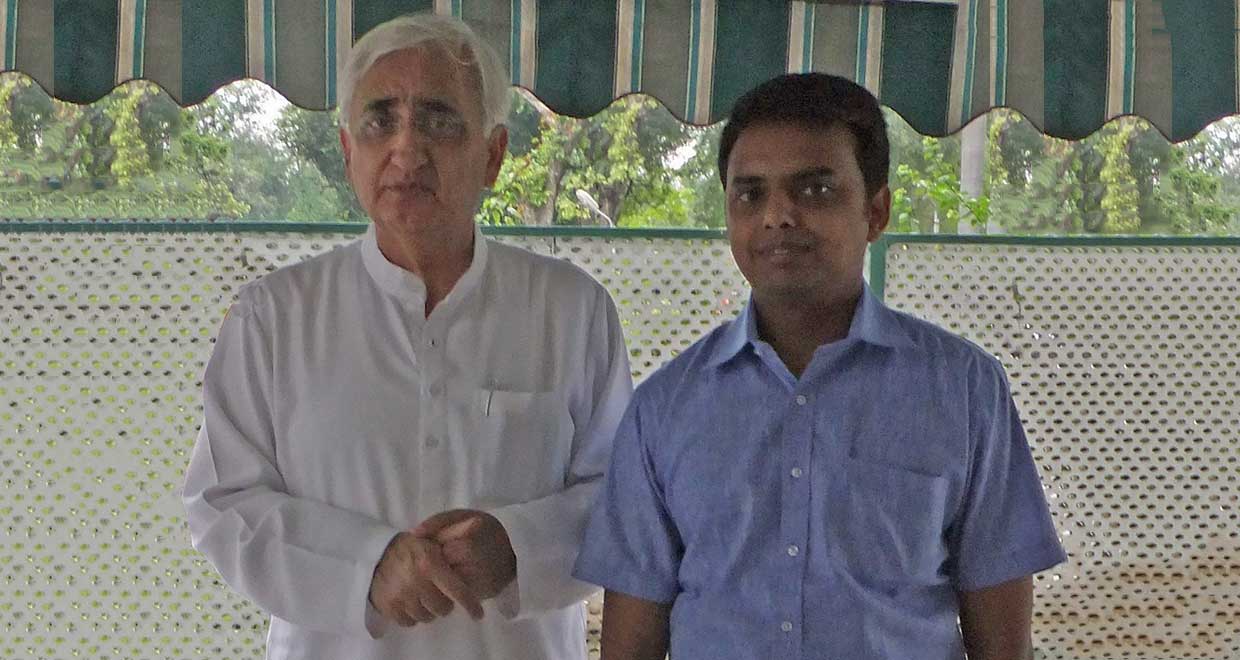
    I assume that my academic pursuits and passion for the profession, in addition to the support I received from the then External Affairs Minister, Mr. Salman Khurshid, who had faith in my ability and trusted me with such great responsibility, led to my appointment.


    What are the career opportunities at MEA like?

    The MEA provides excellent opportunities for those interested in the international dimensions of law. We deal with treaty negotiations and international law disputes. Diplomacy is integral to the mix. That said, our work is not exclusively on an international level, as we do examine domestic law issues on occasion.


    Are Legal Consultants allowed foreign postings? How does their work interact with that of the Indian Foreign Service?

    Foreign postings are certainly available to those belonging to the Legal Cadre of the MEA. The Hague headquarters the International Court of Justice and the Permanent Court of Arbitration. Geneva and New York City are bases for numerous international organisations.

    The responsibilities of international law and diplomacy require a great amount of interaction with foreign service officers and other government representatives.


    george-p-p-4

    Would you say that there exists a difference in the working environment of a law firm and legal department of the govt. offices?

    Most certainly, although I am not in a position to comment in depth on private law firms, as I have never worked in one. In the Government, everyone works for the Government of the day, and the work is not limited to legal issues. The tasks at hand are quite complex: they involve participating in drafting legislation, policy making, negotiating treaties and a variety of other roles. Most importantly, working for the Government means representing the Country and promoting collective rather than individual interests.


    What is the procedure to apply for an internship and recruitment at MEA? What are the qualities which they look for in their prospective employees?

    It starts with sending the completed form in the requisite format, along with references, to the Ministry to the Administrative Division (or any other Division that interests a prospective intern). From there, the applications are considered on merit. It is generally difficult to accommodate all applicants considering the huge volume of applications usually received. Details on applying for an internship at the MEA are enumerated on the website of the MEA.


    Have you ever considered starting up on your own?

    Starting my own practice has always been at the back of my mind. If I start my private chamber practice, I would focus on litigation before the Supreme Court, High Courts and Tribunals.  Considering my LL.M specialization and current work, I would be keen to pursue an active practice in investment arbitration, as well as international and domestic commercial arbitration.

    I firmly believe that there is potential everywhere, and it is about looking out through the window of opportunity. Talent finds its happiness in execution. Simply follow your heart, make the right choices and be dedicated.


    Please tell us about the requisite soft skills which are essential for a young lawyer to build a successful career?

    Communication skills, which are essential in any profession, are particularly valuable for a young lawyer. An open line of communication with colleagues assists in efficiency and securing solid relationships. Clarity, charisma and discretion must be kept in mind when dealing with clients.

    Commitment is important, given the heavy workload of young lawyers, and the established standards of excellence.

    Creativity is an immense asset, as innovation and thinking outside the box aid in problem solving and negotiation.


    What are your views on the future of Indian legal education? How would you suggest that a law student manages to stay ahead?

    I would like our institutions to compete with the best in the world. There is no dearth of resources in India, but we have to make optimal use of them. I hope to live to see the day our institutions are ranked among the best in the world, and pray that it is not far away. We need to support academicians in their pursuit. I personally am of the view that institutions should create a platform to bring in greater interaction between practitioners and students. The greatest asset of any educational institution is the character of its teachers. We need to encourage research and avoid spoon feeding. Classrooms should be about imparting knowledge and not forcing one’s views on the others. Students should be prepared to face the world outside beyond the realms of the microcosm of universities. I would suggest encouraging research and more practical classes and workshops. They are the need of the hour. The legal fraternity has to come together and support our institutions with a clear roadmap for the way ahead.


    What are the three things you consider law students should do in their careers?

    To me, goals should be set individually, and not based on what someone else has achieved. Be yourself, as they say. The markers of success vary, but generally, I would say that it can be achieved by staying focused, working smart and being organized. Professional mileage can be optimized with perseverance, perspiration and a stroke of luck.


    What would be your parting message to young lawyers?

    Here I would like to borrow from Mr. Fali Nariman, who lists the following in his autobiography “Before Memory Fades”:

    • A lawyer’s opinion should be honest and responsible,
    • A good lawyer should acquaint oneself with relevant law, including case law on the subject at hand,
    • One should be clear and precise, not confused,
    • One should keep oneself informed and up to date with all the reported judgments and decisions of the Supreme Court and High Courts,
    • A lawyer should be well prepared for his case.

    A lawyer must never stop learning, for intellect demands clarity and certainty. That said, circumstances render uncertainty inevitable and fascinating. In an ever changing world, progress is proportional to the capacity to endure uncertainty.

    One’s name is a prized possession in this mortal world, which through our acts, deeds and achievements can be immortalized and etched in the minds of generations to come.


  • Pratyush Nath Upreti, Advanced Masters, (LL.M) Intellectual Property Law & Knowledge Management at Maastricht University, on pro-bono work and the KIIT Law School experience

    Pratyush Nath Upreti, Advanced Masters, (LL.M) Intellectual Property Law & Knowledge Management at Maastricht University, on pro-bono work and the KIIT Law School experience

    Pratyush studied law from KIIT Law School, Bhuvaneshwar, he graduated in 2013. Being a citizen of Nepal, he chose India to pursue B.Sc. LLB. After the successful completion of his bachelors, he is pursuing Advance Masters (LLM) in Intellectual Property Law & Knowledge Management from Maastricht University, Netherlands on a scholarship. He had interned extensively through the years of law school and published nearly 30 articles in The Kathmandu Post. In this exclusive conversation with Pratyush, we talk about:

    • Education and experience at KIIT Law School.
    • Selecting the appropriate publishing companies for his journals.
    • Interning at Asian Network for Free Elections (ANFREL), Bangkok,
    • Being a Member of New IP Lawyer’s, a wing of School of Law and its research centre called SCule (Science,Culture and the Law) under the University of Exeter, United Kingdom.
    • Undergoing exchange programmes at The Office for Harmonization in the Internal Market of European Union (OHIM), Spain
    • Pursuing LLM in Intellectual Property Law and Knowledge Managment from Maastricht University, Netherlands.


    Tell us a bit about your pre-college life. How did you choose to study law that too in India? Did you have lawyers in your family?

    I come from the Biratnagar, city of influential leaders in Nepalese politics. Being the youngest child of my parents, I began the journey of my student life by following my elder sister’s footsteps to one of the most prestigious schools of the city. In school, my inquisitive mind as a young student ran into almost all nooks and corners of the colorful life. I was not a great student but lived my life into the realm of education.

    When I finished my intermediary, civil war in the form of a Maoist insurgency ended with the signing of the comprehensive peace agreement and formation of a Constituent Assembly. Nepal was in transitional phase(still in transitional phase), we were taking the first step towards building a constitutional democracy. During the phase, many friends opted to go abroad for higher studies which were never an option for me.

    When I decided to peruse law there were very limited option in Nepal. Moreover, India is also not far away from Nepal, it was a convenient option. I was also attracted by the unique integration of law and science. So, I decided to join the B.Sc.LLB(Hons) stream in KIIT Law school, a newly born law school with a colourful dream, like that of mine of marking a mark of its own in the highly competitive legal arena.

    Yes, I belong from a legal background, my father is a senior advocate practicing in Nepal and my grandfather served as a Judge of Nepal. I think I represent the third generation of lawyers in my family.


    While in KIIT Law School you selected B.Sc. LL.B as your stream. What would be your advice to law aspirants about choosing a stream? Did it give you an edge over B.A. LL.B graduates? Does it have a long lasting effect?

    In recent years, legal education has rapidly changed. The unique integration of law and science is an attractive career option. The law and science offer plenty of opportunity in the sector of forensic science and Intellectual property law. During my short working experience, I have felt that there are high demands for lawyers with scientific/technological backgrounds. Anyone interested in B.Sc.LL.B should keep in mind the course structure of the college offering the course. Make sure they have good science faculty and if you are interested in taking biotechnology as a major then well-equipped laboratory is important. I was the first batch of B.Sc.LL.B(Hons) course in my college, but I had some laboratory works. Fortunately, My university had separate well-equipped Biotechnology faculty which was an additional advantage for me. Since, there is not much of crowd of lawyers with knowledge of both the field, a B.Sc.LL.B(Hons) graduates do have an advantage from a job perspective.


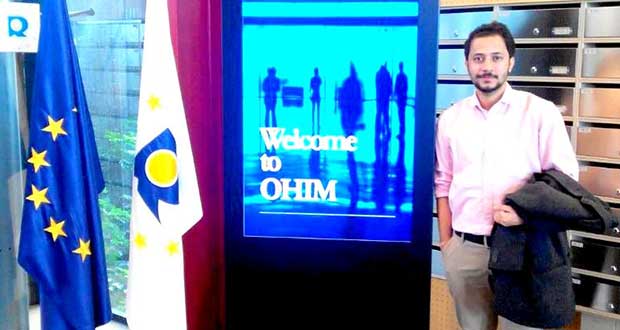
    pratyush-upreti-1

    If I were a young law student who never wrote an article, how would you advise me to get started given that you yourself wrote a lot?

    To be honest, I never pre-planned to write an article. Most of my articles are the outcome of my project which I did during law school or internship. Choosing a topic which is contemporary is important for publishing an article. I suggest law student to identify contemporary legal issues and continue as a project for the course. If you do your research honestly, then certainly you will end up publishing.


    How would you select a specific journal and approach them for publication? What are the things you look for in a journal before sending them your article for publication? Can you tell us the steps involved in researching and structuring an academic paper?

    Selecting a Journal is not easy, there are two important things, which I look before sending an article. Firstly, the journal timeline for a review process. When you research honestly, you get ambitious about the project and really want to publish in good Journal. But sometimes, a long review process of the journal is really frustrating. There were few Journals who replied me after a 15 months. It was really painful! But as a student you should never be discouraged by rejection or late replies. Before sending your article, it is important to know about the Journal well( just email and ask about timeline for review). Secondly, I see the focus area of a journalif your topic matches those area’s or related contemporary issues than your acceptance chances are really high.

    There are generally accepted ways of researching and structuring the paper. For me research is important, I try to gather as much of information from various sources like books, Journal, reports, internet etc. Once I gathered information, I tried to find contemporary issues/problem involved and put my thoughts in a logical way and roughly draft a research outline which will help not to divert from focus area. For any writing may be a newspaper or academic journal structuring is important. Your writing must reflect you thoughts and every section need to clearly link. Mostly importantly for academic writing reference/bibliography/footnote is very important. Generally, accepted standard structure includes Abstract, Introduction, research question, discussion (arguments advanced), conclusion/recommendation and bibliography.


    How did you plan your internships and how did you go about applying for these internships?

    (Pratyush has interned quite extensively through his 5 years at law school. Some noteworthy mentions are Anand and Anand; Asian Network for Free Elections (ANFREL), Bangkok, Thailand; Singh & Associates, Advocates and Solicitors; Sycip Salazar Hernandez & Gatmaitan Attorney At-Law, Philippines; The Ministry of Home Affairs, Parliamentary Affairs, Constituent Assembly and Culture, New Delhi, India; Enviro Legal Defense Firm, New Delhi, India and other places as well.)

    Early planning is very important to secure a good internship. Mostly, I planned my internship at least a 6-8 months before. This is important because, you can never depend on one organization or law firm. You need to file a several application. The application process depends completely on the institute which you intend to apply. Most of the organizations where I interned had similar recruitment pattern, I just applied online with a short cover letter and resume.


    What kind of work did you typically find yourself doing as an intern? Did your experiences vary significantly with the internships?

    I had a diverse internship experience. My task and workload as intern completely depend upon where I was interning. In law firms, I had long working hours and mostly I ended up doing a lot of draftings, research on several issues and assisted litigation team. Some of the research which I did in the law firm was published in law firms in-house Journals. On the other hand, in an organization you mostly do research work, they will make you involved in the ongoing project. During my school, I was fortunate to do two international internships. First, at Sycip Salazar Hernandez & Gatmaitan Attorney-At-Law, one of the biggest law firms in Philippines where I was involved in commercial and Intellectual property division. I mostly assisted the team with the prosecution of trademark, patent registration, review of technology transfer arrangement, franchise and distributorship agreement etc. Second, at ANFREL, I researched on several electoral issues and assisted drafting team of ‘Bangkok Declaration of Free & Fair Elections’. During my stay, I also got an opportunity to observe the election. It was a great learning experience.


    What comprised your work profile as a Legal Researcher at the “Forum for Protection of Public Interest (Pro-Public)”? Please share with our readers.

    Forum for Protection of Public Interest (Pro-Public) is one of the reputed organization in Nepal. It has a long history of contribution to socio-legal development in Nepal. Pro-public gives an opportunity a law student to voluntarily associate with the organization in different capacities. I was fortunate enough to associate myself with the organization during law school.

    During my undergraduate, I had an experience of research work. At law school, I worked as research assistant in University Grant Commission (UGC) main project titled “ Use of Forensic Science in Criminal Justice System: A futuristic Project”. Similarly, I did some research work for Cobalt Business Counsel Professional Corporation, Ontario, Canada for few months. Furthermore, my research internship with Enviro Legal Defense Foundation, Nepal Law Commission, and The Ministry of Home Affairs, Parliamentary Affairs, Constituent Assembly and Culture, was largely based on legal issued related to Nepal. Maybe this gave me an edge than other candidates during the recruitment process.


    Thereafter, you have joined Asian Network for Free & Fair Elections (ANFREL) as their Legal /Liaison Officer. Do you think, it became easier to get appointed because you have interned earlier at ANFREL?

    I don’t think so, internship experience helped me to get the position at ANFREL. ANFREL is a professional organization, they have transparent and heavy recruitment process. I came to know about the vacancy through a Newspaper. I did go through a screening process and had a very long interview by ANFREL Secretariat. Luckily, I got through the interview.


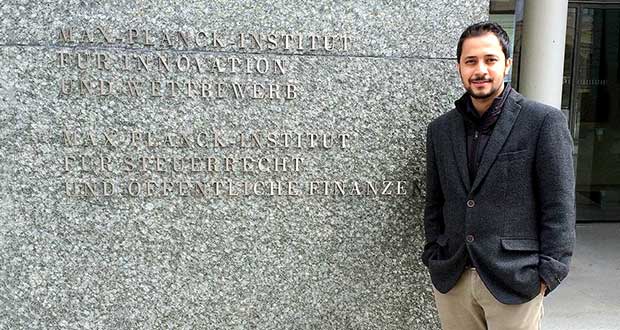
    pratyush-upreti-3

    What kind of work does ANFREL do? Please brief us about the nature of work and responsibilities you were entrusted at ANFREL.

    The Asian Network for Free Elections (ANFREL) was established in 1997, as Asia’s first regional network of civil society organizations focused on elections and election monitoring. It strives to promote and support democratization at national and regional levels in Asia. Since it was founded, it has served towards strengthening the democratization of countries such as Sri Lanka, Nepal, Thailand, Malaysia, Cambodia, Pakistan, Bangladesh, East Timor and Indonesia.It is one of the most trusted and reliable International Election Observation Group globally. They mostly focus on three area: (i) Election observation (ii) capacity building (iii) campaigns and advocacy.As Legal/Liaison Officer, I was involved in providing legal assistance to the ANFREL Election Management/Observer team. During my tenure, I reviewed national electoral law and assisted the ANFREL team in making Observation manual and reports. In addition, I was also involved in organizing and co-ordinating meeting with several stakeholder, civil societies, and politicians and also observed Constituent Assembly Election. I must say, I had a wonderful experience working with ANFREL. They have great working culture and ethics.


    Right after ANFREL, you went for LL.M. Why did you decide to go for higher studies?

    Initially, I wanted go right after my graduation but later decided to take a break of a year. There is no reason as such, I always wanted to continue my studies and then focus in practice.

    How did you go about choosing which college to go to for your LL.M. and did you ever consider Indian colleges? Was it the course or the university which mattered for you?

    I was very clear that I want to do LLM in Intellectual Property Law from abroad. Since, I have spent five years at law school in India so I didn’t want to have similar quality of education. So, never considered Indian colleges. The First thing I did was listing of colleges which offer LLM in intellectual property Law. I applied to three universities; School of Law University of New Hampshire (formerly known as the Franklin Pierce Centre of Intellectual Property) USA, Queen Mary University of London, UK and Maastricht University. I was accepted in all three. I got the scholarship from Franklin Pierce and Maastricht University and opted later.


    Tell us about your LL.M year at The Maastricht University, The Netherlands which you are currently pursuing.

    I am doing Advanced Master in Intellectual Property Law and Knowledge Management. It is a unique master program for lawyers, non-lawyers, and those with a degree in science of technology. It is popularly known as IPKM. The Advanced Masters IPKM are fully accredited by the Accreditation Organization of the Netherlands and Flanders (NVAO). The IPKM MSc is furthermore accredited by the European Patent office (EPO) for EQE remission. In addition, IPKM is a member of the European Intellectual Property Institutes Network (EIPIN) and a founding member of the Pan-European Seal Professional Traineeship Programme.

    Maastricht University is known for the problem-based learning environment where students are personally responsible for their academic education. The IPKM is taught in a very closed group, where the student analyzes the problems through discussions, exchange knowledge. The programme is taught in socratic teaching, often using real-life cases, mock trials and assignment (mind it, it’s not a piece of cake, it will dig you into the subject matter which we need to submit before class). The tasks are further discussed and analyzed along with lectures during class. Basically, it was fun working within a diverse class, amazing study visit. To conclude, IPKM provides a lot of opportunity for learning and networking. If you want to excel in Intellectual property, IPKM is the right choice! Go for it!!


    How difficult was studying abroad in terms of finding accommodation, finances and settling in? Are there any scholarships for studying at the Maastricht University?

    Not at all! Particularly, at Maastricht we have a very friendly student service center (SCC) which helps the international student in finding accommodation if needed. I didn’t have a problem as such, I found accommodation through online. There are facebook pages which provide information on accommodation, and most of them are very reliable. Maastricht University do provide Scholarships for International Students which are available on University Official website. I was lucky enough to get a UM High Potential Student Scholarship, which really made my life easy.


    How is the faculty & academic schedule (your typical day) at Maastricht? Given your experiences how would you pit Indian students with their foreign contemporaries?

    The faculty staff in the IPKM are very diverse and immensely supportive. It includes professor and practitioner from different jurisdictions, most notably Europe, Asia, and the United States of America. We had a very intense module on US Copyright Law taught by Professor Edward Lee, Director of the Program in Intellectual Property Law, Chicago-Kent College of Law, United States. Similarly, some of module was taught by Professor of Queen mary University, the University of Nottingham, and few class were taken by European Patent attorney etc. In addition, we have series of IPKM expert lectures by practitioner’s which enlighten us on contemporary IP issues. My day starts with waking up, and riding to the library, preparing for classes and assignments. There is always a number of readings for class, which are expected to be discussed in class. Generally, I return very late from the library in fact library is my sanctuary) and then I have to try and cook which I really hate.


    Was there time enough for non academic pursuits at Maastricht? How did you find the study-life balance to be?

    Not really! IPKM is very hectic!! (That’s what you expect from competitive course) we get few days off in Christmas. But Maastricht is a beautiful place, there are several things to do besides academic. On balancing study-life, I am the right person to answer that, I always struggle.

    Tell us about the course structure of an Advanced Master (LLM) Intellectual Property Law & Knowledge Management at Maastricht University.

    The Advanced Masters in Intellectual Property Law and Knowledge Management (IPKM ) offered at Maastricht University Faculty of Law are designed to train graduates to work as legal practitioners or management in knowledge-intensive industries and research institutes. The IPKM offers two distinct degrees:

    (1) A LLM degree focusing on comparative IP litigation and/or entrepreneurship, valorization and IP management

    (2) A MSc degree for graduates of science and technology aspiring to become IP specialists, knowledge managers, or patent attorneys.

    The IPKM course is designed in three main pillars

    (1) the common course for both LLM and MSc student are taught together

    (2) mandatory course for both LLM

    (3) mandatory MSc track.

    Some of the intensive modules offered is Intellectual Property in USA and Asia, patent drafting, IP enforcement, Intellectual Property & Life science among others.

    For more information, you can visit

    (http://www.maastrichtuniversity.nl/web/Faculties/FL/AdvancedMasterInIntellectualPropertyLaw).


    How did you benefit from the different programmes you took up after admission to IPKM?

    (Pratyush underwent a couple of training and exchange programmes after he had secured admission at Maastricht University, some of which are Module on Community Trademark at The Office for Harmonization in the Internal Market of European Union (OHIM), Spain; Study visit at European Patent Office, Hague, Netherlands; Attending Congress of European Intellectual Property Institute Network (EIPIN) organized at Maastricht University and Max Planck Institute for Innovation and Competition.)

    IPKM as well designed course which aims to provide plenty of learning opportunities for the student. I had one module in University of Alicante in The Office for Harmonization in the Internal Market of European Union (OHIM), Spain, it was a great experience. The modules were taught by European trademark/design examiner and practitioners. Similarly, Congress of European Intellectual Property Institute Network (EIPIN) held at Maastricht and Max Planck Institute for Innovation and Competition/European Patent Office were two days intense discussion on contemporary Issues of Intellectual property Laws. In both, the event sessions were addressed by scholars from Europe and The United States. Personally, I really enjoyed these events, you get to know emerging issues in IP Law and also an opportunity for networking.


    Please share a few words about you being Member of New IP Lawyer’s, a wing of School of Law and its research centre called SCule (Science,Culture and the Law) under the University of Exeter, United Kingdom.

    New IP Lawyer’s is a network of young academic and practitioner in IPR. It is the initiative of Ph.D. student at the University of Exeter and have network representative at the University of Oxford. The network aims to encourage and facilitate discussion of the issues related to IP law both by lawyers and non-lawyers. Recently, the network successfully held the first annual conference: who owns the Arts and Sciences? At the University of Exeter where renowned academic like Professor Lionel Bently(University of Cambridge), Professor Charlotte Waelde among others were key speakers. The Newtork is relatively new, in a very less time it has received overwhelming support. New IP Lawyer’s is also aiming to organise seminar series and several academic event. Stayed tuned at http://newiplawyers.wix.com/newiplawyers


    Is writing is your hobby? How do you manage to write for newspaper on various issues beside your LL.M studies and other engagements?

    (Pratyush has published approximately 30 newspaper articles till date at The Kathmandu Post& among others, on various issues.)

    I enjoy writing it connects me with readers. I never took writing as a hobby, I started writing during my undergraduate. When I was studying in India, I always wanted to involve in socio-legal issues and give my opinion on such matters. The newspaper was the perfect forum to share my thoughts and involved in several issues happening in Nepal. After law school, I continued writing and still I regularly contribute on socio-legal/political issues in Nepal. It makes me happy when readers send feedback or point of disagreement on issues and it also helps to improve writing. I never take writing as a burden, whenever we come across interesting issues we always have an opinion, just that I gather my thoughts and write. Most important, writing gives me a lot of pleasure; I feel a sense of freedom.


    What is your responsibility as a student member of Maastricht University for European Intellectual Property Institutes Network (EIPIN).

    IPKM is a member of the European Intellectual Property Institutes Network (EIPIN). Every year few students are selected to represent as a student member of EIPIN where we get the opportunity to attend EIPIN congress and participate in the group projects. I was assigned with team project which consists of five student from Queen Mary Intellectual Property Research Institute(University of London), Munich Intellectual Property Law Center (MIPLC), Centre for International Intellectual Property (CEIPI) University of Strasbourg, Magister Lvcentinvs (University of Alicante). My team has already submitted our research project titled “Permitting Transformative Use and Copyright Law: The Case of Parody as Innovation” to EIPIN committee. It had a great time working together with fellow students.


    What are your future plans? How do you plan to use the experience and the knowledge gathered at Maastricht?

    I successfully defended my thesis, just winding up my course at Maastricht. Most probably I will be returning home in August, and practice litigation. Although, Intellectual Property regime is not very well developed back home which makes it more challenging to take IP as a career but again it give an opportunity to participate in the process to develop the field. The experience and knowledge gathered at Maastricht surely have given me in-depth knowledge about global IP practice which will surely help in instituting policy reform in Nepal.


    And any word of advice for all the young law students out there?

    Learn, question and make the most out of the law school. Make sure you enjoy your student life as well. Good luck!


  • Sanjeevi Shanthakumar, Dean, Faculty of Law, SGT University, on establishing three elite law schools, teaching and academics

    Sanjeevi Shanthakumar, Dean, Faculty of Law, SGT University, on establishing three elite law schools, teaching and academics

    Prof. Sanjeevi Shanthakumar is a graduate from Dr. Ambedkar Government Law College, Chennai (Madras University) (Batch of 1989). Thereafter he pursued LL.M. from Madras University with specialization in International Law and Constitutional Law.

    Currently he is Dean, Faculty of Law at SGT University, Gurgaon [NCR]. Earlier, he was Director of ITM Law School, ITM University, Gurgaon, Director of MATS Law School, MATS University, Raipur; Controller of Examinations of Hidayatullah National Law University, Raipur; Associate Professor of Law at Hidayatullah National Law University, Raipur; Senior Lecturer at Government, Law College, Madurai; Senior Lecturer at Government Law College, Chennai. Before joining the legal academia he had practiced at the Madras High Court for seven years as legal practitioner.

    He has an unique experience of establishing three elite law schools on a self financing mode.

    He shares his experiences in this interview.


    Please tell us a bit about your pre-college years, you as a student, your ambitions as a child. Did you have lawyers in your family or among close relatives?

    During my school days, I was a studious and enterprising child. Believed in honesty and hard work. Very cooperative and helpful to teachers and the school administration. One day when my class teacher was asking about the subjects we like the most, each student was naming either maths or science. When my turn came, I stood up and said “civics” and all the students in the class laughed at me. I never knew those days that this interest in civics will lead me to study law. I never had any lawyer in the family or amongst my relatives. Hence, was complexly unaware of legal profession.


    What were your objectives when you thought about law while still in the preliminary years of Law College? What were your goals after graduating? What were the options available to you?

    As I said, I never knew about this profession. My father wanted me to be a Medical Practitioner. Since I could not get a seat in the Medical College, I got admitted in B.Sc. [Chemistry] and started attending classes. One day, my dad came to my college and said that we need to go to the Madras law college and the interview is scheduled for admission to five year integrated law degree program. I walked with him without realizing that this is going to be a turning point in my life. Went to the Law College, faced the interview and later was declared selected. That was the starting point of my law journey.

    At the law college things were much unorganized. Was very scared to study in that environment. Was feeling very sad and was repenting my decision of joining the law college. Fortunately got few friends who cajoled me. Started developing interest in studies after meeting a friend called Gnanasekar. He was too elderly to be called a friend and hence we used to call him as “uncle”. He was the one who motivated me to study law. He used to call us outside the class room and started explaining to us each and every topic. He never used to carry text books like any other student. He used to carry with him volumes of AIR and read to us the full judgments of the Supreme Court. This created interest in me to read law through cases and law as interpreted by the Courts. He got opportunity to work on a part-time basis at a very popular law firm in Chennai, our interaction with him got reduced and I assumed his role in teaching my friends. This is how; I started teaching though informally.

    Instant recognition and appreciations after a good lecture fascinated me and forced me to take up teaching. Those were the days when there was a serious dearth of good law teachers. I went for a coaching class for preparing for the Civil Services Examination. The Teacher who was teaching Indian Polity could not come to classes regularly due to certain personal reasons. One day I tried to fill the gap by teaching a topic in Indian Polity. The overwhelming appreciation and feedback from my fellow students gave me confidence to become a good teacher. Based on the feedback from student the Director of the Centre Prof. M.F. Khan insisted that I should teach Indian Polity regularly and I got in to active teaching.

    My practice at the Madras High Court was a great experience. I was with one of the top ranking law firms M/s. Aiyar & Dolia and had a roaring practice. Received appreciations from my seniors, colleagues, clients and judges. In spite of these, my passion was in teaching and hence went for a full time Masters Degree Program at Madras University with specialization in International Law and Constitutional Law. After my Masters I cleared the UGC JRF and got the Junior Research Fellowship to do PhD in Law wherein as part of the fellowship terms and conditions, I had to deliver lectures for LL.M. students. Teaching Post Graduate Law students started this way and later got appointed as Senior Lecturer at the Government Law College, Chennai, and I happily started to teach at the college where I studied law. Later, on official transfer went to Government Law College, Madurai from where I resigned and joined Hidayatullah National Law University, Raipur. After HNLU, went to establish a new Law School for MATS University at Raipur as its founder Director, later established ITM Law School at ITM University, Gurgaon as its founder Director and now establishing the Faculty of Law at SGT University, Gurgaon as its founder Dean.


    Which subject do you enjoy teaching the most?

    (Sanjeevy has taught a number of both traditional legal subjects and the trending ones from Jurisprudence to Constitutional Law to International Law.)

    Not only the above mentioned conventional law subjects. I have the experience of designing curricula for Honours Courses wherein I had taught courses like “Biotechnology and Law”, “National Regulation of International Trade”, Science Technology and Law, etc. However, I enjoyed teaching Environmental Law the most and other subjects like International Law and Constitutional Law. I would also love to teach and enjoy teaching Environmental Law.


    Tell us about your teaching methodology. Do you encourage students to take notes or do you engage your students in active class participation? What advice do you share with your students on scoring higher grades?

    My teaching was never a one way process. I was one of the fortunate few teachers to get trained to teach under a World Bank Capacity Building Project and also at Cardiff University, U.K. under the British Council Funded Project. Whatever new teaching methods I learnt at these programs, I disseminated the same to many other young law teachers, through various training programs for law teachers on law teaching methods, at different universities across the county.

    I focus more on active learning rather than on teaching. It was always student centric. I actively involve the students in the process of learning the subject. During a semester, I deliver very few lectures. Most of the topics used to be learnt through small group discussions, role plays, field visits, seminars and projects. My question papers to assess my students understanding were always unique and different. Questions will never test their memory. Instead, it will encourage them to apply the acquired knowledge over a given situation and to come out with unique solutions, both legal and non-legal.

    I encouraged students in small groups to visit environmentally affected areas and to talk to various stakeholders to find out the real reasons for the problem and approach the administrators to find out what measures have been taken and finally to come out with their original solutions to resolve the problem. These methods helped every student to get engaged in the learning process. I made certain passionate students’ members of a Public Trust founded by me and named as “TREES” Trust for Research and Education on Environment and Sustainable Development” through which they continue to do some good work for the cause of environment, thereby engaging them in a life long learning process.

    My teaching methods for teaching Environmental Law was recently recognized by the Asian Development Bank, Manila by conferring on me the “Environmental Law Champions Development Award”.


    What role do legal researchers and academics play in the Indian legal system? What positive changes would you recommend on this aspect of the legal system?

    I personally feel by the legal academics have a greater role in producing quality legal professionals. As it was rightly said, the “Quality of the Bar determines the Quality of Justice”. Hence, it is the primary responsibility of legal academic to ensure the quality of the bar though developing the quality of law students who enter the bar.

    The only change I would recommend to all my law teaching fraternity is that, ‘Please take law teaching seriously and don’t take law teaching for granted. Do justice to your profession; else the nation will fail as a consequence of chain reaction.


    When would you say that an academician is successful? What are the career goals legal academicians should set for themselves?

    A Legal Academician’s success is measured in terms of the quality of legal professionals he produces. I feel successful, when I hear news about the success stories of my students, whom I have taught at different points of time. I could not avoid but sharing this news that this year four of my students got admitted to the LLM Degree Program at Harvard Law School. This gives me, as an academic to feel successful.

    The one point career goal for any legal academic is to be a good teacher and to be recognized as such. All the other positions and opportunities will automatically follow as and when time progress.

    Most of the opportunities I have had so far came to me through the recommendations of my students. One of my students even recommended to her peers and teachers at Oxford University to invite me to give a talk on Environmental Law at Oxford, which I did.  My students believed that I can do and I try not to disappoint them.


    You have authored several books and have written various research papers. How did you find time to write so many scholarly articles?

    For writing books, you need to have a compelling reason. I wrote books on Environmental Law only to help my students, as they were suffering for want of good reading materials, at that point of time, when Universities started to teach Environmental Law as a compulsory course. I tried to help them again with the help of a group of students, who dedicated a lot of time and energy to collect all the information and data required to author a book.


    What was the biggest challenge that you had to face while building the law schools?

    (Sanjeevy is the founder Director of MATS Law School as well as of ITM Law School, Gurgaon)

    The biggest challenge was to attract good students because without good students around me, I will not be able to experiment or innovate in legal education.


    Any thoughts on the current system in place to train the Indian judiciary and continuous legal education of lawyers? How can these systems be improved and made more effective?

    I believe in the importance of “Continuous Legal Education” for lawyers and judges especially in the trial courts. 15 years back, I conducted one “CLE Program for Young Lawyers”, while I was teaching at the Government Law College, Chennai. I received tremendous response for the same and appreciations for the initiative. I wanted it to be a regular feature. Due to transfers and relocation, I could not continue the CLEP. As Dean of SGT University Faculty of Law, I have started doing it again, and hope to continue it.


    As the current Dean of Faculty of Law, SGT University, how do you feel SGT can take a greater role in social engineering in India?

    As Dean of the Faculty of Law of SGT University I try to leave no stone unturned to make the law school a clinical law school where students learn through experience. I believe in “justice education” in contrast to “legal education”. I am trying to provide my students, maximum exposure to the legal profession through various clinical activities.

    I constantly remind them to think critically and not to accept anything just because it is there. To help the students feel more socially responsible I facilitate their visits to the communities for interaction very frequently through the legal literacy club. These visits to the communities and interaction with legal luminaries gives them a complete picture of the working of the Indian Legal System. Since they are made to personally feel the pain and sufferings of individuals, I sincerely believe that they will do their level best to mitigate pain and ensure justice.


    How do you say a student can manage to stay ahead of the ‘rat race’?

    Today, I find students quite impatient. My only advice to the young law students is that, keep working, work with dedication, sincerely and honestly maintaining the integrity and dignity of the legal profession. Results will follow as a natural consequence. Remember the phrase that “Rome was not built in a day”.


    What would be your message to those hard working law students who did not make it to a top NLU but want to excel in the profession?

    Many of those who are on top of the legal profession today were never a student of an NLU. In fact the NLUs started existing in public knowledge only 5-10 years ago. If they can do, why not you?

  • Kriti Sharma, Research Fellow, Council for Social Development, on all about a work profile in Human Rights Law

    Kriti Sharma, Research Fellow, Council for Social Development, on all about a work profile in Human Rights Law

    Kriti Sharma is an alumnus of NALSAR, Hyderabad (2012). In 2011, she underwent an exchange programme with Redzyner School of Law, Interdisciplinary Center Herzliya, Israel. Thereafter she worked as a research assistant to Justice Dalveer Bhandari and as a judicial clerk to Justice Khanna.

    In this interview, we focus specially on her experience at Council for Social Development, and how she chose this career path in Human Rights. We also try to trace back her journey to NALSAR, her experience at IDC, and her job of a law clerk. At present, she is working as a research fellow at Council for Social Development.


    Please introduce yourself to our readers. Please tell us a little bit about your childhood and your background?

    Fairly simple background, artsy atmosphere as my father dabbled successfully with Hindi poetry, writing and theatre direction. I formed a companionship with books early on since my mother managed the Ramjas Foundation’s library. I grew up mostly in Delhi, except for a few years in London due to my father’s posting.


    How did you gravitate towards law? Did you have someone who inspired you to study law?

    It seemed a good option after studying humanities along with civil services and journalism. Having arrived from England I was not aware of competitive exams but a classmate prodded me on. I grew up sensitive to social conditions and always voiced my opinion against gender discrimination that I saw in practice. In hindsight, law provides a perfect platform to engage with such issues.


    How was your experience at NALSAR, Hyderabad?

    NALSAR undeniably opens a spectrum of opportunities for individuals and is arguably, the best law school in the country. I wasn’t so excited though, as overall the faculty and course options back then were not as impressive and diverse as they are increasingly becoming now. Discussions on raging issues were fodder to my mind, yet at the same time its location denied me the opportunity to pursue extra-curricular activities as much as I wanted to.


    You underwent an academic exchange programme with Redzyner School of Law, IDC, Herzliya, Israel. What did you benefit from the student exchange programme?

    Going on an exchange involves a considerable cost. Therefore I was only willing to take it up if I got my first choice- Israel. I was made aware by a visiting professor from Berkeley that IDC invites distinguished faculty from U.S.A and Europe for lectures, providing me an insight into graduate academic life abroad. I was also personally interested in understanding geo-political and historical situation of the region, for which I extensively travelled through Israeli-Palestine and Jordanian territories and engaged with the local people, apart from taking up academic courses on Arab-Israeli conflict and peace process.


    Also tell us about your experience working as a Research Assistant of Dean Ron Harris, Law Faculty of Tel Aviv University during your Law school days.

    I have had an interest in legal history and wanted to discover what kind of work really happens in this field. I happened to mention my interest to a professor who forwarded my CV to Professor Harris. Professor Harris had been writing a book for publication by Princeton on the ‘Organisation of Early modern Eurasian trade’ for which a Chapter on ‘Early 15th-17th Century Laws of Maritime Trade in India’ required primary and secondary research in Indian archives, museums and libraries. Upon return from the exchange, I researched on this topic- looking closely at the impact of society, family, women and slaves on indigenous trade which was thriving at the turn of 16th century, before the arrival of foreign powers.


    You have interned under Justice Dalveer Bhandari of Supreme Court of India twice when you were at Law school. How did you obtain this golden opportunity to intern twice under him? What kind of work you came across?

    Justice Dalveer Bhandari, who is presently a member of the International Court of Justice, took active interest in training and educating young lawyers. His office was very welcoming and encouraging to interns but also demanded high quality work, without exception. He gave us an opportunity to work on important cases such as Novartis, Bar Council exam case etc. and since I was interested in gender rights, I also worked on an international sexual trafficking case. Apart from this we were expected to brief him on fresh matters every evening, which really was a test because his legal acumen and experience were unmatchable. For internship, one had to simply send a CV to his office secretary and selected candidates were informed for each internship session. Drafting a good request letter is the key, I highlighted his judgments on right to education and caste violence and why I was keen to work with him.


    Almost all your internships were focussed on non-profit and research work involving primarily matters of Human Rights Law. Were these all planned internships or did you just take them up as they came along?

    I followed what interested me. The classroom teaching was mostly academic but field internships in slum areas of Delhi (with Parivartan) and southern tribal belt of Rajasthan (with Mazdor Kisan Shakti Sangathan) made me understand how the law actually affects daily lives of people. In my third and fourth year I carefully explored all options available to a law student – viz. interning at a law firm, a lawyer’s office, Law Commission of India and the Supreme Court, for me to make an informed choice after graduation.


    How do you think the experience of being a clerk is now helping you in your career path?

    (Kriti was engaged as a Law clerk-cum-Research Assistant in Delhi High Court under Justice Sanjiv Khanna specializing in Criminal and Writ Petitions Roster after her graduation.)

    I wanted a right mix of advocacy and research for my career. I was inspired by Flavia Agnes’s work in the courts on gender rights and was interested in working in a Habeas Corpus roster, which in India mostly deals with family matters and elopement cases. Justice Khanna handled these cases with required sensitivity and often the mediation wing of the High Court was also involved. The criminal appellate roster also dealt with terrorism, juvenile justice and other life imprisonment cases which required regular case preparation and drafting. Evidence in each and every criminal case has to be very carefully evaluated as it is a question of an individual’s life and liberty. I also utilised the court exposure to compile an ethnographic report on hostile witnesses. The centuries old criminal system would do well with reforms and I have certain observations regarding this which can be discussed at length some other time. I also learnt that while working with litigants in gender cases, one cannot take an extremely idealised approach, as in practice things work out differently.


    Is it difficult to get a judicial clerkship with a Delhi High Court Judge? What sort of people would you advise to do a judicial clerkship?

    The Supreme Court follows an organised process of recruitment for which one has to apply through the university in the final year of studies. For High Courts, a few of them have a centralised process but individual efforts need to be made. Previous internship with the judge, networking with college seniors, lawyers and court staff and active pursuit helps and if one has good credentials, ways open out on their own. Students who desire to join litigation can gain from experiencing the other side of the courtroom. The academically oriented students of course find it opportune to engage with real time legal questions and gain practical exposure.


    How did you start working as a Legal Researcher in Council for Social Development (CSD), Hyderabad?

    At the end of the clerkship tenure, I decided I wanted to plunge into active advocacy and research on gender rights issues. I was aware of Professor Kannabiran’s work in this area alongside probes into colonial, constitutional and criminal questions relating to subalterns. This perfectly matched my interests and the Organisation also promised me a platform for interdisciplinary studies. I applied by sending an email detailing my motivations, works and aspirations and how I hoped to contribute to the objectives of CSD. I was called for an interview and thereafter received a confirmation.


    What motivated you to write a book on Tribal Advocacy? Can you illustrate us on your book to our readers.

    (Kriti has co-ordinated the “Training and Fellowship Programme for Tribal Advocates” which focuses on advocacy amongst Koya and Chenchun tribal people, training them in law and writing a book on Tribal Advocacy. Her forthcoming book on tribal advocacy is yet to publish.)

    Council for Social Development has a long track record of working closely with adivasis of Koya, Chenchun and other PVTG communities. In 2012 CSD launched a yearlong training programme for tribal advocates from this community. Through this, I learnt about the ground realities in the tribal villages and their struggles in the face of an apathetic administration. Apart from seeking solutions to our local problems, we tried to relate to tribal situation at national and international level and expand our horizons. I particularly tried to sensitize them on other struggles e.g. situation of tribal women within these communities by teaching gender related laws, policies and cases. I even poked them on homosexuality and we had a refreshing debate. In the whole process, an important realization was that there was hardly any legal literature available to deal with tribal cases. Thus, the idea of writing on tribal advocacy based on street law concept for litigators and social activists. The tribal advocates, of course are now successfully fighting human rights cases and bringing awareness to their communities through para-legal courses.


    What kind of response did you get after presenting a report on pending disability bills to the Parliament of India?

    (Kriti has also drafted and presented a report addressing the Standing Committee, Parliament of India on pending disability bills, reflecting deliberations held during the ‘National Consultation on Disability Rights’.)

    Parliament’s conduct rules prohibit discussion of the meeting outside but the Standing Committee has now forwarded its report to the Parliament and it is heartening to see that many of our suggestions have been included. We hope the Parliament will look at these suggestions closely and pass an effective Act. We had months of deliberation with various organisations before we submitted our findings. One key area of my concern was education. For instance, during my empirical study on minority schools I had observed that disabled children are not being admitted to schools in the first place and, therefore, I had recommended that surveys to identify disabled children should not be conducted only within schools but at community level. It was heartening to see that suggestions like these from civil society have been accepted and forwarded to the Parliament. Overall it was a good learning experience and I am grateful to CSD for giving me this opportunity at such a young age.


    You have also conducted field study on impact of “Right to Education law on India’s backward minorities”. What inspired you to take this initiative?

    I had been thinking of conducting this study since college but only the senior academic staff at CSD could provide me the guidance and support to go ahead with it. I am very inspired to work on education in India and it concerns me that certain sections are evidently lagging behind but not enough efforts are being made to bridge this gap. The study area is Kishabagh- an urban slum and a riot prone area at the outskirts of Hyderabad where Sikh-Muslim riots happened last year. I did not face any hindrance during the month that I spent in the field. The informers- school/madrasa staff, students and parents were very welcoming and involved with the whole interview process. The heart wrenching parts were when for e.g. girls revealed that due to impending marriage or economic situation they would not be able to continue education. Once we went to a junior class room and asked how many students worked after school and nearly the whole class put their hands up.

    The most sensitive interview I conducted was with a girl whose young brother was a victim of the quarrel which started the riot. Suffering from fresh wounds, she narrated her family’s perspective on the situation. Overall, I feel students have aspirations but societal pressures and situations quell them and the right kind of guidance is unavailable as even schools/madrasas operate with particular economic/religious motives. It was discomforting to see sub-standard education being meted out to such bright and promising students. My paper is a work in progress but I hope to deal with various aspects and I am going as far as to argue for recognition of madrasas under the right to education legal movement, keeping in perspective each child’s right to education. I hope it will be well received.


    Please share your experience working with CSD for 2 years till now. What is your workday like? Are there new challenges every day?

    Council for Social Development is a unique place to explore interdisciplinary studies. It is an academic institution which houses international and national academicians from varied social science fields and this makes for interesting coffee conversations and discussion programs. We have a well disposed library on South Asian studies and I have tried to make a good use of it. The work day technically is 9.30- 5.30 P.M., five days a week but it is open till 8.00 P.M. I am most grateful for the freedom the institution provides to its writing staff to explore their creative ideas. The opportunity to work with Prof. Kannabiran has been exciting and insightful at many levels. We have interesting projects happening all around the year and in fact I constantly feel there are so many opportunities and such little time.


    How can one apply to CSD for internships?

    It depends on our project requirements. Please do check by writing to us at secretariat@csdhyd.org. You can check out our website www.csdhyd.org for more information and opportunities.


    It is a common belief that working in the areas of human rights and policy research doesn’t pay well. How much of a hindrance is it for people joining this area of work?

    I wouldn’t tell you otherwise. One has to be mentally prepared for that sort of struggle and plunge into this only if there is genuine interest otherwise it is difficult to sustain. The plus side is there are many people to mentor and guide you through. I have had terrific bosses and encouraging seniors from NALSAR throughout. I cannot juxtapose this against law firms, as both jobs serve different purpose and carry different rewards.


    What would be your message to law students who are research enthusiasts?

    It doesn’t help to follow any ‘rules’ that one should do x,y and z things as a law student. I see many law students writing articles for enlarging their CV. Quality matters more than quantity, so no point cluttering space. People should engage in issues that really interest them and feel they will be able to bring out an interesting analysis. There is no set way to write but passion for your subject matters.

  • Taniya Malik, Ph.D Scholar, Delhi University, on experience of working at IPR Firm Lall, Lahiri & Salhotra, and teaching at ITM Law School

    Taniya Malik, Ph.D Scholar, Delhi University, on experience of working at IPR Firm Lall, Lahiri & Salhotra, and teaching at ITM Law School

    Taniya Malik graduated in law from CLC, DU in 2009. She is an avid researcher and academician in the field of law. She graduated from Lady Shree Ram College before she decided to join CLC, DU to pursue law.

    After her graduation she worked at Lall Lahiri and Salhotra (“LLS”), one of the most prominent IP firms in India for an year. Thereafter she decided to pursue Masters and therefore joined DU again. With Masters, she managed to clear UGC-NET examination. She also had the opportunity to work as an Assistant Professor at ITM Law School before she joined DU where she is currently pursuing Ph.D. in Water Security in India.

    In this interview she talks about:

    • Law school experience at DU
    • Work experience at LLS and ITM Law School
    • Clearing UGC-NET
    • Pursuing Ph.D. in Water Security in India


    Given that most of our readers are law students and young lawyers, how will you introduce yourself to them?

    I am an avid researcher and academician in the field of law. Currently I am pursuing Ph.D. on Water Security in India from Faculty of Law, University of Delhi. Besides this I have taught law subjects at the Faculty of Law, University of Delhi and ITM University, Gurgaon.


    How did you gravitate towards Law? Tell us about your college life at CLC, DU. What all activities did you partake in?

    Honestly, Law was a backup option. In fact after I finished with my graduation at LSR, DU, I was still quite confused as to my future plans. I had zeroed on Law but I was still figuring out things and buying more time to make up final plans. But initial few classes at CLC made me realize that somehow through all this confusion, I had found my true calling. Since those days, I have never had a second thought about my profession.

    Studying at CLC in itself was an eye opening experience. I had just graduated from LSR, a girls’ college and till then I had been accustomed to a much protected environment. CLC changed all that and made me see some hard realities face to face. I got a chance to interact with people from very diverse backgrounds but most importantly I think it was the study of law that brought about a lot of change in my personality. I started becoming more upfront and confident. As far as activities at law school were concerned, I used to participate in various subject specific discussion committees. I also regularly used to attend talks and seminars held at CLC and was an active member of the Placement Committee. I was also got opportunities to work as research associate under few of my professors at CLC.


    Soon after graduation, you started working at Lall, Lahiri and Salhotra as an Associate. How did your appointment take place? What kind of responsibilities you were entrusted with?

    Immediately after completion of my LL.B., I got an excellent opportunity to work as Legal Associate at LLS (Lall, Lahiri & Salhotra), a Gurgaon based IPR law firm. It was a regular appointment wherein I had sent across my CV and sat through few interview rounds. I worked in the Trademarks Prosecution department of LLS wherein I was involved with the filing for registering of trademarks applications and attending hearings at Trademarks Registry, New Delhi. It was definitely a good experience for a beginner in the field of IPR


    After having worked at LLS for almost one year, you joined Faculty of Law, Delhi University to pursue LL.M. What made you to prefer Masters over job? Did you consider going abroad?

    While spending one year at LLS, I had developed a lot of fascination for higher studies in Law as I constantly used to feel that my studies in law were still incomplete. I discussed it with my parents and they also encouraged me to pursue LL.M. Additionally I wanted to explore judicial services as a career option and for these purposes I decided to undertake full time study of Law. As far as pursuing LL.M from foreign universities is concerned, the thought didn’t inspire me much in those days and infact I didn’t try any university abroad. I was happy with pursuing my LL.M from DU.


    Tell us about the course structure and specialization of Master of Laws at CLC, DU? What was your topic of dissertation for LL.M?

    LL.M at DU is a full time, two year course and the subjects of specialization can be chosen by the candidate himself. My subjects of specialization centred on Constitutional Law and International Law. My LL.M dissertation topic was on the legal regulation of Money Laundering in India. The controversy respecting Black Money was current in those days and this encouraged me to take up a detailed study on this subject.


    You have publications in various renowned journals. How should one go about writing papers and getting the same published?

    So far as publications are concerned, I would suggest that the authors must pick up topics that are current. I think that gives a better success rate in publications. Also I would suggest that the authors must attempt empirical study on legal topics as opposed to a doctrinal one. An empirical study of legal issues is more precise and provides more credibility to the research.


    How did publishing affect your legal career? Apart from academia, does it help one to secure jobs at all?

    Publications are of tremendous importance so far as academics is concerned. Infact one excellent research article has the potential to shape your entire career in academics. Apart from academia, although prima facie it seems that publications are not of much importance, but in fact they do. If legal professional wants to stand out in his field, then he must write on his area of expertise. Writing in itself is a profound activity and many of your own concepts about a particular legal topic will become clear once you start writing about it.


    You have also qualified UGC NET Exam. Could you please tell our reader about the exam and how did you prepare for it?

    UGC NET exam is a national level eligibility test for college level teachers, which is conducted by UGC twice a year. To secure a regular appointment at University level for the role of Assistant Professor, every candidate must clear the NET exam of the concerned subject. Fortunately I did not have to prepare specifically for NET as the syllabus comprised of all the subjects of law that I had already studied in LL.B and LL.M. I basically revised all these subjects two months before the exam and by God’s grace I was successful.


    taniya-malik-3

    You also had the opportunity to work as an Assistant Professor at ITM University, Gurgaon and at Faculty of Law, Delhi University. How did your appointment take place? Please describe your experience?

    My appointment at ITM University as Assistant Professor was a regular appointment. There was an advertisement by the University and I applied. It was followed by few rounds of interviews before the final selection. I was asked to teach Constitutional Law to the students of third and fourth years. Since it was my first teaching assignment, so I found it a bit challenging but in totality it was a great learning experience for me. Whenever my classes went exceptionally well, I always felt so calm and satisfied and that feeling can have no other parallel in the world. My stay at ITM University was followed by another teaching assignment at Faculty of Law, University of Delhi. I taught the subject of Wealth Tax at Law Centre – I. This in itself was a very overwhelming experience for me initially as I was teaching at the same University where I passed out from. I always used to put myself in the shoes of my students. In retrospect, I think I understood by students at DU better but may be this feeling is just psychological.


    Tell us about your teaching methodology? What subjects did you teach there?

    So far as teaching methodology is concerned, I try my best to keep the concepts of law simple for my students. I always preferred my classes to be interactive rather than a mere lecture discourse. Also I have always paid a lot of stress in case law analysis because that is what ultimately consolidates students’ understanding. So far I have had the opportunity to teach Constitutional Law and Wealth Tax.


    What made you to pursue Ph.D.? What is your topic of research for Ph.D.? What was your motivation behind the selection of that topic?

    When I cleared my UGC NET, I was simultaneously awarded a Junior Research Fellowship by UGC to pursue Ph.D. in Law. I realized it was a golden opportunity for me to solely dedicate myself for research in law in my decided field. Ph.D. today is essential if you wish to thrive in academics. Additionally, I was lucky enough to obtain my registration in Ph.D. at Delhi University in my area of interest i.e. Water Law. Water is basic for human survival, yet so far as India’s water resource management is concerned; we still have a lot of legal and policy gaps. Groundwater overexploitation, among other factors and the threat posed by climate change in near future will seriously endanger India’s Water Security. My research is an attempt to identify these legal issues and suggest proper remedies so that India’s water future is secure.


    taniya-malik-2

    Going forward, how do you expect the Ph.D. experience to influence your career?

    I obviously wish to be an accomplished academician and researcher in the field of law. I hope that through my Ph.D. thesis, I am constructively able to contribute so far as the understanding of water law in India is concerned. Further I hope that I come across some good opportunities where I can work with accomplished individuals and organizations in this field. I hope that this Ph.D. thesis will place me amongst the good researchers in the field of Water Law.


    What would be your message to law students reading this interview?

    To all the students of law, I wish, first of all, to congratulate them for the career path they have chosen. You are the leaders of tomorrow and within yourselves lie the potentials to positively impact this country in a way that no other profession can.

    Studying law in itself is a very empowering experience and please make most of it. Now unlike other professions, law has a higher gestation period and it will take you sometime to realize your true interest. So in the process, have patience and don’t get disheartened. Success will surely come with hard work and perseverance. Another important thing is to keep yourself updated and acquire excellent communication skills, as this field is very competitive if you wish to carve a niche for yourselves. Further if the circumstances are favourable, do go for higher studies in law. Although LL.B is sufficient to do well in this field but higher studies in law will open up your mental faculties and give you an very analytical and holistic approach towards law. I wish you all the best.

  • Vinitha Johnson, Assistant Policy Analyst, CUTS International, on LL.M from WTI in International Law and Economics

    Vinitha Johnson, Assistant Policy Analyst, CUTS International, on LL.M from WTI in International Law and Economics

    Vinitha Johnson graduated from National Law University, Jodhpur in 2011. She worked for two years as an Assistant Policy Analyst at CUTS International, Jaipur. Prior to that, she interned exclusively in law firms. She then decided to pursue Masters in International Law and Economics from World Trade Institute, University of Bern, Switzerland. In this interview she talks about:

    • Working at CUTS International as an Assistant Policy Analyst
    • Masters in International Law and Economics at WTI
    • Tips on SOP, Recommendation letters and scholarships


    Most of our readers are law students and young lawyers. How will you introduce yourself to them?

    I graduated from the National Law University, Jodhpur, India in 2011, after which I spent two years working at CUTS International, a non-governmental organization engaged in economic policy formulation. Prior to that, I worked, and extensively interned in law firms in commercial law, private equity and international trade.


    How did you gravitate towards law? How would you describe your time at NLU, Jodhpur?

    Very little aptitude for math, and a huge fetish for drama. My time at NLU, Jodhpur was very well-spent. I genuinely started enjoying research during my fourth and fifth year in NLU Jodhpur.


    How is your work profile at CUTS International, Jaipur as an Assistant Policy Analyst?

    My work experience in CUTS was life-changing! I was engaged in developing domestic and international economic policy, providing negotiation assistance, and being engaged in providing of capacity-building programs. I worked closely with economists, statisticians and people with different skill sets.

    An economist who is well read, who can play with excel, and who can model, is a force to reckon with, and is most likely to actually propose a solution to a policy problem! They have incredibly brilliant minds, and I was constantly inspired by the people I worked with.

    We worked on a  project which evaluated the impact of India’s trade policy instruments on poverty alleviation – it changed the way I looked at research was one, and I made some of my best friends while working with my team mates on that project. I vividly remember being stranded (quite happily) in the Pulwama district in Kashmir, which produces the highest quality Saffron in the world after interviewing scientists who were working on preserving the brand value of Saffron from Kashmir..

    I realised that producing academic journal articles are a very, very long way from actually inducing change, and I would have to change who I was as a person, and massively expand my skill-set, before I even begun scratching the surface of “making a difference”.


    You have numerous publications in various renowned journals. How should one go about writing papers and getting the same published?

    Journals have provided me with a lot of critical feedback about conceptualising my ideas, and improving my writing skills – I know I have a long way to go! From my experience, journals value a badly-written paper with an original idea more than they value a well-written paper which regurgitates what other people have said.

    Don’t publish simply because it is a fad in academia. Aim to provide an input to policy-making. It is easy to come up with innovative ideas when you step out of your comfort zone and attempt interdisciplinary research.

    Ideally, you should get published when you add value to a policy debate. Once you have something to say, you should find a way to say it. Try various forums – international journals, newspaper op-eds, blogs, videos, infographics and tweeting! The surest way to add value in social sciences is by collecting primary data – however, that is not always feasible. So the next thing is to identify a trend which is changing, and analytically discuss what implications this could have – should legal instruments regulating the trend be modified? Should new institutions be put in place?


    vinitha-johnson-2

    How did you prefer Masters at WTI over your job?

    (After having worked at CUTS for almost two year, you joined World Trade Institute, University of Bern, Switzerland to pursue Masters in International Law and Economics.)

    I wanted to study in the World Trade Institute since I was in the fourth year of college. I was advised to obtain significant work experience prior to pursuing a Master’s degree. In any case, I enjoyed work at CUTS so much that I delayed applying for a Master’s degree during my first year there.


    How did you choose WTI over others? How did you go about choosing a university?

    I had applied to universities which offered a specialisation in economic policy formulation. I was offered the Emile Boutmy Scholarship by Sciences Po, but I chose to pursue the specialisation at WTI. The WTI is excellent for building a career in trade as it combines excellent faculty and a very supportive alumni network.


    How did you go about writing your SOP? Are there any key factors which one should keep in mind before writing the SOP?

    Applying for a course in the US and one in the EU may require slightly different approaches – while the US might value a very emotively drafted SOP, the EU values facts which are well contextualised.

    While writing the SOP, focus on coherence and adding depth to the specific points that you put forth. After identifying three traits which distinguish you from other candidates (could be moots, publications, work experience, leadership), coordinate your CV, your SOP and your letters of recommendation, so that these documents reiterate and triangulate these three main traits, in three different voices, in a cohesive narrative. Further, identify three distinctive facets about the university you are going to, and match them to how you intend to develop your three distinctive traits.

    The strategy is this: the CV lists facts and achievements, the SOP describes your motivation behind those achievements, and your recommender is the voice of a senior person with more credibility than you, who validates your achievements, and further comments on your character traits.


    How about recommendation letters?

    I found dealing with recommendation letters to be the most challenging part of completing my application. This is my honest suggestion for anyone applying for education abroad.

    Building relationships with people is integral to building your career, and it is not always the same as schmoozing. There are two types of people – powerful people, and people who like you – these two subsets may, or may not overlap.

    Have SIX recommenders in place – it will save you a lot of stress around the application deadline. These should be a mixture of senior, mid-career, junior professionals and faculty members. You should be friends with some of them, especially the young professionals, because they are the people who will step in when you are crying hours before your deadline when the other recommenders disappear.

    Have four/five drafts of a recommendation for yourself in your application folder. Do all the work for them. Make it as painless as possible. If you are asked to write a draft, contextualise your work experience, and let your recommender comment on your abilities.


    Why did you choose International Law and Economics for research?

    Frankly, early on in law school, the only professor who thought I had it in me to be exceptional, administered Trade and Investment law. So I blindly chose Trade law for research. I have not regretted it ever since.

    I moved into trade policy formulation very early in my career, and it was even more exciting than trade law. You wake up in the morning knowing the problems you are working on are quite real, there are real stakeholders – farmers and artisans involved, and you are pretty damn fortunate to even sample work which has the potential to be highly impactful. I sometimes feel I would do it all my life for minimum wage if I had to (this attitude of mine definitely infuriates the stakeholders in my life)!


    Please tell us a little about your academic schedules and the general experience of studying abroad.

    The WTI has structured a very intensive ten-month program where you study one subject in considerable depth in one week. A subject-matter expert flies in for the week, and highlights what we should know as future practitioners.

    If one studies the subject before classes commence, and then interacts with the faculty members with a slightly elevated level understanding, you really do gain a lot, because these faculty members are either negotiators, or WTO dispute settlement lawyers or economists who develop international economic policy.


    Does WTI provide students with scholarships? Are there any other institutions, which provide scholarships?

    Yes, the WTI does provide students with scholarships, as does SECO. If you are keen on applying to the WTI, you will be pleased to know that the University of Bern offers a Master’s scholarship with a much earlier deadline in the month of November.


    How is your experience so far? Tell us about the faculty and facilities. Anything memorable that is stuck in your mind?

    WTI has an amazing network of alumni and faculty members, and they are genuinely committed to helping you build your career. A few weeks back, I requested the Director of my Program if she could advise me on how to start a social entrepreneurship venture. She discussed my ideas with me, and proceeded to put in touch with very important people in international organisations, who could help me develop my ideas. The WTI then assigned me a mentor, who had worked with the Indian government, and was involved in social entrepreneurship ventures. I feel very humbled, and I am very grateful.


    Where do you see yourself five years from now?

    So, five years from now… Living in a tree-house (with hi-speed internet connectivity, no reptiles), managing a development consultancy that is well-regarded by the researcher community and policy practitioners, coming up with innovative research products and solutions geared at enhancing export revenue for farmers and artisans. It would be ideal if the consultancy could conceptualise real solutions, tap into well-constructed networks in industry and government, and effectively organise agricultural and artisanal lobbies. It would be even better if we could call government officials (have them answer the phone and reply to emails?!), and discuss the feasibility of possible policy options with them…  Yes, that would be good.


    Lastly, what would be your parting message for our readers?

    Do not play safe in the first three years of your career. Start with a small law firm, or think-tank which will let you do all the work – don’t worry about the money at that stage. I would highly recommend working on assignments which “you are too young” to be involved with, so you are forced to grapple with lots of new things to learn, and so the learning curve is incredibly steep.

    Ideally, you should be gasping for air as you work on new, exciting assignments. Don’t confuse “gasping for air” with mindless, bulky assignments which are repetitive, and which possibly drain you. It is not the same thing.

    If you want to work in policy-making, learn the wonders of Excel!

    If you want to start a venture of your own at some point, learn to code, or make friends with people who know how to code 🙂

    Be very honest with yourself about what motivates you. Is it money, stability, status, recognition, or an opportunity to be part of something bigger than yourself? What your peers around you want may not always be what you want/need, and running with the crowd does is not the safest option.


  • Subhradipta Sarkar, Assistant Professor, ITM Law School, on research acumen and being an academician

    Subhradipta Sarkar, Assistant Professor, ITM Law School, on research acumen and being an academician

    Subhradipta Sarkar graduated from Calcutta University with a BA LL.B degree in 2003. He then specialised in Human Rights Law while pursuing his Masters at National Law School of India University, Bangalore. His internships include the National Human Rights Commission as well as the United Nations High Commissioner for Refugees. Before becoming an academician, he worked as a Law Research Officer at People’s Watch, a human rights NGO where he worked for around two and a half years. He also had the opportunity to work as a Lecturer at BILS and as Assistant Professor at MATS Law School.He is currently teaching at ITM Law School, while pursuing a Ph.D from NLSIU on Crisis/Emergency/Disaster Management.

    In this interview he talks about:

    • Specializing in Disaster Management and Human Rights
    • Working at People’s Watch
    • Being a teacher and academician


    Tell us a bit about your childhood and pre-college life as well as educational background.

    I hail from Balurghat, a small town in West Bengal. I am the only child of my parents. Incidentally, my father is a lawyer who has a long experience of practice in the District Court. My mother was a strict disciplinarian and was very concerned about my studies and future. And today whatever I have achieved, I owe a great deal to my mother’s sacrifice and tenacity during my school days. I went to a Bengali medium Government High School. During my school days, my reasonably decent academic achievements might have prompted my mother to dream of me becoming a doctor. To be honest, coming from a small town with no concept of career counselling I am not sure whether I was geared up for a career as a doctor. However peer pressure and family pressure compelled me to go ahead. Fortunately and expectedly, I failed to clear the medical entrance exams. Otherwise I could have never gotten the opportunity to study law.


    How did your interest gravitate towards law?

    I never found interest in the core science subjects even though I continued to score marks. I was more interested in debates and reading newspapers/magazines for enhancing general knowledge. I always wanted to utilise my interest in pursuing my studies. Of course, I never got encouragement from home in pursuing law despite coming from a lawyer’s background. I remember when I first expressed my wish to become a lawyer, my mother started crying. My intuition told me that I would enjoy this course and I went ahead on my chosen path. Since then, I have never regretted for that decision.


    Having graduated from Calcutta University and pursuing LL.M from NLSIU what were your areas of interest? How did you go about developing expertise and knowledge in these areas?

    My graduation from Calcutta University is B.A.LL.B. without any specialisation. However, I found interest in IPR and Corporate Law. After clearing NLSIU Entrance Exam for LL.M., I got myself registered as a Corporate Law student. While doing a book review as an assignment in Research Methodology in the first semester, accidently, I picked up Neera Burra’s book Born to Work: Child Labour in India and that changed my interest and vision altogether. This book prompted me to read more books on Human Rights. My interest in Corporate Law diminished and I wrote to the PG Council to change my specialisation to Human Rights Law. Subsequently, I went on to have invaluable experiences interning at National Human Rights Commission and United Nations High Commissioner for Refugees. Particularly, the UNHCR internship provided me with practical exposure to deal with human rights issues including interviewing Afghan refugees through interpreters. This was something I have always treasured. In fact, my LL.M. dissertation is on refugee law.


    Before becoming an academician, you worked as a Law Research Officer at People’s Watch, a Human Right NGO. How was the experience?

    Excellent. Working at People’s Watch gave me an edge which many of my counter parts in academics never got. While doing my LL.M., I wanted to work with UN agencies and for that I wanted to start in the real world with Human Rights NGOs. Professor Vijayakumar recommended me to People’s Watch. Hence, it was kind of campus placement for me. I ended up in Madurai. I was extremely fortunate to work under the guidance of Mr. Henri Tiphagne, who is the Executive Director of the organisation. He is an extremely good strategist, with superlative oratory and writing skills and one who knows the law very well. I am thankful to him for shaping my early career. I had the opportunity to work with some socio-legal issues like the STF (constituted to nab Veerappan) violence, caste atrocities, custodial violence, post tsunami relief and rehabilitation, etc. Had I not gone for that job, I would never have the opportunity to witness the actually working of law in the real world.


    subhradipta-sarkar-2

    How did you decide to go into academics?

    After working for a couple of years with People’s Watch, a few things were bothering me as I was increasingly getting annoyed at the donor driven agendas of NGOs. Secondly, eulogising hardcore criminals and advocating for their protection of human rights were somewhere pricking my conscience me as I believed that it was a partial view of the entire truth. Furthermore, I was also not visualising long term growth in my career by confining myself to Madurai as I neither had roots nor knew the local language. I was getting suffocated by work with predetermined agendas and wanted to express myself more freely and independently. Those things prompted me to leav Madurai and migrating to Bangalore to join academics. Additionally, I always felt that many teachers cared little for our issues/problems from our perspective rather they imposed theirs on us. They did not travel an extra mile in making studying law easier. I wanted to change this attitude and that is only possible if I take up teaching.


    What do you like best about teaching at ITM Law School? Which subject(s) do you teach? Which one interests you the most? Why?

    ITM is a very professional organisation. There is always a pressure to achieve more as they always push you to go further in enhancing your academic capabilities. There is academic freedom with accountability. I teach Law of Torts and Jurisprudence. This semester I am offering a course, namely, Disasters, Development and Human Rights, to LL.M. I like teaching Jurisprudence.

    This is a subject which law students generally hate and I like the challenge to make an all out effort to make them love the subject. I feel that if one can understand the fundamentals of law then understanding any kind of law will never be a problem. I am glad that every year I have been successful in influencing a bunch of students to study the issues analytically utilizing legal theories of various jurists. I even started a Facebook group called ‘Jurisprudence for Fun’ where I post many legal news and opinions. I encourage students to comment on them. I also have a Whatsapp group with students where I discuss about many legal problems outside the class hours. They help me to stay connected with them.


    You have authored various papers in many reputed Law journals. What role do publications play in the life of an academician?

    I strongly believe in the saying for academicians: ‘Publish or Perish’. This is more appropriate for law teachers and researchers. Unlike our counterparts in engineering or medicine, we do not have labs or equipments for demonstrating our research skills; and therefore, publication is arguably the best method to demonstrate our novel ideas. One example I may provide from my own experience. In 2006, I published a critique of the Disaster Management Act, 2005 in Economic and Political Weekly. This was well-taken by many and brought recognition to me because at that time very few scholars had researched in this emerging area from legal point of view. The article was even cited by the 2nd Administrative Reforms Commission in its report on ‘Crisis Management’. It enhanced my interest in the area too. Subsequently, I was asked to do a book review and write monographs in disaster management. I did my M.Phil. in the area and now I am also pursuing my Ph.D.


    What, in your view, are the few most important skills that law students should strive to acquire in order to write research papers effectively?

    Good oratory and writing skills are sine qua non for a good law student. When you write you tend to think logically in an organized manner and endeavour to make others understand and appreciate your contribution. Keep those things in mind when you write a research paper. You can write in any area of law you have interest. Just don’t write for the sake of writing or to add a line in your CV. The reason is that if you have interest in an area, you tend to undertake elaborate literature review to find the missing links to contribute. Then focus on one problem in the area and go ahead with the same. That’s the way you develop expertise. I have come across academicians who write in numerous areas – from space law to land law. They add up to their publication number list but I don’t find them in contributing meaningfully in any area and they are not considered as ‘experts’ in any of them. So limit your areas of research and expertise because that is actually feasible for most of us.


    In the meantime, you managed to pursue Master of Philosophy in Crisis/Emergency/Disaster Management from NLSIU. When did you realise the importance of an M.Phil. in your professional profile?

    M.Phil. happened to me by accident. I was involved in various field researches in post-tsunami context. At the same time, law and policy regime in India regarding disaster management was in its nascent stages. So, Prof. Vijayakumar of NLSIU advised me to put down all the work I was doing in form of academic work. I went on to comply with his advice. M.Phil. helped me in numerous ways. Besides adding an academic degree, while undertaking the research, I read significantly about various aspects which certainly enhanced my knowledge. It also laid the foundation and encouragement for further research including my Ph.D.


    At present, along with teaching at ITM Law School, you are a Doctoral Candidate at NLSIU. What made you pursue a Ph.D.?

    Most importantly, Ph.D. is essential for promotion in academics as per UGC norms. There is also a demand for good law teachers with Ph.D. Besides career advancement, I wish to make a genuine contribution in disaster management – an area in which I have developed keen interest. Moreover, there is no book available in India from the law and policy perspective. I aspire to become one of the earliest and meaningful contributors in this regard.


    What is your topic of research for Ph.D.? What was your motivation behind the selection of that topic?

    Natural disaster management and implication of international law. As already explained, I have worked in coastal areas of Tamil Nadu after the Tsunami of 2004, wrote research articles and monographs on this issue, and pursued my M.Phil. in this area, so it became an obvious choice.


    How do you manage your research for Ph.D. with your work?

    It was a bit difficult and stressful. I try to utilize the time after a day’s work. Working for few hours every day is helpful. I have certain plans to do some empirical research during the holidays of the university.


    Describe an outstanding teacher. What do you think makes this educator outstanding?

    The most important quality of an outstanding teacher is command over the subject. Essential qualities includes excellent oratory skills, ability to explain very difficult concepts in a lucid manner, approachable, good understanding of students’ psychology, and fiercely impartial in judging students’ affairs. He must be an inspiration for the students to follow in their lives. I have come across few teachers, especially Prof. Vijayakumar, Prof. M K Ramesh (both from NLSIU), Prof. Shanthakumar (my mentor), whom I consider as outstanding. May be each of them did not possess all the qualities that I have mentioned but indeed I learnt a lot of things from them and I have endeavoured to put them in practice in my case.


    Do you think students should behave with the professors like friends, or is it necessary to maintain a disciplined environment to create a good classroom environment?

    Both are important. While friendly relationship is required in facilitating the students in asking questions and clarifying their doubts without any inhibitions, maintaining a disciplined environment is also important. Students have to realize that probably a true teacher is the only person other than their parents who selflessly strive for their successful future. The only thing we look forward to in return is respect.


    What do you think is wrong with public education today?

    Where is public education? Everything has become private. Be it school or college, it has become so expensive that public cannot afford it. Despite being state institutions, even the National Law Universities charge through the roof. I would have expected the State to pump in more money in education so that more and more students from the middle class get an opportunity to get the highest quality of education. Otherwise in a wrong run, we will lose many smart brains only because of enormous educational fees.


    Also do you feel any changes need to be introduced in the current legal education system of our country? What do you, as a law professor feel has scope for improvement?

    More emphasis should be given to the component of clinical legal education in all subjects. Teachers must be given credit hours of teaching for their involvement in such activities and students should be assessed for their part in such activities. As of now, Drafting, Pleading and Conveyance, and Professional Ethics are considered as clinical subjects which essentially become taught courses. Besides, the simulation exercises are included which are not concerned with real cases. Rather, I would prefer students being attached with legal services authorities assisting the courts, consumer forums, government departments, public bodies in dealing with legal problems or even paralegal works in various fields and that would have a social impact. Otherwise, whatever we do in the law schools have no impact outside the boundaries. And if we can formally integrate them in the course curriculum, then it would not be left to few enthusiastic students but the whole student community would be involved.


    Any important things which law school didn’t teach you but ‘teaching’ did?

    Law school helped me to comprehend any legal topic for my own consumption alone but as a teacher, I have to put myself in the shoes of almost all the students including the worst student in the class. Now I have a responsibility for the performance of the entire batch.


    What are your long-term goals? What do you plan to accomplish in the coming five years?

    First of all, I aspire to complete my Ph.D. Then I would prefer to leave academics for a while and go and work in the field for any governmental/non-governmental/UN organizations dealing with disaster management. Subsequently, equipped with considerable practical knowledge, I want to come back to the classes. I guess such amalgamation of theory and practice would make my lecture delivery more meaningful and real.


    What would be your advice for law students who want to take up the profession of teaching?

    Take up teaching only if you have a passion for it. You should be prepared to learn throughout your life and study systematically for that. Well-read teachers are revered the most by the students. No part of the subject which you are going teach can be earmarked as more or less important. Students may ask you anything to quench their thirst of knowledge. Be bold to admit that you don’t have an appropriate explanation for a student’s enquiry. Come out of the class and try to find the answer. Relax, you are not God but a human being after all. Don’t try to trick the students through elusive explanations. They will soon find out the truth and paint a negative picture of yours. Remember, teaching is a unique job where you will primarily be apprised all your life by people who are junior to you in all aspects. You need to be an efficient manager to control a diverse group of students who are in the class for varying reasons. If you fail to manage the class, you will always be a failure despite all the knowledge you may possess. And never hesitate to act in just and fair way, even if it makes you unpopular for time-being, you will always gain in a long run.

  • Athira Nair, Director Centre for Intellectual Property, NUALS, on academics and extra-curricular activities

    Athira Nair, Director Centre for Intellectual Property, NUALS, on academics and extra-curricular activities

    Athira P.S.is currently an Assistant Professor at the National University of Advanced Legal Studies, Kerala. She completed her graduation, post-graduation, and presently she is pursuing her Ph.D from University of Kerala. She has won several Awards and Gold Medals for her top-ranked academic performance every time. She was also adjudged the Best Speaker at the Stetson International Environmental Law Moot Court Competition in 2004. Athira has authored several papers and is also a member of professional organizations like Global Alliance for Justice (GAJE).

    She is also the Director of the Centre for Intellectual Property Rights and the Centre for Parliamentary Studies and Law Reforms at NUALS. In this interview she talks about:

    • Acing academics during graduation, post graduation as well as Ph.D
    • Winning Best Speaker at Stetson’s and the importance of mooting
    • Pursuing teaching as a career


    How would you like to introduce yourself? Tell us a bit about your childhood and educational background.

    I am Athira P.S., currently an Assistant Professor at the National University of Advanced Legal Studies, Kerala. I have been working at NUALS since 2012. I am extremely passionate about the positive effects of law on the society and believe that legal education is as much about a proper value-system as about anything else.

    About my childhood- As a student of a CBSE school in a non-Metro city, I led a very secure and non-confrontational academic and personal life. During my school days, though the norm among middle-class parents in Kerala was to incline their children towards opting for Engineering/Medicine, I was fortunate that my parents left the career choice to me. Though an above-average student, I spent most of my time pursuing extra-curricular reading, avidly going through fiction and non-fiction.


    How did your interest gravitate towards law?

    Law has always been of interest to me. The lives of people and the way law influences them had been a part of classics such as Bleak House by Charles Dickens, or To Kill a Mocking Bird by Harper Lee, The Black Arrow by Robert Louis Stevenson, or even the John Grisham legal thrillers. As such, I was fascinated by law and remain till date a humble student of it.

    After my XIIth, while I did get admission for engineering as well as an adequate rank for medicine, I was able to convince my parents that I would do well in law better than any other discipline. As a graduate in law himself, my father encouraged this decision. After 11 years of being a student of law, I find that I am still fascinated by it.


    You have done your graduation, post-graduation and also pursued Ph.D. from University of Kerala. How did your University help you mould your goals?

    Though national law schools, especially NUALS was an option, as my family was based in Trivandrum, my parents urged me to join Kerala Law Academy, University of Kerala. During the five years that I was a graduate there, I participated consistently in Moot courts, both national as well as international. The exposure that mooting gives you while you are in the beginning phase of your legal studies is significant. During my post-graduation, the Department of Law, University of Kerala, provided me with the environment in which to develop critical thinking and a capacity for legal research. I later cleared the UGC-Junior Research Fellowship and joined for research.

    While today there is no doubt that the tag of a ‘national law school’ seems to be extremely important, the fact that you hail from a non-national law school does not act against you, unless you allow it. I have come to realize from the careers of many of my batch-mates and alumni from the University of Kerala that the most important ingredient to success is building up one’s knowledge through hard work, awareness of the various opportunities in your field of interest and diligent effort at unremittingly pursuing your goal.


    athira-nair-2

    You have secured 2nd rank on graduation, secured 1st rank with distinction at LL.M and also qualified with 1st Rank in Law in the Ph.D. Entrance Exam from the University of Kerala. Please give us a few actionable tips on managing higher grades.

    It has been my experience that attainment of ranks and real substantial knowledge of a particular legal area can be entirely different things. While I do not disparage ranks as a system for ascertaining academic excellence, I am not entirely convinced it is the only germane measure of appraisal. At the level of graduation in law, once you identify what the examiners are looking for, it is possible for one to write the exams to the best of one’s ability by preparation, including a scan of past years question papers, constant updating of case laws in the subjects, as well as reference to latest articles and relevant books on the subject in your answer sheets. However, personally, if one does not update oneself on subjects of law continuously (even after the semester in which the subject featured has concluded) ranks need not necessarily correspond to actual knowledge or understanding.


    You currently work as an Assistant Professor at National University of Advanced Legal Studies, Cochin. What prompted you to choose teaching as a career?

    To be a teacher was my earliest ambition. As a student, I have experienced first-hand the influence that a teacher has in moulding and inspiring his/her students. As a UGC-Junior Research Fellow in law, I had the opportunity to teach PG students at the Department of Law, and I realized that teaching is truly my vocation. I joined the National University of Advanced Legal Studies in 2012 and I truly cherish my profession as a teacher.


    Tell us about your teaching methodology. Do you encourage students to take notes or do you engage your students in active class participation?

    I have read somewhere that every teacher is a performer; success of every performance depends on its audience. Just like individuals, every class has its own pulse and rhythm. From my limited experience as a teacher, I have the impression that classes are the most enjoyable wherein the occupants, including the teacher, participate fully and animatedly in the discussion. If the teacher can bring the attention of the whole group of students to a focus point, even teaching by lecture method results in active class participation, especially when the Socratic method is employed. Additionally, other teaching methods such as moots, debates, and impromptu group discussions ensure that the class is lively and engaged. I personally prefer an inquisitive active class to a quiet, note-taking class.


    What subjects are you currently teaching? What are your current research interests?

    As the junior-most member of the faculty at NUALS, I have had a variety of subjects to handle. I currently teach Law of Insurance, Public International Law, Intellectual Property Rights, etc. I have taught subjects such as Legal History, Professional Ethics, Conflict of Laws, Law of Property, Society, Science and Law, Public Interest Lawyering as well as Income tax. Of these, teaching the subjects of IPR and Society, Science and Law (a flagship programme of NUALS) have helped me in the pursuit of my research on the legal instruments on regulation of stem cell research. In fact, some of my students were part of the empirical study undertaken on the subject.


    athira-nair-3

    Do you think students should treat their professors like friends, or is it necessary to maintain a disciplined environment to create a good classroom environment?

    Today’s students are very bright- they realize that if it is pure information that they need from their studies, they need not even come to class-it is available from other sources. Necessarily, the role of the teacher has evolved to become a facilitator of gaining knowledge and a medium of value-conveyance, by supplementing the traditional teaching methodology with novel means of learning. Therefore, I advocate a via media response to the question here. In the vein of what Justice Cardozo opined, the psychological make-up and personality of the teacher is reflected in their class rooms and in the discourse with their students. In a primarily residential National University such as NUALS, where the students are of the age-group 17-22, it is important that they should be able to approach teachers and confide in them in case of any doubt or trouble; herein the teacher has to play the role of personal and professional mentor. Also, while I feel that the relationship between the teacher and her student must be friendly, it must not compromise a disciplined class room atmosphere.


    Tell us about your achievements in academics. How did you go about achieving several awards?

    I have been the recipient  of  Merit Scholarship to do LL.M. by the University of Kerala, Gold medallist and recipient  of  Justice Muthunayagom Memorial Prize, 2005  and also other  awards like  Sachivothama Shashtiabdapurthi Memorial Prize, 2005, Justice T Krishnan Nair Memorial Gold Medal Endowment, Justice M. Fathima Beevi Endowment, Malloor K. Govinda Pillai Gold Medal for Law.

    These awards were for securing highest marks for various subjects of graduation- I did not take any conscious efforts to obtain these and was unaware of their existence until I was awarded them. Nevertheless, I am grateful for these and they were helpful while applying for the teaching posts, as they build up one’s resume.


    athira-nair-4

    Having participated and won Best Speaker award and 4th Best Memorial award in Stetson International Environmental Law Moot Court Competition in 2004,what are the important skills and knowledge one must possess in order to be a good mooter?

    As a graduate student of law, mooting helps the student in getting a real feel of the life that he/she has chosen for himself. Moots give students the opportunity to familiarise themselves with the various sources of law, the methods of citation, the effective forms of address at Court, as well as skills of legal writing. Apart from the opportunity to practically explore the nuances of the various theories and provisions, the practice of mooting builds confidence as well as expands the avenues of learning.


    Besides Stetson, you have also participated in many national and international Moot Court Competitions during your law school days. Tell us how important is mooting and what effect does it have on one’s CV?

    As I already stated, the 5 years of graduation must be taken as a continuous learning process-if you are involved in moots, it helps you to develop in particular spheres of law and hone your skills of legal research, writing as well as argumentative skills. While impressive wins and accolades add to one’s CV, in my personal opinion, the personal development opportunities inherent in the process of mooting are far more relevant.


    You have presented research papers in various national and international seminars since college days till now. Are there any key factors which one should keep in mind before presenting a paper in any national or international seminar?

    As a student of law (to be a teacher is to be a perennial student), I find that the mind benefits from being taxed academically. So, wherever possible, I attend seminars, especially on topics of my academic interest, and have been fortunate to participate in international and national seminars both as resource person and presenter of research papers.

    If you aspire to be a law teacher or a researcher in law, such seminars are important; they help you develop a scientific and analytical process to defend your position on a particular question/situation of legal relevance. Also, as a meeting place of active members of the legal community and academic fraternity, such Seminars provide you with recognition and familiarity as well as networking opportunities that may prove helpful at some point in your career.


    You have authored various papers in many reputed Law journals. What role do publications play in the life of an academician? What, in your view, are the few most important skills that law students should strive to acquire in order to write research papers effectively?

    Publications are very important, not just for academicians, but also for aspiring academicians. Alongside good academic records and UGC-NET/JRF, publications in peer-reviewed journals are essential in the research repertoire of every aspiring academic. Even after one has entered into the field of law teaching, ‘publish or perish’ mandate dictates that teachers persevere with research publications.

    In order to publish a research paper, a topic of current significance must be identified. Thorough literature review is essential. Originality of thought and expression is of paramount importance. It is fundamental that a synopsis of the article/paper is prepared at the outset so that the scaffold and outline of the article is fool-proof. Once the draft is completed, it is helpful to run the paper through Viper or other plagiarism-proof software. Any mentors or experts in the particular area of law may be approached for review.


    You have been appointed as the Director of Centre for Intellectual Property Rights (CIPR), Co-director of Centre for Parliamentary Studies and Law Reforms at NUALS and also a member of professional organizations like Global Alliance for Justice Education (GAJE). What are the responsibilities you are entrusted with in each of these organizations? Please share with our readers.

    As NUALS aims to encourage legal research in significant arenas of law, many centres of learning were established. I am fortunate to associate with the Centre for Intellectual Property Rights (CIPR) as well as the Centre for Parliamentary Studies and Law Reforms. As the Director (i/c) of the CIPR inaugurated earlier this year, I am entrusted with organizing Seminars, workshops, special lectures as well as other programmes and to bring the CIPR as a centre of excellence. The Centre had organized a Panel Discussion on the Draft IPR Policy, DIPP on 11th March, 2015 at NUALS and intends to follow up with training programmes involving various stakeholders. Our next venture shall be a national-level essay writing competition around April 26th, the World IPR day.

    As the Co-Director of the Centre for Parliamentary Studies and Law Reforms, I had organized a National Workshop on Legal Status of Sexual Minorities: The Indian Perspective and Need for Reform on February, 2014. It was attended by legal activists in this field such as Adv. Anand Grover and Adv. Arvind Narrrain, and was hailed as the first of its kind in conservative Kerala.


    You have attended and organized a number of Conferences and Workshops, how has your experience been so far being associated with NUALS?

    The National University of Advanced Legal Studies, Cochin is a law school that can claim many distinctions. A relatively young national law university, we have to achieve greater momentum, and the students as well as faculty aims for greater heights. The University has been fortunate to be under the guidance of various visionaries at various points of its existence, and can be said to be at its most developmental stages currently. Whether it is the expansion of infrastructure, larger intake of students, evolving of additional specializations for graduation in law as well as efforts to establish dedicated and productive centres of intensive research and learning, NUALS is right now at its golden age. I am fortunate to be a member of the NUALS family and hope that it rises to even greater heights.


    A common perception in the student community is that the curriculum in most NLUs is outdated and does not equip the students with the skills that they need to solve real life problems. What are your thoughts about this perception?

    While one of the very reasons highlighted for inception of NLUs was the need for stronger and practical objective-based curriculum and stress on solving of real-life issues in law as one goes along learning, the question remains-how far has this objective been realized. One reason may be the fact that curriculum is not revisited or reviewed as timely as it should be; or that the additional inputs necessarily required from the side of the participants of the learning process are not forthcoming as they should. NUALS has, as a possible solution to part of this problem, updated its entire LL.B and LL.M curriculum through an extremely intensive workshop, wherein pioneers in the field such as Dr. N.R. Madhava Menon, Dr. N.K. Jayakumar, Dr. Rose Varghese, Dr. Chandrasekhara Pillai, Dr. P. Leelakrishnan, contributed heavily. Yet, for the entire problem to be resolved, the only solution is diligent efforts on the part of the teachers as well as students to ensure that the curriculum as well as its application caters to standards par excellence.


    Any important things which law school didn’t teach you but ‘teaching’ did?

    As a relative newcomer to the vocation of teaching, I have come to realize that teaching and studying law, to paraphrase late Justice Krishna Iyer, is a way of life. When one’s students are as bright and inquisitive as mine are, I find myself preparing as best as I can and questioning myself conscientiously as to the potential questions, especially when I am entrusted a subject that I do not specialize in. So teaching law has taught me that a good student can be a great teacher, and more importantly, that a good teacher has to essentially be a great student.

    Lastly, what would be your message to people who want to take up a career in teaching?

    While doing your Post-graduation, alongside the curriculum, train yourself for clearing the UGC-NET/JRF examinations. Simultaneously publish research papers in peer-reviewed journals, participate in seminars that come your way and generally be as active as you can as a PG student of law.

    In my personal opinion, these above are technicalities that favour you. However, what is mostly required is a burning passion for the subject and the unrelenting pursuit of personal and academic excellence as well as the strong desire to become a good teacher. With more law schools coming up every day and the academic community being so vibrant at the moment, I believe that the choice to be an academic is a promising and exciting one.

  • Megha Bhagat, Independent Consultant, Human Rights in the non-profit sector, on a career in research

    Megha Bhagat, Independent Consultant, Human Rights in the non-profit sector, on a career in research

    Megha Bhagat graduated from Army Institute of Law, Mohali. She pursued an LL.M in Human Rights from NLSIU, Bangalore before going on to work at NASSCOM Foundation. She has received a Certificate of Recommendation from HRLN for extraordinary participation in the National Convention on Human Rights and Mental Health, a Certificate of Recommendation from the Supreme Court Bar Association and a Certificate of Appreciation from Amnesty International. She currently works as an independent consultant in the non-profit sector.

    In this interview, she talks about:

    • Law college experience at Army Institute of Law, Mohali.
    • Masters in Human Rights from NLSIU, Bangalore.
    • Interning and working at the NASSCOM Foundation.
    • Being an independent consultant in the non-profit sector.


    Please introduce yourself to our readers. How did you decide to take up law?

    I grew up as a typical military brat with schooling all over the country. This probably formed the foundation for making career choices that varied over the years since I got to meet different role models while moving schools. I can never answer “how” or “why” I decided to take up law but I distinctly remember saying to my history teacher back in the 9th grade that I will either be a lawyer or a journalist. I think the need to know how systems work triggered the decision to study law.


    You graduated with a BA.LLB from Army Institute of Law, Mohali. How was your law school experience? Looking back, what would you do differently?

    When I got into law college I was another 18 year old who had just gotten her first sense of academic freedom. The first year was about figuring out what was it about the subject that really fascinated me and this also typically meant not being a student who scored high grades. While the style of academics remained pretty much like school system, I started exploring the practical world of law and started embarking on internships and legal workshops. Since the college provided the option of specialising in human rights, corporate law or litigation in the 4th year I started building my understanding of what I really wanted to do.

    For the first 3 years I interned at all forms of legal offices- be it criminal lawyers in Punjab & Haryana High Court, Khaitan & Co for the corporate experience, district courts in Lucknow or Human Rights Law Network in New Delhi. This was to ensure that I knew with absolute certainty what kind of law inspired me to work in a particular sector. By the time 4th year happened it was clear that I wanted to study human rights law and interestingly I was the only student not only in the college but the complete university that opted to pursue human rights law! I spent the last two years being on my own (no faculty, no peers), not only studying the intricacies of law but also working on workshops and seminars outside the academic circle. That built my overall exposure to the various facets of options I had set for myself and created role models from the sector.

    I gave up on the idea of mooting pretty early in law college and that is one thing I would love to go back and change for myself! I think being a law student, it is a critical skill to evaluate yourself as a court room lawyer, so it’s something I missed out on.


    You received extraordinary accolades while still in law school. Please tell us about these.

    I received a Certificate of Recommendation by HRLN for extraordinary participation in the National Convention on Human Rights and Mental Health in October, 2004, a Certificate of Recommendation by the Supreme Court Bar association in April, 2005, and a Certificate of Appreciation by Amnesty International in August, 2007.

    One thing I was clear about was that I wanted exposure beyond academic life and therefore remained very active in social circles beyond law college. I worked on making long lasting professional connections at the internships I pursued and I was able to get access to opportunities that existed outside college. Since human rights was already my preferred area of expertise, I was able to find mentors very early in college who groomed me in the sector and that led to participating in sector-specific work with organisations like HRLN and Amnesty.

    I was involved in curating content for the mental health convention and leading a panel on mental health discourse. With Amnesty I was involved in working on the campaign against death penalty in India and wrote a paper on the same while at college. The Supreme Court Bar Association organises an annual conference which nominated students also attend and I was nominated by the college to take part in a discussion on changing trends in human rights discourse globally.


    You interned at the NASSCOM Foundation while in law school and were offered a job there upon finishing your studies. What should one do to get noticed in a large organisation during a short, month-long internship?

    It is very important that you are clear about how far off you see yourself in an organisation when you intern there. This gives you clarity in terms of your role in the organisation as an intern and leads you to make a better impression. In a large organisation it is critical that your interview has already hallmarked you as a different intern over others. For me, that has been my absolute strength- to have distinguished myself with specific skill sets over other interviewees. This impression is typically shared by your supervisor with other seniors in the organisation and that also defines the kind of work you will be doing as an intern.

    Secondly, it is important you join an internship with an inherent zeal and capacity to learn and unlearn. While the “interns fetch the coffee” mechanism may apply at most places I find that most organisations are looking at an intern as a nimble footer who can move between projects easily and effortlessly. I actually joined NASSCOM Foundation and before that GMR Foundation on program management roles which had nothing to do with law at all and yet I entered with a simple mantra of “it is never too late to learn new subject matters and skills”, this trait was duly recognised at both the organisations.

    You have to ensure that you have made a few solid skills of yours noticed and recognised. You can be a good researcher, a fantastic orator, a fabulous report writer, an awesome draftsman- you need to ensure that your work has made this known to the supervisor and also senior folks. They hire you back for skill sets they believe are missing in others and you have to figure that out while you are a part of the team. Lastly, socialise with the organisation! I have always believed that anybody is a person first and bosses/colleagues/peers later, so they are looking to know your working style as a person. Create/use opportunities to meet the seniors in the organisation, have personal conversations with them giving them a peek of where you come from and why you are working with them, pick up a few projects that are outside your work role and talk about those projects to the folks in the organisation. While at NF I was handling various projects from very varied perspectives and I had made my relationship building skills known to the organisation for them to hire me back to lead programs.


    You pursued an LL.M in Human Rights from NLSIU, Bangalore immediately after graduating. What were your reasons for doing so?

    I personally think it is an individual choice to pursue higher studies and their motivation to do so. My motivation was simple- I had deep dived deep into human rights studies during my under grad period without any faculty or guide support and I was deeply interested in rigorously studying the nuances of the subject under able guidance. I went on to pursue an LL.M immediately because I did not want a break in my studies and went on to specialise again in human rights at NLSIU. For me it was the best decision I ever made simply because I spent the next two years dissecting closely the working nuances of various human rights mechanisms and gathering more experience through trainings etc.


    Is it better to work for a couple of years and then go for an LL.M or do one immediately after graduating?

    Every law student should prioritise their 2 year plan right after law school early on. If you are interested in getting on with the job, then by all means pursue work immediately after law school. If you are interested in an LL.M adding specific specialities to your resume, then you should have either figured out by your final year of under-grad what subject excites you (through internships) or you can work for a few years and figure out what speciality makes the most sense to you. And of course if you are a learner like me then join an LL.M to explore what else you can extract from theoretical knowledge about the legal systems.


    You were a Research Assistant for a period of ten months on the topic of “Common Resources of Mankind”. Can you tell us the experience of taking part in this conference?

    This was for a Conference on “Commons” held in January, 2011 under the chairmanship of Nobel Laureate Elinor Ostrom. This was a huge opportunity that came along while I was pursuing my masters at NLSIU. We were chosen to participate in the research for the conference and the papers that would be presented thereof. I was a part of a small working group that was collecting global evidence of the “Common knowledge” and sharing growth stories. We worked on putting together data that indicated that not only were resources to be shared amongst nations but also that knowledge shared across nations was more conducive and relevant to the globalised world order.It was personally a very exciting and fulfilling experience since it added to my overall learning growth under such an esteemed academician.


    After graduating, you joined the NASSCOM Foundation, New Delhi as a Business Responsibility Officer. What was your work profile like? What were your main tasks?

    My work profile included program management for CSR, research and publication on relevant CSR subjects and support for the Disability Program of the organisation.

    In the first year I was tasked to build regional industry forums on Corporate Social Responsibility. I was leading 3 regions: Bangalore, Hyderabad and Chennai, and building working groups from within the IT industry to lead social impact projects within the cities. It was an interesting space to work in since it meant that I had to become well versed with all the IT/BPO companies in those regions and curate projects based on the skills that each company possessed and also work with CXO levels to change mindsets around CSR and social impact footprint of the industry.

    In the 2nd year two changes took place- I was handed the responsibility to set up operations for the organisation in Bangalore and also handed the Program Management responsibility for an internationally funded project by the Rockefeller Foundation. I moved to Bangalore to successfully start the Foundation’s south regional office and also worked on new skills of writing funding proposals, managing an international donor and pretty much moved towards program management work. I did stay in touch with the law with the Planning Commission’s work on the 5 year plan where Iwas representing the industry on the change in the disability schemes and law. Similarly, I stayed connected with policy making work while working with the Karnataka government on amending the policy for Rural BPO’s within the state and creating more inclusive policies for small entrepreneurs.


    After two years at NASSCOM, you joined the Fellowship Program at The Rockefeller Foundation. How did you secure your appointment as a Social Innovation Fellow? How was your experience there?

    The Social Innovation Fellowship at the Rockefeller Foundation was a nomination led process. All 18 fellows were selected and nominated by the Rockefeller Foundation based on our areas of specialisation and backgrounds. I was at that point of time also leading a project for the Foundation in India and working on creating a report for the global BPO industry.

    Like most fellowships this was a life changing experience. I was one of the youngest fellows in the cohort and this was especially exciting since I got to learn from very inspiring senior folks from the social impact sector. We were travelling every 3 months to a new country to look at social innovation on the ground and to learn theoretical tools from our faculty from University of Waterloo, Canada and Stockholm Institute of Resilience. The travelling diaries made the beautiful countries seem so much more closer and catered to the travel bug in me.

    It was riveting being amongst social change makers and witnessing NGO’s on the ground that were implementing social impact on a large scale and under various dynamics. At a personal level it made me introspect about my vision for myself and what else I wanted to do to change the world. I not only went on to make great friends but I’m also still inspired by the passion for social change that these amazing social innovators carry. I moved on from NASSCOM Foundation at the end of my fellowship program and started my own journey of creating social impact via various projects and organisations instead of limiting myself to one organisation.


    Please tell us about your current occupation. What do your main tasks and assignments include?

    Presently, I work as an independent consultant in the non-profit sector consulting with the International Institute of Education and Advisor at Education for Development, a non-profit organization in the education sector. I started consulting for non profits and start ups earlier this year. I currently lead operations for IIE’s new project called We Tech (Women Enhancing Technology) and led the foray of the program in India. I primarily work with the IT companies on mentoring high school girls to enter the coding space. The program is just going into its second year and I am working closely with the industry to scale the program.

    In my role with E4D I am working with a very inspiring youngster who graduated from college and decided to change the way learning systems run in the country instead of taking up a plush job. E4D set up a “maker space” on the outskirts of Bangalore and provides an alternative learning system to anybody who wants to learn from making. I work with the start up on business development, outreach to partners and organisation visioning.


    Your interest areas have been education, policy research and business strategy. How did you pursue these interest areas while still in law school?

    I have always been interested in pursuing different subjects and gaining new skills through that exploration. While at law school I was involved with various research organisations like HRLN, Amnesty, etc. and worked on research papers for various human rights subjects including education. I had a lot of time on my hand to write articles based on changing policies and utilised my professional circle to gain access to opportunities to present the research or work on new and developing research. While I interned with foundations of corporate houses I picked up the nuances of business strategy by working closely with the corporate, business development teams of the parent organisation. I was always interested in how one could integrate social responsibility within the DNA. The wide range of exposure got for myself gave me ample playing field to pursue my interests.


    You have been commended by your previous and current employers for being a people’s person and building strong working relationships. How important are social skills for a lawyer and how does one cultivate them?

    Personally I am a typical military girl, which means I am used to forming relationships where ever I go. Add to it the fact that all through my seven years of legal education I dabbled with varied institutions and organisations thus leading to an overall understanding of different industries and professionals.

    As a lawyer, I think social skills are extremely relevant if you want to grow out of your shell at a regular desk job! If you are looking to grow further up in the legal field or diversify later into varied sectors you need to socialise beyond the circle and form learning relationships with various professionals. It is important to go out of your comfort zone and interact with professionals in different fields, to have a childlike curiosity to learn something new and if there is one thing every human likes it is the opportunity to share knowledge. In my experience forming people relationships is an important component to grow as a professional and seeking out collaborators is useful in the long run. Whoever you meet through work should connect with you at a personal level too and that goes a long way in staying on as strong professional networks.


    It is a common belief that working in the areas of human rights and policy research doesn’t pay well or at least as much as a law firm does. How true is that notion and how much of a hindrance is it for people joining this area of work?

    Unfortunately the social impact sector does not have pay grades like law firms. This grim reality has led to keeping fresher level talent away from this sector. The growth in the sector takes place after the initial 4-5 years and “social work” “policy research work” haven’t picked up as mainstream skilled professions leading to much less people joining the sector. The other side of the coin is that the growth is phenomenal if you stay put for initial 3 years and learn the sector well enough. The sector requires nuanced expertise and once you have created a network for yourself and become a subject matter expert it doesn’t take much to grow from post to post.


    What are your plans for the future? What advice would you give to the students reading this interview?

    I intend to keep working in new subject areas and utilise my skills to work on solving varied social problems. I would hate to stay put in a specific area and therefore I see myself drifting from education to technology to urban development challenges to art and literature as forms of ending violence. The variety in the subject matter keeps me excited and thus will move from one project to another keeping my insane urge to travel also satisfied.

    I would say to the students that: Don’t restrict yourself to one particular field of study just because you entered a particular sector. Figure out for yourself what excites you the most and then pursue that ambition with or without law. There are amazing opportunities that exist outside the framework and as a lawyer you are already well equipped to be a rockstar in most of the nuanced sectors! Pursue a particular field because that is what inspires you every day otherwise you will just end up being another lawyer in the country!