Chitranjali Negi graduated from Rohilkhand University in 2009. She is a Master degree holder in Law (LLM) [Administrative & Constitutional Law (Comparative)] & Ph.D. Law Research Scholar (Online Dispute Resolution).
At present, she works as a Lawyer at the Supreme Court of India, Permanent Member of Supreme Court Bar Association. She is also a partner at Santaniello International Law firm based in Italy Rome (2011- Present), Writing Legal Research Papers for Social Science Law Network, New York USA.
In this interview she talks about:
Choosing Law as a career and her experience at Rohilkhand University.
Her experience at Santaniello International Law firm
Her keen interest in Human Rights and their protection.
About Online Dispute Resolution.
Most of our readers are law students and young lawyers. How will you introduce yourself to them?
I am proud village girl who started with the rights of people through Amnesty International. Presently I am Lawyer at Supreme Court of India (2010- Present), Partners at Santaniello International Law Firm based in Italy Rome (2011- Present), Writer of a legal research paper at Social Science Research Law Network, New York USA & Ph.D. Research Scholar (Law).
Why did you decide to study law? Tell us about your college life.
My active interest in human rights and their protection was one of the major reasons why I decided to study Law. It gave me a profound insight how people are deprived of their rights because of ignorance and lack of care from government officials. This situation created my keen interest in Law. My college life was just like any other student
Describe your experience as a partner atSantaniello International Law firm.
I was invited by Luca Santaniello to be a Partner at Santaniello International Law Firm in the year 2011. I have been given several task, including Legal Research, Legal article writing, Drafting, Mediation, Arbitration, etc. This Firm respects my knowledge of Competitive Constitution, Human Rights & International Law, etc. My experience with them has been of mutual respect & in good faith.
It is a common belief that working in the areas of human rights and policy research doesn’t pay well. How much of a hindrance is it for people joining this area of work?
Human Rights & Policy Research in itself is a very satisfying experience. It would be not right to say money is everything. This experience is going to help me in my further career which is greater than money consideration.
Your work shows a great enthusiasm and interest in the field of Human Rights Law. What brought you into Human Rights? Were there any incidents which inspired you into it?
It touched my heart on the occasion of World Indigenous day(9th August) to be with indigenous (Boksha Tribes of Uttrakhand). I realized all top wealthy people are making a show of celebration of World Indigenous Day without involving the indigenous in reality. This touched my heart that how hypocritical the world is. This was my beginning in the path of human rights and supports a man on the street whose rights & dignity I must protect.
What was your motivation for pursuing LL.M.? Why you opted for Administrative and Constitutional Law?
It is my desire to get the pinnacle of my professional education, which is Ph.D. Thus to get Ph.D. in Law LLM is mandatory. To bring a change in any given society both Constitutional Law & Administrative Law have to be developed to a very high degree of efficiency.
Is it better to work for a couple of years and then go for an LL.M or do one immediately after graduating?
I too waited for some time to do LLM. This is necessary to get the ground reality before jumping into LLM studies.
Where do you suggest one can intern or apply for an opportunity if he is interested in working on Human Rights issues?
First of all, a lawyer should take up cases of Human Rights and understand the obstacle which comes in the way, the insufficiency of law in the protection of Human Rights. Then do some research & alongside join one of the International Organization of United Nations, Amnesty International, etc.
What are the courses you have taken up as a law student? And which are the ones that may have a long-lasting impact on your career as a Human Rights Researcher?
I am passionate with gaining knowledge & I take up an opportunity to enhance my level of understanding in Legal matters concerning Human Rights. Thus, I have studied Law, Human Rights Course, Amnesty International’s Workshops & Human Rights Campaigns.
What are the top three things you keep in mind while compiling a research work? How do you suggest we become efficient at it?
First of all, one should be in real love with the subject; Secondly, one should have an inquest mind to take a look at the frontier of that knowledge and take it beyond that frontier with research. Lastly, the research itself is a product of profit to look for money is a negative approach. Obsession! Obsession! The obsession to find the truth or unknown.
Please tell us about your current occupation. What do your primary duties and assignments include?
My current profession is a practicing Lawyer at Supreme Court & Ph.D. Scholar ODR. I am handling cases which are at the final hearing stage & preparing my Ph.D. thesis which is at the point of editing to be submitting in next 3 months. I am invited by The Hague Institute of International Law at Peace Palace, The Hague, Netherlands to attend Online Dispute Resolution Conference 2016 on May. I am hoping to deliver a fine presentation on ODR’s future which I am working on now.
What are the pros and cons of Online Dispute Resolution?
ODR is a new animal in the arena of law; it has promises and faults. It promises democratization and humanization for the majority of citizen in an efficient and painless manner while cost efficient. It challenges the present system and threatens the people in power to share with ODR their authority.
Where do you see yourself by the end of the coming five years? What are your long-term objectives?
My foremost aim is to be a scholar in law. To contribute at international level in making it possible for every human being on this planet the right to seek justice without any hindrance.
Lastly, what would be your message to people who want to have a career in human rights?
Human Rights are the centre point which spells harmony and peace to our human family. It would be the greatest gift to human by judiciary. As a passing remark the President of USA, why Mr. Jimmy Carter, who declares, US will not have any relations with any State that abuse human rights.
Aounkar Anand is a Co-Founder and COO of RostrumLegal.Com, an online legal education platform. He graduated from School of Law, MATS University, Raipur in 2014. He is currently pursuing LL.M in International Business/Trade/Commerce from National University of Study and Research in Law (NUSRL). Aounkar holds a Diploma in Cyber Law from Asian School of Cyber Law & GLC, Mumbai. Aounkar has interned with Wadia Gandhy & Co., Singhania & Co. LLP, FoxMandal Little, A.O.R Manoj Swarup in Supreme Court of India. Aounkar has Also worked as a Judical Clerk under Hon’ble Justice Satish Sharma, Office of Public Prosecutor District & Session Court Dhanbad, Citizen Consumer and Civic Action Group (CAG).
In this interview, Aounkar talks about:
His experience at the Law School
Rostrum Legal and his team
How he is managing the finances of his business
Current scenario of startup in India
How would you introduce yourself? Please share a bit of what motivated you to pursue law as a career.
Born and brought up in the Coal Capital of India, Dhanbad. I have seen the diverse lifestyle starting from the downtrodden people to higher class executives and realised that there do not lies a much difference in a way they are brought up. It is the mind and intellect of each that helps him building his lifestyle. In this scenario, I was a very friendly, helpful and happy to go, person. I enjoyed my schooling in many ways. I even got the opportunity to serve the nation by joining NCC and went up to Sergeant Rank. This gave me a disciplined life and taught me the perfection and management of any work entrusted to me.
Like many others, I did my higher secondary schooling with the science background and took coaching for engineering entrance examinations for two years. There are numerous reasons for choosing to study law. I was fascinated towards working in the legal system since my childhood. One instance that I remember “Once I became a judge in a role-play in my school” and I think that particular incident was responsible for making me interested in studying law. Entering the law school opened a vast array of career options for me, and I have never regretted choosing to study law.
Kindly acquaint us with your college life. What activities were you involved in apart from the regular academic curriculum?
Life, at law school, was not so comfortable but full of adventures and learning. Being the first batch of the fresh, we were always the part of management’s experiment, but thankfully everything went well. The five years in law school were the best part of my life, and there are numerous stories which I can share.
I was actively involved in managing and organising various events in the law school. I was the convener of Legal Aid Cell, Library Committee and Moot Court Committee. I utilized these forums, organizing various legal awareness programmes and campaign at various countryside places of Chhattisgarh. These committees helped me a lot in honing my organizational skills, improved my legal understandings and also made me acquainted with real legal perplexity in the society.
As a sophomore, in a “Management Subject Assignment” I along with my classmates started a t-shirt designing company named “INSANETEES”. We made more than 50 t-shirts and sold it on campus. This exercise was the foundation of my journey as an entrepreneur. Henceforth, The time in law school was overall a fun experience.
You’re the Co-Founder of RostrumLegal.com. Please tell us about Rostrum Legal.
RostrumLegal.Com is a brainchild of my Co-Founder Anurag Parihar. Before coming on black and white in December 2012, the embryo was conceived in 2009 itself. It was the hardships that we felt and the law schools having a faculty crunch gave us the idea to start with Rostrum. We started our journey with a course on Consumer Protection Act and amazingly we got 1012 registration in just 8 days. This was a great motivation for us, and we decided to move further and today we have more than 20,000/- learners from across 86 countries worldwide.
Please explain to our readers how RostrumLegal.com functions.
Rostrum has a unique team of legal professionals from working people in PSU’s and Private entities along with some of the Professors, Associate Professors and Assistant Professors from different private and National Law Schools. It is accredited with International Accreditation Organisation.
At Rostrum, we try to provide lectures and study materials from many other faculties of different law schools on a single platform. The idea is to make the same learning platform for a student ranging from a remote law school to an elite one. A learner needs to make a profile on the website and has to access the course of his choice. There lies a discussion forum along with certain badges to bring the enthusiasm to study further. Also, we provide course completion certificate which can be verified either from the website or by writing to the office.
Could you also introduce us to your team?
I should not forget to mention the hard effort of the faculties of our law school along with the cooperation of our batch mates and juniors who helped us to form Rostrum and are included as a team. It has been co-founded by Mr. Anurag Parihar, currently pursuing his LL.M. at Melbourne Law School and myself. Also, the team compromises Campus Ambassadors and the legal professionals from different organizations.
How do you plan to expand Rostrumlegal.com regarding operations, infrastructure, as well as attracting more investments?
We started our journey from a college hostel and within 3 months of the incorporation, we shifted to a space of 144 sq.ft. in the area in the heart of Raipur. After that in another 10 months, we moved into our second fully customised 1000 sq.ft office having all the unique and modern technology of imparting online education. Subsequently in April 2015, we moved our office to Bengaluru to give a moulding to the on-going process. In near future, we are planning to have professional tie-ups with some of the organizations, and our aim is to make Rostrum a platform for everyone to come and teach or to come and learn and help the society to have a digital world of education.
What motivated you to start RostrumLegal.com?
During my journey, I realised that, in India, there is a lack of uniformity in the teaching profession. Though we have more than 1000 law schools, it is only a matter of record. My inner subconscious has an omnipresence saying that “Teaching is a mission, not a profession” and I wanted to justify the same.
With so much of competition existing in the online legal service field, what makes Rostrum Legal different from its peers?
It cannot be said that Rostrum is altogether very different from its peers, but the thin line difference is the learner’s satisfaction. We take care of any complaint or suggestion made. We are also very happy to share the certificate verification from not only employers but also for many prestigious universities around the world. The pricing of the courses is pocket-friendly and does not put a burden; the learners are free to take any course at any point of time with a lifetime membership of the course.
How would you compare the Indian startup scenario with the rest of the world?
If we talk about the ground zero in India, the reality is very harsh and pathetic. The government is coming with many new policies and laws to regulate the startup community but the officials at the lower level are not manageable. The next big problem is the society not accepting the start-up culture. Parents still want a secured government job and a peaceful life of 10 to 5. Whereas in rest of the world the situation is entirely opposite and there is no role of corruption at the grassroots level.
How are you financing the business? How do you plan to finance future expansion?
Initially, we had started with on Rs. 2700/- and after that we are managing with the earnings from the different courses along with the annual classes for CLAT. Rostrum is looking for potential investors to invest in the future expansion and believes to get an investment by early 2017.
Share the biggest challenges that you faced in the initial days of your career. How did you address them?
As officially we started in the 3rd year of our law school the biggest challenge was to manage the classes along with the meeting with officials for necessary approvals and associations. Our Campus was 45 kms away from the city and had a difficult time with the internet connectivity. Hence, we used to go to some of the malls to use the internet connectivity. Also, to go hand in hand with classes and certain meeting dates coinciding with examinations were a significant challenge. In our early days, we managed it by working for more than 18 hours a day.
What skills and qualities do you think have helped you achieve your current position?
The fresh and calm attitude of both Anurag and me is the key mantra for the success. We did have differences but were able to sort them out due to our ethical mindset. Being a good manager along with the ability to work with perfection has helped me a lot in achieving the current position.
Where do you see yourself five years down the line?
It is very much difficult to predict, but I want to see myself as a person helping millions of people regarding education and wish to build a society which is not divided at least regarding education.
However, being the Chief Operating Officer of RostrumLegal.Com my dream is to setup a law school with all the ultramodern technologies and unexcelled facilities regarding other resources.
What would be your message to our readers, particularly young lawyers and law students, who wish to foray into entrepreneurship?
Well, be it a law student or a person from any background, he should not forget to fight for his rights and should never forget that no work is small or big. Being a law student if we cannot fight for our rights how will we stand for others? To start with entrepreneurship, risk-taking and decision-making capability should be inculcated. This helps you out in any scenario and gives you the way to your success.
Vaibhav Choudhary is an Independent Practioner at the Supreme Court of India. He graduated from Rajiv Gandhi National University of Law, Punjab, in 2012. After that, He has worked as a Research Assistant-cum-Law Clerk under honorable Justice Dipak Misra, Supreme Court of India. In 2014, He also practiced under Senior Advocate, Mr. Gopal Jain for a year. Since then he’s been practicing independently. Vaibhav has many publications to his credit for various Indian and International Law Journals. While in college, Vaibhav Interned with Trilegal, Finsec Law Advisors, ALMT Legal, Chambers of Senior Advocate Mr. P. P. Rao, Senior Advocate Mr. Pravin H. Parekh, Additional Advocate General Mr. G. R. Punia and PUCL, Jaipur.
In this interview, Vaibhav talks about:
His experience at the Law School
His International Publications and their importance
How he prepared for Clerkship interview at the Supreme Court of India
His Landmark cases and his overall experience in the field of Law.
How would you like to introduce yourself to our readers?
As an independent legal practitioner, if you allow. The center of my practice revolves in and around Supreme Court of India.
Also as an optimist, who is trying to build his legal practice in this strange and competitive land based on skills, guidance, and legal acumen.
Describe your experience at Law school as an undergraduate student. Any highlights and incidents you would like to share?
I did my law from Rajiv Gandhi National University of Law, Punjab. As I was part of the second founding batch of the university, which was new in the arena and was building itself as a premier law school in the country, it seems like I grew with the University. When I took admission in 2007, our law school was running from a temporary campus located in the middle of the city. There were no hostels inside the campus. The idea of the permanent campus was yet to be put in shape. So the law school being in the formative years required more efforts as well as provided more opportunities for individual development. One such example was the formation of a Centre for Advanced Study in International Humanitarian Law, a one of its kinds in India and I was appointed the student coordinator for the same. This gave me an opportunity to advance the awareness of Humanitarian law in our country. We started an essay competition namely ‘ENSAYO’ to promote the humanitarian law among the law students in India. This Competition was directly sponsored by ICRC while offering significant cash rewards as prize money. This competition has now become international and got participation from SAARC countries students as well. Looking back, being part of such new initiatives, I feel proud to be part of such activities during my law school, and this has thus, stuck as a good memory.
Like any other law school student, I also forayed into the diverse world of moot court competitions and debates. But later on, I diverted my path and decided to focus on legal writing and promoting legal research among my contemporaries which was then ignored in our law school. Resultantly, a lot of legal research followed and led to more than 15 paper publications internationally and nationally in the best legal journals in the world.
Tell us about your international publications and importance of those publications.
Two important extracurricular activities in a law school are moot court competitions and publications. I participated in few moot court competitions but, later on, decided to utilize my research skills into legal writing. All of my international publications were my project topics either assigned by my college or chosen by me. My first International publication was in the European Intellectual Property Review on the issue of software patentability. I was the first student in my law school at that point in time to get an international publication in such a reputed journal. Later on, my various college projects which I converted into article got published in numerous Journals and books i.e. International Tax Journal, Asian Journal of International Law, International Journal of Research in Commerce Economics and Management, International Academy of Law, etc. Research is more important than participating in a moot court competition. I have to admit it candidly that my selection for the clerkship in the Supreme Court was purely based on my research skills and publications. So, I got my first job because of my extensive research work. But if anyone is planning to opt for pure litigation as a career choice than publications or any other activities are of not that help per se, but it always comes in handy in legal drafting.
Where did you do your internships while at law school? How important were these internships in shaping your career?
Internships are next best aspect of a law school. Not just career-wise, internships frame your personal outlook too. They help to decide career path and also prepare you in advance for your future work experience. During my law school, my internships were not very precise or centered on one aspect of law only. I interned in PUCL, which by now was my best experience in law school. We did a survey on the social and economic aspects of the Jaipur Bomb blast victims which turned out to be quite informative and adventurous. I also did a Judicial Clerkship in Delhi High Court as well which gave me first-hand experience of ‘the Bench’ and its working which was a major reason for me to opt for Judicial Clerkship in the Supreme Court of India, post law school. I also interned with Senior Advocates in the Supreme Court, Mr. P. P. Rao, and Mr. P. H. Parekh. These internships helped me to build my end career choice of litigation. To also get a corporate law firm experience, I interned with ALMT Legal, FINSEC Law Advisor, and Trilegal. These internships helped me to get into the insight of the law firm working. So all the internships let you discover the in’s and out’s of all spheres of law, and one can identify without any recriminations, where their calling is.
How did you prepare for the clerkship interview in the Supreme Court? What were the questions asked by the interviewer?
No one prepares for an interview with the Supreme Court in strict terms, as there was never an accurate knowledge of what working in the Supreme Court entails, earlier. The Interview for the selected candidates was conducted on the premises of the Supreme Court. My Interview was taken by two former CJI’s- Justice Altamas Kabir and Justice HL Dattu. Both the Judges were very calm during the interview process and gave me ample opportunity to put forward my views. I was asked a variety of questions i.e. law school experience, extracurricular activities, legal questions, contribution to legal aid society, publications, etc. However, both the Judges were highly impressed by my publications and asked various questions related to it. I was among the fifteen students who were selected by Supreme Court Judge Panel through interview out of 200 students from various National Law Schools.
How was your experience with HMJ Dipak Misra as a Law Clerk?
The experience was wholesome. It shapes the way I draft all legal documents, the way I do legal research, the way I put forward arguments in court, etc. even today. All the LCRA works through Judges Residence. HMJ Dipak Misra is very soft-spoken and intellectual person. He used to treat me as part of his family. I assisted him in drafting bench memoranda for the regular hearing matters, analysis notes of the legal issues and the plausible arguments which could be advanced, research on the settled law and related comparative law propositions, preparing pointers for judgments and orders so as to enable HMJ to dictate the same. I worked for two years with him. I consider him as my Mentor, who taught me how to read and interpret the law. He is a father figure to me and even after resigning from his office he keeps guiding me whenever I need his assistance. LCRA has shaped me as a better lawyer and has given me an edge over my contemporaries.
What was the initiative taken by you and your fellow law clerks to increase the stipend?
The stipend for the LCRA was Rs 25,000 per month. It is hard to stay in the NCR with that amount. So I along with my fellow law clerks approached the CJI to increase the same. However, then CJI RM Lodha denied our request at that stage. But with the help of other Judges who were part of the collegium it got increased by then CJI HL Dattu. But until that time, most of us left our clerkship.
Tell us something about the transformation period into litigation in the Supreme Court.
During my clerkship in Supreme Court, I was not able to figure out whether to go for a corporate firm or independent litigation. HMJ Dipak Misra came to my rescue and recommended me to join the litigation. Then the next question that came into my mind what type of litigation and from which Court should I start. Then by accident I met Senior Advocate Mr. Gopal Jain and joined his chambers. The transformation happened very quickly, thus, I was only able to take stock after a full month. Going from the chambers of a Supreme Court judge to that of a Senior Advocate is challenging. The work environment, as an example, changed completely. My mindset also had to take a complete U-turn as well as the work expected of me.
What was your initial litigation experience with Senior Advocate, Mr. Gopal Jain?
As also stated earlier, after Joining Mr. Jain I was bombarded with a variety of work which I never did during my clerkship. Mr. Jain has a broad range of practice which includes arbitration, telecom matters, electricity matters, legal opinions, vetting and settling of various legal documents, etc. With him, I have appeared in APTEL, CERC, DERC, TDSAT, NGT, NCDRC, High Court and Supreme Court. It was quite an extensive experience ranging from different courts and different matters. Although the beginning is always tough after some time, I got used to it. The best part of Mr. Jain’s Chamber was his office staff and his colleagues. All of them were very helpful and always ready to assist you. Mr. Jain is one of the outstanding seniors we have in the Supreme Court. He is very chilled and relaxed. He is among those lawyers with whom all young lawyers would like to groom their legal skills. Mr. Jain gives your free hand to do your independent practice while working with him. He will assist you and also appear in your personal cases as well. I will recommend him to all those who want to enter into the legal arena and want to build their practice subsequently.
Discuss your landmark cases which you filed and won in the Supreme Court and Delhi High Court. (AIPMT cancelation by SC, All India Quota for AIPMT aspirants, Admission denial to LLB candidate by DU, Faculty of Law, etc.)
After joining the bar, my first case which I filed in the SC was for the cancelation of the AIPMT examination due to mass irregularity. This matter was heard by the vacation bench and finally decided in our favor by the Supreme Court. Subsequently, I filed a writ petition in Delhi High Court on behalf of a Llb student against Delhi University, Faculty of law for denial of admission on the ground of non-submission of relevant documents. The HC decided in our favor and granted admission. Later on after re conduct of AIPMT examination I filed another writ petition in SC for Implementation of All India quota for the AIPMT aspirants. The SC decided in our favor and directed Medical Council of India not to transfer seats to State Medical Colleges. However, the order of the Court was not implemented in its full spirit by various States and contempt petition is pending in SC against the MCI.
What challenges you faced as an independent practitioner in the initial stage?
Being an outsider and without any legal family background, it is tough to set your practice in Delhi, or perhaps in any court for that matter. Initially, you have to fight out to get matters from people. The ultimate test of patience and perseverance is the establishment of your independent legal practice. Some matters you have to do as pro bono to make your goodwill in front of the clients as well recognition from the Bench. Getting empanelment from PSUs and other places is quite a challenging task which requires tremendous backing and ‘Jugad.’ Presently I am working with my friends and colleagues to finalize and start our LLP in Delhi. We have yet to cross a couple of hurdles in that direction and are hoping to launch it soon.
What are your views on the recent Supreme Court judgments?
Recently, Supreme Court has been quite equivocal and strict, though fair. Supreme Court through its decisions from time to time has crossed many phases, ranging from judicial activism to pro-environment, etc.
NJAC Judgment: I strongly feel that the SC has taken a very bold and right step by setting aside the NJAC Act and maintain Independence of Judiciary. This Judgment is a slap in the face of the executive who made a mediocre attempt to intrude with another vital organ of governance- Judiciary with their political appointments.
Section 377 Curative Petition: CJI TS Thakur has taken a very bold step in the right direction by referring the matter for further adjudication to a Five Judge Bench to correct the mistake committed in NAZ Foundation. However, this is for the first time in the history of the SC that the three senior-most Judges of the SC has referred a matter to Constitution Bench in a curative petition. The issue of maintainability of such reference is yet to be decided.
Supreme Court as Guardian of Law: The Indian SC has been recognized as World’s Most Powerful Court. Recently, the Court in a variety of decisions has shown its power and protected the rule of law i.e. Section 66A of IT Act Judgment, Yakub Menon Late Night Mercy Petition hearing, Coal Block cancelation, Patiala House Court Lawyers Matters, Banning of Diesel Cabs in NCT, Sahara’s case, etc.
Last but not least, what’s next for you?
My next step is to finalize the work on our LLP and launch it soon and serve our clients to the best of my ability. This along with the independent legal practice is keeping me occupied at the moment and the near future.
Karthik Ranganathan graduated from JSS Law College, University of Mysore, in 2004. After that, he completed Company Secretary course from Institute of Company Secretaries of India in 2007. He worked as a tax consultant for Ernst & Young for two years and then in KPMG, as a Tax Senior, for one year. He then went to NYU School of Law for studying LL.M in International Taxation. He has worked with Nishith Desai Associates for a year on the matters of International Taxation. Since then, he has been practicing as an independent Taxation and Corporate Lawyer.
In this interview, Karthik Ranganathan talks about:
His experience at NYU School of Law
What prompted him to choose law as a career
What opportunities opened up for him after doing the Company Secretary course
Building his own practice as a Taxation and Corporate Lawyer
What prompted you to think of law as a career? If not law, what other options would you have considered?
I know this may sound cliché but true. I am a science student. I should have become an engineer. Thanks to my father’s persistent persuasion to do law. I am a lawyer because of him. He used to take me to advocates’ offices in my town for his court cases even while I was ten years old to inculcate the liking for this profession. Though he always wanted me to become a lawyer, he could not see me becoming one. I have never regretted to have become a lawyer. I love this profession very much. I want even my son to become a lawyer. By the way, he is three years old. I would have become an engineer but for this profession.
Describe your experience at New York University School of Law.
NYU School of Law is an excellent place to do your LL.M. program. It attracts students from across 70 countries every year for different LL.M. programs. I always wanted to do an LL.M. abroad after my LL.B. degree (from JSS Law College, Mysore). Being a company secretary as well, I first got admission for the NYU Corporation LL.M. program but later I decided to do LL.M. in International Tax. I worked for three years at Ernst & Young and KPMG, Chennai to get into the NYU Tax LL.M. program as it is very competitive. I also got admission at Georgetown University Tax LL.M. program. But I preferred NYU to GU. NYU has an International Tax Program (ITP) for past the two decades for foreign-trained lawyers and admits 25 candidates every year. NYU also has General Tax Program (GTP) mainly for American applicants. But both ITPians and GTPians sit together for several courses. This makes the grading curve very competitive for ITPians.
My experience at NYU was exciting but highly demanding. I guess this is one of the hardest LL.M. programs. However, the Professors at NYU are fabulous, but they make you run for your money when it comes to curriculum. It is a ten months program having two semesters, the Fall and the Spring. The Fall courses at NYU were pretty hard as it had required/ compulsory courses like US inbound and outbound taxation, corporate taxation, etc. The Spring courses were relatively lighter. But for me, the Spring too was hard as I chose some challenging courses like Subpart F income (Anti-deferral), Transfer Pricing, etc. NYU Tax program has more than 60 courses to choose. It has some of the finest Professors who have been with NYU for decades. They are also senior partners of reputed US tax law firms, and so, they have hands-on experience with the developments and reasonably foresee the changes that may happen in the tax system.
The ITP majorly concentrates on international aspects of US income taxation. To get an idea of other jurisdictions’ tax system, there are several courses to choose which are taught by renowned Professors from other Universities. I very strongly recommend this program to those who have a flair for tax laws. Unfortunately, very few Indians do/ have done this program. Good understanding of Indian income taxation and few years of related work experience should be sufficient to get into this program. That apart, I have extensively traveled in the US during my LL.M. program and have earned some of the best friends from here.
Why did you prefer to go abroad?
It is mundane that Indians go abroad for the LL.M. program. But it will shape your career and perspective if you get into the right program in the right University. And, for specializing in international tax, I felt I have to go abroad.
How did you ensure University Ranks in BAL and LLB degrees?
I took law career seriously from day one in my college. I always assured that I read only books of reputed authors for the exams even though it wasn’t necessary all the times. I did not read these books only for the purpose of exams. This I think should have resulted in quality answers in my answer scripts which earned me two ranks.
Why did you choose International Tax in LL.M.? What motivated you to choose that?
I should have ideally done Corporate LL.M. being a company secretary at the time when I applied for LL.M; I learned that NYU is excellent for its tax program and since I was in the tax team at EY for some time, I had gained more interest for tax laws. It was a safe bet. I cherish being a tax lawyer. Tax laws are vibrant and provide much food for your interpretative skills. If one can understand tax laws well (be it direct or indirect taxes) then I think she/ he can handle other laws comfortably as well.
What are the opportunities that open up after completing the Company Secretary course?
Frankly, I did not do company secretary course to become a practicing company secretary. The course has very practical and profound insights of corporate and allied laws. So I did it. Further, doing LL.B. and company secretary course is a good combination, especially, for lawyers who graduate from tier 2 and tier 3 law schools. The combination is suitable for both job opportunities as well as to set up practice in corporate laws. It requires dedication as it is not as easy as you pass your law examinations! I was told that the answer scripts are reviewed by three evaluators each one trying to lessen the marks obtained. You can become a successful corporate lawyer if you do company secretaries course.
Describe your experience in litigation and as an advisor.
I am a litigating lawyer and an accidental advisor. I started practicing in the Madras High Court soon after I finished law. I made it a point that I do not specialize in any particular law right away so that I understand well the basic laws like Code of Civil Procedure, writ jurisdiction of High Court, appellate jurisdictions of various courts, arbitration proceedings, etc. I also practiced a bit before the trial courts. There is nothing more satisfying for an advocate than appearing before a judge and being heard patiently and even more satisfying if one gets a favorable order. I practiced in the Madras High Court for a couple of years and then intended to specialize in a particular field of law. As my senior with whom I practiced was a Senior Counsel for Central Government then, I was exposed to indirect tax matters at the High Court. With this experience and my company secretary degree, I joined Ernst & Young, Chennai in its indirect tax team. Ever since I joined EY until recently I started my independent practice, I have been majorly doing advisory services. Now that I am independent, I ensure that I do both litigation and advisory services which include documentation.
I feel it will be safe for independent lawyers to lay their hands on both litigation and advisory services simultaneously to the extent possible as both are good areas of practice, and one leverages the other when the flow of work gets limited. There is much scope for advisory and documentation, given the recent trend in investments in and out of India, which may eventually result in one type of litigation or other.
What are the skills an advisor must acquire?
I feel advisory practice is harder than litigation practice. You need to be superb in what you claim to be an expert so that you meet all your clients’ requirements. Advisory will always be time bound. A client hardly ‘adjourns’ your deliverable date nor can you frequently seek ‘extension of time’ for the deliverable. Your clients will always nitpick or quibble over your deliverable, and most of them will have adequate knowledge in the area of your advice. So you need to provide a good amount of value addition to their needs. Further, you need to be always updated in the laws that you predominantly advise. For tax, I can say, it always keeps you on the run. Continuous reading and updating, talking to peers, attending educative events, etc. will help you to become an excellent advisory lawyer.
What challenges you faced to become the most popular author among Indian readers and as a contributor with a most popular article in India on “Direct and Indirect Taxes on Union Budgets”?
This recognition was by surprise. In fact, I was awarded these titles thrice. I usually write articles on tax and corporate law developments. Union Budget is the mother of all tax updates. When I published my article on my website, the concerned head of Mondaq.com which picks selective articles from across 80 countries called me from London and said that my article has been chosen as the most read article by its readers. He said that within two days of its publication there were approximate, 7000 viewers for my article on interim Union Budget in 2014. After that, my 2015 Union Budget articles were also awarded this recognition, and I received emails from them in this regard. Article writing is pivotal to advisory practice. I developed much interest in article writing soon after I completed law and have written couple of articles while doing company secretary course and while being with KPMG. However, this was well nurtured when I was working with Nishith Desai Associates which shows incredible thrust for legal alerts.
One needs to follow the relevant developments in the area of practice carefully and should ensure that the same is passed on to others by writing quality articles. Much time and thought are required for creating a good read. We always need to keep in mind the readers while writing articles as they are the intended beneficiaries. Plagiarism, if practiced, will eventually come to light.
Describe your experience when you appeared for the first time in English Business News Channel.
It was with Bloomberg TV all the three times. I was working with Nishith Desai Associates then. The tax alerts authored/ co-authored by me were interesting to the news channel I guess as it dealt with the contemporary tax controversies. The first two were on the live show which is usually just before the Mumbai stock markets open for trading, and the third one was recorded. It was a pleasant experience. I have to give the total credit to Mr. Nishith Desai and Bijal Ajinkya (my partners at NDA) to have given me a free hand to appear on the News Channel.
How to become a member of professional organizations like IFA, IACC, FKCCI, and AIFTP?
Becoming a member of professional organizations is essential. There are many quality professional organizations. For advisory practice, this helps. You get to meet several people who may need your services, and you get updates from your fellow members. You may get a chance to address them which gives you recognition. All these organizations have some basic requirements to become a member which are usually not difficult to meet. One needs to keep in mind that some organizations’ entry and renewal fees are expensive but worth it.
How important are the moot courts in the career of a law student? How can one increase his convincing power?
Moot courts are crucial both for advisory and litigation practices. Your research skills help you in your advisory practice and your oratory skills, before a court. You get to learn those aspects of law which you will never learn in the law school. You learn to win and lose which is typical when you become an advocate. It improves your writing, research and analytical skills which are critical to providing good advice to clients. If you participate in the moots to learn rather than to just win, you will become a matured law student and will catch up with the profession very quickly when you enter it. By preparing well for the moots and participating in the couple of them will enhance your convincing capabilities.
Why did you go independent after working with big law and accounting firms?
To practice independently was in my mind always. There was much need for me to become independent because of my varied academic and work experiences. I wanted to consolidate my litigation and advisory services which can be done only if I independently practice. I do not regret this decision. However, it takes a time to be recognized by clients and peers. I have always felt that those who are confident and who can afford it should always go independent. End of the day, it always feels good when your client knows you rather than for whom you work.
What made you teach and what is your perspective on teaching?
Again, I am an accidental teacher. Soon after I quit my law firm job, I had plenty of time. I sought an appointment with the Vice Chancellor, Prof. Venkat Rao, of NLSIU to discuss some academic initiative. When I met him and explained the purpose of the meeting, in the end, I was surprised with an offer to be a guest faculty to teach tax laws to the LL.B. and LL.M. students. Given that there was a vacancy and that it relates to my area of practice, I accepted it. I have been teaching at NLSIU since July 2013 as a guest faculty. Many thanks to the VC and my students to have accepted me. I also travel to other law schools in India once a year to provide a single credit seminar course on tax, investment or securities laws for about a week. My greatest inspiration to teach comes from my NYU Professors who have been teaching for ages and have also been very successful tax attorneys in the US. I firmly believe teaching can never get in your way of successful practice.
Personally, I believe it is crucial that alumni of law schools should consider sharing their work experiences, preferably, in the form of teaching a course to the students of their alma mater or nearby law schools. This will make the law students feel comfortable about the profession and will give access to practical insights even while being a student.
Where do you see yourself in five years?
I am in my initial days of independent practice and am moving things inch by inch. More the confidence I earn from my clients and peers, the quicker I can reach a respectable position, I guess. I believe I am on the right track.
What would be your advice to our readers?
This is one profession which will never let you down if you are dedicated to it. There is always space and a need for quality lawyers. The laws are becoming more and more complex in all areas. Integrity towards clients and love for this profession will find your level anytime soon.
Aparajita is a corporate lawyer with varied international work experience gained in India and UK.
She graduated from Hidayatullah National Law University (HNLU) in India in 2010. She commenced her law practice with D. H. Law Associates, Mumbai where she was involved in advising multinational and domestic blue-chip clients on mergers, acquisitions, joint ventures and technical collaborations.
In 2012, Aparajita moved to England to pursue Masters in Banking and Finance Laws from Queen Mary University of London. In London, she worked for a large international firm in their corporate team where she was involved in advising the clients on transactional and regulatory issues relating to establishing a business presence in London.
Aparajita is a member of Bar Council of Delhi, India. Her articles feature in national and international journals, and she is a regular speaker at international forums. Her recent publication includes the book titled “Investing in Dubai- made easy”.
Aparajita is currently involved in Merritz M&A and corporate and commercial practice across the UAE, Central Asia, and India. Her practice also focuses on developing relationships between UAE and Indian businesses and advising them about the legal and regulatory environment in each other’s countries.
Aparajita is also the Marketing and Operations Co-founder of a SAAS based portal focusing solely on answering questions related to UAE laws at www.lexxplain.com.In this Interview, Aparajita talks about
In this Interview, Aparajita talks about
What made her stand out as a lawyer and see early growth
Her experience of working on multi-jurisdictional matters
Importance of presentation and networking in the career of a lawyer
Why it is important to be simple and friendly
Tell us about your childhood. How were your growing up years?
The majority of my life I studied in villages with 5 people on an average in my class, and I was always in the top 2 ;). As a child, very obviously I was developing the feeling of “I am so cool” “I am doing what it takes to be a good student” “Dad got me a bicycle last year- I am surely his hero” and many similar thoughts. As years passed, this attitude inflated even further, and one day I sat down with myself and something hit me. I do not recall the trigger, but I actually realized- “I think too highly of myself” “this village is not the world” “there is a bigger platform, greater competition and a lot of video games in the city- I must move and aspire to see what I have not”, (and, of course, the video games I played were the biggest motivation). I moved to the city, and it all started from there with this permanent shift of challenging the status quo.
What made you want to study law? What would you say is your source of motivation as a lawyer?
Lawyering began with the chase for money and recognition. Very natural and fairly acceptable viewpoint. I have woken up to calls from clients saying “we need to conclude this arbitration- my doctor said this stress has increased my chances of cardiac arrest.” Another call – “Aparajita- if we do not settle these high-value disputes, our head office will shut the operations, and thousands of employees will lose their jobs as we are underwriting way beyond limits”. When these words echo, you no more work for the cheques, you work for a purpose, a calling, and a meaningful cause. Now I wake up with the thought of “I cannot let the lady suffer a heart disease” and “I cannot let those people lose their jobs”. Try to find that purpose – it is in you already deeply embedded. You merely need to expose yourself to as many situations and experiences as possible and allow that purpose to come to the fore. You will realize that as high-end professionals, even photocopying will become enjoyable should you realize YOUR purpose. Find your end. Find out why you are in it and how you can increase the quality of people’s life. Don’t think about how I get successful fast. Think about how I can create something super meaningful and super important.
How does a foreign LLM help Indian lawyers? Can one expect to start an international legal career following an LLM abroad?
In my experience, LLM does not seem to be a tool to land a new job in a magic circle firm. Alongside my curriculum, I used the opportunity of studying in London to work in a law firm, learn fashion from my European batch mates, play football, walk around the city, explore international cuisine and spend time with people who are culturally, socially, physically, economically, politically and in several other ways so different from me. If your idea of LLM is to merely read books, write exams, score a distinction and come back, an online tutorial would do nearly a similar job.
The legal profession is extremely competitive. As a lawyer, how should one deal with the ugly side of competition?
I have been noticing a disturbing trend from the day I joined the legal fraternity- we end up considering a lawyer as just another competition.
Let me paint a picture for you. Your colleague is a phenomenal lawyer, and you know it and accept it. Scenario one-treat him as a competitor and use every single opportunity to beat him down and enjoy your victory. You must also understand this is always not possible if you have limitations. Scenario two- Ask him for a coffee and try to bond. Tell him he is a great asset to his firm and share ideas with him. I guarantee you the next time you face a legal bottleneck, you can always call him and ask “hey have you handled a similar issue before? May I have your insight as the subject is gray and your experience will do a world of good.” I bet you will have his guidance and guess what, you will find a friend for life, a much stronger bond than a competitor. It is also critical to develop that “information sphere” around you to support you with soft knowledge which has not been documented in any primary or secondary sources of law.
What should young lawyers do today in order to develop themselves as extraordinary lawyers of the future?
Try to identify the most powerful trait in you and work on it regularly. Find ways to sharpen that skill every day. Keep noticing the gradual growth of that trait and eventually, you will realize you have mastered that quality and it is time for you to make it YOUR Unique Selling Proposition!! (it could be your dazzling sense of humor and networking skills or your stunning cricket stardom.)
You have achieved a lot at a very young age. How does networking help lawyers? Is it necessary to be successful?
Someone told me- if you cannot say what you do in a sentence, you have already lost the audience. The most amazing relationships are made in the most unexpected places where you are least prepared; therefore, work on your 30-second elevator pitch and that one line which describes “what you do”. With one sentence, I did not mean “Hi- I am a lawyer.” This is considered too broad and is known to include everything. Everything means nothing. For example- “I want a car” vs. “I want a Moroccan Blue 7-series beamer”- go as specific as possible to create that memory hook and allow people to refer you relationships- qualified relationships.
Take networking seriously. We are very used to doing things which are familiar and comfortable and network with people who are similar to us. Here is the thing- try to build relationships with people who are very different from you. The diverse network is a source of pattern identification and also of wide-ranging solutions because you have people who are thinking differently than you are and their advice will come handy to have multiple perspectives on a situation.
Most lawyers come across as intellectual, argumentative and distant people who are difficult to talk to. Your personal brand is very different from that. You are very simple, approachable and friendly. How does this impact your career?
Lawyering has been unfortunately associated with the terms “too intense” “I do not get what lawyers talk” “serious professionals” etc. People wish to see our lighter sides to break the ice and feel comfortable. What I learned along the way is- you need to sound sincere and not serious to win trust. Have that humor alive in you (of course in moderation) and use simple sentences. Industry jargons are for legal drafts and successful lawyers have this unique quality of explaining the most complicated transactions in most simple words. I connected with my first client on an Italian brand and we spoke on how and why we love those bags or shoes. Today she is one of my biggest and most loyal clients. The connection is a funny thing- happens very unexpectedly.
Any thoughts on fashion for lawyers? What works and what doesn’t work?
Always dress to kill no matter where you are. How we look and how we dress affects how we are perceived and it is so important to project the right image through your fashion. You might be a human rights activist or a general counsel, do not miss out on a single opportunity to dress, impress and inspire.
What really differentiates ordinary lawyers from the best ones?
One of those days I heard someone talking about an incident. Two people sitting at NASA reception called the floor cleaner and asked- “don’t you feel terrible about yourself when you are surrounded by the best brains in the world and all you do is clean the floor all day and all life? The guy answered with a smile- I am helping men reach the moon”. Imagine what a delight it would be to learn this life lesson from a floor cleaner that could change your perspective about life in seconds.
Stay very receptive to the world around and try striking a conversation with everyone to broaden your understanding of fine things in life.
We hear the term Rainmaker frequently about law firm partners. How can one become a rainmaker in a law firm?
Over the years I realized that all networking leaders have one thing in common- no matter which profession they represent, whenever they meet someone, their radar automatically switches on and they immediately begin to think “who can I introduce this person to.” Carefully listen to people and connect them to that one person in your contact sphere who you believe will be a valuable relationship. Be a part of their individual journeys and you will leave a remarkable impression behind that would last longer than you survive in this world.
Lawyers often struggle to catch up with new technology. What’s your thought on this?
Be it timesheets, billing software, scanning apps, contact management tools, quick links to create designs- always be ahead of technology and look for new tools. It will increase your efficiency manifold (of course besides making you look like a rockstar). I recently learned Chicago may soon be announcing computer science to be a compulsory core subject for all high school graduation- gets me to think how next 10 years will look.
How important is it to find a mentor as a lawyer?
Find yourself mentors and require that they hold you accountable. A mentor can provide a fresh perspective — a new way of looking at a problem. Look for a relationship in which the mentor facilitates your decision-making process by suggesting alternatives rather than telling you what to do.
How can a lawyer be innovative? Is it even possible?
Take a mini diary and write 5 ideas every day. These could be ideas around the daily chores you do for example- how to print documents in a go green way, how to wear a tie in 30 seconds, how to create a portal in your firm connecting all the photography lovers and millions of limitless ideas. Do this for six months and you will be surprised how many ideas you have and how remarkably you have trained your brain to get ideas in any given situation. When you get those ideas, don’t hold on and don’t keep it in a closet. Share it with people and assemble the right brains that can help the idea to get better with their own experience.
How does one build credibility as a lawyer?
We belong to a profession where trust forms the basis of any relationship, be it client-attorney or associate-partner. In desperation of meeting revenue targets or cracking a tier 1 firm job, we often start selling ourselves. Do not sell, rather facilitate the sale. Start with making people feel safe around you, give them ideas and tips which may help them in any way- a health tip to a legal tip- it all works. Win the trust and you will never have to look back in your career.
What does it look like for a lawyer to be a leader in the practice of law?
I always believe that leaders are never head down and deep neck into daily engagements, they look around corners to shape their future and not just react to it. It is time for you to stand out and prepare yourself not for the predictability of yesterday, but also for the reality of today and those unknown countless possibilities of tomorrow.
Law firms of late have been complaining about the recession and global downturn. How did it affect you?
Recession – I am so consumed with this term which has been used as a defense to say “no” to opportunities. A coach perfectly put it – recessions are a part of a normal business cycle. Frequency, intensity and duration may change. Whichever situation you are in, create opportunities and look for a way around it. When I say “create opportunities,” I did not mean to have a pushy and tricky attitude of selling sand to Arabs. I mean, identify the need, find the perfect solutions and there will surely be some opportunity in some form in the most devastating scenario- explore it further. Never give in to a “no”. Never. Never.
Is it important for a lawyer to have online profiles?
Online reviews, your interactions with others and the frequency and quality of your posts help to form a positive impression in the potential clients’ mind, making a future possibility of working together more likely. If done right, the online experience will always leave a good memorable experience. The quality of content and how it is disseminated relying on social channels such as the blogs and social media pages to spread awareness increases your search engine rankings. A possible tip could be publishing topics of interest and pain points that are relevant to clients and prospects, which will help you stay ahead of trends and build credibility which is the cornerstone of legal practice.
What are your future plans with respect to your career?
Taking lawyering as a profession was not enough, I began taking it as a calling, a passion a religion. Alongside the usual revenue targets and deliverable deadlines, I passionately involved myself in co-developing a SAAS based start up Lexxplain www.lexxplain.com, which is a portal of registered UAE lawyers focused solely on answering questions on UAE laws without any fee. Tap the trend and bring a revolution, find a wrong and make it right.
How can lawyers give back to the society?
I pledge 5 hours every month for community service. Why is this important to our practice? Because I simply find it a way to reach out and relate to the pain of an individual and it helps me in building my legal practice around a sound and sensitive approach towards the clients and the community.
How can busy lawyers have a work life balance?
Millions of dollars will not compensate the lost smile of your mother- always make an approach to get the priorities right. Take control of work by proactively and efficiently delivering, which will allow you time for the loved ones who can lift your mood in the most distressed and challenging situations and keep you moving and outperforming other lawyers.
How is it to be a lawyer dealing with multi-jurisdictional issues? Can you share some anecdotes?
We were representing a company (“Claimants”) in an arbitration against another company (“Respondents”) having offices across 6 countries (as shown on their website). Claimants approached us with great confidence presuming the Respondents have sufficient funds to pay off the claim amount to the Claimants. Rule 1 is to never settle for what clients tell you- look beyond and facilitate their understanding of the chances of success in any matter, which may also require you to communicate that it might appear the Respondents are cash and/or asset rich but it might just be a very superficial thought. Alongside reviewing the documents to find validly existing arbitration clause and exhausting all remedies set out in the contract before invoking the said arbitration clause, we approached the Registrar of Companies (and/or their equivalent) in every jurisdiction where it appeared that the Respondents may have offices. We realized that in some countries the Respondents only had associate partners and in some countries they merely had representative offices. With limited facts, we undertook a SWOT and identified that the ultimate purpose of this matter was to recover the claim amount for our clients (sometimes it is more than just the recovery of claim amount should you do the risk assessment of a dispute right). At the outset, we understood that the Respondents did not have assets as they projected on media and through information available on public domain, which meant the purpose of arbitration will stay frustrated if the Respondents were dissolved or liquidated. Highly demotivating this may sound, no one in my team gave up. We sat down and decided to push the clients to dig down every single document and correspondence they have had with respect to the transaction with any party whatsoever. After days of fact finding, we found a tiny signature on a small letter which turned out to be a guarantee letter signed by another company (“Guarantor”) confirming to fulfill the obligations in the event the Respondents failed to do so. That was a victory. This led us to start chasing the Guarantor and their assets globally. This also required us to travel urgently to places which didn’t have great connectivity, but the lawyers were determined to find a solution no matter what. Spanning from approaching all our relationship in airlines to book us into the first flight available, to carrying a mini dictionary to use the local language as far as possible, we did it all.
We approached local lawyers in these countries and requested opinions on the precautionary attachment of assets of the Respondents and Guarantor in their respective countries of incorporation. We may not be aware of procedures in their country, but we questioned every step, and it took us to be more than just the lawyers in UAE.
On the basis of guarantee letter, we filed the arbitration proceedings; however, the Guarantors had also reorganized their company structure and privity of contract became one of the biggest points of discussion. The arbitration institution was unable to serve the notice of arbitration to the Guarantor and instructed us that in the event we are unable to furnish them the address of the Guarantor, this will result in termination of arbitration proceedings since the party to whom the arbitration notice has not been served, may challenge the award and it may lead to setting aside of the award eventually. Also, for us to initiate the precautionary attachment in several countries, the courts required proof that the arbitration proceedings have commenced. This led us to find “out of the box” ideas to procure the physical addresses of the Guarantor. We began to contact individually any and all directors, employees, members, officers and employees of the Guarantor on linked in to procure any information- we found heads up, we got some leads, and we worked on it further.
This matter entailed us to not only sit behind our computers and churn out thousands of pages of written statement or correspondence with the arbitration institution. It took us to step out of our offices, talk, seek help, look around and to not give in to any limitation.
What would be your advice to law students who want to become extraordinary lawyers going forward?
The majority of us find the best-paying jobs and believe that’s the end of our chase. A powerful business card, a swanky office, and a pay cheque better than others- is all the consideration we put into while we decide our careers. The intellect, exposure, and strength you have, calls for bigger risks in a wider scheme of things. I personally also applied to big firms and would get demotivated if I was rejected. But I took a moment of solitude for a few days and challenged the way my peer would force me to be. I questioned- why should I restrict my capacity and give in to the trend created by everyone? I joined a small firm and I grew with it. It gave me opportunities to travel around and find my strong traits. I pursued higher studies, strengthened my core competence, travelled beyond I could imagine, gained exposure, moved to UAE and joined a fast growing firm as a Partner- a firm where we think outside the routine, follow the market movements, expand intelligently and believe in bringing legal revolution. Today we refer legal assignments to those big firms where I once craved to be a small part for the want of the pressure created by others. This is just the beginning and years to come will see a remarkable difference in the way the legal profession has been perceived. Do not settle for the normal, do not believe what has been set as a trend is the end. Question beyond, answer more relevant questions and fight against the routine that has been decided by others for you. Come out of the closet and be the first mover. The trend is changing. I hear lawyers heading business and sales verticals of fortune 500 companies. I hear lawyers being the entrepreneurs and creating new and outstanding technologies to support legal profession. I hear lawyers running online tutorials and reaching every corner of the world to provide access to legal education for the people who desire to learn but do not have resources to move to the cities and universities. I hear lawyers running successful training companies to teach innovation. Imagine if they settled for the “trend” and the best-paying jobs in their careers? We would never see the world growing into something so inspirational (having said that these risk takers earn a fortune).
Matthew Sadler is an academic from the UK-based Staffordshire University’s Law School and a specialist in Business and Commercial Law with a focus on the Law of Obligations, namely Contract Law & Problem Solving and Tort Law & Civil Liabilities. After having garnered experience in commercial roles early in the domain of domestic ceramics manufacturing, import and export; industrial recruitment and head hunting he chose to pursue an LL.B from Staffordshire University itself and qualified in 2013. He is currently pursuing a PhD from the university.
In this interview he talks about:
The course curriculum and other information about Staffordshire University
What led him to study law after experiencing practical business and commercial issues
Academics and pursuing higher studies
Career opportunities in business and commercial laws.
How would you introduce yourself to our readers?
I am Matthew Sadler, Lecturer in Business and Commercial Law at Staffordshire University.
What incidents, influences or interests prompted you to think of law as a career? If not law, what other options would you have considered for a career?
Having worked in a variety of commercial roles in my early career including domestic ceramics manufacturing, import and export; industrial recruitment and head hunting; business start up including a commercial aviation company in the Caribbean as well as general Management Consultancy for the hospitality sector I realised how influential on every day practices the law is and how little regard to its importance is often given by business professionals. I wanted to create knowledge for myself so that I could be a more effective businessman.
To what incident, experience, or influence would you attribute love for Business and Commercial Law?
After 18 years of experience in a variety of fields, I found law to be a unique impactor on business. I decided to return to education to increase my knowledge, understanding and awareness and pursue a career within academia so I could impart my experiential learning to future business innovators.
What helped you shape your current professional profile within the field?
My previous commercial experience shaped my legal knowledge and allowed me to focus on certain commercial law specialisms including Employment (Labour) Law.
What would you like to tell us about your experience in competitive commercial environments after leaving school?
Commercial activity is not dissimilar to the law in that it is dynamic and constantly changing and adapting to societal trends. My legal research focuses on the relationship interactions within commercial activity from a legal perspective. This includes power dynamics and socio-legal theory relating to communication within commercial enterprise. This is a reflection of my previous business experience which has heavily influenced my legal research and study. Therefore with a reflective analysis I can look back and see that intra-communication activity is the key to successful business and it is when this breaks down that legal consequences often arise.
How did the same impact your career path?
My previous business experience has heavily influenced my legal research and study.
What perception of the law and the legal system did you have before going in for an LLB and how did the same change through and after your graduation?
I thought of the law as a twin system in that there were legal professionals that focused on large corporate cases and then smaller firms specialising in individual family or land disputes. This was a huge misconception as I have come to realise that the law infiltrates all aspects of daily life and the legal profession are not merely catalysts to allow conflict to flourish in the courts but are facilitators to allow for dispute resolution for the benefit of all parties.
What drove you to pursue masters after completing an LLB? Why the higher education over joining a law firm or a legal practise?
I wanted to increase my knowledge and awareness of the interaction of the law with sociological factors. Does the law influence and guide societal change or is the reverse the case? I had realised I had a passion for research and decided to alter my career plans and remain in academia.
What made you decide to teach law rather than practise it?
Teaching law allows me to indulge in my passion for research. Whilst learning new themes and concepts for myself I am able to share this knowledge with my students. Research informed teaching is of paramount importance for academics as we seek to shape the minds of the next generation of legal practitioners.
Given the chance to re-do the same, would you still choose to teach rather than practise?
I think if I had the chance to relive my life I might have decided to study law at an earlier age and would most likely have entered professional practice. That being said I also think it is highly likely I would have wanted to share my professional experience with students and would have also entered academia at some stage.
Further, what prompted the PhD in Employment and Equality law?
Doctoral studies allow an individual to pursue a niche and specific area of research that ignites a passion in them. Whilst I was working within the professional employment field as a recruiter and head hunter I realised how defective certain practices were and that in some fields there is persistent discrimination and breaches of equality ethos. I wanted to investigate the power relations between employer and employee with respect to pro-activity in relation to anti-discrimination legislation and practice.
What are your views on the relationship between progressively higher education and their correlating impacts on placements within and beyond the legal sector?
In the United Kingdom there is huge competition for students who are planning to enter the profession. A reflection of this is that Universities need to prepare students for the world of work with practical skills as well as legal knowledge. We encourage our students to find placements early in the academic career to allow them to foster relationships with potential employers and training providers. This is a central ethos of our legal education at Staffordshire University.
What has your teaching experience been like so far and how would you sell the idea of academia over practise to your students?
Academic is not for everyone. You need to possess administrative skills, sales skills, empathy characteristics, patience, determination, flexibility and above all a thirst for knowledge. However it is an extremely rewarding career that allows people to progress their knowledge through research whilst educating bright minds.
How would you advise law students today to approach a career in academia?
Study hard and remember that nothing worth having comes without some hard work. Aim to be the best informed in your area of interest. Do not study a course or subject because you think you should. You need to follow your passion for a subject area as you are more likely to succeed. Also it is a marathon and not a sprint. It takes time and patience but with perseverance you will succeed.
What are the advantages of studying law at the Staffordshire University?
Staffordshire University has a dedicated team of academic professionals that possess excellent teaching skills coupled with real word practitioner experience. We encourage reflective learning techniques coupled with practical and problem based learning in order that students can apply their legal knowledge to real life scenarios. We have a purpose built Law School that is fully integrated into campus life and we boast an impressive Law Library, Moot Court and Legal Advice Clinic. The Legal Advice Clinic, which students can become involved with from their second year of study, allows students to develop work-ready skills which are valued by employers.
What measures are you taking to ensure that Indian students opting to take up a law course at Staffordshire University can utilise their knowledge in India?
At Staffordshire University we integrate practical skills with technical and factual legal education throughout our programs of study. All our law courses provide students with the capabilities to apply their legal knowledge and understanding to real world scenarios with practical problem solving skills required by the legal profession. These skills and attributes are relevant in any jurisdiction and will enhance a graduate’s employability in order to attain their career goals.
Tell us something about School’s new LLM programmes in Human Resource Management and Employment as well as Family Law and Society. Also is there any option of distance learning?
Both our new programs incorporate business and commercial awareness, socio-legal application, critical analysis of current professional practice alongside intra-disciplinary approaches to legal study. At Staffordshire University we are aware of the importance of Global Citizenship and have tailored our study programs to reflect our desire to encourage student diversity. Consequently we have study options that incorporate attended sessions in the UK alongside electronic engagement that can be conducted from anywhere in the world. We offer Distance Learning options in LLM International Sports Law as well as in International Business Law.
How do you compare the academic curriculum of law schools in India with that of the United Kingdom’s? Would you suggest any change which is needed to be brought to reform the legal education in India?
The academic curriculum in India and the United Kingdom is not dissimilar. We have legal systems based upon comparative principles and so the teaching of subject matter is very much aligned. Both countries teach the foundational principles of law such as constitutional law, law of contract, law of torts etc. but will inevitably have niche areas of law that are reflected in their nation’s activities. One such example is a prevalence of opportunity to study Space Law in India which is not a common subject in the UK.
Tell us something about Staffordshire University Legal Advice Clinic (SULAC).
Our Legal Advice Clinic allows students to apply their legal skills and attributes within an actual legal practice. We offer pro bono services within the field of civil litigation to the general public as well as students and University staff. The clinic allows students opportunities to help the public with legal issues, such as contract disputes, housing issues and contested wills and probate. Though the work is supervised by a qualified solicitor, it’s the Law School students who prepare the letters of advice. So, students gain authentic learning experiences whilst at University. Students can also utilise their practical experience as part of the Legal Advice Centre module and earn academic credit.
The career opportunities in Business and Commercial Law
Students who have studied for a Bachelor’s Degree in Law where exposure to the legal regulations of Business and Commercial activity have a unique opportunity for their career development. They will have gained valuable insight into the commercial world and be able to apply their skills and attributes to the real world. In short, students have the option of progressing on to a career within the legal profession or to pursue a career, for example, within the corporate business or finance sector.
Many of our alumni are highly successful individuals within entrepreneurial business enterprises. Others work within a variety of law related jobs including the Courts Service, Human Resource Management, Customs and Excise, Accounting and Insolvency Practice, Company Managers, Law Enforcement and the Civil Service.
What would your parting advice be to our readers?
Never think of the law as a dormant discipline sitting in dusty textbooks on a shelf in an unvisited library. Law is dynamic, exciting and ever changing and exposure to its multifaceted characteristics provides exciting opportunities for study and career development.
Shaun Star graduated in B.Com and qualified in Law from Macquarie University in 2011, he further went on to pursue BCL from Oxford the same year. His dalliance with the Indian legal system started off with his exchange programme from the NLSIU, Bangalore as a part of his curriculum at Macquarie. Shaun is the Co-founder and Chairperson of the Australia-India Youth Dialogue, Co-founder of Crosshack and the founder of an advisory practice – the Australia India Advisory. In this interview, he expounds on:
His experience as an exchange student at NLSIU, Bangalore and as a BCL student in Oxford
His time at Clayton Utz in Australia and Amarchand Mangaldas and the Law Offices of Nandan Kamath in India.
The importance of LL.M degrees, differential experiences of working in Indian and Australian law firms as well as the importance of cross border ties
His advice for undergraduate students interested in corporate law and lawyers hoping to pursue transnational careers.
Your book titled, “Australia and India: Comparative Law and Legal Practice” was recently released in New Delhi? Tell us more about it.
I edited a book, entitled “Australia and India: A Comparative Overview of the Law and Legal Practice”, which compares the Indian and Australian legal systems. With forewords from the chief justices of India and Australia, the book comprises contributions written by eminent judges, barristers, lawyers and academics from both nations. The book was launched by the Attorney-Generals of Australia and India at the Australian High Commissioner’s residence in New Delhi and subsequently by The Honourable Michael Kirby AC CMG, former Justice of the High Court of Australia. It has been published by Universal Law Publishers, an imprint of Lexis Nexis.
Each chapter of this volume has been co-authored by some of Australia’s and India’s top legal luminaries including the likes of Gopal Subramanium, Anand Grover, Haigreve Khaitan, Cyril Shroff, Pallavi Shroff, Shardul Shroff, Sumanto Basu, Madhurima Mukherjee, Nisha Kaur Uberoi and V Umakanth.
This book is important not only because it provides a resource for those interested to learn about how these different regulatory regimes work but also because it promotes collaboration. Through this publication, I have been able to introduce many of the authors to each other for the first time – many of whom have started working on other projects together.
More information about the book is available here.
What do you think are the things India can learn from the Australian Legal system?
Given the common heritage of our legal systems and the many similarities in the form and structure of our federal systems of Government, there are many more opportunities for people in both countries to learn from each other, establishing partnerships of mutual benefit and shared understanding. For example, Australia has undergone a cultural shift with respect to litigation procedures in recent decades, with a focus on efficient and cost-effective litigation. While the Indian judicial system has its own unique challenges – with the sheer size of India’s population – some of these procedures of case management which have been successfully implemented in Australia may be useful in the Indian context. Conversely, Australia can learn from India’s use of public interest litigation which has been a driving force of reform in certain areas of the law, such as in human rights, public health and the environment.
Tell us about your experience at NLSIU.
(Shaun’s first introduction to Indian law was as an exchange student at the National Law School of India University, Bangalore (NLSIU).)
I was selected by the Australian Government to receive an Endeavour Award Scholarship (which is essentially Australia’s equivalent of the Fullbright Scholarship),which entitled me to study and work in India. I thoroughly enjoyed my time studying at NLSIU, where I had the opportunity to learn different aspects of Indian law.I also had the chance to meet some fantastic new friends, many of whom I have remained in contact with eversince.
While studying at NLSIU, I chose a number of subjects which allowed me to gain an understanding of different elements of the Indian legal system. Two of those subjects were taught by NLSIU alumni who had extensive experience as legal practitioners – I found these subjects (mergers &acquisitions and commercial arbitration) in particular worthwhile because of the nexus between academia and legal practice.
As an undergraduate student you worked at Clayton Utz, one of Australia’s top corporate law firms based in Sydney. How did you come across this opportunity? How was your experience at the firm?
In Australia, many students work alongside their studies – this allows students to gain experience in law firms or other businesses (as a paralegal for instance) while still at university. Working whilst studying is often common for two reasons:
our degrees are more flexible, allowing students to shape their timetables around work schedules (or vice versa); and
living expenses as a student can be expensive and many students work alongside their studies in order to pay their way through university.
I worked as a research assistant and paralegal in the international commercial arbitration group at Clayton Utz. In addition, I participated in the summer clerkship program at Clayton Utz which gave me experience in other practice groups (litigation, pro bono and on secondment to one of Australia’s major banks). Throughout my last two years of university, I worked two-three days per week at the firm.
Tell us about your stint at the Law Offices of Nandan Kamath.
During my time at the Law Offices of Nandan Kamath, I worked as a foreign qualified lawyer in the areas of sports, entertainment and intellectual property law. I had a fantastic time working with Nandan and his team. I was fortunate enough to be working there during the ICC Cricket World Cup 2011 – this was impeccable timing, given that the firm was engaged by the ICC to provide legal advisory services in connection with the event.
During my time at the firm, I also worked with Copyright Integrity International, a firm which was engaged to establish and implement a rights protection programme for the World Cup. Through this combined experience, I therefore had great exposure to sports law during such a big international event.
You previously worked as a Consultant at Amarchand Mangaldas in New Delhi. How did you come across this opportunity? What were the key areas that you worked on at Amarchand?
As a foreign qualified legal consultant for Amarchand Mangaldas, I worked on a number of domestic and international matters from across a variety of industries in the firm’s corporate advisory, mergers and acquisitions and private equity practice.
I came across this opportunity quite fortuitously – I remember attending a lecture on Corporate Law in India by Shardul Shroff at Oxford University. After the lecture (during Q & A), I recall asking Mr Shroff about his perspective on whether he thought there was a place for foreign law firms in India. Following our short exchange at Oxford, I remained in contact with the firm and was offered a position as a consultant in the M&A practice. I thoroughly enjoyed the experience as it gave me great exposure to the corporate culture in India, working on a number of significant transactions over the 2.5 years that I worked there.
How is it different from work at an Australian Law firm?
The skill-sets acquired in working as a transactional lawyer are transferrable across different common law jurisdictions. Of course there are different nuances in the legal systems, which I had to learn when moving to India. Interestingly, I started working at Amarchand at a time when the new Companies Act was coming into force – so I was not the only one who had to learn how the new machinery of India’s corporate law regime functioned.
It was also interesting adjusting to daily life in the context of an Indian law firm. In Australia, lawyers arrive at work by 8:30am and aim to leave the office at a reasonable time (although that is often not possible in the context of some transactions). In India, I was not expected to arrive at work until much later – although I would often find myself having dinner at the office with my colleagues.
This was also due to the fact that the deal-flow in India is consistent and I have had the opportunity to work on numerous large and interesting transactions – there seems to never be a dull moment practicing corporate law in India in recent times. That being said, I always found time to catch-up with my colleagues at the local chai-wallah, a practice that I was not accustomed to in Australia.
You pursued a BCL from Oxford. Is it true that an LL.M would help you only if you want to pursue a career in teaching rather than a career in the Industry? What is your take on the same?
I disagree with the argument that an LL.M will only be beneficial for those pursuing a career in academia. Many successful lawyers and businesspeople in India and across the world have graduated with an LL.M. The opportunity cost of studying abroad for a year is that a young lawyer can spend that time working an extra year in a corporate law firm or as a litigator – but in my opinion, lawyers and advocates will be able to gain that practical experience in a firm throughout the rest of their lives. The experiences, networks and different perspectives that one can gain from pursuing an LL.M abroad is invaluable and serve you in good stead in your career as a professional.
Tell us about your involvement with the Australia-India Youth Dialogue of which you are Co-founder, and what it hopes to achieve in terms of Indo-Australian relations? Is law as a subject on the radar when it comes to AIYD?
As Co-founder and Chair of the Australia India Youth Dialogue (AIYD), I lead a team which organises an annual dialogue for a group of Australia’s and India’s most accomplished young leaders. The AIYD is the pre-eminent track-two young leaders’ dialogue between Australia and India. It aims to provide a sustainable platform for the youth of Australia and India to come together and foster an enduring partnership between our two great countries.
Each year the AIYD brings together young Australian and Indian leaders, CEOs, Members of Parliament, journalists, policy-makers and athletes to discuss opportunities and challenges significant to the Australia-India relationship.
Of the 150 young leaders who have participated in the AIYD to date, a number of delegates have been qualified lawyers. Many of these delegates have worked in corporate law practices and have had experience working with Australian and Indian clients in cross-border transactions. In addition, a number of these lawyers have policy interests in the Australia-India bilateral relationship.
You have recently co-founded an organisation which aims to promote collaboration between young entrepreneurs in Australia and India. Can you please tell us a bit more about this?
In collaboration with two former AIYD delegates, I am building a platform that will encourage young Australian and Indian entrepreneurs to collaborate on projects. The organisation, “Crosshack”, is still in its planning phase and we hope to roll it out in 2016.
Essentially, Crosshack will bring together groups of entrepreneurs, designers and other young professionals from Australia and India who will meet in Australia or India and collaborate on innovative ideas to build next generation products and services. These ideas will be pitched at an annual conference and it is our hope that Crosshack will lead to collaboration between young entrepreneurs from both countries.
Since leaving Amarchand, you have founded an advisory practice called Australia India Advisory, can you please tell us more about this.
Running an advisory practice, I assist Australians to better understand business opportunities in Asia, particularly in India. I currently advise numerous Australian organisations (from start-ups to listed companies), assisting them with their entry and expansion into India. I have represented Australian companies across a variety of sectors, including education, energy and resources, professional services and technology.
What advice would you give a law student or a fresh law graduate in order to succeed as a corporate lawyer?
I think the key to success as a corporate lawyer are similar to that of any young professional in the professional services industry. While technical legal skills are important, nowadays the ability to clearly grasp difficult legal concepts and explain them in a concise way is only the first step. As a young lawyer, one has to be hungry to learn (both in terms of legal knowledge and other “soft-skills”). While it is important to work hard, it is equally important to “work smart” and learn the tricks of the trade from those more senior to you. The fantastic thing about starting out your career as a corporate lawyer is that you can see how many businesses operate across various industries – how they succeed and how (and why) they fail. I think it is important for a young lawyer to always try and see the bigger picture and constantly ask questions – by doing so, a seemingly mundane task like reviewing hundreds of documents in a due diligence process may be more rewarding in the long run.
What advice would you give to Indian Law Grads who want to make a career as a Lawyer practicing across borders?
My overarching advice would be to go for it! There is an increasing amount of opportunities for lawyers to gain international experience, even from within India. International transactions often involve either international clients or foreign counsel (or both) and you can learn a lot from the manner, professionalism and processes followed by these international lawyers.
If you have an opportunity to practice abroad during your career, you should take advantage of the experience. The Indian corporate law industry is really competitive and international experience can set you apart from your peers. Applying for positions abroad can be difficult and the standards of applications and interviews are very high – invest enough time in your applications and résumés and seek advice from others who have worked abroad. If successful, work hard and learn as much as you can while working across borders.
Kanan Dhru graduated in B.Com from Gujarat University in 2003, thereafter she pursued Bachelor of Laws from the prestigious London School of Economics and graduated by 2006.
With her qualification in law, she started her versatile work life full of enviable achievements like being a member of a Prime Minister’s advisory body, consultant for Members of Parliament, and, interestingly, practising advocate at the Gujarat High Court.
Finally, the social entrepreneur in her motivated her to found the Research Foundation for Governance in India (RFGI) in 2009. RFGI is a think-tank that is working on legal and political reforms in India. Kanan is dealing with issues like backlog of cases, education for lawyers as well as engaging youth in governance through her work in RFGI.
Recently, she has founded LawForMe (an app that guides people to the answers to their legal queries with the help of flowcharts) and Lawtoons (a cartoon series on the basic laws of India). LawForMe has won the Innovating Justice award of the Hague Institute for the Internationalisation of Laws, 2014.
A successful woman social entrepreneur with a string of achievements at a very young age, Kanan talks about her thoughts, ideas, experiences and advice to young social entrepreneurs and law students.
Please introduce yourself to the readers telling us a little bit about your childhood and your background.
I come from a traditional Gujarati family. Our family is one of the old families of Ahmedabad. My grandmother’s grandfather has been instrumental in starting the Gujarat Law Society. The importance of arts and culture has been instilled in me since my childhood. My parents made a conscious decision to put me in C N Vidyalaya, a Gujarati-medium Gandhian school which stressed on simplicity, self-reliance and authenticity as the way of life. Children are taught to spin the wheel (and make Khadi cloth by themselves), agriculture, carpentry. In fact, our uniform was also made of Khadi!
A certain percentage of students came from nearby villages and their parents were farmers, daily labourers and the like. At the same time, there were students who came from well-to-do families and I grew up seeing inequalities all around me.
You studied Law after B.Com from Gujarat University. Was studying law an event of chance or an effect of a deliberate plan? What inclined you to choose law?
I always wanted to be a lawyer. Since I grew up questioning our unequal society, I wondered where did the answers lie and where does the buck stop? I saw that all our leaders were lawyers and that by getting the education in justice delivery, I can help create a fairer society.
You have completed your Bachelor of Laws from the prestigious London School of Economics. How different is the style of teaching at LSE? Do they focus more on the practical aspects of law as compared to the NLUs?
My exposure to the education system at NLUs has come from my younger sister, who studied at one of them. At LSE, the teaching methodology is highly analytical. Emphasis is put on the nature and need of law in the society and the ingredients of rule of law. The black letter law becomes the focus only after graduation – just before the graduate decides to take up the path of becoming a solicitor or a barrister.
Why did you choose a foreign university to pursue Law instead of an Indian law school?
While I was very clear about pursuing law, my parents wanted me to study law from a good university. I did apply for NLUs after my 12th standard, but at that time, the application system was different. Every university had a different application system. I only applied to NLSIU and NALSAR and frankly, did not make it to either.
Tell us about your time at LSE. How was the academic pressure? Tell us about campus life at LSE. How difficult was it for you to adjust to a U.K. based education system?
My time at LSE was fabulous – my horizons were expanded manifolds. Of course, the delivery of lectures and communication during the classes was very different and I had to adjust to the change in the teaching methodology.
Along with studies, I slowly started involving myself in the extra-curricular activities on campus. I became the editor of the law society’s legal journal, started SPICE (Society for the Promotion of Indian Culture and Ethos) and also founded India Week – one of the prominent celebrations on the LSE campus – where we hosted Professor Amartya Sen and involved the Indian Embassy in the founding year. I was awarded the ‘Honorary Studentship’ by the LSE Student Union – which is awarded to 20 students in the graduating batch every year.
What kind of internships did you do while you were an LSE student? Are there any remarkable experiences during your internships that shaped your career choices later?
In the first year, I interned at Nishith Desai Associates in India and in the second year, I interned with the World Health Organisation (WHO) in Geneva.
Honestly, the WHO experience was quite significant since I was able to meet and interact with a very different set of people, mainly health professionals, and I was able to have very in-depth conversations with them. There were many people from the USA, whom I found really open and friendly.
At WHO, I was able to see how an international organisation functions and how it is able to create dialogue across stakeholders. I also saw how different countries could get themselves represented at the international platforms. This fascinated me and made me start thinking about policy work in India.
How did you secure your appointment at the NKC? What was the nature of your work at the NKC?
(After graduating from LSE, Kanan came back to India and worked at the National Knowledge Commission for a year. The NKC is one of the Prime Minister’s Advisory body.)
After coming back to India, I was still looking at different options. My father encouraged me to apply for the National Knowledge Commission. However, I wondered how could I secure a place at such a prestigious institution? I wrote an email directly to Sam Pitroda (then head of the NKC) with my CV and to my surprise, he replied positively the very next day!
Working at the NKC was an extremely enriching experience. I was able to travel across the country and work with a team of highly accomplished individuals driven towards the development of the nation. I worked on issues such as library development, entrepreneurship and traditional knowledge. It was at the NKC that I realised that in order to create a sustainable impact through any policy, law played a crucial role. I decided to start practicing law then.
You left NKC and started your independent practice as an Advocate at the Gujarat High Court. Do you think that was the perfect time for you to go independent?
Practicing law fascinated me. I believed that by gaining exposure to litigation, I would be able to see how law was actually implemented in the society. This became clearer after my NKC stint.
I did not strategise the timing. It just felt like the right thing to do!
How did you overcome your initial jitters in a courtroom full of experienced lawyers and judges? Tell us about the highs and the lows.
The atmosphere in the court is indeed quite overwhelming and intimidating for any youngster. However, people around me constantly kept on asking me why I joined litigation after a law degree from LSE! There were also those who asked me whether I was actually serious about litigation or whether I was there to find a suitable partner for marriage.
As a junior, I was lifting files and running around the courtrooms, keeping time for my senior lawyers lest their case comes up. I was quite disappointed at the fact tht this was how I had to start gaining the exposure.
I was even more disappointed to see that ‘justice’ was so slow to attain – the entire machinery to deliver justice seemed quite inefficient and I saw how so many people had to wait for years to obtain justice. It was a question of their lives and they were going from pillar to post, and still they did not know what their rights were!
There were so many different kinds of lawyers! I met lawyers who were part-time tailors or rickshaw-drivers and then there were those who owned a Mercedes or a BMW and had really fancy offices. Were their clients equally represented?
I kept wondering why things were not moving faster. Did we really need all these difficult jargons and procedures for fairness to prevail?
My experience in the court made me realise that something drastic had to be done to change the way the legal machinery operated and that’s how RFGI was born.
Please tell us about your experience with your first few sessions in court. Has it become more difficult for a fresher to achieve success nowadays?
How and when you get a chance to appear in the court depends on a lot of things. It depends on who is your senior lawyer – is he/she your relative? – if that’s the case or if you have good relations with your senior, then your chances to appear would be higher. Else, you might have to push the files for quite a while before you are actually entrusted with a matter. Usually the judges are quite encouraging to youngsters.
The first case I got to argue was a case of the year 1982 where a bus conductor had sued the state bus company, because of whose negligence he had to get his leg amputated. The amount claimed was around Rs. 14,000 plus interest. I put forward my argument and got the judgment in the favour of the bus conductor, but when I tried to inform him about the outcome, I realised that he had passed away a few years ago.
All these factors led me to start taking my work at RFGI seriously.
Tell us about your “Management Matters Project’’. What was your role and responsibilities in this Project?
(Kanan undertook this Project at London School of Economics, McKinsey & Co. [New Delhi] and also at Stanford University)
When I was at LSE, I got through a project between LSE and McKinsey & Co. to assess the management practices of manufacturing companies across different countries. It was a fascinating project and I learnt a lot about management and what factors contributed to better management practices across geographies. I also saw how the national regulatory and physical infrastructure had an important part to play.
When McKinsey wanted to roll out this project in India, I got involved and spent time in their Gurgaon office to help set up the initial team. Similarly, even at Stanford, I was invited to help train the first batch of analysts.
Tell us about the story behind RFGI. What challenges did you face to establish an institution like RFGI? What does RFGI do and what is your job profile in the think-tank?
(Kanan went on to establish and head a think-tank called “Research Foundation for Governance In India’’. RFGI today consists of 3000 members, working on legal and political reforms in India.)
As I mentioned before, it was my experience at the High Court that led me to create a platform to raise a voice about needing a change within the legal systems, which took form in the shape of RFGI.
However, initially the idea was to bring together youngsters who wanted to create a change within the governance systems in India and the mandate was quite open ended. Youngsters from different backgrounds started getting involved on a variety of issues. We started organising public debates and conducting research studies on issues such as entry barriers to litigation (which was to understand what are the barriers junior lawyers face to establish themselves in litigation), understanding the status and need for inner party democracy in political parties, analysing the status of legal education among others. We started collaborating on projects with Accountability Initiative (at Centre for Policy Research), with some of the professors at IIM-A, Government agencies and also started to work with a large number of young political party representatives across party lines. Along with this, we started hosting interns from different parts of the world.
RFGI became a hub of different thought processes and discussions on governance in the city of Ahmedabad and we started gaining accolades from various corners. We started going to different schools and interacting with children on laws and rights.
Our work profile was to work on research, awareness and consultancy on legal and political reforms related areas in India and to involve youngsters in the process of governance. The entire organisation was working in the spirit of volunteerism.
Besides working on RFGI, you have contributed your knowledge set as a consultant for members of Parliament of India. Please tell us about your time as their consultant.
Our work at RFGI and our profile as lawyers wanting a change in the society got us to work with a Member of Parliament on drafting of a legislation. In fact, after my work at the NKC, I was involved with the Education Department of Gujarat in drafting of several bills and ordinances. Our work with the Member of Parliament was to draft a couple of private members bills. It was fascinating work and the impact that we could create with drafting of laws was far reaching.
What prompted you to take an offer of teaching in spite of working full time for RFGI? What was your teaching methodology there?
(Kanan taught Ethics in Business and Business Law as a Visiting Faculty to final year Business students in Ahmedabad University.)
When I was approached specifically to teach ‘Ethics’, I was intrigued. The subject sounded fascinating and I thought it might be a great chance to learn something. Teaching Ethics really changed me. As a teacher, I have always believed in encouraging class participation instead of preaching. The boundaries of ‘right’ and ‘wrong’ that Ethics forces us to delve upon makes you start questioning many of your pre-conceived notions. I challenged the thought premises of my students and tried making them better in tune with themselves.
In between, you have also pursued Masters in Public Administration from IGNOU. What was the reason behind pursuing this course? Tell us about the course structure and the utility of this course.
Since I was working in the field of governance, I wanted to have knowledge of the theoretical aspects of policy making and administration. Masters in Public Administration felt like the most relevant degree for me.
Honestly, I was dabbling between an MBA (to understand how to grow a social enterprise) and an MPA. I also got the Fulbright Fellowship to pursue an MBA in USA but could not take up that offer due to unfavourable circumstances.
Our readers would be keen to know about your recently started websites “LawForMe’’ and ‘’LAWTOONS’’. What led to the foundation of these two websites? What advantage can law students get from these two websites?
I can’t express it in fewer words. I would request the readers to read: https://www.facebook.com/notes/579275265508546/ and here’s a brief about Lawtoons: http://www.hindustantimes.com/art/lawtoons-a-comic-series-to-teach-children-their-rights/article1-1281611.aspx
How does it feel to be well recognised at such an early stage in career? And how has your journey as a Social Entrepreneur and Legal Innovator been so far?
(Apart from being an Acumen India Fellow, Kanan has won the Innovating Justice Award, (2014) and was also selected as an ‘Indian of Tomorrow’ by India Today (2012))
Acumen’s India Fellows Program is addressing the country’s most pressing social issues by supporting a new generation of Indian leaders willing to challenge broken systems and develop new, inclusive solutions to create impact. Each year, the India Fellows Program brings together up to 20 emerging leaders from different regions, sectors, and socio-economic backgrounds in India. I am honoured to be selected as one of the 20 fellows this year.
My journey as a social entrepreneur and legal innovator has been quite fascinating and often introspective. As they say, when you are on a journey to create a better society, it may also be a pathway towards your internal journey and vice versa.
Starting RFGI and winning the Innovating Justice Prize are some of the milestones in your career. Tell us about your success mantra.
Perhaps what has worked for me is that I focus on what work is to be done and not what I will get out of it. ‘Focusing on work as an end in itself’ is my mantra.
Please tell us about your two books and how do you get time to pen for the daily newspapers and blogs?
(Kanan is a regular blogger and columnist for The Huffington Post, Femina Gujarat, Daily News & Analysis and were a former columnist with Times of India (Gujarat). Kanan has also authored two books ‘Kanan Chan in Japan – Diary of an exchange student’ (2003) and authored a book of poems ‘Amara Manma’.)
Since childhood, I have always loved reading and writing. Writing is a very introspective process and it makes me really happy when I write. It is easy to find time for something that you love! Plus, Ahmedabad being a less happening city, it leaves one with a lot of time to pursue their hobbies and interests!
How do you think knowing law benefits an entrepreneur? What are the prime hurdles that a non-lawyer entrepreneur is likely to come across?
Being an entrepreneur is all about the will and the aptitude. Being a lawyer or a non-lawyer has little role to play. Of course, a lawyer is more attuned to understanding the regulatory process or has in-built analytical thinking. After that, it is the business acumen and the communication skills that create wonders. Introspection is also an important trait for any self-starter.
What are your thoughts about raising capital for RFGI? Have you approached any Foundations?
We believe that our work has potential to make significant impact. While money isn’t really a great motivator, we believe that through social entrepreneurial ideas such as Lawtoons and LawForMe, we will be able to sustain our work.
When you hire people under you, what kind of skills and profile do you look for? How can law students or marketing students go about developing these skills?
At RFGI, we usually invite anyone who has his/her heart in the right place. It is a platform to do good work and everyone is welcome! However, over time we have realised that most interns join because they want a certificate, which is such a shame. Now we have become far stricter in looking for the right fit.
For legal interns, we look for interns who know the law and who respect deadlines. What is fundamentally important is that the person should have a belief about bringing a change in the legal system and creating innovations in law – to have his/her heart in the right place. Rest all can be taken care of.
What does it take to be a Social Entrepreneur and Legal Innovator? What are the three great skills of an entrepreneur according to you? What differentiates the best from the rest?
Honestly, I have always followed my heart and did what I thought was the right thing to do. It has not always been easy – but it has been worth it. Three great skills of an entrepreneur according to me are:
Knowing one’s self well (knowing what you stand for, your likes and dislikes and the non-negotiables as well as your limitations)
Knowing that you can be wrong too (humility)
Knowing that your dreams will come true
How has the journey been for you as a woman entrepreneur?
Somebody once told me that the value of RFGI is also because it represents the voice of a young female on governance and legal system. I consider this an honour. I think my journey has been exciting and full of interesting ups and downs. Being a woman entrepreneur has been both positive and negative.
At times, I wonder what my journey would have been if I were a guy? Perhaps I would have been taken more seriously in our society, perhaps I would not have so many social pressures to fit into a specific box, perhaps I would have been a lot more aggressive in my work, perhaps my life would have been easier.
But then, I feel that it is because I am a woman, I need to do what I do – even with more enthusiasm and self-belief.
Your main object is to work towards legal reforms in India through Research Foundation for Governance in India, Lawtoons and LawForMe. Where do you want to see yourself five years down the line?
5 years down the line, I see Lawtoons and LawForMe as flourishing entities, making laws and legal processes simple and easily understood. RFGI would of course be the umbrella organisation facilitating dialogue and discussion on access to justice.
I also aim to see many more legal start-ups in India and a thriving ecosystem providing access to justice in India.
I don’t know much about myself but about the legal system in India, I have so many dreams! I want to see a legal culture in India where justice is a primary value, respected and enforced fairly and efficiently. I want to see a culture of legal aid actively provided to those in need and where efforts are being made to make people aware about laws and rights. I visualise the legal climate where with the help of technology, access to justice has become easy, process faster and transparency is taken for granted. I don’t know if 5 years is too short a time for this dream to materialise but my efforts will continue in this direction for sure.
Is there scope for legal internships in RFGI? If so, what is the process of application?
We are highly selective about the interns we take. Please email info@rfgindia.org for internship opportunities.
Tell us a bit about mountaineering. Did you take any hard-core training before climbing? Why have you chosen this hobby which needs maximum tenacity and mental strength?
(Kanan has scaled Mount Kilimanjaro in 2012 and has travelled over 30 different countries.)
While I am very passionate about my work, I am also thoroughly interested in traveling, sports (yes, I love playing tennis!) reading, knowing about different cultures and outdoor adventures. Being with nature is so important! Work is important but it is equally important, if not more, to grow as a person. The extra-curricular activities do make you a stronger and more composed person. Over time, I have also grown very curious about understanding human nature and I keep reading about it every now and then.
I have travelled over 30 countries and have gathered so many interesting experiences. In fact, on my Japan trip alone, I have written a book called ‘Kanan Chan in Japan’! Perhaps Super Lawyer should do another interview with me to capture those insights! J
What is your message for law students who aspire to be Social Entrepreneurs one day?
“Follow your heart and take risks. You only live once.”
Smriti Agrawal graduated from New Law College, Bharti Vidyapeeth University, Pune in 2010. Later she pursued her Masters in Banking and Financial Regulation from London School of Economics. During her time at LSE she served as a Research Assistant. After graduating from LSE, she had the opportunity to work as an Associate at Clifford Chance in their Project Finance and Private Equity Team.
After almost two years at Clifford Chance, she came back to India and joined as a Consultant Regulator at Ministry of Finance, where she has been working on policy development of Private Equity. Smriti has recently, i.e. last month decided to pursue further studies. Smriti is selected for an LL.M from Harvard Law School, wherein she would have the opportunity to study at the three of the best institutions of the world: Harvard Business School, Harvard Economics Department and Harvard Kennedy School.
She was recently awarded the Golden Alumni Award, 2015 at her graduating university, BVU, by Shri Pranab Mukherjee.
In this interview she talks about:
Her experience at London School of Economics;
Her work profile and experience at Clifford Chance and Ministry of Finance; and
Her reasons to pursue higher studies from Harvard Law School
How would you like to introduce yourself to our readers who are mostly law aspirants, law students and young lawyers.
I am a transactional lawyer, working in the field of Corporate, Banking and Finance. Off late, I have delved in to the field of Policy making in Finance. Presently, I am an LL.M. candidate at Harvard Law School.
Were any of your close relatives lawyers? What motivated you to choose law as a career?
I come from family of lawyers, most of them are into litigation, practising in Chhattisgarh High Court and Madhya Pradesh High Court. I grew up being surrounded and fascinated by law libraries, but never really thought about getting into the profession. It was only when I put my foot down that I no longer wanted to pursue medical and I decided to go for my calling to work in the area of finance and knew about Corporate Law. So I decided to explore the avenues within law to combine Corporate Laws and Finance. It was a lot of research and speaking to some senior people in the legal profession including my grandfather, Ravish Chandra Agarwal, Senior Advocate.
It was difficult also in the sense I come from a small town and back in the year 2005 when law was still considered to be an offbeat profession, a lot of my father’s friends tried to persuade him not to allow me a legal career mainly because it was not a profession for females. But thankfully, my father became the biggest champion of my decision to foray into the legal profession.
As I mentioned, I was preparing for PMT exams without being interested in it. During one of my discussions with my grandfather we spoke about how beautifully advocates marshall the law, to deliver justice to the common person. I wanted to do something as important, that is when I started looking for avenues within law that would allow me to combine Finance with it. Financial Regulation and Policy making essentially encourage to steer policies in the direction which could benefit large sections of people.
You did your graduation at New Law College, Bharati Vidyapeeth University. Any specific reason for choosing this institution?
Picking up legal profession was intended but I was late for law school applications and had limited option. I heard about Bharati Vidyapeeth and I knew it was a reputed institution. The environment was competitive so you always needed to be proactive, with many students participating in extra-curricular, particularly in moot courts and debates.
Tell us what factors contributed to your decision to pursue Masters in Banking, and Financial Regulation from London School of Economics and Political Science.
The fact that at law school corporate law was taught was very basic. I was introduced to a variety of areas like private equity, project finance and M&A only after working for a law firm. That is when I decided that I would want to pursue my masters. Choosing LSE as an institution was attractive for its location, its faculty and course structure. All of my professors were pioneers in the area of Finance, it allowed me to take a very good blend of regulatory laws together with transactional courses.
When did you decide to pursue masters? Was it a personal endeavour or a professional requirement?
I decided to pursue Masters during my final year of undergraduate degree but I thought of waiting for a year before I applied to foreign universities. It’s good to wait for a year in my opinion, after law school — I think graduates have a romantic notion about further studies.A professional experience gives that extra edge to make concrete plan about course concentration you want to work. I think it was personal endeavour for me delve into the kind of courses that I did.
How important are grades for an illustrious LL.M degree? What is more important for a successful candidature: grades or work experience?
I think universities focus on all-round candidate. If the potential candidate can show passionate interest in an area backed by outstanding achievements– it makes him/her attractive for the universities. Grades allow the universities to see if a potential candidate will be able to emulate his success even further after the LL.M. degree.
Can you tell our readers about how you shortlisted universities for your masters? Why did you choose London School of Economics and Political Science?
I applied to UK universities because I wanted to focus on Common Law jurisdiction and eventually wanted to return to India. Masters programs at Oxford and Cambridge were known to be best in Civil Laws, Constitutional Law, though they had excellent professors in Corporate Laws too. But my course preference was very varied. I wanted to study Financial Regulation and Banking courses, and combination of courses offered at LSE were very attractive for me.
Tell us about your time at LSE. How was the academic pressure?
LL.M comes with a heavy load, one has to squeeze in a lot of course structure in nine months, one might need to put in long hours to get through the course readings. It varies. I think it is fairly easy to cope up. LSE has semester system and students take exams at the end of the year in June.
How did your appointment as Associate at Clifford Chance, NY take place?
LSE organises Job Fair during the final semester with the participating law firms explaining the application process, the opportunities ahead and the work environment. I applied to the law firms individually based on my interest. Clifford Chance is fairly open about allowing its associates to choose jurisdiction they want to work in – I chose New York for diversity in deal structures.
Tell us about your work profile and work experience at Clifford Chance.
I was in Project Finance and Private Equity Team at Clifford Chance. The work was diverse and pretty hectic as the work involved two or more legal jurisdiction. Some of the deals that I worked involved structured contracts which required putting in long hours at work but it was fun.
Please share your experiences and any incident which you found most cherished and memorable.
(Smriti has been one of the rarest and meritorious students who had the privilege of being awarded the Golden Alumni Award, 2015 presented for excellent professional performance of alumni. This award was felicitated by Shri Pranab Mukherjee, President of India.)
My institution was kind enough to consider me for this prestigious honour. I was informed by my parents that I was being considered for the award. I was finally selected by my university registrar. Receiving an award from the President of India recognising my efforts makes my achievements worthwhile. I am elated.
Tell us about your current job responsibilities and assignments.
(Currently, Smriti is a Consultant Regulator at Indian Ministry of Finance)
I am a member of internal team set up to streamline policies in Private Equity. As this is ongoing work, I would not want to go into the details of my assignment.
How did this appointment take place? Were you looking forward to opportunities in India?
I always intended to return eventually to India and work in policy making after I have had sufficient professional experience to back my credentials. India, as a rapidly developing country, needs to have robust laws and regulation in place that supplements it growth aspirations in the global market, not just in finance but in every sector. This gives policy makers interesting opportunities to work on the diverse field of legal policy.
Your job profile at MoF must be quite different than that of Clifford Chance. How do you reconcile the job requirements?
Among other things, I am mainly working with the internal team set up by the Ministry of Finance to streamline Real Estate Private Equity Private Investment Trust. My background in Private Equity helps me to understand the Indian market well and to deliver regulatory changes which will steer the Private Equity industry in the right direction and also help regulators streamline the anomalies.
How did you go about the application procedure at Harvard? Do you have any scholarships?
(Smriti is set to pursue another Master’s Degree, from one of the premier law schools of the world, i.e. Harvard Law School (2015-16).)
Harvard has its own online application procedure which starts in Early September. And, the results are out by second week of March or early in April. Harvard requires in-depth understanding of applicant’s career goals and clarity of thought of how he/she wants to achieve that goal. Harvard also wants to understand how the institution itself will help in furthering individual’s goal.
As for the scholarship, Harvard awards scholarship and loans on the need basis. The application can be submitted along with the admission application.
How did you decide to quit your position at MoF and pursue Masters from HLS?
Fianncial policy making in India is very strongly influenced by US and UK market in India. I wanted to understand the core of policymaking by understanding the undercurrents that come into play. I am concentrating very strongly on interconnecting Economics and International Financial with Regulation. Harvard allows me to cross-register courses from Harvard Business School, Harvard Economics Department and Harvard Kennedy School, which is very attractive for me and adequately suits to my future plans.
You are a perfect role model for our readers who are mostly young and vibrant legal aspirants so what would be your parting message for them?
I think it is most important to have a good sense of understanding about your area of interest. Do your homework by gathering information on the avenues in your field of interest, doing this makes it relatively easier for a law student to crack open many career opportunities. And this can be most easily done if you keep visiting SuperLawyer!
Most importantly, do not be afraid of venturing out in untrodden career opportunities, there are essentially many ways to achieve your career goals. Find a way which works best for you, and be prepared to work very hard and commit to it.
Prof. Bhavani Prasad Panda is the Vice-Chancellor of Maharashtra National Law University, Mumbai. He graduated in LL.B from Lingaraj Law College, Berhampur, Orissa in 1979. Thereafter he went on to pursue higher studies in different disciplines of law.
Prior to his present designation Prof. BP Panda has held 16 other educational seats in various law institutes of India. He found his place as the Principal of NBM Law College, Professor of WBNUJS, Principal of Lingaraj Law College, Dean, Faculty of Legal Studies (BU), Chairman, Board of Studies Law, BU among others. He has numerous publications and has been an active member of different academic, executive and financial councils of various institutions till date.
In this interview we talk about –
Studying Physics in his graduating years at SKCG College, Odisha.
His journey through Behrampur University, Odisha – as a student and later as an academician
Being the Vice-Chancellor of MNLU
Case study of “Super-Cyclone”: a major research conducted in the aftermath of the 1999 disastrous cyclone in Odisha.
Journey from Assistant Professor to Professor at WBNUJS
Advise to the future legal academicians of India
Tell us about your educational background before college as well your graduation years at SKCG College, Odisha.
My early childhood education was conducted at the Government school of Paralakhemundi, Gajapati District, Odisha. Later on up to intermediate studies got educated at Visakha Tutorial College and at the very reputed Mrs. AVN College of Visakhapatnam in Andhra Pradesh.
I studied graduation with physics honours from S K CG College, Paralakhemundi, Gajapati District, Odisha. and remained active in college politics during the emergency period of 1975-76. Failed to get good score at B.Sc (Hons.) consequently, also failed to get a seat in M.Sc Physics at the local University. And due to financial difficulties could not go to other universities to pursue Physics. Under ‘no way out’ situation joined LL.B. at Lingaraj Law College, Berhampur University with a lot of hesitation, reluctance and guilt. Nobody at the house appreciated my joining Law College. My family members expected that I should study science and get into a good job.
How did your interest gravitate towards law?
Adding to my ill mood for joining law, the law college was located in a shabby, dilapidated building in a hospital premises, reflecting a nauseate feeling of the surrounding. The college used to function from 7:00AM to 12 Noon with hardly 2 (two) professors on its roll. The whole environment at Law College was far from academics and my previous experience of educational institutions with best of institutional structure. However, in the damp atmosphere after resigning to my fate started attending classes, soon I got involved with legal education and also once again became active in college politics for obtaining better amenities, facilities, environment and making issue for increasing number of teachers to the college.
You completed your LL.B from Behrampur University, Odisha. Tell us about your law school journey.
Formerly, being a student of Physics there were many advantages like groomed to be analytical, logical, practical and disciplined. These learning habits when invested on legal education there were encouraging returns. The books of law, literature, political theory inspired me very much for getting seriously involved in legal education. Reading books of literature, and political science at the law college library was a rare opportunity for a physics student. Soon I realised that there is enough world beyond physics and science, and learning law and studying political science is more nearer to understand life, society and the state craft. Within few months at the Law College, it appeared that the Law College Library is a luxurious space that propelled the appetite for knowledge. Thrilled by the first lessons of law, jurisprudence, political theory started reading biographic of legal luminaries and political scientists. Pleasure of reading books doubled with reading of conceptual basis of the state, citizen and the law. This was a sort of self relishing, and purely a voluntary involvement. Developed unconsciously a habit that after reading a book, to search for someone and narrate what has been read, before reading another book. Soon created a circle where the political issues, jurisprudence were debated passionately. So also reported judgments were argued as if things happened there and the impacts can be many.
The legal education appeared to be the real subject and precisely for which I was meant. I felt tremendously satisfied that I was studying law. Often entered into debate that legal education and legal profession is meant far more responsible persons with flair in social work, statesmanship; and it is holistic scholarship with heritage of literature, politics, sociology, economics, history and skills of advocacy. But unfortunately in India pupil join to law when they find rejected elsewhere. Sometimes I was successful in convincing people with my arguments and sometimes I used to return to study more to logically establish my point.
To supplement the economic needs, part time tuition to school children up to +2 level were taken up and learned to be independent without bothering parents about finance, as many of the students in Odisha do.
We know you have been a consistent top scorer in all subjects. Tell us a bit about it.
At the end of the first year of Law, it came as surprise for scoring highest mark in four subjects out of six and got nominated as the best student of the law college. Teachers became friends and got opportunity to spend more time among teachers’ company. During the second year of LL.B, I started taking interest in teaching the first year students as and when the concerned teacher of the class remained absent. I always waited for the opportunity to teach in the classroom at junior class, and was accepted by friends for the purpose and started training colleagues for moot-court, other academic competitions as well as assisted friends for competitive examinations.
The inputs of labour to legal studies were hardly anything compared to studying physics at graduation level. From the remote distant of Berhampur, Odisha, the law college made it’s presence feel by bagging prizes in national moot-court competitions. At the end of 3 year LL.B studies, bagged all the gold medals meant for LL.B.
As a student of LL.B, with a mission to change the stigma to the prevalent legal education that is mired with mass-copy, last-option course, and things like that, I participated actively in college politics and got elected as President of the Students Union and achieved reformation in the examination system made it free from much tainted malpractice at Berhampur University. The State Government and the University Authorities were compelled to construct a new building with holistic infrastructure facilities for the Law College. The foundation stone was laid and accordingly a new building of the Law College was built, as a constituent College of Berhampur University, Odisha.
After the successful completion of your LLB degree, you obtained numerous other courses as well. Can you tell our readers about your timeline after Behrampur University?
I joined M.L at Andhra University College of Law in the year 1980, and after completion of the academic period of study, found it difficult to cope up with economic needs. Joined as a Commercial Executive in New Delhi, with M/s. Desein – Indure Group of Companies and got exposed to the industrial and commercial world in the country (1982-87).
During my period in Delhi, I obtained ‘Diploma on Corporate Laws and Secretarial Practices’, conducted by Indian Law Institute, New Delhi; (1982-83) and also studied M.A. in Politics at Andhra University by private appearance (1983-85). However, there prevailed an inner calling to get back to legal education/profession.
In the year 1987, with little struggle, I obtained the LL.M degree from Andhra University and decided to join litigations at Visakhapatnam, giving up the alluring job at Delhi, enrolled as an I advocate to practice at Visakhapatnam. More than the practice at the Court, the local Private Law College teaching assignments provided me satisfaction and I soon joined as the Principal of the NBM Law College.
While you were the Principal of NBM Law College, you had the opportunity of meeting Prof. Madhav Menon. Can you share your experience with our readers?
During those struggling (1988-94) years of making a quality Law College, I got the opportunity to meet Prof. N R Madhava Menon who practically provided a new orientation to the mission of life and the concern for legal education. In the refreshers course at NLSIU Bangalore, Prof. Menon gave all the participants a forum and provided an opportunity to interact with the legal luminaries of the country like Prof. Upendra Bakshi, Prof. N L Mitra, Prof. Ranbir Singh, Prof. B B Pande, Prof M P Singh, Prof. Chandrsekahran Pillai, Justice Krishna Iyer, Justice Hidayatullah, Justice Venkatachaliah, Advocate Ram Jethmalani, Advocate K K Venugopal, Advocate F S Nariman, Advocate Ranjit Mohanty and many others.
Professor Menon was perhaps least knowing that he was creating so many future Vice Chancellors like Balraj Chauhan, Gurjit Singh, B L Sharma, S K D Rao, B Nagraj, N K Chakraborty, V Hemalata, L Jaisree, Faizan Mustafa, including me.
We were all so fortunate to follow Prof. Menon both by letter and spirit. All of us value the learning at NLSIU, Bangalore which was of great help.
Later you enrolled for Ph.D working for “Adolescent Offenders” in 1990. Tell us about your experience.
I accomplished my Ph.D work in the year 1994. It was a total involvement for conducting research about adolescent offenders undergoing sentence at Visakhapatnam Borstal schools. I still feel the Borstal school system of reformation of adolescents up to the age of 23 is more mature and better system of institutionalisation and reformation compared with much acclaimed juvenile justice system. The country has not given free and fair opportunity to Borstal School System and is being neglected to perish under the eclipse of JJ Act.
Amongst your accomplishments in the legal journey, academia has been in the forefront. What were the platforms which contributed to this journey?
My best years of teaching and academic administration were at NBM Law College, Visakahapatnam, it provided a platform for me to experiment everything what I felt best with legal education including classroom teaching/ lectures. I found some of my school time teachers and schoolmates joined in the evening college, and were all committed to attend my classes. It gave me pride and satisfaction. The college made a record progress and best students of the area joined to enhance the credibility of the law college.
In 1994 joined as a Senior Lecture in Law at a premier University – Utkal University of Odisha. The M.S. Law College being the first Law College in Odisha manufactured about 90% of Advocates at the Odisha High Court, 80% of the Judges at the High Court and the subordinate Judiciary and also provided law degrees to 70% Legislators in the State of Odisha. But the College remained far behind to contribute any quality legal education. During the days of service struggled hard to change the environment for Faculty Members coaxing them to enrich with greater exposure and wider participations in Law Seminars and Conferences. Also struggled to initiate the All India Bar Council Moot Court Competition, at Cuttack which somehow could conclude in 1996, this to register the college name in the national list.
In 1996, joined as a Reader in Law at Post-graduate Department of Law, Berhampur University and actively participated in academic activities to modernise the prevalent out-dated courses and syllabus being taught and got occupied with the University System of Administration.
In the year 2000 joined NUJS Calcutta, as a Founding Teacher along with Professor N R Mahdava Menon to establish the National Law University. It was a great experience to work with Prof. Menon in the founding days of NUJS Calcutta. In 2002 after availing the lien period joined back to Berhampur University and this time worked hard to contribute to the development of the Lingaraj Law College. It was an amount of satisfaction to join as the Principal of the Law College, where I was a student, but there the struggle for quality development was much more. There was a little cooperation from any side. As a student leader achieved more success than as a principal of the law college. Dissatisfied returned back to the Post –Graduate Department of Law, Berhampur University.
Quickly finding little leisure time, I got engaged in conducting post-doctorial research studies and completed the work in 2006 obtaining LL.D degree from Berhampur University.
In the year 2008, after a renewed association with Prof. M P Singh, joined NUJS Calcutta, for a second stint after obtaining two years lien from Berhampur University, and actively participated in University activities both academic and administration.
In 2010 returned back to Berhampur University. Found it hard to contribute to the newer challenges to legal education and corresponding deterioration in educational standards vis-à-vis growing challenges participated actively in University general administration until 2014.
I took voluntary retirement to assume charge as Vice-Chancellor of MNLU Mumbai on 10.10.2014.
How did you strategize your work on legal research?
During the time I enrolled for PhD there were very few research guides available to provide the direction and supervise research work to its logical end.
Research in law for an academician is a must; we learned the first lessons about research at Professor Menon’s Workshop. Little learnt and much unlearnt but with a great zeal to contribute to society with legal knowledge enrolled for PhD.
Legal Research by itself a separate discipline and methodology was not fully grown. Every research teacher explained the conduct of research and thesis writing in quite differently, mostly bookish or very confused. The practical implementation of the learning from most of the teachers was very difficult or impossible.
I spent quite some time in contemplating how to start legal research. I read many books of sociological methods of research as I was planning to do research in criminal law, and I was not getting a clue how to go about – choosing topic, defining the research problem, setting goal and designing the research. I started diving straight into prison studies and later focused on adolescent offenders at Borstal School of Visakhapatnam. Read more and more existing literature on young adult offenders from books of criminology and law. It happened on its own motion that I could identify the research problem and formulated hypothesis and realised the roadmap of the research terrain. Essentially, research is an individual personal scholarship and involvement and there can never be any fixed straight jacket method and finite prescription from any supervisor. I realised why the teachers were so different and incoherent. It has to evolve creatively on one’s own involvement and provide strength of logic and reasoning to defend the thesis that is being advanced.
I was happy to contribute a unique work on adolescent offender in legal research. My involvement was little bit more than mere legal research work for PhD and emotional involvement with the staff, administration and inmates of Borstal School at Visakhapatnam. I continued to argue for eulogising the working of custodial system where any youth in conflict with law however heinous the crime may be put to reformation model maximum up to the age of 23years and was then allowed to assimilate in the mainstream of the society. The current controversy of 16-18years age group of juvenile stands fully addressed in the system, but unfortunately in India we never explore all the sentencing options before passing an order. Most of the legal fraternity do not know what the Borstal School System is about. The institution is under eclipse of Juvenile Justice System clout. I still hold that the young adults need be reformed in a specially designed institution like that of Borstal School System under Correctional Administration. The prison system cannot be condemned as ‘jail for penal action for hardcore convicts alone’. We need to change our prison into Correctional Houses.
Please tell our readers about the case study behind the ‘the Super Cyclone’ of 1999 in Odisha. Also tell us about your interest in ‘Disaster management studies’.
I was disturbed, and developed interest in observing the recovery phase and the human rights aspect of relief operation. The tragedy after super cyclone is more horrible. Crime rate increased. Hunger coupled with poverty loomed large. Funds were mismanaged. There were politics of funding and certification of ‘State v. Natural disaster’. There has been politics of centre and state in relief funding etc.
In 2000, soon after the Bhuj Earth Quake, Professor Madhava Menon assigned me with the work to make a case study of ‘Super Cyclone’, provided financial support for the project. Over next two years along with the work at NUJS Kolkata and Berhampur University devoted all extra hours to study on Super Cyclone and its various facets of devastation and legal support mechanism; conducted seminars and workshops and finally submitted a comprehensive report on ‘Case Study of Super Cyclone’ to NUJS Kolkata. In 2005, the Disaster Management Act was enacted, where the students and faculty of NUJS have contributed with the inputs of experience from Odisha Super Cyclone and Bhuj Earth Quake.
In 2005-06, at Berhampur University designed and offered one year Post-Graduate Diploma programme in Disaster Management, and I was surprised to see some of the students got appointed as safety officers in certain establishments.
‘Disaster Management Studies’ became my new found hobby. In October 2013, Odisha was struck with another very severe cyclonic storm called as ‘Phailin’. I was eager to serve the state in terms of offering schemes for ‘impact reduction’. And closely followed the state action for pre-emptive measures, Odisha was more matured after Super Cyclone 1999 left no space for disaster to tell upon human life. The preparations were well addressed and the meteorological department predictions were properly used. The disaster was contained to loss of property and loss of human life was only 34 almost negligible compared the size of the disaster spell.
Later you got associated with Odisha Fire Services Department to write a report on their “Response System”. Tell us about the new route of your life.
Taking time off from the University, with total commitment I conducted the report and the same was published by the OFS Department as a book. Odisha state government accelerated the process of establishing the Fire Station Offices at every block in whole of Odisha covering all the 335 blocks. The Fire Service Department of Odisha got equipped with all types of disaster rescue and management services; and with their experience they rendered a great service to the State of Andhra Pradesh when it was struck by the cyclonic storm called ‘Hudhud’ and got applauds from the State. Odisha Fire Service Department is one of the robust systems today to encounter disaster, it stays ever prepared. A department not being taken seriously by the states for services and/or for their contribution stands tall in Odisha. My recommendations in the report were to a certain extent useful for the government to strengthen OFS to its current status.
What were your personal takeaways from this experience?
I believe disasters provide a very good opportunity for everyone to contribute something to the fellow being. It is a signal to part something. It provides lot many lessons for ‘living and sharing together’. It strikes all the selfish aggrandisement and calls for community participation. It implants a renewed zeal and hope for newer and intelligent tomorrow, with life full of sacrifices. Natural Disasters are good and a challenge to humanity. One need be humane and human with fellow being, that is the way of life. I can speak on disasters for hours together how it can change life for good.
What is your perception on legal academia as a career? How would you guide the future teachers of India?
India needs good, committed, honest, hardworking teachers. Teaching is a passion. Teaching provides unlearning along with the students. Teachers need to be humble and skilful. Teacher is made with lot of sacrifices, the compensation is limited to ‘a good rejoicing class’. For a teacher, the best accomplishment the students should grow beyond the teacher and realise their dreams as a good human and responsible citizen of the country. In life everything deserved comes on its own for the person who works for others. And many more values of being a teacher, I have seen in my teachers, I respected them and loved to live like them. I still struggle in my pursuit to live like my teachers. These values chained me into teaching, and I am happy.
Teaching can be a wonderful career pursuit for it provides the satisfaction of living a life full of giving. Law teaching has to happen in a very refined and bigger way where the legal scholarship will flourish for justice education. Enough is still to happen, where men will learn to have a successful and contented life and pursuit of legal profession. We should be able to logically explain where one is at wrong side and what is due and appropriate. We should learn to respect the adversary. Advocacy has much to offer. Dispute resolution and peace are interconnected, and language of law should have that magic wand. It comes out of the human quality and character of the arbitrator.
For me a good class with full of students intimately and continuously involved in learning process is the fountain of pleasure. No wonder I am struggling to be a teacher like my teachers.
You have authored a number of research articles and books. Is there any inspiration which incites to pursue this?
Writing articles do not happen all the time. Nor writing a book is possible for writing book sake. There has to be a creative streak. One simple idea which allures one can be the matter of writing an article. The appetite should come from within, and the research follows, reading a lot of literature is necessary to understand what is it that one is so fond of and/or that keeps absorbed or disturbs the peace. It takes lot of time to reach to the material of choice, and in the pursuit the idea gets involved with other wonderful writings and scholarship; one need be dispassionate and remain focused from the beauty of other scholarly articles. Once the ideas get concretised and literature seems to be exhaust and one is updated with existing literature, one can venture to enter into substantiating the points of view and when someone is able to provide the logic and reason to establish the postulate, has accomplished a research article. This need be reviewed, and verified with fellow colleagues. Language of presentation should be simple to the core because the author stays miles away from his very important readers.
Ideally speaking, research articles should happen as often as possible. It provides a window to the world to look at the author and his view point while contributing to knowledge system.
I could write only very few articles with zeal and self involvement, while bulk were attended with a compulsion for contribution and participation at seminars and conferences; and / or contributing to the request of a fellow teacher. I always enjoyed writing in group, sharing views.
How important is it to attend seminars, conferences and workshops conducted by various legal luminaries while in law school?
Seminars, Conferences and Workshops at National Law Universities are really good ones and whereas at many of the state universities and law colleges it appeared ritual and a function of get together. The culture of a good seminar linked with scholarly exchange formally and informally during the time of seminar should emerge. Only serious minded people who have done their homework and are prepared to contribute with ideas can meaningfully participate. One should meaningfully gain from such participation and quantify in a scale of learning. Seminars should be a continuous affair with in the education system. There need be daily seminars and exchange of ideas. More informal seminars need to happen from voluntary groups of students on various issues of the nation, judgments delivered by the courts and newspaper reports. And the views can be published periodically appropriately.
At NUJS, once I did not feel attracted to a topic of seminar and chose to remain in library during the time. Professor Menon called me to his office and asked the reason for not being present in the seminar. And said “senior teachers have no choice to opt out of university seminars however disinteresting the topic may be’, there is a need to come out from the ‘disinterest’ in the realm of knowledge”. “Seminars are open forum for learning and more unlearning”, is the lesson that I learnt.
How was your teaching experience at WBNUJS?
Professor Menon exposed me to cooperative teaching. One of the first experiences to teaching and learning debut at NUJS was to co-teach with Professor Menon. We were addressing class on ‘legal method’, the subject provides the first glimpse of law to students. I made my preparations but in the class room the discussion went in a different paradigm to my preparation and I had little to participate in the partnership. I chose to vehemently oppose the postulates of law and found well attended by Professor Menon. The class went on very successfully. It is the kindness of Professor Menon, he praised me before everybody in the class. Later, he told me the techniques of cooperative teaching. I enjoyed cooperative teaching. Two–three teachers together can take up teaching together, and stage a script of substantial delivery of teaching and learning.
Case method of teaching is another exercise, which divides the class into groups for considered debate and yet another groups to sum up, while the teacher provides the conceptual finish as conclusion.
At NUJS we were encouraged all innovative models of teaching and learning process including on-field exercises at court hall, police station and other workstations. We never had any one method, depending on the topic requirement we adapted to different methods, mainly to drive out any monotony among the students. We used visualise and invent surprises for the students in our teaching exercises. We are happy we had great opportunity.
Do you think MNLU is having an edge over the other NLUs of the nation? What are the advantages which an NLU seated in Mumbai receives?
First the location advantage, that we are in TISS campus. The whole of campus, library, wi-fi system, the dining hall, the wisdom of the TISS faculty are at our hands reach. It is a unique privilege which no NLU student in India must have got in the very founding year. Thanks to TISS and the Hon’ble Chancellor Mr. Justice FM Ibrahim Kalifulla who have been instrumental in the understanding.
Secondly, Mumbai provides a unique opportunity with rich resource of very learned lawyers and retired judges who are always ready to assist the law students in their academics. Most of the advocates and other members of legal fraternity are associated with the local law colleges contributing their bit as part-time professors. MNLU Mumbai will be certainly tapping the best of the resources for its students too. There are the best of law firms in Mumbai and the students will be skilful enough to find a good exposure and can participate with them in their vacations. So also the whole field of legal practice and experimentation is open for the students in the corporate climate to look litigation from different perspective including alternative dispute resolution and arbitration experts. The students after five years from MNLU Mumbai will have mine of opportunity in Mumbai alone. For availing the interaction from the lawyers and judges, we are open on Sunday, it shall be our working day, and our weekly holiday will be Wednesday. This arrangement will provide students an opportunity to visit offices on Wednesday to collect material and right their project assignments.
Thirdly, the education at MNLU Mumbai will have to be geared up to make study a pleasant experience and at the same time competitive to take the challenges of life as a matter of fact. We are fortunate, that we have seasoned faculty from social sciences available at the immediate vicinity from TISS. We also have the support of professional counsellors from TISS, to guide and ease any blues. Apart from the teachers with in the campus, the students will have exposure to the best teachers from other institutions in India. MNLU Mumbai will have to make such arrangement until we develop our own cadre of best teachers. MNLU Mumbai will adopt various methods of teaching and imparting education as are essential and appropriate to a particular course, all option and autonomy will be given to teachers to make best of class work.
Fourthly, the first batch of the students will get ample opportunity to vent their skills and ideas and contribute to the student forums with facets of self-governance, student-bar council, moot-court bar association, student discipline committee, anti-ragging committee, welfare bodies, cultural club, athletic club, placement cell, and establish a system of student self-administration. Also associated along with the co-curricular activities they will have to design legal aid cell, arbitration house, disaster management cell, drafting committee and things like that.
MNLU, Mumbai – Jogeshwari Campus
Fifthly, MNLU Mumbai is not in competition with any institution, but it shall create for itself a distinct place in terms of its education skills, student discipline, teaching and learning process. The idea is MNLU Mumbai shall be a forum to provide space and opportunity for every member to enjoy their field of persuasion with a sense of satisfaction and reap rich dividends in legal scholarship. More than competitive achievements, the students will learn to enjoy their contribution to the society and nation, by steadily growing to reach to their set goals. Students will be the maker of the University for tomorrow. The administration shall facilitate the best practices to happen. The students will realise at the end of five years, the time at MNLU has given everything that they cherished in terms of legal scholarship, and they shall have to feel proud to remain connected to lead the institution to greater heights.
What would you like to share with students who are not from an NLU?
I feel sad when I look to the bulk of the law colleges, where students just manage to get degree foolishly without any substance and degrade the law degree. Lot many of them enrol as advocates without knowing what they are going to do. Some even manage to become judges of the lower courts and struggle hard to meet the demands of justice. The society suffers a lot out of their ignorance. A lot of measures need be taken to overhaul the traditional law colleges. Bar Council of India is struggling to change the system.
The above position being disastrous, a fine opportunity also awaits for a serious minded law student to bake his cake. If the studies are taken seriously in those law colleges with scanty of facilities, and goals are fixed to excel in that little sphere, there can still be space for continuing with that spree of perfecting on and on in life. The opportunity is that a sincere student can achieve easily the best among the deprived atmosphere. There is no short cut to success, but one should learn to enjoy harder task. Life should be full of pleasantness, which emanates from knowledge alone. In the world, there is enough for everyone to pick and remain content as long one realises one’s own ability to carry.
Never Miss Out on Important Updates!
Subscribe to notifications and get instant alerts for everything that matters to you. Stay ahead with real-time updates!
Allow notifications
Enable notifications to get the latest updates, tips, and insights delivered straight to your device.
Click "Allow" on the browser popup to subscribe.
If the modal does not open automatically, then follow these steps.



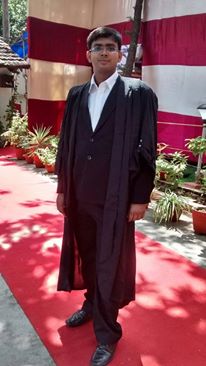


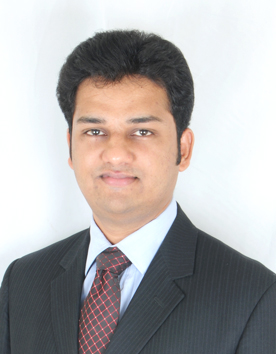

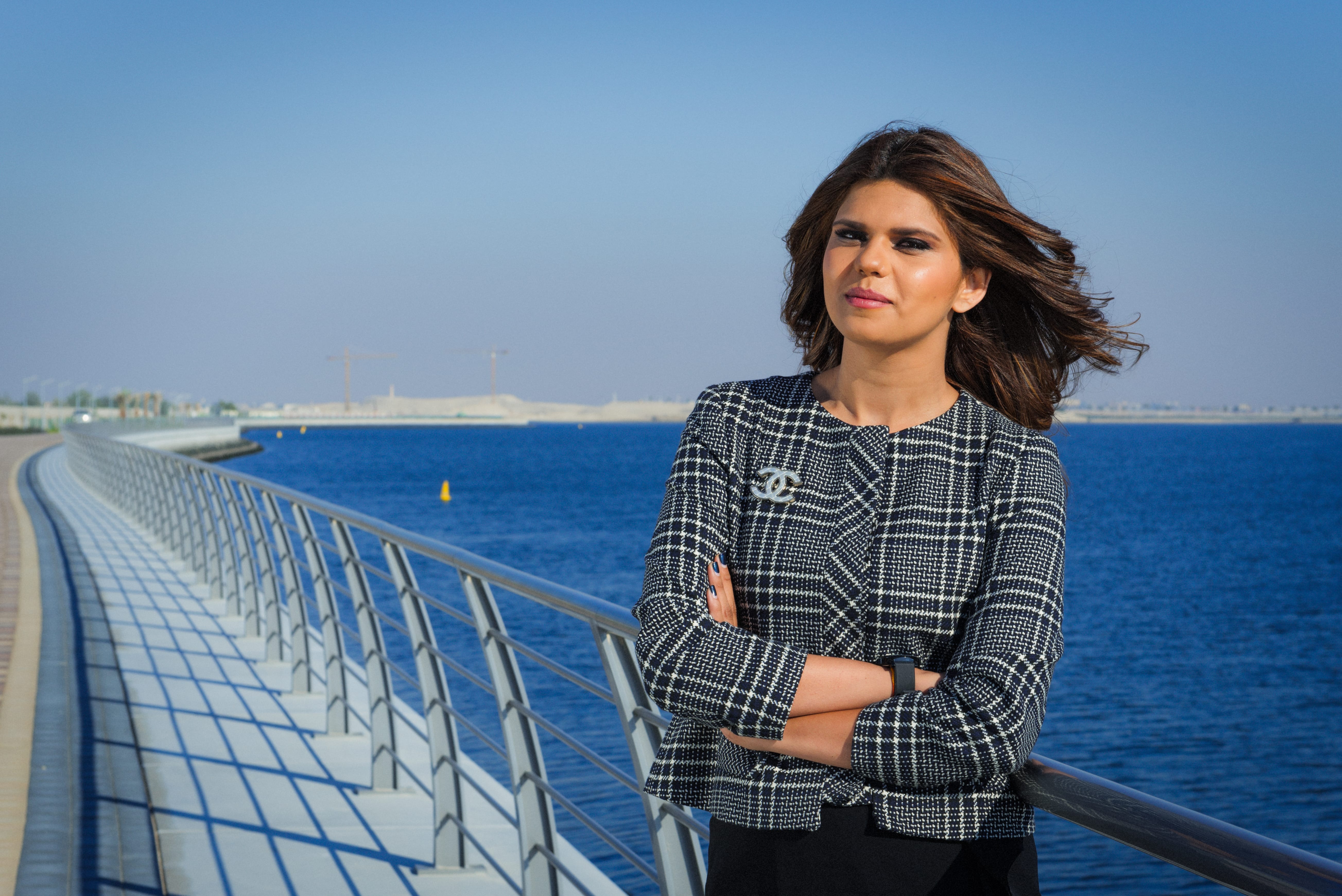

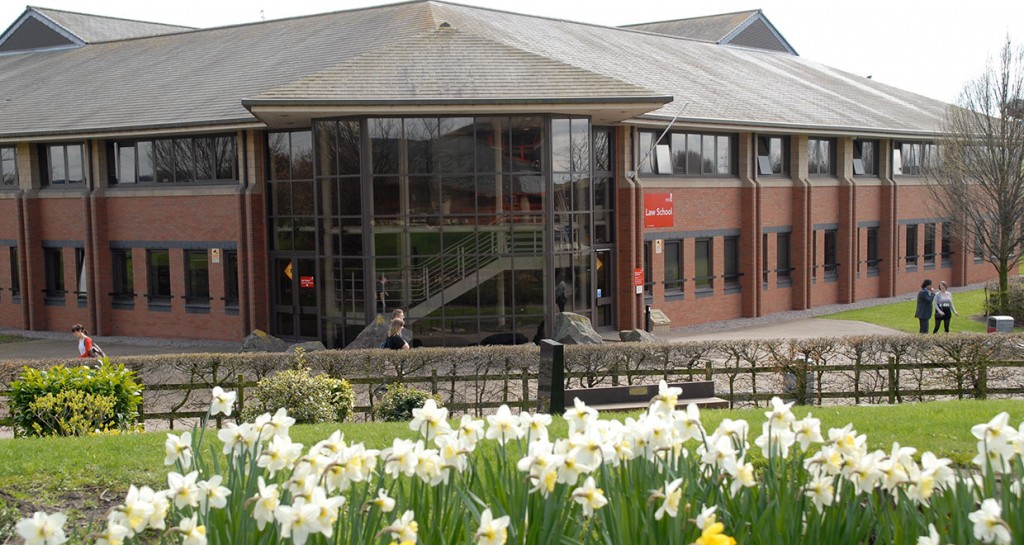


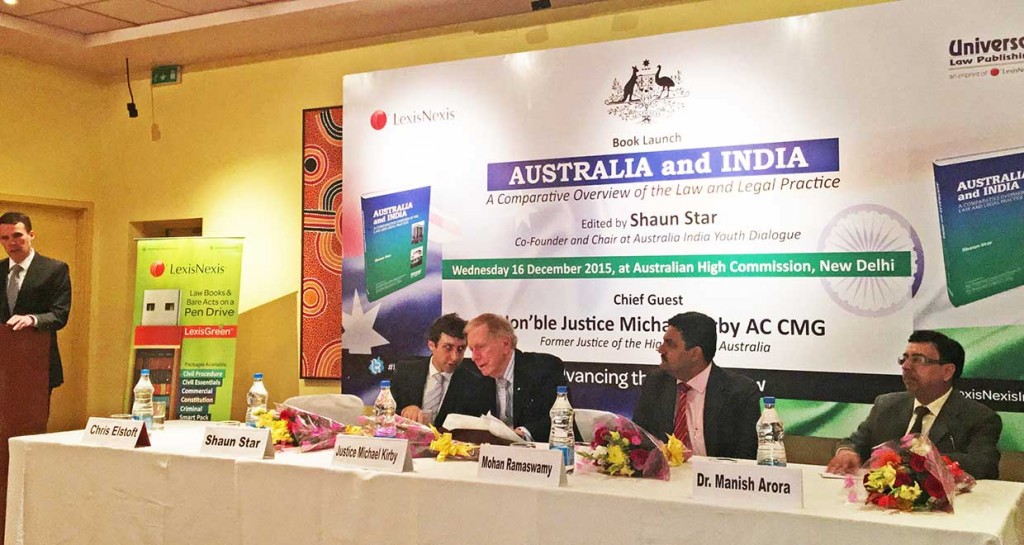






 Allow notifications