Category: Academics, Researchers and International Organisations

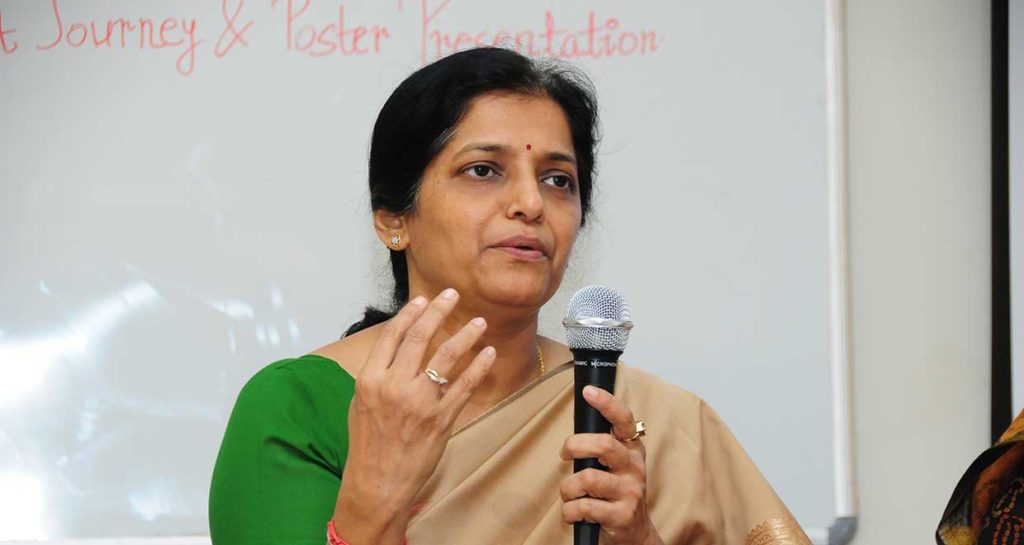
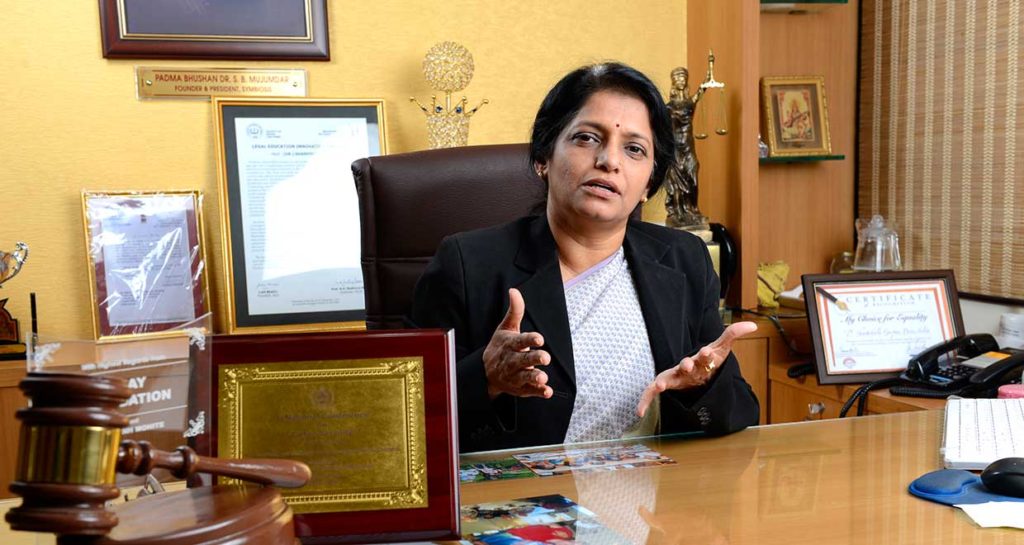
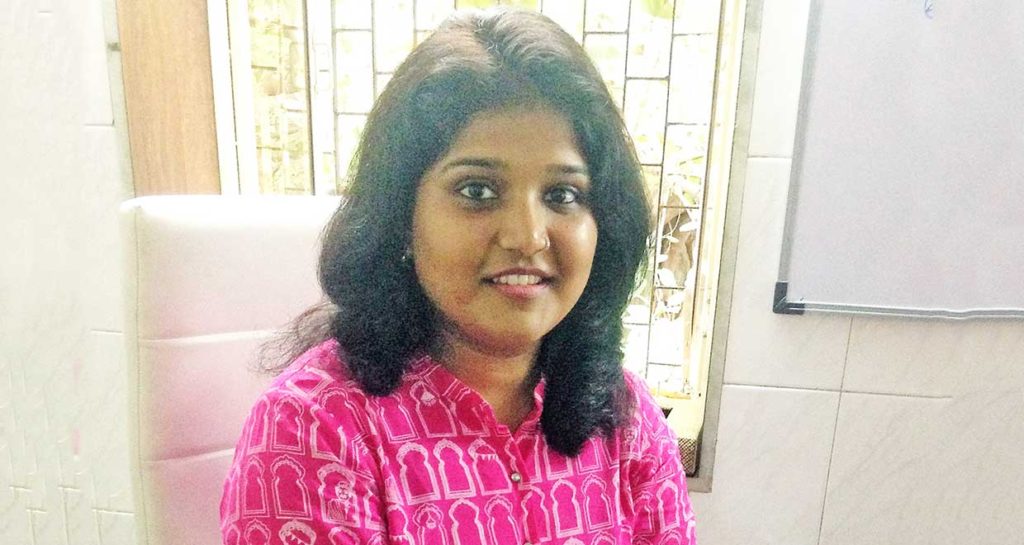
  • Rajrupa Sinha Roy, Assistant Professor of Law on importance of mooting, working as a junior research fellow under MoEF and pursuing a PhD from IIT

    Rajrupa Sinha Roy, Assistant Professor of Law on importance of mooting, working as a junior research fellow under MoEF and pursuing a PhD from IIT

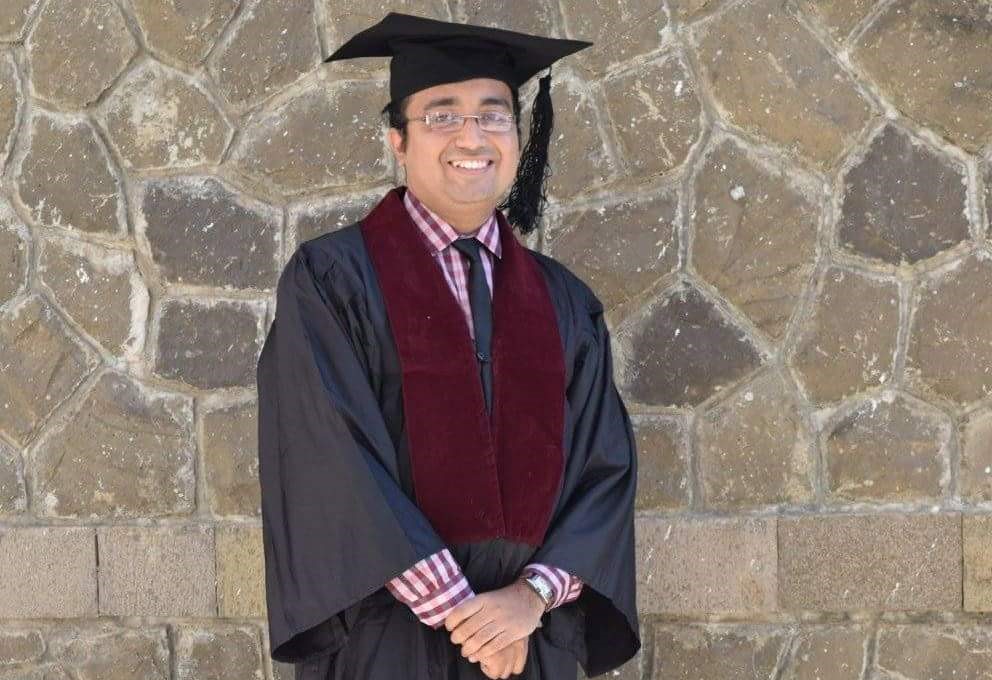
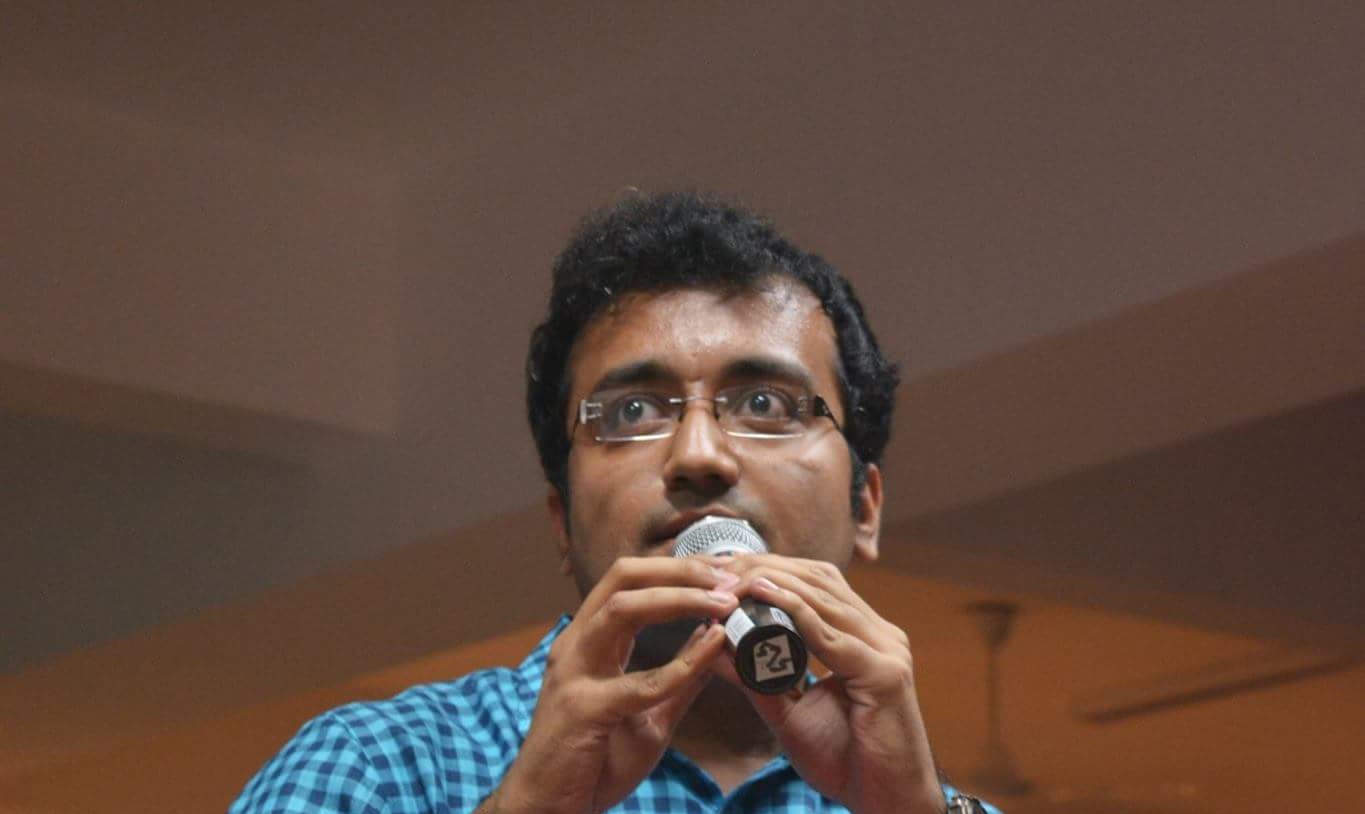
    Rajrupa Sinha Roy is an alumnus of NALSAR. Having studied law from Haldia Law College in 2009, she pursued LL.M from NALSAR in the year 2011. Currently pursuing his PhD in Environment Law from Rajiv Gandhi School of Intellectual Property Law, IIT Kharagpur and gainfully employed at Adamas University as an Assistant Professor of law, she has taken part in several conferences in India and abroad. An academician throughout, she has worked in various projects that were funded by Government of India.

    In this interview she talks about –

    • Her college days
    • Her opinion on importance of Mooting
    • Her experience as a Junior Research Fellow in Ganga River Basin Management Plan
    • On pursuing a PhD from an IIT
    • Her experience of working as a professor

    How would you like to introduce yourself to our readers?
    I would describe myself as a strong and dynamic personality with a broad temperament as well as someone who is a staunch supporter of innovative and constructive ideas.


    Tell us something about your school and college days.
    I wish I could travel back in time to be with my friends with whom I cherish fond memories. School and college days had been the best days of my life as it has helped me in shaping my present career. I take pride in being a student of Bethune Collegiate School, Kolkata which has inculcated a sense of discipline in my day to day activities. My tenure as a student at Bethune has always since my graduation from there motivated me to accept the tough challenges presented from time to time. I graciously thank Ms.Rekha Sengupta,my ex Principal, for assisting me to deal with complex situations in life. Graduating from Haldia Law College was no different from my school days since my teachers and friends reserved the same support for the endeavours I had taken now to be a lawyer. My stay at Haldia Law College has nothing but offered immense opportunities in the form of inspiration to take up higher studies that I had taken from my teachers and seniors. I owe a lot of credit to these beautiful people for what I am today.


    How important do you think mooting or any co-curricular activity is in shaping one’s future career in law?

    I being a student of a non NLU understand the importance of mooting in contemporary academics as I never got the opportunity to participate in any National level Moot-court Competition due to lack of proper guidance in regard thereof. Mooting is a vital co-curricular activity for all law students as it brings out the inquisitive personality in a student. It also helps in building inter-personal skills and all-round development which are basic necessities for a successful lawyer. I strongly believe that whether a NLU or non-NLU, the university should prima-facie focus on conducting moot-court competition both at University and National level to help aspiring law students to hone their skill and exhibit the same. As for other co-curricular activities are concerned a law student must make sincere efforts to undertake publication of Research Papers, Articles, Case Notes etc. in reputed journals. Publications in reputed Journals aids in writing a strong resume for students seeking jobs or applying for higher studies in reputed Universities around the world.


    How important a role do you think law school plays in shaping one’s career?

    The theoretical and the practical aspects of studying law are divided by a fine line of critical thinking and analysis which can be put into effective usage. Take for example an instance where the culmination of a research oriented topic could be used for framing policies in the legal domain. As the saying goes that knowledge without its application is meaningless, theoretical ideas supplemented by practical usage can go a long way in grooming a law student for achieving a successful career at the best law firms and companies in India.

    rajrupa-sinha-roy-2

    Please share with the readers your LLM experience at NALSAR. What are the challenges you had faced while studying at NALSAR?

    I did not face much difficulty in terms of my academics as while studying for my LLB degree I had a course structure similar to that in most other law schools. However, though the syllabus and other activities were quite similar, I had but two very significant disadvantages; one was ‘Internship’ and second was ‘Moot-Court’. Nevertheless, I still treasure each and every moment of my stay at NALSAR and made friends for life.


    After completing your LLM, you worked as a junior research fellow in the ganga river basin management plan and policy project under the MoEF, GOI. Do share your experience on the same.

    That was a major turning point in my life where I got the opportunity to begin the most desirable research work on environmental law. I wanted to do my LLM in Environmental Law but that dream materialized in a pragmatic sense only when I started working in the Ganga River Basin Management Project. I worked in the project for almost three years where I mainly researched on various legislation and policies relating to the river Ganga. The association with prodigious academicians as well as the Ministry of Environment and Forest ascertained me with a range of opportunities. I received the chance to not only work with great academicians but to also attend several research-oriented programmes, which eventually helped me to determine the area of my Doctoral Dissertation.


    Please tell us about the selection procedure of for the fellowship program which you were inducted into.

    There is no specific selection procedure for these kinds of research programmes. It depends upon the types of Projects that are presently in the pipelines or are being initiated and the funding which is available for the same.


    Having secured a PhD from IIT, how would you describe the journey to attaining the same?

    The moment I enrolled myself for the PhD I was determined to achieve all the goals which would have never been possible before I joined.  The application procedure is very simple. The admission is open in July and in December every year. One can apply in four different categories for PhD in IIT. The first category is ‘Regular with Institute Assistantship’, which is the category where you will be ensured a Scholarship from the Institute. The second category is ‘Individual Fellowship’ (CSIR/UGC/DBT/ICAR/INSPIRE etc.). The third category is ‘Sponsored’. The fourth category is ‘Through Project’. You shall find all the rest of the details on the relevant web-page for the programme. The topic of my Doctoral dissertation is ‘Law and Policy Framework on Pollution of River Ganga in West Bengal’. I would not call it a challenge because striving hard for something which makes you knowledgeable and strong is worth the hardship and pain. I never thought in my life that I would go to Oxford University to present my thesis. I would always cherish these memories no matter where I go.


    You can be best described as an academician. When did you realize that academics is the place where you can excel professionally?

    I have always been fond of becoming an academician ever since I graduated as a law student. Being among the students gives me a sense of power and happiness. I believe I could positively contribute to the society by being a teacher. I could be a role model for students who are the future of this country.


    rajrupa-sinha-roy-4

    You are now working as an Assistant Professor at School of Law, Adamas University Barasat. How is your work experience so far?

    The experience till now has been very wonderful. Teachers and staff have been very kind and supportive. My role as Assistant Professor has been well appreciated by the Dean of law department and, most importantly, by my students. As I have already pointed out before, it was my love for teaching as well as academics that truly prompted me to take up this job of Assistant Professor at Adamas University.


    In today’s time, every law graduate wants to get into the rat race of landing a job at a corporate law firm. What prompted you to choose the less charted pathway of teaching law?

    Though working with a corporate law firm is a lucrative job, one has to be satisfied as well with what he or she is doing in life. My choice of working as an academician would definitely be more about my sense of satisfaction and happiness. As already mentioned, my love for teaching had a profound influence on me on taking up this job. I believe that teaching as a profession is not a less charted pathway as one can always do better in this field as well.

    You have studied at a traditional law college, a NLU, a college constituted under the aegis of IIT, and, currently, you are teaching at a newly instituted private law school. How has the collective experience of that been?

    It will be wrong to think that you could list out the pros and cons of a University because it is not the same as measuring how you would measure any place of work or vocation.  A more appropriate way to discuss what you mentioned would be to address the challenges I faced as a student at the institutes where I studied or taught. To be very frank, in today’s time, every student faces immense stress related to academics, peer competition and the drive to excel in life. One nevertheless has to remember that opportunities lie in adversity. University is a level playing ground and it is the student who has to decide the rules of the games where he can excel.


    Where do you want to see yourself five to ten years down the line?

    I am very much keen to pursue Post-doctorate from a reputed University where I can excel in my research skills with regard to environmental law.


    What final piece of advice do you want to pass on to the readers of the SuperLawyer?

    A good piece of advice for this young generation would be that no matter how hard life plays with you it is upon you ultimately whether or not you want to get up and walk to see what life has in store for you. Never give up and try to give your best shot and leave the rest up to the Almighty.


  • Vikram Raghavan, Lead Counsel, World Bank, on work experience and authoring legal books and articles

    Vikram Raghavan, Lead Counsel, World Bank, on work experience and authoring legal books and articles

    Vikram Raghavan graduated from NLSIU, Bangalore with eight gold medals in diverse fields of law in the year 1997 and then went to pursue his masters from New York University. Right after that he started work as an attorney at O’Melveny & Myers, an international law firm in New York City.

    Currently Vikram is currently a Lead Counsel at the World Bank in Washington, DC, and he advises on conflict, fragility, refugees, and macroeconomics. Among other things, he provides legal advice about military coups; United Nations sanctions; debt relief; and loan conditionality. He has authored a book titled Communications Law in India (LexisNexis, 2006) and co-edited a volume of essays: Comparative Constitutionalism in South Asia (Oxford University Press, 2013). His articles are reflected in The Hindu and Economics and Political Weekly.

    In this interview he talks to us about:

    • Choosing law as a profession and his experience at NLSIU, Bangalore and New York University;
    • The art of managing life at law school and to develop interests in different curricular activities;
    • His formative years as a lawyer and his time at O’Melveny & Myers, New York City.
    • His early life at World Bank as a counsel and moving ahead and becoming the lead counsel at the World Bank.


    What made you opt for law as a career?

    Well, I was always interested in argumentation. My father was a lawyer and my grandfather was a lawyer as well. But the family profession, so to speak, influenced my decision only so much. When I was about thirteen years old, I read Prashant Bhushan’s book “The Case That Shook India.” I always wanted to do what he did and what he described about the court room drama.

    However, it wasn’t an easy decision because at that time law was not considered to be a prestigious profession. The National Law School had just started and not even a single judge had graduated. So, there was a lot of uncertainty about it and ultimately, the fact was I didn’t want to do science. I had taken commerce and my only options were doing economics, commerce or something else entirely. So, law looked like an attractive idea because NLSIU had just started. I gave myself a year to see if law suited me, if it had not- I guess I had an option of coming back to economics.


    Could you tell us about your life before you joined college? Where did your interests lie during your school days?

    During school, I was a stamp collector first and foremost. Philately, as a hobby, shaped my interest in world events and in general knowledge. I also obtained a lot of confidence in public speaking by speaking at the South India Philatelists Association’s second Sunday meetings in Madras. Everyone who attended had to speak. So it was a nice way to get rid of adolescent stage fright.


    What curricular and extra-curricular activities did you participate while being in university?

    Well, it was an intense period of five years. The schedule of studies, as you would know, at any National law school is quite demanding. There are deadlines for something or the other, every other week — project submissions, moot courts, mid-terms, and end terms. So I spent most of time by trying to catch up and be on top of the different deadlines that would come.

    Of course, when I was in college, there was no proper Internet. The campus itself did not have many facilities besides the library, which closed at 6.00 p.m. And you could borrow only three books. So I couldn’t say I was very productive. But during those five years, I tried my hand at different things. In my first two years, I did judo at the Sports Authority of India campus near the Law School. I tried my hand at quizzing, but there were much better quizzers at the law school than me. To be sure, there were other extra-curricular activities at NLS like sports and debates. But then again the school was filled with many talented students from the best schools in India. I simply did not have the background or training in high school to compete with them.

    The incentive system in the law school was also skewed in favour of mainstream academic excellence. There were three big things you did if you wanted to be noticed: moot courts, grades, and articles. So, basically I spent those five years trying to get good grades. And you know I don’t regret those five years. What I am today is due to those five years of hard work.


    vikram-raghavan-2

    Could you tell about your internship experiences? What sort of internships did you prefer and what learning experiences did you gain from it?

    Well, I did four internships in those five years. The first one was an internship with  R. Gandhi, which involved working on a lot of constitutional law matters. Among others, I worked with T. Sivagnanam, who is currently a judge at the Madras High Court and on the law school’s governing council as well I think. I also interned with N. Paul Vasanthakumar, the current chief justice of Jammu and Kashmir as well Ravi Chandra Babu, who is also now a judge. These judges were the three lawyers who I worked most closely with during my first internship. The second internship was in the Madras High Court focusing on criminal law under N.T Vanamamalai, a senior advocate. In my fourth year, I worked with K.K. Venugopal and in my fifth year I went to Sri Lanka to work with the Tamil leader, Dr. Neelan Tiruchelvam on the constitution-making process.


    Straight after your under-graduation you went abroad to pursue masters at New York university. What was your experience at NYU and what all differences did you notice in quality of education at NLSIU and NYU?

    Well, obviously the facilities over NLSIU were rudimentary. New York University had a lot more facilities. The library was out of this world and the NLS library in those days was still getting built. In those days, we didn’t have the internet so, you know things were different. Also American law schools are rigorous. They put a lot of effort into preparation before class. So, if you don’t read up and come to class then it would be difficult for you to follow.


    Could you please tell us about the skills and preparation needed for the moots, building arguments and the way to read a judge’s mind and what are the criteria’s a judge chooses to mark the participant?

    (Vikram has represented India at Philip C. Jessup moot court competition and he also served as the executive council member till the year 2011.)

    Mooting is something that I strongly recommend because I think it really helps in court craft and you it helps you dig deep into a legal subject. When I was a law student there weren’t so many moots like you have today. More number of moots are opportunities for people to learn and explore. Eeveryone at NLS has to compete internally first for it, and the internal competitions were in itself very intense. These competitions conducted across the different classes, which meant you had to argue against the seniors who know more law than you do.

    This was a good process, because it forced you to basically go out of your comfort zone and learn new things very quickly. Participating in the Jessup, no doubt, enhanced my interest in international law. Probably my career today is based on that experience.


    You have been an associate at O’Melveny & Myers LLP, An International Law firm. Could you please tell us the experience there?

    That was just after NYU. I spent three years at O’Melveny. I worked on corporate and transactional work and also some litigation, basically international arbitration. It was a very intense experience, because U.S Law firms practice law in a way that is very demanding.  I think the main thing for me was to be able to practice law with very smart lawyers and clients.


    You were the editor of NYU Journal of International law and politics. Could please tell us the role you played and what all things did you achieve during your tenure as an editor?

    I wasn’t the editor. A friend of mine was an editor. I was just a graduate editor. If you look at the cover page it has many editors and editor is mostly just a title. I was involved in proof reading some of the articles. I don’t know what the editorial process is like now in Indian law school but it was certainly different from what we did at NLS. At NYU, a lot of care and attention was taken to ensure that the articles are selected properly and carefully formatted and cross-checked. It is a very rigorous exercise.


    Could you please tell us about your recruitment at the World Bank and initial days of work? Is it possible for a law student to get an internship at the World Bank?

    (Vikram started at World Bank as a counsel and now he is the lead counsel of operational policy at the World Bank.)

    After three years at a law firm, I applied for and got hired as a counsel at the World Bank. When I came first here, I was given Sri Lanka and Nepal and later Afghanistan and Iraq. That experience was really worth in a way shaped my profile at the bank, working with conflict prone countries, and more unstable countries. I think it was an exciting portfolio for any lawyer to do because it has a mixture of law and policy. Working on a World Bank project is, in itself, a very challenging and rewarding thing. Sadly, we don’t offer regular internships at the World Bank’s legal department. Most of our interns come from institutional partners like NYU who pay the students a stipend. The World Bank does not have the budget nor can we take unpaid interns.


    Could please tell us how to develop writing skills to our readers who are mostly law students?

    (Vikram has authored a book on communications law in India and co-edited volumes of essays on comparative constitutionalism in South Asia, his articles are reflected in the editorial columns of The Hindu and Economic and Political Weekly.)

    I would recommend students read the work of Bryan A. Garner. He advocates writing simply and elegantly. Read his work. And you will write very differently. I guarantee it.


    How did you to continue to maintain the love for history, economics and law, despite such hectic schedule in life?

    It is always a challenge. Every day, every minute you have to find time to do different things.


    What would be your message to the young law students and budding lawyers?

    Well keep working hard, and I believe whoever keeps working hard basically succeeds. It doesn’t matter what school you go to or what grades you get, your hard work helps you. Gain expertise in the subjects that interest you. Build a brand for yourself.

  • Pranav Khatavkar, Advocate, on legal research acumen, founding a law journal, and authoring a commentary on the Insolvency and Bankruptcy Code, 2016

    Pranav Khatavkar, Advocate, on legal research acumen, founding a law journal, and authoring a commentary on the Insolvency and Bankruptcy Code, 2016

    Pranav Khatavkar completed his B.B.A. LL.B. from Symbiosis Law School, Pune in the year 2015 and his area of specialization is business law (dispute resolution as well as advisory). In pursuance of the same, he has obtained additional qualifications in Mergers & Acquisitions, Investment Laws and Corporate Finance from ASCL Law School. He has also obtained the Securities Intermediaries Compliance (Non-Fund) Certification and Issuers Compliance Certification from National Institute of Securities Markets. Further, he has completed a summer school on International Financial Law and Regulation from the London School of Economics and Political Science, United Kingdom (LSE).

    Pranav’s stellar academic and research credentials are evident from his publications in nationally and internationally renowned journals like Symbiosis Student Law Review, Plebs Journal of Law, International Journal of Legal Sciences and Research, World Journal on Juristic Polity, International Journal of Law and Legal Jurisprudence Studies and International Journal of Legal Research. He has also penned India’s first commentary on the Insolvency and Bankruptcy Code, 2016.

    Pranav also has a very well rounded internship exposure. He has interned at prestigious law firms such as Juriscorp, Trilegal, Economic Laws Practice, Lakshmikumaran&Sridharan and the then AmarchandMangaldas Suresh Shroff& Co. (Now known as Cyril AmarchandMangaldas). He is also the only candidate from his batch to have secured an internship at India’s capital markets regulator (i.e. Securities and Exchange Board of India) and India’s banking sector regulator (i.e. Reserve Bank of India).

    He is also the founding editor of International Commercial Law Review and the erstwhile President of the India Chapter of Network for International Law Students.

    In this interview, he speaks about:-

    • His law school experience
    • Role of grades in one’s career
    • Attending a summer school at the London School of Economics and Political Science
    • His decision to become a commercial lawyer
    • His experience of penning India’s first book on the recently enacted Insolvency and Bankruptcy Code, 2016 and founding a law journal.
    • Pursuing additional qualifications and clearing the compliance module offered by the National Institute of Securities Markets in the first attempt.
    • His take on the All India Bar Examination(AIBE) and enrolling for Bar Hacker.


    HOW WOULD YOU LIKE TO INTRODUCE YOURSELF TO OUR READERS?

    Professionally speaking, I am an independent legal professional based out of Mumbai specializing in commercial law (litigation as well as advisory). I am also retained as a Counsel at M/s Synlitigators. Otherwise, I am an unassuming person experiencing life as it unfolds itself to me.


    PLEASE TELL US SOMETHING ABOUT YOUR TIME AT LAW SCHOOL.

    Law school for me was a period of tremendous personal and professional development. I was shaped by my experiences. My primary and only focus during my law school days was to find a practice area to specialize in. In pursuance of the same, I read several books, engaged in industry oriented research, networked with people from the industry, pursued additional qualifications and interned at different places. My experiences allowed me to tap into a catena of perspectives that helped me arrive at a decision regarding my practice area and simultaneously build a network.


    HOW IMPORTANT A ROLE DO YOU THINK GRADES PLAY IN SHAPING ONE’S CAREER?

    In my opinion, grades assume relative importance (largely in the short term) which depends to a great extent on the set of circumstances you find yourself in. I believe grades play an important role in the following circumstances:-

    While applying for jobs as a fresher – Majority of the top law firms and companies (including quite a few mid-tier ones) (I collectively refer to them as “companies”) that recruit law graduates either through college placements or otherwise often enlist grades as one of the several criteria while short listing candidates for a job. As unfair as it may sound to other candidates who don’t have impressive grades but shine in other aspects (many of them actually do), companies have a valid reason to do this. Companies are also fully aware of the fact that grades don’t necessarily reflect a candidate’s merit and ability but they still use that as a criterion to shortlist candidates simply because they do not have the time and the resources to review each job application on merits as their primary concern is running the company and generating revenue. Recruitments are only one of the several aspects that come into the picture while running a company. Companies in order to reduce their time and effort in recruitments, use grades as a yardstick to shortlist candidates. Furthermore, seen from the viewpoint of the company, ultimately, they are going to make an investment of their time and money in you if they hire you. Hence, by using grades as a yardstick, they also gauge your consistency and motivation to perform. So if you are keen on working with a good company, then, yes, grades are important and especially if you come from a law school that does not feature in the popular rankings. Yes, companies also look at the ranking of your law school. While answering this question, I am categorically excluding those candidates who have strong industry connections using which they often get placed at top companies. I am addressing the concerns of the larger pool of unconnected candidates here.

    While applying for the LL.M. Program – Candidates who are keen on pursuing the LL.M. Program especially from well-established international universities need to have good grades. Since these are primarily academic institutions, it is obvious that they would demand stellar academic credentials from the applicants. Further, even National Law Schools (which I believe are the only places that offer a decent LL.M. Program in India as of date) select candidates for the LL.M. Program on the basis of their performance in the Common Law Admission Test (CLAT) that is designed only for the LL.M. applicants. So with respect to further education, academic performance is very important.

    I conclude this point by saying what I said earlier in this answer. Grades assume relative importance largely in the short term which is further dependent on your set of circumstances at the relevant time. As far as your job prospects as a fresher are concerned, look at your grades as an access pass to enter the job market. Once you are in, then you are on the same footing with everybody else in the market. In order to differentiate yourself then, you have to only focus on delivering results. This applies even to those candidates who secure jobs through references. Ultimately, the industry evaluates you on your individual merit and credence irrespective of your background and connections.

    As far as the long term is concerned, your grades don’t necessarily matter. Then it is only your work that largely speaks for itself. Nevertheless, seen from a holistic perspective, your long term also comprises of several short terms (including your short term time duration as a fresher wherein your grades matter which might influence the subsequent short terms and ultimately your long term if you were to connect the dots). Sounds contradictory and confusing, doesn’t it? Believe me, it’s not.

    To clear this apparent contradiction and confusion, I will just say that you should try your level best to get good grades but at the same time not get bogged down if you aren’t able to achieve the desired score. Give it your best shot and leave the rest to the circumstances. Remember – circumstances no matter how good or bad they appear to be, always change. Nothing stays. Control what you can, manage what you cannot.
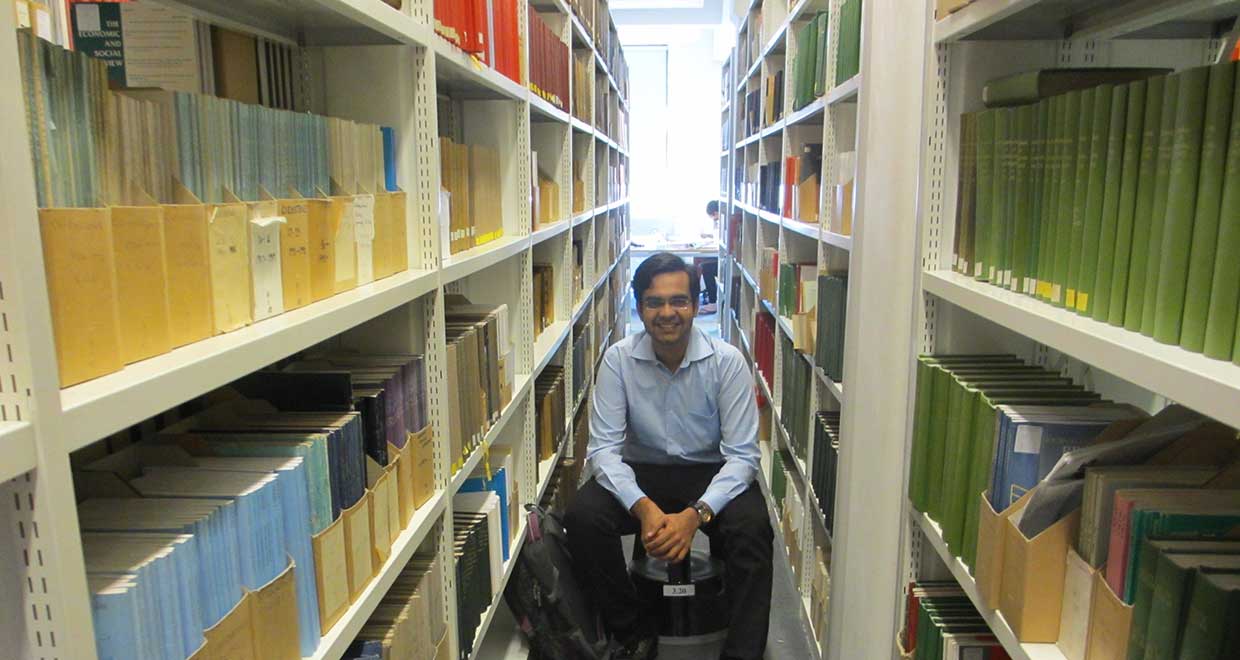
    pranav-khatavkar-2

    HOW WOULD YOU DESCRIBE YOUR SUMMER SCHOOL EXPERIENCE AT LSE? WHAT MADE YOU DECIDE TO CHOOSE IT AND WOULD YOU RECOMMEND IT TO OTHER LAW STUDENTS AND LEGAL PROFESSIONALS?

    I wanted to enhance my understanding of the jurisprudential foundation of Indian financial law. Since Indian financial law draws heavily from its British counterpart, I attended a summer school at LSE to study UK financial law and regulation. I had a fabulous time studying at LSE and exploring UK generally. I also learnt a great deal about myself and became more independent. I would certainly recommend attending LSE’s summer school to all law students and legal professionals (subject to your feasibility).


    WHY DID YOU ELECT TO BECOME A COMMERCIAL LAWYER? WHAT KIND OF WORK DO YOU DO?

    I support my decision for becoming a commercial lawyer (focusing specifically on commercial litigation and arbitration) on the basis of two averments. First, this field is dynamic and vibrant. Every matter exposes you to a new jurisprudential or a practical aspect of commercial law that you cannot fathom otherwise. Hence, the scope for learning is actually unlimited. Second, there are tremendous growth prospects in this field as there is a huge demand for legal professionals who demonstrate a sound understanding of the legal aspects of business and commerce. Once established, sky is the limit.

    After graduation, I worked at a mid-size law firm for a year before migrating to individual practice. My work now largely involves the following:-

    • Representing banks, financial institutions and corporations before the Bombay High Court, Debts Recovery Tribunal and Debts Recovery Appellate Tribunal.
    • Drafting pleadings and applications in law suits and researching on different aspects of corporate/commercial and bankruptcy law.
    • Advising and representing clients in commercial arbitrations.
    • Advising clients on pre-litigation strategy and procedure.
    • Briefing counsels in various litigation and arbitration proceedings.


    HOW WOULD YOU DESCRIBE YOUR EXPERIENCE OF HAVING INTERNED AT THE TOP LAW FIRMS AS WELL AS THE GOVERNMENT ORGANIZATIONS TOO WHERE YOU HAVE GAINED A WORK EXPERIENCE?

    (Pranav has interned with Juris Corp, Trilegal, Economics Laws Practice, Lakshmikumaran & Sridharan and Amarchand Mangaldas Suresh Shroff & Co, now Cyril Amarchand Mangaldas, on the one hand as well as with the Reserve Bank of India and the Securities Exchange Board of India on the other.)

    I interned at law firms specializing in commercial law firms with the primary intention of exploring the practical aspects of commercial law and subsequently taking a call with respect to narrowing down on a practice area. My law firm internships gave me an opportunity to work on a variety of commercial law matters (research as well as drafting). My internships at SEBI and RBI gave me a first-hand exposure to financial regulation. My overall internship exposure gave me tremendous insight in terms of industry operations.


    WHAT IN YOUR OPINION IS THE APPROPRIATE WAY FOR ONE TO CHOOSE HIS/HER AREA SPECIALIZATION WHILE AT LAW SCHOOL? WHAT VALUE ADDITIONS DO THESE DIPLOMAS AND ADDITIONAL QUALIFICATIONS OFFER?

    (Pranav has secured diplomas in Corporate Finance, Securities Law, Investment Law and Mergers & Acquisitions. In fact he had pursued his diploma degrees at a fairly early stage of his law school tenure when most others remain undecided about where they want to go.)

    I will first answer the last part of your question that broaches the value additions offered by these diplomas. The academic structure of most of these diplomas offered by other reputed institutions is usually designed after consulting industry experts; for e.g. the Business Law Diploma offered by iPleaders. Although I haven’t done the course as of now, but on the basis of the reviews that it has received and more importantly on the basis of my perusal of the sample study material that is available in public domain, I can say that the insights one will gain after doing a course like this, will certainly benefit him/her in practice which I believe is what ultimately matters.

    With all due respect to the prescribed law school curriculum, I am constrained to say that it is largely theoretical rather than being practical. While I don’t dispute the importance of theory, but I do emphasize the importance of putting theory to practice and therefore recommend a more practice oriented curriculum. Practice not only tests the veracity of theory, but also brings to light issues which have not been previously considered by theory. The investment of money and more importantly the time in law school should yield returns in one’s career. Hence, I recommend pursuing additional qualifications while managing the law school curriculum to expand one’s horizon.

    I believe, a law student should select his area of specialization on the basis of the following considerations:-

    • Existing and estimated growth rate.
    • Demand-supply specifics from an industry standpoint.
    • Existing and prospective competition one can or will encounter.
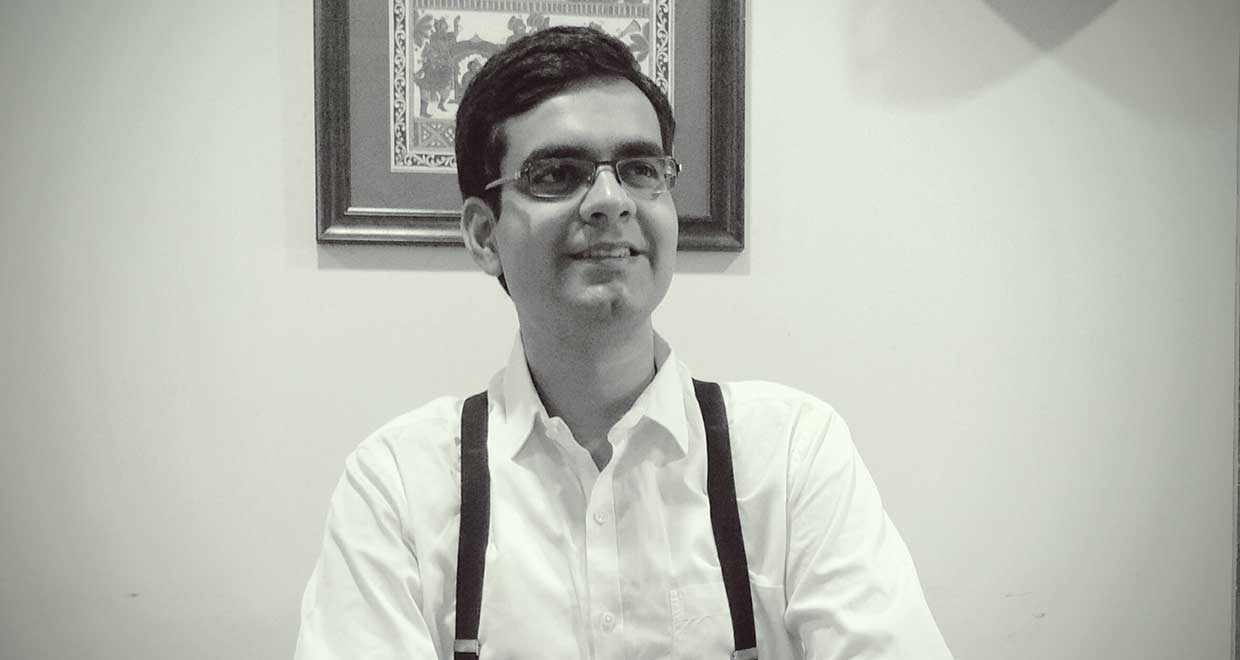
    pranav-khatavkar-1


    YOU ALSO HAVE A FAIR SHARE OF LEGISLATIVE DRAFTING AND RESEARCH EXPERIENCE. HOW WILL YOU DESCRIBE YOUR EXPERIENCE WITH THE SAME?

    (Pranav was awarded the Best Contributor Award for making concrete recommendations to the Prevention of Sexual Harassment of Women at Workplace Bill, 2010 as a part of Legislative Analysis Project undertaken by a Member of Indian Parliament from the Upper House, Government of India, Mrs. Vandana Chavan)

    My limited legislative experience exposed me to the issues surrounding regulation and governance. I saw the law from the law maker’s eyes and got an iota of an idea of the considerations that influence the law making process. The insights that I derived then, armed me with tremendous perspective on interpretation of laws and more importantly discerning the legislative intent.


    WHILE ATTENDING LAW SCHOOL, YOU ALSO TOOK THE INITIATIVE TO ATTEND SEVERAL WORKSHOPS AND TRAINING PROGRAMS. WHAT WAS YOUR MOTIVATION BEHIND PARTICIPATING IN THESE WORKSHOPS AND TRAINING PROGRAMS?

    My primary motivation behind attending these workshops and training programs (I collectively refer to them as “programs”) was to first gain industry insights and second build a professional network. I attended these programs at the Bombay Stock Exchange and Institute of Company Secretaries of India’s Centre for Corporate Governance Research and Training. These workshops largely covered the practical aspects of securities law, debt restructuring and banking law.


    YOU HAVE AN ENVIABLE TRACK RECORD OF EXTRACURRICULAR ACTIVITIES (BOTH WITHIN AND OUTSIDE LAW SCHOOL). HOW DID YOU KEEP A BALANCE BETWEEN EXTRACURRICULAR ACTIVITIES AND LEGAL STUDIES?

    (Pranav was a Core Committee Member of the Corporate Law Cell of Symbiosis Law School, a Pro Bono Legal Aid Volunteer for Helping Hands, a Non-Governmental Organization and the Founder& erstwhile President of the India Chapter of Network for International Law Students)

    When it comes to pursuing extra-curricular activities, time management is the key. One has to intelligently allocate his/her time to all activities that he/she intends to pursue. I used to keep a diary (and I still do) to plan and execute my itinerary for the day. This helped me to keep a track of my time and navigate my day smoothly. Extracurricular activities were a welcome break for me from my usual academic routine as a law student then. I saw it as an opportunity to network and step out of my comfort zone.


    YOU HAVE AN IMPRESSIVE RESEARCH PROFILE AS THE SAME IS EVIDENT FROM YOUR MULTIPLE PUBLICATIONS IN REPUTED LAW JOURNALS. WHAT ACCORDING TO YOU ARE THE MOST IMPORTANT ASPECTS OF AUTHORING RESEARCH PAPERS AND HOW DID THEY ACTUALLY HELP YOU IN YOUR CAREER?

    (Alongside publishing in reputed law journals such as Symbiosis Student Law Review, Plebs Journal of Law, International Journal of Legal Sciences and Research, World Journal on Juristic Polity, International Journal of Law and Legal Jurisprudence Studies and International Journal of Legal Research, you have also published three blog posts on the iPleaders Law Blog. Please comment as to whether any specific reason inspired you to write particularly for the named blog.)

    I believe that academic research is the best way to expand one’s understanding of a particular subject. It’s almost like completing a mini-Ph.D. on the subject. The hours that you spend doing literature review and empirical research refine your interpretation and research skills, something which all lawyers need irrespective of their field. Further, it helps you gain expertise in a particular sector; something which both employers and academic institutions appreciate. Lastly, it does add a line in the publications section of your CV. The best part, however, is the immense joy you feel if someone else cites or relies upon your research in his/her research. It makes you feel that your efforts have truly fructified.

    As far as my blog posts on the iPleaders Law Blog (“Blog”) are concerned, I chose to publish my blog posts on the Blog because of its fantastic readership and subscription. The quality of blogposts that are published on the Blog is of a superior quality and practically relevant. Further, in the light of the market standing of I-Pleaders, any association with them is certainly beneficial. Hence, I chose the Blog to publish my articles.


    WHAT PROMPTED YOU TO FOUND A JOURNAL SPECIFICALLY FOCUSING ON COMMERCIAL LAW?

    (Pranav has founded the law journal International Commercial Law Review while managing his job at the same time as well as secured top legal professionals and academicians to be part of the Advisory Board of the Journal.)

    Peer contribution provides tremendous insights and fresh perspective. This has been my primary motivation behind founding the ICLR. I look at ICLR as a platform where one can put forth his/her ideas and at the same time get recognised for the value additions that he/she makes. Lastly, legal editing has always been a pleasure and a privilege for me. The kind of intellectual enrichment one gets through legal editing (or any type of editing for that matter) cannot be reduced to words.
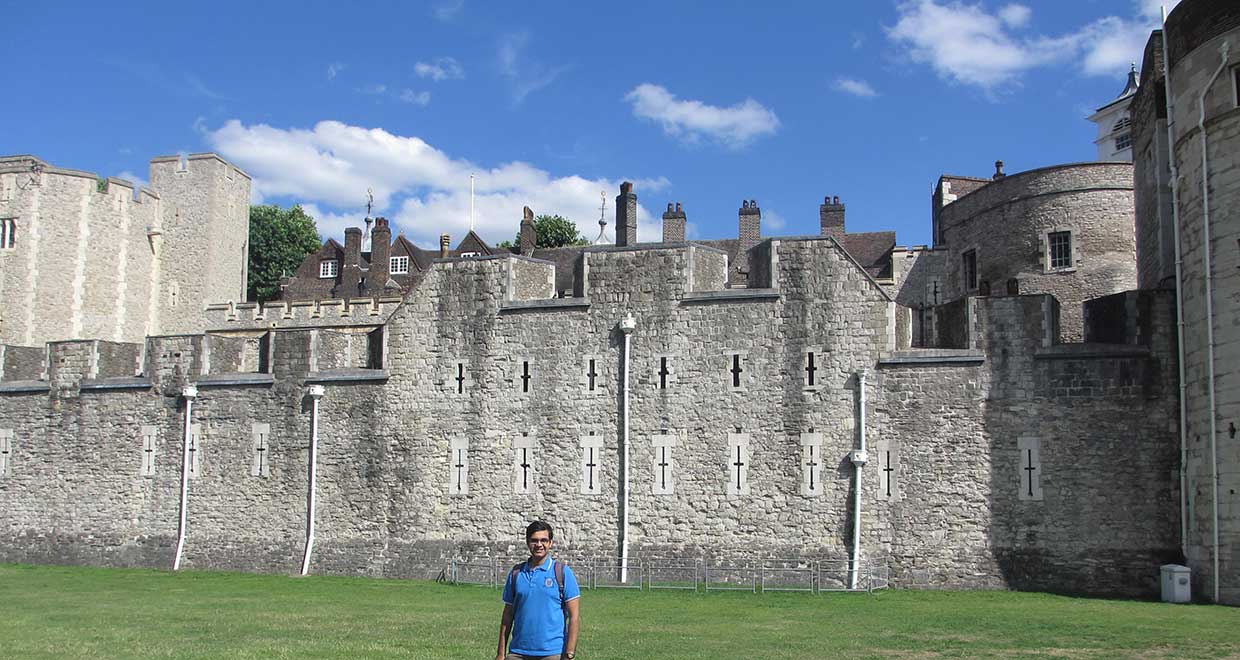
     

    pranav-khatavkar-3

    YOU HAVE ALSO RECENTLY AUTHORED A BOOK TITLED COMMENTARY ON THE INSOLVENCY AND BANKRUPTCY CODE, 2016 (DECODING THE LAW OF INSOLVENCY AND BANKRUPTCY) WHICH IS THE FIRST BOOK IN INDIA ON THIS SUBJECT. PLEASE COMMENT ON THAT.

    I had been following the Insolvency and Bankruptcy Code, 2016 (“Code”) since it was a Bill as I knew that this Code would be a complete game changer once implemented. While I did not have any ambition to set a record by writing the first book on the Code, I will say that it happened rather intermittently. So, once the Code was passed by the Parliament (i.e. on 11th May 2016), I foresaw a demand for some intellectual material on the Code (since you cannot rely only on the Bare Act). Before I undertook the task of penning the book, I made some enquiries myself. I asked around if any book has come up or whether any book is coming up to which everybody replied in the negative. So, that’s where the thought to pen the book set in. I thought that if nobody had written or was writing a book on the Code then why could I not do it myself. At least, that way, I knew I was setting a foundation by providing some literature on the Code for everyone’s benefit. This was my impetus to penning the book.

    I penned this book while being employed at my erstwhile workplace. Managing my job and penning the book was indeed a task for me. I had to comply with the publication deadline and underperforming at work or taking a leave from office wasn’t an option that I had kept open for myself. So, I burnt the midnight oil. I mean literally. To be honest, there were several occasions while penning the book when I did not know as to where I was headed or what my effort would result into. I had to sacrifice time with family and friends. This caused a lot of upheaval and discontent amongst them. I still persisted nevertheless as I knew I had to comply with the publication deadline come what may. Then came a time when I let go all worry and anxiety with respect to the result and thought of focusing only on penning the book and more importantly the content. I realized deeply that I can only control my inputs and not the result. I was mentally prepared to face both praise and humiliation with respect to my book. Thankfully, it was received well and it got decent reviews.


    WHAT ACCORDING TO YOU SHOULD A LAW STUDENT CONCENTRATE ON DURING HIS/ HER TIME IN LAW SCHOOL IN ORDER TO BECOME A GOOD LEGAL PROFESSIONAL AFTER GRADUATING FROM LAW SCHOOL?

    A law student’s first priority in law school should be to find a practice area at the earliest. I have earlier in this interview enlisted the criteria one should consider while zeroing down on a practice area. Once you have identified your practice area, 50% of your job is done. The remaining 50% of your job is to refine your knowledge and skills with respect to the practice area of your choice. Second, time management is the way ahead. I have seen many law students (including many of my batch mates) totally waste their time doing counter-productive activities. While I do not judge them, as it is a matter of personal choice, I do say that what you sow is what you reap (cause and effects). The law is infallible. You can’t do the same thing over and over again and expect different results. Third, learn to look at the larger picture. I have seen many law students remain stuck up over trivial things and completely miss out the larger scheme of things which is nothing but their own long term career interests.


    AFTER GRADUATING, YOU COMPLETED THE ENTIRE LEGAL COMPLIANCE MODULE OFFERED BY THE NATIONAL INSTITUTE OF SECURITIES MARKETS. WHAT PROMPTED YOU TO ENROLL FOR THIS AND HOW DID YOU MANAGE TO CLEAR THIS MODULE IN THE FIRST ATTEMPT WHILE MANAGING YOUR JOB?

    Commercial law does not operate in isolation. There are several other areas of law and finance that intersect. In order to bring about a more balanced approach while pursuing a career in commercial law, I chose to pursue the legal compliance module offered by the National Institute of Securities Markets (NISM). Pursuing the module gave me exposure to the legal and financial compliances applicable to the issuers and the intermediaries in the securities markets. You don’t have to be super intelligent to clear the NISM examination. All that it takes is preparation and practice. I used to study over the weekends and appear for mock examinations during the weekdays (before and after office hours at home).


    YOU RECENTLY CLEARED THE ALL INDIA BAR EXAMINATION (AIBE). WHILE PREPARING FOR THE SAME, YOU ALSO ENROLLED FOR THE BARHACKER PROGRAM OFFERED BY iPLEADERS. HOW WAS YOUR EXPERIENCE WITH BARHACKER? WOULD YOU RECOMMEND IT TO OTHER AIBE ASPIRANTS?

    Many people assume that since the All India Bar Examination (AIBE) is an open book exam, it can be cleared without any preparation. In reality, it’s otherwise. Although the AIBE is an open book exam, people often forget that it is a time bound examination and most of the questions that are asked are application based rather than being direct. Also, the syllabus is vast. For e.g. in the AIBE that I appeared in i.e. AIBE IX, the Environmental Law component was valued for only 5 marks. What this actually meant was all that acts, rules and regulations covered under the Indian Environmental Law would carry 5 marks out of which the Bar Council of India can ask a question on anything and I mean anything under the scope and ambit of Indian Environmental Law. Like this, there were other areas of law that more or less carried proportionate weightage in the paper except for Cr.P.C and Contract Law (which are again vast subjects). Statistically speaking, about 37% candidates failed the AIBE in 2012. So, it certainly isn’t an easy examination. Like any other competitive exam, you need to prepare and practice over and over again in order to crack it in the first attempt.

    Many newbie lawyers who join the legal profession get caught up with office work which leaves them with no time to prepare for the exam. That’s exactly where a course like BarHacker adds value. The course has a result oriented approach and team iPleaders ensures that you are equipped with the best tools to clear this exam. If you religiously follow their tips, techniques and study methods, chances are that you will clear the AIBE in the first attempt. I give full credit to BarHacker for my AIBE result and, yes, I recommend this course to all AIBE aspirants.


    WHAT FINAL PIECE OF ADVICE DO YOU WANT TO PASS ON TO THE READERS?

    Believe in yourself and make the most out of every moment. Use your time wisely and never lose sight of your goals.

  • Shashikala Gurpur, Director, SLS Pune on choosing academics, securing scholarships and higher education

    Shashikala Gurpur, Director, SLS Pune on choosing academics, securing scholarships and higher education

    Dr. Shashikala Gurpur graduated in law from Mangalore University in 1988, she is currently the Director of Symbiosis Law School, Pune and Dean of Faculty of Law, Symbiosis International University. Dr. Gurpur is a recipient of the Fulbright Fellowship as well as the Legal Education Innovation Award of SILF-MILAT in 2011, in addition to being the recipient of many other such prestigious accords since then.

    Dr. Gurpur had been the winner of many distinctions and awards which she received throughout the length of her law studies. Today, she holds the reputation of having held office as member of the Law Commission of India and having taught at the National University of Cork, in addition to having co-authored two academic books and carried the role as constituent of Editing Boards of various foreign/ international journals.

    In this interview, Dr. Shashikala Gurpur will be talking about

    • Choosing law and academics and a professional line
    • Legal education in India today in a comparative context
    • Community Legal engagement in SLS Pune and beyond
    • Contemporary professional prospects and requirements


    How do you feel about receiving Lexis Nexis’ 100 Legal Luminaries Of India?

    Thank you, I feel that sincerity and hard work always get noticed and honoured. I dedicate this honour to my parents, mentors, my family, the team, students and management of SLS, Pune as well as the institutes and the generation of students I have been engaged with.


    How would you like to introduce yourself to our readers?

    The choice of law as an educational avenue is I believe a deep calling unto healing the evils of society and to serve the mission of justice. So, praise yourself if you have made that choice. However, getting into a good law school requires planned preparation right from high school itself. I had completed my high school education in vernacular medium at a municipal school; my primary school was strongly national with the undertone of largely Gandhian values. While still in my early childhood and college years, I had already gotten a taste of politics and implications of communal violence, untouchability and feudalism.  A particular sensitivity to nature and society were cultivated in me from my household and ancestry. My paternal grandfather was a herbal healer for no fee. My maternal grandfather was a village chief. My maternal grand uncle ran a tribal residential school. My father ran a one person justice mission preventing and resolving disputes and protecting the meek. Nevertheless, taking the route of law and legal education was actually thrust upon me by my family property mired in litigation.


    gurpur-maam-picture-1

    You have taken lectures and seminars at famous institutions abroad. What must be done so that our own legal education system can be at par with global standards?

    At the present moment, the gap seems to be narrowing. Legal education systems in the advanced law schools of the world are profound in corporate, qualitative higher education as well as in prioritizing knowledge creation and student transformation, but the top Indian law schools are also nearly there now. In India, constant check should be maintained to see that the gap between ideal and real remains adequately compensated. Changes are on the anvil. Our different strata or tiers must be uniform. The top and the bottom in the ranking band of the west have one to three percent difference. In India, the top ten have a total of 45% difference in scores.


    Your vast experience in legal education in India and abroad must have brought in new ideas for SLS Pune. How would you describe the environment that the institution fosters?

    SLS Pune inculcates the values of hard work, fraternity, excellence and public service. When we received the prestigious Herbert Smith Freehills Community Engagement Award this year, for an institutional body such as our own with the overarching erroneous perception as an ‘elite’ law school, it felt the same as winning an Olympic medal. At SLS Pune, we always have close monitoring of quality and excellence. We believe in fostering human and national development using legal education as a tool. Our university’s vision and mission and our Founder’s life and philosophy stand as testimony and inspiration to that end.


    Which among the following do you think is important for instilling legal knowledge – practical knowledge and/or theoretical knowledge?

    A judicious mix of both with competency, courage and collaboration along with profound core ability to stand up and defend would seem to be the perfect requisites for a holistic legal personality.


    gurpur-maam-pic2

    A strong alumni community being one of the most crucial factors behind an institution’s success, how closely do you think SLS Pune works with the alumni and in what ways?

    Every year, we arrange a meeting of our alumni at least twice. They even engage as employers, work buddies, mentors, teachers, clinical trainers, mock judges, advisors, and role models, moot and overall mentors. They consider the institute as their friend in need as well as an extended family.


    What is your opinion on start-ups and new business ventures as an alternative to traditional litigation and corporate jobs?

    Start-ups throw up great possibilities as well as provide better time allocation for quality work-life balance, in addition to enhancing innovation. At SLS Pune itself, we have had an Entrepreneurship Cell created just recently in the year 2014. We have at least a dozen start-ups created in the last three years and a host of alumni specialising as start-up consultants. This year, with support from the university as well as from the Symbiosis Institute for Business Management (SIBM), we are hoping to further scale up such efforts.


    What message or advice do you want to pass on to those who are passionate about vocations in human rights and policy research as opposed to landing corporate jobs?

    It depends very much on how you hold on to this work over the years and what skills you acquire. My advice would be that you develop a profound array of skills and abilities and that you maintain your deep passion and drive towards such aspirations.


    How did you choose to pursue a career in academics over practice? How would you advise law graduates and lawyers about this comparatively less charted path?

    I had made this choice by compulsion, by reason of being a first generation lawyer in a farming family and the first female graduate in generations. Women were not encouraged in education or career in my ancestral past despite being owners of land and the existence of a matrilineal culture. Another reason was that my aspiration of practicing/choosing litigation had already gotten fulfilled by the time I graduated by way of my engagement in our familial property disputes, which were settled out of court due to my informed initiative. We have a dearth of proficient teachers nowadays. Quite apparently, the law school demand has gone up in recent years, hence teaching now pays reasonably well. On the other hand, the value of teaching has always had a manifold yet discreet effect in shaping the generations of legal leaders.


    What according to you are the necessary skills the lawyers of tomorrow need to possess in order to make a mark in the practice or to place a job in the current scenario?

    To carve out a niche for oneself, especially in the present scene, one must be possessing competencies in several areas, predominantly in thinking out of the box, possessing problem-solving capacity, oral and written communication abilities, research skills and advocacy skills. The right internship is ultimately about aligning opportunity with one’s career/professional goal and not simply accounting for association with top names in one’s CV. True mentorship is what can help you to change or transform yourself.


    How do you think a law student can build up his or her profile to attain scholarships or get admissions at the premier universities abroad?

    Build your profile in accordance with the criteria of the respective universities/institutions of your choice. Ensure academic excellence with a minimum 3.5 CGPA. Be among the top ten to fifteen percent students. Enrich your CV, indicating profound legal engagement. Show research experience with a minimum of five standard publications. These will win you scholarships which may ultimately help reduce the cost of your LLM programme.


    How do you manage your academics and work life balance? What keeps you motivated to keep working for the betterment of your institution and the legal profession?

    Well, let me confess here that I was quite often thrown completely off balance! The X-factor you mention would be definitely taking one’s job as a service to humanity and the nation (and in my case to my loving son and my students). In brief, it is about seeing the universal mother’s manifestation in every deed and seeing dharma or balanced order as an unfinished endeavor of justice.


    Please share with us an experience from your life that makes you feel that it was definitely of utmost worth in choosing law as a profession and teaching as a career?

    In the early days of my career, I spent 50% of my time helping the poor to get access to justice. I introduced students to community based law reform. One especially memorable instance of our reach-out efforts was when we guided an agrarian worker woman to admit her intelligent daughter to a college; she would later scale to a much higher social status as a competent business woman. When the poor and helpless look up to you as credible source of support, when a gleam of truth touches upon you as you journey with your students in class to a higher level of learning, when the alumni of your institution write and recall such inspiring moments, and when you see your junior colleagues or students surpassing and outgrowing your achievement, those are the times when you can fully appreciate the legal profession for what it is and what it is capable of achieving today, and I have experienced all of these moments.


    What message do you want to pass on to the readers (aspiring lawyers, legal professionals or anyone related to the law)?

    Take your work in the form of a service to your fellow human beings and as contribution to the greater universal design. Align your life’s overall purpose with what you do as a profession and always keep the spirit of dharma or duty burning in your heart.


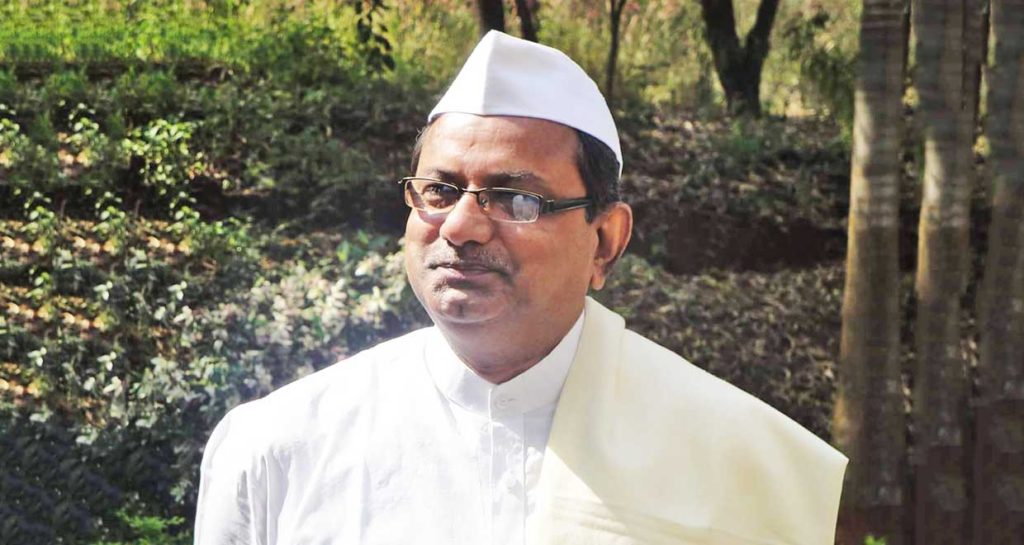
  • Dr. J. S. Patil, Vice Chancellor, NLUJA, Assam, on a career in legal academics, role of a professor and research work

    Dr. J. S. Patil, Vice Chancellor, NLUJA, Assam, on a career in legal academics, role of a professor and research work

    Dr. J.S.Patil qualified in law from Karnataka University, Dharwad in 1977, and thereafter went on to pursue further studies from University of Mysore, and earned his Masters in 1979. In 1997 he also finished his Ph.D studies from Saurashtra University, Rajkot.

    Dr. Patil served as a professor in the department of post graduate studies and research in law at Gulbarga University from 1995 and had deputations to other colleges including his stint from 2009 to 2013 as the Vice Chancellor of Karnataka State Law University. He is currently the Vice Chancellor of National Law University and Judicial Academy, Guwahati.

    In this interview, he talks to us about:

    • His love for the law and positive changes he has witnessed in the evolution of law
    • The challenges he faces as the Vice Chancellor of NLU Assam and those that he faced in KSLU
    • Advice on various facets of the legal profession and on acing law school
    • The divisions he believes exist between NLUs and other law colleges
    • His vision for legal education and NLU Assam


    Tell us a bit about your childhood. Looking back, what are the most important lessons that you learnt as a young student that shaped your personality.

    My school days were very important days of my life. There was a small government primary school in my locality known as Konapupet in a small town called Manvi in the Raichur District of Karnataka, where I had an excellent head master always dressed in a sherwani and fur cap, known for strictness and discipline. His personality influenced me to a great extent especially in meticulous dressing. When I was in the 4th Standard in middle school, I was chosen to deliver a short speech on Independence Day on 15th August 1964. My oration started from then onwards. In high school, I had some excellent teachers who were responsible for shaping my personality and future. All the schools I studied at were government schools, but satisfactorily qualitative with committed teachers. I was one among five students out of 150 who passed SSLC or 10th Standard in 1970. It was so difficult to clear the matriculation during those days, passing matriculation was taken as a prestigious one. My parents were very pious and humble and their dream was to provide maximum education to their five children. They were from the lower middle class strata of society; they were unlettered and farmers, yet because of their commitment, four of their children could get a good education. This has taught me a great lesson – to work hard and worship work. They were my greatest teachers and my inspiration in my childhood. Along with my elder brother, I established a small library of Kannada literature at home, especially novels from Kannada litterateurs. I was fond of reading novels and lent the books to others by charging ten paise per day and buying books with the revenue. We were able to build a culture of reading among our friends in the mohalla by this initiative.


    Why did you decide to opt for the profession of law? As a young student, which aspects of the law fascinated you the most?

    When I joined the law course, I had no clarity in my mind as to career. Coming from a rural background, it was difficult for me to take decisions as we (my brothers and I) were the first generation educated people in our family. I joined law only because my other friends had also joined colleges for law. But later on, during the course of my study, I realised the importance of legal education. As a young student, I was deeply influenced by my principal and wanted to be a teacher like him and also an administrator like him. Teaching became my passion over a period of time.


    Sir, you have pursued your law at Karnataka University. What were the highlights of your journey as a law student? Which legal subjects did you enjoy studying the most?

    To study under great teachers like Professor G. V. Ajjappa, Principal, University College of Law, Dharwad and other very eminent teachers in the college was a memorable and privileged aspect of my life. As I was deeply influenced by the imposing personality of the Principal, his favourite subject, Jurisprudence, was an obvious choice as a subject I loved the most and continues to be so even today. I was an average student at the LL. B. level. When I moved to the Department of Studies and Research in Law at the Manasagangotri Campus, University of Mysore, I took to studies seriously and was often described by my teachers and library staff as a model student on campus. My serious commitment to legal academics during those days transformed me into a law teacher.


    Did you ever have doubts back then about your ability to stand out in the legal profession? What, in your view, are the qualities that a law student should strive to possess in order to raise a notch above the rest?

    j-s-patil-1When I came to Dharwad from my native place to prosecute higher education in 1970 for PUC, I had an inferiority complex. I was able to get over it during my LL.B. studies. I could not enrol as a lawyer due to economic problems. I got an LL.M. seat in the University of Mysore and joined. The problem of inferiority set in again as there were very good students with backgrounds of having ranks and other laurels to their credit, while I had none. Slowly I was able to get over it and developed confidence. I had very good classmates who encouraged me and helped me in my studies. We were like one family and had an excellent atmosphere in the Department. Because of my dedicated hard work and support from friends and the faculty, I could come out with flying colours, by getting the first position with a first class in the international law branch and getting the second rank in the entire department. That was the beginning of my academic career and I never looked back after that.

    The legal profession demands hard work, regularity, punctuality, research, updating, good language and drafting skills, good communication and other soft skills, adaptation of modern IT tools and of course social and professional networking. Every law student should try to inculcate these qualities that will go a long way in building an excellent legal career.


    How should law students go about selecting topics for research publications?

    j-s-patil-4UGC regulations require a law teacher to take 18 hours workload of teaching. This takes away much of their time for teaching. Research takes a back seat as a consequence of this. Quality research has become a scarce commodity in the legal domain due to many reasons. The major reason, in my opinion, is the difficulty we are encountering in decolonising our consciousness. This problem is seriously interfering in understanding legal problems that we face in our country. Teachers need good training in customised research skills in the domain of law rather than routine research methods. Research and legal writings will become meaningful only if these are of relevance in providing justice to the common man. Competition to publish, due to the UGC requirement of API score, has encouraged law teachers to write and publish in research journals. It has also given rise to commercialisation and mushrooming of research journals raising question marks on the quality of research articles published in some of these journals. More attention to attend seminars and conferences, present papers, write research papers and publish have added to the overall personality of law teachers. It is also providing them with that additional input necessary to bring dynamics in their teaching.

    Students must select research topics based upon the hard realities of the need of the time, the problems our people face and difficulties they encounter in their lives vis-à-vis legality. Problems taken up for research need not be big and impressive but they must be pragmatic and practical. Solvability of the problem should be the hall mark of research topics.


    What are the biggest challenges that you have had to grapple with as the vice chancellor of NLU, Assam as well as KSLU? What have been the biggest successes so far?

    I have just started my innings in NLUJAA, Guwahati. The faculty and students here are wonderful. An urgent issue that I have had to deal with is shifting the University to the new campus. This will take a couple of months. The administrative building and law school building are ready for occupation. The construction of the Boys’ and Girls’ hostels is nearing completion. Construction of the Library, Judicial Academy and other buildings is also being taken up.

    j-s-patil-3

    We need to customise some of the course content to reflect regional aspects of the North East. We have to use A-VIEW (Amrita Virtual Interactive E-learning World) in our class rooms for more effective teaching and to ensure transparency. We have to launch some regionally relevant research projects on local cultural laws, the Brahmaputra River water management system, Legal regulation of mega biodiversity, legal regulation of petroleum and other energy resources. An ambitious project that I have in mind is the reconstruction of Indian Jurisprudence based on Indian experiences since the inception of the Indian civilisation. Consultation with stalwarts in the field like Professor Upendra Baxi and Professor G.V.Ajjappa has already been initiated to build the project.

    At KSLU the greatest challenges that I faced as the founder vice chancellor, were to acquire land, prepare the master plan and construct buildings. The other challenges were to bring 95 law colleges affiliated to various universities in Karnataka under one umbrella of KSLU and build a uniform curricula, examination system, etc. I have been able to do all these things successfully. Innovative steps taken at KSLU include the introduction of Khadi uniform on every Monday and singing of the national anthem every day in the morning before commencement of the classes and administrative activities of the University. This is to realise the dream of transforming KSLU into the peoples’ university with the punch line ‘Indian roots and global heights’.


    Do you feel that the legal profession has significantly changed from when you decided to study law? What are some of the changes that have positively impacted the profession and legal academia in your opinion?

    There have been some important changes in the legal profession since I started studying law. When I joined law, the legal profession was limited to civil and criminal practice. As time passed, there has been a tremendous expansion in legal professional activities in a variety of new and emerging areas like corporate and business laws, intellectual property rights, information technology law, entertainment and sports law, press and media law, environmental law, bio-diversity law, wild life and forest law, family law, consumer protection law, human rights, women and child rights, vigilance practice, legal process outsourcing, etc. The Legal profession has become one of the most sought after professions today. Every establishment needs to have a legal cell and recruit legal professionals. The union and state government departments, banks, corporates, NGOs, associations and unions, cooperatives, entertainment houses, press and media, etc. are establishing their own legal departments to address legal issues. The practice of law has gradually shifted from advocate chambers recruiting juniors to LLPs and LLCs and young lawyers joining these firms as employees or partners rather than juniors.

    There is a massive change in legal academics as well. We witnessed the introduction of a five year LL.B. programme, which runs parallel with the three year LL.B. programme. The introduction of semester (trimester in some national law schools) and choice based credit and grades points system have brought significant qualitative change in legal education. Introduction of new teaching-learning IT tools and e-library have added new impetus to legal education. NAAC accreditation is an important step that forces law colleges and universities to document their activities systematically and to conform to the requisites reflected in seven domains of NAAC proforma. This process is helping in activating activities in legal educational institutions.

    There are many types of legal educational institutions in our country. National law universities, Indian Law Institute, state law universities (Tamil Nadu and Karnataka), private law universities (O P Jindal), Law Schools in IITs, Law schools in private universities, government law colleges, university law colleges, private aided law colleges, private unaided law colleges and autonomous law colleges. With the establishment NLSIU in Bangalore and other law universities in the country, legal education has become a sought-after education for students. The competition among various players has contributed to the enhancement of quality in legal education. At the same time, it has also led to commercialisation of legal education which cannot be undermined.


    As a law student, you consistently excelled in academics. What are the most important tips that you would like to share with law students for consistently excelling in academics?

    One has to be regular to classes, punctual, hardworking, and complete the portion covered by the teacher that day itself. A student has to actively participate in moot courts, debates and other competitions. He should be in the library after class hours for studies and make effective use of e-library. He should regularly consult teachers for clarifications without shying away. He should promptly refer to dictionaries and encyclopaedias for understanding difficult words. He should not proceed further without understanding the sentence or paragraph he is reading. He should make notes and make periodic revision of the areas he has already covered. He should work with reputed lawyers, judges and firms as an intern. He should be active in the class, with friends, peers, teachers and everyone connected with law. These are tips to students to excel in academics.


    j-s-patil

    Do you feel that there are differences between students of ‘elite’ law schools and students from other law colleges and traditional universities?

    There is a gap between students in elite law schools and others. However, this is not to overlook some of the excellent students in other law colleges. Most eminent lawyers and judges of the country are from traditional law colleges. Students of elite law colleges have many advantages. They have good infrastructure, faculty, library, opportunities to participate in moot court and other competitions, etc. Their elitist background and environment also helps them in performing better. Sometimes this background itself may become a disadvantage. There is a possibility of elitist students becoming overconfident and slipping into undesired activities.


    What are your views on the future of Indian legal education? How would you suggest that the legal fraternity manages to stay ahead?

    There is a wide scope for legal education in India not only for our students but also for those coming from abroad. India has become an education destination for students coming from third world countries. The legal fraternity is required to build and continuously work on various areas of legal education by updating curricula and pedagogy, updating of library, honing professional skills, building vibrant professional networks on social media and professional online platforms, building a network of alumni and professionals, entering into collaborations and MOUs with reputed institutions and above all, to keep continuously working on every aspect of legal academics to stay ahead in this highly competitive world.


    What would be your advice to young law students? How do you think that they should approach their career?

    Law students in India are becoming more and more smart and career oriented by making good use of e-libraries and internet. Every student should have a clear perception about his career. He must develop alternative plans (Plan-A, Plan-B, etc.) so that frustration does not creep in. In the new e-environ, they should not forget to read physical books and write and keep their reading and writing skills intact. This will take them into their careers in a better manner. Students should strive to get into litigation as a first priority so that courts get qualitative lawyers. As many NLU products are opting for corporate jobs their latent talent and skills are not expressed fully. Furthermore, they stagnate in their career after some time leading to frustration. Therefore, entering jobs should be the next priority. They can also think of establishing law corporates by finding venture capitalists and angel investors and think of working in ADRs, LPOs and many other para-legal domains. Students should do independent research, take counselling from peers and teachers and inputs from their friends before making any decision. Of course, at the end of the day, the decision must be theirs.


    You have worked both in NLU’S and NON-NLU. Can you share your advice “How a law student can bridge the gap between NLU’S and NON-NLU”.

    There is a typical status and aura about NLUs in the country. There is a separate test, CLAT, for admission into NLUs, paving way only for the creamy layer students to enter into these institutions. Expenses also forbid others from entering NLUs. Hence, NLUs have become elitist legal education centres and islands of excellence (not all of them of course). Others are essentially non-elitist; but there are some very good law colleges in this sector also, not just competing with NLUs but also marching ahead of some of the NLUs. Newly emerging private universities are posing a big challenge to NLUs. Pace has already been set with regard to tough competition between NLUs and some of these other legal education institutions. The real gap is between NLUs (along with other elitist law schools in the urban) and the other law colleges (including the ones in rural areas). This gap can be plugged by using the benefits available under projects like NME-ICT (National Mission for Education though Information and Communication Technology) and NKN (National Knowledge Commission). These projects of the central government are launched to bridge the gap between rural and urban educational institutions by establishing virtual class rooms, weekly discussions, retrievable AV content, etc.


    Any time management tip for Law students?

    Students should build timeline for their studies, get up at 4 or 4.30 in the morning, do some exercises and yoga to keep the body and mind fit for the day, jot down the tasks for the day, earmark a minimum of six to eight hours to study, use with restraint mobile phones and social networks, spend more time online in perusing legal professional networks and platforms, develop effective online reading skills, spend some time with friends, faculty and peers, involve in sports and cultural activities so as to develop total personality. While going to bed in the night reflect whether the tasks jotted down in the morning are completed.


    What is your vision for NLU Assam? Where would you like to see NLU Assam 10 years down the line?

    NLUJAA is a young and emerging institution with some unique advantages. Its campus location is wonderful with the Brahmaputra River flowing on one side and an imposing mountain with woods on the other side providing a serene atmosphere to conduct academic activities and also to develop it into a green campus. Another unique feature is that National Law University Assam has Judicial Academy Assam on its campus providing an additional advantage to the faculty and students to interact closely with the judges and judge trainees.

    My vision of NALUJAA is to build it into a world class legal education institution with an avowed objective of leading from the front multi-task projects aimed at transforming Assam and the north eastern India into a legally conscious society and develop an atmosphere of respect for rule of law. Towards achieving this, the University will make all efforts to provide quality legal education at under graduate and post graduate level; and build an army of law graduates who will dedicate themselves in building India as a legalitarian-egalitarian society, by putting service before self wherever possible. Various law centres (17 of them are already established in the cutting edge knowledge of law) established in the University will undertake research projects in the focussed areas in the concerned discipline of legal knowledge and work in close liaison with public institutions, NGOs and civil society with the commitment to provide legal knowledge and legal literacy to the people of north eastern states in particular and the country as a whole in general. The University aims at building customised research projects that are socially relevant for the north eastern region such as Brahmaputra water management and regulation, legal protection of mega-biodiversity of the region, local cultural laws, Indian jurisprudence, regulation of petroleum and natural energy resources, legal protection of indigenous knowledge through intellectual property rights, issues relating to promotion of regional international business, trade and commerce, issues relating to labour and child labour specially in tea estates, problem of child trafficking, legal aid and legal literacy, etc.

    Our dream is to build a vibrant national law university that caters to the law and justice needs of people in the north eastern region in particular and the country in general by providing qualitative legal education through usage of the most modern IT tools to access legal knowledge domain.


  • Prathamesh Joshi, faculty at Symbiosis Law School Pune on teaching law at college, completing CS and his opinion on co-curricular activites

    Prathamesh Joshi, faculty at Symbiosis Law School Pune on teaching law at college, completing CS and his opinion on co-curricular activites

    prathamesh-joshi_1

    Prathamesh Joshi, Assistant Professor at Symbiosis Law School, Pune has been teaching law for two years now. He is a professor of Contract Law and Code of Civil Procedure Code. He is loved among his students for his unorthodox way of teaching. He is also an alumnus of Symbiosis Law School, Pune having pursued his LL.M in Business and Corporate Law from the same college. He has also successfully completed his CS in 2016. Apart from teaching, he is very enthusiastic about games and sports, especially football.

    Hello Prathamesh, the Superlawyer Team wants to thank you for giving us the chance to interview you. How would you like to introduce yourself to our readers?

    I am Prathamesh Joshi. I have been teaching law in Symbiosis Law School, Pune. I specialise in Business and Corporate Law and teaching law is my passion. I have also cleared my Company Secretary course successfully in 2016.


    People throw a typical glance at those who study or practice law in today’s time as all lawyers are necessarily branded and stereotyped as self-serving in some way. Despite chances of facing such a situation, what are the factors that had motivated you to choose law over other profession?

    Since I am from a commerce background, I understood the necessity for corporate compliances. Through this sector I can serve the nation by contributing to the economy through my theoretical and practical knowledge in the corporate sector.


    How will you describe your law school experience?

    I had a very decent law school experience. My LLB days were fairly good as I did well in almost everything. My LLM days were very good as I studied in one of the premier law schools and was able to take part in many activities such as football, drama and so on. Coming to academics, I performed very well and I was able to strike a wonderful balance in every aspect.


    During the course of study, a student’s interest keeps on changing from time to time. I believe you have experienced the same as a student and see your own students experiencing the same. What is your take on it? How should one choose a particular field of law to pursue and make a career on it?

    Yes, students’ interests keep changing and are part and parcel of the legal education as students come across various subjects which they wouldn’t have ever before. My favourite subjects were Criminal Law and Constitutional Law but, as I stated earlier, I chose Corporate Law as it facilitated by vision to serve and contribute to the nation.

    prathamesh-joshi_2


    Having done LLM, how relevant do you find the same when it comes to a reality check? Do you think LLM has helped you in a positive way in making you who you are today? Kindly elaborate.

    LLM is very helpful as it dwells into the intricacies which are involved in a particular field of law. It has definitely helped me because the curriculum was designed in such a way that it gave me an opportunity to learn various aspects and gain maximum knowledge. The subject I studied was contemporary Business and Corporate Laws.


    In the current situation, people often go out to the foreign countries for pursuing masters in law. What according to you prompts people to take the foreign route for pursuing LLM?

    As far as going abroad is concerned, in my opinion, there is no large gulf between the education provided abroad and in India. Important specialisations such as Corporate, Criminal, Constitution, IPR and so on are provided in many universities across India with high quality. It is the experience which prompts majority of the students to go abroad.


    You are possibly the only professor who has completed CS but is still a professor of law. What’s your take on CS?

    Despite me completing my CS, I still identify as a law professor because of the belief within myself and my family as well as various third persons such as my students that I should continue to teach in law. CS as a profession opens a lot of doors and provides many opportunities such as teaching, working in private and public sector and so on. Most of all, the Course provides you with a lot of practical knowledge in addition to the theoretical knowledge.


    Many people consider CS to be an excellent value addition to their CV. Many people believe that CS is the key to a good corporate job. What do you think on this point? What should be the objective (aim) of the student if he/ she want to pursue CS?

    The reasoning of the people is legitimate. Earning money as a prime motive is legitimate and there is nothing wrong with it despite many criticisms of that notion. This should not be the only motive however. Finding ways to perform well and making efforts to strive for excellence shall ensure that success and money would follow. Interest in the subject and excellence should be the aim.


    Having been into teaching for some time now, how will you describe your experience of the same? Did you come to teaching after thorough planning or did it come coincidentally?

    The teaching profession was planned in advance because of my passion to serve.  My experience in teaching has been a very good one. I have received positive feedback on my rather orthodox way of teaching, which is linking up various themes and topics in order to make a strong point across to the students. Students’ being good listeners has also been a contributing factor.

    prathamesh-joshi_3


    Some people believe and opine that mooting, authoring research papers are a kind of skill development exercise and without these one will not have a good career (will not get a good job post graduation). What’s your take on this point?

    Of course, mooting and authoring research papers are important part of a law student’s life as they will help in minimising mistakes, but his should not be at the cost of academics. You should be able to strike a balance between both aspects because along with theoretical knowledge, logic and reasoning (can be mastered through mooting) is also necessary.


    What has been your happiest Day as a law student and law professor?

    Worst Day as a law student and law professor – none in specific, but I have faced a bad day where I was not able to deliver a proper lecture and couldn’t do enough justice.


    Despite being a professor in a law school, you still don’t miss even a single match of your favourite football team, Bayern Munich’s match. How do you maintain your work-life balance? What other hobbies do you have?

    The key for this is panning out well before hand and striking a balance among all the necessities. Teaching and being among students themselves act as a stress buster. Other than football, I am a big lover of music and I play the mouth organ too.


    Is there any parting piece of advice you would like to pass on to the readers, especially the students.

    I only have a simple piece of advice. Be diligent in everything you do, strike a balance and plan in advance all the things which you want to do and enjoy college to the fullest. Strive towards excellence and success will follow.

  • Dr.Atmaram Shelke on the experiences of being a professor of law and working with Ram Jethmalani

    Dr.Atmaram Shelke on the experiences of being a professor of law and working with Ram Jethmalani


    Dr. Atmaram Shelke is a professor at Symbiosis Law School, Pune, a constituent of Symbiosis International University. He is a Ph. D. He is one of the most knowledgeable professors in Symbiosis Law School, Pune. In this interview he talks about

    • The experiences of being in teaching field and the subjects that he prefers to teach
    • The skills that students need to imbibe to be a good researcher
    • Teaching experience at Ostfalia University, Germany
    • Experiences of working with Ram Jethmalani in his research project of “Handbook on IPC”
    • Being a part of Nani A. Palkhivala’s book review project.

    HOW WOULD YOU LIKE TO INTRODUCE YOURSELF TO OUR READERS?

    I am Dr. Atmaram Shelke, working at Symbiosis law school Pune, constituent of Symbiosis International University as a professor. I am also a recipient of two gold medals for standing first in LL.M. at Symbiosis International University (India).


    WAS TEACHING YOUR PASSION SINCE CHILDHOOD?

    Teaching has always been my passion. My father was also a teacher. In the second year of my LL.B. course, I used to take tuition for my classmates, juniors and even for a few seniors. So, teaching was always a passion and plan. Therefore immediately after my LL.B., I completed LL.M. and joined Symbiosis Law School, Pune.


    YOU COMPLETE TEN YEARS OF TEACHING (IN SYMBIOSIS) THIS YEAR, HOW HAS THE EXPERIENCE BEEN SO FAR? WHAT ACCORDING TO YOU IS UNIQUE ABOUT SYMBIOSIS AND ITS STUDENTS?

    It has been a wonderful experience. The students in Symbiosis are well informed about the current affairs and the latest developments in the field of law. So, the challenge that we as professors face is it that we have to cite current cases and go beyond the books. Also, in Symbiosis, there is a lot of emphasis on research and creation of knowledge.


    ANY SPECIAL OR MEMORABLE INCIDENTS IN YOUR TEACHING CAREER THAT YOU WOULD LIKE TO SHARE WITH US?

    Yes, there are many such incidents. Students thanking me for all the help I have given them through my teaching always gives a special unmatchable feeling. I think gratitude shown by students is the biggest award for any teacher.


    atmaram-shelke_2

    ANY MAJOR CHALLENGES THAT YOU FACED IN YOUR ROLE AS A PROFFESSOR SO FAR?

    As I mentioned earlier, students show a lot more interest when current cases are being discussed and are used as examples to explain the concepts. So, we have to constantly update ourselves. I think that is one challenge which every law teacher faces.


    AT A PERSONAL LEVEL WHICH SUBJECT DO YOU PREFER TEACHING AND WHY?

    I prefer Constitutional Law, Administrative Law, Intellectual Property (IP) law and Information Technology (IT) Law. I prefer Constitutional Law because it is the base for other laws. Constitutional law and Administration Law both are logically developed subjects. There is lot of scope for analysis and criticism in both the subjects. IP & IT are evolving subjects. There are many challenges with regards to IP & IT. I have keen interest in IP and IT law subjects; therefore I even choose them for my Ph.D. research.


    WHAT SKILLS SHOULD ONE DEVELOP TO WRITE GOOD RESEARCH PAPERS AND ARTICLES?

    Writing skills and analytical skills are the pre-requisites for a good researcher. A good researcher should also have the quality to read and grasp important points, understand and comment (upon) apart from the ability to infer from the available data or material.


    YOU HAVE VISITED OSTFALIA UNIVERSITY IN BRUNSWICK, GERMANY AS A VISITING PROFESSOR UNDER THE DAAD “NEW PASSAGE TO INDIA” PROGRAMME IN 2014. KINDLY ELABORATE ON THE EXPERIENCE

    Ostfalia is a wonderful university. I had delivered lectures on Indian Legal System and challenges posed by Cyberspace. I had commented on problems posed by cyberspace in general and lacunae in Indian and German Laws. The presentations and discussion with professors there were well appreciated.


    AT THE OSTFALIA UNIVERSITY, DID YOU OBSERVE ANY DIFFERENCES BETWEEN THEIR CURICULLUM AND OURS?

    I think there is more emphasis on research and less spoon feeding. Students are given material at home; maximum lectures are written and copy of that is given to the students. The curriculum is basically research oriented.

    atmaram-shelke_3


    YOU WERE A PART OF NANI A PALKHIVALA BOOK REVIEW PROJECT, KINDLY ELABORATE ON THE WORK THAT YOU DID  THERE.

    This project was given by Nani A. Palkhivala Trust to SLS, Pune. I was one of the members of this project and I am proud to say that I have received Nani A. Palkhival Trust Gold Medal for standing first in LL.M. We have revised and updated the book written by Nani A. Palkhivala and submitted it to the Nani A. Palkhivala Trust.


    YOU WERE ALSO A PART OF SENIOR ADVOCATE RAM JETHMALANI’S RESEARCH PROJECT ON “HANDBOOK ON IPC.” WHAT HAVE YOU GOT TO SAY ABOUT IT?

    This project was related to a book to be written by Adv. Ram Jethmalani on famous criminal cases. I was privileged to work with Adv. Ram Jethmalani sir. He is a true intellectual. I have learnt many things while working with him. We often used to meet and discuss with him about the project’s progress.


    WHAT FINAL ADVICE WOULD YOU LIKE TO  GIVE TO ALL THE LAW STUDENTS WHO ARE READING THIS RIGHT NOW?

    A law student always needs to be curious. It is the duty of law students (including the professors) to ensure that the rule of law is maintained. Primarily, it is duty of professor to research and guide judiciary, executive and legislative authorities and bring everybody on track as, whenever there is any wrong action, first reaction is from academics. We (Law professionals) have to work as a pressure group for justice in a democratic system; we shouldn’t just criticise the agents of justice system but also guide them. Law students should be the torch bearer and show the right path to society, legislatures, judiciary and government.

  • Ajay Verma, Founder, Juris Chambers, on litigation, human rights and International Bridges to Justice

    Ajay Verma, Founder, Juris Chambers, on litigation, human rights and International Bridges to Justice

    Ajay Verma graduated in law in the year 2000 from Agra College affiliated to Dr. B.R. Ambedkar University (Formerly. Agra University) after pursuing a bachelor’s degree in science. In his final year, he interned under Mr. Jayant Bhushan, the then Standing Counsel to the Central Government and joined his Chambers after graduation. After a few years of core litigation practice, he started his law firm Juris Chambers in 2003.

    In this interview he talks to us about:

    • His pre-law school days and experience with the National Cadet Corps (NCC)
    • Decision to pursue college against pressure to join the family business
    • His interests, activities and internships in law school
    • His learning experience under Mr. L. Nageshwara Rao, former Senior Advocate, presently a sitting judge of the Supreme Court
    • Starting up with Juris Chambers
    • His passion about human rights and involvement in the International Bridges to Justice as a Senior Fellow
    • Completing the International Investigator Course from the Institute of International Criminal Investigations and being accredited as a War Crime Investigator


    Please introduce yourself to our readers. Where were you born, brought up and completed your basic education? What was your initial career plan?

    I was born and brought up in Agra. I did my Bachelor of Science and LL.B. from a very old institution called the Agra College, which was established in 1823 by the endowments bequeathed by Pandit Gangadhar Shastri Ji, a renowned Sanskrit scholar in the service of Madhav Rao Peshwa of Gwalior. It is the oldest and biggest educational institute of northern India. During my college days I was actively involved in the National Cadet Corps (NCC) which motivated me to join the armed forces. I was an Aeromodeller during that time.


    You completed a B.Sc. (PCM) and also completed NCC Certificate (Air Wing) with Grade A. When you had a strong background in science and defence, why did you decide to take up law?

    Being a son of a jeweller, I had a lot of pressure from the family to join business. When I joined college, children of my relatives joined their respective family businesses. I was criticized by my relatives for not following this tradition. When I was applying for Air Force and Army through NCC direct entry, I realized that I must continue with my studies. Till the time I joined law school, I was not aware of its importance. However, once I started learning about law and the role of a lawyer in the society, I became passionate about legal practice. During my college days I participated in Indo-Nepal Cycle Expedition from Agra-Kathmandu-Agra for approx. 2500 KM organized for International Peace and Unity by the NCC. This expedition inspired me to continue towards pursuing my goals in life.


    ajay-verma-2

    How was your law school experience? Looking back, is there anything you wish you had done differently? What activities were you involved in when in law school?

    (Ajay pursued law from Dr. B.R. Ambedkar University [Formerly Agra University] and qualified in the year 2000)

    The biggest challenge we faced during law school was with the curriculum, where only theory was taught. It was really challenging for a student of science to start learning about law. The best opportunity we got during our college days was our study circle which was created by our Principal Dr. Mukhtiyar Singh and Dr. N.K. Gosh, a very competent professor of English Department. Additionally, I used to participate in various debate competitions. We also wanted to conduct moot courts but we were not equipped enough in terms of the infrastructure.


    Did you complete any internships as a law student? Please describe each of them and your reasons for taking them up.

    In the year 1999, during my final year I joined the Chambers of Mr. Jayant Bhushan, Senior Advocate as an intern, who was the Standing Counsel to the Central Government at that time. During my internship, I learnt many skills from Mr. Bhushan, who was not only a good orator but also one of the finest Senior Advocates in the Supreme Court of India.


    How have additional  diplomas been useful to you later in your career? Do you think such additional certificate courses and diplomas are essential for a law student?

    (Ajay completed a Post Graduate Diploma in Cyber Laws and a Post Graduate Diploma in International Trade Laws from the Indian Law Institute, New Delhi.)

    Yes, I feel additional certificate courses and diplomas help students to expand their knowledge from traditional law curriculum to a specialized field of law. Interestingly, while I was interning under Mr. Jayant Bhushan, I joined these courses. Initially it was tough for me to handle internship in Delhi and college in Agra at the same time.  So I decided to travel from Agra to Delhi thrice a week to attend the chamber of Mr. Jayant Bhushan besides my evening classes at Indian Law Institute.


    How was your initial experience in litigation? Did you plan to continue with litigation at that time?

    (After graduating, Ajay worked at the Chambers of Advocate Jayant Bhushan followed by Sikri & Company and thereafter at the Chambers of Senior Advocate L. Nageshwara Rao, Supreme Court.)

    While in the office of Mr. Bhushan I decided to shift to Delhi to practice law. After Mr. Bhushan’s office my experience with Sikri & Company was also very good where I learnt about service law and industrial law. This office had a very good learning environment. I planned to continue with litigation and with the urge to learn more I joined the office of Mr. L. Nageshwara Rao, Senior Advocate, Supreme Court.  Those were my golden days of learning when I was with Mr. L. Nageshwara Rao Sir who is now a sitting Judge of the Hon’ble Supreme Court of India.


    ajay-verma-3

    In 2003, you established Juris Chambers, a full-service law firm in Delhi. Please describe your experience of starting a law firm. What were the main challenges you faced? What important steps must one follow for setting up a law firm?

    Juris Chambers was started by me to work in litigation and it is not easy for a first generation lawyer to start up a firm independently. In spite of all the challenges I started this firm which not only focused on litigation but also advised many corporate clients on complex issues.


    What does Juris Chambers look for in potential candidates before recruiting them? What are the main management and HR practices that Juris Chambers follows?

    Before recruiting we look for the competency of the candidate after evaluating his/her cv. The applicant’s interests in various subjects of law and commitment play a major role in the evaluation. We normally hire a person on probation for six months thereafter subject to mutual understanding hire them full time.


    You have been a Senior Fellow at the International Bridges to Justice. What do your responsibilities include?

    Let me first explain what is International Bridges to Justice (IBJ). It began its journey in 2000 and was founded by Karen Tse who is now the CEO of the organization. IBJ was created to promote systematic change in the administration of criminal justice at the global level. Karen Tse has been a public defender and graduated from UCLA Law School and Harvard Divinity School. IBJ is presently headquartered at Geneva, Switzerland.  IBJ is a non-governmental, apolitical and independent organization. It is registered as non-profit organization in the USA and in Switzerland. IBJ has spread its wings through various countries such as Burundi, Cambodia, Vietnam, Rwanda, Zimbabwe, Myanmar, China, India, North America and various other countries from Europe. IBJ visualizes in helping make a world where the rights of every man, woman and child is respected in case of an arrest, where torture is eliminated as the cheapest mode of confession, where competent legal representation is provided, where everyone is aware about his/her rights and where international human rights are respected as local laws. IBJ’s approach is very simple and functions on three very basic principles: Defender Capacity Building, Criminal Justice Reform and Rights Awareness.

    As a Senior Fellow I am currently on the board of IBJ India and working towards the promotion of constitutional rights and other rights of people. I am also working towards improving the capacity of the Lawyers Representing poor persons/person in prison before various criminal courts.


    You have also completed the International Investigator Course from the Institute for International Criminal Investigations. What is the course about? What exactly does the course teach and how has it helped in your work at Juris Chambers?

    Well I have always been passionate about working for human rights so I attended this course. It teaches about War Crime Investigations. After completion I became a qualified International War Crime Investigator and by virtue of the same I have been taken on the roster of Justice Rapid Response (JRR) an organization based in Geneva. Justice Rapid Response (JRR) manages the rapid deployment of criminal justice and related professionals from a stand-by roster. These deployments can be requested by the international community to investigate, analyze and report on situations where serious human rights and international criminal violations have been reported. I love to work as volunteer for these causes whenever I get time from my actual court practice.


    You were a part of the Harvard – Kennedy School Executive Education and received a Certificate in Leadership. Please describe your experience at the academy.

    Attending this course helped me in understanding the importance of leadership and in clearing  many misconceptions about leaders. Prof. Marshall Ganz, a famous professor was our mentor who taught us about Leadership, Organizing and Action: Leading Change. In this course, participants practice leadership by organizing a leadership team to work with him or her to mobilize members of a “constituency” to work together to achieve specific outcomes in the pursuit of a shared purpose by the end of the course. Participants learn five core leadership practices: building committed relationships; using narratives to translate values into the capacity for agency; turning resources into power by strategizing; turning intentions into effective action; and structuring organization so as to develop leadership, engage constituents, and achieve goals.


    Lastly, what is your plan for the future? Would you like to give any advice for the current lot of law students?

    Besides expansion of practice of the firm I plan to be a lawyer who can work towards the improvement of the society, because whatever I am gaining is from the society and I have responsibility to contribute to its improvement. There are many areas where law students can become change makers by involving themselves in social activities. I also plan to promote the pro-bono culture in legal profession.  Law students during their college time may focus on their goals and work towards in achieving the same. They must utilize their time towards skill improvement by attending as many internships and courses as they can. In my view a true lawyer learns about law and skills throughout his/her life.

  • Mahindra Prabu, Asst. Prof. Law (IPR), TNNLS on pursuing a career in Academics and Teaching

    Mahindra Prabu, Asst. Prof. Law (IPR), TNNLS on pursuing a career in Academics and Teaching

    Mahindra Prabu graduated Law from GLC, Tirunelveli (2011) and then pursued his post-graduation course in IPR from TNDALU, Chennai (2013). He was a University Topper in both U.G & P.G courses of Law. After post-graduation he practised as an advocate in trial courts, worked as a Guest Faculty of Law in ‘School of Excellence in Law’, Chennai. He also worked in IIT Madras as a Project Associate in Ministry of Human Resourced Department (MHRD), IPR Chair. Later he joined TNNLS and presently the faculty-in-charge of Internship and Placement Committee of TNNLS.


    How would you introduce yourself to our readers?

    An innovative young academic who loves teaching.


    What incidents, influences or interests prompted you to think of law as a career? What other options would you have considered for a career?

    To pursue a career in law was purely an accident for me. I was in dilemma of what to choose after completing my higher secondary course. I was brought up in a society where B.E, B.Tech & MBBS are considered as main stream ones and many students usually opt either for engineering or for medicine, which is in fact the basic mantra that is being taught in schools. But, I wished to be different and choose a unique career that led me in the process of exploring different career options which eventually made me say YES for Law. I must thank my mother, it was she who suggested and explained me about the oceans of career opportunities in law. This idea of opting for legal career thrilled me and I encountered it as intellectually challenging right from the first day of my law college.


    Tell us about your childhood and pre-college life? Who was your role model?

    Being a single child to my parents, I was gifted with lots of love and affection from my family. My child hood was filled with lot of joyful memories like watching cartoons, cycling, reading comics and book cricket etc. I was good at studies in school with minimal interests in sports. My role model was none other than my parents. They are my pillars of strength. All that I am, or hope to be, I owe all to my parents.


    You did your under graduation from Government Law College, Tirunelveli? Could you tell us about your experience there and what all curricular and extra-curricular activities you were engaged?

    GLC, Tirunelveli is known for its student friendly atmosphere. The college offers more time for self development and encouraged the students to participate in social awareness programmes for rural people. I was actively engaged in internal moots, debates, seminars and legal aid camps. Our campus being adjacent to the District Court of Tirunelveli, it provides an opportunity to witness law in practice in trail court.


    mahindra-prabu-2

    Why did you choose TNDALU to pursue your LL.M instead of going foreign for your Master’s? How was the academic culture there?

    I prefer to do my masters within Tamil Nadu and desired to do a specialization in IPR. TNDALU was the only option available to me to do a post-graduation in IPR. The academic culture in TNDALU was good and very supportive to students. The library had good collection of books for research and learning. Fortunately, my batch mates positively interact, respect each other and value the contributions of each individual. Thus the academic climate prevailed during my college days ensures overall development for participative students.


    What prompted you to choose IPR as your specialisation in your LLM?

    I wished to pursue something really trendy and different. I preferred to invest time on a subject which is interesting and unique. Being aware of some basics of IPR and its effect on international trade and investment, I thought of doing IPR. The academic discussions I had with my professors developed curiosity over the subject and finally I choose IPR as my specialisation in LLM.


    Tell us about your experience as an advocate in the district court?

    I had some good litigation experience at District Court, Thoothukudi. I focused mainly on enriching my drafting skills. From my college days, I used to spend a lot of time in drafting petitions for variety of cases. The district court practice introduced me the basic ABCs of law, procedural aspects and jurisdiction issues which really made life interesting and taught me tons of terms which I never come across in a law book.


    mahindra-prabu-3

    You have been a Research Associate at Ministry of Human Resourced Department (MHRD) IPR Chair, IIT Madras. How did you get a wonderful offer from there and how was your experience there?

    It was an open invitation for aspiring researchers in IPR, which I came to know from ‘Spicy IP’ website. There was a tough competition but luckily with god’s grace I got selected. I would like to thank my professors who clarified my doubts and guided me in each stages. The environment in IIT Madras is novel for any law graduate in the country. During my tenure as an associate of the MHRD IPR Chair, I mostly involved in research, seminar presentations and editorial works etc.


    Why did you opt to be an Academician?

    When I was a student in high school and Law College, I found myself paying attention to not only what was being taught, but also to how my teachers actually taught the lessons. It wasn’t until my third year in Law College that I began to think that I might want to be a teacher. Slowly at first, then more quickly, and with increasing clarity and depth, I began to visualize myself as a teacher. I wanted to make sure that what I learned must reach the society. I believe that teachers individually and collectively cannot change the world, but they can improve it. My teachers were my inspiration and I am proud to be a part of this noble profession.


    Tell us about your experience in School of Excellence in Law (SOEL)?

    SOEL is a bunch of mixed people. You can find students of various levels and categories. The experience that I gained in SOEL inspired me to transform into a full-time academician. The academic culture and working environment in SOEL helped me to master the art of classroom management and laid one of the best foundation for my career.


    You have been a University Rank Holder with gold medal in both U.G and P.G courses of Law? Could you share your tricks and techniques of academic excellence for young law students?

    There are no specific tricks and techniques. I enjoyed while studying and was regular to my classes and mostly believed on my notes that I penned down while listening to the classes and spend equal time in library and for researching. I would say I am punctual in my studies to some extent. That’s it. I never say that I sticked on to the books always or a book bug. I had enough fun and happiest moments with my friends. All of us had the same wave length and we study when we need to and we enjoyed when we want to. After all, I was a normal student who clearly balanced student life between studies and social life.


    Tell us about your experience in TNNLS and your future plans with the institution?

    Being a faculty of the National Law School is always a flagship in my career. And it’s exactly a year since I joined the TNNLS. I taught Constitutional law, Labour Law and now Intellectual Property Rights. The academic culture in TNNLS is very healthy. In spite of the fact, that we were three year old institution, TNNLS campus filled with lot of intellectual young minds with innovative ideas in the field of law. I always say where ever you work, once you start working on something, don’t be afraid of failure and don’t abandon it. People who work sincerely are the happiest. I am happy being part of an institution which gives maximum academic freedom. Finally, my interests are always aligned towards the betterment of academic quality within and outside TNNLS.


    You are currently the faculty-in-charge of ‘Internship & Placement Committee’ in TNNLS. What is your advice to the students for choosing internship at different levels?

    Internship has become a way of life in National Law Schools. It helps students in shaping their future and they will get an insight of the working nature of the legal profession. I personally advise first year law students to go for NGOs wherein they study the social causes and how to address them. In the second year the students are encouraged to pursue internship with the law making body whereas the third year students are advised to enter into the trial court or district court and observe the proceedings. It is the proceedings of the trial court that act as the pivotal pillar of the student’s career building. In the pre-final year once the students are familiar with the trial court I strongly advise them to pursue their internship in appellate court with main focus on the drafting process which the companies and law firms expects as important criteria when they hire. In the final year, the ball is in the student’s court to decide which type of internship he/she needs to pursue as per his/her area of interest.


    What advice would you give to our budding lawyers and law students?

    The mantra is simple, identify your passion, develop your skills and chase your dreams.


  • Vibha Mane, Founder, Law Matters on experience in research work at JGLS and TISS and LL.M from Univ of Glasgow

    Vibha Mane, Founder, Law Matters on experience in research work at JGLS and TISS and LL.M from Univ of Glasgow

    Vibha Mane is a 2006 graduate of Symbiosis Law College, Pune and did a Diploma in Alternative Dispute Resolution from the Asian School of Cyber Law. Thereafter in 2008, she earned a Master’s Degree in International Commercial Law from the University of Glasgow, United Kingdom. She worked for a while as a Research Manager at Rainmaker and then as a Legal Assistant at IC Legal, Advocates and Solicitors. She also worked as a Senior Research Associate at Jindal Global Law School and as a Research Officer at TISS. At present, she is the Director at Law Matters, a company that she founded.

    In this interview she explains to us:

    • Suggestions on engaging in extra and co-curricular activities during law school and how to plan internships
    • Her various job experiences
    • Setting up and working at Law Matters
    • Studying at the University of Glasgow


    How would you like to introduce yourself to our readers?

    I am the Founder & Director of Law Matters LLP based out of Mumbai. Some other terms that are often used to describe me are- a teacher, trainer, researcher, writer, lawyer who doesn’t practise and an entrepreneur by chance!


    Why by chance?

    In ten years of work experience, I tried litigation, law firms, and the state electricity commission. I also worked as a content creator, trainer, teacher and researcher. Of all these experiences, I could relate to academia as my core field of work. I had the opportunity to work with some big educational institutes like Jindal Global Law School and Tata Institute of Social Sciences. These work profiles allowed me to understand my career strengths – content, research and teaching/ training. I realised, my work has a broad spectrum and I could freelance. So, in 2014 Law Matters was emerging as an idea and honestly, it was my husband who encouraged me to think big and take the bold step of setting up Law Matters. I had my inhibitions about this whole ‘starting up on your own’ concept! But it was worth taking a chance.

    Together, we spent a year studying market trends in the legal field, met many principals and vice chancellors, gathered their feedback on lacunae in legal education and Law Matters was conceptualised by February 2015!


    Tell us more about Law Matters.

    We have four faculties- content, training, policy analysis and social projects. We create various courses for law schools and even management schools. We train law students on career options in law, career combinations with law, research methodology, effective communication and writing, soft skills, resume crafting, mock interviews and a lot more. We assist law schools with course content assessment, students’ calibre tests, organising seminars, getting their students job ready etc. Our team also undertakes policy analysis on various topics and we have some interesting social projects lined up. While the first two faculties generate income for us to sustain, the other two faculties are more out of interest for these causes. Law Matters believes that a healthy legal change equals a better social tomorrow and hence these initiatives.


    So how has it been for Law Matters? What challenges did you face?

    vibha-mane-3We are already a year old and are perceived as a finishing school for lawyers. In the first year we did more of training in Pune, Delhi and Satara but this year we are being approached a lot for content from Bangalore, Haryana and Delhi. I am very happy with our progress and particularly with this shift in demand. My biggest challenge has been to make law schools understand that we need to change our traditional methods of teaching law. A mere ‘Drafting, Pleading and Conveyancing’ (DPC) class doesn’t equip them with the skills they need to be ‘employment ready.’We need new and practical courses for law students.The standard courses that one takes through three or five year courses are redundant. Today’s students are always on the lookout for some diploma / certificate courses on upbeat topics. So why not provide them with those? Quality content is critical if we want them to stay up-to-date with changing trends and acquire skills for a good caree start.


    What would you like to share with us about your college time and the impact it had on your views of law?

    My views on law were very dramatic. My family has many lawyers and I was always in awe with their work and reputation.  As a child I gathered soon that lawyers, like police are quite important people! So studying law was natural for me. I had thought, I will get a law degree and then practice in courts, as is the family trend.

    Five years at Symbiosis Law School, Pune made me realise that being a lawyer was quite a task. What I loved most was the pattern of logic and reason that law holds. This makes it so interesting. The course was vast, yes! But thankfully, studying law didn’t seem tough.


    While there, what co-curricular or extra-curricular activities did you indulge in? How did you plan your internships? How did the same affect your overall take away from law school?

    I enjoyed legal-aid workshops and street plays on socio-legal issues. Honestly, I was not much involved in moot courts and elocutions at law school. This is one aspect that is often considered important on a fresher’s resume. Though, its absence never affected my career, it is one of those college things, I still regret not having done. I think, participating in such activities gives a boost to your confidence, it is through these activities that you can actually practice some research and presentation skills.  It also aids in improving your rapport among the social circle.

    About internships; no one ever recommended that I should intern with law firms or corporate houses. I toiled in district courts and the Bombay High Court learning procedural laws. During this time, I got a reality check- law is not as fancy as it seems in cinema! So, unfortunately, my internships lacked planning. This I often see as my career drawback. Learning from my own experience, I suggest that students should get a variety of internships at companies, law firms, NGOs and even start-ups, as they offer a hands-on learning base.


    vibha-mane-2

    What motivated you to pursue an LL.M in Glasgow after graduation?

    I saw this coming!!! You see, my career wasn’t working the way I saw it – in courts. Post degree, I again tried to give litigation a chance in the Bombay High Court but I wasn’t enjoying it. The clueless, ignorant and vulnerable crowd at courts made it even less interesting. I felt I just can’t be practicing law. This self-realisation was scary and difficult to deal with. I obviously wanted more time to think about my options. The senior lawyer I was working with; Advocate Deepa Chavhan, suggested that I do an LLM and appear for QLTS (solicitors’ exams). At that time, I wasn’t sure what it means to be a solicitor but the prospects looked promising. Thus, I began applying for UK universities for Masters in Law. I was happy to get through to the University of Glasgow. Ranked in the top 1% of world universities, it is considered the university of world changers– Adam Smith, James Watt, seven Nobel Laureates and a rich heritage of over 560 years. Besides, I was fascinated with Scotland!


    How did the degree change your perspective on legal practice and development within the country?

    I am truly grateful for the exposure I got while doing a Masters in Law. Within the first few months, I realised I wasn’t equipped or trained to do systematic research, my writing lacked clarity and did not justify the research methodology I had used, and my critical analysis had to be a lot stronger and supportive of my arguments. This was the case with many Indian students studying law there. We weren’t taught these things. We weren’t groomed to be researchers and effective writers. I had to unlearn to write volumes about a topic, instead I struggled to put my point across crisply, in one or two lines. Funny but true!  I also realised that soft skills are a very crucial part of a lawyer’s personality and practice, and Indian law schools were missing the point completely. Our law schools have begun focusing on these issues only recently.


    Your work with Rainmaker stressed on content creation and streamlining legal research skills and techniques. What sort of a gap did you believe existed in the ability of trainees?

    Rainmaker offered great intellectual freedom. The team was committed to bring in a much needed change in the legal field- teaching, training and talent management.  This job helped me execute all that I had learnt during my Masters’ degree. I enjoyed creating content on varied legal topics and training was equally fascinating. Initially I was sceptical about training law students only a few years younger than me and law professionals quite older than me! But most of these trainees – young and old, acknowledged the fact that I knew things they wished to learn, this made my task easy. The biggest gap however, was of virtual intelligence! Being able to type a word document, or writing emails, or having LinkedIn accounts doesn’t mean we are virtually intelligent and technologically effective. There are a zillion little things to make a lawyer’s work look more professional, serious and authentic. So yes, there is still a huge scope for improvement there.


    At the prestigious Jindal Global Law School, what were the finer points of your research projects? What did the process of publishing your work from there entail?

    My year and a half at JGLS was loaded with research on topics like election laws, police reforms, prison industry, laws relating to women, inter-relations between law, society and cinema; right to religious freedom, torts, ragging and a lot more. Some work was published as articles, some as reports. During this time, I also worked as the Managing Editor of the Jindal Global Law Review, for the September 2010 issue. This responsibility proved to be a good opportunity to learn the intricate process of making a piece publishable. It really takes practice to go over the same piece again and again and to fix faults each time. And it is so good to see law students taking keen interest in publishing their work in various law journals. We as teachers and trainers, must encourage them to publish more.


    From your experience of teaching, what would you like to say about the newer generations of law students?

    There are quite a few things I like about this generation of law students- they are open to new ideas, they like mixing law with literature, poetry, documentaries, designs, humour and more. A curious class makes the teacher bring in something new to the desk, always! Plus, these students are aggressive about their career growth. They are sure of their choices. However, they dedicate all their five years towards building one particular resume that supports only their liking, not their ability! And see, this is also something that I have done myself. So, I know what it leads to.

    During our career counselling sessions, we often handle a lot of confusion. For instance, “Can I do CS even if I am weak in my accounts?” The question is how you see CS complimenting law and future prospects. Or something like, “I want to study for a Master’s degree but I am not sure whether to pursue an LLM or MBA.” Again, the answer to this question depends on why you think you need a Master’s degree in the first place and which areas do you want to work on.

    Another prominent trait of this generation is that these kids are setting very high standards for themselves at the very beginning of their career. This quite often leads to disappointment. They usually fail to do a reality check.


    Would you say their education varies from your own experience in college? If so, how?

    Oh yes, certainly! The exposure that law schools offer to their students has tremendously increased. Of course, even we had industry experts teach us. We had active placement cells too, but the law schools were few then. Now private universities are offering world class facilities, state of the art infrastructure, and global faculty! Ten years ago, many practicing lawyers acted as visiting faculty for several law schools. Only a few teachers were committed to teaching law the way it should be taught! No one taught us howto use LexisNexis, Hein Online, Westlaw, JSTOR etc. We learnt these things on job. These days, more or less all law school libraries offer free access to these databases.Besides, earlier; for moot courts, students prepared themselves. Now law schools put up a whole team of industry experts to make students ‘moot ready’ and that’s great, isn’t it?


    Law, Development, and Social Change was the core focus of your work with the Tata Institute of Social Sciences, (TISS) Mumbai. What would you like to tell us about the need and aspirations of the same?

    Every institute has its own unique agenda. Social commitment was an integral part of the proposed LLM course for TISS. So while creating content I had to make a course that evolved around poverty, religion, gender justice, vulnerable groups, alternate advocacy, economic law and development, legal reforms and court and case management. As a lawyer, knowledge of these subjects is indeed crucial but interest in these topics cannot be forced, you have to be passionate about it.

    An emotional quotient is important for lawyers but the levels may vary for everyone. When one has flourishing options to consider from property, real estate, maritime, space, sports, media, arbitration, etc. one tends to favour these topics over the social reform aspects of law. Having said that, I am, by no means, generalising the choices. We still have a good number of law students extremely keen on topics like refugee laws, immigration issues, torture, armed forces’ powers, animal rights, peace treaties, child rights, LGBT and so on.


    From an aspiring SuperLawyer to the Founder of Law Matters LLP, how does the specific skill development you envision set someone apart from the current crop?

    With Law Matters, I and my team are attempting to bring in the desired change in current legal educational environment through new content and innovative teaching techniques. The skills that we envision all lawyers to acquire are very crucial. It is his research and writing ability that helps a lawyer win his bread. Research allows you to get to the details, and writing teaches you to value the information. Most of these professionals and students alike, realise that we are assisting them with acquiring important skills that aren’t taught elsewhere. Basics like how to effectively draft a document, how to use search engines for accurate legal research, what search terms to use -when and where, how to break an issue to reach the most convincing argument, what other technological tools a lawyer can benefit from etc.are gaining popularity and acceptance.


    Finally, do you have any other advice for our readers, most of whom are college students?

    I would strongly recommend they take soft skills seriously. They should focus on developing a good resume from the very beginning. Reading for class and beyond class material is one good habit that they should try to inculcate. Also, a clean and responsible virtual presence adds a lot of credibility to your personality.  Lastly, your years at law school are equally important as your internships. So, don’t get so busy learning the tricks of the trade that you forget to learn the trade.