Category: Associates, In-House Counsels and Advocates

  • Tanushree Nandan, Partner, Red Ant Realty on work at DLF and Genpact and starting Layman’s Lawyer

    Tanushree Nandan, Partner, Red Ant Realty on work at DLF and Genpact and starting Layman’s Lawyer

    Tanushree Nandan graduated from Symbiosis Law School, Pune in 2007. She went on to join DLF Ltd. On of one her trips she realised that there is a need to fill in this massive gap between a layman and a lawyer and she started the “the layman’s lawyer”. Currently, she is a designated partner at Layman’s Lawyer LLP an online legal service provider, and she is also a Partner at Red Ant Realty.


    We asked her about:

    • Experience at Symbiosis
    • Her subsequent jobs at DLF and Genpact
    • Her dream project The Layman Lawyer


    How would you like to introduce yourself?

    I am a lawyer by education, an entrepreneur by profession and a traveller by choice!


    What inspired you to take up law? Did you have to deal with any resistance from family or friends while making that decision?

    (Taking up legal education has not been a popular choice in India with the prime focus on STEM disciplines.)

    Why did I decide to be a lawyer? Boy, that’s quite a story! It was a tiny little thing. My father told me I ought to be an engineer just like the rest of my family because then I would have the support of my family to launch my career. That my father thought me incapable of making a career for myself, even though I was a confident and self-sufficient girl (thanks to him, in fact!), a reasonably good student, excellent at co-curricular & extracurricular, etc. jarred my ego!

    Most of my school friends also thought that I should be an engineer (because of varied reasons: engineering runs in the family; the medical profession is too daunting) although it never bothered me that much, the peer pressure was against legal studies too! In fact, only one of my close friends took up law – for the rest, it wasn’t even an option.

    So, I knew the expectations of my family & friends. After my 10th boards but before beginning with the 11th standard classes, I had to decide whether I would at all take up science for my 12th which I did not want to, due to several reasons. One, I wanted to rebel and prove my worth by making a career all on my own. For another, I found the science subjects fascinating, but they did not seem irresistible to me.

    Commerce, on the other hand, really excited me. I started spending hours in the school library and the computer lab, trying to read up on career choices after 12th for a commerce student. The obvious choices, of course, were CA, CFA, CS, so on and so forth, however, it was legal studies that caught my eye.

    The more I read about the legal profession, the more I became convinced that lawyer was what I was meant to be!

    To say that I faced resistance at home would be an understatement! When I told my parents of my decision, they went through a range of emotions, utter shock, disbelief, rage, and then resignation. Kind of like, well, if she wants to spoil her own life, what can we do?

    I wanted to prove them wrong and show them I was making the right decision with all my being!

    I started by qualifying in two of India’s best law schools – Symbiosis Law School (under SIU) Pune & NALSAR Hyderabad!

    It just so happened that Symbiosis informed me first – so I went to Pune. Never regretted it and never looked back! And neither did my parents. From the time I got through to Symbiosis, they became quite proud of my achievements.


    Did you take part in co-curricular activities while in college? Can you please share with us your experience and opinion on the importance of them in a law student’s life?

    Yes, of course. I participated in national inter-college moots (Raj Anand, BACL Nagpur’s annual moot, etc.).

    They were super enriching – the thrill of the competition mingled with the satisfaction of making new friends. It also taught us a lot of things that aren’t discussed in classrooms – teamwork, balancing grade-work and co-curricular, optimum utilisation of resources, and how to handle sleep-deprivation. These all come in quite handy in a lawyer’s professional life. Especially the sleep-deprivation part!


    How did you develop an inclination towards corporate laws? What were your other areas of interest during your legal education?

    It was when I was reading up on the legal profession after 10th, and I decided to take up law… to be a corporate lawyer was a very early decision for me.

    As I advanced through the course, I also became interested in IPR and international business laws. I had those subjects as my specialisation as well. But luckily for me, I never a found reason to waver from corporate laws.


    Internships provide students with their first exposure to the practical aspects of the legal profession. Could you tell us about the internships you took up, and what you learnt from those experiences?

    I had very exciting internships! I interned with Senior Advocate Mohan Parasaran when he was the Additional Solicitor General of India. This internship gave me a direct insight into a practising lawyer’s life and the proceedings of high profile cases in the Supreme Court of India.

    I interned with the Mumbai office of Kochhar & Co. twice, during which I worked mainly with corporate issues, consumer cases, and also attended an international commercial arbitration. I was taken under the wing by Kamni Ahuja and Sony George.

    I also interned with Luthra Anand & Associates in New Delhi twice. These mostly taught me that marriage is dangerous! J

    I learned a lot there from Sanjeev Sahay and Geeta Luthra. Although, I did not get a chance to work with Pinky Anand, I think she’s totally awesome! I also worked with K. R. Chawla in New Delhi once – it was mostly corporate matters, legal opinions and the like; and with S. Jalan & Co. in Kolkata once too, mainly on land matters.


    Tell us about your early professional experiences at DLF Limited. What have been the main takeaways you have had from your time there?

    I got through to DLF through campus placement. I worked with some superb seniors there – Ms Suneeta Kar, the Eastern Regional Legal Head, was my immediate supervisor. She taught me everything I needed to know about land laws in West Bengal. Mr Surajit Roy & Mr Subha Chakrabarti, who were leading Business Development and Projects in East India, taught me how to balance legalities with business interests. Suneeta left for a better job within a year of my joining, so I kind of by default had to take up the mantle of the Eastern Regional Legal Head. Less than a year of PQE and heading the legal side with such senior and experienced professionals like Surajit & Subha was terrifying in the beginning! That was when Harish Sehgal (then Executive Director – Legal) & Poonam Madan (my immediate supervisor) really helped me grow, giving me the confidence to speak my mind without being intimidated by such senior people. As I let go of the fear, I realised Surajit & Subha were fun, nice people that my fear was only in my mind!
     

    In deciding between Corporate and Litigation practice, what are the parameters that you considered?

    I never wanted to be in litigation. In my opinion, the ratio of exciting cases versus dull, repetitive cases is quite sad! My internships also reinforced that – except with Mr Parasaran, most cases I handled were pretty routine and required no innovation.


    How have you diversified your work profile during your tenure at Genpact? What did you enjoy most about working here?

    Oh, a lot! While DLF was only about land matters, Genpact was a whole lot more. I worked with national and international contracts, both as a service provider and a service recipient. I was the Eastern Regional Legal Lead there too – I was responsible for all things legal in East India. So I also worked very closely and extensively with the HR team, handling employee issues, disputes and complaints.

    Compliance management & litigation management were part of my profile too.


    What prompted you to start The Layman’s Lawyer?

    Another funny story. I love travelling. Once, I was in this über cool resort, The Misty Mountains, in Uttarakhand. It was literally in the middle of nowhere, some 10 km away from the nearest village, nestled amidst the Himalayas. I was so in love with that place I wanted to stay there forever! And I thought to myself, how can I be a lawyer and stay here at the same time? That’s when it struck me – hey, there was nothing but nature around, but there was internet! And we have very few online legal service providers in India, and the ones that are there are more a marketplace for lawyers and potential customers.

    I discussed this idea when I got back with my co-founder Shankha, who by the way is also a Symbiosis grad from my batch, and we got going to make remote legal services a reality.

    That’s how The Layman’s Lawyer was born!


    Can you please share with our readers your work profile so far at The Layman’s Lawyer?

    The Layman’s Lawyer is trying to make legal services available to the common man (aka “layman”) in his pocket! You need legal services? A phone and internet – that’s all you need to get it! We are concentrating on the non-litigating sector of legal services – drafting, vetting, opinions, compliances, para-legal services. Anyone, individual or business organisation, can use our services. Right now, we operate out of a website – www.thelaymanslawyer.com –and we’re planning to introduce an app soon.

    What does a typical working day look like for you as the Designated Partner? How do you cope with the pressures associated with your position?

    Shankha and I are managing pretty much everything on our own now. So we have our hands full with not only client deliverables but also networking, PR, marketing (whatever little the law allows us!) we often end up working for 18 hours a day! But it’s all good and satisfying – The Layman’s Lawyer has been very well received in the market.


    Given the dynamic nature of the field you practice in, how do you keep yourself updated about the latest developments in the law?

    We read! Magazines, journals, articles, opinions, newspapers, etc. Whatever we can find! I don’t think that there is any other way.


    What books, judgements that you have read would you say have played an integral role in shaping your legal philosophy?

    I am a voracious reader. I read hundreds of books each year.

    It is not one book or judgment that has influenced me – there are many! If I start, I won’t be able to stop naming them.


    What are the causes you feel strongly about?

    I feel strongly about pretty much everything! But I guess the thing that motivates me the most is liberty – we have fought long and hard to be free, and yet we don’t seem to be using our freedom very well. Bans and slurs on what we say, what we eat, what we see, what we wear, who we sleep with when we sleep with them they all depress me. I mean, is this the best way to “cleanse” or “purify” society or whatever? Are we free?


    How do you manage your time between your professional and personal interests? What are your interests outside law?

    Personal life? What’s that??! J

    I love travelling and driving. In April this year, I was part of a team of Indian men and women (and a super cool British woman) who drove from India to London, United Kingdom. We crossed 18 countries including India, it took 50+ days to get there. It was awesome.

    During this time Shankha managed the entire operations of The Layman’s Lawyer by himself. I chipped in from time to time as best as I could.

    I do the same when he requires some personal time.


    Where would you like your career to take you five years down the line?

    We hope to take The Layman’s Lawyer global by then. Wish me luck!


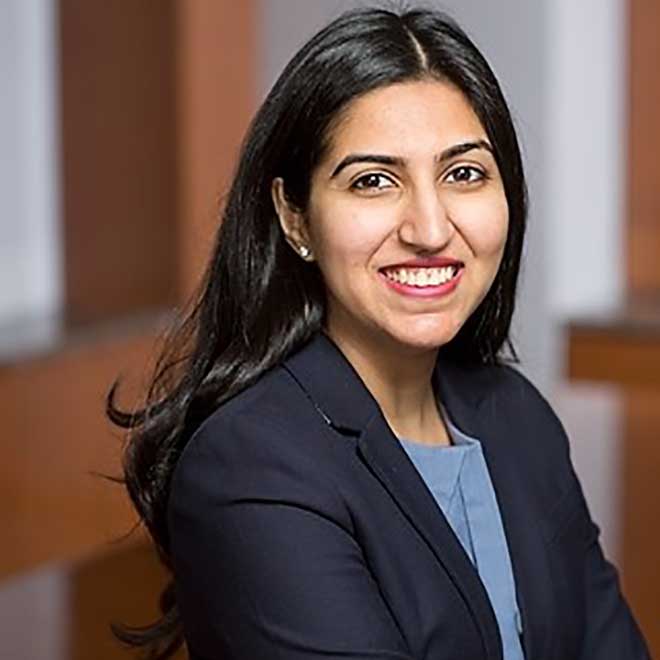
  • Rashna Jehani, LL.M Candidate, Columbia Law School, on choosing higher studies over work experience

    Rashna Jehani, LL.M Candidate, Columbia Law School, on choosing higher studies over work experience

    Rashna Jehani graduated from Government Law College, Mumbai in 2012. After having interned with several top legal firms in India, volunteering with various organizations, publishing some of her legal writing, and working full time as an Associate, Rashna is presently pursuing an LL.M. from Columbia Law School.

    In this interview, she tells our readers about:

    • Co-curricular activities during law school
    • Challenges as a young Associate
    • Experience at Columbia Law School


    How would you like introduce yourself to our readers who are mostly law aspirants, law students and young lawyers.

    I am Rashna Jehani, and I am currently pursuing my Masters in Law at the Columbia Law School. Back in India as a corporate lawyer, even though I was involved in the nuances of commercial law, the focus in every transaction remained on the promotion of the right and prioritizing public virtues over personal gains. My varied work in corporate practice has seen me involved with matters ranging from advising multinational and domestic investors in several private equity and debt transactions to representing a global manufacturer in an arbitration claim and being on the empanelment constituted for a consortium of lenders.


    Tell us about your law school experience and what are some of the co-curricular activities that you took part in?

    I ensured that I paved the path towards achieving my goals by securing a First Class throughout the five years of my LL.B. degree. The study of the subjects provided me with the analytical tools and assisted me in understanding the vagaries of the human mind which turned out to be essential in getting to the grips of the codified laws. I was chosen by my professor (Prof. Pithawalla) to assist him in compiling reference books pertaining to the Civil Procedure Code, 1908, Land Laws and the questionnaire for the All India Bar Examination. As a student who believed that the learnings were beyond the classrooms, I represented the college at several national and state level moot court competitions, volleyball tournaments and won medals in shia and kata karate competitions. My commitment to ethics and social responsibility was demonstrated by drafting bail applications for the under-trial prisoners, organizing colloquia and moderating symposiums under the auspices of the Theosophical Order of Service, conducting debates on public policy and current affairs and being one of the principal organizers who undertook the initiative “Shikhar” an exhibition cum sale to promote the articles made by the underprivileged children. The participation at the Harvard Model United Nations hosted by Harvard University also made me realize that with structured thinking and persuasive negotiations a belief could take the shape of a principle which would find a way into the international law-making process if such beliefs were to fulfil the fundamental requirement of fairness.


    What does being a Paralegal mean? How different is it from being an Associate at a law firm?

    Speaking out of experience, I would say I had the good fortune of working with seniors and partners who did not distinguish between a ‘paralegal’ and say a first year associate as at the end of the day it was the work that mattered. Having said that the learnings as a paralegal were quite crucial which certainly aided on a going forward basis.


    How was your first year after graduation? What were the challenges you faced as a young Associate?

    As a first year associate it is very crucial to be well organized with the assignments, do thorough research and be prepared to defend your views.It would be important to have that readiness of speedily formalising yourself with the relevant regulations as you would then be able to make insightful findings during a diligence or while drafting a transaction document. Lastly display a level of integrity which will take you from meeting the strict requirements of the mandates to contributing effectively towards the development of the firm you are associated with.


    Why did you prefer Masters over your job?

    The matters which I undertook made me conversant with subjects including International Finance Law, Banking Law, Company Law and International Commercial Arbitration where I realised that in the wake of globalization, new approaches to legal and policy will require a domestic lawyer to be thoroughly knowledgeable with international law and practices. With a new India looking towards eradicating poverty and meeting the growing needs of its people by increasing its foreign capital and investments, international and transnational laws play an instrumental role in developing corporate laws to deal with commercial issues and enforce human rights. While editing the economic and foreign policy updates of the firm’s policy dossier, I learnt that issues such as the regulation of the international financial system and the fate of the global problems could be accomplished by consolidated international efforts.


    How did you choose Columbia University over others? How did you go about choosing a university?

    I believed that an LL.M. at Columbia Law School would give me the unique opportunity of creating a course structure which will include the traditional law courses as well as focus on practical courses including corporate finance law, mergers and acquisition, corporate governance, transactional practice and dispute resolution. I have no doubts that the enrolment in this specialized program will provide an opportunity to get a comprehensive understanding of the business and management concepts which will augment my capacity to develop my legal practice. This venture would constitute a novel experience for me as I am benefitting by studying the legal principles in an environment and with people who are honest, public-spirited, thoroughly organized and compassionate towards all the sections of the society, just and cultured.


    Can you share a little about your journey so far at Columbia Law School and other activities you have engaged yourself with?

    (1) Volunteering at the NYC Bankruptcy Assistance Project which provides free legal assistance to low income NY residents facing financial difficulties. The work includes filing bankruptcy petitions for the debtors who then represent themselves through the remainder of the process.

    (2) A Mentor with the Columbia Law School High School Law Institute (“HSLI”) which is a student-run organization that serves talented and motivated high school students throughout New York City. Alongside that a teacher with HSLI’s teaching program where we engage in  academic programming in constitutional law, criminal law, mock trial, and moot court on Saturdays.

    (3) Volunteering with the Human Trafficking Intervention Court Project (HTIC). It is a pro bono project work with Sanctuary attorneys to interview foreign-born individuals with cases before the Human Trafficking Intervention Court to identify any trafficking-based or other immigration remedies potentially available to them.


    Lastly, what would be your parting message for our readers?

    Believing in yourself is the first secret to success.

    Start your day with the following 3 words:

    • Try-For a better future
    • True-To your work
    • Trust-In God

    All your dreams can come true if you have the courage to pursue them.


  • Gaurav Vutts, Regional Legal Manager, Hindustan Unilever Limited, on being In-House Counsel, his time at law school, and his diverse experience

    Gaurav Vutts, Regional Legal Manager, Hindustan Unilever Limited, on being In-House Counsel, his time at law school, and his diverse experience

    Gaurav Vutts graduated in law from Delhi University, batch of 2003. Gaurav is presently working as Regional Legal Manager at Hindustan Unilever Limited and leads the East Region since January 2016. His in house experience includes Intellectual Property litigation, Brand Protection, Regulatory Compliances and leading the East Region as Regional Legal Manager. He has also previously worked as Criminal Lawyer specializing in Criminal Corporate advisory, appearing before Apex Court, High Court and Trial Courts. He had joined Hindustan Unilever Limited in Year 2011, supporting the Supply chain Legal, Reality and eventually led the subsidiary company Lakme Lever Private Limited and specialized in Franchising related advisory, IPR and Regulatory compliances.

    In this interview, we speak to him about:

    • His early life from Poultry Farmer to Lawyer to In house Counsel
    • His role at HUL
    • His experience in Criminal Law, IPR and related regulatory compliances


    Tell us a little about your early days, schooling and graduation.

    Since my father was a defence officer I studied in KV School all my life. There I interacted with people from every walk of life. Post schooling I joined the Maharajas College, Jaipur and passed out with BSC. After my graduation I appeared for UPSC and RPSC exams and spent considerable time reading about history of India, Economics, Geography, Public Administration. To fend myself I also was running small scale business of poultry farm at Jaipur where I had approximate 10,000 birds. Here I labored hard in the farm not only feeding birds but planting trees in the farm, plating green grass and doing masonry. I was involved in doing all the kinds of labour which a common man does, like building roads, making concrete walls, making the sheds for poultry farm. It is these tenets of life which made me think that I must read and practise law. My younger brother was instrumental in making a lawyer from a poultry farmer.


    Tell us a little about your days in law school.

    The days in law school (in Delhi) gave me hands-on experience and exposure to diversity in culture, inclusiveness, collaboration and leadership. For our livelihood, we had to fend for ourselves including arranging for accommodation. During the law faculty days I stayed at Air Force Hostel located at Subroto Park New Delhi. It was a tremendous time where in the afternoon I use to attend the Law faculty and at night I used to work with GE Capital Services Limited as Process Associate located at Gurgaon. It was a dream time where I used to work twenty hours a day. Nine hours I used to work at the call center, the sleep for four hours in the morning, then attend classes in the afternoon. Apart from this, I also interned with Mr. Som Mandal, Fox Mandal and Co., Mr. Rajan Narain at Global Legal Associates. It’s here that I started to see the Supreme Court, High Court, Trial Court and Labour Law Tribunals. I used to sit through conferences with clients and lawyers and assist in marking pages, taking out case laws and even typing plaints, petitions, delivering briefs to courts, attending the courts and monitoring the court room board for item numbers.


    How important are grades, in your opinion?

    For me, grades are not important at all. What matters is hard work and honesty towards reading the law and understanding the subject.

    What subjects did you take particular interest in during your law school days?

    As a law student, Jurisprudence, Criminal Law, Constitution, Contracts, Arbitration and Procedural Codes fascinated me. I feel these subjects form the basis of a lawyer’s spirit. These form the first principles.


    Who was your mentor, or main source of inspiration who motivated you all along the way?

    Personally speaking, I had many mentors. I will just name them. During my law college days I attended the Raj Anand Moot Court as my younger brother Vaibhav Vutts was interning under Mr. Pravin Anand. I was impressed to see Mr. Arun Jaitley and Mr. Pravin Anand. I was in literal awe to see them. Later I became a member of the law faculty body called Students for the Promotion on International Law and further got a chance to meet these mentors. In law firms I was mentored by Mr. Raian Karanjawala who is again one of my greatest mentors till today. I also got to work with Mr. Siddharth Luthra, Senior Advocate, as briefing counsel and briefed him in countless criminal matters. I spent nights in his chamber to study law and give the ideal summary of the case to him in morning. Till today I am mentored by him. Apart from this I have had many individuals who have inspired me over the years like Mr. Gopal Subramanium, Senior Advocate; my father, Wing Commander Sunil Kumar Lal, ex-Indian Air Force Pilot; my younger brother Vaibhav Vutts, Advocate, who runs a law firm called Vutts & Associates; my wife Priyanka Vutts, among others, are true inspirational people to me. I was truly inspired by many great senior advocates during my briefing days and travelling with them outstation for cases with Mr. KTS Tulsi, Mr. Harish Salve, Late Mr. GS Sanghi, Mr. Ram Jethmalani.  In fact, I find inspiration even from my litigating lawyers located at every nook and corner of India stretching from South to North, East to west. They give me unquantifiable passion to read and lead.


    What kind of internships did you engage in during your student years?

    It is very important that a law student interns with lawyers. It makes his foundation strong. I interned with Fox Mandal and Co. and Global Legal Associates managed by Mr. Rajan Narain. It is here where I got true vibes of litigation. I was truly lucky to undertake an internship in these places.


    How did you develop this keen interest in criminal law and in legal advisory?

    I always had the real time craving to know the basics of all sects of law. Be it Contracts, Constitution, Jurisprudence, Legislative Drafting, Criminal law, Procedural law, etc. The constitution is the mother of all laws. It is the founding spirit for any legislation. All enactments flow out of it and merge in it. During my internship days and practice days I saw the sense of humanity in resolving criminal cases, making an innocent person get his rights in a court of law, a stimulating subject which is par excellence when it comes to human conscience, irrespective of money you make. This is a true humanitarian service, I believe. The good reading of Constitution of India made me realize how intricate criminal law is and it enchanted me more and more. Once I joined Mr. Karanjawala’s office, fate gave me a pillar to handle criminal law as he allocated the criminal department to me with a few senior lawyers in the firm. I appeared in all criminal law forums located across India and the turn-around was that in three nights, I appeared from Trial Court, to High Court and then to Supreme Court. I also learnt that IPR rights can be protected under the realm of law of crimes. In my in-house advisory I still lead when it comes to cracking my numbers in litigation and resolving intricate litigations under me.


    Please give our readers some insights on the leading Indian firms dealing in Criminal Law, IPR Law, and your recommendations for where and how to secure internships.

    There are quite a number of top quality criminal law firms dealing in corporate liabilities like Amarchand, AZB, Karanjawala and Co.


    Tell us about your work experience at Hindustan Unilever Limited as Regional Legal Manager and at Lakme Lever Private Limited.

    At the starting of 2011 I joined HUL as Assistant Manager-Legal, assisting the Supply Chain, Real Estate. It was a great learning curve for me. Here I learnt what leadership is and how important is governance. I got to work on some mega realty projects for the company and prepare legal documentation for the same in advisory with law firm. It’s here that my talent to align with lawyers played a great success and yielded dividends to the company. I got to work on heavy stake matters and stood victorious in them. After a brief stint, I worked with Lakme Lever Private Limited as legal Head. From deputing a young dynamic team, advising the business from part A to Z on nuances of law, and setting up the legal process, it was an amazing journey for me. I got to work with a real talented team there. I was thereafter given the eastern region of the company and it is here that I got to work on mega projects, deliver advisory to business and governance. It is one of the most rewarding experiences I have had so far intellectually as in house counsel. Seven years of legal practice and close to seven years of in house practice has made me a full-fledged legal personality now with fair knowledge to address any kind of legal issue/ advisory. Needless to state, you will still remain a student of law till the end.


    What general advice would you give our readers who aspire to stay at the top of their legal game?

    My view is very simple. Read more, research more, read the complete case laws and relevant enactments, work hard and be meticulous to facts of the case. Don’t draw inferences to attract immediate audiences to market yourselves by just reading some tit bits of legal provisions and gain part time popularity which may stand to your victory for few years but you will miserably fail to mentor young people, and not grow. Read the essence, pith and substance of law. This will make you a true lawyer and legal expert and a true mentor for people seeing you. The profession of law requires real time hard work and patience. Until the person does not do above aspects, he rusts gradually and fades away. Money will come as it’s a byproduct of excellence but for a lawyer the most essential building block is to mentor his immediate juniors too.


  • Vikram Koppikar, Senior Legal Manager, TCS, on being In-House Counsel, and his diverse experience

    Vikram Koppikar, Senior Legal Manager, TCS, on being In-House Counsel, and his diverse experience

    Vikram graduated from Government Law College, Mumbai, in 2000. He currently works with TCS and handles India and the MEA regions. He was engaged in the setting up of the first all women BPO in Saudi Arabia, which was the first of its kind. This involved interactions with the Labour Board as well as the Saudi Client. He has also been responsible SPOC for the takeover of an erstwhile Government IT Company – CMC limited, by TCS.

    In this interview we speak to him about:

    • His experience in IP Law
    • His role as In-House Counsel
    • Working for Marico, McDonald’s, Wadia conglomerate, and M/s. Jehnagir Gulabbhai, Bilimoria and Daruwalla

    How would you introduce yourself to our readers? 

    I would probably introduce myself, as the “Accidental Attorney”. I joined law college only because my friends at that time were joining the same. It was only upon attending law school, through the various lectures that I attended I realised, that I had made the right choice!


    How was your experience at law school? 

    I joined Government Law College (Mumbai), and did take part in the odd moot court competition. Through GLC’s recruitment process, I interned with and later joined, the law firm of M/s. Jehangir Gulabbhai, Billimoria and Daruwalla, one of India’s oldest law Intellectual Property (IP) specific law firm. The sheet variety of IP work, kept my interest going, even during my studies.

    You worked with a senior partner at a law firm on IP related matters. Can you describe the nature of the work you did? 

    I worked with the late Prof. Tehemtan Daruwalla, a true giant in the field of IP matters. He insisted that we always get our hands “dirty” in each matter, and ours was the only firm carrying out a manual (physical files) in the trademark registry (when it was allowed) to ensure accuracy of our opinions. In this tenure, Trademark search, opposition, Copyright oppositions (both at a registry and high court level) and patent drafting were all opportunities that I devoured with glee. A copyright case involving Mira Nair’s film Monsoon Wedding was a memorable case that I remember working upon.


    How has the advent of technology impacted the field of IPR law? 

    As Spiderman’s quote says “with great power comes great responsibility”, with strides in technology have arisen ways to counterfeit/ infringe such tech and consequently legislation which is struggling to keep up. For each “Paywall” Netflix subscription comes a “Bit-torrent” where you download the leaked “Game Of Thrones” episode. Of late, tech such as 3-D printing has also made counterfeiting that much easier. IP law, its relevance and furthermore understanding (I’ll touch upon that in my next answer) have never been more important.

    How did you secure a position with Marico? 

    I joined Marico, keen to try an in-house role. My work involved working with their R&D team, in the filing of trademarks, and assisting with drafting, search and opposition of patents. Most frequent were my anti-counterfeiting actions involving pan-India travel to ensure search and seizure of infringers of Marico’s intellectual property. I would stress here that both the knowledge of IP laws as well as the intent to act upon IP violations was markedly lower in those times, amongst police authorities than it is today and as mentioned in my previous answer, the proliferation of social media, technology has led to a greater cognizance of such offences in small town India.


    You have also worked with McDonalds India. How did this appointment happen? 

    I joined McDonald’s to be part of this global brand. Management’s mandate to open restaurants at a hectic pace led to exposure with business agreements, property laws, labour matters, taxes and of course litigation. It was interesting to fend various customer complaints seeking damages in lieu of rude behaviour by staff, or another filed by a parent whose daughter had received a Mickey Mouse with an Indian Flag with her “Happy Meal” thereby hurting his national sentiment! Was this a fall-out of the infamous Stella Liebeck case? I can only guess!


    What motivated you to pursue an LLM while you had a successful legal career? 

    Having had my brush with international legislation, dealing with an American parent corporation (McDonald’s), I decided to pursue my LLM in International, Commercial Law from the University of Durham (UK). I chose the UK, as common law as is practised in the UK serves as precedent for the Indian legal system. I further chose Durham, as this particular course had the right mix of international topics for an In-House career (in India). I would always recommend working for a few years before one opts for an LLM. This is because one’s previous (or future) career path should be supplemented by the LLM content that one chooses. Secondly, previous work experience will help you “value add” to the interactive class sessions, and examinations


    What are your views on the importance of higher education? 

    In my capacity as In-House Counsel of some years, I can vouch that each Indian corporate today, has some overseas business or funding. The importance of international commercial legislation, especially that of the EU, US and even China and Africa is crucial to have knowledge of. My advice to readers, is to first have a firm footing in the legal “stream” of their choice (IP, Tax etc.) and then take this footing further into the “ocean” that is international studies, to provide further impetus .


    How did you secure a position with the Wadia conglomerate? 

    I secured a position with the Wadia Group, through a common friend with Mr. Burjor Nariman, who was the then Head of Legal for the Wadia Group. The choice to continue In-House was a conscious one, as I by then realised the unique advantage that an In-House counsel holds in the management of a company (I will elaborate this in a subsequent answer).  The Wadia Group has some renowned brands such as Britannia Industries, Go-Air and Bombay Realty and the role offered a chance to work across these industries with a focus on litigation, customer complaints and property re-development contracts.


    What caused the shift to Capgemini India? 

    My experience with the Wadia Group focussed primarily on litigation and subsequently, was limited by the inputs I could offer to the senior counsels handling such high stakes litigation. When the Capgemini role of sole counsel came along, I grabbed it eagerly. My tenure saw Capgemini India (CGI) commence its “India Business” operations, which then extended into the Middle East leading to a plethora of business contracts. CGI then took over Ernst and Young’s India consulting division, which brought opened a floodgate of legacy litigation. My challenges as In-House Counsel were two –fold given the sheer volume and variety of work, and that I had previously never been attuned to the “IT Industry”. I can honestly say that this was the hardest time in my career and the lessons that I have learned in this period have helped me to this day.


    How did your appointment at TCS happen? 

    I was recommended to TCS by a previous senior, Mr. Debabrata Dutt. I currently am responsible for the Middle East and Africa geographies at TCS and handle services, licensing and BPO related contracts within these geographies. I was in charge of the take-over of CMC Ltd. an erstwhile Government owned IT Company by TCS. My crowning glory (so far) has been my role in aiding the set-up of the first All Women BPO services unit for a client in Riyadh, Saudi Arabia by TCS. I cite this example because, unlike other business transactions, this one was the first of its kind, and there was no template or precedent for the same. I was initially geared towards ensuring contract closure (as is the case with most In-House counsels). I realised that there were many “pitfalls” in ensuring successful project completion from issues including security (requiring clearance of the Burkha clad Saudi women, archiving video footage) and compliance (the Saudi personnel refused to handle transactions arising from countries such as Israel). Through my interactions with the Saudi Labour Board, I was able to highlight these challenges and obtain concessions/clarifications. In conclusion, not only did I aid the smooth roll-out of this prestigious project, but also a template was put in place, when a similar request came along from another Saudi Client. In closing, I would like to highlight that this set-up has since been visited by our Prime Minister Mr. Narendra Modi and the US First Lady Melania Trump, during President’s Trump’s visit to Saudi Arabia.


    What are the skills and qualities required to succeed as an in house counsel? 

    In the movie The Godfather, Robert Duvall plays Tommy Hagen, the counsel of the Corleone family, who is entrusted with some very unusual requests which he carries out with great patience and diligence. While a real life In House counsel may not get such unusual requests, he nevertheless has to be patient, diligent and protect business interests above all. Indian conglomerates today have stepped overseas and/or entered into diverse business operations and an In-House Counsel has to keep him/herself abreast with legislation both current and anticipated that may arise due to such venture. I remember Mr. Bharat Vasani (ex Legal Head; Tata Sons) mentioning how he underwent a technical training program to understand the DTH business at the time, the TATA group was entering the same (TATA Sky). On a personal level, during my McDonald’s tenure, I spent a week working hands on in a McDonald’s restaurant (serving fries, burgers) to understand the daily routine of the store and developing empathy to the store employee!


    In your experience, how is working in house different from working in a law office?

    An In-House counsel, unlike a law firm lawyer, has two masters, the Law and his CEO! This is because; an In-House counsel is required to be attuned to overall business interests and on some occasions, the whims of the management; from commencing litigation against an overnight friend turned rival or even developing a taste for your CEO’s favourite brand of scotch!


    What advice do you have for our readers who are primarily college students?

    Firstly, enjoy this time! The friends that you will make, will last you a lifetime. Secondly, be open to learning from various streams of law before circumstance requires you to specialise. Lastly, be always aware of trends not only in legislation, but the industry that you cater to. Legal services have changed as much as other industries, and as Richard Susskind predicts, it is going to change further yet!

  • Shruti Chopra, Associate, Morrison Cohen LLP, on IP Law, and studying at Berkeley

    Shruti Chopra, Associate, Morrison Cohen LLP, on IP Law, and studying at Berkeley

    Shruti Chopra graduated in law from University of Mumbai, batch of 2011. She then went on to pursue her Masters at the University of California, Berkeley – School of Law, specialising in Law & Technology, Intellectual Property, Privacy Law, Media & Entertainment. She began her career as an Associate with a full service law firm in Mumbai, India focusing on Intellectual Property and Corporate law. Prior to joining Morrison Cohen, she worked at a social enterprise start-up with a focus on devising solutions to complex legal and business issues, and with a civil society non-governmental organization leading policy and advocacy efforts for the organization at the United Nations. Since being admitted to practice in New York, she has also provided pro-bono transactional and legal services to low-income entrepreneurs and start-ups through Volunteers of Legal Service.

    In this interview we speak to her about:

    • Pursuing the unique BSL LLB course at the undergraduate level
    • Studying at Berkeley
    • Her experience in IP law

    How would you like to introduce yourself to our readers?

    In my professional capacity, I am a dual-qualified corporate attorney and specialize in intellectual property, technology and privacy law. In my personal space, I am a food aficionado, who has a food blog on Instagram and love to travel.


    What is unique about the BLS, LLB course and how did it contribute to your career in law?

    The B.L.S, or the Bachelors of Legal Science degree, is similar to the Bachelor of Arts degree offered at most law schools. It is a great way to introduce oneself to the legal system without being overwhelmed with the intricacies of it. While the learnings of law school only lay the foundations of one’s career, the B.L.S course with its emphasis of subjects such as logic, legal writing and political science ensured a smooth transition to the L.L.B degree.


    What subjects did you take particular interest in during your law school days? 

    Very early on I knew that I wanted to do something in the field of intellectual property law. This was, in part, because I come from a family that is very serious about its movies, and because it was (is) a field of law that is still developing, allowing you to be part of the process. Because of this drive, and the lack of opportunities to study intellectual property law before the final year of law school, I went to Harvard University for a summer to study the basics of intellectual property and legal writing. This was certainly a turning point, both in terms of academics as well as extra-curricular activities!

    What kind of internships did you engage in during your student years which you feel were invaluable to you in reaching your current position?

    Unlike the norm at Government Law College, I never did semester or yearlong internships. Instead, I interned during the summer and winter breaks. While my first few internships were focused on getting a feel for corporate law, in my second year and onward, all my internships were focused on strengthening my background in different facets of intellectual property law. During the year, especially during my fourth and fifth year at law school, I worked as a research assistant to Madhavi Divan, who is an exceptional teacher and mentor. She was working on updating her books “Facets of Media Law” and the opportunity to contribute to her research is largely responsible for me heading to Berkeley for my LL.M., and for being deeply invested in new media and privacy law.


    What are your areas of specialisation in law? 

    My areas of specialization are intellectual property, technology and privacy laws. I selected intellectual property laws as an area of specialization in my second year of law school, and the rest followed as I made my way through law school and professional life. The most important factor, in my opinion, is finding something you are truly passionate about. A lot of people say that law is a very dry field, without much excitement. I beg to differ. If you look around, every aspect of our life is touched by law; it is about finding what excites you. For me, since I grew up on steady appetite of movies and television, I was always enamoured by the industry and always knowledgeable about it. Soon, with technology – whether it is mobile communications, software applications, social media platforms or user content – my horizon broadened. We spend so much our day working that it is important to find something that truly motivates and stimulates you, or you risk a burnout.


    Is an L.L.M absolutely necessary for a career in law? 

    The LL.M. degree is certainly not a requirement or necessity; it is, however, a good asset. My decision to pursue the LL.M. degree was based on three things – introduction to a different legal education system, access to people from diverse backgrounds, and the opportunity explore different subjects that didn’t exist in India at the time. I chose Berkeley since it was selective in the number of Indian students it enrolled, ensuring I would be interacting with people from different countries; I met people from 49 different countries. Berkeley also has a stellar faculty for intellectual property and privacy law.

    One should expect to benefit from an LL.M. if one has an open mind; the program will allow you to make friends that will last you a lifetime, expand your professional network, and widen your thinking and adaptability to different situations. The LL.M. program is not only a professional degree; if you allow, it can be instrumental in shaping who you are as well.


    Are there any commendable Indian institutions which you would recommend to a student pursuing an L.L.M, or would you suggest looking only at options abroad?

    Since the LL.M. degree is not a necessity, I wouldn’t recommend someone graduating from an Indian law school to pursue the LL.M. degree in India, unless of course if required to get into academia. The true value of LL.M. lies in its diversity of cultures, people and the law, something better accessed outside your own country.


    Tell us about your work experience at DSK Legal where you’d held the position of Associate.

    My experience at DSK Legal was absolutely wonderful. It was my first job after law school, and I couldn’t have asked for a better set of people to work with. For me, it was absolutely critical to work with people I could learn from, and working with Mr. Anand Desai ensured that. Even though my area of practice has always been related to intellectual property, and therefore everything from entertainment law to M&A transactions to trademark prosecution, DSK Legal gave me the opportunity to work on commercial litigation, to draft memos on companies act provisions, understand real estate transactions, and experience criminal trials. The diversity of experiences is important when you are new because it gives you the ability to view things in a comprehensive manner, and not in silos.   


    You’ve assisted The Walt Disney Company in the capacity of a secondee. What did your job here entail?

    My favourite childhood movies came from Rajshri and Yash Raj; I mentioned how films were integral to my childhood! That aside, DSK Legal gave me a multitude of opportunities to learn, and one of them was the chance to with the gaming division at The Walt Disney Company. My work here comprised of two things – helping the division comply with regulations and polices set up by the Burbank office (HQ) of the company, and advising the business and product teams on legal issues that needed to be addressed in new releases. This experience has stayed with me; it taught me the importance of the commercial aspects of a business when providing legal advice.


    Tell us more about Morrison Cohen LLP. How did you come to work here?

    My path to Morrison Cohen, LLP hasn’t been conventional – to say the least. Unlike most people, I moved to India after my LL.M., worked at DSK Legal for two years, and then moved back to the United States to take the bar exam and work here. Since I was transitioning between countries, I thought it was the opportune time to expand my horizons before heading back to law firm life. I worked with a social enterprise start-up and with a non-profit affiliated to the United Nations, while providing pro-bono legal services to small businesses, all before I began working at Morrison Cohen, LLP in New York. Once I was ready to move back to a law firm, I applied for a position with the firm, and less than six weeks later I was working as an Associate. The path was a long and winding road that involved varied experiences, lots of networking, staying relevant even while not being in the legal field, and a heavy dose of confidence in my abilities.


    What can you say are the notable differences in work culture in Indian and foreign/international firms?

    I don’t think I prefer one culture over the other – both have their pros and cons. The difference in working at a top tier firm in both these jurisdictions (and I would imagine over the world) is fairly minimal. However, depending on the type of firm you choose, your experiences can differ. For example, at a mid-size or boutique firm you will likely have more responsibilities. Obviously, the US being a more mature market, firms are more streamlined in the way they function, which makes day to day life a little easier. That said, Indian law firms allow you cross-over access i.e. a corporate associate can get experiences in litigation, or a real estate associate can work on a purely corporate matter; something like that would rarely happen in the U.S.


    Tell us about your current work profile as an Associate at Morrison Cohen LLP. 

    Since I work in the corporate team but specialize in intellectual property law, a regular work day is diverse. I could begin my day working on an intellectual property and technology due diligence for a corporate transaction, follow that with a trademark application filed with the USPTO, and end with drafting a privacy policy for a start-up. In between, there is working on commercial agreements, both standalone and for transactions. This diversity allows me the opportunity to understand multiple business types, and how aspects of law apply to each. As I said before, it is important to be excited about the work you do, and the assortment of matters ensures that it never gets boring!


    Where do you see yourself ten years from now? 

    My decision to become a corporate lawyer focused on intellectual property, technology and privacy was based on the fact that the industry is ever-changing, and ever-growing, and therefore, always challenging. While a decade ago people were coming to terms with the advent of social media like Facebook and user generated content like YouTube, today it has moved towards security and privacy concerns of big data, impact of blockchain and alternate currencies like bitcoin, and the importance of developing and monetizing intellectual property assets in business. Ten years from now I imagine the industry will still be as dynamic, and by association, my practice, as challenging and exciting. I see myself as a lawyer to individuals and businesses grappling to understand how the legal ecosystem applies to the advancement of technology.


    What is your message to our readers?

    As clichéd as it may sound, believe in yourself. You are always going to be your best advocate, and if you can’t believe in yourself, you can’t expect anyone else to. In our profession, trust and confidence is everything – only if your seniors, peers and clients trust you and believe in your abilities are you able to progress. Always hustle, get up and move ahead; there is no substitute for plain hard work. Lastly, don’t be afraid to reach out, to help and be helped – find mentors, be a mentor, volunteer your time, say yes to a challenge, and allow yourself to grow. And since I believe in practice what you preach, if anyone wants to reach out, I am happy to talk and help in any way I can – I can be reached at schopra@morrisoncohen.com.  

  • Ayon Basu, Manager-Legal, Vodafone Mobile Services Limited, on being in-house counsel, and his experience

    Ayon Basu, Manager-Legal, Vodafone Mobile Services Limited, on being in-house counsel, and his experience

    Ayon Basu graduated in law from Symbiosis Law School, Pune, in 2013. After successful stints with S. Jalan and Company, Advocates & Solicitors, Kolkata, and Pangea3 Thomson Reuters, Mumbai, he is currently Legal Manager at Vodafone Mobile Services Limited, where his role entails looking after the Kolkata and West Bengal Telecom Circles along with Sikkim and Andaman and Nicobar Island. The job involves managing litigation along with supporting and advising business in order to minimize risk and ensure general legal compliance.

    In this interview we speak to him about:

    • His time at Symbiosis Law School
    • His role at Vodafone
    • His experience thus far

    What would you like to say to our readers in the manner of an introduction of yourself?

    I am an in-house counsel (presently designated as Manager – Legal) working with Vodafone in Kolkata. I graduated from Symbiosis Law School, Pune in 2013 and have been in the profession since then.


    What motivated you to take up law as your choice of career? Are you a first generation lawyer?

    I’ll answer the second question first, to provide a background to the first. Yes, I am a first generation lawyer, owing to which, much of what I knew or understood about law prior to law school, was what I got to watch and observe in cinema. We all know how the two are vastly disconnected. So yes, I liked arguing and considered the concept of legality as intellectually intriguing.


    Tell us a bit about your college days at Symbiosis Law School, Pune.

    The key responsibility of a business/corporate lawyer is to first understand the business, thereupon working closely and liaising with necessary stakeholders etc. I graduated with a BBA LLB degree, and the curriculum at SLS, Pune was very friendly to students and gave us the leg space to carve our own niche. Apart from the academic sphere, the five years in Pune were incredible! I strongly feel it is very important for any student to enjoy the social life that college brings as that helps us in various ways in our future. That is one of the strengths of SLS Alumni, the strong bonding and networking that we have today.


    Could you tell us about the internships you took up, and what you learnt from those experiences?

    I have interned with Senior Counsels, firms and PSUs during my academic stint and each of these internships have contributed a good deal to who I am today. Amongst all, I believe that my first internship and my first full time assignment with a law firm had opened me up on how to deal with clients (paradoxical as it may sound, I happen to be one of their clients today!)


    What advice would you give students in avoiding a decision paralysis? 

    This is something I had personally faced, and I graduated in 2013 with a plethora of options with regard to the next step I was to take. I believe the decision must be made on the basis of the exposure one receives while interning and the candidates own aims/interests. At 22/23 one has a career of over 35 years to look forward to and hence, must chart out his/her own path. Two people cannot have identical career paths. Hence, one must thoroughly look into his/ her options and work them out accordingly.  


    What areas of law interested you during your legal education?

    Initially, post my first internship with Sr. Advocate Ranjan Bachawat, I had keen interest in IPR. Personally though, Company Law and procedural laws are of utmost importance.


    Tell us about your early professional experiences at S. Jalan and Company, Advocates & Solicitors.

    S. Jalan and Company, is one of the reknowned old school law firms in Kolkata, and I was fortunate enough to work closely on some big ticket litigations during my brief stint there. This allowed me to understand how to balance business dynamics and present them accordingly before the Learned Court.


    What were the main takeaways for you from your time working with Pangea3 Thomson Reuters?

    I worked on quite a few international engagements, at P3TR and worked with a team spread across three cities in India, with the client sitting in the United States. Working in such a vast team, allowed me to learn how to blend in and satisfy a client’s requirement and negotiate with stakeholders accordingly.


    As an in-house counsel with Vodafone Mobile Services Limited, what does a typical working day look like for you?

    As an in house counsel, with a general legal profile, we are entrusted with looking after all forms of legal work, be it litigation, contracts or even compliance. A daily operational role does not allow us the luxury of fixed hours and billing time accordingly, as in the legal service industry. We are fire fighters and are looked up to by business as professional trouble shooters. I have been in the present role for almost two years and needless to say, I have been facing a plethora of complex problems on a day to day basis, each of which comes with its own novel challenges. The senior legal professionals in Vodafone India’s Legal Leadership Team are great mentors to have and are of great help in providing guidance and advise as and when required. Also, the Telecom industry is going through a rather interesting phase and it has been a great learning curve in adapting to the changes dictated by this phase.


    How do you manage your time between your professional and personal interests?

    I have always been an avid movie buff and watch a lot of cinema. This I feel widens my exposure and restores sanity after a hard day at work! Apart from films, I am also actively involved in playing football video games (Pro-Evolution Soccer and not FIFA) on the Playstation.

    I have also played guitar at an earlier stage in my life, though I barely ever get to play these days.


    Where would you like your career to take you five years down the line?

    My career and academic stint has seen me traveling between home and Maharashtra regularly. I never settle with anything and am always looking for novel steps to take in my career. Planning for the next five years has never been my style. There have been instances where I have had to take calls on opportunities as I have a clear vision in my head of what I seek to do. More than the five year bit, I’m more interested in where I’d be in the last decade of my professional career, and that’s what keeps me going.


    What advice would you like to give our readers, who are mostly law students and young lawyers?

    For students, I’d strongly suggest they enjoy college life with all the social obligations it brings and embrace any academic challenge. It is not possible to put one’s heart and soul in one’s work if one does not enjoy it. It is strongly recommended that they learn how to enjoy their academic or professional pursuits and read up on latest amendments. It goes without saying, that a law student ought to be updated with the news in order to be well versed with all kinds of regulatory changes.


  • Arjun Krishnan, Advocate-on-Record, on arbitration, studying at Oxford, and securing AIR 2 in the AoR examination

    Arjun Krishnan, Advocate-on-Record, on arbitration, studying at Oxford, and securing AIR 2 in the AoR examination

    Arjun graduated from NLSIU, Bangalore, in 2005. Thereafter, he received the Inlaks Scholarship to study at New College, University of Oxford, in the prestigious BCL programme. Since 2006, he has been practicing in India. Between 2006-2011/12 he was the junior of Gourab Banerji, Sr. Advocate & Barrister. In 2012, he took the Advocate-on-Record exam, and was awarded a silver medal and the Mukesh Goswami Memorial Prize for obtaining the 2nd rank in the Supreme Court’s AOR examination. Thereafter, he branched out and set up an independent legal practice.

    In this interview we speak to him about:

    • His time at NLSIU
    • Preparing for the AoR examination
    • His new role at Samvad Partners

    How would you like to introduce yourself to our readers? Do you come from a family of lawyers?

    I do not come from a family of lawyers. Some of my more distant relatives were lawyers, but that did not influence my career, or my decision to pursue law. Having said that, I am from what you would call an ‘upper middle class’ background. Where you start from does make a difference to where you end up – without that I probably wouldn’t have made some of the decisions or taken some of the opportunities that came my way. Perhaps, these choices or opportunities would not have presented themselves to persons who were not as in the same position as me.


    What was it that got you interested in the legal field?

    When I started my legal education, I had no idea about the law, other than the distorted picture of what cinema and television gave us in the late 1990s. My father had a big role to play. He was keen that I join a profession, and had heard about the National Law School at Bangalore. He encouraged me to give the entrance exam (there was no CLAT back then), which I did. I passed – I was last on the list of candidates who made it. In retrospect, I was quite lucky, because my 12th Standard board exam performance was not exactly stellar. I got into the legal profession without knowing anything about it.

    How was your experience in NLSIU? 

    Simply put, it was a defining and enriching experience – the value of which is inestimable. In every way – socially, intellectually, morally – I think I came out of the institution a better version of myself. And everyone there made a big contribution in this. We had some excellent professors. They taught students to question and challenge what they had read about. This is a really important skill for a lawyer – we do this every day, sometimes without thinking. Here I must commend the multi-disciplinary approach at NLSIU. We had to read history, economics and political science apart from the law. In my experience, it was our history professor – Dr. V.S. Elizabeth, who first taught us to challenge and question some of things we took as gospel truth. I hope she reads this and knows what a great contribution she made. There were a number of others who were great teachers in their own way – Prof. Jayagovind, Prof. Ramakrishna, Prof. U.R. Rai, Prof. A.K. Rai, Prof. Ramesh, and many more.

    But more than anything else, it was the other students there who challenged you to do better and be a better person all the time. My closest and best friends are all from my college days. All law students should make the most of their years in college. The lessons learnt outside the classroom are generally the more important ones.

    As far as extra-curricular activities were concerned, I was part of the Literary and Debating Society. Quizzing was very big in Bangalore back then. We reached the semi-finals of University Challenge, a TV Quiz Show. A team that I was part of was ranked second in the State of Karnataka. Frankly, I found mooting to be quite boring, though it does teach you a lot of skills you can use in the practice of law. I think legal writing is far more important. I did some of that – writing articles and trying to get them published in journals. As a lawyer, the ability to put across legal arguments clearly in the written form is a valuable skill – whether you end up as a corporate lawyer or as a disputes lawyer.

    I don’t really count internships as extra-curricular because they were a part of the curriculum when I was at NLS. We got grades based on the feedback the lawyers would give the interns and based on what we did during the internships. I think its important to take internships seriously. What to do after law school is a difficult choice, at the best of times. It is important to try out different kinds of legal work to see what suits your personality.

    Did Law School prepare me for the real world? – yes and no. I think legal practice is very different from learning about the law. Nothing can prepare you for all the things you are going to face when you get into a law office.

    But some of the skills you learn in law school can help you a great deal in legal practice. Firstly, the basics are important – contract law, criminal law, property, constitutional law, tort – without this you will spend a lot more time struggling in the initial years. Secondly, you don’t need to know all the law, but you do need to know where to find it. I can’t stress the importance of good legal research skills in the workplace enough. By this, I don’t just mean being skilled at using a legal database (though that is also important nowadays) – you have to know where to start. Usually, this is with the statute itself or with a good book.

    What were your areas of interest in law school? How did you recognise and cultivate such interests?

    In law school, I used to be very interested in Intellectual Property as a subject. I read a lot about the subject, attended all the talks and lectures about this field. I even took on the assignment of being a teaching assistant. Alas, the charm wore off when I joined legal practice. As a subject, I think it is more interesting in the books, than in actual practice. Competition law, on the other hand, continues to be of interest to me. I have been fortunate to be able to work with the Competition Commission of India on a number of cases.


    Can you describe your experience at Oxford? 

    The whole Oxford experience was nothing short of magical. I went to New College (which ironically was founded in 1379, as the New College of St. Mary of Winchester at Oxford). It really is the most magnificent and beautiful place. I was fortunate to be amongst an amazing group of graduate students, from across disciplines.

    I think in terms of quality and teaching methodology, there is no course like the BCL at Oxford. Its one of the few graduate courses where there is a tutorial system – essentially either individually or a small group of students sit together with the law tutor to discuss the law. We were taught by some of the leading lights in their respective fields. For instance, Conflict of Laws was taught by Professors Adrian Briggs and Edwin Peel. One course which stood out for me was Philosophical Foundations of the Common Law – I could actually make connections between jurisdprudence and the actual practice of law.

    I was very fortunate to be awarded a scholarship by the Inlaks Foundation to cover almost all my expenses of studying abroad. I am not sure if the process remains the same – but there was a written application and two rounds of interview. During the final round there were at least a dozen people in the room, all past scholars and some of them famous personalities who were instantly recognizable. It was quite inspiring to see what people had gone on to do after being awarded an Inlaks scholarship.

    How can students increase their chances of obtaining a scholarship? Working hard and getting good grades is very important. There is no substitute for that. Other than that, you have to set yourself apart from the crowd. Another very important thing is your references – be it professional or academic ones. Unless you were able to impress your professors and senior colleagues at work, you are unlikely to get good references.


    What are your views about the importance of further studies beyond the undergraduate level? 

    There are two or three aspects to this, from the point of view of someone who doesn’t want to pursue an academic career but become a practising lawyer. The first is that it’s a great experience – in and of itself. You do learn to think about the law in new and different ways. If the graduate degree has a specialisation, then this would certainly help your career in that specialised field. The second thing to know is, further studies will not make you a more successful lawyer. Just because you have an LLM doesn’t mean that you are better than the rest. The qualities that go into the making of a successful lawyer in this country have more to do with hard work, perseverance, the ability to interact with and impress clients, and most of all – a healthy slice of good fortune. The third thing is – money. Further studies (particularly abroad) can be quite expensive. If you cannot afford it, or you do not have funding, then you should not worry too much about further studies. It will not make or break your career. But if you can (afford it) – go for it!


    What made you decide to litigate instead of taking up a job at a law firm, which seems to be the trend these days?

    When I was in Law School, I interned with a number of litigating lawyers. I also interned with a law firm. But I found that I found litigation more interesting – I could see myself doing that for the rest of my life. One of the persons I interned with was Gourab Banerji, a barrister and a Senior Advocate. He is one of the finest commercial lawyers in the country, and very fine human being. I was very sure that I wanted to work with him when I completed my studies. Working in his chambers as a junior advocate to Mr. Banerji was my first, and only job. Working with him gave me the skills and confidence I needed to begin practice independently.

    But I couldn’t have done it without the support of my parents, who also live in Delhi. I always knew I had their support, and didn’t have to worry about paying rent or worry too much about money. Without the support of family –both  financial and moral, practicing independently would have been a much bigger challenge than it was.


    How did you prepare for the AoR examination?

    (Arjun ranked second in the country in the AoR examination.)

    It is not an easy exam, and I am firmly of the belief that you have to take some time off from work to prepare. I took a little over a month off, and tried to avoid going to court altogether. Luckily the exams are held in early June, and the Supreme Court closes in mid-May for the summer vacation. I think the key is to practice writing because finishing the paper and attempting all the questions can be very challenging.


    Can you recall the first time you appeared in court, or a time you appeared in court for a significant matter? 

    I do remember my first significant appearance and it is a very vivid memory. It was a case in the regular hearing list of the Supreme Court, before Justice A.K. Mathur and Justice Dalveer Bhandari. The case had been in the regular list for months and it never used to reach. But that day, it did reach. My Senior, Mr. Banerji, was arguing a case in another court. The briefing counsel was also held up elsewhere. I was the only one there. I asked for a short adjournment, but the bench was not agreeable. They passed over the matter and told me to be ready to argue. I must confess, to my great embarrassment, that I was not prepared. I quickly went over the written notes, and when my turn came, I made my submissions to the Court to the best of my ability. I remember being extremely nervous and my hands were shaking. Eventually my Senior arrived and rescued me. I have to say that the Bench was extremely indulgent, and I will be forever grateful for that experience. It’s a reported judgment – “Nadia District Primary School Council v. Sristidhar Biswas & ors”. But I learnt a lesson the hard way – if you are holding a brief, be prepared to argue it, or at least know what it is about. It’s a story I always share with my junior colleagues in the hope that they will do better than I did, if caught in a similar situation.

    As far as the attitude towards junior counsel is concerned (I can only speak from anecdotal and personal experience), I have had a varied experience. In the Delhi High Court, I think the experience, on the whole, has been that judges have been very patient and encouraging to juniors, as long as they are able to exhibit that they are well prepared. In the Supreme Court given the stage of proceedings, the time for presenting your point is quite short. It is a very difficult skill to put the best part of your case, anticipating what the Judges have in mind. For this reason, more experienced counsel tend to fare better.


    What caused the decision to join as a partner at Samvad Partners? 

    There are a number of reasons. The primary reason was that I found that there are limitations to practising as an independent practitioner. Without the organisation and infrastructure that the law firm setup provides, it is not possible to meet the challenges posed by large commercial litigations. At the same time, being part of Samvad Partners does not mean I would have to give up on arguing cases, which I enjoy. It was a win-win for both Samvad, and me, personally. I have been interacting with them for quite some time now, and I was impressed not only with their professionalism but also their ethics. Another reason is that, whether we like it or not, the hitherto disorganised or unorganised legal market is tending towards greater organisation – in the form of partnership firms and LLPs. But after having practised as an independent practitioner, there are very few places that I could adjust to working in – Samvad Partners seemed to be the perfect fit for me. My role at Samvad is to grow their disputes practice in Delhi from the ground up, and in this, the firm has given me a lot of freedom and flexibility. Above all, Samvad is a partnership in the truest sense of the word – everyone gets their due and the work environment is underlined by compassion.


    Can you give law students some advice on how to go about researching and drafting their work? 

    I think the important thing is to first concentrate on the written work that is part of the curriculum. Don’t plagiarise – when you start out at law school no one expects you to produce original academic research. Concentrate on in-depth research. Once you start seeing that there are two sides to every argument through your research, you will be ready to start writing something that may have a chance of getting published. To begin with try to get your articles published in the journal sections of law reports, and then move to peer-reviewed journals.


    Generally speaking, what qualities are most important to succeed in the field of litigation and how can law students develop them?

    Of course, hard work and perseverance are the most important qualities. But I have to admit that I was very naive when I joined the bar. If I had known how difficult it was going to be, I am sure I would have had second thoughts. I always used to wonder why do juniors in litigation get paid so little. After ten years of practice, I still think juniors are a terribly under-paid lot, though there has been an overall improvement in pay. But there is a flip-side to this. If I was paid handsomely, what incentive would there be to make a niche for myself and develop a clientele of my own?


    Do you think arbitration is the future of dispute resolution in India? 

    I think arbitration has a future in India, but it is not the future of dispute resolution in India. Arbitration in India suffers from a lot of problems and we are quite a long way away from addressing them. Unless we sort out our problems with justice delivery through the system of courts, we can’t begin to address the real, practical problems facing arbitration in India today. The people who are stakeholders in the arbitration system are not different from the stakeholders in the court system. Lawyers in India (on the whole) take on too much work, and too much of that work is underpaid. They are not able to devote sufficient attention to any particular case. Wherever we see arbitration thrive in the west, schedules are maintained scrupulously. Part of the reason for this is that lawyers are incentivized to do this. So if a court hearing or arbitration is fixed for a particular set of dates, nothing else is scheduled around the same dates. A lot of things have to change for this to happen in India. This is just one example. As a result, arbitration is neither speedy nor cost effective. I think arbitration clauses are inserted into contracts nowadays without much thought. Nobody seems to be thinking – are we better off with or without an arbitration clause in this contract?


    How do you stay up to date about the recent developments in all the fields you work in and have an interest in? 

    My Senior advised me to go through the loose/unbound parts of law reports as soon as they were delivered to the office. It was a great way to keep in touch with the latest judgments. Nowadays, things are much easier – all the updates come to your inbox or through social media!


    What advice do you have for our readers who are primarily college students?

    Whatever you do, enjoy yourself. If you don’t, you will regret it. These are the best days of your life and they won’t come back.

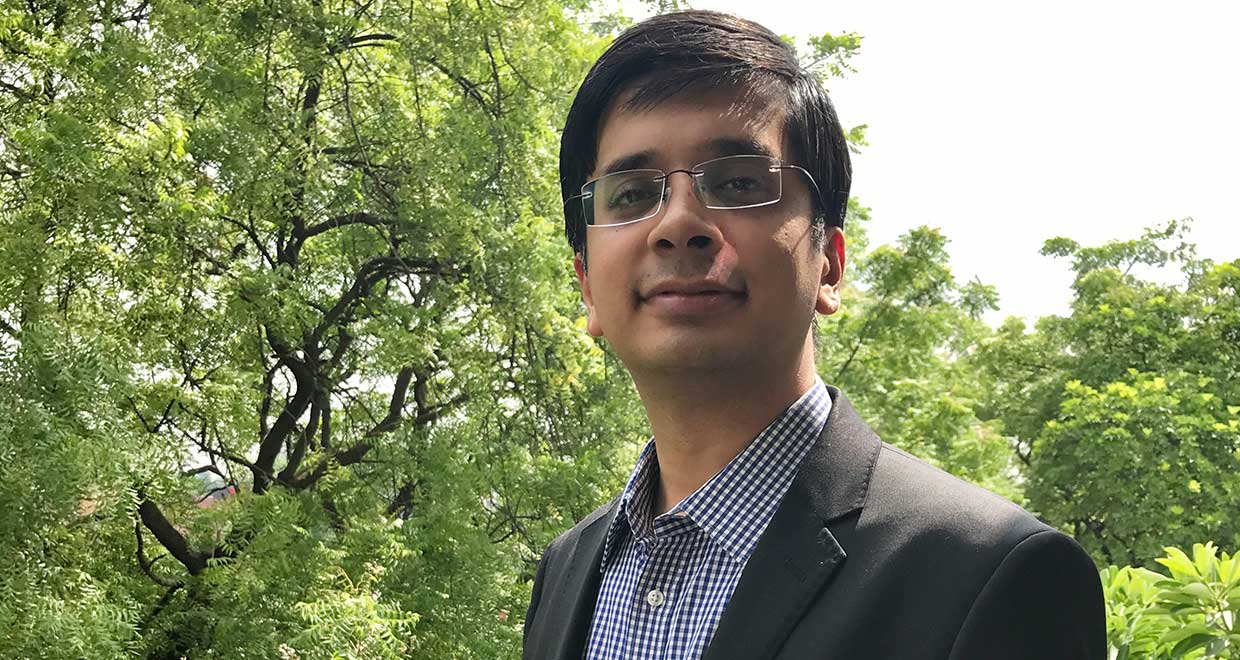
  • Deepak Singh, Associate Partner, Lexorbis Intellectual Property Attorneys, on Patent Law, and his experience

    Deepak Singh, Associate Partner, Lexorbis Intellectual Property Attorneys, on Patent Law, and his experience

    Deepak Singh graduated in law from University of Delhi, batch of 2015. Prior to that, he held a degree in Engineering from Maharshi Dayanand University. After a successful stint at LakshmiKumaran and Sridharan, and short span at Khurana and Khurana, and at IIPRD Consulting, he’s currently Associate Partner at Lexorbis. Deepak specialises in Patents, with an expertise in Software, Networking, and Telecommunications. He is actively involved in identifying inventions, drafting patent applications, performing Infringement analysis, drafting responses to office actions for Indian and foreign applications in the field of software, mechanical, medical robotics, bio-medical, robotic processes, medical devices, electrical, electronics, and automobiles.


    In this interview, we speak to him about:

    • His major shift from engineering to the IPR sector.
    • His role at Lexorbis.
    • His gainful experience in IPR.
    • The importance of mentors in the legal fraternity.


    How has your  degree in Engineering been useful in your work as a lawyer?

    During my school days, I wanted to become an Engineer like my father and never planned of becoming an Advocate. I got my engineering degree in computer science in 2006. Being a mediocre student, I decided to take up any engineering job and started my career in software domain.

    While working in the software domain, I got a call for a Patent Analyst profile from an HR of Anindus Consultants (Formerly known as Bluefile IP Services). Anindus Consultants was a subsidiary of Lakshmikumaran & Shridharan Attorneys. Following that, I was hired in 2007 as one of the first employees in the prosecution team of the IPR division. I  started my IPR career with drafting responses to US and EP office actions. I also got an opportunity to work for a US Attorney on analysing a patent portfolio for identifying potential patent infringers, preparing infringement charts, preparing invalidity contention charts, preparing response to invalidity contention charts, performing market analysis, and computing financial damages due to patent infringement by an infringing party.

    After four successful years with Anindus Consultants, I was shifted to the main firm Lakshmikumaran & Shridharan Attorneys. While working with the law firm, I felt a need of becoming an Advocate and therefore I joined the regular evening batch of the Law Faculty, University of Delhi. After three hard years, I completed my Law Graduation, which I had never planned for in my early days of career. There is no direct connection between engineering and legal graduation; but a job profile in Intellectual Property Rights, requires both technical as well as legal knowledge. Following my Law Graduation, I have also cleared a Patent Agent Exam and now I am an Engineer, an Advocate, and a Patent Agent. Thus, I am now a complete Intellectual Property Professional. As one can see, nothing was planned, everything kept on rolling from one strength to another.


    How has the transition been moving from the STEM discipline to legal studies?

    Like I have mentioned earlier, nothing was planned, everything kept on rolling. But yes, I started my career in the STEM discipline and then moved to legal the fraternity. In the initial days, I would think on a regular basis that whether I had taken a right step or not. But, as you can see that it proved out to be the best for me. I will not shy away from saying that STEM and legal world are totally different, but when you accept something from your heart, there is little to worry about. And as rightly said by someone “Nothing even becomes real till it is experienced”.

    What were the different activities that you took up at law school?

    I had attended the evening classes at Law Faculty, University of Delhi. I would join the class after the entire day at office for 10 long hours. But still, I managed to participate in a few sports events and annual day programs, apart from attending the moot court as a spectator. I really wanted to take a part in moot court, but my official responsibilities never allowed me to take another extra step beyond attending the classes.


    Did you always aspire to work in IP law?

    Well, I never even aspired to become a lawyer. But I joined the Law Fraternity either by chance or by luck. Year 2007 was a period of world job recession and even the right candidates were not getting right job. I am very thankful to God that I met right people at right places in that year. Whatever I am today is because of the friends and professionals I met in the year 2007. Becoming an IP Professional was never on my wish list but you never know what God had already decided for you.


    In a few years you got promoted from Associate to Principal Associate at L&S, which is one of the most reputed law firms in India. Please tell us a bit about it.

    The qualities and competencies vary from one professional to another. There is no formula to success. Some takes easier path, and other take longer ones. But, what matters in the end is whether you are successful or not.

    According to me, one has to have fair communication skills to deal with inventors, applicants, clients, and even the officers sitting in the patent offices. One need not to be excellent or exceptionally well versed with the in-depth knowledge of the developing technologies, but has to have good basic knowledge of the subject matter. In addition to that, as and when a professional career rises, one has to keep his legal knowledge updated from one level to another. So, basically, when you a make a distinction between an Engineer and a Lawyer, you will see that Engineer requires to have a good rather strong basic knowledge about his/her engineering domain, but the lawyer has to keep on updating his knowledge on day to day basis. He has read latest case laws or judgements to compete in the Legal Fraternity, which is not the case with Engineer.

    But, yes, I enjoyed with working with L&S. And  currently I am not a part of L&S but working as Associate Partner at Lexorbis Intellectual Property Attorneys.

    Having mentored a lot of interns what would be your advice to those seeking internships at law firms like yours?

    The qualities required for internship varies from one firm to another. There is no sure shot formula. But yes, I would recommend that an aspirant can connect socially with one or more seniors over the social network to secure the internship program. Otherwise, each firm has their own rules and guidelines to select the interns for the internship.


    What is your stance on India’s present standard of protection for software?

    The Patent Office has released new revised Guidelines for Examination of Computer Related inventions (CRIs) in June 2017. These Guidelines are modified version of the Guidelines published in February 2016, last year.

    I would not like to go into details but would like to let the inventors or investors know that the new Guidelines are definitely a step forward in positive direction and are in line with foreign jurisdiction practices. That is, with the new Guidelines, the success ratio for grant of patent related to software will now increase.


    What do you do and how do you do it?

    I have recently joined Lexorbis. But, when I was at Lakshmikumaran and Sridharan Attorneys followed by Khurana and Khurana, I managed some of the largest client accounts at both the firms. I oversaw end-to-end client engagement, delivery and operations management, and resource management. The responsibilities also include interfacing with other organizational functions including management of paralegal operations in addition to technical part of the job.
    My responsibilities as Principal Associate followed by Associate Partner include managing a fast-growing group, defining processes, ensuring quality, maintaining client relations, and helping the new paralegal team of IPR Engineering to understand the various requirements of the Indian Patent Laws.

    Within the technical team, I was responsible for mentoring fellow associates, determining and ensuring revenue targets, and creating new workflow processes. The responsibilities further include identifying training requirements of team members, understanding their personal goals, and mentoring them to achieve their personal and professional objectives.

    At, Lexorbis, I would be involved in managing Foreign Law Firms and Clients, Strategic Planning, Operations Management, Business Process Transformation, Managing Budgets and P&Ls, Board Reporting, Client Engagement, Thought Leadership, and Managing Patents operations. I would also focus on removing bottlenecks, work in cross-functional teams to get things done in expected turnaround time, and attain scalability to create value for Lexorbis and its clients.


    What steps did you take to land in your present job?

    Currently, I am working as the Associate Partner with Lexorbis. Previously, I was working in Patents Division of Khurana & Khurana, IIPRD Consulting, and Lakshmikumaran & Sridharan. While landing on the present job. I have attained a Law degree and a Patent Agent Certificate.

    However, obtaining multiple degrees was not the only means to land in my present job. But most importantly, my 10 years of experience of working with Indian and Foreign clients on projects including patent drafting, patent prosecution, FTO, infringement analysis, patent searches, invalidation searches, litigation support, and attending hearings at Indian Patent Office and Indian Intellectual Property Appellate Board (IPAB).


    What are the most challenging aspects of being an IP lawyer?

    There are a number of challenges in this career. One major challenge is that majorly an IPR section or IPR job opportunities prevail in law firms. In law firms, there is a culture of sitting late in office and leaving after set time period. So, this in return offsets the work life balance.


    What final piece of advice would you like to pass on to our readers?

    A student aspiring to become an IPR professional needs to complete his/her law degree after a graduation in science. Also, everyone should visit a career counsellor at least once to choose his/her career and to sort out what they want to be. A career counsellor’s job is to assist or guide a student to figure out what they want to be.

  • Ishana Tripathi, Legal Practitioner, on Policy Law, working for Tier-I firms, and her diverse experience

    Ishana Tripathi, Legal Practitioner, on Policy Law, working for Tier-I firms, and her diverse experience

    Ishana graduated from NALSAR in 2011 and joined AZB in 2011. After working there for three years in the fields of acquisitions, inbound investments, commercial/civil/corporate crime litigation and arbitration, she then branched into helping set up a private mediation centre – Centre for Advanced Mediation Practice. She assisted them with rule drafting and case management strategies and also a lot of business development. In 2015, she started work on two projects in parallel, the Centre for Policy and Research, Bangalore, and Vidhi Legal, Delhi; one on civic citizenship to develop a constitutional law search engine and the other on court annexed mediation.
    In this interview we speak to her about:
    • Working for Tier-I firms such as JSA and AZB
    • Her time in NALSAR
    • Her experience in Policy Law

    How would you like to introduce yourself to our readers?

    This is a trick question. If it has to be concise, then it would someone who is trying to navigate through the various avenues of the inter discipline of law available today!  To me, there are a variety of experiences that one can gain even while pursuing a corporate law firm career without viewing it myopically.  While “specialising” in an area and building your own niche is important for recognition, if you don’t broaden your horizons to work – in every space and opportunity available, in my view, at this seventh year of practice, your ability as a lawyer stagnate.

    As a professional who is here to stay, you need to keep educating yourself to the changing ecosystem and while you can’t know everything, it our responsibility to be aware of as much as possible and not let go of opportunities that allow us to experiment. Law as professional can be a beautiful thought provoking and life changing way of life.

    Give us a brief overview your NALSAR experience for our readers.

    The NALSAR experience is novel to each one in terms of utility. For me, law school was a confusion on whether I want to pursue the law at all. Today, the passion I feel for law comes from working with some of the best people in the profession – a privilege that at the beginning  of my career in 2011, came from being a NALSAR graduate. It would be foolish to deny the edge that having an “National Law School” label will give you but to say that the students are smarter than the rest would be another thing and misconceived.  Its ultimately boils down to a proof of hard work, integrity and dedication – which you need to find within.


    What kind of internships did you undertake during your student years?

    Law school to me was an opportunity to explore and take chances. I did close to fifteen internships, with different work profiles, I didn’t repeat a single internship. This was a personal choice. I worked with government organisations like TRAI, not for profits like TERI, clerkships with the CLB and the Supreme Court, trial work, general litigation and corporate law firms.  By the end of it, the only thing, I had no idea what I wanted to do but I knew what I didn’t. For instance, I realised I was too mercurial for criminal trial work (here, i mean cases of rape, domestic violence, assault, and not white collar work) and decided not to pursue that route. I am now venturing back into criminal trial work – particularly in relation to restorative justice models – so lets see if I have reached an emotional maturity to handle it.


    Is it absolutely necessary to moot or undertake paper publications in order to be a successful advocate?

    There is no straight jacketed formula to success. Every individual has their own journey.  Like I said, law school is an individual experience. But if it is advice, then I would urge people to not be close minded, especially todays generation of lawyers –  who have many more avenues like legal journalism, legal policy, legislative drafting – which are work spaces available for a lawyer and were not as present in the mainstream in 2011 when I graduated. Try as much as possible in law school but do it with zeal and not because the mass says so. Law school prepares you to embrace different perspectives. While having ambition and direction are important, do not write off anything.


    What are your areas of specialisation and how did you go about choosing these fields to specialise in?

    I specialise in – ADR and corporate /commercial litigation, and, labour and employment laws. The first was an interest in law school which solidified at AZB and is a true academic area of interest which I continue to pursue. The latter is attributable entirely to AZB. If you would have told me in law school that I would become a diligence handbook for labour laws, I would have laughed at myself, it was my worst subject – mostly for the lack of interest in it! Today, the research and jurisprudence in it fascinates me to no end. I read regular updates and amendments.


    How were the first few years after your graduation? 

    Law school was a different phase all together. It engineers healthy competition, using your brains to argue/defend positions, change view points, embrace failure and general personal development.  It doesn’t, however, unfortunately give you notes on implementing the law. It is necessary that the absence of practice from theory in legal education changes. But, that’s a debate for another time. The internships that I was fortunate to get gave me some insights into the inner workings of the lawyer life but I suppose my mind was too young to comprehend and process the amount of handwork and brain cells required to materialise the text book law into strategy.

    I honestly lucked out with the mentors I had at work right out of law school. They instilled a quality of work and pushed my intellectual barriers. They enabled me as a lawyer right from the start, they never treated me as someone fresh off of the boat. It was “use your brains and assume responsibility for work” from go!  If I look back, my time at AZB, gave me a strong foundation and was a very empowering experience. I can blindly say that I am ardent Zia Mody fan, she defies patriarchy in the profession in ways I took for granted at the age of 21, when I started working there.


    Give us some insights on the qualities that Tier-I firms look for in prospective candidates.

    I can’t speak for every Tier-I firm and I also think recruitments and requirements change with time / legal landscapes.  Prospective candidates vary accordingly – depending on type of work, experience, firm expansions etc. If you are asking for what they look for in an fresh of the boat law student in an interview – for me, self confidence, good English (I suppose!), demonstrable ability to work well with others, passion for any element of the law is what worked.  


    Briefly describe your experience in assisting the set-up of the Centre for Advanced Mediation Practice.

    Professionally, after three years of arbitration experience at AZB, mediation was a new bull to me. To study it and embrace it was easier than I thought it would me. CAMP opened a new chapter to me as a person as well as a professional and gave me insight into being non – adversarial in thought process and also gave me new direction towards understanding law.  CAMP, to me, was being a part of a movement, which would shape a new dimension in legal process in India. It was of course, a new challenge, since going from the comfort of a corporate law firm to figuring out how to get conference call facilities! But that’s the beauty of a start up. Its not only the idea of it but also every other element of it that makes it more personal. Combine it with the “purpose” that it seeks to achieve – CAMP was critical in reinforcing the idea of wanting to be a part of the system and help nurture a better case resolution mechanism.


    Please give our readers some insights into the functioning of Policy Law firm.

    (Ishana has worked with two of India’s most reputed firms in policy law- The Centre for Policy and Research, Bangalore and Vidhi Centre for Legal Policy, Delhi.)

    With Vidhi, I worked on a project that studied the efficacy of court-annexed programmes. Here, we studied four centres in India and where there were issues and fallouts. The hope remains that the recommendations are picked up and a change in implementation of mediation is envisioned by the law makers and the judiciary.

    With CLPR, was a project on civic citizenship and constitutional law. This was uncharted territory, since my knowledge of constitutional law was basic and text book. CLPR was spearheading a project that would culminate into a database of the constituent assembly debates that led to the framing of our constitution. I worked on the first phase which was focused on the fundamental rights and directive principles.  The project involved reading through days of debates and coding them in a prescribed format which would then be fed into an algorithm where people could search (like Google).

    It was amazing to learn and unlearn the pre-conceived notions of our rights and in a way get to know the people who fought / argued/ reasoned / shaped the future of individual and social rights in this country. To everyone who reads this, I am shamelessly asking you to check out the CLPR website for the CAD page! It will be worth the effort! The hope is that one day it would reach the common man for general awareness.


    When and why did you decide to leave your job at JSA?

    It was in April 2017 that I decided to leave JSA. I believe it was the right time in my profession to pursue a higher education in law with the Erasmus Mundus programme.  


    Is there any other suggestion you would like to give to our budding lawyers?

    You just have to have the dedication and maintain a standard and drive for yourself.  The day you can’t give your 100% to something – it could be even proofreading ten lines on a matter, then its time to find something else. Demotivation in life is the worst thing you could do to yourself and the person whom you represent – who deserves your dedication, time, thought and places their faith in ‘you’ not anyone else to guide them right.  So if you ever find yourself in a situation where you say “have to” more than ten times a day, move on. It is a disservice to yourself and your colleagues if you choose to continue in the same state of mind.

    As a parting thought, never take any work opportunity and position in life for granted. Moreover, to me work-life balance is a myth. Never take on a task with the purpose of attain this. It is work that has shaped my personality, increased my capacity to question and broaden thoughts. It is practice that has indulged a love of studying the law.  The sooner you accept the importance of work in your life the easier your journey in law becomes!

  • Triveni Makni, Manager, Dr. Reddy’s Laboratories Inc., on her time in NLSIU and working in the US

    Triveni Makni, Manager, Dr. Reddy’s Laboratories Inc., on her time in NLSIU and working in the US

    Triveni Makni graduated in law from NLSIU in 2008. After a successful stint at AMSS, she joined Dr. Reddy’s Laboratories as Legal Counsel. She is currently Manager at Dr. Reddy’s Laboratories, where her role entails drawing commercial sales contracts-primary legal contact for the Company’s sales and marketing team, working closely with sales, marketing and finance teams in structuring and drafting agreements for the sale/rebate of products to wholesale, retail, mail order, group purchasing and other customers for different class of trade. She also holds a Masters degree from Fordham Law School, Fordham University, New York.

    In this interview we speak to her about:

    • Being involved with the Centre for Child and the Law, NLSIU
    • Her role at Dr. Reddy’s Laboratories
    • Working in the US

    How would you like to introduce yourself to our readers?

    I would introduce myself professionally as an in-house counsel working in the pharmaceutical industry, who is also currently enjoying being a mother of two lovely girls.  I am also the first from my family to join the legal profession.


    What was it that got you interested in the legal field? 

    Law happened by chance. It was never a planned path to be honest. As it was the popular choice  that we were advised to take up,  like most of my classmates from school, I was reluctantly preparing to pursue engineering as a career after my 12th standard. I wanted to join a dance school or pursue home science or psychology related courses, but was forced to think of engineering as my option.  Fortunately, my uncle recommended I try giving the NLSIU entrance exam. However, while I was preparing for the law school entrance exam, with my mother’s help as I did not attend any coaching classes, my interest in legal reasoning and social science subjects increased.  Once I cleared the entrance exam, I choose to do law, so that I wouldn’t have to pursue engineering.


    How was your experience in NLSIU? What were your areas of interest?

    NLSIU was an amazing experience for me for the exposure it gave, considering I came from a very conservative background. I vividly remember enjoying talks by academicians, legal stalwarts, and activists. We would often have the opportunity to interact with judges or activists directly whom one would read about in newspapers and we could clarify some of our questions  rather than leave it to interpretation and debate. I realised this was a rare opportunity and began to appreciate being in law school even more.

    There are at least ten internal committees which one could volunteer or just participate in law school such as debating, drama, sports, movie clubs. As we lived on campus and were done with classes by afternoon, it gave me enough time to explore and participate in these activities, which not only supported my all round development but have left me with some great memories!

    At law school there is a very strong sense of community and seniors are very forthcoming and helpful, which makes law school life comforting in spite of the pressures and competition.

    Academically, in terms of courses, I enjoyed the liberal arts courses and specifically Prof. Elizabeth’s History course, Prof G. Ajay’s Political Science, lectures in constitutional law by Prof. V.S Mallar and Criminal Law taught by Prof. Mrinal Satish.  I would give credit for whatever I have learnt to the professors who taught at law school and the practice of exhaustive reading material that would be circulated for each course which deeply impacted the way I think.

    Law school also has an added advantage of having research centres that are attached to the main campus, like the Centre for Child and the Law, Women and Law, Intellectual Property and other centres, which allow you to read, interact and participate at the centre’s activities. The centres also call for student volunteers to support their research work. Interaction with these centres gave us the unique opportunity to evaluate our interest areas which may not be directly covered as part of your law school curriculum.


    Did you pursue any extracurricular activities such as internships or moots?  

    Though I was not into moot courts, I was an active volunteer of the Legal Services Clinic (LSC), where we would conduct legal literacy programmes in different villages, schools and communities, and travel to Ramanagaram and provide legal aid. LSC provided us with exposure to how the law operated in practice while we could also use our knowledge to help create awareness of legal rights. I was also a member of the law and society committee where we organized gender study circles, talks, debates on socially relevant issues.  I highly recommend participating in extracurricular activities as it diversifies your thought process, helps you build great relationship with your peers and classmates. You will also relish those memories after.  I started to intern only in the third year of law school.   I choose to intern with different institutions including a consumer dispute settlement forum, NGO, bank and law firms. I strongly encourage students to intern regularly but also ensure that each internship is different in terms of the field, to provide diverse exposure. The variety in the nature of work, may eventually direct you towards what you want to pursue or you have ticked off all areas that you may not be interested in.


    Do you think law school prepared you for the real world practice of law?

    Law school does not really prepare you for the real world of practice of law, as the emphasis on practical learning and functioning is still not that high or is restricted only to certain courses. However, it gives you a glimpse of the various opportunities that one could explore.


    How did you secure an appointment at AMSS? 

    I had secured an internship opportunity when I was in my fourth year of law school and pursuant to that internship I was made a pre-placement offer. I did not  have a high CGPA, so clearly that was not a factor that influenced my recruiters. I personally believe apart from your CGPA, the fact that you are ready to learn and work hard definitely creates an impact.


    Can you tell our readers about your professional experience and nature of work at AMSS? 

    My time at AMSS was mostly divided between capital markets transactions and general corporate work. I broadly assisted in due diligence, drafting shareholder agreements, and legal opinions on employment matters. My professional experience at AMSS is very mixed. There were times when I felt I was learning a lot, which was contributing to my professional development. However, there were times I felt there were artificial deadlines and pressures that I could not cope with. One of the reasons I left AMSS was because I missed the work life balance and felt the need to explore other opportunities. I decided to work on law, policy and development related matters.

    You were a legal consultant for the Centre for Child and the law at NLSIU. Can you tell us a little bit about the nature of work you did there and if it impacted state policy?  

    Centre for Child and Law (CCL) presented a great opportunity for me to work on law, policy and development related matters. CCL was just awarded a project supported by UNICEF titled Justice to Children through Indpendent Human Rights Institutions. The Commission for Protection of Child Rights Act, 2005 (CPCR Act) was passed but not many states had established child rights commissions or drafted state rules.

    As part of the project I assisted in drafting state rules for the states of Bihar, Madhya Pradesh and Assam specifically. Few of the states that we had worked with passed the state rules as drafted and submitted by CCL, which was truly satisfying. It was an interesting experience to interact and lobby with state government officials, mostly IAS officers from various state women and child departments and social welfare departments to set up child rights commissions and have rules passed for their respective states.

    I also got an opportunity to contribute to the draft amendments to the CPCR Act as requested by the Ministry of Women and Child Department, India.

    You subsequently joined Dr. Reddy’s Laboratories. Was the decision to work as an in-house counsel as opposed to working at a law firm a conscious one? 

    I moved to Hyderabad after my marriage and was looking out for opportunities with Dr. Reddy’s Laboratories (“Dr Reddy’s”) foundation and it so happened that the legal team was looking to recruit as well. During the interview I learned that the legal team at Dr. Reddy’s is actively involved in the legal work of the foundations that Dr. Reddy’s runs and there were several opportunities for employees to be associated with the foundations and corporate social responsibility engagements and activities. Dr Reddy’s gave me the opportunity to work on both commercial agreements in a corporate set up and allowed me to explore my interests. It was a very conscious decision to move in house as I wanted to have a mixture of good work and some time for myself.   


    What was the nature of your work at Dr. Reddy’s in India? 

    I started off handling the Proprietary Products  (PP) portfolio which basically focuses on developing differentiated formulations, my profile included drafting and negotiating contracts for various studies, trials, research agreements, master service agreements for contract research organisations to conduct studies, tests for or on behalf of Dr. Reddy’s. My work profile expanded to include generic agreements for the business team for the India geography which mostly entailed of manufacturing, supply, distribution, license agreements for the manufacture and supply of generic products. The two profiles were so varied in nature that the PP profile exposed me to the development and testing stages of drugs and the generics profile exposed me to the commercial side of launching and selling drugs.

    I have been an in-house counsel for the longest and can only compare my limited law firm experience. An in-house counsel is required to be integrated with the business and the company’s vision, while ensuring the company is in compliance with applicable law. This position really trains you in the art of balancing business interest/profits and legal compliance. The major difference that I observe working in house is that the counsel is expected to handle any legal issue that the company faces, it’s never restricted only to the company’s main business. Issues relating to employment, labour, pollution control boards, real estate, corporate functioning and many more, the first go to is the in house team. It becomes important to always keep yourself abreast of latest developments not only of the sector that you are working in, but all other legal developments and its impact on the procedures and policies of the company. Personally, I enjoy interacting with business, finance, quality, regulatory and other stakeholders while working on agreements or transactions, as it broadens my horizon of learning.


    You moved to USA with Dr. Reddy’s on a secondment offer. Can you tell us a little about your journey, experience and lesson learned?

    Dr. Reddy’s employees are provided opportunities to work in various geographies across different teams. I was the first among the legal team to move on a secondment. It has been an incredible experience to move to US and learn how the pharmaceutical industry works in North America.  I also benefited from the guidance and training of the experienced legal team we have in the US. Direct interactions with business, supply chain, regulatory, quality and contracts teams here gave me much more insight into the company’s international operations. These programs contribute very positively towards your professional growth and the organisation’s strength.  It also enables you to bridge gaps and better understand your colleagues on the other side of the globe. Secondment programmes also integrate teams of the same function to be a global teams irrespective of the geographies one is located in. For instance, the legal teams in USA, India and Swizertland interact with each other on a continuous basis and depending on the transactions or the assistance required we reach out to the team members in other geographies. The learning curve is sharper as there is so much exposure to laws in various geographies. We are also continuously updated about the important legal developments in various geographies and impact of policies or political situations.

    There seems to be a strong trend where more companies are adopting this path, as it creates career advancement opportunities to the employee, and enriches the quality of the organisation with persons who have experience working across different cultures and countries.


    What  is your work profile like in the USA? 

    The pharmaceutical industry in USA is very regulated, complicated and nuanced. Legal and compliance teams have to watch out in order to avoid anti kick back issues, false claims while offering products for sale. I am the primary point of contact for the North America Generics contract team, which handles the sale of Dr. Reddy’s products in USA. There are different classes of customers, who range from group purchasing organisations, wholesale customers, pharmacies who also purchase at different prices, both direct and indirect. The products offered range from over the counter, prescription, private label products. Each category of products are regulated differently when it comes to offering rebates, discounts  or paying fees to certain players for services provided during the sale of these products. These considerations play an essential role when it comes to government reporting and calculations. I also support the Proprietary Products and the corporate functions as required in drafting confidentiality agreements, master services Agreements, consulting agreements. The work profile is very different from what I used to handle in India, just because of the nature of regulations of the pharmaceutical industry in North America. It definitely required lot of learning, reading and understanding the complex world of generics and sale of generic products in US. My manager provided me with the required training, reading material and continuously guides me and the business team provided commercial exposure. In this role I realized the extensive importance of being a business counsel.


    You have an LLM from Fordham University. What motivated you to pursue an LLM?

    I always intended to pursue an LLM outside India, especially to experience learning in a different country. However, I was not sure as to what stream I specifically wanted to choose. Once I had made a decision to stay within the corporate world, I decided to pursue masters that would enhance my opportunities in the field. As I was moving to the USA my father and husband, Santosh encouraged me to apply and pursue LLM. Professor Elizabeth at NLSIU and my mentor Seema Manku- Vice President- Legal at Glenmark encouraged me to apply and suggested Fordham Law School, as it allowed students to pursue LLM on a part time basis.

    My specialization is in International Business and Trade Laws where I studied courses ranging from Doing Business in the European Union, Corporations, Antirust laws, Corporate Governance, Accounting for Lawyers apart from the basic courses that are mandatory for foreign students. The LLM has added incredible value, personally and professionally. Interacting with students across different countries, who come from both civil and common law jurisdictions. Learning about how the legal framework works in their countries was an experience that cannot be matched. Academically, most of the courses I choose were taught by Professors who were also practicing lawyers, who gave us practical insights from their day to day work life. As Fordham is right in New York City, we as students had access to legal events, seminars and conferences, research opportunities to explore through various forums.  As I was working and studying, I felt the LLM really complimented my understanding of US laws and helped me in my day to day work as well.

    If you are undecided about pursuing further studies, I would suggest waiting to gain some work experience.  Do weigh in all options, as you identify your career goals, strengths and areas of interest. The knowledge and experience you gain from a masters degree will be yours forever, just choosing what you want has to be evaluated with purpose. One must also bear in mind that  getting a master’s degree abroad is an expensive affair unless you are awarded a scholarship.

    What would be your advice to some of our readers who may be hesitant go venture out of the country? 

    I strongly encourage students to explore opportunities across the globe. It is always interesting to understand and experience cross cultural functioning both in terms of work and general interactions. There are several knowledge portals that will provide with legal updates in different countries. However, actual interactions with lawyers, business persons and other stakeholders adds value professionally, personally and to the organisation. It makes you aware of a whole different world that exists and diversifies you as a person. These days most companies are very global in nature, so starting from international internship opportunities to secondments are a real possibility that students should explore. Law firms also offer such opportunities.

    I am very keen on returning to India for various reasons and will be returning shortly as well. It is a very interesting time to look forward to and work.


    What are the challenges you have faced in building your career as it stands today? 

    I pursued my LLM while I was working and had to commute to New York for evening classes on a regular basis. I used to return at around 12 am from classes (including commute time) as I was living in New Jersey , and had to return to work early next day.  My work deadlines and law school exams or submissions would invariably conflict. I used to find it challenging to give my hundred percent initially to both. However, I have a super supportive team in the USA, we as a team constantly planned and allocated work so that my studies or work would not suffer. I learned to prioritise and be more sorted in my duties. I took over more responsibilities during law school vacation days.  The support and guidance that my team in USA gave, especially in my last semester of law school, when I was expecting our first child taught me the true value of team work and work sharing.

    I must truly acknowledge the support that I receive from Santosh and my family on both sides. It is challenging to manage work, studies and having kids without family support, especially being in US. The peace that I derive that most things are under control on the home and family front, allows me or any working mother in fact to manage work better.  My achievements are never complete without acknowledging my family.


    How do you stay up to date about the recent developments in all the fields you work in and have an interest in?

    I regularly read and keep tab of developments in the pharmaceutical industry, both in the US and India from a legal, regulatory and compliance perspective. I believe it is very essential to understand how competitors in the industry are doing as well in terms of audits of their facilities, drug approvals in various geographies, the therapeutic areas that competitors are expanding into. I would encourage students to keep themselves updated about current legal developments. It’s so much easier now with several online resources.

    What advice do you have for our readers who are primarily college students?

    I suggest networking, to gain more insight into profiles of various legal professionals. Do not be in a hurry to compete or over achieve, enjoy what you are doing. Refrain from comparing your career path with your peer. Patience and persistence is the key to seeing results in the choices you make.