Category: Featured Insights

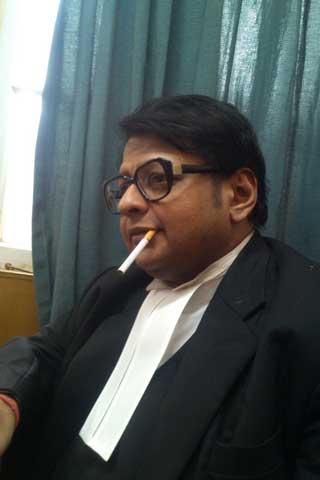
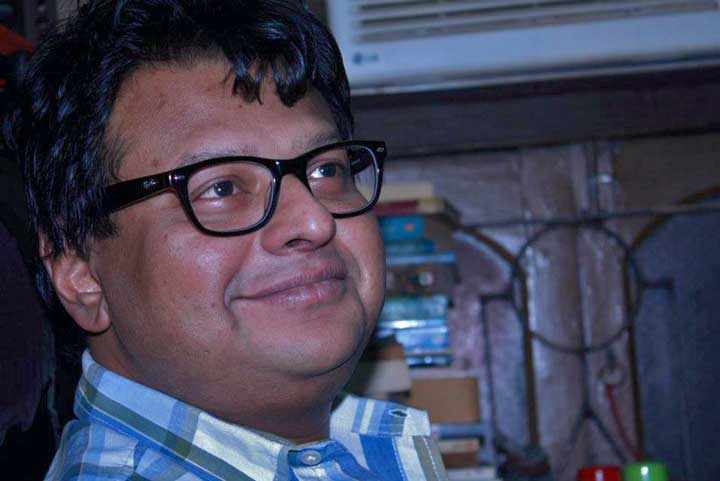
  • Animesh Sinha, Partner, Animesh Sinha and Partners, on independent practice, mooting, and his experience

    Animesh Sinha, Partner, Animesh Sinha and Partners, on independent practice, mooting, and his experience

    Animesh Sinha graduated from Amity Law School, Delhi, in 2008. He started practicing right after graduating from law school. Currently he has his own team at Animesh Sinha and Partners for the last two and a half years. In this interview, we asked him about:

    • His mooting experiences in his law school days
    • His experiences as a founder of a law firm
    • Internship experiences and their value in a law student’s career.


    Tell us a little bit about your childhood and your background.

    I have been practising law since 2008 after graduating from Amity Law School, Delhi. I started my career with Karanjawala & Co.. After that I went independent and founded Accendo Law Partners. In 2011 I joined Advani & Co as an equity partner. Presently I have my own team at Animesh Sinha & Partners for the last two and a half years.

    My father is in a transferable job and I finished my schooling over many schools. I was a good student throughout. Thanks to the efforts of my family consistent good grades allowed me to jump a batch ahead of my batchmates. I was heavily inclined towards extracurricular activities and actively participated in several international and national level debate competitions, science fests and sports events. I was also the president of many clubs and my house contingent in school. I am also very proudly a Rashtrapati Scout. I come from a normal middle-class family and my childhood included the ordinary activities of cricket, vacations, parental push for excellence and other such activities.


    What prompted you to take up law as a career?

    I am a first-generation lawyer. It is difficult to identify what prompted me to choose law as a career. I was headed towards engineering but was not too excited about it. I believe my father gauged that and considering my background in debating he decided that I write for some law schools. By the time this decision was taken it was too late and I could only apply for GGSIPU (to which Amity Law School is affiliated) and NLS, Bangalore. Even then my primary attention and preparation was for the engineering entrance exams. When the results were out my father suggested I take up law instead. I guess it was my destiny.


    As a student were you only focused on academics?

    I was good at academics. But academics did not constitute more than a quarter of my time at law school. While I continued to get good scores I grew disillusioned with the system of evaluation at the University. I would like to thank my classmates Ankit Khushu and Bikram Chaudhury for ensuring that I did not let my grades slip.

    I spent a lot of time at law school mooting and debating. But what I enjoyed the most was the opportunity to read law without any deadlines and purpose. I spent a lot of time in law school reading law without any immediate objective. This allowed me to read more and develop a good grasp of first principles. I did not realise the benefit then but I deeply cherish it today.


    What extra-curricular activities did you take part in that helped you shape up your career?

    My grounding in extracurricular activities from school automatically prompted me to continue with extracurricular activities in law school as well. I was an active debater and participated in debates through most of law school. A major chunk of my time at law school was consumed with moot court related activities. I participated in several moot court competitions including Philip C. Jessup, Manfred Lachs, Commonwealth and Heanry Dunant. The experiences and the recognition that moots brought played an important role in developing the lawyer that I am today. These experiences are not limited to legal skills alone but it taught me life lessons on teamwork and human behaviour. Even today I stay in touch with moot courts judging competitions across the country, drafting moot court problems and generally interacting with moot court teams.

    I do not believe excellent CGPA is the key to ALL success but I believe it is important to respect any evaluation system as it ensures you do not slacken.


    What is your mantra for success in academics?

    (Animesh has received the best student award at Amity Law School, Delhi for two consecutive years.)

    I do not think it is possible to cast any mantra in a mould. It may sound cliched but then the key components for success in academics according to me are passion for the subject, hard work, diligence and particularly in these times of digital distractions good time management skills.


    What were your areas of interest during your graduation?

    In law school I just fell in love with some subjects. Contract law was the first legal paper I studied. I was so excited that I coaxed my father to purchase the practitioner’s commentary by Mulla. Till today it is one of the most prized possessions in my library. Almost all the moot courts that I participated in were on public international law. Naturally it became my favourite subject. I even chose international law on outer space as the topic for my dissertation. I still crave to study public international law. However it has become difficult with court practise. Now I look forward to invitations to judge moot court competitions on public international law. It is a great stress buster.

    To develop expertise and knowledge in any area one must read voraciously and take some time out to analyse the law and visualise how it applies to practical situations. It is important to provide a context to what you read.


    How did you manage to excel in both studies and mooting which seem to eat into each other’s time?

    (Animesh has received several prizes and accolades in international moot court competitions including Manfred Lachs, Commonwealth and Philip C. Jessup.)

    I do not think they eat into each other’s time. If you plan well there is enough time for both and other activities. I think what helped me most was prior preparation. The memorial submissions for the Commonwealth Moot Court Competition coincided with examinations. We could foresee this and we studied for the examinations in advance. I would also have to credit my friends in law school for helping us out in such times of conflict. But what is most important is that there must be a push to excel. I believe if you have the will to do it you will make things work.


    What do you look for in a good mooter?

    (Animesh recently drafted as well as judged a recently held National Moot Court Competition.)

    Lots of things. It will be difficult to exhaustively enlist all of them here. What I like most are well prepared mooters. I believe the difference between a good mooter and a mooter who wins is prior preparation. A winning mooter will always imagine and rehearse for different situations from beforehand. This prior preparation alone can help a mooter present accurate answers, maintain calm, be aware of material at hand and be better equipped to deal with different kind of judges; amongst dealing with other trials and tribulations faced by mooters.

    I have recently written a chapter for a book on moot court which is due to be published by end of this year. It may be helpful if mooters are looking for an exhaustive answer to this question.


    How did you muster the courage of starting independent practice at 24?

    I confronted myself and reconciled with the fact that it is good to have jitters. I do not think they completely go away. And I believe the jitters keep lawyers on their toes. So it is a good thing and does not require to be fought.

    I must concede that my background in mooting and debating helped me a great deal. Mooting taught me the importance of prior and in-depth preparation. It is also important for me to acknowledge what I learnt at Karanjawala & Co. While at Karanjawala & Co I got invaluable experience of observing some of the finest senior advocates at the bar. There was just so much to learn.


    Tell us about your experiences of starting your own firm.

    My first endeavour to start a law firm was at Accendo Law Partners. We eventually merged Accendo Law Partners with Advani & Co. I started Animesh Sinha and Partners in 2012.

    It is an exhilarating experience setting up your own firm. It brings with it several challenges. Infrastructure of the office needs to be developed; you need to be able to hire, retain and pay for lawyers and staff; manage the administration; build and maintain clientele; and above all deliver good quality work. For those wanting to set up their own firm I would like to share some key points. First of all, be sure why you have decided to set up your own firm. The commitment of having your own firm has to survive through tough times and temptations. Secondly, be patient for things to develop. Infrastructure, resources, lawyers, clientele and ability to run your own firm comes over time and with experience. Thirdly, be sure of what kind of services your firm would deliver. This is particularly difficult for young lawyers who are still finding their grounding. For law firms with young teams the burden to work hard is very high and it is very important to have preset goals and a vision for the firm. I would like to encourage students to think ambitiously and develop and sustain the energy and ability to realise their ambitions.


    What does a day at work look like for you?

    ASP (Animesh Sinha & Partners) is a multidisciplinary law firm. We have considerable experience in dispute resolution, contract preparation and corporate advisory. We particularly specialise in insurance and construction. Our network of clients includes several public sector undertakings, corporate houses, small and medium enterprises and individual litigants. We are a young team of lawyers who are enjoying the process of finding a place in the profession.

    A day at work entails attending court and arbitration proceedings and working on different assignments once in office. Running an office demands time for business development and administrative work – sometimes it is drudgery, sometimes exciting.  We are very passionate about law and often engage ourselves in academic activities at conferences, law school events and executive training programs.

    I would say being a founding partner of a law firm is quite interesting. It can be challenging and stressful at times and different factors may contribute towards it. To identify some- its challenging to sustain work quality; take care of the aspirations of your team; and maintain probity and clear communication with clients. It provides immense opportunity for learning varied things. There is so much more to law than the law itself.

    I would like to believe I am maintaining a good work-life balance. Having said that I often have family and friends complain that I am stuck at work. Law as a profession consumes a lot of time. It is important to enjoy it. It is also crucially important to periodically reward oneself with family time, hobbies and fun. I always advise lawyers younger than me to maintain timesheets. It is a good tool to assess work input and it also helps maintain a good work-life balance.


    How is the work culture at ASP?

    It is natural to commit mistakes. We all do. Fresh graduates often find themselves at the wrong end of the stick for mistakes which seem downright silly and obvious. A lot of this happens because of poor instructions from seniors or because it is the first time a fresh graduate works on a particular kind of assignment. We believe in careful review and revision before we send out any work to the client. It becomes particularly challenging when the time deadlines are stiff. It is important to be patient and mutually complement each other’s strengths and weaknesses. It certainly does not help to browbeat or yell at anyone.


    How is internship helpful for a law student?

    Internships do help tremendously. My belief is more in favour of interns seeking long-term assignments with fewer offices rather than seeking many short-term assignments with different law offices. This is because long-term assignments allow an intern to learn more, leave a deeper impact and increase one’s chances of being absorbed.

    Internships provide invaluable experience regarding several aspects of working in an office including working on real legal assignments, office mannerisms, time discipline et cetera. With every year of added legal knowledge internships provide a scale to judge oneself on one’s ability to analyse and apply the learnt legal knowledge on real-life assignments.


    Does ASP take interns?

    At the moment we are not taking interns. However we strongly believe in internship programs. I have personally been in charge of internship programs at all the offices I have worked previously. We hope to continue our engagement with interns by resuming the internship program shortly.


    What would be your message to law students who dream of having their own law firm one day?

    It is very important to continue to dream. Meet your dreams with hard work and dedication. This may sound clichéd but then there are no shortcuts. What is important is to deliver credible and qualitative legal services and not just start an office. Today not every graduate is getting absorbed at law offices of their choice. Consequently, a lot of them claim to be independent. I believe to be able to have a firm of your own it is important to first learn how to work on assignments and deliver credible and qualitative output. Building an office of your own is not about independence of time and independence from command – on the contrary you may find yourself crunched for time trying to bring in work as well as delivering it. It is therefore very important to have a good grounding in the profession first. My message would be to work hard, follow your dreams and continue to work hard and learn for the sake of your dreams.
  • Arshad (Paku) Khan, Exec. Director, Competition Law, Khaitan&Co., on his expertise and building a global practice

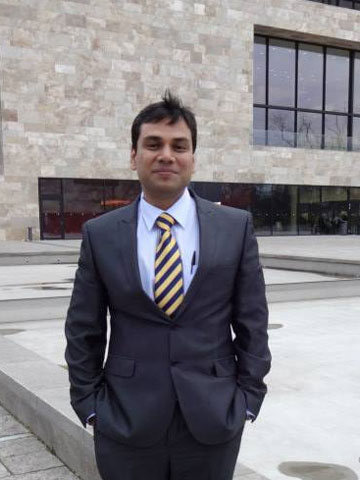
    Arshad (Paku) Khan, Exec. Director, Competition Law, Khaitan&Co., on his expertise and building a global practice

    Arshad (Paku) Khan graduated from the Vanderbilt Law School in Nashville, Tennessee, USA in 1991. He is currently the executive director of the competition/antitrust law team of Khaitan & Co, one of the largest and most experienced practices in India. Paku is a highly experienced competition lawyer with nearly 25 years of real-world experience with key roles in all aspects of Indian, EU, Irish and US competition/antitrust law.

    We requested him to share his insights on:

    • Starting out a legal career in the U.S
    • Work at the Irish Competition Authority and other European firms
    • Establishing a new practice area for an Indian law firm


    Please tell us a bit about your pre-law life.

    My parents – both of whom have, sadly, passed away – moved to the US in the 1960’s, and that was where I was born, raised, and educated, living there for the first 35 years of my life.

    Nobody in my family was a lawyer – only doctors or scientists. This meant that I had to learn law all by myself, with no one in the family to guide the way. However, my parents supported me by putting an extraordinary premium on education and reading, and that has been tremendously helpful in my career. Since I had no prior knowledge of the law, my mom suggested that I serve as a law firm runner/courier, to gain experience in whatever way possible.  I did that in the US in the late 1980’s. That was loads of fun, and was my first taste of the law.  I was also extremely fortunate to have some mentors early in my career who were fantastic lawyers, fantastic people, and fantastic teachers. This was vital in my early days of being a lawyer in the US, when I graduated in 1991.


    What made you gravitate towards a legal career after a degree in Sociology?

    At first, like almost everyone else in my family, I was going to be a doctor. However, in my third year of university, after taking, frankly, a horrible semester of organic chemistry, invertebrate biology, biochemistry, genetics, and neurobiology, I realized that I wasn’t really cut out to be a doctor because I never enjoyed science. On the other hand, subjects like language, history, literature, and other “arts” came naturally to me. My mom always – and very correctly – told me that I was better suited to be a lawyer than a doctor. Changing my career choice, even if it was at the last minute, has been one of my best decisions.

    I guess I can also say that heroes of mine like Mahatma Gandhi and Abraham Lincoln, who were both excellent lawyers, made me think that a career in the law, rather than in medicine, was much more up my alley.

    In terms of competition law (which is referred to as antitrust in the US), I  sort of was selected by it rather than my selecting it.  But when I got involved in the area in a substantive way, I realized that that was something I really loved. After my first year of law school, I clerked/interned at the antitrust law department of a law firm in Nashville, Tennessee.  My boss there was a former senior in the Antitrust Division of the United States Department of Justice, and he was enormously helpful in teaching me the art of being a competition lawyer.  I didn’t know anything about competition law at the time, but really enjoyed reading cases about predatory pricing.  I never knew that companies did such things, me being quite naive!

    After several years of private practice in antitrust, I become an Assistant Attorney General for the State of Tennessee and had a five-year stint as the in-house counsel at a large US bank holding company where I did a great deal of hands-on M&A work. This experience of working in private practice, in-house, and as a regulator, was tremendously beneficial to me. It gave me the ability to see the law from various perspectives (and often these are exceedingly different perspectives). It also gave me an opportunity to learn about how to think on “both sides of the table.”  It’s very important to understand the other side’s thoughts and motivations.


    What was your scope of responsibility during the tenure of your work at the Irish Competition Authority?

    It is because of India that I came to Ireland, and it was ultimately because of Ireland that I came to India. Let me explain.

    I had actually wanted to move to India in 1997 after having been a lawyer for six years in the US. I wanted to do what my parents did, when they left India in 1964 to come to the United States. I had basically lived my entire life in the United States, except for visits to my grandparents in Bihar and Kerala, and a few trips to Europe. So, I wanted to see what living overseas was like. In the autumn of 1997, I came to New Delhi and met lawyers from many law firms, went to hear some Supreme Court hearings, talked to legal institutes in New Delhi, and was very close to moving here. However, because my dad got sick, I put those plans on hold.

    A few years later in 2002, one of my friends became a senior member of the Irish Competition Authority in Dublin, Ireland and mentioned to me that they had positions available for lawyers. I had to go to Dublin for a competitive interview, and was lucky enough to finish first in the panel.  So I got an offer from the Irish Competition Authority. I thought I would give it a try for one year and that this would cure the wanderlust that I had.  India frankly dropped off the radar screen for me when I moved to Ireland because I thought I would have a short one year stint in Dublin and then head back to the US.

    That one year became seven years in Ireland. I spent three of those years at the Irish Competition Authority, never having done EU competition law before. However, my experience in US antitrust law helped me make the adjustment reasonably quickly.

    The time at the Irish regulator was a tremendous experience for me. For example, I got front-line experience in dealing with cases on cartels and abuse of dominant positions as well as merger control matters. One of the great highlights of my time at the Irish competition authority was that I served as the Rapporteur for the EU Member States in the European Commission’s 2004 abuse of dominance decision against Microsoft, which was a case that the entire antitrust world (as well as non-lawyers) paid attention to. It was a real career highlight for me. Another really interesting thing I got to do at the Irish Competition Authority was dawn raids. Dawn raids are basically surprise investigations by the regulator. In the context of those investigations (I think I did about 20 or so), I gained experience regarding forensic technology and was appointed as the Irish representative to the EU/national competition authority forensic technology task force.  In today’s day and age, that is an invaluable skill that I was lucky enough to obtain back then.


    How different was it to work as a solicitor after working with a government authority?

    (Mr. Khan worked as a senior solicitor at A&L Goodbody.)

    I must say that working in a European law firm in the competition law practice was exceedingly busy.  You had to juggle a lot of matters simultaneously to produce effectively flawless results, both substantially and linguistically, with little time on several cases. It was also a lot of responsibility.  For example, I had one filing before the European Commission on a very well-known merger control matter, namely, Ryanair’s hostile takeover of the Irish flag carrier Aer Lingus.  My colleagues and I worked from 8 AM to 4 AM, Monday to Sunday, for an entire month.  I had to repeat the exercise several times in the case. That clearly taught me the value of time management and of thinking carefully about your case in order to anticipate roadblocks.


    Any time management or work-life balance tips for our readers?

    The number one technique that I have for case management is planning ahead as much as possible.  The moment you receive a case or matter, think ahead about every issue that you will confront, from the beginning to the end.  Of course, in many cases, there will be unexpected issues to deal with, that will always arise. There is nothing you can do about those, except deal with them as they come up.  However, if you have visualized in your mind’s eye the case from start to finish, I guarantee that you will always have much better results than merely being bounced around from issue to issue and making things up as you go along.

    In terms of time management, I have never been a believer in putting in “face time” to impress people, either when I was being supervised or when I was supervising.  I’m happy to pull an all-nighter if it’s necessary, and sometimes it is indeed necessary.  However, what I found in my professional career of nearly 25 years is that planning ahead, including planning each day in the morning, is a great way to manage your time.  Many of those all-nighters or even late nighters are really not necessary if you have effective planning and real teamwork and communications with your colleagues.  Some people think the phrase “work smarter, not harder” is silly. I think there is a profound philosophy encapsulated in those words.

    Above all, put your family first.  They are simply irreplaceable.  It is very, very easy to get immersed in work, and forget about your loved ones. But, if your work causes your personal life to suffer, that’s going to have a negative influence on your work.  The work will always be there.

    I am very lucky to be in a firm like Khaitan & Co that values this work-life balance greatly.  Because it is a great place to work, you feel a deep sense of pride in what you do.


    What circumstances lead to your move to India?

    I was recruited to come to India in April 2009 by another law firm (Amarchand Mangaldas, where I served as Director of the competition law practice) because portions of the Competition Act were going live in May 2009.  I was living in Dublin, Ireland, when I first got the query about coming to India. When I started realizing the immense potential in India, which was a country where I had always wanted to live, it became obvious that moving to New Delhi was the right move.  I am a big believer in the concept of ‘one world’, and India is an integral part of this global economy.  The chance to be a part of that was an offer I couldn’t refuse.

    I must say that the fun and adventure in moving to India was even more special given that I had to move our family of four (including a newborn).  That was a challenge in its own right!

    In terms of the working environment in India, I have really relished the opportunity of working with some outstanding young lawyers whom I’ve had the privilege of knowing.


    What does your role as Executive Director of Competition/Antitrust law at Khaitan & Co. entail?

    As Executive Director of Khaitan & Co’s competition/antitrust practice, my role is to consider how competition law matters in India would be treated under EU and US competition/antitrust laws.  Competition law is very much an international law, and the experience in the US and in Europe has been invaluable to understanding how the Indian competition regime will, can and should work.


    How does the Indian Competition Law Regime fare against that of the UK or the USA?

    It’s very important to understand that India is one of the last of the major countries to implement a competition law regime.  Accordingly, India is fortunate to have the “last mover advantage”, as it can look to the mistakes and successes of other jurisdictions to improve its own regime.  Simply stated, there is a large amount of synergy between Indian competition law and the comparable laws in other jurisdictions like the US and EU.  The laws are not identical, but they are more similar than they are different.  There’s a lot of exceedingly useful guidance that can be found that is often very relevant to the Indian regime.

    For example, the United States had its antitrust law in 1890, and the EU has had its competition laws for decades. In contrast, with respect to the Competition Act, 2002 (as amended), the prohibitions in Section 3, dealing with anti-competitive agreements (including cartels) and Section 4, dealing with abuse of a dominant position, have only been in effect for a little more than five years.  Indian merger control has an even shorter lifespan of only three years.  In my view, by any definition, India is still in its infancy with respect to competition law.  However, that’s not a bad thing, because India can take that vast amount of experience in the rest of the world and use that to help fashion the people of India, from the richest to the poorest and from the strongest to the weakest.

    That’s emphatically not to say that what happens in the US or the EU is merely going to be “rubberstamped” in India.  Competition law is much more sophisticated than that.  For example, market conditions in Mumbai are very different than they are in Manhattan or Montevideo.  A good competition lawyer has to consider those market dynamics, apply the law to those facts, and use international precedents in the correct fashion to understand how other jurisdictions have looked at the issue.


    What advice would you like to give to a law student who wishes to make a career in competition law?

    There’s absolutely no reason why a new lawyer shouldn’t go right into competition law.  But I think it’s very important to understand that even though the substantive provisions of the Competition Act are very short, the law is incredibly complicated, involving a mix of law, economics, and market conditions.  There is a tremendous amount of artistry that is involved in being a great competition lawyer, as the same set of facts in one industry can result in a totally different outcome in another industry. The key to being a great competition lawyer is understanding what that mix is.


    What would be your advice to a law student or young lawyer who is indecisive about their area of specialisation?

    Law students or newly-inducted lawyers should try to immerse themselves in as many areas of law as they can. It first starts in law school, where you have the luxury of learning many different aspects of law.  The reality of the situation, however, is that if you don’t use that knowledge, you lose that knowledge.

    As I stated earlier, I have been lucky enough to have been a private practitioner, in-house counsel, and a regulator in multiple jurisdictions. I’ve had the opportunity to also do complex litigation and M&A work. All of those experiences have been important to my career.

    To be a great lawyer, you need to be a great peacemaker and find a way to bring resolution and closure.  The experience you get from being knocked down by mistakes, and facing defeat but learning from them and rising to fight yet again, is essential and is something you only get over time.  These, to me, are the hallmarks of a lawyer who will indeed go far.


    Finally, what would be your parting message to our readers?

    You must love what you are doing.  It is as simple as that. Money and fame are things that may or may not follow you in this life; however, none of those things are worth anything if you don’t love what you do. The fact of the matter is that I love being a lawyer. I sort of fell into the profession by happenstance, and it was one of the very best things that could’ve ever happened to me.

    I like to fix things that are broken, and I like to see injustices cured.  I like to be deeply involved in my matters and try to treat each matter as if it were my own. Taking ownership of a matter and treating as if it were your own, and being sensitive to a client’s needs, will take you a very long way.


  • Ratan Singh, Director, Chartered Institute of Arbitrators, on being an International Arbitrator, expertise in Mining Law and his practice at Delhi HC

    Ratan Singh, Director, Chartered Institute of Arbitrators, on being an International Arbitrator, expertise in Mining Law and his practice at Delhi HC

    Mr. Ratan K. Singh graduated from Delhi University, batch of 1996. He is currently the Director of Chartered Institute of Arbitrators (India). His practice mainly consists of International and Domestic Arbitration, International Commercial and Financial Law, Mining Law, Construction and Infrastructure Law, Environmental Law, Constitutional and Administrative Law.

    In this interview we speak to him about:

    • Building up a firm clientele
    • Serving as an arbitrator in various domestic and international arbitrations
    • Being the Director of CIArb India and a career in Arbitration


    Please tell us what motivated you to pursue legal studies.

    I somehow felt that my personality, nature and approach towards life would go well with this profession and intuitively decided to pursue legal studies. I strongly believe that it should really come from within and there should be a strong urge for the profession. If you believe in “giving”, this is the most appropriate profession. However these days the importance of “giving” is increasingly being ignored.


    What were your plans after graduation?

    I did M.Sc. in Geology before I joined LL.B. As I was university rank holder in Geology, I could have easily become Geologist, however this is not what I wanted to do. I always wanted to be a lawyer. It is another thing that my background in Geology is helping me in my Mining Law practice and I am one of the very few lawyers in country who specialises in mining law and is regularly engaged. Civil Services was never my interest and choice, though in our days every second student used to aspire for Civil Services.


    As a fresher just out of college, how did you manage to get a mentor for yourself?

    [sociallocker] After I passed out from my law school, I went to meet many lawyers, including some of them, who at later stage of my career have developed lots of affection and respect for me, but got no chance. I was helped by one of my batch-mates, who was close to one of our law teachers. The said gentlemen took me to my first and only senior (who later became Senior Advocate and Judge in Delhi High Court) with whom I worked for around four and half years.

    This is one profession, one cannot do without a mentor/senior/guide. This is primarily for the reason that lots of procedural and professional aspects are to be learnt. Had this not been so, this practice of pupillage would not have continued for centuries.

    My emphasis however would be that it is of utmost importance to have a mentor who is hard working and honest. One sub – consciously or consciously learns, what he sees in his mentor/senior.


    How did you build up on your client base?

    I was a complete outsider in Delhi but I never had any problem in getting work. During my four and half years with my senior, I was completely focused on learning and made no effort at all to find any work for myself.

    When I became independent, all my cases came from and through lawyer friends of my senior, who had seen me working in my senior’s chamber. They were somehow impressed with my hard work and academic interest in the subject. For a lawyer who believes in hard work and honesty, their lawyer colleagues are always a big source of work. There has always been a dearth of hard working lawyers as more and more lawyers who believe in short-cuts etc manage to generate work but they too need lawyers who can really work on the file. Every single law office/chamber and law-firm is always looking for a hard working, honest and trained lawyer.

    What is needed is four and half years to five years of focused learning without thinking about gaining clients and client-base and see the result thereafter. You will always have more work than you can really handle.


    What do you look for in your interns when they apply for a position to work with you?

    I look for sincerity and honesty towards work. It is also important that he/she should be reasonably good in their expressions. Anybody who wishes to intern with my office has to send his/her bio-data to the office-in-charge and they get a call, depending on availability of vacancy for interns.


    What do you think about the future of legal education in India?

    Lawyers are always needed and will always be needed. People need lawyers in booms and busts alike.


    How is the work atmosphere at the Delhi High Court presently?

    I would rate Delhi High Court as the best High Court in the country for more than one reason. It is no doubt true that more and more national law universities and private five year law colleges/universities are producing more and more law graduates. These national law universities have also brought good improvement in the quality of law education (though a lot needs improvement, particularly the quality of law teachers). However it is easy to become a successful lawyer. The only attributes needed are hard-work, honesty and the willingness and urge to give. I see lots of law graduates with good academic background and good potential spoiling themselves because they lack either of these three most fundamental attributes, i.e hard-work, honesty and the willingness and urge to give.


    If someone does not go to a top law school, would you say he still has a shot at a great career in law?

    Yes, if one is ready to work hard (around twelve to fourteen hours a day) and is honest towards his office, profession and client, they are bound to be successful lawyers. They are unstoppable. To the contrary, if someone has passed out from a top law school and lacks any of the above mentioned three attributes (i.e hard-work, honesty and the willingness and urge to give), they are likely to fail.


    How has your journey been from a fresher to being an expert in arbitration?

    (Mr. Singh has served as an arbitrator and has chaired as a tribunal member or counsel in various domestic and international arbitrations, ad-hoc as well as under the rules of ICC, UNCITRAL, SIAC, ICA, DIAC etc.)

    I followed Arbitration and Conciliation Act, 1996 since its inception. Traditionally in India, there have been two categories of lawyers who have been practicing arbitration. One category is of those lawyers, who have not been in active litigation, though pursued arbitration (mainly from big law firms). Second category comprises of those lawyers, who are only in litigation and off and on doing arbitration, without having basic knowledge of arbitration as a subject. I wanted to bridge this gap. In order to be a good arbitration professional, it is important to have good litigation exposure and experience with substantial experience of cross examination etc. I have been a hard-core litigator with passion for arbitration since the beginning of my career. I have been taking a keen and active interest in the theoretical and philosophical aspects of arbitration, both domestic and international. I have also been attending domestic and international arbitration events as a speaker and delegate.

    Anybody having interest in arbitration should follow the developments in developed arbitration jurisdictions, including UK, USA, Australia, Singapore, Hong Kong, France, Germany, Austria, Netherlands. It is also important to follow arbitration institutions of repute, like Chartered Institute of Arbitrators, UK (of which I am Director of India Branch), ICC, ICCA, SIAC, PCA, ICSID, SIAC, HKIAC, KLRCA, SCC, IBA. Chartered Institute of Arbitrators has on its web-site has made freely available various resources, guidelines etc, which are used and referred to globally. Equally important is to attend arbitration conferences, seminars etc. I would also strongly recommend to follow Kluwer Arbitration Blog.


    Can you tell us how you got the opportunity to be an arbitrator?

    (Mr. Singh has been appearing as a counsel in various Asian and European countries.)

    Once people get to know your interest in arbitration or for that matter in any other field of law, you are followed and eventually engaged. I get nominations to sit as an arbitrator as people find me as someone with interest and experience in arbitration. In order to get nomination as an arbitrator, one must enjoy a good reputation. These days, lawyers are increasingly nominated to act as an arbitrator, as it is believed that they are more and more ready to learn and prove themselves.


    What are your major responsibilities as a director of the Chartered Institute of Arbitrators, London?

    As director, I am primarily involved, with my co-directors, in policy making for the institution. CIArb is the oldest arbitration institution in world. We are celebrating 100th year of the institution this year. CIarb has members in around 120 countries. This is the only institution in world, which gives accreditation to arbitrators. CIArb also gives accreditation to arbitration tutors. No amount of subscription can get you accreditation. One gets accreditation only by qualification and experience. We conduct training programmes, awareness programmes, conferences etc for lawyers, arbitrators, law students etc. Apart from accredited arbitrator, I am also an accredited tutor. Teaching and speaking on arbitration is one of my passions and interests and this makes me participate in almost all events of CIArb.


    Are there any Indian or International courses which you would recommend for law students who would like to build a career in arbitration?

    I will recommend students to follow CIArb courses and training programmes. Apart from law schools, groups of students (around 25 students) can approach us and we (CIArb, India Branch) can conduct courses for them. Such courses can lead to accreditation from CIArb.


    What should a law graduate do in his first year of graduation to establish a career in arbitration?

    First things first, learn by heart and mind bare act of Arbitration and Conciliation Act, 1996. Also go through bare acts of at least U.K and Singapore. In addition, UNCITRAL MODEL LAW and UNCITRAL Rules should also be necessarily gone into.

    Arbitration act of U.K. is broadly modelled on UNCITRAL Model law, which is a source of the Indian Act as well.The  benefit one gets by reading UK act is that it is more detailed and is a fantastic source for better understanding of the subject. Singapore has different acts for domestic and international arbitration and by consulting these two acts from same jurisdiction, one would understand the aspect of distinctions for domestic and international arbitration. London is called Mecca for international arbitration. Similarly, Singapore can be said to be Mecca for South Asian countries. Substantial (obviously not all) number of arbitrations, having Indian connection, are generally held in London or Singapore. Therefore it would be wise to follow arbitrations and arbitration laws in these two jurisdictions.

    I also recommend every arbitration student to read and consult rules of institutions like, ICC, SIAC, SCC, UNCITRAL, LCIA. One must remember that ICC is the most sought after Institutional rules for international arbitration.

    Website of UNCITRAL is another good treasure for resources. One must read CLOUT, i.e. the digest of case laws from different MODEL Law jurisdictions. These cases help in understanding the manner in which model law or domestic laws based on model law are interpreted in different jurisdictions.

    Last but not the least, one must buy and read Student edition of book authored by Redfren Hunter. In addition, consult any book (which should not be going into more than one volume) on Indian Arbitration Act. One should simultaneously follow Indian and International arbitration.


    What would you like to say about the current state of Arbitration Law in India?

    In recent past, we have seen good forward looking judgments written by Supreme Court of India. Very soon, we are likely to have substantially amended Arbitration Act. Law Commission has suggested substantial and progressive amendments. Though India is signatory to good number of BITs and already facing serious threats of lots of Investment claims, India is not a signatory to ICSID. In February, I had long meeting with Secretary General of ICSID at their Headquarters in Washinton DC and I strongly believe that it would be in the interest of India to become a signatory to ICSID. One change, which I think can take care of many odds in India, should be to have Commercial Courts in India.


    What would be your advice on setting up a career in arbitration to law students who are still studying?

    Around eight out of ten commercial contracts in India have an arbitration clause as a dispute resolution mechanism. So far as International commercial transactions are concerned, almost all of them have an arbitration clause. This by itself tells us that arbitration is a fantastic career option for law students.
    [/sociallocker]

  • Prabhash Ranjan, Assistant Professor, on a career in Academics and Research and the Indian Education regime

    Prabhash Ranjan, Assistant Professor, on a career in Academics and Research and the Indian Education regime

    prabhash-ranjan-2Dr. Prabhash Ranjan graduated as a lawyer from University of Delhi in 2003. Thereafter, he went for higher studies to SOAS, University College, London. Later, he received his Ph.D from King’s College, London. He worked as a consultant to Oxfam, taught at NUJS, Kolkata and NLU, Jodhpur and presently he is an Assistant Professor at South Asian University.

    Being a person of great insight into Academics, we asked him about:

    • Studying Law from Delhi University
    • Pursuing LL.M and Ph.D from reputed universities in London on scholarships
    • Experience as a consultant at Oxfam and as a professor at NUJS and NLUJ
    • Necessary changes in the Indian Education Regime


    How would you like to introduce yourself?

    I am an academic lawyer who teaches and publishes in the area of International Investment law and World Trade law. I hold bachelor degrees in Economics and Law from University of Delhi. For my LL.M, I read at School of Oriental and African Studies (SOAS) and University College London as a Chevening scholar. I hold a Ph.D. in Law from King’s College, London. I was born in Chandigarh and grew up in different cities like Bhubaneswar and Delhi. In my school life, I took part and won prizes in many debate competitions and other extra-curricular activities. As a kid, I aspired to become a medical doctor. I was very fascinated with the idea of having Dr. appended to my name. However, I gave up on this ambition once I realised that one has to be good in Biology to become a medical doctor! However, today I am happy that I have been able to fulfil my cherished dream of having Dr. appended to my name by earning a Ph.D.! In my school days, I greatly enjoyed studying Mathematics and also History (especially Modern History) and Political Science (Civics). Unfortunately, I couldn’t study History and Political Science after class 10th as I opted for Science stream. In those days, as a de facto rule, every good student was expected to study Science after class 10th! I am the first academician in my family. However, I come from a family, which has deep interest in academics and writing. My father earned his Ph.D. from University of Leipzig, Germany (then Karl Marx University in East Germany) in Veterinary sciences. My brother, a senior Army Officer is a very avid reader and is currently researching on naxalism as a Fellow at the ‘Centre for Land Warfare Studies’ (CLAWS). My grandfather, a freedom-fighter who went to jail several times during India’s freedom struggle from British colonial rule, was a prolific reader and writer in both English and Hindi and contributed articles to many English and Hindi newspapers.


    What motivated the switch from Economics to Law?

    (After doing his B.A. (Bachelor of Arts) with Honours in Economics, Prabhash pursued LL.B. from Campus Law Centre, Faculty of Law.)

    While pursuing Economics (Hons.), I had made up my mind that I would pursue Master’s in Economics and probably pursue a career as a professional economist. However, my father urged me to write the entrance examination of Faculty of Law, Delhi University. So, in many ways, the credit for me becoming a lawyer goes to my father.


    Tell us about your college life.

    My undergraduate college life of six years at Delhi University was quite exciting. I used to travel almost twenty kilometres everyday in Delhi University Special buses (old DTC buses popularly known as U Specials) from South Delhi to North Campus of DU in North Delhi. North campus of DU is a great place to study. It has leading colleges of India and various faculties and postgraduate departments providing a unique opportunity to mix and interact with students from different backgrounds. It also provided an opportunity to take part in a wide range of academic and cultural activities. Being part of DU Law Faculty was a terrific feeling for two reasons. First, I was delighted about the fact that I inherited a great legacy of legal scholarship of scholars like Upendra Baxi, P K Tripathi, Lotika Sarkar, M P Singh to name a few. Second, it was a proud feeling to be part of an institution that has produced many eminent academicians, numerous Supreme Court and High Court Judges, many Attorney and Solicitor Generals, leading advocates and attorneys and national leaders. At the Law faculty, I was lucky to be taught by outstanding scholars like Prof. M. P. Singh, Prof. B. B. Pande, Prof. P N Singh and Dr. Kamala Sankaran. Apart from academics, I took part in debate and paper presentation competitions and won a few prizes. My college life was very different from the lives of students I have taught both at NUJS and NLU Jodhpur, primarily because I was a day-scholar and my students were hostellers.


    After LL.B., you pursued a joint LL.M. from School of Oriental and African Studies (SOAS) and University College, London (UCL) as a British Chevening scholar. How was this course?

    Pursuing LL.M at SOAS and UCL was a terrific experience and perhaps one of the best things that happened to me. And winning the coveted Chevening scholarship for my LL.M was indeed a great thing. I opted for the following courses in my LL.M – World Trade Law; International Investment Law; IPR and Development; EC Competition Law; and wrote a 15,000-word dissertation on Indian Bilateral Investment Treaties (BITs). One of the best parts of the LL.M programme was to be taught by leading academics of international stature, from both SOAS and UCL, like Professor Peter Muchlinksi, Professor Joanne Scott, Professor Valentine Korah and Professor Philippe Cullet. For the first time in my life, I was exposed to a totally different pedagogy and method of teaching. Students were expected to read and come to the class. The lecture itself used to be more like a seminar with students and the professor debating on many issues. Further, there was less focus on classroom teaching as such with just one two-hour lecture for every course per week. Rest of the time, students were expected to read on their own some 100 to 200 odd pages per subject for the next week’s class. Reading lists were very carefully and meticulously prepared. I had access to an excellent library and all the major legal databases – something that was missing during my LLB studies at DU. I greatly enjoyed this system, which encouraged me and gave me ample space and time to do my own research, reading and writing. I worked very hard and earned a Distinction in my LL.M and published my dissertation and other course essays in leading international journals. Today, when I look back, I can easily say that my LL.M-year at London was perhaps the most productive year of my life. I simply couldn’t have gained all this by pursuing an LL.M in India.


    Tell us about your experience as research assistant to Prof. Valentine Korah, Emeritus Professor of Competition Law at UCL for her book on EC Competition Law.

    Professor Korah of UCL taught me Competition Law. She was very happy with my performance in the class and thus offered me to be her research assistant for her textbook on EC Competition Law published by Hart Publishers, which she was updating. Though I had never worked in the area of competition law, I readily said yes because it was an offer made by someone who is an authority in competition law not just in UK and Europe but globally. My stint as her research assistant was immensely useful as it gave me an opportunity, not just to earn a few extra pounds, but also to learn a great deal abou t competition law. I would encourage students to readily grab such opportunities of research assistantship, which not only helps one learn the subject but also helps a great deal in strengthening research skills. I always offer such opportunities to my students, as far as possible, whenever I am doing a paper or involved in a research project.


    How was the experience at Oxfam, Great Britain in India as a Research Officer?

    It was a great experience. Oxfam GB is a global brand with established reputation in the development sector. In 2004-05, they had started a new project on trade and development in South Asia. I was selected to work in this project. My job profile included conducting policy research and advocacy on international trade law issues affecting South Asia. One of the most exciting things at Oxfam was to develop and implement new ideas and work with some amazing bunch of individuals who have left a lasting impression on me. In particular, I would like to mention two of my ex colleagues and dear friends – Biplove Choudhary and Robin Koshy – extremely talented individuals from whom I learnt a great deal.


    When did you decide to pursue International Investment Law and Trade Law as a career option?

    The choice to work in the area of international trade, in many ways, was made in the final year of my LLB in 2003, when I interned at a research and advocacy based-NGO called Gene Campaign. As part of my internship, I worked on the TRIPS agreement and the Agreement on Agriculture of the WTO. I thoroughly enjoyed my work because it gave me an opportunity to put to good use not just my training as a lawyer but also my knowledge and skills in economics. It made me realise that a career as a researcher in international trade law is something that I will definitely enjoy. During my internship, I learnt about an organisation called Consumer Unity and Trust Society (CUTS) – an Indian international NGO headquartered in Jaipur, which has done extensive work on international trade. During the course of my final semester LLB examinations, I applied to CUTS and was selected to work as a Legal Researcher on international trade. This was my first job. CUTS proved to be a great training ground to learn many things about international trade and WTO and also about professional life in general. It further cemented my interest and resolve to work in the area of international trade. There has been no looking back since then. As regards investment, I picked it up much later – during the course of my LL.M. While working on international trade, I realised that one also needs sound knowledge of foreign investment laws and thus the motivation to study international investment law.


    In 2009, you were awarded President’s Graduate Fellowship by National University of Singapore. Why did you decide to decline it?

    This fellowship was part of the Ph.D programme at National University of Singapore (NUS). It is quite prestigious and I was tempted to take it. However, I also had very good Ph.D scholarship offers from UK Universities and I finally decided to accept the Ph.D. scholarship offer of King’s College London. Always wanted to go back to London – a city that I am very fond of – for my doctoral studies!


    Why did you decide to take up teaching as your career option, despite the fact that other opportunities would have been more lucrative?

    Yes, sadly that’s true. Being an academic is not as lucrative as pursuing a career in a corporate law firm or even practising law in higher judiciary, though a good academic can earn extra bucks through research consultancies and grants! I was earning much more at Oxfam GB without an LL.M than what I earned at NUJS (my first fulltime academic job) with an LL.M. It is very important to make the teaching profession lucrative to attract the best talent for the job. Temperamentally, I always considered myself more suited to a job that required reading, thinking, writing, and talking about my research. I was somehow never very comfortable with the idea of working in a corporate law firm or practising in courts or becoming a civil servant! (my parents were quite keen that I should write the civil services exam, which I never did, and become a civil servant!). I started my career as a full-time legal researcher and worked as a researcher for more than three years before deciding to pursue LL.M. My career as a full-time researcher was immensely satisfying and rewarding as it gave me an opportunity to read and research on a wide range of topics on international trade law. However, the research agenda was determined by the institution and not by me. Also, I didn’t get much opportunity to talk about my research or subjects in trade law that I enjoyed reading and researching. Thus, I thought that a full-time academic career will give me both the opportunities – to talk about my research (i.e. teach), which I enjoy a lot; and to set my own research agenda and do research. It is for this reason that I decided to pursue fulltime academic career after my LL.M. Today, when I look back, I can say with full confidence that I took a correct decision to pursue an academic career. I am very happy and satisfied with my academic career that gives me opportunities to teach young bright minds (now not just from India but from whole of South Asia), research and write on issues that I am passionate about, and also travel the world! God has been kind! Teaching and researching with the objective to generate new knowledge and contribute to numerous policy and academic debates is indeed very very satisfying and fulfilling.


    How was your experience of teaching at NUJS, Kolkata and NLU Jodhpur?

    NUJS was my first full-time academic job. It was a fantastic experience with challenges and enormous learning opportunities. At NUJS, I worked under a dynamic leader – Professor M P Singh – who introduced many reforms and bold experiments ranging from changes in the curriculum to changes in examination and evaluation pattern in order to make the system academically more robust. He also went out of his way, to appoint bright young faculty like Shamnad Basheer, Pritam Baruah, Saurabh Bhataacharjee and Daniel Mathew. This made a huge impact on the academic culture of NUJS and also positively affected the lives of students. Clearly, Professor Singh’s tenure at NUJS will go down in history of NLUs as a path-breaking phase. I got an opportunity to teach very bright students at NUJS – I learnt more from them than what they learnt from me! I worked at NLU Jodhpur (NLUJ) for only about 16 months. I shall remain grateful to Justice Mathur for giving me the opportunity to teach at NLUJ. Like NUJS, I greatly enjoyed teaching at NLUJ as well. NLUJ also has very bright students. However, I was not very happy with the service conditions at these law schools. Another major problem was huge teaching and evaluation load particularly at NLUJ. At NUJS, the academic reforms initiated by Professor Singh had brought down the teaching and evaluation load from unreasonably high levels at the time of my joining. This was done with the objective to give more time and space to faculty to read, write and publish. However, at NLUJ, I taught 16 hours a week and corrected scripts of some 120 students six times over in a semester (which makes it evaluating 720 scripts in four months). This was totally insane! With so much of quantity of work, quality of work got affected. At NLUJ, I often tried to argue for reducing the ‘quantity’ of teaching, focus more on ‘quality’ of teaching and give more time and space to faculty and students to think, read and write. However, I wasn’t very successful in persuading my seniors. Also, such enormous teaching and evaluation load meant, very little time was available for research and publishing. This forced me to work long hours on weekdays and also work on Saturdays, Sundays and other holidays to publish my papers, which became quite stressful in the end. Eventually, this forced me to look for opportunities outside the NLU system where there was a better balance between teaching and research, and also better service conditions. Thus, I landed at South Asian University. However, I feel very satisfied that despite such heavy teaching and evaluation load, I was able to publish my papers. I am happy that I never allowed the researcher in me to take a back seat despite no institutional motivation to research and publish. In such situations, one has to be self-motivated and internally driven. Also, recognition by the academic community at large motivated me, and continues to do so, to publish in leading international journals.


    Do you think that the Indian law universities need a change to match up to the standards of foreign universities?

    Indian law universities and law departments or faculties have to do a lot of catching up if they wish to meet the standards of foreign universities. First and foremost we need to de-bureaucratise our universities. By de-bureaucratisation, I mean two things – first, excessive and undue interference of regulatory bodies like the UGC, MHRD, BCI etc needs to end. Universities should be given complete autonomy within a broader accountability framework. Second, the bureaucratic mind-set that pervades our Universities needs to change. I have seen many older academicians behave in a deeply bureaucratic, feudal and hierarchy-oriented manner, often considering academic institutions as their personal fiefdoms. This bureaucratic and feudal mind-set has to change if we wish to compete with the best in the world. Currently, Indian legal academia is largely an ocean of institutionalised mediocrity where mediocre people, barring some exceptions, are appointed, nurtured, rewarded and promoted. While NLUs and some other prestigious law departments at traditional universities like Delhi and Bombay have been successful in attracting bright students to study law, it cannot be said about the teaching community. To break this institutionalised mediocrity;there is an urgent need to attract bright and competent lawyers to teaching. There are many law graduates from NLUs and other Universities who went abroad for L.L.M. and Ph.D. and are pursuing academic careers abroad. They are doing very well in their careers and have made a name for themselves in their respective areas of law. Imagine the impact on Indian legal education, if all these people were to return and teach at Indian law schools! Our law schools have failed in creating right conditions to attract these talented people. For this, a number of reforms are needed. As mentioned above, teaching profession should be made more lucrative. I don’t buy the argument that if you wish to earn money you should not pursue a career in academics. Why should one be forced to make a choice between earning money and pursuing academics? Why are earning money and becoming an academician considered mutually exclusive? I fully realise that salaries in Universities can never be as high as salaries in the corporate sector because the nature of the two sectors are very different. However, it is certainly possible to make it better than what it is right now especially at the entry level i.e. at the level of Assistant Professor. However, giving monetary incentives is just one part of the solution. Another key aspect is to create an atmosphere where young and bright lawyers feel motivated to join academics and after joining, feel motivated to achieve greater heights. For this, it is important to treat faculty, especially younger faculty with respect and honour – which means they should be involved in the process of institution building and decision making, should be given academic freedom to design their courses, research goals and other work plans, and should feel emboldened to freely speak-out and comment on any University policy at appropriate forums. Unfortunately, I have seen younger faculty often being treated in a very feudal-like manner, where they feel intimidated to even speak-out their mind. I have often seen that subjects allotted to young faculty members are randomly changed without discussions or consultations. They are over-burdened with teaching and mundane administrative responsibilities. All this demotivates a younger faculty member to work hard and leads to a loss of sense of belonging to the institution, which could prove detrimental to the institution in the long run. The need is to mentor younger faculty so that they can blossom into outstanding teachers and researchers. They should be encouraged to publish, for which ample time, space and resources should be made available. There is a crying need to provide good working conditions to faculty members like modern and independent offices to work, with the best possible infrastructure and other amenities for recreation; a dedicated personalised research fund for academic travel, buying books and other academic expenses; world class research infrastructure and library and many other such things. Also, there is a need to create an academic atmosphere where there is free exchange of ideas and knowledge unhindered by superficial boundaries of hierarchy and seniority. More specifically for NLUs, there is a need to give up this mad obsession with round-the-clock teaching and evaluation. To foster learning, students should be encouraged to think and read widely and deeply, which is possible only if there is a reduction in number of classes and tests, which have become counterproductive. A very important function of a University is to generate knowledge, which means researching and publishing. NLUs are oblivious to this part of their social responsibility. It is high time that NLUs give emphasis to academic publishing along with teaching and make it mandatory for faculty members to publish at least one paper in a leading peer-reviewed journal in a year.


    What was your doctoral thesis about?

    (Prabhash bagged King’s College London School of Law, Doctoral Scholarship and completed your Ph.D from King’s College, London.)

    Yes, a scholarship was a must to pursue a Ph.D. and I got an excellent offer from King’s. My Ph.D thesis was on ‘India’s Bilateral Investment Treaties and India’s Regulatory Power as a Host Nation’. Those who wish to pursue an academic career generally prefer Ph.D. However, in the west, I have seen many people pursuing a career as a law practitioner after a Ph.D. This trend is yet to catch up in India. I am not quite sure about the benefits that a practitioner can derive out of doing a Ph.D. – perhaps strengthened research and analytical skills.


    Also, can a law student assist researchers/academicians on research projects?

    (Prabhash has been awarded a number of research grants/projects and consultancy assignments from various Government Ministries, United Nations (UN) agencies like UNDP and UN-ESCAP and FICCI as well.)

    All these research grants and consultancy projects have happened because of my research work and publications. People/Organisations have found my research work interesting and useful and thus have offered me research grants and consultancy projects. All of these grants and consultancies have been in the field of investment law and trade law. Yes, law students can help/assist academicians in such projects. As mentioned above, I have always tried to give opportunities to my students in such research projects.


    What role do publications play in the life of an academician, especially someone who holds a keen interest in International Law?

    (Prabhash has published in many renowned international Law journals and also in edited collections published by prestigious publishers like OUP, Routledge and Hart.)

    As already mentioned, publications are the soul of an academician’s life working in any field of law not just international law. An academic who simply teaches and does not publish is like a body with a heart but without a soul. In India, unfortunately, many people think that publishing is personal work of an academician and not part of his/her institutional responsibility. I have seen such mind-sets in many places especially in NLUs. Nothing can be more appalling than this. People who say or think like this do not understand the purpose of academics. Undoubtedly, a very important purpose of academics is to teach young students (i.e. reproduction and sharing of knowledge). However, this is just one part. An equally important purpose is to publish (i.e. to produce knowledge and contribute to the existing body of knowledge). If no new knowledge is produced what will one share with students? Also, if India has to make a mark on the global academic map, our Universities have to develop and encourage a culture of publishing. We have to strike a balance between teaching and research, which is currently tilted far too much towards teaching. May I just add that the word ‘publications’ alone might be little misleading in the Indian context. We need to distinguish between ‘good’ publications and ‘bad’ publications. We need to discourage the practice of publishing for the sake of publishing in the form of badly written books, badly edited and non peer-reviewed journals etc. The Indian legal academic market is flooded with many such bad books and bad journals, which have not passed any academic quality tests.


    A law student tries to focus on the element of ‘quantity’ and not ‘quality’? What are your views on this?

    To be honest, I would not expect a student to publish papers. If a student publishes, very well! However, as already mentioned the focus should be on the ‘quality’ of writing and not on ‘quantity’. One or two good quality publications are far better than having ten sub-standard publications.


    Do you feel that we have an adequate Investment Treaty Law regime in place in India?

    I started working on BITs when it was not fashionable in India – these days it has become fashionable primarily because of so many BIT notices that have been issued to the Indian government. We do not have a robust BIT framework or policy. Our policy has always been reactionary.


    Lastly, what would be your message to our readers who are mainly young lawyers and law students?

    Study what you enjoy studying without worrying about so-called future prospects. Don’t choose your subjects because someone has told you that a particular subject has lot of scope. I can say from personal experience that every subject has lot of scope provided you study it well. Remember that the bottom is always very crowded, but there’s always room at the top! Also, determination, passion and commitment are keys to success and not intelligence, as many would like you to believe. Have fire in your belly, be clear in your mind about your goal, be determined and passionate about what you wish to do, work hard, and you will soon see yourself achieving your goals. There are no shortcuts to success!

  • Suveer Bajaj, Co-founder, FoxyMoron, on Digital Marketing, law, and plans for the future

    Suveer Bajaj, Co-founder, FoxyMoron, on Digital Marketing, law, and plans for the future

    suveer-bajaj-3Suveer Bajaj pursued LL.B. from the University of Mumbai, batch of 2012. Prior to that, he had pursued his BMS in Marketing. He is the founding partner of FoxyMoron, a Digital Marketing Company, which is mainly functioning from New Delhi and Mumbai. The company has eminent clients like The L’Oreal Group, Bacardi India, Castrol, Fosters, The Cadbury Group, Asian Paints, The World Wide Media Group, AXN India, VIP Industries, Rajasthan Royals, Quikr and has nine offices between New Delhi and Mumbai.

    In this interview we speak to him about:

    • The switch from law to marketing
    • Essentials for being a successful marketeer.
    • The mechanism behind the rapid growth of FoxyMoron.


    What motivated you to pursue law?

    Law was always the first option for me from an academic perspective right from the time I was old enough to decide what I wanted to study. It definitely wasn’t a virtue of chance. It was a well-educated decision; one I had actually been looking forward to for quite a while before I actually even started studying law.


    How would you describe the chronicles of your college life?

    I always kept myself active and busy through my college days. I started working literally one week after I got out of school. I actively participated in a number of college activities including the Rotaract club, represented my college in almost every inter-collegiate festival and went on to creating a Model UN session for my college which at the time, was the largest college level MUN in Mumbai. I interned actively through my summers and eventually started FoxyMoron in the summer of 2008 after I completed my second year of degree college. This required me to pull odd hours and double up on both my academic and social life, but I was more than happy to make the sacrifice while in college.


    Tell us about your experience as a Space Intern of the renowned newspaper Indian Express.

    I interned with the Indian Express Group in the summer of 2007, which was my first summer in degree college. I worked under the direct mentorship under the (then) General Manager of Space Marketing, also known as ad sales. I learned the ropes of how ad sales were done and actively worked with all teams to understand how the dynamic of print advertising works with various departments. It was my first formal interaction with sales targets, corporate discounts and the IRS. We whiled away our lunch breaks at the art room watching how tediously the art directors created the lovely print ads we see in newspapers today.


    What are the essential ingredients to become a successful marketer?

    There is an age old saying: Sales and Marketing go hand in hand. Neither comes first and neither comes second. In order to understand the ethos of marketing, I think it is important for a good marketer to step out of the grid and start understanding a client’s business objectives as opposed to restricting his horizon to merely a client’s advertising or communication objectives. A good marketer must know how to ad value to his client to extent that he becomes an integral part of the client’s business and thereby becomes indispensable to the business life cycle. Good marketing is always object oriented and resolution led.


    suveer-bajaj-2

    How do you think knowing law benefits an entrepreneur?

    Sound legal knowledge can help any person in any walk of life. Especially whilst doing business. For instance, in the case of FoxyMoron, my legal knowledge assisted me in drafting my initial partnership agreement and leave and license agreement. At a very young age, we were in a position to understand business risk and could therefore account for its protection. An understanding of company law ensured that as an organization, we were compliant with the various different aspects of “business.” By virtue of the industry that we function in, an introduction to Intellectual Property Law helped in ensuring that our creatives were royalty-managed. All in all, from a business structuring and risk assessment perspective, understanding the law has really assist in the speedy growth of our organization. It has ensured that our growth has been rapid and we haven’t been slowed down by heavy law firms. It has ensured that we create an environment in which we are well aware of our rights and responsibilities and can function independently as empowered entrepreneurs.


    How did you choose your co-founder?

    The birth of FoxyMoron was a joint decision that we all made collectively. We were all friends well before we started working together.The best advice I can offer people who are looking forward to collaboration with friends is to learn how to keep your personal and professional lives apart. Remember, that by day, you are colleagues, but by night, you are still friends and will still socialize together. Work must never compromise a friendship and neither must a friendship compromise work.


    What are the prime hurdles that a non-lawyer entrepreneur has to come across?

    One of the prime hurdles that a non-lawyer entrepreneur may have to overcome is insolence due to naivety. It is common with most people that do not know the law to be intimidated by it. It is even more common for people who do not know the law to be taken advantage of, whether commercially or in spirit. Business houses have large legal departments and are often represented by big firms across the company. This by itself can be intimidating. Legal understanding helps put entrepreneurs at par with larger organizations in terms of negotiation. It enables entrepreneurs to understand the extents of their rights and therefore enables them (us) to empower themselves.


    Tell us about your journey with FoxyMoron so far.

    Our journey has been fabulous. We started with just the four of us, with four laptops, with no seed capital, in my bed room. It’s been six long and fun years and we have grown to a family of over 200 with nine offices between Bombay and Delhi. We represent some of the country’s biggest consumer brands and are powered by a young, talented, enthusiastic bunch of twenty-something year olds that are determined to change the digital landscape in India. Our work has gotten us recognition across the world and has received several awards and accolades. Business has grown organically; both in size and scale. It has been a joyous journey, salt and peppered with a lot of ups and downs, a lot of hurdles, sacrifices and compromised.


    What kind of internships would be beneficial for law students who want to pursue entrepreneurship?

    For any students who want to pursue entrepreneurship, the best kind of internships are in start-ups. In a start-up, one is made to do literally everything. The exposure that one gains from working in a startup is unmatched. The experience of watching and contributing to the growth, structure and sustainability of a business is what shapes many vocational choices in life. The fact that you will interact personally with top management, the fact that you will do work that isn’t only limited to data entry, the fact that you might have the opportunity to walk into a meeting with a CEO of your client’s company. The journey of a start-up is un-paralleled.


    How did you get to work with such big brands in just five years of presence?

    (FoxyMoron has served imminent clients like The L’Oreal Group, Bacardi India, Castrol, Fosters, The Cadbury Group, Asian Paints, The World Wide Media Group, AXN India, VIP Industries, Rajasthan Royals, Quikr.)

    In India, most businesses are relationship based. Two things that we have really managed to do right over the last five years is:
    (1) To retain business that we work with year on year. Most of the clients that we work with are happy to have us back renew contracts annually.
    (2) Penetrate large business houses. You may start working with one brand from an organization, but it is important to be able to expand horizontally and vertically inside organization. Working with multiple brands from the same group often assists in sound understanding of the industry and hence helps offer an acute domain specialty.

    And of course, at the end of the day, your work speaks for itself! Good work manages to get around, get noticed and pick up a few awards along the way.


    Do you think Delhi is a better place to start-up in comparison to other metropolitans?

    At present, my work base is still very much Bombay. We have set up shop in Delhi last year and are, in fact, inaugurating our second office in Delhi today, but we are very much head quartered out of Bombay and I very much still operate of Bombay. The capital, however, presents currently, a wonderful diaspora of opportunity. A lot of brands have now shifted head quarters to Gurgoan and hence from a client opportunity stand point, Delhi (Gurgoan) is gold mine from a business perspective.


    What are your thoughts about raising capital for FoxyMoron from investors?

    FoxyMoron has always been a business that has grown organically year on year. Our limited business understanding has ensured that our business has been in the green since year one itself. Services businesses are usually not capital heavy and hence do not require sizable capital to scale. It has never been our intention to raise capital from investors or therefore, offer equity in exchange for the same. One of the best decisions we made while scaling the business was to retain the independence of running the business as flexibly as we wanted. Allow it to naturally take the shape that it has and come through its journey to reach a point of stability.


    When you hire people under you, what kind of skills and profile do you look for?

    When we hire people, we look for people that have a flair for communication and have a zest to learn. In our line of work, we understand that it is hard to come by people that have relevant work experience and are happy to take on freshers and train them. We have a robust training, learning & development program and have recently appointed a Chief Learning Office (CLO) to help up skill our teams and keep them up to speed. Students can help develop skills by consistently reading good literature, following international advertising and interacting with Digital Media themselves.


    Does the knowledge of law help to have any edge in marketing?

    With digital and content marketing, the understanding of Intellectual Property Law is a necessity. The internet is a cess-pool for infringement of IP. The bridge in terms of Law and Digital Marketing definitely lies in understanding IP law and it’s bearings.


    Is there scope of legal internships in FoxyMoron?

    Yes, we do take on legal interns through the year. Applicants can write to us at careers@foxymoron.org


    What is your message for law students who want to pursue entrepreneurship?

    Don’t over think things! As lawyers, we are taught to over think everything five times – often, that is the biggest mistake an entrepreneur can make or can get slowed down by. Entrepreneurship is a virtue of gut and instinct. While it is important to be a little thoughtful and conservative in our approach, they only way the ball rolls is when we stop thinking and start doing. Entrepreneurship is about checking things off the to-do list. Not adding more things on.

  • Dr. Kumar Askand, Professor, RMLNLU, on studying law after science, his passion for academia, and the Criminal Law regime

    Dr. Kumar Askand, Professor, RMLNLU, on studying law after science, his passion for academia, and the Criminal Law regime

    Prof. Dr. Kumar Askand graduated from Deen Dayal Upadhyay Gorakhpur University, Gorakhpur. Askand has been teaching for the last ten years. He started his career as a teacher at WBNUJS, Kolkata and thereafter went on to teach at RMLNLU, Lucknow.

    In this interview we asked him about:

    • Studying LL.B after graduating in B.Sc.
    • Studying in a traditional law college in comparison with an NLU
    • The Indian Criminal Law regime and changes


    How will you introduce yourself to our readers?

    I was born in a sleepy eastern Uttar Pradesh town named Basti and received all my pre-university education there. Interestingly, I was first admitted in a Christian Missionary School, then moved to a right-winger Hindu school and finally ended up in a Muslim minority institution for my 10+2. I often think that this unplanned move has a lot to do with what I am today or what I am not. I had a normal childhood in a middle class family with a professor father, homemaker mother and a younger brother.  I obtained all my university degrees from Deen Dayal Upadhyay Gorakhpur University, Gorakhpur (DDUGU) and my Ph.D. (Victimology) from RML Awadh University, Faizabad. I had already cleared the National Eligibility Test for Lectureship during my LL.M. days. Since the day that I got my LL.M. Degree, I have been teaching.


    Why did you decide to study law after a B.Sc.?

    I did B.Sc. as my father wanted me to pursue the degree after he failed to convince or motivate me to do engineering which almost everyone around me would be doing. Given a chance, I would have studied literature, preferably English literature. My father was a professor of literature and as a child I used to see a lot of Hindi literature scattered in my house. I wrote and published my first poem when I was eleven and before I turned twelve, with two of my school friends, I started a children’s magazine. So literature of every kind became my constant companion since early childhood and I even started dreaming of becoming a poet.

    However, I soon realized that poets and writers also need to work for a living and it was during my B.Sc. that I decided to study law. In hindsight, I believe it was during these days that instead of solving problems of physics and chemistry, I became fascinated with law. So, joining law after B.Sc. was a conscious decision, though it was a period when legal education was considered the dust-bin of higher education in India. As there were many lawyers and judges in my extended family, my decision to study law was not resisted by my parents. What amuses me a lot when I look back to my LL.B. days is that a few of my father’s friends would sheepishly enquire “why did you join law, I know you were good at studies”. And this is how law was looked at even by university professors.

    Doing M.Sc. in chemistry was always an option as in spite of my fascination with all issues legal, I still managed a first class in B.Sc. The decision to study law was a case of the heart winning over the head.


    Tell us about your college life.

    It was not very different from the present-day life of my students I believe, except that we had a very vibrant (some may say rowdy) culture of student politics. Eastern Uttar Pradesh is considered the crime capital of Uttar Pradesh and there were many students with criminal antecedents in the garb of student leaders. I actively participated in student politics though I never contested any student-union election. So, I have been there and seen it all.

    Academic Sessions were often delayed by a year or two and a three-year law course would usually take four years. LL.M. or other masters programmes took almost three years.

    If you leave aside the late academic sessions and all, the law faculty of DDUGU had a great reputation as classes were held very religiously (not a usual feature in many other departments and universities in U.P.) and year-after-year scores of students would qualify in competitive examinations for judicial services etc. At a time when annual examinations were the norm in all the universities, DDUGU had a semester system.  We would not miss even a single class except the C.P.C classes and C.P.C. still remains my weakest area. The faculty was fabulous and we had some great teachers. Prof. Udai Raj Rai, who later became Chair Professor in NLSIU and is currently holding the Ford Chair on Human Rights in NUJS, was the Head and Dean of DDUGU when I had taken admission there and taught me Constitutional Law. My Head and Dean during my LL.M. days Prof. Anirudh Prasad is currently Dean (Academics) in RGNUL. The only regret which I had was that most of the classes were conducted in Hindi and the number of English medium students could be counted on fingers. Not that the professors were not capable, but as the majority were Hindi-medium students, they would force the professors to speak in Hindi.

    Things improved in LL.M. but it was still a largely Hindi-dominated class. However, I never felt that I am at any disadvantageous position due to lack of instructions in English. Contrary to what many believe, I believe that law is not a slave of any particular language. Though I was an English medium student, I used to have fierce discussions on legal issues with my Hindi-medium mates.

    My heart goes out for those students in RMLNLU who join us after having cracked the CLAT but suffer in their classes due to their educational background. Hindi-medium students suffer emotionally and psychologically in a predominantly English-speaking peer group and these sufferings often reflect in their grades. As a student, I never enjoyed any special status or privilege due to the fact that amongst the Hindi-medium students I am the only one who studies law in English-medium. There were many Hindi-medium students who knew law better than anyone else. Regrettably, in NLUs, your competence in law is judged by your fluency in spoken English.


    Please give us a few actionable tips on managing higher grades.

    (Dr. Askand was one of the exceptional students during his college years.)

    Rather than giving any tips on managing higher grades, I would say that grades don’t matter much. Many of my batch-mates who did not score good grades are doing very well as lawyers and judges. Your grades in law school may give you a star status amongst your peers but in the long run, it is your in-depth understanding of law and legal issues which counts. More than feeling great about obtaining the first position in the university in LL.M., I feel proud of being the first LL.M. from DDUGU who was offered lectureship in the prestigious NUJS. So instead of worrying about grades, be a trail-blazer.


    Law, now and then-how would you describe the change?

    Do you really think that law has changed since my student days? I find the same law today which we studied. The changes are only cosmetic and nothing much has really changed.

    If you mean “legal education, now and then!” my answer would be that a lot has changed for good. In 1995, when I started my three-year law course in DDUGU, the five-year law programme was seen with a lot of skepticism. Though NLSIU was established in 1987 (and remained the only NLU till 1997 when NLIU was established followed by NALSAR and NUJS), no one believed that legal education shall be one day at par with engineering and medicine. Honestly, it was only during my first year in LL.M. that I realised that the NLUs have arrived with a bang on the legal landscape of the country and also secretly harboured the aspirations of teaching in one of them someday.  In our days, law was by default. Today, it is largely by choice. The pedagogy, the approach, the method, the infrastructure and above all, the attitude of the people towards law has undergone a complete metamorphosis. Believe me, the law faculty of DDUGU stopped subscribing law reports in 1996 due to financial crunch and when I was writing my LL.M. dissertation on euthanasia in 2001-2002, law reports only up to the year 1996 were available in the library. Can you imagine that in a NLU? Accessibility of quality legal material was the biggest challenge of our days in DDUGU.

    Then, whoever excelled in law, excelled through grit and conviction fighting against many odds which the students of today, especially from NLUs can’t even imagine in their wildest dreams.


    How relevant do you think are internships for a present law student?

    In our days, internships meant going to a lawyer’s chamber in the evening where you would not be taken seriously and if you still have the perseverance, go ahead. Today, it’s all about internships. See in law schools other than NLUs, a job in a law firm or a corporate house is not the prime motivator. Almost everyone is interested in a government job in judicial services, state prosecution department, PSUs etc. For these jobs, your internships don’t matter much.

    Interestingly, when I joined RMLNLU in 2006, I was given the responsibility of Internship and Placement Committee which I discharged till 2013. As a faculty advisor to the Internship and Placement Committee, I have seen a lot of benefits accruing from internships. Internships not only expose you to the functional aspect of law, these widen your horizons of thought and make you complete. Irrespective of what one wants to be after law school, one must do internships during session breaks.


    Why did you not go for practicing law or some other career in law?

    One practices law not only when one argues in a court but also when one teaches and researches. Am not I an academic lawyer? It may appear a bit saintly but since my graduation days, I knew that academics was my calling. It may not be very lucrative in comparison to other jobs with a fatter pay packet but immensely satisfying. It gives you creative freedom and it is fun inspiring young people, many of whom look up to you crucial life decisions.


    Why did you take up teaching at RMLNLU, given the fact that RML was still at its foundation years, while NUJS, a renowned university?

    Ah, when I joined NUJS it was also at its foundation years. The first Batch of NUJS graduated in 2005, a year after I had secured a lectureship there. So I have been part of NUJS faculty in its formative days and still cherish this association.  Leaving NUJS in 2006 was a difficult decision and the reason for doing so was purely personal.  Closely watching RMLNLU grow by leaps and bounds has compensated the so called loss of leaving a renowned law school.


    Which subject do you enjoy teaching the most?

    (Dr. Askand has taught a number of both traditional legal subjects and the trending ones from Criminal Law to Science Technology & Law to IPR to Banking Law and Policy.)

    Teaching non-traditional subjects like Science Technology & Law, Biotechnology Law and Media Law was a real challenge for someone who had never studied these subjects as a student. In NUJS, I taught these subjects to a very bright bunch of students and immensely enjoyed doing that. However, everyone knew in NUJS that my heart lies with Criminal Law. I fondly remember Late Prof. D. Banerjea who was heading the School for Criminal Justice Administration (SCJA) in NUJS, inviting me to all the SCJA meetings though I was associated with School of Legal Practice and Development (SLPD).

    After I joined RMLNLU as a founding faculty member, Criminal Law was an obvious choice and to this day, I am stuck in love with it. So, it is Criminal Law of all hues and variety that I love teaching most. Media Law shall be the next best thing to discuss, teach and research.


    How has the experience been participating in as well as organizing a number of conferences, workshops and other events?

    Fabulous, to say the least. I have been fortunate to have been part of organizing committees which meticulously organized some academically enriching seminars and conferences both at NUJS and RMLNLU.  The International Seminar that we organized at RMLNLU in 2010 to mark the completion of 150 years of the Indian Penal Code takes the pride of place.


    Do you think if Indians would have framed our Penal Code, it would have been better?

    NO. Period. Who would have done that for us? India of those times was geo-politically an entirely different entity and everyone knows what the state of penal law was during the times preceding IPC. After we became independent, successive Law Commissions have suggested changes in the IPC but none have suggested any changes in the core values which the statute embodies. Macaulay must be credited with producing the mammoth statute minus the superfluities of English law. If today, the Parliament decides to have a new penal code for India, its structure and core principles shall remain intact. We have seen that happening when the Code of Criminal Procedure, 1898 was replaced by the 1973 statute.


    If you were asked to suggest some changes to the present Indian Criminal law, what would they be?

    Not the law, it is the criminal justice system which requires a change. Let me briefly explain this: Laws are not good or bad. It is the manner of their implementation and enforcement which matters more than their content. Most of the issues plaguing the criminal justice system in our country are systemic. From 2010 to 2012 we at RMLNLU, undertook a massive research study of the functioning of the prosecution system of Uttar Pradesh. The findings of the research- a 600 pages strong Research Report, which we submitted to the Government of Uttar Pradesh and the Prosecution Directorate are shocking. The prosecution apparatus is on the verge of collapse and no one seems concerned.


    If one wants to become a great criminal lawyer, what course of action should one follow?

    I don’t think I am the right person to answer this question. However, let me try. Most of the people in the profession think that practicing criminal law is all about securing bail for their client. This is a myopic vision of criminal law advocacy. I understand that the snail-paced justice system offers great incentives to criminal lawyers who are in reality mere “bail managers”. I am also not undermining the importance of bail for the stakeholders. What I am pointing out is that real criminal law advocacy is much more than just securing bail.  My ideal criminal lawyer shall be the one who has in-depth knowledge of both the substantive and procedural criminal law and is also well versed with the constitutional law. This requires a lot of perseverance, patience and practice.


    Lastly, what would be your message to people who want to take up a career in teaching?

    My message shall be “welcome to the family”. Legal academia requires you much more than ever. Come to the profession well equipped, in letter and spirit, and conquer the world. If someone like me who comes from a not-so-impressive academic background, with no fancy foreign degrees, can make it to NLUs, anyone and everyone can.

  • Ketan Mukhija, Senior VP, SREI Ifrastructure Finance, on working at Herbert Smith, and his diverse experience

    Ketan Mukhija, Senior VP, SREI Ifrastructure Finance, on working at Herbert Smith, and his diverse experience

    Ketan Mukhija had graduated from NALSAR, Hyderabad in 2007. He was the first person from his batch to get placed in a foreign law firm: Herbert Smith. Thereafter, he returned to India and worked as a Principal Associate in a leading law firm for almost two years. At present, he works as the Senior Vice President of SREI Infrastructure Finance Limited, one of the largest Infrastructure Financing firms in India.

    Having a niche in the Corporate Sector and Capital Markets, we asked him about:

    • Internships which propelled him in his career.
    • Work at Herbert Smith and at foreign law firms.
    • Responsibilities at SREI, and various internship opportunities.


    How would you introduce yourself to our readers who are mainly young and enthusiastic lawyers?

    Proliferation of knowledge encompasses an idea of disseminating information what we have gained at the platform where young, deft brains converge. They say that an idea is short-lived if it is bounded. The world has set itself to reap benefits of the knowledge economy, and thus, ideas need to be spread. After all, an informed judgment speaks a lot about itself. I am inclined to place this term somewhere between suspended judgment and premature judgment. The synchronization of radical and traditional approaches in judgments and intentions need to be put under the lens. Also, adopting a multi-disciplinary approach in tackling with problems requires thoroughly researched and genuine arguments. So, originality and innovation would be the key words, and meticulousness always pays. Little things make perfection, and perfection in itself is a very big thing. And once the leader, be a person who knows the way, shows the way and goes the way!

    I have consistently believed and acted in sync with the above and attempted my bit to balance the interests of academic and extra-curricular activities through effective time management and meticulous planning, and will strive and continue to chart the same path.


    Tell us about your life before law school.

    At school, I scored high marks throughout my academic career and managed to position myself among the top three in class. I secured the third rank All-India in my Intermediate Board Examination as also in my Tenth Board Examination. During the final two years in school, I was awarded the Best All Rounder award consecutively. I was the General Captain during my final year at school, and led the school football and swimming teams in a host of District and State Tournaments. Apart from sports and curricular activities, I have consistently and actively participated in literary and debating activities.

    There are no lawyers in my immediate or extended family; and a career in the legal field, honestly, happened to me more as a matter of chance than choice!


    What inclined you towards the field of legal education?

    I had a good academic record in school, and being ambitious enough, I have always wanted to make it big in my professional career, through healthy competition, commitment and integrity of character. We know that in any sphere, there are valuable human, economic, social, physical, natural, cultural, and institutional assets that can be leveraged for vitalization efforts. What ties competitive advantage and these assets together is one’s entrepreneurial drive. Our preference is to think of a pyramid, where the most efforts and resources should be spent at the base, on entrepreneurship, creating an environment of encouragement and support for initiative and creativity; this, in turn, improves the ability of people and communities to retain and expand existing structures; which in turn makes the same regions and communities attractive to incoming businesses and investments.

    The cohesive element in the entire process always being in a good team working and perfectionist attitude, which I feel I am endowed with. Such and other characteristics are well rewarded in the legal profession!


    How instrumental was NALSAR in nurturing your legal career?

    While at NALSAR, I held the position of the Editor-in-Chief of The EDICT, a reputed student-managed law publication. I also availed an opportunity to pursue studies for a semester at the University of Western Ontario, Canada, as part of the Academic Exchange Programme, based on my academic performance. I was further awarded academic scholarships instituted by NALSAR for three years consecutively, on the basis of merit. I attended the Summer Session of Private International Law course on a scholarship basis, conducted by The Hague Academy of International Law, Netherlands. I also held the position of the Convenor of Centre of Environmental Studies.

    These, and various other avenues that NALSAR conferred on me and threw open, clearly aided proliferation of diverse rational thought and its advocacy, sculpturing informed judgment. In a word, I rarely had an opinion earlier about several facts and facets, now I do – for a way or the other !


    Which ingredients of your college life moved to such a superlative position?

    There is quarrel, loyalty, workmanship, indifference, maturity, seclusion, and an effective adhesive for these is leadership. That there is an inevitable growth of human mind in the positive direction, may not always be true. And hence, it becomes essential that enthusiasm of team members is consistently maintained. Hence, an aspirant with a high degree of motivation but low in ability may, at times, be placed higher than a counterpart with lower degree of motivation and higher ability.

    I was encountered with numerous instances while at the law school, when I was benefited from the aforesaid line of thought ! Prolonged argumentation, brilliant infrastructure and educational ambiance, coupled with all possible avenues to release one’s capacities, develop analytical abilities and confidence, goal setting and also achieving core competencies – NALSAR did inspire awe and discipline from all of us.


    What are your thoughts on activities like mooting and article writing for journals?

    I believe mooting is an extremely rigorous activity which on the one hand teaches the mooter research skills and the techniques to draft and present legal arguments, while on the other hand also inculcates essential public speaking skills, court craft, and the ability to strengthen one’s written case with oratorical skills. This may however, not be as easy as it appears. An in-depth research on the subject matter and the applicable laws gives a student the requisite understanding which enables him or her to frame arguments and present them in a manner that shall convince a judge to understand those. This is where one needs to realize that a moot court competition is not about a monologue, but a comprehensive dialogue between the bench and the advocate/counsel to understand the issues and arrive at inferences wherein the advocate serves as an advisor to the court and educate the judges about the case.

    A lawyer, whatever be his area of work, must know where the law is and how to find it out. He also must have the capacity to undertake the rigour of research.  He has to have a comprehensive knowledge of substantive law and legal theories, in order to quickly appreciate the legal point of view. And that’s where the art of writing pieces and stories for journals and newsletters comes in handy !


    Tell us about your internships.

    Law Firms: I have been exposed to the functioning of some of India’s leading corporate firms, and had first-hand experience of conferences with Senior Counsels, concerning important corporate matters, and also both transactional and advisory of significant importance in the contemporary corporate/ financial marketplace.

    Government Authorities: I was also exposed to working of the premiere law authorities like the Law Commission, wherein I worked on various topics relevant to global economic and business trends.

    Think Tanks: During my internship with Centre of Civil Society, I gained experience not only in real life application of economic, political, and social theories and principles, but also honed up my skills of research, analysis, and writing.

    Others: I have done a judicial clerkship under Hon’ble Dr. Justice A.R. Lakshmanan, Supreme Court of India, during which I observed proceedings in important matters in the Apex Court of India. I also worked as a trainee lawyer under Mr. K.T.S. Tulsi, Sr. Advocate, where I gained considerable experience in the drafting and filing work with respect to matters pending adjudication. I further worked with Mr. Sushant Kumar, Advocate in the High Court of Delhi, and Mr. K.L. Saraswat, Advocate, Agra District Court, during which time I was exposed to functioning of trial courts, the process of institution of suits, the examination/ cross-examination of witnesses, arguments, along with the enforcement of decrees, etc.

    All the above experiences and more taught me to be adaptive and acquire a flexible bent of mind, thus, helping me to perform above expectations in odd situations that one is confronted with. At the same time, I can conveniently locate my focus in business and commerce, which have continued to fascinate me till date.


    Could you share with us the series of events that took place before your appointment at Herbert Smith?

    It all started in the campus placements at NALSAR. I was the first one in my batch to get through a foreign law firm. During the second semester of my fourth year, I filled in the application form for Herbert Smith. Once the application form was selected , I was asked to take an online test and once I cleared the online test, I was called for an interview in London and that’s how the appointment took place.


    Could you throw some light upon your experience at Herbert Smith?

    At Herbert Smith, I was in the equity capital market division so my basic work revolved around alternative investment market and London stock exchange listing. I took care of a lot of big transactions in the capital market. Indian Law firms are different from foreign law firms in a lot of aspects starting with their strength. Foreign Law Firms have huge setups, say, for example, any law firm in U.K has around 700-800 lawyers working in the same building ,whereas, in India, a tier I law firm would have a maximum strength of around  200 lawyers. Another very important factor where the foreign law firms are different from their Indian counterparts is that they are super specialized. Say, for example, a firm has a Labour Law department; there will be different sections in that department like the Pension fund department, contract labour department, employment department. But, in India, the law firms are not that super specialized, and there are mostly general sectors in every firm, like the General corporate sector or a general capital market sector. When I was in London, I had a focussed work experience but when I started working in India, I had a more general experience which is good in a way because it is more comprehensive. Foreign Law firms are very formal and structured but in India you have the scope of creativity to deal with not so sophisticated clients.


    The proposition of litigation taking the backseat when law firms come as a choice, seems to be the general notion. What is your take on it?

    I am reminded of an excerpt from the Law Commission Report on Reform of Judicial Administration. Although, published in 1958, it articulated the conditions of legal profession quite harshly, the products of which were “…a plethora of LL.B., half-baked lawyers, who do not know even the elements of law and who are let loose upon society as drones and parasites in different parts of the country.”

    Yes, there was a period when law firms constituted the priority choice among graduating law students but I note that the trends have been constantly changing and more budding lawyers are taking up a career in litigation and even starting their independent practices. After all, the legal system is essentially a multi-disciplined, multi-purpose one that can develop the human resources and idealism needed to strengthen the polity as a whole.


    How do you manage the workload and your personal life?

    Well, I have consistently followed global economic trends and have found tremendous interest in the same. It is important that your workplace not only provides a competitive environment, but also a challenging atmosphere for your growth and development as a professional. Thankfully, I have been lucky in this regard and I plan to continue and contribute my best in whatever tasks I am entrusted with. The key lies in not letting your Mondays be dreary, enjoying your work and aligning your incentives with that of the organization that you work for ! Having said this, I do not believe in putting large number of hours, rather investing quality intensive deep-dived hours to effectively achieve headway and closures on the tasks that I handle.


    What does your role as Senior VP entail?

    My role at SREI is to understand all the contracts, and also structuring deals without much negotiations and obstacles from the other side, to make sure that we do not end up in trouble later on. It is a much more responsible role. I come from a law firm background and this is altogether a different experience. While you are with a law firm, you are only dealing with the legal side of the work but here at SREI, it is an intermingling with the commercial side. Here we don’t have external clients; the client is our own commercial team, our own project team, our own investment team, and we are catering to the business, so here you need to know the commercial logic and the business theory and you have to add value to it. The idea is not just to cut down the costs, but is to streamline and rationalize the entire system so that it works in a way that it increases the synergy. You have to work very closely with the business, technical and commercial teams.


    Does SREI take legal interns?

    Yes, the firm takes a lot of interns. We have a full fledged HR department which takes care of the internship process. The application gets vetted in the HR department there and then, depending on the needs of the firm and the competencies of the intern, we put the legal intern in the required department.


    Where do you see yourselves ten years down the line?

    At the moment, I am very happy with the work I am currently doing; the reason being that it is much more educative and we are trying to get into a lot of managerial work and responsibilities. Couple of years down the line, I probably find myself working in the same company, doing much more responsible work. Regarding higher studies I feel that being in the field teaches you much more than actually studying somewhere. I’ll rather be in the market and learn from my own experiences.


    Last but not the least, what would be your message for law students?

    I have always believed that everything worth achieving in life can be reached only through hard work and diligent effort, and that great things are possible if necessary steps are taken and no stone is left unturned. Typically, the successful people are hard-working and/or inherently smart – belonging to the former certainly constitutes a matter of volition and willingness, so there!

  • Sameer Jain, Partner, PAMASIS Law Chambers, on working at Goldman Sachs and the challenges of starting your own law firm

    Sameer Jain, Partner, PAMASIS Law Chambers, on working at Goldman Sachs and the challenges of starting your own law firm

    Sameer Jain graduated from NLU, Jodhpur, in 2008. While still in college he had the opportunity to work as a Summer Employee at Goldman Sachs and after graduating he started working at Ernst & Young as a Consultant and later joined Luthra & Luthra Law offices as an associate. With all his work experience and expertise garnered from law firms in India and abroad he  started his own corporate law firm, PAMASIS Law Chambers.

    We asked him to share his thoughts about:

    • What he learned from mooting and looking for sponsors
    • Coming from a family of lawyers
    • Getting a job with Goldman Sachs

    Tell us a bit about your childhood.

    My childhood was somewhat nomadic. Since my father was in a transferable job, we changed cities every three years. That meant new school, new friends and new surroundings. It was exciting to experience so many changes in the early days of my childhood. These experiences made me more acceptable and adaptable to change.

    I have many lawyers and judges in my family. My father is a judge, my mother is a lawyer and my elder brother is also a lawyer. My cousins are also practising law. Apart from them, both my grandfathers were lawyers too.

    That said, I would be lying if I told you that I always wanted to become a lawyer and nothing else. My earliest fantasy was to join the Indian Army and serve my country, but that couldn’t materialize due to some reasons. Besides, I was quite fascinated by technology and doing something in that field was also on my mind. At one point in time, while I was studying in the commerce stream in classes 11th and 12th, I was also participating in various other competitions, such as robotics.

    How I decided to do law is an interesting story as well. Though consciously even till the last year of my school I had not decided to become a lawyer, but there was something about it which always fascinated me. I remember once going to the High Court with my mother and watching this lawyer argue an Intellectual Property matter very eloquently. He was extremely thorough with both the law and the technology involved. That was the day I decided to become a lawyer. Rest is history!


    Do you think having family members or mentors with a legal background help in this profession?

    [sociallocker] It certainly is helpful in the initial years, of both law school and the profession. At the law school, being surrounded by lawyers can be rather helpful as the terminology and the procedures being taught are already imprinted in the mind. Moreover, one has a subtle edge over the others since he/she is able to discuss the finer points of his curriculum in an informal environment, with the people who have the practical experience of the field. However, this is just a minor advantage. It is a lot more complicated on the professional front. At the end of the day, it becomes necessary for every student to burn the midnight oil to excel in studies.

    Merely having family members or a mentor with a legal background may not be of much assistance. For example, if someone chooses to work with a professional law firm through college recruitment process after graduation, a family background in law may not help. You will have to go through the same gruelling schedule as anyone else who does not have a similar upbringing. On the other hand, if you choose to litigate, having someone who is already established in the profession and is a senior would only help you to get that initial push to get referral matters.

    Furthermore, in this era of super specialization, having someone from a completely unrelated background may also be of no assistance to the new professional. I, for example, with a specialization in Taxation and Land Acquisition, have not benefitted from the fact that I have a number of lawyers and judges in my family.

    However, I firmly believe that, irrespective of your background, what makes you succeed in this profession in the long run is your grit, determination, eye for detail and eloquence.


    Tell us about your law school experience. Share some highlights from your college days that shaped you as a lawyer.

    My five years at National Law University, Jodhpur were the most enjoyable and important years of my life. Apart from teaching me the fundamentals of law, my term at law school also taught me how to research, moot, debate, finish work within extremely tight deadlines, think on my feet, face challenges and also run for my life, if need be!

    Jokes apart, half the things I learnt at law school, and which played a crucial role in my becoming what I am today, were not all part of the curriculum.

    Compulsory moot courts in every law subject taught us how to conduct research on legal points, apply the case laws and argue even the weakest of matters. By the time I graduated, I had presented over 60 moot courts.

    At NLU, Jodhpur, it was mandatory for everyone to make projects in every subject. This really groomed my research and drafting skills. Also, what I developed was an art to find information at the right place and in no time.

    Crunching mid-term exams, snap tests, projects, moot courts, paper presentations and leisure in a short span of time not only taught me how to manage my time, but also enhanced my skills of multi-tasking, working in a team and being happy during hard times.

    During my five years at law school, I was lucky to get many opportunities to travel around the world as well in within India to present papers and participate in moot courts. Travelling overseas required a lot of money and coming from not a very affluent background, it was obviously not affordable. Therefore, we resorted to requesting for sponsorship. The whole team approached lawyers, government and corporate houses and requested them to fund our trips. This exercise was particularly very important since it taught me four lessons:

    1)      Putting forth your point in the shortest possible manner and time, since senior lawyers did not have time to read or attend to long calls from a law student;

    2)      Art of approaching the otherwise seemingly unapproachable people. I remember faxing a request for sponsorship to the then Hon’ble Chief Minister of Rajasthan and following up with a call to her office every evening for three days. Finally, the Hon’ble Chief Minister did not only return my call and spoke to me she also sponsored our entire trip to Geneva. I realized that sometimes the difference between success and failure is that one step that one should never fail to take;

    3)      Art of persistence: getting a sponsorship was a long process and you had to be gracefully persistent with seniors till you got a final answer; and

    4)      Taking rejection in a stride. Ninety per cent of our calls/e-mails bore no fruits!


    Do you think participating in extracurricular activities helps a student in the long run?

    Yes, most certainly they do! I strongly encourage every law student to participate in as many conferences, debates and moot courts as he/she can. Not just for the academic gains that it brings, but also for expanding one’s network and wealth of experience.

    At every conference, debate or moot court competition you meet people from different backgrounds, countries, ethnicities and age groups discussing/arguing on the same matter. It is fascinating to learn about the different interpretations in which a proposition can be given.

    I, along with a friend, participated in a paper presentation competition organized by the TATA Institute of Social Sciences, Mumbai. The topic for that year’s paper was ‘Spaces’. It was amazing to see how the word ‘Spaces’ was differently interpreted by lawyers, management students, engineers and social sciences students.

    These activities help to expand your horizon considerably.


    What are the best internships that you did, and how did they help you to develop as a lawyer?

    My best internship was at Goldman Sachs’s Legal Department in Bangalore. There were several things about that organization that made my stint most memorable and enriching. The legal team there was relatively new when I joined them for internship. There were only five members including the Vice President, Legal. Each member of the team supported the Goldman offices in the USA and EMEA region on specified areas, such as Commercial Contracts, ISDA Derivative Contracts negotiations, etc. I was hired to support the internal legal team and work directly under the VP, Legal. My role included drafting and vetting commercial contracts, researching on various laws such as labour laws, taxation and narcotics, and to support the business in any off-hand legal query that would arise.

    What initially appeared to be a very regular legal internship turned out to be the most enriching three months, because my boss entrusted me with a lot of responsibility. I was independently sent for discussions with the CFO and the MD. I was given the opportunity to not only sit through live negotiations, but even encouraged to equally participate in them. I was also given a lot of freedom to undertake many tasks. But, most importantly, I got along rather well with the other members of the legal team — I made great friends. That helped me get a deep insight into their work and understand the broader scheme of things. Sometimes I also assisted them by working overtime. My internship was extended and I was called back to work with them once again as a ‘Summer Employee’.

    Furthermore, apart from their legal work, Goldman is also known for its strong HR culture. They believe in developing human capital. Therefore, the organization goes an extra mile to take care of their employees irrespective of their role, position, responsibility or tenure. They treat you like a King/Queen — gourmet food, pick-and-drop service, separate security desk, lavish office, and a very handsome stipend!

    By the end of my internship I realized that, as an intern, it is best to choose to work in a small team, as the learning opportunities are immense and you can take on more responsibility. However, in a big team, if you are not experienced you may just end up pushing papers and researching on case laws. A small team and the increased responsibility give you a chance to prove yourself, make mistakes and learn. You also end up making better interpersonal bonds.


    How important do you think is an LL.M. for a lawyer who wants to practice as a corporate lawyer?

    Doing an LL.M. does add to one’s educational qualification, understanding of the subject and networking, but I would not say that doing an LL.M. is an absolute necessity for everyone.

    Though, I have observed a trend where students pursue an LL.M. course immediately after graduation. I think that it may be a wrong move. Doing an LL.M. soon after graduation may not yield the same result since it merely becomes an extension of the three/five year course. The purpose of an LL.M. is to give a specialized insight into the subjects of one’s choice. A fresh graduate may not be fully aware of his interests immediately after graduation. I recommend that an LL.M. course should be opted after gaining some years of work experience. The experience would help in making a more informed decision regarding the subjects one wishes to study further. I have seen instances where students have completed an LL.M. in Intellectual Property Law immediately after graduation and ended up practising Corporate Law once they started working. In such a situation the time and money spent in doing an LL.M. goes waste. Therefore, to avoid this, one should always make a decision only after gaining a few years of experience and then choosing the LL.M. course and college on the basis of the subject and area of law they wish to specialize in, from their career perspective.

    I have still not done an LL.M. As explained earlier, I have consciously hopped from a corporate house to a consultancy firm to a law firm and then finally to doing litigation. I have explored all the avenues that the profession of law has to offer and zeroed down on the one most suitable for me. I now know which areas of law I would like to specialize in and from where. I may take up an LL.M. course in Dispute Resolution, whenever time permits.


    Tell us about your first job.

    My first recruitment after graduation was in the Tax and Regulatory Department of Ernst & Young Private Limited. My work there was very intense and gruelling. My manager loved his work and was addicted to perfection. I remember often working for 36-40 hours at a stretch, handling client meetings, making memos, and then attending tax classes in whatever time remained.

    It is very different for a lawyer to work in a predominantly accounting firm. The team at E&Y comprised both chartered accountants (CAs) and lawyers. CAs are naturally great with numbers, and that meant working twice as hard to learn both law and accounting.

    My stint at E&Y was a great learning experience. It was, single-handedly, responsible for shaping me as a professional and as a tax lawyer. I owe it completely to the strict regimentation of my manager and the then Tax Head.

    The biggest challenges that I faced during this transformation were to learn the art of punctuality, approaching an issue from a practical and commercial standpoint, drafting and putting work before personal chores.


    You are currently a Partner at Pamasis Law Chambers. How was your journey from a Law student to a Partner.

    My journey from a law student to founding PAMASIS Law Chambers was like a rollercoaster ride. As I said before, I consciously chose to experience every role one can experience as a lawyer — as an in-house counsel, a consultant, in a law firm, an associate and a litigation lawyer. Playing all these roles helped me make the informed decision to do what I am doing today. There is nothing in my career which, I could say, happened by accident.

    The milestones from being a law student to Partner, PAMASIS Law Chambers are as under:

    • Internship and then summer employment at Goldman Sachs: This gave me a taste of working with one of the world’s best organizations very early. It helped me develop my professional skills even before graduation.
    • Tax Consultant at Ernst & Young: My stint here shaped me as a thorough professional and taught me every detail about the subject. It also helped me realize that presentation and drafting is as important as knowing about law.
    • Associate at Luthra & Luthra: This gave me an experience in both litigation and advisory role. It helped me choose what I love the most, i.e., litigation.
    • Guest Faculty at Institute of Chartered Accountants of India: Teaching helped me feel liberated. The sense of sharing is very satisfying.
    • Starting PAMASIS Law Chambers: All the above experiences made me decide that this is what I want to do — starting my own firm and using all the knowledge from these institutions to build an organization that is focused on providing great legal solutions.


    How does one prepare oneself to be a lawyer at Goldman Sachs?

    Goldman Sachs’s Legal team has one of the toughest selection procedures. Sometimes, interviews go on for as long as six months involving upto eighteen to twenty rounds with different people.

    The first step is to apply for an open position, which is normally advertised on their website. If you pass the pre-screening, you will get a call from the HR for the first round of interview. After that, depending on the position you have applied for, there will be a mix of personal, audio-visual and telephonic interviews.

    First and the foremost, prepare yourself well for the subject area for which you are giving the interview. Second, Goldman Sachs gives a lot of importance to thinking on the feet and, therefore, a lot of thought-provoking questions will be thrown at you. For example, why a manhole cover is round or how many petrol pumps are there in the New York City. They also ask a lot of analytical and probability-related questions, since that relates to the business of investment banking, such as: If I toss a coin 99 times and I get Heads all 99 times, what is the probability of getting Tails at the 100th toss. Most people get it wrong. It is called the Gamblers fallacy. Studying things like these would be an added advantage. Lastly, be thorough with the working of the organization, the latest happenings, deals, etc., related to the organization.


    You left one of the finest law firms in the country and started your own law firm in 2012. What made you take this decision?

    It wasn’t a very hard decision to leave Luthra & Luthra to start PAMASIS Law Chambers. The organization gave me a lot of experience and insight into the practice of law. The key is to make up your mind; but once that is done, acting on your decision is not easy. The journey will not be a cakewalk; but handling the situation with a firm mind can make the obstacles appear less difficult and less frustrating.

    Starting my own practice was a decision that was taken over a long period of time. Everything was thought through and discussed with a lot of people.  My family was extremely supportive and encouraged me throughout the journey.


    What are the top three challenges of setting up your own law firm?

    The top three challenges in setting up your own law firm are as under:

    • Building a new client base: The biggest handicap of starting up a law firm is that you cannot advertise or engage in any kind of social media marketing. Thus, spreading the name of the firm is the biggest challenge. The firm is independent of the partners and has to develop its own independent image. That brand-building during the initial days is tough.
    • Managing the processes: The processes that are in place in an already established firm are absent in a new setup, and it is a challenge to establish everything along with the other more important tasks, such as bringing in clients, executing the work, etc. Processes like new matter opening, filing, billing, etc., are crucial but often take a backseat during the initial few months.
    • Accounting and Recovery: Setting up a new law firm involves a completely different system of accounting compared to an individual lawyer. During the initial days of establishment, this aspect remains completely ignored since billing is relatively less and the specialized manpower has not been hired. One realizes that invariably there will be one or two minor violations in the process. The trick is to focus on these as early as possible and rectify at the soonest. Recovery of invoices is another issue which a start-up faces. Normally, there is a separate desk to follow up on unpaid invoices, which is not present in a start-up law firm — one is always pulled between building fresh, long-lasting relationships and getting a bill paid. Recovery calls made by the same person who has executed the work becomes somewhat awkward for a start-up.


    Do you take interns?

    We do take interns. The most important qualities that we look for in an intern are: he/she should be a leader, problem-solver, self-motivated and daring. A good knowledge of law is something that can be acquired over a period of time.

    An intern should send us an email at info@pamasis.com with a cover letter specifying the duration of the internship that is being sought for. We encourage an intern to apply at least 3-4 months in advance.


    What would be your advice to our young readers who may be aspiring to start their own law firms one day?

    My advice to all the young readers who wish to start their own firm is not to rush into it just because you see a successful example in front of you. Give it a serious thought, chalk out a plan, think where the revenue will come from and save for at least a year with zero-revenue sustenance. I am not saying that do not take any risks. Take a calculated risk. Also, gain substantial experience before starting a firm. Obtain specialization in at least one area of law. Remember that once you have started a firm you will be at the top of it. There will be no one to review your work and make edits before sending it out to the client. This is a huge responsibility. Make sure you are equipped and experienced enough to send out documents and advice independently.

    My last advice is very important. I received it from a close friend and it has come really handy. He told me to keep the fixed expenses at the minimum in the initial years. The most basic tendency is to immediately rent a fancy office, buy a bigger car and keep more staff as soon as the first stream of revenue starts flowing in. It is advised to curb this for the first two or three years. There are bound to be downturns; it is a service industry. Sustaining when the chips are low is the key to success in this business. Therefore, increase your fixed expenditure only when you are absolutely sure of the minimum revenue stream.

    [/sociallocker]

  • Assistant Judge Advocate General, Indian Army, on preparing and clearing the Services Selection Board

    Assistant Judge Advocate General, Indian Army, on preparing and clearing the Services Selection Board

    judge-adv-general-1We got to connect with someone who recently cleared the Service Selection Boards exam and got recruited into the Indian Army as an Assistant Judge Advocate General. This is a much rare career insight which we have the opportunity to feature.

    We had requested her to share her insights with us while promising her the much required anonymity. Therefore we had to also skip on many insights of her achievements as a law student and internships.

    We asked her about:

    • Life at Kerala Law Academy
    • Preparing for the SSB and getting inducted into the Indian Army
    • Job of a Judge Advocate General


    Tell us a bit about yourself.

    I am a very talkative, extrovert, fun loving person who loves to travel and enjoy one’s life. But when it comes to work I am equally serious and dedicated to it. So I think it’s a nice mix!!!


    Tell us about your pre-college life and about your family.

    My family includes my parents & younger brother. My father retired as Deputy Inspector General of Prisons and my mom is a teacher. My brother is pursuing his engineering degree from Kerala. I have done my schooling from Holy Angels & St Thomas School Tvm. I always had the ambition of joining the prestigious Civil Services.


    Was pursuing law always your professional calling?

    I would be lying to you if I say that a career in law was on my cards. In fact, I never had it on my list. It just happened. But I was an Arts student. I had opted for Humanities for my +2 so never had Engg/Med thoughts. But I wanted to take up Political Science & Journalism. But landed up in law as it was a much wider option and I thought that it will encompass everything within itself.


    Did you have a legal lineage that motivated you to choose this field?

    [sociallocker]I come from a non-legal background. I decided on law, firstly I loved the subject, secondly it would give me a professional degree and I could take up law as an option for Civil Service Examination, as I was a Civil Service Aspirant.


    How were you years at Kerala Law Academy College?

    College was fun with all the moot courts. I had participated in around fifteen Moot Courts including Vienna Arbitration Moot, Jessup & Stetson to name a few. We grabbed lots of prizes as a team including individual prizes for myself as Best Lady Adv, Best Student Adv, Best Speaker etc. After graduation I started with my civil service preparation. I had enrolled myself at Rau’s IAS Study Circle before joining Army.


    During the five years of your law school what kind of internships did you do?

    Well, our college never had any internship plan or scheme. It was on individual interest. I kind of did internship on all fields as I wanted to explore and analyse my interests. I did corporate, litigation and NGO internships. That is when I realised that corporate law is not my cup of tea. I enjoyed NGO & litigation work. But was not prepared to settle down in any of that because, I had my Civil Service dream intact with me then.


    Prior to entering law school, did you ever wish to join army?

    As I said before, I was preparing for civil service when I had applied for the same. The notification in the papers asked for law graduates and I applied. I was not really serious about it till the day of my selection. I was seeing the SSB interview as a practise session for me before my civil service stint. But then things just happened.


    Tell us about the application procedure for JAG.

    The application process is kind of simple. They issue notification for JAG entry based on the vacancies. Presently the vacancies are less but in the next five to ten years the vacancies are going to increase tremendously. Minimum 55% marks in a recognised law course is the eligibility. Then there is the SSB process where you are scanned at various stages by various authorities. SSB does not require any preparation, that is what I personally feel about the same. It is all about the right attitude and confidence. Be yourself, don’t try to copy anything or give stereotype answers, try to bring in individuality in your answers.


    What advice would you give to our readers for successfully cracking SBB?

    Well, I beg to differ. SSB is a psychological test where they test your abilities to lead and command a body of troops. They search for leaders, people who can give orders and take orders. That is why I said it is about the right attitude. Furthermore, for JAG interview they might just come up with some legal question. So if you are convincing enough, which any law student will be, then one can easily crack SSB.


    Tell us about your time at Officers Training Academy, Chennai.

    BAD, I mean real bad.

    I was a kind of person who never got into field or was never a sports person. So it was very difficult for me. The basic training for all is the same so one has to undergo eleven months of basic military training which involves a hell lot of physical activity. You can refer to the Lakshya movie for easy reference.  But nothing is impossible. If a person like me who has never attended a sports day in school can complete it, then everyone can.


    After the training period, where was your first posting?

    After eleven months of rigorous training, finally you will be commissioned into the Indian Army. The feeling was great indeed. It was a proud moment when I finally became a part of the Olive Green community. Well I can’t disclose my posting details due to security concerns and existing instructions on the subject.


    What role does the JAG officer play in the Indian Army?

    JAG officers play advisory role in the Indian Army. We are the legal advisors to our commanders in military, discipline and other allied matters. After the basic training and induction into the Dept we will be made to undergo a course in Military law which is like our Bible in day to day functioning. My typical work day is like any other day in a corporate office or firm, just that you are in uniform and of course minus the work pressure and targets that exist in the outside world. Every work has its own advantages and disadvantages. Sometimes it does get monotonous but I think that is the part of any work. But it is also a challenge one has to face every day. We mainly deal with offences committed by members of Army. So, if one likes criminal law and framing charges, then this is the place to be.


    After how many years of practice is one offered the position of Judge Advocate General?

    Judge Advocate General is our top most position. So it will take another 25 more years for me to reach there. I am performing the functions of Asst JAG.


    What difference do you find in the working of Armed Forces Tribunal and other courts?

    Yes, AFT has been set up to provide as an appellate forum for Armed Personnel.  But it has got original jurisdiction also. It deals with service and disciplinary matters. It’s akin to High Court and an appeal against its order lies to SC. It consists of a judicial member and administrative member. It has been set up as a relief measure to armed forces whose litigation has been otherwise pending in the high courts.


    What would be your message to our young readers?

    I don’t think I have achieved anything to provide a message to anyone. Enjoy your life but remember one thing that it is your five years of effort in law college that is going to determine your future address in this world. It’s your hard work as law student that is going to determine your identity. So it’s up to you to determine who you want to be.[/sociallocker]

  • Protik Prokash Banerjee on dealing with success and challenges of a litigator, mettle of law students and opportunities at the Calcutta HC

    Protik Prokash Banerjee on dealing with success and challenges of a litigator, mettle of law students and opportunities at the Calcutta HC

    protik-banerjee7Protik Da talked to us earlier on studying law, career of a litigator at Calcutta High Court and building clientele. This time we requested him to delve more deeper into the nuances of the legal profession. Success, failure, challenges and how he took them on his stride.

    In this interview he shares his insights of:

    • Dealing with challenges and successes
    • Having a few landmark judgments to his credit
    • Difference between the regular and the ‘elite’ law students
    • Opportunities at the Calcutta High Court for an young lawyer


    It is 19 years of your illustrious practice at the Calcutta High Court. You must have encountered difficulties few and far between your successes. What were the most taxing challenges you ever faced? And how did you overcome them?

    The worst challenge I faced was in my early years. I had to appear to argue a Second Appeal before a Division Bench presided over by a very conservative Judge who had, before elevation, a roaring civil practice. The gentleman was so old school that he believed that no junior should argue a second appeal at the stage of Order 41 Rule 11, Code of Civil Procedure unless he had at least ten years’ practice; by that time of course, you were not a junior anymore. He also felt that juniors should lose in his Court at least thrice before they were entitled to an order. The first might have been justified considering the difficulties involved in arguing a second appeal at the Order 41 Rule 11 (popularly but wrongly called ‘admission’) stage, but the second was really tyrannical. I was constrained to argue the matter because the client was standing in the Court room and did not want me to take an adjournment on the ground of the absence of the learned Senior Advocate who had been briefed to lead me.

    The Hon’ble Division Bench first asked me whether I wanted an adjournment; naturally I said I would argue, though I was led by a Learned Senior Advocate. The Judge became very irritated and asked me whether as a Junior I thought I knew enough to argue on a substantial question of law. When I persisted politely, he visibly gnashed his teeth and asked me to begin. He did not look at me or the brief but kept staring out of the window. After gamely going on for an hour, I stopped. He asked me if I had anything more to say. I naturally said that I had completed. He dictated a judgment which did not reflect anything I had argued. It was a rather brief Order by which my second appeal was dismissed on the ground that no substantial question of law was involved. He was the Senior Judge. The Hon’ble Junior Judge, as is customary unless there is strong reason to dissent, indicated his agreement. I came out of the Court Room almost in tears. My client went to Supreme Court. He won there.

    Another time was when I confessed before a Court that my client really had no point on merit but only technical grounds to justify his refusal to allow his tenant to have a separate meter in his name. My client had issues with the tenant and wanted to evict him. The Court became livid since according to it, I was no one to judge whether or not my client had any point on merit, but that it was his duty as a Judge. He recorded my submissions and allowed the writ petition (where I was the private Respondent) and ordered that my client was to pay costs assessed at Rs.5 lakhs each to each of the Respondents and the writ petitioner.

    There were eight respondents apart from my client and one writ petitioner so in effect it was an order for payment of Rs.45 lakhs. This was in the year 1999. It was a big sum in those days. I came out of the Court room stunned, and sat down on a chair outside. I was still dazed when a learned Senior Advocate of our Court, Sri Bikash Bhattacharya, put a hand on my shoulder. I jumped up, to offer him the seat but he forced me to remain sitting. “It’s a blessing in disguise”, he said “now you will easily get a stay from the Division Bench. You can’t just appeal against costs so you will have to appeal against the entire order. Normally with your case you would have lost anyway. Yet now the amount of costs will make the Division Bench be sympathetic.” It worked out exactly in that way.

    My difficulties – then and now – can be summarized in two words. Bad habits. These have ruined my health. Working without sleeping, sometimes without eating and mostly eating the wrong sort of food at odd hours have made it impossible for me to attend Court as regularly I would have liked. Then again, because of my late hours and the consequential effect on the offices of privy, I do not always come to Court on time. These made many learned advocates feel chary about briefing me. Perhaps the worst thing was my substance abuse. I used to drink very heavily and there were times till 2001—2002 when I drank a litre of single malt every day and two litres on Friday evenings. I used to work on, but naturally people get very anxious if they come to brief a lawyer and find him reeking like a distillery. Together these things brought my practice down to nil thrice in these last nineteen years. The fourth time was deliberate, when I became the Standing Counsel for the State of West Bengal. I took a conscious decision to limit my private practice to drafting pleadings, petitions and affidavits in matters where the state government or its agencies were not parties. These three years the challenge was subsisting on the meagre amounts that the government paid, very irregularly, without bringing down my accustomed standard of living. My bank account took a huge blow from which it is yet to recover!


    You became a Govt. Counsel in 2011. What does it take to represent the Govt.? What were the main areas of your expertise you were banking on as a Govt. Counsel?

    I do not claim expertise in anything at all. I am a competent draftsman, and I can speak in English. I read a lot. These are what any lawyer would require to practise law. I had some experience in banking law and interlocutory matters (applications made while a suit is pending, seeking receivers, injunctions and various other interim reliefs and relating to the suit) and I had done some arbitration and winding up proceedings, and I had appeared in quite a number of writ petitions, but these were not what I banked upon. I relied upon my basic honesty and the willingness to learn from anyone.

    I do like the complex laws relating to land in West Bengal. I was briefed in matters of various types, but of these I liked to do land matters most. At one point of time I was briefed in almost all the important land matters of the day. I was also involved in a lot of police inaction or police harassment cases where in my own way I tried to ensure that justice was done and even the writ Petitioners accepted that the State was fair in its treatment.

    To represent the government you need to develop the ability to work for very long hours without getting paid, working on sketchy instructions given by pen-pushers to whom either nothing matters or who are so committed that they stay awake night after night trying to help counsel though they do not get paid anything extra for it. You need to have patience and good manners so that the officer who has come to brief you and who may be your father’s age, does not feel insulted by your behaviour. He calls you sir because your position demands it, but you should also show him the respect that a man of his age or designation is accustomed to. Many of my colleagues working for the government took pride in the fact that they treated Secretaries of Departments and Directors of Directorates like dirt. The way they behaved with lower division clerks – who in most cases know more about the law relating to their department than qualified lawyers – would make you puke. I tried, during my tenure, to treat them exactly as I treated any other client or client’s officer from my days of representing corporates. Perhaps it helped.

    When I left my government position I was humbled by the number of people who expressed their regrets – from my juniors in the government panel of lawyers to the high officers of State whom I had represented and even the staff of the Advocate General’s and Standing Counsels’ offices. This is what I carry with me – the good wishes and blessings of those with whom I have worked. In the end – apart from character and providing for your family – perhaps it is all that matters.


    You have a few landmark judgements to your credit. One which I can readily recall is about amenability of arbitration to the High Court. How does it feel to have a landmark judgment to your credit? Do you think achievements like this can change one’s recognition drastically?

    Landmark judgments do not do much for the client except immortalize his name. Most of the landmark judgments result in a loss for the petitioner. Look at Keshavnand Bharti, Maneka Gandhi or even Olga Tellis. In each of these cases important principles of law were laid down, extolling the Rule of Law, Natural Justice, Basic features and the right to livelihood. Yet after laying down these principles which are vital for any libertarian democracy – the petitioner lost the particular case. Maneka Gandhi’s grievance was held to be one which could be redressed by a post-decisional hearing, the eviction of the squatters was upheld in Olga Tellis and even in Keshavnand Bharti, in the ultimate analysis, I think the Petitioners lost. That is my view.

    The one you referred to is Unik Accurates—v—Sumedha Fiscal. It was the first time that a High Court decided that an arbitral tribunal is amenable to the jurisdiction of the High Court under Article 227 of the Constitution of India. Of course now it has been modified somewhat by the larger Bench of SBP—v—Patel Engineering, where the Supreme Court has laid down that so long as the arbitration proceeding is pending High Courts ought not to intervene due to the existence of an alternative remedy and the statutory scheme, but that does not take away the principle of law settled by the High Court, that under the Arbitration and Conciliation Act of 1996 an arbitral tribunal is a tribunal for the purposes of Article 227 of the Constitution of India, therefore the arbitral tribunal ought to be so also.

    So far oft cited judgments where I appeared are concerned I’d rather not talk about them. They are there online and in law-reports and I am sure if anyone is interested they can be found. I remember fondly only one of them, the case of Labonyamoyee Chanda where a widow of a country doctor was refused treatment and admission by a reputed government hospital on the ground of lack of ‘bed’ though she was in a moribund condition as certified by that hospital while a lady referred by an important politician was admitted immediately, just half an hour later without any bed having been vacated in the meanwhile. My client survived due to charity of people who contributed enough money to have her treated in a private establishment. What made my blood boil was that this lady’s husband, while alive, had given up a lucrative medical career in the city and had devoted his entire life as a doctor in a government hospital treating the poor and indigent but after his death without issues, his wife was treated like a pariah.

    I argued that ‘passing the patient’ was not a game that any hospital could play particularly when she was in a moribund condition and if beds were not available, she ought to have been accommodated on a trolley bed and treated immediately. We won, not merely compensation but also the price of the pace-maker that had to be installed. We were also awarded costs.

    I do not feel particularly different just because a matter which I argued later on became celebrated or is cited very often not just in Calcutta but elsewhere. I will not lie, they make me very happy – but let me make one thing very clear: celebrating reported judgments as landmarks by the lawyer who argued them is like resting on one’s laurels – and that is not the part of the body on which laurels were meant to be worn.


    protik-banerjee5

    You have indiscriminately mentored a lot of students and provided invaluable guidance to many. What are the differences that you found between students of the ‘elite’ law schools and students from other law colleges and traditional universities?

    Those who come from ‘elite’ law schools are also divided into two parts: CLAT and non-CLAT. Those from other law colleges – such as mine – feel that they have a lot more to prove and when they do internships, by and large they are far more open to new ideas and think out of the box. They are taught very little in their colleges and so they know that there is a lot to learn. They keep on ruing that they do not get well paid jobs immediately after graduation, but they are eager to practise for a few years so that ultimately they are picked up by law firms and bodies corporate who want experienced junior litigators to look after procedural matters.

    The students of CLAT law schools, by and large, are very well up on the theory of law. I have had the honour of teaching successive fourth and final year students at the NUJS and have had students from almost every national law school intern with me over the years. Most of them are very good at researching principles of law and cases, even when doing their 3rd semester. This year I wanted to see how their first year students do and though it’s too early to comment, most of them have that brightness in the eye which I want to see in every student. The one thing that I do dislike in the CLAT law school students, though, is their unconscious assumption of superiority just because they have qualified in the CLAT. As I keep on saying an examination is only a test of what you could remember and write on that day. Law as a profession demands consistent excellence every day in the year and not just one day for four or five hours. A lawyer must study. Studying is what you can do equally well while doing a correspondence course so long as you are online. Yes it is true that CLAT law schools have the best libraries I have seen. I am fascinated by the NUJS library which has both reference and text books and journals and which also has a lot of the literature of law. The students are enriched.

    The non-CLAT elite law schools leave me perplexed. Some of them charge almost what a High Court judge makes a year, boast of certifications and collaborations from foreign universities and have their own entrance examinations. They are comparatively new. I know for a fact that their faculty is usually of sterling quality but to afford the fees either you have to be uber-rich or hock your patrimony! I have trained a few students from those law schools and despite the innate goodness of children – for that is how I think of them – I have either smelt the crass stink of easy and new money or the desperation that arranging for student loans entails. I keep asking them, why do you choose to study in those places where neither top-tier jobs nor excellence in practice is certain? They really have no answer.

    I cannot conclude my answer without taking two names: Arun Krishna Dhan, whom I taught in 2006, from NUJS and who knows more Constitution of India and precedents than I did then or would ever know; Koushik Layek, also from the same batch who was the most complete (though a bit of rogue) lawyer I have ever seen. Both showed rare courage in first taking very highly paid jobs in one of the top-tier law firms in Delhi, achieving great heights of both salary and position and then remembering what I had told them about private practice, paying off their student loans, and chucking the jobs to start a private practice. Both are doing well, by God’s Grace.

    Please do not think I am partial to NUJS. I started out hating all National Law Schools, coming as I do from a law college which has a storied past but is nowhere now compared to these law schools. Yet after I went to teach at NUJS as a guest lecturer, I saw these kids first hand, participated in their joys, sorrows and aspirations…and I found something terribly strange: law students the world over are the same; unsure of the step they have taken, the so called glorious uncertainty which can change so quickly into utter failure and mediocrity. Yet they persevere. This experience made me look at National and in fact all law schools in the present light. They are what you must go through to become a lawyer and you cannot be too harsh, for life is short and as Joan Baez sang, nothing is given to man.


    What do you look for in your interns when they apply for a position to work with you? If there is someone who wants your guidance, what should she do?

    Very briefly, I do not like interns who think that they will be able to contribute to my practice or think that they know this field or that very well or want to use this opportunity to hone their skills. I like honest, brief curricula vitae (which I rarely read) and an impression that he or she wants to learn. I want my interns to work very hard when I work hard or ask them to, to play even harder when we are not working, to enjoy internship and think of chambers as a second home. It helps if they mail me or send a private message on Facebook telling me about themselves because ultimately it is a student and a teacher relationship and unless we can respect each other, there would be no process of learning as from a Guru.

    I may not answer telephones but I answer all electronic mails and Facebook and text messages. Sometimes, if the work load is brutal, it might take a few days, but I answer everyone personally. If someone has a query, and it is something I can help them out with I answer questions online personally; they do not have to intern with me for that. Yet with each intern I demand two commitments which persist even after the internship is formally over: they must keep in touch with me so long as I am alive and keep me posted about their work and they ought never to disclose what happens in chambers outside, even to their parents or best friends. This is because critical, confidential and often matters of state importance are discussed in my chambers and except for matrimonial cases I ask my interns to sit in on the conferences. If these leaked out then my clients – especially in high stake matters – would be compromised. Thankfully each of my interns – even those who did not part with me on pleasant terms – has kept this covenant.


    There have been quite a few booms and busts in the legal industry. What do you think about the future of legal education in India? How do you say a student can manage to stay ahead of the ‘rat race’?

    I do not accept that there is a legal industry in India. There is only a profession. A profession is a perennial stream. There is neither a boom nor a bust. There are only professionals who painstakingly and conscientiously do their best for their clients while jealously and vigilantly guarding the rule of law. Those who call themselves lawyers but do not do this, or are only interested in the money have no business being in this river. For them I have only contempt and disgust. These profiteers and speculators in law are the detritus and decay that every institution generates. Let them be relegated to the garbage dump of experience.

    Naturally, in the light of what I feel, the question of staying ahead in a rat-race does not arise. A student must study and acquire and assimilate knowledge. He or she must do a lot of internships to learn the practical side of law. Depending upon proclivities, the student may choose to do more corporate internships or more litigation based internships. The work that a student does imprints itself on the person who checks that work. If the work is good and the student is not obnoxious, the student will get good certificates, good recommendations and most importantly, help which is very important to a young graduate starting out on his career.


    How is the work atmosphere at the High Court presently? Do you think it has become more difficult for a fresher to be successful? What would you advise a fresh graduate as he enters the world of litigation today?

    The opportunities today in the High Court at Calcutta are tremendous and far more than before. Judges accept with good grace juniors submitting before them even on high stake matters. Youth has been given encouragement by our Full Court this year by designating several lawyers with less than 20 years practice as Senior Advocates. All that a fresher needs to know is procedure and there are many older lawyers who are helpful and will guide the junior. For this they neither charge fees nor demand a brief. I guess it is because we all know that freshers are the future of our profession and if we cannot train youngsters to be better than us then the profession as a whole would lose its lustre.

    I would advise him to read and follow knowledge like a sinking star, and perhaps to catch up with it; to learn the procedure and watch as many cases as possible to learn court craft. It would be very helpful if he devilled with a senior in chambers for a year because he would have the benefit of a guidance which I lacked. He should never put on airs, before a Judge or otherwise, but state his case simply and with conviction. If he decides to practice as an advocate on record, it is imperative to work with a solicitor/advocate on record whether a sole practitioner or a law firm, for at least an year or two and follow the solicitor’s clerk to the Department and learn the procedures of filing and taking steps first-hand. I would ask him to analyze all drafts he can get his hands upon to learn the different styles and formats for different proceedings. I would ask him, most importantly, to have patience and not lose faith. Things will work out in the end.


    You must have considered trying out different legal avenues? What are your thoughts about becoming a judge or an arbitrator?

    I have been part of an arbitral tribunal on many occasions. Sometimes I have been a sole arbitrator. Arbitration is a useful way of resolving disputes though being a lawyer in an arbitration is more lucrative than being an arbitrator. I will not recommend becoming an arbitrator by profession. It is something that a lawyer does as part of his profession but it cannot be the only profession of a practising lawyer. Retired judges make very good arbitrators since they are used to judging between man and man.

    A judge is not something one chooses to become in this country. One is asked if one is considered to be worthy. I have no thoughts of it at present except that if asked it would be an honour.


    What would be your advice to all the law students and lawyers regarding success?

    Success is relative. Everyone I know measures success in different terms. Most find success in money, some in fame and a few more in the number of people whose lives they have touched. I can only share with you my life’s lesson: read as much as you can, work hard and do your best even if it be at the cost of your health – leave the rest to God.

    In te Domine speravi non confundar in aeternum.


    You can always reach out to Protik Da on Facebook