Category: Featured Insights

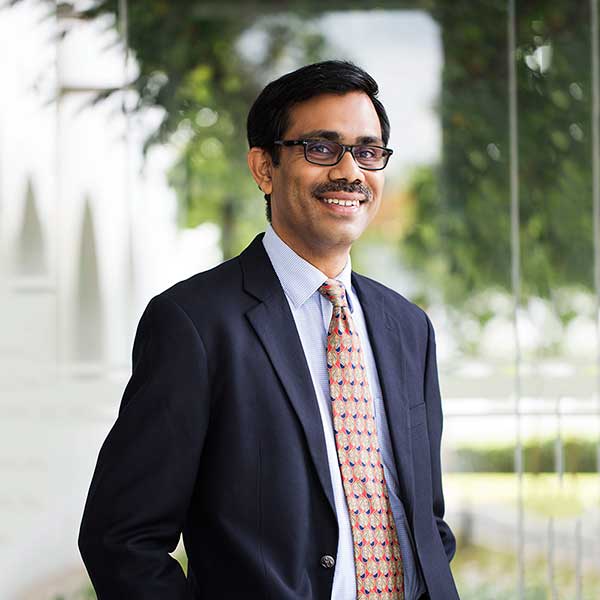
  • Umakanth Varottil, Assistant Professor, National University of Singapore, Ex-Amarchand Partner, on choosing academics over corporate practice

    Umakanth Varottil, Assistant Professor, National University of Singapore, Ex-Amarchand Partner, on choosing academics over corporate practice

    Prof. Dr. Umakanth Varottil is an Assistant Professor, Faculty of Law at the National University Singapore (NUS). He is an alumnus of the National Law School of India University, Bangalore, graduating in the year 1995. Soon after graduation, he joined Amarchand & Mangaldas & Suresh A. Shroff & Co. (AMSS), where he soon saw promotion to the post of a Partner. While at AMSS, he was ranked as a leading corporate/mergers & acquisitions lawyer in India by the Chambers global guide. He then went on to complete his Masters from the New York University School of Law (NYU) in 2007, and then his Ph.D. from NUS in 2010. He has since taught on a visiting basis at the Fordham Law School, New York, University of Trento, Italy, and at various law schools in India. He is the recipient of several academic medals and honours. At present, he is an Assistant Professor of Law at National University of Singapore (NUS).

    In this interview, he talks about :

    • His experience and journey from an Associate to a Partner at AMSS;
    • What made him leave AMSS for a life in legal academia;
    • His experience at NUS and NYU;
    • His PhD on the role of the independent directors in corporate governance;
    • Life as a Professor at NUS.


    How did you decide to study law? Were any of your close relatives lawyers?

    Since my late father was a lawyer, I was exposed to the legal profession from an early age. However, it was only after high school that I decided to follow his footsteps and take up law as a career choice for myself.


    How did the opportunity to study at NLSIU, Bangalore feel like? Do you recall your first day at the Halls of Residence? Would you like to share any observation/memory from those days?

    Securing admission into NLSIU Bangalore at that time was an entirely different ballgame from what it is today. At the time that I joined the law school, it was only two years old, with a great amount of uncertainty as to what lay in store for its students and graduates. Nevertheless, we were fortunate to have an eminent legal personality in the form of Dr. Madhava Menon at the helm of affairs, who led an able and dedicated team of law professors, which left no doubt in my mind that our professional future was not only secure, but also promising.

    Some of my early memories relates to my initiation into the study of law, which revolved around analysing various social issues from a legal perspective, and debating them in hope of arriving at a solution to real world problems. As any student would experience in the first year of law school, there are no definitive answers to questions or problems, and each issue is capable of being viewed from multiple points of view. Added to this was the Socratic method of teaching adopted in the law school, which tends to confound problems in the minds of students than to clarify or resolve them. It is much later that I realised that this phenomenon was by design, and not an accident. As I was a resident of Bangalore, I did not stay in the Halls of Residence. Since NLSIU was still in its initial stage of establishment and hostels were yet being constructed, residence on campus was not compulsory. As it turned out, most of us “day scholars” spent long hours on campus, which helped us partake in the community aspects of law school.
     

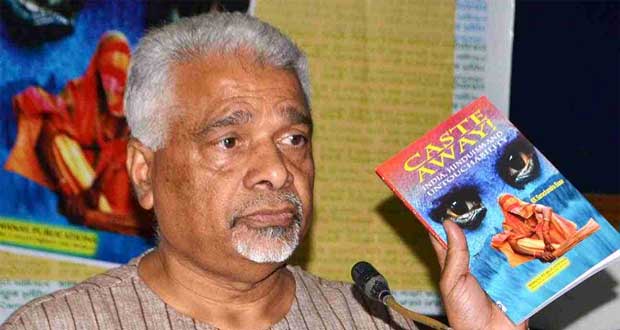
    umakanth-varottil-3

    How did you always keep ahead of your batch as a student at NLSIU? What would be your message to those people who never score much but do well at internships and moots?

    In describing academic life in an Indian law school such as NLSIU, I have previously used a metaphor, which is that it is like playing Test cricket. Student life involves sustaining oneself over a five-year period with equal energy and drive, and the ability to handle countless exams, assignments, presentations and other commitments that law school demands, not to mention co-curricular activities such as moot courts, debates, and the like. Hence, it involves a great deal of patience and perseverance. I must add that I have been enlightened about these characteristics more as a matter of hindsight, and it is not as if I designed and implemented any specific plan or strategy while in law school.

    For the lack of any alternative methodology for assessing the competence and capabilities of law students, grades do continue to matter a lot. But it is also important to develop an all-round personality, which can be attained through co-curricular activities. While performance in law school (academic or co-curricular) matters to some extent, it often tends to have a limited bearing on one’s professional progress and success, which might depend on other factors that a graduate may imbibe after law school.


    Have you been in touch with your batchmates? Is it true that all graduates from NLSIU do extremely well in their careers? Do you find differences between graduates of NLSIU, other NLUs and other premier law institutes?

    Apart from imparting legal skills, NLSIU helped me forge very strong relationships with a wonderful group of batchmates (as well as seniors and juniors), which I continue to cherish to date. It is true that the NLSIU alumni network is a tight-knit one. In fact, my batch is celebrating its 20th year reunion at the end of this year, where we will be spending a weekend together along with our families.

    While there could be some differences between the graduates of NLSIU and other premier law institutions in India, I do not believe that they are significant. Ultimately, the top students from all of these institutions form part of the same crop, and have been successful in similar ways. It might be the case that more number of students from some law schools may have demonstrated a higher performance compared to the others. Over the years, I have developed professional relationships with graduates from several law schools around India. In my view, while the institutional quality and background are important, it is the capabilities and determination of individuals that matter more.


    You joined AMSS early on as an Associate. How was your journey from an Associate to Partner? Was it mostly about legal knowledge, or did it include business development as well?

    My early years as an associate at AMSS involved gaining experience in corporate transactions. I was fortunate not only to be working with a leading law firm in India and its managing partner, Mr. Cyril Shroff, but I was also the beneficiary of an unending flow of transactions following India’s economic liberalisation that witnessed several novel legal issues being considered in-depth. Of course, being made a Partner carries along with it, different demands, which include client management as well as human resource management (that takes a great deal of people skills).


    You must have been very young as a partner. As a law student, it’s very difficult to imagine joining the ranks of a partner in just 5-6 years of work. What all does it take to become a partner?

    At the outset, technical skills do matter, i.e. the knowledge of the law within one’s practice domain, which includes both substantive and procedural matters. In addition, skills such as conflict resolution, problem solving and acting as a “trusted” advisor to clients, are a hallmark of a competent partner. Then come other skills such as business development, human resources, and even financial management.


    Is it possible for a person who is not exceedingly well versed with Business Development and is not good at drawing clients to get promoted to the ranks of a partner? Would it take more time?

    It is ironical that while law schools teach the knowledge and skills pertaining to matters of law, the other skills, such as business development, are required to be developed by lawyers on the job. Some lawyers are excellent in technical legal skills, but they either do not have the capabilities, or are uninterested in the managerialaspects. In those scenarios, of course, there could be some constraints when it comes to promotion. Ultimately, this could depend on the policies of individual law firms. But, I do believe that there is always space for lawyers with good technical skills, and law firms and legal practices may ignore them at their own peril.
     

    umakanth-varottil-2

    When did you actually find yourself getting drawn towards academics?

    This is a question I get asked all the time. When I was at AMSS, Bangalore, during weekends,I used to co-teach a seminar course on Mergers & Acquisitions at NLSIU along with Professor M.P.P. Pillai. The discussions in class,surrounding the theoretical and policy-level issues on areas that I was closely connected with in practice, attracted me towards taking up a full-time career in academia. Although I embarked on an academic career with a view to teaching, I discovered along the way that substantial emphasis is also placed on research and publications. I enjoy this combination of teaching and research in the areas of corporate law, corporate governance, mergers and acquisitions, and related subjects.


    How hard was the decision of leaving a well-established career as a partner of the largest law firm in the country, to take a plunge into academics?

    I was quite determined about embarking on a career in academia. However, given that I was leaving the profession after spending over a decade in it, many of my colleagues and friends felt that I was more likely to flirt with academia for a couple of years, and then promptly re-enter practice. But, that did not occur: I remain committed to the legal academy, and have not felt the urge to return to practice. At the same time, I continue to remain in touch with the profession through various means that helps me stay up to date with developments in practice.


    How did you select New York University School of Law among others? Was it any specific combination of modules that attracted you there?

    I chose the New York University School of Law (NYU) due to its focus on some of the key areas I was interested in, namely corporate, securities, and financial services law. Moreover, located in the heart of New York City, it also has access to professionals from leading law firms, accounting firms, and other financial intermediaries, who would often visit the institution to teach, and also to participate in seminars and conference.


    What was your topic of research for LL.M? Why did you choose that subject for research?

    Although I did an LL.M by coursework, I was required to write research papers on a couple of courses, which I found to be a valuable experience. In a seminar course titled “Topics in Corporate and Securities Law”, I wrote a paper on the role of independent directors in corporate governance. This has been a significant topic of interest world-over, not least in India. This paper also acted as a stepping stone for my PhD thesis on the topic subsequently at the National University of Singapore (NUS). At NYU, in another seminar course titled “Financing Development”, I wrote a paper on the use of the pari passu clause by lenders in sovereign debt documents, to block the debtor countries from making payments as part of a sovereign debt restructuring. This issue, as well, continues to hold sway till date, with litigation pertaining to Argentina under this clause making headlines, especially as they have been considered extensively by the US courts.


    How do you recall the faculty and facilities? Which other universities would you recommend for someone who cannot make it to NYU?

    I learnt considerably from my courses at NYU. Having practised Corporate Law in India for several years, it was a wonderful opportunity for me to compare the Indian law and practice, with those of other jurisdictions studied at NYU, including Delaware. Some of the professors and their teaching methodologies have had a significant impact on me, in that they have helped shape my own teaching philosophy and style.Apart from NYU, there are several other leading law schools in the US, UK, Singapore and Hong Kong, that have strong corporate and financial services law offerings.


    How did you choose NUS for your doctoral research? Tell us about your Ph.D thesis. Why did you choose that subject in particular?

    When I was at NYU, I came to learn a lot about NUS, as there was a collaboration between the two Universities for a joint LL.M programme. This was also consistent with my desire to stay in the Asian region, and closer to India. Hence, after consulting my classmate Arun Thiruvengadam, who was then teaching at NUS, I decided to apply for the doctoral programme there. As mentioned earlier, my PhD thesis dealt with the role of the independent directors in corporate governance, wherein I examined board independence in the context of emerging economies such as India and China, as it had previously been studied in the context of developed markets such as the US and the UK, where the agency problems relating to corporate governance were largely different. I chose that area in particular, as the concept of independent directors has confounded academics for some time now, with incomplete understanding of the utility of that institution in enhancing corporate governance. The concept continues to hold importance in India even now, with extensive codification in the Companies Act, 2013.


    Having taught at many universities in India, how would you compare it with the facilities and environment that NUS provides you? Do you find stark differences in administration between Singapore and India?

    NUS provides an excellent environment for both teaching and research. It has a diverse faculty and student body. While the LL.B students are mostly from Singapore, the LL.M students are from several countries around the world (including from far-flung areas such as Latin America), which makes teaching here truly global. There are indeed perceptible differences in the administration between Singapore and India. For example, the law school at NUS is situated within a larger University, which is over 100 years old and therefore endowed with significant experience and resources. On the other hand, the leading law schools in India are standalone establishments that are relatively younger, with greater flexibility in determining their own destinies.


    Is it possible that you may come back to India to teach? Do you look forward to that in near future? What all could probably could be the impediments, if at all you wished to come back?

    Of course, it is hard to make predictions for the future, but for the present, I offer short courses and guest lectures at various Indian law schools each year, which I thoroughly enjoy. Even though I am currently based in Singapore, I continue to remain closely connected with Indian legal education.


    What subjects are you currently teaching? What are your current research interests? Have you involved your students in your research?

    At NUS, I teach three courses. One is Company Law, a compulsory course for LL.B students, that involves teaching Singapore law, which is similar to Indian company law at a broad level (with both Singapore and Indian having originally inherited English company law), but with significant differences when one drills down into the details. The other two courses I teach are upper-level electives, namely Mergers and Acquisitions (M&A) and Indian Business Law. Elective courses are attended by third and fourth year LL.B students as well as LL.M students.

    My research interests are also on similar lines as my teaching. While my work is comparative in nature, I focus considerably on the laws of India and Singapore. I do involve research students in my work. While most of the research assistants tend to be NUS students (both LL.B and LL.M), I also often avail the services of students across various Indian law schools, particularly when the research material for a project is mostly available in India.


    Having won quite a few awards and honours for academic excellence and teaching, what would be your message to young professors?

    An academic career in law is an exciting one. It provides considerable freedom for young professors to delve into areas of their interest, both in terms of teaching and research. Several professors in India have established themselves as authorities in their respective fields, thereby garnering wide acclaim. They are also sought after by practitioners, policy-makers, and the Government. They have accomplished this through extensive research and publication of their work in leading academic journals, as well as through op-eds in the popular press that ensure a wider reach. My advice to young professors would be to identify their interest areas, and then build up domain expertise in those.


    Students often complain about high-handedness of faculty and administration in India, how do you propose we either find a solution to it, or change our own perspective?

    As I have already mentioned, Indian legal education continues to be moving along a steep learning-curve. The experimentation that began with the establishment of NLSIU, continues in one form or another. Given this trajectory, the path is not likely to be smooth. It would be presumptuous on my part to offer any solution, as the circumstances are rather complex. However, the key would be for the administration, faculty and students to work collectively to address various problems that are currently being faced. To go back to an incident that occurred when I was a law student, a proposal by the administration to raise tuition fees at NLSIU was met with stiff resistance from students, resulting in a deadlock. However, following successive rounds of negotiations between students and the administration, an acceptable solution was found, and the institution marched forward. Constant engagement between various constituencies within the legal education sector would be the key.


    Shifting to moot courts, how does one draft a winning memo? According to you, what is the difference between a great and an average memo?

    A good memo is one that is well-researched and expressed clearly. The grasp of the writer over the subject matter tends to be quite evident from its content and form. A great memo is also one that is very convincing. Ultimately, even in practice, a judge would decide a case based on (among other things) the written submissions of counsel, which must be clear, cogent and persuasive (supported by authorities).


    Do judges actually expect mooters to know everything about the law, or is there something else at play, as well?

    Successful mooting involves a combination of factors. Apart from knowledge of the law relating to the subject matter of the moot, it is necessary to master the facts (which often form the bone of contention). Thereafter, it is necessary to logically structure the arguments, which must be presented clearly. More importantly, mooters must be prepared to wriggle themselves out of a situation when they are caught off-guard by the judges. They must be able to think on their feet. Patience is another virtue that would come in handy in such situations.


    Lastly, what would be your message to people who want to take up a career in teaching?

    According to me, the idiom “Those who can’t do, teach” cannot be farther from the truth. It is no longer true that teaching is the last resort for a graduate in India. The academic world has attracted bright lawyers, and several excellent law students at their very early days, who have indicated their interest in teaching,and followed their single-minded pursuit towards attainment of their goals. Hence, I would encourage law students to consider an academic career. From my own experience, I have found academia to be extremely enriching and fulfilling.

  • Aarthi Sivanandh, Partner, J. Sagar Associates, on building a corporate law practice, merging Vichar Parters and LL.M from Tulane

    Aarthi Sivanandh, Partner, J. Sagar Associates, on building a corporate law practice, merging Vichar Parters and LL.M from Tulane

    Aarthi Sivanandh graduated in commerce from Stella Maris College in 1997 before deciding to pursue law from Tamil Nadu Doctor Ambedkar Law University. Thereafter, she attended Tulane University (US) on a scholarship and graduated the masters course in corporate law with distinction. Soon after she worked in California briefly as a foreign legal consultant before returning to India in 2004. On her return to India she was part of the founding partner team for Universal Legal. In 2010, she co-founded ‘Vichar Partners’ which merged into J.Sagar Associates in April 2014.

    In this interview she tells us about:

    • Degree in Law after commerce and subsequent international exposure
    • Building a corporate law practice in Chennai
    • Experiences in founding a law firm and its merger with Jyoti Sagar Associates
    • Role of a partner at one of the largest firms
    • Work life balance and necessary skills of a young lawyer


    You are a B.Com (Hons.) graduate from Stella Maris College. How did you decide to join Tamil Nadu Doctor Ambedkar Law University?

    I never envisioned myself as a lawyer. In my final year of undergrad college at Stella Maris, I had won an advertising competition that awarded me an internship offer at HTA. My mother promptly found me a friend of hers who was a company secretary who persuaded me to join the course lest I am lured by what they believed as the glamorous world of advertising. A short introduction to the intermediate course at the institute and I was captivated by law, thus the road to join the University in Chennai to pursue a degree in law.


    Soon after completing LL.B., you went to pursue Masters from Tulane University Law School. Why did you decide to go for higher studies?

    I was interested in corporate law but there were no law firms in Chennai in the late nineties, the city was flooded with court counsels. Litigation was the only thriving practice area and the city was well known for its stellar attorneys’ bar. I decided to visit Bangalore and Mumbai for an internship and found the firms there unwilling to entertain me except for one. It was a struggle to gain exposure to transactional or corporate practice. It was the time after an undergraduate degree when I was keen to discover the world, find new experiences. I had also won two scholarships to study abroad, so I decided to put them to use and get a Masters in Law degree.


    aarthi-sivanandh-2

    Tell us about your LL.M year at Tulane. How did this influence your career?

    My time at Tulane was rewarding and fun filled, both intellectually and personally. New Orleans is the third most interesting city in the US after New York and San Francisco; this drew me to choose the foreign lawyers LL.M program at Tulane. My class had almost 130 people from more than 25 countries. The historic city that had fought Spanish and French wars, its streetcar and Audubon park still alive from the 1840’s and a milieu of international students was the background in which my mind grew.–

    The enriching dialogues and conversations between professor and student, the Socratic method of teaching, the non-judgmental easy ways that gave every attorney the time to compare how they learnt the law at their home countries and how they articulated themselves, changed my 23 year old mind at very fundamental levels.

    Nothing was unacceptable in the system and there were no wrong answers, there were only ‘different’ answers – This was a huge change from the way I was educated in Chennai.

    I learnt to respect other views, state my own clearly, be financially responsible, manage hard work, independence and be comfortable with strangers. I decided to work in the Valley on graduation and came home after 2 years. And like every person who returns home, I wanted to come back to Chennai and change the way people viewed the firm culture and practice of corporate law.


    You have been a corporate lawyer for most of your career. What prompted you to take up corporate law? Share with us any experience which helped you to shape your career choices.

    My late uncle was a real estate lawyer in the 80’s and my father though retired as a public prosecutor continues to work in dispute resolution on a range of matters. I would ask them where companies and others who ran businesses go for their work and they would both reply that those clients’ litigation needs were taken care of in the city but for ‘other work’ they would go to Mumbai or Bangalore or Delhi. While I enjoyed practising with litigation teams in the US (The Chugh Firm), on my return I began to focus only on corporate and transactions law in India and particularly in Chennai.

    The challenge to marry the various nuances of the law with the intricacies of forward looking business is both an opportunity and challenge to the transactions and corporate law practice.

    Many commercial relationships succeed without the fear of legal enforcement simply by relying on the discipline of the parties’ motivation to be fair, their prospect for future dealing, and the increasing premium they place on reputation.

    A quality legal product or service would therefore be one that fine-tunes incentives by providing for a broader range of contingencies that will in turn dramatically reduce the costs of dispute resolution. The challenge to achieve this intricate balance calls upon several skills. This held great appeal for me as a practice area and catered to my need for cleanliness in human and business interaction.


    aarthi-sivanandh-3

    Considering the fact that you started your career in California, was it easy for you to settle in the work environment of India?

    The style of work communication and managing client expectations were the big differences in the work environments. When I moved to Chennai in 2006 there was still no law firm that was organically grown in Chennai with a true concept of equity or partnership.

    I was a part of Universal Legal in Chennai, India for 4 years that helped me start my career when I moved home. It was an entrepreneurial foray to set up and learn the way forward in term of setting up a practice. However, in many ways there was no ‘senior’ in India whose coat tails I could hold on to, the only choice was to play natural, observe and learn. I settled in easily, it’s a great city and its home. The community places a premium on fair relationships and quality work which were encouraging when I started. Many friendships over the years have given me an insight into the work environment that is unparalleled.


    You co-founded Vichar Partners in September, 2010. How did the idea germinate? Any specific reasons why you chose the name “Vichar Partners”?

    I had not always wanted to set up my own firm but one is an amalgam of everything and everyone they meet. The idea of the firm germinated with the usual impatience some lawyers feel in believing that they could fundamentally change things and grow a firm that can have an impact. The energy it required and the excitement of possibilities fuelled me.

    By 2010, I felt I had enjoyed the city, represented and worked with many clients who were willing to work with a non-branded non-legacy firm and had earned the trust of some of the business leaders in the city. I had sporadically but constantly dreamt of an organically grown firm in Chennai, with all its partners in Chennai catering to everything clients need in Chennai had gained momentum. The timing seemed apt when I met my great colleagues and partners Vinod Kumar and Chitra Narayan. Everything seemed ordained and there just seemed no point in waiting anymore.

    We wanted to institutionalise and build a full service law firm and to create a platform that awarded and energised lawyers on merit. We were keen to grow a fast paced technology based law firm that would deal with clients, timelines and quality in an effective manner.

    Our name was coined by to reflect the first 2 letters of each of our names but also that in Sanskrit. Vichar meant an idea, thought or opinion which was what our firm was. We were bound in our commitment to quality and our common belief in the ethical practice of law and business.


    In April, 2014, Vichar Partners was merged with Jyoti Sagar Associates, Chennai and you currently work as a Partner at JSA, Chennai. What prompted this merger?

    Vichar Partners entered the market with large aspirations on being the “go-to” firm in Chennai for corporate, commercial, transaction and niche litigation work. We grew considerably well in terms of repute, associate strength and the quality of work we were handling but we did see market realities in a comparatively smaller geography. Talented young corporate lawyers were tough to find in Chennai as the city had deep roots based solely in dispute resolution and transactional work was getting outsourced which meant there was no investment in building younger lawyers in this area, or finding administrative paralegal support to handle large transactions.

    In our third year we found ourselves on other sides of the table with JSA several times, while internally we were intrigued and absorbed on the next level of growth for Vichar. A matter of timing and providence, the potential for a combination seemed complimentary to both our firms.

    Somasekhar from our Mumbai office was a significant influence when he first met us with the idea, later interactions with Murali from our Bangalore office, Amit from our Delhi Office and Dina from our Mumbai office confirmed we were on the right path to considering a merger. Of course, the powerful work ethic and integrity of the leadership of Berjis and Jyoti preceded the reputation of JSA and in the end it was almost a natural selection

    While some may try to refute this, I do believe that large law firms attract the best talent, provide superior training and mentoring, and would transform the inexperienced into an exceptionally skilled attorney. This in turn allows such firms to attract sophisticated clients, handle cutting-edge transactions and manage the greatest deal flows. A combination of these ingredients on a consistent basis offers the best opportunity to develop as a lawyer.


    What does a partner at a law firm like JSA do? What falls within the scope of your responsibility? Tell us about a typical work day.

    No day is like another. They are unstructured, sometimes meditative in working through a solution or reactive mode to urgencies or filled with telephone calls. Typically, the day is filled with interactions with potential clients, ongoing work and associates.
    A typical day would start with getting a handle on all the client matters going on, different transactions or other mandates involving opinions or structuring a business, that is either readying itself for a sale or targeting a purchase – the task of managing responses to all of them and understanding if their strategies fit within the walls of the law. I prioritize and coordinate with my colleagues who are working with me based on what stage each transaction or the firm’s involvement is at. Once the background work and schedules are set within the team, active participation in calls or negotiations begin, with each party at the table having multiple commercial requirements and legal must- haves. The forward looking protections that are required in an ever changing commercial background can require one to bring to bear an understanding of economics, commerce, industry and the law.

    Timelines can stretch for various reasons from parties posturing for the right leverage or purely for commercial purposes. The loop repeats and until innovative structuring, alignment of interests and final negotiations find balance– sometimes takes several months.


    What is the most challenging or stressful part of being a Partner at one of the most successful law firms in the country? Is it easy to have a work-life balance?

    Challenges are continuous, no piece of work is alike and the constant commercial and market changes require one to keep pace with it and opine within the four corners of the law The challenge is to use the right proportion of legal logic, commercial reasoning and fair persuasion on behalf of a client. Negotiations too are often like a puzzle, you may know where the piece goes but you also have to time when you place the piece in the puzzle so as to let others help you complete it. Being calm and composed in all kinds of crisis situations and timeline based advice is also a challenging aspect of the practice.

    No, it’s not “easy” to have a work life balance. Having said that, I don’t believe work to life balance should be 50-50, at different points of life the balance scale shifts sometimes 60-40 and at other times say 40-60. I have two kids aged 7 & 3 who like to do the typical things kids of that age do– play constantly, run, go to classes etc. With a good support system I manage to do some of it with them but not all. If you think of it all as a part of leading a “whole life” then it makes sense than try to slot each activity into a bucket of either work or life. A true partner/spouse who understands the nature of work can help immensely in keeping this balance. JSA is an even keeled firm, with a great set of people and that makes the road saner and easier.


    What kind of effort should a young associate put in to work to get it appreciated? What distinguishes an associate from a partner when it comes to work?

    A young associate should have a keen mind that should be somewhat of a sponge – that absorbs everything in and around, taught and not taught and a thirst to learn. The law school rote method won’t let you stay afloat in a law firm but resourcefulness and hard work will. There are no short cuts.

    The outside world and fresh off the boat lawyers are often enamoured by the pay a corporate practice offers but often fail to see the immense hard work that goes into the practice. There must be a very good reason other than money that makes one want to continue to pump in some very crazy hours, bear with challenging transaction requirements, clients who are bound to be low on patience if they are in stressed commercial situations and to sustain it all, for days to end– it’s a time vampire.

    Associates are central to a Partner’s practice. The more they learn and give the more they grow, the more they grow the Partner can expose them to a variety of work. No show is a one man show, the synchronised timing and effort of the associate team in building research knowledge, knowledge management, prompt interactions with clients on status updates or first level drafts and so can assist the Partner to build on the same to have deeper discussions, develop negotiation strategies, understand commercial requirements and enhance the quality of the practice.


    How important would you say are business development skills at such higher roles in a corporate law firm?

    The role of business development is a key component in a law firm. The firm has only one asset – its people. Amongst the people not everyone is required to concentrate on business development but is a requirement on the senior resources. If a senior resource can garner client confidence, provide resourcefulness and deliver as required the firms credibility grows. The larger the pool of senior resources the larger the palette of services the firm can successfully offer. The symbiotic relationship of different partners in the firm are the strong links the firm builds through its people assets in the community. I would say these skills are critical and second to none.


    Having a centralised HR what do you have to say about students writing to partners directly?

    JSA is a national law firm and our internship process, recruitment process – all HR functions are centralised. Applications are usually submitted at the internship or careers link on our website. Sometimes, students write to partners or associates they have met or have a relationship with through some other professional forums, while this affords familiarity with the candidate it still depends on the requirement of the location partners and of the firm at each level.


    When you hire lawyers under you, what specific skills and profile do you look for?

    Law school education is becoming more adept at providing attorneys with transactional skills. Generally, however, it still falls short. When I hire for my team, I look for students who worked extra hard to find some baseline transactional competencies or have devised ways to achieve them through internships, reading, taking courses at the institutes for extra focus on particular areas of law or part timing at corporate law firms.

    Given where things are in terms of corporate/transactional law practice outside of Mumbai and Delhi and given the gap between law school education and the transactional competencies that are required, it is incumbent upon the lawyer to be competent and take whatever steps necessary to educate herself to become so.

    Fresh graduates can build on their ability to understand business associations, basic advice about business structures, and draft documents related to business associations and secondly to investigate and understand facts and research the law in a given context (emphasis on due diligence).

    Working lawyers or lateral hires in addition to the above should be able to draft clearly, have thorough research skills, be able to walk a colleague or client through the process of identifying what the issues are, rules of law in play given the issues, applicability of law to the issues and finally a conclusion. They must be able to also identify and address the ethical implications of practice.


    What would be your advice to students who wish to go for higher studies?

    A degree for the sake of it would serve no end. However, some are geared to appreciating the jurisprudential thought involved and understand nuances better when the learning is organized through curriculum while others are adept to picking it up as they work with counsels or at law firms. A higher education abroad gives an exposure early on in a student’s career to the different styles practices and legal markets in the world. In my personal experience, these courses often help in wide network of friends in different regions and a style in writing and thought that could be unparalleled but I would not unduly overemphasise the need for a practitioner to obtain a master of laws degree.


    What would be your message to our readers who are budding lawyers and law students?

    Clarity in thought and expression is the single most important quality for a practising lawyer today. This assists in honing the ability to identify, evaluate, and understand business risks for clients and in turn offer appropriate legal advice. Invest in yourself constantly, by reading and understanding the rules of law both at home and abroad, this will enable one to compare contrast and therefore learn. The law is known to be a jealous mistress; you will have to give a lot to get some.

  • Sanjeevi Shanthakumar, Dean, Faculty of Law, SGT University, on establishing three elite law schools, teaching and academics

    Sanjeevi Shanthakumar, Dean, Faculty of Law, SGT University, on establishing three elite law schools, teaching and academics

    Prof. Sanjeevi Shanthakumar is a graduate from Dr. Ambedkar Government Law College, Chennai (Madras University) (Batch of 1989). Thereafter he pursued LL.M. from Madras University with specialization in International Law and Constitutional Law.

    Currently he is Dean, Faculty of Law at SGT University, Gurgaon [NCR]. Earlier, he was Director of ITM Law School, ITM University, Gurgaon, Director of MATS Law School, MATS University, Raipur; Controller of Examinations of Hidayatullah National Law University, Raipur; Associate Professor of Law at Hidayatullah National Law University, Raipur; Senior Lecturer at Government, Law College, Madurai; Senior Lecturer at Government Law College, Chennai. Before joining the legal academia he had practiced at the Madras High Court for seven years as legal practitioner.

    He has an unique experience of establishing three elite law schools on a self financing mode.

    He shares his experiences in this interview.


    Please tell us a bit about your pre-college years, you as a student, your ambitions as a child. Did you have lawyers in your family or among close relatives?

    During my school days, I was a studious and enterprising child. Believed in honesty and hard work. Very cooperative and helpful to teachers and the school administration. One day when my class teacher was asking about the subjects we like the most, each student was naming either maths or science. When my turn came, I stood up and said “civics” and all the students in the class laughed at me. I never knew those days that this interest in civics will lead me to study law. I never had any lawyer in the family or amongst my relatives. Hence, was complexly unaware of legal profession.


    What were your objectives when you thought about law while still in the preliminary years of Law College? What were your goals after graduating? What were the options available to you?

    As I said, I never knew about this profession. My father wanted me to be a Medical Practitioner. Since I could not get a seat in the Medical College, I got admitted in B.Sc. [Chemistry] and started attending classes. One day, my dad came to my college and said that we need to go to the Madras law college and the interview is scheduled for admission to five year integrated law degree program. I walked with him without realizing that this is going to be a turning point in my life. Went to the Law College, faced the interview and later was declared selected. That was the starting point of my law journey.

    At the law college things were much unorganized. Was very scared to study in that environment. Was feeling very sad and was repenting my decision of joining the law college. Fortunately got few friends who cajoled me. Started developing interest in studies after meeting a friend called Gnanasekar. He was too elderly to be called a friend and hence we used to call him as “uncle”. He was the one who motivated me to study law. He used to call us outside the class room and started explaining to us each and every topic. He never used to carry text books like any other student. He used to carry with him volumes of AIR and read to us the full judgments of the Supreme Court. This created interest in me to read law through cases and law as interpreted by the Courts. He got opportunity to work on a part-time basis at a very popular law firm in Chennai, our interaction with him got reduced and I assumed his role in teaching my friends. This is how; I started teaching though informally.

    Instant recognition and appreciations after a good lecture fascinated me and forced me to take up teaching. Those were the days when there was a serious dearth of good law teachers. I went for a coaching class for preparing for the Civil Services Examination. The Teacher who was teaching Indian Polity could not come to classes regularly due to certain personal reasons. One day I tried to fill the gap by teaching a topic in Indian Polity. The overwhelming appreciation and feedback from my fellow students gave me confidence to become a good teacher. Based on the feedback from student the Director of the Centre Prof. M.F. Khan insisted that I should teach Indian Polity regularly and I got in to active teaching.

    My practice at the Madras High Court was a great experience. I was with one of the top ranking law firms M/s. Aiyar & Dolia and had a roaring practice. Received appreciations from my seniors, colleagues, clients and judges. In spite of these, my passion was in teaching and hence went for a full time Masters Degree Program at Madras University with specialization in International Law and Constitutional Law. After my Masters I cleared the UGC JRF and got the Junior Research Fellowship to do PhD in Law wherein as part of the fellowship terms and conditions, I had to deliver lectures for LL.M. students. Teaching Post Graduate Law students started this way and later got appointed as Senior Lecturer at the Government Law College, Chennai, and I happily started to teach at the college where I studied law. Later, on official transfer went to Government Law College, Madurai from where I resigned and joined Hidayatullah National Law University, Raipur. After HNLU, went to establish a new Law School for MATS University at Raipur as its founder Director, later established ITM Law School at ITM University, Gurgaon as its founder Director and now establishing the Faculty of Law at SGT University, Gurgaon as its founder Dean.


    Which subject do you enjoy teaching the most?

    (Sanjeevy has taught a number of both traditional legal subjects and the trending ones from Jurisprudence to Constitutional Law to International Law.)

    Not only the above mentioned conventional law subjects. I have the experience of designing curricula for Honours Courses wherein I had taught courses like “Biotechnology and Law”, “National Regulation of International Trade”, Science Technology and Law, etc. However, I enjoyed teaching Environmental Law the most and other subjects like International Law and Constitutional Law. I would also love to teach and enjoy teaching Environmental Law.


    Tell us about your teaching methodology. Do you encourage students to take notes or do you engage your students in active class participation? What advice do you share with your students on scoring higher grades?

    My teaching was never a one way process. I was one of the fortunate few teachers to get trained to teach under a World Bank Capacity Building Project and also at Cardiff University, U.K. under the British Council Funded Project. Whatever new teaching methods I learnt at these programs, I disseminated the same to many other young law teachers, through various training programs for law teachers on law teaching methods, at different universities across the county.

    I focus more on active learning rather than on teaching. It was always student centric. I actively involve the students in the process of learning the subject. During a semester, I deliver very few lectures. Most of the topics used to be learnt through small group discussions, role plays, field visits, seminars and projects. My question papers to assess my students understanding were always unique and different. Questions will never test their memory. Instead, it will encourage them to apply the acquired knowledge over a given situation and to come out with unique solutions, both legal and non-legal.

    I encouraged students in small groups to visit environmentally affected areas and to talk to various stakeholders to find out the real reasons for the problem and approach the administrators to find out what measures have been taken and finally to come out with their original solutions to resolve the problem. These methods helped every student to get engaged in the learning process. I made certain passionate students’ members of a Public Trust founded by me and named as “TREES” Trust for Research and Education on Environment and Sustainable Development” through which they continue to do some good work for the cause of environment, thereby engaging them in a life long learning process.

    My teaching methods for teaching Environmental Law was recently recognized by the Asian Development Bank, Manila by conferring on me the “Environmental Law Champions Development Award”.


    What role do legal researchers and academics play in the Indian legal system? What positive changes would you recommend on this aspect of the legal system?

    I personally feel by the legal academics have a greater role in producing quality legal professionals. As it was rightly said, the “Quality of the Bar determines the Quality of Justice”. Hence, it is the primary responsibility of legal academic to ensure the quality of the bar though developing the quality of law students who enter the bar.

    The only change I would recommend to all my law teaching fraternity is that, ‘Please take law teaching seriously and don’t take law teaching for granted. Do justice to your profession; else the nation will fail as a consequence of chain reaction.


    When would you say that an academician is successful? What are the career goals legal academicians should set for themselves?

    A Legal Academician’s success is measured in terms of the quality of legal professionals he produces. I feel successful, when I hear news about the success stories of my students, whom I have taught at different points of time. I could not avoid but sharing this news that this year four of my students got admitted to the LLM Degree Program at Harvard Law School. This gives me, as an academic to feel successful.

    The one point career goal for any legal academic is to be a good teacher and to be recognized as such. All the other positions and opportunities will automatically follow as and when time progress.

    Most of the opportunities I have had so far came to me through the recommendations of my students. One of my students even recommended to her peers and teachers at Oxford University to invite me to give a talk on Environmental Law at Oxford, which I did.  My students believed that I can do and I try not to disappoint them.


    You have authored several books and have written various research papers. How did you find time to write so many scholarly articles?

    For writing books, you need to have a compelling reason. I wrote books on Environmental Law only to help my students, as they were suffering for want of good reading materials, at that point of time, when Universities started to teach Environmental Law as a compulsory course. I tried to help them again with the help of a group of students, who dedicated a lot of time and energy to collect all the information and data required to author a book.


    What was the biggest challenge that you had to face while building the law schools?

    (Sanjeevy is the founder Director of MATS Law School as well as of ITM Law School, Gurgaon)

    The biggest challenge was to attract good students because without good students around me, I will not be able to experiment or innovate in legal education.


    Any thoughts on the current system in place to train the Indian judiciary and continuous legal education of lawyers? How can these systems be improved and made more effective?

    I believe in the importance of “Continuous Legal Education” for lawyers and judges especially in the trial courts. 15 years back, I conducted one “CLE Program for Young Lawyers”, while I was teaching at the Government Law College, Chennai. I received tremendous response for the same and appreciations for the initiative. I wanted it to be a regular feature. Due to transfers and relocation, I could not continue the CLEP. As Dean of SGT University Faculty of Law, I have started doing it again, and hope to continue it.


    As the current Dean of Faculty of Law, SGT University, how do you feel SGT can take a greater role in social engineering in India?

    As Dean of the Faculty of Law of SGT University I try to leave no stone unturned to make the law school a clinical law school where students learn through experience. I believe in “justice education” in contrast to “legal education”. I am trying to provide my students, maximum exposure to the legal profession through various clinical activities.

    I constantly remind them to think critically and not to accept anything just because it is there. To help the students feel more socially responsible I facilitate their visits to the communities for interaction very frequently through the legal literacy club. These visits to the communities and interaction with legal luminaries gives them a complete picture of the working of the Indian Legal System. Since they are made to personally feel the pain and sufferings of individuals, I sincerely believe that they will do their level best to mitigate pain and ensure justice.


    How do you say a student can manage to stay ahead of the ‘rat race’?

    Today, I find students quite impatient. My only advice to the young law students is that, keep working, work with dedication, sincerely and honestly maintaining the integrity and dignity of the legal profession. Results will follow as a natural consequence. Remember the phrase that “Rome was not built in a day”.


    What would be your message to those hard working law students who did not make it to a top NLU but want to excel in the profession?

    Many of those who are on top of the legal profession today were never a student of an NLU. In fact the NLUs started existing in public knowledge only 5-10 years ago. If they can do, why not you?

  • Sibichen Mathew, Advisor (Joint Secretary level), TRAI, on the role of a Senior IRS officer and being an author

    Sibichen Mathew, Advisor (Joint Secretary level), TRAI, on the role of a Senior IRS officer and being an author

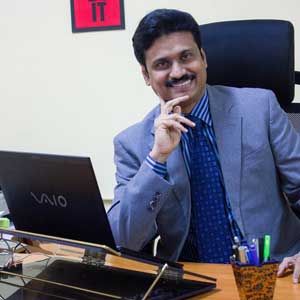
    Dr. Sibichen K Mathew is an Indian Revenue Service (IRS) officer of the 1992 batch. An alumnus of the Indian Institute of Management- Bangalore and the Jawaharlal Nehru University, he currently serves as Advisor to the Telecom Regulatory Authority of India (Joint Secretary Level). Apart from his role as a Senior Civil Servant, he is also a leadership trainer, blogger, author, sociologist, and a policy researcher.

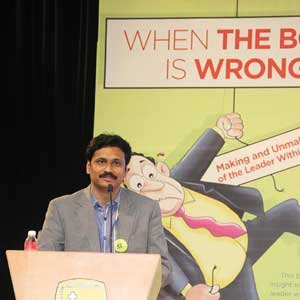
    He is the recipient of the UGC Research Fellowship and has been awarded gold medals from the National Police Academy and National Academy of Direct Taxes. He is the author of the books, “Making People Pay: The Economic Sociology of Taxation” and “When the Boss is Wrong”. He was also the college topper of the Bachelor of Law degree from the Karnataka State Law University.


    What brought you into legal studies after having extensive experience in Academics?

    (Sibichen holds a Bachelors in Chemistry, Masters in Sociology from Kerala University, an M.Phil from Jawaharlal Nehru University and a Ph.D from Bharathiar University, Coimbatore.)

    I believe that learning is a continuous process. It never stops if we are in search of wisdom. The more I learn, I understand that how ignorant I am. That shatters my ego.

    Of all the courses I pursued, one that gave me immense satisfaction was my LLB course. Law is one discipline which instantly gives the student a feeling of empowerment. I always felt that a formal schooling in law can give us tremendous confidence in dissecting the social reality sensibly and will give the necessary courage to fight for justice. Law and justice are inextricably intertwined.


    Being a topper in LL.B please give us a few actionable tips on scoring higher grades.

    (Sibichen has received his LL.B degree from Karnataka State Law University in 2012 where he was a college topper and a rank holder.)

    Once you enrol for an LL.B course, the first thing you need to do is to connect and approach whatever you see, read and hear with a legal perspective. Even when one reads the daily newspaper, an alert and keen law student would link the facts and incidents narrated there with the extant legal provisions and judicial positions he learnt. For example, a typical newspaper contains a number of reports about crimes happened across the world. An easy way to learn the discipline is by linking each such incident of crime with the corresponding sections of IPC, Cr PC, etc and other specific Acts. You will not forget the sections later-on.

    The second tip is to cultivate a habit of quickly glancing at the important decisions of the Supreme Court, various high courts and tribunals reported in the online and offline sources at least once a week if not on a daily basis. By subscribing to various news aggregators, you can get instant access to your chosen fields in your smart phones.

    Thirdly, liberally quote the case laws and the gist of the decisions while answering your questions during the examinations.

    Please note that there is no alternative to bare Acts. One has to read and understand every word used in a particular section. Commentaries can be read later. And, refer the guides only for revision. Prepare your own notes after reading the bare Acts and the commentaries. Include the latest case laws in the answers you prepared. Please quote connected incidents and the judicial observations reported recently by media to illustrate in your answers.


    sibichen-mathew-3

    Tell us about your B-School experience and also give some highlights of your course which you pursued from IIM-B.

    (Sibichen has also pursued a full-time post-graduation in Public Policy and Management (PGP-PM) from Indian Institute of Management, Bangalore (IIM-B).)

    The course at IIM-B really opened up my world view beyond what I learned and did before. It was a course that inducted me deeply to various areas such as international trade, global public policy, international regulatory institutions, public finance, decision making models, business laws, business process flow and human resources management. The teaching methods and evaluation were extremely rigorous but of very high quality.


    Was it a professional requirement to pursue courses in Public Policy and Taxation to enhance more in your career?

    (Sibichen has pursued courses on International Public policy and Corporate Taxation & Advocacy Skills from the Syracuse and Duke Universities respectively.)

    Though it was a professional requirement, I could use the opportunity to gather data on some of my pet subjects such as transnational tax evasion, money laundering and white collar crimes. I could interact with experts during my stay in the universities and there are vast resources available in the libraries of these universities. Law students should try to pursue a post graduate degree in any of the best universities abroad.


    Please comment on the quality and structure of these courses. How much practical knowledge did you gain from it?

    The learning happens in a very liberal academic environment. The process is not one way, from teacher to student. The students learn from each other. The teachers also learn from the insights shared by the students. The nature of evaluation is also based on the choice of the students. One can give weightage to the assignments, projects, written examinations and oral presentations as per their choice. The global exposure is essential for a law student in an increasingly globalized world where businesses and entities function without borders.


    After your graduation, which are the competitive exams you have taken?

    While pursuing my graduation, I started writing many competitive examinations. I qualified a few examinations for jobs offered by the state government. I qualified for the UGC-JRF in my subject and I was the only student to get the fellowship in my subject from my university that year. Though I started preparing for the Civil Services Examination after I completed my graduation, the real push came only when I got admission in JNU as I saw many students studying more than 16 hours every day for it.


    What motivated you to appear for UPSC? How was it cracking the UPSC in the early 90s?

    (Sibichen is an Indian Revenue Service (IRS) officer of the 1992 batch, he is now in the ranks of Commissioner of Income Tax.)

    To pass the civil services, one has to be jack of all trades, but master of none. That means, one should have some idea about all subjects under the sun. One has to open his eyes and ears to whatever happening across the globe. Read whatever you get. Have your own view on the affairs and policies of the institutions and the governments. Be systematic in the preparation. Be focussed while writing the answers.


    Tell us about your experience working with the Income Tax Department of Government of India, in various capacities starting from Assistant Commissioner of Income Tax, which was your first post.

    Indian Revenue Service offers challenging assignments to all the officers. There are diverse jobs within the career: Assessment, Criminal Investigation, Judicial roles, Administration, Systems Management, etc. One will get exposure to all types of businesses, tax laws, economic offences, innovative techniques of investigation, transnational tax practices etc. The job gives tremendous satisfaction and there is a culture of very high level of professionalism within the department. I could succeed in busting large rackets of organized tax evasion and received recognition from the Central Board of Direct Taxes, Ministry of Finance, Government of India consecutively for five years for contributing to the department by way of best practices at work.


    In the meanwhile, you have authored two books titled “Making People Pay: The Economic Sociology of Taxation” and ‘’When the Boss is wrong’’. Please give a brief insight of these two books to our readers.

    My first book, ‘Making People Pay: The Economic Sociology of Taxation’ is the result of about six years of research. My second book, ‘When the Boss is Wrong: Making and Unmaking of the Leader within You’ took about three years to write. It was difficult to get a good publisher for the first book, as it happens for any first time authors. The going was easy once the first book did extremely well in the market.


    Why do you think “Making People Pay” attracted the readers so much? What kind of feedback you are getting regarding this book?

    (Sibichen’s book “Making People Pay: The Economic Sociology of Taxation” has been reprinted thrice and very widely circulated across the globe.)

    It was not clear for me why a country with considerable tax elasticity and tax potentiality found it difficult to attract more people to its tax rolls and gain more money to the direct taxes kitty. So I started my search for the answers and I realized the need for a systematic macro analysis of the issues. I was in fact plunging myself to what many call ‘research’ on the subject. Is tax aversion unique to some countries? My analysis proved not. There are several historical, political and sociological factors that deter people from paying taxes globally. It is not just economic factors that determine tax compliance as it is widely thought off. Attempt in this book was to analyze those factors. It threw open certain valid questions. Why people in some countries comply better than others? Why tax evasion is not frowned upon in some countries and disgraceful in some other countries? Any theoretical analysis on the behaviour of people is incomplete without analysis of primary data. Therefore a unique attempt was also made here to understand tax evasion and tax enforcement through a study of tax evaders (or who were branded so) themselves.. The interviews and case studies with them have, without exception, cumulatively and intellectually enriched me as they helped me to understand the behavioural pattern, attitudes, perceptions and expectations of taxpayers in general.


    sibichen-mathew-2

    Are you planning to publish more books in future? Do you think your books will influence and attract young readers as well?

    (Sibichen’s books were appreciated by M.N. Venkatachaliah, Former Chief Justice of India, Mr. Cyrus P. Mistry, Chairman Tata Sons; Mr. N.R. Narayana Murthy, Chairman Infosys Ltd; Mr. Abhinav Bhaduri, Chief Learning Officer at Wipro Limited; Mr. Anand Surana, Director Micro Labs for your published books.)

    I have got appreciations not only from very eminent people but also from many young persons, students and retired people for both books. In the book, ‘When the Boss is Wrong’, I have presented 50 different dimensions of bad leadership and their ramifications for the people and the organization. There is also an attempt to suggest certain precautions and prescriptions for persons (both in their roles as a team member and a boss) and some precepts for the organizations concerned.

    I have a blog named ‘Cyber Diary’ and I will be focussing on writing more articles in that for popular reading. Many times, blog posts are more powerful than published books.


    How did you go about so many awards in your career?

    (Sibichen is the recipient of a Gold medal from the University of Kerala for topping the Post Graduate Examination, a Gold medal from the National Police Academy, a Gold Medal from the National Academy of Direct Taxes for extracurricular activities, for securing “A” Grade for the post graduate courses which he completed from Jawaharlal Nehru University and Indian Institute of Management, for recognition for his work at Central Board of Direct Taxes for five years consecutively, UGC Research Fellowship and he was also nominated for Commonwealth fellowship and ICSSR /ISEC Fellowship.)

    I don’t know. Maybe it’s a little bit of hard work, some strategic planning and a lot of blessings.


    How was your experience serving as a Deputy Commissioner of Coimbatore as well as the Deputy Director (Investigation), in the Investigations Directorate working in the Tamil Nadu cadre?

    The key duties in the above roles were to investigate tax evasion, detect black money and raise tax demands and penalties. I was successful in unearthing a few complex and organized tax evasion practices.


    Can you share any memorable or interesting experiences in your stint as a Senior Authorized Representative at ITAT?

    (Sibichen has worked mostly on money laundering and tax evasion cases while he was serving as the Senior Authorized Representative of the Department at the Income Tax Appellate Tribunal, Bangalore and as the Additional Commissioner of Bangalore (Investigations))

    More than the opportunity to defend cases for the government, I got benefitted from the unique experience as a counsel. It sharpened my skills in advocacy and acquisition of legal knowledge, and gave tremendous confidence in arguing cases against the submissions of acclaimed legal experts.


    What kind of cases you are dealing with at TRAI? Give some insights on those matters.

    (Currently Sibichen is working as a Regional Head and Advisor in the Telecom Regulatory Authority of India (TRAI).)

    My duties include monitoring of regulatory compliance by telecom, broadcasting and cable companies. I am also in charge of conducting regular meetings with all stakeholders in the states of Maharashtra, Goa, Karnataka and Kerala. Currently, the focus is on digitization of cable TV. We also collect feedback from the public on various policies and issues. Current discussions on platform services and net neutrality are some examples of such consultations with public.


    You have so many landmark achievements in your life. Now, tell us what have been your failures and successes? What were the biggest hurdles and challenges in your life till date?

    If I have failed anytime the blame should go to me only. Proper utilization of time, prioritization, sincerity and devotion to work, and goal setting are the keys to success. I feel that a person can become a successful individual and an acceptable personality in society by acquiring emotional intelligence, social intelligence, communication intelligence and cultural intelligence. These are the four pillars of success. I have mentioned this in detail in my latest book, ‘When the Boss is Wrong: Making and Unmaking of the Leader within You’.


    If someone does not go to a top law school, would you say he still has a shot at a great career in law? What should such a person do to develop necessary skills and profile?

    Please understand that the last time the name of the institution you studied your law matters is only when you get placed for the first time. From the second day of your career, your background is immaterial and irrelevant for all. They look at your: technical competence, professionalism, attitude, managerial and social skills and willingness to learn.

    I am sure, a student who is not from a top national law school can get recognized and excel with the above in right proportion. If you are not from a high ranking law school, you may try to participate in national level law seminars, debates and moot courts and also write a few research papers in national or international journals. You will definitely get good placements.


    What would be your advice to our readers who are budding lawyers and law students?

    Never stop reading articles that can not only enhance knowledge, but also inspire you to achieve your goals. Prioritize your time.

    My motto is ‘Promise Less; Deliver More’. I urge you also to earn a reputation of fulfilling the promises and sticking to deadlines.

    My contact details:

    FB: Sibichen Mathew

    Website: sibichen.in

  • Amitabh Lal Das, Director and Head – Legal, Max Life Insurance, on his journey as a lawyer, work experience in litigation, transactional work and in corporate bodies

    Amitabh Lal Das, Director and Head – Legal, Max Life Insurance, on his journey as a lawyer, work experience in litigation, transactional work and in corporate bodies

    Amitabh Lal Das graduated in B.A.(Hons.) from St. Stephen’s College, DU in 1990, thereafter he pursued M.A. in 1992 and then completed his legal degree by 1995 at Campus Law Center.

    With his qualification in law he started working with firms such as Vaish Associates and A. S. Chandhiok Associates. During the six-month long strike of lawyers that began in January 2000, Amitabh decided to pursue the British Chevening Scholarship, irregardless of his prior apprehensions he got successfully selected for it.

    With his scholarship he was appointed at Morgan & Walker, Solicitors, London and after returning from his exposure to the English law firms he decided to join transactional work at Kochhar & Co. In 2004, he was accepted for the LL.M programme in Securities and Financial Regulations at the Georgetown University Law Center (GULC). He had to discontinue it due to intervening concerns of expenses.

    Later he moved on to Sapient in their Regulatory and Compliance team. After Sapient, he is known as the General Counsel of Yahoo! for seven years. He is the Director and Head – Legal, Compliance & Regulatory Affairs currently at Max Life Insurance from July, 2014.

    In this interview, we cover his journey as a lawyer till date, while focussing on:

    • His first few years after graduating in law
    • Successfully achieving the British Chevening Scholarship
    • Varied work experience in litigation, transactional work and as in-house counsel
    • Senior work profiles at Sapient, Yahoo! and Max Life Insurance


    Tell us a bit about your childhood and pre-college life as well as educational background.

    I was born in Patna and lived in Hazaribag (formerly in Bihar, now in Jharkhand) till class Xth, which I completed in 1985. After Class Xth, my parents put me in the Delhi Public School (DPS), Mathura Road, where I lived in the hostel. In 1987, I passed out of DPS with a top position in Humanities at the All India Senior School Certificate Examination (AISSCE).

    Thereafter, I pursued B.A (Hons) in History at St. Stephens’s College, Delhi University, from 1987 till 1990 and secured a first division. I then joined M.A. (History) at Delhi University Arts Faculty, and continued to be resident at St. Stephen’s. I completed M.A. in 1992 and cleared the first Law Entrance exam for the LL.B programme (1992-1995) at the Campus Law Centre, Delhi University. I completed law in 1995.

    After some years of work, in 2000, I was awarded the British Chevening Scholarship by the Foreign and Commonwealth Office of Great Britain for the Young Indian Lawyers Programme. I was one of the twelve Indian lawyers selected by the British Government for this short duration programme for a certificate course in British and EC Commercial Laws and Practice from the College of Law, York. The programme further entailed a short stint with a London Law Firm. I successfully completed the course and the internship in 2000.

    In 2004, I was accepted for admission by the Georgetown University Law Center (GULC) in its prestigious LL.M Program in Securities and Financial Regulations. I deferred joining the program by a year but eventually did not attend it as I could not arrange to pay for the expenses. Not being able to do the LL.M program at GULC is a big regret of my life.


    Before pursuing law, you completed your Masters in History. How did your interest gravitate towards Law?

    I had chosen Humanities after Class Xth. Although I was a topper in Class XIIth, I chose History over Economics because of two reasons. Firstly, in the assessment of my quantitative aptitude, which would be the key to success in an Economics major, was quite weak and, finally, History was considered a better, more manageable subject with higher success rates in those days at the IAS exams and I had aspirations to become an IAS officer. As per the age thresholds and the IAS exam calendar, the earliest I could have written the IAS exam was a year after completing my graduation (B.A.), and if I pursued M.A. I could continue to live in St. Stephen’s College Residence. So, M.A. in History was a natural extension of the earlier decision to chase the dream of becoming an IAS, and in my view at that time, there was no place better than St. Stephen’s College to nurture and execute that dream.

    After my first brush with the IAS exam, coupled with the realization that after reservations in Civil Services jobs, which had been increased, I would be competing only for 50% seats, I did think about a Plan B if Plan A of getting into the IAS did not work out. Law seemed exciting, full of prospects for learning and having potential for success.

    There was also a flexibility that Law could afford a good second main subject for me at the IAS exam if I did not do well in Public Administration, which was my chosen subject for a few of the attempts I took at that exam. In sum, my gravitation towards History was more as a means towards an end as I was clear that I would not want to become a History academician.

    Similarly, my gravitation towards Law after a Masters in History was more rooted in realism, dictating the need for an alternative career plan.


    What difficulties did you face while starting your private practice? How did your prior experience help in this regard?

    (Amitabh worked in the litigation department of many firms such as Vaish Associates, A.S. Chandhiok & Associates, A.Y. Chitale & Associates before deciding to start his private practice.)

    At Vaish Associates, I got some exposure to Tax litigation but most of my assignments there fell under the corporate legal advisory type of work. In fact, the urge to shift from Vaish to a pure litigation outfit was driven by this quest to understand litigation better since it dawned upon me that comprehending the mechanisms for dispute resolution and justice delivery must form the bedrock of an initiation into a career in Law. This realization came to me because my ignorance about the practical connotations of litigation terms like “suit”, “writ”, “mentioning,” etc. would come into sharper relief when I would discuss my day with my flat mates, all of whom had joined litigation practices. I then had a good fortune to work with Mr. Chandhiok, where I became familiar with the fundamentals of litigation. At this chamber, the exposure was primarily in the Delhi High Court and I also assisted him in some matters at the Debt Recovery Tribunal and the District Court.

    In those days, opportunities for lawyers were not of the same breadth and order as they are today and it would become evident to young lawyers early in their careers that they would need to branch out on their own and, therefore, needed to think constantly of the path for the eventual branching out. As I thought then, this decision would involve substantial capability building in terms of gaining experience in different forums and then taking a call as to what the scope (which courts/tribunals) of the private practice could be.

    Thinking on those lines, it was my belief that I needed a stint with a lawyer in the Supreme Court of India to buttress my learning at Mr. Chandhiok’s chamber and also to reach the point of making the decision about the scope of the private practice. Atul and Suchitra Chitale were kind enough to provide me that opportunity.

    For me it was daunting, without any social roots in Delhi and being a first generation lawyer, the prospect of having to compete with scions of established families in this profession as well as other members of the fraternity whose families had been in the profession for generations in Delhi. So, another deciding point was whether to stay back in Delhi or go to practice in the Ranchi High Court, which I easily ruled out in favour of continuing in Delhi. It struck me that if I got on to the panels and got work from government bodies or public sector companies to begin with, that would give me opportunities to work on early breakthroughs. Although I had initially thought that ten years of experience would be the threshold for setting up a private practice, as luck would have it, I got on to panels of several public sector enterprises between 1998 and 1999. Owing to conflicts that my empanelment, requiring my personal time and commitment, created with my working with Atul and Suchitra, I had to take the plunge of starting a private practice earlier than I had initially thought.

    The problems I faced were when I set up my practice related to management of an enterprise; of running a business. In a way, a lawyer’s practice is an exercise in entrepreneurship, which requires a skill-set that I had not developed at all by then. As a lawyer, one needs, not only a law degree, some knowledge and experience in advising, drafting and arguing matters but lots and lots of more. The enterprise requires a set up, a business pipeline and hence business development, multiple hands and minds to collaborate, administrative help (e-mail/billing and filing systems, etc), client dealings, knowledge management, etc. The other problem that I faced was to get work from the corporations that had empanelled me; empanelment did not mean automatic flow of work to me from them as at times there were certain unsavoury dynamics involved. The biggest roadblock I experienced, even as I was learning to deal with the other issues, was six-month long strike of lawyers that began in January 2000, from which I never recovered (I went to England instead) and did not return to litigation.


    How and when should a young lawyer decide to begin his/her own private practice?

    Of course, each young lawyer must chart her or his own path based on their individual circumstances. I might sound conservative but my belief is that a young lawyer may do well to start on a self enterprise journey at a point of convergence between a fair degree of legal competency acquired over working with good seniors for a reasonable period of time and a decent preparedness for handling the wherewithal of a private enterprise. For some, this may take longer than others but each must identify that point of convergence on their own and it would be superfluous for me to prescribe a time frame.


    What type of skills should a law student strive to develop while in law school to succeed in the field of litigation?

    My primary advice would be to develop skills beyond just academic excellence. Any skill that would help in giving comfort to the client, and to the court, would help in achieving success in litigation. In my observations of some of the great litigation lawyers of our times, I would say, the skill of understanding human dynamics, the skill of observation, the skill of getting deep into the plot of a story that is the subject matter of litigation and living its characters, as perhaps in theatre; the skill of always imagining things to the last possible mile so that what one proposes is not open ended and has a resolution one way or the other. All of these will help develop an approach for thinking and building on thoughts that would be beneficial to possess as a litigator. As law students, when they do internships or summer placements, these budding young lawyers should validate their thinking approaches by observing seniors they work with or by observing other stalwarts in courts or briefing sessions.


    In 2000, you were offered Chevening Scholarship Placement in Morgan & Walker, Solicitors, London. Please tell us about it.

    This was the time of the six-month long strike of lawyers that began in January 2000. A mentor pointed out to an advertisement for applications for the Chevening Scholarship. At first instance, it looked way out of the league for me. The requirements were stringent; essays, statement of purpose, recommendations from legal luminaries, and an eligibility criterion that required a minimum of five years of experience – I was just making the cut on that. I heard that tens of thousands of young lawyers from across the country would apply. I did not even have a passport in 2000.

    Had it not been unusual times for me and my practice owing to the inordinate strike, I may not have thought about the scholarship at all. However, in my circumstances, it could not hurt at all to apply for it. I wrote the essays and the statement of purpose and was truly honoured that Mr. O.P. Vaish and Justice Mukul Mudgal agreed to write recommendations for me. I was one of the forty-eight people who were called for the final interview by a board that included a team from the College of Law, York, the officers of the Foreign and Commonwealth Office and Indian Legal stalwarts (in my case, it was Mr. Raian Karanjawala). I had the most disastrous interview and had no hopes of making it. Despite my pessimism, a cousin of mine who had helped me get the recommendation from Justice Mudgal insisted that I check the final list. My name was on the top of the list, perhaps because of an alphabetical arrangement.

    Once the list was finalized, the same was sent by the College of Law to all the law firms in London who had agreed to participate in the Young Indian Lawyers Programme. Given that I was in private practice, a boutique law firm on New Bond Street in London expressed the intent of having me work with them with the objective that we could augment each other’s cross border practice. I was the first to receive the offer and it meant that if I accepted the offer I would not be considered by the other law firms, including the Magic Circle firms. As I was, at that point of time, inclined to come back (this was a precondition for the scholarship) and continue my private practice, I gladly accepted the offer from Morgan and Walker that was acting in a number of arbitration and litigation matters for or connected with large corporate clients in India.

    At the end of the scholarship programme my world view had changed and I wanted to specialize in transactional legal practice. I went off to the U.S. for three months and on the recommendations of some of my batch mates from Campus Law Centre, who had done LLMs from institutions like Harvard, tried for the International Associate Programs at a few law firms in New York and Washington, D.C. but nothing materialized. I came back to India with a new found passion of joining a law firm to work on transactional matters.


    You also pursued a Certificate course in U.K. and EU Commercial Laws and Practice from College of Law of England and Wales, York. How useful is this course for those who wish to be enrolled as a Solicitor in England and Wales?

    The Certificate course was not meant or designed to prepare anyone for the process for enrolment as a Solicitor of England and Wales. I became eligible to be enrolled five years after completing this certificate course and my preparation for it did not draw even an iota from this course. For lawyers from India, in those days, a successful score at the Qualified Lawyers Transfer Test (QLTT) would get them the eligibility to be enrolled as a Solicitor in England and Wales. I took the QLTT conducted by BPP in London and relied upon the course materials that they provided as well as one full day of counselling a couple of days prior to the test. I have to thank my Lawyer-cum-Company Secretary wife who is strong in accountancy for thoroughly reading through all the accountancy materials, which constituted almost 50% of the test papers and coaching me for a few months.


    What prompted you to make shift from transactional work at Kochhar& Co. to the regulatory & compliance work of Sapient?

    (In 2004, Amitabh joined Sapient, a marketing and consulting company as Director Legal after his work experience at Kochhar & Co.)

    Kochhar & Co is a full-service law firm and in those days used to advice some of the biggest Fortune companies on investing in India and leading their transactions. My role there was more focussed on corporate transactional work although owing to my strong litigation background, I did dabble in some high profile litigation and arbitration matters.

    At Kochhar & Co, I did have a great learning experience working on complex transactions as well as participating in conferences of global legal networks across the world, an opportunity that no other firm afforded at that time. Nevertheless, after three years, stimuli to evaluate career progress came both from the internal environment as well as extraneous developments. Law firms in India were still largely one man shows or family run outfits that provided very limited scope for true partnership status as in the U.S or in England. Further, at the global conferences that I attended I met with a number of people who had moved from law firms to work as in house lawyers and in discussions with them I developed in my mind the goal to be a complete business lawyer.

    As an external legal advisor, I was offering advice but I did not know how the advice was being implemented at the client’s end and that kept compelling me to think that I was only a 50% business lawyer. As these ideas were taking root in my mind, the MNCs were also reconsidering their strategies of being completely reliant on law firms for their India operations and it occurred to them that in-house lawyers would be dedicated unlike law firms and would even end up reducing costs and building bridges within the leadership team. Such companies were also realizing that the regulatory and compliance landscape was complicated in India and even though they may have missed out on focussing on these in their initial years, they needed someone to strongly drive such a culture so that the parent company did not have unwarranted risk exposures in India.

    Sapient, having gone through management crisis in India of dire proportions, which it believed in hindsight, could have been averted if it had a strong legal leader as part of the Sapient team, was looking for a senior lawyer to join it. Sapient’s internal staffing team sourced me out and after nearly a dozen rounds of interviews, I was one of the two shortlisted candidates who had to go to the Cambridge, Mass. Headquarters of Sapient for the final interviews conducted formally as well as informally over lunch and dinner as well, for two days. They made the offer to me a few days after I returned to India and I did accept it as it was attractive. I joined as a Senior Manager and got promoted to Director.


    How different was the experience of working as an in-house counsel from previous work?

    Working as an in-house counsel was dramatically different from working in a law firm. In the law firm, each one of us propagated the business of the law firm, which was getting more legal matters to handle. In contrast, a company would execute on its business goals which were very different from that of a law firm and hence it was crucial to understand the role a lawyer plays in-house in furtherance of the business goals of the company as well as its vision and missions statements.

    From being a decision maker in the law firm, an in-house counsel needs to adapt to being a contributor to the decision making process of the company. In that sense it becomes a role of a facilitator of the business alongside helping the company manage risks, a role of a guide for doing business ethically and within the four corners of the law, a co-creator of solutions instead of proffering advice without having the onus or ownership to implement the same.

    I learnt that the implementation in a company of external legal advice is the more complex part of the exercise. As an in-house counsel, one has to counsel the business in the language that they understand as they couldn’t care less about the legalese and the fine principles and nuances of law that lawyers pride themselves on talking about. Business just needs discrete action items on things to be done such that their actions are legally fine.

    The implementation process requires consensus building in a diverse group, each group – business verticals as well as different support services – would have their own views, ideas and perception of things. It is crucial for an in-house lawyer to comprehensively and minutely understand the business, its nuances, its processes, work systems, ecosystems, the dynamics and nature of interactions within the ecosystem, the history, the trends, et al, in order to be able to make meaningful contributions. That is the only way for an in-house lawyer to earn the trust of the business and without such trust it is difficult to play the role of a valued business partner, which essentially is the crux of the role of an in-house counsel.

    As one of the senior-most members of the in-house legal community in India aptly said to the Yahoo India Legal Team during an interaction which I facilitated for the benefit of my team members, “an in-house counsel is a business executive with a legal qualification, not just a lawyer”.


    What were your responsibilities and duties at Yahoo!?

    (At Yahoo!, apart from handling regulatory, compliance and litigation matters, Amitabh was also responsible for Government Relations and was a member of Global Virtual IP Council.)

    I joined Yahoo at a time when the tremors in the Internet industry in India caused by the incarceration of the CEO of Bazee.com had not died down, and the industry was simmering. There was a crusade on to drive the law makers to consider making substantive amendments to the Information Technology Act, 2000 (“IT Act”), particularly aligning the liability of the intermediaries with international best practices. Quite naturally, as the General Counsel in India of the Internet pioneer, a company with the deepest experience and knowledge of policy and regulatory issues that the evolution of Internet industry had witnessed in different jurisdictions, it was my onus to spearhead the amendment to IT Act movement, as well as issues relating to the digital aspects under the Copyright Amendment Act, the Privacy Bill, and the like.

    I had the opportunity to depose before the Parliamentary Committee on Copyright Amendment, work closely with the Ministry of Information Technology, work with industry associations like Internet and Mobile Association of India (IAMAI), Confederation of Indian Industries (CII), Federation of Indian Chambers of Commerce (FICCI), US-India Business Council (USIBC), and work with policy firms like The Cohen Group and APCO Worldwide.

    Additionally, government relations required helping the government and its agencies understand the limitations of the Indian entity of Yahoo to get user information from Yahoo entities in other parts of the world. The broad remit of this particular aspect of my role was to promote freedom of speech and expression, resist curbs on online content, prevent illegitimate disclosure of user information and impress upon Indian law enforcement authorities the need for government to access in the right spirit, multi lateral agreements such as the Mutual Legal Assistance Treaty.

    In fact, as part of handling the public policy and government relations role at Yahoo, I was unanimously elected to be the Chair of the Government Relations Committee of IAMAI for 2013-15.

    As part of the Virtual IP Council, my role was to assist in the creation of patentable ideas in the Yahoo R&D Center in Bangalore, which had established significant leadership in contributing such ideas.


    amitabh-lal-das-2

    You recently shifted to Max from Yahoo! What prompted you to take this move? Do you find work at Max filled with newer challenges or is it similar to your work at Yahoo?

    It was an extremely fulfilling journey at Yahoo of seven years plus but I had also reached a point where newer challenges in a different industry looked like the way forward for continuing to make impact, acquiring newer domain expertise, thereby broad basing my experience profile, and keeping myself excited. From that perspective, my drivers were to work at the corporate headquarters of a public company in an industry that had immense potential, had scale, and was regulated. I was also clear that the people culture and the focus on ethics and compliance had to be of the highest standards. Max Life Insurance met with all my career drivers and more.

    Max Life Insurance is a respected brand, has an outstanding reputation, is a powerhouse of talent and has set the highest benchmarks in corporate governance and ethics and compliance. It is the leading private life insurance company in India and is amongst the top four life insurance companies. It has a JV with Mitsui Sumitomo Insurance Company, is totally board driven, and is abuzz with activity where everyone is demonstrably driven towards shaping the contours of this industry for the betterment of consumers and the economy.

    It has been gratifying that under my stewardship of the Legal, Compliance and Regulatory Department, Max Life’s Legal team was adjudged by an eminent jury as the best In-house Legal Department in the Insurance industry at the Legal Era Awards, 2015.

    The work at Max Life is filled with newer challenges as compared to my work at Yahoo. The magnitude of those challenges is of a higher order since I am at the Headquarters and am also part of the Executive Management Team, which is essentially the group of people that effectively runs the company. In that regard, the expectation from me is not just providing functional leadership but much more than that, in helping the company achieve its goals.


    After working at a place for seven years, is it difficult to move out and settle in a different workplace? How do experienced professionals go about this?

    In a way, the assumption may have some merit. After seven years, it is not easy to move because it implies leaving behind strong relationships that one built over the years but the truth is that if relationships are strong, they transcend work space and will always bloom because of the professional connect. In my case, it was important that I chose to work with an organization that had similar professional, purpose driven values that I had developed a preference for and had been trained in at Yahoo. I did have other options but I chose Max Life because I assessed that there was a values match with me and that gave me the optimism that I will integrate and settle here very well. In sum, there will be a lot of positives that will often drive such a shift and professionals will make the decision work by being objective, earnest and thoroughly professional.


    Having experienced work in litigation, law firms and corporate houses, what would you say are the major differences between them? Is it easy to shift laterally between them? What has been your experience?

    This question may elicit different responses based on perspectives. In my perspective, the core in all of these ostensibly different areas of legal services is the same: professionalism based on expertise. These can be seen as a cycle feeding into one another.

    At a law firm, one advises clients and structures deals for them such that there is very little possibility of dispute but also making sure that in the event there is dispute, the same can be dealt with and resolved without becoming a permanent bottleneck for the parties involved.

    Litigation happens when a dispute happens and when that takes place; the litigating lawyer draws upon the legal documents the law firm created for facilitating the relationship that went sour.

    In a role at a corporate house, it is imperative to have the ability to weigh in on both the dimensions of a strongly and objectively documented creation of a relationship and a win-win break away in the event of a dispute on the strength of having pre-assessed what could go wrong and pre-agreed how the parties would deal with such anticipated situations.

    I believe it is possible to shift from litigation to law firm to in-house and I see quite a few examples of such lateral shifts. I regard such progression as most desirable in senior legal roles at corporate houses because of the sheer value that such lawyers can bring to the table in corporate environments. However, it is not common for lawyers who started their careers in-house to shift to litigation while there are more cases of such lawyers successfully shifting to law firms.


    What course of action do you follow when your juniors commit mistakes or errors? Is it possible to avoid errors completely as a lawyer? Please share your advice on this.

    Making mistakes or errors creeping in, is not unheard of. I would positively view junior colleagues making mistakes because of the immense learning value that comes from such instances. However, I believe that training and practice of lawyers should be rigorous enough so as to minimize errors.

    It has been my experience that if the team members work collaboratively and have meaningful debates and discussions on assignments they handle; the prospect of both mistakes and errors diminishes. I believe in encouraging discussions since collective outputs most often are superior to individual outputs and collective work increases the learning opportunities for all involved.


    Does Max Insurance offer internship opportunities to law students? What would you look for in a cover letter and a C.V.?

    Max Life currently does not have a framework for offering internship opportunities to law students but we will be open to evaluating the pros and cons of the same.

    I would look for sharpness in a cover letter and CV, something that strikes me instantaneously and suggests a bright spark!


    What do you think an intern should do to get noticed?

    In my view, doing something just to get noticed may be counterproductive and could have unintended consequences. On the contrary, my suggestion would be for the intern to be herself/himself. It may be a good idea to explore how one could seek better integration at the place of internship so that basis such interactions, the intern may have a recall value and may be called back for a permanent assignment.


    What can a law student learn by interning in an in-house legal department of a company?

    An in-house legal department of a company will surely teach the intern the value of weighing pros and cons in the decision-making process, particularly in matters involving legal, compliance or regulatory. It will also provide exposure to the intern on the need for consensus building to get approval even for the best proposals. Most importantly, it will teach the intern on how to convert legal, technical language and jargon into simple, comprehensible propositions rooted in the context of business and sprinkled with clarificatory examples and analogies.


    There is a surge in students wishing to pursue higher studies from abroad. Do you think higher studies are a necessity for a successful legal professional? What would be your advice to law students who plan to go for higher studies?

    I am a big fan of and believer in pursuing higher studies from abroad. I have already confessed that not being able to pursue the LL.M program at the GULC for which I was accepted is a big regret of my life. I think that understanding the legal framework of an advanced jurisdiction by spending time in that culture adds to the skills repertoire that makes one a sharper professional, affords navigability across cultures and provides extraordinary opportunities at networking and building professional bridges that can even help advance careers. Having said that, there is no gainsaying the fact that there are several extremely successful legal professionals, whether in litigation, law firms or in in-house roles who do not have such higher degrees from abroad.

    For students planning to go abroad for higher studies, I would advice that they start planning early, identify and build relationships with faculty that will give them apt recommendations, do their research early, and work hard at preparing their essays and statements of purpose. Review and vet these outputs several times before finalizing and it may even be helpful if students got these reviewed by several people in a position to guide. I would also recommend that the aim should be to go to the top law schools instead of the lesser known ones. Finally, students must chart out a plan on how to leverage such higher studies and act on such plan.


    What would be your advice to our readers?

    Just follow your dreams and everything else will fall into place.

  • Somasekhar Sundaresan, Partner, J. Sagar Associates, on work of a transactional lawyer, responsibilites of a Partner, and his transition from Journalism to Law

    Somasekhar Sundaresan, Partner, J. Sagar Associates, on work of a transactional lawyer, responsibilites of a Partner, and his transition from Journalism to Law

    Somasekhar Sundaresan graduated in B.Com and then chose to study LL.B from GLC, Mumbai. He graduated in Law in 1996. He joined Times of India as an Assistant Editor in the Business Editorial section as a law student and had continued his work there for two and half years after graduation.

    With his experience in Journalism he moved on to the practice of law. His legal career began after joining work under Berjis Desai who was then a founding partner of Udwadia, Udeshi & Berjis. He worked at UUB as a partner and then moved on to his current role at J Sagar Associates, as their practice at UUB got merged with JSA.

    He started work as a port sector lawyer and later built up his practice in Securities Law and Financial Sector Regulatory at J. Sagar. It has been almost twelve illustrious years of his practice at J. Sagar, we have taken this opportunity to talk about a few very pertinent questions about the law and legal practice from his experience.

    We ask him about his:

    • Law school journey through GLC, Mumbai.
    • Work with Times of India and transformation from being journalist to a lawyer
    • Years of work experience in transaction, securities and the financial sector
    • Work at UUB and JSA as a partner and a core practitioner.
    • Necessary skills of a lawyer which can transform an Associate into a Partner


    Tell us a bit about your pre-college life as well as educational background. Did you have lawyers in your family?

    I have a Bachelor’s degree in Commerce, majoring in accountancy. I am a first generation lawyer. My father was a communications professional in the Tata Group while my mother is a major in English literature and a home-maker. I did not have other lawyers in my family.


    How did you decide to study law?

    I enrolled to study law because that is something I believe every human being should do. For me, the study of law was not really driven by a choice of career. Each one of us should be fully conversant with the rules of life, which is what law is. I got into journalism within months of enrolling for law, and thereafter my study of law was driven by the need to be a better-informed-and-more-legally-aware journalist. Over time, when things changed in journalism, I wanted to test my professional skills before it got too late. I thought I could always go back if the legal practice did not turn out to be good for me. I was lucky to meet the right person at the right time – Berjis Desai, now the Managing Partner of JSA. He is an extraordinary mentor, nurturer of human values and an open-minded leader who can promote, spawn and manage multiple lawyers without the slightest tinge of insecurity. His acceptance of my proposal to try my hand at law, and entrusting me with opportunities, was a motivating factor too, particularly when I was a complete stranger to the profession and to its noted and reputed members.


    Please share your law school experience at GLC, Mumbai. What do you think law schools, in general, can do to increase career-readiness among law students?

    GLC is an excellent institution and has given birth to many notable jurists who have served India’s legal system well. This ranges from the likes of Dr. B.R. Ambedkar to Mr. N.A. Palkhivala, and then to more recent alumni who sit or have sat on benches of many a high court and the Supreme Court of India. There was a sense of awe about the heritage when one walked into the college portals – to see Dr. Ambedkar’s name in the list of principals. GLC has had its challenges, of being a state-owned institution but some motivated faculty members and the students of the college keep its flag flying.

    When I studied law, a new national law school had been set up in Bangalore, and it had gained a strong reputation for its teaching infrastructure and the scale of its campus.

    GLC had two batches – one that would start very early in the morning until about 9:30 am and another that would start then and go on until a little around noon. Studying jurisprudential concepts so early in the morning, participating in moot courts, class debates and studying the library, marked the student life in GLC. I was part of the Legal Aid Clinic, and exposure to poor people without legal aid was an eye-opener component of the training.

    Study of law in Mumbai could be very solution-driven with pre-digested examination-oriented tools such as “Three Test Papers” and law summaries published in “Jhabvala” editions being in vogue. GLC was pretty much accepting of all – those who would choose these tools to getting past exams; and equally, those who would want to sit in the library and pull out case law and pore over treatises and come up with studied propositions.

    I think law schools today are already very “career-oriented”. The success of a law school is determined by the placement of its students in institutional employers or law firms. Some Vice Chancellors are focussed on getting star placements for their students and seem focussed on gaming the recruitment system. The relatively expensive fee for studying law drives students towards being focussed on money as a driver of career choices. The good students who get good placements in good firms and in institutional employers such as banks that pay large remuneration, are therefore becoming typical employees doing a day job that helps recover the considerable expense of getting educated.

    The practice of law is now less of a profession and more of a day job. Therefore, the law course resembles an MBA in more ways than one.

    I would, therefore, say law schools have to make some interventions to nudge the student’s mind slightly away from single-minded career focus.

    Law schools also need to engage with law firms and work out a reasonable institutionalised means of providing internships and practical training to students from varying backgrounds. It pains me to see the old-boy-network ruling the roost in internships now, just the way it did for the law as a career in the 1990s. Today, the entire process is very unscientific. Students are busy picking up internships with two or more firms in every vacation, gathering names of multiple law firms on their CV without any reasonable or realistic learning in that short time. For law firms too, such internships mean nothing, and truly the students gain nothing concrete spending just a few weeks in one firm. This clearly is an area that the profession needs to work on to improve matters for the state of the ecosystem.


    What were the biggest hurdles and challenges in your legal career in the first few years of graduation? How different would you say it was from those who had graduated a decade earlier?

    For about two and half years after I graduated, I continued working as a journalist. I made the shift late. This came with its package of challenges and hurdles. When I began, I had not truly spent a single day in a law firm even as an intern. Every challenge pushes one to realise one’s own inner strengths and helps in gaining confidence. I read old files and opinions voraciously. I read different types of agreements in varying situations.

    The Internet had become more widely available by then, and one could read agreements from across the world that were publicly filed with regulatory agencies. There are websites that provide so many precedents of real documents that have actually been executed by real parties in real-life situations. Therefore, the challenges were lower than what lawyers, say five to ten years elder to me would have faced when they had graduated.


    Please tell us about the transition from working as an Assistant Editor at The Times of India to working as a lawyer.

    The transition was tough and fun all at once. As a journalist, I used to focus on breach of trust by human beings, harming other human beings and the rest of society. The healthy scepticism expected of journalists played a major role in moulding my psyche, and I would treat everyone with distrust. Moving to practise law in real life taught me that one must presume bona fides in the conduct of other human beings. I realised that commerce can only occur when there is trust in one another, no matter how well one drafts the agreements that one signs. Contrary to popular belief about law and lawyers, real-life practice of law exposed me to a different dimension of human behaviour and I realised how truly trusting one has to be of others, and indeed be trustworthy, to be able to do well in the world of commerce. Accepting and acknowledging the pain of the counterparty is the only way one can bring about a reasonable bargain and balance of rights and obligations in transactions one handles as a lawyer.

    On the personal front, being an Assistant Editor in one of India’s largest newspapers brought with it a considerable reputation, recognition, and even fearsomeness. Chucking it all up overnight to start from scratch in a new profession required one to bring to bear one’s humility and abandonment of some delusions of grandeur that a powerful position tends to bring into one’s character. The transition was also eased by the fact that my “beat” as a journalist had been securities regulations. I had spent a lot of time and energy in understanding this area of law even as a journalist. Seeing the real impact of these regulations on businesses from close quarters as a journalist helped the transition to be a smooth one.


    somasekhar-sundaresan-1

    What were your responsibilities at Udwadia, Udeshi & Berjis? How did you move on to J. Sagar Associates later on?

    (Somasekhar worked at Udwadia, Udeshi & Berjis for the first four years of his legal career before joining J. Sagar Associates.)

    I had joined Berjis Desai who was one of the founders of UUB. He had told me that I should absorb as much as possible in my initial time and soon I would sink or swim along with my clients. He used to read all the drafts of the documents I initially wrote in that phase of my career. I learnt a lot from his revisions and corrections. He had his own style of handling inter-personal conflicts in aspirations among team members. Studying how he resolved them or even watched as they resolved themselves, helped me learn how to appreciate conflicting aspirations of other people.

    I began as a port sector lawyer and did a lot of work on container terminals managed by P&O Ports, a smart and commercially-savvy private ports operator led by an aggressive business leader called Captain Jimmy Sarbh. I learnt enormously from this relationship and it helped build my confidence. While I was earning my bread and butter from port-sector work, I also got many opportunities to represent clients in relation to securities laws, with appearances before the Securities and Exchange Board of India led by the then Chairman D.R. Mehta, and before the Securities Appellate Tribunal, then presided over by Mr. C. Achuthan, a remarkable judge. Each of these individuals was as compassionate as strict, and their treatment of cases I represented taught me a lot. My first very own client was the National Securities Depository Ltd., whose Managing Director C.B. Bhave, I had interacted a lot with as a journalist when he had been Senior Executive Director in SEBI. He reposed confidence and trust in me and encouraged me to focus on securities laws. He gave me my first “own” assignment, indeed trusting the firm I had joined, and me to do justice to his work.

    Over time, I got to build up the securities law practice thanks to the operational freedom that Berjis gave me. In 2002, Berjis met Jyoti Sagar of J. Sagar Associates. Their values and culture resonated so well that they decided to merge their practices. We were being wooed by other peer firms too, but the value fitment with JSA was wonderful, and remains so till date. Our team led by Berjis moved our practice into JSA, which gave us a national platform. At that time, JSA was present in Delhi and Bangalore, with a fledgling presence in Mumbai. We got a national platform to build on, and Jyoti, another exceptional human being, chaired the firm as a Founder while Berjis became the Managing Partner of the merged practice. Since then, it has been a long journey at JSA, a truly unique professional Indian law firm that has built and nurtured itself on certain core inner strengths to meet the typical challenges that any Indian law firm would face.


    What, according to you, are the skills required of an advocate aspiring to build a successful career in corporate law? How do we boost the faith clients keep on us?

    The first and foremost is to appreciate that the client is at the core of the practice. All that we do is linked to the existence of the client. Without the client, there is no practice possible, even in hard-core non-commercial litigation. Every lawyer should internalize the principle that the profession is not about himself but about the client. Yet, this does not mean pleasing the client against the client’s interests. This is a profession where you are paid to watch out for the client and tell him that he is wrong. Building this strength and the capacity to resist being a yes-man is the second critical skill that one has to develop. Third, it is important to build a pleasant and firm approach to negotiation. Be it litigation practice of transactional practice, being pleasant to other lawyers both within your firm and to those doing their job for your client’s counterparty, is a very important skill for success in law. When clients and counterparties see that you have a method to your approach and that you are not wasting time trying to win brownie points, they will enable you to succeed.


    When you see that a candidate you are considering to hire, is good at mooting, debating and has a few publications, how does it influence your decision?

    These are important skills because they would help me determine if the candidate is articulate, figure out how he thinks and what measure of professional circumspection he is able to bring to bear.


    How much noteworthy would you say CGPA is? Can work experience replace grades? Would you consider people who have worked efficiently but had a few repeat papers?

    Grades are merely a screening tool for entry into the profession. At JSA, we have never been big recruiters on campus in any case. To me, nothing can replace real work experience. One knows of academic toppers who are bad practitioners, and equally, of lawyers with unspectacular academic credentials having built enormous professional skills. This is not to say that those with academic proficiency are necessarily misfits for a good practice. One also knows of some delightfully academically-proficient lawyers, who are extremely successful and effective practitioners. If you are really good at your work, over time, it would show. After five to seven years in the profession, whether you had had a few repeat papers when you were in school would be irrelevant. Although, I must caution that the profession is headed in a direction that getting a good break into a career path would get increasingly difficult if you have repeat papers on the CV.


    somasekhar-sundaresan-3

    What are the skills that you look for when you hire lawyers under you? How do you reckon that law students should develop these skills?

    Apart from looking for the skills that I say above that lawyers need to have to succeed, I would really look for comprehension of core issues that are in vogue and the ability to connect the dots across different segments of laws and across practical factual realities. This is easier said than done. However, what I really look for is a strong emotional quotient. A lawyer is only as good as his emotional maturity. The intelligence quotient and intellectual capacity is to be taken for granted. The most intelligent lawyer who cannot handle others with compassion is of no value to me. Students should develop these skills by simply mingling a lot more with students from completely variant backgrounds and classes of society on campus. Travel and meeting people from around the globe is a critical contributor to emotional maturity.

    When you join a law firm, you earn a lot of money to enable travel. Whether you blow up your money over drinks every weekend or save something wisely to fund travel, is a matter of choice. When you meet people of varying background, you realise the commonality of dreams across humankind, and it will help break down prejudices. The alternative to travel is reading. Reading what others write exposes you to the same experience, and you gain from the story-telling by writers and are able to picture other people’s stories and relate them to your own. I would recommend a self-imposed mandatory quota of non-law reading hours per week, throwing in fiction for good measure.


    What all does a partner at a Law Firm like J. Sagar Associates have to do? What falls within the scope of your responsibility? Please tell us about a typical work day.

    A partner at JSA has to be a multi-dimensional personality to enjoy his work. He has to be able to connect with his team members and their aspirations. He needs to have the right balance between promoting everyone blindly to being so harsh that no one likes to stay back with him. The role ranges from developing trust in clients to be able to command work, to discharging his duties well, and to thinking about the welfare of his attorneys. Unidimensional lawyers tend not to do well at JSA.

    As the head of the securities law practice, I have to lead my team’s efforts in the practice and mentor teammates. I try to lead by example and help observant attorneys to learn by studying how I work.

    A typical work day starts early morning when the phone starts ringing with the Far East having gotten into work. It ends late in the night when the United States is getting neck-deep into the work day. On days when I have hearings at the Securities Appellate Tribunal, there is also a need to orient oneself before the hearing and there can be some uncertainty about when one would finish a hearing. Managing expectations of transactional clients in parallel can be quite demanding. Of course, one can make time for other interests to be accommodated within the work day, with some degree of social media exposure thanks to smartphones, but the profession can be highly demanding. The world normally just sees the glamourous side of the legal practice, choosing not to see the very hard work and effort that it entails to be able to buy the glamour.


    What is the transformation from being a retained partner to equity partner like? Are business development skills mandatory at such higher roles?

    A commercial firm at the end of the day has to run on commercial lines. It has to earn enough for the longevity of the institution and to continue to provide a financially secure environment for its stakeholders. Therefore, it is critical that a leader of a professional firm should have business development skills. If you cannot command the trust of existing clients for getting newer work, or the respect and trust of new clients, how do you run a practice? It is fallacious to think that one can be an equity partner without the capacity to be a thought leader in the market place. Therefore, one should develop the cutting edge skills of improving the command over other people’s trust in you, which is at the core of business development skills.


    When you accept interns under you, what kind of qualities do you look for? How do you say interns should go about their work so as to get noticed in a positive way in the limited time they have?

    I do not screen interns at all. JSA has an internship policy, and we have managed to build a professional HR policy towards internships. Increasingly, this has moved from the old-style of internship being a tool to please clients and stakeholders to one where we can derive value from human resources, and attract new quality talent for future leaders of the firm.

    First, interns should seek out a longer internship. Second, they should do so in advance. Even in this day and age, I get requests in May for internships in June. These are very difficult to accommodate in a manner that is of any meaning to the intern or to the firm. An ideal internship period would be of eight weeks. During an internship, the student should be a sponge and absorb everything that can be absorbed. Even if there is no specific work assignment that one is roped in, the access to a firm provides valuable access to how various professional work streams are handled – due diligence, research for opinions, contract-drafting, litigation filings etc. Interns have to seek to find opportunities to work and learn.


    somasekhar-sundaresan-2

    Tell us about the changes that occurred in your life after you became a partner. Did you ever feel that the workload had increased considerably? How do you maintain the work-life balance?

    The profession has become more and more demanding. The key to being a successful partner is in meticulously planning and working on making oneself redundant by building human resources and future partners who are worthy of clients’ trust. Shunning insecurity is a critical element to enable greater exposure of colleagues to clients and in building clients’ trust in one’s colleagues. Keeping an overall oversight of work delivery and quality is where a partner should focus on. Yet, gauging what the client wants in each situation and ensuring that the expectations are being met is a very important aspect of managing a practice. Even with all this, the workload can only increase, and one has to be disciplined about handling it.

    My work-life balance typically comes from writing my columns (weekly for the Mirror publications and monthly for the Business Standard) through the year, and more importantly from my travel both on work and on vacation. I ruthlessly take two to three weeks off annually without access to telecommunications so that I can recharge and re-balance myself.


    Your core practice area includes securities laws, mergers and acquisitions, and foreign investment in India. How do you keep yourself updated of the recent developments in the same areas of law?

    This is the era of information technology – it is not so difficult to find information on recent developments. Google alerts, RSS feeds and push services even from regulators can ensure that every recent development in your practice area lands up in your inbox every night. One has to keep the discipline of reading what needs to be read and ruthlessly sparing one’s eyeball time by shunning any reading of unnecessary stuff that digresses attention. The power of information technology makes the latter a challenge too. There is so much that social media throws in your direction that you have to be really disciplined in being discerning on what to read and when. This too is easier said than done.


    Please share a few words about your contribution to public policy in the financial sector.

    (As an active contributor to public policy in the financial sector, Somasekhar has been a member of organisations such as the High Level Committee to Review SEBI (Prohibition of Insider Trading) Regulations, 1992 and the Committee to Review Policy on issuance of Global Depository Receipts.)

    I am grateful for these opportunities. I have been lucky to have had excellent Chairmen in each of these committees – Mr. C. Achuthan for the takeover regulations, Justice NK Sodhi for the insider trading regulations, Justice B.N. Srikrishna on work relating to the Financial Sector Legislative Reform Commission, Dr. P.J. Nayak for the committee on corporate governance in the banking sector, to name a few.

    When you write law and policy, you realise how non-partisan one needs to be, and how one has to think of the larger interests of the nation and society. The law and policy govern multiple stakeholders, many of whom have conflicting objectives and desires. Good law is one that is easy to administer and respectful of the interests of various stakeholders. Working with this approach is also a big chance to think of the big picture in everything one does. It makes one a far more responsible professional.


    You’re also an Independent Director at Oxfam India. What has the experience been like so far?

    It is an excellent window of opportunity to do something concrete with the skills picked up in the profession. The lessons one learns at the Board of a well-run-and-intentioned NGO are invaluable. The exposure to professionals in the NGO space and their thoughts and ideas is a refreshing one. At the end of the day, any lawyer worth his salt is one who is conscious of the protections that the law affords to a people. Advocacy in the shaping of the law, enforcement of the law and indeed assistance in the governance of an institution are all complementary to a lawyer’s skills.

    For example, working with the Reserve Bank of India and the Government of India to secure approvals and shape India’s policy towards enabling Indian civil society and NGOs to respond to the calamitous earthquakes in Nepal has been a very rewarding experience. It is intellectually challenging as a matter of law and policy and at the same time, very satisfying emotionally for being able to add value to humankind beyond what one does as a normal commercial lawyer.


    What kind of effort should a young associate put into work to get appreciated? What distinguishes an associate with a partner when it comes to work?

    Attention to detail is the critical element. Research and insight into applicable law is a given. An associate who has basic diligent application to work would stand out. For example, one that weeds out definitions that are not used through a document, or non-capitalised usage of a defined term, cleans up repetition of an entire definitional phrase despite the term having been defined, would stand out for his attention to detail. On the other hand, an associate who does not pick these things up and merely reflects corrections made by the partner without uniformly pro-actively implementing the principle even in instances where the partner misses things out, would stand out as a below average resource.

    To me, the level of attention that an associate gives in a meeting or conference is also very important. If an associate takes no notes, behaves like a senior counsel, does not come back to you after a meeting with what is required to be done by the team, and instead waits to be told what to do, he would stand out as a below average resource.

    There are bright sparks who are really clued in, summarize what was discussed and what needs to be done and assist the partner to deliver value, and they have a bright future with me.


    Please tell us about the work environment at J. Sagar Associates. If a young associate commits a mistake or an error what course of action do you follow as a partner?

    We are considered to be a very benign and chilled-out workplace. To err is human and to forgive is divine. Of course, that does not mean I would not scream and shout when these human propensities in me are provoked. I have increasingly started focussing on teaching youngsters of my team about the specific mistakes they make in their draft documents rather than just clean up and correct the mistakes without investing time in explaining the mistakes. If mistakes are not picked out and explained, the young associates accept all the changes you make, and focus on delivery to the clients rather than learn about what went wrong and how to adapt the lessons for future assignments.

    A leader of the team should make this investment in the youngsters. Indeed, there are days when I could be perceived as being in a dangerous mood. I am told on those days my door is entered with trepidation. Yet, everyone in the team equally knows that my recovery from a temper tantrum is rather rapid!


    As a concluding message, what would be your suggestions to law students?

    Never lose sight of first principles of law. Every single time, go back to the first principles, the objects, intent and purpose of the law that you are handling, and you will never go wrong. Read the bare provisions of an applicable law every single time you consider a situation to which they apply. Do this every single time. Do not adopt the “boss is always right” attitude – it will not get you far and on the contrary it would erode the lawyer in you. This is a profession in which having your well-reasoned concurrence or dissonance is what is expected of you. Do not abandon reason at any time in your approach to the practice. “Because I say so” is one phrase that is alien to this profession.


  • K K Sarachandra Bose, Senior Corporate Lawyer and Civil Rights Activist on the ‘Caste Eradication Bharat Yathra’ and value of social work

    K K Sarachandra Bose, Senior Corporate Lawyer and Civil Rights Activist on the ‘Caste Eradication Bharat Yathra’ and value of social work

    K K Sarachandra Bose is a corporate lawyer with experience in Dubai and various other jurisdictions over the last three decades. A member of the International Bar Association, he studied law from R.L. Law College Belgaum, Karnataka, and graduated in 1976. Currently he is a partner at Dal Al-Adalah Advocates & Legal Consultants at Dubai, and Bose & Bose & Nair at Cochin.

    Between all his commitments of being a lawyer, he has found out time and energy to pursue a very noble mission: Eradication of caste system in India. He plans to achieve this by effecting a paradigm change in Indian law through constitutional reforms. He is the author of the book “Caste Away – India, Hinduism and Untouchability.”

    In this interview he tells us about:

    • What prompted him to spread social awareness in India for 54 days and travel across 18,500 km.
    • Eradication of Caste Discrimination in India.
    • His second Bharat Yathra, i.e. the ‘Caste Eradication Bharat Yathra’ which starts today.


    kk-bose-4

    Our site is directed at law students and lawyers. How would you like to introduce yourself to our readers?

    I am a corporate, commercial and contracts lawyer practicing in Dubai and other jurisdictions for the last over 36 years; a member of the International Bar Association, visiting professor in International Business Law, legal columnist in several publications, addressed over 100 law seminars as a guest speaker; Chairman of Global Dialogue Foundation, and Unity in Diversity under the auspices of the United Nations Alliance of Civilizations since its inception in 2007 till date.


    Tell us about your years before law school. Were there particular childhood incidents that proved to be an inspiration for you?

    My childhood was all thrilling. Being born in a very rich family and my father being a Gandhian politician gave away almost all our wealth for the welfare of the society. We lost almost all our wealth and my mother had to sell her land to pay for my college fee. My father took care of the society but not his family and children. This prompted me to first take care of me and my family and then the society. I witnessed low and high caste among human beings during my childhood in my own house when my father served food to field workers, few workers were in an enclosed place and the rest, the vast majority in the open field in pits dug and leaves inserted. I was really pained to see that my own playmates were ill-treated.


    What inclined you towards legal education?

    I was good in mathematics and got admission for Engineering after passing pre-degree (12 grade) but though the college fee was paid, I left Engineering and got a job and then pursued BA as an external student and then law as an internal student in R.L. Law College Belgaum, Karnataka.


    What would you say were the instrumentalities of law school which helped to frame your career?

    I was a studious student, though a college gunda, in the words of my college principal. When our University Vice Chancellor cancelled the Carry Over Benefit (COB) without giving any prior notice, I took the lead and got his order reversed by the State Governor, Chancellor of the University.


    Our readers would be keen to know any specific incident which has driven you to become a social activist.

    From my childhood, I feel the pain if another person is hurt. While in Dubai during 1977 – 1990 period, I used to visit the labour camps with journalists and highlight to the government the pathetic living conditions of the labourers.


    What prompted you take up social activity and spread awareness for any grave social cause in a full time manner?

    (KK Sarachandra Bose is a corporate lawyer by profession and a partner at Dal Al-Adalah Advocates & Legal Consultants at Dubai and Bose & Bose and Nair at Cochin.)

    In the legal profession, I believe my clients like me so much and my opinion on corporate and contract matters are well sought by corporates of the highest order. But I always say, legal profession is for my bread and butter, my blood is social activism for the benefit of the society as a whole.


    Tell us about your whole journey/social drive in your own words.

    (He travelled across India for 54 days to promote the cause and covered around 18,500km along with his 30 member team and distributed books, free of charge, across the country.)

    My 54 day Jathi Nirmarjana Bodhavatkarana Sandesa Bharat Yatthra – 9 June to 1 August 2014 – was really a thrilling one. I visited the entire Shri Mahabharat including the North Eastern states which people say normally nobody visits. I could see and witness the ill effects of the evil caste system in my country. While in Rajasthan, I was told, by some local people considering themselves as low castes there, not to speak about the caste system as the upper caste people may come and harm me. I increased my volume and told very loudly that this is my country and nobody will dare stop me. Some people told me that they want to make the savarna people avarna and paint the buildings in Delhi with the same brush and paste that they are forced to carry every day to clean lavatories. I enjoyed huge support not only from the so-called lower caste people, but from the upper class who hates the caste system. In Tripura, the Buddhist Sangha there promised full support to eradicate the caste system from India.


    kk-bose-1

    You have authored a book “Caste Away – India, Hinduism and Untouchability”. What message did you intend to give to your readers through your book?

    My book “Caste Away – India, Hinduism and Untouchability” is the result of my 40 years of research, studies, discussions and conviction on the subject, caste system in India. I have gone through our history beyond the Vedic period, or to say, prior to Vamana avatar. I have seen, as if I were there, that we had a great past prior to the Vedic period and that was exactly the Brahmanism – Sathyamvada, Dharmamchara, Athidhi Devobhava. This Brahmanism has been killed and murdered in our country for the past over 5000 years and I am re-introducing it and I am asking everyone to adhere to it.


    How far would you say it is possible to eradicate the caste discrimination among Hindus and other religions from India?

    It is very easy to eradicate the caste discrimination among Hindus and other religions from India. We should understand that there was no caste system before 5000 years, there was no caste system before 300 years. Similarly, there was no Hinduism before 5000 years and there was no Hinduism before 300 years. Caste system which is an offshoot of Hinduism, in the words of our Hon’ble Supreme Court, originated during the British India rule and not before. We had colour system in India, the black skinned Adivasi aborigine people and the fair or white skinned aggressors. When I say, aggressors, please do not get confused as they are also our brothers and sisters from the same grandparents, Manu and Satrupa or Adam and Eve as called in the Western world. The whole issue in the world is the two skin colours, black and white skins. Slavery originated in our country 5000 years ago as the fair skinned aggressors enslaved the black skinned Sri Mahabharatvasis. Slavery went out from our country and spread as an epidemic in the whole world. Once caste system is abolished in the Hinduism which is the breeding ground of slavery, then all those who left and became untouchable Dalit Buddhists, Dalit Jains, Dalit Sikhs, Dalit Christians, Dalit Muslims etc., will all become Brahmins in its sense – Brahmjnane iti Brahmana.


    What type of feedback you were you receving from the people at large?

    Feedback from the people at large is tremendous. No one has ever told me that either he or she wants the caste system to continue. There are several letters of support in my file.


    kk-bose-2

    What are the main social causes in your priority list which you intend to promote through your second Bharat Yatra?

    (He is all set to start his second Bharat Yathra, ie, the ‘Caste Eradication Bharat Yathra’ which is commencing today on 9th May 2015.)

    In the Caste Eradicatin Bharat Yathra commencing on 9 May 2015, I will be conducting mass upanayanas in public in the presence of the five headed creator God Bhramadev representing the five elements of creation by priests well versed in pre-Vedic rites declaring all as Brahmins and thus remove that feeling of lowness in the minds of the people.


    Do you follow the ideologies or philosophy of eminent leaders like Mahatma Gandhi or Raja Ram Mohan Roy in regard to eradicate caste system?

    No, I do not follow ideologies or philosophies of any leader. I follow my heart and I have developed my own ideology. For instance, Shri. Mahatma Gandhi wanted to abolish untouchability by retaining the caste system. While Article 17 of our Constitution abolishes untouchability, several other articles in the Constitution reintroduces untouchability through the caste system. How can I follow such a tricky ideology or philosophy? That is why, I have loudly said, quoting several judgments of our Supreme Court, that our Constitution is tricky and there is fraud in our Constitution and it must be amended.


    Did you get any reply from The Centre or do you think the government will take any serious steps or preventive measures regarding the eradication of caste discrimination from India?

    (He also sent a notice to the Indian Government regarding the abolishment of caste system or to banish the caste system from India.)

    I did not get any direct reply to my notice from the Government. But I received several indirect replies and reactions from the Government such as, Janardan Dwivedi’s comments to stop caste based reservations and introduce economic based reservations and Sonia Gandhi’s rebuttal thereto; Mohan Bhagavat’s call to eradicate the caste system; world religious leaders calling for eradication of the Indian caste system by 2020; International Bar Association supporting me; Supreme Court lawyers supporting me; hurried Ghar Vapasi by some Hindu orgainzations in bringing the escaped people back to their earlier low caste or slave status; etc.


    Do you think you will be successful in complete eradication of poverty and casteism from India?

    I am a doubtless person. I will see the end of the caste system in the very near future. Government, I mean the Indian society, will have no option but to amend the Constitution and abolish the caste system.


    Did you get any positive response from there supporting your cause?

    (He has also organized seminars for Indians who visit Dubai and deliver lectures to help them understand the laws, rules and regulations of the country.)

    I am getting support from all quarters.


    Do you think every lawyer should devote some time towards any social cause and work on it?

    I do think that every lawyer should devote some time towards social causes. The lawyers unlike other professionals or businessmen, have the knowledge of the law and also have interaction with the laws, law makers and the law courts. When a layman is also not exempt from the knowledge of the law as law is considered universal, a lawyer has the privilege not only to know the laws but also to counter the laws if found unsuitable.


    Last but not the least, would you like to leave any message for our readers?

    I wish all your readers understand the basic human values and treat another human being as a human being, not as an animal as in the caste system based on the skin colour of the people.


  • Munish Mehra, Partner, Saikrishna and Associates, on specialising in IPR, changes in career, tips to associates and interns

    Munish Mehra, Partner, Saikrishna and Associates, on specialising in IPR, changes in career, tips to associates and interns

    Munish Mehra belongs to the first batch of NLIU, Bhopal (Batch of 2003). After graduation he joined AMSS as an Associate for 9 months before switching to Anand and Anand where he subsequently became a Managing Associate. Thereafter, he joined Luthra & Luthra Law Offices as a Managing Associate. In January 2014, he joined Saikrishna and Associates and within 11 months, he was promoted to Partner. In this interview he talks about:

    • Academics and specializing in IPR Laws
    • Working at full service law firms and boutique law firms
    • Tips on converting internships to a PPO


    What brought you into studying law? Was it fate or plan?

    My foray into studying law was totally unplanned as I do not come from a legal background and am a first generation lawyer. I heard of the National Law School at Bangalore for the first time in 1998 through a friend who happened to be studying there. As luck would have it, the National Law Institute University was set up at Bhopal in the same year that I graduated from school i.e. 1998. I gave the entrance exam for the university, got through and things moved ahead from there.


    Please tell us a little about your law school days at the National Law Institute University, Bhopal? How were you at academics?

    As a part of the first batch of NLIU, Bhopal, I think all of us were a little sceptical about how the university would develop in the future. I still remember the first day of the academic session in September 1998 when we started from a premises which had been rented by the Government for the University and we set up the tables and chairs ourselves in a little classroom and got down to studying law. What helped in the initial trimesters was the inclusion of various BA subjects such as sociology, history etc which helped us to get into the groove so to speak before moving onto hardcore legal subjects. I was a relatively good student through my years at the University and finished in the top five of my class when we graduated.


    How important do you say is a good CGPA for an illustrious legal career?

    The importance of a good CGPA has increased over the years with the advent of numerous law schools coming up in various other states. However, I firmly believe that to have a good career in the legal profession, a good CGPA is just one element which plays a part in the making of a good lawyer.


    You have specialized in IPR law. What made you interested in the same? How do you say one can gain expertise in IPR Law? What does it take to be a good IPR lawyer?

    In the first couple of years at the University, a few seminars and moot courts were organized focusing on IPR law which played a major part in me developing an interest in IPR law. We had not yet studied IPR law till then as they were a part of the 4th year subjects. I then did two internships with Anand & Anand at the end of my 2nd and 3rd years which give me an insight into how IPR law actually works in the real world. The process of gaining expertise in IPR law or becoming a good IPR lawyer is no different from any other branch of law and requires one to be able to grasp the issues involved in the case at hand which forms the basis of your claim or defence, as the case may be, and presenting a well drafted and argued brief before a Court.


    You started your career at AMSS as an Associate. How did you secure your appointment? How would you describe your experience working there?

    I was recruited by AMSS pursuant to the first campus placement which happened at the University at the time the first batch was about to pass out. In fact, AMSS was the only law firm which came for the placement of our first batch and two people were recruited by the Firm. Working at AMSS was an interesting experience as even at that time it was considered to be the best full service law firm in India. My area of work involved general corporate commercial advisory and transactions. I think the biggest takeaway from my tenure at AMSS was that it made one realise that there is a sizable difference between studying subjects theoretically in law school and their application in real world deals and transactions as there are so many practical facets and situations which one is not exposed to while studying subjects in law school.


    After 9 months of work at AMSS, you switched to Anand and Anand as an Associate and later worked as a Managing Associate there. You also had the oppurtunity to work at Luthra & Luthra Law Offices as a Managing Associate. Please share your experience at both these place.

    It was a conscious decision to make the shift from AMSS to Anand & Anand as after a while I realised that my real interest lay in practising IPR law even though the initiation into the real legal world through AMSS held me in good stead in the coming years. I worked at Anand & Anand for nearly six years during the course of which I led the anti-piracy and anti-counterfeiting practice at the firm and had a wonderful time doing so. Luthra & Luthra posed a new challenge in terms of setting a new practice area from the ground up and it was an interesting experience to go back to a full service set from a boutique firm.


    Also, was there any difference in the work environment of these two law firms, considering the fact that Anand and Anand mainly deals with IPR law whereas Luthra & Luthra is a full service law firm?

    The work environment of a full service and boutique firm does vary to a large extent. The environment in a boutique firm tends to be more informal and due to a lesser number of individuals, helps in developing interpersonal relationships faster. A full service firm environment on the other hand is much more regimented and necessarily so because of the sheer number of people working there. Therefore, it does take some time to get used to it if you have joined from a smaller setup.


    What qualities do you think helped you for promotion to Managing Associate at Anand and Anand & Luthra and Luthra Law Offices?

    It was a combination of factors such as developing an expertise in my practice area and being able to handle matters competently and independently relatively early in my tenure at Anand & Anand. Most importantly, it helped that I was able to develop a rapport with the clients I worked with regularly so that when the time came for elevation to Managing Associate, clients were more than happy with me leading their matters on a regular basis without requiring a supervising partner. Consequently, my team reported directly to the Managing Partner of the firm.


    You were made a partner at Saikrishna and Associates in just Eleven months of work. What would you say helped you to join the ranks of a Partner?

    In January, 2014, I joined Saikrishna and Assciates as an Of-Counsel and within 11 months, I was promoted to the ranks of a Partner. So to say, yes, I was made a partner in Eleven months.

    Well I was a lateral hire from Luthra & Luthra having spent three years independently handling my own team and servicing the clients which had given me work when I shifted from Anand & Anand. I guess the ability to service clients professionally, train a team from the ground up, manage them and independently run successful campaigns on behalf of various clients were factors which led to me being elevated at a Partner at Saikrishna & Associates.


    munish-mehra-3

    What kind of effort should a young Associate put in to work to get it appreciated? What distinguishes an Associate with a Partner when it comes to work?

    At an associate level, the requirements are relatively simple in terms of being totally aware of the factual matrix of the matter, doing diligent and through research, being reasonably acceptable at drafting and being disciplined at the work place. If an associate is able to display the abovementioned qualities, any firm would be more than happy as nothing more is expected. The deliverables as expected from a Partner are totally different as he or she is expected to provide strategic advice and guidance to a client on a particular matter or campaign, monitor and supervise the work done by associates, and also ensure that billing targets as given by the Firm are met by his team and recoveries happen in a timely manner.


    What does a Partner at a Law Firm like Saikrishna and Associates do? What falls within the scope of your responsibility? Tell us about a typical work day.

    A Partner at Saikrishna & Associates is responsible for supervision of matters handled by his or her team, appearances before various Courts, providing strategic advice in relation to matters, reviewing opinions and memos as required by clients from time to time on various legal aspects, ensuring that billing targets are met by the team and also developing and bringing new work into the Firm. A typical day involves either going to Court for matters as listed, or coming into the office and handling various miscellaneous work such as reviewing opinions, legal pleadings, client meetings and telecons. The Firm does a lot of outstation matters which usually involves travelling to various courts across states and either a Partner or Senior Associate/Associate does that depending upon the importance of the hearing and the complexity of the matter.


    How important is it for a Partner of a law firm to be good at business development, or are great lawyering skills enough to become a partner? What separates the people who become Partner from those who don’t?

    Different people have different skill sets and not every Partner in a law firm is a rainmaker. It is of course beneficial for a Partner to be good at business development as that helps in the overall growth of a Firm but at the same time it is important to have senior people in the Firm who are able to handle the day to day supervision and functioning of their respective departments thereby contributing to the overall efficiency and quality of work done by a Firm. I think the ability to handle and supervise complex matters, manage teams independently, provide strategic but practical advice to clients and having the ability to develop long standing relationships with clients which generate revenues for the Firm is what separates people who become Partners from those who don’t. That is not to say that other individuals are not equally important as human talent and expertise is the most valuable resource of a law firm and that is what gives a firm its “reputation”.


    munish-mehra-1

    How is the work culture at Saikrishna and Associates? If an Associate commits a mistake or an error what course of action do you follow?

    Saikrishna & Associates has a great and innovative work culture which is quite different from the regimented schedules which some firms insist upon. The focus of the Firm is on “client delivery” and empowering individuals to be responsible for their work product. The result is that you find Associates as well as Partners being happily available to clients 24/7 which is much appreciated. I think the way a Firm deals with a mistake by an Associate is reflected by how its senior people deal with such a situation and in that sense the Firm has preferred to explain the error rather than “shout” at an Associate for committing a mistake.


    What are the other areas of study which you think that a law student wanting to excel as a professional in the field of IPR should be proficient in?

    I think it’s important for a lawyer to keep abreast of as many developments in law as possible as you never know on which facet a client may need urgent advice. An IPR matter may involve a taxation or royalty aspect one day or a criminal law aspect another day. Therefore, it’s very difficult to pinpoint any other branch of law which a lawyer must focus on to be proficient in the field of IPR.


    What changes has being a Partner brought into your life, do you ever feel that there is excess of work load on you? How do you manage to strike a balance between your personal and professional life?

    Being a Partner does bring added responsibility as you are ultimately responsible to the client for the work product turned out by your team. A Partner, as mentioned earlier does have to make efforts to bring in new clients into the Firm for its overall growth and development. The culture of the workplace makes a huge difference in being able to maintain a balance between work and personal life while a lot of firms may say that they place a great emphasis on the work life balance of their lawyers, our Firm does actually walk the talk so to speak.


    The trend is now on gathering various internship experiences at different places. Was the scenario same while you were pursuing law? How is internship helpful for a law student?

    The number of internships as done by students now, are a lot more as compared to when I was in law school. It’s not uncommon to find ten to twelve internships on a CV these days while we used to do one internship a year. An internship is very useful for a law student as you are exposed to so many practical facets of actual legal practice which is impossible to experience in law school. However, it is important to focus on the type of internships which a law student does during his law school years as the quality of internships are more important than the quantity on a CV.


    What is the procedure to apply for an internship or recruitment at Saikrishna and Associates? What are the qualities which they look for in their prospective employees?

    We have a Partner who is in charge of internships at the Firm. Prospective internees send their resumes to our HR department pursuant to which the Partner decides the internships to be granted for a particular period. We take special care not to overstuff the firm with a lot of interns at any given time to ensure that all interns get quality exposure to the work being done at the firm.


    What do you feel makes an intern stand out and is very important for him to do to have a chance of getting a call back or even a PPO? How do you think interns can get noticed in a positive way in the limited time they have?

    It’s important for an intern to be diligent and disciplined at his or her work. Reasonable oral and written skills, a decent knowledge of first principles and the ability to research properly is what makes an intern stand out from the crowd so to speak. It’s also important for internees to do at least a one month internship to enable the Firm to assess their capabilities as a 10 or 15 day internship, which some students do today to increase their tally of internships doesn’t really help in them either learning anything about the Firm or increasing their chances of getting a PPO.


    What would you suggest to someone who is preparing to work with an IPR law firm? What are the basic subjects which one should read and have understanding of before sitting for an interview?

    If an individual is interested in working for an IPR boutique firm then it’s advisable to be aware of the “first principles” and basics of IPR law in relation to Copyrights, Trademarks, Patents etc. An awareness of recent developments in the field of IPR is also very helpful and there are various online blogs and commentaries which regularly report such developments and recent case law.


    The question that whether one should specialise in a particular area of law or be more of a general lawyer often comes up before law students. What is your opinion on the same?

    It depends on the type of practice an individual wants to do. As an independent practitioner, it’s necessary to be conversant with various areas of law be it civil, criminal or even company/corporate law litigation and advisory. A lawyer in a law firm will typically specialize in a few areas and will be known in the profession for his expertise in those areas. I have come across very few lawyers working in law firms who can claim to be masters in all fields.


    Is there anything you would like to have done differently?

    I think every experience and decision teaches you something new which makes you a better person and professional. So to sum it up, I really would not have done things differently. There is still a long way to go and lawyers never retire anyways!!


    Where do you see yourself ten years down the line? Do you aspire to be like somebody from this field?

    Ideally sitting on a beach and relaxing!! On a more serious note, one would like to be someone known in the profession as an individual who is dependable, experienced and sought after. Every lawyer likes to be well known and let them not tell you otherwise. I really don’t aspire to be like someone. I would rather be known as myself ten years down the line.


  • Zameer Nathani, Director-Legal, Raymond, ex-Head-Legal of Balaji Telefilms on being an in-house corporate lawyer

    Zameer Nathani, Director-Legal, Raymond, ex-Head-Legal of Balaji Telefilms on being an in-house corporate lawyer

    Mr. Zameer Nathani is one of the most notable legal luminaries within the corporate fraternity. He holds a Master’s Degree in Law and Certifications from World Intellectual Property Office Academy, United Nations.

    Zameer’s corporate career began when he joined Mallar Law Consulting right after graduation. Thereafter, he was the Digital Businesses Associate Vice President-Legal at Reliance Entertainment. He later joined Balaji Telefilms where he worked as Head-Legal. In the meantime he has managed to pursue an Executive MBA from NMIMS.

    While at Balaji, he had personally handled the case for the movie “Dirty Picture” and won before Bombay High Court making it a landmark judgment on brand name, a judgment in the film industry after 1977 Movie “Sholay”.

    Zameer is currently the Director-Legal at Raymond Limited and is also the Honourable Chairman of Entertainment and Media Section at Indian National Bar Association.

    In this interview he talks about:

    • Pursuing an executive-MBA from NMIMS
    • A career in corporate law as an in-house counsel
    • Working at corporates like Reliance, Balaji and Raymond


    Given that most of our readers are law students and young lawyers, how will you introduce yourself to them? What motivated you to choose law as a career?

    My inspiration, that which made way for my decision to choose law as a career was marked by a small yet significant incident, whereby my father made me sign a contract at the age of 21 years for a business property and it made an everlasting impression on my mind of just one sentence that “Everything is about Law”.

    I then decided to pursue a career remarkably different from my family business and that has made me the ‘self-made’ man, I am today. I started working at an early age of 25 and marked the beginning of my career timeline with a lauded law firm and facilitated legal assignments for clients across diverse industry categories.


    Tell us something about your college life? Which activities did you participate in? How did you go about developing expertise and knowledge in your areas of interest?

    Apart from academics, I have had a flair for extracurricular activities always. I used to participate and have won awards for the best speaker in moot court competitions at different levels, best organizer in various inter-college moot courts, quiz contests and compeered college festivals. Developing expertise comes through practice and expediency, and it has been no different for me.


    zameer-nathani-1

    Generally the first year after graduation is the most defining time for a fresh law graduate. What would you suggest a fresh law graduate?

    Be dynamic, you have to push yourself to make sure that you grow in the profession. Be wise, learn to prioritize and distinguish between what is relevant and irrelevant. Be patient and success and growth will come gradually.


    What led to your shift from Mallar Law Consulting to Reliance?

    It is not that I wouldn’t prefer working in a company. Once you have grown as an external counsel, you can have a good role as an In-House Counsel. It is a different business environment with different challenges, but you still deal with the legal affairs of that Company.


    Thereafter you joined Balaji Telefilms as Head-Legal. What does it take to get the position of Head-Legal at that stage?

    When you have a challenging role in India’s conglomerate, you are able to pursue new challenges and thereby seamlessly take care of legal affairs as Head-Legal.


    Recently you have joined Raymond Limited as Director-Legal. What qualities do you think helped you to achieve this status?

    I would take the liberty to shorten it into three words, which are: Experience, knowledge and expertise.


    We would love to hear about your work profile. Tell us about the nature of work you’re entrusted with at Raymond.

    I work towards growth and dynamism in managing the legal affairs of this iconic and the historic group, which is the day to day management. My work profile is to supervise and manage legal affairs of Raymond Limited and its Group Companies.


    What changes has being Director-Legal brought into your life? How do you manage to strike a balance between your personal and professional life?

    I join any corporate considering the opportunities and challenges, and I love that. Work is at par with positions till date. I get up at 4:30 am, meditate and maintain a healthy life and food with a morning walk and begin the day very early for work to be completed by 8 p.m. or 9 p.m. I do not let lethargy set in and come in the way. However, I schedule a vacation once a year with my family. I even organize office outings once in six months where we socialize and have team building exercises.


    What are the primary essentials of a good corporate lawyer? How do you say a fresh graduate can work on building these skills?

    Be prepared to face challenges that come your way. Always absorb challenges and face problems as opportunities.


    Have you ever considered litigation or starting up on your own? Would you say the opportunity a firm provides for a young lawyer is worth the trade off in building a reputation?

    I have been a litigation lawyer in the past, which gives me an experience even when I am in the corporate fraternity in strategy making and arguments. No plan right now to start my own law firm.

    But yes, a reputation in my law firm earned me a job at Reliance- ADAG at a young age.


    In the meantime, you managed to pursue Executive MBA from NMIMS. How do you think an MBA can prove to be useful in a lawyer’s career in the current as well as future market?

    The importance of MBA is to know business management, financial management, team management and alignment of your leadership skills to team up with business.


    So for you, why did you feel MBA is a good option for a lawyer and why now?

    Because understanding overall management skills and functioning is necessary, especially when you are at a leadership position.


    Would you recommend Management and Marketing professionals to learn the law?

    Some knowledge of law is essential for every professional in business management.


    What would be your message to our readers who are budding lawyers and law students?

    Get your law education from good Indian and/or foreign Universities (U.K, U.S.A etc). Be dynamic, upright, and energetic. Get knowledge from wherever you can. Pertaining to local and international laws, attend seminars organised by Lex Witness, meet new people, and get on international forums for discussion on various laws (local and foreign), and I am sure growth and success shall follow.


  • Raghavan Ramabadran, Partner, Service Tax & VAT matters, Lakshmikumaran & Sridharan, on being a Chartered Accountant and Lawyer

    Raghavan Ramabadran, Partner, Service Tax & VAT matters, Lakshmikumaran & Sridharan, on being a Chartered Accountant and Lawyer

    Mr. Raghavan Ramabadran is a Partner at Lakshmikumaran & Sridharan. He currently heads the Service Tax and VAT practice of the Chennai and Hyderabad branches of LKS. He pursued a C.A. degree while simultaneously pursuing a B.Com course from Vivekananda College. His interest in taxation led him to join LKS after qualifying as a C.A. He further pursued a law degree from Law Centre II of Faculty of Law, Delhi University (“LCII”) while working at LKS itself.

    In this interview he talks about:

    • The LL.B and C.A. combination
    • Pursuing a law degree while working
    • Work of a Partner of Lakshmikumaran & Sridharan


    Where did you grow up and attend school? How did you decide to pursue C.A.? Please tell us a bit about yourself.

    I did my schooling in Chennai. I belong to a family full of Sanskrit scholars. In fact, my grandfather is a President’s awardee for excellence in Sanskrit. As a kid I was taught Sanskrit and Vedas. I had in fact completed my Vedic education by the time I finished my XII standard. Though I was always good in Mathematics, Science was not a subject which interested me and hence I chose to pursue a career in accountancy and enrolled myself in the C.A. course while simultaneously pursuing my B. Com course from Vivekananda College. I was always interested in taxes and once I completed my C.A. course, I applied to L&S. After joining L&S I realised how important it is to learn law to fully understand and work in taxes. Mr. Lakshmikumaran and Mr. Sridharan were very kind to me and took me to the Delhi Office for better exposure which also enabled me to attend the evening law course in Delhi University.


    After qualifying as a C.A., you joined Lakshmikumaran & Sridharan. How did you decide to join a law firm instead of practicing as a C.A.?

    As I said, I was always interested in taxes and one of my friends (who is also a C.A.) had already joined L&S. So I knew it was a great firm doing excellent service in the field of taxes. Hence, the choice was easy. I had applied to the firm. I was interviewed by Mr. Lakshmikumaran. The interview happened over several rounds and I was also asked to present a paper on Transfer pricing and the GATT Valuation Code.

    The firm already had the practice of hiring non-lawyers and therefore I was not an exception. Mr. Lakshmikumaran encouraged me to do law and explained to me how the scope of a C.A. is restricted as he cannot practise in High Courts.

    I realised that though a C.A. can render excellent advice, it is ultimately a lawyer whom he has to engage to sustain his advice before a court of law.


    What did your work profile at LKS consist of, before you were a lawyer?

    I was doing a lot of drafting which includes opinions, replies, appeals, writs, SLPs, etc. I used to do research and brief seniors in matters. Study sessions are a part of L&S culture and I was a regular in attending those. I was initially absorbed in the Customs team of L&S. Later when L&S started its practice in VAT, I was moved to the VAT Team. I was working in the VAT team till I became a lawyer.


    Tell us about your law school experience.

    When I look back at my years at LC-II, they were perhaps some of the best years of my life where I came across many intelligent and dynamic batchmates. The professors were very engaging and the curriculum was rigorous and very demanding. Everyday offered a new perspective on one’s approach to appreciating the law. Whatever I say about LC-II and its quality of education and the faculty, will be very little as its reputation speaks for itself.

    Perhaps, it would be interesting to mention here that the courses taught at law school helped me at the workplace too. At the time when the seminal BSNL case was being argued at the Supreme Court, in which L&S was substantially invested, I could appreciate and contribute to the table some of the finer aspects concerning the constitutionality of the provisions that were being debated upon.


    Is there anything you would like to have done differently?

    There is nothing that I would have liked to do differently. Looking back, I think what matters the most is how you allow the experience to enrich you and not overwhelm you. The sheer diversity of the people you meet and the insights you develop on life allow you to become a more practical individual, in a manner of speaking.


    raghavan-ramabadran-1

    How did you manage to eke out time for a regular three-year LL.B from LC-II while working at LKS? Please share with us.

    If you don’t have time in the day, steal it from night. Needless to say, switching back and forth from office to college was a demanding affair indeed. The tight schedule would otherwise be a strain on a normal individual. But maybe, it was the hunger for experience and knowledge that kept me going those years.

    The daily schedule involved coming in to the office by 7:50 A.M. From 8 A.M.-10 A.M. I would attend sales tax study sessions chaired by Mr. Sridharan himself. This was a ritual I stuck to for one and a half years, and it paid off greatly. Regular work would follow this until evening when I would scamper off to college and again head back to office to take care of pending work. Many a times, in fact most often, I would sleepover at the office lobby. Suffice  to say, this was occasionally tiring but never did I feel flushed or demotivated.


    You have more than a decade of experience in handling litigation relating to Service Tax, VAT and other areas of indirect taxes before various forums. What were the differences in your experience as a CA and as a lawyer?

    Completely different. As a lawyer, you can rely on yourself to sustain your interpretation. For a CA, there would be a two-step process to take a legal point across, one to the arguing counsel and the final one to the judge. Whereas for a lawyer, there is only one level to convince, the judge and not the arguing counsel.

    As a C.A., our exposure to law was oriented to the extent of appreciating the application of the law. However, being a lawyer one can delve into the correctness, spirit of the law and formulate its ethics and justifiability. As a C.A., we could hardly acknowledge the fine line of difference between a rule and provision. While studying law, the questioning spirit came alive.


    Currently, you head the Service Tax & VAT practice of the Chennai and Hyderabad branches of LKS. What are the best and worst parts of being a partner at one of the most successful tax law firms in the country?

    The best part easily is the bench strength at the firm. A multitude of good clients, refined nature of the tasks, variety in the kind of deliverables, priority on ethics are some of the traits that would easily attract anyone to the firm. The knowledge chest that L&S has is in its people, be it in excise law or patent prosecution. Other than this, the resources in the form of a heavily standardized information technology system, books, journals, credible physical infrastructure offers one an experience worth its weight in gold.

    The challenging part, and definitely not the worst part, is that the benchmark is very high. There are a lot of expectations to be met. Arguably though, this is something that is expected with the responsibility of being a partner at a leading law firm.

    Pondering over mystical questions like “work life balance” takes a back seat as these are questions that I do not find myself philosophically qualified to answer. Other than this, there are always the clients who keep calling at unexpected hours, which is why I am always nervous whenever my phone battery runs out, lest I miss out on an important call. The work profile for a partner is expectedly very demanding as one has to always stay sharp and alert. But all of this being said, we relished it and continue to do so.


    raghavan-ramabadran-3

    What is a workday like for you? Has work settled into a predictable pattern or are there new challenges every day?

    For a litigating lawyer, I can say that being officers of the court, we are at the mercy and behest of the court. There is no method to this madness, Ha Ha!

    On a serious note, it is always unpredictable. Appointments given to clients during the evening materialize, but where I commit to a meeting during the daytime thinking I may be able to fend some time for it, such is never the case, Add to this the usual rigours of urgent briefs, shuttling between various courts. They tend to take a toll on the body at times.

    The highlight is that being in L&S, repeat matters don’t come. The scope and dimensions of the work is new and it is a treat to get one’s hands on them. Challenging matters are a staple affair and therefore it would be fair to say that there is a negligible chance of having a predictable pattern in terms of work coming in.


    How important would you say are business development skills at such higher roles in a corporate law firm?

    Very crucial. Clients always have alternatives.


    What do you and other partners at LKS measure success by? What must interns and attorneys at LKS do in order to get noticed and/or promoted?

    Show spark. Season that with clarity of thought. L&S encourages an open-door policy and there is complete freedom to speak and express one’s views. The only touchstone that someone’s worth is judged by is sheer merit and hard work. We don’t expect interns and fresher attorneys to be ready for the work profile that comes with working at L&S. Which is why we lay emphasis on training in our daily class-room lectures. We encourage interns and juniors to bring fresh and novel thinking to the table. With commitment and analytical skills to show for it, success can definitely be achieved.


    What advice would you give to law students who wish to pursue C.A. or, alternatively, C.A. students who wish to pursue law?

    While you focus on your areas of interest, make sure you pass all the subjects. Ha Ha!

    What I meant to say is that if you intend to be a lawyer in the future, pursue those subjects in CA in which you plan to make a living in. C.A. background for becoming a lawyer is very useful. Accounting knowledge and commercial understanding of the transaction are traits that come in very handy in both transactional practice and tax litigation. My view is that such an academic profile is a potent combination, especially when it comes to leaving a mark in the realm of commercial laws.


    Lastly, what would be your advice to law students and young lawyers reading this interview?

    What you learn as a student stays in your mind forever. It is important as a student to try and understand the basics of every subject. With experience, we realize that no law is difficult if our basics are strong. Great lawyers are those whose basics are phenomenal and they never commit mistakes in basics. Rather they win complicated cases with basics.