Sajai Singh graduated in B.Sc from St. John’s College, Agra and later qualified in law from Delhi University in 1990. Sajai is currently a partner at J. Sagar & Associates and the Chairperson of the firm’s Corporate Commercial Practice. Having experience spanning over more than 25 years, Sajai is an acclaimed transactional lawyer. Sajai has been the President of the International Technology Lawyers Association and is a member of the American Bar Association. In this interview he shares with us:
His college life, education and becoming a partner at JSA.
His experience as the past president of International Technology Lawyers Association, and also the field of Technology law.
The work entailed in his position and the field of corporate law dealt with.
How would you like to introduce yourself to our readers, most of whom are aspiring lawyers?
I am a first generation lawyer. My growing up years were spent moving from one cantonment to another as my father was in the Indian Army. Growing up in the army background bought a sense of discipline and commitment in me. I changed schools every two years if not earlier and my first exposure to living in a big city was when my father was posted to London and I joined him after completing my 12th Board exams, for one year.
Could you tell us a little about your college life and why you decided to pursue a legal career?
In college I studied Science. Chemistry was my favourite subject. Post College I studied Business Management and had an interest in International Trade. As I read more about International Trade, I realised the interplay and the key role played by Law. It was the glue that made business possible in an organised and harmonious manner. Without the principles of law governing every aspect of business, a business transaction, like may others, would be anarchic. We had to keep referring to the ‘rules’ to answer any response to a ‘why’, a ‘how’ or a ‘what’. This was interesting, and at the same time intriguing. That’s when I got interested in study of Law. Subsequently, I joined the Campus Law Centre, Delhi University.
You completed degrees in B.Sc and PGD Business Management before pursuing law. Have these courses helped you in your work?
Not just my qualification in Science and Business Management but also my secondary education in the Kendriya Vidyalaya system helped my overall growth and awareness, eventually assisting my study and practice of Law. Science taught me technical skills, while my Business Management background developed my analytical skills. My multidisciplinary exposure helps me understand the needs of my corporate clients better.
What kind of activities did you take part in while at law school?
Writing has always been a passion for me. While studying Law in the 80’s, mooting and debating opportunities were fewer compared to today. We made the most of the opportunities that came our way. Students today are blessed to have far more opportunities and avenues open to them. And they are not limited by geography.
Did you do many internships while at law school? In retrospect, how important were these internships in shaping your career?
Internship opportunities were few during my Law School days. I was, however, working while studying law. My passion for writing got me an opportunity in a leading advertising agency and I used to work in the copy department of the same. I also did part time work at Doordarshan and All India Radio. From the money I earned, I paid my rent and met my other needs. While the money I earned was not much, things were simpler, choices were scarce and my needs were simple. It were these life experiences that helped me realise the value of hard work.
Having participated in a number of international programmes and workshops, what would you say were you biggest take-aways from each?
I feel international exposure not only builds confidence for people from developing nations but also allows one to understand how to function in a flat world. The learning is both ways between developing and developed economies; between modern and ancient cultures; and between different professions. I have been lucky to have done courses in Wharton and with the Euromoney Institute. But the single most impactful experience for me was with the Centre of International Legal Studies/(CILS) Austria. I did a Certification Program in International Practice with them. This program took me to Dallas, where I spent 4 months working with the US law firm, Jackson & Walker. This time was an eye opener and prepared me for my forth coming move to set up open and run the Bangalore office of JSA in 1996.
You have worked with J. Sagar & Associates (JSA) for 23 years now. Can you tell us the best and worst things about working in a corporate environment in general, and JSA in particular?
I started my career as a Litigator. I moved to Corporate Law after 2 years of Litigation and Arbitration practice. I would recommend all future corporate lawyers to have some exposure to Litigation and the Court system before they shift work exclusively in the Corporate Law field. My tip on this point for aspiring lawyers would be to spend as much time in the Court Registry as they can. This exposure is key to understanding process and how the backbone of the justice system works. Contentious work develops quick thinking, contextualising and research ability, which is very useful for a Corporate Lawyer. While exciting in its own way, it may take time for Corporate Law work to replace the adrenal rush of arguing a matter before judge.
My Experience in Corporate law field is limited to JSA. Therefore, I would not be able to comment in general about corporate law firms. JSA has been a very International, forward looking and broad canvas exposure for me. Its institutional character, ethical rooting and transparent interactions make it a very happy and comfortable environment to practice law in.
As the Chair of JSA’s Corporate Commercial Practice, how do you recall your career traversed to bring you to your current position? What is your current work profile like?
Since 1992, when I joined JSA, some months after it started, I worked extensively for multinational clients setting up business in India. Those were the years when India was slowly liberalising its economy and JSA was working closely with its overseas clients to try and maximise value for them as a part of their India entry strategy. Other than foreign exchange regulations, the other laws that I initially worked with were Company Law and Contract Law. With years of focus on these statutes I had a background which led to me being made the Chair of JSA’s Corporate Commercial Practice. It is my endeavour to continuously expand this practice including in areas that I am passionate about and feel will become strong practice areas in their own right very soon. These are Employment Law, Anti-corruption Law, Data Protection & Cyber Security. I am doing a fair amount of work in both these areas. In terms of my work profile, in addition to doing billable work, I am also expected to create a business development strategy, training schedules and curriculum, recruitment and HR needs and implement them for the overall growth of the practice.
Please tell us how do you approach work with regard to management and delegation.
As with any progression it is important to nurture the younger generation and allow it to grow develop and play a larger role. I follow the same principle in my practice. I have always been surrounded by brilliant young lawyers who have worked closely with me in delivering extraordinary service to clients. I believe in delegation. I believe in trusting my colleagues and their ability. At the same time I do feel a challenging is a good way to obtain the best performance. Unless a matter requires involved supervision or is evolving with time, I tend to keep my role limited to supervision and emerging essentials.
Tell us about an interesting case you handled recently. What is your favourite part in the life cycle of a given matter or case?
One of the recent anti-corruption investigations, that I worked on, involved out-of-the-box time critical thinking. Most of the challenges came from the human element rather than from a law or a regulator. And it is the ingenuity of the human mind that emerges as the most fascinating aspect of any transaction. Unravelling and anticipating this aspect is my favourite part. Using technology as an able tool has proven to be a wonderful experience.
How did you develop an interest in Technology law?
(Sajai was the immediate past-president of the International Technology Lawyers Association, which is a first for any Asian.)
I have always been interested in new areas of law, which evolve with the development of Society. Be it Television Broadcast Law, Cable Television Law, Copyright Law, or information Technology Law, I have seen all of them evolve before my eyes and these have been fascinating experiences. I am sure there will be other and newer areas of law that will grab my fancy in the coming years. I look forward to that.
Please give us some practical insight into the Information Technology sector in India juxtaposed with the same in the global context.
From being the back office of the world, India today provides the world cutting edge consulting and advisory support. I see entrepreneurs come up with new ideas and technological breakthrough on an encouragingly frequent basis. I do hope India would evolve into an IT product, Software and Patent creations hub in the near future.
Could you please provide us with some context in regards your long standing association with the American Bar Association?
Since most of my clients were American Corporates doing business in India, I had to closely work with US lawyers and US General Counsel. These interactions led to me being invited to speak at several Seminars and Conferences, including those organised by PLC, IBA and ABA. These and many other associations welcomed me and my thoughts into their fold.
ABA seemed a natural fit for my practice as it helped me understand the US legal landscape. My clients operated in this space and I had to keep abreast with it if I wanted to adequately service my clients, Thus began my association with ABA.
Please tell us a bit more about the Private Equity and Venture Capital Committee that you are the Chair of.
As a part of my leadership of the PE/VC Committee, I collated International experiences, regulations and understanding to what may be considered a cross border phenomenon – PE/VC investments. These collated thoughts, updates and experiences were presented to the Committee members at meetings and online.
You conducted skill development courses on Negotiation and Transactional skills at the NLS Bangalore. What is the structure and curicula of this course?
I like to teach and work with students. They have so many new ideas and life is looked at with different perspectives. As a part of this interest I taught at the National Law School, University of India Bangalore. Now due to time constraint I’m only able to conduct shorter skill development programs and not teach semesters as in the past. My Negotiation Skills and Transaction Skills Courses were focused on practical development of the students rather than on teaching theory. I wanted to provide my students with an opportunity to understand how negotiations are conducted in practice and the life cycle of a transaction with several live examples exercises and fact patterns. My students got an opportunity to role play in a controlled environment which I hoped would prepare them for the practice of corporate law.
I also conduct legal workshops in different universities across the world as a part of my education initiative for ITechLaw. The recent ones that I conducted were in Colombia, Ecuador, Peru and Chile. I hope to conduct one in Cuba next year.
What advice would you like passed on to an aspiring lawyer?
My advice to any aspiring lawyer is to remain curious, ask questions and try to learn one new thing every day!
GR Srikkanth studied law from Osmania University and graduated in 1996, after pursued LL.M. at the same place in 1998. Currently the Vice President – Legal at RP-Sanjiv Goenka Group, Srikkanth is a rank holder in Labour Laws and IP Laws. His prior assignments include a near-decade experience at HUDCO (Govt. of India) and Govt. of AP.
In this interview, he tells us about:
His decision to do two diplomas in Intellectual Property Laws
His experience as a Legal Manager at Housing Urban Development (HUDCO)
His advice on drafting infrastructure agreements
His achievements and landmark moments at RP-Sanjiv Goenka Group
Did you have lawyers in your family?
I have done my schooling and college education in Hyderabad. There are no lawyers in my family, I was very much interested in joining politics and LLB was a natural choice.
How did you choose to do Cost Accountancy?
(Srikkanth initially started as a commerce graduate with cost accountant qualification)
Law was my first choice, but I also enrolled in cost accountancy to gain some accounting knowledge.
How instrumental was Osmania in shaping up your legal career?
(Srikkanth studied law from Osmania University and scored 1st division in the year 1996. Thereafter, he did his LL.M. from Osmania in the year 1998 and ranked 9th in the entire university)
Osmania University’s eminence is unparalleled to any other institution in the country and it is the epicentre to many movements. It taught me a practical approach to looking at things. OU’s environment has always instilled confidence in all its students.
Tell us about your courses. Share any incident from that time.
(Srikkanth has done two courses i.e. Diploma in Intellectual Property from WIPO (UN) 2006 and PG Diploma in Intellectual Property Laws – IIT Kharagpur.)
When IIT KGP started Law School and commenced PGDIPL, I took some break from work and enrolled there. Being in first batch there, we faced some short term issues similar to any new venture. But overall, the experience was enriching. A memorable incident was drafting an invention disclosure for a chemical product. Being a commerce graduate, it took much more effort on my part to complete the project.
Please tell our readers about what your work experience was like at HUDCO. What did an average day of work look like?
(Right after graduation, Srikkanth worked as Manager of Law in Housing Urban Development (HUDCO) (a Government of India enterprise) for nearly 9 ½ years)
I appeared for HUDCO’s exam and got through and this is how I started my career with HUDCO. Primarily, the job involved appraisal of various projects in real estate, and various infrastructures like utility, social, urban infrastructure project. HUDCO is a leading player in techno financing; it makes feasible studies about the project and finance. I was lucky that major projects commenced in my jurisdiction I got to work in many places across India which helped me learn various local revenue laws and regulations. Major contribution was drafting of letter of comfort in lieu of State Government guarantee, when there were restrictions in issuing State Government Guarantee due to over borrowings of the State Government. This instrument was even vetted by RBI as a valid document for financing and it’s a first of its kind.
Share with us the major points one should concentrate on, while drafting agreements on infrastructure projects?
While drafting infrastructure projects, one needs to contemplate all kinds of risks that may be associated with the project and take a detailed brief from other functionaries like civil, environmental, structural engineering and finance team. List out all the possibilities and make a provision regarding them in the agreement. Similarly, list out all the applicable laws and appraise the provisions with reference to the project whether they have any impact on the same. Also, address the issues fit-out period, concessions, compliances under labour and corporate laws, insurances and assignments etc. If the lawyer/in house counsel is involved in drafting terms and conditions from the tendering or RFP, then he/she will be in a better position to draft instead of merely vetting the agreements.
How fulfilling were the last 10 years both on the professional and personal fronts? How challenging and grueling were the difficulties and how did you overcome them?
(After HUDCO Srikkanth joined RP Sanjiv Goenka Group as Chief Manager Legal and has now been promoted as Vice President Legal.)
Retail Industry is most challenging and complex in terms of legal and regulatory issues. Every product whether, food or non-food, is covered under some law or regulation, a Hypermarket where 30,000 products are sold attracts dozens of legal and regulatory issues. For example, retailers need licenses even to sell products like mosquito repellents, cosmetics, etc. Every day is different and there is a need to address issues instantly. Over a decade, I have been able to learn many things.
Would you kindly share your accomplishments and job specifications at RPSG Group?
I have been awarded Chairman’s TOP GEAR award in 2008 for best performance in resolving legal issues, I have also been nominated for the Best In-House Counsel for Asia Pacific Award by International Law Office for the year 2012 – 2013. I have managed these laurels with the immense support I get from my wife and son.
Please tell us a bit about your award by Retail Association of India.
Retail Association of India (RAI) is an apex body which represents modern retailers and works towards growth for modern retail in India. www.rai.net.in. RAI has various committees representing the functions of Retail. Advocacy Committee spearheads the legal and regulatory issues of Retail Industry. Over the years advocacy committee has successfully liaised with various State Governments and Central Government to address legal and regulatory issues.
I being a member of advocacy committee have contributed towards facilitating various changes in the field of labour laws, essential commodities laws, insecticide Act, Food Safety and Standard regulations etc., in recognition of these services RAI felicitated me with the award for excellence in Legal and Regulatory services in Retail Trade in India.
Kindly share your experience as a Member of the Taskforce on Food and Regulatory Issues and Advocacy Committee of Retail Association of India (RAI).
Our advocacy committee at RAI is very active and we coordinate with various State Governments and the Central Government on legal issues, especially with reference to retail sector. We have made noteworthy contributions in this regard, for example, exemption from weekly closure, keeping of records in electronic form, changes in food laws and legal metrology. The primary objective of the committee is to address the issues of the industry and facilitate the members.
Tell our readers what needed to be done to ensure fair trade practices and what suitable measures are needed to promote the growth of infrastructure and retail sector.
Major challenges for both the industries are approvals and clearances from various authorities due to which the projects over run and the costs increase. There needs to be a time bound clearance. It will be better to have deemed provisions which are designed such that if there is a failure to accept or reject the projects within a certain period of time, then they are deemed to be approved.
What are your plans for the future? What advice would you give to those law students wishing to pursue a career in infrastructure and retail sector?
I advise the young lawyers and students who wish to pursue these sectors to understand the entire process of the businesses and spend considerable time on the project viz., physically visiting the generation station, road project, airport and taking notes and understanding the processes and make the list which can impact the business and how to address the same in the communications/agreements. Keep reviewing various literatures pertaining to the domain in which you are interested.
Would you like to see yourself in the the role of a lawyer or a facilitator?
I would like to remain an In House Counsel, as the role of counsel is “more for less” and this function has evolved as a facilitator over time rather than merely being that of a litigator.
Huzefa A. Ahmadi graduated from Law Center-II, University of Delhi. He joined the Bar Council of Delhi on 6th September ’91 and started litigating before High Courts and Tribunals. He briefly went abroad and worked with Clifford Chance on a work experience placement.
Huzefa came back to join litigation in India. He practices before the Supreme Court of India in matters concerning Constitutional Law, Administrative Law, Tax, Civil and Criminal Law. A third generation lawyer, law came naturally to him and he never considered any alternate career choices at all. Huzefa has been designated as a Senior Advocate in November, 2012.
In this interview, he talks to SuperLawyer about:
Being influenced by his father, who retired as the Chief Justice of India
Experience as a law student at Delhi University in the early 1990s
Importance and minimum requirement for the designation of Senior Counsel
Entry of foreign law firms in India and its impact upon Indian lawyers
When did you get inclined towards law?Tell us a bit about your family.
I had decided to do law while I was doing my graduation. I am a third generation lawyer. My grandfather was a judge in the subordinate judiciary under the erstwhile State of Bombay. My father retired as Chief Justice of India.
Did your father motivate you to pursue law? How did you come to study law?
My father did not try to influence my decision as to the vocation I would like to pursue. In hindsight, I feel that my lineage did subconsciously goad me to take up law.
Which stream did you pursue your basic graduation in? Was the five-year course available to you?
The five-year course was not introduced when I studied law. I did my B.A. with Psychology. I had no other plans but worked for a short time with HCL and sold computers for some extra pocket money.
How was the environment in Delhi University in the early ’90s? What student activities were you a part of? How about internships?
I did my law at the Evening Centre at Mandir Marg (CLC-II). Some professors were good but overall the course was neglected. You required an upper second in graduation to get into the law course. There weren’t too many student activities happening at the Evening Centre but classes were frequently disrupted by union activities. Most students were in Government service or over 40 years of age and did not seem interested in active practice of law.
Internships weren’t introduced at that point of time. Internships now help in getting a broader insight of the profession. A lot depends on how keen the intern is towards the profession.
Could you tell our readers about the first time that you appeared in court?
(Huzefa began practicing at various High Courts and Tribunals soon after graduation)
You always get a mixed bag of judges. Some were very helpful to young lawyers. I was fortunate to be in a chamber where I got a lot of opportunities to argue cases. My first appearance was before the C.A.T. where I argued the case of an Excise Superintendent against whom there was a disciplinary proceeding.
Who were your mentors?
Mr. M. Chandrasekharan, Senior Advocate and Mr. Maheshwer Dayal, Senior Advocate were my mentors in my initial days of practice. I was also inspired by my mother and father whose advice and guidance served as a beacon of light in the profession.
Did you ever have any other plans other than litigation? What are your views on LL.M.? Do you think Indian Legal Education needs to improve?
I never had any alternative plans.
I think LL.M. helps in building a jurisprudential base. Legal education needs to improve at the middling level. There is a huge gap between the five-year courses and others.
How did you get to work at a Magic Circle firm? When did you decide to come back to India?
(Huzefa worked at Clifford Chance on a work experience placement)
There was some work that I had done in India which led to my joining them on a work experience placement. The exposure was good as I saw the scale and expanse of an international law firm. I returned because I wanted to practice litigation in India and did not want to work with a corporate law firm.
How does one become a Senior Advocate? Is there a lot of work owing to the designation?
(Huzefa was designated as a Senior Advocate by the Supreme Court of India in 2012)
It is necessary that you practice purely as a counsel at least for about 5-7 years before you apply to be a Senior Counsel. Designation can sometimes be a boon and sometimes a curse. If you are not up to it and aren’t briefed for the strangest of reasons you will be without work. As a Senior Advocate you get very less time to prepare as you are invariably briefed on the previous day.
What are your views on the possibility of foreign law firms entering the Indian market?
I think they should be allowed to enter but on a reciprocal basis. Their entry will ensure better terms for young lawyers.
What would be your message and advice for our readers?
Work hard and stay focussed on the profession. Have a hobby and other interests because there may be long periods of time when you may not have work despite doing your best.
Stephen Mathias graduated from NLSIU, Bangalore in 1995. He pursued a diploma from the College of Law, York as a Chevening Scholar. Thereafter he joined Arthur Andersen, and worked there for three years. Later he moved on to the Bangalore office of Kochhar and Co., a leading law firm with which he has been associated since 1999 and is currently the Partner-in-charge. He is also a co-chair for the firm’s Technology Law Practice, which is a first of its kind in India.
In this interview he talks to us about:
His initial interest in Law and the subsequent formulation of his career goals
His experience at Arthur Andersen
His experience as a Partner at Kochhar & Co. in Bangalore
The development of Technology Law Practice
You started your legal education in 1990, can you tell us “why law”?
I did not have any close relatives who were lawyers. I was generally interested in Economics, Political Science, etc. and law seemed to be closely allied. Moreover, National Law School had opened in Bangalore and I thought it was worthwhile to give it a shot. I wrote the entrance exam and got in. After that, I did not hesitate to join.
Tell us a bit about your time at NLSIU.
Looking back, it was truly a revolutionary approach to legal education. There were some special moments. For example, while learning criminal law, Prof. Joga Rao would choose a case that brought out the intricacies of the ingredients of a section, get two students to argue for one side and two students to argue for the other side. It was great fun, far more so than watching even an engrossing Law TV series. The focus was on thinking, arguing, logic, rather than on mere rote learning. Our batch was also the first in NLSIU to experience open book exams. For the first one, we all went in, rather cocky, thinking it was going to be a breeze only to come out shocked having encountered long and confusing fact situations that required us to think, navigate through the facts and figure out the relevant from the irrelevant portion. I also enjoyed Prof. Devidas’s explanations on concepts of Constitutional Law, especially his focus on equality. I would say that though the institution was not at its best on commercial law subjects like Contracts, Company Law and Taxation at that time, I think Dr. Menon was truly a pioneer in his different approach to legal education. And I’m grateful to many of the faculty members who sacrificed a lot to teach us.
What career goals did you have in mind while studying at NLSIU?
In my third year, I encountered Corporate Law and took to it immediately. I felt I had found my field. Later on, when we had our pick of electives, I always chose topics that were allied to Corporate Law. There was a ‘Computer and Law Society’ in law school but I did not take to the subject until after I had practiced for a couple of years. I started writing articles in my 3rd year and by the 5th year, was writing on various law related topics for the Deccan Herald and also became the editor of the students’ law journal. I remain greatly interested in writing and have written for the Economic Times in the past on law and technology.
How was your experience working with Arthur Andersen upon your graduation from NLSIU?
In those days, there was no campus recruitment. Andersen sent word that they were interested in hiring. I applied and got in. I was recruited at Mumbai, which I didn’t mind as I had planned to start my career in Mumbai anyway. I had a job offer from RA Shah at Crawford Bailey as well. However, Andersen was paying me 3 to 4 times more and I found it to be a more exciting opportunity. Standards were extremely high. There was a huge emphasis on client servicing. I learnt how to communicate in simple business language, coupled with a logical flow. I realized that in Corporate and Commercial law, to be a successful lawyer, one has to possess strong commercial acumen. Almost everything you do, every transaction, has a tax implication. I learnt a bit about tax while I was there. I enjoyed Bangalore more than Mumbai though, because there was no separate legal team in Bangalore due to which I got to work a lot with the accountants.
You did a diploma in European Law from The College of Law, York. How was that experience?
I applied for the course and received a Chevening Scholarship. It involved 6 weeks in York pursuing a diploma on European Law and 6 weeks in London working with a law firm. It provided me a chance to get some international exposure. In York, there were classes every day, but there were no exams. Most of us didn’t take it too seriously. In London, there was not much work given to me at the law firm I worked at, Wilde Sapte. I discovered an amazing city with every kind of attraction imaginable – the history, gardens, plays, musicals, museums, walks. I made it a point to experience London in some new way every single day. I had a total blast and I have to admit, it was more like a paid holiday. If the aim was to expose Indian lawyers to British culture, my participation in the scholarship was a resounding success!
What prompted your move to Kochhar & Co. in 1999?
Andersen closed down its legal practice in 1998. I took a small break and a bit of time to find my feet again. Kochhar & Co. were looking for a new partner for their Bangalore office/chapter. I met Rohit Kochhar and was instantly impressed. He emphasized on client servicing and I felt that he was closely aligned to my way of working and the Andersen philosophy. When I was selected, I decided to join instantly. I spent a month in Delhi initially and I found working with Rohit Kochhar and his attitude to achieving success to be quite inspirational.
Being a pioneer of technology practice you represented reputed international clients and engaged in high stakes work right from 1999. What has your experience been like as a partner heading the office in Bangalore?
The initial years involved a lot of hard work. Rohit Kochhar gave me a great platform and freedom to build the practice. Through our tech practice, we built a clientele of international tech companies. Managing an office involves dealing with substantial non-legal work like strategy, accounting, HR, etc.
In more recent years, our partner Suhas Srinivasiah has played a substantial role in growing the practice and has been the backbone of so much of the work that we have done.
You set up the Technology Law Practice. How did that come about?
When I was in Andersen, paradoxically, for Bangalore, I did a substantial amount of securities work. It has continued to be a small part of my practice. But I did a lot of work in IT Contracting. I found that there were many international tech companies who needed specialized tech lawyers. I jettisoned Securities Law, concluding that I had no future with it in Bangalore. We set up the Technology Law Practice the moment I joined Kochhar & Co. and did a lot of research on Technology Law. Those were the incredible days of the ‘dot com boom’. Internet law was changing in the US literally every week.
What does the technology law practice really comprise of?
There are two parts to it really. There is general commercial work we do for tech companies. This could be corporate compliance, employment, real estate, regulatory. Employment and real estate are particularly large practices because a large software development, BPO or call centre unit will have a large office and a huge workforce. Then there is the tech work – licensing, outsourcing, e-commerce, privacy, telecom, IP. There are some more specialized areas like virtualization and voice over IP implementation which is the biggest part of the Technology Law Practice.
Voice over IP seems to be a somewhat unique practice. Tell us a bit more about it.
India has many restrictions on the use of voice over IP (VoIP), in terms of it being used only by persons within the same group, prohibition on inter connectivity with PSTN, etc. Then there are issues around the use of the same PBX for IP and PSTN, call managers in the cloud and overseas maintenance of voice mail and recording of calls. Every large company would have implemented a VoIP based voice communication network. They want a seamless system whereby you can use your soft phone no matter where you are, whether in office or at home or whether in India or overseas. Indian law prevents this and there is a fair amount of structuring in terms of what is permitted and what is not. Then there are separate provisions for call centres which can have IP and PSTN inter connectivity. But these undertakings are subject to numerous restrictions as well. I think I enjoy this work because it satisfies my need to be more than just a lawyer. At the same time, it is very challenging and it’s essentially a lawyer practicing within an environment of technology professionals.
What are the key areas of technology law today?
Internationally, technology law has never been more exciting than it is today. You have cloud computing and the ability to provide services remotely. Different applications like email, social media, e-commerce, mapping, etc. are increasing connectivity leading to huge privacy concerns. The sharing economy and the likes of Uber and Airbnb are challenging traditional ways of doing business and concepts of law. In India, there is a fair amount of unrest within traditional hardware distribution channels over the discounting of pricing by e-commerce platforms. These throw up issues relating to foreign investment regulations and competition law. At the moment, the start-up scene in India is truly exciting.
What are your areas of work outside technology law?
I do some amount of corporate work. I have been more active in employment law of late. A key focus for me is risk management. I help clients and other partners navigate through difficult situations, helping them understand what the different options are, the risks under each and that an optimal solution is one that balances risks and the needs of the client best. I have recently been doing work in the field of renewable energy which I find most interesting. I also spend time helping to grow different practices.
You have an interest in public policy. Tell us a little about that.
I am terribly dismayed by the direction the regulatory environment in India has taken in the last few years. The era of liberalisation of the 1990’s has passed. India is a highly over regulated market. Many of my international clients are taken aback by the extent of restrictions and conditions to doing so many things in India. India badly needs a strong dose of right-libertarianism. There needs to be a focus on finding an optimal level of regulation so that the needs of public policy and freedom to do business are better balanced. Every restriction, every condition must be questioned and there must be a justification for the curtailment. I also feel that the expertise of corporate lawyers, as opposed to senior Supreme Court lawyers to contribute to government policy making has largely been unexplored. Corporate lawyers are closer to the clients and have a better sense of how regulations affect businesses. I’d like to see the government appoint corporate lawyers to help with reforms.
Can you give us a few examples?
Take the Companies Act, 2013 for example. It is a terribly retrograde legislation. There are restrictions on so many things such as your financial year, how to issue shares, transfer of shares, related party transactions and so on. Apart from that, there are still limits on voting rights for preference shares, buybacks are still difficult. To add to that, the MCA has come out with a plethora of regulations with the result being that the total volume of company law regulation in the country has increased, not decreased. I was doing an ESOP plan for a private company recently – there are regulations on private companies as to minimum vesting period, limits on promoters receiving ESOP’s, acceleration of all options in the case of death or disability, etc. This is completely unnecessary and an interference with management. The current company law has largely taken us backwards, making doing business in India much harder while creating too much uncertainty in the system.
What do you think of the new government’s focus on ease of doing business? Would you say the bureaucrats are ‘trigger-happy’?
The one positive thing I would say about the current government is that their sentiment is in the right place. But we were hoping for change that is transformational and we have not got it yet. There have been some changes in Company Law that have reduced some of the restrictions imposed by the new statute.
We were looking at the new industrial relations code recently. It is largely a combination of several laws without much change in the laws. In fact, some changes make life more difficult for employers. Do we still need a law that requires a business to take permission from the government to retrench an employee? Some changes to the proposed Land Acquisition Amendment do not make complete sense and have not been properly explained, even though the key changes are absolutely essential. I get the feeling the bureaucracy is not on board with the idea of liberalising India further.
What is life like outside of law?
The days are full with little time to myself. I like working out at the gym. I enjoy listening to a mix of jazz, blues and country music. When I travel I map where the concerts are and try to attend some that fit my schedule. I follow the world of the internet and changes in technology and Technology Law closely. Looking after my kids takes up a large part of my weekend and spending time with family is a truly enjoyable part of life.
V. Mohana graduated from Coimbatore Law College (now GLC, Coimbatore) in 1988, India’s first batch of the five year law course. She joined the chambers of Mr. M. Panchapakesan as a junior after graduation, where she had also interned in her final year. Thereafter, she moved to New Delhi and worked with Ms. Indu Malhotra and Mr. C.S. Vaidyanathan, enriching her expertise in litigation. After successfully passing the Advocate on Record examination in 1996, she has been practising independently in the Supreme Court, Delhi High Court, National Consumer Commission, etc.
She has worked on matters with eminent seniors like Mr. Kapil Sibal, Mr. K.K. Venugopal, Mr. P. Chidambaram, Mr. Arun Jaitley, Mr. T. Andhyarujina, et al. She was also a Panel Lawyer for the Government of India. She was designated as a Senior Advocate by the Full Court of the Supreme Court of India on 23rd April, 2015.
In this interview, she talks about:
Being a first generation lawyer: college life, internships and interest in litigation
Moving to New Delhi and establishing her practice
Cracking the Supreme Court Advocate on Record examination
Her wide range of practice encompassing various courts, tribunals and as a Panel Lawyer
Being one of the few women Senior Advocates of the Supreme Court
Please introduce yourself to our readers. Were you always interested in pursuing law? Are there any lawyers in your family who motivated you to join law school?
I am a first generation lawyer, and I have been practicing for the past 27 years. From my school days, I was interested in debating, public speaking, theatre etc. I took an interest in law during my higher secondary education. The sole credit behind my motivation to do law goes to my Mother. There were no lawyers in our family until I finished law. Now there are more than three, and a few more in the making.
You are a student of the very first batch of the five year integrated law course, introduced for the very first time in India. We would love to know about your college. Was there any confusion/mismanagement, considering it was a new concept?
Yes, I belong to the very first batch (1983-88) of the 5-Year integrated law course after higher secondary, introduced for the very first time in India in the year 1983. Our college those days (Coimbatore Law College, Bharatiar University, Tamil Nadu) was run in a rented premises. There were very few classrooms during the first year since we were the only batch and the rest of them were three year law students. We had a small library and a very small room for sports activities.
Our syllabus was structured similar to the present syllabus, but it was not very detailed. We also studied subjects like Sociology, Economics, Legal History, History and Legal Language & Legal Writing etc. during the first two years. The rest of the three years we had subjects like Family Law, Transfer of Property, Constitutional Law, Income Tax, Insolvency, IPC, Evidence Act, CPC and Cr.PC along with Drafting, Pleading and Conveyancing.
There was no confusion or mismanagement and, of course, the infrastructure was limited. There were few teachers and we had hardly two to three classes a day and only one session either morning or afternoon. There was no hostel for girls and there were very few girls in the class.
Were there any student activities and opportunities such as debates, moot courts et cetera? What was your typical day like? Did you also pursue any hobbies?
There were activities and opportunities such as debates, dance competitions, quizzes, etc. which were conducted by other Arts & Science colleges in which we all participated. There were a few moot courts competitions as well that were conducted by colleges outside the city and state, so participation was difficult. Our typical day was very relaxed and had only two classes/lectures. We had a lot of free time to pursue any extra-curricular activities, but we did not have many opportunities. I was in a working women’s hostel and our timings were very restricted. I used to give tuitions for school children in my free time.
Did you do any internships? What was the work allotted to you like?
The concept of internships was not in vogue back then. However, we were regularly going to court in the morning since we had classes only in the afternoon. During my final year, I myself went and joined a Senior Civil Trial Lawyer Mr M. Panchapakesan who is one of the doyens in the Civil Bar in Coimbatore. After a short interview and after checking my aptitude, he agreed to take me as an intern and I started going to his office and court in the morning and after college hours. The work I was initially asked to do as an intern was to note the case diary maintained by the office clerk which reflected the entire list of cases on a day-to-day basis for the whole year. Every day we had to note down the date of the particular case in the diary and maintain it regularly so that we get ready in advance for a trial. This habit is something I follow to this day. Apart from that, my senior would dictate legal notices, plaints and written statements which would be taken down by the juniors. I was asked to re-write the same in big font with triple spacing on white sheets of paper and give it to the senior for his correction and editing. By this method, I learnt a lot about drafting and pleading. There was no concept of stenographers in our office those days. Every pleading, application and written submission used to be dictated to juniors. I got the benefit of directly taking the dictation from my senior very soon after I joined as an intern, due to the fact that I could write fast and my handwriting was legible. I have acquired maximum advantage in profession due to this practice of taking dictation.
How did you manage the internship with studies? How did the practical exposure compliment the theoretical knowledge imparted to you in college?
My internship never disturbed my studies. It rather helped me in learning what was taught theoretically in college. For example, we had papers such as CPC, Cr.PC, Drafting, Pleading & Conveyancing in the final year. I feel that these papers should be taught only in the final year. Since I was going to the trial court in my final year and taking dictation in my office, I could practically learn the application of CPC, Transfer of Property, Partnership, Filing Suits, etc. due to the personal practical experience. Even today, it is that training which is helping me. The art of drafting sale deeds, lease deeds etc also helped me in my conveyancing exam.
Did you consider pursuing higher studies after graduation? How important is it for a lawyer to go for higher studies? Were you inclined at any time, towards the civil services?
Honestly, we could not think of pursuing higher studies after doing law. Those days, even a five year law course was a luxury and we could not afford to think of any further education, coming from a big family. It is good to go for higher studies if one can get a good scholarship or afford it. However, it is not compulsory if one is planning to do litigation in India. Of course, higher studies abroad gives you wide exposure and analytical approach so it is very helpful. I never thought of civil services at any point of time since I always wanted to practice in a court of law.
You joined the office of Mr. M. Panchapakesan upon completion of your law degree, with whom you had interned as well. What was the scope of work?
On completion of my law degree, I continued to work in the office of Mr M. Panchapakesan. Initially, the scope of work was the same as it used to be during my internship. Eventually, he would ask me to prepare notes for trial and involve me in discussions with clients and in taking down depositions of witnesses while it was recorded in the court room, in order to review it in the evening. We also drafted plaints in simple suits and some applications. The working hours used to be 8.00 a.m. to 8.00 p.m. He would allow us to go home on Friday evenings. On weekends we would work full days on Saturdays and half-days on Sundays. It was a pleasure working there and he would always take good care of us. All other juniors were elder to me and they would take very good care of me, being the only girl in the office. They were all like my elder brothers and till date we are in touch like a family.
How was it to appear in the court for the first time? Can you recall any specific incident?
It was quite comfortable for me. I was not nervous at any point of time since I have always been confident and had no stage fear even while in school. Of course, whenever my senior was likely to be present in court, I would get nervous. The courts were also very congenial even in those days. I have great respect and regards for courts and judges but I never got scared. Once, I was moving a temporary injunction with a very senior lawyer opposing me. When he was not getting his way, he started saying things like women should not be seen raising their voices in court and that their place is in the house, to which I replied by saying that if he has any point in the case he can argue and that such statements are quite immaterial to the merits of the case. The trial judge also took exception to what he said, but I never got annoyed or lost my temper. I succeeded in the case. He was a fatherly figure and a great lawyer. After a few days, he became very affectionate to me and we both developed a very cordial relationship at the Bar. I only feel that one should never lose their temper in a court of law and one should always respect one’s opponent. After all we are not fighting our personal cases!
How did you decide to move to New Delhi? What difficulties did you face initially? Would you say Delhi provides more opportunities than any other cities?
I was in the trial court till the summer of 1992. I had just then started getting a few cases of my own, but it was difficult for women in those days to get cases of their own, especially in small cities. At that time few of my married sisters and two elder brothers were living in Delhi and my senior advised me that if I wanted , I could try my hand in Delhi and was welcome to join him back at any time if I felt uncomfortable. At that point of time my parents also thought that since my sisters and brothers were in Delhi, it would be easier for me. I had no difficulties in Delhi, though I came very reluctantly. Through my very best friend and his contacts I joined the office of Ms. Indu Malhotra, Senior Advocate (then an Advocate-on-Record).
Delhi provides lots of opportunities, definitely better than any other city. Because you have trial courts, high court, administrative tribunal, MRTP commission (now Competition Commission, Competition Appellate Tribunal), CESTAT, Army Tribunal, etc. and of course the Hon’ble Supreme Court of India. So there is a varied practice and scope for every field.
How was the experience of working with Ms. Indu Malhotra? How did it feel to interact with and brief some of the best seniors of those days?
It was a great experience working with Ms. Indu Malhotra. She was one of the busiest Advocates-on-Record doing a lot of private work from Tamil Nadu, Kerala, Maharashtra, Punjab & Haryana, Himachal Pradesh etc. She was also the then Standing Counsel for the State of Haryana in the Supreme Court. That gave me a lot of exposure and I learnt how to draft Writ Petitions and Special Leave Petitions, do research work and brief Senior Counsels. We used to get a lot of appearance in court and that gave me ample opportunity. It was great to interact with and brief some of the best seniors of those days: Mr Kapil Sibal, Mr. Arun Jaitely, Mr P Chidambaram, etc. All these seniors would normally allow us to give our view points in every briefing and also discuss the strategy to be adopted while arguing the case. It gave me lot of confidence and exposure.
In fact, once in the beginning, I had briefed a senior counsel where we were to oppose a stay in a Special Leave Petition as caveators, and the petitioners were represented by a batch of seniors. Those days, a caveator would never get a Passover when matters are called if the advocates for the petitioner are present. Even today many courts follow this practice. When this matter was called, the battalion of seniors were present for the Petitioner and I was seeking a Passover for our counsel since he was in some other court. Ms. Indu Malhotra was also busy in another court. But, the Passover was refused and the petitioner argued the matter for the interim relief. Due to the conference and guidance of the earlier day, I was successfully able to oppose the petitioners’ counsel and averted an interim order. This instance gave me a lot of exposure and it was only due to the experience of working with Ms. Malhotra.
You then joined the chambers of Senior Advocate Mr. C.S. Vaidyanathan. What prompted this shift? Was there a change in the kind of work that was allotted to you?
In August 1993, I joined the office of Mr. C. S. Vaidyanathan, Senior Advocate. Though I was learning a lot and getting to appear in court, I thought I had learnt Drafting to some extent and I needed to sharpen my skills in complete legal research and counsel work. I wanted to work under a Counsel so I could learn how to prepare arguments and improve my research skills.. So, I shifted from Ms. Malhotra’s office to that of Mr. CSV. The nature of work was different in the sense that there was no work involving the drafting of SLPs, going to the registry and briefing other counsels etc. Instead, we had to read files, which would come for the Senior Counsel engagement from different AORs, and prepare notes for the case and do research. We would participate in the conferences and prepare a list of dates and events and case law notes. Sometimes the briefs would arrive at the last minute also, so it was a learning of a different kind.
Could you share with us any interesting case that you were a part of? How did you strike a balance between family and work?
Mr. CSV is a fantastic and an amazing Senior Advocate. He is quick in his uptake, has wide knowledge and is a brilliant lawyer. There were several reported cases between 1992 to 1996 that he had appeared in, when I was working under him. There were several interesting cases. Amratlal Prajivandas case (SAFEMA case: 9 judges matter), Mc Dowell case etc., Jain commission after the death of Rajiv Gandhi were all good and interesting matters where I got opportunities to learn. I got married in the meantime, so I had to balance both family and office work. But, our working hours were not so bad and we had the flexibility to adjust our office working hours. My husband helped me a lot in all domestic work and so I was able to manage in office and at home.
Did you require any preparation to appear for the Supreme Court Advocate-on-Record examination? How was the experience? What would be your advice to lawyers appearing for it?
Yes. One has to plan and prepare for the AOR exam. I had put in a few hours of study every night for a period of about three months. I was not able to study on all days or do it at a stretch. In fact my son was born in 1994 and he was very small when I started preparing for the exam, therefore, it was difficult to concentrate and study. So I feel that a long time planning for few hours everyday will help one to pass easily. I was appearing for exams after a gap, so I was nervous while sitting in the first exam. Thereafter, I became comfortable. My advice to all the lawyers who want to write that exam is to read regularly and attend the classes conducted by the Supreme Court for this purpose prior to the exam. Answer all questions carefully and you can easily pass.
What was your experience like, to practice in the newly established disputes redressal system under the Consumer Protection Act, 1986? How was it different, in terms of procedure et cetera from practicing in the Supreme Court and the High Courts? Which other tribunals do you appear before?
I started getting cases in the National Consumer Disputes Redressal Commission. This is the apex commission which has now the jurisdiction for complaints more than Rs. 1 crore and also for appeals from State Commissions and Revisions. This has a summary procedure and evidence in original complaints are by affidavits only. It gives a quick remedy in respect of consumer disputes. It was a very good experience for me. In exceptional cases, they do send interrogatories. It is very easy to practice there if you are thorough with the Consumer Protection laws and related subjects. I used to appear in MRTP (Now Competition Commission, and Appellate Tribunal), CAT, and CEGAT (Now CESTAT).
You seem to have been a part of cases involving sensitive issues like custody of children of warring parents. Could you share with us any experience?
I have done a few custody cases. But, as a Mediator in the Supreme Court I have handled these more. They are very difficult to resolve and are usually fought bitterly. In matters of custody between husband and wife, the welfare of the child is always the paramount consideration.
What responsibilities did you have as a panel lawyer for the Government of India? What exactly does a panel lawyer do? What kind of cases did you handle as a panel lawyer?
I have been in the panel for the Central Government for many years. The nature of work differs from one panel to the other. There are drafting panels and appearance panels, and I am in the Senior appearance panel. We get the matters and we have to always be ready to appear. In case the law officers are not able to attend we will have to argue. I have handled various subjects like civil, service, criminal, narcotics, prevention of corruption cases, and constitutional law matters etc. It gives a great exposure and wide range of work experience.
Could you tell our readers about the pro bono and socio-legal work that you have done? Do you also have any academic interests?
I have been a panel lawyer for the Supreme Court legal services committee and did a lot of matters during 1996-2013. Now, I appear pro-bono for accused in the criminal matters concerning murder appeals, etc. I have been appointed as an amicus curiae by the Hon’ble Court in several matters-both civil and criminal. Other than that, I am a mediator in the Supreme Court. I attend cases in mediation for resolving disputes when they have been referred by court. These are all pro-bono.
I like to read a lot. I used to be an honorary editor for the Supreme Court Reports (SCR) earlier. Now they have their own editors.
You were recently designated Senior Advocate by the Supreme Court. Please tell us a bit about the appointment mechanism for our curious readers.
I was designated as a Senior Advocate by the Full Court of the Supreme Court of India on the 23rd of April, 2015. As far as I know about the mechanism, we have to apply stating our experience and range of practice in sufficient copies to be circulated to the Hon’ble Judges. Then there is a mechanism by which applications, which have some minimum number of recommendations from the Hon’ble Judges, are taken to the Full Court meeting. Then there is a voting procedure by which it is determined.
What all do you think led to your appointment as a Senior Advocate? Are there any specific benefits of being a senior? Is there a radical shift in the workload?
I think hard work, sincerity, dedication, and consistency are some of the essential requirements. You also need a lot of blessings from the Almighty, your parents and elders. J There are no specific benefits of being a senior. In fact the responsibility is even more now. Of course, the nature of work is very different. Now, I neither need to do any drafting, nor write letters to clients! My nature of work is to prepare and argue cases, give opinions, settle pleadings etc. Sometimes briefs come in the last minute, so work pressure varies.
There are very few women Senior Advocates in the Supreme Court. What are your views?
Yes, there are very few women seniors in the Supreme Court. I feel that the general tendency has changed now. People have started recognising women lawyers and their good work. But there should be more designations and elevations from the women’s section. Women should also work harder and continue to work with sincerity and dedication. I am sure there is scope for everyone with hope, hard work, consistency and dedication.
How can students wishing to intern under your valuable guidance get in touch with you? What qualities will you look for in an intern?
I encourage interns and they can always write to me on my email if they need an internship. I look for interns with positivity, willingness to learn and work hard and with some basic knowledge of the subjects which have been taught in college so far. Honesty and sincerity are some of the essential attributes I look for in any intern/lawyer.
The quintessential question: the NJAC or Collegium for appointment of judges?
I will not be able to answer since I have been a part of the team on behalf of the Central Government in that matter and the judgment is awaited.
What is your message for our readers, especially those who aspire to do counsel practice? What hurdles should they expect and what are your tips to tackle the same?
My message to the readers is: Learn your lessons in college well. Read regularly. Read law related books and articles whenever you get time. Work hard and be sincere. Develop your communication skills and improve your vocabulary.
Being argumentative does not mean that you will be a good lawyer. You have to be clear in your thoughts, talk only when needed in court, read latest case laws and developments in the law. Be good to all colleagues and be respectful. Dressing well does not mean dressing expensive. Make a good appearance, be healthy, and maintain discipline. There is no short cut to success. The legal profession is highly competitive. In case one is very serious and hard working there is a lot of scope.
More than winning the cases one has to be honest and sincere to the client, and the court, work hard and suggest the best possible solution for the clients. People don’t come to us overnight. It takes many years, so be patient. Even if there is only one case, one has to take it seriously and do their best. There is a lot of work out there and if one wants to excel there is ample scope.
Sajan Poovayya is a graduate of the 1996 batch of NLSIU, Bangalore. Thereafter, he went on to finish his LL.M. from LSE by 2000. Sajan took the plunge and started up with a law firm Poovayya & Co. right after graduation from NLSIU. After 18 years of looking after the growth and developing the firm Sajan quit his role of Managing Partner in 2012 after being appointed as a Senior Advocate. A former Additional Advocate General for Karnataka he has also served as the Chairman ofKarnataka State Council, and the Federation of Indian Chambers of Commerce and Industry (FICCI).
In this interview, he talks to us about:
Experience as a student at NLSIU
Foreign masters, internships and meetings
Setting up a firm after college and taking charge of its expansion and development
Experience as the Additional Advocate General for Karnataka and Senior Advocate in the Supreme Court
Advice to those wanting to set up their own litigation practice
What influenced you to choose law as your profession?
Although my father is a lawyer and his court room advocacy inspired me early in life, I aspired to become a neurosurgeon, as medicine fascinated and continues to fascinate me. During my 12th standard (second year Pre-University Course as it was then known in Karnataka), I had devoted considerable time for preparation to sit the medical entrance exam. It was in the latter half of my 12th standard that I was brain washed by my father, not so much to consider law as a profession, but to consider the National Law School at Bangalore as an institution to study at.
My father was inspired by the wonderful work done by Dr. N.R. Madhava Menon, the founder director of National Law School and he used every bit of that to convince me to sit the National Law School of India University (NLSIU) entrance exam. My elder brother was already a student at NLSIU, having entered the institution inthe school’s first batch of students. At that time, NLSIU had no campus or infrastructure facilities whatsoever and operated literally out of a few sheds in the City’s Central College campus. Despite these odds, Dr.Menon had pulled a rabbit out of the hat by building an institution which, by the end of the 1980s, had gained considerable popularity.
During my occasional visits to the Law School to meet my brother, I had seen Dr. Menon in action. His approach was to deal with every situation hands on and decisively. I was tremendously influenced simply by watching Dr. Menon in action. Clearly, my father’s brain washing skills and Dr. Menon’s personal aura influenced me to choose NLSIU over any medical school. I sat the exam and secured admission. Once in, confusion in my mind remained for some time, but it took me little less than sixty days during the first trimester to realize that law is the profession for me. Love for the law, although not instant, was strongand I must say has remained stable.
Please tell us a bit about your father’s practice and your initial exposure to law.
My father has had and continues to have an extremely positive influence on me. He continues to be a very active trial lawyer at Coorg despite completing 55 years at the Bar. He is a very soft spoken person but is voracious and vigorous in court. I would, as a high school student in Coorg, accompany my father to the District Court during school vacations. Many a time, I accompanied him in what he did; as his driver, clerk, stenographer, and at times, simply as his chaperon. His court room advocacy certainly inspired me and many others.
Although a high school student, I would be tasked with transcribing plaints, completing paraphernalia in dockets to make them ready for filing, etc., which exposed me to the practice of law in the mofussil courts. Law was not abstract to me anymore. I realized that I liked what I saw. My early interest in the law was certainly instilled and inspired by my father’s practice, though I continued to aspire to be a doctor until I saw Dr. Menon in action, building NLSIU.
How was life as a law student at NLSIU? What was the University’s role in shaping you into the individual you are today?
For me, life as a student at NLSIU was fantastic in every sense of the term. I owe every bit of what I am today to the Law School. When I entered NLSIU it may not have had infrastructure but it certainly had attitude. It had built a culture of academic excellence, healthy but not intense competition, and above all, a holistic approach to the study of law. It is the inter-disciplinary approach to legal education that enamoured me the most. NLSIU did not just induct me into legal studies but also shaped my character and changed my personality completely. I had the benefit of having a wonderful group of teachers at NLSIU and each one greatly influenced and motivated me. I continue to thank them at the end of each day for what they have done to me.
My peers at NLSIU influenced me even more. They completely changed my personality from being an introvert to becoming not only an extrovert but a fighter too. I found everything that I needed at NLSIU; academic excellence, personality development, strong sense of right and wrong, and above all, true love. I have spent the last 24 years with Sanjanthi, my best friend and wife, who I would possibly have never met but for NLSIU.
Many believe graduates from an NLU have it easier in kick-starting a legal career. How truthful is this belief? Does it make any difference to one’s litigation practice?
It is a myth that a graduate from a National Law University will find it easier to kick start a legal career. Another astounding myth is that graduates from NLUs are always better than graduates from other law colleges. Extraordinary jewels of the legal profession have emanated and continue to emanate from local law colleges. At the same time, not all graduates from NLUs make a mark in the profession.
I firmly believe that while institutions can equip you for your journey and provide you with good shoes, what you achieve is not dependent upon the shoes you wear but the steps you take. Being a graduate from an NLU certainly helps inasmuch as NLUs do instil an analytical approach to the study of law and a greater degree of capacity to undertake legal research. To that extent, I believe, it will make some difference in one’s litigation practice, but only that far and no further. If one has to excel as a litigator, one should continue to be determined, to provide his or her best to each brief that comes his or her way. Each brief is akin to a step for you to achieve a higher threshold in the legal profession. It is for you to take those steps, firmly and evenly, lest you trip.
How important do you feel are moot court competitionsfor a law student who wishes to pursue litigation?
Whilst academic and research oriented activities are very helpful in instilling in a student the capacity to work hard and dig deep to find the essence of every legal matter,moot court competitions sharpen the analytical ability and skill sets of a student. Students should participate in moot court competitionsasmuch as possible. As a student, I have enjoyed every moot court competition that I have participated in and I have emerged a better law analyser therefrom.
Whilst moot courts necessarily do not expose you to the practicality of real life court room situations, they do provide you with some flavour as to how litigations are contested or defended. To be a successful lawyer, consistency and hard work are necessary ingredients. Hard work does not commence post enrolment at the Bar, but from the very moment you seek admission in a law school.
What kind of internships did you undertake as a law student? Which was the most enriching internship experience for you?
I was clearly inclined towards a career as a litigator. I therefore chose to do every internship of mine with litigators. From my second year at NLSIU, I regularly attended the chambers of my senior and guru in the profession, Mr. S. Vijay Shankar, Senior Advocate and Former Advocate General for Karnataka. I clerked in his chambers on a daily basis, post school hours, through my years at NLSIU. It enormously exposed me to the practice of law in the High Court of Karnataka. The four years of clerking for Mr. Vijay Shankar had sufficiently equipped me to deal with many nuances of drafting, filing and registry processes in the High Court. Mr. Vijay Shankar is one of the most methodical and disciplined lawyers I have known. His methodical approach indeed equipped me with sufficient skill sets. It was clearly one of the most enriching experiences for me.
That apart, I interned with litigators in the Supreme Court during my summers through law school. One of the most enriching internships in Delhi was with Mr. V.R. Reddy, Senior Advocate and at that time the Additional Solicitor General of India. His capacity to portray some of the most complex legal propositions in the most simplest of terms amazed and inspired me.
What challenges did you have to overcome in setting up a firm soon after graduating from law school?
(Soon after graduating from NLSIU, Sajan established the firm Poovayya & Co. in Bangalore)
I graduated as a gold medallist from NLSIU and late Dr. A.P.J. Abdul Kalam handed over the degree tome in the convocation. I was on cloud nine. I had to go through a year’s compulsory post qualification internship before enrolling at the Bar as per the prevailing rules(which fortunately have been changed today). No sooner did I complete my post qualification internship, Poovayya & Co. was established with enormous support from my senior Mr. Vijay Shankar and my father Mr. M. K. Poovayya. It was unusual for lawyers to set up independent chambers or law firms immediately after enrolment at the Bar. When I expressed my desire to do so, my Senior and my father did not once discourage me, they in fact supported me in this venture. I plunged into the profession for I knew in the back of my mind that my father would continue to be a safety net, not so much in terms of finances but in terms of guidance.
The initial years for Poovayya & Co. were extremely hard but never depressing. It was hard to gain the confidence of clients and the Bench. Hard work continues even today and enormous travel across courts in the country makes it harder. But therecontinue to be happy days and never have I gone home sad at the end of the day.
I am glad Poovayya & Co. began its journey from Bengaluru and not any other city. Bengaluru, as a city in the mid-1990s, was going through a metamorphosis with corporatization being the buzz word that helped the firm garner quite a lot of work quickly.
The Karnataka High Court is possibly the best High Court in the nation for a young lawyer to commence a career in litigation. Through my initial years, judges were extremely encouraging. It is for a young lawyer to make the best of such encouragement and aim forhigher thresholds of excellence in the profession. It is a myth that it is hellish for a litigator during the initial years.Hard work is a requirement, no doubt, with lesser amounts of monies compared to corporate non contentious lawyers, but the sense of achievement is extremely gratifying.
Do you still get reminded of your first case and first hearing?
I do recall my first argument in Court. I enrolled at the State Bar Council at 11.30 am and was out for lunch with Mr. Basavaraj, my immediate senior at the chambers of Mr. Vijay Shankar. Duringlunch, he encouraged me to argue a matter in the Chief Justice’s Court post lunch at 2.30 pm. I knew the matter well on account of my continuous clerkship at the chambers of my Senior.
Mr. Basavaraj sat beside me in Court as a fulcrum of encouragement. The matter involved a question of incorporation by reference in a legislation. I argued for about forty five minutes, my first ever as a lawyer. I lost the case but received compliments fromthe Bench headed by Mr. R.P. Sethi. A few members of the Bar enquired with Mr. Basavaraj, if I was a Counsel from another High Court, specifically briefed to argue the matter. Failure in the first case was not only sugar coated for me but also became a stepping stone to get here and go on further.
Is it important to have prior connections within the legal field to successfully manage this?
Prior connections in the legal field are unnecessary and many a time, can be detrimental as well. Prior exposure to the legal field is very necessary and this can be achieved with the help ofinternships and/or clerkships. Prior exposure certainly better equips you to deal with the vagaries of the profession whilst prior connections may not necessarily do so.
What made you choose London School of Economics and Political Science (LSE) for your masters in Information Technology Law? How has your Masters from the prestigious LSE affected your career in the long run?
I would always recommend a stint at reputed universities abroad, not so much for the quantum of law that you will learn but for the enormous exposure such stint affords you. I have been a fan of LSE since the time I read the works of Bernard Shaw and also for the fact that Dr.Ambedkar, at one point of time, was associated with the institution. I obtained a Master’s degree and thoroughly enjoyed my time at LSE. The fact that I received a fat scholarship which took care of not just academic fees but also expenses for a comfortable living in London was an added incentive. I pursued the solicitor’s programme in parallel and was admitted to Law Society of LES as a solicitor of the Supreme Court of England and Wales.
I realized that the thresholds of academic excellence at NLSIU were as high, if not higher than LSE. Therefore, more than the academic exposure, what I gained most during my stint at London was exposure to how barristers work in the city. I was associated with a few barristers and I would regularly attend hearings (as a visitor) at the Royal Courts of London. Those experiences further reinforced my decision to remain and continue as a litigator.
After having completed your masters in a foreign university, what made you come back to India, instead of setting up a career in the UK?
India offers one of the most vibrant platforms in the world for a litigator. The quantum and diversity of litigation in India far exceeds anything that UK can offer. I had no doubts ever in my mind that I wanted to litigate and that too in my home country. While I did receive job offers from a few London law firms, they made no sense to me in light of what I always wanted to be, i.e., a litigator. Coming back to India to litigate was therefore a natural choice for me and I am very glad I did.
How was your experience working as the State Government’s lawyer?Would you consider taking up such work in the future?
(Sajan was the Additional Advocate General for Karnataka from November 2012 to May 2013)
I officiated as an Additional Advocate General for Karnataka for about a year and was the sole Additional Advocate General for the State of Karnataka for good part of the tenure. I thoroughly enjoyed my tenure. What made it even more special for me was that my chamber senior Mr. Vijay Shankar was the Advocate General, officiating for the second term. Sixteen years prior thereto, in 1996, he had commenced his first term as the Advocate General for Karnataka during which time I was his chamber junior and had closely worked under him in many matters of importance. The opportunity to work with him again and that too as his Additional Advocate General was indeed a wonderful experience.
I firmly believe that all litigators should, at some point of time in their careers, work for the State or the Union. The dimensions of work that you experience as a senior law officer for the State or Union far transcends the exposure that private practice can offer. Representing the State or Union as a senior law officer in the midst of multiple bureaucratic constraints makes you not just a better lawyer but a more mature human being. For a successful private practitioner, occupying such position also affords the opportunity to contribute to the profession and give a little back to the society. An efficient lawyer as a law officer can make an enormous difference to the State and consequently to the society. I will certainly consider taking up such positions as and when, and if at all, they are offered to me.
What would be your advice to recent law graduates when they are faced with the choice between joining law chambers of a Senior Advocate, or working with an up-and-coming new lawyer?
It does not matter whether you join the chambers of aSenior Advocate or work with an up-and-coming new lawyer. As a young lawyer, fresh off mint, one should join a chamber which has a wide variety of work. It is extremely important for a litigator to experience a wide area of contentious practice, rather than restrict oneself to a particular specialized vertical. The greater the exposure to a variety of legal work, better will you emerge as a lateral thinker. The key aspects that a lawyer should look for in a chamber are therefore: (i) variety of work; and (ii) opportunity to handle litigations completely, however minor they may be.
Should one start out at the Trial Courts before proceeding to the High Court if one has no connections in the legal arena? Or would you recommend joining a litigation firm instead?
Practice as a trial lawyer is crucial and sets the foundations for a successful practice. One cannot aspire to become a successful appellate counsel sans any trial experience, although there may be exceptions. I find many lawyers starting out directly at High Courts which do not have original jurisdiction or even in the Supreme Court. Whilst that may work for a few, it is not the most desirable path to tread. It is not necessary for a few years to be exclusively devoted to trial work. It has been my experience that a good blend of trial and appellate practice simultaneously helps in the overall development of a litigator.
For youngsters who are determined to climb the vertical of litigation practice, I would highly recommend joining a reputed litigation firm which has considerable trial and appellate work.
How would you encourage students to keep their determination to enter litigation alive instead of joining corporate firms, owing to the lack of financial stability in the former?
Gone are the days when it was tough surviving the first few years in the litigation arena. Young litigators no more receive merely subsistence allowances. Almost all law chambers offer a fairly adequate remuneration for a young junior counsel. When I entered the profession, a thousand rupees per month for a junior was considered a princely sum, as most chambers typically offered less than half of that.
Juxtapose to the present day, where junior litigators are paid sufficiently to maintain a decent lifestyle if not a luxurious one. Certainly, litigation initially offers far less, in terms of financial rewards, as compared to corporate law firms. However, the sense of achievement and satisfaction is unparalleled. What you need therefore is the determination to survive as a litigator. The growth curve in litigation is so steep that in a few years, a diligent litigator will not just surpass his peers in corporate law firms but also achieve far greater thresholds of professional success (and financial success too).
How do you prepare for a good case? What would be your tips and advice to young lawyers?
There are no good or bad cases. There are only good or bad lawyers. When one begins preparations for a brief, one should never pre-judge the matter. The case is what it is and it is for you to extract the best out of it and weave sound legal arguments around it. My candid advice for young lawyers is to prepare every brief as if there is no tomorrow. ‘Complete Preparation’ is the mantra. It is certainly not sufficient for you to prepare your arguments on what you believe are the merits of your case. The mantra for success is in being prepared with as many arguments against your proposition and in finding counters to each of those, such that you will ultimately emerge victorious. Young lawyers should also bear in mind that many a time, litigations are lost on procedural issues despite substantial merits in the matter. Never ignore procedure. I have found thirty minutes’ preparation for every minute of submission in Court to be a fairly helpful yardstick. In complex matters, however, the yardstick can extend to an hour’s preparation for every minute’s submission.
Do you have plans for the future expansion of Poovayya & Co.? Are business development skills necessary when it comes to running a firm nation-wide?
Pursuant to my designation as Senior Advocate, I quit the law firm Poovayya & Co. Whilst there exists debate around the question as to whether a Senior Advocate can or should continue as partner in a law firm, I have always maintained that once designated, Senior Advocates should not hold direct interests in or control law firms. It is extremely difficult for a Senior Advocate to disconnect himself from clients and client aspirations, if he continues to hold equity or proprietary interests in a law firm.
When I quit Poovayya & Co. and demitted offices as the firm’s managing partner, I was reasonably certain that the firm has matured to a level that it would continue to grow without me. The firm’s existing partners have done a splendid job in continuing its growth in each of its four offices. Poovayya & Co. as a firm has continued to prosper with significant year-on-year growth, independent of me. Whether to expand the firm further with newer offices in other cities is for the firm’s existing partners to decide.
On the question of business development skills, I have a slightly non-traditional view. Having run a law firm for almost 18 years, I believe that it is your work which should be your brand ambassador and the best marketing partner you can ever have. Almost the entirework being undertaken by Poovayya & Co. has come from the previous and existing clients’ references. I therefore believe that capacity to market is irrelevant for building a successful law practice.
What do you look for when you hire lawyers under you? Can academic experience replace work experience and the ability to deliver?
What I would see in a young lawyer during the recruitment process is the following: (i) capacity and inclination to work hard; and (ii) rational & analytical thought process.
Academic excellence, at times, demonstrates the candidate’s capacity to work hard. It is impossible to compare or choose between academic excellence and work experience. One does not substitute the other. What you need is a combination of both.
Do you find it easy to maintain a work-life balance? How do you unwind after a hard day’s work?
The concept of work-life balance has been hyped in India and sometimes discussions around it are unnecessary. The debate on ‘work-life balance’ pre-supposes that you do not enjoy your work and therefore do not see ‘life’ in it. For a lawyer who enjoys his work, a lot of his life is woven around his work. If you enjoy what you do as a lawyer, you may be tired at the end of the day but are never stressed. My work keeps me packed for a good part of the day and the night. Travels between the Supreme Court and various High Courts makes it a little worse in terms of time management. That said, I do find sufficient time to spend with my family and I cherish every moment of what I get with them. The best form of relaxation is to spend time with your family and loved ones.
I also collect and restore old automobiles and that passion helps me unwind. Strumming Carnatic classical tunes on the mandolin is another way for me to unwind. Music is a great way to de-stress. Lawyers should plan their work in such a manner that they have sufficient time to do things other than law and spend time with their loved ones.
What is the one advice you would like to give our readers?
Never underestimate the power of ‘here’ and ‘now’. When at work, give all of what you have to it, in terms of sincerity, labour, time and attention. Always have an eye for detail. When you are at work, switch on ‘work’ and switch off the ‘world’. When you are not working switch off ‘law’ and switch on the ‘world’. Doing things other than law will invariably make you a better lawyer!
To be a superlative litigator, you should be a maverick with a strong moral fibre.
Sayali Phatak graduated in Political Science in 1988 from Lady Shriram College and thereafter qualified in law in 1991 from Delhi University. She joined JB Dadachanji & Co. soon after graduation and worked there for the next two years.
In 1999, she joined the litigation team at Amarchand Mangaldas & Suresh A. Shroff & Co. (AMSAS as it was then called). Thereafter, she joined as a legal counsel at Airtel. Having joined and quit Accenture in between, Sayali is currently Senior Vice President-Legal at the Corporate office of the Bharti Group.
In this interview, she talks about:
Her work experience at JB Dadachanji and AMSS,
Her work experience as a Senior Vice-President-Legal at the Bharti Corporate office,
The work profile and practice of an in-house lawyer.
How would you introduce yourself in one line to our readers?
I am a Senior Vice President-Legal at the Bharti Corporate office with experience as an in-house counsel of over 17 years. My main areas of practice include corporate litigation, transactions, and corporate advisory matters.
I come from a family of lawyers and Law was a natural progression after my Political Science Honours from Lady Shriram College.
Tell us about your time as a law student and your internship experiences in Delhi University.
DU was fun and friends. There were many subjects over the period of three years. Contract law was of particular interest to me.
We did not have any concept of compulsory internships and so I did not intern.
Right after graduation, you joined JB Dadachanji and Co. Which practice areas did you deal with, in the years that you worked there?
I worked at JBD for about two years from 1992 to 1994. I was in the litigation team, so most of my work included drafting, researching case law and briefing senior advocates.
What was the experience in the firm like? What made you shift to Amarchand & Mangaldas & Suresh A Shroff & Co. in 1999?
JBD was a great place and I am still in touch with my friends from then. They had a lot of good matters and we got very good exposure in drafting and briefing. While I was with JBD, I received an offer to join AMSAS as it was then. I joined AMSAS in 1999 after taking a break as my daughter was born in 1994. I initially worked part time there but later joined full-time.
What was your work experience like in Amarchand?
At AMSAS, I was in the litigation team again. I got an opportunity to work in various fora, ranging from the Supreme Court, High Court, MRTP, DRT the consumer forum and the BIFR. It was a great learning ground and we worked with different clients and got an opportunity to learn drafting, preparing opinions, researching case laws all over again, and I had the opportunity to brief various senior counsel and occasionally appear in courts.
After Amarchand, you joined the legal team of Bharti Airtel. What was the reason behind this shift, especially since you were working at a premier law firm?
Working in a law firm helped me build a great grounding for me, but due to family reasons I shifted to in-house legal work where I felt it was less pressing.
Tell us about a day in your life as a legal counsel. How different was the kind of work at Airtel from Amarchand?
Being an in-house counsel has been very satisfying and challenging. The experience and learnings from JBD and AMSAS, especially in litigation, were very useful. As an in-house counsel one needs to understand the business requirement and accordingly advise the internal teams how to meet their business needs within the parameters of the law. Earlier in the law firms, I was doing mainly litigation but in-house changed to a mixed bag, of contracts, some fairly straightforward, some complicated ones and litigation.
What attracted you to Telecommunication Law?
Telecom is a very happening space. It has seen exponential growth and is meshed with technology to reach out to millions for a variety of issues through voice or data and thus touches all people in some manner or the other. Clearly it is fast paced and an exciting field, and this is exactly what got me interested to Telecommunications.
Why did you shift to Accenture in 2007? How was the work experience different from Airtel?
I got an opportunity to be the Lead Counsel for the India Domestic business for Accenture and so I took that up. It was my first experience with an MNC and it was a good learning to understand how to interact with teams across Asia Pacific, etc. and understand their processes.
You thereafter moved back to Airtel.
It’s always good to improve one’s skill sets. I got an opportunity to work at the Corporate Office of Bharti and worked on a lot of M&A transactions, bond issues and thus took this up.
What is the nature of your work at Airtel presently? Is it true that work in-house is less stressing than at a firm?
We at the corporate office do not have a lot of litigation which is mainly handled by the Airtel Team but I have been part of briefing sessions with some eminent senior counsel in some sensitive matters.
The role of an in-house counsel has changed substantially over the last few years with many persons from law firms making the transition to in-house at various levels. As stated above the role of an in-house counsel is extremely challenging as we live with the business and have to take ownership of all matters, especially in organizations which are fast paced. Also briefing senior counsel is done for litigation matters but there is a lot of transactional and advisory work which happens internally. Further in litigation, a lot of strategizing is done in-house.
Does working as a legal counsel get monotonous? How is it possible for one to keep experiencing new learning curves while working as a legal counsel?
The role of an in-house counsel is far from monotonous for the reasons stated above. As regards experiencing new learning curves, as stated above, with a business which is fast paced and evolving one has no choice but to be ahead of the times and work with business to ensure that the business goes ahead.
What would you advise law students who want to join in-house roles?
My personal view is that young students must first do a few years of litigation and garner work experience with law firms. These would be extremely useful and would serve as an edge over others if one wishes to move in-house.
Work as an in-house counsel requires collaborative and team effort. Each counsel is measured on how they are able to help the business achieve their objectives and thus all have to work with all teams in order to close the issue.
Diligence, commercial insight, updated legal knowledge, attention to detail and good healthy relationships with internal customers is required if one wants to do well.
What is your current work profile like? How do you balance work and personal life?
I am currently leading a team of four colleagues and we provide full support to the Corporate office for all legal issues. Work life balance is something one has to achieve for oneself and there are spikes when there may be no weekends off, some with one day and some with both. If one finds one’s work exciting then all can be managed.
What are your plans for the future?
To continue what I am doing and learn new skill sets.
What is the one advice you would like to give young law students?
Law is an extremely versatile area and due to its far reach touching all aspects of life, it’s a great subject to study whether one wants to practice or teach or pursue other careers in environment, Human rights etc.
Prof. Bhavani Prasad Panda is the Vice-Chancellor of Maharashtra National Law University, Mumbai. He graduated in LL.B from Lingaraj Law College, Berhampur, Orissa in 1979. Thereafter he went on to pursue higher studies in different disciplines of law.
Prior to his present designation Prof. BP Panda has held 16 other educational seats in various law institutes of India. He found his place as the Principal of NBM Law College, Professor of WBNUJS, Principal of Lingaraj Law College, Dean, Faculty of Legal Studies (BU), Chairman, Board of Studies Law, BU among others. He has numerous publications and has been an active member of different academic, executive and financial councils of various institutions till date.
In this interview we talk about –
Studying Physics in his graduating years at SKCG College, Odisha.
His journey through Behrampur University, Odisha – as a student and later as an academician
Being the Vice-Chancellor of MNLU
Case study of “Super-Cyclone”: a major research conducted in the aftermath of the 1999 disastrous cyclone in Odisha.
Journey from Assistant Professor to Professor at WBNUJS
Advise to the future legal academicians of India
Tell us about your educational background before college as well your graduation years at SKCG College, Odisha.
My early childhood education was conducted at the Government school of Paralakhemundi, Gajapati District, Odisha. Later on up to intermediate studies got educated at Visakha Tutorial College and at the very reputed Mrs. AVN College of Visakhapatnam in Andhra Pradesh.
I studied graduation with physics honours from S K CG College, Paralakhemundi, Gajapati District, Odisha. and remained active in college politics during the emergency period of 1975-76. Failed to get good score at B.Sc (Hons.) consequently, also failed to get a seat in M.Sc Physics at the local University. And due to financial difficulties could not go to other universities to pursue Physics. Under ‘no way out’ situation joined LL.B. at Lingaraj Law College, Berhampur University with a lot of hesitation, reluctance and guilt. Nobody at the house appreciated my joining Law College. My family members expected that I should study science and get into a good job.
How did your interest gravitate towards law?
Adding to my ill mood for joining law, the law college was located in a shabby, dilapidated building in a hospital premises, reflecting a nauseate feeling of the surrounding. The college used to function from 7:00AM to 12 Noon with hardly 2 (two) professors on its roll. The whole environment at Law College was far from academics and my previous experience of educational institutions with best of institutional structure. However, in the damp atmosphere after resigning to my fate started attending classes, soon I got involved with legal education and also once again became active in college politics for obtaining better amenities, facilities, environment and making issue for increasing number of teachers to the college.
You completed your LL.B from Behrampur University, Odisha. Tell us about your law school journey.
Formerly, being a student of Physics there were many advantages like groomed to be analytical, logical, practical and disciplined. These learning habits when invested on legal education there were encouraging returns. The books of law, literature, political theory inspired me very much for getting seriously involved in legal education. Reading books of literature, and political science at the law college library was a rare opportunity for a physics student. Soon I realised that there is enough world beyond physics and science, and learning law and studying political science is more nearer to understand life, society and the state craft. Within few months at the Law College, it appeared that the Law College Library is a luxurious space that propelled the appetite for knowledge. Thrilled by the first lessons of law, jurisprudence, political theory started reading biographic of legal luminaries and political scientists. Pleasure of reading books doubled with reading of conceptual basis of the state, citizen and the law. This was a sort of self relishing, and purely a voluntary involvement. Developed unconsciously a habit that after reading a book, to search for someone and narrate what has been read, before reading another book. Soon created a circle where the political issues, jurisprudence were debated passionately. So also reported judgments were argued as if things happened there and the impacts can be many.
The legal education appeared to be the real subject and precisely for which I was meant. I felt tremendously satisfied that I was studying law. Often entered into debate that legal education and legal profession is meant far more responsible persons with flair in social work, statesmanship; and it is holistic scholarship with heritage of literature, politics, sociology, economics, history and skills of advocacy. But unfortunately in India pupil join to law when they find rejected elsewhere. Sometimes I was successful in convincing people with my arguments and sometimes I used to return to study more to logically establish my point.
To supplement the economic needs, part time tuition to school children up to +2 level were taken up and learned to be independent without bothering parents about finance, as many of the students in Odisha do.
We know you have been a consistent top scorer in all subjects. Tell us a bit about it.
At the end of the first year of Law, it came as surprise for scoring highest mark in four subjects out of six and got nominated as the best student of the law college. Teachers became friends and got opportunity to spend more time among teachers’ company. During the second year of LL.B, I started taking interest in teaching the first year students as and when the concerned teacher of the class remained absent. I always waited for the opportunity to teach in the classroom at junior class, and was accepted by friends for the purpose and started training colleagues for moot-court, other academic competitions as well as assisted friends for competitive examinations.
The inputs of labour to legal studies were hardly anything compared to studying physics at graduation level. From the remote distant of Berhampur, Odisha, the law college made it’s presence feel by bagging prizes in national moot-court competitions. At the end of 3 year LL.B studies, bagged all the gold medals meant for LL.B.
As a student of LL.B, with a mission to change the stigma to the prevalent legal education that is mired with mass-copy, last-option course, and things like that, I participated actively in college politics and got elected as President of the Students Union and achieved reformation in the examination system made it free from much tainted malpractice at Berhampur University. The State Government and the University Authorities were compelled to construct a new building with holistic infrastructure facilities for the Law College. The foundation stone was laid and accordingly a new building of the Law College was built, as a constituent College of Berhampur University, Odisha.
After the successful completion of your LLB degree, you obtained numerous other courses as well. Can you tell our readers about your timeline after Behrampur University?
I joined M.L at Andhra University College of Law in the year 1980, and after completion of the academic period of study, found it difficult to cope up with economic needs. Joined as a Commercial Executive in New Delhi, with M/s. Desein – Indure Group of Companies and got exposed to the industrial and commercial world in the country (1982-87).
During my period in Delhi, I obtained ‘Diploma on Corporate Laws and Secretarial Practices’, conducted by Indian Law Institute, New Delhi; (1982-83) and also studied M.A. in Politics at Andhra University by private appearance (1983-85). However, there prevailed an inner calling to get back to legal education/profession.
In the year 1987, with little struggle, I obtained the LL.M degree from Andhra University and decided to join litigations at Visakhapatnam, giving up the alluring job at Delhi, enrolled as an I advocate to practice at Visakhapatnam. More than the practice at the Court, the local Private Law College teaching assignments provided me satisfaction and I soon joined as the Principal of the NBM Law College.
While you were the Principal of NBM Law College, you had the opportunity of meeting Prof. Madhav Menon. Can you share your experience with our readers?
During those struggling (1988-94) years of making a quality Law College, I got the opportunity to meet Prof. N R Madhava Menon who practically provided a new orientation to the mission of life and the concern for legal education. In the refreshers course at NLSIU Bangalore, Prof. Menon gave all the participants a forum and provided an opportunity to interact with the legal luminaries of the country like Prof. Upendra Bakshi, Prof. N L Mitra, Prof. Ranbir Singh, Prof. B B Pande, Prof M P Singh, Prof. Chandrsekahran Pillai, Justice Krishna Iyer, Justice Hidayatullah, Justice Venkatachaliah, Advocate Ram Jethmalani, Advocate K K Venugopal, Advocate F S Nariman, Advocate Ranjit Mohanty and many others.
Professor Menon was perhaps least knowing that he was creating so many future Vice Chancellors like Balraj Chauhan, Gurjit Singh, B L Sharma, S K D Rao, B Nagraj, N K Chakraborty, V Hemalata, L Jaisree, Faizan Mustafa, including me.
We were all so fortunate to follow Prof. Menon both by letter and spirit. All of us value the learning at NLSIU, Bangalore which was of great help.
Later you enrolled for Ph.D working for “Adolescent Offenders” in 1990. Tell us about your experience.
I accomplished my Ph.D work in the year 1994. It was a total involvement for conducting research about adolescent offenders undergoing sentence at Visakhapatnam Borstal schools. I still feel the Borstal school system of reformation of adolescents up to the age of 23 is more mature and better system of institutionalisation and reformation compared with much acclaimed juvenile justice system. The country has not given free and fair opportunity to Borstal School System and is being neglected to perish under the eclipse of JJ Act.
Amongst your accomplishments in the legal journey, academia has been in the forefront. What were the platforms which contributed to this journey?
My best years of teaching and academic administration were at NBM Law College, Visakahapatnam, it provided a platform for me to experiment everything what I felt best with legal education including classroom teaching/ lectures. I found some of my school time teachers and schoolmates joined in the evening college, and were all committed to attend my classes. It gave me pride and satisfaction. The college made a record progress and best students of the area joined to enhance the credibility of the law college.
In 1994 joined as a Senior Lecture in Law at a premier University – Utkal University of Odisha. The M.S. Law College being the first Law College in Odisha manufactured about 90% of Advocates at the Odisha High Court, 80% of the Judges at the High Court and the subordinate Judiciary and also provided law degrees to 70% Legislators in the State of Odisha. But the College remained far behind to contribute any quality legal education. During the days of service struggled hard to change the environment for Faculty Members coaxing them to enrich with greater exposure and wider participations in Law Seminars and Conferences. Also struggled to initiate the All India Bar Council Moot Court Competition, at Cuttack which somehow could conclude in 1996, this to register the college name in the national list.
In 1996, joined as a Reader in Law at Post-graduate Department of Law, Berhampur University and actively participated in academic activities to modernise the prevalent out-dated courses and syllabus being taught and got occupied with the University System of Administration.
In the year 2000 joined NUJS Calcutta, as a Founding Teacher along with Professor N R Mahdava Menon to establish the National Law University. It was a great experience to work with Prof. Menon in the founding days of NUJS Calcutta. In 2002 after availing the lien period joined back to Berhampur University and this time worked hard to contribute to the development of the Lingaraj Law College. It was an amount of satisfaction to join as the Principal of the Law College, where I was a student, but there the struggle for quality development was much more. There was a little cooperation from any side. As a student leader achieved more success than as a principal of the law college. Dissatisfied returned back to the Post –Graduate Department of Law, Berhampur University.
Quickly finding little leisure time, I got engaged in conducting post-doctorial research studies and completed the work in 2006 obtaining LL.D degree from Berhampur University.
In the year 2008, after a renewed association with Prof. M P Singh, joined NUJS Calcutta, for a second stint after obtaining two years lien from Berhampur University, and actively participated in University activities both academic and administration.
In 2010 returned back to Berhampur University. Found it hard to contribute to the newer challenges to legal education and corresponding deterioration in educational standards vis-à-vis growing challenges participated actively in University general administration until 2014.
I took voluntary retirement to assume charge as Vice-Chancellor of MNLU Mumbai on 10.10.2014.
How did you strategize your work on legal research?
During the time I enrolled for PhD there were very few research guides available to provide the direction and supervise research work to its logical end.
Research in law for an academician is a must; we learned the first lessons about research at Professor Menon’s Workshop. Little learnt and much unlearnt but with a great zeal to contribute to society with legal knowledge enrolled for PhD.
Legal Research by itself a separate discipline and methodology was not fully grown. Every research teacher explained the conduct of research and thesis writing in quite differently, mostly bookish or very confused. The practical implementation of the learning from most of the teachers was very difficult or impossible.
I spent quite some time in contemplating how to start legal research. I read many books of sociological methods of research as I was planning to do research in criminal law, and I was not getting a clue how to go about – choosing topic, defining the research problem, setting goal and designing the research. I started diving straight into prison studies and later focused on adolescent offenders at Borstal School of Visakhapatnam. Read more and more existing literature on young adult offenders from books of criminology and law. It happened on its own motion that I could identify the research problem and formulated hypothesis and realised the roadmap of the research terrain. Essentially, research is an individual personal scholarship and involvement and there can never be any fixed straight jacket method and finite prescription from any supervisor. I realised why the teachers were so different and incoherent. It has to evolve creatively on one’s own involvement and provide strength of logic and reasoning to defend the thesis that is being advanced.
I was happy to contribute a unique work on adolescent offender in legal research. My involvement was little bit more than mere legal research work for PhD and emotional involvement with the staff, administration and inmates of Borstal School at Visakhapatnam. I continued to argue for eulogising the working of custodial system where any youth in conflict with law however heinous the crime may be put to reformation model maximum up to the age of 23years and was then allowed to assimilate in the mainstream of the society. The current controversy of 16-18years age group of juvenile stands fully addressed in the system, but unfortunately in India we never explore all the sentencing options before passing an order. Most of the legal fraternity do not know what the Borstal School System is about. The institution is under eclipse of Juvenile Justice System clout. I still hold that the young adults need be reformed in a specially designed institution like that of Borstal School System under Correctional Administration. The prison system cannot be condemned as ‘jail for penal action for hardcore convicts alone’. We need to change our prison into Correctional Houses.
Please tell our readers about the case study behind the ‘the Super Cyclone’ of 1999 in Odisha. Also tell us about your interest in ‘Disaster management studies’.
I was disturbed, and developed interest in observing the recovery phase and the human rights aspect of relief operation. The tragedy after super cyclone is more horrible. Crime rate increased. Hunger coupled with poverty loomed large. Funds were mismanaged. There were politics of funding and certification of ‘State v. Natural disaster’. There has been politics of centre and state in relief funding etc.
In 2000, soon after the Bhuj Earth Quake, Professor Madhava Menon assigned me with the work to make a case study of ‘Super Cyclone’, provided financial support for the project. Over next two years along with the work at NUJS Kolkata and Berhampur University devoted all extra hours to study on Super Cyclone and its various facets of devastation and legal support mechanism; conducted seminars and workshops and finally submitted a comprehensive report on ‘Case Study of Super Cyclone’ to NUJS Kolkata. In 2005, the Disaster Management Act was enacted, where the students and faculty of NUJS have contributed with the inputs of experience from Odisha Super Cyclone and Bhuj Earth Quake.
In 2005-06, at Berhampur University designed and offered one year Post-Graduate Diploma programme in Disaster Management, and I was surprised to see some of the students got appointed as safety officers in certain establishments.
‘Disaster Management Studies’ became my new found hobby. In October 2013, Odisha was struck with another very severe cyclonic storm called as ‘Phailin’. I was eager to serve the state in terms of offering schemes for ‘impact reduction’. And closely followed the state action for pre-emptive measures, Odisha was more matured after Super Cyclone 1999 left no space for disaster to tell upon human life. The preparations were well addressed and the meteorological department predictions were properly used. The disaster was contained to loss of property and loss of human life was only 34 almost negligible compared the size of the disaster spell.
Later you got associated with Odisha Fire Services Department to write a report on their “Response System”. Tell us about the new route of your life.
Taking time off from the University, with total commitment I conducted the report and the same was published by the OFS Department as a book. Odisha state government accelerated the process of establishing the Fire Station Offices at every block in whole of Odisha covering all the 335 blocks. The Fire Service Department of Odisha got equipped with all types of disaster rescue and management services; and with their experience they rendered a great service to the State of Andhra Pradesh when it was struck by the cyclonic storm called ‘Hudhud’ and got applauds from the State. Odisha Fire Service Department is one of the robust systems today to encounter disaster, it stays ever prepared. A department not being taken seriously by the states for services and/or for their contribution stands tall in Odisha. My recommendations in the report were to a certain extent useful for the government to strengthen OFS to its current status.
What were your personal takeaways from this experience?
I believe disasters provide a very good opportunity for everyone to contribute something to the fellow being. It is a signal to part something. It provides lot many lessons for ‘living and sharing together’. It strikes all the selfish aggrandisement and calls for community participation. It implants a renewed zeal and hope for newer and intelligent tomorrow, with life full of sacrifices. Natural Disasters are good and a challenge to humanity. One need be humane and human with fellow being, that is the way of life. I can speak on disasters for hours together how it can change life for good.
What is your perception on legal academia as a career? How would you guide the future teachers of India?
India needs good, committed, honest, hardworking teachers. Teaching is a passion. Teaching provides unlearning along with the students. Teachers need to be humble and skilful. Teacher is made with lot of sacrifices, the compensation is limited to ‘a good rejoicing class’. For a teacher, the best accomplishment the students should grow beyond the teacher and realise their dreams as a good human and responsible citizen of the country. In life everything deserved comes on its own for the person who works for others. And many more values of being a teacher, I have seen in my teachers, I respected them and loved to live like them. I still struggle in my pursuit to live like my teachers. These values chained me into teaching, and I am happy.
Teaching can be a wonderful career pursuit for it provides the satisfaction of living a life full of giving. Law teaching has to happen in a very refined and bigger way where the legal scholarship will flourish for justice education. Enough is still to happen, where men will learn to have a successful and contented life and pursuit of legal profession. We should be able to logically explain where one is at wrong side and what is due and appropriate. We should learn to respect the adversary. Advocacy has much to offer. Dispute resolution and peace are interconnected, and language of law should have that magic wand. It comes out of the human quality and character of the arbitrator.
For me a good class with full of students intimately and continuously involved in learning process is the fountain of pleasure. No wonder I am struggling to be a teacher like my teachers.
You have authored a number of research articles and books. Is there any inspiration which incites to pursue this?
Writing articles do not happen all the time. Nor writing a book is possible for writing book sake. There has to be a creative streak. One simple idea which allures one can be the matter of writing an article. The appetite should come from within, and the research follows, reading a lot of literature is necessary to understand what is it that one is so fond of and/or that keeps absorbed or disturbs the peace. It takes lot of time to reach to the material of choice, and in the pursuit the idea gets involved with other wonderful writings and scholarship; one need be dispassionate and remain focused from the beauty of other scholarly articles. Once the ideas get concretised and literature seems to be exhaust and one is updated with existing literature, one can venture to enter into substantiating the points of view and when someone is able to provide the logic and reason to establish the postulate, has accomplished a research article. This need be reviewed, and verified with fellow colleagues. Language of presentation should be simple to the core because the author stays miles away from his very important readers.
Ideally speaking, research articles should happen as often as possible. It provides a window to the world to look at the author and his view point while contributing to knowledge system.
I could write only very few articles with zeal and self involvement, while bulk were attended with a compulsion for contribution and participation at seminars and conferences; and / or contributing to the request of a fellow teacher. I always enjoyed writing in group, sharing views.
How important is it to attend seminars, conferences and workshops conducted by various legal luminaries while in law school?
Seminars, Conferences and Workshops at National Law Universities are really good ones and whereas at many of the state universities and law colleges it appeared ritual and a function of get together. The culture of a good seminar linked with scholarly exchange formally and informally during the time of seminar should emerge. Only serious minded people who have done their homework and are prepared to contribute with ideas can meaningfully participate. One should meaningfully gain from such participation and quantify in a scale of learning. Seminars should be a continuous affair with in the education system. There need be daily seminars and exchange of ideas. More informal seminars need to happen from voluntary groups of students on various issues of the nation, judgments delivered by the courts and newspaper reports. And the views can be published periodically appropriately.
At NUJS, once I did not feel attracted to a topic of seminar and chose to remain in library during the time. Professor Menon called me to his office and asked the reason for not being present in the seminar. And said “senior teachers have no choice to opt out of university seminars however disinteresting the topic may be’, there is a need to come out from the ‘disinterest’ in the realm of knowledge”. “Seminars are open forum for learning and more unlearning”, is the lesson that I learnt.
How was your teaching experience at WBNUJS?
Professor Menon exposed me to cooperative teaching. One of the first experiences to teaching and learning debut at NUJS was to co-teach with Professor Menon. We were addressing class on ‘legal method’, the subject provides the first glimpse of law to students. I made my preparations but in the class room the discussion went in a different paradigm to my preparation and I had little to participate in the partnership. I chose to vehemently oppose the postulates of law and found well attended by Professor Menon. The class went on very successfully. It is the kindness of Professor Menon, he praised me before everybody in the class. Later, he told me the techniques of cooperative teaching. I enjoyed cooperative teaching. Two–three teachers together can take up teaching together, and stage a script of substantial delivery of teaching and learning.
Case method of teaching is another exercise, which divides the class into groups for considered debate and yet another groups to sum up, while the teacher provides the conceptual finish as conclusion.
At NUJS we were encouraged all innovative models of teaching and learning process including on-field exercises at court hall, police station and other workstations. We never had any one method, depending on the topic requirement we adapted to different methods, mainly to drive out any monotony among the students. We used visualise and invent surprises for the students in our teaching exercises. We are happy we had great opportunity.
Do you think MNLU is having an edge over the other NLUs of the nation? What are the advantages which an NLU seated in Mumbai receives?
First the location advantage, that we are in TISS campus. The whole of campus, library, wi-fi system, the dining hall, the wisdom of the TISS faculty are at our hands reach. It is a unique privilege which no NLU student in India must have got in the very founding year. Thanks to TISS and the Hon’ble Chancellor Mr. Justice FM Ibrahim Kalifulla who have been instrumental in the understanding.
Secondly, Mumbai provides a unique opportunity with rich resource of very learned lawyers and retired judges who are always ready to assist the law students in their academics. Most of the advocates and other members of legal fraternity are associated with the local law colleges contributing their bit as part-time professors. MNLU Mumbai will be certainly tapping the best of the resources for its students too. There are the best of law firms in Mumbai and the students will be skilful enough to find a good exposure and can participate with them in their vacations. So also the whole field of legal practice and experimentation is open for the students in the corporate climate to look litigation from different perspective including alternative dispute resolution and arbitration experts. The students after five years from MNLU Mumbai will have mine of opportunity in Mumbai alone. For availing the interaction from the lawyers and judges, we are open on Sunday, it shall be our working day, and our weekly holiday will be Wednesday. This arrangement will provide students an opportunity to visit offices on Wednesday to collect material and right their project assignments.
Thirdly, the education at MNLU Mumbai will have to be geared up to make study a pleasant experience and at the same time competitive to take the challenges of life as a matter of fact. We are fortunate, that we have seasoned faculty from social sciences available at the immediate vicinity from TISS. We also have the support of professional counsellors from TISS, to guide and ease any blues. Apart from the teachers with in the campus, the students will have exposure to the best teachers from other institutions in India. MNLU Mumbai will have to make such arrangement until we develop our own cadre of best teachers. MNLU Mumbai will adopt various methods of teaching and imparting education as are essential and appropriate to a particular course, all option and autonomy will be given to teachers to make best of class work.
Fourthly, the first batch of the students will get ample opportunity to vent their skills and ideas and contribute to the student forums with facets of self-governance, student-bar council, moot-court bar association, student discipline committee, anti-ragging committee, welfare bodies, cultural club, athletic club, placement cell, and establish a system of student self-administration. Also associated along with the co-curricular activities they will have to design legal aid cell, arbitration house, disaster management cell, drafting committee and things like that.
MNLU, Mumbai – Jogeshwari Campus
Fifthly, MNLU Mumbai is not in competition with any institution, but it shall create for itself a distinct place in terms of its education skills, student discipline, teaching and learning process. The idea is MNLU Mumbai shall be a forum to provide space and opportunity for every member to enjoy their field of persuasion with a sense of satisfaction and reap rich dividends in legal scholarship. More than competitive achievements, the students will learn to enjoy their contribution to the society and nation, by steadily growing to reach to their set goals. Students will be the maker of the University for tomorrow. The administration shall facilitate the best practices to happen. The students will realise at the end of five years, the time at MNLU has given everything that they cherished in terms of legal scholarship, and they shall have to feel proud to remain connected to lead the institution to greater heights.
What would you like to share with students who are not from an NLU?
I feel sad when I look to the bulk of the law colleges, where students just manage to get degree foolishly without any substance and degrade the law degree. Lot many of them enrol as advocates without knowing what they are going to do. Some even manage to become judges of the lower courts and struggle hard to meet the demands of justice. The society suffers a lot out of their ignorance. A lot of measures need be taken to overhaul the traditional law colleges. Bar Council of India is struggling to change the system.
The above position being disastrous, a fine opportunity also awaits for a serious minded law student to bake his cake. If the studies are taken seriously in those law colleges with scanty of facilities, and goals are fixed to excel in that little sphere, there can still be space for continuing with that spree of perfecting on and on in life. The opportunity is that a sincere student can achieve easily the best among the deprived atmosphere. There is no short cut to success, but one should learn to enjoy harder task. Life should be full of pleasantness, which emanates from knowledge alone. In the world, there is enough for everyone to pick and remain content as long one realises one’s own ability to carry.
Nandan Kamath traded his dream of being a professional cricketer for a life in law, and since then, there has been no looking back for him. A graduate of National Law School of India University (NLSIU) in the year 2000, Nandan has been a recipient of the Rhodes Scholarship. After completing his BCL in Law and M.Sc. in Economic & Social History from Balliol College, University of Oxford in 2002, he went on to pursue his Masters in Harvard Law School.Soon after graduating in 2003, he joined as an Associate with Davis Polk & Wardwell, where he worked for three years. On returning to India, he founded his own law firm, The Law Offices of Nandan Kamath (Law NK), which is one of the leading law firms in the country in the field of Sports, Media, Technology and IPR Laws.
With this interview, he opens up to students about:
The importance of hard work, dedication and discipline in the field of law;
His dual Masters in law from Oxford University and Harvard University;
His experience of working at an international law firm;
Working in close connection to a field close to his heart – Sports
You are a law graduate from NLSIU, what motivated you to pursue Law, especially from NLSIU?
I was a law student by chance, rather than by design. In my teenage years, I was a sportsman first, and a student next. I had my eyes set on a professional career in cricket, and chose my pre-university college purely on the strength of its cricket team. The first time I heard of NLSIU was when they sent a volleyball team to participate in our college sports festival, and I remember seeing the players’ jerseys and only thinking, at the time,that N-L-S-I-U was quite an odd jumble of letters put together. The next introduction to the law school was when the college cricket team I was on, ended up playing against (and beating) the NLSIU team. As thoughts of needing a proper college degree began to loom, I heard from a classmate about the NLSIU entrance test. Being interested in word games, puzzles and logic, I thought it would be an interesting experience for its own sake. I looked over a couple of past test papers the night before the exam, took it, and surprised myself by making it through. Although things were certainly not as competitive then as they are now, getting through the entrance exam convinced me that I might have some aptitude for the law. At least the examiners thought so!
Tell us about your time at NLSIU, what were your career plans after graduation?
Life at NLSIU didn’t get off to a particularly auspicious start. Dr. Menon made it very clear at my entrance interview that I had to choose to either pursue cricket or law studies (but not both), as the institution only had space for full-time students with strict attendance requirements. In the pre-IPL days, the odds were stacked against making a career out of cricket, so it wasn’t really much of a choice. Having made that trade-off, I put my head down and took my academics quite seriously for the first time in my life. It seemed like the right thing to do – to make full use of the opportunity if, in order to pursue it, I had given up something I was good at and enjoyed. I found that the institution was an excellent place to become aware of various national and international issues.The regularity of project work and exams enforced a level of discipline which I was quite happy to adopt. At the same time, it was quite challenging, in various ways, to be at an institution with students from all over the country, each asserting and debating different identities, perspectives and ways of thinking. It gave me a broad and useful platform in the study of law and people in general. I also met some of the smartest people I know during my five years there. In terms of career plans, I was fortunate to be selected for the Rhodes Scholarship at the beginning of my final year, so my immediate plans were made for me.
After Graduation you went on to pursue BCL from Oxford as a Rhodes Scholar. Please tell us about the course and your time at Oxford.
The BCL was a very rigorous, jurisprudence oriented course, and the academic standards were very high. I did courses on intellectual property and transnational commercial laws. The perspective was very different, with the focus being on why laws are the way they are and how they have come to be, rather than the descriptive study of the law I had been used to. It needed a fair bit of adjustment to think more analytically and to have an opinion and a view on the law, rather than being required to know what it was. In my second year at Oxford, I did my Masters in economic and social history with a focus on the history of networks and technologies, and found it very interesting. Overall, my time at Oxford was idyllic with a great mix of sports, social and academic activities. I met an internationally diverse group of people during my time there, each person with multiple interests and skills. My time at Oxford broadened my perspective and my horizons, both socially and academically.
You did not end your academic streak at Oxford, but went further and pursued LL.M from Harvard. What was it like to get into, and study at Harvard Law School?
I applied to Harvard Law School after having completed my BCL, so that probably strengthened my application. Being at Harvard Law School after two years at Oxford involved moving from a multi-disciplinary social setting, to the company of hundreds of highly-charged law graduates,most of whom had never stood second at anything they had done. It was a very competitive environment and not particularly easy going. Nonetheless, I found the LL.M. was very helpful as preparation for law practice.The weekly reading load was huge, and overall, the courses were intense and challenging (befitting the atmosphere). I found the analytical frameworks used by the teachers quite fascinating and very practically relevant, whether it was the economic analysis of law, legal realism, or anything else. It gave me a new lens to look at the law with, and added nuance and process to my thought process.
How do your dual Masters in Law help you in your current work profile? Do you plan to go for any further studies?
I believe that one’s law studies and degrees are only as valuable as the lawyer they produce. My studies have certainly given me a lot in terms of perspective, ways of thinking and analysis, and that is very valuable.Other than that, I don’t think the tags of being from a particular university help me that much in the work I do, other than perhaps leading to a (rebuttable!) presumption that I am not completely inept. As for further studies, I think the phase of my life involving formal academic study is probably behind me –I can’t really see myself going back to the classroom, exams and dissertations. But I’ll never say never – I may just surprise myself if something really excites me.
Given your academic record, were you ever interested in pursuing an academic career?
I do enjoy teaching a few classes here and there, alongside my law practice. However, pursuing an academic career was never on my agenda. I didn’t feel I had either the intellectual firepower, or the patience required to master an area of law sufficiently to teach it repeatedly, consistently and engagingly.
After your LL.M from Harvard you joined Davis Polk, a global law firm.How did you get recruited there?
I had met one of the senior partners of the firm during an internship in Mumbai at ICICI Bank,while still in law school, and had managed to stay in touch. A few years later, when I finished at Harvard Law School, I got back in touch, was called for an interview and made it through the process. It wasn’t a very hot job market at the time and I consider myself very lucky to have got the opportunity.
What is it like to work in a big and global law firm?Please tell us something about the kind of work you did there.
I worked for three years at the California office of Davis Polk in the intellectual property and global technology group. The work involved intellectual property and corporate advisory, especially in relation to mergers and acquisitions, and capital markets transactions. It was the perfect first job for me. It was challenging both substantively and in terms of work hours and it forced me to up my game, and push my limits. I found a number of mentors among the partners there. The importance of attention to detail, personal responsibility for (and pride in) work product and client orientation were my main takeaways. I also saw that it is possible to create an open, friendly and informal work environment without compromise on work product and quality standards.
You left Davis Polk after three years, what were your reasons to do so?
When I started my studies abroad, I had set myself a target of being back in India in 5-6 years. The end of this period also coincided with some plateauing in my learning and it was becoming clear that the big law firm trajectory was not the best one for me. I left Davis Polk after a brief stint in Hong Kong and Mumbai,and moved back to my hometown Bangalore, where I wanted to live and work. I didn’t have a specific work plan but was happy to put down roots and figure things out.
You set up LawNK – The Law Offices of Nandan Kamath after you left Davis Polk, what was the motivation behind going independent?
My father is a Chartered Accountant who started his own practice from scratch, worked hard, and succeeded off his own steam. Watching him from close quarters helped me recognise the many advantages of independence. It also inspired me to chart my own course, without too much fear or doubt coming into the picture. Having the opportunity to choose what I was going to work on was a big luxury, and I was determined to work in an area I loved – sport. With a view of working on sports law, I went about meeting a number of athletes, coaches and others working in the nascent sports industry.
Every one of them made it quite clear that there was little value a lawyer could add at that point, given the lack of structure and professionalism in the field. That feedback temporarily set back my plans to establish a sports law practice. I involved myself in other ventures in sport and athlete representation, which gave me a ground level view of issues Indian athletes were facing and the state of play overall. Over time, I started getting requests for legal assistance from others who were making their way in sport business and I began advising them as a sole practitioner. The game changer came in 2008 with the IPL. The professionalization of sports through the league brought sports contracts into the mainstream in India. This is when things took flight, and the firm has grown organically since then.
LawNK – The Law Offices of Nandan Kamath specialises in Sports, Media, Technology and IPR Laws.How did you build your client base, especially since you spent your formative years outside the country?
Over the years, our clients have found us rather than the other way around. A well-defined focus in terms of practice areas, and a team that is knowledgeable and passionate about the work, are our greatest strengths.The client base has built through word of mouth, and it is not something I have ever actively worried about. We focus on our work, and know that interesting work will find us when the time is ripe and the opportunity is right.
You are also a Trustee at GoSports Foundation.Tell us a bit about it and your role therein?
GoSports Foundation (www.gosports.in) is a non-profit that I co-founded in 2008. The organisation’s vision is to empower young athletes and enable them to achieve their Olympic and Paralympic dreams. Being quite aware of the state of Indian sports, we started GoSports Foundation to contribute our bit to the growth of an athlete-centric sports ecosystem in non-cricket sports. Our quest is to bring professionalism and positivity into athletes’ journeys and to ride with them through ups and downs, providing financial support, mentorship, access to expertise and career advice. As Managing Trustee, I play an active role in the administration of the organisation, and support the executive team wherever needed in the programmes. It also provides me the opportunity to work with our Board of Advisors, which comprises of Abhinav Bindra, Rahul Dravid and P. Gopichand, in thinking about Indian sport and making meaningful interventions. It is work that I love and an organisation I am proud being a part of. I have met fascinating people along the way, and my work with GoSports Foundation has opened doors to a wide variety of experiences – from hosting a TV sports show, to designing national talent support schemes, working with childhood heroes, being on selection panels and drafting state sports policies. While it is often challenging work and requires lots of self-belief, I have received far more from it than I have given.
Rahul Dravid on extreme left and Nandan Kamath on extreme right.
Who form your clientele? Could you please share with us any representation you are particularly proud of having worked on?
Our sports practice advises a wide range of governing bodies, franchises, players and sports brands. Cricket and football have been the primary disciplines but we are now seeing more in tennis, badminton and golf, and the new professional leagues are also mushrooming. Other areas of our special focus have been advertising and marketing laws, e-commerce, privacy, food and beverages law, and medical law. I am particularly proud of our team for being empanelled by the ICC as the official law firm for the Cricket World Cup hosted in India, Sri Lanka and Bangladesh in 2011. It was a great honour and privilege, and watching India win the finals was the icing on the cake!
Do you think playing sports has helped you as a lawyer?
I have always believed that playing serious sport is excellent preparation for professional life. With the benefit of many years of experience now, I think this is even more so for the law. Competitive sport provides early exposure to the adversarial process. It also requires one to make real-time decisions based on dynamic, unstructured data –which is only possible to do competently if you have prepared thoroughly, and practised hard. All this is not too different from law practice! Also, sport teaches you that although it is primarily your own individual pursuit, you are almost always playing in a context – representing someone or something else (a team, institution or even a country). Similarly, it is a client and/or a cause that makes one an advocate, and that is always good perspective to carry. Finally, you learn from sport that you are only as good as your last innings, but I’m going to ignore that for now because my last one was a duck.
Many of our readers would be interested in having a career in sports law and representing celebrity sport stars. What would be your advice to them?
If it is truly a substantive area that you are interested in, it is a field worth investing time and energy into. The glory and glamour fade away quite quickly, so it is important to have the right motivations – that will help you stick it out through the early days and mature and stay passionate about and interested in the work. Other than that, the best advice I got as a young lawyer was to become a good lawyer first before attempting to add any prefixes (such as ‘sports’ lawyer), and to focus first on learning the tools of the profession – in transactional law, that includes things like client communication, drafting, time management, multi-tasking,organisation, attention to detail, and finding one’s own methods and practices. If you have built a strong practice toolkit, adding new substantive areas to the repertoire is actually not that difficult. Sports law is not rocket science and it is an interest that can be pursued at any point by a skilled lawyer.
What do you look for when you hire lawyers to work with you?
We look for self-motivated young lawyers who have also demonstrated their interest in our practice areas. Our firm has graduates from NLSIU, NALSAR, Symbiosis, ILS, GNLU and NUJS, so it is quite a diverse set. A few have come through our internship process, which is a good outcome for all concerned. I am very proud of the lawyers in our firm, and have enjoyed seeing them grow steadily as professionals. From what I see, today’s young law graduates are better trained and prepared than I was when I finished law school.
Do you provide for internship opportunities? Where should a law student apply if he/she wants exposure in sports law?
Yes, we do have an internship programme. We accept only one or two interns at a time to make the experience meaningful, so spots are limited. It is a chance to give law students exposure to the types of work we do, and our work environment. There is an online form (http://www.lawnk.com/home/) that interested applicants can complete for more information on the process.
It is a dream to work in the subject we love for most of us. What do you have to say to those who didn’t end up doing what they love the most?
As one steadily moves up Maslow’s hierarchy of needs (I told you that NLSIU left a lasting impact!), beyond security and the need for external recognition and validation, I feel that the journey ends up becoming about two things – the pursuit of mastery and the pursuit of engagement. Mastery brings the joy of excellence; engagement brings the joy of working on things one cares about. It is only the lucky few whose pursuit of both mastery and engagement unify in their daily work, or even converge on a regular basis for that matter. I feel the rest of us must remain open to tapping different and diverse outlets and sources if we are to simultaneously experience both of these pursuits. For whatever reason, not everyone might get engagement with things one loves at the workplace. But it is still possible to find an outlet for this, maybe through hobbies, volunteer work or even by innovating within the limitations of the workplace. Life is too short and you are already very fortunate if you know what you truly love!
What would be your parting message for our readers?
Have a clear career plan in mind, but leave enough room for chance to play its part. Also, stay open to being inspired.
Sudhir Mishra completed his graduation in History from Deshbandhu College, Delhi University. Thereafter in 1998, he finished his degree in Law from Campus Law Centre, Delhi University. Soon after graduation, he started his own law firm, Trust Legal, which specialises in environmental, health, financial services, securitisation, banking, oil and gas law practice, as well as alternative dispute resolution.
In this interview, he speaks about:
Choosing a niche area such as Environment Law for specialisation
Starting his own full service law firm right after graduation
His most memorable transactions in Environment and Corporate Law
How would you introduce yourself to our readers, who are young and aspiring lawyers?
I am a first generation lawyer who was always very sure about one thing – that I will not join any law firm, but will start on my own. It was in the year 1998, when I plunged into the legal profession with all my belief, that one day this country will take note of me.
What made you decide to have a career in law?
I did not decide – it happened by accident and destiny. I was interviewed for IAS in 1998 and failed to clear it, and then was forced to a large extent by my father, who was a serving IAS officer, to take law as a career.
What made you decide to become an independent legal professional, rather than joining a senior lawyer or law firm at the beginning of your career?
As in 1998 there were very few law firms and I was already twenty eight (28) years of age, I had a lot of reluctance in undertaking prolonged training and working as a junior in a law office. I had great interest in environmental issues, and during my training with Ms. Pinki Anand, Senior Advocate and now Additional Solicitor General (ASG), I was very confident about kick starting my own practice, rather than being part of somebody else’s setup. I took everyday as a challenge, setup a small office at home and started visiting NGOs working in the field of Environmental Law. Somehow, there was a deep feeling inside me that I will succeed as a lawyer, which propelled and fuelled my ambition of being on my own. In three years’ time, by 2001, I was retained by close to five National and International NGO’s and was also working for Government Undertakings and lot of private companies. It was a time of excitement, uncertainty and thrill, and I loved every moment of it.
What made you choose Environmental Law? Please tell us your experiences that made you focus your practice in environmental law.
I was attracted to Environmental Law because there were very few lawyers involved in this field, and I had a great liking for environmental issues, most specifically Wildlife and Conservation.
Please tell us about the most memorable environmental law petitions you have litigated on.
The two most important petitions which I followed and argued on Environmental Law have been:
Stopping the road which was passing through the Jim Corbett Tiger Reserve, before the Supreme Court, and
Stopping a wet land (World Bank Drainage) project, for the protection of Sarus Cranes, before the Allahabad High Court.
Also, what have been your most memorable environmental law transactions on the corporate side?
My most memorable environmental law transaction on the corporate side has been in helping the largest FDI in a tourism project for setting up a Ski Village in Manali (Himachal Pradesh), wherein I managed the Environment Impact Assessment (EIA), Environmental Clearance issues (EC) and Environmental Management Plans, by engaging with The Energy and Resources Institute (TERI) and Indian Institute of Forest Management (IIFM).
What did you find appealing about working on your own?
It’s like being a daily wage earner, who is a master of his own fate. Life is so uncertain that securing a career and a settled and a protected life is too boring.
From an independent legal practice to forming and running the boutique law firm Trust Legal – how challenging was your journey?
I was left with little options, since the country had been acknowledging me as a prolific Environmental lawyer by 2003-2004. Infact, I went for the International Visitors Leadership Programme (IVLP 2005) organised by the US Government, owing to my pioneer work in Environmental Law in India. However, big commercial success was more a need and necessity for social recognition. I was married in 1999 to Mamta Tiwari, who became a Partner in Fox Mandal in the year 2001, and was regularly being voted amongst the top 20 Dispute Resolution Lawyers in Chambers & Partners, Legal 500, etc.
Comparisons started to happen, and it was very important for me to ensure that environmental law would pay just as well. We created the firm Trust Legal with that philosophy, and today we are the leading law firm representing all kinds of companies in India and abroad on Environment and Health law practice. Infact, Healthcare has become a bigger and major practice area of the firm, with Trust Legal representing more than 30 hospital groups across the country in litigation and corporate advisory. The firm is also very active in the field of Real Estate & Infrastructure, Oil and Gas and Banking & Finance law practice.
What is your role as the Managing Partner of Trust Legal? What are the challenging and stressful aspects of managing and running a firm?
As the Managing Partner of the firm, I encourage my team to think as entrepreneurs. My job is to ensure that the business of the firm is moving in the positive direction, salaries are paid on time, talented people are encouraged, along with ensuring the emotional and physical well-being of lawyers. There is nothing stressful in managing a law firm as a lead Partner, since your entire day is filled with excitement, and a sense of purpose and duty.
What do you want to say to the next generation lawyers? Which are the growing areas of law where a new law student or young lawyer can focus and distinguish himself/ herself?
I suggest that each lawyer should follow his/her own dreams, by assessing his/her own interest area, and then working accordingly. I believe that apart from environment; health, infrastructure, commercial litigation will also be new big areas to focus on.
Tell us about your early education, your place of graduation, your place for learning law and your experiences during student years.
My early education was in a place called Siwan in Bihar, where most of my classes upto class 10th were conducted under a tree, as the school building was very depleted. I did my 10+2 from an even smaller town called Bankain Bihar, where my father was posted, and then I moved to Delhi University. I did my graduation from Deshbandhu College in History, and Law from Campus Law Centre, Delhi University. Most of my education upto class 12th was supervised by my father at home, who used to teach me personally, and there was a great emphasis on reading newspapers, books, autobiography and magazines from a very early age of my life. In my college and law school, my personality was greatly decided and shaped by my friends who all are well accomplished in their respective careers.
Whom are you influenced by? Who is your role model?
I am influenced by my father S.K. Misra (Ex IAS officer Bihar Cadre) and my role model is my cousin sister Sonal Mishra (IAS officer Gujarat Cadre). My father taught me that with confidence and integrity, anything is achievable. My sister Sonal taught me the spirit of hard work, determination and aiming very high. Her success in IAS in 1997 fuelled in me a desire to make a very big career in law.
These days, most young law students look towards corporate law. What is your take on that?
As I said earlier, one should not go by what everybody else is doing – the idea is to create your own destiny, your own line, your own fate, your own league. One should follow one’s instincts and never settle for something ordinary, or for quick returns. One should remember that it’s a long life and success should remain a guiding factor in your fifties and sixties, so the decision which you take in your twenties should not ruin your old age.
What do you see as the future of legal profession? What message would you give to young law students and recent law graduates?
The future of legal profession is superb, and is undergoing a silent revolution. Hundreds of more law firms will come to cater to increased economic activity within the country.
My message to young law graduates is to create something new and long-lasting.
Never Miss Out on Important Updates!
Subscribe to notifications and get instant alerts for everything that matters to you. Stay ahead with real-time updates!
Allow notifications
Enable notifications to get the latest updates, tips, and insights delivered straight to your device.
Click "Allow" on the browser popup to subscribe.
If the modal does not open automatically, then follow these steps.
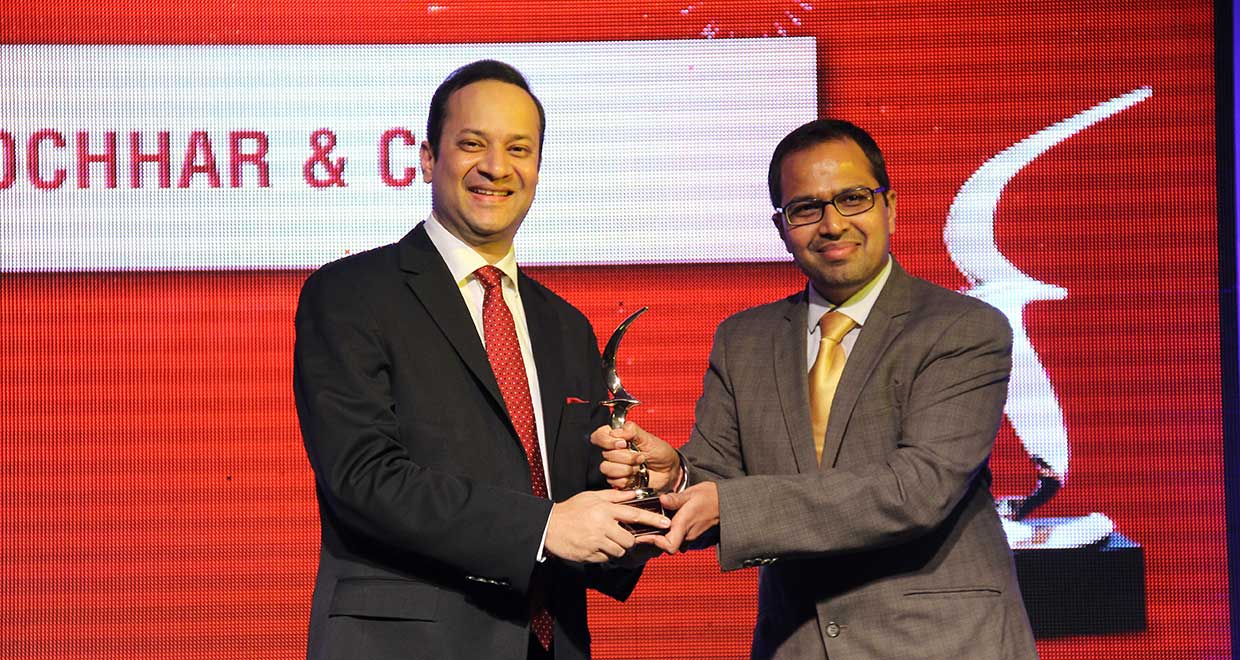

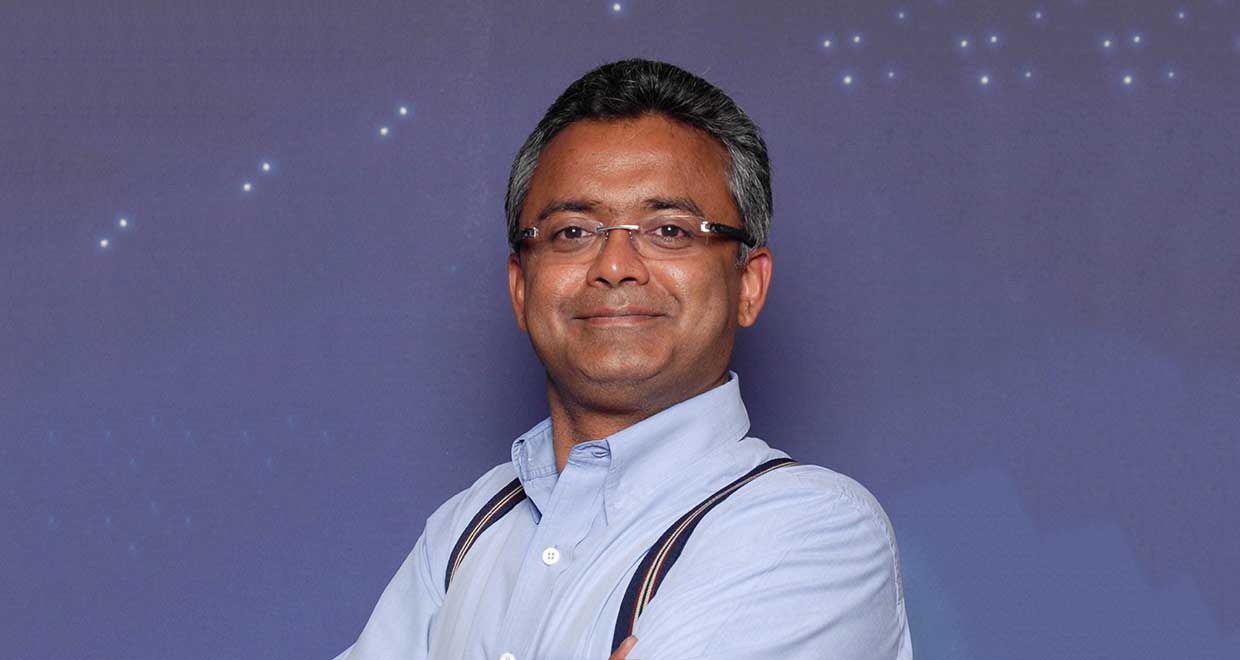


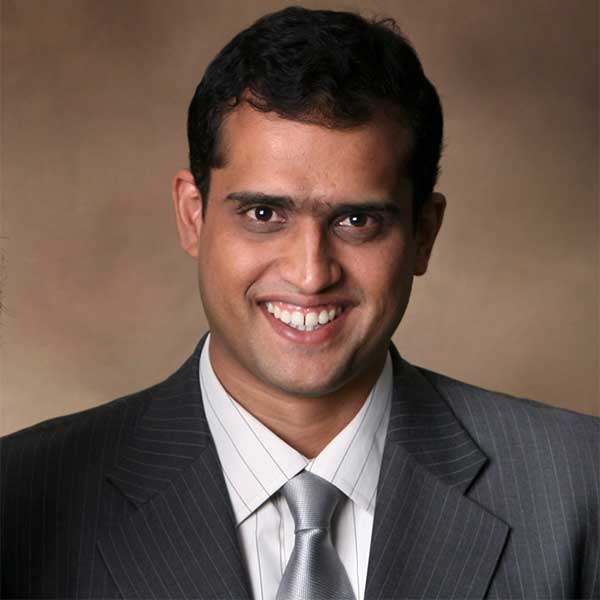
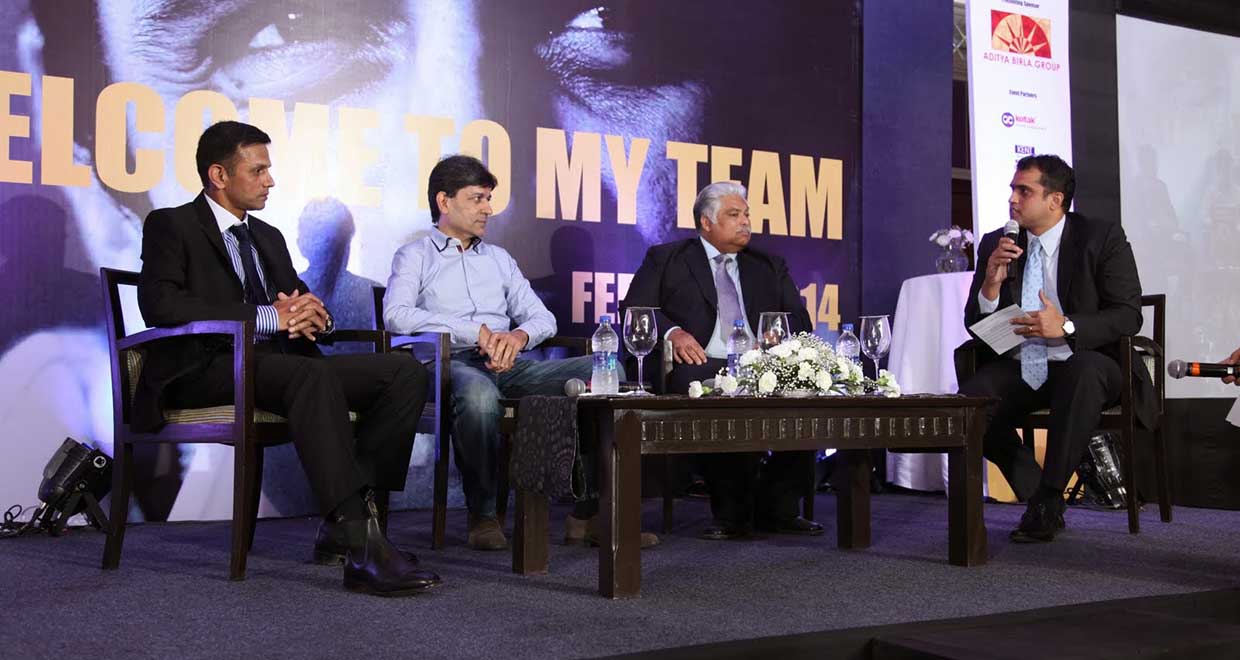

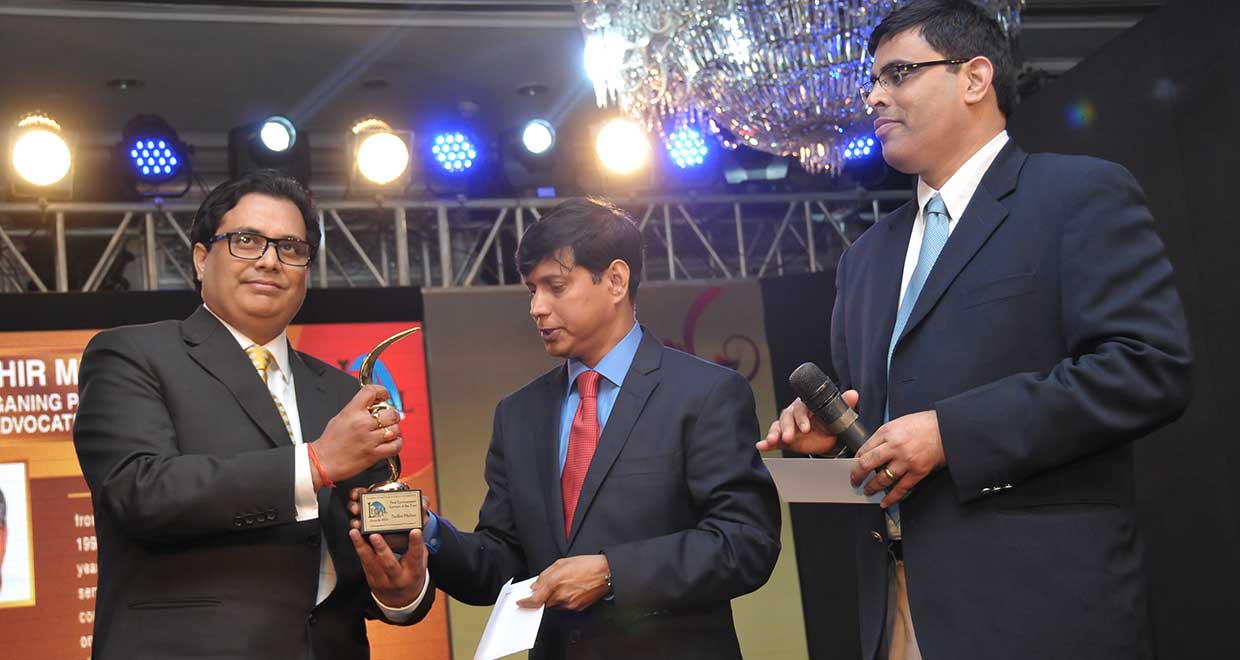


 Allow notifications