Category: Featured Insights

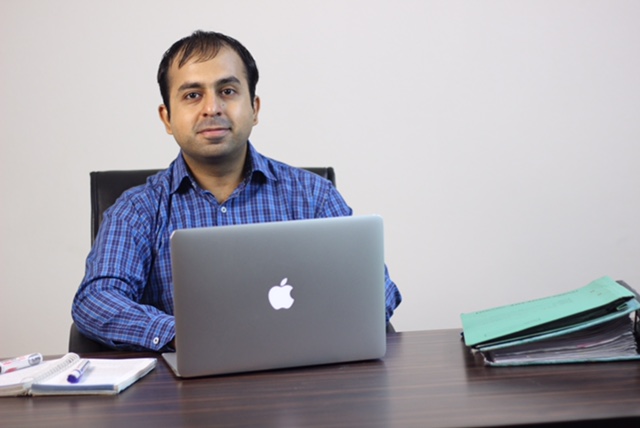
  • Bhumesh Verma, Partner, Link Legal India Law Services, on commercial law, his teaching experience, and the art of writing

    Bhumesh Verma, Partner, Link Legal India Law Services, on commercial law, his teaching experience, and the art of writing

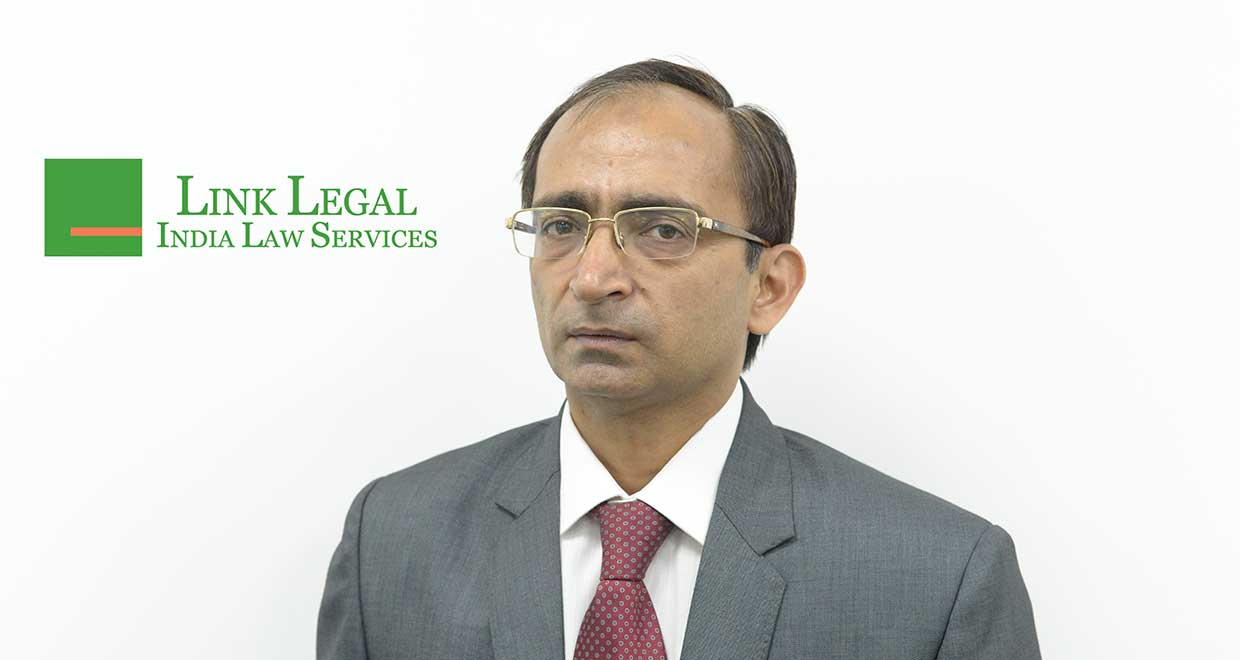
    Mr. Bhumesh Verma graduated from Delhi University in 1994. He was selected as a Chevening Scholar in 2000 by the UK government. During this scholarship, he studied at the College of Law at York and worked with Ashursts in London. Mr. Verma is currently a partner in the corporate and regulatory practice team of Link Legal India Law Services, New Delhi. He began his career at Ajay Bahl & Co. (now part of AZB & Partners) and went on to become a partner at Khaitan & Co and PKA Advocates before joining Link Legal. Mr. Verma has 22 years of experience in domestic as well as international corporate and commercial matters.

    In this interview we speak to him about:

    • His illustrious career, and his diverse experience
    • His passion for teaching
    • Engaging in academic writing

    How would you like to introduce yourself to our readers?

    I am a law student. Having spent some time in the profession with wonderful lawyers and clients, I may know a bit more about law and business than some young law students or lawyers, but that’s about it. In the legal profession, one is always learning and updating.


    What inspired you to take up law? 

    STEM disciplines have always been most popular among parents and even majority students. Being a school topper, I too was expected to pick up science. Maths was one of my favourite subjects. However, I had no interest in medicine, engineering or any other technical course. I picked up commerce and went on to pursue B.Com (Hons) from Delhi University. During my graduation, I got acquainted a bit with business laws.  It sounded interesting and challenging, so I thought pursuing law would be good option for me.

    I come from a humble, salaried class family. There was absolutely no one in my family, nor a friend in the legal profession (I don’t think even today is, besides me). My family never even knew a lawyer. To add to it, immediately after my graduation, I landed up a job as Accounts Executive with a good NBFC. So, all these circumstances were conspiring to drift me away. However, family being sure of my conviction and track record in studies till then, gave in.


    How would you contrast your time as an undergrad at Delhi University with your experience at College of Law, York, England?

    Campus Law Centre, Delhi University used to be among Asia’s top law schools in 1990s. Studying there was fun in those days. Even getting the admission makes it a funny story now. Ours was the first batch for which an entrance exam was introduced in Delhi University. We had absolutely no syllabus, no workbooks, no coaching classes, no preparation. Just appear in an entrance exam one Sunday morning and wait if you are in or not. This is how the first batch got in.

    The classes were held in typical old-school style – black board, chalk and talk. There were no computers or gadgets to help, no online searches available. We had to use the library a lot. Some smaller roadside help books called ‘Dukkis’ were also available and some students used it for last-minute cramming.

    College of Law at York was a different ball game altogether. Use of PPT, computers, interactive sessions, negotiation role-play, drafting skills workshops, interaction with local practicing lawyers, visits to Courts in London, Edinburgh and Employment Tribunal in Leeds to observe the actual atmosphere. It all made a big change in my understanding, perception and presentation skills.

    Although I was already working with foreign lawyers on international assignments before the scholarship, access to foreign educational institution, courts, foreign lawyers’ offices, working in a foreign law firm was a welcome experience. This gave me an insight about ‘where they are coming from’ and bridging the gap between what they expect and what Indian lawyers think they expect.
     

    What were you areas of interest during your legal education?

    I was always interested in Corporate laws so took up Business laws, labour laws and tax laws as my optional subjects. After joining Ajay Bahl & Co. (now part of AZB Partners) after passing out from college and working on FDI related transactions, incorporating companies, getting into secretarial, statutory, tax compliances etc., providing opinions on corporate law issues, drafting commercial contracts, etc. my conviction about my suitability for corporate practice strengthened. My supervising partners also saw value in my being part of the corporate practice vertical in their firm.


    What are the causes you feel strongly about? 

    I can only speak about the corporate laws perspective. Being transparent in all business deals, optimum compliance with law of the land and expeditious resolution of any issues arising out of non-compliance or otherwise are very close to my heart. Throughout my career, I have been advising clients to adhere to sound legal principles and not take recourse to “fixing”, “managing”, “manipulating” or brushing aside legal issues. As professionals, our stake in any matter is very minimal in terms of money, but immense in terms of reputation. Am proud that I have had the privilege of working with some of most reputed and ethical professionals in the country, who have been insistent on refusing a brief rather than compromising on principles. This is more important in case of foreign clients entering India. The laws pertaining to anti-corruption are more codified and enforceable outside India so we have to be doubly careful while advising foreign clients and not suggest short-cuts or unethical solutions.  

    Could you tell us about the internships you took up, and what you learnt from those experiences?

    Internships were not as structured in my college days as they are now. During my college days, I took up internships with litigation lawyers, learnt about of court practice, drafting, representation in the courts and so on. It helped me learning the basics from a grass root level. Since I had no relation or godfather in the profession, I had to work doubly hard.


    What advice would you give students in avoiding a decision paralysis? 

    On the contrary, I do not see much decision paralysis. In fact, I feel many students have pre-decided what area they wish to pursue even before joining a law school driven by the “packages” their senior friends or family members have got or the numbers they read in economic newspapers or some other sources.

    By the middle of your law course, majority of students are clear about what they wish to pursue. Litigation and corporate practices are complementary to each other but require different soft skills. Some students are very passionate and clear about their respective practice field – i.e., IP, environment, international laws, etc. one should pursue the line what feel confident about and is passionate about. Every practice area is rewarding, but it takes hard work. Some practice may sound remunerative from the first day, but it could saturate if you are not good at it.
     

    Could you please share with us how you came to be awarded with the prestigious Chevening Scholarship? 

    The British government used to provide scholarship to young Indian lawyers with few years’ work experience to get a feel of UK legal education and work culture. One of my senior colleagues had already been awarded this scholarship, so I was aware of the programme. Out of about 400 applications received in 1999, I was among the sixteen selected for this prestigious scholarship. The competition was so tough that year that instead of normal intake of twelve, they had to take sixteen!

    Scholarships are great means to enhance one’s knowledge and vision. Students should look at scholarships which could be useful in expanding their horizon in totality. One should not limit her quest to finding a job in the country wherein you get the scholarship. I don’t think more than one or two people in my batch would be abroad today. All of us came back with enhanced knowledge, exposure, contacts and confidence and are doing very well.


    What did you enjoy most about studying at College of Law, York?

    As I mentioned earlier, the teaching methods, education tools and exposure was very different. Being foreign students, we were pampered a lot while strictness on attendance and discipline was there. The teachers there were more of friends, unlike the strict and typical guru-shishya system in India.

    We did a lot of interaction based studies, role play for negotiation, drafting skills workshops presentations before the faculty on comparison of Indian vs UK laws, went to various courts within UK, and so on. At the end of the teaching programme, we were placed with law firms in Central London. I worked at Ashursts.

    From a law student to a lawyer, how will you describe the transition?

    I don’t think it is any different from any other profession. As a student, you just study and write or otherwise convey your opinions and views in exams and presentations. You can get marks or grades for providing your opinion one way or the other.

    Once you are out with a degree and registration as a professional, the reality hits you. The buck stops here. Whatever you say or do, has to be very carefully crafted and drafted – be it a pleading, argument, opinion. Your client getting bail or jail depends on your skills. Your clients’ millions in a new project or success in negotiating a deal depends on your skills. So, now the onus starts falling on you. It makes you more careful and responsible.

    Could you take us through the process you adopt while writing?

    There is too much of information available these days. Each one of receives so many phone calls, emails, updates and newsletters that we are sick of it.

    I enjoy tracking developments in corporate and investment laws of India. By now, I have too many professional contacts worldwide and it is very difficult to discuss any new developments with them on a one-to-one basis, nor do I wish to spam anyone not interested. Hence, I thought of formulating useful information in the forms of articles which anyone could read without obligation or interference on my part seems interesting. Now, people who are interested in these topics read, comment, compliment, criticise at their own free will.

    What I do is I track news and developments which in my view could be useful for my contact base and other professionals. I try to put it in simple language so that non-lawyers could also grasp the intent with basic and useful information. For more details and specific advice, the readers can always approach me directly. Due to the simple language I use in my blogs and articles, sometime Indian and international websites request me for republication thereof, which I happily agree to.


    Where does you passion for teaching come from? 

    (Mr.Verma started initiatives to impart legal knowledge and experience to younger lawyers and students at firms where you have worked. He has also been a guest lecturer at various national / international institutions.)

    Unlike money, knowledge increases by sharing. I enjoy sharing my knowledge with younger lawyers and students, so whenever there is an occasion, I am available for mentoring, be it CLE at the firm or guest lecture at an institution or a presentation at a seminar.

    The first professionals a kid has interaction with are doctors and teachers, isn’t it ? Kids are scared of doctors for obvious reasons, so they tend to pick up a teacher as their first role model. I think that has stayed with me forever. I have utmost respect for teaching fraternity and am thankful to the role of all my teachers for shaping me into whatever I am today. Within me too lies a teacher as well, so as and when there is an opportunity to go back to college, I am too happy to oblige. I keep getting offers for writing books and joining as guest faculty, so never know what lies ahead.


    Did you have a mentor or guide during the initial phase of your career?

    I have been very lucky and privileged to have worked with some of the best professionals of our times during last two and a half decades, be it Mr. Ajay Bahl, Ms. Lira Goswami, Mr. Pinto Khaitan, Mr. Paras Kuhad or Mr. Atul Sharma. There are some common traits to all these legendary and successful people. The more experienced and knowledgeable you are, you tend to be more approachable, humble, down to earth and open to new ideas. I am thankful to all these wonderful people for guiding me through my career and still rely on them for guidance. Besides legal acumen, you tend to learn so much from great professionals in terms of ethics, solution-centric attitude and so on.

    So, the importance of a good mentor cannot be underestimated, particularly in the initial phase of one’s career.


    Given the dynamic nature of the field you practice in, how do you keep yourself updated about the latest legal developments?

    Read and discuss.


    What advice would you like to give our readers, who are mostly law students and young lawyers?

    There are no short cuts or free lunches in life. Work hard. Be humble. Be serious about studies and work, but live and enjoy life too.
     

  • Dr. Anindya Sircar, Intellectual Property Professional, on getting two doctorates, his journey from science to law, and the scope for IP law

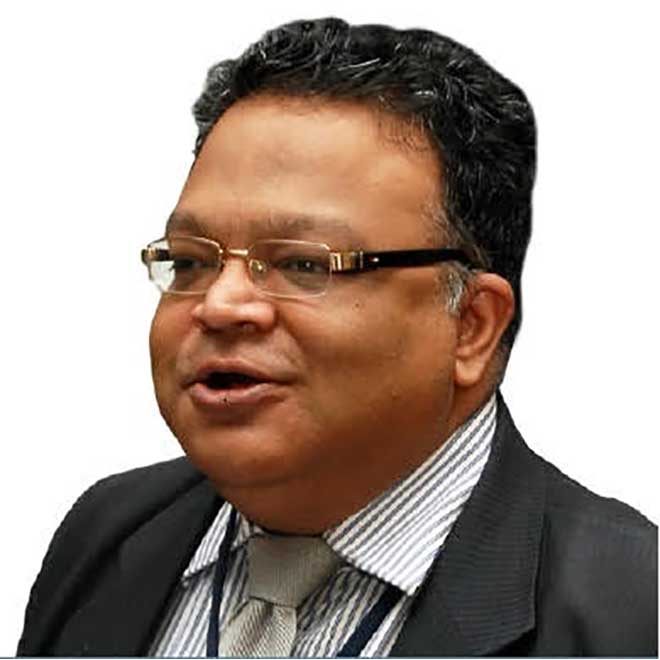
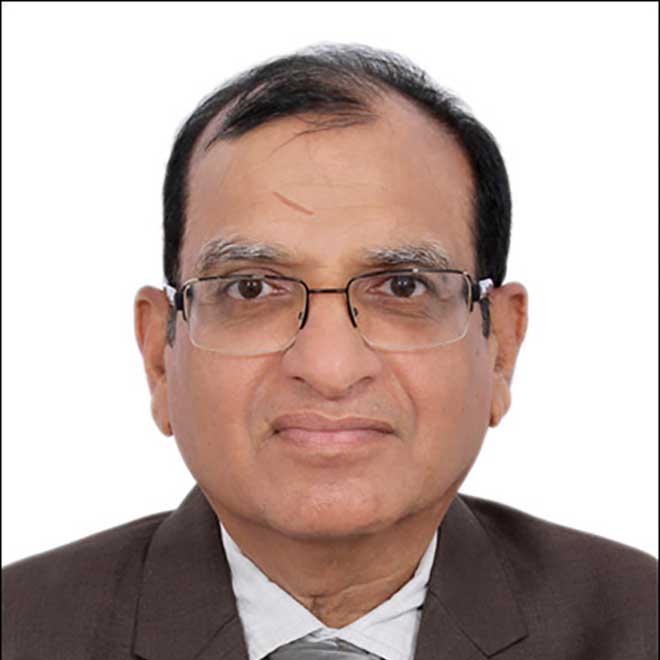
    Dr. Anindya Sircar, Intellectual Property Professional, on getting two doctorates, his journey from science to law, and the scope for IP law

    Dr. Anindya Sircar has a unique distinction for holding two Ph.Ds, one in science and the other in law. He got his doctorate in Intellectual Property Law from NALSAR, Hyderabad, in 2007. After pursuing a doctorate in industrial microbiology, Dr. Sircar had a long stint heading the Intellectual Property Department at Biocon Group, which he was also instrumental in setting up. He is currently engaged in consulting, strategizing, teaching and conducting training programs in the field of Intellectual Property management. His last employment was as AVP and Head of IP with Infosys Limited where he was responsible for all IP activities of Infosys Limited and its subsidiaries. Additionally, he is visiting faculty on Intellectual Property to several universities and law schools.

    In this interview we talk to him about:

    • His journey from science to law
    • The scope and prospects for intellectual property law in India
    • His teaching experience and what he would like law schools to do differently in their approach to IP law


    You were deep rooted in science and got into the field of law for your Ph.D. How did you manage to acquaint yourself with legal terms and processes after being in the field of science for so long?

    I had started off my career in scientific research after my Ph.D in Microbiology. In fact, I had joined the API research unit of Biocon Limited. Exposure to Intellectual Property at that stage was limited to only reading and understanding patents. Moreover, IP was not looked upon as a viable career option in India in the late 90s. It was at that time that the company got involved in an IP issue with another leading pharmaceutical company and I was asked by the CMD to handle the case with the help of external counsels. That was the first time I got an insight into the world of IP. The heat of the case died soon but my passion for IP continued to only grow.

    I went ahead and started an in-house IP Department for the company. I had spent a lot of time with leading IP practitioners of the west. I stared reading relevant stuff and also took up courses, which finally ended up in my 2nd Ph.D. – in Law, specializing in IP. It was around that time Indian had joined the PCT and so there was some buzz in the air. The transition to IP had been quite smooth and my background in science has always been an added advantage in handling complex technical issues that often arise when dealing with IP. In fact it has been a lovely journey and the journey is still on.


    After being involved with Chemistry and Microbiology at the graduate and post- graduate level, at what point did you decide to go for a Ph.D in Intellectual Property?

    I had been heading the IP Department of Biocon at that time and was also teaching in leading law schools and management schools. My days used to be completely engrossed with different facets of IP, both business and academic. Additionally, my reading habits continuously kept feeding me with the recent developments in IP. At this stage, I happened to see an admission notice for Ph.D. and decided to go for it. The then Vice-Chancellor and Registrar of NALSAR were both extremely helpful and in fact the former ended up as my research guide.


    You received your doctorate in Intellectual Property in the year 2007. We are in 2017 now. Can you see significant developments in this area over the decade?

    There has been tremendous development in the field of IP both in India and rest of the globe – more so in India. In India at the policy levels there have been several amendments to existing Acts, compliance with TRIPS, India becoming an ISR, the IP Policy, CRI Guidelines and many more. Needless to say, numerous workshops, conferences and awareness programs focusing around IP have taken place. The most encouraging fact is that today many students are coming forward to study and specialize in IP and there are several courses available too. The biggest achievement in India is that today people consider it a viable professional choice and the field is being sought after.


    If Intellectual Property must be properly understood, what are the factors that one must necessarily have knowledge of? For instance, in studying law, politics plays an important role. Is there any such thing that goes hand-in- hand with Intellectual Property and Patents Law?

    In today’s world there are several super-specializations in Intellectual Property – prior art analysis, drafting and prosecution, analytics and intelligence, infringement studies, audits and due diligence, opinions, free and open source management, contracts, M&As, litigation and a few more. The requirements are really not the same for each of them. A proper blend of scientific and technical understanding and relevant legal knowledge can always prove beneficial. There is enough scope and space for representatives from both scientific/technical and legal fraternities to coexist.


    You are visiting faculty to a number of law schools and you have also had the experience of working in corporate companies at top positions. What is the difference between the academic learning of IP and Patents and its practical application?

    Most law schools have now incorporated IP in their curriculum. This is very encouraging but several needs of the industry in terms of skills do not get adequately addressed. Internships, which are mandatory in law schools, are an effective means of bridging some of these gaps. Some law schools run specialized courses in addition to the regular undergraduate and postgraduate degrees focusing on some of these skills. Many of the sessions in such courses are taken by industry representatives and practitioners. I am personally connected to some of them and strongly feel that some of the skills needed by the industry get taken care of. But requirements of the industry are obviously much higher.

    There might be disputes between companies that are incorporated in different countries. Where does adjudication of the matter happen in those cases?

    This is primarily as per the statute or as governed contractually.


    Do disputes arising out of IP & Patents Law violations resolve through negotiation and arbitration predominantly?

    Statistically, most of these IP disputes land up in the court. Some may get settled out of court, similar to litigation in other areas. Arbitration however is not very common in IP disputes.


    A purely academic question- what are the grey areas in the framework of IP & Patents Law in our country that need immediate attention and rectification?

    The framework and the statute for IP in India have been constantly evolving and more so in the last decade. Although, the CRI Guidelines are out, there are several ambiguities in the document. Additional clarity is desired, the faster the better. This will be of immense help for the ICT and related industries.


    Students of law typically prefer working in corporate law firms or decide to get into litigation. How does the application of Intellectual Property differ in these career platforms?

    There are numerous Corporate Law firms which deal in Intellectual Property. In fact there are several firms which specialize in IP and handle only IP matters. Corporate Law firms mostly deal in all aspects of IP, including litigation. However, the main focus for IP Law firms remains IP prosecution and IP management. Litigation involving IP in India currently is not very high. There are quite a few trademark cases but those involving patents or copyright are low. Additionally, corporates too employ a sizable number for their in-house IP departments.


    You were AVP and Head of IP Cell at Infosys, and have earlier been Global Head – IPR at Biocon Limited. What responsibilities do these roles entail?

    There could be a detailed JD made available for this. Primarily as a head, one is responsible for the overall and complete IP management of the company and its subsidiaries. In layman terms, this involves – IP Value Management, maximising the IP value for the company, and IP Risk Management, minimising the IP risk for the company. I was lucky that in the organizations that I worked, I always had a brilliant team which not only made my work easy but interesting too.

    Assuming that you have to make hiring decisions for in-house or ad-hoc roles, what do you look for in a lawyer’s profile?

    This will primarily depend on the role for which the hiring is being considered as the work scope and expectations will differ greatly. More than academic records I am keen on the internship learnings when it comes to a fresher. Another aspect which influences me is the ability, and more so the interest to learn. There is no room for short-cuts.


    As part of your work profile you must have had to talk to practising lawyers on IPR. Did the thought of practising law ever cross your mind?

    I have been interacting with several practising lawyers for the last two decades and in fact many of the leading lawyers of the country have become good friends. I find the world of IP very absorbing and challenging and never thought of practicing law yet. Now that you have asked this question, I may start thinking.


    What would be your message to our readers who are mostly young law students and lawyers?

    Decide which branch of law you would like to practice, make an early choice, and stick to your choice. Choice of branch should be only on liking and passion and not any other criteria. You can’t do well in something if don’t love the same, hoping that you will be practising that branch every day for the rest of your life. Growth and success are bound to come. And most importantly, there is no short-cut to reach the top.


  • Yogendra K. Batra, Retd. Commissioner of Income Tax , on teaching at ILNU and on building a successful career

    Yogendra K. Batra, Retd. Commissioner of Income Tax , on teaching at ILNU and on building a successful career

    Mr. Yogendra K. Batra retired as Principal Commissioner of Income Tax, Ahmedabad, in 2015, and is currently teaching at the Institute of Law, Nirma University, Ahmedabad. From heading all the top posts in the Income Tax Department to teaching undergraduate and postgraduate students, his expertise in the field of income tax law is unparalleled.

    In this interview he talks to us about:

    • His decision to join Income Revenue Services (IRS) over IPS
    • His views on the current tax laws in India and their implementation.
    • His decision to take up teaching post retirement and his experience thus far
    • His views on the Institute of Law, Nirma University, its teaching methods, and its students


    How would you introduce yourself to our readers?

    I consider myself a learner and seeker of knowledge and that is how I would like people to know me.


    Can you tell our readers a little about your illustrious career?

    I started my career as a Lecturer of Economics at DAV (PG) College, Bulandshahr, and subsequently joined SSV (PG) College, Hapur. In my pursuit for excellence, I kept preparing for Civil services and UP PCS exams. In 1983 I was selected in UP PCS (Accounts) and in 1984 I was selected for the Civil Services and obtained a rank of 206. I joined the Indian Revenue Service and after a training of almost twenty months at the Lal Bhadur Shastri National Academy of Administration, Mussorie and the National Academy of Direct Taxes, Nagpur I joined the Income tax Department in Delhi and in the very first year itself I was posted as the Assistant Commissioner of Income tax (Investigation Circle) wherein I was assigned the work relating to assessment of cases where search seizure operations were carried out. I also acted as Under Secretary, Tax Policy and Legislation under the Central Board of Direct Taxes and contributed to four financial bills (1991-1994). I retired as the Principal Commissioner of Income tax, Ahmedabad, in the year 2015. I have now taken up the role of teaching young minds and mentoring them in their pursuit of excellence.


    You chose the Income Tax Department over the Indian Police Service. What motivated this decision?

    I got the 206th rank in Civil Services Exams of 1983 and was more than eligible for Indian Police Services. I preferred Income tax (IRS) because I wanted a career free from political interference. Since I was a lecturer of Economics, the field of taxation was not unknown territory to me. I enjoyed every bit of my time at the Income Tax Department.


    Having chaired and headed almost all the top posts in the Income Tax Department, what are your views on the current tax laws and their implementation procedure in India?

    I started my career as Assistant Commissioner (Investigation Circle) in New Delhi. This was a very demanding and a very sensitive job considering my experience in the Department. Subsequently I was posted as Assistant Commissioner of Income Tax, Central Circle, Delhi, wherein I assessed group cases of big business houses. Subsequently I was selected as Under Secretary, Tax Policy and Legislation in the Central Board of Direct Taxes, the apex body of Income Tax Department. There I worked for more than three years and contributed to four finance bills, i.e. 1991 to 1994. Incidentally, these were the initial years of economic liberalization in the country and a number of amendments were made to the Income Tax Act. Then I came to Ahmedabad as Deputy Commissioner (nowadays, Joint Commissioner) and worked in various capacities. As Commissioner of Income tax I worked as Appellate Commissioner, Director of Income tax (Investigation), Commissioner (Audit), Commissioner TDS and Principal Commissioner.

    The Tax Laws in India have been simplified over the years.  The tax rates have been reduced and they are comparable to most of the developed countries. The tax regime in India is more taxpayer friendly now. However, a lot is required to be done on the administrative front. It is said that you cannot tax a person and keep him happy simultaneously. Therefore a lot of work is required to be done in order to educate taxpayers about the advantages of taxes and the ill effects of evading tax. A close review of the efforts made by the government on this through media and publicity has yielded desired results. The tax payers are gradually understanding their responsibility  and more taxes are being garnered through voluntary compliance.


    You opted to teach post retirement, despite receiving numerous offers from leading companies. How does this role fit into your overall career goals? How would you describe your ideal job?

    As I mentioned earlier, I am a seeker of knowledge, be it any profession or job I undertake. Teaching has always been close to my heart, since it gives me an opportunity to continuously learn, research and interact with the younger generation- the future of India. It gives me great pride to be a contributor, albeit a small one, in mentoring our future generation. As far as an ideal job is considered, I believe it is different for different individuals, varying according to their aspirations, priorities and specialties. For me, what I do is ideal, and therefore I do with full passion and commitment.


    How would you define good teaching? What do you think are the greatest responsibilities of a good instructor?

    I would like to call myself an educator instead of an instructor. An educator needs to be current in his/her subject, have clarity of concept and thought, be open to new ideas and developments in the subject. Above all, a good instructor should be able to generate interest and curiosity in a student.


    What are your views on the Institute of Law, Nirma University, and its students? What do you think about the pedagogical model being followed at the institute?

    The Institute of Law, Nirma University, is a professional institute where students get enrolled on the basis of their CLAT scores. These aspiring lawyers are well versed in the theoretical as well as practical aspects of the law. There are several specializations available, such as criminal law, taxation law, etc., so that the students can make an important career choice early on. Advocates, legal experts and judges are called for lectures so as to help students get acquainted with a hands-on experience of the vocation. Students are also provided with a state-of-the-art digital library so that they can hone their skills.


    From heading the income tax department to teaching undergraduate and postgraduate students, what are the things you enjoy, and what are the things you would like to to change about your current position?

    Nirma University is a pioneer institute which is grooming a generation of lawyers to come. The institute is improving its nationwide ranking continuously which indicates the high standards the university is constantly aspiring to. The institute is endowed with rich library resources, a dedicated faculty and an exciting campus. The curriculum has been designed immaculately so as to provide an excellent mix of theoretical and practical elements.  However, one must not lose sight of the fact that ultimately, it all boils down to the students’ performance and how they utilize the resources that are made available to them.

    My job as Principal Commissioner of Income Tax was quite different as compared to my teaching role. As a bureaucrat you have to perform your duties within a stringent framework of regulations. Teaching on the other hand, gives you room to innovate and experiment. There is nothing as such which I dislike about my present role. However, a lack of enthusiasm among the students worries me a lot.


    From your experience, what would be your suggestions to the new generation of students? How would you say their education and way of life is different from yours as a student?

    My only suggestion to them is to follow your passion. Identify your strengths and interests first, then set your goal and follow it with commitment and perseverance. The Universe will be at your doorstep- have the courage to ask for it, work for it and believe in yourself.

    This generation has a lot of opportunities, avenues and facilities made available to them, which we did not have in our time. However, they also have a lot more competition and struggle compared to us. Nevertheless, Darwin’s theory, survival of the fittest, is so far apt for all ages and generations. Since the students are in a professional institute they cannot behave like students of a regular college and settle for only routine understanding of any subject. The have to develop a desire for knowledge and have to read beyond what has been discussed in the class.


    Finally, what would be your suggestion or advice to anyone who aspires to have a successful career? What are the dos and don’ts for ensuring success in any field?

    There is no replacement of dedication, commitment and perseverance for anyone wanting to succeed in their career. Strive for excellence in whatever you do and you shall succeed. Give your 101% to what you do because a little bit extra effort makes all the difference. The following mathematical equation is proof that a little extra effort each day can go a long way.

    1.01365 = 37.8
    0.99365 = 0.03

    Students should read at least one case law a day because staying abreast with current affairs is absolutely essential for any lawyer.

  • Vikram Raghavan, Lead Counsel, World Bank, on work experience and authoring legal books and articles

    Vikram Raghavan, Lead Counsel, World Bank, on work experience and authoring legal books and articles

    Vikram Raghavan graduated from NLSIU, Bangalore with eight gold medals in diverse fields of law in the year 1997 and then went to pursue his masters from New York University. Right after that he started work as an attorney at O’Melveny & Myers, an international law firm in New York City.

    Currently Vikram is currently a Lead Counsel at the World Bank in Washington, DC, and he advises on conflict, fragility, refugees, and macroeconomics. Among other things, he provides legal advice about military coups; United Nations sanctions; debt relief; and loan conditionality. He has authored a book titled Communications Law in India (LexisNexis, 2006) and co-edited a volume of essays: Comparative Constitutionalism in South Asia (Oxford University Press, 2013). His articles are reflected in The Hindu and Economics and Political Weekly.

    In this interview he talks to us about:

    • Choosing law as a profession and his experience at NLSIU, Bangalore and New York University;
    • The art of managing life at law school and to develop interests in different curricular activities;
    • His formative years as a lawyer and his time at O’Melveny & Myers, New York City.
    • His early life at World Bank as a counsel and moving ahead and becoming the lead counsel at the World Bank.


    What made you opt for law as a career?

    Well, I was always interested in argumentation. My father was a lawyer and my grandfather was a lawyer as well. But the family profession, so to speak, influenced my decision only so much. When I was about thirteen years old, I read Prashant Bhushan’s book “The Case That Shook India.” I always wanted to do what he did and what he described about the court room drama.

    However, it wasn’t an easy decision because at that time law was not considered to be a prestigious profession. The National Law School had just started and not even a single judge had graduated. So, there was a lot of uncertainty about it and ultimately, the fact was I didn’t want to do science. I had taken commerce and my only options were doing economics, commerce or something else entirely. So, law looked like an attractive idea because NLSIU had just started. I gave myself a year to see if law suited me, if it had not- I guess I had an option of coming back to economics.


    Could you tell us about your life before you joined college? Where did your interests lie during your school days?

    During school, I was a stamp collector first and foremost. Philately, as a hobby, shaped my interest in world events and in general knowledge. I also obtained a lot of confidence in public speaking by speaking at the South India Philatelists Association’s second Sunday meetings in Madras. Everyone who attended had to speak. So it was a nice way to get rid of adolescent stage fright.


    What curricular and extra-curricular activities did you participate while being in university?

    Well, it was an intense period of five years. The schedule of studies, as you would know, at any National law school is quite demanding. There are deadlines for something or the other, every other week — project submissions, moot courts, mid-terms, and end terms. So I spent most of time by trying to catch up and be on top of the different deadlines that would come.

    Of course, when I was in college, there was no proper Internet. The campus itself did not have many facilities besides the library, which closed at 6.00 p.m. And you could borrow only three books. So I couldn’t say I was very productive. But during those five years, I tried my hand at different things. In my first two years, I did judo at the Sports Authority of India campus near the Law School. I tried my hand at quizzing, but there were much better quizzers at the law school than me. To be sure, there were other extra-curricular activities at NLS like sports and debates. But then again the school was filled with many talented students from the best schools in India. I simply did not have the background or training in high school to compete with them.

    The incentive system in the law school was also skewed in favour of mainstream academic excellence. There were three big things you did if you wanted to be noticed: moot courts, grades, and articles. So, basically I spent those five years trying to get good grades. And you know I don’t regret those five years. What I am today is due to those five years of hard work.


    vikram-raghavan-2

    Could you tell about your internship experiences? What sort of internships did you prefer and what learning experiences did you gain from it?

    Well, I did four internships in those five years. The first one was an internship with  R. Gandhi, which involved working on a lot of constitutional law matters. Among others, I worked with T. Sivagnanam, who is currently a judge at the Madras High Court and on the law school’s governing council as well I think. I also interned with N. Paul Vasanthakumar, the current chief justice of Jammu and Kashmir as well Ravi Chandra Babu, who is also now a judge. These judges were the three lawyers who I worked most closely with during my first internship. The second internship was in the Madras High Court focusing on criminal law under N.T Vanamamalai, a senior advocate. In my fourth year, I worked with K.K. Venugopal and in my fifth year I went to Sri Lanka to work with the Tamil leader, Dr. Neelan Tiruchelvam on the constitution-making process.


    Straight after your under-graduation you went abroad to pursue masters at New York university. What was your experience at NYU and what all differences did you notice in quality of education at NLSIU and NYU?

    Well, obviously the facilities over NLSIU were rudimentary. New York University had a lot more facilities. The library was out of this world and the NLS library in those days was still getting built. In those days, we didn’t have the internet so, you know things were different. Also American law schools are rigorous. They put a lot of effort into preparation before class. So, if you don’t read up and come to class then it would be difficult for you to follow.


    Could you please tell us about the skills and preparation needed for the moots, building arguments and the way to read a judge’s mind and what are the criteria’s a judge chooses to mark the participant?

    (Vikram has represented India at Philip C. Jessup moot court competition and he also served as the executive council member till the year 2011.)

    Mooting is something that I strongly recommend because I think it really helps in court craft and you it helps you dig deep into a legal subject. When I was a law student there weren’t so many moots like you have today. More number of moots are opportunities for people to learn and explore. Eeveryone at NLS has to compete internally first for it, and the internal competitions were in itself very intense. These competitions conducted across the different classes, which meant you had to argue against the seniors who know more law than you do.

    This was a good process, because it forced you to basically go out of your comfort zone and learn new things very quickly. Participating in the Jessup, no doubt, enhanced my interest in international law. Probably my career today is based on that experience.


    You have been an associate at O’Melveny & Myers LLP, An International Law firm. Could you please tell us the experience there?

    That was just after NYU. I spent three years at O’Melveny. I worked on corporate and transactional work and also some litigation, basically international arbitration. It was a very intense experience, because U.S Law firms practice law in a way that is very demanding.  I think the main thing for me was to be able to practice law with very smart lawyers and clients.


    You were the editor of NYU Journal of International law and politics. Could please tell us the role you played and what all things did you achieve during your tenure as an editor?

    I wasn’t the editor. A friend of mine was an editor. I was just a graduate editor. If you look at the cover page it has many editors and editor is mostly just a title. I was involved in proof reading some of the articles. I don’t know what the editorial process is like now in Indian law school but it was certainly different from what we did at NLS. At NYU, a lot of care and attention was taken to ensure that the articles are selected properly and carefully formatted and cross-checked. It is a very rigorous exercise.


    Could you please tell us about your recruitment at the World Bank and initial days of work? Is it possible for a law student to get an internship at the World Bank?

    (Vikram started at World Bank as a counsel and now he is the lead counsel of operational policy at the World Bank.)

    After three years at a law firm, I applied for and got hired as a counsel at the World Bank. When I came first here, I was given Sri Lanka and Nepal and later Afghanistan and Iraq. That experience was really worth in a way shaped my profile at the bank, working with conflict prone countries, and more unstable countries. I think it was an exciting portfolio for any lawyer to do because it has a mixture of law and policy. Working on a World Bank project is, in itself, a very challenging and rewarding thing. Sadly, we don’t offer regular internships at the World Bank’s legal department. Most of our interns come from institutional partners like NYU who pay the students a stipend. The World Bank does not have the budget nor can we take unpaid interns.


    Could please tell us how to develop writing skills to our readers who are mostly law students?

    (Vikram has authored a book on communications law in India and co-edited volumes of essays on comparative constitutionalism in South Asia, his articles are reflected in the editorial columns of The Hindu and Economic and Political Weekly.)

    I would recommend students read the work of Bryan A. Garner. He advocates writing simply and elegantly. Read his work. And you will write very differently. I guarantee it.


    How did you to continue to maintain the love for history, economics and law, despite such hectic schedule in life?

    It is always a challenge. Every day, every minute you have to find time to do different things.


    What would be your message to the young law students and budding lawyers?

    Well keep working hard, and I believe whoever keeps working hard basically succeeds. It doesn’t matter what school you go to or what grades you get, your hard work helps you. Gain expertise in the subjects that interest you. Build a brand for yourself.

  • Shashikala Gurpur, Director, SLS Pune on choosing academics, securing scholarships and higher education

    Shashikala Gurpur, Director, SLS Pune on choosing academics, securing scholarships and higher education

    Dr. Shashikala Gurpur graduated in law from Mangalore University in 1988, she is currently the Director of Symbiosis Law School, Pune and Dean of Faculty of Law, Symbiosis International University. Dr. Gurpur is a recipient of the Fulbright Fellowship as well as the Legal Education Innovation Award of SILF-MILAT in 2011, in addition to being the recipient of many other such prestigious accords since then.

    Dr. Gurpur had been the winner of many distinctions and awards which she received throughout the length of her law studies. Today, she holds the reputation of having held office as member of the Law Commission of India and having taught at the National University of Cork, in addition to having co-authored two academic books and carried the role as constituent of Editing Boards of various foreign/ international journals.

    In this interview, Dr. Shashikala Gurpur will be talking about

    • Choosing law and academics and a professional line
    • Legal education in India today in a comparative context
    • Community Legal engagement in SLS Pune and beyond
    • Contemporary professional prospects and requirements


    How do you feel about receiving Lexis Nexis’ 100 Legal Luminaries Of India?

    Thank you, I feel that sincerity and hard work always get noticed and honoured. I dedicate this honour to my parents, mentors, my family, the team, students and management of SLS, Pune as well as the institutes and the generation of students I have been engaged with.


    How would you like to introduce yourself to our readers?

    The choice of law as an educational avenue is I believe a deep calling unto healing the evils of society and to serve the mission of justice. So, praise yourself if you have made that choice. However, getting into a good law school requires planned preparation right from high school itself. I had completed my high school education in vernacular medium at a municipal school; my primary school was strongly national with the undertone of largely Gandhian values. While still in my early childhood and college years, I had already gotten a taste of politics and implications of communal violence, untouchability and feudalism.  A particular sensitivity to nature and society were cultivated in me from my household and ancestry. My paternal grandfather was a herbal healer for no fee. My maternal grandfather was a village chief. My maternal grand uncle ran a tribal residential school. My father ran a one person justice mission preventing and resolving disputes and protecting the meek. Nevertheless, taking the route of law and legal education was actually thrust upon me by my family property mired in litigation.


    gurpur-maam-picture-1

    You have taken lectures and seminars at famous institutions abroad. What must be done so that our own legal education system can be at par with global standards?

    At the present moment, the gap seems to be narrowing. Legal education systems in the advanced law schools of the world are profound in corporate, qualitative higher education as well as in prioritizing knowledge creation and student transformation, but the top Indian law schools are also nearly there now. In India, constant check should be maintained to see that the gap between ideal and real remains adequately compensated. Changes are on the anvil. Our different strata or tiers must be uniform. The top and the bottom in the ranking band of the west have one to three percent difference. In India, the top ten have a total of 45% difference in scores.


    Your vast experience in legal education in India and abroad must have brought in new ideas for SLS Pune. How would you describe the environment that the institution fosters?

    SLS Pune inculcates the values of hard work, fraternity, excellence and public service. When we received the prestigious Herbert Smith Freehills Community Engagement Award this year, for an institutional body such as our own with the overarching erroneous perception as an ‘elite’ law school, it felt the same as winning an Olympic medal. At SLS Pune, we always have close monitoring of quality and excellence. We believe in fostering human and national development using legal education as a tool. Our university’s vision and mission and our Founder’s life and philosophy stand as testimony and inspiration to that end.


    Which among the following do you think is important for instilling legal knowledge – practical knowledge and/or theoretical knowledge?

    A judicious mix of both with competency, courage and collaboration along with profound core ability to stand up and defend would seem to be the perfect requisites for a holistic legal personality.


    gurpur-maam-pic2

    A strong alumni community being one of the most crucial factors behind an institution’s success, how closely do you think SLS Pune works with the alumni and in what ways?

    Every year, we arrange a meeting of our alumni at least twice. They even engage as employers, work buddies, mentors, teachers, clinical trainers, mock judges, advisors, and role models, moot and overall mentors. They consider the institute as their friend in need as well as an extended family.


    What is your opinion on start-ups and new business ventures as an alternative to traditional litigation and corporate jobs?

    Start-ups throw up great possibilities as well as provide better time allocation for quality work-life balance, in addition to enhancing innovation. At SLS Pune itself, we have had an Entrepreneurship Cell created just recently in the year 2014. We have at least a dozen start-ups created in the last three years and a host of alumni specialising as start-up consultants. This year, with support from the university as well as from the Symbiosis Institute for Business Management (SIBM), we are hoping to further scale up such efforts.


    What message or advice do you want to pass on to those who are passionate about vocations in human rights and policy research as opposed to landing corporate jobs?

    It depends very much on how you hold on to this work over the years and what skills you acquire. My advice would be that you develop a profound array of skills and abilities and that you maintain your deep passion and drive towards such aspirations.


    How did you choose to pursue a career in academics over practice? How would you advise law graduates and lawyers about this comparatively less charted path?

    I had made this choice by compulsion, by reason of being a first generation lawyer in a farming family and the first female graduate in generations. Women were not encouraged in education or career in my ancestral past despite being owners of land and the existence of a matrilineal culture. Another reason was that my aspiration of practicing/choosing litigation had already gotten fulfilled by the time I graduated by way of my engagement in our familial property disputes, which were settled out of court due to my informed initiative. We have a dearth of proficient teachers nowadays. Quite apparently, the law school demand has gone up in recent years, hence teaching now pays reasonably well. On the other hand, the value of teaching has always had a manifold yet discreet effect in shaping the generations of legal leaders.


    What according to you are the necessary skills the lawyers of tomorrow need to possess in order to make a mark in the practice or to place a job in the current scenario?

    To carve out a niche for oneself, especially in the present scene, one must be possessing competencies in several areas, predominantly in thinking out of the box, possessing problem-solving capacity, oral and written communication abilities, research skills and advocacy skills. The right internship is ultimately about aligning opportunity with one’s career/professional goal and not simply accounting for association with top names in one’s CV. True mentorship is what can help you to change or transform yourself.


    How do you think a law student can build up his or her profile to attain scholarships or get admissions at the premier universities abroad?

    Build your profile in accordance with the criteria of the respective universities/institutions of your choice. Ensure academic excellence with a minimum 3.5 CGPA. Be among the top ten to fifteen percent students. Enrich your CV, indicating profound legal engagement. Show research experience with a minimum of five standard publications. These will win you scholarships which may ultimately help reduce the cost of your LLM programme.


    How do you manage your academics and work life balance? What keeps you motivated to keep working for the betterment of your institution and the legal profession?

    Well, let me confess here that I was quite often thrown completely off balance! The X-factor you mention would be definitely taking one’s job as a service to humanity and the nation (and in my case to my loving son and my students). In brief, it is about seeing the universal mother’s manifestation in every deed and seeing dharma or balanced order as an unfinished endeavor of justice.


    Please share with us an experience from your life that makes you feel that it was definitely of utmost worth in choosing law as a profession and teaching as a career?

    In the early days of my career, I spent 50% of my time helping the poor to get access to justice. I introduced students to community based law reform. One especially memorable instance of our reach-out efforts was when we guided an agrarian worker woman to admit her intelligent daughter to a college; she would later scale to a much higher social status as a competent business woman. When the poor and helpless look up to you as credible source of support, when a gleam of truth touches upon you as you journey with your students in class to a higher level of learning, when the alumni of your institution write and recall such inspiring moments, and when you see your junior colleagues or students surpassing and outgrowing your achievement, those are the times when you can fully appreciate the legal profession for what it is and what it is capable of achieving today, and I have experienced all of these moments.


    What message do you want to pass on to the readers (aspiring lawyers, legal professionals or anyone related to the law)?

    Take your work in the form of a service to your fellow human beings and as contribution to the greater universal design. Align your life’s overall purpose with what you do as a profession and always keep the spirit of dharma or duty burning in your heart.


  • Satish Kumar, Global Head – Legal, Ramco Systems, on a career as an in-house counsel

    Satish Kumar, Global Head – Legal, Ramco Systems, on a career as an in-house counsel

    K Satish Kumar graduated in B.Com and thereafter qualified in law in 1995 from Sambalpur University, he is also a Certified Management Accountant from ICWAI. Having worked at multiple corporate bodies as an in-house legal counsel, Satish is currently the Global Head – Legal at Ramco Systems in Chennai. Satish additionally has several publications to his name and has done much work in the way of Pro Bono activities to give back to society.

    In this interview, Satish talks to us about:

    • His introduction to the legal profession, and his experience as a lawyer since then.
    • His plethora of publications, and his advice on the best way to go about writing and publishing articles
    • Pro Bono work, giving back to society, and the ways in which he keeps up to date with the ever-changing subject that is Law


    How did you choose Law? Did you always know that this was what you wanted to do?

    In fact my choosing law was not deliberate and intentional. I started my career as a Finance Professional after completing my ICWA (currently known as CMA). I had parallely completed my Law Degree as well. However, Finance and Legal being closely related, I found out that I had a good aptitude for Law. That is when – even after starting my career in Finance – I switched over to Law, and with God’s grace, I am doing well and creating a niche for myself in the Legal Profession.

    In any organization, the Legal Unit are always regarded as the “Deal Makers”. You also resort to Legal when you have to be bailed out of any crisis. Legal plays an important role in “Crisis Management”. So the Legal Unit becomes most important either way – be it bringing revenue to the organization or pulling it out of some crisis. These are some of the selfish reasons which made me swing sides to Law.


    You have a lot of work experience, from working at a vast array of places. Can you tell us a little about your career graph up to this point?

    satish-kumar-4Yes, I carry more than 20 years of rich working experience in multiple MNC’s. I am very passionate about Law and that is what made me a Successful Professional.  I have working experience from Fortune 10 companies to Indian grown or growing companies like, HCL Technologies, Polaris Financial Technology (later on the product division split to Intellect Design Arena Ltd), Ramco Systems Ltd. I was fortunate to get the right breaks at the right time. I also carry some critical experience working abroad. So truly, I became a Global and a Cosmopolitan Professional.

    However, initially I started off my professional working in few indigenous companies in India. But I was fortunate to work with some industry trendsetters.  My desire to learn new businesses and passion to explore all new possibilities has helped me in my career growth progression.


    You have received lot of awards in your career. Can you please tell the young lawyers few things about it, please?

    Yes, I am the proud winner of many awards during the progression of my career, both abroad and in India. I have successfully negotiated and closed many contracts, structured and finalized joint ventures, cross border investments etc. I was also successful in closing many litigations. There was a time when my colleagues used to call me “the person with Midas’ touch”. In Polaris I was also called “The Deal Maker”.

    For all the achievements mentioned above and others, I was the proud winner of awards like


    • Konark Excellence Award
    • Gem Award
    • America’s Most Wanted Person by US Sales Team
    • Annual Excellence Award
    • Person Making a Difference


    You have a great deal of publications to your name. Do you write about things you think are relevant and have scope for research, about things that interest you personally, or is it a blend of the two?

    Yes, this is a very interesting question. I am happy to have many publications to my credit. I love writing – writing on relevant current Legal topics. I have written on Risk Mitigation, Open Source, Rent Control Act, etc. Some of my writings are also published in National and International Business Journals. Someday, I am sure my wish of publishing my own book on Legal topics is going to come true. Some of the links to my publications are given below.

    • Article on “Software companies can hedge against risks, with insurance cover.” Published in Business Daily “Business Line” dated April 6, 2009


    http://www.thehindubusinessline.in/ew/2009/04/06/stories/2009040650090300.htm


    • Article on “Closure of Business Deals” Published in Business Daily “Business Line” dated August 20, 2007


    http://www.thehindubusinessline.in/ew/2007/08/20/stories/2007082050100300.htm


    • Article on “Open Source Software – sans the risk” Published in Business Daily “Business Line” dated November 19, 2007


    http://www.thehindubusinessline.com/ew/2007/11/19/stories/2007111950090301.htm


    Could you also please tell our readers interested in publishing their own work what you think the best way to go about the same is?

    You should first start writing on subjects that is of interest to yourself. Writing on things you are passionate about will help further to strengthen your grasp of the subject. One may start first writing blogs and over a period of time these blogs can be converted to articles and reports in business journals. You should take care of the following while writing.

    As a first step you should select a topic that interests you, and focus on it for at least a week or two. Write a rough draft, including everything that you can think of. Stay loose, avoid getting analytical and enjoy the process of sharing what you know. You will then be surprised to see that you have a rough skeleton of the draft that you proposed to write.

    As a second step you should address your audience’s needs. You already have a skeletal draft. Now change sides and think of yourself as the reader of the draft piece of work that you had written. You should pick few words to describe the audience you want to address. For example, “young legal professionals”. Now, as a young legal professional, what are the questions you would like to ask? Note down these questions.

    As a third step you should start doing research. Now start doing a research to get the answers for all your questions noted down above. You should collect everything you have gathered and put it in a folder, or an electronic document, a notebook. You may also want to note the track of the sources so that you may refer them in future when you need it.

    As a fourth step you should refresh your draft. Now you may sprinkle the research in the draft that you have already drafted for the right audience. You may just want to revise what you have as you proceed, retaining a nice conversational tone by directly addressing your audience.

    As a fifth and final step you should review your draft. You should read, revise and repeat the process a couple of times after giving yourself some time in between the repeat processes. You will be surprised at what you have written and the changes that you keep making to the draft while re-reading it. Publishing the writing in the journals will be tough initially but once you start publishing the process will be set in your mind and it will be easier for you to write and publish in future.


    satish-kumar-3

    You strongly believe in spreading legal awareness to both laymen in the field of Law, as well as the younger generations of upcoming professionals in the legal field. Could you tell us a little about why Legal Awareness is so relevant?

    We usually ensure that our wealth gets transferred to our next generation through whatever way possible, like filling nomination in our Bank accounts/insurance accounts, Will writing, settlement deeds etc. But seldom do we think of transferring our intellectual wealth to the next generation. If the intellectual knowledge of Aryabatta and Einstein were transferred now to the next generation then we would be sitting rich on various inventions and patents and the world would be completely different now with many more such Aryabattas and Einsteins. But that is not the real scenario. Hence, it is very critical that our intellectual knowledge also gets transferred to the next generation. This is only possible if you transfer your learnings to your teammates and other budding professionals in the field. There are many nuances that we learn from experience, and it is worthwhile to transfer this to the next generation so that the profession becomes richer and more valuable with the passage of time.


    Tell us a little about your Pro Bono Activity. You have amassed a huge followers for the same. What kind of queries do you usually address?

    We derive a lot of benefit from this society. The society has made us what we are today – experienced professionals. We have an obligation towards the society. Everyone in their lifetime has one or other legal problem. But everyone may not be able to afford the best lawyers in the world. That is where we can step in and make a difference. A piece of genuine advice, counselling, direction, opinion will make a world of difference to these people. For me it doesn’t really cost much. But it gives me immense satisfaction when I see the smiling face at the other end after my counselling or legal advice.

    But I have to reach the people. That is when I decided to reach people through social media. Facebook, Linkedin, Twitter, Google+ were some of the mediums which I adopted to reach the people. I was surprised at the response levels. In a very short period, I had a fan following club of over 6000 people. People approached me with different problems. Some wanted to know the process to adopt a child, some wanted to reconcile with their spouse, property disputes among legal heirs, child abuse, work place bullying or abuse, sexual harassment etc. I ensure that just as I give some time to my family, I also give some time to the society. This has given me a lot of moral satisfaction.

    Pro bono makes me happier. Participating on such activities also provide opportunities to make personal connections with people who share your interests. Indeed, social connection is the greatest predictor of happiness.

    The very purpose of pro bono work is to assist those who desperately need help with something that’s really important, but for which they have no resources themselves. We are fortunate to be lawyers. We are among the lucky few to survive all the obstacles of becoming (and staying) lawyers. We are among the few who can make the legal system work for people who have nothing to give us but their gratitude.

    It helps to pursue my own interest and passions while helping others.

    During my early phase of career such pro bono legal work provided me a training ground. I was a junior lawyer earlier and did not have much autonomy for several years. Such Pro bono work in the initial phases of my career provided early opportunities for depositions, building client relationships, arguing motions, first-chairing trials and other valuable work experience to build skills and confidence.

    Charitable and pro bono legal work provides me opportunities to meet people with very different backgrounds and interests whom I may not otherwise meet in my daily life. Fundraising for charities, serving as a board member for a nonprofit organization and the like connected me with local business leaders and lead to new friends.


    satish-kumar-2

    How do you stay updated with the happenings not only in the world at large, but also with the relevant happenings in the legal field?

    I have joined many legal professional associations both in India and international levels. These associations are large number of similar professionals who are successful in their own fields. Interacting with them is very useful in developing ourselves.

    I have also subscribed to various legal bulletins. Laws are constantly changing and what was right yesterday could be illegal today. I keep myself updated reading legal decisions, and legislative and regulatory news and changes. They help me a lot to keep up to date with the dynamic legal field.

    There are various E-law tools which publish their own exhaustive law guides. The E-Laws Advisor tool simulates the interactions that a client might have with a professional. I can ask questions and it provides answers. I have privileged access to such E-laws tools.

    I also attend conferences across the globe. I interact with various professionals from Legal and other fields. This is a constant learning process and helps me understand their views too. The key benefit of attending this kind of conference is that I will be able to network and interact with key legislative decision makers and can make my views known to them.

    There are range of resources and communication channels for any professionals in order to both familiarize themselves and remain up to date with current law and trends. New technology is making it possible for this to be accessed on demand via the internet or “pushed out” to professionals via newsletters or tweets or other social media. One should only have desire to learn and keep the mind open. I make it a point to learn at least one new law every day.


    In your opinion, what should young students of Law prioritize as they lay the foundation for their career?

    Fresh law graduates and young students must, first of all identify the career of their interest before initiating actions in specific direction. For example, judiciary might interest some students and some might be interested in being in corporate working as a legal consultant or in-house legal officer; others might be interested in opting for litigation as a professional career. Hence, it is very important to find out what career path attracts one the most.

    Another crucial thing is to identify the area of their interest: it is very important for a student to know  which specific field of law is most suitable for them, based on their level of understanding in particular subjects. Some students might be very good in understanding criminal laws whereas comparatively weak in understanding commercial and business laws. Such students must consider their incline towards criminal law while choosing career options for themselves. Such students may opt for litigation or working under a lawyer who deals with criminal law. While students who have better understanding of taxation laws, company law, labor laws, intellectual property laws, etc. should prefer working in corporates or as an IP attorney or under a corporate lawyer.

    Once after a student has decided the chosen field of law and to start his / her professional career, he / she must join an organization or a lawyer with which / whom he / she can get enriching professional experience. First work experience is very important specifically for a legal professional as it implants the roots of one’s entire professional career. Student must give first consideration to the quality of work his/her chosen career option can provide. Further professional developments majorly depend on one’s first career decision and the learning experience during initial years of one’s career.

    From a different perspective, students should also be aware and mentally prepared of the fact that theoretical understanding and practical application of law widely differs. It is very usual for a law professional to come across dicey situations every single day. Thus, it is necessary for a student to develop a habit of thinking in order to find an amicable solution of any problem keeping in mind both legal acumen and practical feasibility. In this aspect, a few internship experiences in addition to legal studies from a reputed institution can be an added advantage.


    What kind of audience do you typically see at your seminars? What kind of awareness do you usually direct at them?

    (Satish actively participates in Legal Seminars conducted in various cities all over India in an endeavor to bring awareness to the young generations of lawyers and other professionals in the field of Law.)

    Yes, I am regularly invited by “The Associated Chambers of Commerce & Industry of India” (ASSOCHAM), “Confederation of Indian Industries” (CII), other Legal bodies to spread disseminate legal knowledge among the next generation lawyers.

    This is also a good platform to identify young and bright lawyers who require mentoring. I can easily identify the desire and passion in them as they keep coming to me with various intelligent questions and try to enrich themselves. Such bright lawyers should be given an opportunity to grow – to take advantage of all the experience that I have developed over the years.

    I also get an opportunity to interact with inventors, industrialists, scientists, authors, businessmen, investors, financiers, etc and get different viewpoints on the same topic.  This helps us to re-look, re-think and reposition ourselves on any topic which has various stakeholders. I learn through this process of interacting with top professionals. In order to keep ourselves abreast of new developments, we have to constantly learn. Such seminars play a useful role and are beneficial to me too.


    In your opinion, what are the most important skills any young lawyer should cultivate?

    As a young lawyer, when you are just starting your career in law, it can be a challenging to stay on top of everything. There seems to be an endless list of new skills and information that you need to learn. It is in fact all about getting back to basics.

    As a young lawyer, you should be a good listener. When given instructions by a client or another member of your team, listen carefully. It is important that you understand what you have been asked to do. You may ask plenty of questions, take detailed notes. This may help in giving a proper response.

    As a young lawyer you should develop a good communication skill: The success of a lawyer depends on the communication skill. You are as good as you communicate. You should develop good written and oral communication, paying attention to details, listen while others speak, professionalism, using office technologies like email and word processing, critical reading and comprehension, synthesizing facts and law, legal reasoning, organizational skills, interpersonal skills, working within established time constraints, issue spotting and finally decisiveness.

    As a young lawyer you should learn to maintain written records. Keeping good written records can save you in times of trouble. So it is a vital discipline to learn to maintain written records.


    What are the biggest challenges faced by the modern day lawyers?

    The legal profession is a competitive one. Yes, it always has been, but these days—with rapid changes in the way we practice law, it seems to be even more so. The integration of worldwide financial and commercial markets has occurred at an astonishing speed over the last couple of decades. Market participants now routinely lend, borrow, invest, trade, hedge and pledge and do business in jurisdictions other than their own. They expect their lawyers to tag along with them in these global adventures.

    For the lawyers, compulsory cosmopolitanism can be discomforting. It isn’t just that laws and judicial procedures differ from one jurisdiction to another. It is something more subtle. Lawyers trained in different legal systems may approach legal problems, client relations, professional etiquette, ethical questions, legal drafting, and correct professional demeanor in remarkably different ways.

    Nowadays, the clients’ expectations are more than ever sky high and on-demand. Access to the internet provides potential clients with access to legal information at their fingertips. They are empowered by technology, and they expect that their attorneys will be proactive in finding ways to be efficient and offering options and solutions in terms of results. This can strain relationships between lawyers and their clients, which puts additional pressure on lawyers to find ways to meet these expectations.

    With the access people have to information today it’s becoming more common for legal clients to have done research on their own prior to speaking with their lawyers. This has changed the role of the lawyer to educating the client in new ways like sorting through reliable and unreliable information the client may have found in their research.

    Technology has also allowed for the creation of various cheap legal service providers from paralegal. There is a gross oversupply of law schools and this glut still plagues the legal profession today.

    These paralegal have cropped up all over the internet, city, offering low-cost legal services at very attractive proposition for those seeking what they know can be costly services.

    Globalization and competition are another challenge that the lawyers face.

    In today’s global economy, lawyers may face barriers in expanding practices overseas.

    Countries around the globe are asking themselves if easing rules for attorneys to practice in foreign countries is helpful or hurtful. There’s no clear answer, and countries are handling it in various ways.

    New regulations and laws constantly come. Law is an evolving subject. Lawyers have to constantly update themselves so that they are not left behind.


    What is the future of Legal Profession?

    Law is a dynamic field. The practice of law is changing, but it has always been changing. In the 19th century, there was a major transition from small sole practitioner type of firms with law clerks to the beginning of the modern larger firms that specializes in certain areas. With the development and invention of technology like typewriter and telephone, computer etc, the profession of law also developed in equal pace. Now modern technology allows all sorts of legal matters at one’s fingertips. A good computer with access to legal research is a great leveler.  But, this world of informational technology has taken away the quality of life from many lawyers. Lawyers are bombarded with emails and other types of electronic messages from clients 24 hours a day. Going on vacation becomes almost an impossibility—at least on a vacation where one gets away from their work. Essentially law is a 24/7 practice with emails coming in day and night, on all holidays, weekends, etc. This massive and useless over-communication takes a huge amount of time, and at the same time is unproductive.

    With the technology, the nature of the practice of law has begun to shift. What the future of law will look like in the next 50 years remains unknown. The fear is that it will driven by technology and not the human side. Will law remain a profession, or will law change to be a business driven by technology? Only time will be able to answer this question.


    What message would you like to leave our young readers?

    Be open and try to absorb and learn as much as possible. The early phase in your career is a learning phase and later on you can only get better. The more you learn, the more experience you gain. You should also try to get a good academic record and in parallel maintain good extra-curricular activities. Try to get good internship experiences.

  • Dr. J. S. Patil, Vice Chancellor, NLUJA, Assam, on a career in legal academics, role of a professor and research work

    Dr. J. S. Patil, Vice Chancellor, NLUJA, Assam, on a career in legal academics, role of a professor and research work

    Dr. J.S.Patil qualified in law from Karnataka University, Dharwad in 1977, and thereafter went on to pursue further studies from University of Mysore, and earned his Masters in 1979. In 1997 he also finished his Ph.D studies from Saurashtra University, Rajkot.

    Dr. Patil served as a professor in the department of post graduate studies and research in law at Gulbarga University from 1995 and had deputations to other colleges including his stint from 2009 to 2013 as the Vice Chancellor of Karnataka State Law University. He is currently the Vice Chancellor of National Law University and Judicial Academy, Guwahati.

    In this interview, he talks to us about:

    • His love for the law and positive changes he has witnessed in the evolution of law
    • The challenges he faces as the Vice Chancellor of NLU Assam and those that he faced in KSLU
    • Advice on various facets of the legal profession and on acing law school
    • The divisions he believes exist between NLUs and other law colleges
    • His vision for legal education and NLU Assam


    Tell us a bit about your childhood. Looking back, what are the most important lessons that you learnt as a young student that shaped your personality.

    My school days were very important days of my life. There was a small government primary school in my locality known as Konapupet in a small town called Manvi in the Raichur District of Karnataka, where I had an excellent head master always dressed in a sherwani and fur cap, known for strictness and discipline. His personality influenced me to a great extent especially in meticulous dressing. When I was in the 4th Standard in middle school, I was chosen to deliver a short speech on Independence Day on 15th August 1964. My oration started from then onwards. In high school, I had some excellent teachers who were responsible for shaping my personality and future. All the schools I studied at were government schools, but satisfactorily qualitative with committed teachers. I was one among five students out of 150 who passed SSLC or 10th Standard in 1970. It was so difficult to clear the matriculation during those days, passing matriculation was taken as a prestigious one. My parents were very pious and humble and their dream was to provide maximum education to their five children. They were from the lower middle class strata of society; they were unlettered and farmers, yet because of their commitment, four of their children could get a good education. This has taught me a great lesson – to work hard and worship work. They were my greatest teachers and my inspiration in my childhood. Along with my elder brother, I established a small library of Kannada literature at home, especially novels from Kannada litterateurs. I was fond of reading novels and lent the books to others by charging ten paise per day and buying books with the revenue. We were able to build a culture of reading among our friends in the mohalla by this initiative.


    Why did you decide to opt for the profession of law? As a young student, which aspects of the law fascinated you the most?

    When I joined the law course, I had no clarity in my mind as to career. Coming from a rural background, it was difficult for me to take decisions as we (my brothers and I) were the first generation educated people in our family. I joined law only because my other friends had also joined colleges for law. But later on, during the course of my study, I realised the importance of legal education. As a young student, I was deeply influenced by my principal and wanted to be a teacher like him and also an administrator like him. Teaching became my passion over a period of time.


    Sir, you have pursued your law at Karnataka University. What were the highlights of your journey as a law student? Which legal subjects did you enjoy studying the most?

    To study under great teachers like Professor G. V. Ajjappa, Principal, University College of Law, Dharwad and other very eminent teachers in the college was a memorable and privileged aspect of my life. As I was deeply influenced by the imposing personality of the Principal, his favourite subject, Jurisprudence, was an obvious choice as a subject I loved the most and continues to be so even today. I was an average student at the LL. B. level. When I moved to the Department of Studies and Research in Law at the Manasagangotri Campus, University of Mysore, I took to studies seriously and was often described by my teachers and library staff as a model student on campus. My serious commitment to legal academics during those days transformed me into a law teacher.


    Did you ever have doubts back then about your ability to stand out in the legal profession? What, in your view, are the qualities that a law student should strive to possess in order to raise a notch above the rest?

    j-s-patil-1When I came to Dharwad from my native place to prosecute higher education in 1970 for PUC, I had an inferiority complex. I was able to get over it during my LL.B. studies. I could not enrol as a lawyer due to economic problems. I got an LL.M. seat in the University of Mysore and joined. The problem of inferiority set in again as there were very good students with backgrounds of having ranks and other laurels to their credit, while I had none. Slowly I was able to get over it and developed confidence. I had very good classmates who encouraged me and helped me in my studies. We were like one family and had an excellent atmosphere in the Department. Because of my dedicated hard work and support from friends and the faculty, I could come out with flying colours, by getting the first position with a first class in the international law branch and getting the second rank in the entire department. That was the beginning of my academic career and I never looked back after that.

    The legal profession demands hard work, regularity, punctuality, research, updating, good language and drafting skills, good communication and other soft skills, adaptation of modern IT tools and of course social and professional networking. Every law student should try to inculcate these qualities that will go a long way in building an excellent legal career.


    How should law students go about selecting topics for research publications?

    j-s-patil-4UGC regulations require a law teacher to take 18 hours workload of teaching. This takes away much of their time for teaching. Research takes a back seat as a consequence of this. Quality research has become a scarce commodity in the legal domain due to many reasons. The major reason, in my opinion, is the difficulty we are encountering in decolonising our consciousness. This problem is seriously interfering in understanding legal problems that we face in our country. Teachers need good training in customised research skills in the domain of law rather than routine research methods. Research and legal writings will become meaningful only if these are of relevance in providing justice to the common man. Competition to publish, due to the UGC requirement of API score, has encouraged law teachers to write and publish in research journals. It has also given rise to commercialisation and mushrooming of research journals raising question marks on the quality of research articles published in some of these journals. More attention to attend seminars and conferences, present papers, write research papers and publish have added to the overall personality of law teachers. It is also providing them with that additional input necessary to bring dynamics in their teaching.

    Students must select research topics based upon the hard realities of the need of the time, the problems our people face and difficulties they encounter in their lives vis-à-vis legality. Problems taken up for research need not be big and impressive but they must be pragmatic and practical. Solvability of the problem should be the hall mark of research topics.


    What are the biggest challenges that you have had to grapple with as the vice chancellor of NLU, Assam as well as KSLU? What have been the biggest successes so far?

    I have just started my innings in NLUJAA, Guwahati. The faculty and students here are wonderful. An urgent issue that I have had to deal with is shifting the University to the new campus. This will take a couple of months. The administrative building and law school building are ready for occupation. The construction of the Boys’ and Girls’ hostels is nearing completion. Construction of the Library, Judicial Academy and other buildings is also being taken up.

    j-s-patil-3

    We need to customise some of the course content to reflect regional aspects of the North East. We have to use A-VIEW (Amrita Virtual Interactive E-learning World) in our class rooms for more effective teaching and to ensure transparency. We have to launch some regionally relevant research projects on local cultural laws, the Brahmaputra River water management system, Legal regulation of mega biodiversity, legal regulation of petroleum and other energy resources. An ambitious project that I have in mind is the reconstruction of Indian Jurisprudence based on Indian experiences since the inception of the Indian civilisation. Consultation with stalwarts in the field like Professor Upendra Baxi and Professor G.V.Ajjappa has already been initiated to build the project.

    At KSLU the greatest challenges that I faced as the founder vice chancellor, were to acquire land, prepare the master plan and construct buildings. The other challenges were to bring 95 law colleges affiliated to various universities in Karnataka under one umbrella of KSLU and build a uniform curricula, examination system, etc. I have been able to do all these things successfully. Innovative steps taken at KSLU include the introduction of Khadi uniform on every Monday and singing of the national anthem every day in the morning before commencement of the classes and administrative activities of the University. This is to realise the dream of transforming KSLU into the peoples’ university with the punch line ‘Indian roots and global heights’.


    Do you feel that the legal profession has significantly changed from when you decided to study law? What are some of the changes that have positively impacted the profession and legal academia in your opinion?

    There have been some important changes in the legal profession since I started studying law. When I joined law, the legal profession was limited to civil and criminal practice. As time passed, there has been a tremendous expansion in legal professional activities in a variety of new and emerging areas like corporate and business laws, intellectual property rights, information technology law, entertainment and sports law, press and media law, environmental law, bio-diversity law, wild life and forest law, family law, consumer protection law, human rights, women and child rights, vigilance practice, legal process outsourcing, etc. The Legal profession has become one of the most sought after professions today. Every establishment needs to have a legal cell and recruit legal professionals. The union and state government departments, banks, corporates, NGOs, associations and unions, cooperatives, entertainment houses, press and media, etc. are establishing their own legal departments to address legal issues. The practice of law has gradually shifted from advocate chambers recruiting juniors to LLPs and LLCs and young lawyers joining these firms as employees or partners rather than juniors.

    There is a massive change in legal academics as well. We witnessed the introduction of a five year LL.B. programme, which runs parallel with the three year LL.B. programme. The introduction of semester (trimester in some national law schools) and choice based credit and grades points system have brought significant qualitative change in legal education. Introduction of new teaching-learning IT tools and e-library have added new impetus to legal education. NAAC accreditation is an important step that forces law colleges and universities to document their activities systematically and to conform to the requisites reflected in seven domains of NAAC proforma. This process is helping in activating activities in legal educational institutions.

    There are many types of legal educational institutions in our country. National law universities, Indian Law Institute, state law universities (Tamil Nadu and Karnataka), private law universities (O P Jindal), Law Schools in IITs, Law schools in private universities, government law colleges, university law colleges, private aided law colleges, private unaided law colleges and autonomous law colleges. With the establishment NLSIU in Bangalore and other law universities in the country, legal education has become a sought-after education for students. The competition among various players has contributed to the enhancement of quality in legal education. At the same time, it has also led to commercialisation of legal education which cannot be undermined.


    As a law student, you consistently excelled in academics. What are the most important tips that you would like to share with law students for consistently excelling in academics?

    One has to be regular to classes, punctual, hardworking, and complete the portion covered by the teacher that day itself. A student has to actively participate in moot courts, debates and other competitions. He should be in the library after class hours for studies and make effective use of e-library. He should regularly consult teachers for clarifications without shying away. He should promptly refer to dictionaries and encyclopaedias for understanding difficult words. He should not proceed further without understanding the sentence or paragraph he is reading. He should make notes and make periodic revision of the areas he has already covered. He should work with reputed lawyers, judges and firms as an intern. He should be active in the class, with friends, peers, teachers and everyone connected with law. These are tips to students to excel in academics.


    j-s-patil

    Do you feel that there are differences between students of ‘elite’ law schools and students from other law colleges and traditional universities?

    There is a gap between students in elite law schools and others. However, this is not to overlook some of the excellent students in other law colleges. Most eminent lawyers and judges of the country are from traditional law colleges. Students of elite law colleges have many advantages. They have good infrastructure, faculty, library, opportunities to participate in moot court and other competitions, etc. Their elitist background and environment also helps them in performing better. Sometimes this background itself may become a disadvantage. There is a possibility of elitist students becoming overconfident and slipping into undesired activities.


    What are your views on the future of Indian legal education? How would you suggest that the legal fraternity manages to stay ahead?

    There is a wide scope for legal education in India not only for our students but also for those coming from abroad. India has become an education destination for students coming from third world countries. The legal fraternity is required to build and continuously work on various areas of legal education by updating curricula and pedagogy, updating of library, honing professional skills, building vibrant professional networks on social media and professional online platforms, building a network of alumni and professionals, entering into collaborations and MOUs with reputed institutions and above all, to keep continuously working on every aspect of legal academics to stay ahead in this highly competitive world.


    What would be your advice to young law students? How do you think that they should approach their career?

    Law students in India are becoming more and more smart and career oriented by making good use of e-libraries and internet. Every student should have a clear perception about his career. He must develop alternative plans (Plan-A, Plan-B, etc.) so that frustration does not creep in. In the new e-environ, they should not forget to read physical books and write and keep their reading and writing skills intact. This will take them into their careers in a better manner. Students should strive to get into litigation as a first priority so that courts get qualitative lawyers. As many NLU products are opting for corporate jobs their latent talent and skills are not expressed fully. Furthermore, they stagnate in their career after some time leading to frustration. Therefore, entering jobs should be the next priority. They can also think of establishing law corporates by finding venture capitalists and angel investors and think of working in ADRs, LPOs and many other para-legal domains. Students should do independent research, take counselling from peers and teachers and inputs from their friends before making any decision. Of course, at the end of the day, the decision must be theirs.


    You have worked both in NLU’S and NON-NLU. Can you share your advice “How a law student can bridge the gap between NLU’S and NON-NLU”.

    There is a typical status and aura about NLUs in the country. There is a separate test, CLAT, for admission into NLUs, paving way only for the creamy layer students to enter into these institutions. Expenses also forbid others from entering NLUs. Hence, NLUs have become elitist legal education centres and islands of excellence (not all of them of course). Others are essentially non-elitist; but there are some very good law colleges in this sector also, not just competing with NLUs but also marching ahead of some of the NLUs. Newly emerging private universities are posing a big challenge to NLUs. Pace has already been set with regard to tough competition between NLUs and some of these other legal education institutions. The real gap is between NLUs (along with other elitist law schools in the urban) and the other law colleges (including the ones in rural areas). This gap can be plugged by using the benefits available under projects like NME-ICT (National Mission for Education though Information and Communication Technology) and NKN (National Knowledge Commission). These projects of the central government are launched to bridge the gap between rural and urban educational institutions by establishing virtual class rooms, weekly discussions, retrievable AV content, etc.


    Any time management tip for Law students?

    Students should build timeline for their studies, get up at 4 or 4.30 in the morning, do some exercises and yoga to keep the body and mind fit for the day, jot down the tasks for the day, earmark a minimum of six to eight hours to study, use with restraint mobile phones and social networks, spend more time online in perusing legal professional networks and platforms, develop effective online reading skills, spend some time with friends, faculty and peers, involve in sports and cultural activities so as to develop total personality. While going to bed in the night reflect whether the tasks jotted down in the morning are completed.


    What is your vision for NLU Assam? Where would you like to see NLU Assam 10 years down the line?

    NLUJAA is a young and emerging institution with some unique advantages. Its campus location is wonderful with the Brahmaputra River flowing on one side and an imposing mountain with woods on the other side providing a serene atmosphere to conduct academic activities and also to develop it into a green campus. Another unique feature is that National Law University Assam has Judicial Academy Assam on its campus providing an additional advantage to the faculty and students to interact closely with the judges and judge trainees.

    My vision of NALUJAA is to build it into a world class legal education institution with an avowed objective of leading from the front multi-task projects aimed at transforming Assam and the north eastern India into a legally conscious society and develop an atmosphere of respect for rule of law. Towards achieving this, the University will make all efforts to provide quality legal education at under graduate and post graduate level; and build an army of law graduates who will dedicate themselves in building India as a legalitarian-egalitarian society, by putting service before self wherever possible. Various law centres (17 of them are already established in the cutting edge knowledge of law) established in the University will undertake research projects in the focussed areas in the concerned discipline of legal knowledge and work in close liaison with public institutions, NGOs and civil society with the commitment to provide legal knowledge and legal literacy to the people of north eastern states in particular and the country as a whole in general. The University aims at building customised research projects that are socially relevant for the north eastern region such as Brahmaputra water management and regulation, legal protection of mega-biodiversity of the region, local cultural laws, Indian jurisprudence, regulation of petroleum and natural energy resources, legal protection of indigenous knowledge through intellectual property rights, issues relating to promotion of regional international business, trade and commerce, issues relating to labour and child labour specially in tea estates, problem of child trafficking, legal aid and legal literacy, etc.

    Our dream is to build a vibrant national law university that caters to the law and justice needs of people in the north eastern region in particular and the country in general by providing qualitative legal education through usage of the most modern IT tools to access legal knowledge domain.


  • Pradeep Jain, Managing Partner, Singhania & Co., Mumbai, on all about managing a full service firm

    Pradeep Jain, Managing Partner, Singhania & Co., Mumbai, on all about managing a full service firm

    Pradeep Jain qualified in law from Devi Ahilya Vishwavidyalaya in 2000. Thereafter, he joined Singhania & Co. in 2002 and was soon rewarded with partnership in 2004 for his excellent work in the Corporate Practice & Maritime Laws. He has played pivotal role in a number of big joint ventures and corporate takeovers. He is also regularly engaged by the Institute of Company Secretaries of India, New Delhi, to deliver lectures on various subjects related to law.

    Pradeep frequently advises clients on matters relating to the development and control regulations, policy and regulatory matters, compliances relating to Securities Exchange Board of India, Reserve Bank of India, Insurance Regulatory & Development Authority and Foreign Investment Promotion Board. He regularly advises vessel owners, charterers and P&I clubs on various maritime laws. Pradeep also represents his clients in international arbitrations under the Singapore International Arbitration Centre, Singapore Chamber of Maritime Arbitration and London Maritime Arbitrators Association. He is vastly renowned for his acumen in liasoning with the Foreign Investors Promotion Board (FIPB)/ Secretariat for Industrial Assistance (SIA) in the matters related to Transfer of Shares from Resident to Non-resident, foreign technical collaboration, liasoning with the Securities Exchange Board of India (SEBI) filing various form or Report in the matters related to Takeover, Mutual Fund, Assets Management Companies, Trusteeship, Custodian, Foreign Institutional Investors etc.

    In this interview Pradeep talks to us about:

    • His experiences working with Singhania & Co.
    • The importance of a mentor in a junior lawyer’s life, and important traits any law aspirant should cultivate
    • Networking and the legal profession, and
    • His valuable advice to all the young lawyers/students/aspirants out there.


    How would you like to introduce yourself to our readers?

    A lawyer by profession, I am the Managing Partner of the Mumbai office of Singhania & Co. I come from a family of businessmen; however, my fondness for academics led me to gathering multiple degrees in the fields of science, mathematics and law and finally pursue a career as a lawyer. I joined Singhania & Co. in the year 2002, and actively worked under the tutelage of Mr. D.C Singhania, the Founder of Singhania & Co. and a veteran lawyer widely recognised for his dexterity in the areas of litigation and arbitration. Thereafter, in a short span of 2 years I was promoted to Partnership and there has been no looking back ever since.


    Going back to your graduation days are there any anecdotes you would like to share?

    It was a very interesting journey. You would be surprised to know that I never wanted to be a lawyer, but my Mom was convinced I would be a litigating lawyer, as I would always grab opportunities to show case my oratory skills, and of course pick up arguments.

    I loved studying mathematics and science and wanted to pursue a course related to these subjects. So my first effort was to appear for medical examinations and be a doctor. Unfortunately, I couldn’t sit for the exams due to personal exigencies. Thereafter, I decided to not waste a year and ended up pursuing a degree in mathematics and went on to pursue my Masters in it.

    I didn’t want to stop studying so I undertook the company secretary course during which my mentor Mr. Sunil Jain, advised me to explore law as a profession.

    I took his advice and I have loved every moment of this profession!


    How do you recall the first few years after qualifying in law?

    I have always felt that I have been fortunate and lucky in a lot of scenarios in life. I have been lucky to get picked first, or noticed in a group, and this is what happened with me in Singhania.

    The first few years of my career were nothing short of absolute delight.

    My partner, Mr. Sameer Rastogi, whom I was assisting in the initial days of my career at Singhania in 2002, liked my research skills and ideas of solutions to client issues and legal opinions drafted by me. He ensured that I was a part of important client mandates. He never failed to mention my name in other offices which helped me work and interact with different offices of the Firm and definitely aided my quick promotion to Partnership in 2004.

    Everyday brought in new avenues to learn and grow. Luckily, I was part of a firm that pushes lawyers to get out of their comfort zone and handle matters with independence. We were not treated as “Associates” working for a monthly compensation; we were instead treated as active, thinking and performing individual professionals who have the capability of servicing clients with minimal supervision.


    Please tell us about the relevance of a mentor as a young lawyer, how did you find your mentor?

    Having a mentor in the formative years of your career is definitely important. When we enter a new professional field, especially the legal industry, we have certain ideas about the profession in our head, and it is easy to face disappointment if we do not have a guide to help us understand the profession. Mentoring helps individuals understand the practical aspects of law and provides necessary guidance to assist individuals in making rational career decisions.

    At the cost of repetition, I would say I was fortunate to have Mr. D. C Singhania as my mentor. I was extremely surprised at the humility of one of the most sought after lawyers in India and his down to earth personality. Besides honing my legal acumen, he has helped me understand the importance of the nobility of our profession. He encouraged each and every lawyer including interns to express their opinions on matters and be independent in handling matters. If you trace the history of our Firm, you will know that through his mentoring he has instilled the confidence in many lawyers who are now running their own firms or are successfully handling Partnership positions.

    I never thought that I would end up as a Managing Partner of a firm, however, as mentioned before, it was through the guidance of my mentor that I learned about my capabilities and my true potential as a lawyer. I was guided to take initiative and encouraged to shoulder both legal and managerial responsibilities leading me to where I am today.

    Even today, Singhania & Co. actively encourages all young lawyers to aim at being independent and self-sufficient. Our Firm follows an active policy of mentoring freshers and interns into confident professionals who possess the capability of sourcing and servicing their own clients.


    What role does academics play in the legal profession? Given that maritime law requires a lot of reading, how has it been in your case?

    It goes without saying that an affinity to read and keep yourself updated is mandatory in our profession. A student who is academically bright showcases this ability and therefore has a better chance in terms of placements.

    Having said that, academics is one of the many ingredients that make a good lawyer. One needs to be interesting enough for clients to notice you and that involves having great people skills. Being persuasive, having a flair for writing, ability to network and socialise professionally are some of the other key components that will give young lawyers an edge over the others.

    A popular lawyer is usually a person who is blunt, bold and can mesmerise the court or audience with his words.

    To have such qualities you must have knowledge of history, philosophy along with knowledge of statutes. The more you read more confident you are to interact with your clients and fellow professionals.

    I always tell students, juniors that when you are younger, you will get time to read. So please learn as much as possible because as you grow, no matter how much you are earning, you will not get time to read.


    You are noted as one of the leading maritime lawyers in India. Very few students focus on maritime laws during their formative years. Could you tell us more about maritime practice in India?

    Hahaha (blushing).

    Shipping laws require extensive reading and research. Moreover practice of maritime law is not restricted to one country and in most of maritime arbitrations we deal with, English laws are applicable and one must be aware of the laws, rulings and authorities to be fully prepared for arbitrations.


    Founded in 1969, Singhania & Co., has been one of the very few law firms to have maintained a steady practice for all these years. Tell us more about the firm and its heritage.

    Singhania & Co. as mentioned earlier was founded by Mr. D.C Singhania in 1969. Mr. D.C Singhania is a highly respected lawyer with over four decades of experience.

    He was very well aware of the industry and its potential. He also recognized the importance of treating the profession as a service and keep the clients interest at paramount. He always emphasized on delivering good service to the Client.

    Mr. D.C Singhania, was innovative in his approach and avoided a lot of stereotype functioning of firms back then. While the popular trend was to be recognized for practicing in a particular court, he went on to successfully argue in various forums and didn’t restrict himself just to the High Court or Supreme Court.

    This is also why world best lawyers associations like “Lex Mundi” and “Terralex” felt announced Singhania & Co as first Indian member law firm.

    Over the years our Firm has been in involved in various noted arbitrations such as Western Company of North America v ONGC, and Alsthom v Railway Board of India amongst others. Our Firm has represented over 1000 international client organizations with their matters in India or abroad including fortune 500 comp

    Currently, Singhania & Co. operates out of 10 offices including an office in London. In India we have offices in New Delhi, Mumbai, Hyderabad, Indore, Bangalore, Kolkata, Chennai, Ahmadabad

    The breadth of our practice includes Admiralty, Anti-Dumping, Aviation, Arbitration & Dispute Resolution, Banking, Securities and Financial Services, Corporate &; Commercial, Infrastructure, Intellectual Property, Joint Venture & Technology, Litigation, Mergers & Acquisitions, Technology Transfer, Project Financing, Capital Market, Private Equity and Fund, Securitization & Structured Finance and Taxation laws.


    Please tell us about your journey at Singhania & Co.?

    My journey in Singhania is as dramatic as my entry.

    Interestingly, I had to go the ICSI regional office and I ended up at the office of Singhania & Co. Once the seniors spoke to me and heard about my profile, they decided to take an interview and I was hired!

    Since then, it has been a wonderful journey. I have learned a lot about the profession and I guess I am still learning!


    We are very curious to find out how do you find time for yourself despite heading busy offices in Mumbai and Indore? What would be your tips to the young lawyers on time management?

    Haha. My friends never find me reading and my clients never see me executing works except on meetings. In fact I don’t take up my role as a Managing Partner as work.

    I like doing it and I treat it as fun and I end up having fun. I love the energy and rush involved in solving legal issues and that is why I never feel tired. I believe that if you enjoy your work and don’t take work as a task and then you will see that you are full of positive thoughts and energy.

    It is very simple. If we can sincerely work (with minimal or no distractions like calls/facebook/whatsapp etc.) for at least 8 hours a day, we can accomplish a lot more than we imagine. Being busy is dependent on how sincerely you manage your 24 hours. As a junior, my job was to be well equipped with my research and ensure that all deadlines are met. I therefore dedicated my time in office towards working and/or reading up in case I was free. That way, I would always have time for myself when I was back home. My role as a managing partner requires me to delegate and ensure that the work gets done. I also shoulder the responsibility to keep my clients and my team happy. I dedicate my time in office towards the same and still find time to pursue my interests.


    We have seen that many law students are faced with tough choice between attending classed and pursuing internships. What, according to you, should be the correct balance between academics and practical exposure?

    I would suggest students to take time out from their courses to intern as much as possible, as it provides a lot of practical experience and knowledge about the legal industry which cannot be learnt through books but at the same time they should not make life too serious and try to find ways to maximize once output in lesser time.


    Due to developments in technology and advancement of social media, networking and connecting across globe has become much easier. How have these developments affected the legal profession and the way in which lawyers have been working so far?

    Absolutely! Much has changed in terms of technology and for the better!

    It is much easier to network now than it was 15 years ago. It is easier to interact with a lawyer/firm you intend to work with even before you have met the Firm. It is much simpler to verify details about a particular firm/person now than it was a few years ago. That is how much technology has evolved.

    Networking sites allow lawyers to not just network but also freely exchange and share knowledge and insights on various laws and its impact.

    If used wisely, it is a very strong tool for a lawyer and can help us make our noble profession nobler but it has some draw back as well which should be fixed. I see young generations spend a lot of time distracting themselves on social media which eventually decreases their productivity and also sometimes explains unnecessary longer working hours!


    Finally, any word of advice for all the young and aspiring lawyers?

    Be bold, blunt and honest. Pursue power through your hard work, knowledge and never forget your responsibilities towards society.

    Self-evaluation helps you become a better professional and to excel when pitted against both contemporaries and seniors!

    Life is not a race but definitely a marathon so invest in yourself and in knowledge and not money in your early years.

  • Pratiksh Rai, Chief Counselor and Vice President, myLaw on career counselling for law students and building a sustainable brand

    Pratiksh Rai, Chief Counselor and Vice President, myLaw on career counselling for law students and building a sustainable brand

    Pratiksh Rai graduated from Amity Law School, Delhi, in 2009. In his final year at law school, he earned a PPO from the Capital Markets Partner at Desai & Diwanji and started his legal career as an Associate in the firm. He worked there for about 3 years and gained hands-on experience on a number of large-size transactions and later into high-stake commercial arbitration and litigation matters. The inspiration to search for one’s true vocation or life’s calling made him quit Big Law and look to other areas of work. He explored different practice segments ranging from brief stints at litigating in the courts and tribunals in Delhi to advising start-up entrepreneurs on equity funding to several consulting and business development assignments. This led him to companies focused on the legal ecosystem like Rainmaker which culminated into his current career role at myLaw where he now advises law students and young lawyers on key internships and early stage career opportunities.


    WHERE DID YOU GROW UP? HOW DID YOU DECIDE TO TAKE UP LAW?

    At school, I had never imagined I would finally turn out to be a lawyer. I was born and raised in Delhi and took up science in the senior years at school. Both my parents were from a science background. My father wanted me to do engineering and my mom wanted me to sit for the medical entrance exams so I had to study science – Physics, Chemistry, Math’s and Biology. Though I managed to clear a few entrance examinations, I told my parents that I didn’t see myself studying science any further. What I really wanted to do was to study commerce and start a business of my own some day. I took admission in B.Com at Delhi University but, later, upon my parents’ strong insistence also wrote the law entrance tests and eventually went to Amity Law School.

    WHY DID YOU CHOOSE AMITY LAW SCHOOL?

    I had to choose between Amity Law School and NLU Jodhpur. I chose Amity because it was the nearest to my home in Delhi and I consider myself fortunate because aside from getting a good legal education and making some lifelong friends, I also found my life partner there.

    IS YOUR WIFE ALSO PRACTISING LAW?

    She is now a judge in the Delhi Judicial Services and is currently posted at Tis Hazari Courts.

    HOW DID YOU GET A PPO AT DESAI AND DIWANJI?

    When I was in my final year, I was lucky enough to get two opportunities to intern at D&D. I decided that I was going to work really hard and impress them so that they would recruit me. They recognized my efforts and offered to hire me as soon as I graduated.

    TELL US MORE ABOUT YOUR EXPERIENCE WITH DESAI AND DIWANJI?

    From the start, I was very fortunate to be directly trained and mentored by the recruiting partner himself. He was quite fond of me and took a special interest in ensuring that not only was I burning the midnight oil with legal work but also rapidly developing commercial awareness, a deeper and more pragmatic understanding of the objectives of our clients on each transaction and simultaneously seeking to be more efficient as well as effective in our business. In the first year of practice, I was rigorously groomed so that I could become client facing and then gradually all supervision was tapered off. That led to a very steep learning curve from a practical perspective and eventually loaded me with enormous self-confidence to work independently.

    HOW WAS THE WORK CULTURE AT DESAI AND DIWANJI?

    Unlike other big law firms, the unique advantage here was you could get a wider base of working opportunities across many practice groups. The firm didn’t restrict any younger lawyers from exploring other practice groups within the same office. That inevitably allowed fresh lawyers to become well-rounded early on and ultimately move into the team and practice area where they were most effective. Plus, the usual good elements like good monthly remuneration, fat annual bonuses, foreign off-sites and company-paid drinks, parties and cabs were other attractive aspects of the deal.

    WHAT MOTIVATED YOU TO QUIT BIG LAW?

    While primarily practicing law, I had seen a fair bit of the law firm end of the legal universe. At a personal level, I was already married and we had comfortably settled in at our parents’ house in South Delhi. I was beginning to believe that I should search for my true vocation or calling in life. It was the zeal to go on this journey to reveal my own self that drove me to look beyond the closed spaces of a law firm. I had read that people who found and followed their true calling were the happiest in their lives and work. Frankly, I did not want to miss out. I was also worried that if I waited any longer I might become too comfortable with the way things were to take the plunge later on in my career. Though I was doing fairly well and learning fast, I was often saying to myself that there’s got to be more to the practice of law and living a good life than merely what I had seen. I was already a decent generalist lawyer and was not too excited at the prospect of narrowing down and becoming a super specialist in corporate transactional law plus there was a longing to see what else was out there to experience.

    IMG_9567

    HOW DID YOU START EXPLORING?

    I didn’t want to move away from the world of law and therefore decided to start with a wider patch within the legal industry. I had always been keenly interested in the career trajectory of other lawyers around me and I sought answers and insights into questions way ahead of my stage in the profession. As I was sincere in my work and very respectful of seniors, I was lucky to receive a lot of guidance and mentorship very early in my career. I never missed an opportunity to talk to a lawyer or her/his client to find out how exactly the former was helping the latter achieve her/his objectives – what value the lawyer was adding to the client’s business. What I wanted to do now was get more of first-hand, on-ground experience in newer and unknown areas.  Everything kept adding up and I started enjoying meeting and working along-side newer lawyers.

    HOW DID YOU COME TO MYLAW?

    A lot of people I met started praising my abilities to think strategically and build a business. So I started looking out for business building roles with fast growing companies in the legal sector. That brought me to Rainmaker in early 2014. At the time of my hiring, I was interested in strategy but my sales and marketing skills got me the position. As time elapsed, we all knew the real influence or the big wins were coming through a maturing vision on counseling, coaching and mentoring students, which translated into real and deep value in a student’s life. Today at myLaw, I am able to offer a broader view of law firm work and the key competencies or the essential skills and knowledge required because I have worked on this first-hand and interacted extensively within the profession which also enhances the credibility attached with the brand in the eyes of a student.

    WHAT IS MYLAW’s FOCUS AREA?

    myLaw has a threefold vision to boost the legal ecosystem. The focus is on building high-end legal learning courses, generating interesting legal content and boosting legal careers. The courses and certifications carry a fee but the access to content, the platform and career guidance is free of charge. As experienced professionals, the myLaw team is equipped to understand the demands of the legal industry.As you know, there is a gap between legal education and the skill-set needed for the practice of law as a professional. myLaw is able to bridge the skill gap effectively and that goes a long way in making law students employable by the legal industry.

    WHAT MAKES YOU AN EFFECTIVE COUNSELOR AND COACH?

    Apart from the data, there is a growing self-belief and realization that I was destined to do this. The work I do now feels meaningful and is extremely fulfilling. Given the ecosystems I come from, I am familiar with the initial struggles that law students and young lawyers face at every level. I can completely relate to them because of my own struggles– how, when I was about to graduate, I knew next to nothing about the industry and how I had to learn everything from scratch. Law Students find it difficult to navigate the internship space and feel anxious about making the cut. Each student has her/his own unique set of confusions, doubts and struggles and I usually love helping them around this crucial period by counseling, and providing support and much needed guidance.

    CAN YOU TELL OUR READERS, HOW IS WORKING AT MYLAW DIFFERENT FROM WORKING ANYWHERE ELSE?

    The contours or shape we gradually acquire in our professional roles is a reflection of who we are in our lives. It all adds up. You are the sum and substance of all you have done and been through. It is one thing to work for work’s sake and quite another to do it because you feel nourished by creating absolute value. I had invaluable learning’s and creative ideas to share with law students and therefore don’t necessarily have to focus on run of the mill ideas on promoting enrolments. At myLaw, I could see that I was making a real difference to a student’s career and life. You can feel real gratitude coming your way when your work results in students achieving their goals.

    HOW DOES COUNSELING WORK?

    My counseling work begins by helping a law student appreciate an employer’s perspective which enables her/him to stand out from the pack during internships. Today, law students need to know exactly what law firms value before they walk in the door. That is often the first critical step in building an impression that ultimately helps them land their dream job in a professional world that is getting increasingly competitive. Having been on the inside, I understand the concerns that law firms and senior lawyers have and how they work. I use that exposure to provide career-focused training, grooming, counseling and mentoring and see my role as a catalyst in nurturing and developing legal talent. I help law students think ahead like legal professionals and accelerate their evolution towards becoming better lawyers.

    WHAT ARE THE TOUGH CHALLENGES ASSOCIATED WITH COUNSELING?

    Each student is unique and has a very different mental make-up and situation in life. At times, some students need time to work through their performance issues. The journey at times is not smooth and can turn out to be bumpy. Despite easy access to learning resources, often a student needs time to come to terms with her/his own destructive habits as the process involves letting go of preconceived notions and actually trying to absorb and learn what one has to do to become an ethical, happy and employable legal professional. It takes strength, resolve and a bit of a leap of faith in the process to let go. Mentorship, Support and Hand-holding is effective but a lot of effort and hard work is still required from the student’s end to yield the positive change and experience the desired growth. When that finally happens for a student, it is most rewarding.

    IMG_9568WHY DID YOU PREFER WORKING WITH MYLAW OVER A LAW SCHOOL?

    myLaw provided me with a greater ability to reach out to a lot more students than the limited strength of any law school. The people behind myLaw are very ambitious and temperamentally I am better suited here. I like to dream big and then roll up my sleeves and get the idea executed on my own. This is an ideal space to do this and plus I get to engage and interact with almost all top law schools in the country.

    WHAT ELSE DO YOU DO APART FROM COUNSELING?

    As the Vice President for myLaw, I contribute towards the strategy and planning for building the business and positioning the brand. My role requires me to discover and nurture many strategic relationships for laying a stronger foundation for the company.  As a manager, I am expected to ensure we are using effective channels for marketing and promoting our message. As an executive, in addition to counseling students, I create and deliver presentations and workshops in law schools across the country. I double-up on leading the learning effectiveness measures and overseeing student support for enrolled students. I’m an ardent believer in practical skilling for law students and my work is focused in that direction. Students today realize that merely a high CGPA or earning a law degree is not enough to make them employable. Then, there are everyday miscellaneous communication and decision items to ensure the organisation is running efficiently and teams are coordinating well.

    HOW GOOD IS YOUR REMUNERATION, IF WE ASK?

    Well, I manage to make ends meet. One can’t expect a non-traditional role focused on law students to pay as much as law firm standards. My wife and I have come to see living modestly as a good thing. We don’t have any kids right now and enjoy our relatively simple lifestyle. The job satisfaction is much higher and the position offers new challenges every day. Also, I am hopeful that more money will come in as the company grows larger in the future and the good work permeates the space.

    WHAT ADVICE DO YOU HAVE FOR LAW STUDENTS?

    For Internships

    – Start as early as possible, ideally from your first year in law school. To build a strong foundation as a lawyer, you will need to move outside your comfort zone and pro-actively ask for work on new unknown things. The skills you will build enable you to approach more sophisticated and challenging work by the time you are in the fourth year. Don’t keep waiting for opportunities to fall in your lap rather display enthusiasm, shun all procrastination , take initiative and try to reach out and do more than merely managing to get by law school.

    For better exposure

    – Go exploring and realize that your first few set of internships may not linearly lead to your dream job. They can, however, give you the skills, knowledge, etiquette, discipline and network that you will need to advance towards your ultimate career goals, don’t discount it just because it isn’t something you have decided yet as your final destination. Don’t let uncertainty or doubt hold you back from trying something new.

    For Young Professionals

    – Practicing law is tough. Be realistic. Choose career paths and offices that are in sync with your personality and area of interest. Your work habits, work ethic and reputation go farther than what you might believe. Unless you take personal responsibility for your work and your education, you might not flourish in any profession.

    WHAT ARE YOUR PLANS FOR THE FUTURE?

    I want to continue developing and executing plans that are good for business and simultaneously genuinely good for the legal education ecosystem overall. I strongly believe that a good learning business can only be built by doing real good for your students.


  • Srinath Sridevan, Founding Partner, HSB Partners, on leaving Magic Circle and starting up

    Srinath Sridevan, Founding Partner, HSB Partners, on leaving Magic Circle and starting up

    Srinath Sridevan is the founding Partner of HSB Partners, Advocates & Solicitors, Chennai. Srinath graduated with a Gold Medal in Law from Madras University in 1996 and then went on to pursue his masters from New York University in 1997. After graduation he got an offer from Allen and Overy, London and started working there. Later he moved back to India & started out with a new Law office, named – ‘HSB Partners’ at Chennai in the year 2004. He possesses an experience of over twenty years in the legal Industry with specialization in different aspects such as mining law, arbitration, corporate law etc.

    In this interview he talks to us about:

    • Choosing law as a profession and his experience at New York University.
    • His formative years as a lawyer and his time at Allen and Overy, London.
    • Experience of establishing his own firm with his friends.
    • Criteria for selection of associates while recruiting.
    • HSB Partners and its rapid expansion.


    What incidents, influences or interests prompted you to think of law as your career and what other options would you have considered for your career?

    srinath-sridevan-1I am one of the fortunate people who came from a family of lawyers and therefore Law was something apparent to me since I was in school. I also had an interest in science and astronomy especially, and I suppose if I had not gone into law I would have gone into astronomy. I had studied BSc(Physics) before I got acceptance from Madras Law College.


    Tell us about your experience in Dr. Ambedkar Law University.

    See, that time it was Madras University it was not Dr. Ambedkar University. The college itself is a century old institution and therefore, the building is spectacular, the library has books which we only dream of. For example I have seen with my own eyes a two hundred year old copy of the Hedaya by Bailee, which was one of the most classical texts in Muslim law. But unfortunately the university suffered due to government laps and negligence. Therefore, classes were conducted in a haphazard fashion. In such a situation you are forced to learn for yourself and that’s what I did.


    Could you tell us about your experience at New York University? What all were the differences that you found the Indian form of legal education and the other form of legal education?

    Everything was different. I don’t even know where to start In the Indian form of teaching specifically at Madras Law College, the professor would come in, cover their portions and leave at the end of the hour. Some professors took a little bit more interest and tried to make the class more interesting, so it was only the frontbenchers who really gained anything, because we used to study out of our own interest, and also used to take notes in class. But at New York University, the scenario was completely different. The entire class was completely participative. The professor started a discussion and he guided the discussion. So, at the end of the hour the entire class would participate in the discussion. So as a result the entire portions were covered. And apart from that there would be seminars. So, in a semester you had one hour of discussion per week with a professor, where you would jointly research on some of the subjects. The amount of learning you got in these seminars was unbelievable. Of course, the quality of the professors at New York University was also very high. Some of the professors I learned from are known the world over. So, you really can’t compare the two. The experience at NYU was quite amazing.


    You received a scholarship for applying to New York University. What factors should be kept in mind while applying for LL.M in different foreign universities?

    First you have to look at what you actually want out of your LL.M. Students go overseas for masters degree for different reasons. Some of them are extremely focused and they see a masters degree as a stepping-stone for a further career progression. Some students do a masters degree simply because their friends are doing it. Some people do it because they want a year before the reality of life hits them. So, it depends on what you want out of it. Let’s take the first category, the people who are extremely focused. They need to think about what they want to do after their Masters. If one thinks of working at the UN or some international body, then you need to apply to those universities like George Washington, NYU, and Columbia etc., which have very strong relationships with international bodies. And if you do your Masters there, it is easier to get positions and fellowships from international bodies. So, that’s one. Similarly, if you are looking to work at a law firm in the US, then you should look at the universities in those states of the US, where you are permitted to take the Bar exam with just a masters degree. So, for example you choose a State like New York, or California, where you actually can consider taking a job after taking the Bar Exam in the US. In the UK, you have to look at the universities that give you best access to QLTT.

    The second and third categories of people are those who are going for an LL.M because they can, or because they want to discover themselves, or something like that. They need to choose a city that enables them to enjoy life there to the fullest. If funding is an issue then you need to choose the universities that are really rich and which are able to give large R.A.s and T.A.s or fellowships.


    srinath-sridevan-5

    You have interned at Deacons, a foreign law firm and you have been an associate at Allen and Overy. How your experience there was and what differences did you find between foreign law firms and Indian law firms?

    I was very young when I interned in Deacons, so everything was new to me when I was there. So, on a couple of occasions, when I got to work directly with the partner that was like a high for me that lasted for the entire day. Therefore, since every experience was new, the internship itself was an eye-opener for me. What I got out of it I cannot say but it was a life changing experience for me. You learn how large these firms are. I was three years into the profession when I got an opportunity to work at Allen and Overy. So, I was more settled and I had clearer legal views. At Allen and Overy what interested me was my access to global transactions and global working practices. So, I learnt a lot there as well.

    Coming to the Indian law firms, in the last five years, they have got most of the good practices that these foreign law firms have. So, you have well established drafting and conveyancing techniques, clearer career paths for the Associates etc.


    The Government of India is planning to allow foreign law firms to enter into India. Do you think the Indian law firms will be confronting to fight with the tough competition foreign law firms entering into India?

    You, have to understand that you are asking this question to a law firm based in Chennai. I do not believe that law firms based outside of Delhi and Mumbai will be affected at all, because whoever is in Mumbai or Delhi will always need local legal support from a good law firm in Hyderabad, Bangalore or Madras. So I personally do not think that a law firm in Chennai will be affected at all.

    Further, even as per what I have read, foreign law firms will be permitted to enter only for the purpose of advising on foreign laws aspects of transactions.


    It is a general assumption that the fresher graduates have to struggle a lot during the initial years. What was your experience?

    Look, you use the word struggle as something bad. From my first year, I spent all my free time reading Bare Acts and judgments whether I understood them or not. The first few months, especially the first three months, were quite boring and it was really difficult to sustain the interest. But at some point of time the interest kicked in. Once the interest comes in, it’s a matter of pleasure to keep learning. Even now when I am bored, I pick up a law book and read. It’s not a “struggle”. I find it very pleasurable.


    srinath-sridevan-4

    What made you to venturing into a law firm than setting up an independent practice?

    All the three partners at HSB are all the same age. We all hail from families of lawyers. After we finished our bachelor’s degrees, we all went to the US for our Masters’ degrees. I went to NYU, and my partners went to Northwestern. After we finished our respective degrees, my two partners worked in Chicago and New York respectively, and I went to work in London.

    Over the next few years we kept in touch through e-mail. We were always talking about returning to the motherland and being with our parents.

    By 2002, one of my partners, Harishankar, and I started a firm and we commenced working together.

    By 2004, we spoke to Bhaskar and informally we joined together.

    And on first of April, 2005 we formally united as HSB partners.


    How was your journey during the initial days of HSB? Why do you think that HSB has won the best law firms award in the year 2012 in corporate and commercial laws?

    These awards do not matter much. You can get one every year from someone or the other. I personally don’t give much importance to these awards.

    The initial years were very exciting because it’s great to be working with your friends. There was a lot of sharing of knowledge. You know every day me Hari, Bhaskar and I used to discuss our respective cases. So, that was extremely exciting.

    We also got to learn transition from being the sole proprietors of our family firms to actually being one single firm like HSB.


    While hiring lawyers, what kind of skills you look for in their CV?

    srinath-sridevan-3Speaking for myself, I look for three things.

    The first being the university where the candidate has studied; whether it is a recognized one or not. I look for academic scores.

    Then I look for the places that this person has worked or interned at and the kind of work the candidate has done.

    Most importantly I look at the extracurricular and co-curricular activities because that is the real test of character and if I see something interesting there then I usually invite the person for an interview.


    What do you expect from a first year associate or an intern?

    I usually take interns from their second year. I ask them minor questions to see if the candidate shows interest. If a candidate shows initiative, then I give more responsibility.

    So from my perspective, I give as much work to a person as that person wants. Each person depending on how much interest they show can grow.


    What do you find admirable in present generation of lawyers compared to that of your generation?

    They are lot more prepared, prepared in the sense, bold and willing to state their opinions. For example: when I was in my fourth year of law school I don’t think I could have expressed my views as boldly and candidly as many of the interns do nowadays.


    What is your thought about the traditional ideas of specialization in single core areas of law as opposed to the contemporary broader approach with wider field with multiple specialties?

    I am biased because I myself have several areas of interest. So obviously I will say it’s better to have a broader field of knowledge. I don’t think you can be an effective lawyer if you know only one very narrow vertical.

    You can be an effective lawyer only if you know the general principles of all laws and you have a very wide-ranging interest in other fields of life as well.


    Do ever want to be a senior counsel or judge?

    Senior counsel: Yes, that is something I would like. When, I don’t know. The rules in Madras High court for designation of lawyers by senior counsel have now been changed. Now, it’s only by invitation. So, that may arise if and when am invited.

    Judge, probably not.


    What kind of internship would you recommend for a law student to opt for, to start building versatility and a wide range of law that you are well versed with today?

    I would recommend a litigation internship with lawyers or a firm that has a very substantial practice, that too when a court is in session. This is what will expose an intern to the widest possible range of laws in a shortest possible time. Unfortunately, most of the applications for internship are for the months of May and December when the court is not in session. So, those interns don’t get very much out of their internships. So to get the broadest ranging experience, I would recommend interning under a very busy lawyer or a very busy firm when the court is in session.


    What would be your advice to the budding lawyers?

    Nothing but Enjoy yourself.