Can you share a bit about your journey into the field of law? What inspired you to pursue this career path?
When I was in school, I was rather drawn to the criminal justice system, whether it was from what was covered in the news in then ongoing cases, criminal novels and shows which piqued my interest. Thereafter, I did my graduation in Psychology Honors from LSR, where my primary field of study was abnormal psychology, being intertwined with criminal laws. Even though during the first year of LL.B, like most of us, I was also equally attracted to the Corporate side and ended up interning for 6 months at Trilegal, the first day I set foot inside the Apex Court while interning with Mr. K.T.S. Tulsi sir, all my aspirations in this field shifted and I knew I wanted to practice criminal laws.
As a Partner at Mandla & Singh Law Chambers, what are some of the most rewarding aspects of your work?
In litigation, mostly everyone aspires to go independent someday and establish their own practice. For me, that juncture came a little earlier than expected and Mandakini Singh, (my senior associate from the Chambers of Tulsi sir) and I started this litigation chamber in 2018. Undoubtedly, it takes significant time and effort to get your independent practice off the ground, especially being first-generation lawyers, but then there were many seniors who were exceptionally kind to us to offer support and even refer work. The most rewarding aspect in running your own practice is the opportunity to not only build cases by formation of a narrative but also to oversee the outcome. It gives you a platform and opportunity to understand your shortcomings and actively work towards growth.
Your involvement in drafting legislation such as the Criminal Law Amendment Bill, 2019, reflects a deep commitment to legal reform. What drives your passion for advocating for change within the legal system?
The law is not static; it evolves over time through amendments and the introduction of new legislation to reflect changing moral and societal values. As our worldview and perceptions shift, so do the nuances of the legal system. Every judgment that explains or expands the scope of any section or act is an active step toward changing the limits and understanding of the legal system.Law and society are intertwined, each contributing to shifting the perspective of the other.
Could you tell us about a particularly challenging case you’ve worked on and how you navigated through it?
The most challenging case has been the Tablighi Jamaat case. There were 955 foreigner nationals from 48 countries which were detained for 2 months and when the Habaes Corpus case was preferred before the High Court of Delhi for their release, overnight chargesheets were filed against the foreigners.Even though there was not a single medical report which was placed on record in the chargesheet showing anyone as Covid-19 positive, yet the narrative in the media was running contrary to the evidence on record, which also colored the public perception. The impact and perception of media trials, particularly in sensitive and high-profile cases was highlighted. Media trials can lead to premature judgments and public opinion that may not align with the legal proceedings and the principle of “innocent until proven guilty.” Furthermore, 2 months into the litigation, it surfaced that there were second FIRs against the foreign nationals and those who were repatriated on humanitarian grounds of plea bargaining after depositing costs to an extent of Rs. 52L to the Government, they were once again estopped from returning to their homes. It led to an arduous and protracted litigation” of 150 hearings, 955 bail applications, 5 writs, 44 discharge applications, 26 quashing petitions, 80 revision petitions, 15 hearings before the Supreme Court and then a trial in a Delhi court over 9 months. Even though there was not a single conviction in Delhi as even all the foreigners who chose to contest the charges in the trial were acquitted, this case was unprecedented under the unforeseen circumstances across the globe.
The other case, which was recently viewed as a landmark judgment in Pavana Dibbur v. Directorate of Enforcement.,2023 SCC OnLine SC 1586 wherein the Hon’ble Apex Court was pleased to quash the complaint u/s 44/45 of the PML Act, 2002 (akin to chargesheet) on the ground that s. 120-B IPC can be invoked only in reference to a predicate scheduled offence, was rather challenging as a case, as there were no authorities on this issue and all judgments of the Apex Court as well as various High Courts were ambiguous. The coming of this judgment reinforced the confidence that one can build arguments from bare reading of provisions and interpretation of statutes even if there are no judicial precedents precisely on the issue. Needless to say, it would not have been possible without the fierce and structured arguments led by Senior Advocate Meenakshi Arora ma’am.
Your achievements in both academia and extracurricular activities are impressive. How do you balance your professional responsibilities with your personal interests and commitments?
I believe that lawyers led stressful lives as is, which makes it imperative to have interests outside of work, to balance out. More often than not, the demands of every day work and deadlines puts personal lives at the backseat. I personally make it a point to travel, even if it is a short trip, whenever the opportunity presents itself. It gives you something to look forward to as well. Apart from that, there are many tournaments organized by various Bar Associations, which are an amazing way to break the ice, forge better bonds with your peers and seniors.
Being an Advocate-on-Record before the Supreme Court is a significant achievement. How did you prepare for and approach the examination, especially achieving such a high rank on your first attempt?
I had started my career at the Apex Court as a junior, so I was always enchanted and inspired to become an Advocate-on-Record before the Apex Court. Truly, with running my own practice, I was able to only devote 20-25 days of study towards the examination and managed to secure a Rank #4. However, the fact that a lot of the concepts tested in this examination especially in the papers of Practice and Procedure as well as Drafting have nexus with everyday practice before the Apex Court, having practiced for 5 years, in terms of drafting, filing and arguments, before appearing in this examination made those papers fairly easy to prepare for.
As for the other two papers namely Leading Case and Advocacy and Professional Ethics, most of those cases were a part of the curriculum in college and hence were formative concepts which are widely referred to and relied upon across a spate of judgments and thus, if the basic concepts in law are clear, the examination is not all that tough. Therefore, the syllabus ought to not be viewed as something one can mug up for the examination, but if you truly read the judgments in its entirety, you will benefit in your practice as it will enhance your concepts and knowledge base, with concepts or sub-concepts which were perhaps not completely understood during college.
With your experience in criminal defense litigation, what do you find to be the most common misconceptions people have about this area of law?
It is no surprise that the salary for freshers in litigation is not comparable to the corporate sector, which has been a driving factor for an increased number of graduates preferring the latter. However, criminal defence litigation is far more rewarding in all aspects as compared to the corporate sector. Furthermore, another misconception is that criminal defence litigation is not for women, and for most of us, even our families are not comfortable with the thought of women visiting jails, police stations and lower courts. We have legal stalwarts such as Senior Advocates Ms. Meenakshi Arora ma’am, Ms. Indira Jaisingh ma’am, Ms. Rebecca John ma’am, Ms. Shobha Gupta ma’am, who are not just counted as the best female advocates, but in the list of the best advocates. Therefore, the field is not an old boys club.
As someone who has accomplished a lot in their legal career, what advice would you give to recent law graduates who are just starting out in the field?
Be patient, zealous and persevere. Law demands layers of intricate knowledge which is gathered across a spectrum of fields over a period of time. There are essentially no shortcuts to success and the only way to conjointly sustain and grow is through day-to-day perseverance. The skill-set which needs to be developed in this profession to stand out, are built over years of backbreaking work. Join offices which teach you work, develop your skills and offer you opportunity to grow.
What motivated you to pursue a career in law, and could you walk us through your journey from your early days in law school to becoming a partner at Factum Law? Additionally, could you share some of the challenges you encountered during the initial stages of your career and how you overcame them?
The Question should be ‘Who?’ and not ‘What?”. I owe my professional life to my grandfather Mr. V.V. Ramanatha Iyer who was a prominent Lawyer in the Vellore District. As a school going kid, I used to accompany my grandfather to the Munisiff Court at Ranipet where he predominantly practised. It was his wish that I take after him. I joined Law School much against the wishes of my mother who like many others at that time thought that I would end up a Lier to be a successful lawyer. It took a while to convince her and she reluctantly agreed after I promised her that I will not Lie. It was my grandfather who sowed the seed in me to be a Lawyer and it was he who taught me that a Lawyer can be honest, truthful and successful. Legal education in those days were more theoretical unlike today and we hardly ever stepped into a Court during our Law School days. Of course there were quite a few exceptions to this and a few of my friends started interning quite early.
But I was a Reluctant Lawyer, when for the first time I set foot in Court almost 29 years ago. Growing up, I was very quiet, reserved and had all qualities uncharacteristic of a Litigating Lawyer. When I started my practise as a junior to my grandfather at Ranipet, I was just happily going around the corridors of the Subordinate Courts as a privileged grandson but without actually knowing the fundamentals of being a Lawyer. I felt I was in the middle of a jungle with my eyes tied shut. I did not know what was happening. I became a lawyer because of my Grandfather and also because I did not know what else to do with my life.
What inspired you to specialize in contentious and non-contentious litigation in areas such as IP, corporate, and commercial laws?
When we started our careers as lawyers, we had only two options. Either to litigate or go inhouse. Since I followed my grandfather’s footsteps, contentious and non-contentious litigation was the obvious choice. But to sustain and keep up with that choice is a completely different challenge. I would say, Intellectual Property Rights and Commercial Laws chose me rather than me choosing them. A year into practice, my illustrious grandfather advised me to relocate and start afresh with a good Senior Practitioner at the Madras High Court. He felt that the Subordinate Courts were being bifurcated and it would be difficult for me to run around from one Court to the other in the Vellore District of Tamil Nadu. I am glad I took his advice and moved to the High Court where I was given the opportunity to join the chambers of Mr. V. Veeraraghavan, one of the most prominent Lawyers in the field of Intellectual Property Law in Chennai then. It was more like an institution where we got to learn the practice of IPR and commercial Litigation. Mr. Veeraraghavan was instrumental in tutoring many other stalwarts like Mr. Prabhakara Reddy and Mr. Perumbulavil Radhakrishnan who were also my mentors and still continue to guide me in my journey. All these mentors inspired me and continue to inspire me to do well. And IPR as a subject is so unique and different from all the other areas of laws, it is but natural to be drawn to this area of specialization.
We noticed you’re a senior panel lawyer for ‘The Institute of Chartered Accountants in India.’ How did this collaboration come about, and what does your role entail?
I have been a Senior Panel lawyer for ICAI the past few years. The collaboration started after a process of application and selection through an in person interaction. As a Senior panellist, I am entrusted with representing ICAI before the Madras High Court in select matters of complex legal issues. It has been both a learning and a rewarding experience representing one of the premier Statutory Bodies of the Country.
Given your extensive experience, what advice would you give to aspiring lawyers looking to specialize in intellectual property law?
The Legal profession generally is a very noble profession which is also very satisfying and rewarding to all the genuine practitioners. I would most certainly tell all the youngsters who are looking at Law as a career, that honest, sincere hard work would make you very efficient and successful. It is imperative to believe that a lawyer is allowed to interpret a law but not facts.
Our profession has spread its wings far and wide now in terms of the avenues for a lawyer to get into. Earlier a lawyer had no other alternative but to either choose litigation or become an inhouse Counsel. But the options that are now available are much more. However, It is my firm view that every lawyer on their enrolment should litigate in any Court of their Choice and convenience for a minimum of three years before choosing any other option. Because Litigation teaches us everything that one needs in life including Man Management. Right from just seeking an adjournment, to substantial arguments it is just an art. I always believe that the lessons a young lawyer learns from litigation in the first three years, would keep him/her in good stead for the rest of his/her life in whatever they choose to do. So my first advice, if I may call it, is to gain experience as a litigator for a minimum period of three years before they decide to opt for any other avenues of the profession.
As for Intellectual Property Rights, this is the only area of law whose value stems from the public perception of such IPR (except Patents of course) and therefore every case would be different from the other. This is also a subject that just keeps evolving with every new invention and/or creative work. This to me is the unique aspect that makes it even more interesting than any other areas of law. The entry of AI now is taking to different heights and it would be interesting to see where else it goes.
Can you share any insights into the legal landscape in India, particularly in terms of intellectual property rights and brand protection strategies?
The Legal landscape is pretty promising as I believe that India of all the Major economies of the World has the best IPR protection in terms of Statutory Laws. Having said that, I also believe that we have to improve a lot in its implementation. Our Judiciary has been doing a lot to improve/ fasten the time for delivering Justice which by itself is no mean feat considering the population and the number of Judges we have.
As for strategies, I keep thinking that the brand owners take a long time to realise the potential value of their IPR’s and more often than not, the time delay in seeking Statutory protection by way of registering one’s brands or Patenting their new invention results in them losing value. Statutory protection of IPR’s should be the first on the agenda for a brand to be valuable. Registering a brand alone is not enough but maintaining it and protecting it from infringement at the right time is also equally important. In my little experience, I have come across quite a few brands losing their brand value just because they did not take action at the right time. It is also imperative for brand owners to understand that the cost and expenses for protecting and maintaining their brand is more of an investment than just an expense.
Looking back at your career journey so far, what are some key milestones or turning points that have shaped your professional growth and approach to law?
Looking back, It just amazes me that I am able to sustain in this competitive field and quite well. I would like to think that the entire Universe comes to your aid if you just keep working without thinking about the result or the consequences. I take this opportunity to thank all my Seniors who nurtured/ mentored me and who still guide me in my journey. There are quite a few turning points since the day I started my career as a lawyer. I very vividly remember my Grandfather’s loving advice to relocate to the High Court and the day I joined the Chambers of my Senior Mr. V. Veeraraghavan who helped me transition into a High Court Practitioner.
The year I spent at the Franklin Pierce Law School in the USA would be the turning point or a milestone in my career. It is not only the Legal Skills I acquired there that made it a milestone, but the people I met there and the multi-cultural life that I was introduced to, changed me as a person. I went in as an Indian and returned as a true International. I still am in touch with most of my friends and teachers and I will always cherish my year at my alma mater. This camaraderie with all these people in a foreign Country for one full year taught me to be affable and friendly to all and guides me in my approach to the Legal Profession even today. Starting our own firm ‘Factum Law’ in the year 2017 was another key turning point in my professional life and with the right people to work with, this has been a very interesting and rewarding journey so far.
The International Trademark Association of which I have been a member since 2008, has also shaped my knowledge throughout. The Annual Meeting every year and the opportunity to meet thousands of IP practitioners from around the world in one place is always satisfying. This also helps me and my colleagues in keeping ourselves updated with all the developments of Law around the world.
None of this would have been possible if we did not have the right team to depend on. I am eternally grateful to all my team members for being with me through thick and thin. Thanks to them I am certain of many more milestones in my Professional life.
Reflecting on your time at UNH Franklin Pierce School of Law, could you share your experience and highlight any notable differences you observed between the educational approach there and the legal education system in India? How do you think these differences have influenced your practice of law?
The life I spent at Pierce Law is the most memorable and life changing. I would be failing in my duty if I don’t credit Pierce Law for all of my achievements so far in my life and whatever I am destined to do more in this professional life. The Education system is more pragmatic whereas we in India still focus on theory. I am however told that it is changing here as well. There are no lectures in the US education system but only discussion. Which means you have to be prepared to be part of the discussion in every class. And you will be tested in the exams only on the discussion you had in the class. So it is imperative that you are well prepared even before attending the class and you get to participate in the discussion. This I believe is the most pragmatic way of teaching subjects and I hope Law Schools in India follow suit on this kind of pragmatic education. This has greatly influenced my thinking and my preparation for a case.
As a faculty member at EBC Learning and an alumnus of the Franklin Pierce Law Centre, do you incorporate your international experience and the teaching methodologies you encountered during your LLM into your approach to teaching? If so, how do you adapt these methods to suit the needs of your students and the legal education landscape in India?
Whenever I get the opportunity to address the students on some topic of interest, I make sure I follow the lessons learnt at Pierce Law. That of being pragmatic in my approach. So I try to make it an interactive session rather than just a lecture. This certainly aids in the students improving their thought process and their knowledge. This approach is imperative for Lawyers. I am also of the view that no Law school or college in India produces Lawyers. They can only produce a good Law Student. It is the legal practice that moulds a student into a lawyer and that takes a minimum of three years. So a pragmatic approach would equip the students better in their transition to a professional lawyer.
Could you walk us through what a typical workday looks like for you, and how do you ensure you stay updated on the latest developments in the legal field amidst your busy schedule?
Life of a lawyer is very demanding and unless we are prepared to sacrifice that ‘me time’, it will be very difficult to succeed. There are times when one feels overburdened but that comes with the territory. A typical day for me starts at 9.30 AM if not earlier. That depends on my Court work. Evenings are spent in preparing for the next day’s work and so on and so forth. Law journals and commentaries accompany me many times even in my travels. There can never be a day where a lawyer can say or feel he knows everything and the day one feels as such, would either be his last day of practice or after his retirement. Since Law is something that keeps evolving and changing with times, we as lawyers have to keep updating all the time. So I would only say ‘keep working’ to keep updated.
Do you remember the first time when you fought a case? Please tell us some anecdotes that happened in the courtroom.
Very Vividly. That was my second day at the Madras High Court. I was asked to appear for a contemnor in a Trademark Infringement case against a formidable and successful lawyer who later became a Senior Counsel. I remember struggling to even mouth ‘May I please your Lordship” and the Judge had to lean forward to hear me. I was so nervous that I didn’t even know how I reacted in a room full of stalwarts. Within a few months, I became better at it and started enjoying my appearances in the High Court. Full credit to my senior who constantly encouraged me. It is those opportunities that I got from my seniors that exposed me to successful litigation early in my life.
Could you share with us one of the most interesting and challenging cases from your career that still resonates with you, and walk us through the complexities you encountered and how you navigated them?
There are quite a few. Particularly at the beginning of my career where I was assisting a Senior Counsel in a Trademark case. It was an appeal and the Senior Counsel appearing for the Appellant swayed the Bench completely in his favour. It looked as though we wouldn’t even have a chance to argue.
When it was our chance, all we did was to pick some errors in the Appellants documents and in no time the Division Bench turned in our favour. It showed me what presence of mind and a thorough knowledge of every single piece of paper filed in Court could do. That was a lesson I carried all through my life and I still make it a point to thoroughly study the files. You never know where the spark would come from.
I have also enjoyed my experiences in appearing in trial Courts and conducting cross examinations. One can never be fully prepared to cross examine a witness and a presence of mind is most essential to be a successful trial Lawyer. Conducting trials is an art by itself and every Law Student should expose himself/herself to the art of cross examination. A good cross examination has the potential to turn litigation in your favour. I will end by saying that every day in a Lawyers Life is an experience and a learning. I most certainly love the challenges that this profession throws at me every single minute.
Reflecting on your journey from studying law to becoming a director at Vikas Sharma & Co Ltd, what specific moments or individuals inspired you to pursue a career in law? What were some of the challenges you faced and how did you overcome them?
I come from a lineage of lawyers, with my maternal great grandfather practicing in Hissar, Haryana, and both my grandfather and father in Ratangarh, Rajasthan. Growing up in Ratangarh, I was deeply influenced by the respect lawyers commanded in a small town. Visits to court with my father and uncles were frequent, and the court premises felt like a second home. Initially, my interest wasn’t in the law itself but in the sweets and pampering I received from my father’s clients and lawyer friends. However, over time as I grew older, observing my family’s dedication and the impact they had on people’s lives inspired me to pursue law seriously.
My father, the late Shri Shyam Sunder Sharma, played a crucial role in encouraging me to aim higher and move to the Supreme Court. I learned not only how to prepare a case from him, but also how being a lawyer is more than just a business but a way to help people and enjoy the process. One of the pivotal moments was my working with Group Captain Karan Singh Bhati at the Supreme Court of India, where I gained invaluable experience representing the State of Rajasthan. Group Captain Bhati was then standing counsel for Rajasthan.
The passing of my father and two uncles was a significant emotional challenge, prompting me to move to Scotland for a master’s degree in law. This move was both a personal and professional turning point, allowing me to start afresh in a new environment. The journey was filled with obstacles, but the support of mentors like Mr. Vincent Buffoni and Mr Matthew Cohen, and my persistence in adapting to new legal systems, helped me overcome these challenges.
Can you share the journey of how you transitioned from practicing various areas of law to specializing exclusively in immigration law? What motivated this shift?
The transition to specializing in immigration law was largely serendipitous. Once I qualified as a solicitor in England and Wales, I joined Vincent Buffoni & Co, a central London law firm. While working with Mr Vincent Buffoni, an Oxford graduate who was very humble and thorough, I gained experience in UK immigration law. Initially, barristers handled appeal hearings, but Mr. Buffoni trusted my abilities enough for me to represent clients. After gaining hands-on experience in immigration cases, I became interested in the field more deeply earlier
Having worked in London for a few years, I returned to Scotland where I had earlier completed my LLM degree. Since English and Scottish legal jurisdictions are separate, I had to pass conversion exams to become a Scottish solicitor. My litigation background allowed me to handle all kinds of court matters when I moved to Aberdeen and joined Mathew Cohen and Associates Ltd. There was, however, an increase in demand for immigration law services. Aberdeen, being the oil capital of Europe, had a clientele that required legal assistance for complex immigration issues. A growing number of cases and the complexity involved led me to focus almost exclusively on immigration law, which I found intellectually stimulating and professionally rewarding.
With over 20 years of experience, what key insights have you gained about the intricacies and challenges within immigration law that may not be apparent to those outside the field?
One key insight is the profound impact of immigration law on individuals’ lives. It’s not just about legal procedures but about people’s futures, their ability to stay with their families, and their livelihood. The emotional and personal stakes are incredibly high, which adds a layer of complexity and responsibility to each case.
Another challenge is the ever-evolving nature of immigration law. Policies and regulations change frequently, requiring constant learning and adaptation. Navigating these changes while advocating effectively for clients demands meticulous attention to detail and a comprehensive understanding of both the legal and human aspects of each case.
Could you please provide examples of some of the most complex immigration cases you’ve handled and how you approached resolving them? What lessons did you learn from these experiences?
Compared to London and other major cities in the UK, Aberdeen’s clientele is different. As Aberdeen is an oil capital in Europe, most of the clients are well educated professionals working in the oil industry. Therefore, they engage you only when a case is too complex for them to handle. As a result, almost all of my cases are quite complex. It was last week that I argued an appeal in which the UK government refused the appellant’s permanent residence/indefinite leave to remain application because the appellant has served a non-custodial sentence in a criminal case. The Home Office lawyer accepted before the judge that the application should not have been refused given that the appellant’s application to work in the UK had been approved despite a criminal conviction. In my argument, I relied on the principle of legitimate expectation, which was well received by the Home Office lawyer. We had another appeal where the husband of one of our clients was being removed from the UK due to criminal convictions. As a result of hugging his coworkers, he was convicted. It was my contention that the immigration rules that governed his removal contained an element of discretion. In this case, neither the UK government recognized or explained why discretion inherent in the immigration rule was exercised against the appellant. The judge allowed the appeal. Another case involved a Thai lady who was married to a British national and they had two British children. After the marriage ended, the British husband relocated to another part of the UK with the children. Due to the expiration of her visa and lack of funds, our client was able to move to the new city where her ex-husband and children had moved. Since her children lived away from her, the UK government refused her application on the ground that she was not actively involved in the upbringing of the children. Despite living away from her children due to circumstances beyond her control, I argued that she still had a genuine and enduring relationship with them. The appeal was dismissed, as were the applications to the Upper Tribunal. As a result of the Court of Session’s intervention, the matter was referred to the Upper Tribunal, where the appeal was ultimately allowed.
The lessons I learned from cases in which I didn’t receive a successful outcome initially are that ultimately success will be attained if the legal point is in our favor regardless of how many judges dislike it.
What inspired you to establish your own law firm, Vikas Sharma & Co Ltd, in Aberdeen? How does it differentiate itself in terms of approach and client experience compared to other firms in the area? Also, what challenges did you come across during the initial days of your firm?
I joined Matthew Cohen Associates as the head of the immigration law department in 2010. It was in 2018 that I joined The Chamber Practice as a partner. Since I was running both firms’ immigration law departments, I was responsible for providing the best service to my clients. As a result, setting up Vikas Sharma and Co Ltd did not make a significant difference in the way the firm assisted clients. Having my name on my firm helped my previous clients find me and gave me more freedom to run my business. Besides the procedural requirements for setting up a law firm in Scotland, which are quite onerous, I had no problems because I have been serving people here for more than 15 years and my previous clients found me through Google reviews.
Considering your background as an advocate in the Supreme Court of India, how do you perceive the differences in legal systems between India and the UK? Are there any insights from your experience in India that you apply to your practice in the UK?
The process of preparing a case for court and presenting it to the court does not seem to differ much between India and Scotland. However, there are many other distinct differences, such as the requirement that a law firm be insured before starting to practise, and the Law Society of Scotland is much more strict in its regulation of this profession than Indian bar councils. At the outset, lawyers here are required to provide engagement letters outlining the costs involved and how unhappy clients can make complaints. The Law Society of Scotland regularly inspects law firms to ensure compliance with rules of practice. Keeping the office and clients’ bank accounts up-to-date is a mandatory requirement. Generally, lawyers specialize in one area of law, such as family law, immigration law, or criminal law. Lawyers must advise clients efficiently because the cost of cases can be enormous, otherwise, they will be liable for claims and complaints. Once the pleadings are complete and the case is ready to proceed to the evidence stage, the lawyers of the parties determine if their client’s case deserves to proceed to the next stage since the client could end up paying the other party’s legal costs. As far as I’m concerned, the Scottish legal profession is much more strictly regulated than that in India.
Transitioning from practicing law in India to establishing yourself in the UK legal system must have been a significant change. Could you share your experiences and insights regarding this transition? What were some of the biggest challenges you faced, and how did you adapt your legal expertise to the new environment?
Interestingly enough, I struggled little to establish myself as a lawyer here. Vincent Buffoni, the partner of the central law firm and an Oxford graduate, had earlier shown me trust, and later Matthew Cohen, a principal of a Scottish law firm, gave me an opportunity to appear in Scottish courts. In this region, I am the only Indian lawyer and have even appeared in smaller towns such as Peterhead and Stonehaven where English is spoken in a very different accent. In terms of my work, speaking English with an Indian accent or my origin has not had any adverse effects. My experience as a lawyer in India extends even to smaller towns such as Ratangarh and Shri Dungargarh, as well as the High Courts of Rajasthan and Delhi and the Supreme Court of India. Having moved from a small town to a higher court already prepared me to handle the changes and adapt to them. I believe that when it comes to practising as a lawyer, there are certain requirements regardless of the country or court: knowledge of facts, knowledge of applicable law, understanding the stakes for the client, empathy towards the client, and the ability to represent the client before a judge.
Any new court requires adaptation, whether it is the District Court of India or the Supreme Court of India. In the same way, adapting to the courts of the UK involves a series of steps. As part of my adaptation process, I sought guidance from experienced colleagues and continued learning about the nuances of the UK legal system. A crucial step toward becoming an English and Scottish solicitor was passing the conversion exams. Additionally, I qualified as a solicitor in Ireland and worked with a firm there in 2017. I was able to successfully navigate this transition by embracing the differences and leveraging my foundational legal expertise.
With your wealth of experience in the legal profession, what advice would you offer to the new generation of aspiring solicitors and advocates who are just beginning their careers, particularly those interested in specializing in immigration law?
For aspiring solicitors and advocates, my advice is to develop a deep understanding of the law and stay updated with the latest developments. Immigration law is a dynamic field, and continuous learning is essential. Practical experience through internships and mentorship from seasoned professionals is invaluable.
Specializing in immigration law requires empathy, patience, and a genuine desire to help people. Building strong client relationships and maintaining integrity in your practice are crucial. Always approach each case with meticulous preparation and a commitment to achieving the best outcome for your clients.
We may enter this noble profession motivated by the motivation to help people, but it is the discipline that earns us credibility and reputation with clients, colleagues, and the judicial system.
Due to the ever-changing nature of immigration law in the UK, no one can claim to be an expert. It is therefore important that we stay on top of any amendments to the rules, regulations, policies, and statutes as students of law.
With the demands of your legal career, maintaining a healthy work-life balance is crucial. Could you share some of your favorite ways to relax and unwind outside of the office? How do these activities contribute to your overall well-being and productivity in your professional life?
When I am in control of my work, I feel relaxed. Consequently, I try to answer all my emails and phone calls by the end of the day. If I am unable to complete the work, I email the client when I will complete it. In the end, it comes down to managing the expectations of others.
After a difficult day at work, watching a good movie or web series helps me unwind. Since I have a sweet tooth, I run approximately 5 kilometers a day and do push-ups and squats on alternate days. Scotland is close to nature and picturesque, so I have chosen to settle there. It is relaxing to take a drive in the Scottish countryside and to have an Indian cup of tea to clear my mind. In spite of living in Scotland for almost 20 years, I remain a teetotaler and a vegetarian, so I still drown my stress in tea rather than Scotch.
Could you share with us the story behind your decision to pursue a career in law? Does anything change for a women post-marriage? Looking back, would you revisit your career path?
Becoming a lawyer was my childhood dream. Unlike an add-on degree, I wanted the legal profession to be my primary career. My father was an accountant while my mom initially was a homemaker and later turned into an entrepreneur. Fortunately, as a child there was no pressure from my parents to choose the career path of their preference or excelling in academics. My choice of electing a legal profession as a career option was welcomed and completely supported by my parents. Relentless support from parents meant a lot to me, which motivated me to achieve a Gold Medal in my bachelor’s degree.
Family support for any lady post marriage undoubtedly helps her to retain her identity whereby she can balance her career aspirations with familial responsibilities. I have been fortunate to receive encouragement from my husband and kids, that I was able to achieve a Gold Medal in my Master’s degree 17 years after I completed my bachelors.
Time files, it has been more than 2 decades. If I look back, I feel it is deeply fulfilling and gratifying. I wholeheartedly thank my mentors, seniors, peers and family who contributed to my professional growth and being part of my life’s journey.
As a legal advisor across various sectors, including IT & ITES, Manufacturing, Real Estate, Pharma and Techlaw, what common challenges do you encounter, and how do you address them while ensuring compliance and legal efficacy?
Every client reposes trust on their advisors, either legal or financial. As a legal counsel I pre-empt and aid our clients navigate through complex situations and challenges and comply with the laws to avoid potential risks and liabilities and seamlessly concentrate on their business goals.
Every organisation requires to comply with a plethora of laws which makes it important for companies to place reliance on subject matter experts. As a legal counsel, we advise on various laws based on the needs of our client, which include data protection, labour & employment laws, consumer protection laws, intellectual property rights, corporate and commercial laws.
Creating awareness and conducting training sessions to the appropriate functions helps us to interact with the teams to explain to them the need for compliance and adverse effects of non-compliance. These sessions instill a value system and is a collaborative work as we share real time experiences and challenges. We advise on legal compliance after assessing each client’s pain points and prepare policy or guidelines to suit their requirement within the legal framework. Periodic supervision, audits and team reviews with clients aid to keep a watch on adherence with ever changing laws. Compliance is not a one-time event but an on-going task. By doing so, organizations ensure they meet legal requirements, uphold ethical standards, and manage risks effectively. This proactive approach not only reduces the likelihood of non-compliance but also enhances overall organizational resilience and reputation.
As a practitioner in Anti-Sexual Harassment Law, how do you approach training and awareness sessions for employees and internal committee members to foster a culture of respect and inclusivity within organizations?
Sexual harassment is a social issue. It has been nearly a decade, that our Government enacted the Prevention of Sexual Harassment of Women at Workplace (Prevention, Prohibition and Redressal) Act, 2013 (POSH Act) yet many establishments remain oblivious to its existence or compliance. Like Consumer awareness this also needs to reach the people. Like the impact created by the ‘Jago Grahak Jago’ awareness program run by the Government, we need a similar movement to sensitize and create awareness of this beneficial legislation.
Regular meetings with IC members is highly recommended, awareness sessions for employees are important likewise orientation to IC members is also equally critical, as they redress the complaints. IC members have to be trained to ensure judicious redressal, as most of IC members are seniors and experts in their field but may not be from legal background hence may need assistance to understand the nuances of law and manner of conducting redressal process in a time bound manner.
Usually, participants /audience are silent for the first 15-20 minutes, some voice their concerns during the session while some wait until we conclude. But there are many queries which can be resolved only by training and interactive sessions. These sessions are to be attended by all, it should not be a women’s day event. Government has enacted the law but its implementation is a collective responsibility.
Could you elaborate on your involvement in Estate & Succession Planning and share insights into the importance of such planning for individuals and families, especially in the context of evolving legal frameworks?
Estate and succession planning are complex processes that require careful consideration of legal, financial, and personal factors. It is a collaborative effort of legal, tax and financial professionals to meet their goals and safeguard their properties. Will is the most sought out option for many as it is easy. Whereas for High Networth Individuals and Ultra High Networth Individuals s structuring, distribution and transfer of assets /wealth to beneficiaries or legal heirs upon death is a complex task. Identifying assets, including real estate, investments, savings, retirals, insurance policies, prized possessions, and personal belongings itself is the first step, which is followed by structuring and so on. Trusts can be useful for minimizing taxes, legal attachments, and providing for minor children or individuals with special needs. Pre-empting pros and cons and advising clients is challenging yet fulfilling once we reach the desired outcome. We partner with reputed financial advisors and family office experts to give our clients holistic solutions.Although we have laws, healthcare/ advance medical directives, such as living wills, outline an individual’s preferences for medical treatment and appoint someone to make healthcare decisions on their behalf if they are unable to do so. This is a very sensitive topic similar to that of a Will. No child can ask his parent to execute a Will to safeguard our assets or have advance medical directive in place to avoid issues in case of incapacity of parent to make a decision.
Justice M S Sonak, who serves on the Goa Bench of the Bombay High Court, became the first person in Goa to register a “living will”, an advance medical directive for his family for when he cannot make his own decisions. Such trailblazers pave the way and pass on a message that nothing is permanent. It is rational to pass on responsibility of taking decisions in case of health in case of an emergency or wealth in case of eventuality.
What inspired you to embark on the journey of founding your own firm, IUSTUS LEGAL, and what specific vision or goals did you aim to achieve through this endeavour? Could you share some of the significant challenges you encountered when establishing IUSTUS LEGAL?
Starting a law firm or independent practice is a logical and common path for any legal professional in practice. I believe a silver lining during pandemic for me was clients both domestic and international realised that corporate legal services can be rendered effectively and efficiently using technology. E-meetings became the go-to venue and virtual data room a repository of documents. Personally, I noticed there were avenues and opportunities which were opened and I wanted to explore the waters as the market dynamics were changing and legal compliance was gaining a foothold due to enormous foreign investments and funding which prompted legal due diligence and paved the way for diversified agreements and mandated compliance under corporate and labour laws.
I truly believed that it was the right time for me to make my deep rooted vision of providing just and fair legal services to clients into a reality. Initially, I was apprehensive, as it could be risky moving out of my comfort zone and setting up a firm from scratch. It meant less to no work and less to no steady income. I took a leap of faith and established IUSTUS Legal. IUSTUS is a name derived from IUSTITIA, the Lady of Justice (Nyaya Devta) and also means righteousness, ‘dharma’, being just and fair which is based on the vision to create value to every client in every entrusted matter. It is fulfilling when a client entrusts a matter to you and feels content when the desired outcome and refers to new clients or more matters.
It has been nearly 3 years since I ventured on this journey and we are expanding. I feel elated when I say it was an all women team (and young mothers) who continue to balance both professional and personal responsibilities effectively. We are expanding with young professional minds joining us. I am grateful to the Almighty for being the guiding light, to our amazing clients, competent team and my wonderful family.
Entrepreneurship comes with its risks and challenges, but if you have conviction in yourself and faith in God, the journey is beautiful.
What challenges did you encounter as a woman along the way that shaped your journey to becoming a seasoned legal professional and Managing Partner at IUSTUS LEGAL?
Conventionally, the representation of women in the legal profession is low. Despite significant advancements, women face challenges and many let go of this profession due to gender discrimination, demanding timelines, constant comparisons, unrealistic expectations, work-life balance, motherhood etc. Support from seniors and family is important for any woman to pursue their career aspirations. I was fortunate that there have been only a few such instances more gender based, but have heard so many experiences from my friends and colleagues to quit the profession and change their career paths.
In fact many women colleagues leave the profession due to familial responsibilities or unsupportive family, post marriage or childbirth. Out of 30 women students in my class of 2000 batch, hardly a handful women are continuing in this profession, which is disheartening.
I truly believe and advise young mothers, who have no support but have legal acumen and skill sets, could take up tasks where they could work from home or work as freelancers.
Earlier, litigation or corporate law were the only options, now the legal profession has further branched out. One can be a legal correspondent, legal analyst, part time lecturer, corporate lawyer, labour law consultant, POSH advisor. Quitting is easy, navigating through odds is a challenge worth trying.
How do you balance your work-life as a legal professional? How do you manage your work day?
Time is the most precious commodity which is non-renewable, but we need to value both time and money. Legal profession is highly demanding. Striking a balance is not an easy task as profession and personal life are equally important. Based on situations, I have prioritized both professional growth and personal life.
In response to your question, I prioritize work every day before I start my work, I read a matter and make hand noting this helps me recollect the matter easily, avoid procrastination, except in case of emergencies and keep a watch on the deadlines, in case work spills beyond expected timeline I ensure apprising clients helps in maintaining a healthy and long standing professional relationship. I believe enriching client relationships and being updated with domain areas is also spending time productively as a lawyer. delegation of work with a team helps in productivity, time management and ability to focus on priority and high risks matters.
Most of all, I believe in spending time with family and taking short breaks/getaways as it rejuvenates me. This helps growth of professional and personal lives
What advice or suggestions would you offer to the next generation of aspiring legal professionals who are entering the field, especially in light of the evolving legal landscape and emerging challenges?
Self-trust is the primary requirement for any aspiring student as comparisons are bound to happen and that should not adversely impact on your growth. Embarking as a lawyer is an exciting yet challenging journey. Understanding the fundamentals of law and research are key skill sets but good communication, time management, team work, dedication, critical thinking and adaptability are also equally important.
Formal education gives aspiring lawyers an overview of law but practical learning under a senior /mentor and gaining insights from experienced professionals enhances the knowledge, legal reasoning and application of the education judiciously. Attending workshops, conferences, networking aids in an impactful way to foster continuous learning. A legal professional must be willing to be a lifelong student to sustain and grow. My motto ‘if you are not updated, you are outdated’. Stay updated to continue and shine in this noble profession and collaborate with colleagues. One may not know everything but everyone will know something.
I am happy to have been part of this pious profession and strongly urge students to consider this as their career option, if it aligns with their skill sets, interests, and career aspirations. Lawyers can positively influence the Country’s law & policy, make key contributions in people’s lives and decisions through their expert legal guidance.
Can you share what initially inspired you to pursue a career in law, especially coming from a remote rural area in Bihar? Who showed you this career path of Law? Please allow us to walk through your journey.
Right from the very beginning, i.e. primary school days, I used to read that most of the freedom fighters, politicians and ministers were lawyers. This fact developed thinking inside my mind that lawyers are tools of social change in society. Observing my surroundings, where there are prevalent economic and social inequalities, I always wished to be a tool for social change. Though initially, I tried social upliftment in the village through arranging plays, cleanliness drives and free tuition after passing intermediate examinations, I decided to choose law as a profession so that my passion could also be fulfilled.
Transitioning from a Hindi medium school to studying law in English must have been challenging. How did you overcome these hurdles, and what advice would you give to students in similar situations?
Transitioning from Hindi Medium to English was the biggest challenge. Initially in school, I learnt translations from books, but later I chose more convenient ways to learn English by listening to Hindi and English news broadcasts respectively. Hindi and English broadcasts of BBC, DW (Deutsche Welle) and All India Radio on short waves helped me to a greater extent. Later in college, I used both Hindi and English medium books to study, however I used to write examinations in English. Watching English movies with subtitles also helped me in gaining vocabulary. After joining the courts, reading judgments regularly improved my English.
Young students who are in similar situations are advised to read lots and lots of bilingual study materials and switch to English gradually. In the current times, knowledge of the English Language is a must for success at least in Supreme Court and High Courts. However, no one should feel shy in trying even if he/she feels that his English is not perfect. Even today, after almost a decade of law practice, sometimes I fail to find or remember exact English words for feelings that I wish to express to Court or somewhere else. So the most important part is to keep trying and to remember that none of the Indians speak English as their mother tongue and they all have learnt English sooner or later as a second language only.
You have an extensive background working with legal stalwarts like Mr. K. K. Venugopal and Mr. Kapil Sibal. What are some key learnings you gained from these experiences?
Briefing legal stalwarts like Mr. K. K. Venugopal and Mr. Kapil Sibal are insightful. I have briefed them on many occasions in my independent matters. The biggest learning from briefing them is, to hear briefs patiently and carefully. Even though they are themselves an authority on some legal subject matters, but then also they take briefings very patiently and accommodate the viewpoints of juniors. In one of the matters wherein interpretation of the MMDR Act was involved, Mr. K. K. Venugopal, who was the Attorney General of India, had many detailed discussions with me as assisting counsel before giving the final Written Opinion to the State of Chhattisgarh.
Since shifting your focus to the Supreme Court in 2016, how has your approach to handling cases evolved, and what unique challenges have you encountered?
After shifting practice in the Supreme Court, my approach has remained simple and steady. I never draft unnecessary bulky briefs and have never tried to mislead the Hon’ble Court or the opposite party. In the beginning years, my focal point of briefs was scattered but with experience, gradually, I have learnt to pinpoint the main legal issues involved in a case, so that the Hon’ble Court may not waste valuable judicial time in finding legal issues in a brief.
The most unique challenge I have faced in the Supreme Court is the unbalanced approach of Hon’ble Benches in hearing cases that are led by Senior Advocates and Advocates. There is a general tendency among Judges that if a matter is represented by relatively young counsel, it must not be an important matter. Some benches even get angry and try to dissuade them from appearing in the Supreme Court threatening with costs.
You have been involved in various public interest litigations aimed at improving the judicial system. Can you discuss a specific PIL you worked on and its impact on society?
I remained part of many PILs. However, the most important PIL was ‘Youth Bar Association of India V Union of India’ reported in (2016) 9 SCC 473 wherein the Hon’ble Supreme Court was pleased to direct all states and Union Territories to upload a copy of FIR on respective websites within 24 hours of its registration. This judgment had a huge impact on the administration of justice. Earlier, common citizens were not able to get copies of FIR even after many attempts, now it can be obtained through some clicks online. In one of PIL ‘Manohar Pratap V Union of India’ W.P. (C) No. 780 of 2019, I raised issues of the deaths of hundreds of children in Bihar due to Encephalitis. The Hon’ble Supreme Court took a serious view in the matter and in reply filed by the State of Bihar, it was found that there is a complete lack of medical services in Bihar. Later the matter was disposed of with liberty to approach the High Court of Patna.
During your tenure as Deputy Advocate General for the State of Chhattisgarh, what were some significant cases you handled, and what did this role teach you about state-level legal issues?
During my tenure as Deputy Advocate General, most of the matters handled by me were related to the MMDR Act and NGT Act. There are no such remarkable judgments to point out, however representing the state I learned about the stage-wise implementation of policies, and lacunas in State machinery leading to non-implementation of judgments.
As a staunch supporter of mediation in matrimonial cases, how do you see mediation contributing to a more efficient and humane judicial process?
Mediation is an important tool for resolving disputes. From my personal experience, I found that there is a 50% success rate for resolving disputes through mediation, which is much better than dragging cases for years.
As a staunch supporter of mediation in matrimonial cases, how do you see mediation contributing to a more efficient and humane judicial process? Can you elaborate on its effectiveness in resolving disputes compared to traditional litigation?
Most mediations are in matrimonial disputes arising from transfer petitions. I don’t do adversarial litigation in matrimonial disputes and always try to find an amicable solution through the help of mediators from the Supreme Court Legal Services Committee. Meditations in matrimonial disputes are completely averse to traditional litigation. When parties in matrimonial disputes go to Courts in traditional hearings, they develop animosity against each other which further deteriorates their relationship, and litigation keeps going on for years and years. However, in Mediation, when parties sit face to face in the presence of a mediator, with the comfort that their words cannot be used against each other in a Court of law, they open up and issues are generally resolved in 1 to 3 hearings. Which saves a lot of judicial time.
Outside of your legal practice, what personal hobbies or interests do you pursue, and how do they help you maintain a work-life balance?
Outside my legal practice, I am a pet lover and I like to travel to serene places. I am a good swimmer. In my free time, I watch a lot of documentaries based on various social and other issues around the world.
Looking ahead, what are your goals for your independent practice, and how do you plan to continue contributing to the legal field and society at large?
My goal in independent practice is to keep gradually rising and make space among already established names in the Supreme Court. For my contribution to society, I do many pro bono cases, mostly for persons in custody. All the matters that I argue in the Supreme Court are aimed towards strengthening the civil liberties and rights of common citizens. I believe that every advocate owes a duty to challenge arbitrary actions of Govts. which are aimed towards curtailing liberty in any manner.
Could you please share with us the journey of how you found inspiration to pursue law, followed by your decision to delve into Company Secretaryship, and then continuing your education for Doctor of Laws with a focus on taxation? What motivated these transitions and how do you believe they have contributed to your expertise in the field today?
My journey into law was inspired by my family’s long-standing legacy in the legal profession. Growing up in a household where legal discussions were a part of everyday life, I developed a natural inclination towards the field. After completing my BA LLB (Hons.) from the University of Rajasthan, I realized the importance of understanding corporate governance, which led me to pursue Company Secretaryship from the Institute of Company Secretaries of India. This qualification provided me with a deep insight into corporate laws and practices, complementing my legal knowledge.
My interest in taxation, particularly GST, emerged from the evolving economic landscape in India and the significant impact of tax laws on businesses. Pursuing an LL.M in Commercial Law from the University of Bristol and later a Doctor of Laws with a focus on GST from JECRC University, allowed me to specialize in this area. These educational transitions were driven by a desire to build a comprehensive understanding of the legal and corporate world, which I believe has been instrumental in my role as a Managing Partner at KSV TAX CONSULTANTS, enabling me to provide holistic and informed advice to our clients.
As the Managing Partner at KSV TAX CONSULTANTS, you oversee various aspects of the firm’s operations. Could you share with us some key strategies or initiatives you’ve implemented to foster growth and maintain the firm’s competitive edge in the field of taxation?
When I took over as Managing Partner, my primary focus was on consolidating and expanding our services. One key strategy was to integrate all our legal services under the KSV banner, which provided a unified identity and streamlined our operations. We also expanded our reach beyond our traditional geographic limits, establishing a presence among international clientele such as Japanese, UK, US, and UAE.
Collaborating with firms that specialize in areas beyond our core competencies allowed us to offer a comprehensive suite of services to our clients. Additionally, we emphasize continuous learning and pro bono training, especially on GST, to ensure that our team and clients are well-informed and compliant with the latest regulations. Our high success ratio and strong market reputation are testaments to these initiatives.
As a lead speaker on GST, you’ve had the opportunity to educate and inform many. What do you believe are the most common misconceptions people have about GST, and how do you address them?
One of the most common misconceptions about GST is that it is overly complex and burdensome for businesses. Many people believe that complying with GST regulations requires excessive paperwork and frequent changes to their accounting systems. To address these concerns, we focus on educating our clients and the public about the long-term benefits of GST, such as one nation one tax, improved tax compliance, elimination of cascading taxes and most importantly eradication of non-compliant players in the market.
We also conduct training sessions to simplify the GST framework, providing practical examples and hands-on guidance to help businesses transition smoothly. By breaking down the complexities and demonstrating the operational advantages of GST, we aim to dispel myths and build confidence in the system.
Having appeared multiple times on CNN News 18 for live talks on GST, what do you believe are the most pressing issues or developments in the realm of taxation that the general public should be more aware of?
One pressing issue in the realm of taxation is the need for greater awareness and understanding of the dynamic nature of tax laws, particularly GST. The general public should be aware of the frequent updates and amendments to tax regulations, which can significantly impact their businesses and personal finances.
Another critical development is the increasing focus on digital taxation and compliance. As the economy becomes more digitized, understanding the implications of digital transactions and e-commerce on taxation is crucial. I also emphasize the importance of proactive tax planning and compliance to avoid legal complications and penalties. By staying informed and adapting to these changes, individuals and businesses can navigate the tax landscape more effectively.
Your dissertation on the success of mergers and acquisitions offers a unique perspective. How do you see the legal landscape evolving in facilitating such transactions, particularly in light of global economic shifts?
The legal landscape for mergers and acquisitions is becoming increasingly complex and dynamic, influenced by global economic shifts and regulatory changes. One significant trend is the emphasis on due diligence and compliance, ensuring that transactions are transparent and meet all legal requirements.
With globalization, cross-border mergers and acquisitions are becoming more common, necessitating a thorough understanding of international laws and regulations. The rise of technology and digital platforms is also transforming the way these transactions are conducted, making the process more efficient but also more susceptible to cybersecurity risks.
To facilitate successful mergers and acquisitions, it is crucial for legal professionals to stay updated with global economic trends, regulatory changes, and technological advancements. This proactive approach helps in anticipating challenges and navigating the complexities of such transactions effectively.
What do you believe are the key factors contributing to the success and recognition of KSV Tax Consultants on a global scale?
Several key factors have contributed to the success and global recognition of KSV Tax Consultants. Firstly, our long-standing legacy of over seven decades has established a strong foundation of trust and reliability in the market. This legacy has been a cornerstone, providing us with a solid reputation built by my grandfather and father.
Secondly, my strategic vision in expanding the firm’s services both nationally and internationally has significantly broadened our client base. By extending our reach beyond traditional geographic boundaries and establishing a presence in key international markets, we’ve been able to serve a diverse range of clients. Additionally, our focus on comprehensive service delivery, through strategic partnerships and a 360-degree service model, has set us apart from our competitors. This approach allows us to provide a full spectrum of legal and financial services, tailored to meet the unique needs of each client.
Furthermore, my emphasis on continuous learning and professional development has ensured that our team stays at the forefront of the latest legal and tax developments. We regularly engage in training sessions and consultancy services, often provided pro bono, to keep ourselves and our clients well-informed. This proactive approach has reinforced our reputation as a knowledgeable and client-centric firm.
Reflecting on your academic journey, you completed your LL.M at the University of Bristol, known for its excellence in legal education, and subsequently pursued a Doctor of Law at JECRC University. Could you share with us your experiences in both these academic environments, highlighting the insights gained from studying at an international institution like Bristol and how it compared to your experience at an Indian university like JECRC?
Studying at the University of Bristol was a transformative experience. The international exposure and diverse academic environment broadened my perspective on legal issues, particularly in commercial laws. The emphasis on critical thinking, research, and practical applications of law at Bristol equipped me with advanced skills and knowledge that have been invaluable in my professional career.
In contrast, my experience at JECRC University provided me with a deep understanding of the Indian legal framework of GST and its comparative study with Canada, Singapore, New Zealand and Malaysia . The focus on taxation law, especially GST, was particularly relevant given the significant tax reforms in India. The combination of these two academic experiences allowed me to integrate global best practices with local insights, enhancing my ability to address complex legal issues in both domestic and international contexts.
How do you approach mentoring and developing the next generation of tax professionals within your firm?
Mentoring and developing the next generation of tax professionals is a priority at KSV TAX CONSULTANTS. We adopt a structured approach that includes formal training programs, hands-on experience, and continuous learning opportunities.
New recruits undergo comprehensive onboarding training to familiarize them with our firm’s practices and the latest developments in taxation laws. We encourage them to participate in ongoing professional development courses and certifications to enhance their expertise.
Mentorship plays a crucial role in their development. Experienced partners and senior staff provide guidance and support, helping younger professionals navigate complex cases and client interactions. We foster a collaborative environment where knowledge sharing is encouraged, and every team member feels valued and supported.
Additionally, we also organize conferences, seminars, and workshops. These platforms not only expand our team member’s knowledge but also allow them to network with peers and industry leaders, furthering their professional growth.
With the demanding nature of your profession, how do you unwind and recharge outside of work? Could you share some of your favorite ways to relax and rejuvenate?
Exploring different Countries and Cultures;
Love to explore upcoming technology and models in automobiles being an automobile freak.
Love to explore luxury hotels for relaxation
Given your wealth of experience and expertise, what advice or suggestions would you offer to the current generation of aspiring tax professionals and legal scholars navigating the complexities of today’s business and legal landscapes?
Five mantras, “Dedication, Discipline, Honesty, Hard work and Self-confidence”. If you do your task with full confidence and efforts, you will succeed at first stage or next.
Your journey into Intellectual Property law seems quite diverse and extensive. Could you share some insights into how your career began and evolved to where you are today?
Post my LL.M degree in Intellectual Property law, I was very keen on establishing an IPR practice. However, it is very important for a lawyer to be exposed to many areas of practice before narrowing down to the field of liking. Therefore, I chose to practice general litigation along with IPR. In total, I worked for 4 law firms before starting on my own. Most of my work was in the area of IPR. During my time as a junior associate, I wrote articles on different topics of Intellectual Property to explore the subject. Writing articles on topics you would like to explore is the best way to gain knowledge on the said topic. My articles I posted on LinkedIn actually brought me clients. I also got an opportunity to train MSMEs through MSME DI Chennai which brought the much needed visibility. Patience, perseverance and hard work are the three important pills for a 1st generation Lawyer.
As someone who has practiced in both independent and corporate legal settings, what differences do you find in terms of approach and strategy when handling intellectual property matters?
In both the setups, ultimately the strategy depends on the facts and circumstances of each case. In terms of approach to clients, cases, fees etcA corporate firm is extremely structured and there are systems in place to deal with multiple aspects.
Intellectual property law encompasses various aspects, including patents, trademarks, copyrights, and geographical indications. How do you stay updated with the latest developments and best practices across these diverse areas?
Being a lawyer; to serve your client best it is very important that you keep yourself updated. It is very essential that you read regular law journals and latest judgements, blogs, and international and national blogs. Regular reading is the key.
Your involvement with MSMEs and entrepreneurs suggests a passion for supporting small businesses. How do you tailor your legal advice to meet the unique needs and resources of these clients?
Like I mentioned earlier there are no hard and fast rules as to how to deal with a certain type of client. Requirements of each client, whether a person/ entity is unique and every case requires a tailor made strategy.
Could you share a memorable case from your time at Fox Mandal Little where your expertise in copyright infringement or design registration made a significant impact on your client’s business?
While in Fox Mandal, I was doing more of prosecution than litigation and I remember working on very prestigious brands and clients. Many were international. It is pertinent to mention that it was here in Fox Mandal that I was exposed to the non-contentious and prosecution side of IP practice; wherein my previous and later association with other firms were more of litigation. This experience allowed me to look at and practice IPR in a 360 degree perspective.
Reflecting on your journey thus far, what do you consider your proudest professional achievement, and what lessons have you learned along the way that you would like to impart to others in the field?
My entire journey thus far is an achievement. Being a 1st generation lawyer and without a legal background and guidance, holding my ground so far is a great achievement for me. Apart from that I have many prestigious names in my clientele. Integrity, honesty, sincerity and hard work shall take anybody a long way. However, sometimes smart work is also important.
You’ve authored the IP Digest and conducted numerous IPR training sessions. How do you believe education and awareness in intellectual property rights contribute to innovation and business success?
In my experience, in the Indian scenario I have seen quite highly educated people lacking awareness on Intellectual Property Rights. Many of them are quiet ignorant about the benefits it can offer and also the dangers of not taking certain actions at the right time. That is the very purpose of coming up with this digest so that the laymen and children can learn the importance of IPR. Exploiting one’s IPR is a practical way to success. That is what I try to reiterate in my training sessions.
Your academic journey includes pursuing a Master of Laws (LLM) in Intellectual Property Law from the University of Manchester. Could you share some insights into how the educational experience in Manchester differed from your studies in India, and how that experience has influenced your approach to practicing intellectual property law?
It is mostly self-learning through course works and dissertations. It was however different, and had a different perspective. Some exams were for 1hr 15 min which actually needs you to keep the subject in your fingertips. Overall, it was a good exercise to the brain and a test of your ability and calibre.
You’ve been involved in mediation and copyright infringement cases. How do alternative dispute resolution mechanisms contribute to resolving IP disputes effectively?
There are certain aspects of IPR that can be resolved only through courts. However, there are disputes which could be solved by using alternative dispute resolution mechanisms. Its time saving and faster compared to litigation. It is beneficial under certain circumstances.
How do you typically unwind or recharge outside of your professional responsibilities? Do you have any hobbies or activities that help you relax and maintain a healthy work-life balance?
You will actually know when you need a rest, your brain’s ability to think further stops for a minute. I do have hobbies of which reading books of literature and children’s books give me utmost pleasure. I like to watch legal dramas to keep me motivated and connected. Travel is a must and the best. Nevertheless, the best among them all is to spend quality time with family, cousins and close friends. It rejuvenates like no other.
Hello everyone. We are here today again with Dr. Swati Garg. We want to introduce her as the best female lawyer, I would say, who has opened her office doors for every student or learner. Because she is that humble that she can accept the realities of life and she can guide you through the whole process with a smile on her face. Welcome, Ma’am. And thank you for accepting our invitation to SuperLawyer.
Absolutely. See, I have a background of more than 15 years of teaching experience. And I tell all my students that look, guys, you’re most, most welcome to my office.
Anytime that you need any support in understanding a matter, filing a matter, or taking it ahead in arguing, feel free, don’t ever think that because you’re a first-generation lawyer, you don’t have an office or staff. I tell them that you have me and you will not believe that my office is the DU adda of the place.
At any point in time, all my students are here. They just drop in and ask for suggestions and request me to review their work and I love it. I mean, I feel that as a senior this is the best you can do for your juniors, right?
I have been extremely lucky, people were very kind to me and I just feel what comes around goes around and I can’t even think of any reason to not help your colleague or your junior because you’ve also reached where you are with someone’s help. You did not just parachute land on whatever position that you hold right now.
And, it is very nice, you know, when you go to the courts and people come and touch your feet and they’re like Guruji and you know, that kind of respect. Once a teacher, always a teacher. That’s why I love so many aspects of this profession. I can’t even imagine doing something else.
I love the fact that there is no retirement age in law because I feel you’re growing every day. And, you know, you’re growing on a day-to-day basis. You’re more aware, and more confident today than you were an hour back. So that is the level of learning that you get in this profession.
When did you decide to become a lawyer? What motivated you? And also through your practice years, when did you decide to become an AOR and how has it helped you become the personality that you are?
As for the question of when I decided to become a lawyer, I didn’t really make the decision myself. Others made it for me. Even back in school, for as long as I can recall, I enjoyed arguing and often took the weaker side. It wasn’t about my personal opinion; rather, it was about embracing the challenge. My teachers would often question why I involved myself in certain debates, but I believed every issue deserved a voice, including mine. As I grew older, my teachers encouraged me, saying, “Swati, you’re destined to be a lawyer with your passion for arguing. Why not turn it into a profession?” So, the path was somewhat predetermined, and I didn’t have to ponder much about it.
I’ve always been intrigued by people’s problems and genuinely enjoy listening to them. Often, just lending an ear can alleviate half their troubles. I consider it one of the most fulfilling aspects of my profession. If not a lawyer, I could have pursued a career in psychology, as I believe a lawyer often serves as a counsellor to their clients.
Regarding the AOR designation, I’ve always been drawn to pro bono work, especially in the Supreme Court. However, I realized that financial constraints could hinder access to justice. Without an in-house AOR or someone willing to take on the case pro bono, filing in the Supreme Court becomes challenging. So, I decided to pursue the AOR exam. Although I didn’t achieve top rankings, I approached it with humility and a desire to contribute.
Certain matters may not be universally appealing, and convincing others to take them on can be necessary. However, I decided to take it upon myself, realizing that instead of wasting time persuading others, it would be more efficient to become an AOR myself. This decision was not driven by compulsion but rather by the realization that it would streamline my work. I am generally adaptable, as long as the work is accomplished.
When such tasks begin to impact your efficiency, taking matters into your own hands becomes a logical step. Becoming an AOR is feasible; many have done it successfully. I believe the only barrier to achieving something is the extent of your desire for it. If you truly desire something, you can attain it. Look at Vicky Kaushal, who married Katrina Kaif—his determination is a testament to this. Ultimately, it all comes down to how much you truly desire something. Desperation often leads to success.
How did you manage to pursue a PhD alongside your busy professional life? How has this academic pursuit contributed to your professional and personal growth? Furthermore, what motivates you to advocate for causes like POSH and combat sexual harassment? How do you sustain this motivation and continue your efforts?
I really don’t know myself. It’s as if the path has been decided already. And I just keep walking. As far as the POSH thing is concerned, this was very close to my heart for a long time. I remember I used to work in the area of domestic violence.
Then it was one of my mentors who suggested that look Swati, you are doing wonderful work in the field of domestic violence. Why don’t you look into this field also? It’s an upcoming field. And at that point, I realized that yes, it is indeed a very important field because the percentage of women in the working sector is increasing by the day.
So definitely this is going to cause problems in the future. It is sheer chance that it did turn out to be a hot topic for debate today. And, because I feel strongly passionate about it, it kind of comes through. As far as teaching is concerned, it is definitely becoming more and more difficult with my schedule, but I tell myself that, look, people are doing it right. And, teaching I feel has aided a lot because it gives you that finesse, you know, you are confronting a class of what 80 to 100 students. And all of them are in Delhi University. They have succeeded in reaching that place.
They have eliminated the competition. So they are difficult minds, to say the least. And you are confronting 80 to 100 brains. You’re trying to teach something to them, which makes sense to them. They are going to be coming up with their own questions. So you’re practically training yourself as to how you need to convince a person, how you need to deal with their questions, and how do you continuously speak for two to three hours without getting tired?
Because see the throw of the voice, the projection of the voice, your body language, whether you feel comfortable speaking to a group, whether you feel comfortable addressing a crowd, all these things cannot be learned overnight. Now I have quite a few TV appearances regularly.
I would say two to three TV appearances a month, sometimes more. There was a time when I used to palpitate, thinking, “Oh my God, this is live TV. What if I end up making mistakes?” Like I said, it’s there for perpetuity; you cannot erase it. If it’s a live program, it will be there forever. And you lay yourself open to so much ridicule, and people can kind of show it to you, saying, “Look, this is what you did. This is what you said.” I used to palpitate before every appearance. And now I’m like, “See, it is what it is. We are humans, prone to making mistakes. How does it matter? I mean, if you’ve given an honest effort and ended up saying something incorrect factually, you can always go back and correct it or apologize. As long as you do not do it deliberately or negligently, I’m sure it can be forgivable because you cannot just stop doing things, fearing that you might do them incorrectly.
You have to start somewhere.” So I think academics have helped me a lot. And as far as I think one of your questions was, how has a PhD helped me? Well, it has. At the point in time when I was doing it, I told myself, “Why am I even doing this unnecessarily?” And then people would come to me and say, “Isn’t your practice going well that now you are studying again and teaching?” You know, that used to be very demoralizing at that time. But then I would say, “Well, maybe they haven’t been fortunate enough to get such opportunities, and that’s why they talk like this, right?” And now when the judges address me as Dr. Jindal, I feel so proud of myself. You know, somehow at some level, you have brought yourself out of a regular crowd. I remember once one of my colleagues pointed out to a person of very humble means who happened to be an advocate. I mean, you could make out. He was somehow just loitering around the court complex.
That person was an AOR who pointed it out to me. He said, “Look, what is the difference between him and you? There is no difference. He’s also an advocate and you are also an advocate. So how is it that you two are different?” I said, “Well, I’m a doctor who is an advocate and he’s probably only an advocate. That is the difference.” So any kind of value addition that you do to yourself. I’m not humbling all the advocates out there. So you have to realize that they’re all LLBs and it is very difficult. It’s a five-year course or a three-year postgraduate course. It’s not an easy task. You have to clear around 30 papers if you’re doing a three-year postgraduate course to become a lawyer. Even if you clear 29 out of 30, you’re still not an advocate. It’s as simple as that.
So any kind of value addition that you do to yourself, whether it is as a doctorate or it is as an AOR, anything that you do, will set you apart from that core group of advocates. And I would say that learning is a permanent procedure, that is why you call a lawyer’s practice, you know. It is not like I am a lawyer. People always say that I’m practicing as a lawyer. I’m practising as an advocate, which shows that you can never really be perfect, even if you die around Jethmalani, you will still be practicing. Nobody’s perfect. And they all say that practice till you are perfect. And in this profession, you can never be perfect. So it is sort of a moment for you to sit and self-reflect and tell yourself today.
I had a meeting in the ministry and, the joint secretary told me, “Well, you know, this is a very complicated matter, madam.” And, it was connected to some environmental matters and how the islands need to be protected from sinking and all that. So he was throwing some technical terms and he said, “Look, this is a very complicated matter and somebody would need to convince the judges.” And I was like, “Okay, we’ll try our level best to convince the judges because we would convince ourselves first.” So he said, “This is what I love about lawyers that they are willing to learn new things every day.” I said, “We just take it like somebody has thrown us in the water and it’s either drowned or you learn how to swim.” So only a lawyer would know the nitty-gritty of, for example, construction or in a medical-legal case, they would know about medical negligence. So they know what can go wrong in a human body. They would also know as to why a wife was tortured in the house. The nitty-gritty of who gets to cook in the morning, who’s cooking in the evening. They would also know some sort of injury that happened to a person during playing, or participating in a sport. So this is one field where, practically everything, you know, as many cases as you have handled, you would know as many issues.
What inspired you to write your books, particularly concerning women’s issues? Could you share the motivation behind addressing these topics and discuss your books?
You’ll find it quite unbelievable. Even I do, for that matter. It’s not like I had a plan that I will write a book someday. Things sort of keep happening to me by chance.
The only good thing I can say about myself is I don’t give up the chances I get. So I’ve been writing for a long time, even way back in school. I used to write a lot, even if only for the school magazines. I used to participate in a lot of debates. So writing was a habit.
I used to love reading and writing. It was never forced. I mean, it was never a chore for me to read and be like, “Oh, now I’ll have to read even this.” Never like that. I’m the sort of person who would also read the labels on a shampoo bottle. You know, if I’m just sitting there with conditioner in my hair, I would be like, “Let me just read the label on this bottle while I’m waiting.” That’s sort of an attitude I have.
So it’ll be difficult for me to pass those two minutes. So I would randomly read available things. So, as I was doing my PhD, I remember one of the publishing houses approached me, asking, “Would you like to write a book on this topic?” And I said, “But I have never written a book before,” you know, that was the level of naivety I had at that time.
He said, “Madam, you’ve been writing so much anyway. You’ll just have to write this book in such a way that whoever reads it can understand this topic better.”
And I told myself, “Well, why not? If they’re ready to print, then how does it matter to me?” I mean, I was amazed that you know, if there are takers for this sort of thing, then why not? So, I sort of went ahead and wrote a book on my PhD thesis at that time. At that moment, because somebody approached me, one of the publishing houses approached me. And, you know, I remember at that time I told myself, “Well, if they don’t have a problem printing it, then why should I have a problem writing it?”
That is the kind of attitude I have. And that is how it all started. That was one book I wrote in totality. And there were a couple of other books that I wrote as co-authors. And then thereafter, I’ve been writing regularly in a lot of legal magazines.
Till last year, I was writing one whole page in a national daily, a daily newspaper. So I had one page that used to come out every Wednesday, which was on law and justice. And now also I write in magazines that are weekly magazines. Then there are fortnightly magazines on social issues, primarily related to law, but once in a blue moon, I would also like to write something on a spiritual footing because I like to believe that I’m a spiritual person.
I mean, some of my friends are going to be laughing their asses off hearing the statement, but very, very deep down inside, I do believe that yes, I am. I like to think that I’m a spiritual person. I’m a very God-fearing person. I believe you will get only what you deserve and nothing less and nothing more.
Could you please share how writing has impacted your career and personal growth? Specifically, we’re interested in learning about any increases in reach, career refinement, and personal development you’ve experienced through writing. Your insights on the importance of writing, whether it’s articles, journals, or books, would be invaluable for our learners.
Let me provide another example. If you have two baskets, and in one basket, there are myriad colors – different colored balls – and you have to sort those balls, pick up some of them, and put them in another basket. How many choices are you making? The first choice is whether you want to do it or not. The second choice is which color you should select first. The third choice is looking for that colored ball, picking it up, and putting it in the other basket. Now, the next choice that confronts you is whether you want to continue this task, having finished one color, or do you want to end it there? You know what I mean? What I’m trying to tell you is that when you take that active conscious decision to separate the balls of different colors, you have to make a conscious effort to select some of them and put them together in such a way that it solves your purpose.
So in your mind, you have millions and millions of words. When you make that active conscious decision to put those words to paper, the first thing you need to decide is what you want to write on. If, let’s say, you want to write on women-related issues, for example, how working women today are being sexually harassed at their workplace and what laws are in their favor? What is it that they can do? If you decide to write on it today, let’s say that you want to write a 1500-word article. To write a 1500-word article, you would need to read thousands and thousands of words. Only then will you be able to select some of those words, and put them down on paper, in such a way that they make sense to the readers.
So when you decide to write, you unconsciously, invariably also end up reading, which is imperative for anybody in this field. For any one article that you write, you probably have to read for a week. And then there will be a time when you decide that all the reading you’ve done over the years will somehow be there in your mind subconsciously. And there will be enough words inside of you that you can take them out and put them on paper whenever you want. This is the importance of writing. I don’t know if I could have put it in a better way.
Do you apply similar planning methods to your POSH trainings? How do you structure and conduct these sessions, and what impact have they had on your practice? Additionally, how can individuals, especially lawyers, become involved in such initiatives?
I’ve encountered various trainings, and I’m always intrigued by different approaches to conducting POSH trainings. I’ve noticed that some can be overly academic, simply relaying the law without adding much value. I believe that for any training session, there should be a meaningful takeaway for both the participants and myself. It’s not just about repeating what the law already states.
Often, I conduct sessions for trainers, such as IC members or officers. Tomorrow, for instance, I’ll be training members of the Airport Authority of India. These individuals are well-versed in the law, so my aim isn’t to reiterate basic legal principles. Instead, I focus on real-life cases and practical scenarios to illustrate how to avoid similar issues in their workplaces.
I emphasize the importance of integrating legal knowledge with practical insights to make the training relevant and engaging. It’s like cooking with spices and vegetables – everyone has the ingredients, but it’s how you combine them that makes the dish enjoyable. Similarly, I aim to blend legal concepts with practical applications to provide meaningful guidance.
Rather than dictating what should be done, I prefer to present options and their potential outcomes. It’s about empowering individuals to make informed decisions and be accountable for their actions. This level of accountability is essential in creating a culture of responsibility.
How do you approach complex legal challenges like those involving the Ministry of Environment, Forest, and Climate Change, which have far-reaching impacts on both the environment and human lives?
The only answer you have is knowledge. So if you’re faced with any challenge, the only aspect of the challenge that scares you is not knowing. If you’re in a dark room at night and the light goes out, you’ll only be scared to go out if you don’t know what lies outside.
Once you have an idea, why do people feel so brave when they have a torch in their hand? Because that torch guides them. It tells them that there’s nothing outside, just the plant that was shaking. So the only thing that gives you power is knowledge. Once you are prepared with the problem, once you know the solution, once you know the way ahead, you can tread ahead with full confidence and that confidence will shine through.
The general perception is that the government is not doing anything, and the judiciary is not doing anything. It’s easy to sit in one place and say that they’re not doing anything. When you go and see the efforts the government is making, there’s no one person called the government. If we litter on the roads, is there a government guy roaming around to pick up the trash and put it back in your car from where you threw it? It has to be a social responsibility which lies on everyone’s shoulders. As far as ministry cases about the environment are concerned, getting panelled in this field opened my eyes and I realized that many steps are being taken by the government, and they’re working day and night. Whatever can be done is being done in this area to make the country more habitable, and more compliant. The only thing that remains is for the public to take their way forward in the same direction and be compliant themselves because ultimately the laws can be made, but compliance has to come from the ground level. So I think the best method to prepare for a case is to read as much as you can. Once you’re aware of the idea, what it is that you have to find out, and what are the laws about that particular matter, you will feel better about it. And you will be in a position to give your own opinion. And from there on, the sky’s the limit.
You are in a profession that demands too much seriousness and how do you relax yourself? How do you find time for your family? How do you unwind yourself?
See, I’ll tell you what, I just like to find little amounts of, I call them my stolen moments. So when you go to the court and you realize that, okay, there is a gap between two matters. I would say a chai samosa is my stolen moment.
I would chat around with my friends and just do small things. It doesn’t matter. I tell you, I would call myself a very cheap date. It’s very easy to please me. I mean, you wouldn’t have to take me to ITC or the Taj. I’m quite happy. It depends on the moment.
I think we all need to kind of appreciate the small pleasures of life and not wait for that big moment to come, and that is when we will be happy. So that is imperative, I would say.
What recommendations would you offer for individuals just starting out in their career journey? Considering your earlier advice on the importance of reading, writing, and academic pursuits, how would you advise them to plan their career trajectory?
See, there is only one thing that I would like to say to all the people who are planning to join this profession. I would just say keep going. That is the only thing that never consider a work or any kind of case to be too small or too petty for you to take up. It’s better than sitting idle, right? So don’t wait for that big case to come to you, which will enable you to create a name for yourself. And you will take only a big case because no case is small, the smallest of cases would teach you something. If nothing else then commitment. At least you will end up going to the court. So your visibility in the court matters and visibility does not mean chai samosa. Okay. You’re not just going there to have tea and eat samosa. You’re going there to appear before the court. So any kind of work that you get initially, basically, I would say beggars are not choosers.
When you start in the profession, you are a person who’s begging for work and how does it matter? Go ahead and beg. We are not supposed to solicit work, but if any work comes our way, as long as your expenses are taken care of, forget about your professional fee, because at the end of the day, are you actually contributing professionally to that matter? It’ll be years before, you know, you deserve the consultation fee that you get.
Are you even making sense suggesting people pay for it? To become the person others would pay for wisdom, you must have enough words at your disposal. Until then, doing matters for free hardly matters. I recall times when I spent from my own pocket, a practice I still maintain for matters I deem worthy of legal attention. This is why it’s called a noble profession — only nobility can afford to work without pay. Monetary rewards often come late, leaving little time to enjoy them personally; they become the legacy enjoyed by family, children, or the office. When money does arrive, there’s scarcely time to appreciate it. Needs are minimal for a lawyer: books, a Wi-Fi connection, good shoes, and clean clothes suffice. Peace and quiet become prized commodities for focused work. By then, the enjoyment of work surpasses the desire for money; holidays become a puzzle of what to do with free time. Workaholism becomes a natural byproduct of being a lawyer; creating work is instinctual when idle.
As a first-generation lawyer, what motivated you to choose law as your career path? Were there any particular mentors or figures who played a significant role in guiding and supporting you on your journey to success?
When I was in School, particularly in Std. VI, we were taught about three pillars of Democracy. Thus from there I had an idea that when someone has the Law degree, then only he can touch all the three pillars like, Executive, Judiciary and Legislative.
Secondly I had an opportunity to interact with Hon’ble Justice Rangnath Mishra, The Former Chief Justice of India and Member of Rajya-Sabha. He had visited our School namely Sri. Aurobindo School of New Thought, at Cuttack as the Chief Guest. That time he was the Member of Rajya Sabha. I had the honour of receiving the Best Student of the School award from him and hence could share a few minutes with him in the office of the Principal. Seeing his profile I felt that I would definitely study Law.
Then when I completed my +2 Science, I joined 5-years B.A. LL.B (H) Course in Madhusudan Law College (Now Madhusudan Law University) as I used to read about said Institution in News Paper. Of course I was / am also impacted with the Life of the Great Hero of Odisha Late Madhu Sudan Das, popularly known as Utkal Gaurav Madhu barrister.
To answer the second part of the question, I humbly believe that I am yet to achieve Success. It is because, I think Success is the journey and not the destination. Every day I feel that a lot to be done and people who we idolise also have the same hour of work maximum up to 24 hours a day but they are doing so much. So I always wonder about learning and I humbly think that continuous learning is the only option we have.
It is also a fact that many seniors and teachers have contributed to my professional career to have been shaped. I am always obliged for their contribution.
Considering your extensive experience and successful practice in various courts, did you ever contemplate joining a law firm, or was independent practice always your preferred path? If so, what factors influenced your decision to pursue an independent practice from the outset of your career?
Honestly I have never thought of joining a Law Firm or for that matter having my practice in such a design. There is no specific reason as such.
Maybe in the state of Odisha there is no such environment or such style of practice. We may not find many Law Firms in Odisha.
If I think a little more I would like to state that, I had the humble opportunity to have been engaged by a few Law Firms in some cases in Odisha. Then I had developed a good rapport with the firms so probably could not think of joining a firm for my practice.
To the second part of the question, My Senior Mr. Aswini Kumar Mishra was always stating that the day you join the bar, you should always feel like an independent practitioner and develop yourself like that. That gives you a sense of responsibility and you become more and more responsible. Thus I have always been inclined towards Independent Practice.
My idea of Independent Practice is not just having an Independent Office, Independent practice starts from the point when start doing a case or dealing with a client independently winning his confidence till the end of the litigation. That can also be done when you are working with a senior.
You have authored and published a law book and are working on several other compilations. What drives you to write, and how do you think your publications contribute to the legal field?
I humbly believe that the Law Students, Lawyers and each one of us are like a ship in the ocean of Legal profession. In order to reach the destination or the port, the ship requires a strong radar. The more effective the radar, it will be easier to reach at the destination.
Therefore writing articles, research papers, books, compilations are like a radar for the individual professional or student. You stand out and make a different identity for yourself in the fraternity.
Secondly it is also helpful for legal research and helping people learn the Law.
For example many judges are known and remembered for their books may not be for the judgements. Many exceptional lawyers who are stalwarts in Law are remembered for their erudite books not just for the arguments advanced in the courtRoom.
Lastly, writing and researching keeps growing and we never feel complacent.
More than eight of your juniors are now in independent practice. What do you think are the key qualities or skills that you have imparted to them that have contributed to their success?
स तु दीर्घकालनैरन्तर्यसत्कारासेवितो दृढभूमि :
sa tu dīrgha kāla nairantarya satkārā ‘‘sevito dṛḍhabhūmiḥ
This is the famous sutra from Paranjalai Yoga Sutra which defines “PRACTICE”.
It says
“ sa tu dīrgha kāla” Which means For a Longer Period
“Nairantarya” which means Without any break/interruption
“satkārā ‘‘sevito” which means With Honour and Respect.
Further Honour and respect means – Giving 100% in what you do at a given point of time.
That is Practice.
What we all try to do is to continuously be in the learning process, without any break and with honour and respect.
On the other hand I always tell my associates that People come to Lawyers and Doctors when they are in trouble.
So we need to be careful and empathetic towards their problems. For some persons, Magistrate’s Court or The District Courts are the last hope. They do not know the High Court or Supreme Court. They cannot afford to reach also.(Although we have Legal Aid)
So we need to be extra cautious in our professional work and try to be honest and deliver the service .
Lastly My associates are trained with a particular line which is “We will not say what sounds good, we will tell what is Good and more particularly what is good for the Client and his case”.
This helps us in winning the confidence of clients. They remain with us for all time to come.
One more thing we always try to do is SWOT analysis. i.e. Strength, Weakness, Opportunities and Threats. (I believe there is no Threats.It can be replaced with “Challenges”).
You conduct “Pro Bono” cases. Can you discuss the importance of pro bono work in the legal profession and share any memorable experiences from your pro bono cases?
Pro bono cases are like repaying the unseen debt that we have received from the society. When we were studying Law or any other course in school or colleges, the amount of financials/money involved and spent by the institutions are much higher than that of the fees we paid to the said institution. Therefore the extra amount which the institution has spent for us is taken from the society. Hence when we start earning from the formal education received from that educational institution it becomes our obligation to put our efforts to repay the debt that we have received from the society by doing some good work. And pro bono cases can be one of these small steps towards the repayment of unseen debt.
On the other hand receiving remuneration from the cases is like “LAXMI”. When people receive money by false promise and illegal manner that is like “AA-LAXMI”. When professional help the needy people honestly and receive blessings as may be little amount that is like “MAHA-LAXMI”
LAXMI- Comes and Goes, it’s the Most Dynamic.
AA-LAXMI- Come in abundance and definitely will go making everything Empty or will Attract negativity.
MAHA-LAXMI- may come slowly but will always remain with you and it will grow not just in terms of Money and objects but also in terms of good will as well as blessings.
Reflecting on your legal career, what have been some of the biggest challenges you’ve faced, and how have you overcome them? Additionally, could you share your future goals and aspirations for your legal practice and your contributions to the legal community?
The biggest challenge has been the resources such as the library and recognition in the bar as a good lawyer. When you argue well then automatically people assume that you must be the second generation lawyer and the son/daughter of some senior advocate or judge. Secondly, when you compare your counterparts, your friends from school and colleges who are working in other sectors and also in law forms, the remuneration that they receive is much higher than what you get in litigation. In a middle class family that too when you have nobody in the profession there is a constant pressure for joining services like judiciary, law clerk or teaching. Of course teaching was my second preference and I have been teaching till date also. But primarily I would say there has been no such big challenge but the challenges are the opportunities to learn to make yourself a better person and a better professional.
As far as overcoming the challenges are concerned the only thing which I strongly believe that helps is continuous learning, dedicated work, ignoring the negative thoughts and ideas as well as negative factors of course by recognising it properly.
It is said “Jag Mein jiye to kaise jiye… jaise JAL Mein Kamal ka phool khile”
It means like a Lotus that blooms in water, but its roots are in mud. When you take it out, it is unaffected by the water or by the mud.
Thus I strongly feel that we should not be affected by the difficult times and negativity. Rather we should be focusing on the work.
We’ve heard that your office warmly welcomes students for learning opportunities. Could you tell us more about your internship program? How can students connect with you for internships, and what specific skills or qualities do you look for when considering interns for opportunities in your office?
As I said in the above question, internship programs are like fixing your ladder and finding out the place where you can think of a career in your future. Students should be open in learning from various organisations not just the legal aspect but also the functional and organizational structure of the institutions where they are Interning.
I remember when I was in law College, at that time we noticed that there were neither internships programmes nor any organization used to allow law students to join as an intern in their organization.
I along with one of my friends had to work hard and by requesting the then chairperson of Human Rights Commission, Women Commission, and other organizations like NABARD, companies like NALCO, we introduced internships program in their work schedule.
Now we see that the students are highly benefited with such internships programs in those organizations.
In so far as working as an intern in our office is concerned the only criteria that we look for is the interest of the student. If somebody is interested and has an honest urge to learn, we would love to make him or her a part of our office.
One thing I always tell that once somebody is interning with us, we make sure that he or she becomes a part of our family and we would always stand for the student and the student should feel that he himself is a part of the team so that he would never feel that he has nobody to guide or no scope to learn or he has just worked for a month or two only for a certificate.
Managing a diverse legal practice, teaching, and engaging in spiritual activities must be demanding. How do you maintain a balance between your professional and personal life?
As I have mentioned above that everyone has 24 hours, accordingly we need to schedule and balance our work. Legal practice is the profession, teaching is the passion and spiritual activity is a way of life which does not require a specific time; rather it is an inherent, unseen as well as coexisting factor which remains always with you in whatever and whichever position you are. I believe everyone is connected to spirituality somewhere or the other. Therefore for spiritual practice no specific time is required or you need not think that it is going to take a lot of time from the day to day activities.
You’ve mentioned your interest in researching Indian Knowledge Systems. Could you share with us how you integrate insights from Indian Knowledge Systems into your legal practice, and how does this unique perspective enhance your approach to legal issues?
I have participated in a course conducted by Sri Sri University, Cuttack, designed by Prof. Dr. Richa Chopra, working in IIT Kharagpur, namely “Human Development and Psychology Vedic and Modern Perspective”. The said course is like a bouquet of knowledge and helps in introspecting and knowing the impact and impressions on human life of various factors such as art, science, music, astrology, mathematics, chemistry, ayurveda, embryology, social life, family life etc. The course helps in knowing “why I am the way I am”. From there I could gather that there is a lot to be learnt beyond the parameters of the syllabus.
Further reading of various texts and more particularly after introduction of National Education Policy, I believe that every subject which we study in the institution as a part of the syllabus is connected to the Indian knowledge system and has its source from the Indian knowledge system.
If we study that and try to connect with the same, then it might not be so helpful in academics but it will definitely enlarge the ideas thoughts as well as define the views on that particular subject.
Directly a professional may not get some tangible benefits from the study of the Indian knowledge system but I believe that in a long run it would be definitely beneficial.
You’ve had an impressive journey from graduating at Symbiosis Law School to becoming a Founding Partner at TSM Legal. Could you share some insights into how you started your career and the pivotal moments that led you to where you are today?
I graduated in the year 2013 and that was the start of learning and understanding how business and legal go hand in hand to scale up an organization. I started working as a Legal Officer at Jyothy Labs. Like any fresh graduate out of college, I was very enthusiastic to start a job at such a well-known FMCG Manufacturing company. As a Legal Officer, I worked on several legal areas such as commercial contracts, intellectual property rights, employment laws and compliance. It was a great learning experience.
Even today, I still remember and keep in mind the things I learned while working at Jyothy Labs. The General Counsel at my time at JLL is still my mentor and I look up to him for guidance and solutions. Jyothy Labs is the place where I learned that maintaining long-lasting relationships with people is the most important thing, business and money are dynamic.
This was my main focus when I started TSM Legal in 2018; to help people forge stronger organizations, build relations, and grow together. Working as an in-house counsel, and then, consequently, in a law firm, helped me understand the gap in the industry. Start-ups and many other companies do not have their own legal teams and it is a challenge for them to avail quality yet affordable legal services. On the other hand many law firms are unable to act as an in-house counsel for a business without the necessary business background. TSM Legal was thus started with the mission to bridge this gap, where we provide affordable solutions being your “external in-house counsel” based on our seamless blend of legal and business knowledge.
Could you highlight some key learnings from your previous roles at companies like Tech Mahindra Limited and Legalogic Consulting that have significantly influenced your perspective as a legal professional?
My next job after Jyothy Labs was at LegaLogic Consulting in Pune. This was my first job as an external counsel at a law firm. For me, working in a company as an in-house counsel and working at a law firm are two sides of the same coin; the coin here being legal knowledge and an in-depth understanding of the business that you are supporting. However, just like two sides have different perspectives, I feel that the same is reflected in these two roles. Working at Legalogic was, perhaps, one of the most significant decisions of my life. I got to experience how a law firm functions, how roles are divided, and of course, not to forget, the urgent TATs! Nevertheless, I learned to work efficiently, quickly and manage timelines for different clients across time zones simultaneously, which is a very important trait for any external lawyer.
After working at LegaLogic for 2 years, I knew it was time to transition back to an in-house role, which is how I joined as a Legal Counsel at Tech Mahindra. Tech Mahindra was definitely a step up in my career and working here is an experience of a lifetime. I got the experience of working on high value deals across geographies. Working in a conglomerate, you have to understand the many facades of how a company is run. For me, this is where I learnt how to manage business expectations, facilitate a dialogue amongst all stakeholders (Because, trust me, there are a lot), and provide quick legal solutions to not hamper the revenue generation.
Given your extensive experience in dealing with marquee companies in sectors like information technology, e-commerce, and fintech, could you share some unique challenges you’ve encountered and how you navigated through them?
Running a law firm has been an incredible journey filled with unique challenges and marquee rewarding experiences. One of the toughest hurdles I encountered when I started TSM Legal was acquiring and retaining clients. Of course, I did have the support of some incredible people, and of course my family’s constant motivation.
By working with all kinds of clients- whether solo entrepreneurs, SMEs or MNCs and prioritizing quick and seamless closures of documents, I kept growing my network which expanded the trusted client base of the firm.
Another hurdle I encountered was making business owners/company management understand the importance of the legal function. It is said that ‘Legal is an Obstacle’, but that’s definitely not the case. This is arguably one of the most substantial aspects that will make or break a business. The firm tries to provide a suitable solution but not everyone is ready to take on the essential legal aspects that will protect their business in the long run. Hence, we need to ensure that all organizations and their owners understand the evident need of legal consultation to secure their interests.
Moreover, maintaining a harmonious work-life balance has emerged as a continuous challenge, while being the mother of a toddler at one hand as well as meeting the demands of a growing law practice and building a solid team. Despite these challenges, the journey of building and growing my law firm has been incredibly fulfilling, and I’m abundantly grateful each day for the lessons learnt along the way.
After completing your law degree, your first job was with Jyothy Laboratories. How did you decide that you wanted to pursue an in-house role, and what advice would you give to new entrants on choosing their career paths?
An in-house lawyer is multi-faceted and gets to experience and practice many areas of law without being limited to any one specialization. Specialization of course is important, but I believe diversification and learning about different practice areas is equally, if not more important, at the start of your career. This helps to understand in depth what skills are required to be a great lawyer (which I have covered in detail in the last question). As a fresher I got to understand how a big company/business operates, the ins and outs of finance, sales, marketing, compliances and what is expected from the legal team of the Company. As an in-house lawyer you are expected to facilitate quick closure of contracts to enable revenue generation, facilitate compliances and internal audits, while also ensuring that the Company’s legal rights are protected at every step.
In your opinion, what are the most significant legal challenges facing startups today, and how do you tailor your services to help them overcome these hurdles?
Startups today face a myriad of legal challenges that require tailored solutions for success. From safeguarding intellectual property to navigating complex regulatory landscapes, legal service providers play a critical role in helping startups overcome these hurdles. One of the initial challenges that Start-ups may face is ensuring that they enter into robust founding documents. Partnership agreements, founder’s agreements, shareholders’ agreements and such are crucial legal frameworks that define the foundation of any organization. Lack of such documents can create crucial problems in the future, at the time of funding or IPO. Another important aspect that the start-up owners fail to recognize is the presence of strong employment documents. These documents protect the intellectual property, client confidential information and ensure the employees and consultants of an organization adhere to their obligations.
By offering specialized expertise in areas such as intellectual property, employment laws, regulatory compliance, and contract negotiation, TSM LEGAL guides startups and even established companies through the intricacies of aggressively protecting their ventures. Additionally, providing startup-friendly pricing models, educational resources, regular newsletters and strategic business-friendly advice enables TSM LEGAL to support startups at every stage of their journey. By offering customized legal solutions and strategic guidance, we empower startups to navigate legal complexities effectively, mitigate risks, and achieve their business objectives while remaining compliant with applicable laws and regulations.
What role do you think corporate social responsibility (CSR) should play in the legal strategies of companies today, and how do you incorporate CSR considerations into your advisory work?
Incorporating corporate social responsibility (CSR) into the legal strategies of companies today is imperative for several compelling reasons. Firstly, CSR initiatives play a pivotal role in enhancing a company’s reputation and brand image by showcasing its dedication to ethical business practices, social causes, and environmental sustainability. This fosters increased customer loyalty, heightened employee engagement, and augmented investor confidence. Secondly, integrating CSR into legal strategies aids in risk management by mitigating the potential hazards associated with non-compliance with social, environmental, and ethical standards. Proactive engagement in CSR endeavors can minimize the likelihood of legal disputes, regulatory scrutiny, and reputational damage.
Moreover, addressing stakeholder expectations is crucial, as customers, employees, investors, and communities increasingly anticipate companies to address social and environmental issues beyond profit generation. Lastly, prioritizing CSR can confer a competitive advantage in the marketplace by differentiating companies from competitors, attracting top talent, and accessing new markets. Thus, integrating CSR into legal strategies not only enhances a company’s competitive positioning and market value but also promotes social progress and environmental stewardship. This integration involves various key approaches, including legal compliance and risk assessment, policy development and implementation, stakeholder engagement and collaboration, due diligence and supply chain management, etc. By embracing these approaches, companies can demonstrate their commitment to responsible business practices, elevate their reputation, and contribute meaningfully to sustainable development.
Outside of your legal career, what personal hobbies or interests do you pursue, and how do they contribute to your professional life?
I am really fond of reading- both fiction and non-fiction books. It really helps me expand my thinking capabilities, thereby making me more knowledgeable and confident. Apart from reading, I am a budding artist and have taken up Acrylic painting on canvas since the last 3 years. I am in the process of exploring new painting mediums as well. Painting provides me with the much needed break and peace of mind from work. It is like meditation for me, from the complexities of corporate work, just thinking about the colors and how they blend beautifully on the canvas to create a distinctive piece of art. Lastly, I love swimming as it gives me the stamina and discipline to juggle the various aspects of my life with precision- being a corporate lawyer and entrepreneur working odd hours to support my clients across geographies.
My hobbies of reading, painting, and swimming contribute to my professional life by promoting stress management, enhancing creativity and problem-solving skills, improving communication abilities, maintaining physical health, and fostering work-life balance.
Reflecting on your journey thus far, what valuable lessons or insights would you share with aspiring lawyers or entrepreneurs looking to make their mark in the legal industry?
I believe the most important lesson for any aspiring lawyer or entrepreneur is self-belief and the fait that you can move mountains. Trust yourself the most and have the resilience and faith to shape your career based on your ambitions.
Develop Strong Communication Skills: Effective communication is fundamental to success in law. Aspiring lawyers should focus on honing their written and oral communication skills, including clarity, persuasiveness, and the ability to tailor their message to different audiences.
Cultivate Critical Thinking and Analytical Skills: Law involves analyzing complex issues, identifying relevant facts, and applying legal principles to reach sound conclusions. Aspiring lawyers should practice critical thinking and analytical reasoning through activities like solving legal problems, engaging in debates, and reading case law.
Develop Resilience and Adaptability: Legal practice can be challenging and unpredictable. Aspiring lawyers and entrepreneurs should cultivate resilience and adaptability to navigate setbacks, failures, and changes in circumstances. Developing a growth mindset and the ability to learn from setbacks is essential for long-term success in the legal profession.
Develop Time Management and Organizational Skills: Legal practice often involves managing multiple tasks, deadlines, and priorities. Aspiring lawyers should develop effective time management and organizational skills to stay on top of their workload, meet deadlines, and maintain a healthy work-life balance.
Cultivate Empathy and Interpersonal Skills: The ability to understand and empathize with clients, colleagues, and adversaries is crucial in the legal profession. Lawyers should cultivate strong interpersonal skills, including active listening, empathy, and conflict resolution, to build rapport, negotiate effectively, and resolve disputes.
Stay True to Your Values and Passions: Finally, aspiring lawyers should pursue a legal career that aligns with their values, interests, and passions. Choosing a practice area that resonates with them and allows them to make a positive impact can lead to greater fulfillment and success in their legal careers.
By embracing these lessons, aspiring lawyers can lay a solid foundation for a successful and fulfilling career in the legal profession.

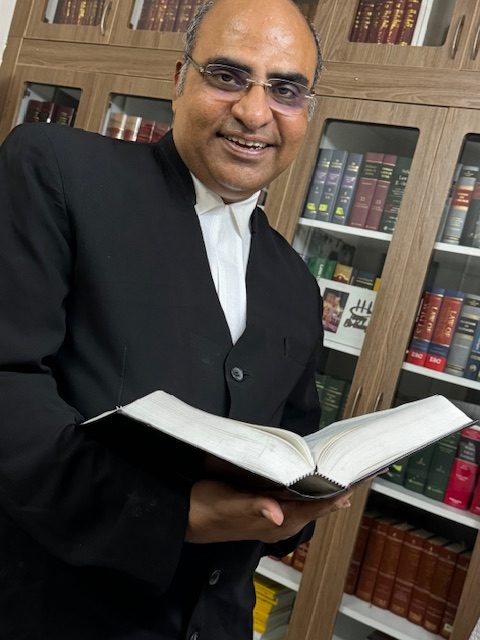
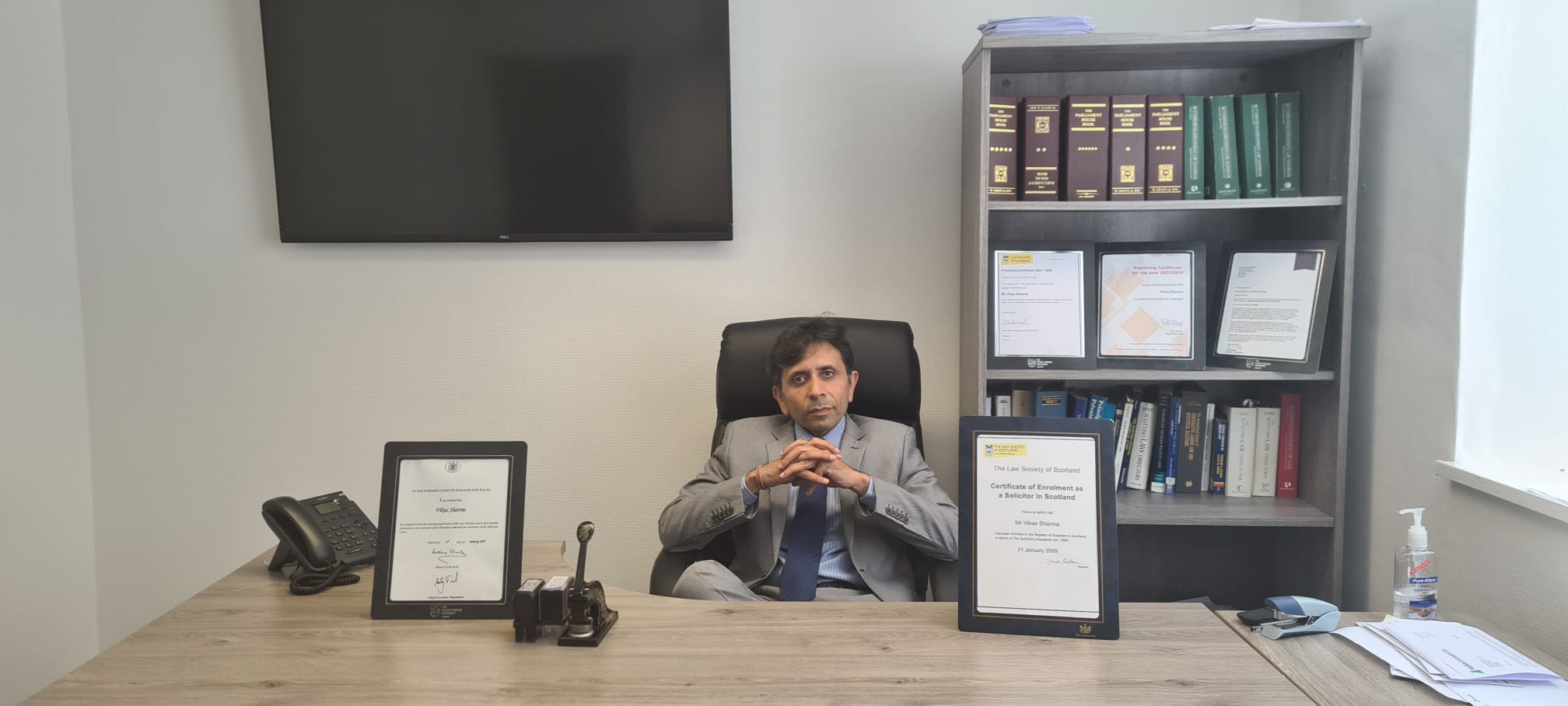












 Allow notifications