It’s a pleasure to have you with us. Could you share with our readers a bit about your journey, from how you embarked on your career in law to becoming the Managing Partner at Imperial Law Offices? What inspired you to choose law as your career path?
Thank you Namrata and team Super lawyer for having me here. Well my journey in law started with guidance from my best friend’s father Mr. L.D. Borasi, who was an Additional District Judge then in Madhya Pradesh. He knew me personally and was of the view that I could do really well in law. On his encouragement I did my research on the subject and came to know that the legal profession suits my personality. Then I took admission in BA LLB (Hons.) course in Devi Ahilya VishwaVidyalaya, Indore (M.P.). I completed my law in 2009 and started my practice in Delhi, things started happening. and here I am 15 years later.
As a co-founder of Imperial Law Offices, what inspired you to establish your own legal practice, and what unique approach do you bring to the legal profession?
The idea of embarking upon the entrepreneur journey was always there in the back of mind. However, I was very lucky to have an opportunity to work in the top law firms of the country. It was a very enriching experience working there and was a tough decision to quit the job. The idea of starting Imperial Law Offices germinated after meeting my co-partners who themselves having worked in top law firms of the country were looking to start a law firm. As a law firm we bring to the table a full service law firm for our clients with partners having more than decade and a half years of experience of representing leading Multinational Companies in the country. The Firm’s global perspective is based on its deep knowledge of the sector/industry and the prevalent practices. The team of professionals understand issues across a broad spectrum of business and legal practices. This fluency allows the Firm to bring the right talent and knowledge to deliver commercially pragmatic advice to our clients.
Your extensive experience (as a litigation lawyer) spans across various legal domains, including Insolvency & Bankruptcy, Tax, Real Estate and Arbitration. Among these, do you have a particular area that you find most fulfilling to work in? Could you tell us why?
These are my core practice areas, it is very difficult to choose between them. However, the best thing I like about being a litigation lawyer is that it always keeps you on the edge and keeps throwing new challenges at you. However long you may have practised there will always be something or the other which you will be dealing with for the first time. As they say, you are always a student of law. Each day you learn new things. So there is never a dull day in litigation. This is what keeps you going. Another thing which is very satisfying is the ability to make an impact on society and help others.
Given your extensive experience in taxation and insolvency matters, what advice would you give to young lawyers aspiring to specialize in these areas of law?
Both these fields, especially taxation, are very dynamic in nature. There are lots of amendments, notifications, circulars and clarifications by the government very frequently on these subjects which govern the interpretation of law. Not to mention the day to day case laws coming in from courts/ tribunals. So one of the key features of practicing in these subjects is to be able to trace out the legal history of the provision you are dealing with to understand the mandate of the legislature. Another very important part of practicing in these areas of law, especially while dealing with international taxation matters is that you will have to deal with various international treaties and international jurisprudence. Apart from the above strong knowledge of constitution law and basic understanding of accounting principles are must. So if you have these basics covered, you can excel in these subjects.
For the current generation aspiring to build successful legal careers, what would be your top piece of advice or mantra for achieving professional excellence and fulfilment in the legal field?
To young lawyers my piece of advice is that one should inculcate the habit of reading. There are no shortcuts to success. Your ability to read and analyse will set you apart from others. Also never make your belief on the basis of the opinion of others without actually reading the provision/ judgement yourself independently. First read the provision/ judgement unbiased by the opinion of the others or common belief, then see what others are saying. This habit will give you a closer understanding of the law and will eventually lead you to success. Also your command over language is a very important factor which will contribute towards success.
In today’s world where there are lots of branches of law apart from litigation, where you can excel relatively easily. Career in litigation, unlike old times, has become a choice. Clearly life in litigation initially is not very financially gratifying, however if you have the bent for it and are willing to put in the long hours, it can prove to be a very enriching career.
You’re an Advocate on Record at the Supreme Court of India. Can you shed some light on the challenges and significance of clearing the Advocate on Record exam, and how it has impacted your legal career?
The Advocate on Record exam is more of a practical knowledge based exam. If you are regularly practising in the Supreme Court and are well aware of the practices and procedure of the Supreme Court it becomes slightly easier to clear the exam. The next big challenge in this exam is that question papers are very lengthy, so you will have to be very clear and concise in your answers, it is only then you will be able to attempt all the questions.
Qualifying the exam really helped me as it gave an added advantage as a litigation lawyer. Clients/ friends from high courts started approaching me to file matters before the Supreme Court. This increased my client base, which was very important for me professionally as my independent practice is quite new. As a law firm we were able to comfort our clients that we can represent their cases till the Supreme Court. Also one of the good things about practicing as an AOR is that you get to do matters from different fields of law, one day you are arguing a criminal law matter and other day you may be dealing with a tax law matter related to transfer pricing. This type of variety is very rare otherwise. So it has been quite an enriching achievement.
Your involvement in landmark judgments and complex legal matters is evident from your extensive list of reported judgments. Among these, is there a particular case or judgment that you found particularly challenging or rewarding, and why?
I will tell you about the most recent ones before the Supreme Court and NCLAT. Last year I was approached to file a very complicated criminal matter wherein parties involved were from two rival political parties. In 2017, during a politically charged environment, there was a skirmish between the two parties during an election campaign involving exchange of gunfire, leading to cross FIRs from both sides. In the FIR against my client, SC/ST Act was falsely invoked, just to jeopardize his contention in elections. We were against dismissal of discharge applications by the courts below, especially qua SC/ST Act. There was a battery of senior advocates from both sides. It was a hard fought case, in which we were able to obtain a positive order from the Supreme Court in December 2023. This resulted in my client successfully contesting election this year. It was a very satisfying win, given the pressure situation and the amount of hard work that was put in by us.
The other very satisfying win was before NCLAT wherein we were challenging the NCLT order dismissing our petition seeking CIRP (Corporate Insolvency Resolution Process) against a very influential real estate company, on the ground that our debt is barred by limitation. In holding so NCLT had misinterpreted the definition of acknowledgement of debt and had also missed certain documents on the basis of which we were claiming extension of limitation. I argued the matter myself, the bench was initially not convinced, however, after two days of hearing accepted our arguments. This was a very satisfying win as initially the bench was totally against me and was not holding back in communicating the same to me ☺.
The most recent one was a anticipatory bail application which I argued before the Hon’ble Supreme Court, though it was a very regular matter, I was pleasantly surprised as Hon’ble Mr. Justice Hrishikesh Roy appreciated me for arguing the matter well in open court. It was a very special moment and a huge encouragement.
Starting your career in chamber practice before the Delhi High Court and Supreme Court must have been quite a journey. What valuable lessons did you learn during those formative years that still resonate with you today?
It was indeed a very enriching experience, because in a chamber practice being the only junior, I was expected to help my senior with literally everything, right from conferences with new client, coordinating with them and obtaining the documents, researching law points, drafting the petition, filing the petition, preparing for arguments, attending hearing (if you are lucky and your senior is busy in some other court, arguing the matter or at least starting the arguments till your senior reaches the courtroom ☺). And last but not the least raising invoices and making follow ups for like ever ☺. I was very lucky in my initial days, I got a chance to work with very good advocates who have now become Senior Advocate, Senior Partners at leading law firms of the country. I am still in touch with them and they keep helping me whenever I need them.
Whatever I have learned is virtually because of the time I had spent with my seniors and their constant encouragement. However, the most important thing which I have learned from my formative years is the importance of hard work and preparation. You will always be recognized for your hard work and preparation. Till date this habit helps me. Clients always have an eye on you as to how you are handling the matter. When they see your hard work and commitment, they remain with you even if the matter does not go according to your liking.
You’ve had an impressive journey in the legal field spanning over three decades, with experiences ranging from trial court practice to senior partnership at leading law firms. What initially drew you to pursue a career in law, and how did your early experiences shape your path?
To tell you what drove me, or what motivated me, to pursue a career in law can be an obvious answer but still it requires a bit of self-reflection. My passion for law and interest in becoming a lawyer came largely from it being intellectually challenging. I was perhaps also passionate about legally connected issues during my school and college days. My father being a lawyer and my interest in watching movies and reading crime fiction also contributed a bit in my desire to become a lawyer. Moreover, to be honest, with little understanding of science and lack of interest in accounting and management professions, I was left with just a few options and law was one of them.
I’m normally quite a private person, so my journey as a lawyer wasn’t quite easy. As a ‘baby’ lawyer, I worked across many different areas of law. I was fortunate enough to have some amazing experiences very early in my career on a variety of issues including family laws, labour laws, consumer laws, criminal laws, revenue laws and property matters. While the thrill of being in district courts of my small hometown and learning so much in one go was amazing, it just wasn’t the same as practising in a large city in a professional environment with matters having substantial stakes. I then moved to Delhi and have since then practised all kinds of business and corporate laws across different practice areas.
Your expertise encompasses various legal domains, from dispute resolution to intellectual property rights. Could you share a pivotal moment or case in your career that significantly influenced your approach to practicing law or shaped your specialization?
During the initial years of my law practice, I got an amazing opportunity to work on a complicated matter which required substantial skills in a variety of laws including intellectual property laws, trade and contractual issues, criminal laws, foreign collaboration laws, government policies and tax laws as well as skills in court litigation and arbitration. It is then I realised that complexity requires teamwork and collaboration. In order to manage client matters effectively and efficiently, lawyers have to utilize a more diverse group of skills and people. What is also clear is that teamwork and collaboration require heavy doses of trust and shared responsibility. Furthermore, working on this case and many other interesting assignments of different nature ensured that I enjoy offering a range of diverse skills and an intelligent mix of knowledge from a variety of disciplines.
As a seasoned business attorney, you’ve worked extensively with multinational corporations, navigating complex legal landscapes across different industries. Could you elaborate on a particularly challenging situation you encountered and how you successfully resolved it?
Another challenging work situation I encountered during the initial years of my career was when I was assigned a client project with tight deadlines and high expectations. There were several experienced legal teams working on the assignment for different parties from different jurisdictions including India, UAE, Japan and Mauritius. As someone lacking experience, I somewhat struggled with interactions and communication, which made collaborating with diverse teams a bit challenging. However, I soon recognised the importance of effective teamwork and found ways to navigate this situation. To overcome this difficulty, I proactively communicate my needs and concerns to the client and different teams. I asked for clear guidelines and expectations, ensuring that I had a clear understanding of my role and responsibilities. By focusing on my individual strengths, such as attention to detail and problem-solving abilities, I was able to make valuable contributions to the project. This experience taught me the importance of open communication, seeking support when needed, and the importance of meeting small deadlines to meet the primary deadline.
Your track record boasts a high success rate and a remarkable ability to manage legal affairs with a commercial mindset. How do you balance legal intricacies with strategic business objectives to deliver optimal outcomes for your clients?
We live in a world of strategic compliance – or as I like to call it, “Winning at Business Without Landing in Jail.” Gone are the days when legal compliance was seen merely as a back-office function. Today, it is recognized as a key player in shaping business strategies. This shift is partly driven by the increasing complexity of regulatory landscapes across different jurisdictions, especially for global businesses. The rise of technology, data privacy concerns, and the dynamic nature of international trade laws further complicate this scenario.
At its core, strategic compliance is about finding a balance. On one side, there are the business goals – growth, profitability, market expansion, and innovation. On the other, there are legal and regulatory requirements, which can often seem like barriers to these objectives. However, instead of seeing these groups as opposing forces, we should focus on integrating compliance into business strategy, thereby enhancing, not hindering, the pursuit of business.
In my view, compliance shouldn’t be seen as the party pooper showing up after the decisions are made; it’s part of the party-planning committee, and we need to ensure that the business goals don’t end up with a noise from the legal department. Ideally, in the world of strategic compliance, it’s all about making the law work for you, not against you.
Throughout your career, you’ve demonstrated exceptional leadership skills by managing teams of attorneys and fostering a collaborative environment. What strategies have you found most effective in leading legal teams, especially in high-stakes situations?
Becoming more effective in leading a team is certainly more of an art than a science. Often, it can also mean adapting to the team you have or the circumstances at hand. However, the key is to encourage collaboration across people, teams and departments. It is also important to set an organisation vision and communicate the big picture.
What will you say on Client Retention vs. Client Acquisition? Where do you think that most law firms go wrong on this?
A law firm’s past and existing clients are a huge asset to the firm, so it’s crucial to maintain a strong relationship with them so that they stay loyal and do not leave the firm. And yet most law firms, in particular small to midsize firms, spend most of their marketing budget on finding new clients instead of nurturing the ones they already have or had not too long ago. It is common knowledge that acquiring a new client can cost 5 to 10 times more than retaining an existing client. In my experience, increasing customer retention by 5% to 10% can increase profits from 25% to 100% in mid term. The success rate of selling your services to a client you already have is 50% or more, while the success rate of selling to a new client is just about 10% in most cases. There are some surveys which have found that loyal clients are 5x as likely to repurchase, 5x as likely to forgive, 4x as likely to refer, and 7x as likely to try your new offering, as compared to a new client/potential client.
What, in your experience, is necessary for a lawyer to stay relevant in the fast changing legal industry?
The legal industry is on the verge of a major transition and it has in fact already changed a lot in the last decade or so, which is driven by the introduction of technology. The legal industry is changing because of the introduction of new innovations related to the industry and hundreds of new legal start-ups emerging every year. Today, machine learning is beginning to transform the legal profession in many ways but in most cases it augments what humans do and frees them up to take higher-level tasks such as advising clients, negotiating deals and appearing in courts. In machine learning, computers use an algorithm, analyze data, learn the pattern and glean insights from the data, so a lot of routine or easy work can be taken care of without much involvement of a senior lawyer. Without a doubt, the ecosystem will continuously affect the way lawyers are working and will work in the future. If lawyers learn legal management practice with the latest technology, then only they will be able to survive in the future.
Another very important aspect is that the lawyers have to continuously update their knowledge in order to stay relevant. There was a time when lawyers could do well just by having knowledge of general laws of the land or by having understanding of traditional practice areas, like contract law, torts and civil and criminal procedures. That’s no longer the case in view of special laws and tribunals and specialised practice areas that are coming up very fast.
Also, I have a strong feeling that lawyers who don’t add value to the client relationship won’t survive in an ever-competitive environment; they will simply become irrelevant. One should therefore be very efficient in delivering the outcome. So get better at management of client assignments. Give commercially pragmatic advice, not just advice that’s legally correct. Keep in touch with the clients regularly with helpful tips and advice, even if you don’t get paid for this. Pass on the knowledge you are getting about their business or industry. Understand clients’ businesses and the industries in which they operate so you can tell them of pitfalls before they arrive.
A Generalist or a Specialist: What’s the Best Fit for A Lawyer’s Career?
Personally I have always been inclined to offer a range of diverse skills and an intelligent mix of knowledge from a variety of disciplines. Hence, I have been a generalist lawyer by choice throughout my career.
Generally speaking, handling diverse roles provides generalists a good understanding of all the functioning parts of the business or industry. Generalists multitask and collaborate to tap into related domains when opportunities arise. This hones their ability to handle unique situations and formulate enduring perspectives. However, there is a limitation in as much as generalists aren’t sometimes that competent in niche projects. Moreover, there is a higher chance of their early burnout as they work across multiple teams and tackle a host of responsibilities, especially if they are in leadership roles.
As digital transformation takes the center stage, the generalist vs specialist debate is taking a definitive turn. One should definitely ask oneself the following questions, amongst others, to gain a comprehensive understanding of one’s needs and goal: Do you like a diverse breadth of knowledge or do you prefer deep research on any specific topic? Do you change your career perspective often and prefer taking time to find the niche you are interested in? Or have you already determined your career trajectory? What kind of work ignites your interests and passions? Does it require you to hone different skills or demand specific subject-matter expertise?
What are the biggest challenges that the legal sector is facing or will be facing in the short to mid term?
From economic pressures to cyber threats, lawyers are facing a number of challenges. The economy remains volatile in 2024, marked by ongoing geopolitical tensions. This is making clients even more price conscious when choosing a law firm. There is also an expectation for greater cybersecurity and verifications for online activity as law firms are wary of increased risks of cyberattacks. Most law firms are however yet to implement effective cyber mitigation strategies. Further, even though integrating legal softwaresand systems is not a new challenge, it’s increasingly becoming important as law firms strive for increased profitability while improving client service and experience. Talent attraction and retention in the legal sector will also continue to be a significant challenge in 2024.
Could you take us back to the beginning of your career journey? What inspired you to pursue law, and can you share any pivotal moments or experiences that shaped your decision to enter this field? Additionally, what were some of the challenges you faced when starting out, and how did you overcome them to establish yourself as a prominent figure in the legal profession?
I have always believed that God has bestowed grace upon me. Importantly, my parents have always encouraged me to make decisions and have provided enough freedom and information to make an important decision that has a long-term impact on my life.
I have always wanted to be in a profession that is more society-centric and has good opportunities to meet people from different walks of life. In this context, law as a profession was an obvious option for me. I consulted many of my friends/seniors and some reputed lawyers before taking this decision to pursue law. Their encouraging words (along with challenges in the profession that they mentioned) encouraged me to pursue my career in this field.
Since I am first generation lawyer, there were plenty of difficulties. I was very clueless in my initial days (after completing my law degree) about my next step and other related aspects. But, there is always someone to help me or guide me in such difficult situations. They were either friends/colleagues or strangers (as well). I am thankful to all of them.
Lexspectrum is known for its comprehensive legal services. What inspired you and your partner to establish this firm, and what sets it apart from others in the field?
I have always believed that there is enough space for new law firms in the sector that can be more focused (handholding approach) towards clients. Additionally, having experience of a certain number of years, acted as an asset for me in this endeavour.
Importantly, I sought feedback from various clients/friends to provide their suggestions regarding setting up a new law firm. In most the cases, I got very positive and encouraging suggestions/responses that helped me make such a decision.
Your bio mentions you’re recognized as a recommended lawyer for Corporate and Mergers & Acquisitions. What advice would you give to young lawyers aspiring to achieve similar recognition in their careers?
Well, such recognitions are always welcome. It gives a sense of satisfaction and improves confidence. In my opinion, consistency with quality work is key to success in the field. It is important for a young lawyer to be very consistent with quality work to achieve their professional goal.
In your opinion, what can the current generation do to carve out successful careers in law, especially in a field as dynamic as yours?
The current generation of lawyers should focus (in addition to basics) on the changes which is taking place in the field of law. For example, legal practice in the field of data/AI/the international context of multi-party disputes/PE/VC transactions was not so common a few years ago but now it is very much mainstream practice. Hence, it is imperative that a lawyer should pay adequate attention to the development/changes in the legal field wherein such lawyer is practising.
Additionally, quality of work and timely response to clients is imperative. I have noticed that these days clients are well informed about the existing legal provision(which affects them) and their expectation from the lawyer is not only to be better informed about applicable legal provisions but also to have good understanding of the case which such a lawyer is handling. Hence, a lawyer should be much more attentive to the case/assignment that they are being entrusted with.
Outside of your professional life, do you have any hobbies or interests that you’re passionate about? How do you balance your personal interests with your demanding career?
Typically, I do not get much time to pursue my hobbies which has changed with time. I love travelling with my family and friends and I try to do the same whenever it is possible. Being with family and friends is always a wonderful experience.
With the constantly evolving legal landscape, how do you stay updated with industry trends and changes, and how do you ensure your team at Lexspectrum remains ahead of the curve?
We, as a firm, have weekly sessions on the legal updates on the matter concerning the current assignments and generally related to the subject matter of practice area. Additionally, we encourage our team members to write articles/updates regularly to get a better understanding of the subject matter. We also encourage our team to participate in relevant conferences to be fully updated.
There is always an emphasis that we as Lexspectrum should be well aware of the subject matter which we are dealing with. There is also an emphasis on having a good understanding of the sector in which such client is engaged.
Being recognized as one of the highly recommended lawyers in Mergers & Acquisitions is a remarkable achievement. For students aspiring to excel in this field, what specific skills or knowledge areas would you recommend they focus on during their education and early career to position themselves for success in M&A transactions?
Typically, I have noticed that law schools have a higher degree of inclination towards litigation than corporate matters. Likewise, law students have better exposure to litigation matters. Hence, it is imperative that law students must participate in all relevant events /seminars (typically organised by Investment banking firms/law firms/CA firms) to get exposure to the subject matter.
Additionally, various blogs/research paper are being published by law firms that should be referred regularly. Having internships in law firms with maximum exposure to corporate matters will be very helpful.
Could you share with us the experience of the first time you stepped into a courtroom to argue a case? What was going through your mind, and how did it shape your approach to advocacy?
I consider myself lucky in this respect wherein my senior permitted me to argue a matter when I was just 4-5 months into the profession. My senior mentored/guided me well on the said case. However, it was a bit shaking moment for me till I started making submissions to the Hon’ble Court. Once, I started, it became relatively normal for me.
Courtrooms often witness intriguing moments and unexpected twists. Can you recall any particularly memorable anecdotes or moments from your time practicing law that stand out to you?
On several occasions wherein the Hon’ble judge and/or opposite counsel has agreed to deviate from the established norms keeping the larger interest of the litigants in mind and the same has served very well in the interest of justice. On one such occasion, a key witness has arrived here in India for a minimal time period. Such a witness was critical to the matter. On our request, the Hon’ble court and opposite counsel agreed to complete all procedural aspects concerning such witness on the same day which is not so common.
On several occasions, we are informed about certain documents/events on the day of the hearing which is critically important. Such events on many occasions require us to immediately make suitable changes in our strategy/submission. Due to confidentiality, I will not be able to delve into this any further.
You’ve had an impressive journey from working in prestigious firms like Khaitan & Co and AZB & Partners to founding Catkin Legal. Could you please walk us through your journey and share how each phase of your career contributed to your growth as a legal professional and entrepreneur?
AZB & Partners and Khaitan & Co, are important institutions in my growth as a professional. It provided me with the experience and finesse that a corporate lawyer requires to navigate the era where lawyers are considered valid in board rooms and business transactions, other than just court rooms. While I was working with the firms, they provided me with opportunities to work on some important transactions in the business world. The firms gave me an idea of acceptable global standards and exposure to global working environments. The pedigree I got from the firms has shaped a lot of how we do business in Catkin Legal.
Given your extensive experience in Corporate & Commercial laws, what unique challenges have you encountered in advising companies on Information Security Privacy Law and Cyber Risk Management amidst the digital surge in various industries?
AZB We are seeing a surge in the relevance of lawyers in the new business era. Business heads are recognising the importance of working with lawyers on a day-to-day business to ensure smoother operations of their businesses. While old business houses are passing on hands to the new generation new leaders are very encouraging of legal support to their business teams in closing transactions and operational issues. While real time businesses are going digital sensitizing leaders on the security of information they are procuring, and the importance of certifications is increasing.
As a strong advocate for mental health, how do you integrate initiatives for well-being within Catkin Legal, and what impact do you believe it has on the overall performance and satisfaction of your team?
At Catkin, we propagate mental health and well-being. Our employees may avail of mental health leave once a month for a day which can be extended. The associates do not need to cite their reason for being on MHL. Additionally, the partners are very aware of not overburdening our associates with manic hours. Associates have the freedom to tell their leaders that they need a break. As leaders, we are responsible for the work but not for deciding when one need a break. The career is very demanding, and we want our associates to run long not fast.
Considering your multifaceted experience, what advice would you give to aspiring legal professionals aiming to build a successful career that transcends traditional boundaries and embraces new dimensions of law and business?
With the energy and enthusiasm the young blood brings to the profession, I would always advise not just new but any lawyer to marry the facts and understand how the business or product runs along with the law. If this does not happen the advice we are dispensing to the client becomes redundant as they cannot execute it on the ground. Due to this gap, there have been numerous judgements that are impossible to implement.
Mentors often play a crucial role in one’s professional development. Could you discuss the influence of any mentors or role models who have inspired and guided you throughout your career journey?
My career is basically me being a living proof that I have had the most amazing mentors. They have helped me navigate the legal profession and understand how to manage teams and clients. But more importantly in their understanding of the law, people management skills, negotiating skills, and life skills
Founding Catkin Legal marked a significant milestone in your career. What motivated you to establish your own firm, and what were some of the initial challenges you faced in setting up and establishing its reputation in the legal industry?
I think starting my own law firm was always a goal. My parents- who have always been the wind beneath my wings were very encouraging of starting my own practice even though I do not come from a family of lawyers. Believing in my goal every day in the last 15 years and working on that goal every day and working on myself made me start my firm. One of the key challenges we face is to keep being relevant. We keep upgrading our skill set and recrafting our working models to ensure we are a relevant and sustainable firm
Building a clientele and reputation from scratch can be daunting. Can you share some strategies or initiatives you implemented in the early days of Catkin Legal to attract clients and differentiate your firm in a competitive market?
Balancing multiple responsibilities as a managing partner, legal advisor, and advocate for mental health advocacy can be demanding. How do you prioritize your time and commitments to ensure both professional excellence and personal well-being? I think all these roles are interdependent. I try and understand the urgency and support required for each situation on a weekly basis and set my priority on a need basis. I believe in a physically fit and mentally healthy life, so for me, that comes first. I do not work alone. I have teams for all tasks and project- Home-work -or anywhere else where I want to contribute. Creating and cherishing capable leaders and individuals within or teams, helps us go a long way.
Your career has seen transitions from working in prestigious law firms to in-house legal roles and eventually founding your own firm. Could you share your experience of navigating these transitions and highlight the differences in working environments between law firms, corporate settings, and running your own legal practice?
Law firms and business houses systems are already in place. You come in and integrate into an already existing system and grow with the system. Starting a law firm or any business involves starting or creating systems that others can integrate into. As a business owner, the biggest challenge is not creating that ecosystem but ensuring its sustainability. A huge part of my role is troubleshooting to ensure the ecosystem of catkin remains healthy and sustainable in all areas.
With your busy schedule and diverse professional engagements, how do you unwind and recharge outside of work? Could you share some of your favorite relaxation techniques or activities that help you maintain balance and rejuvenate your energy?
A good cardio workout and yoga is my favourite kind of unwinding. I try to pack in this at least six times a week. I enjoy a good movie. I like to read, but we read a lot at work and usually, it becomes my last option. Oh, recently I’ve been enjoying reading storybooks to my two-year-old son.
Can you share what inspired you to pursue a career in law, particularly focusing on criminal law and white-collar crime?
I would be honest to confess that law was not my first choice. Initially, I did not aspire to become a lawyer, considering the inherent expectations that come with being a second-generation lawyer. For all the years I was growing up, I had observed my Father from close quarters, putting his soul into the profession and it seemed overwhelming at that time. I also deeply admired all my teachers in school and realized the power of academics in shaping an individual’s life. Therefore, I was inclined towards being an educator and I started pursuing Bachelors in Commerce from Daulat Ram College, University of Delhi, thinking that would be my path. The course got me deeper insights into the ecosystem of commerce, and some of the subjects including contracts, commercial law, and taxation piqued my interest. With this new-found interest, law as a subject started pulling me towards it and after a discussion at home, I finally took the plunge to pursue law. You can say it was a ‘what you seek is also seeking you’ moment for me!
During my tenure in law school, I developed a profound affinity for criminal law, a passion that led me to delve deeper into its various facets. The background in commerce had anyway sharpened my faculties in the field of economics and financial matters, which finally led to my focus gravitating towards white-collar crime. This was also the field where I could get the best mentor in my father who is renowned for his impeccable body of work in this area. I couldn’t have asked for more. So here I am, not where I thought I would be, but definitely where I am meant to be. Turns out, the unexpected detour into law was exactly what I needed.
With such a diverse range of clients, including high-ranking officials and business ventures, could you elaborate on how you navigate the complexities of representing such varied interests in the legal realm?
Building and maintaining trust across such a broad spectrum of clients requires more than just legal expertise; it demands a holistic understanding of their background, career trajectory, growth challenges, aspirations, and most importantly the circumstances in which they approach you. The law and its applicability will remain the same, what is differentiating factor in any particular case is the legal strategy, the court craft and the merit in your advocacy when you’re representing a client in the court of law. For me, each client mandate deserves its due attention because while we may be dealing with many clients, for clients we are the only one they have chosen over other service providers. Empathy, prioritization of clients’ needs and giving them an experience that addresses their concerns are the other important aspects that go beyond legal acumen. Effective communication and ethical integrity are other two areas where I would never compromise. All my clients are personally informed by me even for the smallest of updates. This is my way of showing them my respect and that they are not one more ‘case’ in our file. Ethical integrity comes from the moral compass that guides my decisions and actions.
Your experience spans various aspects of litigation, from arguing cases to drafting legal documents. Could you highlight a particularly challenging case you’ve worked on and the strategies you employed to achieve a favourable outcome?
I strongly believe that each and every case has its own unique challenges and nuances. However, in a significant case I handled alongside my team at Prosoll Law, a major challenge revolved around an alleged incriminating telephonic conversation crucial to the prosecution’s case. Recognizing the pivotal role of this evidence, we strategically devised a unique approach.
We formulated a legal strategy focused on elevating crucial issues of law, particularly centered on the contested telephonic exchange. Anticipating the importance of the original call details, we proactively filed Criminal Miscellaneous Petitions before the High Court of Delhi after our initial application was rejected by the Trial Court.
This helped us in identifying and capitalising on key opportunities. By framing the legal discourse around the need for the original call details, we not only highlighted the criticality of this evidence but also emphasised its potential impact on the case’s outcome.
This matter always serves as a reminder to me of the importance of employing innovative and effective strategies to overcome challenges in crucial times.
You’ve been recognized by several esteemed legal publications and platforms for your work in white-collar crime and criminal law. What do you believe sets your approach apart in this field?
When we speak of white-collar crime and criminal law, I firmly believe that everyone deserves a chance to be represented vigorously and fairly. I approach each case with a deep-understanding of the facts of the case along with the fundamental principle in it. By doing so, I can effectively navigate the substantive as well as procedural aspects, while ensuring that my client’s interests are safeguarded. Our distinction lies in our consistent client base. As lawyers, our commitment is rooted in strong legal knowledge, staying updated with precedents, and honing courtroom skills. When our reputation spreads through word of mouth, our consistent clients truly set us apart.
As an Associate Partner at Prosoll Law, you appear in matters before various judicial and quasi-judicial forums. Can you shed light on the differences in strategy when presenting cases before different courts or tribunals?
Ultimately, successful litigation demands a dynamic and adaptable approach. When appearing before an appellate, a more formal and precedent-focused approach is often effective. In contrast, when appearing before quasi-judicial forums or specialized courts, a more technical and specialized strategy is required. These forums often deal with specific areas of law, such as tax, environmental, or administrative law, and demand an in-depth understanding of the subject matter. Curating arguments that align with the technicalities of the court’s jurisdiction and expertise can significantly enhance the case’s prospects.
Given your involvement in high-profile cases, such as representing a former Chief Minister, could you discuss the unique challenges and responsibilities that come with representing public figures in legal matters?
Representing public figures in legal matters, especially in high-profile cases, presents a unique set of challenges and responsibilities. While dealing with such cases, one has to maintain a fine balance between legal intricacies and public perception, like in the case you have mentioned about.
One of the foremost challenges lies in mitigating reputational risks for our clients. Public figures often face intense scrutiny and media attention, which can potentially impact the free and fair investigation and may also adversely impact their public image. My philosophy has always been to primarily prioritize shielding our clients from sensationalism while concurrently formulating a robust defence strategy. This dual focus ensures that the legal proceedings remain the focal point, safeguarding our clients’ reputations from undue damage and media trial.
In such cases, upholding fairness and justice becomes paramount. I recognize the importance of ensuring that our clients receive a fair trial and are not unduly influenced by external factors, be it media or public discourse.
You’ve co-authored articles on topics such as telephonic surveillance and the Prevention of Corruption Act. How do you balance your legal practice with scholarly pursuits, and how do these academic contributions inform your work?
Balancing my legal practice with scholarly pursuits is a deliberate and symbiotic process. This dual commitment is not a mere juggling act; rather, it is a synergy that enhances both facets of my professional life. Writing and research are fundamental to a lawyer’s life. They not only sharpen the analytical bent of mind, but also help one in keeping their finger on the pulse of what’s happening. In legal practice, staying ahead requires more than courtroom acumen—it demands a continuous pursuit of knowledge. Writing articles allows me to delve deep into legal research and the evolution of law and its application that takes shape every day in our courts. This ensures that my understanding of the law and evolving jurisprudence remains not only current but also finely nuanced. Similarly, the daily rigours of my legal practice make my writing relevant, real and transfused with experience. Real-world experiences provide insights that add a practical point of view to theoretical frameworks. This infusion of my academic contributions with tangible and practical relevance adds weight to my writing.
Finally, what advice would you offer to law students or recent graduates who are embarking on their legal careers, particularly those interested in criminal law and litigation?
In the realm of legal careers, particularly for those venturing into criminal law and litigation, my foremost advice would be to understand that – there are no shortcuts. Perseverance coupled with merit is the key. The second important aspect is to break the barriers, myths and stereotypes like ‘criminal law is not for women’, As I reflect on my own journey, resilience and grit became my compass as I chose the less trodden path of criminal law. To aspiring students, I emphasize the importance of listening to their true calling. Only when you make your field your primary interest, will you be able to focus on the path to mastery.. With the end-goal in mind, every action becomes a calculated step towards success.
Can you walk us through your journey from being an in-house counsel and company secretary to becoming a business leader and now a practicing lawyer specializing in energy and infrastructure?
Yes, it has been an exciting journey so far. I started as company secretary and became in-house counsel and later on appointed as Head Legal in Fortum India. I had to set up legal, compliance and secretarial practice for businesses ranging from solar & wind projects, acquisition cases for hydro power, waste to energy and laying out EV charging infrastructure. It was a big shift from my earlier role in Schneider Electric and previous organisations. Fortum was a leadership position and businesses were new sun rising sectors in India, like solar and wind, EV, and biorefinery. Regulations are still evolving, hence, I have to push myself beyond legal knowledge, to acquire business and market understanding, which can help me in providing seamless legal support for business growth. I got opportunities for working on land acquisitions, regulatory approvals, funding of projects, selling of assets and a lot of drafting and contracting. All of this developed my understanding of capturing business true intentions into a legal paper and maybe, I started feeling more comfortable with business leadership.
After 6 years of leading legal function, got the responsibility as Country Director & Business Head for leading Biorefinery business (or Bio2X as Fortum calls it). It was a completely different role and I have to broaden my thinking. From finding flaws and identifying risks in business proposals, I have to find solutions, resolve issues and manage a big Joint Venture. Completely different work, but I believe my capability of learning fast, with legal knowledge, sector expertise and understanding of board practices helps me.
When last year, I joined AKS, as Partner-corporate, energy and projects, I believed that I am perfectly placed to advise my clients with the highest level of legal services and work with required domain expertise of energy sector as well as of projects. I understand the perspective of the in-house team, their business requirements and how to address matters in the energy sector.
Your career has seen you working with esteemed organizations like Schneider Electric, Hero Group, and Fortum India. How have these experiences influenced your approach to legal practice?
I started my career with a couple of Indian promoters driven by mid-size companies and from the last 15 years worked for MNCs like Schneider Electric and Fortum. In mid-size companies, you have opportunities for growing beyond your key responsibility areas, as all the functions are not hard lined. If you have desire, you may take up tasks beyond your key role and that will prove vital for my growth.
While working in MNCs you learn the importance of good corporate governance and putting statutory compliances in place. Working with different jurisdiction lawyers helps you sharpen your skills, and gives you a different perspective of thinking about the same issue. Also, I understood how “LESS IS MORE”. How I can plan and strategize my work to become more effective. Like, a legal document need not be lengthy, but sufficient enough to capture business understanding and required legal provisions.
Your expertise spans a wide range of areas within the energy sector, including renewable energy, EV charging infrastructure, and biofuels. What drew you to specialize in these specific niches?
Frankly speaking, when I was joining Schneider in 2009, I was going for a big MNC job, without much understanding of a sector specialisation etc. But, as it happened, a lot of contracts, transactions and legal work came through the energy and infra sector, which started developing my interest in this industry. Big opportunity came for me, in the form of a Fortum leadership position in legal, a decade ago. Fortum came to India, with the ambition of replicating their European businesses of Hydro, Nuclear, Waste to Energy etc. As a Legal Head, I had to gather all the possible knowledge and expertise of the sectors my organization was working. This leads to learning and research into specialised fields like EV charging infra, solar & wind, nuclear etc. For a sector, which is developing, you need to be very close to business and keep yourself updated with the latest happenings in the sector.
Could you share some insights into the process of establishing groundbreaking joint ventures like the one between Fortum & Chempolis and Numaligarh Refinery Limited for the 2G Ethanol Bio Refinery in Assam?
This one is special, real hard work, not only from legal, but for developing a business case to create a Joint Venture for setting up the first of its kind bio refinery in the world. JV was bringing new technology in India, which was developed in Finland by a company called Chempolis. I was tasked to work on Joint Venture from a legal perspective, and got so involved that I was entrusted with responsibility of leading Joint Venture as Director and key member in high powered committees.
Beautiful learning experiences, working between Indian and European Jurisdiction for technology transfer, IPR protection, funding and governance. With the opportunity of developing relationships with industry leaders, learning the whole business ecosystem. Understanding significance of proper documentation, drafting of contracts, resolving disputes along with true understanding of risk identification and mitigation from ground and not only on papers.
With your extensive experience in setting up solar projects across multiple states in India, what are some of the key challenges you’ve faced in navigating the regulatory landscape and securing investments for such projects?
The biggest challenge in solar projects across India is acquisition of land, connectivity and uncertainty of regulatory framework. With resolving these three important factors, India will achieve ambitious targets of renewable energy. In one of the projects, between the stage of LOI to signing of PPA, Govt. levied safeguard duty on import of solar panels. Of course, it was covered under Change in Law, but sudden policy changes create hurdles for investments and pose challenges from a legal perspective.
As someone deeply involved in the energy industry, how do you see the role of startups and new technology collaborations shaping the future of energy production and distribution?
It’s like selecting a cricket team. You need a mix of experience and youth to win a championship. If we are looking to solve the biggest challenge of global warming, while keeping the economic pace of India, we require a lot of new technologies and Startups that bring us close to a circular economy. We need new technology in developing green hydrogen, producing batteries with material available in India, utilising biowaste, etc. Without embracing new technologies, we will miss our targets. I personally believe, new technologies with small companies in Europe and other innovative jurisdictions, have great possibility of commercial success with Indian PSUs & Corporate houses. Likewise, India is also becoming a Startups hub and a lot of promising developments are happening.
In fact, we at AKS Partners, have a key focus for startups, either Indian or International for providing them, specially designed legal services and in some cases, maybe beyond legal, like connecting right industry players, some funding opportunities with our connection in the sector.
You’ve been actively involved in various industry forums and committees, including serving as a member of the Confederation of Indian Industry (CII) National Committee on Bioenergy. How has your participation in these groups enriched your understanding of the sector?
Absolutely, it has been a pleasure and privilege to be part of these committees and various similar forums, wherein, I got a chance to put my ideas and perspective and educate myself with experiences shared by other leaders. These platforms, like CII National Committee on bioenergy are good forums to deliberate and exchange ideas and make recommendations to the Government for sector growth. In fact, these things prepare you, what is the upcoming trend in the sector.
Lastly, drawing from your journey and expertise, what advice would you give to fresh graduates aspiring to build a career in law, particularly in specialized fields like energy and infrastructure?
First of all, the Indian economy is growing at an unprecedented pace, along with the aspiration of its people and living standards are rising. We are consuming more energy for home appliances, vehicles, data centres, houses, malls, etc. Therefore, the energy sector is going to rise in India. Solar, wind, green hydrogen, electric vehicles will take centre stage, but traditional sources will continue playing their part like Coal, Oil & Gas, etc.
To become a specialist in the energy sector, we need to understand the industry in detail. Energy sector is a highly regulated and capital-intensive business. For our clients, or for our organisations, if we are in-house counsel, we need to keep in mind that we are just a notification away from becoming a viable project to unviable business. Therefore, best practices, challenges of the sector, contentious areas and keeping a pace with regulatory development is a must for the energy sector.
Firstly, thank you for having me on this forum. I must say, that amazing effort has been made, and I was overwhelmed to see that such a platform exists. Now, coming back to your question, what drove me at a young age is that my background; my father is a policeman, and my grandfather, who came from India in the 1940s, was also a policeman. So, in fact, my entire journey from a young age until I left for university, I grew up in a police station. I understand the dos and don’ts, the whole roll call, every flag post, every corner, what happens, and what doesn’t happen. I was ingrained from day one of my journey. In fact, in Malaysia, even though I’m Punjabi, as my first language, because I used to stay in the police barracks, most of them are Malaysians. So the first language I spoke was Malay. Punjabi came later, of course, and picked up with my parents. That was the influence of staying in the police barracks. When I finished my law degree, my father brought me a police application to join as the cadet assistant superintendent of police. For graduates at that time, they had the scheme for senior police officers. I said, “enough for two generations. I am definitely going to do law.” So, when you are at the age of 16, we have form four here. So you divide between the art stream and the science stream. I was given the science stream. I studied in Penang, a Lasallian school. I still remember my principal, who’s Irish from Ireland, Brother Casimir Hannon. So I was in the science stream. I told him, “Brother, I need to switch to arts.” He said, “What? People want to go to science stream and you want to go to arts?” I said, “yeah, because I’ve decided what I want to do. I want to do law. So I just want to focus on the subjects I want to do.” He said, “No, you focus on science. They give you a bigger perspective and all that.” Anyway, I was also adamant. So I took my dad. I told my dad, whatever it is, I want to do these subjects. I was determined. I knew it. This is what I want. This was my path. I knew it. So, that was my journey.
So, Sir, you have been involved in a lot of legal publications as well, and you have authored many, many articles. What actually drives your passion for legal writing and how do you balance your time between practicing law and following your scholarly pursuits?
I also don’t know that. How I do it, but I do it, you know. So sometimes I’m wondering how I do it, but I think I take small steps. I take baby steps and I just do it, like my first book on the criminal litigation process. That’s about 700 pages, but the first book took me about almost 10 years. Of course, when you update, it doesn’t take me long.
I think when I update the book, it takes me about 6 to maybe 10 months. I can update it. But the first book took some time. So then you just progress and you just build on. Articles I pick up on my practice area, which I find interesting, like recently I’ve written on affidavit evidence by way of quasi-criminal cases. You know, what is the burden stand? What is the timeline and so on to file an affidavit? Do you bother about the timeline? Because I say it’s quasi-criminal offences. It’s a criminal case. So as far as I got the concern, that is the interest of justice and not to be procedurally governed.
All right, so that article has just been published. So that’s from my cases when I do, so I came up with this topic just to add some jurisprudence to the entire legal community. And then I’ve done one more on the criminal investigation, the court’s perspective, sometimes how it is done, because sometimes when statements are given, the courts will say, Oh, this is an afterthought, but then they have to point out to you, that’s the first time that accused has got the opportunity to say something when he gives them and it cannot be an afterthought.
And what statement he gave the police must do an investigation. The police must not just shrug it aside, you know, they can’t do that. So that’s the reason, I just take my cases, what I do so that I just come out with an article. So that will interest readers and also will help in the legal journey for others when they have cases and so on there’s something to look at. Then I progressed on to do my Masters at the University of Malaya. Then I also earned a Diploma in Sharia Law in UIA. That was an 18-month course.
So, that was on Saturday morning. I said, “Why not just do it, you know?” PhD was torturous for me because it was a lonely journey, with no friends, nothing. I got to thank COVID for helping me complete my PhD because I realized I came home, I got nothing else to do other than sit down and work on my PhD. In fact, my viva was done by way of Zoom, my chapters also because towards the tail end. I completed almost seven years, but because of the exemption of the COVID period, I was able to complete it. I think I got, in a way, the blessing of COVID because I’ve been forced to sit down and do my work.
And then of course, my family also supported me. My wife did the editing and checking everything, paragraphing all in order, giving some advice, and giving some pointers. Because she had done a PhD earlier than me, so I had a tutor at home also to make sure that I’m on track.
That’s what I did during the COVID time because for months, we were at home base, you see, almost a year or so. That’s where I said, “Okay, now let’s complete this.” And during COVID, I also started on my book. So I always keep myself moving. There’s always something that I’m doing. Nowadays, I also start to get my younger lawyers to come in and to do articles with me so that I want them to also progress, so that they work together with me as a co-author on the articles. So they also gain a track, and of course, for me, I’m more or less walking to sunset already.
So the younger generation, you are the future. So, you know, whatever I can do, why not? Because whatever I have is all given by the almighty God. So for me, just to hand down, so that’s about it.
As the president of the Sports Law Association of Malaysia, and being deeply involved in the legal aspects of sports beyond criminal litigation, could you provide some insights into the distinctive challenges and opportunities within sports law? How does it intersect with the broader legal issues you encounter on a daily basis?
Now, by virtue of sports law, I also chair the Malaysian Football Federation Disciplinary Committee for the entire Malaysia for discipline cases, players, and so on. Of course, that is a disciplinary angle, right? It’d be interesting to see because sports are very close to me. I was an all-rounder, you know. Whether you want me to play volleyball, I can play. Whether you want me to play tennis, I can play. Football, I play. Hockey, I play. The whole works, you know. You want to play basketball, I play. As a son of a policeman those days, we don’t have games, and we don’t have phones. We are out of the house at 4 PM, and we come back at 7. We play everything, including playing kite, playing marbles, the whole works. So sports are very close to me.
Basically, when it comes to sports law, of course, this is a new area. It is a new jurisdiction. Of course, the law is quite settled, but it’s a new area in many jurisdictions. And of course, the United Kingdom, the US, and London, I think more track because they have the entire sports association like football and all, big thing.
So, of course, they track more. Here is basically when you’re looking at the rights, the players’ rights, protecting the athletes’ rights. And then to make sure it’s fair play, and then the bigger issue is on doping cases. How to be dealt with, then contractual disputes. So this all derived from this sports law. It’s a good area to come in but sometimes I have this problem with younger members of the bar they say, “Sir, I want to come I just want to do shipping.”
I want to do construction. I just want to do sports law. I think that’s a bad recipe, a bad formula. So whatever you intend to do, do general first for four, or five years, right? Pick up the entire thing. Then maybe after the seventh, or eighth year, you can think about what you want to do, okay?
Because you must understand, the legal journey is a continuum, a continuous process. And you just take care. Everything is taken care of you. Because the other problem is nowadays, most of the young generation, I want to make this much. I want to make some X amount. Don’t worry, don’t worry. Be good at your work. Everything will come. Just be good. Be good. Do honesty, okay? Do your work well, prepare your files well, prepare your pleadings well, and prepare before going to court well. Be diligent. Hey, don’t worry. Things will be in your favour, but things will come.
The younger generation, they can’t wait. So I just say maybe do some breathing therapy. Calm down, relax, and then take baby steps, and then just focus, and also don’t be too… I mean, of course, money, everybody needs, we don’t deny that, you know, you need to pay bills, but take it easy. And the law profession definitely can put a meal on your table, alright? There’s no doubt about that. Doctors, lawyers, and all that, the meal can be on your table, and pay your basic rights, things, what you need, your needs, can be done. But don’t worry. Spend time developing your work, and spend time doing quality work.
So I build my career like a block, you know, block by block, block by block. So even today, it’s another block, another block. It goes on like that, okay? And of course, I always believe that if you can help anybody, help. There’s nothing, it doesn’t cost you any money. Where you can assist, assist. Alright? Because no man is an island, okay.
Being appointed to the Royal Commission of Inquiry to review Malaysia’s sovereignty over Pedra Branca, Middle Rock, and South Ledge is indeed a remarkable achievement. What contributions do you aspire to make to this significant inquiry, and what are your expectations regarding the desired outcomes?
Yeah, because I’m a member of the Royal Commission, I’m governed by secrecy, so I can talk about what is there in the public domain, all right? So, the public domain will be the judgment of the International Court of Justice in 2008, where I gave Pedra Branca to Singapore. Then there’s another process that Malaysia filed for revision and interpretation, in which Malaysia later withdrew the application to ICJ. But basically, that is all in the public domain. On our Royal Commission, I think it’s basically the due processes that took place, how the processes took place for future leaders, future generations to understand what’s going on. It’s a good decision for all students to read from the International Court of Justice, particularly international law.
When I started my career, I did everything. So whether you’re doing a property transaction, whether you’re doing a civil case, whether you’re doing a criminal case, all I had to do is read up everything I can see. I can see the whole thing in the picture. So that’s why, unless you’re very certain, take one step at a time. I must inform the students. Remember, when I started, I was riding a motorcycle, I rode a motorcycle for two years. Of course, people don’t look. People look now at what I have and what I do but don’t realize that I was also living on my basic needs. I was the son of a policeman, you know, so my father was just a constable, corporal. So, he had to be careful with the budget. Then I used to give tuition to sustain myself. All this is a process. Be calm, relax, focus, and take baby steps. And of course, also to mix with the right company. If you mix with the wrong company, then that becomes a problem because you want to be in the places where you want to be seen.
Then you start spending more than what you earn. For me, I would just say, if you can, no alcohol until you are established. I would say no alcohol. I didn’t take any alcohol until I was after 40. Because all this, you need to balance out, okay? You need to balance out.
Of course, you need to enjoy, you need to relax, okay? But all things, you need to calibrate and balance it out. Okay.
As someone deeply involved in numerous committees and task forces, including serving on the advisory panel to the Malaysian Anti-Corruption Commission, your dedication to combating corruption is evident. How do you perceive the role of legal professionals in tackling significant societal challenges like corruption? Furthermore, how do you envision the pursuit of justice in this context, aligning with the principles you have advocated for throughout your career?
I think I wear too many hats around. You know, I also sit as honorary assistant commissioner of the police. Also, as a member of the MSCC advisory board, I’m in the preventive panel. So, you see, my role in the MSCC is basically preventive. So, what can we do?
One is maybe having the syllabus being taught, maybe a small topic being taught in the universities. Start from the school, telling them about the corruption. What is corruption? Introducing some simple thing. Maybe it needs to be less than five pages. It’s all right, but give them an idea that this is not acceptable. This can cause chaos in a country, in a system.
So one is preventive way, and then you have awareness campaigning in the universities. Even in the primary school, secondary school, you have this awareness campaign. Maybe you have a week of corruption, anti-corruption debate. Or maybe quiz or whatever, to bring the awareness to people and then in the shopping mall, in the big organizations, you have talks, you have anti-corruption pledges by the staff, so on.
Of course, corruption is not easy. Every country has got it, but we need to make sure we can put it to the very minimum or maybe if possible eradicate, but not easy. It’s an uphill task. And of course, Malaysia, as you know, we have also very interesting cases going on in court which you have seen our former Prime Minister who’s been tried and convicted and other charges are pending. So, you can see Malaysia is okay, you know, in terms of democracy, in terms of processes and all. It’s all right. There is a due process in place.
Your extensive contributions to society are evident. Did this influence your transition from practicing law to becoming an adjunct professor at multiple universities, offering a unique perspective on your varied approaches? Given your multifaceted background, how do you approach teaching law, and what advice do you typically impart to aspiring lawyers or law students entering this field? You mentioned being open to various practices earlier. Would you care to elaborate on that, Sir?
I think I bring an interesting perspective because I bring real-life situations to the classroom. They can see how it’s related. I can tell them, “Okay, I picked up on a certain area. This is what happened. These are the facts, this is how this law is legislated, and then this is how it’s been applied. Can you see the case now going on in court? What happened?” So they can see the whole segment connection into one piece. That’s where students, I think—I don’t want to be too overconfident—they truly enjoy my class. They just like the connectivity that I bring from practice-related industry to the academic world, so that is a thing.
The adjunct professor part is basically for me to bring industry experience to that particular area because, you know, nowadays, for any students, when they go out to work, some of the employers, maybe most of them, have this—they want the students to be the practice-ready approach. Some of the students that start their internship, they don’t even know how to use a photostat machine. They don’t even know how to do a file. They don’t even know how to staple this thing. How do you handle your correspondence? How do you handle your course papers? You know, simple things like that.
Because nowadays I think some books are available online, but some of the textbooks are good textbooks. Sometimes, you know, must know how to navigate yourself with a textbook. How do you do research with the indexing, with the footnotes, with all this, so you must know how to navigate yourself from the textbook.
So this is one area I think we’ll soon have a problem. It’s good. It’s good to be tech-savvy, yeah, but some of the books, especially some of the old books which carry, of course, you know, that law of trust. That is a dry area that the law of trust is not going to change, but most of the old books on this area, a lot of salient points are inside the old books, and of course, they’re not going to transcribe anything and put online because it is a question of how much can they earn from that—you can see how much revenue they can generate. Of course, nothing much, but if you’re doing certain areas of law, it is good for you to know how to do manual research, rather than, you know, being tech-savvy.
Of course, tech-savvy is very good. But manual research also, do not abandon it.
Given your extensive experience in criminal law, are there common misconceptions about the legal system that you frequently encounter? How do you actively address and dispel these misconceptions to ensure clarity and understanding among individuals seeking your expertise?
One serious misconception they always have is if you’re innocent, you’ve got nothing to worry about. Let the case go on. But you must understand, you put a person on trial, and the trial then takes years down the road. And then you tell him you’re innocent, and you know, he lost the entire earning and so on.
So this misconception by saying that, hey, if you’re innocent, you’ve got nothing to worry, that is not true per se. I think most of the investigations that are done are not objectively done, then you put the person through this, right? And of course, another misconception is people will say, Okay, if you sign a document, you’re bound by it.
Okay, in a criminal case, so on, a lot of things you must see whether the person has authority to do so, whether it’s done by duress, whether it’s done by force, was he misled. So all these things by way of talks, by way of interaction. This misconception must be dispelled.
We’d love to delve deeper into your passion areas within law. Could you share what specifically drives your passion and what you aim to impart to your learners regarding these exceptional and innovative areas you’re practicing in?
Other than my practice, I would just say, you must have a balanced life. So if ever I can, if I can do daily walks or simple daily gym, I do it because that is to calibrate myself, to keep my body chemicals in balance, and for me to think better.
In fact, if I go for walks, I go alone because there’s so many things that I’m thinking about, and I get so many ideas when I go for my walks. And better still, if I walk into a jungle tracking and so on, it gives me amazing. So that’s where I get my inspiration.
I get my ideas and so on. Reading, reading makes a person, that you cannot deny. And I personally read autobiographies. I read all, I go from the left to right. I think the book that I love best is Long Walk to Freedom by Nelson Mandela.
In fact, I read that four times, you know. Simple, very simple written. And then how he was incarcerated for almost three decades, you know, 27 years, 28 years put there almost three decades. And how he’s taken and how he’s dealing and coming back into power and so on. So the process.
So I read the book, at least I think three to four times I’ve read it. I also even read, In Line of Fire by General Musharraf, Pakistani former Prime Minister. Anyway, all these books are available in India, so don’t say that you cannot get it. India has got great autobiographies of judges and so on. You can pick up, and the most famous crimes and all that, they have a lot of these books.
In fact, one of my favorite bookstores is normally in a Jain bookstore in a corner place in Delhi. So that’s one place where I sit from morning to evening, looking at books. Sometimes I spend days just sitting down there, morning to evening. Vishal is the owner there, a good friend of mine. So he will be entertaining me with coffee and tea. So I sometimes sit one, two days from morning to evening, picking up the books, reading what I need to do. And I send it back. But nowadays, of course, some of it, I get it online.
So there are other books also, even Gandhi. Of course, Gandhi, the entire book, how his journey, I read his book at least. I find it interesting. I read it twice. But I stumbled upon another book by Nathuram Godse. And into why he assassinated Gandhi. I found that book from Jain bookstore also. I’m not campaigning.
I’m not selling it. I’m not marketing for Jain. I’m just, don’t get me wrong. So I’m just saying, I found the book from there. So I picked it up. I saw his train of thought. After committing that, after firing the shot, he stood there. He didn’t run away. All right. He wanted to make a statement.
And then even in court, he refused to engage a lawyer. And he prepared his own printings and so on, and that book that I’ve got, I think I can’t remember. Yeah, but it’s written by himself. Yeah. All right. And the pleadings were done by him. So it’s interesting, you know, to see another perspective.
And then of course you have Dalai Lama, then you have Bill Clinton, and then the former presidents of the United States. You have Lin Kuan Yew, even in Malaysia, Dr. Mahathir. You have a lot of these books to see their thinking process. How they look at things and their journeys.
So when I go for holidays, I’ll normally have two books. One is autobiography, one is doing revision. Maybe on criminal procedure, on criminal law, on evidence, or civil procedure. I just have to revise. Just to catch up, and just to keep the momentum.
I think the students must just not stick to the law books per se, but these books also give you dynamics, help you to build. And then, of course, there are some good movies as well. You know, you can look to articulate your advocacy skills and all that.
Of course, movies, the movie world and the actual practice is different. But there are some good movies. There’s some good legal movies just to see the advocacy skill, but of course, practice is far away from the movie world, but just, if you’re looking at that, I think Bollywood is really run away, far away from the actual practice, except for the court surroundings. So that’s how you need to balance between yourself. And sometimes you must know when you’re a bit stuck in a particular corner, there’s things to be done, calm down and all that. And also sleep is very important. So do not compromise on your sleep. Do not study last minute. Then you know, when you study last minute, what happens? Then you get everything clamped up, then you get upset, then you’ll be throwing tantrums. And also, take care of yourself by doing your daily exercises. I’m not asking you to run marathon, no, or go for triathlon or go to Ironman. No, simple, simple exercise, 45 minutes walking, stretching, and then take vitamins, I think the vitamins that you really need is, B complex because mental fatigue, you know, because you read and you read, you get tired, you must be able to rest your eyes and all, these are small small things.
If I presume that you’re doing your reading, and not socializing or gallivanting around town, la, so anything else if I can assist anyone.
I’d like to inquire about how you navigate the balance between your personal and professional lives. You mentioned the importance of activities like taking walks, engaging in exercise, and incorporating both light and legal reading. How have you managed to strike that balance in your own life?
I plan my day ahead, one day before, sometimes two days before, and occasionally even three days before. So when I get up in the morning, I know that 8 to 9 is scheduled for this, 9 to 10 for that, 10 to 11 for another task, and so on, with specific time slots allocated for each activity.
I always have tasks lined up, ensuring a productive day. For instance, Saturday and Sunday afternoons are designated for my nap, while on other days, such breaks aren’t feasible due to work commitments. Sometimes, I also take short 10-15 minute naps in the office to recalibrate.
I’ve structured my schedule in this manner, planning it out meticulously. For example, when working on an article, I may spend three to four months on it, revising and refining it in stages. It’s an iterative process of drafting, revising, and contemplating.
As I mentioned, I have allocated time slots for everything, and I adhere to them. If I’m unable to complete a task, I don’t get upset; it’s a part of being human. I simply reschedule it for the next day because planning is crucial. As the saying goes, “If you fail to plan, you plan to fail.”
It’s essential to plan and prepare a sequence of tasks. I always take time to prepare and analyze my schedule, ensuring efficient utilization of time. That’s how I approach my daily routine.
Reflecting on your journey from college to becoming a Managing Partner at Lawgical Associates, could you share what initially inspired you to pursue a career in law? What experiences or influences shaped your decision to specialize in diverse areas such as labor law, corporate law, and sexual harassment laws?
From my earliest memories, the legal world was ingrained in my upbringing. I come from a family of lawyers and judges and growing up in such a family where law was not just a profession but a way of life, I was surrounded by discussions about cases, debates over legal principles, and the importance of justice. As I delved deeper into my legal studies, I became fascinated by the complexity and diversity of legal issues. I realized that the law touches every aspect of our lives, from business transactions to workplace dynamics and individual rights. This realization motivated me to explore different areas of law and develop expertise in various specialties.
Corporate law appealed to me because of its intersection with business and commerce, offering opportunities to work with diverse clients and navigate complex legal frameworks. Abor and employment law was an extension of my experience as a HR professional. It brings in a human element while engaging with real people be it employer, employee or unions. Labor law has a potential for social impact as you have to handle a diverse range of issues.
My interest in sexual harassment laws stemmed from a deep commitment to combatting gender-based discrimination and creating safer, more inclusive workplaces. I recognized the importance of addressing workplace harassment and discrimination and saw an opportunity to make a meaningful impact through legal advocacy and representation while holding perpetrators accountable.
Overall, my decision to pursue a career in law and specialize in diverse areas was shaped by a combination of personal passion, intellectual curiosity, and a desire to contribute to positive social change. As I progressed in my career and eventually became a Managing Partner at Lawgical Associates, I remained committed to these core values and dedicated myself to using my legal expertise to serve clients and advocate for justice in all its forms.
Your educational journey is quite diverse, starting with a B.Com followed by an MBA before transitioning to law. What motivated this transition?
My family was very professionally driven and encouraged us to have a professional career of our choice and an identity of our own. I did B.Com and MBA in HR as I wanted to be professionally qualified. Post my MBA I worked in private Organizations including Telco wherein I realised that having a law degree especially working in HR & Labour Law domain was not only an additional advantage but necessity especially while dealing with women, blue collared and white collared employees. It also gives you an advantage to see things from a larger perspective. My journey through different fields of study was driven by a combination of curiosity, passion, and a desire for personal growth. In this diverse journey, I have learned that education isn’t a linear path; it’s a mosaic-each piece contributes to the whole.
You have achieved lot of credibility and recognition on the area of Sexual harassment matters with clients across industries. Please elaborate your journey in this area.
Thank you for appreciating and recognising my work in the area of sexual harassment matters. It’s a field that requires both dedication and sensitivity due to the complex and often emotionally charged nature of the cases involved. My journey in this area has been multifaceted, involving both professional development and personal commitment to advocating for justice and equality. It began with a recognition of the pervasive nature of sexual harassment in workplaces across industries and a commitment to addressing this issue head-on. Early on, I sought out opportunities to educate myself on the legal frameworks surrounding sexual harassment, including relevant laws, regulations, and case precedents.
As I delved deeper into this field, I actively sought out opportunities to work with clients across various industries, offering legal guidance and support in navigating sexual harassment allegations and incidents. This involved providing advice on policies and procedures for preventing and addressing sexual harassment, conducting investigations into allegations and representing clients in legal proceedings when necessary.
One of the key aspects of my journey has been building strong relationships with clients and earning their trust as a knowledgeable and reliable advisor in this sensitive area. I prioritize open communication, empathy, and a commitment to understanding each client’s unique needs and concerns. Over time, my efforts have been recognized, leading to increased credibility and recognition in the field of sexual harassment matters. This recognition has opened up opportunities to collaborate with diverse industries, including corporate, nonprofit, educational, and governmental sectors. I provide comprehensive legal counsel on developing and implementing effective sexual harassment policies, conducting investigations into complaints, and advising on appropriate disciplinary actions.
I’ve been actively involved in raising awareness about sexual harassment prevention through speaking engagements, training sessions, and contributing to publications and thought leadership initiatives. By sharing insights, best practices, and practical strategies, I aim to empower organizations to create environments where harassment is not tolerated and where all individuals can thrive.
My experience and commitment in this area has led me to be empanelled with the Ministry of Women and Child Development, Government of India.
Throughout my journey, I remain dedicated to supporting victims of sexual harassment, holding perpetrators accountable, and promoting environments where all individuals feel safe, respected, and valued. My work in this area is driven by a passion for justice, equity, and creating positive change in the workplace and beyond.
How do you leverage your expertise in consumer laws and medical negligence matters to ensure fair representation for your clients, especially when dealing with sensitive issues like healthcare?
As an advocate with a focus on consumer laws and medical negligence, my approach is to ensure fair representation for clients with a blend of legal acumen, empathy, and strategic advocacy. I delve deep into consumer protection laws, medical jurisprudence, and precedents. Healthcare issues are always emotionally charged so having empathetic listening is crucial which also allows me to tailor legal strategies to align with their unique circumstances. At the same time, it is my responsibility to demystify the legal complexities to my clients and give them right potential outcomes and available options so that they can make informed decisions.
Building a strong case is equally important which I do by gathering medical records and taking expert opinions. I collaborate with medical experts, doctors, specialists and forensic professionals. Their testimony provides objective and insight which in result strengthens our case. At the same time, I believe not all cases need to be courtroom battles so I also explore negotiation and mediations. A fair settlement can provide for a quicker relief without prolonged litigation.
Having advised both Indian and multinational clients on anti-corruption laws, what unique challenges do you encounter in ensuring compliance, and how do you address them effectively?
Advising clients on anti-corruption laws presents unique challenges that require a delicate balance of legal expertise, cultural awareness and strategic thinking. Operating across borders means navigating diverse cultural norms, business practices, and legal systems. Anti-corruption laws vary globally like FCPA (U.S.), UK Bribery Act, Indian Prevention of Corruption Act, (India). Therefore, I have to be constantly updated on legal developments in different jurisdictions to conduct a thorough due diligence. Multinational companies rely on third parties—suppliers, distributors, agents, etc.-these intermediaries can pose corruption risks. Therefore, implementing a robust due diligence process for such third parties is not only a compliance need but an obligation. Further, to strengthen the systems, I also advise my clients to encourage a whistleblower protection scheme to encourage employees to report corruption without retaliation.
Further, employees and stakeholders must understand anti-corruption policies for which regular training sessions and workshops have to be conducted to reinforce compliance expectations. For this also I conduct training workshops for my clients. Compliance is an ongoing process so risk assessment and updating of policies including being aware of changing legal landscapes needs to be there. Effective anti-corruption compliance fosters a culture of integrity, accountability, and transparency.
Given your involvement in conducting legal audits could you elaborate on the importance of due diligence in today’s legal landscape, especially in cross-border transactions?
In today’s complex legal landscape, due diligence plays a pivotal role, especially in cross-border transactions. Given the complexity and potential risks involved in cross-border transactions, conducting thorough due diligence is not just advisable but necessary for ensuring the success and legality of the deal. Different countries have varied laws and regulations governing business operations, contracts, taxation, employment, intellectual property etc. Conducting due diligence helps ensure that the transaction complies with all applicable laws and regulations in each relevant jurisdiction. Cross-border transactions often entail higher levels of risk due to differences in legal systems, cultural norms, political stability, and economic conditions. Due diligence helps identify and assess potential risks associated with the transaction, allowing parties to take appropriate measures to mitigate them.
Thorough due diligence enables parties to assess the financial health and stability of the target company or assets involved in the transaction. Due diligence helps uncover any issues that could damage the parties’ reputations or lead to negative publicity, allowing them to address these issues proactively. The insights gained from due diligence inform the negotiation process and enable parties to make informed decisions regarding the transaction’s terms, structure, and valuation. Due diligence helps ensure that legal documentation, such as contracts, agreements, and disclosures, accurately reflect the terms and conditions of the transaction and adequately protect the parties’ interests.
Whether acquiring a foreign company, forming joint ventures, or expanding globally, thorough due diligence maximizes the chances of a mutually beneficial and successful transaction
As someone who has handled employment and labor law matters extensively, what advice would you give to organizations aiming to foster a harmonious employer-employee relationship while ensuring compliance with labor regulations?
Fostering a harmonious employer-employee relationship while ensuring compliance with labor regulations is essential for organizational success and stability. A positive employer-employee relationship contributes to productivity, loyalty, and overall organizational success.
Having extensive experience in this domain both as a lawyer and a HR professional my advice to Organization would be: firstly, stay updated on labor laws, regulations and compliance requirements relevant to your industry and location. Secondly, encourage open and transparent communication between management and employees. Thirdly, Implement non-discriminatory policies and practices in recruitment, hiring, promotion, compensation, and other employment-related decisions. Fourthly, develop clear and comprehensive policies and procedures that outline employee rights, responsibilities, expectations, and disciplinary processes. Implementing an effective mechanism for resolving conflicts and grievances in the workplace ensures that disputes are addressed promptly and fairly
Further, invest in training and development programs to enhance employee skills and knowledge. This not only improves job performance but also demonstrates a commitment to employee growth and well-being. Creating a positive work environment also goes a long way in building employer-employee relations. Recognize and reward employee contributions and achievements regularly. Encourage teamwork, collaboration, and mutual respect among colleagues
With the ever-increasing stress which individuals face these days, it is advisable to recognize the importance of work-life balance and support initiatives that help employees achieve it which may include offering flexible work arrangements wherever feasible.
When in doubt about compliance with labor laws or handling complex employment related issues, it is advisable to seek guidance from experienced legal professionals specializing in employment and labor law. This would help Organizations in mitigating risks and ensuring adherence to legal requirements.
With your extensive experience, what advice would you offer to aspiring legal professionals looking to carve a niche in multiple practice areas, similar to your trajectory?
First and foremost, advice to young professionals is always consider yourself as a student throughout your lifetime and commit to lifelong learning. Explore diverse legal fields during your education and early career. Master the fundamentals before branching out into multiple practice areas.
Another important aspect is understanding your own strengths and interests and not copying others. Reflect on what aspects of law resonate with you. Gain practical experience in different practice areas through internships, clerkships, or volunteer opportunities. Intern or work in different legal settings be it an individual lawyer, law firms, PSU’S, NGOs or private companies in their corporate legal departments. This hands-on experience will not only help you determine your areas of interest but also develop a versatile skill set.
Another crucial piece of advice I would like to give to young professionals is to develop effective communication skills. As you move forward in your professional journey, the ability to communicate complex legal concepts clearly and persuasively becomes paramount. Work on your oral advocacy, writing, and presentation skills to effectively convey your expertise to clients, colleagues, and other stakeholders.
With your demanding schedule and multifaceted legal practice, how do you unwind and recharge outside of work? Could you share some of your hobbies or activities that help you maintain a healthy work-life balance?
While my schedule can indeed be demanding, but I carve out time to maintain a healthy work life balance Outside work, some of the activities I really like to do is: Travelling – I like exploring new places and experiencing different cultures and cuisines. It allows me to break away from routine, gain new perspectives, and create lasting memories. Music also helps me to unwind and relax. I Iike listening to all kind of music be it classical or upbeat tunes. I myself have learned sitar and table during my college days. Spending time with family and friends helps me to recharge my energy; whether it’s sharing a meal, engaging in meaningful conversations, or simply enjoying each other’s company, these moments help me to unwind and relax.
Would you please share a memorable success story or a particularly challenging case you’ve handled, highlighting the lessons learned and the strategies employed to achieve a favorable outcome?
It was a sexual harassment case against a very renowned doctor of Delhi with more than 30 years’ experience. The complaint was made by two young nurses working with him. Unfortunately, the hospital was more concerned about the doctor and their own reputation rather than addressing such a serious allegation. It was a challenging situation where the credibility and reputation of a renowned doctor was being weighed against grave allegations of sexual harassment made by those nurses. Even within the ICC (Internal Complaints Committee), there was hesitation and discomfort among members about proceeding with the inquiry and few wanted to resign from the ICC. The reluctance of ICC members to continue stemmed from fear of backlash and disbelief in the allegations. It was understandable that the ICC members had reservations about their involvement in such a sensitive and high-profile case. However, their agreement to participate in the inquiry proceedings was a positive step forward, even if it left much of the responsibility on my shoulders as an external member.
Additionally, it was vital to create an environment where the complainants would feel safe and supported throughout the process, despite the challenges posed by the doctor’s reputation and the hospital’s stance. Gathering evidence and securing witness cooperation was equally challenging, compounded by the doctor’s over-confidence and references to high-profile contacts, requires careful management. I knew what was my role in this complex case and so I looked into the matter very objectively without getting pressured by external factors.
Despite the doctor’s challenges and references to high-profile contacts repeatedly, I remain impartial and focused on the facts of the case. I ensured that the inquiry proceeds according to established procedures and protocols, without being swayed by external influences. Though the doctor was very reactive and aggressive, I responded in a calm and professional manner clearly explaining to him the purpose and process of the inquiry, emphasizing the importance of gathering all relevant information to ensure a fair and thorough investigation. I also reassured the witnesses of their confidentiality and protection from any potential repercussions for cooperating with the investigation. I also reminded them that their safety is paramount and their testimony is critical to uncovering the truth. I documented all attempts to influence or obstruct the investigation and this information became relevant for inquiry proceedings. I followed up with witnesses regularly, addressed any concerns they may have, and continued to explore alternative avenues for obtaining information. I conducted a comprehensive investigation into the allegations, interviewing affected employees and reviewing relevant documentation. This helped in uncovering patterns of behavior that supported the claims of sexual harassment. I remained persistent and diligent in my efforts to gather evidence (both direct & corroborative) and secured witness cooperation. Finally, truth prevailed and despite the challenges faced, truth prevailed and appropriate action was taken against the doctor.
Dealing with challenges and resistance in such cases can be emotionally taxing, but it’s important to remain resilient and committed to upholding justice.
Can you walk us through your journey from studying Oil and Gas Law to pursuing a Doctorate in Business Administration? What inspired this transition?
Having studied at the University of Reading, by the end of the degree I was amply clear that I wanted to pursue a specialised LL.M. degree right after. After having done thorough research, I narrowed down to doing a majors in Oil & Gas Law, which touched upon policy as well as commercial learning with regard to the industry vertical. In fact, despite the fact that I was the youngest out of my batch of LL.M. students, I ended up acquiring the first rank at the end of the year. It was a subject-matter that I was passionate about right from the beginning, owing to the fact that I had grown up in the Middle East and had been exposed to the industry from an early age.
Once I had completed the degree programmes in the UK, I was at the juncture of deciding where I wanted to practice and that is exactly when I took the leap of faith and moved to Mumbai- the commercial hub of India. I spent a couple of years practising on various domestic and international arbitrations- gradually and eventually building my expertise in construction, infrastructure and energy arbitrations.
Deciding to go ahead with a Doctorate in Business Administration was motivated partly by taking my academic qualifications a notch higher and also coupled with the fact that the profession of law is hugely infused with the education of business and commercial skills. The degree added value to my already existing portfolio, and in fact, helped me to strengthen my business foundations.
With experience in both legal practice and business advisory roles, how do you see the intersection between law and business, especially in your area of expertise?
Absolutely- without a doubt. Once you move ahead of your formative years in practice where you acquire experience in research and drafting, you are then exposed to the next level of the legal industry, being the business of law. Just like any other industry, the legal profession also demands one to be fluent enough with commercial sensibility and business development skills.
In fact, in my opinion, it is important to understand another perspective. Clients share a fiduciary relationship with their lawyers wherein they confide in them to understand that their case possibly involves a huge financial responsibility. Sometimes only legal knowledge does not suffice. Any commercial case would also require one to apply basic financial understanding, technical understanding of certain claims and strategizing the most effective and efficient way of closing the case for the client.
You’ve worked in various legal positions across different regions like the UK, UAE, and India. How have these diverse experiences shaped your approach to law and business?
Looking back, I’m very fortunate to have been exposed to multiple markets and jurisdictions. Especially today, when we see that commercial players in India are a part of few of the biggest transactions taking place globally. Since I have focused on construction and infrastructure arbitrations, both domestically and internationally, having exposure to multiple markets has made it simpler to deal with complex cross-border cases. It also makes it easier to understand client mentality and procedures of courts.
As the founder of Nirka Law Advisory, could you share some insights into the challenges you faced while establishing your own firm and how you overcame them?
I think I have been lucky enough to have had a range of mentors to look up to and gain inspiration and advice from, which made the process a lot more simpler. This was the ultimate target and I am glad that it worked out in time and just in the way our team had planned for it.
Initially setting up shop in any industry vertical demands time, money and effort – relentlessly. Unlike employment, the entire burden of ensuring that quality of work generated remains uncompressed, clients are satisfied, the team is well-equipped and happy with the work being done, etc. all lies with the founders. However, having a team and compartmentalizing duties and responsibilities has helped immensely. We have hand-picked our team to provide optimum quality services, and we are thankful to have retained our clients through our quality of work.
What motivated you to specialize in Oil and Gas Law, and how do you see this sector evolving in the coming years, especially in the context of global energy transitions?
The conventional energy sector has for decades been a dynamic and interesting sector to study and work in. For someone who wants to gain insight into it, I always recommend watching the documentary, ‘Story of the Seven Sisters’. The sector is vast and ever evolving, that at no point would the learning stop. Yes, the non-conventional energy sector has picked up at a rapid pace in the last couple of years, however, in my opinion we are still largely dependent upon conventional sources of energy and that would be the case even for the next couple of decades.
Throughout your career, you’ve held roles ranging from Legal Intern to Partner. How have these different positions contributed to your professional growth and perspective?
I think this is the basic life cycle of any lawyer. It’s a slow yet promising transition. Although you climb up the professional ladder, you continue to study and learn all throughout your career just like you did in your first year of practice. The profession comes along with this.
Could you highlight some key lessons or insights you gained during your time at Advani Law and AZB & Partners that have been particularly valuable in your current role as a Managing Partner?
I think all the firms that I had worked with have contributed to my learning curve in one way or another. With Advani Law LLP, I gained a lifetime mentor, Mr. Hiroo Advani who I would all the credit to for making me the professional I am today. The firm worked more like a chamber practice and when I had first arrived I was absolutely clueless about what practice would really entail. The firm taught me everything that I know about being an arbitration lawyer, because I had the best arbitration lawyer in the country as my teacher. AZB & Partners gave me an insight as to how the top law firms in the country work, which is vastly different from how boutique firms run. The learning involved working with a much larger team and the expectations were very different in terms of timelines and performance.
Finally, considering your journey from law school to founding your own firm, what advice would you offer to recent graduates aspiring to build a successful career in law and business?
The best thing that a law graduate can do is to get themselves the right mentor at the very beginning of their career. Secondly, it is all about persistence. The learning curve is not just for a couple of years, but for the entire life of a lawyer’s career. Lastly, take risks. Step out of the comfort zone and take the initiative to think out of the box.
Can you share with us how your journey into the field of law began? What motivated you to pursue a career in law, and what challenges did you encounter during your formative years in the legal profession?
Frankly speaking, I was really bad at science and mathematics so that door was closed but had always liked to engage into arguments only to ensure that I have to fight for the right coupled with the attraction of the robes that lawyers carried in the courts which motivated me to the core. Now, I thank myself for choosing law as my career as well as my family and friends who supported my decision.
I never faced any challenge by the way, as I loved what I was doing, that included drafting, reading, researching as well appearing before the courts and tribunals. The only difficulty was to cope up with the financial doldrums. So, with whatever time I could manage and owing to my passion for teaching which I had developed during my law school, I engaged myself in taking up classes at universities, coaching institutes including taking up training sessions at ICSI and ICAI and was the youngest guest faculty at most of the places. That not only encouraged me to read and be well versed with the latest updates, it also helped me to have a harmonious balance between my expenses and income. Though the journey at Infosys, Vaish and thereafter with my litigation guru, Late Shri MR Singhvi, Senior Advocate and most importantly, my favourite mentor, Sr. Advocate Shri Ravi Bhansali was phenomenal and all the hard work and perseverance has led to the present day, for which I can’t thank enough to all those who had supported me in minutes.
As the Founder and Head of Singhvi & Co., what inspired you to establish your own legal consultancy firm, and what were some of the challenges you faced in the initial stages?
I always believe that as a team of young individuals, you can always do more, think more and prosper more. The idea to have a team was dawning on my mind since law school days when we used to intern at various law offices and see the seamless way of functioning and sharing of thoughts and ideas. As a first generation lawyer, when you think of having your team, it brings along that guts to incur expenses of having proper office space, payment of professional fee to the team as well as office administration expenses. So, during the initial days, I ended up squeezing all my income in order to cope up with the management of the office. Though, the scope of work increased along with the client base and we could eventually end up serving varied clients at different locations with ease and came out with amazing reliefs and results from Hon’ble Courts and tribunals apart from serving the clients on non-litigation work.
Empanelled as counsel for various esteemed institutions, could you shed light on the significance of such partnerships in your legal practice? Also could you please share some insights to your role.
In the beginning of my career, I always saw others engaging and thriving into empanelment of various private and government institutions but I was always busy serving my clients and could not spare time to invest in the effort to get myself empanelled anywhere. I always focused on work and ensuring timely resolution of my client’s grievances. With 7-8 years of experience in my kitty and having developed little name and reputation, there came a time when various institutions and companies approached for engaging me as a retainer/empanel as their lawyer and time just went in a jiffy without realizing the journey which has been extremely rewarding, challenging and full of learning nuance. The focus is yet again on serving clients with honesty and integrity and that is the success mantra.
Given your interest in contract and arbitration, could you discuss the evolving landscape of dispute resolution mechanisms in India, particularly in light of recent legal developments?
Even as a law student, I was very keen in learning about the Arbitration and Conciliation Act, 1996 and used to request the seniors during my internships to involve and engage me in the respective arbitration and dispute resolution team which nurtured my mind at the very inception. The timely resolution of the disputes with such flexibility in approach revolutionized my mind and shaped me to work more and more towards this stream and today I have the honor to have resolved disputes related to partnerships, infrastructure, construction and JV and working capital consortium agreements amassing more than 3000 Crores. India has passed the proverbial litmus test after conjoint efforts from across the wings of the government in the last decade or so and has left no stone unturned to transform India into a matured arbitration hub and the future seems to be extremely promising and fructifying.
As a visiting faculty member at various institutions, how do you integrate academic insights into your legal practice, and what do you hope to impart to aspiring legal professionals through your teaching engagements?
I always believe that the best way to keep yourself updated is to read and exchange. When you have to teach, you end up doing both though you do not realize that you gain so much from the students and professionals you engage with which will shape you into a better, healthier and smarter lawyer. I have been very practical in my approach towards my life as well as profession and that’s what I request each and every individual.
As someone deeply involved in real estate transactions, what are some key legal considerations that individuals or companies often overlook when engaging in such deals, and how do you ensure comprehensive due diligence?
Land due diligence is the most critical aspect which was not really considered by the general public, barring corporate dealing into big land parcels. Over the past 10-15 years, I have witnessed imperative growth and recognition which has been extended to DD which assists to thoroughly investigate and assess the details & risks associated with a transaction before taking a final decision on the execution and acts as a shield to protect against possible fraud which is very common these days.
As someone pursuing CS [Final], how do you perceive the intersection of company secretarial practice with your legal expertise, and how does it complement your role as a legal consultant? Also what motivated you to pursue a Ph.D. in Law, and how has this advanced degree contributed to your expertise and outlook in the legal field?
I understood the importance of studies and knowledge gaining while being a part of Infosys which believed in the Continuous Education Programme (CEP) and that motivated me to improvise my skills and knowledge and learn every day. The process of learning in an advocate’s life is imperative and keeps you in line with the advancement of life, law and technology. Doctorate in law allowed me to understand the importance of research which I was always very keen on and is one of the important pillars for any one practicing law.
As a visiting faculty member interacting with students, what positive attributes do you find most prevalent among the current generation, and conversely, are there any areas you believe they could improve upon to excel in the legal profession?
The present generation is advanced, well-read and extremely stylish. Though, I see that they need to learn to remain grounded and stick to the basics of law and life which will prepare them to accommodate and live with the day to day challenges and set-backs litigation can offer you. Being punctual can add feathers to your profession as you may miss your matter by a fraction of second and the litigant suffers. This is just not a profession, this is service to the society and that’s why we lawyers are known as social engineers. Though, I believe that the upcoming generation should focus on dress well, address well and redress well.
With your busy schedule and demanding profession, it’s essential to find moments of relaxation. Could you share some activities or practices you engage in to unwind and recharge outside of work?
I am fortunate to have my life partner, Deepika as a professional partner as well and that keeps us occupied and entertained. We travel a lot for work and use it for leisure as well and that maintains work-life balance. Thankfully, in Rajasthan we have a long summer break and decent winter break, which we dedicate to travel abroad with family and this has now become a norm of our lifestyle. We also enjoy cricket and our leisure time is mostly spent with family and friends while enjoying music and rejuvenating ourselves.
Your internship experience includes working with Infosys, a renowned IT company. How has this experience influenced your perspective on legal matters, and what differences, if any, did you observe between working in a law firm and an IT corporation?
The work there was limited to compliance and drafting with minimal court work. Though, working with the top in-house legal team with fantabulous work style and strategies shaped my capacity to perceive, interpret and implement complex legal issues which has culminated into a matured and calculated approach in the legal profession.
Get in touch with Dr. Mohit Singhvi-
Never Miss Out on Important Updates!
Subscribe to notifications and get instant alerts for everything that matters to you. Stay ahead with real-time updates!
Allow notifications
Enable notifications to get the latest updates, tips, and insights delivered straight to your device.
Click "Allow" on the browser popup to subscribe.
If the modal does not open automatically, then follow these steps.







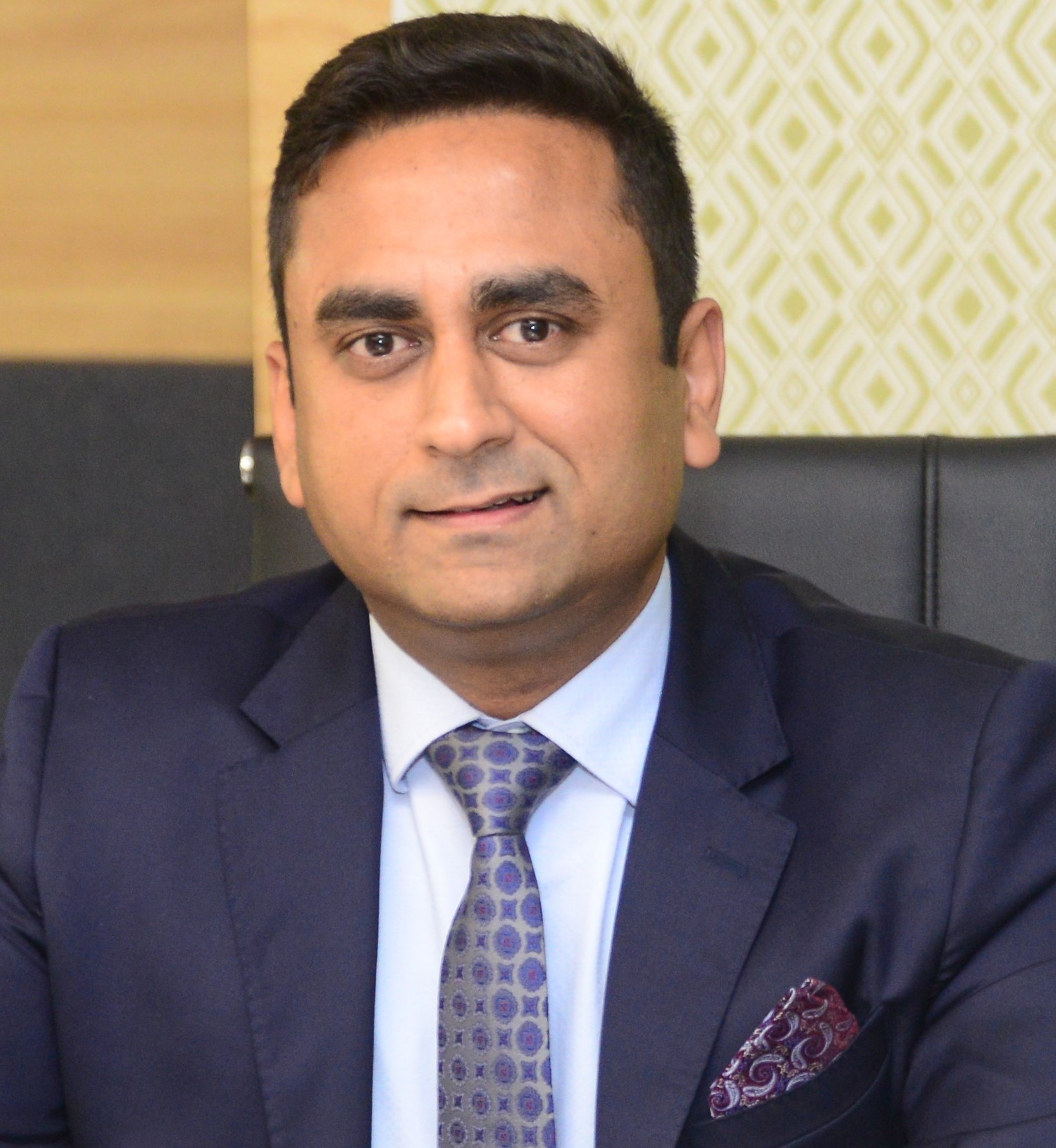

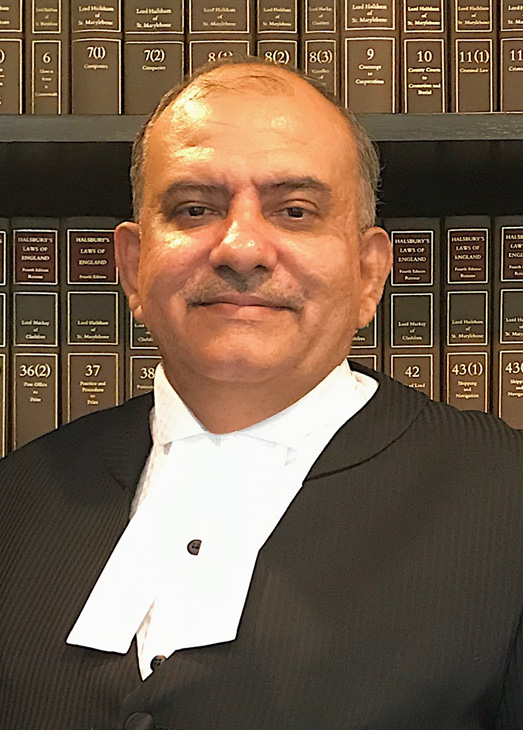







 Allow notifications