Category: Founder

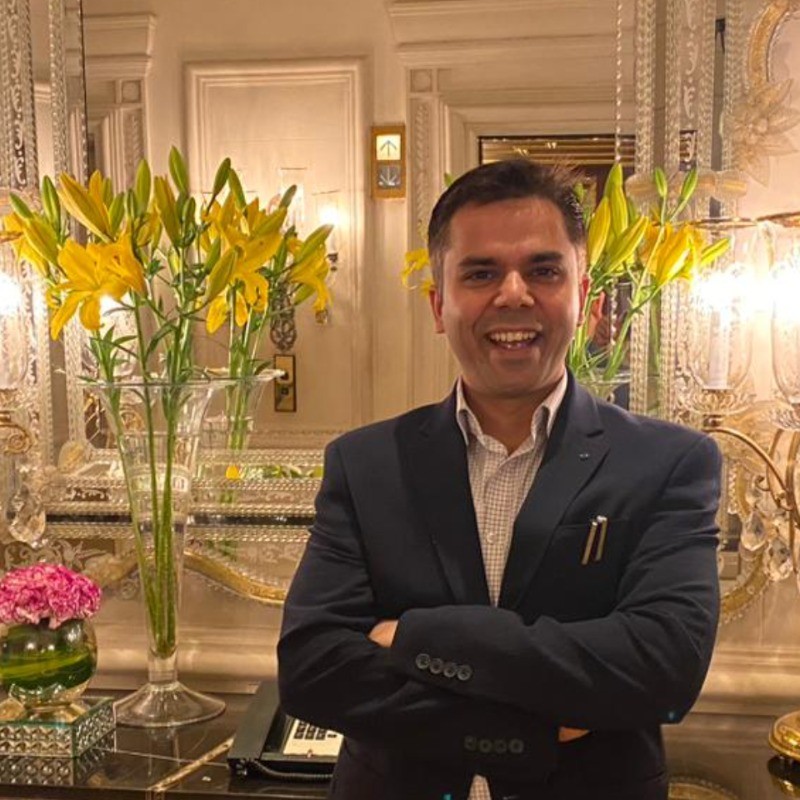
  • “Legal compliance is not just a requirement; it’s a commitment to ethical practices and client trust.” – Explore the symbiotic relationship between luxury real estate and legal expertise, Rohit Chopra, Consultant & Founder of South Delhi Prime and Goa Prime.

    “Legal compliance is not just a requirement; it’s a commitment to ethical practices and client trust.” – Explore the symbiotic relationship between luxury real estate and legal expertise, Rohit Chopra, Consultant & Founder of South Delhi Prime and Goa Prime.

    This interview has been published by Namrata Singh and The SuperLawyer Team

    Congratulations on your remarkable 27+ years in the real estate industry! Looking back, your educational journey reflects a focused approach towards real estate from an early age. Can you share what inspired you to choose real estate, and did you always know this was the path you wanted to pursue?

    Real estate as an industry has excited me since early childhood. There’s no exaggeration if I say that I decided to become a realtor while I was still studying in school. As I completed my high school education and stepped out to become a realtor, I consumed every little detail about the market (South Delhi) I wanted to specialize in. This happens to be the area I grew up in and to some extent knew inside out. In the days to come, I realized that demand for luxury homes around the area was skyrocketing and there was immense scope to expand my services across different locations so yes the approach was always focussed.

    That’s when I decided to partner with locational experts and take my business https://southdelhiprime.com/ to an all-new level. In fact, I’ll say I always enjoyed and still enjoy influencing friends to join real estate

    Starting a company is a significant undertaking. What were the most challenging aspects you faced during the startup of South Delhi Prime, and how did you overcome them? Any lessons you learned that you would share with aspiring entrepreneurs, especially from the current generation?

    For the 27-odd years that I have been in the shoes of a realtor, not once have I felt intimidated to take the lead. I will credit all the stakeholders who made me feel at ease while crediting myself for putting in the backend work. However, if I have to list one challenge, I’d say it has to do with helping every team member find their purpose while making room for their personal growth and satisfaction.

    To achieve this objective, I feel it is necessary to encourage dialogue, mostly 1:1 interactions wherein the leader can understand the teammate’s state of mind and suggest accordingly. Being in the business of selling super luxury homes, managing the art of frustrations and disappointments, having supreme self-belief, and trusting in the process is of paramount importance, thus when every team member is on the same page, I believe can organizations walk collectively in the direction of fastened progress to become a dominant leader in the business. I’d like upcoming startup founders to take note of this.

    Given your involvement in luxury real estate, what unique challenges and opportunities do you find in dealing with high-value transactions, and how does your educational foundation in Law aid you in addressing these challenges effectively?

    Since we run a 100% referral business there are no major challenges as such because the person approaching us already has the required faith and belief that we’d be able to help them find their dream luxury property. However, there is one realization I have developed in the process, which I believe can act as a great opportunity of success too, which is to be a continuous learner. Also I feel delegation and moving away from micromanagement has helped us in being fully available to our clients – right support at the right time ideology.

    In terms of my educational foundation in law, this degree surely complements my role as a realtor by enabling precise contract drafting, ensuring terms are clear and favorable. It aids in compliance with regulations, safeguarding clients from potential pitfalls. Familiarity with property laws and zoning regulations enhances the ability to identify viable investment opportunities and mitigate risks, which can eventually be optimized in the interest of our clients. Furthermore, during deliberations regarding the property’s title chain with either the Seller, the Buyer, or their legal representatives, I am equipped to offer guidance and advice concerning the accuracy of the title, while also facilitating the provision of necessary legal remedies.

    You’ve mentioned that South Delhi Prime is the digital arm of ‘SanD Advisory Pvt Ltd.’ How has technology, especially legal tech, played a role in shaping and enhancing your real estate advisory and transaction processes?

    I’d like to believe legal tech has revolutionized the real estate landscape by streamlining processes and enhancing efficiency. For instance, automated contract management has helped improve the accuracy and speed of closing transactions and reduced overall administrative burdens. In fact, online platforms always come in handy to provide quick access to property laws, zoning regulations, and market trends, a must-have for realtors and clients alike. Blockchain technology and E-signature tools are other interesting legal tech alternatives, I believe can change the face of the real estate market. I’d conclude by saying that in today’s digital age, what is real estate without legal tech?

    As a principal consultant and entrepreneur with a focus on start-ups in the real estate domain, how do you believe your educational background in law has equipped you to make strategic decisions, and what qualities do you consider essential for individuals venturing into entrepreneurship in this industry, especially when navigating the initial legal challenges?

    I’d say my educational background in law has helped in shaping my strategic mindset, which I believe is vital for navigating the complex legalities in the real estate landscape. The ability to interpret intricate regulations and negotiate contracts is paramount, something my law background helps me with tremendously. Moving ahead, the essential qualities I believe real estate entrepreneurs need to possess are adaptability to the ever-evolving legal frameworks, a keen analytical eye, and effective communication. Moreover, to be able to navigate initial legal challenges, resilience, proactive compliance measures, and a commitment to ethical practices become mandatory. 

    With the rise of legal tech solutions, how do you see technology continuing to influence the legal and real estate sectors? Are there particular innovations that have significantly benefited your practice or streamlined operations?

     From what I have noticed the surge in legal tech has helped shape the legal and real estate landscape by ensuring efficiency and precision. Innovations like AI-powered contract analysis fasten transactions, while blockchain ensures secure and transparent property deals. Virtual reality enhances property showcasing from the comfort of our homes. For our business per se, digital platforms for market analysis and e-signature tools have been of significance to streamline our luxury real estate business, saving time and enhancing client experiences, which happens to be the ultimate goal of our business.

    Considering your proficiency in law, are there specific legal trends or changes in regulations that you believe will significantly impact the real estate landscape in the near future?

    As a luxury realtor, who has been around for almost 3 decades now, having explored the traditional way of working to now getting a taste of the best of the digital world offerings,  I anticipate several legal trends taking the real estate space by a storm. I’d like to believe increasing emphasis on sustainable and green practices may end up influencing property development regulations. Similarly, data privacy laws shall become vital in handling client information securely, a non-negotiable in today’s times. Zoning regulations could eventually accommodate flexible workspaces. Additionally, emerging technologies, like blockchain, can revolutionize property transactions. These are just some of the many trends I can immediately think of.

    With your extensive background in sales and marketing, how do you ensure that legal considerations are seamlessly integrated into the overall strategy of acquiring and selling real estate assets for your clients?

    I would say exercising rigorous due diligence precedes each transaction at South Delhi Prime and now Goa Prime, which helps with mitigating risks and placing client interests on the pedestal. Similarly, practicing transparent communication on legal nuances proves equally integral in client interactions, eventually instilling trust. We also make it a point to tweak our sales and marketing strategies in line with the legal frameworks, thus optimizing property positioning. With this approach, we have been able to maximize asset value, safeguard client interests, and set a standard of excellence in the luxury real estate domain.

    What made you choose the South Delhi Market? Do legal dimensions change in real estate based on the region and if yes to what extent?

    Like I said earlier, having grown up in South Delhi and having known the region inside out was one of the pivotal reasons behind me fixing my mind on the South Delhi luxury real estate market. South Delhi is home and with South Delhi Prime we wanted to make our clients feel at home.

    To answer the second part of the question, yes, legal dimensions in real estate do vary significantly based on regions. In fact local laws dictate property rights, zoning regulations, and transaction procedures. From land use policies to contract requirements, regional nuances play a crucial role, making it crucial for realtors to develop a deeper understanding of specific legal frameworks and eventually navigate related complexities.

    Balancing the demands of a thriving real estate business with your personal life can be challenging. Tell us more about what your day looks like.

    Work days are extremely busy for me. Being a realtor, most of my business associations ride on relationships. To build these relationships, it is necessary for me to step out in the field, go meet people, pass on information, note down their requirements, and ultimately help them with their dream property. One word to describe my routine is Hustle-Continuous Hustle day in and day out.

    On starting my day, I tend to finish any e-meets that may be scheduled. Then I drive either to work or the client’s/prospect’s home/office. Breakfast usually happens between meetings. At work, I get done with all that is a priority before again moving to the field to keep in touch with the happenings. Usually, my days are very busy but I have no complaints.

    I always dreamt of becoming a successful realtor and today living my dream is what gives me a different kind of high. All the team members share their schedule for the day and I try to join them wherever I am needed and wherever I can. For more than 27 years I have been following one motto – I have to do the most productive thing possible in any given moment. Had read it somewhere and it has stayed with me since🙂

    In your experience, how crucial is legal expertise in the real estate industry, and what advice would you give to aspiring entrepreneurs about navigating legal complexities in this field?

    I’ll say legal expertise is paramount in real estate as it heavily influences transactions, contracts, and compliance. For aspiring entrepreneurs, I’d suggest understanding local laws, contracts, and staying abreast with the evolving regulations is crucial. Similarly, whenever possible investing in legal education, consulting with experts, and prioritizing compliance to mitigate risks is equally critical to long-term survival and success. A solid legal foundation ensures ethical practices, builds trust, and is instrumental in establishing a successful and sustainable real estate venture, which is why I’d encourage entrepreneurs to not shy away from acquainting themselves with legal knowledge and avoid fearing related complexities.

    Ultimately, when acquiring a real estate asset, you are purchasing not only the physical structure or land but also the associated title papers. The integrity of the title papers is paramount, as the real estate asset represents a legacy asset, necessitating legal precision and correctness at 100% each time and every time. 

    Get in touch with Rohit Chopra-

  • “Learning happens with all sorts of firms in different ways and means, each firm offers unique learning opportunities crucial for a fulfilling legal career.” – Adnan Siddiqui, Managing Partner, MAYSS Partners Law Offices

    “Learning happens with all sorts of firms in different ways and means, each firm offers unique learning opportunities crucial for a fulfilling legal career.” – Adnan Siddiqui, Managing Partner, MAYSS Partners Law Offices

    This interview has been published by Namrata Singh and The SuperLawyer Team

    Starting with the basics, can you share a bit about your journey into law and what inspired you to pursue a career in this field?

    I started as a litigating lawyer with Mr. Vivek Chaudhary who was elevated as a HC Judge from Allahabad. Thereafter, I worked with Sr. Adv. Aman Lekhi for some time and went on to become an in-house counsel with CREDAI. Worked with CREDAI for a span of few years and realised that I could call myself a real estate lawyer. I got an offer from MAX subsidiary Antara Senior Living and joined Antara in 2021. I worked with MAX for two years and got an offer from an MNC to lead their real estate team in India. I resigned from Antara only to find out that the company’s culture is bad – hence, instead of finding another job, I ended up making MAYSS Partners with two other colleagues.

    As the Founder of MAYSS Partners Law Offices, can you tell us about the ethos or guiding principles that define your law firm and set it apart in the legal landscape?

    We wish to make a law firm that understands its Client’s business. Very soon, we will be taking up interns and freshers from Tier 3 colleges and try to give them exposure to good Clients and Courts in New Delhi

    You transitioned from the role of Legal Counsel at Antara Senior Living to becoming the Managing Partner at MAYSS Partners. What motivated or inspired this transition, and how has your perspective on the legal profession evolved as a result of taking on a leadership role in your firm?  

    Honestly, it was never planned, it all accidental – A coffee meeting with my Promoter made me think if I should really work for a company that does not have very good intentions for its employees, I resigned immediately after the meeting and thanked the Promoter for being so honest on day one – Ended up making MAYSS Partners

    As a Managing Partner, you lead a team of ten lawyers. What qualities do you look for in team members, and how do you foster a collaborative and productive work environment?

    I honestly believe that everyone can learn and anyone can be trained. Therefore, the idea is to help young professionals from Tier 3 cities come to Delhi and Mumbai and learn the art of practice in these cities.

    Given your expertise in regulatory compliance, what are some key considerations for businesses dealing with RERA, RBI, SEBI, IBC, and other relevant regulatory frameworks?

    The only thing that businesses should bear in mind is that they cannot cheat the investors anymore.

    Looking ahead, what are some trends or developments in the legal landscape that you find particularly intriguing or that you believe will shape the future of legal practice?

    I think AI will bring in a massive change and it is high time that we start learning to use AI.

    With your extensive experience, what are your thoughts on the dynamics of working as legal counsel compared to being a managing partner? How do you navigate the challenges and find fulfilment in these distinct roles?

    In employment, you work for business teams who are your clients and the same goes for a law firm. As long as you are committed to solving a problem, it’s all the same.

    For aspiring law students, internships are often pivotal in shaping their understanding of the legal profession. In your experience, what kind of internship do you believe is crucial for a law student, and what advice would you give on how students can make the most out of their internship experiences?

    I think students must intern with good companies, law firms and lawyers. Students should learn how businesses are run and how do we reach out to the Clients.

    Beyond the legal realm, what are some of your personal interests or hobbies that you find relaxing or rejuvenating?

    I am trying to run five km every day. I love to cook and hang out with my family.

    Considering your extensive experience, what are your thoughts on aspiring legal professionals choosing to intern or work with Tier 1 law firms as opposed to Tier 2 or Tier 3 firms?

    How do you believe the choice of the firm tier can impact one’s career trajectory in the legal field? I think all three are important. Learning happens with all sorts of firms in different ways and means.

    Get in touch with Adnan Siddiqui-

  • “I feel that increased technological advancement in legal practice will create better opportunities for young lawyers, will lead to increased transparency, lower rates of disputes,  faster dispute resolution, standardisation of legal fees and overall improvement of the legal system which directly impacts ease of business”- Saurabh Bhardwaj”, Partner, ORTIS Law Offices

    “I feel that increased technological advancement in legal practice will create better opportunities for young lawyers, will lead to increased transparency, lower rates of disputes,  faster dispute resolution, standardisation of legal fees and overall improvement of the legal system which directly impacts ease of business”- Saurabh Bhardwaj”, Partner, ORTIS Law Offices

    This Interview has been published by Pragya Chandni and The SuperLawyer Team

    Can you share with us what initially inspired you to pursue a career in law, and how did your journey in the legal field begin?

    My father who is a practising lawyer inspired me to become a lawyer. He believed that my analytical skills, command on languages and oratory skills would get me immense success in the legal profession. During my college days I interned with some of the best senior lawyers of the country and was mesmerised by their personalities and their court craft. I aspired to become a senior counsel one day and that’s why I started my career as a litigator. I started my career with my father but shortly thereafter joined the office of a young and successful lawyer in Tis Hazari District court. With my mentor and first boss I got the opportunity to work on some very high stake white collar crimes cases as off-counsels for tier 1 law firms. I was taking up my own matters as well as assisting my senior in his matters. After 4 years of litigation I felt I was stagnated as I had ready playbooks for all kinds of criminal and civil litigation and the cases progressed very slowly. I felt I should expand my horizons and learn a little bit about corporate legal work before I can decide which way to go.

    At this time I got the opportunity to work in the legal department of a popular Indian mobile phone company (Micromax) where I got to draft,review and negotiate commercial agreements for the first time. During my two years of working with the said company I learnt immensely about business and the role of lawyers in ensuring good business hygiene. I would work directly with business heads of various departments and get to learn in detail about their respective departments. I understood the scale of legal operations that are there in big corporations and how to manage them using available digital tools. I also learnt how to get things done by making interpersonal bonds with people which I could never learn as a litigation counsel. Later, I started my own boutique law firm with a few of my friends from law college and started providing comprehensive legal services to startups in NCR including disputes resolution, general corporate, M&A, IPR, compliances etc. In the year 2022 I decided to finally start working on my long standing dream of starting my own business in legal-tech space and that’s when i incorporated my own company to develop a B2B legal tech SaaS platform under the brand name “TrueCounsel”

    Versatility in Legal Practice:

    Legal profession is more art than science and although I do believe in the importance of specialisation, I feel a good lawyer can do anything and everything. Many great lawyers choose to specialise in one area of law but if needed they can take up any kind of challenge. A lawyer who has the capability of representing a client before the Hon’ble Supreme Court of India, can also represent a client in an international arbitration, can also negotiate a high stake deal, can also become a politician, can become a great entrepreneur etc. The level of preparedness, meticulousness, foresightedness and oratory skills that are expected of lawyers, make us ready to take any challenges head-on and with ease. We are mostly performing and at best of our behaviour be it before a court or in a virtual meeting or even when casually meeting anyone in our social circle.

    You have expertise in both litigation and corporate legal work. How did you find yourself navigating both these aspects of law, and which area do you find more challenging or rewarding?

    I find myself navigating between all aspects of law quite smoothly. I believe good research is the key to do well in any area of law or business or technology. I like to take on challenging problems and solve them by sheer hard work. All areas of law are equally challenging and rewarding in my experience and I feel that I thrive under pressure. Whenever I feel that I have become comfortable and bored, I try to take on a new and bigger challenge for myself. Presently I am focussed on learning how to mentor and train the young generation of lawyers which is very different from my generation and becoming a good leader. Also I am facing the challenges of being a tech founder and running a highly competitive business which is very different from being a lawyer.

    You mention a strong aptitude for managing large volumes of corporate disputes using the latest technology. How has technology played a role in your legal practice, and how do you see it shaping the future of dispute resolution?

    The first time I started managing huge volumes of agreements, consumer disputes and recovery matters as an in-house legal counsel, I realised this was completely different from being a litigator. This was the first time I used Microsoft Excel with the help of my boss and second mentor who is also a Chartered Accountant. I understood the importance of using digital tools effectively in order to manage large volumes of data. I had been using technology for legal research during my litigation days already along with OCR tools for extracting data easily for drafting but beyond that I did not know much about the need of tech in the legal profession. This was the time when companies such as ProVakil, Vakilsearch, MyAdvo, Mikelegal etc. had also come up with the objective of solving major pain points in the legal industry using technology. These companies provided solutions for easy discovery of legal professionals, contracts workflow management, automatic updates on court cases, enforcement of IPR etc. This caught my interest immensely as I could see that any problem can be solved using technology and that India is booming with a tech workforce which can create any kind of tech very fast. During the Covid times, the necessity for incorporating tech in legal practice got highlighted and we saw fast advancement in this direction.

    I feel that increased technological advancement in legal practice will create better opportunities for young lawyers, will lead to increased transparency, lower rates of disputes,  faster dispute resolution, standardisation of legal fees and overall improvement of the legal system which directly impacts ease of business.

    Could you share one or two experiences representing clients in high-stakes disputes that have left a lasting impact on your approach to legal representation?

    During my initial litigation days and also when I was working as an in-house counsel, I got to work on some very high stake disputes involving foreign entities. I got the opportunity to work with foreign lawyers and I was highly inspired by their inquisitive approach towards understanding Indian law. I drafted memos and legal opinions which were then vetted by tier-1 Indian law firms and finally shared with these foreign lawyers and that taught me how to appreciate law from an outsider’s perspective. I became more critical and inquisitive about statutes and legal provisions. Also I learned the importance of strategising in detail at the very commencement of a dispute and factoring in all possible outcomes of every step well in advance so that you are never caught by surprise. It also taught me how to manage voluminous documents and data effectively in order to succeed in any dispute because more than law, the facts make or break a case.

    Moving on to your current role as a Partner at Ortis Law Offices, what prompted this transition, and how has this role differed from your previous experiences?

    When I merged my law firm with Ortis Law offices, I made a hard decision to stop doing everything and focus completely on corporate legal work. This decision was prompted by the need for specialisation. I had been doing everything that would come to me and even actively generating work in all possible directions but I realised that although this keeps me motivated, it is not very effective in many ways. I realised that once you have more than 10 years of experience, you must pick an area of law and focus completely on it while generating other work for your partners in the law firm. This creates a good structural foundation for scaling up your legal practice. At Ortis Law Offices I learnt how to be a good mentor and senior. Earlier I would expect a bit too much from my juniors and as a result would become very frustrated with them. This led to low motivation and a toxic environment in my team but my senior partners at Ortis Law Offices taught me how to keep your team happy and motivated and give them space to blossom. Also, while working with other partners at the firm I learnt a lot more about working with MNCs and big clients than I had in my earlier experience.

    You’ve been involved in various acquisitions, funding rounds, and legal proceedings. Could you highlight a recent case or advisory role that stands out to you and share some key lessons or insights gained from it?

    Recently I worked on the acquisition of a company undergoing financial distress wherein I had to represent the said company and its founders. At the same time I had to negotiate settlements with the creditors of the company. This was a very stressful and hectic project wherein I learned how to keep calm and stand your ground under tremendous pressure while representing the losing side in a transaction.

    As someone with over a decade of experience in the legal field, what advice would you give to law students or recent graduates who are starting their careers in law? What lessons have you learned that you believe would be valuable for them?

    My only advice to young law students and lawyers is to do as much freelance work as possible. I believe that while working with seniors or in a law firm structure or as an in-house lawyer one tends to have huge scope for error and a lot of cushion but when you freelance you are directly answerable to the client which teaches you professionalism at a whole different level. It teaches you how to value their time and provide the highest quality of services that you can. 

    Another important advice is that you must keep adding skills in your arsenal. The moment you stop updating your skills you become obsolete and redundant. I recommend that the young lawyers should use as much technology as possible while doing their research, drafting or any other work to increase efficiency and quality of their product and keep a lookout for the latest advancements in legal tech.

    Get in touch with Saurabh Bhardwaj-

  • “Law aspirants should familiarize themselves with this disruptive technology  and understand its implications in a wide array of areas such as contract law, regulations, data privacy,  intellectual property, and digital currencies”- Anshuman Gupta, Counsel, Fox & Mandal

    “Law aspirants should familiarize themselves with this disruptive technology  and understand its implications in a wide array of areas such as contract law, regulations, data privacy,  intellectual property, and digital currencies”- Anshuman Gupta, Counsel, Fox & Mandal

    This Interview has been published by Pragya Chandni and The SuperLawyer Team

    Sir, could you please share with our readers how your journey in law began and evolved, leading  you to specialize in commercial litigation, arbitration, and mediation? 

    I had intended to join the Indian Air Force as a reconnaissance pilot rather than practice  law. The National Defence Academy in Pune required unaided 6/6 eye vision as a visual criterion  and a passing grade in mathematics and physics in 12th standard as an educational requirement for  admission to the Air Force wing. However, when I was in my early teens, I developed myopia and  found that I struggled with mathematics. It implied that I wouldn’t even meet the eligibility criteria  to take the entrance exam. At first, I was dejected, but as they say time is a great healer! 

    Years passed by and in my high school years, I developed an interest in civics and business studies  which contained chapters on constitution, business law and ethics which propelled me to take up  commerce stream in 11th standard and eventually I pursued undergraduate course in law. I took up  internships with an independent counsel, LPO and law firms to understand different facets of law  and organizational structure of lawyers. Initially, I worked on a bouquet of dispute resolution matters, 

    My work included inter alia real estate, testamentary, writ, arbitration, commercial, company,  banking, labour and with the passage of time, I realised that my area of interest was in commercial  litigation, arbitration and mediation. 

    You’ve achieved significant recognition, being enlisted by Forbes India and acknowledged by  The Legal 500 and with experience across various industry sectors, from aviation to real estate, you’ve  covered a wide array of legal areas. How do you manage to navigate and excel in such diverse practice  areas? 

    I believe to excel in diverse legal practice areas, a thorough understanding of facts and  legal issues, effective strategy and planning, and time management are crucial. Keeping abreast of  recent updates through legal publications is also essential.  

    A successful lawyer should adopt a personable approach, comprehensively understanding the client’s  business, and creatively using resources to address the legal issues. In my view, continuous learning  and dedication to provide quality support to my clients drives my motivation to excel. In addition to  this, a successful lawyer must imbibe the spirit of learning throughout one’s career and be able to  creatively use its resources to fulfill the requirements of the client. 

    Your academic background includes an LLM in International and Commercial Law from King’s  College London. How has your international education shaped and influenced you?   

    Pursuing a master’s degree in London on a scholarship gave me a great deal of exposure  to a relatively different university pedagogy and to students from diverse backgrounds. The subjects  were more advanced and in-depth than those I studied in the undergraduate law program and writing  assignments and thesis helped me develop my research and analytical skills. Most of the assignments  which were given to us revolved around practical legal issues compelling us to apply our legal  knowledge in real-world settings. 

    Pursuing a degree abroad also made me become self-reliant and independent. I think when you face  challenges independently, you develop resilience and confidence which benefits you in various  aspects of life. 

    Interacting with fellow international students and locals enabled me to expand my network. Building  friendships establishes a global alumni network, expanding your horizons and introducing you to  diverse ideas and perspectives that may not have been part of your previous considerations.

    From your independent practice to your current role at Fox & Mandal, you’ve navigated various  professional settings. How has this journey contributed to your personal and professional growth,  and what key lessons have you learned along the way? 

    Working in diverse work environments enabled me to understand the perspectives and  challenges one goes through in its legal practice. For example, in an independent counsel setting,  one needs to pay attention to the legal cases as well as take care of administrative tasks such as billing,  operational requirements of the setup and HR aspects etc. However, in a law firm you might be  spared from the administrative responsibilities and focus only on your work that has been assigned  to you.  

    It is essential to know and understand your role in each professional setting. Once this is clear in  your mind, it will be easier to handle and navigate the work and the expectations of your seniors and  your team. Another thing to remember is that the learning in this profession never stops. The law,  and the practice, is constantly evolving. You either evolve with it or be left behind.  

    In my short professional journey, I have learnt that one must be open to embrace new opportunities. It is only when you open yourself up, wonderful opportunities come your way to help you polish  your skills and be instrumental in your professional and personal growth. 

    For law students and recent graduates aspiring to build a successful career, what advice would  you give based on your own experiences and observations within the legal industry?   

    I believe law students and graduates should act like a sponge trying to absorb knowledge  and information from wherever they receive, be it reading an article/newspaper/blog, or listening to the submissions advanced by counsels or observations made by the judge in a courtroom or  discussion on a legal topic with colleagues over lunch.  

    I also believe that one must have the hunger and passion to excel in his/her field of specialization.  In addition, one must also be honest towards the work assigned to them. When you give your all to  the matter, whether you win or lose, it does not matter, what matters is – did I give my best? If your answer is yes, you will get immense gratification, there will be no regrets. 

    I’ve learned that being organized and having your case files at hand is crucial, whether you’re  conducting your own study or research or briefing a senior counsel. 

    Another factor which is instrumental in building a successful career is having a mentor to offer you guidance and support when you require the most. I consider myself fortunate to have numerous  mentors in my field like Mr. Sanjay Kumar Pathak, Mr. Kanishk Vardhan Shahi, Mr. Sonal Kumar  Singh and Mr. Kunal Vajani who have shaped both my professional and personal development. My  deepest gratitude to all of them.  

    Considering the evolving landscape of law and legal practice, are there specific trends or changes  that you foresee impacting the field in the coming years? How should aspiring lawyers prepare for  these changes? 

    The Covid-19 pandemic has not only showcased the feasibility of remote work but also  emphasized the flourishing potential through effective work procedures and cutting-edge  technologies, a concept previously unthinkable. 

    This shift emphasizes the increasing significance of technology in the legal sector. Whether you’re a  law student or a legal professional, proficiency in working efficiently in virtual environments and  familiarity with online collaboration tools is essential in the evolving landscape. 

    One trend which is already making its impact felt across the entire world is generative artificial  intelligence (AI). AI is being increasingly used by law firms/companies nowadays for document  review, legal research, contract analysis, communication etc. Aspiring Lawyers should make  themselves acquainted with legal tech tools and understand how technology is transforming the way  we practice law. 

    Furthermore, the use of blockchain technology and smart contracts is increasing across industries, including legal practice. Despite challenges, blockchain has revolutionized the world of  technology and business. Law aspirants should familiarize themselves with this disruptive technology  and understand its implications in a wide array of areas such as contract law, regulations, data privacy,  intellectual property, and digital currencies. 

    Finally, drawing on your extensive experience, what advice would you offer to fresh law  graduates who are just starting their professional journeys in the legal field? 

    The early years of this profession are the formative years and important for the fresh  law graduates. I reckon in my early years of the profession; a senior advocate narrated the importance  of commitment in the profession by quoting United States Supreme Court Justice Joseph Story – “The law is a jealous mistress and requires long and constant courtship. It is not to be won by trifling  favors, but by lavish homage.” One needs to devote a lot of time to the subject and not be casual in  the approach. Commitment and perseverance are inseparable and work hand in hand for success. As a practicing lawyer, I have realized that learning in this profession is perpetual. Embracing the  idea of being a lifelong student is paramount, resonating with the timeless adage, “Once a student,  always a student.”

    Get in touch with Anshuman Gupta-


  • “Since Insolvency Law is still at a fairly nascent stage, every case brings with it a new set of challenges giving you the opportunity of contributing towards the Insolvency Jurisprudence as a whole”- Himanshu Chaubey, Partner, Edictum Law & Co.

    “Since Insolvency Law is still at a fairly nascent stage, every case brings with it a new set of challenges giving you the opportunity of contributing towards the Insolvency Jurisprudence as a whole”- Himanshu Chaubey, Partner, Edictum Law & Co.

    This Interview has been published by Pragya Chandni and The SuperLawyer Team

    Can you share the journey that led you to pursue a career in law, starting from your education at Hidayatullah National Law University? What motivated you to choose law as a profession?

    Honestly speaking I stumbled upon law by chance. I was always interested in humanities and social sciences but took up a Science in my plus 2. But I soon realised  that I was not very good at it. A friend of mine then informed me that there are these institutions called the National Law Universities and people graduating for these institutions are getting well-paying jobs. It was the first time that CLAT was being conducted for admission to these colleges. I did some research and thought that it might suit my interest. So I must admit candidly that I chose law to avoid doing Engineering and was lured by the promise of a Fat Pay Cheque .  

    As an Advocate-on-Record at the Supreme Court of India, you’ve handled matters of constitutional and national importance. Could you discuss a specific case that stood out to you, and how it shaped your perspective on legal practice?

    Ans. As an AOR one matter which really stood out for me was a case wherein My Client, who is an RTI Activist, was not being allowed to reside within the confines of a District on the basis of false FIR’s registered against him. The FIR’s were registered by the same people against whom action was being taken on the basis of representations made by My Client. The Supreme Court while allowing the Appeal observed and reiterated that the fundamental right of Free Movement and Residence across the Country cannot be curtailed on flimsy grounds. 

    Your experience involves representing clients in various High Courts, dealing with matters related to the Arbitration and Conciliation Act, 1996. Can you share insights into the challenges and strategies you often encounter in this area of law?

    Ans. An Arbitration is nothing but a trial being conducted by a judge chosen by the parties and as per rules chosen by the parties. Therefore every Arbitration has to be approached in the same manner as one would approach a Trial before a Court of First Instance. As is the case with any Trial, even in Arbitration, it is of utmost importance that all the documents and facts, which are essential for establishing the claim, are brought on record. Even though it is said that one should not hide any facts from a doctor and a lawyer, however it is also a part of Human Nature to narrate only those facts which are beneficial to us. Therefore it is our job as lawyers to even extract those facts and documents, which are harmful to us so that we are not blindsided by them during the Arbitration. If you are thorough with your facts then all other challenges are manageable.  

    In your independent practice, you’ve represented clients before the National Company Law Tribunal and drafted appeals before the National Company Law Appellate Tribunal. How did this experience contribute to your understanding of corporate law and insolvency matters?

    As a firm our primary focus is towards commercial litigation and naturally that includes litigation before the NCLT and the NCLAT. Since Insolvency Law is still at a fairly nascent stage, every case brings with it a new set of challenges. That also gives you the opportunity of contributing towards the Insolvency Jurisprudence as a whole. One case that stand out for us, which also then became a landmark judgment with respect to powers of NCLT under the IBC, is the case of E.S. Krishnamurthy v. Bharath Hi-tech Builders Ltd.  We handled that case from the NCLT uptill the Supreme Court and therefore it is very close to our Hearts. 

    As an Associate at Gohil and Singh Law Chambers, you were involved in drafting and researching on petitions before the Supreme Court. Can you share a memorable case and the legal issues you tackled during that time?

    Mr. Pradhuman Gohil, has played a big role in my development as a lawyer. I worked with him for four years and extensively worked on matters before the Supreme Court. There were several cases which helped me to hone my skills as a lawyer. However one case which stands out was a Criminal Appeal in which we were defending a person convicted for murder. The case was based purely on Circumstantial Evidence and primarily based on statements of witnesses. We prepared for that matter for over six months and the hearing went on for 3 weeks. That case had all the issues can can think of a in a Criminal Case, ranging from importance of a Statement under Section 313 CrPC, Completion of Chain in a case of Circumstantial Evidence, Veracity of the testimony of a Hostile Witness, etc. 

    During your association with the office of Mr. Ajit Kumar Sinha, Senior Advocate, you were involved in researching matters before the Supreme Court and High Courts. Can you elaborate on the types of cases you worked on and the legal principles you engaged with?

    Mr. Ajit Kumar Sinha is my mentor in the profession. I did majority of my internships under him and eventually started my career with him. I worked under his guidance for 2 and a half year. During my time with Mr. Sinha, I had the opportunity to work on matters pertaining to mining laws, service laws, Land Laws, Tender Matters etc. I also had the opportunity to assist him in the Coal Scam Matter and the NJAC matter. 

    Given your diverse legal background, from constitutional matters to criminal law and commercial transactions, what advice would you offer to recent law graduates aspiring to build a versatile legal career and those interested in practicing law at a high level and dealing with matters of constitutional significance?

    My Advice to recent law graduates to not restrict themselves to practising only in one area of Law. The Beauty of the profession lies in its diversity and therefore one must try and grab onto all the work that comes their way. One must be a jack of all trades, because that goes a long way at retaining clients. The aim has to be that for your Client you should be the one stop shop. 

    Every person has a different journey and one advice that a friend of mine once gave me is to not compare my journey with that of others. Law, and especially litigation, demands perseverance. You just need to stick around and give your hundred percent, and at the cost of sounding preachy, I must say that there are no short cuts.

    Get in touch with Himanshu Chaubey-

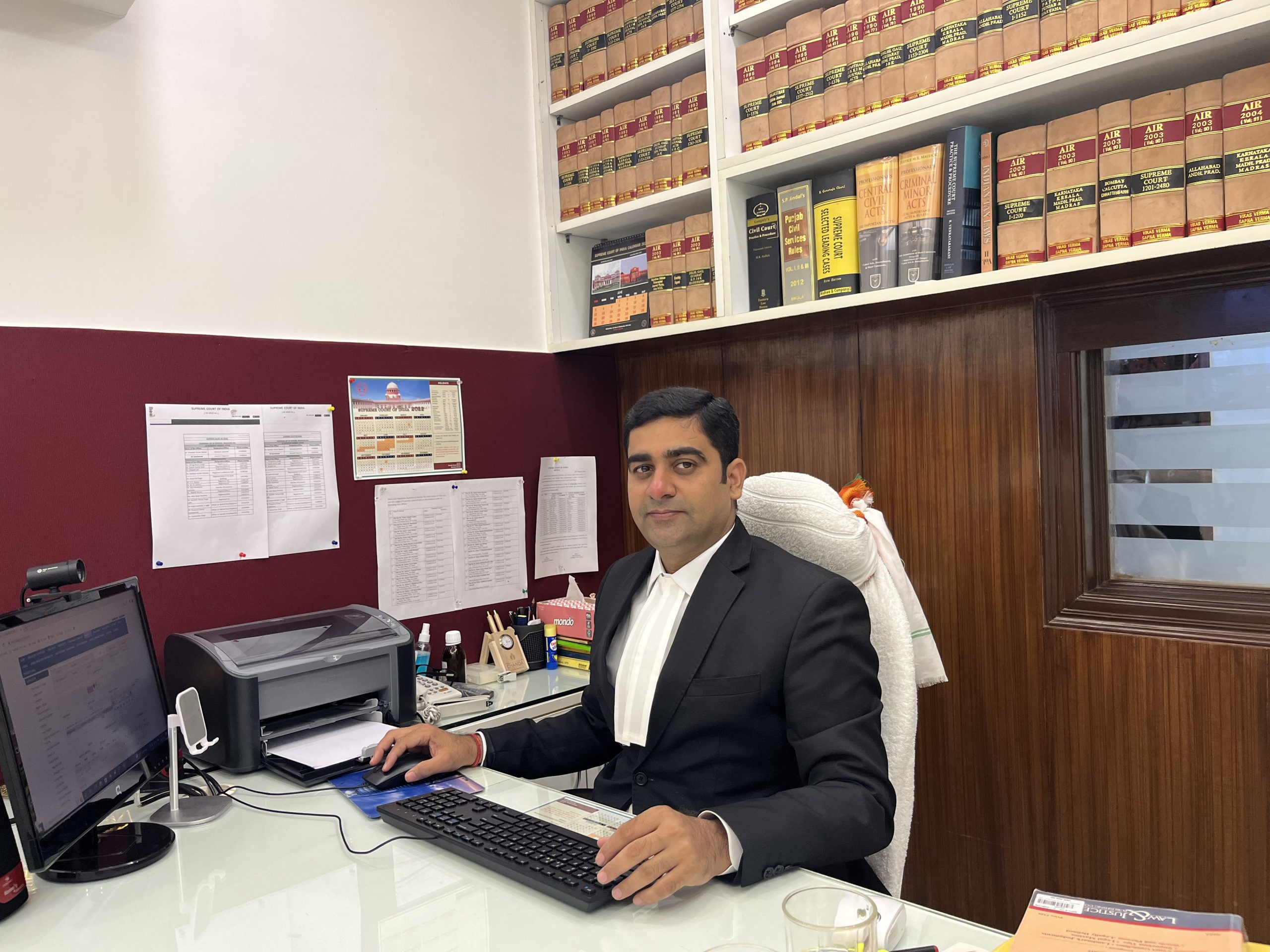
  • “Advocacy is a blend of dedication, strategy, and continuous learning, and I believe in mastering every facet of this noble profession.” – Vikas Verma, Advocate-on-Record at Supreme court of India & founder of KMS Law Firm

    “Advocacy is a blend of dedication, strategy, and continuous learning, and I believe in mastering every facet of this noble profession.” – Vikas Verma, Advocate-on-Record at Supreme court of India & founder of KMS Law Firm

    This interview has been published by Namrata Singh and The SuperLawyer Team

    What initially sparked your interest in pursuing a career in law, and could you share the motivation or experiences that led you to take the Advocate-on-Record (AOR) exam after already having an extensive 15-year career in the legal field?

    From the initial stage of my career, legal profession was passion for me, after passing my LLM, I was involved in Judiciary Coaching, then after that I was appointed as Assistant Advocate General by the Government of Haryana from 2011 to 2014, but I feel that Advocate-on-record is a prestigious position in the Supreme Court and has its own charm.

    Establishing and leading KMS Law Firm is a significant accomplishment. Could you share some insights into the challenges you faced during the initial stages of starting the firm and what motivated you to embark on this entrepreneurial journey in the field of law?

    At KMS Law Firm we have a research-oriented approach and highly experienced team which ensures a quality assistance with an assortment of legal business solutions, ranging from complex transactions. I started my journey with dedication & Hard work. 

    As the Co-Chairman of the All India Lawyers Forum, you likely engage with a diverse legal community. What initiatives or activities do you find most rewarding in fostering connections among the legal professionals across the country?

    As Co-Chairman of AILF, I have organised about 40 webinars during lockdown on different topics of law which were most significant for legal fraternity with sitting and former judges of the Hon’ble Supreme Court of India. I learnt a lot from the experiences from different speakers/guests who gave valuable insights on legal topics. 

    In your role as Emeritus Assistant Advocate General for the Government of Haryana, what are some of the legal and constitutional issues you advised on, and how did they contribute to the governance of the state?

    As the Assistant Advocate General of Government of Haryana, I was a younger officer of the court in the State of Haryana. I attended and presented before the constitutional court and divisional benches and dealt with different types of cases of Government during the tenure. I took an active part in proceedings of court in state matters.

    As the Managing Partner of KMS Law Firm, you’ve been involved in a diverse range of legal areas, from criminal law to constitutional Law. Can you share a case or experience that stands out to you, something that was particularly challenging or rewarding in your career?

    It was a great experience when I dealt with the most difficult cases of NDPS and argued before the Supreme Court and Justice Indira Banerjee gave good judgement on reducing the sentence and even waived off the fines also. 

    As a firm has a Research-Oriented Approach, could you elaborate on how this approach translates into delivery quality legal assistance to clients? How does the firm ensure its team stays well-informed and updated on legal developments?

    The firm boasts of a Highly Qualified Team to assist the clients with the legal and regulatory framework. The mindset of our team is a special mix of integrity, intelligence, energy, and strategy which is the backbone of our firm. It is this conspicuous character that makes our associates different from others. It is what enables us to be the best for our clients, – their guiding star, and their trusted legal advisor.

    In your extensive experience navigating litigations across various high-profile forums, including the Supreme Court of India and the High Courts, can you share a situation where the courtroom dynamics were particularly challenging, and how did you navigate through it to secure a positive outcome for your client?

    When I dealt with a civil case regarding a land dispute before the court of Hon’ble The Chief Justice of India and the court had made up its mind to deliver the verdict that the land could be divided amongst the parties to the suit. Even our case was on strong footing as the order of the lower court was in the favour of my client, but I tried to give my best before the court and the court finally passed an order in favour of my client.

    For law students aspiring to intern in the legal field, what suggestions would you give them to make the most out of their internship experiences? Additionally. Could you share insights into the types of internship your firm, KMS Law Firm, typically offers and skills you look for in potential interns?

    During the internship experiences, students should do research work and discuss the file, read the bare acts with interpretation and should attend court proceedings so as to know the practical nuances of law. Good communication and drafting skills is what we seek in our prospective interns.

    Balancing a career in law can be demanding. How do you unwind or pursue personal interests outside of your legal commitments? Any hobbies or activities that you particularly enjoy?

    Social Engineering is the best theory in the legal field. I am involved in yoga & Meditation which I enjoy after work. Generally, I like to visit new places for holiday breaks.

    Considering your extensive experience in the legal field and as a mentor to aspiring lawyers, what advice or suggestions would you offer to the coming generation of legal professionals? In your opinion, what can they do differently or better to thrive in the dynamic legal landscape and contribute meaningfully to the field?

    Seven lamps of advocacy are the most significant for every lawyer i.e., honesty, courage, wit, industry, eloquence, legal judgement and fellowship. One should always try to master these all. Also, with the advancement in technology in research work and filing it is necessary to be conversant with the developments in them and use them for one’s progress. Also reading judgment and discussing with seniors gives immense jurisprudential understanding of law. 

    Get in touch with Vikas Verma-

  • “Every client, every cross examination, every meeting, every briefing in itself presents a new experience and contributes to one’s growth”- Priyanka Sethia, Founder of the Chambers of Priyanka Sethia

    “Every client, every cross examination, every meeting, every briefing in itself presents a new experience and contributes to one’s growth”- Priyanka Sethia, Founder of the Chambers of Priyanka Sethia

    This Interview has been published by Pragya Chandni and The SuperLawyer Team

    Ma’am, can you please provide a brief introduction about yourself and your journey into the field of law?

    Hi. I am Priyanka Sethia and I have been practicing at various Courts and Tribunals across India, as an advocate for over 10 years. 

    I graduated in the field of law in 2013 and got an LL.M. in Corporate and Financial laws in 2021, while being in the profession and gained further certifications as opportunities presented themself.

    I am a certified negotiator accredited by London School of Economics & Political Sciences [2022] and a certified POSH (Diversity & Inclusion) Trainer [2023].

    I started my own law chamber – Chambers of Priyanka Sethia, in 2021 and we take up civil and commercial matters for various individual and corporate clients as well as deal in corporate practice.

    With over 10 years of experience, you have established yourself as a prominent figure in the legal fraternity. What inspired you to pursue a career in law and eventually become an advocate?

    I have shared this before, but this story never gets old for me. So, my career in law wasn’t really a given from the very beginning and I am a first generation lawyer. My roots find themselves etched in a very traditional business family. It so happened that one day, I was late to school by a few minutes and the Head of Department, Accounts who was in charge of the School Assembly that day, asked me to go back home as I was late!

    It was however only my first late show and I was aware of the finely printed school rules and regulations, set out in our Daily Academic Planner that permitted a student three late shows before being sent back for the day. With great respect, I politely took out the Academic Planner from my bag, opened the rules section and read it out to the said school teacher which stated that I had to be given three opportunities/warnings, before I could be sent back home for being late. I certainly could attend school that day but only saw disdain in that teacher’s eyes for me, on all days thereafter. Thankfully it was my last year in school and I then realized the power of Laws and Rules framed thereunder and the joy of knowing and abiding by it and of course realized my interest in reading the fine print.

    Decision to pursue law came organically to me but the decision to choose between Litigation vs Corporate Law never comes easy for anybody. While the heart wants to be in the courts and explore the passion of arguing vociferously for the clients and their cause, the mind seeks to showcase the drafting skills. So now, my Chamber is trying to strengthen both its litigation team and its corporate practice team, by continuously levelling up with diverse certifications, hiring new talent and continuous practice. At the moment, I head both the verticals and with a recent certification in POSH (Diversity & Inclusion) Training, I hope to offer various training to Corporates, in this arena.

    You founded the Chambers of Priyanka Sethia in 2021. Could you share the motivations behind starting your own law chambers and the vision you have for it?

    I have worked with some of the most incredible seniors in Profession who have mentored me throughout and continue to handhold me through difficult situations. After assisting them for about 8 years, I realized that I was ready to explore legal practice from my own perspective. 

    And so, post the Covid scenario, with experience that I had gathered from my seniors and mentors, and a postgraduate degree in my choice of practice area, I delved into independent practice and started Chambers of Priyanka Sethia in November, 2021.

    My vision for the chamber is to render exceptional legal services to our clients while being on an upward trend in the number of fresher hirings. I take pride in the fact that I welcome freshers with 0-6m experience and it’s lovely to draw inspiration from their passion and exuberance. On the work front, the chamber is striving to strengthen both its Litigation Practice and Corporate Practice. 

    You are a certified negotiator accredited by the London School of Economics & Political Sciences. How has this certification influenced your approach to negotiations, and what role does negotiation play in your legal practice?

    While engaging in Corporate Practice, often we find ourselves negotiating terms of the contract on behalf of our clients. Many-a-times, the other party is situated outside India and has a completely different approach towards the drafts/agreements compared to the Indian scenario. Being sensitive to their background, ethos, laws and culture is the key. My certification in negotiations has helped me in bridging that gap and comes in handy especially while dealing with International Corporates and has added an edge in fostering new relationships, executing contracts, and arriving at settlements. 

    Your experience covers a wide range of legal areas, including corporate practice, commercial litigation, alternative dispute resolution, and more. Can you highlight some key experiences that have significantly contributed to your growth as an advocate?

    Every case is a new learning. One cannot limit their learnings to the law. I strongly believe every person we meet is a new experience, we become wiser with each interaction. Every client, every cross examination, every meeting, every briefing in itself presents a new experience and contributes to one’s growth.

    Your expertise extends to regulatory compliance and privacy laws. How do you approach these complex areas, and what challenges do you typically encounter in ensuring compliance for your clients?

    To cite one instance, often we find that the law enforcement agencies are not well trained to understand and implement the law at the grassroot level. Recently, while dealing in a legal metrology matter, we observed that the department officer had no exposure to a couple of years old amendment in the law and required sensitization. Routinely issuing notices just to meet targets is a norm and needs to change. 

    You champion the cause of women emancipation. How do you integrate this advocacy into your legal practice, and what initiatives have you undertaken to contribute to diversity and inclusion in the legal profession?

    I believe having freshers on board or having non NLU advocates in the team is the biggest inclusion point in our profession. I am open to having good talent on board without any preconceived notions or unconscious biases.

    Besides, I take up matrimonial matters for marginalized women pro bono and ensure that they are taken to a logical conclusion.

    Considering your successful journey in law, what advice would you give to fresh graduates aspiring to pursue a career in law and make a mark in the legal profession?

    Success is a subjective term. On the work front, my request to fresh graduates aspiring to pursue a career in law is to be consistent. Do not give up without giving it a fair shot and some time.  Also, there is a great demand for lawyers with expertise in niche areas. One could also choose their practice area earlier on in their career and proceed further in that direction. 

    And, Pursue a hobby alongside the profession. This helps in keeping sane as well as sticking through. 

    Get in touch with Priyanka Sethia-

  • “Travelling to various Courts per-se add a great value, however, arguing a matter before another Court apart from your regular Court adds more experience and sharpens the argumentative skills”- Devmani Basal, Associate Partner at SNG Partners

    “Travelling to various Courts per-se add a great value, however, arguing a matter before another Court apart from your regular Court adds more experience and sharpens the argumentative skills”- Devmani Basal, Associate Partner at SNG Partners

    This Interview has been published by Pragya Chandni and The SuperLawyer Team

    Sir, could you please share the story of how you initially decided to pursue a career in law? Were there specific experiences or influences that led you to choose this path? 

    First of all, I am a second generation lawyer. I was motivated to pursue law from the beginning as Law is a noble profession and contributes a lot to society. Since my childhood, I have seen my Father’s contribution towards society as his core practice area was Criminal Law. However, during my college days, I was much inclined to pursue my career in the stock market being financially connected which goes to my core passion. Simultaneously, I was pursuing Law and finally, I decided to shift myself to Law especially in Commercial matters, which is a mixed bag of finance and commerce. I, then, shifted to Delhi.

    With almost 12 years of experience across litigation, commercial arbitration, and consumer and company litigation, what motivated you to specialize in these specific areas within the legal field? 

    I am passionate to read and learn more and more deep into financial activities related to business and commerce. This interest connects me with the litigation and enlightens me to understand the problem of a businessman in a much better way, which ultimately led to making a business decision. Law can be practiced by anyone but having basic knowledge over the general subject of the case either commercial, arbitration or consumer or company makes things easier to resolve the query in an effective way. Like an Advocate having understanding of stock market would be able to pursue a case related to stock market than a novice. Since I have interest in reading these topics, I was more inclined to specialise in the above specific areas in the legal field, so that I can deliver better than ordinary. 

    Your career includes appearances before various High Courts, the Supreme Court of India, and various tribunals. Can you highlight a particularly challenging case you’ve worked on and discuss the strategies you employed to navigate through it successfully? 

    It was in Sep’ 2014, when I caught up in a matter before Hon’ble Supreme Court. I briefed a Senior Advocate, however, he was stuck in a traffic jam and could not make it on time. I was called upon by the Bench to argue. With hesitation, I began and strenuously argued the matter. When I finished my arguments, my Senior reached the Court. However, by that time, the Hon’ble Court reserved the matter for order. The judgement was delivered in the month of March’ 2015 and finally, we succeeded. This case taught me to always be ready with the brief irrespective of engaging a Senior Advocate. I have fearlessly appeared before almost 11 High Courts of the country and numerous District Courts and Tribunals across the country and independently argue the matters. This rich experience and exposure are completely devoted to my Senior Colleague Mr. Ajay Abhay Monga Advocate, who always reposed faith on my skills and offered opportunity as and when it appeared.  

    Given your expertise in Consumer Laws, Commercial Law, and other areas, how do you stay abreast of the ever-evolving legal landscape, especially with regards to amendments and changes in laws and regulations? 

    In the current scenario, especially the deep presence of online updates and platforms, it becomes easy to keep updated. However, specific laws get evolved as and when I work upon a case file. I must state that sitting in Court, in idle time, is indeed a good way of learning and keeping updated, apart from learning argumentative skills and to have a broad idea about the temperament of a Judge.

    You’ve been associated with significant reported judgments, such as Millennium Wires vs. The State Trading Corporation of India. Can you share the role you played in these cases and the impact they had on your legal career? 

    As explained to you above, the case you highlighted was a game changer for me as it was an opportunity to independently argue a case before the Hon’ble Supreme Court in addition to the fact that many stakes were involved. I was quite nervous in the beginning, however, after the hearing concluded, I felt immensely satisfied with my performance and it boosted my confidence to argue a case before any Court. I was involved in the above case since it was before the Hon’ble High Court of Delhi, therefore, I had good command over the facts and coupled with the fact that I briefed the Senior Advocate for hearing, so I was quite prepared with the case. The preparation, briefing and discussion with Senior and deep involvement in the case since inception, in fact, gave power and confidence to present the case independently.

    Having worked on matters related to FEMA, PMLA, and other financial regulations, how do you approach advising senior management on the legal implications of business decisions, particularly in the context of financial laws? 

    Advising on the legal implications of financial laws certainly depends upon the kind of business my client is involved in coupled with their requirements. Those days are gone by, where businesses can flourish without legal support. Presently, the laws are quite stringent, which require legal advice at every stage of business decisions. Therefore, after understanding the business model and the requirements of a particular trade, I would advise my Client in making its business decisions in line with the financial laws.

    From being an Associate to now being an Associate Partner at SNG & Partners, can you discuss the key milestones and challenges you faced in your career progression? 

    I belong to Gwalior, Madhya Pradesh and shifted myself to Delhi in Sep’ 2011 to pursue my career in law. Since, I was not much active during my college days, therefore, I was completely raw, when in fact, I entered the profession. I initially practiced with some Advocate for a period of 4 months and thereafter, I began my career with SNG & Partners in March’ 2012. Our Managing Partner, Mr. Sanjay Gupta is a kind-hearted and a great mentor, who always encourages the juniors. In the beginning, rushing from one Court to another gave me an exposure to a variety of laws. I was working under Mr. Ajay Abhay Monga, Senior Partner, who gave me ample opportunities to argue the matter independently. Later on, he handed over the outstation cases portfolio to me, which added more exposure in my experience. Travelling to various Courts is per-se add a great value, however, arguing a matter before another Court, apart from your regular Court, adds more experience and sharpens the argumentative skills. Travelling to different Courts gives independence as well as enhances decision making without the support of your colleagues. It also helps you to understand the local practices of various Courts. I must add that there are no free lunches anywhere and the same goes with different Courts in different states. You will face challenges like language barriers as all the Courts in this country are not following English as their base language but these exposures not only add experience but also shape an Advocate to argue a matter in challenging circumstances as well. My journey with SNG is full of challenges in each case, however these challenges make an Advocate. I am always thankful to my Seniors for always appreciating my work and finding me suitable for new challenges. A special regard to Mr. Monga, who has been a great mentor for me and guided me in my hard times and always motivated me.

    As someone with a rich and varied legal career, what advice would you give to fresh law graduates who are just entering the legal profession? What key lessons have you learned along the way that you would like to share with them? 

    A law graduate must understand that law is a learning process, which would never end. Therefore, reading and understanding the law and its implications are essential. Like practice makes a man perfect, similarly, the more you read, the more you gain. Law graduates, during the initial days, must visit Court everyday and observe the Advocates arguing their cases and the kind of questions raised by the Benches. This will make them understand how the case is presented. You can make notes and read the file thoroughly, however, there are certain spontaneous questions, which would arise and those questions can be answered, only with your general acumen. A law graduate must not refrain from reading the topics, which are not necessary for the kind of legal practice he/she is involved in. He/She must understand that presenting a case before the Court is an art crafted by an Advocate. Thus, every advocate has a different way of presenting the case. Thus, the argumentative skills can only be learnt, when you hear and listen in a Courtroom. I wish All the Best to all the Law graduates.  

    Get in touch with Devmani Bansal-

  • “In the legal profession, I see myself more than a lawyer—I’m a provider of comprehensive solutions. From environmental concerns to individual rights, the legal realm is inclusive.” – Praveen Pathak, Managing Partner of Praveen Pathak & Associates.

    “In the legal profession, I see myself more than a lawyer—I’m a provider of comprehensive solutions. From environmental concerns to individual rights, the legal realm is inclusive.” – Praveen Pathak, Managing Partner of Praveen Pathak & Associates.

    This interview has been published by Namrata Singh and The SuperLawyer Team

    Sir, what inspired you to make your career in law? while you did that, you became a managing partner at Praveen Pathak, and Associates so would love to hear about your journey.

    Allow me to provide you with some context initially. I didn’t start my professional journey as a lawyer; I was a financial consultant at ICICI Prudential and other financial institutions. My perspective shifted during the aftermath of the 2008 Lehman Brothers collapse, witnessing individuals earning substantial annual incomes suddenly losing their jobs. The realization that our profession lacked job security prompted me to reevaluate my career.

    As someone accustomed to starting my day early and returning home late, the prospect of idleness after losing my job was challenging. Despite facing this situation, I didn’t share my predicament with my family. It was during this time that I stumbled upon information about the legal profession, which intrigued me. Although I had heard during my studies that law was a demanding field, my background in understanding people’s needs and navigating complex situations made it seem less formidable.

    Being solution-oriented has always been my approach, and I bring this mindset to the legal profession. I see myself as a provider of comprehensive solutions, not just for individuals but for entire families and the corporate world. Many people, especially newcomers, lack a clear understanding of what they are getting into when pursuing a legal career. I take it upon myself to guide them and emphasize that the legal profession is inclusive, extending to everything from environmental concerns to the rights of individuals, unborn children, and even those who have passed away.

    In discussing our current conversation, conducted over the internet, I highlight the universality of legal solutions. Where there are rights, there are remedies, applicable to every individual seeking solutions. Despite the observed gap in training within the Bar Council of India, I believe organizations like LawSikho play a crucial role in bridging that divide with their wealth of knowledge. I express this sentiment genuinely, independent of the fact that I’m being interviewed by someone associated with LawSikho.

    How was it when you were with ICICI Prudential? And then all of a sudden, you had to switch jobs you rather had to switch professions. What kind of impact does it have on you? I would say mentally, and professionally. And how is it that your family cooped up with it?

    To be completely candid, the impact of certain events has a profound influence on one’s life. The pivotal question is: How do you choose to navigate that impact? Is it a stumbling block that knocks you down, or do you transform it into a stepping stone for reaching new heights? Personally, I have always viewed every impact as a stepping stone, an opportunity for growth and learning. Life itself is a series of impacts—from the moment of birth when we know very little, to the present moment where I find myself being interviewed, answering questions about my experiences.

    Life, much like a movie, unfolds, and through its narrative, it imparts valuable lessons. The key lies in our readiness to comprehend and appreciate the teachings that life imparts. The collapse of Lehman Brothers, for instance, presented me with a golden opportunity. It wasn’t just a setback; it was a chance to glean essential insights and evolve. Life constantly provides opportunities for learning, and recognizing them can lead to remarkable personal and professional development.

    Could you provide insights into your legal responsibilities in your role as Vice President at P&P Advisory? How do you manage the dual responsibilities of being a Managing Partner and a Vice President simultaneously? You are essentially an authority figure in these roles. Moreover, how do you ensure effective outreach to a broad audience, serving as a guide and mentor to the maximum number of individuals? Can you shed light on your approach to fulfilling these mentoring responsibilities?

    I attribute the perceived success that people recognize in my journey to the dedicated networking efforts spanning over 15-20 years. Many individuals, who started their endeavors at various points in time, found a connection with me at some intermediate level, and our relationships flourished. I offered my services, and one key takeaway for anyone reading or hearing this is the importance of nurturing relationships at every stage of your life and career.

    Regardless of your current status or level, if you foster meaningful connections and contribute value to those relationships, the network you build over time will become increasingly robust. I emphasize the significance of evaluating and offering solutions within your relationships. When you place your solutions or products on this network platform, the people connected to you will embrace them with open arms.

    Throughout my career, I cultivated connections with individuals in advertising agencies, corporate companies, financial institutions, home loans, and banks. The welcoming reception I received was a result of the commitment and assurance I consistently provided. When I made promises and commitments, they were backed by the legacy of 20-25 years of experience. Venturing into the legal field without a specific legal background or a legal “Godfather” was made possible through my strong connections with corporates and individuals. This network enabled a rapid and successful transition for me.

    Transitioning from a finance background to law was facilitated by your network, but the aspect of your humble behavior—how has that contributed? These insights must reach new learners so they can understand the significance of humility, positivity, and perseverance in building a successful network and career. Your views on this would be invaluable, and if you could share a motivational message—whether it’s two lines or ten—I believe it would greatly resonate with those seeking inspiration.

    For all the learners out there, here’s a piece of advice: Take a moment to look around, find ten people on your left and another ten on your right. Say hello, introduce yourself as a lawyer, and commit to standing by them through thick and thin. Building a network is not just about connecting; it’s about being there when they need you. Regardless of your background—whether in law, finance, or any field—the key is to be a good human being.

    In every interaction, be considerate rather than demanding. Adopt a solution-oriented approach; be a problem solver. When someone approaches you with a legal issue, don’t jump straight into litigation—consider alternative solutions like amicable settlements. By becoming someone who provides solutions, you not only gain respect but also establish yourself as a reliable and valuable resource.

    Understanding people’s problems is crucial. Everyone faces challenges, and your role as a solution provider extends beyond legal matters. A practical example is akin to a pharmacist directing a customer to another store for a specific medication. By doing this, you not only solve the problem but also position yourself as a one-stop solution for various needs, be it financial or otherwise.

    If you aspire to specialize, focus on areas that interest you. Form a team with like-minded individuals who share your passion, especially if you are pursuing a practice rather than traditional employment. For those seeking self-employment, your value is paramount—you are your own shop. Be considerate, offer valuable solutions, and remember that sometimes people simply need affirmation, even when they already know the solution. A sincere and valuable presence is often all that’s needed.

    What insights would you offer to newcomers, especially in terms of patience? Could you share your personal experience, the struggles you encountered, and the valuable lessons you gleaned?

    One crucial aspect to note is the shift in perspective from using the term “struggle” to “challenges.” In a world where effective communication is a skill set we possess, with a vast market and numerous products available, the issue is not about selling itself. The real challenge lies in approaching the right objectives. Rather than struggling to make a sale, the focus should be on meaningful connections. Starting with a goal of meeting 50 people is a simple yet effective way to initiate this process.

    A significant challenge many face is reluctance to discuss legal matters due to shyness or a lack of confidence. Building this confidence is a critical step. It involves addressing challenges systematically, step by step, just like counting from 1 to 5. For newcomers, starting with straightforward legal matters like negotiable instruments or straightforward divorces is a practical approach. These areas do not require rocket science to understand, and I extend an invitation for anyone eager to learn to visit my office for a week of free lessons.

    Offering free services in areas like recovery matters or consumer cases serves a dual purpose. Firstly, it allows individuals to learn through practical application, and secondly, it creates a lasting impression. By providing a solution free of cost, you become imprinted in their minds as a reliable resource.

    Importantly, the challenges are not external but internal. It’s about being open to adopting new approaches and being willing to learn. The real battle is not against external forces but within oneself, and the key is to stand up, confront those internal challenges, and keep moving forward.

    If we step into your shoes as an individual practitioner collaborating with startups and corporates, what new challenges emerge, and what insights have you gained from these experiences? Do you believe that encountering these challenges contributes to personal and professional growth, irrespective of whether one is a first-generation or second-generation lawyer? Moreover, how do you perceive these challenges shaping you as an individual beyond your role as a lawyer?

    Let’s approach it as challenge number one, not a struggle. Challenge number two: proactively engage in tasks. Reach out and express your willingness to assist, saying, “I’d like to do this for you. Can I help?” In an environment where everyone seeks help and wants someone to handle their responsibilities, spending time working diligently for others becomes crucial. However, a significant hurdle arises—there seems to be a shortage of students who are willing to adapt, choose to work, and invest time.

    I apologize for being candid, but the reality is that only about 10% of individuals exhibit a serious commitment. The remaining 80% may talk about struggles but often fail to take meaningful action. It’s essential for individuals to reflect on their choices and question whether they are truly dedicated to the work.

    Personally, I believe that 20% of people are inherently eager and capable of comprehending and implementing the tasks discussed here. For the remaining 80%, a common pattern emerges—expressing a desire for progress without corresponding action. This might sound straightforward, but it’s crucial for people to evaluate whether they are genuinely aligned with the work they’re pursuing.

    I never instruct my juniors or interns to handle my files, as they are not clerks. Instead, I encourage them to spend time understanding the workings of a clerk, as it forms the foundation of their background. Clerks are invaluable resources and are willing to share their insights and solutions. Regarding the assignments provided by LawSikho, completing them is a significant step—accomplishing them means covering 70% of the necessary groundwork.

    Commendably, LawSikho is doing remarkable work, and its impact should extend to a broader audience. I believe that 70% of individuals who may not have completed half of the assignments would significantly benefit from the institution’s initiatives. The world is replete with opportunities for those willing to explore, but success requires genuine willingness and dedication.

    Reflecting on your global presence, can you elaborate on the notable differences you’ve observed between the local world, particularly around 2005-2006 before the Lehman Brothers crisis, and the transformed global landscape that emerged afterward? What broader societal impacts have you witnessed, particularly in the context of India opening up to the world?

    Understanding the world today is far more accessible and straightforward than it was in 2019, let alone in the early 2000s. The transition from the graduating class of 2000 to the present generation is marked by the significant introduction of artificial intelligence, shaping an era where answers to virtually every question are readily available. The abundance of opportunities may appear daunting to some, but it’s essential to recognize that every perceived threat carries an inherent potential for benefit.

    Embracing new technologies and staying informed is crucial. Even a tenth-grade student from a reputable public school can guide you through these innovations. In the context of COVID times, I recall having a busy schedule while many were not yet comfortable with Zoom meetings. Surprisingly, more than 50% of lawyers were sitting at home, and I had a substantial workload during that period.

    Staying informed about your surroundings and current market trends is now easier than ever. Regularly reading newspapers allows you to engage in meaningful conversations about ongoing events. Keeping yourself updated through specific magazines or newspapers tailored to your field is equally important. Additionally, being part of a peer group or a community of lawyers provides valuable insights and support. Networking within a group of legal professionals creates an environment where lawyers can share experiences and knowledge, contributing to collective growth.

    Highlighting the significance of research, how crucial do you consider it for individuals, whether they are lawyers or chartered accountants? You mentioned that during the COVID period, you experienced an increase in workload beyond expectations. Could you elaborate on how research played a pivotal role during that time and how it contributes to your knowledge, especially in areas such as artificial intelligence? What has been your approach to learning and staying informed in these domains?

    I firmly believe that there’s no substitute for hard work, and by hard work, I mean rigorous research. Often, we overlook the importance of taking the time to thoroughly read the complete orders passed by the Supreme Court. Understanding why a single judgment spans multiple pages and carries various connotations is essential. It demands patience, dedicating long durations to continuous reading, sometimes up to 30 or 45 minutes for a single judgment. Complaining about the length becomes invalid when you realize that this comprehensive approach is critical to the legal profession.

    In the legal realm, research should be an integral part of your daily routine. Just as a chef deals with spices and ingredients, a lawyer should engage with extensive reading. This practice provides a wealth of material to discuss and forms the foundation for constructing well-informed opinions. The readings you engage in essentially lay the groundwork, making reading and researching indispensable elements in the legal profession with no substitutes whatsoever.

    You’ve consistently emphasized positive changes extending beyond the legal fraternity and the legal realm. Could you share insights into the initiatives and activities you’re involved in? Additionally, how do you envision your contribution to creating a better world for Homo sapiens, as you often express? What specific proposals or strategies do you have in mind to achieve this vision?

    Survival hinges on three essential elements: air, earth, and water. Understanding the crucial link between our well-being and the environment, I emphasize the importance of giving back. Unfortunately, in the pursuit of development, the environment often faces exploitation with limited legal intervention. Those studying law or engaging in environmental materials must recognize this responsibility.

    To address these concerns, I’ve initiated the JAL THAL VAYU Foundation. While its success may be uncertain, the aim is to inspire action. JAL represents the need to cleanse rivers and oceans, emphasizing water harvesting. Simultaneously, we encourage tree planting and other earth-centric activities under THAL. It’s a simple call to action – if you’re a lawyer, plant five trees. Engage in climate movements. This is not just charity; it’s a shared responsibility for everyone, you, me, and the entire community. The interconnectedness of air pollution, water, and soil underscores the significance of every action we take. By planting a tree, we contribute to supporting all three vital elements.

    Get in touch with Praveen Pathak-

  • “I feel each role contributes to your overall growth and helps in your evolution, if performed with full dedication”- Anjali Jain, Partner & Head – Insolvency & Restructuring Practice at Areness

    “I feel each role contributes to your overall growth and helps in your evolution, if performed with full dedication”- Anjali Jain, Partner & Head – Insolvency & Restructuring Practice at Areness

    This Interview has been published by Pragya Chandni and The SuperLawyer Team

    Can you please share the journey of how you ended up specializing in Insolvency and Restructuring practice, considering your educational background in Constitutional and Criminal Law?

    I always had a keen interest in Business, Economics, Finance and Commerce. I started my education with a B.Com (H) from Lady Shriram College, Delhi University and followed it up with LLB from Delhi University itself. While I had delved into Constitutional and Criminal Law for my Masters, my interest continued towards how law affects the economics of businesses and country as a whole, my post-graduation further strengthened my research and interpretation skills. The Insolvency Law in India has taken a rebirth in the year 2016 and post completion of my Masters, the newly enacted Insolvency & Bankruptcy Code, 2016 proved just to be the perfect practice area for me. IBC is one of its kind laws in India, more of a revolution. As I had already groomed myself on how to focus on a specific domain of law, specialising in Insolvency was only a path to be chosen. What really intrigued me about the Code, was how the law was laid from scratch with no baggage or burden of its previous laws and limited subject jurisprudence as well, I had the freedom to explore the various facets of law in light of statutory interpretation, legislative intent and judicial outlook. Also, lastly, I feel that building a practice in such a new law with hardly any precedents, skills developed in my Masters in Law from NLU – Delhi did help a lot. 

    What would you say has been the most challenging case you’ve encountered, and how did you navigate through it?

    Perhaps, every case brings with its own challenges, expectations, anticipations, and anxiety. To be honest, I am not a litigation practitioner, however, as a subject matter expert, we do participate in devising legal strategies. Sometimes the matters are at a very nascent stage where we get ample time for a 360-degree evaluation and then there are those cases where you have to prepare your front-facing team members for split second decisions. Each case brings with it its own experiences and learnings. If you have to ask me the most challenging case, mentioning one would be too unjust for the others, for reasons unknown to me so far, we are more often than not engaged in very typical particular matters only!

    As a member of INSOL International, you’ve been part of various national and international forums. Could you tell us about a specific instance where you felt your participation made a significant impact or contribution to the discussions on Insolvency, Banking, and Corporate Affairs?

    I have been very privileged to have been a part of discussions on law. What started as a resource person for law colleges, went onto being called for forums of policy discussions. Initially, it was more of an academic role with me professing how IBC works to law students. I also am actively involved as an industry resource for the Graduate Insolvency Programme at the Indian Institute of Corporate Affairs. Some time back, I was invited by State Bank of India as a part of a training session of its Law Officers on IBC and its inter-relations with the Banking sector. In one of my most memorable discussions, a global conference held on Insolvency in December 2020 where I discussed the future of IBC, especially in the post CoVid era. Lately, I have been involved in policy discussions at ASSOCHAM.

    Your professional journey involves managing a team, devising legal strategies, and handling financial planning. How do you balance the legal and managerial aspects of your role, and what advice do you have for aspiring legal professionals aiming to take on leadership positions?

    When you transition from a technical or a professional role to a management role, there is a high probability of dilution of your technical skills. For me, it came as a matter of no choice to be honest to you. If I look back, I feel it was also my interest which motivated me to assume responsibilities of Management. As I mentioned earlier, I am really passionate about the Insolvency Law and the Management responsibilities are an additional charge for me. Luckily, I am able to devote time on Practice as well besides the Management, I feel it helps me in my continuous growth and evolution. What has helped me throughout has been a very supportive team. I have also learnt a lot from attending short term Management courses as well as reading Management books. 

    My advice for aspiring legal professionals is to actively participate in various functions at their organisations such as client interviews, research, events, team management, etc. A sense of belonging towards your organisation, zeal to constantly learn and grow, participation in team meetings, events, etc., the leadership journey requires perseverance and persistence and there are countless minor unnoticeable steps which you have to climb to reach that leadership level. But not to miss out, invariable, leadership is a crown of thorns.

    Given your involvement in numerous workshops for legal officials of PSBs, including SBI, what key insights or lessons have you gained from these sessions that you think are crucial for professionals in the field of Insolvency and Banking?

    What I feel today’s times call for super-specialisation in any domain. In our interactions with officials of PSBs, what I have felt is lacking is perhaps being too overburdened with Managerial roles that professionals with such roles fall short of time for upscaling themselves on the subject. A law such as Insolvency is a very fast paced one. Not just the process, but the judicial pronouncements, policies, regulations and rules are almost updated every few days. I feel adequate time has to be devoted by every professional towards keeping himself/ herself updated on the latest developments of law.  

    You’ve been recognized as a Rising Star in 2021 by Legal Era. What do you believe are the key attributes that contributed to this recognition, and how do you continue to stay at the forefront of your field?

    I am not sure I can ever have an answer for that. I believe in simply delivering my responsibilities towards the best of my abilities regularly. However, if I have to answer that, I can only repeat that I push to keep myself updated on the law and the industry. What may have also worked for me is a complete client – centric approach which helps me start with the end in mind when I am assigned with any case, opinion or draft by our clients.

    In addition to your legal practice, you’ve authored several publications and columns. How do you manage to balance your role as a practicing advocate with your commitments as a columnist and resource person for various platforms?

    Balance is my life’s driving motto. I feel each role contributes to your overall growth and helps in your evolution, if performed with full dedication. I will give you an example here. For me, every column and publication gives me an opportunity to read in-depth on a particular proposition which I may not have in our daily professional commercially driven responsibilities. Likewise, every event where I participate as a speaker or a Resource Person, I read through comprehensively to ensure consistency and correctness. In a lot of our research reports, I get an opportunity to gain knowledge from a vantage point. So, you can say, every event, every publication or column also betters me and assists me in delivering my responsibilities as a practising advocate better. Also, it keeps the monotony at bay!!!!

    As someone who has been actively involved in legal education, what advice would you give to fresh law graduates entering the field today, particularly those interested in Insolvency and Restructuring?

    Though I feel it is still early days for me in this profession, still if I have to advise, I will only recommend law graduates to read a lot. As they say, there is no shortcut to success, likewise as much I promote advancement in technology and its use in the field of law as well, however, for a professional, responsibility is magnanimous. In the legal profession, we use our knowledge and skills for our clients at times, as officers of courts at others and for the public as a whole as well. Every judgment I have read through as a whole has helped me learn a lot more than giving me a solution for the matter at hand. Barring those who perhaps prepare for judiciary services, I find few actually even going through the entire statutes. Blogs and tools like ChatGPT can offer quick solutions when there is dearth of time, however, in early years, I would just advise young law graduates to read as much as they can. Lastly, I would say that in the initial years of your career, try to gain as much knowledge as possible and try to strengthen an overall understanding of how law works and over the years, choose a specific domain of law and build expertise in it.

    Get in touch with Anjali Jain-