Category: Higher Studies

  • Neha Bhat, on LL.M from Washington College of Law, selecting the correct college & Scholarships

    Neha Bhat, on LL.M from Washington College of Law, selecting the correct college & Scholarships

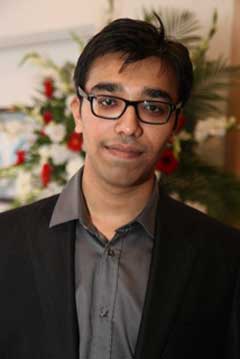
    Neha Bhat is currently working as an Associate Durable Solutions Officer at United Nations High Commissioner for Refugees. She graduated from WBNUJS, Kolkata in 2007 and had studied further at American University, Washington College of Law. She has specialised in International Organisations, International Human Rights Law and Migration Law and Policy. Without much ado, let’s delve right into her choice to do an LL.M and pursue International Human Rights.

    We asked her to share:

    • Strategies on selecting an university for LL.M
    • Information of Faculty and Facilities of Washington College of Law
    • Applying for Scholarships at WCL


    What was your motivation behind doing LL.M.? When did you finally decide that you needed to do masters?

    I have always wanted to pursue further studies. Even when I was in my final year at NUJS, I was sure that I will complete my masters and subsequently get an advanced degree- you know MPhil or PhD or the like. I genuinely like reading and getting to know subjects and issues. I really enjoy exploring areas of law that I don’t really have much experience in and an LL.M program helps me exactly with that.

    Since you are into the academic arena, you are either writing or researching and reading and that really works well with me. Eventually, later in life I want to teach and therefore I knew I would always have to finish my LL.M and then an advanced degree. But I wanted to have work experience before I joined the Masters degree- that was also because while at NUJS, I hadn’t really done much- I had no serious publications, wasn’t at the top of my class, wrote a really horrible statement of purpose– end result, I didn’t get admitted for my LL.M to any of the places I applied to. Plus I also realised I knew, rather understood very little of things and therefore I realised I needed some good, in depth work experience before pursuing my LL.M.

    So I joined SEBI as a Legal Officer, worked there for about 2.5 years and then went and joined the UN High Commissioner for Refugees in Delhi, where also I worked for almost another 2.5 years. After 5 years, I felt I had a very good idea of what I wanted to focus my LL.M on and even had ideas about further studies- like PhD proposal and the like, and therefore decided to come and get my LL.M degree. Also, my work at the UNHCR was very intense. I loved my work very much, I still love my work very much and I would definitely hope to get an opportunity to work with UNHCR- but I realised that you need to know when to “step back” so you don’t unconsciously burn yourself out. And after 2.5 years, I knew I had reached that point, where I was on the path to burning out in my work.


    neha-bhatHow did you choose the university/ college? How should one go about choosing a university?

    Selecting a University can be one of the most difficult things to do and if not done properly, you could end up feeling a little miserable about your choice. I have had the opportunity to put myself through the LL.M application process three times- once in my final year at NUJS, then in 2008/09 and then finally in 2010/11. When I was at NUJS, in hindsight, I made some of the worst application decisions– I remember applying ONLY to Harvard, California Berkeley, NYU (for the NYU-NUS programme) and Oxford. No other place.

    The problem with my applications was that my Statement of Purpose wasn’t right, and I had no research plan in place, I wanted to do an LL.M because it seemed the “right thing to do” and not because I knew what I wanted to study or why I wanted to do. Obviously, it didn’t work- I was rejected by all universities I applied to. I did panic a bit, thinking maybe I was very bad at this and maybe academics weren’t for me. It was the same time when I had sat for the Rhodes scholarship regional interview in Kolkata, but failed to make it to the National rounds. So it was like a culmination of bad results.

    The second time I applied, I was working with SEBI. In this round, I managed to apply to 3 places, before I came down with chicken pox. I applied to California Berkeley, again to NYU (for the NYU-NUS) programme and also to Stanford. Again, NYU turned me down. Since one of my referees didn’t submit my reference letter for Stanford, my application was incomplete so I was left out of the loop. But this time, I was waitlisted for Berkeley in the first tranche of waitlisted applicants out of some 950 odd people. It was a big moment for me. I had been working long enough at SEBI to know I was not going to study corporate law, so my statement of purpose focused on my desire to teach law and consciously I decided to veer away from corporate law. But eventually I didn’t get through. It was then I decided that I had to get back into the field I wanted to do my LL.M in and thus my job change happened. Eventually in 2010/11, I applied to 6 programs and was admitted to all but one– at LSE. The programs I was admitted to, were regionally, the best for Human Rights– NUS- Singapore, Berkeley-California (yes, again), McGill- Toronto, Warwick- UK and American University- Washington DC.

    I consciously decided to veer away from the very “top” rung places– because I STILL didn’t have (or so I felt, and still continue to feel) any meaningful academic publications etc. or what I felt, a superlative proposal which would ensure admission in these universities. Plus, I was looking at a taught masters program and therefore chose places which did not mandate a compulsory dissertation component.

    I also looked at the field specializations ranking and faculty strength rather than the overall ranking of the school because those are often better indicators of the specific program. So for example, I know that Warwick has a very solid International Human Rights Law program. American University, where I am currently studying does not necessarily come out on top of law school rankings in the US, but its International law program is ranked higher than Berkeley. Plus, it’s the ONLY law school in the US, where you can have the opportunity to study with Special Rapporteurs – past and present. For e.g. I have had the opportunity to study with some really big names in international law, Prof. Juan Mendez who taught me Advanced Human Rights, is the current Rapporteur for Torture. I also studied under Prof. Robert Goldman, who was the previous (and the first) UN Rapporteur on Human Rights and Terrorism. And I also studied under Prof. Diane Orentlicher, who has drafted various UN Guidelines and Standards including on Combating Impunity. I am also lucky that I have the opportunity now to work with her as a research assistant/ dean’s fellow- I started on this position in June and continued working with her till December 2013.

    It’s been one amazing experience- to delve into interesting issues of transitional justice, international criminal law etc. These are factors which make a big difference to me and I think should make a difference to everyone considering a specialisation at the LL.M stage – you should know which fields you are interested in and if the university you are applying to, has professors who teach and/or conduct research in those areas or not. Also, the cost of the program matters a lot– and whether there are scholarships etc. on offer or not. American University has tuition remissions and full tuition + fee scholarships on offer and I was one of the recipients of their Alumni Fund Scholarship (which covers tuition for 24 credits plus all school fees) and for me that was a swinging factor. My top two choices were American or California Berkeley, but the latter didn’t offer me any scholarship. Plus what kind of city you want to live in- for me, Washington DC is a dream because there are so MANY events on International Relations and Affairs which happen here- I get an opportunity to meet people and again gain knowledge. These are opportunities not many cities can offer.


    What did you study? Why did you decide to take this particular subject?

    I am enrolled in a dual degree program at American University. So on completion of 40 credits, I will be conferred with two degrees, the first one is the LL.M in International Legal Studies, which I completed on May 19 (24 credits) with a specialization in International Human Rights Law. My second degree, which starts shortly, is called the LL.M in Law and Government and my area specialization is Regulatory and Administrative Law. I have 16 more credits to finish so I will be completing courses in International Trafficking, Women and Conflict, Global Warming Law and Policy etc. I think it is worthy to invest time, energy and effort into these courses because it offers me further exposure to theory I would need to know, but I may not necessarily get around to studying/ reading on my own. I need to be constantly motivated to do something, and unless there is a personal investment (time or money etc.) I know that I will not be driven to do anything.


    How is your experience so far? Tell us about the faculty and facilities. Anything memorable that is stuck in your mind?

    My experience so far has been fantastic. As I mentioned before, I have had the opportunity to study and work with some of the best known legal minds in my chosen area of law and I don’t think any other experience could be better than this. What I genuinely like in the American academic setting and which is missing in the Indian academic setting is the quality of feedback that you can get from Professors – and if you demonstrate capability to take up new issues, areas of research- they encourage you and offer guidance.

    I have maintained an academic profile at www.ssrn.com, which is an online repository of academic articles and research. And I have often been contacted for some of the projects I am undertaking/ have worked on by people pursuing their PhD and in one instance, Prof. Alston @NYU. And I think these avenues- contact with academics, renowned academics is not available/ not facilitated everywhere- either we are too shy, too inhibited or simply too worried that we do not match the intellectual calibre of our counterparts- and that, as I have come to realise, is a lot of garbage.

    If you have the good luck of studying with Prof. Mendez, he will also perhaps mention sometime that he really enjoys watching Without A Trace, an engaging and absorbing law enforcement series where missing people are tracked down. You will have engaging debates with your classmates on whether the R2P doctrine should be applied in Syria and have the privilege of being one of the chosen few to ask Prof. Theodor Meron, the President of the Intl. Criminal Residual Mechanism for the ICTY and ICTR a question on the future of international criminal law and beyond. Plus there are a lot things that keep happening in DC, like between January- May, 2013 I Was part of the UN Association of the Washington DC (UNA-(N)ational (C)apital (R)egion)’s Graduate Fellow and met individuals like Frank Vogl, of Transparency International, D. Bosco- who writes the Multilaterialist blog at Foreign Policy etc.

    For the scholarship recipients, there are annual dinners as well- 2-3 where you get to meet alumni. American also hosts an annual Embassy Dinner, where you get to meet delegates and staff members from various Embassies and Country Missions in DC- I was very lucky to meet, among others, Mr. Ahmad Haidari, the Cultural Attaché of the Afghanistan Embassy in DC.


    How’s the Indian fraternity over there? Are there many Indian students?

    Not many, at least not in the LL.M class. I guess it is also a function of specialization- American Uni. is famous for its international law programs and not business law/ commercial law. Many students who wish to do commercial/ corporate law programs, like financial and securities regulation or IP choose places like George Washington or Georgetown, which are also located in DC and have better known and better specialized programs in the specific fields. In the JD program however there are many American students of Indian origin.


    How is the recruitment/ placement situation for overseas students?

    It is difficult, but then again, it depends on what kind of job you are looking for. There is a program called the Optional Practice Training, which allows those holding F1 status to remain in the US after completion of their degree and work for a period of one year such placements could be either paid or unpaid. But if you want to work in a law firm, then you have to clear the Bar Exam- the eligibility guidelines for which are continuously revamped (esp. the NY Bar). So for e.g. you have to have 12 credits in courses relevant to the Bar Exam (contracts, family law, evidence, criminal procedure, ethics etc.). From 2015, all candidates for the NY Bar also need 50 hours of pro-bono work.

    My point being, if your area of interest is not commercial/corporate law and if you are not interested in working in a law firm, the NY Bar may not exactly be a very good idea. First, of the 24 credits in an LL.M program, you will have to dedicate half the program to complete courses required for the Bar Exam- this could effectively prohibit you from getting a specialization. Plus, those who want to work with international organisations or NGOs etc., especially at the entry level may not need to clear the Bar exam- but that of course depends on the organization and is different for each organization. I have no idea about corporate/commercial law since that is not my area of interest. However, I do know that AU facilitates participation of LL.M students in the largest job fair which is annually held around March/April in New York and students can apply to work with law firms not only in the US but also in Europe and other areas/ countries.


    How is the academic schedule? Is there a lot of academic work?

    Depends on the classes you take and the Professor, to be very honest. Some professors can and do give upwards of 100 pages a week of reading and some professors may give only 10 pages a week or even less. If you are taking an end of semester exam, you need to have done the readings throughout the semester otherwise it will be impossible to catch up  at the end of the semester. There are however courses where you are required to write papers- 20 pages is minimum but the maximum can be 35-40 pages as well- for e.g. I wrote a 44 page paper for the course I took with Prof. Goldman and a 30 page paper for my course with Prof. Mendez, but I also wrote at least 3-4 papers of upto 20 pages.

    This was a conscious decision on my part– to choose courses where I would be required to write research papers than take exams, I want to build an academic profile and this is one of the best ways of doing it. But it may not be for everyone, especially if you find research, writing and editing/ footnoting cumbersome. For the LL.M in Intl. Legal Studies at American, you need to have completed 2 papers of 20 pages each in the subject in which you wish to specialize. Some professors will ease the norms of referencing and ask you to follow a ‘consistent’ format. But most require Bluebook format- which I guess every mooter knows is the most cumbersome task.


    What about accommodation?

    As an LL.M student, you have to arrange for accommodation yourself. Most people choose to share a room, or find a room in a house shared with other people. I like to live alone so I chose to take up residence in a studio apartment about 30 minutes walking distance from school. It’s very important to find a place which is conveniently located to public transport/ close to school for ease of access etc. My place is connected to the bus routes very well and within 20 minutes walking distance of the American’s shuttle stop and the Metro stops. It’s also very close to Georgetown and grocery stores, restaurants etc.


    Tell us about your classmates – is there a pre-dominantly international crowd? What is the general age group of students?

    Yes, a very diverse student body. In fact one of the main strengths of American’s LL.M program is the diversity of its student body. We have students from every continent and many, many countries and that makes the classes all the more interesting. I think the general age of students varies from 22-35, including Humphrey Fellows and other individuals on specialised programs, although a majority of the class is below 26 years.


    How does one go about scholarships? Does the institute offer any scholarship?

    Yes, American offers a lot of scholarships/ financial-tuition assistance. So there is the Alumni Fund Scholarship which covers tuition+ fee for 3-5 incoming students. But this scholarship is only available for those starting in the Fall Semester or in August each year. The tuition waivers work semester to semester and as required students can apply for them, based on eligibility etc. There is also a $4000 scholarship instituted by current dean, Dean Claudio Grossman which is awarded in the spring semester. Additionally, if you have participated in the American’s Inter-American Moot Court competition, you are eligible to apply for a scholarship. More details can be found at http://www.wcl.american.edu/ilsp/scholarly_competitions.cfm


    Going forward, how do you expect this experience to influence your career?

    I think one good thing that has come out of the LL.M program is that I have realised that there are lot many more areas of international law I am interested in- my specialty remains asylum and refugee law issues, but being in academics, allows you to explore your niche area in relation to other issues/ aspects of law. So you slowly start building a knowledge base in those alternate areas as well. And I think going forward, that can only be a good thing, because the more adaptable you are, the more diversified skills and knowledge you have, the more relevant and transferable your competencies will become. I also think that this exposure somehow makes it easier for me to break into field of transitional justice, international criminal law- because of the stalwarts I have studied under. They are the best guides, mentors and connectors one can have.

  • Ujjaini Ghosh, Assistant VP-Global Transaction Banking, Deutsche Bank, on studying at Oxford, and working with Herbert Smith, and Linklaters

    Ujjaini Ghosh, Assistant VP-Global Transaction Banking, Deutsche Bank, on studying at Oxford, and working with Herbert Smith, and Linklaters

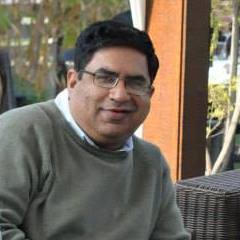
    Ujjaini Ghosh graduated from NUJS, Kolkata in 2006 and went on to pursue her BCL from Oxford. After her BCL she joined Herbert Smith, worked at Linklaters, Singapore with the banking group, and eventually graduated to Deutsche Bank in January 2013.

    In this interview we speak to her about:

    • Her time at Oxford
    • Working at Linklaters
    • Her experience with Herbert Smith

    How would you like to introduce yourself to our readers?

    Well to put it in a nutshell and assuming that the readers are from NUJS, I would introduce myself as an alumnus (batch of 2006) of NUJS who spent some of her best and formative years at this institution, grew as a person, made amazing friends and now looks back fondly and maybe with a tinge of nostalgia at those years gone by.

    Post NUJS, I joined Oxford for my BCL in 2006. After completion of my BCL, I joined Herbert Smith as a trainee solicitor and qualified as an associate in the finance division. I eventually moved to Linklaters in Singapore where I worked as an associate with the banking group and in January 2013 moved to Deutsche Bank where I am currently working as a legal counsel in the global transaction banking department.


    Why and when did you decide to do law?

    To be honest, I decided to do law at a point where law was fast becoming a popular career option after engineering and medicine and I knew for sure that I did want to become a professional and make a difference though not necessarily in medicine or engineering! I joined NUJS after studying English honours for a year at St Xavier’s College, Calcutta.

    It was during my five years at law school that I realized that studying law was probably the best decision I could have made. NUJS was very interactive in its teaching methods and I could clearly link the knowledge of different spheres of legal education to the individual, society and corporations. More than the subject itself, it was the application of the subject that interested me.


    ujjaini-ghoshHow was studying at NUJS like for you?
    The question does make me feel ancient! Studying at NUJS was a very interesting and a brilliant experience, an experience that transformed my personality, made me aspire, made me ambitious and taught me to drive myself as hard as I could. The ambiance, the faculty, the students, the activities made five years literally fly by. NUJS was not just about studies but it was also about the multitudinous activities on offer. I do remember taking part in moot court competitions, cultural activities such as singing, dancing and theatre, coordinating seminars and group discussions, being part of various committees, assisting in legal aid projects and the list goes on.

    Life at NUJS ten years ago was very inspirational for the students. We were part of a fledgling institution and each one of us as students were driven by this urgent need to not only prove ourselves but also to make NUJS reach greater heights. The institution had an incredible moot court society which brought in awards with limited resources. The close knit student community made life in the hostel a lot of fun and the faculty members were not just “teachers” but friends and in some cases confidantes.


    What sort of internships did you do while in college?

    My internships were varied. I interned with Sanlaap (an NGO in Calcutta),  the trial court in Calcutta, Delhi High Court and law firms such as Khaitan and Amarchand & Mangaldas. I also interned with the Singapore International Arbitration Centre and Wong Partnership in Singapore. All the internships have played a defining role as these helped me understand how law worked in the practical world and also provided me with a better idea of what I wanted to do after law school. The internships were a stepping stone towards shaping my career. It’s just been seven years since law school so there is a long way to go!


    What was the first thought that came to you when you got your acceptance letter from Oxford?

    I was ecstatic and actually cried with joy! The experience was brilliant.  The academic curriculum, the students and Oxford the town itself made the experience worthwhile. The BCL is an international course and draws students from all over the world. I made some amazing friends who I am in touch with till today.


    What made you go into the corporate sphere of law?

    The internships did help in making me choose my area of specialization. I found myself natural leaning towards corporate law as compared to other areas where I can see myself making an effort.


    Would you take us through the application process for Oxford?

    Applying to Oxford is similar to applying for any top rated LL.M program in the world. I would say to apply straight after law school requires some planning in terms of studying methodically, participating in extra-curricular activities, preparing good essays and actively seeking out references.


    What was it like working at Herbert Smith?

    Working at Herbert Smith was a fantastic experience. The training program is very thorough and the six months spent in each department goes a long way in understanding different areas of legal practice. The learning curve was steep but the kind of confidence and knowledge that I acquired is unparalleled.  I learnt a lot from the partners, the senior associates and my peers.


    Could you enlighten us, in brief, on the particulars of Islamic finance and your role in the Finance Team at Herbert Smith?

    I was an associate in the acquisition and leveraged finance team at Herbert Smith and subsequently Linklaters. The work has been varied ranging from vanilla lending to secured syndicated finance deals to highly leveraged secured deals.

    Islamic finance to me is simply finance deals that are structured bearing in mind the principles of Shari’ah law e.g. there is no reference to interest in the documentation. However at the end of the day, the basic essence of financing remains the same.


    How does it feel like to be Assistant Vice President – Global Transaction Banking at Deutsche Bank?

    It’s proving to be enjoyable and challenging at the same time. I am part of the transaction banking front office team which means I get to liaise with the different business teams on a daily basis. Its fast paced and solution oriented. Along with legal knowledge, I am expected to understand the various products that are offered to clients and draft/review documents and advise clients on the implications of different contractual arrangements. The work involves dealing with liquidity management products, international fund transfers and trade finance.

    Deutsche Bank is a very fluid organization and I can see my role changing and growing as I grow with the business team.


    What do you think of the young law graduates/students and the standard of education in the field currently?

    I think very highly of them and they are definitely a very focused lot. I have not been deeply involved with the academic field for the past seven years so it’s difficult for me to comment on the standard of education. I do feel that along with theory there should be a focus on the practical implementation of law.


    Any advice you’d like to give to young lawyers who hope to follow in your footsteps?

    I am sure that every young lawyer will be able to chalk their own path, but I would definitely encourage them to enjoy their years at law school and subsequently the practice of law. I would urge them to do what they want to do and not get bogged down in their fifth year and the first few years of legal practice by comparing themselves with their peers or superiors. Each lawyer is unique in his or her own way and there are no set rules to follow.  In seven years, I have learnt that its best to not take oneself too seriously or set very high targets but at the same time to enjoy learning and give 100% to whatever work I do at any point of time. Trust me, success follows when you can give as much as you can to your profession and yet manage to enjoy yourself at the same time.

  • Sneha Thakur, Law Graduate, on winning Best Researcher at Henry Dunant, writing for journals and LL.M from QMUL

    Sneha Thakur, Law Graduate, on winning Best Researcher at Henry Dunant, writing for journals and LL.M from QMUL

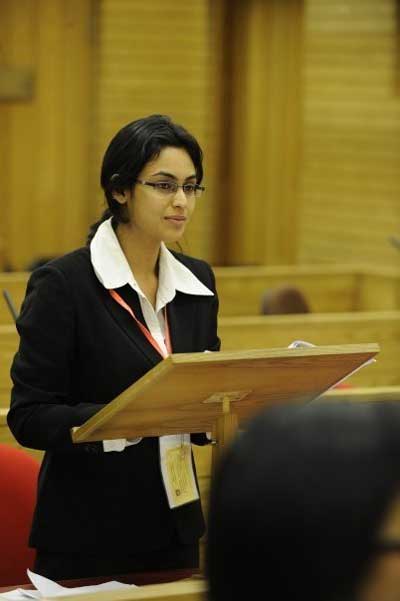
    sneha-thakur-2Sneha Thakur graduated from the first batch of RMLNLU, Lucknow in 2006. While at Law School her team won the Henry Dunant Best Researcher spot. As a law student she has been quite active and participated in many debates, MUNs and conferences. Soon after graduating from RMLNLU she was awarded the “Centre of Commercial Law Scholarship” from CCLS at Queen Mary University, London and thus she pursued an LL.M in Corporate Governance and International Comparative Commercial Arbitration from there.

    She is currently preparing for one of the toughest Bar Exams in the world: The California State Bar Exam.

    We asked her about:

    • Importance of mooting and collaborating for Best Researcher at Henry Dunant
    • Writing for journals and publications
    • LL.M experience, faculty and facilities at QMUL


    Given that most of our readers are law students and young lawyers, how will you introduce yourself to them?

    Firstly, I would like to congratulate you and your team for this endeavor. Launching such a website is indeed an innovative and creative step. It is certainly a breath of fresh air. Your website provides a complete ladder to a law student to understand their career path in law. Reading the interviews of top notch people in the legal field would certainly be an intellectually stimulating experience for a young lawyer who would gain first hand insight into the legal profession.

    Law happened to me by choice, it’s one field that has always fascinated me. I completed my law degree from RMLNLU Lucknow. After completing my degree I had an opportunity to work as a corporate lawyer in one of the biggest life insurance (Max Life Insurance) companies in India for a year. Then I was fortunate to be awarded the Centre of Commercial Law Scholarship from CCLS at Queen Mary London and completed my LL.M in Commercial and Corporate Laws with a focus on Arbitration.


    How did you gravitate towards law?

    Being a lawyer was my first occupational choice after careful consideration. Law for me is like a passion that runs in the veins of my family. My dad has always acted as my role model. Being a Senior Advocate, he had influenced me to a great extent to choose the profession. He has been my guiding beacon of light, always encouraging me and also gave me the freedom to take up the profession that interests me the most.

    Five years in RMLNLU has played a very important role in grooming me as I stand today. They were the most fun filled years of my life. It was like a family where you grow and develop yourself. The lesson that a law school teaches is that the end is not nearly as important as the means. I believe law school is a platform where a student is groomed to practice law rather than learn it. For being a successful lawyer always remember to be confident but not arrogant.


    What does it take to be a great researcher?

    (Sneha had won the Best Researcher Award and her team was also one of the quarter finalists at Henry Dunant Moot Court Competition.)

    Being the pioneer batch of RMLNLU we had faced some grave problems as we had no seniors or experienced mooters to guide us through the journey. The whole process of preparation and reaching the quarter finals among 65 teams when we were just in our second years and then bagging the Best Researcher award has been a momentous experience for me. We had put our body and soul for this moot and had spent the whole vacation in ISIL and ILI libraries. We even went to NLSIU and ILS Pune for the research work.

    The key to be a great researcher is to dissect the whole case, a researcher needs to be like a encyclopedia of the case at hand. A good researcher should also have excellent writing skills and should have clear knowledge of citing cases and references in preparation of memorials.

    The real problem faced in law school is to balance your academics with mooting as preparation takes almost as good as six months. In this regard our professors were helpful who provided us some project exemptions. Mooting is like a nerve cracking passion, as much honestly you put in, so shall be the result.


    Share some of your memorable mooting experiences.

    Mooting has been my passion ever since I joined college. The whole feel to argue your case in front of real judges, the period of preparation, research, long hours in library and team work prepare us for those few days in which we get practical insight to the real life of the law profession. The most memorable mooting experience was the one I gained during Willem.C.Vis International Arbitration Competition in Vienna. Arbitration is different form of mooting and competing against 260 teams around the world is indeed a nail biting experience. I have realized that few universities have libraries which have complete set research books for arbitration. In this regard I must say that now RMLNLU, NLSIU, NALSAR and ILS pune libraries are well equipped for arbitration research.

    The second experience I’ll always cherish is the team management skills which I developed when I organized several Moot Court Competitions in my college. Being the Convenor of the MCC one needs to delicately balance the work on hand bracketed with your ability to hold on to your position as a leader. It groomed me to work under timelines and develop the organizational skills which are very important for personal and professional development.

    The mooting tips I would like to share firstly is for the stage of preparation which tends to be the most time consuming part of mooting. You will need to ensure you know what you are expected to argue and read the fact pattern thoroughly and begin assimilating your relevant authorities for discussion. Make sure you know all the cases or authorities you are citing inside out, along with the general area of law on which the moot is based. For mooters always be prepared with your skeleton arguments and question yourself on it no matter how small and irrelevant the fact it may be on. This will prepare you for the final day.

    Secondly, as for the day of the moot, I know your stomach is full of butterflies. But don’t panic! Rehearse your speech in advance and familiarize yourself with the layout of the court room in advance. Secondly don’t write your full speech on paper, indeed write the bullet points on a small number of cue cards. Another thing to remember is to have soft speaking skills and pause while speaking so as to give time to judges to deliberate. Also remember that don’t be very anxious to finish your submissions and do so in a rush. There’s nothing worse you can do when it comes to finishing your moot. Make sure that you end it appropriately; by finishing with a conclusion and by telling the court what you want it to do.


    How helpful do you think is mooting for a law student?

    Mooting is the closest experience that you can get as to appear in a real court.  It a process of learning the Law differentlyand provides a holistic approach of learning by developing research skills, advocacy skills or even just plain old teamwork skills. Mooting boosts up the confidence level of the student and also serves as bolster addition to your C.V. and make oneself more attractive to potential employers. If one harbours any desire to become a practicing advocate then it is safe to say that employers can only look favourably on those who have mooting on their C.Vs, as this is a sure-fire sign that you possess these important attributes needed.


    How important is it to publish articles being in a law school?

    Writing papers serves several important purposes. First, it develops one’s research skills. Second, it provides us with an intensive writing experience in preparing one or more papers of an analytical nature. Third, it provides us with an opportunity to deliberate on the subject and provide our thoughts on the same.

    Publishing articles also serves an attractive point in your CV. As a good internship strikes a gold point this one serves as an additional star. It attracts recruiters as it showcases one’s drafting skills and the ability to research.

    It is rightly remarked that the written word is one of the most important tools of the legal profession. Words are used to advocate, inform, persuade and instruct. Although mastering legal writing skills takes time and practice and are essential to success. But all this depends on you interest and writing skills. One should always aim to analyse the law and add something from their own thought process rather than dissecting the analysis and history written by other authors.


    Do you think participating in extracurricular activities like MUNs, Debates, Seminars and Conferences proves to be of help to law students?

    Participating in such international conferences, seminars and paper presentations provides a firm base to law students to go beyond the books and help students to analyse topics and realms of international and national law which are not taught in law schools. It helps to develop and hone their research skills and provide a platform wherein they can present their own thoughts and insight to the critical legal issues. The ISIL and ILI libraries in Delhi have a huge collection of legal writing and articles which help for the preparation. Also the whole presentation provided me with a confidence to speak freely in public and I am sure these experiences help in professional practical career afterwards.


    How did you go about securing internships at various law firms?

    To secure good internship please be cautious to apply well in advance and keep a track of your application with frequent reminders. These days several national essay competitions are also providing internships as a prizes. Be sure to keep a track of it. Also some of your seniors might help you to get through some good internships.

    It is important to plan out your internship. Start from interning with Counsels and then opt for law firms. You should also mix governmental corporate internship. You don’t need to be specific in law school; try out different platforms so that you are sure at a later stage. While interning everyone has to go through the phase of trivial work. Even researching some basic points or finding case laws should be taken as an opportunity to learn. If you take interest and work diligently and quickly brief your seniors about your work, I am sure you would attract the firm’s attention for a PPO.


    What do you feel about the importance of a good CGPA and contacts when attempting to secure an internship?

    I think your CGPA does play a role in securing an internship and later college placements. As a member of placement committee I had observed most of the top tier law firms has one of the requirement to interview candidates who are among top twenty in their batch. For students who have no contacts in the law firm, it is necessary to secure good CGPA. College is fascinating and it a fun life but my only advice is that they shouldn’t ignore their studies. Even if you are not a topper but it is important to stay focused. Be aware of the happening in the legal world and try to gain more practical experiences.


    What was your motivation behind pursuing an LL.M.?

    I always wanted to pursue LL.M. Initially I was confused from where I should do it. It’s important to know the area one wants to cover in their LL.M program. LL.M provides a path to develop one’s skill and knowledge in a particular field of law. Once I was sure about the course I wanted to take, I decided to pursue an LL.M.


    How did LL.M. from Queen Mary, University of London happen?

    I always had an inclination for studying arbitration in depth, as in recent times the commercial world is taking a path towards dispute resolution mechanisms such as arbitration and mediation. Through my extensive research I found out that Queen Mary is one of the few universities which has also a well-known School of International Arbitration and is a well-respected member of the Arbitration community. The courses are designed in such a manner that they would provide an excellent foundation to the professional career in arbitration, focusing on both practice and procedure.

    I was fortunate enough to get through UCL, LSE, Kings College London, Newcastle University, Leeds University, Edinburg University and Glasgow University. In USA I got through NYU and Georgetown University. I was about take up the arbitration course in combination with commercial law from UCL but was awarded “Centre of Commercial Law Scholarship” from Centre of Commercial Law Study at Queen Mary which covered the entire waiver of tution fees and then Queen Mary happened.


    Please tell our readers about the application procedure and other requirements?

    The application procedure of Queen Mary requires high academic result combined with at least 105/120 TOEFL score. This year as per the Guardian’s Ranking Queen Mary School of Law is at third position after Oxford and Cambridge.

    Queen Mary offers two School of Law Scholarships (full tuition fee waiver) and two Centres of Commercial Law Scholarship (full tuition fee waiver). Queen Mary offers 2 partial scholarships each worth 50% of the tuition fee for the new LLM s –LLM in Energy and Natural Resources Law and LLM in International Shipping Law. Among other scholarships are Commonwealth Scholarships, Chevening Scholarships, Queen Mary Drapers Scholarships, Jean Monnet, CCLS/FGV Rio, Brazil, CCLS/University of Lagos, Nigeria, CCLS/School of Economics and Finance joint M.Sc Law and Finance and LLM in Law and Economics bursaries.


    Please tell our readers a bit about the course of Corporate Governance and International Comparative Commercial Arbitration from QMUL.

    The most attractive part of my academic module was studying International Comparative Commercial Arbitration from the likes of Professors Loukas Mistelis (Winner of Global Arbitration Review Award), Julian Lew and Dr. Stavros Brekoulakis. Studying from the stewards in the fields who are pioneer and leading authors of International arbitration books and leading contributor to the science of international arbitration and litigation. They have close links with major arbitration institutions and international organizations working in the area of arbitration and also conduct frequent research projects in this field. The classes are very interactive and one needs to be prepared to participate in the discussions. This module is designed in a manner to provide a deep understanding of the special characteristics and needs of international arbitration.

    The Module Corporate Governance is especially designed to provide an depth knowledge of financial regulations, impact of globalizations, various corporate governance systems in the world and corporate accountability. Prof Alan Dignam is a renowned writer in commercial law books and is also an advisor to Amnesty International’s Business Group on their corporate accountability.

    The tutorial classes in each module have been fruitful as it gives an insight and one to one chance to interact with the Professors and to know the correct methodology in solving the problem. It has provided me with a chance to study legal issues in classes composed of graduate students from numerous countries, who would resolve these issues differently and provide me with a completely different angle to look at.  Frequent seminars organized by the School of Law regarding the emerging and controversial issues are also very beneficial and useful. There is an abundance of e-resources to research upon and the libraries are well equipped with almost all the possible journals, reports and books.

    Studying in an international environment at Queen Mary, with students of various ethnic and cultural backgrounds has provided me a chance to know and understand different people and cultures which in itself is a wonderful and enriching experience and to add London as a location is perfect as a seat of Arbitration for all the global exposure and experience that one needs as it is the most inspiring and culturally rich city.


    How was the academic schedule?

    You need to study hard before the class. That is it. Every class is not confined to books and preparatory materials. The academic schedule is such that you need to prepare the basics before you enter the class. The classes are interactive and discuss the practical aspects of every subject and how it is dealt in different jurisdictions. Regular reading materials are provided along with reference to different books which the library is well equipped with. Frequent tutorials help in solving the question paper. For dissertation support each mentor guides you through the entire journey from selecting your topic to the division of titles, recommending books for references, guiding you through the current trend, insights to the major cases. One to one interaction with the mentors generally helps one to a clear idea about how to write the perfect dissertation


    How difficult was studying abroad in terms of finding accommodation, finances and settling in?

    Unfortunately, by the time I decided to go for Queen Mary, there was no hostel accommodation available. I stayed in London in a house shared by some of my friends. It must be acknowledged that rental prices are the highest in the capital, and students should be prepared for this even with the extra loan on offer, though you have range of options such as student houses which includes Nido, Mansion Tower and Urbanest as the best options. One also has an option of renting a house, wherein students are exempted from the local tax. And if you feel like earning a bit of extra money, generally part-time work is pretty easy to come by.  The major lifestyle benefits of living and studying in London, ranging from nightlife to food markets and culture, all are located in the centre. London is a student friendly city and there are a lot of activities to do and to enjoy your life in London. Ultimately everyone falls in love with this dynamic city.


    How’s the Indian fraternity over there?

    London is known to be the hub of cultures from students from all over the world. Queen Mary has a vibrant student community. The Indian Student community at Queens frequently organizes parties and get togethers for the celebration of festivals. Everyone is very interactive and helpful in each aspect. The Student Union at Queens also help the new students in settling down and also develop their skills and interests.


    Where do you see your career in the next five years?

    Right now I am living in San Francisco and preparing for California Bar Exam. In next five years I see myself as a commercial lawyer and develop my skills in the field of arbitration, I have been working with a firm based in Dubai which is establishing itself in USA and provides legal help to the companies who have their work base in UAE and Asia.


    Lastly, what would be your message to law students interested in going for higher studies from India?

    My message would be that you should do complete research on the law schools from where you want to pursue their LL.M. Every University has its specialisations in particular legal fields. Make sure you shortlist your choices. Also there are many scholarships given to support your post-graduation from Commonwealth, Chevening Scholarship, Tata Memorial scholarship and individual scholarship of every University.


  • Sumeet Malik, Director, EBC, on studying at Franklin Pierce, the publishing business, and his experience

    Sumeet Malik, Director, EBC, on studying at Franklin Pierce, the publishing business, and his experience

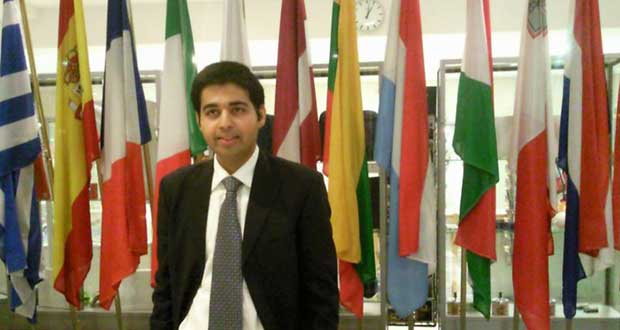
    sumeet-malik-2Sumeet Malik graduated from NLSIU in 1999. Thereafter he worked briefly for nine months in Mr. K K Venugopal’s chamber and then decided to pursue an LL.M in Intellectual Property from Franklin Pierce. With his legal training and specialisation in Intellectual Property Law, he joined his family-run Eastern Book Company. Currently he is the Director at EBC and manages overall Content and Editing for EBC. We asked him about:

    • Graduating from NLSIU and from Franklin Pierce
    • Work and typical day at EBC
    • Integration of a ‘lawfirmite’ in a publishing house


    Tell us a bit about your childhood and pre-college life as well as educational background.

    I did my schooling from La Martiniere College, Lucknow, an over 150 year old institution. Law was very much in my blood – I was born in a law publishing family. My grandfather, Shri P.L. Malik who was educated only till class X, had by the dint of hard work and perseverance, compiled a book called ‘Industrial Law’ in 1950. It is today the most authoritative book relied on by Industries and Industrial houses in India. My father completed his law from the law faculty, Delhi as a gold medalist and went to do his LL.M. from Columbia University, New York. So yes, there was quite a lot of law in my background.


    The image of a lawyer back in ’94 was neither inspiring nor attractive for most students. What motivated you to choose law for a career?

    Coming from a law publishing background one would imagine studying law to be the choice, but it was an informed decision.


    How was your experience in NLSIU?

    It was a great learning experience. I met many wonderful people but everyone whom I interacted with taught me something. It would not be out of place to mention Prof. Menon and Prof. NS Gopalakrishnan to have had the most influence on me. My biggest academic takeaways from law school were my ability to research the law and how to think like a lawyer and this is what I try and tell all law students today. The law that you study while in law school will change but if you have the skills I mention then you are prepared for the rest of your life.


    Right after graduating from NLSIU you went for an LL.M. in Intellectual Property from Franklin Pierce. How was your experience with faculty and academics there?

    Actually, I worked in Mr KK Venugopal’s chamber for nine months before I went for my LL.M. Those nine months too were a great learning experience. Franklin Pierce has a great faculty. The teaching style is a little different from NLS. There is a greater emphasis on writing papers and class room discussion. The level of academics is quite high in Franklin Pierce. I would say most definitely so. My class had so many people from all over the world and I think I learned from all of them, some a little, others more.


    Would you recommend an LL.M. from Franklin Pierce to people who want to work in the Legal Publishing Industry?

    I think doing an LL.M. or a Masters programme helps in the overall development of a person. You gain a lot of exposure. An LL.M. at Franklin Pierce or any other US law school should be an added bonus for working in the Legal Publishing Industry.


    What does a Director at a publishing house like EBC do?

    EBC is a family run and managed business so each of us have our own responsibilities. My most important responsibility is content development, so whether it is enhancing content for SCC Online or co-ordinating with Authors for new titles. I edit/compile/write fifteen books in a year. Human resources for one division of the group is also looked after by me. It’s a little difficult to tell you about a typical day since each day brings different challenges. In the last year I have also travelled extensively, so there is something new that happens daily.


    What are the top three challenges you faced as a Director of EBC?

    I think that the greatest challenge is in the implementation of systems. Other challenges include the hiring and retaining of the right talent. There is a lot of expectation from the EBC group for making available high quality legal resources and quickly too. So it is important to meet those expectations.


    What would you say are the primary similarities between a conventional law firm and a publishing house?

    I would think that there is little similarity between a conventional law firm and a publishing house. The pace, expectations and deliverables are completely different. A lawfirmite can integrate into the EBC work environment but they will have to readjust all three – the pace, the expectations and the deliverables. Each project on which legal editors work has something new to offer. Learning and personal satisfaction and fulfilment are placed at a premium when working at EBC.


    When you hire law graduates, what kind of skills and profile do you look for?

    When hiring law graduates it is important to gauge their compatibility to the work i.e. of being a legal editor. Good analytical and research skills are needed to work as legal editors and since English is the medium through which this knowledge is communicated good English skills are a must. Some of the requirements are part of a person’s nature and others can be developed through practice and effort.


    What kind of effort should a young associate put in to work to get it appreciated?

    It’s hard to point out the kind of effort required to be appreciated, but honest hard work cannot remain unnoticed for long, so the emphasis should be to complete the task to the best of one’s ability and for the personal satisfaction of one’s self. No one can ever take that away from you. A young associate will usually perform tasks that have been allotted to them and a director will usually be involved in policy formulation and implementation of that policy.


    What is your impression of the current crop of young lawyers?

    There is a lot of casual attitude towards the learning process. A lot of students believe that having got into a prestigious law school is enough to land them a job or success in their lives. That’s not how it works. Develop your legal research skills. The law is ever changing. Also, get the basics right. Always think in first principles.


    Do you offer internships opportunities at EBC?

    We welcome internships at EBC. Those interested can send in their CVs to hr.manager@ebc-india.com. For us if you are willing to learn and utilize the internship for learning you are welcome to EBC.


    What would be your message to a student aspiring to join a publishing house?

    My advice to all such law students shall be: Take your learning seriously.

  • Moiz Tundawala, Doctoral Candidate, on hurdles of being visually challenged, and plans for the future

    Moiz Tundawala, Doctoral Candidate, on hurdles of being visually challenged, and plans for the future

    Moiz Tundawala graduated from NUJS, Kolkata in 2005. He is currently pursuing his doctoral studies at London School of Economics.

    In this interview we speak to him about:

    • His routine, and how prepares for examinations
    • The shortcomings of the system in making education accessible to people with disability
    • Plans for the future

    Why did you decide to study law?

    In school my favourite subjects were history and political science. Never the less I wasn’t precisely sure what to do after my twelfth board exams. I had an offer of admission from the WB NUJS, and also Political Science in Xavier’s Calcutta. Eventually I decided to go for law primarily because I would get a wider array of choices. Looking at the courses on offer, I knew that the university would teach me the law of a diverse variety relating to the human engagements. As a result, I could avoid committing to anything particular and narrow down my career options. Now as things stand, I continue to still cater my interest in history and political science by aiming a specialization in legal history and public law. It all ended well for me and in retrospect, I think I made a pragmatic decision to go for law back in 2005 over Political Science that was been offered.


    What kind of study schedule did you follow?

    I am largely indisciplined when it comes to study schedules. It is just that I always let my interests and curiosity motivates me.


    How do you organise the entire activity of learning something, producing academic content and preparing for exams?

    I use a computer with a screen reading software called JAWS, and a scanner with another software called Kurzweil. I scan books, download articles and other materials, save them in different folders on the computer. I always make it a point to take notes in class, especially when I think that teachers are sufficiently well versed. To help produce academic content, am told there are softwares which do your in-text citations and build a bibliography. Am yet to try them though, but will hopefully do it very soon.

    On the substance side, I also make notes for every article, book and case that I read and deem important. While reading, I first look at mastering the core thesis and arguments, and then get down to focusing on matters of detail. Most important, is to keep writing, to oneself, for oneself, so that ideas are not lost, even if they be roughly developed.


    How did you write exams?

    When my sight started deteriorating, I started getting someone to write my papers. As in, I would dictate and the person would write. Second year of college onward, I switched to a computer.


    moiz-profile-picture-eAs a visually impaired student did you come across additional challenges, while studying in the law school?

    Yes, you keep coming across new challenges all the time. Most importantly, is getting access to the reading materials. Moving around in the library is also difficult. Asking for someone’s help to locate all the relevant books and the likewise. But, the folks in the NUJS library were extremely cooperative. Once I passed out due to deteriorating health, and they came up with an online electronic catalogue, which I think is very essential for a visually impaired student. Here in London, libraries are also sensitive to differential needs. I just have to write to them with the names of the books which I require, and the next time I go, someone from the staff fetches them for me. Mobility is another big thing. I have one regret looking back to my stint in NUJS, that I was not sufficiently confident to try moving around on my own. Had I been, law school would have been a much fun experience. Infrastructure will keep throwing difficulties, but I guess one must keep taking the initiatives to work around and also to get things done.


    Did you find the legal education system in general and your college in specific to be sensitive to the needs of the visually impaired students?

    The legal system as a whole is obviously not sensitive enough. The legal education in particular, is not sensitive at all because most important is to get materials in an accessible format, which is not available easily. Sadly, 90 to 95% of the books do not have an electronic edition yet. And scanning takes up a lot of your time and energy. Therefore, it goes without saying, this requires a lot of patience on your part. Every once in a while, if you are lucky, you do manage to get soft copies from here and there. My college was as co-operative as it could have been. They were the ones who encouraged me to switch to computer for the purpose of the exams. Library staff was also cordial and cooperative enough. Even teachers were sensitive to my requirements in the class. Especially, in my early days, some of them would just come up to me for a quick chat to figure out how I was getting along. This I think is very important. It is not always possible for a blind student who may find navigating the campus difficult to go to a teacher every time he or she is facing any particular issue. I was slightly daunted by the thought of reading so many cases and thick law digests. But, Dr. Sudhakar, a visually impaired professor of international law in NUJS, wisely advised me not to bother so much about all that, and that things would keep falling into place gradually. The knowledge that someone who has faced similar issues and has still ended up doing so well for himself really helped at that time.


    Would you encourage visually impaired high school students to pursue law?

    Yes, I would definitely encourage all the visually impaired school students to pursue law. As the system needs you more than you need the system. If law interests someone, come along, and do the legal system a favour. Enlighten other persons about the diversity within the society, the different problems which people confront, and the amazing things they are capable of doing in spite of all they go through. And yes, if you are not so sure what you want to do, law is sometimes a safe option.


    How can other visually impaired students increase their academic performance? Do you have any suggestions for this?

    I have nothing more to add apart from my own experience. Reading with vigour, and more importantly, thinking imaginatively. Furthermore, I think that if the teacher is good, paying attention in class would also be enough.


    What are your future career plans?

    Well am still not sure about it. At this moment, I am engrossed in my doctoral studies. There is still a lot of time to decide. But yes, a career in academics and research perhaps would be my preference. But I do not wish to rule out law practice altogether.


    What message would you like to share with our readers?

    Nothing apart from wishing all the visual impairments and other disabilities students, freedom from fear and inhibition and imaginative discernment.

  • Jeet Shroff, Associate, Allen & Overy, on judicial clerkship, and an LL.M from Harvard

    Jeet Shroff, Associate, Allen & Overy, on judicial clerkship, and an LL.M from Harvard

    Jeet Shroff graduated top of his class from GLC, Mumbai in 2010. Soon after graduating he joined AZB Partners as an Associate. In 2012 Jeet joined Harvard Law School where he pursued a general LL.M. and served as Senior Editor on the Harvard Business Law Review.

    He has now joined Allen & Overy’s international arbitration practice at its Hong Kong office.

    In this interview we speak to him about:

    • Studying at Harvard
    • Getting recruited at firms
    • Judicial clerkships


    jeet-shroffHow would you like to introduce yourself to our readers?

    I graduated from Government Law College, Mumbai in 2010. At GLC I won the Y.V. Dalal Prize ’10 awarded for the best graduating student and the Best Student Prize for the years 2006-07, 2007-08 and 2008-09. I had also served as student-editor of the GLC Law Review for all five years, won several national moot court competitions and assisted with the editing of Wadhwa’s commentary on Insurance Law. I interned with judges at the Bombay High Court and at the Supreme Court, with a senior counsel at the Bombay High Court and worked as a Para-legal at AZB & Partners, Mumbai while at law school. After graduating from GLC I accepted an Associate position at AZB where I worked on matters involving M&A and post M&A disputes, general corporate advisory, securities litigation and international arbitration.

    In 2012 I joined Harvard Law School where I pursued a general LL.M. and served as Senior Editor on the Harvard Business Law Review. I will now be joining Allen & Overy’s international arbitration practice at its Hong Kong office. I publish regularly in leading newspapers and journals in the country. My academic interests include the Legal Profession & Ethics, Corporate Governance, Corporate Social Responsibility, International Arbitration, Constitutional Law, Judicial Review and Constitutional Design Theory.


    Why did you decide to study law?

    I wanted to be a lawyer since my final year in school; but I wasn’t confident enough to pursue it because I had a terrible stammer and I was very bad at public speaking. When I got good grades in the 10th ICSE Board, I didnt have the confidence to back myself for a career in law. My parents wanted me to be a doctor and I went with their vision. I actually appeared for the Maharashtra medical entrance examination and thankfully, I did so badly that I would only have gotten a paid seat in a dental college in Aurangabad. My father wanted me to reappear for the exam. But by then I was sure I didn’t want to do medicine.So I decided to take up what I liked doing. I hadn’t appeared for any of the N-school entrance examinations and I could only apply to Mumbai law schools because they took you on the basis of the 12th HSC Board results where I had done fairly well. I lost my stammer in my second year at GLC after exposing myself repeatedly to public speaking in the moot court eliminations at GLC in my first year.


    What were your areas of interest during your graduation?

    I didn’t have any areas of expertise as such. GLC doesnt have any concentrations. I was deeply interested in Constitutional law and politics. I followed it up with moot court participation, law review membership, authoring articles, interning with judges at the Bombay High Court and the Supreme Court and generally reading up on it over and above course-work. That apart, I was interested in traditional court litigation, securities litigation and corporate disputes. I pursued an internship with senior counsel Mr. Janak Dwarkadas at the Bombay High Court, which I would rate as amongst my best experiences so far. That internship really inspired me to consider a career as an arguing counsel. Finally I was lucky to get placed at AZB where I ‘grew up’ in a sense because I spent my last year as student and the first two years as a full-time practitioner there and I think those years really shape you and teach you the crucial skills you need to imbibe when you have just started.


    What was your motivation behind doing an LL.M. abroad?

    I didn’t think the LL.M. in India would be of much use to me. It’s not as rigorous. It’s a two year program which I think is too long even if you aim to become an academic. And it’s not rated highly in comparison with foreign LL.M. degrees which are now par for the course given the volume of Indian lawyers that spend a year studying aborad. My motivation behind the LL.M. was to experience academic life at a top institution, acquire a US / UK degree which may have its uses in the future, qualify to practice in another jurisdiction and if possible, land a job with an international firm. I was looking to spend a year experiencing a different life and I hoped that this would in turn broaden my horizons and allow me to experience a different culture. I felt it would help me grow, professionally and personally.


    When did you decide that you wanted to do a Masters?

    I decided in my third year at GLC. I hoped to land a scholarship and in fact I turned down an offer from NYU in 2010 because it didn’t come with funding. I took loans to finance the LL.M. eventually.

    It is financially taxing and people question its efficacy given the cost. But if you plan to be a lawyer and if you are keen on studying further for whatever reason, the LL.M. is your degree of choice. That said, I can now think of other degrees that may be more useful for lawyers transitioning to a career in say policy-making, academia or management. But for lawyers with a thirst for further studies, I think there isn’t a substitute for the LL.M.


    How did you choose the universities that you applied to?

    I applied to the top LL.M. programs. That included Harvard, Columbia, Oxford, NYU, Stanford and Yale. These colleges pick themselves. They are acknowledged as top choices for the LL.M. and most are Ivy League as well. To this list I would add Chicago, U.Penn, Cambridge and LSE. I didn’t apply to a larger number of schools because I was working and simply didn’t have the time.


    Did you decide on a course first or the University first?

    I’d say I picked the University first because I wanted to pursue a general LL.M. with a focus on arbitration law, corporate law and constitutional law. Harvard, Oxford, NYU and Yale have excellent courses in each of these areas. Stanford and Columbia are better known for corporate law but since that was an interest area I sent out applications to these two as well. If I had had a specific focus such as say environmental law, I might have applied to Berkley as my first choice but I wanted the flexibility of a general LL.M. with the option of creating my own course structure and choosing how much I would take on in which semester.


    What did you study at Harvard?

    I pursued a general LL.M. with a focus on corporate transactional law, international arbitration law and constitutional law. I split my three semesters between these three areas. My course choices were a result of my interests. I wanted to learn US Corporate Law and litigation so I took up a course on Delaware litigation taught by Chancellor Strine of the Delaware Court. I wanted to try and work in the international arbitration space, hence a course on arbitration. And I have a deep interest in Constitutional law and politics which informed my decision to study the 14th Amendment and the Comparative Politics of Law by Duncan Kennedy.


    Tell us about the faculty and facilities.

    I’d rate my year at Harvard as the best one I’ve had so far. It was a vibrant, fulfilling, fun and demanding year that went a lot faster than any of us in the program might’ve wanted or anticipated. Its thrilling to take courses by professors who are that driven and that accomplished. The campus is beautiful and Cambridge town is very very student friendly. I’d do it all over again, despite the cost and the present exchange rate of the US Dollar.

    The faculty at Harvard is sterling. Although you take a restricted number of courses (a maximum of 27 credits), you have a chance of much wider faculty interaction because of your LL.M. paper. There are Research Assistantships that you can take up and there is the option of doing courses in other Harvard schools as well. The facilities are top class. The Law Library is an iconic building, stacked with books on every topic from every country. You are encouraged to use every facility on offer and there is a genuine sense of pride in how the library is organized and run. The recently constructed Wasserstein Center is obscenely well equipped for any conceivable student / academic need. But I think it’s the attitude that set Harvard apart. It was fantastic to be part of a culture that was incredibly open and liberal, intellectually engaged, so passionate and driven and yet, unfailingly courteous and polite.


    How was the Indian fraternity over there?

    The Indian community at Harvard isn’t that cohesive. There are too many of us to really feel the need to be tight-knit. The LL.M. batch had twelve Indians, the second highest number from any single country after China which contributed sixteen LL.Ms.


    How is the recruitment for overseas students?

    US recruitment for LL.Ms was poor in 2013. Most people landed temporary foreign associate positions – not permanent US attorney positions. Indians did particularly badly with only one student securing a foreign associate position with a top US firm. Of the seven who were looking for law firm jobs, only three managed to secure them. Unless you have over four years of work experience or a personal connection with a law firm partner, I suspect two factors determine your placement chances: 1) How much India work there is at that point in time, which is determined by the volume of big-ticket India deals and which in turn seems to be affected by the state of our economy; 2) Whether vacancies have arisen in the limited number of associate seats allocated for India-lawyers in top US firms. Connections and contacts always help, and in fact could be decisive in a market which isn’t too India-educated or India-enthused. Positions in New York’s dispute-resolution practices are hard to come by for any non-US lawyer.


    How was the academic schedule?

    The US LL.M. is a very flexible program. You can decide how rigorous or otherwise your year will be. I had a very rigorous year indeed – I was doing the maximum number of course credits allowed, editing a journal, serving as Research Assistant, authoring a Long Paper, applying for jobs and travelling the West Coast, New England and New York. Fortunately, I never felt overwhelmed because I had a great support network of friends.


    What about the accommodation?

    I stayed at North Hall which is one of the costlier on-campus dorms because it’s a hotel turned into a campus accommodation. It proved to be a good choice. Cambridge winters can be brutal and we found ourselves in the midst of one of the worst snowstorm in recent years. By the time Snowstorm Nemo was done with us, we had snow almost reaching the first storey of our dorm building. North’s heaters kept us warm and safe. It helped that many LL.M.s chose to live in North, turning it into the de facto LL.M. hub.I formed some close, lifelong friendships with my fellow residents there.


    Does the institute offer any scholarship?

    No, Harvard doesn’t have LL.M. or India specific scholarships. Most Indian students struggle to find adequate funding or scholarships. Inlaks, Sekhsaria and Tata scholarships offer partial and complete financial aid but it’s an uphill task.


    What does a paralegal’s role entail?

    (Jeet has worked at AZB & Partners as a paralegal for a while.)

    I’m not sure what role other para-legals played but as a para-legal I was given the opportunity of being involved in matters full-time and was basically treated as a semi-associate. The idea was to make use of the fact that I was at GLC and could attend office on a full time basis for the entire duration of the year save two breaks of six weeks. So I would end up doing research, drafting, client calls, counsel briefings as well as filing, making lists, indexing etc. I was very lucky that my internship with Mr. Dwarkadas led to my stint at AZB which in turn led to a placement at AZB once I graduated.


    Is the practice of hiring paralegals widespread in the Indian legal industry?

    I’m not sure what the trend is but I had certainly not heard of Paralegals until I joined AZB. I think it’s a great position and it’s especially useful for GLC students. Unlike N-schools, we are located ten minutes away from the Bombay High Court and from all the law firm offices, the college timings are 7 am to 10:30 am and its a two semester as opposed to a trimester system. All of this really helps GLC students work on a full-time basis even while we are still in our third/fourth year of law school and it’s the only way we can narrow gap with the N-schools which admittedly are far superior in terms of their teaching, batch quality and public perception. So as a GLC alumnus, I am a big supporter of this trend. It augurs very well for students from my college and I think firms might gain from it as well. If you have someone you have trained for one or two years before making her an associate, you already have someone who understands how a law firm works, has made all the connections with the seniors and partners and can integrate very easily.


    How was your experience as a judicial clerk?

    I clerked only with one judge at the Supreme Court actually. I clerked with two judges at the Bombay High Court. I think the most important thing I learnt through the clerkships was to understand how a judge’s mind works, what the pressures of the job are and what they are looking for. If you are a first generation lawyer, you tend to be a bit starry-eyed about the judicial office. I think the clerkships helped me place judges in perspective. If I do argue before a court, hopefully those stints might help me be a better counsel. I did them at the time because I was curious about how judges work.


    How can a law student apply for a judicial clerkship?

    The Supreme Court has a straight-forward application process where you send your CV through your college and the Registry places you with a judge who is willing to mentor a trainee. At the Bombay High Court too there is a similar process.

  • Rohini Sen, Assistant Professor, on LL.M from Leeds, pursuing academics and teaching experience at JGLS

    Rohini Sen, Assistant Professor, on LL.M from Leeds, pursuing academics and teaching experience at JGLS

    Rohini Sen graduated from GNLU, Gandhinagar in 2011 and thereafter she went for an LL.M to University of Leeds. Presently she is an Assistant Professor and teaches at Jindal Global Law School, Sonepat.

    In this interview we speak to her about:

    • Studying B.Sc.LL.B from GNLU, Gandhinagar
    • Pursuing an LL.M. in International Law from Leeds
    • Experience as a teacher at JGLS


    Tell us a bit about your work life, your dreams and aspirations.

    I must congratulate you on this rather interesting and enterprising endeavour. SuperLawyer is very informative for those who need a form of guidance to see them through five years of law school and has a relatable touch to it as well. I am always on the lookout for such creative ideas and that is a good place to start when it comes to me. I am a big believer of constructive communications, collective problem solving and creative dialogues and, academia allows me to experience all of them. Through my academic journey, I hope to bring about some relevant changes in the Indian legal education system. Rote learning has eroded our ability to synthesize information and be mindful of their significance. I want to facilitate the process of independent, interdisciplinary thinking and help students integrate into a knowledge society with ease (I include myself in the student category because I learn new things almost every day through the lessons). I also hope to be able to contribute substantially to international law someday – global identity and perspective being my reference frame.


    Do you reckon any incident that motivated you to choose law as a career?

    No special incident as such, but to bring a perspective I should mention that I come from a family of academicians and have grown up amidst books, liberating discussions and topical debates. Having spent the better part of my childhood and adolescence questioning norms, I always believed that I would be an author and write profusely to make emphatic statements. I knew I wanted to be heard and be famous but I was never quite sure how that might happen! The idea of doing law never crossed my mind until my father picked up a form for GNLU and sent it my way. I was in that indecisive transition stage when he told me about these national law schools and that GNLU’s was the only entrance examination left. Three days later, I wrote the exam and the rest, as they say, is history. It was only when I started college did I realize that others prepare quite meticulously for such entrances and doing law is serious business. Well, law is a subject that requires you to stay on top of things all the time and ensure that any information you possess is absolutely updated. As a result of this constant input, lawyers seem to be generally (I don’t endorse generalizing though) more aware about things and events. This definitely gives you an edge.


    Tell us about your time at GNLU.

    Summing up my time in GNLU in a paragraph is nothing short of sacrilege! I have learnt so much from my time there. My five years of law school have taught me to think like a lawyer when the need arises, be tolerant to contrary opinions and ideas (as long as they do not represent ignorant/harmful practices), to nurture my fondness for creative thinking and diverse subjects. I have learnt something from each and every individual I have met in GNLU and cherish the collective experience. I have several interesting stories and highlights from my GNLU days. But one that stands out the most was winning the Henry Dunant Moot Court Competition at the national and international levels (we won the national and South-Asian rounds and were runners-up in the finals of Asia-Pacific). The moot helped me realize my immense fondness for International Law and IHL and set an invisible marker for the general direction my career would take. I also made some incredible memories and friends in course of the moot –people across the globe who have helped me grow as an individual.


    Can you tell us about B.Sc. LLB course and its advantages?

    That is an interesting question actually. As you correctly pointed out, the Indian universities are yet to pick up that trend. I was a student of science in school and that made B.Sc a fairly natural choice. I was (and continue to be) of the opinion that one can read the BA subjects simultaneously or subsequently, but, B.Sc allows you to have an added edge. The course consisted of the three basic science subjects and interesting law-related additions that possessed bio-chemical and forensic components. As far as I am concerned, this intensive science degree always gives me a well-rounded perspective on things. It allows me to engage deeply with certain topics of IHL (such as weapons, their nature and use, strategic international conflicts/disputes) and environmental law (science-based procedures and mechanisms) because of the technical components. I do think that it is essential to understand the background and context before delving into the law and my B.Sc LLB degree allows me to do that with comparative ease.


    rohini-sen-5

    How did you balance academics with mooting?

    (Rohini has been part of the winning team of the 8th Henry Dunant Memorial International Moot Court Competition.)

    Well, as I already stated, winning Dunant was momentous for me. It pretty much drove me to where I am today. We put in a lot of effort for the moot and that, coupled with our natural flair for the subject helped immensely. We were very determined to win and spent hours in the ISIL and ILI library reading books for background and references (something that few moot teams do these days). This is a practice that all mooters need to inculcate and something I tell my students as well. If you know your subject and its background well, you will have answers to even the most obscure questions.

    The confidence that you gain from reading and good oratory skills will see you through the rest. Balancing academics and mooting is not very difficult actually. I’d recommend that one takes it with stride. The minute you think of these as something that you must balance, it looks a lot more daunting than it really is. My advice would be to instead think of it as something you like doing and devote time to it as you would to any other hobby.


    rohini-sen-4Any incident which is stuck in your mind from Henry Dunant?

    Actually, there is something interesting that I took away from the experience. Right from day one, our only goal was to win and we would psych each other up by saying so on the occasional bad days. The power of this brand of thinking has impressed itself upon my mind rather well.


    Tell us how has being associated with committees helped in building your personality and shaping your career?

    Oh yes! Being an active part of committees and societies is very integral to one’s overall development. It teaches you teamwork which is often dismissed as a clichéd skill but, is very useful when you enter the professional domain. It also teaches you how to network –a skill that is terribly underrated in India and often relegated to the status of “unfair” simply because you choose to use your communication skills in addition to your talent. Of course, one must make the distinction between networking and seeking undeserved favour. And this is something the institutions can teach our law students.

    In GNLU, I was associated with committees that conducted university related activities as well as committees/clubs that involved a lot of social and cultural engagements. The quiz club was a particular favourite and continues to be of immense interest. All these activities were a good blend of work and fun and helped me stay updated and motivated.


    What prompted you to choose the University of Leeds from the plethora of options available?

    The decision to do an immediate LL.M was made a long time ago, but, Leeds happened through some serendipitous and some pragmatic engagements. When I was a child, I had met a Barrister from Leeds and something about that reputed, old world, charismatic and Anglian intrigue became a part of my system. Leeds is one of the oldest and top universities in the UK and when the time came to make applications, it was but a natural choice (The only other university in UK I applied to was Edinburgh). Another important thing to remember is your subject of choice and to pick an institution that offers the subject and is reputed in that domain. When the offers arrived, I had to make a tough decision between NYU, UCLA, Chicago, Edinburgh, Leeds and Pace and Golden Gate. The American universities were expensive and the scholarships afforded by them were far from sufficient. I was fresh out of college and determined to get into academia post my Masters and these factors played an important role in my university selection. I was very reluctant to take a student loan because I wanted financial mobility after graduation. Academia is not really a money making profession yet and I did not want to be stuck in a job just to ensure loan repayment.

    Having eliminated the American universities, Leeds was a very easy choice. I understand that brand name is often a concern for most people. But, having undergone the process and being where I am today, I can safely say that it really is not very relevant. At the end of the day, all that matters is how well you have done and how enterprising you can be.


    rohini-sen-2Tell us about your time University of Leeds.

    I loved my time in Leeds. Given my academic family background and previous travel experience, I was not unfamiliar with global education practices. This helped me ease into my LL.M program well. Indian law schools do not encourage independent thinking or intense research at the undergrad level.

    At Leeds, I was exposed to a system that takes its readings very seriously. It was both liberating and challenging. As a Masters student, we were required to not just read hundreds of pages every week, but, to also ruminate on them. I enjoyed this practice very much and it has allowed me to hone my writing and teaching skills in the process. We engaged in seminar style discussions with each other and the faculty instead of lecture style classes and found that particularly refreshing and valuable. This is a practice that the Indian higher education system should definitely try and emulate. In a Masters class, there is a diverse presence of people from all kinds of backgrounds and age groups who have a lot to share. Everyone, especially the faculty, can learn a lot from this exchange.

    In India, we overemphasize the faculty-student distinction much more than the necessary. In the UK, there is a lot of ease and the faculty make themselves a lot more approachable. So yes, the systems are different, but the difference is not daunting. If you are considering a LL.M you must be prepared to read and think – habits that can only stand you in good stead. Also, a traditional yet innovative university like Leeds takes its dissertation and research very seriously. This emphasis on quality has allowed me to make my work comprehensive and publishable. A year of studying abroad is necessary for everyone for several reasons. It helps you grow as an individual both professionally and personally. And while you figure your way out through the lessons, it is extremely important to have a lot of fun as well. Immerse yourself in travel, cultural exchange, sports, parties and meaningful conversations. You will be surprised at how much you can learn from a mere five minute exchange!


    How did you manage funding and expenses for the LL.M?

    Scholarships for LL.M are quite hard to come by actually. There are merit scholarships as well as need based scholarships, but the numbers are limited. I was given a partial merit scholarship by the university and the rest of it was paid for by my parents. Studying outside the country is an expensive process and I would advise all those who wish to pursue their LL.M to be very judicious in their decision making and take into account all possible scenarios post LL.M. There are some competitive scholarships available within and outside the specific universities. You can apply for the university scholarships while making your applications. If you don’t qualify for the merit scholarship, you may make an application requesting financial needs and stating your reasons for the same.

    The universities will consider your request and grant you aid accordingly most universities follow this pattern. The external scholarships, such as Commonwealth, Chevening etc. are extremely competitive and merit based. But there are few others along those lines and you can keep your eyes open for as and when they come (I missed the deadline for all of them). Also, organizations such as Rotary, Ford Foundation and TATA provide scholarships for prospective graduate students in relevant areas. You just have to be enterprising and be on the lookout for such opportunities.


    What prompted you to choose teaching as a career?

    I have wanted to be an academic for as long as I can remember. Coming from a family of academicians made it a very easy choice. I have grown up observing some of the most brilliant professors, liberal thinkers and inspired individuals. This exposure constantly helped me to be my own person and think of a way to transfer some of what I have learnt and loved to others as well. Academia was the perfect vehicle to do that.


    Tell us about your teaching methodology.

    I would like to believe that my teaching methodology is fluid and anecdotal. I try to simplify the subject as much as I can and attempt to bring in relevant and contemporary references. As a teacher, proper communication of ideas is very important to me. I strive hard to make sure that most (if not all) have understood the very basic concepts.

    Having been a student in the recent past, I try to think from the student’s perspective as much as I can. They sit through a variety of lectures all day and the mind tends to get saturated and distracted. Keeping that in mind, my goal is to make the classes interesting and informative, while keeping the subject structure intact. It is not easy and I try to think of new methods to do so as often as I can. As teachers, we often forget what it was like to be a student. And having seen both ends of the spectrum, I think that academics should never forget the trials and challenges of their student days. This perspective helps in making the lessons more relatable. I am also not a fan of this emphasized distinction between faculty and students. This is a personal opinion of course. I try to soften the barriers in order to make room for better exchange.

    I do not encourage taking notes, but, I am comfortable with the idea of jotting down skeletal points of importance interest. I do ask my students to read and come so that a conversation is possible and try my best to engage them in debates, discussions and other class activities. I also send them any reading that I think is interesting or vaguely connected to the subject. I am afraid I am quite the spammer in that department! I am extremely happy when they ask questions or take interest in a topic. Through these questions, I get to learn new things from them.


    Could you give our young readers certain tips on excelling in academics?

    I really don’t like the idea of quantifying academics and comprehension of subjects. The best way to excel is to read voraciously (all kinds of books), be interdisciplinary and always take time out to reflect on what you have read. This is my overall mantra to doing well. As a teacher, I would recommend spending time with what one has read in order to absorb the basic ideas and concepts. This is very important. If you have understood the essence of a topic or an article, you will be in a position to write a skeletal answer and build upon it from memory or references. Last minute rote learning may help you get the grade, but, if you spend a few more days with the subject you might grow to like it as well. In addition to that, be lucid and simple when you write. If your opinion is contrary to the teacher’s do not hesitate to share it and justify it.


    What do you feel about the Indian legal education system?

    The Indian legal education system is intense but relies unnecessarily on rote learning in some subjects. To be fair, my Indian undergrad helped me stay ahead in my LL.M class all throughout. We cover an impressive spectrum of topics and subjects. However, barring a few instances, the teaching methodology needs to change. Asking students to memorize sections of Bare Acts is redundant since as a practitioner, you will refer to it anyway. Also, it is not at all helpful in simplifying concepts. Instead of such teaching methods, we need to generate more discussions, be more contemporary, practice oriented and analytic.

    Having said that, I must state that the quality of discussions/debates in an Indian classroom is no less than reputed UK or American universities in any aspect. We just need to find a way to channel and hone these diverse minds and interests. We need young academics, a blend of old and new ideas and we need to dismantle bureaucratic practices in the legal education system.


    What would be your message to our readers?

    Read, travel and meet new people. Education is just one of the many components that help you grow and it is much more than a means to employment. Allow it to enhance you and not stifle you. And I’d encourage more law students to join academia in this time and day. Some of us braved it despite the comparatively less financial incentive while others had to settle for more lucrative prospects, despite an academic bent. Do not let that stop you. We are on the road to make change.

  • Jeet Bhatt, Advocate, High Court, Gujarat, on an LL.M from QMUL, and leaving a lucrative career in corporate law for litigation

    Jeet Bhatt, Advocate, High Court, Gujarat, on an LL.M from QMUL, and leaving a lucrative career in corporate law for litigation

    Jeet Bhatt graduated from the first batch of GNLU, Gandhinagar, in 2009. After working for almost a year, he went on to pursue an LL.M in  Corporate and Commercial Law from Queen Mary University of London. After finishing his Masters he had the opportunity to work at Mark & Co. in property matters.

    He later quit Mark & Co. and came back to Gujarat and joined full-fledged litigation practice.

    In this interview we speak to him about:

    • Requirements and selection procedure for an LL.M program at QMUL
    • Work experience at Mark & Co., London
    • Starting up with litigation practice at Gujarat High Court.


    How would you introduce yourself to our readers?

    I am a lawyer practicing in the High Court of Gujarat. I graduated from Gujarat National Law University in 2009 and got enrolled in the Bar. I practiced Law for a year and then went to London in 2010 to pursue my Masters in Corporate and Commercial Law from Queen Mary University of London. I completed my Masters in 2011 and came back to join litigation. It has been five years since I began my journey as a Lawyer and ten years since I joined Gujarat National Law University and I am going to share with you my vivid and some not so vivid experiences in the Legal Profession. I do belong to the Family of Lawyers for it runs in my blood since three generations.


    How were the formative years of your schooling?

    Formative years of my schooling were similar to that of an average guy less interested in studies and more interested in everything else than studies. I was always interested in sports and used to play cricket for my school. I had opted for Science in Higher Secondary and it turned out to be the greatest challenge of my life. Though I could not pass out with flying colours, with the marks that I got in my 12th Standard, my life surely started looking Black and White with Graduation in Arts the only formidable option.


    Why did you choose law as a career?

    I believe it was more by chance then by choice that I got into the Legal Profession. While I was still considering the few options that I had, I decided to go to Courts and spent a day observing what my father did for a living. He took me to the Court. Without understanding anything about law I was certainly lost in this Fort like High Court of Gujarat. I saw my father presenting a matter before the Judge and that point I thought to myself that it is the easiest thing to do in this world (I did not knew then how wrong I would be proved later). So that was it by the stroke of that midnight hour I did have the tryst with destiny and I started considering myself to be a lawyer. Fortunately GNLU started in 2004 and as it was at its nascent stage somehow by god’s grace I cleared the entrance examination got myself admitted and then there was no looking back.


    Tell us about your years in law school.

    Being the first batch of GNLU everything about it was exciting. Being the first batch there were no seniors and therefore no one to help if you end up at the wrong place doing the wrong things. But we managed and we learnt from our own mistakes. Fortunately for us we had some great faculties and teachers who really inspired us to learn law and made our academic life interesting. Learning the Law is not just about sitting in class and attending lectures, it is not just reading the provisions and rules it is much more than that. It requires an interdisciplinary approach and a constant aptitude for learning. It requires asking questions and finding answers. GNLU provided us that platform where we could build a strong foundation. Law School is all about acquiring the correct skills required for the Legal Profession. It is about investing your valuable time in the right direction. GNLU focussed on research and that immensely helped us in improving our research skills. With internships ranging from NGO’s to Law Firms to Courts and International Organisations being part of the curriculum it truly helped in gaining the first hand experience of the Legal Profession. Internships should be done very seriously as it can open up lot of avenues for the students.

    Time at law school should not just be restricted to academics and studies. One has to find time for extracurricular and cultural/other activities for it helps in developing the overall personality which is very important in today’s competitive market.


    When did you decide to pursue Masters?

    I decided in my last year at GNLU that I would still like to pursue higher studies before getting into full time litigation. When I graduated in 2009 I did start asking lawyers in the High Court that whether an LL.M from Foreign University would be helpful in Litigation. Majority of them said it would be a waste of time and money and you would lose a valuable year in Litigation. I then asked few lawyers who had been to foreign Universities for higher studies and they motivated me to go and pursue masters from Foreign University. Despite of all adversities I was firm of pursuing my academic interests.

    My reason for studying abroad was both personal and professional requirement plus LL.M in UK is a one year program whereas in India it was two years at that point in time. Arbitration was one subject which I was really keen on studying and therefore considering that London being the hub of Arbitration I decided on doing my Masters in a University located in London.


    How important are grades for an illustrious LL.M degree? What is more important for a successful candidature: grades or work experience?

    Grades are most important for getting admission in a reputed University abroad. You need to have a distinguished academic career to be placed in the top Universities abroad. They require you to have a good academic record but good internships and recommendation letters do help. Work experience is not a requirement for Universities but I would certainly recommend students to work for few years, gain considerable knowledge of the subject in which they want to pursue masters and then apply to universities for further studies. Experience helps a lot and it makes more sense to go abroad after having a few years work experience. LL.M programs in Universities abroad are basically structured to cater the needs of foreign students and therefore experience of few years really helps a lot as most of the students coming from other countries have around three to four years working experience. Therefore having work experience prior to going abroad would be certainly beneficial.


    Can you tell our readers about how you shortlisted universities for your masters?

    The first and foremost thing to do is to know in which subject you want to pursue your masters. The Universities abroad give a wide range of subjects which one can choose and therefore depending on which area of law one needs to specialise accordingly you must decide the University. I was very keen on specialising in Arbitration laws and therefore I chose Queen Mary University of London as it has the best faculties in UK for Arbitration. School of Arbitration in QMUL has an excellent program for LLM which is considered better than KCL, UCL as well as LSE and therefore I chose QMUL over other Universities. One has to do a preliminary research and be sure where he wants to study and in which subjects depending on that they must apply to Universities. Application procedure is simple and that the Universities websites provides all the necessary details regarding the same. But one must start this entire exercise one year in advance.


    Tell us about your time at Queen Mary.

    What happens in Queen Mary stays in Queen Mary (jokes apart) but yes I will surely share my academic experience. My time at QMUL was truly enriching and enlightening. I was exposed to 500 other students who had come to pursue LL.M from more than 100 countries. It took one week to get introduced to each other. From graduates to people having more than 10 years experience in top law firms to some having their own firms in different countries were my batch mates. With one year experience in Litigation I tried my best to match to them and to adjust to such an intellectual environment surely took a toll but after meeting fellow Indians I knew I was not alone (no offence meant). The first few weeks are popularly known as shopping weeks where we are allowed to attend all the classes ranging more than 100 subjects of law starting from Arbitration to Banking to Copyright to Design, Finance and you name it. Out of all the varied modules that were offered we had to choose 4 modules which was again a hell of a task. Having worked for more than a year, again attending classes and going to college did seem a task but by the end of the first month it all sinked in and I found the new educational system quite suited to my expectations and I got a lot of time for myself where I had the luxury to read and study the subjects I was interested in. Honestly I did not want academic pressure as I wanted to have the freedom to choose what interested me and I got the perfect academic environment. Being in QMUL you get the access to the Institute of Advanced Legal Studies (IALS) which has the best library in the World.

    Having 4 classes to attend in a week it didn’t seem much of a pressure initially and having just moved in to a city like London you need free time to know the city (it is very important). I really enjoyed the tutorial system where for a batch of 10 students there is one tutor with whom you do lot of case studies. It was unique in the sense that you get so many different perspectives from students coming from different jurisdiction and it was truly enriching in every possible manner. It was a different reality and one must surely experience it. If today someone asks me for my advice on studying abroad I would definitely recommend that, provided you make the most of it.

    QMUL Campus is like a lively city within the University. Students Union is one of the most powerful Unions in UK and is bustling with so many activities. From volunteering to learning different languages to teaching to sightseeing everything you need you get it. It is so well connected to all the Universities and colleges and you get the chance to interact with people from so many nationalities. Living in the University accommodation has many advantages though it might be bit expensive but it is definitely worth it. Socialising and communication is a very important aspect of the program it helps tremendously in our profession.


    jeet-bhatt-1

    While pursuing LL.M could you intern at any firm in London?

    Yes I did get a chance to participate in many other activities happening in London and around the campus. I did attend a study tour to Brussels to visit the European Union and its parliament and to visit the International Court of Justice in Hague as well as the International Criminal Court and did get to see the proceedings going at the court. There are opportunities to intern during the course but one has to choose the timings wisely as it should not end up affecting your classes and tutorials.


    How did your appointment at Mark and Co. Solicitors take place?

    I would say I got lucky to get an appointment at Mark & Co. Solicitors. I happened to meet the partner of the firm at the airport through a common friend. We stuck a good chord and that was it. I had the opportunity to work in a Law Firm in London. I worked there for a few months before I decided that I want to get back to litigation in India. Mark & Co. had a lot of NRI clients, it dealt with a lot of property issues. One important aspect of firms in UK and lawyers in particular is that they certainly want to avoid litigation and going to courts would be the last option. It certainly is very different from our approach as we want every possible dispute or no dispute to go to courts for adjudication. I could not resist the charm of being in Litigation in India and I decided I wanted to get back in Gujarat High Court.


    What influenced your decision to work in the litigation sector?

    Though I did work in a Leading Law firm in Gujarat for a year and I am still associated with it but I purely deal with Litigation. I tried to do both but Non-lit corporate work is not my cup of tea. I like to be a part of all the action that is going on in the Courts. Being in litigation should not be treated like being in a job. It is surely not an employment it is much more than that. One requires a lot of perseverance and patience along with passion to do well in litigation.


     Is it better to work in the corporate sector for a few years before starting litigation?

    Certainly corporate jobs are much more lucrative and why shouldn’t a student prefer it over litigation? Being in litigation is a very tough decision to make and to survive in litigation is even tougher. One has to devote himself completely to do well in litigation knowing that it does not pay well in the initial years. My first salary was Rs. 2500/-pm. I do not want to discourage students from entering litigation but it has to be a very conscious and well thought decision. One needs to be absolutely sure to be in litigation. Litigation is something that you need to learn from scratch. Learning the law and practicing law are at different ends of the spectrum. It requires completely different set of skills and temperament which comes only through experience. Real court room is completely different from moot court rooms. Being a good mooter to becoming a good litigating lawyer is a different ball game altogether.


    What can the law schools do to encourage more people into litigation?

    Law Schools have made their purpose to encourage students to get into Corporate Sector. The purpose of Law Schools should be to make students good litigating lawyers. It does require a paradigm shift in its approach. Students are taught to run after big packages and plush offices and it certainly takes away the cream into non-lit sector. Students need to be taught how to survive in Litigation and how to do well in it. If they are encouraged to be in litigation they can surely do well.


    What were the difficulties you faced in the early days of your practice?

    Even after five years I still feel I am in the early days of my practice. Every day is a new learning day. Coming from a family of lawyers surely helps at the entry point. You do get guidance and work but then you have to build it on your own. I did face lot of challenges in understanding the procedures and functioning of the courts and the registry. From extracting the relevant information from clients to filing of the petition is a long drawn process, presenting the matter comes last. One has to know this nitty gritty of filing a case and availing the right remedy in law before hand. Getting the eye for details and getting to the crux of the matter is very important and it comes gradually. Sitting in Court and observing the proceedings is a must in the initial years. Presenting the matter before the court is also an art which requires a lot of training and experience. Many times after arguing I felt that I should have said this or said that or I missed to show the important facts or law on that matter. Litigation is full of challenges and I have faced some very tough times in court. Fortunately I have had good mentors and the seniors in the Gujarat High Courts are very supportive and helpful. To sum it up my five years experience in the High Court has been very satisfying. Though small but I have had some significant moments in my career, Senior Judge of the High Court was so impressed with my arguments in one matter that he went on to record it in the order although I lost the case but that went a long way to build some reputation. Few judgments where I appeared got reported in law journals and in few, law was settled.


    What would be your message to law students who wish to start their own litigation practice?

    There is no short-cut to hard work, no over-night success stories in this profession. You have to build your career slowly and steadily. Choose a good senior and prove your mettle to him. Figure out your strengths and start working on your weaknesses. Acquire the correct set of skills required and keep on improving them. Read and be up-to-date with judgments. Prepare thoroughly. Be humble and never forget you are in a noble profession. Work ethically and wait for the right opportunities. Remember what my senior always told me “Don’t just strive to become a successful lawyer strive to become an eminent lawyer”.


  • Tushar Kr. Biswas, Doctoral Candidate, NUJS, on getting published, and his passion for academia

    Tushar Kr. Biswas, Doctoral Candidate, NUJS, on getting published, and his passion for academia

    Tushar Kumar Biswas is presently a Ph.D candidate at West Bengal National University of Juridical Sciences, Kolkata. He has numerous books and publications to his name, he therefore speaks to us about the importance of research in a lawyer’s life. He tells us how to identify a field of law to write upon and how to go about the tough task of finding and chosing a publisher for your book.

    Key takeaways:

    • How to select area of interest before starting to write
    • How to choose a publisher for your book
    • Importance of co-authorship
    • Importance of publications in legal career


    How would you like to introduce yourself to our readers?

    I am a PhD Candidate at the West Bengal National University of Juridical Sciences, Kolkata. I have studied at the International Academy for the Arbitration Law, Paris and The Hague Academy of International Law, Netherlands (Private International Law session). I am a member of the Young International Council for Commercial Arbitration (ICCA) and the Young International Arbitration Group (YIAG). I am a former Visiting Fellow at the Jindal Global Law School, Haryana, NCR Delhi.


    Why did you want to study law?

    I do not have direct descendants who are lawyers as my father is a teacher and grandfather was a doctor by profession. One of our close family associates who is a renowned lawyer motivated me to study law. To be honest, when I started to study law, little I knew that the horizon of the legal profession is so vastly expanded and there are numbers of things one could do which perhaps may not be possible in other professions.


    What were your areas of interest during your graduation?

    During my graduation, I developed interest in number of areas such as human rights law, information technology law, constitutional law and international commercial arbitration. I kept on reading a lot in these areas and subsequently wrote a number of articles in various world reputed journals. What interested me more is the conflict dimension of various and seemingly divergent branches of law, whether we are talking about human rights or commercial law.


    Did you do any internship during your graduation? Did you receive any assistance regarding this from your college?

    Yes, I did a number of internships right from lawyers’ chambers to the legal department of a company. I got assistance from the University only once and the rest of the time I applied on my own and got through.


    What was your motivation behind doing an LL.M.?

    I have done my L.L.M primarily to gain more knowledge of some specific fields that were of interest to me. However, it was also at the back of my mind that opportunities follow from every higher degree. I knew that this would open up an avenue for getting into academia without jeopardising other opportunities. I also got to learn a lot about legal research tools and presentation techniques in a way that complemented the research and practice skills I had developed through prior studies and work experience.


    Tell us about the process of getting published.

    As a student, I gradually started to gain interest in legal writing and was successful in publishing some articles. I frequently used to visit Prof. D.N. Bannerjee (Founder-Chairman of Central Valuation Board) who first generated the idea of writing a book. We had planned to co-author a book on property law, but eventually I started writing on my own.


    When did you start writing? How much time did it take?

    I started writing the book during my L.L.M studies. It took more than three years of full time effort to complete the task.


    Please give us the highlights of your best work.

    I have written a ‘Guide book on Good Governance for Law Institutes in India’ pursuant to my long standing association with the Institutes of Rural Research and Development (IRRAD). I had the opportunity to publish articles in some of the world reputed law journals such as International Company and Commercial Law Review, Sweet & Maxwell, London; International Arbitration Law Review, Sweet & Maxwell, London; International Sports Law Review, Sweet & Maxwell, London; Asian Journal of International law; Asia-Pacific Journal on Human Rights and the Law, Martinus NIJHOFF Publishers, (Leiden-Boston); The Computer Law & Security Review – The International Journal of Technology Law and Practice (Elsevier); Commonwealth Law Bulletin, London, the flagship publication of the Legal and Constitutional Affairs Division (LCAD); Journal of Medicine and Law, World Association for Medical law (WAML), Israel; Computer and Telecommunications Law Review, Sweet and Maxwell, London.

    I also got invited to join the team of authors for ‘European Encyclopaedia of Private International Law’ and presently I am editing a book on ‘Arbitration Law from Comparative Perspectives’.


    How did publishing affect your legal career?

    A career in law is all about research (if I am allowed to say so). If one can establish oneself as a researcher by publishing quality writings, it surely will have a positive effect in securing jobs not only in academia but also in other fields. Having said that, I want to see a day when the question is reversed, young lawyers are asking the question will we be able to keep on writing if we get into the job? The value of legal research exists independently devoid of other considerations.


    How do you identify and decide on a topic or area of law to write on?

    The identification process varies. For writing an article, one may choose to look at the conflicting decisions of various courts/tribunals in any particular area or conflict in theories and even one may consider doing situation analysis. Some may choose to write in an area where already plenty of works have been done and there is still scope of development whether from a different angle or same angle. At the same time, once sufficient knowledge is acquired, one may go for inter-disciplinary research.


    Is it a good idea to find a co-author?

    It depends. If you find someone who operates in your field, you may choose to do so, but the co-author must have the same sense and same understanding about the intended work. These can prevent any potential conflict. At the same time, there are some inherent practical risks of having a co-author such as the free rider problem.

    I wrote this book alone. However, I would not mind working with a co-author in near future.


    How does one find a publisher, and at what stage of writing?

    That’s a very good question. Finding a good publisher and convincing that publisher about the whole work is perhaps one of the most difficult tasks, especially if you are an emerging writer or just beginning your writing activities. This is because, unlike an established writer, the publishing house and more importantly the targeted audience would probably not know you.

    In order to find an appropriate publisher, one needs to do some initial research. However, it is also judicious to keep in mind the best available alternatives because there may be situations where your priority may not work out. One can approach the publisher either before finishing writing or after the completion of writing. However, if you are an emerging writer, it is always advisable to approach the publishers before you finish writing to alleviate avoidable risks.


    How did you choose one publisher over another?

    Well, it depends primarily upon the field of law you are writing on. There are some publishers who operate only in some selective fields and others may be operating in multiple fields. For example, if you choose to write on ‘Arbitration Law’, then probably ‘Kluwer Law International’ is the best known name in the legal world. Similarly, if you write on some other area, there you may choose to find some other reputed publishers operating in that field. However, merely choosing the best publisher is not enough. What is important is to deliver quality writings in the targeted field.


    Is there any success mantra that you follow which you would like to share with our readers?

    Dedication and hard work matter. From the point of view of a writer or a legal researcher, it is equally important to develop analytical skill along with these two elements mentioned earlier. However, in order to achieve success, it is important to analyze the constraints of getting success.


    Please find here a detailed article on how to get an ISBN Number.


  • Rachit Ranjan, Research Fellow, WTO, on studying at UC-Berkeley, and his passion for academia

    Rachit Ranjan, Research Fellow, WTO, on studying at UC-Berkeley, and his passion for academia

    rachit-ranjan-1Rachit Ranjan graduated from WBNUJS, Kolkata in 2010. He had finished his schooling from the USA and France to join NUJS for legal studies. After graduating from NUJS he had the opportunity to teach at CNLU, Patna for more than a year. Thereafter he left to pursue his LL.M from University of California, Berkeley. Later he also had the opportunity to teach at Jindal Global Law School, Sonepat and is currently working at the WTO, committed to pure research work.

    In this interview we requested him to share:

    • The differences between academic culture of India and other countries.
    • Teaching experience at CNLU, Patna and JGLS, Sonepat
    • His experience at UC- Berkeley while pursuing higher studies
    • Research work at IIFT and at WTO


    Tell us a bit about yourself.

    At the outset, let me congratulate you for this wonderful initiative. I only wish that there was this sort of guidance at our disposal during my law school days. I would also like to mention that I am not deserving of the tag of superlawyer yet but would like to thank you for allowing me to share my thoughts with your readers. I hope that my experiences will encourage some students to pursue academia as a profession. I graduated from NUJS in 2010 and did my LL.M. from UC Berkeley in International Law. My career decisions are small platforms, which may (or may not) help me in realizing my ultimate goal of becoming a reputed academic.


    What differences did you find between the education systems of India and US?

    Both systems have their pros and cons. I moved to France in 9th grade because of my father’s job. Coming from an Indian education system, the American curriculum and pedagogy was a refreshing experience. I believe the greatest tragedy that plagues the Indian education system is the ubiquitous culture of rote learning. Although the Indian education system had prepared me well to adapt to a completely new system, it did not allow me to adapt easily to the immense focus on logic and analytical thinking which is encouraged in the American curriculum. I believe it is a practice which will help any student in the long run regardless of their career choice. To that extent, I feel India must eschew the culture of rote learning and start treating students as co-creators of knowledge rather than blank slates.


    What was your motivation behind pursuing law?

    My career choices have been nothing short of a serendipitous discovery. I had never considered law as a career option. In fact, I was planning to study biotechnology in the US or Canada but due to the high tuition fee I had to reconsider my options and move back to India. My cousin, who was at NLS Bangalore, encouraged me to apply for law. She did a mighty fine job at selling national law schools and what they had to offer. At that time, my idea of a lawyer was a person in an expensive suit driving a fancy car. I must admit this is what drove me to choose law. I wasn’t really passionate about law when I began preparing for the entrance examinations. I applied in the pre-CLAT era, when all these institutions had separate exams.

    NUJS happened to be the first one in the series. I was really keen on joining NUJS because I heard great things about the place from my cousin and my uncle, who is a lawyer. Naturally I put in the most amount of hardwork for the NUJS exam and was lucky enough to crack it. Upon receiving confirmation about my selection, I made up my mind that I wanted to move to Calcutta and did not put much effort in preparing for other entrance examinations.

    It was only after I joined NUJS that I got a real taste of law. I was intimidated initially but the constant intellectual rigor was something which appealed to me. Even though many of my peers have completely moved away from law, my passion for this discipline keeps growing stronger. This passion stems from a sense of intellectual and moral satisfaction, I receive from this discipline.

    What motivates me now to uphold my decision is how well I am equipped to explore issues that confront the global community today, where lawyers have a definite and positive role to play Inter aliaissues relating to human rights, environment, global trade and intellectual property rights. Owing to the training I have received as a lawyer, I am confident about dealing with such issues, which bear a direct impact on our society.


    Tell us about your time at WBNUJS.

    Unfortunately my law school experience isn’t one which I would wish upon anyone. I have battled great adversity to complete my legal education, which severely affected my ability to be active in extra-curricular activities. From 2005-2010, I suffered from four extremely severe bouts of Hepatitis A, which would render me incapable of attending classes or partaking in any event. My illness prevented me to gaining a holistic law school experience.

    Out of 10 semesters in NUJS I was sick for six. Nevertheless, I did not let this affect me adversely and took part in extra curricular activities, whenever I had the time. Perhaps the proudest moment of my college experience was being part of the organizing committee for the ILSA International Conference. At that time, no law school in India had managed to host a conference of this scale. We won the bid for the conference by virtue of networks made by my batchmate Kinshuk Jhunjhunwala, when he went to present a paper at the ILSA Conference in 2007 (co-authored by me).

    Although NUJS had already gained international recognition in mooting and debating, the conference helped the institution to achieve immense adulation and respect among some of the foremost international law scholars of the world. I believe it assisted the institution immensely in establishing itself as a law school, which engages in serious scholarship. To be an important part of institutional development was exhilirating and humbling at the same time.


    What are your thoughts on these activities like mooting, debating and publications in journals?

    As mentioned above, the debilitating circumstances during my law school prevented me from partaking in many of these activities. In fact this is part of the reason why I chose teaching law as a profession. During my stint at CNLU and JGLS, I actively engaged in mooting activities by coaching certain teams for competitions. I coached the JGLS team, which won the NLS Arbitration Moot recently ( although all the credit goes to them). All these activities are extremely important and every law student must engage in them.

    Although real court procedure is very different from mooting, the essential reason behind this activity is to teach you legal research and argumentation. It is the ultimate training program to help you to “think like a lawyer”. Debating requires you to be updated with the latest developments across the world and further allows you to dissect these issues by engaging in reasoned discourse. This is another element, which is extremely important in order to become a good lawyer.

    As for publications, I have always maintained that if you want to understand a subject in-depth, you should write a paper on it. Much like mooting it teaches you legal research and argumentation. However, legal scholarship goes a step beyond and allows you to engage with the subject in a more nuanced manner. It will consolidate your foundations and prepare you to “think outside the box”. There is far too much focus in law schools about the “CV value” of these activities, which in my opinion is very unfortunate. I believe there needs to be a major overhaul of this mindset and both students and faculty should espouse such practices not because of their respective “CV value” but as a personal(ity) development initiative.


    Please tell us any remarkable internship experience of yours which shaped your legal career?

    My internship experiences are more or less comparable to any other law student’s experiences. I wanted to experience each and every avenue, where lawyers had a role to play before making a final career decision. What distinguishes my experience from majority of the law students is a focus on international organizations.

    I have always been fascinated by international affairs and am quite the international relations nerd. To this extent, I always wanted to explore how international organizations functioned, the dynamics at play re the political and structural constraints of these institutions and of course, the role of law. I interned with INTERPOL and UNODC, to understand issues relating to international money laundering, drug trafficking and financing of terrorism. I engaged on a special project with UNICEF as a lead researcher to study the implementation gap in Bihar re child rights legislation and India’s international commitment regarding the same. All these experiences allowed me to gain a better understanding of the expansive contours of international law and international affairs, a discipline which I intend to pursue in the long run.


    Why did you choose teaching as a job and not a corporate job?

    As mentioned before, my career decisions have been nothing short of a serendipitous discorvery. I moved to Patna upon my graduation to prepare for the the Civil Services Examination with a “dream” to join the Indian Foreign Service. Despite knowing that joining the government would severely curtail my ability to voice my dissent on pressing international issues, I was convinced( and am still partially) that it is the best platform to understand geopolitics. I joined CNLU, with the objective of using the university’s resources for my preparation.

    After an interview with the Vice-Chancellor, I was given the opportunity to join the University as his teaching assistant. My work profile ranged from handling the student recruitment/internship intitiave to delivering lectures on certain aspects of public international law and international trade law. This was my moment of epiphany and I am most thankful to the institution for this experience as it allowed me to discover my passion.

    Whenever I delivered a lecture, there was a feeling of self gratification and intellectual empowerment. The adulation I received from my students further assisted me in realizing that this was my calling in life. Ever since then all my career moves have been strategized to realize the ultimate dream of becoming most importantlya good teacher, and an authority in my field of specialization.


    What prompted you to join IIFT?

    (Rachit went on to join the Indian Institute of Foreign Trade as a research fellow.)

    A very renowned jurist told me that If I wanted to excel in academia, I must understand how each functionary of that discipline operates (i.e. academic/government/practiotioner). Since my area of primary interest was trade law, I wanted to join a government department to gain hands on experience on how policies are deliberated within such departments.

    I joined the Centre for WTO Studies at IIFT, which is a government think tank mandated with the task to assist the Ministry of Commerce and Industry on issues relating to international trade and investment policy. My work at the Centre ranged from writing policy papers for government officials to offering legal advice on international trade disputes and policies at the WTO.


    When did you finally decide to pursue masters?

    Since I was certain about pursuing academia, pursuing an LL.M. was a professional requirement. I concentrated on the top 15 schools in the U.S.  because after doing a lot of research on the LL.M. program in general,  I reached the decision that U.S. law schools offered a far greater level of academic rigor than U.K. or Indian law schools in their respective advanced degree programs.


    How did you get through the selection process of UC Berkeley School of law?

    I feel extremely fortunate about being admitted to a great institution like UC Berkeley. I don’t believe there are set criteria, which will decide your success in securing admission into such institutions. I certainly believe, that grades do play an immense role when you are aiming for the top institutions. However, even if you don’t have a stellar academic record, you can very well make up for it by your work experience, extra curricular activities and mostly importantly you statement of purpose.

    I have researched in great detail on how to prepare the best LL.M. application and will not be able to do justice to this question in the limited space. Perhaps I could write another piece on the aspects you must focus on while applying for your LL.M. If I had to sum it up, it all boils down to how well you are able to sell your achievements, interest in law, interest in the institution and how you fit in with the tradition of the respective institution coupled with the designation and background of your referees and the content of the recommendation.

    Click here to download the Personal Summary

    Click here to download the Statement of Purpose


    rachit-ranjan-2Tell us about your time at UC Berkeley.

    An LL.M. abroad is what you make of it. If you want to treat it like an extended holiday, it would be a fantastic holiday albeit very expensive. I was certain about what I wanted to attain from this experience. I went on the thesis track at UC Berkeley, which required me to write a dissertation of publishable quality. Naturally, this required a lot of research and background reading followed by grilling sessions with my supervisor.

    Apart from my thesis, I took international law courses at Berkeley. This was the first time I was exposed a proper socratic style of teaching, which required me to read about 200 pages on any given day. Initially, it was difficult for me to adjust to this practice but with time I managed to find balance between work and play and really enjoyed the assigned readings.

    I may add here for the voracious readers that legal reading is far more time-consuming and intellectualy exhausting than reading a novel.  I must admit that, by my own experiment, the socratic method is an extremely effective pedagogical tactic and must be implemented by every faculty in Indian law schools.

    My time at Berkeley is one of my most cherished memories. It was the first time, I had a complete college experience, where I actively participated in social and academic events. The faculty, staff as well as your peers from across the world made the task of settling in a new country and new education system extremely easy.


    How did the opportunity of teaching at Jindal Global Law School come to you?

    Upon graduating from Berkeley, I returned to India to pursue teaching while awaiting the decision on my application for internship at WTO. I heard great things about JGLS from many academics and decided to join the institution. My experience at JGLS was my first real exposure to teaching law. I was assigned to teach Alternate Dispute Resolution to third year students. I was also attached with two research centres within the institution. I believe JGLS is an institution with great promise provided they find a way of retaining talent. They certainly offer unprecendented incentives to aspiring academics but there remains a serious mismatch between the vision of the institution and its implementation. Nevertheless, my stint at JGLS was wonderful because it reinforced my decision to pursue academia. I met some brilliant academics and students there, whose support is essential for my development as a teacher.


    What do your responsibilities at the World Trade Organization, Geneva entail?

    The WTO has a very robust and an extremely competitive internship program. I had applied for an internship during my LL.M. (internship programme only selects professionals holding a masters degree) and decided to pursue teaching in the meantime to enhance my chances of securing a good PhD program.

    As a legal intern, my work can range from anything as mundane as updating footnotes on dispute reports to as interesting as providing legal input on an ongoing dispute at the WTO. I have been involved in formulating e-learning modules for delegates of Member States to working on thematic research papers, which study the dynamics between diplomacy and litigation with respect to disputes at the WTO. Till now, my exposure to trade was very academic but the internship has filled the void and allowed me to witness the day to day functioning of this institution and learn how trade deals/disputes are negotiated and executed at the highest level.


    What are the factors you consider while making a crucial decision?

    As mentioned above before I can call myself an full fledged academic, I must have an understanding of how each functionary of this discipline operates. I have made these career moves with this backdrop. I firmly believe that between you and your ultimate goal there is no room for complacency or satiability. As the American humorist Will Rogers quipped:

    “Even if you’re on the right track, you’ll get run over if you just sit there.”


    What are your long term goals?

    I intend to become a full time academic with a focus on international law in general and international trade and investment law in particular. Through this position and my work,  I intend to establish myself as an authority in my respective field and engage in policy making with governments across the world. The truth about law is, regardless of which avenue you choose to pursue, it will be an incredibly long and tedious journey towards your ultimate goal but the trick is to enjoy the process and the immense opportunities at your disposal.