Category: Higher Studies

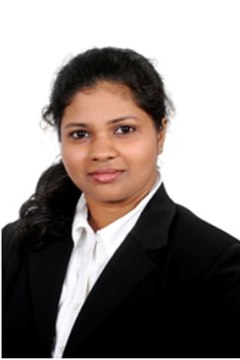
  • Jaya Godhwani, LL.M. candidate, Maastricht University,on pursuing forensic science, and her internship experience

    Jaya Godhwani, LL.M. candidate, Maastricht University,on pursuing forensic science, and her internship experience

    Jaya Godhwani pursued a science and law combination degree from KIIT, Bhubaneshwar, batch of 2013. She is currently pursuing a masters in law from Maastricht University, specialising in forensics, criminology, and law.

    In this interview, we speak to her about:

    • Interning with Senior Advocate Ram Jethmalani
    • Critical details for a career in Forensic Science
    • Her LL.M. experience from the Maastricht University.


    Tell us about your life before college. Did you have lawyers in your family?

    Ah! I feel nostalgic. Well, when I was a child the world seemed to be a place of joy and happiness to me. There was nothing to worry about. I am the youngest child in my family. Since my childhood years I have been very active. My mom and my school teachers say that since my schooldays I have leadership qualities in me. I was determined and very hard working during those days as I am now. I was always keen to participate in the debates, recitations, and other extracurricular activities. I represented my school in many inter school debate competitions and brought laurels to my school by winning few of the competitions.

    My whole family is into business. I was the first child to step out of my hometown to do something different. Subsequently, I inspired my other young family members towards this profession. My younger cousin is pursuing BB.A. LL.B. from KIIT University.


    Why did you decide to study Law?

    I still remember this one instance in my life very clearly when I made up my mind to study and pursue my career in law.  In 2006, when I just cleared my 10th Standard, I had to fill a form in which I had to choose my subjects for class XI. I never wanted to choose Science/Biology because I saw my elder sister working day in and out on those bulky botany and zoology files, and the dissections which she used to do. On the 7th of May 2006, my dad made me read an interview of a girl who did her BSc. LL.B. from NLU Jodhpur and Prof. NL Mitra’s view on B.Sc. LL.B. and its booming career in India. Second page of the newspaper had some information about Forensic Science and its relation with law, how it’s used in courtrooms, and the dilemma faced by judges with respect to its admissibility in the cases. Those newspaper articles sparked my interest, as it was really challenging to work and gain in depth knowledge in those dimensions of legal sphere which were untouched, unheard and fascinating. In those fractions of a second I just opted for Science/Biology as a subject for my Class XI. It was then, in 2006, I decided to pursue B.Sc. LL.B.


    What have your internship experience been like?

    When a student enters a law school he/she is not much aware about different sectors related to law. He/she learns from their seniors and teachers how to play the cards and learn the rules of the game slowly. Same thing happened to me. When I entered the law school I had no idea about internships and how to get them. My college formed a placement and internship cell in 2008 when I entered the law school. I was chosen as a member of that placement and internship cell. It was then I learned from my mentors about internships in law firms and in the litigation sectors. I wanted to explore both areas so as to decide for myself where I wish to head.  Therefore, all the decisions with respect to internships were taken very rationally and cautiously because I was warned since day one that these things play a vital role in framing Resume. So after talking to many people around, and most importantly not forgetting my area of interest, I decided my internships majorly in litigation sector.


    jaya-godhwani2How did you get the opportunity to intern at the Chamber of Senior Advocate Mr. Ram Jethmalani?

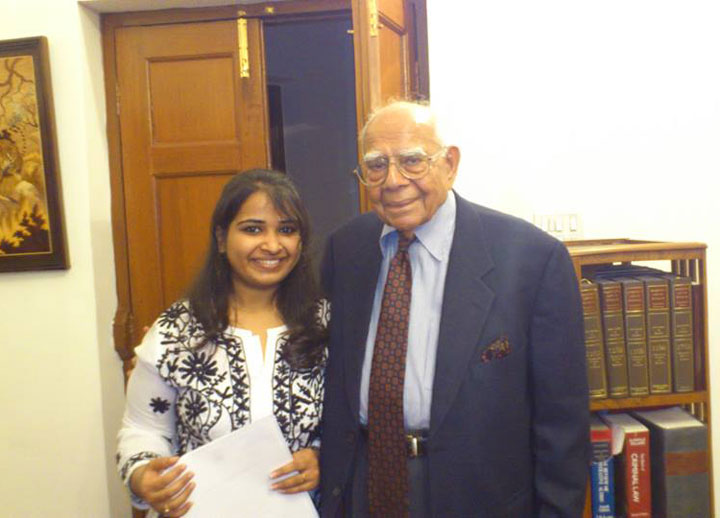
    Grabbing an internship under eminent criminal lawyer Mr Ram Jethmalani was my dream since 2006, when I decided to pursue my career in B.Sc. LL.B. You can say it was like a miracle for me to get internship under him. He used to come to our college to deliver lectures during the International Law Weeks. During one of his visit to my college, I approached him personally and spoke to him about my interest in Forensic Law and expressed my desire to intern under him. He asked me a few questions related to Forensic Law, and personally offered me an internship. My happiness knew no boundaries; I wasn’t able to believe that I actually laid my hands on my dream internship in the third year of my law school.


    Our readers would be keen to know how you went about securing your internships.

    The first rule taught to me by my dad and teachers was never narrow down your scope. A lawyer should know everything. So I worked in that direction. My faculty and seniors helped me build my blocks. I chose to explore NGOs, Law Firms, and Sole Practitioners to observe closely their working patterns. Apart from Forensics, I gradually developed an interest in Intellectual Property Rights due to Professor. Dr Tabrez Ahmed, one of the most intellectual teachers in the IPR Field.  Therefore, under his guidance I started targeting all the top firms which worked in those sectors, because I knew, I would willingly give my best in those internships. After securing enough of good internships, my other teacher Mr. Kumar Kartikeya and Mrs. Parimita Dash pushed me to explore the world of mooting, because according to them, a law student should also know how it feels to plead before the Honourable judges.

    The most important thing according to me, which I kept in mind while framing my CV, was maintaining an adequate balance in all the areas, i.e. internships, moot courts, publications and extra-curricular activities.


    How did you develop an interest in Forensic Sciences?

    Since my early years in school, I loved to take up challenges. After reading an article in the newspaper which talked about forensic science and related issues confronted by Indian Judiciary System, which inspired me to opt forensic law. DNA test, Fingerprints, Saliva test and other areas of forensics, sounded fascinating and interesting. The decision to pursue my career in this particular field, strengthened when I interned in the Directorate of Forensic Science.

    Forensic Law is at a very nascent stage in India.  Therefore, according to me, many lawyers are not much aware about this particular field of law. As far as my knowledge goes, I don’t think so many people pursue this course.


    Tell us your experience interning at the Directorate of Forensic Sciences.

    Indeed, it was amazing experience. I worked in the Ballistic department, where I examined the firearms so as to determine the nature and type of weapons used in the crime, linked fired bullets/ cartridges with the suspect weapons.

    I also worked in the Chemistry department, where I was assisting an expert in a dowry death case, in which I examined the burnt clothe samples. Different questions, like whether kerosene or something else was used to burn the lady, and I also learnt about  chemical  analysis of exhibits such as the viscera, biological fluids, trap cases, dowry death cases, acids and various others exhibits referred by the Investigating Agencies. Viscera including biological fluids are examined for poison detection in cases of homicides and suicides.

    Finally, I along with my other co interns made a report on the status of forensic laboratories in India.

    Overall, my experience at forensic laboratory was eye opening, as I learnt how it gave new dimensions to criminal justice system, by unfolding the truth.


    What is the procedure for an internship application with the Directorate of Forensic Sciences?

    I raise my serious doubt if one can get an internship directly under Directorate of Forensic Science. There are no specific guidelines regarding framing of application for this internship. In my case, University Grants Commission (UGC) was looking for motivated students, in 2009, to work and prepare a report on the current status of Forensic Science Laboratories in India. So, some of the students from my course applied and we were fortunate enough to get an opportunity to work for that research project. As a result, I was offered an internship in the Directorate of Forensic Sciences.


    Are there any opportunities to study the subjects you chose to specialize in your LL.M. in India?

    Well, NLU, Jodhpur offers an LL.M. in Forensics, Criminology and Law in India and some of the Government Institutes also offer the same course. After working in the Directorate of Forensic Science and after learning that, Scandinavian countries are the world’s best when it comes to forensic law, which motivated me to study abroad.

    Additionally, the lack of knowledge about the subject in Indian legal sphere intrigued me more towards foreign university. I really wanted to explore how they are different from us and what we have to do to come to their level. Moreover, I wanted to know the reason, why serious crime rate is so less in these countries. I found out that the Netherlands is one of the countries in the world which has the lowest crime rate because of their stringent forensic law and use of advanced technology to curb the crime. This urge of knowing and learning things brought me to the Netherlands to study Forensics, Criminology and Law.


    How did you go about choosing which college to go to for your LL.M. and did you ever consider Indian colleges?

    It is one of the most important decisions in one’s life to choose the right college and program for your higher studies. If you don’t do that properly, then you don’t enjoy it and you end up in no men’s land.

    As the trend goes, I spoke to my seniors who already got themselves enrolled in Master’s Programs. I think they are the best persons to guide you about these things because they have a pretty fair idea what went wrong with their applications or what better they could have done. So, I started hunting for colleges on www.LLMguide.com which suited my area of interest and shortlisted few of them. I made few friends from abroad when I represented my college in International Youth Forum 2011 in Russia; I spoke to them about those universities which were there in their hometown. Furthermore, I also looked at the faculties, the structure, the library and the guest lecturers of the universities. I got in touch with the alumni of those universities through social network sites, and inquired about relevant information and then shortlisted universities. Frankly speaking, I never wanted to pursue LL.M. from India so I never considered any Indian college as an option for my post graduate studies.

    For me, Maastricht University was the best as it met all my desired criteria. Of course, like for every student, the university and course both matter, same goes for me. After learning that Maastricht University is ranked 6th among the top 100 best young universities worldwide, my decision became more firm to pursue my master from Maastricht. The course offered by them was the best when compared to the other universities in which I applied. It was exactly what I wanted to do. So, the course coupled with University ranking were the factors which played major role in deciding the college.


    Are there any scholarships for studying at the Maastricht University?

    I was lucky enough to get a UM High Potential Student Scholarship at Maastricht University. So I didn’t face any difficulties in terms of finances and other things. Regarding accommodation, Maastricht University has their own website where you can easily find accommodation if you have a subscription.

    There are scholarships available for Non-European students at Maastricht University. For further details on the scholarship you can visit the scholarship page at the Maastricht University official website.


    How is the faculty & academic schedule at Maastricht?

    I am really impressed by the faculty of the Maastricht University. All the staff members are engaged in highly qualified scientific research programmes and incorporate the findings of their research activities in the different courses.  The connection with real life cases is also enhanced by means of apprenticeships and guest lectures. They are just not into purely academics; some are Directors of Forensic Laboratory, Attorneys, Public Prosecutors, Young Lawyers, and Honourable Judges of the Supreme Court. Therefore, they teach us the applicability of law in practical world. So apart from theoretical insights they emphasise on real world practice.

    The Maastricht University has an innovative problem-based learning approach. It is a student centred instructional method widely used at the University. In all courses we have a tutorial group where we prepare, discuss and formulate learning goals for next session. The student reads and discusses all the literature in the tutorial and the tutor (instructor) acts as a catalyst, rendering help when and where it is required. This allows us to develop an independent approach and enhances our research skills. Moreover, it helps us to think in a new dimension.

    So my typical day starts like any other student in Maastricht. I grab a Bun and head towards university, for my tutorial or lecture. When it is a tutorial session, the whole week I have to study more than 3000-5000 pages to prepare myself for class discussions. Sometimes, I have to submit assignments every week, which make my routine more hectic. Lectures sessions are always pretty relaxed as compared to tutorials as I have fewer pages to read.

    Frankly speaking, personally in India, I didn’t at all prepare anything before the classes, I used to sit and listen what the teacher said. But here things are the other way round, I have to understand the literature first, on my own, and then in tutorials I have to share and express my views and thoughts about the same. If at all my way of thinking is wrong or different than my fellow students, they share his or her view and the tutor at the end use to address in general about the things. So according to me, in India things were pretty relaxed and flexible.


    What more do you believe Indian Universities should provide to the students?

    I am really impressed by the teaching method adopted by the Maastricht University. Especially the tutorial sessions, where though we don’t have any background or knowledge about those new subjects, but still we are asked to prepare for tutorial sessions. We then discuss the texts we have read and then it ends as a productive and interactive session. Here, we learn from other fellow students as well as from the teacher. So the learning process which takes place here is unparalleled. I think Indian Universities should also adopt these kind of approaches, which will help students to read, learn and think independently and in a different dimensions altogether.


    Was there time enough for non academic pursuits at Maastricht?

    I think one should always learn to balance things in life. In legal profession, you need to have contacts and socialization/networking is the best method. So, yes I do take out time from my busy schedule to hangout with my classmates. In fact, I also organised two Indian Events at Maastricht with the help of the Dutch Municipality. One of the events which I organised was Holi Festival for my foreign classmates. I think it is always good to showcase your culture to your international friends; this is how they will learn about your culture and vice versa.

    So after hectic weekdays we do organise some or the other class events on the weekends, just to relax and know a bit more about each other.


    Do you think higher studies are a necessity for a successful legal professional?

    According to me, the more knowledge you gain the better it is for you. I was always determined to go for higher studies. So well, in my case I do agree that it was necessary for me as I wanted to gain in-depth knowledge in such complex areas of law. I do wish to pursue my career in criminal law therefore, I thought a Master Degree would be more helpful as I wished to know how to read and interpret forensic reports in criminal cases.

    My suggestion to law students would be – if you think your area of interest demands more research in that field, then definitely you should go for higher studies. Exploring new dimensions and expanding the horizons is always beneficial. Afterwards, one can always get into good law firms first as a trainee and then as an employee. If not that, then a PhD in law is also good option, as it would be wonderful to have young and bright intellectuals in the academic sphere.


    What are your future plans? How do you plan to use the experience and the knowledge gathered at Maastricht?

    I would love to work in a Forensic Science Laboratory in the Netherlands but it is not so easy to get through because of the confidentiality and national security clauses of the country. Meanwhile, I am working on a project related to forensic science, which I hope gets approved by the European Union and the Indian Government, in near future. So by the end of August things will be clearer to me.

    In the future, I would love to come back to my country and practice in the criminal law field.


    And any word of advice for all the young law students out there?

    I don’t think so it is possible to do something without dreams. So, dream high and work hard to achieve your goals. Dreams do come true. Make as many contacts as possible during your life journey, you never know when and how somebody can help you to turn your dreams into reality.

  • Kanad Bagchi, LL.M. candidate, Europa-Institut Universität Des Saarlandes, on being a DAAD scholar and plans for the future

    Kanad Bagchi, LL.M. candidate, Europa-Institut Universität Des Saarlandes, on being a DAAD scholar and plans for the future

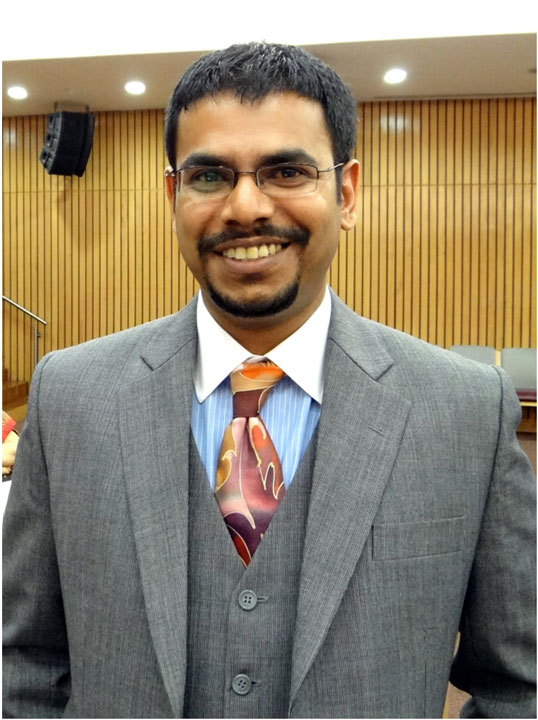
    Kanad BagchiKanad Bagchi graduated from KIIT, Bhubaneswar, in 2013. He has earned the Founders’ Gold Medal for this same reason. He won the Students’ Achiever Award also for raising the issue of the right to self-identification of third-gender with Mr. Navin Chawla, the Chief Election Commissioner at that time, along with a few of his colleagues at KIIT. He is also a DAAD Scholar and is currently studying LL.M. at Europa-Institut Universität Des Saarlandes.

    In this interview we speak to him about:

    • Securing internships at top-notch law firms
    • Studying at Europa-Institut Universität Des Saarlandes and recruitment opportunities there
    • Details for application to the DAAD Scholarship


    What was your motivation behind pursuing law?

    I was a very estranged student during my school life and I couldn’t quite fit myself anywhere. I had a background in science but could never get myself to study it. Instead, I loved to read newspapers and write poems. I remember myself to be an avid debater in school. My teachers fondly used to tell me that I should be a lawyer. Little did I know then, that I would unknowingly get into something, I would grow to love so much.

    So I could not make it to any of the entrance exams for engineering and I did not want to drop a year. KIIT Law School was the next best option (I could not make it through CLAT either) and I decided to give it a shot, thinking that I would appear again for the entrance exams next year. However, by the time it was next year, I was so engrossed into the law, that, this seemed like a conclusion rather than an experiment. At that time there was pressure from home that I re-appear for CLAT. Nonetheless, I was convinced that a new institution like KIIT law school would provide me an opportunity to grow along with it and to contribute in a much larger capacity. In retrospect, I believe it was one of the finest decisions that I ever made.


    What kind of internships did you pursue as a student?

    All kinds! I think it is important, at least for someone who is not absolutely certain as regards which field and area of law he/she would want to pursue, to do as many different kinds of internships as one possibly can. Five years is a long time for one to explore and I think this time should be made use of. So I tried my hands at litigation (Dr. Rajeev Dhavan & Rajshekhar Sir), corporate (AMSS), Shipping &Maritime law (George Rebello), Think Tanks (Observer Research Foundation & PILSARC), NGOs (HRLN & PUCL) etc. In the hindsight, all my internships were fascinating in different ways. Clearly, one month is not enough for you to know all about the area and the work, but you definitely get a feel of the environment. There is always something you can contribute to and take home with you.

    Remarkable experiences have been many and more often than not, first time experiences. However, I think what has been truly remarkable for me is that; instead of mere one or two month’s periodic internships, I have built relations with my seniors and colleagues, which I continue to nurture. Some of them are very senior and established in their own fields and it is overwhelming to know that you have their unrelenting support and advice even after you leave.


    How does one secure Tier I firm internships?

    (Kanad has interned with formidable names such as Amarchand and Chambers of George Robello.)

    I completely understand and identify with this concern. Back then KIIT Law School was in its formative years, and hence there was a lack of institutional backing from the University. We did not have a placement or an internship committee either, nor did we have the national law school tag. However, that certainly did not stop any of us.  In fact, I would like to think that it made us more headstrong and determined. Although I would admit that we all had our own phases of despair and desperation, nonetheless, we were constantly on the lookout, for every little opportunity that we could get our hands on. Getting your first internship is always the most difficult one and it is advisable that you don’t aim only for the top tier I firms and put all your eggs in the same basket. Also, we began streamlining our internships according to our inclinations in law school. Post third year, we sent out applications with a lot more thought, purpose and planning. I started small and worked myself up the ladder. One thing that I learnt is that, once you are in and you perform well (not doing so was not an option for me), you will be recognized. People are more than willing to hire somebody who knows his stuff and is eager to work hard. So do not lose hope and do not be afraid to apply!

    Rest everything remains the same. You apply early, follow up (read pester) with them, see to it that you explore all connections established from the previous internships. There is nothing like networking coupled with determined efforts, both during an application and the concerned internship.


    Tell us something about the preparation that went into winning the Founder’s Gold Medal for outstanding all round and academic performance.

    Frankly, I did not envisage it happening and neither did I consciously work towards it. Recognition is just a matter of time and will come, sooner or later, if you continue to work hard. It is not the starting point and neither is it an end in itself. At some level it is important to remember that you just do not work for yourself but also for people around you. Try and take them along with you. See if you can help your juniors, assist your teachers and participate in the institutional building of your university. In retrospect, I do not think I did anything extraordinary than to do things (sometimes over -did it) that a student is ideally supposed to do. Study! Study hard and study everything. Every lecture and every class discussion, howsoever insignificant it may seem to you, is important. I think the idea is to win the trust of your teachers and colleagues. For me law and legal studies has never really been a subject, but a living object. I live it every day and I look forward to it every day, to learn something new, to read a funny case law or share a little quip from a great biography.


    You have also won Student’s Achiever Award for raising the issue of the right to self-identification of third-gender. How did you start working for such a novel cause?

    The work on this issue began when I was in my first year trying to grapple with issues of constitutional law while working on a moot, along with my colleagues Alimpan Chatterjee and Prerna Dhoop. The central issue, I remember, was on the constitutional validity of Section 377 of the IPC. While delving deeper into the problem, we learnt that the ‘transgender’ were one such community who were severely affected by the above provision. That apart, our research indicated that there were various facets of life and society from which they were excluded. For instance, we learnt that they had to compulsorily register themselves as either ‘male’ or ‘female’ while availing voter-identity cards, passports etc, which was direct attack on the self-identity of their community, which considers itself as neither male or female. Therefore we raised the issue with the then Chief Election Commissioner, Mr. Navin Chawla, while he was on an official visit to our university. We later met him in his office in Delhi and he assured us that he will look into the matter. And well he did!! After a couple of months we got the news that the election commission, in a far reaching move has allowed the transgender and Eunuchs to register themselves as “others” in their voter id card. Whenever I recollect that evening, it fills me in with a sense of purpose and real achievement. However, this journey would not have been possible had it not been for the support of my colleagues and also our founding Director Prof. Faizan Mustafa, who stood by us all throughout. I think this incident also goes a long way to show that, some, if not all our civil servants are rather sensitive about issues around them and are determined to make a difference and improve lives.

    It is heartening to see that finally good sense has prevailed on the government and they have extended a similar provision for passports as well (http://infochangeindia.org/human-rights/news/third-sex-finds-a-place-on-indian-passport-forms.html). Recently, as you all may know, the Supreme Court has also rendered a decision recognizing the transgender as “third gender” with consequential benefits.


    What are the challenges you faced while working for the Right of Identification of the Third Gender?

    One major problem, at least till a couple of years ago was the stigma that was attached with such issues. People around you are not very forthcoming when it comes to discussion or debate on this topic. Even amongst the educated lot, I have noticed a sense of disdain for the LGBT community. However, that is changing in a positive way. There is more and more research that is coming up on LGBT issues which is very encouraging to see.


    kanad-bagchi6

    What was your motivation behind doing an LL.M. abroad?

    I have built a tremendous passion for the law over the years. I have practically dreamt of doing nothing else but the law. Path-breaking works of academia have always inspired and motivated me. For instance, during my studies on jurisprudence, I read with great interest the works of Newcomb Hohfeld, Matthew Kramer, Martha Nussbaum, Ronald Dworkin and the likes. I imagined an opportunity to work under them at some point, to write and research and teach, to build and to create. At some point, I started feeling a little distant from the way legal education is imparted in the country. I am certainly not saying that it is not good or not upto the mark (there are many honorable exceptions), but there is definitely a sense of vision which is lacking. Original research output in the legal field has remained almost stagnant. From my various interactions with professors and lecturers from different universities, I could gather a very grim impression of the world of academia, where you never graduate from being a teacher to a scholar. I see a very big difference between the two. A teacher is confined to imparting education in a classroom, whereas a scholar does not teach, he professes. His audience is much beyond the students in the classroom. He does not simply distribute information, but builds ideas. That’s why probably they say that good law schools teach you the law, but great law schools simply teach you to think. I could not find an environment back in law school, which could satisfy my hunger and passion for research and critical thinking. I wanted to experience a world where academics is a very serious affair and attracts the best minds in the profession.  The above reasons essentially motivated me to apply for an LL.M. abroad.

    Of course the immediate first instinct is to go for the big brands that exist out there. But to my mind, that is not a very appropriate approach. I looked at the program, the length, the number of years it has been in existence and the reputation of the same. I looked into the faculty profile, profile of current students and the alumni. I shot out emails to the administration and the faculty members asking for their opinion. I also looked at the industry support and connections that the university has built, the conferences they organize and the kind of contribution they have made to legal academia.


    kanad-bagchi5

    How did an LL.M. at Europa-Institut Universität Des Saarlandes happen?

    Contrary to convention, for me, the University happened because of the Scholarship (DAAD). The DAAD scholarship allows you to choose amongst three universities. The Europa-Institut, Saarland University, the Europa-Kolleg Hamburg and Freie Universität Berlin. Since I was more inclined towards the study of EU law, Europa-Institut was an easy choice. However, the dilemma then was that I had been offered admission in two other Universities. I was offered a full fellowship at the Central European University, Budapest for an LL.M. in Comparative Constitutional Law. I was also offered a place at NYU. I declined the offer at CEU because I was more inclined towards accepting a named scholarship like the DAAD rather than a departmental fellowship from a University. Also by then, I had numerous interactions with previous DAAD scholars, which only added more firmness to my thought. I had to reluctantly let go of NYU as it would have been a huge financial burden on my shoulders. No scholarships were on offer there.


    Tell us about the application procedure for the DAAD Scholarship.

    The idea of pursuing an LL.M. grew to be more concrete since my fourth year at law school. I was actively on the lookout for scholarships as I was not very keen on funding it all by myself. The start was rather staggering, because I did not have the slightest clue as to where to begin. It’s a process and I must say it can get rather exhausting. I did not have seniors who had been through the process before, other than Mr. Alipak Banerjee, from whose experience I benefited greatly. Nonetheless, I was fortunate to have colleagues like Mr. Jitendra Soni (Jeet) and Rudrani Banerjee (Rudrani) who were constantly with me throughout the process, from its initiation till its end.

    The DAAD scholarship application is a two-step application process. First stage is the submission of documents consisting of your grade transcripts, CV, statement of motivation (SOM) and recommendation letters. The most important is of course the SOM. It can take days together to write a good SOM. It helps if you have a clear idea as to what you wish to study, where and why. I remember having numerous discussions with both Jeet and Rudrani regarding the questions that I should address in the SOM and their possible responses, which added much clarity to my thought. Further, it is very important to be precise and clear in your drafting. There should be a logical link flowing through every line that you write. Every comma and every full stop matters! I had the benefit of running several drafts through both of them before I finally sent it out. The second stage is the interview rounds. You are grilled by a panel of three or four judges, comprising of both German and Indian professors and members from the DAAD. They would mostly be interested in your research proposal and how you plan to go about with it. Also, make sure that you know your CV in and out. Different things work for different people. What worked for me was that the German judges were quite impressed with my knowledge of the German legal system and especially German constitutional law, which I had studied in detail under Prof. Kartikeya in this course on Comparative Constitutional law.

    What I had initially imagined of the scholarship was completely different from how it turned out to be in reality, in a very positive way. From the website, one only gets to know the details regarding the waiver of tuition fee or stipend and the like. It is only when I arrived here that I could really appreciate the prestige and stature of the scholarship. For LL.M. students it is not so much the DAAD scholarship but it’s the Dr. Angela Merkel Scholarship which makes all the difference. I had the blessed opportunity to have received an invitation from the Chancery building to meet with the foreign security advisor of Ms. Merkel. I have also interacted with a number of MPs from the Bundestag (German Parliament). Moreover, DAAD organizes an annual scholar’s meet where other DAAD scholars pursuing different streams are brought together under one roof for various events. It is fascinating to meet so many different scholars from different fields across different continents and to talk to them (not to mention all the arrangements are made by DAAD). Further, I would like to mention that the DAAD team responsible for India is simply superb. They take care of everything, from your visas to your safe arrival, accommodation and German language training for the first two months, help you out with settling down, getting your residence permit, practically everything and anything that you may need. DAAD is a very well know organization in Germany and is extremely resourceful. So even in an alien land, you are in safe hands. Lastly, the stipend that they pay out is quite generous.


    What is the recruitment for overseas students like?

    I would say that the recruitment prospects for overseas students is challenging. The biggest barrier for an overseas student in Europe is language. Recruiters, invariably look for English along with a high degree of proficiency in German, Spanish, Italian or French. However, the good thing is that the DAAD scholarship offers you two months introductory course in German language which you can further work upon throughout the year in your respective university. If you really take the language issue seriously and work towards it, you have a good chance.

    Having said that, I have different plans and I am not looking for a job in Germany at the moment.


    How was your experience at Europa-Institut?

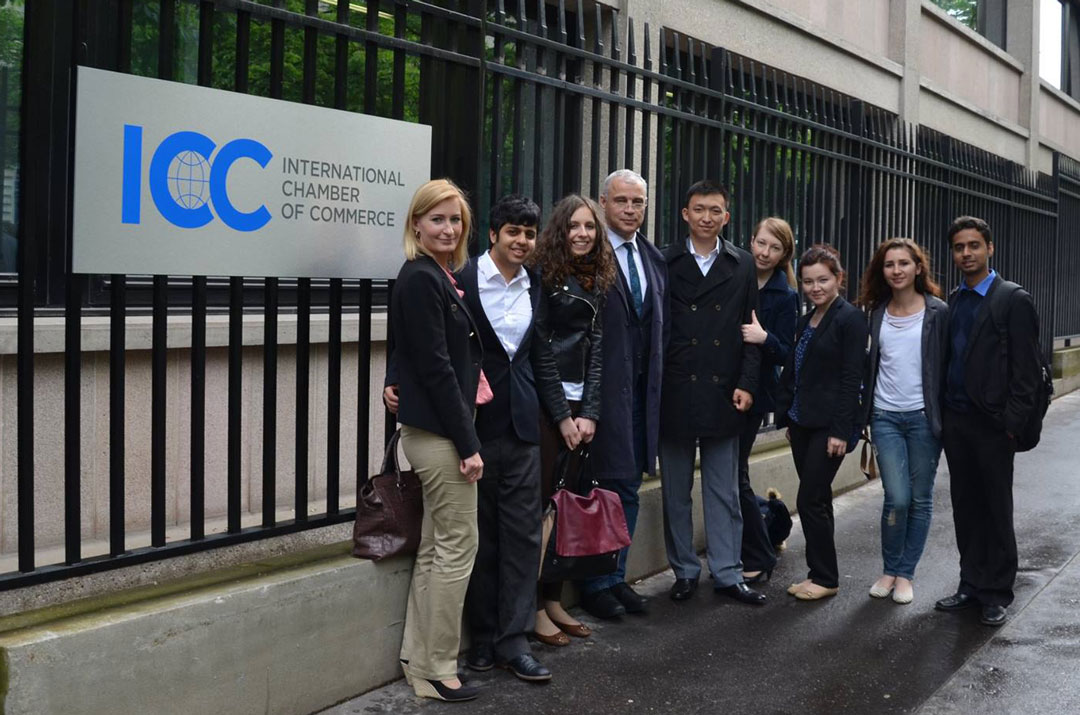
    Simply Splendid! Europa-Institut has its own special place in the context of European Integration. It attracts scholars from all across Europe and is considered to be a center of excellence in EU law. As a matter of fact this year it received the prestigious Jean Monnet Chair for European Law and is now being headed by our current director Prof. Thomas Giegerich. We have faculty members drawn from all over the world and that provides a stimulating environment inside the class. We have a very nice mix of both practitioners and academicians, which really completes your learning. Some of our Faculty members like Prof. Martin Selmayroccupy very high positions in the European Commission and it is interesting to study the practicalities of policy making in Europe from an expert hand. I must also state that most of our faculty members are very passionate about their subjects and some of it actually gets rubbed onto you. I am here, in an alien jurisdiction, studying European law and I have never been more fascinated. The advantage of having lecturers from such institutions is that you can objectively seek to know things that you will never find in your books. The administration at the Institut is very friendly, helpful and remarkably organized. Europa-Institut makes it a point to augment your classroom readings with real life exposure. Drawing from its vast pool of faculty connections, it regularly organizes conferences and workshops at different forums like the European Court of Justice, the European Court of Human rights, the European Commission, the European central Bank, the WTO and the likes. For instance, just last week, I was in Paris presenting a paper on Arbitration at the International Chambers of Commerce. I also made an embarrassing attempt at skiing for the first time in my life, while I was in Italy for a conference organized by the Europa-Institut. Further, I was selected to represent the University at Eurosim, 2014 held in Netherlands. It was a wonderful experience to simulate the work and practice of European Institutions.

    I simply love the library here. It is big enough for someone to literally get lost in it. It contains a huge variety of collections and is not just limited to the law. I was presently surprised to see an extensive collection of Indian Constitutional law in one of the sections. The Master’s and PhD thesis section containing research papers by different scholars for over four decades really allows you to see the evolution of EU and International law from the perspective of students and researchers. Further, we have subscriptions to practically all online databases that one can think of and you can access them personally even from your home by using your login id and password.

    The highlight, however, I would say is the diversity of my batch. I have colleagues from thirty eight different countries and all continents being represented. It really brings in an array of divergent opinion and thoughts while mentioning matters inside or outside the classroom. You have students from law, political science, international relations, economics, social sciences and engineering. Everybody brings in something unique onto the table and you can go back home, more aware and more educated. Even amidst this diversity, I have felt togetherness. On a lighter note, I had never imagined that I would be able to enjoy an India-Pakistan cricket match on TV with a Pakistani student from Karachi, Ambreenor for that matter an Israeli and Palestine student sharing rooms together. Such experiences make you realize that problems among nations are always at a different level and are never really personal.

    In essence, I wish I could do this one year all over again.


    How was the academic schedule?

    Quite hectic! Most of the days we have classes from 9 AM to 5 PM. Then you most certainly have to go the library to prepare for the next day’s lecture. You are invariably flooded with assignments, presentations, seminar papers, case studies and exams. So yes, there is lot of work to be done on a daily basis. I think it’s good, because it keeps you on your toes all day long.


    What were the subjects you chose?

    I am doing an LL.M. in European and International Law with a heavy concentration on European Institutional law, EU competition, banking and monetary law. I had always been fascinated by how Europe has keep twenty eight nations together under the same roof, in pursuit of similar aims and in the face of conflicting interests. The European Integration project as it stands today is not just a legal, political and economic union, but a union of destinies. So therefore it was interesting for me to study this mammoth creation, while living in the heart of Europe. I studied monetary law, primarily because of my inclination towards economics. I was excited to delve deeper into the issues relating to the Sovereign debt crisis in Europe. To my mind, there was no better prospect of studying about the EU Debt crisis, at a time, when it was in its full swing, happening in a region where you are living and taking lectures from people who have literally been at the centre of things during the crisis. It was a strategic decision to study EU competition law because as you might already know, competition practice in India has been greatly influenced by the rules and regulations in EU and USA.


    How’s the Indian fraternity over there?

    Yes, Germany hosts a large number of Indians, spread out quite evenly throughout the country. I have two Indians in my LL.M. program and lot many more in the University. The Indian community at the University regularly organizes dinners and cultural nights. Therefore, I don’t as much miss my daal bhaat. They also organize trips to various places in and around Europe.


    What are your future plans?

    Although, having spent almost a year here at the Europa-Institut, studying a whole range of subjects, I still find myself, in an indecisive position. One thing that I can safely say is that, the appetite in me to study further has only grown. I am ever more fascinated towards European Studies and I remain excited to explore further and dig deeper. Notwithstanding the fact that I am still relatively untrained to the idea of European Integration, the lectures here at the Institute, was a throwback to similar structures, issues and solutions. I could see myself applying the concepts and mechanism that I had learnt back in law school. Also, my training in the common law traditions has been huge advantage. For now, I am working towards the completion of my course and hopefully by then, I will be a little more certain about my future goals.


    What would be your advice to law student interested in going for higher studies from India?

    First and foremost, be sure of the fact that you want to pursue an LL.M. after your graduation. An LL.M. is a huge investment in terms of time, effort and also money (if not on scholarship). Ask yourself the question as to why do an LL.M.? What is it that you are trying to achieve out of this? How would it benefit your case? You career and your personality? The first step in an LL.M. application is to convince yourself that you would want to pursue it. Talk to your seniors, your teachers, your colleagues. Think hard, think deep and introspect. Once you have crossed that stage, it is important for you to think about which area of law would you like to specialize in and why? Deeply analyze your key areas of interest and to shortlist courses/universities on the basis of the same. Every college would require you to demonstrate an unwavering commitment to the field you are interested to pursue. Moreover, you have to be clear whether you want to practice law or enter academics. Choice should also be influenced by the country you want to study, or (if possible) work in and the value of that country’s LL.M. programme in India, in case you intend to return.

    Once you have a definitive course and list of universities you are applying, then you need to focus on two things simultaneously, the procedural part (deadlines, required documentation, payment of application fee, etc.) and substantial part (SOP and Reference Letters). Statement of Purpose (popularly known as SOP, SOM, etc.) is the most essential document of all, which would determine the strength of your application. It is a very popular and lucrative approach to make your statement of purpose a replica of your resume. However, it is advisable that you refrain yourself from doing that. Rather than focusing on ‘what’ you have ‘done’, spend some thought on penning down ‘how much’ and ‘what’ have you ‘learned’. Try and build a link between your past, present and future.


    What’s your take on work- life balance? How do you go about it?

    I am not the best person to answer that question. I think a big chunk of my life is my work and voluntarily so.

  • Roshni Manuel, Associate, Veritae Legal, on studying in Nottingham, maritime law, and plans for the future

    Roshni Manuel, Associate, Veritae Legal, on studying in Nottingham, maritime law, and plans for the future

    Roshni Manuel graduated in law from ILS Law College, Pune, in 2010. She then went on to pursue her Master’s degree from the University of Nottingham, specializing in Maritime Law. She is currently Retainer Associate-Corporate, at Veritae Legal, where her role and responsibilities include General Corporate Practice, Trademark Registrations, and Corporate Agreements.

    In this interview, we speak to her about:

    • Maritime Law as a career and its scope.
    • Life at ILS and University of Nottingham.
    • Important requirements for application to a university in UK.


    Given that most of our readers are law students and lawyers, how would you introduce yourself to them?

    I am only a beginner in this big arena with just a year’s experience. I am thankful to the whole team for choosing to take my interview. And I’d like to introduce myself as an aspirant of law.


    What motivated you to pursue law?

    I was always interested in the humanities and hence, law. Another explanation would be, I wanted to be on the other side of the crowd who knows exactly how policies in this country are drafted and what its legal implications are. I must say I have not reached that level of analysing law and policy but I do keep a track of it whenever I get time.


    roshni-manuelHow about your college life at ILS—do you miss it?

    Life at ILS, Pune was very colourful and competitive like any top 10 law schools. My college has got a very heritage look and it is a very peaceful place with acres of timbre and wild birds. So, whenever I think of my college all I think of is the peaceful Campus, my friends and dear professors and of course, the famous library. Something about grad school is you wont miss it until you pass out; it could be because at some point you may think five years is a little too much to tolerate;  I never thought I will miss it so much until I joined LL.M. at Notts.


    What kind of internships did you do while in law school that helped you in shaping your career choices later?

    In my case it was my first internship which helped me choose my stream of interest. It was in a Maritime Law Firm at my hometown. I have tried my hands in different areas of law but I find Maritime a very interesting and a suitable field for my caliber.
    I guess rather than going for the popular one or the one with better scope, one should always choose the field which matches their caliber and interest.


    What made you go for higher studies so early in your career?

    I planned for LL.M. when I was in 4th year law. I don’t have a specific explanation for taking it up early but at some point during ILS days i thought i should be more focused on my field of interest and that could be one reason for opting LL.M soon after graduation.


    How did you develop an interest in a field as niche as maritime law?

    I hail from a port city, Cochin, and my parents are also in the shipping industry but not lawyers. Them being in the same industry surely opened the gates but I think it was my first internship which planted the interest for the subject in me.


    Why University of Nottingham? What other universities did you apply to?

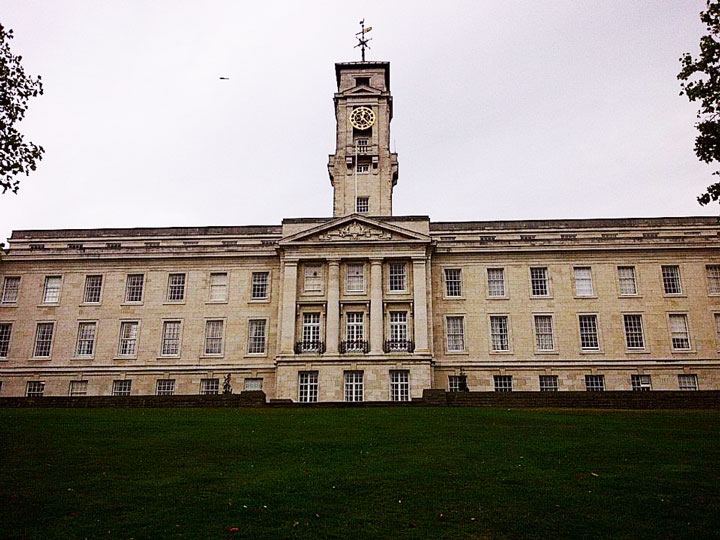
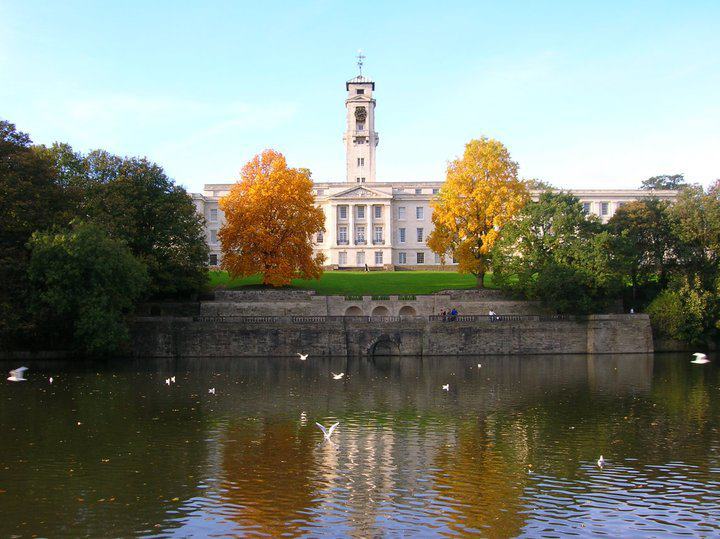
    As you know I was keen on Maritime law since my time as an undergraduate and hence applied only to universities which had maritime law as a specialized field. Other universities I applied to include University of Southampton, Swansea, and UCL. I chose Nottingham for its ranking and for the faculty, especially Prof. Bennett (Marine Insurance maestro).


    Would you tell our readers about the application procedure and other requirements?

    Firstly you should be sure about the subject to specialize; you must make your own list of universities and should never take advice from any education abroad consultancy in this matter. Every university has different criteria for selection. I have applied to only UK universities so the procedure below is just for UK

    1. IELTS score above 7
    2. Aggregate marks should be 60% or more
    3. 2 references
    4. Statement of Purpose

    Visa requirements keep changing so please check the UK consulate website for details.


    Tell us something about your LL.M. years.

    I would say LL.M. abroad widened my perspective. It is totally different when it comes to studies there. I found their method of teaching very interesting. It is basically seminars; the student is expected to prepare for every seminar and participate in the discussion. I was part of the LL.M society and Indian Society. I got the opportunity to organize events and interact with well established lawyers. Apart from the regular activities, if you are lucky, by using the university contacts you could snatch a summer internship in Europe as well.


    Currently, you are member of Maritime Law Association of India. Tell us something about your role over there.

    The partners of the firm United Maritime Law Chambers are part of the governing council. And me as their associate got the opportunity to interact with aspirants in maritime field, judges and International Lawyers. And I did get an opportunity to publish one of my articles.


    You work as an Associate with United Maritime Law Chambers. What kind of work are you involved in over there?

    I am entrusted with maritime case research, case follow-ups, drafting, contract review, marine insurance matters, etc. and occasional corporate work for shipping companies.


    How is Maritime law different from other areas of law?

    Maritime law includes norms of national law, referring to various branches (civil, administrative, criminal, etc.) and norms of international public and private law. Commercial maritime law which includes carriage contracts is basically law of contracts and the maritime aspect in it makes it different.


    What would be your advice to students interested in Maritime law?

    You should be studying subjects like Maritime law, Carriage of goods by sea, law of the sea, International sale of goods, Marine insurance and should have a very strong base in law of Contracts. It is a very interesting and popular field. The opportunities are many if you are really keen; like shipping companies, law firms, P & I clubs, etc.


    Last but not the least, your advice to future lawyers and current law students?

    Dream high and make as many contacts as you can. Make merry with your classmates as those connections will help you in future and would be something you can trust and rely on.

  • Arjya Majumdar an NUJS grad on his LLM at the Tulane Univ Law School, work as senior associate at 2 major law firms and teaching at JGLS

    Arjya Majumdar an NUJS grad on his LLM at the Tulane Univ Law School, work as senior associate at 2 major law firms and teaching at JGLS

    Arjya traces his life from his unlikely admission to NUJS, his internships throughout and his growth as a person during his LLM. He makes most interesting observations on the fundamental similarity between the work at a law firm and academia as making different sets of people aware of the law with certain differences that were small but are all that matter at the end of the day.


    Most of our readers are law students and young lawyers. How will you introduce yourself to them?

    I’m assuming you know my name. For a full description of my education and work life, please refer to my linkedin profile. What won’t be mentioned there is that I love singing and I crack bad jokes. Really bad jokes.

    In a nutshell, former corporate lawyer- now turned professor, aging hippie and slightly intolerable.


    arjya-mWhy did you decide to study law? Tell us about your college life.

    In many ways, this decision was made for me. I originally wanted to be a journalist. My mother came home one day with an application form to a completely unheard of NUJS. I decided to give it a shot, just for a lark. Didn’t study at all. Landed up at the exam centre half an hour late. Managed to clear it. That was when I realized that the people who administer the entrance test must think of my answers as worthwhile enough to teach me to be a lawyer. These people had been (presumably) teaching law for many years and therefore knew better than I did. I gave up on my journo dreams. The rest is history.

    College life was mostly fun. For the first couple of years, I learnt about stuff I didn’t know existed (coming from a science background in 11-12, studying Rousseau and Hobbes was scary). Getting into a groove in my latter years, I managed to devise a personal pattern of attending classes, studying and fun and games which allowed me to get by with regard to CGPA. Like many others, I fell in love and out of love- the standard ups and downs. Had my share of substances that shall not be named and fights with people who will also not be named.


    NUJS, now and then. How would you describe the change?

    Major changes. As one of the first few batches, we were instrumental in our own successes and relied less on teachers. As a new national law university we had a point to prove to NLSIU and make ourselves known. We won international moots without any mentoring or help whatsoever. This kind of enterprising behaviour has, in my opinion, died out over the years.

    On the flipside, I know it’s become tougher to survive. With more national law colleges, the competition, and not just for jobs, has become fiercer.

    I do wonder though, whether NUJS is still as chilled out a place as I remember it to be. I have made friendships which will last for life. I do hope the same applies to present students of NUJS.

    Not going to comment on the recent developments concerning the NUJS administration.


    What kind of internships did you do while you were a student? Any remarkable experiences during your internships that shaped your career choices later?

    I did the standard NGO, trial court, appellate court and law firm internships. Mind you, it was one internship a year and not two or three as I see happening presently. Two internships stand out. One was with the WWF where (along with dear friend Sagnik Ghose) I visited fish markets in Calcutta to find out if turtles (a Bengali delicacy) were being sold. Trading in turtles is generally illegal. We managed to rescue one turtle from certain death and released it in Alipore zoo. We also managed to tip off the local police regarding these illicit activities.

    The second internship was with Mulla and Mulla in Bombay. Mr. Shardul Thacker was most encouraging and allowed me to work on matters that would usually be given to first or second year associates. Of particular note was an opinion on software technology parks which gave me the inspiration for an article “Taxation in BPOs” published by ELT and later on, a book titled “Special Economic Zones: Policy and Procedure” published by CCH India.

    Both of these internships inspired two very important aspects of my career- one, a love for the environment and two, a love for legal academic writing.


    Right after graduating, you worked for three months in a law firm and then went for LLM. Why did you decide to go for higher studies?

    Somewhere down the line at NUJS, I got interested in Maritime Law (possibly because my father was a sailor). I must have written about 4 or 5 projects in maritime law and did maritime law based internships (including at Mulla). I wanted to learn more about the subject. Hence the choice to opt for higher studies.


    Tell us something about your LLM year at Tulane University Law School. How did this influence your career?

    As a lawyer, it didn’t influence my career at all. At least not professionally. A degree in maritime law has no place in a corporate law firm where you’re working on M&A and Capital Markets.

    But it did influence me in many other ways which I found to be invaluable in my career. A foreign degree forces you to stay in a foreign land, to understand and appreciate customs other than yours. I was staying in a town steeped in conservative American and black culture and the university had possibly 10 students from India. You learnt something new every day. As a result, I became more open minded, I gained an ability to walk up to and talk to complete strangers. More importantly, it broadened my horizons and sociability.

    It was also tough. Having to fend for yourself in a foreign land (where you might be misunderstood) is not easy. That, plus working part time and studying was a novel experience at the time.

    I’d say everyone should live (and not visit) abroad for a year. It gets you out of your comfort zone and makes you learn things about other countries (and more importantly, yourself)


    Any memorable experience you would like to share?

    I was working part time as a cashier at the university grocery store. A lady customer, upon noticing that I wasn’t white, black or hispanic, asked me if I was from India. When I affirmed her assumption, she asked me if we all rode elephants to work and had charmed snakes as pets.

    I still don’t know if she was joking or was for real.


    You worked as a senior associate at two major law firms. Tell us something about that.

    It takes a while to learn the ropes. You need to be able to put in the long hours and the constant attention to detail. Your boss also plays a huge role in your life. How he/she allocates work and how much you can learn from him/her will decide your bonuses and career in the firm. I am and will forever be grateful to Mr. Som Mandal, a number of former partners at FML, and some present partners at D&D.

    I also realized along the way, how important it is to create an image of excellence for yourself. Like the saying goes “Justice must not only be done, it must also appear to have been done”. This plays a huge role in law firm politics which I have unfortunately been witness to from time to time.


    How is a typical day for a senior associate in a law firm?

    Depending upon whether you have a deadline that day, life in a law firm varies on a daily basis. You work on your transaction, consult with your partner on a point on which you are stuck, read up on it, revise your document accordingly. If you have been diligent in your work, it should pass your partner’s review and the client should be happy. If not, you do get screamed at (not necessarily literally) and its back to the drawing board. All this is fairly par for the course.

    Sometimes a client will come back and express his appreciation for your work or will come to you (and not the partner) for a new mandate. Somedays you get to scream at an investment banker or a merchant banker. Those are the days which are worth recalling with a smile.


    Currently, you are teaching at Jindal Global Law School as Assistant Professor. Why this switch?

    About two years into FML, I realized that I didn’t want to spend the rest of my life drafting and negotiating on the same standard agreements, chasing after new clients for mandates and old clients for pending invoices. I knew I loved teaching (ask any of my former interns or colleagues) and had a flair for academic writing.

    Unfortunately, academia in India doesn’t pay as much as a law firm. Given the vast sums of money transferred to my bank account at the end of every month, it was difficult to tear myself away from the comfortable lifestyle I had built. However, JGLS salaries are at par with law firm standards and when the opportunity came, I took a leap of faith.


    Life of a law firm associate and a professor, what do you think are the major differences between the two?

    There aren’t too many differences. As an associate, your job is to make your clients aware of the law. As a professor, your job is to make your students aware of the law. As an associate you are expected to research and provide answers to questions of law in the form of a legal opinion. The same applies to being a professor, where instead of an opinion, you publish a paper.

    The only difference is that as a professor, you get to choose what turns you on intellectually. You choose what you want to research on and not what the client wants. You develop your own understanding of the research questions and are not expected to adhere to the understanding of your partner. And this makes all the difference in the world.


    Please describe a typical work day of yours at JGLS.

    Since classes haven’t started yet (it’s been less than a month that I’ve joined), much of my work is preparatory in nature. Preparing course modules and lists of possible research topics which my students will write projects on, consulting with the administration on university policies, studying for my own course (which I remember very little of) takes up most of my time.

    A lot of time is also spent in researching on ongoing projects which will hopefully be published or presented sometime soon.

    When classes start in August, I suppose a lot of time will be devoted to teaching, mentoring and guiding students and reading up on the next day’s class.


    How would you compare the JGLS of today with the NUJS of your time?

    I have seen NUJS during its fledgling years and am seeing JGLS during its early years now. I’d say the infrastructure at JGLS is far better than that at NUJS at the time. The faculty is younger, and therefore a lot more attuned to the needs of students (I feel that as students, we didn’t always connect with old, but very respected teachers such as Prof Menon, Prof Konar and Prof Banerjea).

    As I mentioned before, the competition has gone up. I see JGLS students applying for and presenting papers at conferences and publishing papers. While all this has happened during my time at NUJS too, I think the need to stand out in the crowd has become even more imperative now.

    One interesting difference I see is the student demographic. While at NUJS, you had a fair cross section of society in terms of economic class. At JGLS, that demographic is slightly skewed upwards, although you do have a large number of very deserving scholarship holders.


    arjya-m2What’s your take on work- life balance?

    Extremely important. You need to have the courage to refuse work if you think you have too much on your plate. Either that, or devise a way where you can work quickly without sacrificing accuracy. I have personally followed this through my years and it has ensured my sanity for many years. Singing at a rehearsal for a Broadway musical or an opera after a bad day allows you to get back to work the next day with a smile on your face.


    Last but not the least, what would be your message for law students?

    Don’t take law school too seriously. CGPA and class ranks, like old friends and enemies, will be forgotten. Learning the law isn’t important, anyone can learn the law. What is important is that you learn how to learn the law. Other than that, chill (while you still can).

  • Sneha Ashtikar a GLC Grad on LL.M from Sciences Po, Paris and internship at Gide Loyrette Nouel, Paris

    Sneha Ashtikar a GLC Grad on LL.M from Sciences Po, Paris and internship at Gide Loyrette Nouel, Paris

    sneha

    Sneha talks about the unparalleled flexibility available at GLC with regard to pursuing internships. She explains how her knowledge of the French language coupled with the ease of obtaining a French scholarship and lower living costs makes higher studies in France an attractive option. She clarifies on the application procedure and common misconceptions about the contents of an LLM degree in France.


    Tell us something about yourself.

    My name is Sneha and I am pursuing my Master’s degree in Law from Paris Institute of Political Studies (Sciences-Po) in Paris. Previously, I studied law in Government Law College in Mumbai. Currently, I am on a gap year to gain practical work experience as an Intern in Gide Loyrette Nouel, Paris.


    Though it’s one of the most cliché question, but yet, why law?

    Let me give you a candid answer to that question. Since school, my interest in languages motivated me to participate in essay competitions, elocutions and most importantly – debates. Math and sciences were never my strong subjects. Hence, narrowing down my career choices was easier. My love of languages and debates naturally drew my interest towards law and here I am.


    What about your LLB years? What did you guys do for fun? 

    I started studying in GLC in 2007, I must say I had lot of fun; I met some of my best friends there. For fun, we participated in lot of different college committees, moot courts, Model United Nations conferences, etc.  We represented GLC in Harvard Model United Nations in Boston and that trip was the most memorable!


    GLC is located in sort of hub of all the law firms giving students ample opportunity to do running internship, yet a lot of people complain about irregular classes and infrastructure. What do you think are pros and cons of GLC?

    GLC has consistently produced excellent legal talent in the country. No other institution can claim to have such an impressive number of outstanding lawyers. Recently, in light of the development of legal education in past few years, students require an all-round CV to get past a challenging interview process at the law firms or to be able to cope with the competition at the bar.

    GLC curriculum is unique in this respect and provides for an all round development of a lawyer. Students typically intern for 4-5 years almost on a full times bases prior to graduation. This is a huge advantage for GLC students as opposed to students from other law schools in the country wherein students do limited internships during the 5-year programme. Additionally, the moots, other extra-curricular activities and the freedom that GLC provides to its students is incomparable to other institutions.

    That said, one major complaint that students have at GLC is its lack of infrastructure and resources. Relatively speaking, Shortage of good faculty is another concern at GLC. At the same time, it is also remarkable to see that we have students from other colleges coming to attend Professor Pithawalla’s lectures. I think GLC’s rich library is also one of the impressive assets to mention, our library has the original copy of the Indian Penal Code drafted by Lord Macaulay in the year 1886 and also many rare books, which cannot be found in any other library in India. GLC’s physical location is on one hand a huge advantage to its students while on the other hand there is no space to expand in the most sought after area of Churchgate, Mumbai.


    What made you go for higher studies so early in your career?

    Initially, my plan was to stay and gain experience for a few years, however, one of the deal breakers was to get admitted to a good law school and I managed to do it along with a scholarship. So, here I am, studying in Paris.


    Paris is a dream to-go-to place for many people and you happen to be studying there. How does it feel like?

    It feels amazing! I always dreamed of visiting Paris but I must say I never thought that I would end up studying here and walking by the Eiffel and the Louvre every day. Paris is undoubtedly one of the best international cities and it has so much to offer you on many different levels. On each and every corner of Paris, there is a special monument with a remarkable history attached to it. I feel privileged to be able to live in Paris and at the same time I have the advantage of visiting neighboring European countries any time I want as everything is within two hours by flight!


    Why did you choose to study in Paris?

    I chose Paris for my love of the language French. I started learning French at Alliance Française de Bombay when I was in the first year of GLC. French is such an elegant language and you start feeling glamorous even while learning it.  I had several opportunities to meet eminent French personalities, participate in activities related to France or their language, I remember we had a treasure hunt competition in South Bombay in which all clues given to us were in French!

    So basically, I fell in love with the language first and then I decided to even take my main career along with me to France.


    How did Sciences Po Paris happen? What other colleges did you apply for?

    I was contemplating between doing a JD in the US or something as different as Sciences-Po Paris. In my final year, I studied to give the LSAT, by the end of the application process; I was comparing my career options between doing a JD against a Master’s degree from Sciences-Po. Sciences-Po definitely sounded like an out of the box kind of an idea and at the same time, it also carries a strong reputation of famous schools alike such as Harvard or Oxford University. It has traditionally educated France’s political and diplomatic elites including the current President Mr. Hollande. I was completely amused by the idea of studying at an institution that carries a strong worldwide reputation for specializing in social sciences.


    Did you get any scholarship to study there?

    Yes, I was given the French Government’s scholarship. The French government is very welcoming of its foreign students and there are many institutional scholarships as well as one other government scholarship that gives priority to law students.


    How long is the LLM course over there? How is it different from LLM in popular countries such as US and UK?

    It is a crisscross two year program between LLB and LLM, it is called ‘Master in Economic Law’ with a specialization of your choice in second year. It enables you to study more subjects than in LLM offered in other countries and you can still pursue a specialization, which is normally offered by an LLM course. So I think it is a fantastic course and also fits the expectations of law graduates coming from India. You also have an opportunity of participating in famous moot court competitions such as Willem C. Vis and Jessup. Sciences-Po has an excellent faculty of full time professors as well as a prominent visiting faculty including professors from foreign law schools, several partners, and lawyers from international law firms and so on. At this point, I would also like to mention that all classes are offered English and based on Common law in comparison with the basics of French/Civil law. A common perception is that I am studying only civil law of France which is not too useful for common-law lawyers but I hope this clears the cloud. I personally find it extremely useful to get to know the basics of this civil law system, especially when Indian law firms are starting to have many European clients.  You can also take an year off from the school and pursue two internships over the period of ten months or apply for exchange programs to law schools including NYU, Harvard University to study one semester there and then pursue one internship of five months. Even if you decide not to take the year off, during your second year, there is Columbia law school exchange program in which, you spend a semester at Columbia and return to Paris to finish the last semester. This course also makes you eligible to pass the French bar exam which is in French (if you work hard on your French, you can take it!)


    Would you tell our readers about the application procedure and other requirements?

    I would suggest sending in the application on day 1 of starting date. Sciences Po doesn’t have a particular early decision system like American law schools but since it is rolling application process, earlier the better. No prior knowledge of French language is expected from the applicant student, which is very comforting to those who do not speak French at all. You can start learning the language with your law classes. I had many students in my class who did not speak French at all so it is common.

    Of course, knowing French language can prove useful because you live in a francophone country so for day to day life it is easier if you speak French but I also know of many people who get by without speaking any French. It really is up to the person if he/she wants to embrace a new language. I remember how thankful I was to be able to speak French when I called a French plumber and explained him the leakage problem in my apartment! If you love challenges, this course and this place are for you!

    Most importantly this course isn’t as expensive as the LLM in US or UK. In fact, the tuition fee of an LLM in the US or the UK is equivalent to 2 years of fees and cost of living of the course that I am pursuing. Also, being one amongst the rare 3000 (approx.) Indian students in France gives you a good chance to score a scholarship.


    How would you describe your typical day?

    Since I am working now, I wake up early in the morning, have a shot of espresso like a true French national to start my day and by the end of the day have dinner, sometimes with a glass of one of those special French wines and some good jazz music to overcome the exhaustion! I share my apartment with a French lady so we discuss random things happening around (oh yes, in French). I really think you have to integrate yourself in the local culture so you don’t feel home sick; instead you end up making a new home for yourself.


    You are interning with Gide Loyrette Nouel which is one of the leading international law firm. How is your experience there so far? How is it different from an Indian law firm? Is there any specific requirement for working in law firms over there?

    My experience so far has been extremely positive, I feel absolutely incredible to have an opportunity to work with them. I speak French with most of the associates and partners and they absolutely appreciate it! The team that I work with is so diverse and you have an immense scope of learning literally every day. The clients are so international that at times, I have found myself looking up the Company laws of African countries. I also got to learn the practicality behind French corporate laws. It is an extraordinary experience for a common law lawyer. I noticed the firms here are very well organized and very particular about their filings, billing hours etc. In addition, big firms like Gide Loyrette Nouel have intense training and a welcome program for interns to help them integrate well into their working style.
    There is no specific requirement as such to apply, they even give opportunities to freshers but being a student of Sciences-Po definitely helps you to compete with other law students applying from other universities such as Sorbonne.

    The firm is also sending me to Beijing to work for the summer so I have a chance to gain professional experience in Asia. I am very excited to discover China!


    What are your future plans?

    I would love to work in an international law firm like Gide after graduation but it is not so easy since it is a very competitive market for lawyers in Paris. Hence, after the completion of my postgraduate studies, I will aim at finding an associate’s position. Hopefully my current work experience will help me achieve it.


    What would be your advice to law students who plan to go for higher studies or want to get into academics?
    Since we all are still facing the post-recession consequences, it is extremely important to be innovative in your career options. If you pursue a Phd in law, you could also become a professor afterwards and it will be good to have some fresh, young faces into academics.


    Last but not the least, what would be your message for law students?

    I would say that use your time to your advantage. Manage your academic scores well and at the same time, make your portfolio colorful and convincing with a wide range of internships and work experience. Use every experience to learn about yourself and make a decision about the future based on the lessons you learn. In the end, own up to your decision. Never keep any regrets. The most important thing is to make sure you have fun no matter what you do. Last but not the least, learn a new foreign language!

  • Vikrant Pachnanda, Masters candidate, Cornell University, on being the founder of the India Law Journal, and plans for the future

    Vikrant Pachnanda, Masters candidate, Cornell University, on being the founder of the India Law Journal, and plans for the future

    Vikrant Pachnanda graduated from GNLU in 2011. While in college, he founded the widely successful India Law Journal. He is also a senior editor for SILC (Standard Indian Legal Citation), which aims at providing uniform legal citations for Indian sources that are usually not covered by other standard citation formats. He is currently on his way to Cornell University for his LLM.

    In this interview, he talks to us about

    • Founding the India Law Journal
    • Having ILJ copies at the International Court of Justice
    • Plans for the future


    Given that most of our readers are law students and lawyers, how would you introduce yourself to them?

    I passed out of Gujarat National Law University in 2011 and then joined Luthra & Luthra Law Offices as an Associate, where I was part of the team handling Mergers & Acquisitions, Aerospace & Defence, Anti-Bribery Compliance and Knowledge Management. Thereafter, I worked in the Chambers of Mr. Najmi Waziri, Chief Counsel for the Government of the National Capital Territory until his recent elevation as a Hon’ble Judge of the Delhi High Court. I am now on my way to Cornell University to pursue my LLM.


    Though it’s one of the most asked questions but yet, why law?

    I have always enjoyed speaking in public forums and thus developed my passion for wearing the black robes and arguing before a court of law.


    You are the founder of one of the most prominent journal, India Law Journal. How did you come up with the idea of creating something like this?

    During my first few months at law school, I had authored an article which I sent for publication to an international law journal. Although they liked my piece, they told me that since I was not a lawyer they could not publish the article, as they published only articles authored by lawyers and not law students. I wanted to create a platform dedicated to express views on topical legal issues, thereby generating a cross current of ideas on emerging matters. The aim was to ignite the initiative and desire of young law students to contribute in the field of law alongside soliciting the erudite response of legal luminaries.


    You have been running the India Law Journal for past five years or so. How is your experience so far?

    It’s been a fabulous experience. However, I would not like to take the credit alone, since it has been a team effort. I would like to thank the entire Editorial Team, who have all worked very hard in creating a platform which focuses on legal issues that are challenges before law makers, lawyers and the society at large, in an ever changing social, economic and technological scenario.


    The journal also found a place in the International Court of Justice. How did that happen?

    My Director at GNLU, Dr. Bimal N. Patel has been very supportive of this initiative and prior to joining GNLU as the Director, was working with the Organisation for the Prohibition of Chemical Weapons which is situated at The Hague, Netherlands. It was his suggestion that I send a copy of the first Annual Issue of the ILJ, which was published around five years ago, to  the Peace Palace Library at the ICJ. Therefore, Dr. Patel very kindly put me in touch with the Director of the Peace Palace Library and ever since, copies of ILJ have been going there.


    Also, Congratulations on being selected for Cornell University. So what plans do you have once you finish your LLM?

    Well it’s too early to say now since I can only take a call on my next step once I reach Cornell and may be finish a semester.


    Last but not the least, what would be your message for law students?

    Well, I think one should do whatever their inner-voice says and what they feel they will enjoy doing the rest of their life.


  • Alipak Banerjee, Masters candidate, University College of London, on being from the maiden batch of his college, his high-profile internships and plans for the future

    Alipak Banerjee, Masters candidate, University College of London, on being from the maiden batch of his college, his high-profile internships and plans for the future

    Alipak Banerjee had graduated from KIIT, Bhubaneswar, in 2012. During his years as an undergraduate he has interned at the Rural Entitlement and Litigation Kendra, Kerala, Aarohi Bhalla and Sujata Kurdukar, Solicitor and Advocate on Record, Supreme Court of India, Dua Associates, London Court of International Arbitration, Amarchand Mangaldas, among others. He then went on to pursue his masters from University College of London, with a focus on Cross Border Mergers and Acquisitions, Corporate Insolvency, International Trade Laws, and International Arbitration. 

    In this interview he speaks to us about:

    • Being part of the first batch of his college
    • Securing a series of high profile internships
    • Studying in London, his curriculum and plans thereafter


    You’ve probably been asked this before, but why law?

    Law was more like an option rather than a choice. But I fell in love with the subject and when I look back I am glad that I decided on law.


    If you had to describe your college life in one word, what would it be?

    I have learnt a lot from the founding faculty members at law school. Being a member of the first batch was never easy as I had to start from scratch. I must tell you that not having any precedent was my potential opportunity as I got the chance to shape the law school. I presented papers in conferences, wrote articles, represented universities in moots (including Jessups, VIS Vienna), and I had about eight good internships when I left my college. In general college life was fun. It is home away from home. I had an amazing moot team and I continue to be best friends with my team members.


    Do you think being from a non- national law school caused you any problem?

    There are two aspects: is it an issue and how you decide to deal with it.

    Yes, it is an issue as it affects your peer group, quality of faculty and possibly your self-esteem. Being in a NLU is akin to the USA immigration presumption – deemed to be an immigrant unless you proven contrariwise. On the other hand, non-NLU students are deemed to be average, unless proven otherwise. However, how you deal with the issue is your choice. It is a challenging experience to put your best, but I quite enjoyed it. If you know your subject, it’s great to face challenges. I did the same and my university, and my friends and family supported me.


    You have interned with all leading firms. Can you tell us about the experience?

    (Alipak has interned with the likes of Mangaldas and Amarchand and the London Court of Arbitration, to name a few.)

    I am afraid getting a good internship is not easy. You have to start your hunt early. If you have a four week internship – first three weeks you should work really hard and in the final week you should make arrangements for your next internship. If you don’t know people talk to the associates in the present firm you are interning, they will have friends in other firms and if they have liked your work – they will help you.

    A librarian at a lesser known firm helped me get an internship with a top tier firm in Delhi. You have to make the best use of resources available. There isn’t any point writing reminder mails to the HR – the response is not going to be different. Instead, pick two partners and read the articles they have published. Mail them asking them about their views or opinions about something from their field. Demonstrate your curiosity for their subject, from a purely academic standpoint. And with time you can always request them for an internship.

    In the year 2010, I interned at LCIA, London and with Freshfields Bruckhaus Deringer LLP, London. At LCIA, at that time, they didn’t have any provision for interns. I was an unpaid intern for one month. The process has changed now. They have a six months paid internship programme. They have two intakes now. Please check their website for more details. Also, FF offers great opportunities in their Paris office in IAG group (international arbitration group). Typically, the internships are for six months.


    What was it like working as Research Analyst for RSG?

    (RSG is the research partner to the Financial Times for the Innovative Lawyers reports. RSG’s research findings feature in various international press)

    I was aware of RSG`s India rankings since my law school days. I was delighted to participate as a researcher in the RSG 2013 India report. I have spent some time at their London office during my winter vacation. Initially I was sceptical as I thought it was not my forte (as the research didn’t involve legal skills). However, I was convinced that at the end of the research I would have a renewed perspective about the market which would ultimately help me to decide on a suitable law firm for employment.

    I interviewed 60 legal purchasers (typically General Counsel). I now understand the market expectations – turnaround time, the quality of work, expert opinion, issues regarding billing so on and so forth. As a budding lawyer, I will be selling my services to my clients. Hence, if I know about their requirements it would help me in medium to long term to cater to my clients.


    Congratulations on doing your Masters from University College of London. How did that happen?

    I was keen on pursuing masters after completion of undergraduate study. At UCL, I studied international trade law, international arbitration, financial restructuring, liquidation and consequences and mergers and acquisition. I was taught by the best in the field. Prof. Ian Fletcher taught me the paper on liquidation and subsequently, I am writing my dissertation under his supervision. Regarding financial restructuring, Mr. Andrew Wilkinson taught us the course – he is the European Director at Goldman Sachs for financial restructuring. I think this is the greatest advantage of a London college over Cambridge/Oxford – if you have to study papers in the commercial domain, any city university (especially UCL) will give you practical insights as the teaching is done by practitioners. And I was not surprised when UCL was ranked ahead of Cambridge and Oxford by Guardian this year.

    I got a bit of funding from TATA. My research experience with RSG, Prof. Hunter and also Lord Lawrence Collins (British Judge and former judge of Supreme Court of United Kingdom) has helped me procure partial concessions.


    Tell us something about your life as an LL.M student.

    I must tell you about Goodenough College. It is a residential college located in central London. It attracts 800 masters and Ph.D students from more than 100 countries spread across different streams. I had a lovely time being a part of the college community and I have made good friends with people from different walks of life.


    Currently you are research assistant to Prof. Martin Hunter. How is a typical day at work like?

    It is more like a research experience. I am assisting him in revising the 6th edition of Redfern and Hunter, which is due next year. I have also assisted him in his teaching assignments, case work. I am also co-authoring an article with him.


    What are your future plans?

    I am returning to India in September. I will be joining a Tier-I firm in Mumbai in October.


    Any message for young or aspiring lawyers?

    Work hard. Be sociable. Be marketable. Believe in your abilities.

  • Anwesha Pal, Masters candidate, Nottingham University, on staying in academia, pursuing IP Law and plans for the future

    Anwesha Pal, Masters candidate, Nottingham University, on staying in academia, pursuing IP Law and plans for the future

    Anwesha Pal is a graduate from NUJS, Kolkata, batch of 2009. She then went on to pursue her LL.M. in IP Laws from Nottingham University.

    In this interview we speak to Anwesha about:

    • Her time in Nottingham, the curriculum and faculty
    • Application procedures and scholarships available
    • Her decision to pursue a career in academia and plans for the future


    What was your motivation behind doing an LL.M.?

    I have always wanted to teach and when I realized that teaching law at prestigious institutions is indeed possible, I decided on pursuing my masters in law. LL.M. is an academic degree. Therefore, if you are thinking about a career in academia, then an LL.M. is mandatory. Also international exposure could be an added benefit in more ways than one. LLM should be done primarily if you want to gather more knowledge in your area of interest. An LL.M. is mandatory if you wish to study further. It is not entirely true in the present day job market that only a master’s degree in law will help you in grabbing high paying jobs.


    anwesha-pal2

    How did you choose the university? Where else did you apply?

    To do an LL.M. I thought UK would be best suited to my needs. I was interested in Intellectual Property laws and other commercial laws. I had applied to King’s College London, QMUL, University of Warwick and University of Nottingham. I went through the course structure for each, the faculty concerned with the subjects I chose to study, the place of study and the costs involved.

    University of Nottingham has one of the best faculties for Intellectual property laws in the UK and one of the most intensive courses in Masters of International Commercial Laws. With an amazing library and a brilliant atmosphere for studies and a superbly picturesque campus, every second spent there studying has been worthwhile.


    Any interesting details about the course worth sharing?

    To start with, our Intellectual property law course instructors were Dr. Estelle Derclaye and Dr. Paul Torremans who are very renowned in their fields. For all the other subjects, the seminars were coupled with lectures from Mahesh Uttamchandani from the World Bank, Pascal Kamina for Intellectual Property law and some other eminent dignitaries.


    How was your experience? Tell us about the faculty and facilities. Any memorable instances you might want to share with us?

    Situated two and a half hours from London, the facilities in and around this university are incredible. The 24 hour access to all the buildings and the library within the university was very helpful since we had to prepare for the day-to-day seminars on almost all the days and additionally research for our papers due at the end of the term. The faculty was very helpful and understanding. The staff in the school of law were equally well-informed and organised.

    The hand-outs and the manuals were extremely helpful in preparing for the classes and the students’ portal was very well designed to cater to all our research needs. University of Nottingham has access to innumerable journals across the globe in almost all the major areas of research and studies. The library is huge and divided into levels. The basement and the ground levels being group study zones designed with brightly coloured walls and a brilliantly designed cafeteria. The other two levels above it are the silent study zones with in-built study carrels that have a plethora of books and journals for almost all the humanities related subjects.

    anwesha-pal8The University of Nottingham, UK is divided into four campuses where the University Park Campus is the one where the school of law is situated amidst beautiful gardens and a lake with swans and lots of greenery. The hopper bus services are very effective which transfer you from one campus to the other for free. These are double-decker buses which run every few minutes.

    A funny thing to note here would be that two of University of Nottingham’s campuses had been shown in a Bollywood movie called Teri Meri Kahaani, which some of our European and English professors went to watch too!
    Well, I think one of the best experiences while living in the UK was when I got the opportunity to watch the Olympics (rhythmic gymnastics) at the Wembley Stadium.


    Holi at Nottingham
    Holi at Nottingham

    How’s the Indian fraternity over there? Are there many Indian students?

    The Indian community in the University is not very big. The LLM Class of 2011-12 had around 100 students out of which 25 were Indians and a few Indian origin UK citizens. The Asian community is pretty big there with a lot of students from China, Korea and South East Asia. There are many societies such as the Indian society, the Hindu society, the ISKCON society and so on where you can meet a lot of Indians too who are enrolled in various fields of study at Nottingham. These societies make you feel like you are a part of a family away from home and the activities during Holi and Diwali were very well organised which my friends from all cultures and ethnicities enjoyed alike. There are quite a few excellent Indian restaurants that have all-you-can-eat buffets in store. They are preferred by Indians and non-Indians alike.


    How is the recruitment/ placement situation for overseas students?

    Ever since the UK did away with the PSW (Post study work visa), the placement situation has not been very encouraging for international students in UK. However, there are a lot of companies including banking companies and other organisations that introduce the graduate program each year. One can always apply for the same and get recruited at the end of the training period. For students applying to law firms in the UK, I found in addition to the international law firms such as Clifford Chance, Herbert Smith and the likes, there are many ethnic minority law firms which release their training contract schemes and vacation schemes every year. The best place for the information regarding employment opportunities is in the law fairs organised by your universities.

    The University of Nottingham has the reputation of getting the majority of students employed each year, undergraduates and postgraduates alike. However, if you are interested in a career in academics, you should keep an eye out for various research associate positions in various universities in the UK including your own university. The Careers and Employability Services cell of University of Nottingham was very helpful with such information.


    How was the academic schedule? Was there a lot of academic work?

    The academic schedule was brilliantly designed, although the courses were very demanding. The course was a mix of full year and half year options along with a dissertation at the end which summed up to 180 credits overall. The students were at liberty to choose the subjects they wanted to take. The assessments for all the subjects were not the same. For some, 15 page essays had to be submitted, whereas for some there were exams in the end. The majority of the subjects one took decided the specialisation such as Masters in International Commercial Laws, European Laws, Human Rights Laws, Maritime law and so on.

    Yes, there was a lot of academic work. For the LL.M. students there were two hour seminars each day for the subjects one chose. The hand-outs for these seminars were given out and additional reading material was put on the portals a week in advance. Studying the given topics thoroughly was a must since the seminar could not be followed otherwise and moreover one would not be able to take advantage of the seminars and the discussions in the class if they were not familiar with the topics. Also, the class performance, which was instrumental in getting recommendations from the professors, was gauged according to one’s participation in the class.

    Formative assessments were also very crucial in understanding the expectations of the professors with regards to our assessments. These were not marked and were meant for practice alone. Apart from that, all the professors were very approachable and always ready to help with your doubts.


    anwesha-pal5What about accommodation?

    The accommodation that I had booked before I left for the university was Broadgate Park. It is situated in Beeston that is a 5 minutes’ walk from the School of Law and other administrative buildings. The road leading to the university goes alongside huge playgrounds, a lake with swans and a small hillock paved with neatly trimmed lawns and bushes with concealed lights that give you the feeling of living in a scenic resort.

    The experience was brilliant. The best part of it was when I was placed in the students’ accommodation with girls from various countries in my flat. I made new friends from various cultures, learnt a lot from them and shared my own too.

    With vast green expanses sunny days were enjoyed by the students whiling away their time on these lawns, debating over issues of politics, playing games and flying kites. We would even organise barbecues during summer break.

    Broadgate Park
    Broadgate Park

    Broadgate Park also organises balls every half a year. The Christmas ball is an extravagant affair with European expert acrobats performing difficult acts followed by prom dances by the guests later on in the night.

    The accommodation that I chose was that of a single study, although there are a wide variety of accommodations that one can choose from, including lesser expensive options.

    The flat that I was allotted had flatmates from Canada, Uganda and China. I found really good friends in them. They were very accommodating and immensely helpful. Exploring Nottingham with them was an experience I will never forget. Social get-togethers with classmates were another highlight that was a very culturally enriching experience. I would encourage students going abroad to take advantage of the international experience as a whole and not limit their world to studies alone.

    The accommodation also organises feasts on various occasions for free for the residing students. At such events one can get sumptuous grub, cultural exchange and make new friends.

    Nottingham is a beautiful town that hosts one of the biggest fairs in Europe which is called the Goose fair. The largest Indonesian festival in the UK was held here as well. It is the land of Robinhood and his friends and you can even find the roads of the town named after them such as the Maid Marian Way, Friar Tuck lane and so on.


    anwesha-pal3Tell us about your classmates, was there a predominantly international crowd? What was the general age group of students?

    My classmates were predominantly European and Chinese students. However, there was an eclectic mix of students from the continents of Africa and other Asian countries. The style adopted in their countries regarding research and studying case laws is very different from the ones adopted in India. The way of teaching was mostly in the form of discussion and reading beyond what was enlisted in the seminar hand-outs.

    The general age of students varied from 24 to 40 years. I met students from Pakistan and Africa who were in their 40s and were either already teaching at various institutions in their countries or working at solicitor firms or were Barristers in London. There was even a student from Czech Republic who was in his mid-thirties and had been working at Clifford Chance for a few years. Some of them were working in Government organisations in their countries.


    Did you get time for any extracurricular activities?

    The course had been designed very beautifully that it even left quite some time for pursuing activities other than the one that were related to academics. During the summers when the lake was not frozen, one could participate in rowing activities around the lake or join the swimming club or the belly dancing societies to learn something new. There are several student-run activities for the health conscious too. Also one could even join the baking club to learn baking or help with the charity functions. There was even a Quidditch society for the Harry Potter buffs. There were societies that enacted period wars, replete with costume and props. For those who were passionate about volunteering, there were charities that needed volunteers to work at the local departmental stores and places like the British Heart Foundation and Cancer Research Institutions to help raise money.

    However, for people who wanted to earn some extra bucks during the breaks, Nottingham being a university town was full of opportunities for students to work in. The ones offered by the university was the Note-taking service and other related support work for the disabled or people with handicaps in the university. The pay was very attractive with almost 16 to 20 pounds per hour with an extra holiday pay. Jobs offered by the university were by far more lucrative than any other jobs that were being offered by other organisations.


    How does one go about scholarships? Does the institute offer any scholarship?

    There are many scholarships on offer such as the Commonwealth Shared Scholarship Scheme, The Developing Solutions Masters Scholarship, IELTS Scholarships, Charles Wallace India trust Scholarship, Aga Khan foundation Scholarships, Goa Education Trust (GET) Scholarships, Chevening Scholarship and so on. The detailed information is given on the university’s website. The University offers a scholarship as well. This scholarship is given by the International Office of the University. Information about the same has been provided on the website.


    What are your future plans? Going forward, how do you expect this experience to influence your career?

    My plan at the moment is to focus on my academic career and move ahead with it. I believe the experience that I have had at Nottingham coupled with my undergraduation from NUJS would be a stepping stone to an academic career that I have always dreamt of. I hope to find better opportunities for my higher research degrees with my experience in Nottingham.

  • Roshan Santhalia, Advocate, High Court, on studying criminal law at Oxford, starting his own boutique firm and plans for the future

    Roshan Santhalia, Advocate, High Court, on studying criminal law at Oxford, starting his own boutique firm and plans for the future

    Roshan Santhalia graduated from NALSAR University in 2011. He has interned with Hon’ble Justice Madan B. Lokur, High Court, Delhi, Hon’ble Justice J.M. Panchal, Supreme Court of India, UN Anti-Corruption and Crime Prevention Department, and Cambridge Police Executive Programme during his time as an undergraduate. He then went on to pursue his masters in criminal justice at Oxford University, batch of 2012. He is currently a litigator based in Delhi, and primarily practices at trial courts and the Delhi High Court. He also founded his own boutique firm, Santhalia Law Chambers, in 2012.

    We have taken this opportunity to ask him about:

    • His motivation behind pursuing a LL.M Degree.
    • His experience as a student of the Oxford University.
    • The recruitment rate for overseas students.
    • Means of securing a scholarship to study at a foreign university.


    What was your motivation behind doing LL.M.? When did you finally decide to do your masters?

    I have always wanted to litigate in courts right from the beginning of law school. My primary and predominant motivation for pursuing an LL.M. was to improve my capabilities as a litigating lawyer. Moreover, I have always believed that as a first generation lawyer, the an LL.M. from a reputed university will help me build my litigation practice. As of now, the plan seems to be working. It was by the end of my second year in law school that I had made up my mind to take up an LL.M. after my first law degree.


    How did you choose the university/college?

    I believe that choosing the right university for your LL.M is extremely important. I have always advised my juniors to not apply to universities which are average or below average. With the upsurge in the global education market, there have been numerous universities which have come up with their own LL.M programs. It is important that every LL.M aspirant emphasizes on two aspects of the LL.M program. These are the overall brand reputation of the university and the quality of the faculty in the area of your interest. For instance, an aspirant might want to go to Oxford because of the brand name it has, but, if he/ she wants to specialize in Intellectual Property Right laws then Berkeley or Stanford are much better options. The right balance needs to be struck between these two factors and an ideal combination would be one in which the target university has a good brand name along with having a good faculty in the area of the desired specialization of the aspirant.


    What did you study? Why did you decide to take up this particular subject?

    I took up Criminal Justice at Oxford because I have always wanted to practise criminal law. All throughout my law school career, I have devoted a major portion of education and learning in the field of criminal law. I believe that every aspirant should first locate his or her lead in a particular area of law. An area which interests the aspirant much more than other areas of law and other similar factors should be taken into consideration. It is important that by the end of the first half of one’s law school career, he/ she should decide his/ her lead area so that he/ she can concentrate and build his/ her CV accordingly.


    How has your experience been so far? Tell us about the faculty and facilities. Anything memorable that has stayed with you?

    It’s been about six months since the completion of my masters. I would say that my experience as a Masters student was a bit poorly balanced. The academic side of my entire experience took away all the time in which I should have probably socialized and done other extracurricular activities in and around the town in which I was living. I was very lucky to be a part of a class at which luminaries like Professor Andrew Ashworth and Professor Lucia Zedner taught. One does not need to worry about the faculty if he/she is going to renowned universities. Professors abroad are extremely professional and diligent. They would never ever give you an opportunity to be critical of them in any form.


    How’s the Indian fraternity over there? Are there many Indian students?

    Indians are everywhere, aren’t they? I believe that all the good LL.M schools across the world have an excellent Indian fraternity. We have done very well across different disciplines and therefore, one will never find any dearth of friendly and helpful Indian students in any university. Not to forget, the children of Indians who have settled abroad also form a substantial portion of the Indian fraternity abroad.


    How is the recruitment/ placement situation for overseas students?

    Prior to the recession, I hear that the placement rate for overseas students was good. Currently, I believe that it has become very difficult for anyone who does an international LL.M to get a job in the international market. One needs to appreciate the fact that LL.M is a masters degree and therefore, it is more analytical, jurisprudential and theoretical in nature. As compared to this, the JDs and other undergraduate equivalents in foreign law schools teach the practical aspects of the local laws to their students. Therefore, the undergraduate students always have a better bet with local jobs of that particular jurisdiction. Having said this, I must say that exceptional candidates who do very well in their LL.M programs do end up getting good jobs too.


    How is the academic schedule? Is there a lot of academic work?

    Yes. A lot of academic work. LL.M programs across the globe are designed in a manner that a huge amount of course content can be compressed in one single year. As I have answered before, a major portion of my time which should have been spent discovering other things around Oxford was taken up by the excessive academic pressure which was exerted by the LL.M course on me. One should be mentally prepared for a lot of academic reading during the course of their LL.M program.


    How did you manage food and accommodation?

    Accommodation varies from university to university. Oxford and Cambridge have a collegiate system which means that every student will be allotted a college which shall essentially take care of the residence and food for that student. US universities, I have heard have halls of residence within their faculty of law or very near to it.


    Tell us about your classmates – is there a predominantly international crowd? What is the general age group of students?

    My class had students from all over the world. I had classmates from all the seven continents. The general age group of students is anything between 24 – 30. However, there are certain students who are also more than 30 years old.


    How does one go about scholarships? Does the institute offer any scholarship?

    Comprehensive scholarships to high quality law schools are very difficult to get. Again the mode of scholarship and the way in which one can get it varies from one law school to the other. The US and UK employ different mechanisms to provide academic scholarship to deserving candidates. One needs to do his/ her research very well to apply for all the appropriate scholarships. You can either get a full scholarship or tuition fees waiver depending on your class rank in the undergraduate law school and the interview which you give to the scholarship committee.


    Going forward, how do you expect this experience to influence your career?

    I believe that every LL.M has two major components to it. One is the substantive component of the course which basically relates to the substantive law and theories which you have gained from your LL.M course. The other component is the improvement in your capabilities to analyze, think, draft etc. on different legal issues. I believe that my higher education experience has added much more to the second component mentioned above than the first. The first component is primarily municipal/ local in nature as the theories and substantive law which one learns in his/ her masters can be most related to that particular jurisdiction in which the law school is located. In contrast to this, skills of analysis, drafting and how to critically develop a perspective on any particular area of law are skills which are universally applicable in different fields and sectors of law.


  • Rukmini Das, Masters candidate, international dispute settlement, on studying in Switzerland, demanding curricula, and plans after masters

    Rukmini Das, Masters candidate, international dispute settlement, on studying in Switzerland, demanding curricula, and plans after masters

    rukmini-das2Rukmini Das graduated from NUJS, Kolkata, in 2011. Following that, she worked with PXV Law Partners as an associate for three months, before deciding to pursue her masters.  She is currently pursuing a masters in international dispute settlement, a degree which is jointly offered by the Geneva University Law School and the Graduate Institute of International and Development Studies, Geneva.

    In this interview we speak to her about:

    • Studying in Switzerland as opposed to more conventional destinations abroad
    • Application procedure, scholarships and her curriculum
    • Her experience studying in Switzerland and plans thereafter

    What was your motivation behind doing LL.M.? 

    At the graduation level, we only touched upon all the main branches of law, learning only a little more when we took optional subjects. I decided during  my 5th year that I would pursue an LL.M., but was not yet sure when or where. However, following the herd mentality, I started working in a corporate law firm right after graduation. Halfway through the year, although I liked the work atmosphere, loved my colleagues and superiors, I realized that I cannot see myself doing this year after year. This was not my area of interest! Then I started applying for LL.M.

    How did you choose the university/ college? Where else did you apply? How should one go about choosing an university?

    I came across the course I am studying now, on the website of the International Law Students Association (ILSA), while preparing for the Jessup Moot in 5th year (ILSA organizes Jessup). This is not a particular university/college, it is a programme organized jointly by the Geneva University Law School and the Graduate Institute of International and Development Studies, Geneva. I want to stress that I selected the course, not the school. This is very important for anyone deciding on an LL.M. [for example, Harvard is famous for its business law, and maybe some other kinds of law, but may not be the best for all branches of law. Don’t go to Harvard for the sake of Harvard, as long as your other option is among the better ones].
    The main reason for zeroing in on the course that I did? The faculty! Recruitment chances are also a consideration.
    I had also applied to Queen Mary’s arbitration programme (chose not to take it up) and Cambridge University (did not get a call).

    What are you studying now? Why did you decide to take this particular subject? Any interesting details about the course worth sharing?

    I am studying Masters in International Dispute Settlement (MIDS). I selected this for the course structure and content. It is one of a kind in the world (www.mids.ch). There are so many interesting things, I don’t know where to begin! Though the course focuses on private and public international dispute settlement (why I selected it in the first place), there are opportunities to take optional courses from the regular courses offered at the graduate institute and Geneva university law school, which means I can also take courses in substantive law subjects. There are also many intensive courses offered at MIDS, over two to three days, by the best in the profession. Tutorials are also an integral part of the curriculum, not to forget conferences, site visits to international institutions, etc. I could go on and on.

    How is your experience so far? Tell us about the faculty and facilities. Anything memorable that is stuck in your mind?

    The Course directors (professors of our main courses on dispute settlement), the staff all make us feel like part of a family, with regular cocktail events which give us an opportunity to talk about stuff outside class. The experience has been mind blowing! Everything is memorable. Especially memorable were the public international law tutorials because of our Tutor, who is now a professor at Geneva University, and I feel really bad for future MIDS students, who will not have the opportunity to be taught by him.
    Facilities are great, giving us access to two libraries (Geneva Uni and Graduate Institute) as well as facilities coming with them.

    How’s the Indian fraternity over there? Are there many Indian students?

    My class has only 33 students, with one other Indian. There have been two Indians in every year of the programme, which commenced in 2008. The graduate institute has many Indian students, in economics, social sciences, development studies. I am not sure of Geneva University.

    rukmini-das3How is the recruitment/ placement situation for overseas students?

    All students are overseas in my class – not a single Swiss citizen. We get all the help possible from the career services of the graduate institute. We keep getting information on internship and job openings, via email. Career services is always there to help us with any questions we may have.

    How is the academic schedule? Is there a lot of academic work?

    Because of the immense flexibility in courses we can choose, in terms of optionals and intensives, and the conferences and institution visits we go for, hardly anybody has the same schedule as another. Schedules also vary from week to week. There is a LOT to read, a LOT. One week (the worst), we had to read about a 1000 pages. Except for that week, readings are in the vicinity of 500 pages, and are manageable if you manage your time well. Moreover, if you like the reading material, which you should, since you selected the courses, time should just fly. Classes are not just one-way lectures with note-taking, they are full of interesting discussions, made even more exciting with the presence of students from around 25 countries and teachers of such vast experience.

    What about accommodation?

    Depends on how much money you have. Of course, Geneva is among the most expensive cities in the world. Taking that into consideration, accommodation offered by MIDS administration is pretty good. Kitchens are provided, there is no concept of a “mess”. Cooking is ideal anyway – saves a lot of money!

    Tell us about your classmates – is there a predominantly international crowd? What is the general age group of students?

    I don’t have a single Swiss classmate. The students largely come from Europe, few from North and South America, and a decent number from Asia. I don’t have any classmates from Africa, but that is probably a coincidence this year. I have met quite a few at the Graduate Institute, part of other courses. Ages of my classmates ranges from 23 to 32 years. Many have come for their second LL.M., some have come here in the middle of their Ph.D.

    Do you get time for any extra-curricular activities?

    No. Partly because there’s too much to read, partly because a lot of the Geneva University activities requires a good knowledge of French!

    How does one go about scholarships? Does the institute offer any scholarship?

    MIDS offers a few scholarships every year (from an external sponsor). As far as I understand, they are merit-cum-need based. There are also scholarships offered by the Swiss government for Indian students, but the deadline generally expires before the MIDS offer letter arrives.

    What are your future plans? Going forward, how do you expect this experience to influence your career?

    My future plans are related to public international law. No further comments on that! Too early to say anything concrete. The MIDS is perfect for the faculty there, the opportunities one gets for contact-building, the variety of job opportunities in a single city! I strongly recommend it.

    rukmini-das4