Category: Interviews

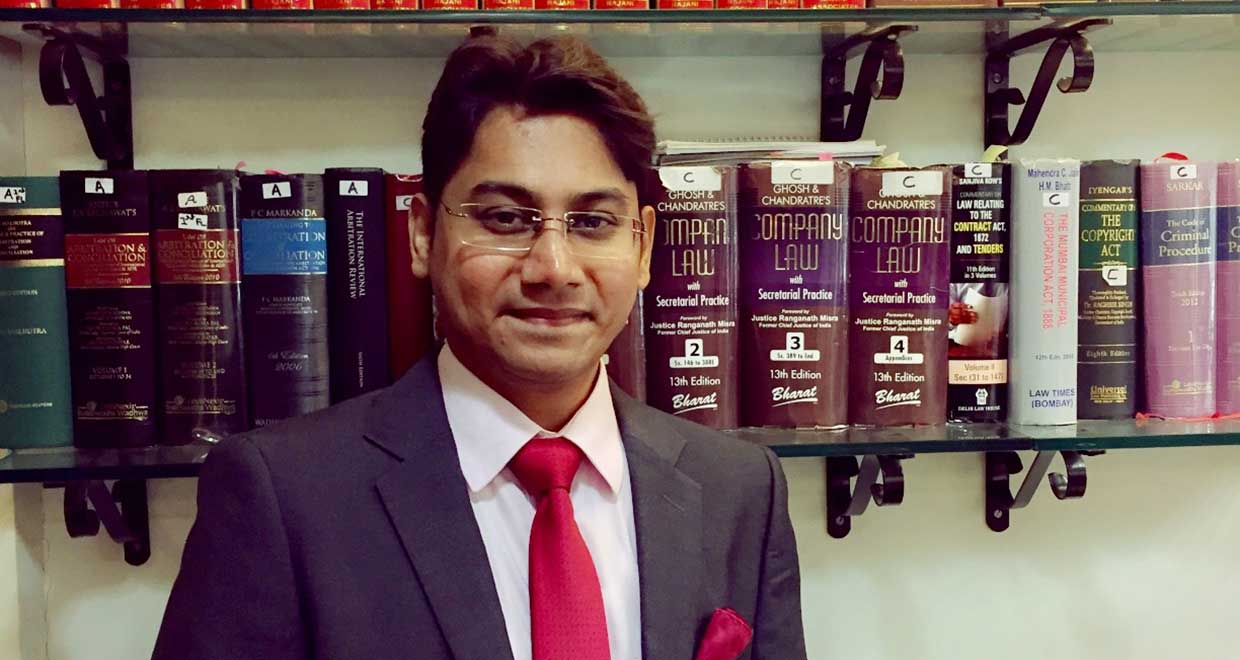
  • Yamini Malhotra, Legal and Compliance Recruitment Consultant, Aquis Search, on IPR, and her diverse experience

    Yamini Malhotra, Legal and Compliance Recruitment Consultant, Aquis Search, on IPR, and her diverse experience

    Yamini graduated from the Faculty of Law, University of Delhi and cleared the AIBE in 2012. Prior to that, she held a degree in Sociology from Jesus & Mary College, University of Delhi in 2008. Having a keen interest in IPR and litigation, she started her legal career at Anand & Anand and later moved on to work at Global Legal Associates and Lall Lahiri & Salhotra. She then moved to Aquis Search as a Legal and Compliance Recruitment Consultant. 

    In this interview we speak to her about:

    • Her time in Delhi University
    • Being a legal recruiter
    • Her experience in IPR

    Tell us more about your law school days at Delhi University.

    I read law from the University of Delhi while working at S&P Global, and hence, had to juggle between multiple responsibilities during my day. This was not only challenging but very enriching as well since it taught me how to multitask and excel towards something I always aspired to become. The most interesting part of my law school days was the fact that my class had individuals aged between 21 and 60 years and came from diverse professional backgrounds such as civil services, journalism, finance, etc.

    The course was structured in a way that instead of theory, it focused on discussions around case studies. This was one of the differentiating factors that made the classes exciting and thought provoking instead of being mundane and boring. The moot sessions provided practice in developing relative arguments and brought together viewpoints from different individuals, which was crucial for a beginner like me.


    Who was your mentor who motivated you all along the way?

    My grandfather who was a civil servant had a keen interest in law. During my initial years, he always motivated me to study the subject. I come from a family where girls are encouraged to venture into professions of their choice and that has always kept me going. I have had my share of failures and each of them has taught me to work harder and be more focused towards my goal.


    Tell us more about the nature of work you had undertaken as a Research Associate at S&P Capital IQ.

    S&P Global is one of the top most financial data providers, which through its technology and people turns raw data into actionable insights. During my stint there, I was responsible for extensive research and compiling of data related to professionals and linking them to the relevant data fields to ensure a robust and enhanced database. One year into the role, I also took up the responsibility of developing training plans and mentoring the new employees to ensure their smooth transition in the company. My core responsibilities also included quality checks to ensure correct representation of data on the platform and conducting feedback sessions with the team members to resolve guideline related disputes and queries.


    When and Why did you decide to join Anand and Anand? 

    Since I had a keen interest in IP, Anand and Anand was an obvious choice.  I spoke to my IP professor, who had suggested that I apply to Anand and Anand. Once I had done my research and had a general sense of the firm, it was all a matter of applying and interviewing with the firm. Luckily, Mr. Safir Anand liked my previous experience of research at S&P Capital IQ and took me in.

    Being the biggest IP firm in the country, it provided me with an opportunity to work on some cutting-edge matters for high profile clients. My work primarily included IP prosecution and advertising law. Additionally, I was involved in writing various articles for the firm.


    What do leading firms that specialize in IPR such as Anand and Anand look for in prospective candidates for internships, retainerships or recruitment?

    The firm invests a lot of time in choosing the right candidate. They look for candidates who will be with them for long term. Based on my experience at the firm, they take into consideration the following factors (not an exhaustive list)-

    1. A strong educational background
    2. Ability to work hard
    3. Team player
    4. Good communication skills
    5. Strong on technical knowledge
    6. Being creative as well is not a bad idea at all


    Tell us more about your experience with Global Legal Associates and Lall Lahiri and Salhotra. 

    While Anand and Anand was a great place to learn, your role tends to get highly specific and specialized. I personally felt that it was too early for me to specialize in one part of IP.  I moved on to joining Global Legal Associates as part of their Dispute Resolution team.  At GLA, I worked under the able guidance of Mr. Ravinder Narain and Mr. Rajan Narain. I represented the firm’s clients across fora, which involved appearing and arguing matters before Courts and Tribunals, research, drafting and drawing up pleadings, submissions, notices, briefing and assisting Senior Counsel and research.

    At LLS, I had the pleasure of working on some ground breaking IP work under the guidance of Mrs. Anuradha Salhotra and sharpened my skills in cease and desist notices, responses and litigation.


    Why did you choose to venture out to the business side of law and take up a job with Aquis Search? 

    Having such diversity in my profile, I feel I found my niche in the legal recruitment business. Aquis happened, when I met Rishabh Chopra-Head of India at Aquis Search. Rishabh inspired me to join Aquis and then I knew I wanted to be a part of Aquis Search’s journey.

    Aquis Search is a premier international corporate governance executive search firm headquartered in Hong Kong and having offices in Beijing, Delhi, Hong Kong, London, Mumbai, Shanghai, Singapore and Taipei. At Aquis, I work closely with law firms and corporations in India and the Middle-East to fulfill their legal and compliance recruitment needs and providing them with quality candidates at junior and mid level.  I also support the India team on senior level searches.


    Any suggestion you would like to give to our budding lawyers?

    You should have the right kind of attitude towards the legal profession. It’s always advisable to have novelty and be innovative to develop a personality of a true legal professional. One should be determined, patient and remember that there is no alternative to hard work. You should never be disappointed, as failure is an integral key to success. All the best!


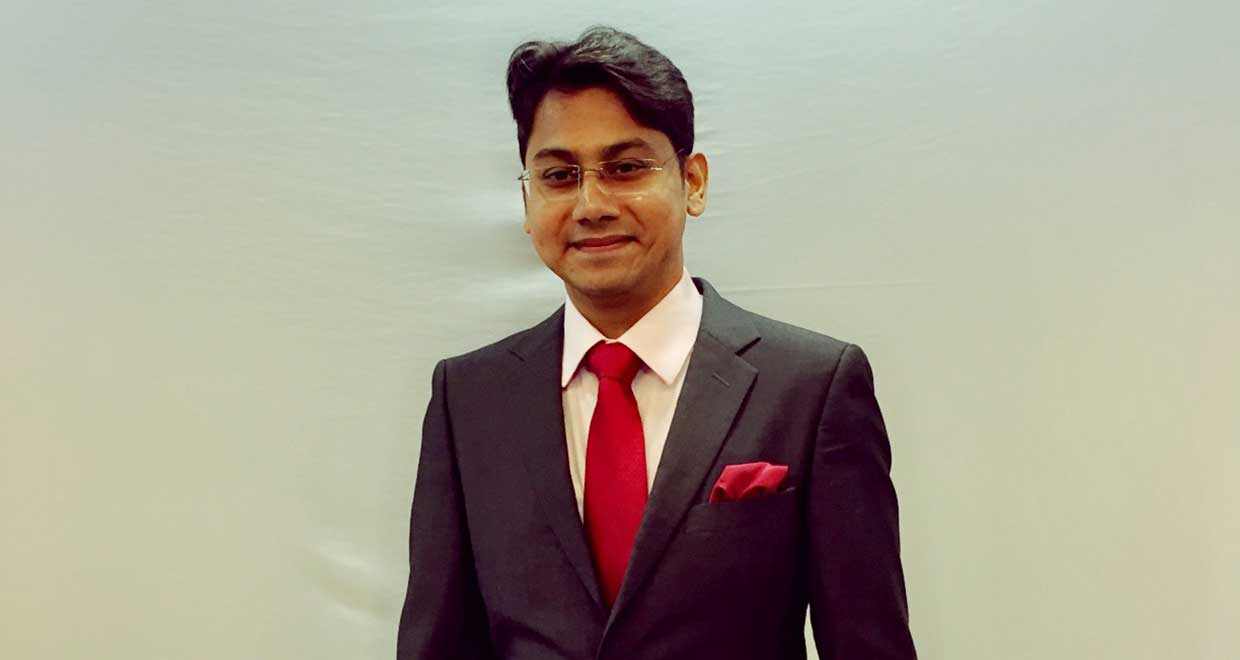
  • Ashish Chandra, Former Group General Counsel and Head of Tax, Snapdeal, on being a Company Secretary, and Corporate Lawyer

    Ashish Chandra, Former Group General Counsel and Head of Tax, Snapdeal, on being a Company Secretary, and Corporate Lawyer

    Ashish Chandra graduated in law from Delhi University, batch of 2001. His area of expertise includes eCommerce, mobile payment, telecom, media and technology. Ashish is a qualified Company Secretary and a law graduate from Delhi University. Ashish holds specialized diploma in Cyber (Information Technology) Laws from Indian Law Institute, Delhi and a diploma in Intellectual Property Laws from National Law School, Bangalore.

    In this interview we speak to him about:

    • Being a Company Secretary
    • His experience in the E-commerce sector
    • His role at Snapdeal

    How would you like to introduce yourself to our readers?

    Legal buddy for millennials and a perpetual student of law.


    What motivated you to pursue law?

    Becoming a lawyer was not my career goal during high school. Most of my family members are from medical or engineering backgrounds. Being average in science, I decided to pursue commerce. I started my professional education through the Company Secretary course and thereafter law was the obvious choice. While I was graduating as lawyer in 2000, I saw a huge opportunity in technology and internet related laws and I complemented my basic law education with further specialization in technology, internet and IP laws.


    Tell us a little about your days in law school.

    I graduated from Law Centre II at Delhi University’s South Campus while undergoing my CS internship and thereafter, a day job. For me, studying law was more practical than academic as I was working in a corporate, so I could clearly relate legal principles into real corporate and personal life. Through this I developed a skill which I term it as LAWBI i.e. Legal Acumen With Business Intelligence. Studying law was also detoxing after a day long hard work.


    What are your areas of specialisation, and when/how did you go about choosing these?

    I was graduating as a lawyer and a company secretary in 2000 and took the decision to build my career in corporate, technology, internet and IP laws. The professional journey thereafter has been satisfying. The choice you make should provide a combination of both professional and financial satisfaction. The other important aspect is to have an open mind and ability to change choices depending upon the business and personal circumstances.


    How were the first few years after your graduation?

    I have always been an in-house counsel. I saw implementation of law in business and commerce during my law school days. Law school did strengthen my academic roots, but it’s the day-to-day grind and time-to-time taking of risk that provided me the ability to practise law more effectively and meaningfully. This also prepared me to take up critical business roles in my most recent stint.


    What kind of internships did you undertake during your student years?

    I was interning in my company secretary course during my law school days. I would advise students and freshers to choose a place that provides ability to put law into real-life practice, and gives you opportunity to dirty your hands. Internship is the best period to learn the basics of working smart.


    When did you decide to complete the Company Secretary course and when did you clear the qualification examinations?

    I started my company secretary course right after my commerce graduation at Delhi University. I cleared all my CS examination within two years after my commerce graduation. I started my law graduation after completion of CS exams. I did not want to sail in two boats and wanted to focus on one thing at a time, and also enjoy the life.


    What are the benefits that come with combining a CS qualification with an LL.B?

    A combination of CS and LL.B. gives you better understanding and appreciation of corporate and commercial laws. It benefits in all aspects of profession for eg: as an in-house counsel, working for a corporate law firm, or corporate litigation and white collar crime law.


    Is it cumbersome to complete both side by side?

    I don’t think so as both complement each other.


    From your vast experience in the corporate sector, would you recommend this environment for fresh graduates?

    (Ashish has worked with several corporate giants such as eBay India and Reliance Industries Ltd. in the past, before joining Snapdeal.)

    Well, it’s not whether you start your career in a corporate or you start your career in a law firm or under an independent lawyer. The most important part is what work you do and with whom during the initial part of your career. You need to work at a place which is growing very fast, and where there are more things to do than there are people to do them. During the initial years, you should in-fact do some part of paralegal work including learn the art of properly stapling the papers, quickly taking photo-copies, learning fast typing and taking quick notes.


    What does a regular working day look like for you, as Group General Counsel & Head of Taxation of Snapdeal.com?

    When I was the Group GC and Head of Tax, most part of my day used to go in managing my team (internal and external counsels), my peers and my CXOs. Managing people and getting everyone aligned for a common goal in a reasonably safe and stable legal and regulatory environment is the key aspect of any GC. As a GC, you need to evangelize your company’s business, its opportunities and challenges to the external world including industry bodies, government organizations and law enforcement.


    If given an opportunity, what would you do differently in your career journey up to this point?

    I regret not working under a good litigator during the early stage of my career. As a rounded lawyer (even in-house), your job is not completed unless you know court processes and how your contracts and advises be argued before a judge or decided by a judge. Never stop updating yourself in your subject matter, always take a global perspective in your legal research, be a patient listener (adopt 80:20 rule i.e. 80% time in listening and 20% time in relevant speaking), and a great orator with good voice modulation and body gestures.


    Is there any other suggestion you would like to give to our budding lawyers?

    There cannot be a better time to be a lawyer. Analyse your areas of interests and strength, and give your 100%. Lastly, give back to society in whatever form whether time, knowledge, wisdom o wealth. Most importantly, laugh out loud on lawyers’ jokes!

  • Krishnayan Sen, Partner, VERUS Advocates, on starting his own firm, and his experience in arbitration

    Krishnayan Sen, Partner, VERUS Advocates, on starting his own firm, and his experience in arbitration

    Krishnayan graduated from National University of Juridical Sciences, Kolkata in 2006. After graduating from the second batch of NUJS, Calcutta, he joined the chambers of Mr. V.R. Reddy, Senior Advocate and former Addl. Solicitor General of India at the Supreme Court of India. Thereafter, after the sudden and untimely demise of his father, he held the reigns of his father’s legal practice – Udayan Sen & Co., when he was 24 years of age. After a couple of years in Calcutta, and about eighteen months in a mid-sized firm at Mumbai, he started Verus in early 2011, along with a few spirited friends.

    From humble beginnings in 2011, Verus has grown to a mid-sized firm with five partners advising on both transactions and disputes. Verus was recognized as the Best New Law Firm by IBLJ in 2012, won the Deal of the Year (Disputes) in IBLJ Awards 2015; and has been recommended by IFLR in its Indian Firm Rankings for its banking & capital markets practices. Krish is also the recipient of the NaniPalkhivala Medal (2004) and G. Venkatasubramaniam Gold Medal (2005).

    His principal areas of practice include international arbitration, corporate-commercial disputes, litigation advisory and banking litigation. Krish is qualified as an Advocate-on-Record at the Supreme Court of India and has been the Standing/Nominated Counsels for statutory and government undertakings.

    In this interview we speak to him about:

    • His experience in arbitration
    • Starting his own firm
    • His plans for the future

    What prompted you to think of law as your career?

    I actually aspired to be a footballer; I was a decent forward at school-level tournaments. However, I quickly realized that my ambition far exceeded my talent to seriously consider it as a career option. So I went along with what most Bengali middle class families considered safe, and chose science in my senior secondary (Class XI-XII). I was an average student and didn’t have a particular interest or aptitude for Science subjects. In fact, in hindsight, I should have taken Arts. Around that time, my parents who were both lawyers, mentioned that I could consider law as a career option. But what really got me interested in law was when I started going through the law entrance exam books which my father would get from Delhi – I remember there used to be one from Universal’s. The section on logic and analytical reasoning appealed to me – may be because it didn’t involve much preparation, and seemed more of common sense. So I sat for the different law entrance exams and got through NUJS. Looking back, I think one great thing about my dad was that he never imposed himself on me to take up law. Somehow I didn’t feel the pressure of joining the profession, which many with legal backgrounds ordinarily face. My parents were quite happy, maybe more relieved, that I had cracked NUJS. Deep within, I knew I was terribly lucky to have somehow got through a national law school.


    What is the importance of a good mentor in the early years of practice

    A mentor shapes your character, both as a person and practitioner, and instills certain values, ethics and principles in you which would define you. The most important thing to have happened in my professional life was to have Mr. V.R. Reddy as a senior and mentor. He was a former Addl. Solicitor General of India, Advocate General of Andhra Pradesh and Chairman of Bar Council of India under whose Chairmanship the NLSIU, Bangalore was conceptualized and instituted. Like most juniors I tried picking up some of the skills and tools of my senior by observing him closely, hoping that some of his qualities would somehow rub off on me. He was more in the old-school mould with meticulous preparation and incredible hard-work, always fair to the court and opposing counsel, never misled the court, superb articulation of the main points and keeping his arguments brief and to the point. His attitude toward fees was, “We take fees for our briefs, but not briefs for our fees.” He would keep reminding me of the 5Ps – ‘prior preparation, prevents poor performance.’ But where I felt he was different from others, were his qualities of the heart. If I had to sum up my senior’s qualities in one word, I would say it is compassion. In February 2007, when my father was on his deathbed in a hospital in Calcutta, VRR, who didn’t know my father personally, flew down to Calcutta to see him at the hospital. My father, by then already sinking, softly thanked him for his kindness, to which VRR replied, “Wouldn’t Krish have done the same for me?” VRR’s love and affection towards his juniors was, and is, almost paternal. That’s what a good mentor does. He doesn’t see his junior merely as a resource or an asset in his firm or chamber who is there only to get his work done. He genuinely wishes well for his juniors and maintains the relationship and association long after the juniors have flown out of the nest. I realized that stark difference when I joined a law firm a few years later under a senior partner who was a good lawyer, but all mind. That’s the unfortunate truth at many firms; where juniors are only treated as resources and billing machines.


    What drove you to establish your own law firm, Verus?

    There were many factors behind starting Verus, but the most important urge was to create something new and fresh. I think many of us were quite disillusioned with some of the big law firms on both external parameters (like client service, partner accessibility, billing patterns, value chain) and internal parameters (like family run management style, treatment of associates& staff, happiness at work, salary structures). We felt an alternate model was not only possible but absolutely imperative. Why couldn’t we live and work in a state of mind which was fun, enjoyable and adventurous? And so we started in early 2011 from a small one-room office at Mumbai. Six years on, while we have grown to larger premises and added both lawyers and offices, it’s still very much a work-in-progress as we continue to experiment with entrepreneurship and delivering alternative service models. Clients have been very kind in taking this journey with us. I must mention here something that I should have said at the very outset, I could have never started Verus without the support of my wife, Atreyee. She was the breadwinner in the family and stood by me like a rock in those difficult years.

    The initial challenge in running the partnership was to understand how to do business between friends. But the dust settles after a while, once you understand the different working styles of each partner and learn to give each partner his or her operational space. What is also important is to learn to appreciate each other’s role in a partnership; since partners would ordinarily possess complementary strengths. I was fortunate to have incredibly supportive founding members in Dipankar, Rishad, Charles, Gandhar and the one we lost, Jay. The founding team and a group of passionate lawyers across our four offices form the backbone of the firm. Despite your best efforts, there would be setbacks, and you will need to learn from each of those setbacks, pick up the pieces and move forward.The most important challenge, however, is to ensure that at all times, the soul of the firm remains intact. The form of the firm, as in any other organization, may undergo change, the firm will grow; the leaders in the firm would also change; so may the nature of the work too. But the members of the firm must see to it that the spirit of autonomy, innovation, excellence, togetherness, forthrightness, transparency and joy on which the firm was built, brick-by-brick, always remains alive and unscathed. In the end, it is this soul of the firm that would define who we are.


    While hiring lawyers, what kind of skills do you look for in their CV?

    Actually, people in the firm often mock me for not looking at the CV at all. But that’s not entirely correct. I do look at the CV cursorily just to get a basic background of the candidate; but then form any impression of the candidate only at the time of the interview. Studying the CV too closely could often cloud your judgment on a candidate. I ordinarily look out for candidates who show some degree of independence and autonomy. I may ask a few legal questions during the interview, but ordinarily I try to assess if the person would be a good fit for Verus and what are the drivers for the candidate to join the firm. There have been times when I have been quite impressed with the lateral thinking of a candidate or his accomplishments in earlier assignments but I thought he or she would not be a good fit. Despite being a product of a national law school, I genuinely feel that law firms give way too much importance on national law school graduates and thereby do a disservice to non-national law school graduates, most of whom just do not get a level-playing field and opportunity to really come into their own.


    The Government of India is planning to allow foreign law firms to enter into India. Do you think the Indian law firms will be confronting to fight with the tough competition foreign law firms entering into India?

    Entry of foreign law firms will be the great “wolf-wolf moment in the legal services space – every Government has given the threat but none have had the heart to execute it. Anyhow, if somehow foreign firms are permitted to eventually enter the Indian market, then my predictions are: (a) Bigger law firms will most likely decide to stay independent and compete with the foreign firms (pretty much like what we have seen in Singapore and Hong Kong), and it will be a battle for survival-of-the -fittest; (b) Mid-sized firms will have to decide whether to merge or enter a JV with the foreign firm; (c) There could be a consolidation of the big Indian law firms where two or three big firms may merge to form a domestic behemoth; (d) Smaller or boutique law firms who do not wish to merge with bigger firms will most likely carve out niche practice areas like IP, competition, tax; (e) Litigation firms would be mostly insulated from the entry of foreign law firms, except for those firms who are involved in only high-ticket litigation.  


    It is a general assumption that the fresher graduates have to struggle a lot during the initial years. What was your experience?

    I am afraid this is true. A beginner will basically need four things, which generally come in the following order: legal curiosity, hard work, legal intuition/temperament and some luck. Litigators need an additional trait, patience. A lawyer is like a skilled mechanic, he requires honing certain specific skill sets with a certain mindset. Whether you are a corporate lawyer or a litigator, both streams require learning certain fundamental skills which in legal parlance, we call learning the ropes of law. Struggle entails three things: first, learning the technical skills – researching, comprehending and analysing, strategizing, articulating, drafting, presenting, advocacy or negotiation skills etc; second, learning the soft interpersonal skills – interacting with clients, colleagues, understanding seniors, learning to work in a team, understanding and fitting into the work-place; lastly, and this is usually the tricky part, is to pick up the ethical principles which would guide the way you conduct yourself in the profession, the moral and ethical code you would like to follow. You pick this up from observing simple things like how conflicts and confidentiality are dealt with within the firm or chamber, how billing is done within the firm, whether proper risk disclosures are made to the client, whether your senior deliberately misleads the court or is unfair to the other side, and whether the firm or chamber indulges in corrupt and questionable practices.

    In terms of hard work, I used to put in about sixteen to eighteen hours a day, sometime more, in my first seven years, as did my peers. In my first five years, I had taken only two holidays, the first of which was for my honeymoon. While a lot of law is in the detail, what is important in the foundation years is, what I would call, to get a sense of the law. It’s a bit abstract to explain, but in essence you develop a sense of fairness and broadly develop a sense of what the law should be.


    What do you find admirable in present generation of lawyers compared to that of your generation?

    I think the present generation are much bolder and greater risk-takers. They tend to prefer the experience and are not solely driven by the money. My sense is that the next wave of innovation in legal services – the “Uber”moment –will come from the present and next generations.


    Where do you see yourself five years from now?

    You know I would earlier make these projections for myself – five years, ten years. My original goal, when I graduated from law school, was to become a senior counsel by my late thirties. But with time, I have realized that life passes us by while we make grand plans for our future. Therefore, best is to live at the present. Personally, in five years, I do not foresee myself involved in any leadership or management role at Verus – which would pass on to the next generations. I would prefer acting on select matters and like to explore some of my other interests like reading, travelling and writing. Verus is also preparing for a major push on the artificial intelligence and technology front which could be quite disruptive in the legal services space. It’s still too early to speak more on it, but once we are through with the pilot phase, maybe we could share more insights on that.


    What would be your parting message to our readers?

    I would like to say two things: First, do not take your life in law too seriously people get so consumed in the rat race stressing on partner promotions, senior advocate designations, office politics etc., that they forget that life is quietly passing them by. Explore other things like books, sports, travel, gardening, enjoy things that make you happy like music, teaching, painting & crafts, gardening, cooking or some voluntary work; even simpler things like spending time with your kids, friends, family and pets which would broaden your worldview. I personally find reading and travel quite enriching and therapeutic. Secondly, it is my appeal to students and especially to law schools, please see that the students get a holistic exposure on the true potential of law. Most law schools today focus in making corporate legal robots. There is very little imagination. The search for the answer to the question, “why become a lawyer?” should take students to places where they observe from close quarters, the challenges that law is seeking to address, be it on global climate change, human rights violations in Africa, refugee problems of Europe, studying the civil rights movements or the trials of war crimes. Law students need to be sensitized to these topics, not merely in class rooms, but also by giving them real first-hand field experiences to enable them to take an informed choice on what kind of lawyer they wish to become in life. Unfortunately, I find that vital education, exposure and sensitization completely missing which is a great disservice and denial to the students. First and second year law students are so stressed on whether they will get an internship in BigLaw or not. Even simple gestures like doing a case study on a movie – like To Kill a Mocking Bird, The Bang Bang Club, A Few Good Men, Before the Flood, The Verdict, The Pianist –would evoke spontaneous discussion and debate amongst young minds and some of them may choose an alternative career path in law. But most law schools have developed a tunnel vision where the entire focus is in reporting how many PROs the graduating batch has received, what starting salaries their students have secured, how many law firms or corporates have come to their campus on Day Zero. I am a product of such a law school and am now also one of those recruiters, but my appeal to law students and law schools alike is to please explore all opportunities that law, as a discipline, has to offer – which goes much beyond a commercial law firm or a Supreme Court lawyer’s chamber – and only thereafter take an informed decision as to what would be most fulfilling and satisfying for you personally and professionally.


  • Sandeep Parekh, Founder-Managing Partner, Finsec Law Advisors, on Securities, working with Harish Salve, and academia

    Sandeep Parekh, Founder-Managing Partner, Finsec Law Advisors, on Securities, working with Harish Salve, and academia

    Sandeep Parekh graduated in law from Delhi University in 1995. He then went on to pursue his Masters in Securities and Financial Regulation in 1997. Since then, he has served as International Associate at Wilmer, Cutler & Pickering, Associate Advocate at Wadia Ghandy & Co., Partner, Securities and Financial Practice Group at P.H. Parekh & Co., and Executive Director at SEBI. He is also visiting faculty at IIM-A. He is currently Founder cum Managing Partner at Finsec Law Advisors.

    In this interview we speak to him about:

    • Starting his own firm
    • His experience in Securities Law
    • His passion for teaching

    How would you like to introduce yourself to our readers?

    I would introduce myself as a securities lawyer who specialised early in my life. My advice to students has always been to focus on education and build a strong foundation, rather than building on experience early in life. You literally have a lifetime to build on experience. But there is limited time for foundational study and really deep research. As a professional there is little time available for doing either and the foundation of basic legal building blocks and deeper research stay with you for a lifetime. Finally, the early work helps in daily work. If one were to tell a client that you don’t know what a contingent contract is, but will look it up, you are unlikely to win the client’s confidence. The advice is even more important for people who turn specialists, as later exposure to constitutional, contract, transfer of property and other basic laws becomes limited.


    Is there any specific anecdote that means a lot to you, which you would like to share with our readers?

    My law school days in DU were intense. I was working nearly full time with Mr. Harish Salve from the day I joined law school. I would start the day early, to be in time for a little research before the first conference would start at 8 AM. I am certain I was of little or no use to Mr. Salve for a long period of time, but I learned a lot reading cases for Monday and Friday SLP days at the Supreme Court. There was a lot of fundamental research we did at his chambers and we relied on the best books on the subject. This ensured that even in law school I always relied on quality primary, secondary and tertiary sources of information, rather than the shortcuts available to pass exams. Our law school, popularly known as LC-II was an evening course of Delhi University, though as a full time course it had the same contact hours as the day course and classes were taken seriously by both faculty and students. What was unusual was the class age. It was close to 40. Many mid to senior level bureaucrats and police officers were part of the class.

    A fun anecdote relates to a case where Mr. Salve had a prior commitment, but another case went on longer than expected. The briefing lawyer was not ready with the matter as his junior who was familiar with the matter was also stuck in another court. As it happened, I had made detailed notes on the content and research and I fed the advocate the argument virtually line by line. It was intimidating as I was not supposed to sit on the front seats with my black student tie, rather than a gown and a band. But the high was that we won that trademark case and the ruling was even covered in the papers a few days later.


    What were the activities, academic or otherwise, that you undertook in your law school days which in your opinion have shaped you and your career?

    The nature of the school meant that the only other activity I did outside of coursework, which I attended to religiously, was moot courts. I was competent primarily because I was doing this in real life ten hours a day seven days a week. Researching, drafting and of course observing the best counsels of the country argue before the highest court of India. I would sometimes spend a few hours on weekends rock climbing before or after work at an Indian Mountaineering Foundation site in Dhaula Kuan, close to Mr. Salve’s office.


    Who was your mentor, or main source of inspiration who motivated you all along the way?

    I have had three mentors, one I described above, Mr. Salve. The other was Mr. Arthur Mathews, who was a partner at Wilmer, Cutler and Pickering and taught me a course at Georgetown law. He was also responsible for getting me a position at his firm as an international attorney and then even though I didn’t work with him at Wilmer, he treated me as family and took me out for a baseball game with his family. The last was of course Mr. Damodaran of SEBI, who took me in at a senior position at SEBI at a young age and mentored me. He continues to be a source of support to me and is a great sounding board as well. I must also mention my partner at Wilmer, Brandon Becker, who was a former director at the SEC and a force to reckon with in market regulations. My partner at Wadia Ghandy, Nihar Mody, was also a great person to learn from.


    Would you say higher studies are relevant for a career in law?

    This is a tricky question and I assume the answer would differ from person to person. The main reason for me undertaking this particular course was the specialised learning I would get. My LL.M. was in securities and financial regulations and I practically didn’t attend any non-securities course. The other major reason why people undertake an LL.M. is job opportunities. This is true both in India and abroad. So I would say, to each his own, if a degree opens up educational avenues not otherwise available, one should pursue higher studies. Similarly, if a degree opens jobs, one should use it to open that market, though both domestically and internationally, it has limited use for that purpose. Often it is both reasons. The advantage of a foreign education is that it opens global doors to both education and to jobs, though is quite expensive by comparison.


    What does the CV of a student seeking admission in a premier university offering an LL.M. program have to look like?

    I was a part of the admissions committee at Georgetown Law and thus got substantial exposure to this, having reviewed hundreds of applications. The criteria run into objective and subjective ones. In the objective ones are grades, publications and any public positions held at the college or law college. Subjective ones are those which can easily be padded and inflated and are therefore of a lesser value in an international evaluator’s mind. But a skilled student would back it up with evidence and make this also a strong suite. Say a passion for right to information backed by papers and actual usage for public good would help a student’s cause immensely. Usually some inflation of your background is tolerated, but lying is not. To say you topped the university when you did not, would pollute the believability of the rest of your application.

    An LL.M. abroad would be best after at least a year or two of practice because many areas of procedure and evidence which are best understood in court or in corporate practice make LL.M. courses easier to grasp. Experience is also very useful in case you choose to appear for the New York or California bars.


    What was the experience of working with Mr. Harish Salve like?

    I think Harish Salve is just an incredible force of nature in terms of intellectual firepower. His brilliance is matched by his hard work, I recall he would wake up around 5  5:30 AM and read and research thoroughly before a conference. As a result many of his conferences lasted seconds rather than minutes or hours. He urged me to read Seervai and Palkhivala from cover to cover and often course corrected me when I went off course.

    Can you tell us about your tryst with academia?

    I have been teaching at IIM-A for the past sixteen years as a visiting faculty and have tremendously enjoyed teaching all these years. After SEBI, I had joined as a full time faculty because of my rather sensitive job at SEBI as head of legal affairs and enforcement. The chance of conflict was very high if I had started practicing immediately after my regulatory role and there was also a chance of inadvertent conflict since my signature would be on thousands of files. At IIM-A however, I did many interesting consulting tasks like being a plaintiff’s lawyer at New York courts in the infamous Satyam matter.

    What or who motivated you to take the leap of faith and start Finsec Law Advisors?

    There seemed few good options in terms of a professional set up in top Indian law firms with the legacy issues which we are all aware of. Instead of joining a mid-tier firm, I thought of starting a small, high quality top tier law firm. We continue to have a quality focus and have no growth plans or plans to diversify into other areas. We dominate the securities regulatory domain and would like to believe we have no competitors in the field in which we operate. We believe in spending a quarter of our time on public policy and intellectual pursuits. Our firm has three books to its credit in the past few years, we run newsletters, monthly dialogue series, an annual roundtable, we routinely respond to regulatory comment papers. Our advice has been sought formally and informally by several regulators and parliamentary committees. I sit on most industry committees relating to financial markets viz. CII, Ficci, Assocham BCCI, IMC etc. These pursuits make our task interesting and worthwhile. Work without a purpose becomes uninteresting after a few years. What we don’t do is lobbying for clients and what we respond to is based on our consistent belief in a better regulatory environment for the country. There is indeed substantial regulatory cholesterol which needs to be reduced. Knowing it exists is the first step in addressing it.


    Where do you see yourself ten years from now?

    We don’t have growth targets, we do expect to maintain the same quality as we currently have. We would like to expand into other areas of financial regulatory work where we currently don’t operate. However, we never expect to become a full service law firm as we would rather be the best in what we do instead of being above average in many areas. Interestingly, we are referred a large part of our work from other law firms and also the big four accounting firms.


    What is your message to our readers?

    Focus on your education, build your foundation, rely on the best commentary on any subject (including my book!) and read it cover to cover where foundational. You will never have that luxury when you start practicing. Lot of your success will be a result of pure luck, of standing at the right place at the right time. But if you aren’t prepared when the good wind blows, you can’t blame ill luck later. So prepare to let the wind push your back and stand in ready position on the concourse. Work hard in the first two decades of your career and take a path less beaten, even if it is not the most lucrative financially. If work is work, then you will not last long in your current job. Make it fun, fulfilling and bring a purpose to improve the world in whatever small way possible.


  • Rajiv Choubey, General Counsel, HCL Infosystems, on the Indian legal regime, Corporate Law, and his experience

    Rajiv Choubey, General Counsel, HCL Infosystems, on the Indian legal regime, Corporate Law, and his experience

    Rajiv Choubey graduated in law from Faculty of Law, University of Delhi, in 1999. He is also a certified Company Secretary. He then went on to pursue his LLM from Kurukshetra University in 2014. Rajiv is an in-house corporate counsel working for the last twenty years in the field of Corporate Laws (having handled M&A, JVs FDI Policy, Foreign Trade Policy, in bound & out bound, Securities Laws, Corporate Governance), Commercial Laws, International Trade Laws, Environment related laws, Electricity related issues, Industrial & Labour Laws, Economic laws-Excise, Service Tax, Customs and Foreign Trade Policy.

    In this interview we speak to him about:

    • His diverse experience
    • Corporate Law
    • Pursuing an LLM in India

    What motivated you to pursue law?

    I was born and brought up in Asansol in West Bengal. Honestly, as a kid I wanted to pursue sports and become a footballer. However, that remained an unfulfilled dream since sports wasn’t encouraged or taken seriously back then. I pursued commerce, which was another happy accident. I like commerce as a subject, which exposed me to economics and I developed a liking for the subject. While pursuing B.Com at University of Allahabad, I was introduced to Law of Contract as part of Business Law. A lot of credit goes to our teacher, Prof. Arun Garg, who taught “Contract Act” with a lot of passion and interest. He taught packed classrooms and his students admired him so much, that sometimes we stood at the back of the classroom for lack of space, just to hear his lectures.


    Tell us a little about your days in law school.

    The best part of the DU law curriculum is that it is based on case studies. The moment you get admission, as part of admission process they hand over a booklet of case studies. Initially, I could not understand, what kind of booklet is this? Then I understood the system of study, the method of citation. It created immense interest in me and it changed the entire approach to study law. The best way to study and understand law is the case based approach. It was completely different from the Business Law we studied during our graduation day.


    What were the activities, academic or otherwise, that you undertook in your law school days which in your opinion have shaped you and your career?

    When I did law, the number of activities were much less when compared to the present day. Further since I was also pursuing CS at the same time, I could not participate in many of extra-curricular activities.


    Who was your mentor, or main source of inspiration who motivated you all along the way?

    My teacher at Allahabad University Mr. Arun Garg and former boss Mr.Vinay Shukla (who himself is LLB and CS) and Mr.Vikas Goel (who is CA) always motivated and were sources of inspiration.

    While working with Vedanta, Chairman Mr. Anil Agarwal and Vice-Chairman Mr. Navin Agarwal were great sources of inspiration. In one of my key matters, our Chairman made us believe that we can achieve something which we thought was impossible.  I had the opportunity to work with lots of colleagues at Vedanta and it was fantastic to work with them and handle some of key environmental issues and coming out successful. My current Group CFO, Mr. S.G. Murali is a great source of inspiration, as he leads by example. I am greatly privileged to work with some of great minds.


    Are L.L.Ms absolutely necessary for a career in law?

    I do not think so. At the same it is good if one can pursue the same from any foreign university, with specialisation in any particular area (say Competition law, IPR, M&A, etc.) which one ultimately desires to pursue. If someone wants to go into academics, LLM is a must.


    What should one expect out of an L.L.M program, if they opt to pursue one?

    I have expressed my views that LLM should be with the sole intention of obtaining specialisation in any particular area. One should always do the cost/purpose – benefit analysis before pursuing any further studies. Doing LLM from a foreign university also provides the global perspective and outlook, which is essential in today’s world, where one may be required to handle clients across the globe.


    Why are students only considering universities abroad for an LLM?

    There are good universities in India such as NLS, Bangalore, NALSAR, Delhi University and other National Law Schools. I think one of the reasons students go abroad is because the LLM there is only a year long. Now, even Indian Universities have switched to a one-year curriculum. However, the key reasons for pursuing LLM in foreign universities is that you get specialisation in one particular area, which one would like to pursue. Further, it provides you a global perspective, experience and access to some of best faculties.

    One the issue of Indian legal education system (on LLM Curriculum), I feel Indian Universities need to upgrade their curriculum and focus on specialisation. Currently, it is more inclined towards an academic perspective. Universities can have two branches of LLM, one LLM (Specialisation) and the other LLM (Academic), the former being more inclined towards practice areas and other more inclined towards research and academics.


    Which is the ideal time to do an L.L.M?

    I am personally of the view that one should pursue LLM after at least five years of practice, when you feel the need to specialize in a particular area. The initial years of practice will provide clarity in terms of areas of interests, in which one would like specialise. It is like doing MBA after initial years of experience as post work-experience, one can appreciate various facets of management and can link it with their experience.  Ultimately, it is an individual choice as many people find it difficult to pursue LLM once they start working.


    From your experience, would you recommend the corporate environment for fresh graduates?

    (Rajiv has worked with several corporate giants such as Vedanta Ltd. and Maruti Suzuki before joining HCL Infosystems Ltd.)

    Career is an individual choice. It also depends what is one liking, strengths. When I started my career, there was no concept of in-house legal counsel and only few MNCs like Hindustan Lever had strong in-house counsels. The role of in-house counsel in other companies was limited to attending courts on behalf of the company. However, the scenario today has completely changed post the 1991 Liberalisation policy. It took almost ten to fifteen years for the role of in-house counsels to shape up and take prominence. India today is an open economy but at the same time has a strong regulatory regime. Today, the exposure of corporates on some of key regulatory issues being faced in the telecom, coal, power, mining and other sectors has increased the scope and role of in-house counsels. I have been a witness to some key environment and mining issues and without the contribution of the in-house counsel/ legal department, it would have been difficult to successfully win the battle in court and clear the regulatory hurdles. Hence the in-house counsels used to ride pillion earlier, but now, they are at the helm of all corporate affairs. Be it advising on contracting, dispute resolution, M&A, structuring transactions, advisory, regulatory issues, or compliance, in-house counsels are playing a major role. Their role is comparable to what the HR Department used to do several years ago. Today HR has moved away from the traditional personnel and administration to more organizational development, strategic utilization of employees to serve business goals, talent management and development. Similarly, in-house counsel is to work closely with the business in terms of advising them on key issues and resolving the same to meet the business objectives and plans of the organisation.

    Fresh graduates can look at working in-house as it offers you a variety of roles and is not limited to only doing a routine job. HCL offers opportunities in all facets of law, contracting, advisory, litigation. The Legal Department is mid-sized law firm, which deals with multiple customers and meets their expectations every day.  Since we are dealing with variety of issues, it is a real challenge in terms of delivery and at the same time upgrade ourselves with the latest of what is happening in law as well as in the industry.


    What does a regular working day look like for you, as General Counsel of HCL Infosystems Ltd?

    Prior to taking over as General Counsel of HCL Infosystems Ltd. in June last year, my entire experience was in the manufacturing sector. HCL being into distribution, services and system integration, the issues are completely different. The business model is different, the issues are different. Every day, we have different issues to handle. Since we participate in various bids/ tenders, we receive numerous requests for vetting from the business for RFQs/ RPFs other contracts with Business Partners/ Vendors/ Channel Partners. As I stated, we are in multiple businesses – distribution, services, learning, system integration, financial inclusions; every day is full of action. Apart for advisory, we also have to attend to the pre-litigation advise and strategize in all litigation matters, brief counsels etc. There is no time for the team to relax as it very action packed.

    My previous organisation was into commodities/ natural resources, where issues were different. In HCL since you are essentially providing different services, as the in-house legal department, we are involved in advising the business in contracting, risk analysis/ mapping. Further, since in our business of providing services, they are always issues of recovery of money, which leads to multiple litigations, arbitrations. The in-house team also advises on many pre-litigation issues, which may be potential litigation issues. However, due to the intervention of the legal department, we are able to recover dues. I have felt that people in sales/ marketing and the delivery team are reluctant to take issues with the customer, even where we have delivered. Sometimes issues also arise with respect to understanding the contract obligations to issue such as drafting and put the perspective to clients/ customers. To bridge the gap, we have started an initiative called ‘Legal for Non-Legal’ where we will conduct workshops to improve the understanding of basic facets of law so that they can front face the issues in a better way and take care of the organisation interest. I have a big team of more than fifteen lawyers. Some of the lawyers have joined us at different level with two to eight years of practice. While they are good at general understanding of law, it is always better to improve their understanding or other facets of corporate laws. I have started internal workshop for my team for knowledge sharing called ‘Episteme’ where we discuss various changes/ developments in law, landmark judgments. One recent example is to update my team on the ‘Insolvency & Bankruptcy Code’ (IBC), which I felt was very necessary. There is no much to do and very less time.


    If given an opportunity, what would you do differently in your career journey up to this point?

    I could have practised at the Bar as I am the outgoing type. I love to take challenges, meet people and present my point of view. Further, when you are practising at the bar, apart from your practice and service to clients, you can also help people who cannot afford to engage a lawyer. Of course, there is still time and I can still purse the same.

    A student should purse that career option, which he thinks he will be good at and which excites and interests him or her. Once should never try to emulate, seeing the success of others. Further, there is so short cut to success and one has to go through the rigour which is required to prepare oneself to be in a position to advise someone and to deliver to the satisfaction of the client.


    Is there any other suggestion you would like to give to our budding lawyers?

    When we pursued law, it was a profession where there was lots of struggle and there was lack of guidance. Being a first generation lawyer, there was no one to guide me. Initially I wanted to practice at the bar but people discouraged me saying it is very difficult. Because of my dual qualification of Law and CS, people advised me to join corporate, saying it is financially rewarding. I still feel that I should have practised at the bar.

    My suggestion to young lawyers is to pursue their dreams – i.e., if they like litigation, they should follow the same and should not swayed by financial aspects. At the same time, if one likes advisory/ solicitor job, they should join a law firm, which has its own challenges. If one wishes to start their own firm, they should take the plunge early, may be after five years of experience. One needs self-belief and determination to start on their own. Today law as a profession is very rewarding and if one remains focused and willing to put in hard work, success is just a matter of time.

    Young lawyers should be tech savvy as today technology is being used big time in law and hence traditional approach needs to be married with new tools being used to deliver to the satisfaction of clients. One more word of advice to young lawyers is that, today’s world is an era of specialisation. While one needs to have a decent understanding of various facets of law, only those who specialize and develop expertise will survive and be valued.


  • Ameeta Duggal, Partner, DGS Associates, on studying at York, working at AMS, and starting her own firm

    Ameeta Duggal, Partner, DGS Associates, on studying at York, working at AMS, and starting her own firm

    Ameeta Duggal graduated in law from Campus Law Center, Delhi University, in 1991. She started her career with Mr. Ashwini Kumar, former Minister of Law and currently the special envoy to Japan. She then worked briefly with Amarchand Mangaldas Shroff before joining Associated Law Advisers. Ameeta was awarded a British Chevening Scholarship by the Foreign and Commonwealth Office to study at the College of Law, York from 1996 – 1997. Thereafter she worked briefly in the London office of Clifford Chance, one of the world’s largest law firms before returning to India. Ameeta founded DGS Associates in 2004.

    In this interview we speak to her about:

    • The legal industry in the ’90s
    • Working at AMS
    • Winning the British Chevening Scholarship by the Foreign and Commonwealth Office

    How would you like to introduce yourself to our readers?

    I am a somewhat unconventional lawyer who has always tread the unchartered path. There has been no planning that has gone into charting my professional growth. This has helped me in exploring various areas of law, which may have been lost to me had I proceeded with a predeteremined growth trajectory. I do not believe in compartmentalising my practice areas and have tried to explore various aspects of law. I started my professional career as a pure litigator and have continued to keep litigation as one of my practice areas irrespective of the fact that over the years I have moved to a completely different line of practice, being my trade laws practice, which I started in 2008. I believe that my strength lies in drafting and negotiations rather than arguing in Court. While I am immensely passionate about my work, I ensure that it never deprives me of my love for travel so I strive to make my work complement my travels to the greatest extent possible.


    Tell us a little about your days in law school.

    I studied law from the Faculty of Law, Campus Law Centre, Delhi between 1989 and 1991. In those days, Law was a residual career option since majority of the law students were writing their Civil Services exams. There were just a handful of us who were there to pursue law as a career option. The others just wanted to have a Plan B should they fail to clear the Civil Services exam or such other options.

    Having come from an all girls’ college, Lady Shri Ram, life in he Delhi University campus was an experience with a varied mix of students. One of the incidents that has, however, stayed with me is from a class in Negotiable Instruments. In my first semester, one of our Professors had asked us a question pertaining to the bouncing of a cheque and I remember getting up and saying that “my common sense tells me…” The professor told me something that I have never forgotten. He said that we must always remember that law is not about “common sense” but what is provided in the statute. Over the years, I have often been reminded of this saying and how true it holds.


    What are your areas of specialisation in law? 

    Specialisation in a given field of law is a fairly recent practice in Law. During our days at the Law Faculty we neither specialised in any specific area nor were we required to intern. Those who belonged to a family of lawyers may have spent time interning. But the rest of us had not seen a lawyers’ chamber till the time we started to looking for work. Accordingly, there were no areas of specialisation but we had areas of interest. I was always interested in contractual and corporate laws. We, however, did not have the option of International trade laws as a subject.

    I personally do not conform to specialisations. I have always been open to assisting a client with all areas of law. The only distinction I draw is between civil and criminal laws and I have stayed away from criminal law in all my years of practicing law. Other than that I have worked on varied assignments, including environmental audits, project financing, mergers & acquisitions, International commercial arbitrations and litigation (both as a Government and private counsel). It is only recently, that I have started focusing more on International trade and mergers & acquisition as my preferred areas of work.

    While on the issue of specialisation, I would like to share one of my experiences at Clifford Chance when I was working with them briefly. One morning we received a fax from a client with some four to five questions, including queries on tax and securitisation. The fax was shared across three floors depending on the areas of  law involved. This was in my initial week at Clifford Chance. Having worked in India for a few years by then I was somewhat surprised since in those days, a client query like that would have come to our table in India and we would have responded to all of them, more like a single window clearance. In my opinion, it is more comforting for a client to go to a single person for advice rather than being sent from one team to the other.


    How were the first few years after your graduation? 

    Unlike today, when students spend considerable time interning and gaining practical experience, for us studying Law was essentially an academic exercise, which guided us through the legal fundamentals and taught us what and how to look for the answer to a query received from a client. However, what we learnt at the law faculty was far removed from the real world practice. Objectively speaking we cannot be taught how to be a lawyer sitting in a classroom. Legal practice can only be learnt standing in a courtroom, sitting in a board room negotiating across the table or sitting across a Government authority proposing policy changes.

    This is where I owe a lot to the chambers of Dr. Ashwani Kumar (including my gown, which traditionally is presented by one’s senior) with whom I worked for almost a year. We used to be paid pittance in those days but the experience we gained was immense. Dr. Kumar was in those days a standing counsel for the Delhi Electricity Supply Undertaking (DESU), one of the biggest litigators in the Delhi High Court. On any given day we had at least ten to twelve cases listed in the High Court and we had no option but to start arguing from the very first day. Credit is also due to the judges who encouraged freshers to seize the opportunity and argue rather than seek an adjournment on the ground that the senior lawyer was unavailable. I have had a very special hearing before a Division Bench of Justice B.N. Kirpal (former Chief Justice of India) and Justice Sunanda Bhandare, who coaxed me into arguing a petition in the very first month of having joined Dr. Kumar; guiding me through the arguments and eventually dismissing the petition in my favour. Those were days filled with excitement and exhaustion but the thrill of getting a good order from the High Court was priceless. I learnt to be a lawyer overnight.


    Tell us about working at a Tier-I firm such as Amarchand Mangaldas Shroff.

    Amarchand Mangaldas Shroff is  undoubtedly a sought after firm now and also in those days when it was not so huge. I had the privilege of working directly with Pallavi Shroff and her team, I realised in my first few days there that I was not meant to work in a big law firm. I tendered my resignation within weeks of my joining that firm to move to a start up firm, Associated Law Advisers (ALA), which was still getting established in terms of office space. I spent almost eleven years with ALA and left only to start my own law firm.

    ALA is where I grew as a lawyer. We started as a small team of four lawyers (two partners and two associates). Each one of us supported the other and we learnt to do everything on our own – from filing to researching to drafting to appearing in courts and before arbitrators and to do large sized acquisitions, legal and environmental due diligences. My first acquisition was when Whirlpool acquired Kelvinator. I learnt as we moved through the acquisition and all credit goes to my partners, Mr. O.P. Bhardwaj and Ms. Lira Goswami, who never hesitated in giving us complete charge of a client file while keeping a broad check on the deliverables. I owe my growth as a lawyer to my years in ALA.


    Tell us about winning the British Chevening Scholarship by the Foreign Commonwealth Office.

    Applying for the British Chevening Scholarship was almost an accident. My then senior partner, Lira Goswami, mentioned the scholarship while we were waiting for our matter. From Court I went to the British Council to collect the form only to learn that I had just a day to submit it. Of course, I never expected to be selected but I did get an interview call. The interview panel comprised two faculty members of the college of law, York, a senior counsel from India and a representative of the Foreign Commonwealth Office. The counsel posed some direct questions on the various provisions of the Companies Act. After having fielded a few questions I remember telling him that as a lawyer I am aware which legislation I need to check but I was not aware of each and every provision of the Companies Act. The intent was not to be rude but it was an irrational expectation for a young lawyer to be familiar with more than 500 provisions of the Companies Act. I do believe that this response got me the scholarship.  


    How was your experience at College of Law, York?

    We were a group of twelve lawyers from all over India who were sent to the College of Law, York. Most of us were travelling outside India for the very first time and we were indeed an excited bunch of young lawyers who landed in York. The course was very thoughtfully conceived with an amazing faculty. We forged new friendships, not only within the group but with other law students at the College and with our faculty. The friendships have continued and we also continue to be referral partners for each other.

    What made our days at the College of law most memorable and fun filled is the fact that we were all practicing law already and had the security of having a job waiting for us back home. That sense of security eased the pressures and made the entire programme a huge learning experience. We got an opportunity to work with some of the biggest law firms in London.


    Which is the ideal time to do an L.L.M?

    From my personal experience,  I would recommend pursuing LL.M. only after having gained some work experience. I believe a LL.M. programme will be far more beneficial and focused if pursued after a few years of practice.


    Please elaborate on your work experience at Clifford Chance.

    The scholarship offered by the Foreign Commonwealth Office comprised two sections. First was a programme at the College of Law, York and second was a work stint at the law firms selected and allotted by them. I was sent to Clifford Chance as part of that programme. Working in a huge law firm like Clifford Chance, which at that time was the biggest law firm globally, was an experience in itself. It gave me the confidence to be able to stand on my own in the midst of an ocean of lawyers. Although I was offered a role in the firm, I longed to return to ALA and declined the offer. I have not regretted my decision ever as I do not think I would have evolved into a risk taking lawyer that I am today if I had worked in the secure confines of a large law firm as opposed to a small boutique firm like ALA.


    What or who motivated you to take the leap of faith to found your own law firm?

    DGS Associates owes its existence to ALA and the work culture that we imbibed there. The sense of self sufficiency and independence instilled by Mr. Bhardwaj and Lira gave me the courage to move out and start my own firm. Having worked with ALA since the days when the ALA office was being first set up, I was already familiar with the grind that setting up of a law office entailed. However, the thrill of starting one’s own practice is unparalleled.  

    Although I moved out of ALA with another lawyer there, Niti Sudhakar, we never really severed our ties with ALA. This was easy since we did not try and leave with any existing client of ALA. We moved out without any announcements and started afresh. Admittedly, those were challenging times as we had no continuing client. However, our friendship gave each of us the strength to persevere and that friendship continues to be the central pillar on which DGS stands even today.


    With regard to DGS Associates, what is your vision for the firm?

    At DGS, we pride ourselves for being completely relationship driven, be it with our staff, colleagues or clients. We are a small firm with a very congenial atmosphere. We would want to continue with that. We see ourselves as a well entrenched boutique law firm where the client comes never to leave. Our clients treat us as part of their management and we are happy to be in that space. We work with huge corporates as well as mid to small sized companies and individuals. We promote start ups and have always advised them basis the understanding that if they ever get funding they will pay our legal fees. The virtues of strict timelines and economies are deeply entrenched in our work culture and we never miss our deadlines. DGS has a very different work culture where associates are expected to act responsibly and independently. The stress is on timely delivery and quality output rather than the number of hours that they put in at work.


    Give us a brief capsule of the life of a partner and your average working day experience.

    True to the spirit of DGS, we try and maintain a balance between our work and personal lives. While we are at work, the office functions almost like a library with very focused work but we try and shut office in good time so that we all can head back home to spend time with our families. Without compromising on our work commitments, the partners also ensure time out together. Increasingly, there is lesser time available with our travel and work commitments but we always make an effort to optimise our time off. The firm has a policy of all lawyers lunching together so as to be able to get to know each other at a personal level.


    Is there any other suggestion you would like to give to our budding lawyers?

    I can only say that as budding lawyers give your profession all you have as this is the time when you have the energy and enthusiasm to focus entirely on work. Be open to doing all kinds of work at your work place. It gives you a better appreciation of the work that is happening around you. Most importantly, I always encourage budding lawyers to gain some experience in litigation since you cannot be a complete lawyer  without knowing how your judicial system works and how the judges think when dealing with a given dispute.


  • Fred Rooney, Attorney-at-Law, on being Fulbright Specialist and Global Advocate for Justice

    Fred Rooney, Attorney-at-Law, on being Fulbright Specialist and Global Advocate for Justice

    Fred earned his J.D. from the City University of New York’s (CUNY) School of Law in 1986.  In 1998 he returned to CUNY Law to direct a “unique public/private partnership” that offered a network of support and resources for CUNY Law graduates committed to increasing access to justice through their solo and small firm practices. The New York Law Journal, New York Times, Legal Times and American Bar Association Journal have highlighted Fred’s successes and bar associations and law school faculty and administrators across the US rely on Fred’s work when designing their own post-graduate programs.

    In January 2010, Fred was awarded the 2010 Father Robert Drinan Award by the American Association of Law School’s (AALS) and on February 5, 2010, he accepted the American Bar Association (ABA) Standing Committee on the Delivery of Legal Services’ 2010 Louis M. Brown Award for Legal Access, which was awarded to CLRN. The Brown Award recognizes innovative programs that meet the legal needs of those who do not qualify for legal aid yet still aren’t able to afford typical legal fees.

    In June 2013, Fred completed a ten-month Fulbright in the Dominican Republic where he launched the first law school incubator outside of the United States.  Three months later, the American Bar Journal named Fred a “2013 Legal Rebel” and recognized him as “the Father of Incubators”.

    On February 5, 2014, the U.S. Department of State’s Bureau of Educational and Cultural Affairs (ECA) and the Institute of International Education’s Council for International Exchange of Scholars (CIES) added Fred to its roster of Fulbright Specialists.  Since October 2014, he has traveled to Pakistan on four occasions to conceptualize an incubator for recent Pakistani law graduates.  Fred was in Islamabad on April 26, 2016 to take part in the formal launching of the first incubator for lawyers in Asia.  He is currently an adjunct faculty member at Texas A&M University School of Law.

    In this interview we speak to him about:

    • Being Commissioner of the ABA’s Commission on Hispanic Legal Rights & Responsibilities
    • His engagement with Community Legal Resource Network (CLRN)
    • His experience thus far and plans for the future

    Why did you choose to pursue a degree in law, amidst the many options that you had?

    After graduating from college, I was employed as a social worker and English instructor for immigrants.  During my years working with immigrants, I was able to see how difficult life is in a foreign country where immigrants are not always welcome.  Many of my clients/students were victimized by discrimination and racism.  I realized that to be more effective as an advocate for the most marginalized and vulnerable members of my community, I needed to become a lawyer.


    Tell us a little about your days in law school, at City University of New York School of Law.

    I was delighted to be accepted to the City University of New York’s inaugural class in 1983.  Many of the reasons I chose CUNY Law are stated on its website.  For example, “CUNY Law students bring a passion to make a difference in their communities”. CUNY Law gives them the tools to make that change. As the nation’s premier public interest law school, we are driven by a mission to enhance the diversity of the legal profession and graduate outstanding attorneys intent on creating change for the better. A CUNY Law education prepares lawyers who are ready to right the wrongs, stand up for the underserved and fight for social justice.

    I thoroughly enjoyed my three years of legal education since as a student, I was able to travel to Latin America, work on issues related to equality in public education, teach juveniles housed in a New York City detention center and  develop the skills I would eventually need to practice law in accordance with CUNY Law mission to further “law in the service of human needs.”


    What are the subjects that you took particular interest in, during your law school days?

    I enjoyed CUNY Law’s clinical approach to learning and courses I took in constitutional law, legal reasoning and writing and a course titled “Liberty, Justice & Equality.”


    What were your initial years after graduation like?

    Because I chose to practice public service law, my first years after graduation were challenging because my income was so low and I had a family to support.  There were times when I was tempted to enter a corporate firm, but I’m glad that I was able to stay true to my deep commitment to using my education, training and privilege in society to help clients of moderate to low incomes.  I also learned the value of pro bono service and tried to provide either pro bono or reduced-fee services whenever possible.  I learned that to do good in one’s community, you had to do well.  Doing well to do good are not mutually exclusive goals.


    Tell us more about Community Legal Resource Network (CLRN) and the kind of activities that it engages in.

    Thirteen years after graduating from CUNY Law, I returned to launch a network for CUNY graduates who, like myself years before, need a helping hand to start law practices with a strong social justice component.  We developed CLRN as a way of supporting our graduates as they opened solo or small firm practices and offered around-the-clock mentoring in how to create economically viable law practices and how to develop one’s professional lawyering skills.


    You’ve been designated the “Father of Incubators”. Kindly explain the concept of legal incubators, for the benefit of our readers.

    In response to a crisis in access to civil justice in and around New York City, CUNY Law launched the first program in the nation to train recent law school graduates. Begun in 2007, CUNY’s Incubator for Justice was designed to assist CUNY Law graduates to develop the skills needed to set up and sustain economically viable small legal practices. Special emphasis was placed on developing solo and small-firm practices equipped to address the ever-growing unmet legal needs of moderate to low-income New Yorkers living in legally underserved neighborhoods. The incubator was modeled on similar programs around the nation for small business owners. Business incubators in general aim to assist start-up business owners by providing the training participants need to enhance their professional and business skills.

    The goal of the CUNY incubator was to offer its participants the same sort of training that new associates receive when they join law firms, corporations and governmental or legal services organizations. Once hired, associates receive immediate access to professional training and support, and they have mentors to help with almost every aspect of their professional development. CUNY Law wanted to ensure that its graduates venturing into solo or small-firm practice had the same sort of access to quality training and mentorship as new associates.

    Since the Incubator for Justice was crafted as a stand-alone project for a maximum of ten lawyers, at no point in its development or implementation did anyone imagine that the new initiative would take on a life of its own and turn into a movement in the United States—and eventually abroad. The expansion of incubator programs was due, in large part, to the economic chaos that began in 2008. As law schools, and eventually bar associations, were faced with a severe lack of job opportunities for law graduates and newly admitted lawyers, the idea of creating incubator programs became increasingly more attractive. Additionally, the economic downturn left greater numbers of people in the U.S., already ineligible for publicly funded legal services, without the resources to retain private counsel. In many ways a perfect storm led legal institutions to consider incubator development to fill a sorely needed gap in opportunities for new lawyers and access to competent and affordable representation for people of modest means.

    What legal incubators are doing:

    According to the 2016 Comprehensive Survey of Lawyer Incubators, published by the ABA Standing Committee on the Delivery of Legal Services and the Lawyer Incubator Directory, more than 60 incubator programs exist today. Additionally, the survey indicates the following:

    • Although the first incubator emerged in 2007, three-fourths of them that responded to the survey have been created since 2014. Some of them have very recently “graduated” their first class of incubator participants, and a few have not even reached that point.
    • The nature, structure and design of incubators vary greatly from one program to another. The survey demonstrates that the development of incubators has been organic. There is no template for their design and operations. While many are sponsored by law schools, several are collaborative efforts, and some are sponsored by other entities such as bar associations and foundations, legal aid programs, law firms and nonprofit organizations. The services offered by incubators, the funding sources and the range of legal services provided by the participating lawyers to their clients all vary considerably from one program to another. The ABA and the Consortium for Access to Justice have provided resources to help incubators share information but, nevertheless, programs tend to reflect the needs of both their communities and their participating lawyers in unique and varied ways.
    • Incubators are aggressively advancing social responsibility through pro bono services and orientations to low- and moderate-income populations. The common denominator running through most incubators is their dual mission to prepare recently admitted lawyers to develop and launch new practices while at the same time providing services to underserved populations. Pro bono is a fixture in seven out of every ten programs.
    • Incubators are providing their participating lawyers with an array of educational and practice management tools. In-kind support from legal service vendors enable incubator participants to test-drive a wide variety of resources designed to support their practices, create efficiencies and enable the delivery of services at lower costs.
    • Innovation is stressed in many programs but has room to grow in others. Several of the programs are introducing concepts such as unbundled legal services, niche markets and alternative billing structures, but some focus on more traditional practice methods. This points to an opportunity for the larger community of incubator programs to draw from the resources of one another and suggests that some level of peer-to-peer technical assistance can expand an environment of experimentation.


    What motivates you?

    My parents and other family members taught me the value of “giving back” to the community many of the blessings that had been bestowed on me.  When I was young, I always believed that I could change the world.  As I got older, I realized that changing the world wasn’t a realistic goal but helping to change the lives of individuals so that their lives were more rewarding and fruitful was a more achievable goal.  Once I became a lawyer, I quickly found out that lawyers can be catalysts for social change, brokers for justice and equality and valuable members of society when they use their knowledge and skills to ensure the rights of each individual in our community are respected and protected.


    Is there something you’d change about the legal education system, if you had the opportunity?

    I believe that law schools have an obligation to do more that simply confer law degrees.  Given the astronomical cost of legal education in the US, law schools should continue to provide education, training and support to its graduates. The Carnegie Foundation’s Report on Educating Lawyers will lend perspectiveLaw school provides the beginning, not the full development, of students’ professional competence and identity. At present, what most students get as a beginning is insufficient. Students need a dynamic curriculum that moves them back and forth between understanding and enactment, experience and analysis. Law schools face an increasingly urgent need to bridge the gap between analytical and practical knowledge, and a demand for more robust professional integrity. Appeals and demands for change, from both within academic law and without, pose a new challenge to legal education. At the same time, they open to legal education a historic opportunity to advance both legal knowledge—theoretical and practical—and the capacities of the profession. Legal education needs to be responsive to both the needs of our time and recent knowledge about how learning takes place; it needs to combine the elements of legal professionalism—conceptual knowledge, skill and moral discernment—into the capacity for judgment guided by a sense of professional responsibility. Legal education should seek to unite the two sides of legal knowledge: formal knowledge and experience of practice. In particular, legal education should use more effectively the second two years of law school and more fully complement the teaching and learning of legal doctrine with the teaching and learning of practice. Legal education should also give more focused attention to the actual and potential effects of the law school experience on the formation of future legal professionals.


    From your experience in legal writing, please share with our readers the kind of topics that one must write on if they hope to gain recognition for their ideas.

    One should write on a topic for which the writer feels a sense of passion.  Writing to help advance one’s passion or commitment to a particular idea or ideal makes writing so much more enjoyable.  An article that I wrote for an American Bar Association publication on how pro bono work produces good karma was easy to do because the contents of the article flowed from my life experiences and from my heart.  The written word, when used for the right purpose, can be a powerful tool to espouse one’s beliefs, as seen through social media, and to advance the idea of using law as a tool to advance liberty, justice and equality in any society.


    What do your responsibilities involve, as Commissioner of the ABA’s Commission on Hispanic Legal Rights & Responsibilities?

    The mission of the ABA’s Commission on Hispanic Rights and Responsibilities to address the challenges and responsibilities facing Hispanics in and within the legal system of the United States.  It strives to accomplish the following:

    1. To provide expertise and resources to develop partnerships among internal and external constituencies of the ABA in order to address the legal issues, that are common to other underserved populations, but within the context of the experiences of Hispanics throughout the United States.
    2. Propose solutions and approaches for the legal profession to meet the opportunities and challenges of the Hispanic community that are exacerbated by such factors as, but not limited to, rapid population growth; language; citizenship and immigration constraints.
    3. Monitor and promote policies that address the unique legal challenges and responsibilities facing Hispanics in the United States.
    4. Develop and support community education efforts, in both English and Spanish, to inform Hispanics about their legal rights and responsibilities on key legal issues such as employment, housing, education, health care, criminal justice, voting rights, and immigration.
    5. Create and advance models through the development of tool kits, social media and communication methodology to transform judicial constructs, legal structures and infrastructures to better address the needs of Hispanic communities, particularly in the areas of language and access to education, employment, and improved public images.


    Is there any other suggestion you would like to give to our budding lawyers?

    As the Quaker missionary Stephen Grellet once said, “I expect to pass through this world but once; any good thing therefore that I can do or any kindness I can show to any fellow creature, let me do it now. Let me not defer or neglect it for I shall not pass this way again.”

    As lawyers, we have the potential to engage in the ongoing creation of a world that truly strives to embrace the notion that all men and women are created equal and therefore deserve to be treated as such.  Helping to improve the lives of the most vulnerable members of our community, while also ensuring that we are able to adequately support ourselves and our families, will make the practice of law more analogous to a vocation than to a profession and will inevitably make that world a better place in which to live.


  • Rackhee Trust, Transformational Coach and Holistic Healer, Ojas, on working with Cyril Amarchand Mangaldas, and finding her spiritual calling

    Rackhee Trust, Transformational Coach and Holistic Healer, Ojas, on working with Cyril Amarchand Mangaldas, and finding her spiritual calling

    Rackhee graduated in law from Government Law College, Mumbai, in 2011. After a successful stint with Cyril Amarchand Mangaldas as Senior Associate, Rackhee discovered her passion for spiritual healing, and left a lucrative career in law to purse her calling. Rackhee Trust is a transformational coach and holistic healer who works with individuals, corporates, children and groups to facilitate breakthroughs in all areas of life. in 2016 she founded her independent venture, Ojas, which offers personal development, spiritual advancement and holistic well being workshops, coaching for private individuals as well as corporates, Reiki classes and one-on-one sessions all over the world.

    In this interview we speak to her about:

    • Her time as Research Assistant at Harvard
    • Working for Cyril Amarchand Mangaldas
    • Pursuing a career in spiritual healing


    What would you like to say to our readers in the manner of introduction?

    We have become very accustomed to introducing ourselves in professional terms. Over the years, I have come to realise and experience and that each one of us is far more than just that job, just that role or just that career.

    That said, I am simply a seeker. A seeker of the Self. One constantly discovering more about who I am, my purpose here and what life has to offer.We take up several roles to give us an identity and often lose ourselves in this role itself. My journey has been riddled with several such instances. One such milestone being my short stint of five years as a lawyer. Just as they say you can take a girl out of Bombay but can’t take Bombay out of her, you can take me out of law but can’t take law out of me. I cherish the wisdom and skills law gave me as I continue on my path to everlasting learning, seeking and inner work


    What influenced you to do your undergraduate course in International Relations at Tufts University?

    The need to take up an academically challenging subject that proves to be an asset in my career as a lawyer drove me to majoring in International Relationships during my undergraduate at Tufts University, Boston. Naïve and not realising that pure passion should drive these decisions, I allowed my mind to make a logical decision and yet thoroughly enjoyed my years there.


    Tell us a bit about your time studying law at GLC, Mumbai. 

    I was driven to make the most of my time as a law student and gain as much practical experience and exposure during this time. I worked my entire three years during my studentship at GLC, interning in several law firms. I realised even as early as then that this wouldn’t be where I’d end up all the way at the end of my career but it seemed like the right thing to pursue in that moment.


    Could you tell us about the internships you took up, and what you learnt from those experiences?

    My internships were very varied and I am very grateful for that. I strongly urge students to take up diverse internships to explore the different opportunities the law has to offer. Often what we think to be our passion translates into something very different in reality. Getting first hand experience of all those aspects of the law that we know to be of interest or not to be of interest to us can be quite an eye-opener.

    My internships ranged from litigation with a very small home office to a clerkship with a very respected justice of the Hon’ble Bombay High Court, followed by M&A, real estate and banking and finance experience across several prestigious law firms in the city.


    What are the parameters that must be considered in deciding what the next step should be after graduation?

    Given my experience both as a lawyer and law student struggling with a “decision paralysis” as you accurately term it, all I can say is follow your heart. We often make the wrong decision of choosing what is “safe”, “logical”, what will make zyx happy or proud of you. This may not be as easy at it seems because you may need to introspect a lot to really get in touch with what you’re most passionate about or what your heart really wants. However, when you get in touch with your heart you will realise that you also get in touch with the mighty potential deep within you to make that possible.

    The parameters to be considered once you graduate are really: (i) what really makes happy? (ii) for a moment if money didn’t matter what would you be doing? (iii) are you choosing xyz role/job for the money/lifestyle/freedom/independence or something else? (iv) what is really driving your decision? (v) what else can you do to achieve happiness and also the money/lifestyle/independence/something else that you’re looking for?

    If you can answer these questions truthfully to yourself, you will have made the best decision for yourself. Trust that decision and follow through.


    Could you share with us your experiences as a Research Assistant at Harvard’s Center for Public Leadership?

    It was a great experience working as an RA at Harvard’s Centre for Public Leadership, if you like doing research. At this stage, I wasn’t in touch with what I love doing most. The learning experience was wonderful and it definitely honed my research skills which come handy as a lawyer. I encourage all law students to take up as many opportunities to work on their research skills as possible. Not all law schools provide the environment to do so, GLC definitely did not. You may struggle as an intern/lawyer without knowing how best to research.


    Tell us about your early professional experiences at Naik Paranjpe & Company.

    This was quite natural for me as I was accustomed to working when this transition took place. In fact I had been working with Naik Paranjpe & Company for over a year before I graduated. The bonus was the associate pay when I did finally graduate! That’s the only real transition.


    From being a Senior Associate at Amarchand Mangaldas, what inspired you to take the leap in beginning your career as a transformational coach and holistic healer?

    Honestly, doing what I currently do has always been my calling. Sometimes it takes many turns and twists to realise that you landed up where you started off and that is truly who you are. I have been a Reiki practitioner for over eighteen years and the foundation of who I am lies in my spiritual journey and practice which began at the very young age of three when I met my spiritual master and Guru, Swami Chidvilasananda. My life has been riddled with experiences where I have constantly sought the answer to several questions surrounding Who am I? What is my purpose in life, why am I really here? and so on. This introspection and constant questioning lead me on my spiritual journey which has eventually culminated in my following my heart and making a life out of it. Taking this so called leap came very naturally as the time was right and the opportunities simply presented themselves. Like I teach my students now, when you open yourself to the universe, everything simply flows as you are aligned with the flow itself.


    What are the challenges and learning opportunities that you were faced with in establishing Ojas? 

    The challenges I faced were self created obstacles. Obstacles of my own limiting beliefs and as I overcame them with the work I do I began realising the power of what I do itself. My obstacles presented me with the opportunity to overcome them for myself before I could be instrumental in others overcoming their obstacles. So be it in their career, personal life (relationships) or physical/mental/emotional health, I experienced that the answer lay deep within ourselves. In fact, the root of the problem too lies within, although often it may seem to be externalised in the form of a situation, pattern, person, experience, consequence or decision. My biggest challenge was attracting clients who didn’t want to pay or didn’t have the money to pay for what I did. My first two weeks in my new role was the most challenging. I remember sitting down with this and working on myself one late night and there has been no looking back since then. Today I am humbled and grateful to say I earn more than what I earned as an associate leaving Cyril Amarchand Mangaldas, and the earning is effortless.

    The outcome of this experience was the realisation that each of our challenges are presented to us merely as an opportunity to discover what lies beyond it. When we tune in and get in touch with what really lies at the heart of this challenge, it feels like the opening up of a Pandora’s box. Suddenly, everything opens up and before you know it that challenge itself is not there anymore (or is not a challenge any more!). This is what my learning in establishing Ojas brought me to. A very deep understanding of who I am and what I really do.

    Ojas seeks to touch lives. To bring every seeker to a space of Self Empowerment through Knowledge of the Self. Healing, coaching, etc. are very limited labels. At Ojas we simply come together as seekers of knowledge, the Self and the truth. The journey reveals the rest.


    What courses did you take up in preparation for your job as a transformational coach?

    The biggest course has been the learning as a result of my journey through life. Each experience has given me so much that it has added to my unique skill set. No two people who go through the conventional “courses” or “training” will come out the same because each one’s life journey will mould their individual ways.

    That said, I have been through extensive international training in various paths that lead to the healing of the subconscious mind which carries the key to all our suffering and challenges. I am a Reiki Grand Master and practice Reiki while also teaching it. Other than that I am an internationally certified Emotional Freedom Technique (EFT) practitioner, Matrix Reimprinting Practitioner, Neurolinguisitic Programming Pracitioner, Breakthrough Coach, Magnified Healing Practitioner & Teacher, Bach Flower Therapy Teacher and Practitioner, Angel Healing teacher and Practitioner (among a lot else).


    Did you have a mentor or guide during the formative years of your career? 

    I have had several mentors along my journey. The list is endless and I am very grateful to each of them for the role they have played. This is a question that has almost haunted me all my teenage years because I wondered whether it was essential to have one guide, as I never did. Over the years, I realised that there had been several role models and as I evolved they too kept shifting. So in my experience it is very important to keep having more and more mentors or role models for different aspects of ourselves (as we are multi-faceted individuals and not linear) as we continue to evolve. This allows for our evolution to take place consistently without stagnation and in an all round manner.


    As the Founder at Ojas, what does a typical work day look like for you?

    Every day is very unique and that is what I love about what I do. My day usually begins with some self-work in the form of meditation or some such inner practice. Then my day is typically studded with client appointments all across (beginning as early as 6 am and concluding no later than 6 pm). In between I’m busy writing course material for the several courses I deliver and am continuing to develop. Reading, writing, reflecting, sharing, growing and relaxing typically encompass every day in the life of me. I have a beautiful and constantly growing set of students and clients across the world and we reflect and share and grow on a daily basis. This keep my inner work in check on a daily basis and my inner growth continues to take place thanks to each and every one of them.

    Please share with us the initiatives, workshops and projects that Ojas takes up?

    At Ojas we take up several projects, initiatives and workshops ranging from ones offered to individuals, groups as well as corporates and uniquely created to cater to their goals and needs. There is no cookie cutter approach to anything we do because each individual is unique and so what we have to offer to is needed to be such. Our initiatives and workshops range from Reiki classes, manifestation workshops, stress busting initiatives (that work at the level of the subconscious mind), targeting relationship blocks through various tools, trainings on effective speaking, meditation and heartfulness trainings, teaching about Angels and different realms of energies, monthly meditations, Bach Flower Therapy courses and tons more.


    What are the key attributes that one must develop in order to excel in stressful workplaces in the legal profession? 

    My work has brought me to a state of complete stressfreeness. It is an inner journey to get here really. I can say for all my clients and students that they have achieved this or are getting there and there are no “key” attributes that will get anyone there because each one is wired so differently that the remedy for each will be unique.

    That said, the key to each one’s stress lies in the subconscious and when we deal with what’s deep seated within the subconscious mind, a state of stress-free freedom arises spontaneously. Doctors, therapists, counselors etc. are trained to treat surface level issues. Each symptom is treated in isolation. In the work we do at Ojas, each individual is looked at as one whole comprising of all that which makes up who they are.

    The healing takes place deep inside at the level of the root cause (of all surface level issues). Often the root cause lies in some situation, emotion, event, memory etc. that took place several years or even moments ago. That leads to thoughts, feelings, emotions, beliefs, habits, actions, decisions, choices, patterns and personality which eventually manifests in the form of that which is troubling us (as disease, relationship issues, money/finance/career related struggles etc.). When the root cause is healed, the surface level issue disappears spontaneously. This is the answer to releasing stress at your workplace and in life in general and experiencing waves of joyful abundance through a life that may seem dry and regular. Each one of you can have this experience, the question is whether or not you are ready for it!


    How do you manage your time between your professional and personal interests? 

    There is no difference and yet they are balance. My professional and personal interests are one and the same. I am very blessed to have a partner who loves what I do and so what we do is part of our lifestyle. I believe only when you truly are what you do can you enjoy both personal and professional as one and the same.


    What are the challenges you have faced in building up your career as it stands today?

    We are steadily moving in the direction we had envisioned. We are blessed to be moving forward at a faster pace than we envisioned. I don’t believe in planning and envisioning in as much detail (as a five year plan) because even our vision can limit the limitless possibilities. All I know is that Ojas is on to something very big, a universal revolution. It will take us places as also each individual associated with us in any form.


    What advice would you like to give our readers, who are mostly law students and young lawyers?

    Follow your heart. Listen to your inner voice. You know what really makes you happy. You know what YOU really want. Go for it. Life is a miracle, anything is possible. Believe in this. You are capable of achieving far more than you can even imagine. Just trust in the universe a little more than in your own fear and insecurities and watch where all you end up! Enjoy the journey!

  • Anupam Sanghi, Founder, Anupam Sanghi & Associates, on Competition Law, her pro-bono work, and plans for the future

    Anupam Sanghi, Founder, Anupam Sanghi & Associates, on Competition Law, her pro-bono work, and plans for the future

    Anupam Sanghi graduated in law from Nagpur University in 1997. She then went on to pursue her Masters in Competition Law from Kings University, in 2010. Anupam is the Founder and Managing Partner of Anupam Sanghi & Associates (ASA), and heads the TMT, Competition/Antitrust and Regulatory Practice. She has pioneered in these areas for the last eighteen years of practice, advising MNCs and SMEs on every aspect of legal & regulatory strategy, M&A transactions, compliance & training, intellectual property rights and dispute resolution / arbitrations. She is also a frequent writer, speaker and presenter at national and international conferences and seminars.

    In this interview we speak to her about:
    • Her experience in competition law
    • Her pro-bono work
    • Starting independent practice

    How would you like to introduce yourself to our readers? 

    Hello Superlawyers, to all those who consider themselves so! I initially wanted to be a CA, and law was the second option in that list. But it’s turned out to be the best choice I’ve made. I find the legal profession exciting and creative as it has the potential to transform society and move us towards a growth trajectory.  

    What motivated you to take up law? 

    I am actually a third generation lawyer. My grandfather, Late Vishnu Kumar Sanghi, was a leading lawyer, practising at the Nagpur Bench of the Bombay High Court during the period of 1940 to 1990. My uncle, Late G.L Sanghi, was a Senior Advocate, practising in the Supreme Court of India between 1957 and 2006. My grandfather inspired me to study law. He wanted me to pursue law even if I didn’t intend to practise it in the future. Though I had enrolled in the CA/CFA programme initially, I decided to pursue law soon after. As a final year law student, I worked in the chambers of Mr. Rajiv Nayyar where I got a chance to learn drafting Intellectual Property and Commercial Litigation matters. Once I started to work, I was more and more inclined to making this my career and soon found myself jumping into it like a fish takes to water.

    Did you take part in co-curricular activities while in college?

    As a student, in school as well as college, I was interested in co-curricular activities and participated in music and sports. I am trained in Indian classical music. I have participated in table-tennis championships. My love for sports made me play other games like squash and lawn tennis. In my opinion, co-curriculum is a very important aspect in a student’s life. These activities have helped in shaping my personality as a person who loves to take challenges and never gives up. A very important life lesson that sports teaches one is to accept defeat graciously and never give up. The defeats have in fact motivated me to do better. I feel it is a must for students to be part of co-curriculum, to take challenges and to realise that winning and losing is part of the learning curve. Engaging in sports, debates and other hobbies would certainly help students and fresh graduates to get a holistic perspective of life, deal with their pressures more positively and not get overwhelmed with the competitive atmosphere they face.  


    What books, judgements that you have read would you say have played an integral role in shaping your legal philosophy?

    In the beginning of my career I had picked up Nani Palkivala’s We The People. His speeches on the Indian economy were illuminating. He elaborated on the advantages of de-control and modernization in his budget analysis. In my opinion, the fundamentals of capitalism discussed by him in the book are very relevant in today’s time and would help budding entrepreneurs understand the economy better. He dedicated his time meticulously to work, as best exemplified by his success in the case of Keshavananda Bharati, one of the landmark matters he  argued in the Supreme Court. Interestingly, as a man of such sharp intellect, he also enjoyed reading self-improvement books (especially those  by Peter Drucker).

    The other legal luminary who has immensely inspired me is Soli Sorabjee. Besides the books he has authored, I used to be thrilled to read “Soliloquies”, his column published in the Indian Express. The way he made even inane matters seem humorous left me in awe of his staggering wit. 

    My Uncle, Late G. L. Sanghi, who was a Senior Counsel in the Supreme Court also had a very powerful mentoring effect on me. He was deeply perturbed by the the rampant human rights violations all around. However, he was always optimistic and truly believed that the legal profession would play a significant role in finding a solution. He felt deeply about the role of law societies (like LAWASIA where he was a past President) in these changing times. He also encouraged me to attend seminars from the very beginning of my career. I have been part of various seminars, in India and overseas, and am an active member of LAWASIA. At the LAWASIA conferences, I have met various brilliant jurists from all over the world who are like family to me today.

    In practice, all my seniors have played a crucial role in shaping me, both as an individual and as a professional. I was fascinated to meet Mukul Rohatgi, who was my first senior. He would argue in fifteen to twenty matters one after the other. Working with him, I learnt court craft and brevity. I am still learning how to be precise and make sharp arguments like him. After about a year I joined my dream firm, the erstwhile Amarchand & Mangaldas & Suresh A Shroff & Co. At the Firm, I was drafting and handling clients and court matters, dealing with senior counsels, billing, and so on. I was a part of all the activities required to run a practice. I was fortunate to handle big litigation matters in emerging areas like Telecom and Arbitration. I single handedly worked on the matters, used to report to Pallavi Shroff or Ritu Bhalla. They were extremely demanding as bosses and they brought out the best in me. For me, every day was a new test and a new incarnation of she-who-must-excel. I would have never learnt so much if I would have stayed under the family umbrella. In AMSAS, I also got a chance to work with Shardul Shroff in a couple of advisory matters and it was at this firm that I harboured dreams of one day setting up my own practice independently.

    In order to further polish my skills as a practitioner, after three years in AMSAS, I joined the chambers of Neeraj Kaul when I was also appointed as a Counsel for the Central Government. With him, I learnt court strategy and how to think on my feet. Besides sharpening my skills as a litigator, he made me take inspiration from my work and to work harder rather than questioning the sluggish legal system.


    Could you tell us about the internships you took up?

    Before I graduated as a lawyer, I interned with EY and learnt accounts, cost auditing and also a fair bit of accounting standards. I also worked in the Chambers of the present Attorney General, Mukul Rohatgi. There I learnt court strategy and case research. In those times research wasn’t as convenient as it is today. We didn’t have sites like SCC online and Manupatra to assist us. In order to get the relevant judgment, one had to understand the proposition to be argued and also the applicable legislation and provisions. Today, even non-lawyers can mindlessly do a keyword research and get relevant judgments. Knowing the exact point in issue is an art, which I learnt while working in the chambers of Mr. Rohatgi. I consider myself very lucky to have had such an opportunity.


    From a law student to a lawyer, how will you describe the transition?

    A part of me is still a student. It keeps my enthusiasm and the eagerness to learn more alive. To be a good lawyer, it’s imperative to be a good learner. My journey has been very fulfilling and enriching. I took the learning path by first joining the chamber of a senior counsel to know and understand the law well, then a law firm to apply the law and to learn to manage a legal practice. Then I went on to develop myself as a professional and as an independent arguing counsel and finally as a specialist in niche areas. My transition has been enlightening and I hope I can inspire my juniors to find their niche practice and polish their knowledge and skill sets in the same.


    Given the dynamic nature of the field you practice in, how do you keep yourself updated about the latest developments in the law?

    I wake up early morning for a walk and before going to courts or meetings, I must sit and read some case laws or articles on current issues for an hour. In the beginning of my career, I inculcated the practice to read a lot and to reflect the same in my work.

    I have been sharing my insights on new developments in Competition law on various social media platforms like Linkedin, Facebook, etc. It has the advantage of getting responses and knowing the viewpoints of others.

    I have been part of the LAWASIA network since 2003 where I participate in seminars on different areas of law every year. Since the enforcement of competition law in 2009, I have had the opportunity to speak in antitrust / competition law events organized by other forums around the world.

    What are the causes you feel strongly about? 

    I like to guide and support senior citizens with their legal issues and wills, especially when they are torn between their children who are too busy in their lives to care about their parents. Another segment which I think needs help is juvenile delinquency. I have been involved with the cause, whether it’s relating to their legal issues or overall development. I am also part of Project Abhimanyu where we provide free guidance and mentoring to law students. Lately, I have been involved in guiding young Indian entrepreneurs who lack awareness of legal and regulatory matters for their startups. I truly believe that it is not possible to have a sustainable business in an unsustainable policy environment. All business models rely on certain external conditions. Most important among these are a country’s economic policy and regulatory framework.

    There is a yawning communication gap between the government and businesses. With the right mindset, this gap can be bridged and doing business can be made a lot simpler. The economy needs to grow steadily to ultimately alleviate disparity and poverty as well. Creating a competition culture by proper enforcement of competition law will surely enable this.


    Tell us about your early professional experiences at Amarchand & Mangaldas. 

    Before I joined AMSAS, I was already working till midnight in the chambers of my uncle who was a Senior Counsel (Late Mr. G. L. Sanghi) in the Supreme Court. I used to be delighted to work with him, I would read and research with him till late night, post dinner. I used to enjoy getting an insight into issues that came to his mind at real time. However, in senior counsels’ chambers, Friday evenings were sacrosanct and there was always a pre-planned dinner or outing with other lawyer friends.

    Though I already had long working hours, at AMSAS, the pressures were different – it was more about client handling, team work, drafting and filing matters. I had to give up on Friday evening plans and even work through weekends. But at the end of the day I was happy and satisfied with the work, so the long working hours never bothered me.

    What were the challenges and learning opportunities that you faced in establishing Anupam Sanghi & Associates?

    One major challenge that I faced while developing my clientele is that managers in the corporate sector often look at small term solutions. Although I would show them the importance of looking at a long term solution to mitigate legal and regulatory risks, they cannot look beyond temporary corrective measures. If stakeholders appreciate the need to seek strategic advice, follow compliances before legal issues arise, a lot of knee jerk litigation can be avoided resulting in smooth functioning of their business plans. It gets very challenging to explain this to some business managers, especially those managing the Tech Start-Ups who need to safeguard their investments the most. However, they are beginning to see the benefit of my approach with the funding drying up and fire fighting not helping them in their litigation strategy.

    Also, the legal field is getting so competitive that we lawyers tend to get caught up in the rat race. Since I was finding this frustrating, I focused on developing my practice in a few niche areas. Thankfully, I could overcome this challenge as I resisted the rat race and stayed focused in specializing in niche areas, like competition and regulatory law.

    Building a team was also difficult as a hard task master. Now I can say I have been lucky enough to work with a dedicated and hardworking team that enjoys working on emerging issues. I feel in this day and age of social media distractions, it’s important for budding lawyers to be disciplined and to be molded into thorough professionals from the very beginning of their careers. The attractive salary packages being offered by big law firms also pressurizes them to target on earnings while they lose their formative years of knowledge building.

    Can you tell us about your experience interacting with legal stalwart Prof. Richard Whish?

    (Prof. Whish’s book on Competition Law is followed as part of the curriculum in almost every college, globally, and Anupam has had the opportunity to attend training sessions by him.)

    While doing telecom litigation, I would be looking for solutions to bring about a level playing field as DoT & PSUs like BSNL / MTNL have policy better policy benefits compared to the private players who were sinking in huge funds only to be at risk in an uneven playing field. I found that competition law did have the solution as it can be a great leveler. I enrolled at King’s College for their Postgraduate Diploma in EU Competition Law to add to my knowledge base. Prof. Richard Whish made the subject so easy and interesting that I would not blink in the entire session from 9 AM to 5 PM. The course was never ending as the latest case until the date of examination had to be studied, analysed and applied. Even for a lawyer, competition law as a subject  is not easy to understand theoretically. However, I treated Prof.  Richard Whish’s book like the Bible and what seemed like a complicated subject with more of economics became interesting. The college does have a great faculty, the other professors who took some modules were also quite good and made the subject interesting for us. I think I would never be able to understand the real philosophy behind competition law if I had did not gone through the program. It has helped me to wear two hats – one as a lawyer and the other as an economist.

    I used to enjoy studying  macro economics and costing while studying CFA (from ICFAI) prior to law. So, I think I found what was closest to my heart by studying competition law at Kings, London.

    How do you feel about the present competition law regime in India? 

    The Competition Regulator, Competition Commission of India (CCI) has created an impact in several sectors by fining for anti-competitive business conduct. For instance, the CCI has imposed a penalty of around Rs.6300 Crores on the cement cartel for price fixing, Rs.250 Crores on the LPG cylinder cartel for bid rigging, Rs.2500 Crores on car manufacturers for exclusive dealerships, Rs.630 Crores on DLF for abusing their dominance by unilateral agreements, and so on. The CCI has also come down heavily on PSUs such as Coal India for abusing their dominant power by forcing one sided terms in their Fuel Supply agreements with SEBs.

    These are record breaking fines making headlines since 2011 and by now CCI has created a fear amongst managers who are conscious of getting under the CCI scanner.

    Some of the other giants under CCI investigation are Ola, Google, Monsanto & Ericsson. In the last seven years, CCI has made its presence felt well. Though there is still a long way to go as most of these orders imposing penalties are challenged before the Delhi High Court, questioning the jurisdiction of CCI, the appellate tribunal COMPAT has remanded back cases to CCI to comply with principals of natural justice. Few matters are also before the Supreme Ccourt on issues regarding CCI’s jurisdiction and to decide on the method of calculation of the penalty. So, the courts would hopefully further evolve the law enabling in creating a competition culture. The characteristics of online markets are quite different compared to the traditional markets and free pricing / predatory issues arise. So, although the key prohibitions that violate competition law would be the same, the market data has to be analysed with a different approach as technology has changed the way the market works. Due to lack of sophisticated market definition and economic analysis, in the earlier years, CCI passed some inconsistent and / poorly reasoned orders, with two different approaches to market definition in similar markets. Advocacy for a level playing field at the policy level, following international jurisprudence and trends set by competition authorities from developed jurisdictions would help develop this sector.

    On what parameters do you choose the projects you work on?

    I have been focusing my work on evolving regulatory issues in the TMT space. So, I consciously developed a practice around Telecom, ICT / Technology sector. Competition regulation is an overarching law. Further, as a complete / holistic lawyer, it’s imperative to deal with dispute resolution. Therefore, I have developed a corporate / commercial law practice involving litigation & advisory in niche areas.


    How do you manage your time between your professional and personal interests? 

    Work keeps me wired in all the time but I do snatch out time for my love for concerts and music jams, going to the sports club on weekends, reading good humour by witty authors like P. G. Wodehouse and Oscar Wilde, Bill Bryson who depicts his traveling so hilariously. There is no other way but to somehow squeeze in these activities in my agenda.


    Where would you like your career to take you five years down the line?

    I would like to contribute to the development of competition law as a practitioner and academically as well. Actually, I would like to spend more time visiting universities sharing practical guidance with students and corporate managers, organize more events for students as a mentor in Project Abhimanyu. Hopefully, I will be working on a Artificial Intelligence (AI) project to further simplify my legal practice.


    What advice would you like to give our readers, who are inclined to developing a proficiency in Competition Law?

    Competition law is an emerging field. It is going to take some time before every firm develops a particular team for Competition law. Lawyers/freshers who want to develop a career in competition law will have to be patient to get work opportunities. It is imperative to focus on learning and research and finding solutions to every grey area in the field. Also as competition is a niche area the cases are limited as compared to general litigation. Having said that, every year the practice is evolving and is becoming more demanding. It is important for the lawyers to be focused at this stage, as this field will certainly gain an edge over other practices.

  • Sarvesh Saluja, Senior Associate, Trilegal, on working at Khaitan & Co., corporate law, and the need for an LL.M

    Sarvesh Saluja, Senior Associate, Trilegal, on working at Khaitan & Co., corporate law, and the need for an LL.M

    Sarvesh Saluja graduated in law from Vivekananda Institute of Professional Studies affiliated to Guru Gobind Singh Indraprastha University, in 2008. He then went on to pursue his Masters from Kurukshetra University and holds a Post Graduate Certificate in Cyber Laws from Indira Gandhi National Open University. After successful stints at The Practice, ibibo Group, PAV Law Associates, BT Telecommunications, Khaitan & Co., and Accenture, he is currently Senior Associate at Trilegal, where his role entails advising on various aspects of telecommunication, broadcasting and information technology regulations like interpretation of terms of various telecom licenses like UASL, UL, Audiotex License, OSP Guidelines, uplinking and downlinking guidelines, M&A Guidelines, spectrum trading and sharing guidelines, IT Act etc.

    In this interview we speak to him about:

    • His expertise in media, telecom, and technology law
    • The importance of pursuing an LL.M
    • His experience thus far

    How would you like to introduce yourself to our readers?

    On the professional front, I am a corporate lawyer specializing in Telecom, Media and Technology matters. On the personal front, I am a sports junkie. I follow most sports and try to take out time for some sports like cricket which are very close to my heart.


    Did you feel like not being from an NLU was a disadvantage in any way?

    Nostalgia kicks in when I think about law school days. They were an eclectic mix of varied influences and activities. Activities in law school comprised moots, paper submissions in addition to the usual classes and the most important of all, college banter. I think the diverse activities and influences shape your personality in addition to your professional skills. Personally, I did not face any discrimination because of the lack of NLU tag. Most law firms judge you based on the work done. Having said that, having the tag of a prestigious institution comes with its advantages but one has to follow up with good work to actually build on the advantage.


    What were the activities, academic or otherwise, that you undertook in your law school days which in your opinion have shaped you and your career?

    I was an active participant in various moot courts organised by our college. Also, we had a regular system of court visits. I think the court visits and the moot courts got me acquainted with the level of persistence required in the profession.


    What kind of internships did you engage in during your student years?

    My internships were a heady mix of court practice and corporate law firms. I think the initial internships were more about finding out the fields which excited me and the later ones were about trying to gain a perspective on the work and tasks to be performed. I think all my internships gave me a perspective about various facets of law. I feel that the experiences gained at various internships lay down the foundation on which an individual can shape up the career.


    Are LL.Ms absolutely necessary for a career in law?

    I do not think that LL.Ms are an incumbent for a career in law unless one is looking to go towards academics. An LL.M program requires you to delve deeper into the areas of law one chooses. So in effect, one gets to do a lot of work and research on the chosen topics. Also, one gets to interact with a variety of people and gain perspectives which enhance the networking skills.


    What in your opinion are the factors to be taken into account by a student while choosing a field to specialize in?

    I feel that specialization comes in much later. A student should try to gain experience in at least the basics of law before going in for a specialization. One should take into account, I think, one’s aptitude and strengths. Also, one should also be very careful about the anxiety to jump into a specialization very early in career as the basics are something which cannot be ignored.


    Could you give us some insights on working with a tier-I firm like Khaitan & Co.?

    Khaitan is a truly professional law firm in every sense of the word. Khaitan gave utmost emphasis on looking for pragmatic solutions for clients and building a relationship on the basis of good work. I think the work culture and timings in most Tier-I firms revolve around the requirements of the clients. However, in terms of mentorship and colleagues, I think I was fortunate enough to work with some exceptional mentors and colleagues in Khaitan.


    What should the CV of a student aspiring to land a corporate job look like?

    A student should try to build in ample internship experience in corporate law firms/ corporates to land a good corporate job. Having said that, other activities like moot courts, court visits and being part of various committees carried out in college also count and one should build up an impressive array of activities to be put in a CV.
    I am a firm believer in the notion that during the formative years one should try to get into as many varied internships as possible. Also one should interact with the professionals in the field to gain perspective about the work and understand the finer nuances of the profession.


    How do you say interns should go about their work at a firm like Khaitan & Co., so as to get noticed in a positive way in the limited time they have?

    Due to heightened competition for slots in Tier-I firms like Khaitan and Trilegal, an intern has to be really pro-active. The earlier measure of just performing the given tasks has been upgraded and now the emphasis is on the analytical capabilities, smart work and ability for value add. I think these factors would help interns get noticed in a positive manner.


    Tell us about your current work profile with Trilegal.

    My current work profile in Trilegal is a mixture of the general corporate and TMT work wherein I am involved in both transactional work and regulator advisory. A typical day starts much before reaching the office when I read the e-mails and make plans for the work to be done. The timings hover depending on the requirements of the clients. A typical day would involve drafting, internal discussions and research on various aspects.


    What is your message to our readers?

    As a parting message, I would like to quote Justice Joseph Story who said, “The law is a jealous mistress and requires a long and constant courtship. It is not to be won by trifling favors, but by lavish homage.”
    In the present context, I believe this quote has become even more relevant and would go to the extent of saying that it is not only the lavish homage which is required but a lavish and consistent intellectual homage which is required to win it over.