Category: Interviews

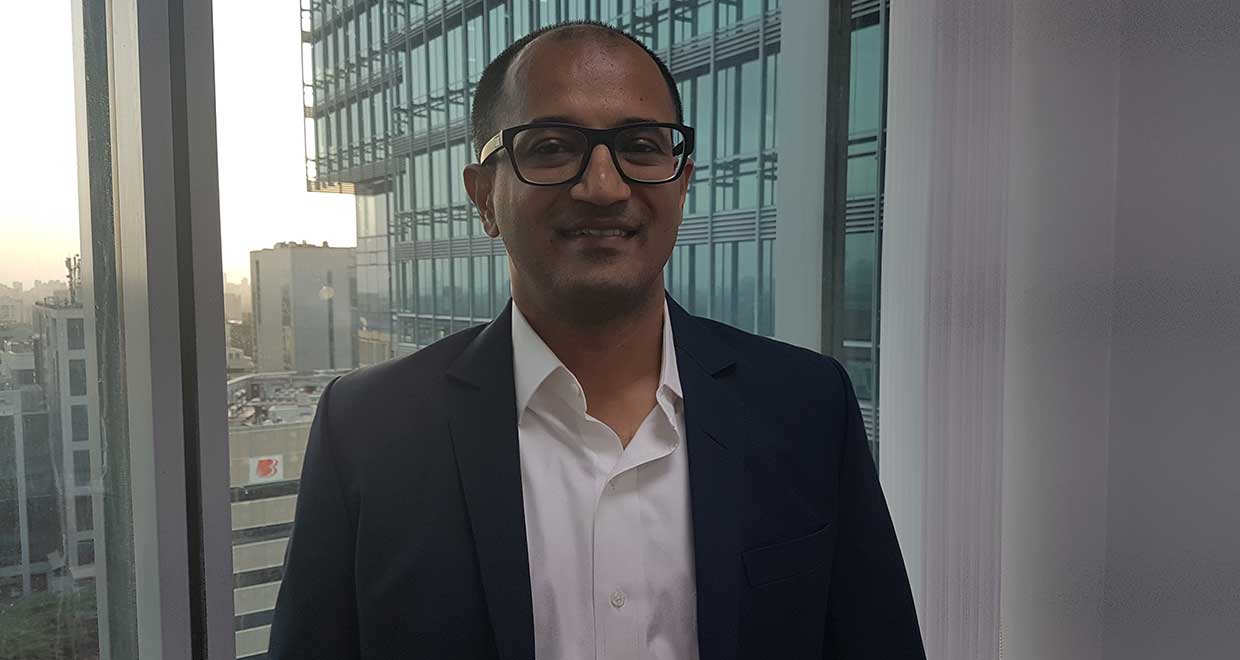
  • Thayananthan Baskaran, Partner, Zul Rafique & Partners, on ADR, and practice in Malaysia

    Thayananthan Baskaran, Partner, Zul Rafique & Partners, on ADR, and practice in Malaysia

    Thayananthan Baskaran graduated in law from King’s College, London, in 1998. Presently, is a Partner with Baskaran, Kuala Lumpur, and an associate member of Crown Office Chambers, London.

    Thaya’s primary area of practice is construction law. He drafts various building and engineering contracts, advises on disputes arising from such contracts and appears as Counsel to resolve these disputes.

    Thaya is a co-author of The Belt and Road Initiative: Legal Risks and Opportunities Facing Chinese Engineering Contractors Operating Overseas published by Kluwer Law International in 2019. Thaya is an editor of Construction Law International, the magazine of the International Bar Association’s International Construction Projects Committee. Thaya was also the President of the Society of Construction Law Malaysia (2016-2017).

    In this interview we speak to him about:

    • Practice in Malaysia
    • His experience in arbitration
    • His expertise in construction law

    How would you like to introduce yourself to our readers?

    I am an advocate and solicitor based in Kuala Lumpur with chambers in London.  My primary area of practice is construction law. I draft various building and engineering contracts, advise on disputes arising from such contracts and appear as Counsel to resolve these disputes.  I also sit as an adjudicator, arbitrator and mediator.


    Share with us some of your experiences as a student of law at King’s College, London.

    I read law at King’s College, London, almost twenty years ago.  I enjoyed studying criminal law and jurisprudence in College and particularly recall writing an essay on how rape should be regarded as a form of heinous assault or bodily injury.  I would like to have studied human rights law but was wary as there was no textbook on the subject at the time.  Apart from the College, I very much enjoyed my time in London.  London remains one of the great cities of the world, and I spent a lot of time at the bookshops, galleries and theatre.


    What advice would you give students about avoiding a decision paralysis?

    My advice would be to start practice after completing the bachelors degree and being called to the Bar.  Once you have started practice and decided on the area you would like to specialise in you can consider doing your masters in that area.  Practice is quite different from theory, so it is perhaps best to practise first before deciding to specialise in an area.


    Have you always been keen on a career in contract and ADR?

    When I started practice in 2000, the metro rail was being completed in Kuala Lumpur.  I was involved in advising on disputes arising from this project.  Like most construction lawyers, one project leads to another, and before you know it you have specialised in the area without actually having consciously decided to do so.

    The standard form construction contracts used in Malaysia and internationally provide for the resolution of disputes by arbitration.  So, from advising on these disputes, it was a natural progression to appearing as Counsel in arbitration.

    Later, I was appointed as an adjudicator, arbitrator or mediator to determine these types of disputes, as well as more general commercial disputes.


    What was your path to being empanelled on several prestigious arbitration centres like? 

    As mentioned above, my area of practice to some extent naturally led to my sitting as an adjudicator, arbitrator or mediator.  There are certain key persons who have encouraged me to pursue this.  Firstly, I must mention Datuk Professor Sundra Rajoo, the Director of the Kuala Lumpur Regional Centre for Arbitration, who encouraged me to sit for the Chartered Institute of Arbitrators examinations and be empanelled with the KLRCA.  Once I had become a Fellow of the Chartered Institute of Arbitrators, been empanelled with the KLRCA and sat as an arbitrator in Kuala Lumpur I was able to apply for and be accepted at various international arbitration centres.  I must also mention Dr Cyril Chern, a barrister at my chambers, Crown Office Chambers, and the author of Chern on Dispute Boards, who encouraged me to pursue contractual adjudication and was instrumental in having me elected a Fellow of the Dispute Board Federation Geneva, which led to my being on their Expert Panel.  

    It has always surprised me to some extent, from my experience as an arbitrator, that people, disputes and the basic principles of law are the same around the world.  Despite the apparent divide between the civil and common law traditions, I believe there is more in common in principle than there are differences.


    Could you please share with us some of the key nuances of good drafting and how rookie mistakes can be avoided?

    The key to drafting construction contracts is to firstly thoroughly understand the model that the client intends to use.  There are many models in the construction industry, such as conventional contracts, design and build contracts, design build operate contracts, and so on.  There are also the newer and more innovative models such as partnering and alliance type contracts.  Secondly, once the model has been understood, it is perhaps always best in the construction industry to start with a standard form contract that suits the selected model and the division of risks between the parties.  The standard form may then be amended to reflect the particular needs of the client.  These amendments should be of a minimally invasive nature so as to prevent affecting the structure of the standard form.


    What are the key attributes that one must develop in order to excel in the field of arbitration and mediation? 

    I would highly recommend doing the Diploma in International Commercial Arbitration offered by the Chartered Institute of Arbitrators.  This provides a solid theoretical basis for future practice.  In terms of practice, one should set aside sufficient time before the hearing to read the papers thoroughly, to enable clarification of matters during the hearing.  Most arbitrations are decided on the facts, which are, in turn, largely reflected in the documents.

    As to mediation, again it is best to start with some formal training.  I was trained at the Singapore Mediation Centre, which offers an excellent course in Asia.  Loong Seng Onn, the Executive Director of SMC, plays a leading role in the training, which provides an understanding of the skills required of a mediator.  These skills are quite different from those of an arbitrator.  Here, the key really is to keep an open mind and determine the common interests of the parties that will facilitate a settlement.  Once these interests are identified, from my experience, even if a settlement is not reached at the mediation it is likely to be achieved soon after.


    Having worked in Kuala Lumpur, Singapore and London, what are the cultural differences that you find in the legal environments of these countries? 

    There is more in common between us than there are differences.  English and the common law system are used in all these jurisdictions, which helps.  Having said that, there is always much to learn from other jurisdiction.  The skilful cross examination of barristers in England is a pleasure to attend and may be adapted in Kuala Lumpur.  The efficiency of solicitors in Singapore is well known and can serve us as a benchmark for practice.


    As a Partner at Zul Rafique & Partners, what does a typical work day look like for you?

    I’m afraid I don’t really have a typical work day, as my work is so varied.  It depends whether I’m in court or at an adjudication, arbitration or mediation or whether I’m in Kuala Lumpur or overseas.  Much of the pleasure of my practice is the varied nature of the work and the travel it involves.


    In your opinion, has Alternate Dispute Resolution fulfilled the role of administering speedy justice while ameliorating the heavy backlog of cases in the courts?

    Again, I’m sorry, or rather, I’m delighted to say that there are no backlogs in the courts in Malaysia after the reforms initiated by The Right Honourable Chief Justice of Malaysia Tun Zaki Tun Azmi.  Cases in the High Court are disposed of within six to nine months and appeals are disposed of within three months.  The challenge now is to justify arbitration to clients.  In international contracts, arbitration is more easily justified as the award may be enforced almost globally under the 1958 New York Convention.  In purely domestic contracts, arbitration is now justified more in terms of the expertise of the arbitrator, the confidentiality of the proceedings and the relative informality of arbitration, as compared to the courts.  However, domestic arbitration will have to keep up with the speed of the courts.  Parties will have to explore more innovative forms of arbitration such as, documents only arbitrations and chess clock hearings to reduce time and cost.  These innovations are becoming more common in practice.

    Apart from arbitration, statutory construction adjudication in Malaysia does have an advantage in terms of time and cost over court proceedings.  Generally, these adjudications only take three months and are determined solely on documents.  They have proved very popular.  However, the adjudication decisions are only temporarily binding.


    Could you tell us a little about your upcoming book? 

    My book is essentially a commentary on the Malaysian Arbitration Act 2005, which is based on the 1985 UNCITRAL Model Law on International Commercial Arbitration.  The commentary includes judgments by the courts of Malaysia on the Act as well as reports and analysis by the UNCITRAL.  Writing the book, while being in active practice, has involved managing my time I try to write every night after work.  I have a substantial library in my house, which I am able to refer to and work from.  Writing the book has been one of the greatest pleasures of my practice and I look forward to its publication later this year.


    What books, judgements that you have read, have played an integral role in shaping your legal philosophy as a lawyer?

    In terms of arbitration, I have very much enjoyed reading the works of Professor Emmanuel Gaillard, in particular the Legal Theory of International Arbitration.  Professor Gaillard’s ability to transform what is essentially a very dry subject into compelling reading is really incomparable.  

    In terms of judgments, the ground breaking and yet simple and lucid judgment of Lord Atkin in Donoghue v. Stevenson never fails to amaze me.  It should be read and reread in terms of how to be quietly revolutionary.


    How do you manage to maintain a work-life balance as a busy legal professional?

    I don’t attempt to maintain a balance, as I do not see a distinction.  I enjoy my work very much and do not, in that sense, see it as work.  The words of the Bhagavad Gita on duty come to mind in this regard:

    It is better to do thine own duty, however lacking in merit, than to do that of another, even though efficiently.  It is better to die doing one’s own duty, for to do the duty of another is fraught with danger.


    How do you keep yourself abreast with all the daily news, happenings and legal developments in the world?

    I read journals.  Recently, I have discovered that the Supreme Court of the United Kingdom has some important judgments read out and recorded.  These recordings are available on their website and have become my favourite ‘movies’.


    What advice would you like to give our readers, who are mostly law students and young lawyers?

    Enjoy your work, it will be much of your life.


    LAST UPDATE MADE ON 28.07.2021 BY ISAM KABIR  AND THE SUPER LAWYER TEAM


  • Noor Shergill, Assistant Director, Indian Corporate Law Service, on cracking the UPSC, and studying in Symbiosis

    Noor Shergill, Assistant Director, Indian Corporate Law Service, on cracking the UPSC, and studying in Symbiosis

    Noor Shergill graduated from Smbiosis Law School, Pune, in 2014. He cleared the 2015 Civil Services, with an all India rank of 510. He is currently working as Assistant Director in the Government of India. He is an officer in the Indian Corporate law Service, which is a Group A service under the ministry of corporate affairs.

    In this interview we speak to him about:

    • Switching from law to civil service
    • Getting the right help for UPSC preparation
    • Preparation strategy, tips, and advice

    How would you like to introduce yourself to our readers?

    I am a 26 year old from Chandigarh who loves reading, travelling, watching documentaries, stargazing and photography. I am presently working as Assistant Director in the Ministry of Corporate Affairs, Government of India.


    What motivated you to opt for legal studies after school?

    I think I was initially attracted to the legal profession by reading about cases in the newspapers. I was impressed by the breadth of the issues handled by the Supreme Court and the faith that people had in the judiciary. I still think that despite all its shortcomings, the legal profession is still a noble one that has a very important role in ensuring a just society.

    I loved how it was a prestigious and scholarly profession. I was also inspired by listening to lawyers on TV debates and I wanted to speak and argue like they did. Although, I must admit, my score in Physics, Chemistry and Math had the greatest role to play in pushing me towards Law.


    Please tell us about your college experience at Symbiosis Law School, Pune.

    I absolutely loved the five years I spent in Pune. I met some very inspirational people and made some great friends. Symbiosis made me a more aware, confident and outgoing person. In college, I got the opportunity to work with the Human Rights Cell. As part of the cell, we got to understand issues ranging from the problems faced by commercial sex workers, disability issues, inequality in education among others. Issues playing out at the national and international level were keenly followed and discussed in the cell. I still have a habit of keeping myself abreast with events taking place around the world and reading extensively about them to form a multi-dimensional opinion due in no small part to the activities of the Human Rights Cell.  

    Another aspect of  Symbi Law’s student life that I found immensely enriching,  was the thriving quizzing culture. I was pretty good at quizzing in school and had the opportunity to quiz alongside and against some of the best talent in the country. I consider myself exceptionally lucky in this respect.

    Studying in Pune exposed me the diversity of India, I learnt how to live on my own and it taught me the importance of having great friends.


    How do you think law schools have a role to play in one’s career trajectory?

    There is no definite answer to this question. Great schools are great for a reason, they attract the best students and teachers. Having a good peer group and good teachers is of immense help. Some of the better law schools provide their students with opportunities that give them an edge over others.

    However, just going to a good law school is not enough. Drive and ability are the most important things to get ahead in life. Good lawyers are distinguished by their talent and not only the law school they attended.


    How important are grades, in your opinion?

    Grades are important. They are what other people use to form an opinion about your abilities, your sincerity, your aptitude etc. In that sense they are important. So if you’re looking to get a good job or a scholarship or a fancy LLM, they are quite important.

    In UPSC, they aren’t that important. So is the case with legal practice. In both these cases a different skill set is rewarded.


    What subjects did you take particular interest in during your law school days?

    My favourite subjects were Constitutional Law and Public International Law. I also enjoyed Philosophy and Political Science.

    When I was deciding which optional subject to pick for the UPSC exam, I considered all these subjects. I went through the past question papers and syllabus of Law, Philosophy and Political Science. Eventually, I zeroed in on Law because Paper 1 of the optional has Constitutional and Public International Law and those were my two favourite subjects in law school.

    The constitution is at the center of so many debates that take place in the country. I consider myself really lucky to have studied it and to have  understood its spirit.


    Who was your mentor, or main source of inspiration who motivated you all along the way?

    I don’t have any one mentor but a pantheon of heroes. Carl Sagan, Alain de Boston , Ravish Kumar, Fali S Nariman, Justice Leila Seth are some of them. Their life and works have been immensely influential to me.


    What kind of internships did you engage in during your student years?

    The opportunity to intern is the best part of legal education. I remember getting very excited every time I was planning my internships.

    A lot of people approach internships with a view to “build their CV”, and I never agreed with  this approach. I think internships are a once in a lifetime opportunity to gather unique experiences. I don’t want to discount the importance of interning with law firms and lawyers, but the scope of Law is much wider than that. So, I would urge everyone to think beyond their CVs. Five years is a long time and one should try to get an eclectic blend of internships.

    Among other places, I interned at the Mazdoor Kisan Shakti Sangathan (MKSS), which is a social movement in rural Rajasthan. I was drawn to it after reading about the role they played in bringing about the Right to Information Act and the National Rural Employment Guarantee Act. The experience of moving from “India” and living in “Bharat” evoked in me a sense of how narrow, hollow and self serving our urban discourses tend to be. I also made me recognise my privileges and taught me to be more patient and feel less entitled, which are valuable life lessons.

    It also made me realise the hypocrisy of Indian elites, like myself. Our elite law schools are fast becoming ivory towers where the privilege of rich kids is perpetuated. It’s easy to find regional diversity but almost everyone comes from pretty much the same class background; city based, English speaking, privately educated and passionate about no other social issue apart from the decriminalisation of homosexuality or the legalisation of marijuana.

    This is why I think it’s important to escape the “law-firm trap” when it comes to internships. An internship with a place like MKSS might not impress a partner at a fancy law firm, but it will surely make you think more about essential issues than any law firm internship will. I can guarantee you that !


    How did you zero in on UPSC?

    The civil services exam is a very unpredictable exam and it is wise not to be too sure of your success. So always have Plan B. I planned to litigate if the UPSC plan didn’t work out, I also wanted to do an LLM and teach. I believe that the Civil Services is one of the many options available to law graduates.  

    It was initially my parents who encouraged me to take the exams. They always told me that I could do it. Personally, I never thought I would take the UPSC exam. This was mainly due to self-doubt and my belief that I wasn’t good enough. I used to think that people who cracked the UPSC exam were toppers and geniuses.

    However, all this changed when I was interning with the Indian Express as a reporter during third year. On the first day of my internship, the UPSC exam results were announced, and I was asked to go and interview the successful candidates. I still remember that when I met and spoke to them I discovered that they were normal people with various interests outside of academics. Not all of them had exceptional academic credentials. What was common to all of them was the hard work that they had put in.

    I must have interviewed at least twenty such candidates and I realised that even they had to deal with reversals, low self confidence and self doubting. They were never sure that they would be successful and were actually quite relieved and pleasantly surprised at being successful. It was then that I decided to give the exams a shot.


    Do only people with stellar academic performances or from reputed colleges crack the UPSC?

    This is not true at all. I am an example of this. I got 39% marks in my Mathematics paper in the class XII exam. In college I was only an above average student. Most people who clear UPSC are from smaller cities and from relatively unknown colleges. There are people who have graduated through distance education, those who studied in vernacular languages and aren’t well versed with English. I now understand, more than ever, the large number of privileges that I have enjoyed. It is much harder for most people to clear the exam than it is for the kind of people I assume visit this website.

    Most of the questions of the exam are so basic that any person with basic understanding of current affairs would be able to say something about the issue. The only challenge is to say something about the issue that puts you in the top percentile of all the people writing the exam. This is easily accomplished through repeated practice, analysis and improvement. Here are a few questions from the previous mains exam for you to get a taste of this exam :

    Essay :

    • Technology cannot replace manpower.
    • My vision of India in 2001
    • Education without values, as useful as it is, seems rather to make a man more clever devil
    • Restructuring of UNO reflect present realities

    General Studies :

    • What is water-use efficiency? Describe the role of micro-irrigation in increasing the water-use efficiency.
    • Discuss India’s achievements in the field of Space Science and Technology. How the application of this technology has helped India in its socio-economic development?
    • The frequency of urban floods due to high intensity rainfall is increasing over the years. Discussing the reasons for urban floods. highlight the mechanisms for preparedness to reduce the risk during such events.
    • What is a quasi-judicial body? Explain with the help of concrete examples.
    • In the integrity index of Transparency International, India stands very low. Discuss briefly the legal, political, economic, social and cultural factors that have caused the decline of public morality in India.
    • South China Sea has assumed great geopolitical significance in the present context. Comment.
    • Present an account of the Indus Water Treaty and examine its ecological, economic and political implications in the context of changing bilateral relations.

    All these issues have been in the news and all of us can say a few things on these issues right off the bat, without any major preparation. If reading these questions got you all excited about finding out the answers to them, maybe you should consider writing the exam, if you are so inclined.

    The UPSC exam rewards hard work and a basic standard of intelligence. That’s all you need. Being a star student surely helps and makes it easier, but isn’t a guarantee of success. UPSC is a great leveller in that sense. They aren’t looking for prodigies, the UPSC only wants well rounded and socially conscious people.


    To what extent did your legal knowledge aid in your preparation of UPSC?

    The UPSC exam is crafted for Law students, in my opinion. Law is central to administration, and the breadth of the Law subjects will make a law student quite comfortable with most of the topic such as environment, economics, social issues, history etc.

    Law was my optional subject also, so law was quite helpful in my success in the exam. I had followed the news and issues closely as part of the activities of the Human Rights Cell so I realised that I was more comfortable than most people around me.

    I really owe my success to my legal studies.


    Please describe your UPSC preparation experience. 

    The UPSC is an emotional rollercoaster ride.It has soaring highs and crushing lows. You’ll fell you’re on track one day and feel derailed the next. The uncertainty of it all is the most difficult thing to deal with, studying for years without any guarantee success. The civil services exam demands blood, sweat and tears, especially tears.

    A lot of the time you’ll be thinking if it’s even worth it, given that statistically it’s impossible to clear it. However, you can take it from me that the real competition is only between 5000 candidates, so it’s not that competitive if you’re well prepared.

    I did enrol in a couple of tuitions, this was quite helpful as I got a peer group  of similarly placed people. It also gave me some idea of what everyone else was doing and what was expected. However, the quality of most classes was quite poor. I realised that it wasn’t worth getting ready and travelling to attend many of the classes as I could accomplish much more if I studied on my own at home.

    There were a few very good teachers and I made sure I didn’t miss their classes. So one must constantly be tweaking their preparation to ensure that they manage their time in the most effective manner.

    Just take the plunge and you’ll figure out a lot of answers on your own.

    You can find my detailed preparation strategy at :

    http://mrunal.org/2016/05/upsc-topper-noor-shergill-law-optional-mohali.html

    I would strongly urge everyone to follow the interviews of other successful candidates as well. Try to find a successful candidate who resembles your background. For example, when I was preparing, I stayed miles away from the interviews of the IITans and the AIIMS alumni because they came from a very different place, academically. I was more interested in those people who came from smaller, little known towns. people who I felt really had to struggle to crack the exam.   I felt that their experiences and studying style was more inspirational, helpful and relevant to my preparation.

    Some of the interviews and blogs that law students will find useful are listed below :

    https://abdaal.wordpress.com/author/abdaal/

    http://mrunal.org/2014/06/toppers-interview-sakshi-sawhney-ias-2013-rank-6-ba-llb-second-among-girl-toppers-law-optional.html

    This is a helpful starting point :

    http://mrunal.org/upsc

    Try to find your own answers and try not to rely too heavily on asking others for guidance.


    How important is it to enroll at a coaching center in order to prepare for the UPSC?

    You will find that a lot of the material, is available online for free. I know a lot of people who have done very well by following just a few websites only.

    There isn’t any one answer to this question. Many people find coaching institutes to be very helpful, others find them to be a waste of time and money. One has to be smart to use what is available to the best of his/her advantage. You must know your own studying style. If you think you need someone to explain the material to you, join classes. If you think you’re better of alone, study by your self.

    There is nothing to prove and no brownie points to win by clearing the exam without joining tuitions.


    What kind of a support system is conducive to the UPSC preparation process?

    I have already spoken about how the exam is a roller coaster ride. When you are on a high you’ll need someone to bring you back to terrafirma, and when you’re having a bad day you’ll need someone to pick you up. You’ll need someone to continuously tell you that you can do it.

    For me it was my parents. They stood behind me like a rock. They never put any pressure on me and always told me not to take the exam too seriously. They always tried to keep my spirits up. I literally cut myself off from friends and relied only on my family for support.


    What according to you should the aspirants keep in mind while choosing a cadre?

    I had put the Foreign service as my first preference, followed by Indian Revenue Service and the Indian Corporate Law Service. Based on my rank and preference I was allotted the Indian Corporate Law Service.

    The answer to the second question is quite tricky and I am sure the readers would find their own answers as they


    How efficient are websites like Mrunal and Unacademy?

    They are really good. I found them quite useful. For example, I was very bad at economics and didn’t understand even the basic concepts. Thankfully, Mrunal came out with an entire series where he deconstructed everything so beautifully that I scored one of the highest marks in my economics paper. All of this while preparing from the comfort of my home.

    insightsonindia.com is another websites that I followed. I relied almost entirely on the internet for my preparation.

    I am not sure of Unacademy, as I never used it.


    What challenges does a civil servant’s job have to offer, and what are the advantages of being a civil servant?

    I am currently undergoing training at the Indian Institute of Corporate Affairs in Manesar (Gurgaon). The Indian Corporate Law Service regulates the corporate sector and administers the Companies Act, 2013 and a host of other legislations. We work as Registrar of Companies, in the National Company Law Tribunals, Serious Fraud Investigation Office, Securities and Exchange Board of India, Competition Commission of India etc.

    To be honest I’m just a few months into my training and can’t talk about the challenges that civil servants face.

    My parents worked in the public sector so, I felt quite comfortable about joining the civil service.  I really like the lifestyle of a civil servant. It’s a prestigious job, the work-life balance is great, and we are very well taken care of.   I also like the fact that the civil service gives one the opportunity to develop outside of the job. Civil servants aren’t defined by only their jobs alone and some have become famous by pursuing their hobbies. You would have heard the names of Upamanyu Chatterjee, Vikas Swarup among many others. The Government of India is very a generous and indulgent employer in that sense.

    Some of the best Indian law firms are very well known, but not as well known as the Government of India. So, the opportunity to work with the Government of India is very enticing.

    Kindly offer a few words of inspiration for law students aspiring to take up the civil services.
    I can understand why some people might be a little apprehensive about approaching this exam. It seems almost suicidal sometimes. It takes too long to clear, and one might feel that some of the best years might be wasted. I’ts natural to ask if one should take an “easier path”. All this went through my head as well.

    Having cleared the exam I can tell you that all that effort I put in was totally worth it. The satisfaction of clearing one of the world’s toughest exams cannot be put into words. Apart from that, I really enjoyed studying for the exam. If you study hard enough for this exam , you might not get rewarded, but it will surely make you a better person. I also think that if one doesn’t take risks in their twenties then when else are they going to?

    Just take the plunge and you’ll find a lot of the answers you are looking for.

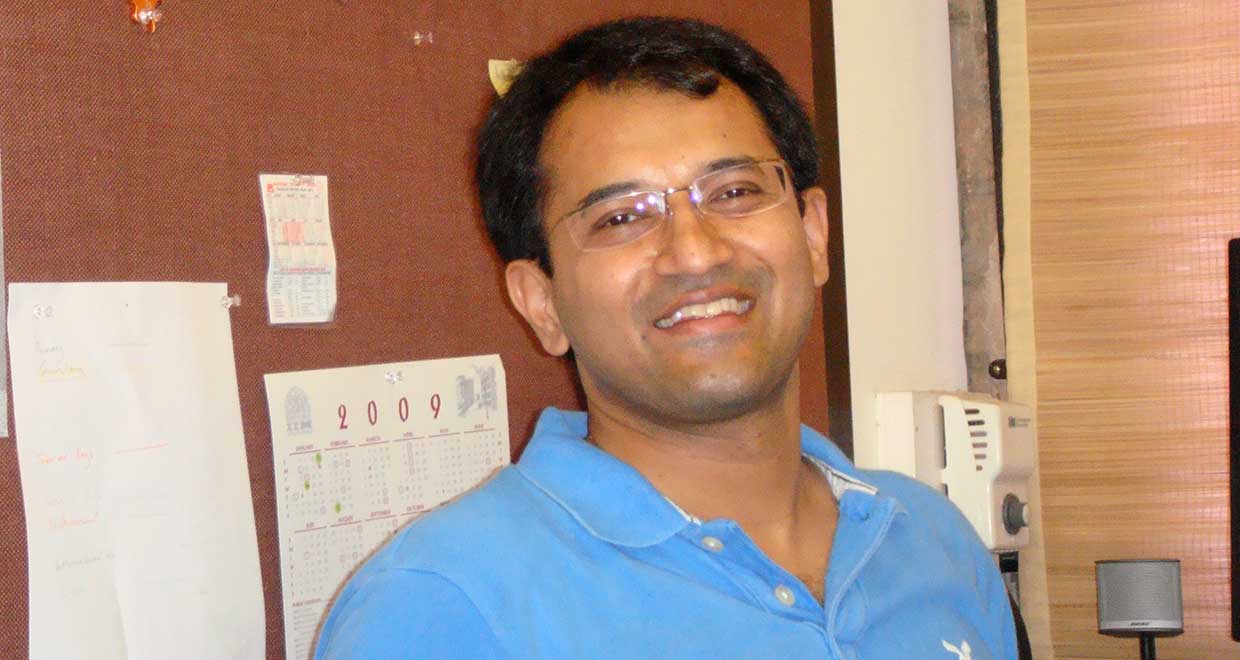
  • Raddhika Singh, Managing Partner, Aletheiaa Legal, on being a first generation lawyer, studying at King’s College London, and starting her own firm

    Raddhika Singh, Managing Partner, Aletheiaa Legal, on being a first generation lawyer, studying at King’s College London, and starting her own firm

    Raddhika Singh graduated from Campus Law Center, batch of 2006. She then went on to pursue her Masters from Kings College London, University of London. Since then she has worked with Remfry & Sagar, K&S Partners, and Luthra & Luthra Law Offices before starting out on her own.  She is currently Managing Partner at Aletheiaa Legal, an Intellectual Property and Corporate law firm.

    In this interview, we speak to her about:

    • Studying at Kings College London
    • Working at Tier I firms in India
    • Starting her own firm.


    How would you like to introduce yourself to our readers?

    I am a first generation lawyer and entrepreneur. I am the Founder and Managing Partner of ALETHEIAA LEGAL an Intellectual Property and Corporate Law Firm. I was enrolled with the Bar Council of India in August 2006 and over a decade have had the privilege of working with India’s Tier 1 law firms like Remfry & Sagar; K&S Partners and Luthra & Luthra Law Offices.
    I did my schooling from The Army Public School, Dhaula Kuan. I pursued History Hons. from Hindu College and LL.B from Campus Law Centre, Delhi University. Thereafter, I completed my Masters in Intellectual Property Law from Kings College London.

    On a personal front, I belong to a family with four generations in the Indian Army. My father retired as a Brigadier from the Army and my mother is a PGT English who taught for nearly 35 years in India and Bhutan. My elder sister is an Assistant Vice President, Corporate Transitions with a global business process management and services and IT corporation. I am married to Bharadwaj Jaishankar, who is an Associate Partner with an Intellectual property and Commercial Law firm.


    What motivated you to take up law as your choice of career?

    While I was growing up I was inspired and captivated by the way lawyers’ especially criminal lawyers were portrayed and the role they played in delivering justice. I was an avid reader and enjoyed books authored by John Grisham especially The Runaway Jury and The Pelican Brief. I loved watching thrillers, murder mysteries and legal dramas and enjoyed predicting and resolving cases before they were solved in the serials/movies. I was out spoken, possessed good communication and analytical skills and enjoyed interacting with people… so choosing law as a career came naturally to me.


    Could you tell us about the internships you took up, and what you learnt from those experiences?

    Internships are extremely important as you get first hand practical experience. I started interning from the first year itself. In my three years, I interned at the National Human Rights Commission, Delhi, at Tees Hazari with a senior lawyer practising on the criminal side, with Rajinder Narain & Company and lastly with J. Sagar Associates. Hence, I got to experience diverse fields of law ranging from Human Rights, Criminal and Civil litigation, Corporate Commercial law and Intellectual Property law which played a significant role in helping me choose my area of specialization. There could be a major difference between the area of law that intellectually stimulates you and what you enjoy practicing on a daily basis. My advice to students would, therefore, be to intern with law firms/organizations practising different areas of law so that ultimately you can identify the area where your interest lies. That is why internships are very important as they expose you to the diverse facets of law.
     

    What advice would you give students in avoiding a decision paralysis?

    Majority of law students on graduating are faced with a dilemma on whether to pursue higher studies or start working. This is a very personal decision and would depend upon several factors that every student must consider while taking the decision. The most important parameters that must be considered while making the decision are, inter alia, do you wish to practise in India/abroad? Do you have the funds/scholarship to finance studies abroad? Do you know the area of law that you wish to specialize in? Do you wish to work in India after graduating from Masters, if yes then how do you plan to pay back the loan? Do you plan to work for other law firms or do you wish to start your own law firm or independent practise in future? Which are the colleges that you have applied to or received acceptance from and what are the courses? How are the employment opportunities in that country?

    Speaking from my personal experience, I chose to pursue my Masters in Law after completing my LLB as I was clear that I wanted to start my own law firm in the future and doing Masters from Kings College London would give me a competitive advantage. I also believe that pursing your Masters from a reputed foreign university is a life changing experience. You not only grow professionally but also personally. The kind of exposure students get when they are competing with lawyers from across the globe is a very enriching experience.


    What was the application process like for the King’s College London?

    The Application process for King’s College London was quite straight forward. I was required to submit a Statement of Purpose where I had to write about myself, my strengths, reasons for pursuing Masters and most importantly stating how King’s would benefit by offering me a seat. I applied for Masters in Intellectual Property to Kings College London as it is a premier university in the world and is amongst the top three colleges in London to pursue Masters in Intellectual Property Law. The parameters for choosing Kings was its ranking, the courses it offers, the outstanding faculty and its location.


    What did you enjoy most about studying at King’s College London?

    The LLM programme I pursued at Kings was a specialization in Intellectual Property Law. We got to study courses relating to Comparative Trademarks and Copyright laws in United States, United Kingdom, France and India which gave us an insight into the diverse and completely differing schools of thought pertaining to protection and enforcement of Intellectual Property Rights in different jurisdictions. At that time, we had the distinct advantage that Kings College, Queens College and SOAS were all part of University College London and we had classes with students from all these colleges. What was an added benefit was that we had the privilege of being taught by world renowned professors like Professor Sir Hugh Laddie who was considered one of the leading English judges and academics in the field of intellectual property law and Professor David Llewelyn who has co-authored the book International Trademarks Law Intellectual Property: Patents, Copyright, Trade Marks and Allied Rights Cornish, W. & Llewelyn, D. 2007. What I found challenging at the beginning but which turned out to be the most rewarding experience was the entire educational system. At Kings, we were expected to think independently, out of the box and develop analytical and problem solving skills. These skill sets played a very significant role in developing my career.


    What activities were you involved in as a student at King’s College London?

    At Kings, I was elected as the Vice President of the Kings LLM Society. As the Vice President I had to organize social events such as Christmas, New Year and boat parties and seminars to enable students pursuing different courses to interact with each other.

    The year 2007-2008 was a defining moment in my life. I learnt how to be totally independent, self reliant as I had to take all the major day to day decisions myself. It was an enriching experience as I forged friendships of a lifetime with students from diverse countries and cultures. I will always cherish the experience I had at King’s and the friends I made there.


    Post your LLM, did you consider staying back to write the bar exam there?

    At the time of applying for my Masters, I was clear that I wanted to return to India to work with Tier-1 Intellectual Property Law firms and eventually start my own law firm. With that in mind, I didn’t consider staying back in London.


    What prompted you to take up a position with Remfry & Sagar and then K & S Partners?

    While I was pursing my Masters, I was clear that I wanted to specialize in Intellectual Property Law in India. In April 2008, I applied to Remfry & Sagar and was extremely lucky to get a call for an interview in May 2008 when I was visiting India for the summer break. The interview was successful and I was made an offer to join Remfry & Sagar in October 2008. I was one of the few LLM students who had a pre-placement offer before completing their Masters.

    Remfry & Sagar is India’s oldest Tier-1 Boutique Intellectual Property Law firm. One of the things I learnt at Remfry was Trademark prosecution i.e. conducting pre-filing searches, advising clients on registrability of Trademarks, developing strategies for overcoming objections posed at the time of examination/hearings, advising on assignment and licensing of trademarks etc. The prosecution experience I acquired at Remfry & Sagar played an important role in my securing a position at K&S Partners. After spending two years at Remfry & Sagar I wanted to practise different aspects of Intellectual Property like Copyright, Geographical Indications and work on contentious matters like oppositions, rectifications, litigation.

    At K&S Partners, I got the chance to be involved in handling post registration aspects including enforcement of IP Rights through civil and criminal proceedings; border enforcement measures through the Indian customs offices; IP licensing; advising on copyright law in the areas of software, motion pictures, literary and artistic works. I was part of the team and played an active role in protecting and enforcing some of India’s and the world’s well-known Geographical Indications. I also had an opportunity to travel to the United States of America to represent the concerns of traders of an Indian Geographical Indication before the US Food and Drug Administration Agency (USFDA) and Environment Protection Agency, USA (EPA). At K&S Partners, we were encouraged to think out of the box and express our opinions freely. Senior Partners and other senior colleagues took time out of their busy schedules to share their knowledge with us and to answer all the questions we had. At K&S Partners, lawyers are nurtured and mentored to give their best and grow personally and professionally.


    How would you describe your experience working at Luthra & Luthra?

    After having worked with Boutique IP law firms, I wanted to experience working with a Full service law firm. The reason I applied to Luthra & Luthra is because it was a small team of around eight lawyers who worked on all aspects of Intellectual Property Law from prosecution, opposition, enforcement, litigation, advisory and transactional work. At Luthra, I enhanced my drafting and research skills. I also worked on a portfolio for a leading Indian Company in the two wheeler sector by coordinating filings and enforcement of Intellectual property rights across several jurisdictions around the world. That was a learning experience where I honed my skills and felt that I was now well equipped to start my own practise.


    Did you have a mentor or guide during the formative years of your career?

    Being a first generation lawyer, I didn’t have any mentor to guide me in my early years in college. I, however, throughout my career and even till date have had the advantage of being mentored by several seniors in the profession. At the time when I was deciding whether to pursue my LLM or start working, I was advised by my mentor to follow my dream and pursue my LLM from Kings College London. His advice was to pursue my studies before I start working as it would give me the right exposure and advantage over my colleagues.  At each juncture in my career, when I changed jobs from Remfry to K&S and then to Luthra & Luthra I had mentors who guided and advised me. I spoke to several Senior Lawyers in the profession and Founders and Managing Partners at leading law firms when I was evaluating my decision to start my own law firm. Majority of them advised me to pursue my dream and I decided to fulfil my dream so that I never look back and say, “what if…”


    What made you decide to start your own law firm Aletheiaa Legal?

    Having devoted nearly eight years in the profession and worked with India’s leading Intellectual Property law firms, I believed that I had achieved the requisite experience and acquired the necessary skill sets to start my own law firm. During my stint with the above law firms, what I enjoyed most was interacting with clients, understanding their business requirements, developing and implementing strategies to protect, enforce and commercially utilize their IP assets. With this interest in mind, I took a leap of faith and founded “Aletheiaa Legal” on August 6, 2014 and have enjoyed the journey thus far.


    On what parameters do you choose the projects you work on?

    At the beginning, the assignments I undertook were restricted to Intellectual Property law i.e. filing, prosecuting, enforcing and drafting of agreements pertaining to licensing and assigning of Trademarks, Copyrights, Patents and Designs. Thereafter, like every law firm, I consciously decided to expand my scope of work and started accepting work relating to vetting or drafting of commercial/business contracts. With the Start-Up boom in India I have started actively advising start-ups and providing them a one stop legal solution. The body of work keeps growing with time.


    What are the challenges and learning opportunities that you were/are faced while heading Aletheiaa Legal?

    There have been several opportunities and challenges along the way from which I have learned and grown personally and professionally. When I started Aletheiaa Legal I had only three clients who were friends and family and today I have 90+ clients.

    The biggest challenge which every law firm faces is generating clients and revenue. I had to wear several hats of networking, generating business, advising clients, delivering before deadlines, raising invoices and following up with clients for new assignments and payments. I have learnt how to work with different types of clients and on diverse aspects of law ranging from Intellectual property rights, Information technology, Commercial and Corporate transactions, Media and entertainment, Dispute Resolution. The other challenge and learning opportunity is to keep pace with the latest developments in diverse fields of law.


    What are the key attributes that one must develop in order to excel as a lawyer?

    Key attributes that a good lawyer must possess are he/she must be articulate, have an eye for detail, work hard and possess good drafting and analytical skills. In addition to the above, a lawyer must be a good listener so that he/she can hear and clearly understand what the client wants and deliver the desired result. Another important skill is having the ability to build relationships through networking. I developed these skills by reading judgements, articles, seeking advice and asking questions from seniors in the profession and attending networking events.


    How do you manage your time between your professional and personal interests?  

    One of the advantages of having your own practise is that you can easily balance between your professional and personal life. In addition to work, I love travelling to new destinations in and outside India and experiencing diverse cultures; I enjoy sketching, watching plays and eating out at new places.


    What are the challenges you have faced in building up your career as it stands today?

    I believe every challenge is an opportunity to grow in life. When I chose law as a profession my parents were sceptical as I was a first generation lawyer and didn’t know anyone in the legal fraternity. When I completed my LLB I scored very well but didn’t get placed in the Tier 1 law firms and was very disappointed. This was a big challenge as I didn’t know whether to pursue my Masters in Law or work with a law firm. I saw this challenge as an opportunity to pursue my Masters and was fortunate to get through King’s College London. Upon completing my Master’s with specialization in Intellectual Property Law, I was amongst the few students who got a pre-placement offer before completing their Masters. I achieved my dream to work in a Tier 1 law firm when I was offered a position with Remfry & Sagar. There was no looking back thereafter, throughout my career I worked with Tier 1 Law firms like Remfry & Sagar, K&S Partners and Luthra & Luthra. Another challenge that I faced in my career was when I decided to start my own law firm and only had three clients. With hard work, dedication, passion for my work and spirit to succeed today Aletheiaa Legal has over 90+ clients. In the next ten years I want Aletheiaa Legal to be counted amongst the leading Intellectual Property and Corporate Law Firms of India.


    What advice would you like to give our readers, who are mostly law students and young lawyers?

    Believe in yourself and pursue your dreams…have the faith, courage and conviction to make them a reality because if you have the ability to see those dreams, you have the ability and capability to achieve them.


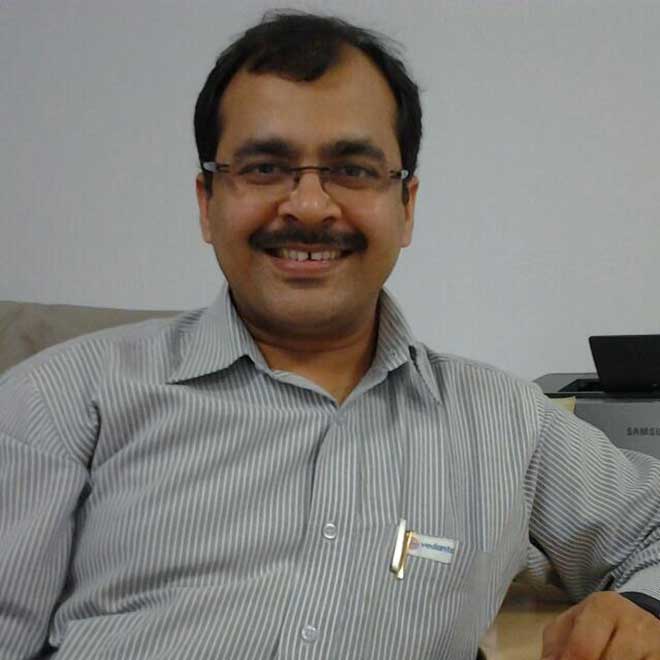
  • Sayan Samaddar, In-House Counsel, Aksh Optifiber, on studying in Symbiosis, and his diverse experience

    Sayan Samaddar, In-House Counsel, Aksh Optifiber, on studying in Symbiosis, and his diverse experience

    Sayan Samaddar graduated from Symbiosis Law School, Pune, batch of 2012. Since then he has worked at Rohit Das & Associates, Gagrat & Co., and Chhibber & Associates. He is currently In-House Counsel at Aksh Optifiber Limited, where his role entails IPR related issues and handling complex litigation matters relating to Writs, Military Laws, Service Laws, Banking Laws, Property Laws, Consumer Protection Act, Arbitration Act, Companies Act, Suit for recovery of money, etc. as a practicing Advocate as well as a corporate legal manger.

    In this interview we speak to him about:

    • His time at Symbiosis
    • His litigation experience
    • His internship experience


    How would you like to introduce yourself to our readers?

    As a first generation lawyer who started off as a practicing advocate but currently has settled as an in-house counsel.


    What was your time at Symbiosis like?

    My life at Symbiosis was blissful. I worked very hard for the first two weeks of my first semester but soon the clarion call of college life proved too hard to resist. While I did secure decent grades, I spent much of time chillin’. I did ensure that I have the bare minimum attendance so as to avoid TNG (the term will ring a bill with Symbi folks – it basically meant one cannot sit for the semester exams on account dismal attendance). In short, it was a paid vacation for five years.

    Symbiosis not only stands out from other private institution but also from every other college. I could not take advantage of the academic facility of my college so I will not comment on how Symbiosis stands out as compared to other colleges in this regard. However, it did teach a lot of other valuable virtues which are still coming in handy.  I believe Symbiosis makes its students street smart; which according to me is a very valuable virtue to have in the long run especially in the field of law. It was very hard to find accommodation in our college hostel. Therefore, majority of the students stayed independently either in PGs or flats. I stayed with three batch mates of mine in a flat. Staying in a flat means you must look out for yourselves as far as your daily needs go. We got a fixed amount of money from parents for every month. This amount took care of our rent and our other needs. We suffered dearly whenever we prematurely spent this amount. Thus, we learned the very important lesson of money management. Paying bills on time was another valuable lesson learnt. Once we forgot to pay our electricity bill and as a result we were sitting in dark during our exams! These are small but very important lessons which no book will teach.


    How much of a role do GPAs play in shaping one’s career path?

    I did not attach much importance to GPAs. I only ensured that my GPA did not fall below three (our total GPA was four). Securing a high GPA is not very difficult. In fact, securing high marks in any university or school exam is not very difficult. It only requires a systematic way of mugging up the chapters and regurgitating the same on the answer sheets. One should not only focus on getting high marks. The focus should be on what one learns from all the chapters and units which are taught throughout the course. For instance, I had scored a perfect GPA, i.e., A+ in my contracts paper in my first semester; but after I had graduated I remember myself struggling to understand the meaning of a quasi-contract! The A+ was scored by the sheer power of replicating pages mugged up the night before. After my graduation, I had to re-open the Contract Act, and this time I studied with the aim of understanding the concepts rather than securing an A+. By God’s grace, now I can safely say that I do know my contract laws. Focusing only on a high GPA will not take anyone far unless one understands the concept.     


    What kind of internships did you engage in during your student years?

    All my internships were under practising lawyers except for one which was under Justice Khanna at Delhi High Court. My final internship was under Adv. Protik Prokash Bannerjee a.k.a Protik Da (whose chambers are a real life enactment of the verve and versatility found in his super lawyer columns). I received basic grooming from him. He instilled in me one of the most valuable lessons for any lawyer; that one must know where to look for an answer to a query and that one of the prerequisites for any lawyer is to be a good draftsman (he may disagree with I just said since he tried to teach me a lot of other things). Thus armed I prepared to embark upon another trail.


    What are your areas of specialisation, and when/how did you go about choosing these?

    I love civil laws especially commercial litigation and contracts. Somehow I have always loved civil matters and criminal laws never really charmed me. It remains so till date. I do not think anyone can be advised as to which field of law one should pursue. It is strictly a matter of personal choice. Do what you love to do; that is mantra!


    How were the first few years after your graduation? 

    My first few years after graduation were tough or to put it precisely, I was paying dearly for having enjoyed five years of paid vacation in Pune. I do not think my time in college had prepared me for the real world practice of law and there is no way I can blame my college for that.

    I had joined Protik Da’s chambers immediately after college. During my time with Protik Da, every day I was sent to the Calcutta High Court with the instruction to observe the day to day court proceedings. I observed the proceedings very intently without having the slightest idea what exactly was going on. I used to jot down in my notepad whatever I observed in the courts. Later in the day I used to sit with Protik Da and clarify my doubts. The clarifications sometimes came in form of brief lectures from Protik Da and sometimes reading various commentaries under his guidance. Thus, slowly but surely I stared having some amount of grasp of what actually goes on in a proceeding before court.


    What are the challenges that one needs to prepare himself/herself for when they step out of the comfort of a law school and into the real working world?

    Once college life is over there is no comfort zone. The moment professional career starts, every day presents a new challenge. In order to overcome these challenges one must have the self-belief and a never say die attitude. One must be prepared to fail, learn from such failures and move on. As Rocky Balboa said “Life’s not about how hard of a hit you can give… it’s about how many you can take, and still keep moving forward.”    


    During your developmental years as a lawyer, did you have any mentor(s)?

    I am still developing as a lawyer. After all, I am hardly five years old in the profession! During this short span I was lucky to have some very good seniors who gave me valuable guidance. Protik Da is one. Another very good senior I worked under is Adv Imran Tarafdar who taught me how to draft. My inspiration comes from a very materialistic source. I hail from Calcutta but reside in Delhi which means I have to pay rent along with my bills. Unless I am good at my work, I will not get a handsome remuneration for my services and unless I get a handsome remuneration I will not be able to meet my expenses. It is very simple that way.


    What does a judicial clerkship entail? 

    The positives which one may take away from a judicial clerkship solely depends upon two things; namely, the judge under whom one is clerking and one’s willingness to do something extra apart from what one has been assigned to do. During my time as a law clerk at Delhi High Court I noticed that a lot of my fellow law clerks were mainly into making summaries of the cases which were to be listed before the court the next day or doing some research in the Judges’ Library. In my opinion merely making those summaries and logging into manupatra or SCC online for research will not give a positive thrust to one’s career. I was lucky to clerk under Justice V. Kameshwar Rao. Unlike some of the judges, he actively involved me while drafting judgments. He very systematically used to assign to me three to four matters every week and ask me prepare comprehensive briefs for him which would offer some meaningful assistance to him when he would draft judgments in those matters. The briefs would contain the facts, issues involved, arguments advanced by both the parties on such issues and the correct position of law on the issues. He used to take special note of the way and manner in which I had drafted the briefs. Fortunately, I assisted him well. There used to be days when I had finished my work well in advance and thus had free time on my hand. During this time instead of endlessly roaming in court or socialising in the High Court canteen, I used to pour over whatever books I could lay my hands on in the Judges’ Library. This way I believe I have managed to get the most out of my stint as a law clerk.

    Now, as far as the second question goes, I believe that for a young lawyer aiming to become a practicing advocate, the best way to start off is to join the chambers of a middle aged advocate who has a variety of briefs. I am emphasising on joining a middle aged advocate because a middle aged advocate will not have a lot of assistance at his disposal. He will have one or maximum three juniors assisting him. Thus, each of his juniors will have ample of work to do. The learning and growth is directly proportional to the amount of work one does. Alternatively, one may also join a start-up firm right after college. I will not advice joining an Advocate on Record right after graduation. One may join an Advocate on Record after a few years of practice. I will also not advice anyone to join a top – tier law firm immediately after graduation. While on one hand a top – tier law firm will pay handsomely but on the other hand there are certain cons as well. A top – tier law firm will generally have a large team which will be handling a specialised branch of law. This will not be beneficial for a fresher since, at the very outset of the career, the junior will be exposed to one particular field of law only. Further, the fresher will also be handling limited amount of work on account of the strength of the team and therefore the growth will be slow. While a fresher in top tier law firm may have the opportunity to work on some high profile cases right at the beginning of career but that may not be of any help since majority of the issues involved in such high profile cases are bound to be complex therefore they will go tangent to the junior’s brain. After all, not everyone is a Salve or a Palkhivala. As far as judicial clerkship goes, a fresher may pursue the same immediately after college but for a short span, say for six to nine months and not more than that. I have already explained how to effectively utilize one’s stint as a judicial clerk. The ideal way to pace one’s practice is to start off in a small chamber where there is variety of work thereby having exposure to multiple fields of law, getting the basics right while having an understanding of how things work and then gradually move to bigger places and ultimately go independent. The timeline for these events to happen will of course vary from person to person.      


    Why did you move from a law firm to chamber practice?

    I spent a good nine to ten months at Justice Rao Sir’s Chambers as a law clerk before moving on to a Law firm (M/s Gagrat & Co.). It is headed by Mr. U.A. Rana who is the hardest task master I have come across till date. Under his exacting tutelage, my drafting skills were further honed besides which I was also exposed to a wide avenue of cases. I dealt with cases relating to CPC, Indirect Taxation, Consumer Cases, Competition Laws and Special Leave Petitions. By this time, I had learnt how to draft quite well and was also proficient at researching and I was itching to have a crack at arguing cases before a court. Fortunately, I was presented with an opportunity to argue an application under Order 7 rule 11 of CPC before Tees Hazari Courts. The application was preferred by my firm’s client i.e. the defendant. It involved an interesting line of argument which aimed to prove that the plaintiff had no cause of action. I had successfully argued the case and the plaint was rejected on the aforesaid ground. However, after this particular case the opportunity to argue was far and few since most of the cases in the firm were before Supreme Court. Hence, I made a conscious decision to move out of Gagrat to the Chambers of Mr. Ankur Chibber with an aim to appear and argue more cases. This was particularly tough since I took a considerable pay cut. Mr. Chibber was empanelled with a number of Government Offices and also with Army, Air Force and Navy. He predominantly dealt with service law matters. He was a wonderful senior who gave his juniors ample opportunity to learn by letting them arguing matters on their own before the Courts. I worked under him for a year and during this time I appeared in a number of matters before High Court, CAT and Armed Forces Tribunal. He had allotted all his matters before Armed Forces Tribunal to me. Since I was representing the government, I lost more matters than I won (Government messes up most of the times but loves to exhaust the legal remedy to the fullest extent possible); but having said that I never went down without a good fight even though it was a dead case. I learnt valuable lessons such as how to think on your feet while you are standing before a judge with the other side lawyer breathing down your neck and tricky court crafts. These are skills which no book or fancy LLM degree will teach. As for the times when I won cases, the very act of preparing for and arguing a case independently and then seeing your name on a judgment is a high like few others.


    Tell us about the transition from being a litigating lawyer to an in-house counsel.

    I moved from practice took up employment as an in-house counsel because I felt it poses unique challenge. Many practicing advocates may disagree with such a choice but I think one must have the experience of everything. The initial transition from a being practicing lawyer to an in-house counsel is often a prickly one and I had to look to my boss often to imbibe the ways of the corporate world. During my initial days as an in-house Counsel, I had to spend considerable time understanding the business of my Company. Further, with time I also realized that as an advocate I was offering my services to client whereas I as an in-house counsel I am working as an employee. There is a difference in those two relations. Bottom line remains the same i.e. I am working in the capacity of a legal expert but the approach changes. For example, as an advocate I can sometimes take the liberty to reprimand my client if the client is not providing me with the requisite facts or documents or instructions but I cannot do the same in a company. As an inhouse counsel I need to be suave while seeking such inputs from my colleagues. Further, as an advocate I was an officer of the court hence my main duty was to assist the court and the client came second but as an inhouse counsel I am an officer of the Company. Period. Hence, the nature of duty changes. It took some time for me to realize these things. Fortunately, I have a very good boss who till date guides me brilliantly.


    Give us a brief capsule of what a regular working day looks like for you now.

    Each day at office is enjoyably hectic. My company has a diverse business portfolio and also undergoing tremendous expansion. Moreover, my company seldom approaches a firm or a lawyer for outsourcing legal work. Almost everything is done in-house. Initially I was the only one, apart from my boss so it was becoming increasingly difficult to manage everything on my own but now, I am being assisted brilliantly by a junior.

    Apart from executing the general responsibilities of an in-house counsel like drafting and vetting contracts and handling litigation matters; I have undertaken various other functions such as liaisoning with various Government Departments and most importantly looking out for the risks which the Company may unknowingly end up taking while conducting its day to day business. In other words, I try to help the Company save a little money by identifying various Government Schemes offering tax subsidies and other benefits while also trying to create a sense of security in the mind of the Management and the Marketing and Sales team to fearlessly conduct business knowing that there is a person who will caution them beforehand in the event they wander out of the four corners of law. This requires being proactive every day and not wait for a legal issue to arise and rather take care of it before it becomes an issue. In all this I have found that my previous experience in litigation has helped me immensely for executing my duties as an inhouse Counsel.

    Apart from the aforesaid, another very important responsibility I execute is negotiating contracts. It is an art and I am still learning it. One must be careful while doing this so as to protect the interests of one’s company as well as ensure that the business deal do not go south because one is unrelenting on some of the clauses of the contract. Sometimes it involves taking calculated risks. How one negotiates a contract depends upon facts and circumstances of each transaction which ultimately boils down to the extent of bargaining power and leverage one enjoys in each such business transaction.


    What are the differences between litigation practice in Delhi and Kolkata?

    I do not think courts in Delhi and Calcutta can be compared with respect to their receptiveness towards a fresh lawyer. Our profession always welcomes and encourages new and fresh advocates. In fact, our senior colleagues are always happy to see a junior doing well in court. This is true across all the Bars in our country. It was a personal choice on my part to move to Delhi and start practising here. However, I must add the reason which prompted me to move to Delhi. Every year Delhi attracts a lot of young lawyers from across the country. The volume of work over here is astounding. This is mainly because of the number courts which are here in Delhi. Delhi is divided into six Judicial Districts and each district has a District Court. Apart from the District Courts, there are a large number of Tribunals along with their Appellate Forums and of course there is the High Court and the Apex Court. Further, a lawyer based in Delhi can also travel a little bit (airfare is low plus highways are fast and beautiful) and take up a few outstation cases before Jaipur Bench of Rajasthan High Court and High Court of Punjab and Haryana. Moreover, half my batch from Symbiosis which includes my best friends are practicing in Delhi. Hence, I was attracted to come and settle in Delhi.        


    If you could turn the clock back, is there something you would do differently?

    Absolutely not. It is because of these significant turns I am what I am today. I do not think I could have done better.


    Is there any other advice that you would like to give to our budding lawyers?

    a) Forget what you did in college. It is a fresh journey after college! (This piece of advice is aimed at students like me who chilled too much in college)

    b) Read a lot but do not just read; understand the law as well.

    c) Keep it simple. One must know where to look for an answer.

    d) Have strong command over English language. There must be clarity in your thought process and the same must be reflected in your drafts and correspondence.

    e) Be precise and crisp while talking; be it in form of an argument before a court or with your client or with anyone else.

    f) Talk less but talk sense.

    g) Be confident and professional in your approach!

    h) Do not be shy or hesitant in seeking help when in need.

    i) Be ready to fail, learn from failures and keep moving forward.

    j) Lastly, but most importantly, there is no substitute to hard and honest work!


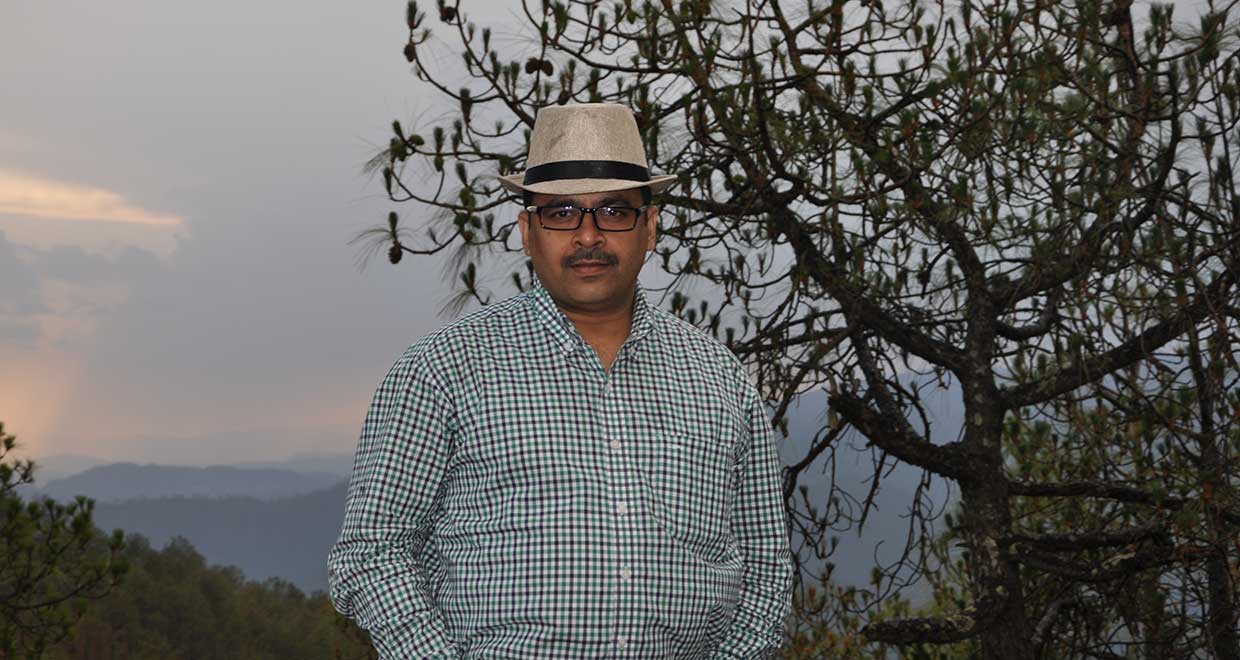
  • Dr. Milind Antani, Leader-PharmaHealthcare and Social Sector, Nishith Desai Associates, on switching from medicine to law, managing healthcare practice, and his diverse experience

    Dr. Milind Antani, Leader-PharmaHealthcare and Social Sector, Nishith Desai Associates, on switching from medicine to law, managing healthcare practice, and his diverse experience

    Dr. Milind Antani graduated in law from SP University, Vallabh Vidyanagar, in 2004. Dr. Antani has been a practising ENT surgeon prior to that. He currently leads Pharma & Healthcare Practice and Social Sector Practice at Nishith Desai Associates. He represents clients in matters including mergers and acquisitions, investments, regulatory and transactional matters, intellectual property prosecution and litigation, joint ventures and new companies.

    In this interview, we speak to him about:

    • Making the shift from medicine to law
    • Working with Nishith Desai
    • Developing the pharmaceutical and healthcare practice


    What motivated the shift from medicine to law?

    After my MBBS, I did my Masters (MS) in ENT Surgery. Post that, I practiced for fourteen years as an ENT surgeon in Gujarat. I would rephrase that question and ask who motivated the shift, and not what. Nishith Desai motivated me to consider taking up the legal profession in order to start, develop and groom the pharmaceutical and healthcare practice. He encouraged me to make the difference with the domain knowledge that is so crucial for any profession. And post that what kept motivating me was the challenge to develop this practice. The challenge for the transition was to change mind-set from being a doctor to being a lawyer, being from a small place like Anand in Gujarat to a big place like Mumbai, and understanding the whole domain from the legal perspective.


    Tell us a bit about your time studying law as an undergraduate student.

    Studying law was not easy as I did that along with my active practice. Working out schedules of surgery and classes was a challenge but with good support of college and teachers I could manage the same. I was very focused while pursuing law that would be relevant to the pharma and healthcare practice.


    How has your education in medicine and medical practice of over fourteen years helped you in your career as a lawyer today?

    Significantly. Having knowledge of the domain in which you are working always helps. It has helped me understand client issues easily and then explain it to my colleagues in a better way. Understanding medicine as well as law has helped me work out relevant solutions to problems. Client gets comfortable when lawyer understands his language and speaks the same language too.


    Could you tell us about the internships you took up, and what you learnt from those experiences?

    Unfortunately, due to the professional schedules, I could not do internships during studies. But I must say that internships provide an excellent opportunity to students to gain practical knowledge and application of mind.


    What are the parameters that must be considered in deciding what the next step should be after graduation?

    According to me, decision paralysis is never by default but by choice. I firmly believe in the Seven Habits of Highly Effective People by Stephen Covey. Habit 2, “Begin with the End in Mind” and Habit 3, “Put First Things First” give you the correct perspective on deciding and then managing career. Every law student must keep these in mind and work on their career. I suggest only one parameter and that is “Believe in Yourself” and things will follow. Money should never be the parameter as I strongly believe money is the by-product of good efforts.


    Could you tell us about the Sixth Sense Academy for Human Excellence?

    Soft skill training has always been a passion for me and I am a certified trainer of Indian Junior Chamber (Jaycees). I started this academy to train students of schools and colleges in Anand. I still do such programs whenever the opportunity arises.


    On what parameters do you choose the projects you work on?

    Sometimes you don’t have a choice to choose the project to work on but we need to work on for clients. But yes, projects in which we can make the difference to clients definitely give that kick to work and deliver the best. And to build as specific body is very crucial as we need to tap in the best resource for the work.


    How did you come to work with Nishith Desai Associates?

    As mentioned in my first response it was Nishith Desai who motivated and encouraged me to change career and I haven’t regretted it. It is the ease, the simplicity, the culture, amazing colleagues, the autonomy to work makes it most enjoyable for me.


    What does a typical working day at Pharma & Healthcare Practice look like for you?

    Our firm has consciously moved to “Networked Leadership” from “Partnership” model. Hence no one is partner in the firm and this has led to cultivation of leadership mind-set in every firm member. The firm strongly believes in work-life balance and hence working hours don’t get stressful unless a transaction or a matter demands so. The culture and the processes do not make learning challenging at all at NDA. Personally I have not come across any major challenges to work at NDA as NDA provides ample opportunities to learn at every level from most junior to the most senior.


    What advice would you give to lawyers who aspire to develop a proficiency in multiple fields of law?

    “LOOK up, GO for it. You will GET it.” The challenge is where to look up. So it is important to work hard towards what you want to achieve. Decide what you want, work on the same. I believe it is important for a lawyer to become a visible expert. Hence the lawyer must continue to focus on one specific area and develop expertise of the same that will make him visible in the market.


    Did you have a mentor or guide during the formative years of your career?

    It is very important to have someone to whom you can look up to not only during your formative years but during entire career. And for me Nishith Desai was that person to whom I always look up to. Another person to whom I look up to now for last four years is my son, Kavan, who is twenty years and is an entrepreneur. He has been my greatest guiding force for everything.


    Could you share with us some of your experiences from working on high profile cases while at Nishith Desai Associates?

    Can’t put a finger to anything in particular but it has always been challenging with fun and more unlearning than learning at NDA. And this is vital for development as a professional


    Could you take us through the process you adopt while writing a paper or book?

    (Dr. Antani has co-authored a book on Contract Research and Manufacturing Services in relation to the regulation of the pharmaceutical and biotechnology.)

    Research, team work and application of mind with practical approach. Whatever you write, should be easily readable, understandable, applicable and useful to the reader.


    What books, judgements that you have read would you say have played an integral role in shaping your legal philosophy?

    Rather than books/judgement I would say input from all the colleagues specifically Nishith Desai, Gowree Gokhale, Vaibhav Parikh and Anay Shukla have played a big role in developing my legal philosophy. So my advice to everyone is to develop a capability to listen well and understand feedback and changing accordingly. And of course one needs to go through specific books on law.


    What are the key attributes that one must develop in order to excel in this industry?

    Believe in yourself, set goals (short to mid to long term), decide priorities, unlearn a lot, listen carefully, change when required and act on what you believe is right


    How do you manage your time between your professional and personal interests?

    I always believe that everyone has time what is required is managing time. I enjoy reading books, watching movies and Gujarati plays, watching sports and soft skill training.


    What are the challenges you have faced in building up your career as it stands today?

    The biggest challenge was to disengage myself from the ‘small town’ tag, understand hard core legal nuances, and convince myself and others that a doctor can be a good lawyer too. For next seven to eight years I will keep doing what I have been doing here at NDA, take the practice to next level and give it in the hands of my successor when I retire.


    Given the dynamic nature of the field you practice in, how do you keep yourself updated about the latest developments in the law?

    Read Read Read; Listen Listen Listen; Talk Talk Talk; Discuss Discuss Discuss .Always remain in a playfield attending key events.


    What advice would you like to give our readers, who are mostly law students and young lawyers?

    Set specific goals, stay focused, develop domain expertise and become Visible Expert. And most important believe in yourself.


  • Sahil Ahuja, Legal Manager, Flipkart, on IP Law, the need for innovation, and his experience

    Sahil Ahuja, Legal Manager, Flipkart, on IP Law, the need for innovation, and his experience

    Sahil Ahuja graduated in law from Pune University, batch of 2010. He currently works as an in-house Legal Counsel with Flipkart and his core practice areas include IP, litigation and software contracts. Prior to taking up his current role with Flipkart in 2015, he has worked with R.K. Dewan & Co. for over four years and Krislaw for about an year.

    In this interview we speak to him about:

    • Being engaged with IP Law
    • Choosing between litigation and corporate law
    • His past experiences

    Have you always been keen on pursuing law?

    With some of my family being reputed members of the legal fraternity, I always found law intriguing. However, joining the armed forces and taking up music professionally were other career choices I had pondered over. I am fortunate to have liberal and supportive parents, who, right since my formative years, encouraged me to find my passion and pursue it professionally. After giving it a lot of thought and receiving valuable counsel (and watching a lot of Boston Legal!), I decided that law was the profession for me.


    Tell us a bit about your time as an undergraduate student.

    Law College was a long five year journey and at times the abundance of subjects made it seem longer. Like most law students, there were some subjects that I really found gripping and others that made me want to hit the sack and doze off! I enjoyed spending time researching on subjects that caught my fancy and the rest on either sports or music. Examination preparation was always limited to the eleventh hour.

    Did you take part in co-curricular activities while in college?

    Well, you know what they say about all work and no play. Situational awareness, problem solving abilities and an open minded approach are pre-requisites to being a good and effective lawyer today. These are best achieved through being involved in a competitive sport and pursuing other co-curricular activities. I can’t emphasis enough on the importance of overall personality development for someone interested in practicing law.

    I played the lead guitar for my college band and was a winger in the football team.

    In fact I’d like to share an interesting experience that taught me one of life’s crucial lessons. Initially, whenever I tried to master a really fast paced guitar solo, I’d find myself trying too hard, which would result into my fingers tensing up and I’d end up falling short on speed. I remedied this by consciously calming my mind down and letting go of muscle tension and after that speed and accuracy were never an issue. Sometimes you end up not getting the desired results because you’re trying too hard and are hell bent on getting things perfect. In, such a situation, it is important to relax, withdraw yourself from the situation and rethink your approach.


    What were your areas of interest during your legal education? 

    IP, contract law and jurisprudence were among my favourite subjects. I found criminal law and criminology gripping as well. Always having been fascinated by the value of intangible assets and the importance of protecting innovation, I found myself inclined to pursue IP as my core area of expertise.


    How did you make the decision between Litigation and Corporate practice?

    Choosing between the two is a common dilemma for a lot of law students, but I strongly believe you cannot sever litigation from corporate practice or vice versa. Litigation is the essence of law and every lawyer should experience it, whether under a senior counsel or in a corporate environment. On the other hand, understanding business is as important for effective application of legal education.

    I wanted to hit the ground running and owing to my love for IP, I decided to join an IP law firm straight after graduation.

    What are the causes you feel strongly about? 

    I strongly believe innovation is the key to improving the quality of life and the surest way to encourage innovation is by strategically securing rights therein for effective monetization. It has always been my endeavour to formulate strategies to protect creativity, whether in the form of novel technology or marketable brands. Through my expertise and experience in the field, I have helped safeguard innovation and ward off infringement which has hopefully incentivized innovators I have worked with.

    Law graduates are faced with having to choose from several career options and the choice of studying further. What advice would you give students in avoiding a decision paralysis? What are the parameters that must be considered in deciding what the next step should be after graduation?

    Career options for law graduates nowadays are plentiful and being unsure about what path to take is absolutely normal. While at law school, students are exposed to a plethora of subjects and it is essential to identify one or two practice areas that appeal to you the most. To arrive at this decision, it is advisable to get a taste of the practical aspects of all subjects by participating in moots, debates and attending the Courts.

    I think deciding between studying further or commencing practice is a very personal choice and the key here is to follow your heart and avoid being swayed by convention. It is crucial to spend some time organizing your thoughts about the direction you would like your professional life to take.

    When making an overall decision, ask yourself two questions:-

    1. “What practice area do I want to deep dive into?”
    2. “How can I create the maximum impact in that area?”

    And remember, there is no wrong answer. Once you’ve narrowed it down, your self-belief should set you on your track.


    How did you come to take up a position with R.K Dewan Co.? 

    I started my career with Krislaw, a Pune based IP firm right after graduation. Here I got introduced to working on the practical aspects of IP. However, I soon felt the need to deep dive into the subject and deal with its intricacies. Consequently, I joined R.K Dewan & Co., one of the earliest and better known IP boutiques in the country. After just a couple of months at the firm, I knew I was at the right place to grow as a professional and a subject matter expert. At R.K Dewan, I was exposed to a wide array of matters involving identification of IP, formulation of IP strategies, strategic brand protection and effective enforcement mechanisms to name a few. I was extensively involved in litigation and commercial contracts and also got a taste of driving anti-counterfeiting actions for an automobile giant.


    What does your role entail as an Associate at R.K Dewan Co.?

    R.K Dewan & Co. offers an extremely rich and conducive environment to grow professionally. The absence of rigid water tight compartments ensures the opportunity to work on a wide array of matters, making it ideal for young professionals. My proactive and result oriented approach was always appreciated here and due to the firm’s high repute, I got the chance to work extensively on matters for several high profile clients. Title clearance searches, attending to office actions, drafting cease and desists, IP due diligence, technology licensing and brand protection were areas I had to attend to on a daily basis. Another skill I acquired here was advising clients on identification, selective registration, monetization and effective enforcement of IP. I also got my first taste of appearing in Court and arguing before a Judge.

    I focussed quite a lot on developing drafting and negotiation skills, in so far as commercial contracts are concerned. I tried to keep myself abreast with landmark precedents and latest judgements. Another activity I enjoyed was writing articles for the firm’s monthly newsletter.

    What has the experience been like representing R.K Dewan Co. at international conferences?

    I was fortunate and am grateful to the firm for sending me for various conferences and seminars. The most memorable and noteworthy was the INTA Annual meet which took place in Hong Kong. It was exhilarating interacting with IP professionals from all over the world and learning about what course the law had taken in their respective nations. Apart from sharpening my networking skills, the conference offered the chance to be a part of committees that addressed global aspects of IP like cybersquatting, trans-border reputation and counterfeiting to name a few.


    Can you please share with the readers your work profile so far at Flipkart?

    Having gained a lot of exposure in a little over four years at R.K. Dewan, I wanted to experience things from the other side of the spectrum and in 2015, I decided to take up the role of an in-house counsel with Flipkart. After a promotion in less than an year of joining, I am currently at the position of Legal Manager in the IP and litigation team here. Apart from managing the entire IP portfolio of Flipkart worldwide, I have broadened my horizon to include handling recovery, competition and warranty related contentious matters. Flipkart, being one of the most valued brands requires constant proactive measures to curb rampant infringement. My strong focus on the most effective, timely and cost efficient mechanisms for brand protection has led to me adopting unorthodox strategies to resolve issues on several occasions. I work on negotiating and vetting several technology and cloud services procurement contracts at Flipkart. A lot of my time goes in working on cybersquatting and domain disputes. Intermediary liability is another aspect I work on extensively. Working at Flipkart has been an insightful journey so far which has taught me the essence of balancing business and law.


    Did you have a mentor or guide during the formative years of your career?

    I was fortunate to receive the guidance of Dr. Mohan Dewan from an early stage in my career. Apart from his unmatched knowledge in IP and law in general, he knows a lot about almost everything under the sun! I found this very inspiring and always looked up to him. His ability to expeditiously understand a client’s exact requirement, better than the client himself was something I always admired and strived to inculcate. He has and continues giving me valuable counsel about various aspects of life, far beyond merely my profession.

    Aneesh Garg, who heads the litigation team in Flipkart is another person I look up to as my mentor. Having been a Judge for a decade, Aneesh’s assessment of proposed litigation strategies is second to none. He has motivated the team to achieve newfound success.


    How do you manage your time between your professional and personal interests?

    Being a professional, the only way you can pursue personal interests is by consciously making time for them. My undying love for music has ensured I don’t give up playing the guitar and I try to keep challenging myself. Football is now restricted to the weekends and I try to squeeze in a few frames of snooker every now and then. I make it a point to devote time for fitness on a regular basis.


    Given the dynamic nature of the field you practice in, how do you keep yourself updated about the latest developments in the law?

    I keep myself updated by regularly reading a couple of quality blogs and through knowledge sharing sessions at work.


    What advice would you like to give our readers, who are mostly law students and young lawyers?

    Have faith in your ability, stick to your beliefs and constantly work on yourself, not just your knowledge base.


  • Chaitra Beerannavar, Research Fellow, Cambridge University, on getting a Ph.D, choosing academia, and her passion for teaching

    Chaitra Beerannavar, Research Fellow, Cambridge University, on getting a Ph.D, choosing academia, and her passion for teaching

    Chaitra Beerannavar graduated in law from  University Law College, Dharwad, in 2010. She went on to pursue her Masters from Symbiosis Law School, Pune, batch of 2012. She subsequently pursued her Ph.D from the same university. She is currently Dr. D. C. Pavate Fellow, Department of Politics and International Studies, University of Cambridge, U.K. Her area of research is “India and Its Experience with Bilateral Investment Treaties (BITs): Lessons From BRICS”.

    In this interview we speak to her about:

    • Her interest in academia
    • Being a prolific writer
    • Studying in Cambridge

    What motivated you to take up law?

    I knew many lawyers growing up. My father said I should take the judicial exam to make sure that I followed his suit. I didn’t want to do that but I really had no idea of what I did want to do, beyond choosing law because I was sure that  law as a career opens up the possibility of embarking upon one of the most dynamic and challenging careers available.


    How would you describe your time at ULC Dharwad?

    ULC Dharwad in many ways is self-contained. It focused on life outside the classroom along the themes of off-campus activities, leisure and the arts, and athletics. I had found respite from my studies in activities both solitary and social, on campus and off. During my time, it always focused on engaging with constituencies outside the law school. Alumni/ae and the local and state bar and judiciary were its obvious constituencies. We had an active clinic, which provided greater school outreach to the communities. This kind of non-lawyer support typically took the form of vouching for the law school’s value to the community.


    What are the parameters that must be considered in deciding what the next step should be after graduation?

    Opting for Masters will always broaden one’s horizon. A Masters of Law is internationally recognised, meaning you could study anywhere, and then move anywhere to make use of it. Obviously, there are sometimes limitations (you need to make sure you’ve studied law in the appropriate area). It’s a great opportunity to specialise – whether in taxation law, corporate law or something else entirely. The more obscure an area you’re interested in, the more beneficial you’ll probably find the LLM. If your interest in law lies outside of practising and more in teaching and In order to research and teach about law, you’ll almost certainly need an LLM.

    But when it comes choosing the right one, Students have to decide what matters to them:  scholarly caliber of the faculty?  Numerical credentials of their fellow students?  Clerkships?  Corporate law jobs?  They can narrow down the list of schools to which they’ve been accepted to those they ought to visit and investigate for themselves to see if they’re a good fit for their masters.

    Could you share with our readers some insight on how one can excel in academics and co-curricular activities alike?

    (Chaitra has been awarded with several gold medals right from her LLB days up to her Master’s including several scholarships.)

    Being successful means acknowledging the challenges, so you can deal with them the best that you can before you experience them. Perhaps the key to a successful academic experience is winning the law school mind game. Law school success can be defined in many ways—graduating, getting a job, good grades, creating lifelong relationships. Grades are just part of the equation. If you do not get straight A’s, there are plenty of other ways to make yourself an attractive job applicant. One way to move past bad grades is to acquire practical skills and practical experience. Your GPA is one line on your resume—you need more than that to stand out. If you can create a niche within an area of law—go for it. Independent research and writing classes are a great way to delve into an area that is not covered in class. If you are on law review or a journal, write about a hot-topic in an emerging area of law.


    What was your Ph.D thesis on?

    My Master and Ph.D. theses were based on the research problem of contemporary concern. My Ph.D thesis was on testing the feasibility of Reverse Mergers in Indian capital market. The study is of intricate nature which makes comparative analysis of Reverse Merger with IPO methods.


    When did you decide that teaching was your passion?

    My interest in becoming a law professor began while working as a Research Scholar at Symbiosis Law School, Pune. During my Ph.D., my rigourous doctrinal courses covering a number of fields, serving on law oriented student law journals and in depth intellectual and research relationship with my professors attracted me towards law teaching. Most of all, the relationships students form with their professors allow students to observe how to become and thrive as scholars.


    What do you enjoy most about teaching?

    As a law teacher, I enjoy thinking and talking about the law and working to make the law better and more equitable. Teaching at one’s alma mater can be difficult. Former professors become your colleagues, and you have to overcome the reluctance to challenge or contradict your mentors. You also have to confront suspicions about academic “incest” from outsiders. For me, the experience has been mostly positive.


    What tips would you give students and young lawyers who are inclined to research and academic writing?

    Throughout your career as a lawyer, you’ll be judged professionally on two main things: your interpersonal skills and your writing. Writing a paper engages so much of the lawyer’s art that no other predictor of likely success on the job comes close. A well-written, well-researched, thoughtful paper can clinch that law firm job or clerkship. It is indispensable if you aim to teach. Your pre-law-school writing experience and your first-year writing class will help prepare you for it, but only partly. It’s not easy to create an original scholarly work that contributes to our understanding of the law. So take advanced legal research. Most law schools offer some sort of advanced or specialized legal research course as an elective. But the truth is that there’s never enough time in a legal research class to cover everything. So have continuity in your publications.


    What is the academic environment like at the University of Cambridge? 

    I was a Pavate Fellow at Department of Politics and International Studies, University of Cambridge and also a Senior Member of Sydney Sussex College, UK in the year 2016.

    As far as the fellowship was concerned, it delivered in most aspects. I was adequately trained to read legal and economic articles critically and, write extended pieces coherently and persuasively. Supervisions at the department were also, for the large part, of high quality and I received close guidance from dedicated supervisors and my mentor Prof. James Mayall, Emeritus Sir Patrick Sheehy Professor of International Relations, University of Cambridge, UK.

    Cambridge has a rigid structure, which should, perhaps, come as no surprise, given how steeped in tradition Cambridge is. It tends to focus its course material in such a way that the student is more inclined towards academic thinking. If I could summarise my experience at Cambridge in three words, they would be ‘driven, fulfilling, and challenged’. It was during that time when I truly learnt how to discuss current legal issues and challenge opinions in my readings, essays and thesis, just like any other professional jurist.

    And as far as social life is concerned, I would say that Cambridge was a humbling eye-opener for me. I had the fortune of being friends with some internationally known jurists and scientists at Cambridge. I met some of the most brilliant (in all senses of the word, not just that which extends to intellectual prowess) people in my life and built strong friendships and networks with them.


    Did you have a mentor or guide during the formative years of your career? 

    The single most important thing you can do when you are at a law school is to find and work with a mentor. Ideally, this will be a Professor who teaches you the practice, both substantively and ethically, and serves as a role model.

    When I chose Symbiosis Law School, Pune, it lead me, finally, to Prof.Dr. Shashikala Gurpur, (Fulbright Scholar, Director and Dean of Symbiosis Law School, Pune) who is a legend in Indian Legal academia. This was one of the most impactful mentor relationships that I would ever have. I enjoyed each of her classes immensely, while also learning a lot. That is the greatest gift a professor can give a student, and Professor Gurpur did it repeatedly, not only for me but for so many others over so many years. Professor Gurpur has not only been and remains  a great mentor. I’ve had other great mentors throughout my career, but she was really the first and has guided my adult professional life. She is a tough act to follow but leaves a great legacy, which includes a standard for excellence and dedication that all Law students and professors can learn from.

    Chaitra with Prof. James Mayall, Emeritus Sir Patrick Sheehy Professor of International Relations, University of Cambridge, UK, one of the senior most professors at POLIS, Cambridge, and her mentor and guide.


    What are the challenges you have faced in building up your career as it stands today? 

    It required modest adjustments in what we teach and why we teach it. one of the best ways to learn a field is to teach it and engage in basic research, and this should apply to everyone getting a doctorate in law.

    Down the line, would want peruse my legal research and writing in a more prominent way.

    What books, judgements that you have read would you say have played an integral role in shaping your legal philosophy?

    My early days at law school were highly influenced by many legal philosophers who left their indelible mark on shaping rule of law. As a student of law it is very important to critically examine existing legal philosophies and decisions of courts and legislations from the point of philosophic principles. Most of such readings included William Blackstone’s Commentaries on the Laws of England, John Austin’s theory of sovereign law, Lon Fuller’s The Morality of Law, and Palkiwala’s We the People and We the Nation and few judgements which made the initial law school days more thrilling were that of National Judicial Appointments Commission judgment, basic structure etc.


    Do you feel that law schools have been successful in producing socially relevant lawyers and researchers? 

    Law schools in India have an obligation to produce socially relevant lawyers and researchers. A long way to go in this direction. The role of law schools and legal education must change with new realities of globalization. Most of the Law schools in India are limited in preparing law students to become lawyers, judges, or some other type of legal professional. But even this more limited perspective should recognize the contemporary environment and the coming changes


    What would be your parting message to our readers?

    My experience at law school was always educational. I wouldn’t want to trade those experiences or forget those lessons — they’ve shaped the writer, teacher, friend, and woman I am today.

    Law school is a process of self-discovery. Develop patience to arrive at what you are passionate about.


  • Dr. Claudia Winkler, Negotiation Trainer, on studying in Harvard, being a Fulbright Scholar, and the future of negotiation

    Dr. Claudia Winkler, Negotiation Trainer, on studying in Harvard, being a Fulbright Scholar, and the future of negotiation

    Claudia Winkler is a negotiation and mediation trainer, the Director of the IBA-VIAC CDRC Vienna Mediation and Negotiation Competition and the General Counsel of SMART Recruiting Technologies. Claudia received her Master’s and Doctor’s degree in European and international law from the University of Linz and her LL.M. from Harvard Law School. Her professional experience reaches from law to government, non-for profit, start-up, university and international institutions. She has worked as the ADR development coordinator with the New York International Arbitration Center during her time as a Fulbright scholar and is a licensed Mediator in New York. As a trainer Claudia has worked with law firms, businesses, associations and universities in the United States, Europe, Africa, Asia and Australia. You can find out more about her work at www.claudiawinkler.net.

    In this interview we speak to her about:

    • How long term planning helped her to achieve big goals like a PhD, a Fulbright Scholarship and a degree from Harvard Law School
    • How coffee meetings can be the best tip for your career advancement in ADR and
    • How negotiation skills will determine your legal career in the 21st century.


    How would you describe yourself in one line?

    Hopeless optimist, careful strategist, curious explorist? Is that one line? If I could summarize myself in short I would describe myself as a negotiation enthusiast who stubbornly has set out to bring change to the way lawyers across the world resolve conflict, negotiate with their counterparts and work with their clients.


    What motivated you to take up law?

    I am a first-generation lawyer, coming from a family of wineries (which I hated when I was young but comes in pretty handy now that I enjoy their wine). At the age of fourteen, I started working internships with different law firms every summer and immediately became fascinated with the incredible tool law provides to make a difference in people’s lives. I decided at that age that I would study law and set to my mind that I had to make it into Harvard Law School.


    How did you balance your academics with your co-curriculars? 

    (Claudia has graduated summa cum laude from both her Master and Doctorate at JKU, Linz.)

    Haha, to be honest, when I didn’t study I either slept, ate or did sports. I was a nerd. But I never worked on weekends or holidays, and finished all my degrees below minimum time so I guess it was time efficiently spent without sacrificing any of my relationships and friendships.


    Tell us what got you into negotiation training in the first place.

    (As a negotiation trainer, Claudia has trained lawyers all over Europe, the US, Africa and Australia.)

    After my semester with the negotiation program at Harvard Law School, which got me fascinated in negotiation, I moved to New York to spend my Fulbright time working with the New York International Arbitration Centre. Being in New York I quickly made friends with all the law schools there to audit and later guest lecture negotiation courses there. Every step of the way more and more resembled my passion for working with people, teaching and developing new skills. Once back in Europe I was convinced to have found my calling, quit my tenure tack offer and at the age of 27 set sail to navigate the negotiation oceans from thereon forth.


    Could you tell us about the internships you took up, and what you learnt from those experiences?

    I did a wide variety of internships, from big law firms to small law firms, national to international firms, international organizations like the EU Commission, to teaching English classes in Vietnam. I wanted to make sure to know what the various fields of work are like to be able to decide what I wanted to do by the time I graduate. My biggest learning was to see what environment I thrive in most and where I can apply my skills best. I believe that we can only be our best in fields we truly enjoy, so I used internships to search.


    How does one secure prestigious scholarships?

    (Claudia has received the prestigious Fulbright Scholarship and the Harvard Boas Scholarship in International Legal Studies.)

    There is no magic formula but what certainly helped me was my long-term planning for excellent grades, diverse educations, early connections with great mentors and diverse extra-curriculars and work experiences. In my first year at law school I sought out the professor who also was a Fulbright scholar and Harvard alumna and started working with her wherever I could, including later for my doctorate. My entire studies I focused on gathering the right experiences, credits, credibilities and connections that would later help me achieve my goals. I believe that great visions paired with obsessive planning, great mentors and hard work lead to great success. The earlier you start to plan out our educational steps or career, the better you can work towards gathering the right “assets” that will eventually get you where you want to be.


    Please share with us some of the learning experiences you have had during your LLM at Harvard.

    There was a lot of personal development I took away from being surrounded by so many inspiring people there, many of which have remained close friends and have influenced me over many years after. It is an interesting paradox that, despite the many world- class legal courses, my personal biggest learning was that in the end better negotiation and communication skills give you leverage over better legal skills any time. The most successful lawyers don’t stand out because of what they know but because of HOW they use it.

    What advice would you give students in avoiding a decision paralysis?

    The best way to avoid decision paralysis is to do as many internships in as many different fields as you can. Once you see what various field are like it will be easier to find the right one. Even if you only know what you DON’T want to do, that’s already a great start. Keep being true to yourself and not doing what you found wasn’t the right thing for you.


    In what ways can more awareness about ADR be brought about in countries with higher litigation numbers? 

    Building awareness for a new approach to resolving disputes requires time and needs to start from the next generation. While many senior advocates are well versed in applying alternative methods to resolve disputes, it will be up the generation that is graduating in  the next years to bring the required mindset and awareness to elevate consensual dispute resolution mechanisms like mediation and negotiation to the level of “default go to” they need to become.

    My personal focus in the last few months in India was to, with the help of the network of International Law Students (NILS), train hundreds of law students in Delhi, Mumbai, Chennai and Bangalore, ensuring that they have access to the core skills of negotiation and will approach Dispute Resolution from the right perspective right off the bat. I also spend much of my time providing negotiation trainings to partners and associates in law firms and major conferences like the International Bar Association, helping them to fine tune their negotiation skills and manage the shift to consensual dispute resolution. In this role I have trainer lawyers, judges, public defenders and entrepreneurs across Europe, the US, in Africa, Australia and Asia.

    Can anyone learn to become a great negotiator?

    YES! It is a common misconception that great negotiators are born. Some might be, but most are indeed made. Like any other skill, negotiation can be learned with the right framework, practice and feedback – for sure by an eager student who is truly interested in learning it.

    How do you manage your time between your professional and personal interests? 

    As a self-employed professional I take my work everywhere so it gets difficult to put it away for too long. Over the years I had to learn to balance my ambition and professional goals with keeping a healthy amount of free time. The way I do this is setting fixed schedules and routines. I put personal matters in my calendar – anything that is not in the calendar it’s not happening. My partner and I go sport climbing and enjoy cooking sessions with friends, and yes, they are in the calendar too.


    Why is it so important for lawyers nowadays to learn negotiation skills?

    The time where law was about legal battles is over. The new paradigm in law is problem solving. Today’s lawyer has a new job description: cooperative problem solver, client interest focused adviser, business and law savvy partner to corporations.

    Lawyers are hired just as much for their capabilities to overcome business hurdles for clients, skillfully grow business opportunities and quickly solve challenges as they are for their legal skills, which are considered a given. Negotiation skills are at the very core to all these requirements. Without fine tuned negotiation skills lawyers can simply not live up to today’s client expectations.


    How is teaching negotiation in India different from other countries you have taught?

    Negotiation is part of India’s DNA, it happens everywhere. As a result of the fierce competition between law firms and law graduates AND the vast backlog of cases in court negotiation skills are more crucial to any lawyer’s success than ever before. Within this newly emerging reality teaching law firms across India is particularly stimulating and rewarding – because lawyers here are aware of these major shifts and bring great curiosity, experience and excitement to my workshops.

    What recommendation do you have for young lawyers that want to make it in the ADR, Mediation or the negotiation field?

    It’s hard to start a purely Mediation or Negotiation related career right out of law school since there is no set career path and most of the (rare) jobs need a certain, age-connected, experience and credibility to become accessible. While you often can’t start with a job in this field you can do many things to get you there quickly. Go to trainings, attend conferences, shadow mediations, assist with trainings, publish papers, volunteer in mediation centers, join mediation organizations that have young mediator platforms and most of all continuously meet people that are working in the field. Make it a point to meet at least one interesting new person a week for coffee. Email people that you admire in your field, tell them what you are up to, share what you admire about them, and ask if they would be available to talk to you over coffee to share some of their career insights and learnings with you. You will be surprised how many people will actually write back and be happy to meet you. The learning and network is invaluable. You last sentence in every meeting should then always be “is there anyone that you think would be interesting for me to talk to?”.


  • Iqbal Khan, Partner, Shardul Amarchand Mangaldas, on his time in LSE, his diverse experience, and plans for the future

    Iqbal Khan, Partner, Shardul Amarchand Mangaldas, on his time in LSE, his diverse experience, and plans for the future

    Iqbal Khan graduated in law From London School of Economics and Political Science in 2006. Prior to that he had attended DePaul University, where he pursued his Bachelor’s Degree in Computer Science. Following his graduation in law, he went on to pursue his JD from Columbia School of Law as a GradeHarlan Fiske Stone Scholar. He is currently Partner at Shardul Amarchand Mangaldas, where he is member of the Private Equity and Mergers & Acquisitions Practice Group. He advises some of the largest sovereign wealth funds, global private equity funds and strategic corporates, and specializes in private equity investments, mergers and acquisitions (both domestic and cross-border), joint ventures, advisory on foreign investment laws and corporate and commercial laws. His experience also includes advising on franchising and restructuring laws.

    In this interview we talk to him about:

    • Transitioning from science to law
    • Working for international and Indian firms
    • Striking a work-life balance

    How would you like to introduce yourself to our readers?

    I can best describe myself as an M&A / PE deal junkie with a passion for cricket, food and Bollywood films. I am currently an equity partner at Shardul Amarchand Mangaldas. My work primarily focuses on M&A and PE investments.


    What motivated you to switch from science to law?

    (Iqbal transitioned to law after completing his B.Sc. in Computer Science from DePaul University.)

    At DePaul, which then had one of the best computer sciences programmes in the U.S., I completed my four year degree in less than three years and then started consulting for Cambridge Technology Partners and Microsoft, respectively. While on a flight to a client’s office, I found a book, Barbarians at the Gate – The Fall of RJR Nabisco in my seat cover. This book changed my life. Barbarians at the Gate details the story of the leveraged buy-out of RJR Nabisco (a must read for every aspiring M&A / PE lawyer).  This book was a turning point in my career and inspired me to change direction, and pursue a career in law with a focus on mergers and acquisitions and private equity investments.

    In fact for all their many differences, law and computer science are surprisingly similar disciplines. They both train you to make decisions and to articulate a framework for managing exceptions. My background in computer sciences had given me solid analytical skills and these were indispensable in my study of the law. Hence, my biggest challenge, as we lawyers like to say, was not substantive, but procedural.

    Pursuing a law degree also meant placing on hold other opportunities for career development.  So I declined several promising roles with start-ups and consulting firms; and in retrospect I am happy with the decisions I made. Law school also meant a significant financial commitment and at the time this was challenging though I was fortunate to have a great deal of moral support in pursuing the degree in spite of the fact that it seemed more attractive to continue working at the time.


    Tell us a bit about your time studying law at LSE. 

    The LSE, in my opinion, is one of the best educational institutions in the world.  If we ever have kids and if they ever decide to study abroad, I would recommend that they go to the LSE.  Its teaching philosophy is modelled after its moto — rerum cognoscere causas, a line taken from Virgil’s Georgics meaning “to know the causes of things.”  I have fostered relationships at the LSE, both with academics and students, each of which I value deeply, and hopefully, when I am even more established and successful, I would like to give back to the LSE – both financially and with my time.

    In terms of activities, while I was a student at the LSE, I was on a very tight budget because I was self-funding my education then. So I enjoyed London – a colloquial for I walked everywhere and ate what I could afford.  And this helped me, at in my view, become a more humble man.  And therefore, I believe the LSE gave me a great education in law, and life at the LSE, gave me a great education in life!


    What are the parameters that must be considered in deciding what the next step should be after graduation?

    I place a great deal of value on work experience at a law firm and I would consider this to be the best step to pursue after graduation.  Joining a law firm helps young graduates develop and refine their own logical framework of addressing legal issues and this is critical in the practice of law.

    As a young associate, students also have the opportunity to work with multiple Partners and across a range of complex transactions. This builds important skill sets, including the ability to manage clients, your immediate boss and to prioritize competing deadlines.  As a young associate you’ll learn a great deal from each transaction, and each experience is an important building block in informing your strategy for your next deal. Law firms also tend to be less bureaucratic for young associates. If you’re willing to work hard, you can navigate your way across different types of transactions so you make the most of your experience.


    Do you try to consciously build a specific body of work?

    Over the past few years the role of senior lawyers has changed.  We are no longer called on only to execute an agreed upon term sheet.  Instead we are seen as critical collaborators for our clients when the deal is in its most nascent stage.  Clients frequently bring me in to advise on the strategy for the transaction and not just its execution.

    For me, my transactions give me an opportunity to extend the firm’s relationship with the client; new or vintage. This is a business where reputation matters, and it is always a moment of pride for us at SAM when our existing clients bring in new clients to the firm.  It’s a testament of how much they value the advice, expertise and trustworthy relationship that we bring to the table. I have a clinical approach to choosing transactions. I tend to work on deals where I can best leverage my expertise in advising on strategy for complex transactions. I also enjoy working on deals, which allow me to draw on my international experience to find new and creative ways to structure a transaction. This has been my approach to building my practice.


    Tell us about your early professional experiences at Paul, Weiss, Rifkind, Wharton & Garrison LLP and Kirkland & Ellis LLP?

    My wife used to call Paul, Weiss my first love, because I spent more time at work, then at home with her.  Both Paul, Weiss and Kirkland are exceptional legal institutions, and instilled in me the work ethic and the commitment to clients; both of which are essential to a successful legal career.  Beyond the deals (and both firms have been at the helm of major transactions) and the 2 am sushi dinners at work, both firms introduced me to a formidable set of mentors and collaborators, and I am privileged to count them among my most trusted friends and colleagues.

    The sheer breadth of experience and diversity of transactions at both firms was a key strength for me in my early years as a lawyer.  While at Paul, Weiss, I was part of the team that represented Apollo in what has been designated as one of the key material adverse change cases – Huntsman v. Hexion.  At Kirkland, I what part of the team that did the largest leverage buy-out transaction in India – Apax’s PIPE in iGate for acquisition of Patni.

    All in all, I have been very fortunate for these opportunities, and my own practice in India is modelled after the ethical values I learned at these institutions – that of respect and of immaculate client service.


    How did you come to work with Khaitan & Co.? 

    I moved to India in 2013 on account of family reasons.  When I left Kirkland in New York, I had just worked on the Apax-iGate-Patni transaction with Khaitan, as the Indian counsel on the transaction.  Therefore, even though I had offers from some of the top Indian law firms then, I decided to move with Khaitan because of my comfort level with the team there.

    At Khaitan, I fostered some very good relationships, but the ones which I value the most are with RBJ, Sid, Bijal, Bhatta, Moin, Niren, Jean, Chemburkar and Vaishali (now at Agram, and my rakhi sister) – all very good lawyers (except for Jean and Chemburkar – they are exceptional BD professionals) in addition to being wonderful friends. Also, a special shout out to Shankar – the cafeteria manager – for amazing unda pav and missal pav!


    How did you make the transition from working at international law firms to an Indian one? 

    There is great deal of a difference between international law firms and Indian ones, and then among Indian law firms.  I can probably write a book on this topic, so let me talk about one or two key difference.  International law firms, at least the ones I have worked for, are very particular about the kind of transactions / cases they choose from and they do not shy away from declining a matter for any number of reasons, including when it comes to fees.  In addition, lawyers at international firms – from a first level associate to the senior most of partners – are always accessible 24×7 to their clients.  Also, I remember my Paul, Weiss induction course till this date where every member of the incoming class was taught by the senior leadership to never compromise on your ethical value systems and to never disrespect your colleagues – ever!  Finally, another element that I miss the most are the support services at some of these firms.  For e.g., from subsidized gourmet cafeterias and gym memberships to 24×7 word processing services.

    SAM is modeled after a top-tier international firm (minus the gourmet cafeteria and free gym memberships).  For e.g., even when I travel, I am always reachable thanks to SAM’s technology and infrastructure team.  Further, neither do we encourage nor do we tolerate disrespectful behaviour at the firm.  Finally, Shardul sir, Pallavi ma’am and Akshay have been very clear regarding maintaining the integrity of the firm and regarding never diluting the value of our letter head.


    As Partner at Shardul Amarchand Mangaldas & Co, what does a typical working day look like for you? 

    Law is a demanding career, and the long hours are a common feature irrespective of seniority. Regardless of how busy my days are I try and keep a balanced schedule, which includes an hour of meditation at 4:30 am and a late night walk on marine drive. Irrespective of my schedule these two components add stability (and sanity) to my days and are an indispensable source of strength and peace of mind.

    I am an early bird, and I like to get into work by 7:30-8:30 AM before the calls and the meetings start, as I do most of my drafting and reviewing work in the morning.

    Between noon and early evenings on most of my day, I am either on calls or in meetings – with my team on various matters or client meetings. My days usually end at 10:30 PM on average though hours are deal sensitive and when we have a signing / closing, there really isn’t a hard stop to my day.  I am not a believer in face time, so unless there is a live deal, my teams don’t work crazy hours and can work from home late at night depending on the pace of each transaction. I have seen a number of associates burn out early in their career, so it’s important for me, and I also encourage my team, to retain a balance and sense of perspective.


    What advice would you give to lawyers who aspire to develop a proficiency in Corporate and Commercial Laws?

    Just one – read, read and read, and when you are tired of reading, read some more.  Reading case laws, transaction documents, statutes and scholarly articles will help you grow your repertoire, and then will come a time, when this will become second nature!


    Did you have a mentor or guide during the formative years of your career?

    Mentors have a formative role across careers, and law is no exception. I have been fortunate to have benefited from the guidance of a formidable set of mentors, including professors at the LSE and at Columbia, senior partners at Paul, Weiss and Kirkland and of course Shardul sir and Pallavi ma’am at SAM.  My own view is that while there is a lot of attention devoted to finding mentors, there is much less attention focused on making yourself mentor-worthy.  Mentors are great sources of collaboration and advice, but engaging and retaining a mentor is hard work and requires discipline, focus and a commitment to excellence in your field.  If you bring this to the table, you will find mentors happy to encourage, advise and even collaborate with you.

    At the LSE, Professor Martin Loughlin played a very important role in my development as a law student.  Followed by Igor Kirkman and Tervor Norwiz (both partners at Watchell) at Columbia who taught me how to dissect an M&A agreement at lightning speed and how to negotiate – a key skill set for every M&A lawyer.

    I am also very grateful for the mentorship and friendship of Ariel Deckelbaum at Paul Weiss.  The same credit extends to Sri Kaushik at Kirkland.  In addition, a special shout out to Bob Schumer, Tarun Stewart and Justin Hamill at Paul, Weiss for teaching me, by example, the qualities of an exceptional lawyer, and to Leo Greenberg for the same at Kirkland.

    I honestly believe that as lawyers we continue to learn from our mentors, and even today at Shardul Amarchand, I am floored by the humility and the legal acumen of Shardul sir and Pallavi ma’am. I consider them both as my mentors as well.


    What are the key attributes that one must develop in order to excel in this industry?

    There are two types of attributes: those based on aptitude and another set, based on attitude. So all lawyers need to check off the boxes in terms of knowledge of the law and adherence to the cardinal principle of attorney-client privilege. But these are simply the attributes of a good lawyer.

    Good lawyers are defined by knowledge. Great lawyers are measured by the trust their clients have in them; and trust is a function of excellence and personal integrity. These two attributes define success in law (as they do in most other fields as well).

    As a lawyer, it is also critical to appreciate your client’s requirements while addressing complex and challenging issues and to build your relationship with each client. At the end of the day clients need to know that their case has your individual and personal attention. In terms of my own practice, I have built it on both depth and breadth, i.e., working on new matters with existing clients as well as taking on new matters from new clients. Both in my view are critical to building out a Michelin 3-star type practice.


    How do you manage your time between your professional and personal interests? 

    I am a very religious man – if you, like me, designate cricket as a religion.  Besides watching cricket (and doing the Govinda dance every time Virat slams the ball across the boundary) and tennis (go Federer!), I enjoy watching Bollywood movies.  I have deep affinity for everything Indian – from the Indian Cricket team to my favourite cuisine – Indian; and much of this is based on the fact that I have spent a better part of my life outside India. So the connect to all things Indian has been strong.

    I also have an interest in cars (vintage rules), art (both Renaissance and modern) and architecture. Volunteering is a passion and both my wife and I are actively involved in voluntary capacity with the institutions and agencies of the Aga Khan Development Network.


    Where would you like your career to take you five years down the line?

    At the end of the day, career trajectories are all about excellence. The notion that you’ve “arrived” or “made it” is misleading because when you reach what used to be your milestone, another one appears over the horizon. I would say simply this that I wish to build my career in pursuit of excellence and that means continuing to have one of the best M&A / PE practices in the country and ensuring that SAM continues to be one of the most well respected firms in the field.

    Given the dynamic nature of the field you practice in, how do you keep yourself updated about the latest developments in the law?

    Law and perhaps medicine are two fields where continuing education is critical to survival. Because law doesn’t function in a vacuum (and depends on political, social and economic context, among other factors), advising clients on structure and interpretation can be complex in a rapidly changing environment. SAM is fortunate to benefit from an amazing CLE team that provides daily deal and regulatory updates.

    Within my team we are also required to write articles (which therefore means we need to stay updated) and discuss key issues each week.

    For e.g., we’ve discussed everything from arbitration provisions (and the issues involved from a private equity investor point of view) to various transaction structures and their implications.  To attend and to be part of the CLE curriculum – at a firm level and at a team level – is an absolute requirement for all my team members.


    What advice would you like to give our readers, who are mostly law students and young lawyers?

    My advice would be to twofold: the first that students invest in quality education and target only the best possible schools for their law degree.  

    The second that they invest in continuing education as well. Law is a complex and rapidly evolving field and frequent changes both in substance and interpretation require that students invest in continuing education throughout the course of their career.

    Overall, neither of these are possible unless you love the field of law. Good lawyers are defined by knowledge but great lawyers have a passion for the law. Pursuits based on passion bring success!

  • Anandh Venkataramani, Associate, Shardul Amarchand Mangaldas, on competition law, studying in the US, and his teaching experience

    Anandh Venkataramani, Associate, Shardul Amarchand Mangaldas, on competition law, studying in the US, and his teaching experience

    Anandh Venkataramani graduated from Symbiosis Law School in 2011. After a successful stint at LakshmiKumaran and Sridharan, he went on to pursue his Masters at New York University School of Law, with a specialization in antitrust, litigation, and corporate law. He has been admitted to the Bar in the Republic of India, and the State of New York, USA. He is currently Associate at Shardul Amarchand Mangaldas, with a focus on competition law.

    In this interview we speak to him about:

    • Qualifying the NY Bar and studying in the US
    • His diverse experience
    • His interest in teaching

    How would you like to introduce yourself to our readers?

    As someone who is curious and always looks forward to new experiences and and new opportunities for learning. I’d say I’m the same professionally as well.


    How did you go about choosing law as your career?

    I was bent on preparing for SATs in my 12th standard with an aim to study biotechnology. Zoology interested me a lot. My father, also in the legal profession, encouraged me to study biotechnology, and he just happened to give me some basic readings on political philosophy and legal essays, generally. While the not so subtle encouragement I received from people in the legal profession made me consider pursuing law, it was the readings that appealed to my love for debates and tipped me towards applying to law schools.


    Tell us about your experience as a student of Symbiosis Law School.

    In two words, colourful and enriching. The time spent during those five years were formative for all of us. I surely learnt a lot, both in and outside the classroom while at Symbiosis Law School. My batch at Symbi was the last to have a relatively un-demanding curriculum, with no internal assessment or other curricular activities. This gave us freedom, and incentive to engage in a number of co-curricular and extra-curricular activities and competitions in Symbi and other colleges. Many of the now established cells, and student activities were being created by our seniors, and some of us as well, and being part of that process was a great learning experience. It’s heartening to see how students have grown these student cells and activities well beyond what we had foreseen or even hoped. These activities aroused a sense of kinship amongst students, creating bonds as strong as those of the dear friends we made for life during these years. Symbi, in essence, was a sanctuary for every kind of student – if you sought it, you would find it. If pure academics was your interest, you’d find support. If championing human rights was your calling, it would be nurtured. If not (purely) law, but music or sports was your passion, you’d find cheering encouragement. My peers and I are all testament to this.


    Having been a consistently good student in your college days, how important is doing well in academics?

    I’ll be adding no new insights in saying that it’s fairly important, and at the same time, I cannot take the truth away from that. It shows to someone assessing you that you have caliber – that you’re intelligent, and / or  you’re focussed, and /r you’re hard-working. While it may help in securing job interviews, doing well in the legal profession barely has any connection to academic performance. Once you find your focus and passion, you’re bound to do well, regardless of what you did or scored during law school.

    How have your roles in positions of leadership shaped you as a lawyer?

    (Anandh has held several leadership positions during his time at college and served as the Editor of his student law review.)

    In college, and the “real world” after that, you brush your shoulders and work with a number of people. The positions I held during law school (for instance in the cabinet of the Student Council, editor of the student law review and the newsletter, or heading committees in the college festival) taught me how to work in a team and head them. They also taught me empathy and respect for others, which we all could use more of. Individually, each of these positions also honed other skills that have held me in good stead during my time in New York and San Francisco, and continue to aid me now.


    Working as an Associate at Shardul Amarchand Mangaldas & Co., what does a working day look like? 

    Shardul Amarchand Mangaldas is a highly competitive Tier 1 firm in India. Big law firms (with significant numbers of attorneys) usually attract large clients, who have work that can only be handled by well resourced teams. That’s the nature of the beast. The Competition team at SAM, which I’m a part of, is no exception. Both, on the merger control, and antitrust (behavioral) aspects of competition law, the team is usually grappling with some of the largest transactions and complex cases in India. With jurisprudence slowly developing in the law, it’s an exciting time to be a part of the practice. This excitement and the endless opportunity to learn with these cases and transactions, is what keeps one ticking through the pressures of the tight deadlines and long work hours. The range of tasks in my practice, would include drafting written submissions and pleadings before the Competition Commission of India, the Appellate Tribunal, the High Courts and the Supreme Court, corresponding and liaising with the Commission on ongoing cases, preparing notification forms for merger approvals, providing advice to clients (oral and written), drafting opinions, among other things. There’s always enough to keep you on your toes.


    Tell us about your other interests and how you manage to maintain a work-life balance?

    My interests are as varied as they can be – among other things, I love riding motorcycles and meddling with them, reading, experimenting with my DSLR, playing music, building and listening to my record collection, watching gigs/concerts, and the outdoors generally.

    Honestly, I’m still figuring out what an ideal work-life balance would be in law practice. Many at the top of the legal profession have told me that the balance has to be foregone in the favour of work, and I find that happening during the phases when I’m driven and focused on my goals. But pursuing my other interests is critical, as they help me unwind and settle myself. Whatever windows of time I get, I try to fit these things in. As important, of course, is spending time loved ones and friends – who will always be an essential support system in our often demanding world.


    What advice would you give budding lawyers on choosing the right internships?

    (Anandh has an impressive array of internships at top law firms and judicial clerkships including Lakshmi Kumaran & Sridharan, J. Sagar Associates, Anand & Anand etc.)

    There are a lucky few who, from the first couple years of law school, are focused about what they intend to do professionally. For the rest of us, I think it is best to have varied experiences through varied internships to be able to make a more informed choice about the professional life after college. Whether you get the internships through dogged persistence, through winning moots and competitions, through connections, or just random luck, what’s most important is that you make the most of what that organisation and the people in it have to offer. You learn very little law during these short one-month stints, but it’s your ability to learn and absorb working skills, and engage with people in a professional environment that are the real take-aways. As an associate, I find myself well more impressed by an intern’s ability to understand, apply herself, and complete the task, than by mere knowledge of the subject matter.

    Like having a good academic record, having the “right” internships too may help getting a law school student noticed, but I can confidently say that more than simply the name of the law firm, company or advocate, it’s your ability to articulate what you’ve learnt in those internships that matters.


    As a former intern who then took up the position of an Associate at LKS, what would your suggestion be to law students aspiring to receive a PPO? 

    Students usually give their best during internships – often because of the pressure to get a job at/with a “prestigious” law firm / company / advocate, but not as often because they have a true or deep interest in the subject area. If you have that passion or deep interest, or even curiosity about an area of law, you’re amicable to work with, and you’re hard working, you’ll get noticed by the organisation you’re interning with. Students should be driven by their interest, and not by the tag of an Amarchand, AZB, or an LKS, however appealing it may be.

    I enjoyed my internship at LKS in the Customs team, as I found the law to be at the intersection of regulation, fiscal and economic (and sometimes social) policy, and interpretation of statutes – all things I had, and continue to have a keen interest in. I had interned with a partner in the Customs team, Mr. Amit Jain, and after applying and securing an interview, I joined as an Associate under the same partner, working primarily with excise laws. My time at LKS laid an extremely well nurtured and strong foundation for me in the legal profession, under the guidance of Mr. Amit Jain, Mr. B.L. Narasimhan, and of course, Mr. Lakshmi Kumaran, who is an utter perfectionist.


    What motivated you to pursue an LLM?

    I had spoken to people who had completed their LL.M.s abroad, and the academic and cultural experience they described fascinated me – enough that I applied to and got through a couple of London Universities in my final year at Symbi without much of an idea about why or what area I wanted to pursue my LL.M. in. I dropped the idea then, but over the next year or so, the reasons crystallized – I wanted a world-class academic atmosphere, a window to get some work experience abroad, and focus on subjects I had interests in. A mentor told me that the curriculum in the U.S. is well more demanding, and I saw that as a good opportunity to push myself. I picked New York University in the end because of its location and the variety of courses it offered.

    It is important to be clear about why you want to pursue your masters, i.e., what you seek to achieve from it, because after all, it’s a huge investment in time and money. Whilst the LL.M. opens large windows of opportunities, mismatched expectations may demoralise or frustrate you. The question of at what stage one should pursue an LL.M. is one of the most important considerations. If it’s only an academic experience you seek, to satiate interest and curiosity in certain areas, there’s no right or wrong time. But if you’re looking to use the LL.M. to find work abroad, having a minimum of three to four years of post qualification experience (PQE) by the time you join the program is critical. When employers (including law firms) look at LL.M. students, they look for candidates with substantial work experience in a certain area. I noticed that Indians pursuing LL.Ms abroad usually the youngest, with under two years PQE, often putting us in a disadvantaged position – too inexperienced for a masters candidate, and not exactly a fresh graduate either. Also, finding a job after switching practice areas through the LL.M. is always a gamble, especially if your previous work experience does not give you demonstrably transferable knowledge or skill sets.

    But regardless of the above, I would always encourage people to pursue an LL.M. from a good global university, because of the intangible benefits you gain – forging a wide network of professional and personal connections; a chance to really open your world-view, and to learn about other jurisdictions, i.e., a cross-border legal and cultural learning; an impressive tag on your resume (which demonstrates your commitment and focus to a certain practice area), and a brilliant conversation starter. And in our profession, networking and conversations can make all the difference.  


    Was the academic environment at NYU very rigorous?

    I would say, it certainly was. Even if you want to be a passive observer (which is unlikely), you’ll have to finish your readings in advance of the class, else you’d not follow anything. That’s the minimum that’s expected. Whilst in the US, you’d primarily be taking your classes along with 2nd and 3rd year J.D. (LL.B.) students, it doesn’t take away from the fact that readings are slightly advanced (or at least different from what we’re used to) or are voluminous. Unlike the UK (and maybe other countries), you will be taking more than four modules / courses in an American LL.M. through the year, translating to two to three classes each day. If you’re really trying to absorb the material, that’s a lot to read. More often than not, I was in the library or in the dorm till the wee hours of the morning, finishing the readings.

    The position of teaching assistant was after I had completed the LL.M. and given the New York Bar examination, so it, thankfully, didn’t affect my academic year. But one can take up a position of research assistant, which, depending on the professor, can also be a demanding task. On the up-side, these positions pay a decent pocket money – enough to sustain some material or culinary indulgences.


    What are the things you enjoyed the most about studying at NYU?

    Three things come to mind. First, the academic challenge – learning and grappling with new or complex ideas, in what was usually a socratic class, gave me a rush. Second, – the access to a wide network of professionals and academics – given its location in New York, I had access, through professors and guest lectures, to academics and professionals engaged in important legal developments as they occurred. Some of these people were living legends. Third, the excellent cross-cultural experience – I got a chance to learn about so many languages, legal systems and political views, food and beverages from different parts of the world, and have made friends and connections worth a lifetime.


    How did you prepare for the New York Bar Examination?

    You begin preparing for the Bar almost immediately after you finish graduation – meaning, two whole months of preparations. Almost all students who take (and pass) the bar exams in the US enroll with private tutorials (similar to LST that we have for law school entrances) such Kaplan, or Barbri. These tutorials provide the study material, have live or pre-recorded classes, have excellent online test-taking software, and practically have the entire two months planned for you, including the daily study routines.

    While this makes it sound easy, it wasn’t. A candidate has to learn thirteen new sets of laws within the short span of two months, and be able to not only answer reasonably tough multiple choice questions, but be able to apply the law in fact-pattern based essays. Specially for someone from a common law jurisdiction, memorising contract and tort law principles was confusing – I had some vague recollection of Indian and British contract and tort law principles in my head. I then had to forget all this, and substitute it with the US federal as well as New York state principles on these subjects. Four sets of rules all jumbled up in the head. The schedule set out by the tutorials required over ten hour work-days (including weekends), with all of it as voluntary self-study. The exam itself is a bombardment of six hours of writing / testing over two consecutive days. The Bar exam is, then, more a test of commitment and discipline, than intelligence or aptitude. If you have that resolve, you’ll pass. I managed to muster some up resolve, and was able to enjoy every other weekend as well, to keep my sanity.  


    Being eligible to practice in both India and US after clearing the bar exams in India and New York, how do see your career path a few years ahead? 

    While in the US, I was very keen on getting work experience there. I found the working style, the court and regulatory systems extremely structured and fascinating, and was very keen on engaging with it and learning from it. There was a lot to imbibe and internalise. I was looking to work in Europe as well. But even then, I always had a plan to come back to India. Though I was looking forward to the challenge of setting up my legal career in a new jurisdiction, I always knew that I could do my best with home-ground advantage – with readier access to professional networks.


    How did you go about securing internships in the US?

    (Anandh has been a judicial intern at various courts like the New York Supreme Court and the California Court of Appeal.)

    My first internship with Justice Saliann Scarpulla of the New York Supreme Court, was indirectly through Ms. Shashikala Gurpur, Director of Symbi. She had introduced me to Judge Fern Fisher (Deputy Chief Administrative Judge, New York Supreme Court) and Fred Rooney (associated with City University of New York) – both amazing people who guided me through my time in the US. Judge Fisher and Fred Rooney have visited Symbi on multiple ocassions. They in turn put me in touch with Judge Scarpulla. I am deeply grateful to all of them. The second internship with Justice Stuart Pollak of the California Court of Appeal, was one through one of the 50+ applications I had sent out to judges across the east and west coasts of the US.

    The internship with Justice Scarpulla was during my second semester at NYU, and the one with Justice Pollak was after the LL.M., in San Francisco. In these internships, I had the opportunity observe the workings of two of the most sophisticated and largest state court systems in the US. I researched on some novel propositions of law, and even wrote opinions (judgments). Four words to describe the court proceedings and systems there – structured, purposeful, ordered, and efficient. The appellate court oral arguments were very similar to moot court competitions! The courts have administrative wings that publish guides prescribing standards of review for every kind of question of law or fact that may be brought in appeal. It was an absolute pleasure to work in these courts, under the guidance of two excellent judges and supporting attorneys and secretaries.  


    As someone who has taken lectures on competition law, taxation and political theory at SLS, would you consider a shift into full-time academia in the future?

    There’s a part of me that loves to share what I have learnt – to share knowledge, and to try understand something completely. So, I do enjoy the odd chance I get to teach. At this stage, I am not sure whether I would like to shift full-time to academia, but I would surely love to be continually involved with law schools, especially my alma mater, whether in Pune, Noida or in Hyderabad. I strongly believe in alumni giving back to their alma mater. We owe it to them, at some level. More importantly, this is the way we can bridge the gap between current legal practice and the law schools, a gap that students complain about.

    Finally, what would you like to say to our readers who are mostly budding lawyers, as a parting note?

    Justice Therese Stewart, a fascinating person, gave me some advice based on her own life, and I think it’s very relevant for young lawyers and law students. She told me it was all right for a young lawyer not to be working in the practice area that is connected to her ultimate goal or passion from the very beginning of her career. What’s more important, she said, is to work hard in the first few years in environments and organisations that hone your skills and make you a great lawyer. This would enable you to be effective when you do move toward your goal, through your legal career. I would only add that it’s very important to find the thing that deeply interests you – whether strictly connected to law practice or not – and not just follow or stray into career paths because “that’s what people do”.