Category: Interviews

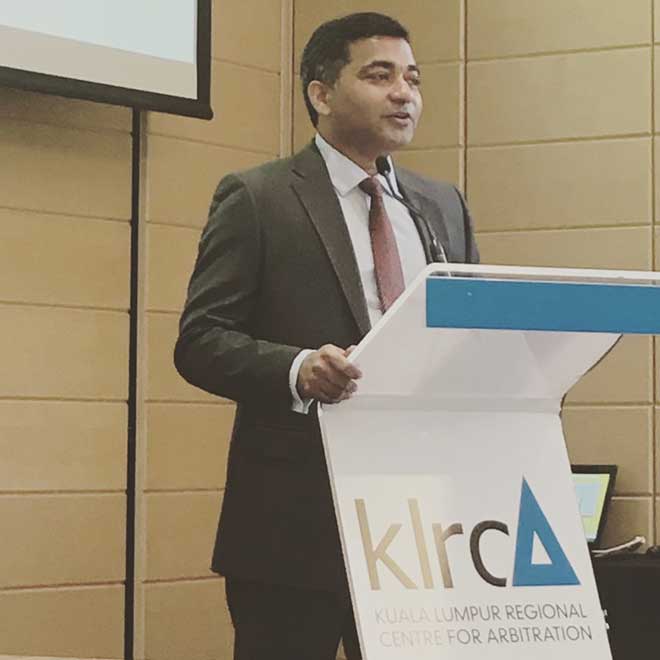
  • Anas Tanwir Siddiqui, Advocate, Supreme Court, on enabling access to justice, heading the Legal Aid Committee, and practising in the Supreme Court

    Anas Tanwir Siddiqui, Advocate, Supreme Court, on enabling access to justice, heading the Legal Aid Committee, and practising in the Supreme Court

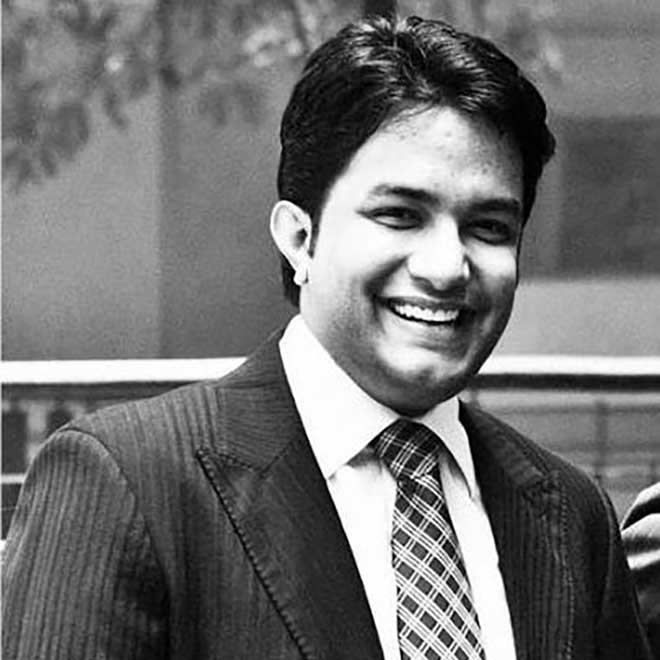
    Anas Tanwir Siddiqui graduated in law from RMLNLU, Lucknow, batch of 2012. He has since then served as Convener to the Legal Aid Committee, working in areas of free legal aid, RTI, infocracy, child rights, consumer protection, juvenile justice, etc. He is currently advocate at the Supreme Court of India, with over four years of litigation experience. A first generation lawyer, Siddiqui believes that enabling access to the legal system lies at the core of his practice. He has also just begun independent practice.

    In this interview we speak to him about:

    • Deciding to pursue law despite family pressuring otherwise
    • His life, curriculum and extracurricular engagements in RMLNLU
    • His tremendous contribution to the Legal Aid Committee, and setting up a paralegal system of assistance in his university
    • His belief that at the core of litigation lies the intention to enable access to justice for all


    What would you like to say to our readers in the manner of an introduction of yourself?

    I am just a struggling lawyer who has faced and is still facing all the struggles that a young lawyer faces during his initial days.


    What inspired you to take up law? Did you have to deal with any resistance from family or friends while making that decision?

    Law was never really my first career choice. As any other teenager, I was pressurized into taking science at 10+2 level. So I also opted for PCB and as a natural progression I appeared for medical entrances, couple of which I miraculously cracked as well. However, I was never really interested in becoming a doctor. My family, especially my mother and my uncles, were really supportive, although my father had his apprehensions. The main idea behind opting for law as a career choice was that it gave me the freedom to read and know everything. A law student is never limited to reading law only. Law as a course satisfied my intellectual craving.


    Tell us about your life as a law student at RMNLU.

    Life in RMLNLU was more fun than work. I was never a studious student. However, law school gave me a platform which shaped my personality. When I entered law school there wasn’t much “law school culture”. As we were the second batch and the admissions were not through CLAT back then, the law school culture was absent. There wasn’t any mooting culture or any co-curricular activities. I had resolved from the very first day in RMLNLU that I will utilise every opportunity that this place provides. Much credit goes to La Martiniere Boys’ College, Lucknow, also for giving me the confidence to take initiatives. So with time things got streamlined and RMLNLU was a strong force among the law schools. We were fortunate to have some really good faculty like Prof. A.P. Singh, Prof. K.A. Pandey, Prof. Manwendra Tiwari, etc. The then Vice Chancellor Prof. Balraj Chauhan was also very supportive of the students. We started participating in mooting activity without much guidance. We learnt from our mistakes. In a nutshell, the life at RMLNLU gave me the confidence to lead and be vocal about my opinion.


    What are the causes you feel strongly about? How have you used you legal expertise in working towards them?

    So when I was forced by my father to leave Lucknow and practice in the Supreme Court, he asked me to be a means for the poor to access the highest court of justice. He told me that I should never say no to a brief just because the client cannot afford to pay fees. I myself having been involved with the free legal aid movement felt strongly about the same. So today most of the cases I fight are for those who generally don’t have the resources to access the justice system. I frequently represent the people declared as foreigners by Foreigners Tribunal in Assam. I also feel very strongly about the arbitrariness of government or its failure to control the fringe elements hell bent on destroying secularism in our country. Same is my view about the nepotism that is prevalent in the judiciary even though I myself belong to the same fraternity. So in this regard I have filed, strategized and appeared for causes pertaining to the same.


    Throughout your time at college you have enjoyed authoring essays and papers. How did you find an affinity for legal writing? How do those skills help you in your career today?

    The affinity for legal writing stems mainly from my interest in literature. I read a lot and a natural progression of reading a lot, is writing. Honestly, most of the essays and papers authored by me were more because of the pressure from a friend or for building up a strong resume. So the skills that I developed in law school now help me in drafting. Before becoming independent I have worked with three Advocates On record. The major part of the job profile while working as a junior to an AoR is drafting and this is where my prior experience of legal writing came in handy. Also, before writing any article or essay one needs to think a lot on the issue along with researching, these two skills are very important while drafting an SLP or Writ.


    You have participated and placed in several MUNs, moots and held several organizational positions during your time at law school. What did you learn from these activities?

    Mooting taught me to think like a lawyer and it took out the fear of public speaking or appearing before courts. In moots as well as in courts, you need to have spontaneity, an ability that developed due to my participation in moots and MUNs. I was lucky that I got the opportunity to appear before the Supreme Court in my initial days and I was not hesitant about arguing a matter anywhere. As far as holding organisational positions is concerned, I learnt leadership as well as being a team player from the same. The underlining factor of my participation in different committees was the idea of giving back to the institute. Any educational institution is known by its students and it was just a duty upon us to take RMLNLU forward and create a brand.


    What do you think the present status of legal aid is in India?

    (Anas has served as convener to the Legal Aid Committee for three years, working in areas of free legal aid, RTI, infocracy, child rights, consumer protection, juvenile justice, etc. )

    Last evening I had a chance to watch the video directed by Prakash Jha promoting legal aid in the country. NALSA is reinventing itself and is doing a great job. Having said that, it is very disturbing that most Indians even today don’t have access to justice. People are scared of going to courts or dealing with lawyers. This issue needs to be resolved and it can only be done by making people aware of their rights. My initiative was mostly inspired by the fact that as a kid I used to attend the legal aid clinics organised by various District Courts in Uttar Pradesh under the aegis of UPSLSA. My father was also a member secretary and their motto was “Nyaya chala Nirdhan se Milne”. I was greatly helped by Justice Sudhir Saxena who was then the Member Secretary of UPSLSA when we were trying to establish the Legal Aid Committee. As far as students’ contribution is concerned, I am really happy to announce that the Legal Aid Committee at RMLNLU has started a paralegal program and many students have joined the same. They sit at the assigned place right outside the university campus daily and provide legal aid to the needy. If the same model gets implemented in all law schools, it could be revolutionary.


    Could you share with us some of the highlights from your experiences as an intern during your legal education?

    I was lucky to intern in three major sectors like NGOs, corporate houses and litigation. The three sectors are very different from each other. While interning at Aman Biradri, I got a firsthand experience of the suffering of the street children. During my stint under Mr. Yashowardhan Swarup, I learnt about the intricacies of litigation, especially how to deal with a client.


    What motivated you to choose litigation over your other options?

    I am very old school. Litigation was my first choice. I firmly hold the belief that litigation is a service, and not a business. The idea that my skills can be utilised for those who have no access to justice was in itself a great motivation.


    As a litigating lawyer having worked on several cases, could you share with some of the judgments you have read that have shaped you as a lawyer.

    It may sound clichéd but the minority judgment of Justice H.R. Khanna in the ADM Jabalpur Case had a profound influence on me. Another Judgment that I find to be of great motivation is that of Brown vs. Board of Education, a judgment rendered by the U.S. Supreme Court ending racial segregation in educational institutions. Apart from judgments, two books that I feel every lawyer, especially young lawyers must read is Roses in December by the inimitable M.C. Chagla and Before Memory Fades by living legend Fali.S. Nariman.


    The first few years after graduation are considered to the most challenging . How are you coping with these challenges?

    It’s true that the first few years after graduation are most challenging especially if you’re in litigation and are living away from family. I remember travelling in DTC buses for two years and trying to cut expenses. Work is hard to come by, money even harder. Also, law school is a very protected environment whereas the world outside is harsh. Survival is a challenge. I have seen my friends and colleagues leaving litigation for good in their initial years. The only way to cope with these challenges is by constantly reminding oneself of the objective that one has in mind. One must also not let anyone dissuade you from your aim. When you enter litigation you earn much less and work harder than your friends working in a law firm or a corporate house. It becomes difficult to not give in to frustration and despair. One must remember that patience and perseverance is the key.


    You have argued before the High Court and Supreme Court.  How do you prepare yourself before an appearance?

    I read. I read my brief at least two to three times before standing at the bar. Also one must learn from what to say and even more importantly, what not to say in court. This is something that only comes with experience. Also one must always prepare case notes and do independent research beyond what is given in the brief. The art of advocacy is very much like acting. You need to get into the shoes of your client. You need to imagine all the possible queries from the bench. In the Supreme Court, you don’t get much time to put your point across so you must be very careful while choosing your opening lines.


    What has the experience been like working at the office of Adv. Ejaz Maqbool?

    Ejaz Sir was my first senior. He is known to be a hard taskmaster. He was very particular about grammar and I learnt whatever little drafting I know from him. He believes that the only way to work is by actually doing work, which is why he would often push us into difficult spots, just so we may learn in the process. I was lucky to have been a part of some very important cases like the Sohrabuddin Encounter case, Gujarat Lokayukta Case, etc. Ejaz Sir’s office is rife with opportunity.  Most importantly, I was lucky to have some really good senior colleagues who taught me a lot. I owe to them much more than I owe anyone in the profession.


    Tell us a bit about the nature of work you did at the office of Adv. Fuzail Ahmed. What does a typical work day look like for you?

    Fuzail Ayyubi’s office was like a home to me. I worked there for more than three years. Fuzail Sir’s office gave me the freedom and confidence to trust my work. Also the variety of work there was a huge factor in developing my legal acumen. I have never seen a lawyer as calm as Fuzail Ayyubi. In my three year long stint in his office I rarely saw him angry. A typical work day started with going to the Supreme Court to attend the matters and coming back to office and working on the matters to be prepared and drafted.


    Congratulations on starting your independent practice as of 2017! What prompted you to take that step?

    It was the motivation of Fuzail Ayyubi and support of Mr. Sanjay Hegde, Senior Advocate, that gave me the confidence to start my independent practice. Sanjay Sir has been really magnanimous to let me operate independently from his office under the British Chamber System. This is a very novel experiment that he is conducting and is a really good opportunity for young lawyers like me. I have been practicing exclusively in Supreme Court for a long time and now I intend to practice in other courts and tribunals. I will continue with my social justice litigation alongside commercial litigation and arbitrations.

    What would you like to say to our readers who are mostly students and young lawyers, as a parting message?

    To students I would like to say that the opportunities that you get in law schools shape your personality. Do everything that law school offers. Participate in moots, write research papers and get them published. You’ll never get such an opportunity again. To lawyers younger than me I’ll tell them that lack of means is no excuse. Anyone who works hard will eventually succeed.


  • Yogendra K. Batra, Retd. Commissioner of Income Tax , on teaching at ILNU and on building a successful career

    Yogendra K. Batra, Retd. Commissioner of Income Tax , on teaching at ILNU and on building a successful career

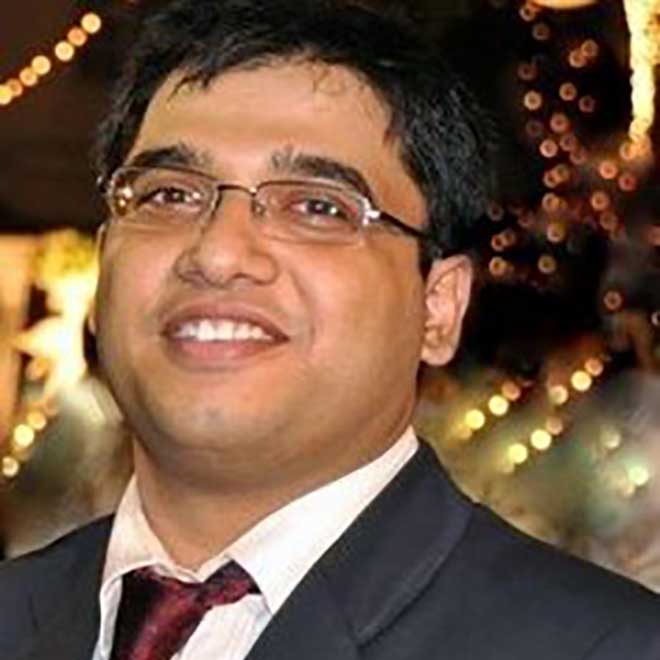
    Mr. Yogendra K. Batra retired as Principal Commissioner of Income Tax, Ahmedabad, in 2015, and is currently teaching at the Institute of Law, Nirma University, Ahmedabad. From heading all the top posts in the Income Tax Department to teaching undergraduate and postgraduate students, his expertise in the field of income tax law is unparalleled.

    In this interview he talks to us about:

    • His decision to join Income Revenue Services (IRS) over IPS
    • His views on the current tax laws in India and their implementation.
    • His decision to take up teaching post retirement and his experience thus far
    • His views on the Institute of Law, Nirma University, its teaching methods, and its students


    How would you introduce yourself to our readers?

    I consider myself a learner and seeker of knowledge and that is how I would like people to know me.


    Can you tell our readers a little about your illustrious career?

    I started my career as a Lecturer of Economics at DAV (PG) College, Bulandshahr, and subsequently joined SSV (PG) College, Hapur. In my pursuit for excellence, I kept preparing for Civil services and UP PCS exams. In 1983 I was selected in UP PCS (Accounts) and in 1984 I was selected for the Civil Services and obtained a rank of 206. I joined the Indian Revenue Service and after a training of almost twenty months at the Lal Bhadur Shastri National Academy of Administration, Mussorie and the National Academy of Direct Taxes, Nagpur I joined the Income tax Department in Delhi and in the very first year itself I was posted as the Assistant Commissioner of Income tax (Investigation Circle) wherein I was assigned the work relating to assessment of cases where search seizure operations were carried out. I also acted as Under Secretary, Tax Policy and Legislation under the Central Board of Direct Taxes and contributed to four financial bills (1991-1994). I retired as the Principal Commissioner of Income tax, Ahmedabad, in the year 2015. I have now taken up the role of teaching young minds and mentoring them in their pursuit of excellence.


    You chose the Income Tax Department over the Indian Police Service. What motivated this decision?

    I got the 206th rank in Civil Services Exams of 1983 and was more than eligible for Indian Police Services. I preferred Income tax (IRS) because I wanted a career free from political interference. Since I was a lecturer of Economics, the field of taxation was not unknown territory to me. I enjoyed every bit of my time at the Income Tax Department.


    Having chaired and headed almost all the top posts in the Income Tax Department, what are your views on the current tax laws and their implementation procedure in India?

    I started my career as Assistant Commissioner (Investigation Circle) in New Delhi. This was a very demanding and a very sensitive job considering my experience in the Department. Subsequently I was posted as Assistant Commissioner of Income Tax, Central Circle, Delhi, wherein I assessed group cases of big business houses. Subsequently I was selected as Under Secretary, Tax Policy and Legislation in the Central Board of Direct Taxes, the apex body of Income Tax Department. There I worked for more than three years and contributed to four finance bills, i.e. 1991 to 1994. Incidentally, these were the initial years of economic liberalization in the country and a number of amendments were made to the Income Tax Act. Then I came to Ahmedabad as Deputy Commissioner (nowadays, Joint Commissioner) and worked in various capacities. As Commissioner of Income tax I worked as Appellate Commissioner, Director of Income tax (Investigation), Commissioner (Audit), Commissioner TDS and Principal Commissioner.

    The Tax Laws in India have been simplified over the years.  The tax rates have been reduced and they are comparable to most of the developed countries. The tax regime in India is more taxpayer friendly now. However, a lot is required to be done on the administrative front. It is said that you cannot tax a person and keep him happy simultaneously. Therefore a lot of work is required to be done in order to educate taxpayers about the advantages of taxes and the ill effects of evading tax. A close review of the efforts made by the government on this through media and publicity has yielded desired results. The tax payers are gradually understanding their responsibility  and more taxes are being garnered through voluntary compliance.


    You opted to teach post retirement, despite receiving numerous offers from leading companies. How does this role fit into your overall career goals? How would you describe your ideal job?

    As I mentioned earlier, I am a seeker of knowledge, be it any profession or job I undertake. Teaching has always been close to my heart, since it gives me an opportunity to continuously learn, research and interact with the younger generation- the future of India. It gives me great pride to be a contributor, albeit a small one, in mentoring our future generation. As far as an ideal job is considered, I believe it is different for different individuals, varying according to their aspirations, priorities and specialties. For me, what I do is ideal, and therefore I do with full passion and commitment.


    How would you define good teaching? What do you think are the greatest responsibilities of a good instructor?

    I would like to call myself an educator instead of an instructor. An educator needs to be current in his/her subject, have clarity of concept and thought, be open to new ideas and developments in the subject. Above all, a good instructor should be able to generate interest and curiosity in a student.


    What are your views on the Institute of Law, Nirma University, and its students? What do you think about the pedagogical model being followed at the institute?

    The Institute of Law, Nirma University, is a professional institute where students get enrolled on the basis of their CLAT scores. These aspiring lawyers are well versed in the theoretical as well as practical aspects of the law. There are several specializations available, such as criminal law, taxation law, etc., so that the students can make an important career choice early on. Advocates, legal experts and judges are called for lectures so as to help students get acquainted with a hands-on experience of the vocation. Students are also provided with a state-of-the-art digital library so that they can hone their skills.


    From heading the income tax department to teaching undergraduate and postgraduate students, what are the things you enjoy, and what are the things you would like to to change about your current position?

    Nirma University is a pioneer institute which is grooming a generation of lawyers to come. The institute is improving its nationwide ranking continuously which indicates the high standards the university is constantly aspiring to. The institute is endowed with rich library resources, a dedicated faculty and an exciting campus. The curriculum has been designed immaculately so as to provide an excellent mix of theoretical and practical elements.  However, one must not lose sight of the fact that ultimately, it all boils down to the students’ performance and how they utilize the resources that are made available to them.

    My job as Principal Commissioner of Income Tax was quite different as compared to my teaching role. As a bureaucrat you have to perform your duties within a stringent framework of regulations. Teaching on the other hand, gives you room to innovate and experiment. There is nothing as such which I dislike about my present role. However, a lack of enthusiasm among the students worries me a lot.


    From your experience, what would be your suggestions to the new generation of students? How would you say their education and way of life is different from yours as a student?

    My only suggestion to them is to follow your passion. Identify your strengths and interests first, then set your goal and follow it with commitment and perseverance. The Universe will be at your doorstep- have the courage to ask for it, work for it and believe in yourself.

    This generation has a lot of opportunities, avenues and facilities made available to them, which we did not have in our time. However, they also have a lot more competition and struggle compared to us. Nevertheless, Darwin’s theory, survival of the fittest, is so far apt for all ages and generations. Since the students are in a professional institute they cannot behave like students of a regular college and settle for only routine understanding of any subject. The have to develop a desire for knowledge and have to read beyond what has been discussed in the class.


    Finally, what would be your suggestion or advice to anyone who aspires to have a successful career? What are the dos and don’ts for ensuring success in any field?

    There is no replacement of dedication, commitment and perseverance for anyone wanting to succeed in their career. Strive for excellence in whatever you do and you shall succeed. Give your 101% to what you do because a little bit extra effort makes all the difference. The following mathematical equation is proof that a little extra effort each day can go a long way.

    1.01365 = 37.8
    0.99365 = 0.03

    Students should read at least one case law a day because staying abreast with current affairs is absolutely essential for any lawyer.

  • Rahul Miranda, Masters candidate, Swansea University, on pursuing Maritime Law, niche legal fields and plans for the future

    Rahul Miranda, Masters candidate, Swansea University, on pursuing Maritime Law, niche legal fields and plans for the future

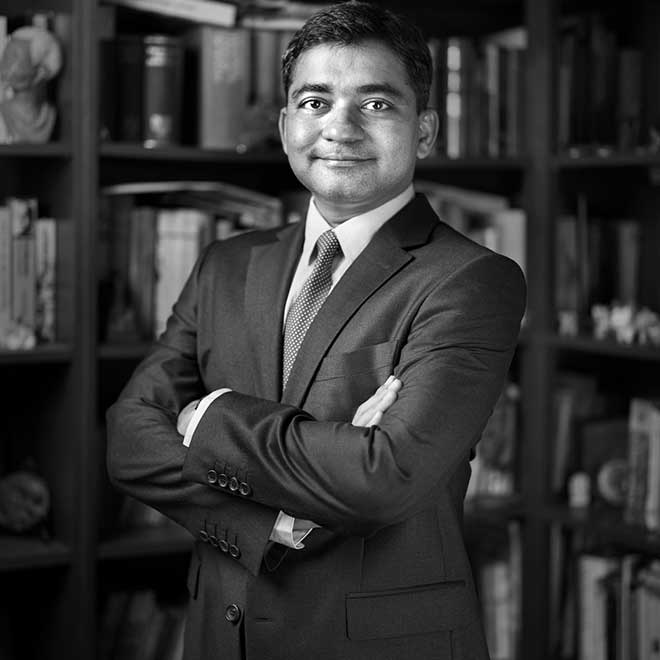
    Rahul Miranda is a graduate in law from SLS, Pune, batch of 2014. Since then he has worked with Senior Advocate V.J. Mathew in Cochin for a year before securing a judicial clerkship at the High Court of Delhi. He is currently a masters candidate at Swansea University with a focus on maritime law, marine insurance and energy laws

    In this interview, we speak to Raul about:

    • Pursuing a legal avenue as niche as maritime law
    • His curriculum at Swansea and his decision to go there
    • Being a judicial clerk at the High Court of Delhi


    You were excellent at academics while simultaneously being an avid and successful mooter during your time at SLS, Pune.  How did you manage your time and prioritize effectively?

    Learning to manage time and prioritize your tasks is an essential skill for any lawyer. My absolute favourite thing about SLS, Pune is how well they prepare you for the real world in this regard. Numerous opportunities are made available but never pressed upon you. It was completely up to you to decide on the load you wanted to take on. You could either easily breeze through with minimal effort or be so heavily yoked that you’d kill for Hermione’s time-turner.

    I managed to find a balance fairly quickly during my time there and thoroughly enjoyed being able to switch between my academic commitments and co-curricular interests.


    You spent a semester on exchange at Queens University in Kingston. What was your experience like? What were the challenges and opportunities that you faced in making the transition between the two academic environments?

    My Semester at Queen’s was the best! Under the auspices of the Ontario-India Exchange Program, I got to take a full course load of upper year JD courses at Queen’s University and was even required to sit through the exams and compete with the home students for a GPA. The quantum of reading and research that was expected was immense and the professors demanded a comprehensive understanding of the course material. As an exchange student who just wanted to travel and take in the new experiences, this was an extremely daunting prospect. I did manage to get through relatively unscathed though and I even managed to squeeze in quite a bit of travel.

    An exchange program is something I highly recommend to anyone who has an opportunity to be in one. Apart from the obvious opportunity for professional and personal growth, it gives you a fresh perspective and teaches you to look at an issue from several angles – an essential skill for any successful lawyer.


    Given that maritime law is a niche area of practice, we would like to know how you developed an interest in the subject and have come to choose it as your core area of practice.

    Shipping is the lynchpin of international trade and brings together the eternal triangle of producers, manufacturers and markets. As the most cost-effective way to move goods and raw materials around the world, shipping accounts for over 90% of the world’s trade. Considering its obvious importance to a developing country like India, I believe the field has a lot of potential for growth and wanted to contribute to this. The government recognizes this potential and is promoting investment in this sector through initiatives such as the Maritime India Summit which was held in Mumbai last April.

    As a law student I was intrigued by the several unique challenges and opportunities that this field offered. I took up an internship at Bose & Mitra & Co. and my time there under, the able guidance of the managing partner, Mr. Majumdar, and the rest of his fantastic team truly fanned the flames and got me hooked to this area of practice.

    With the crew of the Royal Navy


    How did you secure your first job as an Associate at V. J. Mathew & Co.? What was your experience working there like?

    I applied for an internship there and was assigned with some very interesting assignments. I was impressed by the quantum of maritime law work that the firm handled and the professional manner in which they functioned. At the end of the internship, I was offered a position and grabbed the opportunity with both hands.

    My time at the firm was a period of immense learning and it was a baptism of fire of sorts. Being a boutique firm, I had the opportunity to work closely with the partners on most cases and was made to feel like a valuable part of the team. I am very grateful to Senior Advocate V. J. Mathew for playing the role of a mentor and for trusting me to argue important cases before the Kerala High Court so early in my career. He is also a strong advocate for positive reform in the maritime industry and often got me involved in his research preparation for a big conference or an important paper.

    Being a judicial clerk at the High Court of Delhi, what have been your tasks and key learning experiences?

    I had always wanted to do a judicial clerkship and so when I got the opportunity to work with Hon’ble Mr. Justice Najmi Waziri I was overjoyed. For those of you not familiar with the concept, a clerkship involves working closely with a judge and attempting to ease their workload by helping with case briefs or research propositions.

    In my case, this basically meant trying to learn as much as I could while being as little of a nuisance as possible. And I say this only half jokingly as it’s truly incredible how adept Justice Waziri was at identifying crucial points in the case and I was often out of my depth when trying to brief Sir on a case or while sharing a point of research with him. What the experience did give me was an opportunity to observe from close quarters what it takes to be successful in this field and the level of commitment, hard-work and professionalism that it requires. Justice Waziri is truly a role-model for me and I’m immensely grateful for the opportunity to have been able to learn from him.

    Rahul Miranda with Hon’ble Mr. Justice Najmi Waziri


    You are currently pursuing a master’s degree in International Maritime Law from Swansea University. How did you decide on the university and why were you keen on getting a masters degree?

    The peculiar nature of ships and the shipping industry means that the law governing it also has several peculiarities. In order to fully understand these intricacies in the law I felt that it was necessary to study the subject in depth. Furthermore, a Masters in Law is obviously a lot more than just the degree and offers the opportunity to meet like-minded people from around the world and to participate in conferences and networking events which bring with it a plethora of opportunities.

    For this reason, picking the right university to pursue your course from is vital. I was accepted into several programs but finally decided on Swansea University based on the almost singular focus of their program on commercial maritime law, the reputation of their professors within maritime circles and its very strong alumni network. It’s probably also wise to factor in fees, scholarship opportunities and cost of living while picking a course.


    What are your career plans after this?

    To be honest, I haven’t really thought too much about this yet. I’m looking for an assignment which will challenge me and give me a chance to apply all that I have learnt during my course. I’m going to have to work very closely with the career services office at the university over the next semester to explore my options and find the perfect fit.


    Do you feel that adequate exposure is given to students in niche areas of law such as maritime law? What would be your advice to students who are inclined towards a career in the field?

    While I was at law school there wasn’t really any exposure to this field of law. Over the last couple of years, however, I have noticed that several law schools are conducting symposiums, conferences and even moot court competitions dedicated to issues involving maritime regulations. I have been invited to speak at these conferences and judge these competitions a few times and remember being impressed by the quality and quantity of participation. If students are interested in this field they should definitely check for these events and participate in them as they offer a good opportunity to get a feel for this area of law and also to network within the field. Applying for internships with firms that deal with maritime matters is obviously another way forward.  I wish them the best of luck and will be happy to help them with any further queries they might have.


  • Bhoomika Choudhury, Founding Partner, Svadhā Legal, on her time in Symbiosis, the future for start-ups and the importance of pro bono work

    Bhoomika Choudhury, Founding Partner, Svadhā Legal, on her time in Symbiosis, the future for start-ups and the importance of pro bono work

    Bhoomika Choudhury is a graduate in law from Symbiosis International University, batch of 2012. Thereafter, she has gone on to practise with leading firms like Amarchand & Mangaldas & Suresh A. Shroff & Co., Mumbai (now Cyril Amarchand Mangaldas) and boutique tax firm Vaish Associates Advocates, New Delhi. She has also worked as a junior in the Chambers of Dr. Rajeev Dhavan, one of the leading senior counsels in the Supreme Court of India. She has experience handling administrative, civil, criminal, service, bail, intellectual property, tax and water disputes matters. She also has experience in briefing and assisting senior counsels. In 2016, she founded her own legal firm, Svadhā Legal, which offers representation in corporate, commercial, tax, civil and criminal litigation and arbitration matters.

    In this interview, we speak to her about:

    • On being a Chartered Accountant alongside with being a lawyer
    • On the future of “Make in India”, “Start-up in India” and “Skill India”
    • The importance of holistic development as a person in order to be a sentient lawyer
    • On her diverse experience and eventually going independent


    How would you introduce yourself, given that most of our readers are young law students and young lawyers?

    I would introduce myself as a sincere lawyer who has become what she is today solely through her single-minded devotion to be a sensitive and responsible person. If anything other than my work defines my persona, it is the fact that I value and respect relationships, both at the personal and professional level, and feel concerned about developments in our society. Like my name suggests, I have different roles to play during my lifetime and my endeavour will always be to do them to the best of my abilities. I am a daughter, sister, friend and a girlfriend along with being a dutiful lawyer.

    What were the factors which drove you to join law school? Did you ever consider exploring any other fields?

    My father being a college teacher in English, I grew up surrounded by a whole lot of literary classics, and endless discussions on literary topics, and together they had a powerful influence on me. Reading literary classics thrilled me to no end and I realized my career options must be narrowed down to a vocation that must include a lifelong engagement with the humanities. The second most important consideration behind my choosing a law career was my concern for social issues and my pursuit for a vocation that provided fodder to my curious mind. I was greatly influenced by Einstein when I was young and this quote caught on to me greatly:

    “Only a life lived for others is a life worthwhile. I have no special gift. I am only passionately curious. I want to know God’s thoughts… all the rest are details. Joy in looking and comprehending is nature’s most beautiful gift. It’s not that I’m so smart, it’s just that I stay with problems longer.”

    A career in Law seemed to be the ideal choice for me as it combines my literary and social interests along with vocational needs.


    You graduated in law from Symbiosis Law School, Pune. How did the law college prepare you for practice in law?

    To say that Symbiosis Law School is a great place of learning will be an understatement. It takes meticulous preparation to understand the law both in theory and in practice.  This institution gives its students the right portion of both. I was particularly lucky to learn a lot more by way of extracurricular activities as I was selected as the President of Human Rights Cell. As part of the cell, some of the projects we worked on gave us ground level exposure to areas like rights of commercial sex workers in the red light district of Pune, disability rights, an after school educational program for underprivileged children, etc. But we had to go through our own share of trials. My father had accompanied me to Pune for the admissions and I remember him looking a little worried as he came to know the city’s liberal and indulgent way of life. But he had very lovingly only once asked me to shun all the negative influences around the college and the city. I promised him as much and I am happy that I never betrayed his trust.

    How important are internships for a law student? Tell us about your internship experiences while in college.

    It is an important part of a student’s academic life in the sense that it gives real life exposure to the kind of work one will be called upon to shoulder in future. Considering that there are varied kinds of jobs that are available to a law student upon graduation, internships give an opportunity to get a taste of everything and decide on one or two areas on which he/she could focus. It also gives a chance to leave your mark in an office where you would later like to bag a pre-placement offer. Even though your first few internships may appear highly challenging as you are yet to fully learn theoretical aspects of the law, you will gather a great deal of knowledge after working with these offices.

    I tried to keep my basket of internships diverse by picking from NGOs, independent litigating offices, in-house legal team of corporate houses and law firms. I distinctly remember, my social issues have been very dear to me from my early school/ college days, and this interest took me to an NGO called ‘Solidarity for Developing Communities’ and a State Human Rights Commission during the first two internships in my 1st  year of Law School. My experience in these two offices further heightened my interest in human rights issues, so much so that it has become an integral part of me today. By this time I had fully realized the benefits of internships. So when I went for internship assignments to the Essar Group, Mulla & Mulla, Craigie Blunt and Caroe, and the senior advocate of Jharkhand High Court, Mr. Anil Kumar, I was determined to make the most of it. The nature of the legal issues I encountered during my internship was diverse, as were their benefits. My internship stints ended with Amarchand Mangaldas and Phoenix Legal.


    Do you think that Moot Courts are an essential component for the overall development of a law student? Tell us about your experience.

    It is an elaborate rehearsal a law student undertakes, as it accurately reflects the rest of their lives as lawyers and litigators. The very fact that these involve facing rival teams and competitors, both at the national and international level, serves as motivation for every student to put their best foot forward. Ultimately each of these extracurricular activities i.e. participating in moot court competitions, writing research papers, internships, etc. go a long way in shaping you as a lawyer, pushing your name a few notches up during placements and enhancing your chances in getting admission in top law schools.

    One must remember that applications received by law offices, corporate houses or top law schools are filled with students who have managed decent grades in their respective universities. Participation in extracurricular activities makes all the difference in getting your dream job!

    These competitions gave me the opportunity to work with my fellow participants, prepare our case to the best of our abilities, and compete with some of the brightest minds from the legal fraternity. The crowning glory was getting to attend the William C. Vis International Commercial Arbitration Moot Court competition in Vienna in my 4th year of law school. The whole experience was a turning point in my life as a student of law. Getting the opportunity to participate in such a prestigious affair was a very uplifting moment.

    Do you feel that academic excellence is essential to be successful in life?

    The question is too general in nature to beg a straightforward, universal answer. If we are to understand the meaning of ‘success’ in a knowledge economy, as identified with the successes of only the reasonably, moderately educated people, not to speak of the highly educated, talented people with high academic credentials, the importance of education or academic excellence can never be underestimated. The contemporary economic and social conditions acknowledge and respect academically bright people. However, we also know of innumerable successful people who have failed miserably in their initial years of work. The list is endless with celebrated names like Thomas Edison, Albert Einstein, Van Gogh, J.K. Rowling, Oprah Winfrey and the like. However one thing common to all of them is that they were persistent. It is not a shortcoming on their part, it is the world that takes time to identify geniuses.


    You have taken ACCA examinations at the Association of Chartered Certified Accountants, United Kingdom. Tell us about your experience.

    Midway through graduation, it struck me that a course in accounting will be very useful to me in future, especially given my interest in tax law. It was this simple reason that drove me to take up this ACCA course, and I must say that I enjoyed studying and appearing in the examinations, though it was sometimes tough on me to take out time from my regular studies. What helped me greatly is the flexibility that ACCA examinations allow its students. Moreover, the ACCA follows the International Financial Reporting Standards and is globally recognized too.


    It is generally seen that law students and law graduates tend to shy away from taking up pro bono cases. Is this advisable?

    It is advisable that law students and law graduates of our country do not shy away from taking up pro bono cases. In a country such as ours where the majority are poor and cannot afford legal help, it is inhuman on the part of the legal fraternity not to devote some of their time and energy to come to their rescue. This assumes greater importance for law students and law graduates as they themselves will be richer in their learning experience as well as in their moral responsibility towards society. In fact, it ought to be considered a great opportunity for young lawyers.


    You have worked in the Chamber of Hon’ble Mr. Justice Rajiv Shakdher as a Law Researcher- cum- Clerk. Can you tell us about the experience?

    Working with Hon’ble Mr. Justice Rajiv Shakdher was an opportunity I still thank my stars for. I can never thank him enough for the encouragement and the guidance he always gave me whenever I needed. HMJ Shakdher is an extremely well-read, honest and hard working judge who worked very meticulously on each case, and he expected the same qualities from his law interns, assistants, researchers, and clerks. I gained much confidence, learnt such a great deal during the one year time I worked with him, that it helped me in many ways to build my image as a trustworthy lawyer. Whatever I am today is because of his influence on my career. I must say that at the very mention of his name, my head bows down in obeisance and a prayer goes out from my lips for his long, happy life.
     

    You had previously worked with Vaish Associates and Cyril Amarchand Mangaldas. Tell us about your experience at these firms.

    My time at both these firms was a very productive experience. At this point of my career I wanted to work with taxation related firms to gain more knowledge on this subject or area. The realization was dawning on me that I must at least learn a good deal more than the fundamentals of some areas of legal practice, and I made the best of my time there by learning about taxation, arbitration, corporate tax, and taxation related litigation. Fortunately both my seniors and colleagues at these two firms were very helpful and supportive in my handling of assignments, and the experience has enriched my knowledge of these areas vastly. I owe my special gratitude to Ms. Kavita Jha of Vaish Associates who was extremely helpful and supportive of my work, and always went the extra mile to assign me other litigation cases too. Ms. Jha being one of the division heads at the Supreme Court and High Court, I learnt a great deal during my time at Vaish Associates. My relationship with her and other colleagues will always be very special. The year I worked with Cyril Amarchand Mangaldas too was extremely enriching and fulfilling as I happened to work on some of the very high-profile, well-known cases.


    At Vaish Associates and  Cyril Amarchand Mangaldas, you were concentrating mainly on tax litigation and arbitration, but later you decided to go for litigation practice. What motivated this shift?

    The reason I changed my focus away from taxation-related areas for sometime is the necessity of learning other areas of litigation. With an expertise in one technical area of law, I was veering towards the view that I must learn a great deal on other aspects of legal practice, before I am able to enter into litigation practice on my own. For any lawyer with some aspirations in life, I suppose this is a very modest decision one has to take at the earliest possible time.


    You have assisted eminent lawyer, Senior Advocate Dr. Rajeev Dhavan. Tell us about your experience.

    I consider it my good fortune that Dr. Rajeev Dhavan accepted me as a junior to assist him in his office. I knew it would be a daunting task to meet his high standards, but I was looking forward to it nonetheless. He is a legal luminary and a legend of our times, and his scholarly pursuits, the huge number of books and articles he has written, all of this weighed heavily in my mind as I immediately sat down to work for him. The knowledge and experience I gathered at Dr. Dhavan’s office was immense. I knew I was working for one of the finest legal minds of our time. It was difficult to hold your own and not be intimidated. However the unimaginably rich experience I gathered with Dr. Dhavan has vastly improved my level of confidence, the honesty and integrity of the manner in which I ought to work in future, and more importantly, the realization that I have a long way to go in my further higher studies, in order to pay my little tribute to my godfather. His encyclopaedic knowledge, and his unmatched wit and sense of humour will continue to inspire me throughout my life. It is not for nothing that his academic stature, his unmatched courage, and the unconventional, radical stand he often took in his appearances in the Supreme Court has become made him a legend of our time.

    Earlier this year, you founded Svadhā Legal. What were the challenges you faced in setting up the firm? Could you give us a brief description of the firm and the activities  it performs?

    Svadhā Legal is a dream fulfilled. Legal matters as varied as human rights, taxation, arbitration, corporate law, civil cases, etc. have all been of interest to me, and I thought setting up a law firm will be the best way to handle the wide variety of cases that I expected to come my way. A law firm run as a professional entity will be a good way of attracting prospective clients as well as engaging junior, younger colleagues for those cases.

    Svadhā Legal will also be a great intermediary for pro bono cases that are dear to me, in the sense that considering the large number of cases that are awaiting justice on pro bono basis, the firm will be able to engage or delegate some of the cases to younger professionals looking for such avenues. These were some of the reasons that prompted me to set up Svadhā Legal, and I am happy that quite a number of my friends, colleagues, and juniors have joined me as associates in the firm.

    There were challenges in setting up this firm, considering the fact that I am a first generation lawyer, but I was determined to overcome any such disadvantage coming my way. It is my firm conviction that serious pursuit of a dream will admit no hindrance on the way, and this conviction gives me enough patience and tolerance to pursue my goal. Another challenge was facing rampant sexism in the professional sphere. But here too, I am determined to prove that gender can never be a disadvantage for anyone in any respect, though one will be forced to walk the extra mile to prove that.

    It is a heartening feature of this enterprise that my considerable network of friends and lawyers across the country are helping and encouraging me in my endeavour.


    As a partner at Svadhā Legal, what is an average day at work like? Our readers would love to hear about the day-to-day responsibilities which need to be handled by someone in your position.

    My average work life normally starts early in the morning when I sit down to work at home for at least 4-5 hours before I head to the Courts for my appearances or hearings, and other related work. I find the early morning hours to be the best time of the day for work. Then after a short lunch break it’s time for me to interact with clients, discuss cases, and then devote some time for business development and public relation exercises. Normally I always make a mental plan of work for the day, and it makes it easier for me to complete all my work in time. And then it’s time to head home and may be after a brief rest, it’s back to work and other personal studies.


    A number of campaigns such as “Make in India”, “Start-up India” and “Skill India” have been launched by the Govt. of India. Your views on these campaigns?

    The aim behind the “Make in India”, “Start-up India”, “Skill India”, and “Digital India” schemes is to leapfrog this country into that of an advanced and economically sound country in the shortest possible time.

    The “Make in India” initiative was developed to establish India as an efficient manufacturing unit and lure global markets to consider the subcontinent as a viable investment.  The government promises all kinds of support to the new investors, including the promise of quick clearances and approvals through a channel called Single Window clearance in order to avoid delays and red-tapes. The initiative has already started bearing results in the form of many international automobile, aerospace, software, military hardware, and other manufacturing majors considering setting up manufacturing plants in the country. If the campaign is to achieve its full potential and desired results, what the government must do is to not slow down the momentum and see to it that it is followed in a rigorous manner.

    A similar but a very innovative campaign has been launched by the central government in the form of “Start-up India” in order to help unconventional business plans take flight. There are innumerable success stories of new start-ups having generated remarkable revenue levels owing to their out-of-the-box strategies. There is little doubt that our economy in future is going to be dominated by more and more of these start-up enterprises, most of them in the service sector, and contributing hugely to the economy.

    The central government’s other initiative called “Skill India” too is another campaign that has been launched in order to impart vocational training to the unskilled workforce of our country. Uneducated, semi-educated, and under-employed labourers can learn skills of their choice to aspire for better employment opportunities. The success of the first two campaigns will, to a large extent, depend upon the success of this campaign. It should be implemented in a very urgent basis, without any let-up or loss of momentum.

    These specially, carefully selected campaigns have been launched to make this country a global hub of manufacturing, a great place for young, talented people with innovative ideas to realize their dreams of setting up new enterprises or start-ups and create the best possible infrastructure for the development of the required skill for our millions of young students who will be capable of handling the needs and demands of the new age technological, industrial enterprises. Since we are living in these times, we must make optimum use of these opportunities and participate fully to make our country the most powerful nation on earth.


    Tell us about your experience of working with start ups.

    It all started because of my large network of friends, many of them happening to be young engineering graduates, and quite a few of them deciding to quit their jobs and starting their own start-ups. They are a very talented lot, with new and innovative ideas of developing new technological tools and models for a wide spectrum of use by industries, business enterprises and a host of other organizations. My association with some of these Start-ups began because of their need for legal assistance in preparing regulatory formalities and agreements. It was a great learning experience for me and I was in a way encouraged a great deal by their dreams, motivations, and infectious energy. What’s more, my modest accounting background proved to be of great help in my work.


    Name a few of your hobbies, and how have they proved to be an advantage to you?

    The things that have drawn my continuous interest are literature, painting, gardening, cooking and sports. Some of these interests have grown with me over the years since my childhood, and it would be wrong to say that I am not seriously pursuing or devoting time on a regular basis to all of these areas of my interest. My love of nature has in a way taken the shape of gardening, and I love planting, watering, and taking care of my little collection of indoor plants at my home. I am an inveterate traveller, and I love going places, both popular tourist haunts and less frequented, quaint spots. I love meeting new people on the way and getting to know them.

    These are the areas of my interest and together they constitute my life. I am hopeful that these interests will go a long way in my realization of myself in the future. The journey of self-discovery is still on. A few of my hobbies or interests such as reading literature, humanities studies, and social issues may have proved beneficial to my professional life. But in a broader sense, all the other hobbies have equally contributed to my evolution as a decent human being. In my view I should be a decent human being first, and a good lawyer after that. The two complement each other, and you cannot be the latter without being the former.


    What is your advice for fresh graduates who wish to enter law firms as associates? How should they prepare themselves to cope with the challenges they will face?

    Working for someone, be it an individual or an organization, one has to come to terms with the fact that times are difficult. Considering the nature of the profession one has to look at all the inconveniences as normal and as part of the learning process, and with patience and dedication. Law firms expect from law associates a lot of hard work and the willingness to put in extra hours of work whenever needed. But it is during this time that one learns the most.

    What would be your parting message for our readers?

    Life is too precious a gift to be wasted. We should realize that it is not only what we do, but how we do it that also matters a lot. Ultimately, what matters is not how much money or wealth we have earned, but how decent a life we have lived, how much use we have been to others. There will be hundreds of voices that will discourage you, but just listen to that one voice within; it always knows what is best for you. Dream as much as you wish and realize them all, but remember that a life lived for others is far more fulfilling.


  • Goda Raghavan, corporate-commercial practitioner, AK Law Chambers, on being a lawyer, company secretary, author and illustrator   

    Goda Raghavan, corporate-commercial practitioner, AK Law Chambers, on being a lawyer, company secretary, author and illustrator  

    Goda Raghavan graduated in law from University Law College, Bangalore in 2010. She went on to pursue her Masters in Law from the prestigious London School of Economics, batch of 2011. She is also a qualified company secretary and was awarded the gold medal for securing the highest marks in the foundation examination from the state of Karnataka. After working with GMR Infrastructure Limited, Bangalore, as their management trainee for two years and with HSB Partners, Chennai for four years, she quit to set up the corporate-commercial practice at AK Law Chambers. Additionally, she is also a freelance illustrator. She draws a comic strip called “Pickles & Lota” and has illustrated several strips on legal humour.


    In this interview she speaks to us about:

    • Her courses and curricula at the London School of Economics
    • Managing being a company secretary alongside with being a lawyer
    • Her experience working with diverse firms in India and abroad, and building corporate-transactional practice


    You said you’re a third generation lawyer? What was it like growing up in a family with so many lawyers and how has that influenced your career and practice?

    Being a third generation lawyer brings with it a lot of advantages as well as a lot of responsibilities and extremely high expectations. You are judged on a daily basis and quite easily written off for even small stumbles. Yet I am fortunate to be carrying on the family ‘tradition’, if I may call it. My grandfather Justice K.R. Gopivallabha Iyengar was a judge and my father Mr. K.G. Raghavan is a designated senior counsel of the Karnataka High Court. To say that I wasn’t influenced to take up law and that this was a completely independent decision would be a lie. On the contrary, it was a positive influence on me. Immediately after the 10th standard board examination, I specifically opted for commerce to benefit from the courses in economics and business studies to assist me in the five year law program thereafter. As luck would have it, I married Anirudh, who is also a litigating lawyer. It was only then that I decided to focus on transactional work, an attempt to not “duplicate resources” within the family.

    You have a publication “Breach of Representation and Warranties in M&A: A Buyer’s Guide” to your credit? What role do you think writing and research have played in your career? Did you write many papers when you were in law school?

    According to me writing is a very crucial part of being a lawyer – be it writing in the form of drafting or writing for research articles. My schooling has added vastly to my skill in the use of words to convey my thoughts and that has greatly benefitted me in drafting agreements, opinions and pleadings as well. While I presented several papers on corporate laws for the legal and secretarial group meetings that were held monthly, during my training period at GMR Infrastructure, I was hardly left with any spare time between balancing my courses and exams at law school and the company secretary course. I believe that the most important skill of a lawyer lies in articulation- written (be it drafting a pleading or an agreement) and oral.

    What were your priorities during law school? Did you always know which area of law you would set up a practice in or did you decide later?

    During law school, I focused a lot on internships and also on completing my company secretary course. To this effect, I interned at various offices and companies and got an idea of the various kinds of work involved. At the end of five years, I also successfully completed my CS course.  When I started off at law school, the only area that I was exposed to was litigation because of my father. It was only when I began my course at the LSE — by which time I had finished by company secretary course — did I realise that I might be interested in pursuing a career in corporate transactional work. Backed by my experience at GMR Infrastructure, I joined HSB Partners, Chennai, which I believe has one of the best transactional practices in the city. Mr T.K. Bhaskar is a fantastic mentor to have. The exposure to direct client interaction at HSB is a huge advantage and boosts your learning curve and confidence. The interplay of law, finance and business while working in this area intrigued me. All of this led to my decision to set up corporate practice at AK Law Chambers.

    Tell us a little about your course in LSE, please. What are your views on both, pursuing an LLM and studying abroad for Indian law students, from a career point of view?

    At the LSE, I took courses on dispute resolution, project finance, contracts, international business transactions and trademark law. I was particular about taking courses that teach the law as a jurisprudential concept and not courses that are legislative specific to that region. While a one year program does not enhance one’s knowledge of the law drastically, there are three invaluable skill sets that one picks up, especially while studying in one of the best institutions in the world: One is the method in which you approach the situation on hand as taught by the some of the most qualified professors in the world at the university, two is the way in which fellow students from various jurisdictions, who are all top of their class at their universities, approach the same situation, and three is the drafting skill. In addition to the education, the program encourages you to live independently, manage your own finances and travel. All of this adds to the overall personality of a person and this shows in the way one handles a client, their drafting and presentation skills. Even though I went to the LSE straight after college, I would believe that pursuing an LLM after a couple of years of work experience would be a lot more beneficial.

    You interned at Allen and Gledhill LLP, Singapore. How did you choose and apply for that internship and how do you think it shaped your perspective?

    During my term at law school, I had interned with Mr. Uday Holla at the advocate general’s office, the National Human Rights Commission, New Delhi and Crest Law Partners, Bangalore. After working with offices that engage in different types of legal practice and gaining exposure to a variety of domestic legal work, I was keen on working with a foreign law firm to get international experience. Mr. Nakul Dewan was kind enough to accept me as an intern at Allen & Gledhill LLP, Singapore on their dispute resolution team. It was the first time that I lived by myself and worked outside the comfort of my home country. The internship taught me the work culture of a foreign firm, their attention to detail, the meticulous manner in which documentation is done and their focus on specialization.

    What work did you do at HSB Partners?

    At HSB Partners, over a period of four years, I worked in Mr. T.K. Bhaskar’s team. I was involved in private equity transactions, advising promoters and funds, joint ventures, mergers and acquisitions and also general corporate advisory work across several sectors including e-commerce, seaports, automobiles, technology and manufacturing services.


    You are a certified company secretary. What prompted you to pursue the degree?

    I had a fractured leg and was lying in bed when my father brought me a few forms and asked me to sign on it. Few days later he handed me some books for the company secretary course and said that the classes would start in a couple of days. That was how my tryst with the course of company secretary began! I believe that my CS qualification strengthens my knowledge on procedure and secretarial compliance of the companies act, SEBI, etc., which is an aspect that is often not delved into adequately by litigating lawyers.


    Tell us a little about AK Law Chambers.

    AK Law Chambers, a boutique law firm set up in the year 2013, focuses on litigation, arbitration and real estate work. I am now building the corporate-transactional practice. AK Law Chambers comprises fifteen lawyers and four partners, with offices in Bangalore and Chennai.


    Do you have any insights you would like to share with law students on a general or specific note, with respect to getting through law school?

    The most important thing during law school and early years of your career is to keep an open mind and focus on learning everything you can. Give every opportunity its fair share of time. Don’t let preconceived notions come in the way of learning.


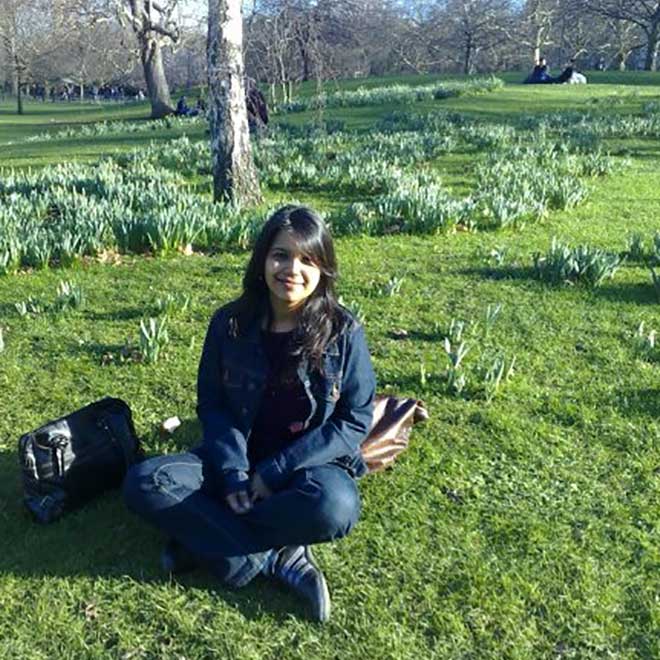
  • Mary Kavita Dominic, Rhodes Scholar, on receiving the coveted honour and writing the perfect Statement of Purpose

    Mary Kavita Dominic, Rhodes Scholar, on receiving the coveted honour and writing the perfect Statement of Purpose

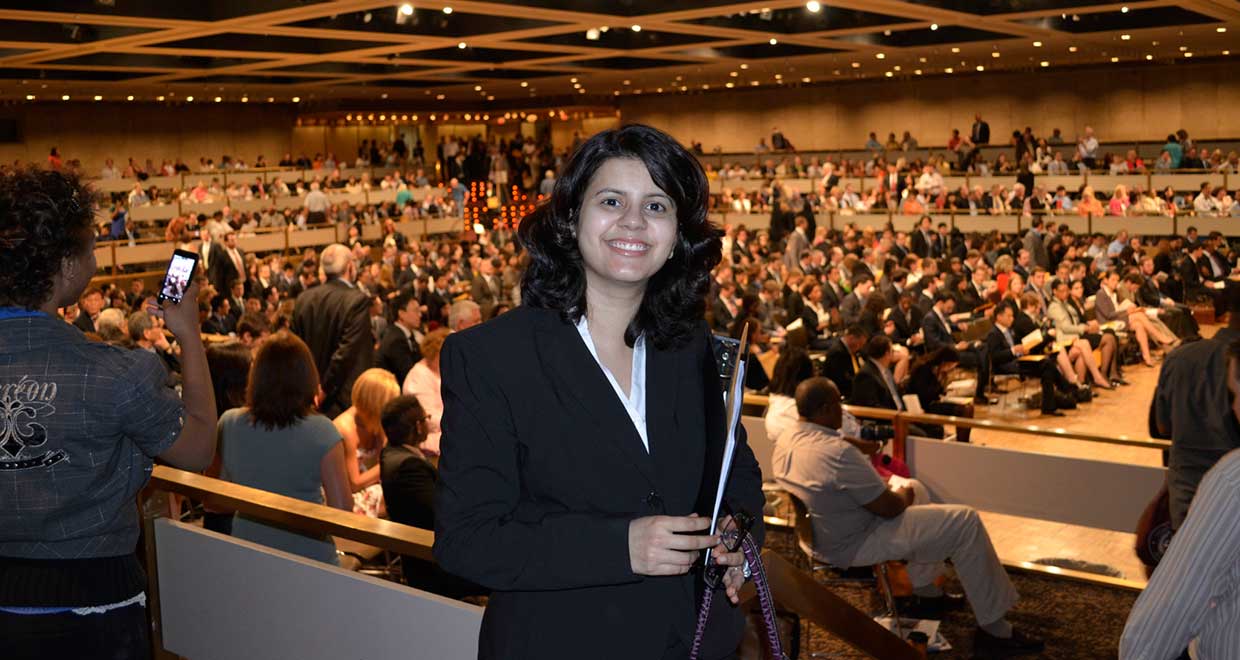
    Mary Dominic is a graduate from NUALS, Kochi, batch of 2017. She is the first student from her university to secure the prestigious Rhodes Scholarship. Mary has always been a passionate advocate for human rights. She has volunteered at a legal aid camp in the Attapady district of Kerala, which sought to enable the indigenous tribal community of the region. She has also interned with HelpAge India and participated in a National Human Rights Commission Survey, in order to fight for the rights of the elderly. She has pursued an online course on International Human Rights by Professor Olivier De Schutter of the Université catholique de Louvai. At Oxford, Mary will read for the Bachelor of Civil Law, focusing on international criminal law and comparative human rights.

    In this interview we speak to her about:

    • Writing the perfect SoP and getting letters of recommendation
    • Striking a balance between academic merit and extracurricular interests
    • Her programme in Oxford and her plans thereafter


    First of all, congratulations for bagging the prestigious Rhodes Scholarship. How and when did you decide to apply?

    I was always in awe of Rhodes scholars, even prior to taking up law. But somehow, I always felt that such a prestigious scholarship was beyond my reach. It was my mother who suggested that I apply for it when she read about it in the newspapers.


    The Rhodes Scholarship is celebrated for its tedious application procedure. Could you take us through it?

    Firstly, you’re required to send in your CV, personal statement and six references (at least three of which should be academic) along with other personal details to the given mail ID. You can also send it by post. Based on this, some applicants are shortlisted for the preliminary interview. I had mine in Delhi. But I hear there were other centres too.

    The preliminary interview is a technical one where the panellists are most likely to be experts in your field. Since I’m a law student, I was interviewed by a legal panel. Likewise, there are panels for science, economics, political science, etc. Based on your performance in the preliminary interview, around eighteen applicants are shortlisted for the final interview. Here, the panel will comprise experts from varied fields. They’ll mostly question you on your area of interest. I think they try to gauge your passion for your proposed area of research.


    When is the appropriate time to apply for the Rhodes Scholarship?

    If you are currently pursuing a degree, you should ideally apply when you are in the final year of your course. Applications generally open in June for Indian students.


    What is the significance of the Statement of Purpose and how long did it take to write yours? Do you have any tips for prospective lawyers out there currently working on their own?

    Personal statements are crucial since they help communicate your passion and why you are a suitable candidate for the scholarship. It also helps them evaluate whether or not you possess any of the qualities that are expected of Rhodes Scholars.

    I must have spent a week contemplating what exactly to include in my personal statement. But the actual writing should have taken two days. I made a couple of drafts before sending out the final one.

    Before writing the personal statement, I watched videos of previous Rhodes scholars that are available online. One thing that all of them agreed on was that there is no straightjacket formula for writing a good personal statement. They do, however, advise you to be honest and explore your own creative self. That would be my suggestion as well.


    How do you go about writing a good Statement of Purpose?

    Like I said, there is no formula. Everyone has different interests and the Statement of Purpose should reflect those individual interests. Your personal statement should convey your passion for your subject and your research. You can talk about a personal incident that inspired you to pursue a particular field of study, or a specific sport that you draw motivation from. It is completely subjective.


    Moving to referrals – how much of a role did they play in your selection? Can you take us through the procedure involved?

    You will need to have 6 referees in mind. At least three of them should be academic referees i.e. professors who are teaching you in your current course or have taught you in your last completed course. There is an online application portal where the referees will have to register personally and upload their references.


    How important are good grades in order to bag the Rhodes Scholarship?

    Academic consistency and reasonably good grades are extremely important, as far as I understand. Since you will be sending in your CV along with other documents, your academic grades will be given sufficient weightage.


    How would you describe a well-balanced CV, one that has the potential to make the cut?

    It is important to have a good mix of both academic as well as extracurricular interests. I mostly had debates and moot court achievements to show for extracurricular achievements. I used to play the electronic keyboard, which was another non-academic activity that I had included in my CV. Before the final interview, I met other applicants, some of whom were national level dancers or sportspersons.

    But most importantly, I believe that the social work you do is extremely relevant because it demonstrates how you propose to give back to society. Internships with NGOs, participating in legal aid camps and volunteering for charitable organisations could have possibly enhanced my application.


    Are moots, or any other activity in particular, given significant weightage?

    Moot Court experience is definitely adds to your application and equips you to handle questions with confidence and clarity. It supplements your research credentials as well. But not having any significant achievement, will not, by itself, be considered a major deficiency in your application. Most importantly, it is the experience that counts.


    How did you prepare for your technical interviews? Describe your most memorable one.

    I had indicated in my personal statement that international criminal law was my specific area of interest. So, I focussed primarily on that area. I had already done a few moot courts dealing with the subject, so I revised the basics of what I had learnt. I had also brushed up on recent developments in that area.

    During the interview, while I was asked certain questions about international law, I was also asked general questions about current issues. One of the questions was about the alcohol prohibition in Kerala and my views on the same. I remember our discussion not being purely legal in nature, but also slightly political, which I rather enjoyed.

    Another question that I distinctly remember and which made me think quite hard was regarding the formation of Telangana and the legal issues surrounding the same. The interview, though challenging, was more like a discussion with the panellists, which was rather enjoyable.


    What are the qualities that are being sought in candidates, and do you have tips on how to hone them best?

    I am not exactly sure what they look for in the interview. Personally, I tried to answer the questions with confidence and clarity. I essentially thought through the entire discussion and tried to make my arguments logically coherent.


    The final round of interviews are notorious for being the most gruelling. What were some of the broad topics touched upon?

    You know, the final interview is not strictly a technical one. However, I found it equally nerve-wracking. Our final interview was chaired by Mr Kumara Mangalam Birla, along with nine other eminent panellists. It was a daunting task to hold your own and not be intimidated in the presence of such distinguished personalities.

    They asked me a wide range of questions from “Where do you think human rights come from?” to “Would you support the sterilisation of women who are likely to give birth to crack babies?” I also remember being asked about the protection of intangible cultural heritage.


    Are the questions random in nature or was there a general broad base where they stemmed from?

    Your CV and personal statement form a broad base for them to question you from.


    Do they prefer someone whose proposed area of research is interdisciplinary in nature or are they looking for someone who is remarkably accomplished in a more specific field of study?

    That is a difficult question to answer. Either way, it is your passion for the subject that really matters.


    Did not having any past Rhodes Scholars in your college pose a challenge while applying for this scholarship?

    To some extent, yes. I was not sure as to whom to approach for advice regarding the personal statement. But I had plenty of support from the faculty who were always honest about the areas that I could improve on and this proved to be extremely helpful. I was assisted by my friends as well as my seniors who had passed out. Some of them even offered to put me in touch with previous Rhodes scholars they were acquainted with.


    What do you wish to do post Oxford University?

    I hope to work at the Office of the Prosecutor at the International Criminal Court in Hague. But ultimately, I want to come to India and be a part of the Legal and Treaties Division under the Ministry of External Affairs.


    Any final tips that you have for juniors who may have already started the application procedure?

    A reasonably good academic performance, participation in extracurricular activities and sparing time for social work is important. For law students in particular, moot court experience and one or two publications might be helpful. However, this does not mean that this is the only way in which you can secure the scholarship. These are merely one or two options that you could consider. Most importantly, try to work on what you think you are passionate about and be honest in your application.


  • Priya Rawal, Senior Executive-Legal, Roche Diagnostics India, on healthcare regulations in India, family law and her work experience

    Priya Rawal, Senior Executive-Legal, Roche Diagnostics India, on healthcare regulations in India, family law and her work experience

    Priya Rawal qualified in law from Pravin Gandhi College of Law in 2010 and worked at Dave and Girish as a paralegal and as an associate after graduation. Later, she served at a top tier law firm, Economic Laws Practice before she started working full time with renowned family law expert, Mrs. Mridula Kadam. She eventually steered into the role of a business lawyer and has worked with leading healthcare companies. She is also a Certified Life and Wellness Coach from the Symbiosis Coaching Institute (accredited through the International Coach Federation and the Certified Coaching Alliance). She is currently Senior Executive – Legal with Roche Diagnostics India Private Ltd.

    In this piece, we talk to Priya about:

    • Her experience with assuming varied roles in the legal industry
    • The legal standards and practices upheld by the healthcare sector in the country
    • The difference between being a practicing lawyer and in-house counsel
    • The importance of trying one’s hand at different kinds of law before settling for a particular role

    Tell us a bit about yourself; what inspires you?

    Born and raised in the city of dreams, I am an enthusiastic and ambitious person by nature. That reflects well in the choices I make, both personally and professionally. I trust my instincts and follow the path they take me along, believing that every experience is a stepping stone to the goals I wish to eventually achieve, in terms of my career and life in general.

    My inspiration for everything continues to be the most dominant personal quality of my mother, which is happiness. I follow everything that brings me happiness and with that I can easily say my mother is the biggest inspiration of my life.


    What led you to become a lawyer?

    My decision to pursue law was more of an accident than a choice. I was born into a family of lawyers and for as long as memory serves, I remember watching members of my family read, draft cases and even argue, as much about law as about life. My father has been a major driving force in encouraging me to pursue law as he had immense faith in me. He was always encouraging of my inquisitiveness and thought I was a go-getter.


     How was your first experience working in a law firm?

    My first working experience in a law firm was an eye opener. Before you start working, you don’t completely understand the distinction between theory and practice. I have been fortunate enough to start my career as a student with a law firm that provided me with working opportunities at par with other senior lawyers and also encouraged me to handle challenging roles.


    Tell us about your experience of practicing in the Family Court?

    After around three years of working experience with law firms, I got the once in a lifetime opportunity of working with Mrs. Mridula Kadam, the distinguished family lawyer. Under her leadership, I grew not just as a lawyer but also as a person.

    Being a family lawyer isn’t easy; you need to be empathetic, strong, strategic and reasonable; and sometimes, all at once. You have a larger role to play as it involves life changing decisions for your clients. Practising family law has definitely been one of my best working experiences.

    Moreover, for a well rounded career in law, it is important to understand the judicial system, appear in courts and learn the nuances of arguing, drafting and negotiation in a competitive environment. Dealing with different people is another aspect which plays a huge role in enhancing a lawyer’s emotional intelligence and there is no better field than family law to closely understand the wide spectrum of human psychology.


    How did the transition from practising family law to being an in-house counsel take place?

    The transition was never planned. It just happens when you are open to new experiences, taking certain risks and keen on exploring alternative markets and working environments. I would emphasize that the younger you are, better are your chances at getting a 360 degree overview of the way things operate in different markets. I consider myself fortunate to have experienced working across such diverse fields because it has helped me understand what works for me and what doesn’t.

    Help our young lawyers understand how a typical day in a law firm would be different from being a practicing lawyer or an in-house counsel?

    That’s an interesting question. Let me just say, there is little common in the working environment apart from the fact that all roles deal with the legal issues of one’s clients. A day in a law firm would perhaps comprise a series of highly urgent matters, placed back to back for the lawyer to tackle. The day would most likely be challenging in terms of juggling tough deadlines and quality output. The working hours in a law firm are also very erratic.

    A practising lawyer’s day is relatively far more organized, though they operate within a rather unorganized system. They are usually aware of the nature of the hearing scheduled in court and their appointments post court hearings. All they are never sure of, is whether the court proceeding will make substantial progress or just be adjourned to another date.

    An in-house counsel’s day would be better planned. They are occupied in meetings with the business stakeholders to understand their legal requirements. Having said that, the expectations are higher from a business lawyer as not only does it require understanding the law but also ensuring that the business operates efficiently within the framework of stringent regulations.


    Which statutes regulate the healthcare industry?

    The healthcare industry contains several other industries within its fold, and therefore different laws are applicable to these different industries. By and large, the Drugs and Cosmetics Act, 1940, read with the rules, Legal Meteorology Act, 2009, Voluntary code – Uniform Code for Pharmaceutical Marketing Practices, Medical Council of India (MCI) rules and regulations, Drug Price Control Order, 2013, Drugs and Magic Remedies (Objectionable Advertisements) Act, 1954, healthcare industry codes are some of the important legal statutes that apply to healthcare companies.

    What are the legal challenges involved in the promotion and marketing practised by healthcare organizations?

    Provisions under the Drugs and Magic Remedies (Objectionable Advertisements) Act, 1954 and rules there under, primarily govern the advertisement of drugs. Uniform Code of Pharmaceutical Marketing Practices (UCPMP), a voluntary code, came into effect in India in  January, 2015 after years of deliberation, and laid down key provisions dealing with promotion of a drug, claims and comparisons of a drug, dealing with healthcare professionals etc.

    The challenge as I said is to be within the framework and make business initiatives happen by striking a balance between legal mandates and business requirements. Dealing with HCPs is undoubtedly one of the most sensitive issues handled by healthcare organizations today and they are taking utmost care to manage the same by adopting watertight measures to ensure transparent collaboration with the healthcare professionals.


    What inspired you to take up a Legal & Compliance driven role in your current organization?

    For me, it has always been quality legal role over anything else. In my current role, I am a critical stakeholder in ensuring that marketing/promotional initiatives take place within the framework of Indian laws and regulations. There is a dash of everything, be it strategizing litigation matters, drafting, negotiating and advising on contracts, drafting policies that are business-centric and in compliance with the laws and regulations and also working on audits and global and regional projects. I must emphasize that minimum outsourcing of legal matters to law firms makes the experience even more enriching.

    I enjoy working in an environment which provides room for discussions, debates and opinions. I try my best to leverage my learning as a Certified Life Coach and use it optimally to deliver high performance and mentor myself too.


    What would be your advice to the aspiring lawyers?

    Invest time in discovering your core strengths and which field of law interests you passionately. Experience of working full time with a practicing lawyer and a law firm, undoubtedly lays a strong foundation and provides a holistic overview. Make the most of the opportunities available at law schools by participating in debates, moots and related legal curriculum activities. Do not rush into anything only because it will pay you well or will look good on your résumé.

    One of my other personal experiences is that it is extremely important to understand the ‘why’. When you understand why you are doing something and how it impacts the firm or your client largely, work will become service and providing quality output will become ingrained into your system. Self awareness upon introspection or through coaching/mentoring will help you know yourself well; the rest is mere implementation and tracking the little milestones. I urge the young lawyers and students to use the coaching services available, which will benefit them motivate them to reach their fullest potential. It will acquaint them with the behavioral and technical skills that are required of a lawyer to succeed in their field.


    Disclaimer: The views expressed by the interviewee are personal to the interviewee, and do not represent that of the organization she works for.

  • Dilip Annasaheb Taur, Advocate on Record, Supreme Court of India, on humble beginnings and work experience in Criminal and Civil Litigation

    Dilip Annasaheb Taur, Advocate on Record, Supreme Court of India, on humble beginnings and work experience in Criminal and Civil Litigation

    Dilip Taur is a graduate in law from MP Law College, Aurangabad, batch of 2003. He subsequently went on to pursue a master’s degree in law from Mumbai University. Born into a family of agriculturalists, Dilip braved all odds to become a first generation lawyer. Astute in both civil and criminal law, Dilip has fought and won several crucial high profile cases in the past. He is perhaps known best representing former Maharashtra Home Minister Madhav Kinhalkar in the controversial case of paid media charges pressed against former Maharashtra CM Ashok Chavan.

    With an illustrious career spanning over a decade and a half, Dilip has had experience in all levels of judiciary in India. Currently, Dilip owns and heads Dilip Taur & Associates, a legal firm that deals in filing cases at the Supreme Court of India, High Court of Delhi, National Green Tribunal, Delhi (NGT) and the National Consumer Redressal Commission (NCDRC).

    In this interview, we speak to him about:

    • The importance of getting a hands-on experience in legal procedure versus classroom curricula
    • His experience practising before numerous fora, across all levels of the judicial hierarchy
    • Battling pressure in high profile lawsuits
    • His inspiring journey from a small village in Maharashtra to the Supreme Court of India


    You graduated from MP Law College, Aurangabad. Can you tell us something about the experience?

    I hail from the rural pocket of Marathwada. MP Law College was one of the only options available to me, owing to lack of resources and its proximity to where I lived. The college was not at par with other law colleges in the state such as GLC Pune or Mumbai. I was also fairly irregular in class as I was trying to focus more on practice-based learning by attending court sessions frequently.


    How did attending court proceedings regularly, as opposed to attending class, impact your learning?

    During my college days I would regularly attend JMFC and sessions court. I used to maintain a court diary and would follow senior advocates’ case dates without even knowing them. I used to attend every hearing of important cases. In fact, this experience helped me a lot with my education. The impact of court attendance was such that I was very confident while taking my college exams. I never felt like I was missing out on much by not attending classes in college.


    What is the importance of regularly reading judgments?

    Reading judgements has helped me understand the law, technical difficulties and procedural lapses while dealing with cases. It helped me grasp the various nitty-gritties of law and established legal principles which have been upheld by the Supreme Court. It boosted my confidence when I was drafting cases on my own. Law is constantly evolving and reading judgements helps you stay updated on ongoing developments in the field. I would advise all students of law and amateur lawyers to read judgements regularly in order to understand legal procedure better.


    You thereafter practised in the chamber of Mr. Raja Thakre in the Mumbai High Court. Tell us about the most memorable case you dealt with there.

    One of the most memorable cases I dealt with under the tutelage of Mr. Thakre was an application seeking custody of my client’s stolen property. Mr. Thakre guided me through the procedure and was very encouraging. He also gave me the chance to make an appeal to the High Court, which was my first appearance in the High Court.


    How did working in the chamber of Mr. Raj Thakre make you aware of the difference between being an intern and being a practising lawyer?

    During my time working in his chamber I realised that I should concentrate on drafting cases and work on my arguing skills. I would listen to him with rapt attention whenever he was arguing in court. I also learned a lot from my other senior colleagues whose expertise in the field of criminal law was edifying.


    Tell us about the skills you picked up during your time with Mr. Thakre, and how that paved the way for your litigation career.

    When I joined Mr. Thakre’s chamber I was an amateur with raw skills. Mr. Thakre’s working style influenced me to a great degree. I was always eager to hear his arguments. Initially I used to attend magistrate court sessions with him. Then I started attending sessions court in Mumbai. While working there, I was thoroughly impressed with the drafting skills of his colleague, Mr. Chimalkar, who continues to remain an authority in criminal drafting. I was fortunate enough to learn the craft from the best. In Mr. Thakre’s chamber I attended full-fledged trials, right from framing of the accused till the pronouncement of judgement.


    You had a sudden change of heart and decided to try your hand in the civil and corporate field. What made you make the switch?

    After working for almost two years in criminal law, I realised that criminal law has its limitations and it is restricted to the IPC, CrPC and Evidence Act. So I decided to move to the civil and corporate field.


    Being someone who has practised both civil and criminal law, what are the factors aspiring lawyers should take into consideration before making a choice between the two?

    Someone who has had experience dealing with both sides of the coin will find himself at an advantage during a court proceeding. It helps you identify the criminal element in civil litigations and civil matters in criminal cases. I would personally advise young lawyers to familiarise themselves with both kinds of law in their initial days, before making a definitive choice.


    You have practised before numerous fora including the Supreme Court. Describe one memorable case you have dealt with.

    One of the most memorable cases I handled in the Supreme Court was the infamous case of paid news in the matter of Ashok Chavan, former Chief Minister of Maharashtra and my client Dr. Kinhalkar, former Home Minister of Maharashtra. This case was very challenging and I worked very hard on it. I had briefed the erstwhile Sr. Counsel Uday Lalit (now a Supreme Court Judge) that the opponent was led by stalwarts like Kapil Sibal, Abhishek Singhvi and Mohan Parashar. I handled this case for three years before the Election Commission of India, then handled it for two years before the Delhi High Court and further two years before the Supreme Court of India. We won the case before all the fora. This case gave me the opportunity to closely work with Sr. Counsel Uday Lalit. During these five years of litigation I have worked under immense pressure but never succumbed to it. This case is very close to my heart and I will always cherish it.


    Another forum you deal with is the NGT. What is your view on tribunalisation of justice in India?

    Tribunalisation of justice has been a successful endeavour in India. Tribunals reduce the burden on the High Court and Supreme Court. Also most of the crucial issues related to obtaining environmental clearance for mining projects or disputes pertaining to the same are now being promptly resolved because of the NGT. Earlier, these files would just pile up in the offices of the High Court and Supreme Court, with no action being taken for years.


    For a prospective lawyer looking to go into litigation, how important is it for them to have prior contacts to help guide them?

    For a prospective lawyer I don’t think prior contacts are the only way. Yes it does matter, but all of it is secondary to your competence in the field. The briefing lawyers will identify you and can send the counsel briefs. In this way you can make contacts. Also by joining the chambers of senior members of council you can build contacts. I am the son of a farmer, I had to start from scratch, with no resources at my disposal. That should be testimony to the fact that it is your ability that takes precedence over everything else.


    Did you have such contacts? How did it positively affect your career?

    I started off with no contacts. My only priority was so work hard and in the process I made the acquaintance of some very influential people. Knowing them has helped my career in litigation.


    Do you believe in arguing cases you have don’t agree with morally? Have you ever done it?

    That differs from case to case. As an advocate, I believe I am obligated to fight every case that comes my way. I was morally conflicted during a rape case that I was handling, but that case got dismissed altogether eventually.


    How do you cope with pressure in case of high profile lawsuits?

    During my sixteen years of experience in litigation (three year as an intern and thirteen years of practice) I have handled various high profile cases. There was enormous pressure but I always found myself handling it with relative ease. I love the adrenaline rush of a high profile case. It pushes you to outdo yourself, it keeps you motivated. I actually look forward to sleepless nights; I find that it helps me stay at the top of my game.


    From being an intern to having your own firm, you have done it all. What, in your opinion, are the defining characteristics of a successful litigant?

    I have appeared before all fora from quasi-judicial authorities such as the tahasildar, collector, commissioner, minister and from magistrate courts to JMFC, sessions court, civil courts, High Court, consumer forum, tribunals and finally the Supreme Court. Nowadays lawyers start practice directly at the Supreme Court. I firmly believe that all lawyers should practise before lower courts for at least ten years before moving on to the Supreme Court, as it is in the lower courts that you learn the most.


    If you had to give one piece of advice to our readers, what would it be?

    My only advice to readers is that if you want to become a successful lawyer, work hard. Have experience before quasi-judicial authorities, lower courts. Follow at least 5 full-fledged trials before joining higher courts. Furthermore, work with honesty. Nowadays, even litigants are in pursuit of lawyers who are honest, rather than successful. If you are honest, success will follow.


  • Somnath De, Advocate, Delhi High Court and Supreme Court, on practice in IPR and Cyber Law

    Somnath De, Advocate, Delhi High Court and Supreme Court, on practice in IPR and Cyber Law

    Somnath De graduated from Kalyani University in 2011 he went on to pursue his higher studies from Symbiosis Law School, Pune and completed his post-graduation in Intellectual Property Rights in the year 2014. During his college days, he actively took part in conferences and has completed several certificate courses in Cyber Laws. Post graduation, he started working under the guidance of Adv. Pavan Duggal in his renowned firm Pavan Duggal Associates. During his stint at Pavan Duggal Associates he handled a number of cases pertaining to his specialization of Cyber Law and IPR. Currently he is working at an IPR law firm, Vohra and Vohra. He is a senior consultant of Astrea Legal in Delhi Region in the IP and Cyber Law matters. Based out of Delhi, Somnath practises in both the Supreme Court and Delhi High Court.

    In this interview Somnath talks about –

    • His college days
    • Importance of mooting in college
    • His reason behind the decision of practising in IPR and Cyber law
    • National IPR Policy
    • His work-experience


    Hello Somnath, how would you like to introduce yourself to the readers of Superlawyer?

    I am an Intellectual Property and Cyber Law attorney. My work is to help people protect their ideas, inventions, and identity, and I deal with counterfeiting and online rights and responsibilities towards clients. I help them, protect them from competitors and establish them in the market place.


    Kindly tell us something about your childhood, school and college days.

    I was born and brought up in Bengal. I come from a business family, and therefore, I have no legal pedigree. I completed my primary and secondary school education in Bengal. Subsequent to completing school education, I completed my B.A.LL.B (Hons.) from Kalyani University, W.B. I pursued my LL.M. from Symbiosis Law School, Pune with specialization in Intellectual Property Law. My almae matres , both for LL.B and LL.M, laid great emphasis on extra-curricular activities. I was an active debater and presenter, and loved playing sports. I was very lucky to find good friends with whom I have the warmest of memories.


    Did you ever take part in any co-curricular activities while being in college? Can you please share with us your experience and opinion on the importance of them in a law student’s life?

    I participated in a few moot court competitions as well as numerous national and international conferences during my college tenure. I have also penned a number of legal articles which were published in various national and international journals. However, apart from improving my legal skills, I love to play cricket and badminton, and to even engage in dramatics sometimes.


    How beneficial do you think mooting is for litigation?

    Practicing in court as a litigation counsel is a different ball game altogether. However, participating in moot court competitions can provide you with a very good idea as to what kind of lawyer you think you want to be. Writing skills and speaking skills are invaluable not only as a student but also when you enter the work force. Having to face a panel of well prepared and demanding judges in a courtroom setting can become an addictive experience. Therefore, participating in moot court competitions lays the roots to become a successful lawyer. A law student must make the most of these opportunities and should participate in as many competitions as possible.


    What exactly prompted you to take up law as a profession?

    Actually, there was no affirmed decision to take law on my part. It happened by accident and not by design. However, previously, i.e. during the time of my school days, I had already been introduced to subjects such as Philosophy, Reasoning, Logic, and Political Science, and this drew my fascination towards Law. Apart from that, I was fond of debating and reasoning. I felt that this would come in handy when I had to stand in court and argue on point.


    You have been practising in the cyber law and ipr law domain for quite some time. What made you choose these fields as the relevant areas of your practice?

    (Somnath has done his LL.M in IPR and is a certified cyber crime investigator and digital forensic investigator)

    I chose these particular fields because I am a strong believer in the digital format crucially shaping the future of the world. We are in an information age. We all are living in the digital world. The impetus came when I was in the 2nd year of finishing my LL.B. I used to read journals and numerous technological blogs and it was the complicated technicalities gradually surfacing including that of legal challenges faced by companies that motivated me to get into this nascent legal ecosystem.  In contrast to other disciplines of law, Cyber Law and Intellectual Property law was constantly evolving. I was fascinated by it and decided to concentrate my efforts in that direction. Then, I perused my Diploma in Cyber Law and after one year I became a Certified Cyber Crime Investigator and Digital Forensic Investigator.

    However, the advent of cyber space has brought newer parameters. The digital ecosystem that exists today has seen a dramatic increase in the scope of Intellectual Property Rights and Cyber Laws. Technology has become an integral part of our day-to-day lives and, consequently, the legalities pertaining to the Internet assume extra significance. The legal ramifications pertaining to Intellectual Property and Cyber security are being rediscovered regularly. Therefore, Cyber Law and Intellectual Property are emerging disciplines, as its contours are yet to be defined. The quantum of Cyber security breaches keeps on increasing with each passing day. That is what, even more than other factors, makes it such an exciting time to be specialising in Cyber Law and Intellectual Property Law as a new discipline of law.


    Apart from Cyber laws and IPR, what are the other areas of law that you are interested in?

    Apart from the Cyber Law and Intellectual Property, I am interested and am currently practicing in the fields of Media Law, Corporate Law, Completion Law and Constitutional Law.


    Can you please share with the readers your work profile so far? What is your average daily worktime like?

    After passing my LL.M, I got the opportunity to work with Mr. Pavan Duggal who had specialised in Cyber Law and Intellectual Property Law. After that, I joined Vohra and Vohra, which is a full service law firm, in the field of Intellectual Property and Cyber Law. Apart from this, I am an IPR and Cyber Law consultant to numerous organisations across India. As a legal professional, I have never declined any case or client however small and was least bothered about fees and other attending monetary issues. I think that such a mindset is instrumental for excelling in this field. As a lawyer, I feel, you should give sixteen to eighteen hours per day. As for me, after court matters, I come back to office. After completing my meetings, I prepare for matters which are listed to be heard the very next day. I believe you should plan out your day in such a way that you have about, say, four to five hours of unperturbed time when you can completely apply your mind to the case. I give two to three hours for my independent research works every day and staying up to date with current legal trends and international developments in my field.

    Law students seemed to remain confused on which particular field of law they should choose for his/ her career. What according to you should be the way of coming out from this maze of conflict?

    One of the key challenges is to match the pace of development in law. During your college days, you should do regular reading and be aware of legal developments, amendments to the law in India and elsewhere, cases, precedents and other development in the industry. I must say that you should absolutely listen to your heart in respect of which field you should choose to practice in. It must be something obviously which you are passionate about and have an ardent interest in; that is the key to build up one’s potential in this field and achieve your motive. Every arena of law has its own beauty. While it is true that should you opt for litigation you should possess a great level of patience, but the scope for litigation practice is widening day by day. Be focused, never lose hope and always keep trying. I also advise that you should choose carefully who you work for. Find someone who will teach you, groom you, pay you decently and mentor your practice after you leave.


    From a law student to a lawyer, how will you describe the transition?

    The beauty of this filed is that you will always remain a ‘student of law’. For me this is just the start of my journey, and there is still a long way to go. Things are harder than when I was in college. However, I enjoy my work and the challenges that I face every single day. Nevertheless, I definitely missing the life I once had with my friends.


    Your experience with the Bar Exam

    Well, the Bar exam, formally AIBE, was fun and totally relaxing for me. Apart from the actual examination and its concomitant experiences, it was also a kind of reunion with my friends. I was really pumped; questions were simple and only just needed a little application of mind. It was not a difficult encounter very much at all.


    Red letter day, so far

    I cannot discuss any specific case in detail due to confidentially. However, the classically antique day for me was when I dealt with a very high-profile case in mid-February, 2015, when we had to take an order at midnight from the Delhi High Court. I remember how there was no single restaurant open at the time to serve us any food. At last, we had food at a Gurudwara near Red Fort, Delhi. I had not slept that night and the next day I had to report early to the office to prepare for the subsequent hearing. Another one was when I started my practicing career. I had gotten the opportunity to deal with a matter independently. It was about setting aside an order and the matter was placed before the Division Bench of the Delhi High Court. The first item listed on the day of the showdown was my case. The case was really challenging. I was thoroughly prepared, and argued for twenty to twenty five minutes, faced numerous questions and clarifications as put forward to me by the Honourable Judges. During my argument, the Court Room was completely silent except the reverberation of my own voice and at the end of the arguments I had bagged an order in my favour.


    Any unpleasant or difficult case/ situation in the courtroom or outside

    There are ups and downs, which is part of this profession. Sometimes, really closely listed matters can become nightmares. To read voluminous documents and then complete the draft within time is a difficult situation. Therefore, it’s very important to manage time smartly and to be well versed with all the intricacies pertaining to the concerned matter.


    somnath-de-2

    Your take on National IPR policy

    I applaud the Government for effectively bringing this far reaching document which kindles creativity and innovation across sectors and also facilitates a stable, transparent and service-oriented intellectual property rights administration in the country. The said policy is enormously relevant for a country like India, being a repository of indigenous creativity and traditional knowledge. Further, by this policy, the Government is attempting to resolve the adjudicatory delays in the newly designated commercial courts. The policy further advocates generation of IPR, which will encourage start-ups and safe guard their Intellectual Property, which is the need of the hour given India’s massive strides towards a digital society. However, the said policy should not remain as a paper tiger; the Government should implement the goals envisaged in the practical world in full phase and plan out for proper mechanism, as the same policy is in a comparative context a directive that needs a fresh look.


    Your opinion on the challenges before IPR regime in India

    At the very outset, there is lack of awareness about Intellectual Property protection among many stakeholders. I must stress that a detailed annual plan ought to be there on spreading awareness about Intellectual Property Rights and the involved legalities alongside interactions with all possible stakeholders. There should be a quicker approach to reduce delays in clearing Intellectual Property applications to encourage innovation and entrepreneurship, which are also one of the seven pillars of the National IPR Policy. Furthermore, India faces challenges to its IPR regime as developed countries try to put in place an even stronger framework through mega regional trade agreements such as the Trans-Pacific Partnership. India needs to create its own culture of innovation for its people and grow at a rapid rate. Apart from that, India is facing challenges of online piracy, data protection, vulnerability of trade secrets etc.

    Where do you want to see yourself five to ten years from today?

    My first aim is to build my expertise in my domain. I would like to be an attorney who will make sure every client who comes to me is satisfied with the quality of services and gains trust. I would also like to earn the respect of my seniors, peers and colleagues. Since I love to interact with people, I would additionally like to become an academician in my field of expertise alongside practicing as an attorney.

    Any piece of advice you would like to pass on to the readers?

    You should have the right kind of attitude towards the legal profession. It’s always advisable to think out of the box and be innovative in order to develop the culture and personality of a true legal professional. One should be determined, patient and remember that there is no alternative to hard work. You should always have faith in yourself and should never be disappointed, as failure is an integral key to success. It’s always advisable to stay up-to-date with both the national and international developments of your chosen field of law.


  • Priyadarshini Natarajan, Principal Associate, HSB Partners, on Corporate Law Practice, Law School days, and the Company Secretaries’ Course

    Priyadarshini Natarajan, Principal Associate, HSB Partners, on Corporate Law Practice, Law School days, and the Company Secretaries’ Course

    Priyadarshini Natarajan graduated from ILS College, Pune in the year 2007. She has also completed a Company Secretary Course from the Institute of Company Secretaries of India. She is currently Principal Associate at HSB Partners, Chennai and heads its General Corporate Commercial, Mergers & Acquisitions & General Corporate Litigation. She has over nine years of work experience in these domains.

    In this interview she talks to us about-

    • Her legal education at ILS College, Pune;
    • How to make the best use of internships ;
    • Her experience at HSB Partners
    • The importance a CS Course in a corporate lawyers life and
    • How to make career decisions while at law school.


    How would you introduce yourself to our readers?

    I am an enthusiastic person with a thirst for new experiences in life.


    You completed your legal education at ILS Law College, Pune. Tell us about your college experience and how it helped shape you professionally.

    ILS and Pune city were one of the many good things that happened in my life. Having studied and lived in a cocooned home environment in Chennai all through my school years, it was indeed refreshing and an amazing experience to be in the ‘student city’. ILS has an amazing campus, some really good lecturers in the faculty, a fine library, a reading room, huge classrooms, an enormous ground and a hill behind the college where one could go trekking! We had students from different parts of India and abroad and it is wonderful that we are still connected. I had lovely friends who would generously lend me their notes to study, and inspire and support me in all endeavors. The students always had so many ideas, and took many initiatives in both law related workshops as well as extra curricular activities. The college arranges for many guest lectures, diplomas, workshops, moot courts, international certificate programs and has a very good placement cell.


    Did you do extra curricular activities, and if so, how important were they?

    I love new experiences and during college it was the time to experiment with different things each year. I played with the college women’s cricket team, was part of Human Rights Cell in and did a few diploma courses on subjects such as Cyber Laws, Geopolitics and International Relations, and Corporate Laws. I spent three years trying my hand at guitar at the Institute of Modern Music.  I believe that extra-curricular activities  overall development, expand one’s circle, provide opportunities to meet various people and helps one have an open mind. I recollect that once I complained that I did not have enough time to practice playing the guitar every day, to which my guitar tutor, Mr. Shital Kulkarni, retorted “you mean to say you do not have 15 minutes in one whole day to practice?” I was dumbstruck and realised discipline and practice are not that hard and one just needs to make time for it. That voice still echoes in my head. What we learn in one sphere always helps us in other spheres of life.

    You are also a Company Secretary. How helpful is the fact that you are a Company Secretary, in the legal context?

    I pursued CS after I graduated and started practicing. I wanted to do something apart from work and therefore enrolled to do CS. I am always first a lawyer, then a qualified Company Secretary. Therefore, my priority was my law practice and I studied for CS exams only during free time, and I must say I passed CS mostly with the practical knowledge from work. CS does compliment corporate law practice, including due diligence assignments, provided that one is updated on the corporate compliances as much as one is updated on changes in the law.


    What should legal students aspiring to pursue CS course keep in mind whilst preparing for the same? Would you recommend pursuing a CS course during law school or after, and why?

    It really is a personal choice whether to pursue it during law school or after. Personally, I was able to appreciate the course better due to the practical knowledge from work assignments. If one is considering practicing corporate law, then one could consider pursuing it during law school as it gives an insight into the subjects and help in making a decision. However, one must keep in mind that a graduate is eligible for an exemption from taking the foundation exams and therefore could directly progress to the executive program of CS and thereafter the professional/final program. Whether one chooses to pursue it during or after law school, I would recommend going for private tuitions or the ICSI classes so that one can interact with other students and practicing Company Secretaries to get an insight regarding the options as well as to discuss the subject.


    Tell us about the internships you did whilst at law school. What is the most important quality of a good intern?

    We had two months off in a year, one in May and one in December, both being court vacation periods. During my first year of college, I had interned with Dr. Suresh, Mrs. Nagasaila, Mrs. Sudha Ramalingam who were also involved with PUCL, Chennai. I remember Dr. Suresh vehemently opposing the other side’s advocate (a public prosecutor) in vacation court and then came out of the court and shook hands with him. Dr. Suresh, whom I have great respect for, winked at me and said “no permanent enemies and no permanent friends”. All the three advocates as well as the other advocates I met there were not only intelligent, hardworking and inspiring but such amazing, distinct individuals. I was asked to be part of a client meeting, where a lady had come in for filing a case for rape. After the client meeting, the advocate told me the difference between facts and allegations and mentioned how the client (a rape victim) was contradicting her own statements. It does not mean that one ought to doubt the client but I learnt that while the client is giving the pieces of information, I must assimilate it quickly and have the script ready, be it drafting an agreement or filing a litigation. Another interesting person I met was Mr. Jose John, when I interned with King and Patridge, who is so hard working and humble. Other places I have interned are Menon and Gokulaney and Kini and Company. Mr. Ashok Menon and Mr. Harshad Gokulaney have also interacted with me and given some great advice. During internships, it is a stroke of luck to get the so called ‘interesting’ work in the one month period, especially during court vacations. However, there is something to learn from every work assigned to you. I had some exposure to research work, drafting of notices, watching vacation court proceedings, and reading of case bundles. If I speak of one value addition that stands out, it is the very interaction with such amazing lawyers who could give me an insight regarding work life after college, career path, choices to make, and taught me how to focus on the case without getting emotionally tangled in the client’s problems.

    I think the most important quality of an intern is to have an open mind! It is also important to spend quality time and a minimum of 4 weeks in one firm/ under a lawyer as opposed to trying to squeeze in a great number of internships. Honor those hours you get to spend in the office. Keep reading books/laws/magazines if you have not been assigned any work for the day/hour. Don’t hesitate to introduce yourself to the advocates and ask them for work!

    How important are internships for shaping a young legal mind and preparing him/her for the real world?

    I have had the opportunity to interact with many interns, some of them who have amazing confidence and clarity regarding their future career. In that sense I believe that many students are already quite conscious of the ‘real world’. As an intern, the assignment given tends to be etched in their memory for a long time to come. A small task such as numbering pages in a typed set, looking for acknowledgement cards, taking a dictation, doing research, or looking for a phone number of a governmental authority would come in handy when you graduate and start practicing. Try maintaining a log of each day’s assignments in all internships. It helps in self assessment, planning a future and most of all, makes an interesting read with a smile on the face when you finish 6 months or 1 year of practice post graduation!


    You work in HSB Partners, Chennai. Tell us about your experience working at this firm. What are the areas of law that you practice?

    I have been working with HSB Partners for nearly 9.5 years and it has been a wonderful experience with loads of opportunities. My primary areas of practice are corporate litigation, corporate transactions/ advisory and commercial agreements. The firm has a young vibrant crowd and amazing colleagues, both in the past and the present, who have been helpful and inspirational. The partners are not only approachable but are also very receptive to opinions of even the junior-most person, provided it is backed with law/reasoning. That helps in building confidence and the freedom to think independently and provide solutions. Each of the partners is very inspiring to work with and their enthusiasm and eagerness to learn makes one even more interested in the subject. For instance, I was one of those kids who did not like Labour Laws when I was in college. During my first month of work, I recollect that Mr. T.K. Bhaskar (the partner I work with) explaining an assignment to me that got me interested in this subject, which I thought I loathed. Anyone who walks into his room learns something new. In fact, when I was a fresher in the office, every single day I went back home having learnt something new. I used to feel so happy about being a better lawyer than the previous day. This remains true till date. I have learnt a lot from working closely with many esteemed senior counsels as well as a wide variety of clients. I have been fortunate to get the opportunities and mentorship that I have received, which has shaped me to the half way decent lawyer I am today.


    Did you always know that you wished to practice Corporate Law? If not, how did you make the decision to make Corporate Laws your career – what were the factors you took into consideration whilst picking a suitable area of law with a professional point of view.

    When I joined law school, my area of interest in law was Criminal Law and Human Rights. In fact till date, one thing that I want to do is to work for child development, child rights and work against child sexual abuse, though I get to do that only part time. I developed an interest and decided to pursue Corporate Laws after I completed a Diploma in Business and Corporate Laws. Though I never did an internship in this area,  I decided to start my practice in the area of Corporate Law considering my limited exposure during my other litigation internships vis-à-vis my skills, strenghts and suddenly developed an interest.


    What is the basis of recruitment at HSB? What do interested applicants need to keep in mind when applying to HSB?

    The usual- qualifications, past internship/work experiences, aptitude to work hard, sincerity, clarity in thinking, team spirit, achievements and extra-curricular activities. In addition, you must shed the attitude that you are a trainee and walk in as a lawyer.


    What is the most notable improvement from the erstwhile Companies Act, 1956 to the current Companies Act, 2013?

    Some of the notable changes are the introduction of the  concept of One Person Company, increasing the number of members of a private company, introducing the definition and duties of an independent director, making it mandatory to have a woman director in listed companies and certain public companies, introducing the concept of corporate social responsibility (CSR) and casting it as a duty of a director to follow provisions regarding CSR, the concept of Key Managerial Personnel, et al. One of the most important changes is the introduction of National Company Law Tribunal (NCLT) in the place of erstwhile Company Law Board and shifting of all the company matters from High Courts, including matters related to reduction of share capital, schemes/amalgamation, and winding up – to the jurisdiction of NCLT and introduction of the appellate tribunal – National Company Law Appellate Tribunal (NCLAT).


    What are the factors law students need to take into account while making substantial career decisions?

    Most important aspects that would aid in decision making are your interest, your passion, your strength, and your own dreams/goals. Pick something that you like doing. Some of you may not have the clarity as to which area of practice to choose and it may happen that some of you may not be able to find an opportunity to do work in the area that you desire. In both cases, keep your eyes open for opportunities and your ears open for any advice people have to give. If you fall in the former category, read a lot, try discussing with some advocates you have interned with, or batch mates, and try building a good network. Don’t hesitate to ask for help as you may never know from which quarter you may receive it.. If after all this you still do not know which area of law you want to practice in or if you want to be an in-house counsel, do not fret and just go with the flow. Having a good mentor and practicing a particular thing long enough with dedication and sincerity, would slowly make you an expert in a subject and in turn that will bring you success. If you fall in the second category, grab whichever opportunity you get and do your best. What is more important is to be focussed and do your best wherever you are. However, make sure to have your dream/passion/goals in the back of your mind. For example, if you want to specialise in Cyber Law and you end up in Civil/Corporate Laws, pursue your career in the opportunities you have. Optimise on the resources at hand and keep updating yourself with Cyber Laws. There will definitely be a window of opportunity and a break through. Believe in yourself, work hard, fight against all odds and follow your dream.


    What advice would you give current law students?

    Be passionate about what you do. It is a service industry and whichever area of law you choose, understand that you are dealing with and protecting someone’s rights. Anything you do or not do in a case/transaction could make a difference in that client’s life. So, strive to make a good difference. That apart, bear in mind that to understand if an area of law interests you, you must give it time. Patience, hardwork, consistency, sincerity and honesty may sound “cliché” but are the good old principles that will make you successful. Accept whatever work that comes your way and do your best. Be open minded and receptive to changes! All the best!