Category: Interviews

  • Satish Kumar, Global Head – Legal, Ramco Systems, on a career as an in-house counsel

    Satish Kumar, Global Head – Legal, Ramco Systems, on a career as an in-house counsel

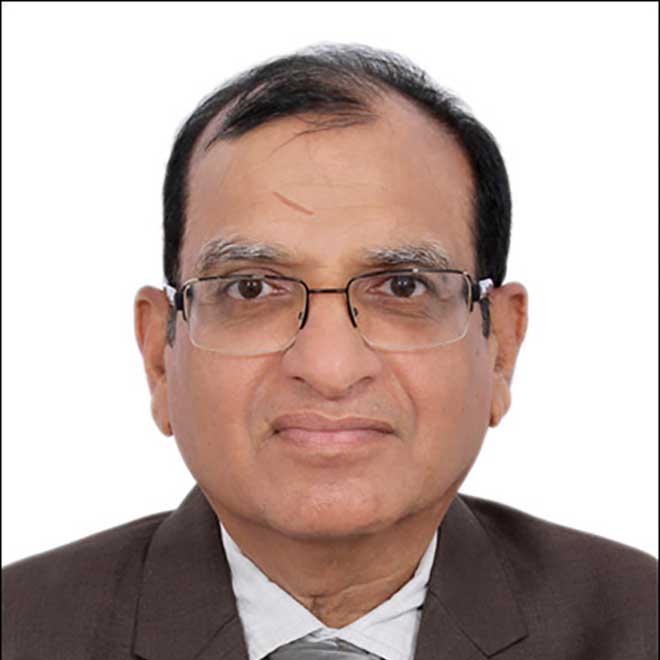
    K Satish Kumar graduated in B.Com and thereafter qualified in law in 1995 from Sambalpur University, he is also a Certified Management Accountant from ICWAI. Having worked at multiple corporate bodies as an in-house legal counsel, Satish is currently the Global Head – Legal at Ramco Systems in Chennai. Satish additionally has several publications to his name and has done much work in the way of Pro Bono activities to give back to society.

    In this interview, Satish talks to us about:

    • His introduction to the legal profession, and his experience as a lawyer since then.
    • His plethora of publications, and his advice on the best way to go about writing and publishing articles
    • Pro Bono work, giving back to society, and the ways in which he keeps up to date with the ever-changing subject that is Law


    How did you choose Law? Did you always know that this was what you wanted to do?

    In fact my choosing law was not deliberate and intentional. I started my career as a Finance Professional after completing my ICWA (currently known as CMA). I had parallely completed my Law Degree as well. However, Finance and Legal being closely related, I found out that I had a good aptitude for Law. That is when – even after starting my career in Finance – I switched over to Law, and with God’s grace, I am doing well and creating a niche for myself in the Legal Profession.

    In any organization, the Legal Unit are always regarded as the “Deal Makers”. You also resort to Legal when you have to be bailed out of any crisis. Legal plays an important role in “Crisis Management”. So the Legal Unit becomes most important either way – be it bringing revenue to the organization or pulling it out of some crisis. These are some of the selfish reasons which made me swing sides to Law.


    You have a lot of work experience, from working at a vast array of places. Can you tell us a little about your career graph up to this point?

    satish-kumar-4Yes, I carry more than 20 years of rich working experience in multiple MNC’s. I am very passionate about Law and that is what made me a Successful Professional.  I have working experience from Fortune 10 companies to Indian grown or growing companies like, HCL Technologies, Polaris Financial Technology (later on the product division split to Intellect Design Arena Ltd), Ramco Systems Ltd. I was fortunate to get the right breaks at the right time. I also carry some critical experience working abroad. So truly, I became a Global and a Cosmopolitan Professional.

    However, initially I started off my professional working in few indigenous companies in India. But I was fortunate to work with some industry trendsetters.  My desire to learn new businesses and passion to explore all new possibilities has helped me in my career growth progression.


    You have received lot of awards in your career. Can you please tell the young lawyers few things about it, please?

    Yes, I am the proud winner of many awards during the progression of my career, both abroad and in India. I have successfully negotiated and closed many contracts, structured and finalized joint ventures, cross border investments etc. I was also successful in closing many litigations. There was a time when my colleagues used to call me “the person with Midas’ touch”. In Polaris I was also called “The Deal Maker”.

    For all the achievements mentioned above and others, I was the proud winner of awards like


    • Konark Excellence Award
    • Gem Award
    • America’s Most Wanted Person by US Sales Team
    • Annual Excellence Award
    • Person Making a Difference


    You have a great deal of publications to your name. Do you write about things you think are relevant and have scope for research, about things that interest you personally, or is it a blend of the two?

    Yes, this is a very interesting question. I am happy to have many publications to my credit. I love writing – writing on relevant current Legal topics. I have written on Risk Mitigation, Open Source, Rent Control Act, etc. Some of my writings are also published in National and International Business Journals. Someday, I am sure my wish of publishing my own book on Legal topics is going to come true. Some of the links to my publications are given below.

    • Article on “Software companies can hedge against risks, with insurance cover.” Published in Business Daily “Business Line” dated April 6, 2009


    http://www.thehindubusinessline.in/ew/2009/04/06/stories/2009040650090300.htm


    • Article on “Closure of Business Deals” Published in Business Daily “Business Line” dated August 20, 2007


    http://www.thehindubusinessline.in/ew/2007/08/20/stories/2007082050100300.htm


    • Article on “Open Source Software – sans the risk” Published in Business Daily “Business Line” dated November 19, 2007


    http://www.thehindubusinessline.com/ew/2007/11/19/stories/2007111950090301.htm


    Could you also please tell our readers interested in publishing their own work what you think the best way to go about the same is?

    You should first start writing on subjects that is of interest to yourself. Writing on things you are passionate about will help further to strengthen your grasp of the subject. One may start first writing blogs and over a period of time these blogs can be converted to articles and reports in business journals. You should take care of the following while writing.

    As a first step you should select a topic that interests you, and focus on it for at least a week or two. Write a rough draft, including everything that you can think of. Stay loose, avoid getting analytical and enjoy the process of sharing what you know. You will then be surprised to see that you have a rough skeleton of the draft that you proposed to write.

    As a second step you should address your audience’s needs. You already have a skeletal draft. Now change sides and think of yourself as the reader of the draft piece of work that you had written. You should pick few words to describe the audience you want to address. For example, “young legal professionals”. Now, as a young legal professional, what are the questions you would like to ask? Note down these questions.

    As a third step you should start doing research. Now start doing a research to get the answers for all your questions noted down above. You should collect everything you have gathered and put it in a folder, or an electronic document, a notebook. You may also want to note the track of the sources so that you may refer them in future when you need it.

    As a fourth step you should refresh your draft. Now you may sprinkle the research in the draft that you have already drafted for the right audience. You may just want to revise what you have as you proceed, retaining a nice conversational tone by directly addressing your audience.

    As a fifth and final step you should review your draft. You should read, revise and repeat the process a couple of times after giving yourself some time in between the repeat processes. You will be surprised at what you have written and the changes that you keep making to the draft while re-reading it. Publishing the writing in the journals will be tough initially but once you start publishing the process will be set in your mind and it will be easier for you to write and publish in future.


    satish-kumar-3

    You strongly believe in spreading legal awareness to both laymen in the field of Law, as well as the younger generations of upcoming professionals in the legal field. Could you tell us a little about why Legal Awareness is so relevant?

    We usually ensure that our wealth gets transferred to our next generation through whatever way possible, like filling nomination in our Bank accounts/insurance accounts, Will writing, settlement deeds etc. But seldom do we think of transferring our intellectual wealth to the next generation. If the intellectual knowledge of Aryabatta and Einstein were transferred now to the next generation then we would be sitting rich on various inventions and patents and the world would be completely different now with many more such Aryabattas and Einsteins. But that is not the real scenario. Hence, it is very critical that our intellectual knowledge also gets transferred to the next generation. This is only possible if you transfer your learnings to your teammates and other budding professionals in the field. There are many nuances that we learn from experience, and it is worthwhile to transfer this to the next generation so that the profession becomes richer and more valuable with the passage of time.


    Tell us a little about your Pro Bono Activity. You have amassed a huge followers for the same. What kind of queries do you usually address?

    We derive a lot of benefit from this society. The society has made us what we are today – experienced professionals. We have an obligation towards the society. Everyone in their lifetime has one or other legal problem. But everyone may not be able to afford the best lawyers in the world. That is where we can step in and make a difference. A piece of genuine advice, counselling, direction, opinion will make a world of difference to these people. For me it doesn’t really cost much. But it gives me immense satisfaction when I see the smiling face at the other end after my counselling or legal advice.

    But I have to reach the people. That is when I decided to reach people through social media. Facebook, Linkedin, Twitter, Google+ were some of the mediums which I adopted to reach the people. I was surprised at the response levels. In a very short period, I had a fan following club of over 6000 people. People approached me with different problems. Some wanted to know the process to adopt a child, some wanted to reconcile with their spouse, property disputes among legal heirs, child abuse, work place bullying or abuse, sexual harassment etc. I ensure that just as I give some time to my family, I also give some time to the society. This has given me a lot of moral satisfaction.

    Pro bono makes me happier. Participating on such activities also provide opportunities to make personal connections with people who share your interests. Indeed, social connection is the greatest predictor of happiness.

    The very purpose of pro bono work is to assist those who desperately need help with something that’s really important, but for which they have no resources themselves. We are fortunate to be lawyers. We are among the lucky few to survive all the obstacles of becoming (and staying) lawyers. We are among the few who can make the legal system work for people who have nothing to give us but their gratitude.

    It helps to pursue my own interest and passions while helping others.

    During my early phase of career such pro bono legal work provided me a training ground. I was a junior lawyer earlier and did not have much autonomy for several years. Such Pro bono work in the initial phases of my career provided early opportunities for depositions, building client relationships, arguing motions, first-chairing trials and other valuable work experience to build skills and confidence.

    Charitable and pro bono legal work provides me opportunities to meet people with very different backgrounds and interests whom I may not otherwise meet in my daily life. Fundraising for charities, serving as a board member for a nonprofit organization and the like connected me with local business leaders and lead to new friends.


    satish-kumar-2

    How do you stay updated with the happenings not only in the world at large, but also with the relevant happenings in the legal field?

    I have joined many legal professional associations both in India and international levels. These associations are large number of similar professionals who are successful in their own fields. Interacting with them is very useful in developing ourselves.

    I have also subscribed to various legal bulletins. Laws are constantly changing and what was right yesterday could be illegal today. I keep myself updated reading legal decisions, and legislative and regulatory news and changes. They help me a lot to keep up to date with the dynamic legal field.

    There are various E-law tools which publish their own exhaustive law guides. The E-Laws Advisor tool simulates the interactions that a client might have with a professional. I can ask questions and it provides answers. I have privileged access to such E-laws tools.

    I also attend conferences across the globe. I interact with various professionals from Legal and other fields. This is a constant learning process and helps me understand their views too. The key benefit of attending this kind of conference is that I will be able to network and interact with key legislative decision makers and can make my views known to them.

    There are range of resources and communication channels for any professionals in order to both familiarize themselves and remain up to date with current law and trends. New technology is making it possible for this to be accessed on demand via the internet or “pushed out” to professionals via newsletters or tweets or other social media. One should only have desire to learn and keep the mind open. I make it a point to learn at least one new law every day.


    In your opinion, what should young students of Law prioritize as they lay the foundation for their career?

    Fresh law graduates and young students must, first of all identify the career of their interest before initiating actions in specific direction. For example, judiciary might interest some students and some might be interested in being in corporate working as a legal consultant or in-house legal officer; others might be interested in opting for litigation as a professional career. Hence, it is very important to find out what career path attracts one the most.

    Another crucial thing is to identify the area of their interest: it is very important for a student to know  which specific field of law is most suitable for them, based on their level of understanding in particular subjects. Some students might be very good in understanding criminal laws whereas comparatively weak in understanding commercial and business laws. Such students must consider their incline towards criminal law while choosing career options for themselves. Such students may opt for litigation or working under a lawyer who deals with criminal law. While students who have better understanding of taxation laws, company law, labor laws, intellectual property laws, etc. should prefer working in corporates or as an IP attorney or under a corporate lawyer.

    Once after a student has decided the chosen field of law and to start his / her professional career, he / she must join an organization or a lawyer with which / whom he / she can get enriching professional experience. First work experience is very important specifically for a legal professional as it implants the roots of one’s entire professional career. Student must give first consideration to the quality of work his/her chosen career option can provide. Further professional developments majorly depend on one’s first career decision and the learning experience during initial years of one’s career.

    From a different perspective, students should also be aware and mentally prepared of the fact that theoretical understanding and practical application of law widely differs. It is very usual for a law professional to come across dicey situations every single day. Thus, it is necessary for a student to develop a habit of thinking in order to find an amicable solution of any problem keeping in mind both legal acumen and practical feasibility. In this aspect, a few internship experiences in addition to legal studies from a reputed institution can be an added advantage.


    What kind of audience do you typically see at your seminars? What kind of awareness do you usually direct at them?

    (Satish actively participates in Legal Seminars conducted in various cities all over India in an endeavor to bring awareness to the young generations of lawyers and other professionals in the field of Law.)

    Yes, I am regularly invited by “The Associated Chambers of Commerce & Industry of India” (ASSOCHAM), “Confederation of Indian Industries” (CII), other Legal bodies to spread disseminate legal knowledge among the next generation lawyers.

    This is also a good platform to identify young and bright lawyers who require mentoring. I can easily identify the desire and passion in them as they keep coming to me with various intelligent questions and try to enrich themselves. Such bright lawyers should be given an opportunity to grow – to take advantage of all the experience that I have developed over the years.

    I also get an opportunity to interact with inventors, industrialists, scientists, authors, businessmen, investors, financiers, etc and get different viewpoints on the same topic.  This helps us to re-look, re-think and reposition ourselves on any topic which has various stakeholders. I learn through this process of interacting with top professionals. In order to keep ourselves abreast of new developments, we have to constantly learn. Such seminars play a useful role and are beneficial to me too.


    In your opinion, what are the most important skills any young lawyer should cultivate?

    As a young lawyer, when you are just starting your career in law, it can be a challenging to stay on top of everything. There seems to be an endless list of new skills and information that you need to learn. It is in fact all about getting back to basics.

    As a young lawyer, you should be a good listener. When given instructions by a client or another member of your team, listen carefully. It is important that you understand what you have been asked to do. You may ask plenty of questions, take detailed notes. This may help in giving a proper response.

    As a young lawyer you should develop a good communication skill: The success of a lawyer depends on the communication skill. You are as good as you communicate. You should develop good written and oral communication, paying attention to details, listen while others speak, professionalism, using office technologies like email and word processing, critical reading and comprehension, synthesizing facts and law, legal reasoning, organizational skills, interpersonal skills, working within established time constraints, issue spotting and finally decisiveness.

    As a young lawyer you should learn to maintain written records. Keeping good written records can save you in times of trouble. So it is a vital discipline to learn to maintain written records.


    What are the biggest challenges faced by the modern day lawyers?

    The legal profession is a competitive one. Yes, it always has been, but these days—with rapid changes in the way we practice law, it seems to be even more so. The integration of worldwide financial and commercial markets has occurred at an astonishing speed over the last couple of decades. Market participants now routinely lend, borrow, invest, trade, hedge and pledge and do business in jurisdictions other than their own. They expect their lawyers to tag along with them in these global adventures.

    For the lawyers, compulsory cosmopolitanism can be discomforting. It isn’t just that laws and judicial procedures differ from one jurisdiction to another. It is something more subtle. Lawyers trained in different legal systems may approach legal problems, client relations, professional etiquette, ethical questions, legal drafting, and correct professional demeanor in remarkably different ways.

    Nowadays, the clients’ expectations are more than ever sky high and on-demand. Access to the internet provides potential clients with access to legal information at their fingertips. They are empowered by technology, and they expect that their attorneys will be proactive in finding ways to be efficient and offering options and solutions in terms of results. This can strain relationships between lawyers and their clients, which puts additional pressure on lawyers to find ways to meet these expectations.

    With the access people have to information today it’s becoming more common for legal clients to have done research on their own prior to speaking with their lawyers. This has changed the role of the lawyer to educating the client in new ways like sorting through reliable and unreliable information the client may have found in their research.

    Technology has also allowed for the creation of various cheap legal service providers from paralegal. There is a gross oversupply of law schools and this glut still plagues the legal profession today.

    These paralegal have cropped up all over the internet, city, offering low-cost legal services at very attractive proposition for those seeking what they know can be costly services.

    Globalization and competition are another challenge that the lawyers face.

    In today’s global economy, lawyers may face barriers in expanding practices overseas.

    Countries around the globe are asking themselves if easing rules for attorneys to practice in foreign countries is helpful or hurtful. There’s no clear answer, and countries are handling it in various ways.

    New regulations and laws constantly come. Law is an evolving subject. Lawyers have to constantly update themselves so that they are not left behind.


    What is the future of Legal Profession?

    Law is a dynamic field. The practice of law is changing, but it has always been changing. In the 19th century, there was a major transition from small sole practitioner type of firms with law clerks to the beginning of the modern larger firms that specializes in certain areas. With the development and invention of technology like typewriter and telephone, computer etc, the profession of law also developed in equal pace. Now modern technology allows all sorts of legal matters at one’s fingertips. A good computer with access to legal research is a great leveler.  But, this world of informational technology has taken away the quality of life from many lawyers. Lawyers are bombarded with emails and other types of electronic messages from clients 24 hours a day. Going on vacation becomes almost an impossibility—at least on a vacation where one gets away from their work. Essentially law is a 24/7 practice with emails coming in day and night, on all holidays, weekends, etc. This massive and useless over-communication takes a huge amount of time, and at the same time is unproductive.

    With the technology, the nature of the practice of law has begun to shift. What the future of law will look like in the next 50 years remains unknown. The fear is that it will driven by technology and not the human side. Will law remain a profession, or will law change to be a business driven by technology? Only time will be able to answer this question.


    What message would you like to leave our young readers?

    Be open and try to absorb and learn as much as possible. The early phase in your career is a learning phase and later on you can only get better. The more you learn, the more experience you gain. You should also try to get a good academic record and in parallel maintain good extra-curricular activities. Try to get good internship experiences.

  • Poorvi Sanjanwala, Partner, Rajani Associates on essentials of a good corporate lawyer and Merger and Acquisition practice

    Poorvi Sanjanwala, Partner, Rajani Associates on essentials of a good corporate lawyer and Merger and Acquisition practice

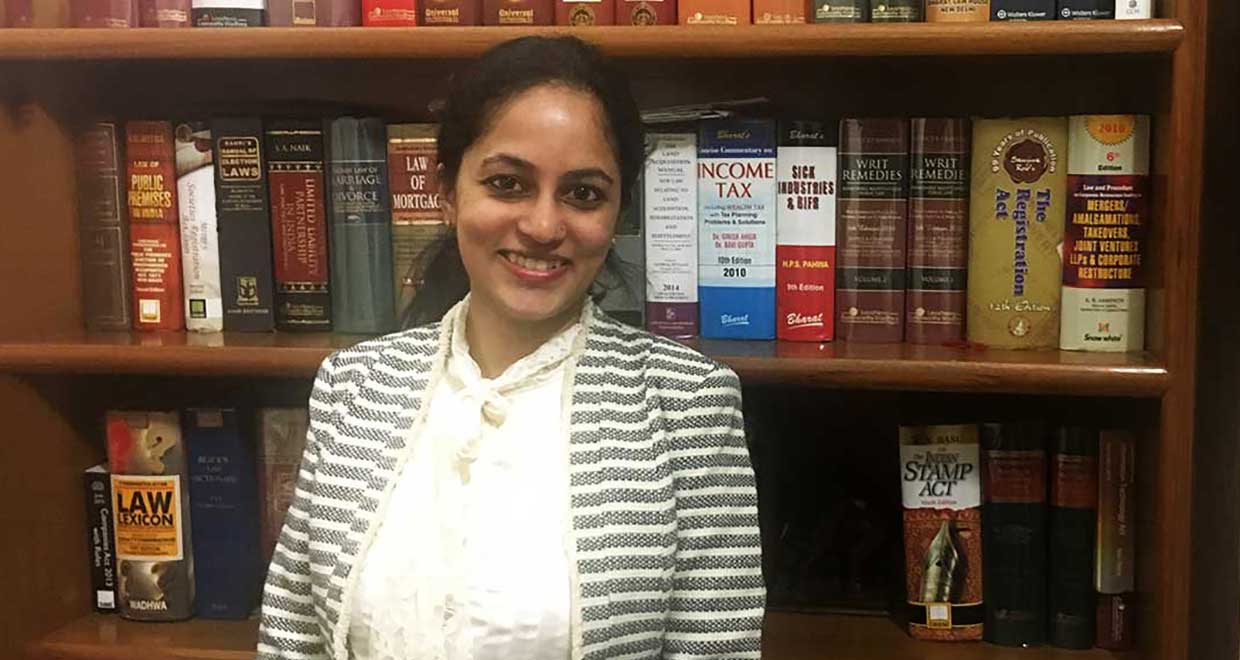
    Poorvi Sanjanwala graduated in law with a gold medal from the Mumbai University in the year 2003 and went on to complete her Masters in Commerce from the same University.

    She is currently a partner at Rajani Associates and handles the Private Equity and Merger & Acquistion practice (the acquisitions side) in the Firm.

    In this interview she talks about:

    • Essentials of a Good Corporate Lawyer

    • Experience working in a Corporate Firm

    • Challenges and hurdles in Merger and Acquisition Practice

    • Her view on Make in India campaign

    HOW WOULD YOU INTRODUCE YOURSELF TO OUR READERS?

    I am Poorvi Sanjanwala and am a partner at Rajani Associates, a Mumbai based law-firm. I handle the Private Equity and Merger and Acquistion practice (the acquisitions side) in our Firm.

    WHAT INSPIRED YOU TO JOIN THE PROFESSION OF LAW? IF NOT LAW THEN WHAT WOULD HAVE BEEN YOUR CAREER INTEREST?

    I have always been interested in all things legal even when I was in college, I recollect deliberating a bit more upon newspaper articles which reported commercial judgements or interesting case-laws. Added to that is the fact that I am very fond of drafting, so law had to be an obvious option. If it were not law, I would have probably pursued an MBA.

    HOW IMPORTANT ARE INTERNSHIPS FOR A LAW STUDENT? TELL US ABOUT YOUR INTERNSHIP EXPERIENCES WHILE AT UNIVERSITY

    Internships I believe are extremely important not only from a knowledge-building perspective but from a specialisation identification perspective. Internships enable a student to obtain a more in-depth knowledge of various laws particularly from a practical perspective. Internships also go a long way in honing analytical skills further and enable students to come up-to-speed on laws and judgements as part of research or assignments they may be involved in, in the course of their internship. Internships do, I believe, also help students in identifying with more clarity the area of specialisation they wish to pursue and also prepare them more effectively from a practical standpoint, for life as a lawyer once they graduate. And yes, internships are at many times, a very good platform for talent to come to fore and be recognised as well. Unfortunately I did not intern during my university days so as such there is no specific experience I would be able to share with the readers in this regard.

    WHAT ARE THE OPPORTUNITIES THAT THE PRACTICE HAS TO OFFER? WHAT ARE THE ESSENTIAL REQUIREMENTS TO BE A GOOD CORPORATE LAWYER?

    Our Firm is a full service Law Firm with the corporate law practice areas being the pivots. Our practice areas include PE, M&A, Capital Markets (International and Domestic), Projects and Project Finance, Dispute Resolution, Intellectual Property, Real Estate, Banking and Finance and ofcourse General Corporate and Commercial.

    The essential requirements to be a good corporate lawyer, would be, first ofcourse be interest in the corporate laws domain as a whole, followed by good drafting skills, since any transaction/assignment in any these practice areas do involve significant documentation and where more often than not, no two documents are alike and entail customisation which is transaction specific. Coupled with drafting are negotiation skills, since again transactional documentation almost always involves counter-parties and where finalisation of such documents involves negotiations and lastly, good inter-personal skills and team spirit.

    HOW WOULD YOU COMPARE INDEPENDENT PRACTICE TO JOINING A LAW FIRM?

    Having worked with law firms since I qualified, I don’t think I would be in a position to throw much light on this. Having said this, starting off- independently is at the other end of the spectrum from working in a firm. There are various factors which culminate into a decision for any person to start off on their own and pose its own set of challenges.


    CAN YOU TELL US ABOUT YOUR EXPERIENCE AT THE FIRM AND WHAT MOTIVATED YOU TO JOIN RAJANI ASSOCIATES?

    (Ms. Poorvi Sanjanwala have been with Rajani Associates for more than a decadpoorvi-3e)

    The experience has been very enriching. Rajani Associates is the place where I have gained and continue to gain my knowledge of corporate laws and my transactional experience in the PE and M&A spaces. I have also been fortunate to have had very good seniors, particularly Mr. Prem Rajani, the Firm’s Managing Partner, who have also been very encouraging and have had the patience to discuss transactional aspects as a transaction progresses (and not just a post completion analysis or review). As a Firm, apart from the emphasis on close attention to detail and effective client interaction, Rajani Associates gives its lawyers the platform to demonstrate their skills in the areas of their practice, believes in placing an equal importance on learning as you work and where every member of the team is encouraged to contribute effectively to transaction closure and given an opportunity to actively participate in transactions. Coupled with this, is a good working environment and you have all the ingredients of a great working place and enormous opportunities for career growth.

    YOU HANDLE VARIOUS ASSIGNMENTS WITH RESPECT TO THE MERGERS & ACQUISITIONS. WHAT ARE THE BIGGEST HURDLES AND CHALLENGES IN THE IN THIS AREA OF PRACTICE?

    I would not say that there are hurdles in either the PE or the M&A space. Yes transactions are challenging and at times demanding but which transaction is not? It is the challenges which make each transaction a unique learning curve and also enrich your knowledge and experience in the process. I would say that every transaction I have handled or been part of in the past, has had some or at times a myriad of unique aspects to it, be it the nature of the transaction or its structure or the negotiations that it may have entailed. All transactions and the experiences have been and will continue to be a wonderful learning process for me.

    RAJANI ASSOCIATES HAS CONSISTENTLY BEEN RANKED AT THE TOP IN DEALING WITH ASIA-PACIFIC M&A. WHAT IS AN AVERAGE DAY AT WORK LIKE FOR YOU?

    An average work day would mean discussing with the team on on-going transactions, taking a round-up on changes that may have been effected to any law and its potential implications and ofcourse working with the team to meet deadlines of any on-going transaction.

    THE GOVERNMENT HAS BEGUN DISCUSSIONS TO PERMIT THE ENTRY OF FOREIGN LAW FIRMS AND LAWYERS INTO INDIA. IN YOUR OPINION, HOW WILL THIS AFFECT THE PROFESSION?

    How the actual entry of the foreign law firms will pan out, will ultimately depend on the fine print of the rules which will regulate their entry and operations into the Indian legal practice arena. As such it would be pre-mature to comment in detail at this juncture. Needless however it would be to state that the advent of foreign law firms will be a game-changer of sorts once all decks are cleared for their entry.

    THERE IS ONGOING CAMPAIGN FOR “MAKE IN INDIA”, “START-UP INDIA” AND “SKILL INDIA”. IS OUR LEGAL SYSTEM MATURE ENOUGH FOR SUCH DEVELOPMENTS OR IS THERE A NEED FOR REFORM?

    I believe the legal system is mature enough. This initiative of the Government is an important and welcome step in providing an impetus to growth and development of the country as a whole by nurturing skills and ideas to translate them into opportunities for businesses thereby generating employment and bringing self-reliance in sectors which were earlier import dependant or at the nascent stages of development. At the same time it also seeks to encourage multi-nationals and other global level players to set shop in India thereby also enabling the Country to not only benefit from investment and capital but also in opening up new opportunities for new/enhanced skill sets, technologies, employment opportunities and other ancillary benefits thereby propelling the growth story further. Keeping this objective in mind, the Government has introduced several measures for the ease of entrepreneurs to start and operate their businesses, initiated consequential changes in legislation, introduced reforms, including the liberalisation of receipt of foreign direct investment in various sectors which will go a long way in making the “Make in India” concept a winner all the way in achieving its intended objectives.

    THE GOVERNMENT HAS BROUGHT INTO FORCE THE COMPANIES (MEDIATION AND CONCILIATION) RULES 2016 TO GIVE EFFECT TO SECTION 442 OF THE COMPANIES ACT. HOW WILL THIS AFFECT THE CORPORATE SECTOR?

    As the Companies (Mediation and Conciliation) Rules, 2016 are a very recent introduction that is, the notification in this regard has been issued in September 2016 only, its impact and its success as also the ability of this mechanism to reduce the burden on the judiciary will have to be reviewed as the extent to which parties to a dispute will take recourse to it for the purposes of resolution of their disputes will have to be gauged with the passage of time.

    WHAT ADVICE DO YOU WISH TO GIVE TO YOUNG LAW STUDENTS AND YOUNG LAWYERS, LOOKING FORWARD TO JOIN A CORPORATE LAW FIRM?

    Joining a corporate law firm as most of the readers would be aware, is a demanding but at the same time challenging as well. Coupled with this, it also entails the pre-requisite of keeping continuously abreast with current laws, possessing good negotiation, drafting skills and analytical skills and working well in a team. Other equally important aspects are effective communication and inter-personal skills which are critical in team and client interaction as also during negotiation of agreements.

    WHAT WOULD BE YOUR PARTING MESSAGE TO OUR READERS?

    If you love the work you do and put all your efforts into what you do at your work place whole-heartedly, then this is what will make the entire journey an enjoyable, enriching and successful experience.


  • Shatarupa Mishra, Indian Revenue Service Officer, on preparing and cracking Civil Service Examination

    Shatarupa Mishra, Indian Revenue Service Officer, on preparing and cracking Civil Service Examination


    Shatarupa Mishra graduated from Symbiosis Law School in 2013. She is a lawyer by interest, civil servant by profession and dancer by passion. Currently, she is training as an INDIAN REVENUE SERVICE OFFICER-Income Tax in National Academy of Direct Taxes, Nagpur after clearing Civil Service Examination 2014.


    In this interview she talks to us about:

    • How she developed interest in reading and writing.
    • What inspired her to appear for civil service exam?
    • When should a person ideally start preparation for the civil services exam?
    • Easiest and toughest part for preparation.
    • Aspects that a civil service aspirant must focus on and start preparing for in advance.


    Please introduce yourself to the readers. Please tell us a little bit about your childhood and your background.

    Hello friends! I am Shatarupa Mishra, lawyer by interest, civil servant by profession and dancer by passion. Currently I am training as an INDIAN REVENUE SERVICE OFFICER-Income Tax in National Academy of Direct Taxes, Nagpur after clearing Civil Service Examination 2014.

    My schooling has been in De Paul School in a small town Berhampur and subsequently in St. Joseph’s High School, Bhubaneshwar, the capital. I was extremely active in extracurricular activities like writing, dancing and singing. Both me and my elder sister started training in Odissi, the classical dance of Odisha  and other dance forms.

    Infact I started performing in stage shows and dance festivals from a very young age of 4 years and those childhood memories of dancing remain the most cherished. I was also the house captain in my school.


    What impressed upon you the idea to study law?

    Frankly speaking, I wanted to pursue law when I realized after two years of science in intermediate level, I did not want to pursue Engineering or Medicine, the two most preferred options at that time. Browsing through the law syllabus in my +2 2nd years, my interest was piqued and I thought graduation in law would bode well for me. My choice was very instinctive and it worked out well.


    How was your experience at Symbiosis Law School, Pune. What activities were you involved in apart from the regular academic curriculum?

    My five years in Symbiosis Law School was very enjoyable and memorable. Right from academics to internships to pro-bono activities to extracurricular activities, Symbiosis gives you a wide platform for everything.  From my 1st year itself, I took an active part in extracurricular activities like dancing and participated in many college fests. Timings of law school were such that we could pursue our other hobbies and interests in the later part of the day. Second year onwards, I started mooting and was fortunate enough to be a part of our college team in Jessups. Mooting piqued my interest in legal research and I subsequently wrote many legal essays in pre-final and final year. Being a part of the very active Human Rights Cell of our college for all five years, I loved teaching young kids from underprivileged background and spending time with them on weekends.

    I loved learning law for the sake of itself and was extremely diligent about my studies and projects. The cherry on the cake was when I was awarded a scholarship for academic excellence in my fourth year and the Chancellors Gold medal for topping my batch in BA LLB course.


    How did you develop your interest in reading and writing?

    Reading was my favourite pastime since childhood. If I was not dancing, I was reading. Both my parents, grandparents are voracious readers and encouraged me to develop reading habit. At home there was already a huge library to pick books from.   I have many pleasant memories of visiting book shops and exhibitions with my father and buying loads of books, all non-academic of course. If there was a book club in my city, I was a member in it. In school also, my favorite subject was English literature. My reading habit almost borders on obsession, my family tells me, ha-ha! In childhood, I started writing poems and subsequently, articles. My mother also writes poems in Odia language and she has been a major motivation behind my writing.  Law School and preparation for civil service examinations only enhanced my interest and skills in writing articles.


    When and what inspired you to appear for Civil Service Exam?

    I believe it was a very conscious choice to appear for Civil Service Exam. I belong to a family of state and central civil servants, so somewhere the inspiration to be one myself was right at home. My biggest inspiration has been my father who is respected by all as an honest, upright and efficient officer in the State Government. Dinner table conversations have many a times, been about development, administration and issues therein.  Secondly, I was keen to be in a profession which offered me a wide platform to work in law, policy and implementation. My legal training actually strengthened my resolve to sit for this examination. Thirdly the syllabus of the civil services exam piqued my interest, particularly the general studies papers.  Keeping all these factors in mind, I eliminated other career options in law in fifth year of law school so that I would never regret the decision of appearing for this examination. I was fortunate that I got a mentor in Pune, Shri Aashay Abhyankar, who along with his family, has played a stellar role in my success.


    When did you start preparing for the exam? When should a person ideally start preparation for the civil services exam?

    I started preparing for this examination immediately after graduating from law school in 2013.  I really wanted to clear the examination in my first attempt itself and join the services at a young age so I wanted to give it my full focus the first time around.

    As regards the second part of your question, I believe once the person is sure that this is what he wants to achieve, then that time automatically becomes the most ideal for preparation. Hence, to each his own.


    How many hours did you put in for your preparations every day? Is having a fixed schedule or weekly targets important according to you?

    I used to fix daily targets and accordingly work to complete them, so there was no fixed number of hours. On an average, it ranged from 6-8 hours daily.  Rest of the time was spent in reading newspapers, surfing the net or carrying out other hobbies.

    Yes having a fixed schedule and weekly targets is important as I have personally benefited from such meticulous planning.


    Which were the easiest and toughest parts of your preparation?

    The easiest part was reading newspapers and making notes from them and studying the general studies papers which are exhaustive but highly interesting as well. History,  culture, polity, foreign affairs are topics that I loved to read and analyze.  The toughest part for was staying away from my family, and friends as I was preparing in Pune while my family stays in Bhubaneshwar.


    What are the aspects that a civil service aspirant must focus on and start preparing for in advance?

    A civil service aspirant should first know how to read the newspaper for this examination. Then preparation becomes very easy and interesting as one can interlink concepts with current affairs, analyze and present  in a unbiased manner. My preparation for civil services was very newspaper-oriented and it held me in good stead throughout all three levels.


    What were the attributes of your legal education and background which helped you in succeeding in the civil service exam?

    I would attribute my success in first attempt to legal education in a lot of ways. As law students, we are used to processing copious amounts of information and presenting them in answers. Secondly writing subjective answers in limited time, a skill acquired during law school, is an asset while writing the Civil Services (Main) Examinations. In all my mock tests and the mains examination I never faced the issue of time management. Thirdly, integrated law course already gives you an insight into general humanities subjects in the initial years like political science, history, sociology, etc which is somewhat registered in your mind. The only catch here is to keep legalese and biased viewpoints out of your preparation and remembers that this examination wants administrators and not lawyers at the end of the day and moulds yourself accordingly.


    What is the importance of CGPA for law students especially for Civil Service exam aspirant? Does it make any difference during the interview?

    More than CGPA, it is the grasp over syllabus and overall analytical skills that matter most for law students in civil service examination. Having said that, I believe a decent CGPA would always be an asset to the law student, be it in this examination, or legal jobs or pursuing higher studies, etc.

    I can answer the second question only from my own experience. As I was the batch topper with a high CGPA, I was apprehensive that they could ask me a lot of law-related questions expecting accurate answers. And this is what happened I was asked factual questions spanning multiple law subjects. However, the interview experience is very subjective and nothing is a precedent.


    Tell us about your interview? What kinds of questions were asked by the interview board?

    My interview was on the afternoon session on 15th May, 2015. It was chaired by Prof. David Sylimlieh. As discussed above, mostly factual and legal questions were asked which I could answer racking law notes in my mind at that very instant.


    What would be your message for law students who are preparing or planning to prepare to appear for the Civil Service exam?

    I personally feel that with the hard work, perseverance and right guidance, it is not difficult for a law student to clear these Examinations. Civil Services involve law interpretation and implementation, public administration and management, which law students imbibe in their five-year long erudition. So they should approach this examination with full focus and determination, if they choose to appear for it. Success shall definitely follow.


    Lastly, what would be your message for the readers who want to pursue career in Civil Services?

    Readers wanting to pursue a career should first be clear about why they want to pursue it. Once they have decided, they should just focus and plunge into the syllabus with full determination.  Enjoy the process of learning and studying for this examination and before you realize, success shall be yours! God Bless.


  • V V S N Raju, Corporate Lawyer, on establishing Juris Prime Law Services

    V V S N Raju, Corporate Lawyer, on establishing Juris Prime Law Services

    V V S N Raju graduated from Osmania Universtity (1990-1993). He is a Corporate Lawyer and has over 22 years of Experience as in-house counsel and external counsel for Corporates and Financial Institutions/Banks.
    His specialties include Banking, Corporate, Documentation, Real Estate, Recovery, Litigation, Arbitration, Project Finance, Restructuring, Securitization, Mergers and Acquisitions, government liaison and Employment Laws.


    In this interview he talks to us about:

    • Inception and basic motive behind establishing Juris Prime Law Services (Law Firm).
    • Challenges faced in the initial days of establishment.
    • Services provided by the firm.
    • Uniqueness of services provided by the law firm.


    Please share with us the inception and basic motive behind establishing Juris Prime Law Services.

    During 2005 (re-launched in 2015), there were not much law firms in Hyderabad to cater the Banking, real estate and Corporate needs of local clients. So I felt it was a good time to establish a law firm which would provide best legal solutions with a practical approach to cater the needs of the clients in and around Hyderabad.


    What challenges did you face in the initial days of establishment and how did you overcome that?

    Main challenge that we faced during the initial years was getting right kind of clients and recruiting right kind of human resources. In fact, these are the challenges which are faced by all the companies at all time.

    I sort of tried a trial method and recruited fresher’s and trained them so that they can provide legal services according to the standard and quality promised by our firm to our clients.


    What are the services provided by the firm and how it caters the need of clients in Hyderabad and elsewhere?

    Juris Prime Law Services is a full service law firm. We provide legal services in following fields:

    • Arbitration & Dispute Resolution
    • Banking & Finance
    • Company Incorporation
    • Corporate & Commercial Law
    • Employment & Labour Law
    • Foreign Investment
    • Intellectual Property Rights
    • Mergers & Acquisition
    • Litigation
    • Private Equity & Venture Capital
    • Project & Corporate Finance
    • Real Estate
    • Technology, Media & Telecom

    Being a full service law firm, we are capable of providing solution to all kinds of legal complexities faced by the clients under one umbrella. We structurize client’s transaction and provide practical solutions in a legal way.


    Please share with us the uniqueness of services provided by your law firm.

    We give problem oriented solutions. We believe in specialized rather than generalized solution which makes us different from our competitors.


    What milestones have you achieved till now?

    Our growth rate has been good and satisfactory. Since our inceptions there is no time for looking back as day by day we are progressing. Over the years we have been associated and empanelled with lot of Banks and large Corporates.


    Where do you see the firm in the long run?

    There is no road map as such because I believe in working hard which is a key to success. In coming 2 years we are hoping to see our revenue increasing by manifolds with a significant increase in no. of client and we from a firm of 11 headcount hope to become a team of 20 by March 2017.


  • Ritesh Maity, Litigation lawyer, on practising in the field of Labour and Industrial Law

    Ritesh Maity, Litigation lawyer, on practising in the field of Labour and Industrial Law

    Ritesh Maity graduated from University of Calcutta (2002-2007). He is practicing as a labour law advocate in Kolkata jurisdiction. He is specialized in dealing with various labour matters/ industrial disputes before the Learned Labour Courts, Industrial Tribunals, Employees’ Compensation Courts, Employees’ Insurance Court, and Payment of Wages Court etc. He has also represented clients before various controlling authorities dealing with payment of gratuity, wages and conciliation procedures.


    In this interview he talks to us about:

    • His life at University of Calcutta.
    • The co-curricular activities he participated in.
    • Why he focused primarily on industrial disputes along with consumer forum matter.
    • Advise for law students who start to prepare for their career while in Law College.


    What would be a brief introduction of yourself? 

    I am 33 years old, born and brought up in Kolkata. Apart from being a lawyer, a son and a husband, I love being a traveller, trekker, music lover and a hardcore movie watcher.


    Was it a childhood dream to take up law? What motivated you to pick this field? 

    I only thought of joining law school after my 10th. A cousin heavily influenced me to join law and guided me but surprising he never pursued career in law in spite of studying law.


    How was your life at University of Calcutta? Did you find that your law school education prepared you for your current life? 

    Life at the university was as usual. The initial interest (in the first year) was huge but I was dying to complete the course in the final year (fifth year). It is too boring to study law for five years with the same classmates. Calcutta University does not provide you much in terms of practical experience. If you want to become a litigating lawyer, you have to start from zero once you join the court. Frankly speaking, the university from where you have studied law does not matter in practical sense unless you want to bag a lucrative corporate job.


    What were the activities you were a part of at your college? 

    I participated in few moot courts, practical training in the court (but this was useless as you cannot understand or learn by visiting court for just a week) and participated in few legal awareness camps around rural Bengal.


    What made you get into the legal practice? 

    After completion of law, I did not want to join any firm or company. I wanted freedom and thus started practicing (although under a very able senior counsel) and I could not stop myself from continuing it.


    What made you focus primarily on industrial disputes along with consumer forum matter? 

    I was always interested in Human Resource and Industrial relations and somehow I got the opportunity to practice in this field of labour law and industrial law and the things just clicked. With due respect practising at consumer forum is slightly easier I believe. Once a client of mine whom I was assisting in the industrial disputes matter asked me to help him in a consumer related matter. I agreed to help and since then it is a history.


    What falls within your scope of responsibility? 

    Since I am a litigating lawyer, I have to handle the client as well as handle the Learned Judge. Entire responsibility is on me; how to convince and satisfy a client; how to draft, appear, plead, argue before the Judge; A to Z is done by me but yes there are clerks to help too.


    How competitive would you say the legal profession was when you entered it has it changed since then? 

    Legal profession is vast. You cannot really compare a corporate lawyer with a litigating lawyer or someone who does only registration of sale deeds or to a solicitor. Whether you are practising independently or drawing huge salary from a corporate house or engaged with a reputed law firm, every situation has its pros and cons. You have to decide what you want out of your profession (as well as your life). Competition in the field of law is huge, but fortunately there is lack of efficient competitors.


    How do you balance your professional life with your personal life given the heavily demanding working hours of the profession you have chosen? 

    Since I do not have any fixed working schedule, I may remain free or less busy during weekdays but I can be overburdened during weekends when family members expect me. This is a very tricky situation and you have to handle very carefully and smartly. Since I work from home office, at least I am able to remain in the house with my family members in spite of being busy.


    How would you advice a law student if one has to start on to preparing for a career while in college? 

    First decide why you want to study law. If you want to join a corporate job or want to earn high end salary then you have to join top law schools in India. If you want to be a litigating lawyer then remember that you have to work really hard for initial 10-15 years in order to be somewhere at least.


    Please share with us your journey so far. 

    So far so good both my learning as well as earning is in the upward curve. And being a litigating lawyer, I can make plans for travel and treks easily as I approve leave to myself.


    What would be your parting message to our readers?

    Be in this profession (or any profession) only if you love it.

  • Smita Reddy, Legal Consultant, Lexstart, on assisting other start-ups from their incorporation to being their in-house counsel

    Smita Reddy, Legal Consultant, Lexstart, on assisting other start-ups from their incorporation to being their in-house counsel

    Smita Reddy graduated from Gujarat National Law University in 2011. At present she is working at LexStart. LexStart is a start-up which primarily caters to other start-ups assisting right from their incorporation to being their in-house counsel.


    In this interview she talks to us about:

    • Importance of CGPA.
    • How her appointment at LexStart took place.
    • Difference in working at LexStart from Amarchand & Mangaldas.
    • Strategy to deal with errors and mistakes.


    How would you like to introduce yourself to our readers?

    My name is Smita Reddy. I graduated from Gujarat National Law University in 2011 and I am currently working at LexStart. LexStart is a start-up which primarily caters to other start-ups assisting right from their incorporation to being their in-house counsel!


    How important is a CGPA for recruiters to assess students?

    CGPA being extremely important for campus placements is a given. It helps recruiters understand that you are willing to give it your all, which is always a good thing. Since they don’t really have your work experience to grill you on, your CGPA is reflective of your attitude towards work.

    Having said that, I know of some brilliant lawyers who weren’t great students to begin with. So yes, while having a good CGPA is crucial, it is also imperative that you intern before you start working. I cannot begin to stress enough on how important internships are in shaping you as a lawyer. I see so many law students wasting their internships and so many wasted opportunities. What law students need to understand is that these internships also help you in networking, plus if you’ve done a good job, you’re sure to be called back or given a pre-placement offer.


    Did you face difficulties in the beginning of your work at Amarchand & Mangaldas?

    Yes and no, because the difficulties I faced were more to do with not knowing how to go about things. I was a little lost, but since I joined with 15 other people from my law school, the process may have been a lot smoother for me than it was for other people. It was quite overwhelming in that sense, but once I got the hang of things, knew what was required of me, it became easier.

    It also helps if you know and understand that no one expects you to know everything at this stage. This is exactly what I tell fresher’s. You only need to start worrying if you’re still lost at 3 years of working!


    When did the transformation from a law student to a lawyer take place?

    I think the transformation takes place from the moment you have to take charge of something. I remember the first major assignment (where I was solely responsible for things) I was given at AMSS was helping in filing Form FC TRS. Though it would have been simpler for my senior to do it, she assigned it to me because she thought it would help me understand how things work better. And it did!

    The moment you are responsible for something, you somehow take greater care, than you would if you had a senior reviewing your work. I was blessed that way, because I was always part of teams which weren’t too big to begin with, so good assignments would end up coming to the juniors in the team.   

    Do you believe that drafting legal documents is an essential skill that most law schools in India omit to teach their students?

    Yes! While, to be fair, we did have a legal drafting course in GNLU, a couple of months of a course do not help you in drafting legal documents. What is surprising is that drafting constitutes around 60% of your work as a lawyer, irrespective of the field you are in. It is a skill set which I believe is extremely important to have as a lawyer. Plus, if you have a course on drafting in law school, you are not just suddenly thrown into drafting a share purchase agreement, without knowing the basics.

    I have had interns who didn’t know how to do basic drafting, which is quite alarming,  which is why I think the current curriculum needs to undergo changes, maybe limit learning the theoretical aspect of law to the first couple of years, and focus more on developing you practically as a lawyer.


    How did your appointment at “LexStart” take place?

    It actually happened very quickly and at the right time, I must add. I live in Tirupati, I love the place but it isn’t exactly bustling with corporate lawyers. I had reached a point of my sabbatical where it was no longer fun to be doing nothing; I was getting antsy and had to start doing something.

    My first round of interview was with Anisha Patnaik, one of my co-founders. It happened thanks to this friend of mine who had reached out to me informing me that his senior wanted a legal consultant, and that it would even be okay if I wanted to work from home. That literally sealed the deal for me, because I wasn’t keen on moving out of Tirupati. Imagine you can reach from Point A to Point B in ten minutes!

    Anyway, I am digressing, once I heard that I could work from home, I immediately asked him to send me all the necessary details. The next day Anisha reached out to me and I just wasn’t prepared even though I had gone over my CV a million times before that. After my interview with Anisha, I spoke to my other co-founder, Karthik Chandrasekar. Post this I started working in a days’ time!


    How was the job interview? Do you remember any of the questions asked to you?

    It went rather well, given that I had absolutely lost touch with law in that one year of sabbatical! Also, my founders who took my interview made me feel at ease, being fully aware that I hadn’t worked in a while and may need some time to get back to the grind. They also encouraged me to ask them questions, which I thought was a pleasant change from the usual interviews that one is used to.

    I was asked questions around VC investments primarily; I was able to answer most questions, except for one. I remember it distinctly because the moment I answered the question, I knew I was wrong, the question was on liquidation preference and what does it mean for an investor.


    How is working at LexStart any different from working at Amarchand &  Mangaldas?

    I will always maintain I loved working at AMSS, Mumbai and Delhi and will always attribute my growth as a corporate lawyer to it.

    LexStart has been a different experience from AMSS, since you act as legal counsels to companies that are growing with you. What starts with helping in the incorporation of a new company also leads to acting as their lawyers in their Series D round of funding. What this has also done is given me a fair sense of what founders in start-ups expect their lawyers to do. Since I was one of the first few people to be recruited at LexStart, I had my hands full with transactions which I was to lead, which was wonderful, since this immediately gives you a sense of work ownership. Plus, there is so much happening in the start-up space, that there is never a dull moment at work!


    What has been your strategy to deal with errors and mistakes? How would you suggest a young associate to deal with them?

    In the past, whenever I have made a mistake, I have made it a point to inform my senior. What this ends up doing if helping you learn how to handle mistakes.

    My only advise to young associates would be to always reach out to your immediate supervisor or a senior on the particular transaction and let them know. DO NOT try and hide it and hope no one would notice, because someone will, or even fix it yourself. They will do the necessary damage control. Most importantly, learn from your mistakes, check things twice or even three times before sending them out.

    Having said that, please remember you are human, and you are bound to make mistakes now and then. Move on, don’t be too hard on yourself, because that will just make things worse.


    What is your message to young law students?

    Relax and breathe!

    There is a lot of worrying about targets and deadlines coming your way once you graduate law school, but please do take internships seriously. Try gaining experience across all fields, whether it is litigation, NGO or corporate internships. It is good to know what you want from your first year in law school, but overtime you evolve as a person, and may not enjoy the fat-cheque-paying-corporate job you once dreamed of getting. Know that these varied experiences help you understand what you would actually enjoy doing and make an informed decision when its time.

  • Ramakant Gaur, Partner, Ace Jurix, on work experience in litigation at Ace Jurix

    Ramakant Gaur, Partner, Ace Jurix, on work experience in litigation at Ace Jurix

    Ramakant Gaur graduated from Chaudhary Charan Singh College, Meerut in 1995. He is a game changer, defense lawyer for the complex litigations of Economic-Corporate-real estate disputes involving the criminal laws. He examines the matters closely like an investigator; ponders the prosecution’s point of view and then envisions the strategy for the defence, with his substantial experience.

    He has excelled in prosecution cases instituted by the Indian Dept. of Customs & Central Excise, Directorate of Revenue Intelligence (DRI), Directorate General of Central Excise Intelligence (DGCEI), Central Economic Intelligence Bureau, Enforcement Directorate, Economic Offense Wing and Crime Branch of Multi State Jurisdictions, Income Tax dept. etc. He has efficaciously pleaded as defence attorney, in the cases involving prevention of money laundering laws, Corruption laws & anti-drugs laws.


    In this interview he talks to us about:

    • The ways in which money laundering takes place.
    • Laws before and after Prevention of Money Laundering Act, 2002.
    • Lessons to be learn from various financial scams in India and abroad.
    • Role of national and international agencies to curb issue of money laundering.
    • Preventive measures taken to curb the flow of black money.


    What are the ways in which money laundering takes place? 

    Money laundering is a way to filter and convert ill-gotten money and conceal its illegitimate source so that it appears that the original source is a legitimate one. It is prevalent in many forms world-wide such as Hawala transactions, shell companies, terror financing, smurfing, etc. The scamsters or the money launderers generally follow these three steps, firstly, Placement of the proceeds of crime into the financial system, followed by Layering or doing away with the original source of illicit funds, and then Integrating the same into the financial system.


    What are the laws before and after Prevention of Money Laundering Act, 2002? What major amendments took place?

    Until 2002, several authorities under IT Act, Benami transactions Act, etc. adjudicated over the issue of money laundering, but with the alarming rate of transnational criminal financial activities, a need for holistic legislation gave way for the enactment of PMLA 2002. It has the provisions for the confiscation of tainted properties and was amended thrice, first in 2005, then in 2009 and then 2012. The PMLA (Amendment) Act, 2012 has enlarged the definition of money laundering by including activities such as concealment, acquisition, possession and use of proceeds of crime as criminal activities. Some other features are as follows: The amendment has introduced the concept of Corresponding law to link the provisions of Indian law with the laws of foreign countries and to provide for transfer of the proceeds of foreign predicate offence committed in any manner in India. It also adds the concept of ‘reporting entity’ which would include a banking company, financial institution, intermediary or a person carrying on a designated business or profession. The Prevention of Money Laundering Act, 2002 levied a fine up to Rs 5 lakh. The amendment act has removed this upper limit. The act has provided for provisional attachment and confiscation of property of any person (for a period not exceeding 180 days). This power may be exercised by the authority if it has reason to believe that the offence of money laundering has taken place. Part B of the Schedule in the erstwhile Act included only those crimes that are above Rs 30 lakh or more whereas Part A did not specify any monetary limit of the offence. The amended act has brought all the offences under Part A of the Schedule to ensure that the monetary thresholds do not apply to the offence of money laundering.


    What are the objectives of Prevention of Money Laundering Act, 2002? 

    The Act was introduced in order to combat and deal with the menace of Money Laundering and incidental activities in the nation in lines with India’s international obligation under the UN General Assembly’s resolution adopted in its Political Declaration and Global Program against Action. The Act majorly provides for the confiscation of the property obtained out of the proceeds of crime. It also imposes various obligations on banks, financial institutions and intermediaries to maintain records of all cash transactions. As the basic principles of evidence say that the burden to proof is on the part of the prosecution to prove the, this is the only statute where the onus lies on respondent to prove the legit source of income.


    Please share with us the success story of PMLA so far in the light of judicial pronouncements. Highlight some scandals and case studies.

    The PMLA has played undoubtedly played a deterrent role when it comes to combat/curb the menace of money laundering. The Enforcement Directorate, with the vigilant efforts made by FIU, CBDT, CBI, RBI and SEBI has confiscated crores of movable and immovable properties in the span of few years which were allegedly obtained from the proceeds of crime. It has spared absolutely nobody. From two tier-city businessmen to  top-notch names have find a mention in the hit-list of ED such as Vijay Mallya, Chagan Bhujbal, Subhrata Roy to name a few. As per the statute, ED has also attached properties situated abroad. The latest highlights being Augusta Westland case, Kingfisher fiasco, NSEL case, Kartik Chidambram and many more. ED has been absolutely ruthless in cracking down these alleged people.


    What are the lessons to be learnt from various financial scams in India and abroad? 

    To name any financial debacle in particular, would be an understatement. India has seen the infamous Hawala transactions, Satyam scam, chit fund scams, Ketan Parikh and Harshad Mehta, to name a few. They admonish towards the fact that banks and financial institutions have to be brought under the radar of regulatory and enforcement agencies. The cash transactions also have to be dragged under certain threshold limits.

    The success of RICO Act of USA, originally used to prosecute US Mafias US involved in organised crimes during 1980s, led to number of trials and convictions. It has a strong harmonious network with various enforcement agencies. On similar lines, creation of SIT on black money as a watchdog has taken a leap in investigation of black money in and out of India. As per the latest report of SIT, the data provided by the enforcement authorities shows that there are gaps in monitoring trade flows which are used by unscrupulous elements to take out precious capitals outside the country and thus damaging the fabric of the Indian economy and in order to deal with the same, the SIT has asked RBI to establish an institutional mechanism to track illicit financial flows and share data with other law enforcement agencies such as ED,DRI and CBDT and from the said data base various agencies can gather the relevant information for taking early appropriate action. This is so since the data available with one agency can be relevant to action expected to be taken by other law enforcement agency.


    What is the role of national and international agencies to curb issue of money laundering?

    Various special courts have been set up by the virtue of this Act for the purpose of trial of scheduled offences. The Enforcement Directorate has been responsible for the investigation and Prosecution of cases under PML. The Financial Intelligence Unit India (FIU-IND) is the nodal agency for the dissemination and analysis if the information pertaining to the suspicious financial activities. Apart from these, RBI, SEBI, CBDT, Police have been active at different levels to look into flow of Black money.

    At the international level, with the initiatives of UN Financial Action Task Force (FATF) was formed in 1989 to set standards and formulate policies to combat money laundering. It is today one of the most efficient organization working towards this directions, especially on Combating the Financing of Terrorism (CFT).  UN and many .other nations have enacted stricter laws on money laundering as well.


    What preventive measures are taken to curb the flow of black money? 

    Government enacting Black Money Act 2015 has been seen showing light at the end of the tunnel from where undisclosed foreign income enters into Indian system as it has stricter penalties for offences since it was the need of the hour. Also India has signed many Double Tax Avoidance Agreements, SIT has been setup to investigate this issue, and Income Declaration Scheme 2016 have been introduced, strict KYC norms to be followed by banks, Tax Information Exchange (TIE) Agreements are proposed and many other precautionary measures have been taken.

    SIT has been proposing several recommendations in this regard such as a ban on cash transactions above Rs. 3 lakhs and restricting cash holdings with individuals upto Rs. 15 Lakhs; then it has suggested to establish KYC registry; prior detection of the shell companies with the help of intelligence gathering and entrusting Serious Fraud Investigation Office (SFIO) to regularly mine the MCA 21 database for certain red flag indicators; to check upon the misuse of Participatory notes through KYC norms so as to detect the beneficial owner with the help of PAN card number. It has also suggested that all the cases pertaining to trade-based money laundering should be shared with ED by DRI so as to initiate investigation under PMLA. Therefore, our law-makers have set up the panacea to the problem of black money but its effective enforcement will be testified over the time.


    What are the loopholes in the current legal regime in India? 

    So far as prevention of money laundering is concerned it has been fairly able to do justice, but still it has certain grey areas. Real estate sector, jewellery and bullion, and NGOs are the most vulnerable sectors for occurrence of illicit financial transactions. Inadequate scrutiny structure for cash transactions, inefficient system to preserve confidential financial system and liberal attitude towards the non taxpayers are a few areas where our legal system is lagging behind.

    As, a defence lawyer of prevention of money laundering cases, it has been observed that the process of attaching properties of the accused by ED has ,mostly been done even before filing of any criminal complaint or a chargesheet been filed and thus infructuous. There is a lot that has to be done by all the vigilance authorities other than targeting big names and getting affected by media trials. The present situation demands major amendments in the grounds/process of attaching the properties under PMLA as till date this process has turned out to be absurd.


    What were the challenges you faced in shaping up your career as it stands today?

    There is no competition or challenge in the space whereas there are challenges, struggle and obstacles on the road. I preferred to create a space and develop a niche, reign of the economic loss. I had beaten the competition or challenge through strategy executed with the support of a flamboyant team.


    What would be your parting message to our readers?

    There is no shortcut to the success except hard-work. Before entering into the professional reign, study the market. No client looks for the ordinary lawyer. Start your career as a champion and excel.


  • Raj Panchmatia, Partner , Khaitan and Co., on work experience in litigation and disputes resolution

    Raj Panchmatia, Partner , Khaitan and Co., on work experience in litigation and disputes resolution

    Raj Panchmatia graduated from Mumbai University in 2000. He is a partner in the Dispute Resolution Practice group in the Mumbai Office and has a rich experience in the field of dispute resolution and commercial litigation, both at domestic and international fora. He has advised clients on a wide variety of claims under Indian Arbitration Laws, SIAC, LCIA, ICC, UNCITRAL and HKIAC and has extensive experience in dealing with disputes under all forms of contracts and agreements. Raj also advises clients on litigation before the Supreme Court of India, various High Courts of the country, the Securities Appellate Tribunal and the Company Law Board.

    Raj has worked on a number of corporate and commercial litigation matters for various private equity investors, multinational and industrial houses of the country, including prominent infrastructure, real estate, automobile, defence, hospitality, public sector undertakings and ship building companies. Raj has also represented the Government of India on various dispute resolution matters.


    In this interview he talks to us about:

    • His work at Khaitan and Co.
    • Necessity of a mentor or guide.
    • Difficulties faced in the early days of practice.
    • How he keep himself abreast with latest industry news and trends.


    You graduated from Mumbai University in 2000. What was the legal profession like back then? What were your objectives as a law student?

    Legal profession back then was still technologically evolving. Those were interesting times,as law could be found only in books and not on Google. My senior told me – work hard and rest will follow.


    How is your work at Khaitan and Co.? Please tell us a bit about your work profile. What are the responsibilities you are entrusted with?

    I am a partner at Khaitan. My core area of practice is litigation and disputes resolution. At Khaitan, I have been fortunate to be part of some of the biggest litigations and arbitrations of recent times, in terms of value and significance. My clients vary from international companies, PSUs and Indian promoters in all sectors. Joint venture disputes seem to be in vogue these days, and I advise on many of them as well. As a partner in a law firm, soft skills play an equally important role as legal skills. As a Partner your responsibility would also include building and managing a team which is effective and a practice which is robust.


    How necessary is it to have a mentor or guide to handhold a young lawyer while still in the formative years of the profession? Did you have one?

    It is good to have a mentor and a guide in your formative years who is willing to guide you through the nuances of the practice, especially if one comes from a non-legal background. In my formative years I had an opportunity to train under some of the finest legal minds Late Mr. D M Popat, Senior Partner of Mulla & Mulla & Crige Blunt and Caroe and Mr. D D Udeshi, Partner of Udwadia & Udeshi as it then was. I also had an opportunity to work under Mr. D E Udwadia, who exposed me to corporate laws, which has been very helpful in dealing with corporate disputes of today.


    What were the difficulties you faced in the early days of your practice? How many years of hard work does it require to build a firm clientele?

    Let me put it this way, if you are willing to learn and work hard, things become easier. There used to be paltry sum of stipend (compared to what interns make these days) and hours were long. I never said no for any kind of work that came my way. As I don’t come from a family of lawyers, learning on the job was the most effective way. It was tough but satisfying. Unlike in the present times technology was not so easily available and research would take far more time. I had to learn the ways to complete the research efficiently and without missing any important points. This exposed me to a variety of laws, and I gained rich and vast experience. The crucial thing, which I feel I learnt from the experience, was to apply innovative and lateral thinking, despite time pressure.

    You build relationships not clientele. You need to build trust and provide consistent quality advice. There are no fixed timelines for this.


    Could you tell us about the atmosphere in each of the places you have worked and what one should keep in mind before joining?

    I have been part of a large as well as a mid-size organization. Each organization has its own systems, which essentially shows the values and beliefs of its founders/partners. Fortunately, every place I worked at had an atmosphere of trust and it felt like a big family, which helped me grow professionally as well as individually.

    I would say that before joining a firm, one should first understand the ethos of the firm as a whole. One should choose an organisation that is known for its integrity, value systems and has a work culture that allows its resources to flourish and bring excellence at their work.


    From an Articled Clerk to Advocate and Solicitor assistant at Mulla and Mulla and Craigie Blunt & Caroe, how did it happen? What are the important attributes for an Articled Clerk to work on?

    I joined Mulla & Mulla after I qualified as an Advocate and then went on to qualify as a Solicitor. In hindsight, it was perhaps one of the best career decisions I made as I found the learning curve to be extremely satisfying. My initial training in Mullas gave me a firm foundation. There was a lot of hard work, research and reading. Practice then was not slotted in compartments which meant,I got experience in various spheres of law.

    Once a candidate decides to become an articled clerk, and has chosen a master to learn from, it is then most important to put his full faith and trust in his master.  So decide well under whom and where you want to article, as this is the place which will make a lawyer out of you.


    How do you keep yourself abreast with latest industry news and trends?

    At Khaitan we have a very good initiative which is CLE (Continuous Learning Exercise) which helps all its advocates keep themselves updated. A CLE is a monthly session where all teams present updates from their respective practice areas, followed by a brief discussion. These sessions are very helpful as you get to interact with lawyers experienced in that field. I also read judgments, legal journals and magazines as time permits. Discussing and sharing issues with my colleagues is also helpful and often bring out new nuances and directions.


    You have authored articles in various Indian and International legal journals. Please share with our readers your experience.

    Writing is not something which came to me naturally. Having said that, once you make an effort and if the result is even partially satisfying, it is a huge gratification. I intend to explore this more. Of course my team has been extremely supportive in my efforts and credit must go to them as well.


    What would be your parting message to law students?

    I can only pass on which I inherited and strongly believe in – Be true to yourself and true to your work and the rest will follow. Never shy from working hard.


  • Trupti Kulkarni, Senior Consultant, Vahura, on being a Candidate Engagement Lead at Vahura

    Trupti Kulkarni, Senior Consultant, Vahura, on being a Candidate Engagement Lead at Vahura

    Trupti Kulkarni graduated from University Law College, Bangalore in 2005. She joined Accenture Services Private Limited where she worked for an Insurance Process handling Motor Insurance Claims. She also worked with Honeywell Technology Solutions and TPI Advisory Services handling Contract Management.
    At Vahura, Trupti used to head recruitment at senior and mid- level, for corporates and law firms, concentrating on South India. She has regularly worked on General Counsel and Senior Management positions in the IT, infrastructure, manufacturing, pharma, FMCG space. More recently she has moved on to internal functions within the organisation focusing on Candidate Engagement and Employee Motivation initiatives. She also handles internal recruitment at Vahura.


    In this interview she talks to us about:

    • What prompted her to join Vahura.
    • Impacts on her after joining Vahura.
    • How legal education and training helped her in the present role.
    • Advice to a young lawyer if he/she wants to tread the alternate career path.


    How would you like to introduce yourself to our readers?

    I am a lawyer by training and a HR professional by choice. I passed out of the Bangalore University Law College in 2005. I am a second generation lawyer. My father is an advocate with more than 35 years of practice at the Bar. He handles matters pertaining to Writ Jurisdiction, Service and Constitution among others. My brother and sister-in-law are also lawyers. My brother works as an In-House lawyer while my sister-in-law has taken a break from active practice. So, in a way, I am the lawyer who took the bypass route J  I worked in-house with Accenture. Honeywell and did a brief stint with a company called TPI Advisory Services where I handled contract management. For more than 6 years now I have been working with Vahura where I have had the opportunity to don many hats and to prove myself in areas which have been new to me. I am also a mother of 2 and hence am on a constant balancing act.


    What prompted you to think of law as a career? If not law, what other options would you have considered for your career?

    Like I mentioned, I come from a family of lawyers. Dinner conversations are usually about all the court room drama and about how legal issues could have been handled differently. Some of my earliest memories from childhood are about clients walking in to our home cum office, even on Sundays, to have a discussion with my dad. Infact he has been and will always be a deep influence in my life. My dad gave up a Central Government job with the Telecom Department (8 years to be precise) to study law and to start afresh. Through sheer determination and hard work he established himself in the field to get to where he is today. With such a role model it only seemed natural for me to follow the same path. Even before I could complete my pre-university from the prestigious Mount Carmel College in Bangalore, I knew I would be studying law for the next 5 years. Now when I look back, I think that if I hadn’t tread this path, I would probably have gone on to obtain a degree in Communication Studies or Psychology at Mount Carmel and would be in a role related to either of them.


    What prompted you to change the track and join Vahura?

    My family always knew that I was more of a people’s person- someone who would be good at people interaction and counselling. I guess I took some time to realise what they already knew. By the time I had changed 3 jobs I was starting to feel that there was something missing. I was a trained lawyer so I didn’t want to be completely out of the profession, but at the same time I felt that I should be doing something different and unconventional. I was not sure what that was, though. One day, on my brother’s suggestion, I got onto the Vahura (then a part of Rainmaker) website to hunt for a job. Instead, I was more curious to read about the team there and what they did. What I read about them intrigued me. Suddenly, the missing piece of the puzzle seemed to fall in place. I contacted Vahura to ask if they were hiring. Although, they weren’t at that point of time, they reached back to me a few months later. There has been no looking back since then.


    What is the reaction of people when they hear about what you do, especially friends and family?

    I have been with Vahura for quite some time now and so most people who know me, know what I do as well. In a way, Vahura and my role here has become a part of my identity. Friends and family are generally curious to know what I mean when I say I work for a legal talent management firm. They want to understand how it works and what the business model is. Most of them usually find it interesting and say that they didn’t know something like this existed! A lot of them find what I do pretty cool and have even asked me if we would be hiring.


    Do you miss a corporate career and the perks that come with it? How easy was the transition from being an In-House Lawyer to joining a startup like Vahura?

    Since the shift was a conscious and well thought of decision, I was prepared for all the changes that would accompany it. I do remember, that have worked with a company having 5000 odd employees on campus, coming into a small office with just 2 other colleagues for company felt a little strange, initially. But the work was so interesting, there were so many new people to meet, so many different things to learn that I didn’t mind at all. The best part was not being tied to the desk. Meeting clients and professionals meant that I was constantly outside. That always helped break the monotony and made work exciting. Infact, it’s so easy to get lost in the crowd when you work for a bigger organization. Here, each small contribution that you make stands out and earns you recognition. Of course, you probably don’t get the same perks that would have come from working with a bigger organization. But then the flexibility, the opportunity to take on more responsibility, the ability to grow quickly and to expand on your learning are unmatched. They more than make up for anything else that you miss out on otherwise. I have always been very sure about what I do not want in terms of a career- long work hours, system bound work procedures etc, don’t interest me. That way, I feel that I have got more than what I could have asked for.


    How has the decision to join Vahura impacted you as a person and your growth as an individual? 

    I would say that the impact has been tremendous. I am much more confident as a person. My present role has helped me realise my own strength and the organization has seen potential in me when I myself have not. I can confidently say that I have learnt much more in these past 6 odd years than I have in any of my previous roles. I started off as a legal recruiter and was soon overseeing hiring for the entire Southern region (law firms and in-house included). When I was back from a maternity break and requested for a change of role, I was quickly absorbed into more strategic functions. I currently oversee Internal Functions and People Management, besides handling Performance Management and Internal Talent Acquisition for the organization. I also got one of the biggest opportunities in my life when I became one of the Directors on the Board, about a year and half ago. I can proudly say that I am the first Woman Director at Vahura! I don’t think I would have got this opportunity anywhere else and that too so early on in my career. If I look back at my career graph and see the entire gamut of work that I have handled, I see no regrets and I feel satisfied.


    How has your legal education and training helped you in your present role?

    My legal education and training has been a big advantage in all the roles that I have played at Vahura. We touch all aspects of Legal Talent – recruiting, consulting, governance, mentorship, community engagement. Although a legal education is not a pre-requisite for all this, it does make a huge difference. When I am recruiting a lawyer for the legal team of a company, it helps if I have been an in-house lawyer myself. It gives me an intuitive understanding, backed by practical experience which works very well for the client as well. So also, as a HR Manager for Vahura, my previous corporate experience has come handy in implementing best practices and recommending changes for the organizational well-being.


    If you were to do one thing differently, with respect to your career, what would that be?

    I would probably go back to law school and would take my internships and moots more seriously! Not that they have impacted my career progress and have affected what I am today. But they would have definitely helped me make a more informed choice and would have helped me figure out faster what WOULD NOT work for me. I interact with law students/ fresh graduates now and see how well prepared they are and how thoroughly they have researched about what they want. I can’t help but feel a pang of envy! I admire them for knowing what they want, so early on in life. It definitely gives you an edge and helps you stay focused.


    What would be your advice to a young lawyer if he/she wants to tread the alternate career path? 

    We are all in a noble profession. The opportunity to make a difference in society and in the lives of others is so much more for us as lawyers. Whether you are a litigating lawyer who is fighting for the right cause or a corporate/ law firm lawyer impacting businesses decisions, there is no limit to what you can achieve in this field. If that is not your cup of tea, then you can always be an ‘alternate lawyer’ like me and help make an impact by being on the other side of things. The ways in which you can do that are unlimited. For instance, I am presently heading a project at Vahura called ReLawnch. It is aimed at helping women lawyers make a comeback into the profession after they have taken a career break. We have had our first success by helping a woman professional start her career in litigation. The entire experience is so fulfilling and enriching that it is unparalled. To know that what you do makes you happy and that you are doing your bit to make the world that much better- that is when you know that you are doing the right thing! And if that means doing something unconventional and taking the road less travelled, so be it. If it doesn’t work, you always have the option to get back to the core legal profession. But it is important to try before you arrive at that decision.

  • Vedula Venkata Vyagraeshwara Sastry, Senior Associate, Khaitan and Co., on work experience in litigation at Khaitan and Co.

    Vedula Venkata Vyagraeshwara Sastry, Senior Associate, Khaitan and Co., on work experience in litigation at Khaitan and Co.

    Vedula Venkata Vyagraeshwara Sastry graduated from South Calcutta Law College (2006-2011). At present, he is working with Khaitan and Co. as a Senior Associate. His areas of practice include litigation (both civil & criminal), Dispute Resolution, Banking laws, Litigation & Corporate Advisories, Legal drafting & Legal research, General Corporate and Admirality matters.


    In this interview he talks to us about:

    • His experience at Khaitan and Co. till now.
    • Main areas of law he deals with.
    • Recruitment process at Khaitan nd Co.
    • Advise to law students who suffers difficulty in finding their area of interest.


    As a senior associate in Khaitan and Co., what is the work experience you have gathered till now?

    I consider myself lucky as I had the opportunity of starting my career from Khaitan & Co. and with the guidance of my mentor, Mr. Arvind Jhunjhunwala, Senior Partner of the firm all throughout, I got immense opportunities to work on new and interesting matters. Presently, I shall complete my five years in the firm this December 2016, however, I would say my extra three years exposure to work during my college days at the firm was more fruitful. Right from my early days in the firm till today, I am getting involved in variety of work and which includes  Civil matters, Company Matters Arbitration matters, Insolvency Laws, Constitutional matters Admiralty matters, Environmental matters, Consumer matters, Matters under the MSME Act, Testamentary matters, Matters relating to Debt Recovery Laws and Criminal matters.

    More importantly, my mentor always used to lay emphasis on two things First) all litigation lawyers working in a firm should make an endeavor to act and represent client’s in court with the limited assistance of Independent Counsel and should not act a Post office.  I have taken full advantage of this, and have started appearing and  arguing before Courts and also before various tribunals starting from DRT’s, CLB now NCLT , NGT, Estate Officer right from my trainee days and this is very important. I still remember that during my early days, I happened to appear before DRT to seek an adjournment on the ground of my colleague (who was in charge of the matter) and who was not present on that day. I thought it is simple so I agreed.  I was new then, was not even aware of the matter and I simply went and submitted the same. The LD member after hearing me has just said that “…Your client has admitted the dues, so I am passing an order directing your client to pay…” I was speechless, could not even react and accordingly the LD DRT passed an order directing my client to deposit around fourteen crores. From that day I decided that I will never endeavor to pray for adjournment and shall always endeavor to be fully ready and argue the matter. I must say that matter taught me the lesson to fight and after that the banks have resorted to various forums to recover the amount but I always stood in their way and ultimately the matter got settled but it was an experienceand b) Second, we should always be ready to accept the work and render our service even at the eleventh hour. I still remember that for my first matter, I had to work the whole night of 31st December 2011, and 1 January 2012, though my friends were enjoying the new year party  but  then I realized that this is the real challenge which as litigation lawyers we should be ready to take and still today, I do the same.


    What are the main areas of law that you deal with? What does a senior associate have to do at a big law firm like this?

    I am not a specialist lawyer and I do all things which come across. My main forte includes civil matters, Company Matters Arbitration matters, Insolvency Laws, Constitutional matters Admiralty matters, Environmental matters, Testamentary matters, Matters relating to Debt Recovery Laws, Consumer matters, Matters under the MSME act and Criminal matters.

    As a Senior Associate the responsibility is to ensure that you give the best service to your client. We should try and aim a situation where the client should repose full faith in the decisions and strategy advised by us. Once, a client is happy with the work and the service that would automatically pave way for new clients without any display of PR skills.


    What skills and qualities do you think have helped you achieve your current position and stature?

    First is hard work. There is no substitute to hard work. We all may not be intelligent but we should be hard working. I always wanted to be a lawyer and I love what I do and I work  hard for it and  Second is the Assistance you get from your mentors, I have been lucky that I go the guidance of eminent legal professionals, to name them, My Senior Mr. Jhunjhunwala,  Mr. S N Moookherjee, Senior Advocate, who allowed me to attend his chamber and to use his library after my work hours at the firm and have always guided me and and Mr. Anirban Ray, Advocate who always guides me in resolving the  legal problems. They all have provided me with quality guidance and have extracted the best out of me.


    What is your opinion when people say that all they have learnt is in their years of practice? What was the case in your situation?

    I agree to this as the same applies to me. Practice makes a man perfect and for lawyers both corporate and litigation it is the practice and application of law which grooms them. In college days, we don’t even realize as to how the real world would be and this system has to change. Education needs to be more precise and simple. The authorities should endeavor to act in a manner that every individual who graduates law must be in sync with the practical reality of life. Life in college is different then what exactly it appears when one chooses to join litigation and to act as a Counsel. The dimensions of life vis-a-vis in the present competitive world requires a robust system of education and learning which will make law graduates more self-sufficient


    Please tell us the recruitment process at Khaitan and Co.? How did your appointment take place?

    I believe our office has campus recruitment, where students studying at different law schools are selected. I have also seen lateral hires. So it all depends. Since I was associated with the firm since my college days, and was shaping up well, so maybe I got recruited after I graduated law in the year 2011 itself.


    What changes has being a senior associate brought into your life, do you ever feel that there is excess of work load on you?

    I do not feel any change. Life is the same. I always want more work as I do not like to sit idle and also do not like to keep things pending. I wish we had a day more than 24 hours, so that I can devote substantial time what I love doing.


    Have you ever considered litigation or starting up on your own? Would you say the opportunity a firm provides for a young lawyer is worth the trade off in building reputation?

    I am enjoying what I am doing and the  level of freedom  that my   mentor has entrusted me at work  cannot be compared so  idea  of doing independently never came across to my mind till now.


    You are working with Khaitan and Co. since your college days. What would you say contributes to the high attrition rate of the top law firms?

    It depends to person to person and also largely on the individual goals a person has for himself. Higher attrition rate is everywhere and nothing particular with law firms.


    Lots of students find it very difficult to find their area of interest. What would be your advice to law student or young lawyer who is suffering from this dilemma?

    Read well. And focus on what you want to be and aim for that. Never lose hope and always keep trying. Please try and aim what you want to be. Identity your strengths and weakness as this shall help you to focus on the areas which needs more attention. Enjoy your college learning days but at the same time also pursue your dream.


    Where do you see yourself ten years down the line? Do you aspire to be like somebody from this field?

    Ten years too far, Honestly, I have not planned that far. Presently, I want to be the most sought after lawyer by continuing what I am doing.  I want to make sure every client who comes to me is satisfied with the quality of services and that should pave way for new opportunities of assisting new client’s.