Category: Interviews

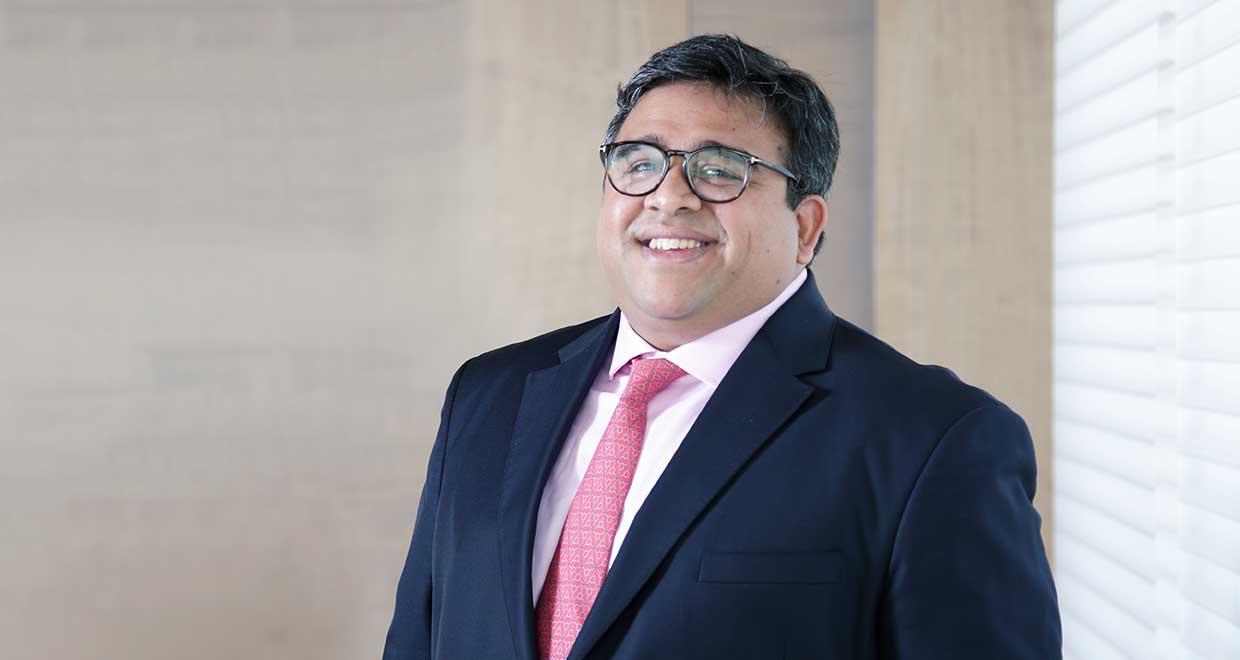
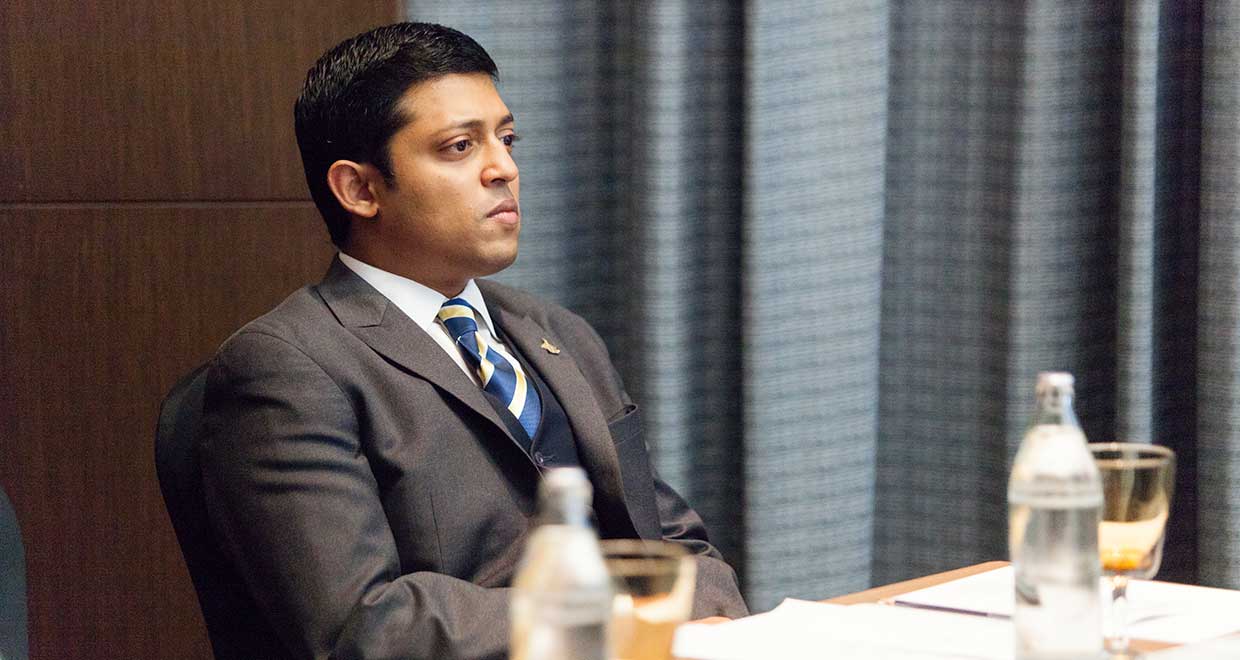
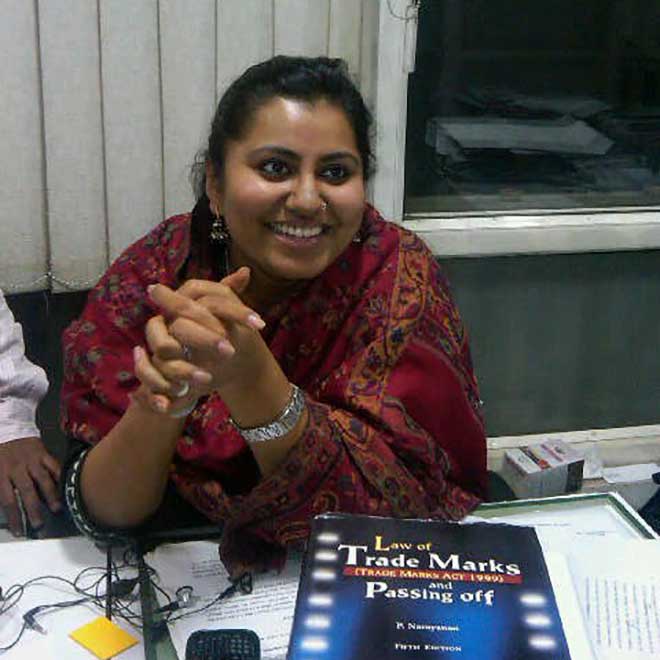
  • Samar Inam Khan, Matrimonial lawyer, Divorce Mediator and Arbitrator, on establishing Legal Experts India

    Samar Inam Khan, Matrimonial lawyer, Divorce Mediator and Arbitrator, on establishing Legal Experts India

    Samar Inam Khan graduated from Jamia Millia Islamia in 2003. At present, he is a Matrimonial Lawyer, divorce mediator, Arbitrator and a Criminal and Civil Lawyer as well. He is also a chairman of his own founded Law Firm which is still Sole Proprietorship Firm namely Legal Experts India.


    In this interview he talks to us about:

    • His law school experience.
    • Why he chose matrimonial matters.
    • His own law firm- Legal Experts India.
    • Most challenging part of being a chairman at his own founded law firm.


    How would you like to introduce yourself to our readers?

    I am a Matrimonial Lawyer, divorce mediator, Arbitrator and having Criminal and Civil Lawyer as well, touched almost all spheres of law including IPR, thoroughly saw how law manipulated by lawyers and also saw how judges do injustice in many cases.

    Judges sometimes do not recognize law and misses or try to miss the citations and give relief to the party who do not deserve to get such relief, these things usually happens in lower courts and when the other person goes for higher court by way of appeal or revision, they get actually justice.

    In many cases party lose faith in judicial system which in my own opinion, citizen of India believe in.

    What motivated you to gravitate towards law? If not law, what other options would you have considered for your career?

    Law is always my first choice and I never been gravitated because it is such a procedure in which I believe citizen will actually get justice.

    If I was not a Lawyer I chose to be a real Journalist.


    Tell us about your law school experience. Share some highlights from your college days that shaped you as a lawyer.

    I graduated Law from Jamia Millia Islamia, the experience was wonderful but what I saw or experienced was there was a split; politics was something attracted by many students because of faculty, the senior faculty member were not into any split hence there was three major splits, one and other against each other and the third one was neutral.

    These things made students more mature so that as and when they entered into practice, they knew they will face similar approach within the court between the lawyers, and exactly the same happened, many of pass outs after few years left and joined some corporates as their representatives, only few left who had patience. Patience is the most important tool to get into practice.


    Why did you choose matrimonial matters? What motivated you to choose that?

    Marriages are broken, love birds get married and after love and affection in three- four months, expectations increases, the result of which one or the other partner gets frustrated, which causes disturbances, fights between families starts, It is the emotional and the physical needs of a man and a woman that bring them into a relationship which then culminates in a marriage. In days gone by, couples were more tolerant of each other and let go many matters to save their marriage because it was unacceptable for a marriage to breakup.

    Physical and/or mental abuse: This is one of the major factors which finally bring about a breakup of a marriage. This is caused by the sadistic attitude of one of the partners which was kept covered up before a marriage. The spouse who gets the brunt of it, is kept under control, and is intimidated and manipulated. There is less chance for such a relationship to continue for long.

    Attraction towards another of the opposite gender: This happens because of one spouse does not give time enough for his/her partner. Communication gap, in words or physically, may develop between the two which, as it widens, paves the way for attraction of one spouse/partner towards another person of the opposite gender.

    Cheating and Infidelity: When a spouse begins to get attracted towards an unmarried person or one who is married, intimate relationships between the two develop and deepen and if the developing intimacy is not noticed by any one, it may end up in infidelity. This may go one for a long time till it is discovered causing devastation to the marriage/s and breakups.

    Constant humiliation before others: One spouse/partner may be less empathetic than the other; they have no inhibitions in speaking ill of their partner/spouse before other people. The targeted spouse is always made to feel that s/he is ‘good for nothing’; there is no regard for his/her dignity and sentiments. This is because of the selfish attitude of the targeting spouse who shows off to people that life of the two together would never be as good as it is at present without her/him. The suffering partner is invariably made to feel inferior. S/he may even have to undergo humiliation by his/her spouse before others about his/her inability to bear children.

    Constant nagging: This is again an attitude of a partner/spouse to keep the other at his/her beck-and-call. The targeted partner has to bear up with the other partner’s constant fault-finding, complaints, scolding, criticisms and frequent sarcastic remarks. There is no concern for the feelings or the respect of the partner. The tendency to nag is more common with women than with men. This is done in an effort to adjust their partner to their standards of living. When the targeted partner does things to please his/her partner, s/he comes up with new ‘points of improvements’. The suffering partner may tolerate it for a long or a short time but the breakup is inevitable.

    Repeated comparison of one’s partner with another man or woman: One partner may constantly compare his/her spouse/partner with others simply belittling them, trying to tell them that their lifestyle is not of a calibre which s/he desires. The targeted spouse/partner generally ends up developing an inferiority complex; s/he tries to match up to the standards of their partner to maintain peace and keep the relationship/marriage intact but it is of little use and it ends up in a breakup.

    These things causes break-up between the couple, as and when any family intrude in a matrimonial life, things will go away, and causes number of litigations, fake allegations which actually crafted and drafted by a lawyer, many of lawyers only works for their greed to earn more fee/income.

    I first try to resolve the issues between the couple, if fails, try to let the couple go for pre-litigation before trained mediator, if that fails, only then I try to get things go as it should.

    There are number of fake cases registered under section 498-A, wives try to conceal their income in PWDV Act and 125 Cr.P.C cases, such things actually motivated me to be a matrimonial expert to get the truth before the Court.


    What skills and qualities do you think have helped you achieve your current position and stature?

    Hard work, Patience, mediation, preparing cases at my own/self-drafting, being a good listener, Sharp memory, making arguments at my own, self-reliant, self-dependent, creating like-minded team and team work.


    Please tell us something about your own law firm- Legal Experts India.

    Legal Experts India was started by me as Sole-Proprietor in 2004, where I was alone in the said year, I took the risk of not getting any penny, thereafter I connected with few corporates for Arbitration, I myself designated as Sole- Arbitrator, and then the firm started working, now we have litigants, Arbitrators, IPR specialists lawyers at different parts of the country on Panel basis, at New Delhi itself we have Six Associates and we have base at Uttar Pradesh and Uttarakhand as well.

    Legal Experts India is at glooming stage and now we are expanding at faster pace.


    What falls within the scope of your responsibility? Tell us about a typical work day.

    I as Chairman of the firm designate my associates what matters he/she should engaged into, I myself argue in the cases, be it any case, I try to boost up my interns and new associates, I try to gauge their mind-set what they actually wants to do, I let my juniors be free of any stress and call them associate only, I never let them call me Sir, I ask them to call me by my name only, so to feel easy.

    My typical work day is to reach court directly, ask associates whether they are prepared for the case, if not I myself appear before the court because I usually get myself prepared a night before, guide them what to do, then in chamber I starts drafting and checking out citations, same I direct to my associates to do, in the end of day I check all files, get prepared myself for other day and then tell my associates in which case and court they are required to appear.

    I do not try my associates to have so much stress; we at Legal Experts India leave office by 5 Pm so my associates also have social life as well.


    What is the most challenging or stressful part of being a chairman at your own founded law firm?

    The most challenging one was the start-up, I started it without having too much knowledge of all the spheres of law, I stood against few very senior lawyers those days, but courage and patience wins the game.

    Thereafter choosing the right associates was another challenge and I chose only few, but those days were as stressful as I was apprehended if I chose the right ones or not.


    What do law firms in India look for in potential candidates? What must a law student do to get hired in a top-tier law firm?

    Be it top-tier or mediocre, to get into a law firm students need to read about the law firm a day or two before, what they actually wants, and be just on topics,  student should show curiosity to join and work without any time boundations, students should also know whether their work will be admired, they must not expect too much salary in start.

    At the time of interview be just and proper, wear formal cloths, and never show from which background they are, at the time of interview they should have eye to eye contact, and never approach indirectly.

    What should be your parting message to our readers?

    Struggle is not just word, it speaks and its sounds louder, a Legal Practitioner practicing for more than 5 years and not earning too much, never underestimate him, he is having much more knowledge to gauge and perform.

    As and when he starts earning good the people around who underestimated him will only watch, and he will not turn back to them.

    In short never underestimate a practicing lawyer.


  • Rahul Phukan, Legal Director/Head Director of Legal-Real Estate, on his achievements and experiences from a graduate to director

    Rahul Phukan, Legal Director/Head Director of Legal-Real Estate, on his achievements and experiences from a graduate to director

    Rahul Phukan graduated from University Law College, Bangalore University (2000-2005). At present, he is leading legal real estate (Legal Director/Head of Legal-Real Estate) and expanding stores across in India and other countries in South Asia and managing a team of experienced lawyers based on regional offices in India for the purpose of procuring, development, opening and operation of stores in India.


    In this interview he talks to us about:

    • His experience at internships.
    • His career graph.
    • Qualities that helped him to become the head of legal-real estate.
    • Changes in life after becoming the head of legal-real estate.


    How did you choose law? Did you always know that this was what you wanted to do?

    I made up my mind to pursue law pretty early in life- may be around standard eight in school. There were certainly influences in my formative years from the family. The tales of my great grandfather being a pioneer in the field of law and one of the first Indian district court judge in north-east of India (Larger Assam State including East Bengal under British). There were lawyers in the next generation who were also academicians and experts. The generation after had my uncle who was a Supreme Court judge with whom I had spent quite a bit of time- I think enough time to get influenced and convinced! I remember, the family house in Jorhat, Assam, had a library- though I didn’t read much from there but just glancing through the books perhaps also left a mark and fascinated me. Having said that, no one in the family ever told me that I should pursue law, I think the influences were strong enough to shape my decision which my parents definitely appreciated and supported.

    Adding to that, though I knew I would do law for sure, but what would I specialise in was something I was not sure of. But I still pursued it with an intention that I will explore and find my area of interest.


    Tell us something about your college life. Which activities did you participate in? How did you go about developing expertise and knowledge in your areas of interest?

    I am a proud alumni of University Law College,Bangalore. At college we had the liberty to participate in various moot court competitions which I thought was a great way to develop research and analytical skills. I also made it a point that I interned with various lawyers and law firms. I started my internship right from the second year in college. I was fortunate to have the opportunity to spend time with a leading national law firm after college each day. When I look back I realise that the internships which I did gave me a very practical overview of the legal field and by working on various subjects, I could actually test the water and decide what I wanted to do on a long term basis. Besides this, I also made it a point to visit courts every now and then and witness the working of the judiciary. I feel this is important no matter which field of law one chooses -at least to have some knowledge of the courts! As a student, one gets  extremely inclined to certain subjects like IPR, Corporate Laws, Human Rights, etc. but it is the practical experience which helps one to decide where one’s interest lies and sometimes also to discover that the interest is actually on a totally different subject.

    Apart from the extra- curricular activities, interaction with my teachers in class, discussion with peers and seniors in college were something which really helped me understand the legal field better and understand the practicalities. Academically, as a student I was one of the top five rank holders in the University.

    While it is important to enhance expertise and knowledge, it is equally important to have a life beyond college, internships and extra-curricular activities. I continued doing what I always enjoyed doing i.e. play tennis and cricket, read books and listen to music and attend various concerts and events. The idea was to have the right balance of academics and life in general- making both enjoyable!


    Many lawyers say that the first year after graduation is the most difficult year for young lawyers. How was your first year after graduation?

    Yes, I agree for many the first year after graduation is a difficult year. There are numerous colleges in India where in the final year there is no campus placement if one has to opt to work for the corporate world or a renowned law firm.

    For me there was a period of dilemma right around the time I was about to complete my law graduation and few months after. I was unsure on the course of action I should take, though I was certain that I had to work for a corporate eventually. I quickly learnt that to excel in any role I take up, it was important to understand and acquire practical knowledge in the field I like- so as to become an expert in that field. This is when I started applying for law firms as I thought that to learn or experience all verticals of law there is no better place than a law firm. I am glad I was retained by Fox Mandal & Associates as a trainee and for the exposure I got to various aspects of laws – which most certainly helped me shape my career!


    What kind of internships did you do while you were a student? Any remarkable experiences during your internships that shaped your career choices later?

    I must tell you that internships are as important as academics. The more internships or time you spend observing the legal fraternity, the easier it is to make career choices. It is like a discovery trip!

    Right from the second year of college, I made it a point to do formal internships or just spend time every day with law firms or at an advocate’s chamber. My internships were mainly on corporate law practices including FDI, corporate compliance-labour laws and IPR. It involved civil litigation and real estate transactions. While interning with a law firm in Bangalore, I got the first taste of working on the real estate domain which I started to enjoy. What was fascinating for me was that the domain had variety of challenges on a day-to-day level. The number of legislations one is going through for any real estate transaction could vary with the location, ownership, etc. and each real estate project had its own uniqueness and set of challenges- I was intrigued!


    You have a lot of work experience, from working at a vast array of places. Can you tell us a little about your career graph up to this point?

    After college in 2005, I started as a Trainee at Fox Mandal & Associates in Bangalore. Fox Mandal as you may be aware is a full service law firm and hence as a trainee I was fortunate to work on the job with all verticals in the firm which was very intense and a great learning experience. During this time, I interacted a lot with various partners and industry experts to learn more and more about each work-stream practically.

    I continued as an Associate at Fox Mandal Bangalore and joined the real estate and infrastructure team. In the year 2009, I was promoted as a Senior Associate and subsequently, in the year 2010, I was escalated as the Group Head of the Real Estate and Infrastructure Wing at Fox Mandal & Associates, Bangalore. During the course of my retainer-ship with Fox Mandal, I was handling matters relating to real estate and property and had worked with various developers, Indian and international corporate/companies, financial institutions, property management groups/consultants, foreign state government/bodies. The matters mostly involved entry level strategy planning, due diligence, joint ventures, M&A, joint development, project construction and development, facility/built-to-suit campus development, pre/post lease/purchase/sale compliance & documentation(residential & commercial properties) and of course litigation and corporate law support.

    Thereafter, in 2012, I joined Goldman Sachs in Bangalore as Legal Associate for the Corporate Real Estate Legal (CREL) and Commercial and Corporate Contract– Asia Pacific except Japan. My role in Goldman Sachs involved providing legal support to conduct real estate matters, e.g., real estate transactions including investments, capital projects, building operations, critical systems and infrastructure and was also responsible for periodic regulatory, corporate entity reporting and corporate matters related to real estate entities. Further, I did review and draft a wide variety of corporate services and other contracts including: events, travel, technology, consultant, tax & audit engagement letters, market data, subscription, employment, training, procurement and vendor contract and related matters and advised on matters, in collaboration with divisional and other specialist lawyers. Not to forget, my work also involved management of internal corporate authorizations and procedural matters and legal issues as they arise in day-to-day activities.

    In December 2014, I joined Decathlon Sports India Limited as Real Estate Legal Advisor for the South Zone and later in September 2015, I took over as the Head of Legal/Legal Director- Real Estate.


    You are the head of legal-real estate. What qualities helped you to achieve this status?

    To start with, the most important quality is the passion for the field of Real Estate Law.  The passion does drive me to learn each day and come back greedier to work for more. Of course, one has to be hard working and dedicated to ensure that each work stream is done with 100% commitment and integrity. There is no short-cut to gain practical experience, so the more one efficiently works on various fields with an open mind, the bigger the gain is in terms of experience. I also enjoy interacting with people and in that sense I am quite observant as a person too- this helps me a lot in business relationships and negotiations.

    Right from my days at the law firm, I was leading a team- hence leadership and managerial qualities was a key quality as well. Today I lead a team of extremely able and competent lawyers at Decathlon. Also, the nature of work I do involves lot of decision making- hence I would say managerial courage is important too.


    Tell us about the nature of work you are entrusted with at Decathlon Sports India Private Limited.

    Decathlon Sports  is one of the biggest sports retailers and is rapidly growing in India. I lead the legal real estate team at Decathlon. The team is primarily involved with the business and development team right from sourcing of projects to opening of stores in India. There is a variety of legal issues one has to go through including but not limited to property laws for any given projects and as you may be aware that real estate is a complex subject with laws varying from state to state.

    I am also helping certain other regions in Asia for legal matter and store openings, has been one of my expertise.


    What changes came into your life after becoming the legal director / Head of legal-real estate? How do you manage to strike a balance between your professional and personal life?

    For me the change is not drastic- I still continue to enjoy the work I do like I always did. Of course, there is a lot more to handle now, but when one organises work based on the priority and business requirement with the support of an extremely efficient, competent and motivated team, the work flow can be channelized. Since, there is a variety of projects across regions; I do travel now quite a bit now.

    As a young lawyer, it was difficult to manage the work and life balance as we all want to learn and excel quickly. As one grows older- and with experience it is easier to find that balance between work and life to sustain the career growth and to continue and keep the hunger to learn without risking a burn out. Therefore, dedicating time for the family and friends who are my support system especially on the weekends, doing things I like, playing sports when I can is something which really brings that balance. I am also a foodie who likes to eat and cook and I love travelling or going out for drives- I find these things really relaxing and refreshing. Without this facet of life, one cannot get the best out at the workplace- home is where the heart is as they say!


    What are your plans for the future?

    I plan to continue working as a real estate lawyer for sure. Perhaps, I would also like to stretch my wings to the other regions out of Asia- which I really enjoy. What would be also interesting is, apart from being a transactional and business lawyer, to go beyond legal aspects and contribute more to the organisation I am associated with. Definitely, the lawyer in me helps me to be that business partner and the risk manager!


    What would be your message to our readers who are budding lawyers and law students?

    From my experience, I would say that while it is very important to excel academically, it is even more important to experience the legal field from practical point of view. At the beginning, one has to be patient and must only concentrate on the learning and experience. While job tile and remuneration is important but it is not bigger than knowledge- so if a young lawyer is open to learning and only concentrates on harnessing his/her legal skills at the beginning of the career- I can assure you that job title and remuneration shall all fall into place on the long run. Efficiency in work, practical knowledge, transactional experience, managerial and decision making skills are few things no law school can teach!

    Not to forget, while we are all focussed on our career goals- never stop doing things you like doing apart from work or studies or internships. The balance between hard work and life will make the journey complete and enjoyable.

    My good wishes to all budding lawyers- the legal profession is seeing immense change and the younger generation is clearly blending in well and pushing the standards higher.

    All the best and thank you for having me!


  • Rajrupa Sinha Roy, Assistant Professor of Law on importance of mooting, working as a junior research fellow under MoEF and pursuing a PhD from IIT

    Rajrupa Sinha Roy, Assistant Professor of Law on importance of mooting, working as a junior research fellow under MoEF and pursuing a PhD from IIT

    Rajrupa Sinha Roy is an alumnus of NALSAR. Having studied law from Haldia Law College in 2009, she pursued LL.M from NALSAR in the year 2011. Currently pursuing his PhD in Environment Law from Rajiv Gandhi School of Intellectual Property Law, IIT Kharagpur and gainfully employed at Adamas University as an Assistant Professor of law, she has taken part in several conferences in India and abroad. An academician throughout, she has worked in various projects that were funded by Government of India.

    In this interview she talks about –

    • Her college days
    • Her opinion on importance of Mooting
    • Her experience as a Junior Research Fellow in Ganga River Basin Management Plan
    • On pursuing a PhD from an IIT
    • Her experience of working as a professor

    How would you like to introduce yourself to our readers?
    I would describe myself as a strong and dynamic personality with a broad temperament as well as someone who is a staunch supporter of innovative and constructive ideas.


    Tell us something about your school and college days.
    I wish I could travel back in time to be with my friends with whom I cherish fond memories. School and college days had been the best days of my life as it has helped me in shaping my present career. I take pride in being a student of Bethune Collegiate School, Kolkata which has inculcated a sense of discipline in my day to day activities. My tenure as a student at Bethune has always since my graduation from there motivated me to accept the tough challenges presented from time to time. I graciously thank Ms.Rekha Sengupta,my ex Principal, for assisting me to deal with complex situations in life. Graduating from Haldia Law College was no different from my school days since my teachers and friends reserved the same support for the endeavours I had taken now to be a lawyer. My stay at Haldia Law College has nothing but offered immense opportunities in the form of inspiration to take up higher studies that I had taken from my teachers and seniors. I owe a lot of credit to these beautiful people for what I am today.


    How important do you think mooting or any co-curricular activity is in shaping one’s future career in law?

    I being a student of a non NLU understand the importance of mooting in contemporary academics as I never got the opportunity to participate in any National level Moot-court Competition due to lack of proper guidance in regard thereof. Mooting is a vital co-curricular activity for all law students as it brings out the inquisitive personality in a student. It also helps in building inter-personal skills and all-round development which are basic necessities for a successful lawyer. I strongly believe that whether a NLU or non-NLU, the university should prima-facie focus on conducting moot-court competition both at University and National level to help aspiring law students to hone their skill and exhibit the same. As for other co-curricular activities are concerned a law student must make sincere efforts to undertake publication of Research Papers, Articles, Case Notes etc. in reputed journals. Publications in reputed Journals aids in writing a strong resume for students seeking jobs or applying for higher studies in reputed Universities around the world.


    How important a role do you think law school plays in shaping one’s career?

    The theoretical and the practical aspects of studying law are divided by a fine line of critical thinking and analysis which can be put into effective usage. Take for example an instance where the culmination of a research oriented topic could be used for framing policies in the legal domain. As the saying goes that knowledge without its application is meaningless, theoretical ideas supplemented by practical usage can go a long way in grooming a law student for achieving a successful career at the best law firms and companies in India.

    rajrupa-sinha-roy-2

    Please share with the readers your LLM experience at NALSAR. What are the challenges you had faced while studying at NALSAR?

    I did not face much difficulty in terms of my academics as while studying for my LLB degree I had a course structure similar to that in most other law schools. However, though the syllabus and other activities were quite similar, I had but two very significant disadvantages; one was ‘Internship’ and second was ‘Moot-Court’. Nevertheless, I still treasure each and every moment of my stay at NALSAR and made friends for life.


    After completing your LLM, you worked as a junior research fellow in the ganga river basin management plan and policy project under the MoEF, GOI. Do share your experience on the same.

    That was a major turning point in my life where I got the opportunity to begin the most desirable research work on environmental law. I wanted to do my LLM in Environmental Law but that dream materialized in a pragmatic sense only when I started working in the Ganga River Basin Management Project. I worked in the project for almost three years where I mainly researched on various legislation and policies relating to the river Ganga. The association with prodigious academicians as well as the Ministry of Environment and Forest ascertained me with a range of opportunities. I received the chance to not only work with great academicians but to also attend several research-oriented programmes, which eventually helped me to determine the area of my Doctoral Dissertation.


    Please tell us about the selection procedure of for the fellowship program which you were inducted into.

    There is no specific selection procedure for these kinds of research programmes. It depends upon the types of Projects that are presently in the pipelines or are being initiated and the funding which is available for the same.


    Having secured a PhD from IIT, how would you describe the journey to attaining the same?

    The moment I enrolled myself for the PhD I was determined to achieve all the goals which would have never been possible before I joined.  The application procedure is very simple. The admission is open in July and in December every year. One can apply in four different categories for PhD in IIT. The first category is ‘Regular with Institute Assistantship’, which is the category where you will be ensured a Scholarship from the Institute. The second category is ‘Individual Fellowship’ (CSIR/UGC/DBT/ICAR/INSPIRE etc.). The third category is ‘Sponsored’. The fourth category is ‘Through Project’. You shall find all the rest of the details on the relevant web-page for the programme. The topic of my Doctoral dissertation is ‘Law and Policy Framework on Pollution of River Ganga in West Bengal’. I would not call it a challenge because striving hard for something which makes you knowledgeable and strong is worth the hardship and pain. I never thought in my life that I would go to Oxford University to present my thesis. I would always cherish these memories no matter where I go.


    You can be best described as an academician. When did you realize that academics is the place where you can excel professionally?

    I have always been fond of becoming an academician ever since I graduated as a law student. Being among the students gives me a sense of power and happiness. I believe I could positively contribute to the society by being a teacher. I could be a role model for students who are the future of this country.


    rajrupa-sinha-roy-4

    You are now working as an Assistant Professor at School of Law, Adamas University Barasat. How is your work experience so far?

    The experience till now has been very wonderful. Teachers and staff have been very kind and supportive. My role as Assistant Professor has been well appreciated by the Dean of law department and, most importantly, by my students. As I have already pointed out before, it was my love for teaching as well as academics that truly prompted me to take up this job of Assistant Professor at Adamas University.


    In today’s time, every law graduate wants to get into the rat race of landing a job at a corporate law firm. What prompted you to choose the less charted pathway of teaching law?

    Though working with a corporate law firm is a lucrative job, one has to be satisfied as well with what he or she is doing in life. My choice of working as an academician would definitely be more about my sense of satisfaction and happiness. As already mentioned, my love for teaching had a profound influence on me on taking up this job. I believe that teaching as a profession is not a less charted pathway as one can always do better in this field as well.

    You have studied at a traditional law college, a NLU, a college constituted under the aegis of IIT, and, currently, you are teaching at a newly instituted private law school. How has the collective experience of that been?

    It will be wrong to think that you could list out the pros and cons of a University because it is not the same as measuring how you would measure any place of work or vocation.  A more appropriate way to discuss what you mentioned would be to address the challenges I faced as a student at the institutes where I studied or taught. To be very frank, in today’s time, every student faces immense stress related to academics, peer competition and the drive to excel in life. One nevertheless has to remember that opportunities lie in adversity. University is a level playing ground and it is the student who has to decide the rules of the games where he can excel.


    Where do you want to see yourself five to ten years down the line?

    I am very much keen to pursue Post-doctorate from a reputed University where I can excel in my research skills with regard to environmental law.


    What final piece of advice do you want to pass on to the readers of the SuperLawyer?

    A good piece of advice for this young generation would be that no matter how hard life plays with you it is upon you ultimately whether or not you want to get up and walk to see what life has in store for you. Never give up and try to give your best shot and leave the rest up to the Almighty.


  • Suhasini Rao, Co-Founder, CubeRoute Advisory Private Limited, on being a Chief Product Officer at CubeRoute Advisory Private Limited

    Suhasini Rao, Co-Founder, CubeRoute Advisory Private Limited, on being a Chief Product Officer at CubeRoute Advisory Private Limited

    Suhasini Rao graduated from University of Pune, India in 2006. She is an attorney with over a decade of diverse, post-qualification experience including chamber practice, corporate consultancy, international academics and the development sector. Areas of academic interest include public law (domestic as well as international), environmental law, developmental and infrastructural issues and public safety such as anti-harassment, anti-corruption and protection from heinous crimes.

    At present, she is the Chief Product Officer and Co-Founder of CubeRoute Advisory Private Limited.

    In this interview she talks to us about:

    • Importance of higher studies.
    • Cuberoute Advisory Private Limited.
    • Services provided by Cuberoute.
    • Her publications and importance of those publications.

    How would you like to introduce yourself to our readers?

    I am a lawyer but my work is better described as research, application and innovation in law. A large part of what I do involves trying to find easier and effective solutions to everyday problems faced by all sorts of entities while trying to comply with the law.


    What inclined you towards legal education?

    Environmental matters, especially the co-relation between the environment and crime, is a subject that has interested me for as long as I can recall. I chose to study law and to try and specialize in environmental law, as a result of interactions with environmentalists and naturalists during my school years. Subsequently, while my current area of work and practice is detached from everyday environmentalism, I try to stay in touch with the subject through research and allied projects.


    What were your areas of interest while you were in law school? How did you go about developing expertise and knowledge in these areas?

    I have a keen interest in Public international law, environmental law and criminal law since law school. From the very first year, I knew I wanted to compete in the Stetson University International Environment Law Moot Court competition, which I did in my third year. Our team went on to win the National Qualifiers and then represented India at the International Rounds. Internships too, played a roll in the learning process. Working with Mr. M.C. Mehta’s office through an internship was a fantastic learning experience. Since I am the first in my family to study law, I chose to intern with as many varied areas of law as I could, in order to better understand my capabilities and limitations and my likes and dislikes. In this process, I was lucky enough to intern in chambers of lawyers practicing at courts of first instance (civil and criminal) as well as appellate courts, and then garner some corporate and consultancy experience as well. The process of elimination is under-rated and it is important to note that unless one experiences a variety of circumstances and career realities, it is usually an incomplete picture on which crucial career choices are made.

    Share your experience at University of Torino, Italy.

    The United Nations Interregional Crime and Justice Centre (UNICRI) is one of the only institutes in the world to offer an LL.M. program in International Criminal Law. The degree is offered in conjunction with the University of Torino, Italy. Since I knew this is the subject I wished to study and that this was the only place I could do so, I chose to apply there. There have been many positive changes in the program since my time there but one of the most interesting and enduring qualities of the course is the diversity of students enrolled therein. In a class of 40 students, we had over 20 nationalities and about 15 different academic/ professional backgrounds. To this day, some of my closest friends and colleagues are those that I met at the program.

    Also, the program invites internationally acknowledged experts, justices of international courts and practicing attorneys of various international justice fora as faculty. Interaction therefore, is always academically sound and intellectually stimulating.


    How important is it for a lawyer to go for higher studies? What motivated you to pursue your LL.M. in International Criminal Law?

    A primary degree in law, such as an LLB in India or a JD in the US, is supposed to enable a graduate to practice law. So, unlike medicine or architecture or any other professional qualification, a Master’s Degree such as an LL.M. does not usually aim to enhance legal professional skills,but provides an in-depth perspective in the chosen subject as well as a chance to study a wider scope of application of such topics.

    Today, International Criminal Law is of more relevance than ever. It is that body of law that governs crimes committed across borders and across different identities of nationalities, ethnicities, and geographies. Money laundering, terrorist financing, human trafficking, piracy on the high seas, genocide, war crimes and a host of other criminal acts are increasingly prohibited and punished by all nations. This body of law, therefore, is vital to ensuring peace and justice across our world. I have always had an inclination to study investigation, international crime and cross-border matters and this program offered a good combination of the subjects. In fact, my thesis was on the subject of environmental crimes in the context of armed conflict.


    What advice would you give to people who are trying to decide which area of law to specialize in?

    There are two schools of thought to be considered while investing time, finances and resources in a second degree after a graduation in law. The first one advocates specialization in a subject closely allied to one’s chosen area of practice, if one chooses to work as a lawyer. This has obvious advantages of enabling better career opportunities, especially outside of India and also, a more comprehensive understanding of industry-related subjects. LL.M. in subjects such as project financing, international arbitration, and corporate governance can be categorized as such. On the other hand, if one is passionate about a particular area of law but which is not necessarily one that lends itself to professional practice, one can choose to earn an LL.M. in such a subject. For instance, LL.M. in human rights law, or even international criminal law are subjects that inspire academic study but are not widely practiced in India.

    Most importantly, an LL.M. is a degree that requires dedication and focus as it is a choice and not a compulsion. Hence, one should choose to earn this degree only if one is motivated to allocate sufficient time and resources to intensive study.


    Tell us something about CubeRoute Advisory Private Limited.

    Jaideep Chowdhary and I started CubeRoute over a year ago to focus on creating customized compliance solutions for our clients. Compliance with the law is an aspect that is troublesome for corporate, quasi-government and non-government actors, not because of a lack of willingness but because of a paucity of good training and awareness solutions. Legal professionals provide answers to legal queries but often miss out on accounting for business realities. Similarly, business strategies usually view legal compliance and awareness as an encumbrance. We, at CubeRoute, bridge the gap between these extremes. Our team therefore, comprises of professionals with a background in law, finance, management, marketing and business strategy, training and psychology, amongst others, to develop client-specific solutions.


    What are the services provided by the CubeRoute?

    Our services enable our clients to achieve efficient and accurate compliance with various legal mandates, in keeping with the letter as well as the spirit of the law. We provide consultancy services, business strategizing in envisaging new business models and revenue streams, content development services, corporate training and awareness workshops. We also work with child-focused entities to enable enhanced child protection mechanisms. Currently we offer services in subjects such as anti-corruption compliance, positive employment practices, child protection mechanisms and anti-competition laws. We also collaborate with various central and state government agencies in capacity building projects.

    Tell us about your publications and importance of those publications.

    Between 2014 and 2015, the Bangalore Mirror ran a weekly column – Within the Law – to highlight important legal concepts and legislation that affect the public. In this series, I wrote about the right to education, right to maintenance, marriage laws and similar issues. In 2015, I presented a paper on Women and Child Security under new legislation at the Xth Annual Conference, Centre for Public Policy, IIM – Bangalore. The publication explored the theme of bias and implementation difficulties in the anti-sexual harassment law as well as the law on sexual offences against children. Subsequently, I have authored articles for LexWitness, India’s leading magazine dedicated to legal matters, on anti-sexual harassment legislation and juvenile justice laws. I also write regularly for various online entities on subjects such as public infrastructure and property laws, family laws and security measures.


    What are your future plans?

    Individually, I would like to focus on bettering my understanding of public laws, focusing on food security, public infrastructure and anti-corruption and anti-money laundering. As a team, at CubeRoute we look forward to adding a greater suite of services, both offline and online, to our service menu and enhancing our team’s skills in serving our clients.


    What would be your message to our readers?

    Never be afraid to experiment. There is much more that can be done with a degree in law than practicing before a court. Make intelligent choices based on accurate information, but do not ignore your gut instinct. Most importantly, teach yourself the skill of how to learn – this is the one and only skill that will bring you survival and success throughout your career.


  • Shreenivas Raju, Associate, Shardul Amarchand Mangaldas, on corporate and commercial law as a field of profession

    Shreenivas Raju, Associate, Shardul Amarchand Mangaldas, on corporate and commercial law as a field of profession

    Shreenivas graduated from Loyola College, Chennai with a degree in B.Com (Hons.) and went on to pursue law from the Cardiff Law School, UK. Currently working as an Associate at the Chennai office of Shardul Amarchand Mangaldas and Co, he specializes in Corporate and Commercial Laws which according to him is also the field he aims to excel in as a lawyer. He has worked at reputed firms like Dua Associates, OSC Services Private Limited and Global Law Alliance, Singapore.

    In this interview he shares his views about –

    • Working in Indian Law firms
    • How different is Indian education system from other education systems
    • His life at Cardiff Law School
    • About His inspiration in his father
    • How Cardiff was his formative time
    • Lessons law students keep in mind before doing internships


    How would you introduce yourself, given that most of our readers are law aspirants, lawyers-in-the-making & young lawyers?

    I am Shreenivas, and I currently work as an Associate at Shardul Amarchand Mangaldas and Co.’s Chennai office. Yes, I am a Lawyer, but since you say that most of your readers are lawyers, friends of lawyers or law students, I’d frankly say that I’m not that well connected with the legal circle here, since I’m a non-Chennai boy; although I would also add that I have been working in Chennai for the past 3 and a half years and am getting to know my colleagues and fellow legal professionals from other firms / practices in Chennai better, and I don’t consider that to be a disadvantage / obstacle that will hinder my aspirations to become a great lawyer someday.


    What interest or influence propelled you to pursue law as a career? What other options were you considering apart from law and how did you make the final decision?

    When I completed my schooling, i.e., after my Std. XII board exams in May 2000, I was discussing my academic future with my father, and at that time, to be very honest with you, I was very passionate about Economics. In fact, I still am, and I guess I always will be. It is a fire inside me that will never die. So, at that time, since I had scored excellent marks in Economics in my board exams, my aim was to study and thereafter pursue Economics as a career, which, to this day, remains an unattained dream of mine. I even applied to Shri Ram College of Commerce in New Delhi, St. Xavier’s College in Mumbai, and other prestigious institutions across India, all for the B.A. Economics degree, but my father was of the opinion that a career in Economics wasn’t worth much – he felt that the only thing one could possibly achieve by studying economics is probably aim for the Nobel prize, and then basically live off research grants for the rest of his / her life in order to carry out research and compile theses. So he was not very supportive of my choice, and told me that the only option I had was to pursue a strong commerce or accountancy undergraduate degree, i.e., a Bachelor of Commerce (B.Com) degree from a reputed institution that would provide me with a thorough understanding of and exposure to the fundamental principles of commerce, business and accountancy, which would thereafter give me more clarity and focus in deciding the relevant field in which I wanted to forge a career in. He said that I could keep in touch with economics as a passion on the side if I wanted to, but that was that, and I had to stick to the aforesaid course of action. Initially, I was adamant about pursuing economics since I had offers from the afore named institutions and others, but my father never relented (even going to the extent of saying that it was either his way or the highway, since he would be the one paying for my education…!).

    So I was left with no choice but to take up the B. Com (with Honours) degree at Loyola College, Chennai. Luckily, the modules that I studies across my three years at Loyola included a module in Economics, as well as the usual modules in Financial Accounting and other fields of accounting – so, I was able to keep in touch with economics for a while during my B.Com degree. Before I knew it, three years had almost come to pass, and my father then wanted me to become a Chartered Accountant just like him. He had been a practicing Chartered Accountant for almost 23 years at that time, and his idea was that his firm / practice was already there, ready to be taken over and run by me. What he didn’t know was that I had realized very early into my B. Com degree, that I did not possess the passion and the flair for accountancy that he had. I knew that I could never do justice to this profession if I chose to become a Chartered Accountant because I didn’t have the drive. In my opinion, passion for whatever it is that one does in life is paramount in order to excel in that field– for me, there was no better example for this at that time than my father himself, a man born into a rural, agricultural family in the Badaga tribal community, who fled to erstwhile Bombay in order to pursue his dream of higher education, and ended up becoming the first ever Chartered Accountant from the his tribal community. He is a completely self-made man whose real-life rags-to-riches story would require an entirely separate interview from me to explain, and, I completely dedicate everything I have accomplished in my life today to him.  So I made this very clear to him towards the end of my B. Com degree, and told him that I wished to pursue something that I was passionate about. My father agreed to me pursuing anything I wanted but for economics and that was when I expressed an interest in pursuing a career in law. That piqued his interest as well and we sat down to discuss the options available. During the course of our discussion, he expressed a view that while the traditional law career involved qualifying and enrolling as a Barrister / Advocate with the Bar Council of India and then practicing in a court of law of one’s choosing he wanted me to explore the option of specializing in commercial or corporate law which, he thought was a fast-developing field of law with tremendous potential. One of his personal quotes which comes to my mind – “a chartered accountant is practically three-fourths a lawyer at most times…”, and being a voracious reader of the Economic Times and other business publications and magazines, made me honestly  believe that he was genuinely onto something, and so we decided that I should pursue a career in commercial / corporate law. This also seemed to make sense to me at that time since I already had a fundamental understanding of the accounting because of my undergraduate program, which I could tie in with a law degree (with specialization in commercial / corporate law modules) and thereby forge a successful career in commercial / corporate law. Even today, when I look back, I believe it was the right decision – a small example to emphasize this would be some of the transactions that I work on in my career today which involve dealing with or scrutinizing financial statements of a corporate entity – to me, these are not just accounting numbers or data, because I am aware of the underlying accounting principles behind such statements, and how the observations from a scrutiny of such statements, can be incorporated or highlighted, as and when required, in a due diligence report or a key transaction document.


    Tell us about your childhood and pre-college life? Was it always a dream to be in legal profession? If not what did you want to be? Who was your role-model?

    I have very fond memories of my childhood; it was a wonderful childhood spent mostly in Ooty and Coimbatore, where I studied at the best schools and my parents made sure that I never lacked anything. In terms of what I wanted to be when I grew up, the list is a long one – I wanted to be a police officer, a soldier in the Army…I even wanted to be Jackie Chan…!!! Till today, I’m a huge martial arts fan, and I still love and revere Jackie Chan. By the time I reached eighth / ninth grade at school though, I was completely smitten by Cricket…by the way; I’m a born cricket fanatic. I was born on June 25, 1983, the day India won the Prudential World Cup at the Lords Cricket Ground in London. My father kept a picture of me as a newborn baby alongside a picture of Kapil Dev holding aloft the famous trophy at Lords in our house.


    So yes, I was completely besotted by the game and I was playing for my School and really wanted to become a cricketer. But then again, that was a completely no-go with my father, and so was never ever possible. As I had mentioned earlier, thereafter, it was only about economics and I never contemplated the idea of becoming a lawyer while at school. In terms of role models, my cricketing inspirations were Kapil Dev, Sachin Tendulkar and Anil Kumble, and in terms of academics and a career professional, my inspiration was, is and always will be my father.


    You did your schooling, senior secondary and bachelors degree in india. Why did you select Cardiff Law School among others?

    Once my father and I had decided that law was the destination, we discussed the possible options where I could study law, and surprisingly my father and I were on the same page that to get the best possible education in law, the most appropriate place would be the place where the law was created, the country of the Magna Carta, which is the United Kingdom.

    So, why Cardiff?  Well, I did apply to other universities including Oxford, London School of Economics, and Kings College, London, as well as Cardiff. I did get through to the aforesaid institutions and   got offer letters from all of them. However, we realized that studying at the  these institutions would be an extremely costly affair – furthermore, despite being a top student in my school  and  college days (I was a gold medalist in Business Mathematics and Income Tax Law & Practice at Loyola College), scholarship offers weren’t easy to procure at all. Around the same time, we met one of our family friends whose son had studied at Cardiff and went on to procure LL.M degree from Oxford and qualified as a Solicitor after doing the Legal Practice Course (LPC) from Nottingham. He subsequently joined as an Associate in Freshfields Bruckhaus Deringer (one of the famed Magic Circle Law Firms based in London).. We also came to know that Cardiff University was a part of the Russell’s Group (i.e., the top twenty Universities in the United Kingdom) and that Cardiff Law School was not only amongst the top ten law schools of the United Kingdom but Cardiff itself was a very vibrant and a student friendly city providing great and economic education. So, we settled on Cardiff.


    Tell us about your experience at cardiff law school, Cardiff University? How would you describe your academic life at Cardiff? What curricular and extracurricular activities did you participate while in university?

    In my opinion, although the B. Com (Hons.) degree that I did at Loyola was my first undergraduate degree, the six and a half years that I spent in Cardiff (completing both my LL.B. Law (Hons.) degree and my LL.M in International Commercial Law (Masters) degree) were the true formative years of my life. I believe that, during that time, I truly discovered who I was as an individual and the extent of my capabilities and skills for which I have to thank my father for that opportunity. When you study abroad, you will notice that the differences in attitude, culture, the system of education, the system of assessment, etc. For example, the relationship between the teacher and the student – it is a relationship built on informality and trust – to this day, I cannot recall a single instance where I’ve addressed my professors / tutors as “Sir” or “Ma’am”…it was always on a first name basis, and for a new international student like me, it was as instant ice-breaker, which allowed us to be more open and frank in our interactions with our teachers, unlike in India, where certain boundaries are established immediately between the teacher and student, which, in my opinion, hamper the scope for an honest, inclusive and objective relationship during college life.

    The LL.B course was very rigorous and was delivered to students by way of lectures and tutorials (similar to group discussions). Lectures ran for five days a week between 8:00am and 3:00pm, sometimes extending later into the evenings as well, with tutorials happening everyday wherein the topics taught at the specific day’s lectures would be discussed and studied in further detail. This was a refreshing change for me from the lectures-only model that I came from in India, since the tutorial sessions were aimed at improving our understanding and consequently our application of the law. The tutorial sessions also formed a great method to revise that day’s lessons on that day itself. However, we were also required to spend quality time in the law library everyday carrying out our own independent research and supplementing the lecture study material with our own notes. All this was very different from what I had experienced in India where I would go back home after college and just complete any assignments / work given for the next day by the teachers, and when the time came to prepare for class tests or exams, all I had to do was to ensure that I committed the entire syllabus to memory (i.e., ‘mugging up’ or ‘ratta maarofy’ in Indian college lingo). Another aspect of the tutorial sessions that I enjoyed was the fact that we learned the law and developed our understanding of the law based on discussions where no one would be openly declared right or wrong – it was through interaction and open deliberations with classmates, which enabled us to develop perspective on different opinions, and to apply that perspective in our understanding of the law. In terms of assessment, we were examined by way of a mixture of exams and coursework / essays to assess your understanding, your analytical abilities, and most importantly, your understanding of the law, rather than just the strength of your memory.

    One of the most important aspects of education in the United Kingdom (and by extension, the western world) is the concept of the prevention of Plagiarism, which forms an integral part of the educational system here. This is again a very unique concept that any and every Indian student, who wishes to pursue his / her education in the UK, would do well to familiarize themselves with. The significance of plagiarism is extremely critical for every student to know, because plagiarism will not only make you liable to be failed in your degree as a whole or to be expelled from university, but it is a civil and criminal offence under the laws of the United Kingdom. The software that is used across the top universities in the United Kingdom is practically foolproof and there is no way of bypassing it. Luckily though, the top universities in the United Kingdom offer mandatory sessions on Plagiarism during their student induction sessions for international students at the start of the academic year, and so we were well-informed of its implications at the very outset.

    From a social and extra-curricular activities perspective, I was involved in various student community and local community initiatives from the Second year of my LL.B degree. During that time, I set up an Indian students’ society called YUVA – Youth of India, which went on to become the biggest Indian/ Asian student community in Cardiff and in Wales. The circumstances which led me to create the society were varied – (a) I, and many of my fellow students, had a very tough first year at Cardiff with nobody to assist or offer any support (the Indian students who had already been there for a while would never come forward to help the newbies and we were always left to fend for ourselves even at times when we needed help); (b) the Indian students studying at Cardiff University was the only student community which did not have any kind of representation through which they could present their grievances / issues to the University authorities; (c) there was no one to initiate the new students and help them to adapt to the change in culture, educational system, etc.; and (d) there was no scope for the organization of any social activities to help Indian students meet and to help them overcome homesickness, etc. I wanted to ensure that no Indian student coming to Cardiff would ever have to ever go through what I went through in my first year, which is why I approached the Cardiff University Students’ Union and created YUVA. It started out as more of a liaison between the University and its Indian students, both current and potential students. From there, YUVA began organizing events / parties for popular Indian festivals such as Diwali and Holi, which included parties, temple trips and Hindi movie-screenings at discounted rates in the local multiplexes for Indian students. Membership of the society was not restricted to Indians alone – our aim was to give the entire student community at Cardiff University a taste of Indian culture, and so we had many students of other nationalities, including Americans, Greek, English / Welsh, and Europeans. After a point in time, our events were considered “must-go-to” and during my time as President from 2004-2009, we hosted some of the biggest events in the student calendar, including our Diwali Bash in 2008, which was covered in the University’s newspaper “Gair Rhydd”, and also covered live on radio by BBC Radio Asia. Another highlight was the annual cricket match that we would organize between Indian Students and Pakistani Students during the summer every year – this cricket fixture became an annual favourite and always generated tremendous banter and camaraderie between Indian and Pakistani students, and generated a lot of buzz in the student community as a whole. All of the above led to YUVA Youth of India being declared one of the best student societies at Cardiff University, and I was voted the Best Student Society President in 2008 for my efforts.

    Other than the above. I also had the chance to pursue my greatest passion in life, i.e., Cricket, to the fullest, during my time at Cardiff. I was part of the University Cricket Team from 2004-2008, and even had the distinction of being the Captain of the team for a couple of seasons. In addition, I was also playing for a local city-based team named Cardiff Gymkhana Cricket Club in the Welsh Club Conference League, where I was also initially vice-captain and thereafter captain of the team. I also made it possible for Indian students coming to Cardiff to be able to join the aforesaid cricket league and play cricket in the summer during their time at Cardiff.

    In light of all the above, I was awarded the “Honour Roll” award by the University in 2007 – the first Indian student to receive the award in the University’s 127-year history, which subsequently led to me being chosen to represent the University at a Royal Garden Tea Party held at Buckingham Palace in July 2007, and at a State Assembly Dinner hosted by the First Minister, Rhodri Morgan AM, at the Welsh Senate – It is for these reasons why I consider my time at Cardiff University the absolute zenith of my academic and personal life so far.


    What all differences did you notice between the Indian form of education and that of abroad?

    Like I explained, I believe that, today, the Indian educational system has come a long way from its earlier avatar – this I have gleaned from my interactions with my fellow colleagues, peers and juniors. From these interactions, I understand that law courses in India are more analytical today in top institutions such as NALSAR and the National Law Schools / Universities, and as rigorous as courses in the UK and the West. At the time when I was a college student in India, as I’ve mentioned before, one major aspect of education in India was that education here was practically a test of memory power. In contrast, during my days at Cardiff, I would say 95% of the modules that I studied during the course of my LL.B and LL.M degrees had only one ‘essay’ question which was probably worth ten or twenty marks at the max – the rest were all problem questions designed to test your analytical abilities and application of the law that you have studies .This was the biggest difference, along with the plagiarism aspect that I had discussed earlier. I understand that prevention of Plagiarism is also being enforced strictly in many colleges and universities in India today.


    What internships and voluntary practical training did you take while in law school? What value addition did they provide to you in your career?

    In UK, there were many autumn and summer placement / internships that were available to students, but initially I did not partake any of them because of the rigorous nature of my LL.B course. During the course of my three year LL.B, I did not attend even a single internship or summer workshop for the first two years because of the course and the preparatory course work for the next years. The only internship that I did during that time was  in the summer break at the end of my first year when I returned to India  at M/s. Udwadia and Udeshi in Mumbai for a month. During the course of that internship, I was just accompanying the senior lawyers to the court carrying files, taking dictations, typing out affidavits, case notes, etc., carrying out case law research and offering assistance in any other manner requested. So in terms of value addition, it wasn’t a huge takeaway but it did give me a feel of what it would be like to be a part of a law firm.  . And if not anything else, I definitely felt the buzz of being around senior lawyers and associates.

    When I came to Chennai for the first time, I approached Dua Associates for a job, but instead they offered me an internship as I was yet to be enrolled with the Bar on an understanding that they will offer me the post of Associate based on my performance during the internship and once the enrolment has been accomplished. The internship was intense and lasted for almost three months and was probably the only meaningful internship that I had taken up  because, during that time, even though I was an intern, I was doing all the jobs a junior associate was supposed to do including working on legal opinions, case law research,  corporate and title due diligence exercises.  In the firm, I started under the supervision of the Corporate partner, Mr. R. Senthil Kumar, and thereafter the supervision of the Real Estate Partner, Mr. P.V. Sajiv Kumar.w I am grateful for that experience because it gave me the first real taste of corporate law and real estate law, and what it feels like to be a  part of a reputed corporate law firm, and helped me in  preparing myself for what I hope will turn out be a fruitful and meaningful legal career.


    What kind of internships would you recommend law students opt for to start building the sort of versatility and widened range of law that you are well versed with today?

    Probably the wrong question for me to be asked, as I’ve already pointed out that I have very limited legal internship experience in India. But from my interactions with peers, colleagues and juniors, I believe that one must not have a fixed mindset when they start fresh out of law school – at that time, generally, in the name of being focused, law graduated are already intent on specializing in a particular field of law and try to obtain internships that will satisfy that aim. In this regard, I would like to quote a senior partner for whom I’ve had the privilege to work with and to learn from – at the start of my career and at many instances subsequently, he told me that as an aspiring lawyer fresh out of law school, you must start with an internship in litigation. Being a corporate lawyer myself, to be honest, I know that people will be surprised by me saying this, but I do believe that the best way to start off is with litigation, because that’s the only way one will get a feeling for how law and the justice system in our country actually works. Transaction work can be learnt at the office from senior associates or by even attending training sessions, but what really happens in a court of law, the associated protocols, the application of the laws and statutes of the land, can only be understood and assimilated when you go to court, while interning under a practicing lawyer / advocate or barrister. It doesn’t matter whether it is a higher court or a lower court, start wherever you can and then go from there. Once you start going to all the big firms, there also the longer internship you get, the better. It is not in your hands.  It is pointless to have an internship for name sake rather the progression in every internship should be carried to the next one. You are going for the internship to get something out of it, right, make sure it counts. Don’t just go for an internship for that you can put a list of internships on your CV to make it look impressive. Try to have some continuity in your internship learning, even though they might be at different firms.


    Could you please tell us the role you played there and the challenges did you face during your initial days of practice?

     (Shreenivas was an integral part at Clifford Chance LLP, where he was involved in the leading acquisition of Kraft Food’s acquisition of Cadbury and several other international transactions between HSBC, Barclays and Standard Chartered Bank etc.)

    This was during my time as a Senior Consultant with OSC Services Private Limited, which is the captive Legal Process Outsourcing (LPO) unit of Clifford Chance LLP, located in Gurgaon, where, at the time of my employment, they had a team of, approximately 40 qualified Indian lawyers, whose role was assist lawyers and associates working for Clifford Chance LLP, a British law firm with a international presence cross border they do, with day-to-day transactional work. It is the world’s largest law firm which operates in about 60 countries right now. So, our job was to offer transactional assistance to lawyers across all the countries in their offices located in cities such as London, New York, Dubai, Singapore, Brussels, etc. There was hardly any challenge for me during my time there, as I had to work on British law aspects, and I was already competent in British law. The challenge was getting to learn all these transactional support work such as proofing of documents (for context and sanity), defined-terms checks, cross-reference checks, etc., which were primarily secretarial / clerical in nature. So the challenge at that time was in bringing me to do such kind of work, knowing fully well that I was a qualified lawyer and yet, I had to do work of a clerical nature, which had nothing to do with legal analysis and reasoning most of the time.

    For most of my time at OSC, as a Senior Consultant, I was called upon to be part of the diligence or drafting teams on most transactions. The acquisition of Cadbury was probably the biggest transaction that I’ve worked on so far for the obvious reason that it was the biggest deal of its kind in the industry at that time. We had different teams from multiple Clifford Chance offices across the world working on it simultaneously. My role was being part of the team that carried out diligence reviews of certain assets owned by Cadbury and creating a database that would list the said assets and the related details, which would subsequently be used as a key reference during the transaction documentation stage. The other transactions that I worked on were primarily in the Debt Capital Markets space for clients such as HSBC, Barclays, UBS, etc., who were all legacy clients of Clifford Chance LLP who were regularly involved in deals involving the issue of global definitive notes, and other instruments frequently used in debt capital market transactions.


    You have witnessed the operational style of law firms of different nations. What is your review on the working style of Indian law firms?

    While working in a foreign law firm, again, the firm culture and the work ethic are completely different. From my limited knowledge and experience, as well as from personal interactions with many foreign legal professionals during my time at Clifford Chance and Global Law Alliance LLC, I have noticed that there is a culture of accountability and responsibility – from the Partner to a Junior Associate, every person is held accountable and responsible for their actions, from the start of a transaction to its end. Associates are nurtured and made to feel a part of the transaction team from the very beginning, where they are sometimes taken along with the lead partner and the principal associates to a meeting where the firm is pitching to a potential client, and the Associate is encouraged to make a part of the pitch and thereby contribute – this goes a long way in boosting the confidence of associates and also takes them on a valuable learning curve where their perspective of the transaction starts at its very inception and ends when the transaction closes.


    Could you please tell us about your experience in the Global Law Alliance LLC, Singapore ?

    (Sreenivas was associated as a para legal at Global Law Alliance LLC, Singapore)

    Global Law Alliance in Singapore, I think, was a five to six month stint. It was different from my prior experiences because it was an absolute litigation firm primarily dealing with small as well as large litigation cases relating to tort law, accident liability, insurance claims, etc. For me, the take away from GLA was limited as I practically had no experience whatsoever in the kind of work they were pursuing, and because I had to hit the ground running and make good on deliverables with absolutely no prior training whatsoever. Additionally, I felt burnt out on many occasions during my time at GLA, because the deadlines were too intense and also because of the hectic work schedule in Singapore (which has a general six day working week, and in my case, which became a seven day week for the entirety of my stint there, and therefore meant absolutely no work-life balance). It was definitely not my cup of tea although I did enjoy occasionally going to court and observing the proceedings in some of the cases there. And, to be honest, I left it because I didn’t learn much in those six months and I felt that I was only going backward in my legal career.


    Tell us about your experience at Dua Associates Chennai and Cyril Amarchand Mangaldas Chennai and the work profile you were entrusted with.

    Dua Associates was my first official law-firm / associate role – as I mentioned earlier. I started there with the General Corporate practice headed by Mr. R. Senthil Kumar and was there for a period of three to four months, before moving to the Real Estate Practice headed by Mr. P.V. Sajiv Kumar, where I worked for the remainder of my time with the firm, i.e. around one year and three months. Again, as mentioned earlier, I believe that my time with Dua Associates was a steep learning curve for me and it was there that I really cut my teeth as a lawyer.  Today, my primary field is Real Estate / Real Estate Financing at SAMCO, and was my primary field at CAM as well. The foundation for this was laid at Dua Associates. It was quite an intimidating time for me since Dua Associates had, and continues to have till this day, a very well respected Chennai practice headed by the afore named senior lawyers which retains the confidence and trust of a formidable clientele.

    From there, I moved to CAM, where my work profile again involved a mixture of general corporate, real estate / real estate financing and a little bit of capital markets work. The general corporate aspect involved working primarily on corporate due diligence reviews and preparing legal opinions on various regulatory aspect, whereas the real estate component involved carrying out of detailed title due diligence reviews and the drafting / preparation of transaction documentation for real-estate financing transactions (in most cases, for the issuance of non-convertible / optionally convertible debentures).


    What prompted you to shift to the elite Indian law firms? How did your experience there differ from your earlier experiences?

    Well, what prompted my move to the elite Indian law firms is that I realized that I always wanted to be a lawyer and an associate working for a proper law firm. And when I returned from Singapore in 2013, I was already 30 and I realized that I had to move ahead to something. I joined Dua and the difference between the previous thing was that it was an LPO, the work experience is discounted wherever I go and LPO is different from a corporate kind of thing and it is more of corporate experience because of my own specific skill set, I was exposed to the legal side of things and it was a glorified back office. You’re a processor and not a lawyer and this is the biggest difference. I am a lawyer now and I was a processor then.


    Why the special interest in corporate laws and commercial laws with a special focus on commercial contracts, real estate & real-estate, financing, corporate governance, due diligence, regulatory & compliance?

    As I had mentioned earlier, that had been my idea all along. I did my B.Com (Hons.) and my law degrees (with my Masters being in Commercial Law) with a view to specializing in corporate / commercial law. However, I must admit that, when I started my education at Cardiff, I wasn’t aware of the true breadth of fields and practice areas under the ambit of corporate law / commercial law. It was only after I completed my LL.M. and during my subsequent stint at OSC Services that I realized that there was so many practice areas which one could be involved in. Subsequently, from my work experience with various firms, I have learnt, and continue to learn to this day, the nuances of the Corporate and the commercial field. in which I retain a special interest and wish to excel as a lawyer in this fields.


    What were the challenges you faced in shaping up your career as it stands today and where do you see yourself ten years from now?

    One of the biggest challenges I faced currently is keeping the fire burning inside me consistently. There are times when I get bogged down due to external and internal factors, and this is something that I am working on. Sometimes, I slip into a line of thinking that I am not where I should be right now in terms of what I have achieved in my career. I feel that I am probably three or four years behind from where I should actually be. Other than that, for me, keeping up with the ever-evolving nature of the corporate space in India and the related acts / statutes / laws, and learning how to customize the advice that we render to our clients in the current volatility of Indian markets is a key challenge. In the legal profession, it is imperative to stay at the top of your game at all times, and this means servicing the clients’ needs in the most efficient and proficient manner. For this, it is necessary to go above and beyond the call of duty and herein lays the challenge – of challenging yourself to be the best at what you do and to continually grow. Although, I also believe (as my father once told me) that the day you think you’re the best at something is the day you make the biggest mistake of your life. It is very important to acknowledge that we work in a profession where the learning never stops, and that there is always someone who is better than you and it is even more important to aspire to be as knowledgeable and as good as that person. So, therein lays the challenge- To continually learn with the same level of enthusiasm and the same level of commitment that you displayed in your younger years and not let money and any / all other internal and external factors come in the way of you becoming the best lawyer that you can be.

    Where do I see myself ten years from now? Well, I’m not the type who plans that far ahead to be honest. But I will say one thing in this regard the place where I’d ideally want to be in ten years is the following situation – at that time, if a client (on a transaction that I may be assisting the said client with) wakes up in the middle of the night or has been breaking his head all night over some legality or issue that may adversely affect the said transaction, and the said client is at their wit’s end as to how this can be resolved, then they should pick up the phone and call my number first. I want be that good a lawyer and should have earned the trust of my client to the extent that they should believe that I am the only person who can help them –  I want to be the first point of contact, the first resort for every client of mine, rather than the last resort, If I get to that place in ten years’ time, I’ll say-Mission Accomplished!


    What do you want to say to the next generation lawyers? What is your parting message to our readers?

    My message to young, aspiring lawyers (as well as aspiring law students) is that nothing comes easy in life…you have to put in the hard yards….especially in this profession.

    As a wizened legal eagle once told me, the legal profession is not a sprint, it’s a marathon. In a marathon, the eventual winner will be the one who conserves his energy, learns about his opponents, sees how they are running and sees the mistakes they are making, formulates a plan for the long run ahead, puts his head down and executes the plan with dedication and commitment, and then unleashes himself down the home stretch and leaves all his opponents behind. Similarly, the legal profession is like a marathon where you cannot expect to be successful overnight. It takes years of learning, practice and efforts to make it big as a lawyer and there’s no second way about it…!!!

    The Legal industry in India today is a burgeoning and cutthroat world where, if you’re not in for the long haul, then you’re on your way out before you know it…!!! The amount of law graduates being churned out of the law schools every year is increasing and there are hundreds of quality law graduates out there, and you are in competition with every single one of them. So, the stakes couldn’t be any higher.

    Be patient and willing to put into the hard yards…and never think that you are entitled to anything. In this profession you have to earn your stripes through dedication, learning and hard work, while also not compromising on your personal and professional integrity. And the most important thing to remember when you start as a lawyer is that your journey has just begun…be willing to learn first and then apply that learning…don’t worry about the money…give yourself a solid 2-3 years to build a good foundation  based on learning and application…be your best and the money will come automatically.


    Good Luck and God Bless!

  • Nidhishree Venugopal, Independent Practitioner, on building a career in litigation

    Nidhishree Venugopal, Independent Practitioner, on building a career in litigation

    Nidhishree Venugopal graduated from the University Law College, Bengaluru in the year 2005 and has been practicing as an Advocate before the Trial Courts, High Court of Karnataka and various other forums within and outside the State, ever since. She is a gold medalist and rank holder of the batch of 2005 across Bangalore University. Additionally, she has a post graduate diploma in Intellectual Property laws from the National Law School of India University, Bengaluru and a post graduate diploma in Media Laws from the National Academy of Legal Studies and Research, Hyderabad.

    She has an independent law practice that focuses mainly on civil, constitutional and commercial cases. These include matters relating to constitutional law, civil law, company law, arbitration, intellectual property, contracts & tenders, employment law, succession, etc. She is on the panel of the Karnataka State Legal Services Authority, High Court of Karnataka and a visiting faculty at COMMITS Institute of Journalism & Mass Communication teaching post graduate students Constitution and Media Law.


    In this interview she talks to us about:

    • What should a law student do to shape up his profile for litigation?
    • Necessity of a mentor or guide to handhold a young lawyer.
    • Her experience when she appeared in the court for the first time.
    • Difficulties faced in the early days of practice.


    What prompted you to think of law as a career?

    As I finished school, I gravitated towards writing and journalism. I contributed regularly to the youth pages of the Indian Express and the Times of India. I was a reporter for a couple of years at a local fortnightly magazine called ‘Nagar Life’. I applied and got accepted to the Communicative English graduate program in Mount Carmel College. Just a three year ‘B.A.’ did not seem like a strong enough degree to hold its own and I settled on law as a ‘safe’ option, with a 5 year ‘B.A.L., LL.B’, which sounded more robust to me, at that time. I also thought I could do a masters in journalism and switch streams, at a later point, if need be. So, law happened as a safety measure!


    How were your years in college? Did your study prepare you in any way for real life practice in courts?

    My batch was the last batch of ULC that had its campus in the heart of Gandhinagar, Bengaluru. Attendance was not too stringent and I made the most of it. I worked part-time with my drama teacher from school, going to various schools in the city, teaching them drama techniques. I was part of a student organization AIESEC, which is an international student exchange programme run exclusively by students. I mooted right from the first year to my final year. I did only two internships in college and both lasted a year. I interned with Poovayya & Co. in my fourth year and with Mr. Aditya Sondhi, Advocate (as he was then), in my final year. These internships were quasi-jobs, travelling beyond research and Court visits. I guess, it helped that I stayed on beyond a month (as is the regular tenure of an internship), making it easier for both to entrust me with more than piece-meal work.

    The syllabus that one studies does not exactly prepare one for practice in Courts. This was the case then, I suspect it is the case even now. We had practical subjects such as client counseling, moot court and court visit in our fourth and final year, which was not sufficient exposure, in my opinion. But then, Court is a different beast. No amount of theory/ academic inputs can prepare one for actual practice. Every day is different.

    How did you decide to pursue litigation? Were you considering any other opportunities?

    In college, I briefly thought of getting into corporate law. Both my internships were litigation internships. A month before my final year exams, I decided to stop interning, to study. On the last day of my internship, I asked Mr. Sondhi if he would consider offering me a position in his chambers. He said yes, my decision to litigate was made. Whether this decision was something I would stick by, was not clear to me, at that point.

    I told myself that I would give litigation a year and move to the corporate side if it did not agree with me. The first two years of litigation were overwhelming and exhausting. The long hours and the pressures of Court took a while to adapt to. It was not easy drawing a modest salary, when one’s corporate peers were earning 5 times that. The fact that your actions could determine the outcome of cases was also daunting.

    As I settled into the rhythm of litigation, practice was fun. The work varied from day to day and the excitement was unfailing. I enjoyed interacting with clients, meeting people from different strata of society and the thrill of appearing in Courts. My favourite analogy for litigation is a medical doctor’s practice- a patient comes to you with a problem, you diagnose the illness, you treat the illness, you cannot always guarantee that the same treatment would work for all patients- it works for some and it doesn’t for others, and you accordingly alter the course of treatment- the goal is to treat your patient successfully, within accepted professional parameters.

    It has been a little over 11 years and litigation still holds my interest.


    What should a law student do in your opinion to shape up his profile for litigation?

    Choose litigation internships. Moot. Read extensively. Having said that, I know of good practicing Counsel who have not interned or mooted during their student days but who are stellar at their work now. It is like learning to swim, the baby pool / floaters will only get you so far. You can only swim when you are in the deep end. Litigation internships may tailor your aptitude for the real thing.

    How important do you think mooting and academic writing are for a law student aspiring to become an advocate?

    Mooting may give a student a glimpse into Court, in that it involves preparing memorials, formulating points of law, formulating arguments and finally ‘presenting’ this before ‘judges’. Academic writing may equip the student with research and analysis skills, in examining a point of law thoroughly.

    However, in Courts it is very rare that the Advocate gets an uninterrupted period of time to present her case and questions posed by the Bench may not be part of one’s brief and are not in sequence. Also, unlike in a moot, in practice, the interest of your client will weigh heavily on your strategy and approach. Further, pleadings in a case are to be concise and to the point, with verbosity being its death knell. It is important to recognize the difference in actual practice. As an aside, if your peers and seniors at the Bar and Bench label your submissions as ‘Moot-court’ style of submissions, it would be a left-handed compliment, which you would quickly want to lose!

    Many students aspire to practice at the Supreme Court and High Courts. Should a student first practice at the trial court to learn the nuances, or is it fine to start at a High Court itself?

    I earned my stripes in the Trial Courts, right from drafting of pleadings to the conduct of full-fledged trials to final arguments. This has helped me tremendously now in my own practice. No matter where one starts her practice, it would be extremely useful to know how original trial jurisdiction works.


    How necessary is it to have a mentor or guide to handhold a young lawyer while still in the formative years of the profession? Did you have one?

    Since I joined Mr. Sondhi’s chambers when he had just started out independently, I had the accidental opportunity of being involved in building a practice, file by file. A lot of my values and beliefs have been shaped in the time I worked with him and he continues to be my mentor and friend, to this day. The profession is fulfilling and honourable, but at times, can prove to be treacherous. So it is important to have the right moral compass instilled to navigate it. There have also been several senior members of the Bar and colleagues who have in some way or the other helped me in my initial years and continue to guide me. You will find mentors and friends in the unlikeliest of unlikely places. I have found that members of the Bar are ready to help, if you approach them. One just has to break the ice.


    Describe your experience when you appeared in the court for the first time?

    I was given a service matter in the High Court, where all I had to submit was that my client was a formal party and no relief could be granted against my client. The case was called out. I entered appearance for my client. The Counsel for the Petitioner argued. The Counsel for the contesting Respondent argued. The Judge proceeded to allow the petition, granting reliefs against my client as well. I remained standing, and mute. Much to my horror, a month later, the Petitioner filed a contempt petition against both my client and the contesting Respondent and I had to face the ignominy of cowering behind my Senior, while he extricated the client from the pickle I had put it in.

    What were the difficulties you faced in the early days of your practice?

    Practice is challenging. Independent practice, moreso. An independent practitioner is a Counsel, an entrepreneur, an office manager, an HR executive, an accountant all rolled into one. I don’t think these challenges go away. With time, you just learn to adapt to these challenges, better and better. On my first day of independent practice, the Judge asked me to bring my ‘senior’ for arguments, when I stood up to argue a case. It is a different matter that even when I was attached to my Senior’s chambers, he was confident enough to entrust the conduct of the entire case to me! Just a few days ago, a client who came to meet me for the first time candidly said, ‘I expected you to be a lot older.’ I have had a few experiences where prospective clients have been hesitant to entrust their matters to me, as I am a woman. However, these instances have been few and far between and I have been fortunate enough to have clients who have looked at my abilities, rather than my age or gender. It is not that the profession is stacked against women or young lawyers, but it is that there has been a status quo-ist state of affairs, for decades now. More women are coming in. More young lawyers are striking out on their own. Slowly, things are changing. We are learning to adapt.


    What would be your parting advice to our readers?

    While I understand that litigation is not the only career option for a law graduate these days, I also find it saddening that an increasing number of students are opting out of practice, a tad too hastily. Litigation is hard, yes. But if our medical students said studying medicine takes too long, practicing medicine is hard and the pay is too meager, we would have no doctors. Litigate and engage with the judicial system.

  • Rahul Kothari, Advocate, on starting an independent practice in Corporate Law

    Rahul Kothari, Advocate, on starting an independent practice in Corporate Law

    Rahul Kothari is an alumnus of Symbiosis Law School, Pune. Having completed his BBA.LL.B from Symbiosis in the year 2009, he is currently running an independent practice on dispute resolution, contract drafting and negotiation, real estate transactions, general corporate and compliance issues. Prior to and subsequent to his graduation, he worked with Hariani & Co. for four years and then at AZB & Partners for three years, thereby gaining an immense experience in dispute resolution, contract drafting, negotiation, real estate transactions, general corporate and compliance matters. Rahul is also presently a visiting faculty at Symbiosis Law School in Pune and at Symbiosis School for Economics in Pune.

    In this interview Rahul talks about –

    • His law school experience
    • His suggestion on how to make a career in a particular field of law
    • His take on mooting writing research papers
    • His experience of independent practice
    • Scope of ADR and the recent amendments in Arbitration and Conciliation Act, 1996
    • His opinion on balancing between personal interest and financial security


    HOW WOULD YOU LIKE TO INTRODUCE YOURSELF TO OUR READERS?

    Thank you for this opportunity. I am humbled. I don’t think that at this stage I would ‘qualify’ as a SuperLawyer – but hopefully I will get there someday. And, as for the introduction, I will let the readers be the best judge of who I am once they have read this interview.


    WHAT ARE THE FACTORS THAT MOTIVATED YOU TO CHOOSE LAW OVER OTHER PROFESSIONS?

    The most clichéd response to that question would be that I had a passion for the subject and the profession. However, that is only partially true – I had in fact practically closed other doors to most other professions. I did not enjoy nor had much acumen for maths or science, but at the same time did not want to be the average B.Com graduate. Hence, that pretty much left me with only one option – law! The most crucial factor, however, was my curiosity for the subject. I first got introduced to law while I was in my 8th standard of school. It was when I first learnt of basic fundamental rights, etc. in my civics lessons. That got me interested in the subject – and the rest as they say is history!


    HOW WILL YOU DESCRIBE YOUR LAW SCHOOL EXPERIENCE?

    I would describe my law school experience as some of the best years of my life.  As far as I know, other than medicine, the five-year law course is probably one of the longest academic courses, which could get a bit hectic at times, especially around exam time. I must admit that there were some law subjects that I did not enjoy much – just because of a sheer lack of interest. However, most subjects were enjoyable. I also believe that two other factors made my time at law school extremely memorable – my friends and the law school itself i.e. Symbiosis Law School, Pune. Both these factors in a way compliment and supplement each other. Traditionally, most Symbiosis institutes have students from various parts of the country, and Symbiosis Law School was no different – which made the experience enriching and diverse.


    HOW SHOULD ONE CHOOSE A PARTICULAR FIELD OF LAW TO PURSUE AND MAKE A CAREER IN?

    That’s a very good question. I’m not sure whether there is a universally applicable or accurate answer to this question – but here’s my take.

    Imagine your time in law school (including the internships) as a buffet meal. Try a bit of everything. You may like some things, and some things you may not – but you will only know that once each item in the buffet is tasted; the experience being also necessarily personal and not dependent on someone else’s tastes. I feel that ideally, one should not choose his/her interest in a particular field of law during their time in law school – it should be done within about 2-3 years of graduating from law school. In fact, there are many areas of law that one is not even exposed to while in law school, which require in-depth specialization. One such example applicable to me was maritime law – this was not taught to us in law school at all. The massive advantage that the students have is full service law firms that take in interns as well as fresh graduates. If a student does get an opportunity, my sincere advice is to not miss out on it. These law firms tend to give an excellent exposure to interns and fresh graduates into various fields of law. Sometimes, just listening to a colleague/ senior talk about a matter can give a whole new perspective on a subject.


    WHAT’S YOUR TAKE ON THE POPULAR STAND TAKEN ON LAW STUDENTS THAT WITHOUT MOOTS OR PUBLICATIONS YOU CAN NEVER LAND A DECENT JOB?

    This is not true – but it is very important to understand the context behind this often misunderstood issue. The skill set that one tends to develop while taking part in moot courts is invaluable, namely, research, oral argument, drafting, confidence, analytical thinking and clarity of thought. These are some of the most basic and essential skills needed to make a good lawyer. Similar is the case with authoring research papers, with the missing skill of oral arguments. Hence, in my opinion, a student’s abilities tend to sharpen with the skills developed through participation in moot courts and authoring research papers. These skills also tend to help one get through an interview process better. However, it is pertinent to point out here that in no way does this mean that without participating in moot courts or authoring research papers, one’s career gets hampered. Students need to realize that the ‘real world’ requires many more skills, which many a times are not even taught in law school. In fact, I know of many lawyers who have not taken part in any moot courts or authored a single research paper, and yet, are doing exceedingly well in their respective careers.

    To conclude on this point, in my opinion, moot courts and authoring research papers may give one a better start during the first 6 months to a year as a fresh graduate with a new job, but lack of this does not hamper career prospects.


    POST-GRADUATION, YOU WORKED IN LAW FIRMS FOR SIX YEARS AFTER WHICH YOU STARTED AN INDEPENDENT PRACTICE. WAS INDEPENDENT PRACTICE ALWAYS ON YOUR MIND SINCE YOU STARTED LAW OR WAS IT THE PRODUCT OF A RECENT SHIFT OF THOUGHT?

    It was always on my mind. It was just a matter of ‘when’ not ‘if’. As a person, I enjoy my freedom, and like to do things my way. A significant aspect that I have learnt over the years is to maintain one’s individuality – and not follow the crowd. This trait does not usually yield short term and immediate returns but, in the long term, it will surely help. Most people I know tend to join a law firm and stick around to hopefully make partner someday. Being with an established law firm was never a part of my long-term plan – but establishing my own law firm was always part of the agenda.


    HOW MUCH HAS THE KNOWLEDGE AND EXPERIENCE OF WORKING AT TOP COMMERCIAL LAW FIRMS HELPED YOU IN YOUR CURRENT SEPARATE PRACTICE?

    Immensely! The knowledge and experience gained at both Hariani & Co. as well as AZB & Partners is priceless and invaluable. In addition to the regular legal work, with both firms, I tried to work on non-legal matters too. With Hariani & Co., I was the Editor of their Newsletter and also wrote a few articles. With AZB, I additionally did a little PR, attended conferences and handled some office administration too. Neither of the tasks was thrust upon me, but since my eventual plan was always to start my own law firm, these additional tasks added value to the legal knowledge that I was gaining in any case. However, a common mistake by students is to assume that a large law firm always tends to give better experience – this is not necessarily true. There are a multitude of factors which determine how fruitful, satisfying or enriching your experience with a law firm is – and the size of the law firm is a relevant but not necessarily that important a factor.

    rahul-kothari_image-1

    YOU ADVICE CLIENTS ON CIVIL AND COMMERCIAL ALTERNATIVE DISPUTE RESOLUTION (ADR). CAN YOU THROW LIGHT ON ADR AND ITS SCOPE WITHIN THE NATIONAL CONTEXT FOR OUR YOUNG READERS?

    Well, this is a little tricky. Alternate Dispute Resolution is a fairly vast subject. I feel that any attempt to answer your queries will likely result in students or young lawyers having more questions than answers, but I will give it a shot. Simply put, Alternate Dispute Resolution is basically any form of dispute resolution that is attempted to be achieved outside the traditional Court/Judicial system, usually without much of it entering the public domain. The main and most popular forms of ADR are Arbitration, Conciliation and Mediation. The Arbitration and Conciliation Act, 1996 (as amended and updated) is presently the primary statute governing ADR in India. Mediation and conciliation in the Indian context are quite similar. While some may disagree, I feel that, in the Indian context, mediation and conciliation are not very effective or efficient means of ADR, and are not likely to gain much popularity in the near future. Arbitration, I find, is a fairly effective and efficient means of ADR, especially in view of the recent amendments (which I have discussed below). The main drawbacks of most forms of ADR are lack of awareness and knowledge on the subject by parties as well as genuine willingness of parties to participate in actual ADR. Also, in relative terms, traditional litigation in India is not very expensive, and hence, does not tend to be a deterrent to a party to not approach the Courts and instead go for ADR. Although, I am hopeful that all forms of ADR become a genuine alternative for litigants, I find that other than Arbitration, there is not much scope for other forms of ADR, especially in the present and near future, and considering the current Indian context.


    WHAT DO YOU THINK ABOUT THE RECENT AMENDMENTS BROUGHT TO THE ARBITRATION AND CONCILIATION ACT, 1996? HOW BENEFICIAL IS IT IN ESTABLISHING INDIA AS AN INTERNATIONAL ARBITRATION DESTINATION?

    I think it may be too soon to give a view on the recent amendments. I feel that the amendments are well intended, but whether they can be practically achieved or not is the real question. One example is that of the timeline prescribed for completion of proceedings being 12 months with a 6-month extension. While this is an optimistic change, it may not work in the Indian context or for that matter for complicated disputes involving large sums of money. I think that the recent amendments need to be taken in the right spirit, and needs the cooperation of parties, lawyers as well as the arbitrators. If implemented correctly and in the right spirit, these amendments could bring a significant change to the Arbitration scenario in India. As for establishing India as an international arbitration destination, I feel that this is a bit of a misnomer. Most international arbitration destinations, such as Paris, London and New York are in fact cities that have developed into internal arbitration destinations. Hence, ideally, we should focus on important cities and ensure that the infrastructure, the administration as well as the Courts of that city/State support arbitration. Also, I personally feel that none of our cities may truly become ‘international’ arbitration destinations until we allow foreign lawyers to appear in Indian seated arbitrations. This I feel will completely change the game with respect to arbitration in our country.


    MANY STUDENTS TAKE UP CORPORATE JOBS, DESPITE HAVING INTERESTS IN OTHER LEGAL STREAMS, POST GRADUATION BECAUSE OF THE FINANCIAL REWARDS THAT IT OFFERS OR THE PERCEPTION THEREOF. HOW YOU THINK ONE CAN BALANCE PERSONAL INTERESTS AND FINANCIAL SECURITY?

    That’s a very difficult a question to answer. I was just speaking about this to a Senior Advocate who I have briefed in one of my matters. He told me that for the first 10 years of entering the profession (he has been practicing for over 30 years now), he did not earn any money at all. His senior just paid him a few monthly out of pocket expenses! However, he gained in terms of knowledge, immensely from his senior, and that was invaluable. I cannot imagine the current crop of lawyers going through a similar period in today’s day and age. I guess one way to balance this is that for the first few years you may join a law firm. Most of them (in large cities) pay even freshers quite well. Stick around with the firm for a few years, ensure a good amount of savings and capital, and then follow your dream in whichever other field of law that you enjoy. This could possibly have an added advantage that you get exposure for a few years in a law firm, which could possibly open up many more avenues for young lawyers.


    RAPID FIRE QUESTIONS –

    • Happiest Day as a law student and law professor –

    As a law student – when I graduated law and received my sanad (license to practice).

    As a law teacher – whenever I bump into my students after they have graduated and they thank me for teaching them. I enjoy the fact that I have, in however small a way, contributed to the law student as well as the legal profession in general.


    • Worst Day as a law student and law professor

    Not really had a ‘worst day’ as such either as a student or as a teacher. I take the ups and downs in my stride.


    • Proudest Moment –

    As a professional: My first appearance at the Bombay High Court which happened to be with a Sr. Advocate. The matter got adjourned. But I have framed a certified copy of the adjournment order recording my first appearance.

    As a teacher: When a teacher that taught me in law school sat through one of my lectures along with students of the class, and on completion of my lecture complimented my teaching. I can also proudly say that my teacher later (briefly) became my student!


    MANY LAW STUDENTS PUT THEMSELVES INTO A SHELL WHILE CHOOSING A FIELD OF LAW. THEY ARE NOT OPEN OR READY TO EXPLORE NEWER AND UNIQUE OPPORTUNITIES. WHAT SUGGESTION WOULD YOU GIVE TO SUCH STUDENTS?

    As I said above, for the first few years, consider you are at a buffet. Try a bit of everything. To quote from Forrest Gump, “Life is like a box of chocolates. You never know what you’re going to get.”


    IS THERE ANY PARTING PIECE OF ADVICE YOU WOULD LIKE TO PASS ON TO THE READERS, ESPECIALLY THE STUDENTS?

    Don’t accept mediocrity. I don’t believe in the ‘chalta-hai’ attitude. To borrow from the tagline/slogan of Mercedes – “The best or nothing” – this is the motto I tend to follow.

  • Shisham Priyadarshini, Partner, Rajani Associates on working at a corporate firm and specializing in project finance

    Shisham Priyadarshini, Partner, Rajani Associates on working at a corporate firm and specializing in project finance

    Shisham Priyadarshini graduated in law from L.A. Shah College, Ahmedabad. She started practice in 2003 and has worked at reputed firms such as Singhi & Co, Mulla & Mulla Craigie Blunt & Caroe and Thakker & Thakker and is currently a partner at Rajani Associates. Her core areas of practice include project finance and banking.

    In this Interview she talks about:

    • Importance of internships and scope of practice in the Corporate sector.
    • Advantages of working at a law firm and her experiences of the same.
    • Her take on the Arbitration and Conciliation Amendment Act, 2015
    • Her advice to students aspiring to build a career in Law.

    1. HOW WOULD YOU INTRODUCE YOURSELF, GIVEN THAT MOST OF OUR READERS ARE LAW STUDENTS, LAW ASPIRANTS OR PROFESSIONALS IN THE LEGAL ARENA?

    I am a first generation lawyer working with Rajani Associates, a law firm with the focus on supporting, advising and guiding the client across various domains of legal practice. My practice areas include project, project finance and banking and finance. I like to work on varied types of assignment and currently I am keen to develop the anti-bribery and anti-corruption (ABC) practice of the firm.

    I can just say that couple of years back I was one of you, reading words of wisdom of successful professionals and trying to draw motivation from them.

    2. ENLIGHTEN OUR READERS ABOUT YOUR ROOTS.

    During my early childhood I stayed in Jammu and then since my father was in Central Services, I moved from one city to another barely completing three years of education in any one school. I did my law studies from L. A. Shah College, Ahmedabad and then I came to Mumbai. Since then I have been working in Mumbai. So while my roots are spread in many cities but as a professional my career has shaped up in Mumbai.

    3. HOW ARE INTERNSHIPS HELPFUL FOR A LAW STUDENT? WHAT ARE THE OTHER OPTIONS AVAILABLE FOR SOMEONE INTERESTED IN CORPORATE PRACTICE?

    I feel law classes though very essential are quite theoretical and teaches the principles of law. It is during internship that you get an opportunity to apply your knowledge to actual matters. Internship is the first introduction to the legal profession. It offers an opportunity to explore the areas of practice which are generally the lesser known subjects of law and also introduces the interns to various interesting facets of law. Longer internships allow you to work on projects from start to finish and provides confidence and experience.

    It is also quite possible that you get an opening in the law firm where you are doing the internship.

    Corporate practice is dynamic. There is plethora of options available for someone interested in corporate practice. Besides the traditional practice areas like private equity, mergers & amalgamations, banking & finance one can even consider venturing into energy laws, maritime law, bankruptcy law, ethics and compliance.

    4. YOU HAVE WORKED AT SEVERAL LAW FIRMS IN THE PAST. WHAT FACTORS MADE YOU LEVITATE TOWARDS PRACTICE IN FIRMS AS COMPARED TO INDEPENDENT PRACTICE?

    Independent practice has its own limitations. While working in a law firms you get the mentoring of your seniors, which I feel is essential during the early years. In a law firm you get to work on varied assignments which enriches the experience and broadens the outlook. I have observed that big corporate houses are hesitant to approach independent practitioners, certainly not because of lack of talent but since they look for a one stop shop and a panacea for all their legal challenges. It was therefore an obvious choice for me to practice in a law firm wherein there is synergy of resources.

    5. YOU HAVE BEEN WITH RAJANI ASSOCIATES FOR MORE THAN A DECADE. CAN YOU TELL US ABOUT YOUR EXPERIENCE AT THE FIRM?

    Today when the attrition rate is so high I have managed to stay with Rajani Associates for over a decade. The credit for this goes to our Founding Managing Partner, Mr. Prem Rajani and to all the colleagues. They have provided a conducive environment to work and grow, from an Associate to a Partner.

    At Rajani Associates, I have been given the opportunity to work on unique and unprecedented matters, outside my core area of specialization. Though these assignments are time consuming, they have given me the maximum amount of job satisfaction, especially because of the learning curve involved in the process.

    I owe a great deal of my understanding of being a lawyer to Prem Rajani who with his guidance, support, patience and sense of humor has mentored my journey.

    6. WHAT LED YOU TO SPECIALISE IN PROJECT AND PROJECT FINANCE? WHAT DOES IT ENTAIL?

    I have always been keen on corporate and commercial law. While working with Rajani Associates, I got the opportunity to work on various project and project finance matters and over a period of time I developed a specialization in the same.

    It provides opportunities to work along with project participants for the development of ports, roadways, highways and social infrastructure including healthcare projects, development of new technologies for waste and water management. It involves rendering services right from the bid stage, to structuring the transaction, forming consortia, execution of concession agreements, project equity, project debt, documenting and negotiating commercial contracts.

    7. WHAT ARE THE QUALITIES REQUIRED TO BE A GOOD NEGOTIATOR? WHAT WOULD YOU DESCRIBE AS A SUCCESSFUL NEGOTIATION?

    To be a good lawyer, it is essential to be a good negotiator. I believe negotiation is not about winning or losing (as is generally construed). It is about varied interests converging on a common goal point and that is the successful completion of the transaction. For this one needs to have a grasp of the matter, do an honest assessment of the situation, be respectful and mindful of the requirements of the parties involved and provide straight forward and simple solutions.

    8. HOW HAS THE FACE OF CORPORATE LITIGATION CHANGED OVER THE YEARS?

    India like any other country has judicial, quasi-judicial as well as other alternate dispute resolution methods. The corporate litigation practice is part of the judicial dispute resolution method which has seen tremendous growth, especially with India opening up its markets, where the Indian judicial system has had to come to terms with the reality of globalization and liberation.

    With multinational companies setting up their business in India, the nature of commercial disputes have changed and today disputes are not only limited to dishonour of cheques, real estate, employment, labour disputes or consumer cases but are majorly in relation to private equity transactions, mergers & acquisitions, competition laws, commercial contracts, defaults in financial transactions (including lending and borrowing, hire purchase, finance lease) and enforcement of foreign awards.

    The Government has also taken several steps to ensure that the time taken to resolve the disputes comes down and litigation matters do not drag on for years. It has amended the arbitration law, passed the commercial courts bill paving the way to constitute the commercial courts to exclusively handle the commercial cases, brought in the Insolvency and Bankruptcy Code and notified the National Company Law Tribunal (NCLT), all aimed at ensuring faster disposal of cases. Even the tax department, one of the largest litigant, has also taken initiative to reduce tax litigation.

    9. WHAT IS YOUR OPINION OR TAKE ON THE ARBITRATION AND CONCILIATION AMENDMENT ACT 2015 ESPECIALLY THE RETROSPECTIVE EFFECT OF THIS AMENDMENT?

    The amendment carried out in the Arbitration and Conciliation Act, 1996, by the Amendment Act, 2015 is quite positive and a huge step forward to boost the commerce of India. The intent is to reduce the intervention of the court and expedite the arbitration proceeding.

    The retrospective effect of the Amendment Act has been discussed by Bombay High Court in the case of BCCI versus M/s Rendezvous Sports World and Delhi High Court in the judgment on Raffles Design International India Private Limited & Anr. versus Educomp Professional Education Ltd & Ors.

    The view taken by the Courts is that the as far as the Arbitral Proceedings are concerned, the Amendment Act shall apply only if the Arbitral Proceedings have commenced on or after October 23, 2015, i.e. the date of promulgation of the Amendment Act.  The Courts have further held that the Amendment Act  shall apply to court proceedings in relation to Arbitral proceedings, such as application for appointment of Arbitrator or setting aside of the award regardless of the date of initiation of such proceeding.

    In my view, the Amendment Act is applicable to “arbitration proceeding” and “in relation to arbitral proceeding”. This distinction has been made with an intent to remove the defects which prevailed under the old act.It is only logical that the amendments shall not apply to the ongoing arbitration proceeding, except when the parties have mutually agreed to the same. This is to avoid any change of law in the midst of an arbitration proceeding. 

    The issue of applicability of the amendments vis-à-vis arbitration proceeding and in relation to arbitral proceeding is presently pending before the Supreme Court of India.I am hopeful that the Supreme Court affirms the view taken by the Bombay High Court, Delhi High Court and the Calcutta High Court in this regard.

    10. ARE THERE ANY SETBACKS IN THE INDIAN JUDICIARY? IF YES, WHAT STEPS DO YOU RECOMMEND TO ERADICATE THESE SETBACKS?

    The biggest challenge faced by the Indian judiciary is the massive burden of the pending cases. It is a common man’s grievance that generally it takes years for the Courts to decide a matter.There is an acute shortage of judges due to delay in appointment and inadequate remuneration. If more judges can be appointed this will drastically reduce the pendency of the cases.

    Additional special courts, fast-track courts may be set up to tackle the issue of backlog of cases. Even the concept of mobile courts should be encouraged to bring justice at the doorsteps of litigants of far-flung remote and rural areas. Lok Adalats, an informal, alternative mechanism can be encouraged especially in pre-litigation matters, settling cases before they become full-blown disputes being referred to the courts.

    11. WHICH IS THE LATEST NON-LAW BOOK YOU HAVE READ? TELL US ABOUT IT.

    Though not a latest one, the non-law book which I am currently re-reading is ‘The Monk who sold his Ferrari’ by Robin Sharma. I feel this book is relevant for every professional.

    12. DEFINE ‘CREATIVITY’. HOW MUCH GRAVITY DO YOU EXPERIENCE TOWARDS CREATIVITY?

    For me creativity is the ability to do new things, find new ways, think out of the box and provide solutions. I certainly feel creativity is very important and especially for a professional. Though an oxymoron, it is said that stress reduces creativity but it is also true that creativity reduces stress.

    13. HOW DO YOU DE-STRESS WHEN NOT AT WORK?

    I like to hear old Hindi songs, play with Bruno, my one and a half year old pug and cook when time permits.

    14. YOUR ADVICE TO ALL THE YOUNGSTERS OUT THERE ASPIRING TO BE SOMEONE GREAT INCLUDING YOUNG BUDDING LAWYERS.

    Today legal profession has been commercialized and in the bargain at times people end up compromising on ethics.

    My advice all the youngsters is to be a good and ethical professional and success will follow. In your pursuit for success do not ignore your family and friends who are your support system.

  • Bharat Chugh, Rank 1, Delhi Judicial Services, on resigning from judgeship and returning to civil and criminal practice

    Bharat Chugh, Rank 1, Delhi Judicial Services, on resigning from judgeship and returning to civil and criminal practice

    Bharat Chugh graduated in law from Jamia Millia Islamia in 2011 and thereafter began practicing independently, taking up cases involving a wide range of legal issues, both Civil as well as Criminal.

    In 2013, at the age of 23, he secured first rank in the prestigious Delhi Judicial Service, in all the three stages of the exam. He joined the Delhi Judicial services as the youngest to crack the exam in his batch. After three and a half years of being a magistrate, he recently decided to resign and return to the practice of law.

    He is also an avid writer, currently working on two books and has various publications to his credit. He is also extremely passionate about mentoring ‘future judges’ and contributing to ‘judicial education’.

    With his combined work experience both in litigation and Judgeship, he talks to us about:

    • His introduction to the Legal Profession
    • The need to reform the system of education
    • Trials and Triumphs in Independent practice
    • His experience of acing the Delhi Judicial Services
    • His return to Litigation


    How would you introduce yourself to our readers.

    I graduated in law from Jamia Millia Islamia in 2011 and entered the bar at the age of 21; I practiced law independently for about one and a half years before being selected in the Delhi Judicial Service. I joined as a Civil Judge/Metropolitan Magistrate at the age of 23 years. After heading various criminal/civil judgeship assignments and an extremely fulfilling career as a judge, I decided to return back to my first love – the practice of law.


    Tell us a bit about your initiation and experience with law.

    My father was a practising lawyer, however my initiation in law was by no means a conventional one where a father hands over the baton to his son. My father’s law practice was brought to an abrupt halt when he had a massive stroke. I was 6 years old back then. As a result of which our family’s financial position became extremely precarious. I figured out that a regular school education was not only a needless (and avoidable!) expense, but also kept me from working. I had to contribute to my household in terms of finances, to keep it running. Yes! I am essentially a drop out and left regular schooling after 8th Standard. However, I continued my education through the Open School, frog leaped some classes and ended up gaining two years in the process. I kept working alongside.

    By the age of 13-14 years, I was already accompanying my father to the court, drafting pleadings and arguments. When my classmates were learning the first principles of science and math, or just plain fooling around, I was handling my father’s law practise from a small seat near State Bank of India, right below Tis Hazari Old Nazareth Branch, under the stairs, which was our headquarters. It used to be the hub of all activity. A lot of learning in the actual ways of law happened by osmosis by just being in the middle of the action. Like any other 14 year old, I was at times happy on being excused from the drudgery of banal school work, and at others upset over being plucked rudely from the comforts and certainties of a normal childhood and all that comes with it. However, the early initiation in law, gave me a sense of fortitude and a ‘I can deal with whatever life throws at me’ attitude. I also taught computers, designed websites, worked in a Call Centre for a brief while, just to earn those extra bucks each month. However, what at first blush may appear to be a setback, turned out to be a huge advantage. The exposure to work ethic and law, at a very early age gave me a head-start. Though, I was missing school classes, I was learning some valuable life lessons. This was how I also managed to work my way through college and entered the profession.


    “No two persons can learn something and experience it in the same way.” Can this is said to be applicable to the system of education in india both law and non-law? Tell us about your experience

    I would agree with that. This also explains how different eye witnesses to the same incident give different accounts of it. This also emphasises the need to shift from a conventional text books based learning to experiential learning. It is quite meaningless to talk about isolated learning, especially in the discipline of law, divorced from experience. I must say my early initiation into law and education in the university of adversity and hard knocks of life, set me up in good stead for a career in law.


    How do you say a law student can shape up his profile for litigation while still in law school? Does academic writing help?

    A practising lawyer’s language is his foremost stock in trade. Law Students should work on their verbal as well as writing abilities. The ability to articulate even the most complex of issues clearly and succinctly is extremely important for a lawyer. The most successful lawyers are often the people who know the most and can present it most articulately. So while in Law School one should soak up as much as one can. Master your legal concepts. Discuss with your peers, ask questions, attend talks/lectures/seminars. Mooting is also extremely important. It gives one a sense of what it means to be in a court room. I participated in as many moots/quizzes as I could, and as they say, each drop of sweat in practice, saved blood in War. Mooting helps one develop that quality of being able think on one’s feet. It’s like being in a bouncy, even if you fall you don’t get hurt

    Academic writing does not only look good on the CV, but helps one understand the first principles of law better. This also helps a student hone his drafting skills.


    How important do you think are internships for a law student? What sort of internships did you do while in college?

    Internships are extremely important. I interned with Sr. Advocate Sh. KTS Tulsi, Delhi Legal Services Authority. I also assisted Dr. Tamara Relis from the London School of Economics in some research projects. I also worked briefly as a correspondent for a Law Magazine ‘Legal Era’. All these internships give on quite an insight into law-in-action and an opportunity to survey the legal scene from the shoulders of giants. Throughout this, I also kept assisting my father in his law practice.

    I also did a lot of legal aid work in Law School. Me and my friends started a 24 X 7 Legal Aid Cell, and worked in active collaboration with Delhi Legal Services Authority on a lot of projects. These projects gave us a ringside view of the law. The legal aid projects, which were totally selfless, did finally pay off. After I graduated, these cases would go on to be my first briefs and help me enormously in my initial phase as an independent practising lawyer. (Call it Karma!).


    bharat-chugh-2

    Soon after graduation, you began practising. What challenges did you face in the initial days at the bar? Any memorable trial court experiences?

    Soon after I graduated, I observed a huge vacuum in traditional litigation scene. In this vacuum – I, as a 21 year old lawyer, saw opportunity. Everyone wants to be a Senior Advocate, but few are willing to pull all-nighters for an important case. I used to take up briefs for what people will consider a pittance, and tried to deliver the best service possible. My previous legal aid experience, publications and frequent court appearances ensured that briefs (though not too well paying initially!) still kept me busy.

    During this time, I got to advise my clients on a wide range of legal issues including Criminal Law, Bail Applications, Injunctions, Conventional Civil, Contract, Property and Commercial litigation, Arbitration, Writ Petitions, Cases relating to Negotiable Instruments, Financial Fraud and Cheating, Matrimonial/Inheritance/ Succession/Guardianship and Custody Laws. I had many overseas clients to whom I rendered advise on various issues relating to interface of foreign law with Indian Legal system, enforceability of foreign judgments/awards in India, anti-suit injunctions, etc. Some very vexed issues indeed !

    My favorite court room triumph came in a divorce case where I was cross examining. This was one of my first cross examination cases and I was still pretty naïve in the art. It was a case where I was appearing for the husband in a divorce petition, where he was seeking divorce on the ground of mental cruelty, as his wife had filed a false 498A/ 406 IPC case against him. She had alleged that my client had kept the entire articles of her stridhan and thereby committed criminal breach of trust. The witness in question was the lady’s brother, who had come to depose as to ‘how dutiful his sister was, and it was my client who had treated her cruelly’. As soon as that middle aged North Indian Punjabi Man came into the witness box, I could already see the anger in his gait. He appeared to be a man with an acute sense of honour, and I knew that this potentially might turn out to be his Achilles heel. I planned to hurt his credit and let him burn on his own. I asked him and I remember the exact words :

    ‘I put it to you that you have sold all your sister’s gold articles, and misappropriated the money!’ He just blew his top off on this one and launched a scathing attack on how insensitive I was. I politely reminded him to answer the question first. He blurted out “That is incorrect!” He further volunteered: “It still remains with us”. I immediately followed it up with the finishing coup de grace and drove the proverbial last nail in the coffin: “but you haven’t brought it to the court! You’re lying!”

    He agreed to bring it to the court on the next date of hearing. I got these two answers recorded and concluded the cross examination. Through these two questions, we were able to demonstrate that the 406 IPC charge levelled against my client was false. If we would have asked him whether they had the gold or not directly, he would have clearly denied the same. My client won the case eventually, and this rather damning admission was one of the factors that weighed heavily with the court. A case won by a single question, and a killer argument; nothing compares to this high. One doesn’t need food or drink for days. This made me really happy and yes, the word spread fast, it fetched me a lot of good clients.


    Prior to entering law school, did you ever wish to be a judge? What motivated you to apply for judicial exams?

    Frankly, No. I shared the prevailing stereotype that one doesn’t get to be judge, unless one has more salt than pepper in his hair. I had never imagined I’d be a judge at 23. Since I was initiated into law when I was still 13-14 years, I always wanted to be a lawyer. In my fourth year of law, I got hooked to reading great Judges like Justice Chinappa Reddy, J. Krishna Iyer, J. Chandrachud, Lord Denning, Oliver Wendel Holmes, Lord Atkin & Justice H.R.Khanna, amongst many others. They inspired me a great deal. I was fascinated with how these judges breathed life into the dead letters of law by creative interpretation, fashioned remedies, where they apparently were none and did substantial justice. During this time only, I first got enamoured with the idea of being a judge. I have seen a lot of injustice and inequity early on in my life, my heart used to be rankled at each injustice. This was a beautiful opportunity to be a part of the solution and actually dispense ‘Justice’. A service that allowed one an enormous ability to correct injustices, contribute to the evolution of law, and at the same time, quench one’s penchant for writing.


    What is the structure of the exam and how did you prepare for it? What motivated you to accomplish such a feat?

    (Not only did Bharat secure the first rank in the Delhi Judicial Service Examination but he was also the youngest to do so.)

    I started studying for the Delhi Judicial Service Exam, alongside law practice. I also took took preparatory classes with Mr. Rahul Yadav of Rahul’s IAS (fondly called ‘Rahul Sir’) at Mukherji Nagar, Delhi. The time at his classes did wonders and really helped me build a strong conceptual base and made my job much easier. I also started teaching my juniors in whatever time I was left with after court, classes and my own studies. It dawned on me that the best way to master a subject is to be able to teach it. All in all, I used to spend at least 8-9 hours a day either studying or teaching.

    Armed with about a year of preparation, I appeared for the Delhi Judicial Service Examination (in short ‘DJS’). To give one a fair idea: DJS exam is not rote based exam and is based on real life cases, involving extremely vexed questions of law; issues that have arisen in the recent times before the courts. The examination has the distinction of being the toughest judicial service examination in the country. It is spread over three stages, first stage is the prelims – which is objective type; the second stage consists of 4 written exams which are subjective and test one’s ability to write well, followed by an interview/personality test. The exam is intensive and requires the student to don the mantle of a judge and write proper orders/judgments. The preparations are strenuous but extremely fulfilling for someone who likes to grapple with legal issues.


    How did you feel when you got to know about your excellent scores in the judicial services? Please share with us your experiences thereafter.

    On the day the results were declared, I was arguing a bail application before the High Court. I was ecstatic to find that I had not only cleared the exam but also aced the exam, in all the three successive stages. I was also the youngest at 23 (or rather, the least experienced!) in my batch. I must confess that I was on the horns of dilemma when the results came out. I enjoyed the practice of law immensely and it was hard to let go-of. After thinking days and nights on the trade-off involved, I finally came to the conclusion that ‘a life of reticence’ was a small cost to pay, to be given this opportunity to do so much good. The existing clients, who had reposed great faith in me, were naturally a little sad about it, but happily moved to my friends/associates who took my cases over, making my transition smooth.

    At 23, I took the oath of office on 28th May, 2013. The text still sends adrenaline rushing down my system, each time I read it, and the text will be incomplete if I don’t reproduce it in full :-

    “I, Bharat Chugh, having been appointed a judge, do solemnly affirm that I will bear true faith and allegiance to the Constitution of India as by law established; that I will uphold the sovereignty and integrity of India, that I will duly and faithfully and to the best of ability and knowledge and judgment perform the duties of my office without fear or favour, affection or ill- will and that I will uphold the constitution and the laws. “

    As Wordsworth puts it ‘Bliss was in that dawn to be alive; to be young was very Heaven’. I took over my first judgeship assignment in June, 2014 as a Metropolitan Magistrate (NI Act), Tis Hazari. Life had come a full circle, so to speak; My father had started as a typist in Tis Hazari only, roughly four decades back, and I also began my career from here only as a judge. He was ecstatic to say the least. I had fulfilled the promise that I had made to him. I wanted and always tried to make a meaningful difference to people’s lives and hence took it up.

    I did not find the transition very problematic. My essential duality as a lawyer, and the ability to argue both sides, was never a hindrance in judging. In fact, it helped me appreciate both sides of a question even better.

    On the essential qualities of judging, As Socrates says ‘four things belong to a judge: to hear courteously, to answer wisely, to consider soberly, and to decide impartially’. This, I must confess, is an extremely tall order to go by, but I always tried to abide by this principle. The art of active listening isn’t easy, but once mastered, is worth its weight in gold. One learns a lot that way. I learnt so much from counsels who I had the privilege of hearing in different cases.

    A judge’s life is not easy; it is, in a lot of ways, a hermit’s life. It requires reservoirs of patience that run deep and never dry up. Social Contact is quite limited. But all this, as I’ve said earlier, is a small cost to pay for being able to dispense justice.

    I had the opportunity of writing judgments in countless cases that kept the pangs of writing satisfied. Though arguing was something I always missed.


    Law students aspire to join practice, judiciary or the civil services but usually tend to shy away from providing legal services and see is as a chore. Is such an attitude advisable?

    No. Judicial Services or Civil Services is extremely fulfilling. It does require a lot of preparations but let us not forget that knowledge does not go to waste ever. Even if someone does not make it to the exam, the knowledge holds the student in great stead, throughout their lives. In a knowledge driven economy, the man with knowledge wins sooner or later. I know so many people who were extremely capable, but for some reason could not clear the exam, but armed with such great knowledge entered practice and did extremely well.

    As regards litigation, I agree there are enormous challenges for a young litigator, and the going is extremely tough, at least in the initial few years, especially if one has no legal background. It is also extremely demanding insofar as an individual lawyer has to divide his time between attracting clients and core legal work, however, nothing takes away from the fact that the struggle is extremely sweet, and those three minutes in court kind of justify everything.


    Can you tell us about the training you received at the Delhi and National Judicial Academies. Is there in a need for reform in training programmes of judges?

    After taking the oath of judgeship, I, along with my batchmates underwent one year of extensive induction training at the Delhi Judicial Academy, Dwarka which included – academic sessions as well as hands-on experience in court management, docket management and court craft. We, along with our seniors – presided over various judgeship assignments, such as Civil Judge,, Guardianship Court, Metropolitan Magistrate, Crime Branch court, Special Court for cheque bounce cases, Special Court under the Prevention of Corruption Act, Sessions Trials etc. The Training at the Delhi Judicial Academy is truly transformative. The academy works as a think tank and training institute for newly recruited and existing judges.

    I was also fortunate enough to be at the National Judicial Academy, Bhopal for a brief time and it was truly enlightening. One gets to interact with judges from across the country and exchange best court practices. It is an opportunity that no intern/scholar/judge should miss.

    The training programmes are quite comprehensive and inter-disciplinary. It would be a great idea for the academies to also introduce courses in comparative legal positions in foreign countries and the psychological aspects of judging, heuristics and logical fallacies, which are extremely important for a judge to know.


    Any memorable judging experiences that you would like to share with our readers?

    There are many actually. There is one that I remember off-the-cuff. I was acting as a Railway Judge, for a brief time, as an additional charge (called the link judge), where I was aghast to find that young men and women were being prosecuted for begging/selling tea on the railway platform under an archaic provision of the Railways Act. This was a classic case of, what one author calls, ’Criminalisation of the Poor’. The sight of these unfortunate people mired in poverty, and disowned by the State moved me a lot. I gave voice to my anguish in one of my poems called the ‘Confessions of a young judge’. This gave me sleepless nights, and I had to find out a way to help them, of course within the framework of law. The relevant provision in the Railway Act clearly prohibited such an activity; However, convicting them will amount to me being a court of law and not a court of justice. Taking cue from Justice B. D. Ahmed’s remarkable judgment in Ram Lakhan v. State (2006), I dropped proceedings against many of these people, invoking the doctrine of ‘necessity’. I ruled that: A person was excused from the crime of begging, if he begs in order to save himself from starvation and a certain death. I wrote, with great anguish, that if the so called welfare state could not provide basic necessities for these people, it had no right to prosecute them. These orders were never challenged by the State before the higher echelons, which was undesirable insofar as a judgment by the High Court on this point would have had a wider coverage and could have provided a much needed security cover to these forgotten souls and benefits would have trickled down on a much wider scale.


    The judiciary today is in crisis due to the excessive backlog of cases. Can mediation be a solution to this crisis? Is there any other form of adr which can be looked upon as a potential solution?

    Backlog is a huge issue. Courts are crumbling under pressure. Too many cases on the board deprive cases of the personalised care and attention that they deserve. With such work pressure, it is indeed a challenge to maintain quality not just in the final judgment, but also in the process. I worked in my first assignment for one a half years. It was one of the heaviest courts with over 5000 cases; I managed to dispose of about 3800 cases in the first one and half years. I tried to implement new court and docket management strategies.

    Mediation and ADR is, of course, the way forward, not because of the system’s inability to deliver timely justice, but because of the qualitative worth, finality and superiority of a decision arrived-at, by the parties themselves.

    In order to further the cause of ADR, I also made a reference to the Hon’ble High Court of Delhi on a question of law relating to ‘Mediation/ADR in Criminal cases’. The reference was subsequently entertained, amici appointed to assist the court. A landmark decision is expected on that point which would streamline the mechanism of ADR in criminal cases !


    You recently returned to the practice of law after resigning from judgeship. What were the factors which influenced you to do so?

    All in all, after a three and a half year, and a rather fulfilling stint at judging, I decided to once again return to the practice of law. I sorely missed being able to practice law in the last three and a half years. Once a lawyer, always a lawyer as they say ! I also missed being able to write and teach. Having fulfilled the promise made to my father, I had certain promises to keep with myself and this is but the first step in that direction. Whether I’ll be able to redeem those promises is something that time will tell. But, for now, as Shakespeare would say, there is method in my madness !


    What would be your parting message to our readers?

    There is no substitute for hard work in law. I’ll quote Justice Joseph Story when he said “The law is a jealous mistress and requires a long and constant courtship. It is not to be won by trifling favors, but by lavish homage.”If you are able to do that – there is little else that you’ll need ever again !

  • Ramanand Mundkur, Managing Partner, Mundkur Law Partners, on building his career in corporate law

    Ramanand Mundkur, Managing Partner, Mundkur Law Partners, on building his career in corporate law

    Ramanand Mundkur graduated from National Law School of India University (1989-1994). He is the managing partner of Mundkur Law Partners, and heads its corporate, M&A and life science practices. He has over twenty years of international work experience, having previously worked with the International Monetary Fund in Washington DC, the United Nations in Geneva, and Arthur Andersen in India before setting up MLP in 2007.

    Ramanand won multiple academic gold medals when graduating from India’s leading National Law School, and also holds a master’s degree from Harvard Law School, where he was a Langdon E. Gammon fellow and a Myer and Etta Dana scholar. He is qualified to practice law in India and New York.


    In this interview he talks to us about:

    • His areas of interest in law.
    • His experience at International Monetary Fund in Washington DC.
    • How his experience at Harvard prepared him for a life of academic prestige and professional success.
    • What he looks for in a typical cover letter and CV.


    How would you like to introduce yourself to our readers?

    I’m a corporate and transactional lawyer, based out of Bangalore.


    What led you to choose legal profession?

    I entered law school entirely by accident. A friend suggested me to appear for the NLSIU entrance exam and I got in. But after the first class at NLSIU (which I still remember vividly, with Dr. Menon repeatedly asking us “What is law?” and no answer being complete or satisfactory), I was hooked. I can’t think of any other subject or profession that provides the intellectual fulfillment that law does.

    So while I might have chosen law school by accident, I chose the law as a profession very deliberately. I suppose we were incredibly lucky to have been around when NLSIU was just set up, and to have that fantastic group of teachers who kindled our passion for the law.


    What were your areas of interest in the law? Did you engage in extracurricular activities while in college?

    One of my greatest difficulties has been identifying one or two “areas of interest” in the law—I found them all fascinating. I probably chose corporate law and public international law because they offered economic stability fairly early in my career and because the other areas of law e.g., constitutional law, criminal law, property, evidence, etc. didn’t appeal to me.

    Being part of the first few batches of NLSIU, I was lucky enough to be able to participate in pretty much all the extracurricular activities on offer: mooting, debating, quizzes, theatre, music (a bunch of us euphemistically called ourselves a band), cricket, football and whatever else was available to us.


    You have worked with the International Monetary Fund in Washington DC. Please share your experience.

    The Fund is a fantastic place to work at and I miss both the people there and the work I did. As a lawyer, I initially worked on the legal aspects of Fund relations with member countries (both borrowing countries as well as other Fund members). Over time, the scope of work widened to cover issues such as the Fund’s internal governance rules (including quotas, voting rights, criteria for recognition of new sates and representation) and technical assistance to certain member countries.


    As a Managing Partner of the firm, what is an average day at work like?

    It’s not as attractive as I hoped it would be. A large part of each day is spent on purely administrative issues. Moreover, because we’re a boutique firm, one has to wear many hats—advising clients, bringing in new work, ensuring we stay current with changes in the law, dealing with HR issues, managing firm finances, dealing with firm IT issues, all the way through to being “chief bottle washer” whenever required.


    How well did your experience at Harvard prepare you for a life of academic prestige and professional success?

    Harvard is probably the finest example of an enabling environment. As a student there, you’re surrounded by extremely bright, self-motivated individuals and achievers, with infrastructure and resources that are the best in the world. The faculty is outstanding and their areas of work and research are invariably cutting edge or path breaking. At times I felt one could learn and grow just by being there.


    What do you want to say to the next generation lawyers? Which are the growing areas of law where a new law student or young lawyer can focus and distinguish himself?

    Questions like that tend to be a little depressing (and ageist)—I’m definitely in no position to take on the role of an avuncular eminence grise—advising “the next generation” of lawyers. One bit of experience I would share with law students, though, is to not chase “growing” areas of the law or the next big thing. Instead, and this is pretty obvious: if you do what you enjoy, you’ll find that you enjoy doing what you do!


    Do you take interns? What do you look for in a typical cover letter and CV? How can interns manage to get positive feedback in the limited time they have?

    Yes, we do have an active internship program that works directly with certain law schools. The law schools that we work with in this regard send us CVs of suggested candidates from their senior batches, and we offer internship slots to those candidates through the law schools. As a result, we often find we don’t have slots available for individual applicants, who haven’t applied through their law schools. We encourage law schools to sign on to this program, and the schools’ placement officers can write to us at careers@mundkur.com for this purpose.

    With regard to cover letters and CVs, we look for candidates who have a consistent and reasonably strong academic, and who demonstrate that they’ve spent some time thinking about why they want to apply to our firm, and why our firm might benefit from hiring them.


    What would be your advice to our budding lawyers?

    I think this question has been answered. And it also reminds me of one other piece of advice I got early in my career and I’m happy to share with budding lawyers: it’s very important for a lawyer to know when to stop speaking.