Blog

  • Nitsimar Guliani, Associate, Chadha & Chadha Intellectual Property Law Firm shares about the work young IP lawyers have to do in the beginning

    Nitsimar Guliani, Associate, Chadha & Chadha Intellectual Property Law Firm shares about the work young IP lawyers have to do in the beginning

    Nitsimar Guliani graduated from Symbiosis Law School, Noida in 2018. She is currently an Associate with Chadha & Chadha Intellectual Property Law Firm, and specialises in trademarks, copyrights, and domain name disputes. She has been doing some interesting work around trademark and IP Law, and recently Ramanuj interviewed her about

    • Kind of work young IP lawyers have to do in the beginning
    • What kind of internships are more useful
    • Is Symbiosis Noida a good option?
    • Counterfeiting of goods in e-commerce platforms
    • Trademark law and using your competitors trademark for keyword advertising
    • Laws that govern domain name disputes in India
    • Her experience of doing a course with our own LawSikho

    What can I do in college to get into an IP law firm as a fresher? What kind of work do first year IP lawyers do?

    First, I suggest that you have your basics about the law clear i.e. the act, procedure, landmark judgments, etc., as it will just make it a little bit easier when you start working and won’t have to spend time looking for the law. Second, internships. As a law student, I pursued a lot of internships, 13 in total, and those internships helped me understand what I liked, and didn’t like. Internships are very important as they help you eliminate the fields you don’t like, so you can focus on what you do. When you are interning, always be willing (maybe even, pushy) to do more kinds of work. Since doing that work during internships will give you a head start on what your actual work is going to be like.

    Also, I recommend interning in smaller setups because it will give you a lot of exposure to different kinds of work, more responsibility and you get the chance to have seniors to review your performance closely. Interning at smaller firms matters even more in IP law, because most IPR firms (and I only speak for the trademark and copyrights team) are divided into prosecution, opposition, and litigation departments. So, essentially one ends up doing one thing only. However, if you are in a smaller setup, this divide will not really exist. I have been very lucky to have been exposed to different kinds of work at my law firm, Chadha & Chadha. I have done prosecution, opposition, litigation, domain name disputes, matters in neighboring countries, etc. Most of my work includes drafting and dealing with client queries. As a first-year lawyer, you are basically doing all the groundwork, which gets reviewed by your seniors. So, you should be the one knowing the matter inside-out. While you always have your seniors, you must always try to take as much ownership of your work as you can.

    What are the pros and cons of studying in Symbiosis Law School, Noida? How did your college help you in getting recruited?

    There are more pros, than cons of studying in Symbiosis, Noida. The pros being, my college really helped us prepare to fit into the real world. Our curriculum was designed to not focus on rote learning, so our internal examinations were usually application-based questions. Our college greatly focused on the importance of internships from Semester I. So, doing one internship per semester during the semester breaks was mandatory. And in the fourth and fifth year of college, we had the liberty to intern during the semester as well. Our classes were spaced out in such a way that we would have a couple of hours of college in the morning for 3-4 days from Monday to Friday. So, one was free to focus on what they wanted to pursue after college, like an internship if they wanted to land a job, prepare for judiciary, LLM, etc. Sundays, we usually had college from morning to evening, which got really tiring but was all worth it in the end. Our college was also extremely strict in terms of dress code. Formals meant you could not roll up your sleeves, could not wear leggings (for girls) and could not have a shaggy hairstyle. Those five years groomed us and we now understand the importance of dressing well in our profession.

    Cons of studying in Symbiosis, Noida – our campus is small, so we didn’t really have a “campus life” but we had our fair share of fun, outside the campus.

    The placement cell at college was really good. Fourth and fifth year onwards, we had recruitment offers from law firms, senior advocates and companies. Though I chose a placement off campus since I wanted to pursue IPR & the campus placements didn’t have a lot of IPR firms coming that year. But our college prepared us in such a way, that we had developed the skills and the experience, especially in the fourth and fifth year, to look for a job on our own. And that’s what I did.

    Counterfeiting is a massive problem in e-commerce. Tell us about the legal position in India with respect to this.

    Internet is largely an unregulated platform, so it’s easier than ever before to sell counterfeit goods online. A bare look at the products on the screen, makes it difficult (and sometimes, impossible) to tell whether its fake or real. So, the customer ends up buying the product, as a physical inspection of the goods only occurs on delivery.

    The Indian courts have been dealing with the issue of counterfeiting since a while now. But there is no specific law governing counterfeiting in India. Therefore, the existing statute is interpreted.

    The Trade Marks Act, 1999 defines counterfeiting in terms of “falsification” and “false application” of a trademark and the same is a cognizable offence.

    The Information Technology Act, 2000 has defined the term “intermediary” to include entities as varied as internet service providers (ISPs), social media companies, e-commerce apps, and even cyber cafes. Intermediaries are the backbone of commerce, but quite often abettors to counterfeiting and trademark infringement. IT Act provides “safe harbour protection” to intermediaries against any liability for third-party provided it had no knowledge of its illegality or exercised due diligence.

    However, this does not mean that all e-commerce marketplaces are “intermediaries” and entitled to the exemption. The Delhi High Court had recently pronounced a landmark judgment on the issue of trademark infringement and counterfeiting online. The Court held that any active contribution by the platform or online marketplace removes the ring of protection available to intermediaries under the IT Act. Therefore, when an e-commerce website actively participates and allows storing of counterfeit goods, they are liable for action.

    How does trademark infringement occur through keyword advertising? Tell us more about the legal position in India.

    The system of Keyword Advertising is such that it enables any economic operator to obtain placement for advertisement by selection of one or more “keywords.” This means that any person can also buy a “keyword” which is someone else’s trademark. Quite often, it is a tactic used by competitors to divert the rival’s customers to themselves. The display of a Sponsored Link on searching a particular term when leads to confusion in the minds of the consumer as to the origin of the goods amount to trademark infringement and/or passing off.

    In India, there is no legislation which expressly restricts the use of trademarks in a search engine. Therefore, the existing statute is interpreted. Section 29(8) of the Trademarks Act includes infringement by advertising.

    The Indian Courts have dealt with a few instances of Keyword advertising disputes. However, they have only looked into the concept of “likelihood of confusion.”

    The issue of whether keyword-triggered advertisements constitute trademark infringement by the search engines yet to be decided conclusively, worldwide.

    Google’s Advertising policy prohibits intellectual property infringement. One can submit a complaint regarding trademark infringement. While Google investigates such complaints, it, however, does not aid in dispute resolution. The resolution is left to the parties. Furthermore, Google allows the “fair use” of trademark in ad texts if it is used by a reseller or the trademark is used for informational purposes. Google’s Ad Text Policy specifically exempts from investigation ad text that uses the term descriptively in its ordinary meaning rather than in reference to the trademark. This essentially means that a lot of competitors work around the loopholes.

    You have worked on domain name disputes. Tell us about the resolution of domain name disputes in India.

    As we know, anyone can buy a domain name on the internet, which makes it an easy platform for infringers to violate someone else’s rights. In order to specifically deal with disputes relating to .IN domain names, the Government of India has formulated the .IN Domain name Resolution Policy (INDRP). The policy is in line with the international policy (UDRP) for domain names dispute resolution. INDRP deals with registered domain names which are identical and/or confusingly similar to that of another.

    The disputes filed under INDRP are referred to the .IN Registry which is NIXI (National Internet Exchange of India) and are resolved through Arbitration. The Arbitration and Conciliation Act, INDRP, Rules of Procedure and any bye-laws apply.

    The procedure is fairly simple. The aggrieved party submits a Complaint against the Registrant of the Domain name in the prescribed format. A statement of defence is filed by the other side followed by a statement of Rebuttal (by the Complainant) and a Counter-reply (by the Registrant) after which the award is passed by the appointed arbitrator.

    Three conditions are required to be satisfied in order to obtain a favourable award in an INDRP dispute:

    1. The domain name in question is identical and confusingly similar to a name, trademark or service mark in which the Complainant has rights
    2. The Registrant of that domain name has no rights in the domain name;
    3. The Registrant has registered or is using the domain name in bad faith.

    The INDRP resolution mechanism is very efficient. The case, I worked on, the award was passed in favour of the Complainant and against the Registrant of the domain name within 5 months. After the award is passed, the Registrant is given 3 months for the execution of the award i.e. to transfer the domain name. If the Registrant doesn’t comply, NIXI is very pro-active in assisting in execution. Communications are done over e-mail, and the response time is also pretty efficient. Also, like any arbitration, if the Registrant is unsatisfied with the award, he has 90 days to appeal the decision.

    Why did you take a course from LawSikho? How was your experience and how did it help?

    I was in my fourth year at Law School and found about the LawSikho courses over the internet. When I read about the curriculum, I enrolled for it without a second thought because I knew that LawSikho courses go beyond what is taught in the classrooms. The best part was that we were all assigned a mentor, who we could call, chat with and learn from. The classes were held online, and remain uploaded, so you can also keep going back to them or take them as per your own convenience.

    The LawSikho courses are designed in a way to really expand your learning, because you learn from professionals who have an expertise in a particular area of law. Also, the course developed a community of learners, who share knowledge and help each other with queries, till date!

  • Bhavin Patel, Freelance Legal Advisor and Legal-tech Enthusiast shares about the E-ADR challenge

    Bhavin Patel, Freelance Legal Advisor and Legal-tech Enthusiast shares about the E-ADR challenge

    Bhavin Patel is a graduate of NLSIU, Bangalore, having sixteen years’ experience across the legal, technology, and education industries.

    He is an integral part of the E-ADR challenge which has been conceptualised by ICICI Bank and co-organised by HumLab and Vayam.  In  the interview he speaks about the E-ADR challenge, how will the E-ADR institutions be set up and  what will be the mode of operation.

    Please tell us in brief what is the E-ADR challenge?

    Disputes are a healthy and essential aspect of a functioning democracy and market, but our current platforms of dispute resolution, most notably the courts, are not able to serve our needs due to huge pendency of cases.

    Issues of pendency, the cost of arbitration, and misconceptions around mediation are derailing both business and society. Even as we work to unclog the courts, we need large-scale, expedient, cost-effective, and trusted mechanisms of alternate dispute resolution.

    The E-Alternate Dispute Resolution Challenge 2019, which has been conceptualised by ICICI Bank and co-organised by HumLab and Vayam, invites innovators, practitioners, and social and business leaders to constitute teams and propose comprehensive solutions for the creation of an E-ADR Institution that can resolve millions of disputes online through technology and mechanisms of alternate dispute resolution such as arbitration and mediation. More details on the Challenge and how one may apply to it are available at: https://www.agamiprize.org/eadrchallenge

    What is your vision with this competition?

    We hope that the establishment of the E-ADR Institution that emerges from the Challenge will be able to help in some substantial measure towards the reduction of pendency in the court system, even as it provides a cost- and time-efficient mechanism for resolving large volumes of disputes. The Institution could provide a trusted mechanism that would enable consumers and citizens to resolve disputes easily and effectivily as well as improve the degree of contract enforceability in India, thereby boosting the nation’s position in the Doing Business

    How do you plan to set up the E-ADR institution?

    Applicants to the Challenge must respond to a detailed set of Specifications, which are available here. The Challenge organisers understand that no one applicant – and especially no one individual – may be able to fulfil all the requirements of the Specifications, and are therefore encouraging applicants to form consortia with other applicants who may be able to complement their skill sets and abilities. All consortia applications, once received, would be subject to a thorough screening process before being presented to a jury of eminent and qualified persons, who would deliberate upon, and then identify, one winning consortium that would be provided the mandate to establish and operate the E-ADR Institution.

    The winning consortium would then be supported in its endeavour by the Challenge organisers and a panel of leading practitioners in the field of alternate dispute resolution as it commences work on establishing the E-ADR Institution.

    ICICI Bank as the Conceptualist and Challenge Partner will be one of the first users of this institution and intends to utilise the E-ADR Institution for dealing with disputes arising in its products and services that are offered online and will consider extending the platform to its retail liabilities and retail assets businesses, which would supplement the other dispute resolution mechanisms available to the customers of ICICI Bank. Further, ICICI Bank has also agreed to provide suitable incentive at the inception stage of the E-ADR Institution established by the successful Challenge participant, by prepaying the institutional fee (adjustable in future) for a given number of matters that it would refer to the E-ADR Institution over a period of time, thereby making available to the E-ADR Institution, suitable sums of money in advance for utilisation towards the E-ADR Institution realising its objectives. Such a prepayment would go a long way towards easing the capital requirements of the E-ADR Institution in its early stages.

    Please do note that the financial incentives do not take the nature of prize money or any equity stake in the E-ADR Institution, as ICICI Bank intends to be a user of the E-ADR Institution that meets the specifications of the Challenge.

    How have you planned the mode of operation of electronic dispute resolution? What will be the Modus operandi?

    The proposal for the E-ADR Institution is that it would be able to provide a cost- and time-efficient mechanism for dispute resolution by providing a means of resolving such matters in an online medium, and through the use of technology. The time and cost associated with traditional mechanisms of alternate dispute resolution, including, for example, the costs of travelling to another location, may often dissuade a genuine grievant from being able to present their matter to a dispute resolution mechanism. Through mechanisms such as electronic submission of pleadings, video conferencing for trial proceedings, and systems that keep parties informed at each stage of proceedings, we trust the E-ADR Institution would be able to provide not only a quick and inexpensive means of dispute resolution, but also a fair and transparent one.

    How do you plan to have arbitrators, mediators and conciliators handling Multi-party discussions in electronic mode? Do you believe India has the infrastructure to execute E-ADR?

    While means such as video conferencing systems can be deployed to provide a mechanism for multi-party hearings, the Challenge organisers recognise that significant hurdles still exist in the country, which may pose problems for such a mechanism. That said, the winning Consortium may well be able to provide certain facilities from where Parties could participate in proceedings; additionally, we hope to create a Coalition that would include organisations who would consider using the E-ADR Institution to resolve their high-volume disputes. Such users may also have physical facilities spread out across the country, with good access to the Internet, and may be willing to provide access to these facilities for the use of the E-ADR Institution. Where, however, the requirement for verbal hearings is not felt to be necessary – such as in high-volume, ‘templatised’ matters of a low order of complexity, matters may well be resolved purely through the submission and consideration of pleadings, without the need for hearings and arguments.

    Furthermore, we believe that an Institution such as this could trigger and nurture the creation of a large number of trained dispute resolution professionals who can resolve a large volume of small and medium sized matters on a daily basis and develop their careers as such. In the first few months this may involve retraining existing professionals, such as retired judges and practicing professionals, but, subsequently, this could include the training and certification of a whole new generation of professionals, not limited to lawyers.

  • Aditya Manubarwala, Law Clerk – Cum- Research Assistant, Supreme Court, shares his experience as the youngest Global Peace Ambassador to India

    Aditya Manubarwala, Law Clerk – Cum- Research Assistant, Supreme Court, shares his experience as the youngest Global Peace Ambassador to India


    Aditya Manubarwala is an Indian attorney and columnist on issues of law and public policy. He is serving as Law Clerk – Cum- Research Assistant at the Supreme Court of India (2018- 19) having been appointed by the Chief Justice of India and deputed to Hon. Mr. Justice Vineet Saran, Judge, Supreme Court of India.

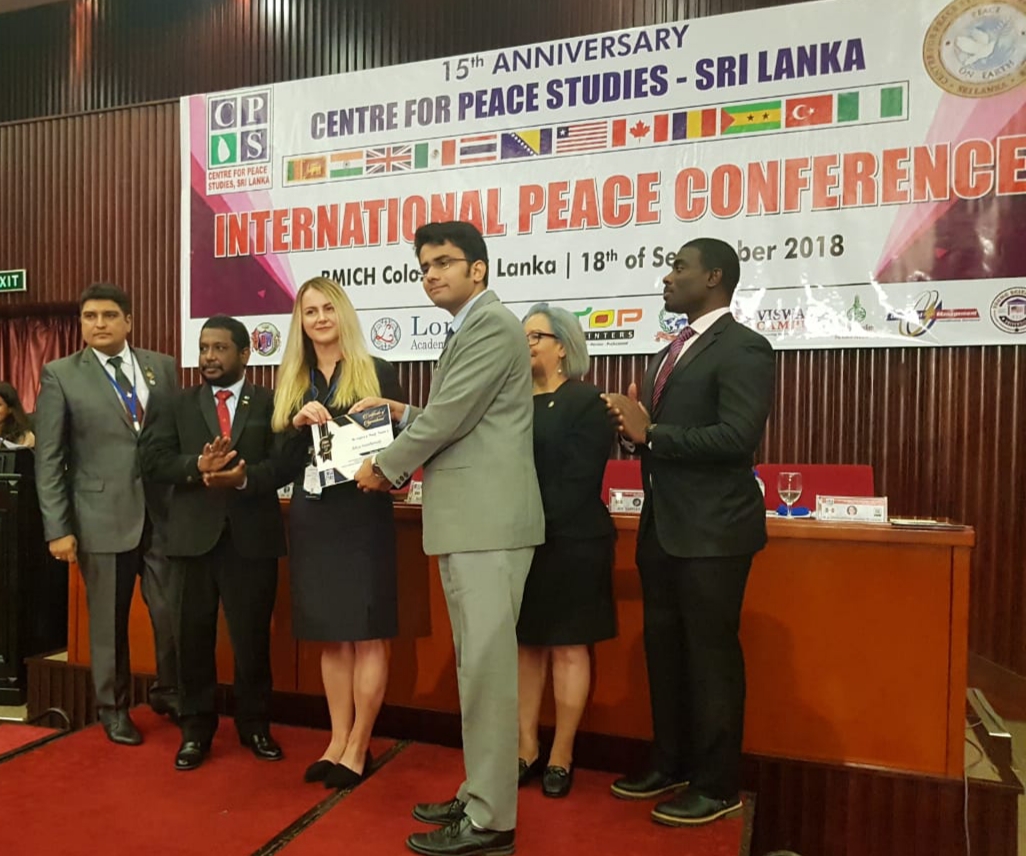
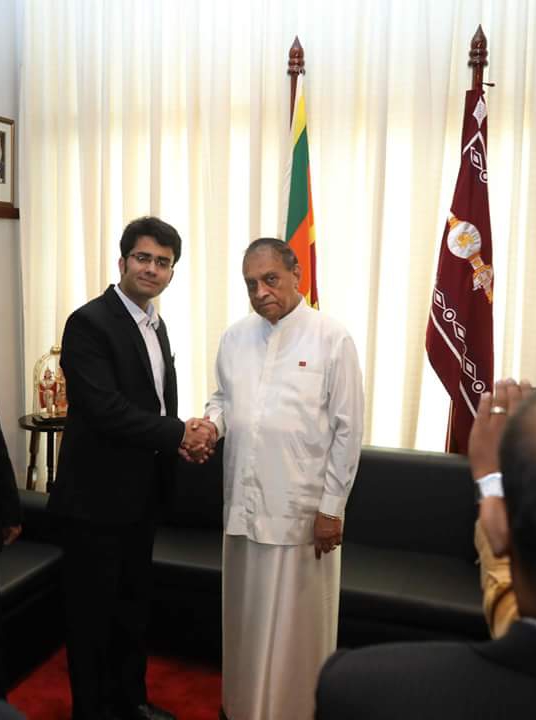
    He is also the incumbent Global Peace Ambassador to India (2018-19) appointed by the Centre for Peace Studies, Sri Lanka.  He has previously served as Special Advisor on International Law & Affairs to Najibullah Azad, the then Spokesman to President of Afghanistan. He has also served as an Attaché to the Office of the Speaker of the Lok Sabha and is one of the youngest Indians to depose before a committee of Parliament in Indian Legislative History at the age of nineteen. In March 2018, the Kathmandu Tribune Nepal described Manubarwala as ‘Asia’s emerging youth leader. He is also the 2nd youngest Indian to have deposed before any Committee of Parliament in Indian Legislative History.

    In August 2016, he was selected as an Indian Delegate at the Harvard Asia Conference, Hong Kong. Whilst at Hong Kong he also received the Chinese General Chambers of Commerce (CGCC) HPAIR Scholarship. The CGCC Scholarship is awarded to youth leaders across the globe who have shown commitment and enthusiasm towards empowering their country, community and Asia at large.

    In the interview we speak about

    • Experience of working at the Supreme Court
    • His research on article 72 of the Indian Constitution
    • His vision on the future of India’s engagement with the international law regime
    • Experience as the youngest Global Peace Ambassador to India


    Please share your experience of working at the Supreme Court of India as a Law clerk-cum- research assistant? Does this experience help you with your public policy reform work?

    Working in the Supreme Court of India has been one of the most enriching experiences of my life. The multi-dimensional approach that one acquires while working on a wide array of matters across different fields and areas of law is rewarding in every way.  Every year the Chief Justice of India appoints Law Clerks (who are generally fresh law graduates). These Law Clerks are selected from one of the most competitive exams in India conducted by the Supreme Court of India.

    It’s been close to 6 months since I have been appointed as a Law Clerk – cum- Research Assistant and these 6 months have been a time of immense learning. One tends to appreciate the nuances of law as well as get acquainted with the inner workings of the Apex Court of our country in an unprecedented manner. I am close to completing the 500th matter in the court. Law clerks often provide significant research on ongoing cases up for final hearing. As a Law Clerk, amongst other things, I am expected to prepare a short briefing note which essentially summarizes the entire Special Leave Petition in 1 or a maximum of 2 pages. My ability to grasp, process and interpret vast, diverse and often complicated propositions of law has expanded significantly. One of the Judges of the Supreme Court of India once told me early in my tenure, that a lawyer, who can write well, is a lawyer who can speak well. I couldn’t agree more with this. As a law clerk, a vast amount of time is devoted towards reading paper books related to concerned cases which is ultimately processed and churned out into succinct notes; a logical corollary of this is improved writing skills and this in turn, significantly enhances verbal communication. A clerkship serves as a great prepping experience for a lawyer attempting to build his/her life in litigation, especially as an arguing counsel.

    Of the many diverse cases that come up before the Supreme Court, the most interesting ones are the public interest litigation cases which question the Government of the day to account for omissions or commissions concerning implementation of the policy framed by it. While working on such cases, it is but natural that the genesis of the public policy has to be looked into as well the legal and practical creases and flaws in them.  Working on such cases naturally helps get a more holistic picture of the workings of public policy and I feel blessed to have gotten this kind of exposure.

    You recently did a detailed study on ‘Article 72 of the Constitution of India’ that highlights the overlapping of powers between the Governor and the President pertaining to the commutation of death penalty. Tell us a little more about the research. Why did you undertake this and why is this important? How do you intend to take this forward?

    The seeds of this discussion were sowed in my mind while I was watching the news on a rather interesting day when the entire nation had their eyes glued on whether Yakub Menon would be sent to the gallows or not. While the news bulletin ticker showed President Pranab Mukherji having rejected the mercy petition of Menon, my eyes got fixated on a rather small ticker showing Yakub Menon now approaching the Governor of Maharashtra with his mercy petition. It got me curious to understand how Menon was even doing what he was doing. I perused the Constitution of India looking for answers and at the end of it, I was even more perplexed and disturbed than ever before. Article 72 (2) of the Constitution of India provides the President of India the power to commute a death sentence into life imprisonment (popularly called as the power to grant mercy). However, this power of the President is enjoyed by the Governor of the States, in the sense that the power of the Governor is equal to, and not inferior to the President of India in terms of commuting a death sentence down to life imprisonment. There exists no hierarchical division where the President is considered a superior authority to the Governor. This can perfectly emanate a situation wherein the President after rejecting the mercy petition of an anti-social element is overturned by the Governor of a State. Even if the Governor pocket vetoes the mercy petition (under advisement of the Central Government), the death sentence can be suspended on account of want of consideration, the moment the governor is approached. Interestingly, all these concerns were pointed out by Mr. Tajjamul Hussain, a member of the Constituent Assembly of India to Dr. B. R. Ambedkar during the drafting of the Indian Constitution.

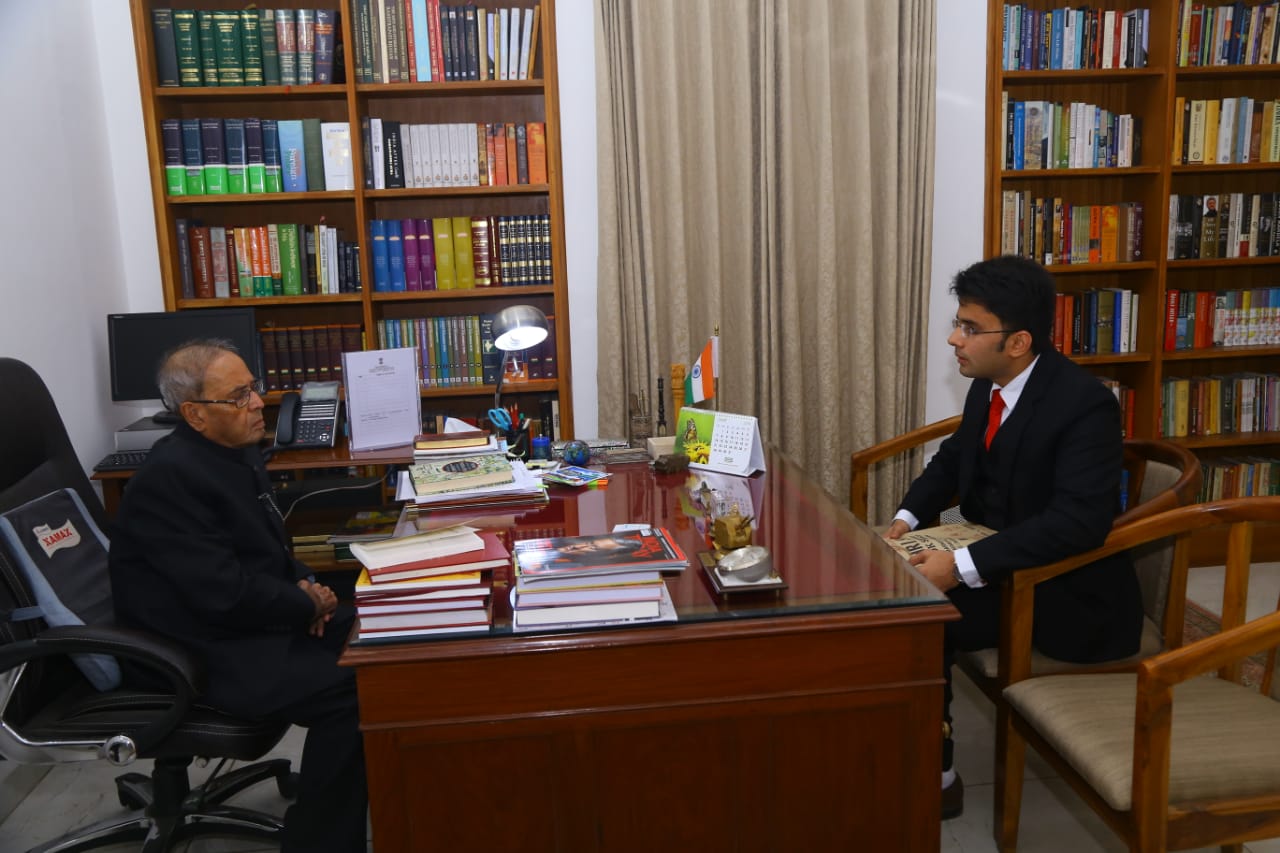
    My research on the aforesaid won the best essay prize at the 10th DD Basu Constitutional Law Essay Competition organized by NUJS Kolkata, whilst I was still a law student. Subsequently, I placed my findings on record before the Lok Sabha Speakers Research Initiative as well as discussed the same with Shri Pranab Mukherji, the Former President of India. My concerns have been patiently considered by senior political and legal functionaries but I believe that unless the highest offices of the country are sensitized about the massive constitutional crisis that this can bring about, there won’t be any tangible action. I have already sought an appointment with the President of India and I plan to petition the Prime Minister of India as well.

    We understand that apart from public policy and law, you are also very active in the SAARC region and the international arena. Kindly share with our readers some notable experiences you have had. How did this journey begin and what’s your vision on the future of India’s engagement with the international law regime?

    I represented India at the Harvard Asia Conference, Hong Kong, 2016. During the conference, I got acquainted with like-minded and socially driven individuals from 90 nations.  After the conference, the interconnectedness of the global order dawned upon me and I started viewing domestic issues from an international perspective. Paying a closer emphasis to SAARC nations was the logical corollary for me. I am very passionate towards bettering the human rights regime in India and with my new found interest towards international relations, I started looking at SAARC as a holistic block. Drawing inspiration from the ECHR and other regional international human rights conventions, I along with my friend Shooha Tabil (a noted environmentalist from Bangladesh) drafted a draft SAARC convention on human rights. While lobbying for the enactment of this at the office of the President of Afghanistan, I came in touch with the Spokesman to the President, Mr. Najibullah Azad. Mr. Azad had previously read some of the articles I had published in Kabul Times and was thus well acquainted with my work. While the SAARC draft convention did not take off, due to instability in the SAARC grouping and Pakistan’s objections, Azad and I formed a deep bond. Subsequently, Azad appointed me as his Special Advisor and I prepared assets for Afghanistan’s National Water Policy Framework, with a special focus on leveraging Afghanistan’s Water Potential (I have also published an article in this regard in Modern Diplomacy Europe).  Additionally, I worked on drafting a white paper towards reforming Afghanistan’s Courts and Administrative system.

    Apart from Afghanistan, I also work closely with prominent civil society members of Bangladesh and Nepal on bringing to the fore issues of larger relevance before the international community.

    In the international law arena, I see this to be a time of great opportunity as India is placed in the best position it has ever been in her 70 year history. India has always led from the front and shown immense respect to the international law regime right since her independence. However, with its rising stature as a global super power, India’s engagement with multi-lateral commercial dispute resolution bodies, the international arbitration regime apart from International Court of Justice, and other forums is only bound to rise. These are interesting times for young attorneys.

    You were also recently appointed as the youngest Global Peace Ambassador to India by the Centre of Peace Studies in Srilanka (affiliated to the UN). How did that happen and tell us a little about your role as Global Peace Ambassador.

    My increasing role in SAARC affairs led me to forging important relations in Sri Lanka. One such person is Mr. Shiraz Yoonus, who is a close aid of Mr. Mahinda Rajapaksa, the former President and former Prime Minister of Sri Lanka. I, in fact even served as Special Advisor to Mr. Yoonus on matters of International law and affairs for a brief period. Given my experience in the international law and public policy arena, including SAARC affairs and Sri Lankan affairs, the Centre for Peace Studies Sri Lanka (affiliated to the UN) decided to nominate me as their Global Peace Ambassador to India for 2018- 19. My role as Peace Ambassador has no defined terms, with me being given a wide landscape to operate on. Amongst other things, I have worked hard towards establishing a forum which serves as a connecting pod between the rising youth of India and Sri Lanka. I have also coordinated the international outreach efforts of Mr. Rajapaksa towards bridging the element of distrust existing between India and Sri Lanka on account of the Chinese influence in the region. My role has therefore been to ensure that the collective interests of India and Sri Lanka are not compromised by a resurgent China, which is trying its best in stifling the relevance of smaller countries with its economic bulldozer diplomacy.

    I have also leveraged my position towards spreading awareness in India about the international law regime and the dispute resolution mechanisms available in the international arena.

    What are your future plans? Is there any other significant research work that you have undertaken domestically or internationally in the area of public reform or towards bettering the global human rights regime?

    I am currently working towards the enactment of the SAARC convention on human rights as well as the enactment of the SAARC Water Dispute Settlement Board.

    The genesis behind my endeavor towards the SAARC Convention on Human Rights is the very fact that major international groups – be it the European Union or the Organization of American States, have a regional human rights convention setting basic standards of human rights enshrined and considered sacrosanct by them. However, an all encompassing human rights convention for SAARC is conspicuously absent. It must be understood that SAARC is a major international group of states, all of which are very closely connected by common history, cultural ethos, societal values and family values. For a better part of history, most of the countries in this group were governed by the same administrative systems. Having said this, it is but natural that the commonality of their value systems is synchronized into a holistic treaty.

    To this end, the first step towards this project has been to create a group of likeminded individuals from SAARC nations who are busy imploring upon their governments to take this treaty forward. My team and I have made some significant headway in countries like Bangladesh, Sri Lanka, Nepal and Bhutan. However, the process is admittedly still a long way off . With regard to my work towards establishing a SAARC Water Dispute Resolution Board, the idea is still in a nascent stage. Currently, I am working and co-coordinating with a few international – trans-boundary water experts to arrive at a common ground on the principles which ought to govern this board. Once drafted, the next step would be to get Government support officially. This endeavor of mine is being supported informally by certain ministers from SAARC countries (who don’t wished to be named at this stage). However, work is still underway at a government-to- government level and I will be able to share more details once significant progress has been made.

    I ultimately aim to be a litigating lawyer bringing to the fore often neglected issues of law, public policy and human rights while also maintaining a commercially lucrative practice. I hope to hold an elected public office in India someday in the future.

    In the short run, I aim to pursue masters in law (LL.M) from a reputed institute abroad in the area of Constitutional Law and public policy.

  • Sanjit Ganguli, Legal Manager, ICICI Bank, on roles and responsibilities of a legal counsel; and the finance and banking sector

    Sanjit Ganguli, Legal Manager, ICICI Bank, on roles and responsibilities of a legal counsel; and the finance and banking sector

    Sanjit Ganguli graduated from the Symbiosis Law School, Pune in 2018. He currently works with the Corporate Legal Group at ICICI Bank. He regularly advises on, negotiate and structure domestic and cross-border transactions for the Corporate, Project and Structured Finance portfolios of the Bank. He is also actively involved in loan and asset recovery proceedings for the Bank before the National Company Law Tribunal and other forums.

    In this interview, we speak to him about:

    • Roles and responsibilities as Legal Manager at ICICI Bank
    • Experience as an in-house counsel
    • Importance of Certificate Courses for Law Students
    • Bagging internships at top-tier law firms
    • Importance of writing research papers.


    HOW WOULD YOU LIKE TO INTRODUCE YOURSELF FOR THE BENEFIT OF OUR READERS?

    Sanjit Ganguli is currently a legal manager at ICICI bank. He graduated from Symbiosis Law School, Pune. During his time at college, he participated in various moot court competitions, parliamentary debates and Model United Nations both at a national and international level. He has also published and presented papers at conferences and journals of national repute. He has interned with numerous top law firms in India with a strong academic record. In 2014 he was the only resident Indian invited to chair/judge a committee at the Ivy League Model United Nations held in India that year. Sanjit is an enthusiastic young lawyer who is always looking for new opportunities to learn, improve his skills and hone his craft

    Apart from the law, Sanjit is a budding wildlife and street photographer, a die-hard Bengaluru Football Club fan and a huge connoisseur of food with an insatiable appetite to travel and explore new frontiers. Sanjit is an alumnus of Bishop Cotton Boys’ School in Bangalore.

    AS LEGAL MANAGER AT ICICI BANK, WHAT ARE YOUR ROLES AND RESPONSIBILITIES?

    I work with the Corporate Legal Group at ICICI Bank. My role largely entails, drafting documents, structuring, negotiating and advising on domestic and cross border finance transactions that the Bank is a part of. I also work on debt and asset recovery proceedings before the National Company Law Tribunal and various other forums.

    DID YOU ALWAYS INTEND TO WORK AS AN IN-HOUSE COUNSEL OR DID YOU HAVE OTHER PLANS? WHEN DID YOU ZERO IN ON THIS CAREER TRAJECTORY?

    When I was in my fourth year, I was interning with the Finance practice at AZB Partners and I really enjoyed working in the Banking and Finance space. At that juncture, I felt that to succeed in this industry one required a thorough knowledge of the commercial aspect that the law was being employed for as well and ICICI Bank seemed to be the perfect fit for that. Also as in-house counsel, you get to learn every aspect of the Banking and Finance Industry and encounter a wide array of problems that require legal advice. I also have the privilege of working with and learning from not only some of the best legal minds in the country but some of the brightest and leading individuals of the finance sector in India.

    DID YOU METICULOUSLY PLAN YOUR INTERNSHIPS? DO YOU HAVE ANY TIPS TO OFFER TO LAW STUDENTS WHO INTEND TO INTERN AT TOP-LEVEL LAW FIRMS?

    Yes, I did have a basic road map. I explored both litigation and corporate law firms and various practice areas within corporate law such as capital markets, general corporate and Project/Banking and finance before deciding on my area of interest and then pursued internships in my desired field. For students looking to intern at a top level law firm, they must plan their dates and apply well in advance. Many firms have questionnaire/research questions with follow up interviews and one must prepare thoroughly for these and set aside time from their college activities for this. In my personal experience, a good performance at a moot court competition/research conference organized by a firm also goes a long way in securing an internship at the firm.

    WHAT EXTRA-CURRICULAR ACTIVITIES WERE YOU INVOLVED IN AT SLS? HOW IMPORTANT ARE EXTRA-CURRICULAR ACTIVITIES TO A LAW STUDENT?

    Law as a field of study offers the opportunity of multiple extra circulars (Research and Paper Publications/conferences, Moot courts, Parliamentary Debates, Model UN conferences, etc.) to enhance one’s research and oratory skills and me for one embraced all of the aforementioned with gusto. I maintain that a healthy mix of all these activities made my experience at SLS and unforgettable and thoroughly enriching one. Not only did these activities build my ability to build my analytical, research and soft skills it gave me the opportunity to travel across the country and in Asia, meet people from different law schools and legal professionals across the world from both common and civil law jurisdictions. These activities are hence not only academic and informative but also serve as huge networking opportunity which I believe is extremely essential for a young lawyer. I also had an engaging experience in student governance and was an active member of the Students’ Council or Student Advisory Board as it is now called at SLS and finished as Vice President at the Board.

    HOW IMPORTANT DO YOU THINK CONDUCTING RESEARCH AND WRITING RESEARCH PAPERS FOR PUBLICATION ARE?

    In my opinion, writing research papers are one of the important activities at a law school outside one’s curriculum. They help you delve deep and learn about various diverse areas of law the issues pertaining to them both in the present and the possibilities for the future. More than anything, while working on my publications I enjoyed the challenge of engaging multiple portals of research to arrive at the right answer to a research question. From burning the midnight oil in the library to circulating and questionnaires to your target audience, working on a research paper thoroughly improves one’s analytical skills

    ARE THERE ANY WAYS OF LEARNING YOU OPTED FOR APART FROM CONVENTIONAL CLASSROOM LEARNING, LIKE CERTIFICATE COURSES? HOW INSTRUMENTAL DO YOU THINK THEY ARE IN HELPING A LAW STUDENT WIDEN HIS/HER KNOWLEDGE?

    Yes, I took up various certificate courses in IPR, competition law, etc. while I was in college. They are extremely helpful in picking up legal knowledge which does not form part of the college curriculum and I find the knowledge gained through them extremely useful in my professional life. I also started pursuing my company secretary course while at college and that gives me a huge insight into the regulatory aspect of the law along with a detailed overview of the procedural requirements that a corporate lawyer should be aware of.

    WHAT ARE YOUR THOUGHTS ON MOOTING BEING CONSIDERED A NON-NEGOTIABLE ACTIVITY IN MOST LAW SCHOOLS? DO YOU HAVE ANY TIPS FOR LAW STUDENTS WHO MOOT IN UNIVERSITY?

    As someone who has mooted both domestically and internationally, I think participating in a moot court competition is an experience every law student should experience at least once. Mooting gives a law student a first-hand experience into the adversarial aspect of the law along with in-depth research into what is often a relevant and contentious point of law. This is, however, personal opinion and I wouldn’t go as far as to say that it is a non-negotiable activity as an extra-curricular activity. At Symbiosis, Pune however, we had Moot courts and mock trial advocacy regularly as part of our curriculum across our five years in various subjects ranging from Tort Law to Company Law to Criminal and Evidence Law which was something I personally enjoyed as we got to engage with the various subjects we were studying on a practical basis in a court room setting.

    For students looking to Moot at university, I would encourage them to participate in moots in diverse and different areas of law. It really helps to broaden one’s view and to learn not just different areas of law but different legal systems as well. The differences of pleading before different forums across jurisdictions make each moot a challenging but very rewarding experience and this can work as a great launch pad to decide the field of law one would want to set out on.

    DO YOU THINK LAW STUDENTS POSSESS A SOCIAL RESPONSIBILITY? IF SO, HOW DO THEY FIND OUTLETS TO HELP SERVE SOCIETY BETTER?

    I think the youth of today, irrespective of whatever field of study they are pursuing have a social responsibility to improve both the country and society. Law students because of their study of human rights backed by their strong constitutional awareness are strategically poised to help out in numerous NGO’s, think-tanks and even government organizations who working for the electoral, judicial and government reform as well as for the protection and upliftment of human rights/animal rights and the environment as well. Many of these organizations offer internships and later permanent positions which law students can take up.

    At Symbiosis, Pune we had a Legal aid cell which would among various initiatives organize workshops for free legal aid for the underprivileged. I am sure law schools across the country have similar clubs/cells which help develop social responsibility in law students

    WHAT WOULD BE YOUR PARTING MESSAGE FOR OUR READERS WHO ARE COLLEGE STUDENTS?

    Life at college is up there as my fondest memory. Always remember there are so many new avenues to learn. It is important not to get carried away by the pressure and rigours that come with college and enjoy the overall experience so that you can take away the most from it. A word of caution though, five years is a long time, make sure you have a basic plan and an end-game and while you enjoy five fantastic years with some of the best friends that you will make, never lose sight of that end-game.


  • Amrit Subhadarsi, Assistant Professor, KIIT University, on experience in academia and legal education system of India

    Amrit Subhadarsi, Assistant Professor, KIIT University, on experience in academia and legal education system of India

    Amrit Subhadarsi is currently an assistant professor at KIIT University. He completed his BA LLB from School of Law, KIIT Deemed to be University, and his masters in Corporate Law from National Law University, Odisha in 2017 and was nominated as LLM student representative to Prof G.V Ajappa, a leading expert on jurisprudence in India. He has written a book on Standard Essential Patents and abuse of dominance in the global telecommunication industry, which has been published by Laxmi Book Publications. He regularly engages with institutions and regulators alike to provide a platform for students to learn practical insights into the workings in a particular industry in corporate law. Before joining the academia, He has also worked as a trademark analyst in legal consultancy wherein, He has engaged extensively in analyzing and preparing reports on trademark case laws from the European Union and Commonwealth.

    In this interview we speak to him about:

    • His interest in academia
    • His opinion on the Indian legal education system; and
    • His experience as an Assistant Professor at KIIT University.


    HOW WOULD YOU LIKE TO INTRODUCE YOURSELF TO OUR READERS? PLEASE TELL US SOMETHING ABOUT YOUR PRE-COLLEGE LIFE?

    I am a soft-spoken and amicable person, with a passion for reading and writing. I am a native of Odisha and belong to a non-legal background. During my higher secondary schooling in Kolkata, I was a shy kid, a major obstacle in a society which considers shyness as a demerit. I was fortunate enough that I had good friends to guide me during my tough days. I was and still am a voracious reader. I never had much inclination towards pursuing commerce or science and I felt like I had a calling for arts subjects. Particularly, subjects like political science and sociology became my favourite. While reading newspapers, often I came across legal articles and interviews which I used to read with great interest and thus began the quest for having legal knowledge.

    YOU HAVE DONE YOUR MASTERS IN LAW. HOW WAS YOUR LLM EXPERIENCE AT NLU ORISSA. WHAT ARE THE CHALLENGES YOU HAD FACED WHILE STUDYING AT NLU ORISSA?

    The introduction of one year LLM has turned out to be a bane. One year LLM does not allow the student to explore research avenues effectively. For instance, if a person wishes to be a member of a research center, or take part in moot courts, then such avenues are not there. Further, it does not allow the student to make any one particular area as a specialization because many subjects have to be studied in such a short span of time. There are few institutes that encourage LLM students to take part in moots. But, this needs to be institutionalized, because more than mooting skills, research in moot courts can help the LLM student to make it a specialization later. I was fortunate enough, that despite the one year LLM, I managed to be an active member of the Center for Corporate Law, be nominated to represent the institution in a lecture series by Professor G.V Ajappa, a leading authority on jurisprudence in India. Also, my dissertation secured the highest marks which I have converted into a book slated for a release in March.

    WHAT IS YOUR OPINION ON THE INDIAN LEGAL EDUCATION SYSTEM?

    At the moment there is a large vacuum in the Indian legal education system. Systematic changes need to happen across three levels: students, parents and institution. At the student level, they need to understand that five years of legal education is not to just to train them with skills for the corporate sector but to equip them with analytical skills prerequisite for the legal profession. This brings me to the other two levels: parents and institutions. It is here that a paradigm shift is required. Many parents look forward to a well-paying job after graduation, but not necessarily quality education. In India therefore, the focus is on to generate placements and not delivering quality education. Fortunately, KIIT School of Law has emerged as an exception to this trend as among other laurels it has now secured the most innovative law school award in 2018.

    HOW HAS LEGAL EDUCATION SYSTEM CHANGED OVER THE YEARS AND WHAT ARE THE ADVANTAGES AS WELL AS DISADVANTAGES OF THIS CHANGE? WHAT CAN STUDENTS OF TODAY LEARN FROM THE OLD SYSTEM OF LEGAL EDUCATION?

    The legal education system has undergone a sea change over the years. Some advantages include many institutions like KIIT School of Law and a few others providing excellent infrastructure and resources to students. The new legal education system is also incorporating emerging trends in society, through classroom innovation, developing legal clinics, practical training for mock trials and moot courts, corporate and business laws being part of the curriculum more frequently. The advantage is that the students get the opportunity to learn practical aspects apart from theory at a very young stage, unlike in the earlier system, where such skills were taught only in the final years. Besides these advantages, the demerit is that students are no longer researching from books and journals as they used to before and this is inhibiting their development of analytical skills. Students must go beyond the ‘Google it’ mentality to ‘original research’ mentality.

    WHAT PROMPTED YOU TO CHOOSE TEACHING AS A CAREER?

    I always had an inclination for reading, writing and researching on my areas of interest. I never found research as boring as many in their student days often complain. Quite frankly, I was confused for quite some time even in my final year as well and still remember how my friends tolerated my constant changes in decisions. Eventually, as I was delivering a demo lecture during one of my post graduation classes, I realized this is something I could do passionately, not feel like work and not be bored. When you come out of class fully satisfied, that is when you know that you are in the right profession. These coupled with my patience for research and writing help cement my decision for academia.

    TELL US ABOUT YOUR TEACHING METHODOLOGY.

    Depending upon the subject, the teaching method varies. For instance, a paper having a mix of theoretical and practical knowledge ensures that I adopt lecture and Socratic Method along with practical training such as classroom simulations, or activity based class assignments, etc. For theory subjects, I usually adopt a mix of lecture and Socratic dialogue method. Before beginning the class, I regularly ask the students about the discussions in the previous class so the next class commences from where we left off. Reading assignments for the next class are also given.

    HOW IMPORTANT A ROLE DO YOU THINK LAW SCHOOL PLAYS IN SHAPING ONE’S CAREER?

    It is common knowledge in legal fraternity that teaching standards in Indian law schools have come down drastically. That does not mean all law schools should be painted with the same brush. Both the institution and student complement each other for laying down the foundation for future development. The current crop of students comes with a ‘fixed mindset’, whereas what is needed is a ‘growth mindset’. The same standard for any law school also. Based on their mindset, the student shapes his or her formative years at law school.

    All law schools may not be perfectly equipped to provide practical training, but they do provide opportunities for learning them through moot courts, internships, training courses, among others. Law schools are platforms for a vibrant mix of theoretical and practical training. But to learn them, the student has to navigate his way through networking. It is not a one-way street. Both students and institutions when complement each other, it leads to holistic development. What is needed therefore is a way to engage with students and institutions holistically. For instance, KIIT School of Law is one of the few institutions where because of engagement; many of our students have excelled in national and international moots, publications, higher academic research, among others.

    YOU ARE NOW WORKING AS AN ASSISTANT PROFESSOR AT KIIT UNIVERSITY. HOW IS YOUR WORK EXPERIENCE SO FAR?

    The experience of working at the school of law, KIIT Deemed to be University has been very comforting. When you start working at a place that is unfamiliar to you, there are some challenges you need to encounter, for instance, blending in with new people, with the work culture. But KIIT has been special for me for a number of reasons. Firstly, working at your alumnus provides me with a sense of pride when viewed from the other side of the table and working alongside many of my faculties who are always there to guide me. This helps increase your productivity manifold and sense of belongingness. Secondly, KIIT School of Law has been awarded the most innovative law school in India for 2018 and KIIT University has also earned a place in the Times Higher Education rankings. Working at a prestigious institution like this has given me exposure like never before and has definitely added to my professionalism traits.

    COULD YOU GIVE OUR YOUNG READERS CERTAIN TIPS ON EXCELLING IN ACADEMICS?

    Firstly, it is imperative for the faculty to reach class not on time but five minutes before time as it allows the faculty to prepare mentally. Students also would know that time must be maintained and consequently, the flow of teaching will not be disturbed. One should understand that excelling in academics not only means being a good teacher, but also a good guide, a good writer and researcher. If writing, lecturing and researching fascinate a student, then academics can be given a shot. Hence, prioritization is critical.

    Preparing the agenda of the class a day before leaves room for actual preparation for class. One should also accept the fact that not all students will have equal levels of aptitude and curiosity which is why regurgitating whatever preparation was made before class is not going to be enough. Students expect innovativeness in teaching and hence the teacher must be updated about subject content (hard skills) and an effective orator and communicator (soft skills). Also just like the student, once in academics, the individual must not stop reading. Effort must be made to make the teaching as interdisciplinary as possible so that both students and teachers have scope to add value to classroom discussions. Lastly, research and writing must be at the highest level. For instance, I have successfully converted my dissertation, which secured the highest marks, into a book which is slated for release this March.


    WHAT IS YOUR ADVICE TO STUDENTS WHO WISH TO PURSUE CAREER IN ACADEMICS BUT ARE CONFUSED BETWEEN LITIGATION AND ACADEMICS?

    Both litigation and academics have their own set of desired skill sets and perks. There is a common misconception that a job in academia means a comfortable lifestyle. This fallacious attitude leads many to take up academics as well. But I believe, as a student, one should first prepare a list of do’s and don’ts. For instance, the latter can include not succumbing to peer pressure and herd mentality. This will allow the student to take a realistic approach.

    The former can include watching out for signs where the student can develop skills. If the student has the inclination to research, write, loves to speak on a platform, and just loves to read, teaching is ideal. However, if the idea is to use the aforesaid to practice and argue before a judge, he or she must be prepared to struggle for years in litigation before making decent money. Of course, such choices do get affected by scenarios like mounting student loans or other financial burdens, in which case choosing litigation instead of a well-paid job is a pursuit in a fool’s paradise.

    HOW DID YOU DECIDE TO WRITE YOUR FIRST BOOK COMPARATIVE LAW RELATING TO PATENTS AND ABUSE OF DOMINANCE IN THE GLOBAL TELECOMMUNICATION INDUSTRY? WHAT WERE THE CHALLENGES YOU FACED AS A FIRST-TIME WRITER?

    I was already interested in this topic during my LL.B and got familiar with this topic when our team secured the approval for participation in our second moot court after clearing the intra moot court stage. However, at the same time, our final year placements were about to commence and I did not want to miss my shot at placements. So I had to leave this opportunity. But, I knew someday I would engage in research in this area, though not definitely knowing that I would publish a book on it someday. Broadly there are two sets of challenges for a first time writer like me. The first is to not get carried away by believing that merely because one is skilled at writing a good journal article, one should also be equally good when writing a book. The time invested, the patience utilized and the numerous proofreads that goes into one chapter for a book is a herculean task. A seasoned writer will, of course, know how to vary his or her strategy regarding publication in a journal and a publication as a book. The second challenge is that in a topic as specific as Standard Essential Patents in Telecom Industry and Competition Law, where the scope in India is ever increasing, it is very difficult to write within established regulatory rules, as the same is changing very quickly. Plus, due to lack of jurisprudence in India, I compared US, EU, UK, China and Japan, which are the other jurisdictions where such cases have had the most prominent impact during my research, and have written India’s first of a kind book on linkages between Intellectual Property and competition law in the telecom industries in major jurisdictions.

    HOW DOES ONE GET THEIR BOOK PUBLISHED?

    Being a first-time writer, I did not have contacts with established publication houses. However, I took my chances and made contact with few big publication houses, where my work was rejected because the market demand is for books catering to general subjects like Intellectual Property or Competition Law, but not an amalgamation of both. This is understandable because of the demand by students and also the fact that with a first time author the publication houses will be a little apprehensive. It’s important therefore that one uses professional networking sites such as Linkedin to use it to find and connect with publishers who can take a chance with first time choices. In other words, an open mind has to be kept. So, I approached another publication house as I believe that one needs to start somewhere regardless of the size of the publication house. I was initially apprehensive but I must give credit to them as they did their job professionally and meticulously changed the content, the font, the footnote font, page borders, book design and covers.


    HOW DID YOU MANAGE THE TIME TO WRITE A BOOK?

    Frankly speaking, this book is actually my dissertation in corporate law, which secured the highest marks during my post graduation. I never started with the intention to write a book, but I knew I had to give it all. So instead of working on projects which were given to us, I started working on my dissertation, a herculean task when six jurisdictions had to be comparatively analysed. I knew I had to maintain attendance for exams and could not pull all-nighters (which personally I love). So, I skipped some of my classes, sat throughout the whole day, and engaged in back-breaking research work and compilation. But, I am glad it was worth it and the hard work paid off.


    WHERE DO YOU WANT TO SEE YOURSELF FIVE TO TEN YEARS DOWN THE LINE?

    Legal academia is no longer confined to just imparting quality education. Faculties are also engaged in consultancy and advisory work. So in five to ten years, I would love for myself to be an established academician in my chosen field of specialization and create value through new avenues. It could be through publishing books and papers, value generation through consultancy for the institution and most importantly creating a conducive classroom learning atmosphere where students yearn for my lectures.

    WHAT WOULD BE YOUR PARTING MESSAGE TO OUR READERS WHO ARE PRIMARILY LAW STUDENTS AND YOUNG LAWYERS?

    My advice would be to never stop exploring. There is a no bigger teacher than one’s own curiosity. One should always be on the lookout for ‘unlearning’ as it helps to widen understanding of how a system works. And lastly, students must accept that the legal job market is not what it used to be decades ago. There are tons of options and it is but obvious that they will be confused. So trust your instincts and find avenues which match your desired skill sets. The path will follow.


  • Akshay Ubale, Co-founder, Triumvir Law on starting his own law firm and a successful career in International arbitration

    Akshay Ubale, Co-founder, Triumvir Law on starting his own law firm and a successful career in International arbitration

    Akshay is a graduate of National Law School of India University, Bangalore and a co-founder of Triumvir Law. In this interview, he talks about the importance of internships and the grit and determination required to start your own law firm and making it sustain.

    After Founding, Triumvir Law in 2018 in Bangalore. Akshay took the plunge and moved back to Mumbai to start Triumvirs Law’s Mumbai office.

    HOW WOULD YOU LIKE TO INTRODUCE YOURSELF TO OUR READERS? PLEASE TELL US SOMETHING ABOUT YOUR PRE-COLLEGE LIFE?

     I was born and brought up in Mumbai. Most of my family were members of law enforcement, so discussions about law and politics were quite common around the house; I gravitated towards the law because I was comfortable with it. But it was not until much later that I found the reason for why I chose the law and it was simply because I enjoyed understanding the reasoning and tackling concerns of individuals in a structured manner. I think this where I get my affinity towards playing chess.


     WHAT FACTORS INFLUENCED YOUR DECISION TO SPECIALIZE IN INTERNATIONAL COMMERCIAL ARBITRATION AND CORPORATE LAW?

    When I first came to the National Law School of India University, Bangalore (NLSIU), I had come with the mindset of practising criminal law and all my initial law school activity led to that. It was not until the third-year internships that I had a proper look into the world of Commercial Arbitration. In particular, I enjoyed the sheer variety of disputes across practice areas that I had been exposed to, which allowed me to study multiple areas of law that I had not previously considered.

    I decided to pursue International Commercial Arbitration because I enjoyed the sheer difference in every case ranging from the terms and wording of contracts, the intricacies of the interactions between the parties and the resolution process in itself.


    WHAT MOTIVATED YOU TO START THE TRIUMVIR LAW? WHAT WERE THE CHALLENGES YOU FACED AND WHAT IS YET TO BE ACHIEVED?

    The idea of an independent practice was alluring since it allowed me to maintain a better balance between my work and personal life.

    But taking such a step within a year of graduating seemed risky at that time. The most fundamental reason that made me consider taking this step was the rapport that existed between the three Co-Founders (Anubhab Sarkar, Prathik Cheralathammanda and me) and our desire to carve our own path in the practice of International Arbitration.

    In addition to that, the different nature of practice areas that the three of us had come from (Corporate, Intellectual Property and Disputes) and the different types of mandates that it opened us up to handle was something exemplary, in my opinion.

    I feel, the biggest challenge in any independent practice is ensuring that you have a standing in different practice areas, as the first conversation with a client or a prospective client determines whether you have the mandate or not. Once you are able to maintain a dialogue and address the queries that the clients could come up with, most of the issues that arise can be tackled.

    With regards to what is to be achieved is something that I have not set in stone yet, what I shall continue doing is addressing the needs of our clients to the best of our abilities. In my opinion, as long as we keep on that path, the achievements will keep piling.


    WHAT ARE THE SERVICES PROVIDED BY THE FIRM AND HOW IT CATERS THE NEED OF CLIENTS?

     We focus on providing a client with the advice that would ensure the best market practices and their own market position without compromising on the strength of their legal claims. On multiple occasions, this has resulted in us resolving matters without having to put the client through a tedious dispute resolution process.

    The most prominent services that the firm has provided revolve around corporate and commercial advisory, dispute resolution (litigation and arbitration) as well as intellectual property. In addition to the above, we have worked on Investment Treaty Arbitrations, crypto-currencies, mergers and acquisitions, and climate change and forced migration.

    At present, a lot of companies want quality advice but are apprehensive in relation to the fees that would be billed by the Lawyers. By providing a wide variety of services under one roof it has helped us to not only cater to the needs of our clients (which include multiple start-ups as well as established Companies) but it has helped us to develop a suitable model for billing based on mutual understanding for our clients.

    We espouse an idea of a balance in the lives of the members of our team; the same is applicable for our clients as well. We believe that we should have a mandate because we will address the clients’ requirements in the fastest, most efficient and cost-effective way that is possible without any compromise and not solely for our competitive rates.

    HOW CAN A LAW STUDENT APPLY FOR INTERNSHIP AT TRIUMVIR LAW?

    A law student can directly apply for an internship by writing to anubhab.sarkar@triumvirlaw.com. But keeping in mind the nature of the work that we do it is advisable that students who have studied International Commercial arbitration and corporate laws apply to us.

    WHAT WOULD BE YOUR ADVICE TO LAW STUDENTS LOOKING FOR A CAREER IN INTERNATIONAL COMMERCIAL ARBITRATION?

    At the end of the day, Arbitration is a form of dispute resolution. I would advise students to intern in arbitration and litigation teams before making any final determination.

    Further, an arbitration attorney must be equipped to handle a variety of practice areas as the contract can pull you in a direction that you least expect it; hence do not close your options and intern in various practice areas solely for the exposure to different sectors.

    Finally, networking is crucial and it would assist in the formative years of practice, so attending conferences or joining the youth chapters of arbitral institutes would be a good first step.


    PLEASE SHARE WITH US THE UNIQUENESS OF SERVICES PROVIDED BY YOUR LAW FIRM.

    I believe that our philosophy of putting the clients’ needs first at all costs has assisted us in building a rapport based on absolute trust with our clients and that trust is something that I am particularly proud of. We believe in providing personalized services to the client and growing with them through their journey. This has enabled us to understand the client’s needs better and has thereby assisted us to provide quality advice in quick turnaround time.


    WHAT MILESTONES HAVE YOU ACHIEVED TILL NOW?

    We have been running Triumvir for over a year now during the tenure of which we have seen that multiple clients have referred their colleagues to us and that circle has been expanding throughout our tenure. It provides a certain satisfaction at the end of the day that we are doing something we can be proud of.

    This influx of demand also led us to open our Mumbai operations, which is roughly 7 months old now and stable.

    During this period, we are also extremely proud of the fact that we have been able to be a part of quite a few reported transactions and disputes.


    WHERE DO YOU SEE THE FIRM IN THE LONG RUN?

    A message that one of my seniors in practice told me is that setting up a target and a deadline for it, has a different effect on the team. Instead, focus on the task on hand and you will keep growing at a steadfast pace with a solid base.

    At present, we have a long term picture in our mind. However, we try and keep it in our sub-conscience. The next big step for us would be to start our New Delhi/Calcutta operations, which is a crucial step in developing Triumvir into a full-service national law firm.


    WHAT WOULD BE YOUR PARTING MESSAGE TO OUR READERS?

    Seize the day. There will never be a better day to start things nor a better one to follow what you desire. Find the people you would choose to be surrounded with and not settle for anything less.

    At the end of the day, all that is left is what you think of yourself. What others think or believe is frankly out of our control, so the best thing to do so is believing in you and launch into the deep.


  • Pavan Duggal, Advocate, Supreme Court, shares his views on protecting privacy, cyber security issues and enforcement of cyber laws in India

    Pavan Duggal, Advocate, Supreme Court, shares his views on protecting privacy, cyber security issues and enforcement of cyber laws in India

    Pavan Duggal is an Advocate specialising in the field of cyberlaw and e-commerce. He has been recognised as one of best cyber lawyers around the world. He has made a tremendous impact with an international reputation as an expert and authority on Cyberlaw, Cyber Security Law and e-Commerce law.

    His empanelment as a consultant to UNCTAD and UNESCAP on Cyberlaw and Cyber crime respectively, membership of the AFACT Legal Working Group of the UN / CEFAT, consulting as an expert with the Council of Europe on Cyber crime, inclusion in the Board of Experts of European Commission’s Dr. E-Commerce and his work as an expert authority on a Cyberlaw primer for e-ASEAN Task Force and as a reviewer for Asian Development Bank speaks volumes of his worldwide acceptance as an authority. He is the President of Cyberlaw Asia, Asia’s pioneering organisation committed to the passing of dynamic Cyber laws in the Asian continent. He is also a member of the WIPO Arbitration and Mediation Center Panel of Neutrals.

    He has been associated with the Ministry of Communication and Information Technology, Government of India on Cyberlaw and Electronic Governance legal issues. He is a member of Advisory Committee on E-Governance in Karnataka constituted by the Government of Karnataka. Pavan is a member of Information Forensic Working Group on e-Information Systems, Security and Audit Association.

    He heads his niche law firm Pavan Duggal Associates, which has practice areas, amongst others, in Cyberlaw, Business Process Outsourcing Law, Intellectual Property Rights and Information Technology Law, Information Security Law, Defence, Biotech and Corporate Law.


    HOW WOULD YOU LIKE TO INTRODUCE YOURSELF TO OUR READERS? PLEASE TELL US SOMETHING ABOUT YOUR PRE-COLLEGE LIFE?

    I would like to introduce myself as a student of Cyberlaw.  A person who is constantly trying to discover new nuances pertaining to legal, policy and regulatory aspects pertaining to the Internet, Cyberspace and the newly emerging technologies.  A scholar who has dedicated more than 23 years of his life in this space and who still believes that he is at the outside periphery of knowledge.  A person who believes that the Internet is a game-changing paradigm, which is potentially the most significant, that human civilization has seen after the advent of fire.  I have been working on various issues on the intersection of law and technology.  Hence, my path has not been like traditional lawyers.  I have chosen to create my own path on the road to discovery.  In fact, it is strange that you could never even think while in school what you will ultimately land up doing in life.  I have been the student of Delhi Public School, Mathura Road, New Delhi and did my entire schooling from that school, excelled in academics and topped the school in Humanities and was also in the merit list.  As a student, I was extremely active in extra-curricular activities including debating, music, theatre, dance, essay writing, quizzes and various other kinds of extra-curricular activities.  I won a record number of prizes in school.


    YOU ARE FAMOUS AS A CYBER LAW EXPERT. WHAT KIND OF WORK DO YOU CURRENTLY DO?

    It is true that today I am known as a Cyberlaw expert.  This is primarily so because of the kind of super specialization that I have acquired the area of Cyberlaw. I have worked for more than the last 2 decades in this space. I have been extensively working on the intersection of law and technology. Currently, I do various kinds of works. I advise clients on nuances pertaining to cyberspace transactions, compliances under the applicable provisions of the Indian Cyberlaw, advise on cyber/electronic transactions and the legal nuances, help companies to protect and preserve their domain names and their web presence online, do litigation for variety of clients so as to protect their legal interests, whether in the form of plaintiffs or defendants.  I write extensively and have written 102 books on various aspects of Cyberlaw and connected nuances.  I teach extensively in select law colleges and international and national institutions including the National Police Academy, National Judicial Academy, Delhi Judicial Academy and various state judicial academies.  I extensively interact with various international stakeholders on the nuances of cyberspace.

    I had been contributing a column entitled “Brief Facts” for 8 years in the Economic Times. I have extensively featured in various international and national media.  My different columns published in various media, news portals and columns include The Economic Times, The Hindustan Times, The Business Standard, The Pioneer, The Deccan Chronicle, and The Mint etc.  I have launched a Course on Cyber Security Law last year, which today has more than 9750 students from 157 countries.  I speak at various conferences, seminars and workshops.

    I am the Conference Director of the International Conference on Cyberlaw, Cybercrime &Cybersecurity which is the world’s unique Conference looking at the intersection of Cyberlaw, Cybercrime &Cybersecurity.  I am chairing the International Commission on Cyber Security Law which is looking at collating legal principles governing cybersecurity at a global level.  I am also heading the Artificial Intelligence Law Hub which is looking at the examination of cutting-edge nuances concerning Artificial Intelligence.  I am also heading the Blockchain Law Epicentre which is also looking at legalities concerning Blockchain. I am extensively working with international organizations including UNESCO, ITU, ICANN, Council of Europe, INTERPOL and many other organizations so as to contribute to the evolving jurisprudence on Cyberlaw, Cybercrime &Cybersecurity. In my humble manner, I have been trying to contribute my small inputs to pushing the envelope of evolving jurisprudence on Cyberlaw, Cybercrime and Cybersecurity.  In a nut-shell, I try to do the variety of activities all surrounding the Internet, cyberspace and legal, policy and regulatory issues connected therewith.   I advise the Government of India and its various Ministries especially the Ministry of Electronics & Information Technology, Government of India on various issues concerning Cyberlaw and am part of various governmental bodies.  I have also been part of G Gopalakrishna Working Group on Electronic Banking formed by the Reserve Bank of India which determined and set the cybersecurity standards for Banks in India.


    WHAT SORT OF CASES DO YOU USUALLY HANDLE?

      I handle a variety of cases on diverse issues. These cases invariably involve data thefts in the corporate sector, unauthorized transmission of data, violation of trade secrets, breach of privacy of individuals, disputes concerning electronic contracts, cybercrime prosecution and defence. I also do cases pertaining to liability arising from contravention under the law.  I advise on domain name disputes and try to get domain names back from the squatters.  I do a lot of cases for protection of reputation.  I do cases concerning cyber defamation, cyber nuisance, cyber harassment, cyberstalking and trolling and help affected persons and provide advisories.  I also do various cases pertaining to breaches of cybersecurity and the potential ramifications emerging therefrom.  I also advice intermediaries, in terms of their respective compliances on how they can limit their liability for third-party data.  I do cases pertaining to abuse of Over The Top Applications and also the social platforms like Facebook, Twitter, Instagram etc.   I also do cases for protecting and preserving digital rights of netizens.  I also file Public Interest Litigations (PIL) on legal aspects concerning cyberspace which impact the public interest at a broader level.


    HOW IS CYBER LAW AND ENFORCEMENT SYSTEM IN INDIA? IS IT ADDING TO THE CHALLENGES OF TIME?

    The Cyberlaw system in India has been put in place by virtue of the Information Technology Act, 2000.  India enacted this law, keeping in mind the UNCITRAL Model Law on Electronic Commerce.  The said legislation is indeed historic as it not only legalized the electronic format but also paved the way for the growth of electronic commerce and electronic governance in the country.  It also sought to cover various cybercrimes.  This law also elaborated the liabilities of intermediaries. However, in the year 2000, this law did not specifically cover the mobiles, despite the fact that mobiles had already emerged as a major factor in mainstream society.  The Information Technology Act, 2000 was amended by the Information Technology (Amendment) Act, 2008, after 26/11 Mumbai attacks.  The said amendments sought to enhance the scope and applicability of the Indian Cyberlaw to be applicable to all kinds of mobiles and communication devices. Various new cybercrimes were added and also the concept of intermediaries and their liability was more specifically well defined. Cybersecurity as a concept was distinctly added in the said law and various provisions concerning the same were also adequately put in the same.  It has been for the last more than 10 years since the amendments have taken place. However, when one looks at the cyber legal regime in the country, one finds that it has not been effectively implemented.  First and foremost, it needs to be understood that the Information Technology (Amendment) Act, 2008 effectively watered down the deterrent effect of the previous law.  This is so because, barring few cybercrimes, almost all cybercrimes were transformed into bailable offences where the accused is entitled to bail.  I was the counsel for the complainant in India’s first cybercrime conviction in the year 2003.  We had hoped that this first conviction could be the precursor of more convictions to follow. However, with the change of law and given the sloppy enforcement of the law, cybercrime convictions have effectively dried up. Today, India is seeing a famine of cybercrime convictions.  This is also primarily so because enforcement of provisions of law has not been very effective.  The way the Police is detecting, investigating and prosecuting cyber crimes, leaves a lot of potential gaps.

    Electronic evidence is not given the right kind of legal treatment, as is mandated by the Hon’ble Supreme Court of India in its various judgments. Consequently, there is a big gap between the registration of such cybercrimes and final prosecution. Majority of electronic evidence has not been able to be put in the right manner that further complicates the entire scenario.   Further, it needs to be understood that technology is a constantly growing target and technology invariably leaves the law 10 steps behind.  The problem in the Indian Cyberlaw is that despite various shortcomings, it is not effectively amended, given the newly emerging challenges that have already come up, which have not been appropriately addressed under the law.  Social media as a paradigm has not been adequately addressed.  Further, issues like cyber stalking, cyber trolling and cyber harassment are not effectively detailed in the said law.  The advent of Over The Top Applications has brought forward new challenges, which are not adequately covered under the law.  Further, the coming of new technologies like Blockchains, Artificial Intelligence and the Internet of Things have further highlighted the inadequacy of the Indian Cyberlaw. There is a need for appropriate amendments in the same so as to make it topical and relevant to the requirements of today’s times.  While it is indeed laudable that the Indian Cyberlaw has provided the legal framework for the legal validity, sanction and growth of electronic commerce and electronic governance, the fact remains that there is lot more work that is required to be done.  India as a country needs to provide utmost focus and priority to Cyberlaw frameworks since the Indian Information Technology Act, 2000 is special legislation and it supersedes any other law prevailing for the time being in force.  Currently, I do feel that due to the advent of emerging technologies, the inadequacy of the Indian Cyberlaw has not been effectively brought forward. It is high time to make the Indian Cyberlaw more topical and relevant, by updating it and incorporating new offences so as to deal with new technological challenges.


    HOW DID YOU BUILD YOUR PRACTICE? THREE STEPS YOU HAVE TAKEN THAT MADE THE DIFFERENCE.

     I began as a civil and corporate lawyer.  I started practice in Tis Hazari Court, Delhi and then moved on to the High Court and Supreme Court.  I was initially interested in technology. In the early 1990s, I got certain software clients and that retriggered my interest in technology.  The advent of the Internet provided a completely new game-changing moment in my life.  After being overwhelmed by the media in the first couple of months, I quickly realised that there are a lot of legal, policy and regulatory issues that need to be appropriately addressed and I started working on the same.  At that time, there was not much work happening in India and I started working with the international players.

    Towards the end of 1990s, the Government of India was preparing the Information Equipment Bill, 1999.  I got active and started working with various stakeholders including the Parliamentarians and the Government of India so as to give inputs on the Bill.  I also started working with the Ministry of Electronics & Information Technology, Government of India on Cyberlaw issues.  All this time, I had started doing work on domain name disputes.  The coming of the Information Technology Act, 2000 provided a new area to focus on, where I focused. As time passed by, clients came back and said that they wanted us to expand the scope of services that we were providing. So, I swam with time and kept on expanding the bouquet of services that were provided to clients and slowly, the practice grew. Today, I am primarily known because of my super-specialization in Cyberlaw, Cybercrime and Cybersecurity.  My law firm PavanDuggal Associates, Advocates also does commercial and civil litigations as well.

    As regards three steps that I have taken that made the difference, I believe that Almighty has got its own ways of getting work done from us. I distinctly believe that we all are puppets on the stage of life, for whom all work has been predetermined.  Looking back, the three steps that made the difference for me would include the following:

    I was driven with my passion for technology and its intersection of law and technology.  I followed my passion and my heart and landed up where I am currently standing.

    My perseverance and hard work.  A lot of people only try to see the glossy side of legal career.  However, it takes a huge volume of untiring effort to make one’s position and contribution.  I have been extensively doing hard work which potentially could also be a contributing factor to my current position.

    Patience is also one factor that has helped me. A lot of people often run out of patience and do not have the patience to pursue their passion for their dreams, if they don’t get early success. There were numerous hiccups and massive earlier failures that I actually experienced but I felt that cyber is the next domain of the future and I need to focus. I patiently waited and kept on working silently in this space.


    COULD YOU TELL OUR READERS ABOUT THE FIRST TIME THAT YOU APPEARED IN COURT?

     I remember the first time when I appeared in the Court. That was immediately after passing out from LL.B. My first appearance was in the Tis Hazari Court, Delhi.  I was nervous.  I was appearing before a Trial Judge and while I was reading the case, I was slightly confused as to how to address the Judge, whether the Judge should be addressed as Your Honour or My Lord.  I had done a lot of preparations for the case and ultimately, when the hearing of the case happened, it took a couple of minutes.  I did fail initially because of the slight nervousness but as the case began, I confidently stated what I had to state and the Judge also asked the other side about the proposition and thereafter proceeded to pass an order.  That particular appearance is still vivid in my mind.  It was a completely different experience from the traditionally filmy legal appearances that we are used to seeing in the Bollywood and Hollywood films.  However, I distinctly remember extensively reading the file prior to my first appearance. I also told myself that I need to be most updated with all the aspects of the file, and worked towards that direction. It was my very interesting first appearance.


    WHY DID YOU CHOOSE CYBER LAW AS YOUR SPECIALISATION?

     I chose Cyberlaw as my specialisation because I felt that cyberspace is the paradigm of the future.  I was very clear that the world is increasingly going more and more digital and therefore if I have to look in the future, I must be fully prepared for the same. Hence, I chose Cyberlaw as my specialisation since I felt that over a period of time, my specialisation will increasingly have to grow very significantly and will even land up having a large impact, on other specialisation as well.


    MANY LAWYERS ARE INTERESTED IN CYBER LAW. WHAT WOULD BE YOUR ADVICE TO THOSE WORKING AS CYBER LAWYERS?

     My advice to lawyers who are interested in working as cyber lawyers is that there is a lot of scope in Cyberlaw in the coming times.  However, everything is not as rosy, as it appears.  There is a lot of hard work, required before one can achieve the desired destination.  There is an increasing need for cyber lawyers as more and more stakeholders are increasingly using the digital format and are using cyberspace as a central theme point for all their operations, activities and initiatives.  As time passes by, the volume of work is constantly going to increase. So if you are interested in Cyberlaw, this is the right time to get started and be involved in this area.


    HOW IMPORTANT IS IT TO HAVE MENTORS FOR A YOUNG LAWYER IN STARTING HIS CAREER? WHO WERE YOUR MENTORS AT THE START OF YOUR CAREER?

     It is very important for a young lawyer in starting his career to have mentors.  Mentors are not just pillars of strength but also inspiration, encouragement and source of advice.  One should not believe that one knows everything in the starting of the career. On the contrary, after passing out from the law college, it is very important to unlearn what you have learnt and then relearn aspects in the profession.  Mentors help guide and supervise young lawyers and also put them in the right direction.  The brilliant aspect about mentors is that mentors can use their lifetime experience to guide youngsters to reach their best potential.  My mentor in the starting of my career was my father and he still continues to be my mentor.  My father is a practicing Advocate.  I looked upto him as my hero, as my idol and as my mentor.  Consequently, I started looking up to him for all advice and inputs to get started and what to do in important cases that I am doing. My father still plays a very significant and invaluable role in my evolution as a lawyer. He is the rock-solid pillar to whom I always go back in the event of any challenge.  He appropriately guided me in the right direction and also warned me on how to face various challenges that lie ahead in my legal practice.


    PRIVACY HAS BECOME VERY FRAGILE. HOW INDIA SHOULD PROTECT PRIVACY OF CITIZENS?

     Privacy is an integral part of our human existence.  No wonder, when the Hon’ble Supreme Court has declared the right to privacy as an integral part of the fundamental right to life, it is effectively ventilating the hopes and aspirations of millions of Indians.  India needs to do extensive homework to protect and preserve the privacy of its citizens.  Currently, India does not have a dedicated law on privacy.  The Indian Information Technology Act, 2000 is not a law on privacy and only has provided lip service to privacy.  There is a need for a dedicated law on privacy that would help define the roles, duties and responsibilities of various stakeholders. Personal and data privacy needs to be adequately specifically addressed.

    As a nation, we should not confuse privacy with data protection. Data protection is important but privacy is critical to human existence, human dignity and human life.  As a nation goes forward, we need to have specific courts who only look at privacy related violations so that privacy violation matters are handled with utmost care in a very gentle manner and with distinctive victim friendly approach. With now increasingly the Government being straddled with the duty to ensure that the right to privacy is effectively implemented, the Government has also a lot of work to do.   India is currently in the process of coming up with a new Personal Data Protection Bill. While that could address some aspects of privacy, but India needs to do far more. Privacy would require the adoption of distinctive new approaches for the purposes of adequately addressing it.  Also, stringent, effective and efficacious remedies need to be provided to victims whose privacy, both data privacy and personal privacy is infringed or violated.  India needs to provide for a regime of exemplary damages so as to give a right message to all stakeholders, that privacy of citizens cannot be taken for granted and is a value of human dignity that needs to be respected and handled with utmost care, caution and regard.


    WHAT IS THE CURRENT STATE OF CYBER SECURITY IN INDIA?

     Today, India as a nation has not been giving its best efforts to the cause of cybersecurity. In fact, India as a nation is giving only lip service to cybersecurity.  India did come across with its National Cyber Security Policy, 2013 which was a remarkable document containing good motherly statements and the Policy of the Indian nation on cybersecurity. However, the last 5 years have shown that the National Cyber Security Policy of 2013 has only remained as a paper-tiger. In addition, we need to appreciate that India does not have dedicated legislation on cybersecurity, in comparison to a large number of other countries.  The Indian Information Technology Act, 2000 is not a cybersecurity legislation.  This is despite the fact that cybersecurity as a concept has been defined and introduced under the Indian Information Technology Act, 2000 by virtue of the Information Technology (Amendment) Act, 2008.

    At a time when countries like China, Singapore, Vietnam, Egypt etc. are racing miles ahead in terms of coming up with detailed and elaborate cyber security legislation, India as a nation has been left behind.  Further, as a nation, we are also not clear as to whose responsibility is cyber security.  A large number of people in India believe that cyber security is a governmental responsibility, without realising that it is not a correct picture. Cyber security is a collectively shared responsibility for all stakeholders. The Government has to play an important role in cyber security, but other shareholders have to increasingly also play a very significant role in this direction.  India as a nation needs to define the rights, duties and responsibilities of various stakeholders. Indian networks and systems are constantly under attack and as a nation, we have not been very effective in terms of repelling those attacks.  There is a need for a dedicated cyber army in India who can actually protect and preserve cyber security attacks, both in the actual world and also in cyberspace on a 24/7 basis.   We still don’t have a dedicated cyber security authority in the country.  Cyber security is a shared baby and is a subject of turf war amongst various ministries.  India as a nation needs to quickly realise that in case if we are not effectively working on protecting and preserving cyber security, it could potentially start adversely affecting the sovereignty, security and integrity of India in the coming times.


    WHAT IS YOUR OPINION IS ON ONLINE DISPUTE RESOLUTION. DO YOU THINK IT WILL BECOME REALITY ANYTIME SOON IN INDIA.

     I feel online dispute resolution is the way going forward.  We have seen the success of online dispute resolution for protection of domain names with the effective implementation of Uniform Domain Name Dispute Resolution Policy (UDRP) of the Internet Corporation for Assigned Names & Numbers (ICANN).  We have also started seeing the beta use of online dispute resolution. It will become a reality very soon with the coming of a few years in India.  In fact, cyber arbitration should be an important element in online dispute resolution in the coming times.


    WHAT IS THAT ONE CASE THAT HAS LEFT A LASTING IMPACT ON YOU?

     The one case that has left a lasting impact on me is the case that I did for an online card processing company. The company suffered a cybersecurity breach and the said breach was extremely complicated and sophisticated. The breach led to not just theft of data but also subsequent cloning of credit cards of some high net worth individuals. The said cards were subsequently cloned and sent to different countries. In more than 2 dozen countries, the said cards were used in massive global operations all aimed to physically withdraw millions of dollars from ATMs across the world.  Our client lost millions of dollars. The client was however insured. This case demonstrated to me the enormity of cybercrimes through various highly professionally organised and ultra sophisticated cybercrime gangs.  It also showed the inadequacy of organisations and companies to deal with cybersecurity breaches and new challenges of cybercrimes. This case brought to my attention the enormous manipulations of ATMs and planning done by cyber criminal gangs and also showed me the ground reality that in the present and in the coming future, there is nothing known as complete security and that nobody is secure. This case further sensitised that everybody is capable of being hacked and therefore now the new norm has to be to accept the fact that breaches of cybersecurity will be a part of our day-to-day lives. How can we concentrate on cyber resilience and how can we be up and about after being breached by the cyber attack, has to be the new focus area.  This case has been an important case which made me understand the impermanence of today’s present scenario.  Just because everything is going fine, there is no guarantee that these things will keep on going fine tomorrow. On the contrary, change is constant and will be so, in the lives and times of stakeholders in the digital and mobile ecosystem.


    HOW CAN A JUNIOR WISHING TO WORK UNDER YOU GET IN TOUCH WITH YOU? WHAT QUALITIES WILL YOU LOOK FOR HIRING A JUNIOR?

     Any junior who wishes to work under me could get in touch with my law firm PavanDuggal Associates, Advocates.   He/she could contact us at email ID info@pavanduggalassociates.com or could also reach out to me personally at my email ID pavan@pavanduggal.com and pduggal@vsnl.com.  I am looking for the hunger and passion to learn as important qualities of any junior that could work for me. A lot of juniors today are not willing to learn.  They come out under the presumption that they know everything and due to overconfidence, often land-up missing important milestones.  Hard work, perseverance, patience, dedication, discipline and good interpersonal relations are important attributes and qualities that I look forward to while hiring a junior.


     WHAT INSPIRES YOU TO WRITE? HOW DOES BEING AN AUTHOR OF NUMEROUS BOOKS AND ARTICLES HELP YOU IN YOUR CAREER?

     I believe that life is short.  We will all be dead and gone tomorrow. Hence, it is very important to write your thoughts and express them in print so that they can be your contribution to society.  I get inspired to write because I believe that my thoughts must be well captured and communicated to other stakeholders.  I have had a flair for writing from the very beginning.  I love to write as I feel that writing is the best way of sharing experience, knowledge, perspectives and opinions.  I write rigorously and regularly. Over the last more than 2 decades, I have authored 102 books on different aspects of Cyberlaw, Cybercrime &Cybersecurity and connected legalities.  In addition, I have written a number of articles that have appeared in various newspapers, online media platforms, websites and other publications.

    Being an author of articles and books will help you in your career. People see you with a different perspective and in a different light, once you become an author.  They start giving you more respect and regard and also your books then become ambassadors of your capacities and capabilities. Also, writing books demonstrates your authoritative command on your subject and hence contributes to your career.


     YOU ARE A PROLIFIC WRITER. DOES IT HELP A LAWYER TO WRITE ARTICLES AND BOOKS?

    As a prolific writer, I believe that it does help a lawyer to write articles and books.  We have to traditionally change our mindsets about the legal profession. The perception that lawyer must only go and argue matters in courts is an old perception and needs to be slightly changed with the times. Today, lawyers are expected to do multi-dimensional roles. Hence, they must not only have people friendly soft skills but also have appropriate contributions to give back to society. Writing books and articles is one such contribution that one can make in terms of giving back to society.  Your books and articles could get read by members of the public who will then become your potential clients and will start forming an opinion about you.  In the event of any challenge and issue, they would come back and seek your opinion.  So over a period of time, a lawyer which writes books and articles not only tends to enhance his/her capability but also tends to contribute to the growth of evolving jurisprudence.  Having authored 102 books and numerous articles, I believe that it definitely helps lawyers to write articles and books.

    In the end, I would just like to say that the world is a constantly changing paradigm. Everything is in a constant state of flux. Hence, the focus of any lawyer has to be to try to update his/her skill-sets. We must unlearn, relearn, unlearn, relearn all the time.  This is so because the coming times are very challenging times ahead. The advent of new technologies will bring in, not only new challenges but far more opportunities as well. It requires a vision to understand and identify some key opportunities that the coming future will bring across. The legal profession has been one of the best professions in the world. I believe that with the advent of technology and cyberspace, it will continue to grow by leaps and bounds.  Cyberlaw, as a discipline, will increasingly contribute in the evolving digital law jurisprudence at global and national levels.




  • Monika Choudhary, on securing 3rd Rank in Rajasthan Judicial Services, preparing for judicial services, and being a Company Secretary

    Monika Choudhary, on securing 3rd Rank in Rajasthan Judicial Services, preparing for judicial services, and being a Company Secretary

    Monika Choudhary graduated from ILS Law College, Pune in 2017. Soon thereafter, she started preparing for the Judicial Services exam. She secured the third rank in the Rajasthan Judicial Services Examination, 2017. Her academic feats also include successfully completing her Company Secretary Course while simultaneously reading the law.

    In this interview, we speak to her about:

    • The process and strategy followed to crack the Judicial Services Examination
    • Tips for facing the nerve-wracking interview
    • The syllabus and books referred to in order to crack the exam
    • Advice to budding lawyers looking at attempting the judiciary exams


    CONGRATS ON YOUR SUCCESS, MONIKA! PLEASE INTRODUCE YOURSELF TO OUR READERS.

    Thank you! And thanks for providing me with this opportunity to connect with your readers 🙂

    Hello everyone. I am Monika Choudhary from Bharatpur, Rajasthan. I have secured Rank 3 in Rajasthan Judicial Services Examination 2017 in my first attempt. I studied law at ILS Law College, Pune and graduated in 2017. Meanwhile, I also undertook Company Secretaries course, which I completed in 2016. I began preparing for Judicial Services examination right after finishing the college.


    WHAT MADE YOU CHOOSE JUDICIARY AS A CAREER OPTION? WHEN DID THE IDEA OF TAKING UP A CAREER IN JUDICIAL SERVICES PROP UP?

    I always knew what I wanted to do but I never knew how. Hence, during my time at law school, I kept myself open for experience and seized every opportunity I got, be it internships or competitions. The more I explored the more I figured that judiciary was the answer to my how.

    I desperately wanted to be instrumental to the change I wanted to see in the world, being part of Judiciary would allow me to do just that. Toward the end of the final year of law school, I had made up mind to prepare for judicial exams.


    WHAT IS THE PATTERN OF THE RJS EXAM?

    Like most judicial services exam, RJS exam comprises of three levels- objective type Preliminary Examination, Written Mains Examination and Interview. The preliminary exam is a hundred marks paper without any negative marking. Out of which seventy per cent weightage is given to law subjects and remaining comprises Hindi and English grammar.

    Mains consists of four papers; Law paper I and Law paper II (each three-hour duration) and English and Hindi essay papers (each two-hour duration).


    TELL US ABOUT YOUR OVERALL STRATEGY FOR RJS PRELIMS.

    There were four pillars to my preparation: Bare Acts, Textbooks, previous year papers and mock test papers.

    Syllabus for mains and pre is quite similar, hence I did not prepare for them separately. However, my mindset and approach for each level were very different.

    I made sure I was thorough with the bare Act before I delved into other sources, but some rather intricate subjects like Evidence and Transfer of Property Act, Contracts law required a simultaneous reading of bare Act and textbooks. I prepared notes from textbooks for most of these subjects and maintained a list of case laws that I needed to remember.

    It’s important to understand that for certain subjects like Juvenile Justice Act, POCSO, Probation Act etc. only reading bare act may be sufficient. But for other major laws such as Evidence, Constitution etc., doing the same would not meet the requirements of the exam.

    For updating myself with current happening in the legal world and latest judgments I relied upon sites such as- Live Law, IndianKanoon, SCC online blog etc.

    For whole one month before the prelims exam I restricted myself to bare Acts and self-notes and followed a simple mantra- Revise, Revise and Revise. During this period I diligently attended as many mock tests as possible to get the understanding and feel of the exam.


    TELL US ABOUT YOUR OVERALL STRATEGY FOR RJS MAINS.

    As I mentioned earlier prelims and mains don’t require separate preparation, I would only mention additional things that I did for the mains.

    Firstly, I did not try to prepare perfect notes at once (Rome wasn’t built in a day! :-)), I kept on updating my notes and revised them regularly.

    Secondly, mains being a written type paper I practised solving as many previous year question papers as I could lay my hands on. It not only helped me understand areas that needed more attention but also equipped me to manage my time well in the examination hall.

    Moreover certain portions such as judgement writing, essay writing only form part of mains syllabus. For preparing essays, topics can be divided into categories such as Rajasthan and its culture, Legal Topics, Contemporary socio-economic issues etc. I prepared model essays for probable topics and practised writing three to four essays per week.

    In retrospect, I feel this should ideally be done before prelims itself.

    Since this year, the paper pattern of RJS has undergone sea changes. Now, problem or case law based questions are asked more than ever. It means that a rote learning of bare act and case laws won’t suffice. One needs to develop the ability to apply the law to any set of given facts. Reading judgements and solving problem-based questions will prepare one to think like a judge and enhance the application of judicial mind.


    HOW DID YOU PREPARE FOR YOUR INTERVIEW?

    My family and friends were my guiding stars during interview preparation. Based on the feedback I received from them, I worked on the areas that needed improvement. In addition to that, mock interviews proved to be of great help as they alleviated my doubts and fear of actual interview.

    A typical interview involves questions based on the following – personal and academic background; current and general knowledge; and Legal knowledge. For all these, I prepared a list of FAQs with precise answers. I also watched the UPSC mock interview on Youtube to get further insights.

    To sum up, since an interview is an assessment of your overall personality, the key to a successful interview is to understand your strengths and weakness and work over it. Don’t be afraid to state your opinion, DON’T give generic answers and be spontaneous.


    CAN YOU SHARE YOUR BOOK LIST FOR ALL SUBJECTS/PARTS (PRELIMS AND MAINS?)

    I referred to following standard books-

    Constitution: M.P. Singh

    Contracts/Partnership/Specific Relief: Avatar Singh and R.K. Bangia

    Torts: R.K. Bangia

    Transfer of Property Act: R.K. Sinha

    Family law: Poonam Pradhan

    IPC: P.S.A Pillai

    Evidence: Batuk Lal

    CPC: C.K. Takwani

    CrPC: R.V. Kelkar

    Hindi Essays (Raj): Rajasthan Adhyayan, R.B.S.E

    Hindi Grammar: Vyakaran Rachna, R.B.S.E

    Previous year papers: Universal’s Guide to Judicial Service Examination

    Other books that I referred to include – law guide for Judicial Service Exam by A.K. Jain, Universal’s DJS Examination by Shailainder Malik.

    I would like to issue a caveat here- reading these books cover to cover is very time consuming and unnecessary, instead a selective approach should be adopted.


    WHEN DID YOU START PREPARING FOR THE JUDICIAL SERVICES? FOR HOW LONG DID YOU PREPARE AND HOW MANY HOURS DID YOU PUT IN?

    I started preparing for the judiciary in September 2017 and appeared for mains in September 2018, so roughly it involved twelve months.

    Initially, I tried to put in a fixed number of hours every day. However, it was hard to put six hours on days like Diwali but easier to put eleven hours on a regular Wednesday. So, I divided syllabus in modules and set up weekly and monthly targets instead.


    WHAT WERE SOME CHALLENGES YOU FACED AND HOW DID YOU OVERCOME THEM?

    I dreaded writing Hindi essay, I was out of practice and writing a full-length essay on a topic is already hard enough. I overcame this challenge by reading Hindi newspaper and practising writing a few pages daily.


    WHAT WERE THE MOST IMPORTANT ‘RIGHT THINGS/STRATEGIES’ YOU IMPLEMENTED?

    What really worked for me was the cliché’ stuff that I read in the interviews of people who had cracked competitive exams. Such as- keeping things simple. Sticking to a schedule. Regular revisions. Staying positive etc. I figure it is cliché because it really works. It did for me.


    HOW WAS YOUR INTERVIEW AND WHAT SORT OF QUESTIONS WERE ASKED?

    My interview was a really good experience. It lasted for about 25 minutes and I was asked approximately 15 questions. A wide variety of questions were put to me, some general question such as –Why did you pursue CS; Why RJS?

    A few opinion based questions such as- What is your opinion on the Sabrimala Temple issue and Triple Talaq Judgement? They further made me draw an analogy between the two.

    Others were purely legal questions like – Differentiate between “Due process” and “procedure established by law”; What are exceptions to Section 300, IPC?; What is the most important ingredient in an offence of conspiracy? State two judgements related to conspiracy.

    Contrary to general perception the atmosphere in the interview room was not intimidating. I was greeted with a smile and the panel even cracked a few jokes in between.


    DID YOU TARGET ONLY ONE STATE’S EXAMINATION OR MULTIPLE STATES’? IN CASE OF MULTIPLE STATES, HOW DID YOU CHANGE YOUR STRATEGIES FOR EACH STATE?

    As my primary aim was to be a judge, I did not restrict myself to any particular state. I appeared for Delhi judicial services, 2017 and Madhya Pradesh Judicial Services, 2018. I qualified for mains in both the exam, but did not write for MP as the final result of RJS had already been declared by then.

    The core subjects for all judiciary are pretty much the same, with the difference of local law, general knowledge and a few subjects here and there. Two to three weeks prior to sitting for the examination, I studied subjects peculiar to those judiciaries and revised the core law subjects.


    WHAT ROLE DID ILS LAW COLLEGE HAVE IN SHAPING YOUR INTEREST TOWARDS THE JUDICIARY?

    ILS has been pivotal in shaping my views and understanding of life. It helped me understand the legal world by providing a platform to learn from and interact with the best of the professors. The invigorating atmosphere of debate and discussions at ILS opened my mind to different ideas and perspectives. The peer learning kept me on my toes while at the same time prepared me well to fight any competition.

    All this played a great role in shaping my personality and developing the confidence to pursue what I wanted.


    DID YOU OPT FOR CAMPUS PLACEMENT?

    No. Towards the end of law school it had become very clear that working in law firms and companies did not appeal to me.


    WHERE DO YOU SEE YOURSELF IN THE FUTURE (IN TEN YEARS OR SO)?

    Giving another interview to you guys! 🙂 Jokes apart, I haven’t planned so far in future. I intend to keep learning and giving my best in every opportunity that comes my way.


    WOULD YOU LIKE TO GIVE ANY TIPS OR ADVICE TO THE STUDENTS ASPIRING FOR JUDICIAL EXAMINATIONS?

    A popular saying goes, well begun is half done. Start strong from the beginning and don’t slack off till you have achieved your goal. Set plausible time limits for clear targets and challenge yourself to stick to it. With a positive attitude, right strategy and hard work, success will be yours.


    ANYTHING ELSE YOU’D LIKE TO TELL OUR READERS?

    NEVER LOSE IT.

    Whatever you want to call it; Maina. Ambition. Hope. Faith. Conviction. There might be times when there is not enough of it. There might be times when you hit the rock bottom.

    Do not hesitate in asking for a helping hand. Whoever lifts you up. Friends. Family. Yourself.


  • Pratik Bakshi, Business Development Associate, J. Sagar Associates, on launching World Law Forum, and resolving Business and Human Rights disputes through arbitration

    Pratik Bakshi, Business Development Associate, J. Sagar Associates, on launching World Law Forum, and resolving Business and Human Rights disputes through arbitration

    Pratik Bakshi graduated from National University of Advanced Legal Studies (NUALS), Kochi in the year 2018. He is currently working as a Business Development Associate with J. Sagar Associates, Gurugram. He has founded several organisations, such as World Law Forum, the Network for International Law Students, and The Union Debates (previously, Indian Union Debate Forum). He is one of the few people working extensively on Business & Human Rights in India and is a member of the Sounding Board of the Hague Rules on Business and Human Rights International Arbitration, a committee working on establishing a system to adjudicate business and human rights disputes through arbitration.

    In the past, he has worked with Ram Jethmalani as his PR/Social Media Manager; and advises various law-focused start-ups, including The Negotiation Academy, The European Centre for Career Education etc. Through his latest venture, World Law Forum, he aims to bring a transformation in the world through law. World Law Forum has since its foundation worked on crucial and niche areas, such as Modern Slavery in Australia and Anti-SLAPP Legislation in India.

    In this interview, he talks to us about-

    • His law school experience at NUALS;
    • His internship experiences with Mr Mahesh Jethmalani, Khaitan & Co. and J. Sagar Associates;
    • His experience as the founder of Network for International Law Students and World Law Forum;
    • Prioritising works in law school;
    • His appointment experience as a Business Development Associate with J. Sagar Associates; and
    • His opinion about resolving human rights disputes through arbitration.


    HOW WOULD YOU LIKE TO INTRODUCE YOURSELF TO OUR READERS? PLEASE SHARE YOUR ACADEMIC AND PROFESSIONAL BACKGROUND.

    I like to introduce myself as a lawyer by profession and an entrepreneur by passion. I graduated earlier this year from the National University of Advanced Legal Studies (Kochi) and I am currently working at J. Sagar Associates. Since my first year at law school, I have founded six organisations, half of them were successful and the other half not-so-successful. But I guess, that’s part of being an entrepreneur.

    WHY DIDN’T YOU OPT FOR CONVENTIONAL DEGREES IN ENGINEERING OR MEDICINE?

    To begin with, I wanted to be an automobile engineer and had made up my mind to develop the next cutting-edge car design and technology. I remember being super-excited when we were about to start our Physics lesson on ‘Torque’ in school. Almost needless to say, I didn’t understand anything, and after a few weeks, I made a conscious decision that it was not my thing. Well then, like many others, I chose law because I didn’t fit in elsewhere. I also heard that law graduates made good money compared to other graduates, so that helped me make my mind a bit as well. Looking back, I would say that it was one of the best decisions that I have ever made in my life.


    TELL US A BIT ABOUT YOUR TIME STUDYING LAW AS AN UNDERGRADUATE AT NUALS, COCHIN. ARE THERE ANY MEMORABLE MOMENTS OF LAW SCHOOL, WHICH YOU WOULD LIKE TO SHARE?

    When I started law school, there was absolutely nothing to do there. We had classes for six hours till 04:30 in the evening; and the library would shut at about 06:30 if I remember correctly. There was barely any time and resource for the students to take on any extra-curricular or extramural activities. Things changed and became better after a year or so with some positive reforms coming in, but personally, I had already lost hope/interest in whatever goes on in law school. By then I had already started the Network for International Law Students (NILS), which kept me busy. It was a new organisation then, and I was excited to work with students and lawyers from across the world. Then during my third year, I contested for being the Debate Secretary of the law school and lost (by a huge margin, I remember). I was the most experienced in organising debates, or would I believe, but then you know how things work in an election. So, I started another organisation called the Indian Union Debate Forum along with a classmate of mine, who was equally frustrated with the whole high-drama politics that was going on. The idea was to introduce the Oxford/Cambridge Union-styled debates in India. We had our first debate three to four months later and were thrilled by the response that we got. We got Ram Jethmalani, Subramanian Swamy, Manish Tewari, Madhu Kishwar, KTS Tulsi, Pinky Anand among others as speakers and debate against each other – a never seen before the scene in India. So, it was probably the most engaging and exciting period of my law school life.

    INTERNSHIPS PROVIDE STUDENTS WITH THEIR FIRST EXPOSURE TO THE PRACTICAL ASPECTS OF THE LEGAL PROFESSION. COULD YOU TELL US ABOUT THE INTERNSHIPS YOU TOOK UP, AND WHAT YOU LEARNT FROM THOSE EXPERIENCES?

    Internships are helpful because they help you realise what you are made for. For me, it made me realise that I am certainly not made for transactional law. Of all the internships that I have done, I have enjoyed three of them thoroughly – Mahesh Jethmalani, Khaitan & Co, and J. Sagar Associates. When I was an intern under Mahesh Jethmalani, there wasn’t a lot of work for the interns to be honest, but the aura of watching Jethmalani Jr. in the court and see him argue made up for it. Plus, you got to be involved in all the cases that you see every day in the news, so it was all very exciting. Next up, Khaitan & Co, I was with a great bunch of people and enjoyed all the work that was given to me – primarily disputes matters. And lastly, JSA because it introduced me to the area of business development for law firms in which I am currently involved now.


    YOU ARE THE FOUNDER OF THE NETWORK FOR INTERNATIONAL LAW STUDENTS (NILS), A STUDENT-RUN BODY WHICH HAS ITS PRESENCE IN 26 COUNTRIES. COULD YOU PLEASE TELL US A BIT ABOUT THIS ORGANISATION AND WHAT MOTIVATED YOU TO ESTABLISH THIS ORGANISATION?

    As said earlier, when I joined law school I always felt that one has to take a lot of his/her own initiative to keep herself engaged. I believe it’s the same with most law schools in India and other developing countries. I started NILS with a focus to provide something to students especially from developing countries to farther the exposure and engaging themselves in activities which otherwise they wouldn’t in their law schools. We did some interesting events and exchange programmes which were highly praised and received wide attention. I was fortunate to come across a bunch of enthusiastic students who believed in my idea and took it to the next level; and as you said correctly, currently we have over 5000 members in 26 countries across all continents, except Antarctica of course.


    LATELY, YOU CO-FOUND WORLD LAW FORUM. WHAT STIRRED YOU TO LAUNCH THIS ORGANISATION AND CAN YOU TELL US A BIT ABOUT ITS GOALS?

    I was set to retire from NILS in 2018. Many people advised me not to retire as it was my baby, but then I wanted NILS to grow as a democratic organisation, run by and for law students. Therefore, it did not make sense for me to stay there forever, after ceasing to be a law student. I wanted to take my experience to the next level and founded World Law Forum, along with a colleague of mine who I worked briefly in NILS. The idea behind World Law Forum is to engage people in discussions on areas of law which are rarely discussed upon, either because people are not aware of them or because they think they are not important enough. Therefore, the core-topics that we work on are cutting-edge and will be the most relevant topics in the next decade. We organised the first-ever conference on Modern Slavery in Sydney earlier this year, after the Modern Slavery Act coming into force in the New South Wales. In India, we organised India’s first-ever conference on Strategic Lawsuits Against Public Participation (SLAPP), with over 620 participants. Therefore, the areas of our work are generally the “first-ever” or “among the firsts”, and we try to promote such areas of law, which would be relevant in the future. So far we have got a really good response, with eminent people including Head of States, Noble Laureates, Judges and the most eminent lawyers, journalists and academics having attended our event.

    Another thing that led to the foundation of World Law Forum is that we felt that the legal profession is a bit isolated and most events organised in the legal sector involve mostly members of the profession and barely from other professions or walks of life. However, the law is something which affects everyone and therefore ours is a platform for people from all walks of life to come together and discuss the law.


    WAS IT DIFFICULT FOR YOU TO RUN THESE ORGANISATIONS CONCURRENTLY WITH YOUR LAW SCHOOL WORK? HOW DID YOU MANAGE TO HANDLE BOTH THE WORK SWIFTLY? DID YOU EVER PRIORITISE THESE WORKS OVER YOUR ASSIGNMENTS AT LAW SCHOOL?

    It was not difficult at all. Rather, it was the most fun part of my law school. You have to prioritise your work and that’s what I did. There were some subjects in our curriculum that I was not interested in, so they were low on my priority list. While, there were some subjects and professors I really liked, and I focussed on them. And most students in India cover most of the curriculum a couple of nights before the exam, I was part of the same gang. So, it was all good. At least it helped me learn the skill of multitasking which is very essential.


    DO YOU FEEL THAT HUMAN RIGHT DISPUTES ACROSS THE GLOBE CAN BE RESOLVED THROUGH ARBITRATION INSTEAD OF COURTS? IS ARBITRATION THE PROPER ADJUDICATORY MECHANISM TO RESOLVE THESE DISPUTES?

    I am a member of the Sounding Board of The Hague Rules on Business and Human Rights Arbitration. The Working Group is working on developing this system where Business and Human Rights disputes can be solved via International Arbitration. The Drafting Committee is chaired by Bruno Simma, a former Judge of the International Court of Justice.

    So, most of the Business and Human Rights cases arises from countries or regions where the courts and other mechanisms have failed to deliver justice, which can be because of lack of courts or corrupt courts etc. Even where competent courts are available, Arbitration offers an attractive alternative with speedier procedure and awards that are potentially enforceable throughout the world under the New York Convention.

    We are often asked why businesses would who are accused of human rights abuses chose to submit the disputes to arbitration. We must understand that today, the consumers have started looking into the business ethics of companies before buying products and have in the recent past seen boycotting of products of companies accused of human rights abuses. Therefore, when a corporation’s reputation is questioned, the management might prefer speedy resolution of the dispute, rather than a lengthy litigation in court. In the case of arbitration, the parties may also choose judges with expertise in Business and Human Rights, rather than submitting the matter to the court where the judge is chosen by “the luck of the draw”. An expeditious and fair hearing would limit the reputation damage and can also help the victims in accessing justice faster and more conveniently.


    YOU HAVE WORKED AS PUBLIC RELATIONSHIP MANAGER WITH THE OFFICE OF RAM JETHMALANI AND HAVE BEEN ADVISING THE NEGOTIATION ACADEMY ON ITS BUSINESS EXPANSION. WHEN DID YOU DEVELOP YOUR INTERESTS TOWARDS THESE SORT OF BUSINESS DEVELOPMENT WORKS?

    I have known Mr Jethmalani for a while now, as he was the first Patron of NILS. When he resigned from his own newspaper, The Sunday Guardian after an editorial dispute, I suggested that he should consider having his own blog, considering he already has a mass following. He agreed to the idea and I started running his blog/website, and slowly was assigned the task to handle his media accounts. As far as the Negotiation Academy is concerned, I had invited Claudia Winkler to India for a series of workshops on negotiation targeted at law students. Until then, she had mostly trained lawyers; but after seeing the potential in the student market, we decided that an academy on negotiation with a focus on training students would be great. And so, I’ve been involved with the Negotiation Academy from the scratch and advise on the business strategy.

    For most of the last five years of my life, I’ve been doing business strategy and development for the different organisations I have been involved with – so my interest in it evolved over the years.


    HOW DID YOUR RECRUITMENT TAKE PLACE AT J. SAGAR ASSOCIATES? WHAT DOES A TYPICAL WORKING DAY LOOK LIKE FOR YOU?

    I interned with J. Sagar Associates during the final year of my law school and it seemed to be a great place to work for. As I was deciding on what career path should I choose after law school, JSA seemed to be a great stepping stone as I had always admired the principles on which the firm has been founded – of being democratic and providing equal opportunity to everyone; which is a rare sight in the legal industry in India. And so, I showed my interest to have a permanent position in the firm and after sending my CV etc, and I was selected to work for the firm.

    I am responsible for the submissions that the firm makes to different journals, improving market-visibility, working on proposals and pitches, analysing the business of peer law firms, identifying conferences and events which the firm can participate in, and forming other marketing and branding strategies.


    DO YOU THINK YOU LAW DEGREE PROVIDES YOU WITH AN EDGE IN PURSUING YOUR WORK AT J. SAGAR ASSOCIATES?

    The work at the firm is not directly related to law, but then having studied law always provides you with an edge, since it takes you considerably lesser effort in understanding how a law firm works, what visibility is essential for a law firm and what do the clients look for.


    PLEASE SHARE SOME ADVICE TO YOUNG LAW STUDENTS WHO WISH TO HAVE A CAREER IN ENTREPRENEURSHIP?

    I have always followed the principle of ‘Zero to One’ by Peter Theil, which basically means that to be successful in entrepreneurship, you must be the first in the market. If you are just copying someone else or trying to do what already exists in the market, you are only one in the ‘n’ number of competitors. While if you’re coming with an innovative product or service, you are the only one in the market, you get the first-movers advantage and almost enjoy a monopoly till someone else comes up. Therefore, to be successful in long-term, you must be innovative and work on something which is missing in the market; or provide an out-of-the-world perspective/angle to an existing product or service. This applies to all sectors. Even for law firms, one must show how one’s firm is different from its peer law firms. So, you need to find your USP and start working on it at the earliest. Don’t overthink – just go with the flow. You may want to make your Plan A and Plan B, but in entrepreneurship, mere Plan B is not enough, and you might need to plan yourself until Plan Z or even further. But as you start working on it, you learn to improvise and move on. Patience is supremely important. Don’t worry about funding because if you have a solid plan/idea, money would come in from one side or the other. And the best time to start working on it is while you are studying because there’s not much at stake, you have more time and can take risks.


    WHERE DO YOU SEE YOURSELF TEN YEARS FROM NOW?

    It’s a tough question. I don’t generally think that far away. But I would say I see myself as an entrepreneur who has brought at least something valuable to the world. Ticked off my bucket list. Maybe, politics? But I know that I would be a really bad fit in there.


    WHAT WOULD BE YOUR PARTING MESSAGE TO OUR READERS WHO ARE PRIMARILY LAW STUDENTS AND YOUNG LAWYERS?

    Work towards what defines you. Just because you went to law school does not mean you have to be a lawyer. There are so many more opportunities out there if you can convince yourself that it is worth that tiny risk. Parents are always harder to convince, but then they will be convinced in a few months if they see you making a living and happy with what you are doing.


  • Rajinder Kaur, Researcher and Professor, University Institute of Legal Studies, on making a successful career as a legal researcher

    Rajinder Kaur, Researcher and Professor, University Institute of Legal Studies, on making a successful career as a legal researcher

    Prof.(Dr.) Rajinder Kaur is a veteran in the field of research and currently a Professor of Law at University Institute of Legal Studies. She has achieved the prestigious prefix of the professor at a very young age, courtesy her extensive success in publishing and researching. She has dedicated her life to unceasing research and development in the law, with three of her case studies listed in the Harvard Business review! She has also collaborated and worked on numerous government projects. Her blend of new-age gallant thinking in law and advantage of teaching the same in classrooms makes her the perfect picture of success every young law enthusiast can aspire to achieve.

    In this interview she talks to us about:

    • How to become a successful researcher
    • How to choose the right journal for publishing work
    • How does the life of a researcher look like and opportunities for young researchers
    • Advise to young academicians on blending research with teaching
    • What can the new generation of students learn from her generation on the art of studying law?


    PLEASE TELL US SOMETHING ABOUT YOURSELF AND HOW YOU CAME TO BE IN THE LEGAL FIELD?

    I was pursuing pharmacy. I belong to an agricultural family and there were a lot of legal issues in the family which motivated me to pursue law instead. I did my law from Department of Laws, Panjab University.


    YOU HAVE DONE YOUR MASTERS IN LAW AS WELL AS THE DOCTORATE IN LAW ON THE ISSUE OF CHILD LABOUR. HOW DID YOU DECIDE TO PURSUE THIS SOCIAL ISSUE THROUGH RESEARCH-BASED STUDIES?

    There were certain articles which I came across during my graduation in an ILI journal. I was a student of constitutional law and studied certain books like ‘Neera Bura’s Born to Work’ which impacted me. So I decided to take up the topic of Child Rights.

    HOW HAS LEGAL EDUCATION SYSTEM CHANGED OVER THE YEARS AND WHAT ARE THE ADVANTAGES AS WELL AS DISADVANTAGES OF THIS CHANGE? WHAT CAN STUDENTS OF TODAY LEARN FROM THE OLD SYSTEM OF LEGAL EDUCATION?

    Practical training and clinical legal education have found a central place in the system of legal education today and it was not that stressed upon during our time. We were not exposed to court working and procedure until the final year itself. We came to know about the concept of mooting very late and nowadays it is part of the curriculum. Secondly, clinical education, developing legal clinics to bring awareness to citizens about their rights is also a welcome change. It simultaneously helps students develop insight into what they are actually supposed to do when they graduate from the college. The new legal education system is working towards incorporating changing trends of society, for instance, corporate and business laws are now taught as a regular subject. Research is also stressed upon more now. We didn’t have that many resources. The quality and quantity of resources have definitely brought about a significant change in the system.

    But one drawback of too many resources and activities is that depth of knowledge has decreased in students. They have a shallow knowledge of their subjects. They don’t even take into consideration the critical analysis of the subjects or topics they are studying. When we were studying, we studied a topic holistically and in entirety. Students don’t look beyond words or at the objective of having certain words and not others in the statute. This makes knowledge only superficial. While students are equipped with good oration skills and research, but in-depth knowledge is missing. For instance, Students don’t turn to constitutional debates anymore to fuel their research.

    YOU HAVE BEEN AN ACADEMICIAN FOR A LONG TIME. WHAT IS YOUR ADVICE TO STUDENTS WHO WISH TO PURSUE A CAREER IN ACADEMICS BUT ARE CONFUSED BETWEEN LITIGATION AND ACADEMICS?

    Be it practise of law or academic, one must do that which gives him/her more happiness and satisfaction. I wanted to go for the judiciary but due to Sidhu scam and various other litigations, I got into teaching instead. But when I did it, I started enjoying it. The moment you deliver a lecture and come out satisfied – that is your cue that you have made the right choice. And if you are in the court and the moment you come out and feel satisfied that you have done justice to your client, it is sufficient to conclude that this is your calling. There is no difference between the two fields and it all depends on the individual’s interest.


    YOU HAVE BEEN A RESEARCH SCHOLAR FOR SUCH A LONG TIME AND WRITTEN INNUMERABLE ARTICLES, THAT TOO IN DIVERSE FIELDS. HOW CAN AN ACADEMICIAN FILL THE GAP BETWEEN RESEARCH AND PRACTICAL TRAINING?

    A writer or researcher should avoid becoming self-obsessed after writing a few articles. Research is an on-going learning process. I am a teacher of Constitutional law, but due to several administrative reasons, I ended up teaching Business and Economic Laws. Company law as a subject had no takers. People usually underestimate its importance as a subject of legal education curriculum. But I found it to be very interesting and also found that labour laws, company law and corporate laws are actually interdisciplinary subjects and directly impact management.

    If you look into my research work, writing a case-study was a very challenging task for me. I was told to simply sit and observe, and note down things. There was no place for opinion in this type of researching. I was to narrate the events as it is. These case studies are now listed in the Harvard Review. But they helped me to fill the gap between research and practical training. I learnt structural problem solving and I share my experience and learning with students who gain insights into the practical aspects of working of companies. Research should be a tool to analyse the problem and solve the problem thread by thread, rather than simply looking at it as a cumulative and big problem. Steer clear of opinions and biased approaches, and simply look at the problem, bifurcate it and the gap between pragmatism and research will be filled. Case- studies method is the most sought-after way of teaching nowadays. Research can be more challenging than the practice of law! A good research exercise enhances one’s acumen in critical and analytical ability.


    SHOULD A RESEARCHER SPECIALIZE ON A PARTICULAR TOPIC FOR PURPOSE OF GETTING PUBLISHED OR RESEARCH ON DIVERSE TOPICS?

    One must continue in the research that is undertaken and acquire a thorough knowledge of his subject. I have done my research on child rights and then I continued it with topics of company law now have practically covered all topics under both. Now my research has ventured into Trade Conflict. Initially, I also committed some blunders, for instance, I wrote a paper on Bio-Terrorism which was very good and also got published, but I never followed up the issue through continuous research. Now I have to explain this anomaly in every interview I face.


    SO WHAT IS YOUR ADVICE FOR YOUNG RESEARCHERS? WHAT SUBJECTS SHOULD THEY FOCUS ON? WHAT ARE THE DO’S AND DON’TS THEY SHOULD BE AWARE OF?

    If you look at the demand in the market, it is for corporate law universities are already providing quite a lot of specialization in Constitutional law already. We need teachers to teach new upcoming subjects of national importance like Corporate Governance, CSR, Commercial Arbitration, International Trade Law, Competition Law, Financial regulatory Market etc. We are still lacking in this regard. Students should take up these subjects. Trends are changing very fast, for instance, the shift from arbitration to mediation and negotiation. So one must focus on the trends and work accordingly.


    HOW SHOULD STUDENTS GO ABOUT CHOOSING THE RIGHT JOURNAL FOR PUBLISHING THEIR WORK?

    Choosing the right journal has become a tricky task because there are so many predatory journals these days. A journal might have an impact factor of 3.5 or 4.5 in their local area but it doesn’t mean it is a good journal. For instance, Elsevier has an impact factor of only 1. So, it has become a market. So, one must either go for University Journals. Initially, one can start with student-run journals also. One should aim for good and standard publishers. For example – Elsevier, Springer, Sweet Maxwell, Thompson, INDUS foundation, I J Global, Lexis-Nexis etc. However, be it any journal, one must always aim for doing qualitative work and not sub-standard work. A good journal will teach you about your mistakes and shortcomings in research and that is important for growth in the field.


    WHAT IS A GOOD IMPACT FACTOR?

    Even a 0.1 or 0.3 is a good impact factor if it is given by the right agency. Now, the UGC has laid down that the impact factor given by Thompson Reuters will be taken into account. They mark out a journal and then give an impact factor rating. Thompson Reuters is a massive publishing house and also ranks Universities.


    WHAT OTHER OPPORTUNITIES EXIST FOR STUDENTS AND ACADEMICIANS LOOKING TO EXPAND THEIR CAREER IN RESEARCH (EXCEPT GETTING PUBLISHED AND TEACHING)?

    There are many opportunities for researchers. Editing is a great opportunity but command over language is very important. One can be a researcher for Government projects also. The Government hires researchers for framing public policies from time to time. One should keep a tab on the websites of various Ministries to avail the opportunity. The teachers who are selected to handle these projects also advertise for research assistants. Fellowship programs can also be availed by students.


    WHAT HAS BEEN THE HIGHEST POINT OF YOUR CAREER SO FAR?

    Listing my case-studies with the Harvard Business School! The first case-study took two years to complete. It was first published with Ivy and subsequently got listed with Harvard.


    HOW CAN ONE PUBLISH FREQUENTLY? WHAT ARE THE FUNDAMENTAL QUALITIES OF A GOOD RESEARCH SCHOLAR?

    One must give himself or herself a target and work towards achieving that target. Hap-hazard publishing will only add stress to life and lead to the imbalance between work and life. One must read a lot, and that too good books; Patience; Hard-work; Developing a framework of mind to comprehend things correctly; laying out things in the proper manner are the undisputed hallmarks of a good researcher.


    WHAT IS YOUR MESSAGE TO STUDENTS OF LAW?

    Students are running towards judiciary a lot and I was also a part of this Bandwagon once. But I would advise them that they should leave it out and things will come to them on their own, whatever the fate has laid out for them. One just has to work hard. The basic aim should be to study hard and be honest with yourself. Be sincere towards your studies and rest will follow.