Blog

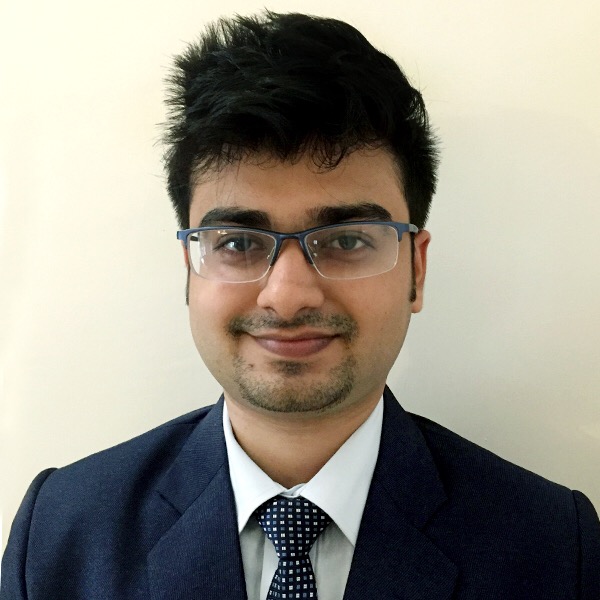
  • Bivas Chatterjee, Special Public Prosecutor, Govt of WB, on challenges in cyber law and skills to become a good cyber lawyer

    Bivas Chatterjee, Special Public Prosecutor, Govt of WB, on challenges in cyber law and skills to become a good cyber lawyer

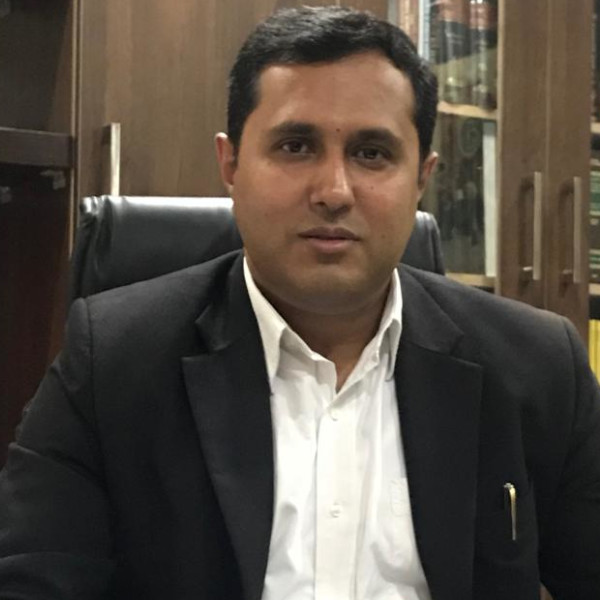
    Bivas Chatterjee qualified in Law from University of Calcutta in the year 1997, thereafter he pursued his Masters in Law from the Kakatia University.  He is currently Special Public Prosecutor in Cyber Laws and Electronic evidence related cases, engaged by Government of West Bengal. He has over sixteen years of professional experience and has experience of working in cyber law. He deals with major Information Technology, telecom and infrastructure companies. He is also the author of Electronic  Evidence, Cyber Criminal Manual, Cyber Security and The Law, Cyber Contract(Legal Analysis), Dense Cloud( Legal Analysis of Cloud), Information Technology Manual, Your Ultimate Protection Guide, Cyber Adjudication. CID, West Bengal got its first conviction in the case where he was the special public prosecutor. He shares the challenges and experiences being a cyber lawyer in India.

    In this interview, he talks to us about:

    • Challenges faced in cyber law
    • The importance of cyber awareness in the digital world.
    • The skills to develop to become a good cyber lawyer
    • Combining technology with cyber law


    PLEASE EXPLAIN TO OUR READERS: WHAT IS CYBER LAW? DOES THIS INCLUDE TECHNOLOGY LAW?

    Summarily law, which governs the cyber/virtual world, is cyber law in common parlance. As cyber world has taken an unprecedented proportion, it has now various sub-structures. For example, people say that today it is a data world and to govern the data world, especially in this big data world, we have in USA, ECPA or other legislations to govern various data-breaches.

    In my opinion it is purely a technology law or it can be coined as techno-legal subject. We know technology runs much faster than appropriate legislation to come and that is why there is a clear constrain between law and technology and hence the present subject requires a thorough techno-legal-experimental attitude and flair to solve various legal issues or problems.


    WHAT KIND OF WORK DO CYBER LAWYERS DO?

    The areas of works are limitless and also unexplored till date. A cyber lawyer can fight the cyber crime related cases (be in defence side or as prosecutor, in prosecution side). Actually specking every modern day lawyer should have a fare bit of understanding on cyber related matters. Even in civil suit, namely matrimonial suits, etc., the litigants are coming with Facebook pages or other various types of electronic evidences. The application of electronic documents in every spheres of legal world is now inevitable.


    ARE THERE DIFFERENT KINDS OF CYBER LAWYERS WHO DO DIFFERENT KIND OF WORK LIKE THERE ARE DEAL LAWYERS WHO SPECIALISE IN DIFFERENT KIND OF DEALS?

    Cyber lawyers can practise in various civil as well as in criminal cases. Cyber lawyers can also give advice to the lawyers in various fields and can also share their knowledge with various LEA, academies etc. The prospect is growing everyday.


    IS A CAREER IN CYBER LAW VIABLE? WHAT KIND OF OPPORTUNITY IS THERE FOR YOUNG LAWYERS IN CYBER LAW?

    I have already discussed that present day lawyers can not proceed with their jobs without a fair bit of knowledge in this techno-legal field. The next generation legal fields require huge number of cyber-lawyers who will assist the judicial system in various ways in Courts apart from various in house legal jobs.


    HOW DID YOU MAKE A CAREER IN CYBER LAW?

    Being a first generation practitioner, when I started my career, I started with telecom industries. In the year 2002 I was engaged as a lawyer in a very famous telecom company in West Bengal and lateran one by one other telecom companies engaged me as their lawyer. In the year 2008 I have dealt with one of the first case of cyber corporate espionage between two very famous telecom company and later in the year 2010, I single-handedly dealt with one of the famous defacement case of a world renowned telecom company, spreading entire India, on behalf of the company. It was one of the first and biggest success in cyber crime related cases in the eastern India. Then onwards, I simply fall in love with this subject and it has become rather passion than to only profession. That time I could foresee the potential of this subject and since 2012, I have been engaged with all the various prestigious academies in India, I used to speak in those classes or seminars, that the future lies in the digital/electronic cases. I love to see that what I have thought and predicted years before, has actually proved to be truth. Though I was from the science background but not from information technology background, I have to upgrade and update myself to the present day changes in this filed. Actually technology moves mush faster than law or legislative changes or amendments. Even today, everyday I have to learn new changes taking place in this world.


    WHAT WERE THE FIVE BIGGEST CHALLENGES YOU FACED ALONG THE WAY? HOW DID YOU OVERCOME THEM?

    From day one I have faced various challenges in this field and I have to make over them in various ways. The following will make things clear:

    • In the yearly days, dealing with only cyber laws would not suffice for my living and I had to do other conventional cases along with the same to sustain my family. It was very tough and struggling period.
    • The law-enforcement machineries in the beginning was not ready, which they are now, to welcome the changes in the legal and other related fields. In various cases, there was lacuna in investigation for want of sufficient knowledge to collect, preserve and present digital/electronic evidences. For the last five years or so, I have trained more than thousands law enforcement officers in India, written books on how to solve and investigate various types of cases so that the evidence can be presented before the Learned Court.
    • The application of E-evidence in the existing conventional fields, like paper-oriented court system, was and still is a challenge. To make things uncomplicated, I have started to file written argument in details highlighting the recent development in these fields. I have been taking various classes covering the entire area/domain for learned judicial officers and public prosecutors.
    • To make things easier I have also written various books covering various areas of this techno-legal field. I have my blog/page under Facebook under title, “Cyber Crime Awareness Campaign”, through which time to time I post and share various articles, so that people specially the legal friends get help.
    • Finally, as I am the only Special Public Prosecutor in cyber-crime and electronic evidence related cases in Bengal today, I have very hectic schedule in everyday life and I have to continue my study in various related fields, which I have to do in my way to various Ld Courts sitting in vehicles through mobile or laptop. Everyday I have to work 16 to 18 hours to keep up with my hectic schedule.


    WHAT COURSES, BOOKS WOULD YOU RECOMMEND FOR A LAW STUDENT LOOKING TO SPECIALISE IN CYBER LAW?

    There are lot of books but students have to go through the contents and look into books which contain the practical-approach-oriented materials before purchasing. The best way to learn is to look into the various resources available in the internet but they should verify them and if possible cross-check with other resources. The student should have interest in technology, specially software development. I love to code everyday in my favourite languages like python, javascript etc.


    IS IT IMPORTANT TO GET A DEGREE OR DIPLOMA IN CYBER LAW?

    In my opinion there is no need to get a degree or diploma, rather a law degree is enough. The online certifications on various new fields are more useful than any diploma. The fundamental concept matters most.


    HOW DO YOU KEEP YOURSELF UPDATED GIVEN THAT CYBER AND TECHNOLOGY LAW IS AN ALWAYS EVOLVING FIELD?

    It is an ever-changing world. The platform or technology in buzz today may be obsolete tomorrow. I am sure the knowledge, which I acquire today after a lot of arduous efforts, is of no use tomorrow. Technology moves much faster than legal amendments. Everyday I dedicate at least three to four hours to study technology and sometimes I felt frustrated that my study-hours cover more technology study than law. I think law is more interpretation than only the statues and hence for those areas I need to allocate times to study. I have to allocate more time on real life problem-solving issues, like how the security breaches occur, the technique of hacking, the data-breaches etc.


    WHAT BLOGS, JOURNALS OR WEBSITES DO YOU FOLLOW?

    Various online website / blog of USA, Canada and European Union etc. dealing with this techno-legal world.

    I have mentioned details of the url/links in my books, students can follow those links.

    Study through you tube or Google article related to this field.


    IF I AM INTERESTED IN CYBER LAW, WHOM SHOULD I FOLLOW ON TWITTER AND LINKEDIN IN YOUR OPINION?

    You go through works of various persons and can follow one you think credible. You can follow me at:

    https://www.linkedin.com/in/bivaschatterjee/

    bivas.chatterjee@gmail.com

    https://twitter.com/cybercrimemanua

    https://www.facebook.com/bivas.chatterjee.5

    https://www.facebook.com/awarenesstocyber/


    WHAT ARE THE TOP FIVE SKILLS TO DEVELOP IF I WANT TO BE A GOOD CYBER LAWYER?

    The following top 5 skills are desirable from a cyber lawyer:

    • Tenacity and eagerness to learn new things everyday, specially new development in this field.
    • A little bit thorough knowledge of computer system specially hardware details of computer, mobile, IOT devices etc.
    • A little bit thorough knowledge of operating software, other computer software especially in depth knowledge of at least the grammar of a single computer language i.e knowledge of coding.
    • A little bit thorough knowledge of networking system specially web-development, network protocols, various frameworks and at least one server-side and one client-side language, namely php, javascript, nodejs etc.
    • A little bit thorough knowledge of cyber and electronic evidence related laws in India and beyond India, various case studies, case laws related to that.


    WHO ACCORDING TO YOU ARE THE BIGGEST INFLUENCERS IN CYBER LAW IN 2018?

    There are various stake-holders who have the biggest influences in cyber laws and some of them are as follows:

    •  Law enforcement agencies that can ethically hack and solve the cyber crime related cases.
    • Intermediaries i.e. various online service providers as defined in section 2(w) of Information Technology Act,2000, as amended.
    • Technical experts who have thorough knowledge on the ins and out of a system.
    • Banking sector companies, online wallets companies etc. who provide online money transactions platforms.
    • NGOs working in this field(though the number is meagre), public prosecutors, lawyers and judges.

    UNDERSTANDING CYBER LAW – DOES IT ALSO REQUIRE A DETAILED UNDERSTANDING OF TECHNOLOGY?

    The obvious answer is yes. If practising lawyers does not know the practical details of ins and outs of the technology, how can he find the actual problem and provide solution which is admissible and acceptable by Ld. Courts and society at larger.


    SHOULD ENGINEERS AND CYBER SECURITY EXPERTS LEARN CYBER LAW? HOW CAN IT POSSIBLY HELP THEM?

    If a fire-tender does not know how to deal with fire, how can he make himself safe from being burnt and more so how can he make other safe. For example, person dealing with private, secure, sensitive data or electronic systems may at any point of time implicate himself or herself in unnecessary legal binding / litigation. (Say for example after the GDPR, in European Union, huge compliances are required, otherwise stringent actions may follow). In every sphere, the knowledge of cyber laws around the world is a prerequisite for engineers and cyber expert and the knowledge will provide a safety-valve to them.


    WHAT IS THE EARNING POTENTIAL OF A SUCCESSFUL CYBER LAWYER?

    Earning potential as a profession cyber lawyer is good in my opinion. The number of Cyber lawyers are numbered and crimes and contraventions are on increase in virtual world.


    IS IT BETTER TO PRACTICE INDEPENDENTLY OR TO WORK WITH A LAW FIRM OR COMPANY?

    It depends on person to person. But for the newly-started professionals, it is better to have one guide, though being the pioneer in this field, I never felt the urge to have someone. If someone has the highest level of passion, zeal, dedication, honesty and integrity, he or she will surely succeed.


    HOW DOES ONE GET STARTED IN CYBER LAW PRACTICE?

    In my opinion to start in legal professional, one should not be very choosy, and in the early stages he or she should do or put his head into various issues and as the cyber-law related issues are everywhere, one who wants to pursue the career in cyber law can start only specialisation work after at least 5 years of his or her practice years.


    DO YOU THINK INDIAN CYBER LAW REGIME NEEDS AN UPGRADE? WHAT ARE THE AREAS THAT NEED ATTENTION OF LAWMAKERS?

    After the amendment has been made by way of Information Technology Amendment Act, 2008, some of the famous judgements been pronounced, and lot of technological changes took place, especially in arena of Data-science, cloud-computing, Artificial Intelligence and its predictive algorithm, Blockchain etc., Indian Cyber laws should require upgradation. The following areas need attention:

    • Getting evidences from the intermediaries, especially from WhatsApp and other Instant messenger services.
    • Appointment of Examiners of Electronic evidence.
    • Laws relating to forensics evidences, especially incorporating chain of evidence in Indian law.
    • Details of laws clarifying the process of collection, preservation and presentation of electronic evidence.
    • Clarifying the status of the cyber security personnel and IT- security audit or ethical hacking.
    • Strong data-protecting laws (We already got the Personal Data Privacy Law Bill, 2018)
    • Changes in procedural laws in cyber crime investigation,
    • Laws dealing in details on Child pornography and Online-Trafficking.
    • Laws relating internet of things (now Internet of Everything)
    • Laws related to CCTV footage, etc


    WHAT ARE THE MOST PROMISING AREAS OF WORK WITHIN CYBER LAW IN THE NEXT DECADE?

    The most promising areas are:

    • Artificial Intelligence, Machine Learning and Deep Learning.
    • Cloud-computing
    • internet of things (now Internet of Everything)
    • Data privacy and security, specially big data, data-analytics and predictive and destructive logarithm.
    • Blockchain and crypto-currencies.
    • Dealing with digital/electronic evidence in non conventional and conventional fields.


    DOES IT MAKE SENSE FOR LAWYERS TO SUPER SPECIALISE WITHIN THE DOMAIN OF CYBER LAW?

    If any lawyer wants to specialise in cyber law arena, specialising within the domain is obviously required, specially regular and intensive study in technology and exploring its new areas is a must. Dedicated and passionate effort is a prerequisite in this domain.
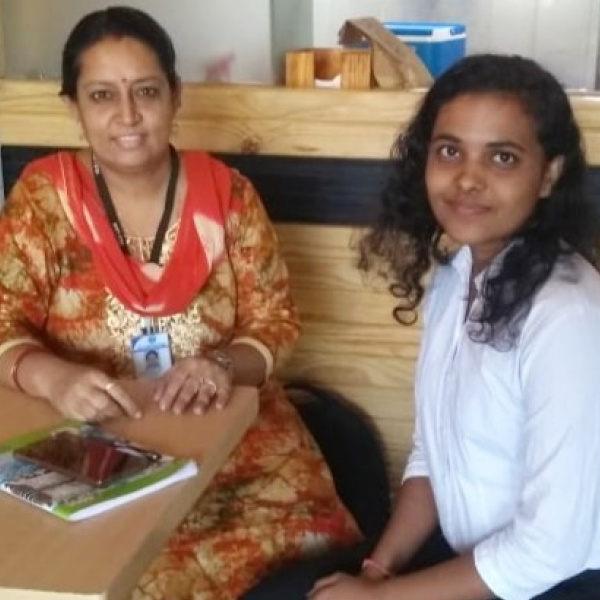


  • Parna Mukherjee, Assistant Professor, GLS Law College, on legal education system, importance of moots and internships

    Parna Mukherjee, Assistant Professor, GLS Law College, on legal education system, importance of moots and internships

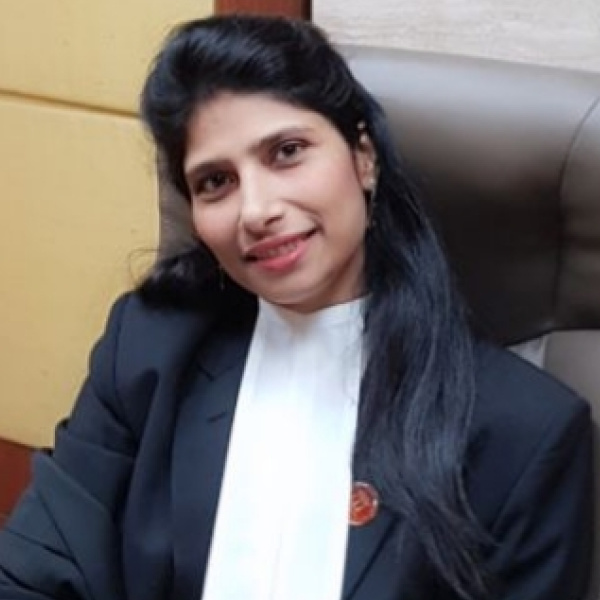
    Parna Mukherjee is as an Assistant Professor, having ten years of academic and one year of field experience. She has done Ph.D. in the area of Environmental Impact Assessment. As faculty both in full time and visiting capacity, she has taught in many prestigious institutions of Ahmedabad like Institute of Law at Nirma University, SLS at PDPU, HLIC & BKMIBA in AU, GLS Law College. She has taught several courses like, Environmental Studies & Law and Forest Law (Hons. Course), Legal Research Methodology, Interpretation of Statutes, electives as Business Laws, Tort & Consumer protection, Constitution, etc. She has been actively engaged both in teaching and research at the UG & PG level.  She has also presented papers in various international and national conferences and has few research publications to her credit.

    She has around six publications and has presented over ten conference papers both at national and international level. Her areas of interest include Socio-legal research in the area of Environmental Law and contemporary environmental issues such as EIA, E-waste, CCS, Bio-medical waste, etc. She also was involved in Socio-legal Research and environmental policy review and drafting of Moot Problem, etc. She received “Best Paper Presentation Award” titled  “A Study of the Impact and Efficacy of the EIA Norms in India presented paper in the 1st Annual National Seminar (NUILANS) on Law Impact Assessment organised by the ILNU, Nirma University, Ahmedabad, on 21st-22nd, January, 2011.

    In 2018 Awarded the “Best Participant” at the One Week Refresher Course for Law Teachers “March of Law: Critical Reflections in Law Teaching and Research Methodology”, organised by the National Law School India University, Bangalore in association with Bar Council of Kerala  M K Nambyar Academy of Continuing Legal Education, Kochi, held at National Law School, Bangalore and  was  awarded the “Best Participant” in June, 2018 held at National Law School, Bangalore.

    In this interview we speak to her about:

    • Her interest in academia
    • Importance of mooting, publications and internships
    • Changes essential in the current legal education system


    BEING A LAW TEACHER, HOW WOULD YOU LIKE TO INTRODUCE YOURSELF TO OUR READERS?

    Being a student of law myself, I am also engaged in teaching the law almost for a decade now and absorbing and learning the law every day.


    WHAT INSPIRED YOU TO PURSUE LAW?

    Choosing law was by accident in my case. I had my bachelor’s degree in (Hons.) Geography, from St. Xavier’s College, Ranchi. Then due to lack of opportunity to pursue Masters in the same field over there, my curiosity drifted towards law. Once I started with law, there was no looking back and no regrets. Rather, I can say that understanding of geography came as handy, it helped to cultivate my further interest in the area of Environmental law.


    YOU HAD AN EXCELLENT ACADEMIC RECORD IN LAW COLLEGE. PLEASE TELL US ABOUT THE MANNER IN WHICH YOU APPROACHED ACADEMICS WHILE IN COLLEGE.

    To be honest, my journey of L.L.B at Bangalore University was not that exciting. As doing law along with part time job turned out to be a disastrous idea and I ended up scoring a second class, which has been my worst academic performance in my entire life till now. However, this turned out to be a new valuable lesson and thus when I opted for LL.M. in Gujarat University in Environment Law; I decided to give up my job. Gave my full concentration towards this academic assignment, which helped me to achieve a 1st class with two gold medals and excel satisfactorily. Thus, the lesson was very simple, straight forward and a memorable one.


    WHAT’S THE BEST THING ABOUT YOUR JOB?

    To able to connect with young minds constantly, it tremendously rejuvenates my own thinking and learning process. As I believe, that teaching is a continuous learning and evolving process. With every lecture, every class, every year, I evolve with new ideas and dimensions of learning law. I love the goal of teaching i.e, inculcating the right perception of law and understanding among young minds.


    ACCORDING TO YOU WHAT IS THE THING THAT A LAW STUDENT SHOULD NOT MISS DURING LAW COLLEGE LIFE?

    First, when law student opts for law programme for his/her future profession whether by choice or accident, they need to devote for five continuous years minimum to learn the basics of law. Then along with academic performance they must start building up other skills like participating in moot competitions, paralegal activities, clinical exercises, internships etc., so that they can be professionally ready after five years of academic journey in law. They must also be updated with recent happenings whether it is at national or international level, as it is essential to understand ‘law in action’ rather than law in texts and statute books.

    WHAT IS THE IMPORTANCE OF MOOTING, PUBLICATION AND INTERNSHIPS IN A LAW STUDENT LIFE?

    Mooting is basically nothing but a mock clinical exercise for stimulation, in which a student is groomed for future legal practices whether for law firms or in litigation or in judiciary. However lately, personally I observed that mooting has become most dominating thing in legal education. Even, at time it takes serious toll on regularity of students and consequentially on their academic activity. Also at times the core academics get undermined due to dominance of extensive and aggressive mooting by institutions and students. Personally, I believe mooting should be considered as a part, not as the core element of legal education. And thus, balancing is important; focusing only on one component won’t help to achieve the purpose of legal education in true sense.

    Whereas publication is also an important skill for law students which helps to inculcate research and comprehension skills, analytical as well as literary skills, etc. It helps to pursue any given topic from different perspectives and angles. A student can always get credits for good publication. However, as teachers, we need to utmost careful to orient the students towards the issue of copyright as it persistent as a big challenge in academic domain presently.

    Internship, it is also another important aspect of modern legal education which tries to impart professional skills. It also exposes the students with the various realities and challenges of legal profession whether internship is done in a law firm, litigation or corporate sector. A student must select internship in order to grow and evolve in the area of their choice and interest in legal field.

    I also feel that the whole area of legal internship needs to be regulated towards protecting the student’s interest, who are at times feels a bit vulnerable as they often do not get positive responses from the professional bodies and many times do not receive any financial incentives, etc. There are also issues of maltreatment and harassment towards the student interns and hence we need some regulations in these areas of legal internship.


    WHAT IS YOUR SUCCESS HABIT THAT YOU WOULD LIKE TO SHARE WITH YOUR LAW STUDENTS?

    To be very practical, being a student of law, you may have likings and disliking’s towards certain subjects. Everyone have their own weakness and strengths, so there is a need to analyse both the aspects rationally to draw a strategy, so that they can complete the academics journey successfully in law. Regularity in attending classes, reading and analysis of law and legal issues, combining with the skills of writing and expressing will help the student to achieve a more realistic and career-oriented goals in legal field.


    WHAT IS THE GOLDEN RULE THAT YOU FOLLOW IN YOUR LIFE?

    To be clean and honest in our actions, as far as possible. ‘Success or failure’ both are facets of human life. So, we should be open to brighter days and glooming days both and continue our journey with bit of passion and dedication. Good things will eventually come to us.


    WHAT WERE YOUR AREAS OF INTEREST DURING YOUR GRADUATION AND HOW DID YOU GO ABOUT DEVELOPING EXPERTISE IN THEM?

    I had a natural inclination towards environment law and that area of interest of mine became stronger, when I pursued my PGDEL from NLSIU Bengaluru. Thereafter, I decided to do LL.M. followed by doctoral studies in the same area. For me reading, discussing and teaching environmental law is a very passionate and exciting journey.


    WHAT ADVICE WOULD YOU LIKE TO GIVE TO YOUNG LAWYERS LOOKING TO MAKE A CAREER IN FIELD OF TEACHING?

    I personally believe that legal institutions, law teachers and especially law students are major stakeholders of entire legal system. Hence, teaching law to law students and grooming them for legal profession is of paramount importance. So young lawyers, who want to dedicate themselves into teaching of law, it is like a silver lining. This will help our judicial and legal system to be better. I always advice brighter students whether they are into corporate or litigation filed, to devote few hours of their week in either para legal or for teaching activities. This will also create a relation between the academia and judiciary and legal profession as well as legal institutions. It will bind all the stakeholders into common thread and will also strengthen the legal education from professional and qualitative angles.


    WHAT CHANGES DO YOU THINK ARE THE ESSENTIAL IN CURRENT THE LEGAL EDUCATION SYSTEM OF INDIA?

    The curriculum of law and existing syllabus must be periodically revised and need to be designed in a way to make it more professionally and socially relevant. Along with this, teachers need to be trained and groomed with the various facets of effective teaching. The law teachers need to be trained in various teaching methodologies, assessment techniques and designing of various clinical legal courses, etc. Teaching and learning should be a process of continuous dialogue between various stakeholders like institution, teachers and students at the receiving end. Even the professional experts can be consulted to review the course from the practical professional parameters and requirements.


    WHAT DO YOU KNOW NOW THAT YOU WISHED YOU KNEW WHEN YOU WERE MY AGE?

    My legal education was of three years LL.B. programme. I wish, I could reverse the time so that I can join in five years integrated course of law again. Because, I feel this course is very well designed with good combination of theoretical, clinical aspects and combining mooting exercises etc., so this is what we missed during our time.


    AS A CONCLUDING MESSAGE WHAT WOULD BE YOUR ADVICE TO THE CURRENT LAW STUDENTS?

    We must be willing to learn every day. Also must keep your mind open in every field of human life and observe the impact and functioning of law. Thus, we can even learn from implementation impacts or failures of law. We need to try to understand very closely how the law virtually affects every facets of human life and learn more from ‘law in action’ rather law as it exists in letters in statutes.


  • Iram Majid, Advocate, Supreme Court of India, on career in arbitration and mediation and future of ADR in India

    Iram Majid, Advocate, Supreme Court of India, on career in arbitration and mediation and future of ADR in India

    Iram Majid is a lawyer, arbitrator, and mediator. She has more than 15 years of experience  in handling wide range of criminal, matrimonial, civil, commercial, banking and finance matters cases in the court as Advocate and outside the court as Mediator. She is also on the panel lawyer for Delhi Jal Board and DSIDC in Delhi High Court. She is a also qualified mediator, enlisted on the panel of Delhi High Court Mediation Centre. She is also the Regional Director of BIMS Bangladesh International Mediation society in India.

    Iram graduated from Aligarh Muslim University. She then went on to pursue her LL.M from Kurukshetra University, Kurukshetra.

    In this interview we speak to her about:

    • Being a successful arbitrator and meditator
    • Skills required to become an arbitrator and a meditator
    • Importance of extra circular activities in law student’s life
    • Significance of moots and their preparation


    HOW WOULD YOU INTRODUCE YOURSELF TO OUR READERS? DO YOU COME FROM A FAMILY OF LAWYERS?

    Every time I am to introduce myself I am thinking how to articulate and craft my self in words. Over the years I have struggled to take challenges towards achieving my goals. My strengths are my attitude that like to take challenges that I CAN do it , my way of thinking that I take both success and failure in a balanced manner.

    I am a practicing lawyer, Arbitrator and Mediator. I am on the panel of Delhi Jal Board, DSIDC, Delhi high court Legal services and mediator in Delhi High Court. I am first generation lawyer. I pursued BA, LL.B degree and thereafter LLM. My father is a service middle class bread earner at Aligarh, It is said that “Behind every successful man there is a women” but I my case there are two men behind my success “ my father “and my “husband” My strengths have driven me to meet unexpected challenges. I believe in myself and my hard work and I want perfection in everything.


    WHAT MOTIVATED YOU TO PURSUE LAW?

    I never wanted to be a lawyer if it had not been my father who had identified my strengths. I wanted to pursue economics but my father has seen some qualities in me and asked me to pursue law. I was having the fear to lose my friend circle my childhood friends and my area of interest was economics and it was very difficult to get admission in economic but I got the same. Under the influence of my father I agreed to give the entrance for BA- LL.B. I opted for economics but my father insisted that I pursue law. The father daughter resistance began with me going on a hunger strike and my father did not ask me for food. It’s after 2 days I agreed to what my father asked for and took admission in law and their came the change. My clinched to help people for which law provided me the necessary background and degree to reach out to people who need help and make a positive impact on a daily basis using my analytical skills.


    HOW WAS YOUR EXPERIENCE AT LAW SCHOOL? DID YOU PURSUE ANY EXTRACURRICULAR ACTIVITIES SUCH AS MOOTS, DEBATES, SPORTS ETC.? HOW DID THIS CONTRIBUTE TO YOUR HOLISTIC DEVELOPMENT? DO YOU THINK SUCH ACTIVITIES SHOULD BE MADE COMPULSORY FOR STUDENTS?

    So the story   after getting the admission in law is that , from the very first week I found law classes interesting. It was 1998 when it seemed to me that I had just about everything one could wish for a comfortable house, a career to pursue and a good family. I think it was my lack of understanding of law that could not comprehend what my father saw. After that day of revelation, my father gave way to feelings of sympathy. I no longer saw law as a burden but as a struggle for my ambition. But it wasn’t long before another feeling began to weigh heavily on my mind—fear. I feared that my life might be wasted too, that I would feel empty if I failed to do something meaningful. That fear and sense of urgency drove me to search for a meaning in my own life, being a merit scholarship holder and a presidential awardee. I saw that a lot of students participated in moot courts, activities such as political debates and volunteering to change society. It was something that I had already interest in and a direction was all I needed, where everyone is expected to “fit in” and conform to social norms. My participation in debate competition, symposium, self-composed poetry and on the academic side it was ADR and personal laws which were admired by the students and the faculty. My passion started to take a turn towards a direction that I had longed to be a part of. After all, to me, it seemed to be doing something meaningful. Nonetheless, I spent the first two years of college studying merely to meet people’s strong expectations for me to be successful. During those two years, I managed to get good grades and took advantage of internship opportunities, but never found joy or excitement in my studies. Instead, I was often visited by the fear that I was walking the same path that my father wanted me to walk. It was only, when I came across classes titled ADR and Personal family laws, which cared for Contemporary Moral Problems and Global Justice, that I finally found direction in my search for meaning in my life. In those classes, we read and discussed fascinating topics, such as which ethical principles we might use to redistribute the wealth of the globe, or how we could stop potential genocides and ethnic cleansing. It was a surprising and strange experience to observe myself changing. When I found myself fervently arguing for one method of global distribution over the other, and voluntarily visiting a professor’s office pursuing further questions, I wondered: “Where has this passion been hiding? What have I been doing all these years?” Studying law has guided me to find my own answer to the question, “What is a meaningful life?” I have realised that I am thirsty for intellectually stimulating experiences, and that I truly enjoy exploring possibilities for making positive changes in people’s lives. I have also realised, more importantly, that there is lots of work to be done in the world—work that sometimes involves facing the dark side of reality, but that somebody has to step up and do. When I read articles in newspapers about horrific living conditions “women” going through legal battles, I read them from a different perspective now. Instead of simply expressing pity, I look at the situations critically and think about what it would take to solve those issues. The fact that I have a genuine understanding of the social conditions, which convinces me that I can contribute to solving these problems more than others. I want to be able to produce tangible influences through my work, witness how these influences cause progress in people’s lives, and find meaning in my life through experiences. Ideas alone cannot achieve this. But with the law, it is possible. I see the law as a powerful framework through which ideas can be manifested and applied in the real world to address different problems utilising the practical power of the law. It is physically tiring, repetitive work, but am happy.


    WHAT WERE YOUR AREAS OF INTEREST IN LAW SCHOOL? HOW DID YOU CULTIVATE AND PURSUE SUCH INTERESTS?

    So What Else were my areas of interest in a law school and how did I cultivate and pursue them. Being good student, I was good in all the subjects and secured distinction in all the subject but my field of interest were ADR and personal laws. When I was exposed to the society and learned from people that they are upset with the judicial system and have no faith in judiciary as there is saying “justice delayed justice denied “.

    Networking and informational gathering was so effective for me that I started to spend time attending the workshops and read publications.

    I saw myself as a creative and non-confrontational person, doing work I loved. This is because the legal community is finally acknowledging a fact that many lawyers have known for some time—that we do not all want to be like Perry Mason. Although there are many lawyers quite satisfied with their choice of profession and I was not at all a law school student yearning to appear in court, work for a big firm, handle large or complex cases, spend the majority of working hours in offices, or even earn top money. Instead, I shelved my course and carved it as an opportunity to explore and pursue ADR and personal family laws with alternative options, both in and outside of the law. I took to further examine quality-of-life and work-style issues. I wanted to create work for myself the one that even if I did not love but took me closer to my goal or at least the work that I felt good about.

    My love for the law got me into its theoretical and practical application often. I found contentment working in research and writing for legal book publishers, research services, or even for law firms.

    I acquired Legal training which became very beneficial in the development of useful, transferable skills that are much in demand. Both legal education and legal work provided excellent training in analytical thinking, communication, writing, and persuasiveness—skills that I am using in many endeavours.

    The previously mentioned my abilities in poetry, writing, editing, interviewing, organising information, researching, and giving attention to detail eventually moved into a full-time position as my writings started to get published for reading.

    I judged moot courts in India and Hong kong as well I enjoyed confrontation and posturing necessary when judging and learnt the science of ombudsman now also popularly known as Mediation.

    My values motivated me and I easily focused on fields that permitted the full use of my skills, integration of values important to me and satisfaction of my interests.

    I identified several trade associations and newsletters available at most public libraries. Joined associations that were in my area of interest in order to meet people working in the prospective field. Professional publications, including those produced by bar association sections, provided insights into new practice areas or new fields. Bar section meetings and conventions created excellent opportunities to meet people who work in one of your targeted fields and provided a reality check for me.

    These people were useful to me for inside information on the realities of working in that field as well as leads.

    My choices were not limited by preference, imagination, and ambition due to which I started to achieve positive results in Counselling.


    HOW IMPORTANT DO YOU THINK MOOTING IS IN SHAPING ONE’S FUTURE CAREER IN LAW?

    Looking back at law school, It’s the mind-set that has a role play Instead. It’s a trial run for your future career. I Embraced it and got involved. I developed a great arsenal of skills that helped me at entering the future career.

    The best piece of suggestion I can give any law student is to really get involved in law school by joining organisations like moot courts and journals, doing pro-bono work, or participating in a clinic (or all of the above), which become important skills that lawyers use every day.

    Moot courts get you involved, the more important is managing your time. Imagine the time management skills you can develop if you are carrying a full course load and conducting a brief for Moot Court, and writing a note for your journal. But image how good at time management you will be by the time you graduate from law school. Then, when you start your career, and one partner is asking for a memo, another is asking you to review thousands of documents, and a third is asking you to write sections of a brief all at the same time, you will already know how to manage your time and get your work done.

    The work through Moot Court, an externship, or a clinic is not like taking an extra class throughout the semester. You will not be sitting in class learning a legal theory on what lawyers do on a day-to-day basis. You will be developing first-hand legal skills like research and writing or getting up on your feet and arguing – real-life lawyer skills. And then, when you are given your first research assignment, at your first job out of law school, you will be really prepared to dive right into the assignment because you already have those skills down pat.

    And then do not forget about all the people you will come in contact with by getting involved – all the other law students on the journal, your clinic manager, your externship supervisor, etc. All of those people become part of your network. Networking is about building contacts across the legal industry – a very valuable skill that you can begin developing right now with moot courts. Say “yes” to moot assignments you might not want to do. Once you start working on moot courts and you say “yes,” and continue to say “yes,” you will open yourself up to bigger and better opportunities. And learning to say “yes” begins in law school.

    I know that all of this is something you have probably heard a million times since law school orientation, but take it from me – these skills are so valuable to have. I truly believe that a lot of my success in my career comes from the skills I learned while I was in law school. For example, in my externship, I learned great research and writing skills because part of my position involved constantly drafting motions. In Moot Court, I learned how to think on my feet, and in my pro-bono work, I learned how to address a judge. All of these skills have made me into the lawyer I am today and have helped shape my career.


    HOW DID YOU LAND YOUR FIRST JOB? WHAT WAS THE NATURE OF YOUR WORK THERE? CAN YOU RECALL THE FIRST TIME YOU ARGUED A SIGNIFICANT MATTER? CAN YOU RECALL ANY MEMORABLE EXPERIENCES AS A FRESH YOUNG LAWYER IN THE LITIGATION PRACTICE?

    I came from Aligarh after completing my law BA.LL.B. On the recommendation of one of my senior of law faculty, I joined the law Chambers Ms Zubeda Begum, Delhi High court. The start of my career was in the hands of a learned and dynamic counsel. I learnt a lot from her not only in legal knowledge but other social aspects as well. She was additional standing counsel for Delhi Government at that time, so being in her office I got a chance to handle variety of matters and exposed to new world. I worked very hard and started arguing matters in court. I still remember when I went in court for a Passover in very high-stake civil appeal matter before Justice Dalvir Bhandari and Justice DK Jain, I was scared to appear and asking for a Passover, the court could call upon me to argue in return. It happened so and I was called upon when I said ‘My lords …”I’m a junior and I am instructed to take passover only”, but court asked me to argue the matter then I thought opportunities may come anytime and I took that as an opportunity and then I read from the file and argued and got the appeal admitted. That was the day when I was very happy but I was unaware that there are many more to come.

    My most unforgettable moment was when had only three years in practice and with my hard work, I got an appointment as sole Arbitrator, that day was a happiest day in my career and my happiness had no bounds. I came to know that my hard work is getting recognition. That was not the last but the beginning thereafter I started getting assignment from the courts like appointment as local commissioner and Arbitrator. I still remember that when in courts judges started calling me by my name that used to be   a proud moment for me as I’m started creating place for myself and started recognition as Iram Majid.  Every job and in this case law chambers and employer/seniors is different but typically it means any experience that is relevant. job working experience is more important for examples because a full-time job is trackable and confirmable as well as usually relevant if the job is similar or in the same field. The word “professional” comes to mind.

    DO YOU THINK THAT METHODS OF ALTERNATE DISPUTE RESOLUTION SUCH AS ARBITRATION ARE THE FUTURE OF DISPUTE RESOLUTION IN INDIA?

    Alternative Dispute Resolution (ADR) is a substitute to the conventional method of resolving disputes including civil, commercial, industrial and family etc. ADR uses neutral third party who helps the parties to communicate, discuss the differences and resolve the dispute. The Advantages of Alternative Dispute Resolution are manifold as its less time consuming ,cost effective ,informal party centred and party autonomous Its promotes co-operation, social order and reduces hostility..

    As 3.3 crores cases are pending in Indian courts in that case alternative dispute resolution will be the future .Importance of ADR in India is to deal with the situation of pendency of cases in courts of India, ADR is expected to play a significant role in India with its scientifically developed techniques. ADR provides various modes of settlement including, arbitration, conciliation, mediation, negotiation and lok Adalat. ADR’s roots stem from the Constitution of India. Arbitration is one of the modes of ADR. The most significant development in future will be emerging divide between procedures for resolving low value and high value. Institutional Arbitration will deal with large sized dispute. The institution will do new form of automation especially version of online dispute resolution (ODR)

    It is evident that arbitration has evolved over the years as the ideal tool for resolution of disputes that saves the courts time and largely instrumental in assisting the parties to resort to quick remedial measures. Every arbitration is based on insightful application of law and its evolution is proof of its significance in the actual proceedings. Thus, arbitration has emerged as the most preferred platform for quick resolution of disputes especially in the industrial and corporate realm.

    So, arbitration is not the alternative dispute resolution but according to me this should be the “Appropriate Dispute Resolution” because its party autonomous and party centred.


    TELL US WHAT GOT YOU INTO TRAINING LAWYERS AND LAW STUDENTS ABOUT MEDIATION IN THE FIRST PLACE.

    Some of the most successful people in the world mediate. I did my mediation training from Pepperdine university USA , I did Negotiation and Conflict Management Skill Certification from ADR ODR Dubi and IIAM kochi and with Delhi High Court Mediation Centre. I am faculty trainer in Bangladesh International Mediation society. Success has its attributes to the practice of meditation and that is why I got into training lawyers and law students about mediation. Moreover, I am not taking mediation as my part time profession what mostly lawyers do but mediation is my passion and that passion is the driven force to push me into training and this is the only way we can spread mediation awareness among the community and moreover for getting more people into mediation we need these kind of training programmes as well as orientation programmes.

    Mediation practice that has a long history in India. Lord Krishna, Guru Nanak Dev ji, Kalidas, Kabir and Mahatma Gandhi the list goes on. Its now developed into a science with time. Mediation the students can use in order to excel in their lives ordinarily.


    WHAT IS THE SKILL SET REQUIRED TO BECOME AN ARBITRATOR AND A MEDIATOR?

    Arbitration is probably the best-known form of alternative dispute resolution, and is a formal, binding process where the dispute is resolved by the decision of a nominated third party, the arbitrator. Becoming a Chartered Arbitrator is a rigorous process, involving a number of stages. In the UK, the Chartered Institute of Arbitrators trains and accredits practitioners. Skills/knowledge needed Arbitrators need to have knowledge of the laws of contract, tort and evidence and understand and be able to use the applicable procedural law one must be able to evaluate the arguments and evidence which seemingly supports conflicting points of view .

    Where disputes revolve around issues of law, lawyers often make the best arbitrators. However, where the dispute revolves around issues of fact, the parties may prefer to have an arbitrator who is skilled in the particular sector involved.

    As far as mediation is concern, mediation as ‘an attempt to bring about a peaceful settlement or compromise between disputants through a neutral party . A mediator is a trained, neutral third party who uses their skills to bring two sides in a dispute to a resolution, without resorting to litigation. Mediation is a science and an art. Although many mediation skills may be taught, the development of a skilled mediator requires experience in dealing with people in all conditions and under all circumstances. Although there are many intangibles in the definition of a “good” mediator, certain character traits are invaluable like facilitator, Active listener ,neutral, impartial . Since mediation is still a relatively new field, there are no statutory qualifications required to mediate at present. However, in order to gain work as a mediator, it would be necessary to have some form of accreditation from a body . Mediators are sometimes qualified solicitors or barristers but also come from a variety of backgrounds other than law such as architecture, human resources, counselling, social work, banking and accountancy. Some mediation is undertaken as voluntary work.

    Parties involved in a dispute requiring expertise in a specific area (such as construction) may decide that it is preferable to have a mediator with expert knowledge of that area, rather than a mediator with a legal background.

    INTERNATIONAL ARBITRATION OFTEN INVOLVES A COMPLEX INTERPLAY OF PUBLIC AND PRIVATE INTERNATIONAL LAW. CAN YOU ELABORATE ON THIS ASPECT FOR OUR READERS?

    The importance is to have a positive approach to international commercial arbitration as a dispute resolution process. I find there is anxiety in the mind of the users of international arbitration where their investments are at stake. There is a need to ensure that commercial disputes would be resolved by specialists, in a neutral forum. The costs are to be kept low with efficiency in procedures and disposal. International commercial arbitration system promotes international trade and investment by reducing the risk that potential commercial disputes that are determined by opposite party’s home courts. It’s this complex interplay of the laws that International Arbitration can eliminate by using the arm of public and private international laws. In the national law when ever and where ever required; with the will of the parties and rules of non-national institutions and international treaties and guidelines control the process. International arbitration is a mixture of public comparative law and private international law.

    The landmarks which helped in development of the modern law and the practise of international commercial arbitration are:

    “The Geneva Protocol of 1923 (the 1923 Geneva Protocol)

    The Geneva Convention of 1927 (the 1927 Geneva Convention).

    The New York Convention of 1958 (the New York Convention).

    The UNCITRAL Arbitration Rules (the UNCITRAL Rules) adopted by resolution of the General Assembly of the United Nations in December 1976.

    The UNCITRAL Model Law (the Model Law) adopted by the United Nations Commission on International Trade Law in June 1985.

    Revisions to the Model Law (the Revised Model Law) adopted in December 2006.

    The major institutions are

    International chamber of Commerce (ICC) Paris,

    American Arbitration Association (AAA), New York,

    London Court of International Arbitration (LCIA) London

    Swiss Arbitration Association (ASA)

    Kuala Lumpur Regional centre for Arbitration (KLRCA)

    The steady growth of international trade across the globe will definitely require ad hoc or international arbitration to have proper training for the arbitrators and counsel who conduct it both in the public and the private domain. The counsel to the arbitration proceedings needs to be chosen who specialise in international arbitration and have sound knowledge of the subject matter of the dispute and a person who can cater to the needs of the party with some regional and local law knowledge.

    YOU ARE A MEMBER OF ALL MAJOR ARBITRATION INSTITUTIONS. WHAT IS YOUR PREFERRED FORUM?

    I am a member of CIArb UK, (YSIAC), ICC YAF, Dubai International Arbitration Centre, AIAC Kualalampur and so on I am doing arbitration in Delhi High Court Arbitration Centre as well .  My preferred forum for Arbitration is Institutional Arbitrations and it is so because of the growth of the economy, trade and commerce. With diverse economy, investment into the Indian market by the foreign investors is the reason for institutional arbitration.

    Prestigious institutional arbitration association like the London Court of International Arbitration, The Permanent Court of Arbitration and the International Chamber of Commerce have opened Centres in India. It’s a positive sign because these institutes are very well-known and prestigious and wouldn’t have opened Centres in India if they did not see a potential growth in Institutional arbitration. Apart this CIArb not only gives accreditation but also trained in arbitration it is world wide renowned body.

    For youngster the forums like ICC , SIAC, CIArb provides the platform to learn and help in career development . As per new bill only accreditation will be mandatory to become an Arbitrator. If you wish to choose Arbitration as a career than please try to get associated with any forum and try to get accreditation with esteemed organisation as in coming days it will be mandatory. So, this is the right time to wake up and act without any delay.

    DO SOMETHING TODAY THAT YOUR FUTURE SELF THANK YOU FOR


    HOW DO YOU REMAIN UPDATED WITH ALL THE NEW DEVELOPMENTS IN THE FIELD OF INTERNATIONAL ARBITRATION AND MEDIATION?

    åI have identified several trade associations and newsletters of different institutions and societies. Joined associations that are in my area of interest in order to meet people working in the prospective field. Professional publications, including those produced by bar association sections s that I can get insights into new practice areas or new fields. Bar section meetings and conventions and workshops also are a creation of source and an excellent opportunity to meet people who work in one of your targeted fields and provide a reality check for me.

    Additionally, by joining organisations like moot courts and journals, doing pro-bono work, and participating in a clinic authored by the respective Bar Associations and Legal Societies. I am also on the editorial board of one of the most widely circulated e magazine of ADR in India i.e IIAM e – magazine that I think also a great help to get oneself updated.


    WHAT ADVICE DO YOU HAVE FOR OUR READERS WHO ARE PRIMARILY COLLEGE STUDENTS?

    BE FAITHFUL TO THAT WHICH EXIST WITHIN YOURSELF. The best piece of suggestion I can give any law student is to really get involved in law school by joining organisations like moot courts and journals, doing pro-bono work, or participating in a clinic (or all of the above), which become important skills that lawyers use every day.

    Work through Moot Court and develop first-hand legal skills like research and writing or getting up on your feet and arguing – real-life lawyer skills. Be really prepared to dive right into the assignment. Become part of a network as it helps building contacts across the legal industry. Say “yes” to moot assignments and learning to say “yes” begins in law school.

    KNOWING YOURSELF IS THE BEGINNING OF ALL WISDOM

    Apart this I want to give a piece of advice for healthy ad self-esteemed life because   most often when we people discuss success they do so in terms of careers. I encourage you to also   pay attention to a different kinds of success as well _ success in life , when we are young we do not quite see the distinction in between career success and success in life but the difference is significant and to achieve ultimate happiness one have to understand , it’s not like we cannot achieve both but we have to consider them both and be the successful person in your own version. Perseverance is definitely the key to success. Every once in a while, you will fail, and most of the time, the circumstances will be beyond your control. The key to overcoming this; is this DO NOT let your failures keep you down. compose yourself, dust the dirt off, take a deep breath and get back up on life saddle and keep going. failures are part of life if you don’t fail, you don’t learn. If   you don’t learn, you will never change. The world doesn’t care how many times you fall down, as long as it’s one fewer than the number of times you get back. so,

    • Know yourself
    • Understand what makes you feel great
    • Recognise things that get you down
    • Set goals to achieve what you want
    • Don’t afraid to ask for help
    • Stand up for your belief & values
    • Help someone
    • Take responsibility of your action
    • Be confident.

    So , act like there is no tomorrow because if you taking your goal for granted or then probably you will be too late


  • Raghu Ram, Founder and CEO, Law Abode LPO, on his startup, and the challenges of starting your own venture

    Raghu Ram, Founder and CEO, Law Abode LPO, on his startup, and the challenges of starting your own venture

    Raghu Ram completed his graduation from Jagarlamudi Chandramouli College of Law, Guntur in 2005. He then went on to purse his MBA from University of Central Queensland (Australia).  He is the CEO and founder of Law Abode LPO. He has more than thirteen years of experience in business development and legal operations management. Prior to this he has worked at Acumen LPO and Pegasys LPO.

    In this interview he talks about:

    • Legal skills required to work in LPO;
    • About his startup Law Abode LPO;
    • Challenges of starting your own venture.

    HOW WOULD YOU LIKE TO INTRODUCE YOURSELF TO OUR READERS?

    I would like to introduce myself as Founder & CEO of Law Abode LPO, a boutique legal outsourcing firm catering legal and technical services to American and Canadian Attorneys. Over the past six years I have been running the firm. At the age of 29 I started Law Abode LPO. Prior to this I worked with two startups as a legal and business consultant. I am self-motivated guy who believes in hard work. I got my B.A. LL.B from Jagarlamudi Chandramouli College of Law, Guntur in the year 2005 and M.B.A from Central Queensland University, Australia in the year 2007. I take care of business development and legal operations of the firm.


    PLEASE TELL US ABOUT YOUR COLLEGE LIFE?

    My college days are unforgettable. Those days are the happiest days of my life. In college, I met two important persons of my life. I have learned a lot from my principal (Dr. Sudhakara Babu). He is my guide and mentor even today. He is my backbone and like my father. Another person is my wife (Jaya Lakshmi), now she is working as Judge in AP Judiciary. I was very proactive student in the college with good academics. Not only academics, I participated in cultural, sports and all other activities held in college. I was the college topper and secured awards for meritorious performance in university exam. I gave paper presentation at national level symposiums and was a regular participant in college debates and moot courts. I believe college life has a great impact on me in shaping my career.


    YOU PURSUED MBA FROM UNIVERSITY OF CENTRAL QUEENSLAND AFTER LLB. WHY THE DECISION TO PURSUE MBA AFTER LLB?

    The main reason to pursue MBA after LLB is to get different combination. In early 2000 I heard about LPO and outsourcing concepts. There were debates about foreign law firms entering to India. That time I thought in this changing global scenario Law and Management combination will definitely give me good career. A law and MBA degree helps professionals build expertise in either field, for example, marketing in management, or litigation in law. But in a rapidly globalising economy, a combination could take one’s career much further. And, given the demand for a combination of law and MBA qualifications, this dual combination helped me lot to start my own firm, because I have knowledge in legal services and I know how to market these services.


    WHAT IS THE WORK PROFILE OF A LEGAL CONSULTANT AT AN LPO?

    My first work profile was of  legal and business consultant; I was part of both business development and legal operations. Work profile for the legal consultant depends upon the LPO firm. Some of the LPOs offer only contract management services and some of them offer personal injury services. Now most of the big LPO firms primer service is contract management and document review. Normal job of legal consultant would be doing the legal research, preparing legal memos, contract drafting, contract review, its mostly attorney supporting work.


    COULD YOU EXPLAIN TO OUR YOUNG READERS WHAT IS AN LPO AND WHAT ARE THE TASKS UNDERTAKEN BY IT?

    Legal process outsourcing (LPO) is new concept. Its part of KPO (Knowledge process outsourcing). Most of them think it’s also something like BPO. But it’s absolutely wrong. In BPO person’s qualifications and subject knowledge is not much required. But in LPO it is different. If anyone wants to work in LPO, they should have law degree for most of the work. Basically in LPO firms, most of the work would be legal support services, legal research, legal drafting, contract drafting, contract review, personal injury claim matters, e-discovery, preparing bankruptcy chapters, intellectual property matters. These are the main tasks LPOs are taking right now.


    WE HAVE HEARD THE LPO WORK GETS REPETITIVE AND THERE IS LIMITED GROWTH IN THE SAME? IS IT TRUE OR WOULD YOU LIKE TO DISPEL THIS WIDESPREAD OPINION ABOUT THIS CAREER CHOICE?

    Yes, LPO work gets repetitive. Because you are working with attorneys, they have every day paper work. As long as they are in regular practice we will receive work. It’s the beauty of the industry; I have close to ten years of work association with some of my clients. It’s all about trust building with your quality work. Once you are accustomed to their way of work, it is really happy to work with. I am completely disagreeing with your opinion about career growth, there is huge scope of career growth, with in span of 10 years one can reach to good position in LPO sector. We will have lot of exposure about international market and foreign legal issues. In terms of salary wise also LPOs are giving good packages.


    HOW DID YOU DECIDE TO START YOUR OWN VENTURE? WHAT WERE THE CHALLENGES INVOLVED?

    I started my own firm when I was 29. After four years of real time experience and witnessing a few key moments of work culture led me to start my own firm. Since my wife is into judicial services, she use to have a transfer in every three years. This is also one of the reasons to start my own venture. Now I have comfort to work from any place and I can make the decisions on my own. There are challenges involved running LPO firm. The biggest challenge is convincing the client and getting work from them. It’s really a herculean task. We can convenience the attorney only with quality of work. If you research is less than perfect, its no use. Timely delivery of the projects and resource availability are major concern. Firms like us, we are working in tier two cities, and availability of resources is less as compare to metros. W get good resources in metro cities but it’s difficult to get in small places.


    WHAT ARE THE LEGAL SKILLS REQUIRED TO BE WORKING IN AN LPO?

    LPO is perceived as an alternative career option for lawyers. LPO provides an attractive alternative to legal professionals, offering them higher salaries, work-life balance and better working conditions. Working with foreign attorneys always a tough call. We need to adapt to their way of working and usage of technology. Lawyers who want to work in LPO need have good command over the english language and legal analytical skills. Lawyers are required to be well versed with the legal procedural differences including expertise in online legal databases.


    DOES LAW ABODE LPO OFFER INTERNSHIPS TO LAW STUDENTS? HOW CAN A LAW STUDENT APPLY FOR THE SAME?

    Yes, we offer internships to selected students. Students can send their information to email: info@lawabodelpo.com


    WHAT SKILLS AND QUALITIES WOULD YOU LOOK FOR IN ANY LAWYER BEFORE OFFERING HIM A JOB WITH YOUR LPO?

    I strongly believe that there is no substitute for hard work. Working in legal profession whether its regular legal practice, working in corporate legal department or working in LPO, lawyers need have lot of patience. They should be ready to work long hours. The skill-set we see in resources is mainly their communication, use of online tools, understanding about legal issues, research skills and their academics.


    WHAT WOULD BE YOUR WORD OF ADVICE TO YOUNG LAWYERS AND LAW STUDENTS?

    I personally believe, working in legal profession is always challenging. Every day is new task. Particularly for law students, they have lot of career opportunities like judicial services, corporate legal departments, traditional court practice and working LPO sector. It better to have clear goal in which they want to go. Basing on that they have to upgrade required skill set. It’s always better to participate in moot courts and debates to enhance their speaking skills. In changing global scenario they have to observe latest trends in legal market. Use of online tools and technology always has an advantage to do the things faster.


  • Raghav Pandey, Assistant Professor, Maharashtra National Law University, on experience in academia and legal education system of India

    Raghav Pandey, Assistant Professor, Maharashtra National Law University, on experience in academia and legal education system of India

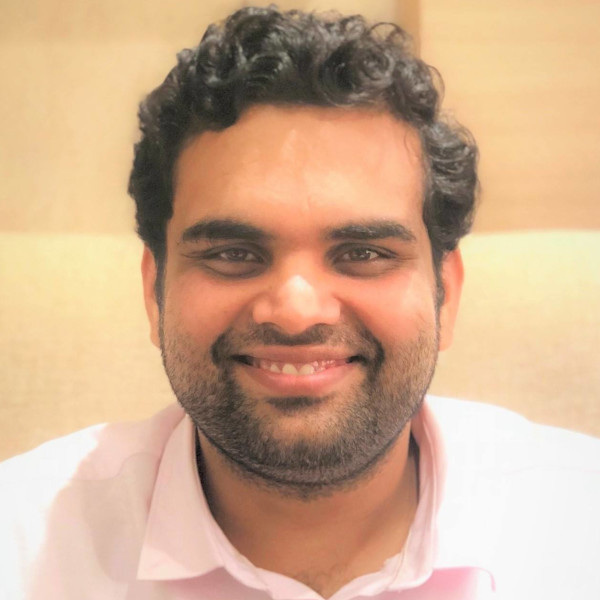
    Raghav Pandey is currently an assistant professor of Law at Maharastra National Law University, Mumbai. He graduated from Dr. RML National Law University, Lucknow in the year 2012 and then went to pursue a Masters in Arts from Tata Institute of Social Sciences, Mumbai. Later on, he pursued his Masters in Law from Indian Law Institute, New Delhi and presently pursuing his Ph.D. from Indian Institute of Technology, Mumbai.

    In this interview we speak to him about:

    • His law school days at Dr. RML National Law University, Lucknow;
    • Being a prolific writer and authoring several papers in reputed journals;
    • His interest in academia and his teaching methods;
    • His interest for pursuing his higher studies;
    • His opinion on the Indian legal education system; and
    • His experience as Assistant Professor at Maharastra National Law University, Mumbai.


    TELL US A BIT ABOUT YOUR WORK LIFE, YOUR DREAMS AND ASPIRATIONS.

    Well, currently I am an Assistant Professor of Law at Maharashtra National Law University, Mumbai and a Senior Research Fellow at the Department of Humanities and Social Sciences, IIT Bombay.

    Coming from a family of academicians, I have always been environmentally inspired to be a teacher. This has recently been formalised, after I have entered an institution to streamline myself into an academic life and career. I had always wanted a proper work life balance in life, which the academic ecosystem certainly promises to give. It was precisely because of this reason I never wanted to enter the corporate world or even litigation.


    DO YOU RECKON ANY INCIDENT THAT MOTIVATED YOU TO CHOOSE LAW AS A CAREER?

    There is no particular incident as such, however my father played a very important role in making this choice. As opposed to the contemporary wisdom of choosing a career option whatever you want yourself, I think that at the age of 17, one is always not in the best position to decide for themselves. In class 12th I was very interested to pursue sciences and scored really well in the board examinations in both Mathematics and Sciences. However, Law also appealed to me as a very lucrative career option. Being born and brought up in Allahabad, where every second person is a lawyer (quite literally), motivation to take up law as a career, was everywhere around town. I would say thankfully my father intervened, and we jointly decided that I should go to a law school. I say ‘thankfully’ because I really enjoy reading law more than anything else now.


    TELL US ABOUT YOUR TIME AT DR. RML NATIONAL LAW UNIVERSITY, LUCKNOW.

    Life at Dr. RML National Law University, Lucknow was very simple. I studied there at the time when attendance was not taken very seriously, I hear that has changed now. Hence, we had a lot of time to do whatever we choose to. The campus was fantastic, with all the modern amenities (except for seamless internet connectivity in the hostels!) and I was in the second graduating batch of the University. Hence, it also involved a fair bit of compromise from our end. For instance, there was no alumni to support the University. It was at RML though, that I started reading books at a serious level, precisely because of ample availability of time. It was because of this routine that I also read a lot of non-law books like books on history, politics and religion. These would shape my career choices in future.


    TELL US HOW HAS BEING ASSOCIATED WITH COMMITTEES WHILE YOU WERE AT DR. RML NATIONAL LAW UNIVERSITY, LUCKNOW HELPED IN BUILDING YOUR PERSONALITY AND SHAPING YOUR CAREER?

    I was the student in-charge of the Organising Committee of the University fest, twice. I was also part of the Vice-Chancellor’s committee for a fair period of time. All of this contributed to the development of my personality and interpersonal skills. I was not very good at public speaking and now I am a teacher, this has to do a lot with me being part of these committees at law school.


    WHAT WERE YOUR AREAS OF INTEREST IN LAW SCHOOL?

    My favourite area of law has always been Constitutional Law, followed by Public International Law, Jurisprudence and Criminal Law. I was very fortunate to be taught by Prof Jariwala. His lectures on Constitutional Law are still afresh in my memory and perhaps remains as the best part of the classroom life at law school.


    WHAT PROMPTED YOU TO PURSUE A MASTERS IN ARTS FROM TATA INSTITUTE OF SOCIAL SCIENCES, MUMBAI?

    I had interned at TISS in the second year of my law school at the Centre for Criminology. This internship along with a lot of reading on social sciences, had convinced me that a systematised study of social sciences is something which I must do. I was fortunate enough to secure an admission to the course which I wanted to pursue.

    PLEASE TELL US ABOUT YOUR EXPERIENCE WITH INDIAN LAW INSTITUTE, DELHI. HOW WAS IT DIFFERENT ON COMPARING WITH THE NATIONAL LAW SCHOOLS ACROSS THE COUNTRY?

    I.L.I as opposed to National Law School is an exclusively research institute, which makes it more relevant for academicians than practitioners. I.L.I offers no bachelor’s course like an LL.B. For the longest period of time it offered no curriculum-based courses but only worked as the research institute to aid the Supreme Court of India. ILI is possibly the best institute in India, if one plans to enter legal academia. It’s LL.M. course forms a benchmark of sorts, unlike the National Law Schools where usually the LL.M. and Ph.D. courses are not given their due importance and the focus is mostly on the undergraduate course.


    WHEN DID YOU DEVELOP YOUR INTEREST TOWARDS LAW AND SOCIETY?

    This happened in the concluding years of the law school itself, however after joining TISS it formalised more clearly. I began to be enamoured by the idea that what is the meaning of all the legal edifice of constitutional rights and liberties, if they are not translated into something tangibly visible in the society. Naturally law has no meaning if it does not positively impact a person’s life who is standing last in the que of development.


    AT PRESENT, YOU ARE A DOCTORAL CANDIDATE AT IIT, BOMBAY. WHAT MOTIVATED YOU TO PURSUE A PH.D., IN HUMANITIES AND SOCIAL SCIENCE?

    During my time at TISS as well as ILI, I secured an award of Fellowship from the UGC to do a PhD. Since then, I researched on the best institutes to do a PhD in India. I was thoroughly convinced after my time at TISS that a purely legal and a doctrinal research is something which I would not want to pursue, simply because the lack of tangible benefits it would accrue to the society. I had also developed a very deep fondness for the city of Mumbai and somehow wanted to stay here, if staying at my hometown was not an option. IIT Bombay fitted into all my filters. In addition to it being in Mumbai, it is also one of the finest or perhaps, the finest research institute in the country. In sciences, IIT-B produces the greatest number of published research papers, annually. The Humanities and Social Sciences Department is no different, when it comes to inculcating and practicing the best research practices. I had been aware of the research culture of the institute, which is primarily based upon the model adopted in the American Universities. As soon as I secured the admission in the Ph.D. program directly, usually they admit after completing an M. Phil., there was hardly an option to not take admission.


    WHAT PROMPTED YOU TO CHOOSE TEACHING AS A CAREER?

    As I said this was primarily due to the influence of my family. My grandfather, who has a profound impact on the early years of my life, was a Physics teacher. His father was also a teacher. My father, paternal aunt and uncle, are all teachers. Even while studying, especially at TISS, I was teaching my classmates a day before exams. This is something which I enjoy more than anything else and this I realised even more, when I started teaching professionally. Hence, the decision to select a teaching career was after all, not so difficult.


    TELL US ABOUT YOUR TEACHING METHODOLOGY.

    I principally use discussion and Socratic Method of teaching, especially for undergraduate classes. At the undergraduate level, the development of legal concepts is critical, which is best achieved through these two methods. They are also relatively less boring for the students. These can be combined with case method, in a law class room. In my experience till now, if the teacher gives out the facts of a case and the relevant law and subsequently initiates a discussion on the question of law, it is most widely received by the students, instead of the regular lecture method of teaching. I think the widespread use of lecture method in legal curriculum, should be discouraged, even though it has its own set of advantages, but it certainly proves to be detrimental in the longer run because lawyers require advocacy and argumentative skills to excel in the profession and not volumes of memorised information.


    COULD YOU GIVE OUR YOUNG READERS CERTAIN TIPS ON EXCELLING IN ACADEMICS AND RESEARCH WRITING?

    The first tip, which anyone who wishes to indulge in academic writing, should take is to not plagiarise. Academic writing, especially in India, is plagued with plagiarism. Forget research papers, there are very popular books in law school curriculum, which are entirely plagiarised. In fact, the curriculum at law schools in India, inbreeds plagiarism. A student at any National Law School is often required to submit five to six projects in a semester. These projects are supposed to be drafted like research papers. No legal academic on this planet can do this successfully, without plagiarising i.e. coming out with six research papers in a semester, which is mostly less than six full months. This becomes even more problematic when teachers start prescribing insane word limits of say 8000 words. In such a situation, the student will only plagiarise and will then find ways to conceal such plagiarism. Secondly, to draft a decent research paper, it is necessary that a proper referencing method, as required, is followed. I have been telling this to my students, that this is more than half the job done for them. Of course, the substantial part of any research paper, revolves around finding a good legally researchable problem area and a theorised or philosophised solution (hypothesis), to that problem. This should be followed by a fair bit of analysis of the problem through case laws or empirical data and one will have a result.


    YOU HAVE PUBLICATIONS IN VARIOUS RENOWNED JOURNALS. HOW SHOULD ONE GO ABOUT WRITING PAPERS AND GETTING THE SAME PUBLISHED? PLEASE SHARE SOME HIGHLIGHTS OF YOUR BEST WORK

    As I said above, if a research paper does not suffer from plagiarism, has followed the proper referencing, has a good researchable problem, hypothesis and analysis, it is unlikely that it will not be published. My publications have been in varied areas, in addition to my doctoral research area, which is Insolvency Law, I have published on current affairs, commenting upon politics, history, legal developments primarily emanating from contemporary judicial pronouncements and religion. As far as academic writing is concerned, I have published on Constitutional Law and Jurisprudence and Criminal Law. In my experience, trying to research and publish in different areas, actually improves one’s analytical and research abilities. This contributes in the positive development of the research aptitude in all areas which one seeks to research on. One of my favourite papers is on Public Interest Litigation and Child Labour, which has been published by the ILI Law review. It focusses on the 2016 amendment and the MC Mehta case. A research problem can be easily found out by critically examining a judicial pronouncement or a legislation. This can serve as a starting point for anyone who is looking to get themselves published.


    WHAT IS YOUR OPINION ON THE INDIAN LEGAL EDUCATION SYSTEM?

    Indian Legal Education system, especially in National Law Schools, in my opinion, suffers from the vice of overregulation. The IITs and IIMs rose to excellence, precisely because they were spared of the regulation, even from the UGC. IITs and IIMs directly report to the Ministry of Human Resource Development (MHRD). In contrast, the National Law Schools, in addition to being regulated by the UGC, are also subjected to strict regulatory norms of the Bar Council of India. Despite being Universities in their own right, there is very little any NLU can do in its discretion to be innovative and creative. The system of assignments, reading material (in some NLUs) is largely futile in its current format and needs massive improvements. Moreover, the most critical area in which the Indian Legal System suffers, is the shortage of faculties. In any NLU, hardly any student graduating from the undergraduate course decides to take up teaching as a full-time career option. If one contrasts this situation with the IITs, most of the Professors at IITs are products of IITs themselves. Of course, this has also to do with limited incentives which an academic receives while being at an NLU, as compared to a corporate job or even litigation.


    WHAT WOULD BE YOUR MESSAGE TO OUR READERS?

    I would just like to encourage the students at law schools to consider teaching as a viable career option. Even if it is not financially competitive with a job at a Tier I law firm, it still is increasingly much more so with most other career options. Moreover, there is a very good work life balance and above everything else there is hardly anything in this world which offers as much contentment as receiving complements for being a good teacher and seeing your student’s excel.


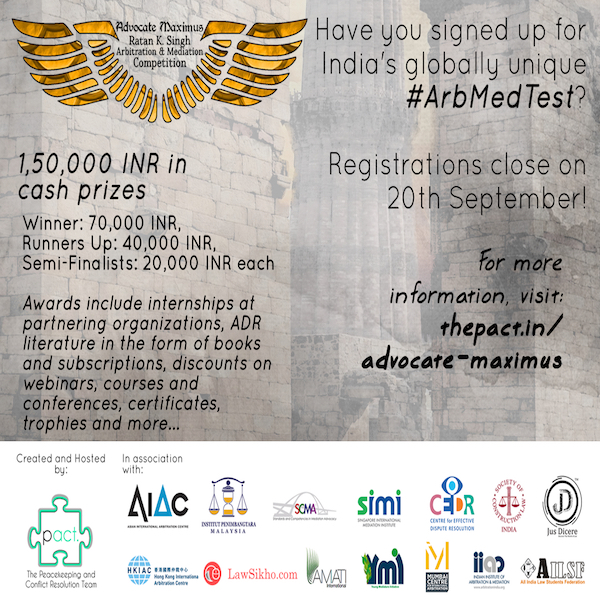
  • Advocate Maximus: sign up for the global Arb-Med competition

    Advocate Maximus: sign up for the global Arb-Med competition

    Advocate Maximus is a global platform for law eaglets to learn and compete at the biggest stage of Arbitration and Mediation. This legal cocktail (Arb-Med) has been spoken of as an exotic product for decades, but all the academics hasn’t really led to business. With exposure to some of the leading practitioners, a stage to test skills and recognition from the world’s best, we are confident #ArbMed will be the real fad.

    Advocate Maximus refers to a skilled and knowledgeable lawyer, who is as good a negotiator as she or he is a mooter. This competition is named after Advocate Ratan K Singh to recognise and honour his continuous contribution to the field of ADR. The logo is an eagle soaring in all its glory. Before the big flight, every law eaglet will have to first take the leap of faith as #ResolutionaryLawyers In this interview, we talk to Jonathan Rodrigues, Nisshant Laroia and Adv. Ratan K Singh who take us through the details of Arb-Med test, ‘Advocate Maximus’.


    WHAT IS ADVOCATE MAXIMUS?

    JONATHAN: Advocate Maximus is an Arb-Med test for law students across the globe, who fancy a career in non-conventional platforms of legal practice. It is scheduled from December 19-23, at New Delhi, the competition features Arbitration mooting sessions followed by the same competing lawyers attempting to negotiate the same dispute in a Mediation setting. The competition logo resembles a eaglet taking flight before soaring in the sky. The competition is dedicated to Advocate Ratan K Singh in recognition of his contribution and unconditional support to ADR in India.

    The PACT is collaborating with some of the biggest names in the field of dispute resolution, either as partners or supporters to Advocate Maximus. Some of these include (not limited to) SIAC, JAMS, AIAC, SIMI, CEDR, MBBI, HKIAC, MIARB, SCMA, YMI, AMATI, IIAM, etc. These collaborators have defined their roles, with the partners providing cash vouchers, discounts, books and internships as incentives for those who fare well at the competition. The final rounds of the competition will be broadcast on LawSikho.com for learning purpose and the winners will be featured on SuperLawyer.

    The inaugural and valedictory sessions of the competition will be held at India International Centre, New Delhi. The venues for the preliminary rounds, the social nights and the networking parties will be announced by the first week of October on the official website: www.thepact.in/advocate-maximus.


    IT’S A HUGE RISK ORGANISING SOMETHING INDEPENDENT OF LAW SCHOOL / UNIVERSITY REPRESENTATION. WHAT INSPIRED YOU AND WHY DO YOU THINK ITS NECESSARY?

    NISSHANT: I believe that every university should provide its students maximum exposure and opportunities for their personal learning, development and growth. Many students don’t have access to opportunities due to rigid university policies, politics in law school committees and inevitable red tapism.

    We have heard of instances where universities have had a moot court committee and an ADR cell but it is the moot court committee that had the jurisdiction of allocating the ADR competitions to students. To pick any Mediation or Negotiation competition, one has to go through the university intra moot court rounds. Moot court competitions and Mediation & Negotiation competitions are poles apart. The skills needed in both are completely different. Inspite of that, students who want to go for the big mediation competitions, couldn’t do so due to not having strong mooting skills.

    I am aware that one can’t go around every country pushing for change and that we must respect structures that are in place. But I am also a strong believer that if you feel strongly about something, try and initiate the change personally and hopefully, it will inspire others to join along. It’s time to skip the red tape and challenge yourself. The simple eligibility criterion for Advocate Maximus is – the participant has to be a law student and must have an exceptional mooting and negotiation profile.

    WHAT IS THE DRIVING FORCE BEHIND THE COMPETITION?

    JONATHAN: Created and conceptualised to highlight the role of the lawyer in the practice and promotion of out-of-court dispute resolution, Advocate Maximus aims to officially invite the lawyer community to shed their “suits” and “courts” and embrace dispute resolution. The role of the lawyer if often misunderstood and underrated in arbitration and mediation, when in reality, it’s the lawyers who determine and influence the approach of disputing parties. Whether commercial, community, personal or professional, disputes can be consensually resolved even if the parties initially chose an adversarial approach.

    The legal profession is experiencing huge tectonic shifts, where young lawyers are expected to be equipped with all round – adversarial and conciliatory – skills. There is no room for “I am a hardcore litigator, ADR is not my cup of tea”. Aware and empowered, clients today are more demanding and impatient in getting what they want. In a profession where, until now, the client has always come second, times are changing. A revolution is on the horizon and its looking for ‘Resolutionary’ Lawyers.


    WHAT IS THE VISION OF PACT?

    NISSHANT: Before being formally registered as The PACT, the idea of creating a collective of young professionals grew out of a courtroom horror where a 70-year-old old man was fighting a battle in court over a 30ft wall for 28 years. He sat on the last bench, while his lawyer walked in to court, got an adjournment, and walked out, without even glancing at him. That day, somewhere in the hearts of the cofounders, The PACT was conceived.

    The vision has remained the same – to support and encourage people from all walks of life to become effective users and ambassadors of dispute resolution; And to loop together a network of professionals in the field of consensual dispute resolution, and unite them to contribute to research, awareness and literature.

    WHAT DO ABBREVIATIONS FOR ADR & CDR STAND FOR IN SIMPLE WORDS?

    NISSHANT: ADR is an abbreviation often used to define a broad range of platforms and mechanisms that users may engage in to resolve disputes without going to court. We can go on about this, but for us at The PACT, ADR simply means Arbitration, as it is a process that is still adversarial, but is much more flexible and informal compared to a court room proceeding.

    We have been promoting mediation, negotiation and conciliation as ‘CDR’ – Consensual Dispute Resolution – mechanisms, as these platforms empower disputing parties to resolve the dispute by determining for themselves the ideal settlement. CDR mechanisms put the decision-making power in the hands of the parties. They promote direct dialogue between parties and thereby encourage them to try and understand the interests of the opposite party i.e. understanding not just what they are wanting but why they are wanting what they are wanting.


    WHAT IS THE IDEA OF ADR IN YOUNG LAWYERS?

    Adv. RATAN K SINGH: This generation has no patience to wait for justice, neither does it want to spend on court fees nor does it want to risk the loss of reputation or status. This generation wants a quick and effective fix to its problem and it wants it done discretely. This generation is fixated on being positive and it doesn’t mind giving in a little to get a little. The client is changing and the counsel needs a upgraded ammunition of knowledge and skills to deal with these trends.

    Advocate Maximus is a global platform for law eaglets to learn and compete at the biggest stage of arbitration and mediation. This legal cocktail has been spoken of as an exotic product for decades, but all the academics hasn’t really led to business. With exposure to some of the leading practitioners, a stage to test skills and recognition from the world’s best, we are confident Are-Med will finally be a reality.


    HOW CAN ONE APPLY FOR ADVOCATE MAXIMUS?

    JONATHAN: All details with regards to registration for the competition are up on the website – www.thepact.in/advocate-maximus This link has all information on team structure, competition rules, awards and the google form that needs to be filled to register. Interested teams may send in their team profile (combined or individual CVs) to advocatemaximus@thepact.in

    It is a team event. You can create your own team, putting together friends and peers from different law schools, based in different cities, countries, cultures. There is even an award for the most diverse team at the competition – The Dream Team Award.

    For the inaugural edition this December, being a law student (LLB / LLM) is a must. We plan to evolve into more wider and diverse competition in the following editions, inviting students from the business and political science background as well.


    HOW SHOULD STUDENTS PREPARE FOR ADVOCATE MAXIMUS COMPETITION?

    Adv RATAN K SINGH: Participants must firstly divide team roles according to their strengths. The Legal Associate must begin preparing the arbitration memo and assist the mooters in rehearsing their arguments. For those who don’t have specialised mooters and negotiators in the team, the counsels must begin practicing back-to-back arbitration and mediation sessions to get used to changing styles and approaches as counsels. Some teams may need to have different sets of coaches preparing them for the competition as they might seek advice from both arbitration and mediation lawyers. Shifting between the two diverse skill sets will be key to be declared winners at Advocate Maximus.


  • Ashok K. Gupta, Senior Advocate, Supreme Court of India, on the AOR exam, life in litigation and being on panel of union government

    Ashok K. Gupta, Senior Advocate, Supreme Court of India, on the AOR exam, life in litigation and being on panel of union government

    Ashok K. Gupta  graduated in B.A. (Hons. – Political Science) from University of Delhi in the year 1976.  Then he completed LL.B. from Campus Law Centre, University of Delhi in 1979.

    He enrolled as an Advocate with Bar Council of Delhi in January, 1981.  After practicing in District Court, Delhi for two years, shifted to Supreme Court & joined the chamber of Mr. P.H. Parekh, Advocate Supreme Court of India. He passed the Advocate-on-Record Examination conducted by Supreme Court of India in November, 1986.  And started his Independent Practice in 1987.

    He practices primarily before the Supreme Court, various High Courts like Jabalpur and Indore Benches of MP High Court, High Court of Odisha at Cuttack and Punjab & Haryana High Court, and before various statutory fora like National Consumer Disputes Redressal Commission (NCDRC), National Green Tribunal (NGT) & Appellate Tribunal for Electricity (APTEL) .

    He was appointed Counsel by Delhi High Court (to conduct its cases on the administrative side) before the Supreme Court in the year 2000. The he was appointed Senior Panel Counsel for UOI in Delhi High Court, in January 2001. He was designated as a Senior Advocate in April, 2012. He was the appointed by the supreme court as chairman of three-member committee under the Right to Education Act to report on compliance with various stipulations contained in the Right to Education Act in April, 2014. And also, other pro-bono committees.

    He is also the member of Supreme Court Bar Association, Delhi High Court Bar Association, Odisha High Court Bar Association, Madhya Pradesh High Court Bar Association and International Law Association. Life member of All India Women’s Education Fund Association and in that capacity was elected as member of the Governing Body of Lady Irwin College, University of Delhi during the Academic Year 1996-1997 and 1997-1998. Life member and Treasurer of Confederation of Indian Bar.

    In this interview, we talk to him about:

    • Being a first generation lawyer: college life, internships and interest in litigation;
    • Establishing his independent practice;
    • Cracking the Supreme Court Advocate on Record examination;
    • His wide range of practice encompassing various courts, tribunals and;
    • As Panel of Union Of India for Delhi High Court.


    HOW WOULD YOU LIKE TO INTRODUCE YOURSELF TO OUR READERS?

    I would like to be known as a quintessential Delhi-06 person, who loves his family, puts in honest, hard work, never ceases to learn and practice, and yet, enjoys all the good things of life: food of Old Delhi, and theatre at Mandi House in the evening, to name a few. This is my typical middle-class perception of myself.


    YOU ARE A FIRST GENERATION LAWYER. WHAT LED YOU CHOOSE LAW AFTER GRADUATION IN POLITICAL SCIENCE?

    Right, I am a first-generation lawyer. After my graduation in political science from Delhi University way back in the year 1976, I chose law not because it fascinated me; I chose law because I thought firstly, it would help me in my Civil Services examination, and shall be my second subject apart from political science. The other feeling was that, in case, I fail to make it to the Civil Services (as indeed, I did), I won’t be unemployable and could always do something as a professional lawyer. So, this was with a view to ensure that I don’t remain unemployed and/or unemployable.


    YOU STARTED YOUR CAREER WITH PRACTICE IN DISTRICT COURTS. HOW IMPORTANT IS IT FOR YOUNG LAWYERS TO KNOW BASIC DISTRICT COURT PRACTICE BEFORE MOVING TO THE HIGH COURT AND SUPREME COURT.

    It is correct that I started my career in district courts. Knowing that the nitty-gritty of practice in the Districts Courts is an absolute must for a young lawyer, I’m not suggesting that a lawyer should not aspire to become a High Court/ Supreme Court practitioner. All that I’m suggesting is that one should be fully familiar with the procedural parts of the legal practice, both on the criminal as well as the civil side. At the genesis of one’s career, it is your known circle of acquaintances who approach you, say, for a recovery suit, section 138 complaint, some accident or insurance case, matrimonial disputes and such matters which primarily emanate at the district court level. The ideal situation would be, of course, where one joins a chamber, which handles district court work, besides work in the constitutional courts.


    YOU JOINED THE CHAMBER OF SENIOR ADVOCATE PH PAREKH. PLEASE SHARE YOUR EXPERIENCE WORKING WITH HIM.

    Way back in the early eighties, the experience of working in my senior’s chamber was very fascinating and exhilarating. We were about a dozen junior colleagues at that time and it was not unusual for one junior to be doing two-three cases each day. The day would normally begin with a conference with a Senior Counsel like Mr. Fali Nariman, Mr. Sorabjee, Mr. Mridul or Mr. Tarkunde at around 8:30 A.M in the morning, court thereafter, after which we would be immediately heading towards office for drafting work and, again, the cause list would come around 6:30 P.M, whereupon our senior would allocate matters; the office of Senior Counsel would be informed and conferences fixed for next day morning. Then you head towards home around 9 PM and read the brief for the next day morning conference. But we had great fun; lot of outings and birthday celebrations, with legal conferences and seminars thrown-in between.


    HOW DID YOU DECIDE TO COMMENCE YOUR INDEPENDENT PRACTICE WITHIN A SHORT SPAN OF SIX YEARS AFTER GRADUATION?

    I decided to commence my independent practice once I realised that one cannot be somebody’s junior eternally. By the time I commenced practice, I had already passed my AOR examination and knew that one has to setup his own practice one day.


    WHAT WOULD BE YOUR ADVICE TO LAWYERS APPEARING FOR AOR EXAM NOW?

    I can really advise that a lawyer should thoroughly prepare with case law, latest judgements and equip himself with precise and concise drafting skills. One should know that on the account of the very heavy work load, the Supreme Court judges very much like and appreciate if the pleadings are to the point, not verbose and the point arising in the case is neatly stated. I keep emphasising and reinforcing to my juniors and briefing counsels: “don’t miss the forest for the trees”.


    WHAT ARE THE CHALLENGES IN STARTING INDEPENDENT PRACTICE?

    Challenges in starting independent practice are no different from starting any new venture in any new sphere of activity. But, then, if you put in sufficient quality work, you are bound to be noticed. You have to build up reputation for being an upright and a committed professional. Of course, all this would take time. Nothing good was ever achieved in a short time.


    YOU ALSO TAKE UP AND ARGUE ARBITRATION CASES. HOW IS PRACTICE IN ARBITRATION DIFFERENT FROM LITIGATION PRACTICE IN INDIA?

    I was first introduced to arbitration way back in the mid-eighties when I appeared alongside a noted junior counsel (now, a respectable Judge of the Supreme Court) in an arbitration proceeding pertaining to claims and counter-claims arising out of the 1982 Asian Games held in New Delhi. The Arbitral Tribunal was headed by Justice (Retd.) A.C. Gupta of the Supreme Court. He was a very quiet and taciturn arbitrator, unlike the majority of present-day arbitrators. For a successful arbitration practice, it is indispensable for one to know the basic essentials of handling suits, even though the technicalities of CPC and Evidence Act do not apply to arbitration proceedings. Surely, one must know about admission and denial of documents, framing of issues (not all arbitral tribunals frame issues), and the proof of documents in case of denial by other side, etc. Also, the art of cross-examination assumes a lot of significance and seriousness in an Arbitration proceeding. An arbitration claim is no different from a claim in a suit, except that the procedure is shorn of all the technicalities, and there is much less stress because of less pressure of time.


    YOU HAVE ALSO BEEN ON THE PANEL OF UNION OF INDIA FOR DELHI HIGH COURT. WHAT IS THE MODUS OPERANDI WORKING FOR THE CENTRAL GOVERNMENT?

    This was the first time ever that I worked for any government (Central/ State). I was, hitherto, primarily appearing for private clients and some PSUs. It was, initially, difficult for me to adjust to the role of a government lawyer, inasmuch you hardly receive timely instructions, proper records are not maintained, and most of the time you cut a sorry figure before the Court, not on the account of any lack of professional skill or competence on your part. That said, it is, indubitably, a matter of pride, prestige and honour for any lawyer to be empaneled as a government lawyer.


    WHAT ARE THE SKILLS REQUIRED FOR A LAWYER AIMING TO BE A SENIOR ADVOCATE IN HIS CAREER?

    First, one has to be a competent and honest lawyer and the other, one should totally abjure sharp practices as a lawyer. There have been several instances, where very skilful and competent lawyers were not given the designation of a Senior Advocate by the Court, on account of the perception of lack of ethics on the part of such lawyer. Now, of course, the Supreme Court in the judgement of ‘Ms.Indira Jaising vs. Supreme Court of India’ has laid down the entire procedure for designation of a lawyer as a Senior Advocate.


    BEING A LAWYER, IS IT DIFFICULT TO MAINTAIN WORK-LIFE BALANCE?

    Work-life balance is difficult but not impossible to achieve, just like in any other business or employment. Here the complexities are of a different nature, in the sense, that in the early years as a lawyer, money is hard to come by, hours are uncertain and stress is a little too much to handle. The reason being that the client is primarily concerned with the outcome of his case, not really concerned with your legal knowledge and the hard work put in by you. This does take its toll on one’s health and impacts work life balance.


    WHAT IS THE REQUIRED SKILL-SET OF BEING A SUCCESSFUL LAWYER?

    Being successful in the profession requires no set of different rules than the ones you require in other spheres of activities of life. It is talent, hard work and luck – an amalgamation of all the three.


    PLEASE LET US ABOUT YOUR MOST MEMORABLE CASES.

    I have appeared in hundreds of cases in my career as a lawyer spread over 38 years, as an instructing advocate in the early years of practice, and as a counsel thereafter, and a senior advocate in later part of life. A government-tender matter, wherein I had engaged and instructed Mr. S.S Ray, Sr. Adv. (now deceased) and Dr. Shankar Ghosh, Sr. Adv. to appear before the Jabalpur High Court in 1991-1992 stands out in my mind. The other case that I fondly remember of the nineties was a very complex trademark case before Justice Ajay Noth Roy of the Calcutta High Court against NALCO Chemicals, USA. I found Justice Roy to be an outstanding and brilliant judge, though the Supreme Court collegium, perhaps, thought otherwise. Among the arbitration matters, I have a proclivity towards my case, ‘National Aluminium Company vs. Pressteel & Fabrications Pvt. Ltd.’: (2004) 1 SCC 540, which paved the way for the Supreme Court to rule on the applicability of the 2015 Arbitration Amendment Act in ‘BCCI vs. Kochi Cricket Pvt. Ltd.’. In recent years, in the cases, ‘National Aluminium Company Ltd. vs. Ananta Kishore Rout’: (2014) 6 SCC 756, ‘Chairman-cum-MD vs. Bharat Chandra Behera’: (2013) 16 SCC 622 and ‘Kalinga Mining Corp. vs. UOI’: (2013) 5 SCC 252, I was able to persuade the Supreme Court to sustain my view point.


    HOW CAN JUNIOR WISHING TO WORK UNDER YOU GET IN TOUCH WITH YOU? WHAT QUALITIES WILL YOU LOOK FOR HIRING A JUNIOR?

    A junior wishing to work with me can directly approach me, no need for an intermediary. The only quality I look for in a junior is that he should be hardworking. I have always maintained and continue to maintain till this date, that a talented person might fail but a hardworking person never fails.


    WHAT WOULD BE YOUR WORD OF ADVICE TO YOUNG LAWYERS AND LAW STUDENTS AIMING TO MAKE CAREER IN LITIGATION?

    My advice to young lawyers would be no different than what I received in the early eighties, and it is: “work like a horse, live like a hermit”. Now, a word of unsolicited advice: I would very much like if young lawyers take to politics as well, even as they continue to practice law. There is such a dearth of good people- professionally employed people in Politics. This way you contribute to the well-being of the society, as also enhance your own prospect in the profession. The success achieved by the likes of P. Chidambaram, Arun Jaitley and Kapil Sibal is attributable, in part, to their being seen in politics.

  • Manu Beri, Advocate, on setting up independent practice; litigation at NCLT and urgent need for reforming judicial system

    Manu Beri, Advocate, on setting up independent practice; litigation at NCLT and urgent need for reforming judicial system

    Manu Beri graduated from Campus Law Centre, University of Delhi, in 2000. With over eighteen years of experience in litigation, he has handled a variety of matters in different forums including the Supreme Court, Delhi High Court, National Company Law Tribunal, National Consumer Commission and Arbitration Tribunals.

    In this interview we speak to him about:

    • His early years as lawyer in litigation practice
    • His experience in various courts
    • Challenges of a litigation lawyer
    • Building independent practice


     HOW WOULD YOU INTRODUCE YOURSELF TO OUR READERS?

    I practice in the Supreme Court, Delhi High Court, National Company Law Tribunal, National Consumer Commission and before Arbitration Tribunals. Have been doing a variety of legal matters both in Corporate and Criminal law (Economic Offences) for clients in India and from abroad, including large and medium size corporations in FMCG, Logistics, and Infrastructure sectors etc.


    PLEASE TELL US ABOUT YOUR COLLEGE LIFE. WHAT MOTIVATED YOU TO TAKE UP LAW AS A CAREER?

    I did my LL.B from Campus Law Centre, Faculty of Law, University of Delhi in the year 2000. Spending three years during my LL.B course in the North Campus of DU was quite good. The best part of it was that Senior Lawyers would come to our Faculty to share their experiences and interact with the students. I had the opportunity to listen to stalwarts like Mr. Ram Jethmalani, Mr. Harish Salve and many others. Likewise, some practicing lawyers used to take our classes. In addition to regular faculty, teaching by visiting/guest faculty helped us to know the practical aspects of the legal profession while studying Law. I hope they are continuing with this system and other Law schools have also introduced this.

    My initial interest to do law came from studying subjects like Political Science in which I got to know of constitutions of many democracies in the World. Out of all other professions, I found law intellectually challenging and stimulating. Unlike many other professions, it gives you a chance for lifelong learning. A Lawyer can help develop or change the policy making not only in his client’s businesses but Government policies as well. Law helps you constantly learn and grow.

    My uncle Mr. Sandip Beri is in the legal profession. After having practiced in the Supreme Court of India and then having done a long stint with law firms and corporations in the USA and India, he is presently a partner with a large Corporate Law firm in Delhi. He was the guiding force behind my decision to take up law as a career. Through him I had a fair idea of what the legal profession was all about.


    PLEASE TELL US ABOUT YOUR INITIAL YEARS OF PRACTICE.

    After working for about a year and a half as a Junior Lawyer, I started my own independent practice a little early in my career. However, I think I should have worked for a few more years as a Junior lawyer. But luckily for me in my initial years of practice I was able to get good work from some Companies and I learnt a lot from the work I did for them by handling various legal issues for them in Courts and otherwise. Also, briefing Senior Counsels in the High Court and Supreme Court on important matters has been a good learning experience for me. I think learning in this profession comes from handling maximum cases and arguing in Courts. The more cases you work on, the more you will enhance your knowledge, skills and consequently increase your confidence as a litigation lawyer. When I started my law practice, I was advised to specialize in any one branch of law rather than doing a variety of legal work but I somehow did not like this idea and I knew what I wanted to do. It is very exciting to work on cases involving different legal issues. I have had the opportunity to represent clients in a variety of matters like IPR Suits, Writ Petitions, Arbitrations, Consumer matters, Company Petitions and Criminal matters in the higher Courts. I hate monotony in professional work; hence getting to do cases from different branches of law has only enhanced my knowledge and skill set.


    AS A LITIGATION LAWYER, THE TOUGHEST CHALLENGE IS TO GET CASES – WHAT WOULD BE YOUR TIPS TO LAWYERS WHO HAVE JUST STARTED OUT IN THEIR CAREER.

    Public relations are very important in legal profession. But more than that if you work with sincerity for your clients and give them positive results in a time bound manner, then one client will naturally lead to another through word of mouth and there cannot be a better publicity or advertisement than this for a lawyer.


    YOU CHOSE TO WORK IN TRIAL COURTS AND DISTRICT COURTS INSTEAD OF MOVING DIRECTLY TO THE HIGH COURT AND SUPREME COURT. HOW IMPORTANT IS TRIAL COURT PRACTICE IN THE INITIAL YEARS OF ONE’S CAREER?

    In the initial years of practice one may not get big and high stake matters and even if one gets such matters in higher courts then the clients prefer Senior Counsels to argue these matters. Therefore, Trial Courts give junior lawyers a chance to conduct depositions and argue the cases themselves which is a great learning experience and confidence building measure.


    YOU HAVE SUBSTANTIAL NCLT PRACTICE AS WELL. PLEASE TELL US HOW CAN ONE GAIN EXPERTISE IN COMPANY AND INSOLVENCY AND BANKRUPTCY LAW.

    Well, as I said for gaining expertise one needs to handle maximum cases in that field of law. Mere theoretical knowledge of any law subject is not going to help. In my view, to gain expertise in any branch of law it is important to read and understand the statute with the relevant judgments passed by the courts and then handling cases in courts/tribunals. Also, one should keep oneself updated with the latest news in the corporate world through print and electronic media. In corporate litigation practice, in addition to understanding the law, a lawyer has to understand his client’s business. This has helped me to learn so much about different businesses and industries, as well as the diverse areas of law that impact my clients.


    WHAT IS THE ONE IMPORTANT LESSON YOU HAVE LEARNT IN YOUR CAREER AS A LITIGATION LAWYER?

    One thing I have realised over the years is that one should also listen with an open mind to what clients have to say about their case in addition to the facts, rather than being dismissive about their logic and opinion. Sometimes, their ideas based on their life and business experience can really help in developing a case.


    HOW DO YOU RECOMMEND A FRESH LAW GRADUATE INTERESTED IN LITIGATION START THEIR CAREER?

    I started my own independent practice a little early in my career. However, I think I should have worked for a few more years as a junior lawyer. My advice to budding lawyers, who intend to enter into litigation, is that they should spend at least two-three years as a junior in a law office having lot of drafting work and reasonable number of appearances in courts and after that if they get a chance to work in the office of a good Senior Counsel, they should spend a couple of years in the Senior’s office as well.


    HOW CAN ONE APPLY FOR INTERNSHIP UNDER YOU? HOW CAN AN INTERN STAND OUT DURING HIS INTERNSHIP?

    I generally keep one intern at a time so that we can have maximum interaction with each other. I invite CVs from interns and then decide. At this stage of their legal education the interns are expected to do the research work and read case files. I think an intern can stand out by doing good research work and finding judgments for the ongoing cases.


    WHAT QUALITIES DO YOU LOOK FOR IN A JUNIOR?

    A junior should be hardworking having the ability to put in long working hours, sincere, reliable and courteous.


    WHAT ARE YOUR THOUGHTS ON THE JUDICIAL SYSTEM.

    It amazes me how under the given circumstances the Judges in this country work tirelessly to decide cases and write judgments by spending extra hours to deal with pendency of cases. It is very challenging to properly hear and decide so many cases on the board in a single day. There is an urgent need to increase the number of judges so that the justice delivery system is quick and more efficient.


    WHAT WOULD BE YOUR WORD OF ADVICE TO YOUNG LAWYERS AND LAW STUDENTS?

    For young budding lawyers it is very important to plan their career path right from the law school years, by doing extensive internships with Judges, litigation lawyers, Law Firms, and in-house lawyers etc twice a year which can be really helpful as they plan their future in the profession.


  • Rohan Bishayee, Legal Advisor, DFDL, on building his career in Corporate Law and work experience in South East Asia

    Rohan Bishayee, Legal Advisor, DFDL, on building his career in Corporate Law and work experience in South East Asia

    Rohan Bishayee graduated from School of Law, KIIT University with a specialisation in Corporate Law. Throughout law school he was the topper of  BBA LLB course and received several awards for academic excellence. Apart from academics, he won several awards including a Best Advocate Award at the Moot Court Competition held in IMS Unison University, Dehradun. Upon graduating from School of Law, KIIT University, he received job offers from various top tier law firms and is currently working in DFDL and exploring the global market.
    In this interview we speak to him about:
    • Reasons for choosing DFDL and shifting base to South East Asia;
    • Tips on the cv of a  law student aiming to joining an International law firm
    • His role and responsibilities as legal advisor at DFDL ;
    • Recruitment process at DFDL


    HOW WOULD YOU LIKE TO INTRODUCE YOURSELF TO OUR READERS? PLEASE TELL US SOMETHING ABOUT YOUR PRE-COLLEGE LIFE?

    A corporate lawyer, sports aficionado and musician believing in spirit and the power of dreams.

    I practice corporate law with DFDL, a top tier law firm having offices across South East Asia (Phnom Penh, Yangon, Bangkok, Jakarta, Singapore, Hanoi, etc.) Apart from being a lawyer, I am a passionate musician and can play the violin and the guitar, among other instruments. I was part of a chamber music orchestra known as “L’Atelier de Musique” and performed in concerts in India and other countries. I love playing and watching football and was privileged enough to be selected for a “Manchester United Soccer Schools” training programme during my school days.


    PLEASE TELL US ABOUT YOUR TIME AT LAW SCHOOL. HOW WAS YOUR APPROACH TOWARDS ACADEMICS WHILE IN COLLEGE?

    The five years that I spent at School of Law, KIIT University were the best years of my life. I participated in several co-curricular and extra-curricular activities which made the entire experience very enjoyable. During my time at law school I was fortunate to share a very powerful relationship with some excellent professors who taught me valuable lessons of life and law. I was also a part of quite a few societies and worked extensively with some very proficient batch-mates.

    I think the most important thing about academics is keeping things simple. I focused on important classroom lectures, basic reading and spending sufficient time in understanding the fundamentals. This is one discipline which has a large space for independent thought and creativity in application which I coupled with fundamental knowledge of law to yield positive results.


    YOU HAVE REPRESENTED YOUR COLLEGE AT PRESTIGIOUS MOOT COURT COMPETITIONS. HOW DID YOU GO ABOUT PREPARING FOR THEM?

    Mooting has been the single most gratifying experience in law school. When I went up to argue before a judge in a moot court competition, I felt as if the world was mine. If I were to point out the happiest moment of my life, it would be when I was adjudged the ‘Best Student Advocate’ in one of these competitions.

    I would advise law students wishing to take part in these competitions to pick team members who are of a similar academic temperament and are willing to dedicate the same amount of time and energy to this activity. My team and I usually dedicated about two months to prepare for these competitions that required long hours of extensive research to find the most convincing arguments. We took a lot of guidance from our seniors on specific points of research, materials to be referred to, structuring of arguments and drafting memorials. In addition, we took several mock trials before the competitions, which gave us a rough idea of what to expect in real time. I would like to mention the noteworthy contribution of Anubhab Sarkar, Founding Partner, Triumvir Law, a friend and senior from law school towards developing and training our teams before such competitions. Preparing for these competitions tend to get very stressful and mentally challenging. However, I must say it is worth every sacrifice you make.


    HOW SIGNIFICANT IS MOOTING FOR LAW STUDENTS? WHAT ARE THE EPITHETS OF A SUCCESSFUL MOOTER?

    The legal profession demands excellent interactive skills and one of the activities in law school that develops this skill is mooting. Mooting not only hones one’s advocacy skills, but also facilitates overcoming stage fear, builds self-confidence and develops public speaking and interpersonal skills.

    Mooting builds one’s research and drafting skills as well. Young law students often make the mistake of associating mooting with a career in litigation. Litigator, or not, drafting and research are skills required for every career in law and mooting only enhances your skills as a lawyer.

    Mooting helps you gauge the temperament of the various judges and accordingly frame your style of argument. If one is looking at a career in litigation, mooting gives a first-hand experience of the real world. For transactional lawyers, it helps in negotiation, drafting and research. I would strongly advise law students to take an active interest in mooting.

    I don’t know if I’m qualified enough to answer your question on what it takes to be a successful mooter, but since you’ve asked I’ll make an attempt. I think to be successful in anything; the first requirement is desire and drive. A capable mooter would need to have the fundamentals of law crystal clear and have reasonably good analytical skills. There is no substitute to hard work, long hours of research and repeated mock oral rounds (for counsels). For arguing counsels, I’d urge them to get emotionally connected with the moot problem and present submissions as they would for their clients in a real court of law. As long as one is passionate about mooting and does not give up, success will follow.


    PLEASE TELL US ABOUT YOUR INTERNSHIPS. WHAT ARE YOUR SUGGESTIONS FOR LAW STUDENTS TO BAG INTERNSHIPS AT BIG LAW FIRMS AND COMPANIES?

    I have had a varied internship experience ranging from internships with advocates, litigation firms, companies to corporate law firms. My basic objective was to give every field a chance before deciding on my career. While interning, I enjoyed my litigation experiences and the art of practicing in a court of law always intrigued me. However, being a first generation lawyer, not having any connections or references and a considerable financial concern, I soon realised Corporate Law would be a more stable career option. I have had good and bad internship experiences at corporate firms as the work environment and culture at some of these top tier law firms can often get very challenging.

    If we were to talk about internship applications, I have no reservations in admitting that securing an internship in Indian law firms is a difficult task. A lot of emphasis is laid on factors such as ‘institution name’, ‘references and contacts’, etc. My internship applications were mostly rejected or ignored by most of the top tier firms. I used to go and intern wherever I managed to get a reply or a confirmation from, through applications or by connecting with some useful resource.

    However, from the little success that I’ve had in getting through to a few places, I would advise readers to always set objectives on the basis of the firm they have chosen and tailor-make the CV and covering letter accordingly. It is not advisable to send the same generic piece everywhere. A tailor made CV and covering letter shows that you have made the effort and you sincerely want to be considered for an opportunity to work in that firm.

    YOU HAVE BEEN A TOPPER DURING YOUR COLLEGE DAYS. WHAT ARE THE TIPS AND STRATEGIES YOU WOULD LIKE TO SHARE WITH OUR READERS WHO ARE CURRENTLY LAW STUDENTS?

    I wasn’t the epitome of sincerity when it came to academics. In law school we did a lot of group study, which was particularly helpful. I was lucky to have good friends who helped me out with material that was important from an examination point of view.

    My emphasis, as already mentioned was on keeping things simple. I spent my time understanding basic concepts and developing my fundamentals of law. I would urge students to centre their reading on texts and reference materials instead of ‘class notes’. Analysis and originality should be the priority as this discipline encourages independent thought.


    HOW DID YOU CHOOSE CORPORATE LAW AS YOUR SPECIALISATION? WHAT COURSES WOULD YOU SUGGEST TO YOUNG LAW STUDENTS LOOKING TO SPECIALISE IN CORPORATE LAW?

    To be brutally honest, Corporate Law was more of a convenience than a choice. Belonging to a family with no legal background or connections in the legal fraternity, Corporate Law provided me the stepping stone to a successful career in law. My seniors and professors from college were instrumental in steering me towards a career in Corporate Law. I received encouragement and direction from a close friend and confidant from law school, Debottam Chattopadhyay, Associate, Phoenix Legal, when it came to career choices.

    Looking at the Indian market, courses on Competition Law, Capital Markets and Finance would give students ground level knowledge of the legal structure. From a global perspective, courses which give an insight on projects, energy and infrastructure related laws would hold students in good stead. I would advise students to make well informed choices based on their area of interest. The first and foremost aspect which a student should take care of is deciding an area of interest. Once that step is complete, it becomes easier to work towards making a career out of that interest area.


    WHY DID YOU CHOOSE DFDL?

    The decision to choose DFDL was based on a lot of factors. I was particularly impressed with their scope of work and the projects I would be dealing with upon employment, which I learned of during my interview process. My conversations with the firm’s hierarchy was very influential in the decision-making process.

    The aim was always to be bigger, better and to reach out globally. DFDL offered me exposure and experience where I would get to meet and work with ‘magic circle law firms’ and stalwart corporate lawyers from across various jurisdictions. The opportunity at DFDL seemed adventurous, challenging and had novelty. Hence, here I am at DFDL, glad at having taken the leap.


    PLEASE TELL US ABOUT YOUR RECRUITMENT AT DFDL? HOW WAS THE INTERVIEW ? HOW DID YOU PREPARE FOR THE SAME?

    My recruitment at DFDL was routed through the Placement Co-ordination Committee of my law school. I had sent in my resume and received a reply from the firm wherein they set up my interview with the Regional HR Officer. Thereafter, there were five rounds of interview with partners and senior lawyers across the firm’s hierarchy from various offices of the firm via video-conference. Interviews were built around conversations where the candidate’s adaptability to the firm’s culture and work ethos were tested. The scope of work and the projects were explained and general tests on awareness was conducted. There were two technical rounds where there were related questions on work experience and fundamental concepts of law. The areas of law included commercial law subjects such as contract law, property law (including registration and stamp duty), company law and procedural law.

    I prepared for the interview by reviewing and revising my CV in great detail which I recommend all readers do before an interview. The rest of the preparatory process was pretty straightforward. I brushed up on my basic legal principles and concepts of commercial law.


    WHAT IS YOUR FIELD OF PRACTICE AT DFDL? HOW IS THE WORK CULTURE AT DFDL?

    I work extensively in the field of international investment, banking and finance, energy, mining and infrastructure, real estate and corporate advisory. Work includes client advisory and transactions where I advise clients on international investment strategies from a legal perspective. Transactions include preparation of diligence reports and financing documents etc.

    The work environment at DFDL is excellent. The culture promotes learning and nurturing of skills necessary for a corporate lawyer. DFDL is a member of both the American Chamber of Commerce and the European Chamber of Commerce and promotes interaction and networking at various events, which are a great opportunity, for me to meet and interact with lawyers and other driven professionals from various fields. The balance of work-life is commendable and the hours are not remotely as stressful as Indian firms.


    WHAT ARE THE OPPORTUNITIES FOR INDIAN LAWYERS IN SOUTH EAST ASIA?

    South East Asia has a booming market and is developing in leaps and bounds. Most South East Asian countries have offices of international law firms (including magic circle law firms) in operation. I wouldn’t be able to give you statistics but at present there are a sufficient number of Indians working in prestigious law firms across South East Asia. DFDL also has a few Indians working across its offices in South East Asia including an Indian desk at Bangkok. In a nutshell, there are opportunities in top-notch law firms in South East Asia for Indians having the necessary skillset and desire to work across global boundaries.


    PLEASE TELL US IN DETAIL ABOUT YOUR ROLES AND RESPONSIBILITIES AT DFDL?

    My roles and responsibilities at DFDL require me to report to and take instructions from the Partners, Managing Director, and the Head of the Practice Groups of DFDL. I am supposed to provide legal advice on behalf of DFDL to clients and undertake activities which include the drafting of contracts, letters of advice, legal opinions, and other legal instruments. Additionally, I need to peer review the work of other advisers and provide constructive feedback as necessary, draft and deliver fee proposals and review and revise invoices. I am also required to contribute actively in DFDL’s business development efforts, including government relations activities with various chambers of commerce, business clubs and participate in knowledge management, professional development and administrative activities as requested.


    WHAT SHOULD A CV OF A LAW STUDENT AIMING TO JOIN AN INTERNATIONAL LAW FIRM LOOK LIKE?

    Regardless of where you’re applying, I think a CV should be balanced. What I mean by a balanced CV is one, which has good grades, moot court experiences, publications (one area where I had practically nothing to show) relevant internship experiences (quality over quantity) and a good set of extra-curricular activities. There is no priority of importance and it varies from firm to firm on what their qualifying criterion is. However, I would suggest student give sufficient importance to all areas, which I have mentioned.

    Co-curricular and extra-curricular should not be ignored, as interviewers often tend to prefer candidates with a varied set of talents and experiences. A question in one of the interviews asked me about what I understand about ‘teamwork’. I was happy to elaborate on my experiences in chamber orchestra where the entire harmonic is created by collective wisdom. The interviewer was particularly impressed with my answer. I would advise readers to engage in a variety of experiences and build up a CV accordingly. International firms do tend to look at your grades and having a good grade would separate you from the rest of the candidates. A CV and covering letter should also be tailor made to fit the requirements of the firm you’re applying to and the specific practice area should be clearly outlined. International firms focus a lot on your purpose of work and your professional objective. I believe having a balanced CV helps you reach the stage of interview. Your performance in the interview is the deal breaker.


    WHAT WOULD BE YOUR PARTING MESSAGE TO OUR READERS?

    I would start off by quoting one of the most inspirational figures in my life, “You cannot lead by following.”- Sir Alex Ferguson.

    Lead from the front and when you’ve reached there, reach out and help the people who need it most. Promote and practice equality. Respect your elders, live with humility, protect the environment and encourage humanity.

    Make your parents proud and take care of them. As long as they’re happy, you don’t need much more from life. Wherever I am today, professionally and otherwise is because of the most loving, caring and supportive parents who gave me a bit more than everything I ever wanted.

    Thank you for having me here for the interview!

  • Shruti Tripathi, Assistant Public Prosecutor, CBI, on preparing for the exam and securing rank 2 in JRF exam

    Shruti Tripathi, Assistant Public Prosecutor, CBI, on preparing for the exam and securing rank 2 in JRF exam

    Shruti Tripathi graduated from ILS Law College, Pune in 2016. Right after graduation, she did her Masters in criminology from Banaras Hindu University.  She also secured rank 2 in JRF/ NET exam conducted by UGC. She then went on to pursue UPSC(CBI(APP)). She shares her valuable insights with our readers on her experience along with advice on how to crack the exam.

    In this interview, she talks about:

    • Her reasons for choosing law.
    • Her strategy for the preparation of the UPSC(CBI(APP)).
    • Advice to prospective law students aiming to make a career in UPSC(CBI(APP)).


    HOW WOULD YOU LIKE TO INTRODUCE YOURSELF TO OUR READERS?

    I thought I didn’t need introductions anymore. Anyway, jokes aside, I would simply describe myself as a stoic. As a day-dreamer and a sloth, I am quintessentially an ambitious soul trapped in a lazy body. My mind is a battleground, wherein there are more losses than wins. Proving people wrong at every step is an utterly satisfying feeling and continuing to do so is pretty much what sums up my existence right now.  I was supposed to keep it short, so moving on now.


    HOW DID YOU DECIDE TO PURSUE LAW?

    Looking at the hindsight I guess it was destiny, really. I was a Science group district topper from Varanasi. The entire North Indian neighborhood expected me to pursue engineering but, I was always drawn towards the enigma that my father’s chamber had to offer.(Yes! He was the Chairman, UP Bar Council, that time). And if I were allowed a bit of dramatics, Law was running down my family’s blood vessels and that’s how I happened to Law & ILS Law College, Pune happened to me. Don’t judge me for my bad theatrics, I am still learning.


    PLEASE TELL US ABOUT YOUR PREPARATION FOR JRF EXAM IN WHICH YOU SECURED RANK 2? WHEN DID YOU START PREPARING FOR UPSC(CBI(APP))?

    Honestly, I wasn’t really aware all these exams ever existed. Like every other legal aficionado, I had my eyes set at cracking my state judicial exams. I still have that dream, though. Nevertheless, like every other government sector exams which test the threshold of one’s patience, judiciary vacancy never came after 2016. So, the waiting period opened up the Pandora’s Box for me and I realised that there was more to law than just judiciary and litigation. Therefore, I started filling all the forms that I could manage and that’s how I ran into UPSC via CBI(APP)

    Since I had done my Masters in criminology from Banaras Hindu University, I was eligible for examinations for PHD and Assistant Professor, NET/JRF exams formerly conducted by UGC. The syllabus was similar to the judicial service examinations with a little modification. I qualified for Centre sponsored fellowship program(JRF) that awards scholarship up to 30k per month to the research scholars. So, I joined as a research scholar in BHU, shortly after being awarded JRF & started hogging on to that money: the money I never knew even existed.


    HOW DID YOU START PREPARING FOR THE EXAMS? DO YOU THINK COACHING IS A PREREQUISITE TO CRACK THIS OR ANY EXAM?

    Preparation for any competitive exams is a tough mistress and is notorious for going haywire, if executed without a pattern. While there isn’t any yardstick to articulate whether or not an individual will need a coaching, the secret recipe is the right form of guidance & a continuous thrust in the appropriate direction, to keep one motivated throughout the entire preparation period(As it gets really frustrating after a point of time).

    Personally, I joined an institution, Varanasi Law Academy, managed by Praveen Dubey sir. Honestly, the kind of command he has over all the subjects including the ready-to-use dossier on the ever increasing career alternatives in legal field is quite enthralling.

    WHAT WAS THE ROUTINE YOU FOLLOWED EVERYDAY THROUGHOUT THE COURSE OF YOUR PREPARATION?

    It was just get up, eat, sleep, and repeat. Adjusting study routine somewhere in between the important endeavours was the arduous task. Sincerely, preparation is all about wasting time and then end up feeling guilty about it. No matter how much you study, there’s always this humongous section of the day, where you didn’t. Each day the fight was to atone for that lost stretch.

    On an average Day, I stole more time from the first half of the day for tough concept based studies & learning gig, while latter part of the day was devoted to making notes and solving question papers.


    WHAT WAS YOUR STUDY PATTERN? PLEASE MENTION SOME OF THE BOOKS YOU REFERRED TO AND HOW DID YOU GO ABOUT PREPARING FOR EACH STAGE OF THE EXAM?

    It might sound preachy, but success indeed knows no shortcuts. Neither notes, nor any coaching materials are going to help you unless you go back and do it conventional way, that is, the Textbooks. Any book which resonates with your style & understanding level is a good book.

    I referred Takwani for Administrative law and CPC, Pillai for IPC, Avtar Singh for evidence and contract law, H.O. Agrawal for international Law & so on and so forth. I prepared my own notes, conducive for my slow processing brain, and would suggest everyone to do that, for law at least.


    WHAT DID YOU DO TO KEEP YOURSELF MOTIVATED ALL THE TIME DURING THE COURSE OF PREPARATION?

    As I said the primary Fillip to my Preparation module was My Teacher, My guide, My mentor, Praveen Sir. Another pillar to my vital mental sanity was & is my Mother, Anita Tripathi. I am just her conceptualised handiwork and owe everything I have, to her endurance and unwavering willpower.

    For the other times where my mind gave up on me, I tried indulging myself in my poor musical taste and gulping down whatever I got. Having a cup of coffee by the window on a rainy day with my favourite author was therapeutic enough to get me through worst of days.


    COULD YOU PLEASE GIVE SOME TIPS TO THOSE ASPIRANTS WHO ARE PREPARING FOR THIS EXAM? HOW SHOULD THEY GO ABOUT PREPARING DIFFERENT SUBJECTS LIKE GENERAL AWARENESS, OPTIONAL PAPER OF LAW?

    There are no shorthand tips when it comes to exams like these. All I can say is having a robust dominance over the bare acts of all the subjects will give an assured and unqualified edge to the candidate over others. For remembering bare acts, I suggest all the novices to start by splitting the subjects into batches and then having it off pat by the correlation method. That would make it easier and less tiresome.

    General awareness, well, I am sorry for the cliffhanger there, but that’s still a sixty-four dollar question for me too. You got to study all your history, geography and economy and current affairs and yet have to pray to be fortunate enough to be able to touch those minimum qualifying marks. At least that’s how it was for me.


    PLEASE TELL US ABOUT HOW DID YOUR INTERVIEW? HOW SHOULD A LAW STUDENT APPROACH THE INTERVIEW FOR THESE EXAMS?

    Haha! I totally savaged my own interview. I still remember passively crying over how bad I was in that room. One experience that I took back home that day was, that no one can prepare you for interview. Inside that space, in front of the panel, you forget that you were told not to be nervous, or to sit straight or not to fidget with hands & you are back to being yourself. And there’s where the key to cracking any interview is, my friends, be you.

    Cliché as it may sound, but that’s what helped me. So, prepare for that panel since day one of your preparation. Act like you have been shortlisted & have to appear before a panel the day after so that the day you enter that room, which you definitely will, you are just yourself; the sheer perfection.


    WHAT WOULD BE YOU MESSAGE TO THE LAW STUDENTS WHO WANT TO PURSUE THEIR CARRIER IN THE FIELD OF LAW?

    Notwithstanding the fact that I don’t see myself as someone who could remotely give a message of great or any consequence for that matter, I’d surely like to write off my experience for future references. I’d suggest don’t be prejudiced against or oriented towards a particular career option. There are plethoras of option we aren’t conscious about. Also, don’t judge your success on the parameters of others, that’s a trouble-free road to depression & frustration; tread on your own risks. Be vigilant; be assiduous while simultaneously being indolent and blithe.

    Here’s me signing off without further ado. Hope you find something helpful or entertaining, to the least, in the excerpt.