Blog

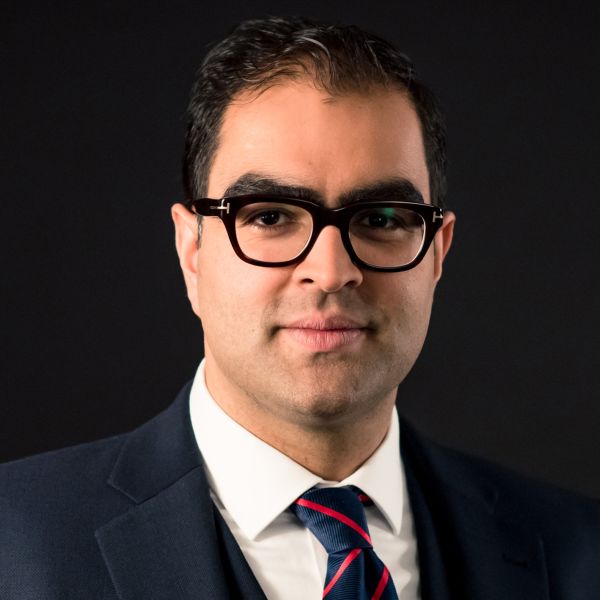
  • Vibhanshu Srivastava, Founder and Partner, Risis Legal, on challenges of litigation, importance of mooting and maintaining work life balance

    Vibhanshu Srivastava, Founder and Partner, Risis Legal, on challenges of litigation, importance of mooting and maintaining work life balance

    Vibhanshu Srivastava, founder and partner at Risis Legal, has diverse experience in handling a vast array of Litigation and Arbitration matters arising out of corporate/commercial transactions, tender-preconditions and terms, winding up of a company, oppression and mismanagement, intellectual property disputes and real-estate dealings. After having finished his graduation in law, Vibhanshu forayed into litigation by joining the Chambers of Prashant Chandra, a celebrated Senior Advocate based at Lucknow who draws crème corporate clientele of the region.

    Vibhanshu heads the Litigation and Dispute Resolution practice of the firm. He has been frequently appearing in the Hon’ble Supreme Court, the Hon’ble Allahabad High Court and its Lucknow Bench, besides the DRT and CESTAT. Vibhanshu has represented known corporate houses such as Ashok Leyland, Idea Cellular, Meraki Inc.,Omaxe, Xiaomi, Indoways E-Commerce & Sales Pvt. Ltd., NGK Infrastructure, besides several individuals, including public servants, etc.

    Vibhanshu is an alumnus of Chanakya National Law University and is registered with the U.P. Bar Council and the Oudh Bar, Lucknow. His inclination and prolific attraction towards litigation acted as a catalyst to pull him towards the walkways of the Court and set up Risis Legal, which has a robust dispute resolution practice.

     In this interview we speak to him about:

    • Importance of academics, internships, and moots
    • Challenges faced in litigation
    • Maintaining work life balance being a partner of a firm


    HOW WOULD YOU LIKE TO INTRODUCE YOURSELF? PLEASE TELL US SOMETHING ABOUT YOUR PRE-COLLEGE LIFE?

    I am a first generation lawyer based predominantly out of Lucknow. I forayed into litigation immediately after graduating from the Law School. After adjusting into the profession which took a while and once I had the feel of it, I went on to set up Risis Legal, a specialised litigation firm. We are thriving hard to make a mark in our sector by extending seamless and comprehensive dispute resolution solutions to our clients.

    My pre-college life was a lot of fun. I studied throughout in an all-boys school and made friends for life back then. During my pre-college days, I used to volunteer in a lot of social activities and gradually, this interest of mine became the stepping stone for me to become one of the founding members of Alexis Society, an international not-for-profit and non-political organisation which promotes creativity, innovation, peace, harmony and inclusive development.


    WHAT FACTORS INFLUENCED YOU TO CHOOSE LAW AS A CAREER? WHY DID YOU CHOOSE CHANAKYA NATIONAL LAW UNIVERSITY FOR PURSUING LAW?

    I always had a knack for public speaking coupled with the fact that math, physics and chemistry were just not meant for me and thus I found my calling in law. Thankfully the realization that I wasn’t meant for technical education and programmes hit me just at the right time and I chose commerce in my HSC over the dreadful P/C/M. By the time I was in my intermediate, I was pretty sure that I was going to pursue law. However, as they say ‘the beauty of life is that, nothing will go per your plan’, I had to joined the B.com (Hons.) programme at the Delhi College of Arts and Commerce(DCAC), South Campus, Delhi University; and almost gave-up on the idea of pursuing a 5 year law programme for I couldn’t secure a decent rank in CLAT. I just didn’t wanted to waste a year and this is what that prompted me opt for B.Com. It was hard to pursue myself that I will go for a traditional 3 year law programme post my graduation.

    But as were things in store for me, a month into the Delhi University already, I got a call from Amity Law School Delhi affiliated by the Guru Gobind Singh Indraprastha University, followed by a call from CNLU Patna. After giving my interview and securing a seat in the Amity Law School, I rushed to Patna to see things myself and make a fair call. After interacting with the students and faculty I met on campus, I had no second thought and on the same day, I was sitting and studying in the B.A., LL.B. (Hons.)-Batch(2009-2014) classroom.


     WHAT ALL ACTIVITIES DID YOU TAKE PART IN DURING YOUR TIME AT LAW SCHOOL?

    I was into mooting big-time. Besides, I even participated in parliamentary debates, paper-presentations, conferences, legal aid camps, law-fests etc. As my association with Alexis Group was at its pinnacle while I was in the law school, I conceptualized and organized many events under the banner of Alexis Group which focused on youth empowerment, sustainability, policy change and development. Law school was fun, all in all.


    YOU HAVE BEEN ARDENT MOOTER AND HAVE WON THE PRESTIGIOUS BAR COUNCIL OF INDIA MOOT COURT COMPETITION, BESIDES REPRESENTING INDIA IN THE STETSON INTERNATIONAL ENVIRONMENTAL LAW MOOT COURT COMPETITION WHICH WAS HELD AT FLORIDA, USA. HOW DO YOU RECOMMEND ONE SHOULD PREPARE FOR THEM? DO YOU THINK MOOTING IS SIGNIFICANT FOR LAW STUDENTS?

    There is no activity in a law school which is as important as mooting, especially if one wishes to join litigation. To begin with the preparation for a moot court competition, one has to submerge in the moot proposition so much so that he/she is completely though with the facts of the case. Unless, this doesn’t happen, one will not be in a position to cull out the legal issues and controversies involved. This is followed by a robust research work on the legal issues identified. The entire team must make earnest and synchronised efforts in the research and the legal issues identified may be divided amongst the team members. Research should be thorough and broad-enough to ensure that none of facets of the legal controversies involved are missed out. Speakers shouldn’t be pre decided and only once the research is exhausted and the memorial drafting begins, one should start thinking on this aspect. Lastly, team efforts are required to win a moot court competition and hence, the team members must be honest and modest in choosing their roles in the team. Let not egos and personal differences come in your way to win a moot court competition. The thumb rule is, choose a team wisely even before you begin preparing for the competition.


    WHAT ALL INTERNSHIPS DO YOU THINK A LAW STUDENT MUST UNDERTAKE DURING THEIR TIME AT LAW SCHOOL AS A STUDENT?

    This should be designed in accordance with the career preference one holds. For example, if one has aspirations to be into litigation, internships right from the first year must be designed accordingly. Thus, one can begin with an internship with a practicing lawyer from the District and Sessions Court, followed by internships with Senior Counsels in the High Court and the Supreme Court. Likewise, one can also intern with the Litigation and Dispute Resolution teams in the reputed Law-Firms.


    HOW DID YOU GET THE INTERNSHIP AT DSK LEGAL?

    Applied through the regular channel and expressed my interest to work with the Lit. group. They have a dedicated office in Colaba, Mumbai from where the Lit. team operates. I was lucky that my request was accommodated and my internship application was approved. Liked the work so much that repeated 2 more internships with them.


    YOU HAVE ALSO REPRESENTED INDIA AT THE PRESTIGIOUS INTERNATIONAL YOUTH FORUM SELIGER, RUSSIA IN 2011. PLEASE SHARE YOUR EXPERIENCE.

    Ahhhhhh, it incredible! We were a handful of us, representing India at the Forum. We were camping a jungle around a lake, called lake Seliger, about 25O miles from Moscow. Lake Seliger is in fact a system of Lakes and the surrounding was pretty picturesque. There were lots of activities, including talks on various agendas, group discussions, key-note sessions with imminent speakers, morning yoga, swim sessions, evening sport activities and what not. Made friends from all across the globe and thankfully we are still in touch. The memories of IYF, Russia are still fresh, all thanks to Alexis Group without whom my participation was impossible.


    HOW DID YOU DECIDE TO CHOOSE LITIGATION OVER TAKING UP A CORPORATE JOB AT A LAW FIRM? WHAT CHALLENGES YOU FACED IN LITIGATION.

    I had no second thought when it came to choosing litigation over a white collar corporate job. I had dreamt of shining into litigation even before I finished my 5 years in the law school. Frankly speaking, I made a conscious choice to begin a career in litigation from my hometown, needless to say to avoid the initial hardships and struggles of the profession; and the decision proved to be great. Three years down the line I was confident enough to go solo and that’s when the idea of Risis Legal struck me. Having said that, litigation will trust your patience and there’ll be times when you will think of ditching the profession in a jiffy, and that’s where you have to calm your nerves and say to yourself ‘Hey! No, don’t do this. You are here to stay!!”


    WHAT ARE YOUR AREAS OF INTEREST IN THE LEGAL FIELD?

    I love doing education matters, and off lately we have been doing many, representing colleges, students and trainees etc. Besides, I like doing matters arising out of corporate/commercial transactions, tender conditions/preconditions and terms, winding up of a company, oppression and mismanagement, intellectual property disputes and real-estate dealings.


    PLEASE SHARE YOUR EXPERIENCE WORKING AT LUCKNOW BENCH OF ALLAHABAD HIGH COURT.

    It is phenomenal. We have been doing matters both at Allahabad and Lucknow. There’s so much young crowd now in comparison to when I Started. Standing on the dice and delivering your arguments is the best experience.


     WHAT IS THE AVERAGE WORKDAY EXPERIENCE OF A PARTNER AT A LAW FIRM LIKE? HOW DO YOU MAINTAIN A WORK-LIFE BALANCE? PLEASE SHARE YOUR ROLES AND RESPONSIBILITIES AT THE FIRM.

    I have been personally monitoring all the important matters being handled by us, either by way of participating with the clients in the meetings, drafting and vetting the pleadings and making frequent appearances in these matters. The day starts early, with a visit to the Court and ends after long hours of work in the Office.

    I travel extensively doing the Court vacations and that’s how I make sure that I make full utilization of the vacations. Post vacations, I join back the Courts with re-enthused vigor and energy.


    HOW CAN A LAW STUDENT APPLY FOR AN INTERNSHIP AT YOUR FIRM?

    One can go to the ‘Careers’ tab on our website, www.risislegal.com. Apply for an internship with by clinking at the relevant link.


     WHAT ADVICE OR SUGGESTION WOULD YOU LIKE TO GIVE TO OUR READERS, WHO ARE PREDOMINANTLY LAW STUDENTS AND YOUNG LAWYERS?

     There’s no shortcut to hard work. Identify your interest at an early stage; say in the late third year of your law and start working in the right direction. Believe my lawyer and to-be lawyer friends, we have chosen a wonderful profession which has many magical sides and colors to it. We get to know each of it just at the right time.


  • Shriya Maini, Advocate, Supreme Court of India, on Independent practice in law, studying an International LLM from the University of Oxford, and writing research papers

    Shriya Maini, Advocate, Supreme Court of India, on Independent practice in law, studying an International LLM from the University of Oxford, and writing research papers

    Advocate Shriya Maini practices at the Supreme Court of India, the Delhi High Court and District Courts at New Delhi. She specialises in Dispute Resolution and as an unabashed feminist particularly enjoys criminal litigation.

    Ms. Maini is a graduate of Gujarat National Law University, Gandhinagar. She joined the Dispute Resolution team of erstwhile Shardul Amarchand Mangaldas and Suresh A. Shroff, as an Associate in their law firm. Subsequently, she went ahead to pursue her Bachelors in Civil Law (LLM) on a full scholarship namely Dr. Ms. Ambuti Salve Scholarship 2014-2015 at the University of Oxford, United Kingdom. Ms. Maini is also a recipient of the Oxford Global Justice Award for Public International Law, 2015 – 16 which gave her the opportunity to assist the President of International Residual Mechanism for the Criminal Tribunals (“MICT”) at The Hague, Netherlands. Currently, she serves as Visiting Faculty at National Law University, Delhi and Lloyd Law College, Noida. Ms. Maini is an independent consultant for International Law and Legal advisor at the LexQuest Foundation.

    Oxford is a dream college for any law graduate. However, what is life at Oxford like? What happens once you have earned your Oxford degree? Is Independent Practice an option? Being an independent litigator or founder of a firm, in the bubble of the bar, is a pretty big deal. Most who step foot in litigation, often only on nominal remuneration (if any) doled out by well-paid senior lawyers, the dream of the day they can finally set up their own shop. While it might seem to outsiders like all it may take to become a successful advocate is talent and passion, the skills required lie in the business realm more often than in legal.

    In this interview we speak to Ms. Maini about:

    • Tips on writing SOPs and Recommendations required to bag scholarships for foreign LLMs;
    • Masters in Law from the University of Oxford focussing on full scholarship;
    • Transition from a law firm job to Independent Practice;
    • Importance of writing research papers.

    HOW WAS YOUR EXPERIENCE AT GUJARAT NATIONAL LAW UNIVERSITY (“GNLU”) AND WHAT WOULD YOU SAY THAT YOU DID DIFFERENTLY FROM THE REST OF THE STUDENTS TO GRAB FOUR GOLD MEDALS AND EVENTUALLY ADMISSIONS IN BOTH OXFORD AND CAMBRIDGE?

    GNLU was a lovely experience, not only in terms of my professional and academic learning but also personal growth. In college, one is straight out of school and is looking for an avenue where he/she wants to achieve the skies, learn something new, besides of course, making new friends. Hostel life and classroom studies can be real tough taskmasters especially in a place which is far away from what we all call our comfort zone – home. What GNLU taught me was how to adjust well in hostile situations and share my knowledge with possibly everyone around. I also think the quality of the law school really matters, be it their faculty, teaching style or available course options. A great idea would be to speak to as many seniors and alumni and gather information online as to what each law school distinctly offers. When you are picking your college even while filling in your CLAT preferences, be very sure of what you want and where do you want to go. Don’t just follow the names, see for yourself what you want to do, be it social work or firm job or Court practice. For instance, I was very sure that I wanted to litigate and hence, I chose a college closer to my hometown and made a conscious choice that Courts in Gujarat and Delhi could perhaps, help me find plausible internships.

    As for your second question, I didn’t do anything different particularly but I think the one thing that I plausibly did differently was that I paid attention in class. There is a current trend of sleeping through law school classes or being very casual about attending classes thinking that during exams, one can read right at the end and score well. However, I believe it is a great exercise to listen in class and make your own notes, supplementing them with a book perhaps for each subject – for instance say Kelkar for Criminal Law or C.K. Takwani for CPC. These individual notes for me turned out to be best possible sources to study for end-term exams which were subjective in nature. This is in my opinion is one of the easiest ways to score very well in almost every subject in law school (be it civil, criminal or corporate law) and achieve a very high CGPA!

    Another thing that I incessantly followed was writing well researched papers when I was doing assignments or projects at law school. I have converted a lot of them today into top quality publications which have been read world – wide and have helped me garner some great work as an Independent Practitioner and Consultant in Public International Law. So I would say take your projects very seriously and critique the law that’s currently in place. Pick a topic which is perhaps a grey area of law or a burning topic for that matter. These could also help you create some cutting edge research ideas which could set you apart from the rest in class.

    HOW DID YOU GET INTO OXFORD, WHAT ALL DID YOU DO?

    I think for admissions to Oxford and for that matter Cambridge as well, it’s very important that you plan well in advance. Should you want to start your studies the next year, I think it’s important that you start gearing up from August-September this year itself. Start collecting your recommendations, prepare a well-researched Statement of Purpose and apply before the scholarship deadline. To sum up, time management is one thing that you must keep in mind while making Applications to foreign Universities for the LLM course. I suggest it’s a great idea to make a chart or table of all the deadlines of various Universities (with and without scholarship) so that the application process becomes far more coherent and crisp. This is what I personally followed, besides carefully monitoring my Statement of Purpose and Recommendations.

    Another aspect to keep in mind is that when you are applying to a stalwart University like Oxford, it is always advisable to research well about the University and its courses offered. Another suggestion would be to speak to a lot of seniors and alumni who have been to Oxford because these are the only few who seem to know the things at the grass-root level. A quick Google search say of the University, any of the past Statement of Purposes uploaded therein could benefit you manifolds. This would give you a wide array of options to pick from and you could then craft an SOP or Recommendation Letter, suited to your own specific needs, depending upon the college. For instance, Oxford Recommendations and SOPs are very academic unlike a London School of Economics, which focuses more on the practical side of law. I had made up my mind for an Ox-Cam degree and hence, I prepared all my documents accordingly. My SOPs and Recommendations were very specific, academic and crisp alongside, distinctly explaining why I wanted to read which course at a foreign University only.


    WHAT WERE THE OTHER ACTIVITIES THAT YOU UNDERTOOK OTHER THAN WRITING AND PUBLISHING RESEARCH PAPERS?

    That’s a great question! I think these activities which you are referring to – that we undertake at law school form the very basis of the contents of any LLM application. Foreign Universities do not decide Applications solely on the basis of academic scores (which are fairly important) but they look for something extra, what I like to call the “X” Factor. These could be moot court competition, research publications, book or commentary writings etc. I was primarily focussed on mooting for public speaking came rather very easy to me. I participated in two moot Court Competition, the Manfred Lachs and Nani Palkhivala – both which dealt with my interest area – Public International Law. So, mooting for me was like learning the law and enjoying myself while doing just that. Infact, Public International Law is a field that I now constructively engage with on a daily basis. So, I would say, keep your focus intact and start preparing step by step, right from the first year depending upon where you see yourself in the next five years. Focus on your interest areas, be it civil, criminal, corporate or tax. This is how I used the mooting process to my advantage – I researched and learnt the law, developed court mannerisms and soft skills besides inculcating team spirit. Additionally, it is also advisable to engage in atleast one extra circular activity, be it painting, dance or music.

    Another activity that I undertook was attending conferences and research based events. This extensively helped me network and realise how communication is the key to success in this profession. I applied for internships and sought answers to my queries by sending e-mails to my seniors. Today, I receive requests on Social Media on a daily basis requesting information on a plethora of topics, be it my work at the United Nations or Oxford or the LLM Application process in general. I make it a point to take out some time and try and respond to as many students as possible.


    WHAT WERE YOUR CONSIDERATIONS WHILE APPLYING AT THE FOREIGN UNIVERSITIES AND WHAT MADE YOU CHOOSE BCL FROM OXFORD OVER AN LL.M. FROM CAMBRIDGE AND HOW ARE THE TWO ANY DIFFERENT?

    One of the most important considerations apart from academic scores is finding scholarship options while making LLM Applications to foreign Universities. Another consideration for me was place of convenience (England being closer to India than America), a specific law you want to study (International Law for me) or place where you want to practice eventually. Let’s go step by step: While applying for both Oxford and Cambridge, I was categorically focussed on applying for a common law university. It’s a good idea to keep your options open if you are not sure what you really want to major in. Apply for a general LL.M unless you are very keen to practice in a niche area of law, such as International Tax or Intellectual Property Law. I too opted for a general LL.M. with 50 subjects on the table so that I could pick my four most preferred subjects.

    As for differences between Oxford and Cambridge – the BCL course at Oxford looks at the law from a very academic point of view unlike Cambridge, which is more practice oriented. Oxford in general has a very theoretical approach to the law because you have a lot of Queen’s Counsels and Professors teaching on campus who have literally helped lawmakers create the law. So, Oxford in effect teaches you why the law i.e. the reasoning behind the formulation of a law. This is a very interesting approach because the same inculcates critiquing abilities in a student and help form arguments and questions of law subsequently in filing Special Leave Petitions for instance. Again said, the Tutorial system in both these Universities is a fantastic model from which our Indian Universities could benefit manifolds. During the tutorials, one writes a research paper critiquing the law, and the tutor gives him/her individual feedback in person. This teaches the students the art of formulating legal arguments, besides describing how the papers must be structured.


    YOU PUT A LOT OF STRESS ON RESEARCH PAPERS AND PUBLICATIONS. HOW MUCH IMPORTANCE DOES PUBLISHING OF A BLOG OR AN ARTICLE ON INDEPENDENT BLOG WEBSITES HOLD?

    Today, blogging has given the power and leverage to almost everyone to put their thoughts onto paper. When used effectively, this could be an easy and inexpensive gain for any Independent practitioner’s work. Like persuasive and binding value of judgements, if you publish an article in a legal journal, it carries more weightage than an independent publication on a blog-site. Hence, I would suggest either you write something so strikingly different on your own blog or write for a blog – site which has a good readership and is well known in the market. For Example – there is a very famous peer-review blog called EJIL which was started by the University of Oxford students. Today, the blog is very highly regarded and every two months, stalwarts share their views on International Humanitarian Law and International Criminal Law. If you have a publication on EJIL, that’s more prestigious than some of the journals as well. I believe, blogs – sites are the way forward – they are the best spaces for Advocates to work on, to enhance their knowledge and clientele.


    COULD YOU PLEASE TALK ABOUT YOUR APPLICATION FOR THE PRESENT STUDENTS?

    Out of the many who apply to Oxford, only a handful are selected, not because the others don’t have the marks or academic prowess but because their applications starkly lack content and structure. It is essential to be aware of the International standards and approaches when one is making such applications. The most important feature of your Application for an International course is an SOP – “Statement of Purpose”. When you draft an SOP you must state clearly why you want to join a particular University, the subjects you want to study or why do you want to study those subjects in that particular University only, perhaps, because the same are not available in an Indian University. Before making my Application, I thoroughly researched about the Universities that I was keen to apply to, their course modules and current as well as adjunct faculty. I request all of you to decide well in advance which are the subjects you wish to pick for your LLM – so you must know before making your Application which course modules you intend to read in which College. This process immensely helped me craft tailor-made Applications for different Universities and their courses. Additionally, I read my Application twice over prior to submission and applied well in advance, within the Scholarship deadline.


    WHAT IF A PERSON WANTS TO PURSUE THE SAME COURSE WHICH IS AVAILABLE IN A GOOD UNIVERSITY IN INDIA? WHAT SHOULD A STUDENT DO IN THAT CASE?

    I think it is important to realise and fathom the fact that we are still miles away to go when it comes to legal education. There’s a reason why people go out and study. I won’t say that there’s no good faculty in India but what they are doing out there is very different and there is no harm in learning from the foreign Universities how and what they teach. Today, many Indian Universities are collaborating with foreign ones for exchange programmes for their undergraduate students. There must be cogent reasons for the same. Should you compare the course modules that an Indian University offers vis-à-vis a foreign University, you will realize how far ahead they are in terms of teaching innovative subjects, hiring excellent practitioners to teach academic subjects and characteristically bright methods of teaching, such as the tutorial system.

     

    IS AN LL.M. FROM THE UNITED STATES OF AMERICA BETTER OR FROM THE UK? WHAT ARE THE MAIN DIFFERENCES BETWEEN THE TWO?

    The two are essentially very different in their approaches. The UK LL.M. is based totally on Common Law perspectives, though we study a fair bit of Civil Law. On the contrary, the US LL.M. is totally based on Civil Law teachings. This limits the scope of those who want to come back to India at some point in time and practice. So if you want to come back to the Indian Courts, I’d suggest it is always better to go for the United Kingdom. However, many believe that the American market is currently way more welcoming when it comes to hiring Indian students who write the American Bar exam post their LLM. Again said, they both have their own pros and cons.


    HOW IS THE PEDAGOGY AT OXFORD DIFFERENT FROM THE TOP UNIVERSITIES IN INDIA?

    My most favourite memory of the last few years is my time spent at the University of Oxford. This because studying at Oxford is a once in a lifetime opportunity. The environment is intellectually stimulating to the extent that it pushes you to excel, should you take it in the right spirit. It is a student’s city, full of the best minds from all across the globe, bubbling and bursting with knowledge. Even the Pubs and Bars have students lounging and discussing the law. My experience at Oxford taught me how to question and critique the law, without simply accepting and applying it. The teaching methodology at Oxford comprised of lectures and seminars (classroom discussions wherein questions were released a week in advance). We had a system of tutorials wherein we were supposed to write papers every month on topics for subject, only to be assessed and given feedback on in person by our teachers. This personalized attention in a Masters course is what makes Oxford the best of the best. It was inspirational for me to witness how the best University in the world functions, alongside keeping its humanitarian approach intact.


    HOW DID THE 100% SCHOLARSHIP AT OXFORD HAPPEN? COULD YOU TALK ABOUT WHAT HELPED YOU GAIN THAT SCHOLARSHIP?

    I think this is one question I can answer out of sheer experience and nothing else. I never had a Plan A or a Plan B when it came to doing the LLM. I had always decided that I was going to go out and study, and as far as the money was concerned, I knew it was a big amount but I really did not think too much about it while I was making the Application. The best advice that I can pass on is – Do not fret about the funding before applying for a Master’s course. Make your Applications first and alongside or subsequently figure out the funding options available. And the best way to do that is – APPLY EVERYWHERE POSSIBLE FOR SCHOLARSHIPS! This is what I tell all the students who come and ask me about any kind of scholarship questions. The best way to get a scholarship is to apply everywhere because what matters is that one YES, not those numerous NOs. A cent per cent scholarship (including tuition fees and living expenses) may not be easy, but it’s not impossible if you try hard. Almost every University application has a separate scholarship section. So, keep an eye out for these alongside the bursaries and grants that are doled out towards the end of the Application process. There are also numerous Indian donors who can help you out – be it Inlaks or Aga Khan. Please remember all the University linked scholarships have early bird application deadlines with an automatically linked funding application. Also, Universities like Oxford have multiple colleges, be it Exeter or Sommer ville. So, check if any Scholarships are specifically linked to your College. For instance, the Dr Mrs Ambruti Salve Scholarship was linked to Exeter College at the University of Oxford. I was indeed blessed to have received a full grant which included my tuition fees, travel and living expenses.

    Another tip that I give students is that your SOP must in a line or two stress on the need for funds factor. Make it clear and evident even when you are applying to the University that you are looking for funding. Do not feel shy or embarrassed about the fact that you are coming from a third world country, and probably you could do with some monetary help.


    HOW CAN ONE MAKE THE MOST OF A SHORT SUMMER SCHOOL COURSE AT OXFORD UNIVERSITY, MAY BE A MONTH’S COURSE? ARE THEY BENEFICIAL THESE KINDS OF SCHOOLS, OR IS IT BETTER TO GO ON A SCHOLARSHIP?

    I realize that I am on a public platform and I may be quoted if I say this, but I am going to be very brutally honest about it. From a very personal experience, I believe spending money on a month long summer school at a University in England or America is definitely not worth it, unless you have the funding available. I think one can easily enrol for diploma courses online or offline that are available at much cheaper costs in India, instead of these expensive foreign location based summer schools. Please do not spend your parents’ hard earned money, or even your own accumulated money on a summer school option which is only a month long. So, hold on to those green notes for a wiser option, maybe an LL.M.


    WE KNOW FOR A FACT THAT YOU HAVE WORKED AT AMSS BEFORE GOING FOR YOUR BCL. HOW DID YOU UTILISE YOUR TIME AT AMSS TO STEP INTO PRACTICE ?

    The workings of a law firm are very different from how independent practice works. The law firm culture teaches you qualities that practice wouldn’t and vice versa. The most important skill that I acquired from the law firm environment was communication. I learnt how to send out and receive formal e-mails to clients and arbitrators, how to make contacts, how to interact with people, especially client interviews. This is one skill I now utilise in my practice, a lot.

    The second skill which is law firm specific is meeting deadlines. In an independent practice set up, one can get pretty lazy and relaxed, seeking multiple dates for submissions. But the law firm environment teaches you to stick to deadlines because you have a senior to report to. The inherent structural hierarchy teaches you effective time management and smart client billing. These acquired skills are a boon for a practitioner who finds it hard to not only procure work but also bill decently well. I have purely used these skills to grow from one client into fifty more in an ongoing builder-investor dispute. Lastly, the law firm as a junior teaches you how to be resilient and churn out the first draft so that the same can be edited over a series of corrections. Now being in independent practice, I ensure that my drafts are read over and copyedited atleast thrice in the office/chambers before their submission in Court.


    IS THERE ANY POINT IN DOING AN LLM, IF YOU ACTUALLY WANT TO LITIGATE IN INDIA?

    I’m always asked this question because almost all those who cannot make it to an Oxford or Cambridge at the Masters level criticise it thoroughly, saying there is no use wasting a year, better practice in the Indian Courts. However, I do not at all agree with their views. This because the education standards, legal knowledge, command over language and critical thinking are approaches that are best developed at the Masters Level, for the focus becomes very specific on a single subject or topic. This tremendously enhances the aura of a lawyer for he learns how to question why the law. This is why most of the better Supreme Court lawyers in India have a foreign LLM degree. I can proudly say that I draft all my petitions from scratch, analysing precedents and even critiquing them at times, without cut copy pasting judgements. Small skills can go a long way in making a great lawyer. Foreign LLMs train you exactly in that direction and for that purpose. Additionally, foreign LLMs do give you special knowledge which general practice in Court would never. I was fortunate to read International Criminal Law during the BCL at Oxford and today, I teach that subject in Indian Law schools, be it Lloyd Law College or National Law University, Delhi. Indian Court practice wouldn’t have ever taught me the same!


    WHAT CHALLENGES DID YOU FACE DURING THIS TRANSITION FROM THE TOP MOST LAW FIRM TO INDEPENDENT PRACTICE ?

    While at Amarchand, I had waited too long to litigate and appear in Court. The law firm may be a great place for some but I had long realised it was not my calling. When I reached Court, I very well know that I was young and fresh. Noone would so easily entrust me with a brief right at the outset. So I taught myself how to run after work and not money. It took me a few months initially to find my feet but I think I managed rather very well. I was also in an advantageous position because I was a second generation lawyer. These privileges (as much as we shy away from them) do give us a Launchpad and I can never thank my father enough for the same. The best tip is – Do not run after money; lots of money will definitely come to you, at the maximum within a year or two if you’re passionate, hard – working and slightly lucky. Today, I am happy to pass on certain briefs due to paucity of time, only because I was initially hungry for good work and not just good money. Another challenge that one faces is finding work. Now this is the tricky bit. I would suggest you join a boutique law firm or maybe a senior counsel (though for only a few months) before you network for some good work.


    IS THERE ANY EDGE THAT YOU GET OVER THE PEOPLE WHO HAVEN’T DONE AN LLM SPECIFICALLY IF YOU ARE LOOKING FOR A JOB AT THE LAW FIRMS?

    Law firms and I have a very cynical relationship. Don’t get me wrong when I say this – law firms are essentially looking for those who can mechanically deliver on a daily basis what is required of them, may be a contract draft or a petition draft. So, they do not really look at an LLM or a Masters in depth knowledge with any respect because all they want is research and finding out almost every possible detail, without analysing or doing anything path breaking. Many enjoy the economic comforts and benefits of a law firm job and for all those, you can easily get the same with a Bachelor’s degree from India.


    HOW MUCH GPA IS REQUIRED FOR SECURING A PLACE IN A TOP LAW SCHOOL LIKE OXFORD?

    Good question! GPA scores are very important if you are amongst the top three or five in your college. During your Application process, play to your strength and do not forget to mention the same in your Statement of Purpose and Scholarship Application. I wrote almost everywhere that I stood first in my class and this turned out to be a great conversation starter during all my scholarship interviews, besides giving me a cutting edge and good impression. I stressed on how having a high GPA meant that I was one of the best students at my University and I too could bring something unique to the Oxonian high table. On the contrary, if your GPA scores are low, do not mention them unless asked and stress on other aspects such as extra – curricular achievements or books or publications.


    COULD YOU PLEASE GIVE AN ADVICE EACH FOR THOSE WHO ARE APPLYING FOR AN OXFORD LLM; THOSE WHO ARE TRYING TO GET INTO LAW FIRMS AND THOSE WHO INTEND TO UNDERTAKE INDEPENDENT PRACTICE?

    For Oxford Applicants, manage your time effectively and apply well in advance, and of course, flag your scholarship deadlines. Be consistent in your efforts to procure great recommendations from academicians and draft a heartfelt Statement of Purpose. The BCL is a course which you’ll never be able to undertake again in your life, so make the most of it once you are there.

    For Law Firm aspirants, intern at reputed firms all through law school and in a variety of subjects, be it civil, criminal or corporate law. Pick the one that you are most keen in for you have to practice it for a fairly long period of time, once in the firm.

    For Independent Practitioners, dream big to make it happen. Find your feet by interacting with seniors and lawyers alike, network well and be patient. Just run after work and not the money. The latter is bound to follow suit, that too soon.


    Credits : Mr. Manthan Nagpal for transcribing the interview.



  • Anubhuti Agrawal, Senior Counsel, Hilton, on LL.M from University of London, being partner at SAM and maintaining work life balance

    Anubhuti Agrawal, Senior Counsel, Hilton, on LL.M from University of London, being partner at SAM and maintaining work life balance

    Anubhuti Agrawal graduated from National Law School of India University, Bangalore in 2005. She joined Shardul Amarchand soon after graduation and worked there for the next three years.

    In 2008, she went to University College London to pursue her L.LM. Thereafter, she continued to work in Shardul Amarchand and later become the partner of the firm.  Anubhuti is currently Senior Counsel, Hilton Worldwide.

    In this interview, she talks about:

    • Her work experience at Shardul Amarchand Mangaldas,
    • The journey from being an associate to becoming the partner of the same firm.
    • The transition from being a partner at a firm to an in-house counsel
    • Maintaining a work-life balance


    GIVEN THAT MOST OF OUR READERS ARE LAW STUDENTS AND YOUNG LAWYERS, HOW WILL YOU INTRODUCE YOURSELF TO THEM? DO YOU COME FROM A FAMILY OF LAWYERS?

    I am a full time professional, working as the lead lawyer for Hilton in the Indian sub-continent. I am also mother to a four and half years old super active daughter, an avid traveler and compulsive holiday planner (for myself, my family, friends, and strangers!), social worker and a budding fitness freak.

    No, I do not come from a family of lawyers – my entry into law and journey since then has been and continues to completely self-driven, self-motivated and self-created.


    WHAT WAS IT THAT GOT YOU INTERESTED IN THE LEGAL FIELD? WHAT MADE YOU DECIDE TO PURSUE A CAREER IN LAW?

    As probably may be the case with other young adults my interest in law was fuelled party by reading John Grisham books; and also partly by the desire to not study engineering, medicine or computers. During one of the career counseling session at my school, I got to know about National Law School, Bangalore which seemed like a great place to be at especially with holidays every 3 months, vibrant student life, and on top of that, the career prospects after graduation seems quite high. For me I was not focused on studying law and becoming a lawyer but more focused on getting into NLS, Bangalore – I may not have chosen to do my undergrad in law if I hadn’t been selected for NLS.


    HOW WAS YOUR EXPERIENCE IN NLSIU? DO YOU THINK LAW SCHOOL PREPARED YOU FOR THE REAL WORLD PRACTICE OF LAW? DID YOU PURSUE ANY EXTRACURRICULAR ACTIVITIES? HOW DID THEY CONTRIBUTE TO YOUR HOLISTIC DEVELOPMENT?

    NLS has a very unique culture and character, especially for a dreamy-eyed sixteen year old who enters that environment. The academic standards at NLS were (and I hope still are) very high, and one always has to strive that little bit extra to excel in that tough environment – this intrinsically appealed to someone with a competitive streak like me. NLS also provided various opportunities for doing the varied activity that one wants to pursue, and I think this equipped us to manage our time effectively.

    I think NLS provided an open environment and opened up diverse opportunities for me. Most importantly NLS gave me the analytical skills required to be a successful commercial lawyer – so to that extent, yes, it gave me the tools required for the real-world practice of law.


    WHAT MOTIVATED YOU TO PURSUE AN LLM? HOW HAS IT BEEN BENEFICIAL TO YOU IN YOUR CAREER? CAN YOU TELL OUR READERS ABOUT HOW YOU SECURED A SCHOLARSHIP FOR YOUR STUDIES?

    Pursuing an LLM a few years into my professional life was not easy for me as I was at the peak of my career at Amarchand at that time. 2005-2008 were boom years for the Indian economy and consequently, I was doing great work at the firm and was involved in some marque deals. However, having secured full funding through the Chevening Scholarship and with my then fiancé (now husband) being in London together with the support and encouragement from Mr. & Mrs. Shroff made me take the decision to pursue the LLM at University College London.

    I would think to secure a full scholarship was the key factor influencing my decision to pursue the LLM – I was quite clear that I would not take a student loan or ask my parents to fund it.

    I have mixed feelings about how beneficial an LLM is for one’s career especially if you intend to come back to India. As with everything I believe the value of an LLM depends really on what you want to achieve in life and how the postgraduate degree ties-in with that goal. If someone wants to pursue a traditional law firm role in India (with the ultimate aim of becoming a partner), then to me LLM doesn’t really value add. However, when I switched my role to move in-house I have no doubt that the LLM and my work experience outside India tilled the balance in my favor. To me, a LLM is not just a degree and a line in the resume which gives additional technical legal skills but is also a year spent in getting personal experiences, acquiring soft skills, understanding people from different cultures and nationalities, understanding mindsets and decision making process followed by people from diverse background, making invaluable friends and just having fun! Therefore, my advice always is that pursue an LLM only if you get into a good university in a great city.

    Being genuine in your applications (admission and scholarship) and interviews are very important. I strongly feel that candidates need to have at least 1 area which they are passionate about which is clearly demonstrated in what they have done in the past and how the LLM would help them advance their interest. Judging panelists see hundreds of application and have can very easily identify fluff.


    WHAT ARE YOUR VIEWS ABOUT THE IMPORTANCE OF HIGHER EDUCATION? WHAT WOULD BE YOUR ADVICE TO SOME OF OUR READERS WHO ARE UNDECIDED ABOUT PURSUING FURTHER STUDIES?

    I feel higher education (especially in the field of Law) gives you soft skills and experiences which are invaluable in overall personality development. For me, personally higher education has to be in an international environment where you are exposed to myriad nationalities and cultures, which not only expands your social network but gives you a first-hand understanding on the different thought process. I would say that if you have the recourses one should definitely pursue higher education but after gaining some work experience, as maturity levels are very different after just a few years of working and from a good university.

    My international experience of having completed an LLM and a secondment at Slaughter & May played a very important role in getting the position at Hilton, and also in interacting with my international colleagues at Hilton who are spread across multiple countries.

    HOW DID YOU SECURE A JOB AT AMARCHAND MANGALDAS? WHAT DID THE RECRUITERS TAKE INTO ACCOUNT WHILE HIRING YOU? HOW IMPORTANT WAS YOUR CGPA?

    I got a PPO (pre-placement offer) from Amarchand having completed an internship in my final year with the firm. As an intern/student, the test is not that how much you know but do you know the right places to look for answers. Recruiters, in my opinion, look for consistency and hard-working attitude, an aptitude to creatively think on your feet and ability to adjust in the organisation’s environment, to be able to imbibe its culture and value system. I think CGPA is important as it can help a candidate get their foot in the interview process (especially if they are not from a top law school) but ultimately their overall personality, knowledge and their ability to signal (subtly) to the recruiter that they are open to the challenges of a firm will land a candidate the job offer.


    BEING AN ASSOCIATE AND THEN A PARTNER AT A TOP TIER LAW FIRM IS VERY DEMANDING. HOW DID YOU FACE THE WORK PRESSURE?

    When you are enjoying what you are doing and your effort is recognized and rewarded the long hours do not feel like pressure. Having said that it’s not like the pressure doesn’t get to you at times, but what worked for me was being focused on the job at hand and knowing that I was not just a clog in the wheel but what I was doing played a significant role in the overall deal. Also personally I am not someone who gives up and the recent Shawn Mendes song “Sometimes I feel like giving up, but I just can’t, it isn’t in my blood…” really sums me up!


    BEING A FULL-TIME PROFESSIONAL WITH A YOUNG CHILD, HOW DID YOU MAINTAIN A WORK-LIFE BALANCE?

    To me, the phrase “work-life balance” has given way to “work-life integration”. In today’s environment boundaries between work and personal life are so blurred that organizations need to give the flexibility to address personal needs even if that is in working hours. The important this is to ensure that work does not suffer and that you are responsible, responsive and available when needed. Obviously, there is always potential for misuse but self-discipline and dedication are key.

    I have been fortunate that I have worked at places which have allowed me to integrate my life with work, as ultimately we spend most of our adult time working. Amarchand has a daycare facility where my daughter went to from the age of six months till the last day I worked there and now Hilton offers a lot of flexibility for work-life integration.

    A supportive family environment also plays a crucial role, with my mother being the pillar behind me not only through my formative years as a young professional but even today, coupled with an encouraging husband (who is also a law firm Partner) we manage to squeeze out family time.

    While it is hard to implement I am trying to stop demanding or expecting instant responsiveness at every moment of the day, to help me enjoy every aspect of my life.


    HOW DID YOU RISE TO A PARTNER AT SAM? CAN YOU DESCRIBE YOUR JOURNEY OF GROWTH? WHAT ARE YOUR RESPONSIBILITIES AND AREAS OF EXPERTISE AS A PARTNER?

    I was a homegrown partner at Amarchand and then SAM, i.e. I started my career there as an intern and reached the partnership with hard work and dedication. I still remember the day my dad dropped me to the Amarchand office on the first day as an Associate there and said “may you get the corner cabin there” and I was glad I could fulfill that aspiration he had for me. In my journey to partnership at Amarchand, in addition to working hard, burning the midnight oil and having sharp legal skills, I had the faith and support of the firm and the Managing Partners. I was promoted to the partnership when I was expecting my daughter – which is a testimony to the fact that in right organizations milestone life events are not seen as roadblocks but only take you forward.

    It goes without saying that strong legal technical skills are needed for being a partner, but in addition to that partnership is essentially being an entrepreneur – do you have the ability to sell your’s and the firm’s credential and get the work defeating other equally glossy proposals? A partner (especially a junior partner) has to wear a number of hats from sourcing work to execute the same at the highest standard and in record turn-around time, to participate in firm related admin tasks and managing your team; which all require distinct skills. If each mandate won and each deal closed gives you an adrenalin rush and pushes you forward then the partnership is for you.


     WHAT PROMPTED YOU TO LEAVE A LAW FIRM TO JOIN IN-HOUSE LEGAL DEPARTMENT? IS IT TRUE THAT IN-HOUSE LIFE IS EASIER THAN PRIVATE PRACTICE IN A LAW FIRM?

    Having spent all my professional life at a law firm I had started questing myself as to what next. I could have continued in a law firm but essentially my life on a micro and a macro basis would not change – so the question of moving to another firm did not arise for me. While continuing to be a lawyer, I wanted to be closer to business realities and the position with Hilton provided me with that opportunity.

    There was a time when possibly it could be said that an in-house legal role was less demanding as compared to law firms. But now with complexity and maturity of businesses an in-house lawyer has to be a trusted business partner providing strategic advice to business. Think about it, in a law firm your client is a phone call away but in a company, they are in the room next door and walk in any moment they have a need! Also, an external advisors role involves highlighting risks and helping the client take a decision, but as an in-house counsel, you are supposed to take the decision – to tell me what sounds easier? There is no free lunch anywhere, it is just what works best for you as a person and professionally.


    HOW DO YOU STAY UP TO DATE ABOUT THE RECENT DEVELOPMENTS IN ALL THE FIELDS YOU WORK IN AND HAVE AN INTEREST IN? HOW DO YOU SUGGEST LAW STUDENTS DO SO?

    There are a number of good legal blogs and website now which give a glimpse of latest developments in the legal field together with regular updates from law firms that are circulated to clients. In addition to that, the PRS website is my go-to place if I want to find out details of any new legislation.

    In this time of rapid changes to the legal framework in India, law students should really be following news closely, changes in legal landscape relevant to them or which interests them. There is no substitute for being abreast with the latest development and the open internet world makes it much easier than when we were students.


    YOU HAVE PUBLISHED SEVERAL PAPERS. CAN YOU GIVE OUR READERS SOME ADVICE THAT WOULD HELP THEM IMPROVE THEIR CHANCES OF GETTING PUBLISHED?

    Knowing the journal you are writing for and its audience is very important together with using simple English. As a reader it is always a pleasure to read articles which are topical, are well researched and simply written, and the same principles apply to authors also.


    YOU ARE ACTIVELY INVOLVED IN SOCIAL WORK. CAN YOU TELL US HOW YOU CONTRIBUTE AND WHAT CAUSES YOU INVEST YOUR TIME IN? DO YOU THINK LAW SCHOOLS CAN ENCOURAGE LAW STUDENTS TO BECOME MORE SOCIALLY RESPONSIBLE?

    Contributing to society is ingrained in us as a family and is something I have been brought up with. My mother is an active volunteer with CanSupport, an NGO working with cancer survivors and caregivers. I work with her in resource mobilization and am an enthusiastic participant in their annual “Walk for life”. I am also closely associated with Delhi NCR Foodbank Network, an organization working in the area of hunger relief. I have realized that a number of young professionals want to contribute to society in their own ways, but the lack of time together with the process of identifying genuine organizations and coordinating with them seems daunting. To help in this, together with a few friends, colleagues of the legal fraternity and family members we have set up an informal group “Aid Attorneys”. As part of the group, we have funded meals for school kids and hope to do more projects in the future.

    My four-year-old daughter accompanies in all the activities and seeing her enthusiasm I feel proud that I am able to contribute in whatever small way.


  • Vivek Kapoor, International Disputes Lawyer, Stephenson Harwood on LLM from Northwestern University and a career in International arbitration 

    Vivek Kapoor, International Disputes Lawyer, Stephenson Harwood on LLM from Northwestern University and a career in International arbitration 

    Vivek Kapoor is an alumnus of Panjab University (Chandigarh) and Northwestern University (Chicago). He specializes in international commercial and investment treaty arbitration. He acts as counsel and advocate in international arbitrations conducted under the LCIA, ICC, SIAC, and UNCITRAL rules and ad-hoc arrangements, and arising from diverse industry sectors, particularly energy, mining and natural resources, infrastructure and construction, telecom and technology sectors.

    He advises and represents both private and state-owned entities from multiple jurisdictions in Asia, Europe, CIS, Africa, and Middle East in disputes governed by a variety of common and civil law regimes, and public international law.

    He also advises foreign investors on issues pertaining to investment protection notably under bilateral investment treaties and investor-state contracts, and the interaction between international law and domestic law in relation to international projects. He is recognized for his experience in post-award remedies, enforcement, jurisdictional challenges and conflict of laws issues.

    He has undertaken significant advocacy before international tribunals. He also has full rights of audience in the Indian courts, and has successfully represented private parties, both Indian and Fortune 500 multinational corporations, before the Supreme Court of India and the High Courts of various States in India.

    He is empanelled as an arbitrator with the International Centre for Alternative Dispute Resolution (working under the aegis of Ministry of Law & Justice, Government of India). He also serves on the editorial advisory board of LexisNexis Arbitration and the management committee of the Asia-Pacific Forum for International Arbitration.

    He also regularly speaks at various forums on diverse issues of international law and international arbitration and has published widely on this area of law.

    In this interview, he talks to us about:

    • LLM from Northwestern University (US)
    • On choosing specialisation
    • A career in international arbitration


    HOW WOULD YOU LIKE TO INTRODUCE YOURSELF TO OUR READERS?

    I am an International Disputes Lawyer based in London – an advocate (India) and a barrister (England & Wales). Well, that is my professional introduction; outside of the profession I am an adventurer, nomad at heart, an art aficionado, a two am friend – a social bandito!


    WHAT MOTIVATED YOU TO PURSUE A CAREER IN LAW AFTER DOING BACHELORS IN ARTS (ECONOMICS AND MATHEMATICS) FROM PANJAB UNIVERSITY?

    I come from a family with a strong tradition in law, law enforcement to be precise. I was intrigued by the profession right from a young age; my initial interaction with law being centered on its societal impact and importance. As I grew up the philosophy of law became an area of keen interest for me.

    Law was always on the cards. When I finished my schooling at St. Columba’s (Delhi) I wanted to broaden the horizons of my knowledge and develop a more mature worldview before I embarked on a degree that would form the basis of my career. Panjab University with its glorious history and rich tradition gave me a wonderful choice to pursue Economics and Mathematics simultaneously.


    PLEASE TELL US SOMETHING ABOUT YOUR LAW SCHOOL LIFE?

    Law school, both at Panjab University (India) and then Northwestern University (US), played a critical role in shaping my thought and disposition. I had the opportunity to read law under the guidance of some of the most celebrated professors in India and US. I interacted with some of the best minds in the profession – leading lawyers, judges, and politicians elected to public office.


    WHAT WAS YOUR MOTIVATION BEHIND DOING AN LLM ABROAD? HOW DID YOU CHOOSE TO SPECIALIZE IS INTERNATIONAL ARBITRATION?

    The motivation behind the LL.M. was to develop both a global perspective of law and practice and a skill based and practice-oriented understanding of law. Being admitted to one of the best universities in the world, Northwestern in Chicago, gave me the perfect opportunity.

    The focus of my LL.M. was broader than international arbitration. I completed 31 credits instead of the 20 credits that were required and completed by most. Though I completed my LL.M. when I was fairly young, I was already a litigator with experience of some very significant and complex cases. International arbitration was a natural progression.


     WHAT WOULD BE YOUR WORD OF ADVICE TO STUDENTS LOOKING FOR A CAREER IN INTERNATIONAL ARBITRATION?

    Don’t focus on the gloss; try to develop a sound understanding of law and the ability to work through a diverse set of factual matrices. Above all, try to attain as much practical, hands-on experience as possible.


    CAN YOU PLEASE TELL US ABOUT YOUR EXPERIENCE APPLYING FOR YOUR MASTER’S DEGREE? DO YOU BELIEVE IT IS MORE DIFFICULT FOR NON-NLU STUDENTS TO GET THROUGH INTO FOREIGN UNIVERSITIES?

    I am not a NLU student so I really can’t comment on whether they have it any easier. For me, it was a relatively straightforward process. In my view, the best way to deal with this process is to know what exactly you want out of the course and present your true and best self in the application. I don’t think the foreign universities show any preference towards NLU. They are more focused on the quality of candidates, what they bring on to the table, how they contribute to the brand and the values the university stand for.


    WHAT LED YOU TO CHOOSE TO STAY ABROAD AND NOT RETURN TO INDIA AFTER COMPLETING YOUR LLM? HOW DID YOU JOIN A REPUTED FOREIGN LAW FIRM AFTER YOUR MASTER’S COURSE?

    India has always been and continues to be a key focus for my work.

    In today’s day and age, a person’s postal address has ceased to be of great significance. Where you live no longer determines what work you do. Foreign law firms all over the world have many talented lawyers from India. For me, personally, it was not a deliberate decision. My objective is to do quality work and location is secondary to it.


    DO YOU BELIEVE THAT A MASTERS IS A MUST FOR LAWYERS SEEKING INTERNATIONAL EXPOSURE, AND JOINING A FOREIGN LAW FIRM?

    It is hard to make a definitive statement whether LL.M. is a must for foreign law firms. In my view, LL.M. is a matter of personal choice. Each person seeks something different from the course and therefore has different motivations to pursue a course.

    Any good law firm seeks candidates that in addition to a good academic record, exhibit a holistic personal development and an enthusiasm to learn and grow further.


    HOW IS THE WORK CULTURE ABROAD DIFFERENT FROM THE WORK CULTURE IN INDIA?

    In my view, the work culture of the legal profession both in India and abroad is broadly driven by the same set of values and focus on doing quality work which is intellectually stimulating.


    WHAT IS AN AVERAGE WORK-DAY AT STEPHENSON HARWOOD?

    This is perhaps one of the most interesting aspects of the life of a disputes lawyer – no two days are alike.


    DO YOU THINK THAT SINGAPORE IS GRADUALLY BECOMING THE HUB FOR ARBITRATION IN ASIA, ESPECIALLY FOR INDIAN ARBITRATIONS? WHAT ARE YOUR THOUGHTS ON THIS? WHAT ARE THE OPPORTUNITIES FOR INDIAN LAWYERS IN ARBITRATION?

    Undoubtedly, Singapore has become a hub for arbitrations in Asia. Having lived and worked there I have experienced this phenomenal growth. I continue to represent clients in Singapore-sited arbitrations and am impressed with the high level of innovation.

    As for India-related arbitrations, I think India has become a significant economic player in the global economy. As a consequence, all major international seats are seeing Indian arbitrations. And this is vastly increasing the opportunities available to Indian lawyers.


    WOULD YOU HAVE ANY PARTING WORDS OF ENCOURAGEMENT FOR OUR READERS WHO WOULD LIKE TO FOLLOW YOUR FOOTSTEPS?

    That’s a very generous question – I think I am still far from being a role model for anyone.

    My two cents – each day brings with itself new learnings and new experiences, what matters is how you imbibe them and grow!


  • Rahul Donde, Senior Associate, Lévy Kaufmann-Kohler on a career in International arbitration and being appointed arbitrator by ICC

    Rahul Donde, Senior Associate, Lévy Kaufmann-Kohler on a career in International arbitration and being appointed arbitrator by ICC

    Rahul Donde is an alumnus of GLC Mumbai and specializes in international commercial and investment arbitration. He acts as arbitrator, counsel, secretary, and assistant of the arbitral tribunal in international arbitration proceedings under both ad hoc (UNCITRAL, Swiss PILA, Indian Arbitration Act, 1996) and institutional arbitration rules (ICC, LCIA, ICSID, CEPANI).

    He has specific experience in disputes relating to utilities, natural resources (water, oil, gas, renewable energy) and joint venture/shareholder agreements in different jurisdictions. He has been involved in high-profile disputes arising under the NAFTA and BITs as well as under complex long-term contracts. He has specialization in energy law with focus on oil, gas and renewable energy.

    Prior to joining Lévy Kaufmann-Kohler in 2012, Rahul worked in the arbitration department of a large European firm. Before that, he was an associate for several years in the dispute resolution team of a major Indian law firm. Rahul has acted as counsel in numerous commercial disputes before arbitral tribunals and domestic courts in India and has specialized knowledge of the idiosyncrasies of dispute resolution in multiple jurisdictions.

    Rahul is the co-editor of the first-ever TDM Special on dispute resolution in India, and he is the country reporter for India for the IBA Report on Arbitrability under the New York Convention. He has been appointed to the Advisory Board of the Thailand Arbitration Center and the Center for Advanced Research in Dispute Settlement. He is a Steering Committee Member of the young arbitration practitioners groups of the Chartered Institute of Arbitrators and the Mumbai Center for International Arbitration. He is regularly invited to speak at conferences and conduct training programmes and workshops organized by UN organizations, the ICC World Business Institute, the Chartered Institute of Arbitrators, Young ICCA, the Asian Society of International Law and others. His publications cover topics of current interest in water, energy law and international arbitration

    In this interview, he talks to us about:

    • applying for LLM abroad
    • a career in international arbitration
    • being the youngest ever Indian arbitrator to be appointed by ICC


    HOW WOULD YOU LIKE TO INTRODUCE YOURSELF TO OUR READERS?

    As I am! Bookworm, technogeek, football and swimming enthusiast.


    PLEASE TELL US ABOUT YOUR TIME AT GLC MUMBAI.

    I thoroughly enjoyed my time at GLC. Lectures by Prof. Pithawalla, Prof. Daswani, and many others were particularly memorable. My seniors described GLC as a “buffet” early on, and I must say that I took full advantage of that. I was a member of a number of student committees – the Moot Court Association, the Debating Society, the Law Review Committee, Rotaract Club, and others, many of which I also had the pleasure of leading. I co-founded Students for the Promotion of International Law (SPIL), the first international law association in Mumbai and helped set up GLC’s computer research center. I am very happy that GLC has moved from strength to strength over the years.


    YOU HAVE PURSUED A LOT OF ADDITIONAL COURSES IN CYBER LAW, ADR, ETC. WOULD YOU RECOMMEND THESE COURSES TO LAW STUDENTS?

    I strongly recommend pursuing specialized courses to law students. Pursuing such courses exposes you to the finer details of a subject, so you can be sure that you are truly interested in it (without incurring the cost of an LL.M.!). For instance, my ADR and International Trade law courses led me to conclude that my interest lies in international dispute settlement. Besides, pursuing such courses could help to get admitted to an LL.M., and for getting scholarships.


    WOULD YOU SAY WORK EXPERIENCE BEFORE A MASTER’S DEGREE HAS AN ADDED ADVANTAGE?

    Definitely. Work experience allows for a better appreciation of the higher level of education dispensed at the LL.M. level. It also enables you to gain more from your classes: with the help of your professors, you can test how your instruction would apply to real-world situations rather than engaging in purely theoretical discussions. Besides, some universities value work experience for admissions to LL.M. programs.


    WHAT WAS YOUR MOTIVATION BEHIND DOING AN LL.M. ABROAD? HOW DID YOU CHOOSE TO SPECIALIZE IS INTERNATIONAL ARBITRATION?

    I always wanted to do an LL.M. abroad. Foremost, I wanted to experience different methods of instruction than what I was exposed to at GLC. I was also keen on doing project-work rather than simply writing annual exams. The idea of sharing thoughts and experiences with fellow students across the world (it’s a big world!), was all too enticing! I’m happy to say that my LL.M. experiences far exceeded my expectations.

    As for choosing international arbitration, I’ve always been a disputes lawyer, right from my very first internship in Mumbai. As I mentioned, I took courses in ADR and international trade law, and soon realized that international dispute settlement would be the ideal field for me to merge these subjects along with my interest in public international law.


    WHAT WOULD BE YOUR WORD OF ADVICE TO STUDENTS LOOKING FOR A CAREER IN INTERNATIONAL ARBITRATION?

    Beware! International arbitration is a particularly unique field as it attracts students from many different disciplines. Those intending to make a career in international arbitration should be prepared to go the extra mile to stand out from their peers. As I mentioned, I recommend pursuing specialised courses in international arbitration before pursuing an LL.M. degree in the field. Also, students should think of writing on the subject too – articles, blog posts and the like. Further, students should attend arbitration conferences – a great way to keep abreast of latest developments as well as connect with leading practitioners. While such conferences were rare (and expensive), we’re changing that now: an international conference I organized in Mumbai last year saw students attending in large numbers. Finally, students should think of offering to help senior practitioners in their ongoing projects or research. This not only helps increase awareness of “real” arbitration work but also helps create (valuable) relationships in the field, besides bolstering your resume of course! I work with several research assistants myself for my academic pursuits and hope that the experience is as educative and useful for them as it is for me.

    CAN YOU PLEASE TELL US ABOUT YOUR EXPERIENCE APPLYING FOR YOUR MASTER’S DEGREE? DO YOU BELIEVE IT IS MORE DIFFICULT FOR NON-NLU STUDENTS TO GET THROUGH INTO FOREIGN UNIVERSITIES?

    I completed my first LL.M. in 2011 – an LL.M. in Dispute Settlement offered jointly by the Graduate Institute, Geneva and the University of Geneva. I completed my second LL.M. via distance education this year – an LL.M. in Oil and Gas law from the Robert Gordon University, Aberdeen. Applying for my first LL.M. was quite challenging. I remember spending hours drafting and redrafting my Statement of Purpose (SoP). Organizing other documents was tough too – recommendation letters, transcripts etc., all while working full time. I would strongly recommend setting aside some time for making applications, it’s quite a job! And do spend time on your SoP; I can say from experience that it will be read, and the success of your application may well depend on it!

    I do not believe it is difficult for non-NLU students to get through foreign universities. Each law school has its own strengths and weaknesses, students have to maximise all available opportunities, and have good grades. From experience, I can say that while admissions committees do take into account an applicant’s university, the SoP, grades, co-curricular activities and the like carry far more weight.


    WHAT LED YOU TO CHOOSE TO STAY ABROAD AND NOT RETURN TO INDIA AFTER COMPLETING YOUR LL.M.? HOW DID YOU JOIN A REPUTED FOREIGN LAW FIRM AFTER YOUR MASTER’S COURSE?

    I always looked at an LL.M. as a two-part project – foreign education and foreign work experience. The latter was particularly important given that I chose to do an LL.M. in international dispute settlement – something that at the time was not very common in India. I choose to stay abroad now because I still have a lot to learn and a long way to go to become the global dispute resolution professional I aspire to be. Moreover, I enjoy my work in an exceptional environment that is intellectually stimulating and nurturing in equal measure. In any event, I travel back to India at least 3-4 times every year to meet clients, friends and organize arbitration events. In some senses, I never left!

    Joining a foreign law firm took some effort. Besides being actively contributing in class, I volunteered to work on small projects for my professors, which I did to the best of my abilities. Their recommendations, coupled with my work experience and grades, got me here. It also helped that I interned at a law firm while pursuing my LL.M. – 15-hour workdays for nearly six months, but well worth it in the end.


    DO YOU BELIEVE THAT A MASTERS IS A MUST FOR LAWYERS SEEKING INTERNATIONAL EXPOSURE, AND JOINING A FOREIGN LAW FIRM?

    I would say that some form of foreign education is useful for those seeking employment outside their home jurisdiction, as well as those seeking to have international exposure while remaining in their home jurisdiction. This could be a full-fledged LL.M. degree or any other program. There are so many unique programs out there these days that a targeted short course may be valued more than a generic LL.M.


    HOW IS THE WORK CULTURE ABROAD DIFFERENT FROM THE WORK CULTURE IN INDIA?

    I think we should be careful not to generalize the working culture in India and abroad. There are firms all across the spectrum everywhere. Dedication is required everywhere but perhaps not understood the same. Professionalism is rewarded here, not benchwarming. There is no requirement to spend long hours in the office unless there is a real need to do so. Another difference is personnel development. Foreign firms are more open to their associates engaging in career development activities. There seems to be some hesitation towards this in India.


    WHAT ARE YOUR ROLES AND RESPONSIBILITIES AT LÉVY KAUFMANN-KOHLER? WHAT IS THE AVERAGE WORK-DAY LIKE?

    Lévy Kaufmann-Kohler (LKK) specializes in international dispute resolution, particularly international commercial arbitration and investment arbitration. I’m happy to say that I play a role in all aspects of the arbitral process: I sit as arbitrator, act as counsel, and also act as secretary to arbitral tribunals.

    The average work-day varies tremendously depending on what work comes up. I could be issuing procedural orders in cases where I sit as arbitrator, drafting legal memos, and/or brainstorming strategies for use in current cases – anything goes. Its why I love my job! I also try to spend some time each day reading on current developments, not only on international arbitration – continuous training is important.


    WHAT IS THE SKILL SET REQUIRED TO BECOME AN ARBITRATOR?

    One needs a varied skill set to become an arbitrator. In my view, the most important skill is truly listening to what the disputing parties are saying. All too often one hears/reads what one wants and not what is said/written. It is equally important to be diligent – the devil is nearly always in the details! I could go on, but I find these to be the most important skills, common to the top arbitrators in the world.


    YOU HAVE BEEN THE YOUNGEST-EVER INDIAN TO BE APPOINTED BY THE ICC. PLEASE TELL US ABOUT YOUR JOURNEY FROM BEING A FRESHER TO BEING AN EXPERT IN ARBITRATION?

    A long journey, with a long way to go! Sitting in a classroom at GLC I never thought that I would one day work in Switzerland with the leading international arbitrators of the day. As I mentioned above, working hard and working well eventually pays off! I’ve received (and continue to receive) plenty of support and encouragement, especially at LKK, for which I am extremely grateful. Its been a tremendous learning experience so far, and the journey continues!


    WOULD YOU HAVE ANY PARTING WORDS OF ENCOURAGEMENT FOR OUR READERS WHO WOULD LIKE TO FOLLOW YOUR FOOTSTEPS?

    There are much bigger and better footsteps for others to follow!

    I would only say that nothing really replaces diligence and hard work. If you work hard and work well, results will follow. Also – and this is particularly relevant as I’ve often seen Indian students being intimidated in a foreign environment – don’t be afraid to step up. Just because something has not been thought of before doesn’t mean it can’t be done. And finally, always keep an eye out for opportunities – you never know what can happen!


  • Anubhab Sarkar, Co-founder, Triumvir Law on starting his own law firm and a successful career in International arbitration

    Anubhab Sarkar, Co-founder, Triumvir Law on starting his own law firm and a successful career in International arbitration

    Anubhab Sarkar graduated from KIIT, Bhubaneswar in 2015.  He is the co-founder of Triumvir law.  Anubhab has had the rare opportunity to work with Prof. Martin Hunter at Essex Court Chamber in London. He had also interned with Freshfields Bruckhaus Derringer. He keeps a keen interest in International Law and has also served as the president of the International Law Society at his university.

    Anubhab works extensively in practice areas of Corporate Commercial and Foreign Investment Laws. He has also been involved in corporate transactions focused on the technology industry including cross-border Mergers & Acquisitions.

    In this interview we speak to him about:

    • Starting his own firm ‘Triumvir law’
    • On choosing specialisation
    • A career in international arbitration


    HOW WOULD YOU LIKE TO INTRODUCE YOURSELF TO OUR READERS? PLEASE TELL US SOMETHING ABOUT YOUR PRE-COLLEGE LIFE?

    Thank you for having me for the interview. This is the second time I am interacting with SuperLawyer (however, I think there are miles to go for me to even come close to this tag.). During the course of this interview, I will try to convey to young colleagues and law students how to look at the profession.

    I am a Co-founder at Triumvir Law, a small boutique law firm having offices in Bangalore and Mumbai. We deal in General Corporate advisory/transactions, International Commercial Arbitration, International Law and Intellectual Property matters. Apart from being a lawyer, I am a sports aficionado, particularly football. I am also a trained Indian classical musician, I play the sarod and this helps me in abundance to distinguish work from my normal life. However, I follow all kinds of music and ‘Apple Music’ is the second most used research platform by me other than the legal ones. In a nutshell, I keep doing a lot of things to keep the excitement alive in life, for that matter, I have also featured in a Nescafe TV commercial as a musician.

    I went to school at St. Xavier’s Collegiate School in Calcutta. To be honest, while in school, I never thought I’d become a lawyer. I was a science student supposedly preparing for the engineering entrance exams secretly wishing to go study English honours. But as fate would have it, just like my mother, I joined the bandwagon of rights and duties and do’s and don’ts (i.e lawyer). While in school, I was always playing something, either my sarod or the ‘fool’. Nevertheless, the teachers and my friends at school always supported me in becoming who I am today.


    WHAT FACTORS INFLUENCED YOUR DECISION TO SPECIALISE IN INTERNATIONAL COMMERCIAL ARBITRATION AND CORPORATE LAW?

    By the end of the first year at law school, I had somehow made up my mind that whatever I pursued will have some semblance and application of International Law if not directly. In law school, I was quite blessed to have visiting faculties like Prof. Martin Hunter, Jan Paulsson, Marike Paulsson among other great intellectuals. Learning the basics of International Arbitration by way of live cases from these individuals was quite an experience. During these visiting lecture sessions, we used to have evidence hearing simulations based on real case situations.

    During my third year at law school, I got an offer to work with Prof. Martin Hunter as his Research Assistant at Essex Court Chambers, London. During my time in London, I also had the opportunity to intern with the International Arbitration team at Freshfields Bruckhaus Derringer. These experiences made me steadfast in pursuing a career in International Arbitration and Bilateral Invest Treaty arbitration.

    My tryst with the corporate law started from my internships in top-tier Indian law firms like Amarchand Mangaldas (now Shardul Amarchand Mangaldas), Trilegal, JSA (where I worked later in my career). During these internships, I gathered the basic nuances of corporate law and deal structuring. Additionally, during my employment at Cyril Amarchand Mangaldas, KLaw and JSA, I worked extensively on corporate transactions ranging from project finance to private equity. Having said that, it is always advisable to understand how commercial transactions work in order to be a good International Arbitration lawyer. About 70% of International Arbitration disputes arise from shareholders agreements and/or investment agreements.


    WHAT MOTIVATED YOU TO START THE TRIUMVIR LAW? WHAT WERE THE CHALLENGES YOU FACED AND WHAT IS YET TO BE ACHIEVED?

    After having worked for few of the premier law firms in India and abroad and having an understanding as to how the system works, I was convinced that it was time for me start on my own. I believe in my skill-sets i.e. to interact with clients, understand their problems and then deal with them in the best possible way.

    In addition to that, I met my partners at my last job and realised that we wanted the same things – to be part of the whole mechanism than segmented versions of one piece of work. The realisation that mental health is of peremptory importance and everything else follows hit us hard. Keeping our work ethos intact, my partners (Prathik Cheralathammanda and Akshay Ubale) and I started Triumvir Law.

    In India, especially in the law firms, the ‘peeling off’ culture is in abundance (relative opinion). We, at Triumvir Law, believe in maintaining an effective work-life balance yet not compromising on the work we do for our clients. This is based on clear communication (with client and team) and proper delegation of work. We live in a world wherein deadlines are the end all and be all of life. The key motto is to ‘have a peaceful night’s sleep’ which, let us agree, very miniscule people get in this profession. There might be a counter-argument to this that there is a price to be paid for everything. Yes, there is, but not at the cost of your health and sanity.


    PLEASE TELL US ABOUT YOUR FIRM TRIUMVIR LAW?

    Triumvir Law is a boutique law firm based in Bangalore and Mumbai.  We believe in hard work, honesty (to clients and ourselves) and integrity when catering to clients and their requirements. As millennials, we use technology, teamwork, organisational skills, uninhibited communication skills, proactiveness to take on complex legal problems — to deliver the best to our clients, whom we regard with utmost care and respect.

    Our team consists of dedicated individuals, with a wealth of experience in working with Magic Circle firms and chambers (London), Dutch and Singaporean law firms as well as Tier one Indian law firms. We are also in talks with bringing on board someone with an abundance of experience in International Commercial Arbitrations and presently working in one of the premier law firms in the country. We cater to a wide bevy of clients ranging from multinationals to Bangalore-based start-ups. Additionally, we are regularly instructed to consult and act as co-counsel to other firms and lawyers in their cases.


    WHAT ARE THE SERVICES PROVIDED BY THE FIRM AND HOW IT CATERS THE NEED OF CLIENTS?

    We provide a wide array of services in the fields of, to name a few, corporate and commercial laws, dispute resolution, intellectual property. Our main focus, however, remains international commercial arbitration (especially Bilateral Investment Treaty advisory). In addition to the above, we also work with start-ups, hand holding them, and advising in setting up their companies and business, while simultaneously identifying and advising on legal risks. Essentially, we work on various areas of law depending on the needs of our clients. We also a run a separate pro-bono research wing on climate change and forced migration. We believe that climate change is real and we as lawyers can help address the concerns that climate change brings to us. Based on this, we are gathering a task force from all walks of life in order to help us create a community to tackle climate change in all ways possible.

    Furthermore, we have a strong consultancy chain based out of the cities (including abroad) we don’t operate out of. That is, in the event, a client requires immediate legal advice in such a situation we are able to connect the client to another lawyer operating from that jurisdiction.

    As mentioned above, our work model includes a system wherein a draft going out goes through multiple levels of scrutiny. This ensures that the product going out to the client is sound in law and effective.


    HOW CAN A LAW STUDENT APPLY FOR INTERNSHIP AT TRIUMVIR LAW?

    A law student can directly apply for internships by writing to me at anubhab.sarkar@triumvirlaw.com. Based on the kind of work we do, it is advisable that students (third year and above) who are interested in international commercial arbitration, international law and corporate laws apply to us. We encourage students with the same wavelength to come work with us in order to understand the kind of work we do and how we do. At present, our day to day activities are extremely dynamic, and like-minded individuals who are willing ‘hustle’ and ‘be real’ are always welcome.


    WHAT WOULD BE YOUR ADVICE TO LAW STUDENTS LOOKING FOR A CAREER IN INTERNATIONAL COMMERCIAL ARBITRATION?

    Law students who are interested in International Commercial Arbitration must have a strong grasp of the procedural law. To that end, it is important for a student to visit court through one or two internships.

    In addition to the above, it is advisable to be abreast of various occurrences in the arbitration world (i.e. conferences, orders and scholarly writings). One should also become a member of the youth chapters of the arbitral institutions. These steps will help an individual create a steadfast start in their international arbitration career.


     WHAT MILESTONES HAVE YOU ACHIEVED TILL NOW?

    During the short span of our existence, we have been a part of quite a few important international transactions and disputes opposite premier law firms. We have also provided strategic advice to a large Indian conglomerate in relation to its claims against a developing Asian country under a Bilateral Investment Treaty. To be honest, the entire journey since our inception has been extremely overwhelming. To that end, the fact that our clients keep coming back to us in relation to any legal work they have is the real testament to the work we do.


    WHERE DO YOU SEE THE FIRM IN THE LONG RUN?

    At present, we have offices based out of Bombay and Bangalore. In about five years from now, I would like to venture into the Calcutta and New Delhi market. It is an absolute pleasure working with my Partners and we want to take it forward in the right direction as fast, steady and direct as possible. Where do you ask? “To the stars”.


    WHAT WOULD BE YOUR PARTING MESSAGE TO OUR READERS?

    What I want to share with the readers is essentially what I have lived my life by. Please dream. If you don’t, there is no point in living. Every day is a challenge; try making it a story to remember for the rest of your life. Lastly, laugh, cry and be kind to people because it is a scientific fact that gratitude reciprocates. Respect and believe in yourself, that way you will be able to respect others. To doubt your capabilities is a job for others, and your job is to show otherwise. Apart from that, there is no substitute for hard work. Godspeed.


  • Sajid Sheikh, Assistant Registrar (Academic), Maharashtra National Law University on experience as a law professor,  writing research papers and founding Lawlex

    Sajid Sheikh, Assistant Registrar (Academic), Maharashtra National Law University on experience as a law professor,  writing research papers and founding Lawlex

    Sajid graduated from The Law School, the University of Jammu in 2013. He did his post-graduation from National Law University, Jodhpur and is pursuing his Ph.D. from NALSAR University of Law, Hyderabad. With a passion to help the community, one step at a time, he founded Lawlex organisation in 2013. Presently, he is a faculty at Maharashtra National Law University Mumbai. His research interests are Intellectual Property Law, Law of Torts, Research Methodology and Advocacy Skills.

    In this interview he talks about:

    • His experience at National Law University, Jodhpur
    • His NGO – Lawlex organisation
    • Challenges of being a professor
    • Tips on writing research papers


    TELL US A BIT ABOUT YOUR CHILDHOOD, PRE-COLLEGE LIFE AS WELL AS EDUCATIONAL BACKGROUND.

    I have been born and brought up in Jammu (Jammu & Kashmir). I was a shy kid till the seventh standard. From eighth standard onwards, I started developing my interest in literary activities. I wrote two poems that year which I contributed to the school magazine. That was the beginning. Later, I participated in debates, symposium and essay writing competitions and fared well in them. I was much fascinated with science, particularly astronomy which I used to discuss with my friends during breaks.


    HOW DID YOUR INTEREST GRAVITATE TOWARDS LAW?

    My father is an Advocate. I enjoyed having a look at the files whenever I could get my hand at them. I liked the legal language, the sentence construction and how the arguments were presented. Sometimes, I used to assist my father in his office. Moreover, the fact that this profession could help people get justice inspired me to pursue law.


    WHAT DO YOU HAVE TO SAY ABOUT THE SUPPOSED ‘ELITE’ TAG ATTACHED TO CERTAIN LAW SCHOOLS? DO YOU BELIEVE BRANDING OF COLLEGE IS SOMETHING THAT’S VERY RELEVANT/ IMPORTANT AT ANY STAGE IN A LAW STUDENT’S CAREER?

    I have a kind of mixed opinion about this, based on what I have observed. Legal luminaries like Ram Jethmalani, Harish Salve, Fali S Nariman studied from traditional universities and are at the top of their profession. They started from the scratch and reached the zenith. But, these days when we rank everything when there are numerous options, ‘elite’ tag can help at entry level. The employer may give you a job based on the glitz of the institution tag, but your retention and growth depend on your knowledge, skill, and perseverance. There is no other route. Tags fail there. I have been told that there is certainly top tier law firms which provide stipends to interns belonging to certain law schools only.


    WHAT WERE YOUR AREAS OF INTEREST DURING YOUR GRADUATION? HOW DID YOU GO ABOUT DEVELOPING EXPERTISE AND KNOWLEDGE IN THESE AREAS?

    I loved Constitutional Law and Intellectual Property Law. There is no book better to understand law than to read the bare act thoroughly. This is my advice to my students today too. Before exams, I referred to many good books, but during exams, I used to refer to one book only due to time constraints. It’s better to remain focused than to wander.


    DID YOU DO ANY INTERNSHIPS OR EXTRA-CURRICULAR ACTIVITIES DURING YOUR LAW SCHOOL DAYS?

    The internship is the first step towards learning the etiquette of a profession. I interned under my father mostly. However, I did one internship with Luthra and Luthra Law Firm at Delhi which was phenomenal.


    WHEN AND HOW DID YOU DECIDE TO PURSUE MASTERS? WAS IT A PROFESSIONAL REQUIREMENT OR AN ENDEAVOUR OUT OF ACADEMIC INTERESTS?

    After my undergrad, I wanted to pursue my post-graduation either from abroad or from an NLU. I could not apply abroad as the results of UG got delayed, however, I got an opportunity at NLU Jodhpur, the decision which I never regret. Later on, I got an offer from European Masters in Law and Economics (EMLE), Germany, but had to forego due to my professional commitments.


    YOU HAVE DONE YOUR LL.M. FROM NLU, JODHPUR. CAN YOU PLEASE SHARE YOUR EXPERIENCE AT NLU-J? HOW WILL YOU COMPARE THE ENVIRONMENT AT NLU-J WITH THAT OF the UNIVERSITY of JAMMU?

    NLU Jodhpur invests a lot in academics. They provide a student ample exposure by inviting experts from different law schools and industry. All the events were open for all the students be it LL.B. or LL.M. I personally learned a lot. The residential nature of the University definitely helps in getting the best out of a student. The whole idea is of making a student think beyond the text.

    Doing a comparison between NLUJ and Jammu University won’t be fair. But, the teaching methodology which the NLUs use and the mode in which they keep students engaged 24×7 by projects, assignments other literary activities etc., gives an edge to them. Jammu University no doubt is great, but traditional universities have their own limitations.


    LOOKING BACK, HOW SIGNIFICANT DO YOU THINK THAT YOUR LEGAL EDUCATION WAS? WHEN DID YOU HAPPEN TO EXPERIENCE THE LEARNING CURVE?

    Law schools play a limited role in our careers. It can neither define nor decide your fate. To ace the race, one has to make the best use of the law school time. The question is how to get an edge over your other peers. The answer is apparent; by participating in skill-based activities like moots, debates, pursue certificate courses, attend summer schools, conferences, seminars etc. I did one i-policy course of Centre for Civil Society, Delhi which made me think about what I want to do with my life career-wise. I networked with a lot of friends who inspired me a lot. Through this network, I came to know about more opportunities which helped me define my trajectory.


    HOW HAS YOUR EXPERIENCE BEEN AS A LAW PROFESSOR? WHAT ADVICE WOULD YOU LIKE TO GIVE TO YOUNG LAWYERS LOOKING TO MAKE A CAREER IN FIELD OF TEACHING?

    The notion that you learn law to become a lawyer is deeply flawed. I have seen this notion still selling and being imbibed in fresh law students. Law is just like another course which opens a multitude of opportunities, and teaching is one of the best ones. If you have a habit of reading, a habit of writing and the zeal to impart knowledge, then this profession is for you. It is equally challenging like advocacy, every day is a new case, there are arguments and counterarguments, at least at good law schools which encourage discussions and debates. A teacher of today has to be a multi-tasker, you have to teach students, do the evaluation, do the mentoring, guide the students in lit. activities, do your research, work on research projects, spark collaborations and much more.


    DID YOU EVER HAVE DOUBTS BACK THEN ABOUT YOUR ABILITY TO STAND OUT IN THE LEGAL PROFESSION? WHAT, IN YOUR VIEW, ARE THE QUALITIES THAT A LAW STUDENT SHOULD STRIVE TO POSSESS TO RAISE A NOTCH ABOVE THE REST?

    I always believed in myself. But choosing the profession is very tough and no counseling is available for that. A law student should have a habit of reading, a passion for writing and the desire to learn. As mentioned above, within these five years, in the first three years, a student should get a multifarious experience by interning with NGOs, Commissions, advocates, judges, law firms; the last two years should be career specific. A law student should never join law with a notion in mind as what to become after five years. Getting the first-hand experience of various professions via internship always helps in making a good conscientious choice.


    HOW SHOULD LAW STUDENTS GO ABOUT SELECTING TOPICS FOR RESEARCH PUBLICATIONS?

    My response is again in tandem with my last response. For the first three years, topics should be diverse. My suggestion is that always choose a topic which is closely related to the project or assignment you have been given, as writing a reasonable paper takes at least a month of research. Topics should be contemporary, with a question of law which the existing research is not able to answer properly. Lastly, don’t waste time in finding an opportune moment to write. Just write and publish it wherever you can, be it law blogs or school magazines. Once you start writing, the quality will improve and trust me – this habit is addictive.


    YOU ARE THE FOUNDER OF “LAW LEX ORGANISATION”. COULD YOU PLEASE TELL THE MOTIVATION BEHIND THIS?

    Lawlex started with an aim of educational enhancement of law students all over India. In India, there are more than 1500 law colleges but the students are unaware as to the opportunities available to them. There is an information void. Secondly, I always wanted to do social work. I was associated with a blood donation organisation at J&K wherein we organised massive blood donation camps. This inspired me to start the NGO. Thirdly, at the time when limited platforms were available for students to write, Lawlex tried to fill that gap. We have the privilege of having provided more than 800 internships in the past years. With a subscriber base of more than 20,000 users, Lawlex has become one of the well know legal portal in India.


    WHAT ARE THE BIGGEST CHALLENGES THAT YOU HAVE HAD TO GRAPPLE AS A PROFESSOR? WHAT HAVE BEEN THE BIGGEST SUCCESSES SO FAR?

    Teaching profession of the present time is not a cakewalk. Every day is a new challenge. As a young faculty, mistakes are bound to happen. Teachers are also learners and students should accept this. The biggest success for a teacher is when a student fairs well.


    COULD YOU LIST OUT THREE ACTIVITIES WHICH ON A SCALE OF PRIORITY, SHOULD BE AT THE TOP IN ANY LAW STUDENT’S SCHOOL-LIFE?

    Academics (This is what you’re for in a law school. don’t get distracted)

    Co-curricular activities (This is what will give you an edge and will foment your skills)

    Networking (This is your getaway for a job. Meet new people wherever you go)


    LASTLY, WHAT WOULD BE YOUR MESSAGE TO YOUR STUDENTS?

    You cannot change your past but changing your destiny is in your own hand. There is no alternative to hard work. Identify your talent area and make the best use of it. If you are good in Mooting, go for that. If you are good at debating, debate more. If you have a good hand in research, publish good research papers. If you want to develop leadership skills and network, the intern with top legal portals. Just don’t rest, keep running.


  • Shrutti Rajgarhia, President, Network for International Law Students, India, on pursuing Masters from Cornell Law School and being a professor

    Shrutti Rajgarhia, President, Network for International Law Students, India, on pursuing Masters from Cornell Law School and being a professor

    Shrutti Rajgarhia pursued her bachelor’s degree from Government Law College, Mumbai in the year 2014. She went on to pursue her Masters from Cornell Law School, the U.S in the year 2015. She worked as an Assistant Professor with NMIMS School of Law, Mumbai. She is currently serving as the president of Network For International Law Students, India and the National Lead for Development Policy with One Future Collective.

    In this interview, we speak to her about

    • Her experience at Govt. Law College, Mumbai;
    • Advantages of having a Post Graduate Diploma in Journalism;
    • Her experience on being a professor at NMIMS School of Law; and
    • Being an activist and social worker.


    WHAT COULD BE A SHORT INTRODUCTION OF YOURSELF?

    Shrutti Rajgarhia is an upcoming lawyer, who graduated from Government Law College and received her Master’s in Law (LL.M) from Cornell Law School. Besides being outstanding at academics, she is a very passionate about human rights, with a special focus on access to education for all, volunteering (she feels there is nothing better than working for the upliftment of the community, without expecting anything in return), and food photography (because it gives her an excuse to eat and capture some of the most beautiful moments of life). Currently, she is the National Lead for Development Policy with One Future Collective (onefuturecolletive.org)


    TELL US ABOUT YOUR YEARS BEFORE LAW SCHOOL. WERE THERE PARTICULAR CHILDHOOD INCIDENTS THAT PROVED TO BE AN INSPIRATION FOR YOU?

    Not many people know this (now I guess they will) but I wasn’t the brightest bulb in school (attended Bombay Scottish School). Low on self-esteem and confidence due to a stammering problem, I barely made it through my courses. I did not understand self-confidence, let alone the massive impact it can have on a person’s life until I graduated school. Sadly, the confidence came from my 10th board results. The reason I say sadly because marks should never be the yardstick to measure one’s capability. But, unfortunately, that’s how our education system has ‘educated’ us to think.

    It was also at this point that I realized the importance of standing up for myself and for people who may not be able to stand up for themselves owing to various circumstances (my own example while in school). It was this thought that led to my decision to do law.


    HOW DID THE OPPORTUNITY TO STUDY LAW AT THE OLDEST LAW COLLEGE IN ASIA BENEFICIAL TO YOU? WOULD YOU LIKE TO SHARE ANY MEMORY?

    Government Law College is a very significant part of my life. When I look back to those fives years of BA., LLB, there was a lot that went by in between the Jhabvallas and Mokals. There are many life-defining situations but my most memorable was being General Secretary of the Placement Committee at Government Law College (GLC). I wasn’t sure I wanted to take up the position, in fact, deep down I knew the answer was a straight no. However, one of my closest friends now and then senior at GLC, Manvendra Singh Bhatti, encouraged me, no he actually demanded that I take this position up and refused to take no for an answer. And I’m glad I did because it has contributed immensely to the individual I’m today.

    Recruitment is hard, especially when you have 90% of the law firms and the corporate bodies; wanting to recruit National Law School students over GLC students. Convincing them to come on campus and pulling off two placement weeks, was nothing but the team effort. I had the most hardworking and enthusiastic team. They were as passionate as I was, to get placement for as many seniors as we could. And that’s why we decided to do two placements (it was a new model); one in September and one in January, providing more employment opportunities to our students.

    From managing the staff at GLC, coordinating with other committees and their events, synchronizing the work and updates from over 50 team members, taught me to multi-task and more importantly, to multi-tasking well. It taught that everything will come and go, but the people you work with are extremely important and respecting them comes before anything. A very famous quote by Voltaire will sum up what I learnt from this experience, “I may not agree with what you say, but I will defend to the death your right to say it”.


    YOU HAVE VOLUNTEERED RIGOROUSLY DURING YOUR LAW SCHOOL FOR A NUMBER OF ORGANISATIONS. WHAT MOTIVATED TOWARDS SOCIAL WORKS?

    I realized at a very early age that giving back to society is important. There are too many people in the world, who need help and not enough that are extending the help. Volunteering enables a person to help without expecting in return. It’s a platform that allows you to experience the joy of giving. For me, it was education. I strongly feel that imparting education is one of the best gift’s anyone can give to the community. Yes, you can give clothes, food etc. but all of these are perishable and people are going to run of them at some point. But education- it sticks. Nobody can ever take that way from a person. In my opinion, it is the golden ticket. The golden ticket of empowerment.

    Human rights mean living life with dignity. They are rights every individual is entitled to because he/she is a human being and we as lawyers are responsible to uphold this right and stand for justice.


    WHAT WERE THE BIGGEST CHALLENGES THAT YOU HAVE FACED DURING THE SOCIAL WORKS THAT YOU HAVE UNDERTAKEN, AND HOW DID YOU OVERCOME THEM?

    Groundwork is where reality exists. It’s where the actual work happens. It’s also where connections are built. What do you do once your volunteering time is up with the organization? How do you keep in touch? The children you teach, the staff you train become a part of your life. But, you also have other responsibilities to take care of- a job, a family. The hardest part for me was to keep in touch with the organizations I worked for. Virtually being available is never the same as physically being around to help. The organizations get new volunteers and you go on with your life. The connection that is built with the children is very valuable, for them and for you. That’s something I’m still working on. Working on trying to help make that connection long-lasting.


    WHY DID YOU SELECT CORNELL LAW SCHOOL FOR YOUR MASTERS? WHAT ACTIVITIES DID YOU ENGAGE IN THERE BESIDES ACADEMICS?

    Cornell, had a very interesting mix of International Law subjects, that I was keen on pursuing. I tried to involve myself in a few things there- worked at the veggie salad bar after class, interned with the Agricultural Sciences department, took classes at the B-School, honed my photography skills by taking off on the beautiful trails around Ithaca. Pursuing a Masters abroad definitely gives you a very different perspective about life and people. It also gives you a chance at getting to know yourself better. It helps you venture out of your comfort zone and explore opportunities, you didn’t know even existed.


    WHAT WAS YOUR MOTIVATION BEHIND PURSUING MASTERS AND WHEN DID YOU FINALLY DECIDE TO PURSUE HIGHER STUDIES?

    I realized in my second year of law school, that I wanted to pursue a Masters in Law. I wanted to experience the Socratic method of teaching (method of teaching involving asking and answering questions, that helps develop a critical way of thinking and arriving at conclusions). My main idea behind pursuing a Masters was to study varied courses on International Law, to understand the international community better.


    WHAT ARE THE KEY INGREDIENTS OF A WELL WRITTEN SOP? CAN YOU MAKE IT PERSONAL? WHAT SHOULD BE KEPT IN MIND WHILE WRITING SOPS?

    There is no set format for a Statement of Purpose. The answer to what to keep in mind is in the term itself- ‘Purpose’. Everyone’s idea behind pursuing a particular course is different, everyone’s experiences are different, so how can the way you write a Statement of Purpose be the same? I have always maintained that a Statement of Purpose is an individual’s life story; it is who they are and who they want to be; it is their journey. Like nobody should tell you how to lead your life, nobody should tell you how to write your own life story, when it comes to writing a Statement of Purpose, for a college application.


    YOU HAVE AN ADDITIONAL DEGREE OF POST-GRADUATE DIPLOMA IN JOURNALISM STUDIES AND IN HUMAN RIGHTS. DO YOU THINK THESE DEGREES WAS AN ADVANTAGE IN YOUR CAREER PROGRESSION?

    A P.G Diploma in Journalism is something I pursued because I’m passionate about writing and wanted to get some formal guidance on it. K.C College of Management Studies was a great choice because the faculty at this institute was incredible. Besides, learning a lot about the media, about the know how’s of journalism, I learned a lot about quick knacks on writing. This did help me in my work life. But the aim of taking this course was more to have fun writing and less for any professional gain. The Human Rights course that I’m currently pursuing is to understand the technical aspects of human rights better. Since I feel so passionately about it, I wanted to get a better, holistic understanding of it from the legal standpoint as well as from the developmental side. My advice to students pursuing diploma courses is, do it because you are learning something not because you think it will look fancy on your resume.


    WHY DID YOU DECIDE TO TAKE UP TEACHING AS YOUR CAREER OPTION, DESPITE THE FACT THAT OTHER OPPORTUNITIES WOULD HAVE BEEN MORE LUCRATIVE?

    Teaching at NMIMS, School of Law was one of the best decisions I’ve made. Teaching is sacred to me. I’m super passionate about it and come from the school of thought that it is a two-way street. The teacher not only teaches the students but can also have a lot to learn from them. You’d be surprised the amount students have to share. You just have to keep an open mind about it. There have been many instances where I walked out of class with more information than I walked in with. Teaching for me is about sharing my experiences and learnings. It’s about motivating young people to go out into the world and make a difference. It’s about challenging students to walk out of their comfort zone and embrace differences. It’s about educating them about the right and wrong and encouraging them to fight for justice. Teaching isn’t about teaching from a textbook, it’s about using practical examples and helping mould the way students think. Most importantly, I think it’s about letting students decide what kind of lawyers they want to be; what kind of change they want to bring about and letting them know that they have the capability of bringing about that change.


    YOU HAVE BEEN RECENTLY SELECTED AS A PRESIDENT OF NETWORK FOR INTERNATIONAL LAW STUDENTS. COULD YOU PLEASE TELL US A BIT ABOUT THIS ORGANISATION AND HOW DO YOU WOULD LIKE TO MAKE YOUR CONTRIBUTION TOWARDS THE ORGANISATION?

    The organization aims to further the legal education and the legal profession around the globe. You can read up more about the organization at https://www.nilsinternational.org/

    I’m fortunate to get an opportunity to contribute to the tremendous work this non-profit organization is doing, thanks to Mr. Pratik Bakshi. The aim of NILS, India would be, to create more awareness about law and justice, give students access to new opportunities of learnings in the legal field, help make law students more socially responsible and in all, help law students sitting in India, get an international exposure through our partners across the globe, through interactions with students from different countries and so on.


    WHERE DO YOU SEE YOURSELF IN THE NEXT FIVE YEARS, AND WHAT ARE THE CHANGES YOU EXPECT TO BRING ABOUT IN SOCIETY TILL THEN?

    Thinking of five years down the line is too far away. I don’t know what my life will look like 5 days from now. But, I hope my actions today, help build a strong community in the future. A community with more access to education, with more tolerance for differences and with more hands to help. To all the young people reading this, go out and help your communities, in whatever way you can. A community is a true reflection of the people who build and nurture it.

    LASTLY, WHAT WOULD BE YOUR MESSAGE TO OUR READERS?

    I actually have two pieces of advice that I’d like to share. These are two great pieces of advice I received as a law student:

    Don’t wait for the right moment. There is no such thing as a right moment. The moment is right when YOU decide it’s right.

    Don’t let anybody else’s journey, define yours. There is only one person in the world like you, don’t let anyone tell you otherwise!


  • Shubneet Panjete, Partner, Lall Lahiri & Salhotra, on a career in Trademark law, choosing specialisation,  and challenges of being a partner

    Shubneet Panjete, Partner, Lall Lahiri & Salhotra, on a career in Trademark law, choosing specialisation, and challenges of being a partner

    Shubneet Panjete completed her graduation from Symbiosis Law College, Pune. She is currently Partner at Lall Lahiri & Salhotra. She heads trademark oppositions at the firm. She has been practicing trademark oppositions and has over ten years of professional experience in the field.

    In this interview, we speak to her about

    • Choosing a specialisation
    • Challenges of being a partner
    • Roles and responsibilities as a partner
    • Importance of grades in law school


    HOW WOULD YOU LIKE TO INTRODUCE YOURSELF TO OUR READERS? PLEASE TELL US SOMETHING ABOUT YOUR PRE-COLLEGE LIFE?

    I am an Intellectual Property Attorney, graduated from Symbiosis Law College and have been working with LLS for over a decade. My specialty is in Trademark Oppositions, where I am now a Partner. Being an Army child, I had the opportunity to study in eleven schools in under fourteen years, pretty much in all corners of our country. I got to live in a lot of different towns & cities, leading a fun & adventurous childhood. This gave me the chance to make many friends and develop my social skills.


    HOW WOULD YOU DESCRIBE YOUR JOURNEY AS A LAWYER?

    Right from class twelveth, I knew I wanted to study & become a lawyer. I joined Symbiosis Law College in 2003 & graduated in the year 2008. As an Associate fresh out of college my knowledge was very limited. I was encouragingly guided by my seniors and Partners especially Mr. Rahul Chaudhry, the ‘Sole Proprietor’ of the firm, Mrs. Anuradha Salhotra and Mrs. Veena Poolakal, in guiding me along the way, both professionally and personally, which helped me to firmly establish myself as an Attorney. I count myself extremely lucky for finding my field of choice in the third year of college itself while doing a one year Diploma course in Intellectual Property Rights, during which I interned at various reputed IP firms. Post college I got the opportunity to join LLS in 2008 & became a Partner after 9 years of hard work. It’s been a fun learning experience providing new challenges and growth opportunities at every step of the way. As Mark Twain said, Find a job you enjoy doing, and you will never have to work a day in your life.”


    WHAT IS YOUR TAKE ON ACADEMICS? HOW IMPORTANT ARE GRADES IN LAW SCHOOL FOR AN ILLUSTRIOUS CAREER?

    Academics play a major role in developing any person in any field. Better grades help you in getting better opportunities faster. Also from a hiring perspective, interviewers do see the mark-sheets as a basis of a performance & consistency in the applicants. However, I am a strict believer of hard work coupled with a growth mindset. Even if in college you weren’t a star or a great student, you can always catch up and push forward your career with dedication and commitment. I personally have seen many friends and colleagues with stellar careers who academically weren’t that good, to begin with.


    HOW FAR DID YOUR INTERNSHIPS DURING LAW SCHOOL HELP YOU IN YOUR CAREER AFTER YOUR GRADUATION? HOW WOULD YOU RECOMMEND THE PRESENT LAW STUDENTS PLAN THEIR INTERNSHIPS?

    As mentioned before my internships helped me find my area of interest. I personally tried interning in different legal fields, before realizing they didn’t appeal to me. My suggestion would be to shortlist your areas of interest, organize them in order of personal preference, and then use the internship opportunities judiciously to focus in on your field of choice. In case you find your calling early, focus on it. In case you don’t find it after a few experiences, keep pressing forward.

    Secondly, internships are extremely important as they help students connect and understand the theory they study with the actual practice of law. Today’s structure of a five-year course offers you the opportunity of at least 10 internships. Even for graduates pursuing a three year LLB, internships can teach and expose the candidate to a lot.


    HOW DID YOU CHOOSE YOUR SPECIALIZATION? HOW DID YOU GO ABOUT ATTAINING EXPERTISE IN THEM?

    Once I’d shortlisted IP as my field of interest, I interned at many reputed IP firms to gain perspective about the field, and the firms as well. I did my internships in Bangalore & Delhi. I’d shortlisted a few firms where I’d ideally like to start my career. Post college I interviewed & got the opportunity to join LLS, which was at the top of my list. Since then I have been a part of the LLS family.

    My expertise in trademark oppositions came with learning while working on matters and more importantly with the clear, structured way in which LLS operates. The workflow is divided as per functional departments & not portfolios. As a result, my expertise in oppositions grew much faster and in a focused manner than it would have in another firm. With Partners and Head of Departments at the helm providing instructions, explanations, guidance, and encouragement, the learning was easy. With their mix of close management and independence, great work output and attention to client satisfaction got implanted in my daily work life. My seniors saw my eagerness & dedication to work, resulting in the Partners guiding me and helping me reach the position of a Partner myself.


    WHAT WOULD BE YOUR ADVICE TO STUDENTS WHO ARE LOOKING TO MAKE A CAREER IN IPR AND MORE SPECIFICALLY IN TRADEMARK?

    Students who have shortlisted IPR as a career choice should definitely intern in a few IP firms to grasp the practical aspects. I can’t stress enough on the gap in the theory and practical aspects of the law that can only be learned while interning. If you have the interest, aptitude but more importantly are willing to work hard you can succeed in any field, including trademarks. Like all legal fields, reading plays a crucial role. Keep updated on case laws related to trademarks, keep a track of impactful judgments, changes and latest developments helps you being sharper than your competition.


    HOW CHALLENGING IS YOUR ROLE AS PARTNER, TRADEMARK OPPOSITIONS? WHAT ARE YOUR ROLES AND RESPONSIBILITIES?

    Being a Partner in one of the best IP firms in the country is obviously a very challenging task, which motivates me to focus, grow, adapt and respond to new challenges and opportunities every day.

    I manage the trademark opposition and rectification practice of the firm for multi-national and Indian clients across all section of the industries. I am responsible for the complete management of all trademark opposition & rectification related work from my team, starting from advising clients on trademark protection strategies, including drafting and filing oppositions, cancellations, preparing evidence in support of proceedings, attending hearings etc. before the Trade Marks Registry and Intellectual Property Appellate Board. All this has to be executed in a timely manner & to the satisfaction of our client. My main job is to guide the team, ensure removal of all bottlenecks that they face in their work, and being responsible for the entire opposition and rectification value chain results.


    WHAT ARE THE SKILLS ONE NEEDS TO DEVELOP TO SUCCEED IN THE LEGAL PROFESSION?

    To put this across in a concise manner, you need to develop strong reading and comprehension skills along with a decent vocabulary. Also, objective analytical skills along with good communication skills will go a long way in enhancing your convincing powers towards resolving matters.


    WHAT IS THE PROCEDURE FOR A LAW STUDENT TO APPLY FOR INTERNSHIP AT YOUR FIRM? HOW DO YOU SUGGEST THE STUDENTS CONVERT THEIR INTERNSHIPS TO PPO?

    Anyone one interested in interning at our firm can simply send their CV’s via email to gpo@lls.in. The concerned persons will review and get back to the selected applicants.

    Converting an internship into a PPO I think has a universal formula. Work hard, show your interest in the field and connect with the required department head on completion of your internship.


    LASTLY, WHAT WOULD BE YOUR PARTING MESSAGE TO OUR READERS?

    Choose your career as early as you can. Thereafter stay focused, do your best, grab opportunities, work hard and enjoy life.


  • Lomesh Kiran Nidumuri, Partner, IndusLaw on LL.M from New York University School of Law, writing SOPs and maintaining work life balance

    Lomesh Kiran Nidumuri, Partner, IndusLaw on LL.M from New York University School of Law, writing SOPs and maintaining work life balance

    Lomesh Nidumuri is a graduate of Delhi University. He also holds a Masters in Law from New York University School of Law. Prior to joining IndusLaw, he has worked at Bharucha & Partners, and Dua Associates.  Asian Legal Business (ALB) featured him in its annual list of “Forty Under Forty ” lawyers in the Asia-Pacific region for 2017. Lomesh’s current practice involves civil and commercial litigation.

    In this interview we talk to him about:

    • His LL.M from New York University School of Law
    • Importance of higher education
    • Tips on writing SOPs and traits required to  bag a scholarship
    • Maintaining a work-life balance being a Partner


    HOW WOULD YOU LIKE TO INTRODUCE YOURSELF TO OUR READERS?

    Thanks very much for having me here for the interview. I must say that to be featured as a “Super Lawyer” is a bit of a misnomer, as far as I am concerned. I still have a long way to go and there is so much waiting to be achieved. However, I am giving this interview with the hope that students can benefit from my experiences, and perhaps give them some direction.

    I am a dispute resolution partner of IndusLaw based out of Bangalore. I have been exposed to all kinds of litigation and with time I have focussed my practice more on arbitration and commercial disputes. Apart from lawyering, I love playing all kinds of sports (particularly football, cycling, and squash) and spending time with my four-year-old son. I love listening to music – particularly psychedelic rock of the 1960’s and 1970’s, blues, jazz and classical. I try and catch up on general reading as much as possible – biographies/autobiographies of great men tested by adversities, espionage, and politics, are some of the genres of books I like.


    WHY DID YOU CHOOSE TO PURSUE A DEGREE IN LAW, AMIDST THE MANY OPTIONS THAT YOU HAD AFTER SCHOOL?

    Growing up, I had a profound interest in a wide range of subjects such as history, politics, geography, civics, physics, and astronomy. I was and continue to be deeply passionate about our defence services. All through my school and college, I was actively involved in extracurricular activities such as debates and elocution, apart from sports. Our education system was a nightmare for someone like me! The choices that are offered in our education system are very rigid and choosing my career path wasn’t easy. I had always liked the idea of being a lawyer in court arguing cases for clients. I was fascinated by the fact that the great freedom fighters of our country were all lawyers and they used their knowledge to ignite the minds of a nation. However, as an eighteen-year-old, just out of Class 12, I wasn’t in a position to firmly decide my career path unlike some of my friends, who somehow had everything figured out!

    While I continued to be fascinated by law, I didn’t want to take a decision that may be influenced by some television drama series or fiction books (which was the case with some of the people I know, who now regret their decision to take up law). It was in my second year of commerce degree that I was finally convinced of my decision to take up law. I realised that no other profession could make me happier and I was more at ease logically analysing the principles of business law (which was a subject we had to study), rather than drawing up balance sheets and profit and loss accounts. I still recall the books of the great Mr. Nani Palkhivala being distributed in my college, which had a very profound effect on me. It also made me realise that law was my calling. I don’t come from a family of lawyers. As a first-generation lawyer, the decision had to be entirely mine. My parents were extremely supportive. In fact, my father later told me that he was sure that I would either become a lawyer or a politician, since I showed keen interest in public speaking from a very early age, which apparently was fuelled by the manner in which I always tried to argue my innocence (though unsuccessfully) before my venerate father! But, he did not let that influence my decision, which he said ought to be entirely mine.

    In fact, pursuant to the campus placement at St. Josephs College of Commerce (where I completed my bachelors in commerce degree), I had got placed into a reputed organisation offering a huge salary (by industry standards in 2001). I turned that down to study further and become a lawyer. My professor pulled me aside and thought I was nuts – because I would be earning more than what he did – after twenty years of his teaching experience! However, by then, I was sure of what I wanted to do and never looked back. I am so glad that I finally chose law as my profession as there are few professions that are as challenging, intellectually stimulating, and give you that sense of independence and ability to make a difference to people’s lives.


    TELL US A LITTLE ABOUT YOUR DAYS IN LAW SCHOOL. IS THERE ANY SPECIFIC ANECDOTE THAT MEANS A LOT TO YOU, WHICH YOU WOULD LIKE TO SHARE WITH OUR READERS?

    I pursued law from Campus Law Centre, Delhi University. I am fortunate that some of the best professors in the country (Professor M.P. Singh, Professor M.C Sharma, Professor B.B. Pandey, Professor Kamala Shankaran, to name a few), who later went on to become Deans/Vice Chancellors of other universities, taught me the law. They made me look at law very differently and instilled in me the importance of having a deeper understanding of the principles on which law was founded, and not just superficially. I utilised my time not just by reading law books, but also books about law and general reading, which has held me in good stead even today. I think as a lawyer it is important to be adept not just at law but also other subjects, as this makes a person develop a more rounded personality.

    Unlike the other law schools, Campus Law Centre didn’t pamper us. We did not get much institutional support for internships and placement. We were left completely on our own – and it was up to us to make the most of the time and resources we had. Since nothing would be served on a platter – I had to go out there, express myself, to achieve my goals and aspirations. In the process, I also faced few rejections and snide remarks. These experiences toughen you up as a person and instills a sense of grit and determination to fight against any odds. These are life lessons that no formal education can ever teach.


    WHAT WERE THE ACTIVITIES, ACADEMIC OR OTHERWISE, THAT YOU UNDERTOOK IN YOUR LAW SCHOOL DAYS WHICH IN YOUR OPINION HAVE SHAPED YOU AND YOUR CAREER?

    I actively took part in moot court competitions. The thrill of researching deeper into law, developing arguments and counter-arguments, and presenting your point of view before a panel, was exhilarating. I wrote few articles but regret not having written more. I also undertook few projects with NGO’s, which was satisfying, as I could see the profound influence that law could have, in making a significant change to the society. I was just very curious and fascinated about the law in general, and didn’t prepare for exams, merely with a view to obtain good grades. This also helped me a great deal in the years to come. While the law school days lay a good foundation, I truly believe that the education for a lawyer begins when he/she starts practicing litigation. Everybody starts with a clean slate upon graduation. Success in the profession entirely depends not just on your ability to work hard with sincerity and dedication, but also doing it smartly!


    WHAT KIND OF INTERNSHIPS DID YOU ENGAGE IN DURING YOUR STUDENT YEARS WHICH YOU FEEL WERE INVALUABLE TO YOU IN REACHING YOUR CURRENT POSITION?

    I took up law for the sheer joy of presenting arguments before a court/tribunal. Therefore, in my first year of law course itself, I was certain that I would become a litigator. My internships were focussed mainly on litigation. I did an internship with an NGO as well. Just to be very sure of my career path, on the advice of my well-wishers, I reluctantly applied for a corporate internship in a reputed law firm in my final year of law. However, in that corporate internship, I was so bored reading only agreements, that I ended up going to courts and assisting the litigation team! I just couldn’t get myself to do anything other than litigation.


    WE SEE THAT YOU’VE COMPLETED YOUR LL.M IN NEW YORK AT THE NEW YORK UNIVERSITY SCHOOL OF LAW. WOULD YOU SAY HIGHER STUDIES ARE RELEVANT FOR A CAREER IN LAW?

    If the candidate is looking at a career in research or teaching or taking specialised jobs at the United Nations, working abroad etc., then LL.M is certainly important. However, LL.M is not crucial for pursuing a career in litigation in India. For litigation, it is about the relevant experience before courts/tribunals. However, pursuing an LL.M certainly has advantages. It’s the whole experience of living in a foreign country and pursuing masters from a reputed university, which is invaluable and adds multiple dimensions to your personality. One gets to meet and network with students from different jurisdictions and learn from the experiences of other students. This helps in understanding people from across jurisdictions and broadens perceptions. The manner in which law is taught in reputed foreign universities is certainly an experience to cherish. LL.M also helps boost your credentials with clients and people you interact. You must keep in mind that studying abroad is very expensive if you don’t have a scholarship. So, please assess your priorities and the finances, before deciding to pursue masters.


    WHAT DOES THE CV OF A STUDENT SEEKING ADMISSION IN A PREMIER UNIVERSITY OFFERING AN LL.M PROGRAM HAVE TO LOOK LIKE? WHAT ARE THE FACTORS LOOKED INTO AND WHAT ARE THE ACTIVITIES THAT THE INTERVIEWERS REGARD FAVOURABLY?

    In addition to a good academic background, the foreign universities take note of the candidate’s extra-curricular activities and the statement of purpose (SOP) which the candidates are required to submit. The candidate must have displayed his/her genuine interest in specialising in that area of law, through academics, publications or relevant work experience. It is also important to highlight how the course would help achieve the future goals and aspirations of the candidate. One must keep in mind that the evaluators probably read thousands of SOP from candidates across the world. It is therefore important to spend some time thinking and writing the SOP and make it as interesting and creative as possible. The originality of thought is the key – as it not uncommon to see candidates writing their SOP after obtaining some templates/drafts from students who have already studied abroad. The candidate must be honest and lucid in expression. It is important to plan and start the application process early. Many times, students miss the bus for scholarships (both at the university that they are applying to and the scholarships granted by various entities in India), since they start the application process late.


    HOW IMPORTANT ARE GRADES, IN YOUR OPINION? TO WHAT EXTENT DOES ONE’S GPA AFFECT ONE’S CHANCES OF SECURING ADMISSION FOR HIGHER STUDIES ABROAD, OR SECURING A JOB IN A TOP NOTCH FIRM?

    Good grades certainly increase the chances of securing admission at a premier institution. However, it is not the sole factor. American universities particularly, don’t focus primarily on good grades, and the candidature is assessed more on other factors such as – a quality of the SOP, relevant experience and publications.


    WHICH IS THE IDEAL TIME TO DO AN LL.M? RIGHT AFTER UNDERGRADUATE STUDIES, OR AFTER A FEW YEARS OF PRACTICE POST UNDERGRADUATE STUDIES?

    It is always advisable to pursue an LL.M after few years of work experience, to enable the candidate to take a mature decision on the area of specialisation. Quite often, candidates fresh out of law school apply for LL.M, without having a clue about the practical aspects of that area of law. The difference between a candidate pursuing LL.M just after law graduation and a candidate pursuing LL.M after having worked for few years is quite stark and evident at the foreign universities. The only flip side of doing an LL.M after few years of work experience is that there would be a break in continuity of practice, which may have an impact in the short run. However, if the scales have to be weighed, it would be better to pursue LL.M after few years of work experience.


    YOU HAVE WORK EXPERIENCE IN BOTH BANGALORE AND MUMBAI. WHAT ARE YOUR VIEWS ON THE WORK CULTURES IN THESE TWO CITIES, WITH SPECIFIC REFERENCE TO THE LEGAL SCENARIO AND WHICH DO YOU PREFER/RECOMMEND?

    The work cultures in Mumbai and Bangalore are different. Each jurisdiction has its pros and cons. I thoroughly enjoyed my stints at both these jurisdictions. Most traditional litigation lawyers/law firms tend to focus more on the legal issue at hand, and not as much on client service. We forget that as lawyers, we are in the service industry, where the interests of clients are paramount. Working in Mumbai taught me the importance of professionally managing clients and servicing them effectively – lessons that have proved invaluable to me.

    For litigation, it is important to work in the jurisdiction that you belong to. This is from the perspective of getting new clients, having the comfort of being at home, and establishing your name in your jurisdiction. However, there is no hard and fast rule, and what you make out of your life is entirely in your hands.


    BACK IN YOUR STUDENT YEARS, DID YOU EVER SEE YOURSELF BECOMING THE PARTNER OF A FIRM AS REPUTED AS INDUSLAW, SOMETIME IN THE FUTURE? WHAT DID IT TAKE TO GET HERE?

    I did not think too far ahead. I took it one step at a time. I just wanted to be a litigator and pursue this passion. My goal has always been to excel in what I do. As long as I earn the respect of my colleagues, clients, and members of the profession, I would consider that an achievement. I did not think too much about getting promotions within the firm or earning laurels, all of which, in the greater scheme of things, is rather nebulous and superficial.

    What it took to get me here? – Well, like Santiago in Ernest Hemingway’s ‘The Old Man and the Sea’, one just has to keep the faith, work hard, believe in their abilities, and stay the course, notwithstanding the numerous obstacles that life and profession throws at you. I have no Godfather in the profession and I don’t come from a family of lawyers or Judges. Whatever I have set out to achieve in this profession would be on my own merit.


    GIVE US A BRIEF CAPSULE OF THE LIFE OF A PARTNER AND YOUR AVERAGE WORKING DAY EXPERIENCE.

    Life as a partner in a reputed firm like IndusLaw is very challenging, and that’s what makes things interesting. Partnership certainly entails more responsibility. I try and do my bit to contribute to the firm and that’s how I look at each day. My working day is like the life of a typical litigation lawyer – attending courts/arbitral tribunals, preparation for the matters including drafting, research, trial, and arguments, meeting clients and advising them on their case, attending to calls and responding to the incessant emails. In addition to this, as a partner, I spend considerable time on building the team practice, the internal processes within the firm and supervising the work of junior colleagues. I speak at conferences and try and find time to write articles. Managing time and priorities is crucial. To keep myself sane, I try and hit and gym and play sports as often as I can! I am fortunate to be surrounded by extremely talented partners, each of who, add unique strengths to the firm. The senior partner in our dispute resolution team Srinivasa Raghavan is one of the most brilliant lawyers that I have worked with. The other litigation partner Nikhilesh Rao is also very competent. The associates who report to me are very talented and hardworking, and I have the greatest admiration for each of them. I am sure they will all go places. I am lucky to be surrounded by such talent, and I relish this huge responsibility to drive the team and the firm forward.


    HOW IMPORTANT ARE GRADES, IN YOUR OPINION? DO YOU BELIEVE THAT THE INDIAN LEGAL EDUCATION SYSTEM IS CONDUCIVE TO ACTUAL LEARNING, OR HAS IT ALREADY BECOME A BLIND RAT RACE?

    More than good grades, I would urge the students to focus more on understanding the law better and spending time thinking about the finer nuances of the law. Getting good grades is only incidental. A good solid foundation would obviously go a long way and help shape a good litigation practice. In my view, even a candidate with average or below average grades can make it big in litigation with hard work, dedication and working smartly. The students today have more access to information and resources, and the opportunities in the legal industry are tremendous.

    I do believe that the education system in India has become a blind rat race. The education system must be robust and conducive to learning. I don’t think the focus of our education is on building leaders. It is not designed for students to think out of the box and be imaginative and creative. The system bogs students down with traditional and regressive thinking and is not aligned with the practicalities of the legal world.

    In my conversations with students and interns, I realise that they are impatient and in a great hurry to achieve success. They are probably of the notion that litigation is a hundred metre sprint, whereas, it is a marathon, where the ones who persevere would ultimately prevail. My former senior and mentor in the profession Mr. K.G. Raghavan (Senior Counsel, Karnataka High Court), who I have the highest regard, admiration, and respect for, always advised me to pursue knowledge and skill, and not chase money, which he said would eventually come. In his words, there are many people who have money, but only the lucky few have money and education!


    IF GIVEN AN OPPORTUNITY, WHAT WOULD YOU DO DIFFERENTLY IN YOUR CAREER JOURNEY UP TO THIS POINT? WHAT COMMON CAREER RELATED BLUNDERS SHOULD A STUDENT DEFINITELY AVOID?

    I don’t have too many regrets. However, given a choice, and if I can travel back in time, I would have enlisted myself for the Territorial Army just after graduating law, which would have given me the flexibility of enlisting for the armed forces, while continuing with my regular law practice. With family and commitments, it is almost impossible to pursue that now.

    The biggest blunder that you can do is not being true to yourself. As long as you are true to yourself, the career decision and the path will follow. Please don’t decide to take up something because you perceive that to be a commercially viable decision – but take up something that you genuinely are passionate about and enjoy, and the success will follow.

    For the ones looking to litigate, I would advise them to spend the first few years in the trial court and learn the nuances of the procedure, evidence, and trial, before practicing at the higher courts. This will lay a good solid foundation and better equip them in litigation practice. Today, many students are enamoured by arbitrations – they have their own perceptions of what this entails. It is somehow believed that a good understanding of the Arbitration Act, would make them very good arbitration lawyers. This is not entirely true. While knowledge of the arbitration laws is certainly important, one must not lose sight of the fact that arbitration proceedings are nothing but a civil claim that is being adjudicated before an arbitrator, where the proceedings are less formal and more effective. Though the rules of evidence don’t apply to an arbitration, it is the ability to better appreciate the nuances of the evidence and the art of cross-examination that ultimately decides the outcome of the case, and makes you stand out as a good arbitration lawyer.


    IS THERE ANY OTHER SUGGESTION YOU WOULD LIKE TO GIVE TO OUR BUDDING LAWYERS?

    Follow your heart and passion, and work hard with all sincerity and honesty. You may not achieve instant success, but with sustained effort and dedication, you will find success and happiness in whatever you do. In this materialistic world where there has been degradation of values and character, and the society filled with naysayers, don’t lose sight of the strength of your own character and integrity, which should always act as your guiding force. Chase your dreams, and no force can stop you from achieving what you want to. In the process, please make some time for your hobbies and interests. Surely, there is more to our lives than just law!