Blog

  • Shalini Saxena, Lead Legal Counsel, GE Renewable Energy, on being General Counsel, and her diverse experience

    Shalini Saxena, Lead Legal Counsel, GE Renewable Energy, on being General Counsel, and her diverse experience

    Shalini graduated in law from Delhi University in 2000. She started her career at General Electronics. After successful stints at Ibibo Web and Kundra & Bansal, she came back to GE, where she is currently Senior Counsel. Her role entails managing and supervising all aspects of the legal function for the Asia region (India, Bangladesh, Sri Lanka, Nepal, Bhutan and Maldives). Shalini is also currently pursuing her Ph.D in law.

    In this interview we speak to her about:

    • Her time as a student
    • Her role at General Electronics
    • Her diverse experience

    Given that most of our readers are law students, how would you introduce yourself to them?

    For as long as I remember I have wanted to be a lawyer. Not because as most think I argue a lot, but because the grey area of interpretation always appealed to me.


    Do you come from a family of lawyers?

    My dad did complete his first year in law school, before dropping out. He was in a sense, therefore, the first person to pursue the legal profession in our family.


    Can you share some memorable experiences from you time at law school?

    Law campus was great fun. The drive of 80% of that class of IAS exams. City kids take so much as due to them but these students teach you to appreciate and leverage each step. I did the usual moot courts and debates on non legal topics. But desire to understand my subject and not just pass my exams taught me discipline and focus.


    What were you areas of interest in law school?

    Definitely not arguing. Like I said, I always wanted to be a lawyer and the desire was to understand my subject.


    What motivated you to pursue higher education?

    Rule of the game for a lawyer is to keep yourself abreast of changes and that in this profession comes with reading, reading, and more reading. Can be anything, national/international, journals, judgments, newspapers, research material. Knowledge, if goes deep, is great. Higher education is just one way of keeping at it. When I did my LLM, it was to discipline studying and researching.  It also shows well on your profile, many people are appreciative of candidates that have academic depth. so my advice is to go some what deep into your subject it’ll help in more than one way


    What was your first job out of law school?

    My first legal job was as an intern with a Supreme Court senior. I got it by reference but it taught me my greatest lesson – to learn that you have to start at the bottom of the steps.

    Can you tell us about the responsibilities of a Partner and your work profile?

    I actually started my career as an Associate with this law firm and it was when I returned after ten odd years of working as a corporate lawyer that I became a partner. Let me tell you it’s no fun being Partner, it’s a very responsible position, you need to be accountable to your assignments and to making profits for the firm. Many salaries including your own depend on you. The firm dabbled  at a lot of aspects of law and I was jack of many. But soon commercial contracts became my core.


    How did you secure an appointment with General Electric?

    It was after my deputation at Electrolux that the idea of being a company lawyer appealed. GE was luck, they were looking and the word passed on. The GE office was across the street from Electrolux, one afternoon I walked over for a meeting and in the next two hours I got the job.  I worked for over four years at GE Money, quit, worked outside  of India for over five years, and then came back to GE.

    GE is in my DNA. I love this company. I joined as a risk attorney for a business vertical– a position that is not that of a lawyer – it does risk analsyis of deals, tenders, contracts, countries, etc. In fact, there was another lawyer on the job and we both worked together. A year later I got the job of both the lawyer and risk attorney and my portfolio expanded to be the legal counsel for GE power and water, which was five business verticals.

    A lawyer at GE has a seat of the table with business. We are not legal counsels, we are business counsels. As business enablers we work from identifying risk to mitigating them to negotiation for contracts to ensuring completion. Add to this, driving integrity and compliance in the company.


    How do you deal with transnational legal challenges?

    MNCs in today’s commercial world have many regulators. There are many guidelines that need to be adhered to. Complex business environments just add to the situation.  As lawyers, we are aware of the judicial process and workings thereof. They have improved but there is still scope for more. As a company with pan India varied operations our biggest challenge is to work in a legally compliant manner. As a global company we have business operations across the world. For e.g. there will be 300+ lawyers in GE across the world. Knowledge sharing and team work b/w these 300 odd lawyers helps address challenges even when they cross borders and go international.


    You were also the general counsel at Ibibo. How did you secure this position?

    This is the position I went to when I left GE money, my first stint at GE. When I joined Ibibo it was a start up but had gone off ground. It still needed a lot of processes and policies to be set up and implemented.

    While my day job was to support Ibibo as a company operating as a platform, the parent MIH was a strategic investor in start ups, new ventures, like an angel investor. Mergers/acquisition/investment were the other big things I worked on, not just for India but Asia.


    Can you tell our readers about the general nature of work and responsibilities of a general counsel?

    As a General Counsel you will definitely be responsible for a business. You may be leader for a team. Your job will vary- admin stuff, HR support, contracts, strategic discussion. All these are related to business targets and development. The other key job a GC has is to invest in his/her team and enable them to learn and develop along with the business. A GC needs to be competent at his/her job but also have the ability to build a team that fills the gap in knowledge or attitude that a team needs to be successful. Accountability and integrity are other important aspects of any leader including a GC.


    What made you decide to take the path of being a general counsel as opposed to working in a law office?

    I’m a better negotiator than a litigator. The best way to progress is to know your strength and weakness. A litigator works at a very limited and high level manner on lets say a contract- for e.g. breach by a party of contract terms. An in-house counsel works from the inception of the idea to creation of the contract and then navigates dispute and supports the external lawyer with litigation.  My day is ‘walk my job’ – I’m in early to my workplace so the first couple of hours I clear up my inbox and do all my tough tasks of the day, eat the frog!!

    I then go through projects I support, meetings, calls, updates, trainings. Add to my list of to-dos for the rest of the day/week. Most importantly I talk to my team, business and other functions / catch up with colleagues for coffee. I need to have fun on my job.


    What are your views on corporate social responsibility?

    I’m a huge believer in CSR, but may not be the CSR that companies do. That being said, I see many companies do great CSR activities which do more than tick the box. They help the disprivileged, give back to society. Teaching students/allowing internship programs / slum courts, etc. are all great ways of giving back in this profession.


    How do you remain updated with all the new developments in your fields of interest and practice?


    Read, read, and then read some more. Once a month I try to get my hands around any significant judgment passed. Newsletters created by law firms is another great way to being updated. We are on the mailing list for few. On some important portals I have set some word triggers. Any article that picks these words will find its way to my inbox.


    What advice do you have for our readers who are primarily college students?

    Start as a litigating lawyer, the grounding that procedure of court imbibes is unparalleled.  Inculcate and practice reading and researching. do try an in-house position – one should not write off anything without having practiced it.


  • Abhinandan Mishra, Deputy Chief of Bureau, The Sunday Guardian, on journalism, law, and his experience

    Abhinandan Mishra, Deputy Chief of Bureau, The Sunday Guardian, on journalism, law, and his experience

    Abhinandan Mishra graduated in law from NLIU, Bhopal, in 2006. After working as a PO in SBI and as an officer in the Indian Navy, he moved to journalism in 2011. He has worked as the state correspondent for New Indian Express in MP and CG. His expertise is investigation, internal security and political parties.

    In this interview we speak to him about:

    • His time at NLIU
    • His passion for journalism
    • His diverse experience

    How would you like to introduce yourself to our readers?

    I am a journalist with the Sunday Guardian, who did law from NLIU Bhopal.


    What makes the NLIU experience different from other institutions?

    It will be unfair to compare one law school with the others but what I fondly remember about NLIU, Bhopal is the natural surrounding that surrounds the campus. It is perhaps the only law university that has three dams and one reserved forest area within a radius of three km of the college campus.


    In your opinion, what are the law school centric activities that you would recommend as necessary experiences for every law student? 

    I never participated in moot. The one thing that a student should try to focus after entering any law university is developing his or her social skills, read a lot of books, fiction, non-fiction whatever interests the individual. Also try to write articles, opeds and get them published. If you are not able to publish it in a newspaper or a journal, publish it on your own blog. This exercise will help you immensely in countless ways during your college and also when you graduate.

    Growing up, did you have a mentor?

    There were many people who have motivated me to do things at various points of the life including my parents, some of my batchmates, a couple of my seniors and one professor.


    Your career started at SBI, where you were a PO. How did the drastic shift happen from there to the Indian Navy?

    When I graduated in 2006, the first job that I got was in Doha, Qatar with the Qatar Tribune where I was selected on the basis 150 plus articles that I had written and published in national dailies. After I came back, I started preparing for UPSC. However, I could not clear it and during that period I got into SBI as a PO and from there I moved to the Indian Navy in the JAG branch. However, ultimately I got back into journalism. It was in 2011, when I was 28, had worked in six different roles and places, that I finally decided that it is journalism, where I will retire from, hopefully.


    What motivated you towards journalism?

    The fact that the words that you write can bring in a change , in the society and in the life of individuals.


    Did you have to undertake any additional educational training in order to pursue journalism?

    No, I did not. Like every job in journalism too, if you have the heart in it, you will be able to do okay provided you are flexible in your approach and do not shy away from learning and reading about everything under the sun as a journalist is expected to know something about everything.


    Give us a brief capsule of the life of a journalist and your average working day experience.

    I cover internal security and political parties and my average working day consists of talking to ‘sources’, who are nothing but normal people and meeting these sources to dig out a story or to develop information that I already have. During this average working day destiny will present you the opportunity to speak to union ministers and also to  most wanted terrorists.


    What is your message to our readers?

    College is the time when one should explore everything and do a bit of everything. It is the time when responsibilities are few and you are allowed to do things which may look illogical or may go against the herd mentality. Develop your passion, however, small it may look to others. Do not worry about a job, eventually you will land up with a reasonable job if you are street smart and have common sense and it is these two things that no college teaches you but you have to learn it yourself.


  • Hemant Batra, Founder, Kaden Boriss Global, on working at AMSS and the UN, and his diverse experience

    Hemant Batra, Founder, Kaden Boriss Global, on working at AMSS and the UN, and his diverse experience

    Hemant Batra graduated in law from Panjab University, in 1991. He is a corporate, commercial, business and strategist lawyer. He is the founder and Chairman of Kaden Boriss Global, a legal and business strategist organization of global law firms and offices. Kaden Boriss was founded in 2003 by international and business laws specialist lawyers Hemant Batra and Preeti Batra. The intellectual property rights (IPR) in the trade mark and copyright of legal brand Kaden Boriss (KB) vests with Hemant Batra. As a Chairperson of Kaden Boriss, a Corporate & Commercial law firm, he is responsible for firm’s mentorship. His role in the law firm is to advise on strategy relating to any legal transaction or matter. He also steers cross-border & international legal transactions for clients. In the law firm he is also responsible for overseeing execution of selective legal consulting and services assignments for clients.

    In this interview we speak to him about:

    • Founding his own organisation
    • Working with the United Nations
    • His passion for music

    What made you decide to pursue an LLB after obtaining a BA degree? 

    While pursuing a BA in Humanities, I started to eliminate the career path, which I was not inclined to embrace at all. In late 1980s, I saw everybody around me was interested in the professions of engineering, medicine or civil services. I eliminated the engineering and medicine fields because they appeared quite run-of-the-mill and unremarkable. Initially, civil services, especially Indian police services did attract and excite me. However, on closer analysis, I eliminated that option as well for a couple of reasons – one, I noticed that there was too much political interference in civil services; in fact, I found civil servants being at the mercy of politicians, all the time; secondly, I was not too impressed by the remunerative compensation of government employees. Hence, I decided on the legal profession. It had too many appealing features. I was an accomplished orator, it offered me an opportunity to showcase my oratory skills. I wanted to be a strategic counselor and successful entrepreneur. The legal field was the best option to be on my own. It offered independence and presented means of earning sufficient wealth through absolute lawful means. Above all, I wanted to be a proficient and acclaimed global lawyer. Thus, I chose legal field to be my career path.

    I had chosen public administration, economics and political science as my subjects in BA. These subjects are/were very close to the legal system and commandments of law. These subjects literally became a bridge between BA and LLB, for me.

    It is my strong belief that humanities and law subjects are the ideal combination, for a career in law; be it law practice or legal services.


    How was your experience in law school? Do you think law schools produce socially relevant lawyers?

    I did my LLB from the Chandigarh Law Faculty, in the campus of Punjab University. The campus was very modern in terms of building and infrastructure. It was a stand-alone dedicated campus. The size of class or batch was not more than 100–120 students, if I remember correctly. The faculty was very strong, comprising some brilliant professors and authors. Even Senior Lawyers used to visit us as visiting faculty. The student–teacher ratio was 7:1, which was quite impressive.  I had an outstanding experience as a law student. The fellow students were very friendly and teachers exceedingly helpful. I carry wonderful memories of those times. Yes, the law schools do offer great opportunities to become socially relevant lawyers by becoming part of community, pro-bono and human rights driven legal programmes. Even in my times of student life, we had these programmes. We were inculcated with the values of serving the community in part-time, compulsorily or whole-time, optionally. However, at the end these become more of self-made choices. Law schools can only show you the right path and values; they can’t hand-hold you.   


    Did you participate in any extracurricular activities such as moots, debates or undertake any internships in law school? 

    Yes, I did participate in the extracurricular activities. In fact, moots was a compulsory subject. I participated in moots in all three years. I also participated in the debates and declamation contests. Internships, in our days was meant only for the last semester i.e. sixth. This was compulsory. For other semesters, it was optional. I did use to visit the High Court as a law student to observe some key hearings. All these practical activities helped me enormously in my becoming an accomplished lawyer. In order to become a skilled lawyer, one should have multiple traits and qualities – analytical approach, patience, hardworking, articulate, clear and effective oration, humility and so on. The extracurricular activities contribute overwhelmingly in bringing out the best in you. I am of the robust view that in the legal profession practical training and experience surpasses theoretical part. Therefore, the extracurricular activities and practical training should not only be made mandatory but must be made part of day to day curriculum.        


    What are your areas of interest in the legal field? 

    I graduated and got enrolled as a lawyer in 1991. At that time the only area of law practice was litigation. In litigation, most lawyers were general practitioners. Primarily, litigation involved civil, criminal and revenue matters. I actually wanted become an arguing counsel but destiny had something else stored for me. I joined Amarchand Mangaldas & Hiralal Shroff & Co., Solicitors in 1991 as an Associate. I was working alongside Shardul and Pallavi Shroff, who were the Managing Partners of the law firm. I got exceptional opportunities as a young fresher. I do not think anyone could get such opportunities in today’s times. In 1991, each day, I was given legal briefs to argue in the Delhi High Court (and sometimes even Supreme Court and Company Law Board). They trusted my capabilities and strengths. Between 1991 and 1994, I argued innumerable cases in several courts, tribunals and forums. However, the process of economic liberalization issued in 1991 by the Indian Government started to take shape in 1994. A new field and area of practise started to emerge for law practitioners. This got to be known as non-litigation or FDI law practise. It became a fashion statement to brand yourself as a corporate and commercial lawyer. I ventured into this area of practise. I became a connoisseur of cross-border investments related documentation and regulatory work. I got tremendous opportunities to handle complicated M&A and JV transactions. I started to enjoy the globetrotting attached with this kind of law practise. From a litigation lawyer, I transitioned into a business lawyer. I walked away from courts, where I always wanted to be. I have no regrets because I thoroughly enjoyed then and even now the challenges and luxuries of being a corporate lawyer. My core areas of practise cover corporate and commercial matters, FDI, economic laws, mergers, acquisitions, cross border investments, joint ventures, corporate compliances, corporate governance, corporate social responsibility, commercial agreements, transactional documentation, private equity, regulatory work, agreements, anti-corruption, anti-bribery compliance and legal auditing.         


    How did you secure an appointment at AMSS? 

    At that time, AMSS was known as AMHS. I was waiting for my final semester results of LLB, I approached AMHS directly at New Delhi office. I religiously used to visit the AMHS law firm office to secure interview. I succeeded after a gap of one week to get an interview with Shardul Shroff. I had an interaction of about half hour with him. He was then a lawyer of about eleven to twelve years’ experience. He liked my answer to one of the questions, where I said that for me AMHS is a gurukul and you my guru to be.’ I told him categorically that AMHS was a training ground for me, hence, I didn’t expect any remuneration. I was recruited as a Trainee and then once, I got my degree and enrolment, I was designated as an Associate. At that time the recruitment was done personally by Shardul and Pallavi. The criteria was primarily instinctive and first impression coupled with honesty and smartness of the candidate. My experience was absolutely outstanding. Whatever heights in legal profession, I have attained, I owe it to Shardul and Pallavi. Right on day one, they pushed me in to the turbulent legal waters so that I could become a swimmer in the rapids. I gained experience of more than a decade in just four years. In four years, I was capable enough to give run for money to lawyers with experience of ten years plus.      


    What motivated you to found Kaden Boriss Global?

    When I was travelling globally and that too extensively in mid 1990s and onwards, I realized that I should have an international brand with which foreign clients could relate to easily. I thought of establishing a law firm and a network of international offices with an international name so that people associate with it an MNC and not a domestic institution.  Kaden Boriss is a combination of two expressions – ‘Kaden’ and ‘Boriss’. The ethnic origin of these expressions can predominantly be found in the Swedish Germanic and Slavic languages and also partially in the classical Arabic language. `Kaden’ means a Companion and Boriss means a Warrior. When this name was coined on 15th August, 2003 me with the assistance of my international financial lawyer wife Preeti W. Batra, the idea was two-fold – (1) the law firm had to become a global phenomenon with presence all across the world, hence name had to be truly international, which one and all could relate to regardless of origin, race, language or dialect; and (2) the law firm had to become an unconventional outfit with emphasis on progressive legal services and strategy. Hence, the formula was to become a `Companion’ to our clients with a `Warrior’ like instinct. In other words, in this tough world clients need a companion who is a warrior. I am the registered owner of the IPR in Kaden Boriss brand.

    Initially, Kaden Boriss ventured into a highly innovative domain by assuming role of a knowledge processing consulting and legal services company. It engaged in undertaking legal & para-legal consulting assignments for Multi-National clients seeking to contract out their in-house legal, para-legal and strategic advisory, regulatory and compliance work. Between 2003 – 2011, Kaden Boriss under my leadership undertook extensive projects in Americas, Australia, Austria, Bangladesh, Bhutan, China, Czech Republic, Dubai, England, Germany, Holland, Hong Kong, Hungary, India, Indonesia, Kuwait, Italy, Maldives, Nepal, Philippines, Russia, South Korea, Sri Lanka and Thailand involving legal cross-border transactions, business acquisitions, mergers, takeover, private equity deals, commercial documentation, research on legal and para-legal issues, regulatory approvals, compliances, due-diligence, legal auditing and formulation of business strategies. Kaden Boriss operated from multiple satellite and project offices at that time. It comprised of team of Legal, IT, Software, Secretarial and Commercial professionals who are experts/specialists in undertaking high-end consulting projects of varied faculties.

    One of its divisions, also provided a cost and time saving solutions to the everyday challenges of making reports, presentations and other research-based documents like legal auditing, articles on general as well as technical issues and papers amongst others for business organizations, professionals and individuals. Its services represented a logical alternative for business organizations and individuals who didn’t want to waste their precious resources on such assignments but wanted to concentrate on their core area of activity. Kaden Boriss grew to become one-stop window for solutions to all legal and para-legal problems/issues.

    The only hurdle was that Indian clients initially thought that Kaden Boriss was a foreign law consulting firm like McKenzie or something, which it was not. The perception was that it was a consulting company and not a law firm. This was eventually overcome.

    The traits and fame of Kaden Boriss in executing legal and para-legal work for businesses and industry leaders all across the globe with utmost integrity, confidentiality, commitment, effort and efficiency started to spread far and wide.

    Hence, in 2009 Kaden Boriss formally adopted the Swiss Verein kind of structure. I and my wife Preeti W. Batra found this business model as an effective medium of offering Kaden Boriss as a single global brand with its member or group firms being able to maintain their independent status as separate legal entities as well as financially and administratively. The Kaden Boriss evolved as a commercially vibrant ‘goodwill’ service brand with ideal brand equity.


    You are, and have been in the past, the Vice President of SAARCLAW. Can you tell us about the role of this organisation and your job profile as its VP?

    South Asian Association For Regional Co-operation in Law, SAARCLAW, is an association of the legal communities of the eight SAARC countries comprising judges, lawyers, academicians, law teachers, public officers and a host of other law-related persons, duly registered with the SAARC Secretariat at Kathmandu and awarded the status of a Regional Apex Body Of SAARC. It owes its origin to the desire of the members of the legal community to establish an association within the SAARC region to disseminate information and to promote an understanding of the concerns and developments of the region.

    SAARCLAW was established in Colombo on 24th October 1991. I have been associated with SAARCLAW since its inception. I have been its Secretary General for three terms of two years each. Presently as Vice President, I represent India on the Executive Council. Office bearers enjoy quasi-diplomatic status. I have been instrumental in helping SAARCLAW establish a permanent Secretariat in Kathmandu. In my tenure as SG, I worked out several joint ventures between SAARCLAW and international institutions like UNDP, UNAIDS, IDLO, ADB etc. The Annual SAARCLAW Conferences have been acclaimed as affording an opportunity to its members for interaction, exchange of ideas and for forging a spirit of solidarity. It has been the convention since 1995 to hold a conference of the Chief Justices of the SAARC countries concurrently with the Annual SAARCLAW Conference. This feature has become institutionalized now and offers a forum for the exchange of thoughts and views of the Chief Justices of our countries.

    In its more than 25 years of existence, the members of SAARCLAW have persistently worked towards the achievement of its objectives of bringing together the legal communities within the region for closer co-operation, development of understanding, promotion of exchange of ideas and dissemination of information, and to use and develop law as a source and an instrument towards social change for development as well as for building co-operation among the peoples of the region.


    You have worked closely with the United Nations in several capacities. Can you tell us about the experience?

    First and foremost, any job with UN bodies requires a systematic approach. One is required to be passionate about certain areas of activities, which may be of concern to the relevant UN body. Before being eligible to undertake projects or assume positions with UN bodies, the readers interested in joining such bodies will have to execute some projects independently or with some non-profit outfits or NGOs. The vacant positions of UN bodies are widely publicized and displayed on their respective websites. The process of recruitment and hiring is very transparent and merit based.   


    Can you tell our readers about the role of the aforesaid organisations as well as your role as a member of UNAIDS?

    (Hemant has been a member of UNAIDS and has also been a Regional Observer at the Global commission on HIV and Law. He also works in association with UNDP to address the issue of AIDS.)

    It is officially estimated that over two million people in India are living with HIV. Though unofficial figures could be much higher. In other words, the people affected with HIV in India equal the population of cities like Chicago, Houston, Paris and Rome. Another example being that HIV affected people in India equals population of two Mauritius put together. Children (less than fifteen years) account for 6.54%, while two fifth (40.5%) of total HIV infections are among females. I have been working very closely with various UN bodies and international institutions working for the upliftment of marginalized population, be it LGBT community or sex workers. I was nominated to some key committees of UNAIDS, UNDP and UNESCAP; and also IDLO to facilitate diverse projects and programmes in resolving legal hurdles in dealing with people affected with HIV and AIDS. I helped in orientation of several stake holders and also introducing new legislation in South Asia to ensure that there was no discrimination encountered by the people especially women affected by HIV and AIDS at their work place and hospitals. I was instrumental in getting key members of the judiciary, executive and legislature from most South Asian countries on these committees. Several publications were co-authored and edited by me in this direction. India is severely affected by HIV and AIDS. Government and Judiciary have taken some fundamental steps in the direction of dealing with this reality.     

    Kaden Boriss, in association with National university of Singapore, founded an initiative called ‘International Infrastructure and Construction Law Arbitration Moot (IICLAM)’. What was the reason behind doing so? Why did you choose this particular topic for the moot? How do you think mooting contributes to a law student’s holistic development?

    I have worked very closely with an eminent Professor from NUS, Prof. Alan Tan. He was Vice Dean in the Law Faculty at the relevant time. We both decided to bring Kaden Boriss, NUS and Singapore International Arbitration Centre (SIAC) under one roof to deal with the most challenging legal proposition in the developing nations. We identified infrastructure as the key pillar of development in any developing nation. The transactions of infrastructure involve several contracts and agreements with serious and complicated legal implications. Through IICLAM, we resolved to engage the next generation lawyers i.e. law students in resolution of legal disputes in the infrastructure – construction law related matters. The moot competition also enriched law students’ knowledge on the ADR mechanism.


    You are a senior expert at Geoman Bind, a legal and policy research think tank. Can you tell our readers about the nature of work you do there, as well as the importance of think tanks in policy making?

    This is the future of legal and policy arena. Goeman Bind HTO is a private non-profit international legal and policy advisory and research think-tank. It is cerebrally and academically supported by patrons from Australia, China, Dubai, France, Germany, Holland, Indonesia, Malaysia, Romania, Russia, Singapore, Slovakia, USA and UK. It stimulates legal experts and academia to offer knowledge to the patrons and inspires policy specialists to share expertise with the recipients. It engages in legal and policy research and advisory while creating a knowledge bank within reachable horizon. Goeman Bind HTO is a unifying process or manifestation of valued and iconic traits of expert legal professionals. It is unique fora of research, resource and legal advisory. This not for profit initiative of combining advisory, research and a think-tank stream under one banner was first conceptualized in 2008 in the form of a platform of like-minded intellectuals, professionals, experts and academicians in the field of law and policy.  Goeman aims to bring under one roof about 50 leading experts and academia in the legal and policy gamut from across the world who could afford the utmost excellence in research, recommendation, opinion and advisory on a complete array of legal issues and policy matters. Goeman provides for a prospect to experts and academia in the legal and policy gamut from all across the world, carrying knowledge and well-versed deliberation to the community dialogue of legal and policy strategy sets. Goeman is projected to become a niche global network of highly qualified academicians, legal and policy advisers. I am involved in couple of legal and policy projects dealing with child labour and child abuse. I am also moderator and referee for some research projects.


    You are the chairman of the South Asia committee of the Indian National Bar Association. Would you tell our readers about the work of the INBA and your role in it?

    I am yet to get fully involved in this particular task. Due to paucity of time and other prior engagement, I have not been able to give much time to INBA. But I propose to involve INBA in the forthcoming SAARCLAW conference in Colombo. INBA has tremendous potential and its live wire Kaviraj Singh is a man of amazing abilities and ideas. He is a man who could be highly relevant in bringing about positive changes in the lives of young legal professionals.


    Do you find that the Indian education system requires improvement? 

    (Hemant has been a visiting faculty at the Indian School of Business and the FORE School of management.)

    Yes definitely, the Indian system requires fundamental reforms. First and foremost, we need to grow out of the mental block of professional degrees. Profession has nothing to do with professional degrees. We need to inculcate and encourage the natural instincts amongst our students. If any student is good in poetry or music or sports or drama, we need to inspire him or her to embrace the same as a career. In the Indian dispersion as to career path, we have a pre-set mind that career means being an engineer, doctor or lawyer; and rest follows. It is important that students should be given an option to move and shift from their original courses as is possible in US. Indian students get stuck with their courses what they choose at the first instance. It is important that down the line, if that particular course doesn’t interest them, they should have the option of choosing or moving to another course. Further, practical aspects need to be introduced more and more in any career path. Regarding, advise to the students, I would only say follow your passion not the flock. If your passion becomes your profession, sky is the limit. Accomplishment is a relative term at the end of the day.    


    You are greatly interested in music. Can you tell us about this interest and how you have pursued it? 

    Music is like meditation for me. It is a means of recharge. I have not had any formal training in music. I started composing and arranging music in 2002. I made a small studio at home in which, I would disappear for hours together. Now, I have an ultra-modern studio with state of the art gadgets and equipments. I launched my brand label `Urf Hekbat’. Urf means alias or also known as. Hekbat is a combination of He for Hemant K for Kumar and Bat for Batra. Initially, I was hesitant to share in the public domain that I was doing music, so I launched this brand name. I launched twin albums of lounge music genre in 2012, which was a big hit. My music started playing in international night clubs and lounges and pubs. In many fashion shows abroad including Berlin fashion show, models walked ramp on my music. I have no commercial agenda for music and it is mere hobby or should I say little more than a hobby. With experience, I can now not only compose music on my own but also create videos for my music tracks. When I was approaching 40s in my age, I felt I was burning out fast in search of fame and wealth. God was really kind to me as by the age of 40, I had earned enough that I could retire and settle down without doing any further work. But this had come at the cost of humongous hard work and stress. Hence, to continue further in profession, I needed a stress-buster hobby and nothing could have been better than music.    


    You have pursued courses in corporate law and the procedural laws of the United States at Harvard Law School and the University of Pennsylvania respectively. How have such courses helped you in your career? 

    Both my children are studying in the United States. I really like the US system of education. I was invited by Harvard Law School to be part of their project regarding legal profession and its international dimensions. This project was being undertaken in collaboration with Indian School of Business, Hyderabad. I became part of this project and gained a lot in terms of experience. I was given lecturer’s role as well. In so far as University of Pennsylvania is concerned as I mentioned that my children live in USA, I wanted to get hold of the basics of US laws, hence, this course.  


    What are the challenges you have faced in building your career as it stands today? 

    I compare legal profession with a space shuttle. When the space shuttle takes off from the launch pad, it emanates huge fire and steam because it assumes too much stress and pressure. Many a times space shuttles blows off and burns while if it doesn’t it goes into the orbit – universe. Likewise, legal profession in the initial years is very testing and stressful but if one can withhold that pressure and steer on with hard work; sky is the limit. I struggled and worked really hard in the initial 5-8 years but after that the growth was vertical. I achieved my targets and aspirations quite early in my career. This profession is very fulfilling and accomplishing. It gives you independence, freedom and command in every which way. It only expects hard-work, discipline and accountability.   


    What are the characteristics you would look for while recruiting young lawyers? 

    Predominantly, I try to see through a candidate in a way that I could identify if he or she has an urge to learn. Legal profession commences with a learning process and then turns into an employment or job or a remunerative arrangement. If one is keeping fiscal expectations in the forefront then he or she is not my choice. Remuneration is important but not fundamental. Learning and training is everything in the initial years. I also look for a cutting edge. Why should I hire you? Is my standard last question. The candidate has to show me, why him or her over others. CGPA is one of the features, we look at but that is not the whole and sole deciding factor.


    How have you used your media exposure to influence specific aspects of the legal discourse in India?

    (Hemant has been invited to express your opinion in mass media such as newspapers, magazines and TV shows. You wield unique influence over the legal discourse in India.)

    When you become an experienced legal professional and lawyer, you become a significant resource for any kind of media and medium. I have always believed that experience and knowledge not shared is a waste. I have selflessly shared knowledge at any given opportunity.


    What do you think are some of the legal challenges India’s legal fraternity faces today?

    I think in today’s times the biggest legal challenge our fraternity faces is coping up with the ever changing technology. Those who will not change with the changing needs of time will get wiped out. Way back in 1996, a distinguished law professor from UK, Richard Susskind in his book `The Future of Law’ noted that changes in technology will fundamentally, irreversibly and comprehensively change legal practice, the administration of justice, and the way in which non-lawyers handle their legal and quasi-legal affairs. Law has to be viewed as a business and a profession. In fact, to better understand the transformation of legal practice from a profession traditionally made up of small independent firms to a multi-billion dollar global business; Harvard Law School had long back established the Center on Lawyers and the Professional Services Industry. “Law firms and other professional service providers are now a critical part of the global economy,” said Harvard Law School Professor David Wilkins.


    How can India better its legal regime so that it is more efficient, inclusive and in alignment without nations development goals?

    I think this can be achieved by opening up the legal profession beyond borders, introducing a high notch of accountability so as to discipline the legal professionals and carrying out day to day systematic orientation. We need to realize that hundreds and thousands of students graduate each year in law and eventually get enrolled as lawyers. There is a massive gap in theory and practise. We need to bridge this gap by orientation and proper placements.  


    Can you describe a regular day in your life for our readers? 

    For me it is a five day week in so far as work is concerned. I start my day early, I am in office by 7:30/8:00 AM. I work at stretch be it desk work or meetings until 2:00 PM. I take lunch and rest between 2.00 – 3.30 PM. I am back to work and wind-up around 7:30/8:00 PM. I try to keep meeting outside office for not more than 2 days (preferably one day) a week. Saturday is a hobby day for me when I do music compositions in my music studio. Sunday is totally for family and friends. I am travelling out of Delhi or India seven to ten days a month on an average.


    How would you describe your long and illustrious career in the legal field? 

    I think some of the most eventful or accomplishing landscapes of my career are as follows –

    • Opportunity to work very closely with Shardul and Pallavi Shroff gave me an initial head start in profession.
    • My association at the threshold of the profession with legal luminaries like Justice P.N. Bhagwati, Justice A.M. Ahmadi, Justice R. C. Lahoti, Justice U. C. Banerjee, Mr. P.P. Rao and Mr. K. K. Venugopal boosted my self-esteem and gave me a confident pitch.
    • My association with SAARCLAW at a very young age and victory in all elections at the domestic and international level for the offices therein, gave me tremendous visibility.
    • I was assigned complicated international legal transactions for global clients like Bayer, Suzuki, LG, Godfrey Philips, Kuwait Royalty, AMEX, WU and many more. These transactions took me across borders. I began to be getting recognized as a global corporate and commercial layer.
    • When I founded Kaden Boriss, it was an ultimate feather in my legal cap.
    • And now with Goeman Bind HTO, I stand recognized as a Policy Expert and Thinker.      


    What advice do you have for our readers who are primarily college students?

    My advice to the young students is that keep your feet firmly on the ground. Legal profession is the only profession in the world where growth is vertical, if you are determined, hard-working and disciplined. These three qualities work like a magic potion for assured success. And always be humble.   


  • Navneet Hrishikesan, Director & Head of Service Provider Legal-Asia Pacific & Japan, Cisco, on his time at NLSIU, working at Wipro, and his diverse experience

    Navneet Hrishikesan, Director & Head of Service Provider Legal-Asia Pacific & Japan, Cisco, on his time at NLSIU, working at Wipro, and his diverse experience

    Navneet graduated from NLSIU in 1999. He is currently the Legal Director for Cisco’s Global Service Provider segment responsible for the Asia-Pacific & Japan region. In his role, Navneet leads a team that manages all legal matters related to Cisco’s telecom service provider customers in the Australia/ New Zealand, Japan, ASEAN, Korea and India/ SAARC theatres. He is also a member of the Asia Pacific & Japan- Service Provider management board. Prior to joining Cisco, Navneet was the Head of Legal/ General Counsel for Wipro’s Americas Geography based in Boston, MA. In that role, Navneet was a member of its Americas management team and led a team of lawyers advising on all matters arising in the region, including: outsourcing agreements, mergers and acquisitions, customer disputes/ bankruptcy issues, employment matters and regulatory issues (incl. licensing and privacy). Before Wipro, Navneet was an Associate in the IT & Telecoms practice of the law firm, Simmons & Simmons, based in London.

    In this interview we speak to him about:

    • His time at NLSIU
    • Law and social responsibility
    • His diverse experience

    What was it that got you interested in the legal field?

    Like with most other things in my life, I blundered into it, is probably the best answer here. Looking back at it though, I would say there were a couple of things that combined to drive me to law. I was not a fan of maths and the sciences but loved history and the other humanities disciplines. The law was therefore a logical step forward once I completed school. A bit like, what I am told happens, in an arranged marriage, my love for the discipline blossomed only after I joined NLS.

    There was no real family connection, though my paternal grandfather was a lawyer in Kerala much before I was born. Since I grew up in Assam, however, this didn’t benefit or impact me in any manner.


    How was your experience in NLSIU?

    Back in 1994, NLS was a small place, really far from town, and as they say in the theme song of “Cheers” – everyone knew your name. Of course, the downside was that since everyone knew you, once they formed an impression of you, you were more or less stuck with it for five years. All in all though, I had a lot of fun and the place was very good to me. We didn’t have much in the way of resources, but the students and teachers were passionate and that helped the institution grow both in resources and reputation.

    Do you think law schools produce socially relevant lawyers?

    To brutally paraphrase John Donne, “No Law is an island, entire of itself”. In other words, all laws need to work within the context of the society. If one draws this analogy out even further, all lawyers (since we engage with/ interpret the laws) do socially relevant work, irrespective of the type of law they practice.

    A bit controversial perhaps but can one honestly say that, because someone only does commercial work of a M&A or private equity variety (or technology law, for that matter), they are not socially relevant? I could make a strong  argument  that working for a technology company has more of a relative social impact/ relevance in India today (looking at it through the lens of employment and revenue generated), than, and I mean no disrespect here, working for a NGO focussed on a certain demographic or issue.

    Let me provide a personal example- My company (and team) was instrumental in helping an Indian conglomerate build a recently launched Indian cellular network. This conglomerate is not popular with the chattering classes for a variety of reasons including the height of its promoter’s residence, but the network, on the other hand, is noteworthy for the remarkably low prices it charges for making calls and accessing the internet. While this is obviously an interesting change for people like me who remember fifteen Rupee a minute phone calls, the disruption caused by a service like this is most felt among the financially unprivileged classes (think cab drivers or even your local kirana store). Think how much it helps the people who are working hard to make their Rupee go further. Isn’t this offering socially relevant? Following from that, aren’t my lawyers who worked on this deal doing something that is socially relevant?

    That said, if the question is whether law schools produce lawyers who are focused on the improvement of society (as opposed to commercial considerations), I would say that the numbers are very small. The issue is not so much the law schools themselves but the lack of financial and other support for the students so inclined.  There is no real use pushing the social benefit message, if at the end of it all, the only reasonably well-paying jobs are those in the corporate or commercial fields. As a profession we need to do more in encouraging people to go into the social sector. That doesn’t mean that there aren’t some people, despite the odds, trying to “be the change”. I have had the opportunity to see the wonderful work being done by people like my NLS classmate Shamnad Basheer and IDIA Law (idialaw.com) and feel that we don’t do enough to celebrate such uplifting examples.


    Did you participate in any extracurricular activities such as moots, debates or undertake any internships in law school?

    I took part in a lot of ‘extracurricular’ activities during law school, but not ones that I am willing to elaborate on in a public forum. On a more serious note, I didn’t take part in moots or the like though, which in hindsight was probably a mistake. If I were to make a second go of it, I would probably take part in all extracurricular activities at least once, just to see if I found something that really interested me. I did undertake several internships while I was at law school though and I found them very illuminating in helping me choose the kind of jobs that interested me.

    During the late 90s, career options for a young law graduate were fairly limited. Litigation was not really an option as I didn’t want to live off my parents anymore and while there were many law firms, they were mostly all family-run at that time and hence were a dead-end for someone with no familial connections to the owners/ partners.

    This left one with the in-house option. The problem was that most people felt (some, I suspect, do so even now) that in-house lawyers don’t do any “real” work.  My fifth year internship with Hindustan Unilever under B.S. Dhillon, who ran their Western India region at that time, dispelled most of my concerns in this regard and convinced me that being in-house was what excited me.

    Personal highlight during internships: Taking the Harbour Line from Bandra to CBD Belapur during internship in Mumbai – I was prepared to do any work, anywhere, after taking that brutal train ride every morning.


    What was your first job out of law school?

    I was lucky to get a placement as a Management Trainee with SmithKline Beecham Consumer Healthcare (a.k.a the Horlicks company, now Glaxo SmithKline) through campus recruitment at law school.

    The company was (and is) a leader in the FMCG sector. Being a Management Trainee, I spent close to a year being trained in the real world and it gave me a solid understanding of how a modern enterprise works. After working with various functions including the factories, HR, sales and the like, I was deputed as a newly minted Assistant Manager to an JD-Edwards ERP IT project. Never having had a technical bent of mind, this was a sharp learning curve for me and instilled in me an interest in technology – kind of ironic actually, given my lack of affection for the sciences while growing up.

    I also learned, fairly quickly, that dealing with the Factories Act and matters related to the Prevention of Food Adulteration and Weights and Measures didn’t really float my boat, so to speak. I therefore decided that I wanted to try something new and then Wipro happened.

    Personal highlight at SmithKline: A ‘Vikram’ Tempo with me (and Horlicks) in it narrowly missing a woman unconcernedly crossing one of the narrow lanes of Kolkata. If that vehicle had not been able to avoid her, I probably would not have been here answering these questions.


    How did you secure an appointment as a Legal Manager at Wipro?

    A couple of my classmates (with much better CGPAs, I might add) were working with Wipro at that time and since one of them had decided to leave, they had a vacancy. Akila Agrawal (a NLS classmate and now a partner with Amarchand) asked if I would be interested and I submitted my resume. I was interviewed and, for some unclear reason, perhaps because I was the only one in the room who knew what an ERP was, they decided to give me the job.

    While I was grateful for the opportunity given to me by Wipro, I had also taken a chance joining them. This was before the IT craze had set in and at that time Wipro was not the large behemoth it has now become and well, the salary being offered was just about half of what I was making at SmithKline. I however knew that I had a chance to learn new things in an area that was still in its infancy. It also helped that Wipro was in Bengaluru, a city I had enjoyed while at NLS.

    It was a great decision in hindsight, for two reasons:

    During my four years at Wipro, the company grew in size from $300 Million to close to $1 Billion in annual revenue and I got fantastic exposure – from leading contract negotiations and implementing compliance programs to managing arbitrations and acquisitions, I delved into every area that Wipro was in. It was tough at times. I remember this nine month period during which I was the only IT lawyer in Wipro and used to work eighteen to twenty hour days, every day, including weekends. I can confidently say that this stint at Wipro formed the foundation of my development as a commercial lawyer.

    The second (definitely more important reason for me, perhaps not so great for her) was that I met my soon-to-be wife, who is also a lawyer, in Bengaluru while at Wipro.

    Personal highlight of first stint at Wipro: Holding an original Oscar statuette that a customer had received for services to the motion picture industry (disappointingly, I was not allowed to give a speech while doing so).  


    From being an in-house counsel at Wipro you went on to be an Associate at Simmons & Simmons. What caused you to leave Wipro?

    The offer from Simmons came out of the blue. I had worked with them on a couple of transactions while at Wipro and when David Barrett (then the head of the Technology practice at Simmons) and one of my NLS seniors, Murali Neelakantan, asked if I would be interested in joining them, I thought it would be a great opportunity to learn new things and agreed to move to London.

    Being in a law firm was obviously very different to being in-house and while being at Simmons really helped me develop my technical skills (both in the law and in relation to handling fee paying clients), I found that I missed the level of ownership that one gets while being in-house. In simple terms, in private practice, one can give advice with several caveats and let the client decide, but if you are in-house, you are the client and therefore have to live with the decision that you make. I found that I missed the level of control and context I had while at Wipro.

    Personal highlight at Simmons: Mistakenly introducing a bearded (and in my defence, similar looking), former Indian Minister as Suresh Kalmadi at an India House gala in London. Not the best ‘business development’ moment of my career. He ignored me, very pointedly, at our next meeting.

    You moved back to Wipro as its General Counsel for the Americas. What was your role as the General Counsel for the Americas?

    After a year and a half with Simmons, while I was still mulling whether private practice was where my interest lay, Wipro reached out asking if I would consider running their Legal function for the Americas region. I jumped at the opportunity. This meant a move to Boston for us and as a result my wife had the pleasure of living in  three continents in the first six months of our marriage (personal advice – DO NOT try this at home).

    The Americas region was (and possibly, still is) Wipro’s largest sales region and was an almost complete ‘end-to-end’ role. We were at the frontline of the largest sales deals that Wipro did (we convinced customers to give us a chance on the mega-size outsourcing deals during this period and I worked on some of the largest IT and BPO offshoring contracts in the US) and also independently handled much of the issues that arose in that region including employment disputes, customer disputes, compliance programs, customer bankruptcies, arbitrations and the like.

    I also had the opportunity to lead several acquisitions including one of the largest acquisitions in the IT space of a publicly listed US company.

    After a few years there (and visiting conference rooms in 35 out of the 50 States that comprise the United States), my wife and I decided, for personal reasons, that it was time to come back to India with our two young children.

    During my time in Boston, I had the great fortune to be introduced to Mark Chandler (the GC of Cisco) and some of his leaders, including Graham Allan (my current boss) and I was very impressed with their vision for the industry and Cisco’s Law department. Therefore when a global role opened up in India at Cisco, I decided to try working for an American company in India, as opposed to an Indian company in America. It was (and remains) a great decision.

    Personal highlight of second stint at Wipro: Sneakily ‘borrowing’ a neighbour’s Wall Street Journal at 4AM to verify that our advert offering to buy the shares of a target company was actually printed (I seem to have forgotten to return it or give them my own copy which was delivered to office).


    You are the Director of Legal Services at Cisco Systems. Can you tell our readers about your job profile?

    In my current role at Cisco, I lead a team of lawyers who handle all legal issues for our Global Service Provider line of business in the Asia Pacific & Japan region. My team is divided by sales theatres– which includes India/ SAARC, Australia/ New Zealand, Japan, S. Korea & ASEAN (which includes all the countries in the middle from Myanmar to the Philippines). I also co-lead with my senior colleague, Marcus Breaden, the APJC Legal Department. All together our teams support approximately $8 Billion of annual sales revenue (from a global Cisco number of $50 Billion). I am also a member of our regional Service Provider Leadership Board and am on the board of a few Cisco subsidiaries.

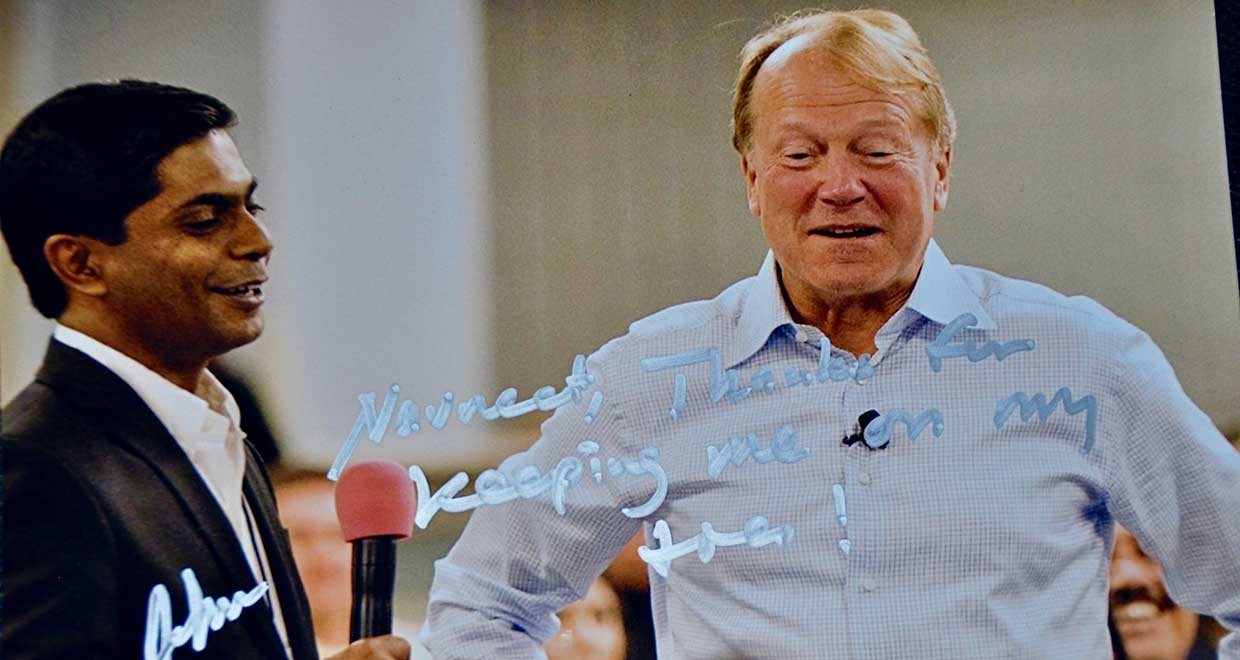
    Personal highlight at Cisco: Receiving a personally signed photograph from John Chambers (Chairman and CEO of Cisco) after I asked him a few ‘tough’ questions in a meeting. Learned a lot about leadership that day.


    What are the challenges you face in being in charge of the legal affairs of a global enterprise?

    Let me break my answer into a two categories – internal and external.

    Internal:   The challenges vary from country to country. In India specifically, our biggest challenges have been finding the right talent to staff our teams and helping grow our business at a fast pace, while maintaining acceptable margins.

    External: The biggest external concern is understanding and responding to the nature of the changes facing the telecom industry. We live in a world of constant and sudden change largely facilitated by technology and hence this is an area that we constantly think about. I also expect the changes that are coming will have a significant impact on our profession, but that is probably a topic for a separate, much longer discussion. If what I just said interests you, please do take a look at Richard Susskind’s stellar book “The End of Lawyers?”

    Have you ever considered pursuing higher education?

    Short answer is no. I have never considered higher education. 19 years of formal schooling and college were sufficient for me, thank you.

    Unless you are planning a career in academics or research, where higher degrees help (or if someone offers to pay for you and you feel like a holiday), I am not convinced that higher education justifies the expense incurred and time spent, which can be better utilised to build a career.


    How important is CGPA, in your opinion?

    Being in-house is very different from the other careers within our profession, mainly due to the importance of understanding the non-legal context of the issue. In other words, we grapple a lot more with business issues and take that into account while deciding the right approach for the company. This needs a different thought process and hence at a high level, the traits I look for in our lawyers are:

    • inquisitiveness: I look for lawyers who are curious about things. In-house roles require you to often go outside your comfort zone, particularly on business issues. Someone who is willing to ask questions and figure out how things work, is usually the one who can give the most relevant advice and spot issues before they become big problems;
    • creativity: I look for people who have an inclination to problem-solve. Saying we cannot do something because it’s a company policy is not an acceptable response;
    • teamwork: I look for lawyers who show a team spirit and have the ability to work with people across cultures (my team as an example is made up of people from five different nationalities); and
    • drive: I look for lawyers with an aggressive, “can-do” attitude. If one waits for all the information before taking a decision, one is often too late.

    When it comes to applying for jobs, I would suggest young lawyers keep three things in mind:

    • Particularly in situations where the number of applicants far exceeds the number of jobs (as is usually the case in India), it’s always a process of elimination, never selection. So, your job is to ensure that you differentiate yourself enough to not be eliminated and obtain an interview call.
    • Do the simple things right- A good start would be to write a professional looking resume – please don’t tell me what your marital status or favourite hobbies are – that will speed up your elimination. Also, please read the job description and write a custom resume for that role (if you write to me asking for a job with my law firm, or, this still makes me laugh – ask me to check your LinkedIn profile, then you guessed it, elimination). Also, spelling and format check, please.
    • If the role is for a fresh graduate, I work on the premise that you don’t have any real knowledge of relevance (in other words, law school doesn’t teach you anything that will help you add value from day one). I will therefore be looking for enthusiasm and a personality that fits with the rest of my team (see traits above).

    On CGPA – I personally don’t think that it is critical for success in our profession, that said, no one wants to hire a slacker and CGPA is often used as a short form measure for it. So, try and improve your CGPA and if it’s too late for that, work on your resume and (once you get an interview) showcasing your enthusiasm.


    What advice do you have for our readers who are primarily college students?

    When you are starting your professional career:

    First and foremost – Try to do what you enjoy.  There is a saying that “if you do what you love, you won’t have to work another day in your life”, while this is not technically true (all jobs come with parts one doesn’t like), generally picking an area you like, will help keep you engaged for the long haul. A career is a marathon, not a sprint.

    Second – Choose a job/ role where you can actually learn new things. Don’t, if you can manage, focus too much on the money at the beginning.

    Finally –

    • Be humble – No one likes a smart aleck. Often it’s how you communicate that helps more than what you know. Build bridges and relationships, it will help you in surprising ways.
    • Be proud of your work – this will sound like the opposite of #1 above but isn’t. This doesn’t mean that you should be arrogant, instead, put in the hard hours, do the best at what you do and respect your work. This will differentiate you very, very quickly.
    • You never really grow at the cost of someone else – so don’t play politics or drag other people down. If your work environment requires this, you perhaps need to find another job.


    Do you think India needs to revamp its legislations based on the developments in the IT field?

    We have issues with Indian legislation catching up with the recent technology developments and while some, like the recent AADHAR and right to privacy imbroglio are a particular Indian problem (the right to privacy has been an established legal principle in most developed countries for the past few decades), the rate of technological change is so fast nowadays that most legislations and principles will soon need a relook, in my opinion.

    Let us take Intellectual Property as an example, patents in particular.

    Patents were instituted as a way to encourage innovation, the concept was to provide “as little commercial benefit as possible” in return for encouraging inventions. However, over the past many decades, patents have instead become an absolute right, similar to property ownership. Patents have therefore, and very ironically, become the biggest impediment to faster innovation today. As an example – the IEEE 802.11 Wi-Fi standard (which you most likely use if you have Wi-Fi) incorporates 3000 “essential” patents. Imagine the issues you will face if you try to change/ improve how the technology works. This ownership model is just not sustainable.

    We are seeing a world today where:

    • we are moving technologically to the sharing of assets (e.g. data and analysis) to add more value. Think Uber and Airbnb, who help aggregate services using data from others (some of it personal).
    • Think of the questions this raises: If data has to be shared, how does the concept of IP ownership work? Does one ever really own data- if yes, who should own it? If a software/ robot analyses the data, who owns the analysis? Should the owner be the robot or the licensor or the licensee of the software, the service provider/ app developer or the person whose data was analysed? Instead of ownership, should we be looking at an open source type licensing regime?
    • the IPR framework doesn’t really work anymore for new technologies– e.g. do we need monopoly protections in years, when technology changes almost on a daily basis? US patents, as an example, provide 20-year term protections – put in context, 20 years ago was 1997, no Google, no Facebook, no Snapchat, no Uber etc. – how many of the fortune 500 companies from that period are still around today?

    Again, this is a topic for a much longer discussion, but ultimately, most laws will need to keep up with the changes being facilitated by technology (and it would be helpful if the laws that apply were actually drafted in this century).

    Once concepts like Internet of Things, Machine to Machine and Artificial Intelligence become a reality (and this time may come much quicker than what we expect), we will find that our laws (and law firms) will need significant change. I am not too pessimistic about the future though, I expect we will find a way to blunder through it all.


    How do you maintain a work life balance?

    I will not respond to this question, since anything I say, can and will be used against me, by my family.

  • Harshita Srivastava, VP-Legal, Nexus Venture Partners, on Corporate Law, internships, and her diverse experience

    Harshita Srivastava, VP-Legal, Nexus Venture Partners, on Corporate Law, internships, and her diverse experience

    Harshita graduated in law from Symbiosis International University, Pune, in 2009. She also holds a Diploma in Intellectual Property Law from World Intellectual Property Organization, and a Diploma in International Business Laws and Corporate Laws in India from Symbiosis. After a successful stint at Nishith Desai Associates, Mumbai, she is currently Vice President-Legal, at Nexus Venture Partners.

    In this interview we speak to her about:

    • Pursuing the BBA-LLB course
    • Working at Nishith Desai Associates
    • Her current role at Nexus Venture Partners

    Given that most of our readers are law students, how would you introduce yourself to them?

    On the professional front, I would like to introduce myself as a transaction lawyer with M&A/ PE/ VC experience of over eight years now. On a more personal front, I am a forward looking person who strongly believes in the motto “Aim high, achieve high”.

    What motivated you to pursue a career in the legal field? How did the BBA LLB combination help you?

    I would say I am a first generation lawyer from my father’s family, though my maternal grandfather was a Judicial Magistrate. I never had the privilege to see him around, but I grew up listening to his stories. His personalised stationery (ink pens with his name embedded on it, note pads, etc.) fascinated me as a child and inspired me to get into the profession (however, I could never own a single piece of personalised stationery even eight years into this profession!). The inspiration soon evaporated into thin air as I was growing up in a family full of engineers around me and my dad’s only vision in life seemed to see me crack the IITs. After getting out of school, I was not left with many choices but to appear for the engineering exams. As obvious as it could be, I did not come out with flying colours in any of those papers and right at that time I happened to learn about the new B.A.LLB course at NLSIU, Bengaluru, from an acquaintance. The curriculum and the course interested me enough and I decided to pursue my childhood passion.  

    I would say the BBA LLB combination gives you a better edge only if you are planning to build a career as a corporate lawyer/ in-house counsel since the curriculum gives you a fair insight into business subjects like accounts, corporate governance, principles of management, etc. apart from the regular law subjects.   


    Have you ever felt the NLU- non NLU divide?

    I personally never felt the divide. In fact, I was fortunate enough to get an opportunity (purely based on merit) to intern with big firms like Nishith Desai Associates, Jyoti Sagar Associates, DSK Legal, Crawford Bayley etc., while I was at law school. Again, in terms of recruitment, I got a pre placement offer from NDA (basis my internship), so I don’t think the NLU- non NLU divide played any role in my career.

    Having said that, I am not discounting the importance of making the right choice of institution. However, it is equally important for students to focus on their deliverables and behaviour during internships because ultimately if your work is good, no firm is going to say ‘no’ to you simply because you do not belong to a NLU.


    Can you share some memorable experiences from you time at law school?

    I think I have had the best time of my life at Symbiosis Law School. Having come for a small town, Pune was a fast pace life. Making friends from different parts of India, adjusting to the new city/ climate/ local culture, everything was a great experience.

    Moots formed an integral part of my law school life. I participated as a speaker/ researcher in various national moot court competitions. I was a speaker at the SS Maniyar National Moot Court Competition, 2007 alongwith batchmates Adab Singh Kapoor and Amir Arsiwala, which incidentally happened to be the first national moot court competition that Symbiosis Law School ever won.

    The moot courts are a great learning experience. They not only give an insight into the real court room proceedings by exposing you to different laws and their application to real life situations, (where you get to build your research capabilities and argumentative/ reasoning skills), they also help you understand and appreciate the importance of a team work.


    You were a part of the Human Rights cell in law school. How did you contribute to the activities of this cell? 

    Being part of the HRC at law school helped me participate in various social welfare initiatives, be it educating street children, rehabilitation of the children of commercial sex workers or visit to old age homes. I think its important both as a student and as a professional that you contribute in some way or the other towards societal welfare and development. You must endeavour to give back to society.

    Quoting my first mentor at work Nishith Desai in this context, he says, “As a professional, one-third your time and effort should be devoted towards generating income for yourself and the family, the other one-third should go into intellectual stimulation and development of your own being and the remaining one-third should be used for societal welfare and improvement.”


    You hold diplomas in International Business Laws and Corporate Laws as well as in Intellectual Property law. Can you tell our readers about the nature and scope of these areas of law?

    Though my diploma in IPR did not particularly help me in my career, primarily because I chose to be a transaction lawyer, my diploma in International Business Laws helped me understand the basics of foreign investment, different investment routes, cross border investment structures, etc. which gave me a good base to start off when I began my stint with NDA. A diploma course in addition to the law degree helps you to gain advanced knowledge in a specialised field of law.


    How did you secure an appointment with Nishith Desai Associates? 

    Basis my internship with NDA, I got a pre-placement offer from the firm. I am not sure how it works now, but during our time, NDA only offered jobs to interns they liked working with. At NDA, they believe in a culture of creativity and discipline. If you are good at your work and they believe you are a culture fit, it is likely that you may get an offer.


    What was the nature of your work at NDA?

    I was a Senior Associate in the PE/ M&A team at NDA, where I largely focused on cross border transactions. NDA is known for its research oriented approach and the KM programme aided their belief in constant knowledge expansion. We used to have CE (Continuing Education) sessions everyday at 9 AM where we discussed and debated over legal developments, case studies, deal dissection (analyzing a deal from a legal, regulatory and tax perspective) etc. At NDA, each member had to contribute towards the KM programme, whether it is by way of writing articles/ research papers, conducting or participating in a CE. As part of the initiative, I co-authored several articles for leading national/international publications, attended and participated in conferences and of course there was no excuse to skip a CE session!


    What caused you to shift from NDA to Nexus Ventures Partners?

    Well, I moved to Nexus Venture Partners (NVP), because I saw an opportunity to get to the other side of the table and experience how the implementation of the law firm advise really works.    

    As VP Legal, I lead the venture capital investment transactions and assist in M&As and strategic partnerships, in India.  I also oversee legal compliances for the portfolio companies and offer counsel to portfolio companies on a wide variety of legal issues ranging from corporate compliance to employment laws.

    As a VP to a VC fund, I am expected to balance both the commercial and the legal aspects of a transaction. I have to manage the deal end to end, sometimes with or without support from external law firms.  It becomes demanding more so when the portfolio companies also look up to you for assistance on day to day issues. As opposed to a law firm where you work for a particular team (be it corporate, IP, dispute resolution) as a fund counsel, you are the go-to person for any of these issues so this is more diversified a role in that sense.

    Unlike a law firm, where you are seen as a revenue generator, as an in house you are more like an overhead expense for the fund house, so you have to constantly be on your toes and prove yourself to the company every day.


    In your opinion, do India law schools prepare students for real world challenges? 

    I do not believe so because the real world of law is a lot different from what you perceive it when you are at law school. I think what really adds value to the laws school degree is your internships. So my advice to students has always been to concentrate on the internships and try to learn as much as you can from there. Please take your internships very seriously and trust me every bit of work that you do at your internship adds on to your knowledge and experience.


    What advice do you have for our readers who are primarily college students?

    I am staunch believer of the fact that your ranking from a top law school is not the best indicator of your success, instead its your passion and perseverance which will take you a long way in your career. And as they say, life is a path of snow, tread carefully because every move will show!

  • Rohit Dangare, Partner, Dangare Sane Associates, on litigation, pro-bono work, and his teaching experience

    Rohit Dangare, Partner, Dangare Sane Associates, on litigation, pro-bono work, and his teaching experience

    Rohit Dangare graduated in law from Symbiosis Law School in 2000. He completed his Masters in Law (LL.M.) from the University of Pune in the year 2004 with specialization in Law of Contract and Criminal law. He has assisted and is associated with legal stalwart Mr. Shrikant Shivade, and has assisted him in high profile cases like ULC Scam, MCOCA, Pen Urban Co-op Bank Scam, among others. He has experience in matters pertaining to Negotiable Instruments Act, Arbitration and criminal cases. He has also assisted such institutions in drafting of various agreements including Non-Disclosure agreements, Barter Agreements and other miscellaneous ones. He has as well worked upon many revisions and appeals in the Hon’ble High Court. He is also a counsel to many accused in the Pen Urban Co-op Bank Scam in Raigad District.

    In this interview we speak to him about:

    • His association with Mr. Shrikant Shivade
    • His independent venture
    • His pro-bono work and teaching experience

    Given that most of our readers are law students, how would you introduce yourself to them? 

    I am a litigation lawyer and we are a rare breed!


    What motivated you to pursue a career in the legal field? 

    I come from a family of doctors. I wanted to pursue Pharmacy but I decided to do law because it would be a better option. To a certain extent my parents also pursued me to take law, but it was honestly an out-of-the-box decision to pursue law.


    Can you share some memorable experiences from you time at law school?

    I completed my law from Symbiosis Law College. At that time, though attendance was not compulsory, I used to attend lectures. We had lecturers by the likes of Nitesh Nawsagary and Prof. Raste, which made my curiosity for the subject grow. Also, the Indian Evidence Act was one subject to which I was attracted due to an eminent practising lawyer Adv. K.M. Irani. During my college days I was into wildlife conservation and was a founding member of an NGO namely Aaranyawak. I also was active in rescue operations and rescued many animals. I used to attend the chamber of Adv. K.V. Damle. Attending courts gave me a basic idea that advocacy is something which is going to take a lot of hard work and persistence and this prompted me to opt for internships in Mumbai. I interned with L. D. Shah & co., Advocates and Solicitors, where I learned the fundamental ground rule of advocacy, “There is no shortcut to success and you should know your brief like the back of your hand.” During my third year of law I joined Hariani and Company, Advocates and Solicitors having their office in Mumbai and Pune and for the same I am still thankful to Mr. Amit Hariani (Sir), for I did not have any recommendation but I suppose that he has seen some spark in me. I continued this internship till my final year. In Hariani and Co, I was taught that when it comes to law and interpretation of law, there is no senior and no junior, all are equal because age does not make a lawyer successful but his abilitity to interpret law defines his success. I can surely say so because a senior and I differed on some provision of law and in a weekly meeting I was praised by Amit Sir for my better interpretation and many more things. The working hours at Hariani and Company were very hectic for I remember leaving office at odd hours in the night. I also certainly cannot afford to forget Adv. Prasanna Darade who used to make me work very hard and was responsible for building my patience.

    The procedure to secure Traineeship was different in 1999/2000 and it is very different now. I think your scores matter and your extra curricular activities are also taken into consideration as a lawyer because a lawyer has to have a multifaceted personality. I would certainly say that your marks really do not matter if you want to be a litigation lawyer.


    What was your first job after college? 

    My first job undoubtedly was going to be with Hariani as I was interning at both their offices in Pune and Mumbai and they had conveyed to me that I should be joining their team, but my parents opposed the concept of me joining Hariani and Company. My parents wanted me to pursue LL.M and hence I was not left with any option but to complete my LL.M. I completed LL.M with specialization in Contract and Crime and I finally decided to work on the Criminal side as I was very much influenced by the theories of Lombroso and especially Bentham. LL.M is necessary for students because it gives you a better and in depth knowledge of law. It is useful to a student if he wishes to pursue his career as a lecturer or professor. Further LL.M would certainly help students who wish to pursue their career in Judiciary.


    You have worked with Mr.Shrikant Shivade. Can you tell us about your experience and the nature of your work?  

    My first job/ juniorship was with Adv. Shrikant Shivade and as far as joining Shrikant Shivade Sir, I had to be very patient but after many rounds to his office he was finally convinced to let me in. I don’t remember him even asking for a CV. My first juniorship taught me many things, few of them were that you have to work hard, be dedicated and focused, and the right time will come for you. One more thing I learned is working for Legal Aid i.e., pro-bono (free work) for under trial prisoners gives you a hands on experience and slowly but surely polishes the qualities as a lawyer in you.

    Lawyers learn at the cost of their clients and hence knowledge and seniority matter the most in this profession. While working with Shivade Sir, I got in depth knowledge of the procedure which is very necessary for the practicing lawyer. We generally end up saying that the super lawyers charge super prices, but they have toiled day in and day out to reach that position and to make a mark and they have those special developed skills which are rare to come by. I learnt that a lawyer should be imaginative, should put his early days of practice in observing the cross examinations and if given an opportunity, polish and or develop the skills of cross examination. In subsequent years of practice what matters are the cross examination and the art of cross examination cannot be imparted upon you but has to be acquired after a long and hard fought battle. The lawyers should especially never indulge in malpractices because if you get into this habit, it becomes difficult for you to conduct matters on merit subsequently when it matters the most.


    You have handled a variety of criminal matters and have an excellent success record. How have you achieved this? 

    As far as the matters that I have handled the list is long one but out of the fifteen session trials I have had a success rate of thirteen acquittals. One of the classic cases which requires mention is the case of Dr. Paranjpe wherein various difficulties and complex questions of law made me rise and shine everyday with a new vigour. This case was given up by few of the erstwhile juniors of Shrikant Shivade. This case raised my standards of delivery for my own self.

    In another case for culpable homicide amounting to murder, the recovery of weapon from accused was successfully challenged by me and I secured acquittal. The point that turned the case was the difference between tree and shrub.

    I have also had a mind blowing experience when one of my accused was convicted for murder and the accused after judgment the accused touched my feet and told me that whatever efforts I put for him was the best and he was obliged that I worked with absolute dedication and sincerity.

    Do you have ethical reservations regarding some kind of criminal cases?

    I have no reservations about criminal cases. I would refer you to the quotes of Ram Jethmalani that it’s not you who feed our families; whatever we do we do it in within the four corners of law. One more thing, that if we have reservations, then would we not be deciding the guilt of the accused before putting him to trial! So reservations are nonsense.


    You are currently a named partner at Dangare Sane associates. How did this happen?

    I had to move on in life at some point of time and hence after working for two years with Mr. Shivade, I decided to practice individually. I still assist my Senior in matters wherever he feels me fit and I work for him, with all dedication. Working as a Partner in Dangare Sane, the role has been a little different. I have to now look into bringing business and I have expanded the scope and horizon as law cannot be static lawyers have to be dynamic.


    What motivated you to take up teaching?In your opinion, do you school prepare students for real world challenges? 

    I have been teaching for the past twelve years. I started with Jedhe College and I still owe it to Prof. Shinde, the Principal of Jedhe College, who gave me the first opportunity. I taught at Bharti Law College, then at DES, then finally at ILS. I hope colleges value good practising lawyers who really try to impart their experience and knowledge to students. Law can be taught best with practical aspect rather than bookish knowledge. I really feel that there is a dearth of good lecturers. I would also like to mention the faith of Mr. Deshmukh in me who first forced me to teach the Indian Evidence Act. Law schools should expose the students to courts and should make teaching interactive, rather that concentrating only on theory. The students should also change their approach and have a more sincere approach when they approach for their internships rather than only having the objective of securing a certificate. Our present education system and examination system needs to be revamped because it is memory based and not understanding based. The examination system and marking system needs radical change. The educational institutions should make the subject interesting so that the students are attracted to come and attend the college and should not be forced to attend. As far as I have understood our system and the students of the college, force does not have that

  • Sana Hakim, Partner, POSH, on sexual harassment laws, being legal counsel, and her diverse experience

    Sana Hakim, Partner, POSH, on sexual harassment laws, being legal counsel, and her diverse experience

    Sana graduated in law from Government Law College, Mumbai, in 2009. Since then she has been an independent legal counsel with practice in civil and criminal litigation matters. Her expertise includes negotiable instruments and personal family law, primarily handling matters pertaining to domestic violence, sexual harassment and divorce. She has practised before the Metropolitan Magistrate Court, Sessions Court, Family Court and Hon’ble Bombay High Court. She also holds a Masters in IPR, from Mumbai University.

    In this interview we speak to her about:

    • Being Partner at POSH
    • Her passion for litigation
    • Her interest in IPR

    Given that most of our readers are law students, how would you introduce yourself to them?

    Firstly, many thanks for thinking me worthy of being a part of this commendable and extremely informative magazine, which I am sure is a great knowledge building tool for all your readers. In brief, I would introduce myself as someone who is hardworking, straightforward, and has a never ending thirst for knowledge.


    What motivated you to pursue a career in the legal field after obtaining a B. Com degree?

    Honestly, it was more of a default option as my father, Advocate Hakim Salim A.R is also an Advocate having more than 30 years of experience in the field. I would say he was the biggest motivating factor for me. Having a commerce degree opened various avenues initially and was almost successful in distracting me from becoming an Advocate; however, destiny had other plans.


    Can you share some memorable experiences from you time at law school? 

    I was involved in debates during graduation, and in law school I was more active in social service. I was exposed to the harsh realities up close from volunteering experience in orphanages to even beach cleaning, which I feel creates empathy in a person, which is something every advocate should possess.


    What was your first job after college? 

    I immediately took the plunge in practising law, and I have a good practice in family matters, domestic violence matters, criminal matters, civil matters and also cheque bouncing matters. All these are extremely varied, which gave me a good idea of both sides of law. Of course, for the exposure and initial push into the profession I have my father to thank for, however, it took a lot of initial setbacks to finally understand, that you will not get to hear always what you want to hear, and also that humility and patience can go a long way in the profession.


    What got you interested in IPR?

    I had taken IPR in my LLB days as an option in my third year. At that time the priority was to get good marks as I had heard it was quite scoring. However, I subsequently developed a keen interest in the subject, and went on to specialise in it in my Masters, and also stood third in the Mumbai University. As far as this area of law is concerned, there are many things that you can do, like become a patent or trademark agent, or specialise and take up litigation in IPR laws such as copyright, trademarks and patents. IPR laws are crucial in this day and age of globalisation, added with cyber laws which also is a part of curriculum of Masters. All of the aforementioned are a gold mine, professionally, in case you have keen interest.


    You have an excellent academic track record. How did you maintain a work life balance in law school? 

    I feel that its imperative to have your priorities set. While focus, grit, determination, and of course, hard work are important, spending time with friends and/or family, taking up a hobby or maybe even just going for a walk to clear your head, helps you puts thing in perspective. As far as possible, setting timelines for studying and even spending time with friends, I would say, is the key, as both are required in healthy proportions.


    You were a Partner at POSH at Work which specializes in combating sexual harassment. What motivated you to take up this cause? 

    I am a partner at POSH at Work which stands for Prevention of sexual harassment at the workplace. While the law on prevention of sexual harassment came into existence in the year 2013, all the three partners of POSH, which include a corporate lawyer and a clinical psychologist along with me, had been actively involved in the law individually. As fate had it, we three partners chanced and met, and formed an organisation which assists all kinds of organisations with end to end compliance of the law on Sexual Harassment of Women at the Workplace (prevention, prohibition, redressal) Act, 2013. We have also been empanelled by the Ministry of Women and Child Development , Government of India, to conduct training and awareness sessions on POSH Act, 2013, we are the only organisation in Maharashtra and Goa to be empanelled.

    The motivating factor was the law itself that is the need of the hour in light of horrendous Nirbhaya gang rape case in Delhi, to various instances pertaining to crime against women, and since am actively involved in practising in laws for women, it was also a natural course for me to take.

    Among the root causes of sexual harrasment are the perverse mindsets and behaviour of the people involved in such unscrupulous activity. In order to prevent it,  one needs to inculcate respect of each other’s boundaries irrespective of the gender you or the other person belongs to. We also need to raise more awareness among all about the SH Act 2013 (as mandated by the SH law itself) and  various crucial amendments (in the year 2013) in the Indian Penal Code etc making punishment for Crimes against Women more stringent. Many people are unaware about whom to complaint to and are apprehensive about getting justice if they complain. Therefore, making them aware and instilling the faith for the law, will also be crucial in prevention of sexual harassment . We at POSH at work through our training and awareness sessions spread awareness among as many people as possible , about the law and its implications, in order to ultimately help prevent sexual harassment.


    What motivated you to volunteer for the Teach India Program? 

    Teach India was a wonderful and motivational learning  experience. Before the actual volunteering, all of us selected as volunteers had to undergo a seven-day rigorous yet fun training, wherein we learnt unconventional methods  for teaching English speaking to adults between the ages of eighteen and 30, in backward areas of Mumbai.  My volunteering experience lasted for three months which helped the underprivileged gain a fair chance in the booming private sector, along with giving me sweet memories for life.


    Do you think law schools, especially NLUs, produce socially relevant lawyers, given that many choose to take up firm jobs?

    To be honest, it is not an attractive profession, and initially there is not much monetary gain. But I believe if you can survive at least three years at a stretch, it prepares you for life, irrespective whether you choose to continue or not. I am not aware of the NLUs, but I think practical knowledge and intention to make a difference in the society,  is pertinent and imperative in order to be socially relevant in this field.

    What are your core areas of practice? How do you prepare for court hearings? How did you go about building a client base

    It would be family matters, domestic violence, criminal, civil and criminal writs, revisions and appeals before the Bombay High Court and cheque dishonour matters. I have a judicial diaspora including the Metropolitan Magistrate courts, Sessions Court, Family Court  as well as the High Court.

    I prepare prior to and  as per the stage at which the case is kept at, by reading the relevant portions of the drafts, along with searching for latest case laws adds weightage to my arguments and submissions before the courts.

    As for your question on building a client base; along with the obvious answers which include hard work, grit and confidence, if you do good work and are sincere, the word spreads pretty quickly and forming a client base becomes incidental.


    Tell us something about your teaching engagements.

    I am currently teaching legal language, Indian penal Code, and also teaching trademarks in the Diploma Course on IPR in a Government Aided Law College for four years now.

    My advice to the students would be to attend the lectures. You gain much more than you think you do. Try and keep yourself updated on current affairs, it helps put things into perspective about the law, as the laws are made for the society, and knowing and understanding the society we live in would be critical in understanding the purpose and object of the law.


    In your opinion, does law school prepare students for real world challenges? 

    Well, the answer would be to a great extent, yes, because it teaches you the subject, you get to interact with practising lawyers through internships, lectures etc. However, you are not completely prepared unless you start appearing, preparing drafts and doing the research work yourself.


    How can a law student shape his/her profile for litigation while still in law school? 

    Irrespective of whether you are practising or not, participating in moots have varied benefits as it helps you understand drafting, research about the law as well as the judgments, and adds a practical perspective  to your curriculum.

    What are your views on the importance of higher education? 

    Do what you love. If any subject interests you, even a Ph.D will not be an enormous task.


    What hurdles have you faced in building your career as it stands today?

    If you are passionate about what you wish to build your career in, you should not let any hurdle stop you. There will be hurdles big and small, but a positive attitude and a never say die spirit are not just bookish, but extremely relevant in any field.

    What are the qualities one needs to develop to succeed as an advocate?

    Positive approach that helps you overcome the complacency which may tend to creep in; humility, and loads of hard work.


    How do you maintain a work-life balance?

    At  times I may have to work seven days a week, but I try and limit that as much, and spend some quality time with my friends and family. Going for long walks along the seaside helps my mind refresh to a great extent.


    What advice do you have for our readers who are primarily college students?

    My advice would be take all experiences possible. Studying and participating in co-curricular and extra curricular activities broadens your horizon, through which you learn to deal with various things and multitask early on in your college days itself, which is extremely beneficial in whatever you choose to do in life.


  • Rajendra Misra, Senior VP-General Counsel, Taj Hotels Palaces Resorts Safaris, on IPR, and his diverse experience

    Rajendra Misra, Senior VP-General Counsel, Taj Hotels Palaces Resorts Safaris, on IPR, and his diverse experience

    Rajendra Misra graduated in law from University of Calcutta, in 1991. After successful stints at Indal, Dunlop India Limited, ITC Limited, and Hindustan Unilever Limited, he is currently Senior VP-General Counsel at Taj Hotels Palaces Resorts Safaris. Mr. Misra is the chief legal advisor to the CEO and Board, advising on legal implications of business issues, proactively spotting prospective legal issues, counselling the executive management on legal and regulatory aspects etc. His role encompasses Strategic Litigation planning, Litigation management, selecting and supervising outside counsel, driving strategic initiatives to achieve business objectives while also ensuring adequate protection of legal rights of the organization, building strategic partnerships and alliances with outside counsel and attorneys, Risk minimization and Risk management, developing a Compliance culture, Corporate governance, process improvements, using technology as a tool for efficient management of the function, and developing and managing the team.

    In this interview we speak to him about:

    • His role in ushering in crucial reforms at Taj
    • Receiving accolades such as “GC Powerlist: India 2016″, “Trailblazers: India’s Finest In-house Counsels” by the Indian Corporate Counsel Association, among others
    • His illustrious experience spanning 26 years

    Given that most of our readers are law students and young lawyers, how will you introduce yourself to them? 

    I come from a family of lawyers. My father started his law practice in Kolkata. My sister is a practising lawyer at the Calcutta High Court. I have several relatives as well practising law. I consider myself to be a student of law. I have spent 26 years in the legal field; however, the field is vast, law is ever evolving, and every day one is learning new things. The quest of knowledge is unending, and I am always keen to learn more.


    What was it that got you interested in the legal field? 

    Even before I could understand its true meaning, the expression “Possession is nine points of law” fascinated me! I probably heard it from my father. I think it is the discussions between my father and my sister on legal issues which got me interested in law. Gradually, as my interest in law grew, I decided to make it my career. And once I made the decision, I pursued it seriously.

     

    How was your experience in law school? 

    We were one of the initial batches of the integrated five year law course. Typically, the law schools teach you basics of law, laying the foundation. The other thing which you are introduced to is analytical thinking, debating etc., all of which help one later in life. During law school days, Constitutional Law, Contracts and Conveyancing were my subjects of interest. I believe it is extremely important for the students to supplement the knowledge from law school with practical experience gathered through internships. Even as I was studying law, I used to regularly attend the chamber of a Senior Advocate in Calcutta as a trainee. I used to make it a point to attend college, and then attend court post lunch, followed by attending chamber in the evening. Watching the proceedings in court was a great learning. Carrying on research work at the chamber was also a learning experience. I learnt early on the merits of being precise while drafting, that it always pays to say less and be precise, rather than say more and be rambling. Even before completing my law course, I had the privilege of assisting my senior in a case of copyright infringement. I had not read up on copyrights earlier and IPR was not in our curriculum. I researched the subject and found it interesting – very different from the regular property, inheritance and other civil cases. I think that exposure resulted in my interest in Intellectual Property Rights later.


    Was the decision to work as an in-house counsel as opposed to working at a law firm a conscious one? 

    I was always interested in a counsel practice, as opposed to working at a law firm. As such, I never really considered the option of working in a law firm. I firmly believe that the decision whether to work in a law firm, or as a counsel or as an in-house counsel is an individual decision, and each one should decide on the basis of his/her interests.

    So how did the movement from counsel practice to in-house counsel happen? Fairly early in my law career, Indian Aluminium Company, Limited (Indal) was looking to recruit an in-house counsel to handle their major legal cases. My father suggested I should consider applying. While initially I was a bit hesitant, he encouraged me to explore. I must say that I had never done an internship in an in-house legal department, and as such this was like walking into the unknown, taking a leap of faith. But I did take the plunge, and have never regretted it. It perhaps helped that Indal wanted me to handle its major legal cases. Therefore, I was never far away from litigation, courts and counsel. Gradually, of course, other aspects of the in-house counsel role also grew on me.


    You undertook the Hawkesmere course on IPR in London, and have a Postgraduate Diploma in Patent Law. Can you tell our readers about this course?

    Both these courses were part of the effort to continuously upgrade professional knowledge, and were extremely relevant at the respective point of time.

    A couple of years into my career in ITC, I was given additional responsibility of supervising the IP Cell. Following this, I had gone to London for the Hawkesmere Course on International Intellectual Property Law. Hawkesmere used to conduct such courses aimed towards Continuous Professional Development of executives. This was a two day intensive course, and gave a great insight into various aspects of international IP law, which was very relevant at a time when the IP laws around the world were evolving following the TRIPs agreement.

    Around 2005-06, ITC began diversifying into the Personal Care business. While I was heading its IP Cell, we were mainly into Trademarks and Copyrights. But with the diversification into the Personal Care business, we also began filing patent applications. So I decided to take up the Post Graduate Diploma in Patents Law course of NALSAR. This course was a mix of proximate education and on campus sessions. It was a wonderful way of undergoing training in patents law while working. The faculty was good and experienced. One got a great insight into patents. We had to research and submit two papers on patents as part of the PG Diploma course. The tough part, of course, was balancing work and learning. That was compounded by the fact that I was taking up studying nearly twenty years after having left college. Our professors had sound words of advice for those of us who were taking up studies after a long time – apart from training us on patents, we were also advised to practise handwriting, because twenty years after college, one tends to lose the practice of writing by hand, and it is not easy to write a two hour exam without first building up writing speed!


    What got you interested in the field of IPR?

    My introduction to the world of IPR was through a copyright infringement case on which I assisted my senior during my internship. We did not have Intellectual Property law as part of the law curriculum, and hence, this was then a totally alien field for me. But I enjoyed researching and working on this case. Later, when I began heading the IP Cell of ITC, my interests in this field of law grew further. The late 90s and early 2000s were momentous years for Intellectual Property Law in India, with India overhauling its IP laws after acceding to the TRIPs agreement. This is when the IP law really evolved in the country, and companies began putting greater focus on management and protection of their intellectual property. This field of law is really fascinating. Protecting brand names and logos is now extremely common place. However, with the new Trademarks Act, the ambit of trademarks has really expanded, and it is possible to protect sound, 3D marks, colour combinations etc. as trademarks. There is enormous scope to do innovative work in this area, and I believe that the potential of unconventional trademarks is waiting to be realised, particularly for FMCG companies, media organizations etc. who are extremely focussed on protection of their IP. Another interesting area is of Geographical Indications. I had a great exposure to this subject several years back in ITC when we were embroiled in a litigation relating to the GI Darjeeling, where the plaintiffs tried unsuccessfully to stop a hotel lounge by the name Darjeeling. The awareness of this new area of IP is increasing day by day, and recently I was delighted to find that a society of weavers in Kasaragod had registered a GI for Kasaragod sarees! The other area of IP which has great potential is patents. However, a good grasp of scientific knowledge gives a distinct advantage in this field. We must remember that at this point of time, the Indian economy has the potential to become the world’s third largest economy by the next decade, and one of the two largest economies by mid-century. The International Monetary Fund describes the Indian economy as the “bright spot” in the global landscape. As the economy grows and businesses expand, IPR will continue to become more and more important, and this will give tremendous opportunities to lawyers and law students.
     

    What would be your advice to our readers undecided about pursuing higher education? 

    Life is a process of continuous learning. My advice would be not to lose any opportunity of learning. If there is an opportunity of pursuing higher education in a field of interest, I would earnestly urge the readers to avail it. Particularly, if you get it before the start of, or early on in the career. I acknowledge that it may not be easy to pursue higher education later in the career. But, as they say, if there is a will, there is a way. My courses undertaken in mid-career were extremely relevant to my roles, and hence, I benefited greatly from undergoing the courses. I guess the key in such cases is relevance and interest.

    What was your first job after law school? 

    Even as I was attending law school, I used to attend the chambers of a senior counsel in Kolkata, interning and learning the ways of courts. So post qualifying, I commenced going to court. In 1993 however, Indian Aluminium Company, Limited (Indal), a subsidiary of Alcan, Canada was looking for a legal resource to handle their major legal issues, which were till then being handled by a Dy. Company Secretary, who was due for retirement. I remember going for the interview in the most casual manner – straight from court without any preparation and wearing only a jacket and no tie – only to find to my horror several candidates immaculately dressed in suits and ties, seriously reading business newspapers and waiting to be called for the interview. I don’t know what my interviewer and future boss saw in me, because out of the many candidates, he chose a greenhorn like me for the assignment. God bless him for that choice, because thus began my journey as inhouse counsel in some of the topnotch companies.

    It was a blessing in disguise that a few months after my joining, a library-full of files landed on my head – all relating to the major legal cases of Indal. These were high value litigations relating to electricity laws and mining laws. The best of legal brains of the country were appearing for Indal in these matters, and very early in my career I came to interact with them, initially with a sense of awe, but followed quickly by confidence, even as I saw and learnt from their discipline for this great profession. Several months down the line, Indal went for a Euro issue, and that pitched me in front of US lawyers, defending the major litigations of Indal and assuring them that all was under control and that Indal had good merits in these cases – something which I did with confidence, earning the Managing Director’s special award in the process. I handled my first merger transaction at Indal, when we merged a power generation company, which was a subsidiary of Indal, with the parent company.

    Given that Indal was my first job, apart from learning about corporate law, I also learnt corporate language (very different from the language used in pleadings!), corporate behaviour and corporate dynamics at Indal. The early experiences in Indal transformed me from a counsel to a corporate lawyer. I learnt the importance of dispensing with legal jargon and talking/writing in simple language which is understood by business/non-lawyers. The Indal stint also introduced me to the fact that as in-house counsel, I should be looking at the business aspect of an issue apart from its legal aspects – the fact that legal manager has two facets – ‘legal’ and ‘manager’ – and the in-house counsel has to consider both legal and business aspects in order to arrive at a fine balance, serving the business interests of the organization while remaining within the boundaries of law.


    Can you tell us about your time at ITC?

    It was during 1997 that ITC was looking to augment strength in their Legal Department. I was then based out of Kolkata, and for any legal professional in Kolkata, ITC was a dream job. Therefore, when they offered to recruit me, without batting an eyelid I joined them. The ITC journey was a tremendous one. Fairly early in my ITC stint, I began partnering the Tobacco business, the largest business of ITC. Over time, as they spun off newer businesses, I got the opportunity of advising the newer businesses as well, helping them find their feet the right way, ensuring legal compliance even as the businesses grew, acquiring new brands, manufacturing facilities and companies for the organic and inorganic growth of the new businesses. Thus began my association with the Foods business, the Personal Care business, the Lifestyle Retailing business, the Matches & Agarbatti businesses, and the Stationery business – very diverse businesses. Even while doing so, I continued to partner the Tobacoo business, which had its own set of challenges, Tobacco being a heavily regulated industry.

    ITC takes IP management very seriously, and it was my privilege to lead their IP Cell too. While during the Tobacoo/Foods/LRBD days, management of Trademarks and Copyrights was the dominant theme, the advent of Personal Care business also brought with it experience in handling Patents management. The most interesting thing was that with newer businesses being spun off, we also learnt on the job. Overall, it was a great time, with huge learnings. In many ways, we used to operate as an in-house law firm. We used to do a lot of drafting in-house – agreements as well as pleadings. We also used to do a lot of research in-house, and ITC had an excellent library of legal journals, law books, as well as legal research software like Manupatra, SCC Online, Excus, PTC, etc. to enable research. And, we used to take an active part in briefing counsel in our legal cases. With our drafting and research, we used to support our counsel and solicitors in a big way, something which was well appreciated by them.

    The Tobacco business came up with innovative ways of advertising – it was the role of the Legal function to ensure that the business always remained within the four corners of law. Being a highly regulated industry, the Tobacco business took compliance with legal requirements extremely seriously, and the Legal voice was heard with respect. With the new businesses, I got the opportunity of creating and protecting new brands, acquiring new brands, negotiating and closing with new manufacturing facilities, sometimes buying new manufacturing facilities. The best part was the acquisition of a bio-technology company which was into production of seed potatoes, with manufacturing facilities in multiple countries. Due diligence in multiple jurisdictions, and structuring the transaction was extremely challenging. I distinctly remember the night prior to Closing, when we stayed up the entire night finalizing the transaction documents, to seal the deal at 10 o’clock in the morning. It was a tremendous experience.

    As the years went by and my responsibilities increased, so did my levels. I moved on from being Asst. Manager – Legal to Asst. Solicitor to Associate General Counsel. From a solo start, the ITC stint gave me the experience of managing a team. I had a great time working with fantastic business leaders, excellent mentors, fine peers and a great team. Finally, after spending 14 years in the organization, I had a feeling that I had done all that was to be done in Kolkata and in ITC. I got an urge to spread the wings and fly away out of Kolkata, all the way to the western shores of the country – to its commercial capital. I was looking out when HUL called. And that was a dream assignment, too difficult to refuse.
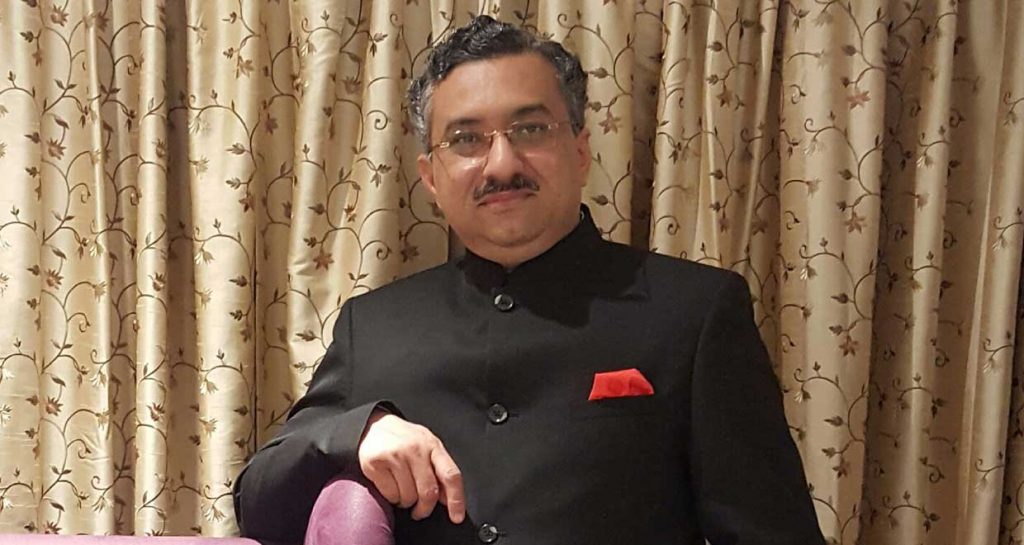
     

    How did your appointment at HUL happen?

    Unilever is a great organization. It is the king of marketing in the country. In 2011, HUL was looking for a senior legal resource for heading its legal team partnering the personal care and homecare businesses, the largest of its businesses, representing more than 75% of its turnover. It was my privilege that they selected me for the role. I became a part of the HUL Leadership team and the Legal Leadership team. Unilever is a powerhouse of great leaders. It would not be wrong to say that Unilever “manufactures” leaders, some of whom occupy some very senior positions across the industry today. It was a great time at Unilever, working and collaborating with some of the finest brains in the business today.

    Over time, my role in Unilever grew. In addition to leading the legal team partnering the personal care and homecare business, I also got the charge to supervise the Legal team of Lakme Lever Ltd., a subsidiary of HUL. Later, the Water business and Kimberly Clarke Lever Ltd. also got added to my profile. Over time, in addition to my above responsibilities, I also became the Global Legal Counsel for Lifebuoy and Fair & Lovely, two iconic brands of Unilever, apart from discharging the role as Brand Development Counsel for the entire South Asia region. I must say that I thoroughly enjoyed my role in Unilever. The learnings were immense. Interacting with the best legal brains across the Unilever universe, one picked up global best practices, and came to learn about new and upcoming fields of law. The business teams in Unilever are demanding and one has to be nimble to manage them, and it was a joy working as a team. One of the most important things which Unilever experience brought out was the risk-taking appetite, something extremely crucial for the business. The best part was that Unilever gives you complete freedom in your job profile – the canvas is yours to paint. Another fantastic thing was that I had a young, energetic and dynamic team. Interacting with such a young and dynamic group was great and challenging at the same time. It kept you young and contemporary, but at the same time you also had to be several steps ahead of them. It was a joy mentoring these bright young legal minds.

    At Unilever, I had the opportunity to look at, frame and defend some cutting edge product claims and advertising. The most memorable was a comparative advertising, where we showed the competitor’s product and claimed that our product was better than theirs. It was risky, but it was a calculated risk we took, and one which was worth taking, given that our product was truly cutting edge and better than competition. Therefore, the claim was factually correct, through it ran the risk of a competitive challenge. During the planning stage, I advised the business group that we should expect the competitor to take the battle to courts. I made intelligent guesses, and was able to accurately anticipate the court where they could file the legal challenge, and prepared counsel in advance so that we were in a position to defend our claims. My forecast proved correct, and we got locked in a fierce competitive battle with the competitor. We succeeded in defending our claims and in keeping the comparative advertising going for a long period of time despite the competitor’s attempts to shut us out. This campaign is a landmark in the history of comparative advertising in the country.

    The other memorable piece of work was acquisition of a natural ayurvedic medicine brand and product for Unilever. With the rise in demand for natural products, and growth of new competitors in this field, Unilever set about acquiring this natural ayurvedic medicine brand and product line, and I was in the thick of due diligence and negotiations with the promoters of the product/brand, and we worked out a great deal for the company. Unfortunately, before we could ink the deal, I quit to move on to Taj, but it gave me immense satisfaction when the deal was finally concluded soon thereafter. It is a matter of pride to see the product on the shelf. Incidentally, this was not the first brand/product line purchase for me. I had done quite a few in ITC as well. And, today when I see these products on the shelf in retail stores, I feel immense pride in having been associated with these acquisitions, and have great stories to tell about them to my children.

    Towards the end of 2015, Taj was looking to appoint a Senior Vice President – General Counsel on its Executive Committee – the highest executive body just below the Board of Directors of the company. When Taj gave me an offer to join their Executive Committee, reporting to the Managing Director, and overseeing the Legal & Secretarial functions, it was a great offer. During my professional career, I have always valued professionalism and high moral standards in an organization. Both Unilever and ITC are extremely professional companies, with high ethical standards. Taj and the Tata group are universally admired for their great professionalism and high ethical standards. Therefore, the organizational profile was a perfect fit. The role was also very interesting and challenging. Apart from supervising my function, sitting on the Executive Committee also gives me a great experience in understanding and analysing business issues, appreciating legal issues in a business context, prioritizing legal issues accordingly, and taking risk calls for business growth. Therefore, I decided to take the plunge and join Taj – a decision which I haven’t since regretted. Today, apart from being a member of the Executive Committee of Taj, I am also a Director on the Board of TajGVK Hotels & Resorts Ltd., a listed company which is a joint venture between Taj and GVK group.


    Can you give our readers some insight into the reforms you brought in Taj during your time there?

    At the Taj, we deal with a lot of contracts, under which we have valuable rights in respect of our 100 plus hotels. Contract management is an important area for us. In the modern world, contracts tracking on Excel sheets is sub-optimal and does not work. With advancement in technology, it was important that we use technology to our advantage in managing our important contracts. Hence, I deployed a Contract Management software at Taj. It serves as an archive of all our hotel management contracts and other important contracts, and also tracks contract renewal dates and auto-generates alerts for the team, ensuring timely renewals, and risk mitigation.

    The next issue was ensuring uniformity of contracts across the organization. My team is spread over multiple locations. It is crucial that everyone in the team follows standardized contract templates, instead of digging into personal drives and using different contract formats. Hence, I constituted a Task Force to standardize about 25 of our main contracts. We spent a lot of time discussing and debating the changes to these contracts. And, we did this inhouse because we believe that being closest to the business, we were the most equipped to standardize our contracts keeping in mind our business requirements and challenges. Once standardization happened, we uploaded the standard versions of the contracts on the Contract Management software so that everyone uses the same format, regardless of location. This ensures consistency of contracts, and has minimized risks for the organization.

    Laws impact everyone in the organization, and increased legal awareness leads to greater compliance and lesser risk exposures; hence, it is important to spread legal awareness within the organization. Here again, I decided to use technology to our advantage. We have developed e-learning modules (Learning Management System or LMS) for our employees on five crucial subjects – Data Privacy & Protection, POSH, Competition Law, Insider Trading, and Related Party Transactions. These are interactive e-learning modules which will explain legal topics in very simple terms and with examples for the non-legal employees.

    The Taj group had deployed a Compliance Management system at its units. I have now commenced Gap analysis, which is in the nature of an audit that will help us identify and fill up gaps, if any, in the compliance management by individual units. This will further strengthen the compliance management within the organization.

    Similarly, Taj was in the process of deploying Litigation management software and Intellectual Property management software. We went full throttle in order to operationalize them on priority basis. All Taj litigations and IPR have now been uploaded onto the Litigation management software and the Intellectual Property management software, leading to better management of litigations and IPR.

    I believe that with all the above measures, people in the organization can sleep better, assured that we are doing the right thing, in the right way and that our risks are getting minimized.

    You pioneered an initiative which led to the Taj Mahal Hotel building in Mumbai being India’s first building to secure a trademark for the image of the hotel. Can you tell our readers about how you achieved this?

    The image trademark registration was a result of a combination of many factors, my fascination with unconventional trademarks being one. The other was the constant feeling of what more one can do to protect the rights of my organization, and how can I ring fence it better. Yet another was the desire to create value for the organization, because I believe that the Legal Department is not just a cost-centre, it can also create value for the organization. The Taj Mahal Palace, Mumbai is the iconic flagship of Taj Hotels Palaces Resorts Safaris, and is a defining structure of Mumbai’s skyline. The distinctive red-tiled Florentine Gothic dome of the hotel, which crowns the elegant Indo-Saracenic arches and architraves of the iconic hotel, sits 240 feet above street level. Since 16th December, 1903, when the hotel first opened its doors to guests, its striking dome has been the triangulation point for the Indian Navy to guide them in the harbor. It is widely recognised as the temple of hospitality. I do not need a signboard on this iconic property for the public to know that it is the Taj hotel. One look at the property and you know that it is The Taj Mahal Palace, representing the finest in Indian hospitality traditions. To my mind, that is exactly what a Trademark is. Therefore, I went about securing this image trademark registration. After conceiving this idea, I presented it to the Managing Director and my peers at the Executive Committee, who enthusiastically supported it. We got the trademark applications filed through Anand & Anand, the top notch intellectual property law firm in the country. The applications were pursued on top priority, and we were able to secure the registration in 7 months. I must say that a stellar role was played by the Trademarks Registry and by Anand & Anand in prosecuting the applications and securing the registrations. Often, people who are part of a historic moment do not realise that they are creating history, and I daresay that most of the people who participated in the process may not have realised the significance of the moment. But history it certainly was – we had become the first Indian building to have secured image trademark registration. Only a few iconic buildings across the world have been able to secure such registration – the Empire State Building, the Chrysler Building and the Sydney Opera House to name some. With this image trademark registration, the iconic Taj Mahal Palace, Mumbai became a member of this unique and elite club – the first Indian building to do so. As an Indian, that swells my heart with pride. As an employee of The Taj group and Tata group, it makes me immensely happy that I have been able to get such a unique protection and status for our legendary hotel. This is a very unusual and unconventional trademark, and the outcome of a pioneering effort. Many organizations register brands and logos as trademarks. However, the scope of “trademark” is much beyond mere brands and logos. Sound, images, colour combinations, 3D images etc. can also be registered as trademarks. Such unconventional trademarks can create great value for organizations, representing its USP. And, being beyond the conventional, they can become great talking points for organizations.


    Can you tell our readers about IBHA’s role in the industry? 

    (Mr. Misra has been the chairman of Indian Beauty and Hygiene Association.)

    IBHA is the premier industry association representing reputed personal care/beauty/FMCG companies in the country, viz. HUL, P&G, L’Oreal, Marico, Dabur etc. IBHA plays a key role in advocacy on behalf of the industry with the government. I was Chairman of the Legal Committee of IBHA, and used to play a very active role on various industry issues. We made representations to the government on various issues impacting the industry. I strategized and handled several legal issues/litigations on behalf of the personal care industry. In my capacity as the Chairman of its Legal Committee, I was the Legal advisor to the Executive Committee of IBHA, which comprised of the Personal Care Director of HUL, COO of L’Oreal, MD of Godrej Consumer Products, CEO of ITC’s Personal Care business etc. It was most wonderful interacting with these industry captains, advising them on the legal issues impacting the industry.


    You have often been recognised as one of the finest in-house counsels in India. What are the qualities required to succeed as an in house counsel? 

    It has been an honour to have got recognition from such leading organizations as The Legal 500 and the ICCA. To succeed as an in-house counsel, one needs several qualities. First and foremost, one needs to have an analytical mind, and should be capable of making dispassionate analysis of issues. Together with legal knowledge, one should have a good understanding of the business of the organization. Risk-taking appetite is an extremely important quality which an in-house counsel should have. An in-house counsel should be solution-oriented, providing the business with solutions to their problems rather than raising the red flag on everything. It is also extremely important that he should be able to speak out his mind without fear or favour, keeping the interest of the organization and all stakeholders over everything else. Above all, an in-house counsel should have the ability to balance the business and legal aspects, and achieve the optimum balance which will ensure that the organization achieves its business objectives without compromising on legalities.


    What are the challenges you have faced in building your career as it stands today?

    One issue which readily comes to mind is the growth challenge in Kolkata. As I mentioned earlier, after 14 years in ITC, I had a feeling that I had done everything possible in ITC and in Kolkata. I was born and brought up in the city, and always worked there. However, at that point of time, I was faced with the situation that if I had to grow my career further, I had to leave my city of birth and move to unknown pastures. Having spent 40 years in a city, that is not an easy decision to take. However, I took the bold decision to quit my job at ITC, and leave my city of birth to move to HUL in Mumbai. At that point of time, it was very unsettling. However, in retrospect, I am glad that I took the decision to move out. My movement to different organizations has given me the opportunity to expand my knowledge and experience. Over time, I have learnt that change is a constant. There is always risk in change; however, as they say, “A ship is safe in harbour, but that is not what ships are meant for.”


    How do you stay up to date about the recent developments in all the fields you work in and have an interest in?

    It is extremely important to stay updated about the latest developments in the legal field. I once came across the statement ,“If the rate of change outside is greater than the rate of change inside, then you become redundant”. That to me underlines the importance of keeping oneself updated with the latest. The world today is changing faster than ever, with new developments coming about everyday. It is important that our knowledge keeps pace with this fast-paced development all around us. Keeping oneself updated also enables one to correctly analyse a situation and advise in any given scenario. Latest changes in the legal field can be gleaned from various sources, viz. the media, professional social media, legal journals, Manupatra alerts, Google alerts etc., as also from participating in various professional knowledge-sharing groups. I also attend conferences and seminars on topics of interest in order to keep myself updated.


    What advice do you have for our readers who are primarily college students?

    A career in law is a great one to take up. Knowledge is the most important asset of professionals. My advice to college students would be to keep increasing their bandwidth of knowledge. Do internships at good organizations and keep gathering new experience.

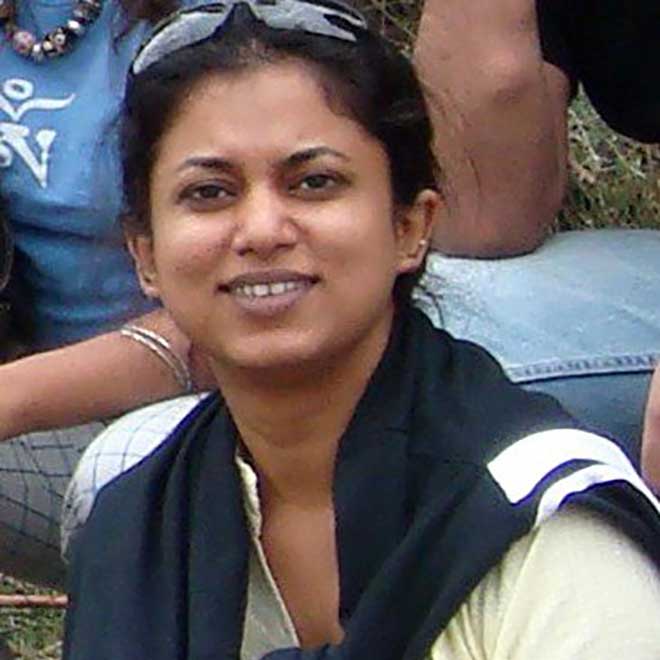
     

  • Vaibhav Kumar, Advocate-on-Record, Supreme Court of India, on litigation, ADR, and his diverse experience

    Vaibhav Kumar, Advocate-on-Record, Supreme Court of India, on litigation, ADR, and his diverse experience

    Vaibhav graduated from Campus Law Centre, University of Delhi, in 2008. He has handled litigation as well as advised clients across a broad range of issues like commercial disputes, information technology law, intellectual property law, drafting and vetting of contracts, sale/lease deeds, corporate issues, consumer disputes, arbitrations, writ petitions, appeals, real-estate, matrimonial & family disputes, Wills and estate planning etc. An ardent supporter of alternate dispute resolution mechanisms like mediation and counselling, he has also assisted several clients in resolving their disputes amicably. Amongst his clients are up and coming companies in the SaaS, ITES and e-commerce sectors who deploy cloud-based solutions like AWS, Salesforce etc. for enterprises across all sectors, as well as other medium and small enterprises whom he has helped on various aspects like corporate structuring, shareholder issues, advisory services related to expansion to other territories, drafting of Master Service Agreements with clients, Vendor agreements, Non-Disclosure Agreements, Employee agreements etc.

    In this interview we speak to him about:

    • Being an Advocate-on-Record
    • His passion for litigation
    • His interest in ADR


    Given that most of our readers are law students and young lawyers, how will you introduce yourself to them? 

    I am an independent lawyer, with a broad focus from civil to corporate matters. Early in the profession, I recognized that practising law at all different levels – from the District courts to the High Courts to the Supreme Court – was not only something I enjoyed, but was something that gave unique value to my clients. Since I practise along this broad spectrum, not only do I serve the A-Z needs of my litigating clients, but I am also in a unique position to advise my corporate clients. Having recently been designated as an Advocate-on-Record, I look forward to the AOR practice adding another dimension to my practice.

    I gained inspiration to study law from my maternal grandfather, Justice Gyan Chand Mathur, who was a judge several decades ago in the Allahabad High Court. Unfortunately, my decision to join the legal profession came several years after he passed away, so de facto I have had to build my practice as a first-generation lawyer. I did not even benefit from his comprehensive legal library, which we donated to a charitable institution soon after he passed away.


    What made you decide to pursue a career in law after obtaining a BA degree? 

    I earned my B.A. degree from Kenyon College, USA, with a major in Anthropology and a minor in Mathematics. At the time of my undergraduate studies, law was not anywhere in my mental framework, and initially I had considered a career in academia in the field of Anthropology. However, several circumstances brought me back to India, when I narrowed my choices down to doing a MBA or Law.

    The legal profession stood out to me as uniquely diverse in that a lawyer could in the same day work on a large corporate matter as well as on a pro-bono/ public interest matter. Secondly, I recognized that so long as you worked across a range of matters and didn’t narrow yourself, the variety of cases you can be involved in would ensure that life never got boring and each day would be different from the previous one, even more so if one was practising in different courts. Especially at that age, the idea of being stuck at a desk, day in and out, seemed extremely undesirable to me. Thirdly, if you have your own practice, you have the power to determine the pace and path of your professional career. I had recognized early on that building my own practice was a definite goal for me, and I have been extremely happy in this role as an independent practitioner. And so, the choice to do Law was a fairly easy one over doing a MBA.

    I graduated with a three-year LL.B. degree from the Faculty of Law (CLC), University of Delhi. I am a big proponent of the three year LL.B. program after a Bachelor’s degree, because having a Bachelor’s degree in something unrelated gives a person a broad horizon and a general understanding of a larger world. Law is something that we will knock our heads against for the rest of our career, and the years after school are some of the most formative years of a person. It is not by accident that historically some of the most accomplished litigators were people with a tremendous breadth of interest in the arts, music, literature, etc.


    How was your experience in law school? Have you ever felt the NLU- non NLU divide?

    Ours was a three-year program, and there weren’t many opportunities for us to interact with NLU students. In the practice of law, I feel there is no divide between NLU/ Non-NLU and really what defines you in this profession is your personal abilities and achievements, not which law college you come from. Maybe if you are working in a firm, the institution you studied Law might be relevant for the first couple of years in the profession, especially in the recruitment of associates fresh out of law school, but after that it’s not much of a factor.


    What was your first job after law school? 

    I started my practice working with Ms. Maninder Acharya, who at that time was a standing counsel for the Municipal Corporation of Delhi, and has since been designated as a Senior Advocate. Her office was like jumping into the proverbial deep water, as with the volume and time sensitivity of our work, I had to hit the ground running immediately. With multiple matters listed every day (if I recall correctly the maximum reached 26!), her office was perfect in giving me unmatched exposure and responsibility in handling matters myself. I found myself appearing almost daily before the Delhi High Court and that helped me tremendously in gaining confidence in arguing matters.

    From Ms. Acharya’s office, I moved to Mr. Virender Goswami’s office, which was a truly formative experience. Mr. Goswami is in my opinion of the most formidable lawyers I have seen especially when it comes to witness examination, which is an art that is unfortunately lost on most in our profession. In his office, I was given the opportunity to be personally responsible for several matters, and was given the chance to appear in several courts, especially the District courts, where I feel the true meat-and-bones of any case really lies.

    I got both these positions by way of recommendations through personal and well-meaning contacts, and I am thankful for that serendipity.


    How important is CGPA to recruiters? 

    Everywhere that I have worked so far, has been in a litigating position and typically in small to medium offices, so I can’t speak for recruitment in corporate and large law firms. In my experience, while every recruiter would certainly want to review your resumé, good recruiters would put the most emphasis in the interview, because that’s where you can tell a lot about a person’s personality, maturity and capability. In my opinion, there’s little correlation between your CGPA scores and your professional success, so for a recruiter to place undue importance on CGPAs etc. would eventually be detrimental to their own organization.


    Do you recall the first time you argued a matter in court? 

    If anyone ever told you that they were confident the first time they appeared before a court or argued a matter, they would be lying! Arguing in court is immensely challenging, because if you want to be good at it, you need to not only know your facts and law inside out, you also need to know how to read the judge and the flow of the proceedings. While arguing, you are of course a bundle of nerves, but if you do perform well, in my experience most judges are very receptive and encouraging, as are other members of the bar. On occasion, I have had the counsel for the other side comment positively on my arguments, and that always adds a little spring in your step! If I had to give only one piece of advice, it would be to never ever appear before a judge without reading the file, even if you are just stepping in for a colleague to ask for a passover or adjournment.


    Can you describe an ordinary day of a litigator?

    The best part about being a litigator, and a generalist at that, is that there is no “ordinary” day. I could be working on a motor accident compensation case one minute, then a property dispute, and then be advising a client on how to structure their company when expanding to new areas, and then be counselling a couple having marital discord. While you work as an associate under other lawyers, they would of course set the tone for how the office works in terms of work timings etc. I have seen lawyers who are unforgiving of unpunctuality (“9:00AM means 9:00AM, and not 9:01AM”) and I have seen lawyers who give you complete flexibility to work as you want to, even from home, provided that the work is never compromised and deadlines are met. I personally gravitate towards the latter, as I think not only does it keep everyone in the office happy, but also boosts productivity and creativity at work.


    What are the skills one needs to develop in order to succeed as a litigator?

    That is an extremely tough question, not in the least because it presupposes that there is a single definition to what is “success” as a litigator. Some people define it in terms of money and the car that you drive, while others define it in terms of the respect you get from the bar and the bench, and there are numerous other criteria you could posit. What each person needs to do is to discern what is their definition of success, and then understand the skills you need to achieve it.

    That said, a few skills that that one could say are somewhat universal are communication skills, your ability to think out of the box, paying attention to detail, ability to deal with different personalities with respect to your client, the other side’s lawyer, the judge etc. Moreover, as a litigator you need to be master of a number of other skills in order to run a successful practice, not the least of which are time management, ability to manage an office, ability to keep a track of billing etc. One of the most important tasks in running an independent practice is business development, which comes easy to some and harder for others.


    How did you secure a position at O.P. Khaitan? 

    As with my other positions, it was a colleague who was aware of a requirement at the firm who introduced me to them. By this time, I had practiced with a number of lawyers, and I felt joining a firm was the natural progression towards my career growth. At O.P. Khaitan, I worked on a number of litigation matters ranging from corporate disputes, real estate disputes, matrimonial matters, etc. and was also introduced to new aspects like filing trademark applications globally for clients who were expanding their business in a big way. I had a great experience there and got to work with the Managing Partner and a Senior Partner directly, and was also given the responsibility to handle many matters on my own. My decision to leave was based on an offer I received from Luthra & Luthra.


    How did you secure a position at Luthra & Luthra? 

    I joined Luthra & Luthra to work under a partner with whom I was acquainted over the years. He was looking for someone with my experience and the ability to handle matters independently, and I think it was a good fit both ways. In L&L, apart from general litigation, I got the chance to work on some high stakes matters such as those involving some of the largest telecom companies, arbitration matters etc. I left L&L when I felt it was time to start my own practice, and I had enough experience, skills and confidence commensurate with what is required to build your own practice.


    How was working at a law firm different from working at a lawyer’s chamber?

    The smallest office I have worked in was two lawyers (myself included!) and the largest about 200. They are completely different experiences, and I encourage young lawyers to try them both before making a long-term choice. Law firms are great in terms of the exposure they give you to large clients and important matters, as well as to have a steady and good income, but can be restrictive in terms of personal responsibility, bureaucracy, politics and most importantly skill growth. Working in a lawyer’s chamber can be invaluable in terms of the skills and independence you have no choice but to embrace.


    What are your areas of specialisation as a lawyer? 

    I have been conscious of not narrowing down my work to specialized domains. Even in terms of my clientele, I assist SMEs as well as individual clients. I love having a wide breadth of work and enjoy exploring new domains of law that I have not previously dealt with.

    As for fresh graduates finding their domain, if you do not already have a strong leaning towards a particular specialization by the time you graduate (and it’s okay not to), I recommend working for a chamber or two that has a wide breadth of work, and you will over time either organically gravitate towards a specialization, or like me find out that you prefer to be a generalist.

    Can you briefly tell us about some important matters you have worked on? 

    I wouldn’t be at liberty to talk about specific matters. However, as far as preparing for a day in court, there are no surprises there. If there is an argument, one needs to be well versed with the file and the relevant case law, and you need to anticipate the arguments the opposing counsel is likely to lead, and prepare for your response to them as well. That said, there is never a point you feel 100% prepared. Every now and then, you will feel prepared, only to appear and have the judge throw a googly at you. An important skill set is how you respond and react on your feet in this position.


    Have you ever considered pursuing higher education? 

    Over the course of my career I had thought about applying to LL.M. programs on several occasions, but never did. To summarize a whole lot of advice I got from numerous people in India and abroad is this: a LL.M. is great for your personal development in terms of your knowledge and skills (which you can control through studying and hard work), and can also be great for developing a network (which you unfortunately have little control over and left largely to luck). That said, most LL.M.s especially abroad are extremely expensive, and from a financial perspective you get little-to-no-value in terms of career growth and jobs. Most people who get LL.M. degrees return to the same city and perhaps even the same office they were with before, with little-to-no-growth in terms of promotions, salary etc. (certainly not commensurate with the money you would have paid for the program). So, in a nutshell for most people: if you are blessed with the financial means and have value for personal growth (skills and knowledge), then pursue a LL.M. Else, don’t.

    What is the process of being designated an Advocate on Record? 

    To become an AOR, there are some stringent qualifications you have to meet, but briefly put you need to work with an established AOR for at least a year, and then pass the AOR examinations that are held once a year. The examinations are tough, and it doesn’t make it easier that most people appearing would have last taken an exam anywhere from 5-10 years ago. Nor are most people accustomed any longer to writing for 3+ hours straight every day for 4 days straight! I don’t think there is one set path to success in the exams, especially since the examiners can change every year (and hence what they look for in the answers also changes), but what worked for me was to review the past several years’ exam papers, as well as to use the literature provided on the Supreme Court website and make my own notes. If you practice with a good AOR, then the Practice & Procedures and Drafting papers may require little effort and just a little bit of brushing up. For me personally, the last paper, on leading cases, was the most difficult as there is a LOT of information to digest there, and I would highly recommend that you space out reading those judgments over one or two months leading to the exam.


    What do you think is the future of ADR in India?

    I am a big believer in the power of mediation and counselling. I have seen cases where you would think the parties would not be ready to even talk to each other, much less compromise, eventually open up in the semi-formal setting of a mediation before an independent mediator, and resolve their issue amicably. The power of mediation and counselling is immense especially in domains like matrimonial law, where prolonged litigation really only serves the lawyers in the case, and the parties end up depleting their mental, emotional and financial strengths. My advice to clients, in matrimonial matters especially, is to aim for a divorce by mutual consent, and even in the business world, most business leaders recognize that litigation should only be a last resort after expending all efforts to find a middle ground. Increasingly, businesses are themselves building in mandatory mediation in the dispute resolution provisions in their agreements.

    However, I am less optimistic about arbitration, as I feel the same deficiencies have crept up in arbitration as is the bane of litigation (long adjournments, unnecessary formalities, arbitrariness, bureaucracy etc.). However, if we were to embrace the model used abroad where formal institutions administer arbitrations and mediations with more adherence to a transparent and efficient process, I think that could be a game-changer.


    What are the challenges you have faced in building your career as it stands today? 

    The single biggest challenge for me as an independent practitioner has been business development, and the never-ending process of looking for clients and work continuously. As lawyers are not allowed to advertise or solicit for work (which therefore relegates lawyers and clients meeting each other only through word of mouth) this particularly makes it harder for first generation lawyers to build their practice, and easier for generational lawyers to build upon the existing practice. The best that I can do is to maintain high-standards for the services I provide to my clients and a high level of integrity, and trust that satisfied client would not only return but would recommend me to others. So far, this strategy has worked for me and a majority of my work comes through referrals, and repeat clients.


    How do you maintain a work life balance?

    A part of my decision to go independent was to be able to manage my own time, clients, personal and professional time as per my needs. I am fortunate to have my office in Neeti Bagh, which also happens to be my residence. Due to this, I am able to cut travel time, and most courts are quite close too. I feel a lot of lawyers are victims of inadequate time management skills and regressive work timing policies, and a lot of time in law offices especially is spent unproductively. By culling this unproductive time from my life, I have been able to be actively involved in raising my daughter, and have also had the time to follow other pursuits like travelling. I see this change in my other colleagues who have their own independent practices as well, who have been able to balance their focus not only on work, but also on personal time and space.


    What advice do you have for our readers who are primarily college students?

    I think a lot of lawyers you have interviewed have probably covered the basics. What I would add is that you should use your internships and time in college to see how different career paths in the legal profession work. Don’t do it for the certificate. This is an invaluable time for you to explore and discover what attracts you the most. Law has a very high attrition rate (globally) with very few people studying law ending up being involved in the legal profession five years after graduation. I think a lot of that has to do with unrealistic expectations of your day-to-day life in a law office, and I know of several young lawyers who burnt out too fast working in offices which demanded fourteen to sixteen hour workdays, six to seven days a week. The good part is that even if you decide not to have a legal career at the end of it, the law degree is uniquely advantageous in that it will enhance virtually whatever you choose to do in life.

  • Abhijeet Shinde, Senior Associate, Trilegal, on litigation, the importance of an LLM, and his experience

    Abhijeet Shinde, Senior Associate, Trilegal, on litigation, the importance of an LLM, and his experience

    Abhijeet graduated from Government Law College, Mumbai, in 2008. He then went on to pursue his Masters from the University of Mumbai, batch of 2010. After successful stints with Haresh Jagtiani and Associates(Oasis Advisory and Counsel), Dua Associates, and Bharucha and Partners, he is currently Senior Associate at Trilegal.

    In this interview we speak to him about:

    • Pursuing an LLM
    • His litigation experience
    • His current role at Trilegal

    How would you introduce yourself to our readers?

    A first-generation lawyer, with no prior connection with law or the legal fraternity;  other than a twelve-year long legal battle fought by my family. Some top tier law firm stints and hard work is what has made me what I am today. I am proud of what I have achieved in this short career of about a decade. I am thankful to all my seniors, friends and colleagues in playing an important part in making me.


    What motivated you to pursue a career in law?

    Well I became a lawyer by mistake rather than by my own choice. I was eagerly pursuing to get into IIT’s as is a case with the current generation. Unfortunately (or may be fortunately), I had to abandon the IIT dream due to some compelling personal reasons. However, Mr. Mayur Vora (Managing Director of Mapro Foods Pvt. Ltd., Mahableshwar) had different plans for me. It would be fair to say, had it not been for his faith in my abilities, I wouldn’t have been a lawyer today.    


    Can you tell us about your internship experiences?

    Internship during our college time weren’t as important or sought after as they are nowadays. I did two internships, one with a small firm, and another with a practising lawyer in Bombay High Court. What I understood during these stints was that the legal profession was difficult to pursue and it was even more difficult for first generation lawyers.


    Have you ever felt the NLU and non- NLU divide? Do you think it is a consideration for employers?

    When we got out of college, the divide wasn’t as prevalent as it is today. However, even at that time, the Government Law College (GLC)/Non-GLC divide was quite apparent. People were more inclined to accept a fresher from GLC with lesser grades than from any other college. This, I think, was because most of the well known legal professionals, at that time, were alumni of GLC and were biased towards GLC students. Similarly, the NLU, non-NLU divide is quite palpable today. With the expansion of the legal profession, the desire for proficient resources has grown tremendously. Firms are ready to pay better retainerships than salaries offered to IIT freshers, to get good talent from the college itself. NLUs have provided the infrastructure required for imparting correct form of professional education so that young professionals are ready for the kind of work and culture the firms are desirous of having. It is a great opportunity for the law students from law schools to capitalize on. Though I’m personally not in favour of making this divide black and white, I do, however, appreciate the law schools’ efforts in preparing students for the kind of work they are expected to do.  


    What are your areas of interest? 

    I was always interested in Disputes. I have worked in the disputes teams of Oasis Advisory and Counsel, Dua Associates, Bharucha and Partners, and Trilegal – over a period of nine years. Unlike corporate practice, disputes throw up challenges everyday. The uncertainties and the challenges involved in resolving the disputes matters make this practice quite interesting. Over the years, I have been associated with some great personalities, high stake and interesting disputes cases. My love for my work provided me the additional push required for succeeding in disputes practice, especially, when you are a first-generation lawyer.

    I always advise interns who work with me, to do internships in both areas of practice, so that if they are able to understand and relate to their interests they will be in a better position to make an informed career choice. Difficulty is that, the short internship stints that the students undertake, are incapable of providing them enough insight into the nature of work so as to assist them in making a choice. I personally find it interesting when I meet students who are very clear as to the practice area they want to pursue after passing out of the college. I admire them. The more the students push themselves during internships, the better for them to understand the nuances of the legal field and different practice areas.

    This being an important choice, should be made before they join anywhere, since the firms have a tendency of putting resources in the basket to suit their needs and the students have no choice but to go with the flow even if that means they do something that they do not enjoy doing. Few of my junior colleagues have realised, frankly speaking – quite late in the day, after three or four years of being in corporate practice, that they like doing disputes matters and have requested me to guide them. At this stage it is difficult and quite painful to advise them to let go of their entire experience and start all over again, and with that, also take a hit on the remuneration. Few of them have been brave enough to take decisions to switch their practice areas and have done well even after that. To obviate these circumstances, I would advise students that they will do well to make their career choices at the earliest possible time.    


    What was the motivation behind opting for an LLM? 

    I always wanted to do an LLM. Specialization in Business Laws from Mumbai University was quite sought after at that time. It had evening classes for the course. I had joined Mr. Jagtinai’s chambers immediately after my LLB. It is difficult, if not impossible to do your LLM while you are working. If not for Mr. Haresh Jagtiani, who allowed me to purse my LL.M, it would have been impossible to undertake studying LL.M. It was done quite sincerely, completing the thesis and dissertation as is required, and topped in one of the subjects.

    Higher studies do add value to one’s career and students who have the opportunity do it, should do it, preferably from a recognised university. I have seen students travelling for higher studies to countries which are not known for imparting legal education; these, according to me, should be avoided. The purpose of pursuing higher education should be to add value to one’s career. Another reason it could be pursued, is to get accustomed to foreign law firm culture and get professional experience. This may be quite valuable in days to come.    
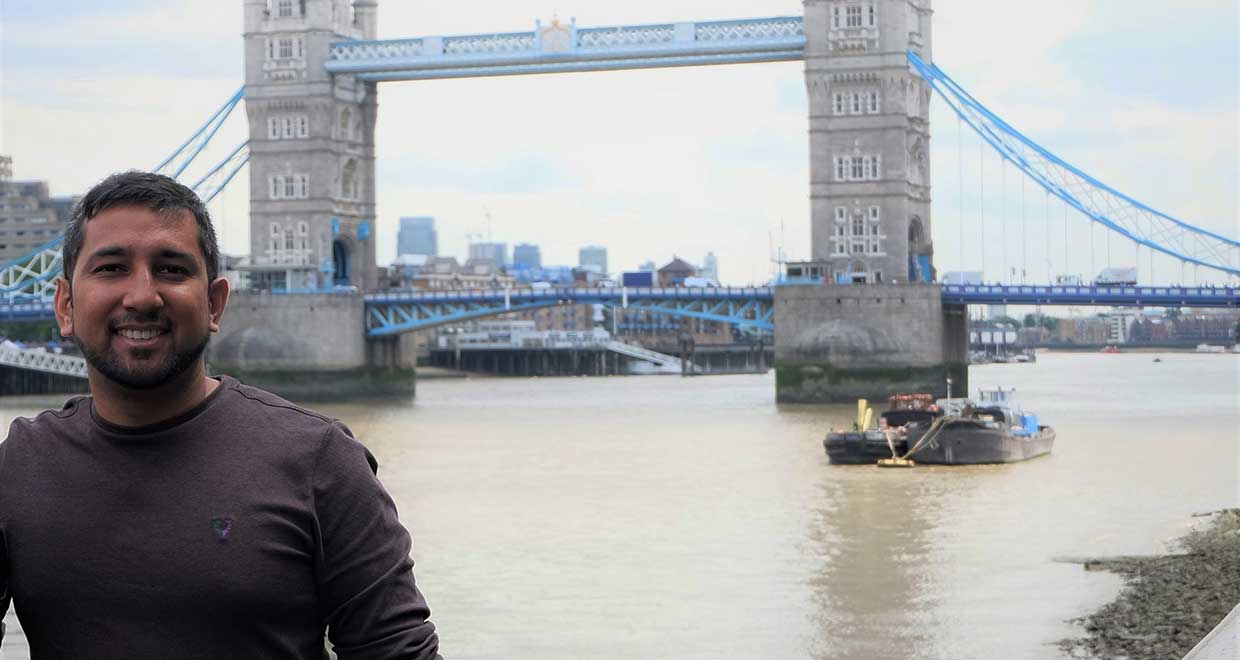
     

    In your opinion, what is the ideal time to pursue an LL.M?

    As I said, the aim of an LL.M should be to add value to your existing knowledge, or give you the extra dimension that was not provided in college. This could either be immediately after LL.B or even after getting some experience in the field that the student desires. The latter gives an option of specializing in a specific area of law.   


    How did you secure your first job? How important do you think a high CGPA is for recruiters?

    It was fairly easy to secure a job with Mr. Jagtaini because of his philosophy and personal views. I completely agree with them. According to him no resource in legal fraternity can be fairly assessed on the basis of his academic performance or in fifteen minutes of the interview. You will have to give a resource a chance of working for some time for anyone to realise his true potential. Specifically, because of this I do not agree on Firm/Corporates looking for students from National Law Colleges only. I have come across great knowlegable resources even from not very well- known colleges. According to me, the college or CGPA should be the last criteria for assessing a resource.  


    Please tell us about the hurdles you faced in the initial years when you were litigating?

    As the saying goes – a law professional is like wine, the older it is the wiser it gets. I was fortunate enough to get associated with Mr. Jagtiani for almost half a decade during which time I was able to hone my legal skills including drafting, application of law and argumentative skills. He at that time had some great senior people working with him. I was able to work closely with them and sharpen my legal skills. I credit my time at Mr. Jagtiani’s chamber to have prepared me for the legal career that I have today. My advice to junior lawyers would be to choose a good boss rather than well paying job. In the long run, this will tremendously add value to one’s career.  


    You have worked on and argued some landmark cases. How do you go about framing and drafting your arguments?

    Law is very dynamic. It keeps on changing and updating every now and then. Government changes and so do the Judges who interpret law. Many a time law is what the judge perceives it to be. All these factors make law very dynamic. A litigator has to be well informed, updated and should be able to convey his point with clarity and in the best possible way. Some of these qualities are inbuilt and some are required to be worked on and are developed overtime.

    One of my seniors, I remember, advised me that drafts should convey a clear message using minimum words. It is a wrong practice that is followed in drafting pleadings today when grounds over grounds and points over points are repeated. Drafts and arguments have to be concise, clear, and easily understandable by the audience it is meant for. Over the years I have worked on building these skill sets. It is always a work in progress. Fortunately, I was able to execute some high profile, high stake dispute matters successfully for our clients.

    What would be your advice to our readers who want to pursue international commercial arbitration?

    (In his time as a Senior Associate at Bharucha and Partners, Abhijeet has worked on a number of arbitration matters.)

    Arbitration is a specialized field. It is bound to grow bigger. Also, in terms of government’s motto of “ease of doing business”, further impetus to making arbitration compulsory as a mode of resolution of disputes is anticipated. Historically, there was a vast difference between ad hoc arbitrations and international institutional arbitrations in respect of timelines and the way they used to be conducted. Amendments to the Arbitration and Conciliation Act, 1996, were necessitated to reconcile the disparity and ambiguity with the rules of international institutional arbitrations and revamp the system in order to compete with these institutions, which due to their structured procedure and administrative support, provided distinct advantages, which were unavailable to parties opting for ad hoc arbitration. In a legal set up such as India’s, with huge population and enormous number of disputes, burdening of the Court system is bound to happen. Arbitration provides that leeway to this system firstly by reducing burden from the Courts and then providing a well structured and timely resolution of disputes with minimal interference from the Courts. To this end, good arbitration lawyers capable of effectively handling ad hoc arbitrations as well as international arbitration is the need of the hour. There is dearth of lawyers who can handle international arbitrations effectively. To my mind, it is a great opportunity to young lawyers to specialize in this area of law.  


    How did you secure a position at Trilegal? 

    My work was quite well known in the litigation circle. Trilegal was looking at someone senior to handle their litigation and mentor a team in Mumbai,  which at that time did not have a Partner. Since the role was to lead and mentor a team, I accepted to join them.

    Trilegal is great place to work and has a culture much different than the other places that I worked with. It is resource friendly. It has some high-profile dispute matters. These include advising and representing clients in different forums and on different aspect of law. Trilegal has a established practice in Delhi. It will take some time for Trilegal to have a robust disputes practice in Mumbai.   


    What challenges have you faced in building up your career as it stands today?

    Frankly speaking, when I look back, it does appear that I have come a long way. This is despite existence of all the issues which I have discussed earlier, particularly in respect of the legal field and personally. It is not easy to have a career in disputes if you are not passionate about law and hardworking. One thing is very clear is – hard work will never let you down and someday it will be rewarded.  

    How do you maintain a work- life balance, given the demanding nature of your job?

    This is a very important question to consider for everyone including my colleagues in the legal field. The professionals are caged due to the hourly billing and time sheet culture. I am not saying that the hourly billing and timesheet culture is bad, what I am saying is that the professionals are busy pleasing bosses or competing for good bonuses by putting in more time. I have done it and I don’t expect this to stop anytime soon. I am fortunate to have a wife who is a lawyer herself, and understands the demanding nature of my work. Otherwise, it would have been a task to balance the two.

    My advice to everyone will be to try and balance it in some way – either by taking up a sport (part time) or build on a hobby or do something unconnected with the profession. It releases pressure and helps increase productivity. It has worked for me, I am sure it will for others.  


    What advice do you have for our readers, who are primarily college students?

    Firstly, as far as choosing a career is concerned, I think it’s important that students decide, or at least converge on the practice area they would want to pursue at the earliest possible time. There’s competition everywhere, even getting into college, and after that, to get a good job. You will do good if you decide which places, if not bosses they would want to work with and try and work towards that. People landing in wrong jobs face many difficulties than the ones who start a little slower but have done so thoughtfully. Life also becomes easier if you do what you have chosen or like. A great law career awaits everyone and I wish students a successful one. I would be available should any of the readers want to contact me for career advise or otherwise.